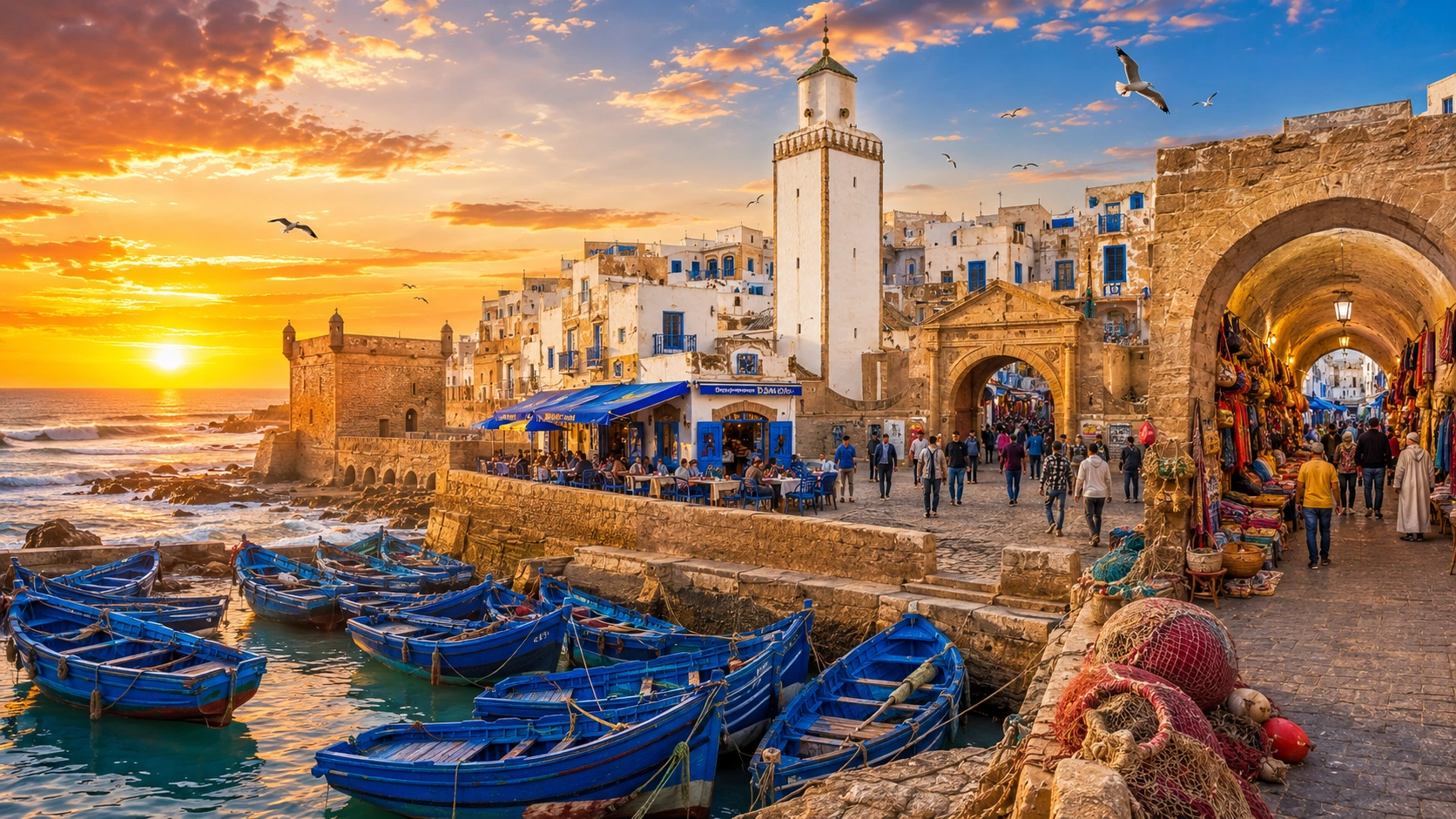
Essaouira harbour, blue boats, ramparts and Atlantic light

Atlantic Morocco

Essaouira Atlantic wind, ramparts and Mogador memory

Essaouira is not only a beautiful seaside town. It is a designed Atlantic trading city, a fortified medina, a working harbour, a music and craft centre, and one of Morocco’s most legible conversations between ocean, stone, wind and memory.

Why Essaouira matters

Beyond the seaside image

Essaouira’s appeal is often described through wind, beach and blue boats, but the city’s deeper value lies in its structure. As Mogador, it was shaped as a fortified Atlantic port where urban planning, military architecture, trade and cultural exchange met in a controlled coastal setting.

The medina, ramparts, fishing harbour, Skala platforms, Mellah memory, craft workshops and Gnaoua soundscape all reveal a city that cannot be reduced to a postcard. Essaouira is compact, but intellectually rich.
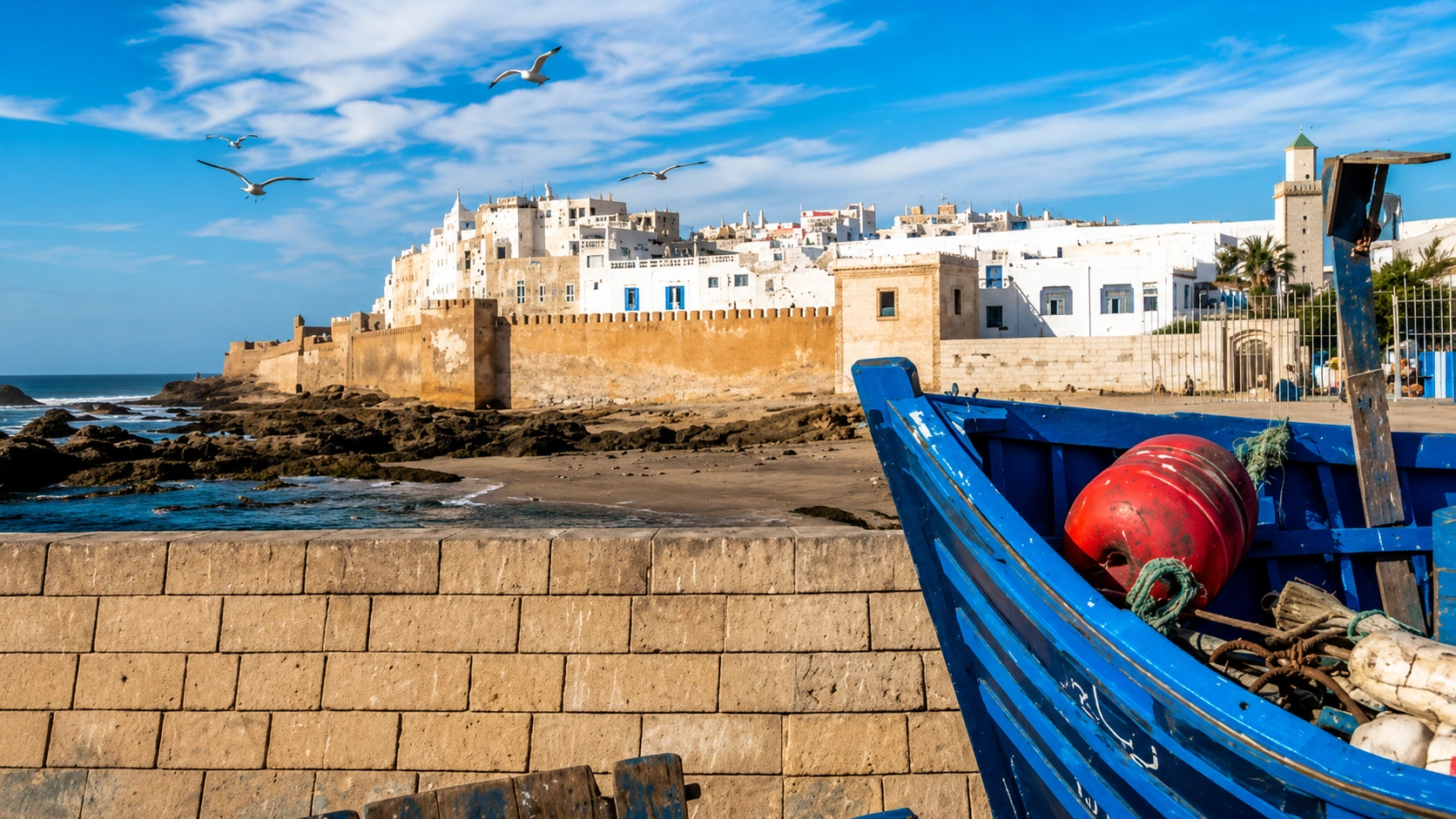
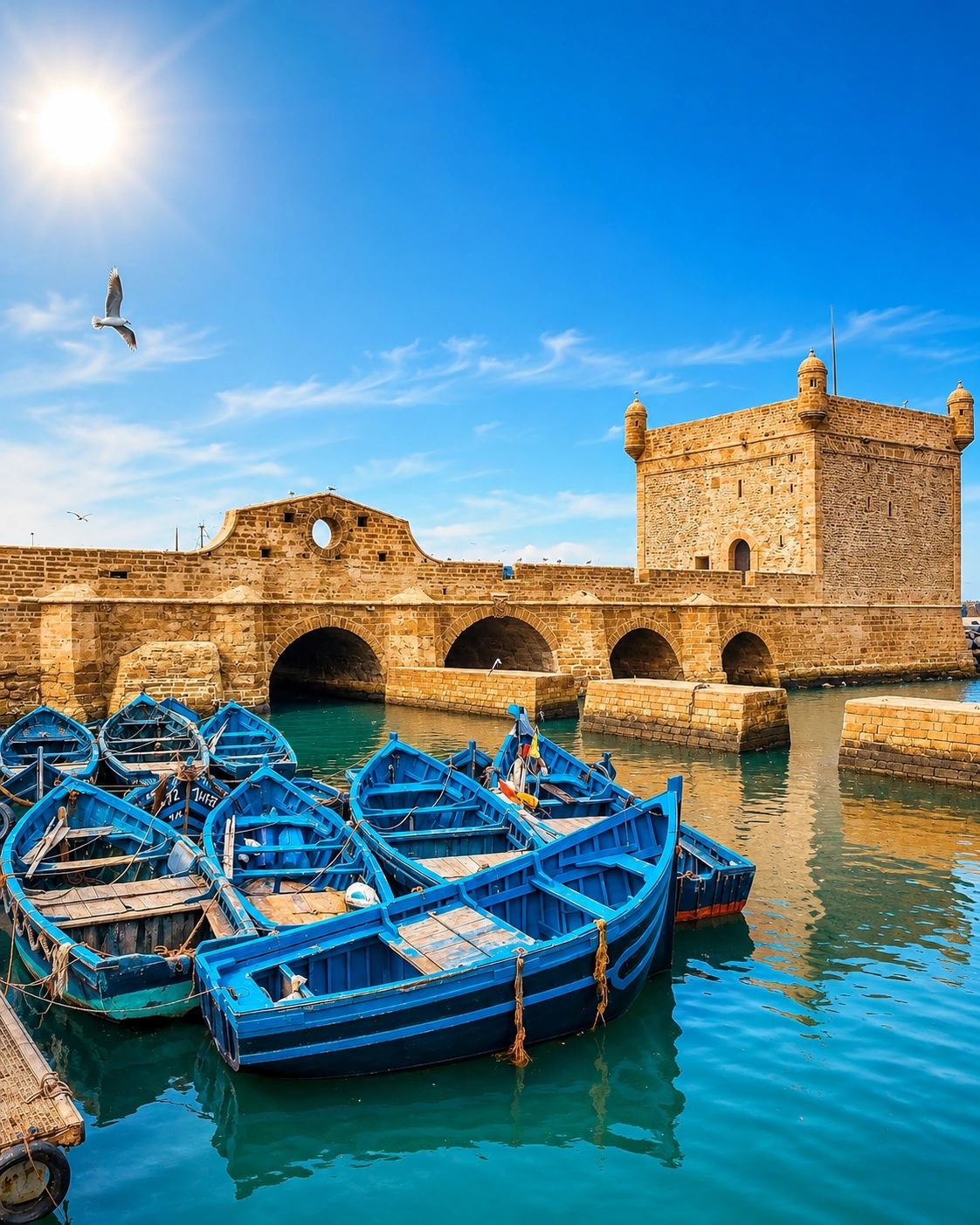
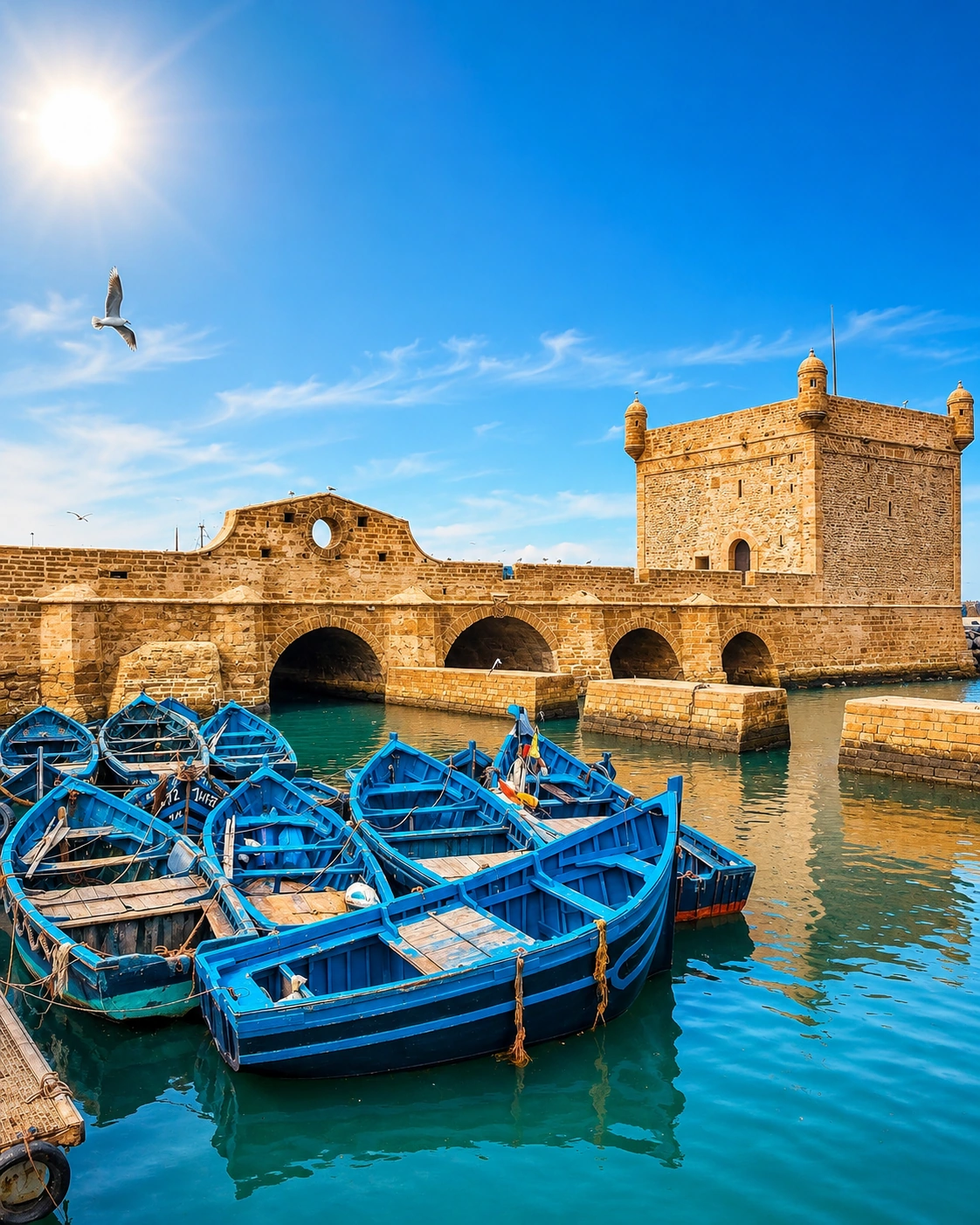
Essaouira harbour walls, white medina buildings and a blue fishing boat

A city shaped by the Atlantic

Wind, trade, defence, music, woodwork and harbour life belong to the same urban story.

Historical orientation

From Mogador to an Atlantic medina

Essaouira is best understood through four connected layers: the Atlantic trading city, the late eighteenth-century fortified plan, the port and ramparts, and the contemporary coastal city of craft, music and wind.

01Mogador

Atlantic trade and exchange

The city connected Morocco and its Saharan hinterland with Europe and wider maritime routes, giving the port a strategic commercial role.

02Urban design

Fortified planning

Essaouira’s medina reflects a planned fortified town in a North African context, rather than a coastal settlement shaped only by gradual growth.

03Ramparts

Stone, sea and defence

The Skala platforms, walls and port defences create a direct architectural conversation with the Atlantic.

04Today

Craft, music and wind

Today the city remains a working place of workshops, fishing boats, Gnaoua memory, galleries and wind-shaped coastal life.

Three glimpses of Essaouira

Three ways into the city

Essaouira can be approached through three essential images: the ramparts, the working port and the craft streets of the medina.

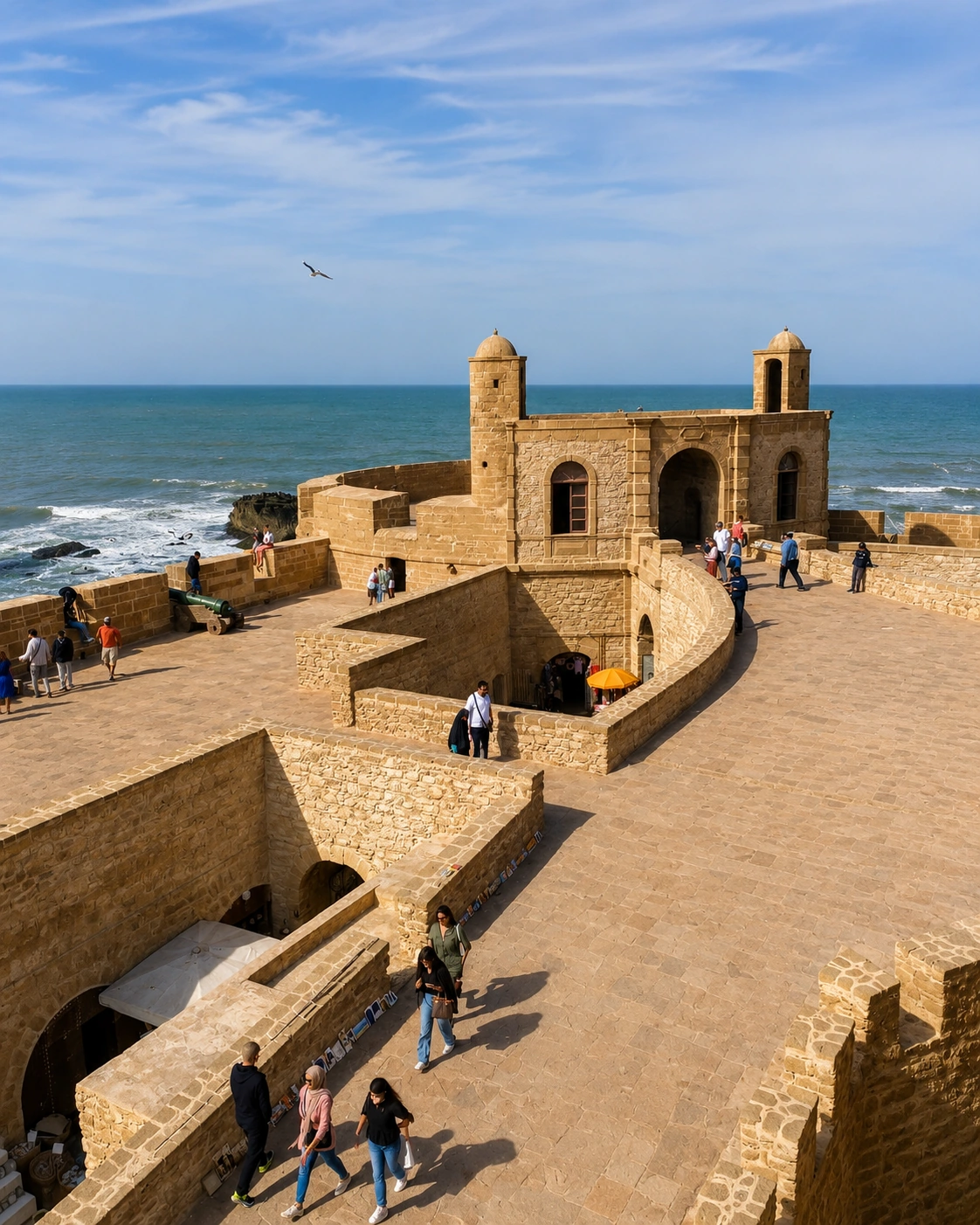
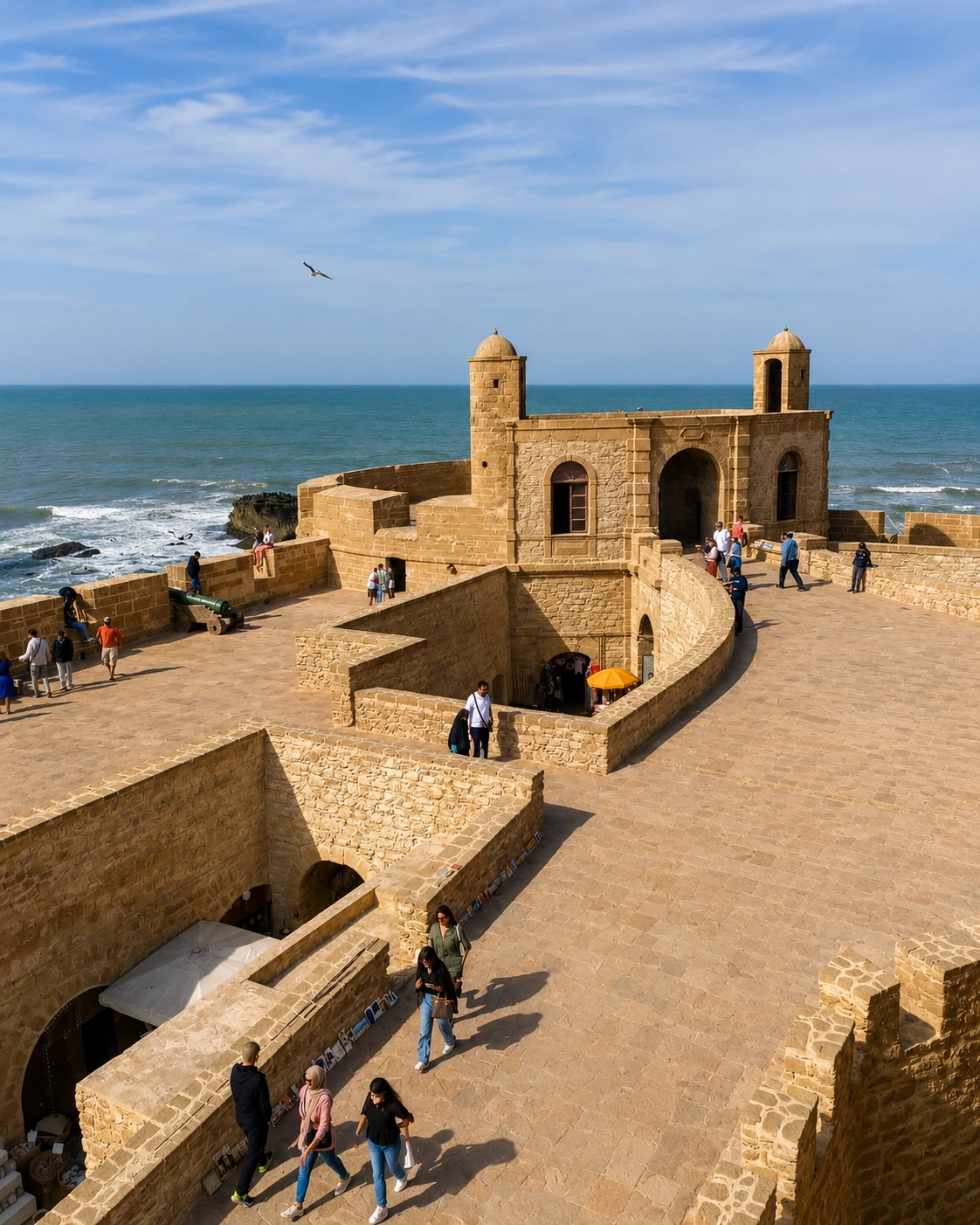
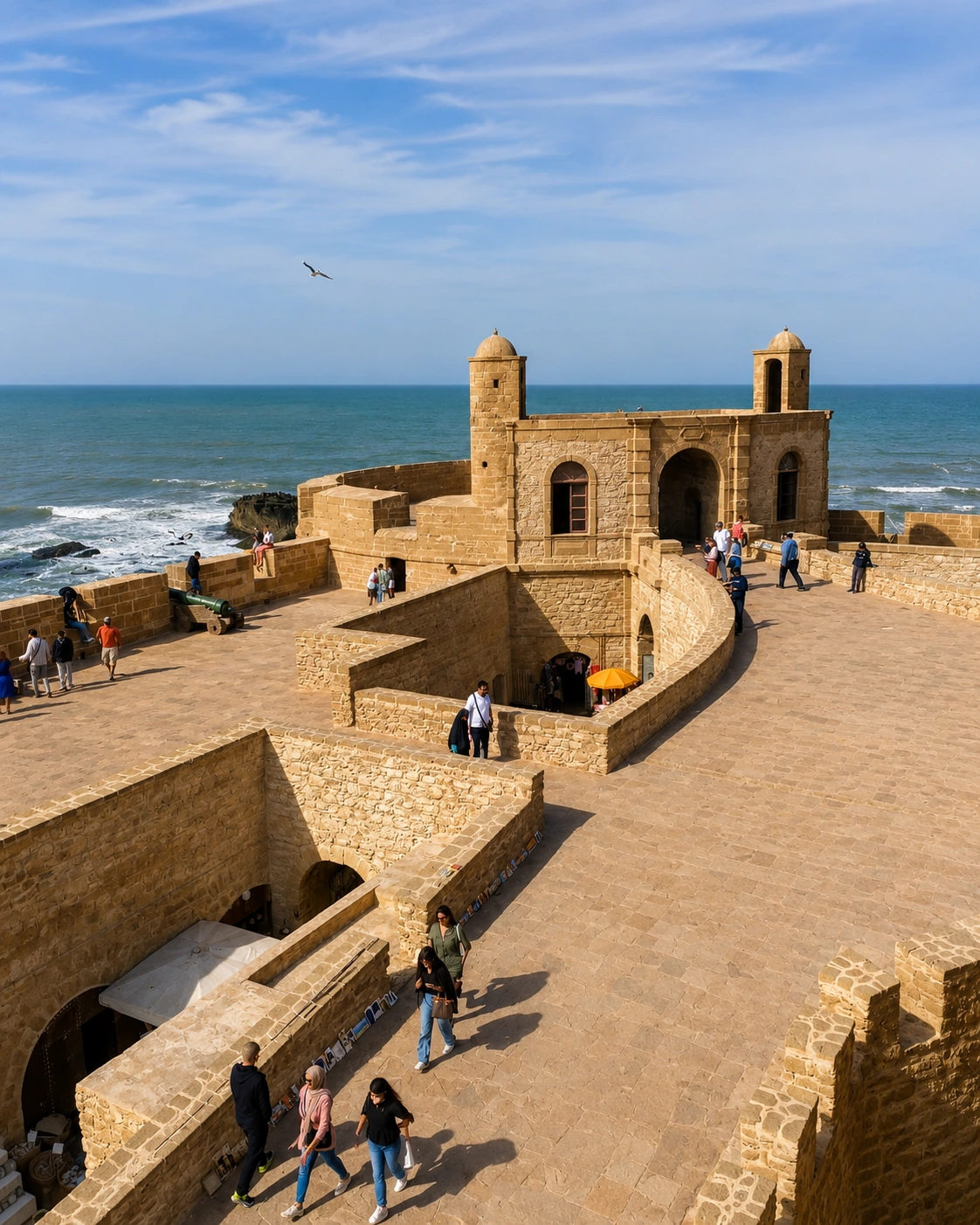
Skala ramparts and Atlantic sea in Essaouira

Ramparts and Skala

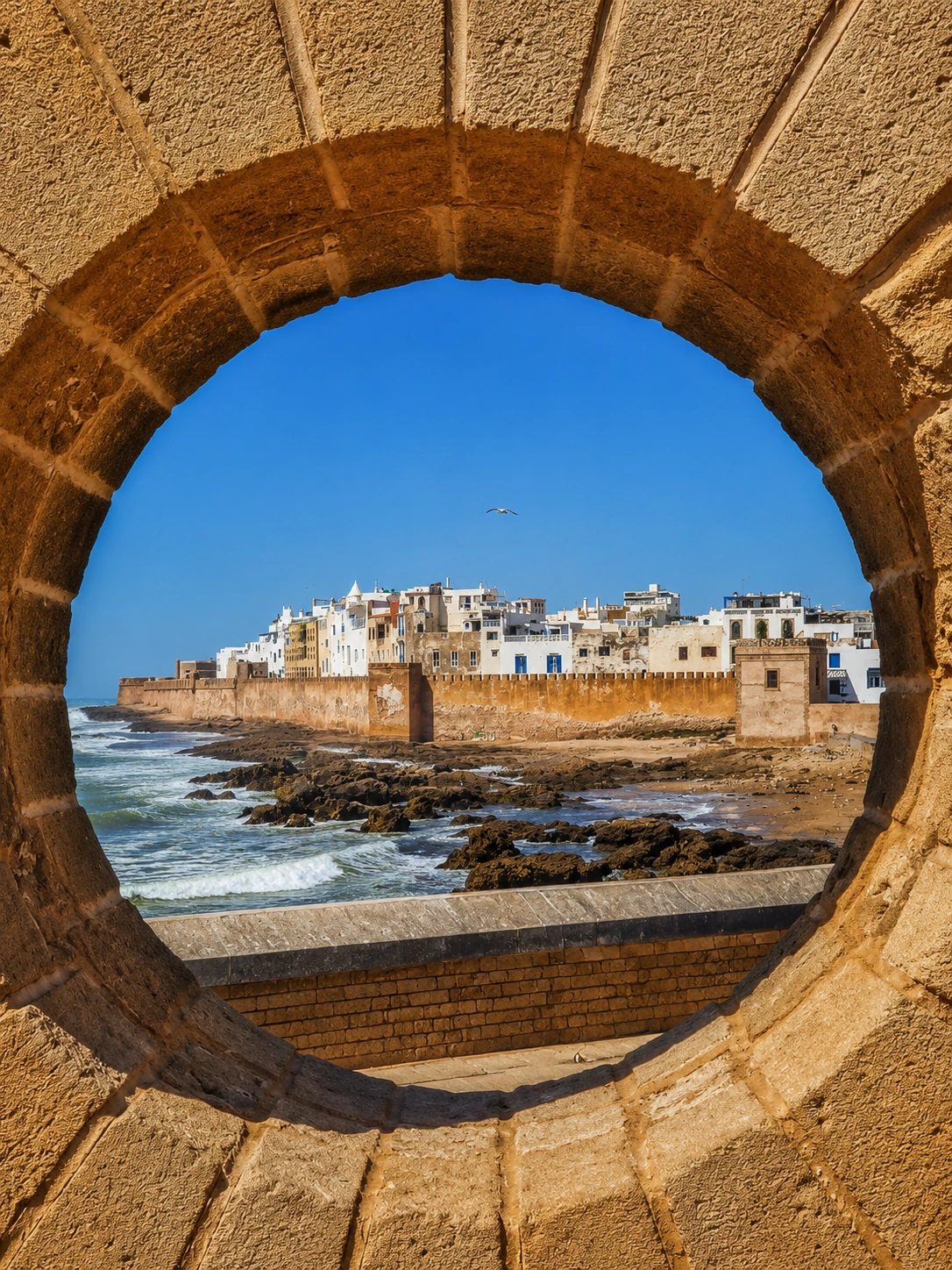
The sea-facing walls turn Essaouira into one of Morocco’s clearest examples of coastal defence and Atlantic urban design.

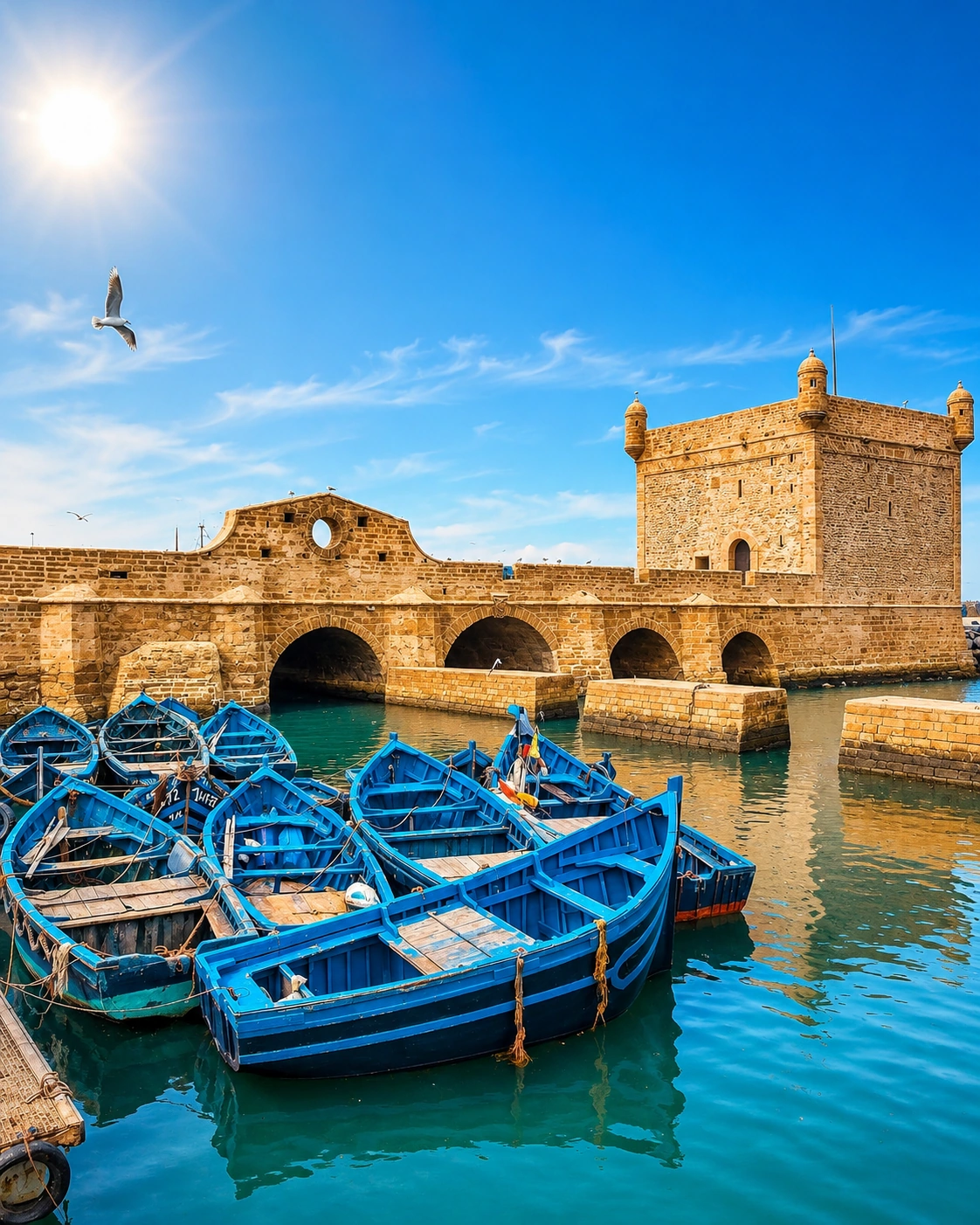
Blue fishing boats beside the stone harbour of Essaouira

Fishing port and blue boats

The harbour keeps Essaouira grounded in work, fish, ropes, gulls, boats and the movement of the Atlantic economy.

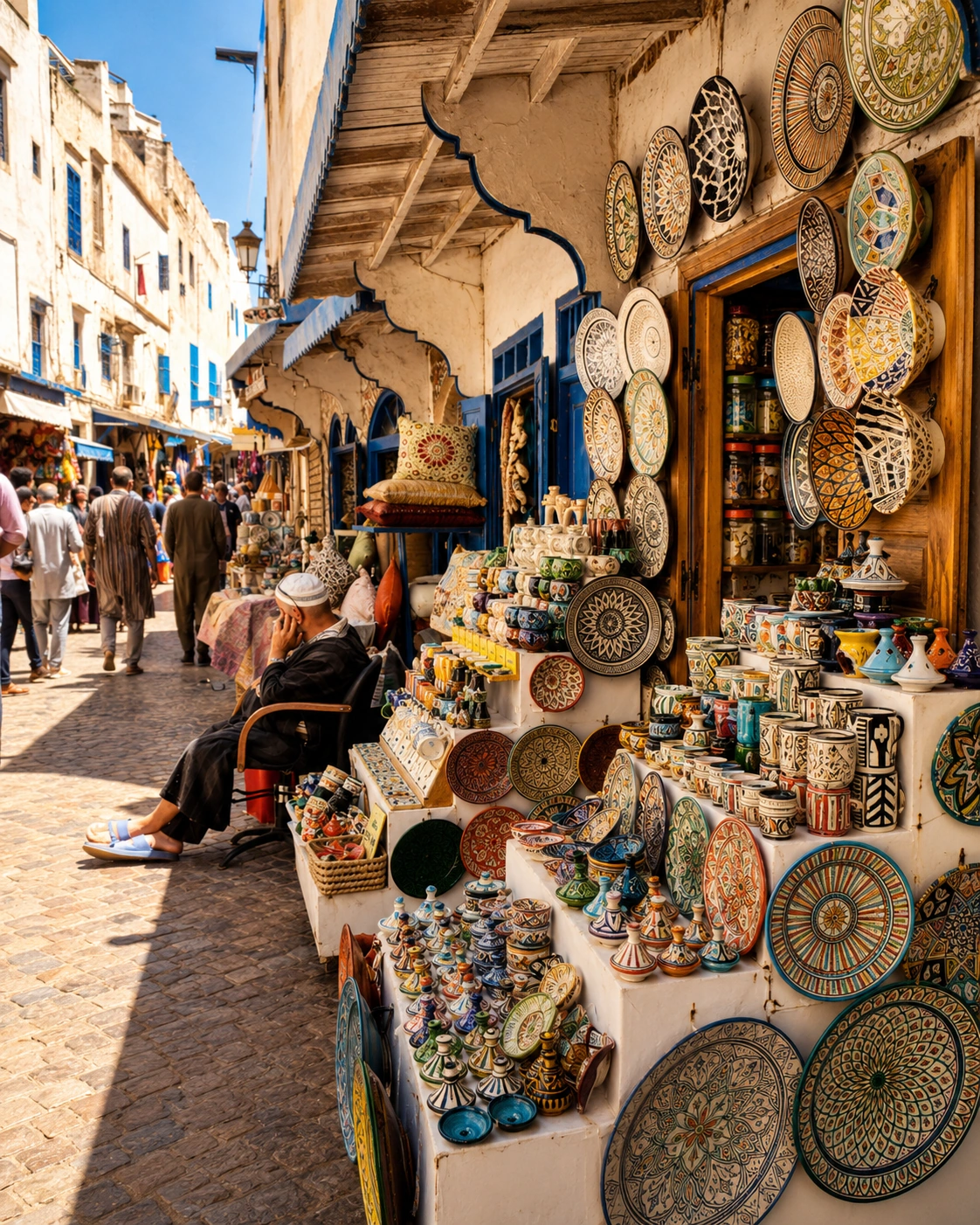
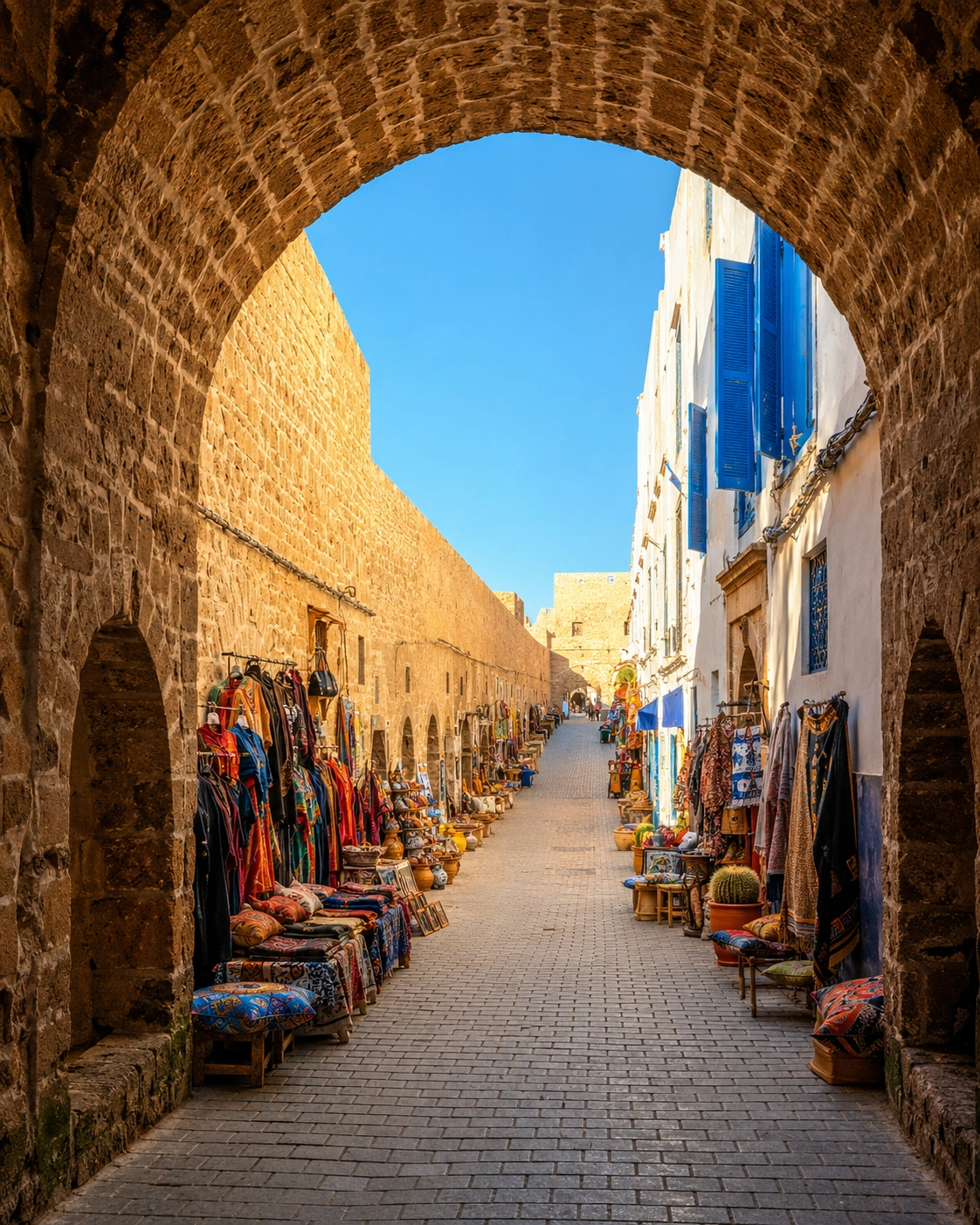
Craft displays along a medina street in Essaouira

Medina and craft

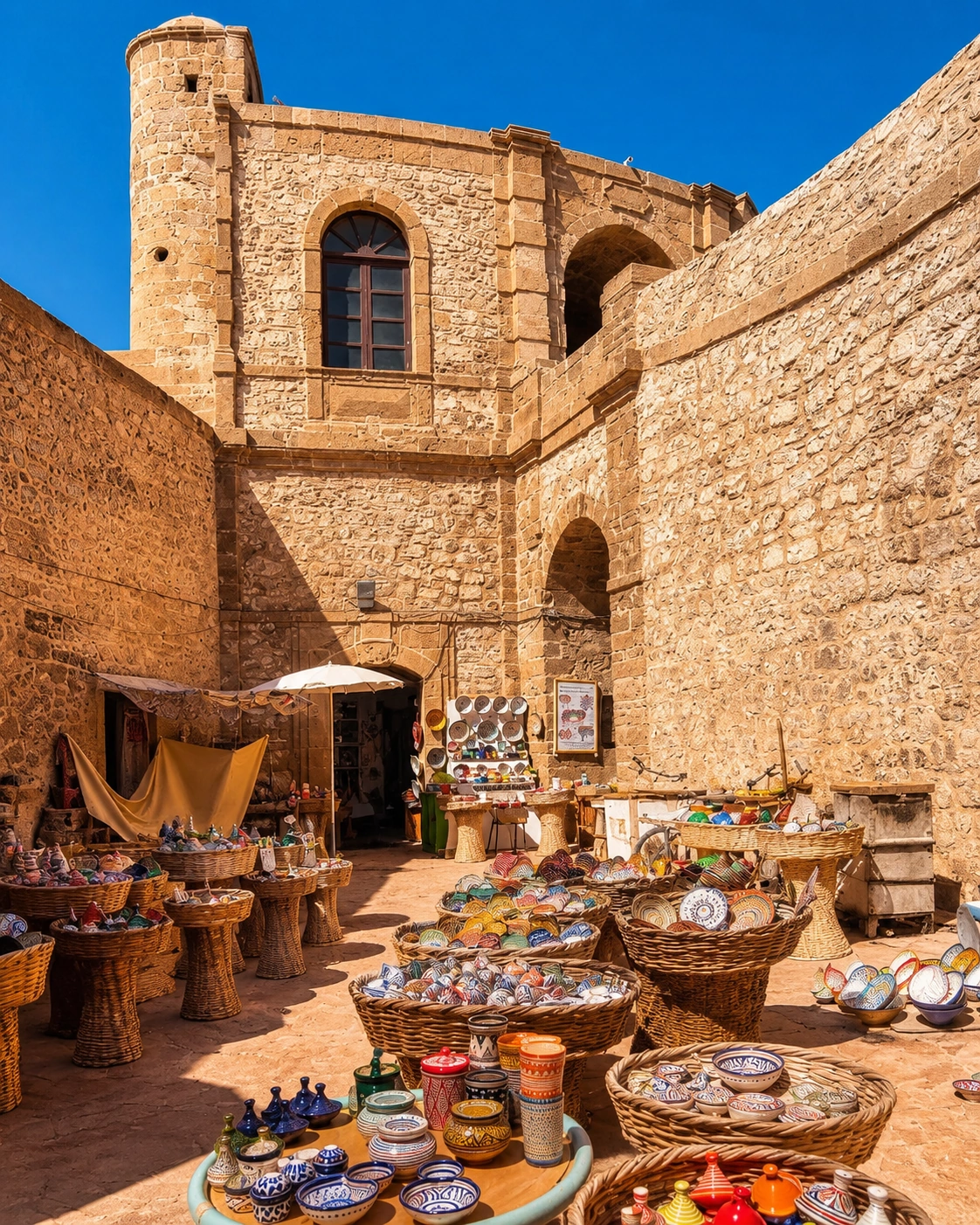
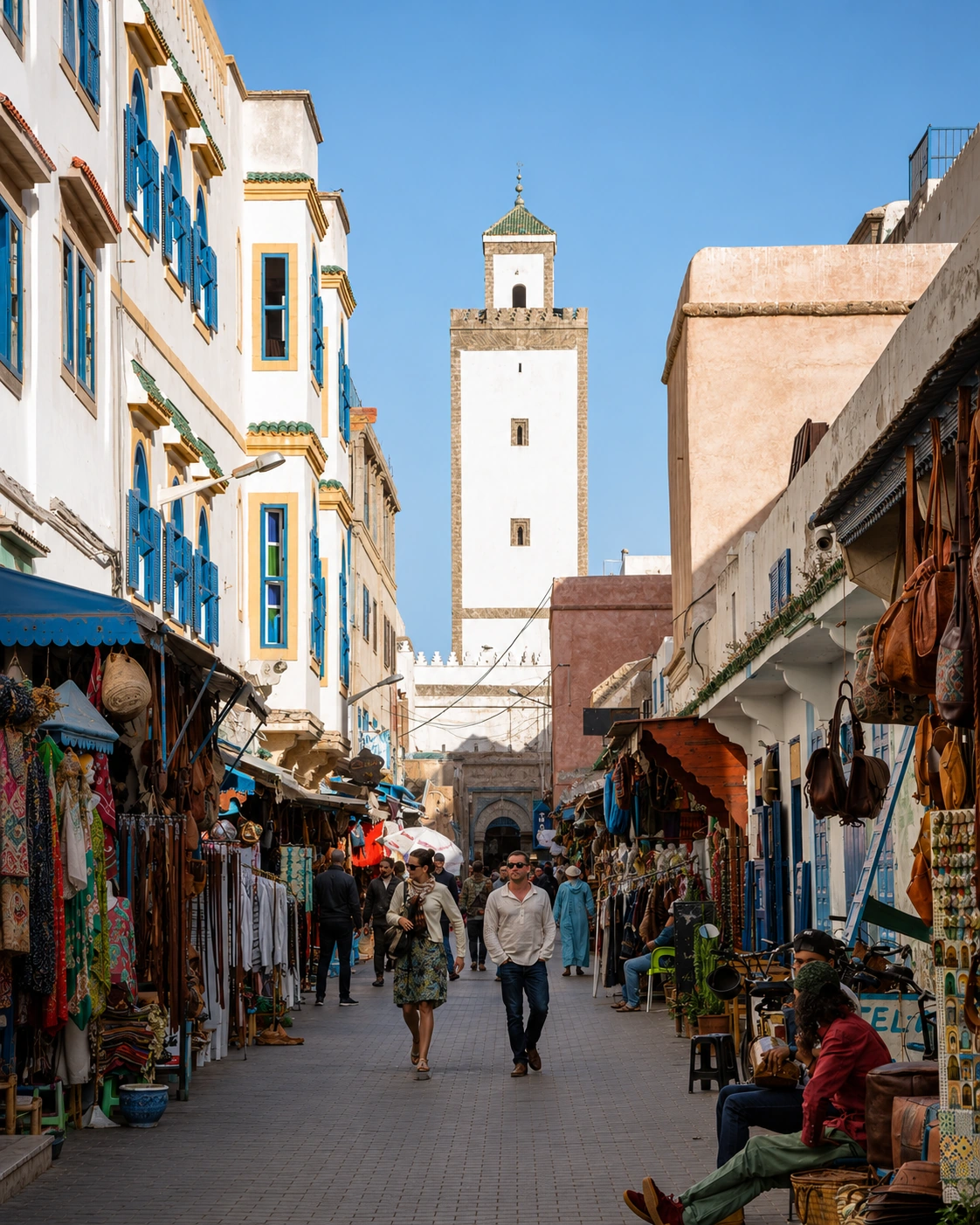
Thuya wood, galleries, textiles and small workshops make the medina more than a historic shell.

Essaouira at a glance

UNESCO medina

The Medina of Essaouira, formerly Mogador, is valued as a late eighteenth-century fortified town with a distinctive Atlantic planning logic.

Atlantic port

The harbour is not decorative. It is a working layer of boats, fish, gulls, repairs and daily coastal labour.

Ramparts and Skala

Skala de la Ville and Skala du Port frame the city’s defensive and maritime identity.

Gnaoua, craft and wind

Music, thuya wood, galleries, wind sports and beach life give the city its contemporary cultural rhythm.

Reading Essaouira more clearly

Three defining layers

Read the planned medina, the working harbour and the city’s craft and musical life together. Each layer explains why Essaouira is more than a scenic coastal stop.

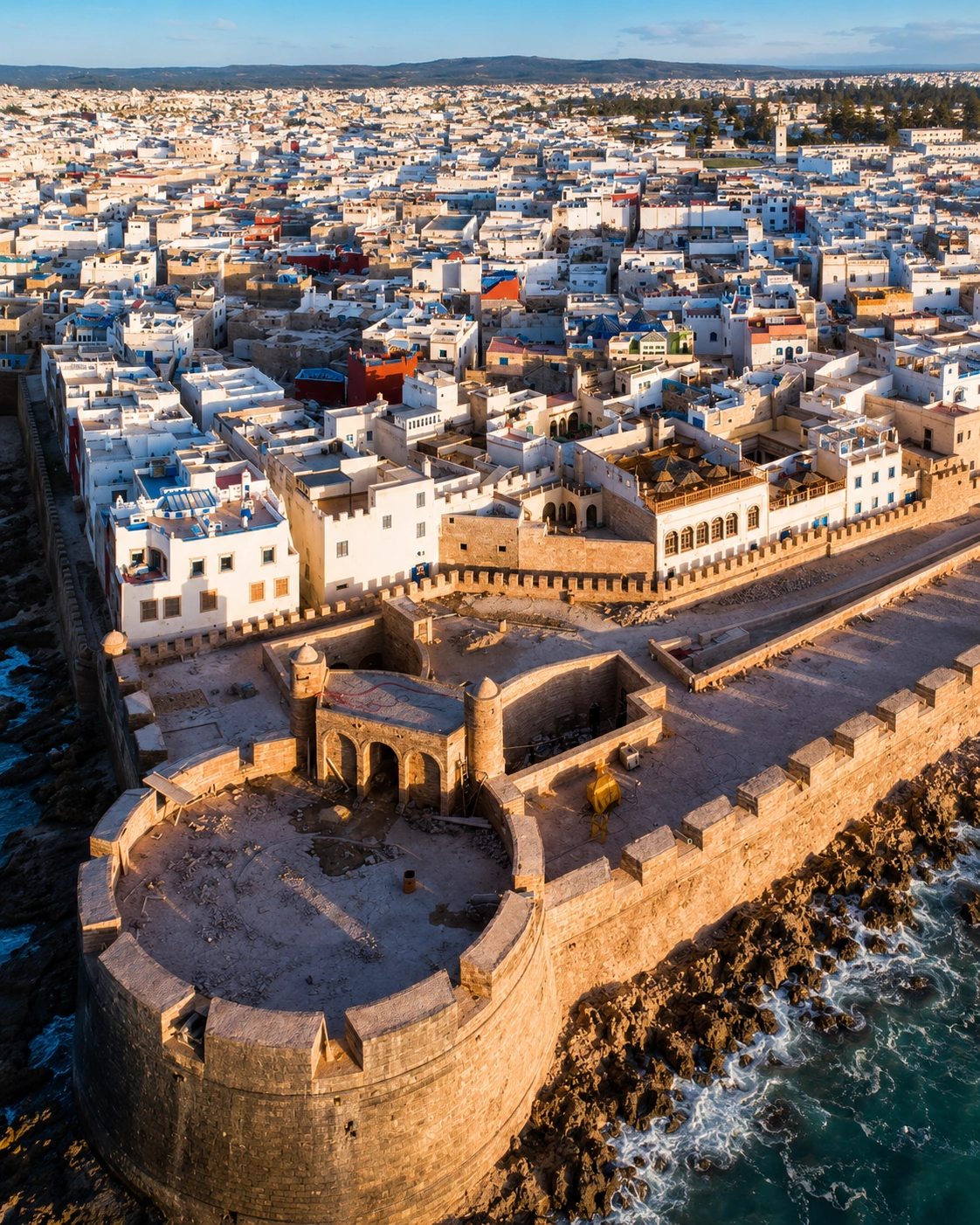
Aerial view of Essaouira fortified medina and Atlantic walls
Urban design

Fortified city planning

Essaouira’s medina should be read as a planned coastal city, where straight axes, gates, walls and sea defences create order.

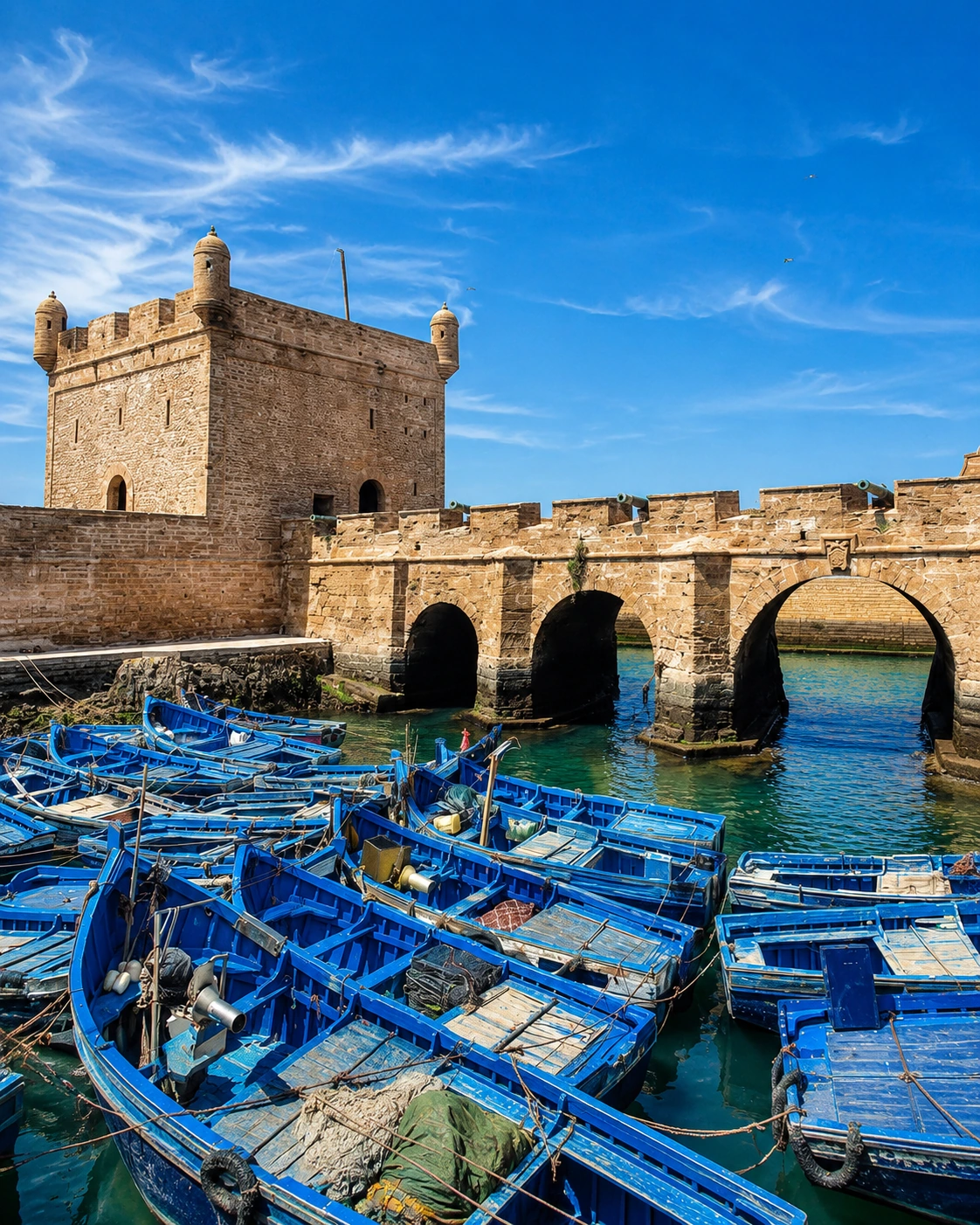
Blue fishing boats and harbour walls in Essaouira
Port life

Harbour, fish and blue boats

The port gives Essaouira a daily rhythm that balances the elegance of the medina with a working Atlantic reality.

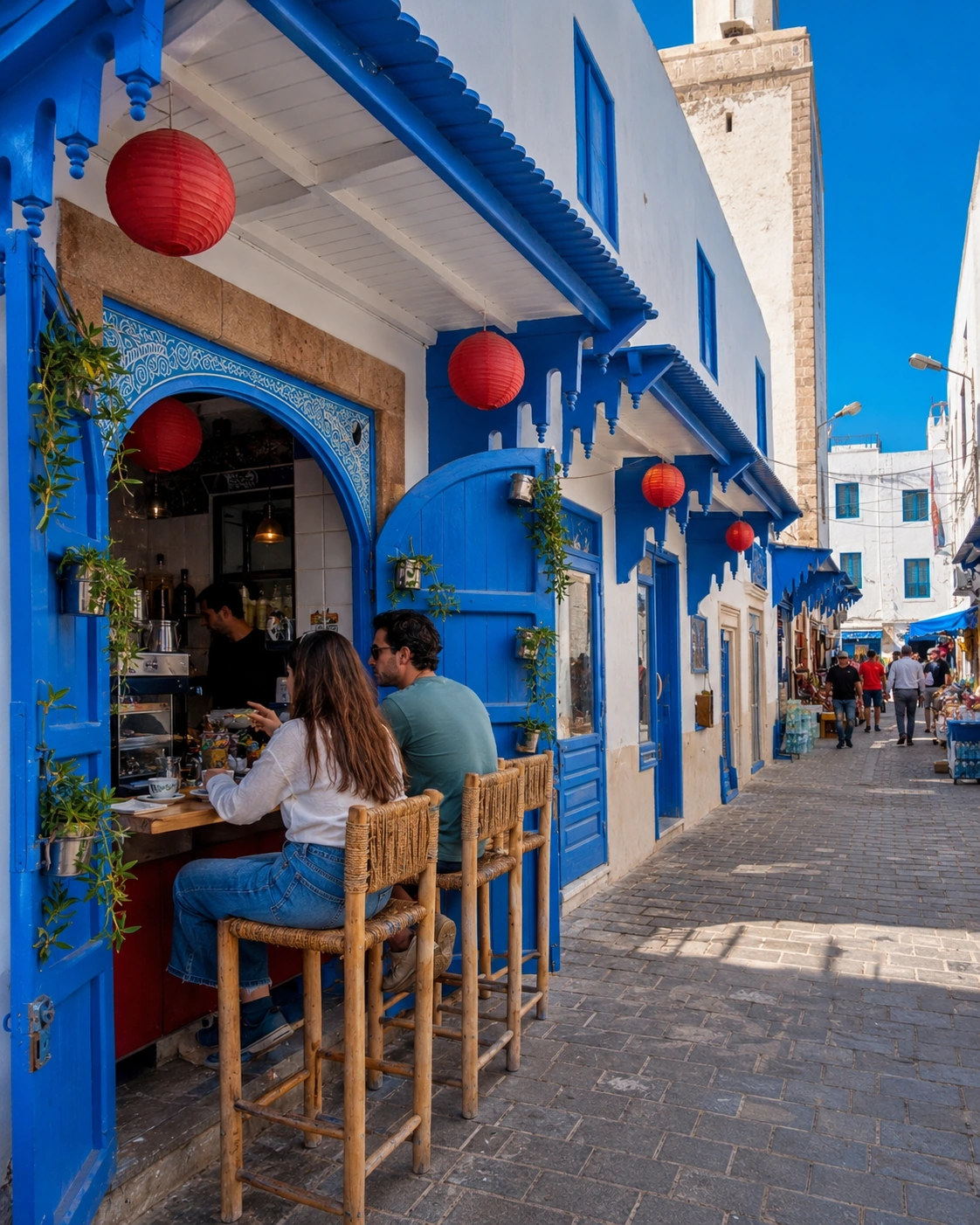
Blue-and-white café street in Essaouira medina
Culture

Medina, craft and Gnaoua memory

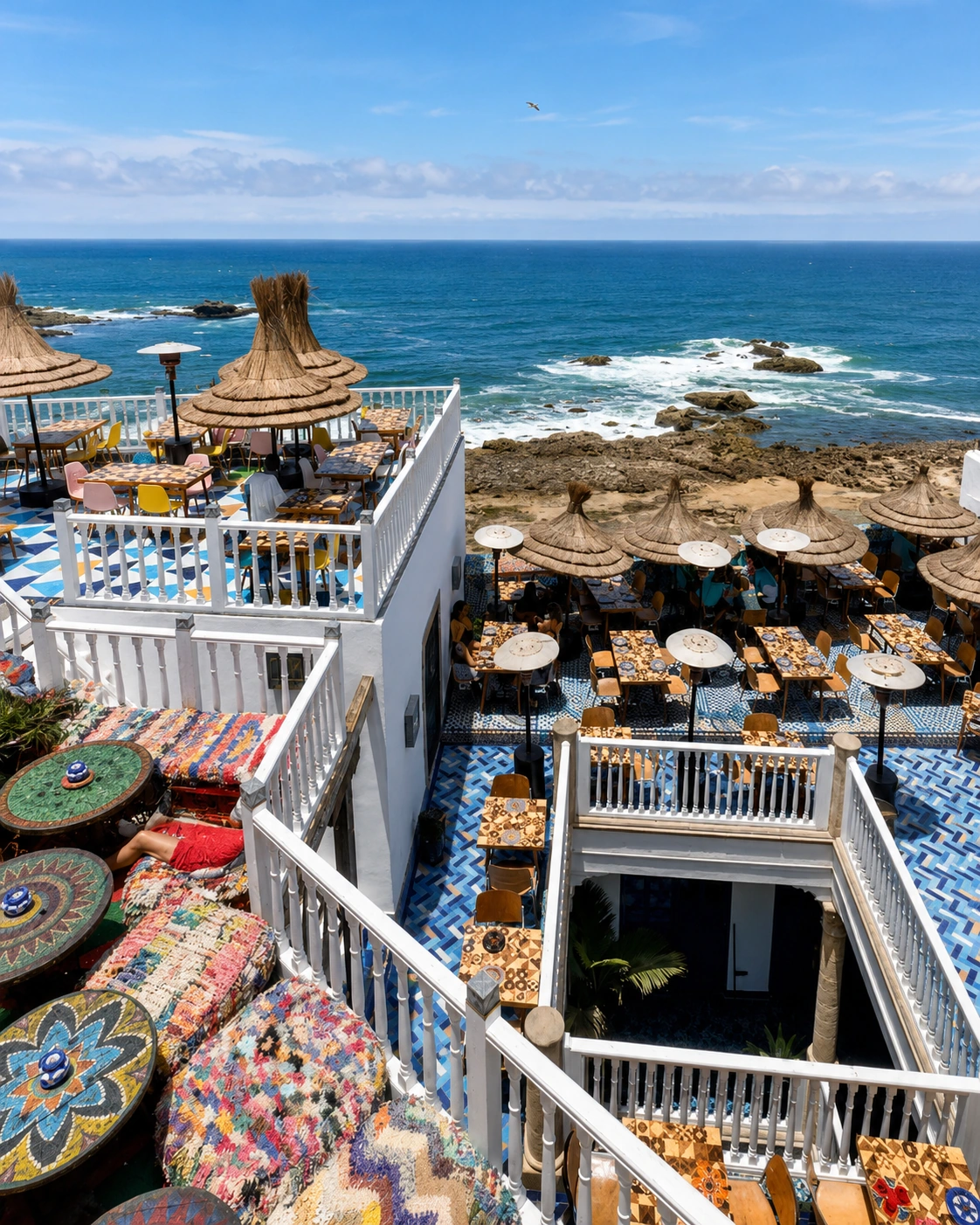
Craft workshops, music, galleries and café life make Essaouira a cultural city rather than only a coastal escape.

Landmarks & orientation

Read Essaouira through six defining places

Essaouira is easiest to understand by moving between its medina, ramparts, port, square and beach edge. These six places form a coherent first route.

1
Medina of Essaouira

The planned fortified medina, formerly Mogador, remains the core of the city’s UNESCO significance.

2
Skala de la Ville

The sea-facing rampart platform gives the clearest experience of stone, cannons, wind and Atlantic exposure.

3
Skala du Port

The port-side defence links the medina walls to the working harbour and the maritime entrance of the city.

4
Fishing harbour

Blue boats, nets, gulls and repairs show the city as a working Atlantic port, not only a heritage scene.

5
Mellah and Bayt Dakira context

Jewish memory is an important part of Essaouira’s urban and cultural history and should be approached with respect and precision.

6
Moulay Hassan Square and beach edge

The square, port approach and beach connect the medina to cafés, light, wind and public life.

Blue fishing boats and the fortified harbour of Essaouira
Skala de la Ville ramparts overlooking the Atlantic in Essaouira

Atlantic defence

Skala de la Ville — Atlantic defence shaped in stone and wind

The Skala is one of the strongest places to read Essaouira. It is not only scenic: it explains how the city meets the Atlantic through walls, platforms, cannons, exposed stone and carefully controlled views.

  • Read the ramparts as urban planning, not only as a viewpoint.
  • Notice the relationship between sea exposure, trade and defence.
  • Continue from the walls toward the port and medina streets.

Medina, craft and local life

Workshops, fish, music and street rhythm

Thuya wood and workshops

Essaouira’s craft identity is not decorative filler. Woodwork, small ateliers and medina shops are part of the city’s economic memory.

Fish, boats and working hands

The harbour gives the city its practical soundscape: gulls, engines, fish boxes, nets and the smell of the sea.

Medina rhythm and Gnaoua memory

Essaouira’s cultural layer is felt through music, galleries, cafés, instruments and the slower rhythm of streets near the sea.

Visual atmosphere

Scale, salt and Atlantic texture

Nearby highlights

Beyond Essaouira

Essaouira opens naturally toward the Atlantic coast and the argan countryside. These extensions keep the journey coherent without turning the city into a generic beach stop.

Sidi Kaouki

A wind-shaped Atlantic village south of Essaouira, useful for beach, surf and a quieter coastal rhythm.

Coastal scene representing the Sidi Kaouki extension south of Essaouira

Diabat

A nearby extension for dunes, coastal paths and the cultural memory that has gathered around Essaouira’s creative identity.

Coastal view framed by stone near Essaouira and Diabat

Argan countryside

The inland landscape adds argan trees, cooperatives, rural markets and a different tempo beyond the walls and wind.

Craft and rural market atmosphere representing the argan countryside near Essaouira
Travel note: opening hours, access rules, restoration work, transport conditions and local visitor arrangements can change. Check current official or trusted local information before travelling.

Practical orientation

How to experience Essaouira well

  • Start with the ramparts and Skala de la Ville to understand the city’s Atlantic logic.
  • Walk the port early, when the harbour’s working rhythm is easiest to see.
  • Enter the medina slowly and notice its axes, gates, workshops and links to the walls.
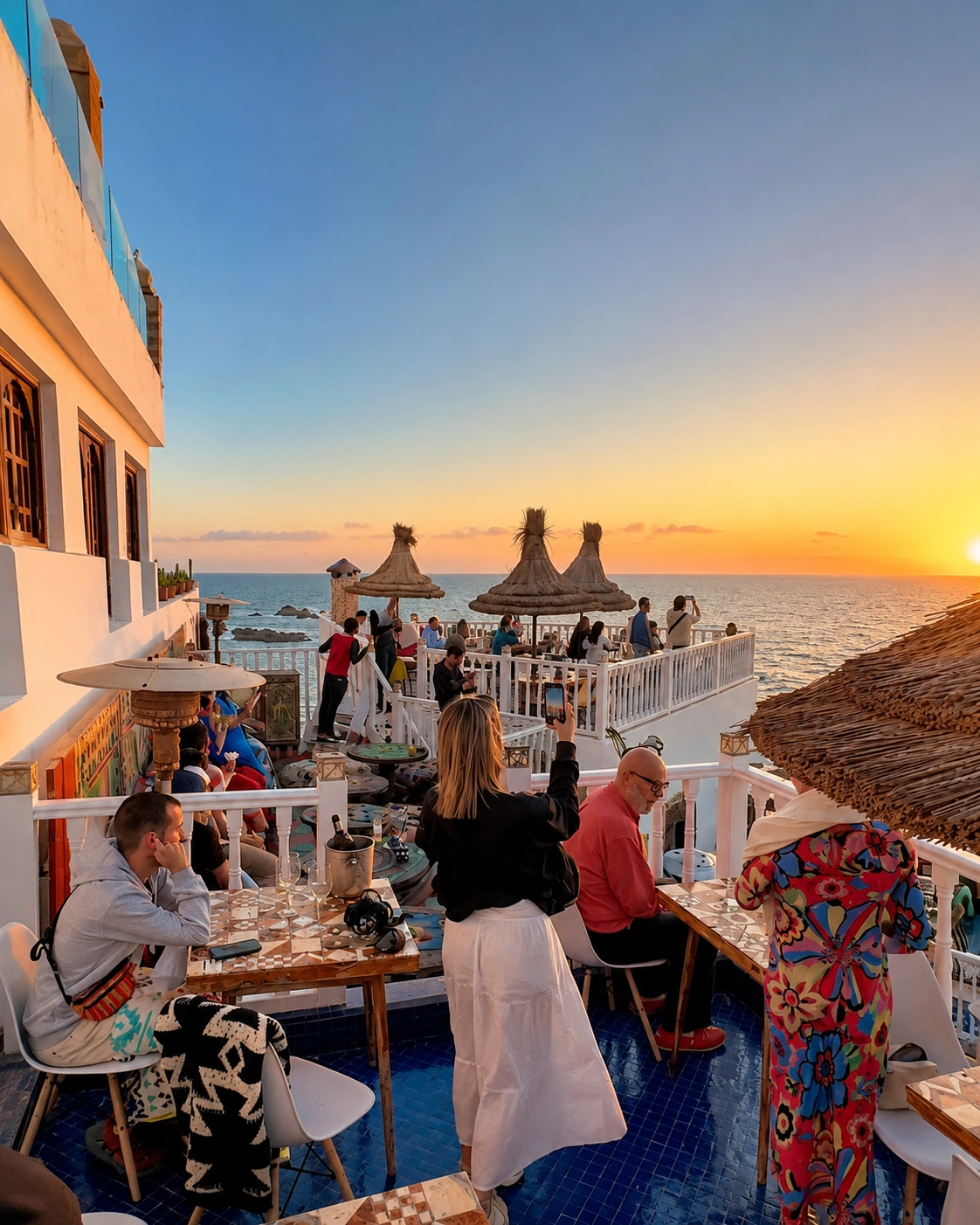
  • Save late light for the sea wall, port approach or beach edge.
  • Keep Sidi Kaouki, Diabat or the argan countryside as a separate extension.

A strong first visit

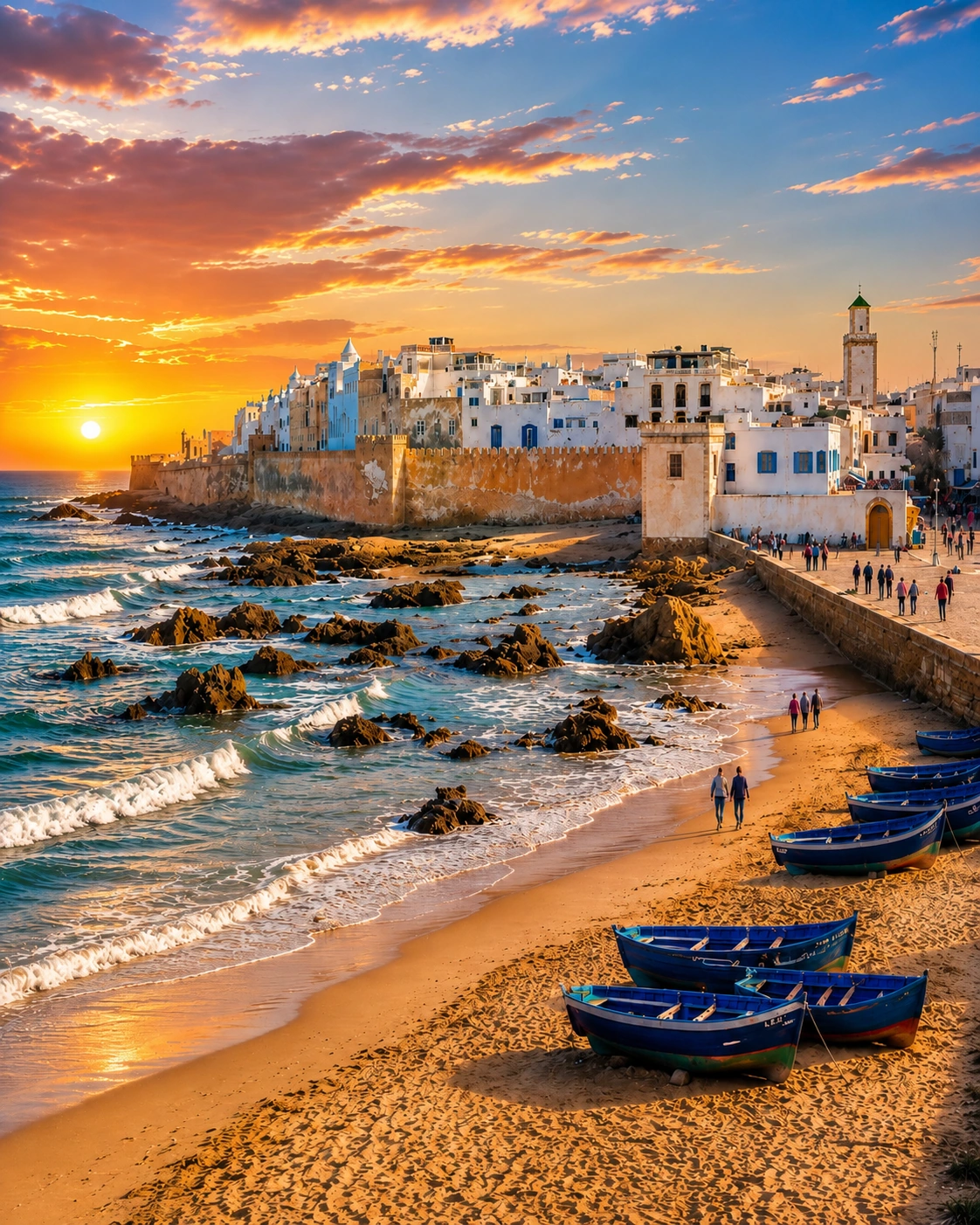
Temporary Essaouira Atlantic sunset image for practical orientation

Begin at Skala de la Ville, continue through the medina toward Moulay Hassan Square and the port, then return to the sea edge for late light. Nearby coastal and argan-country extensions work best as a separate half-day or full-day journey.

Cover image for the Essaouira city guide by Exotic Morocco

Go deeper with Exotic Morocco

Essaouira — Atlantic city, fortified medina and Mogador memory

Continue with the Exotic Morocco city collection to connect Essaouira’s history, ramparts, port, medina, craft, music, practical orientation and nearby Atlantic routes into one structured journey.

✓ UNESCO medina✓ Skala & port ✓ Craft & Gnaoua✓ Atlantic atmosphere ✓ Practical orientation✓ Nearby coastal routes

Continue the journey

Discover Essaouira beyond the wind

Essaouira is strongest when the beach image is read together with Mogador’s trading memory, fortified planning, harbour labour, music, craft and Atlantic light.