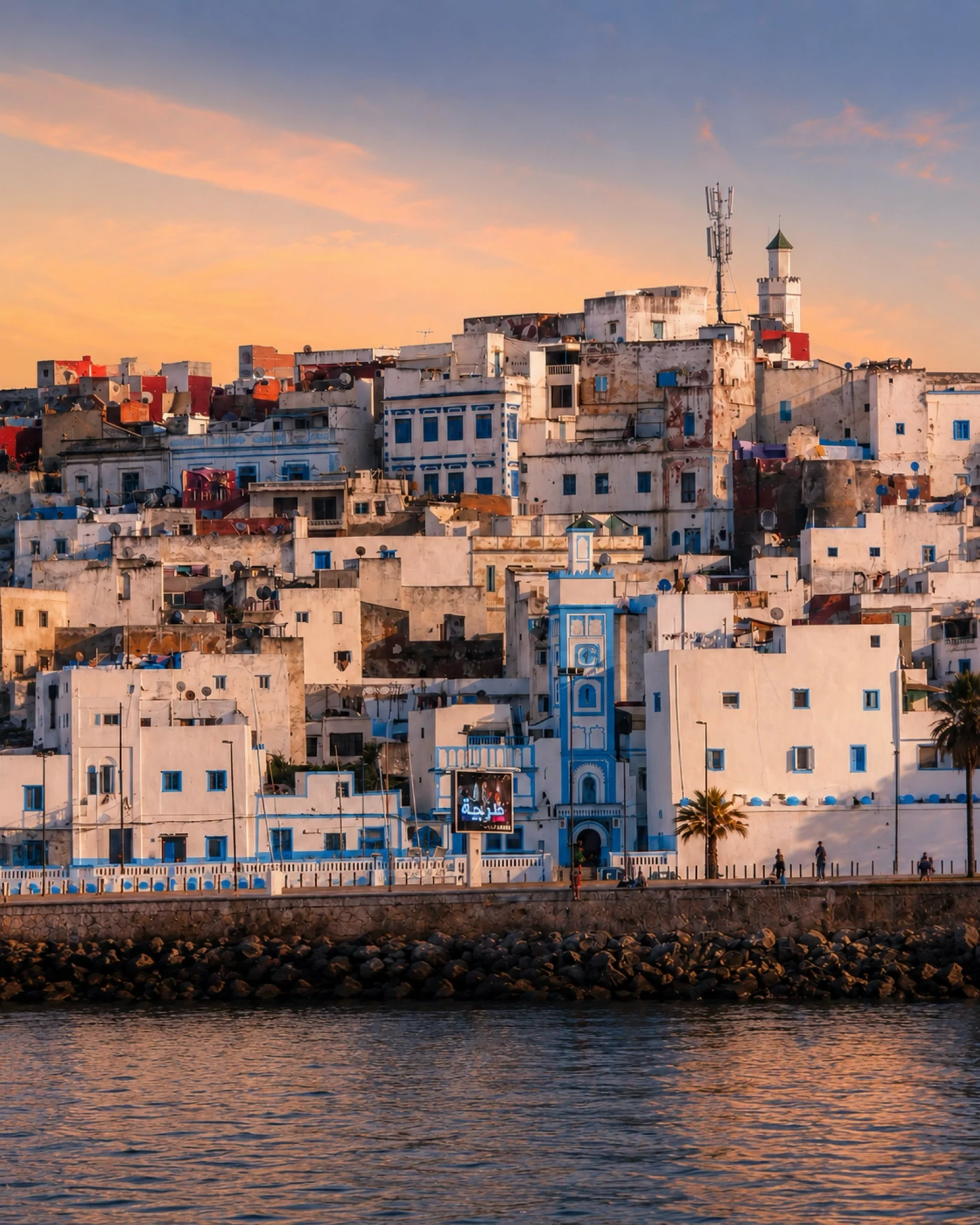
Turquoise-and-white medina street and hills in Ouazzane

Northern Morocco & the Rif

Ouazzane A spiritual city of turquoise streets, sacred memory and olive country

Ouazzane is a quieter Moroccan city with a strong spiritual identity. Its medina, zawiya heritage, green-painted architecture, local markets and surrounding olive landscapes give it a character unlike the louder imperial or coastal destinations.

Why Ouazzane matters

Beyond the image of a small northern town

Ouazzane is not a city to read quickly. It is known for spiritual history, for the memory of Moulay Abdellah Cherif, for a medina of turquoise-and-white passages, and for a regional identity tied to craft, agriculture and the softer landscapes of the western Rif.

The city’s beauty is not only in single monuments. It is in the meeting of sacred spaces, carved doors, zellige, market life, jellaba traditions, Jewish memory and olive-country routes around the city.

Ouazzane rewards visitors who slow down: the medina’s arches, mosque tower, sacred interiors, covered souks and nearby landscapes together create a distinctive northern Moroccan experience.
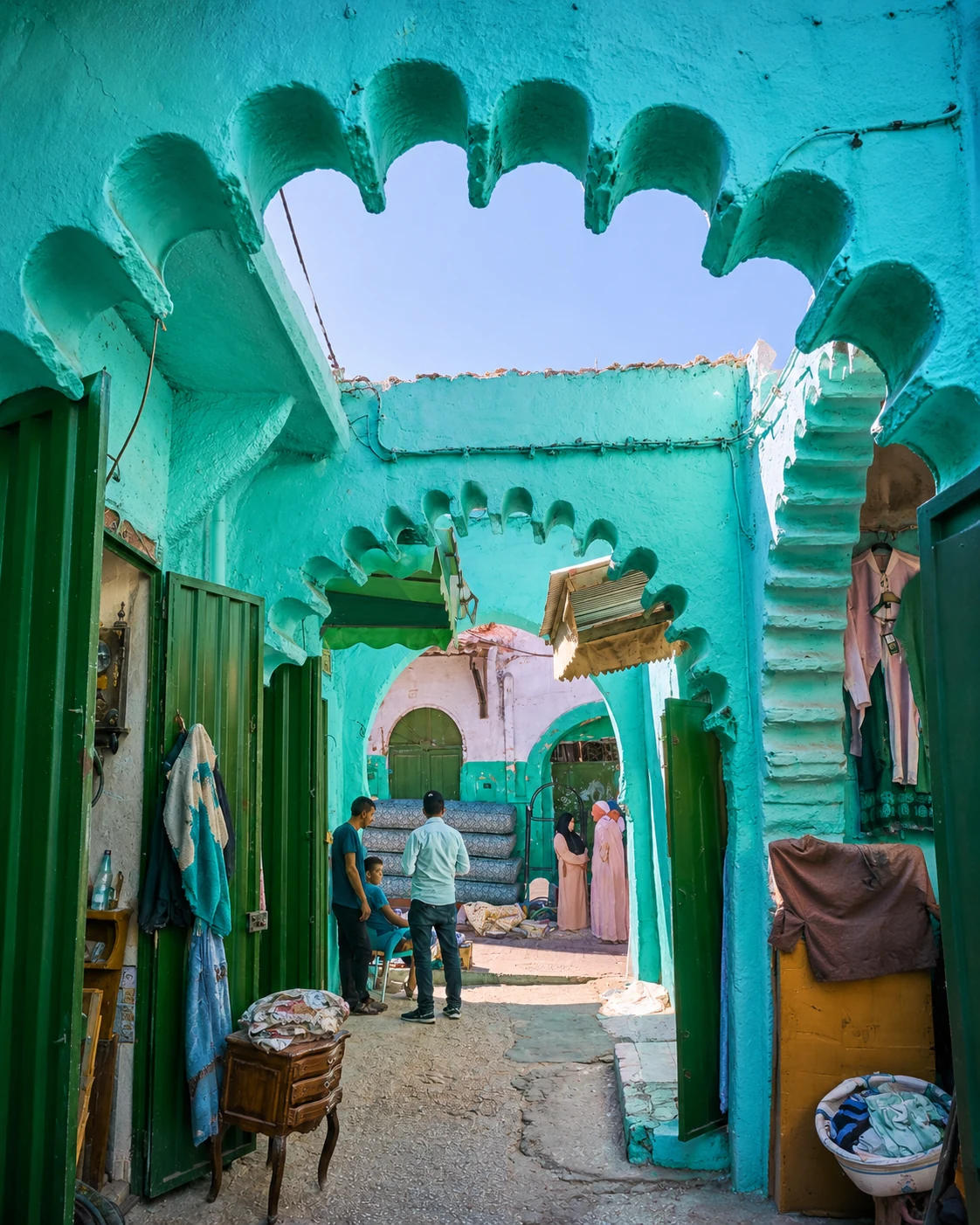
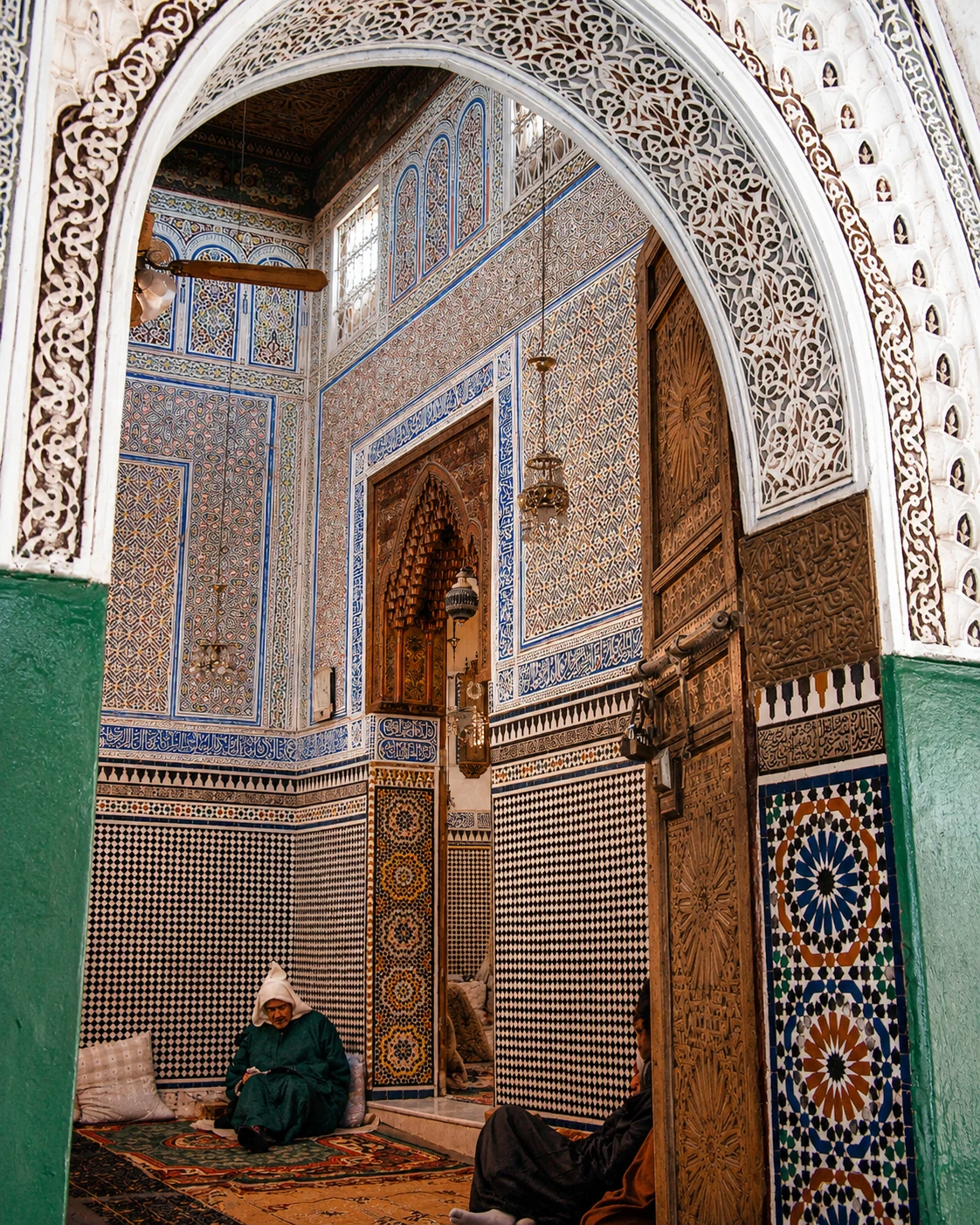
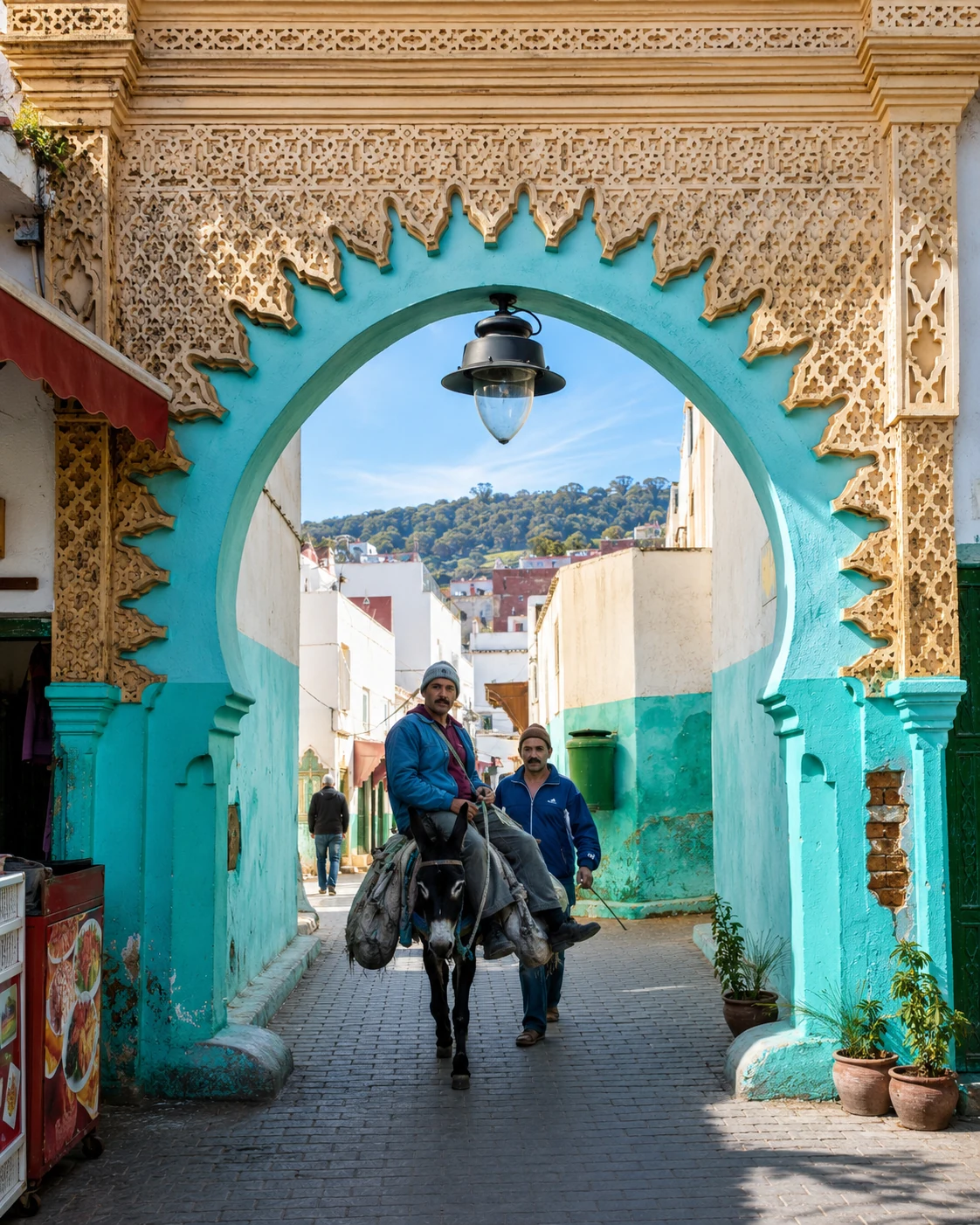
Turquoise arched passage and local life in Ouazzane

A city of quiet devotion and colour

Ouazzane’s power is quiet: a sacred threshold, a green passage, a minaret, a market lane, a craft tradition and olive hills beyond the city.

Historical orientation

From sacred lineage to living medina

The clearest way to understand Ouazzane is through layers: the spiritual centre, the medina gates, shared religious memory, craft traditions and the green agricultural region that surrounds the city.

01Spiritual heart

Moulay Abdellah Cherif

The city is closely associated with Moulay Abdellah Cherif and the zawiya tradition that helped make Ouazzane an important place of devotion and learning.

02Medina structure

Gates, lanes and mosque quarter

Green-and-white streets, arched passages and local gates shape the city’s compact historic core and give it a visual identity immediately different from other towns.

03Shared memory

Jewish heritage

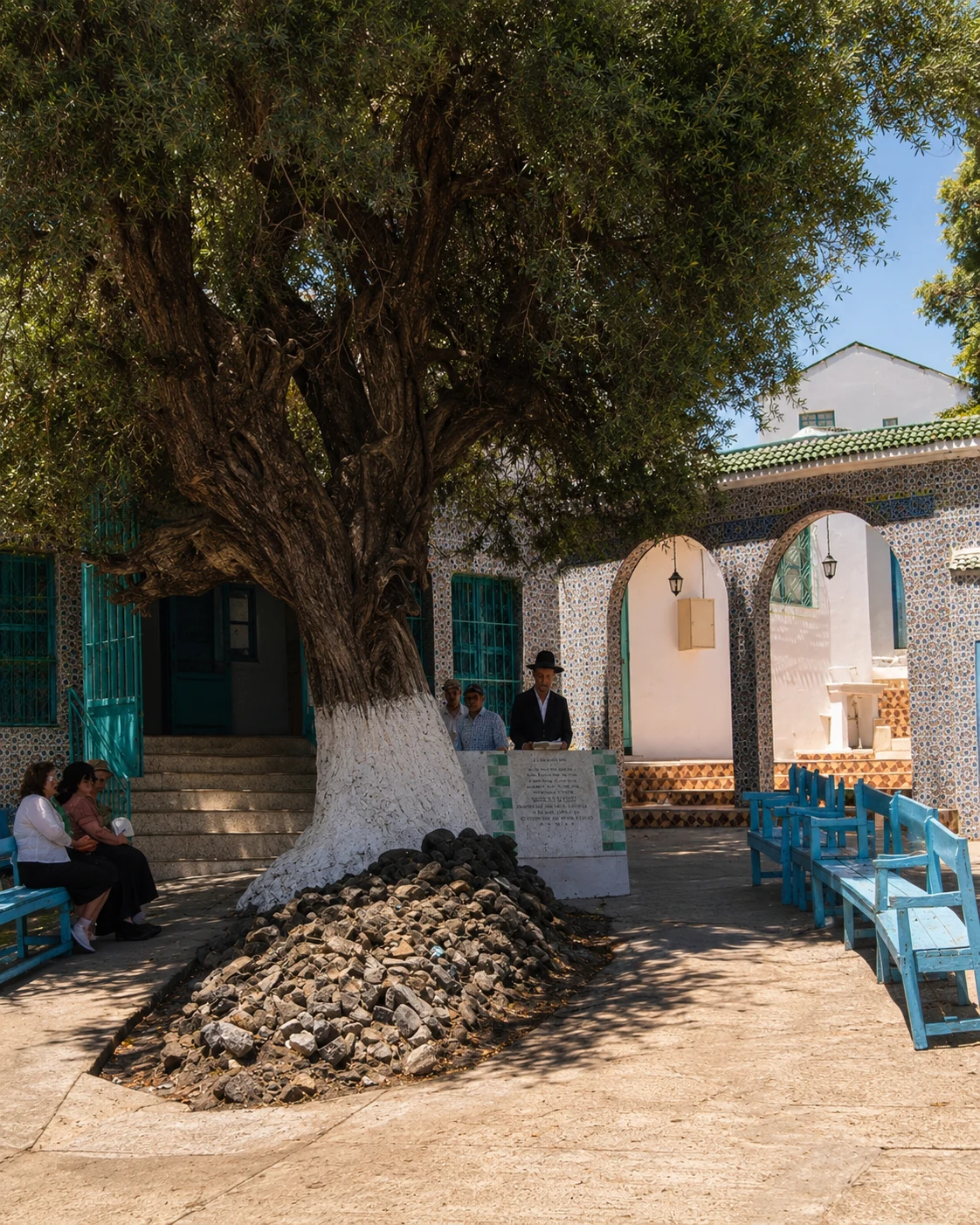
Ouazzane also carries Jewish pilgrimage memory, especially through the heritage associated with Rabbi Amram Ben Diwan and the city’s older shared sacred geography.

04Local economy

Craft, souk and olive country

The wider province is known for olives, honey, figs, craft activity and rural landscapes, while the city itself remains connected to markets and textile traditions.

A visual bridge

Three ways into the city

Ouazzane can be approached through three powerful images: sacred interiors, the octagonal mosque tower, and the lived medina gate where daily life passes beneath carved forms.

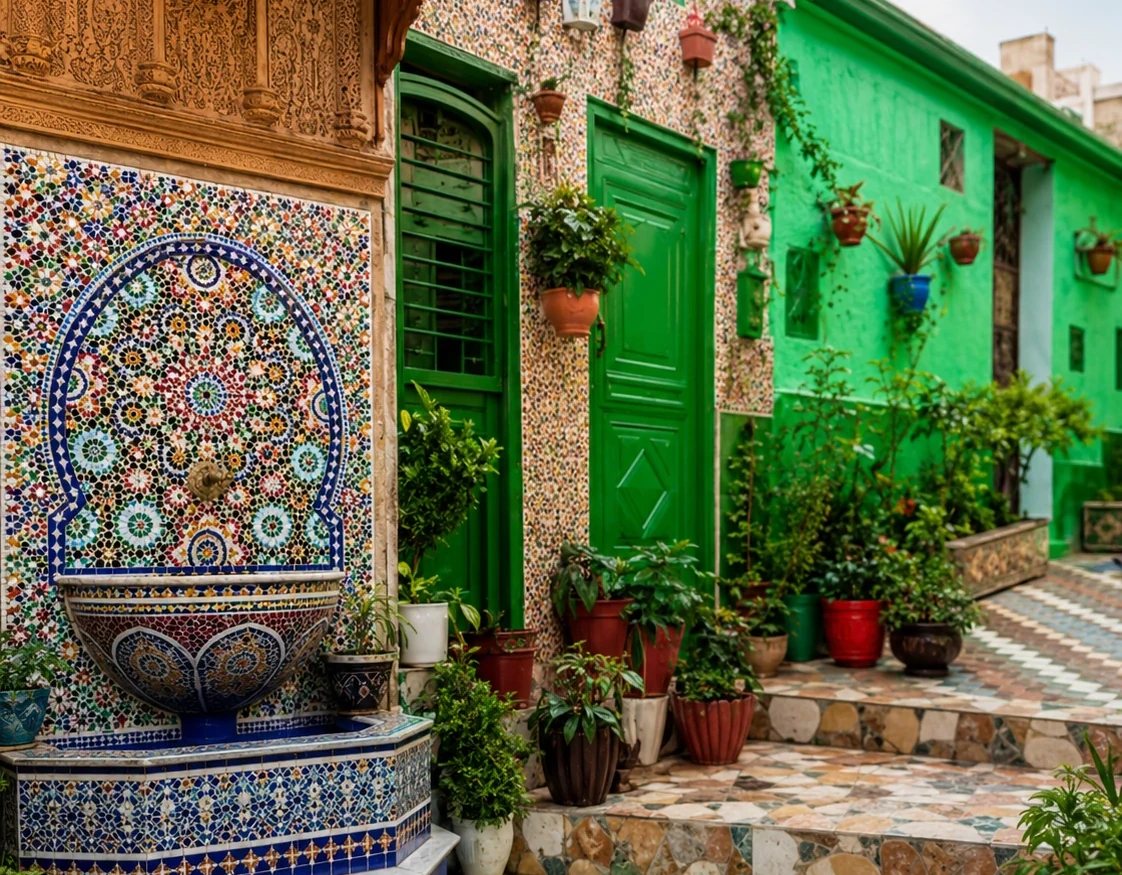
Spiritual interior with zellige and carved wood in Ouazzane

Spiritual heritage

Zellige, carved plaster and devotional interiors express Ouazzane’s long association with religious learning, prayer and sacred memory.

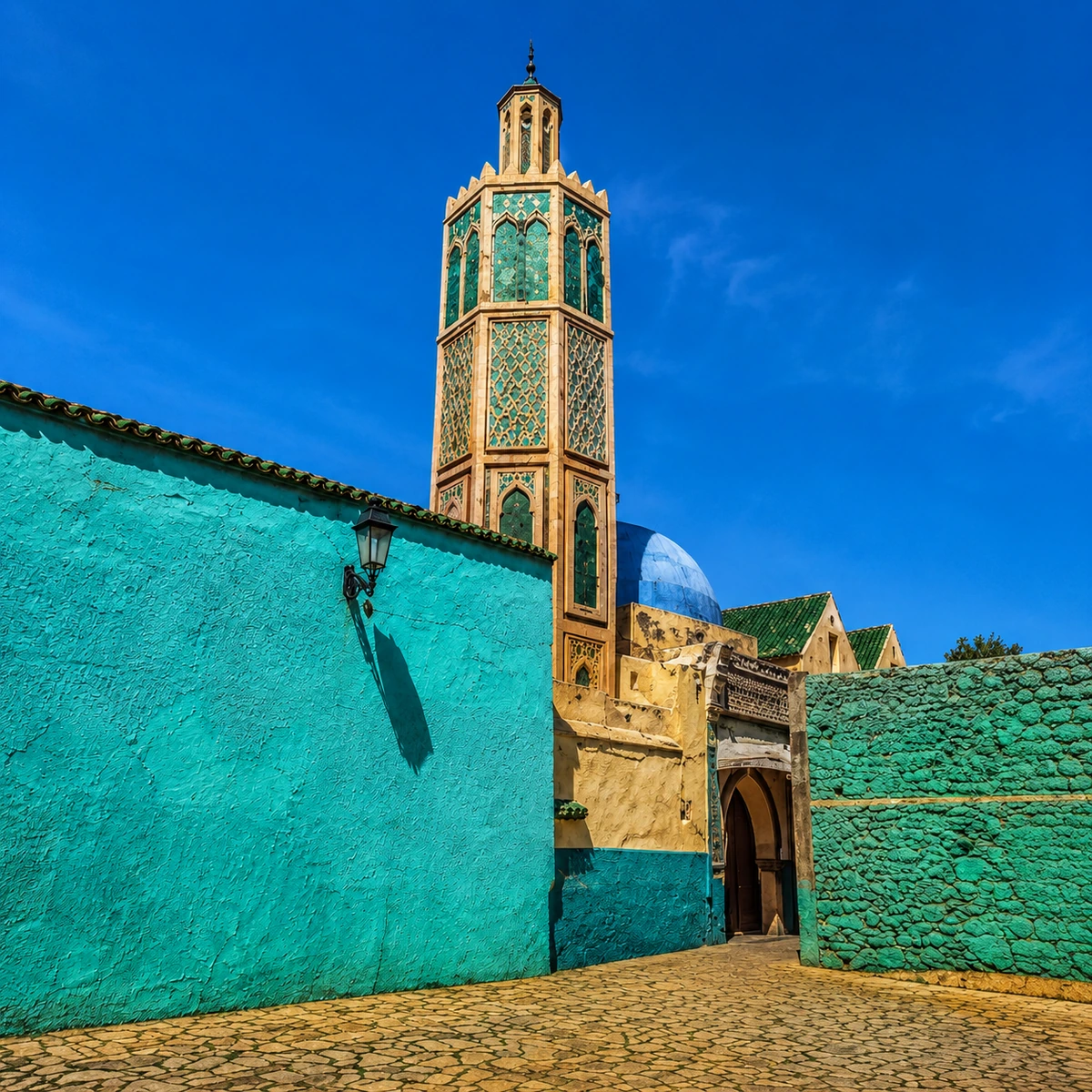
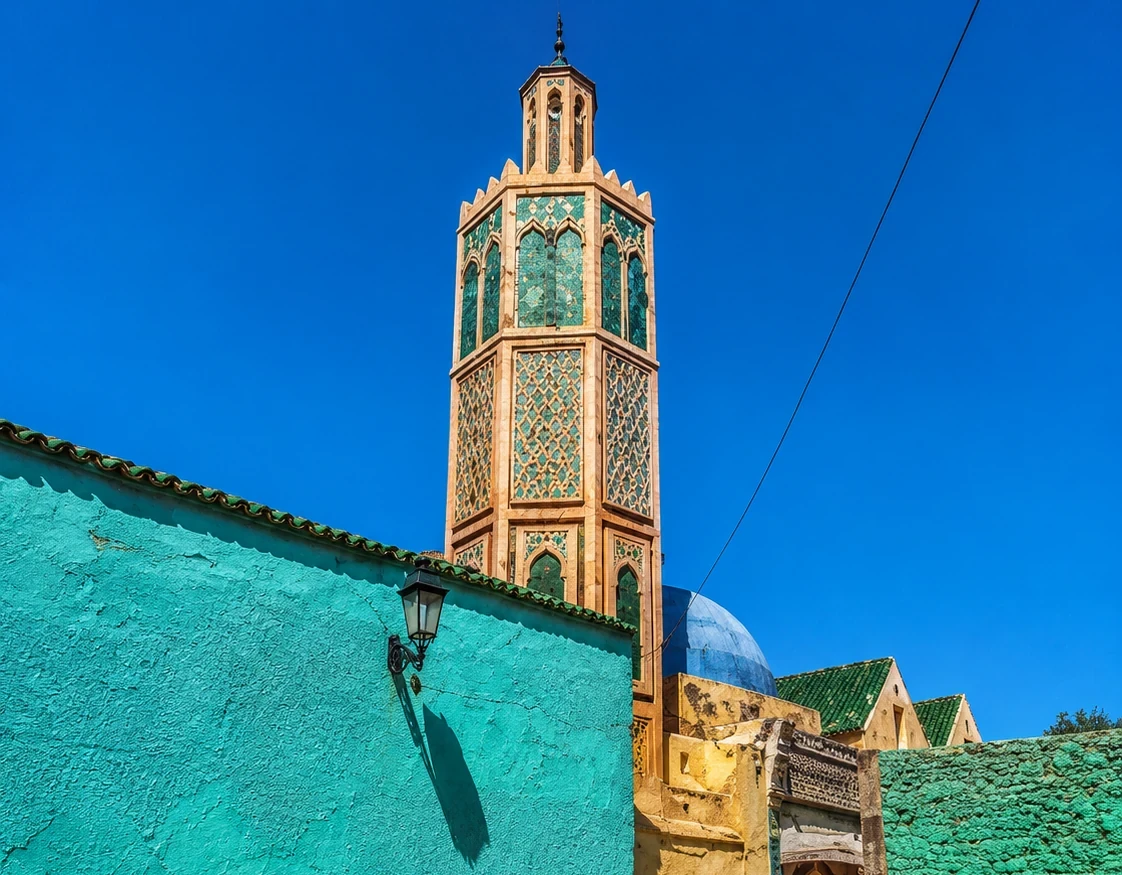
Octagonal minaret and turquoise walls in Ouazzane

Iconic landmarks

The mosque tower, green roofs and turquoise walls create a visual language that is immediately recognisable in the old city.

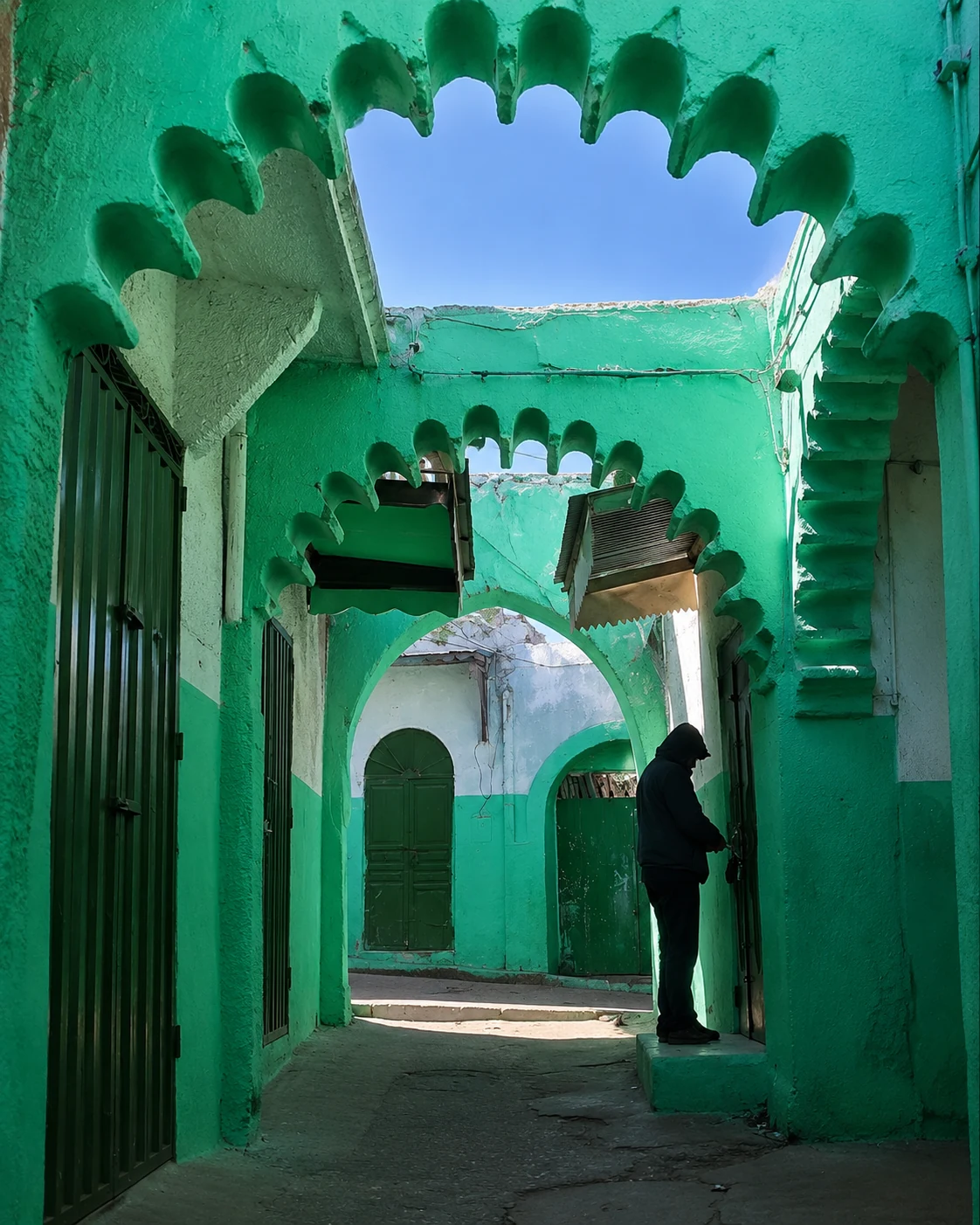
Ornate turquoise gate with daily life in Ouazzane medina

Living medina

Ouazzane’s beauty is lived: people, animals, shops, gates and shaded passages all remain part of the city’s daily rhythm.

Ouazzane at a glance

Spiritual heart

Ouazzane is deeply associated with zawiya heritage and the memory of Moulay Abdellah Cherif.

Green medina identity

Its green medina passages, arched doorways and mosque details give the city a strong visual signature.

Craft and market life

Market streets, textiles, pottery and jellaba culture keep the city connected to everyday craftsmanship.

Olive-country gateway

Beyond the medina, the surrounding hills and olive groves link Ouazzane to northern rural Morocco.

A clearer reading of the city

Three defining layers

To understand Ouazzane, read spiritual architecture, working medina life and the wider olive landscape together. Each layer gives the city its quiet northern authority.

Zellige, carved wood and sacred interior detail in Ouazzane
Layer 1

Spiritual architecture

The refined tilework, carved wood and calm interior spaces speak to a city shaped by learning, devotion and inherited religious prestige.

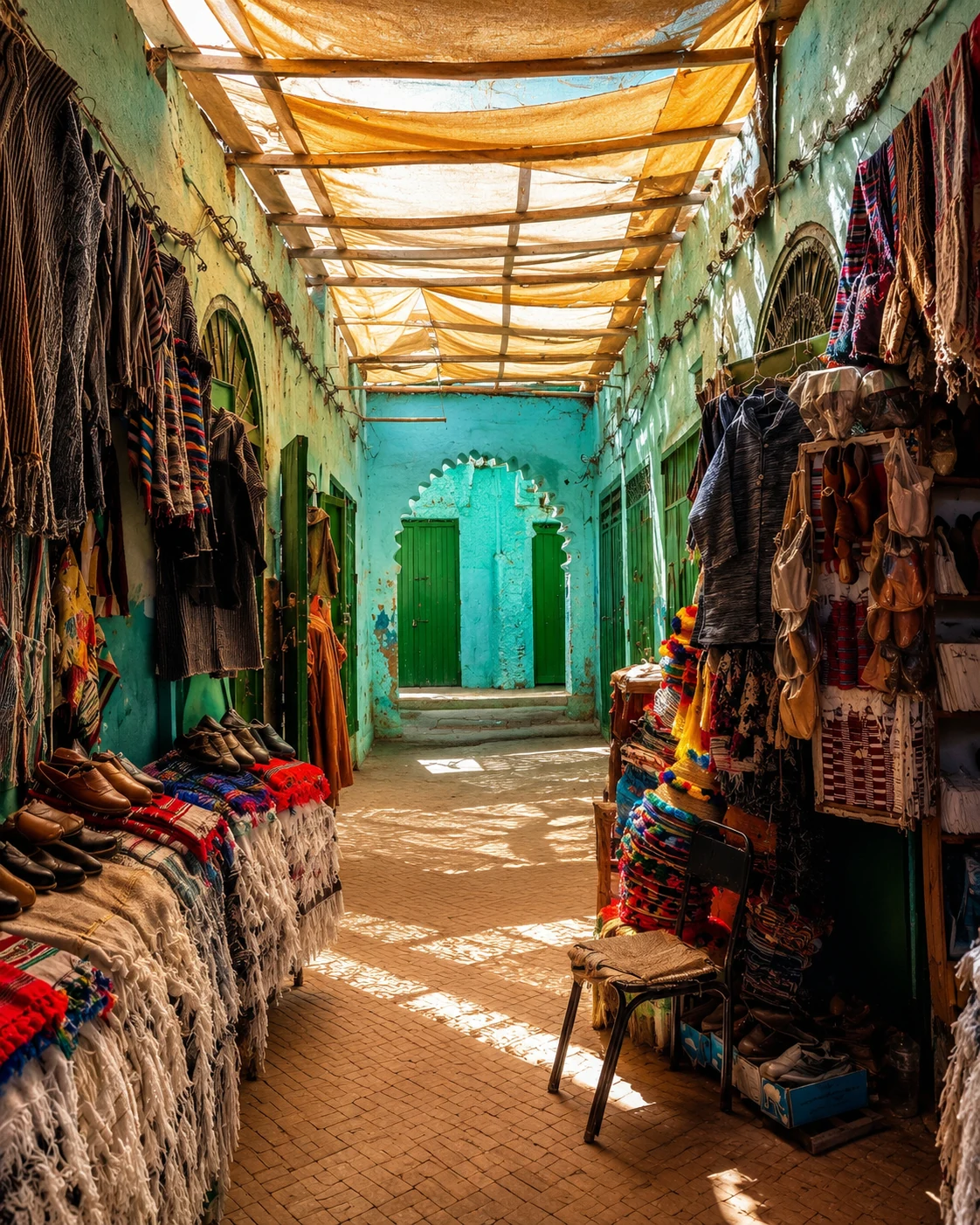
Covered souk and craft stalls in Ouazzane
Layer 2

Souks and covered lanes

Ouazzane’s old town is not a museum. It is a working medina of fabrics, shoes, leather, small shops, practical trade and daily encounters.

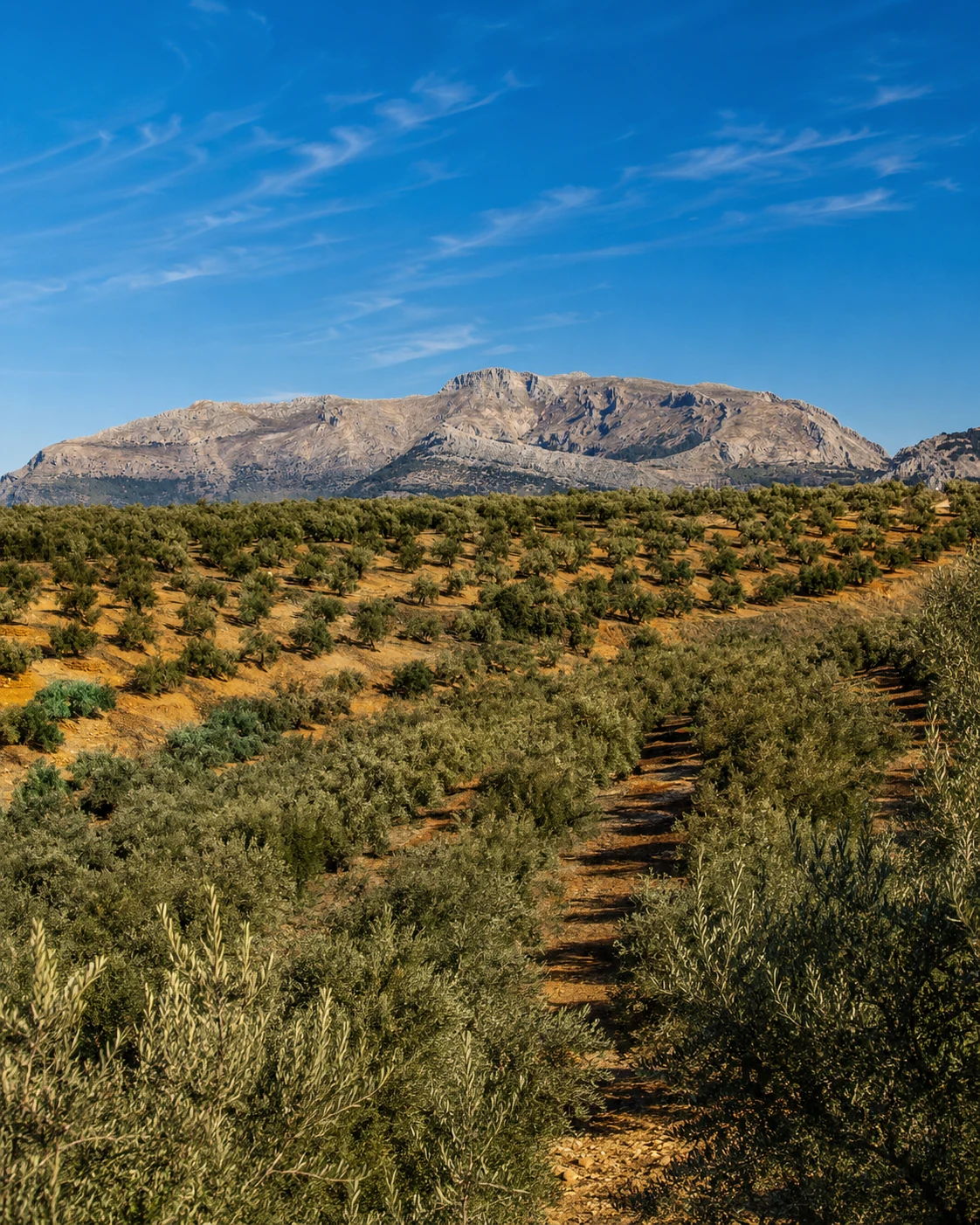
Olive groves and hills around Ouazzane
Layer 3

Olive country and the Rif edge

The surrounding landscape adds another layer: olive groves, hills and rural routes that connect the city to the green north of Morocco.

Landmarks & orientation

Read Ouazzane through six defining places

No single monument explains Ouazzane. These six points bring together sacred authority, architectural identity, medina life and the city’s wider cultural memory.

1
Zawiya of Moulay Abdellah Cherif

The spiritual heart of the city and the clearest starting point for understanding Ouazzane’s sacred reputation.

2
Grand Mosque and octagonal minaret

A key visual and devotional landmark, recognisable through its tower, green detail and old-city setting.

3
Medina gates and turquoise passages

Arched gateways and painted passages shape the movement and atmosphere of the old town.

4
Souks and covered lanes

The market streets reveal the city’s practical rhythm through textiles, pottery, leather goods and everyday trade.

5
Jellaba and textile memory

Ouazzane is strongly linked to textile memory, clothing traditions and the craft culture of northern Morocco.

6
Jewish pilgrimage memory

The city’s layered sacred geography also includes Jewish pilgrimage memory and a wider story of shared heritage.

Ouazzane minaret and turquoise wall
Decorative zellige courtyard and sacred architectural detail in Ouazzane

A sacred interior

Zawiya memory — devotion shaped in zellige and cedar

Ouazzane’s spiritual reading comes through sacred interiors, carved wood, zellige and quiet thresholds connected to the city’s zawiya heritage and the memory of Moulay Abdellah Cherif.

  • Read the city through sacred architecture, not only street colour.
  • Notice the relationship between zellige, woodwork, arches and devotional calm.
  • Connect this interior language to Ouazzane’s reputation as Dar Dmana.

Architectural reading

Turquoise passages and everyday movement

Arches and shade

These turquoise passages give Ouazzane its intimate scale. They are architectural details, but also part of the city’s daily movement.

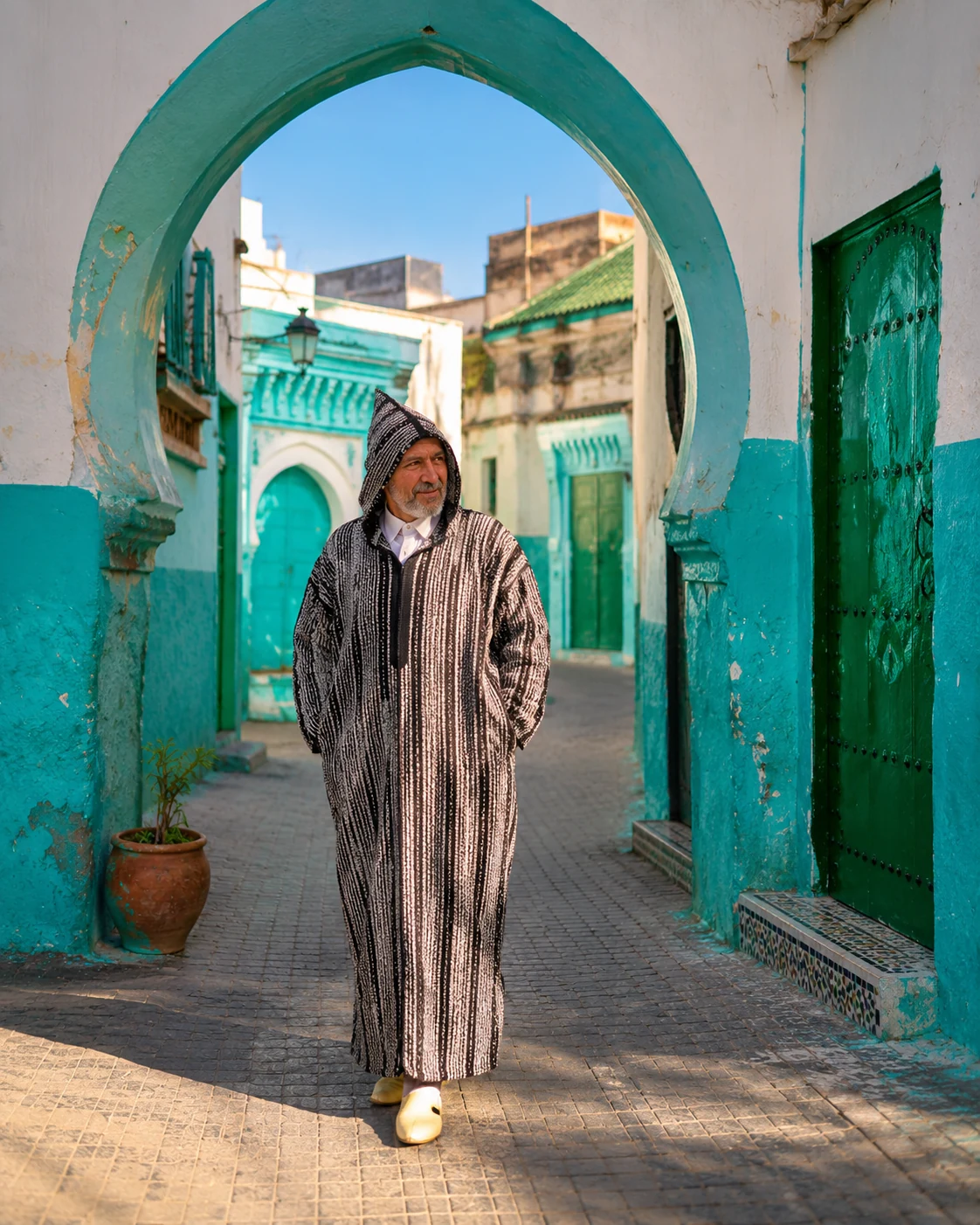
Djellaba and street presence

The local street scene keeps clothing, colour and architecture connected. Ouazzane’s human scale is part of its visual strength.

Pottery, tagines and trade

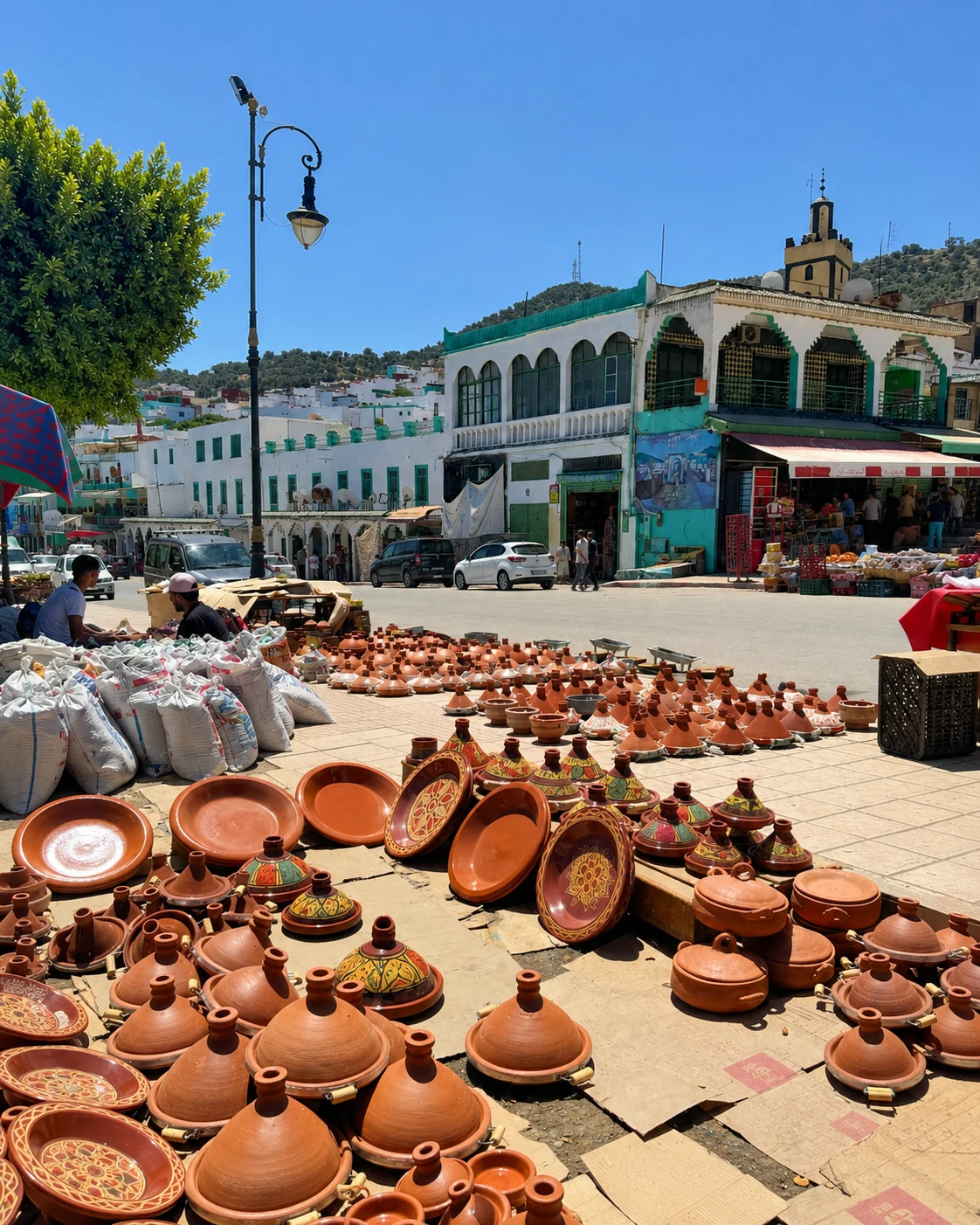
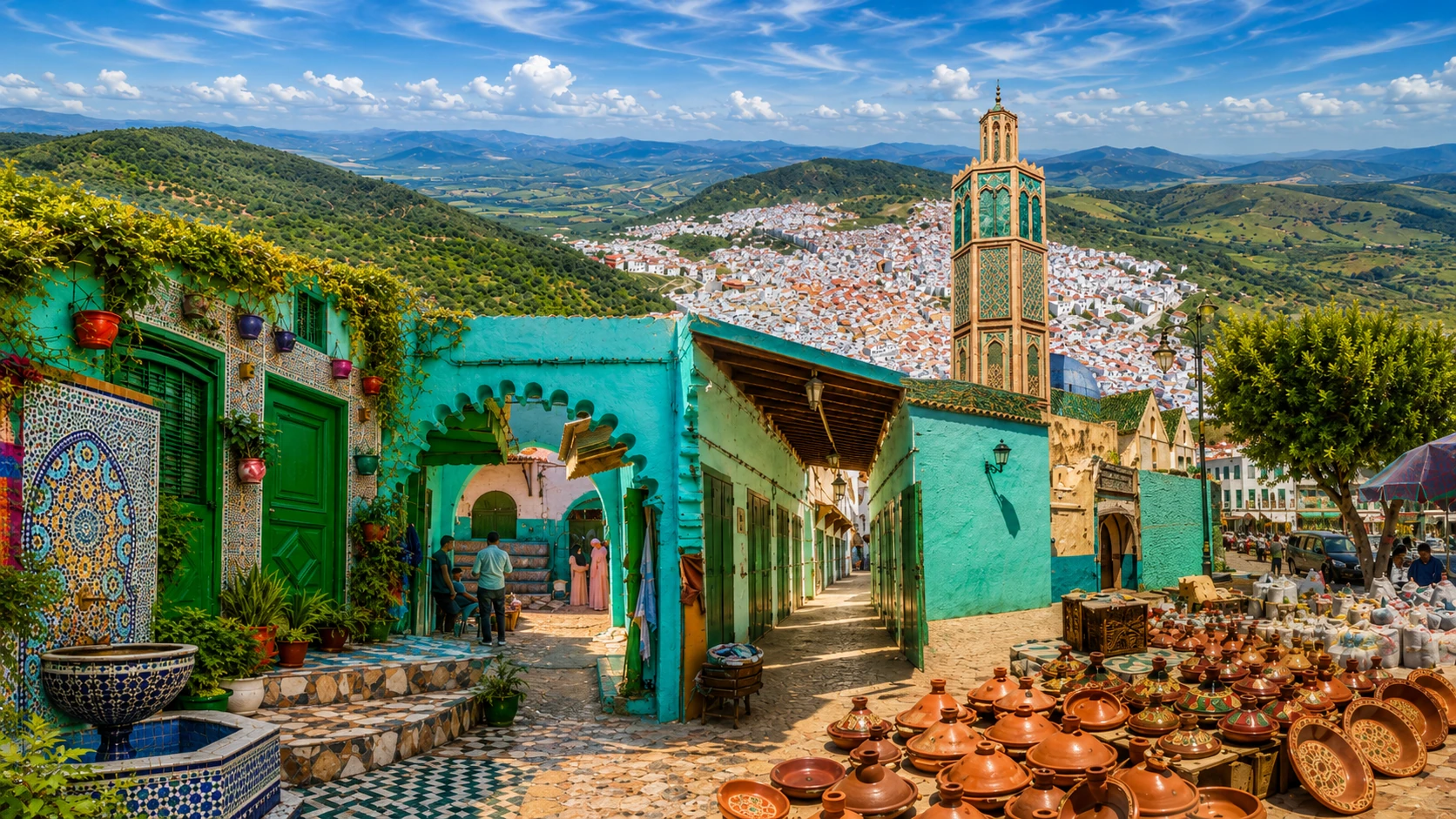
Clay tagines, market stalls and open squares reveal another face of the city: practical, warm and tied to everyday Moroccan life.

Visual atmosphere

Zellige, courtyards, memory and olive hills

Nearby highlights

Beyond Ouazzane

Ouazzane sits in a strong northern route. The city can be combined with mountain medinas, ancient ruins and Atlantic towns without losing the logic of the journey.

Chefchaouen

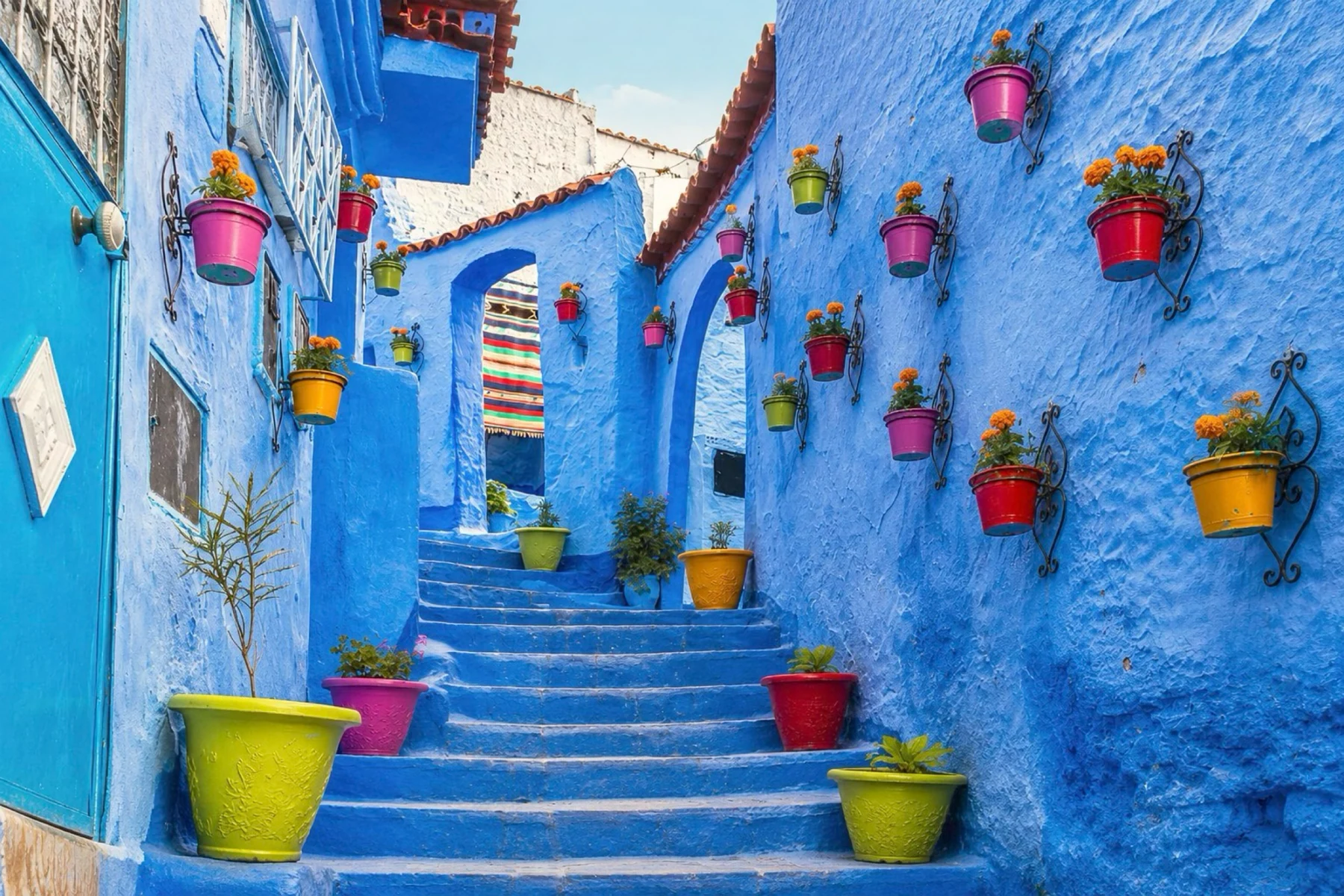
The Blue Pearl of the Rif is a natural northern extension from Ouazzane, especially for travellers following mountain medina routes.

Chefchaouen blue streets near Ouazzane route

Volubilis and Meknès route

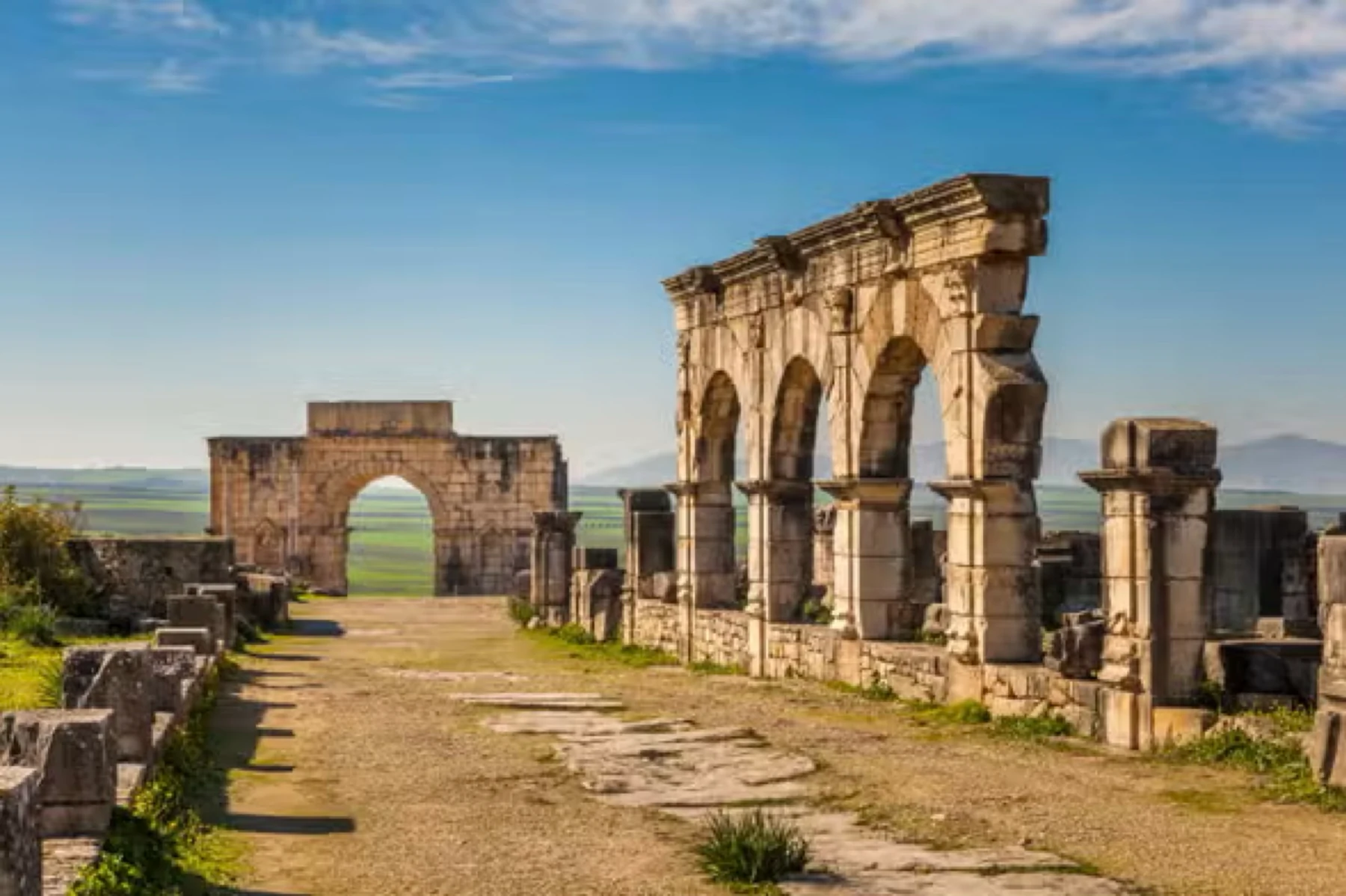
The Roman ruins of Volubilis and the imperial city of Meknès connect Ouazzane to a deeper historical landscape.

Volubilis Roman ruins on a wider Ouazzane and Meknès route

Larache

Larache opens the route toward the Atlantic, adding river views, coastal light, Spanish-era civic layers and the ancient landscape of Lixus to a northern Morocco journey.

Larache and northern Morocco urban route near Ouazzane
Travel note: opening hours, access rules, restoration work, transport conditions and local visitor arrangements can change. Check current official or trusted local information before travelling.

Practical orientation

A simple way to experience Ouazzane

  • Begin with the zawiya and the spiritual heart of the city.
  • Use the minaret and surrounding streets as orientation points.
  • Take time for the green passages, gates and painted walls.
  • Look for textiles, pottery, tagines, leather and everyday market scenes.
  • Use Ouazzane as a quieter stop between the Rif, Volubilis and northern routes.

A strong first visit

Quiet courtyard and sacred memory near Ouazzane

Begin with the sacred centre and mosque quarter, continue through the turquoise medina passages, spend time in the souks, and end with the olive-country landscape or a northern route toward Chefchaouen, Volubilis or the Atlantic side.

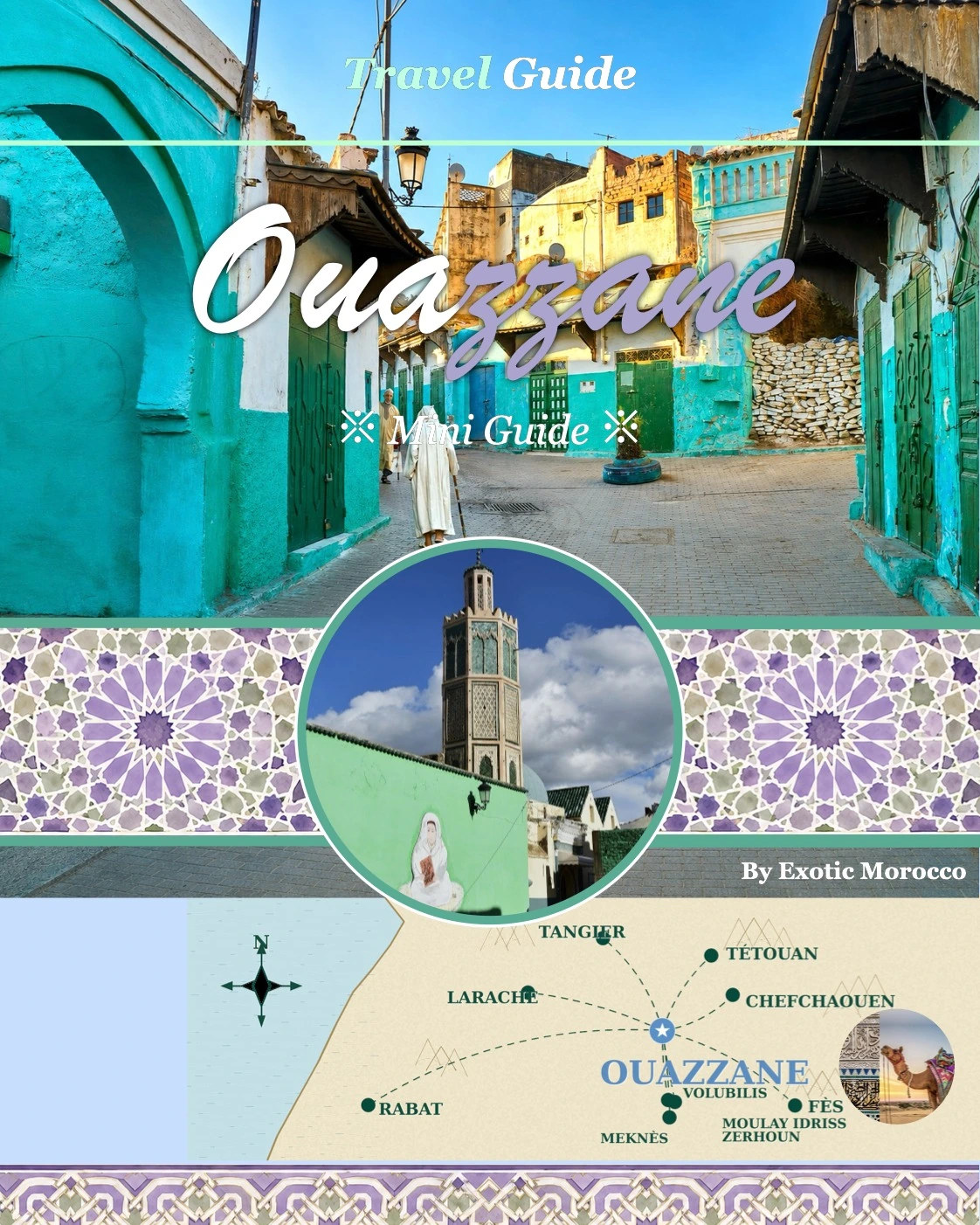
Cover of the Ouazzane Premium Visual City Guide

Go deeper with Exotic Morocco

Ouazzane — Premium Visual City Guide

Continue with a complete visual publication designed to connect Ouazzane’s spiritual heritage, medina lanes, architecture, craft traditions, practical orientation and nearby northern routes into one carefully structured journey.

✓ Spiritual heritage✓ Medina orientation ✓ Essential landmarks✓ Culture & local life ✓ Practical travel guidance✓ Nearby highlights

Continue the journey

Discover Ouazzane with more attention

Ouazzane is not loud. Its strength lies in spiritual depth, turquoise medina details, shared memory, craft, souk life and the olive landscapes that hold the city in northern Morocco.