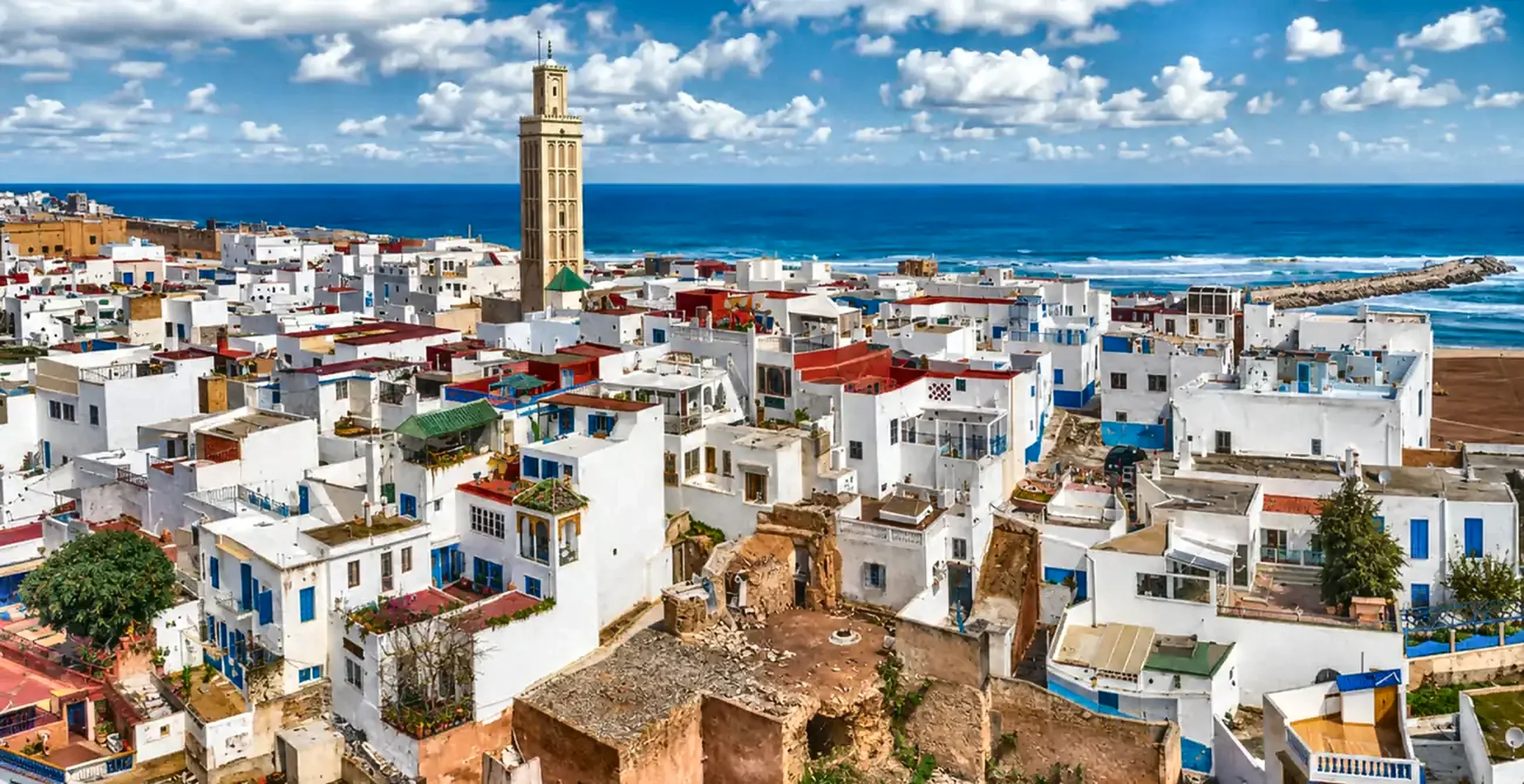
Panoramic view of Rabat’s medina and Atlantic coastline

Morocco’s Atlantic capital

Rabat From Almohad ribat to Atlantic capital

A precise guide to Rabat’s Almohad foundations, Andalusian and Morisco memory, royal institutions, planned modern city and riverfront relationship with Salé.

Why Rabat matters

Between the Bouregreg, the Atlantic and the Almohad walls

Rabat occupies the Atlantic side of the Bouregreg estuary, facing its historic twin, Salé. The kasbah, medina and monumental Hassan quarter developed around this strategic meeting point between inland routes, river traffic and the ocean.

The city’s quieter rhythm can hide its complexity. Medieval fortifications, a seventeenth-century Andalusian layer, the administrative capital established in 1912 and retained after independence, and carefully planned modern districts all remain legible in the same city.
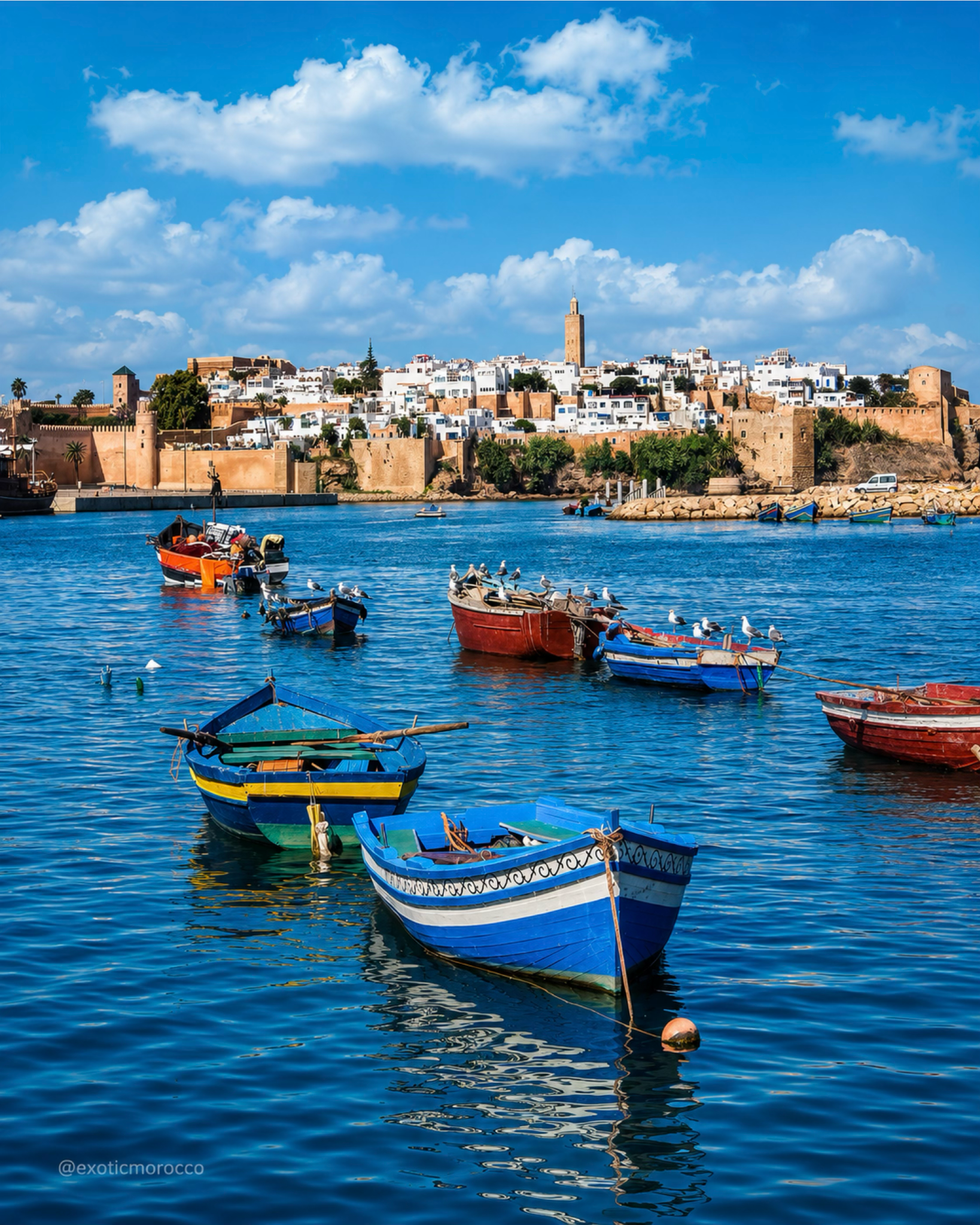
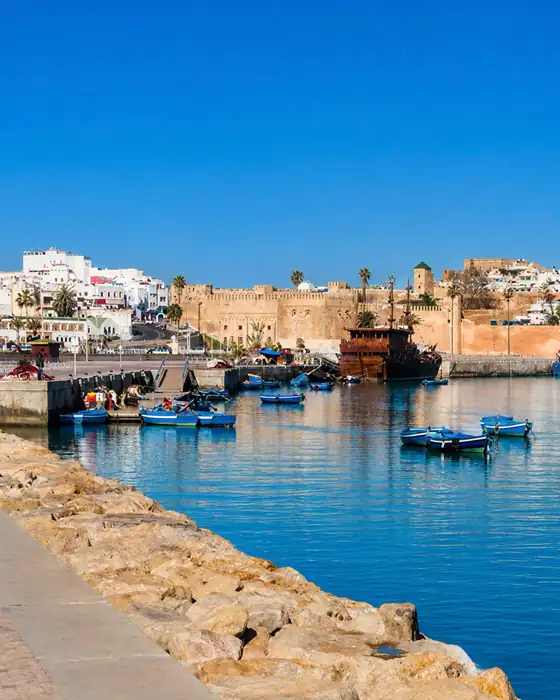
Boats on the Bouregreg with Rabat's walled skyline and minaret beyond

A capital of river, wall and ocean

Rabat is not only a seat of administration. Its identity is formed by the river mouth, Almohad walls, Andalusian streets, royal ceremony, gardens and Atlantic light.

Historical orientation

From Almohad ribat to modern capital

Four turning points explain how a fortified settlement became an imperial project, an Andalusian river city and Morocco’s modern capital. Rabat is best read through these overlapping layers rather than through a single monument.

0112th century

An Almohad ribat

Under Abd al-Mu’min, the fortified site overlooking the Bouregreg was expanded as a strategic base. The kasbah preserves this first major Almohad layer.

021184 onwards

Ribat al-Fath

Yaqub al-Mansur launched an ambitious capital project, including the vast Hassan Mosque, monumental gates and extensive ramparts.

0317th century

Andalusian Rabat

Moriscos expelled from Iberia reshaped the medina and its walls, while Rabat and Salé became connected through the maritime history of the Bouregreg.

041912 / 2012

Capital and World Heritage

Rabat became Morocco’s capital in 1912. UNESCO later inscribed its historic and modern urban ensemble as World Heritage, recognising the shared value of both layers.

Three precise entry points

A tower, a kasbah and an archaeological landscape

These three places introduce Rabat more accurately than a generic capital-city skyline: an unfinished Almohad mosque, a fortified river settlement and a site where ancient, Islamic and natural layers overlap.

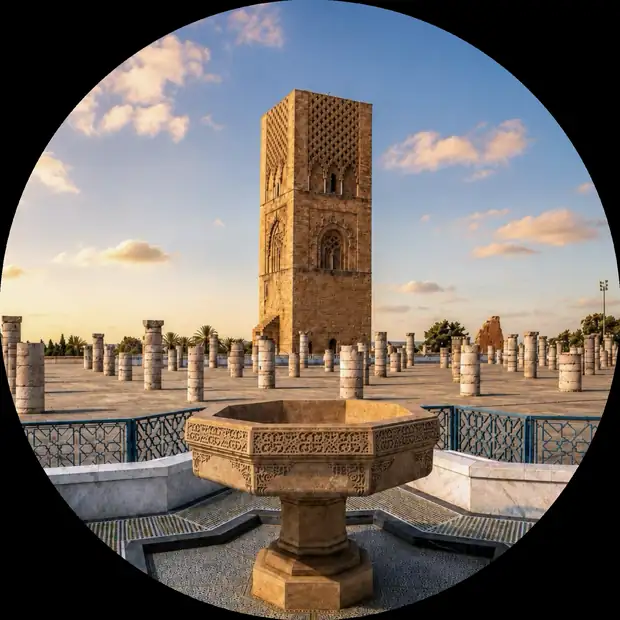
Hassan Tower and its esplanade in Rabat

Hassan Tower

The surviving minaret and forest of columns reveal the scale of Yaqub al-Mansur’s unfinished late-twelfth-century mosque.

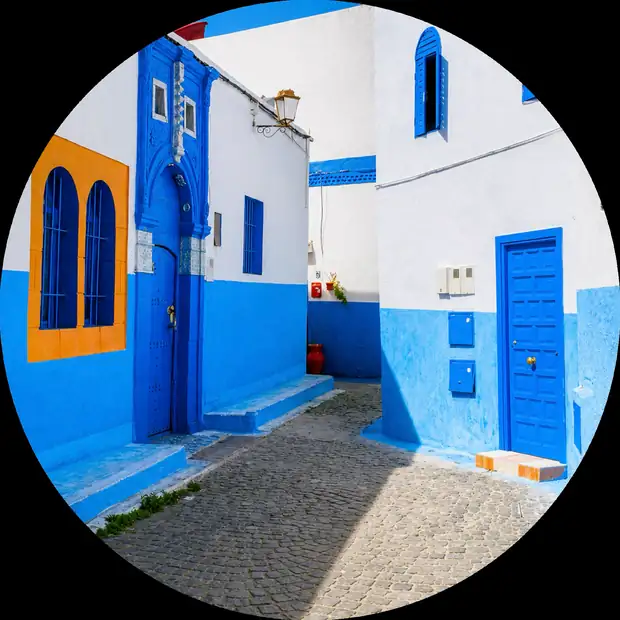
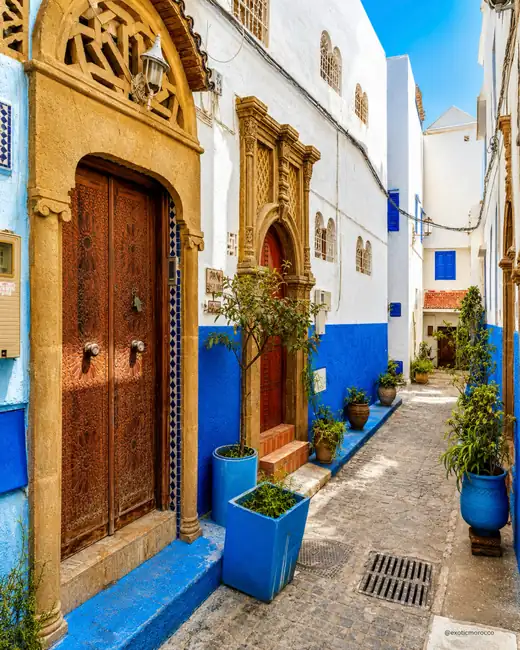
Blue-and-white residential lane in the Kasbah of the Oudaias

Kasbah of the Oudaias

Almohad fortifications, Andalusian houses, river views and later palace gardens coexist within one compact historic quarter.

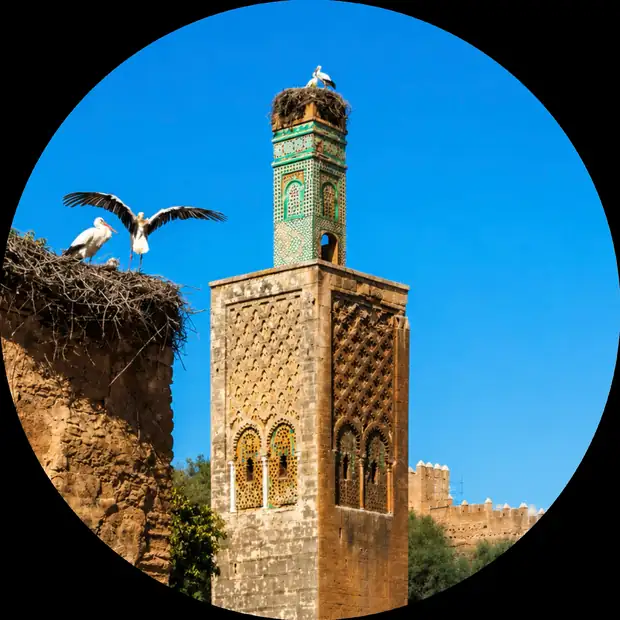
Minaret and storks within the archaeological landscape of Chellah

Chellah

Roman Sala Colonia, a Marinid necropolis, gardens and birdlife create one of Rabat’s most layered heritage environments.

Rabat at a glance

Almohad foundations

The Hassan complex, Kasbah of the Oudaias, Bab El-Had and surviving ramparts preserve the scale of the twelfth-century imperial project.

Andalusian medina life

Rue Souika, Rue des Consuls, the Andalusian Wall and residential lanes reflect commerce, migration and daily urban life.

Modern capital order

Royal, administrative, residential and cultural districts planned from 1912 onwards give Rabat its broad avenues, gardens and civic rhythm.

Bouregreg and Atlantic edge

The river mouth links Rabat to Salé, kasbah viewpoints, the marina, beaches and the maritime history of both cities.

Read the city through function

Three institutions that define Rabat as a capital

The mausoleum, the royal ceremonial complex and Rue des Consuls reveal three distinct functions of the capital: national memory, state authority and commercial exchange.

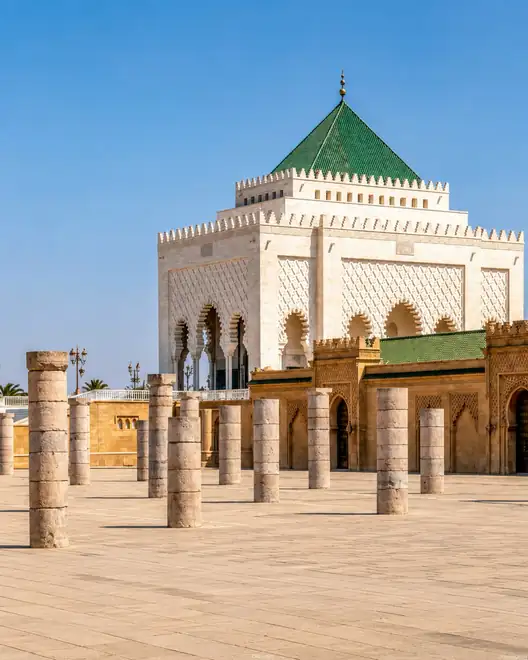
Mausoleum of Mohammed V beside the Hassan Tower esplanade
National memory

Mausoleum of Mohammed V

White marble, a green tiled roof, zellige, carved plaster and cedar translate traditional Moroccan craftsmanship into a modern national monument.

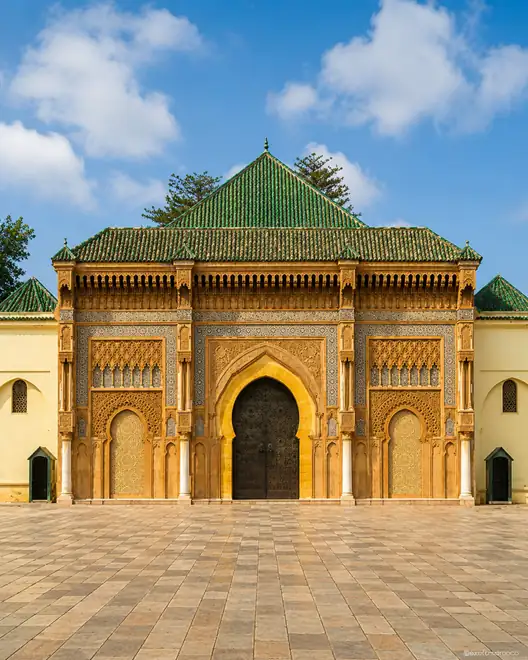
Ceremonial entrance of Dar al-Makhzen, the Royal Palace in Rabat
State authority

Dar al-Makhzen & the Méchouar

The palace complex and ceremonial esplanade express Rabat’s present political role. Visitors experience the exterior setting rather than a conventional public palace interior.

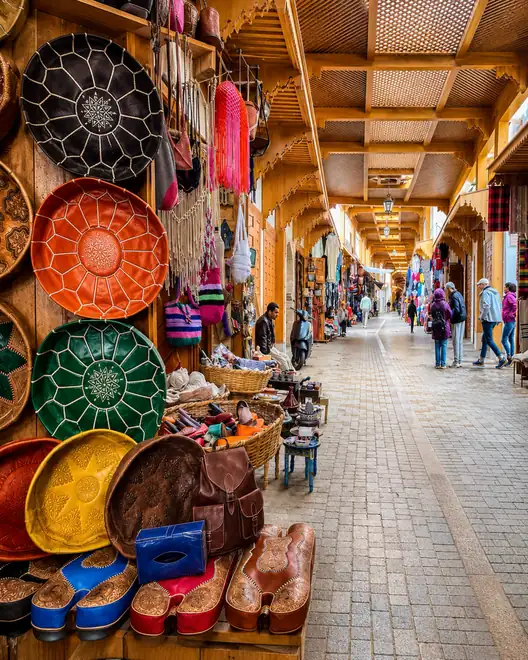
Craft shops along Rue des Consuls in Rabat medina
Craft exchange

Rue des Consuls

Once associated with foreign representatives, the street now connects medina circulation with carpets, textiles, metalwork, leather goods and other crafts.

Landmarks & orientation

Read Rabat through six defining places

These places belong to different periods and functions. Reading them together prevents Rabat from being reduced to either a government capital or a single picturesque kasbah.

1
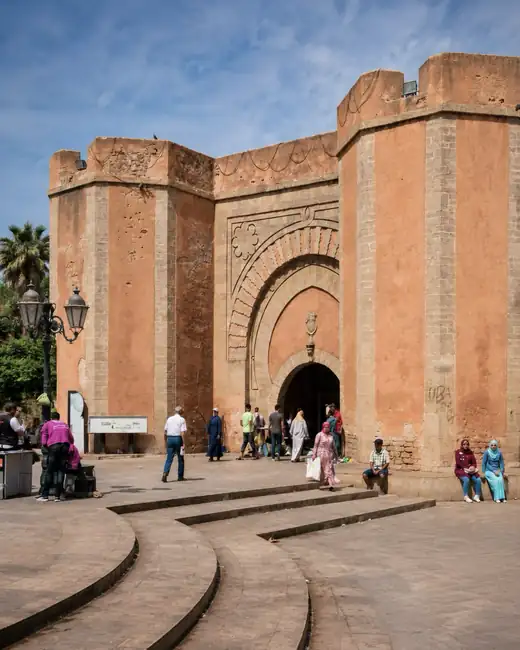
Bab El-Had

A late-12th-century Almohad gateway that still marks the transition between the medina and the modern city.

2
Hassan Tower

The surviving minaret of Yaqub al-Mansur’s unfinished mosque project, begun in 1184 as part of an intended Almohad capital.

3
Mausoleum of Mohammed V

A 20th-century royal mausoleum whose marble, carved wood, plaster and zellige connect national memory to Moroccan craftsmanship.

4
Kasbah of the Oudaias

A fortified quarter above the river mouth, combining an Almohad gate, residential lanes, museum, garden and views towards Salé.

5
Chellah

A walled archaeological landscape where ancient Sala Colonia and a Marinid funerary complex occupy the same historic site.

6
Dar al-Makhzen

The exterior ceremonial complex expresses Rabat’s continuing role as the seat of monarchy and state protocol.

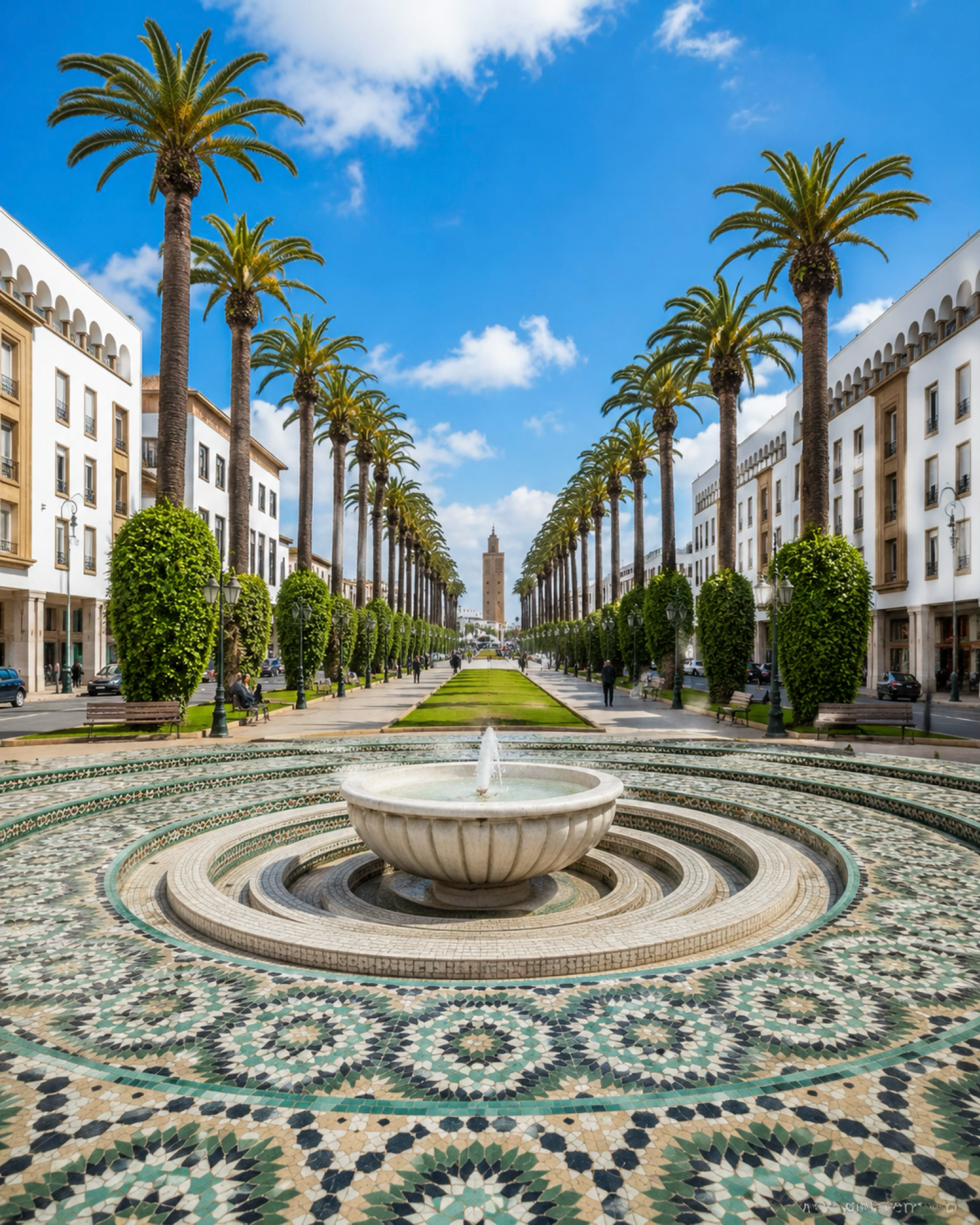
Palm-lined avenue and fountain leading towards Hassan Tower in Rabat
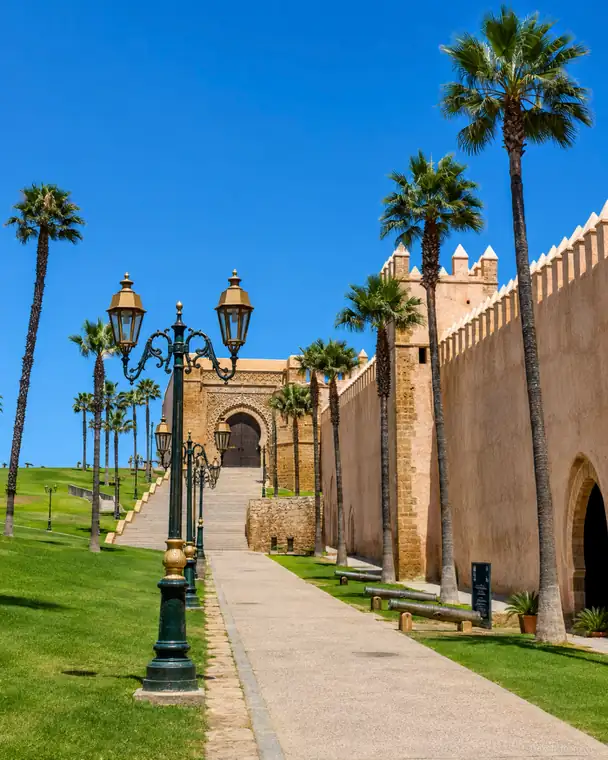
Path, palm trees and fortified walls at the Kasbah of the Oudaias in Rabat

A fortified interior

The Kasbah of the Oudaias — Almohad fortification and Andalusian urban memory

The kasbah began as an Almohad stronghold above the Bouregreg. Later occupants added a palace, mosque, garden and residential fabric. Andalusian and Morisco settlement helped shape the white-and-blue lanes now associated with the quarter.

  • Bab Oudaya is a monumental Almohad gate, not merely an entrance to a picturesque neighbourhood.
  • The garden dates from the Protectorate period but draws on Hispano-Moorish spatial traditions.
  • Views towards Salé and the Atlantic explain the kasbah’s strategic position at the river mouth.

Orientation that saves time

Three routes through Rabat’s distinct urban layers

Route 1 — Oudaias & medina

Begin at the kasbah, continue through Rue des Consuls and Souika, then leave the medina through Bab El-Had. This route connects fortification, residential life and commerce.

Route 2 — Hassan & Bouregreg

Pair Hassan Tower and the mausoleum with the riverfront and views towards Salé. The route explains both the Almohad capital project and the modern national monument.

Route 3 — Chellah & modern city

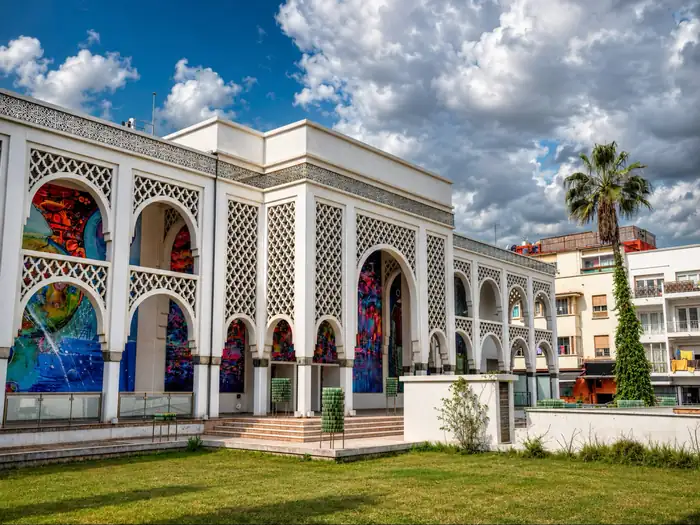
Visit Chellah separately, then continue towards the Mohammed VI Museum, central avenues and civic gardens. This avoids forcing distant urban layers into one rushed walk.

Objects, surfaces and ordinary city life

Rabat through gates, gardens, museums and the Bouregreg

Nearby highlights

Beyond the monumental core: riverfront, garden and marina

These three places extend the city through lived river space, planned landscape and contemporary waterfront development.

Bouregreg Riverfront

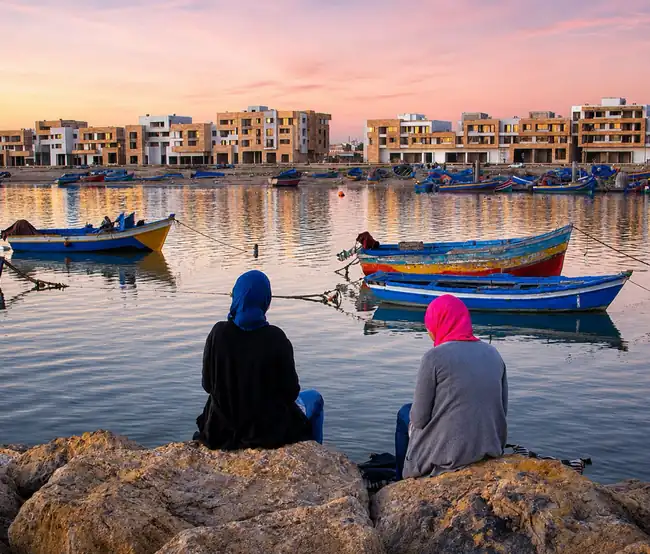
Fishing boats and informal waterfront life show the river as an everyday working landscape, not merely a scenic boundary.

Everyday life beside the Bouregreg fishing boats

Jardin d’Essais Botaniques

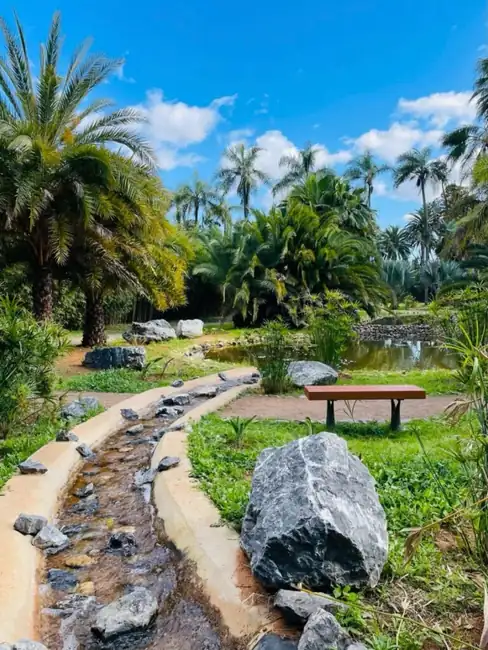
Created in the early 20th century, the garden links Rabat’s planned modern city to botanical collections, water and shaded walking routes.

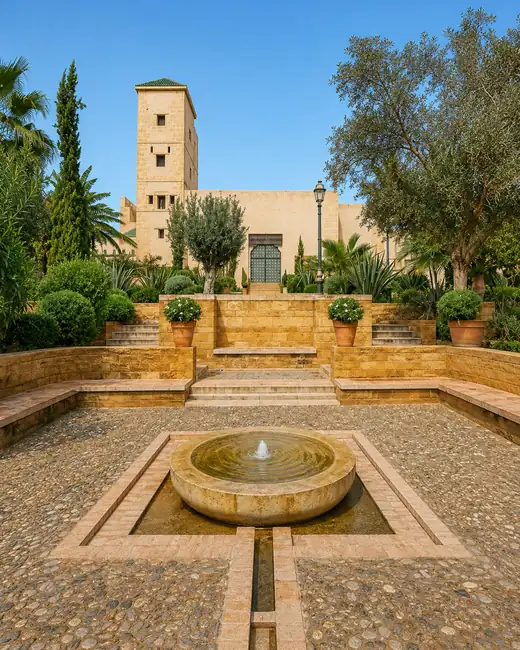
Jardin d’Essais Botaniques in Rabat

Bouregreg Marina

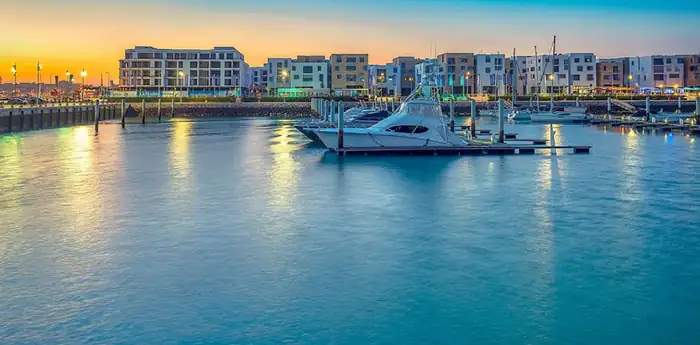
The marina on the Salé side offers a contemporary view across the river and clarifies the visual relationship between both banks.

Bouregreg Marina at sunset
Travel note: opening hours, access rules, restoration work, transport conditions and local visitor arrangements can change. Check current official or trusted local information before travelling.

Practical orientation

How to experience Rabat well in two days

  • Day 1 morning: Kasbah of the Oudaias, garden and medina.
  • Day 1 afternoon: Rue des Consuls, Souika, Bab El-Had and the modern centre.
  • Day 2 morning: Hassan Tower, Mausoleum of Mohammed V and the Bouregreg.
  • Day 2 afternoon: Chellah, MMVI or one carefully chosen civic garden.
  • Check current opening times, restoration closures and access rules before travelling.

A strong first visit

Rabat waterfront and fortified city edge beside the Bouregreg

The main sites occupy different urban zones and represent different historical layers. Two measured days reveal more than a rushed circuit between the kasbah and Hassan Tower.

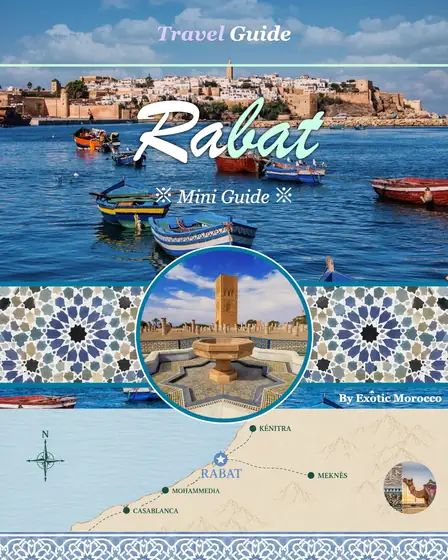
Rabat Premium Visual City Guide by Exotic Morocco

Go deeper with Exotic Morocco

Rabat — Premium Visual City Guide

Continue with a structured visual guide connecting Almohad Rabat, the Oudaias, Chellah, Hassan Tower, the royal and modern capital, museums, gardens, practical orientation and the Bouregreg–Salé relationship.

✓ Historic context✓ Essential landmarks ✓ Architecture & design✓ Culture & local life ✓ Practical travel guidance✓ Nearby highlights

Continue the journey

Enter Rabat as a complete city, not a short capital stop

Follow the walls, distinguish the kasbah from the medina, connect Hassan Tower to the modern state and leave time for the gardens, museums and Bouregreg views that give Rabat its measured character.