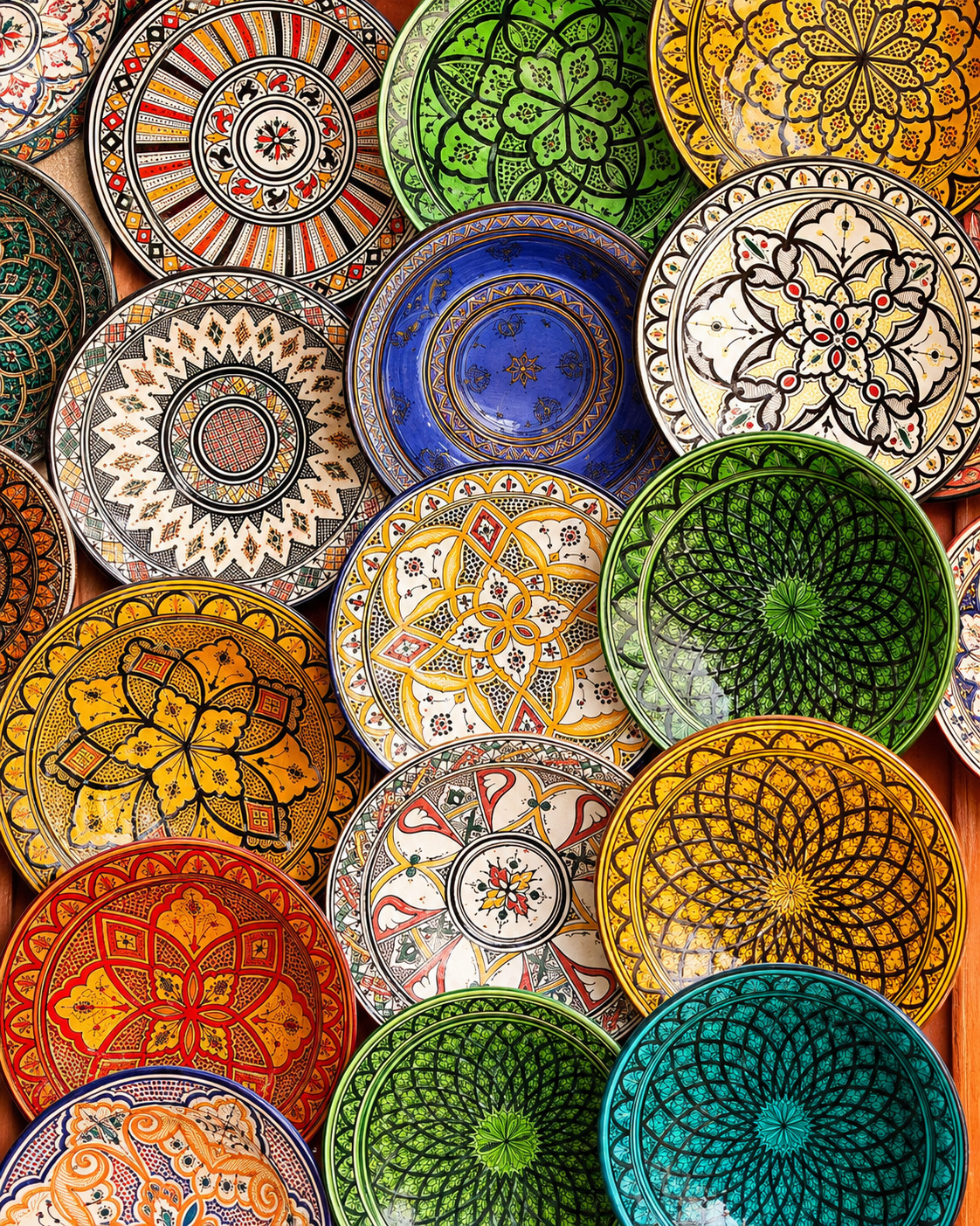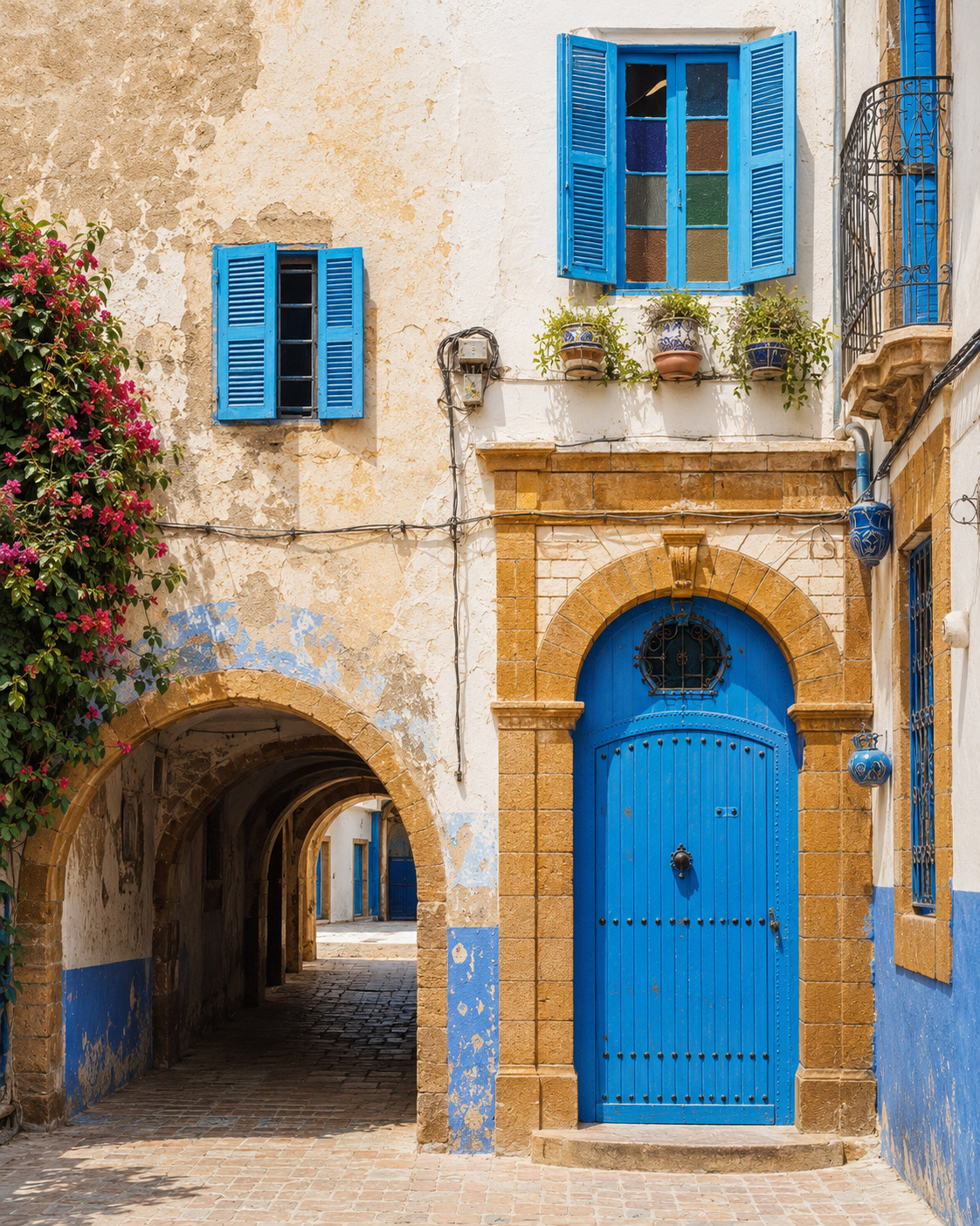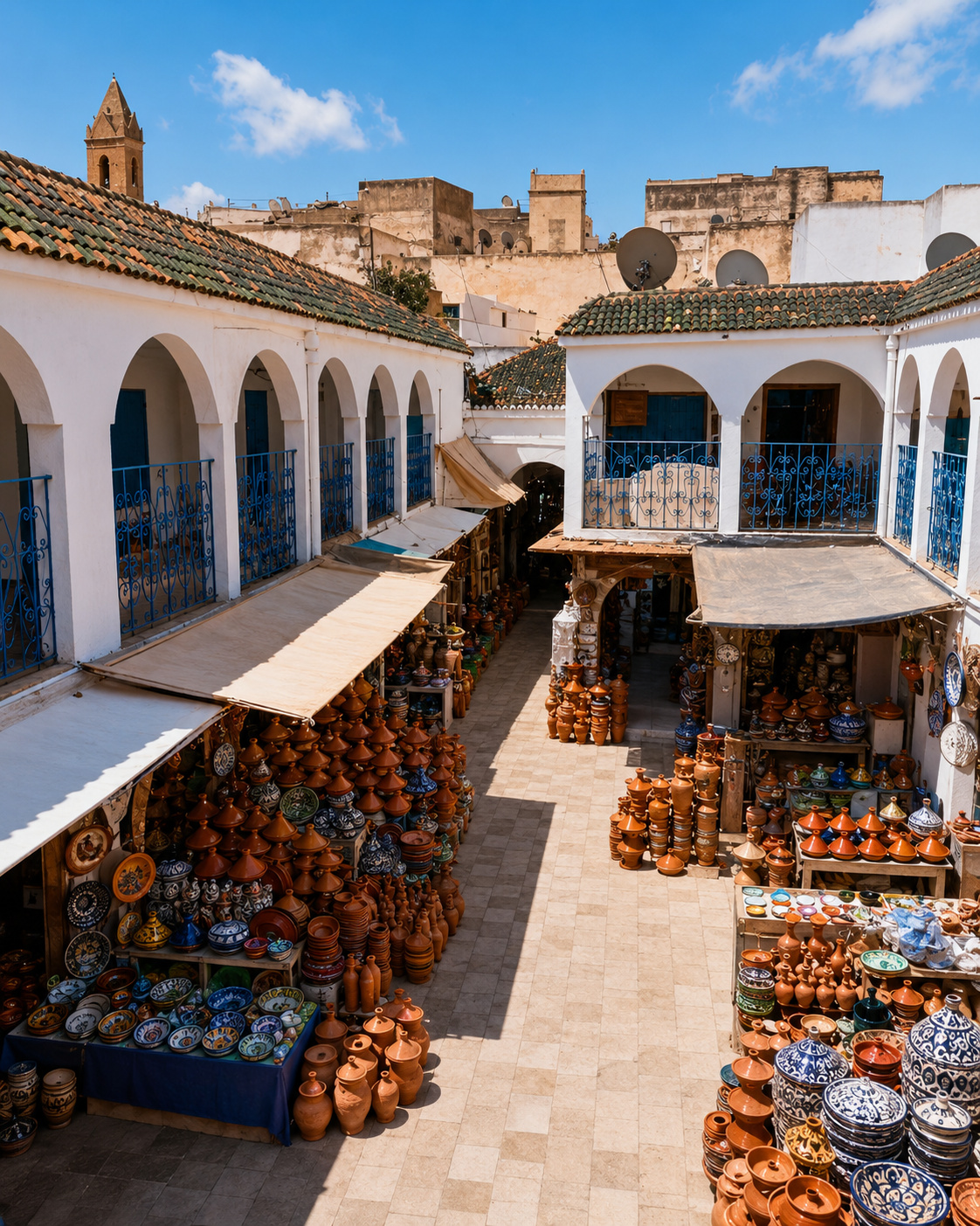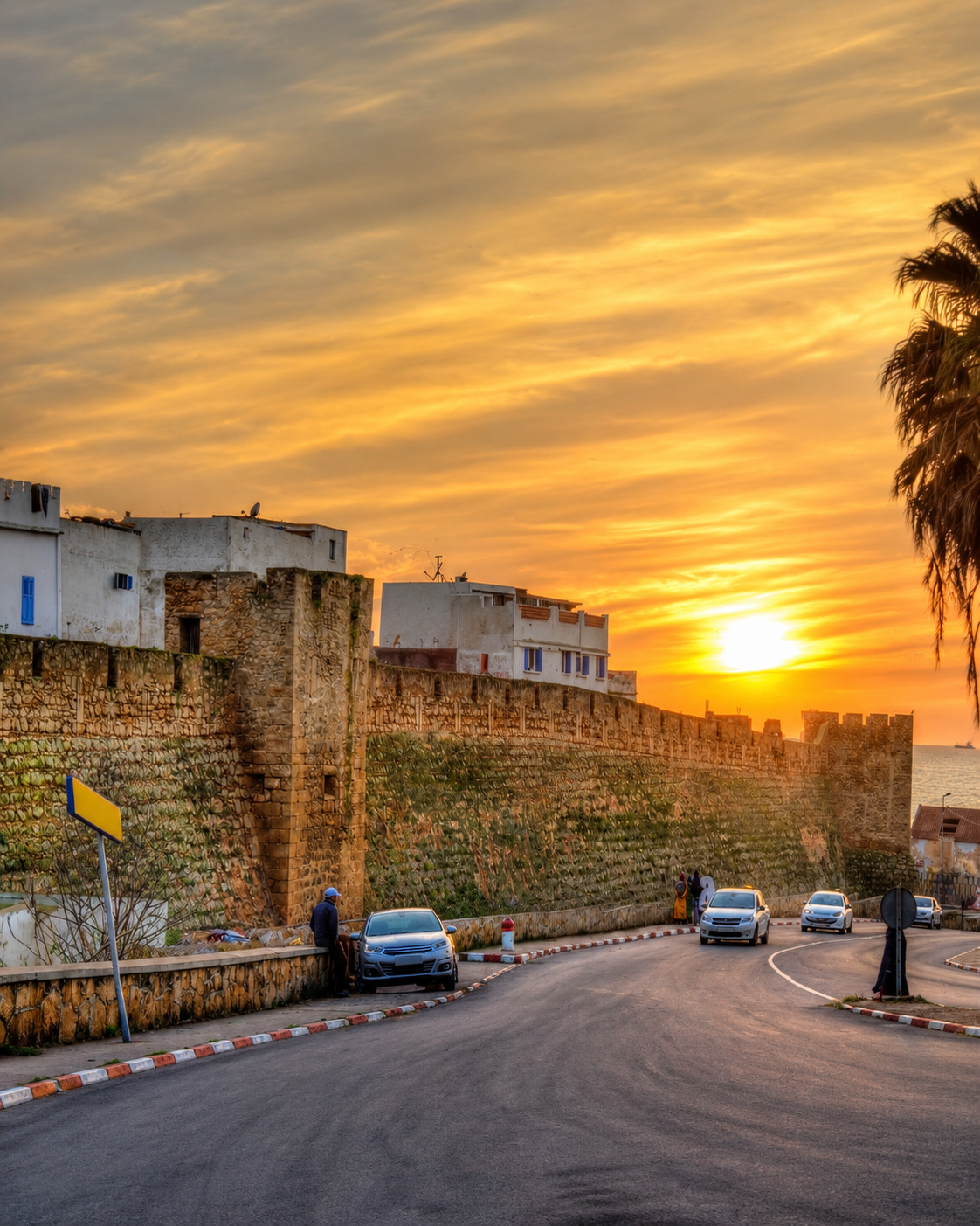
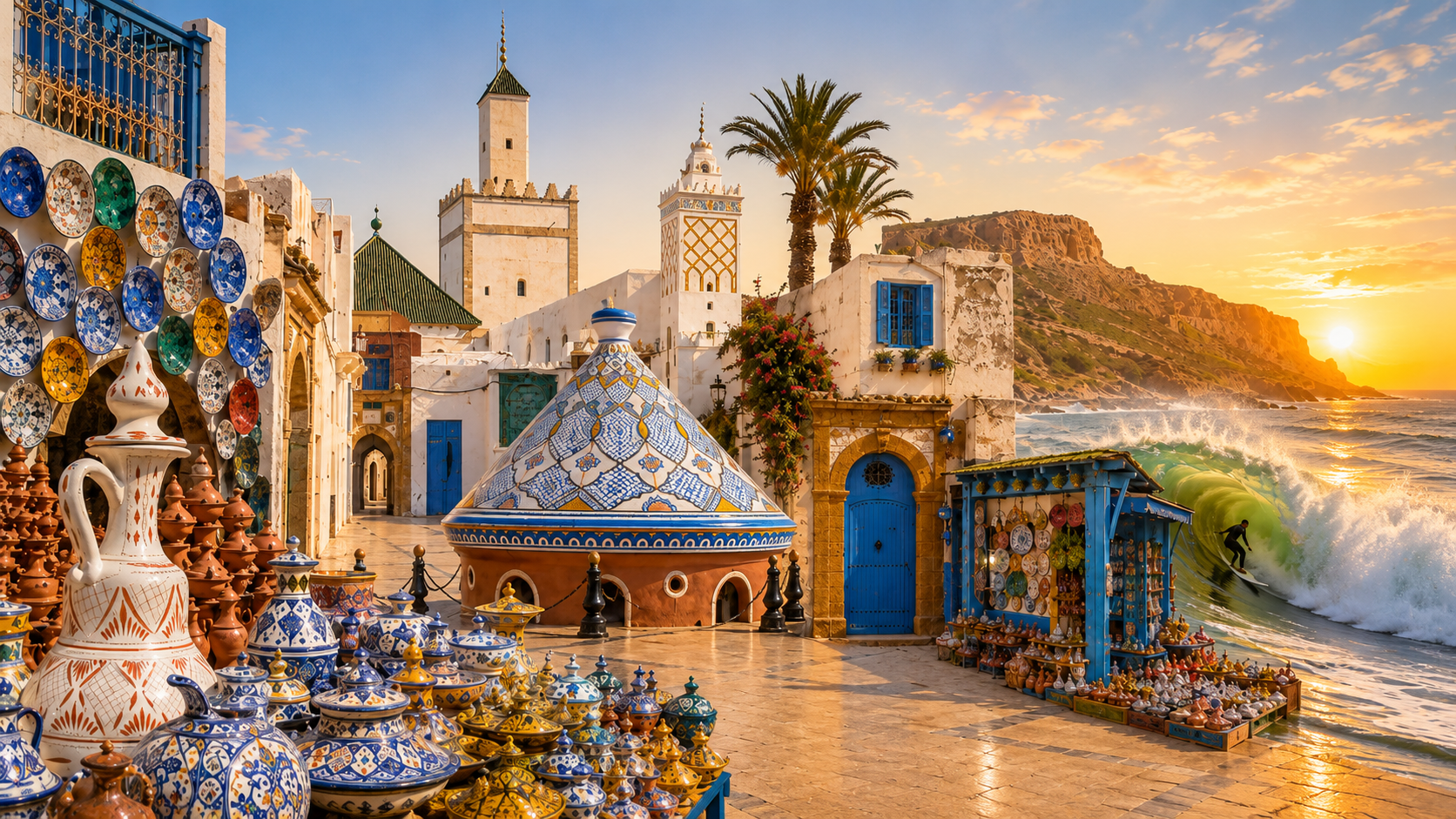
Safi hero collage with ceramics, medina architecture and the Atlantic coast

Atlantic port & ceramic capital

Safi Pottery kilns, ocean ramparts and working Atlantic memory

Safi is one of Morocco’s most distinctive coastal cities: a place where clay, kiln smoke, Portuguese stone, sardine boats and Atlantic wind still shape the urban experience. It is not simply a stop on the coast, but a city where craft and port life remain visible in the streets.

Why Safi matters

Beyond the image of a pottery city

Safi is often introduced through one word: ceramics. That reputation is deserved, but it is only the beginning. The city also carries a steep medina, Portuguese military traces, one of Morocco’s most active fishing ports and a seaward urban edge that makes Atlantic geography impossible to ignore.

Its strength lies in how these layers stay connected. Potters still shape clay on the hill above the city. The medina still descends toward the ocean. The sea castle and Portuguese cathedral still signal an earlier chapter of coastal power. And the port continues to anchor Safi in everyday labour rather than postcard nostalgia.
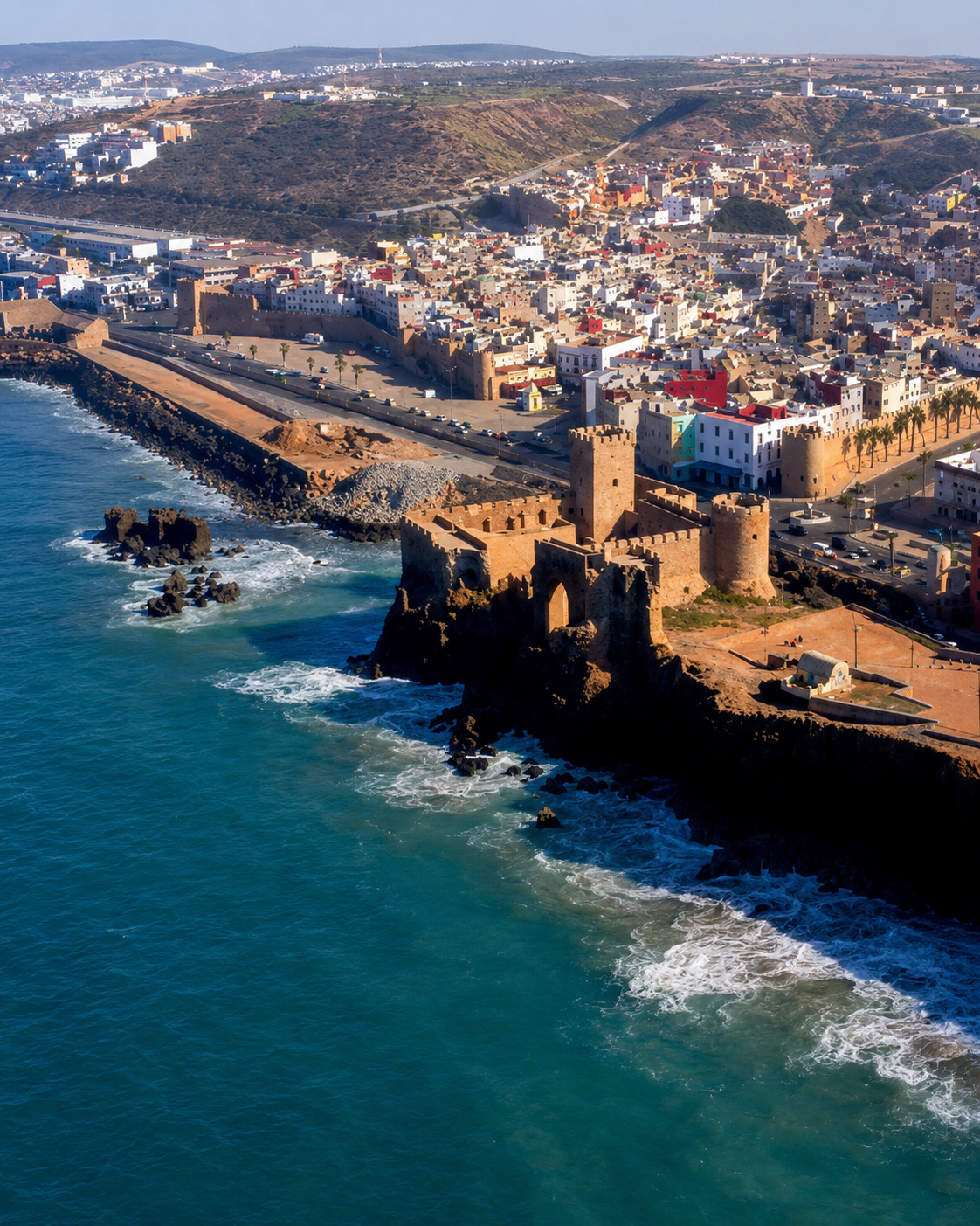
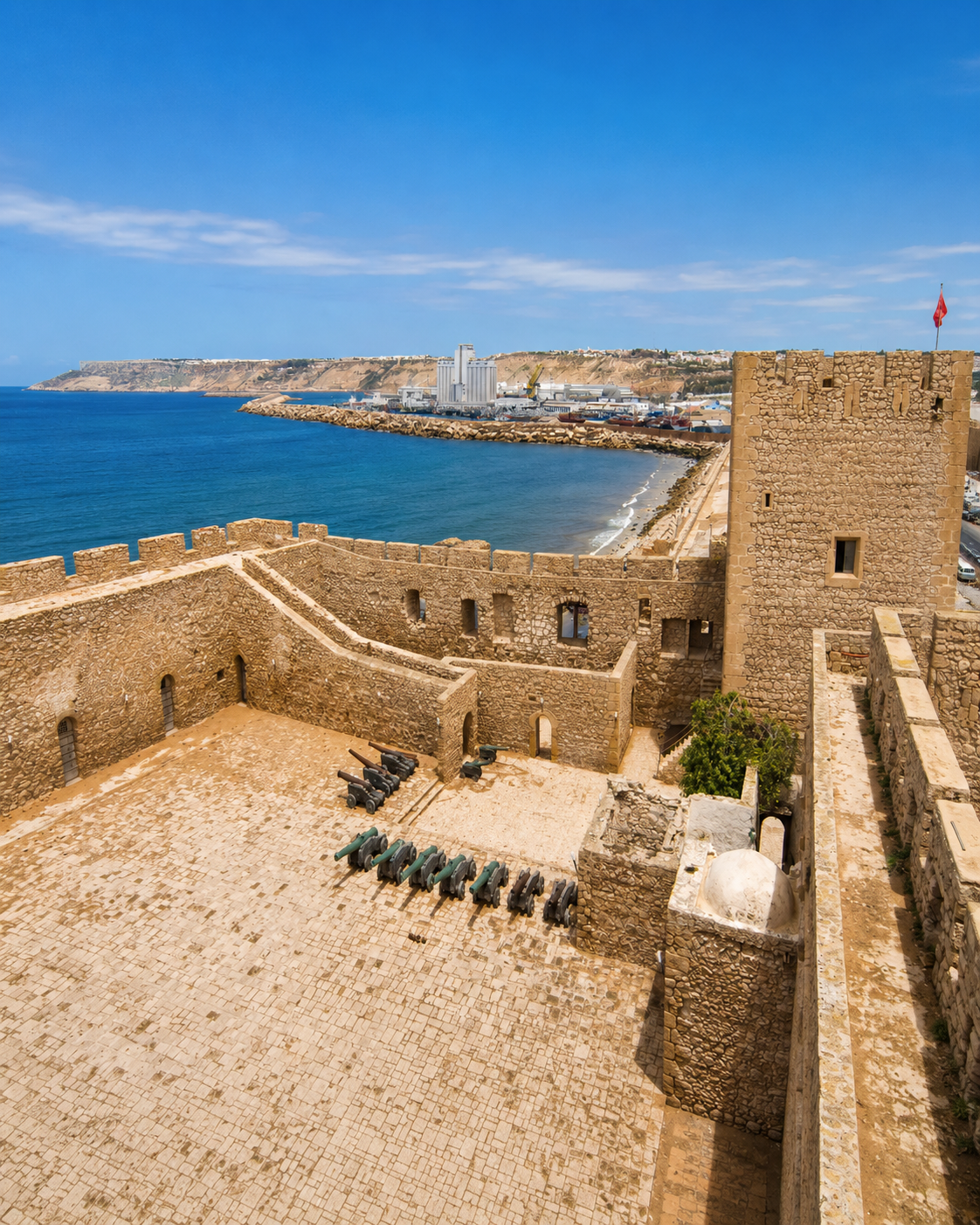
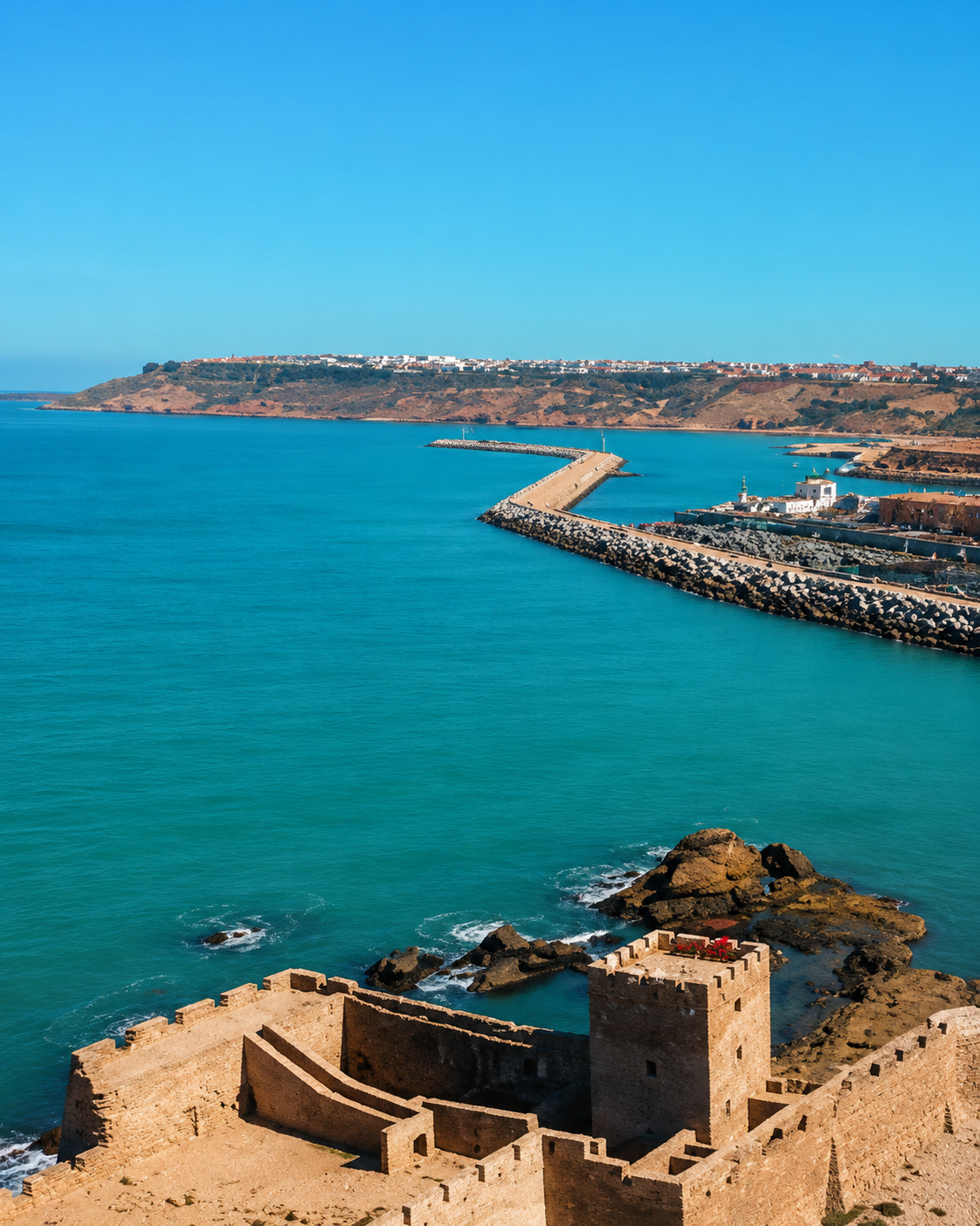
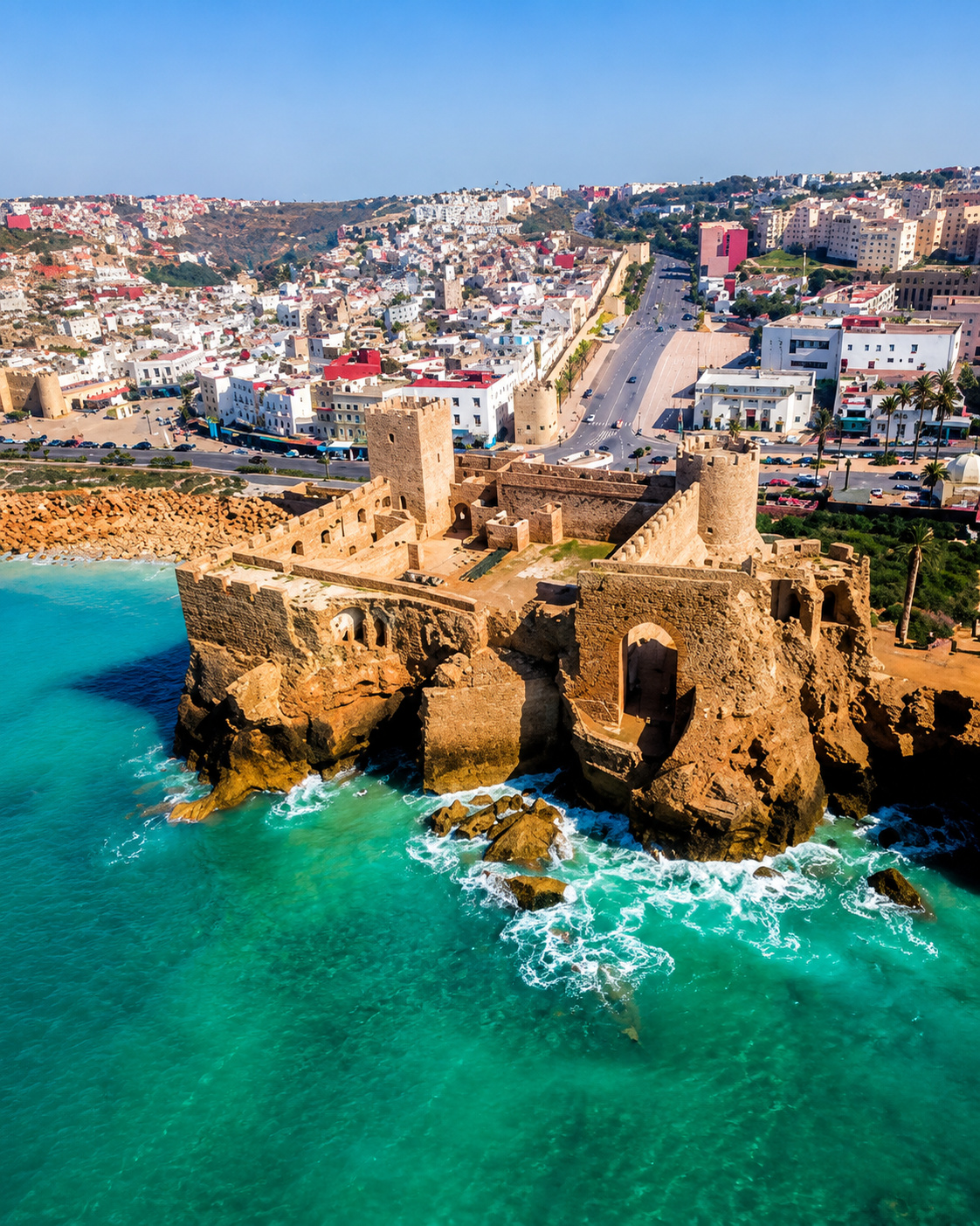
Aerial view of Ksar el-Bahr and the old city of Safi above the Atlantic

A city read through clay, stone, boats and Atlantic light

Safi rewards visitors who look beyond one monument: workshops, kilns, sea walls, steep streets and harbour life together create one of the Atlantic coast’s most characterful urban landscapes.

Historical orientation

From Atlantic port to Portuguese stone and ceramic mastery

Safi becomes clearer when read through four linked layers: port geography, Portuguese intervention, ceramic production and the working life of the present-day city.

01Atlantic threshold

A port facing the ocean

Safi developed as an Atlantic port where maritime exchange, fisheries and coastal topography shaped the city’s role long before modern tourism.

02Portuguese period

Walls, cathedral and sea castle

Portuguese occupation left some of Safi’s most visible monuments, especially the ruined cathedral, military structures and the relationship between city and sea.

03Craft identity

The rise of Safi ceramics

Safi became one of Morocco’s great ceramic centres, with the pottery quarter and museum confirming the city’s national importance in clay, glaze and decorative tradition.

04Today

Harbour life and lived continuity

Fishing, workshops, markets and dense neighbourhood life keep Safi grounded in work, craft and local rhythm rather than heritage display alone.

Three glimpses of Safi

Three ways into the city

Safi can be approached through three essential images: clay and kilns, stone and ocean, and the movement of a living port.

Painted tagines and pottery in Safi’s ceramics quarter

Potters’ Hill

The pottery quarter explains why Safi is known across Morocco for ceramics, kilns and hand-decorated clay work.

Stone walls and cannon court of Ksar el-Bahr in Safi

Atlantic fortifications

Sea-facing walls and the Castle of the Sea reveal the city’s strategic and military coastal history.

Harbour breakwater and Atlantic port edge in Safi

Port and harbour life

Boats, fish landings and working quays show Safi as a functioning Atlantic port, not only a historic site.

Safi at a glance

Ceramic capital

Safi’s pottery quarter and National Museum of Ceramics confirm its place among Morocco’s most important craft cities.

Portuguese legacy

The Portuguese Cathedral and sea fortifications preserve one of the coast’s clearest early-modern layers.

Fishing port

The harbour remains central to the city’s daily life, especially through sardine fishing and market movement.

Atlantic topography

Steep streets, medina walls and ocean edges give Safi a rugged urban character unlike the flatter coastal cities further north.

Reading Safi more clearly

Three defining layers

A city read through clay, stone, boats and Atlantic light.

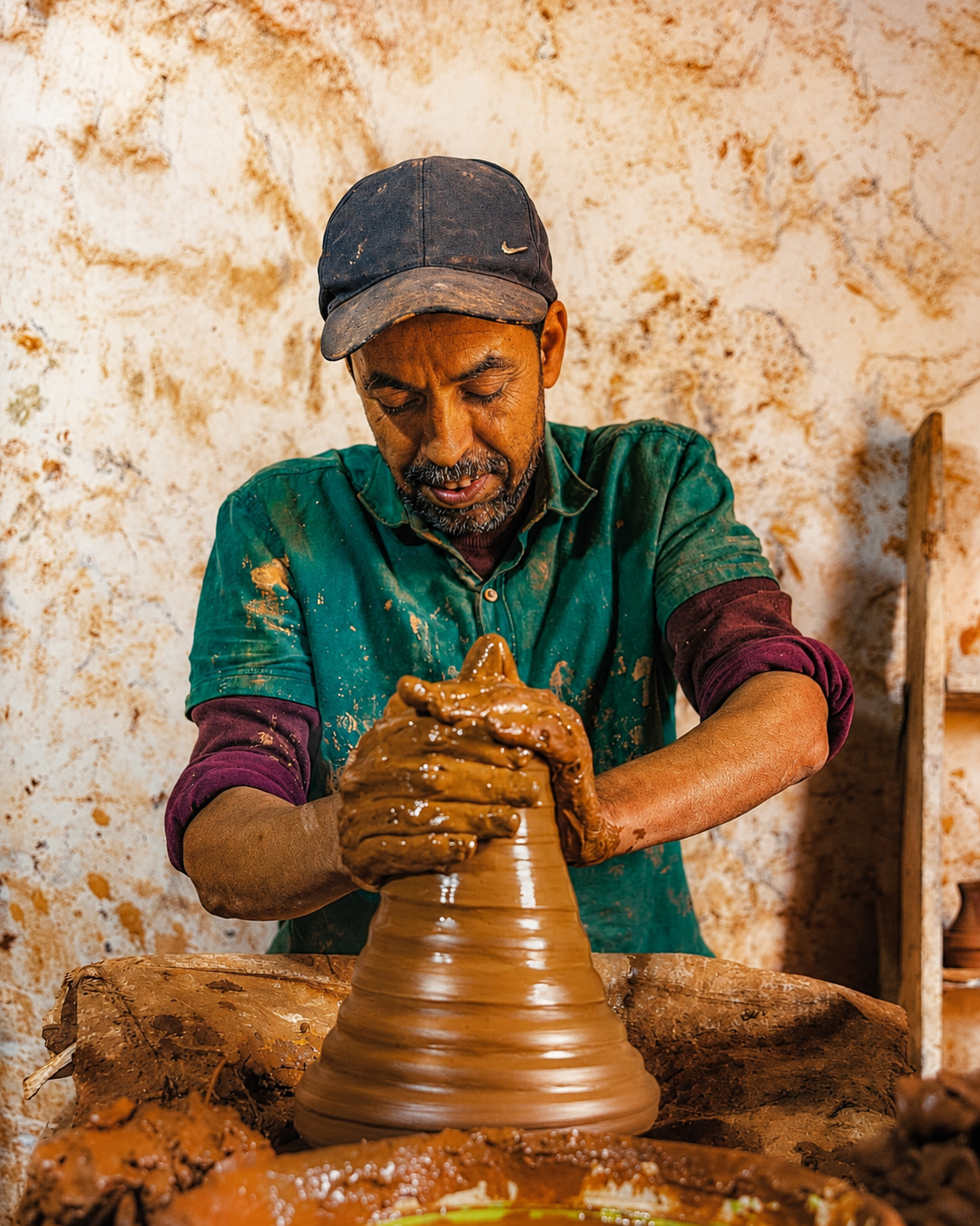
A potter shaping clay in Safi’s pottery quarter
Craft heritage

Potters, kilns and glazed memory

Safi’s ceramic identity is not decorative branding. It is a living craft system built around workshops, firing, painting and generations of specialised knowledge.

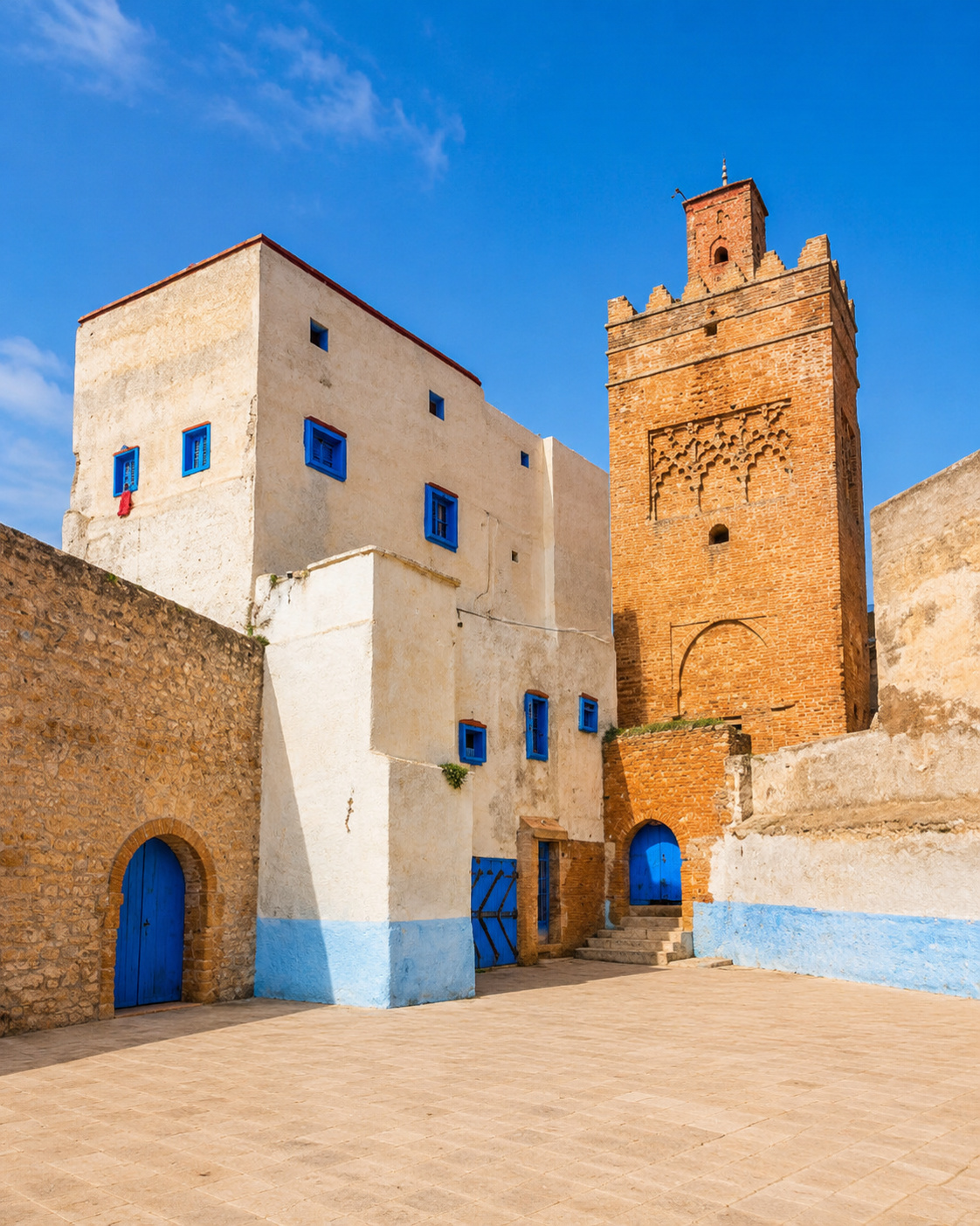
Historic tower and blue-washed walls in the old city of Safi
Historic stone

Portuguese traces and coastal defence

The cathedral ruins, the Kechla and the Castle of the Sea all show how Safi’s ocean-facing history was written in stone architecture.

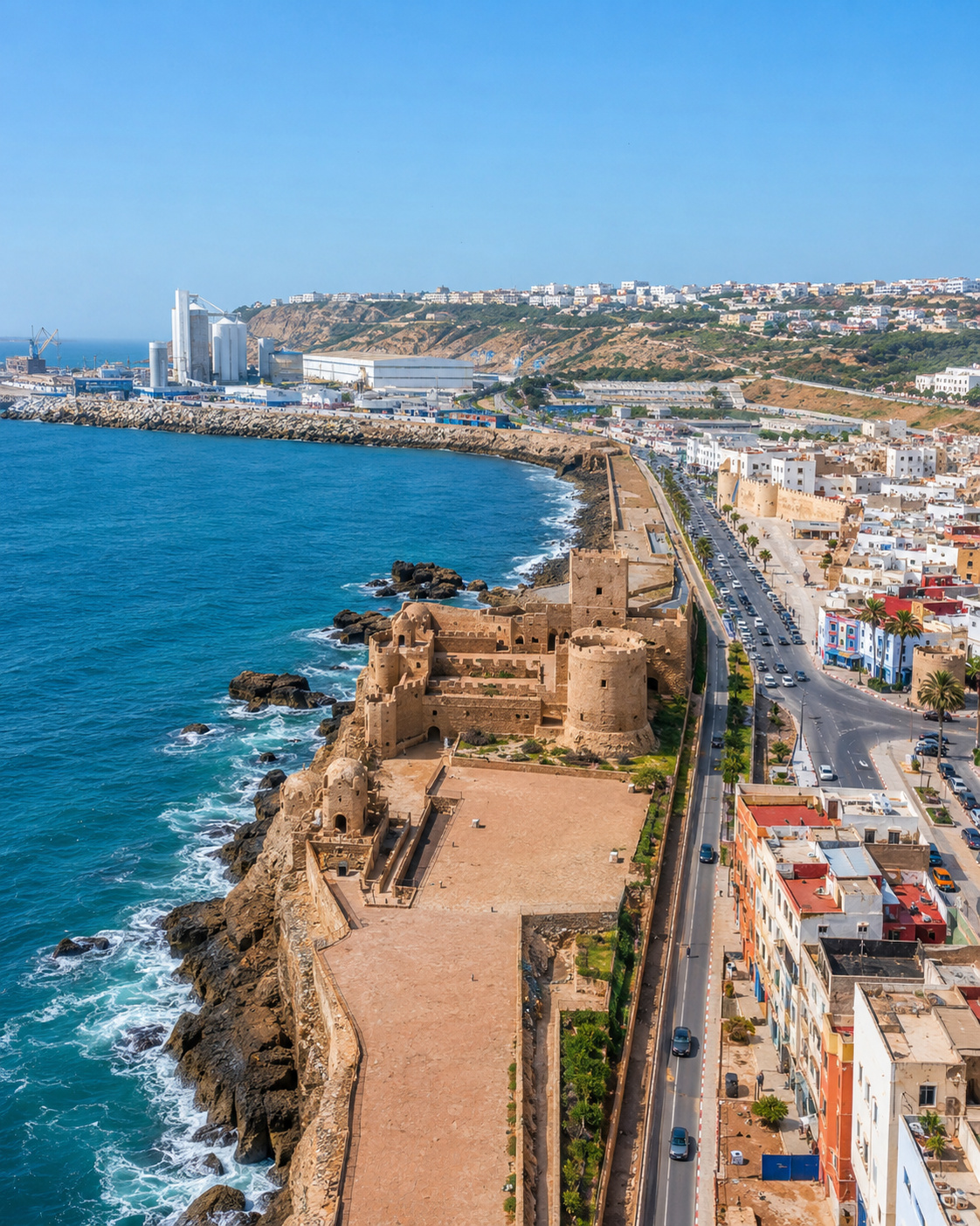
The coastal fortifications and seafront road in Safi
Working coast

Seafront movement and harbour edge

From the corniche to the port approach, Safi’s Atlantic frontage keeps the city tied to circulation, maritime work and the sea itself.

Landmarks & orientation

Read Safi through six defining places

Safi is best understood through a sequence: ceramic workshops, citadel views, Portuguese remains, sea fortifications and the living port.

1
Colline des Potiers / Potters’ Hill

The pottery quarter is essential for understanding Safi’s craft identity, from clay shaping to glazing, kilns and display.

2
National Museum of Ceramics

This museum anchors Safi’s reputation as one of Morocco’s major ceramic centres and helps place local production in a wider national tradition.

3
Kechla and medina high ground

The Kechla area offers orientation over the old city and reflects the military and administrative history of Safi’s upper town.

4
Portuguese Cathedral

The ruined Gothic-Manueline cathedral remains one of Safi’s most striking traces of the Portuguese period.

5
Ksar el-Bahr / Castle of the Sea

Set at the ocean’s edge, the sea castle expresses the Atlantic military dimension of the city more clearly than any other monument.

6
Fishing port and harbour front

The port gives Safi its contemporary force: boats, quays, fish handling and the city’s deep connection to maritime labour.

Ksar el-Bahr from above with turquoise Atlantic water below
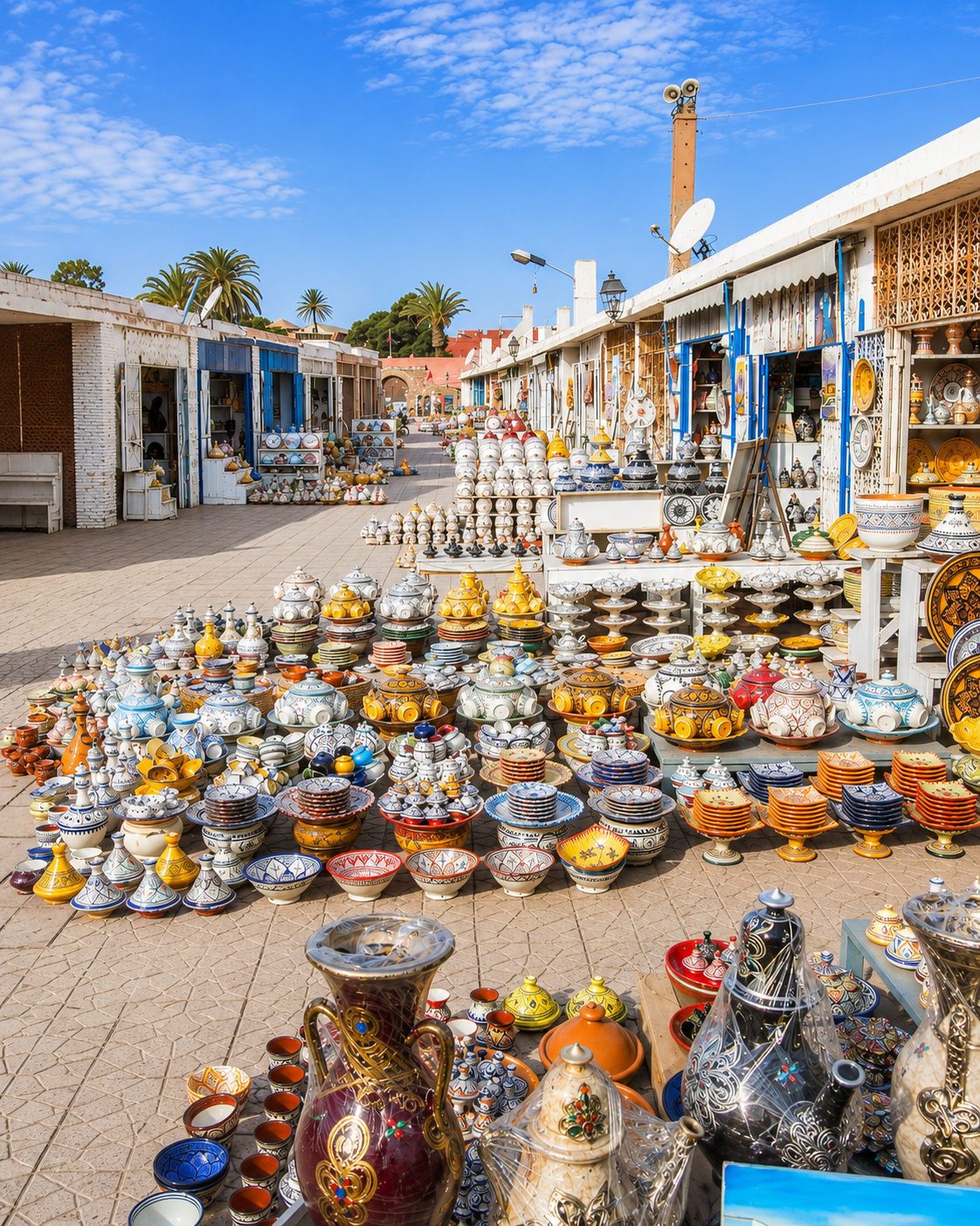
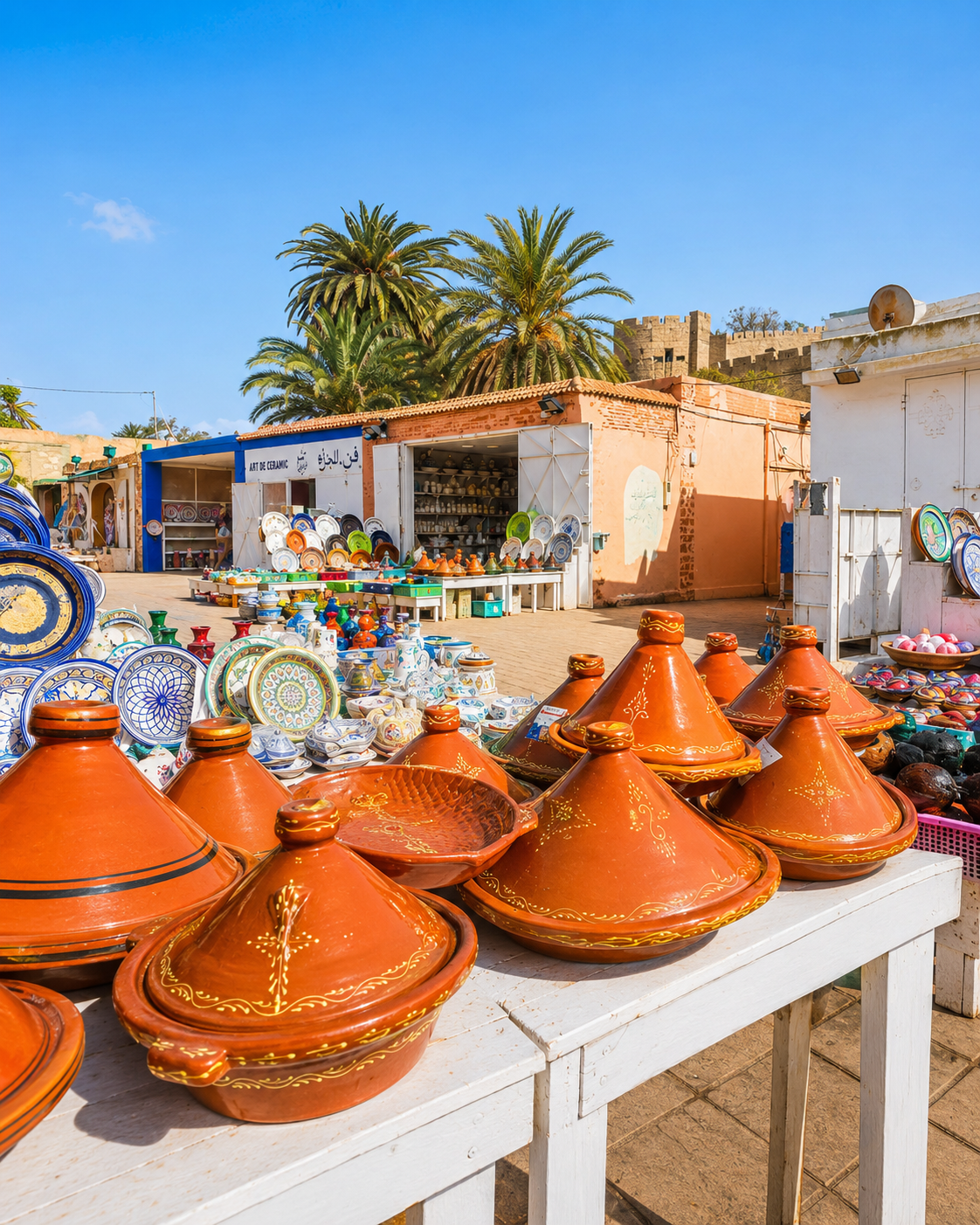
Ceramic stalls and pottery market displays in Safi

Clay and city identity

Potters’ Hill — where Safi’s strongest signature is made by hand

The pottery quarter is not an optional add-on. It is one of the city’s defining spaces: a place of labour, design, firing and visual invention, where Safi’s ceramic reputation can still be understood as a living practice rather than a souvenir label.

  • Look for kilns, drying racks and hand-painted surfaces.
  • Connect workshop life to the museum and the wider city economy.
  • Notice how cobalt, turquoise and earth colours become part of Safi’s visual language.

Port, workshop and medina life

Clay dust, harbour movement and steep streets

Shaping, glazing and firing

Potters and decorators remain central to the city’s identity, making the ceramic tradition visible in everyday work.

Seafront outlook and harbour life

Safi’s maritime identity is felt not only through the port, but also through its walls, ocean road and the daily movement along the Atlantic edge.

Markets, passages and old thresholds

The medina’s steepness, arcades and stone passages keep the city grounded in movement, commerce and spatial complexity.

Visual atmosphere

Clay, cobalt and Atlantic stone

More Safi scenes

Three more ways to read the city

Rather than jumping away from Safi, these final views stay within the city and its immediate coastline: the Atlantic cliffs, the upper-city approach and the ceramics market that gives Safi so much of its visual identity.

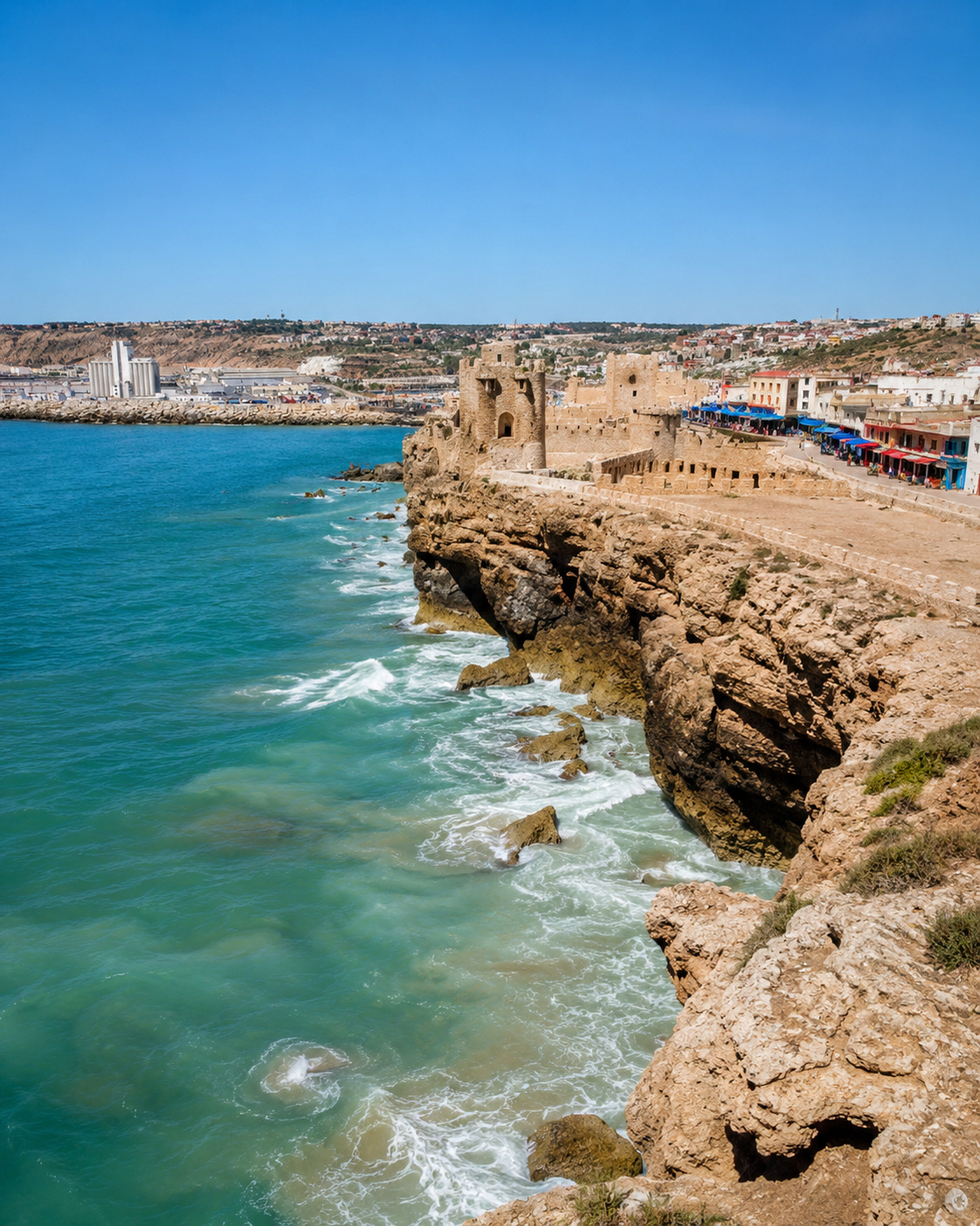
Atlantic cliffs south of the city

The coastline just beyond the main fortifications shows Safi as a city shaped by open ocean, rocky edges and constant Atlantic exposure.

Ocean cliffs and Atlantic surf south of Safi

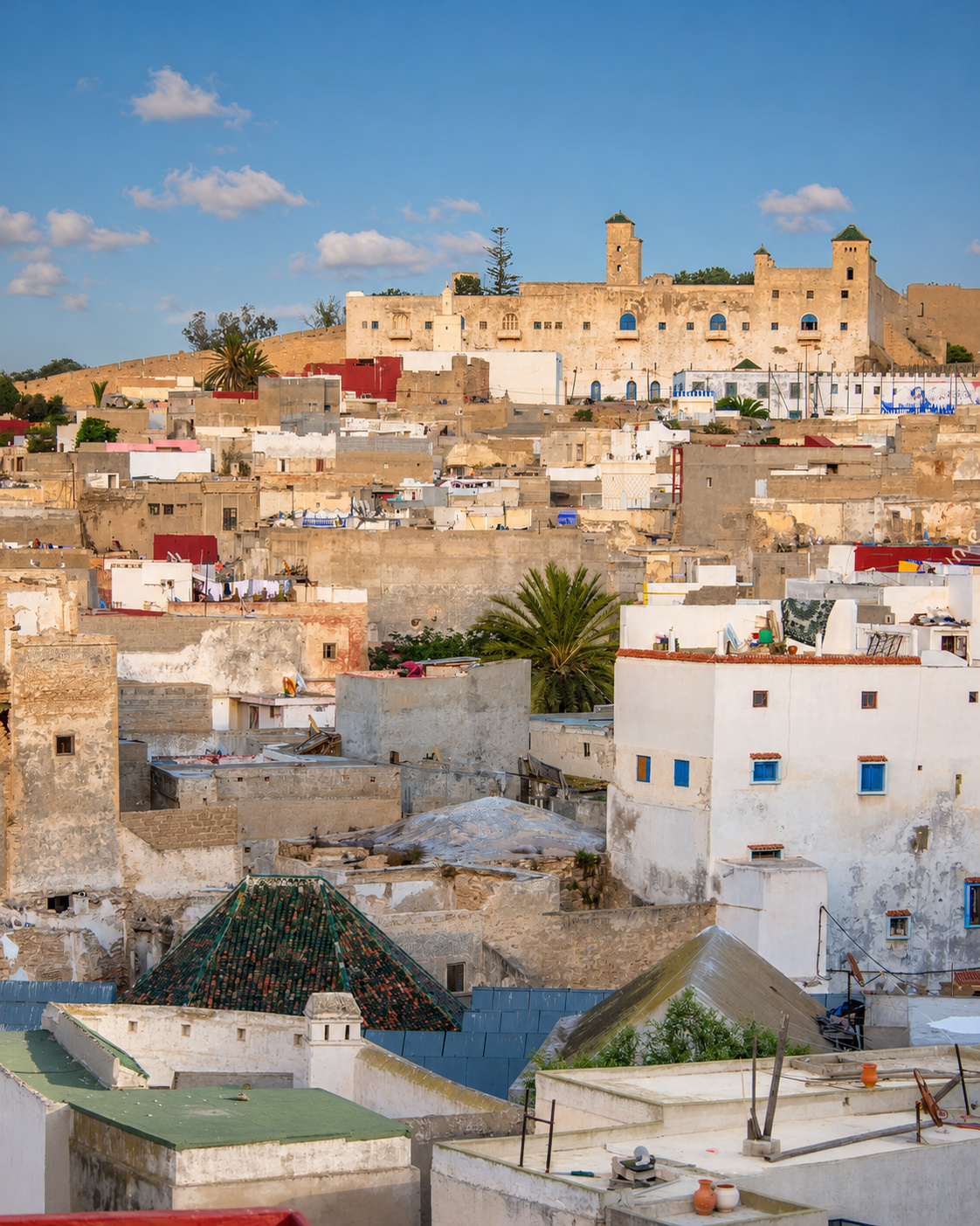
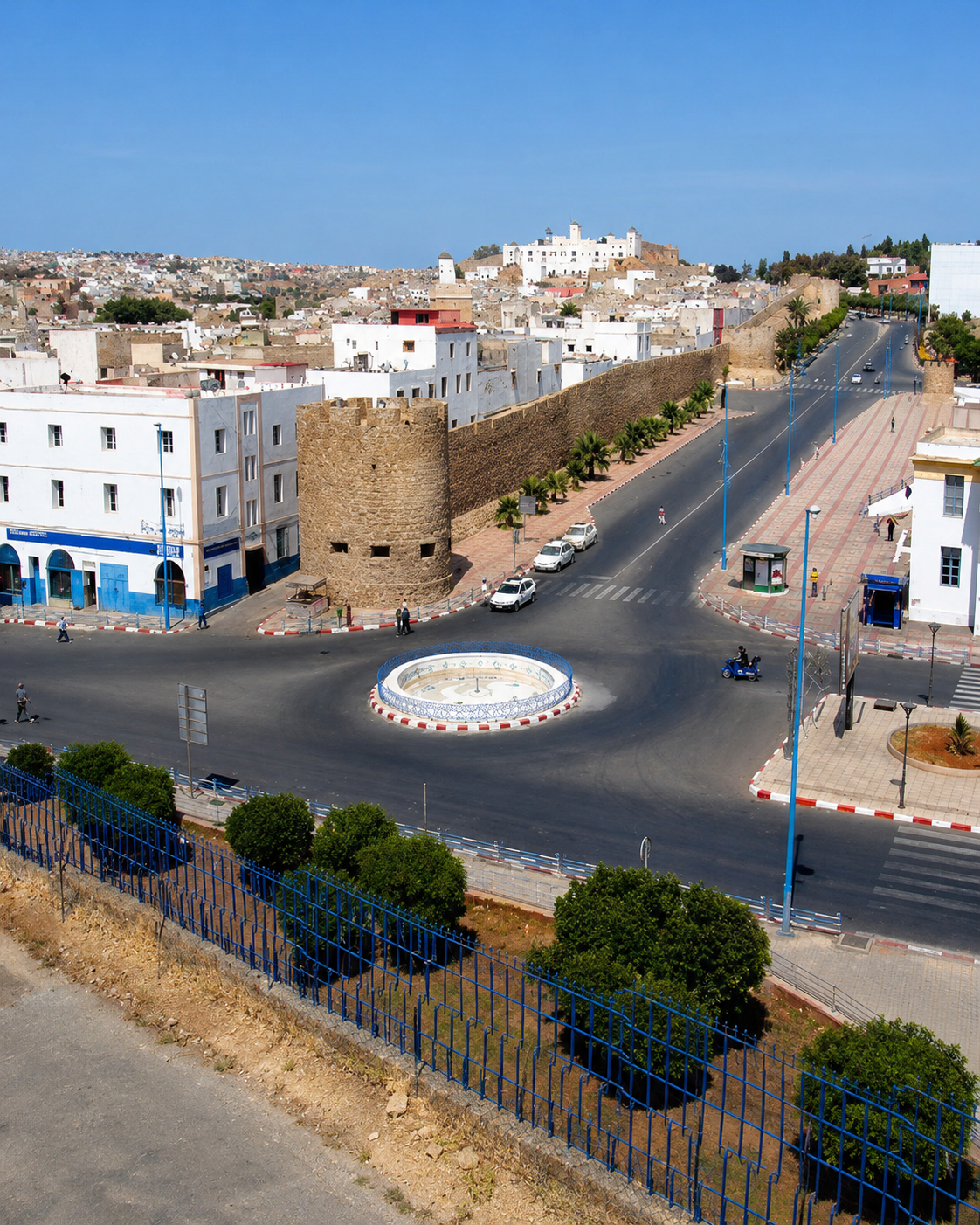
Upper-city approach and ramparts

From the approaches above the medina, Safi’s walls, roads and elevated quarters become easier to understand as one connected urban landscape.

Upper-city approach and ramparts in Safi

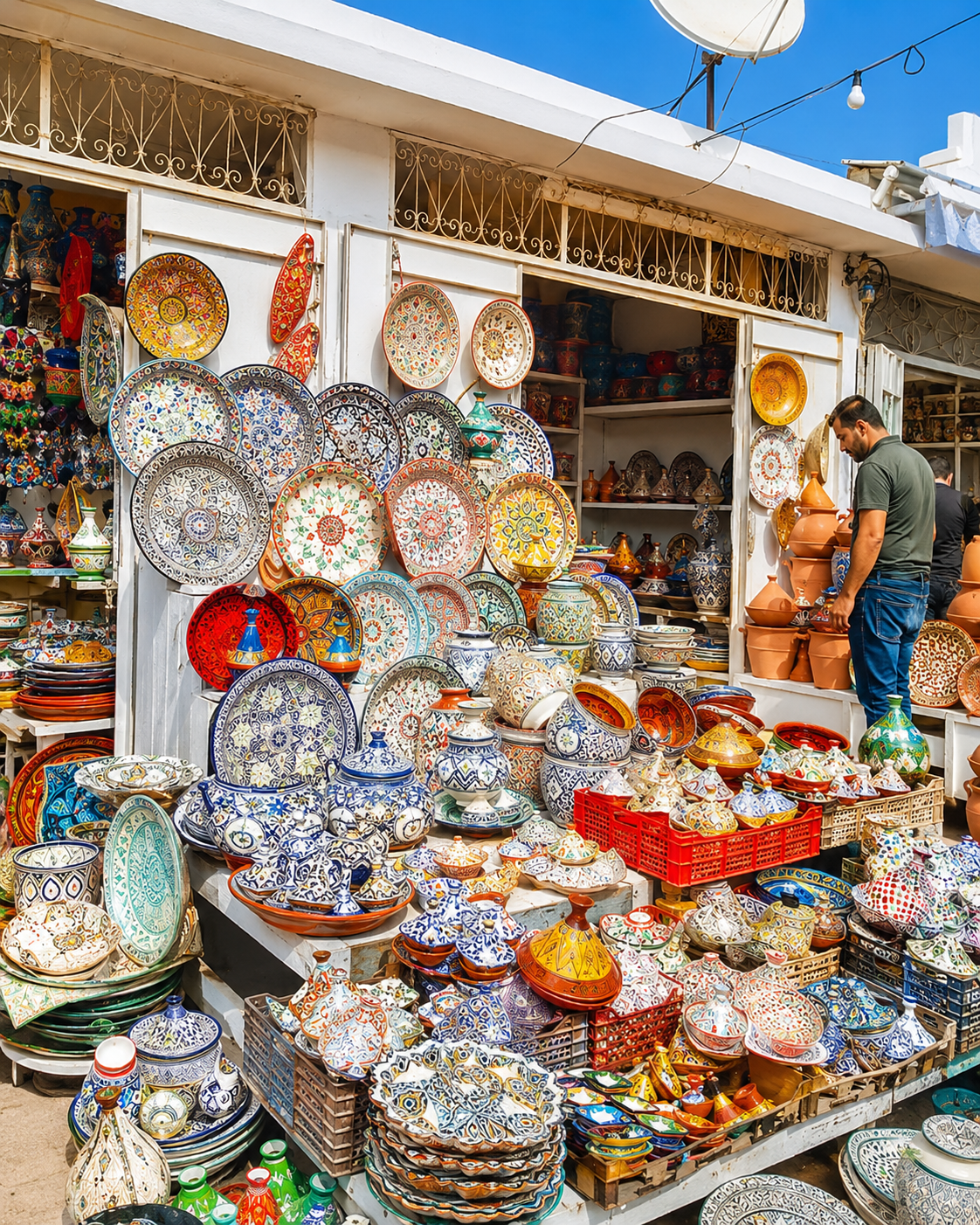
Ceramics market details

Even in smaller market scenes, painted plates, tagines and hand-finished clay keep the city’s craft identity front and centre.

A ceramics market display in Safi
Travel note: opening hours, access rules, restoration work, transport conditions and local visitor arrangements can change. Check current official or trusted local information before travelling.

Practical orientation

A simple way to experience Safi

  • Begin with the upper city — The Kechla gives spatial orientation before you descend into Safi’s denser layers.
  • Visit Potters’ Hill — This is the city’s craft heart and the clearest link to Safi’s wider reputation.
  • Read the Portuguese remains — The cathedral and sea fortifications reveal Safi’s early-modern Atlantic chapter.
  • Walk the harbour edge — The port grounds the visit in present-day labour and maritime economy.
  • Continue along the coast — Sidi Bouzid or Oualidia extend the city into a broader Atlantic route.

A simple way to experience Safi

Upper-city approach and ramparts in Safi

Start from the upper city and the Kechla, move into the pottery quarter, read the Portuguese Cathedral carefully, continue toward Ksar el-Bahr and the port, and leave enough time for the harbour atmosphere or a coastal continuation toward Sidi Bouzid. Opening hours, access rules, restoration work and local arrangements can change, so confirm details locally before planning a tight visit.

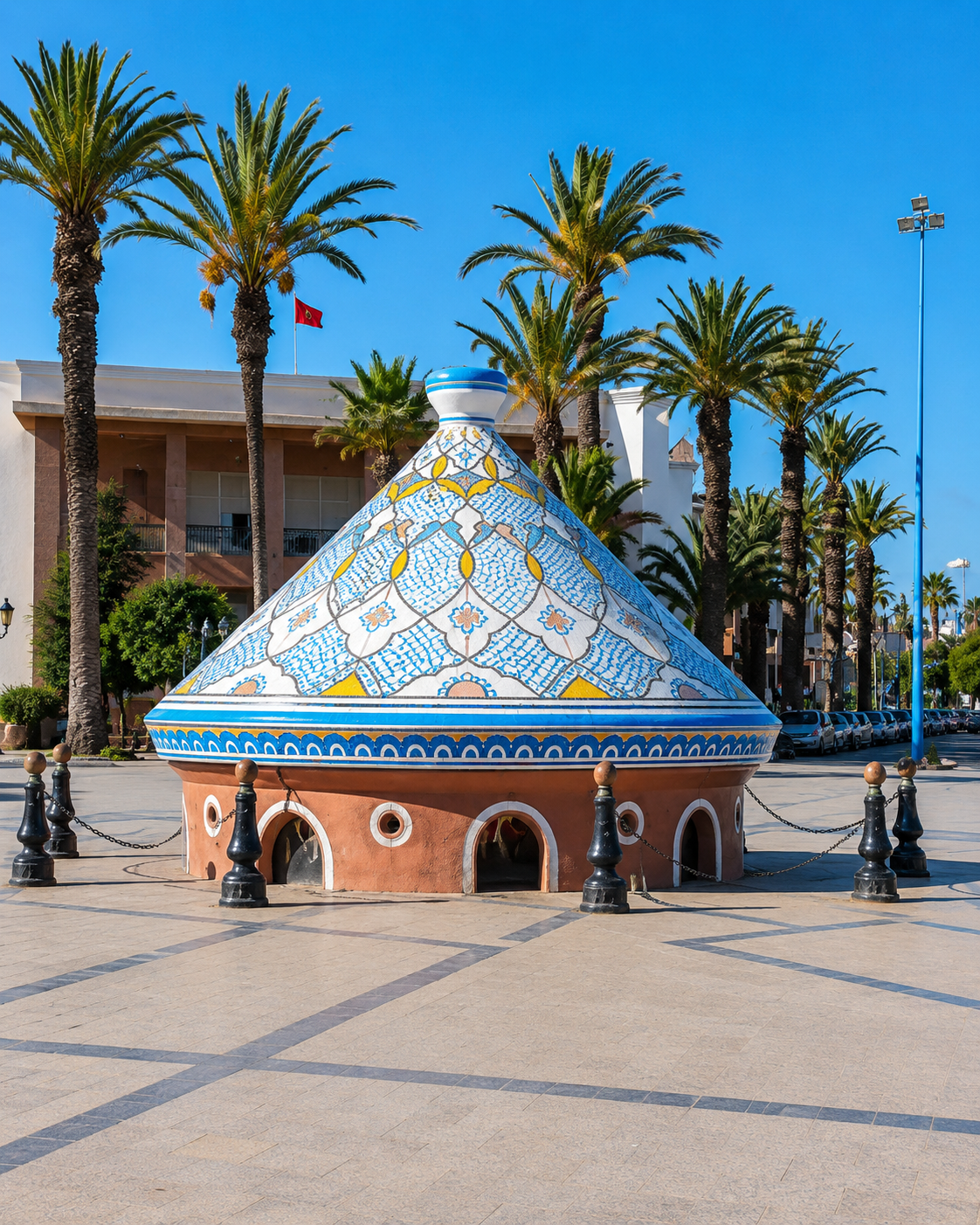
Ceramic tagine monument in Safi

Continue with Exotic Morocco

Safi — ceramics, ocean walls and harbour memory

This page prepares the Safi chapter inside the Exotic Morocco city collection: Potters’ Hill, the National Museum of Ceramics, the Portuguese Cathedral, Ksar el-Bahr, the fishing port and the wider Atlantic route.

✓ Historic context✓ Essential landmarks ✓ Architecture & design✓ Culture & local life ✓ Practical travel guidance✓ Nearby highlights

Continue the journey

Discover Safi beyond the obvious

Safi is strongest when its kilns, harbour, stone monuments and Atlantic atmosphere are read together — as a city where craft and coastal history still live side by side.