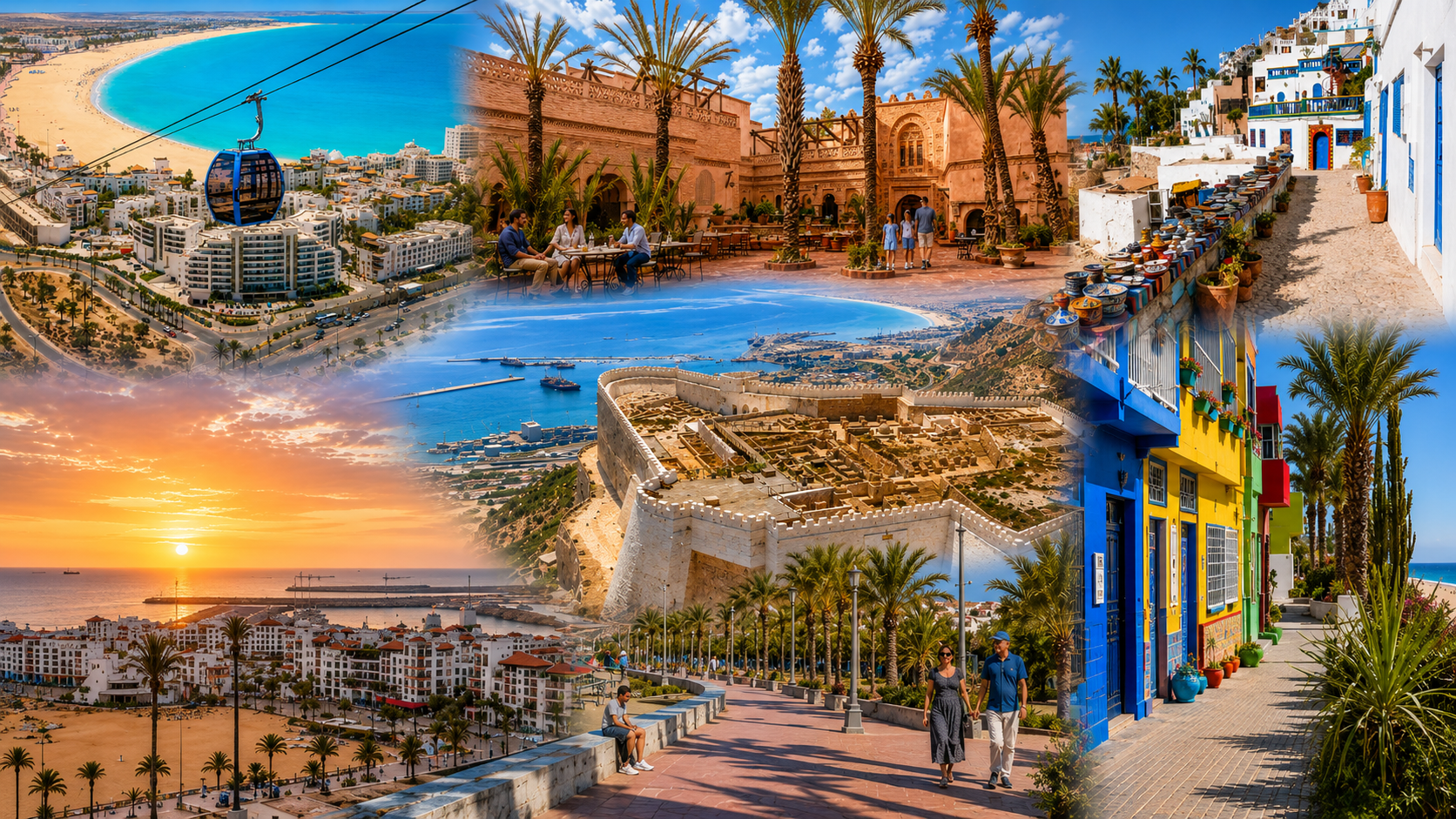
Agadir visual collage with Atlantic bay, Oufella, marina, souk and coastal landmarks

Atlantic City of Souss

AgadirAtlantic light, rebuilt city rhythm and Souss gateway

Agadir is read through its wide bay, hillside kasbah memory, market life and modern seaside plan. The city lost much of its old urban fabric in 1960, then rebuilt itself around light, coast, trade and easy access to the Souss-Massa landscape.

Why Agadir matters

Beyond the beach

Agadir is often introduced through sun and sea, but the city’s deeper identity sits between the Atlantic, the port, Agadir Oufella, Souk El Had and the wider Souss landscape. Its openness is not accidental: the modern city was rebuilt with space, light and coastal orientation at the centre.

This is not a preserved medieval medina city. Agadir’s visitor story is more subtle: memory on the hill, commerce in the market, Amazigh and Souss identity in daily culture, and a practical rhythm that makes it a gateway to beaches, valleys and protected coast.
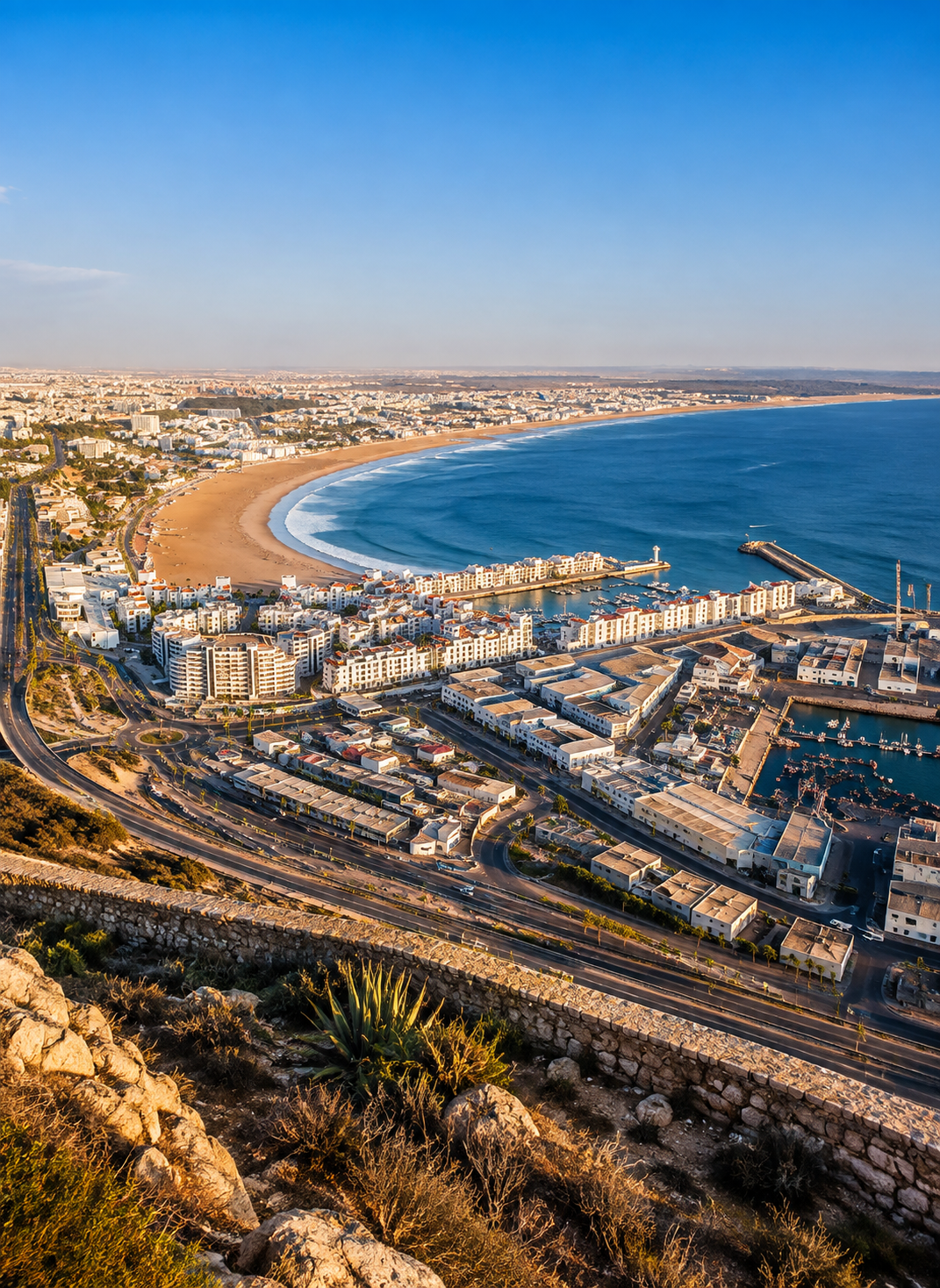
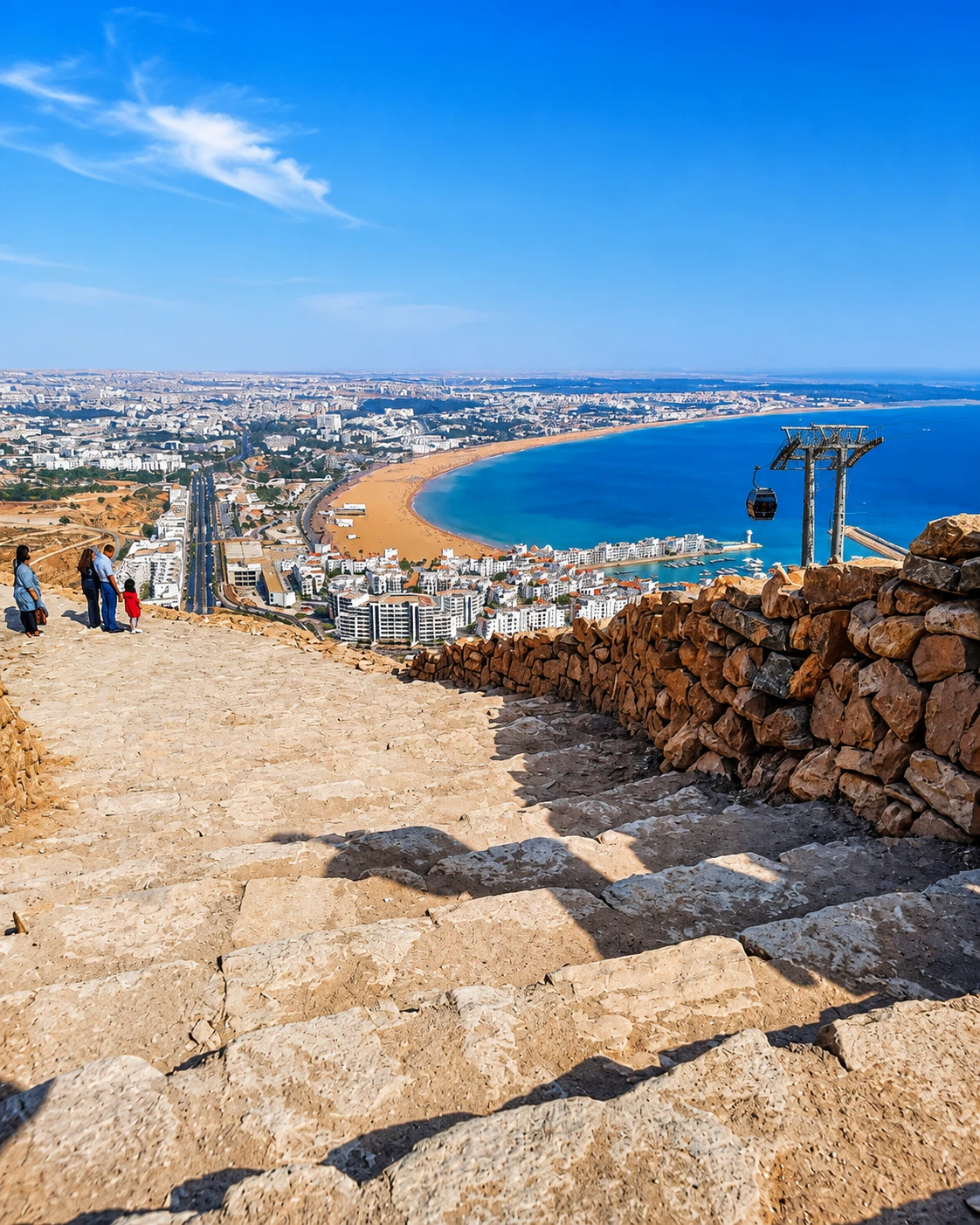
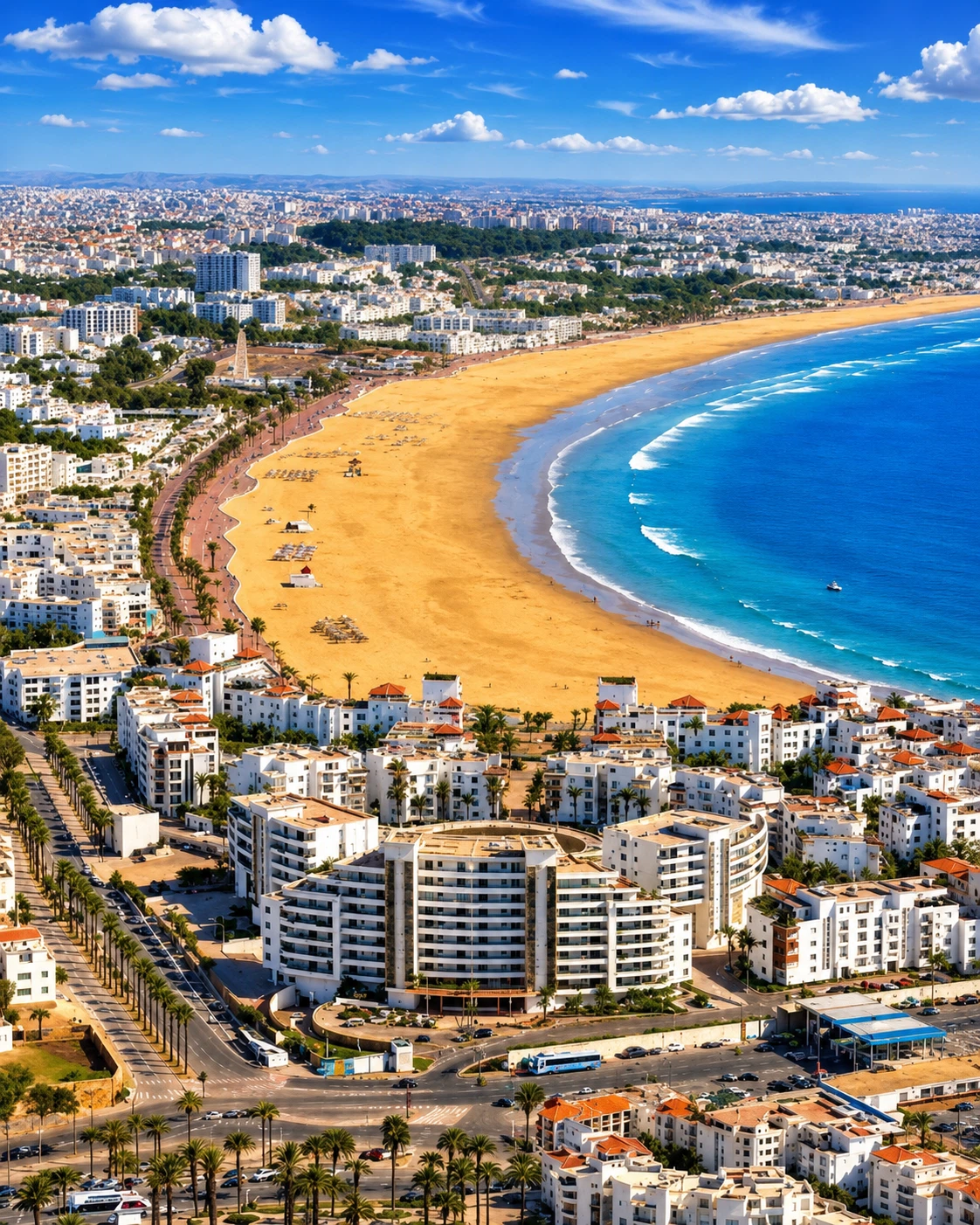
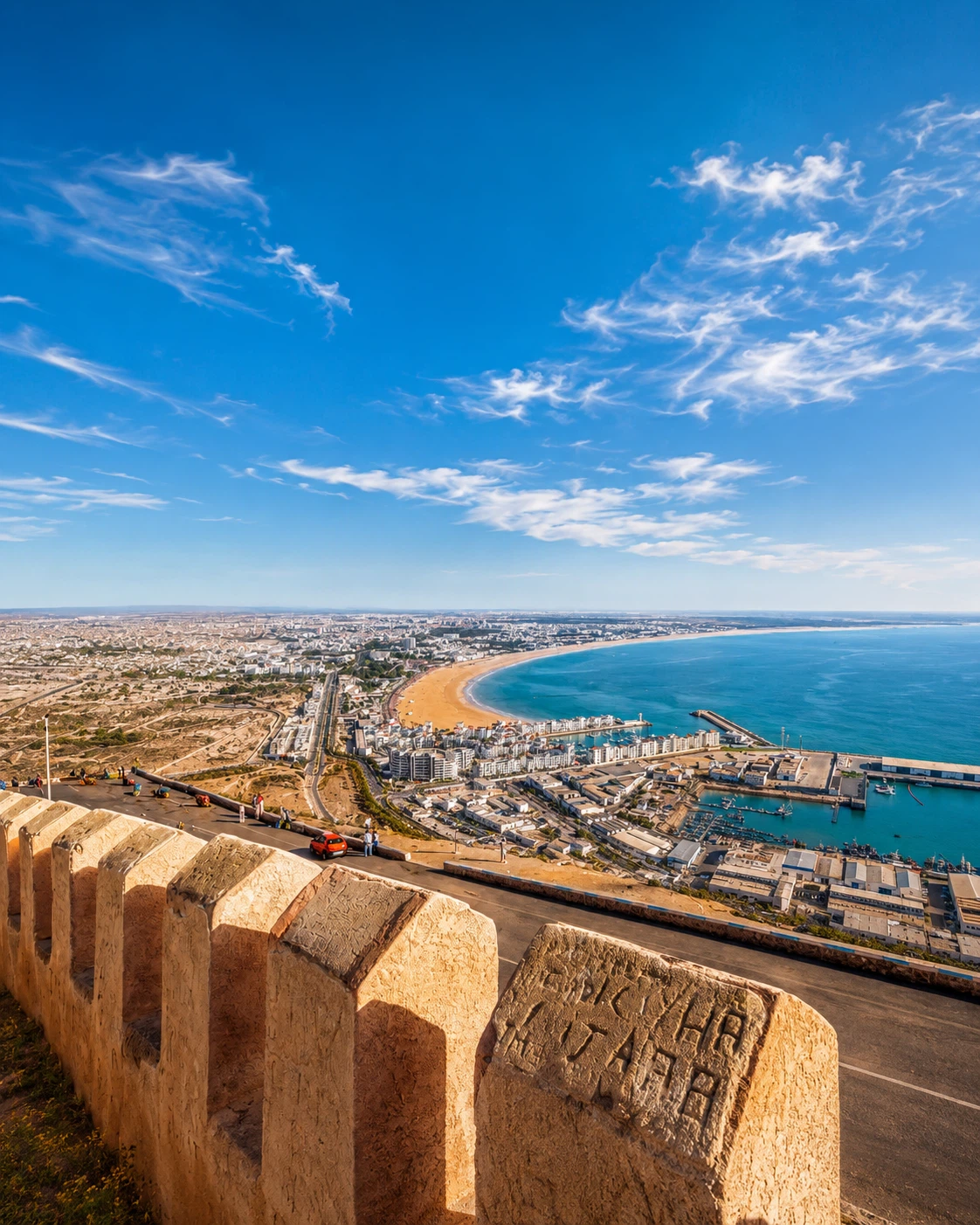
Agadir bay, marina, beach and city scale seen from above

A city of light, recovery and scale

Agadir is measured in horizontals: the sweep of the bay, the line of the port, palm avenues, market walls, a hilltop inscription and roads leading north to surf villages or south to river-mouth landscapes.

EXPLORE

Agadir

Historical orientation

From coastal crossroads to rebuilt Atlantic city

Agadir is best understood through rupture and renewal. Older memory gathers around Agadir Oufella, the hilltop kasbah site associated with coastal defence and trade. The twentieth century brought international attention, then the devastating 1960 earthquake. The city that visitors encounter today was rebuilt on modern lines, with the beach, port, markets and regional routes shaping its identity.

0116th century

Kasbah and port memory

Agadir Oufella anchors the older city above the bay, connecting the hill, harbour and Atlantic approaches to the memory of a pre-earthquake urban core.

021911

International crisis

The Agadir Crisis placed the city in a wider diplomatic story before the Protectorate period, showing how this Atlantic harbour mattered beyond local geography.

031960

Earthquake and rupture

The earthquake of 1960 destroyed much of old Agadir and marked the city’s memory permanently. Any serious reading of Agadir must acknowledge absence as well as rebuilding.

04After 1960

Rebuilt coastal city

Modern Agadir grew around broad avenues, beach life, the port, commercial districts and regional tourism, becoming a practical Atlantic gateway to Souss-Massa.

A visual bridge

Three glimpses between memory and ocean

These images connect the city’s story: hilltop memory above the bay, the open scale of the Atlantic waterfront, and market life inside the rebuilt urban fabric.

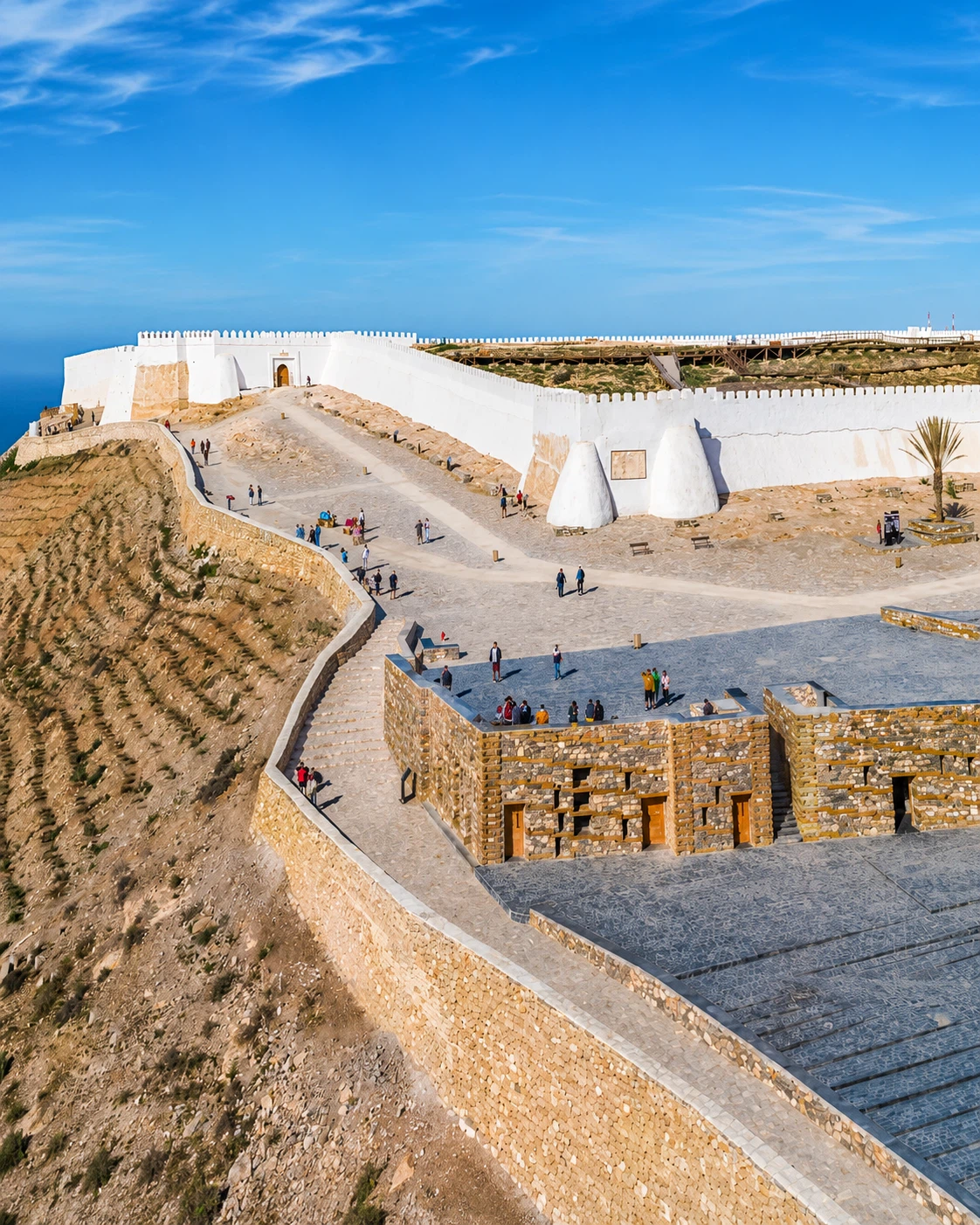
Agadir Oufella kasbah walls and hilltop heritage above the Atlantic

Kasbah memory

Agadir Oufella keeps the old city visible above the modern bay.

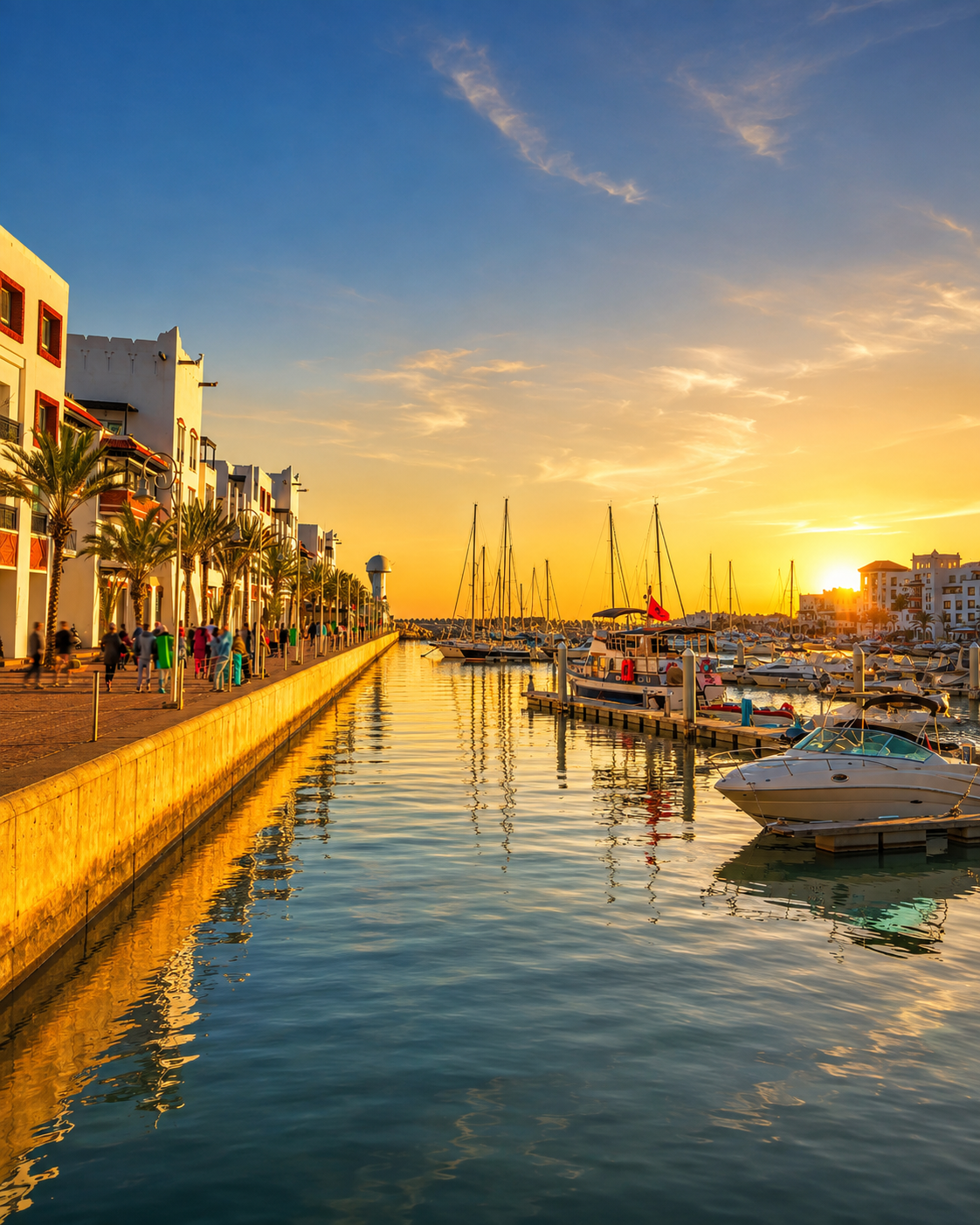
Agadir marina at sunset with waterfront reflections and boats

Atlantic movement

Waterfront, marina and port give Agadir its wide coastal scale.

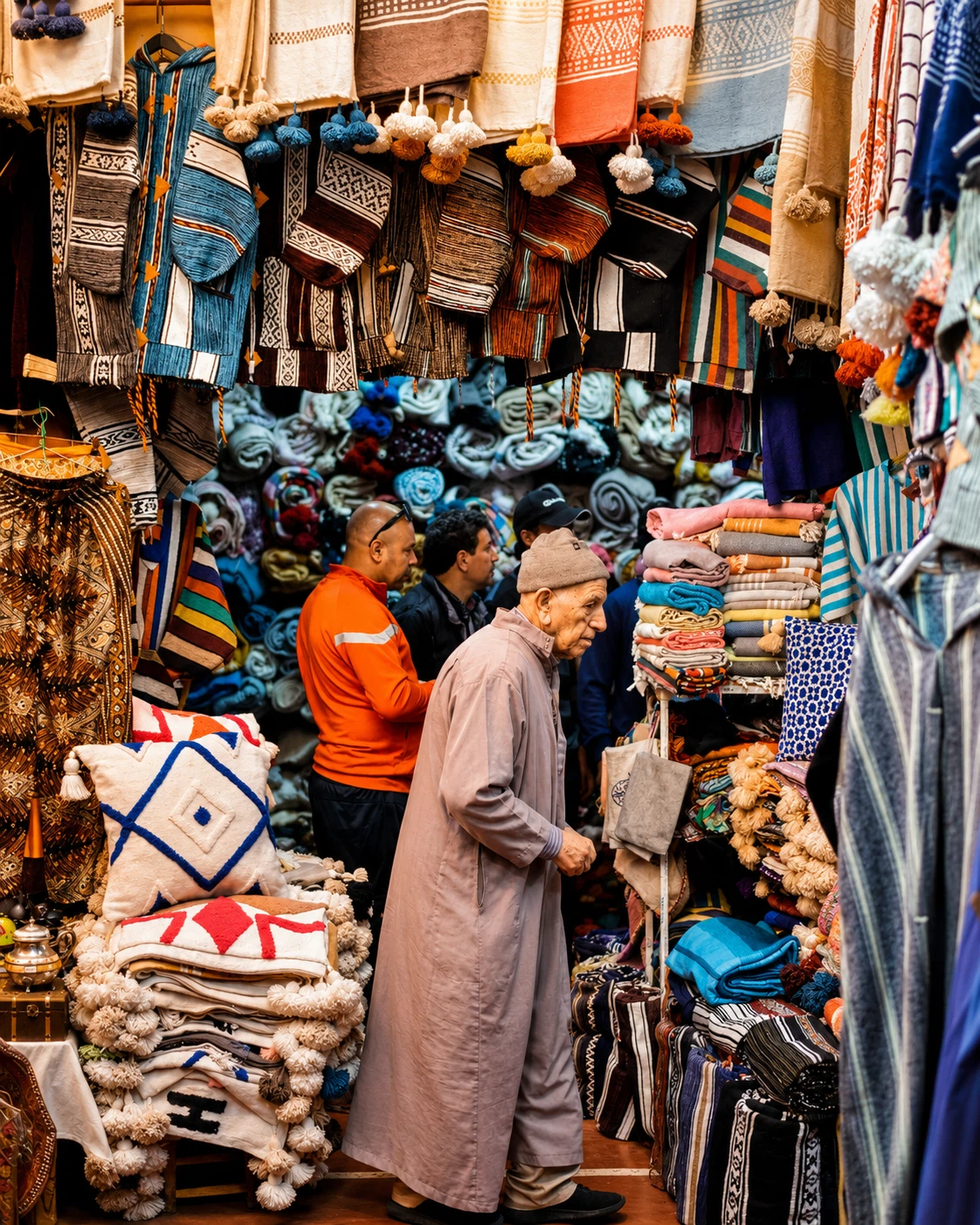
Textile stalls and woven goods inside an Agadir market

Market life

Souk El Had brings commerce, produce and everyday rhythm into the modern city.

Agadir at a glance

Modern Atlantic city

Agadir’s centre is shaped by post-1960 reconstruction rather than by a surviving medieval medina. The beach, avenues, hotels, port, marina and market belong to a modern coastal system.

Souss gateway

The city opens onto Souss-Massa: Taghazout and Tamraght to the north, Souss-Massa National Park to the south, and inland routes toward valleys, argan landscapes and Taroudant.

Memory on the hill

Agadir Oufella is more than a viewpoint. It is the clearest place to understand the lost city, the rebuilt bay and the relationship between harbour, hill and ocean.

Market and local life

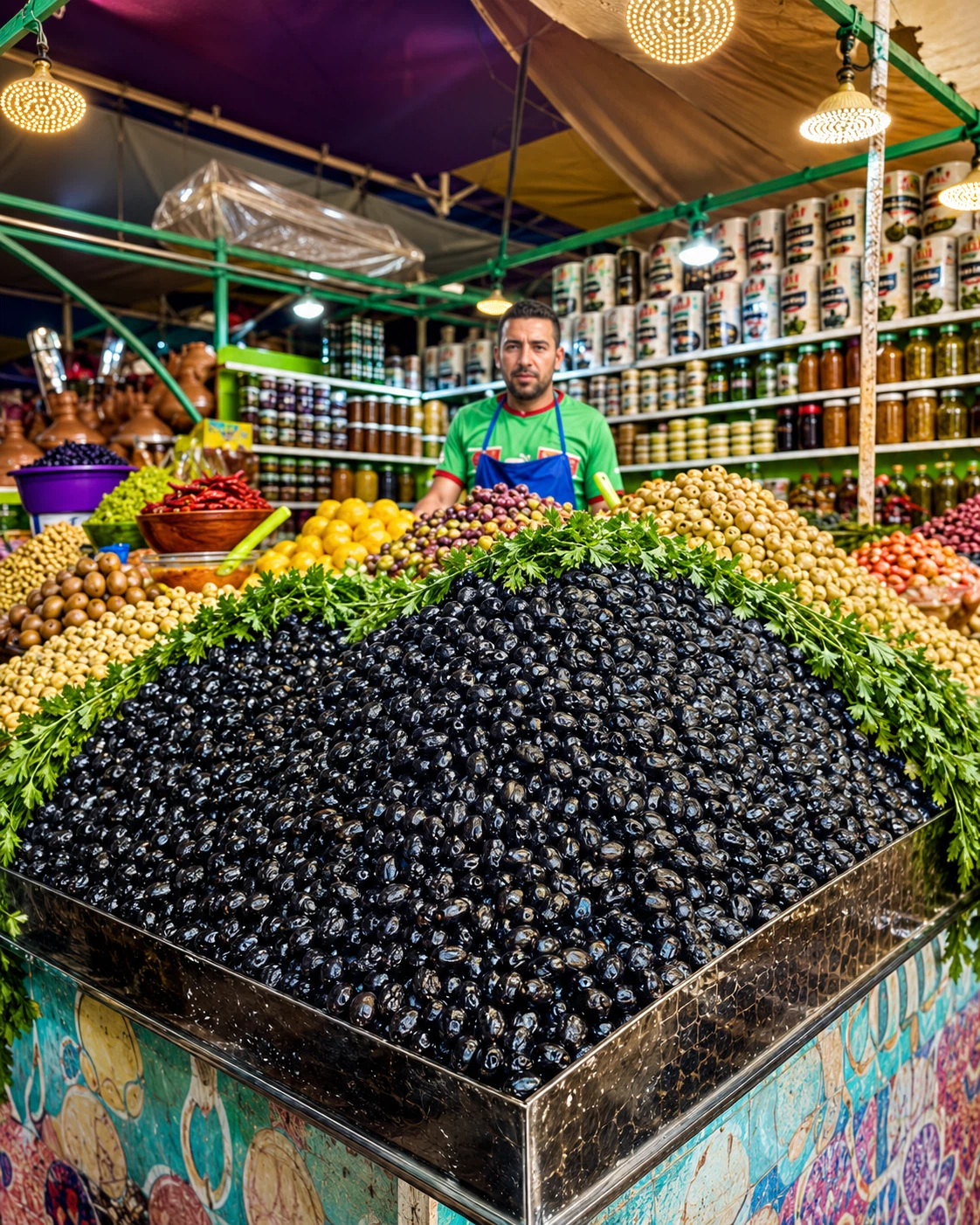
Souk El Had gives Agadir an everyday centre of gravity. Its gates, produce, textiles, household goods and movement connect the resort city to the practical life of the region.

A clearer reading of the city

A city shaped by ocean, recovery and Souss life

To understand Agadir, read the seaside plan, memory sites and market culture together. The city is not a single monument or a beach strip; it is a rebuilt urban landscape where Atlantic openness and regional identity meet.

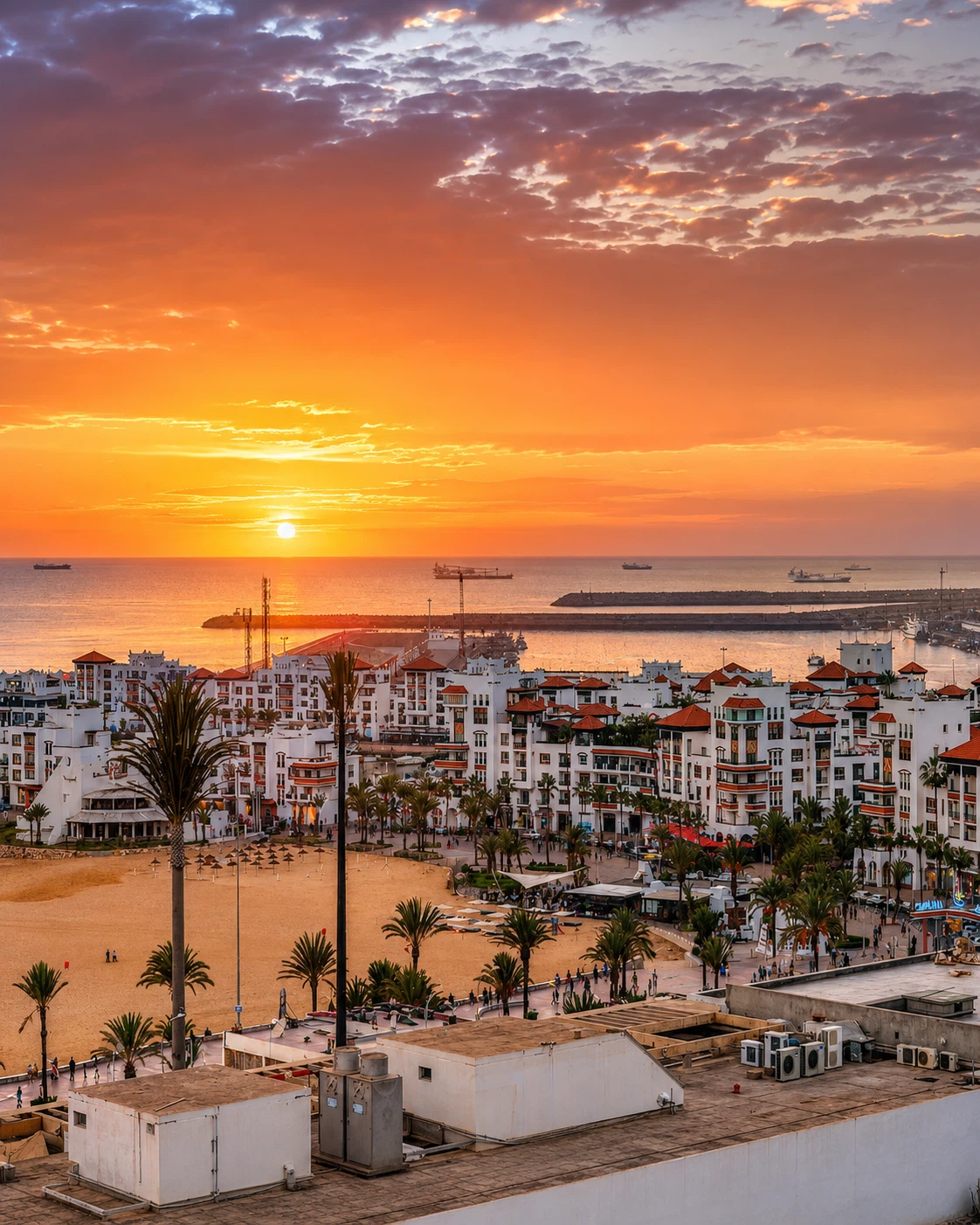
Agadir beachfront and Atlantic sunset over the rebuilt coastal city
Layer 1

Coast and urban plan

The bay, beach promenade, marina and port establish Agadir’s first language: open space, sea light, leisure, trade and movement along the Atlantic edge.

Agadir Oufella viewpoint and cable car above the bay
Layer 2

Memory and reconstruction

Agadir Oufella, the Memory Museum and the city’s rebuilt layout make the 1960 rupture visible. La Médina d’Agadir adds a crafted, modern homage rather than an old medina quarter.

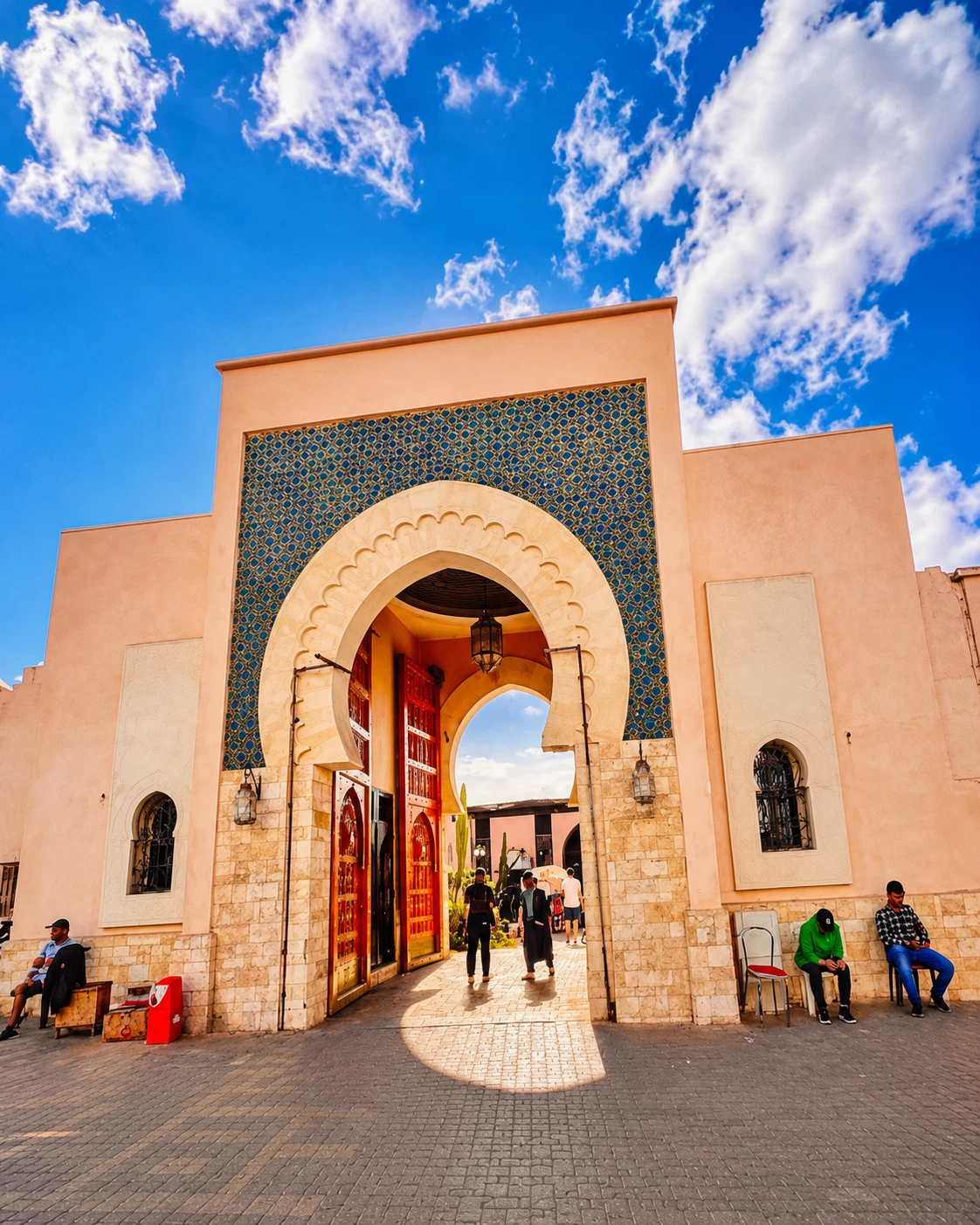
Souk El Had entrance gate and market movement in Agadir
Layer 3

Souss culture and trade

Souk El Had, Amazigh visual identity, argan-country routes, produce, textiles and craft details connect the city to the wider Souss region.

Landmarks & orientation

Read Agadir through six defining places

No single monument explains Agadir. These six places reveal the relationship between hilltop memory, the rebuilt bay, market movement, crafted heritage and the city’s Atlantic role.

1
Agadir Oufella

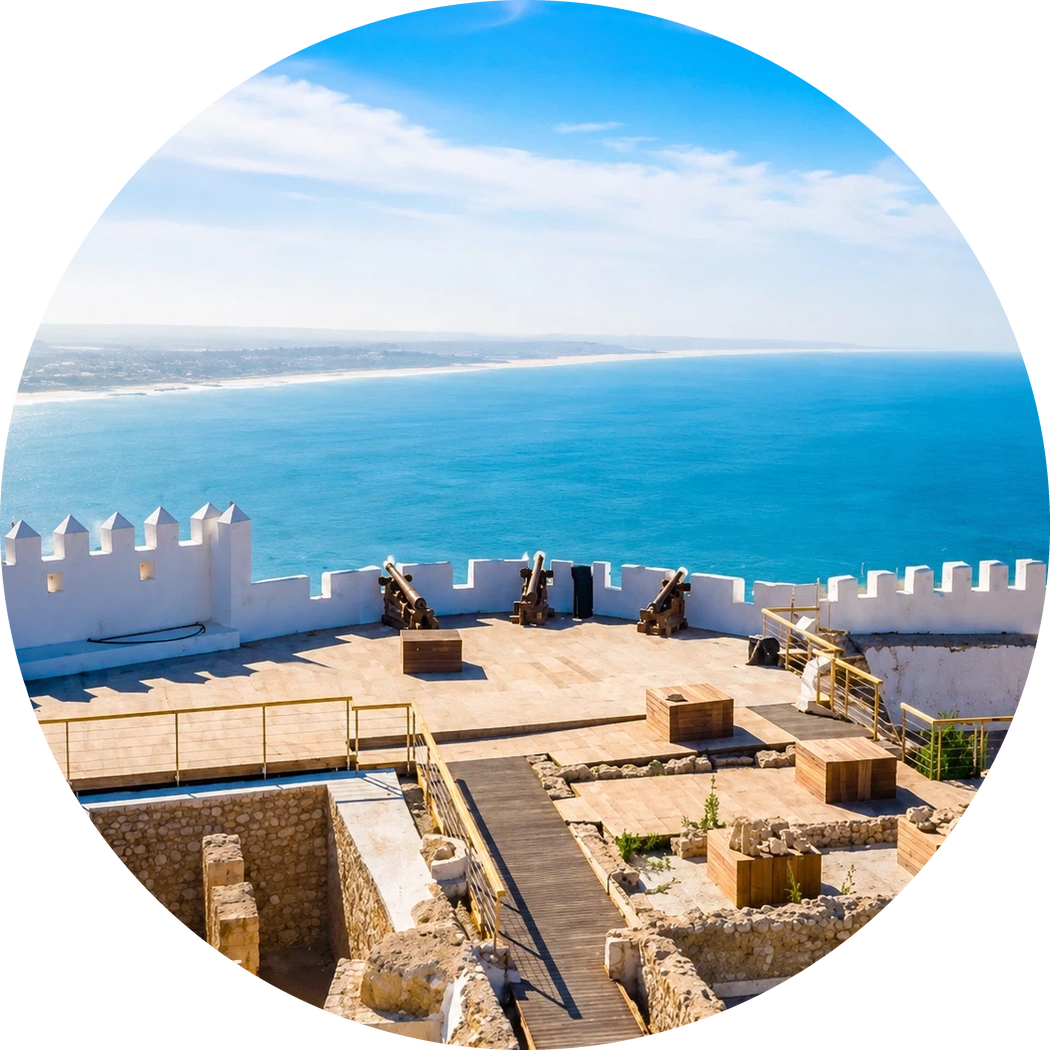
The hilltop kasbah site frames the old city’s memory and offers the clearest view over the harbour, marina, beach and rebuilt urban plan.

2
Agadir Beach

The long Atlantic curve is the city’s daily orientation line, linking promenade walking, cafés, hotels, evening light and open sea.

3
Marina and port

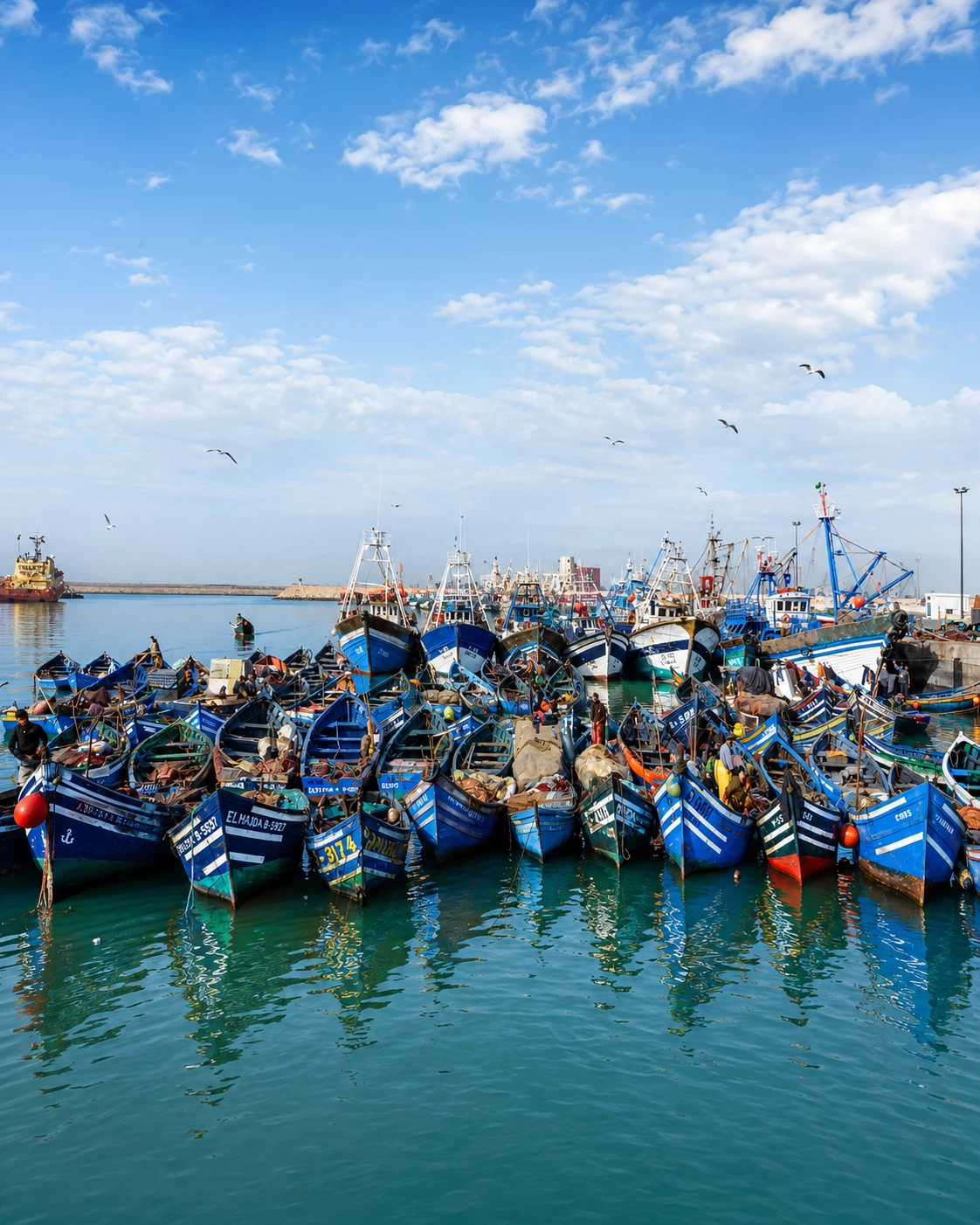
Leisure boats, fishing activity and commercial harbour infrastructure show Agadir as both seaside resort and working Atlantic city.

4
Souk El Had

A large enclosed market where produce, clothing, household goods, spices and everyday commerce give the modern city its strongest local rhythm.

5
La Médina d’Agadir

A modern craft and architecture complex begun by Coco Polizzi, best read as a respectful medina-inspired reconstruction rather than a surviving old quarter.

6
Memory Museum & Jardin d’Olhao

A quieter stop for understanding the 1960 earthquake, city memory and the emotional distance between old Agadir and the rebuilt city.

Agadir Oufella terrace, white walls, cannons and Atlantic view
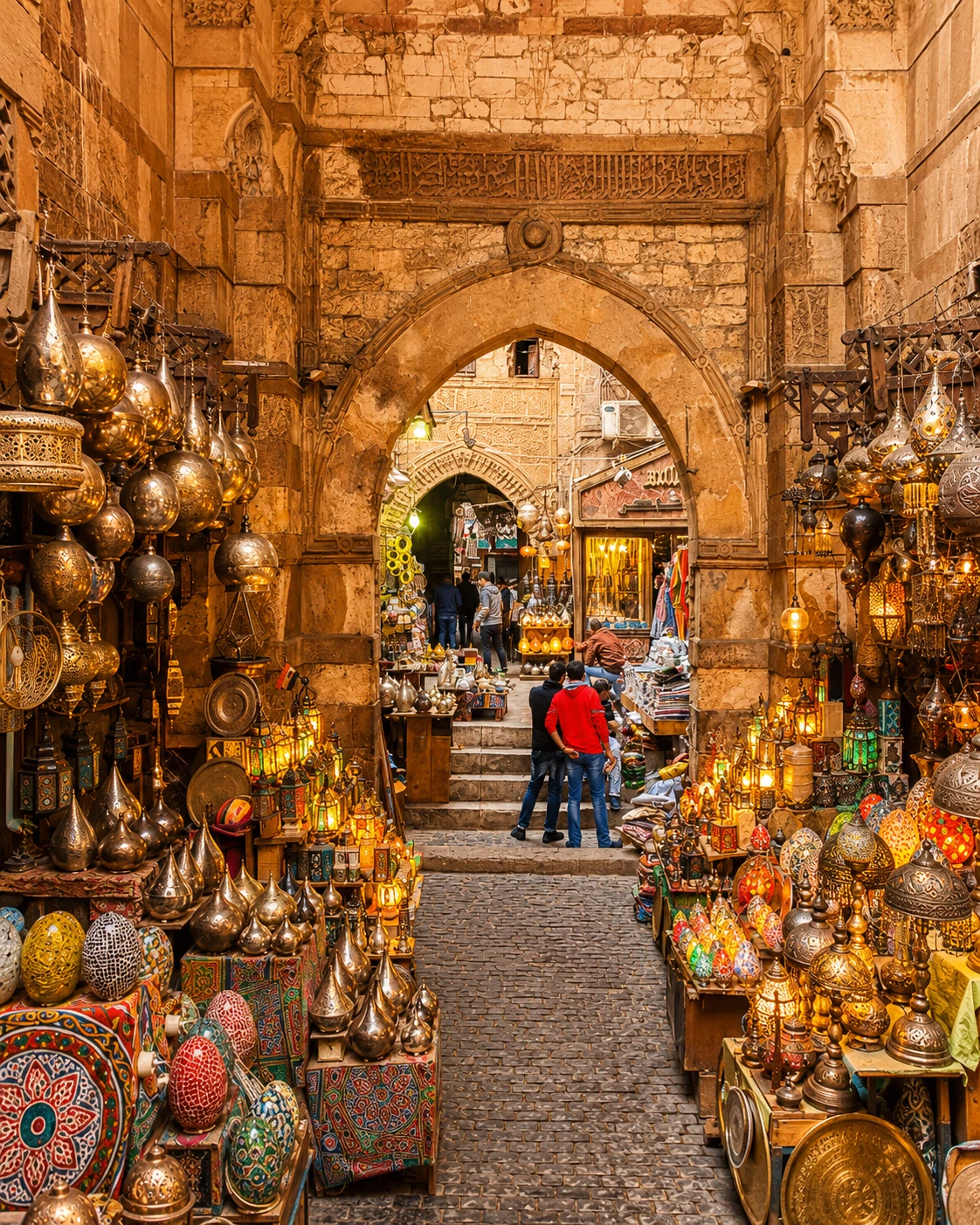
Lanterns and craft stalls in a Moroccan market passage

A rebuilt medina idea

La Médina d’Agadir — craft memory after rupture

Because much of old Agadir disappeared in 1960, the city’s relationship with heritage is different from Morocco’s older medina capitals. La Médina d’Agadir, associated with Coco Polizzi and begun in the 1990s, offers a crafted architectural homage: ochre passages, courtyards, workshops and traditional building languages brought together in a modern complex. Seen carefully, it helps visitors understand both presence and absence.

  • Ochre walls, courtyards and passages translate Moroccan craft language into a modern visitor environment.
  • Workshop details, wood, metalwork and earth-toned surfaces point back toward Souss materials and traditional building knowledge.
  • Its value is not that it replaces the lost medina, but that it makes Agadir’s reconstruction story easier to see.

Architectural reading

Three urban languages to notice

Wide modern geometry

Agadir speaks first through scale and clarity: broad avenues, beachfront lines, pale volumes, hotel gardens, palm edges and the open curve of the bay. The modern plan gives the city a different rhythm from Morocco’s older enclosed medinas.

Hill and memory

Agadir Oufella changes the city’s language. From above, the harbour, beach and modern grid become legible, while the kasbah walls remind visitors that the most important heritage layer is also a site of loss.

Craft and market surfaces

At Souk El Had and La Médina d’Agadir, texture returns at human scale: gates, stalls, woven goods, metalwork, wooden details, earth colours and Amazigh-influenced visual memory.

Visual atmosphere

Ocean light, market colour and ochre hills

Nearby highlights

Nearby coast, nature and Souss landscape

Agadir works well as a base for three very different extensions: Taghazout and the north-coast surf villages, Souss-Massa National Park south of the city, and the mountain-valley route toward Paradise Valley and Imouzzer.

Taghazout and Tamraght

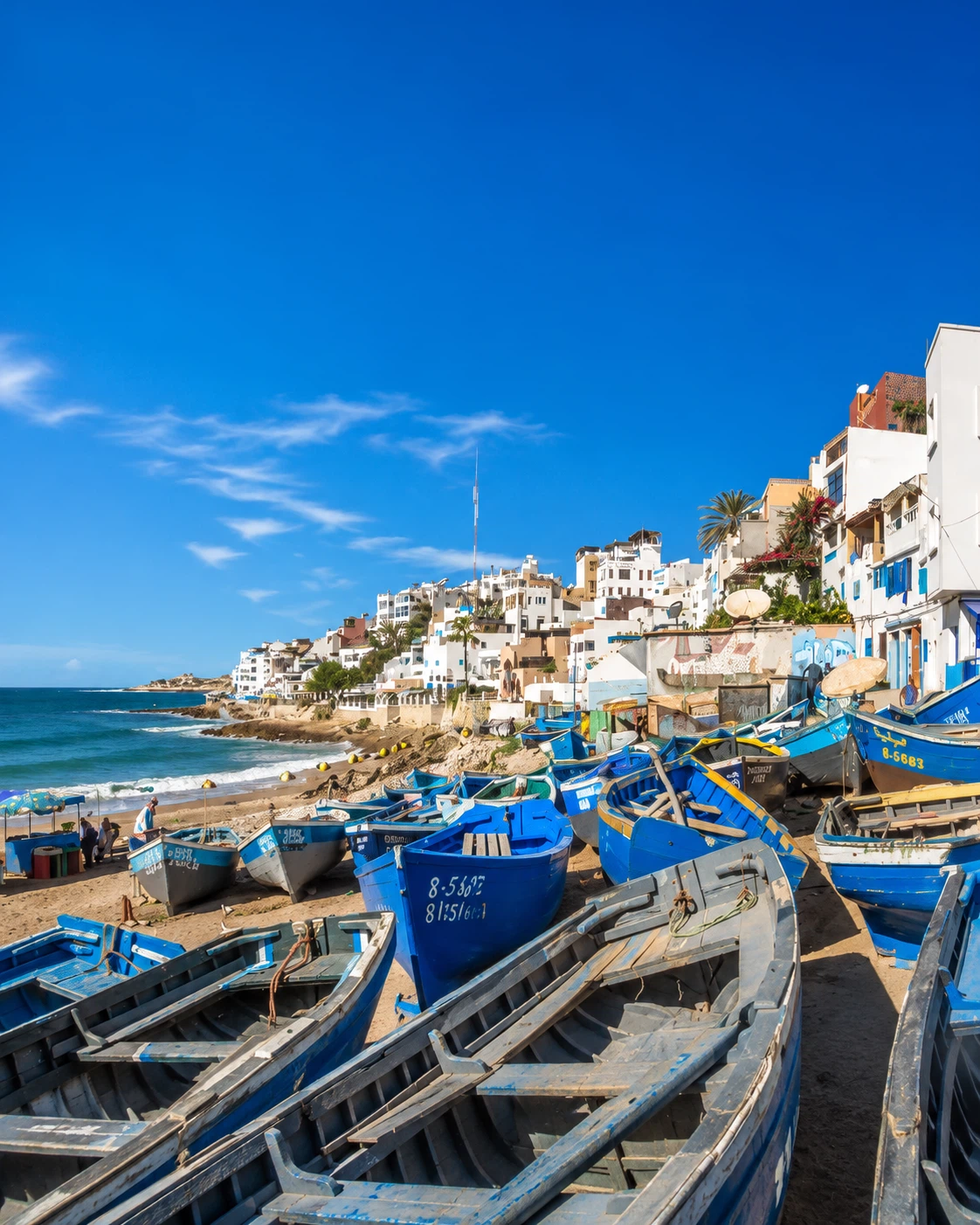
North of Agadir, the coast shifts into surf beaches, fishing-village memory and a slower Atlantic rhythm. Treat it as a coastal extension, not simply another beach stop.

Taghazout fishing boats and white coastal village north of Agadir

Souss-Massa National Park

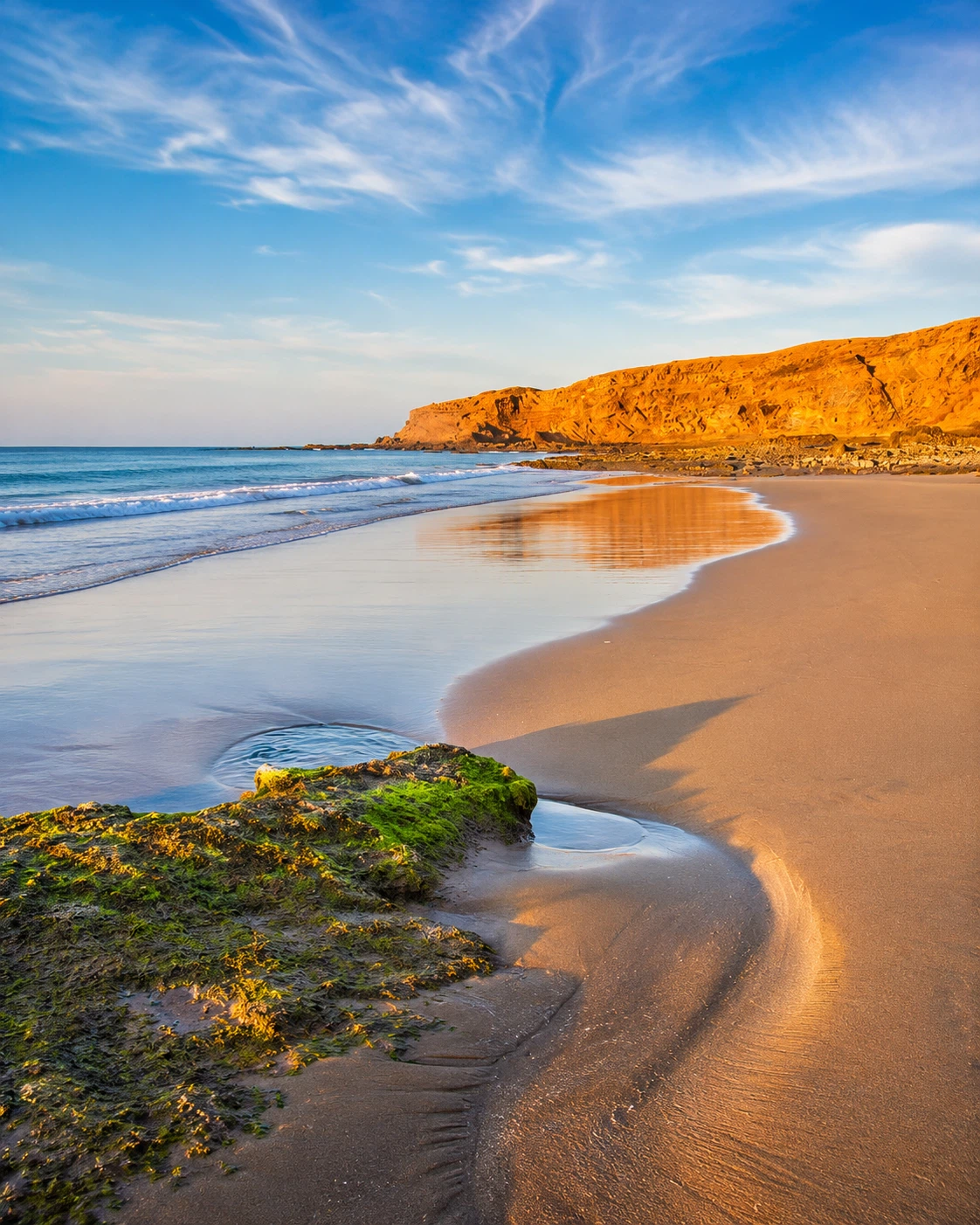
South of Agadir, river mouths, dunes, wild shorelines and bird-rich habitats create a very different reading of the Atlantic edge.

Atlantic beach and ochre cliffs on the Souss-Massa coast

Paradise Valley and Imouzzer road

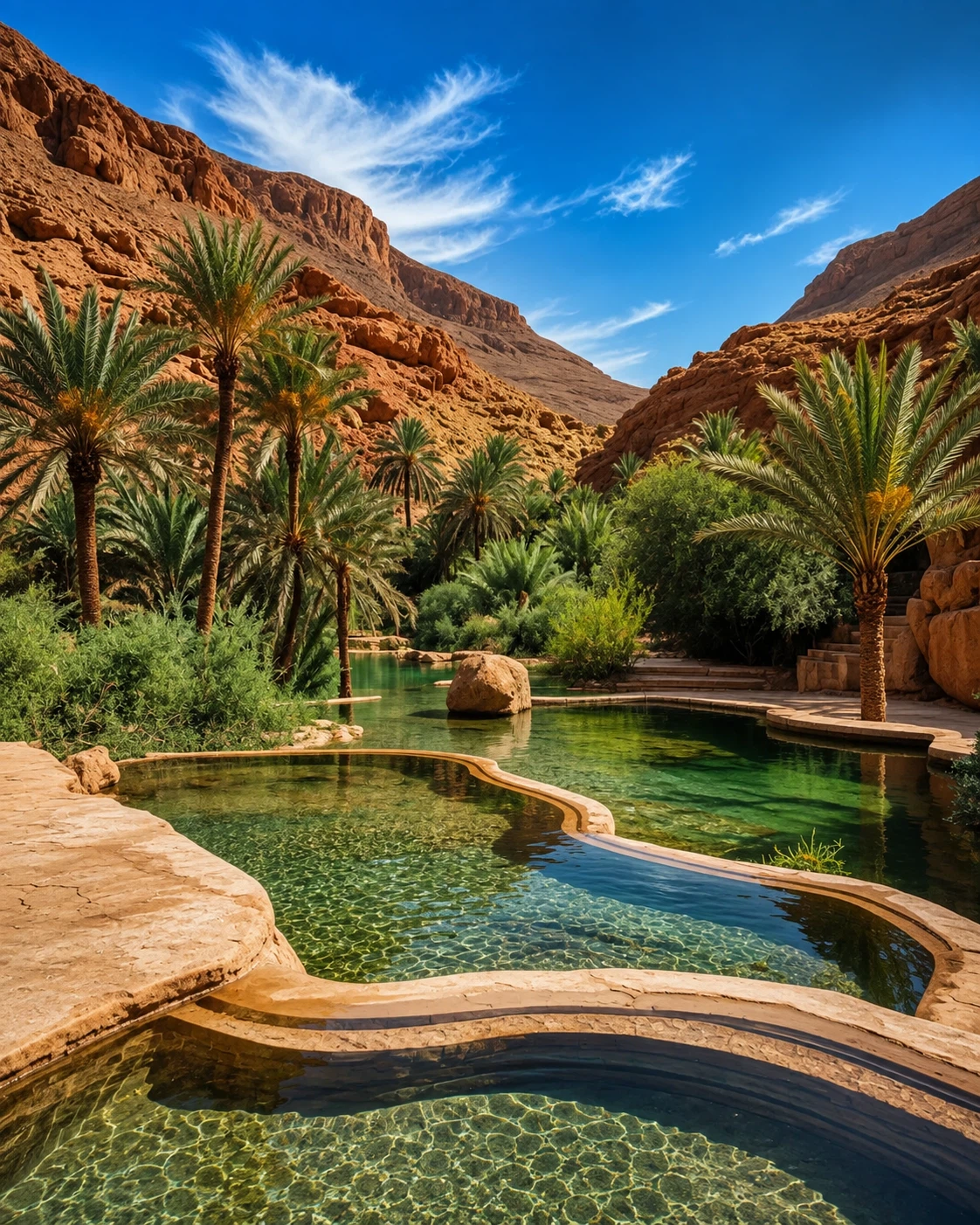
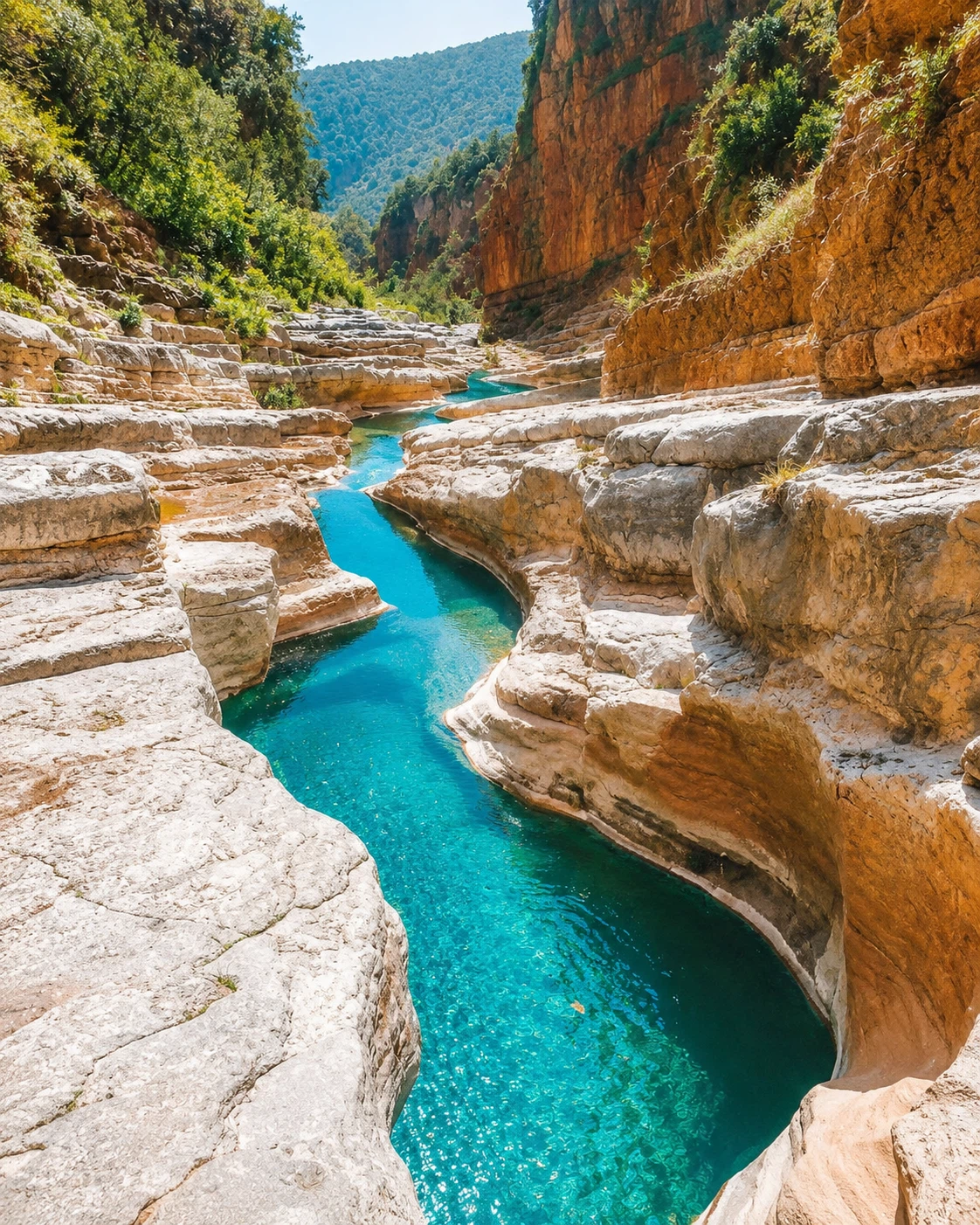
Inland from the coast, palm valleys, rock pools and mountain light introduce the Anti-Atlas side of the Agadir journey. Access and water conditions can vary by season.

Paradise Valley rock pools and turquoise water in the Anti-Atlas near Agadir
Travel note: beach conditions, restoration access, market opening times, road conditions, park access and local visitor arrangements can change. Check current official or trusted local information before travelling.

Practical orientation

How to experience Agadir well

  • Start with the bay and Agadir Oufella to understand the city’s scale before entering the market.
  • Treat Souk El Had as everyday commerce: go slowly, keep your bearings by gates and avoid reducing it to souvenirs.
  • Do not expect a medieval medina in the centre; read the city through post-1960 rebuilding, memory sites and modern neighbourhoods.
  • Separate beach time, market walking and nearby nature into different parts of the day.
  • Use Agadir as a practical base for Taghazout, Souss-Massa National Park, Paradise Valley and Souss inland routes.

A strong first visit

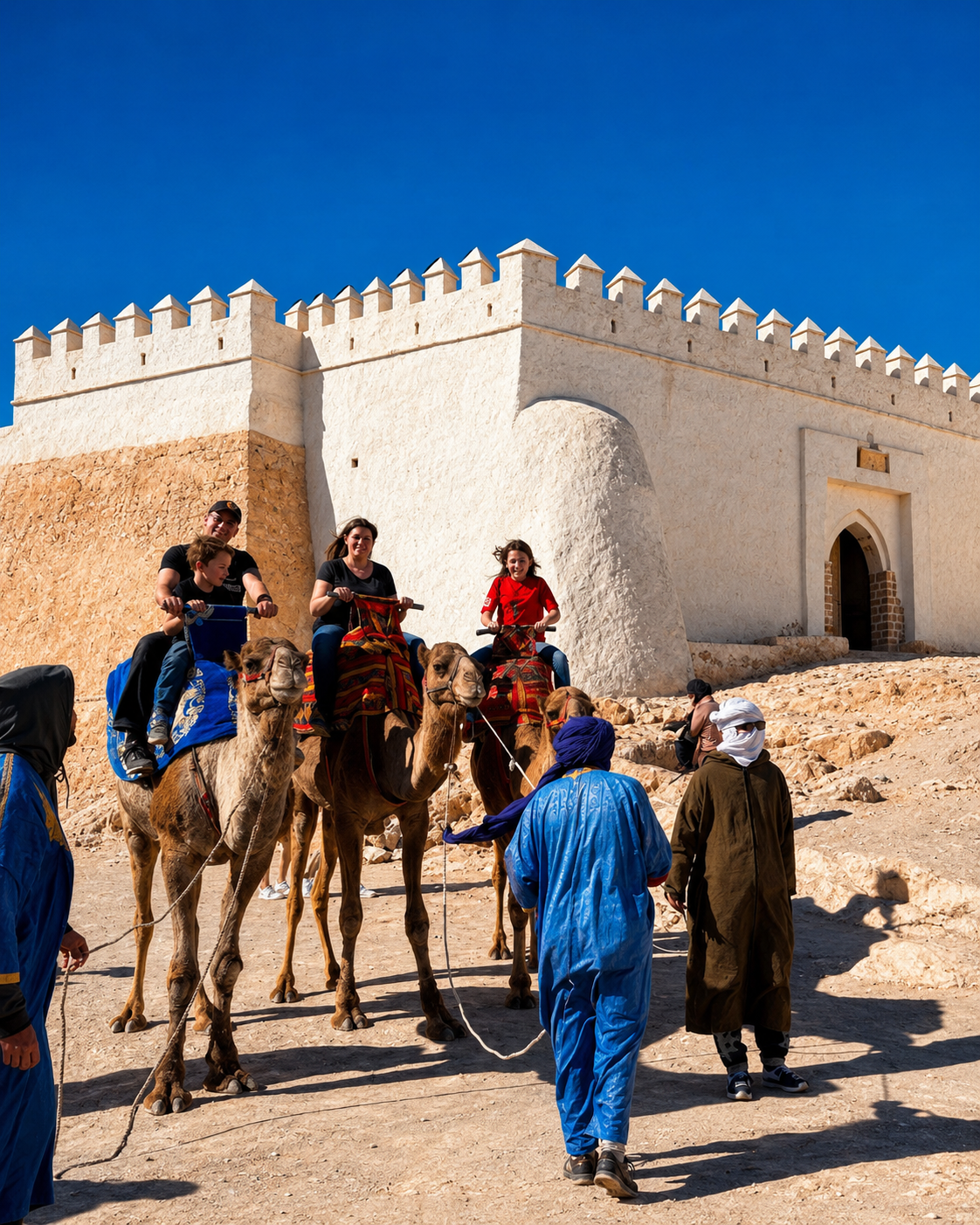
Camel rides beside the restored Agadir Oufella walls

Begin with Agadir Oufella for orientation, come down to the marina and beach, then spend a separate stretch in Souk El Had. Add La Médina d’Agadir or the Memory Museum when you want the city’s reconstruction story, and leave nearby nature for another half day or full day.

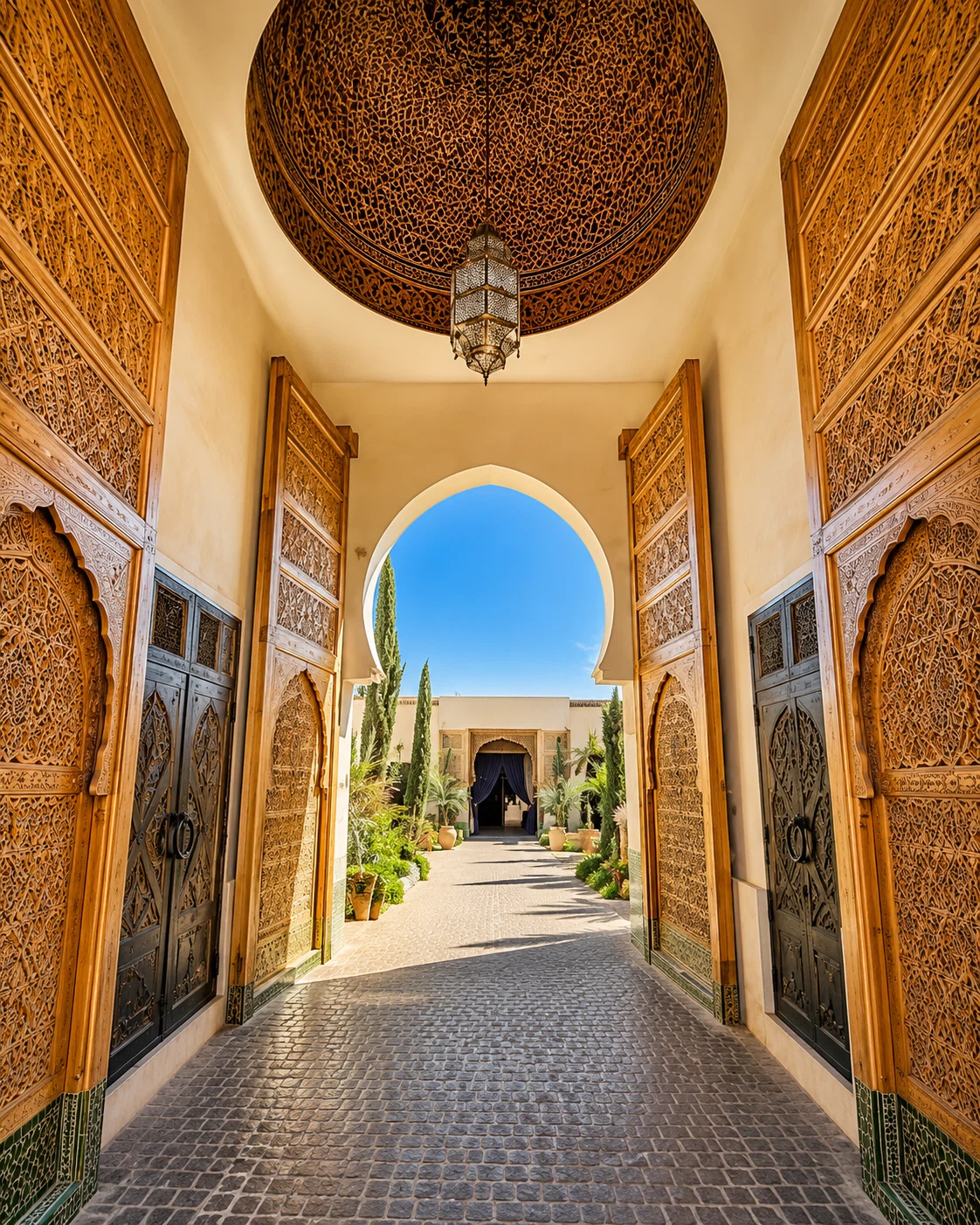
Carved wooden doorway and refined Moroccan interior passage in Agadir guide styling

Go deeper with Exotic Morocco

Agadir — Premium Visual City Guide

Continue with a complete visual publication designed to connect the city’s Atlantic setting, reconstruction history, markets, Souss culture, practical orientation and nearby landscapes into one carefully structured journey.

✓ Reconstruction context✓ Essential landmarks ✓ Coast & urban design✓ Souks & local life ✓ Practical travel guidance✓ Nearby highlights

Continue the journey

Continue the journey through Agadir

Look beyond the beachfront and encounter a city of Atlantic scale, post-1960 memory, market movement, Souss culture and nearby landscape routes.