Skip to learning
Editorial evocation of a Moroccan court: an anonymous sultan beside a fountain, with architectural references to Meknès, Volubilis and Fez.
Time & transformation

History of
Morocco

A long view of Morocco through settlements, cities, encounters and change. Begin with the layers, then follow the people between them.

Exotic Morocco · 12 minute read
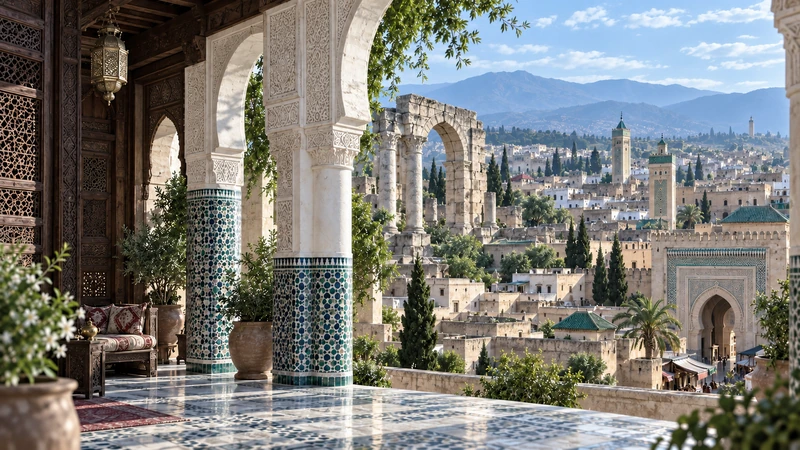
An editorial evocation of Moroccan history; the architecture brings several places together.
01 / A way into the story

History has more than one centre.

Morocco’s past is larger than a succession of royal capitals. It includes Amazigh societies, Mediterranean and trans-Saharan connections, religious communities, rural livelihoods and the work of ordinary households. No single monument can stand in for all of them.

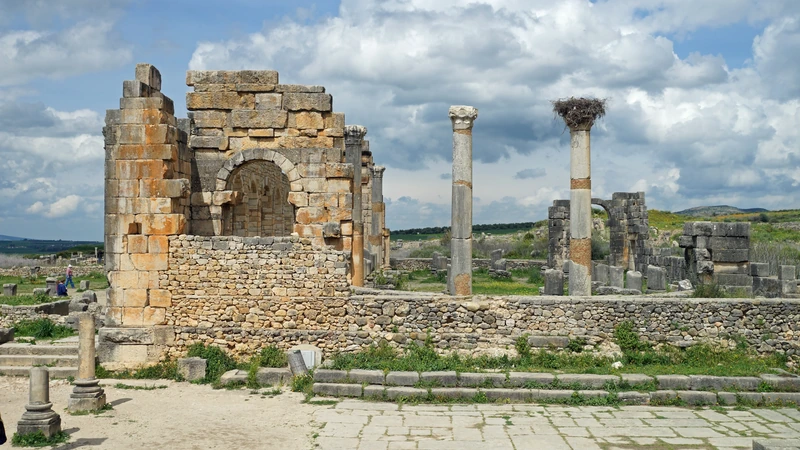
Volubilis makes a useful starting point: its history crosses Mauritanian, Roman and later periods. A surviving Roman arch tells us about one place and one era; it does not mean that the whole territory of present-day Morocco shared the same experience.

Explore Volubilis & Moulay Idriss ↗
The basilica remains at Volubilis, with columns and the surrounding landscape.
THE SUBJECTTime & transformation
THE APPROACHPlace. Practice. People.
THE CONNECTIONFind it in Morocco ↗
The complete historical journey

Morocco
Through Time.

Dynasties, Cities & Living Memory

Continue from this gateway into the complete history: early settlements, ruling houses, Amazigh and Jewish histories, the Strait, oasis routes, colonial rule, independence and the work of living heritage.

Editorial evocation of Moroccan historical architecture: a cedar arcade opens towards Roman, imperial and medina references.
An editorial evocation of Morocco through time; a composed scene, rather than a view of one site.
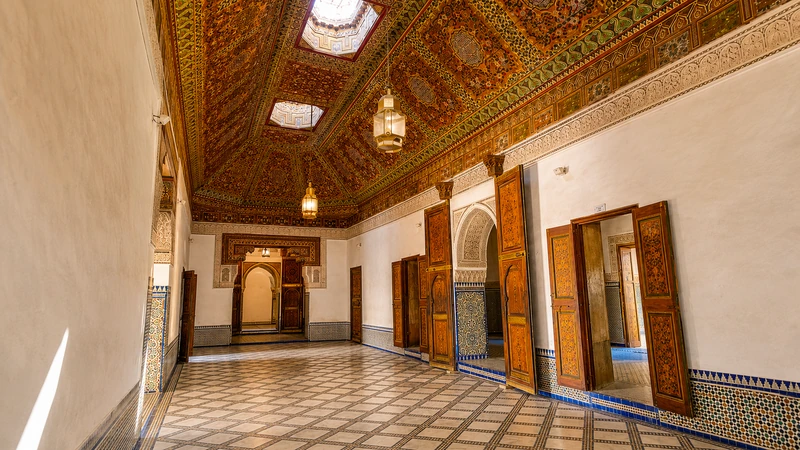
A hall at Bahia Palace in Marrakech, with painted timber, carved detail and zellige.
An EM visual study of the painted hall at Bahia Palace, Marrakech.
02 / The deeper context

Time leaves layers.
People connect them.

A useful history of Morocco needs more than a line of rulers. It needs several timelines running beside one another: political authority, settlement, trade, belief and everyday work. A change of dynasty might redirect a capital or commission a mosque, while a farming community, commercial route or family practice continued in a different rhythm. The two kinds of history belong together.

Consider the difference between Volubilis and a medina. The first opens questions about ancient urban life, Mediterranean connections and the interpretation of archaeological remains. The second contains buildings and institutions that have been maintained, adapted and inhabited over many generations. A ruin is not a complete surviving city, and a living city is not a sealed medieval document. Both require us to distinguish what survives from what has changed.

Movement is another essential thread. People carried languages, beliefs, skills and goods between the Mediterranean, Atlantic, mountain valleys and lands south of the Sahara. Those exchanges were not always peaceful or equal. Trade, migration, conquest and forced movement produced different experiences. A richer account makes room for the people who travelled and for those whose lives were transformed by their arrival.

Read Medinas Explained ↗

04 / The visual chapter

Three windows onto change

Move between the close detail and the wider setting. Each view adds another part of the story.

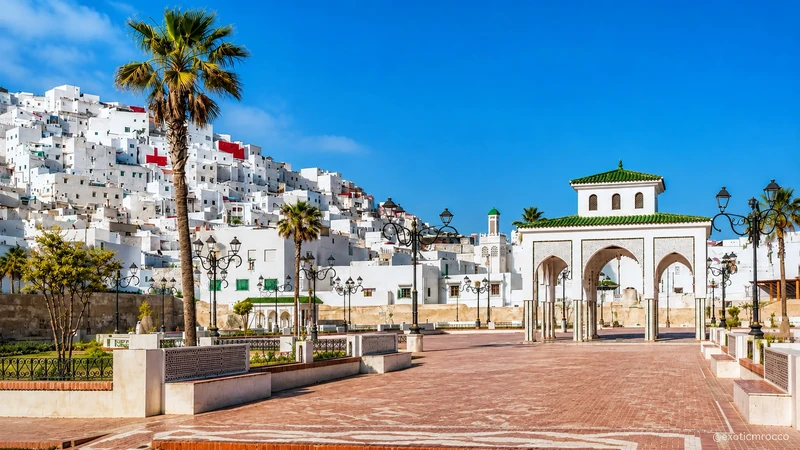
The white medina and hillside cityscape of Tétouan.
01 / A closer look

A northern perspective

Tétouan opens a different conversation about migration, Andalusian connections and colonial power. Its medina and later urban districts belong to different histories. A building’s style can raise a question, but appearance alone cannot establish a date or explain who controlled the city.

The white medina and hillside cityscape of Tétouan.Follow this history ↗
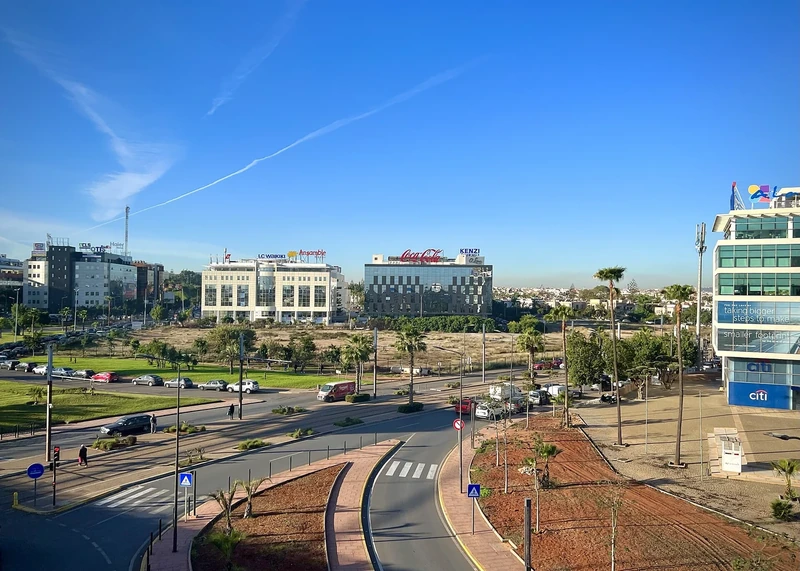
Casablanca photographed in 2023: streets, transport and modern urban life.
02 / A closer look

The present is historical too

Roads, trams and expanding neighbourhoods are as much part of Morocco’s story as monuments. In a modern city, ask how people commute, where public space has changed and whose work keeps the city moving. History does not stop at independence.

Casablanca photographed in 2023: streets, transport and modern urban life.Follow this history ↗
A hall at Bahia Palace in Marrakech, with painted timber, carved detail and zellige.
03 / A closer look

Colonial & independent Morocco

The protectorate era brought unequal political power and new forms of planning and administration. Independence in 1956 marks a major transition, not the end of the story. Later urban growth, education, migration and cultural production also belong to the history visitors encounter.

A hall at Bahia Palace in Marrakech, with painted timber, carved detail and zellige.Follow this history ↗
1 / 3
A closer understanding

A country seen through
three turning points.

History becomes clearer when dates are connected to changes in settlement, authority and everyday life.

The basilica remains at Volubilis, with columns and the surrounding landscape.
Before the medieval kingdoms

Volubilis was more than a Roman outpost.

Its history includes a Mauritanian town, Roman provincial life and later settlement in the early Islamic period. The surviving columns belong to one part of that longer story. A change of ruler did not erase everyone living in the landscape.

Read the site at two scales: public architecture reveals organised civic life, while houses, mosaics and working spaces bring the account closer to households. Neither scale can stand for all of ancient Morocco. A prosperous town leaves a different kind of record from a mobile community or a small agricultural settlement.

Read the wider story ↗
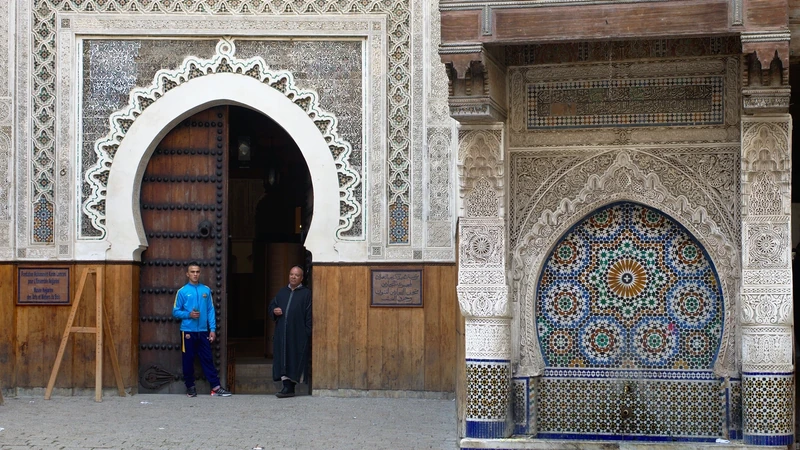
The Nejjarine fondouk entrance and fountain in Fès.
Cities and institutions

A capital can move; knowledge stays in motion.

Royal patronage helps explain why particular cities accumulated major buildings. It does not explain their whole life. Markets, learning, migration, religious institutions and skilled work also connected settlements to wider networks. A city could retain influence when the main court moved elsewhere.

This is why a sequence of dynasties is useful but incomplete. Place a timeline beside a map of routes, fields and ports. Political succession explains changes at the centre; the second map asks how those changes reached people whose lives were organised around work, family and neighbourhood.

Read the wider story ↗
Casablanca photographed in 2023: streets, transport and modern urban life.
The twentieth century

Independence is a turning point, not a blank slate.

The French protectorate began in 1912; Spanish-controlled zones and Tangier followed distinct arrangements. Moroccan independence in 1956 belongs to a longer history of political mobilisation and negotiation, rather than to one simple ceremony that settled every territorial question.

The modern city is historical evidence too. Compare the scale of an avenue with an older lane, or an administrative building with a market entrance. Urban form can show changing priorities, but colonial descriptions need to be read critically: the language of improvement often concealed unequal power.

Read the wider story ↗
Carry this with you

Keep three questions together: who held authority, who did the work, and whose evidence has survived?

03 / From an idea to everyday life

Keep three historical clocks in view.

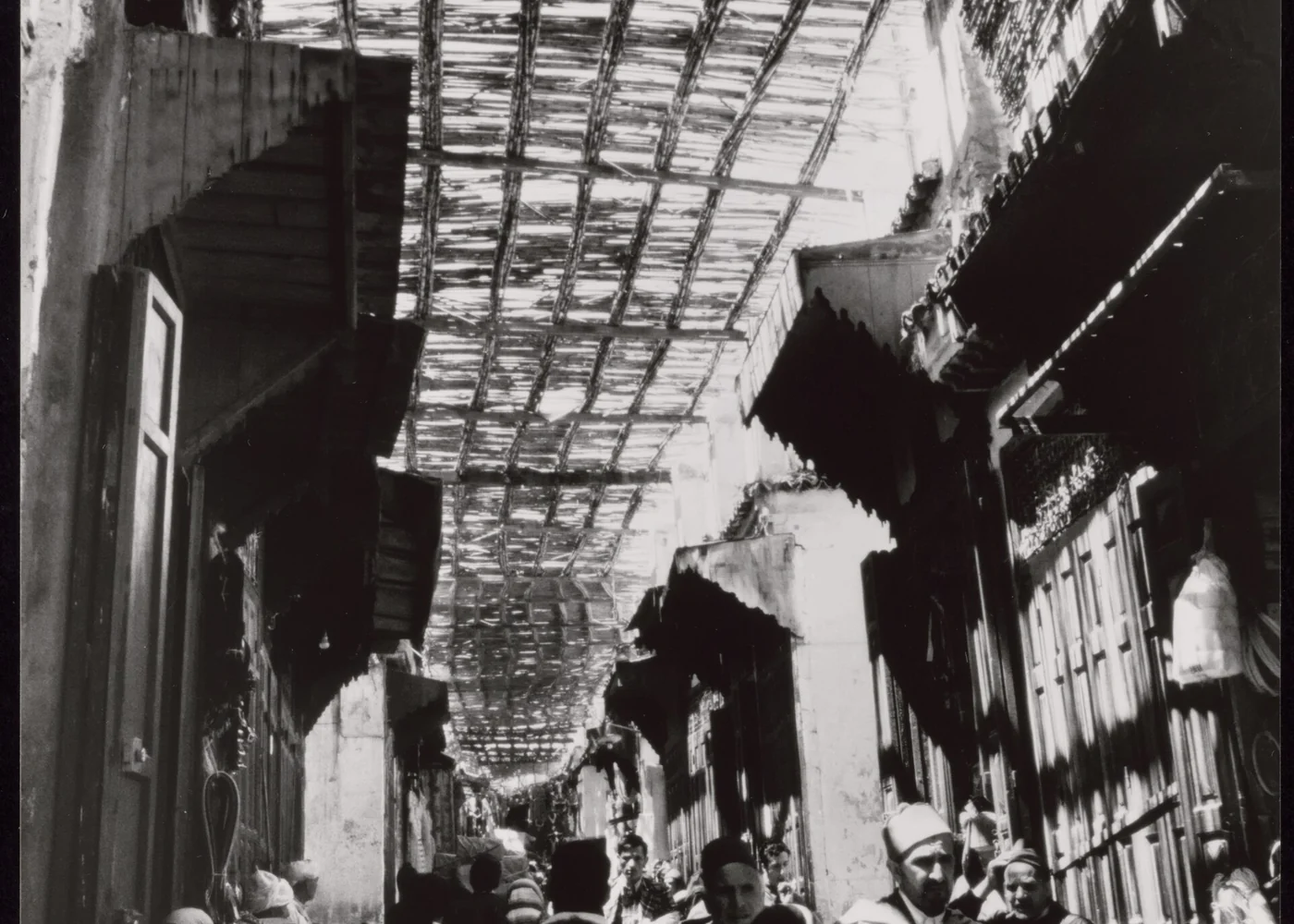
This historic photograph of Fez records a street at a particular moment. Clothing, shade structures and movement are useful clues. Ask who made the image and what lies outside its frame before treating it as a complete portrait of city life.

Historic photograph of a Fez street, from the UNESCO photographic collection.
01

Settlement & landscape

Fields, routes and water sources help explain why a settlement developed where it did. At an archaeological site, look beyond the largest monument to the relationship between houses, workspaces and cultivated land. Political events become more intelligible when they are placed inside this material setting.

02

Power & institutions

Rulers commissioned buildings, supported institutions and sought legitimacy. Those actions left records that are often more visible than ordinary lives. Compare a royal monument with a market, a neighbourhood fountain or domestic remains to avoid mistaking the best-preserved evidence for the whole society.

03

Memory & evidence

A family story, an inscription, a colonial photograph and an excavation report are different kinds of source. Each can reveal something that another misses. Note who produced it, when and for whom. Where accounts disagree, preserve the disagreement rather than forcing them into a single smooth narrative.

05 / More than one perspective

Look beyond
the first impression.

The basilica remains at Volubilis, with columns and the surrounding landscape.Perspective 01

Ancient worlds

Volubilis should be read within both local and Mediterranean histories. Its Roman remains are important evidence, but they cannot make all of Morocco Roman or erase the communities and political formations that preceded and outlasted Roman rule.

Explore this perspective ↗
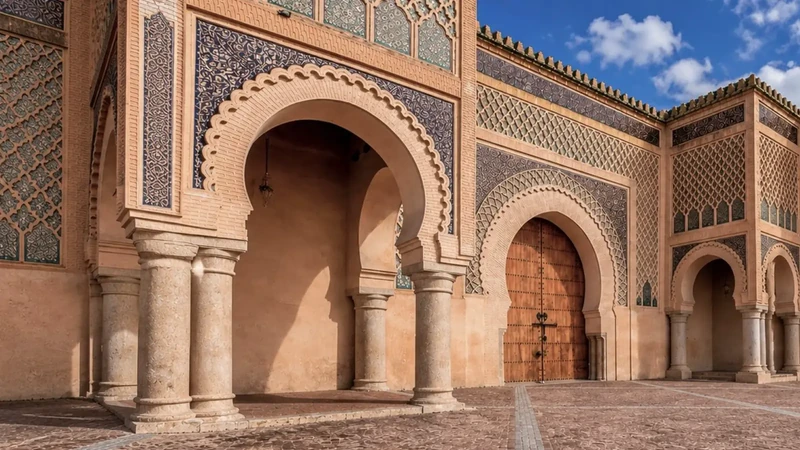
The monumental gate of Bab Mansour in Meknès.Perspective 02

Cities & dynasties

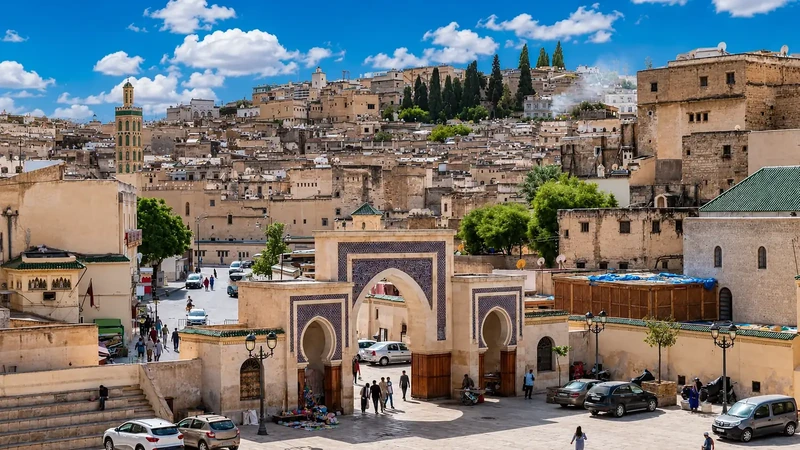
Islamic dynasties reshaped the political map and developed major urban centres. Follow this thread through Fez, Marrakech and Meknes, while remembering that capitals were linked to rural economies and routes beyond their walls. The companion dynasties page provides the political framework.

Explore this perspective ↗
06 / Make the connections

A first chronology, with room for complexity

Use these ideas to connect what you notice with the materials, people and histories behind it.

01

Before the Roman city

North African communities and the Mauritanian kingdom precede Rome’s presence at Volubilis. Archaeology can illuminate settlement and exchange; it also leaves gaps that a confident-looking timeline should acknowledge.

02

8th–10th centuries

The Idrisids and the early growth of Fez belong to an important period in Morocco’s Islamic history. Islamisation, political authority and linguistic change were processes with different rhythms, rather than a single event.

03

11th–15th centuries

Almoravid, Almohad and Marinid rule connected cities and territories across the western Islamic world. Patronage shaped mosques, schools and defences. Political borders and cultural connections were not identical.

04

16th–19th centuries

Saadian and then Alaouite rule provide another frame for reading royal projects and international connections. Capital cities mattered, but commerce, agriculture and local institutions continued beyond the court.

05

1912–1956

The protectorate period brought French and Spanish colonial rule to different zones, alongside Tangier’s distinct international history. Independence in 1956 was a political turning point, with decolonisation extending beyond one date.

06

After independence

New institutions, cities, infrastructure and migration reshaped daily life. To study recent history, bring Moroccan voices and contemporary sources into conversation with official accounts and inherited family memories.

07 / A more useful conversation

Ask the questions a timeline leaves out

Clear answers for the questions that often come next.

Was Morocco simply a meeting point of outside cultures?

That description leaves out local agency. People in Morocco made institutions, ideas and artistic forms of their own while negotiating wider connections. Exchange is a two-way question, not a story of passive influence.

Can I date a whole city by its oldest monument?

No. Buildings are repaired, replaced and reused. A city may contain ancient remains, medieval streets, colonial-era districts and recent construction, each with its own chronology.

Where should a beginner go next?

Choose a place and compare three kinds of evidence: a documented monument, an everyday object and an account by a person. Notice what each can tell you, and what remains uncertain.

08 / Take the story into a place

Find the story in Morocco

20 connected places and stories. Follow the connection that interests you.

A thought to take with you

Keep looking. Keep learning.

Choose one object or place and give it two histories: the story told by its most visible monument, and the story of the people who used, maintained or lived around it. That small shift makes a national history much more human.

The Exotic Morocco library

Continue at your own pace.

This Learn story is free to explore. Find this subject in the guide library, with each title’s current availability clearly shown.

Explore the guide library ↗
Sources & further reading

Read the evidence

  1. UNESCO · Archaeological Site of Volubilis
  2. UNESCO · Medina of Fez
  3. UNESCO · Rabat, Modern Capital and Historic City
  4. US Department of State, Office of the Historian · Morocco
  5. UNESCO · Medina of Tétouan

Source review: September 2026. Looking exercises and learning prompts are original Exotic Morocco editorial suggestions. Regional practice and personal experience vary.

Image acknowledgements

  1. Hero: Volubilis - Basilica romana.jpg — Mhobl. CC BY-SA 4.0. Cropped/resized; original licence retained.
  2. Portrait: Roman arch in Volubilis, Morocco.jpg — FuriousYogi. CC BY-SA 4.0. Cropped/resized; original licence retained.
  3. Story-1: Urban areas, Fes - UNESCO - PHOTO0000002071 0001.tiff — Dominique Roger. CC BY-SA 3.0 igo. Cropped/resized; original licence retained.
  4. Story-2: Church of our Lady of Victory, Tetouan 5.jpg — Ideophagous. CC BY-SA 4.0. Cropped/resized; original licence retained.
  5. Story-3: Casablanca, Morocco view with curiving streets November 2023.jpg — Sharon Hahn Darlin. CC BY 2.0. Cropped/resized; original licence retained.
  6. Related preview: Bab mansour DSCF5811.jpg — Robert Prazeres. CC BY-SA 4.0. Cropped/resized; original licence retained.
  7. Related preview: The sound of the south 2 - Nkoub village Morocco by Brahim FARAJI.jpg — Farajiibrahim. CC BY-SA 4.0. Cropped/resized; original licence retained.
  8. Related preview: Panoramic view of the Medina of Fes.jpg — Mustang Joe. CC0. Cropped/resized; original licence retained.
  9. Related preview: Fishing boats of Essaouira - Morocco.jpg — Mustang Joe. CC0. Cropped/resized; original licence retained.
  10. Chapter: An avenue in Tétouan: later urban layers belong to history too. — Exotic Morocco’s existing image collection.
  11. Gallery: Metalwork and trade connect objects to urban life. — Exotic Morocco’s existing image collection.

Destination and related-story thumbnails intentionally identify their linked pages. Principal story images are selected individually for this Learn page.

  • An editorial evocation of Moroccan history; the architecture brings several places together. Source: new EM editorial illustration, generated for this History edition.
  • An editorial evocation of Morocco through time; a composed scene, rather than a view of one site. Source: new EM editorial illustration, generated for this History edition.
  • The Ensanche of Tétouan, from the current EM city collection. This is not an archival record. Source: current Exotic Morocco asset / controlled EM library selection.