Skip to learning
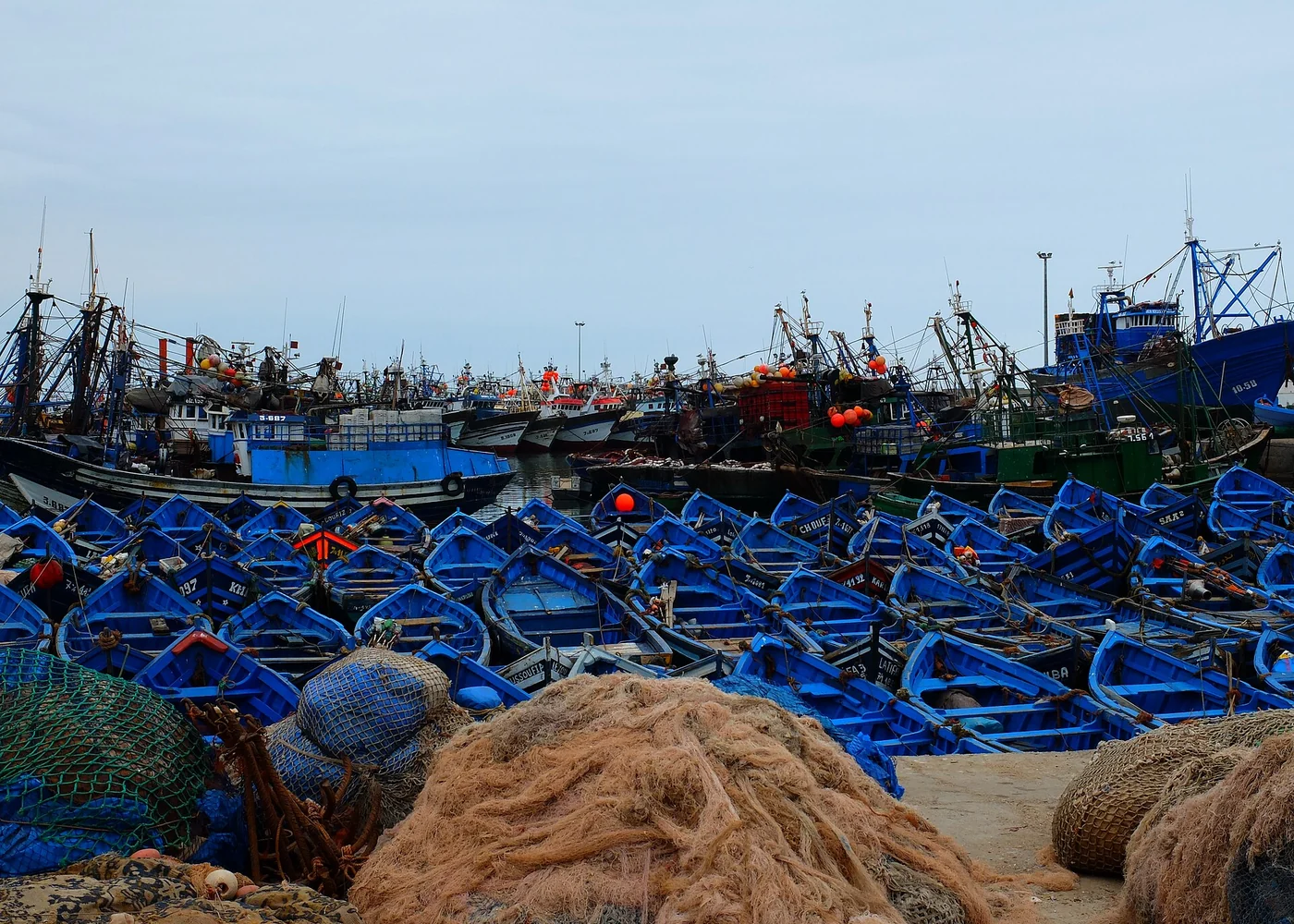
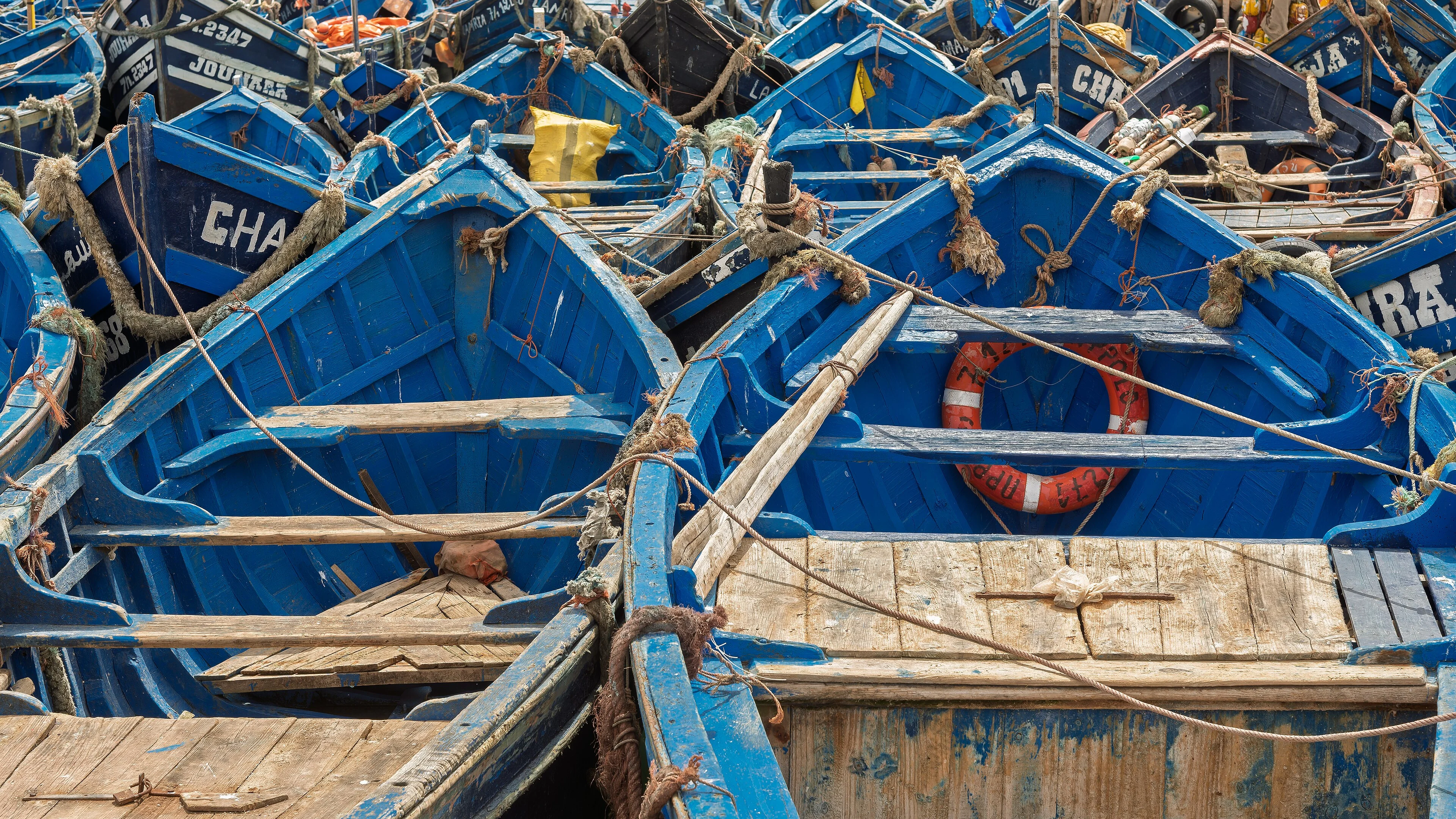
Fishing boats in Essaouira: colour, weathered timber, ropes and the equipment of work.
Morocco facing the sea

Coastal Cities & Ports

Harbours, trade, fishing and urban life. Read Morocco’s coastal cities through the connections between land and sea.

Exotic Morocco · 11 minute read
01 / A way into the story

A coast is a working edge.

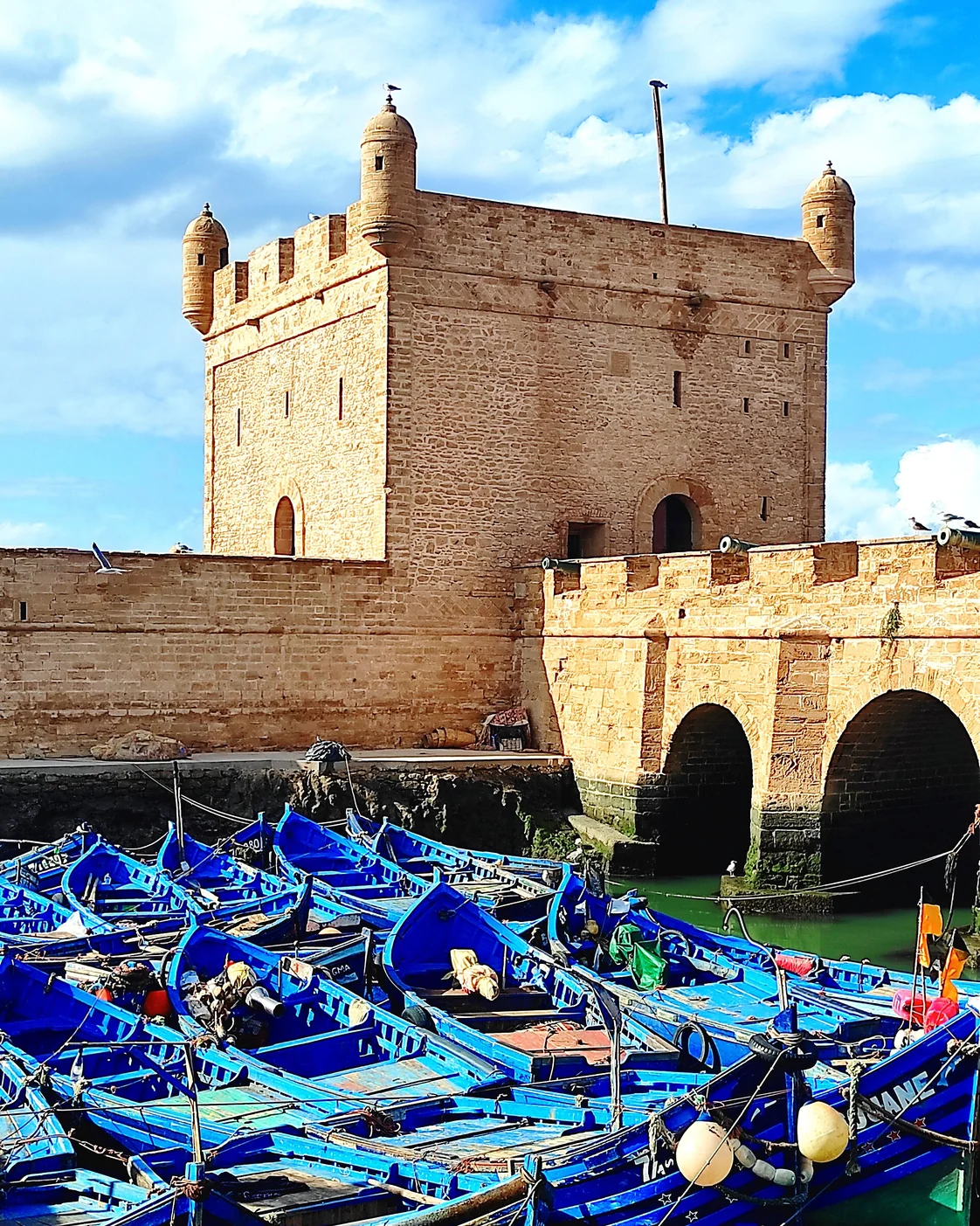
A port is more than a view of boats. It connects fishing, storage, repair, transport and exchange with streets and households inland. Historic fortifications and modern working areas may sit close together while serving very different purposes.

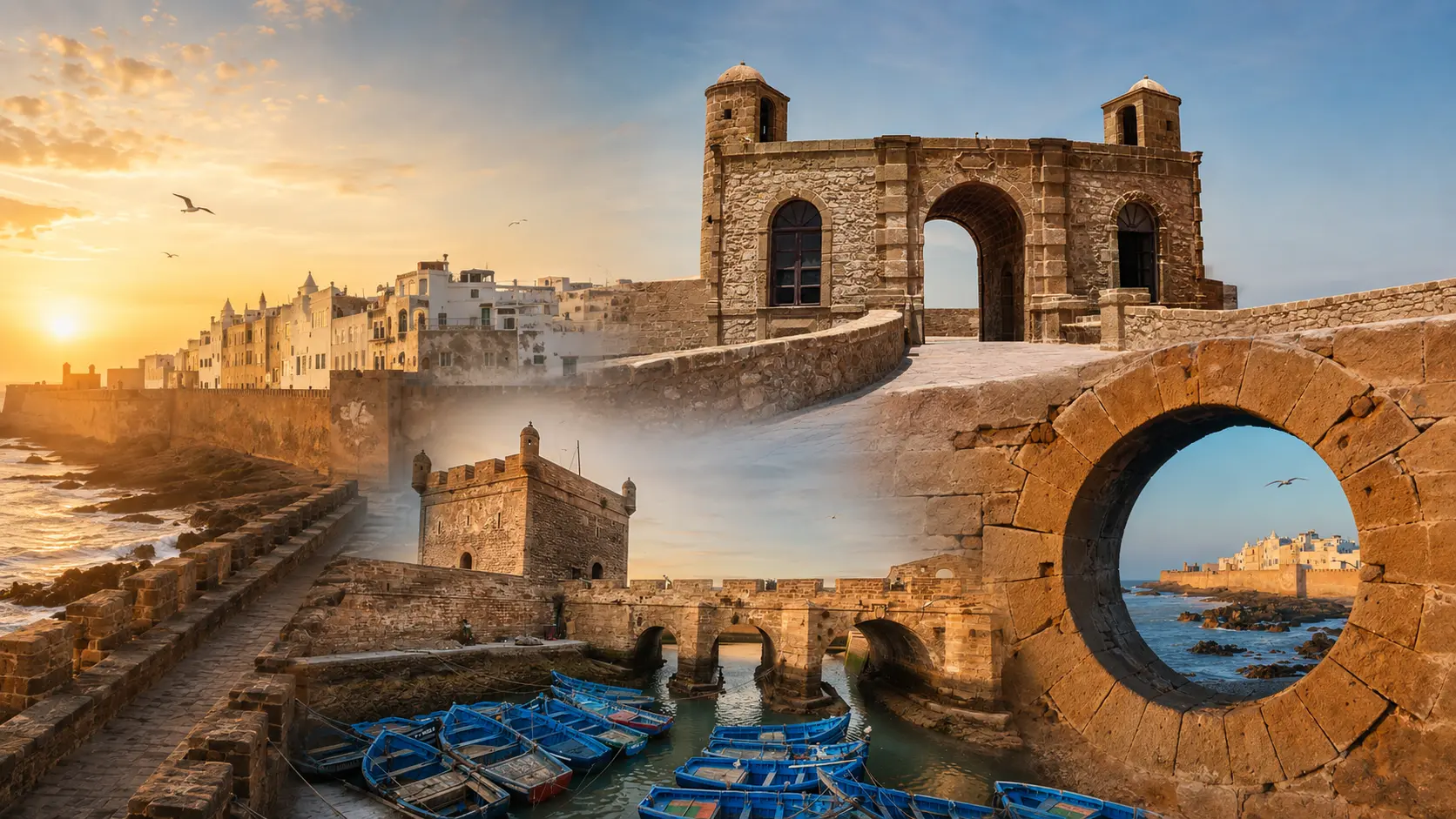
Essaouira is a useful case: its eighteenth-century development as a planned port linked royal ambition with international trade. The city’s documented history of multiple communities adds another layer, without making every period or encounter a story of effortless harmony.

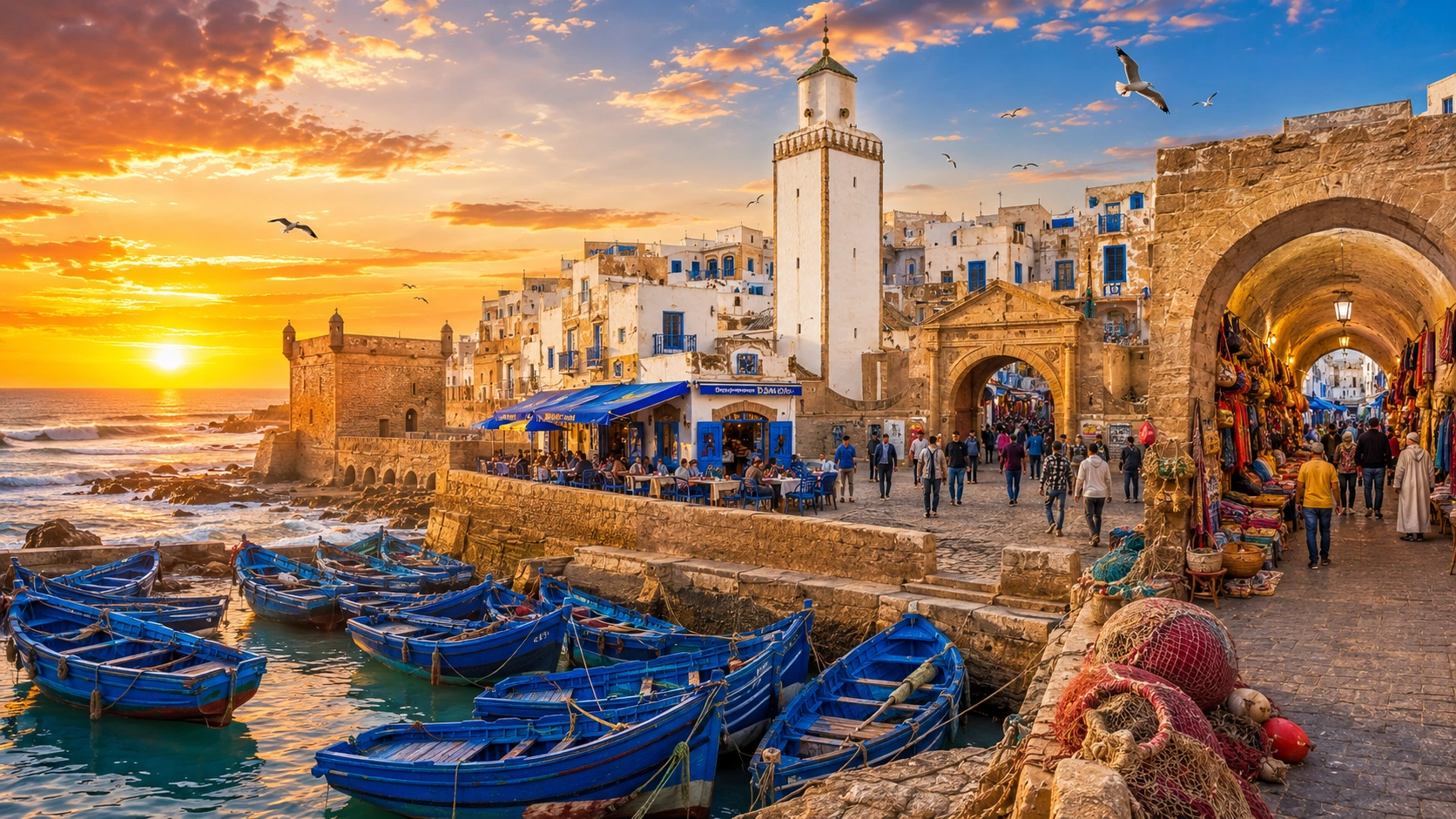
The Skala du Port at Essaouira, with boats in the harbour below.
THE SUBJECTMorocco facing the sea
THE APPROACHPlace. Practice. People.
THE CONNECTIONFind it in Morocco ↗
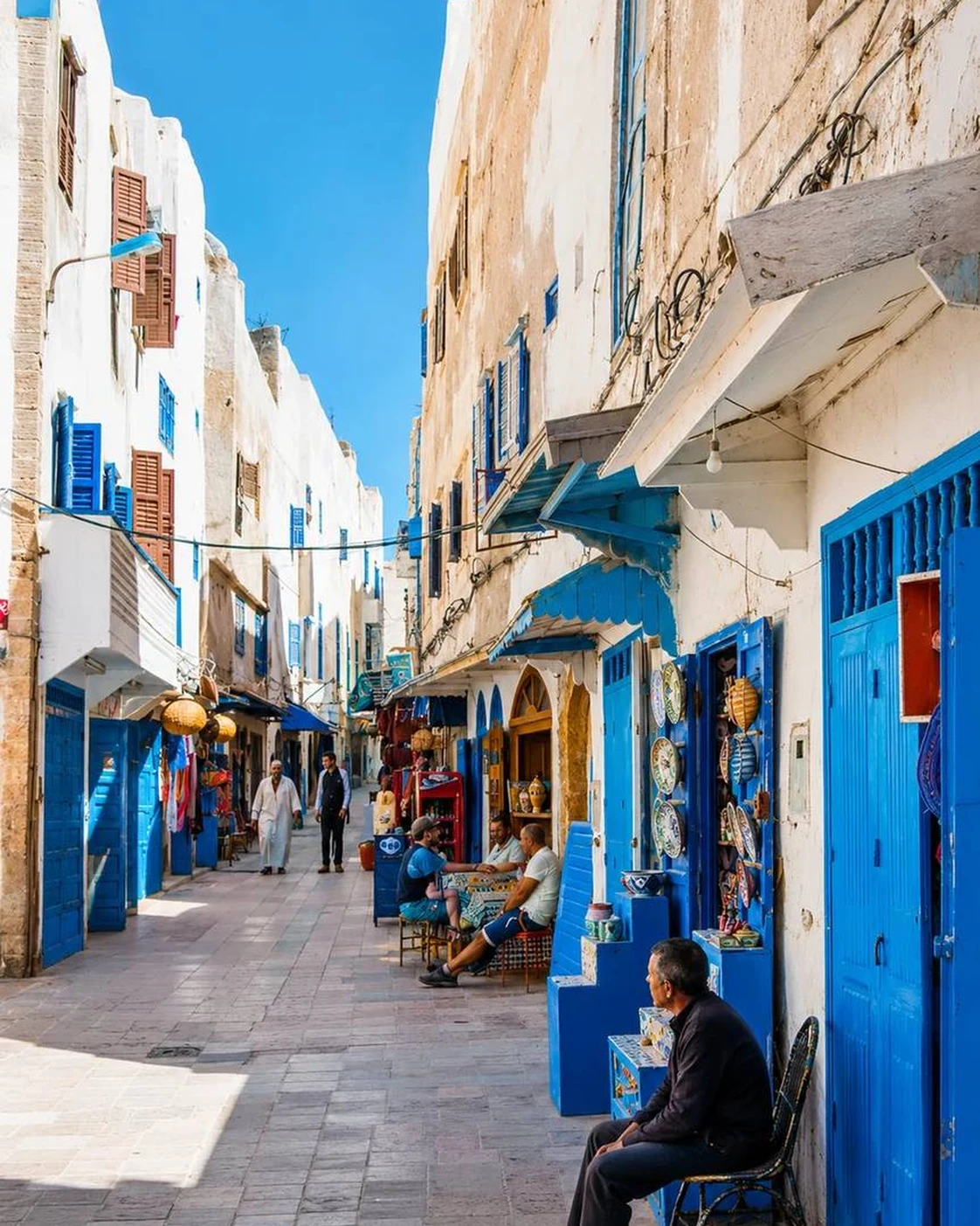
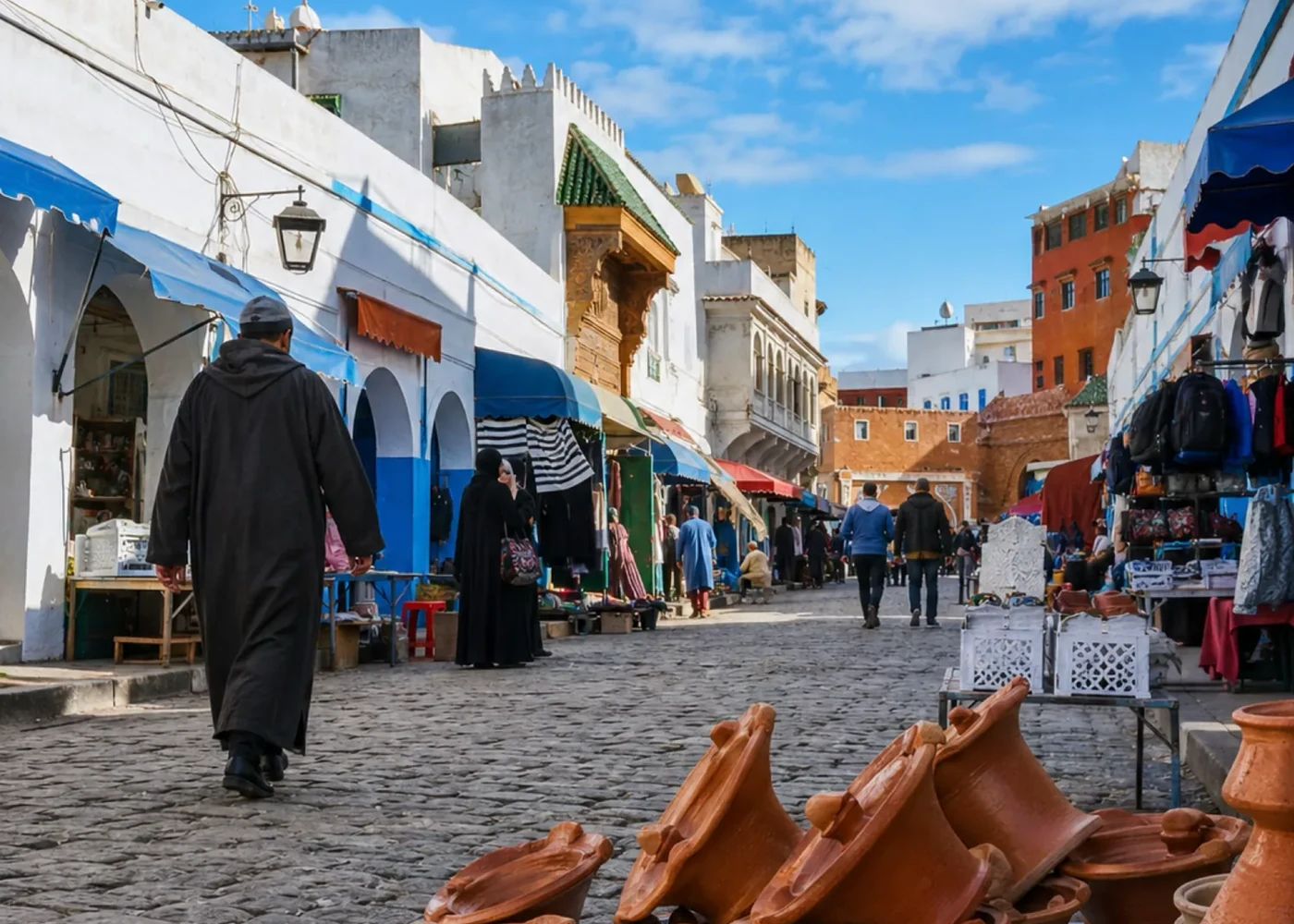
An Essaouira street links everyday commerce to the port city.
02 / The deeper context

The sea is a horizon.
The port is a workplace.

A coastal city looks outward, but its history also depends on the land behind it. Goods arrive from inland routes, people move between neighbourhoods and quays, and fishing connects offshore work to markets and tables. The port is therefore a useful place to study relationships rather than just a picturesque collection of boats.

Essaouira, Tangier and El Jadida offer different historical settings. Their fortifications, street patterns and connections to trade should not be folded into one generic Atlantic story. A harbour’s technology and political role can change, while older walls remain as visible reminders of earlier ambitions. The surviving view is a mixture of periods, uses and later adaptation.

Contemporary coastal life adds another layer. Fishing, freight, tourism, public leisure and environmental pressures can share a narrow edge. A visitor sees only part of this activity. Reading a waterfront carefully means distinguishing areas made for strolling from spaces where access, equipment and timing are governed by work.

04 / The visual chapter

Three ways to read a port city

Move between the close detail and the wider setting. Each view adds another part of the story.

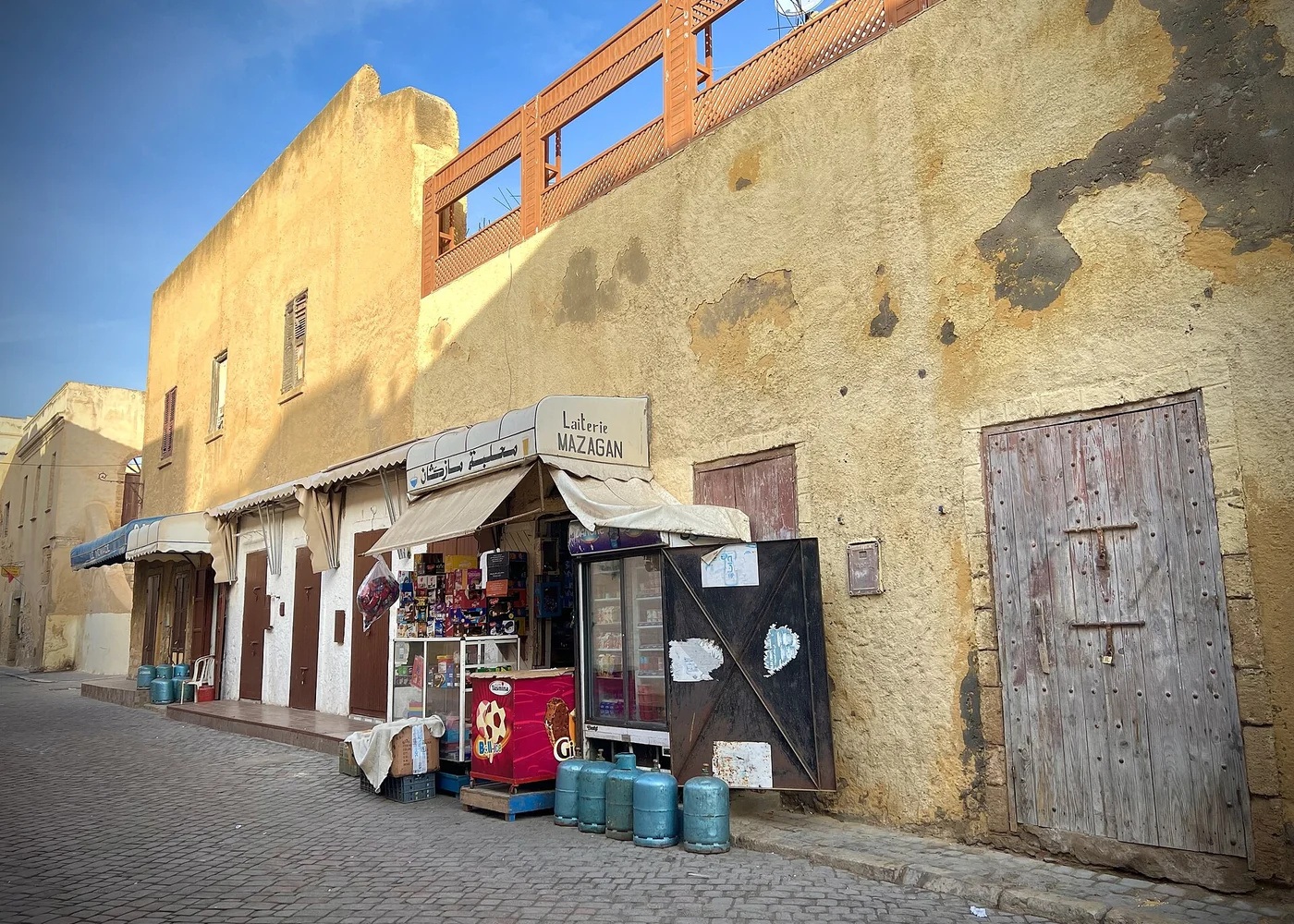
A street in El Jadida’s Portuguese city, photographed in 2023.
01 / A closer look

A street carries older names

El Jadida’s Portuguese fortified city is recognised by UNESCO under the name Mazagan. Contemporary streets continue within that inherited fabric. A historical name helps explain a layer of the place; it should not erase the lives and uses that followed.

A street in El Jadida’s Portuguese city, photographed in 2023.
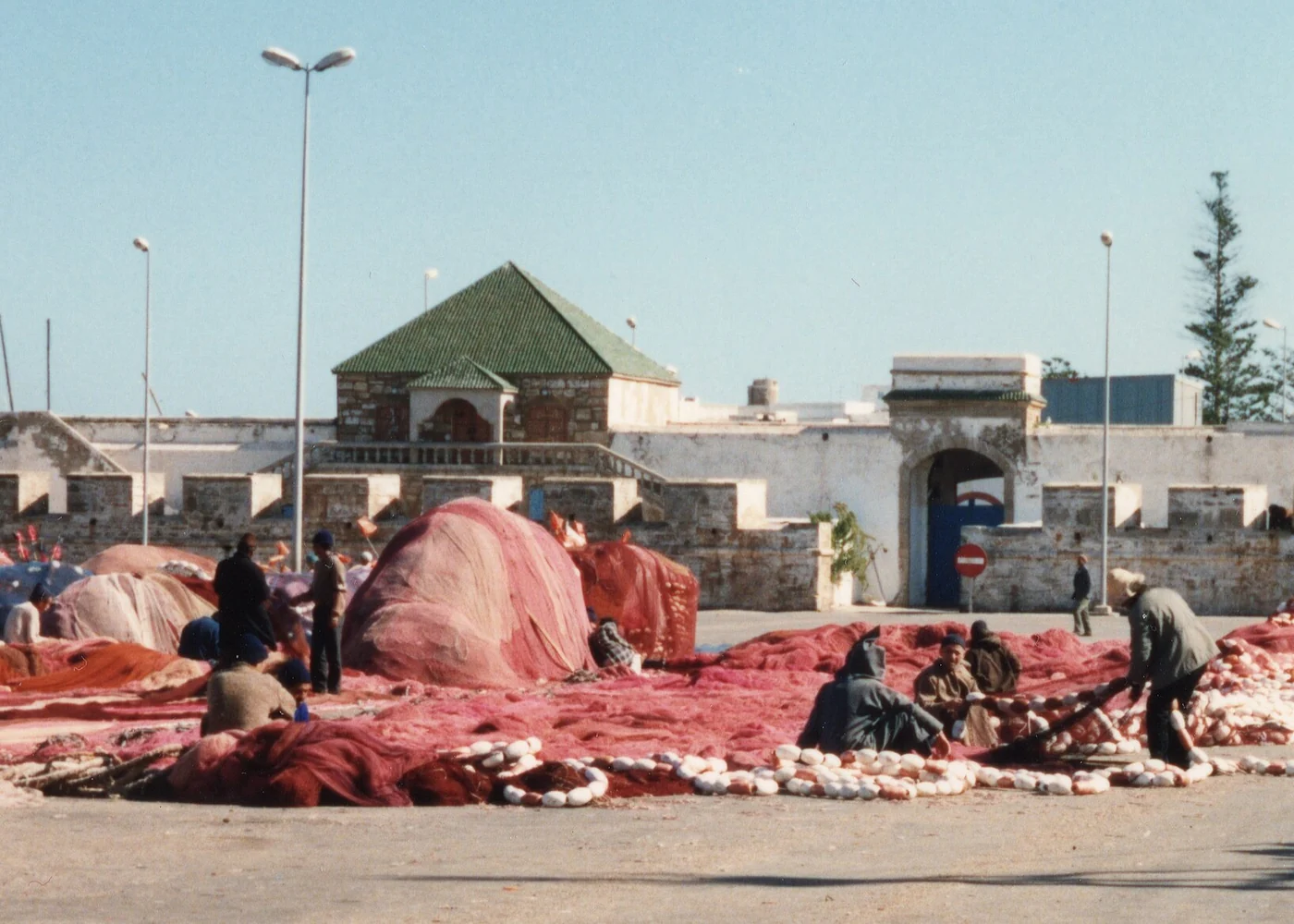
Essaouira’s fishing port photographed in 1989.
02 / A closer look

Work across time

An archive photograph of nets and harbour workers records tools, clothing and a particular arrangement of space. Compare it with a dated modern view to ask what has changed. Similar colours or boats do not prove that a port has stood still.

Essaouira’s fishing port photographed in 1989.
Market life in Larache, another Atlantic urban setting.
03 / A closer look

El Jadida

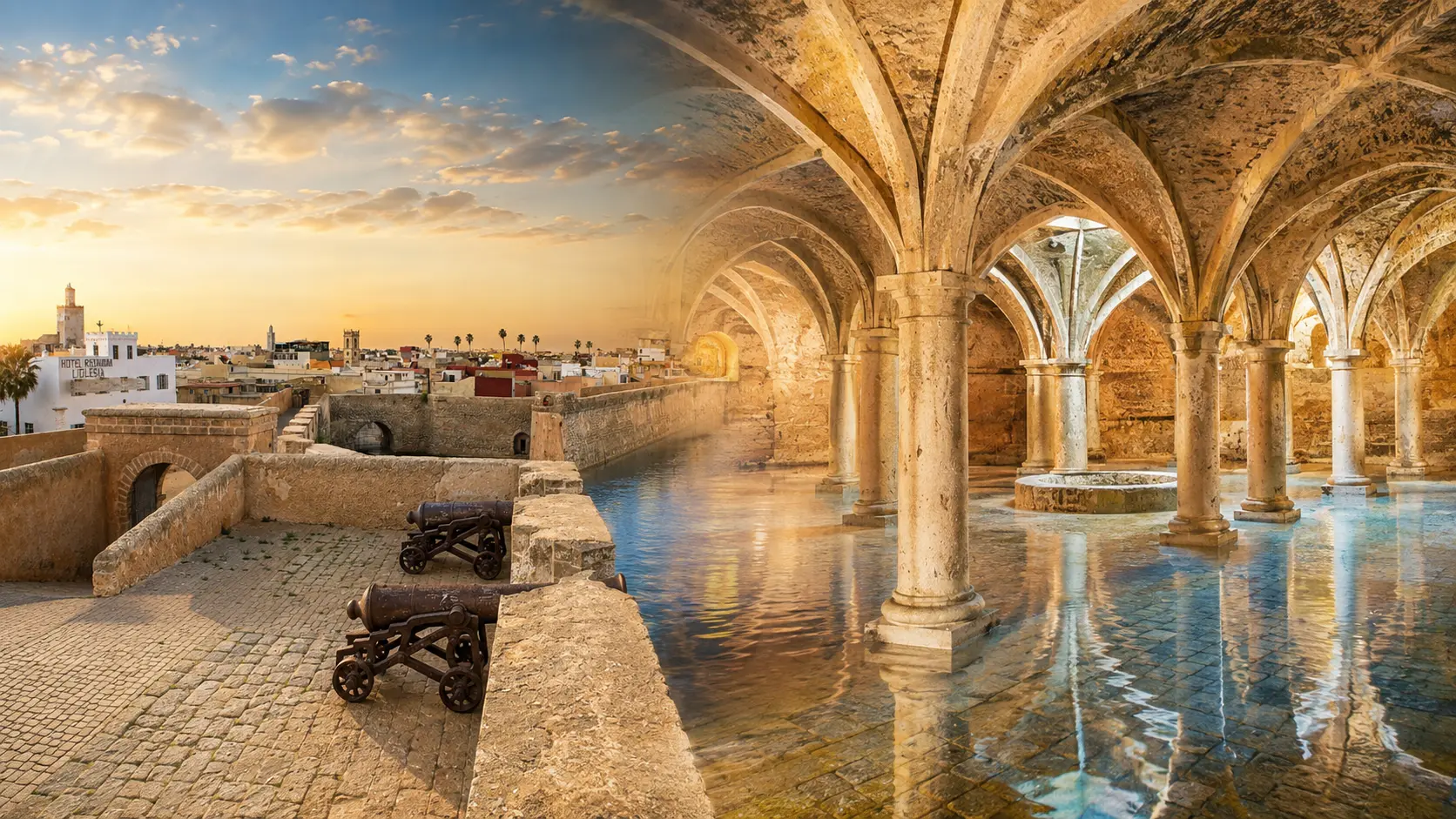
The Portuguese fortified city of Mazagan forms a distinctive historical layer within present-day El Jadida. Its walls and built spaces should be read in relation to that specific history, while recognising the larger contemporary city around them.

Market life in Larache, another Atlantic urban setting.
03 / From an idea to everyday life

Follow the coast beyond the postcard.

Small boats, larger vessels, nets and buildings share the frame in Essaouira. Ask which activities happen at the quay, which happen at sea and which continue elsewhere in the city. The harbour is one part of a wider system.

The working fishing harbour of Essaouira.
01

From boat to market

Look for the sequence of landing, handling, selling and transport. Not every stage will be accessible, and some areas should be viewed from a distance. The market connects the harbour’s labour to the city’s food culture and makes the economic chain more visible.

02

From wall to street

A fortification responds to a particular strategic setting. Follow its relationship to the water, entrance and town behind it. Later promenades or visitor routes may use the same structure differently from its original purpose.

03

From harbour to hinterland

A port needs routes inland, workers, storage and services. Ask what the city exchanges with surrounding places. This wider view helps explain why the urban story cannot be contained within the most photographed stretch of seafront.

A closer understanding

Look inland
from the harbour.

A port becomes a city through the goods, people and skills moving in both directions.

Trade

The harbour is one end of a route.

Essaouira’s development as an eighteenth-century royal port connected an Atlantic setting with inland and trans-Saharan networks. Its walls and planned streets belong to that commercial project. The sea view is only half of the geography.

Ask where goods arrived from before reaching the quay and where they went after landing. Warehouses, markets and routes through the city help make those movements visible. A port is infrastructure for exchange, not just a picturesque collection of boats.

Fortification

A coast can be defended in different ways.

El Jadida’s Portuguese fortified town provides a useful comparison with Essaouira. Their construction histories and strategic settings are different. Similar-looking walls should not collapse the two places into a single story of coastal architecture.

The shape of an entrance, the relationship between town and water, and the space allowed for movement can tell you what a defensive scheme was trying to control. Later streets and buildings may adapt those inherited constraints to very different uses.

Work today

Fishing adds a daily rhythm.

A working fishing harbour depends on more than the crew at sea. Boat maintenance, nets, handling the catch, transport and selling connect the quay with the surrounding economy. Each task has its own space and pace.

Blue boats make a strong image, but they do not explain the day’s work. Notice the equipment and the sequence of activity. Keep clear of landing and loading areas, and ask before photographing identifiable workers at close range. Observation is most useful when it leaves work uninterrupted.
Carry this with you

Compare a historic trading route with a present-day working harbour. The coastline remains constant; the systems around it do not.

05 / More than one perspective

Look beyond
the first impression.

Perspective 01

Essaouira

The planned fortified town offers a clear relationship between an Atlantic trading history and an urban ensemble. Compare the harbour, ramparts and streets. Each gives a different scale of the city’s connection to maritime exchange.

Perspective 02

Tangier

The Strait makes location especially significant, but geography alone does not explain every period of Tangier’s history. Read named institutions, neighbourhoods and transport connections alongside the wider idea of a meeting place.

06 / Make the connections

Follow five coastal connections

Use these ideas to connect what you notice with the materials, people and histories behind it.

01

Two sea frontages

Morocco faces the Atlantic to the west and the Mediterranean to the north. Tangier stands near the Strait of Gibraltar, where those maritime worlds meet. Compare exposure, harbour setting and connections inland; there is no single coastal urban form.

02

Sea and hinterland

A port depends on roads, markets, workers and customers beyond the shore. Trace a product or journey inland to understand the city as more than a maritime endpoint.

03

Trade and power

Defences, customs facilities and planned streets can express control as well as exchange. Coastal contact included unequal power, conflict and colonial expansion, not only the movement of attractive goods.

04

Fishing and maintenance

A boat’s life includes repair, storage and preparation. Watch from an appropriate public position and avoid equipment or restricted working areas. A harbour visit should not interrupt a working day.

05

Memory and change

Names, buildings and archives preserve parts of a city’s past. Contemporary residents and businesses add other perspectives. Put these sources together without expecting them to tell an identical story.

07 / A more useful conversation

Keep the Atlantic and Mediterranean in view

Clear answers for the questions that often come next.

Are Morocco’s coastal cities all similar?

No. Atlantic and Mediterranean settings, estuaries, exposed coasts and different histories produce distinct places. Compare Tangier, Essaouira and El Jadida through named features rather than a single “coastal style”.

Is a fortification proof of one cultural influence?

Its construction, adaptation and use may involve several periods and groups. Consult a documented history of the building before assigning the whole city to one external influence.

Can I explore any part of a harbour?

Access varies by port and activity. Follow local signs and staff instructions. Public viewpoints can offer a useful understanding without entering a restricted or hazardous work area.

08 / Take the story into a place

Find the story in Morocco

21 connected places and stories. Follow the connection that interests you.

Essaouira

Connect the working harbour with a planned fortified town.

Explore this connection ↗

Tangier

Explore a city shaped by its position at the Strait.

Explore this connection ↗

El Jadida

Read the Portuguese fortified city within a modern coastal setting.

Explore this connection ↗

Safi

A working Atlantic port with a ceramic hinterland.

Explore this connection ↗

Larache

Read a city beside a river mouth and the Atlantic.

Explore this connection ↗

Asilah

Compare fortification, town and coast.

Explore this connection ↗

Rabat

Connect a capital with its estuary and maritime edge.

Explore this connection ↗

Salé

Read the other urban side of the Bou Regreg.

Explore this connection ↗

Casablanca

Add a major modern port-city perspective.

Explore this connection ↗

Mohammedia

Explore another Atlantic urban and port setting.

Explore this connection ↗

Agadir

Connect a contemporary city with a working coast.

Explore this connection ↗

Al Hoceima

Add a Mediterranean harbour perspective.

Explore this connection ↗

Nador

Read city, lagoon and Mediterranean connections.

Explore this connection ↗

El Jebha

Explore a smaller Rif harbour setting.

Explore this connection ↗

Ksar Sghir

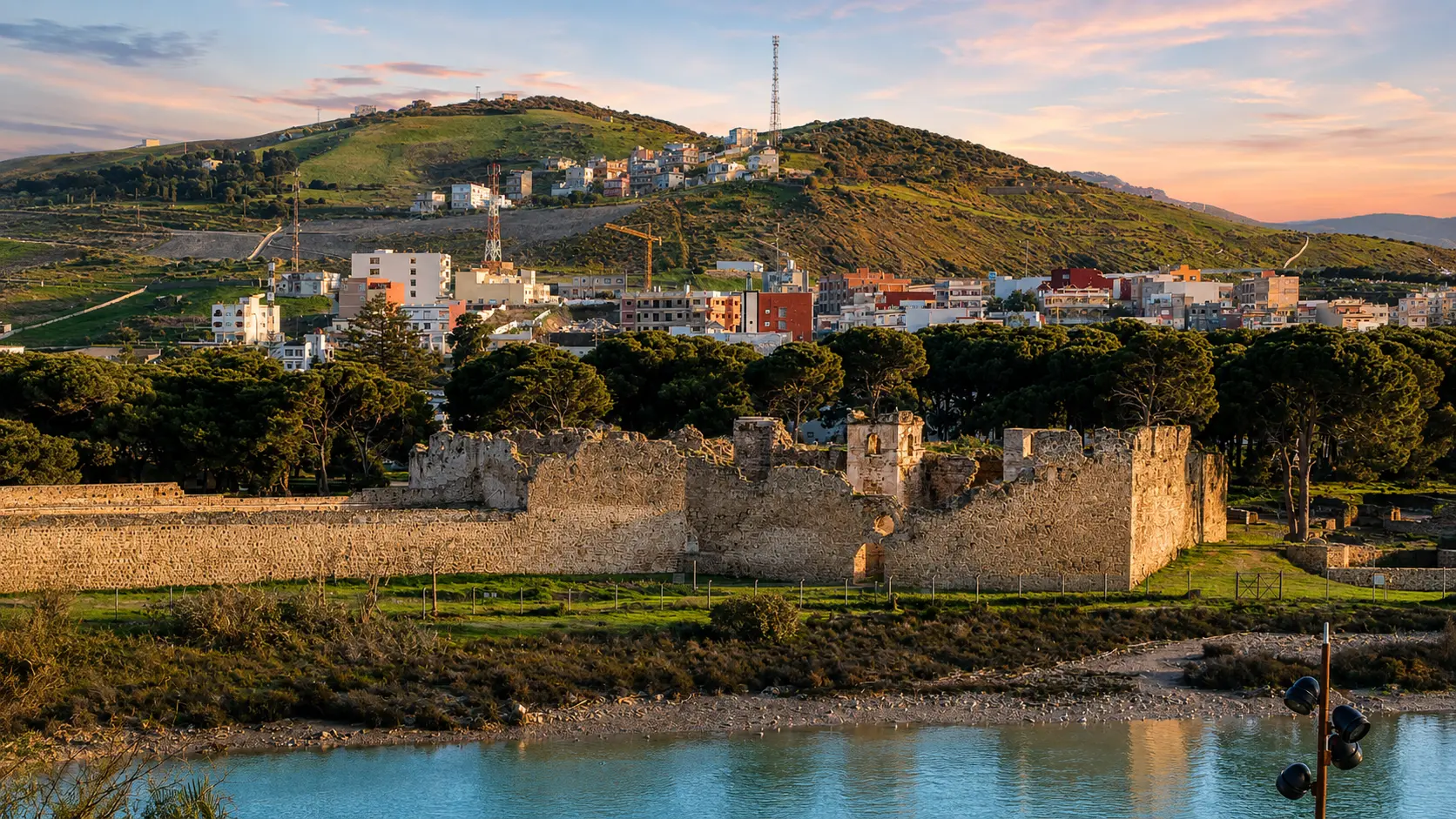
Connect a Strait settlement with maritime history.

Explore this connection ↗

Skala de la Ville, Essaouira

Read a fortified Atlantic edge.

Explore this connection ↗

Ksar Sghir Coast & Fortress

Explore a port-fortress relationship at the Strait.

Explore this connection ↗

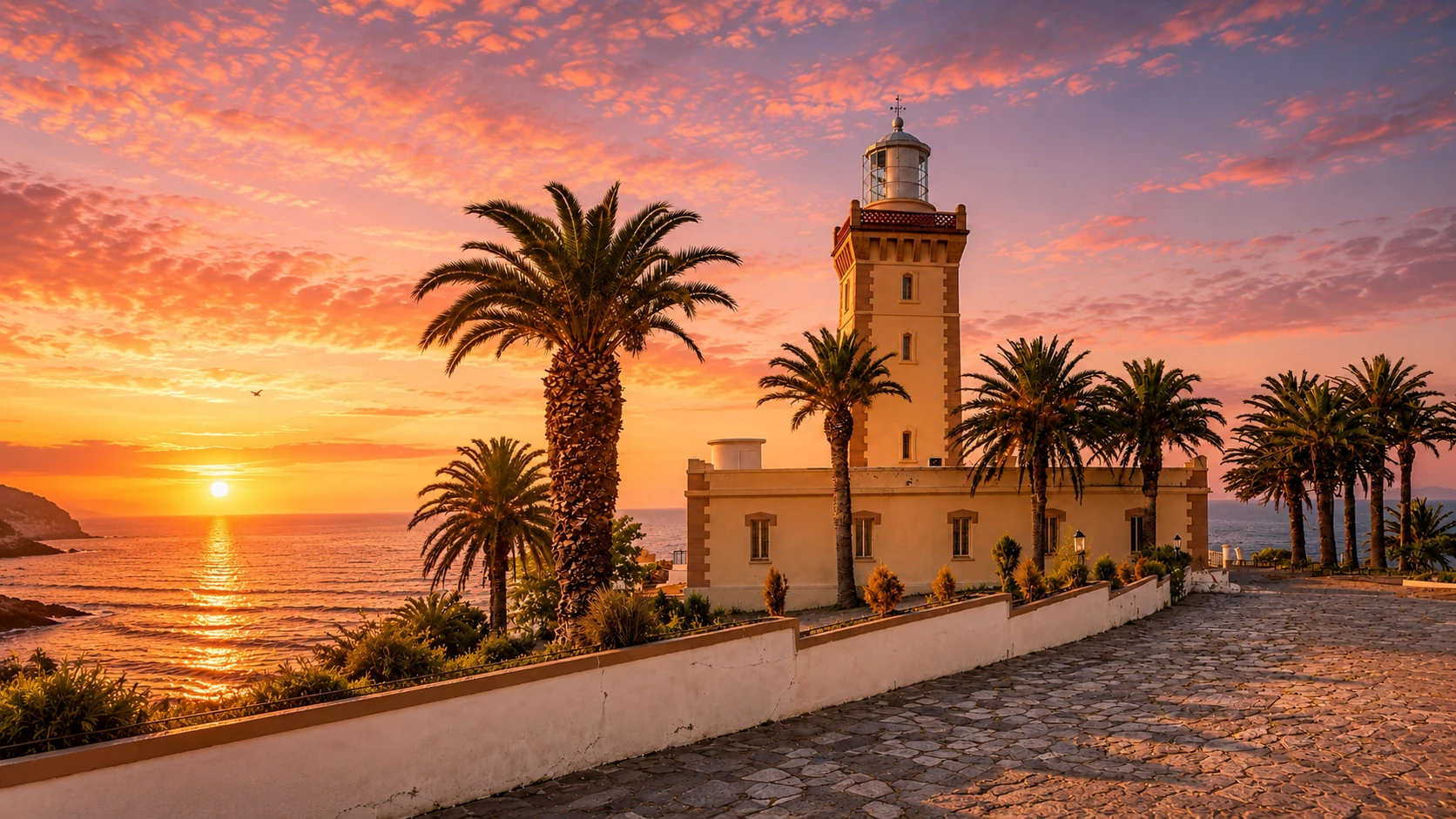
Cap Spartel

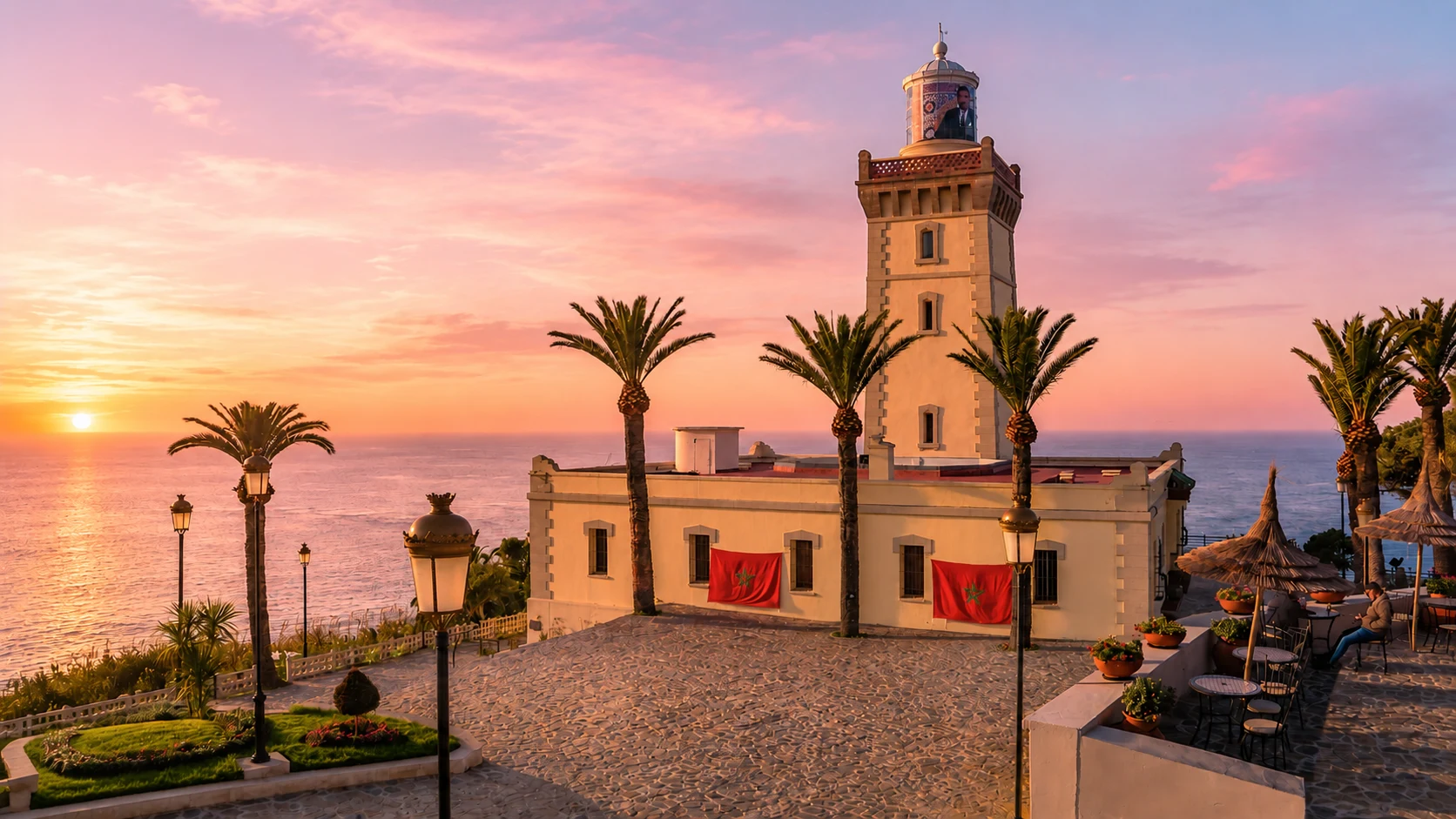
Place the maritime horizon in its geography.

Explore this connection ↗

Portuguese Cistern of El Jadida

Read a surviving structure within fortified Mazagan.

Explore this connection ↗

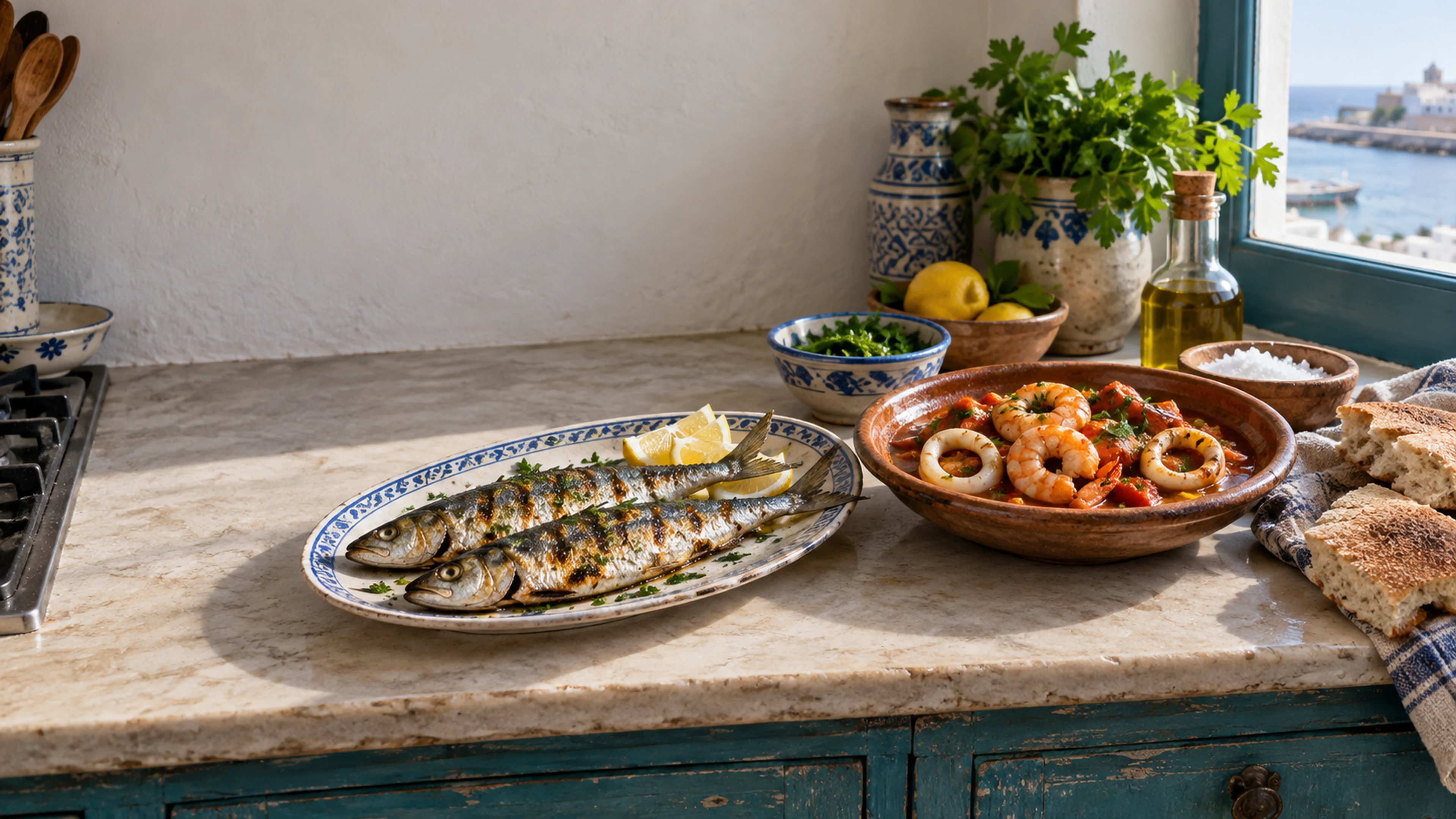
Seafood & Coastal Cooking

Follow the harbour’s work into markets and kitchens.

Explore this connection ↗

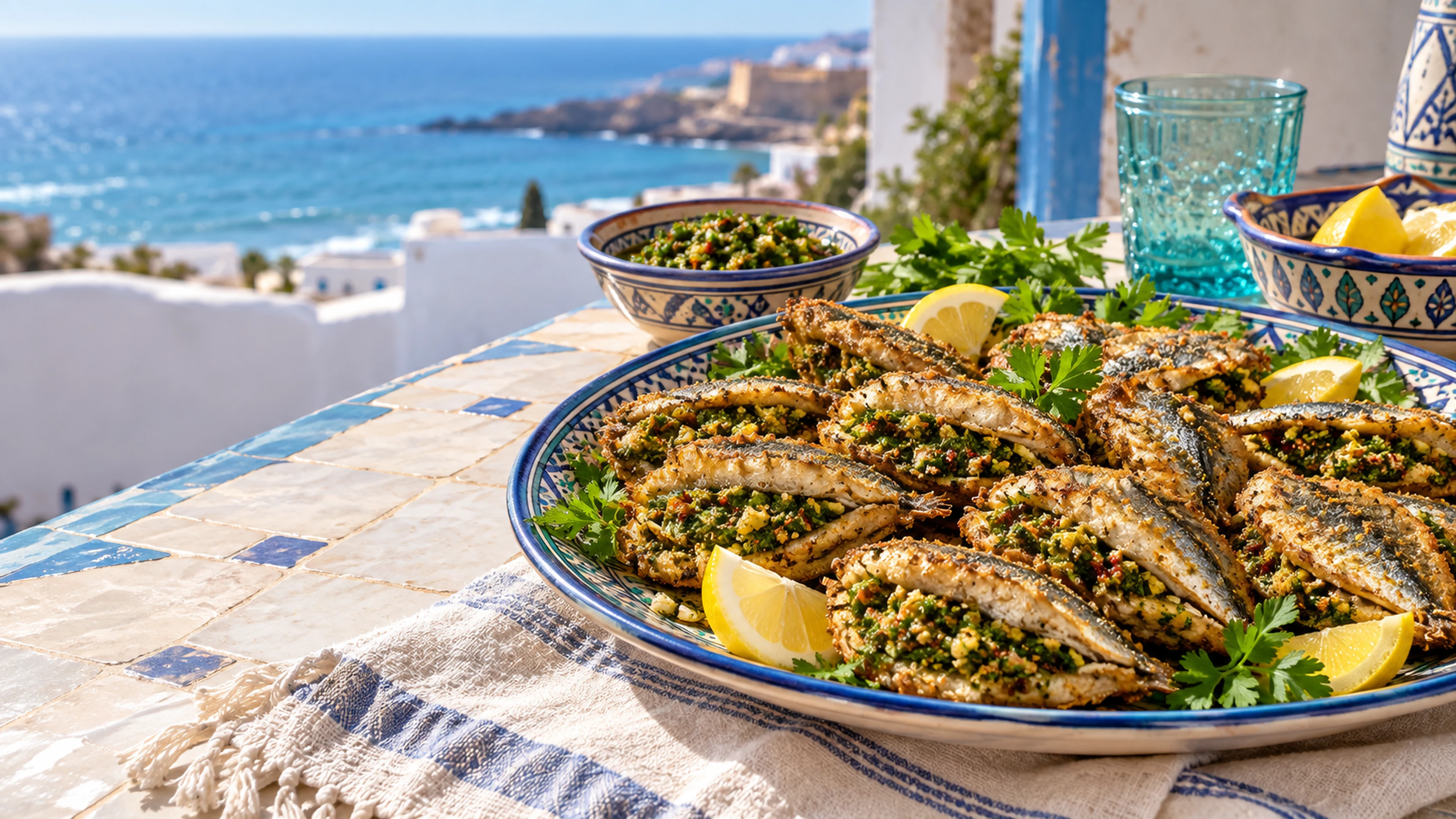
Sardines with Chermoula

Connect a familiar fish with a coastal dish.

Explore this connection ↗
A thought to take with you

Keep looking. Keep learning.

Let the sea lead you into the city instead of stopping at the view. A boat, a market and a street can together explain more about a coastal place than any one landmark seen alone.

The Exotic Morocco library

Continue at your own pace.

This Learn story is free to explore. Find this subject in the guide library, with each title’s current availability clearly shown.

Explore the guide library ↗
Sources & further reading

Read the evidence

  1. UNESCO · Medina of Essaouira
  2. UNESCO · Portuguese City of Mazagan (El Jadida)
  3. UNESCO · Rabat, Modern Capital and Historic City

Source review: September 2026. Looking exercises and learning prompts are original Exotic Morocco editorial suggestions. Regional practice and personal experience vary.

Image acknowledgements

  1. Related preview: Volubilis - Basilica romana.jpg — Mhobl. CC BY-SA 4.0. Cropped/resized; original licence retained.
  2. Related preview: Arhbalou High Atlas Al Haouz Morocco Oct25 A7CR 08381.jpg — This Photo was taken by Timothy A. Gonsalves. Feel free to use my photos, but please mention me as the author. I would much appreciate if you send me an email tagooty@yahoo.com or write on my talk page, for my information. Please contact me before commercial use. Please do not upload an edited image here without consulting me. I would like to make corrections only at my own source to ensure that the changes improve the image and are preserved.Otherwise you may upload an edited image with a new name. Please use one of the templates derivative or extract. . CC BY-SA 4.0. Cropped/resized; original licence retained.
  3. Related preview: High Atlas Mountains Taroudant Marrakesh.jpg — Ayman Abdelilah. CC BY-SA 4.0. Cropped/resized; original licence retained.
  4. Related preview: Panoramic view of the Medina of Fes.jpg — Mustang Joe. CC0. Cropped/resized; original licence retained.
  5. Hero: Fishing boats of Essaouira - Morocco.jpg — Mustang Joe. CC0. Cropped/resized; original licence retained.
  6. Portrait: Skala du Port Essaouira Morocco.jpg — CastlesCatalog. CC BY-SA 4.0. Cropped/resized; original licence retained.
  7. Story-1: The fishing port of Essaouira, Morocco.jpg — Goldfinchshuffle. CC BY-SA 4.0. Cropped/resized; original licence retained.
  8. Story-2: Cité Portugaise, El Jadida, Morocco October 2023 - street scene.jpg — Sharon Hahn Darlin. CC BY 2.0. Cropped/resized; original licence retained.
  9. Story-3: Essaouira - fishing port 1989 02.jpg — JopkeB. CC BY-SA 4.0. Cropped/resized; original licence retained.
  10. Chapter: An Essaouira street links everyday commerce to the port city. — Exotic Morocco’s existing image collection.
  11. Gallery: Market life in Larache, another Atlantic urban setting. — Exotic Morocco’s existing image collection.

Destination and related-story thumbnails intentionally identify their linked pages. Principal story images are selected individually for this Learn page.