

01 · A Moroccan coastal essential
Small fish.
Remarkable
character.
Fresh sardines meet a marinade that knows how to sing.
Open a sardine like a book, lay in a ribbon of chermoula, close it with a second fish and something wonderfully Moroccan happens: a modest catch becomes a dish with fragrance, heat and generosity.
Chermoula is a North African herb-and-spice preparation often built from coriander, parsley, garlic, cumin, paprika, lemon and olive oil. Exact balances change with the cook and the purpose. It can season fish before frying, grilling or baking, and it can travel into the sauce beneath a tagine. [1]
The pairing feels inevitable because each part helps the other. Sardine’s richness carries garlic and spice; lemon keeps the flavour lively; herbs bring freshness right through the fish.
Explore Taste Morocco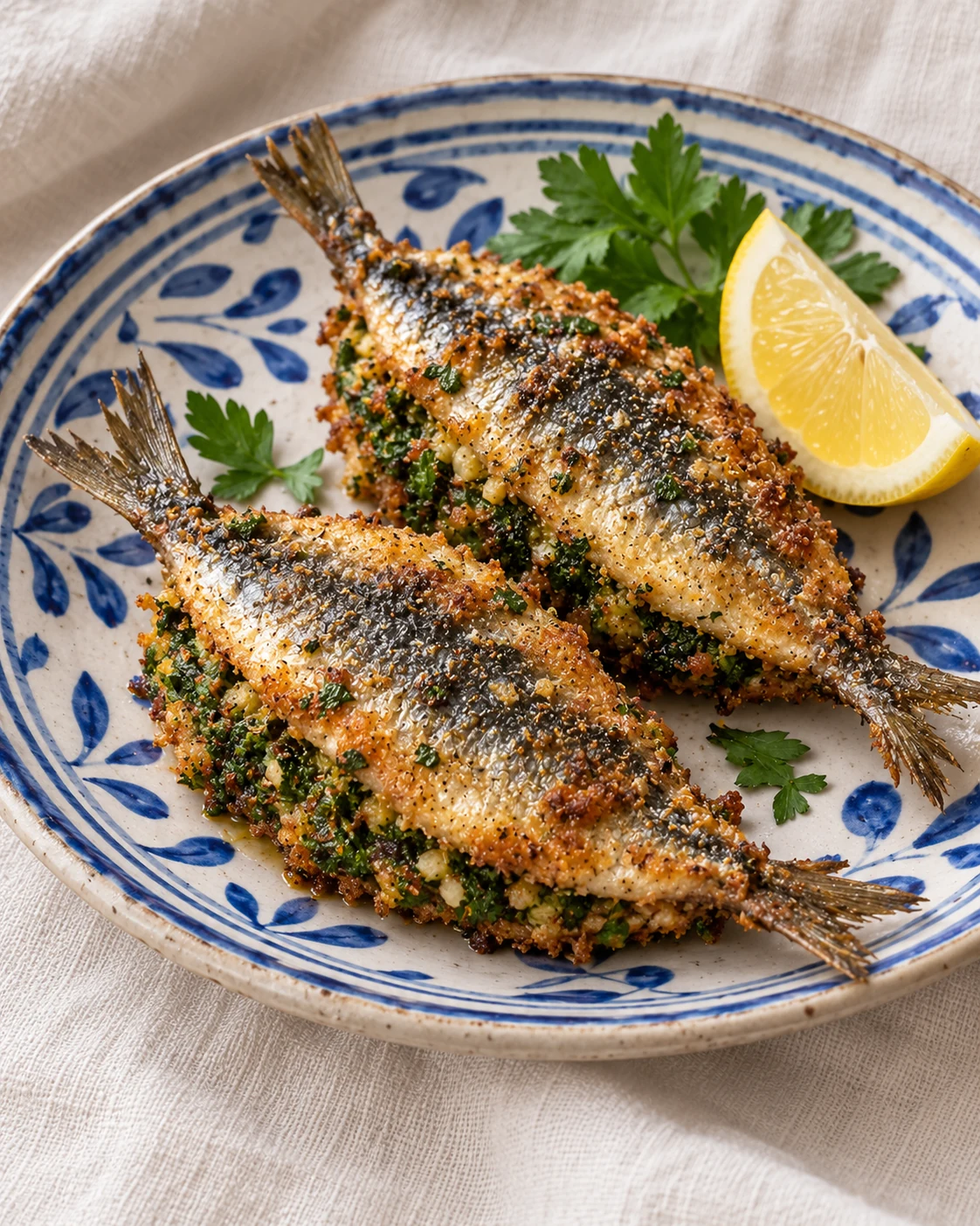
Small, rich and best handled with care.
Herbs, garlic, spice, citrus and oil.
Street-food energy at the family table.
02 · Coast, market & living practice
A daily catch.
A living tradition.
The story begins before the pan is hot.
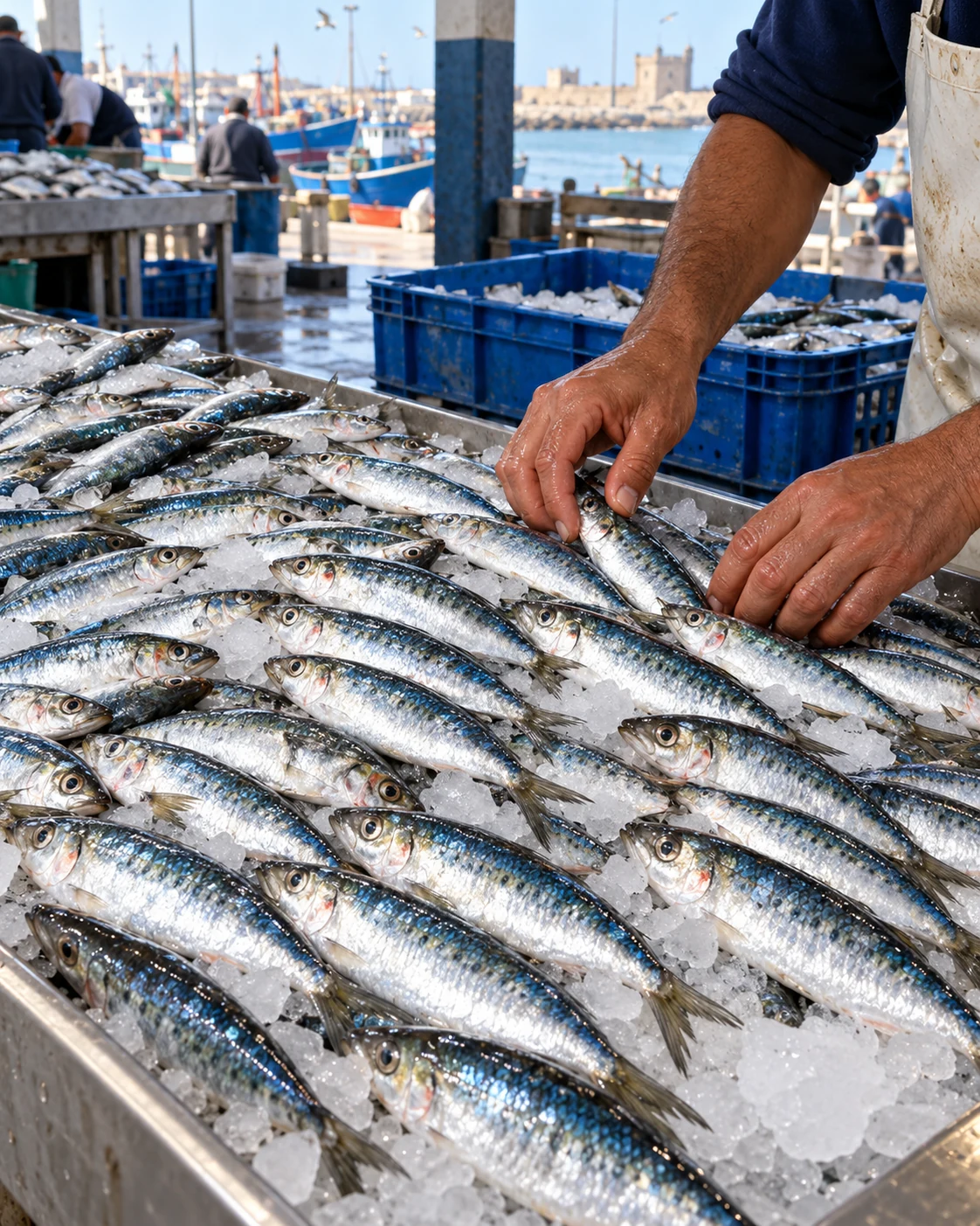
Morocco’s Atlantic fisheries have a long documented relationship with sardines, with historic production centred around ports including Safi, Essaouira and Agadir. The catch and its movement have changed over time, so this is a coastal story with many ports rather than a dish that can be pinned to one inventor or one city. [4]
In the market, freshness is practical knowledge: clear eyes, firm flesh, bright skin and the clean scent of the sea. In the kitchen, small sardines reward quick, careful work. Their size makes them suited to frying in pairs, but also to the grill, the oven and the mincing bowl.
From port to counter
Cold, careful handling protects the fish’s delicate flesh and keeps its clean flavour intact.
Street and home
Stuffed fried sardines are associated with Moroccan street food as well as home cooking; context changes, but the familiar pairing remains. [2]
No single formula
Herb ratios, chilli, preserved lemon and cooking methods vary. Variation is evidence of a living dish, not a mistake.
03 · The butterfly-and-fill technique
Open carefully.
Season generously.
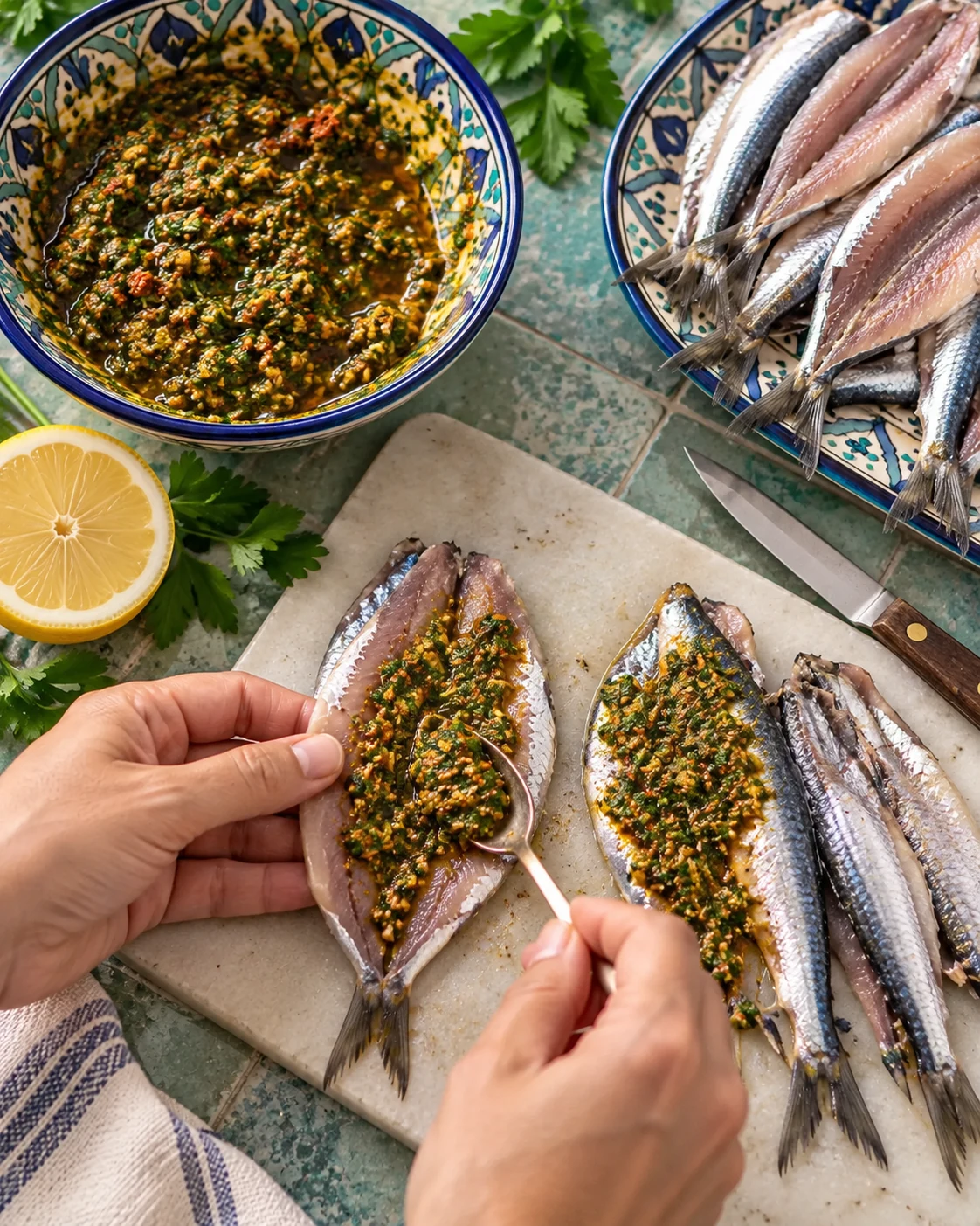
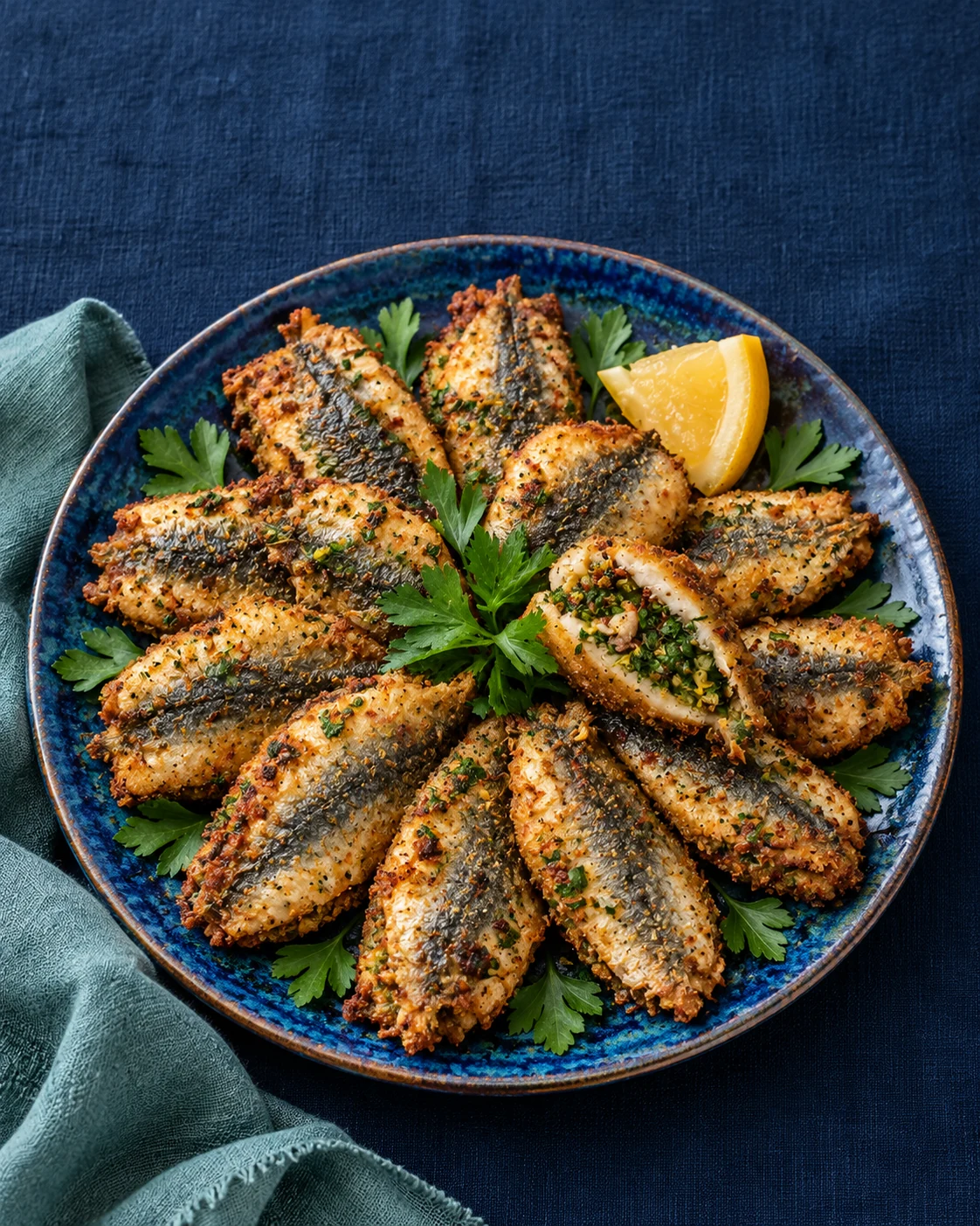
A butterflied sardine offers a broad, tender surface for chermoula. Two fillets can be joined around the filling before a light flouring and a quick fry.
The aim is confident handling, not force: preserve the flesh, distribute the marinade and cook only until the fish is done.
Clean with a light hand
Remove the head, guts and central bone without tearing the two sides apart. Rinse only as needed, then dry well so the marinade and coating can cling.
Let chermoula touch the flesh
Spread the herb mixture inside rather than only over the skin. For paired sardines, place a second butterflied fish on top, flesh side inward. [2]
Choose the heat for the form
A flour-dusted pair can fry quickly; whole fish can face a grill; a layered dish can bake. Thickness and method decide the timing.
The texture to chase is succulent flesh beneath a crisp edge — never dryness beneath a heavy coat.
04 · Many expressions of sardine & chermoula
One pairing.
Five directions.
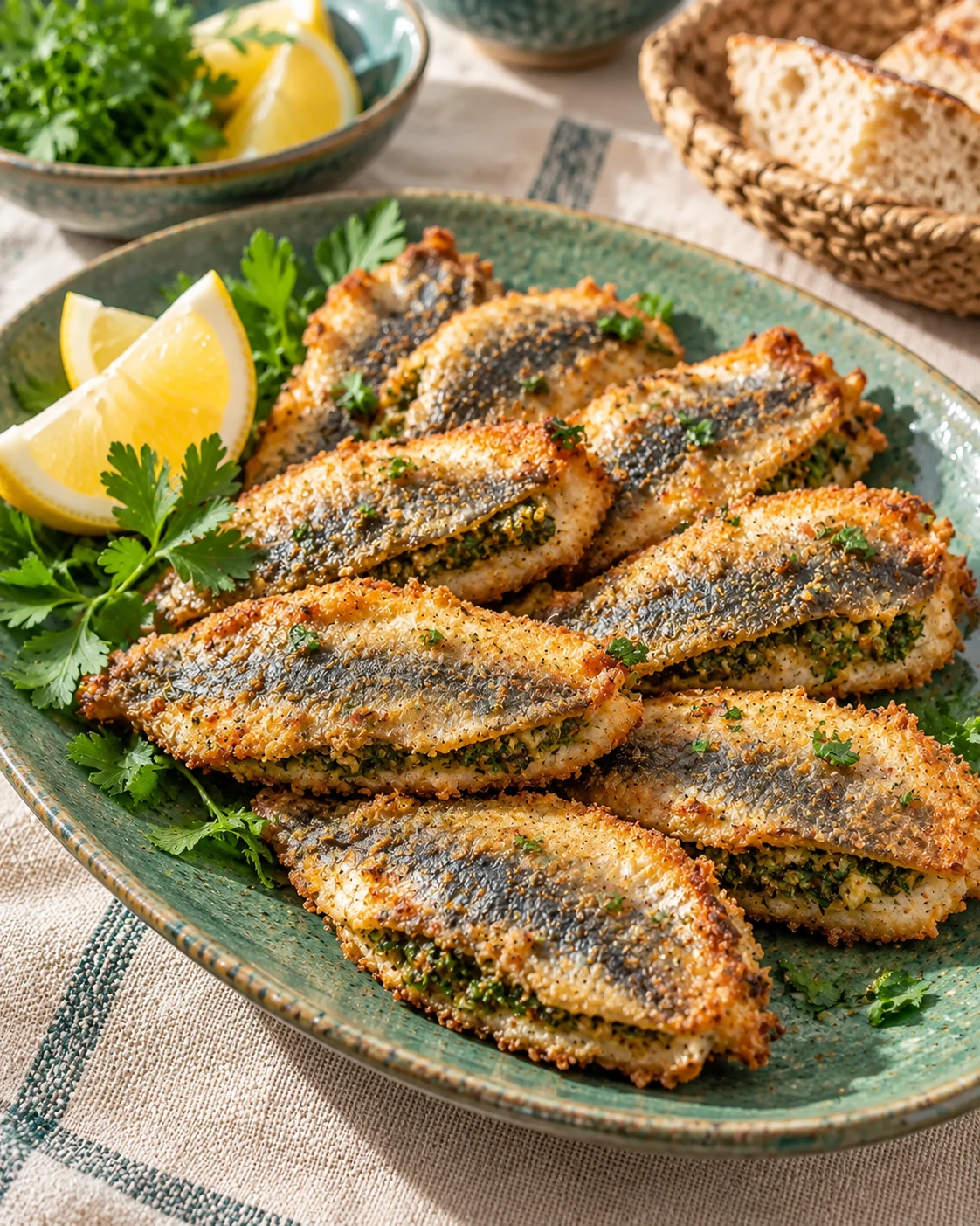
The most recognisable version may be a crisp fried pair, but sardines and chermoula are not confined to one shape or one pan.
Follow the method that suits the fish, the occasion and the cook.
Stuffed fried pairs
Butterflied sardines enclose chermoula, meet in pairs, receive a light flour coating and fry until crisp. Names such as mzeouj or “lovers” refer to that paired form. [2]
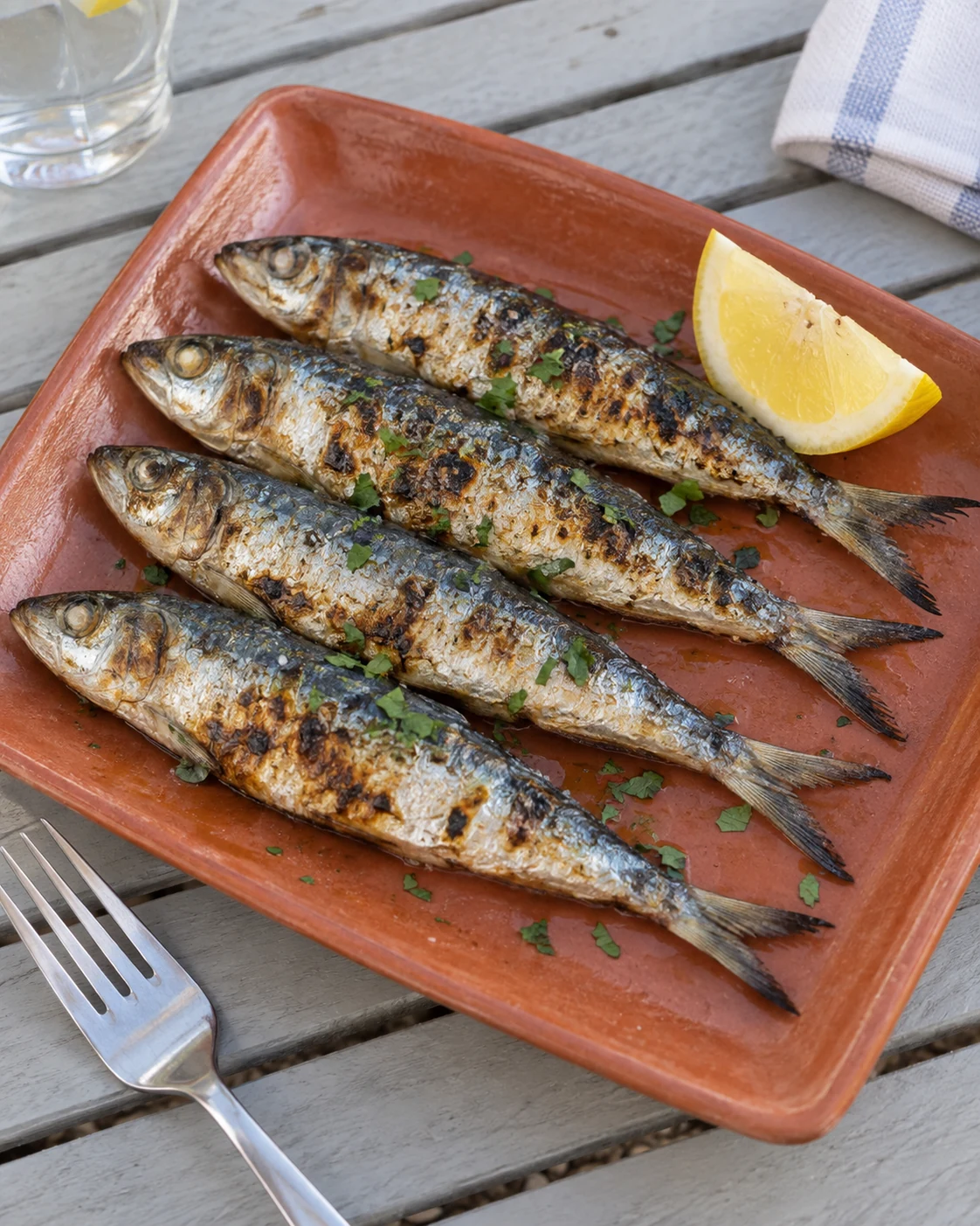
Grilled whole
Whole sardines can take direct heat and a little char. Chermoula may season them before cooking or arrive beside them, with lemon ready to sharpen the rich flesh.
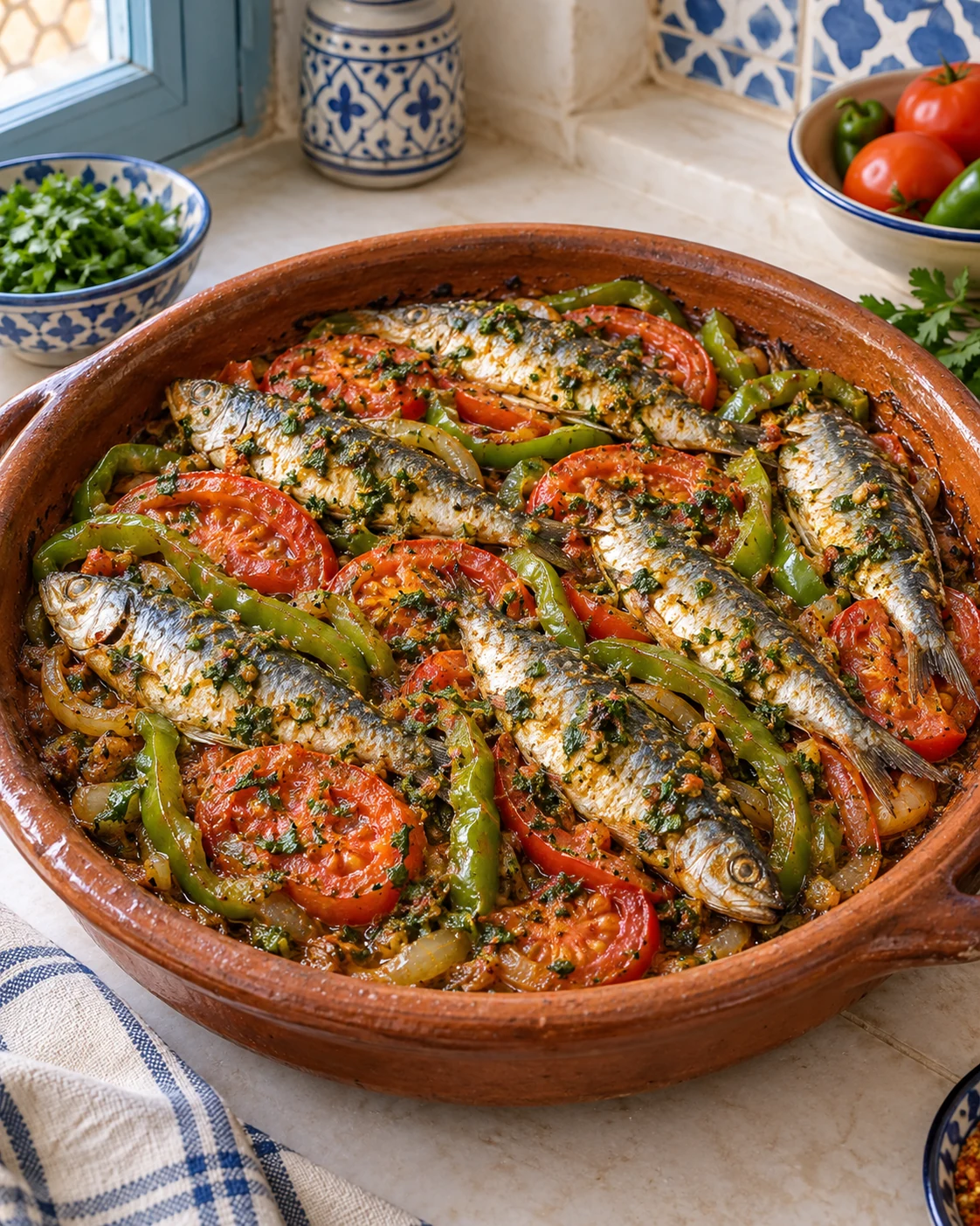
Baked with vegetables
Tomato, potato, green pepper or courgette can support sardines in the oven or in a fish tagine. The vegetables and chermoula make a sauce suited to bread. [3]
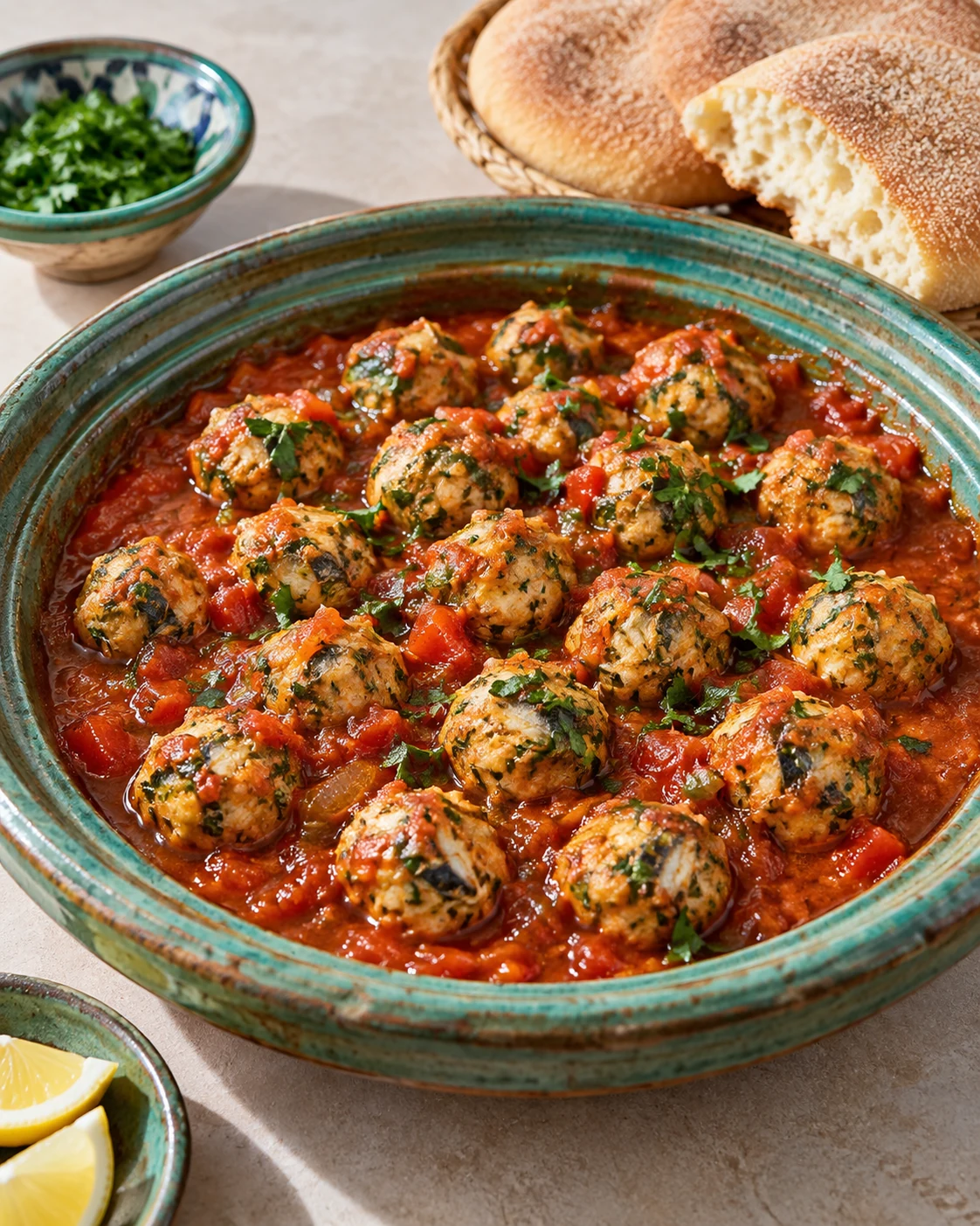
Sardine kefta
Minced sardine seasoned with herbs and spices becomes tender little balls, often simmered in tomato sauce. It is a different technique with the same affinity for garlic, coriander and cumin. [5]
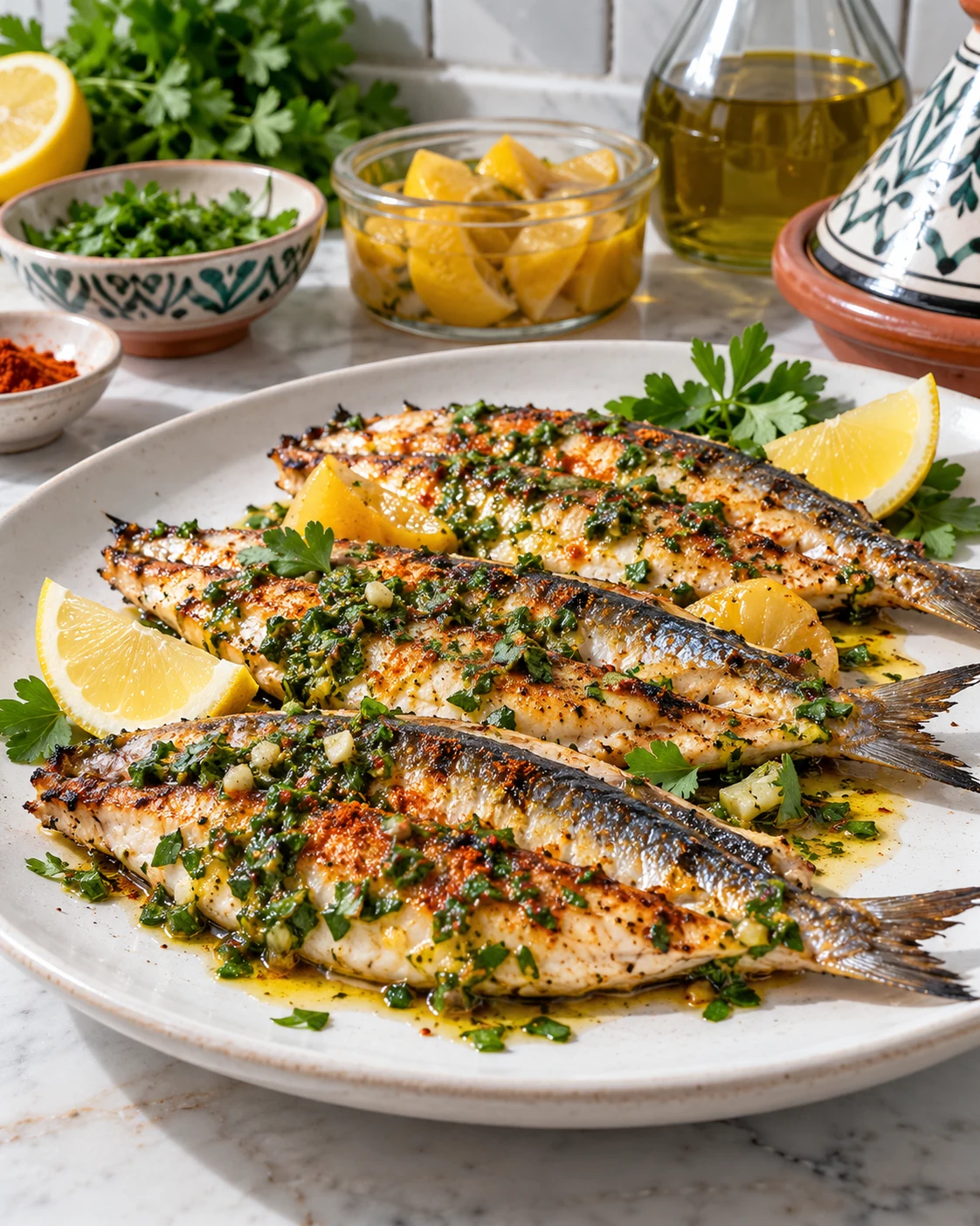
Pan-cooked fillets
For a lighter expression, individual fillets can be cooked briefly and finished with fresh chermoula. The fish remains the focus; the herbs arrive as brightness, not camouflage.
The coating should whisper.
Flour helps a fried pair hold together and crisp, but a thick shell obscures the fish. Shake away the excess before the sardines reach the oil.
Freshness sets the ceiling.
No marinade can rescue tired fish. Chermoula should extend the sardine’s character, not hide it.
05 · The language of chermoula
Green, warm,
bright & alive.
Chermoula is less a fixed formula than a disciplined balance: leafy freshness, savoury depth, warm spice, acidity and enough oil to carry them.
The blend can be loose or paste-like, mild or hot. What matters is that no single note flattens the rest. [1]
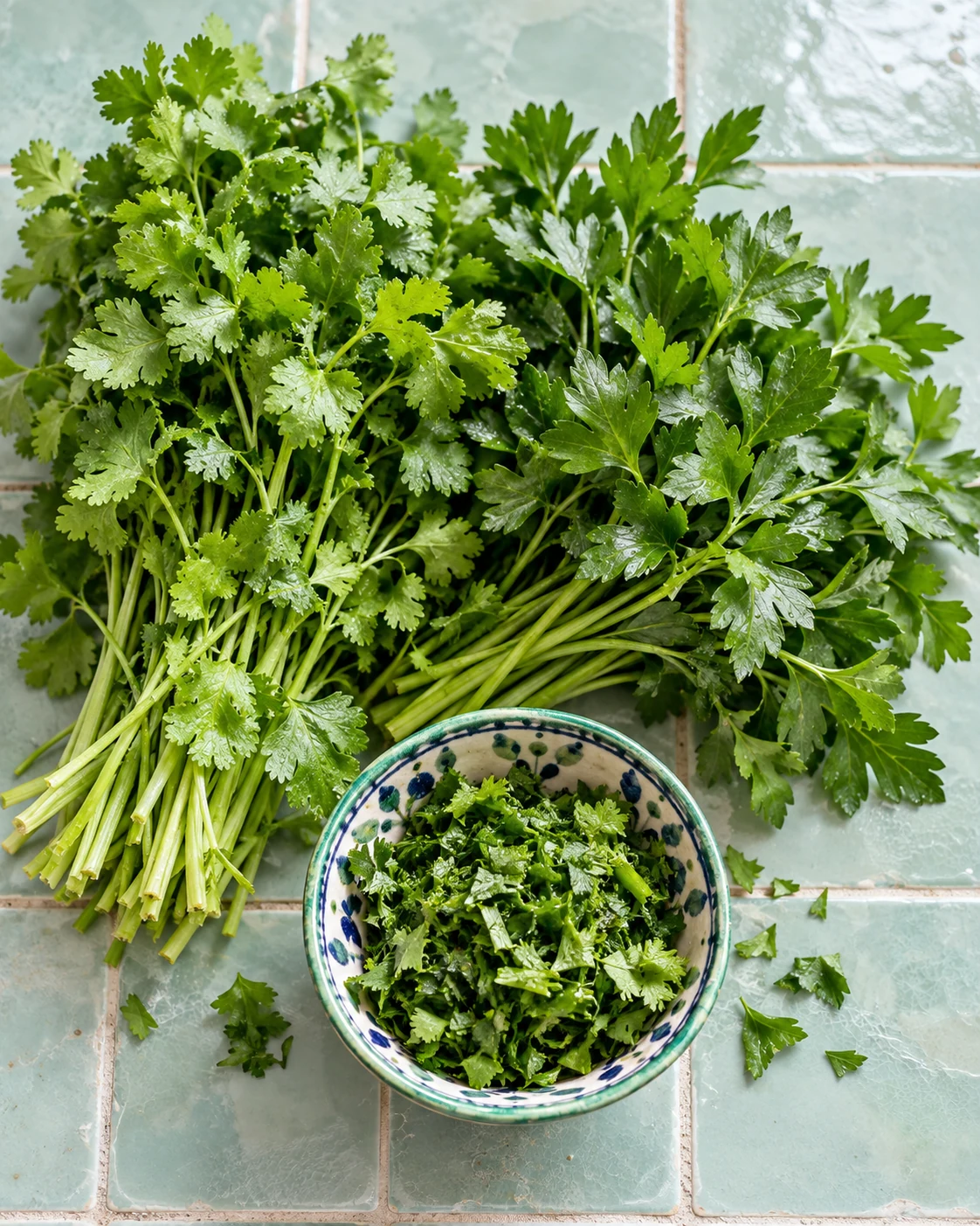
Coriander & parsley
The fresh green centre.
Coriander is often prominent; parsley rounds the flavour. Use tender leaves and stems, chopped finely enough to meet every bite.
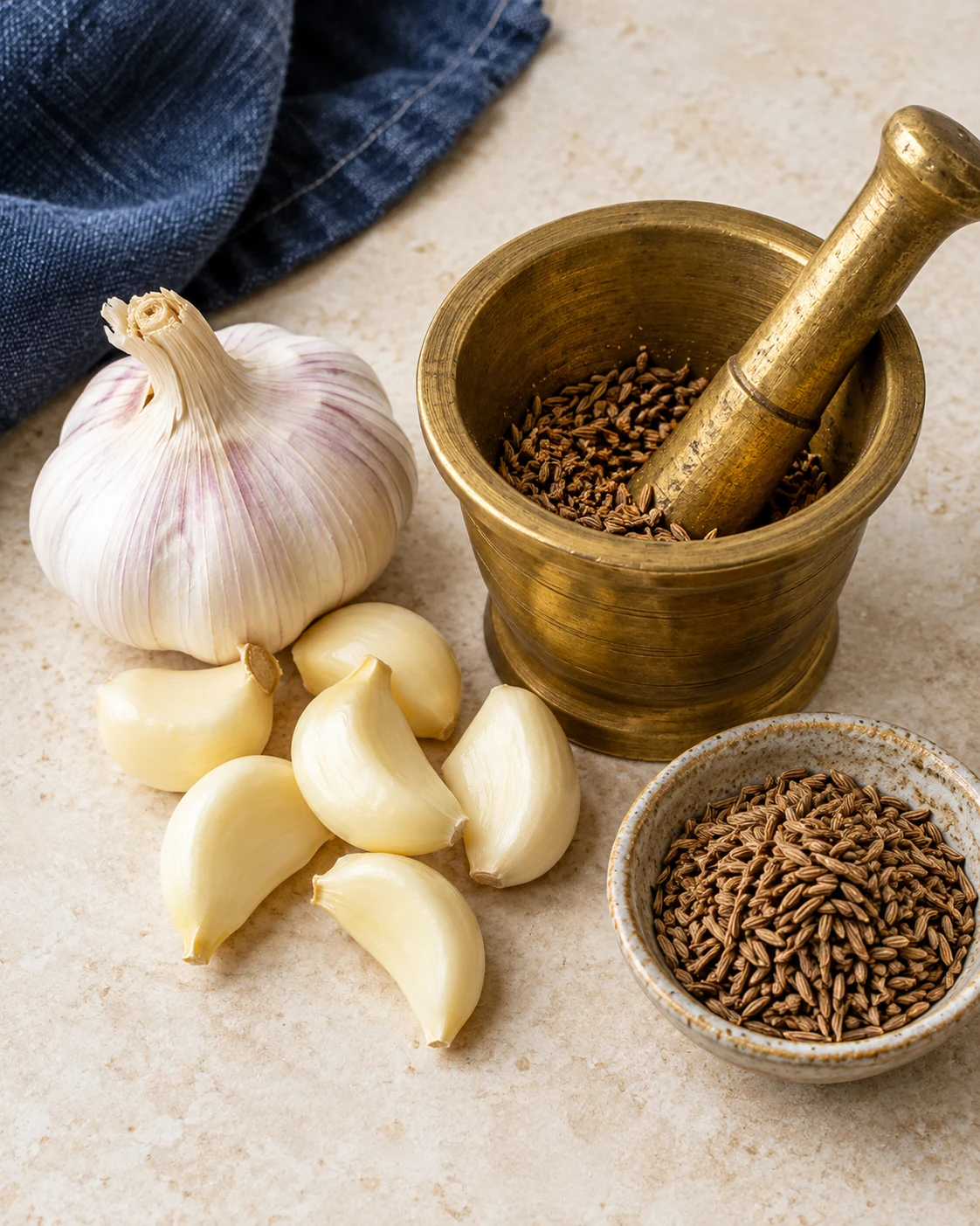
Garlic & cumin
Savoury depth beneath the herbs.
Garlic gives force; cumin brings warmth and an earthy affinity with fish. Neither needs to dominate to be unmistakable.
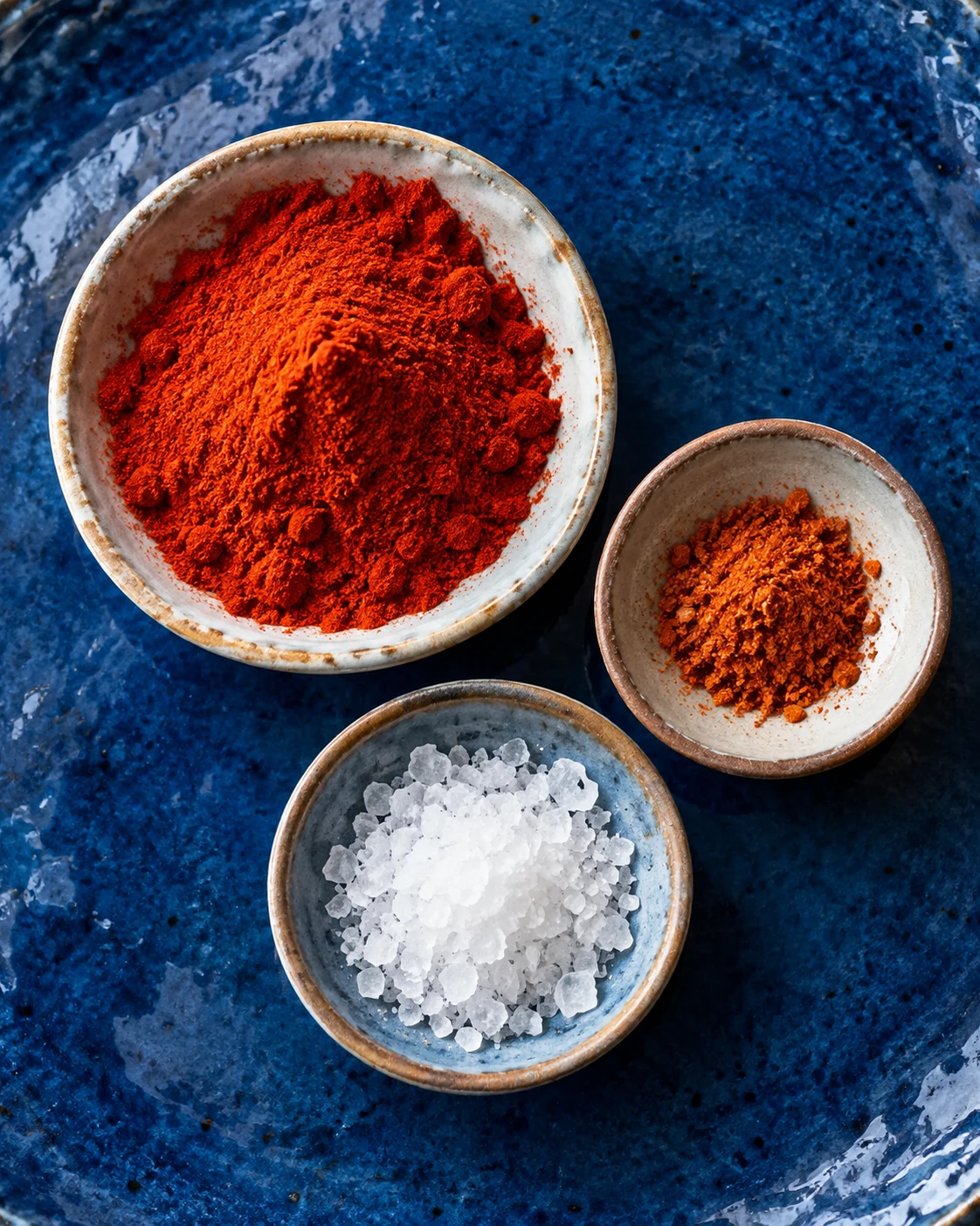
Paprika & heat
Warm colour, optional fire.
Paprika supplies warmth and colour. Cayenne or chilli can raise the heat, but chermoula does not have to be fiery to be full-flavoured.
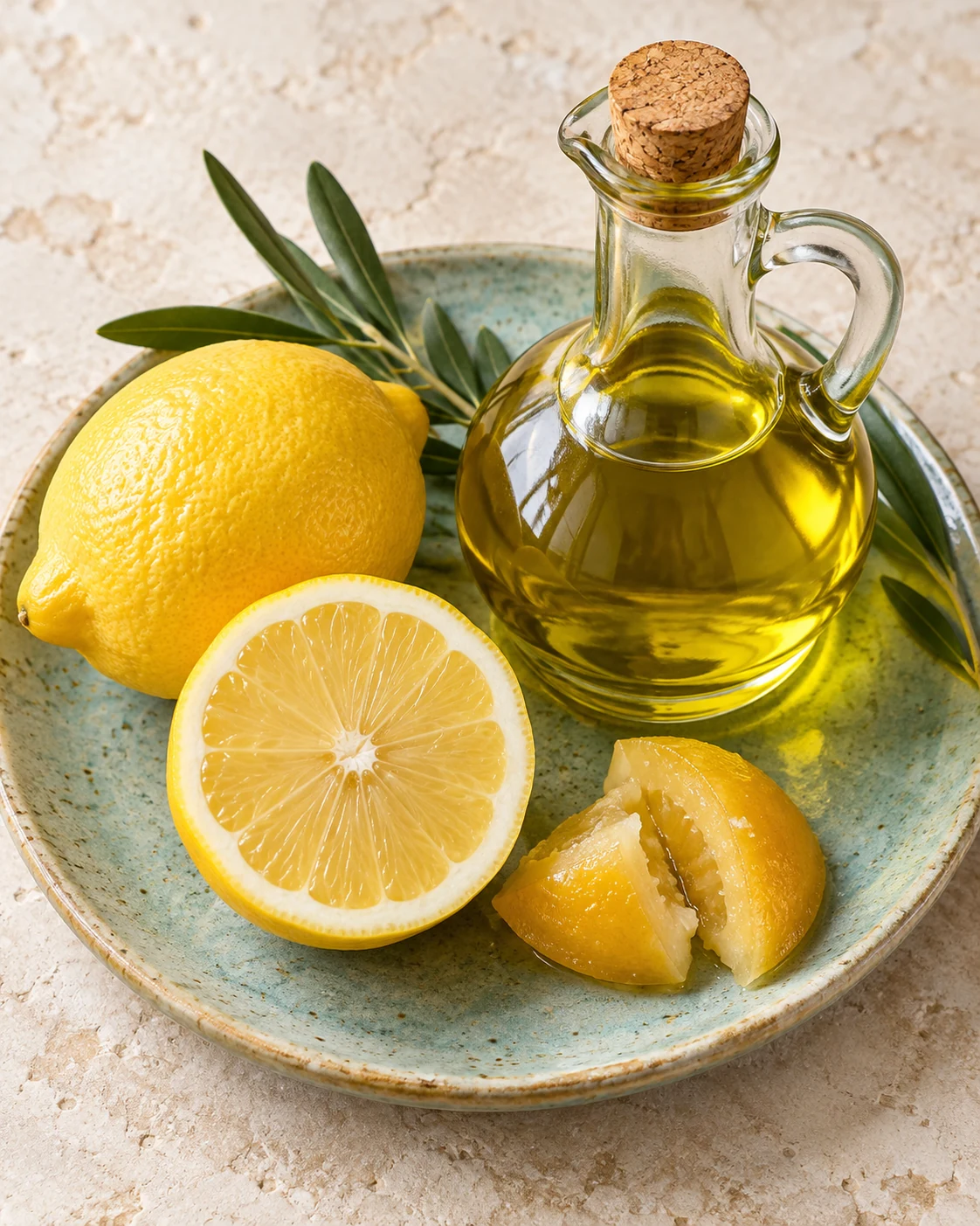
Lemon & olive oil
Lift, fragrance and flow.
Fresh juice supplies acidity; preserved lemon can add a deeper cured-citrus note. Olive oil binds and carries the aromatics.
Explore the four flavour groups
THE BALANCE · NOT A SINGLE RECIPE
Make every note
earn its place.
Chop, taste and adjust before the marinade meets the fish.
A good chermoula has enough acidity to lift rich sardine, enough oil to spread, and enough herb to remain vivid after heat. Salt must account for the fish, the coating and any preserved lemon.
The goal is not sameness. It is balance with a point of view.
For stuffing
Keep the mixture finely chopped and cohesive so it stays between the sardines rather than escaping into the pan.
For baking
A looser blend can mingle with tomato and vegetable juices, seasoning both the fish and the sauce beneath it.
For the table
Reserve only a clean, uncontaminated portion for serving. Marinade that touched raw fish must be cooked before eating.

06 · Geography, season & the morning market
The coast
sets the rhythm.
Availability changes. The principle remains: buy well and cook soon.
Morocco’s long Atlantic frontage gives sardines a prominent place in coastal food culture, but catches shift with season, conditions and fisheries. A market abundance on one day should not be turned into a timeless claim about every port.
Safi, Essaouira and Agadir all belong to the broader sardine story. So do wholesalers, small vendors, cooks and families who carry fish inland. The dish travels more easily than the boats do. [4]
At the harbour
Cool, gleaming fish and quick distribution matter more than romantic scenery.
Explore Safi ↗At the fish counter
Ask what arrived, look closely and choose sardines sized for your intended method.
Explore Essaouira ↗In the home kitchen
Recipes adapt to the grill, pan, oven, available herbs and the number of people waiting.
Discover Taste Morocco ↗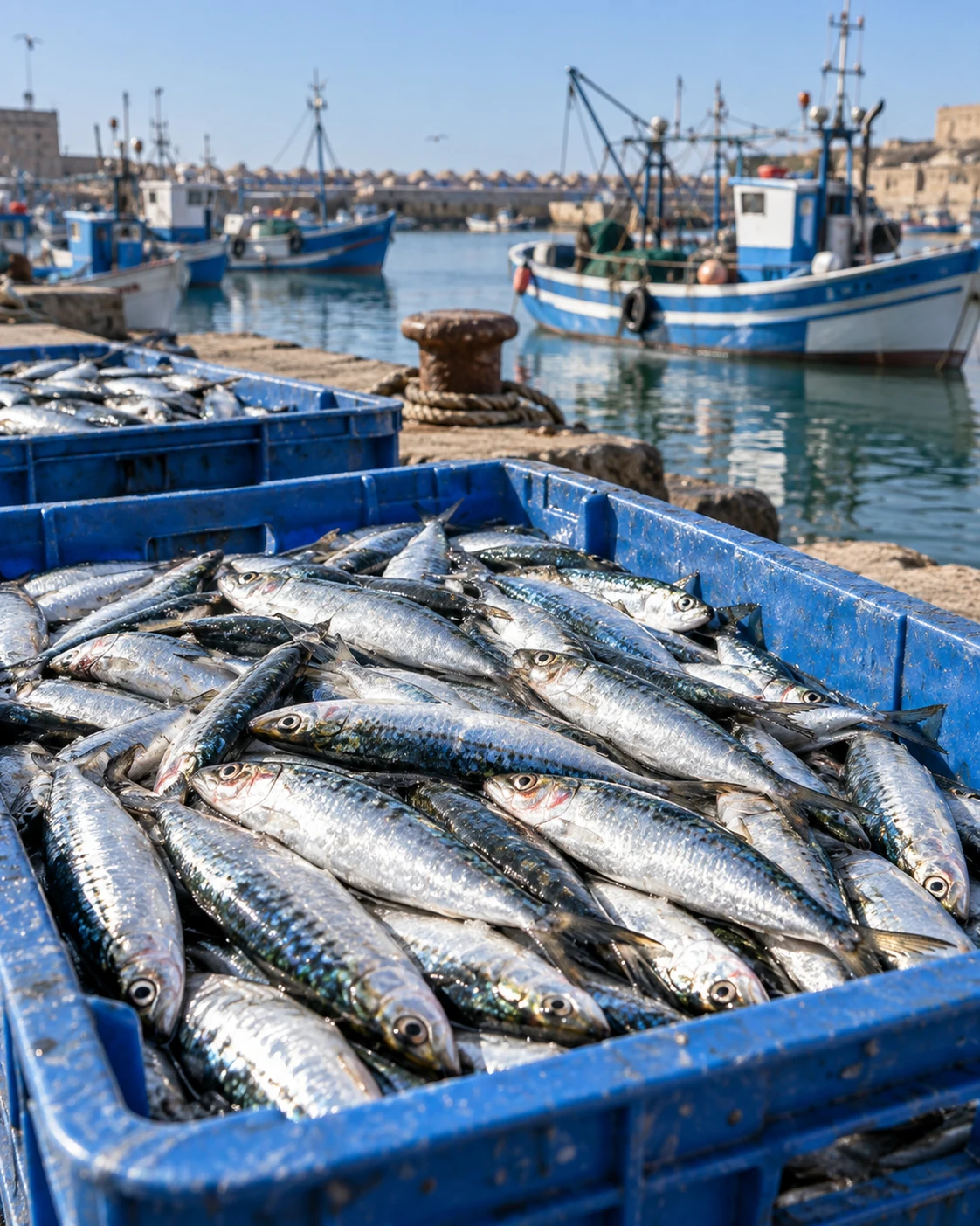
07 · At the shared table
Crisp fish.
Soft bread.
Bright sides.
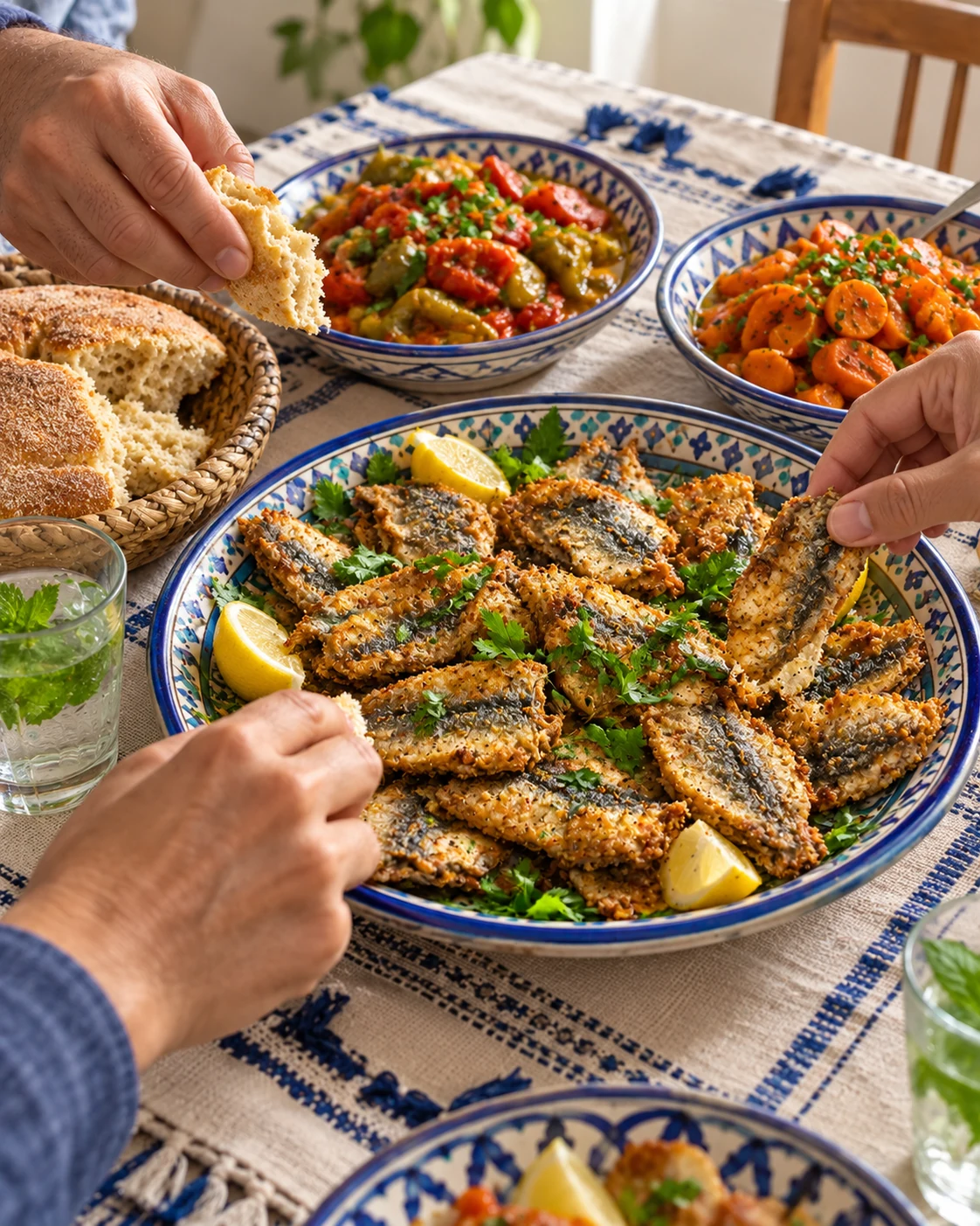
Sardines with chermoula rarely need elaborate company. Bread, a cooked salad and lemon can turn a platter into a complete, generous meal.
The pleasure lies in contrast and in the easy movement of dishes between people.
Serve while the fish is at its best.
Fried sardines are most expressive while the edges remain crisp and the herb filling is fragrant. Baked versions invite bread into their juices; grilled fish asks for lemon and fingers willing to do a little work.
Khobz earns its place.
Bread catches chermoula, tomato juices and the savoury traces left on the platter. Its soft centre and sturdy crust are useful as well as satisfying.
At a shared dish, follow the host’s lead and take from the area nearest to you. Hospitality has its own rhythm in every household.
Salads bring colour.
Zaalouk, taktouka, fresh tomato and cucumber, olives or a simple pulse dish can sit beside the fish. Smokiness, sweetness, acidity and crunch each offer a different counterpoint.
The sides should support rather than bury the sardines. One or two well-chosen dishes are often more generous than a crowded table.
Wrapped, hot
and immediate.
A fried sardine pair can be enjoyed without ceremony, still hot and crisp. That informality is part of the dish’s range: it can feel at home at a counter, on a family platter or as part of a larger spread. [2]
Lemon, used with judgment.
A final squeeze can sharpen the fish, but chermoula may already contain considerable acidity. Taste first. The best finishing gesture is the one the dish actually needs.
08 · Knife skill & practiced hands
Before the cook,
the cleaner.
A small fish asks for precise, economical movement.
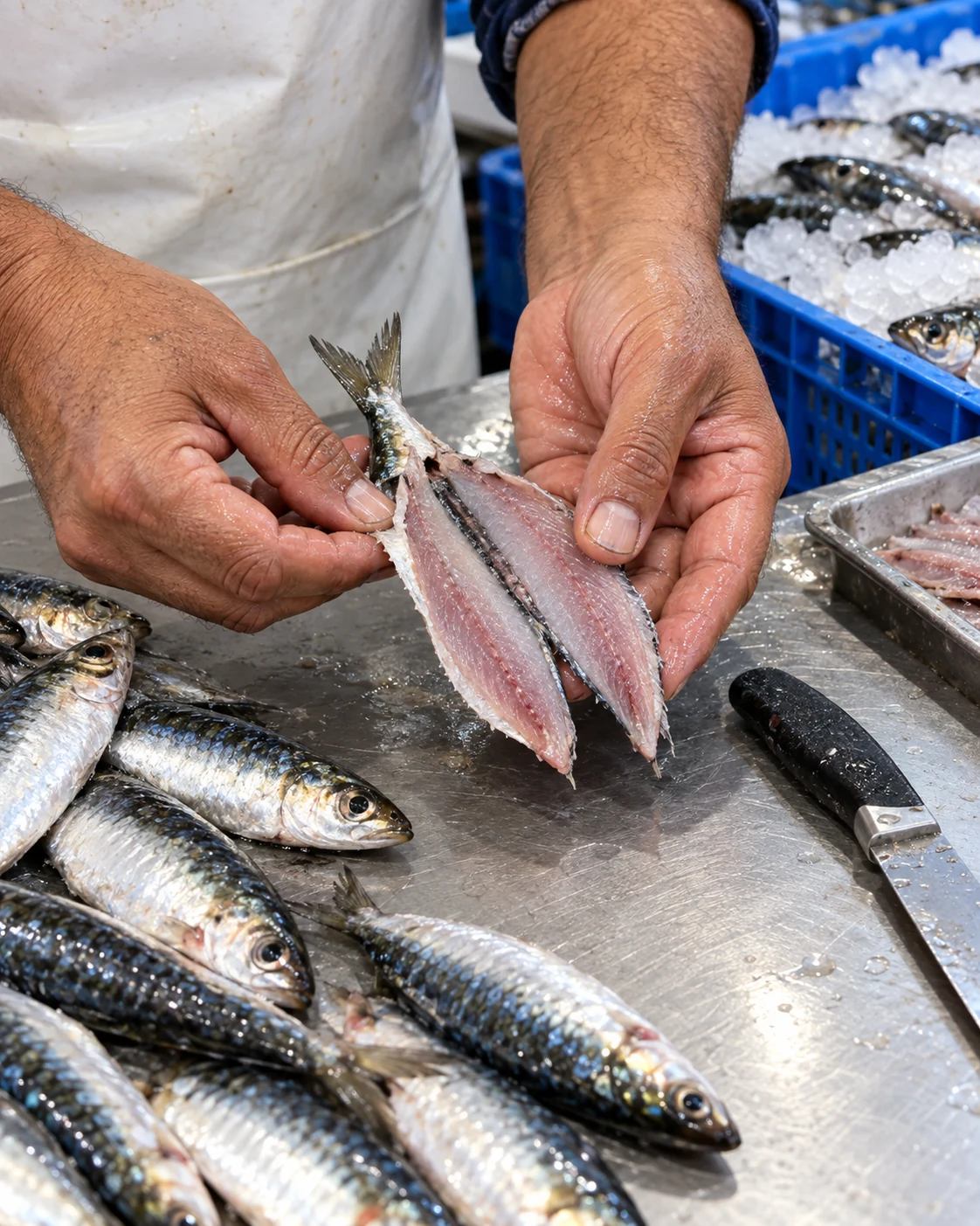
Cleaning sardines can look simple when an experienced fishmonger does it: head away, belly opened, central bone lifted, two fillets kept together. The speed hides a sequence of judgments about pressure, freshness and where the flesh will yield.
That work shapes the finished dish. A ragged fillet loses filling; a crushed one cooks unevenly. A clean butterfly can be seasoned from within and paired without pins or complicated equipment.
Market knowledge matters too. The person behind the counter may know which catch is suited to stuffing, which is large enough for the grill and how soon it should be cooked. Skill belongs to the route from sea to table, not only to the final recipe.
Explore Moroccan skills and crafts ↗09 · A closer look
Good questions.
Clear answers.
The details that make the fish easier to understand.
Is chermoula one fixed recipe?
No. Coriander, parsley, garlic, cumin, paprika, lemon and oil are a familiar core, but proportions and additions vary by cook, region and use. [1]
Are stuffed sardines always fried?
No. Fried pairs are a well-known form, while sardines seasoned with chermoula may also be grilled, baked or arranged with vegetables in a tagine.
What does mzeouj mean here?
It refers to the joined or “married” pair of butterflied sardines around a chermoula filling. Spellings and colloquial names vary. [2]
Can I use canned sardines?
Canned sardines can make an excellent meal with chermoula-inspired flavours, but they cannot reproduce the butterfly-and-fill technique of fresh fish. Treat it as another preparation, not a direct substitute.
Is preserved lemon required?
No. Fresh lemon juice is common and provides acidity. Preserved lemon appears in some versions and contributes a different cured-citrus flavour, but it is not mandatory.
How do I know the sardines are fresh?
Look for bright skin, clear eyes, firm flesh and a clean marine smell. Keep them cold and cook promptly. If the odour is strongly sour, rancid or ammonia-like, do not use them.
 EXOTIC MOROCCOTASTE · THE GUIDE COLLECTIONSardinesIngredients, technique
and the Moroccan table
From the story to your kitchen
Keep the flavour.
Go a little deeper.
Small fish, fragrant herbs and the details of preparation.
Explore the Exotic Morocco guide collection for a closer look at ingredients, kitchen knowledge and the culture around the table.
- Understand the ingredients and their roles
- Recognise the techniques and textures that matter
- Bring context and confidence to the way you cook and serve
Continue tasting Morocco
Follow the
table outward.
Another dish, another technique, another way into the Moroccan kitchen.
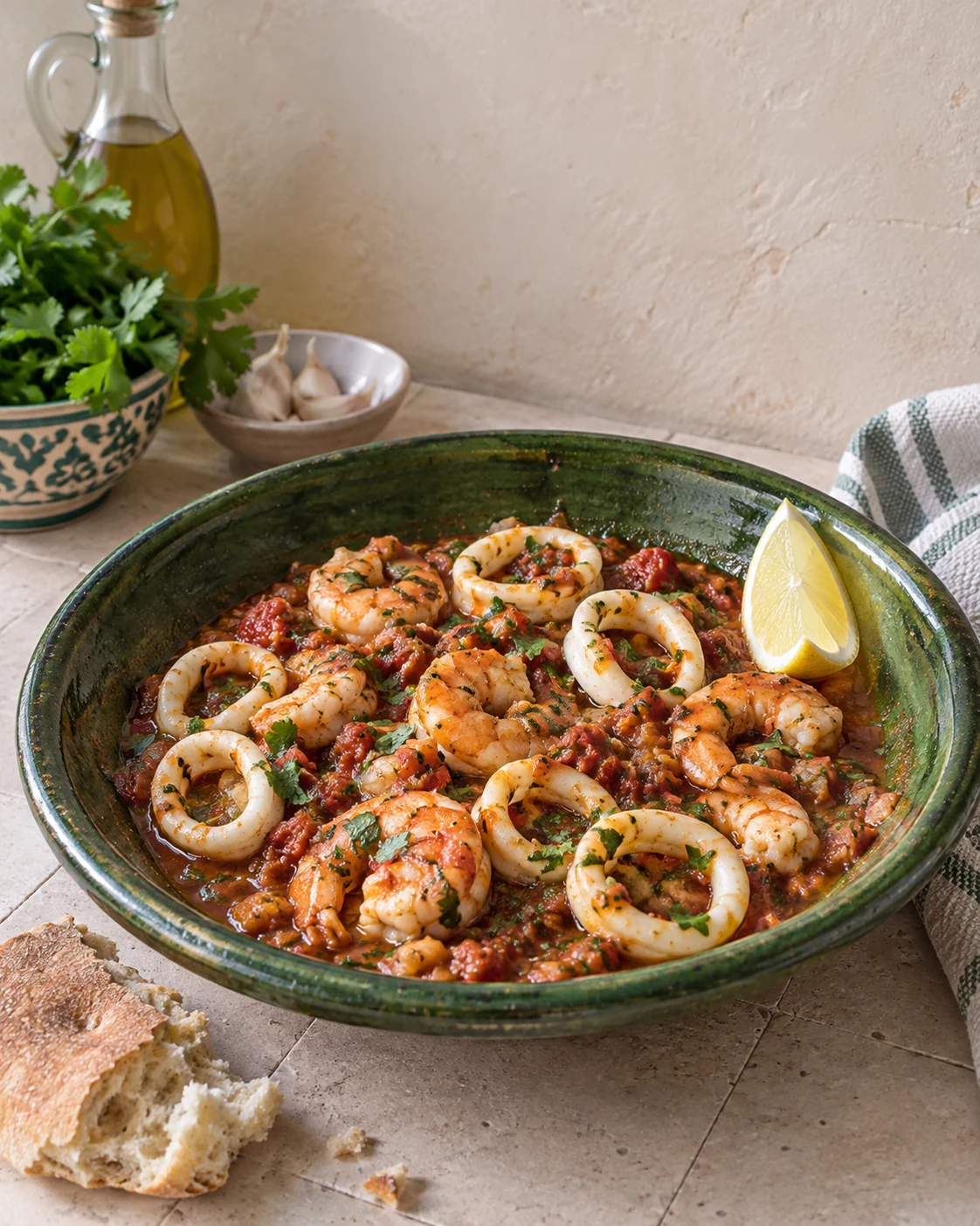
Seafood & Coastal Cooking
Fish markets, chermoula and the kitchens of the coast.
Explore the story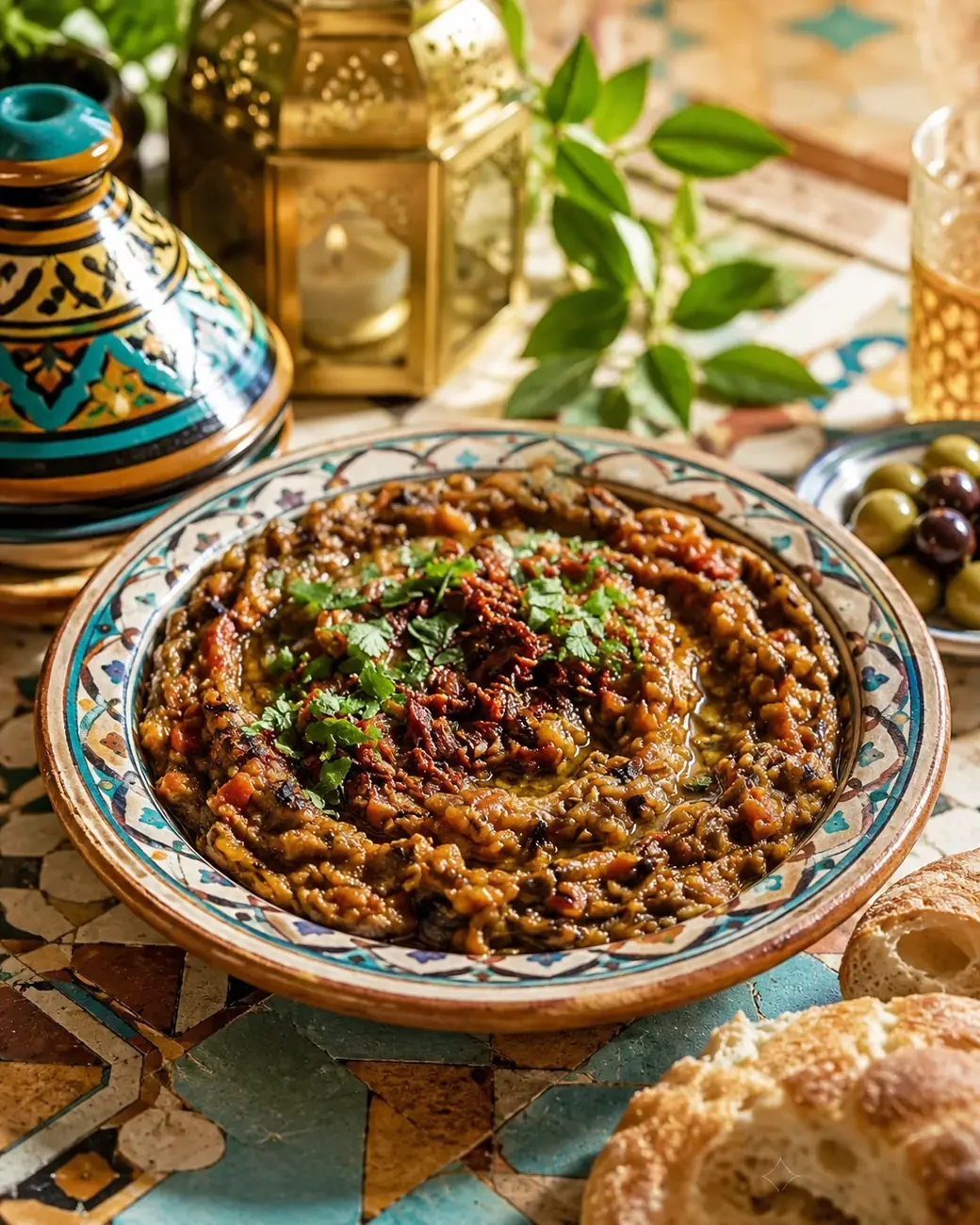
Zaalouk
Aubergine and tomato cooked until their flavours meet.
Explore the story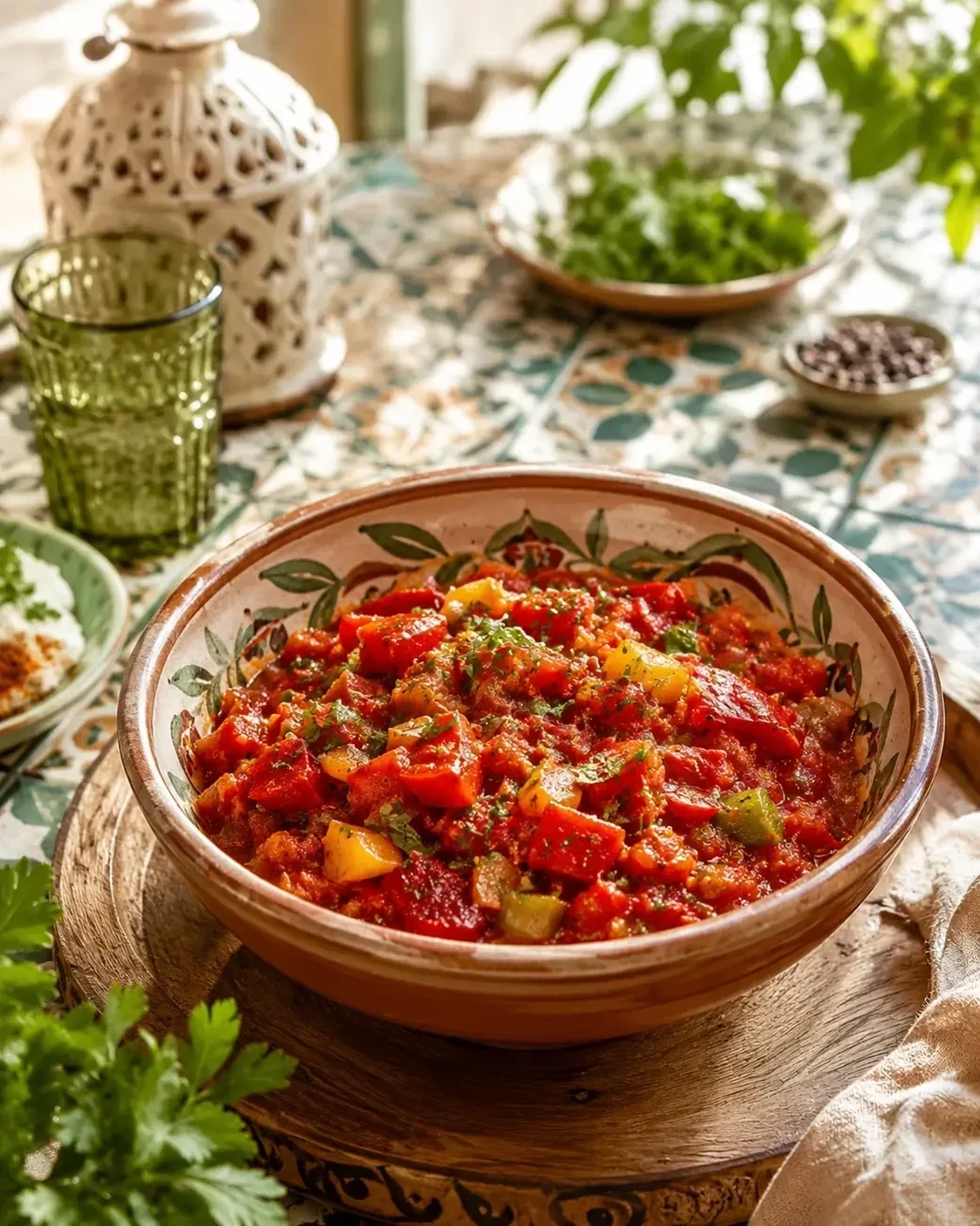
Taktouka
Roasted peppers and tomatoes, with bread close at hand.
Explore the story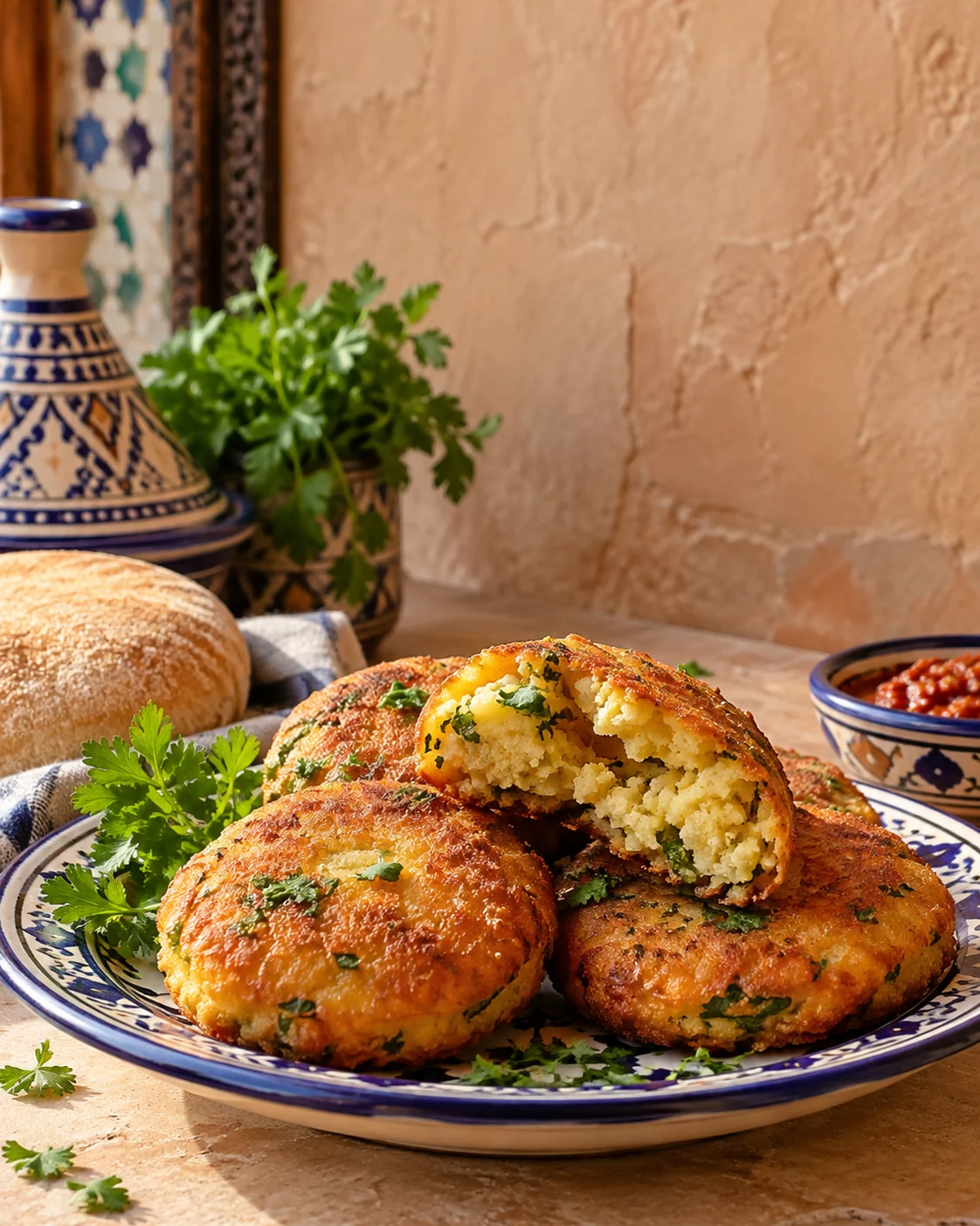
Maakouda
Potato patties, crisp edges and the rhythm of the street counter.
Explore the story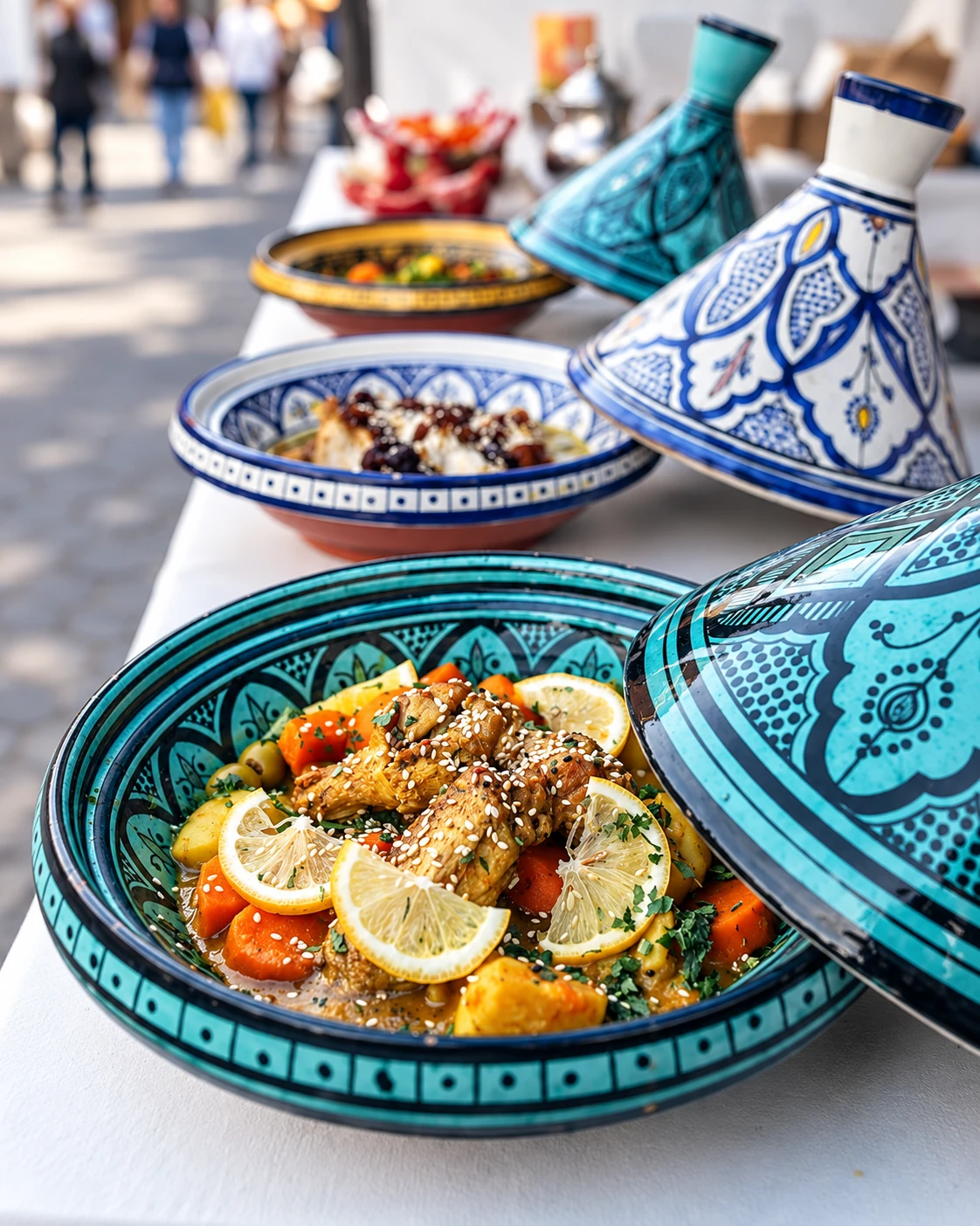
Tagine
Gentle heat, clay pots and the balance of a slow-cooked sauce.
Explore the story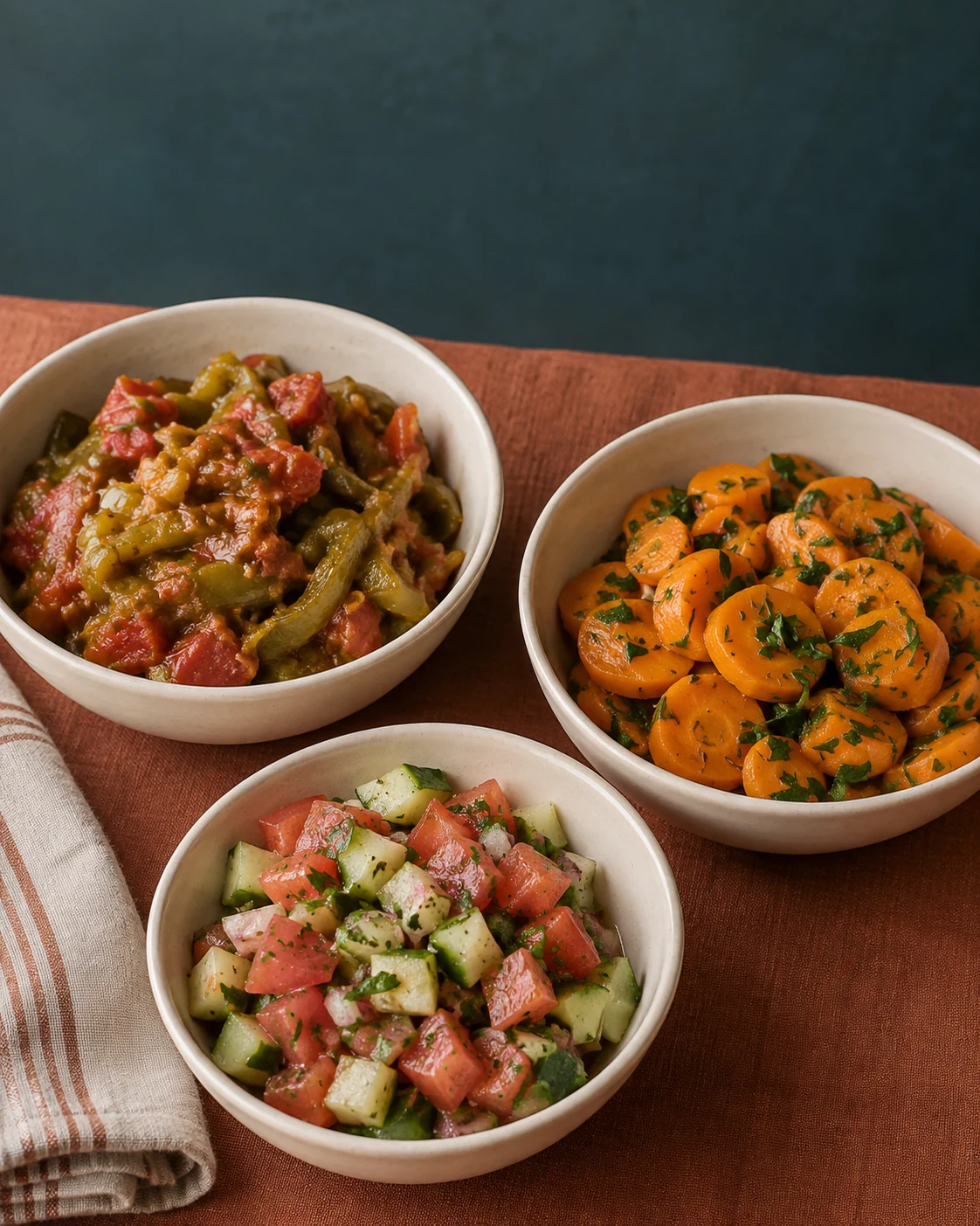
Moroccan Salads
Fresh, cooked and preserved flavours served in small dishes.
Explore the storySources & editorial notes
Photography combines existing Exotic Morocco assets and generated editorial illustrations. These images do not document a named person, household or historical event.
- Nargisse Benkabbou · Chermoula — core ingredients, uses and variations of the herb-and-spice marinade.
- Taste of Maroc · Moroccan Stuffed Fried Sardines — butterflying, pairing, flouring and names for the fried preparation.
- Nargisse Benkabbou · Sardine Tagine with Charmoula — sardines, chermoula, vegetables and baking.
- FAO · Historical review of Moroccan sardine fisheries — historical coastal distribution and port context. Older fisheries figures are not presented as current data.
- Taste of Maroc · Moroccan Sardine Balls in Tomato Sauce — sardine kefta technique and tomato-sauce preparation.
- Moroccan National Tourist Office · Safi — official destination context for the Atlantic city.
EXOTIC MOROCCO Places. People. The pleasure of knowing more.Back to top ↑