

01 · A Moroccan street-food classic
Potato, spice.
A crisp edge
worth waiting for.
Simple ingredients become something unmistakably satisfying.
Maakouda — also written maâkouda or makouda — is a fried potato cake found in Moroccan snack shops, market stalls and home kitchens. The centre is soft and seasoned; the outside is fried until golden. It can be eaten on its own, placed among small dishes, or tucked into bread for a filling street-food sandwich. [1]
The attraction is not complexity. It is contrast: warm potato against a thin crisp surface, cumin and garlic against fresh herbs, and a hot fritter against bread, tomato, salad or a spoonful of chilli sauce.
There is no need to turn that simplicity into folklore. Maakouda matters because it is practical, affordable food that works equally well at a counter and around a family table.
Enter Moroccan food culture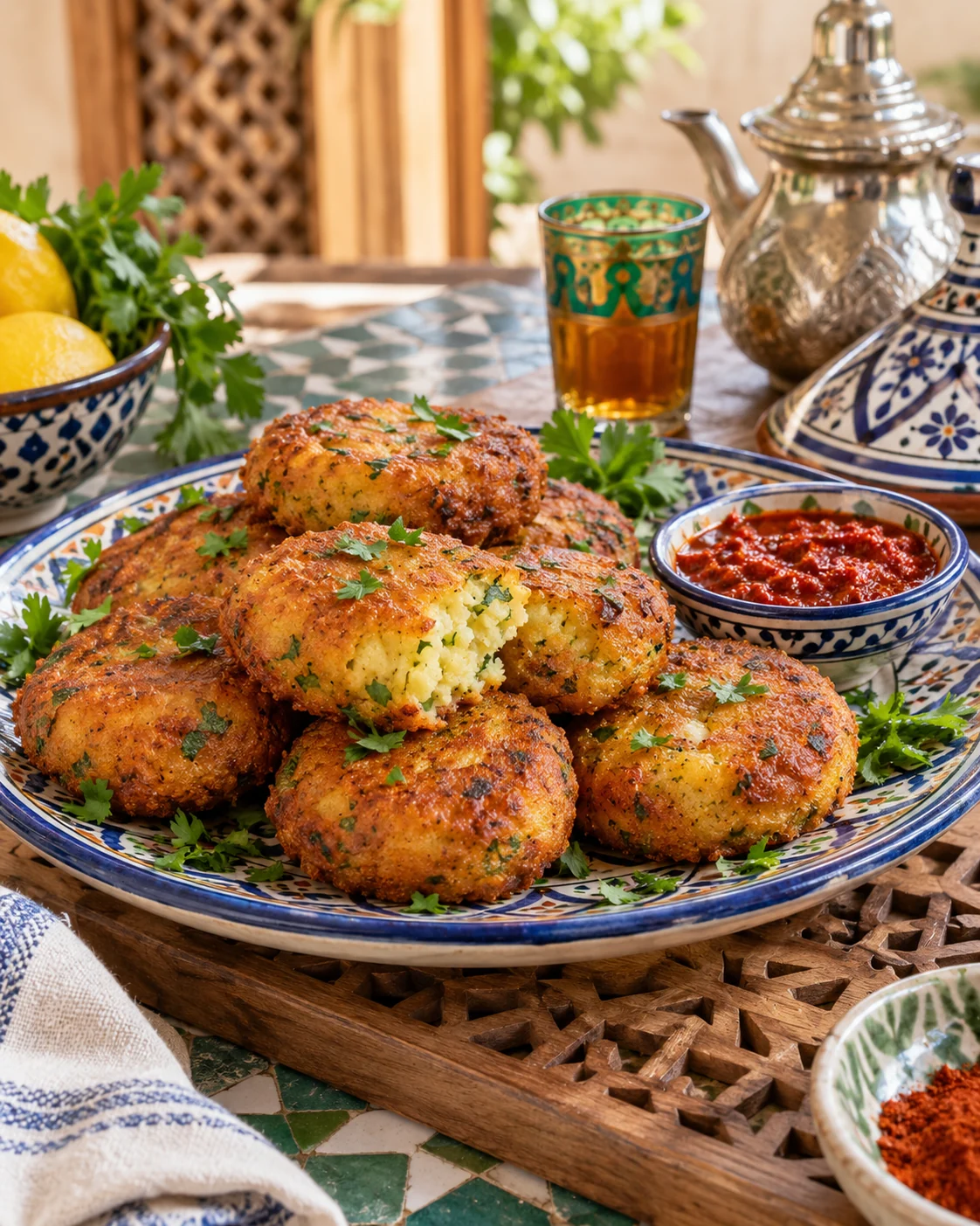
Spellings vary in Latin script.
The contrast defines a good fritter.
A snack that travels easily between both.
02 · Roots & living practice
From the pan
to the street.
The strongest evidence is in the practice itself.
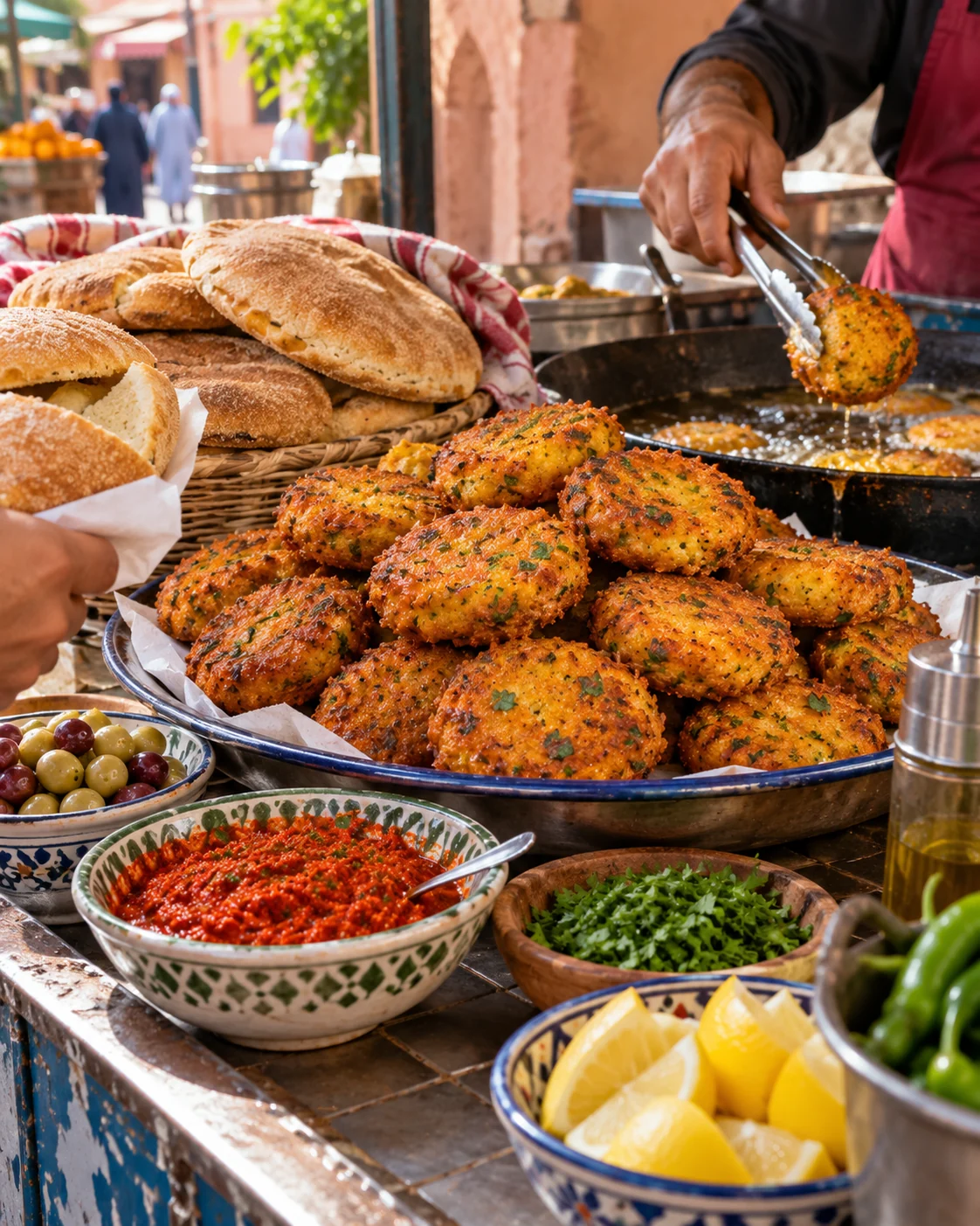
Reliable contemporary descriptions consistently place maakouda within Moroccan street-food culture and describe the same basic idea: seasoned mashed potato shaped and fried, often served alone or inside bread. [1]
Maakouda is part of Morocco’s wider culture of prepared street food and bread-led snacks. Its appeal lies in the contrast between a soft potato centre and a crisp outside.[3]
Built for everyday appetite
Potatoes make the base filling; herbs, garlic and spices give it character; frying makes it portable and immediate.
At the counter
Street stalls and casual snack shops are among the places where travellers encounter maakouda today. [1]
At home as well
The technique is simple enough for domestic cooking, and binding, coating and seasoning can change from one cook to another.
03 · The method behind the texture
From mash
to crisp crust.
The ingredient list can be short, but the texture depends on moisture, shaping and frying.
Published versions differ in the details: some use egg or flour as binders, some coat the patties with flour, and others use a light batter. That variation is real; one formula should not be presented as the only authentic method. [2]
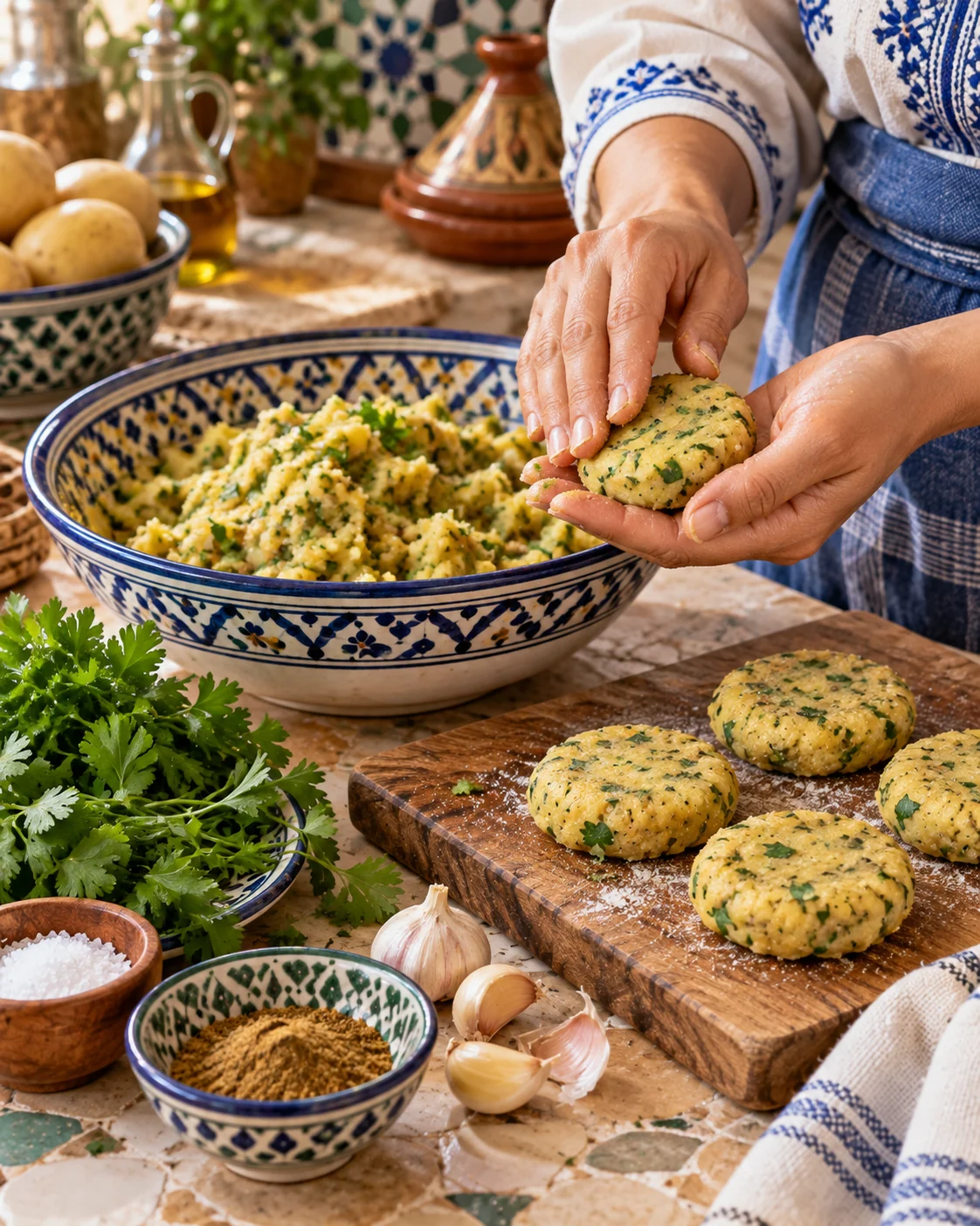
Control the moisture
Boiled potato that carries too much water produces a loose mixture and a softer crust. Draining well and letting excess steam escape gives the cook more control before seasoning.
Season through the centre
Cumin, garlic and chopped herbs recur in descriptions of maakouda. Turmeric or paprika may appear as well. The point is to season the potato itself, not rely on sauce after frying. [2]
Fry for contrast
The oil must be hot enough to set the exterior rather than soak the patty. The aim is a thin crisp layer around a tender centre, not a hard shell.
04 · What changes from cook to cook
Same idea.
Different hands.
Maakouda has a recognisable centre — seasoned potato and a fried exterior — without demanding one universal coating, binder or serving style.
These are useful families of variation, not rigid regional ownership claims.
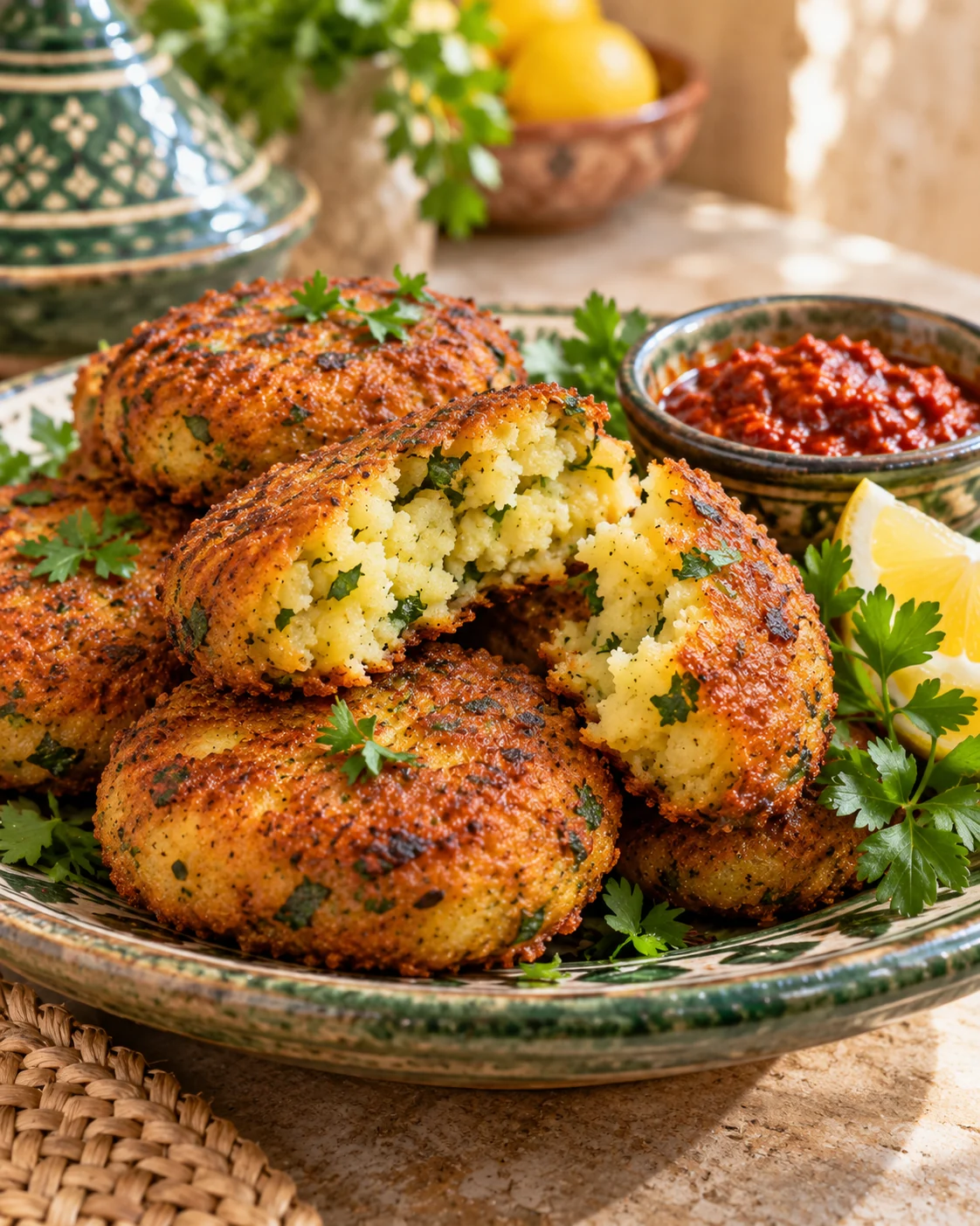
Flour-dusted or lightly coated
A thin coating can help the outside crisp while the potato remains tender. Other versions use egg or a light batter; published methods do not agree on one compulsory finish. [2]
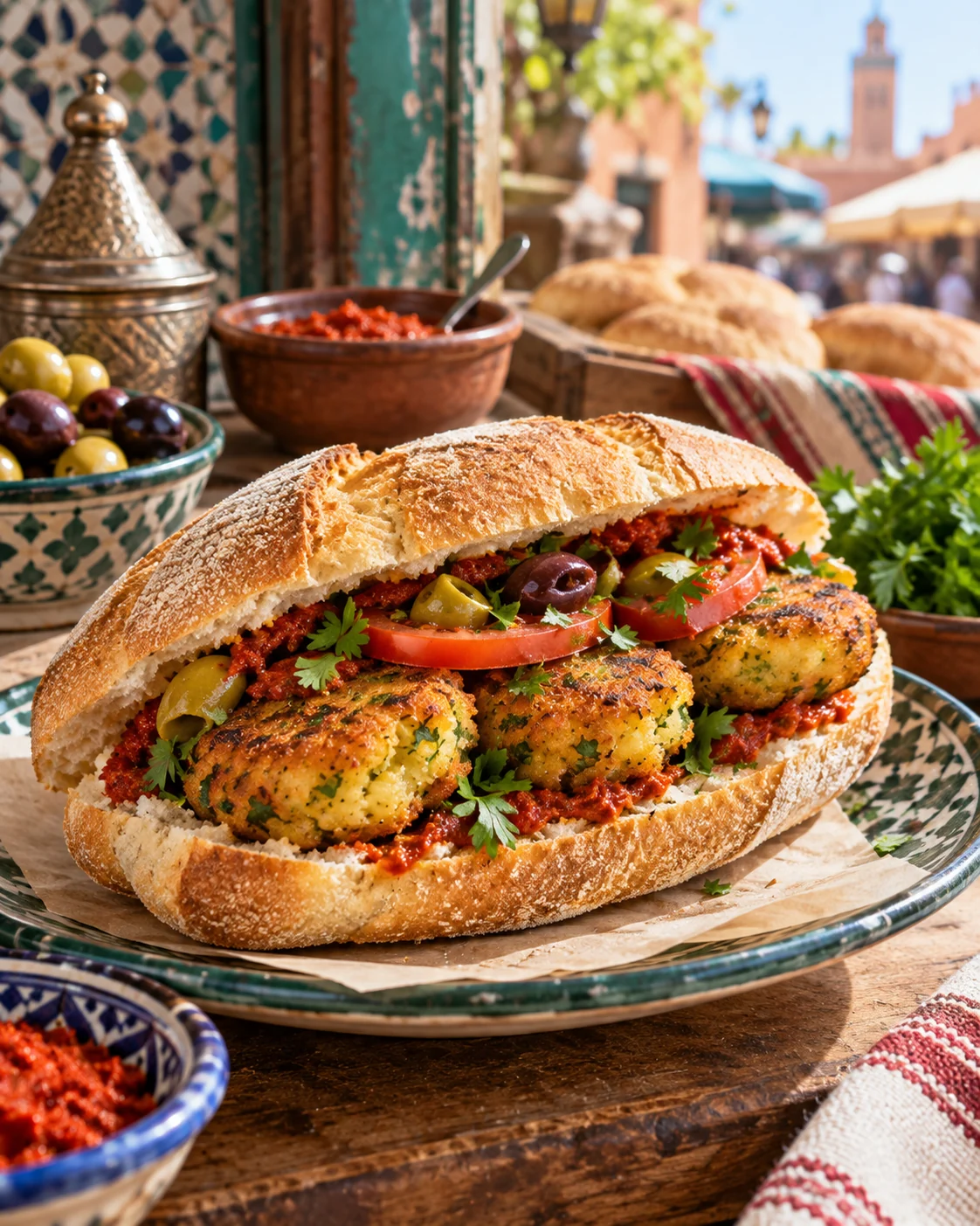
Inside bread
One of the dish’s clearest street-food expressions is the sandwich: hot potato patties inside bread, often with tomato or salad and a spicy condiment. [1]
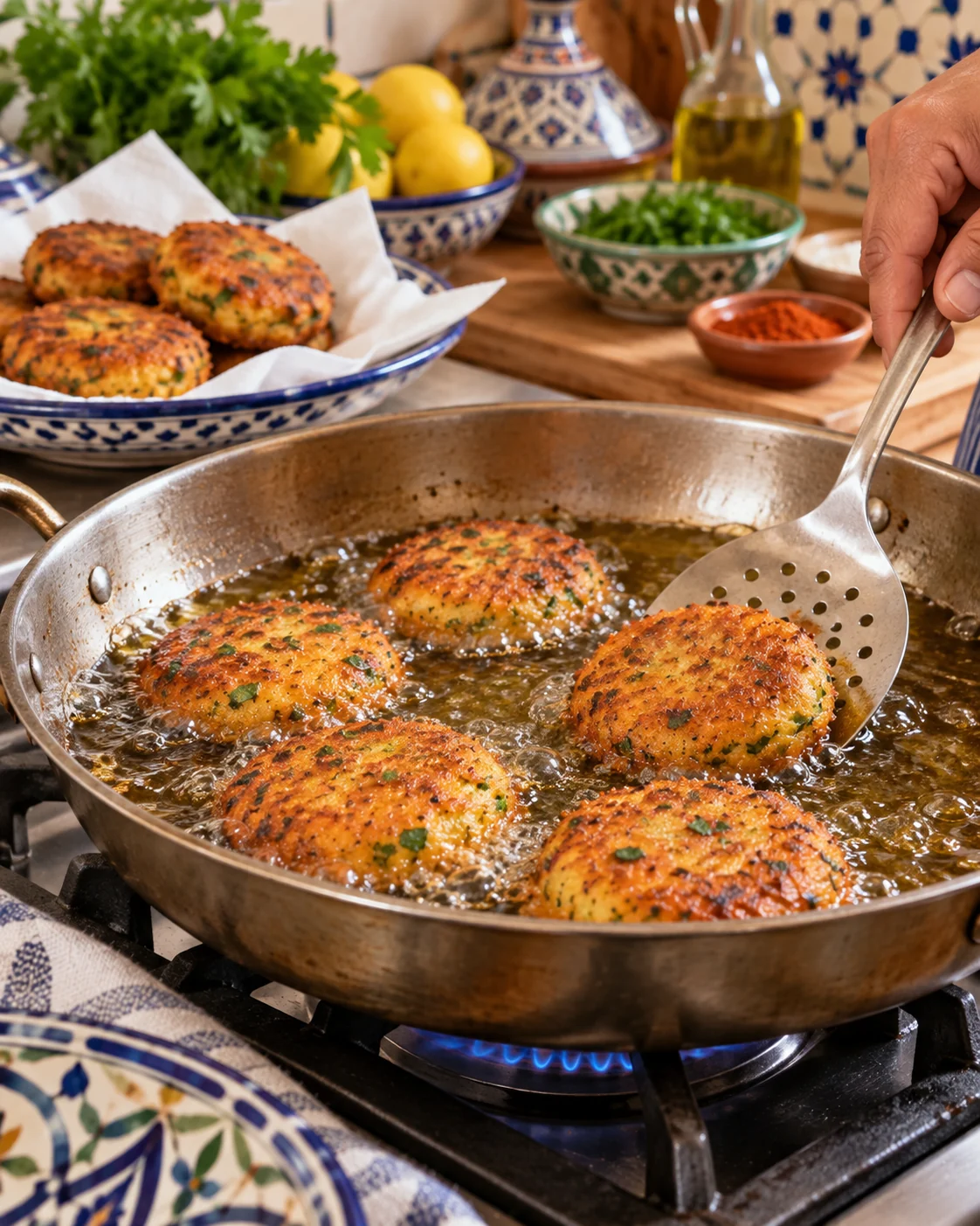
Colour without heaviness
A deep golden surface is appetising; a greasy one is not. Frying temperature, patty thickness and batch size all influence whether the exterior sets quickly enough.
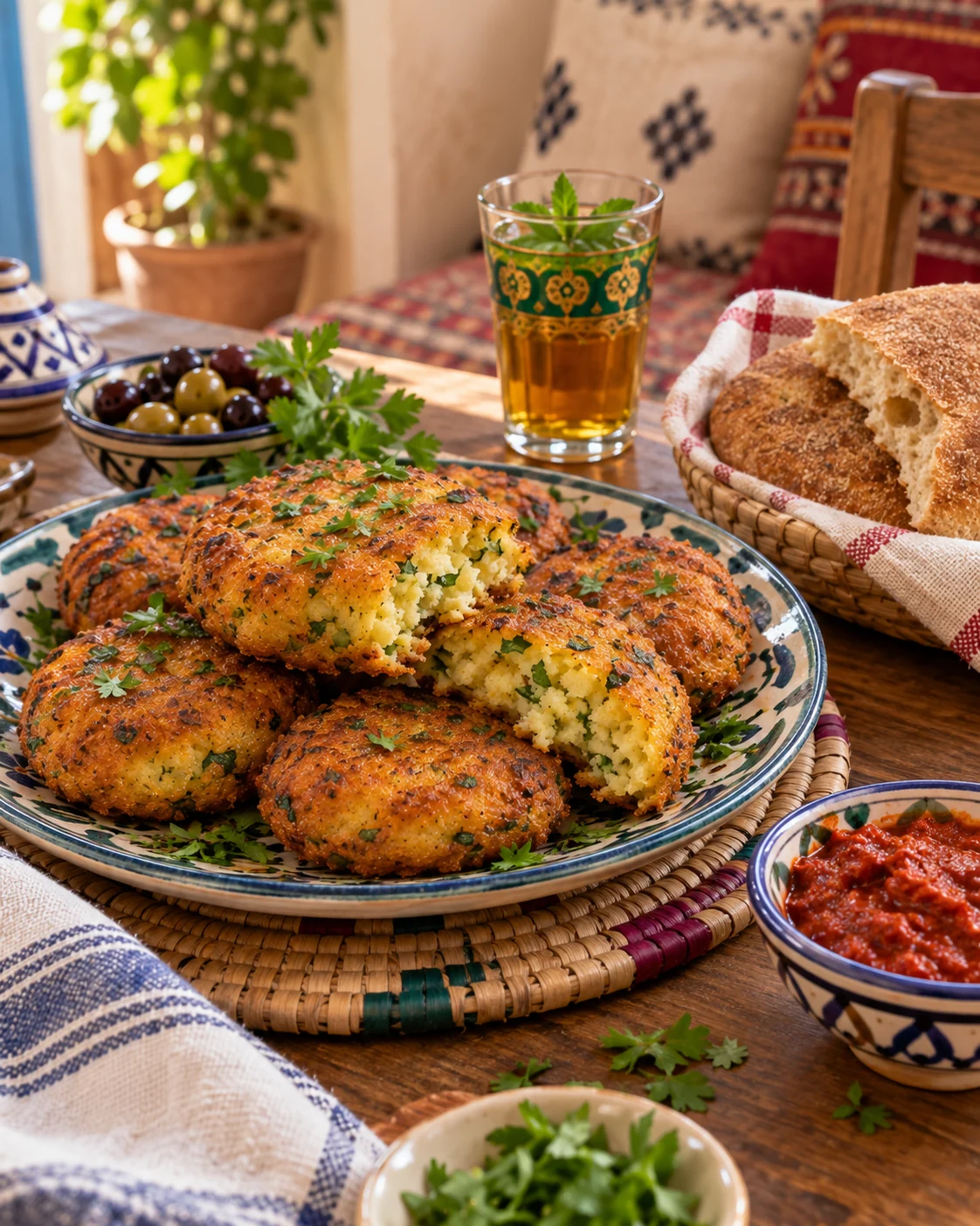
On the home table
Maakouda also works as part of a larger spread, where bread, olives, salads or sauces give the fritter a different role from a quick street snack.
05 · The flavour inside the potato
Few ingredients.
Each has a job.
Maakouda is a useful reminder that seasoning is not the same as adding many spices. The base is mild; small choices become very noticeable.
Moroccan cooking uses cumin, coriander and many other aromatics, but the exact combination changes by dish and cook. [3]
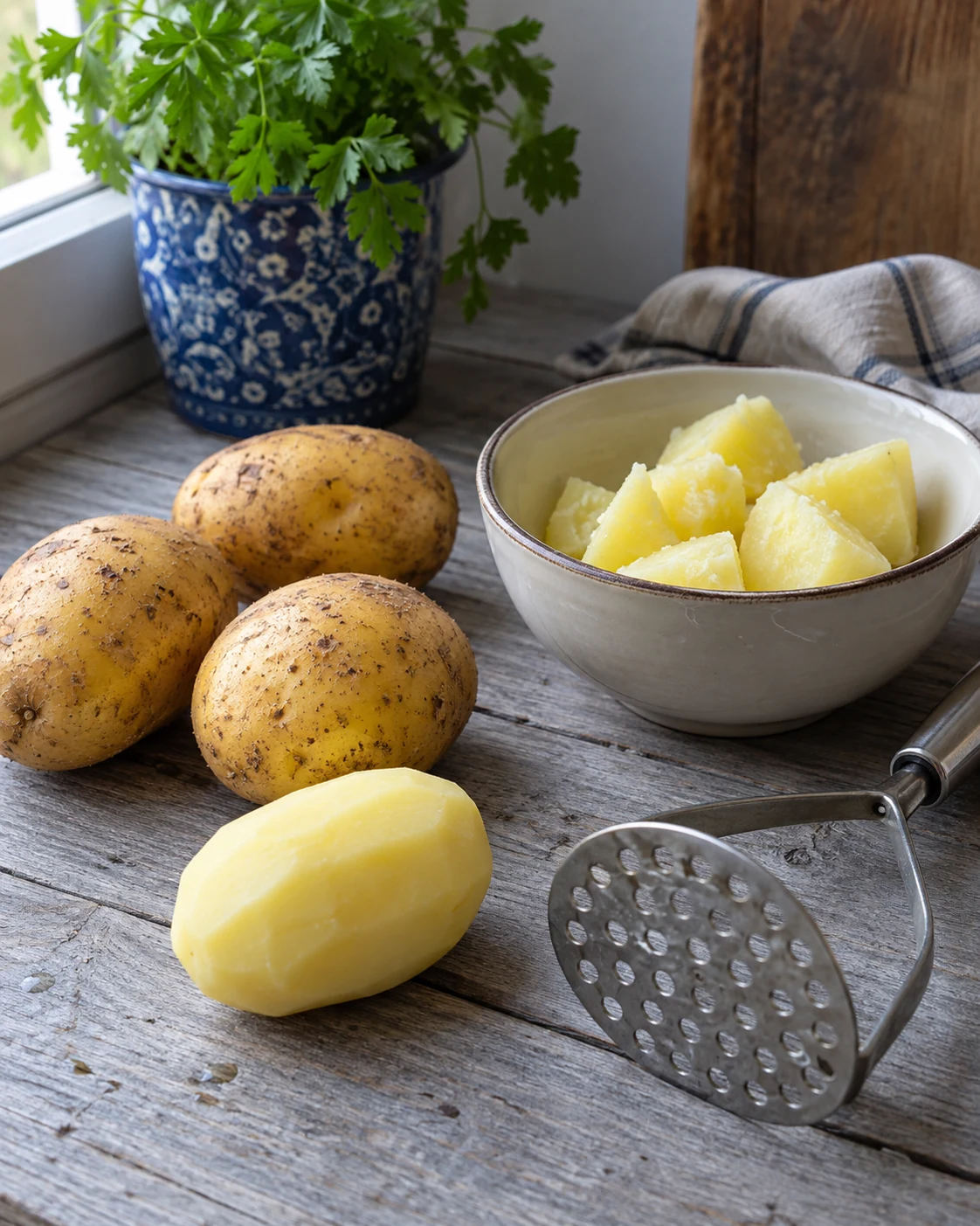
Potato
The structure and the softness.
The potato needs to mash cleanly but remain dry enough to shape. Its starch provides body; excess water makes the mixture harder to control.
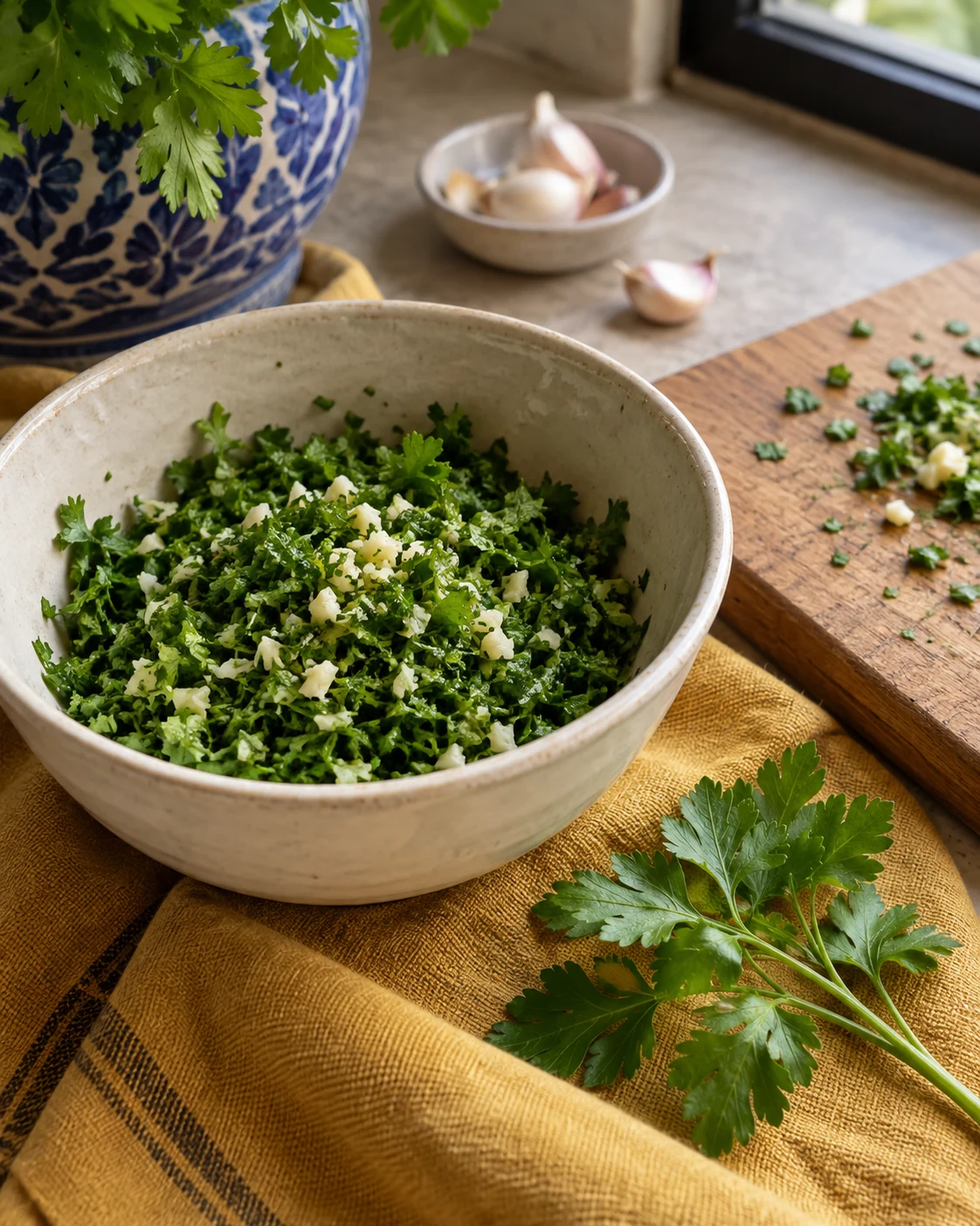
Garlic & herbs
Freshness inside every bite.
Garlic, parsley and coriander are common partners for the potato. They give aroma and green freshness without turning the fritter into a heavily spiced mixture. [2]
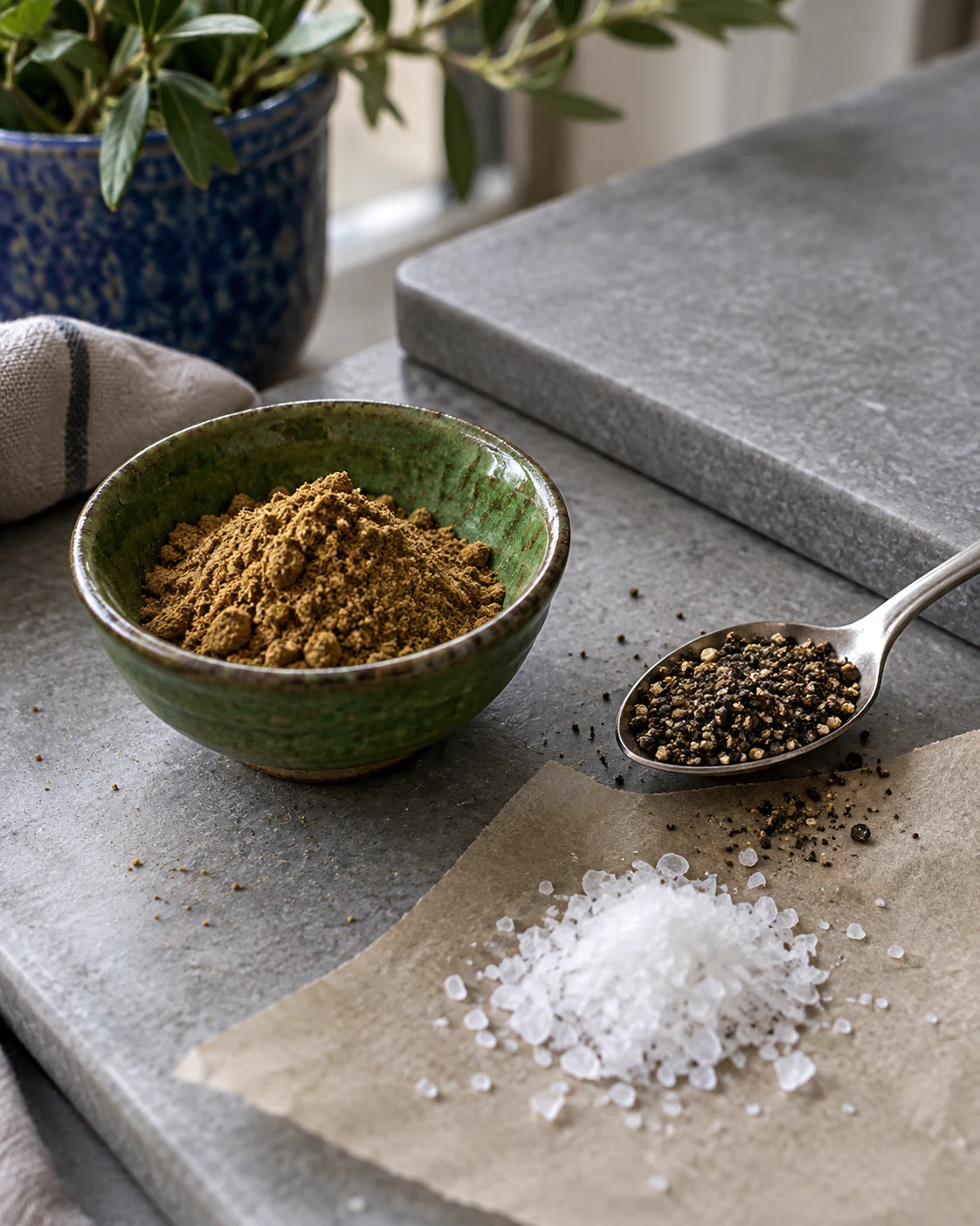
Cumin & warmth
Recognisable, not overpowering.
Cumin is repeatedly associated with maakouda; turmeric or paprika may also contribute colour and warmth. The potato should still taste like potato.
The cook’s balance
No compulsory spice cabinet.
Seasoning varies by household and stall. Salt, pepper, cumin and fresh herbs may be enough; extra warmth should serve the fritter rather than turn it into a generic “spiced” snack.
Explore the four flavour roles
POTATO · BINDER · COATING
The quiet
structure.
A maakouda has to survive shaping, frying and the first bite without becoming rubbery.
That is why the technical choices matter. Some cooks use egg, some flour, some a coating, and some rely more heavily on the potato’s own starch. Published versions show genuine variation rather than one universal formula. [2]
The best binder is the one you do not notice as a separate texture.
Dry potato gives control.
Removing excess moisture makes shaping easier and reduces the need to compensate with large amounts of flour.
Binding should stay discreet.
Egg or flour can help the patties hold together, but too much can mute the soft potato texture that makes maakouda appealing.
The coating controls the edge.
A dry dusting or light batter changes the crispness and colour. There is more than one credible household approach.

06 · Market, neighbourhood & home
The potato
moves through the city.
Produce stall, fryer, bread counter, kitchen table.
Maakouda is strongly associated with casual urban eating. Lonely Planet describes it as a Moroccan street snack sold at many street stalls, while contemporary city guidance still lists maakouda sandwiches among inexpensive everyday foods. [1] [5]
The ingredients themselves are ordinary market goods: potatoes, garlic, herbs and spices. That everyday accessibility is part of the dish’s identity. It does not require a luxury pantry or a ceremonial setting.
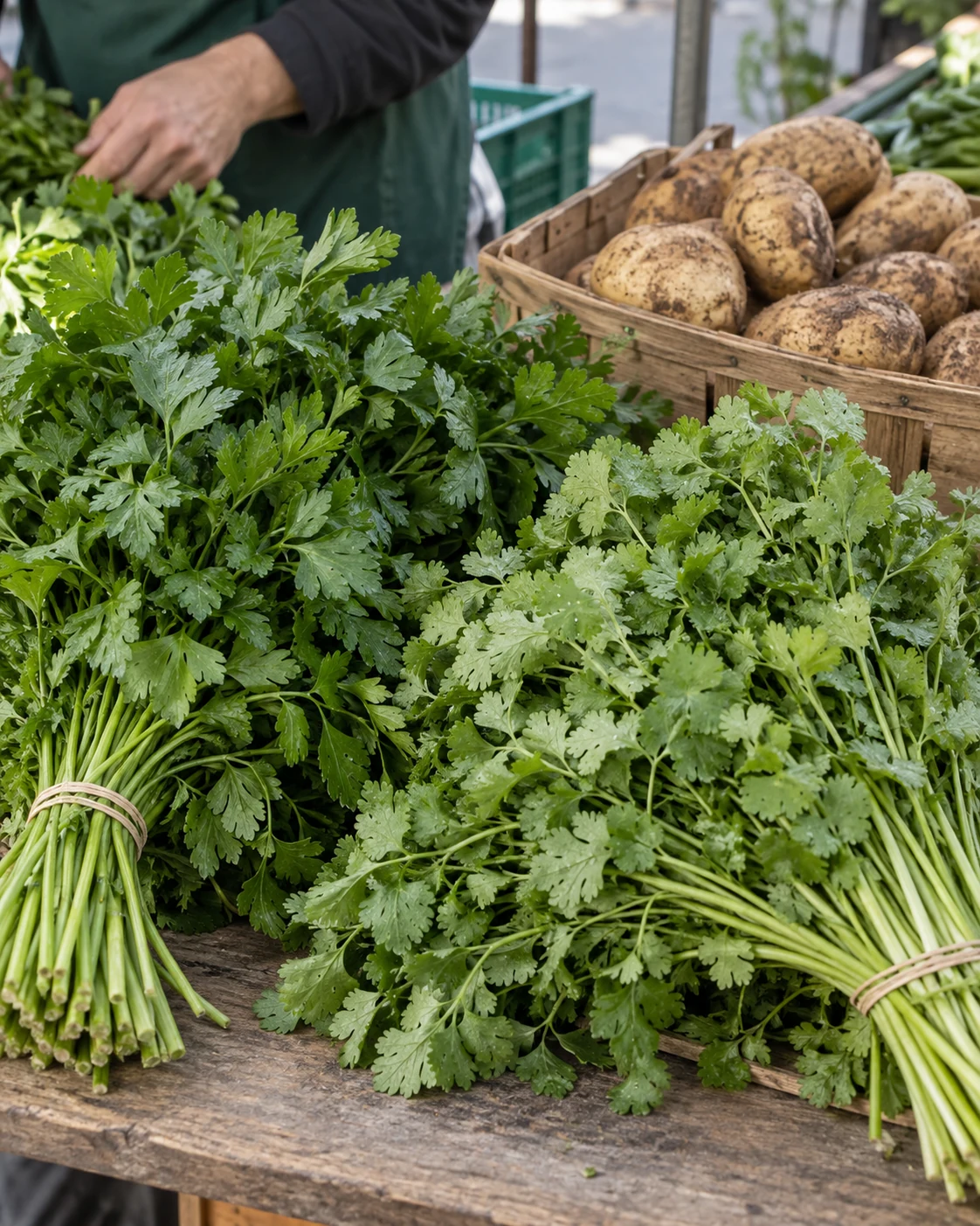
At the produce market
Potatoes, fresh herbs and garlic begin as ordinary shopping before they become seasoned fritters.
Discover Taste Morocco ↗At the snack counter
Frying turns the mixture into food that can be served immediately and eaten on the move.
Explore everyday Morocco ↗Back at home
The same idea adapts easily to a plate of small dishes, a family lunch or a casual evening table.
Explore food culture ↗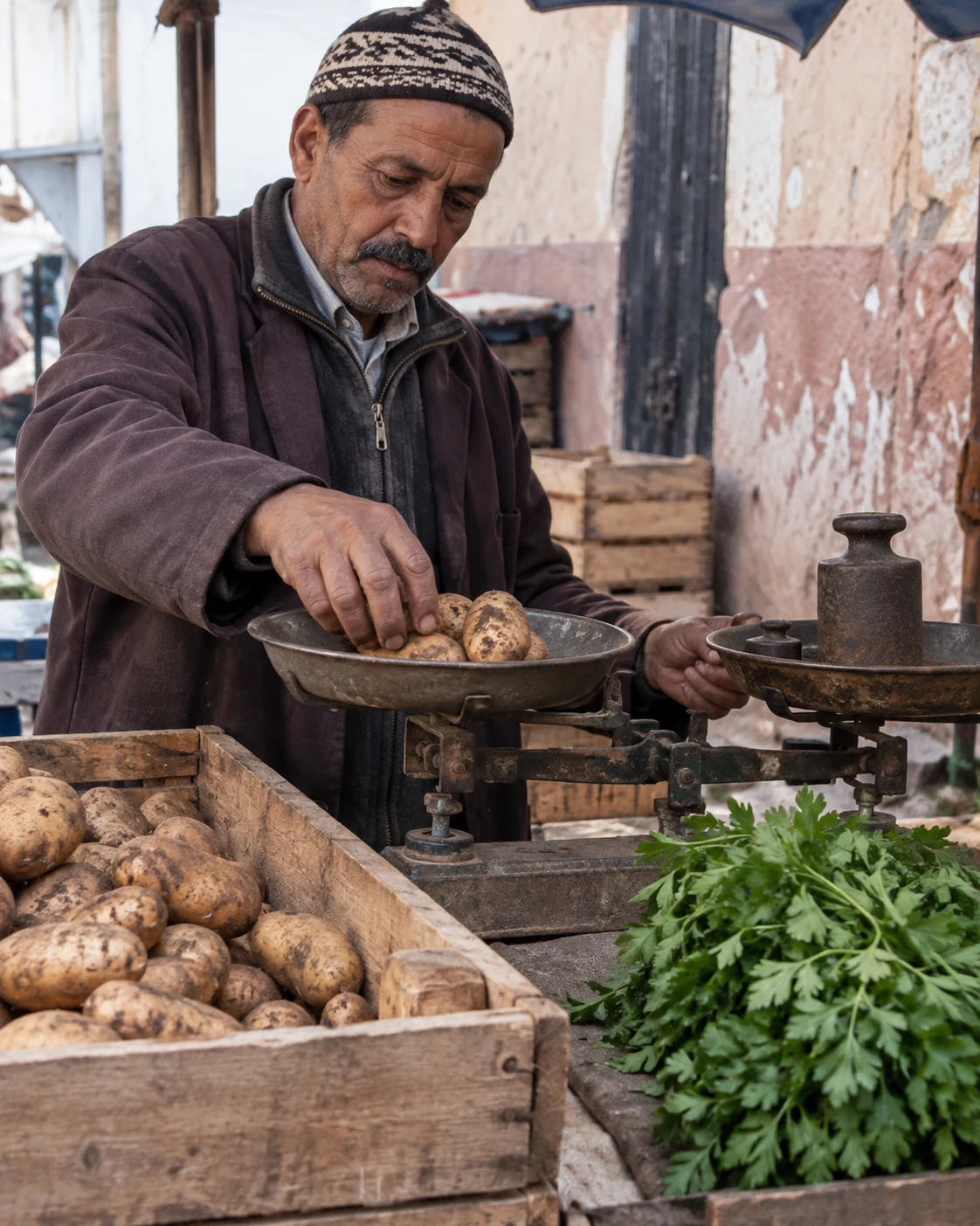
07 · From snack to shared plate
Hot from the oil.
Then make it yours.
Bread makes it portable.
Small dishes make it a table.
Maakouda does not need an elaborate service ritual. Its strongest moment is often immediate: still warm, with the crust intact and the inside soft.
At a street stall it may go straight into bread. At home it can sit beside olives, chopped vegetables, cooked salads or a chilli sauce. Moroccan bread is a daily staple across the cuisine, and here it also turns a fritter into an easy handheld meal. [4]
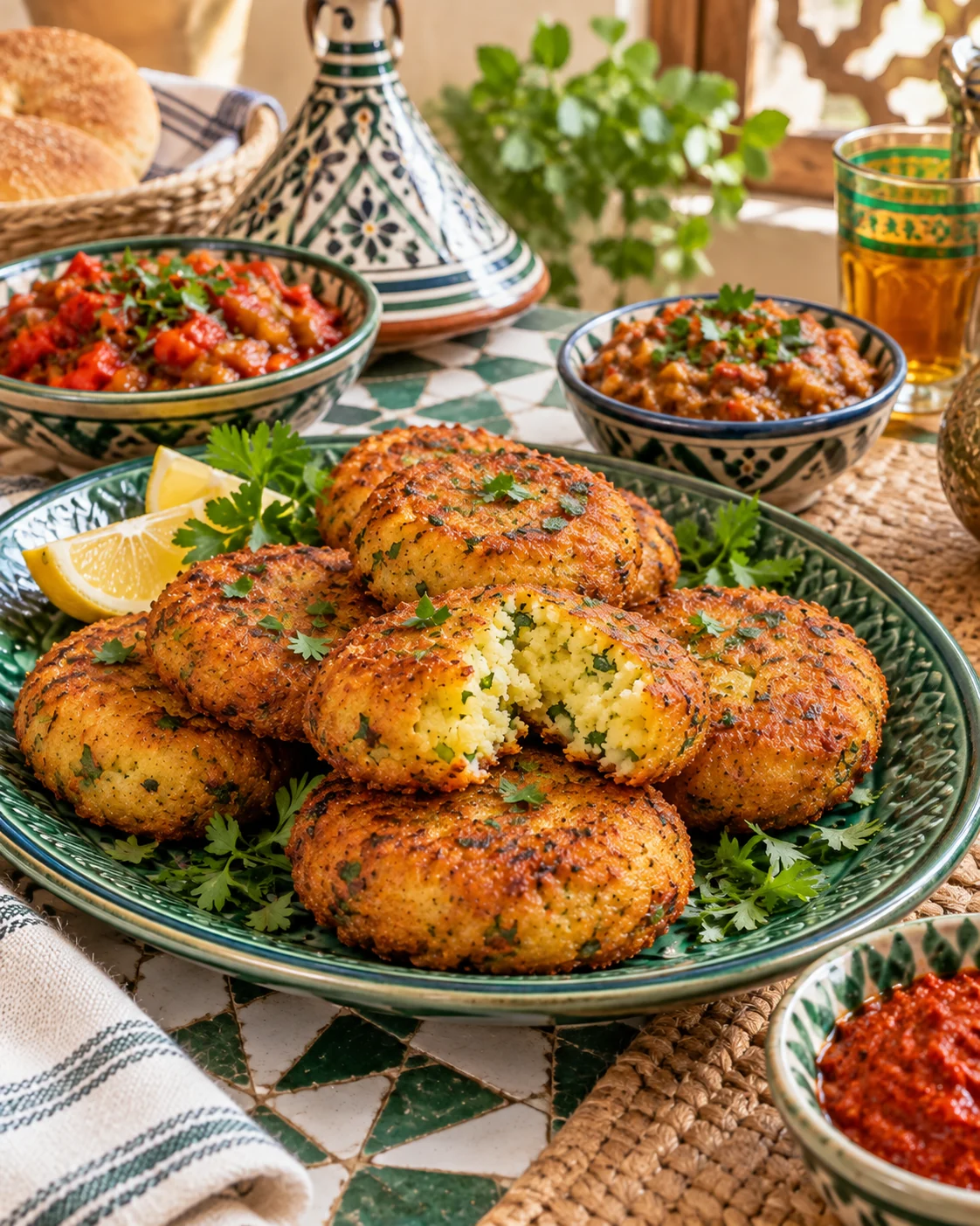
Bread turns a snack into lunch.
A maakouda sandwich is practical food: the bread holds the hot fritter and whatever accompanies it. Tomato, lettuce or other salad elements and chilli sauce appear in contemporary descriptions. [1]
The exact filling is not sacred. What matters is the logic — crisp potato, soft bread and enough freshness or heat to keep the combination lively.
Small dishes create contrast.
At home, maakouda can sit alongside salads, olives and sauces rather than inside bread. The fritter is mild enough to welcome acidity, smoke, brine or chilli around it.
This does not turn every Moroccan salad into a mandatory accompaniment. It simply reflects the broader table culture of sharing several tastes together. [3]
Serve it warm.
Protect the crust.
Freshly fried maakouda is at its best before steam trapped inside the fritter softens the exterior. Brief draining matters; long holding under a tight cover works against the texture the cook has just created.
Casual by nature.
Maakouda belongs comfortably to everyday eating. That informality is a strength: it can be a quick bite, a sandwich, a side or one part of a larger spread without needing to pretend to be a formal centrepiece.
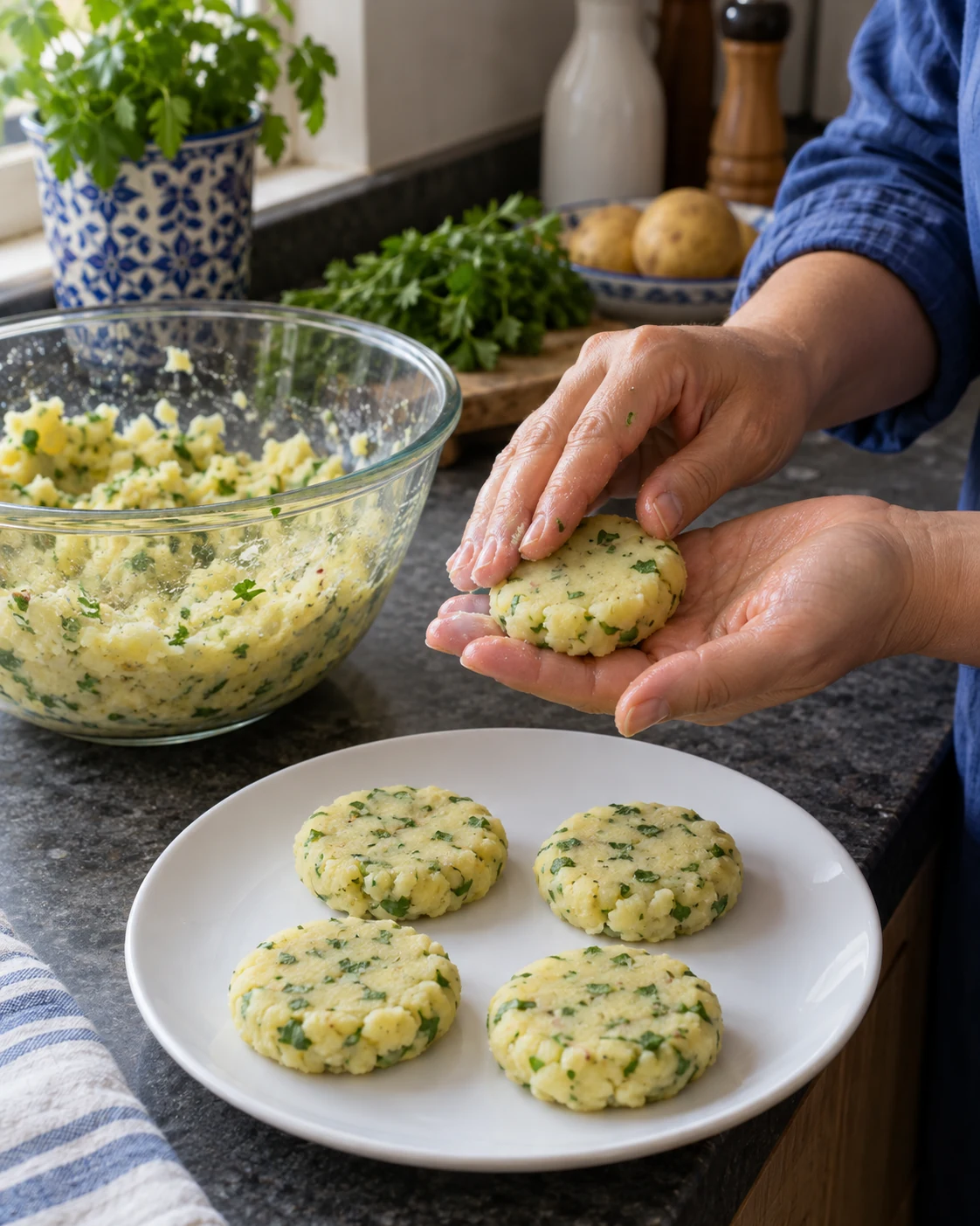
08 · The skill of the snack counter
Shape.
Fry. Serve.
Simple food can still demand practised judgement.
A busy fritter counter is a small production system. Patties need to be consistent enough to cook at the same pace. Oil temperature changes when a batch goes in. Finished maakouda must drain without sitting so long that the crust loses its appeal.
That repetition is a form of practical skill: hands learn the right thickness; the fryer learns how quickly the surface colours; the seller knows how many patties fit a sandwich without crushing the bread.
The setting is part of the dish’s material culture too — metal trays, paper, baskets of bread, small bowls of sauce and the ordinary counter that turns food into something immediate.
Explore more Moroccan street food ↗09 · A closer look
Good questions.
Clear answers.
The details that keep a simple fritter honest.
Is maakouda always served in bread?
No. It can be eaten by itself, served as a starter or side, or used as a sandwich filling. Contemporary descriptions document all three contexts. [1]
Does every version use egg?
No. Published methods vary: egg, flour or the starch of the potato can contribute to binding. The precise method belongs to the cook rather than to one national rule. [2]
Is maakouda supposed to be spicy-hot?
Not necessarily. Cumin, garlic and herbs give aroma; turmeric or paprika may add warmth and colour. Chilli can be part of the seasoning or served separately as a condiment.
Why does maakouda sometimes fall apart?
Too much moisture, weak binding, loose shaping or poorly judged oil temperature can all reduce the patties’ stability. Texture begins before the first patty reaches the pan.
Is the sandwich only a tourist version?
No. Maakouda in bread is documented as a Moroccan street-food format, including in contemporary travel reporting and city guides. [1] [5]
Is there one city that owns maakouda?
The sources used for this page do not establish a single exclusive city of origin. It is safer to describe the dish as a widely encountered Moroccan street snack than to invent a precise birthplace.
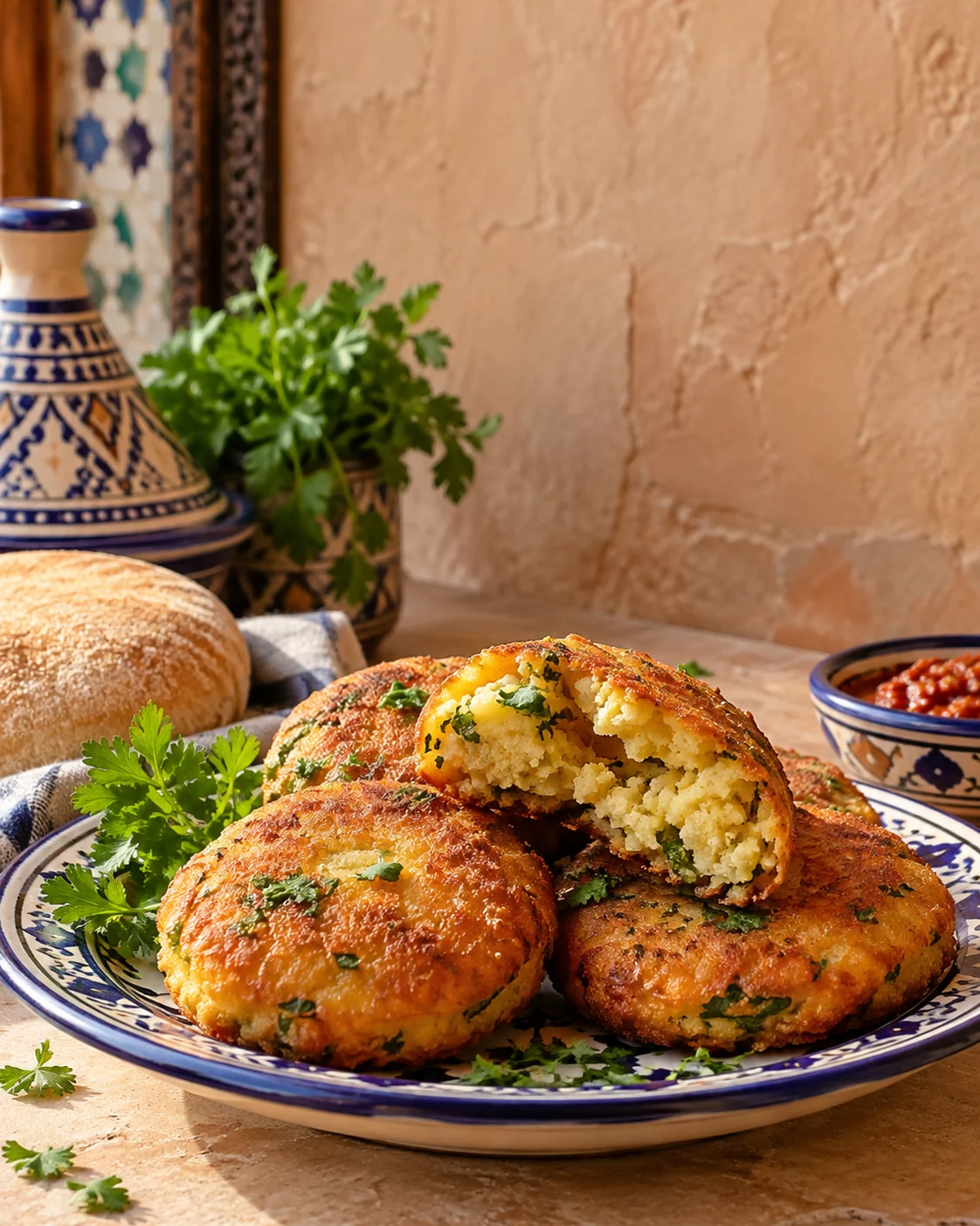 EXOTIC MOROCCOTASTE · THE GUIDE COLLECTIONMaakoudaIngredients, technique
and the Moroccan table
From the story to your kitchen
Keep the flavour.
Go a little deeper.
Potato patties, crisp edges and the rhythm of the street counter.
Explore the Exotic Morocco guide collection for a closer look at ingredients, kitchen knowledge and the culture around the table.
- Understand the ingredients and their roles
- Recognise the techniques and textures that matter
- Bring context and confidence to the way you cook and serve
Continue tasting Morocco
Follow the
table outward.
Another dish, another technique, another way into the Moroccan kitchen.
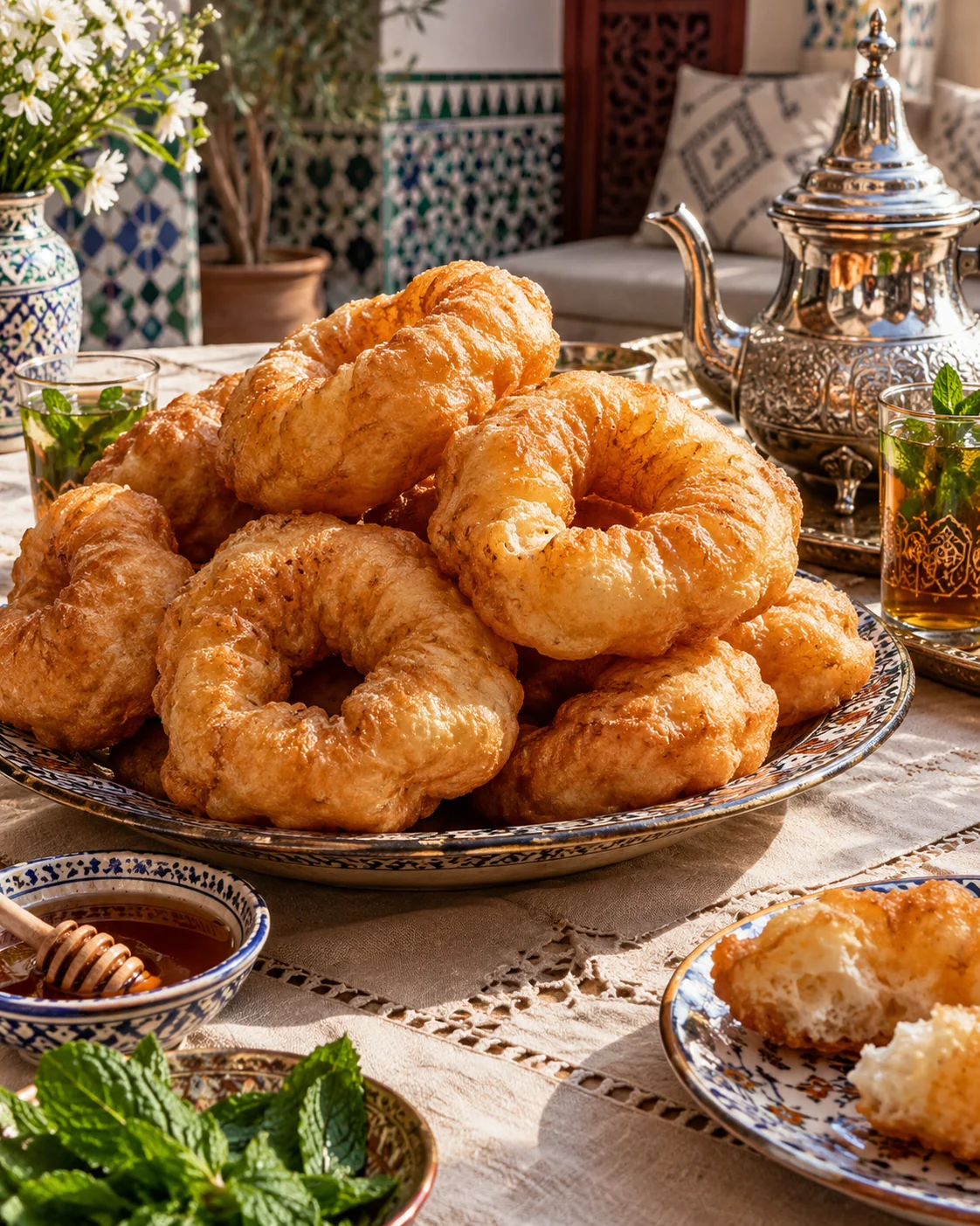
Street Food
Counters, griddles and food made to eat on the move.
Explore the story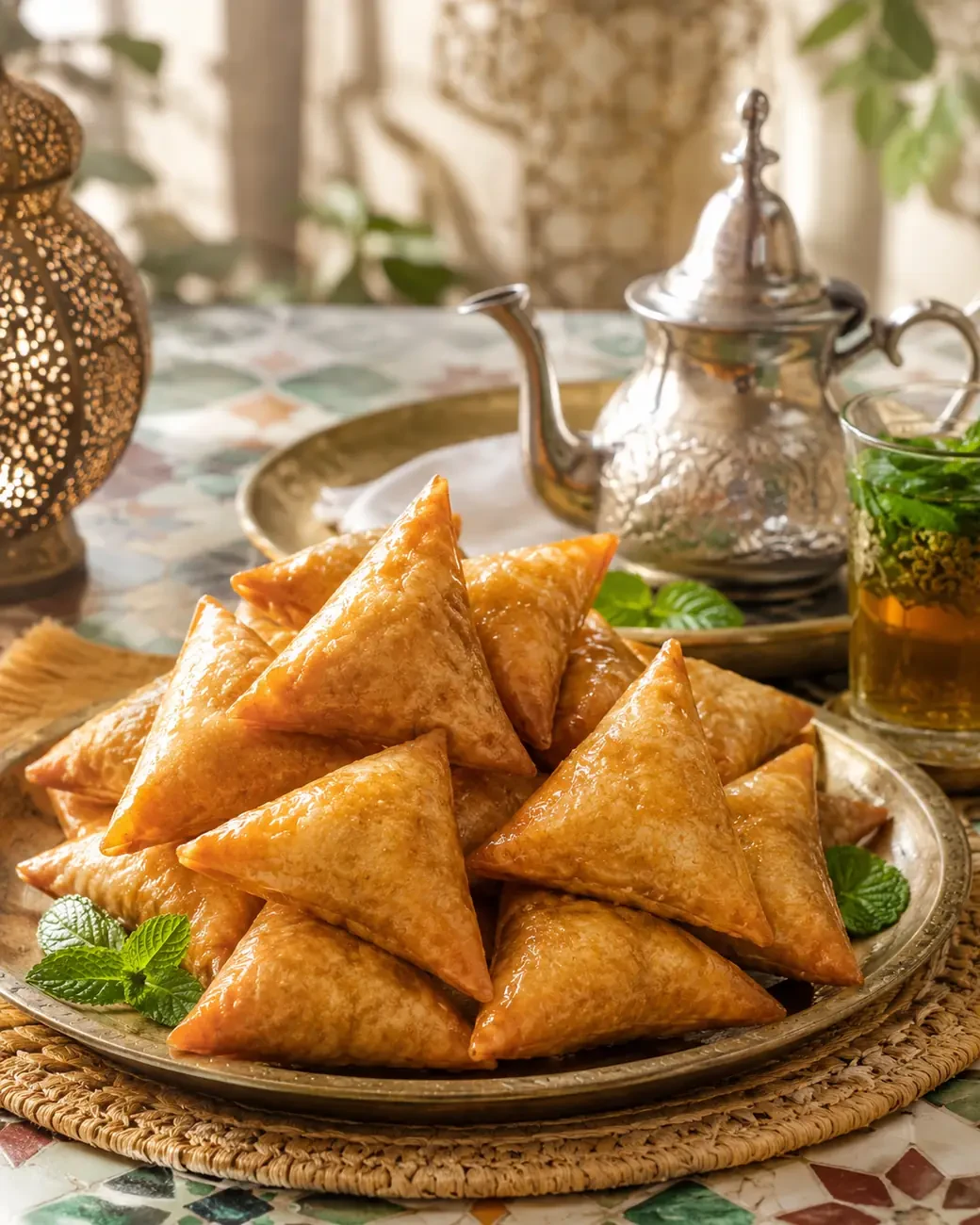
Briouats
Small folded pastries, with both savoury and sweet possibilities.
Explore the story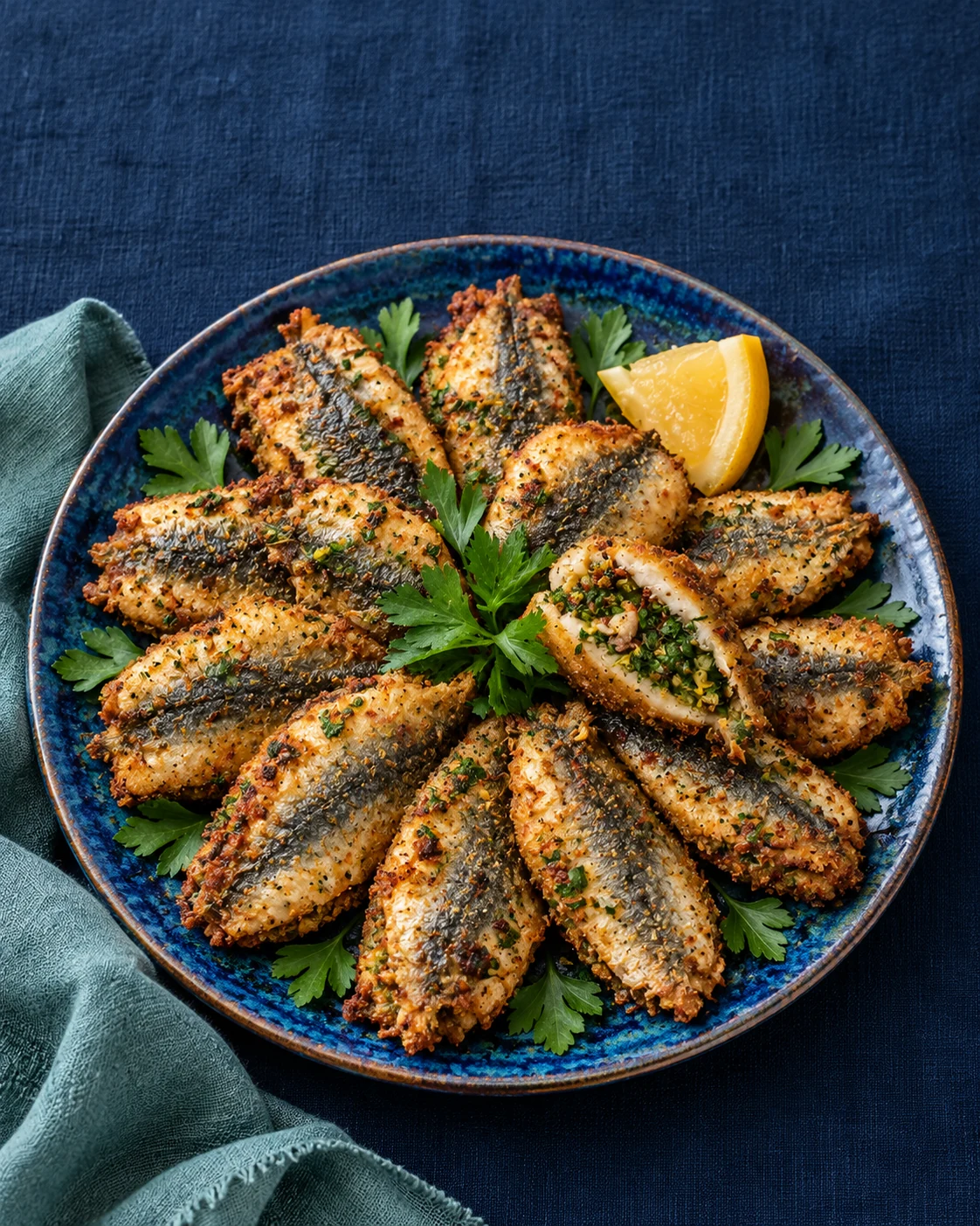
Sardines with Chermoula
Small fish, fragrant herbs and the details of preparation.
Explore the story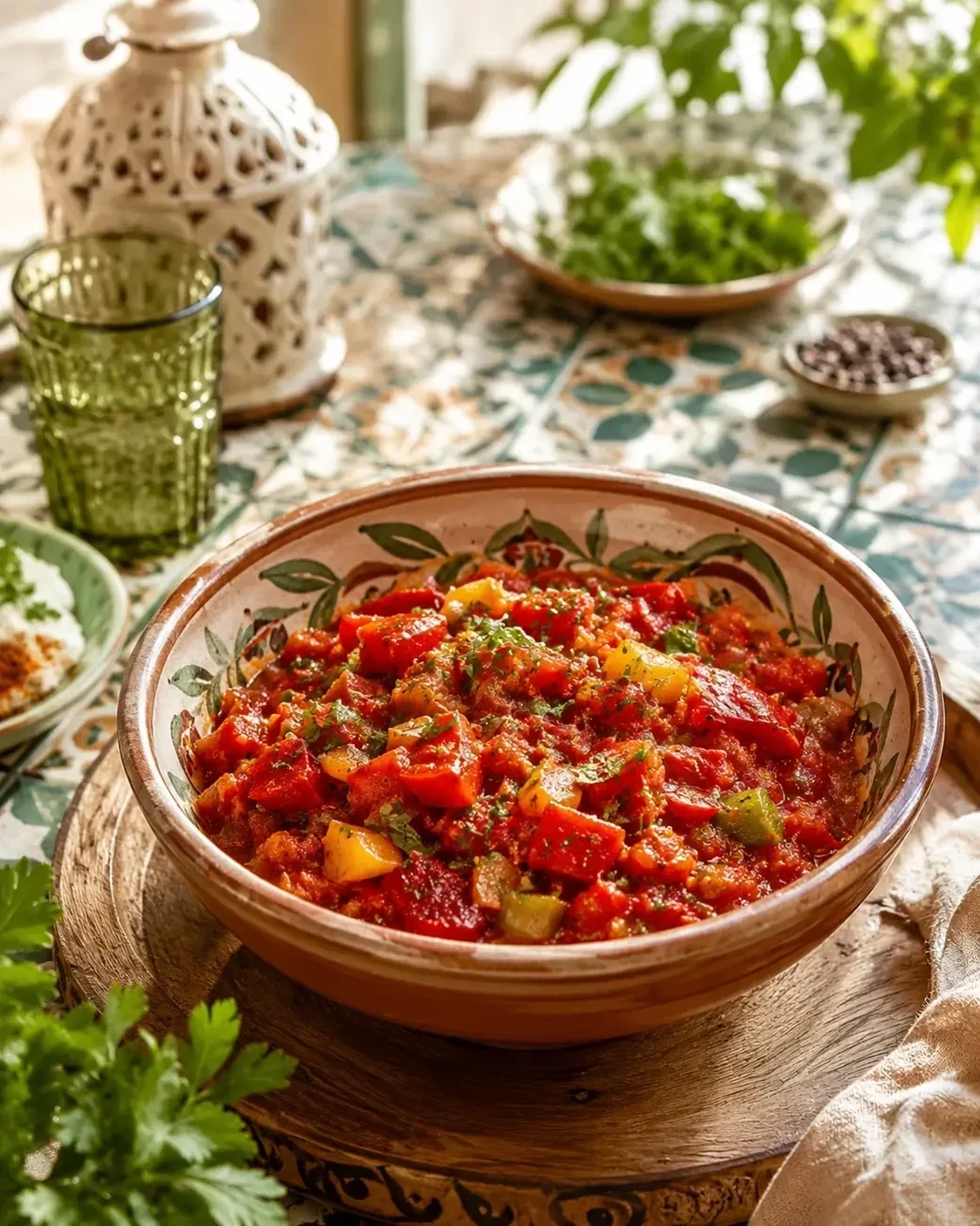
Taktouka
Roasted peppers and tomatoes, with bread close at hand.
Explore the story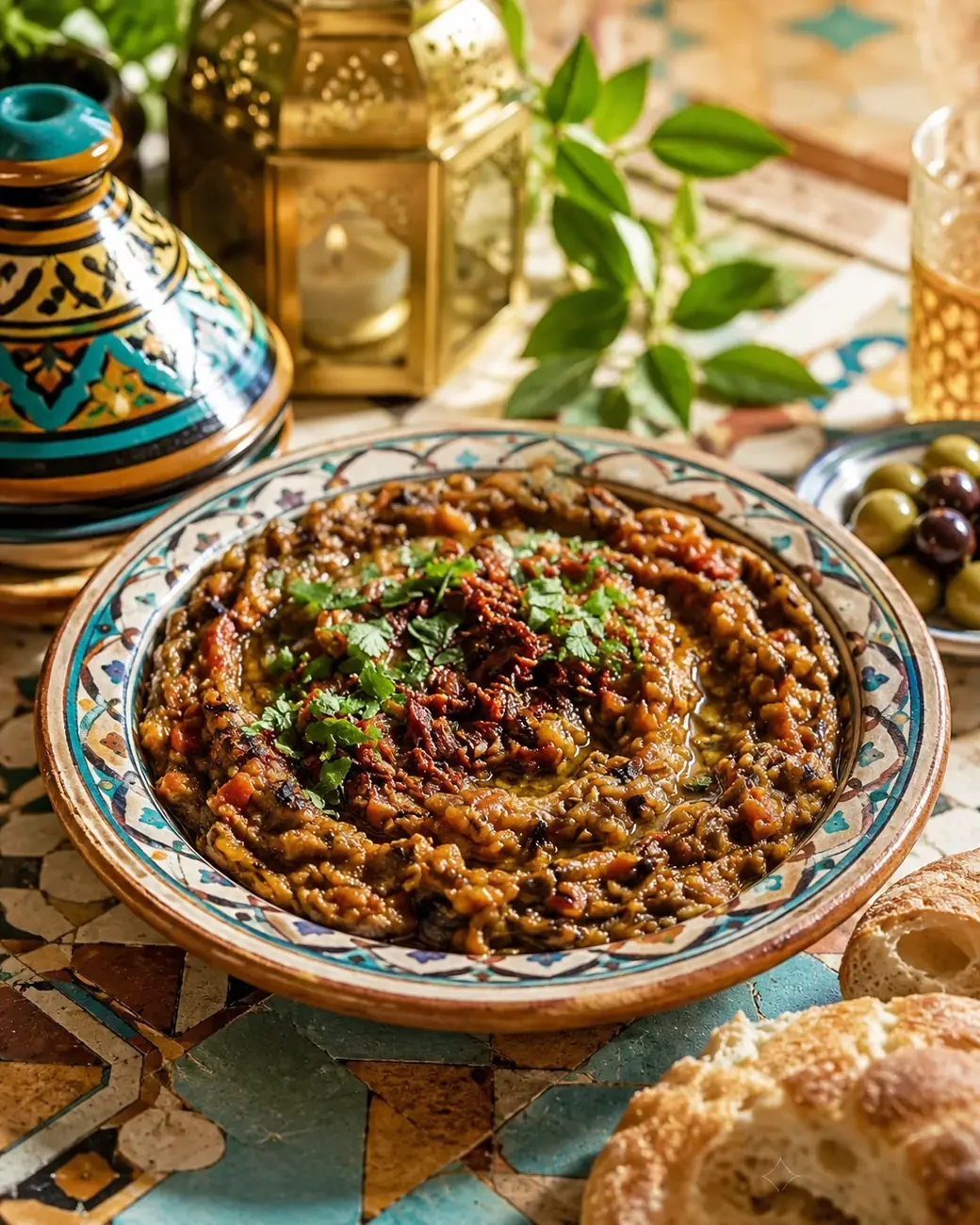
Zaalouk
Aubergine and tomato cooked until their flavours meet.
Explore the story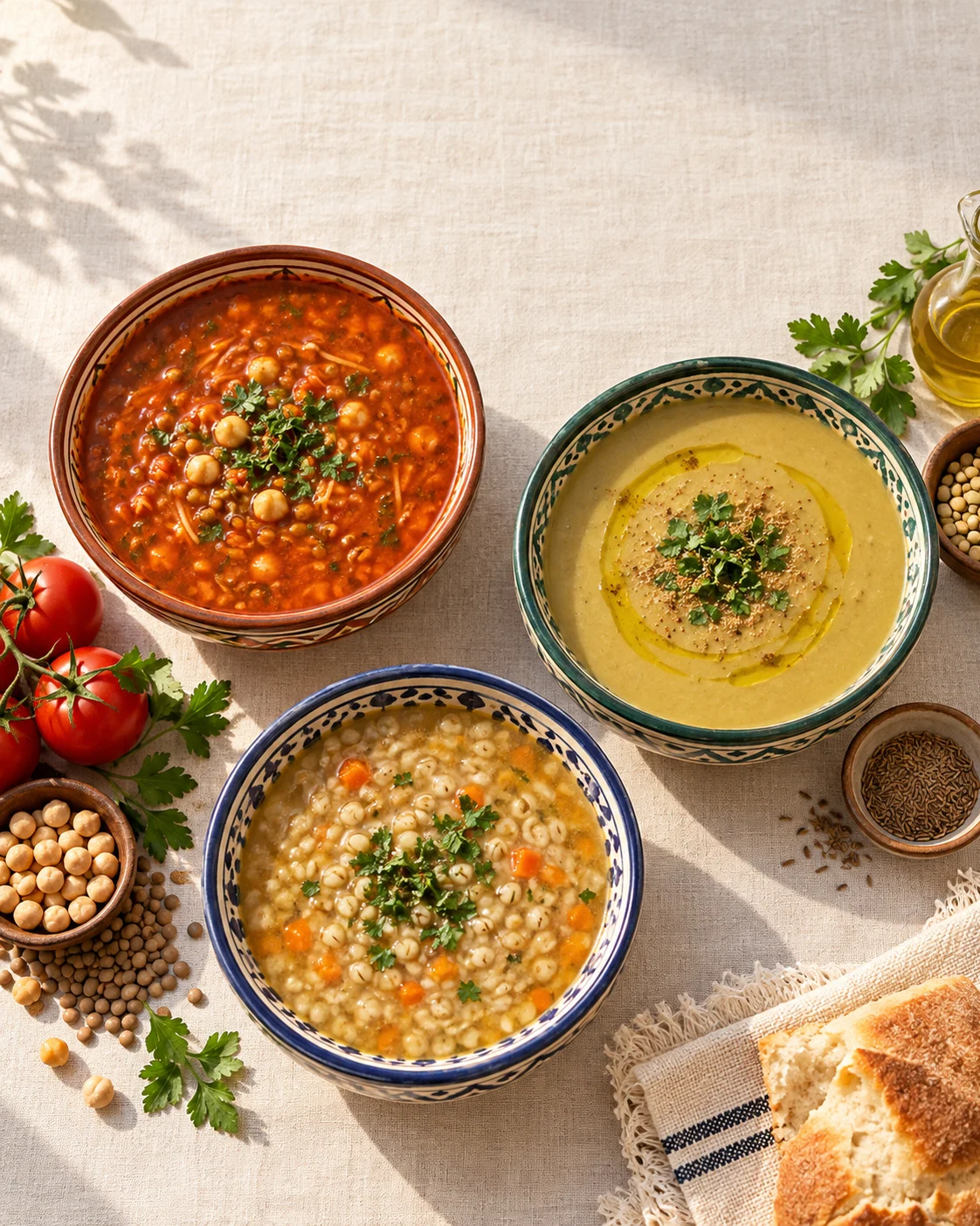
Soups
Harira, bissara and other bowls shaped by place and occasion.
Explore the storySources & editorial notes
Photography combines existing Exotic Morocco assets and generated editorial illustrations. These images do not document a named person, household or historical event.
- Lonely Planet · What to eat and drink in Morocco — maakouda as a Moroccan street snack, its potato base and sandwich/side-dish context.
- Slow Morocco · Maakouda: Morocco's Fried Potato Cakes — technique, cumin/garlic/herbs, binding variation, frying texture and bread context; the article cites Paula Wolfert and Fatéma Hal.
- Moroccan National Tourist Office · Gastronomy — spices, souk culture and sharing within Moroccan food culture.
- Moroccan National Tourist Office · Food & drinks — Moroccan bread as a staple and the role of starters and small dishes.
- Lonely Planet · A guide to Rabat — contemporary reference to maakouda sandwiches at street stalls.
EXOTIC MOROCCO Places. People. The pleasure of knowing more.Back to top ↑