
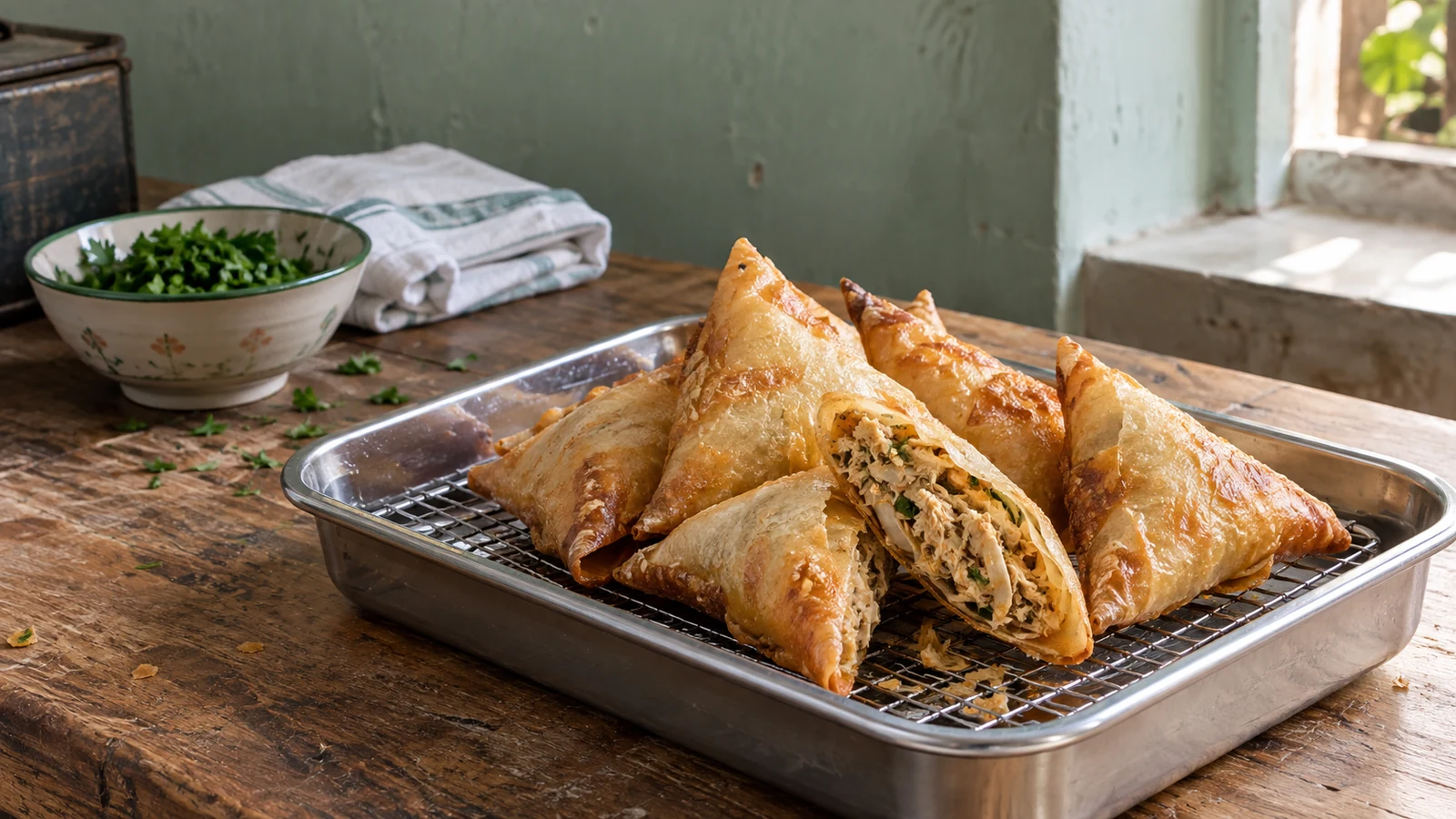
01 · A Moroccan favourite
A crisp fold.
A generous inside.
Small in size, generous in meaning.
Briouats — also written briwats — are among Morocco’s most charming pastries: thin pastry folded around a filling, fried or baked until crisp, then served hot, warm or at room temperature depending on the occasion.
They can be savoury or sweet. One tray might carry minced meat with herbs, chicken with fragrant spices, cheese or seafood; another might hold almond briouats glossed with honey and finished with sesame. The format stays familiar while the filling changes with the cook, the table and the moment. [1]
Briouats belong naturally to hospitality. They appear as elegant starters, as part of Ramadan evenings, beside tea for guests and on celebratory spreads where variety matters as much as abundance. Their appeal lies in contrast: crisp shell, soft filling, neat shape, generous flavour.
Enter Moroccan food culture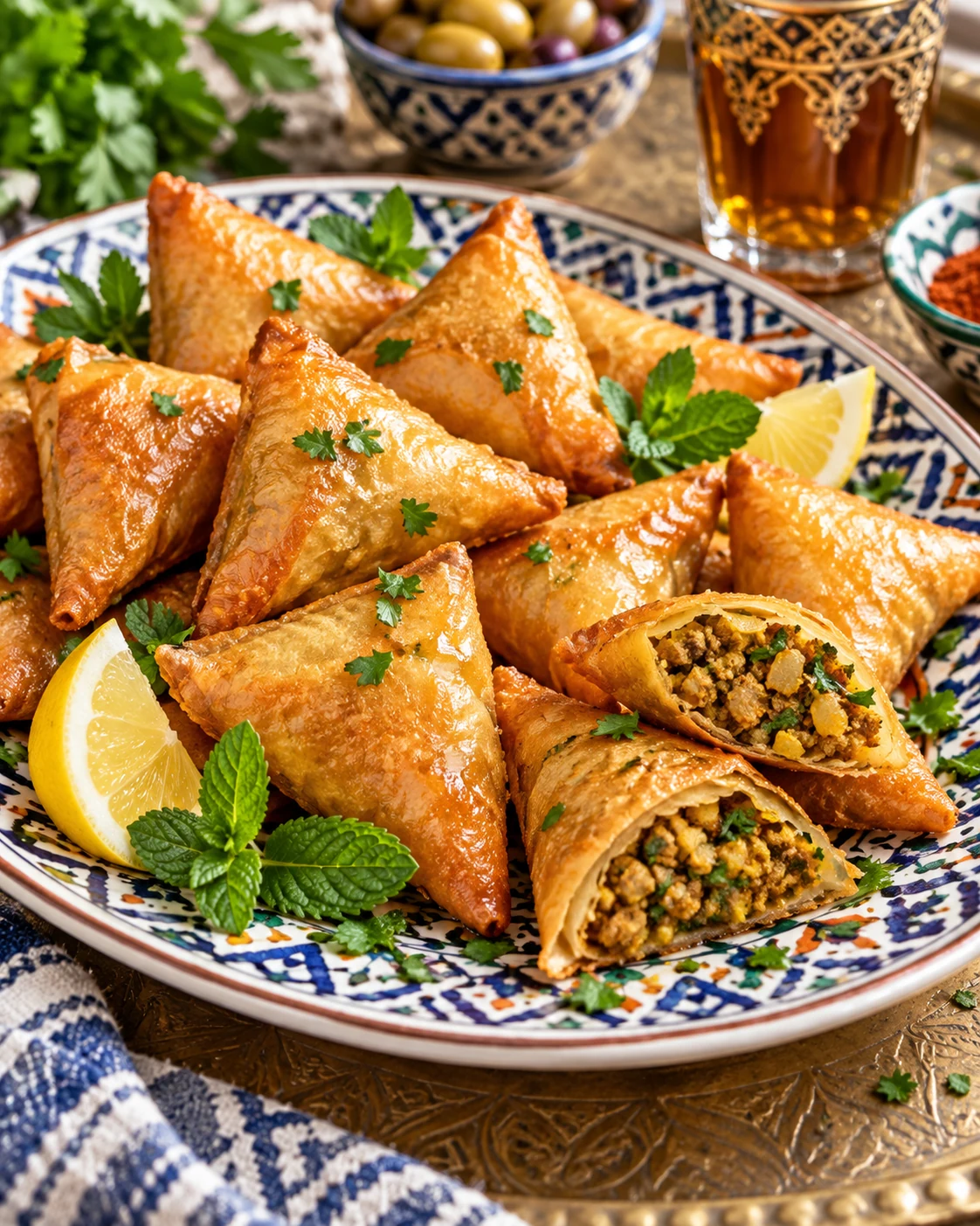
Two common spellings for the same pastry family.
Usually triangular, sometimes cigar-shaped.
At home, with guests or on a festive tray.
02 · Roots & living practice
A familiar shape.
Still evolving.
A familiar fold adapts to the filling and the occasion.
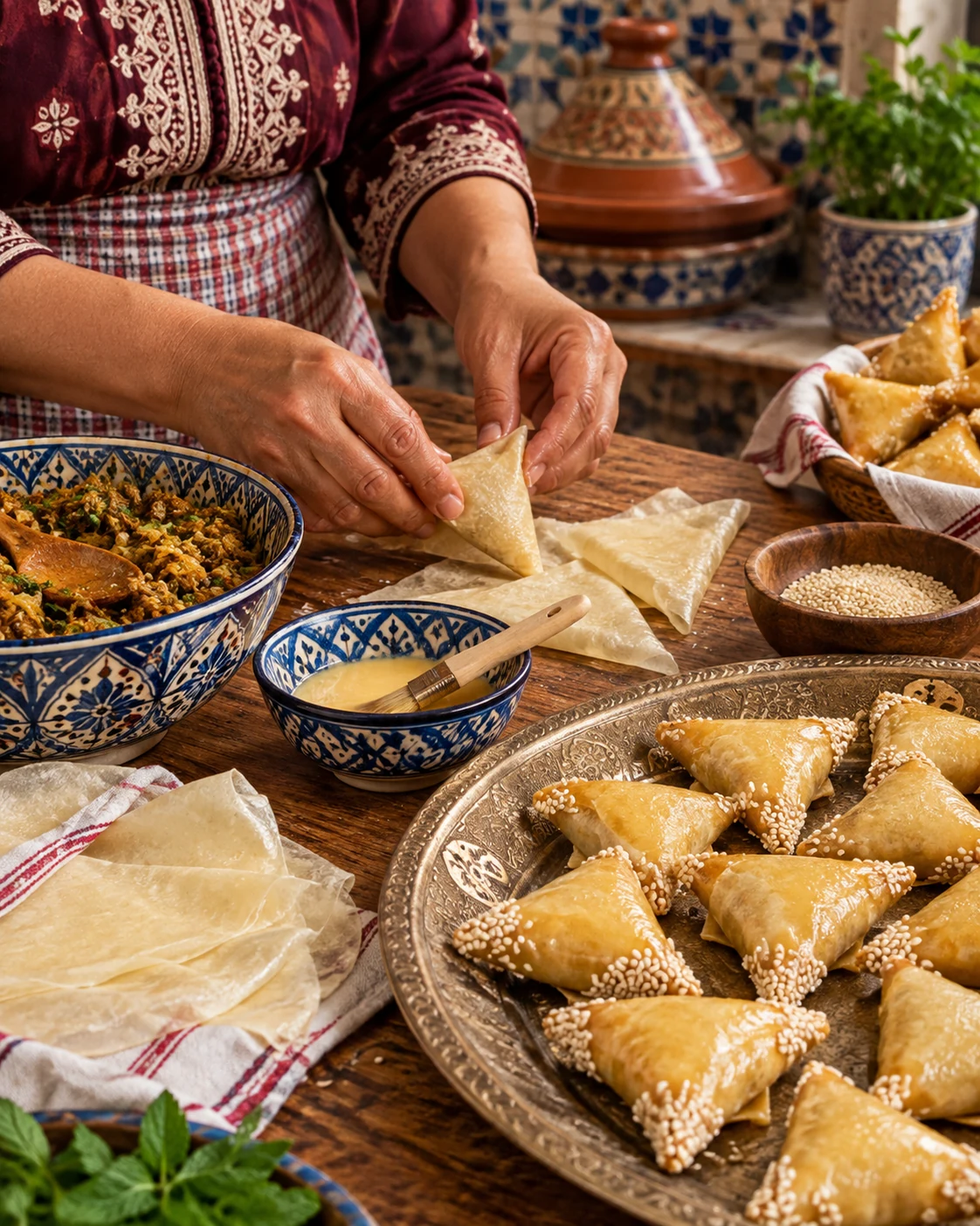
Briouats use the thin, flexible pastry known as warqa in Morocco. Folding a sheet around a compact filling lets the same technique carry either a savoury starter or a honeyed almond sweet.[2]
Trying to give briouats one single origin story is less useful than noticing how they live today. Sweet almond briouats belong to tea tables and celebrations; savoury briouats often appear as starters, buffet pieces or part of Ramadan evenings. Families keep favourite fillings, preferred spice balances and personal ways of shaping or sealing the pastry.
Like many beloved dishes, briouats continue because they are practical as well as beautiful: they can be prepared ahead, cooked in batches and served to many people without losing their sense of care.
Domestic know-how
Knowing how wet the filling should be, how tightly to fold and when to fry is learned by doing.
Festive versatility
The same pastry can move from savoury starter to honeyed sweet with only the filling and finish changing.
A living tray
Baking, frying, freezer prep and modern shortcuts now sit alongside older household routines.
03 · The pastry & the method
The shell.
The fold. The finish.
What looks delicate is built on control.
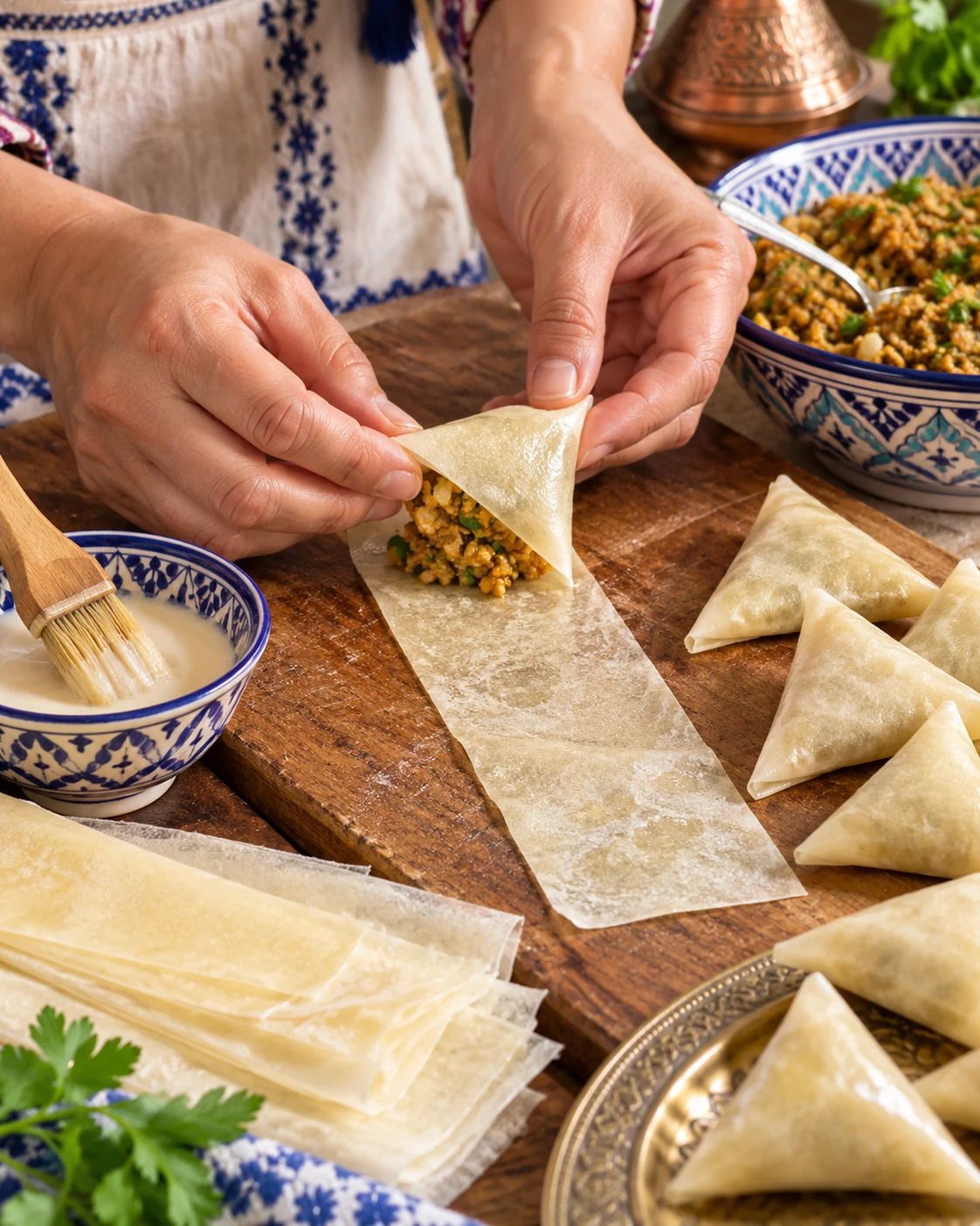
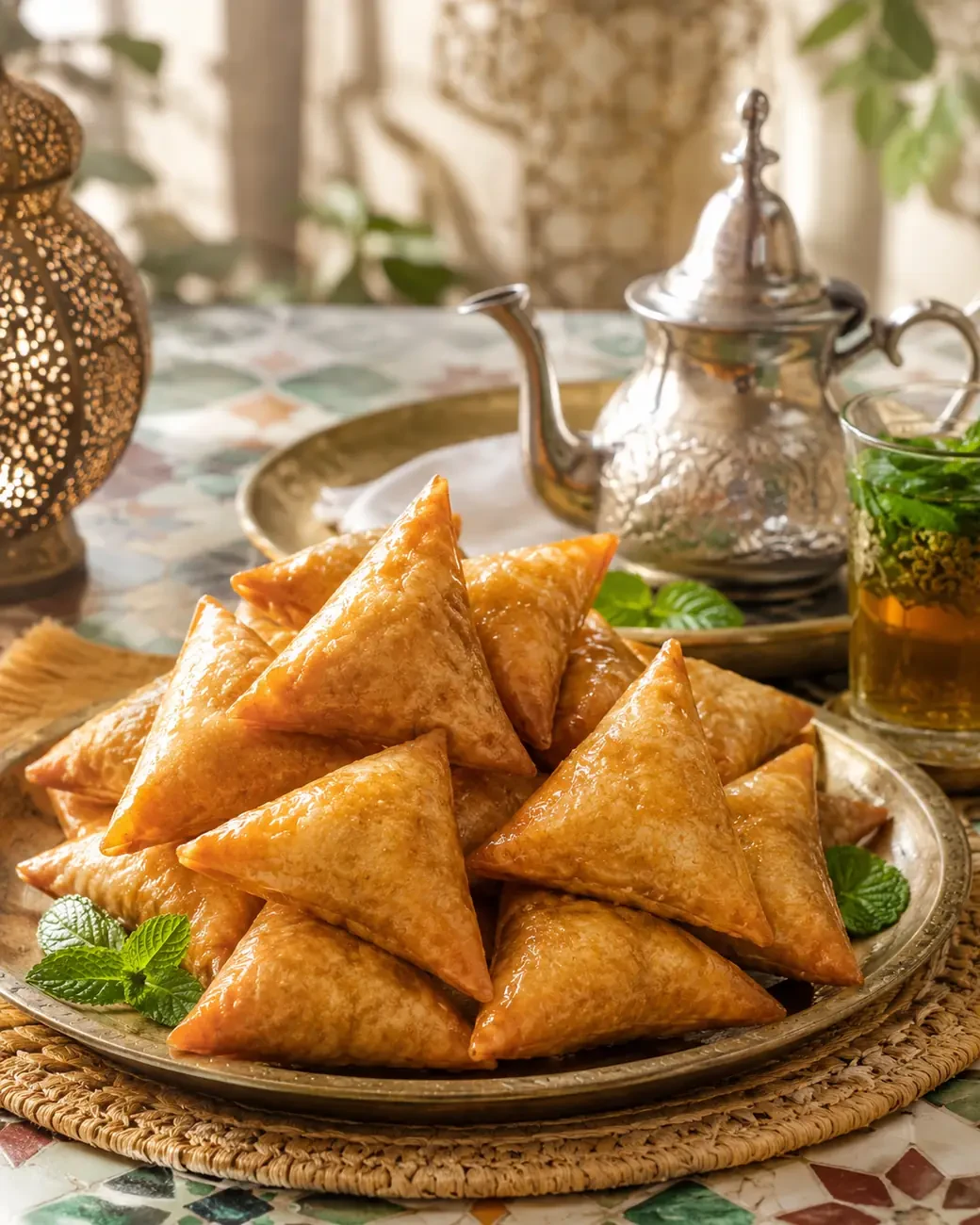
Briouats begin with very thin pastry — traditionally warqa in Morocco, sometimes replaced in home cooking abroad by brick pastry or filo. The sheet is cut into strips, a small amount of filling is added, and the strip is folded corner over corner until a tight triangle takes shape. [3]
A good briouat depends on balance. The filling must be flavourful but not wet enough to split the pastry. The fold should be firm, with no loose air pockets. The final seam is sealed with egg wash or a flour-and-water paste, then the pastries are fried or baked until the shell turns crisp and deeply golden.
Sweet almond briouats add one more ritual: the hot pastry meets warm honey, then sesame finishes the surface. Savoury briouats usually go straight from pan or oven to the serving plate.
The pastry
Warqa is prized for its thinness and pliability. It fries beautifully and takes neat folds when kept covered and supple.
The triangle
The familiar fold works like a little envelope: compact, tidy and easy to serve. It also helps the filling stay distributed rather than bunching in one corner.
The finish
Savoury briouats are best when crisp and freshly cooked. Sweet almond briouats rely on the hot-pastry, warm-honey contrast that gives them their glazed surface.
Traditional pastry or practical substitute?
Outside Morocco, many cooks use filo or brick pastry when warqa is hard to find. The flavour can still be rewarding, but the feel changes slightly: filo tends to be a little more brittle, while warqa remains the classic reference for Moroccan texture and handling. [4]
04 · The many fillings
One pastry.
Many moods.
Briouats are a format before they are a single recipe. Savoury and sweet versions share the same pleasure: a crisp shell surrounding something generous.
The images below offer four common directions, not a closed catalogue. Households and cooks vary the seasoning, size and finish freely.
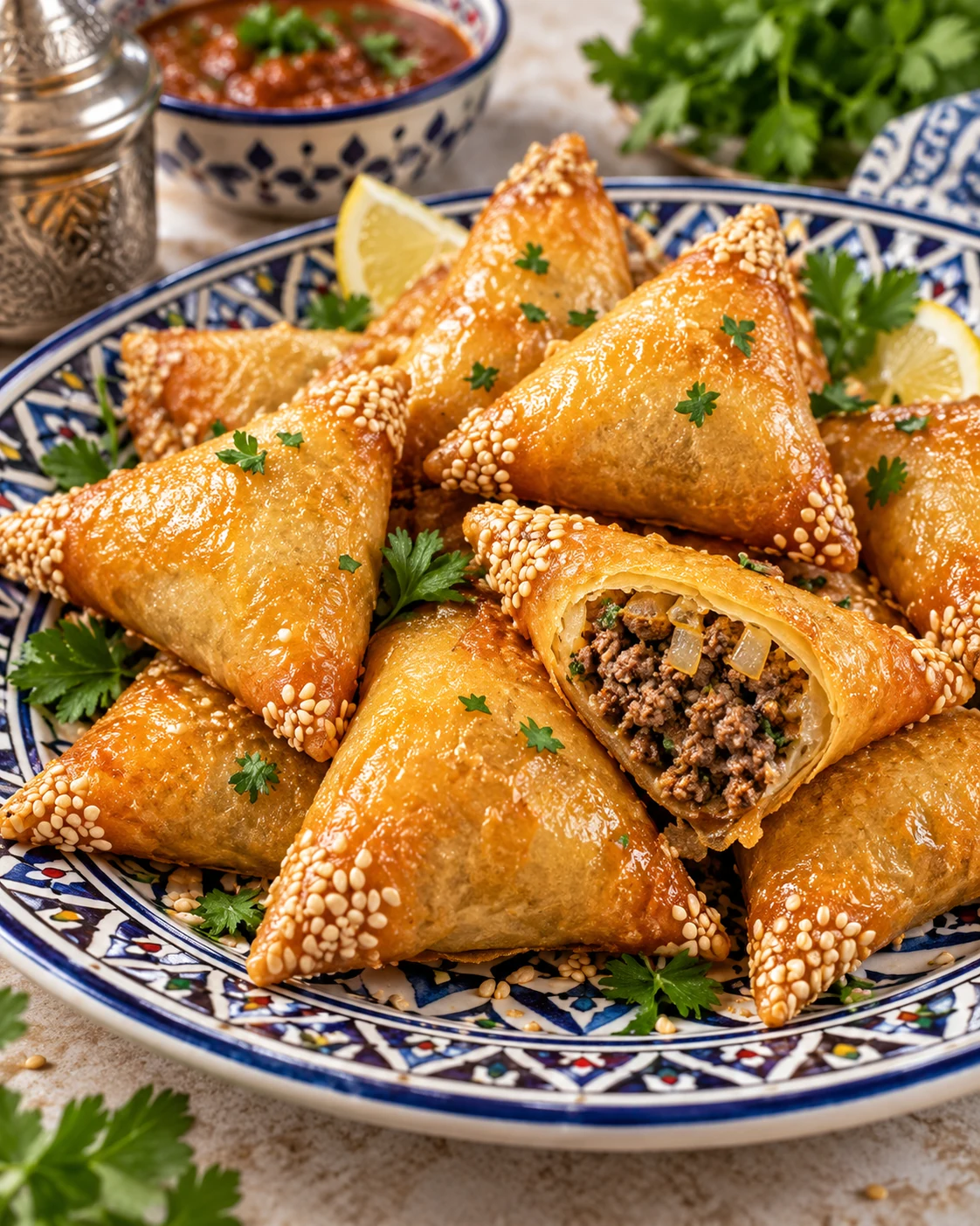
Kefta briouats
Minced meat with onion, herbs and warm spices gives a filling that feels rich yet compact. These often appear as reliable, crowd-pleasing starters.
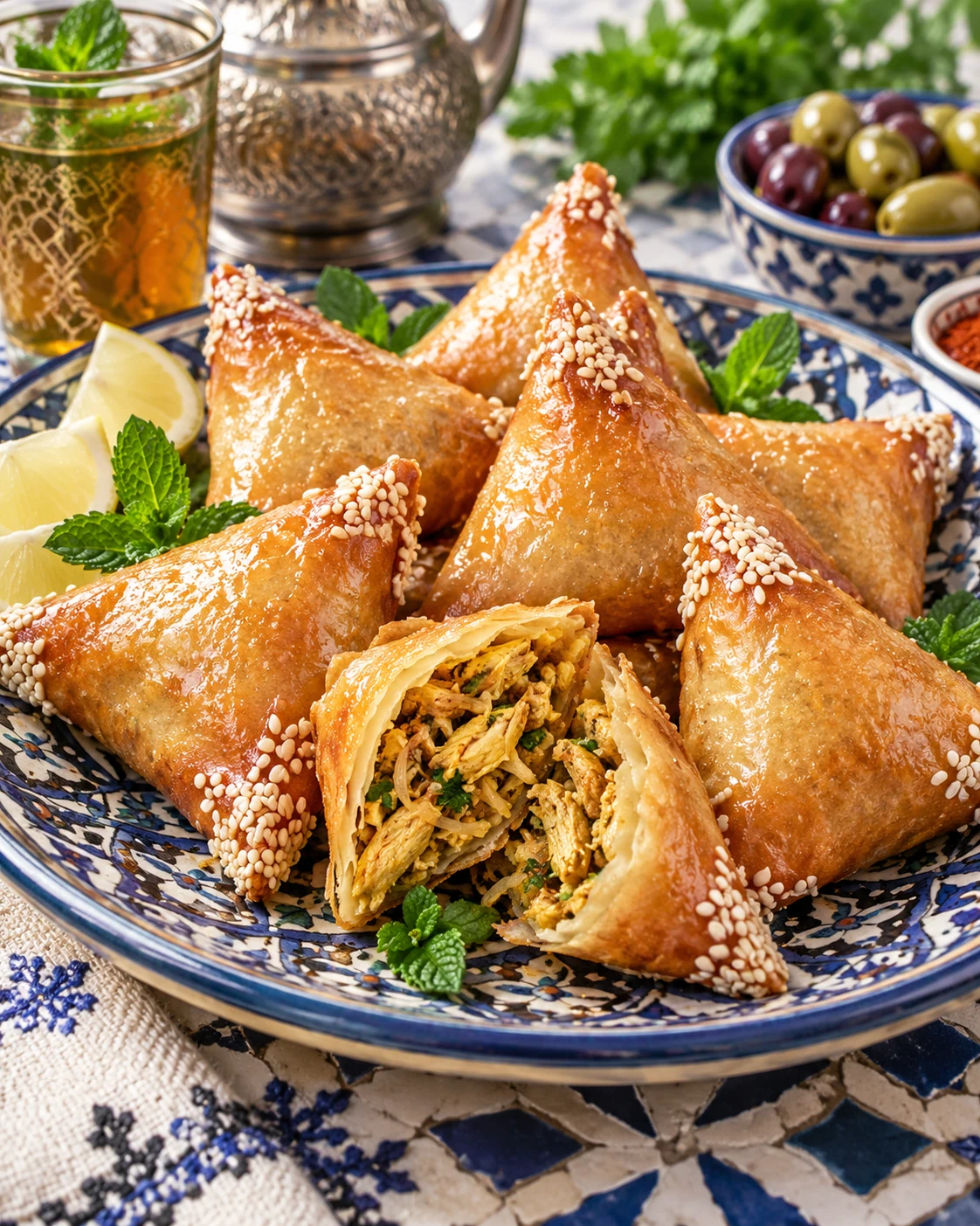
Chicken briouats
Shredded chicken takes spice beautifully and allows finer textures inside the pastry. Some versions include herbs, onion or delicate vermicelli-like strands.
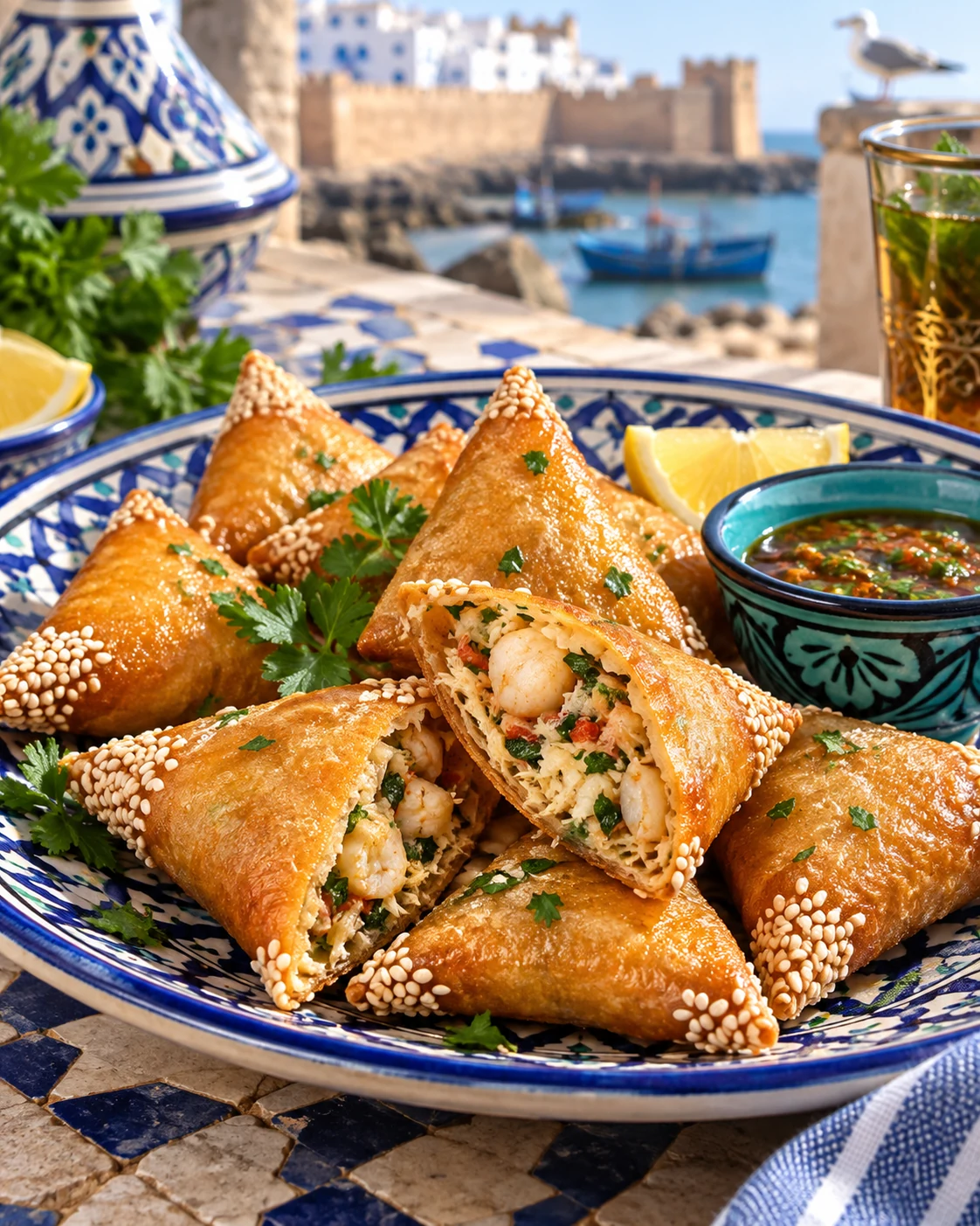
Seafood briouats
Shrimp, fish or mixed seafood bring a lighter, herb-led filling that suits festive buffets and tables that already carry several savoury dishes.
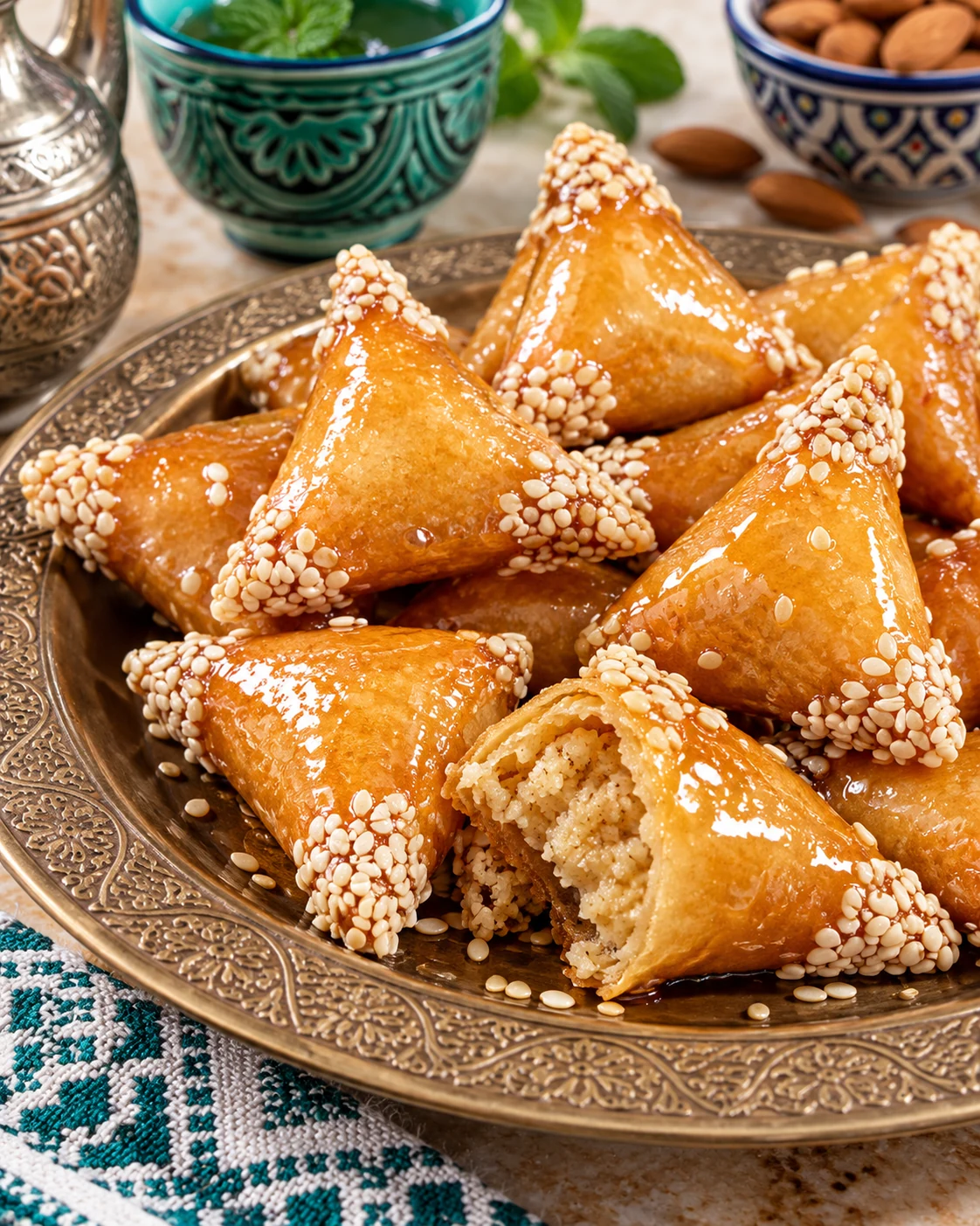
Almond & honey briouats
Perhaps the most iconic sweet version: almond paste inside, honey outside, sesame on the surface and orange blossom in the perfume of the filling.
Sweet and savoury on one theme
The elegance of briouats lies in how easily one technique carries very different flavour registers: savoury as starter, sweet as dessert or tea accompaniment.
Fried or baked?
Frying gives the classic crispness and shine. Baking offers a practical modern variation, especially for large batches, though the texture becomes a little drier and lighter.
05 · The working ingredients
A few essentials.
A lot of effect.
Briouats do not ask for many components, but each one matters. Thin pastry, a well-managed filling and clear seasoning do most of the work.
The goal is not complexity for its own sake. Good briouats succeed because texture, moisture and flavour are carefully balanced.
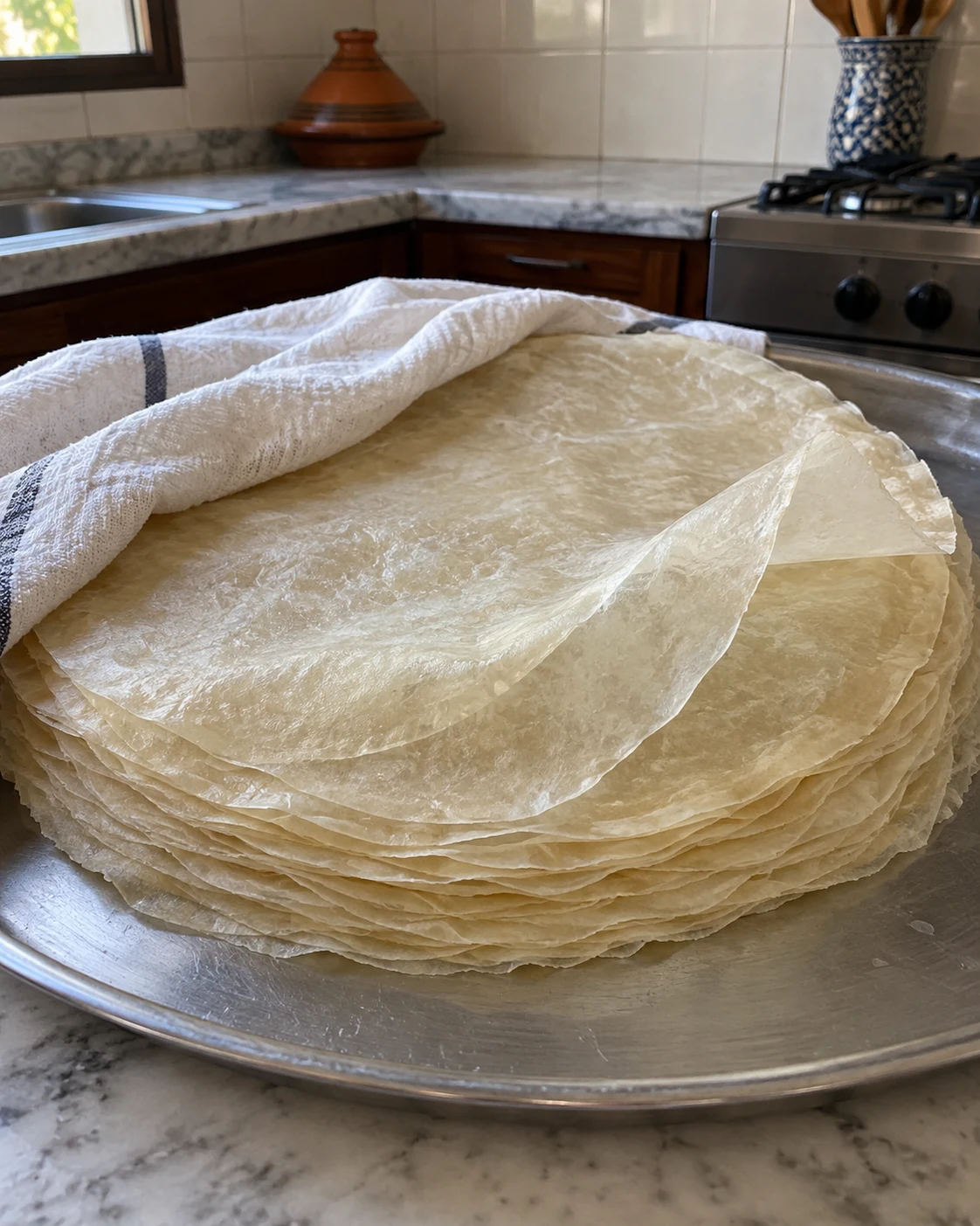
Warqa pastry
Thin, pliable and quick to dry out.
Keep it covered while you work. The pastry must stay supple enough to fold cleanly without cracking or tearing at the edges.
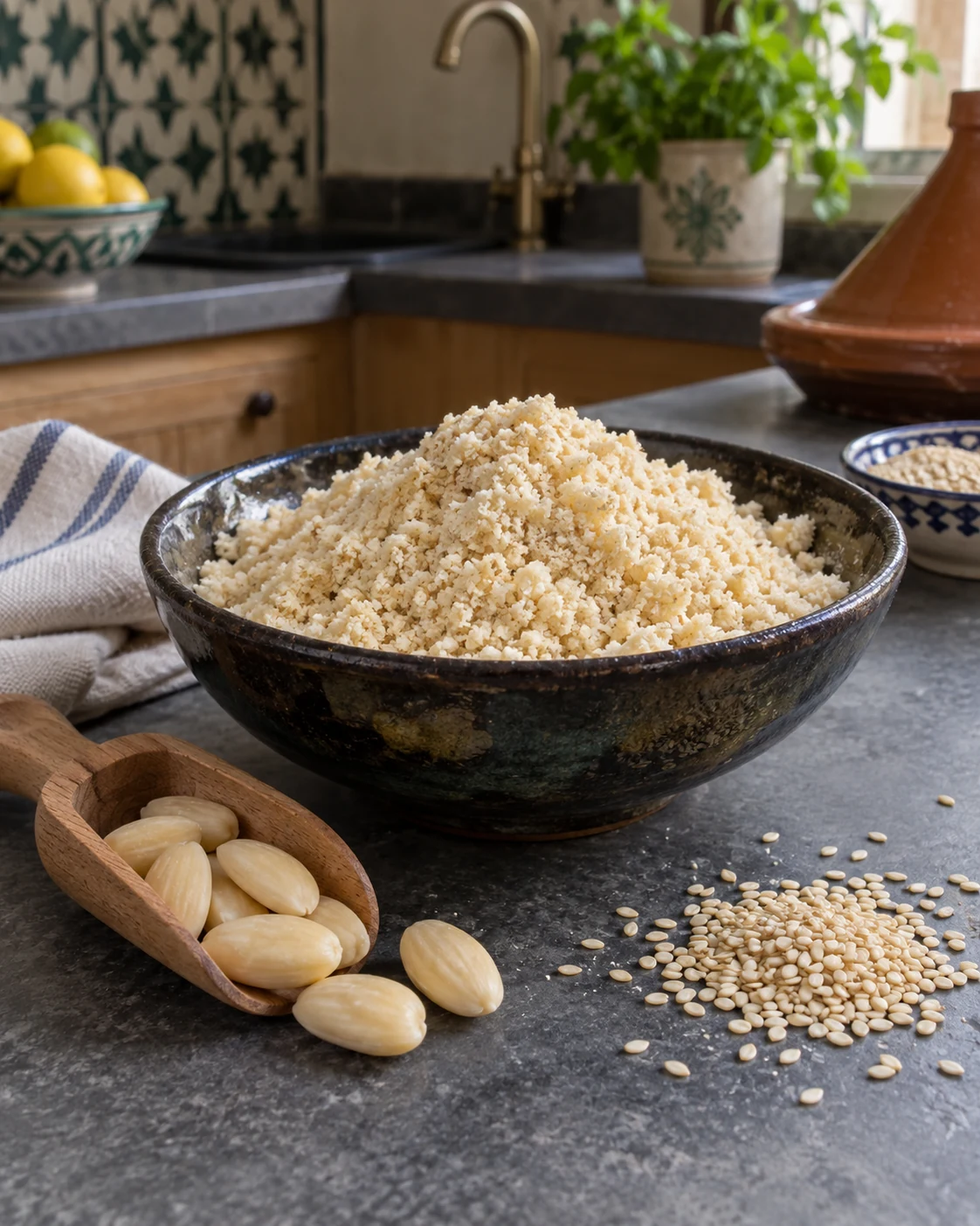
Almonds & sesame
The sweet register.
For classic sweet briouats, ground almonds provide body while sesame contributes finish, texture and a recognisable festive look.
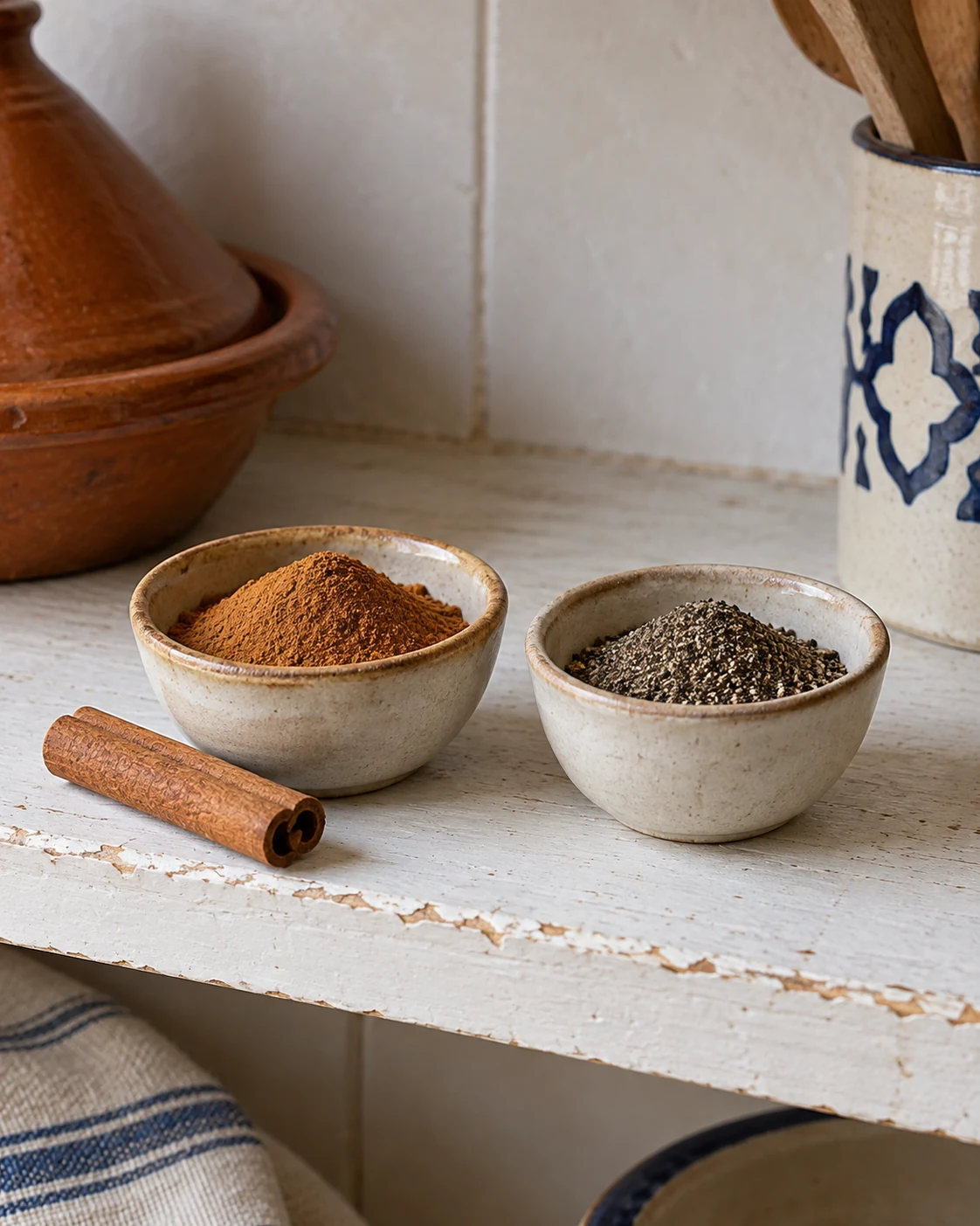
Spices with discipline
Clear flavour, not confusion.
Cinnamon, pepper, ginger, turmeric or cumin may appear depending on the filling. The pastry is small, so over-seasoning can overwhelm it quickly.
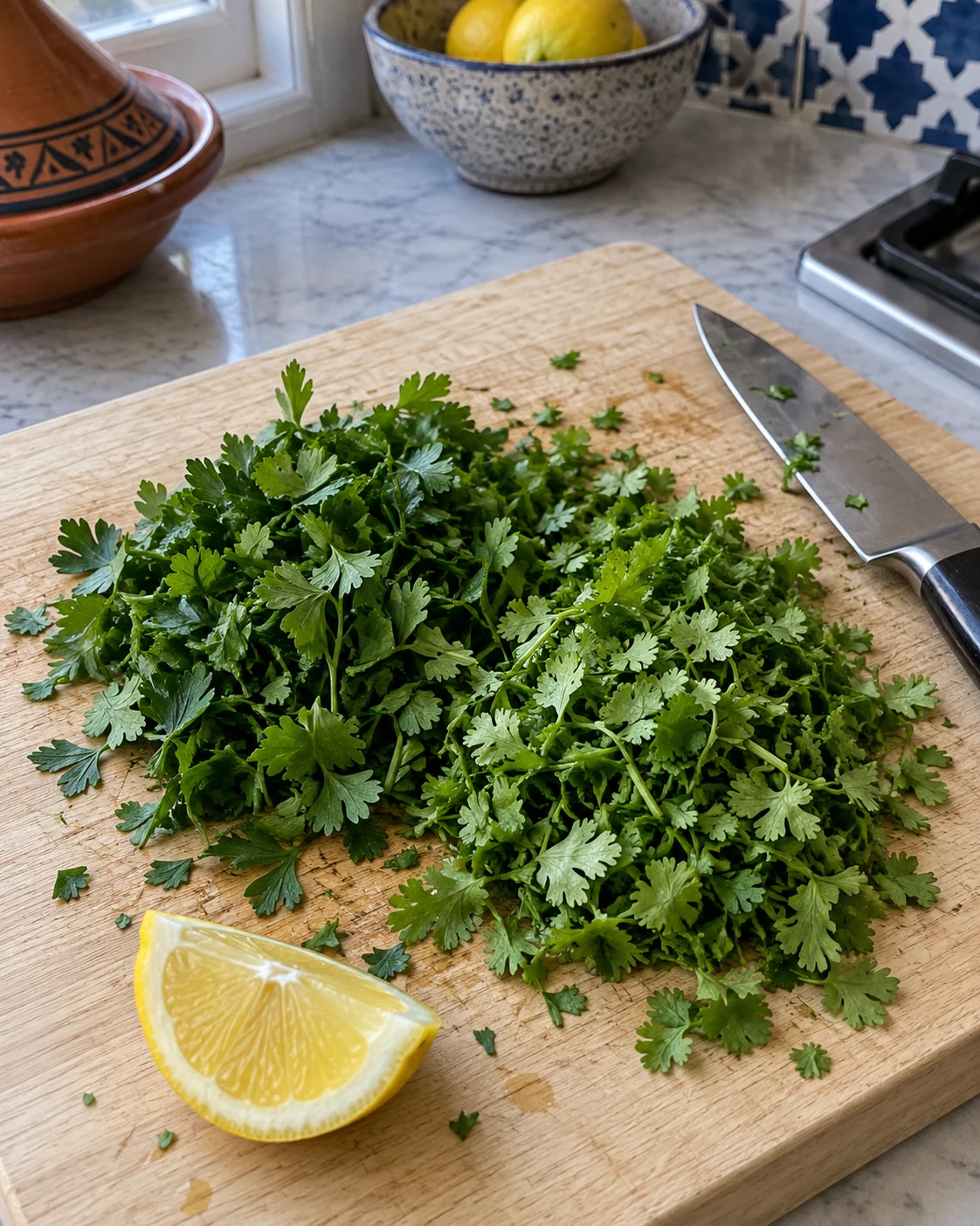
Herbs & brightness
Freshness in a crisp shell.
Parsley, coriander and a little citrus often lift savoury fillings, keeping the interior lively rather than heavy.
Four essential ideas
TEXTURE · SEALING · HEAT
The quiet
foundations.
A memorable briouat is usually won before frying even begins.
The filling should hold together, the fold should stay compact and the oil or oven should crisp the shell before the inside dries out. Technique matters as much as seasoning in a pastry this small.
The secret ingredient is often control.
Keep the filling relatively dry.
Loose liquid softens pastry and can force open the seams. Whether the filling is meat, chicken or seafood, moisture must be managed before folding.
Seal the final flap well.
A little egg wash or flour paste helps the triangle hold its shape through frying, baking and serving.
Use confident heat.
Too cool and the pastry absorbs oil; too hot and the shell colours before the filling is properly heated. Sweet briouats also depend on warm, fluid honey at the right moment. [5]
06 · Occasion, rhythm & household
The tray
has a job.
Briouats change slightly with the moment they are serving.
On some tables they are a polished starter. On others they sit beside tea, or they help make a Ramadan spread feel generous and complete. Because they are neat, handheld and easy to portion, briouats travel comfortably between the everyday and the celebratory.
That flexibility helps explain their lasting appeal. A cook can prepare many pieces, vary the fillings and decide whether the tray should feel practical, festive or both at once.
Ramadan evenings
Harira, dates and savoury bites often create a varied first table after the fast. Briouats fit naturally into that rhythm.
Discover Harira ↗Tea with guests
Sweet almond briouats bring gloss, fragrance and a sense of occasion to tea service without needing a large plated dessert.
Explore Moroccan Mint Tea ↗Celebrations & buffets
The tidy shape and make-ahead practicality make briouats ideal for gatherings, family meals and elegant mixed platters.
Explore Morocco’s festive calendar ↗07 · Serving & hospitality
Pass the tray.
Pour the tea.
The pastry is small.
The welcome is not.
Briouats are made for company. Their tidy size invites sharing, and the tray itself becomes part of the gesture of welcome. Something crisp is offered; another glass is poured; conversation settles in.
Because they are easy to portion, briouats can sit comfortably with other dishes rather than claiming the whole meal. They might arrive before a main course, accompany soup, or appear on a tea table where sweet and savoury contrasts matter.
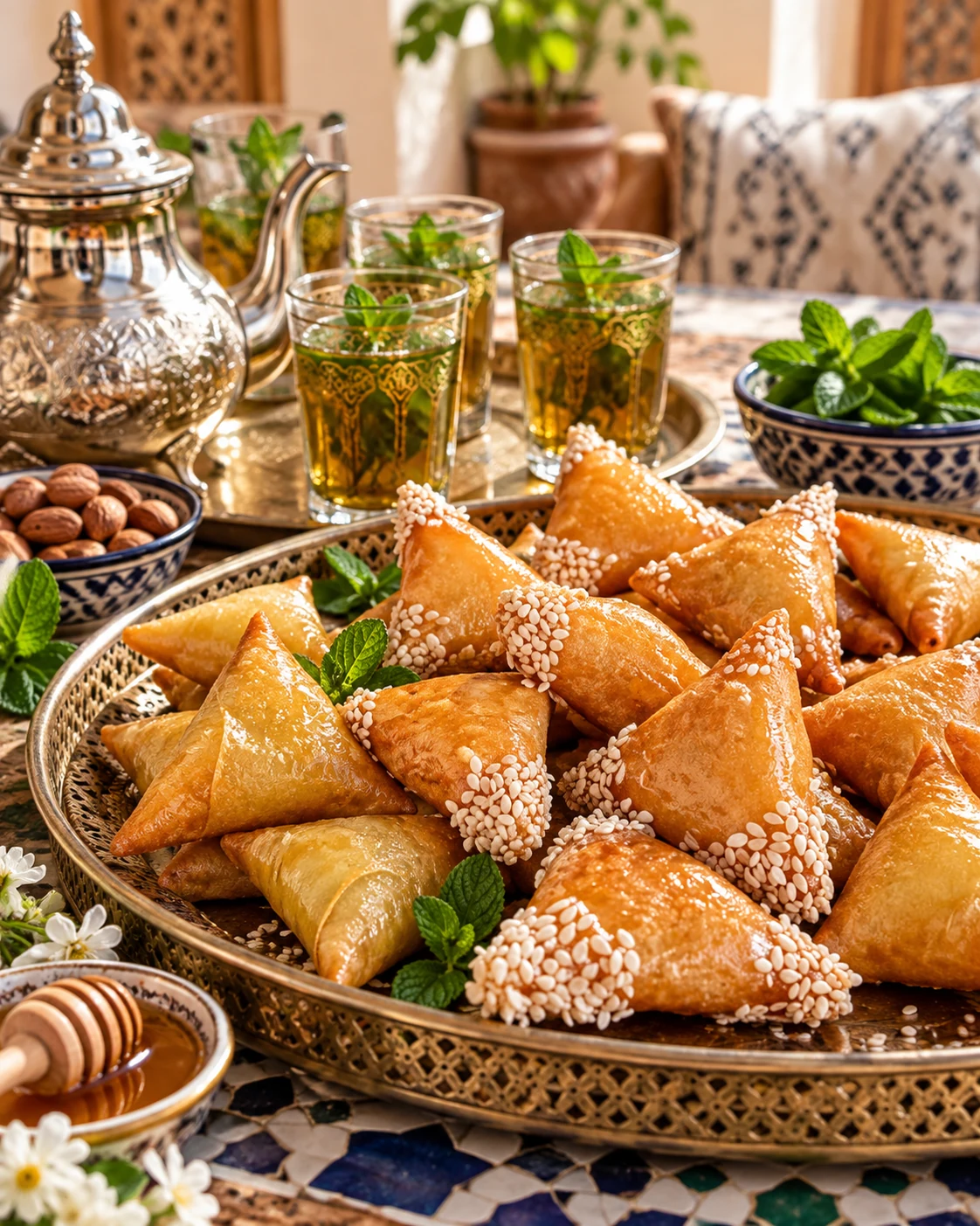
Tea makes the moment slower.
Mint tea and briouats meet naturally at the point where refreshment becomes hospitality. Sweet almond briouats especially suit that rhythm, but savoury pieces also benefit from the freshness and pause a tea service creates. [6]
They shine beside other dishes.
Savoury briouats often sit happily near olives, small salads or a bowl of harira. Their role is supportive as much as starring: adding crispness, variety and a sense of abundance without requiring a full plated service.
Sweet and savoury,
each in its place.
Moroccan tables are comfortable with contrast. It is perfectly possible for savoury briouats to begin a gathering and for sweet almond briouats to appear later with tea, each using the same fold to create a different mood.
Everyday, Ramadan or celebration.
Not every tray needs silver formality. A simple plate of well-made briouats served warmly can feel just as generous as an elaborate spread. Care matters more than scale.
08 · Craft around the tray
Before the guest,
the maker.
The elegance of briouats is handmade.
Even when the ingredients are simple, a good tray reflects craft: thin pastry handled gently, a filling cooked to the right texture, a practiced fold and a serving style that lets the crisp shell stay crisp. That handwork is part of the dish’s identity.
The wider table adds its own makers too — the ceramic bowl, the engraved tray, the tea glass, the textile and the metal teapot. Briouats often sit among other Moroccan crafts without needing to announce themselves loudly.
Explore Moroccan craft traditions ↗Warqa handling
Thin sheets ask for calm, economical movement. They dry quickly and reward practiced hands.
Filling control
A briouat is too small to hide imbalance. Texture and seasoning must be right before folding begins.
Tray presentation
The pieces should look orderly and inviting, whether on a family plate or a more formal serving tray.
Tea-table setting
Mint, metal, ceramics and textiles help turn a snack into a moment of hospitality.
09 · A closer look
Good questions.
Clear answers.
A few details make the picture richer, especially when sweet and savoury versions share the same name.
Are briouats always fried?
No. Frying gives the classic texture, but baking is also common, especially for convenience or lighter service. The result is usually a little drier and less glossy.
Is warqa the same as filo?
Not exactly. Filo is a practical substitute in many kitchens, but warqa remains the classic Moroccan reference for flexibility and texture in dishes such as briouats and pastilla.
Are briouats always sweet?
No. Sweet almond briouats are famous, but savoury fillings are equally important in Moroccan cooking — meat, chicken, seafood, cheese and others all have a place.
Can briouats be made ahead?
Yes. That is one reason they are so useful for hospitality. Many cooks fold them in advance and fry or bake closer to serving time.
Do briouats belong only to Ramadan?
No. Ramadan gives them a particularly visible place, but briouats also appear throughout the year as starters, tea-table sweets and celebratory pastries.
 EXOTIC MOROCCOTASTE · THE GUIDE COLLECTIONBriouatsIngredients, technique
and the Moroccan table
From the story to your kitchen
Keep the flavour.
Go a little deeper.
Small folded pastries, with both savoury and sweet possibilities.
Explore the Exotic Morocco guide collection for a closer look at ingredients, kitchen knowledge and the culture around the table.
- Understand the ingredients and their roles
- Recognise the techniques and textures that matter
- Bring context and confidence to the way you cook and serve
Continue tasting Morocco
Follow the
table outward.
Another dish, another technique, another way into the Moroccan kitchen.
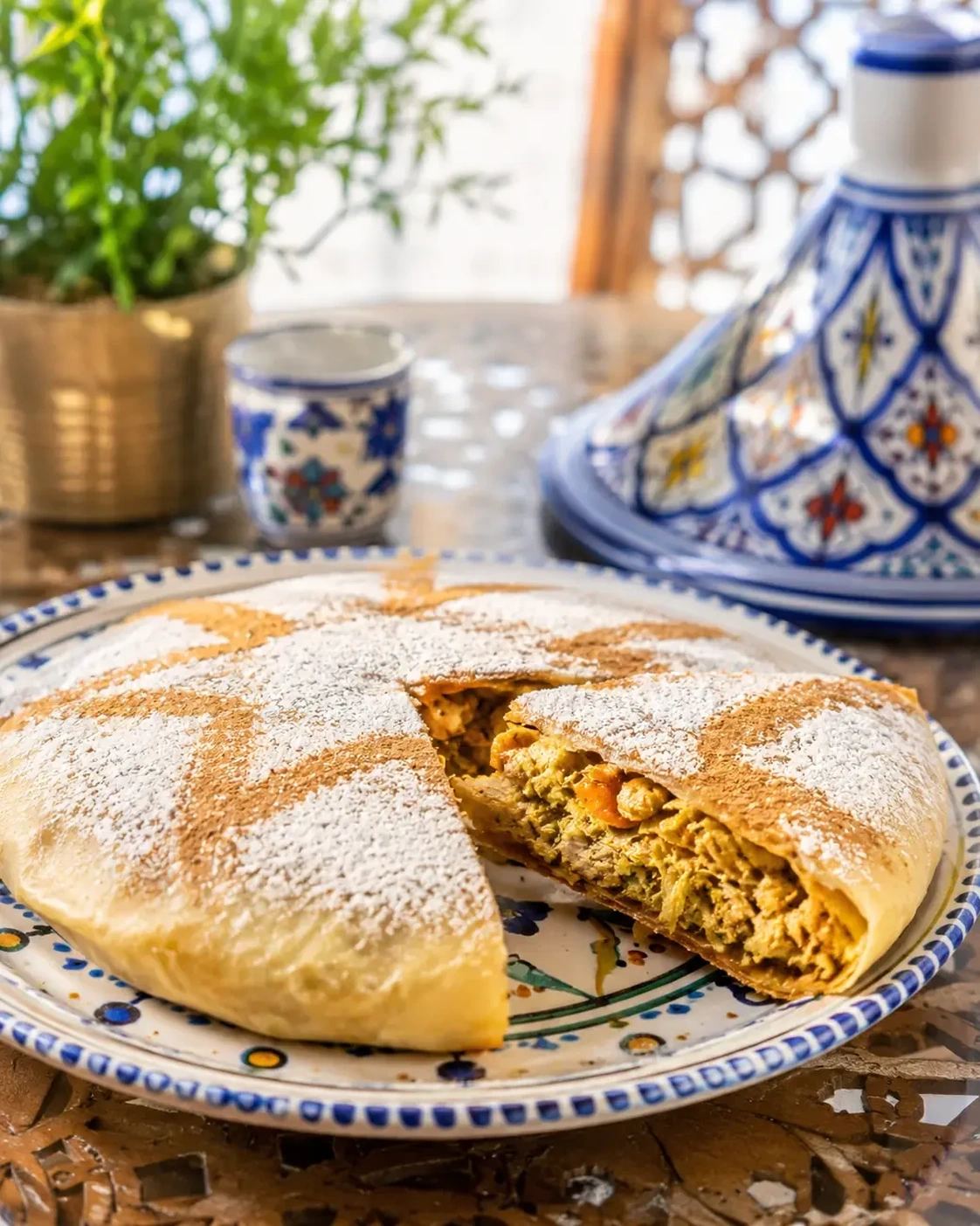
Pastilla
Fine pastry, layered fillings and the pleasure of contrasting textures.
Explore the story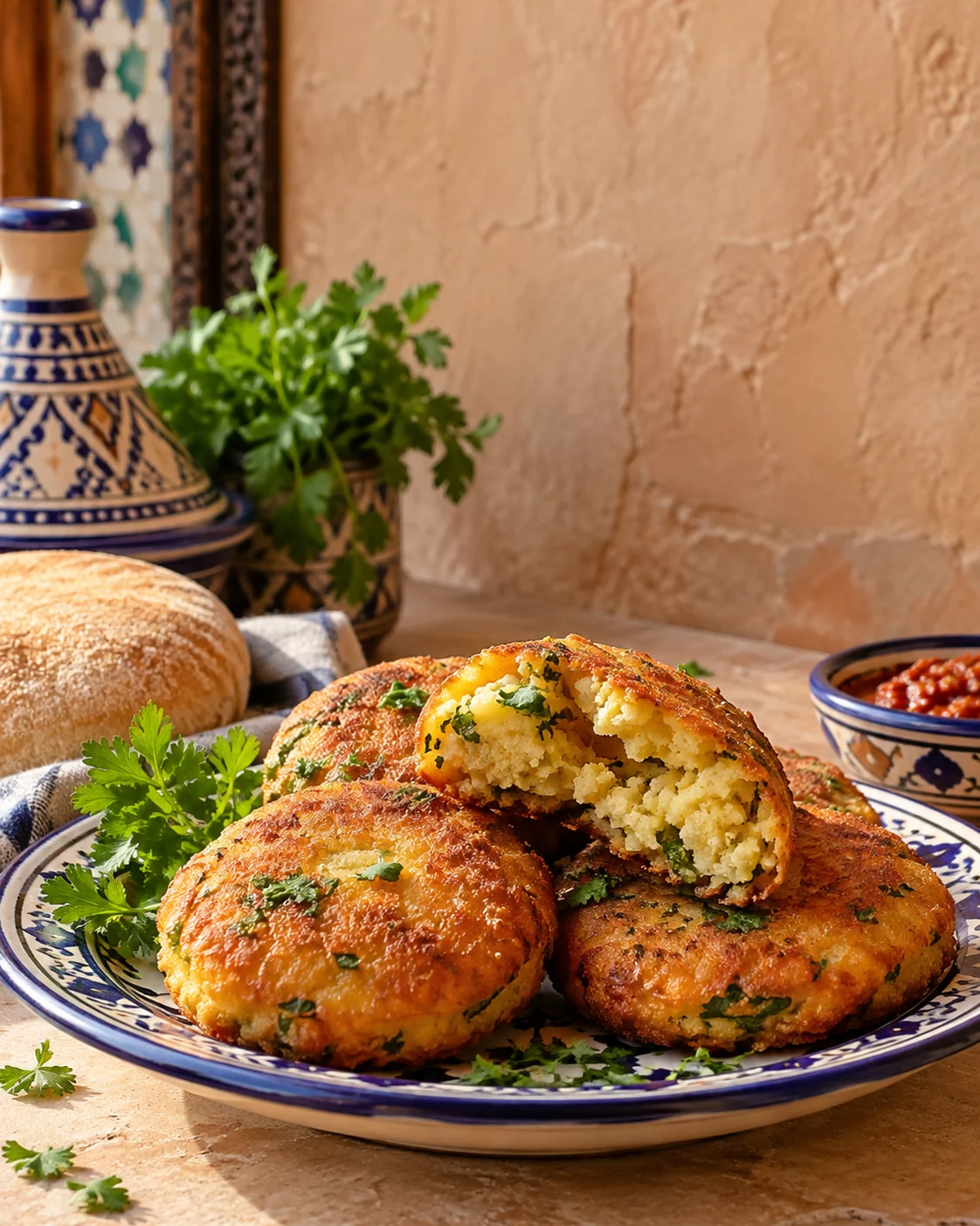
Maakouda
Potato patties, crisp edges and the rhythm of the street counter.
Explore the story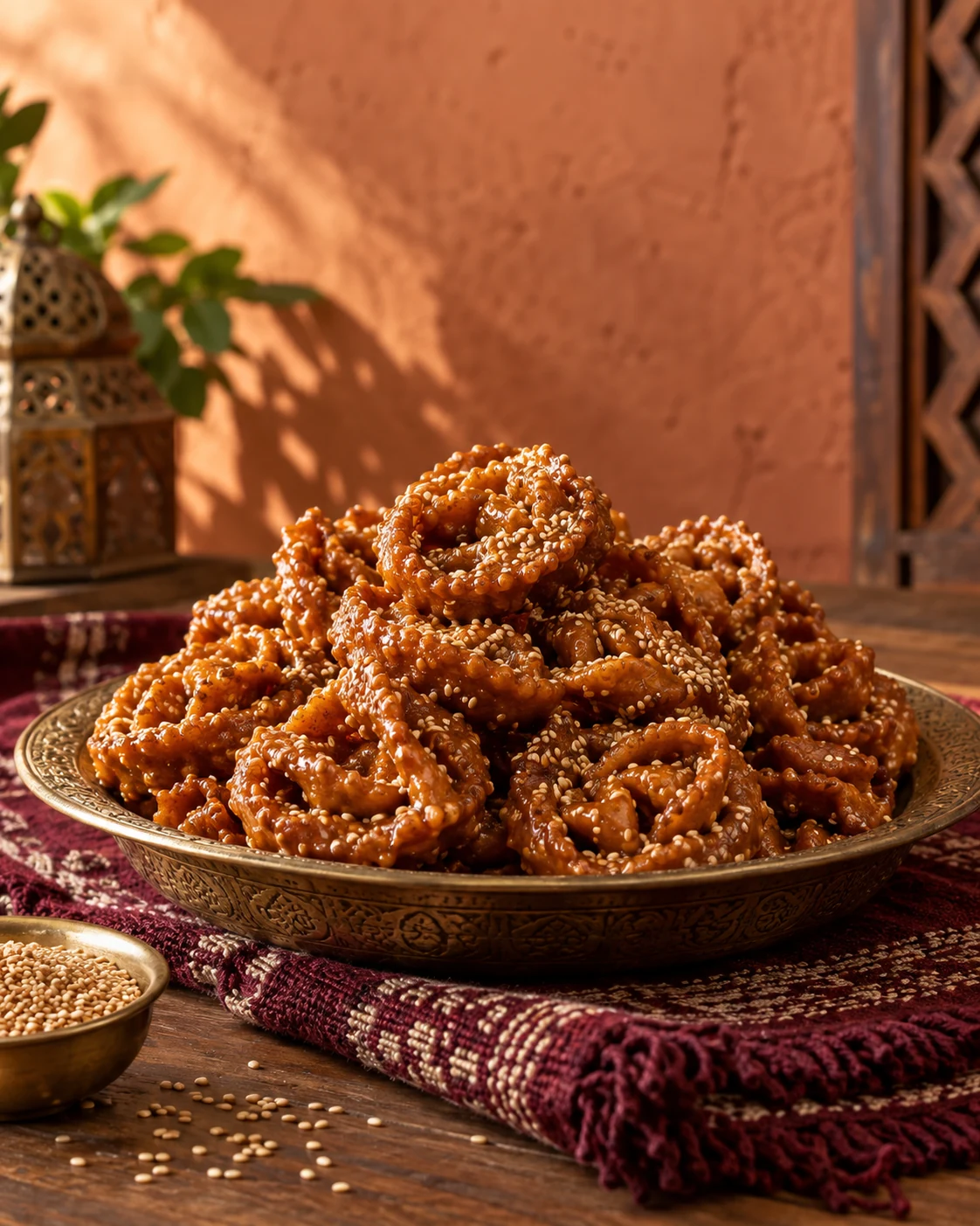
Chebakia
Folded sesame pastry finished with honey.
Explore the story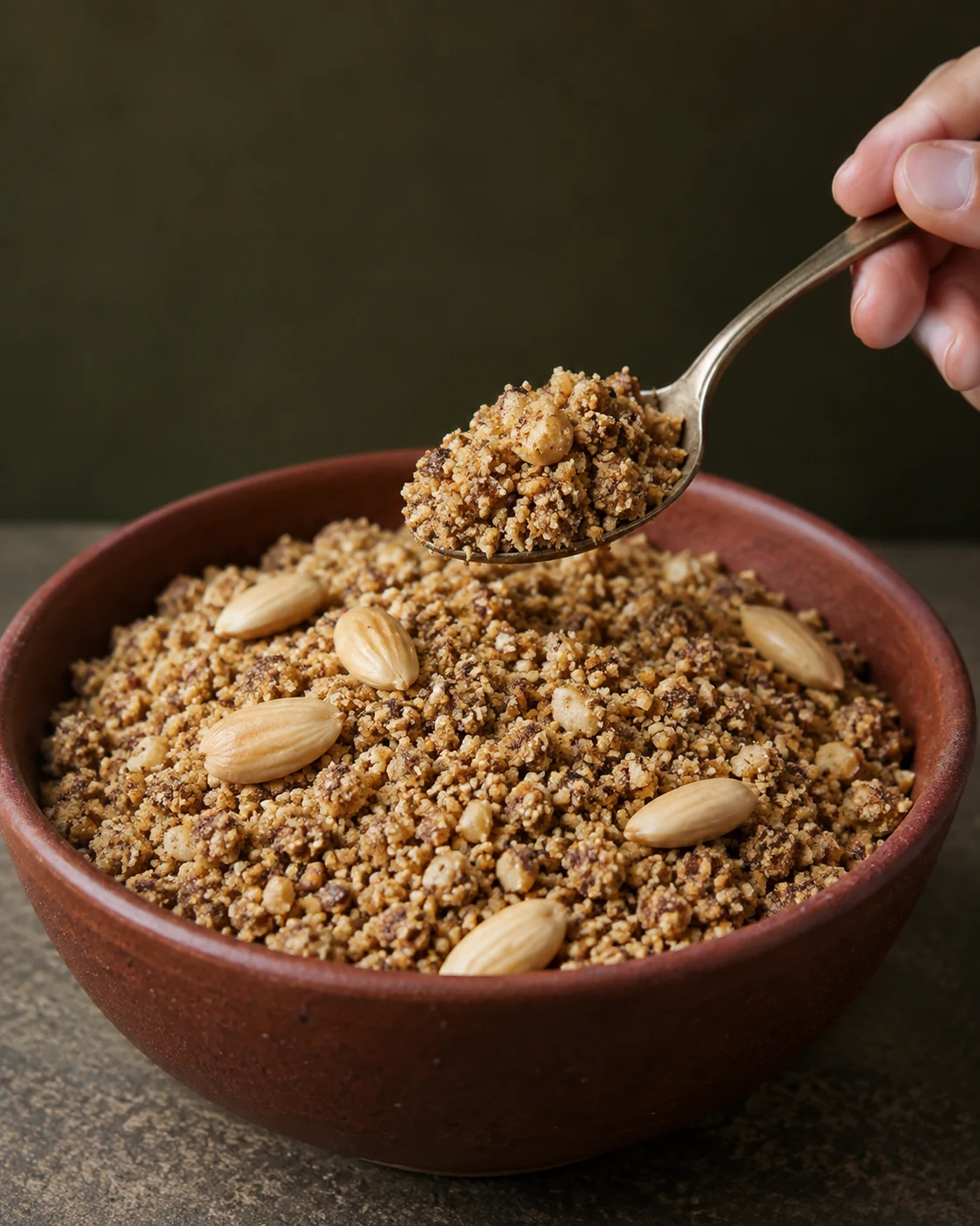
Sellou
Toasted flour, sesame and almonds in a distinctive sweet mixture.
Explore the story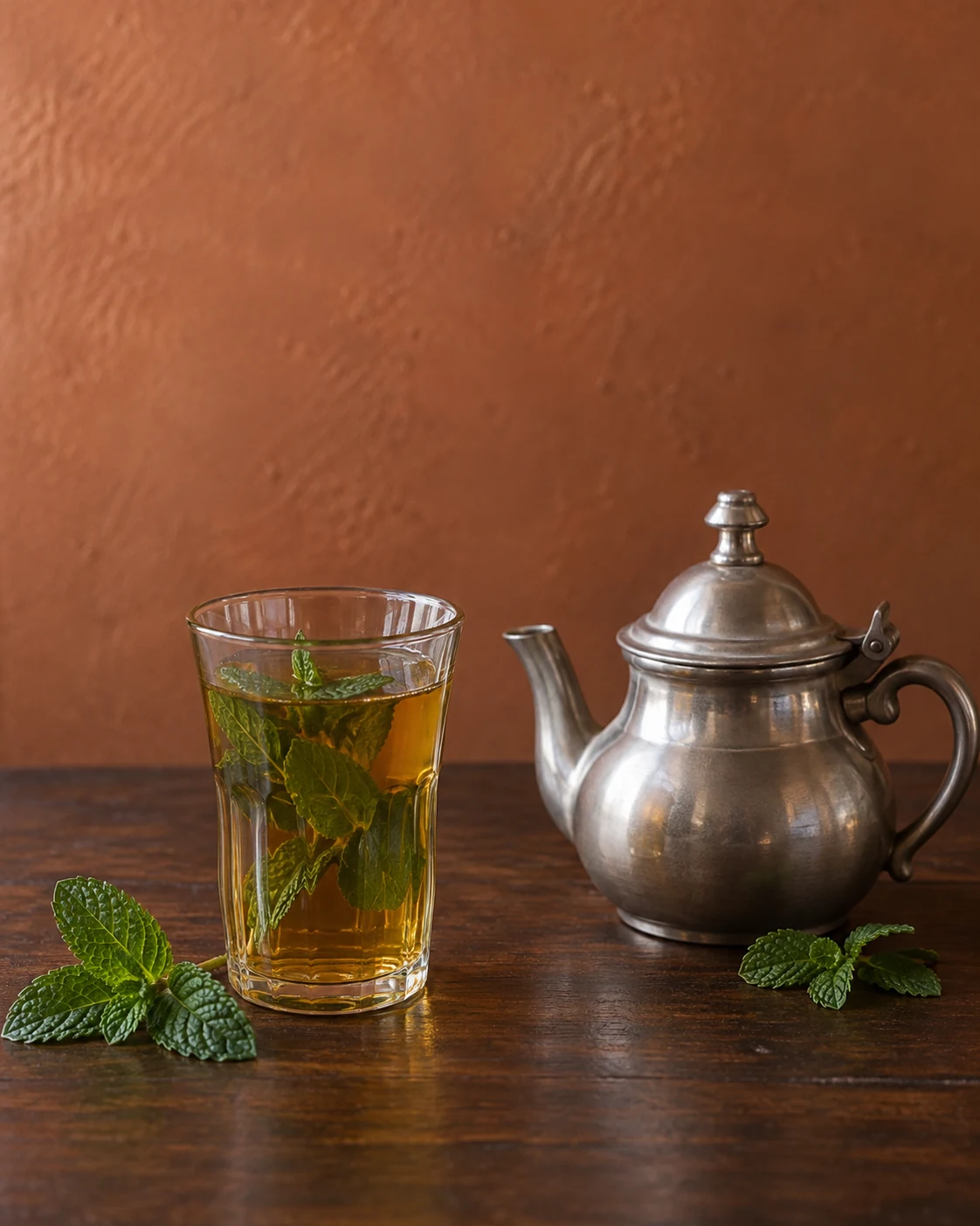
Moroccan Mint Tea
Green tea, fresh herbs and the time given to a guest.
Explore the story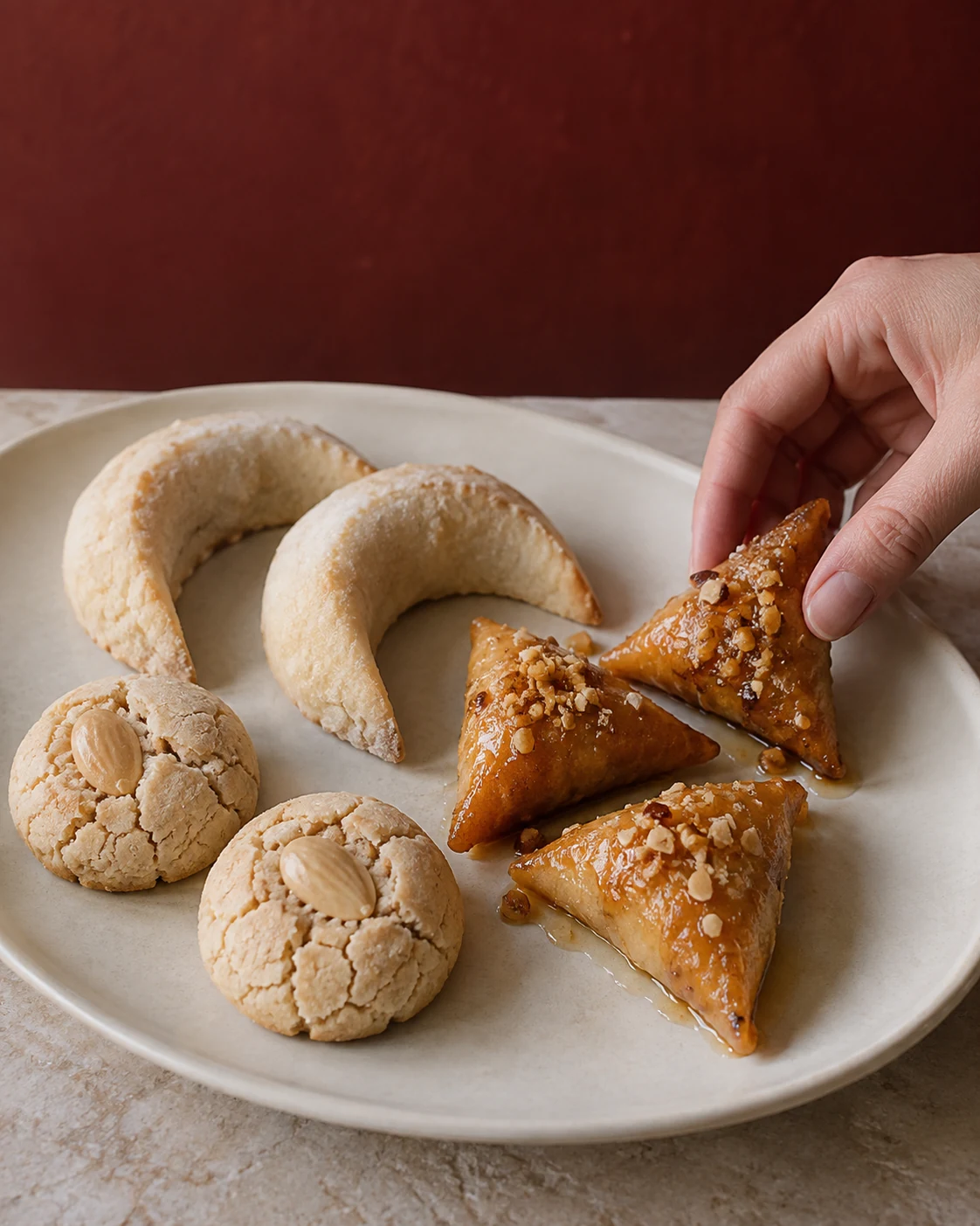
Sweets & Pastries
Almonds, sesame, pastry and the work of the sweet kitchen.
Explore the storySources & editorial notes
Photography combines existing Exotic Morocco assets and generated editorial illustrations. These images do not document a named person, household or historical event.
- Christine Benlafquih · Almond Briouat — warqa, almond filling, honey finishing and occasions.
- Alia and La Maison Arabe · Almond briouats — a Moroccan cooking demonstration of pastry handling and folding.
- Enmer · Almond & Honey Briouates — ingredient structure, folding and finishing sequence.
- Serious Eats · Essential Ingredients for Moroccan Cooking — pantry context including warqa and Moroccan flavour building.
- Nargisse Benkabbou · Almond and Honey Briouate — a documented baked variation using filo.
- Moroccan National Tourist Office · Food & drinks — hospitality, tea and the wider table.
EXOTIC MOROCCO Places. People. The pleasure of knowing more.Back to top ↑