

01 · Sesame, honey & folded dough
A flower of dough.
A serious piece
of pastry craft.
Chebakia is sweet, crisp-edged, honeyed and unmistakably shaped by hand.
The finished pastry is easy to recognise: narrow bands of dough are woven or folded into a compact flower-like form, fried until golden, coated in warm honey and finished with sesame. The result is not simply “a cookie with honey”. Its character comes from the relationship between a fragrant dough, a layered shape, hot oil and the honey finish.
Recipes differ between households and bakers. Toasted sesame may be ground into the dough as well as scattered over the surface; anise, fennel, cinnamon, saffron, orange-blossom water, almonds, fats and leavening appear in different combinations. What matters is not forcing one family formula into a national rule. [2] [3]
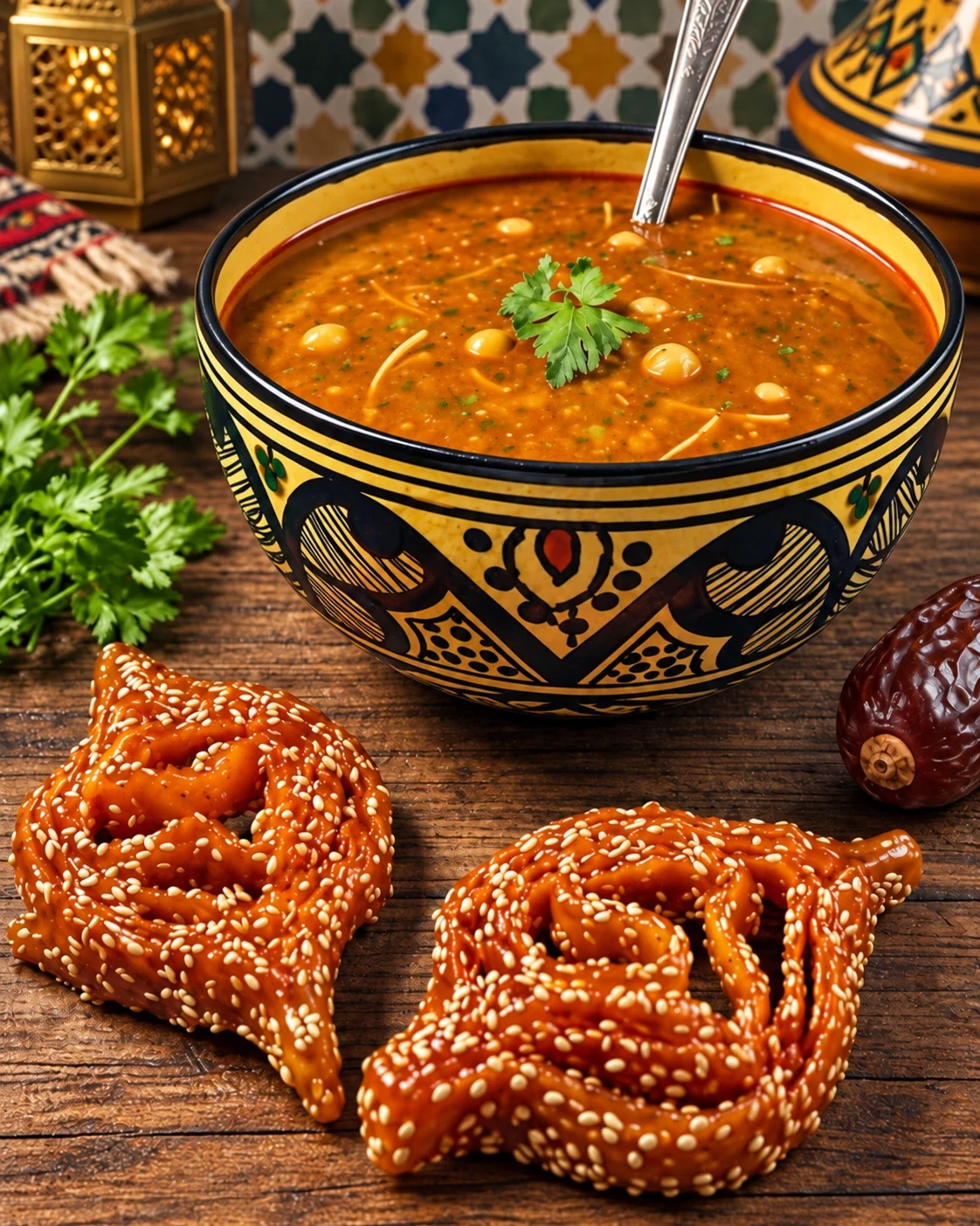
Chebakia is especially visible during Ramadan, when its sweetness is often placed beside the savoury acidity and warmth of harira. That contrast is one of the clearest ways to understand the pastry in its real meal context.
Enter Moroccan food culture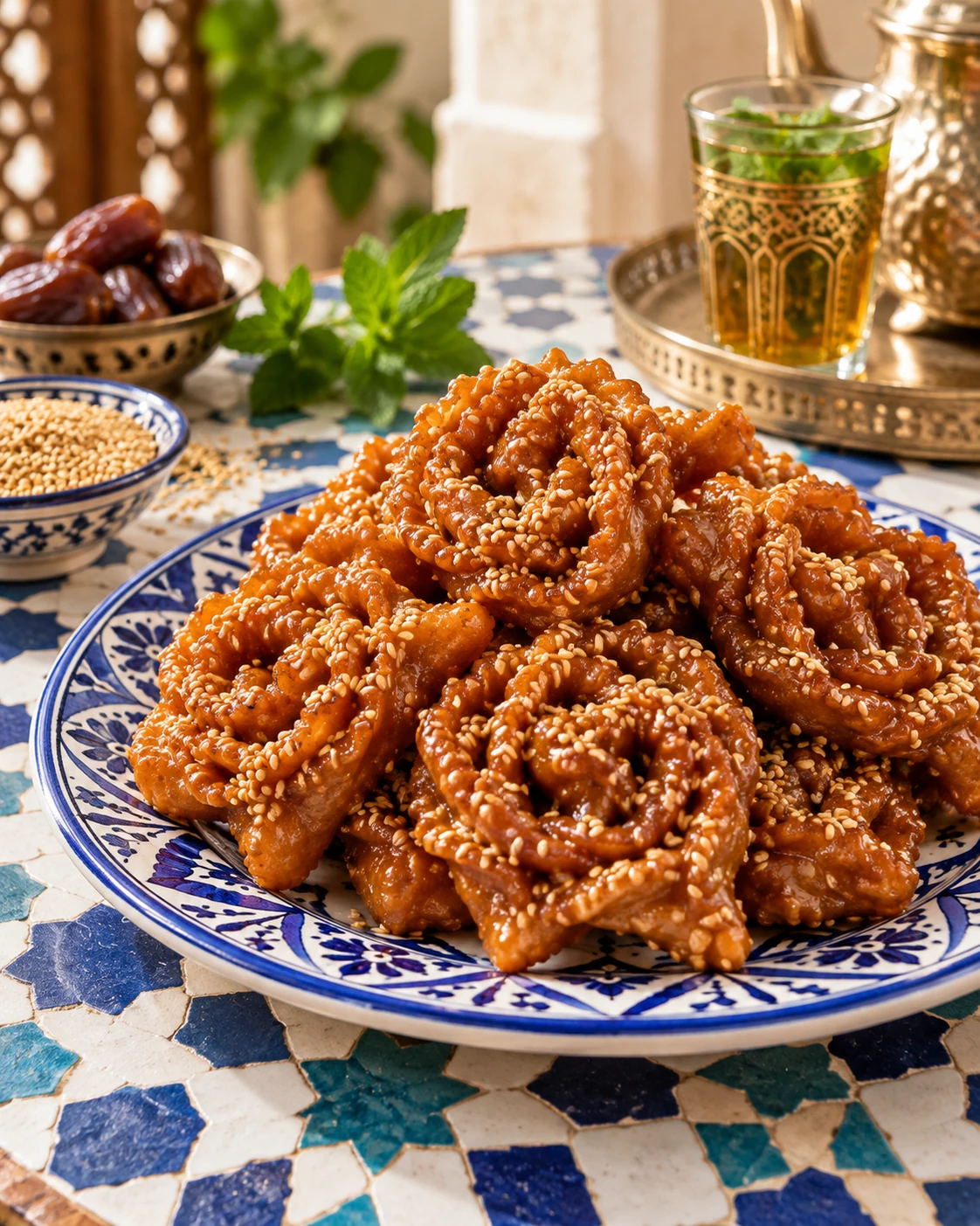
The shape creates layers, edges and a distinctive bite.
The fried pastry moves into heated honey before it drains and receives its final sesame.
A strongly documented modern association in Morocco.
02 · Ramadan & living practice
The month arrives.
The pastry appears.
Its strongest cultural story is not an invented origin myth. It is the practice people still recognise.
Morocco’s National Tourist Office presents chebakia as a pastry closely associated with Ramadan and served with Moroccan soup or tea. Specialist Moroccan food sources likewise describe the pairing with harira when the fast is broken. [1] [2]
Chebakia is also encountered beyond one evening meal: bakeries and market stalls may sell it, and some families prepare large batches before or during Ramadan. Special-occasion use is also reported. The exact rhythm varies by household, city and family habit.
The names chebakia, chbakia and mkharka occur in Moroccan usage, while related fried honey pastries elsewhere in the Maghreb carry other names. Their histories overlap, but the forms and recipes need not be identical.
Before sunset
Chebakia may be prepared in quantity so the household has a ready sweet element for Ramadan evenings.
Beside harira
The sweet pastry and savoury soup are a familiar contrast, not two parts of one recipe.
Beyond one formula
Names, spice balances and dough enrichment shift across cooks; variation is part of the tradition.
03 · The shape & the sequence
The craft
before the honey.
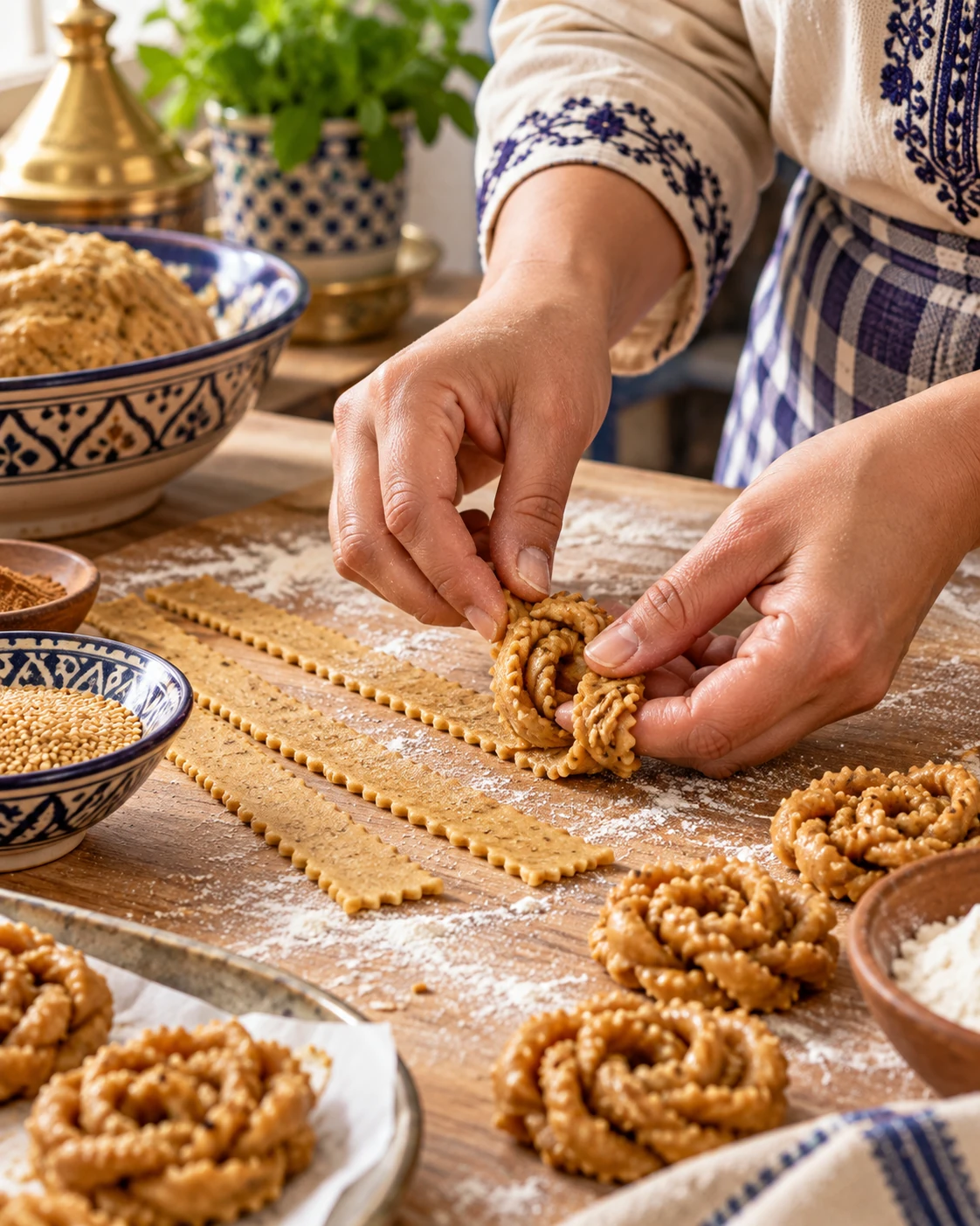
Chebakia is built through a sequence of small decisions: dough consistency, thinness, cuts, folds, frying and the transfer into honey.
A firm, workable dough
The dough needs enough structure to roll thinly and survive cutting and weaving. Sesame and spice can be integral to the dough itself, not merely decoration. Formula and enrichment vary. [3]
Cut, thread, turn
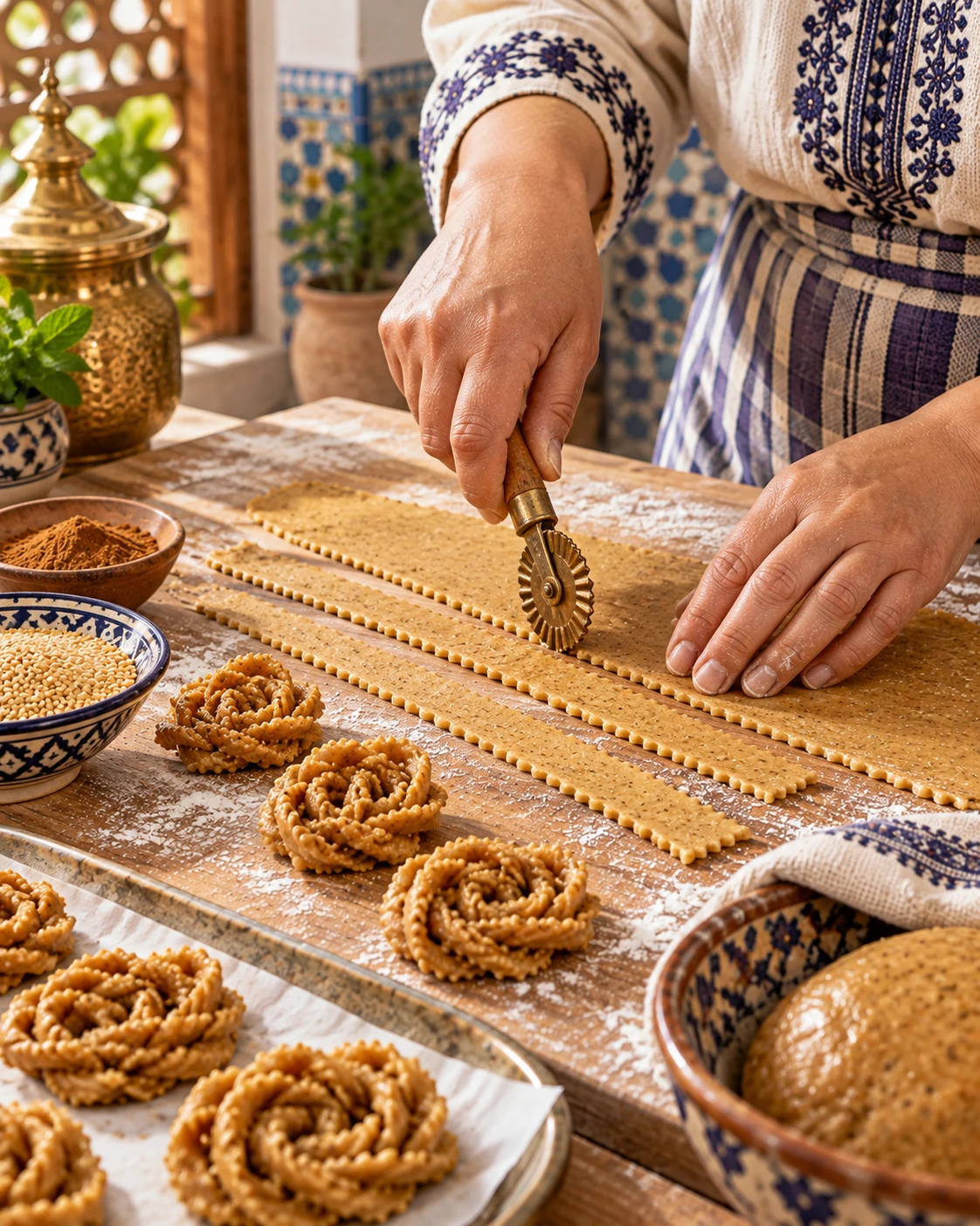
Rectangles or strips are scored with a fluted wheel, then sections are passed over and under one another before the piece is turned into its characteristic layered form. The exact hand movement is easier to learn visually than from a paragraph.
Fry, then finish
The shaped dough is fried until golden, then moved into warm honey while the pastry is still receptive to the coating. After draining, toasted sesame gives the surface its familiar finish. [2]
This page keeps the technique visible without pretending that one paragraph replaces practice.
04 · Family formulas & finishing choices
One silhouette.
Many hands behind it.
The flower-like form creates recognition, but the interior flavour can shift. These are useful axes of variation, not rigid regional labels.
Look for the function of each change: nuttiness, fragrance, tenderness, colour or the way the pastry receives honey.
Sesame inside the dough
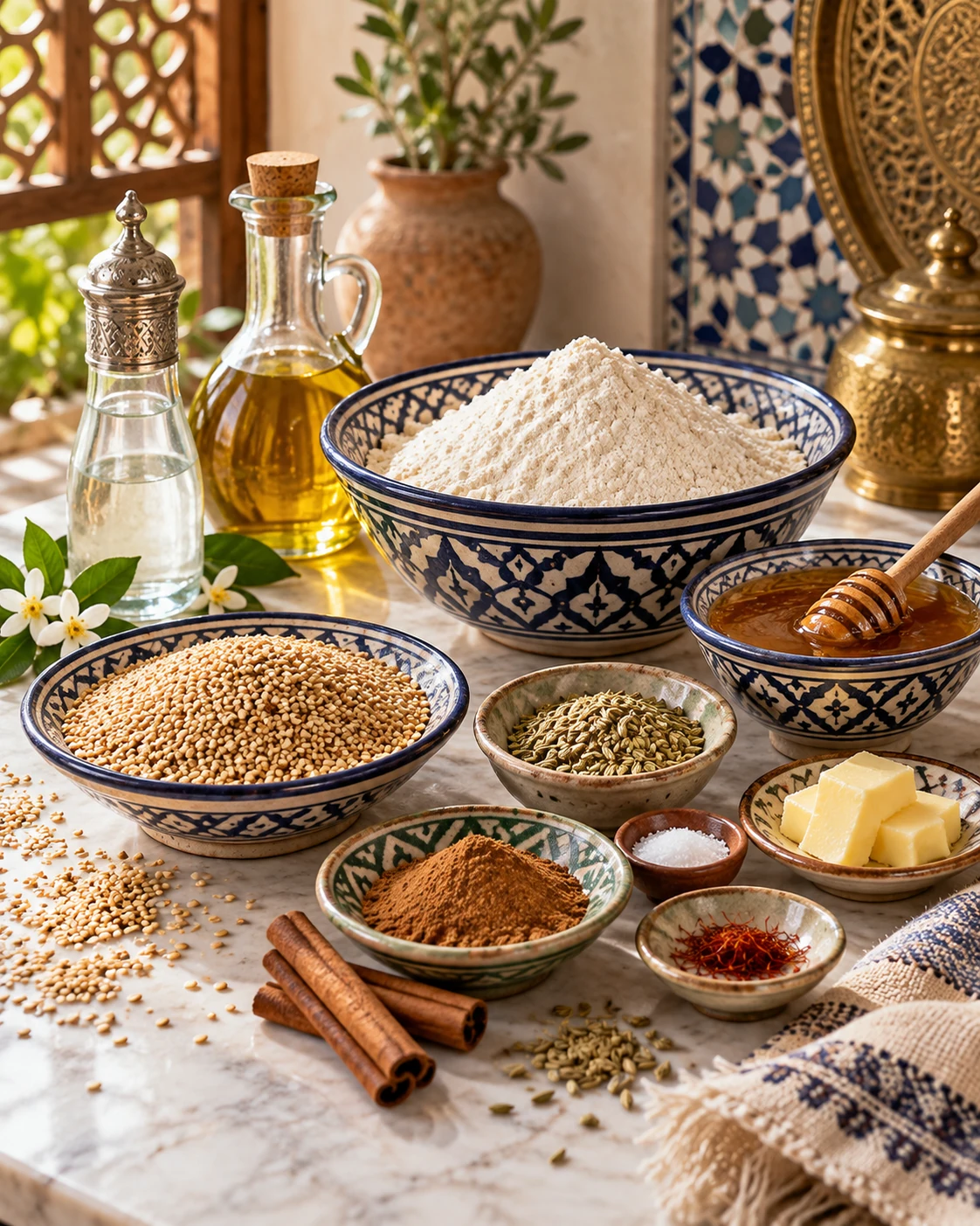
Many formulas grind toasted sesame into the dough itself. That makes sesame part of the pastry’s structure and aroma before the final coating is added. [2]
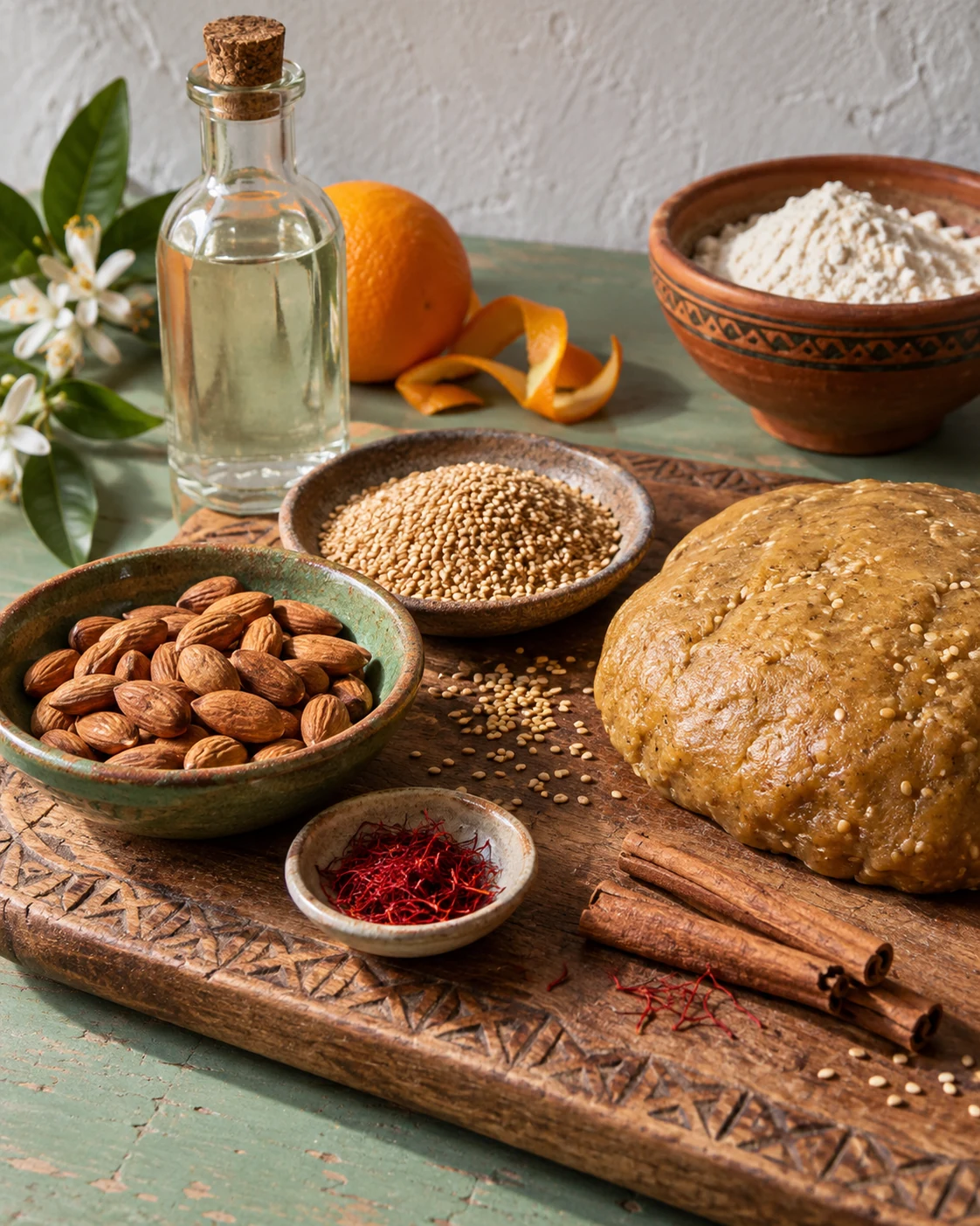
Almonds in some family recipes
Almonds appear in some established formulas alongside sesame, fat, spice and orange-blossom water. They are an enrichment choice, not a universal requirement for every chebakia. [3]
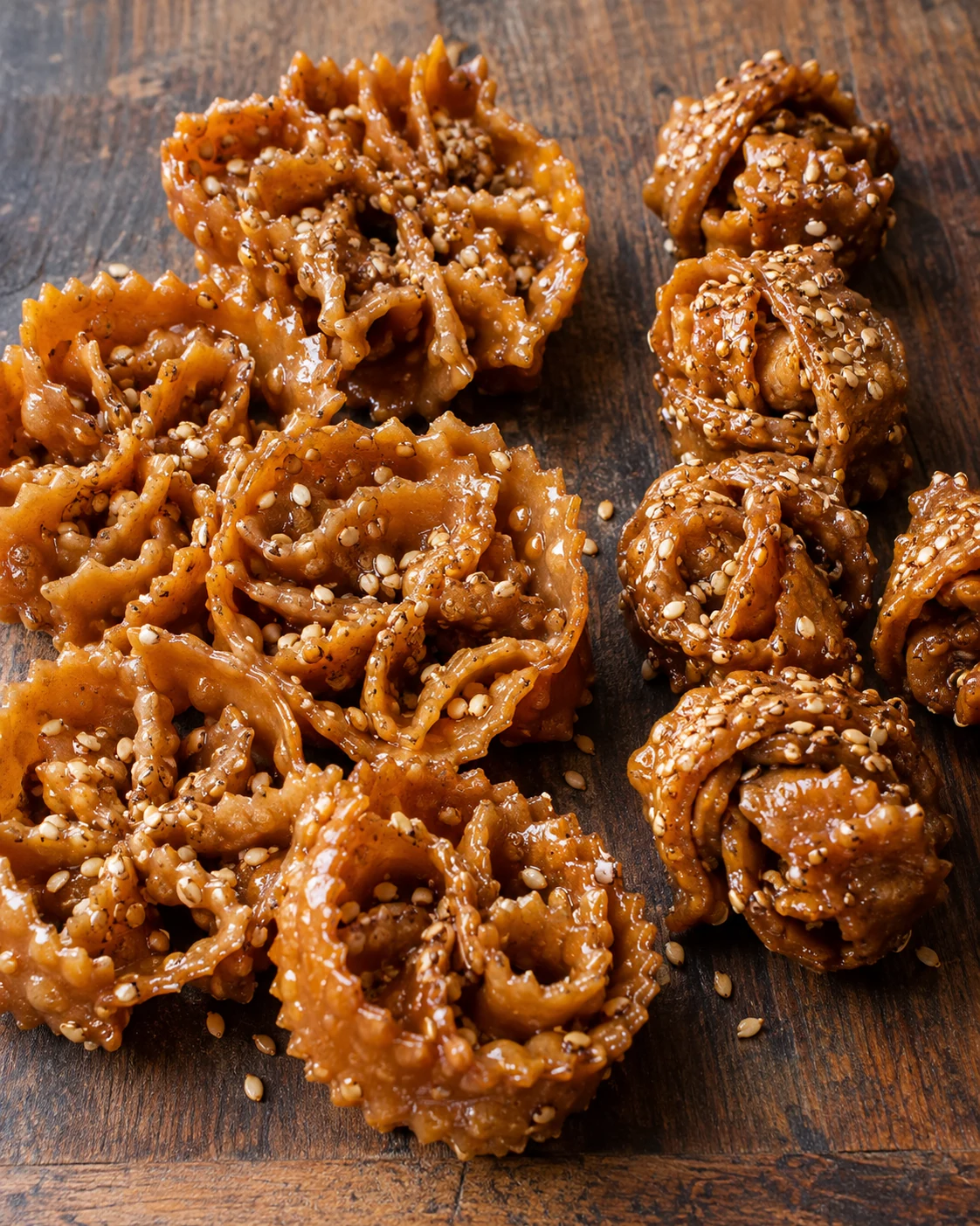
Open petals or tighter folds
Hand shaping produces visible differences. Broader rosettes expose more edges; compact folds hold the layers closer together. Both can belong to chebakia without implying a different historical origin.
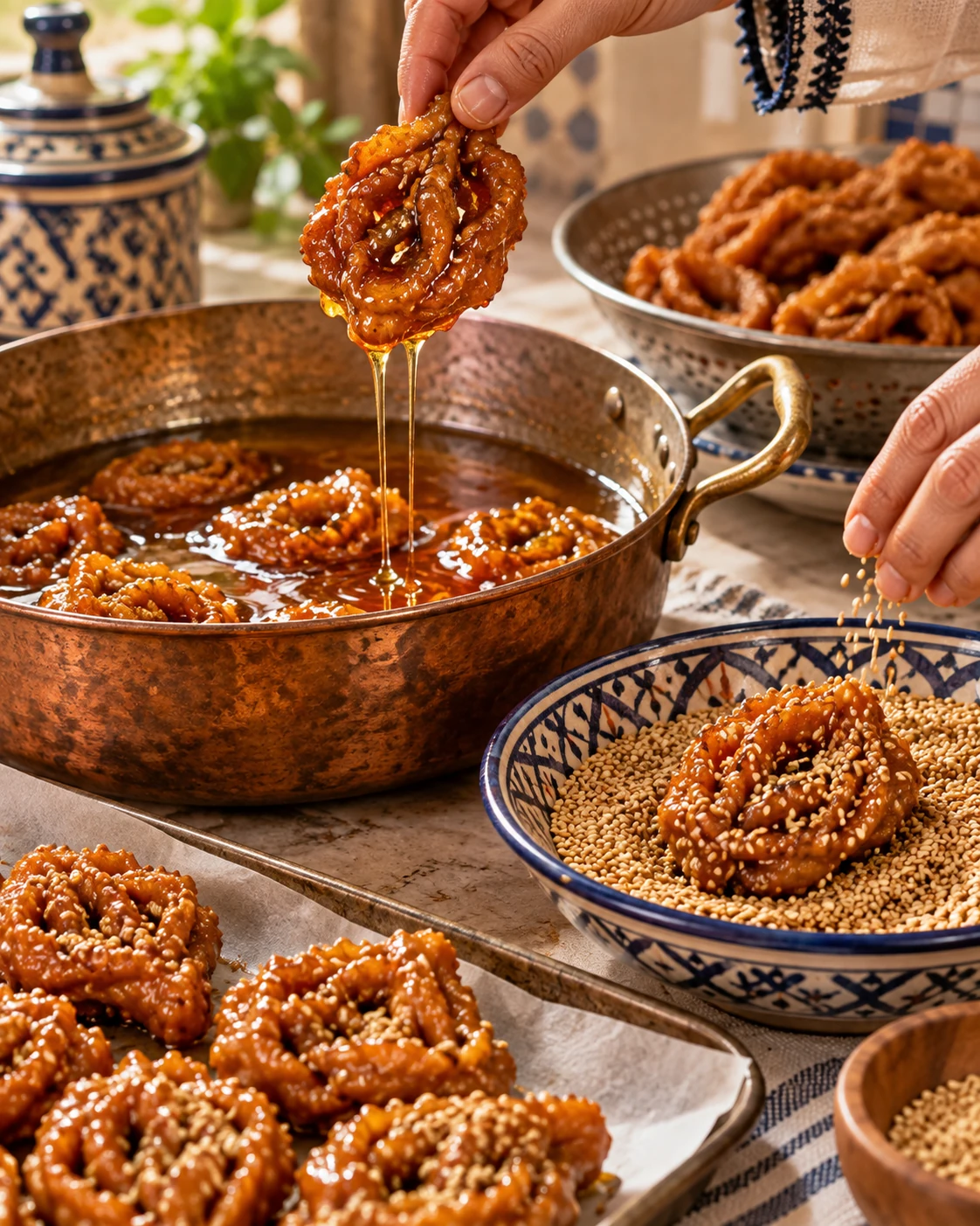
From fried pastry to glossy finish
The fried pastry moves directly into warm honey, where the folds take on sweetness and moisture. Orange-blossom water may perfume the honey, depending on the formula. [2]
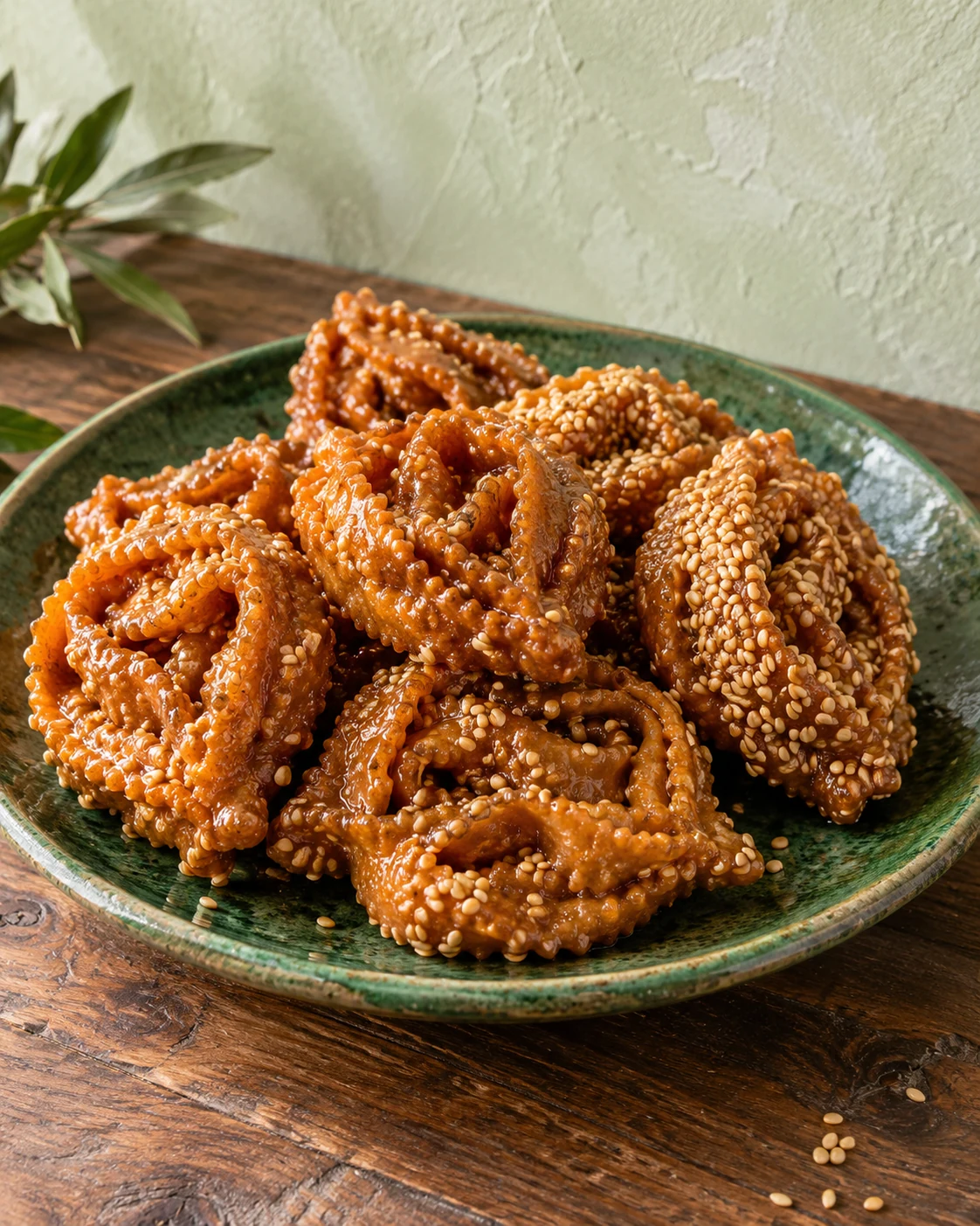
A lighter or fuller seed finish
The surface is finished with toasted sesame while the honey is still tacky. The amount varies from a light scatter to a generous coating, changing how nutty the first bite feels.
Some recipes use saffron for aroma and colour; others do not. It is better understood as one established choice than as a compulsory test of authenticity.
Anise, fennel and cinnamon appear in many formulas, but quantities vary sharply. Chebakia should taste integrated rather than like a generic spice mixture.
Alternative names and spellings exist. The page uses chebakia consistently while acknowledging chbakia and mkharka in Moroccan usage.
05 · The flavour architecture
Fragrance in layers.
Sweetness with structure.
The essential idea is broader than a list. Seeds, floral water, honey and spice each play a different technical and aromatic role.
Individual recipes decide the exact balance; the ingredient is useful only when its function is understood.
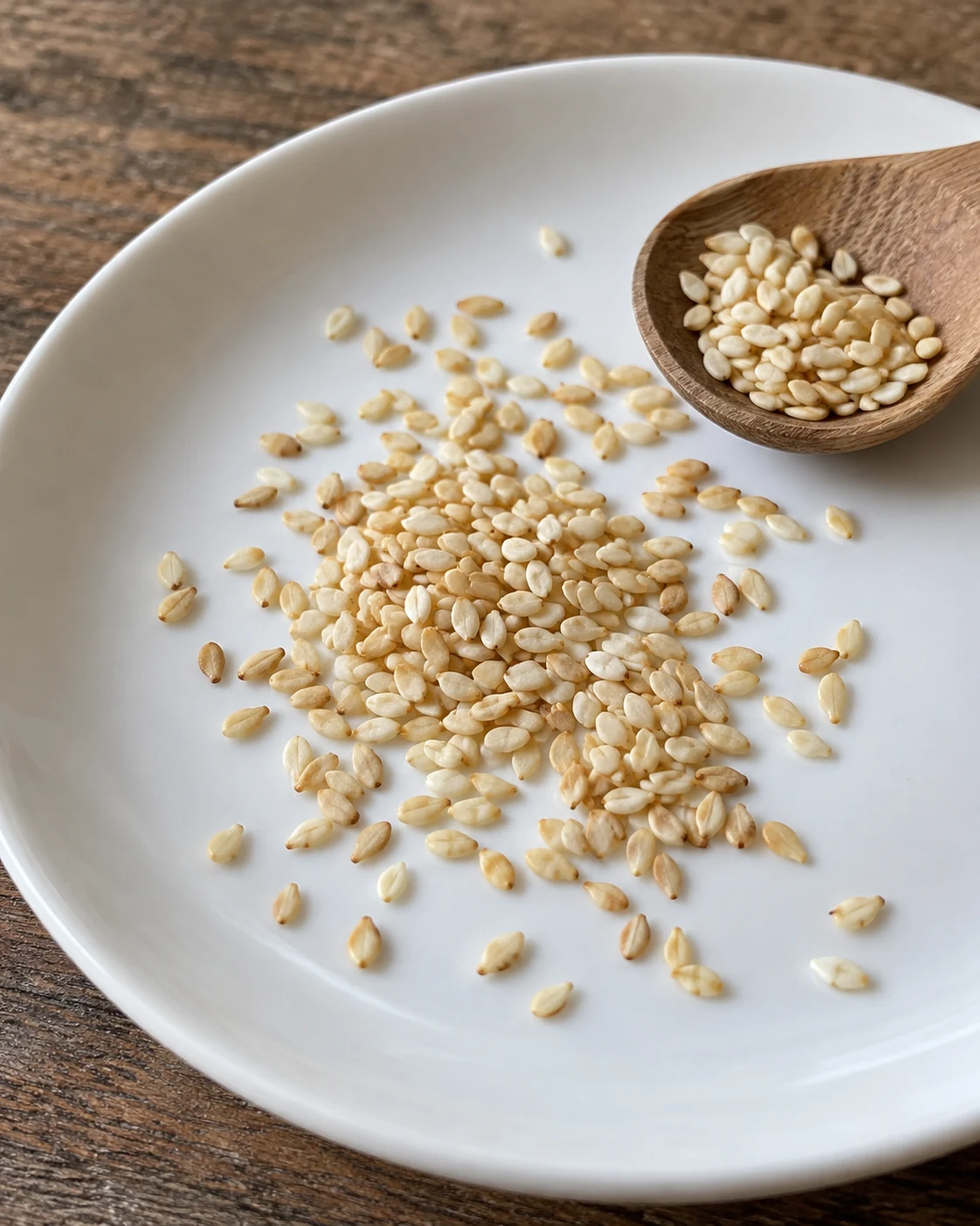
Toasted sesame
Nutty depth, twice.
Sesame can enter the dough in ground form and return as the final coating. Toasting deepens its aroma before the honey arrives.
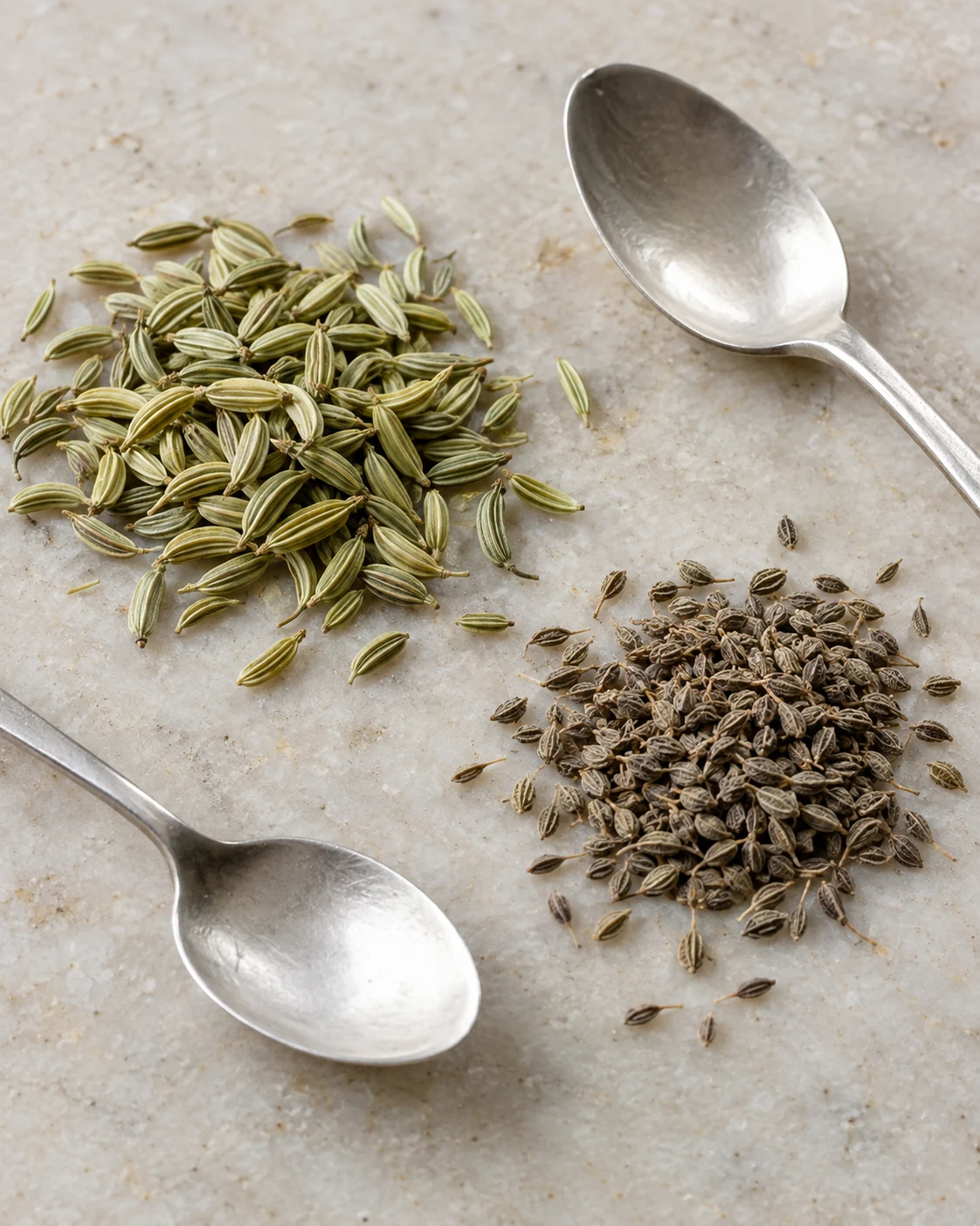
Anise & fennel
Warm, aromatic lift.
Anise and fennel appear in many formulas, often ground. Their job is fragrance and complexity, not an aggressive liquorice note.
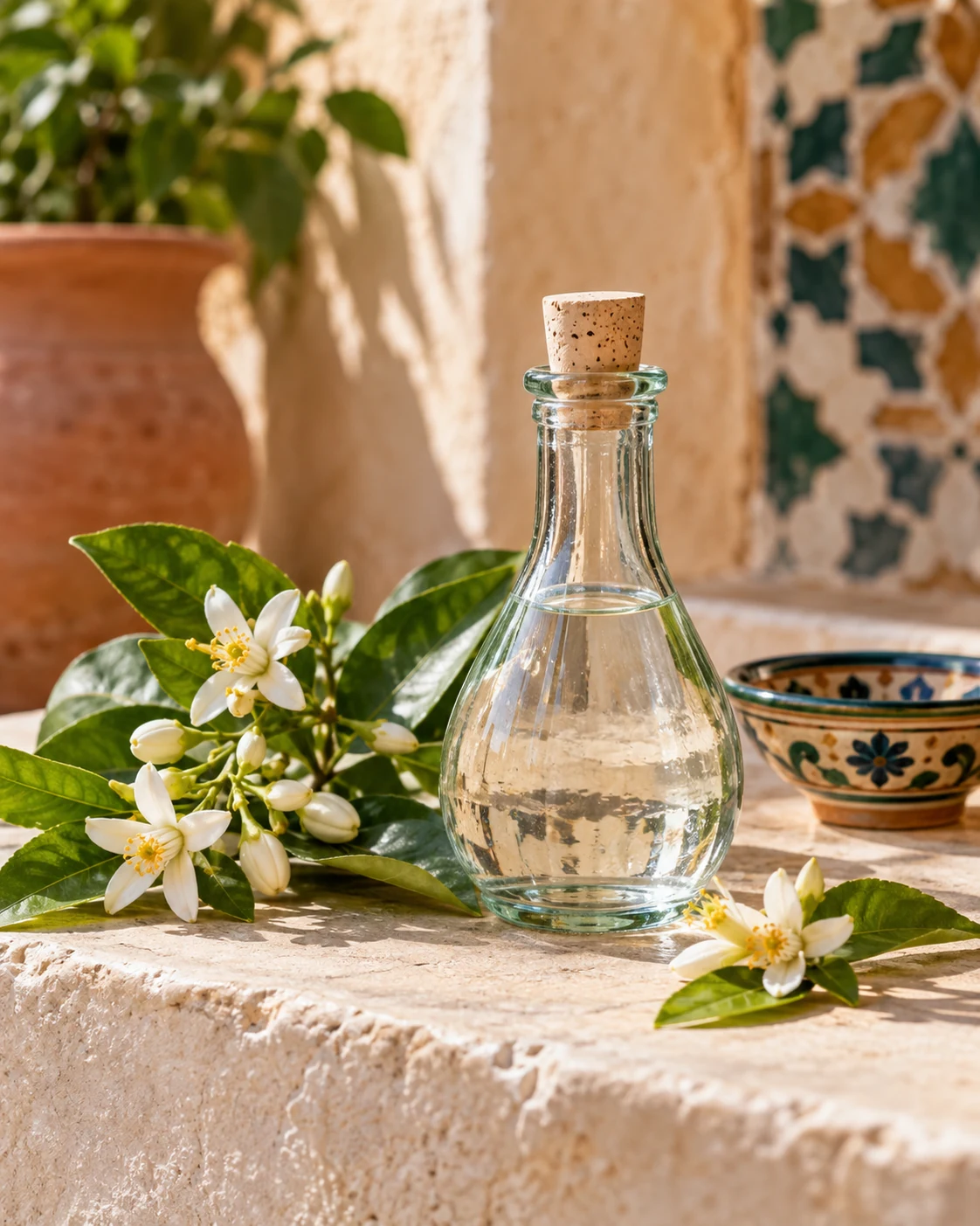
Orange-blossom water
Floral, not perfumed.
Used with restraint, orange-blossom water can perfume the dough, the honey or both. Too much can flatten the contrast between sesame, spice and honey.
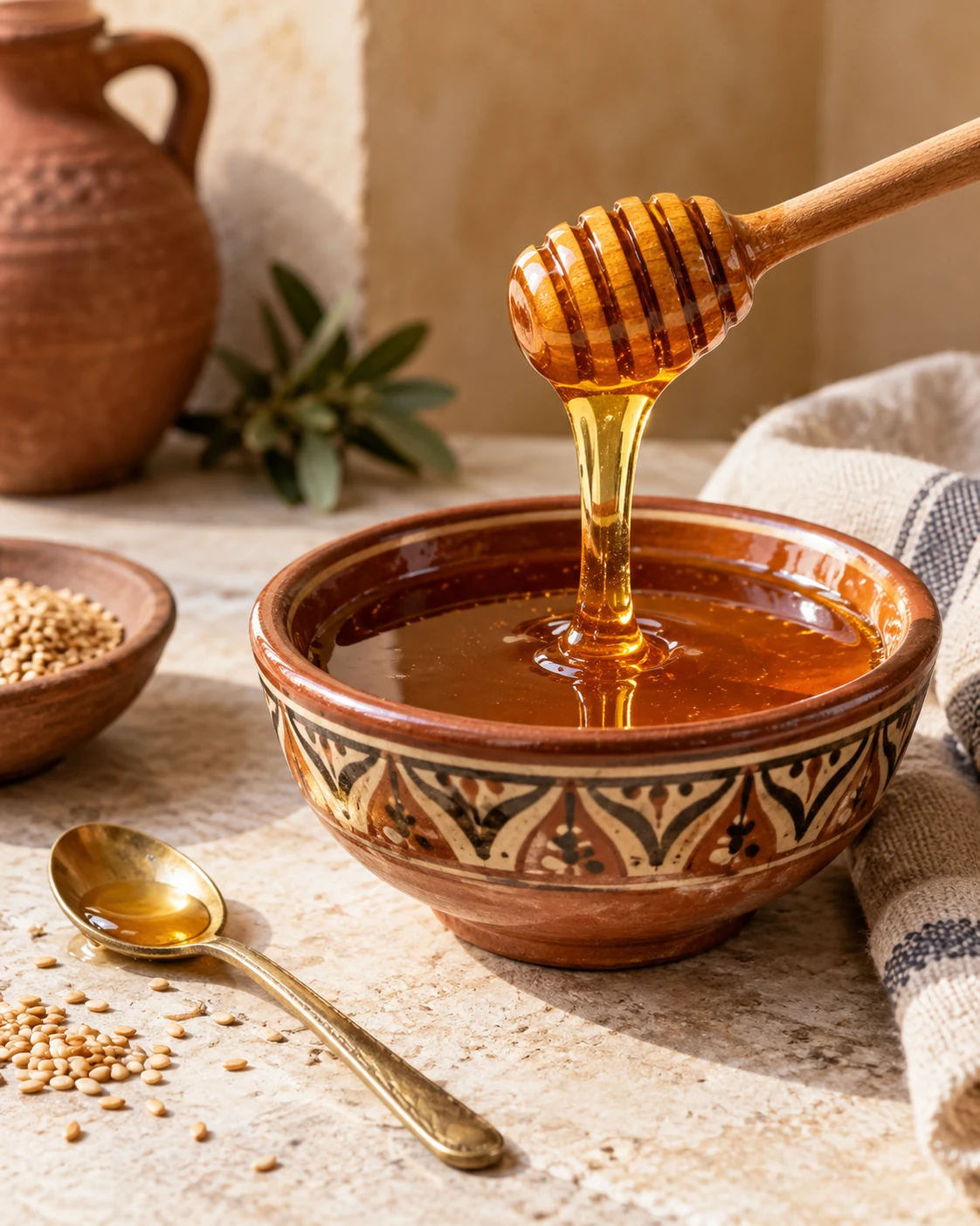
Honey
Coating, texture & shine.
The pastry meets warm honey after frying. The coating supplies sweetness and gloss while softening the fried layers as the pastry rests.
Explore the four flavour roles
HOT PASTRY · WARM HONEY · DRAIN
The decisive
transition.
Frying makes the structure. Honey changes what that structure becomes.
Moving the fried pastry into warm honey is more than glazing. The folds take on sweetness and moisture while the surface keeps some crispness. Recipes differ in soak time and honey treatment, which is why texture can range from crisper to more yielding. [2]
The best finish still lets you see and feel the pastry underneath.
Colour begins in the fryer.
Even browning matters because the honey deepens the surface visually. Very dark pastry can become bitter; very pale pastry can lack crisp structure.
Warm honey must remain fluid.
The coating needs to move through the folds rather than sit as a thick cap. Exact temperatures and timing belong in the practical guide.
Drain before the final sesame settles.
Excess honey should run away while enough remains to hold sesame. Resting then allows the finished texture to stabilise.

06 · Time, home & bakery
A pastry
with a calendar.
Ramadan intensifies its presence, but one household’s routine is not every household’s rule.
The strongest contemporary association is Ramadan. Families may make chebakia themselves, buy it from a trusted baker or do both. Large-batch preparation makes practical sense: shaping is repetitive work, and the finished pastry keeps better than a delicate fresh cream sweet.
Bakeries and market displays also matter because they turn the pastry into a public seasonal signal. Piles of glossy, sesame-coated pieces announce a particular moment in the food calendar even before they reach the table.
At home
Shaping can become shared work, especially when a household is preparing enough for repeated Ramadan evenings.
Food culture ↗At the bakery
Buying chebakia is not a lesser tradition. Specialist pastry work and household cooking sit side by side in contemporary Morocco.
Explore Taste ↗After Ramadan
Chebakia can still appear at celebrations or for sale at other times; Ramadan is its strongest association, not its only possible context. [2]
Guide collection ↗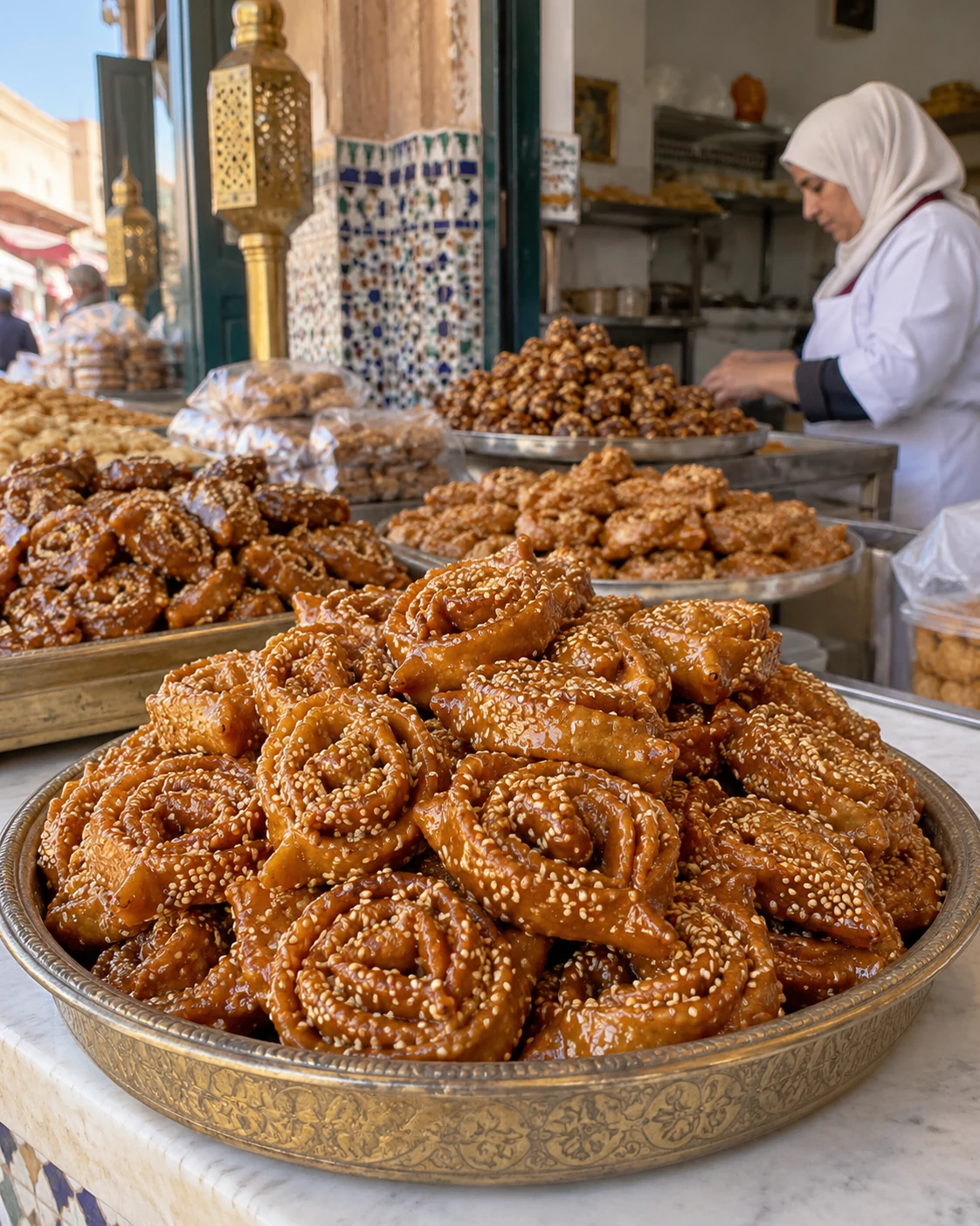
07 · Harira, dates & the evening table
Sweet beside savoury.
That contrast matters.
Chebakia makes most sense when the rest of the table is allowed into the story.
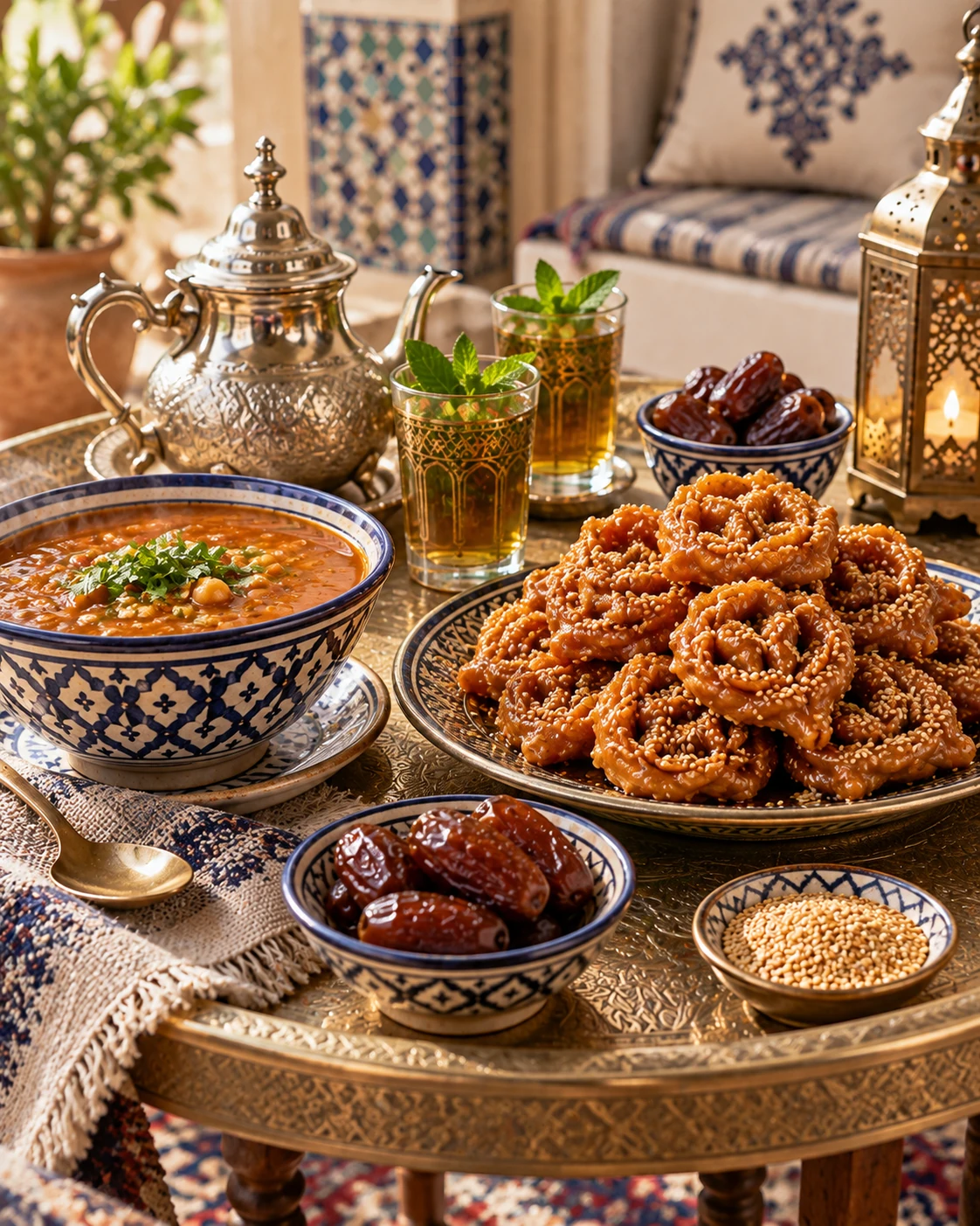
During Ramadan, chebakia is often placed beside harira. The pairing is striking because the foods are not similar: one is honeyed and sesame-rich, the other savoury, tomato-based and herb-led. Their contrast belongs to the rhythm of the meal rather than to a single combined recipe. [1]
Dates, milk, juice, eggs, bread and other dishes may also appear, depending on the household. A real iftar table is shaped by family practice, appetite and place; no single photograph should be read as a compulsory national menu.
Harira changes the bite.
After a spoonful of warm soup, a small piece of chebakia brings sweetness, toasted sesame and fried crispness. The pleasure is contrast rather than similarity.
This is why describing chebakia only as a dessert misses part of its context. On a Ramadan table it can sit within the opening sequence of the meal. [2]
Small pieces, repeated over evenings.
Because the pastry is concentrated in sweetness and aroma, it does not need to be large to make an impression. A batch is portioned over time, not necessarily consumed as one grand dessert course.
The table can be generous without every dish being elaborate. Familiarity is part of the pleasure.
Tea has its own moment.
Chebakia can join it.
Morocco’s tourism office also notes chebakia as an accompaniment to tea. That does not make mint tea compulsory beside every piece; it simply reflects another common hospitality context for a sweet pastry. [1]
Sweetness needs contrast.
Sesame, spice and orange blossom stop the pastry from tasting like honey alone. Harira adds another layer of contrast at the meal level. The most convincing chebakia keeps these elements distinct enough to notice.
08 · Hand skill & repetition
The pattern
lives in the hands.
A fluted wheel makes the cuts. The cook makes the pastry.
Chebakia’s visual identity depends on repetition with control. The dough is rolled, divided and cut into narrow bands; those bands are lifted, threaded and turned without tearing the piece apart. The movement becomes faster only after the fingers understand it.
This is why the shape should not be reduced to decoration. It changes how the pastry fries, where crisp edges form and how honey finds its way between layers. A compact piece and an open rosette can taste different even from the same dough.
Tools help. A fluted pastry wheel gives the characteristic edge and speeds up consistent cutting. Modern pasta rollers may also be used to control thickness. Neither tool removes the need for judgement.
Explore the guide collection09 · Useful questions
Good questions.
Clear answers.
A closer look at the ingredients, the folded shape and the details that change from one kitchen to the next.
Is chebakia always eaten only during Ramadan?
No. Ramadan is its strongest documented association in Morocco, but specialist sources also report sales beyond the month and use at special occasions. [2]
Does every chebakia recipe contain exactly the same spices?
No. Sesame, honey and the shaped fried pastry are central identifiers, while anise, fennel, cinnamon, saffron, almonds, orange-blossom water and fats vary in presence and proportion across recipes.
Why is the pastry folded into a flower?
The form creates layers and many exposed edges. It is both visual identity and texture engineering: the folds fry differently from a flat strip and hold honey between them.
Is chebakia the same thing as griwech?
They belong to a family of related Maghrebi fried honey pastries, and names overlap in different places. This page avoids treating all regional forms as one identical recipe.
Why serve something sweet beside harira?
The pairing works through contrast: sweet honey and toasted sesame beside a savoury, tomato- and herb-led soup. It is a meal custom, not a flavour rule that must appeal to everyone.
 EXOTIC MOROCCOTASTE · THE GUIDE COLLECTIONChebakiaIngredients, technique
and the Moroccan table
From the story to your kitchen
Keep the flavour.
Go a little deeper.
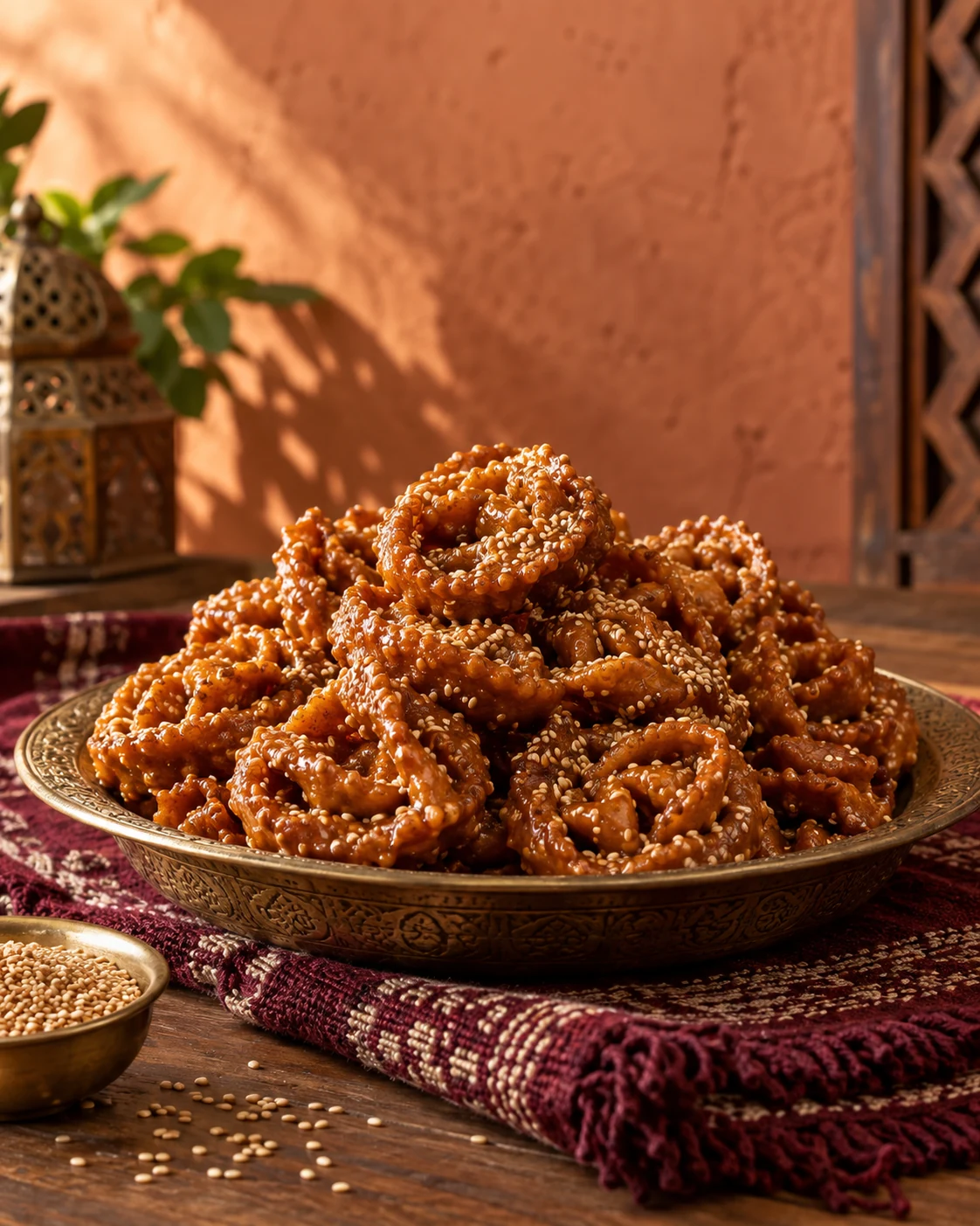
Folded sesame pastry finished with honey.
Explore the Exotic Morocco guide collection for a closer look at ingredients, kitchen knowledge and the culture around the table.
- Understand the ingredients and their roles
- Recognise the techniques and textures that matter
- Bring context and confidence to the way you cook and serve
Continue tasting Morocco
Follow the
table outward.
Another dish, another technique, another way into the Moroccan kitchen.
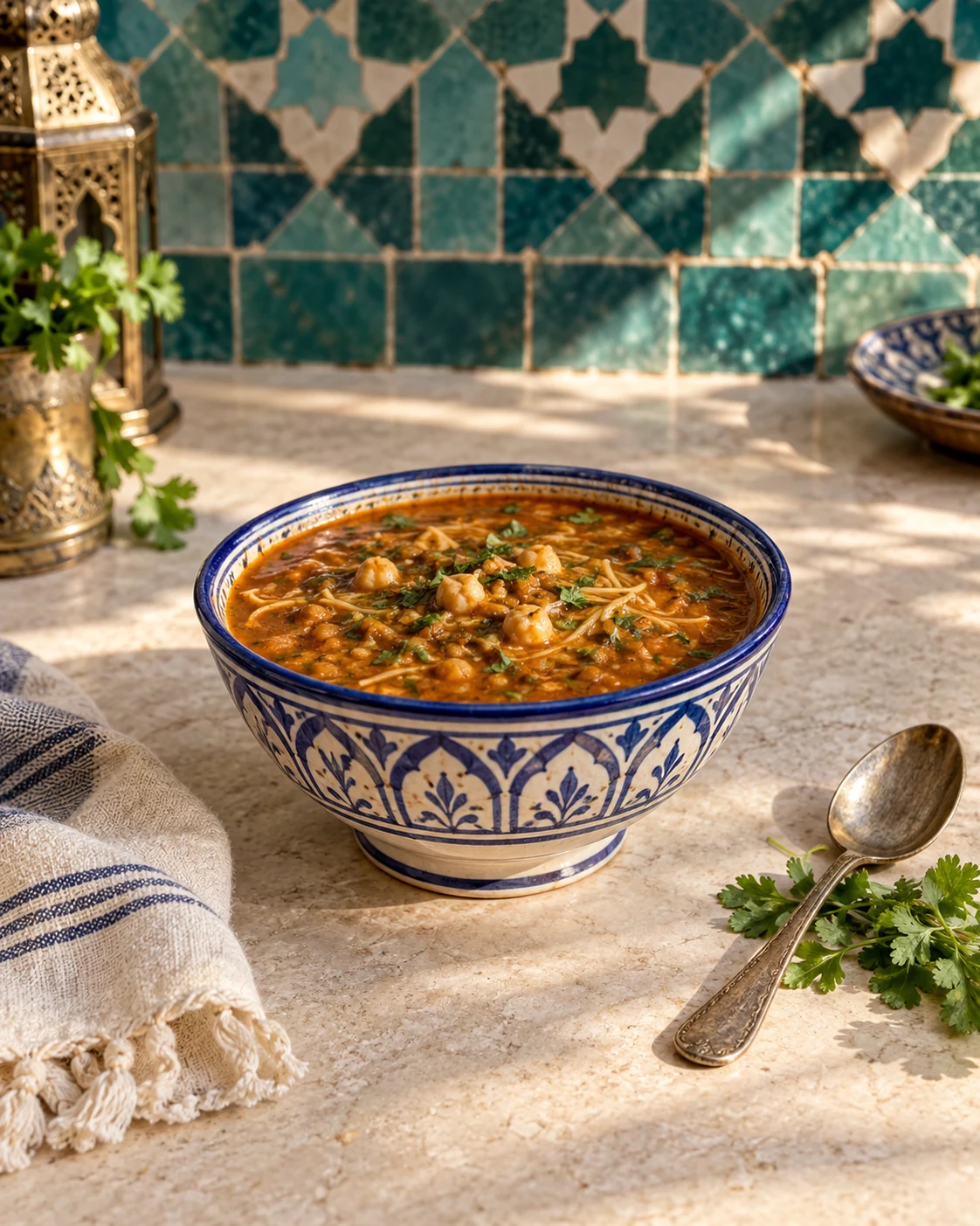
Harira
Tomato, pulses and herbs in the warmth of a shared table.
Explore the story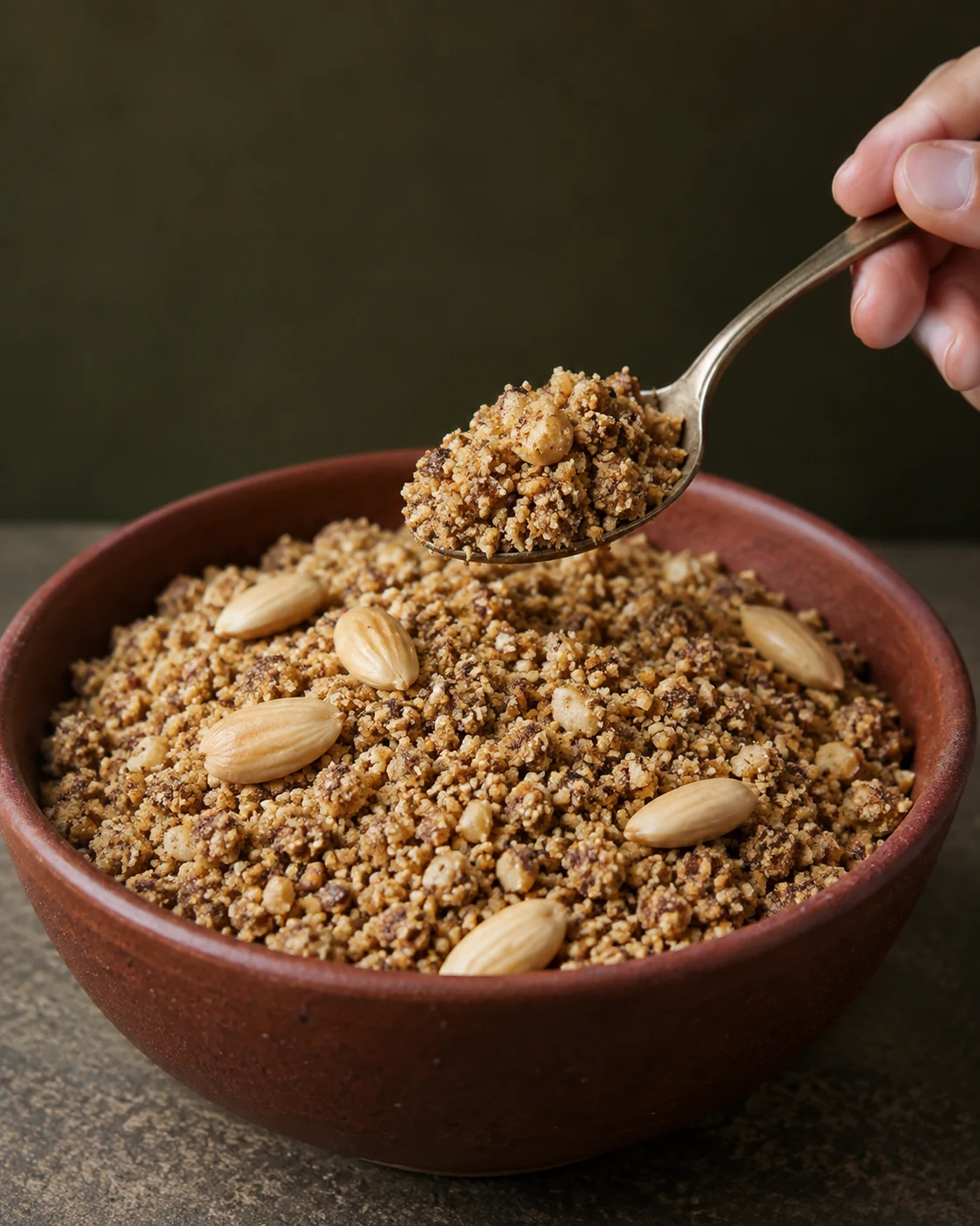
Sellou
Toasted flour, sesame and almonds in a distinctive sweet mixture.
Explore the story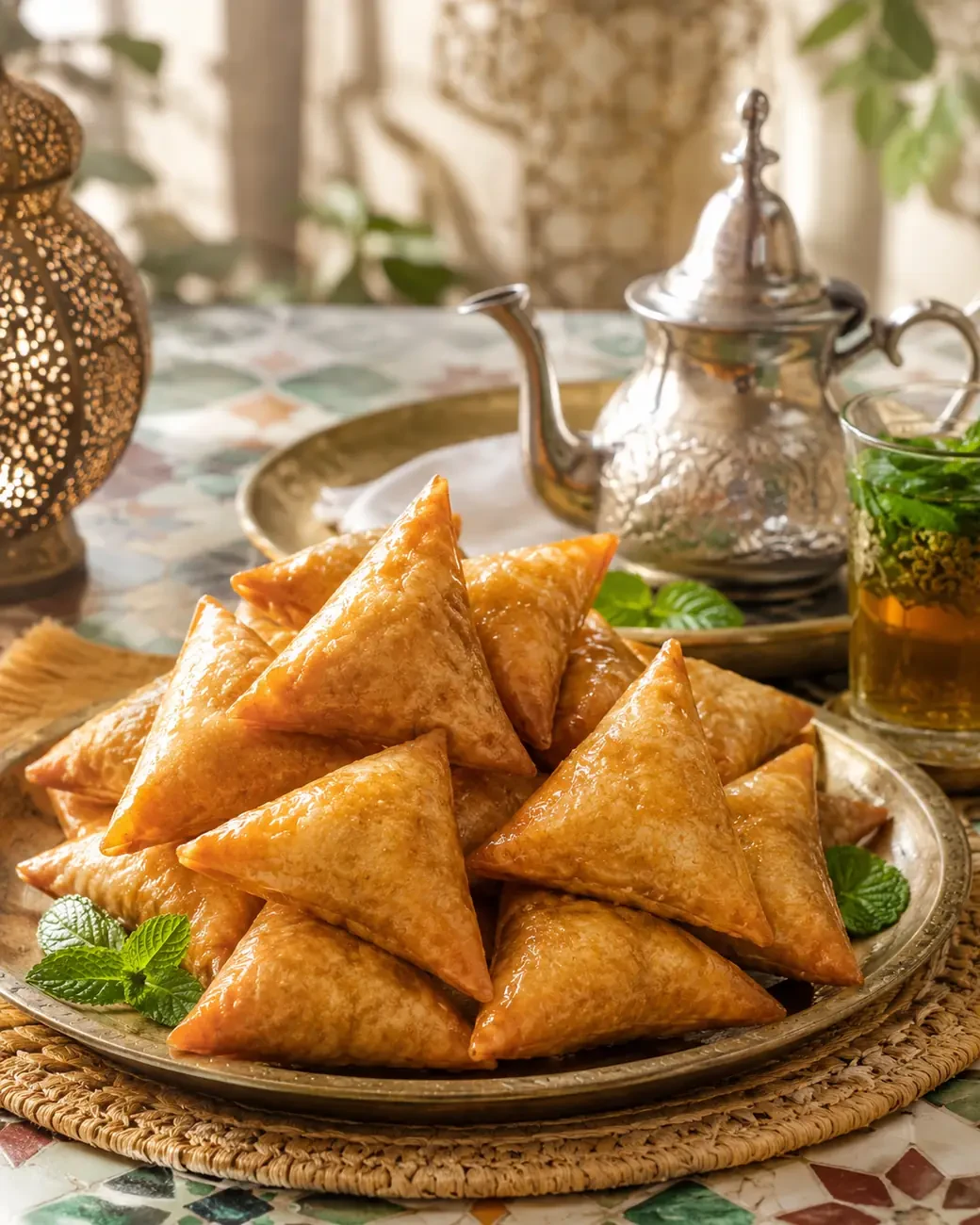
Briouats
Small folded pastries, with both savoury and sweet possibilities.
Explore the story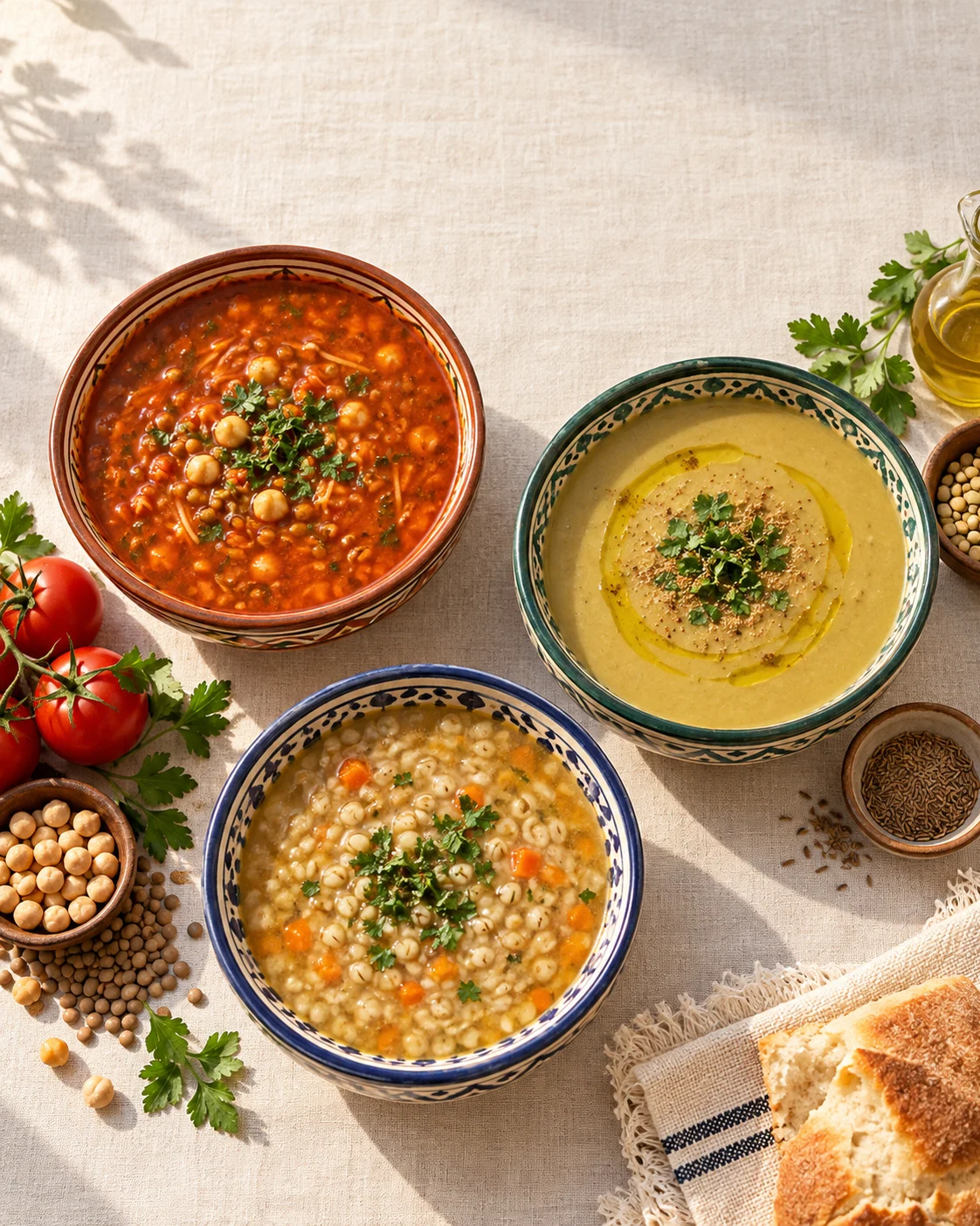
Soups
Harira, bissara and other bowls shaped by place and occasion.
Explore the story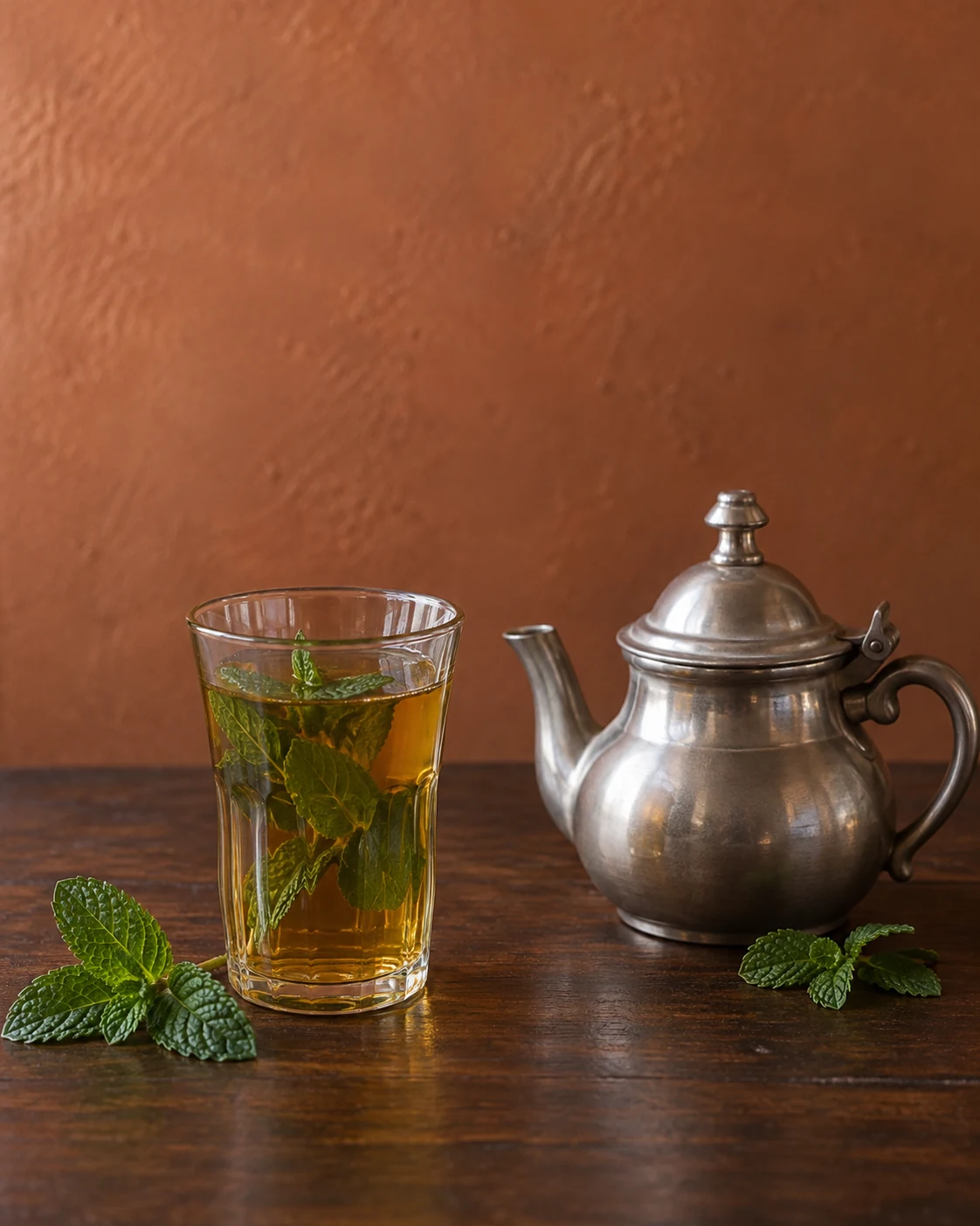
Moroccan Mint Tea
Green tea, fresh herbs and the time given to a guest.
Explore the story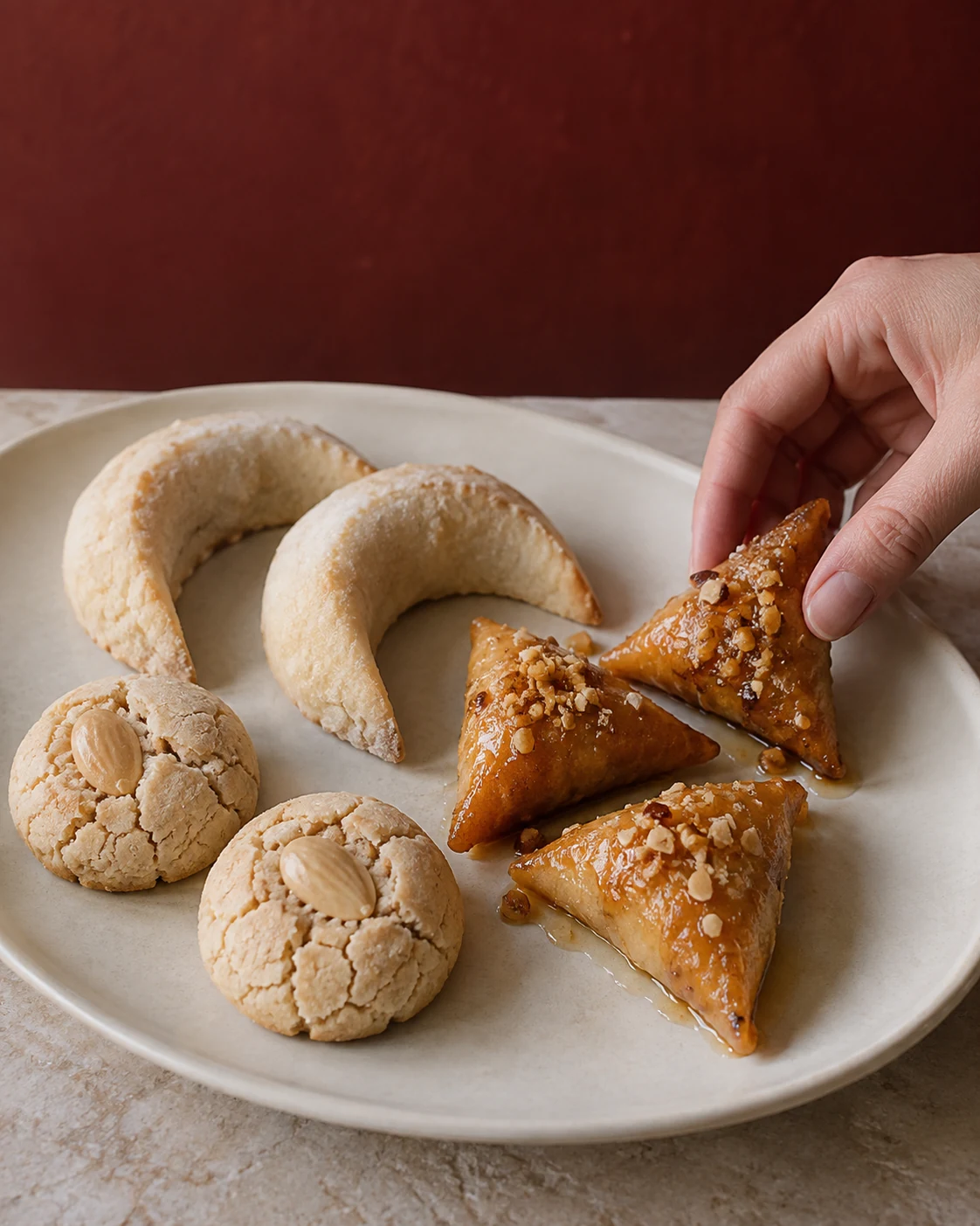
Sweets & Pastries
Almonds, sesame, pastry and the work of the sweet kitchen.
Explore the story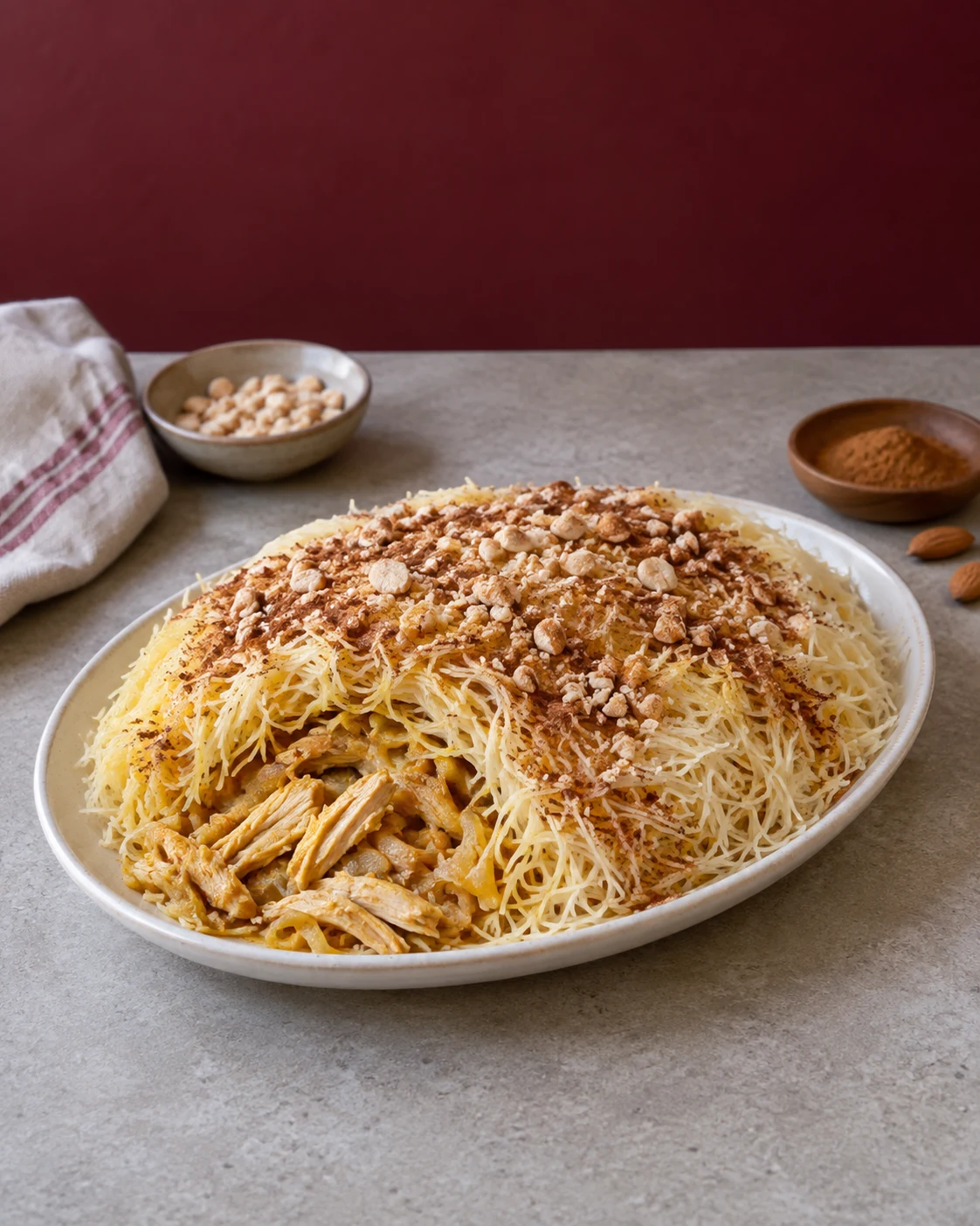
Seffa
Steamed vermicelli or couscous, almonds and sweet aromatics.
Explore the storySources & editorial notes
- Moroccan National Tourist Office — Food & Drink. Chebakia is presented as a Moroccan pastry served with soup or tea and especially associated with Ramadan. visitmorocco.com ↗
- Taste of Maroc — Halwa Chebakia. Used for Moroccan naming, Ramadan/harira context, special-occasion context and the broad shaping-frying-honey sequence. tasteofmaroc.com ↗
- 24Kitchen — Chebakia by Mounir Toub. Used as a practical cross-check for ingredients and technique: sesame, almonds, anise/fennel/cinnamon, orange-blossom water, fluted cutting, frying and warm honey. 24kitchen.nl ↗
- Editorial caution. The sources above support the modern Moroccan practice and technique more strongly than a single precise historical origin. This page therefore does not assign chebakia to one inventor, dynasty or city.