
01 · A dish built on texture
Light strands.
A generous
finish.
Seffa looks abundant. Its best texture is anything but heavy.
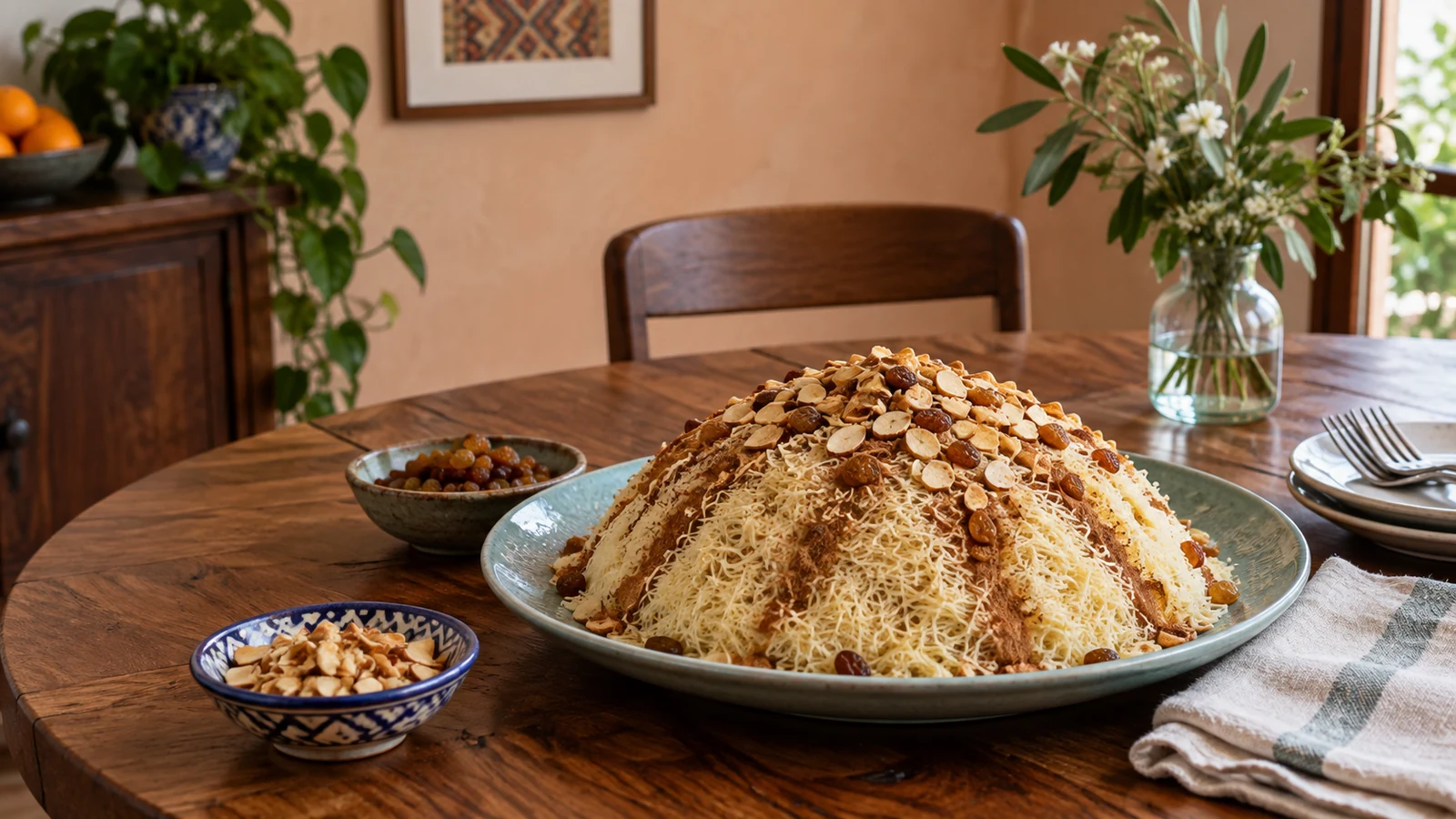
At its simplest, seffa is a mound of steamed couscous or very fine broken vermicelli, known as chaariya, enriched after steaming and finished with cinnamon, powdered sugar and almonds. Raisins appear in many versions, but not every household uses them. [1]
The surprise is technical. The pasta is not treated like an ordinary bowl of boiled noodles. Repeated steaming and careful loosening allow the strands to swell while remaining separate, tender and airy. That controlled texture is the foundation on which the sweet finish rests. [2]
Seffa can remain meat-free, or it can become seffa medfouna: a savoury filling of saffron-scented chicken, lamb or beef is literally “buried” beneath the decorated mound. Sweetness is therefore part of the dish’s language, not proof that the whole course is a dessert. [1]
Enter Moroccan food culture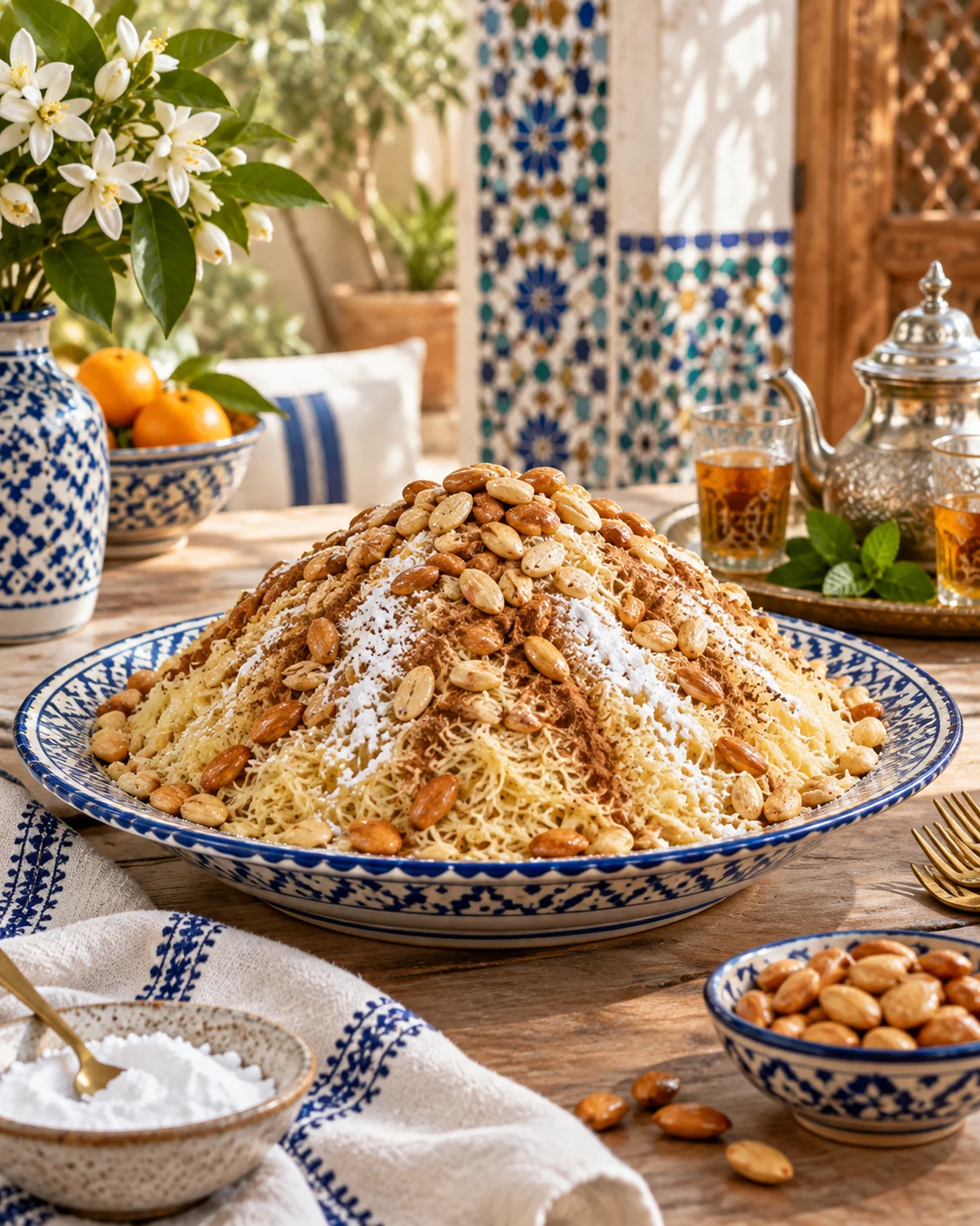
Two established ways to build the mound.
Texture, fragrance and visual rhythm.
A savoury centre can hide beneath the sweet exterior.
02 · Roots & living practice
Traditional.
Not frozen
in one form.
A dish recognised through its technique, its generous presentation and its place at the table.
Seffa forms part of Morocco’s established culinary repertoire. Its history is best approached through the practices cooks continue to share: steaming, loosening the grains or vermicelli, and arranging the finished mound.[3]
Contemporary descriptions already show substantial variation. Taste of Maroc documents meat-free seffa in Casablanca as a course that can follow a main dish, while a preparation called seffa touba is associated there with Meknes and Fez and may be served with orange flower water and milk. These are useful examples of living practice, not rules for every Moroccan table. [1]
The technique travels.
Couscous and fine vermicelli can both become seffa; the shared logic is careful steaming, loosening and finishing.
Home matters.
The level of sweetness, use of raisins, almond treatment and presentation can change from family to family.
Tradition stays active.
Modern kitchens may change tools or timing, but the desired result remains light, separate grains or strands rather than a wet mass.
03 · The essential technique
Steam.
Loosen. Repeat.
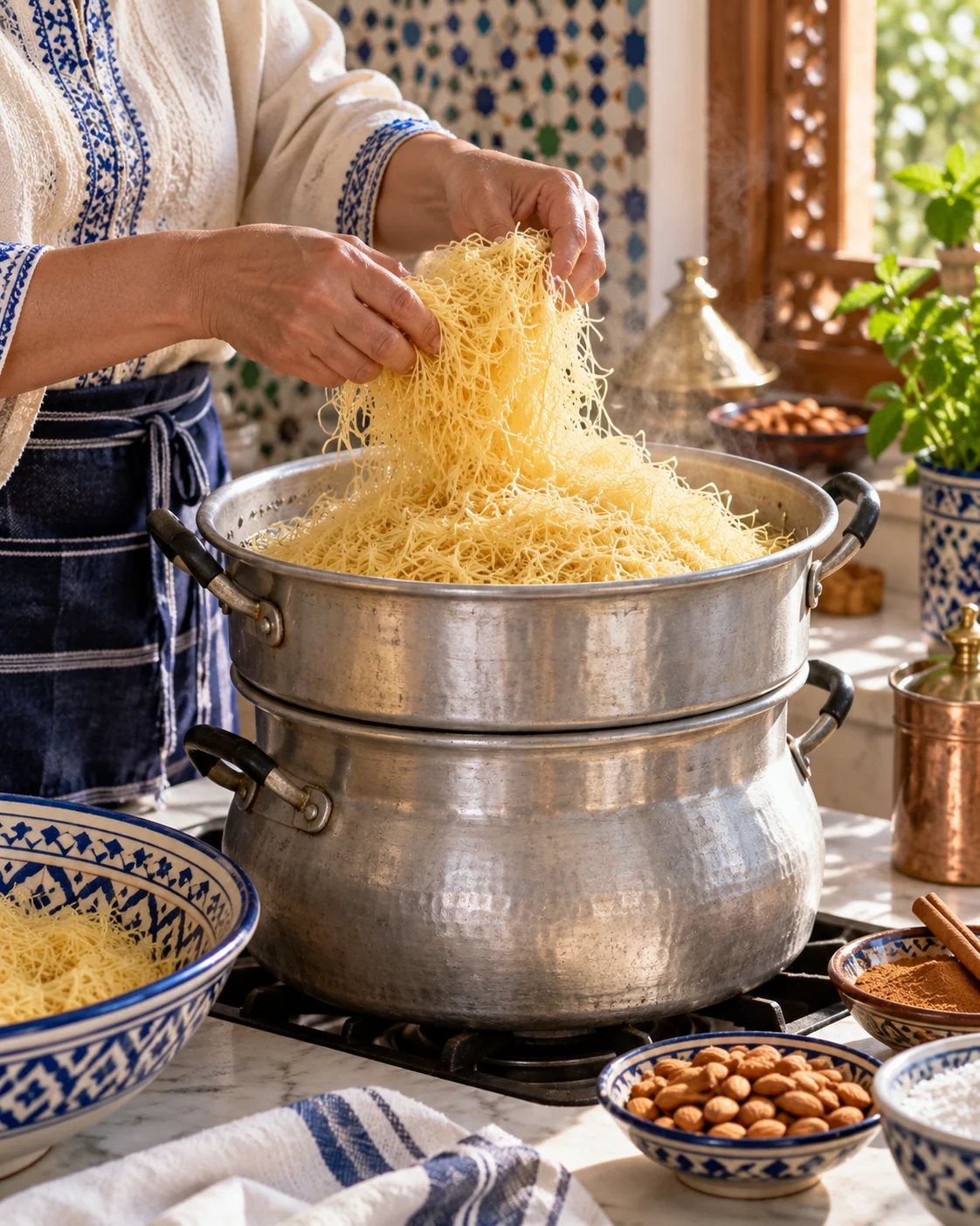
Seffa is defined as much by method as by garnish. Chaariya is repeatedly steamed over simmering water, then returned to a wide bowl so the strands can be separated and gradually hydrated.
The aim is tender pasta that stays distinct. Boiling can cook vermicelli, but it creates a different texture from the classic steamed method documented for seffa. [2]
Coat before the first steam
A little oil helps keep the dry strands separate. They are handled lightly rather than compacted into the steamer.
Hydrate between steamings
After each steaming, the chaariya is tipped into a broad dish, loosened and worked with measured water. Salt enters during the process rather than through a boiling pot.
Judge the strand, not the clock
Thickness varies. The final test is texture: plump and tender, but not sticky, soggy or compressed. Additional steaming is used when necessary. [2]
The garnish catches the eye. The invisible work is in every separate strand.
04 · Four expressions of Seffa
One mound.
Different meanings.
The name covers more than one fixed composition. The base, the presence of meat, the use of milk and the finishing details all change the experience.
These four forms are useful reference points, not a claim that every household follows the same categories.
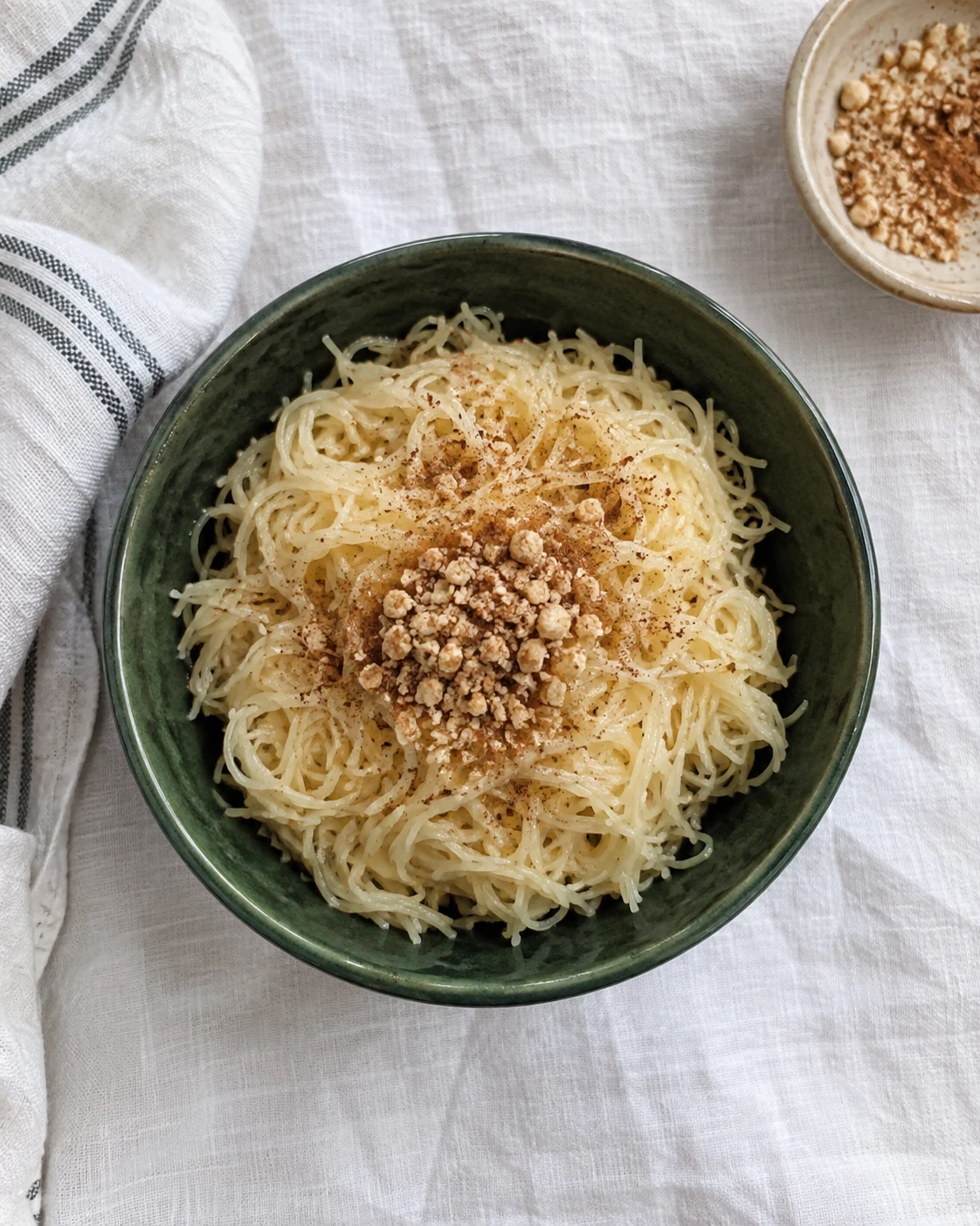
Sweet chaariya seffa
Steamed broken vermicelli is enriched and piled high, then finished with cinnamon, powdered sugar and almonds. The pleasure comes from the contrast between light strands and rich toppings.
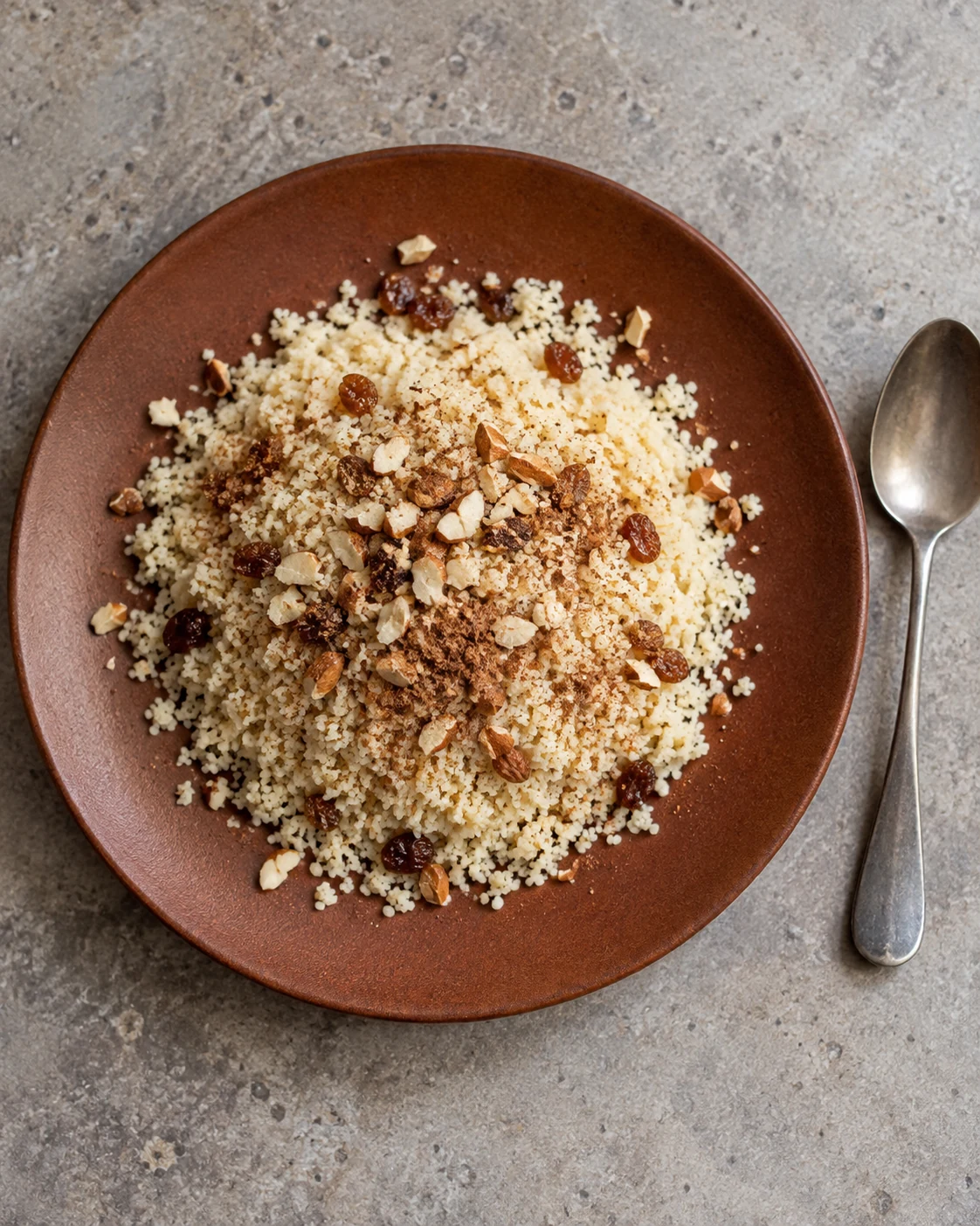
Couscous seffa
Fine couscous can take the place of chaariya. It keeps the same visual language of a decorated mound while changing the mouthfeel from strands to tiny steamed grains. [1]
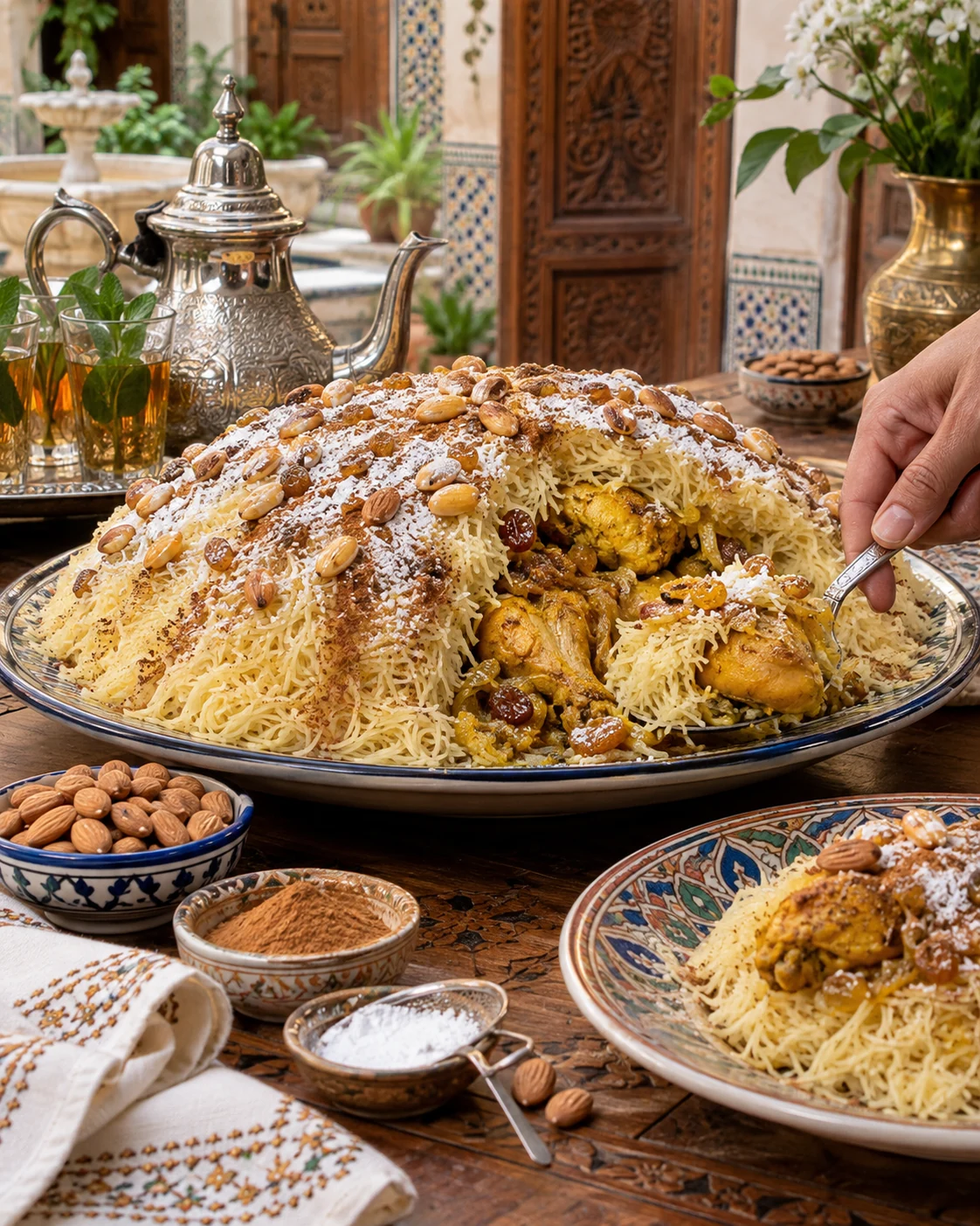
Seffa medfouna
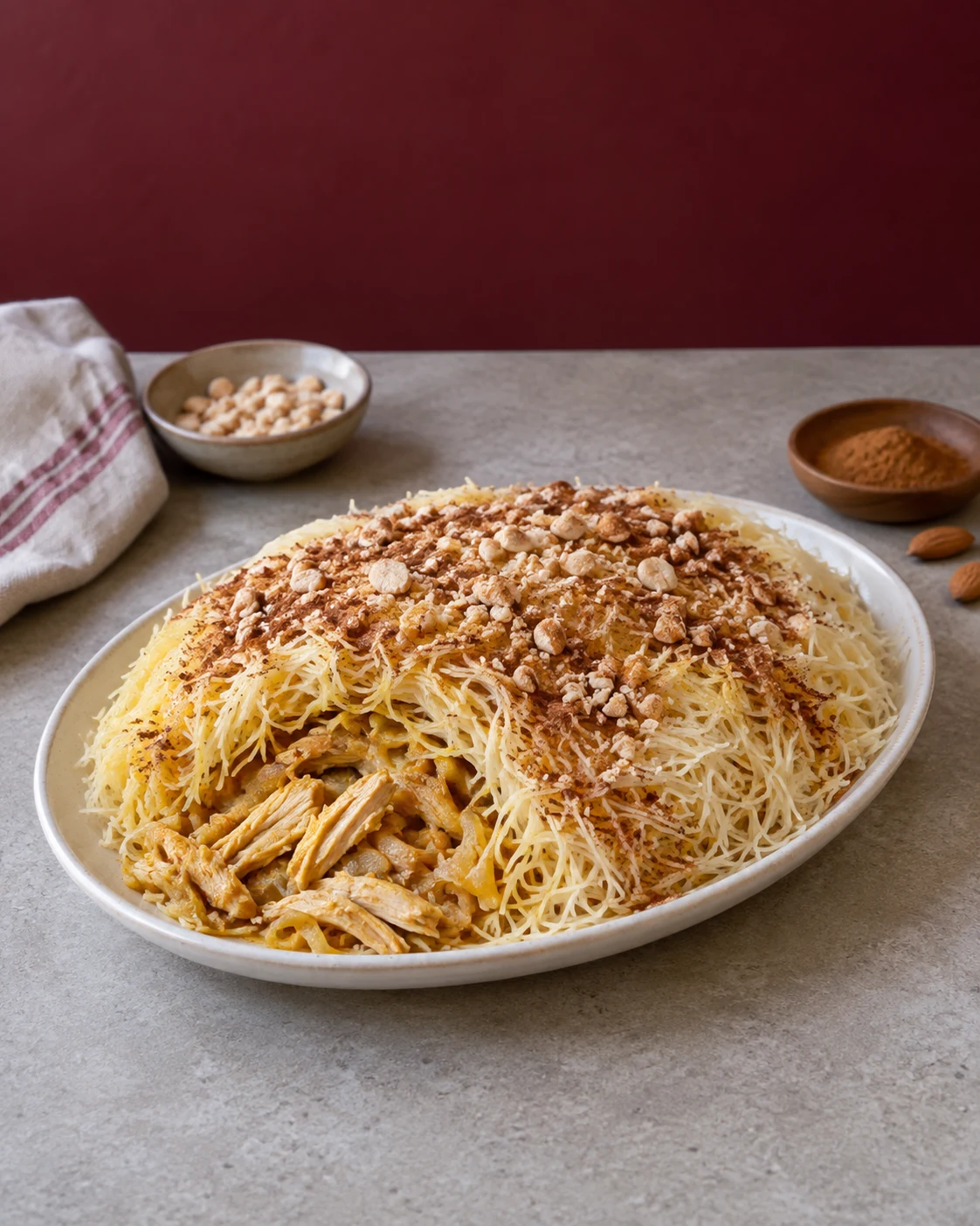
“Medfouna” means buried. Chicken, lamb or beef in a saffron-spiced sauce is placed beneath the mound, so a sweet-looking exterior opens into a savoury centre. [1]
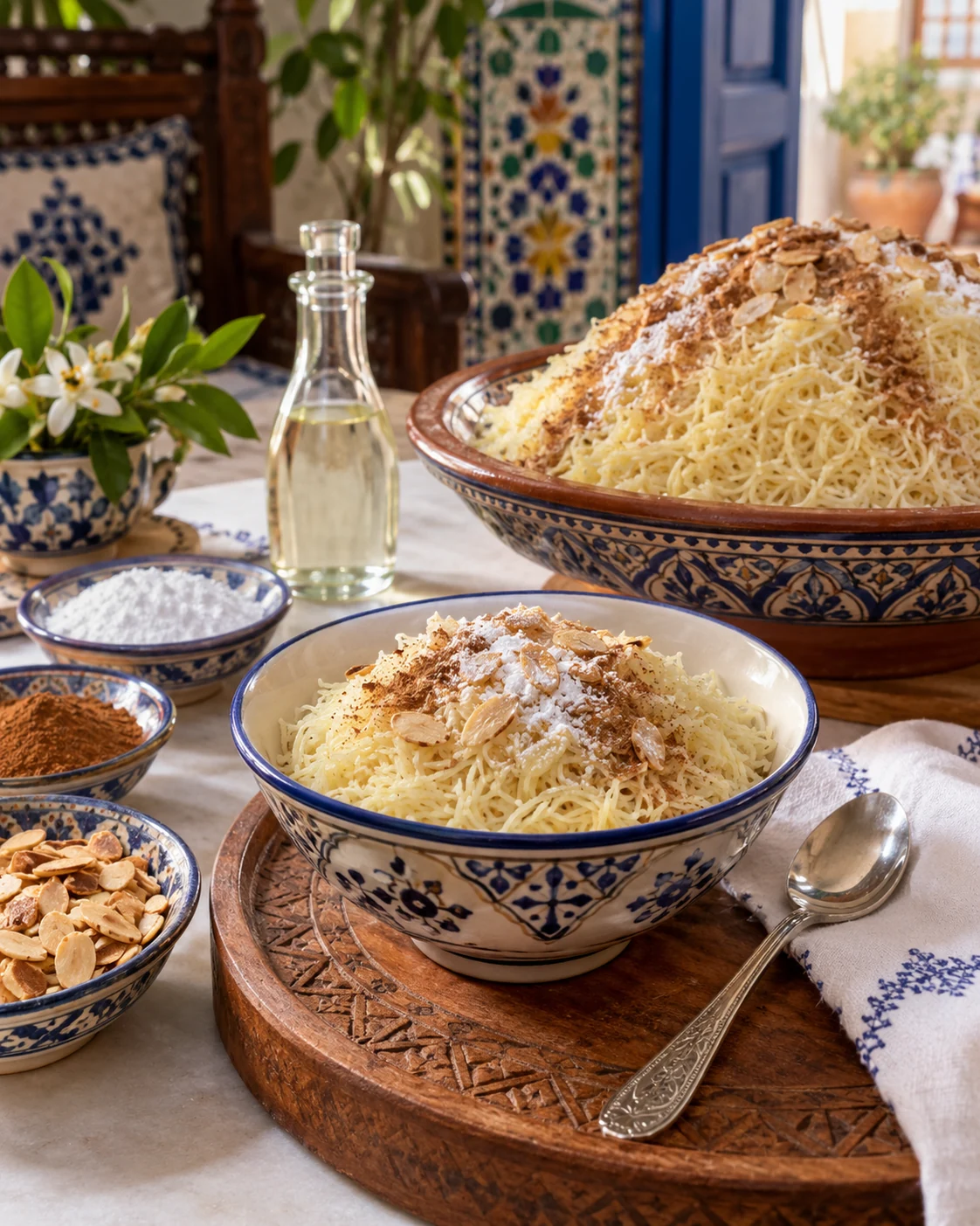
A lighter household expression
Taste of Maroc records a meat-free seffa touba in Meknes and Fez, sprinkled with orange flower water and served with warm or cold milk. It is a documented regional practice, not a nationwide standard. [1]
Sweet does not automatically mean dessert.
Seffa may appear within a multi-course meal, and medfouna deliberately combines a sweet finish with a savoury centre. Course order and household custom matter. [1]
The base changes the bite.
Couscous gives fine granules; chaariya gives delicate strands. Both depend on steaming and careful separation for their characteristic lightness.
05 · The language of the finish
Softness below.
Contrast above.
Seffa’s garnish is not random decoration. Each element changes texture, aroma or sweetness, and the final pattern tells the eater what is waiting in the mound.
The exact balance is personal: some tables are generous with powdered sugar, others let cinnamon and almonds lead.
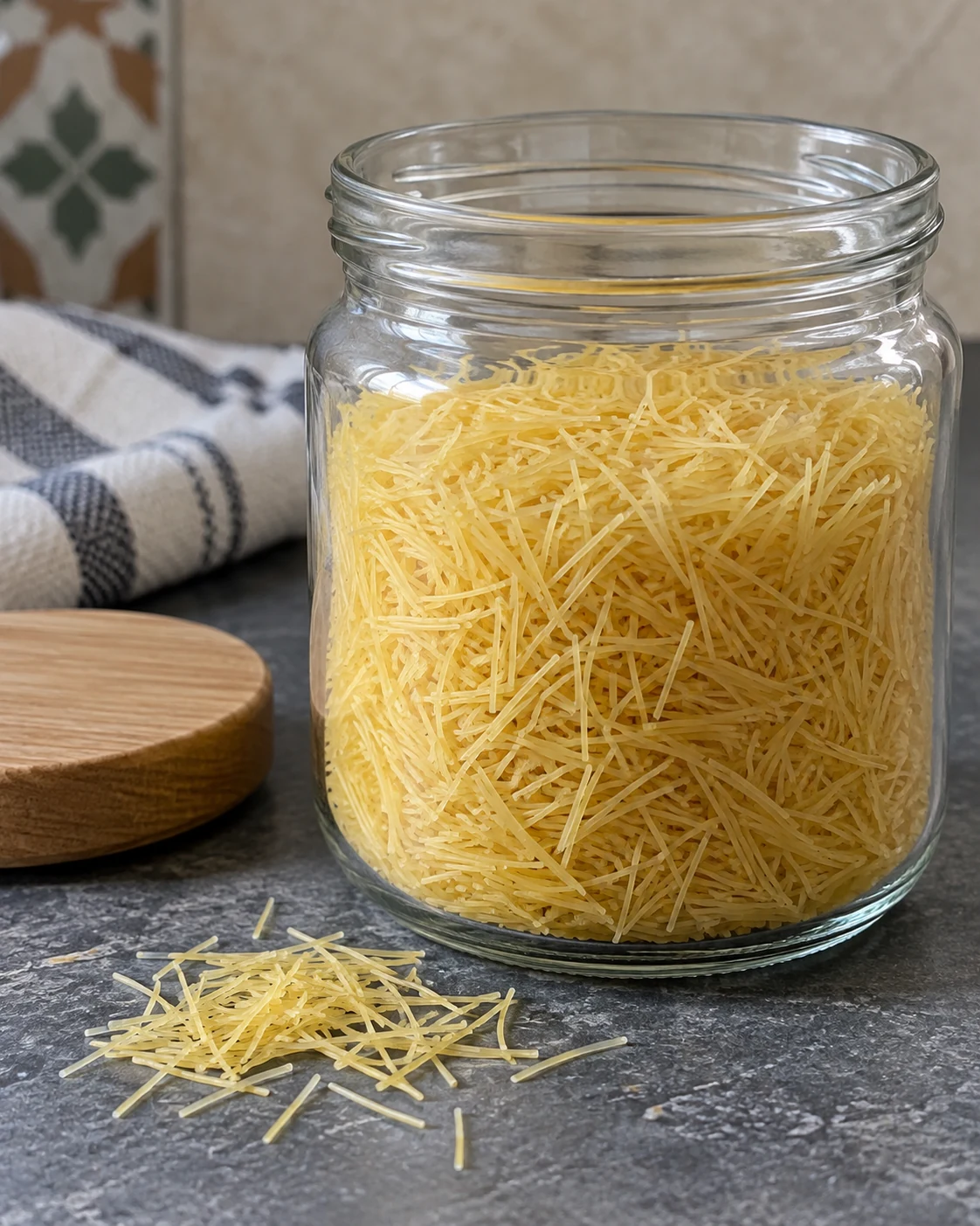
Chaariya
The strand carries the technique.
Broken vermicelli is repeatedly steamed and loosened. Its thinness makes careful hydration essential: enough moisture for tenderness, not so much that it clumps.
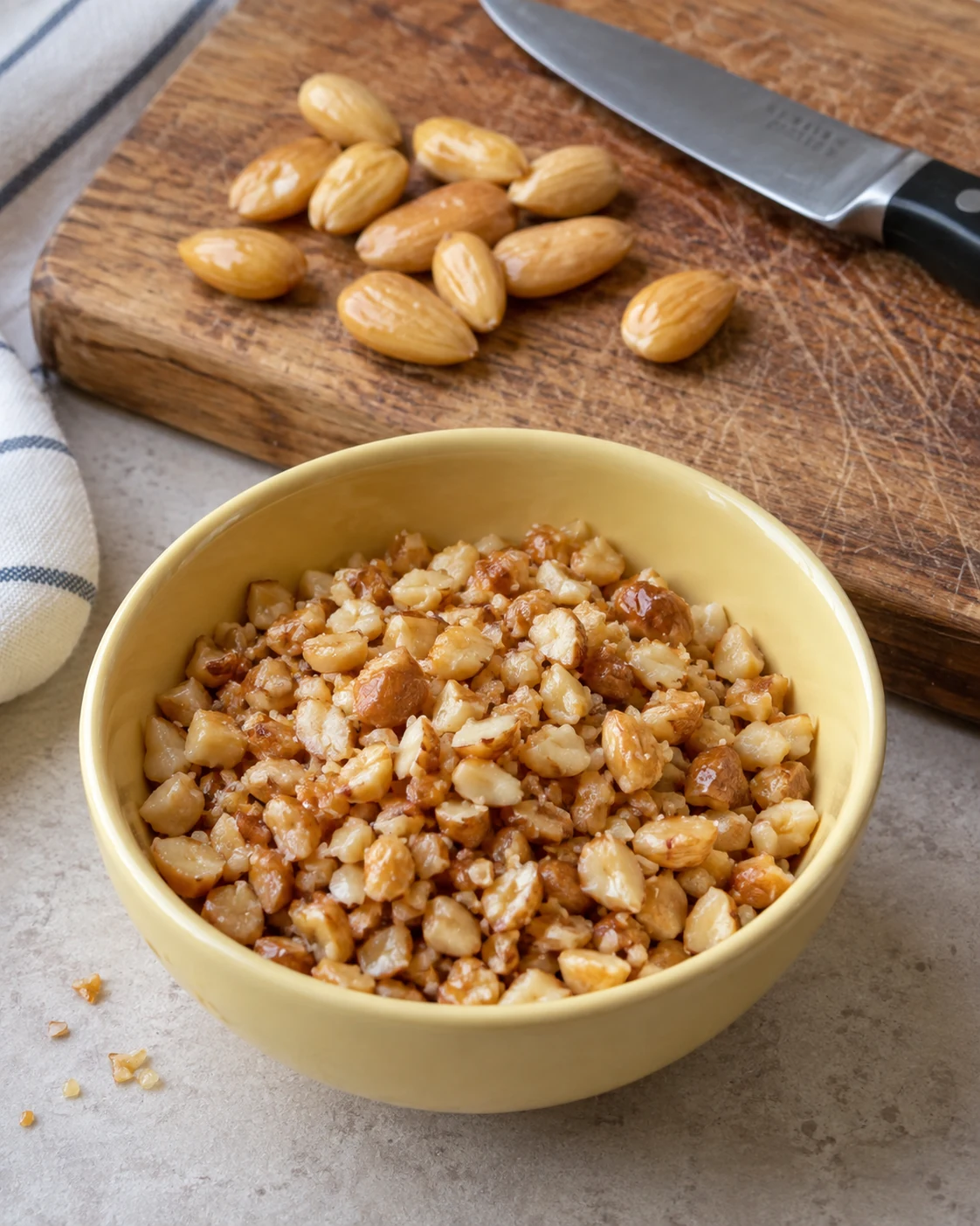
Almonds
Crunch against softness.
Blanched almonds may be fried or toasted, then used whole, sliced or ground depending on the household. Their roasted character keeps the sweet finish from feeling one-dimensional. [1]
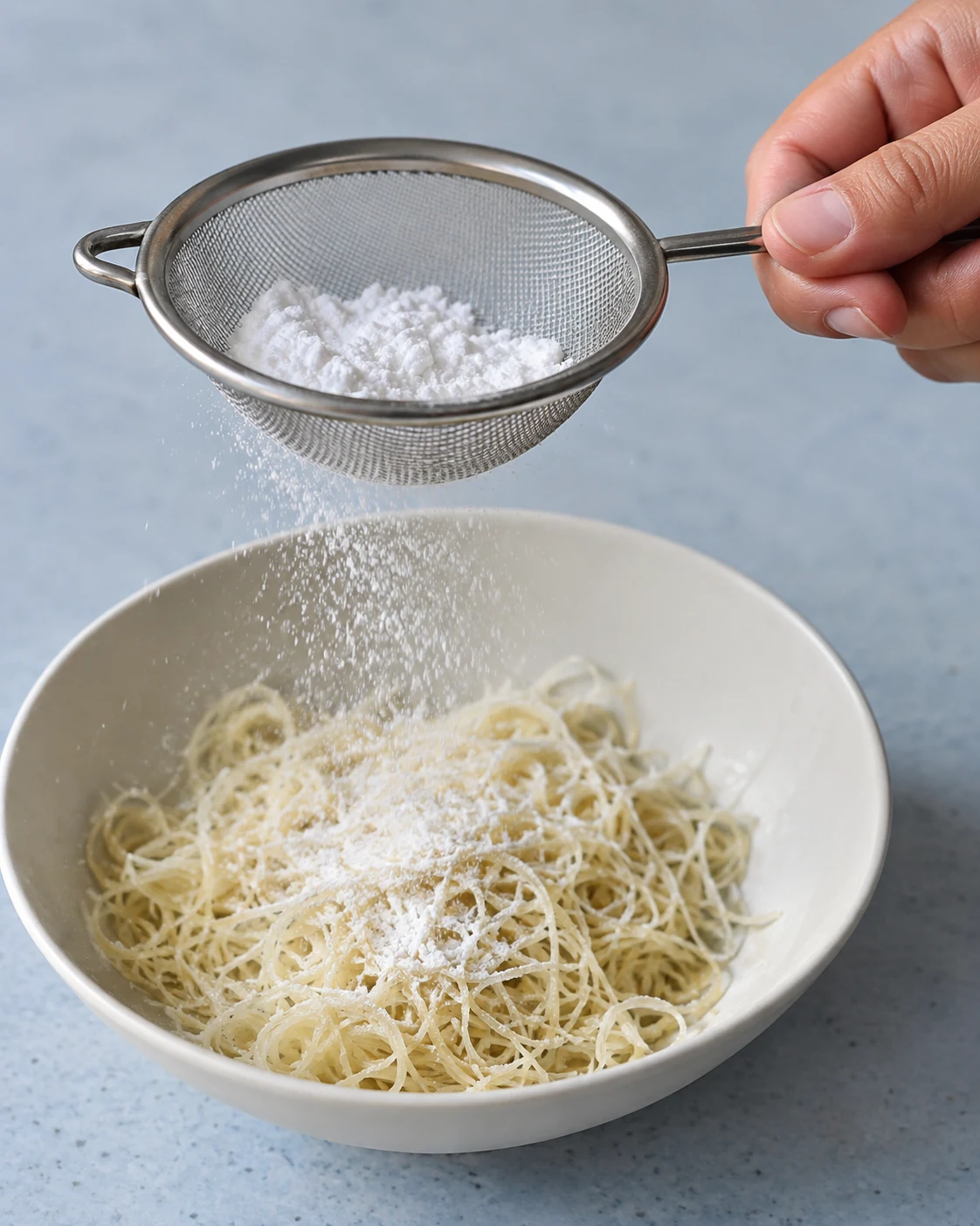
Sugar & cinnamon
Sweetness with a fragrant edge.
Powdered sugar gives immediate sweetness while cinnamon contributes aroma and a slightly dry, warm contrast. Their stripes or dusting are also part of seffa’s recognisable presentation.
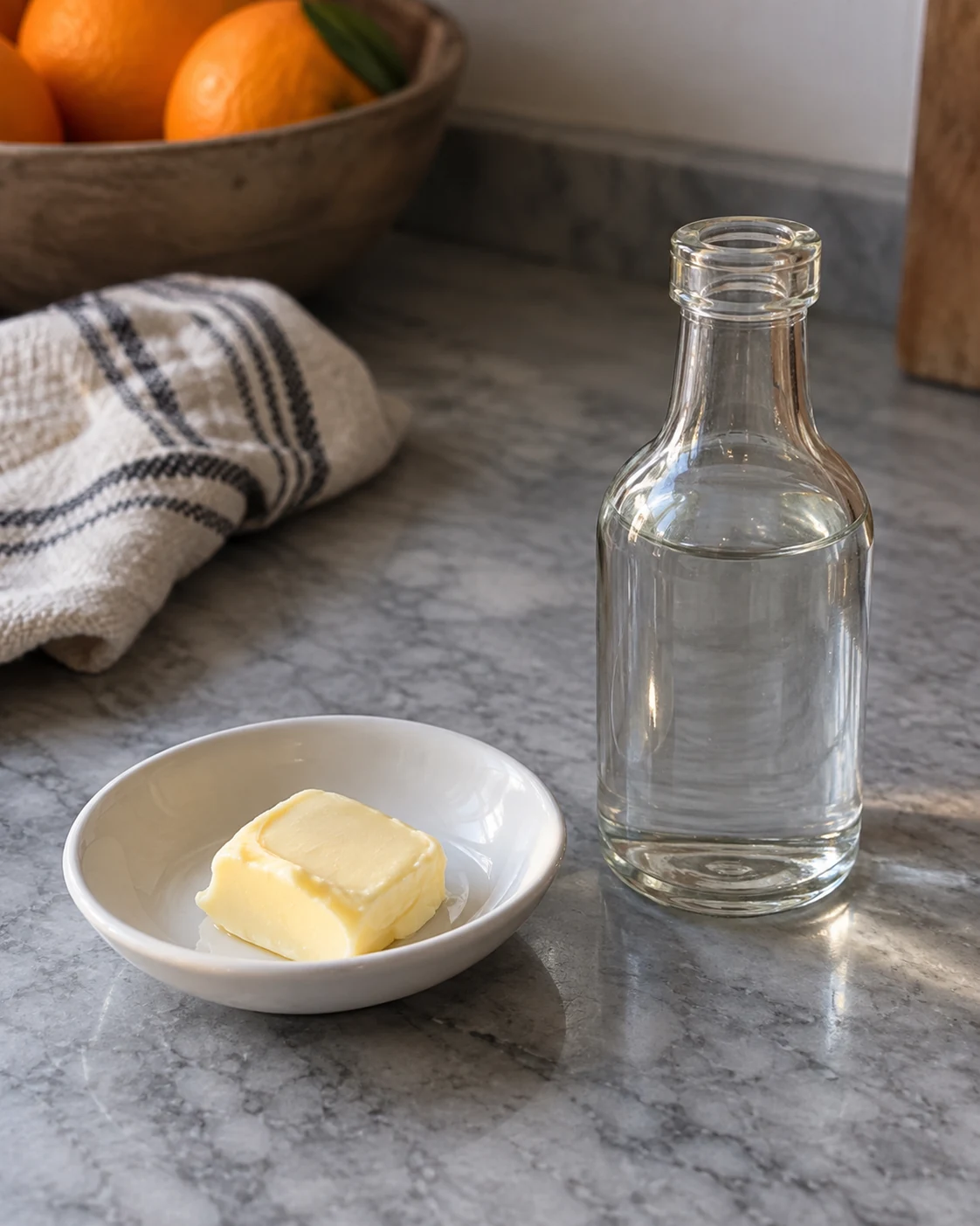
Butter & raisins
Richness, then little bursts of fruit.
Butter is commonly worked into the hot steamed base before serving. Raisins are traditional but optional; they may be steamed with the base or treated separately. [1]
Explore the four elements
STEAM · ENRICH · FINISH
The quiet
architecture.
A tall decorated mound only works when the base underneath remains light.
Seffa is assembled in stages. Steam develops tenderness; loosening controls separation; butter and sweetness are introduced after the final steaming; decoration arrives at the end. That sequence explains why the dish can look lavish without becoming dense.
Presentation is the last step of the technique, not a substitute for it.
Separate strands create volume.
When chaariya is loosened between steamings, the mound gains height naturally. Compressed or sticky noodles lose the airy structure that makes Seffa distinctive.
Richness comes after tenderness.
Butter and powdered sugar are worked into the hot base after the final steaming in the documented method, so the steaming process itself remains focused on texture. [1]
The finish should still show the food.
Cinnamon, sugar and almonds can form bands, lines or a generous dusting. The garnish should add contrast while leaving the strands or grains visible beneath it.

06 · Place, course & household
The same name.
Different tables.
Regional notes matter most when they are treated as examples, not borders.
One useful contemporary account records meat-free seffa in Casablanca as a course after a main dish, while the Meknes–Fez context includes a milk-and-orange-blossom preparation called seffa touba. Elsewhere, medfouna can turn the dish into a substantial sweet-and-savoury centrepiece. [1]
Those differences show why it is better to ask how a household serves Seffa than to insist on one national script. The base, garnish and place in the meal can all shift without making the dish unrecognisable.
Casablanca
A documented example of meat-free seffa appearing as a follow-up course after a main dish.
Explore Casablanca ↗Fez & Meknes
Documented seffa touba practice adds orange blossom and milk, showing another way the dish can move toward a lighter supper.
Explore Fez ↗Across home kitchens
Almond treatment, raisin use, sweetness and decorative patterns remain family choices.
Discover Taste Morocco ↗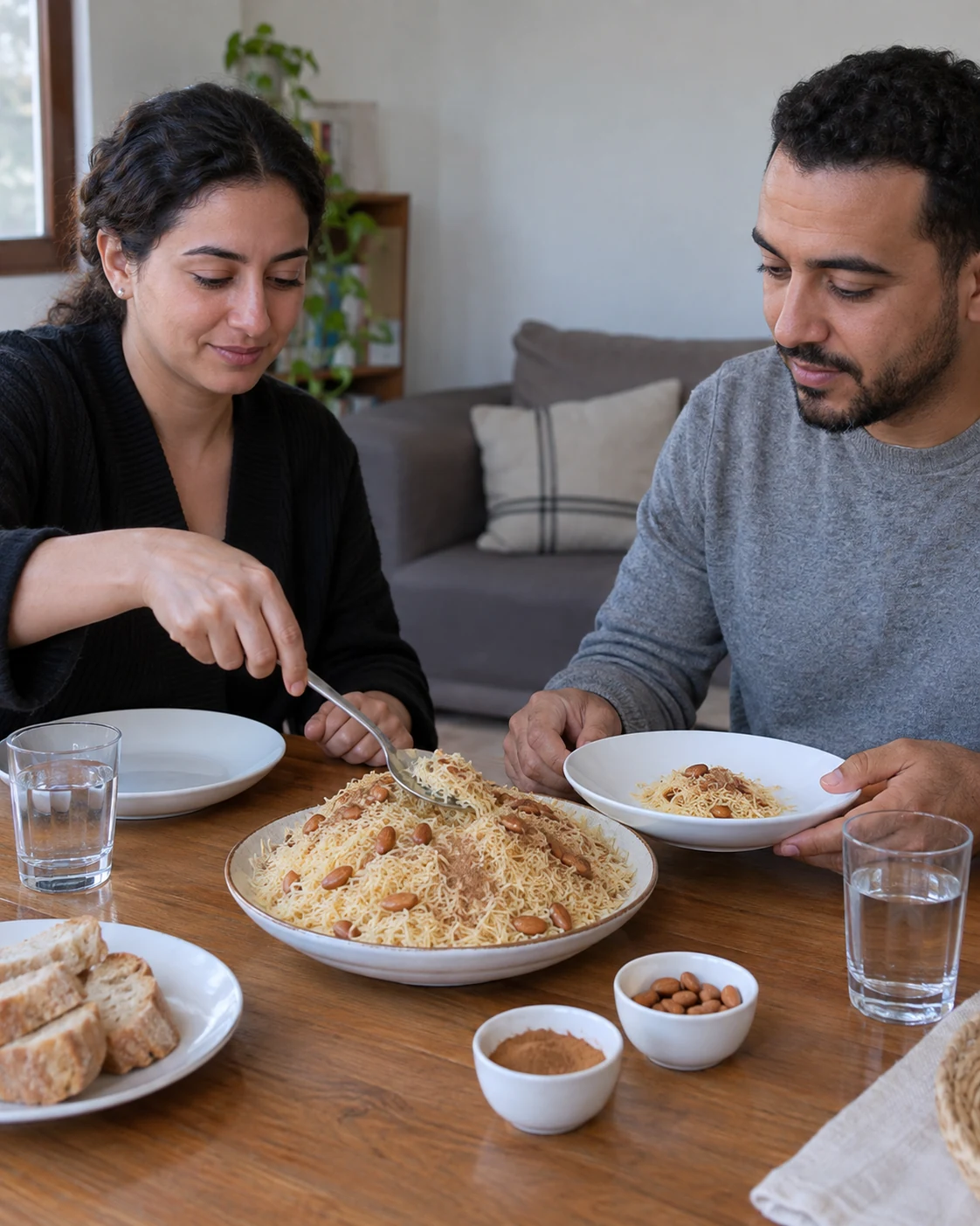
07 · The shared platter
A high mound.
Room around it.
Seffa is designed to arrive looking abundant.
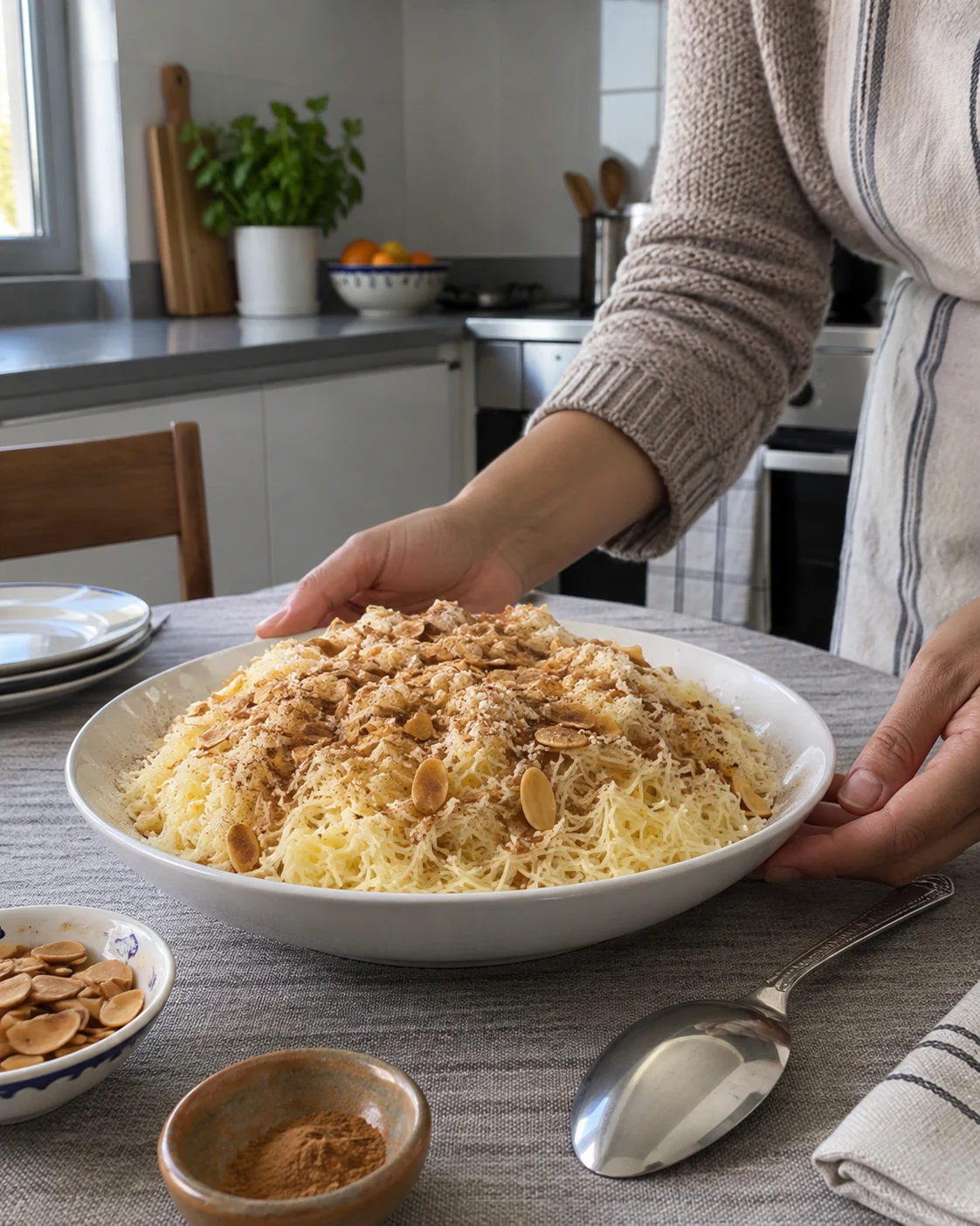
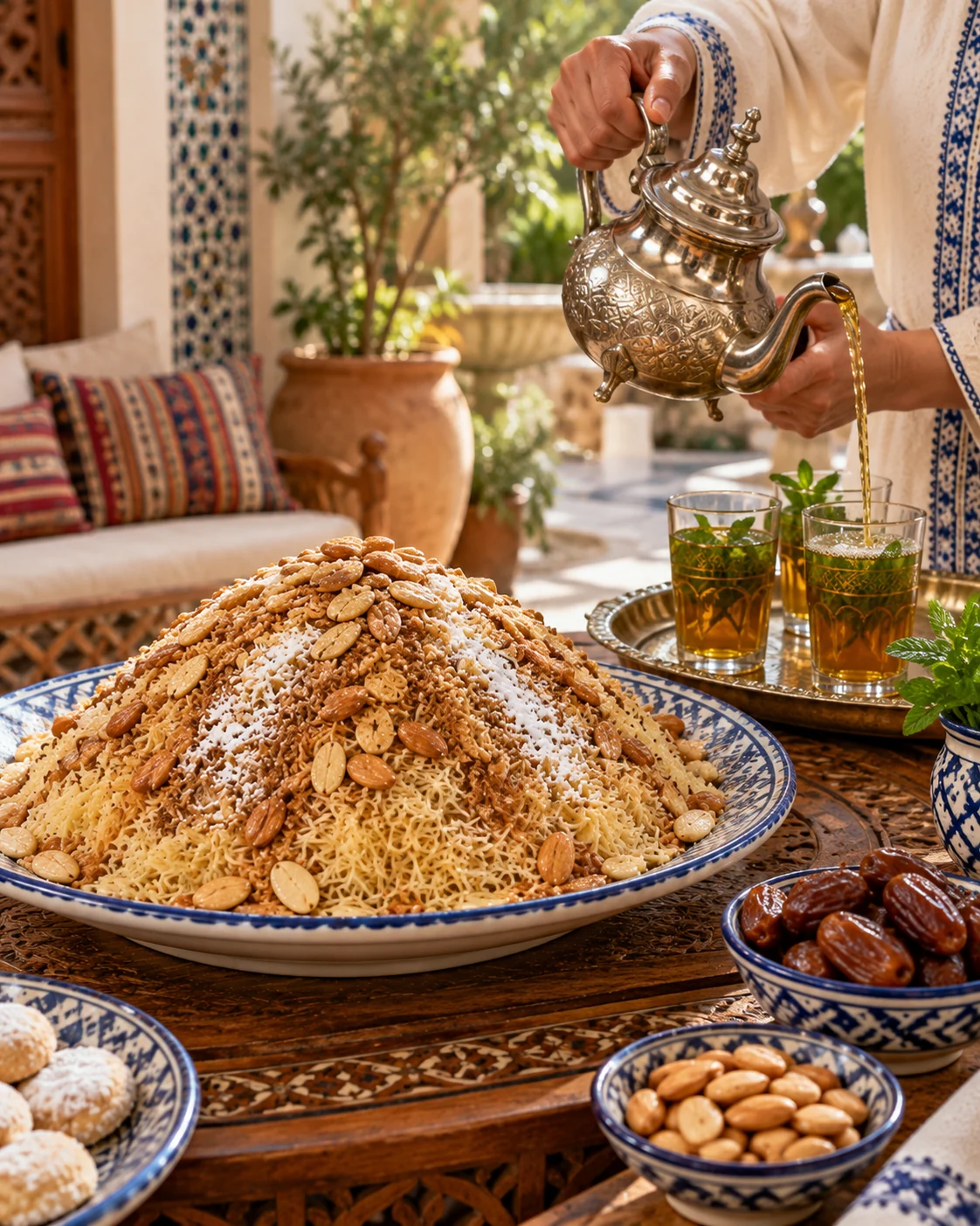
The decorated mound turns service into a moment of discovery. With medfouna, the centre remains hidden until people begin to serve themselves; with meat-free Seffa, the contrast is between soft strands, almonds, cinnamon and sugar.
Taste of Maroc describes the shared-platter tradition as people gathering around the dish and eating from their own side. Serving styles vary, and individual plates are equally possible in contemporary homes. [1]
Let people adjust the finish.
Small bowls of powdered sugar, cinnamon and ground almonds can be offered alongside the main platter. That lets each person move the balance toward more sweetness, more spice or more nutty richness.
It also respects a central truth of Seffa: the finish is generous, but it is not mathematically fixed. [1]
Sweet surface, savoury centre.
Medfouna makes the reveal part of the meal. Saffron chicken or meat sits beneath a sweetened exterior, so the first serving exposes the contrast instead of announcing it from the start.
This is not an accident of plating; it is the meaning of the name “medfouna”—buried. [1]
Tea can follow the conversation.
Mint tea belongs broadly to Moroccan hospitality, but it is not a compulsory partner to every Seffa platter. When it appears, its fresh herbal character gives a clean counterpoint to cinnamon, sugar and almonds.
Special enough to impress.
Familiar enough for home.
Seffa medfouna is well suited to a multi-course special-occasion table, yet contemporary home cooks also make it as a standalone family meal. Context changes the scale, not the identity of the dish. [1]
Course order and serving style are not universal. A thoughtful guest observes how the household presents the dish rather than treating one published sequence as a national rule.
08 · Handwork & presentation
Before the table,
the hands.
Seffa’s final shape records every stage that came before it.
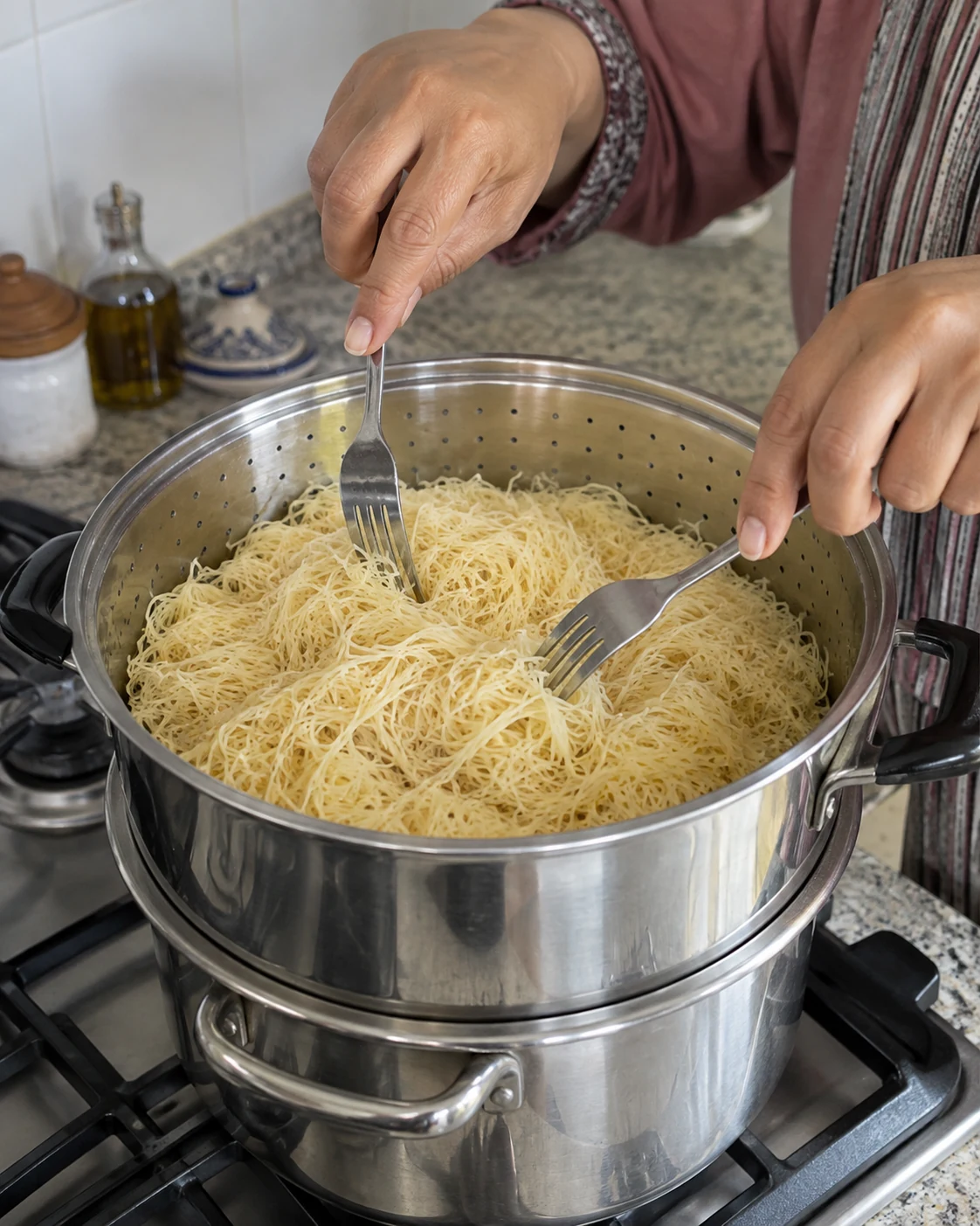
The work begins long before the garnish: lifting steamed chaariya from the couscoussier, breaking up clumps, distributing water, checking tenderness and building the mound without crushing it. Only then do the almonds, cinnamon and sugar become visible.
A wide ceramic gsaa is particularly useful for the repeated loosening and mixing described in chaariya steaming. The couscoussier manages steam; the broad dish gives the cook working space. Together they show how cookware and hand technique meet. [2]
Decorative bands are not mandatory, but they suit the form beautifully: cinnamon can mark the slope, powdered sugar can create pale contrast, and almonds give the summit texture and weight.
Explore Moroccan craft & design ↗09 · A closer look
Good questions.
Clear answers.
The details keep Seffa from being reduced to “sweet noodles”.
Is Seffa always a dessert?
No. Meat-free Seffa can occupy different places in a meal, while seffa medfouna contains a savoury chicken or meat centre. Calling every Seffa a dessert misses that range. [1]
Does Seffa have to be made with vermicelli?
No. Both broken fine vermicelli and couscous are established bases. The garnish can look similar, but the texture changes substantially. [1]
Why steam pasta instead of boiling it?
Repeated steaming lets chaariya absorb moisture gradually while staying separate. The documented technique uses several steamings with loosening and hydration between them. Boiling cooks the pasta too, but produces a different result. [2]
Are raisins mandatory?
No. They are traditional but optional in the documented recipe. They may be steamed into the base, caramelised separately or left out. [1]
What is hidden inside Seffa Medfouna?
Common documented fillings include saffron-scented chicken, lamb or beef with an onion-rich sauce. The exact meat and seasoning can vary. [1]
Where did Seffa originate?
It is firmly established as Moroccan traditional food, but the sources used here do not support one precise invention date or a single exclusive city of origin. It is better to describe documented regional and household practices than manufacture certainty.
 EXOTIC MOROCCOTASTE · THE GUIDE COLLECTIONSeffaIngredients, technique
and the Moroccan table
From the story to your kitchen
Keep the flavour.
Go a little deeper.
Steamed vermicelli or couscous, almonds and sweet aromatics.
Explore the Exotic Morocco guide collection for a closer look at ingredients, kitchen knowledge and the culture around the table.
- Understand the ingredients and their roles
- Recognise the techniques and textures that matter
- Bring context and confidence to the way you cook and serve
Continue tasting Morocco
Follow the
table outward.
Another dish, another technique, another way into the Moroccan kitchen.
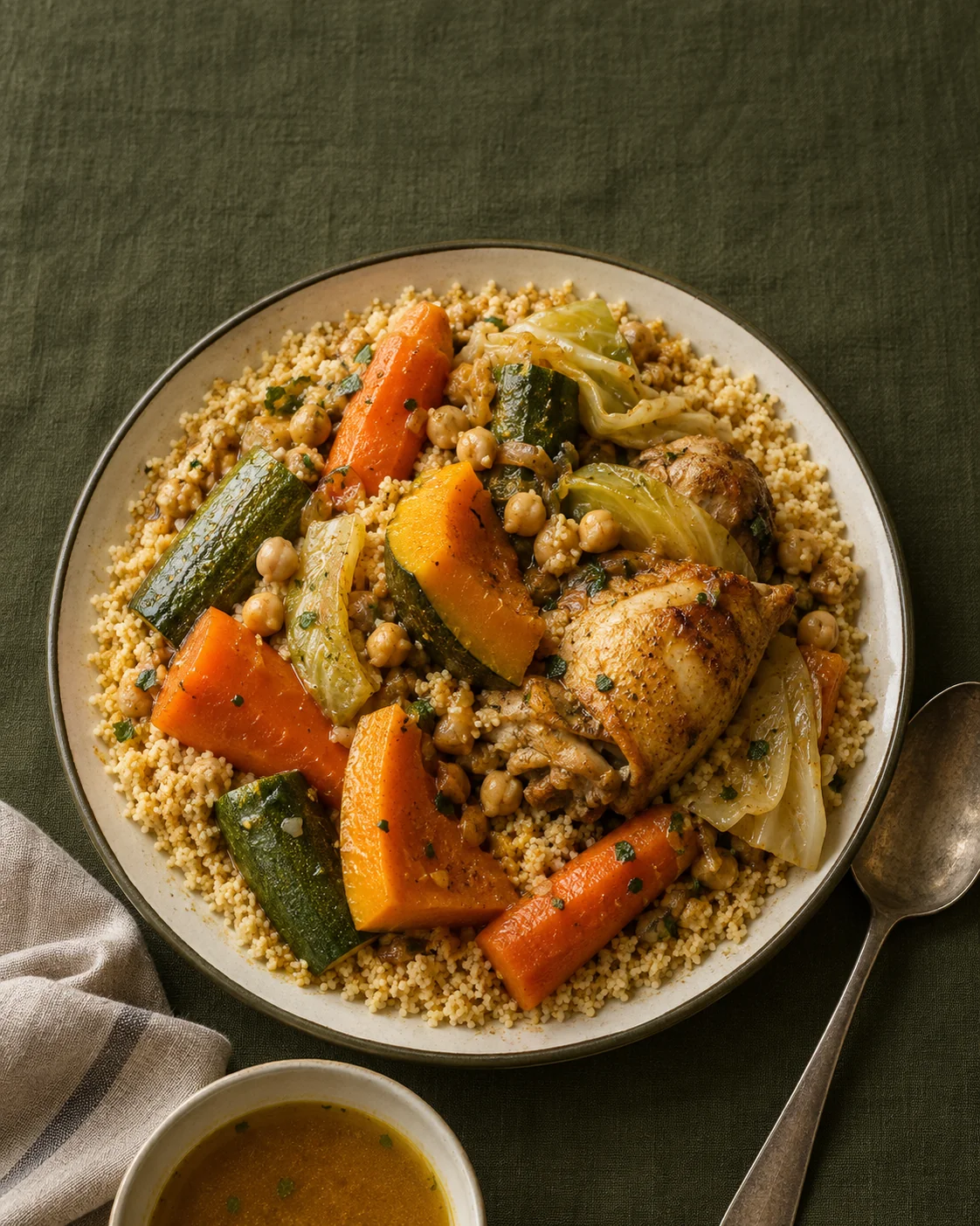
Couscous
Grains, steam and the many ways a shared platter comes together.
Explore the story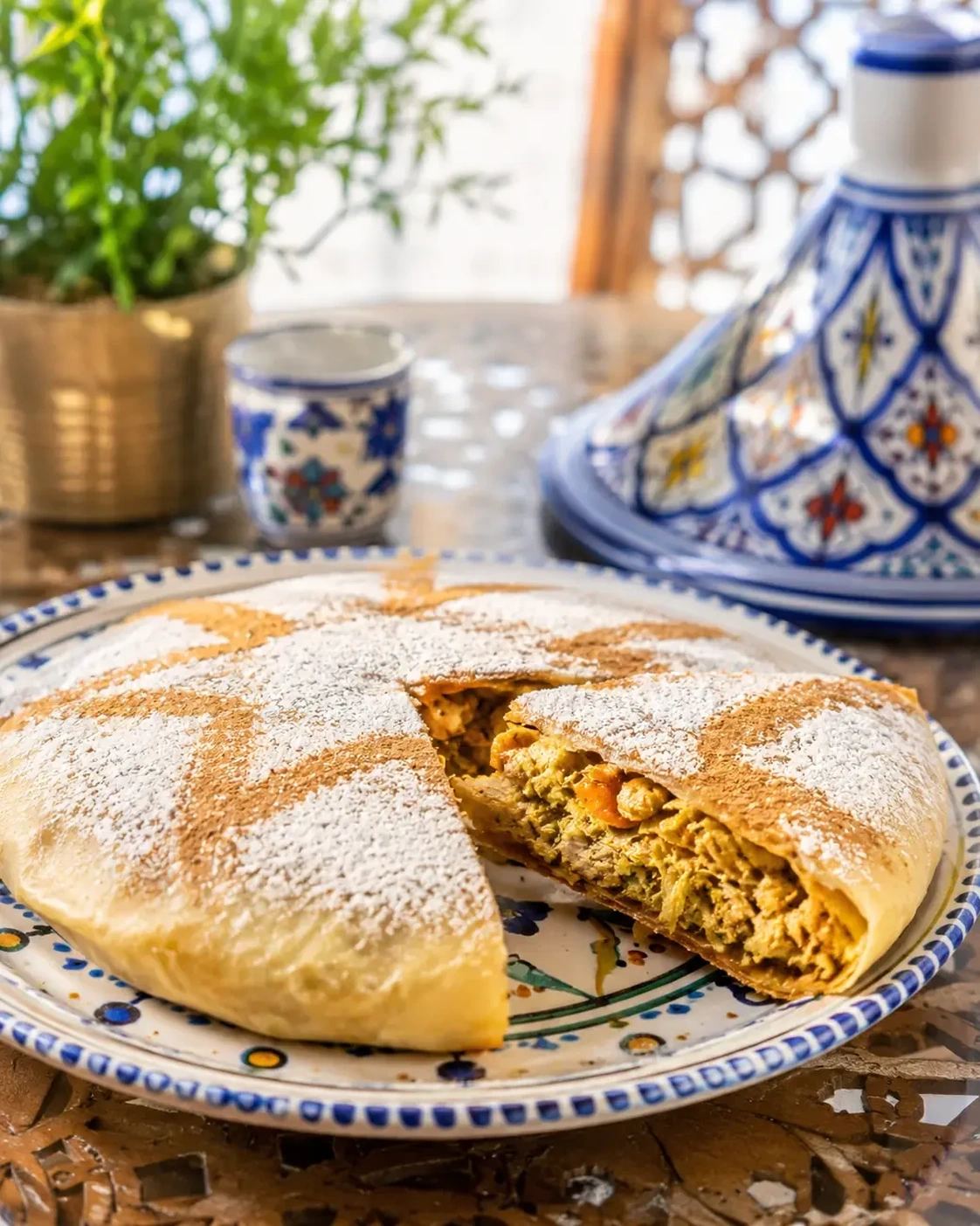
Pastilla
Fine pastry, layered fillings and the pleasure of contrasting textures.
Explore the story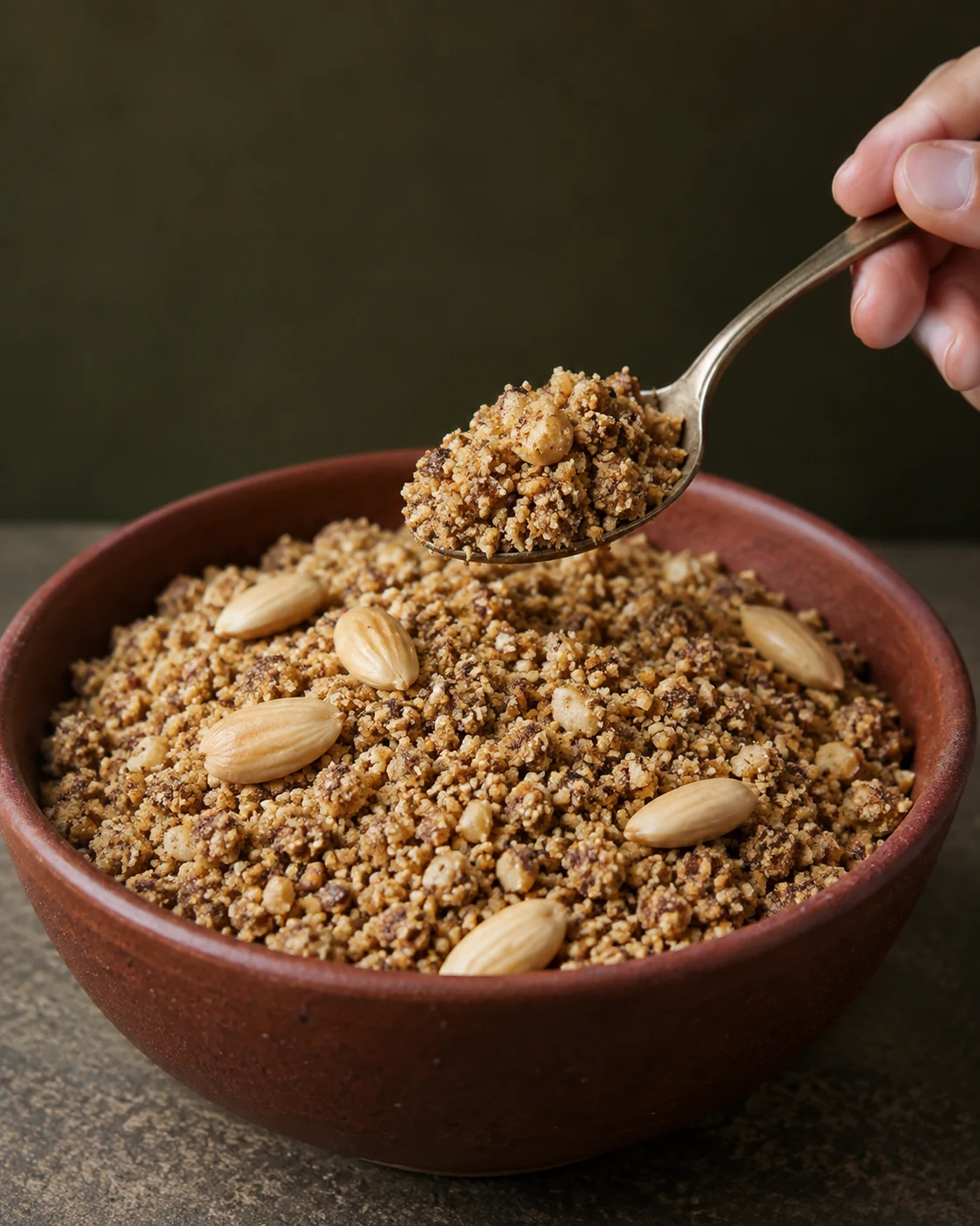
Sellou
Toasted flour, sesame and almonds in a distinctive sweet mixture.
Explore the story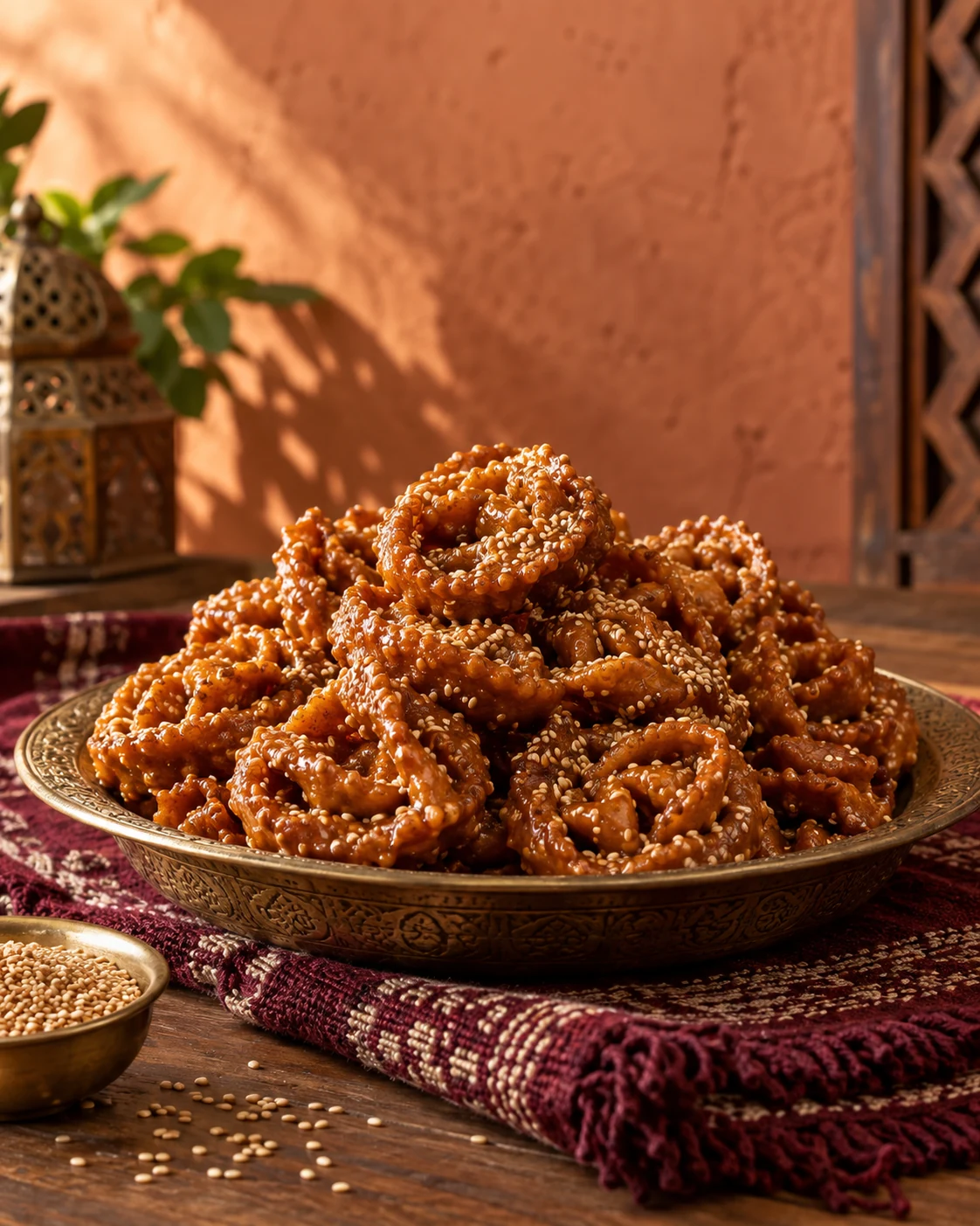
Chebakia
Folded sesame pastry finished with honey.
Explore the story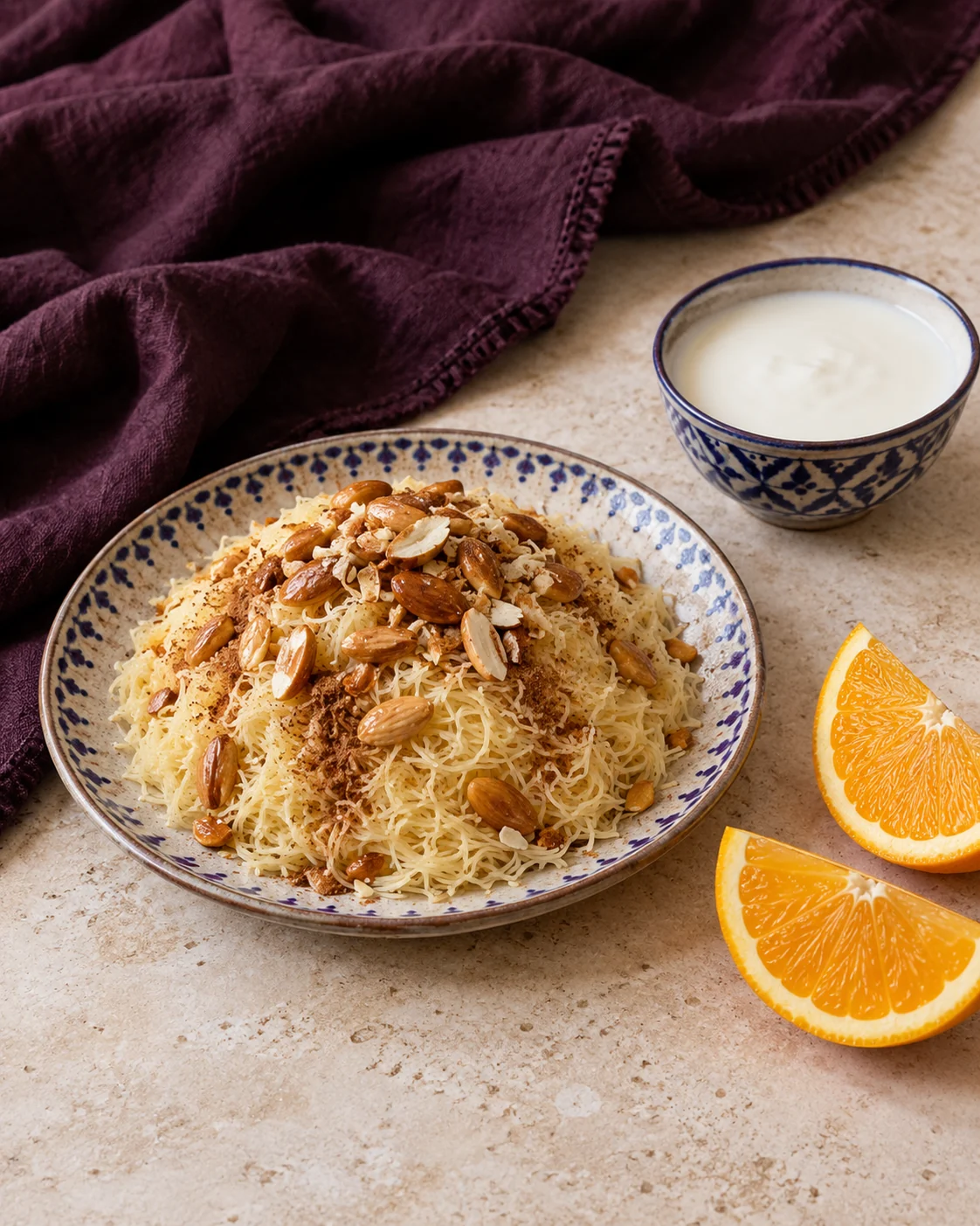
Desserts
Fruit, fragrance and a considered sweet ending.
Explore the story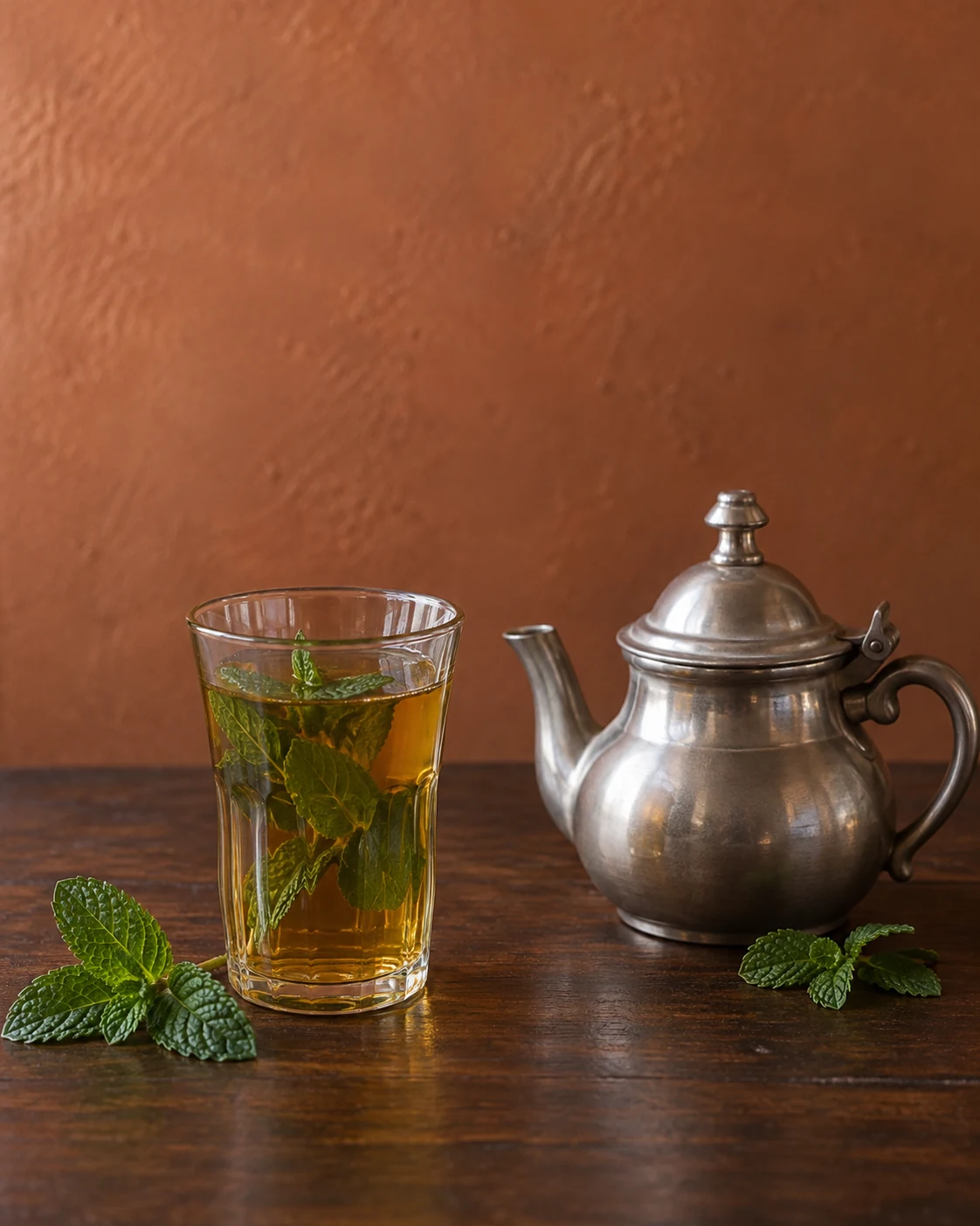
Moroccan Mint Tea
Green tea, fresh herbs and the time given to a guest.
Explore the storySources & editorial notes
Photography combines existing Exotic Morocco assets and generated editorial illustrations. These images do not document a named person, household or historical event.
- Christine Benlafquih, Taste of Maroc · Seffa Medfouna — chaariya/couscous bases, medfouna meaning and filling, garnishes, serving and documented household/regional variations.
- Christine Benlafquih, Taste of Maroc · How to Steam Chaariya — repeated steaming, hydration, couscoussier technique and the use of a broad mixing dish.
- Moroccan National Tourist Office · Moroccan gastronomy — Seffa listed among notable traditional Moroccan dishes.
- Paula Wolfert · The Food of Morocco — broader reference work on Moroccan foodways; used as contextual bibliography rather than as support for a precise Seffa origin claim.