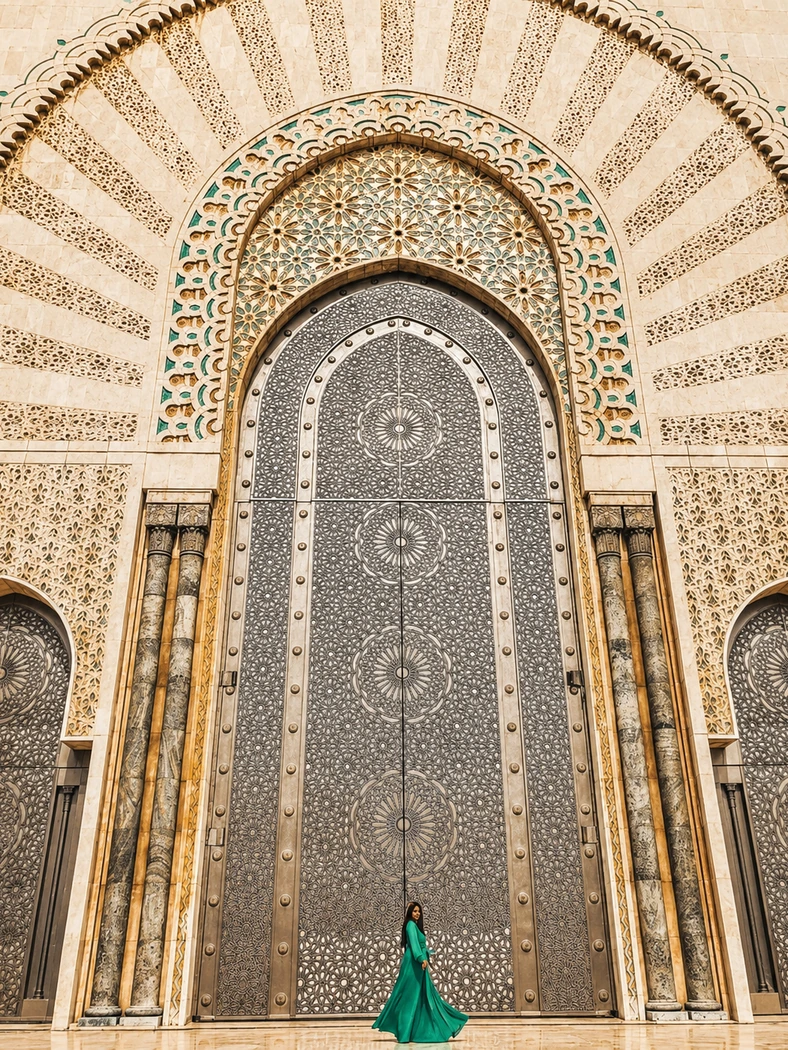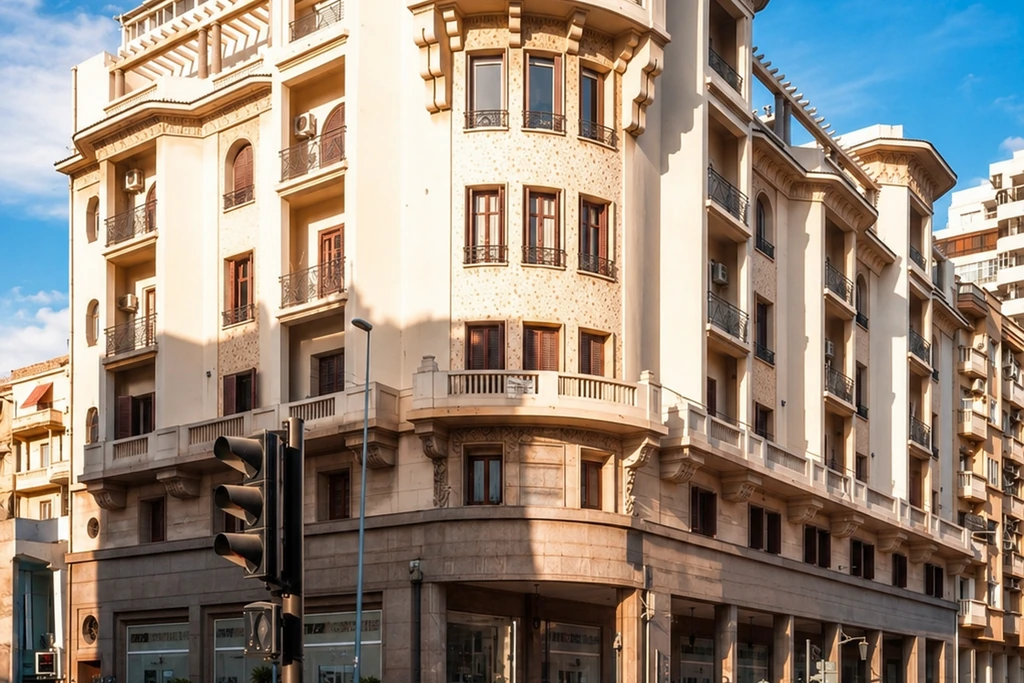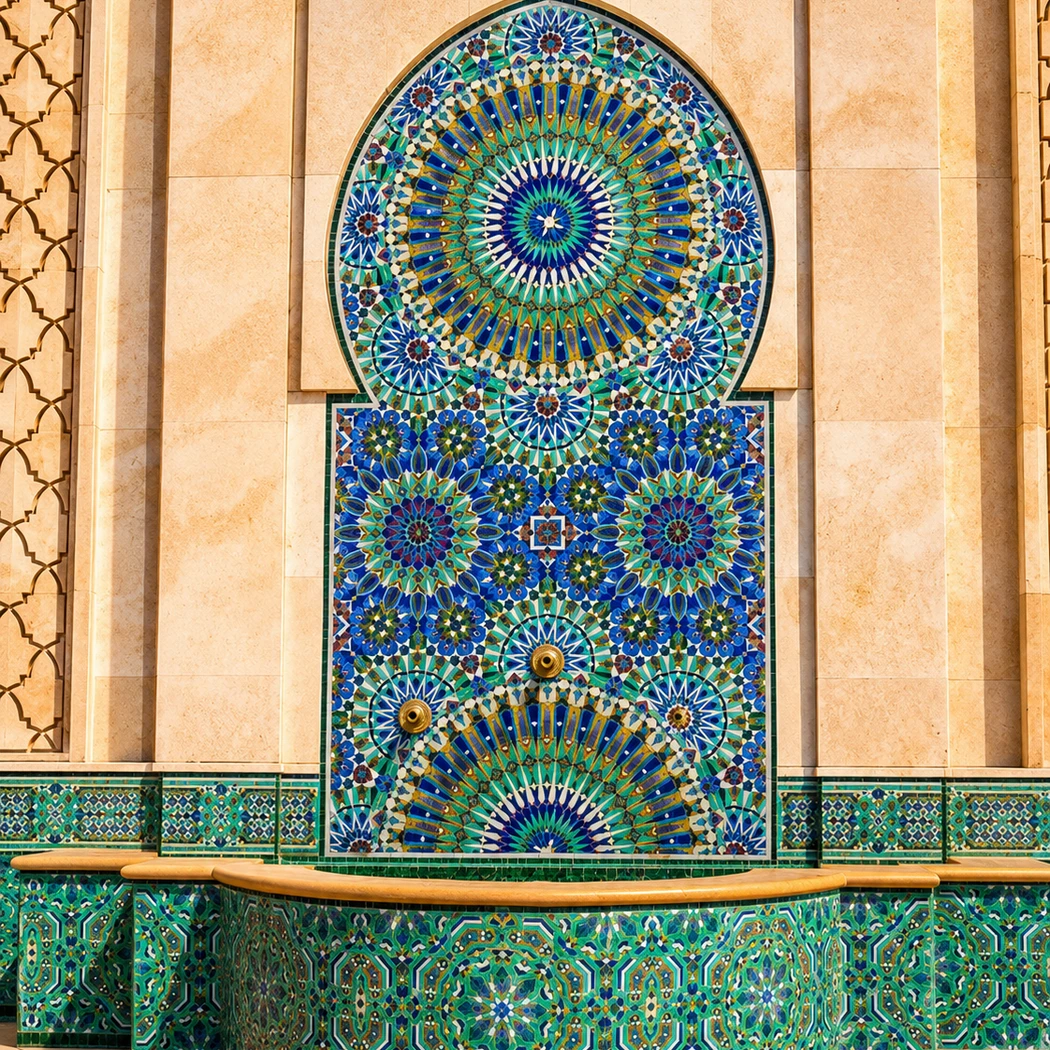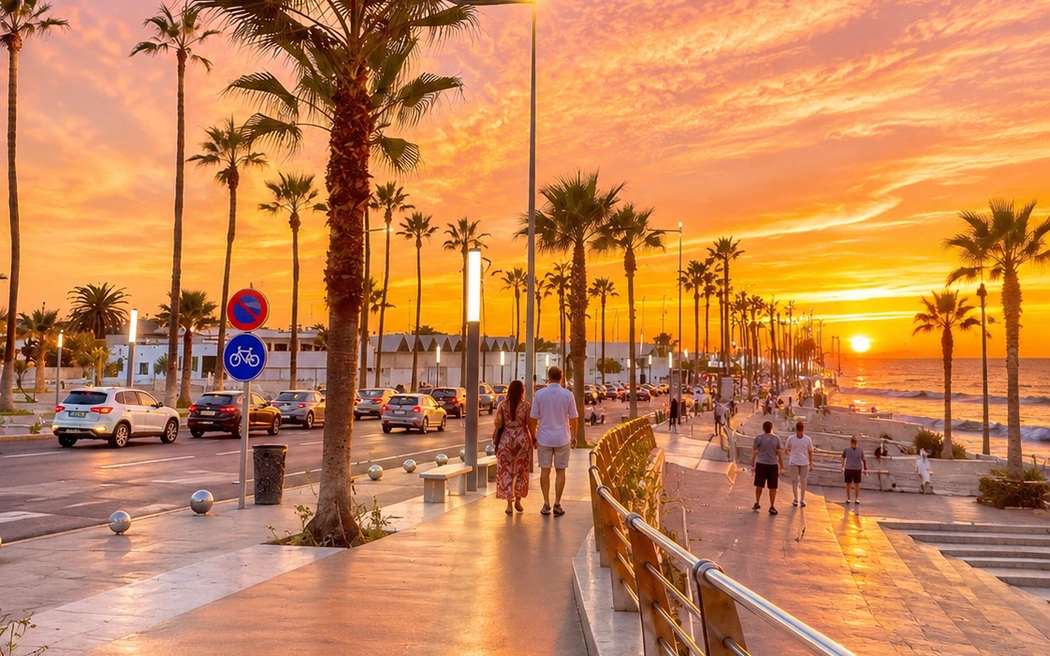
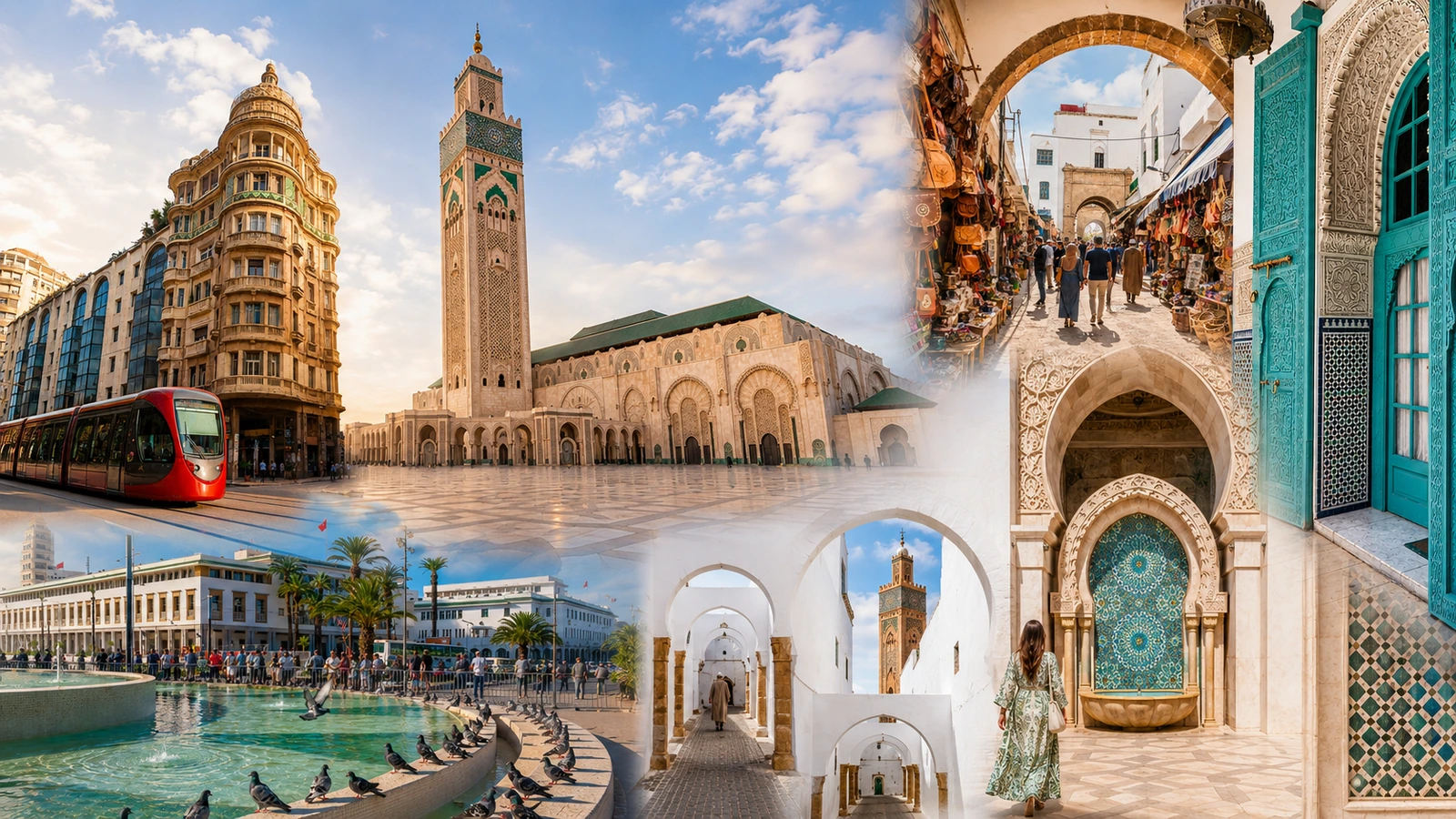
Casablanca collage with Hassan II Mosque, Art Deco tramway, medina market, turquoise doorway, fountain and civic square

Atlantic metropolis

Casablanca Ocean mosque, Art Deco streets and Moroccan modernity

Casablanca is Morocco’s urban argument with the twentieth century: Atlantic, commercial, architectural and constantly unfinished. Its power lies in the meeting of Hassan II Mosque, Art Deco boulevards, port life, Habous arcades, old medina thresholds and the restless scale of a city still building itself.

Why Casablanca matters

Beyond the idea of a transit city

Casablanca is often treated as an arrival point, but that misses its real value. It is not a museum city like Fès, nor a polished imperial showpiece. It is Morocco’s largest urban stage: a city of ocean infrastructure, modern architecture, markets, migration, finance, cinema myths and daily metropolitan pressure.

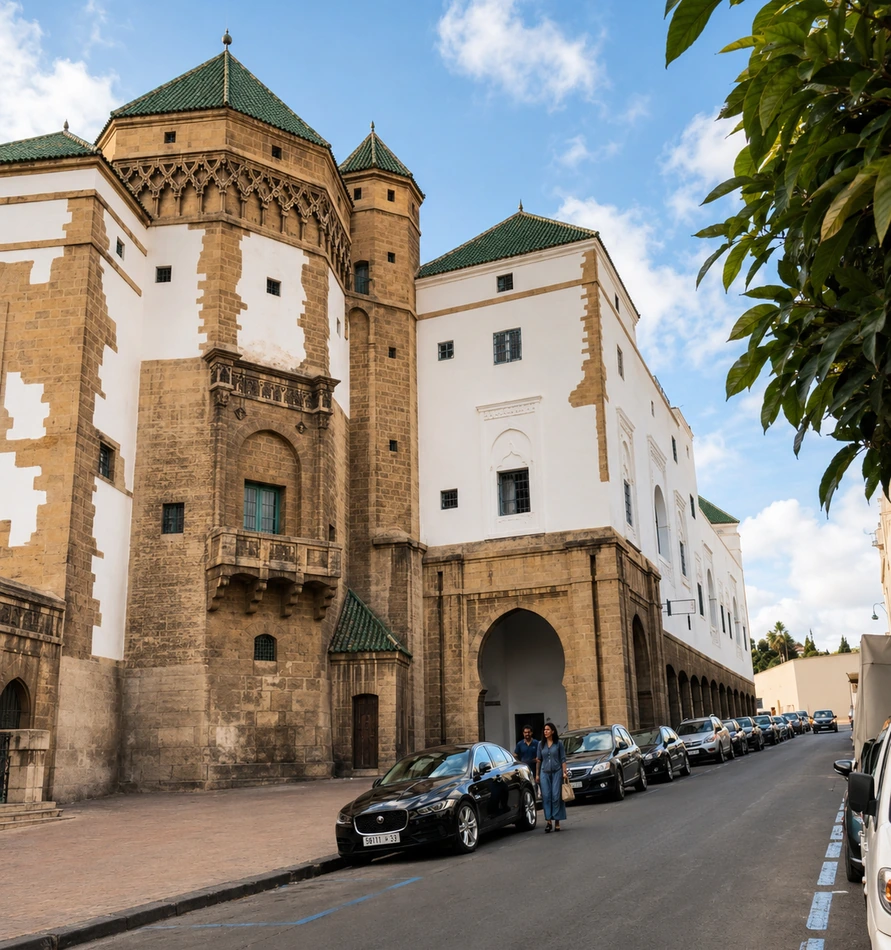
The visitor who reads Casablanca carefully finds an unusually rich city: Hassan II Mosque built on the water, the late medina near the port, the Art Deco and neo-Moorish downtown, Habous as a planned Moroccan quarter, the Mahkama du Pacha as craftsmanship and authority, and the Corniche as Casablanca’s Atlantic release.
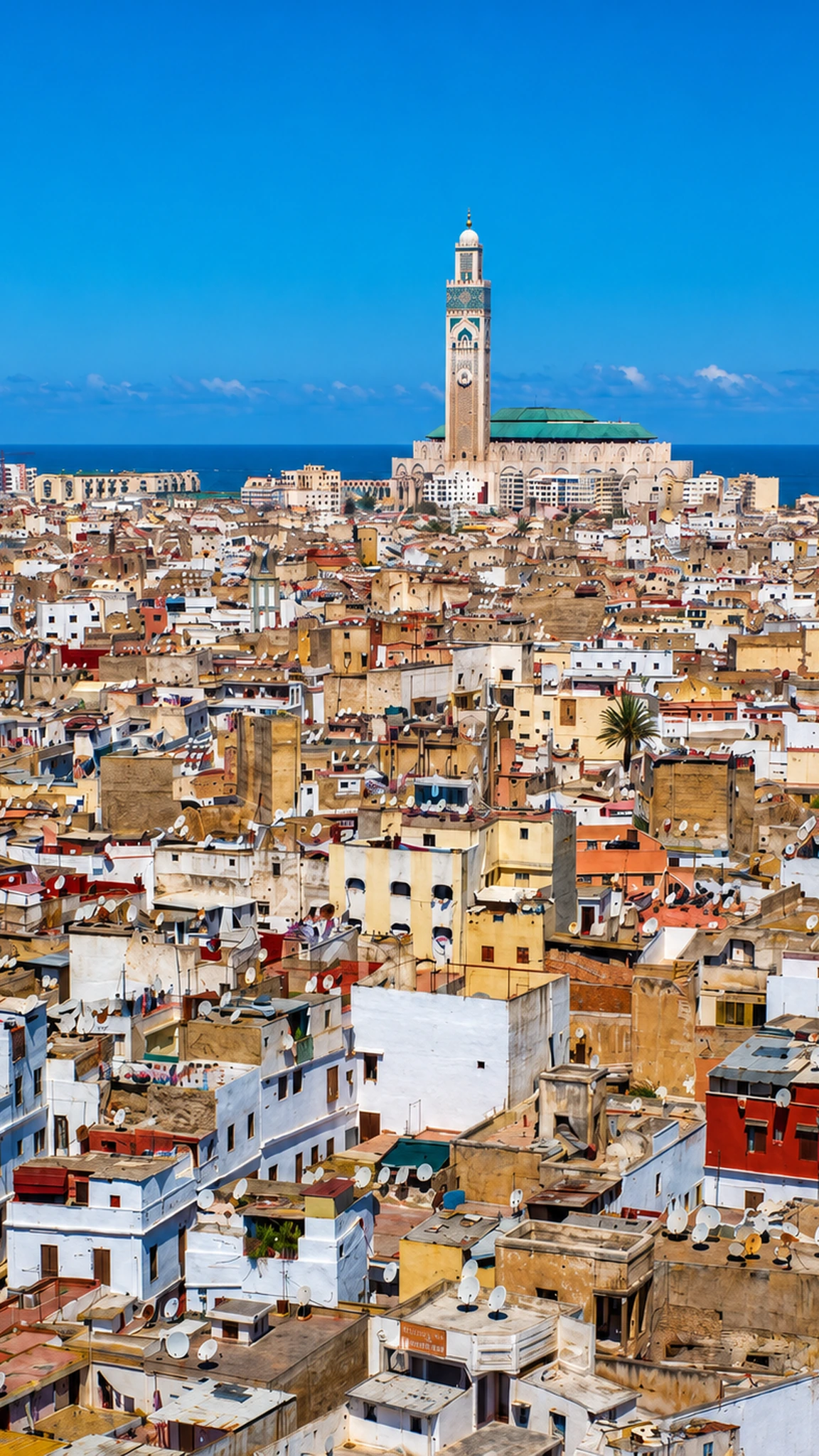
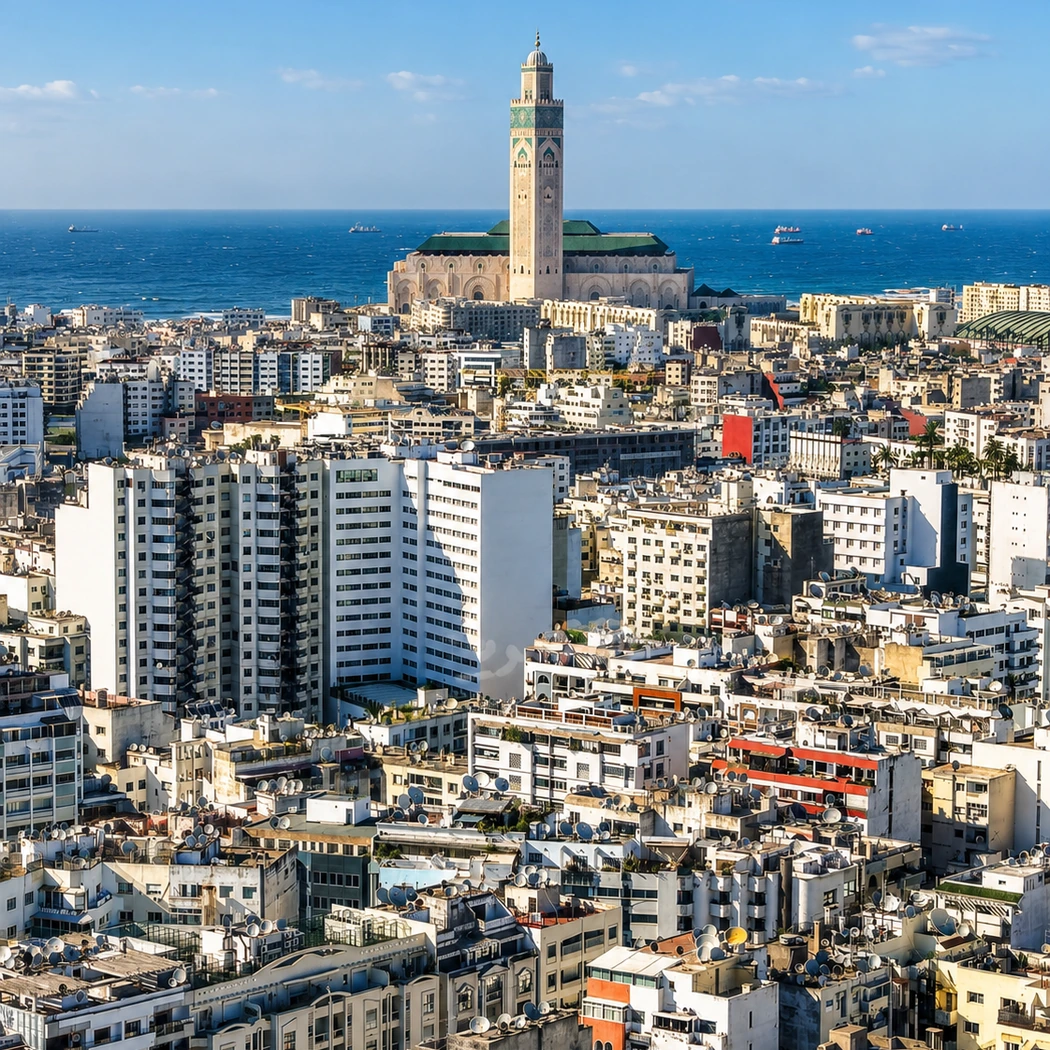
Dense Casablanca rooftops with Hassan II Mosque and the Atlantic horizon beyond

A city of scale and contrast

Casablanca’s meaning is not hidden in one monument. It emerges from scale, contrast and tension: mosque and ocean, boulevard and market, colonial plan and Moroccan daily life.

Historical orientation

From Anfa and port city to Morocco’s modern metropolis

Casablanca is best understood through four layers: the older coastal settlement, the port and colonial city, the Art Deco and neo-Moroccan architectural experiment, and the contemporary Atlantic metropolis.

01Earlier coastal layers

Older coastal memory

The city’s pre-modern story is tied to the Atlantic coast and earlier settlement layers, long before Casablanca became the country’s main modern urban symbol.

02Port-city expansion

Harbour, trade and expansion

Casablanca’s modern rise is inseparable from its port and the infrastructure that turned the city into Morocco’s economic engine.

0320th-century design

Art Deco and neo-Moroccan design

Downtown Casablanca became a laboratory of Art Deco, Art Nouveau, neo-Moorish and modernist architecture, especially around the central boulevards and civic squares.

04Contemporary metropolis

Atlantic modernity

The city now reads as a living metropolis: mosque, tram, port, business districts, malls, beaches and everyday neighbourhoods overlapping at large scale.

Casablanca can be approached through three essential images: the ocean mosque, the architectural city centre, and the Moroccan-planned life of Habous and the medina.

Three ways into the city

These images help bridge the historical story and the city you encounter today: memory of dynastic ambition, the long sweep of the walls, and the medina’s intimate spiritual scale.

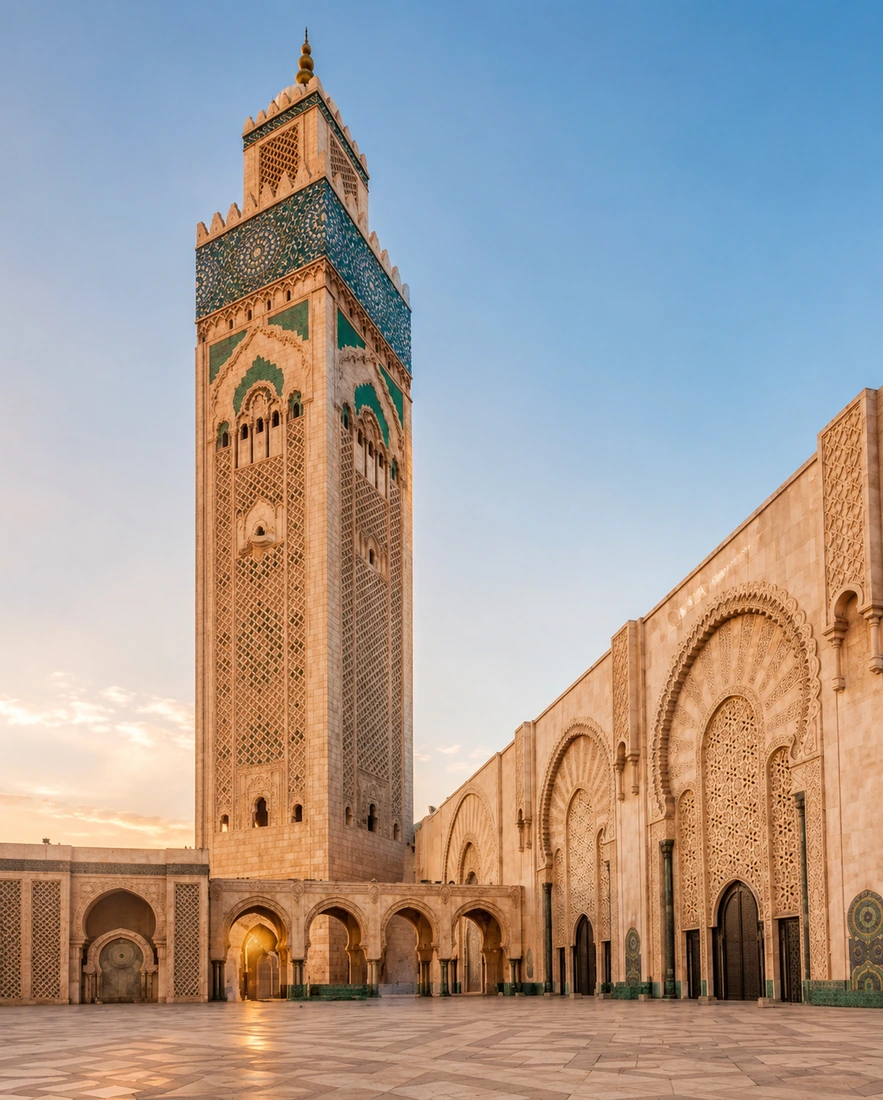
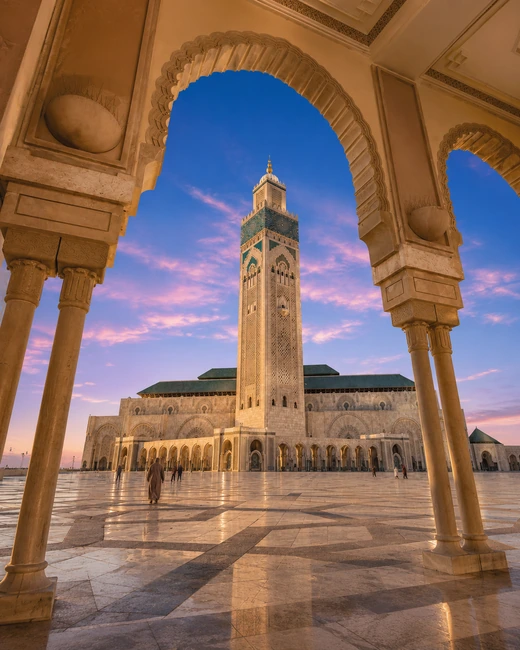
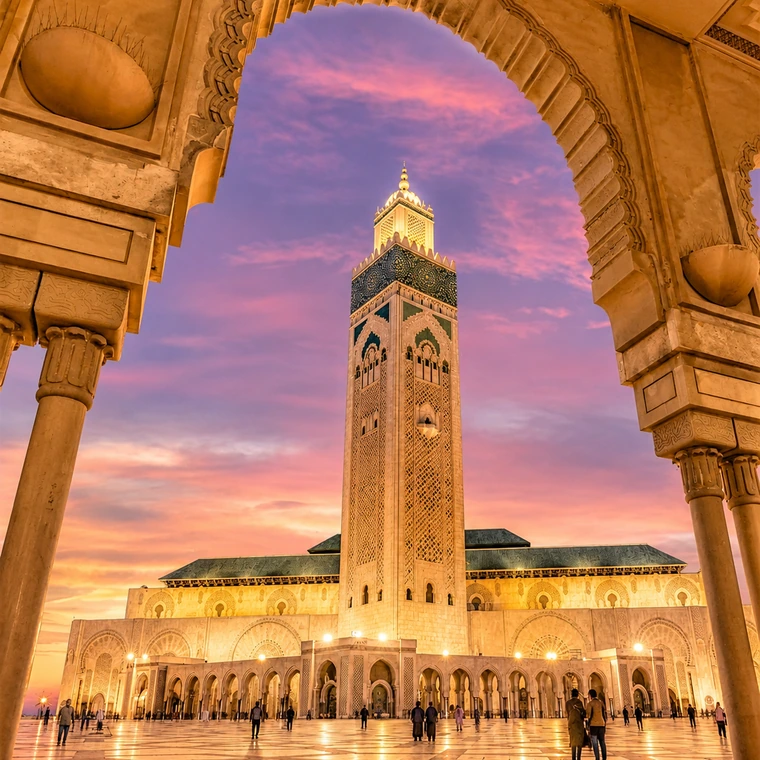
Hassan II Mosque at golden hour framed by monumental arches

Hassan II Mosque

The mosque gives Casablanca its most powerful skyline and turns the Atlantic edge into sacred urban theatre.

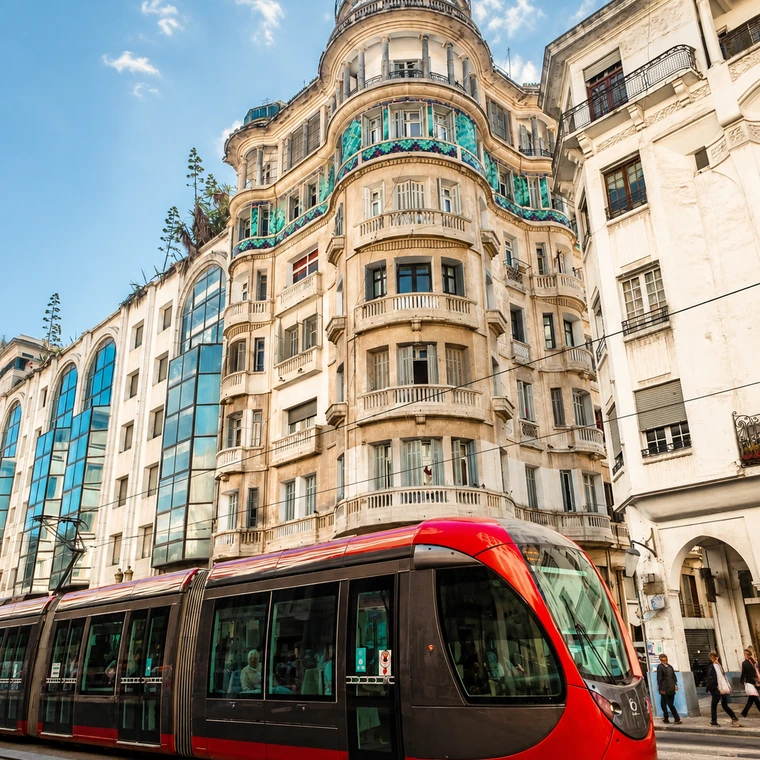
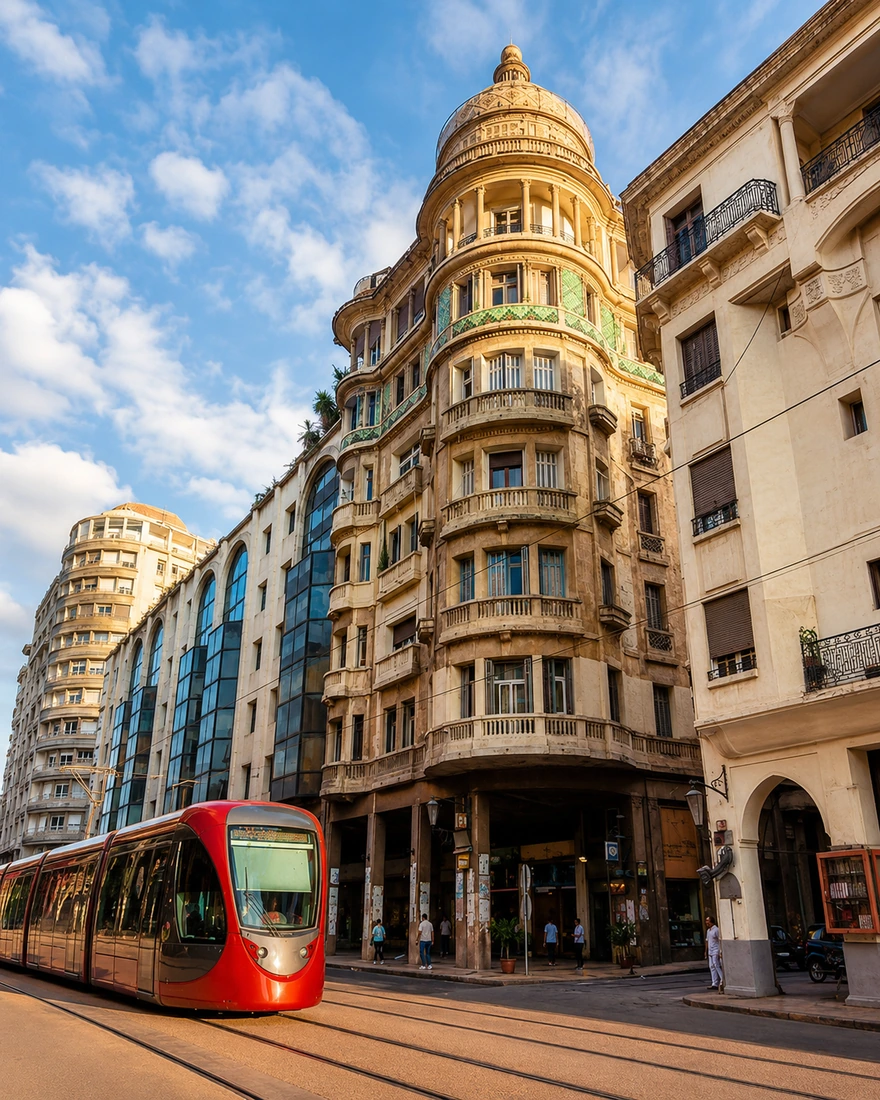
Casablanca tram passing elegant Art Deco façades in the city centre

Art Deco downtown

The city centre is a rare Moroccan archive of 20th-century architecture, from grand façades to civic squares and cinemas.

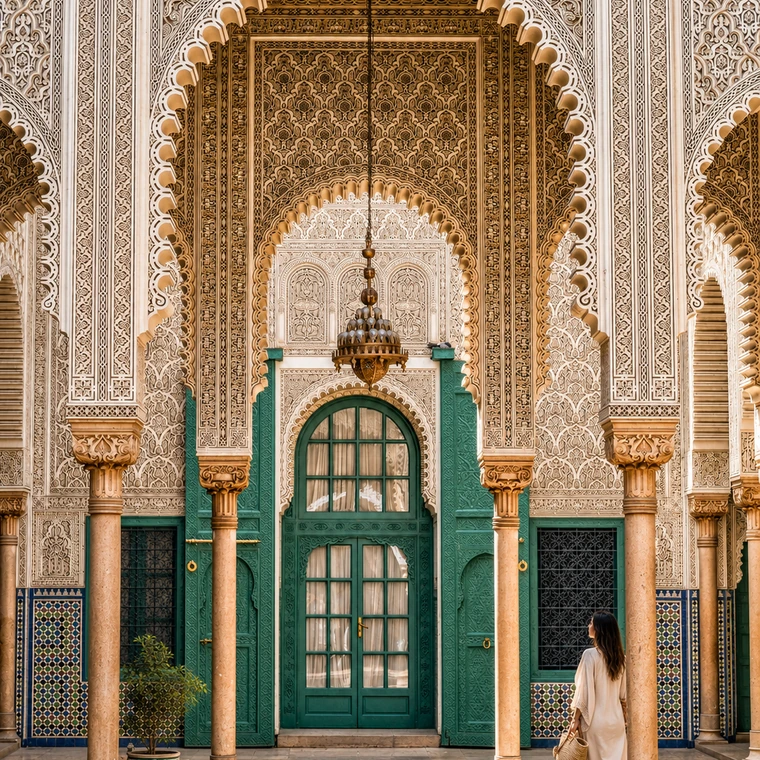
Neo-Moroccan doorway and carved detail in the Habous spirit

Habous and planned tradition

Habous shows Casablanca’s other face: a planned quarter where Moroccan forms, bookshops, arcades and administration meet.

Casablanca at a glance

Hassan II Mosque

Casablanca’s most visible landmark is also one of the rare Moroccan mosques that visitors can enter on official guided visits.

Art Deco core

The downtown centre holds a major collection of Art Deco, neo-Moorish and modernist buildings.

Habous Quarter

A planned Moroccan-style district that connects administration, commerce, craft and book culture.

Corniche and Atlantic edge

The oceanfront gives Casablanca its release: Ain Diab, cafés, beach roads and the constant presence of the sea.

Reading Casablanca more clearly

Three defining layers

Read the ocean mosque, the architectural city centre, and the Moroccan-planned life of Habous and the medina together.

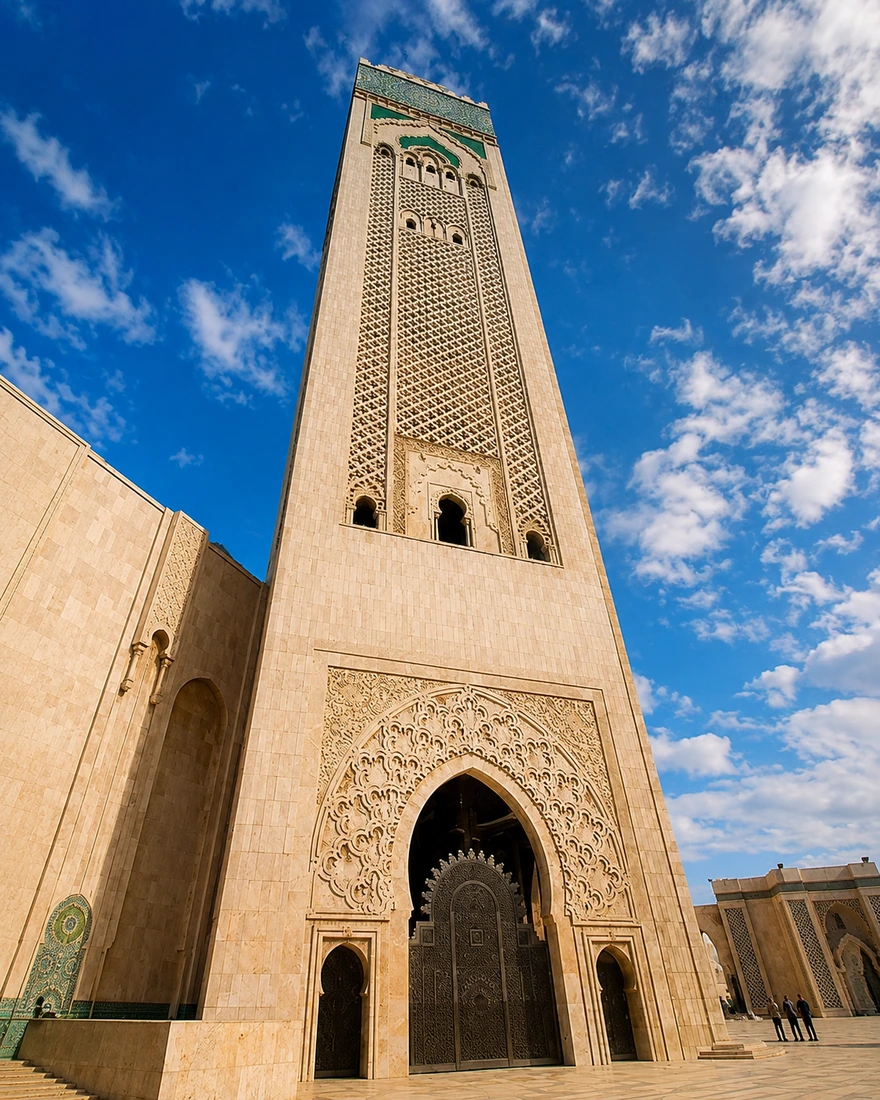
The minaret and carved façade of Hassan II Mosque against a bright blue sky
Layer 1

Mosque, sea and scale

The Hassan II Mosque makes Casablanca readable from a distance: vertical minaret, stone platform, Atlantic horizon and immense craft ambition.

Downtown Casablanca with a red tram and layered Art Deco architecture
Layer 2

Downtown as a design archive

The centre is one of Casablanca’s great arguments: not ancient, but architecturally rich, experimental and full of overlooked façades.

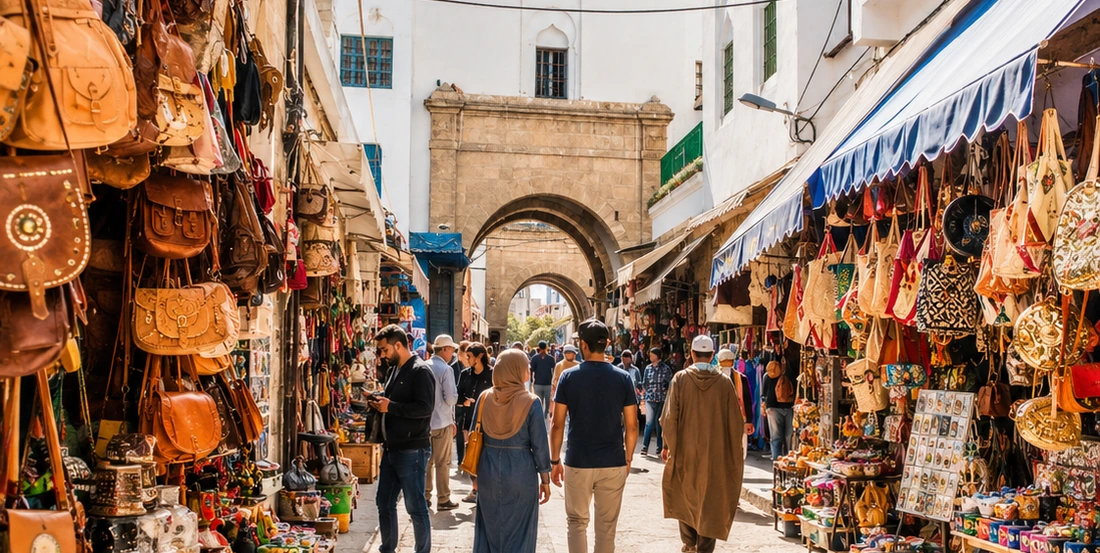
Market street under a stone arch suggesting medina and Habous street life
Layer 3

Medina, Habous and markets

Casablanca’s Moroccan layers are not absent; they sit beside the modern city in markets, arcades, old lanes and planned neo-traditional spaces.

Landmarks & orientation

Read Casablanca through six defining places

Casablanca rewards a route that moves between monument, architecture, market, planned quarter and oceanfront rather than treating the city as a single sightseeing stop.

1
Hassan II Mosque

The city’s monumental Atlantic landmark, best read through its ocean setting, minaret, craft detail and official visiting route.

2
Old Medina

A late medina near the port, useful for understanding older Casablanca without romanticising it as an imperial medina.

3
Mohammed V Square and downtown

The civic centre introduces Casablanca’s administrative architecture, arcades, façades and urban order.

4
Boulevard Mohammed V and Art Deco façades

One of the strongest walks for reading the city’s 20th-century architectural identity.

5
Habous Quarter and Mahkama du Pacha

A planned quarter where Moroccan forms, arcades, bookshops and craftsmanship create a very different urban rhythm.

6
Corniche and Ain Diab

The Atlantic leisure edge balances the density of downtown with ocean air, cafés, beaches and long views.

Casablanca skyline and Atlantic edge centred on Hassan II Mosque
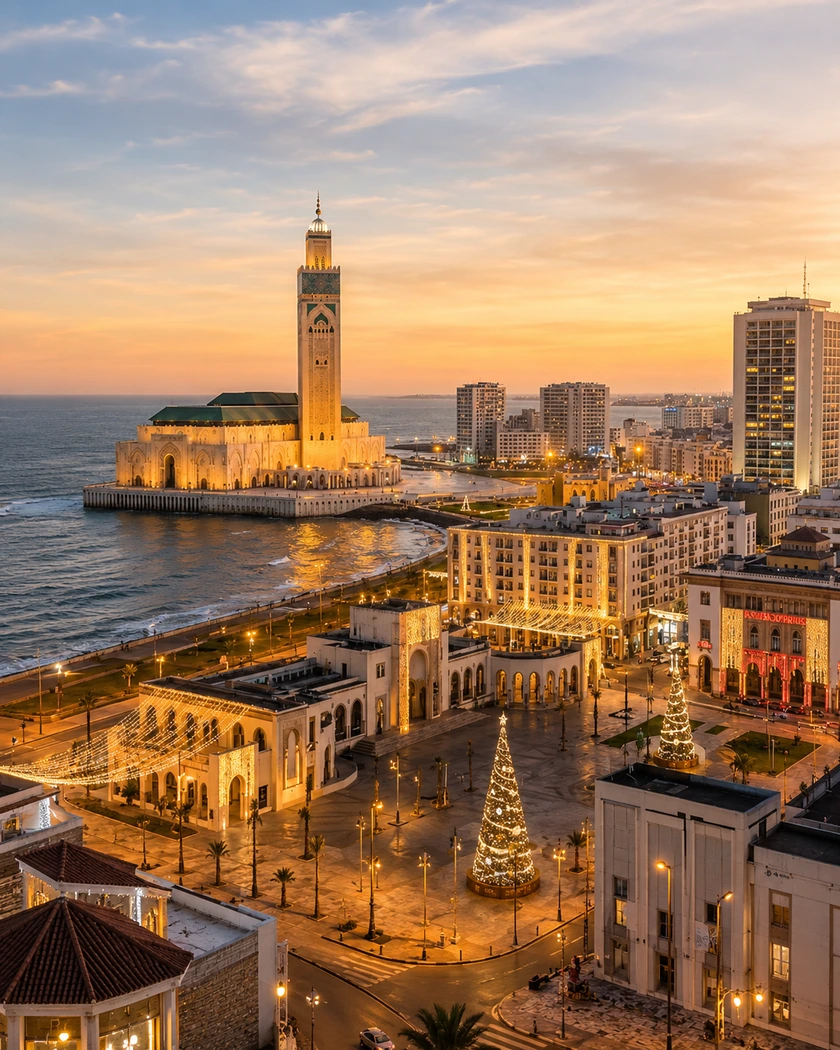
Hassan II Mosque and its Atlantic esplanade in warm late light

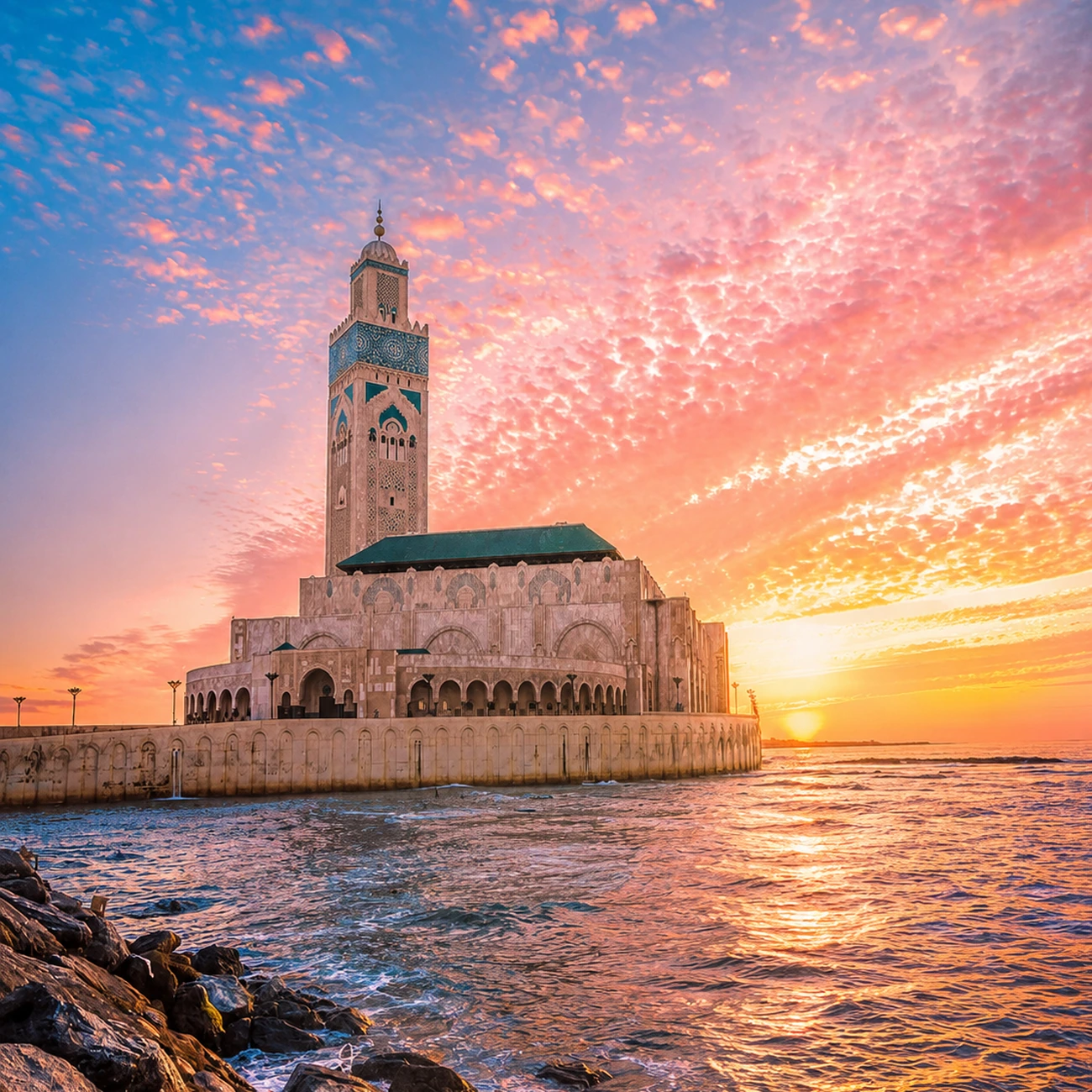
The Hassan II Mosque is not only a religious monument. It gives Casablanca a visual centre on the water: craft, geometry, modern state ambition and Atlantic exposure compressed into one image. The mosque is also one of the key places where visitors can read Moroccan artisanal skill at monumental scale.

Hassan II Mosque — Casablanca’s Atlantic axis

Not every major monument in Casablanca belongs to Moulay Ismail’s imperial programme. In the medina, Bou Inania Madrasa preserves an earlier Marinid layer. Begun under Sultan Abu al-Hasan and completed under his son Abu Inan, the Qur’anic school brings teaching, residence and ornament together around a disciplined courtyard. Seen slowly, the madrasa also clarifies how scholarship, craftsmanship and spiritual life shaped Casablanca before the city’s imperial expansion.

  • Read the mosque from outside before entering: scale, sea and city matter together.
  • Use official visiting times and respect dress and conduct rules.
  • Continue from the mosque toward the Corniche or back toward the medina and downtown.

Architectural reading

Three urban languages to notice

Mosque, sea and scale

The Hassan II Mosque makes Casablanca readable from a distance: vertical minaret, stone platform, Atlantic horizon and immense craft ambition.

Art Deco and neo-Moroccan design

Downtown Casablanca became a laboratory of Art Deco, Art Nouveau, neo-Moorish and modernist architecture, especially around the central boulevards and civic squares.

Habous and planned tradition

Habous shows Casablanca’s other face: a planned quarter where Moroccan forms, bookshops, arcades and administration meet.

Visual atmosphere

Scale, façades and Atlantic modernity

Nearby highlights

Beyond Casablanca

Casablanca works well as a hub for the Atlantic corridor: coastal towns, capital routes and older Portuguese-Moroccan heritage cities are all within a wider journey.

Mohammedia / Fedala

A coastal continuation north of Casablanca, useful for reading the Casablanca–Rabat Atlantic corridor.

Atlantic marina and waterfront skyline suggesting the Mohammedia coastal corridor

Azemmour and El Jadida

South of Casablanca, the route toward Azemmour and Mazagan adds river memory, Portuguese walls and older Atlantic heritage.

Historic fortified architecture suggesting the Azemmour and El Jadida route

Rabat route

The road north links Casablanca’s commercial force with Rabat’s administrative, Andalusian and imperial layers.

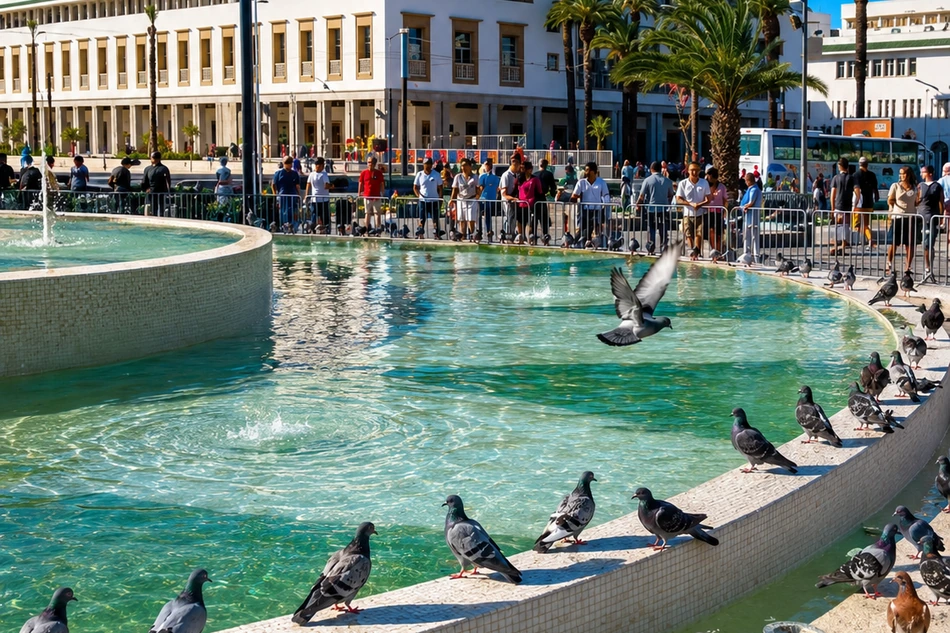
A formal square and fountain suggesting the civic character of the Rabat route
Travel note: opening hours, access rules, restoration work, transport conditions and local visitor arrangements can change. Check current official or trusted local information before travelling.

Practical orientation

A simple way to experience Casablanca

  • Start by the ocean — Hassan II Mosque sets the scale before you enter the city centre.
  • Use the medina carefully — the Old Medina is useful, but it should not be forced into an imperial-city frame.
  • Walk downtown — Casablanca’s architecture is best read slowly from street level.
  • Continue to Habous — Habous gives a softer, planned Moroccan counterpoint to downtown scale.
  • End on the Corniche — the Atlantic edge gives the city its final light, air and horizon.

A strong first visit

Hassan II Mosque on the Atlantic shore at sunset, a strong first image of Casablanca

Start with Hassan II Mosque and the Atlantic edge, move toward the Old Medina and Central Market, walk the Art Deco downtown around Mohammed V Square and Boulevard Mohammed V, continue to Habous and Mahkama du Pacha, then end with the Corniche or Ain Diab.

Hassan II Mosque at golden hour framed by a monumental arcade

This page prepares the Casablanca chapter inside the Exotic Morocco city collection: Hassan II Mosque, Art Deco downtown, Old Medina, Habous, Mahkama du Pacha, Central Market, Corniche and the wider Atlantic corridor.

Casablanca — ocean mosque, Art Deco city and Atlantic metropolis

Continue with a complete visual publication designed to connect the city’s history, monuments, architecture, medina life, craftsmanship, practical orientation and nearby heritage into one carefully structured journey.

✓ Hassan II Mosque✓ Art Deco centre ✓ Old Medina✓ Habous & Mahkama ✓ Central Market✓ Corniche & Atlantic route

Continue the journey

Discover Casablanca beyond transit

Casablanca is strongest when its ocean mosque, Art Deco streets, markets, port life and modern pressure are read together — not as a stopover, but as Morocco’s most revealing urban laboratory.