Skip to learning
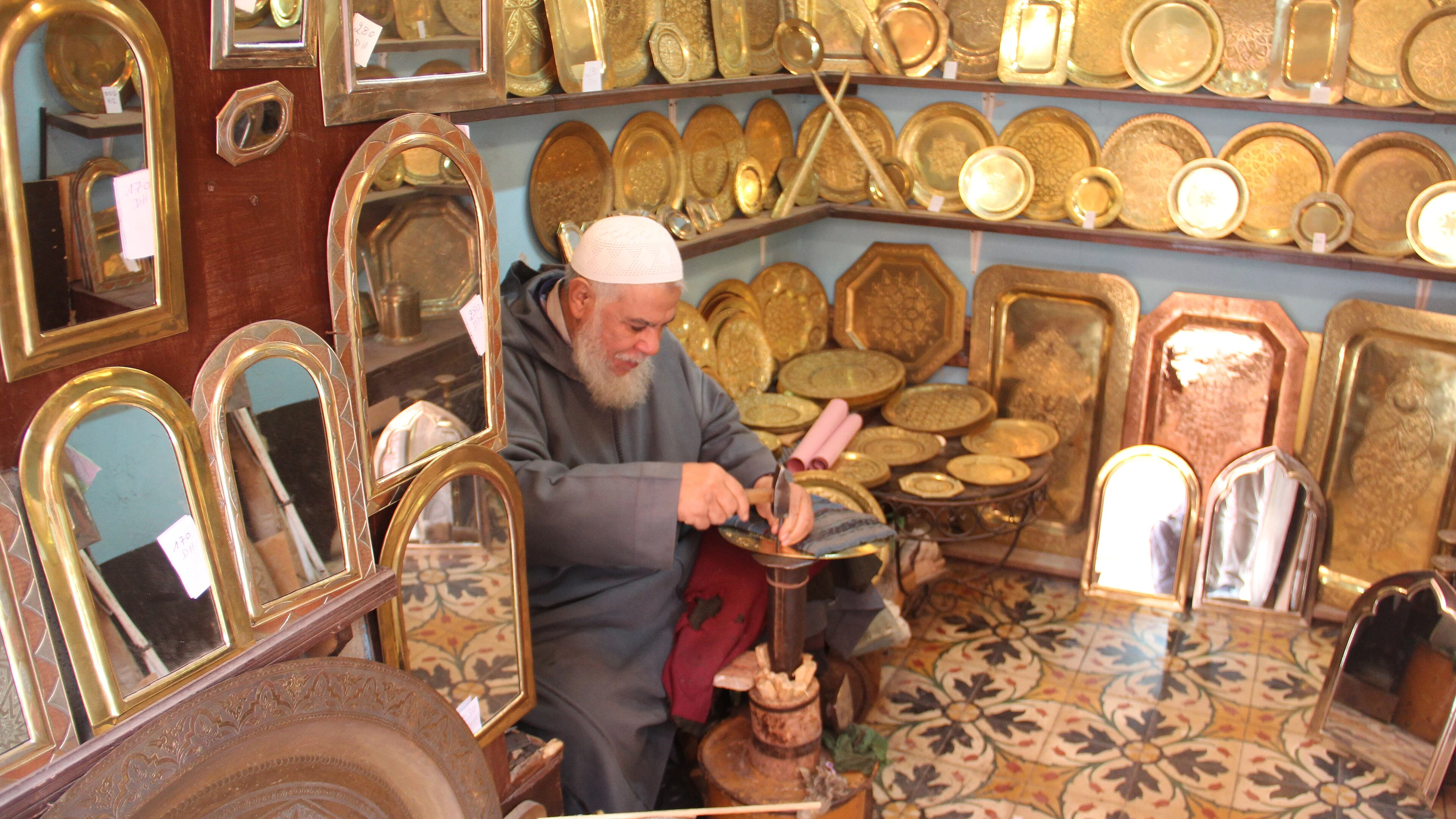
A plate maker in the medina of Marrakech, surrounded by finished metalwork.
The intelligence of making

Crafts & Materials

Clay, fibre, metal, wood and leather. Discover the practical intelligence behind Moroccan objects, from first material to finished use.

Exotic Morocco · 11 minute read
01 / A way into the story

Begin with what a hand has to solve.

A bowl must hold, a hinge must move, a textile must work with its fibres. Ornament is only one part of craftsmanship. Shape, strength, weight, finish and repair are equally useful ways of reading an object.

Moroccan craft is made in many settings, from specialised workshops to small businesses and collaborative production. The official craft overview identifies different centres and materials; a visit becomes more informative when you ask which stages happen in the workshop in front of you.

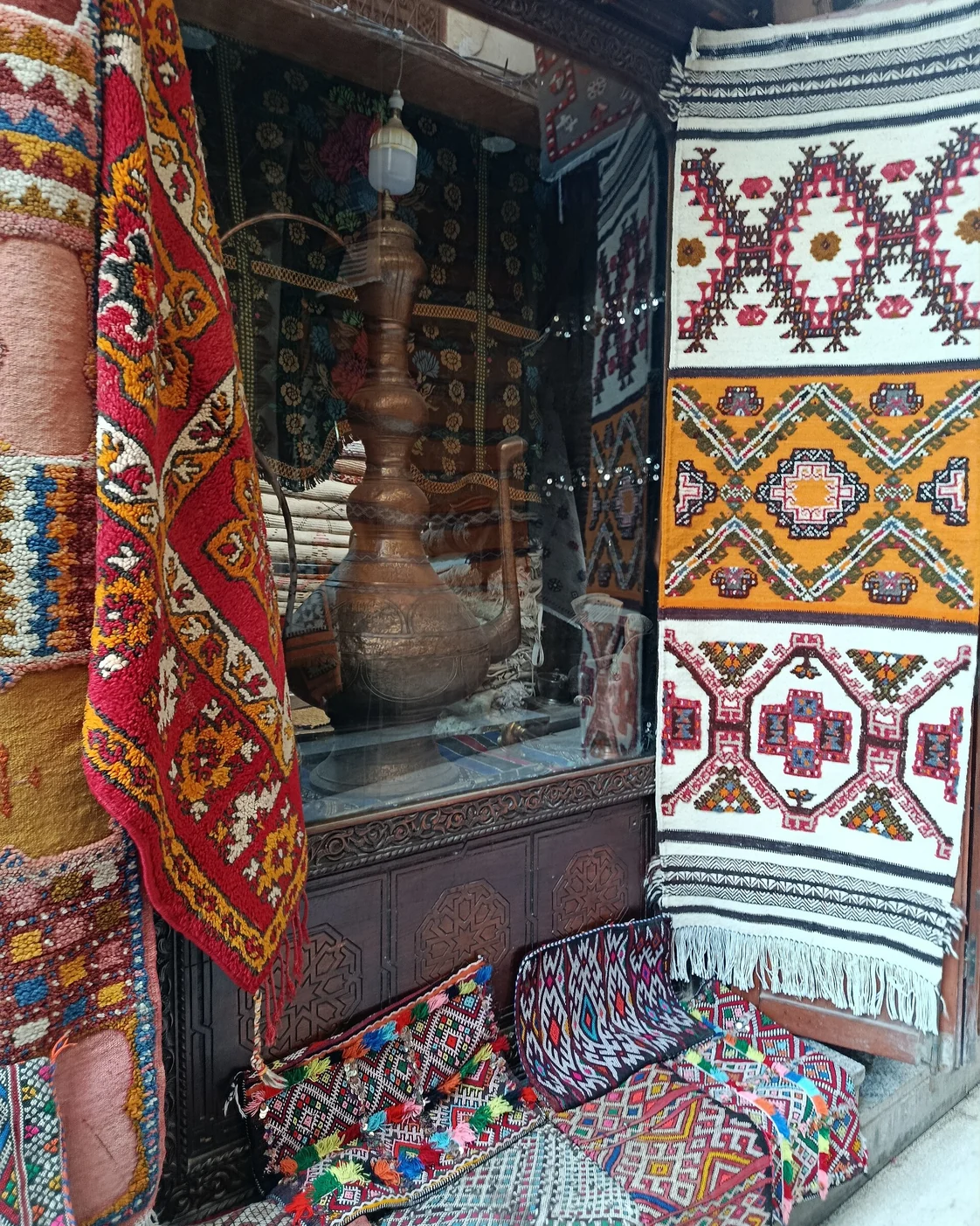
A large copper vessel and textiles displayed in a Fez shop.
THE SUBJECTThe intelligence of making
THE APPROACHPlace. Practice. People.
THE CONNECTIONFind it in Morocco ↗
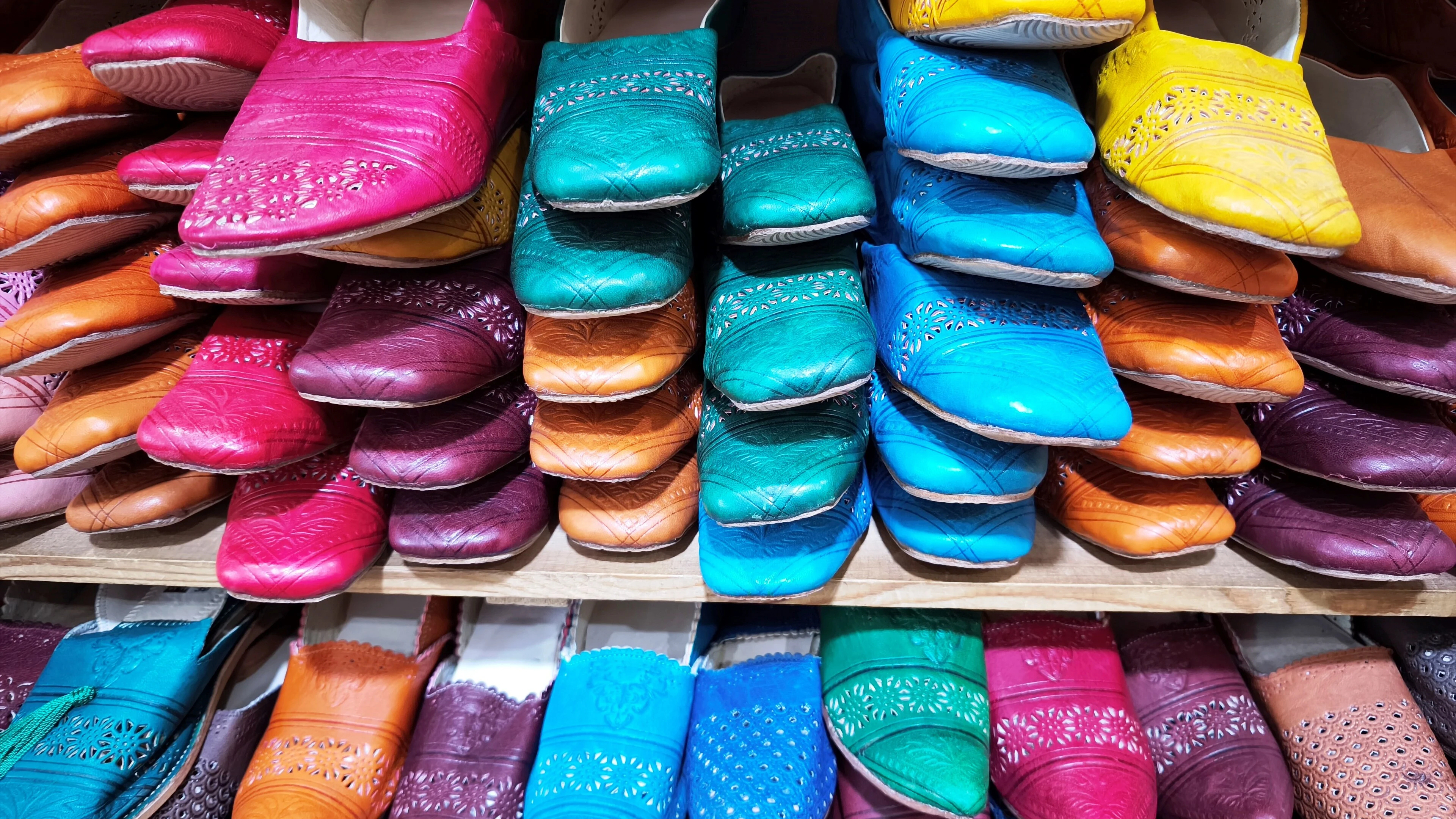
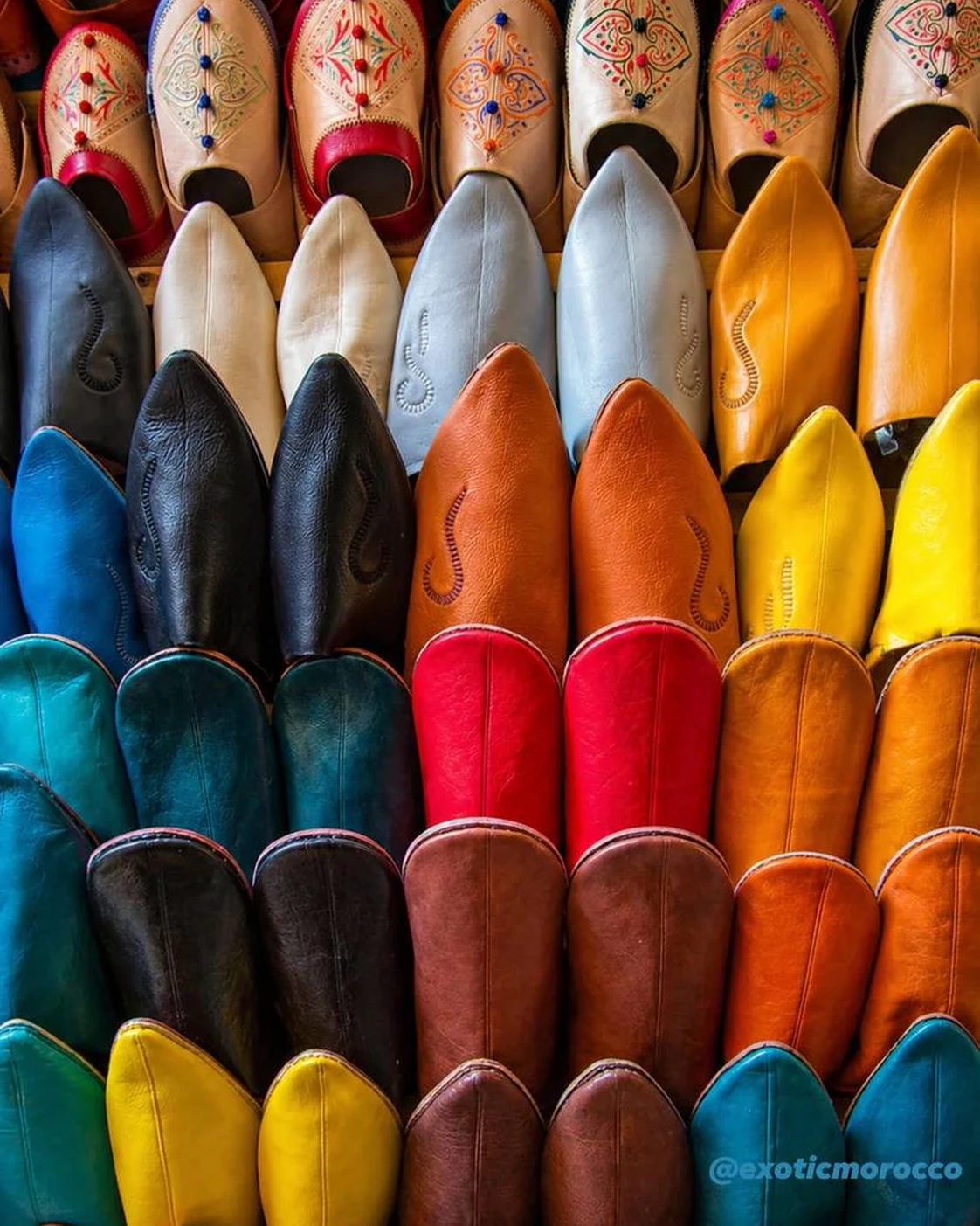
Leather slippers: material, colour and repeated form.
02 / The deeper context

Before the beautiful object,
a chain of decisions.

A crafted object begins before the moment a visitor sees a maker at work. Material has been selected, prepared and brought into a production sequence. Tools have been maintained, forms learned and a use imagined. The finished bowl, textile, lamp or shoe contains these decisions even when its surface makes them seem effortless.

Different materials demand different kinds of attention. Clay changes through drying and firing; a woven surface depends on relationships between threads; leather has a grain, thickness and flexibility; metal can be formed, joined and finished in several ways. Calling all of them “handmade” tells us much less than describing the actual work. The term can also include several people rather than a single maker completing every stage.

A workshop and a market show different parts of this story. The workshop reveals process, repetition and unfinished states. The market reveals selection, presentation, price and the relationship with a buyer. Neither view is complete on its own. A good conversation connects the object on display with the people and places that brought it there.

03 / From an idea to everyday life

Learn a material before judging a finish.

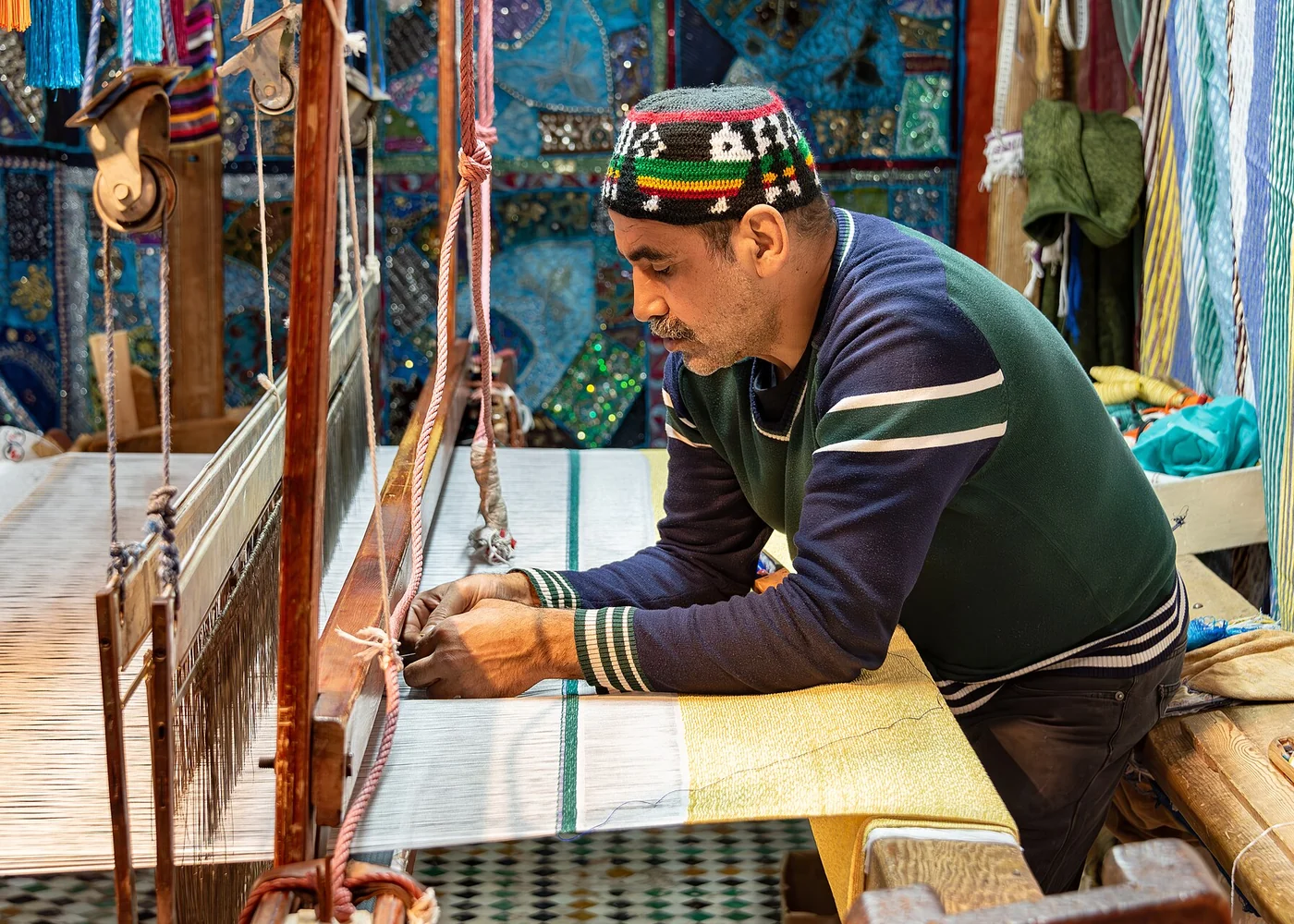
At a loom, the finished cloth depends on the relationship between threads. Watch the repeated actions, the spacing and the tension. A woven surface is constructed through a sequence; its pattern is part of that construction, not simply added afterwards.

A weaver at work in Fez.
01

Look at structure

Turn an object only with permission and when safe to do so. The base, reverse, seam or join may explain how it is made more clearly than the decorated face. A woven structure and a printed imitation can look similar at a distance but behave differently as materials.
02

Ask about the sequence

A short question such as “What happens before this stage?” often opens the process. Cutting, forming, drying, stitching and finishing may occur in different places. Record the answer without assuming that a retail display is also the workshop that produced everything in it.

03

Connect beauty to use

A decorative plate and a vessel intended for food need different information. A shoe made for occasional indoor use and one made for daily wear may be judged differently. Intended use, care and repair are part of quality, not a distraction from appearance.

A closer understanding

The material
sets the questions.

A carved door, a woven cloth and a ceramic bowl ask different things of the hand.

Wood and metal

Removing material changes the surface.

Carving produces depth by cutting into a material. Engraving marks a surface; other metalworking processes shape a sheet or build an object from separate parts. A richly decorated tray and its supporting structure may involve different skills.

This distinction is useful in a workshop: decoration is often only one stage of making. Preparation, joining, finishing and repair can demand as much knowledge as the visible pattern. A beautiful result does not tell you, on its own, how many people contributed.

Fibre and clay

Structure may carry the pattern.

In weaving, interlacing threads creates a fabric. Embroidery adds stitches to an existing ground. A woven stripe and an embroidered stripe can look related at a distance but result from different processes. Turn to the reverse only with permission; it can reveal how the surface was built.

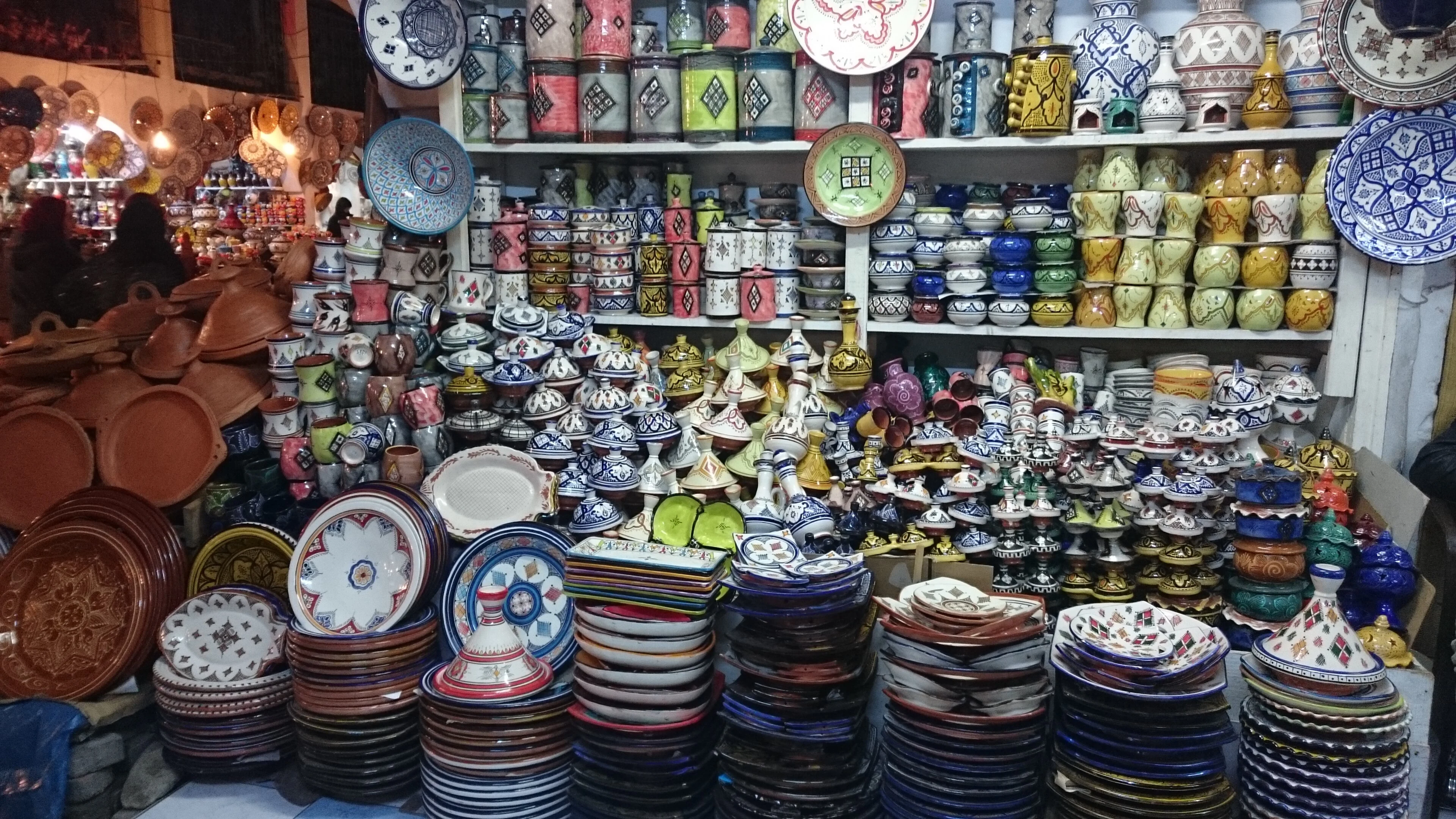
Clay introduces another kind of transformation. Shaping, drying, decorating and firing each affect the finished piece. The potter’s decisions about weight, rim and handle concern use as well as appearance. A vessel is a designed object, not simply a support for ornament.

A working economy

The workshop is part of a chain.

Raw materials, tools, training, commissions and sales connect a workshop to other people. A shop may sell work made elsewhere; a maker may supply several retailers. Neither arrangement is unusual, but a transparent description distinguishes making from selling.

Ask for a precise account of the object you are considering: material, place of production, hand and machine stages, and intended use. Specific answers create a better understanding of value than a broad promise that everything is traditional.

Carry this with you

Compare construction before decoration. Two objects with similar patterns may have very different materials, labour and uses.

04 / The visual chapter

Material changes the question

Move between the close detail and the wider setting. Each view adds another part of the story.

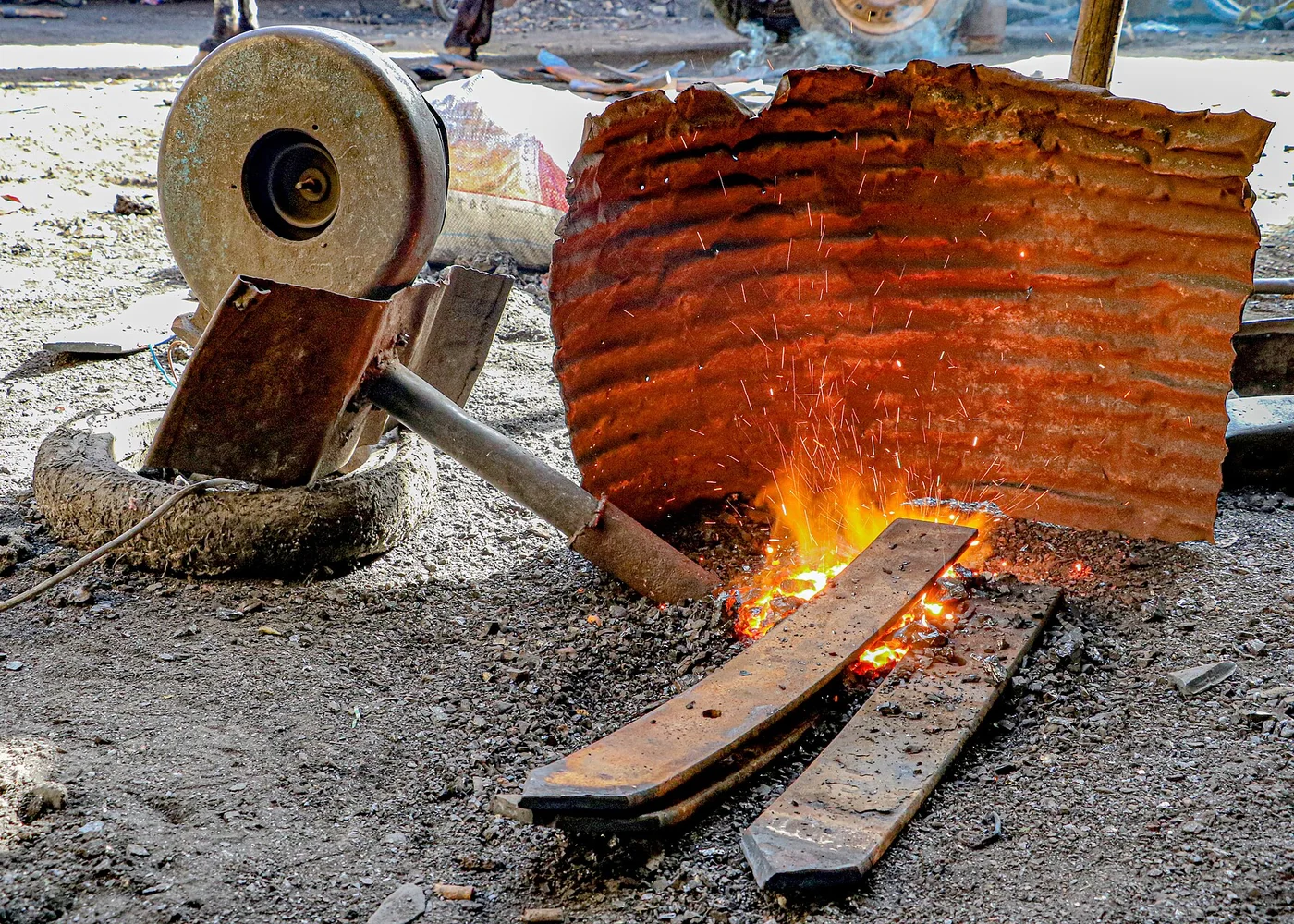
Metalworking with a coal fire in Khouribga.
01 / A closer look

Metal and heat

This Khouribga workshop produces practical metal components. It broadens the idea of craft beyond decorative souvenirs. Heating, shaping and joining belong to the everyday material economy as well as to objects displayed in a shop window.

Metalworking with a coal fire in Khouribga.
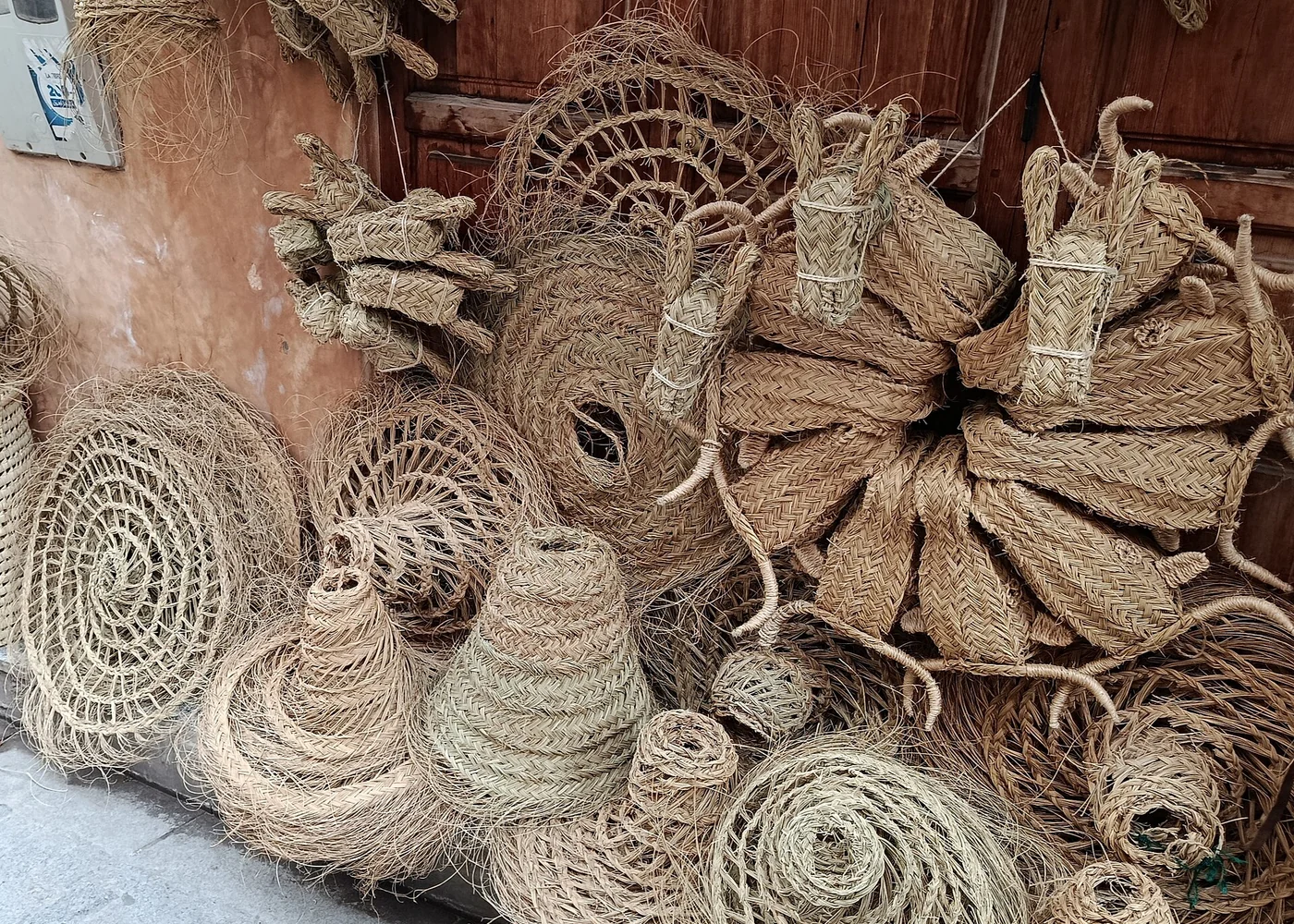
Alfa-grass objects displayed in Fez.
02 / A closer look

Plant fibre and form

Coiled and woven plant fibres become baskets, hats and other forms. Look at how a flexible material holds an edge or a handle. Ask the maker which plant is used and how it is prepared before repeating a seller’s description as fact.

Alfa-grass objects displayed in Fez.
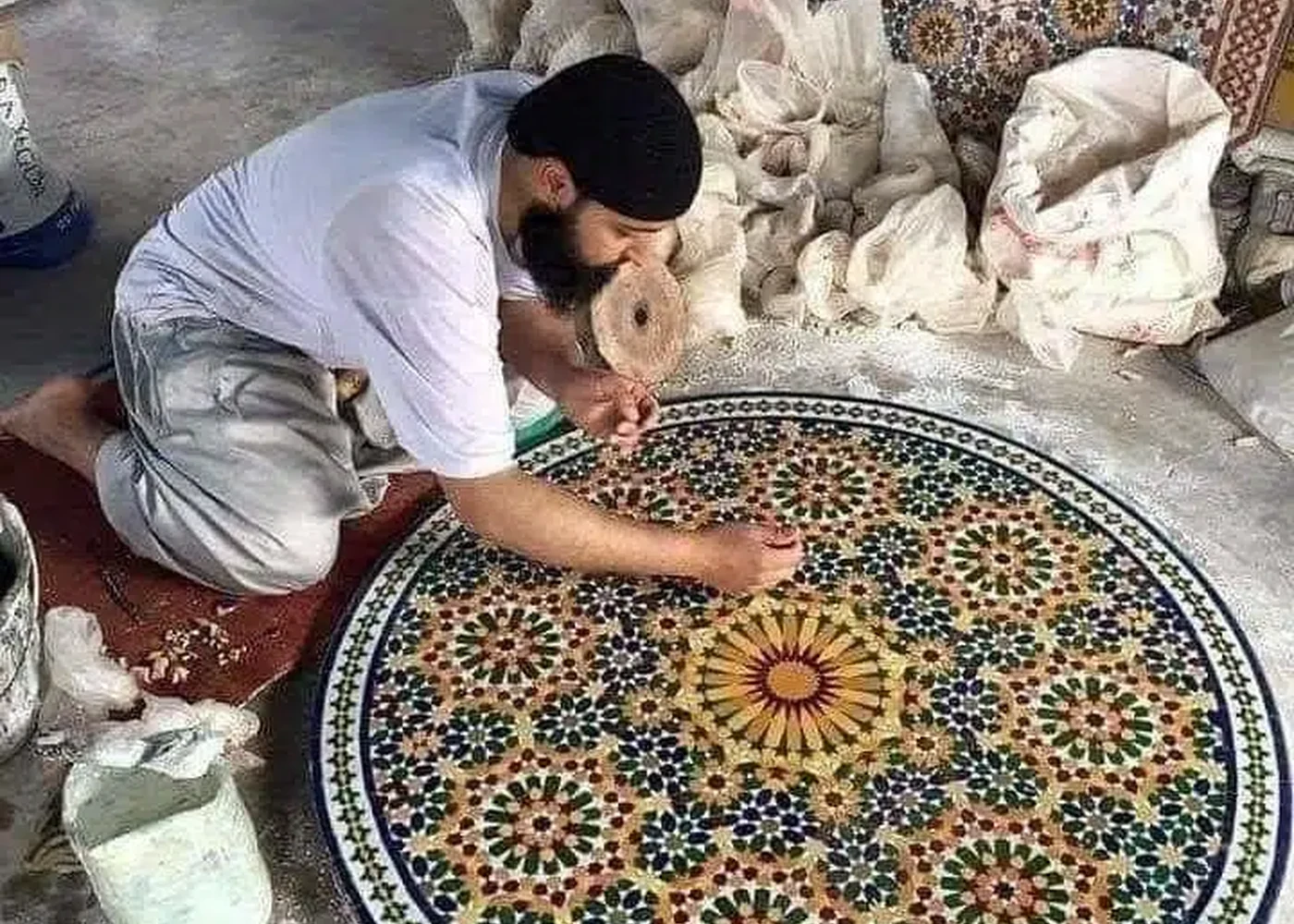
A mosaic maker at an assembly bench.
03 / A closer look

Buying with a better question

Ask where the piece was made, which parts are handmade, how it should be used and whether repairs are possible. Those answers help you understand the purchase. Do not infer a material, technique or age solely from a persuasive product name.

A mosaic maker at an assembly bench.
05 / More than one perspective

Look beyond
the first impression.

Perspective 01

Specialisation & collaboration

A finished piece can combine the work of a designer, material supplier, maker and finisher. Recognising those roles gives a more realistic picture of craft economies than the romantic image of an isolated master.

Perspective 02

Variation & skill

Handwork may show small variations, but variation alone does not establish quality. Look at whether the object’s structure and finish serve its purpose. Conversely, a clean repeated form can be evidence of practised skill rather than a reason to dismiss it.

06 / Make the connections

A small material atlas

Different materials ask different things of the maker. These six groups give you a practical vocabulary for looking.

01

Clay & ceramic

Clay can be shaped while workable, dried and transformed through firing. A vessel and a tile begin in a related material family but serve different purposes. Look at thickness, the base, the rim and the relationship between the body and its surface.

02

Wool & plant fibres

Wool is an animal fibre; cotton and many basket-making fibres come from plants. Spinning, weaving, knotting or coiling creates different structures. Follow the thread or strand before assigning a name to the technique.

03

Wood

Grain, joints and carving help explain a wooden object. Joinery connects parts; carving removes material to create form or relief; paint adds another surface. Ask about the species and finish rather than identifying them from a photograph.

04

Metal

Hammering changes shape, piercing creates openings and joining brings pieces together. A metal-coloured finish may cover another material. Look at edges and connections, and ask which processes took place in the workshop.

05

Leather & dyes

A hide must be processed before it becomes a durable material for use. Cutting, stitching and colouring then make different objects possible. Dye and finish are separate questions from the underlying material; colour does not prove a particular process.

06

Plaster & stone

Plaster can be worked into a surface and carved; stone requires different tools and decisions about weight and hardness. The visual effect may be delicate in both. Ask whether a decorative element was cut in place, cast or assembled from parts.

07 / A more useful conversation

Ask about the work

Clear answers for the questions that often come next.

Does handmade always mean better?

No single label guarantees quality. Fitness for use, careful construction, materials and the maker’s choices all matter. Handwork and tools can coexist within the same production process.

Can I photograph a workshop freely?

Ask before photographing people, tools in use or unfinished designs. A workshop is a workplace. Follow the maker’s guidance about space, timing and anything they prefer to keep out of the frame.

How do I avoid a generic souvenir story?

Ask about one particular object: who worked on it, how long a stage takes and how it should be used or cared for. Let the answer stay specific.

A thought to take with you

Keep looking. Keep learning.

Choose one object and follow it backward: from use to finish, from finish to construction, from construction to material. That chain is a richer souvenir than a label, and it gives skilled work the attention it deserves.

The Exotic Morocco library

Continue at your own pace.

This Learn story is free to explore. Find this subject in the guide library, with each title’s current availability clearly shown.

Explore the guide library ↗
Sources & further reading

Read the evidence

  1. Moroccan National Tourism Office · Traditional craftsmanship revisited
  2. The Metropolitan Museum of Art · Building the Moroccan Court
  3. UNESCO · Moroccan caftan: art, traditions and skills
  4. Victoria and Albert Museum · An A–Z of Ceramics

Source review: September 2026. Looking exercises and learning prompts are original Exotic Morocco editorial suggestions. Regional practice and personal experience vary.

Image acknowledgements

  1. Hero: PlateMakerMarrakech.jpg — Elgaard. CC BY-SA 4.0. Cropped/resized; original licence retained.
  2. Portrait: Giant traditional copper pot and colorful carpets in a Fes shop..jpg — AdilElouarti. CC0. Cropped/resized; original licence retained.
  3. Story-1: Fez artisan weaving (54259779503).jpg — Jorge Franganillo. CC BY 2.0. Cropped/resized; original licence retained.
  4. Story-2: Smelting iron with coal fire.jpg — Myassinekhatib. CC BY-SA 4.0. Cropped/resized; original licence retained.
  5. Story-3: Artistic diversity of Alfa grass weaving and figures at an antique Fes door..jpg — AdilElouarti. CC0. Cropped/resized; original licence retained.
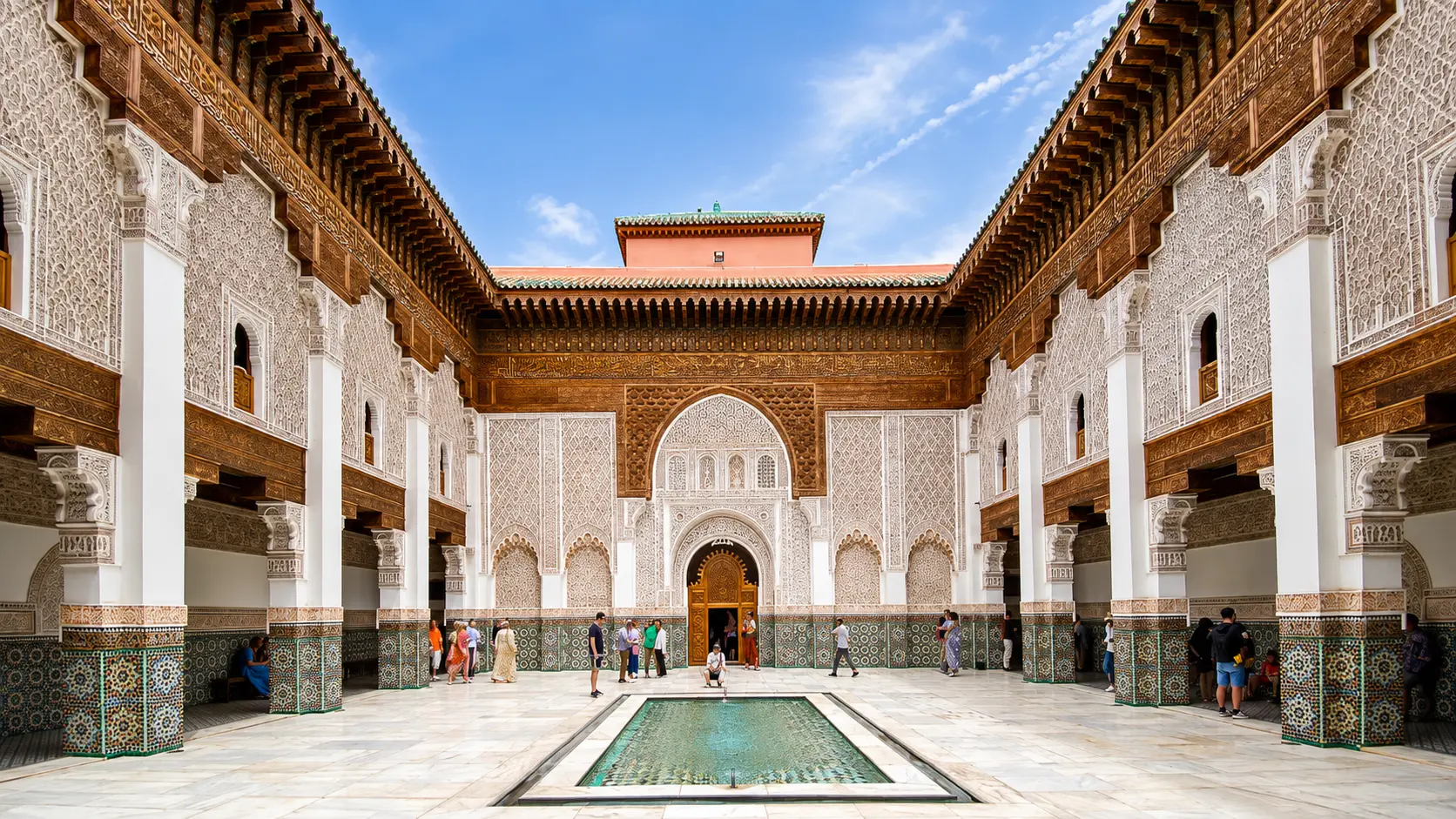
  6. Related preview: Ben Youseff Madressa.jpg — Nash Finley. CC BY-SA 4.0. Cropped/resized; original licence retained.
  7. Related preview: Zellij Fes 04.jpg — Schorle. CC BY-SA 4.0. Cropped/resized; original licence retained.
  8. Related preview: Safi.jpg — Abdelmounim Maroc. CC BY-SA 4.0. Cropped/resized; original licence retained.
  9. Related preview: Arcobaleno di babouche.jpg — Simo.Albo80. CC BY-SA 4.0. Cropped/resized; original licence retained.
  10. Chapter: Leather slippers: material, colour and repeated form. — Exotic Morocco’s existing image collection.
  11. Gallery: A mosaic maker at an assembly bench. — Exotic Morocco’s existing image collection.

Destination and related-story thumbnails intentionally identify their linked pages. Principal story images are selected individually for this Learn page.