Skip to learning
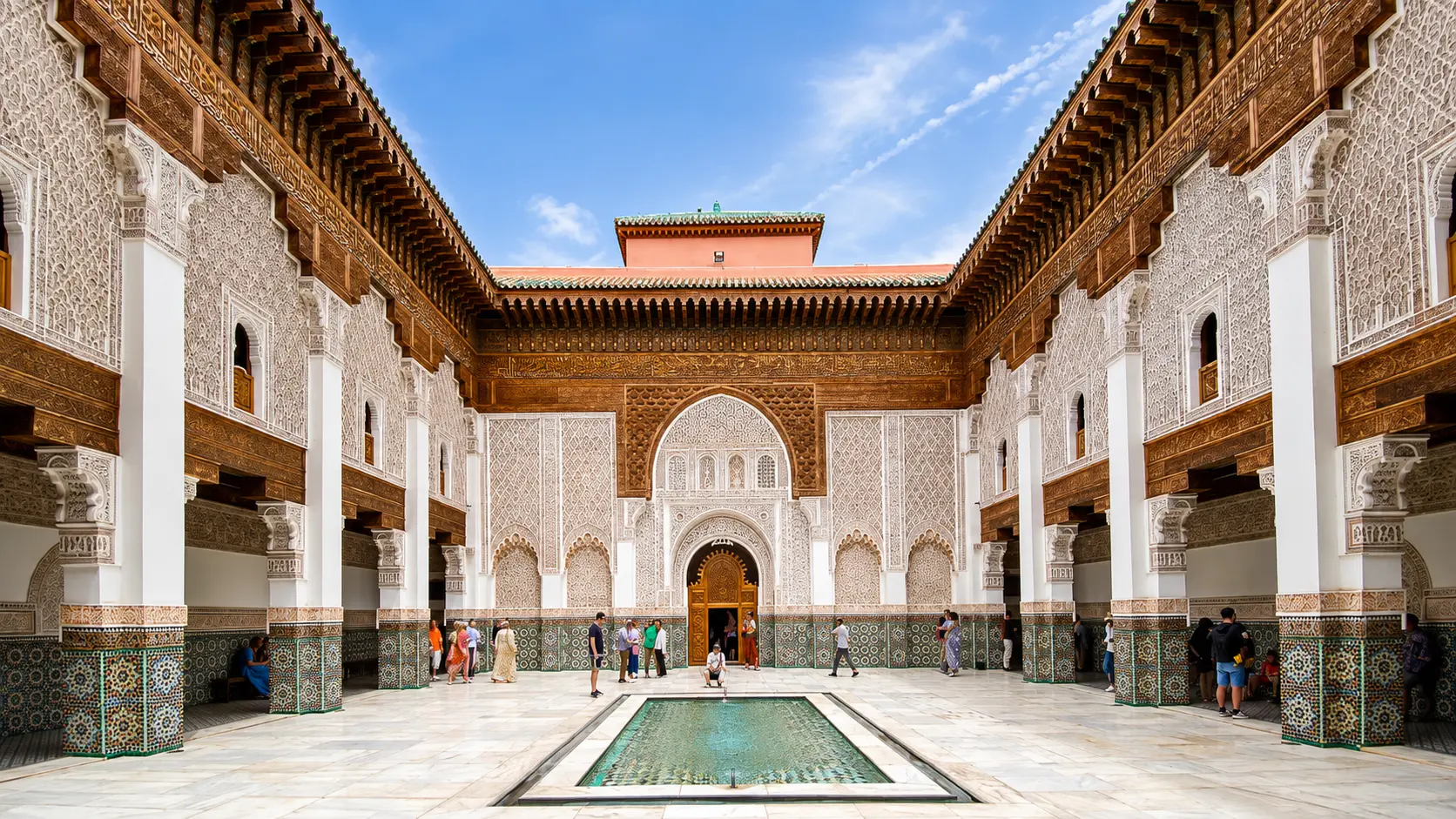
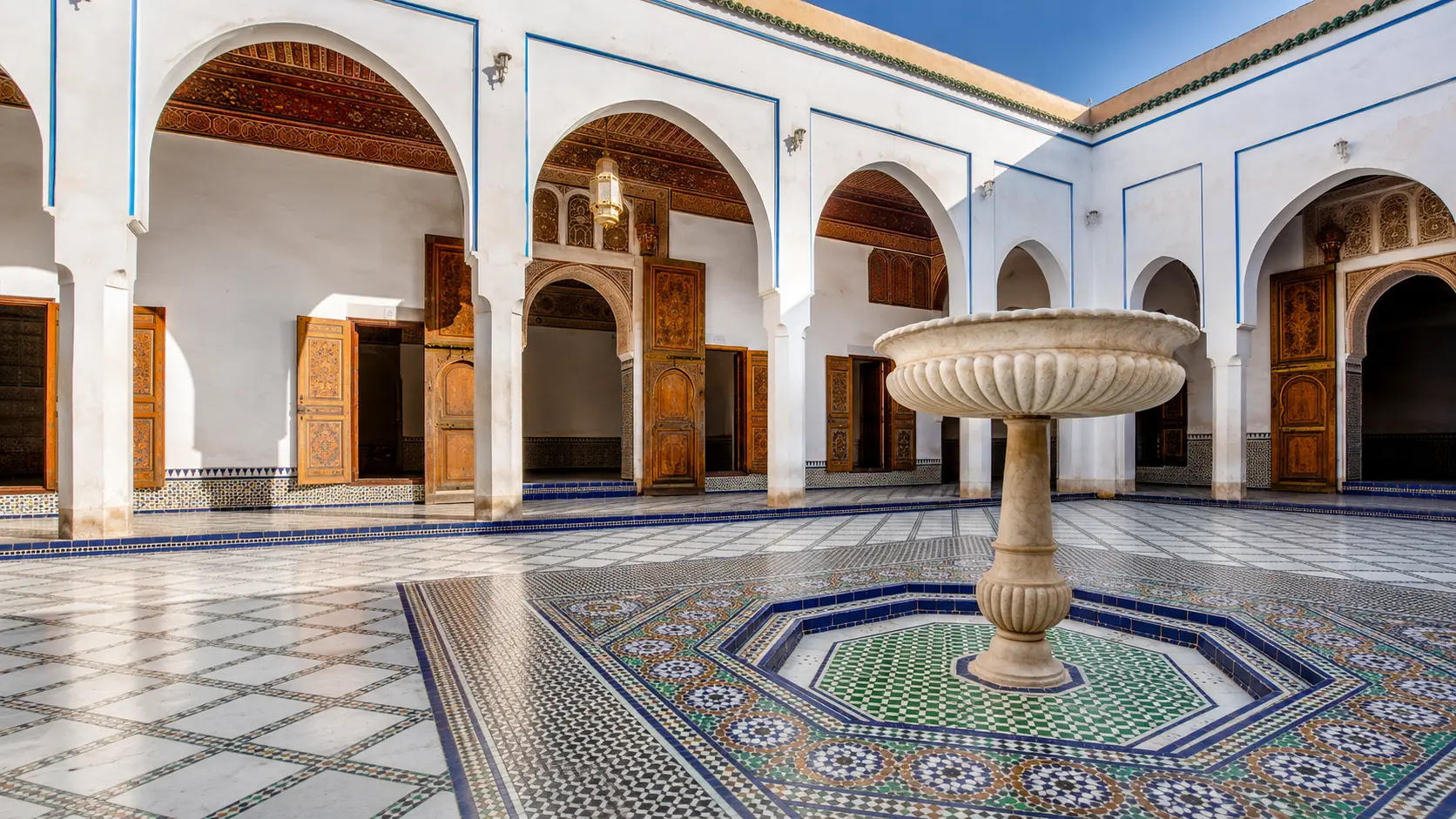
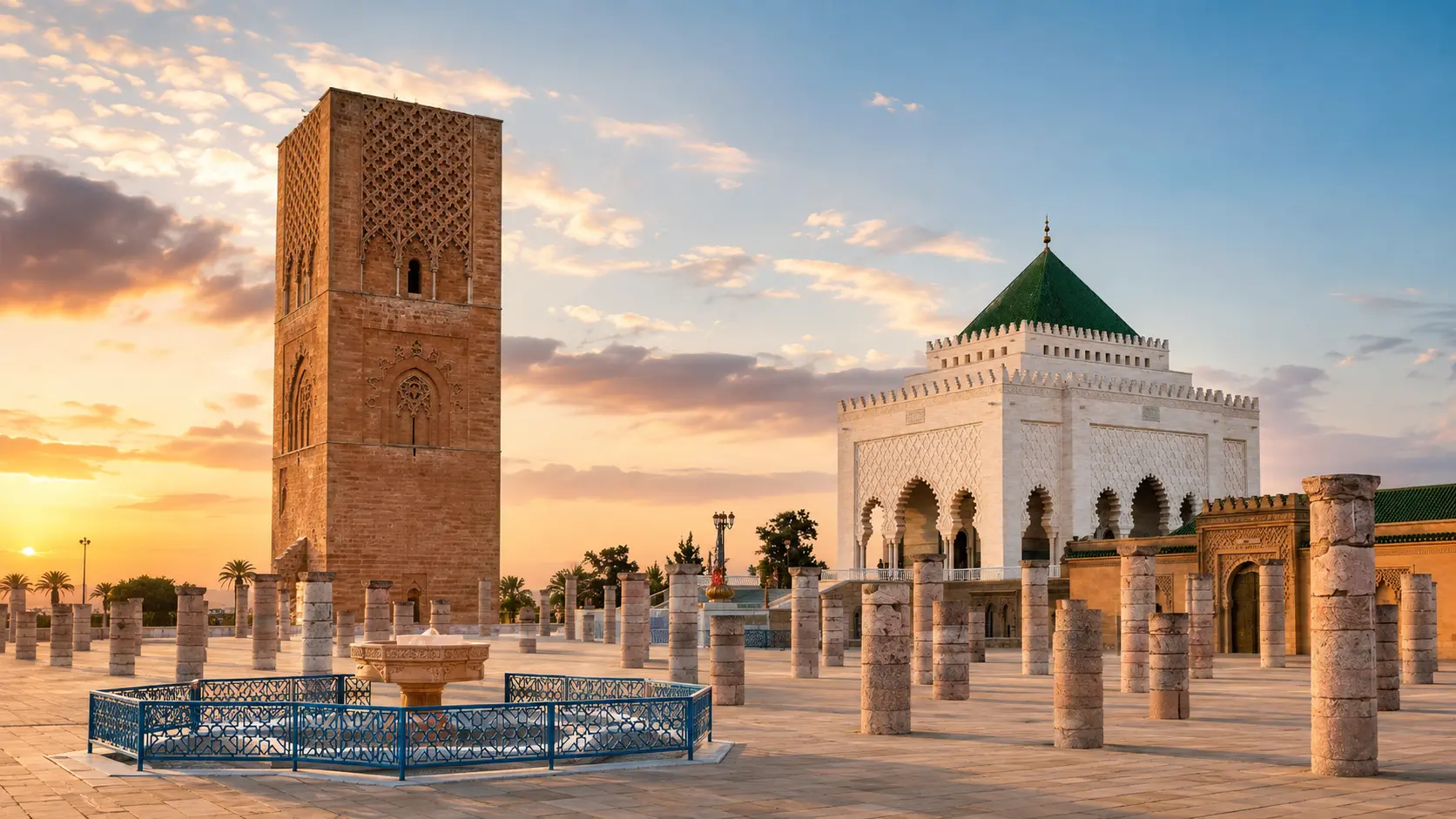
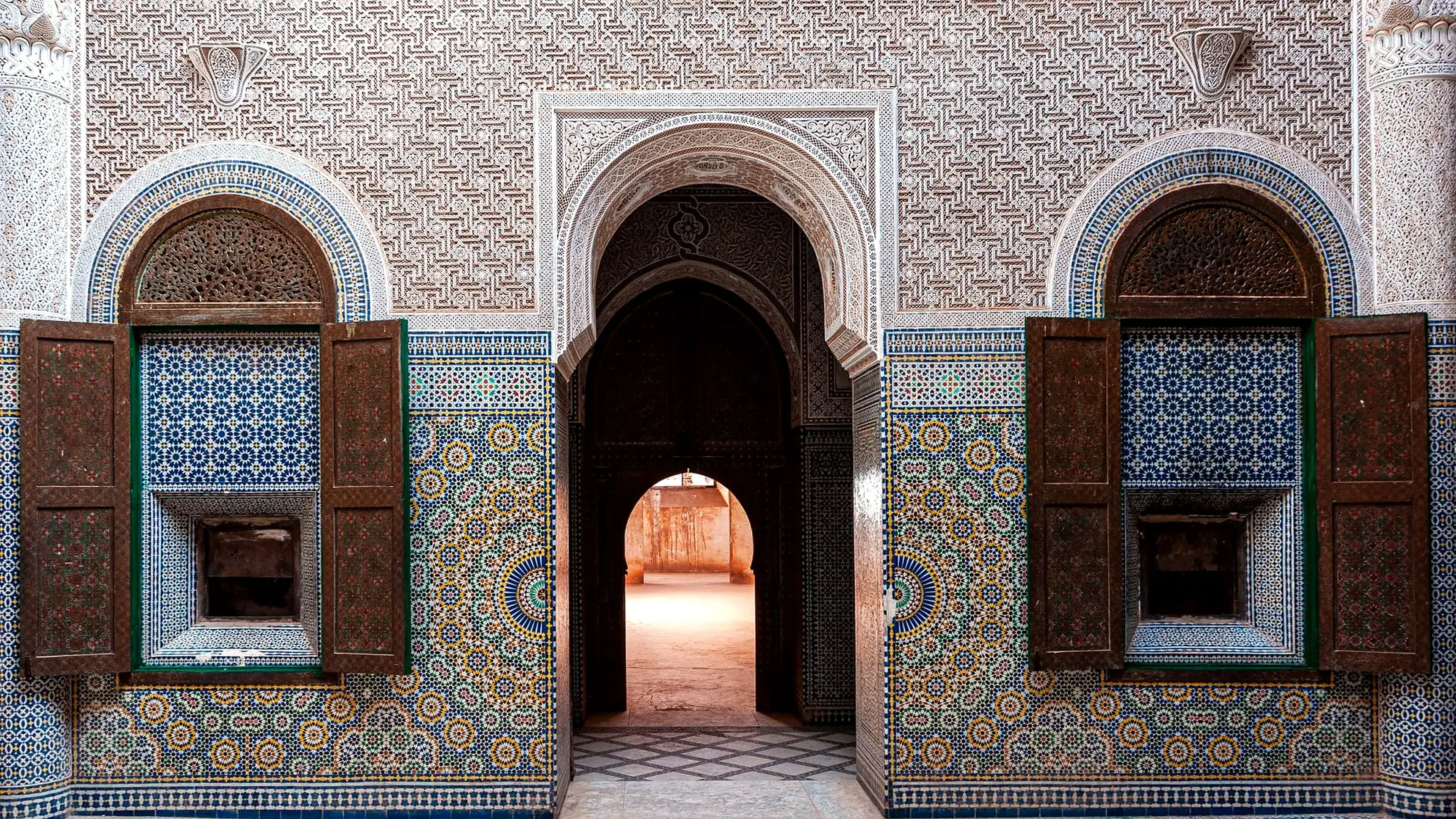
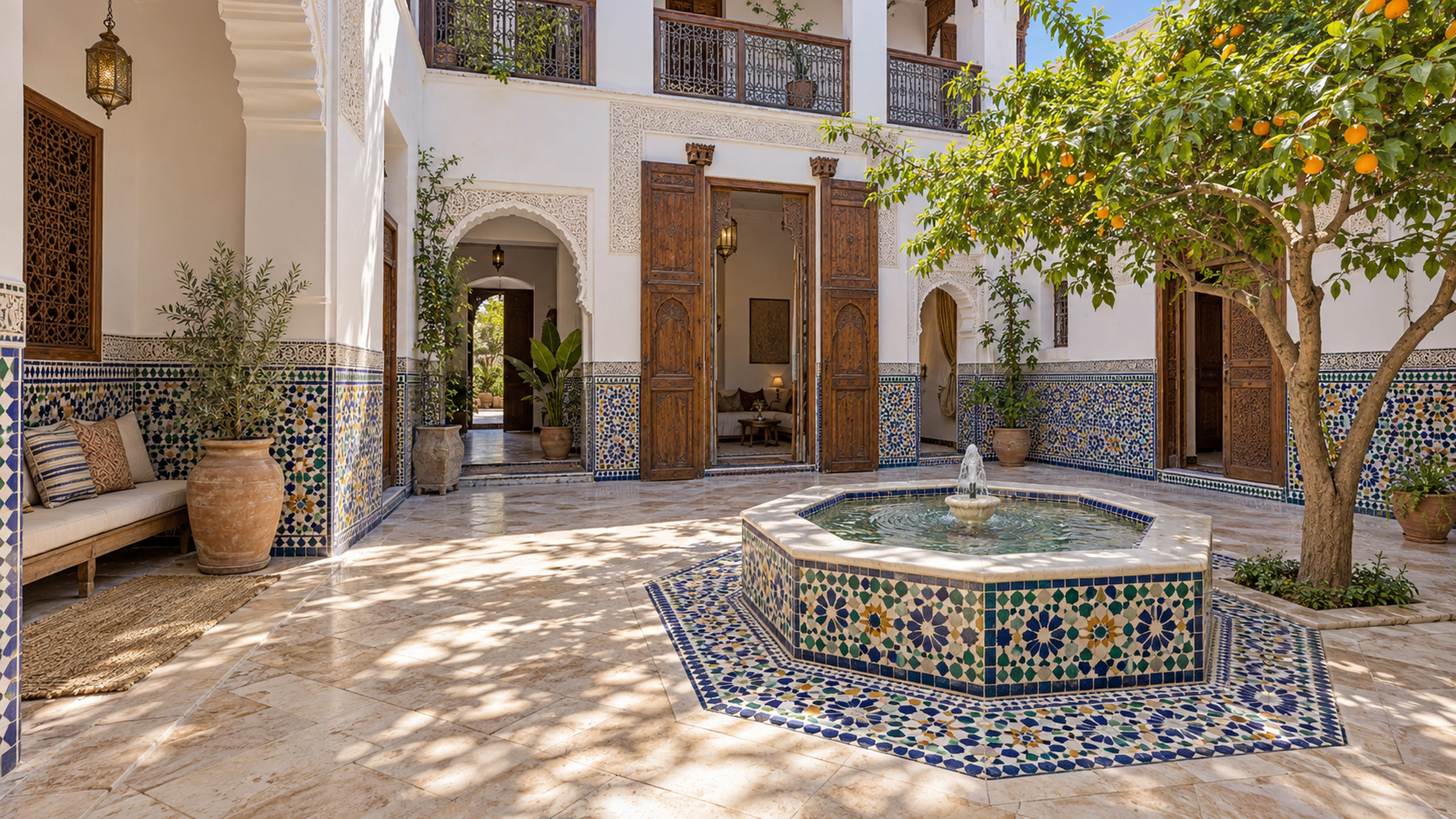
Zellige, carved cedar and daylight around a Moroccan courtyard fountain.
Clay, colour & a thousand decisions

Zellige Explained

A wall becomes a way of thinking. Follow Moroccan tile mosaic from a maker’s bench to the patterns that hold a room together.

Exotic Morocco · 11 minute read
01 / A way into the story

A surface made piece by piece.

Zellige is mosaic assembled from separately cut pieces of glazed ceramic. Look closely and a seemingly continuous pattern becomes a meeting of edges, colours and decisions. The small units matter as much as the finished field.

The Metropolitan Museum’s Moroccan Court, made with craftspeople from Fez, offers a documented view of this living practice. Historic tilework and work made today belong in the same conversation, without pretending that techniques, commissions or workshops never change.

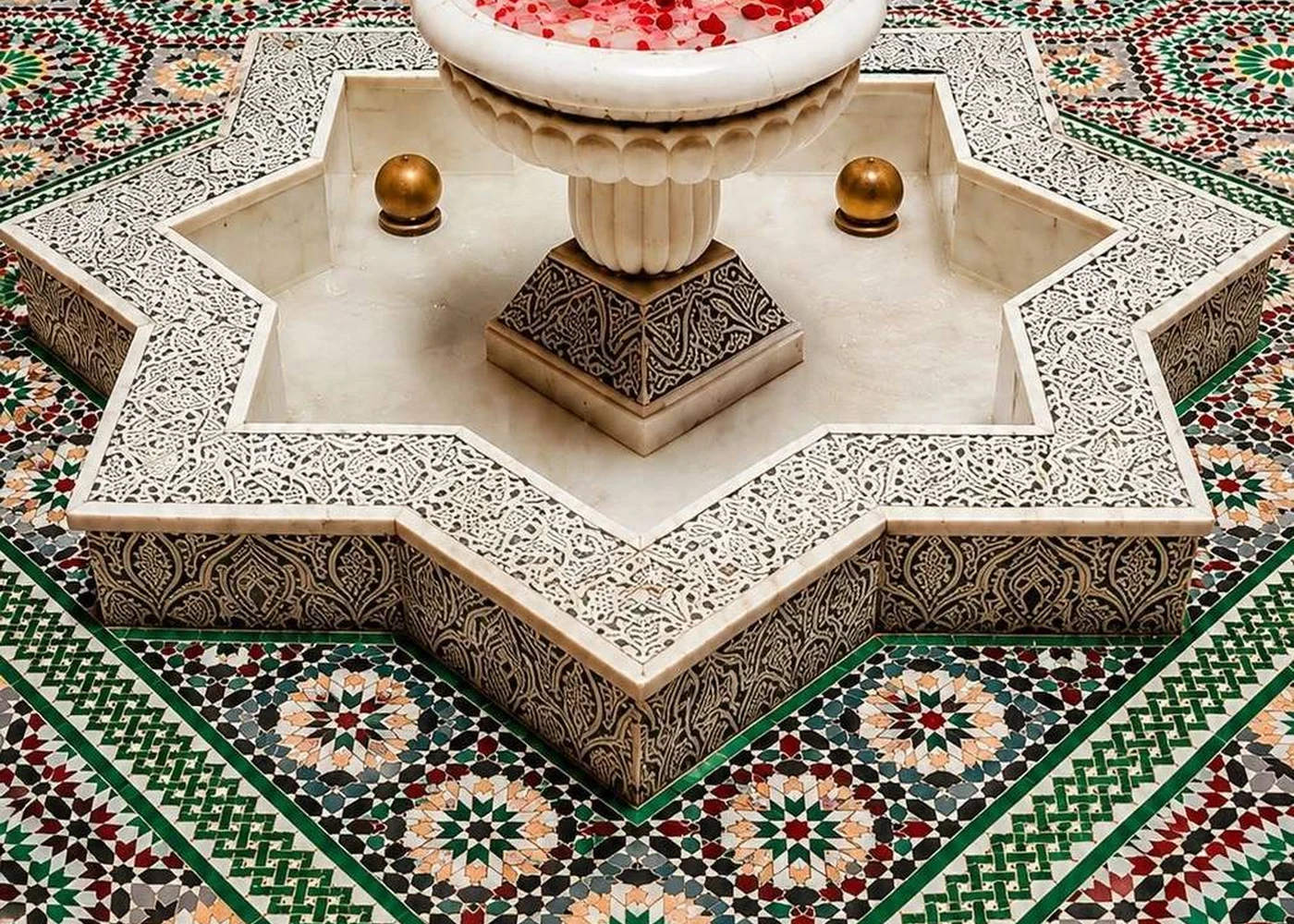
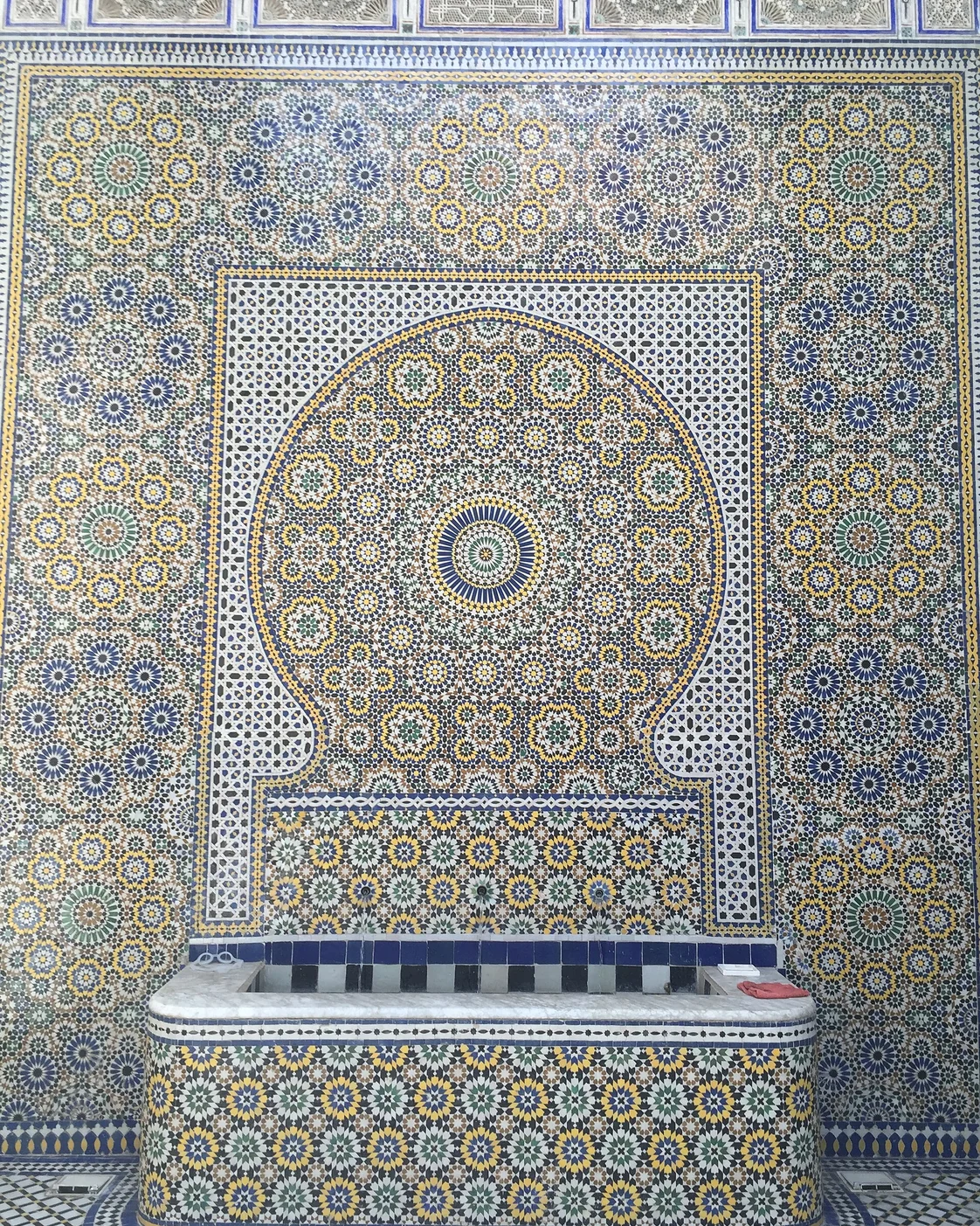
A mosaic fountain in Fez: ornament organised around an everyday resource.
THE SUBJECTClay, colour & a thousand decisions
THE APPROACHPlace. Practice. People.
THE CONNECTIONFind it in Morocco ↗
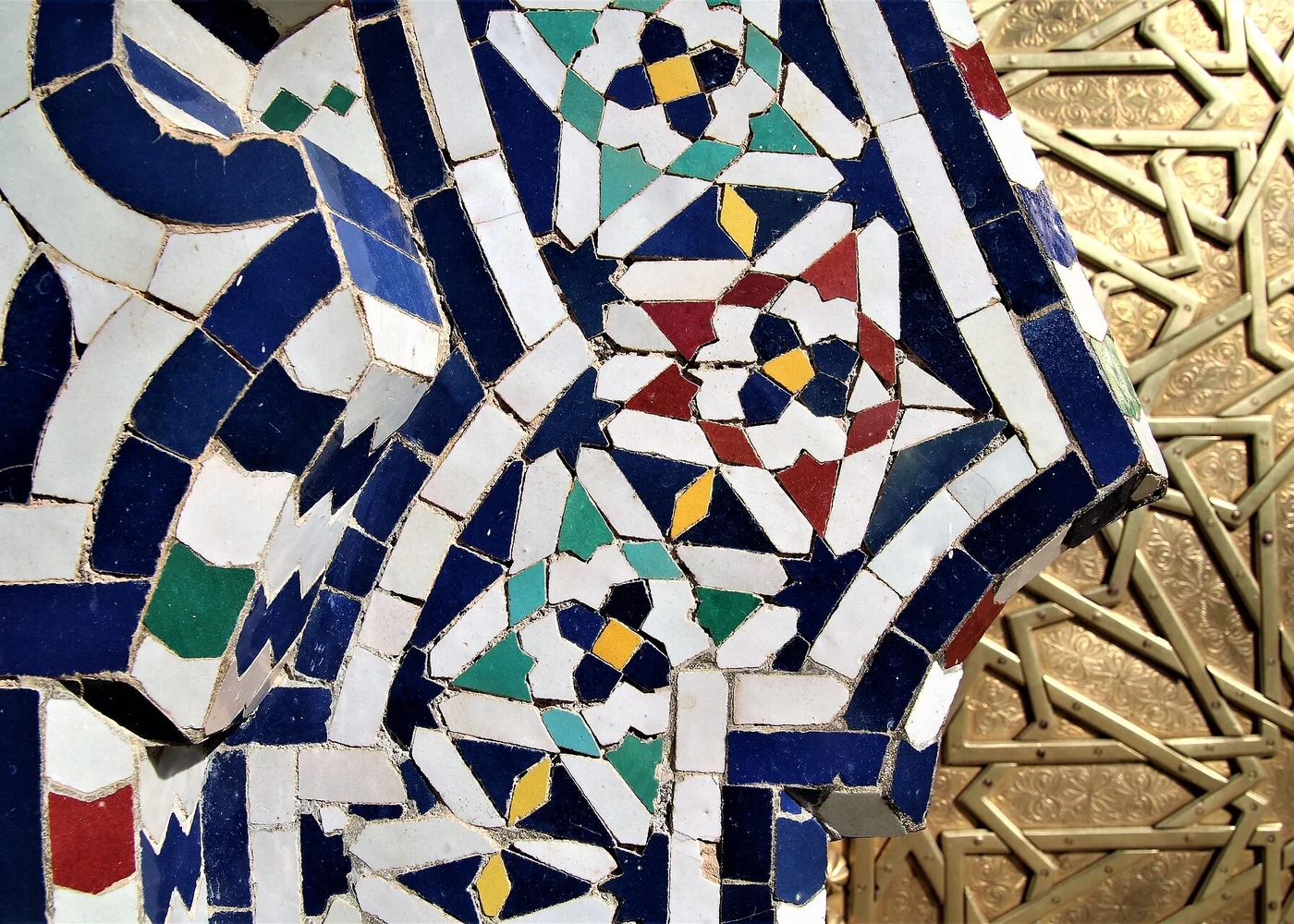
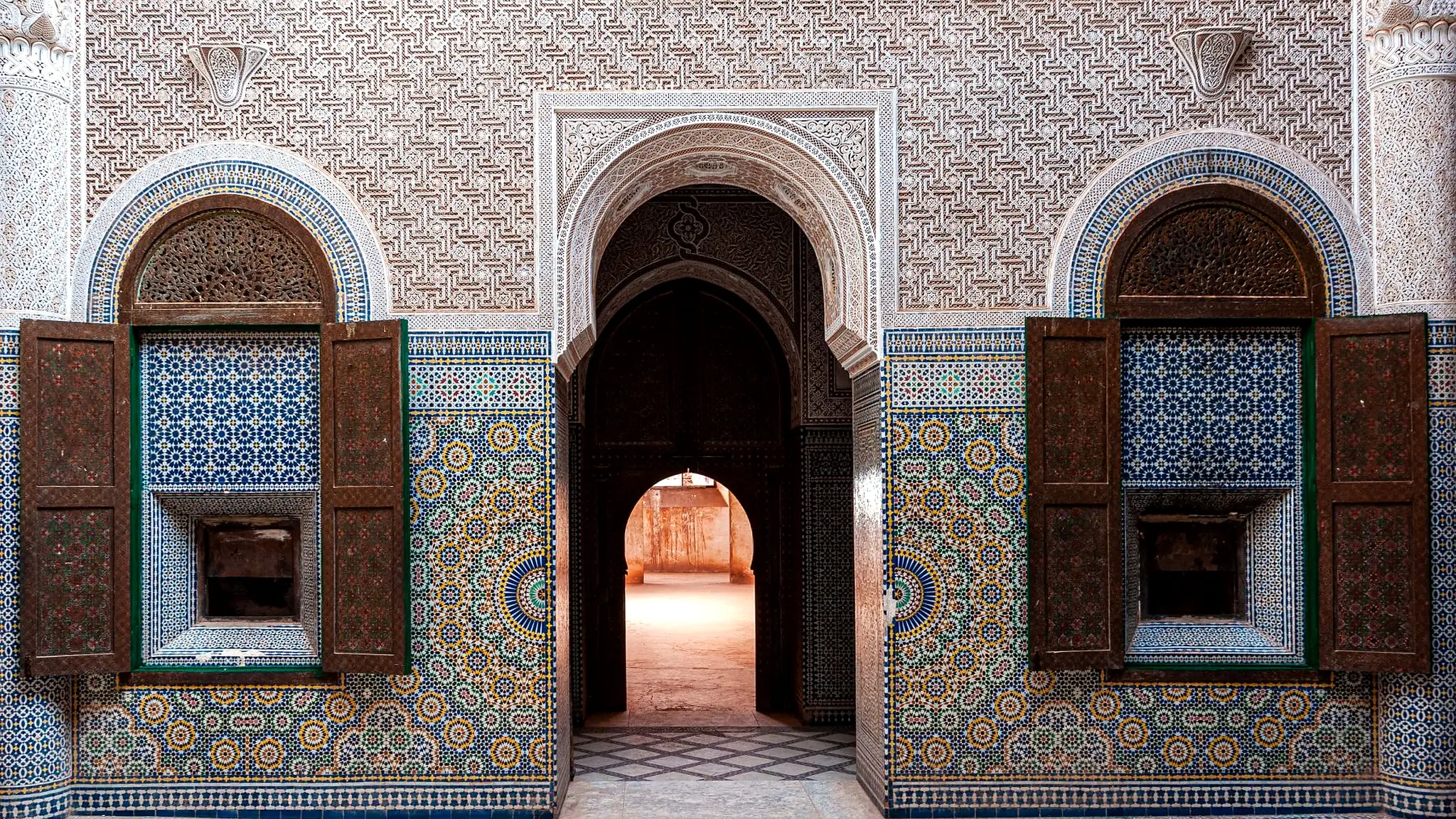
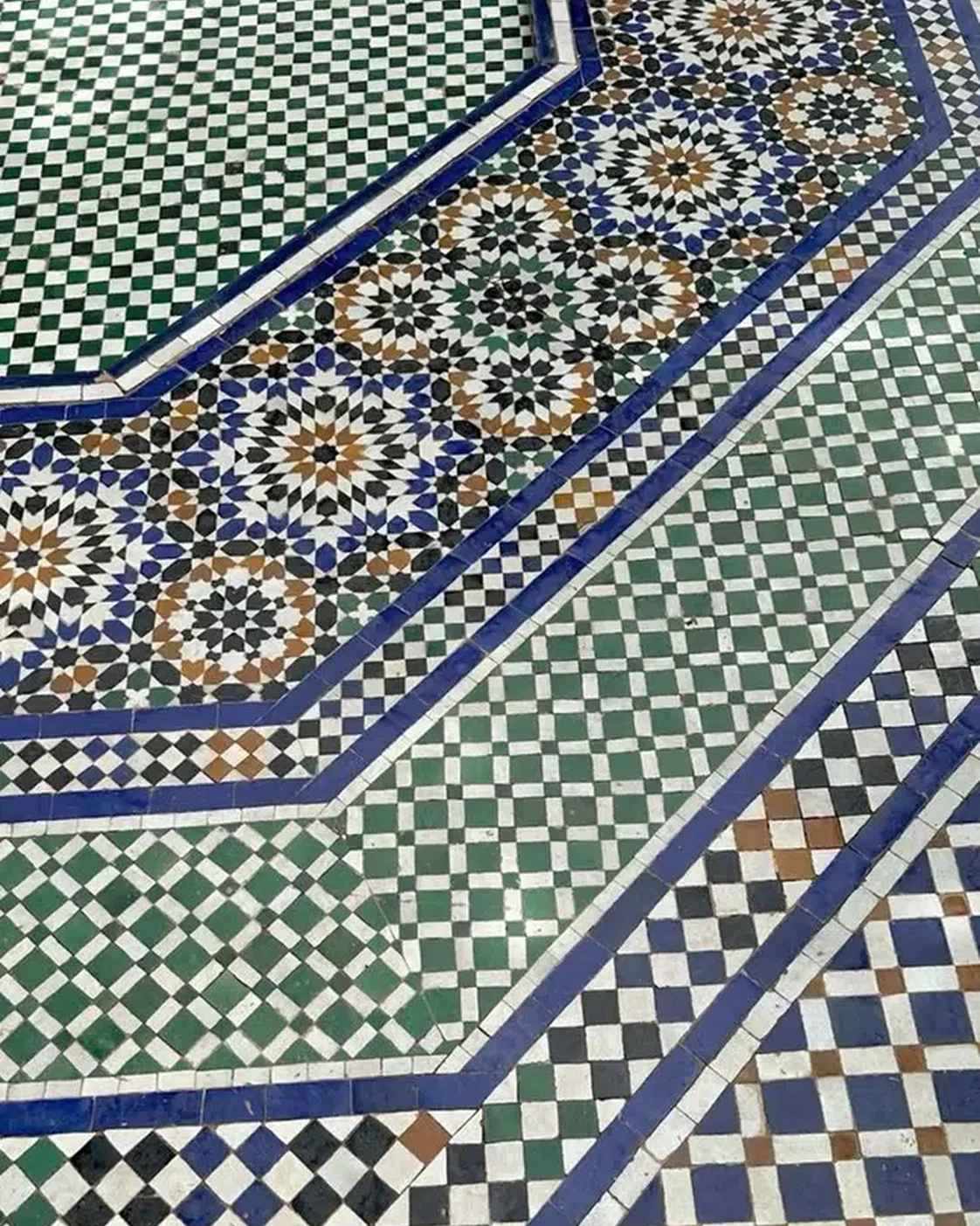
A geometric surface read through repeat and boundary.
02 / The deeper context

Small pieces.
An extraordinary whole.

The first surprise of zellige is that the finished pattern is not the shape of the original tile. A glazed ceramic surface is cut into smaller units; those units become the vocabulary from which a larger field is assembled. The maker must understand the little piece in the hand and the order that will only become visible when many pieces meet. Colour belongs to this construction, rather than being printed over an already completed pattern.

That distinction changes how you look. A star may be the centre of attention, but the apparently quiet pieces around it make its outline possible. Borders are equally important: they negotiate the meeting between an expanding repeat and a wall, step, fountain or doorway of finite dimensions. This is why an isolated motif tells only part of the story. To understand a panel, look at its corners as well as its centre.

Zellige also lives at two speeds. The first is the quick visual pleasure of a luminous, patterned room. The second is the slower discovery of cutting, fitting, surface variation and repair. A contemporary installation can reward that attention as much as a historic one. The useful question is not whether a surface looks perfectly old, but how it was made, where it belongs and what evidence supports its history.

Inside the craft

Clay, geometry
and a working tradition.

Three distinctions help you recognise what a zellige surface is doing—and what a beautiful photograph alone cannot tell you.

01 / The construction

A mosaic, not a printed tile.

In cut-tile mosaic, the pattern crosses the boundaries of many small pieces. A factory-printed motif can place a similar design on one square tile, but its construction is different. Look for the joints that outline individual coloured shapes. A single-colour square tile may also be sold as zellige today; ask whether the term describes handmade tiles, hand-cut mosaic, or both.

The distinction matters at the edge of a panel. A repeating field has to stop somewhere. Narrow borders, changes of scale and carefully resolved corners turn a repeat into an architectural surface. They are part of the design, not a frame added after the interesting work is finished.
02 / The pattern

Find the repeat behind the star.

A star is often the first shape the eye recognises. Its points, however, depend on neighbouring polygons and the spaces between them. Follow one colour through a panel and watch it become a star in one place and a connecting shape in another. Rotation, reflection and translation can carry a small set of units across a much larger surface.

Geometry is one strand of a wider decorative vocabulary. Plant forms and calligraphy can occupy adjacent registers in plaster, wood or ceramic. Recognising the material and visual system comes before assigning meaning: an eight-pointed form is not, by itself, evidence for one universal symbolic interpretation.

03 / The setting

Fez connects monuments to makers.

The Marinid centuries were especially important to the monumental development of Fez. Madrasas and other foundations brought architecture, patronage and skilled surface work together. That historical setting helps explain why a tiled court should be read as part of an institution, rather than as an isolated decorative sample.

The story continues through modern commissions. In 2011, The Met opened a newly built Moroccan Court made with craftspeople from Fez. It is a contemporary demonstration of living knowledge, not a historic Moroccan courtyard transplanted intact. The difference makes the project more revealing: inherited skills can produce new architecture.

One minute, three discoveries

Choose a single colour. Trace its repeat. Then find the point where the pattern meets a doorway or corner. You have moved from seeing a beautiful surface to reading how it is composed.

03 / From an idea to everyday life

From clay to a composed surface.

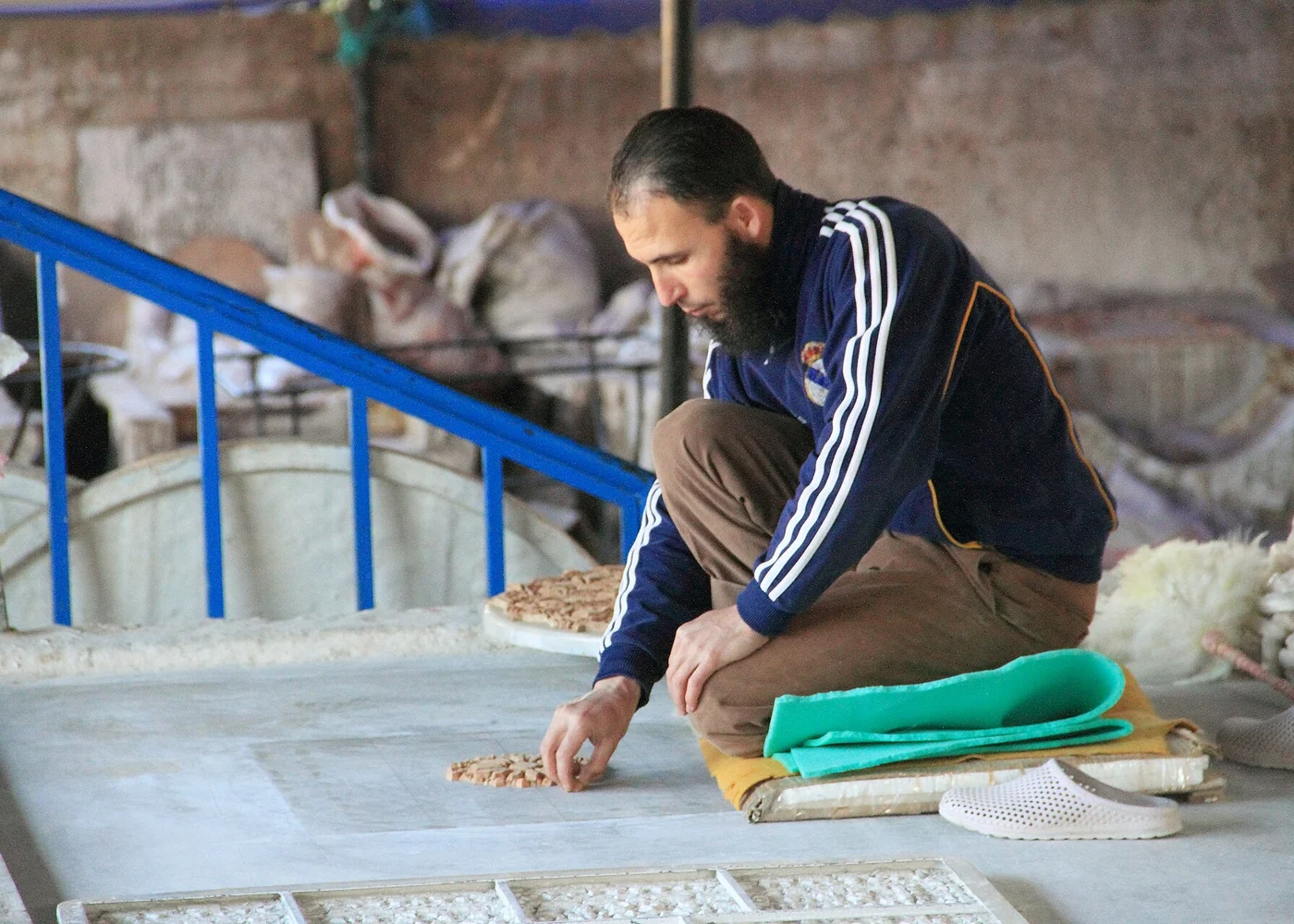
Assembly asks the eye to hold two things at once: an individual shape and its place in a larger repeat. Watch where pieces meet. A neat joint is a result of skilled work, rather than evidence that a surface came from a machine.

Zellige assembly in a Fez workshop.
01

The material before the motif

Begin with the ceramic body and its glazed face. Thickness, surface and colour are practical decisions, not merely visual effects. A maker can explain which work is done in the workshop and which materials arrive prepared. That answer is more useful than a blanket claim that every stage follows one unchanged recipe.

02

Cutting is a design skill

A piece has to fit the pattern and sit convincingly beside its neighbours. Look at repeated angles and the meeting of several edges. Small differences do not automatically mean poor work, while conspicuous irregularity is not proof of authenticity. Judge the coherence of the whole alongside the explanation of its maker.

03

Assembly makes the pattern legible

A drawing, remembered sequence or prepared layout can guide the relationship between units. Watch for repeated colour positions, changes at a border and the turn around a corner. A finished panel is both geometry and a physical object that must be supported, transported or installed.

04 / The visual chapter

Three distances from the tile

Move between the close detail and the wider setting. Each view adds another part of the story.

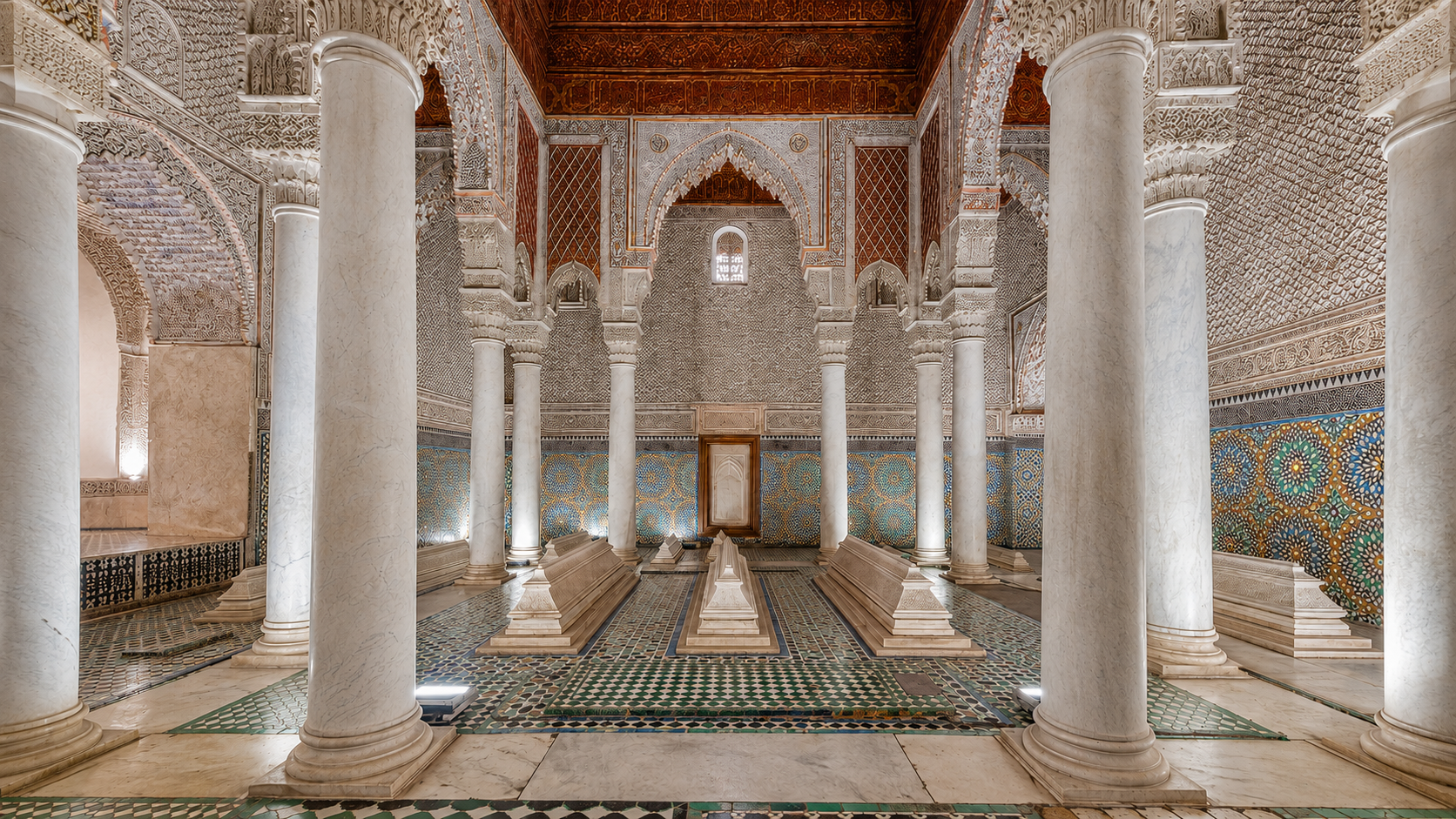
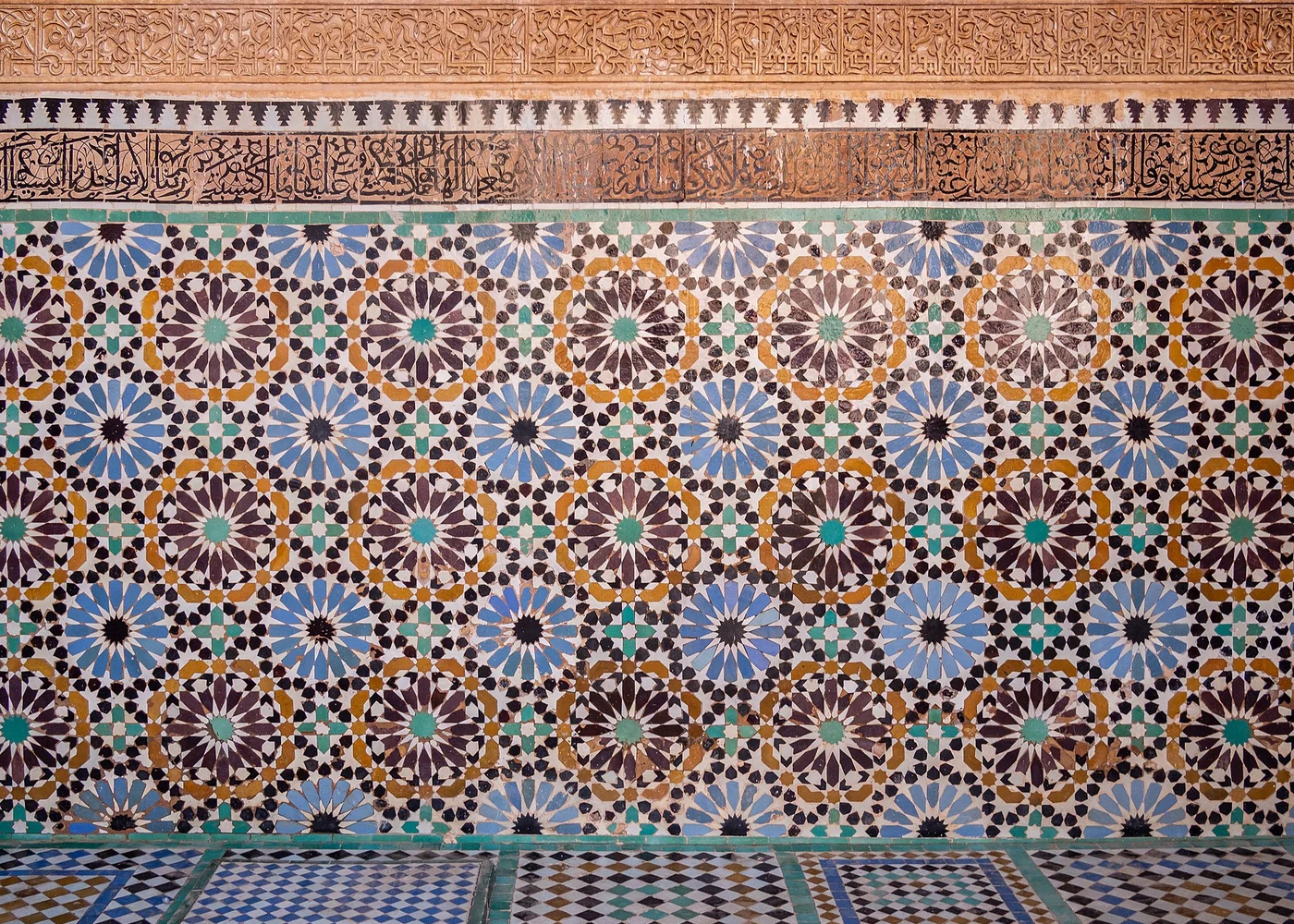
Geometric tile mosaic at the Saadian Tombs, Marrakech.
01 / A closer look

At the pattern’s scale

At the Saadian Tombs, coloured units build interlocking geometric fields. Start with one shape and follow it outward. You may find that the apparent “star” includes the shapes around it; foreground and background depend on where you look.

Geometric tile mosaic at the Saadian Tombs, Marrakech.
A close view of cut ceramic pieces photographed in Fez.
02 / A closer look

At the edge of a piece

A close view makes the cut edges and the relationship between coloured units visible. Read the small join as carefully as the larger pattern. To understand age, repair or provenance, combine looking with a maker’s explanation or a documented record.

A close view of cut ceramic pieces photographed in Fez.
A fountain composition: water, geometry and cut ceramic.
03 / A closer look

Pattern & interpretation

Geometry creates rhythm and relationships. Specific religious, protective or symbolic readings need a source tied to the setting. It is perfectly meaningful to describe how a pattern works without assigning a universal meaning to every star.

A fountain composition: water, geometry and cut ceramic.
05 / More than one perspective

Look beyond
the first impression.

Perspective 01

Workshop & commission

A fountain lining, wall panel and freestanding table answer different briefs. The same craft vocabulary can serve a public monument, a private room or a new commission. Ask about the intended use before comparing prices, scale or finish.

Perspective 02

Repair & continuity

A repaired area may record the continued life of a building. Look for a change in glaze, joints or alignment, then check documentation. A difference is an invitation to investigate, not enough evidence on its own to declare a repair recent or careless.

06 / Make the connections

Learn to read the geometry

Use these ideas to connect what you notice with the materials, people and histories behind it.

01

Find a unit

Choose one small shape. Trace its outline with your eyes, then find another. Avoid assuming that every visible motif is a single tile. The cut units and the pattern you perceive are different scales.

02

Follow the repeat

Move horizontally, then vertically. Does the repeat rotate? Do the same colours return in the same positions? A small sketch can reveal the rule more clearly than a hurried photograph.

03

Look at the joins

Notice the edges, surface variation and fit. Handwork can show small differences, but irregularity alone does not certify age, quality or origin. Those questions need a maker’s explanation or documented provenance.

04

Read the setting

A fountain, wall panel and contemporary tabletop place different demands on a surface. Ask what the object does, who commissioned it and where it was made before giving its decoration a fixed meaning.

07 / A more useful conversation

A better conversation with a maker

Clear answers for the questions that often come next.

Is zellige the same as a printed patterned tile?

No. A printed or moulded surface may imitate a mosaic visually. Ask whether the pattern is assembled from separate cut pieces and look at the construction, rather than relying on a product name.

Does every star have one symbolic meaning?

Do not assume so. Geometry can carry many associations, but a specific interpretation needs evidence about its place, period or maker. A confident universal explanation is not a substitute for context.

What should I ask in a workshop?

Try “Which stages happen here?” and “Who cuts and assembles these pieces?” Ask before photographing a person or a work in progress, and leave working space clear.

A thought to take with you

Keep looking. Keep learning.

Next time you meet a tiled wall, give it a minute before taking the photograph. Find one cut shape, one repeat and one edge condition. You will have moved from recognising a Moroccan surface to beginning to understand its construction.

The Exotic Morocco library

Continue at your own pace.

This Learn story is free to explore. Find this subject in the guide library, with each title’s current availability clearly shown.

Explore the guide library ↗
Sources & further reading

Image acknowledgements

  1. Hero: commissioned AI-generated editorial illustration by Exotic Morocco, made with OpenAI ImageGen. An imagined, architecturally grounded courtyard; not a record of a named property.
  2. Hero: Zellij Fes 04.jpg — Schorle. CC BY-SA 4.0. Cropped/resized; original licence retained.
  3. Portrait: Zellij FOUNTAIN, FEZ, MOROCCO.jpg — Tahirshah999. CC BY-SA 4.0. Cropped/resized; original licence retained.
  4. Story-1: Zellij artisan in Fès, Morocco 2016.jpg — Schorle. CC BY-SA 4.0. Cropped/resized; original licence retained.
  5. Story-2: Zellij - Saadi Tombs 1083.jpg — C messier. CC BY-SA 4.0. Cropped/resized; original licence retained.
  6. Story-3: Fes-Morocco 88.jpg — Werner100359. CC BY-SA 4.0. Cropped/resized; original licence retained.
  7. Related preview: Safi.jpg — Abdelmounim Maroc. CC BY-SA 4.0. Cropped/resized; original licence retained.
  8. Chapter: A geometric surface read through repeat and boundary. — Exotic Morocco’s existing image collection.
  9. Gallery: A fountain composition: water, geometry and cut ceramic. — Exotic Morocco’s existing image collection.
  10. Related preview: Fez, Morocco (3636868446).jpg — nathalie_r. CC BY 2.0. Cropped/resized; original licence retained.
  11. Related preview: مدرسة ابن يوسف 04 24 52 023000.jpeg — إيان. CC BY-SA 4.0. Cropped/resized; original licence retained.

Destination and related-story thumbnails intentionally identify their linked pages. Principal story images are selected individually for this Learn page.