Why Al Quaraouiyine Quarter matters
A quarter before it is a landmark.
Al Quaraouiyine Quarter matters because it concentrates several identities of Fez in one walkable medina zone: sacred architecture, intellectual memory, craft movement, roofscape, market pressure and the quiet discipline of a city that has never been only a museum.
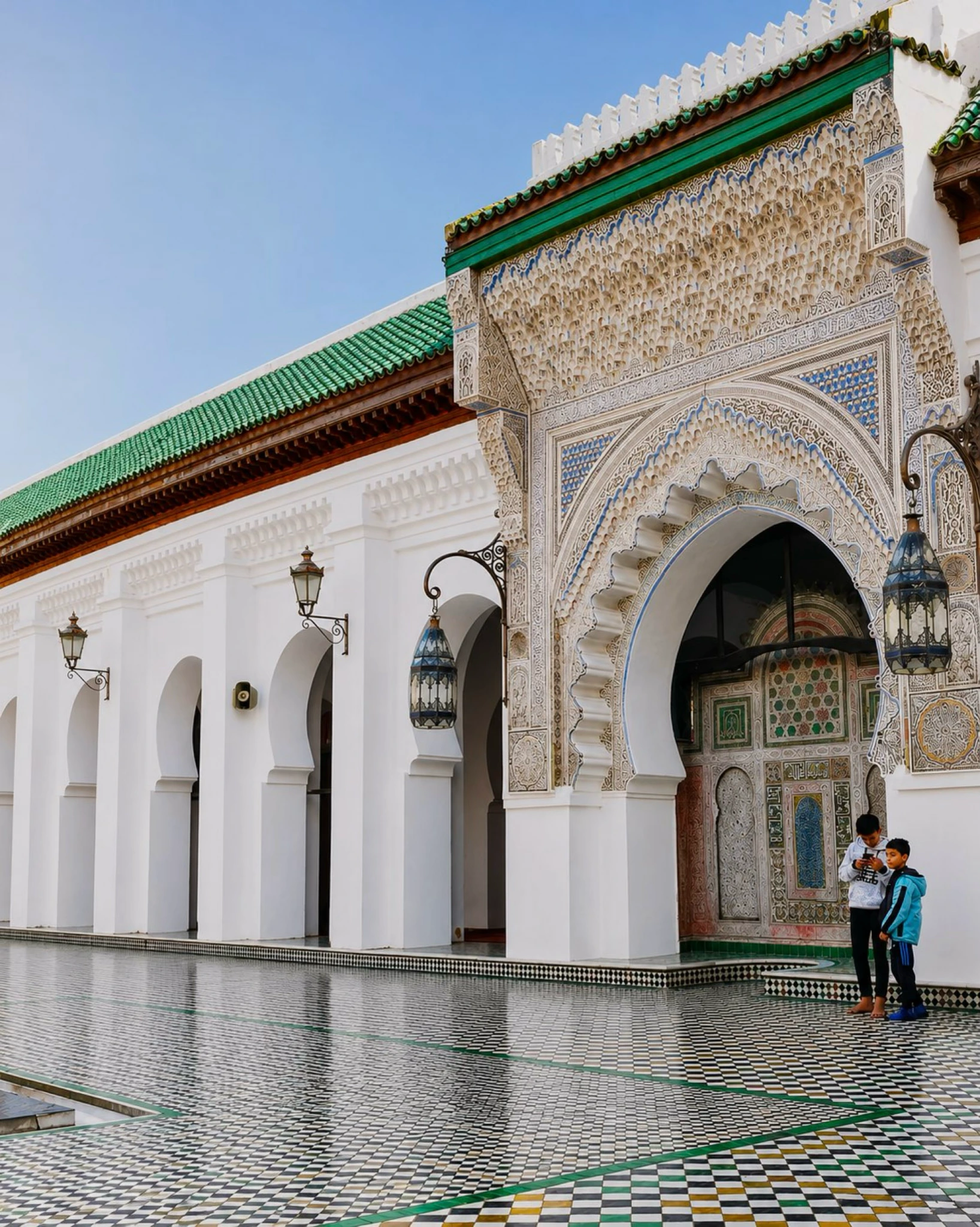
The name is tied to Al Quaraouiyine, also written al-Qarawiyyin or al-Karaouine, the mosque-university institution at the spiritual centre of Fez el-Bali. Its foundation is commonly associated with the ninth century and traditionally with Fatima al-Fihri, while its later form reflects centuries of urban, religious and architectural evolution.
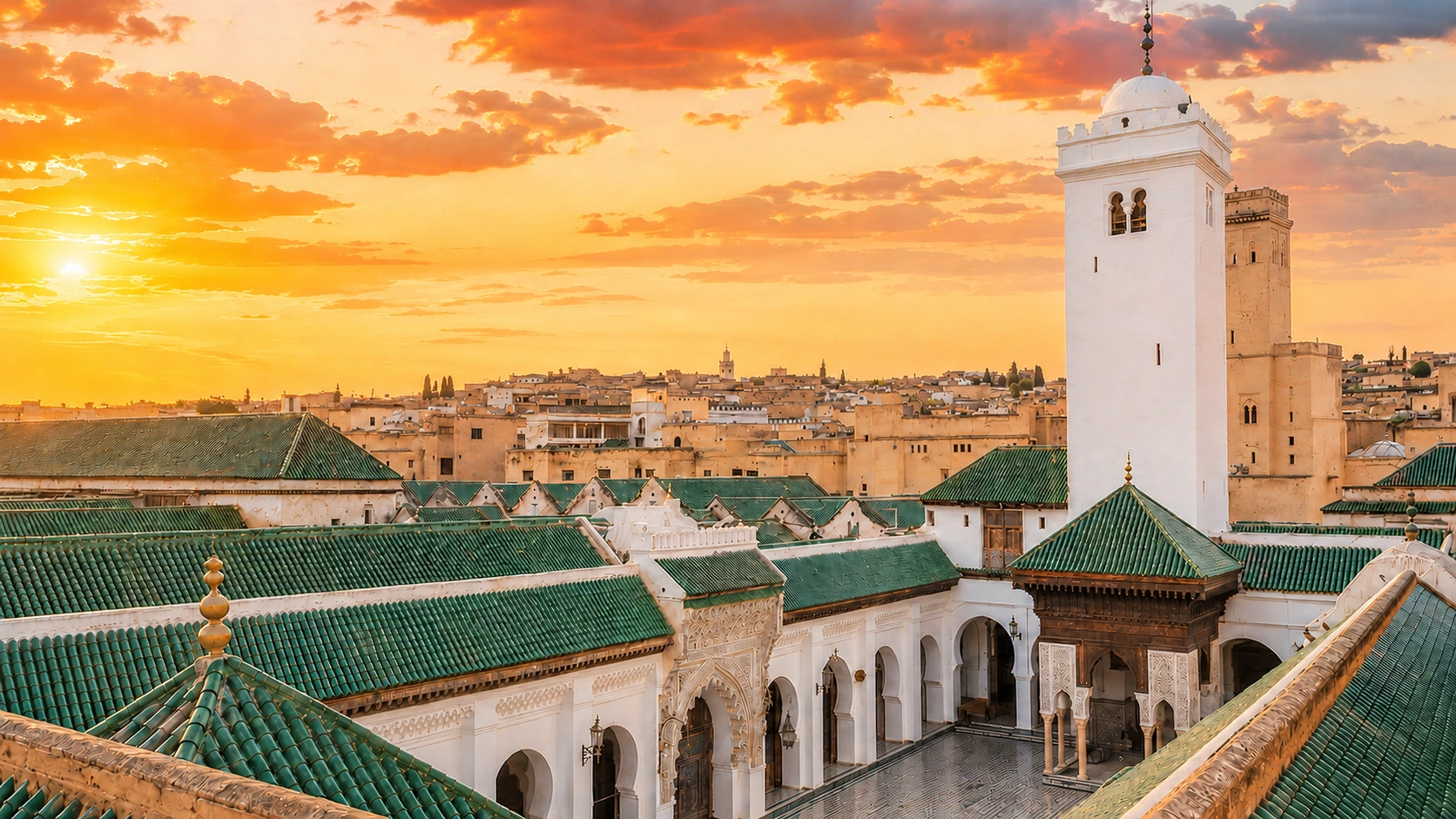
UNESCO's World Heritage listing for the Medina of Fez gives the wider frame: Fez was founded in the ninth century, reached a high point under the Marinids in the thirteenth and fourteenth centuries, and retains its cultural and spiritual status in Morocco. The quarter should be read inside that larger medina story, not as an isolated photo stop.
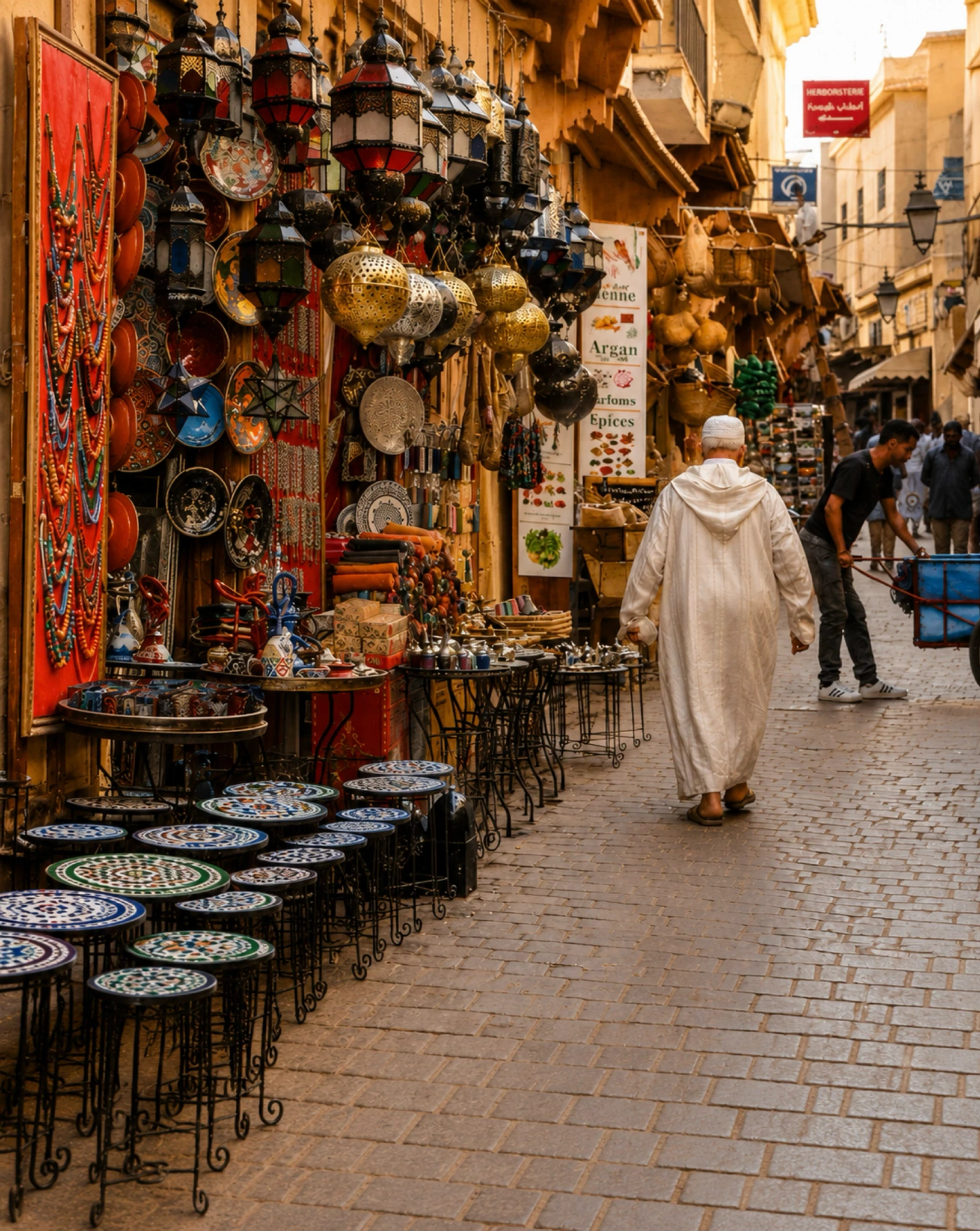
For visitors, the lesson is urban. The mosque, university memory, nearby Attarine lanes, Seffarine metalwork, rooflines, fountain details and shop thresholds all belong to the same fabric. Every turn changes the scale from city to lane, from roof to doorway, from public movement to sacred edge.
The beauty is precise rather than loud: green glazed tiles, carved plaster, zellij, cedar, white walls, brass lamps, worn stone and sudden shafts of light. What makes it powerful is the way those details remain embedded in daily movement instead of being separated from the medina around them.
Core heritage framing is grounded in the UNESCO World Heritage Centre listing for the Medina of Fez and the official University of Al Quaraouiyine site. Visitor access, opening details and route conditions should be checked locally close to travel.