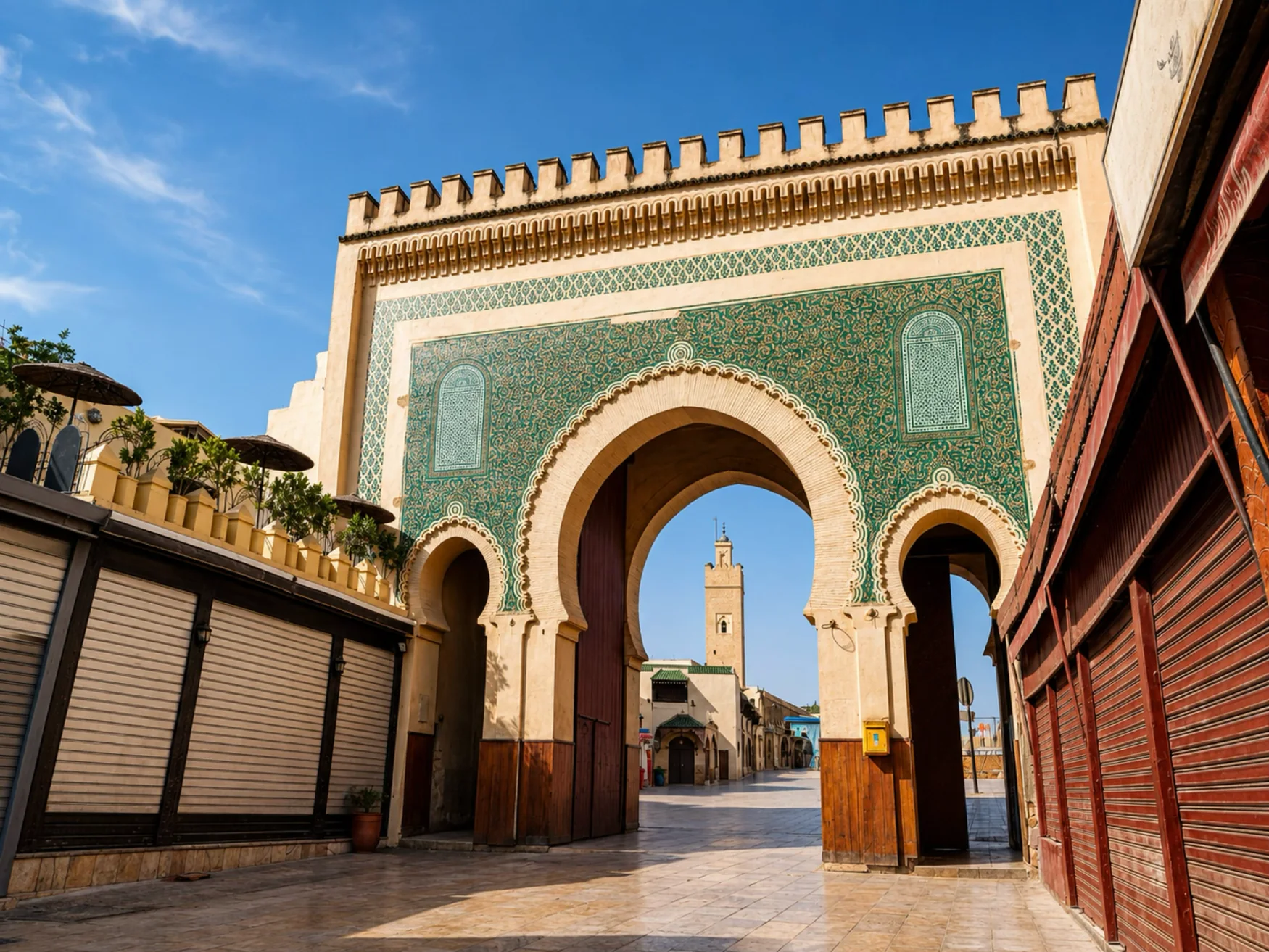
Fès
Scholarship, medina craft and sacred detail.

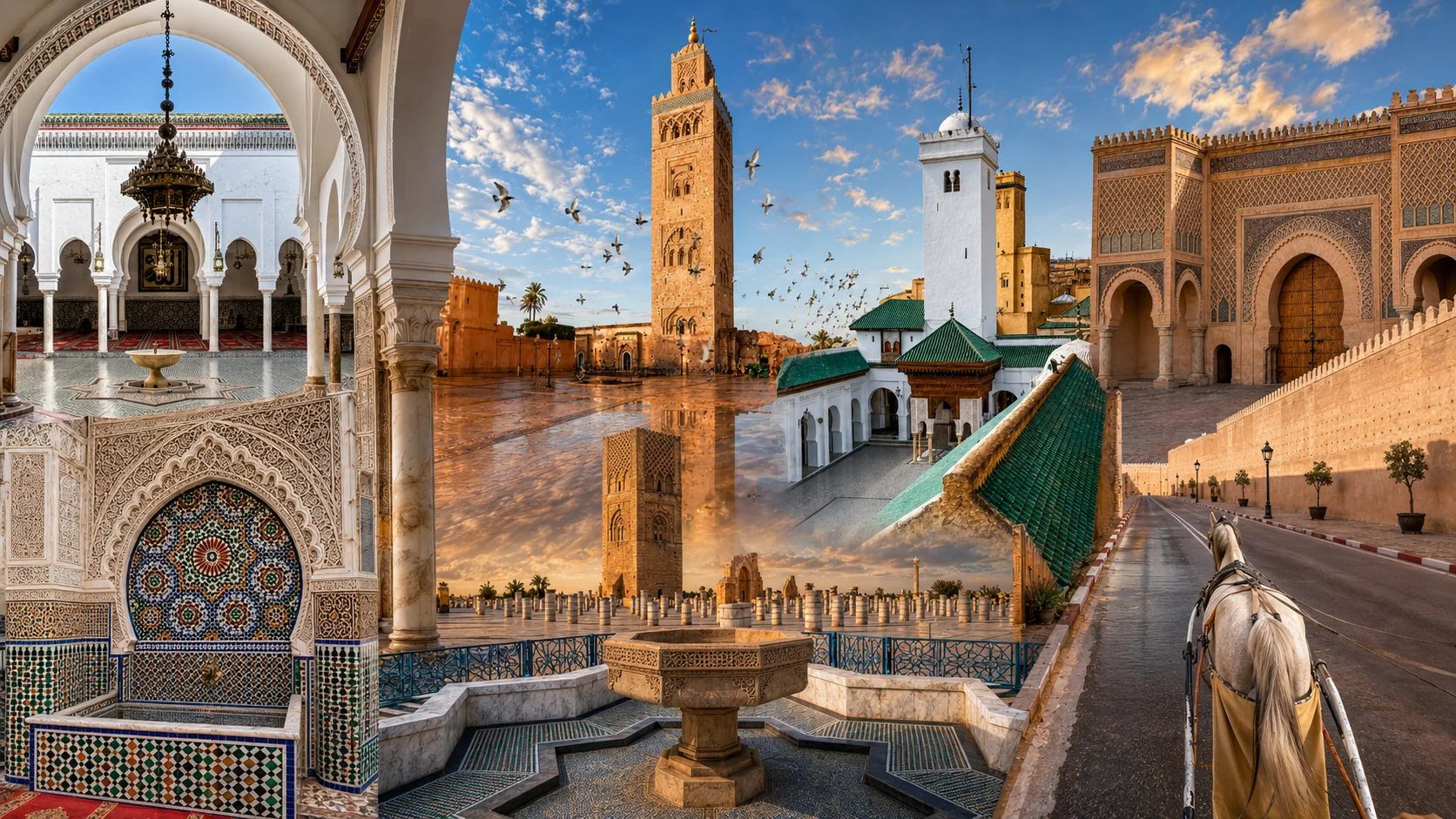
Four Capitals, One Royal Story
Fès, Marrakech, Meknès and Rabat form Morocco’s classic imperial route. Together they show how dynasties shaped authority through medinas, gates, walls, madrasas, minarets, palace memory, gardens, craft and the modern Atlantic capital.
This regional page introduces Morocco through four cities that carried royal, spiritual and civic authority at different moments in history. It is not a rushed itinerary. It is a cultural route through power, scholarship, architecture, craft and memory.
Fès gives the journey its scholarly and spiritual core. Marrakech brings red-city drama, gardens and public life. Meknès adds royal scale through gates, granaries and ramparts. Rabat completes the story with modern capital identity, Atlantic light, Oudayas, Chellah and the neighbouring heritage of Salé.
Imperial is a historical lens, not an administrative region or a claim that the four cities are alike. Each combines several periods and present-day neighbourhoods. Read the monuments alongside the routes, markets and institutions around them: authority became visible in buildings, but a city is sustained by much more than its royal past.
A beautiful imperial route can begin on the Atlantic in Rabat, move inland to Meknès, continue to Fès and finish in Marrakech. The route can also be reversed, but the logic remains: capital, royal scale, scholarly depth and red-city atmosphere.
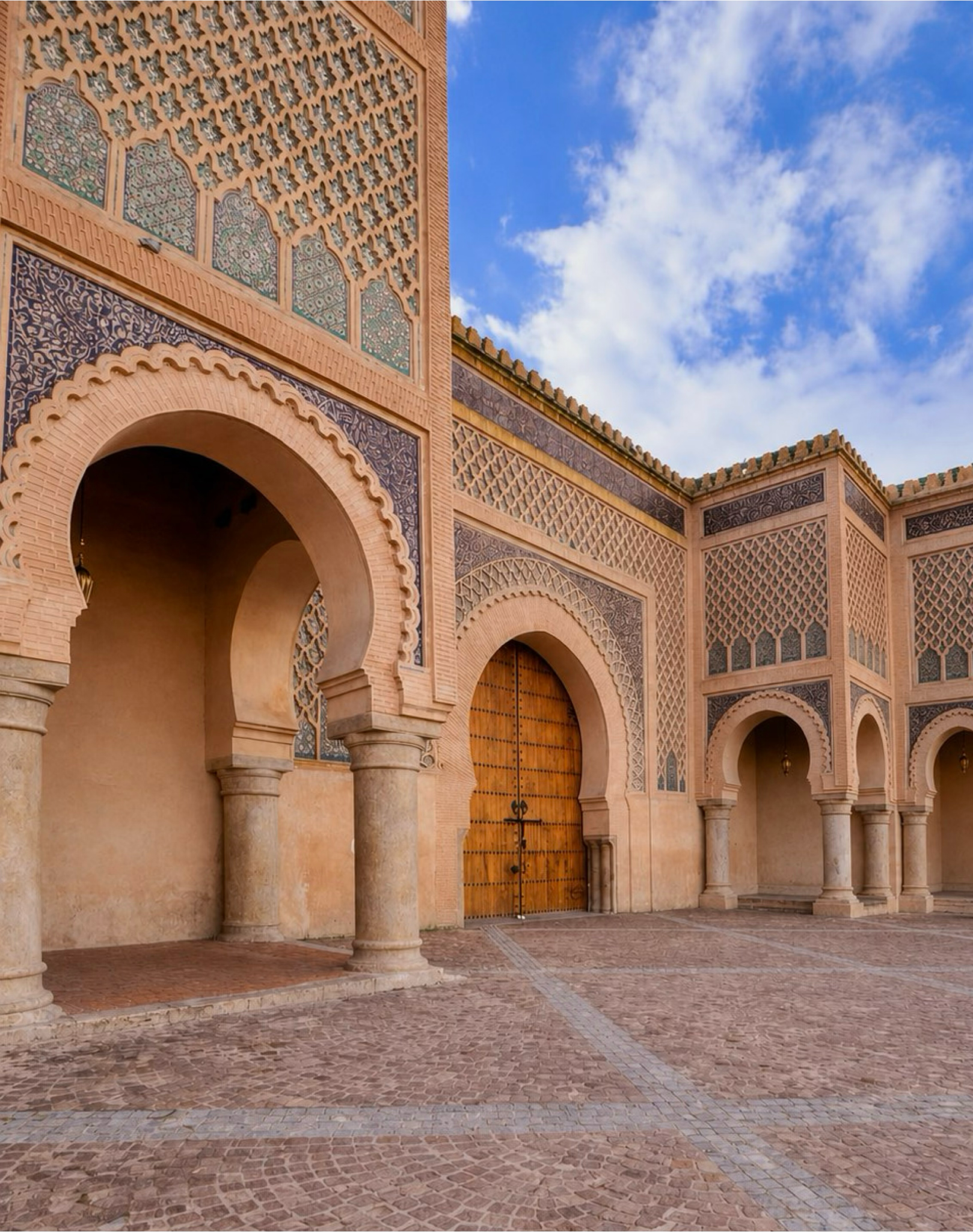 Bab Mansour · Meknès
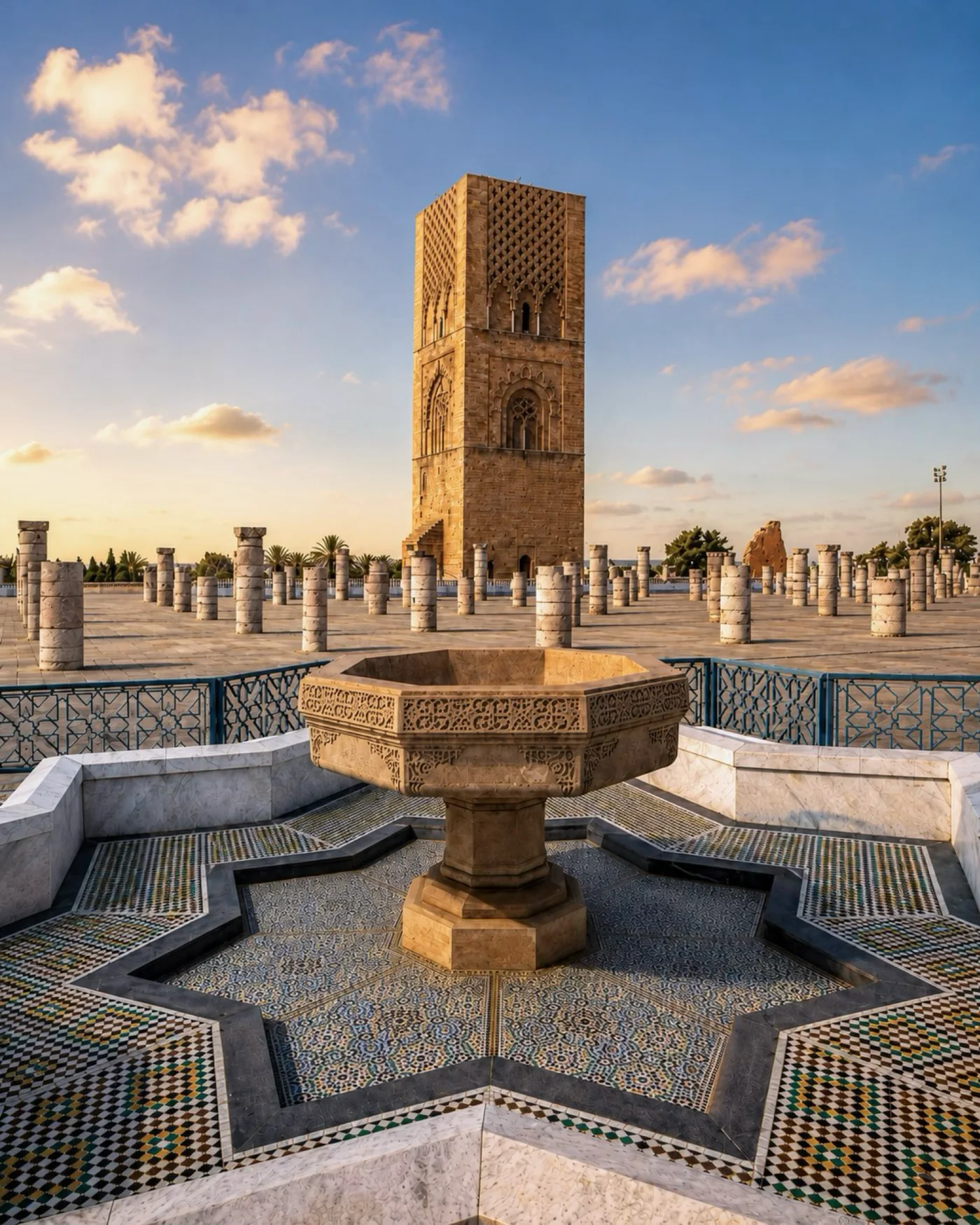 Rabat
Rabat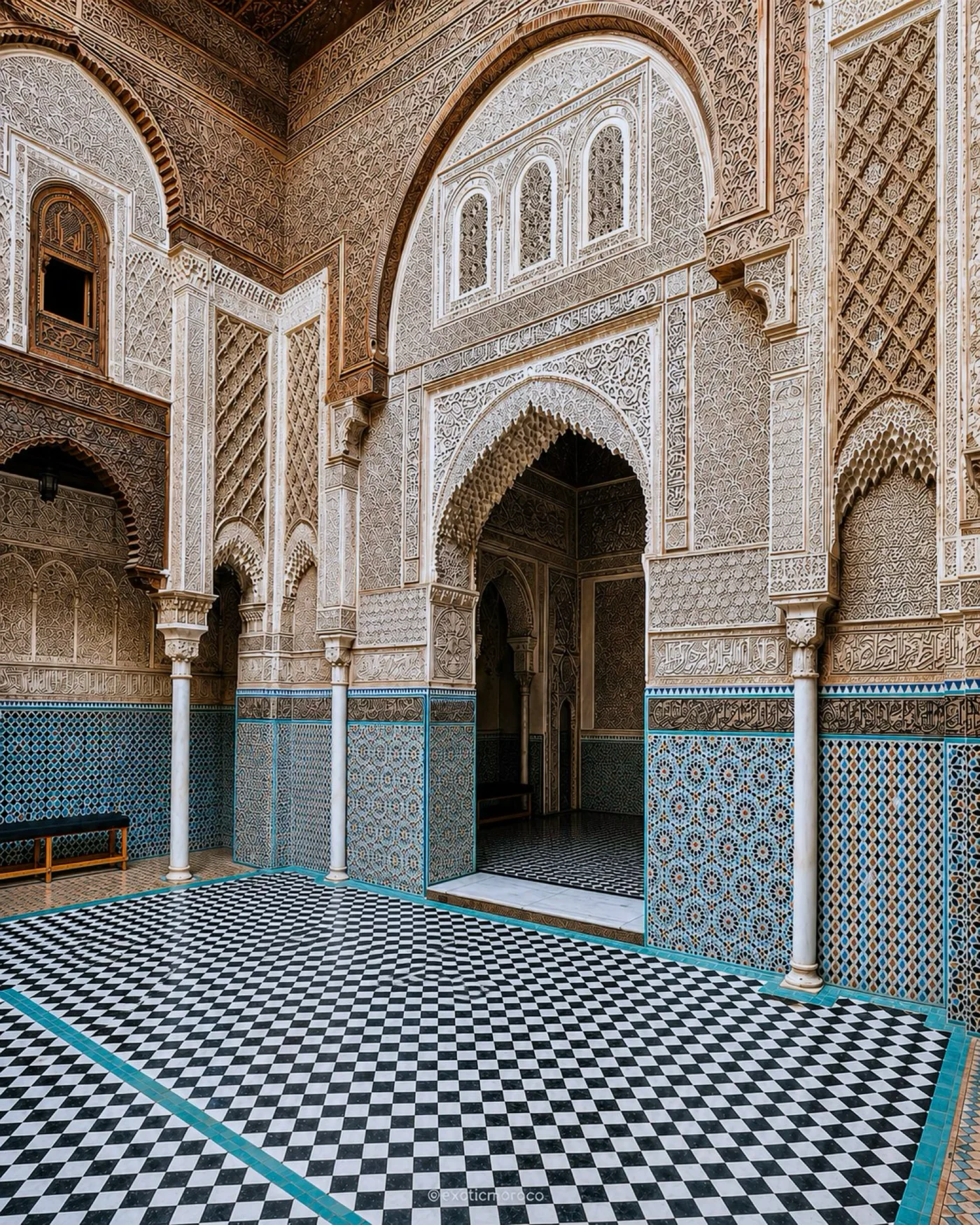 Fès
Fès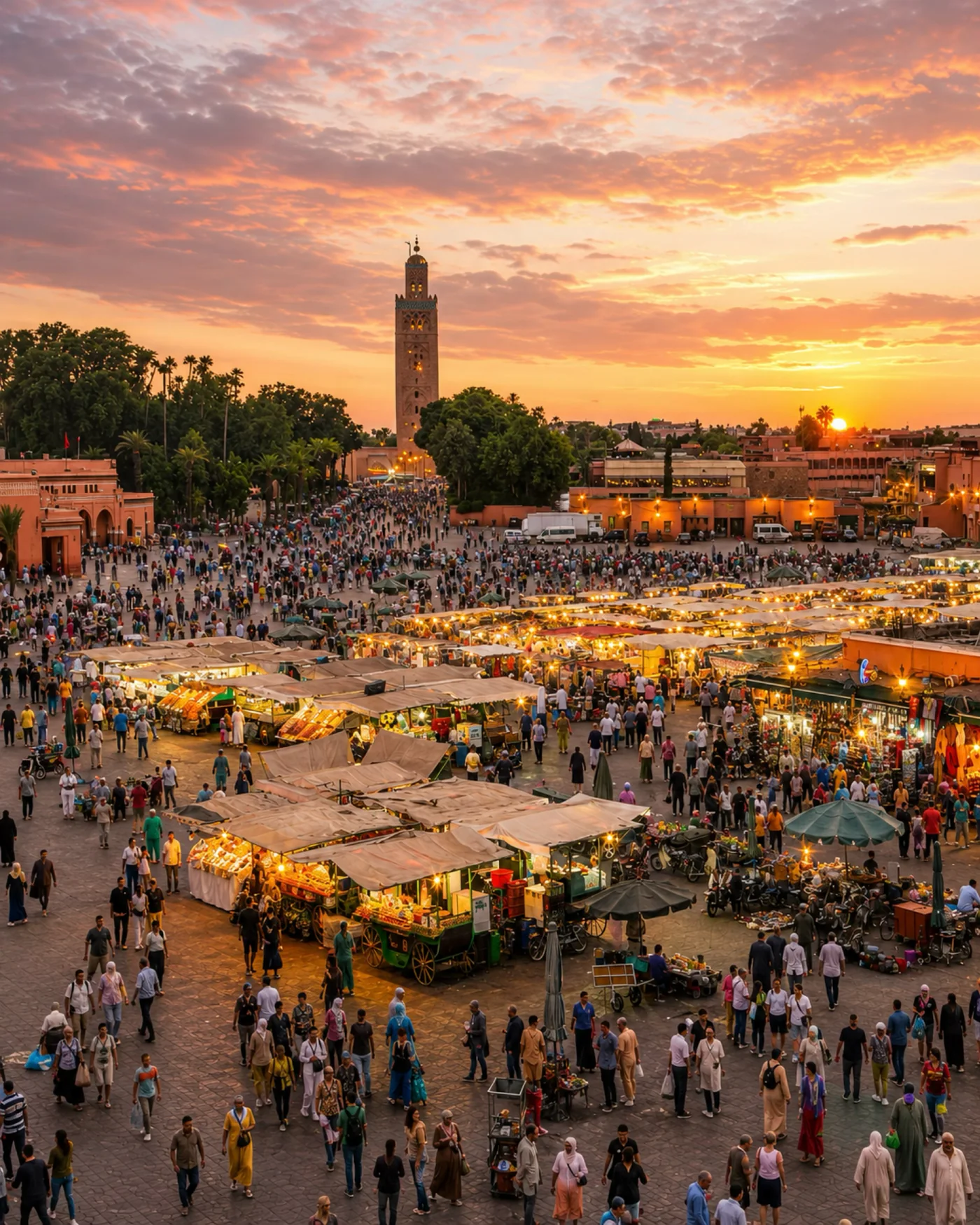 Marrakech
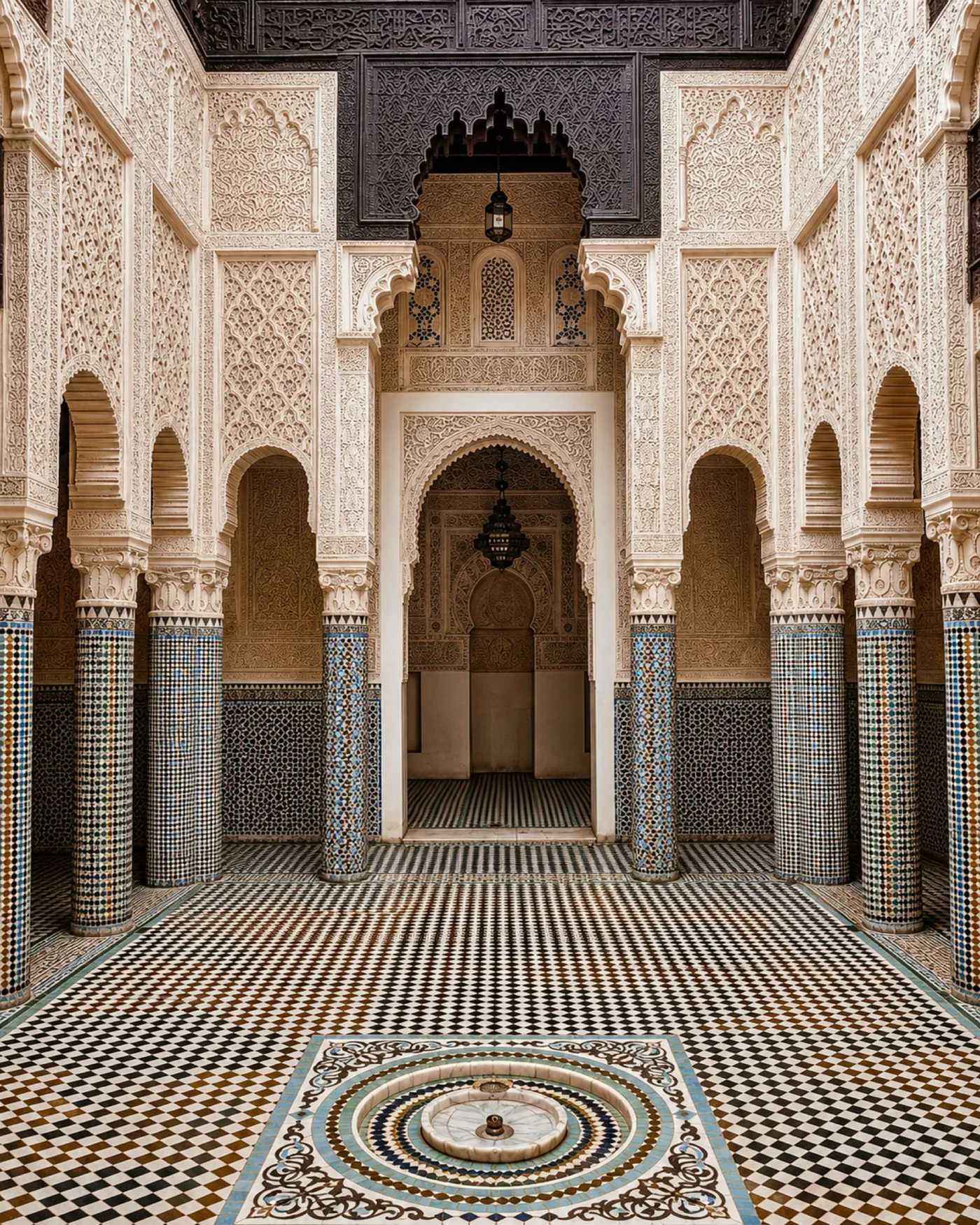 Salé
Salé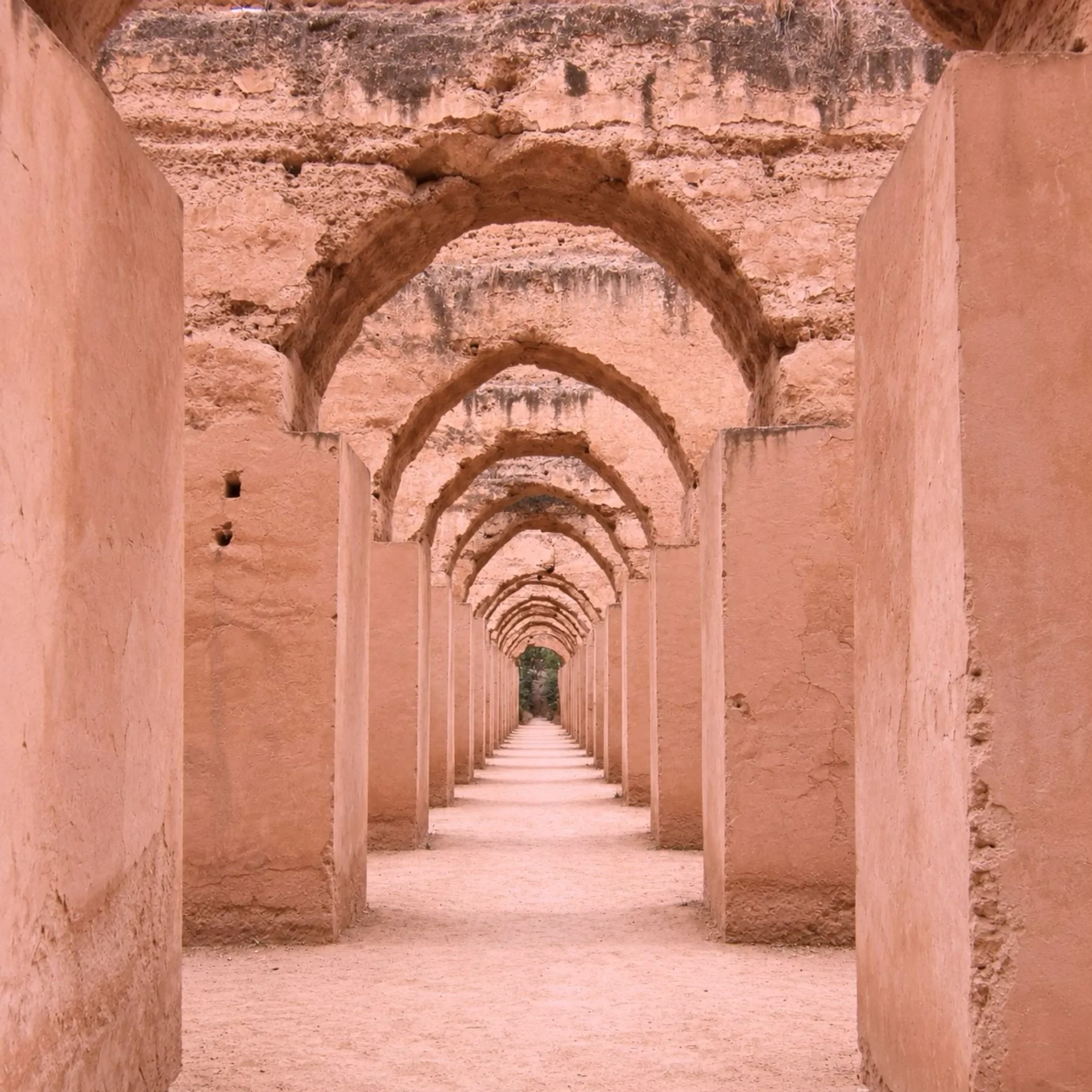 Meknès granaries
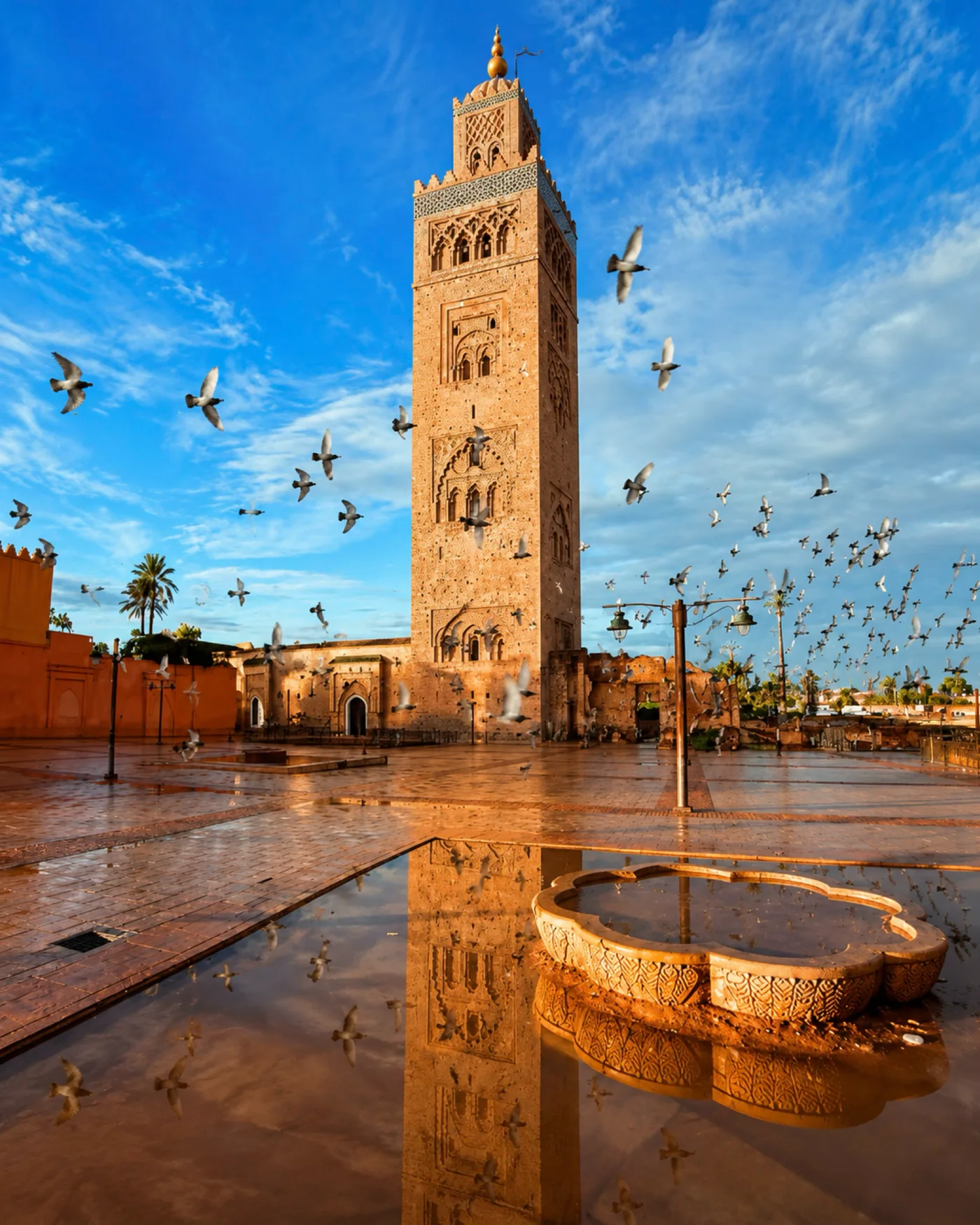 Koutoubia
The imperial cities are not just a list of famous places. They are a way to understand how Morocco built authority, knowledge, beauty and daily culture through urban form.
Gates, walls, towers, palace districts and ceremonial spaces translated political authority into city form. The imperial route shows how architecture became a public language of power.
In Fès especially, madrasas, libraries, religious spaces and craft quarters show how learning and urban life developed together across centuries.
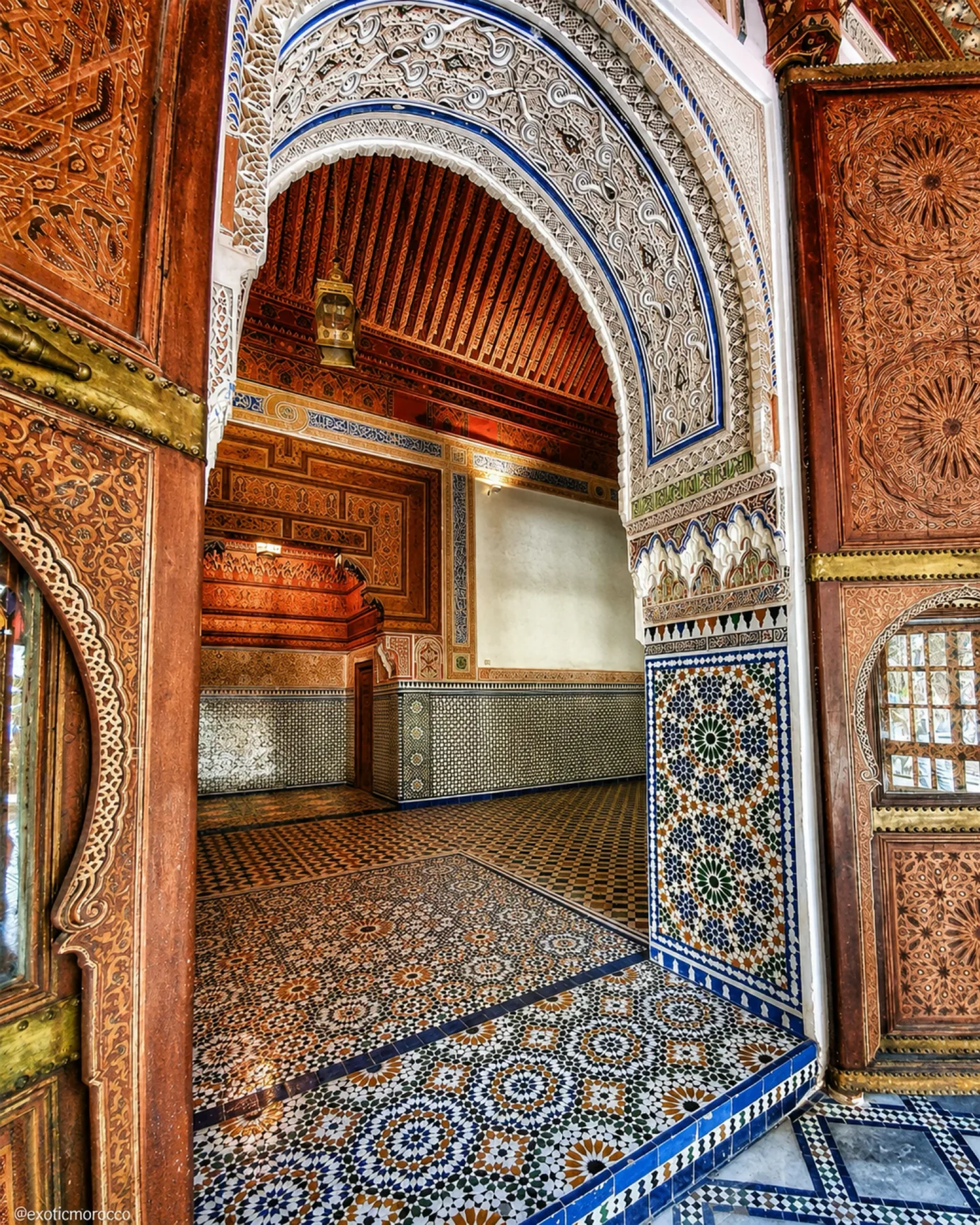
Zellige, carved cedar, plaster, leather, brass, textiles and market life connect the cities. Craft is not decoration here; it is inherited knowledge made visible.
These cities are not museum pieces. Their medinas, souks, gardens, cafés, mosques, ramparts and neighbourhoods still shape how people move, work and remember.
Compare scholarship, ceremonial scale, cultivated space and Atlantic capital life. Each city brings these relationships into a different balance.
Scholarship, medina depth, craft inheritance and spiritual prestige.
Red walls, gardens, Koutoubia, souks and sensory public life.
Bab Mansour, royal ramparts, granaries and Ismaili scale.
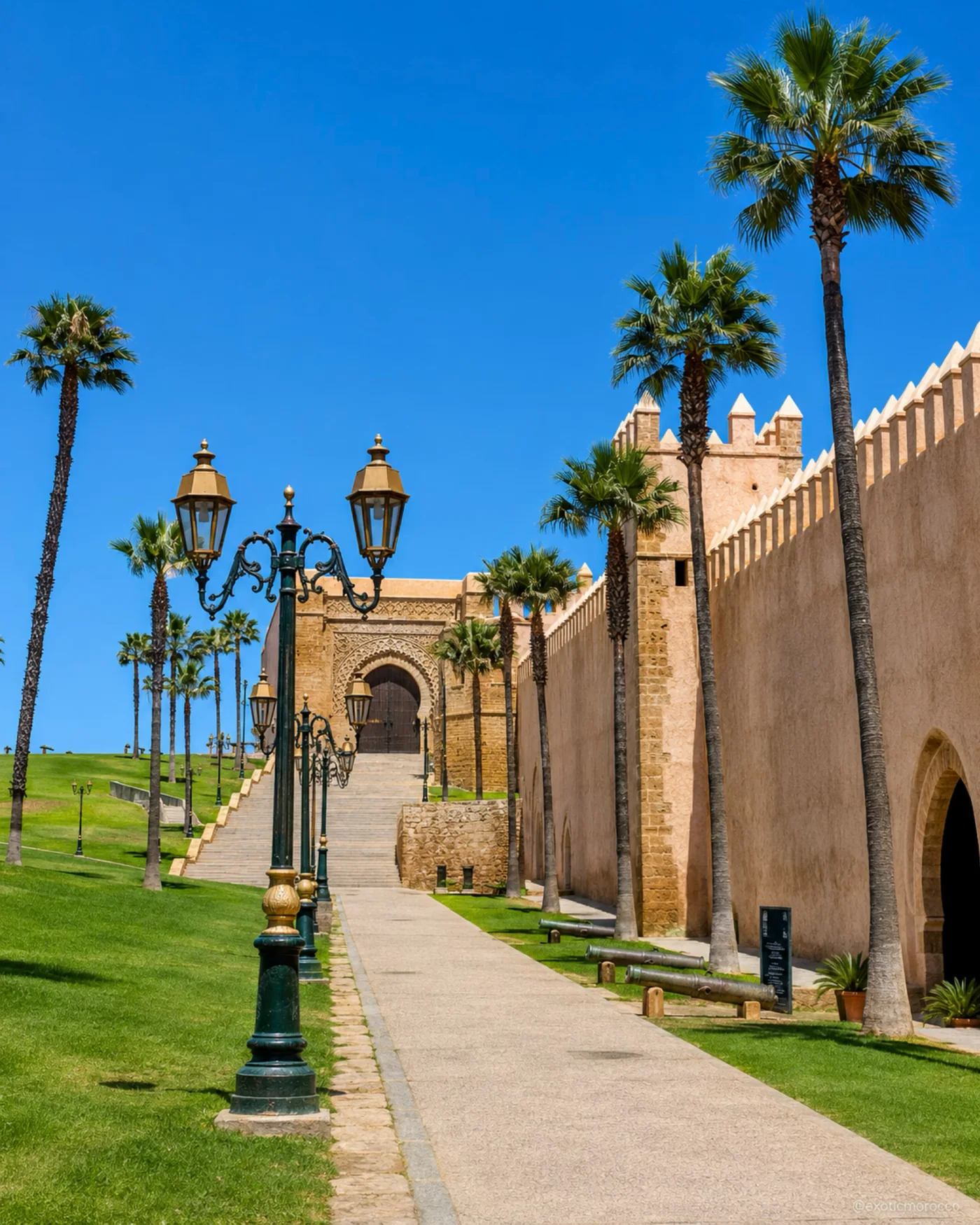
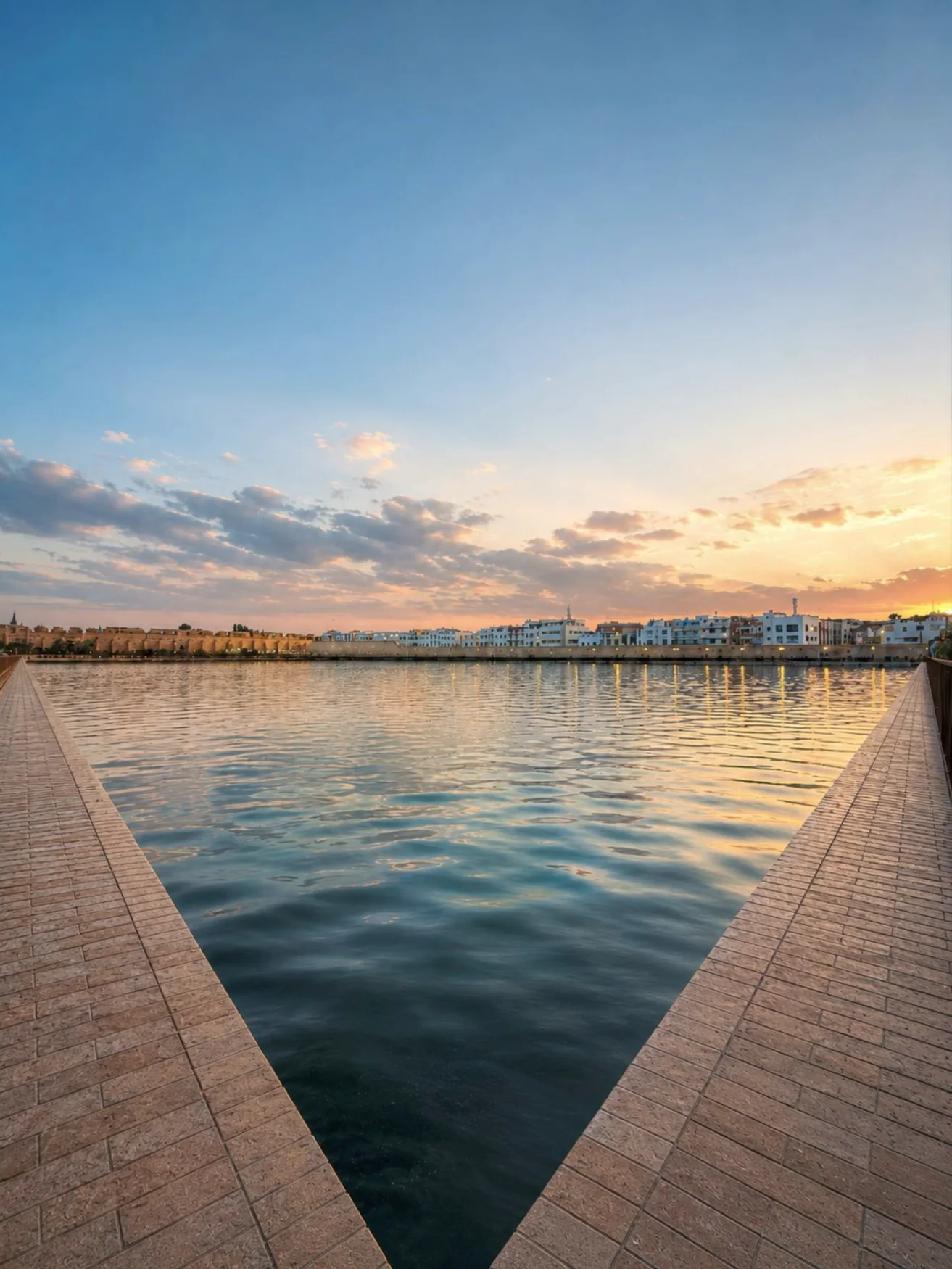
Atlantic capital, Hassan Tower, Oudayas, Chellah and Salé.
Dynasties did not leave only dates behind. They left city forms: foundations, walls, mosques, madrasas, palaces, tombs, royal roads and capital plans.
Marrakech emerged in the 11th century as a major southern foundation. Its later fame cannot be separated from this early role as a power centre.
The Almohads shaped a monumental architectural language associated with towers, walls and large urban projects, visible in both Marrakech and Rabat.
Fès became a refined centre of scholarship and urban culture, especially through its madrasas, craft traditions and medina institutions.
The Saadian period strengthened Marrakech’s palace, tomb and garden memory, adding another layer to the Red City’s imperial identity.
Sultan Moulay Ismail transformed Meknès into a vast royal project of walls, gates, stables, granaries and controlled ceremonial space.
Rabat became Morocco’s modern capital while keeping older layers visible through Oudayas, Hassan Tower, Chellah and the Bouregreg landscape.
Fès gives Imperial Morocco its deepest scholarly, spiritual and artisanal layer.
Fès is the intellectual memory of the route: madrasas, mosques, craft streets, courtyards and some of the richest urban detail in Morocco. It is where knowledge, devotion and making come together most intensely.
Read Fès through contrasts in scale. A crowded commercial route can open into a measured courtyard, then return you to deliveries and ordinary work. Follow the relationship between a madrasa, nearby streets and the surrounding crafts instead of treating the decorated interior as an isolated masterpiece. Access also has a social geography: a religious institution may remain closed to casual visits while its street frontage can be appreciated from public space. A local guide can help connect what is visible with a documented account of use.
Madrasa courtyard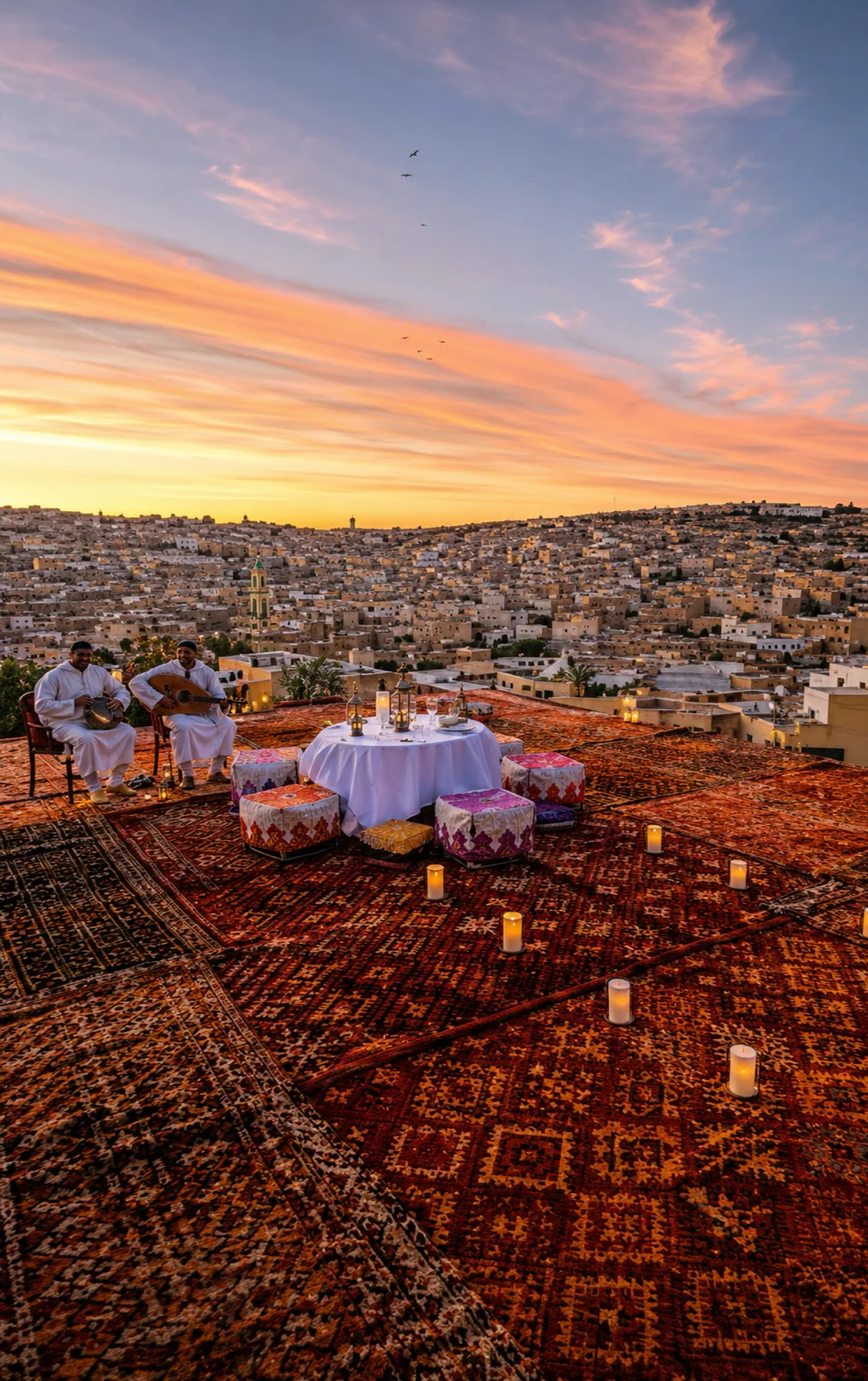 Medina view
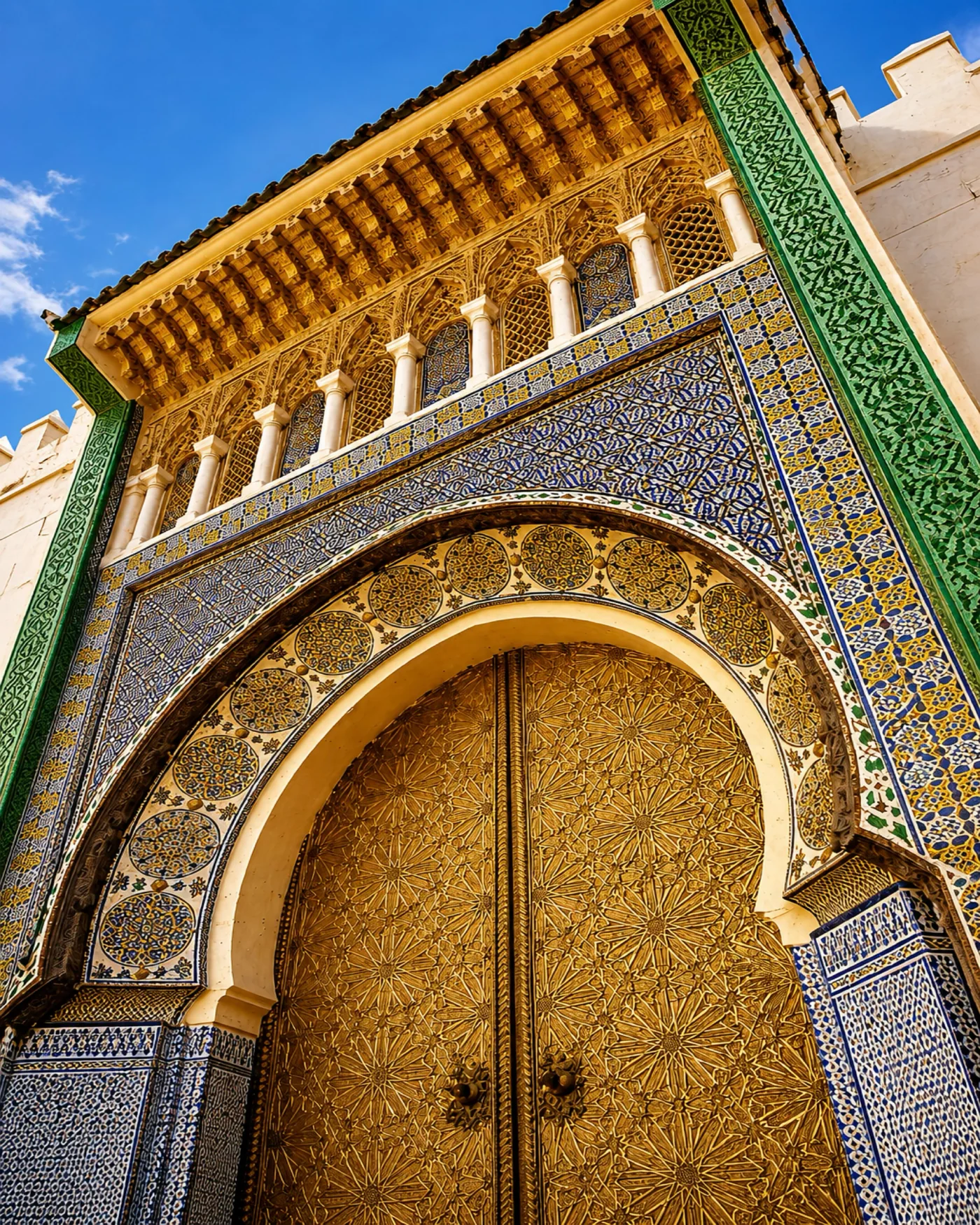 Royal doorsBab Boujloud
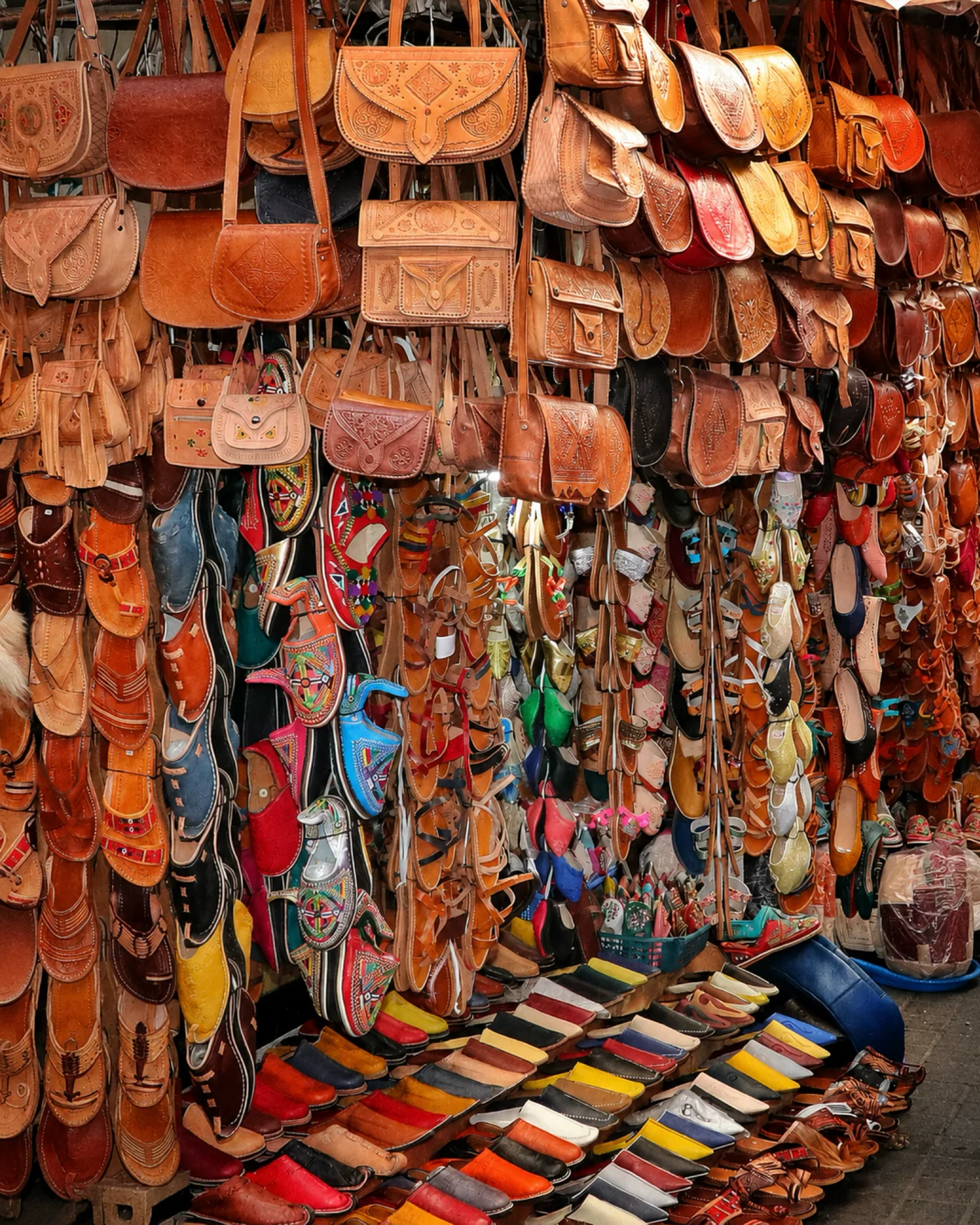 Craft detail
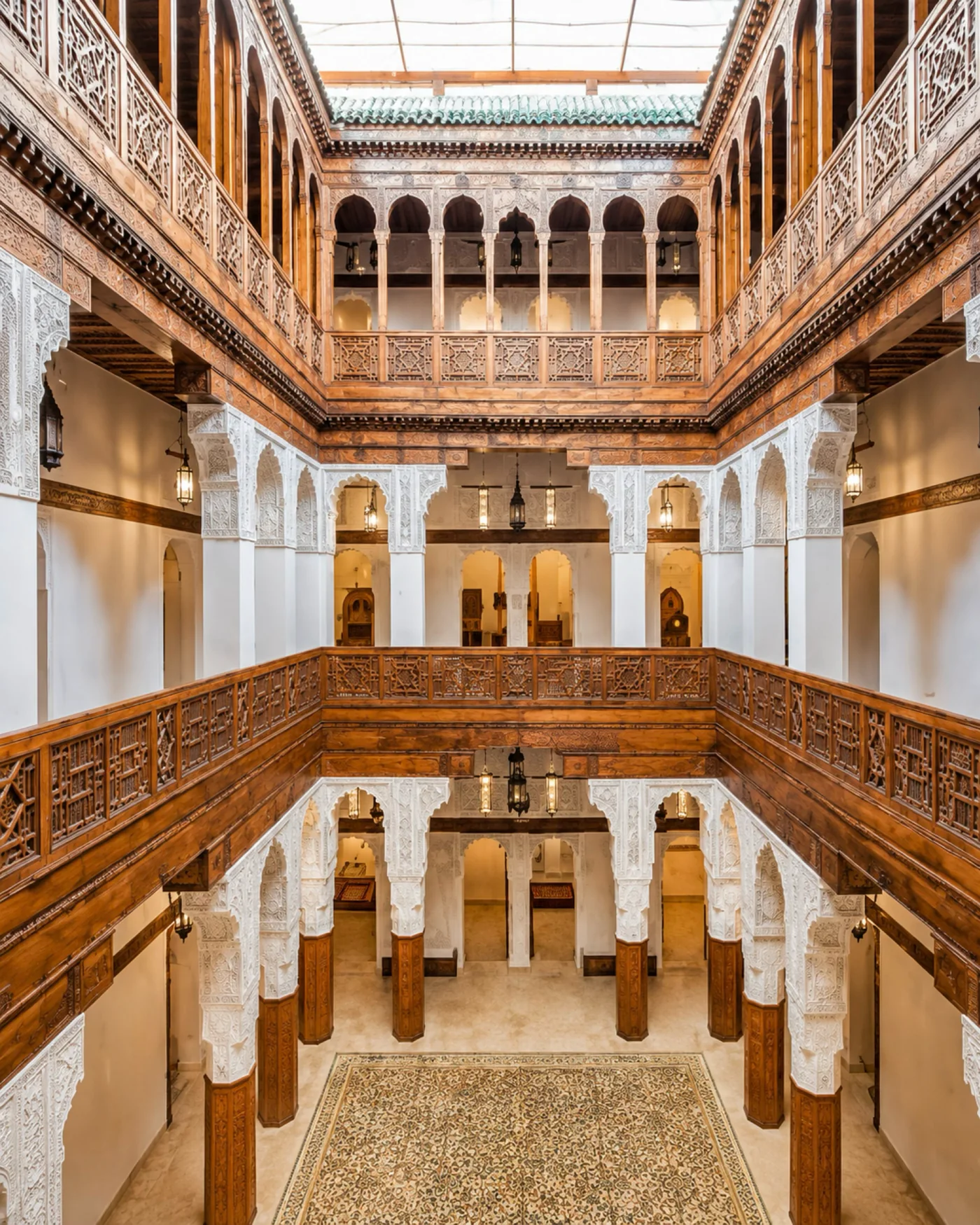 Nejjarine
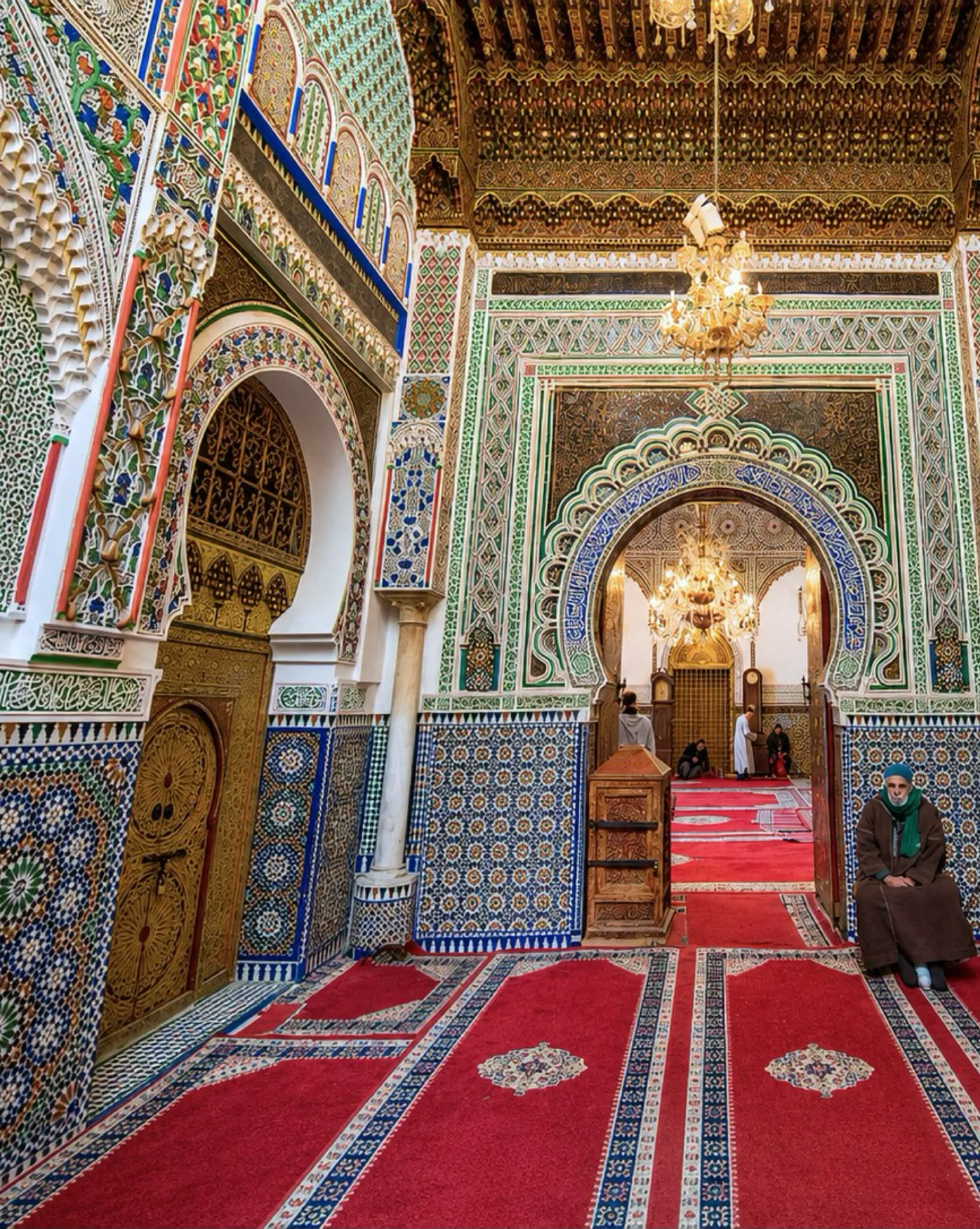 Moulay Idriss II MausoleumKoutoubiaJemaa el-Fna
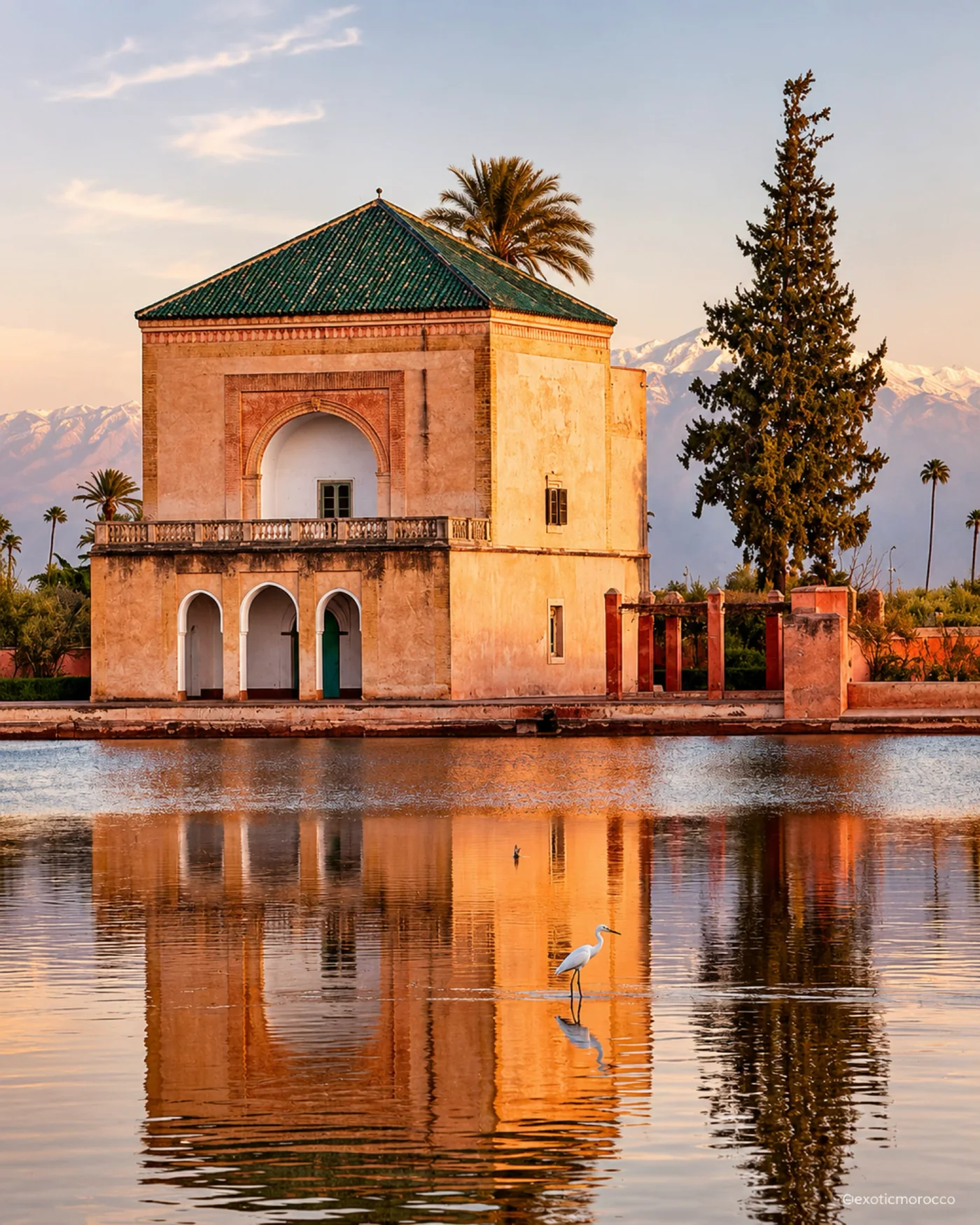 Menara
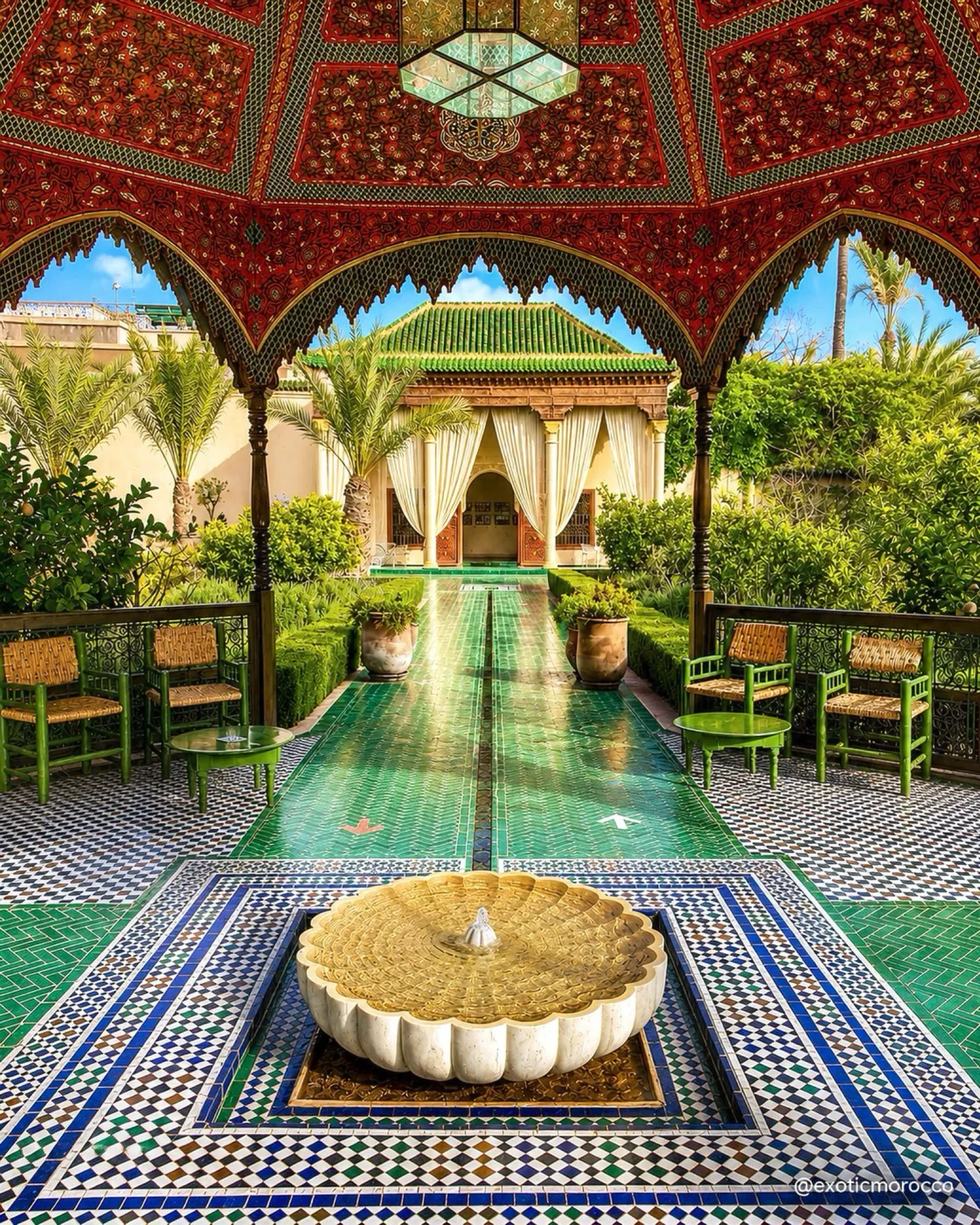 Secret Garden
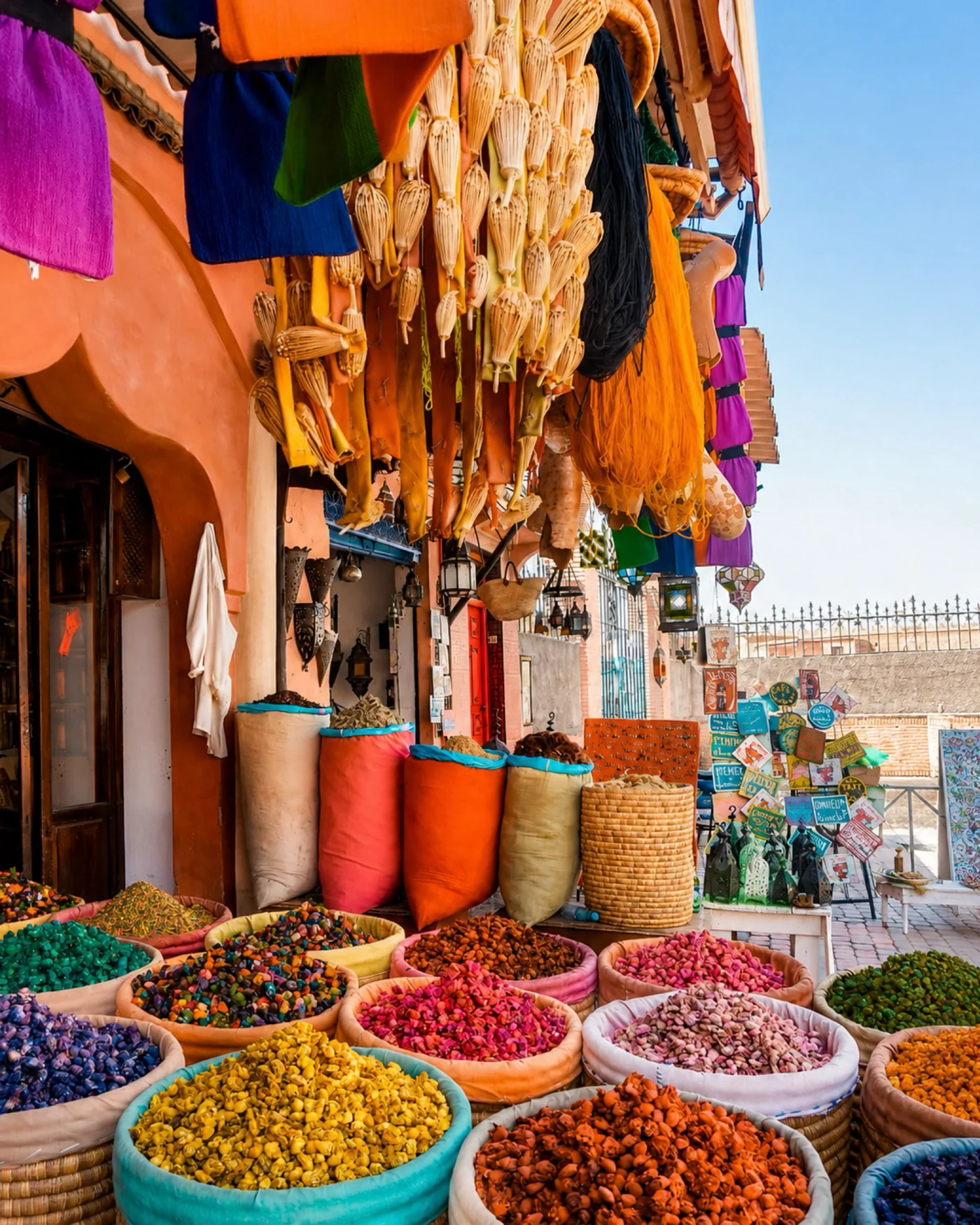 Spice colours
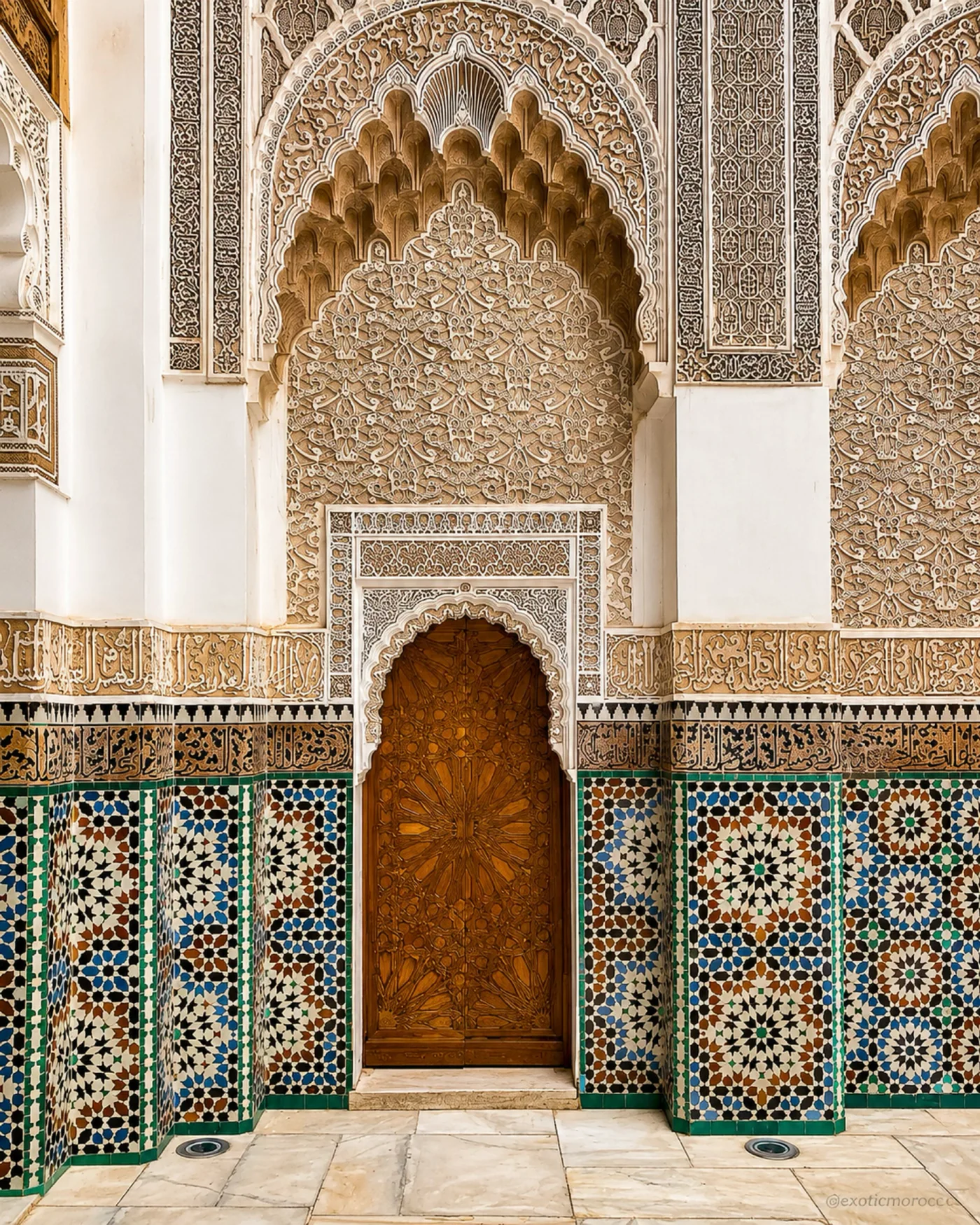 Ben Youssef Madrasa
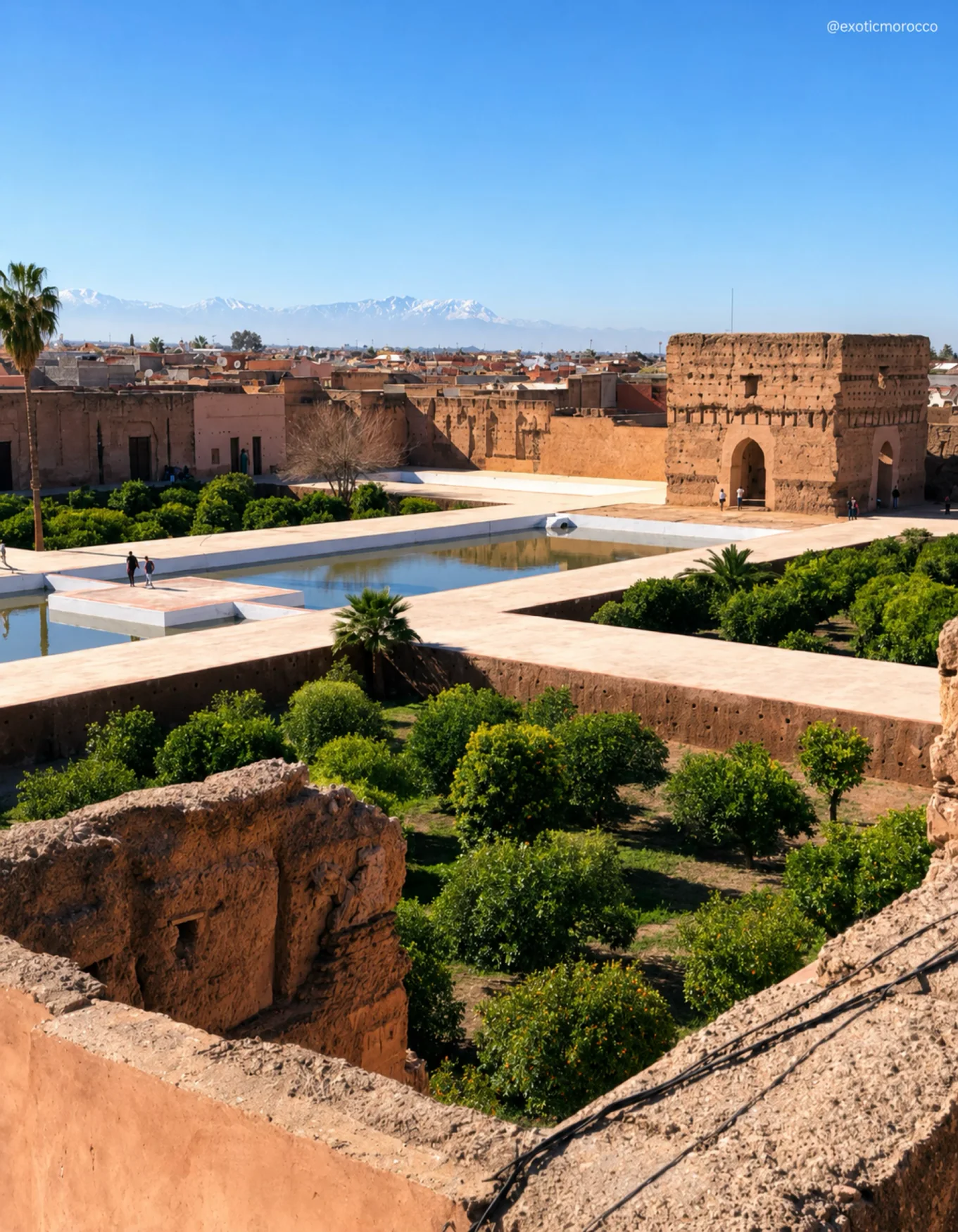 Badi Palace
Marrakech gives the route heat, gardens, ceremony and evening life.
Marrakech carries early imperial foundation, Almohad monumentality, Saadian memory and a strong culture of public space. Its red walls, Koutoubia silhouette, gardens, souks and palaces give the route its most sensory chapter.
Give the public spaces and interiors different kinds of time. A palace visit asks for attention to routes between courts and rooms; Jemaa el-Fna changes through the day and is better understood by returning than by collecting one dramatic image. Gardens introduce water and cultivation into the architectural story. These spaces belong to different periods and functions, so avoid explaining every carved surface or red wall through a single dynasty. The city becomes more legible when you keep its layers distinct.
Meknès gives Imperial Morocco its clearest architectural statement of power.
Meknès became a major capital under Sultan Moulay Ismail. Its identity is built through walls, gates, long perspectives, royal stables, granaries, water basins and richly finished interiors. It is quieter than Marrakech and less labyrinthine than Fès, but its imperial message is extremely strong.
Use distance as part of your reading. A monumental gate announces a boundary; a long wall controls an approach; a basin gives infrastructure a visible scale. These relationships make Meknès particularly rewarding for visitors interested in how a royal project fits into an inhabited city. Choose a manageable area around the monuments you wish to see and check current access before arranging the day. Afterwards, return to the medina and compare that ceremonial scale with the smaller exchanges of shops, streets and everyday movement.
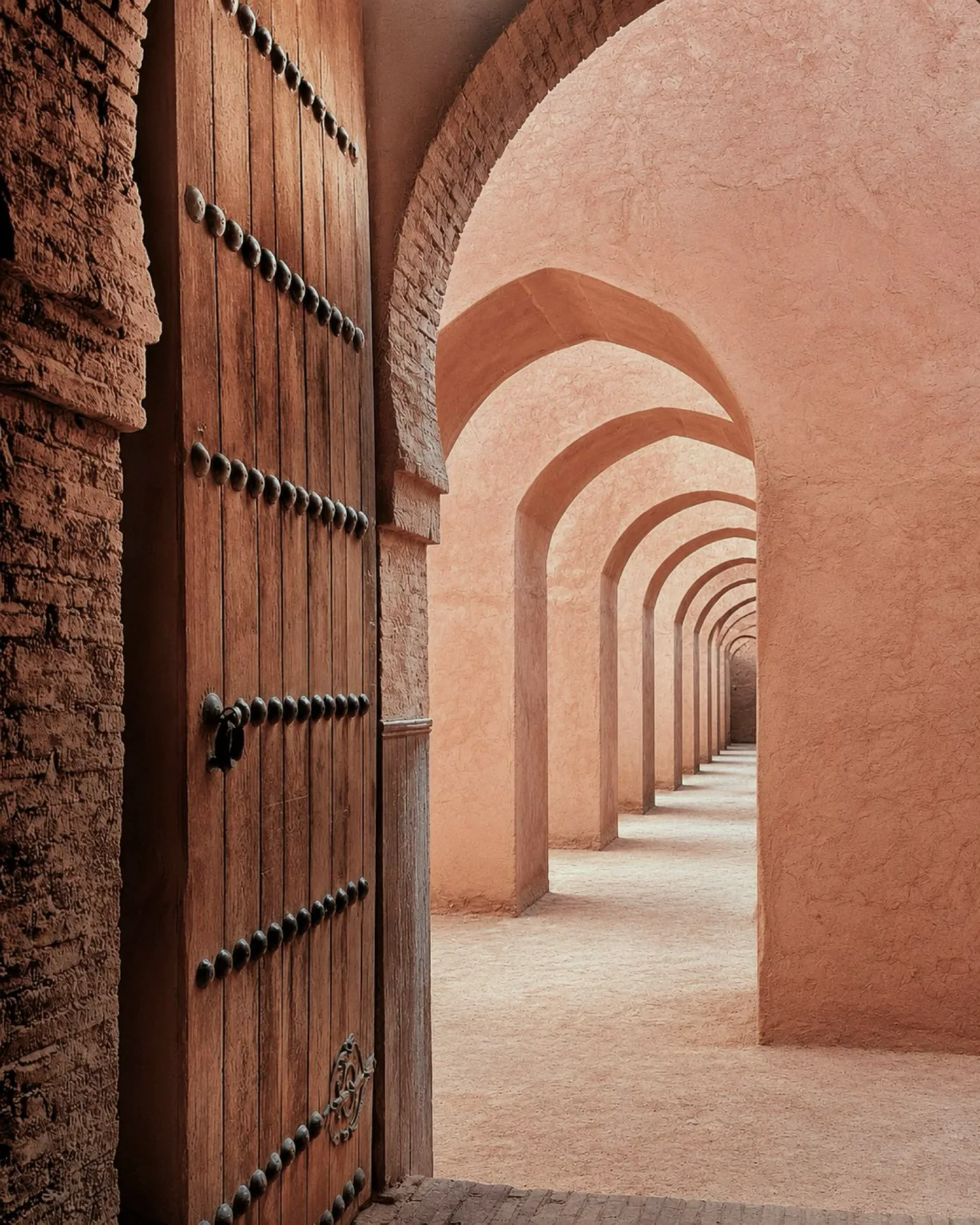 Royal StableHeri es-SouaniSahrij SwaniBab Mansour
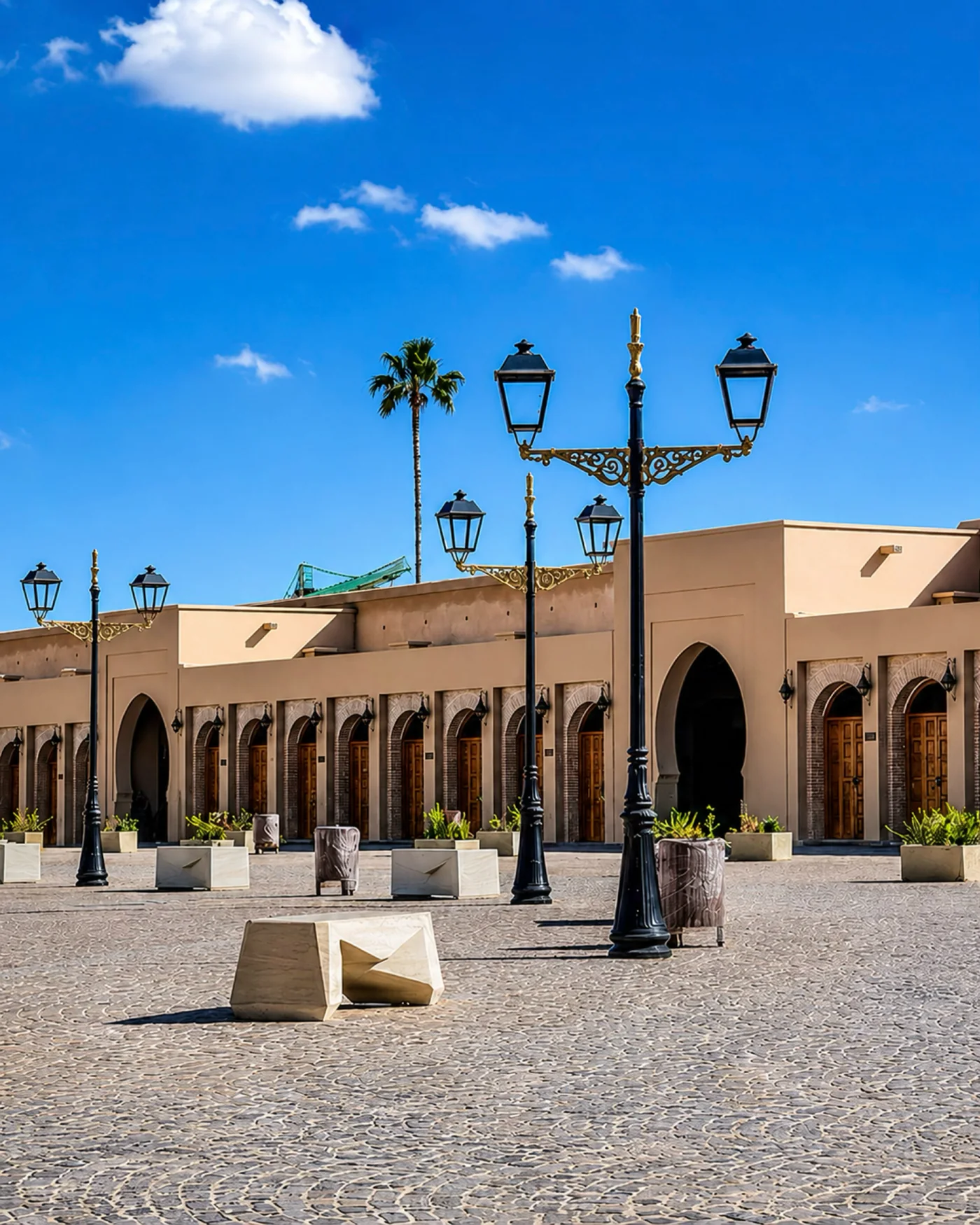 Place El Hedim
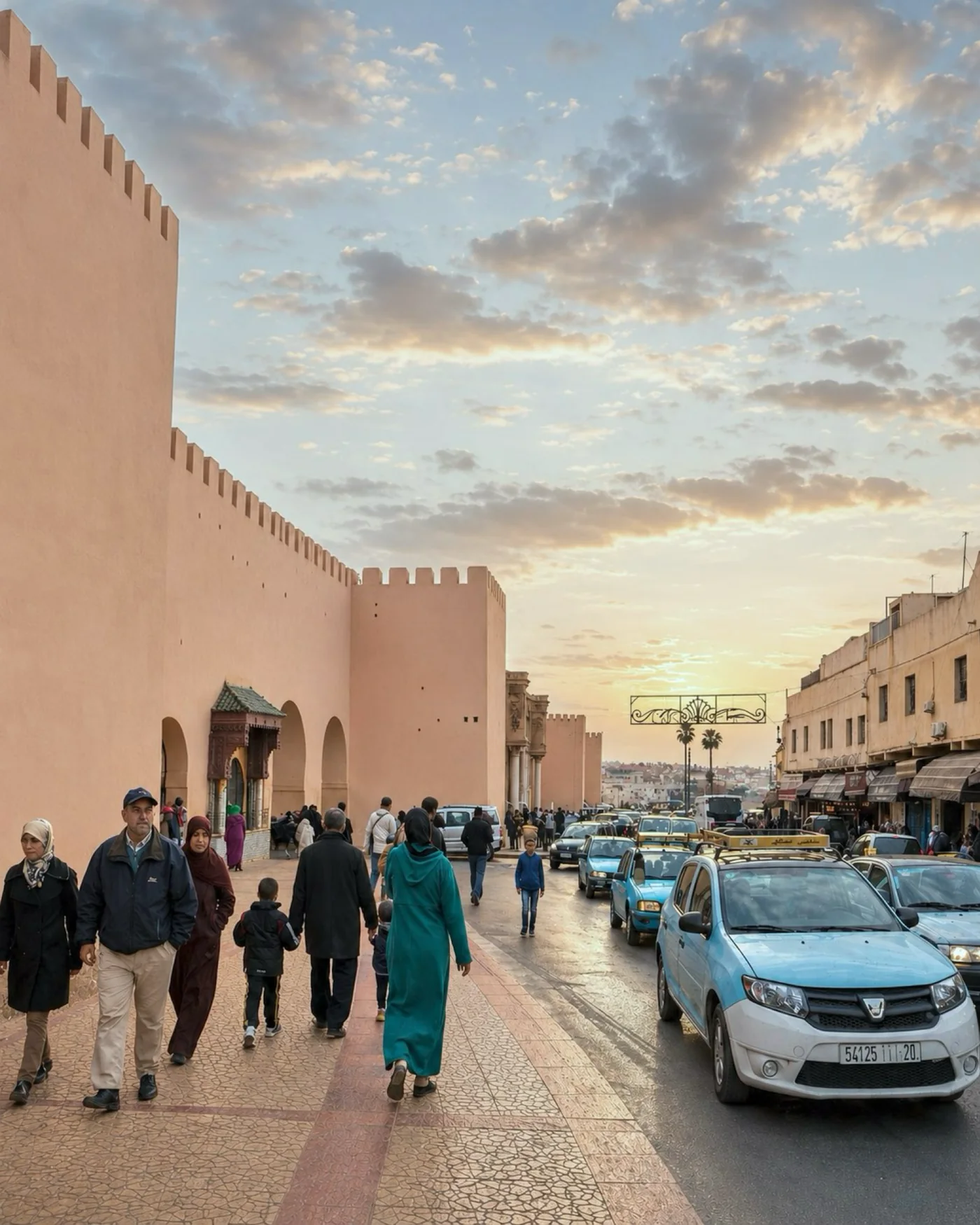 Ramparts
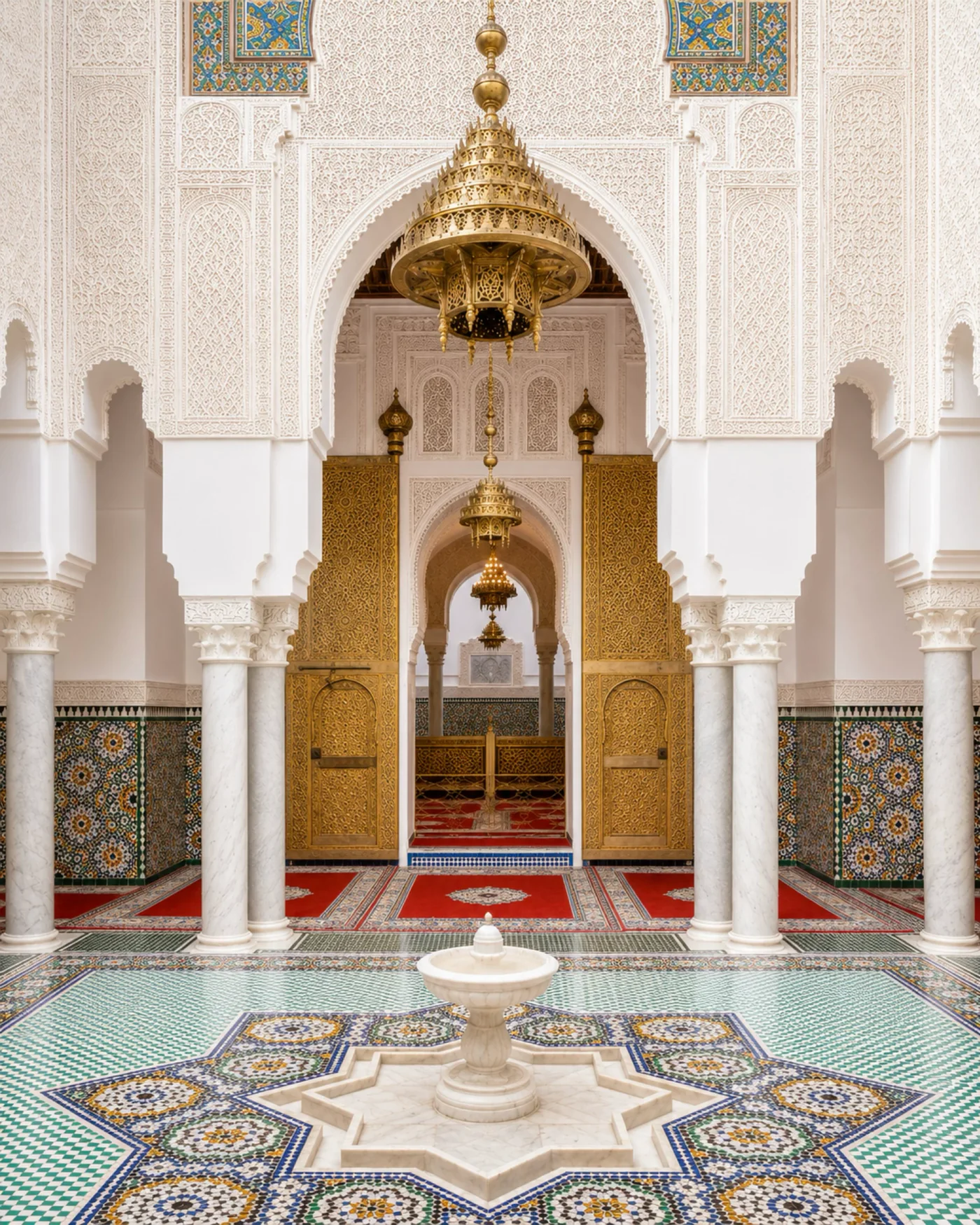 Moulay IsmailHassan Tower
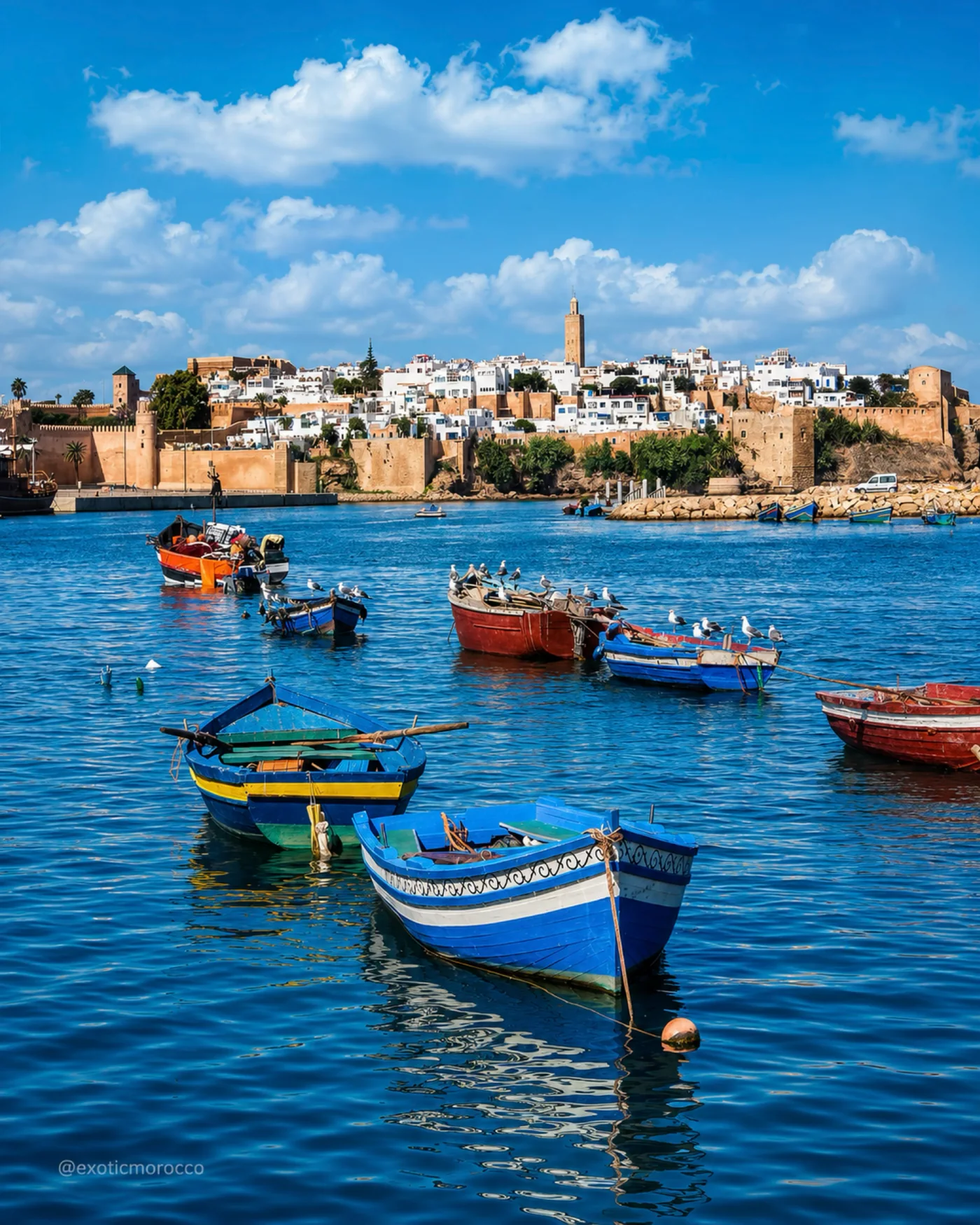 BouregregMarinid MadrasaOudayas
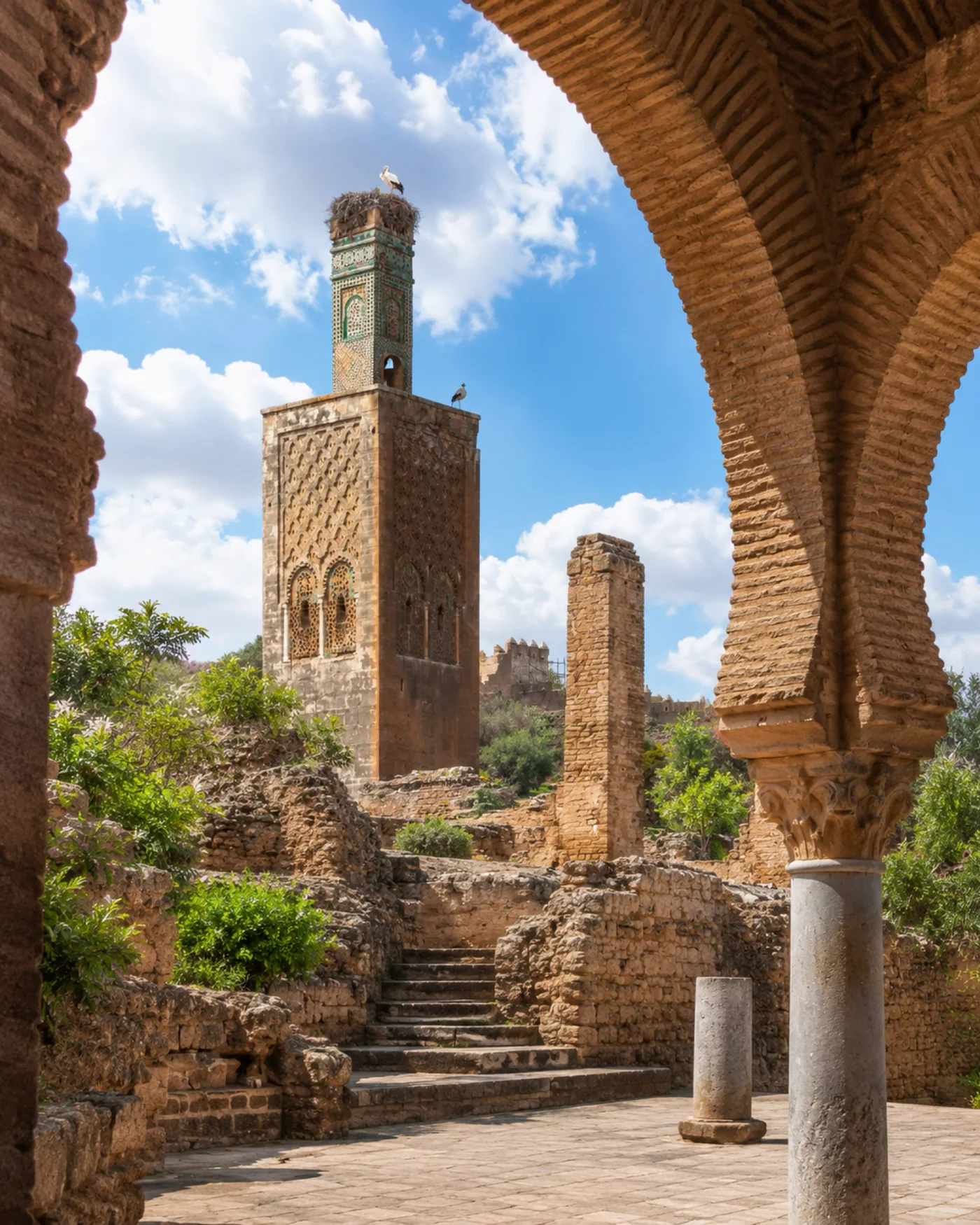 Chellah
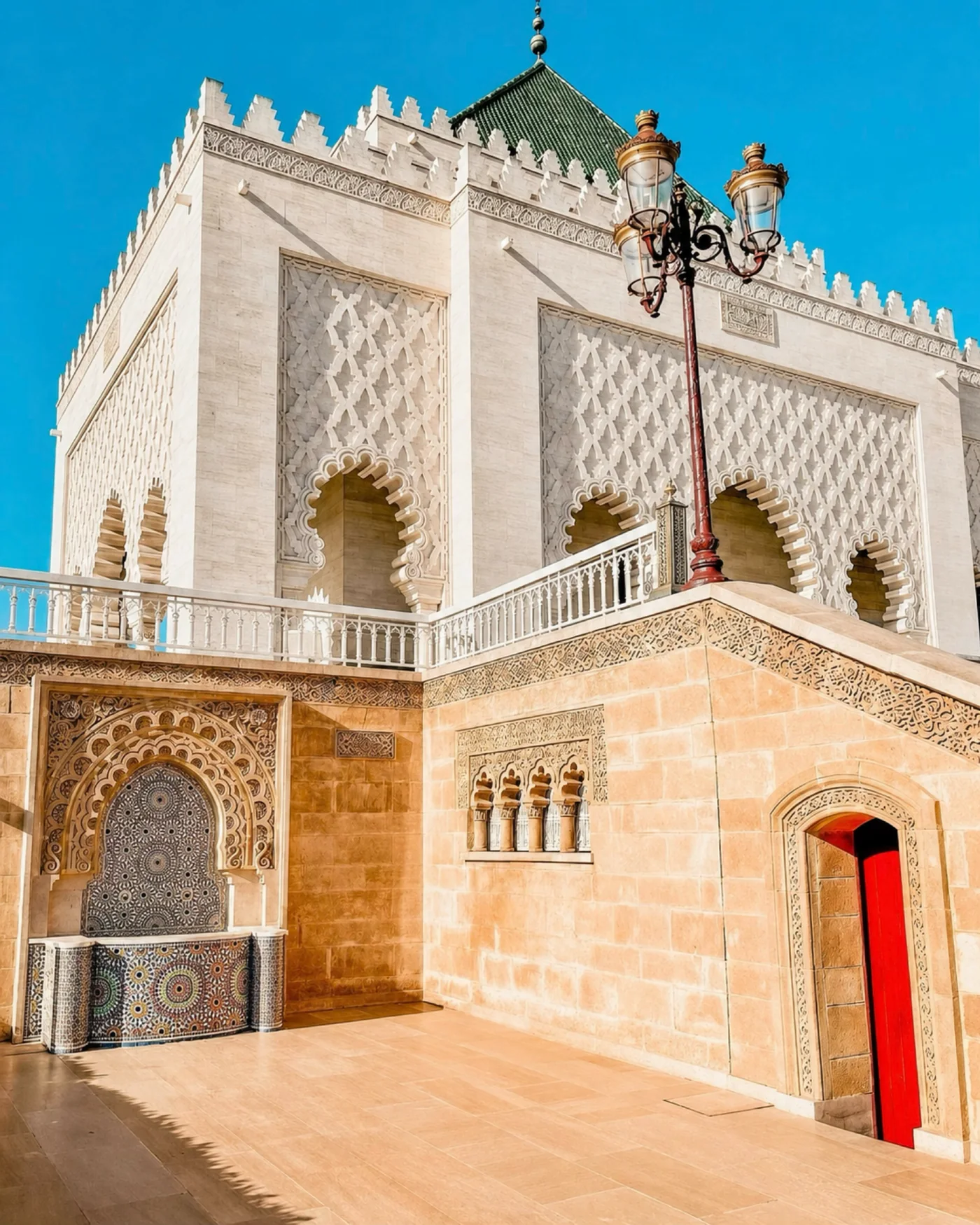 Mausoleum
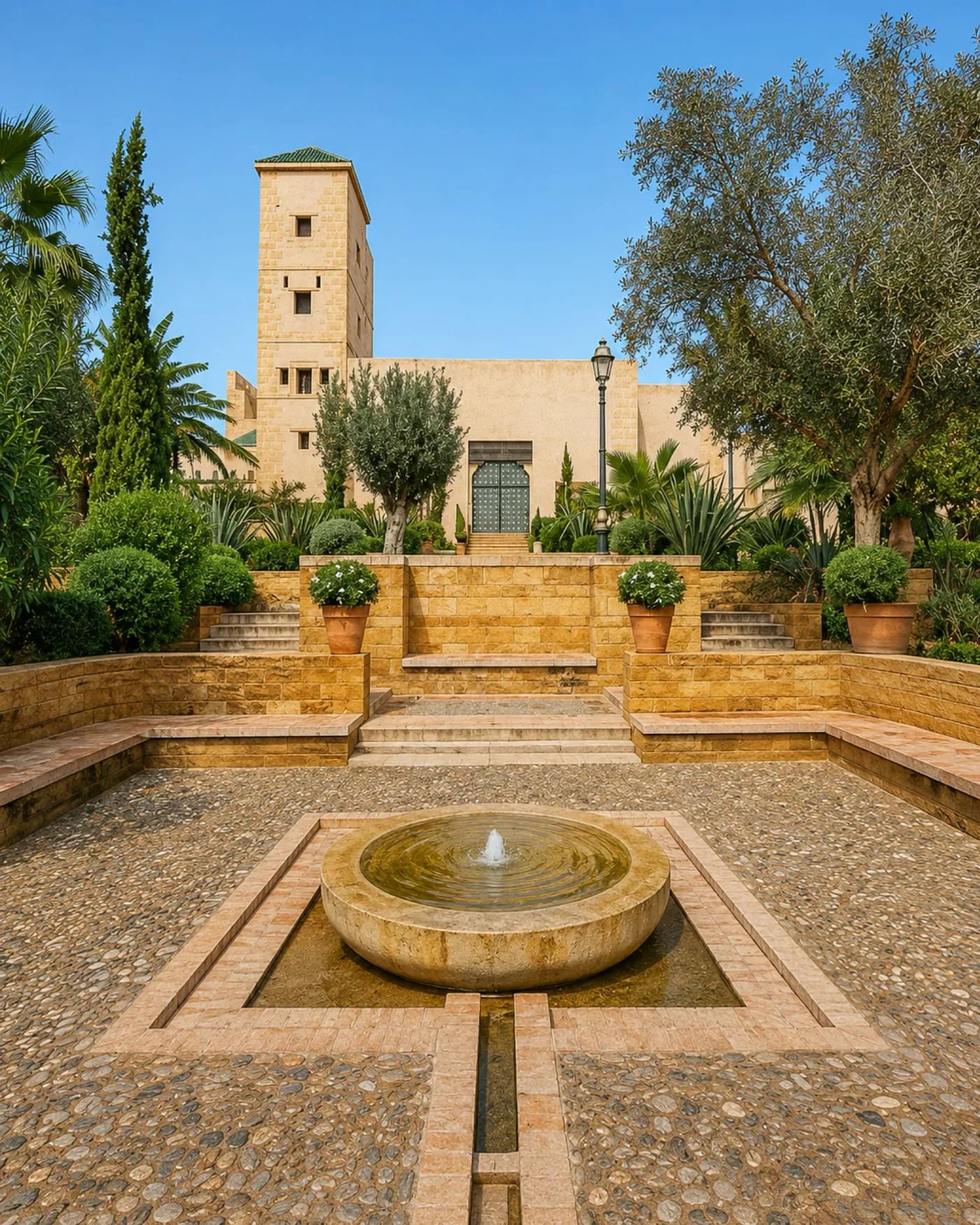 Andalusian garden
Rabat closes the imperial route with ocean light, civic calm and historic layers.
Rabat combines modern capital identity with older dynastic memory. The Hassan Tower, Mausoleum of Mohammed V, Oudayas, Chellah, ramparts, gardens and Bouregreg waterfront create a different atmosphere from the inland imperial cities.
Across the river, Salé adds another layer: craft passages, scholarly memory and the Marinid Madrasa. It should be treated as part of the Rabat chapter, not as a separate imperial city.
Crossing between Rabat and Salé changes the viewpoint without requiring the two cities to be treated as one. Look back across the Bouregreg, then compare the approach from the waterfront with a route into the older streets. Rabat's heritage includes the relationship between its historic fabric and modern capital planning; boulevards and public spaces are part of that account. Salé contributes its own institutions and social history. Leave time for both the river connection and the differences it brings into view.
NejjarineMoulay Idriss II MausoleumBen Youssef MadrasaBahia PalaceBadi Palace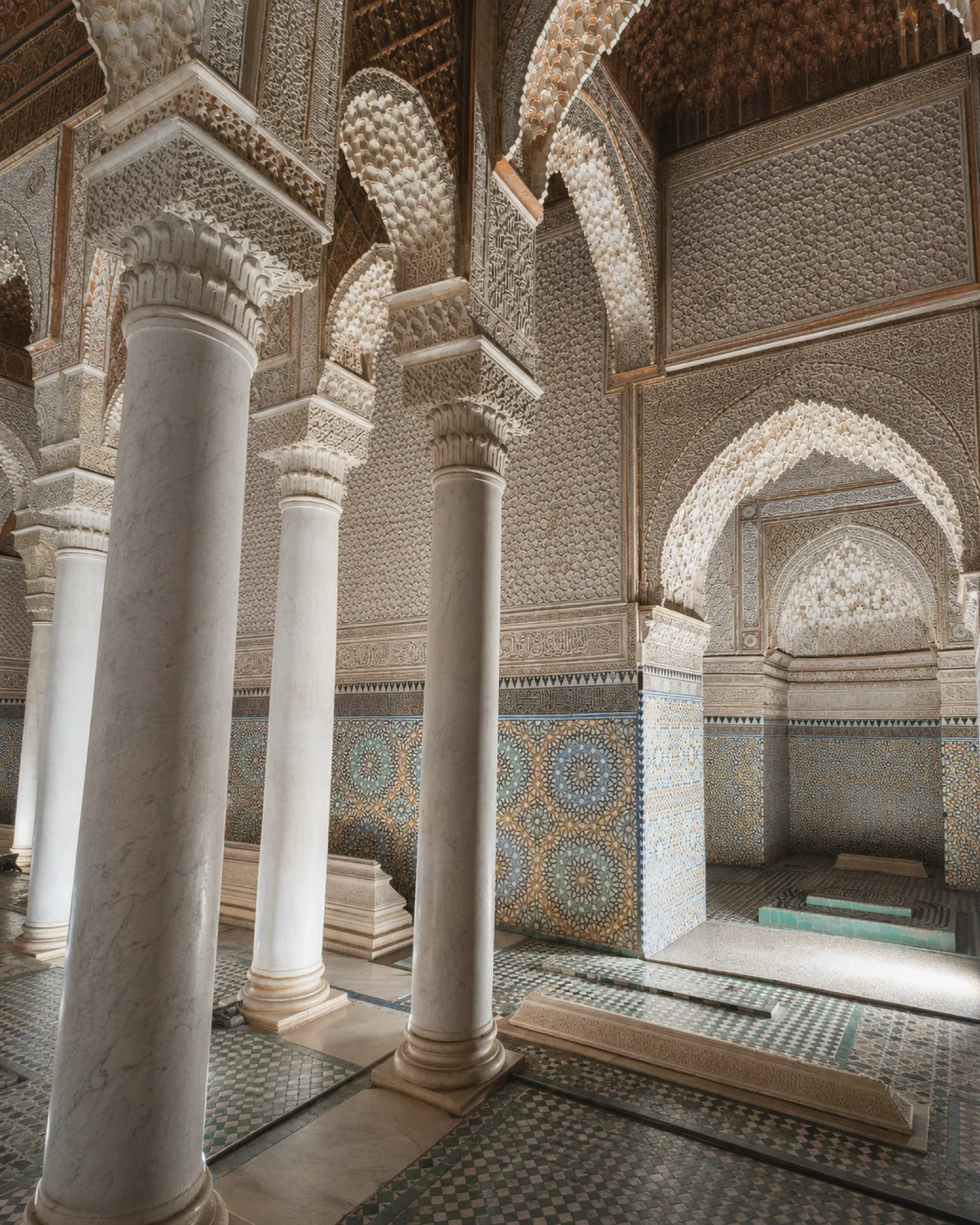 Saadian memory
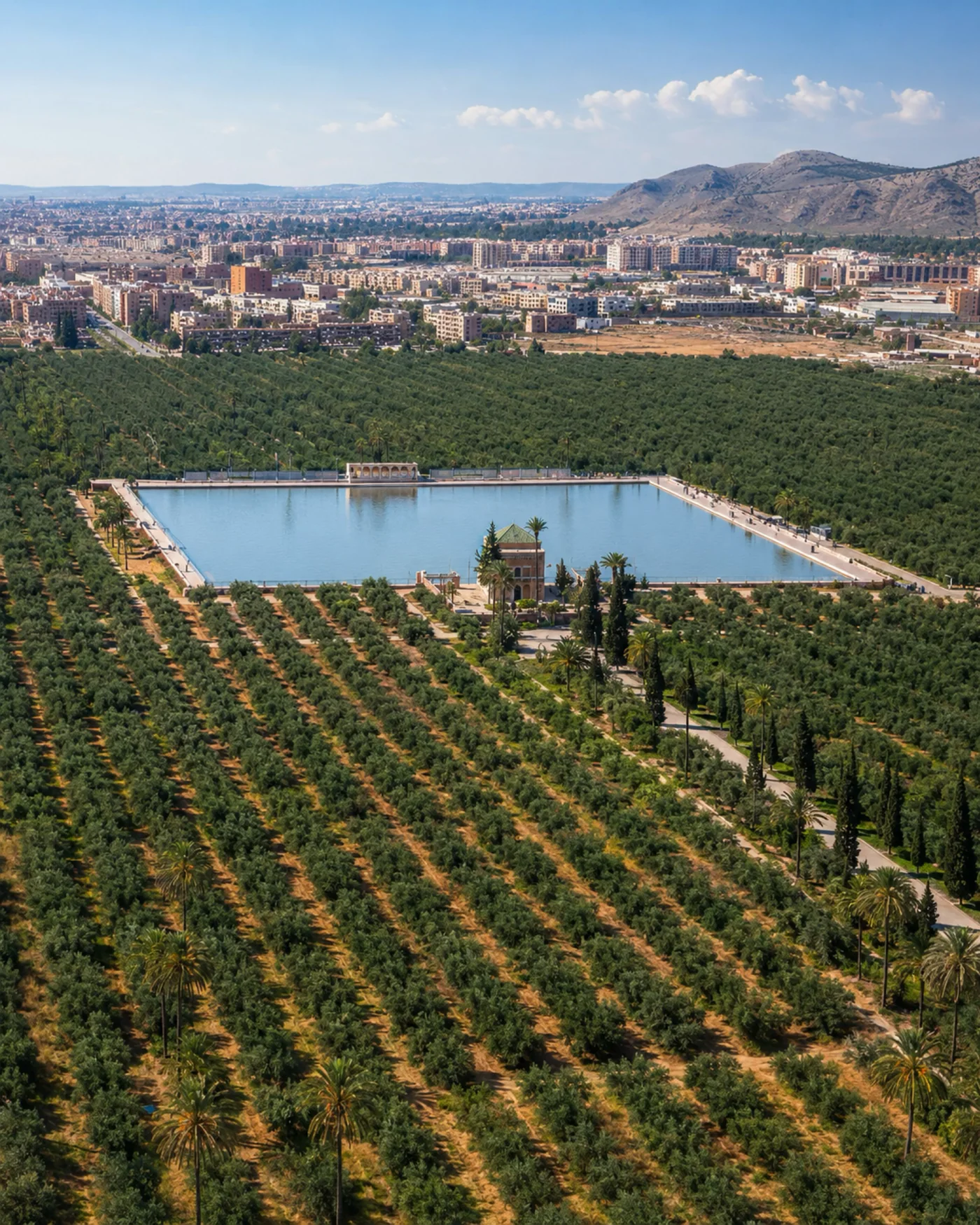 Menara Gardens
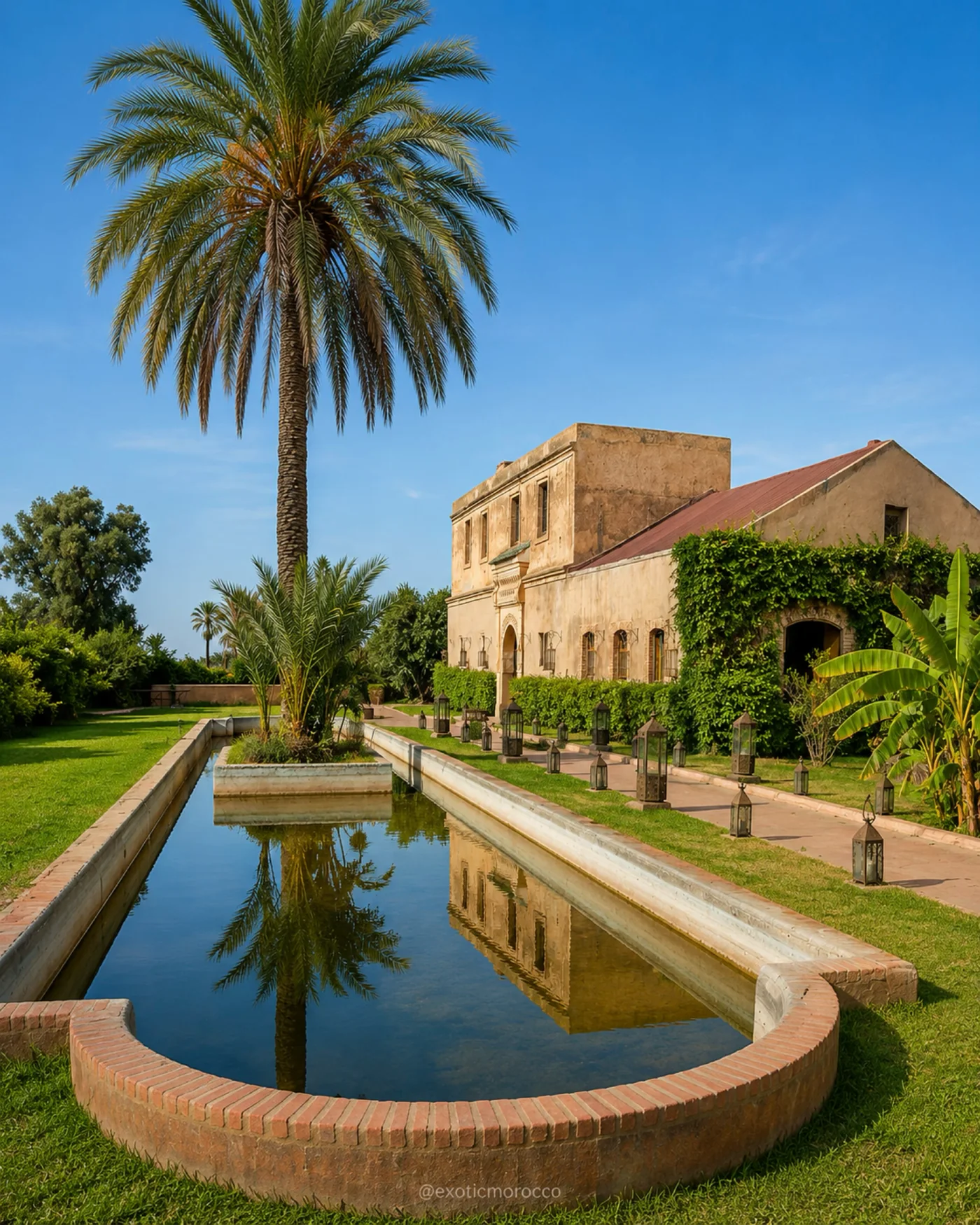 Agdal GardensBab MansourRamparts
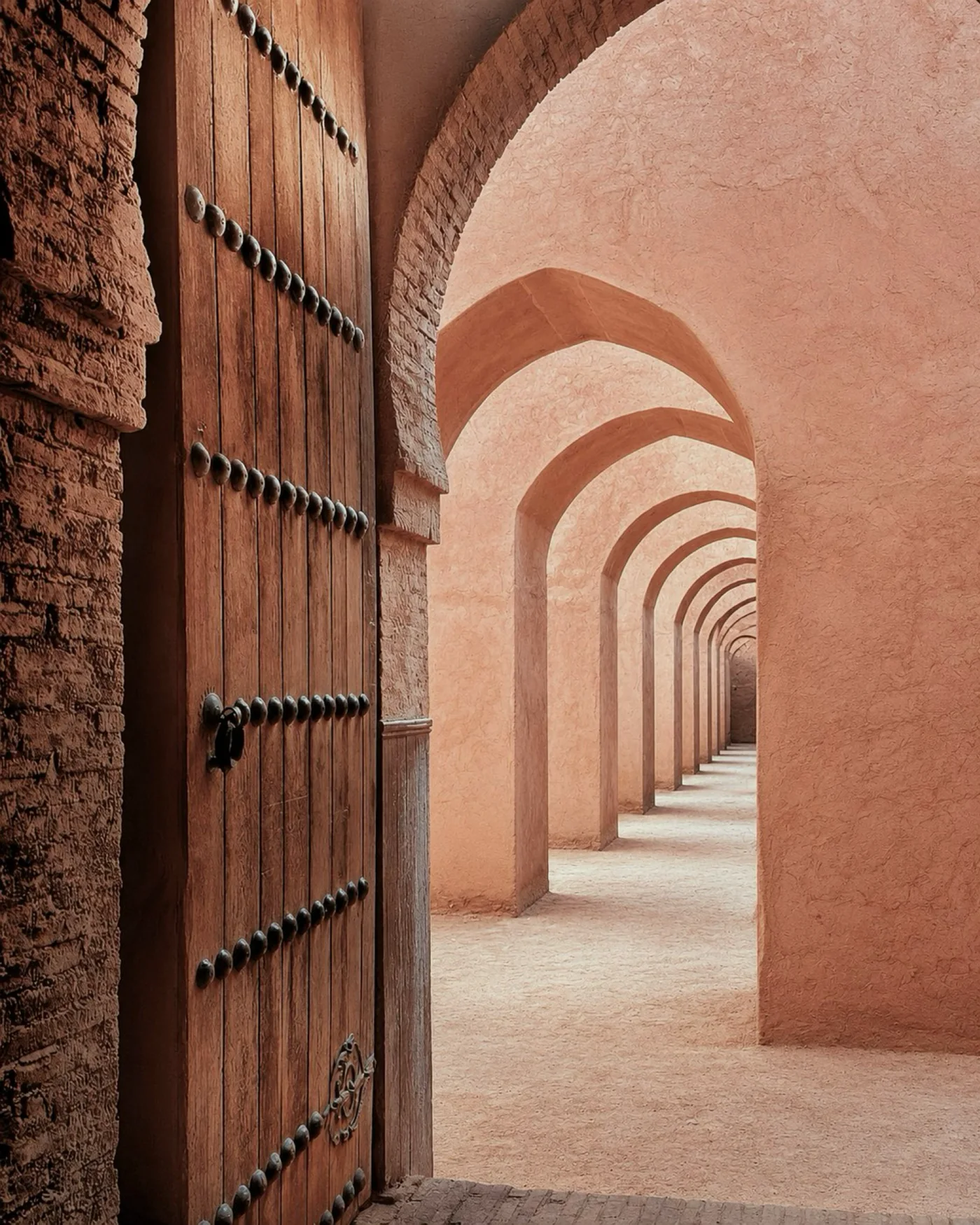 Royal arches
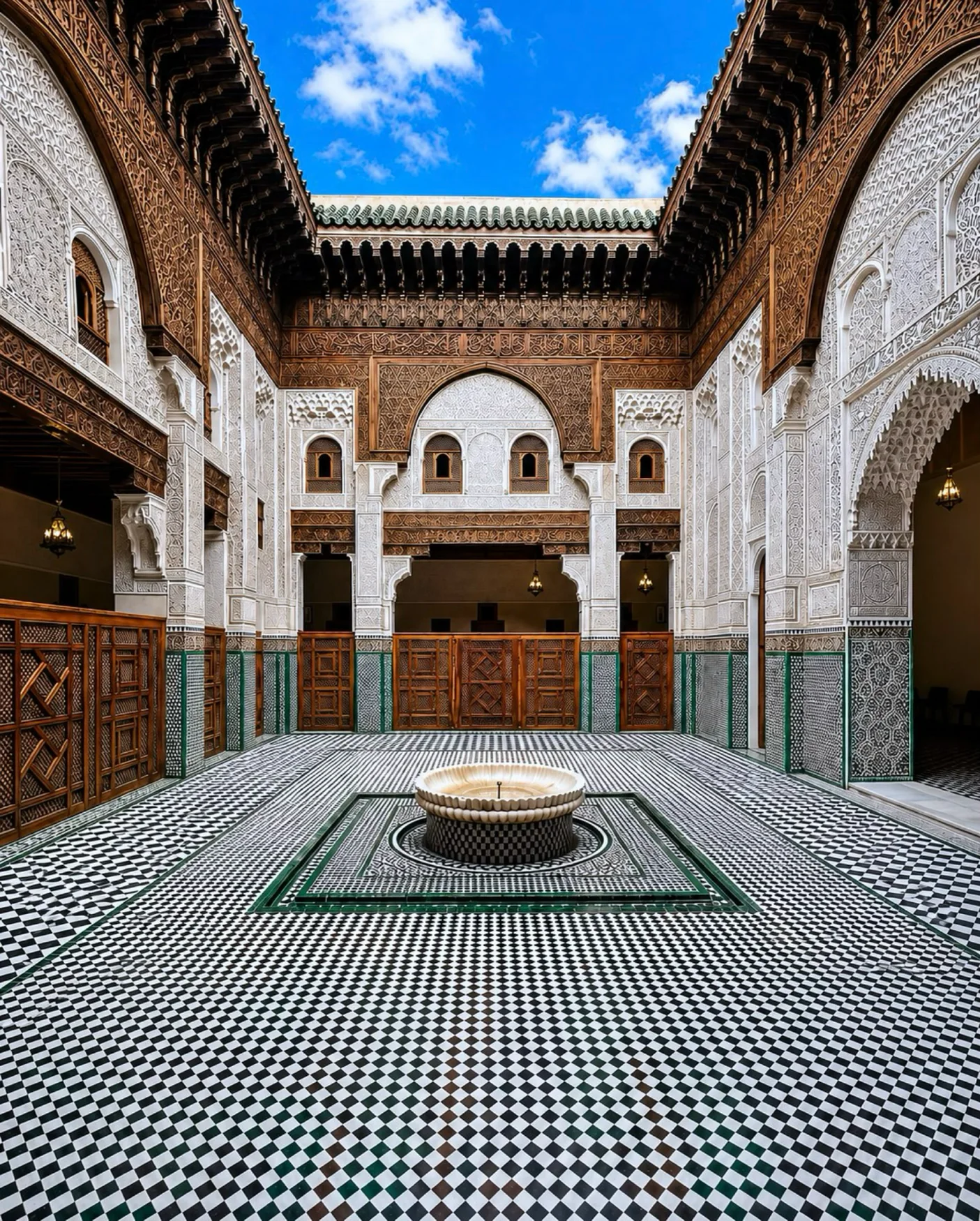 Bou Inania Madrasa
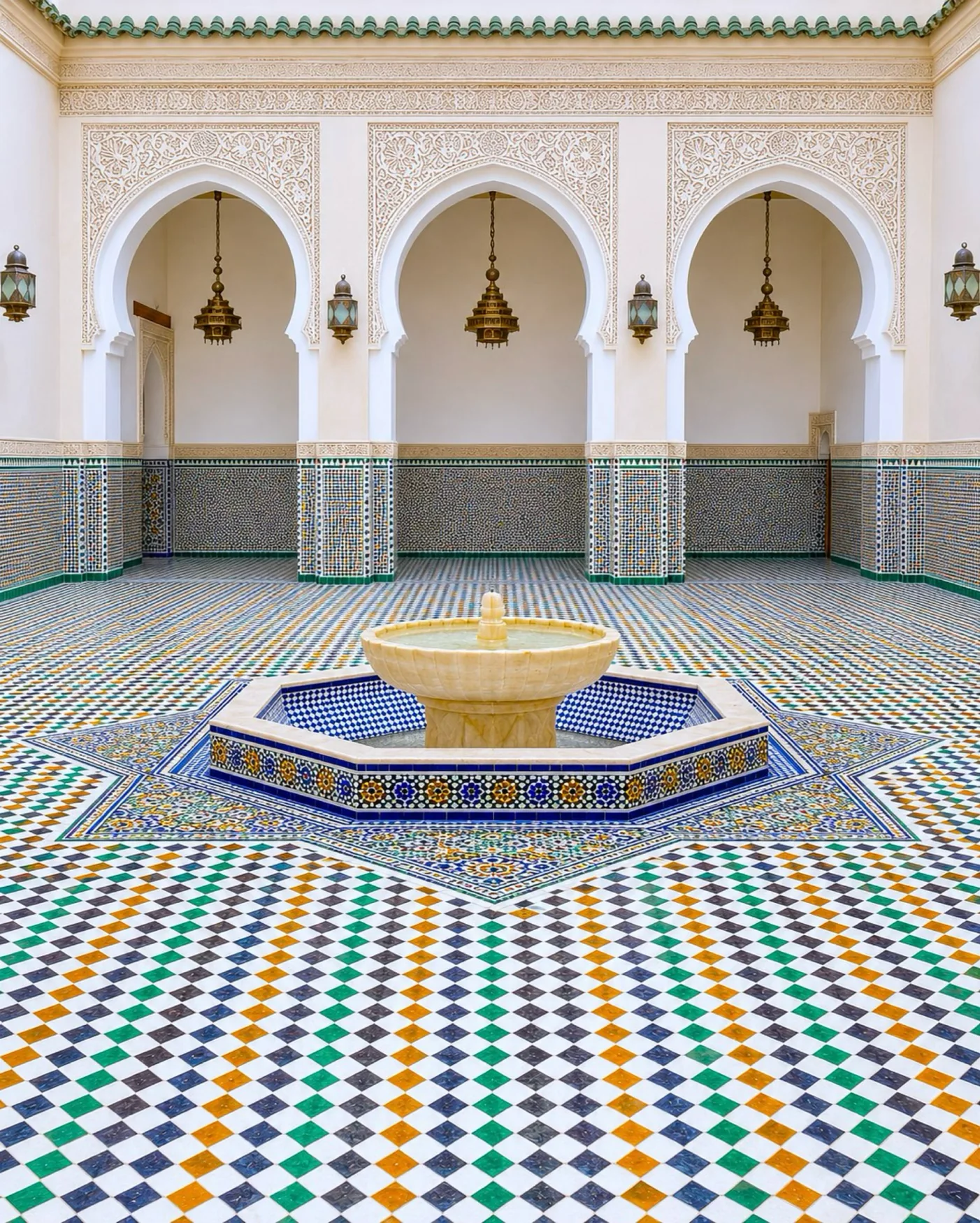 Moulay Ismail FountainMoulay Ismail
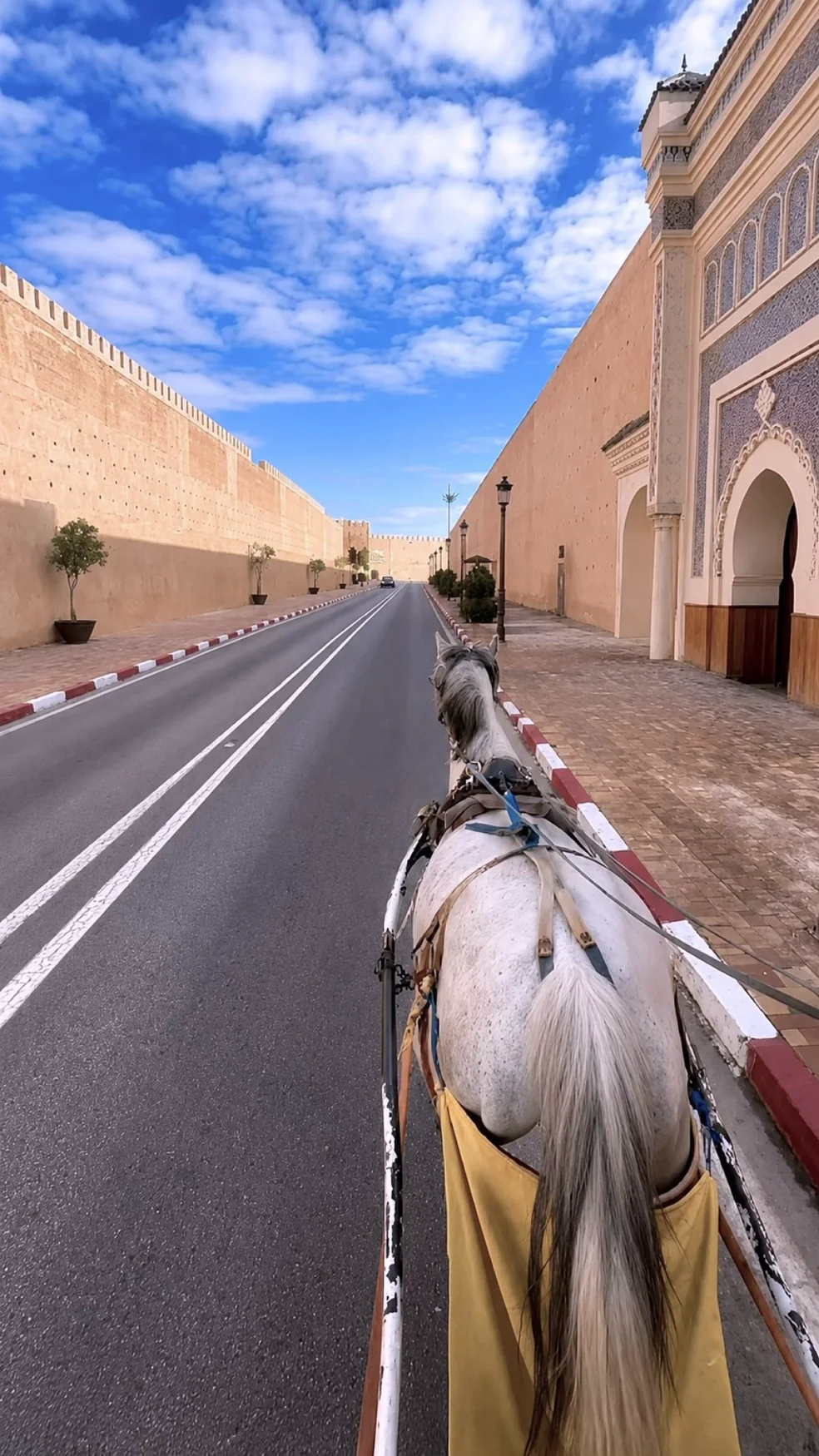 Royal walls
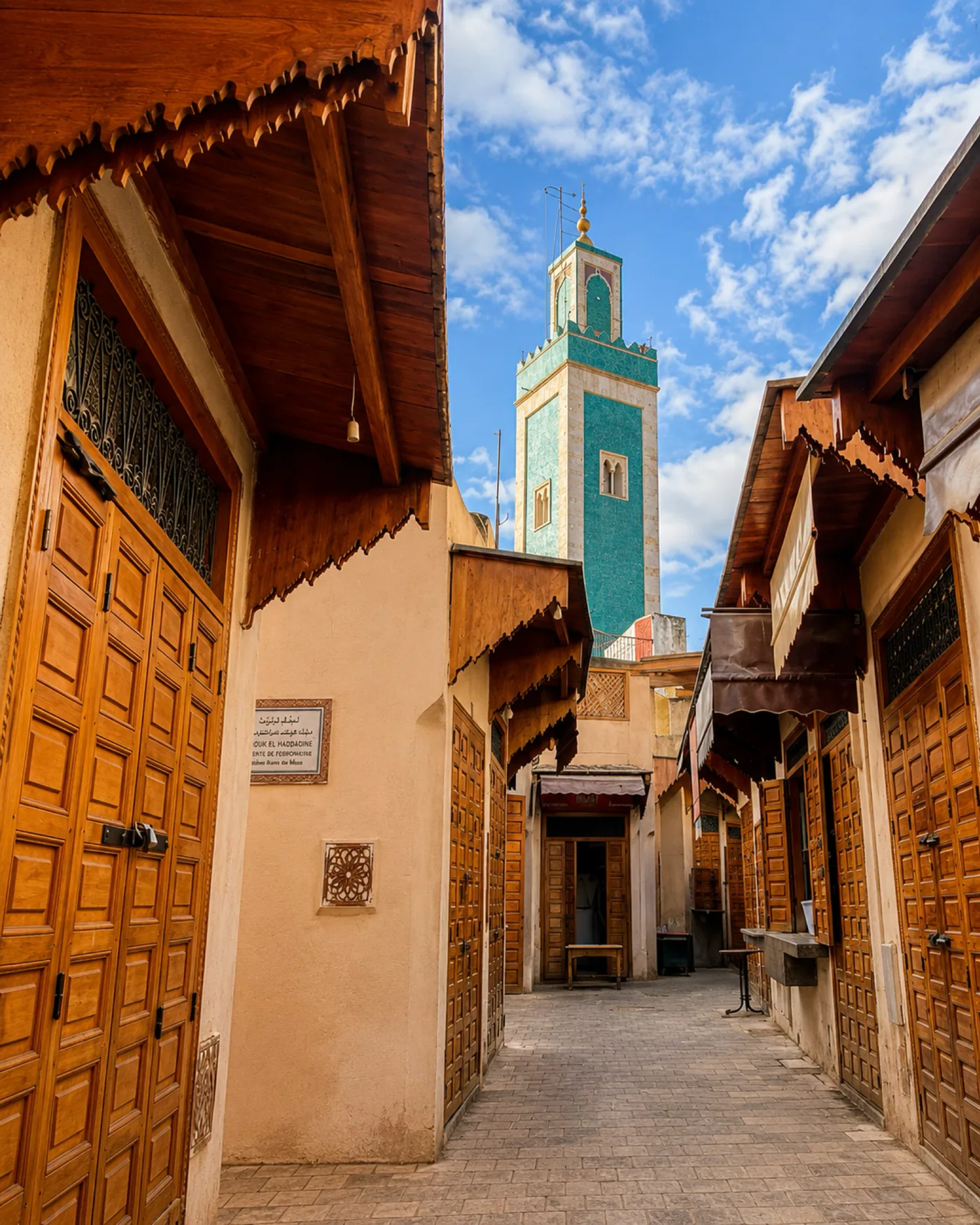 Medina lanes
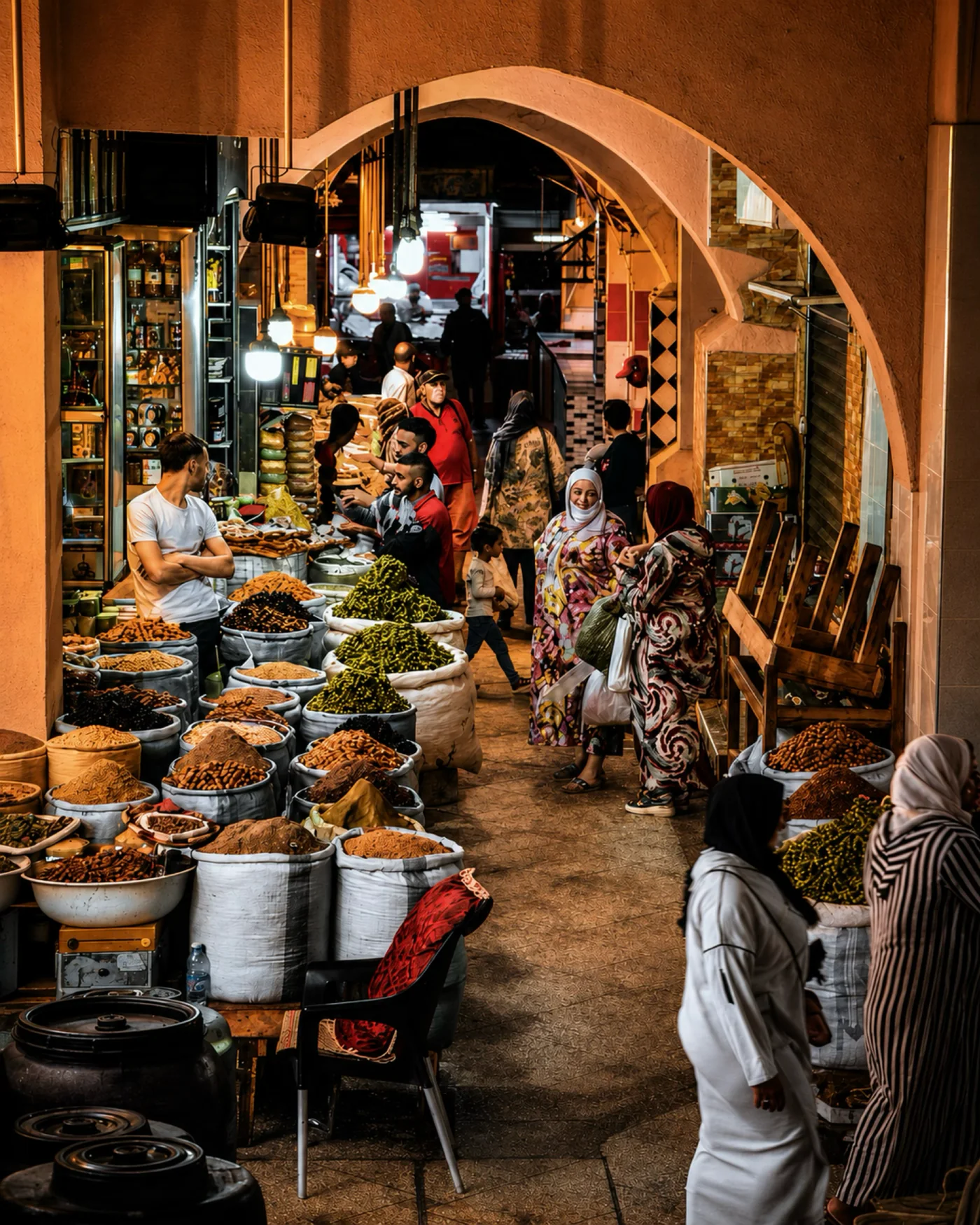 Market life
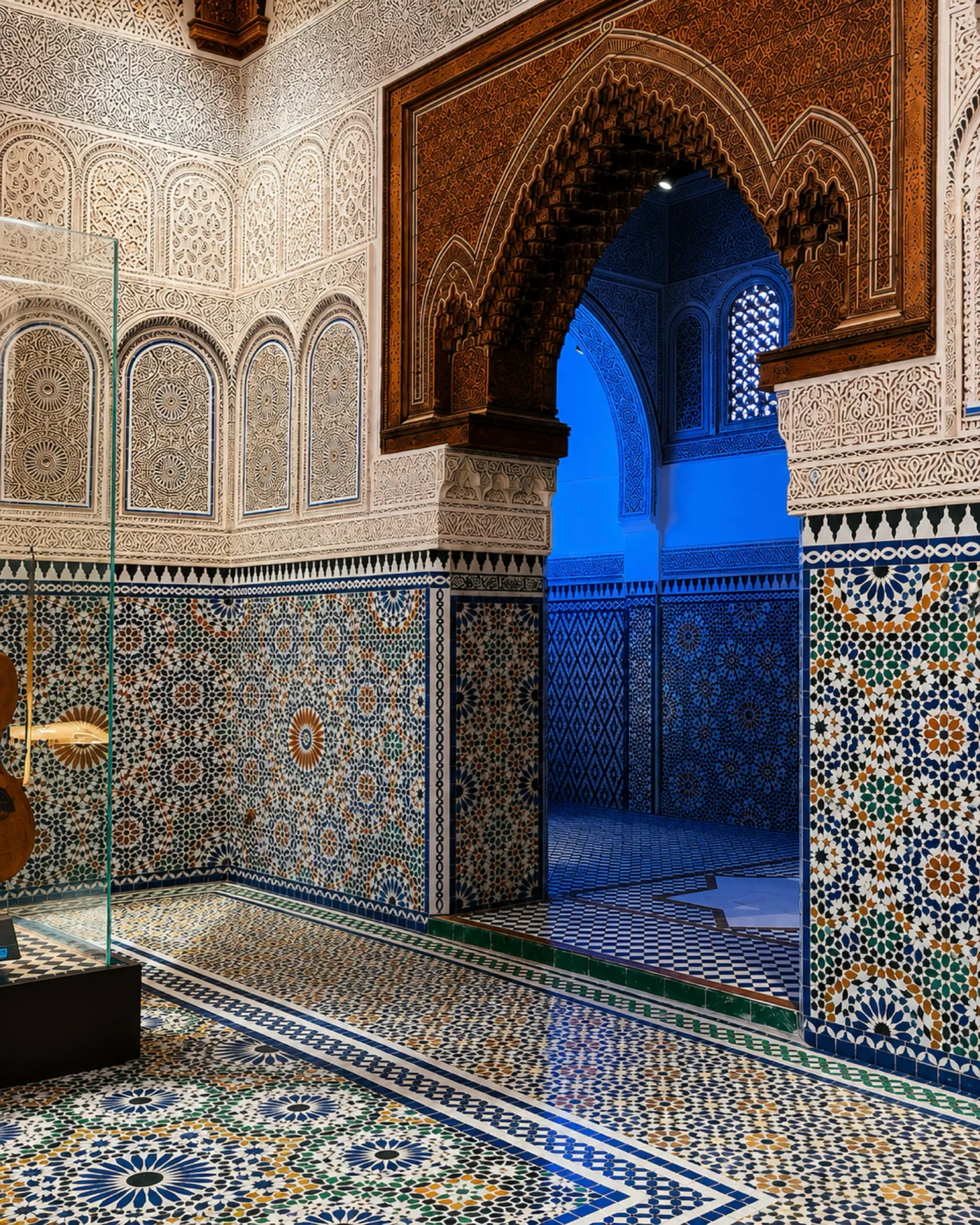 Dar Jamai MuseumMausoleum Mohammed V
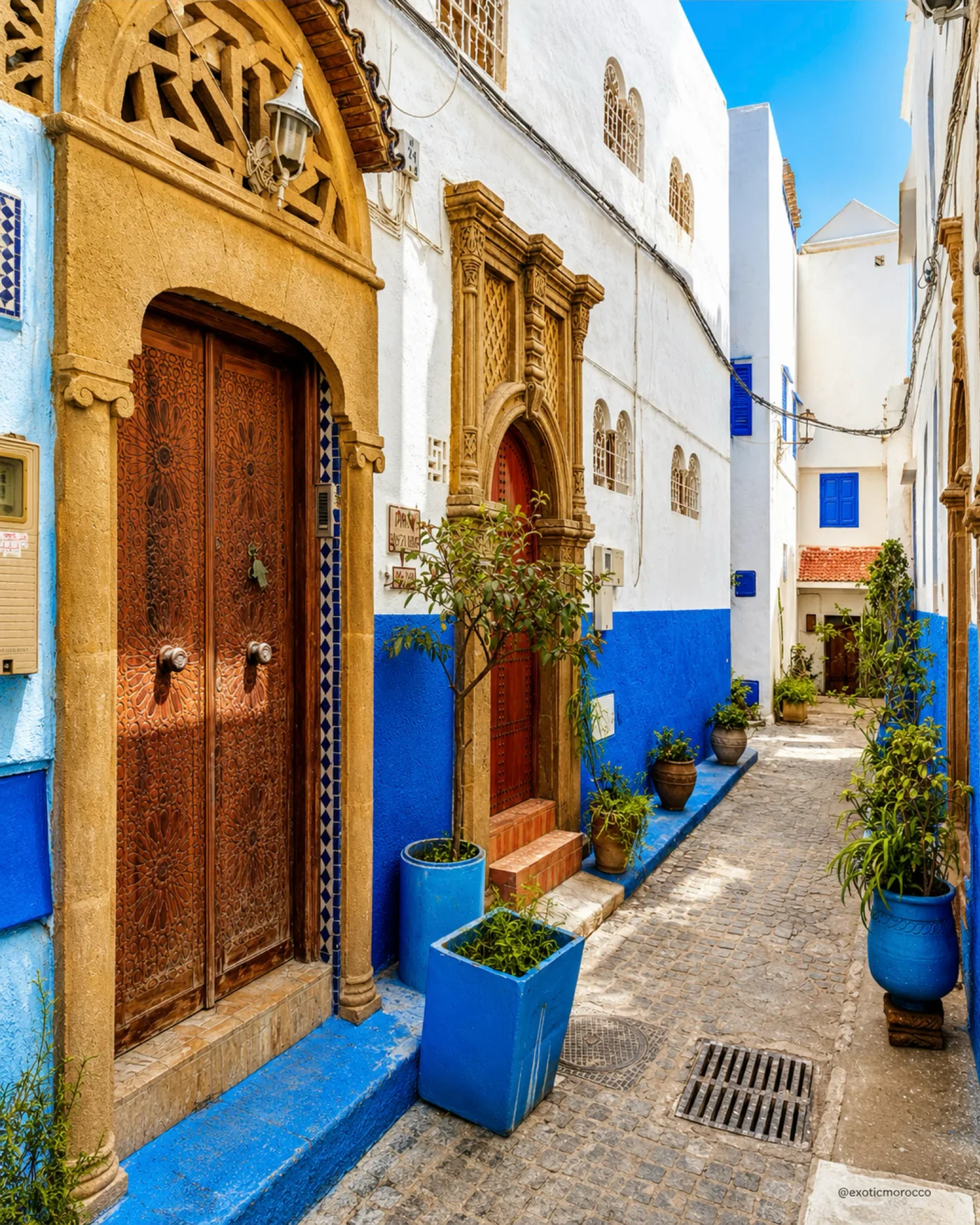 Oudayas lanesAndalusian garden
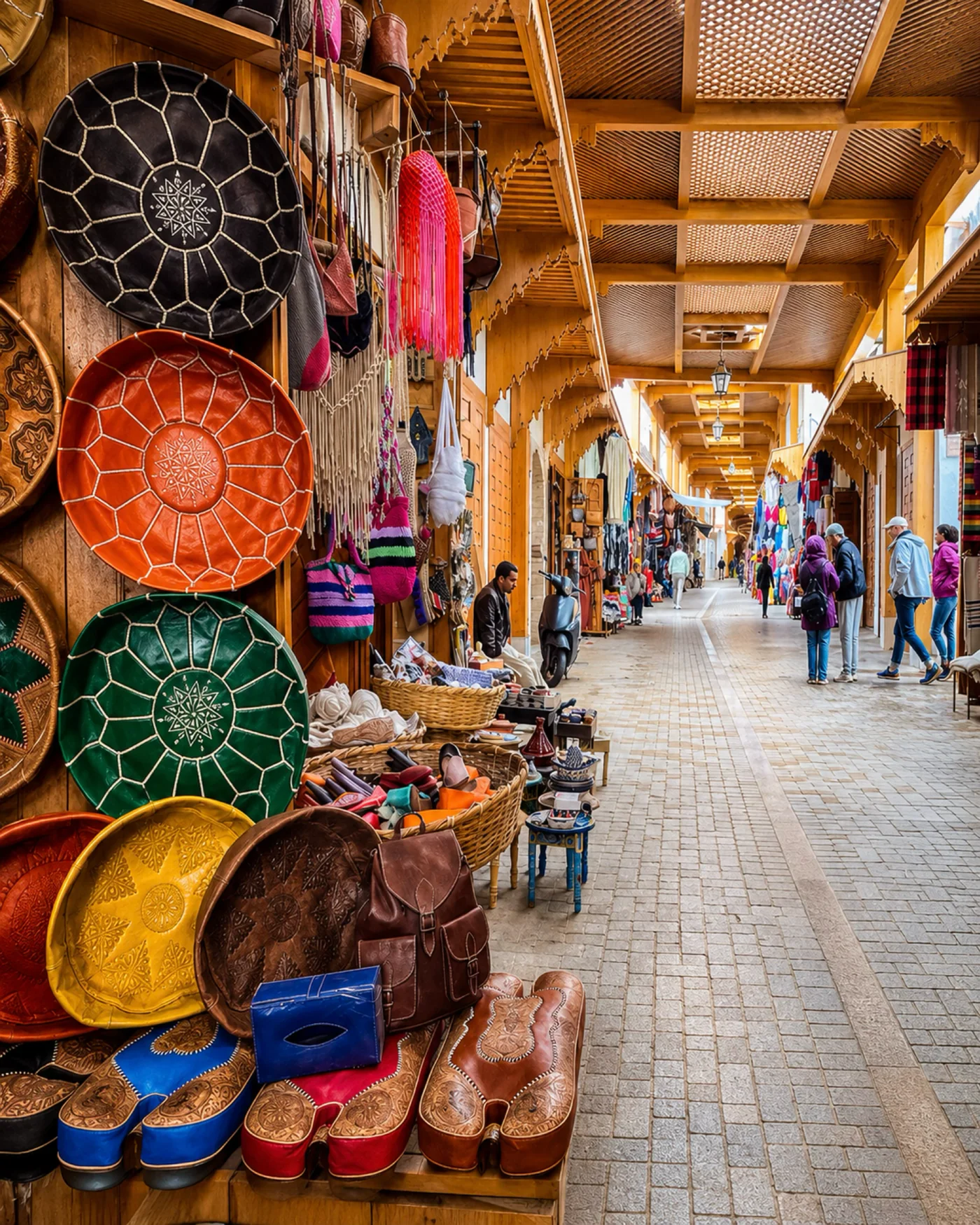 Avenue des Consuls
Imperial architecture is a language of thresholds. Gates announce authority, walls define the city, minarets organise the skyline, madrasas teach proportion, gardens cool the senses and souks keep craft knowledge visible.
Woodwork, carved surfaces and medina refinement.
Decorative rhythm, tomb architecture and red-city elegance.
Imperial arches, ceremonial geometry and masonry scale.
Historic passages, urban order and Atlantic civic character.
This route reads beautifully: Rabat’s Atlantic capital identity, Meknès’ royal scale, Fès’ scholarly depth and Marrakech’s red-city energy. The order can be reversed, but the four voices remain distinct.
RabatAtlantic capital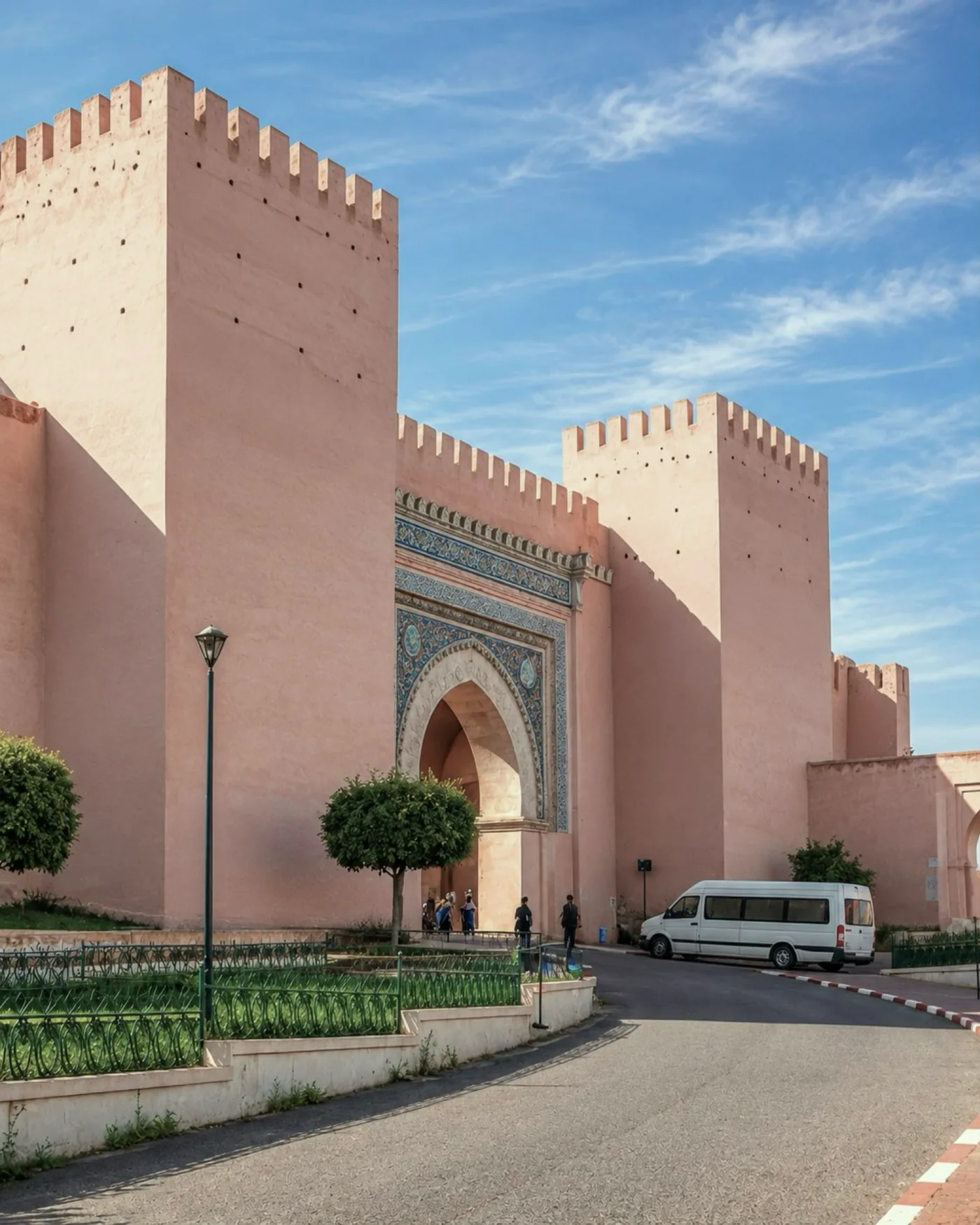 MeknèsRoyal scaleFèsScholarly heartMarrakechRed City
A few considered choices make the connections between these places more useful.
Rabat, Meknès and Fès form a different travel proposition from the longer connection to Marrakech. Do not assume that four cities require four consecutive sightseeing days. Give each base enough time for arrival, one focused walk and a return to somewhere that interested you. A second encounter often reveals what a first tour missed. The route diagram is an introduction to relationships; use current transport information and a real map to plan the transfers.
Inland heat, Atlantic exposure and the shade available along a walk affect how a day feels. A garden or a roofless monument asks for different timing from a covered craft lane or museum. Build the day around those contrasts and check the local forecast before setting out. Religious occasions and festival programmes can also alter opening patterns and the pace of public space; confirm the specific visit instead of assuming the ordinary timetable applies.
Choose tile, timber, earth, metal or water as a thread. Make a short note in each city about where it appears, what it does and who maintains it. This is more revealing than ranking the cities by grandeur. Continue into Moroccan Architecture for spatial context, Crafts & Materials for making, and the city pages for named places. The point is to understand a relationship you can recognise again, while allowing the cities to remain different.
Historical and geographical references reviewed in September 2026. Route pairings and looking suggestions are Exotic Morocco editorial guidance. Check current access and transport arrangements before travelling. Existing regional library imagery is retained; photographs and illustrations do not establish present-day access or conditions.
The regional hub gives the overview. The city guides take visitors deeper into monuments, maps, neighbourhoods, heritage details, walking logic, practical orientation and visual stories.
Madrasas, medina craft, spiritual heritage and urban depth.
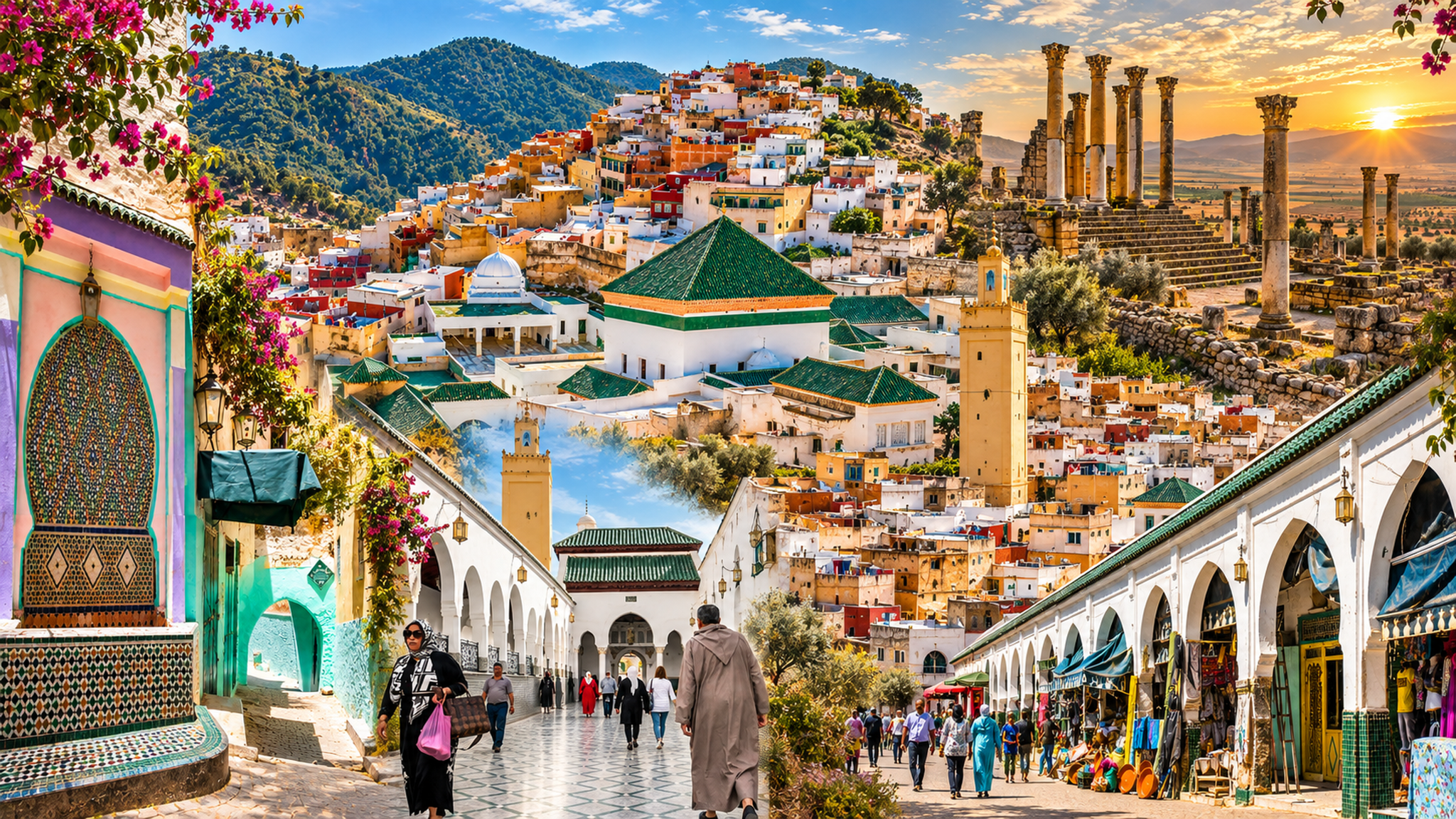
Sacred hill town above Volubilis, rich in Idrisid memory.
Koutoubia, gardens, palaces, souks and red-city atmosphere.
Bab Mansour, ramparts, granaries and Ismaili ambition.
Hassan Tower, Oudayas, Chellah, Salé and Atlantic capital heritage.