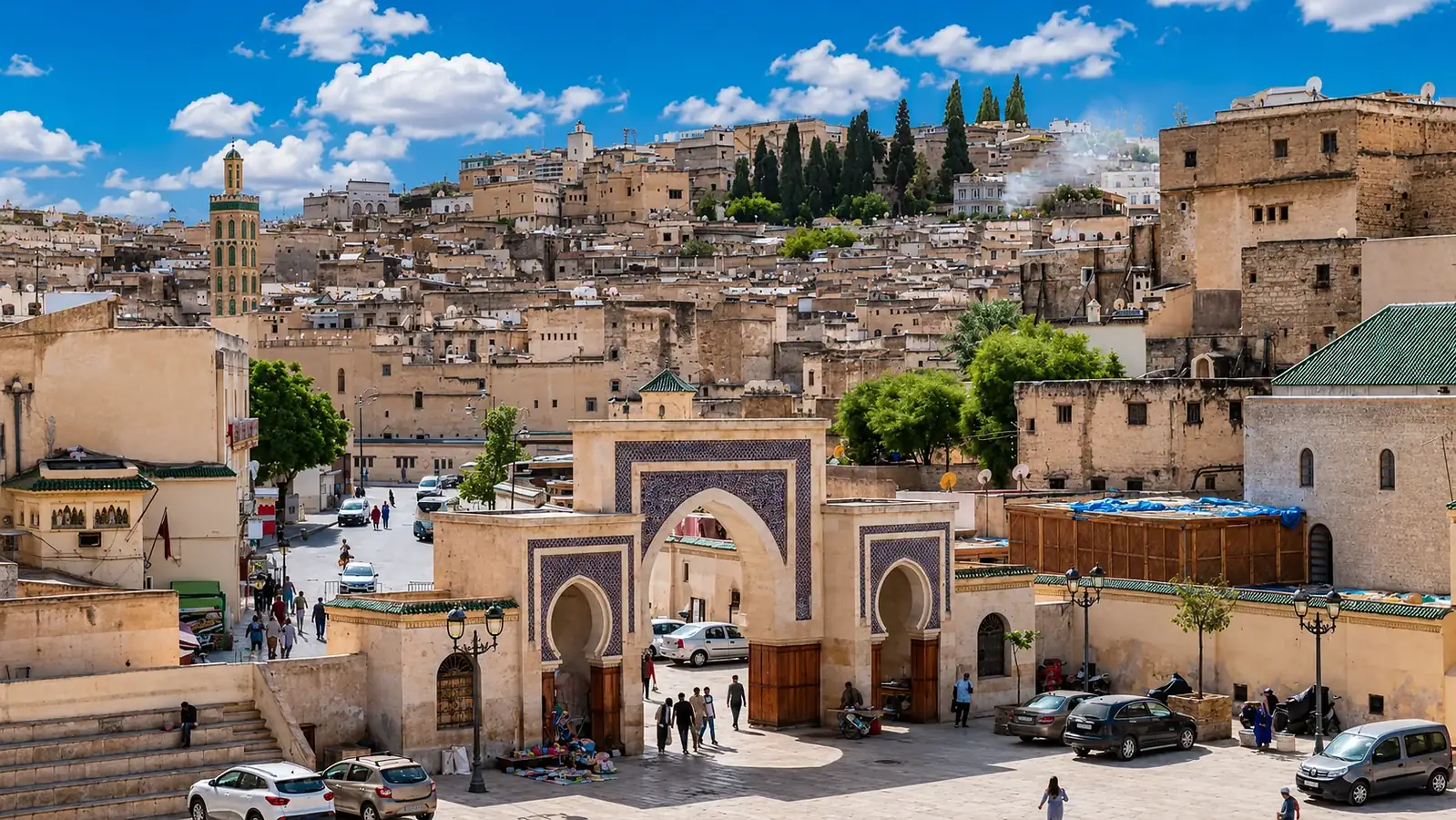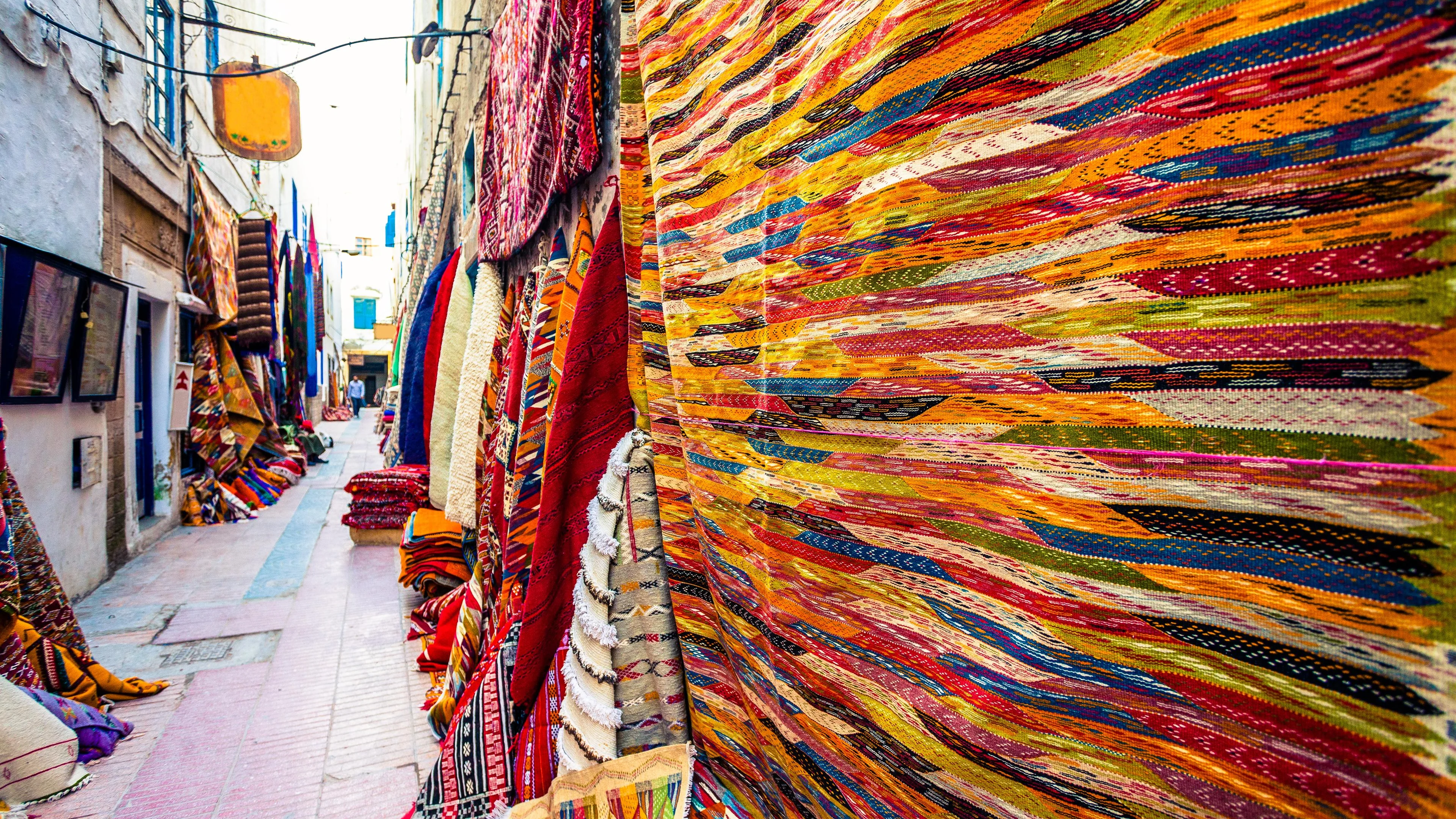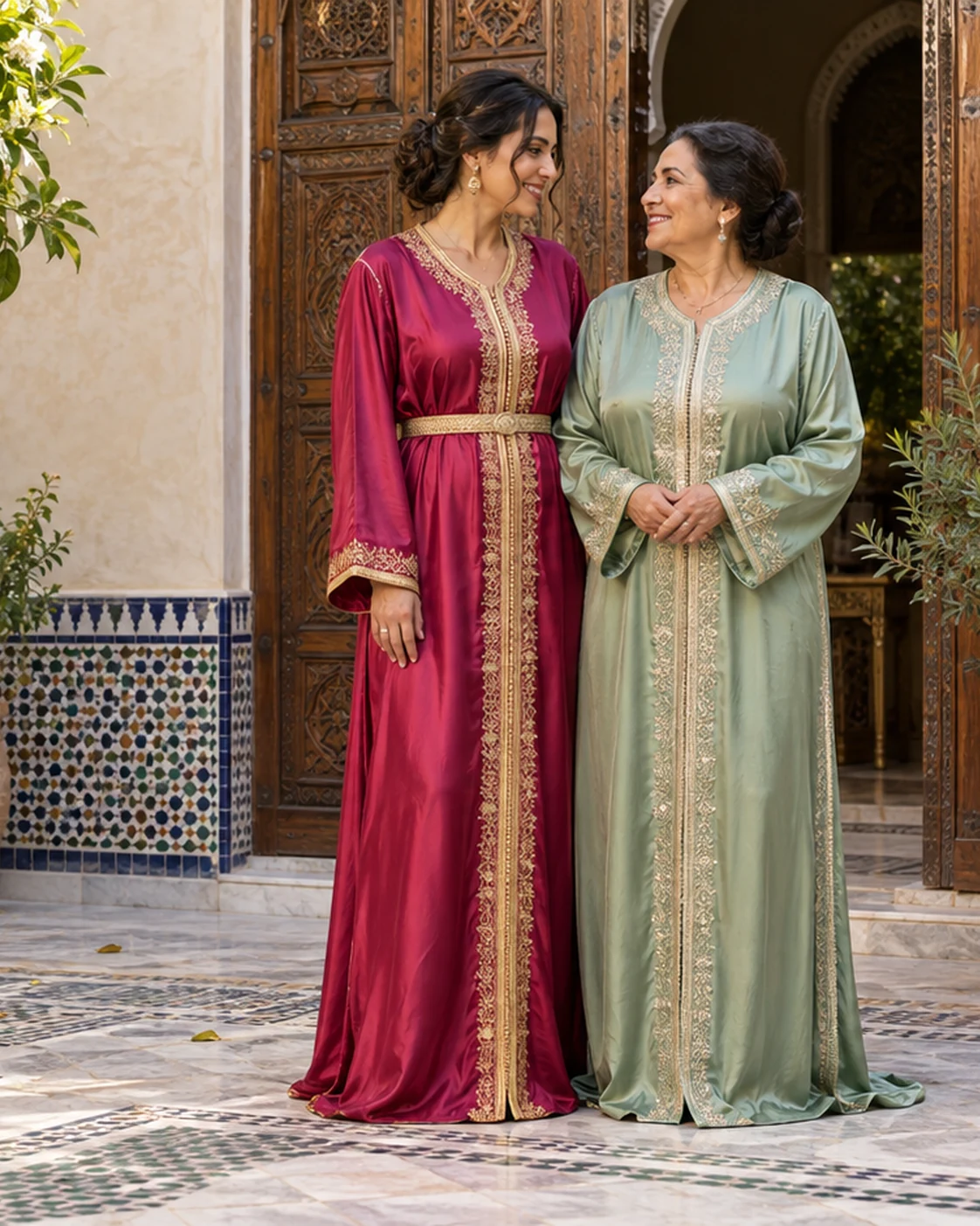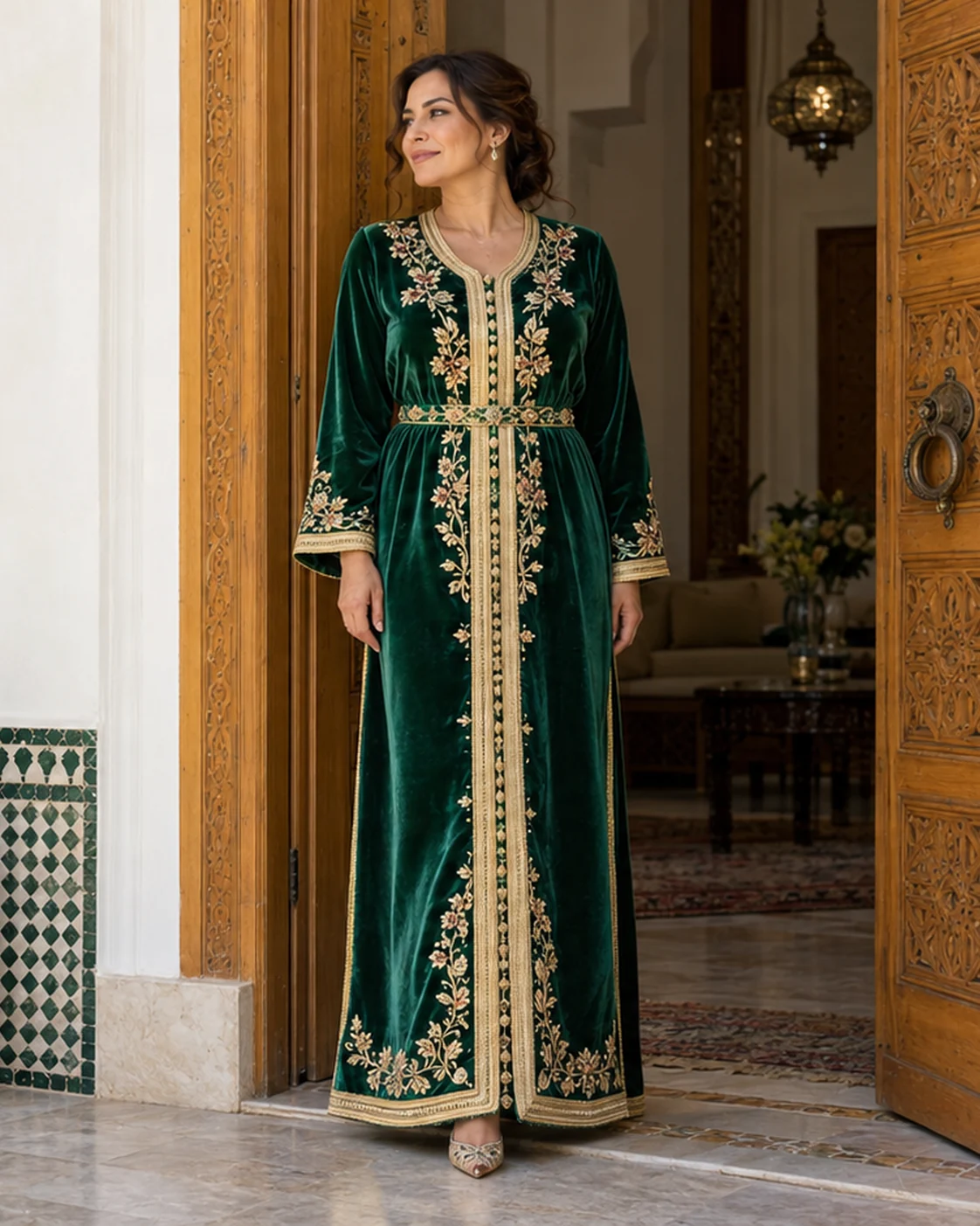
The caftan · Line, cloth & skilled hands
Moroccan Caftan
A long line of cloth, a precise edge, a distinctive presence. Look beyond the splendour of the Moroccan caftan to the skills that shape it.
Explore the chapter ↗
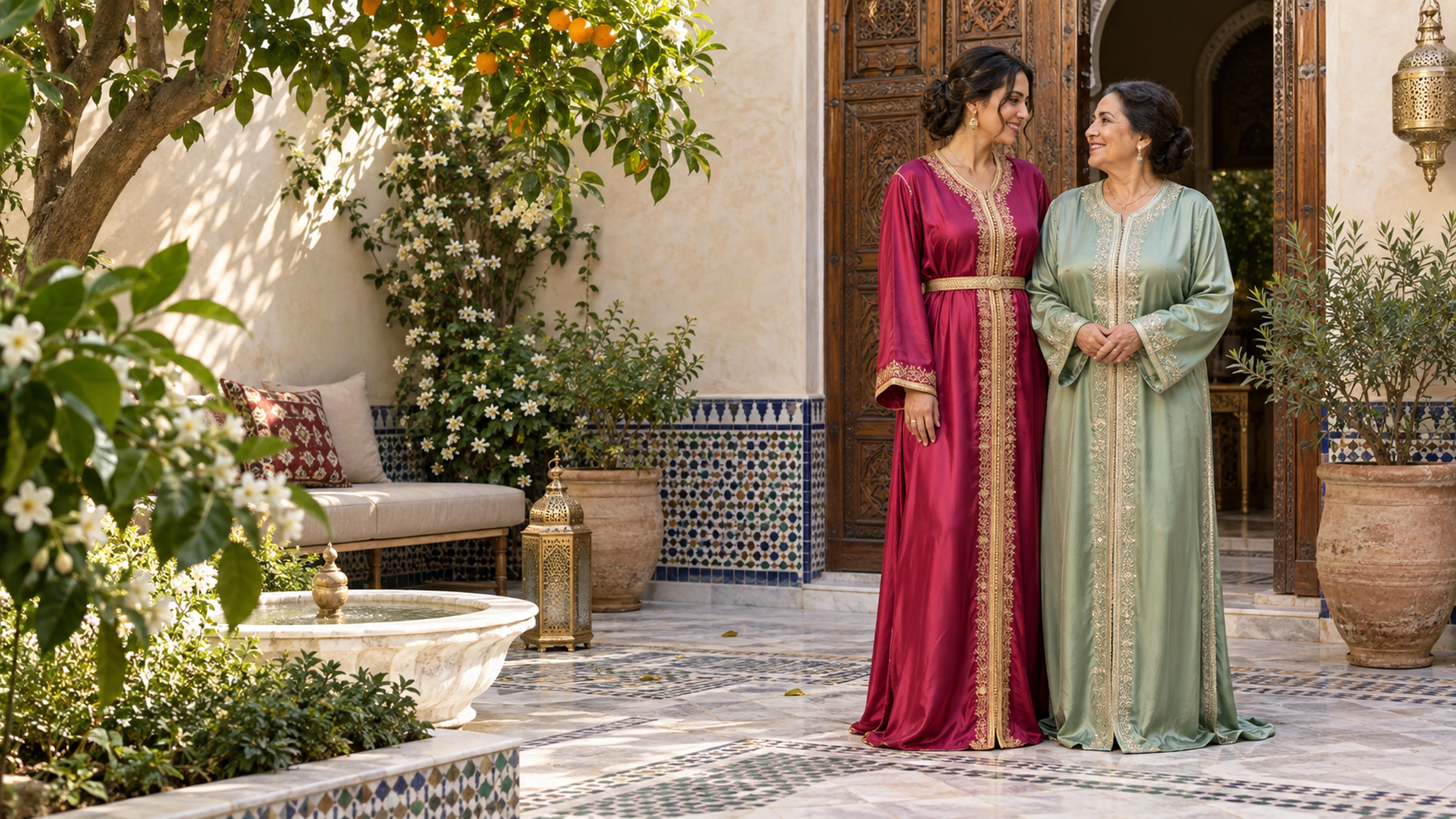
Traditional dress · A living cultural wardrobe
Cloth holds more than colour. Explore the garments, gestures and skilled hands that give Moroccan dress its presence.
Look a little closer ↓01 / The starting point
A finely edged sleeve, a woollen hood, a length of cloth gathered over a shoulder: Moroccan dress invites you to look beyond the complete outfit. Its character lives in how fabric falls, how a fastening works and how someone chooses to wear it.
There is no single costume that explains a whole country. Everyday clothing, celebration dress and inherited textiles belong to different situations, with choices shaped by family, place, generation and personal taste. A garment can be familiar and still be worn in a very individual way.
Begin with the silhouette, then move closer. This collection follows four clothing forms, the work of the loom and needle, and the social lives of clothes. The existing Djellaba and Reading Moroccan Dress chapters add everyday context. Together they offer ways to notice more without turning a person into a label.
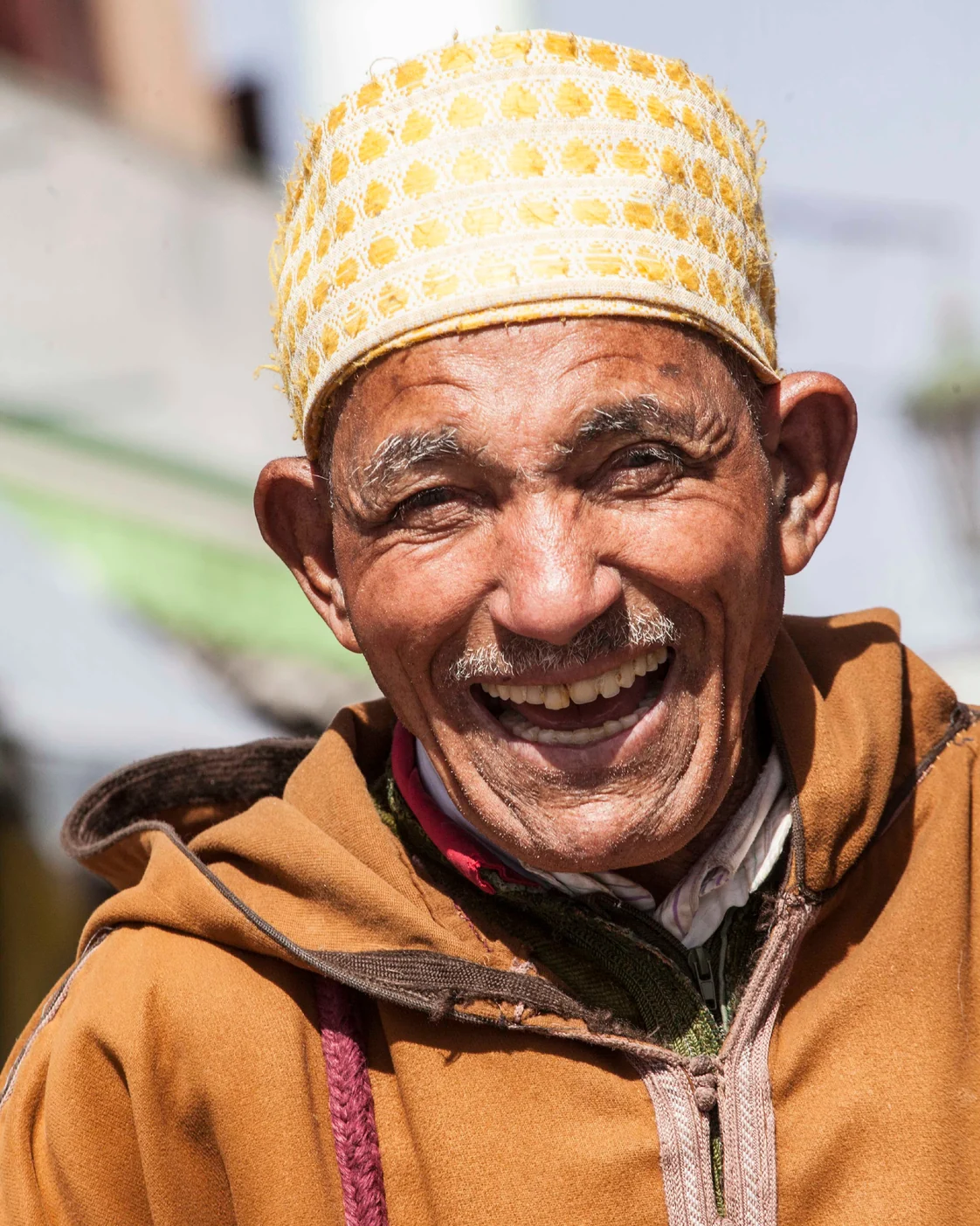
02 / One wardrobe, many stories
The caftan · Line, cloth & skilled hands
A long line of cloth, a precise edge, a distinctive presence. Look beyond the splendour of the Moroccan caftan to the skills that shape it.
Explore the chapter ↗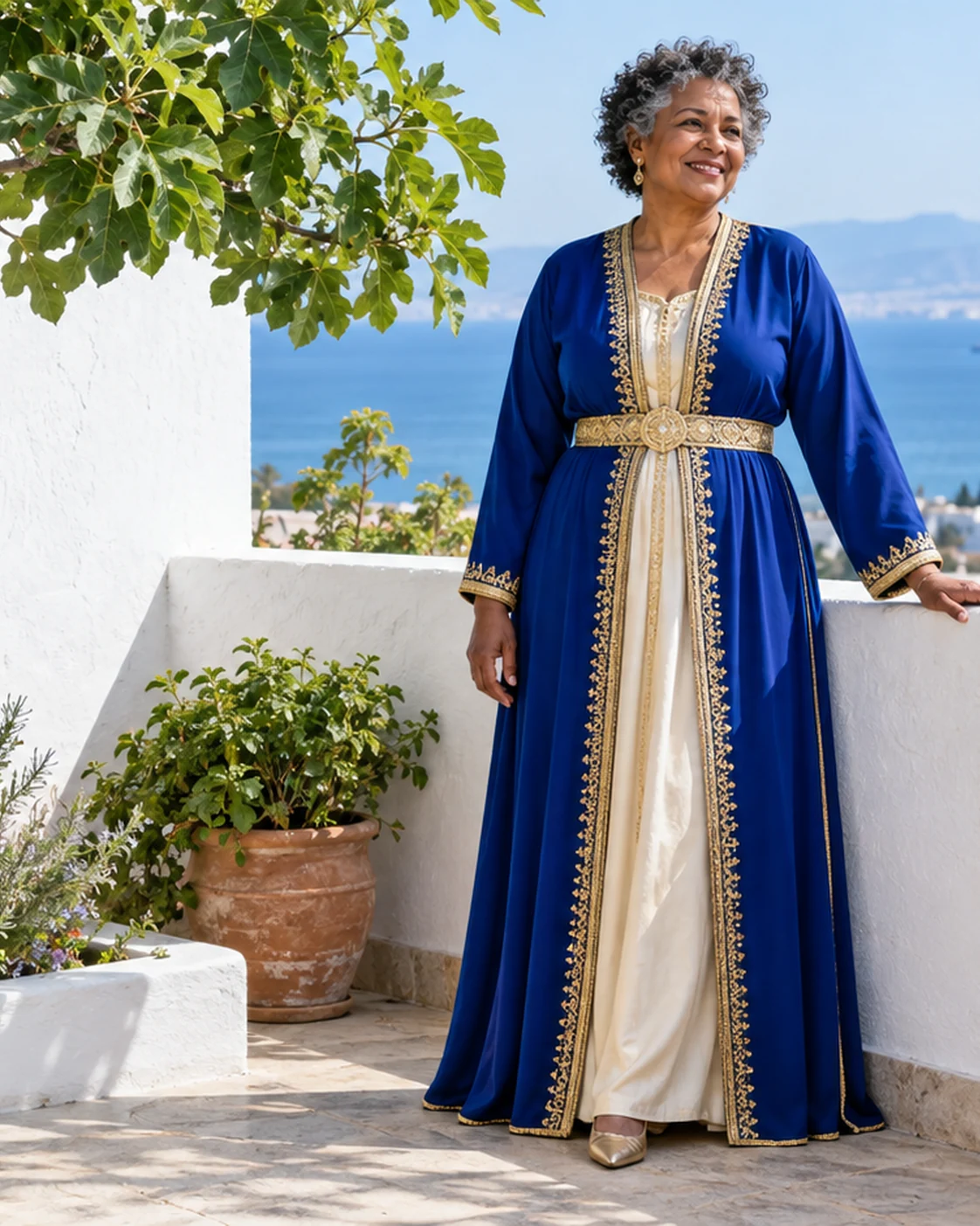
The takchita · An art of layers
An inner dress, an open outer layer and a belt: discover how separate elements become a composed Moroccan ensemble.
Explore the chapter ↗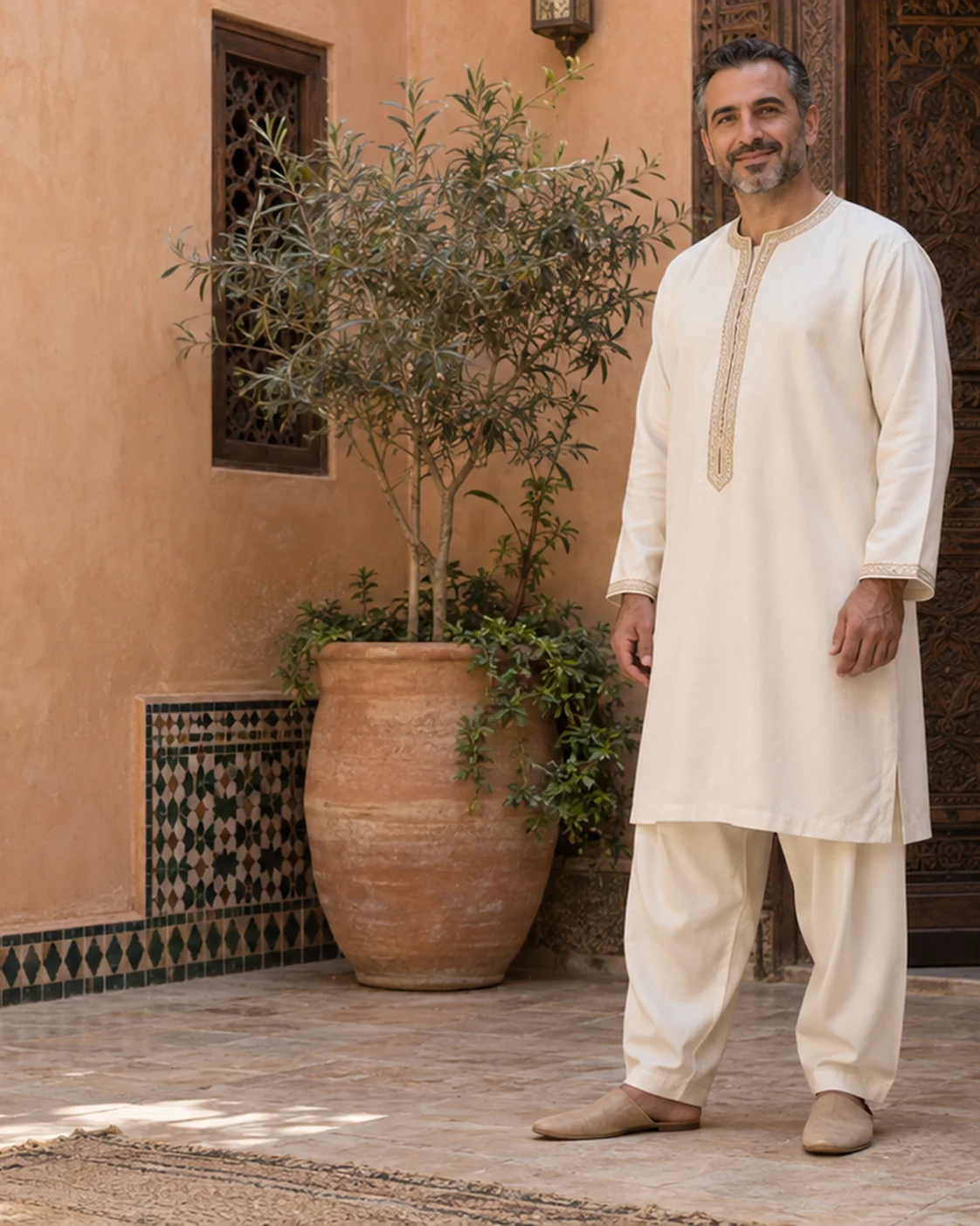
The jabador · Two pieces, one rhythm
Follow the relationship between tunic and trousers, the restraint of a neckline and the ease of a well-considered fit.
Explore the chapter ↗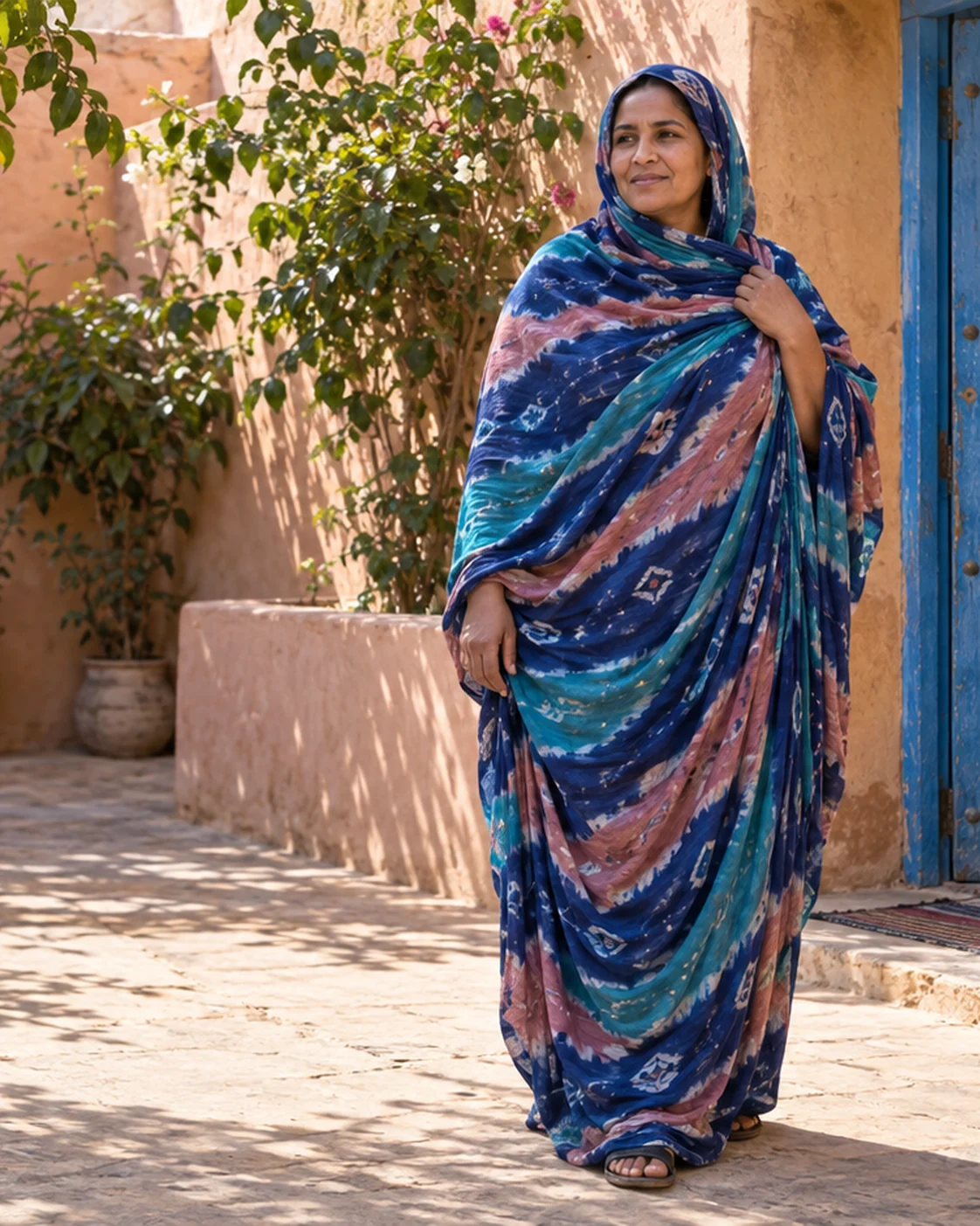
The melhfa · Cloth, drape & everyday choice
A continuous length of cloth becomes a garment through wrapping. Explore the melhfa through movement, material and its Sahrawi cultural context.
Explore the chapter ↗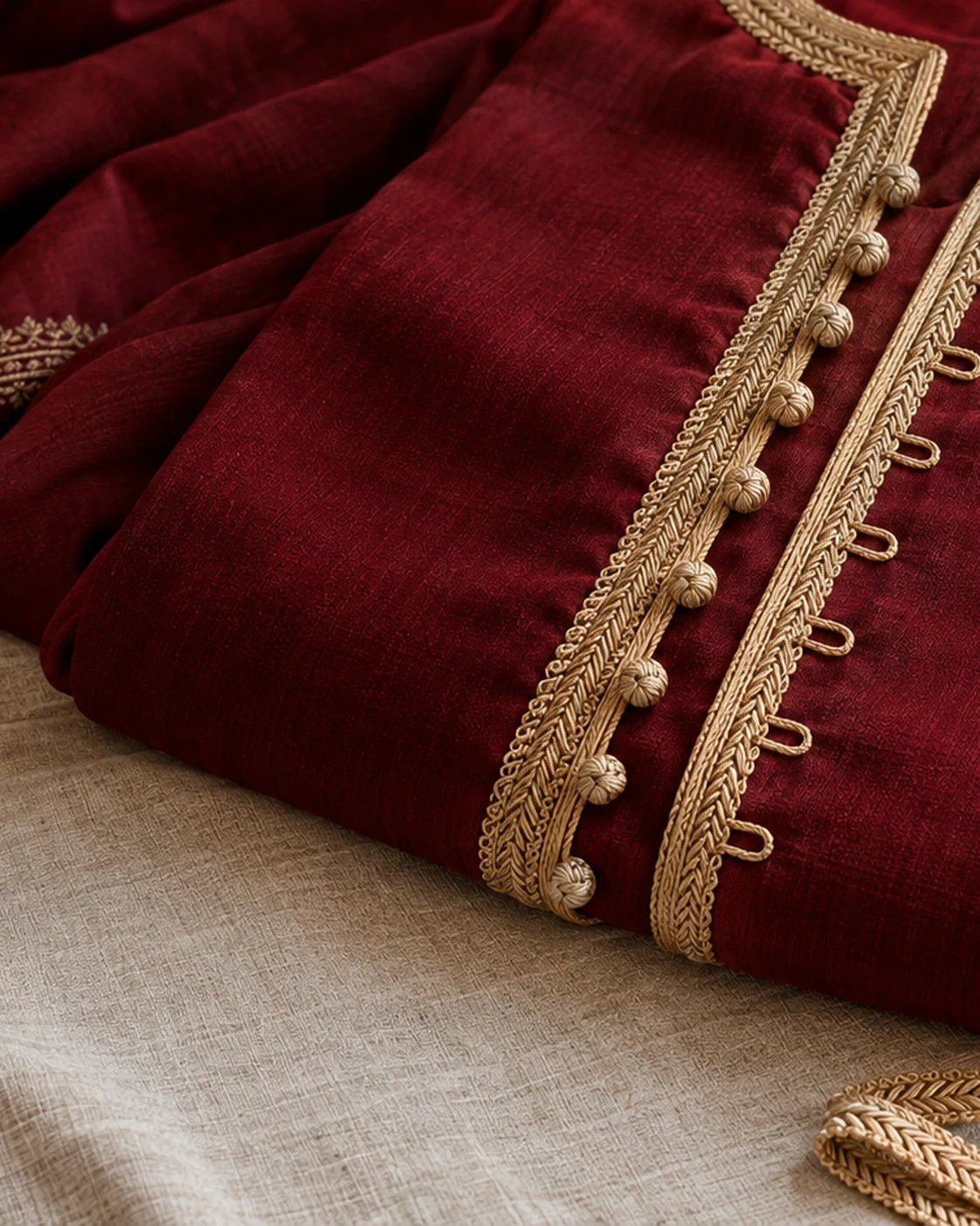
Embroidery & sfifa · The language of an edge
Braid, buttons and stitched ornament meet along a garment’s opening. Learn to see what each one does.
Explore the chapter ↗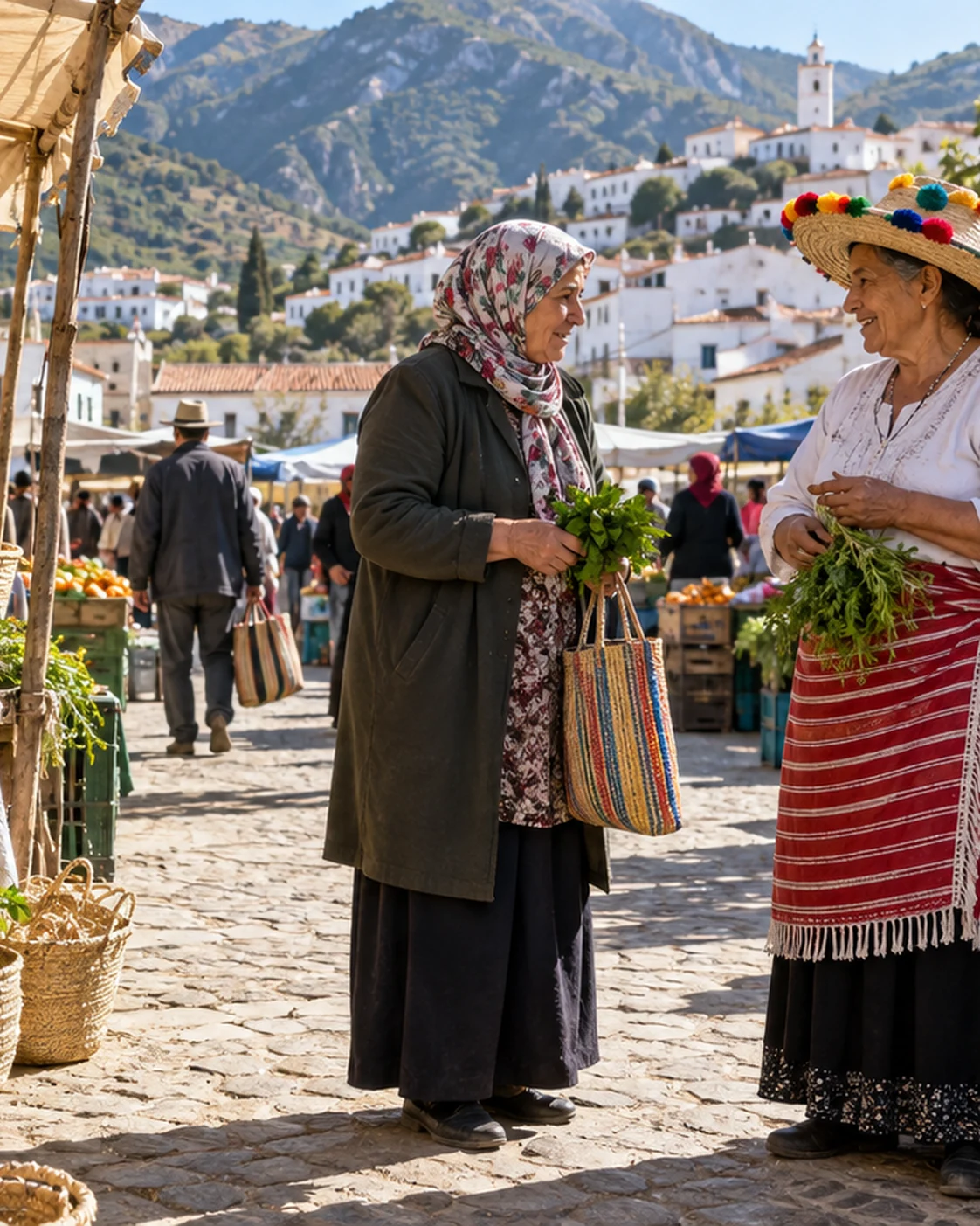
Regional dress · Place without a single uniform
From northern woven wraps to Atlas textiles and city wardrobes, explore regional dress through specific examples and individual lives.
Explore the chapter ↗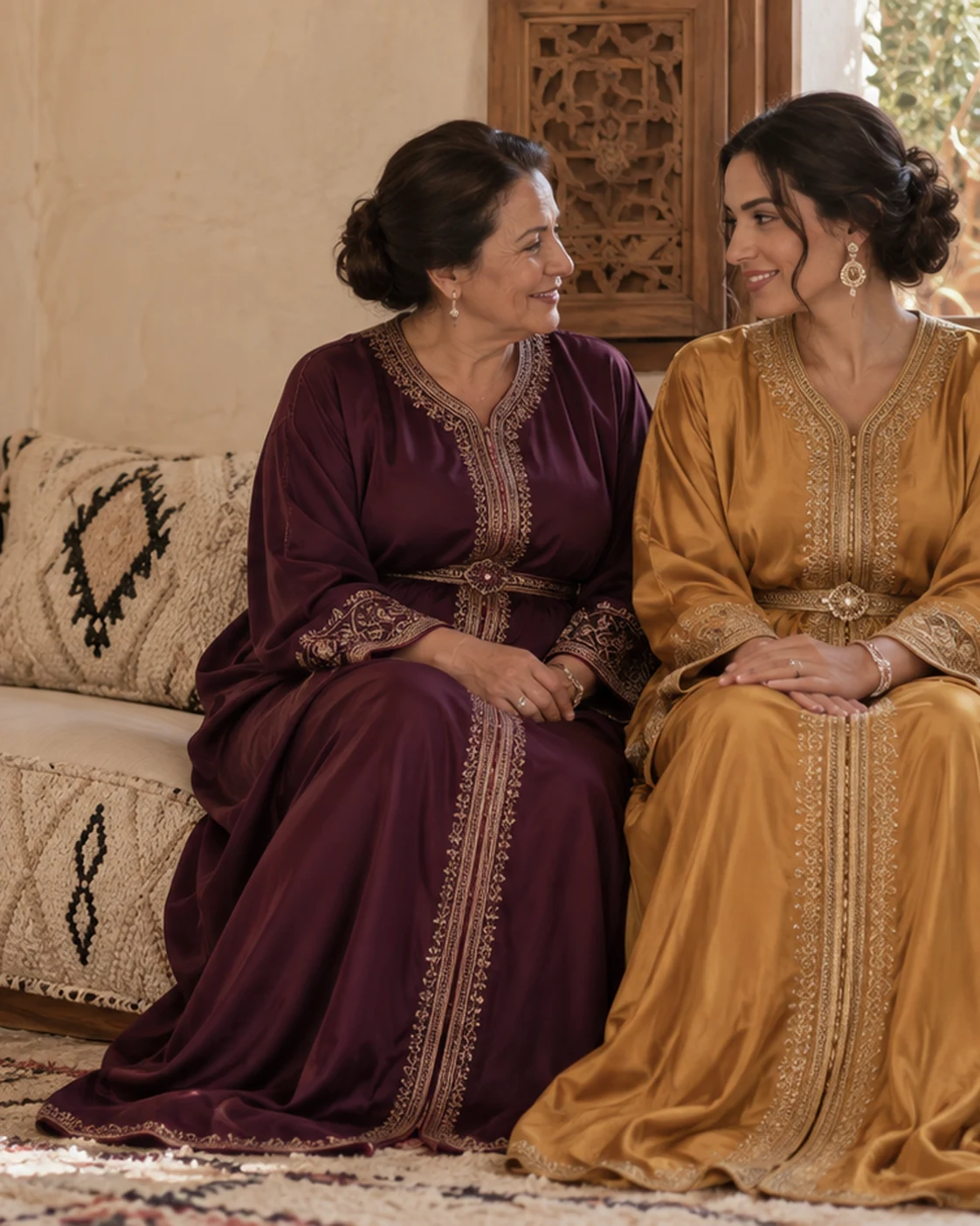
Ceremony & identity · The social life of clothes
An outfit can carry a family memory, mark an occasion and acquire new meanings as it passes from one life to another.
Explore the chapter ↗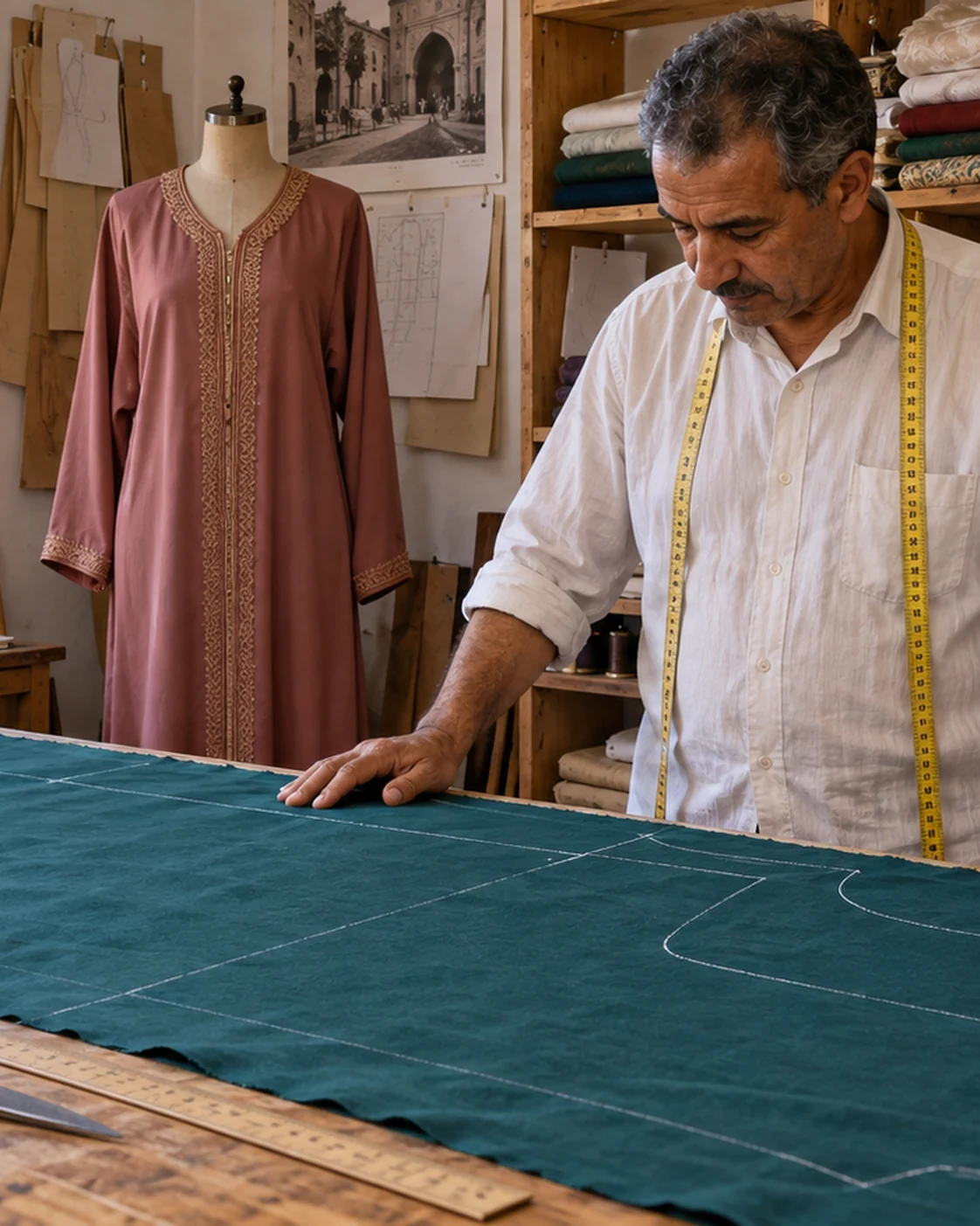
Traditional clothing & craft · From cloth to fit
Follow the choices that turn a length of fabric into clothing: measuring, cutting, joining, finishing and the final fitting.
Explore the chapter ↗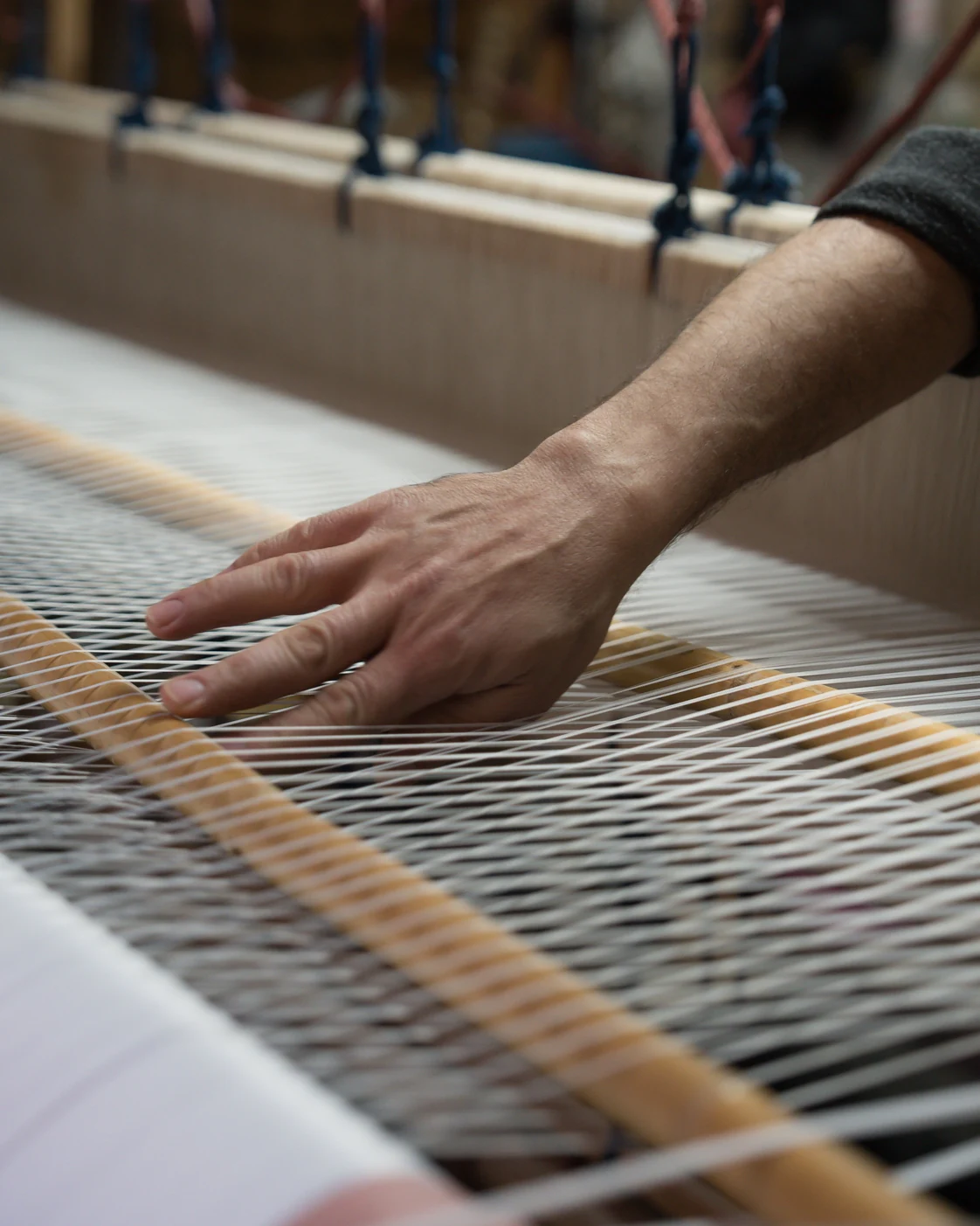
Textiles & weaving · Before cloth becomes clothing
Start at the loom. Explore the structure, weight and movement of cloth before following it into a garment or a home.
Explore the chapter ↗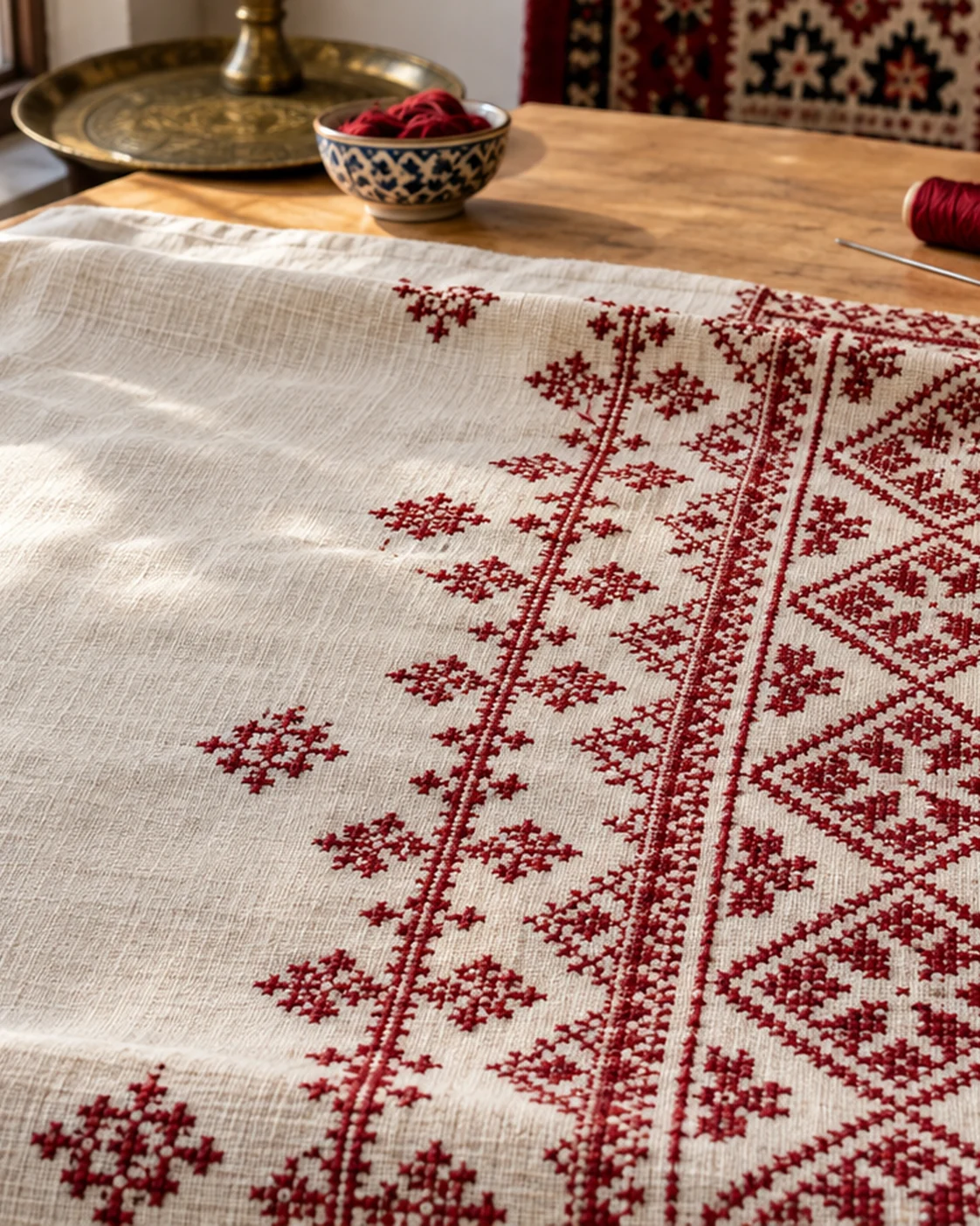
Embroidery · The movement of a thread
A stitch can build a line, fill a shape or join a larger rhythm. Explore Moroccan embroidery through structure and specific textile histories.
Explore the chapter ↗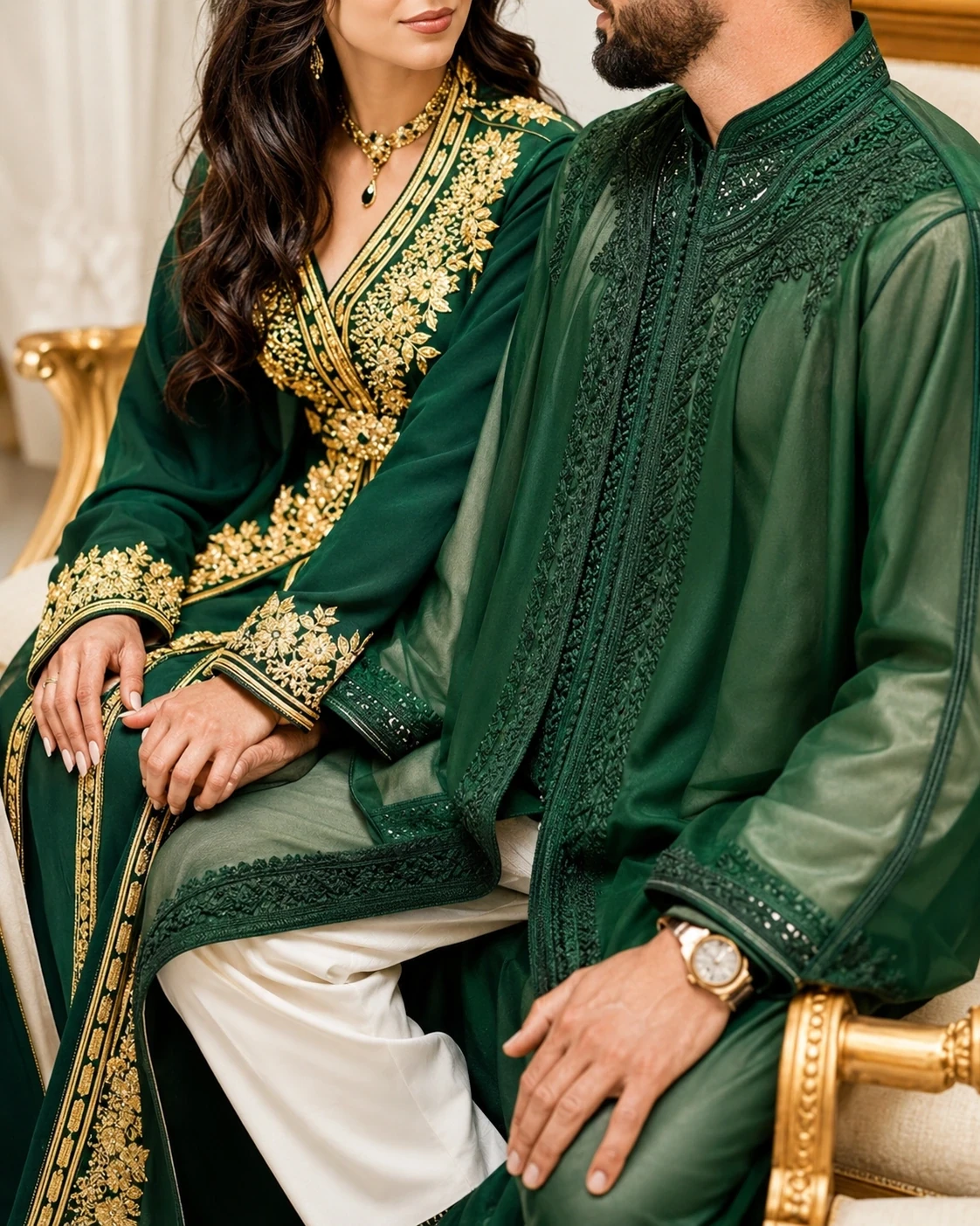
Learn · Cultural context
A wider cultural vocabulary for looking at clothing.
Explore the chapter ↗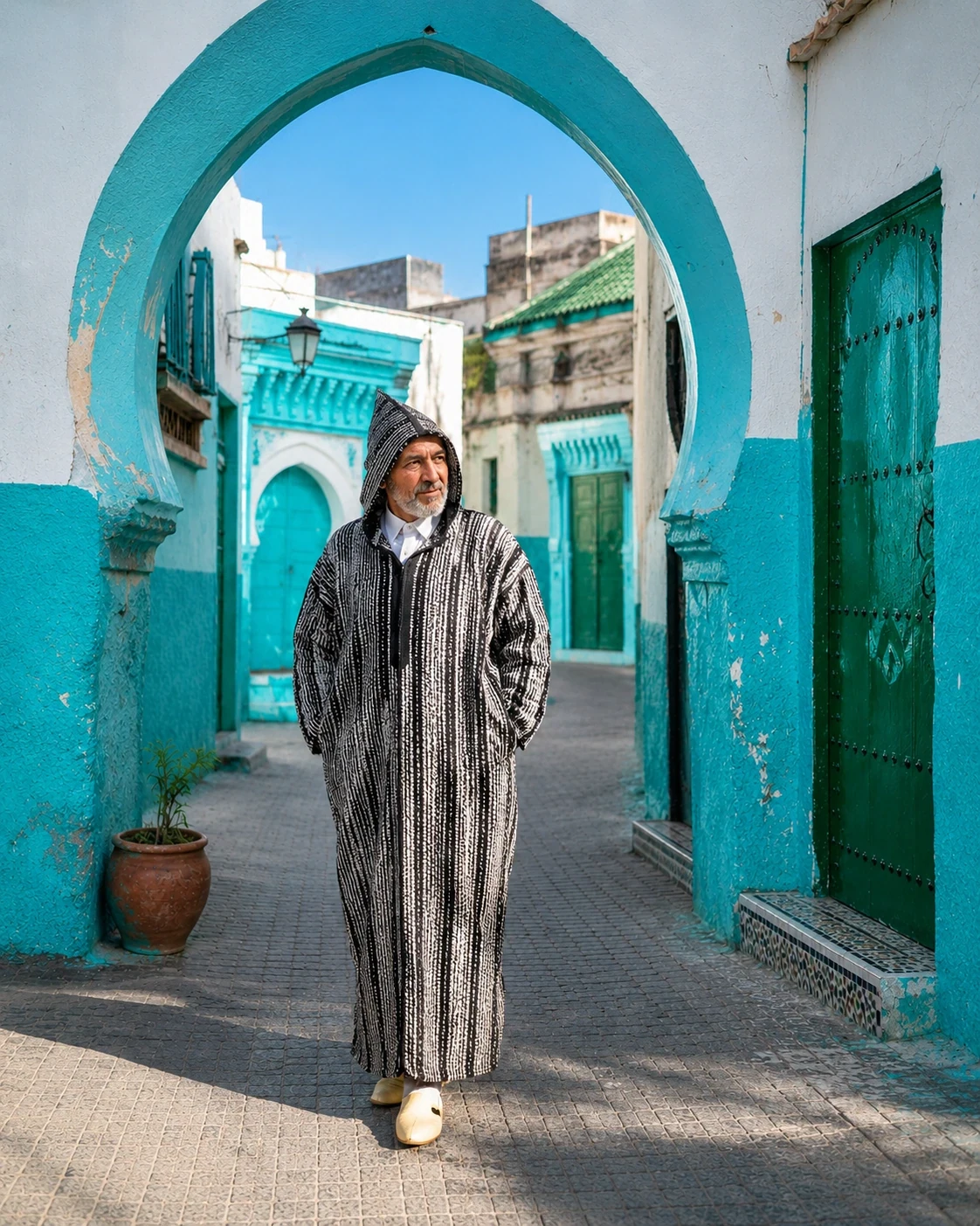
Learn · Everyday dress
The hooded garment, personal choice and daily life.
Explore the chapter ↗03 / Read the details
An invitation to observe, rather than a checklist for deciding someone’s identity.
Look at the whole line first. Is the garment hooded, layered, worn over trousers or wrapped from one piece of cloth? The shape gives you a more useful starting point than colour alone.
Cloth can be smooth, piled, translucent or tightly woven. Its weight changes the way a sleeve moves and a hem hangs. Ask about fibre and construction instead of assuming shine means silk.
Follow the opening, cuffs and seams. Braid, buttons and embroidery do different jobs. Small details reveal decisions about structure as well as decoration.
A portrait, wedding photograph, market visit and museum display tell different kinds of story. Notice who supplied the context, when the image was made and what remains unknown.
04 / A closer look
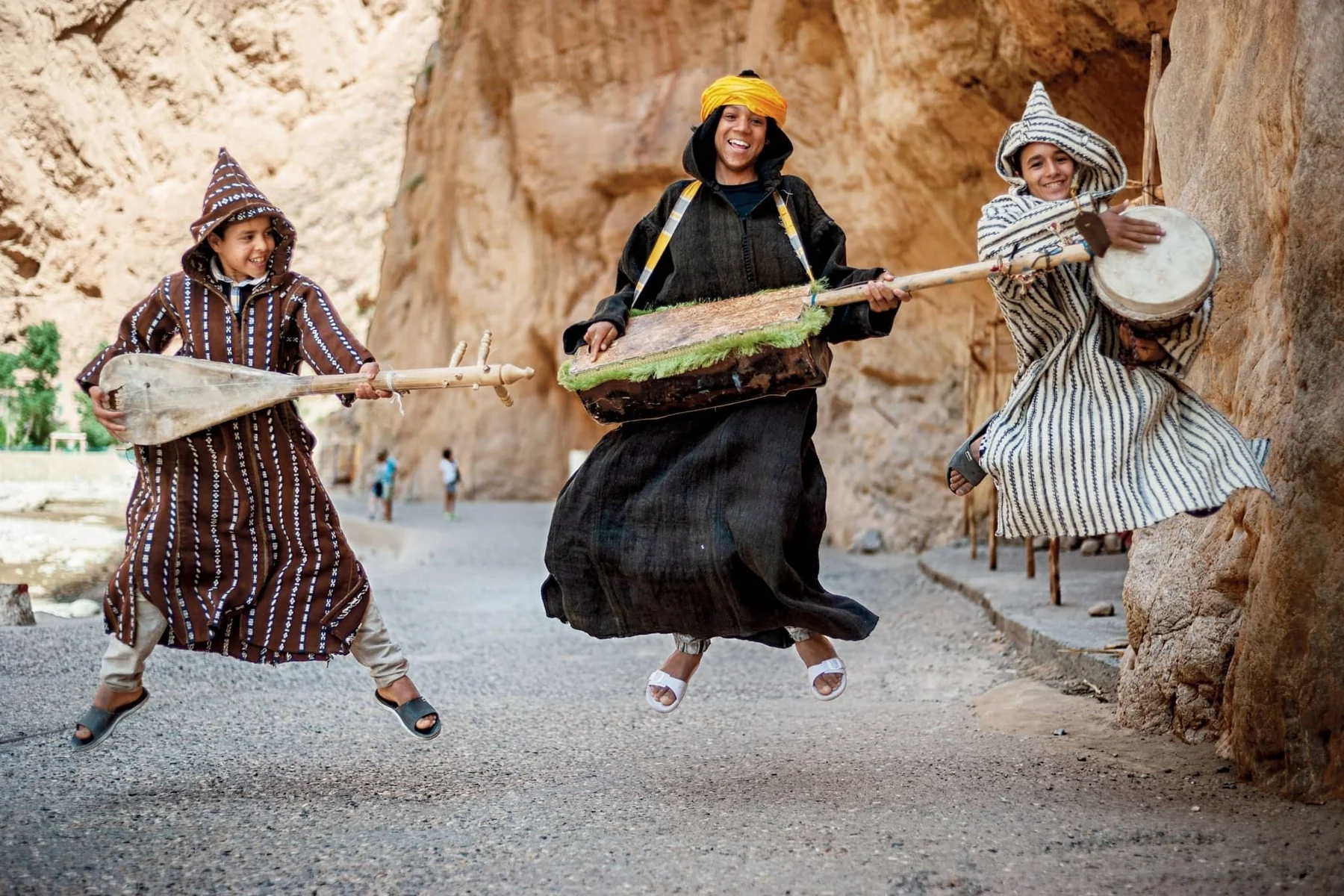
The most interesting view of dress is often in motion: a sleeve lifted to play, a wrap adjusted, a hem gathered on a step. A still display can show construction beautifully, but it cannot tell you everything about how a garment feels to wear.
That is why the collection pairs material details with human context. A museum object can carry a documented date or place; a contemporary portrait can show an individual choice. Neither should be made to stand for every person in a region.
When visiting, let conversation set the pace. A respectful question about a garment’s maker or fabric can open a richer exchange than asking someone to perform a tradition for a photograph.
05 / Culture in context
UNESCO inscribed Moroccan caftan traditions and skills in 2025. The recognition concerns a living practice and the people who sustain it, not a certificate attached to every garment offered for sale.
This distinction matters throughout the wardrobe. Making, teaching, repairing, adapting and wearing all have a place in its continuing life. Contemporary creativity is part of that story; a new design does not need to pretend to be an antique.
Choose a route through this collection by following a question. If you are interested in how clothes are made, begin with the craft chapter and continue into embroidery or woven cloth. If you want to understand an ensemble, compare the caftan, takchita and jabador pages while keeping their individual forms distinct. Regional dress adds another perspective without turning a map into a fixed wardrobe.
Look at more than the front of a garment. An edge, a fastening, the fall of a sleeve and the relationship between layers can tell you how the piece is intended to work. Where an object has a documented collection history, use that specific record. Where you are looking at a contemporary garment, let its maker or wearer explain the choices that shaped it.
06 / Take the conversation further
Ask which parts were woven, sewn, braided or embroidered, and where those stages happened. A seller and a maker may play different roles; credit each accurately.
Let people name their own clothing and explain its significance if they wish. A photograph is an invitation that can be declined, not a souvenir you are owed.
Read museum labels closely. Keep the date, attribution and material attached to that particular textile. An old object gives depth to the story without prescribing how everyone dresses today.
The Exotic Morocco guide collection
The companion Dress, Identity & Ceremony guide is in preparation. Explore the collection for its current status and connected reading.
Find this guide in Shop