Chosen
Before an occasion, cloth, fit and finishing become shared decisions. Some garments are commissioned, others bought, borrowed or inherited. The route to wearing a piece is part of its story.

Ceremony & identity · The social life of clothes
An outfit can carry a family memory, mark an occasion and acquire new meanings as it passes from one life to another.
Look a little closer ↓01 / The starting point
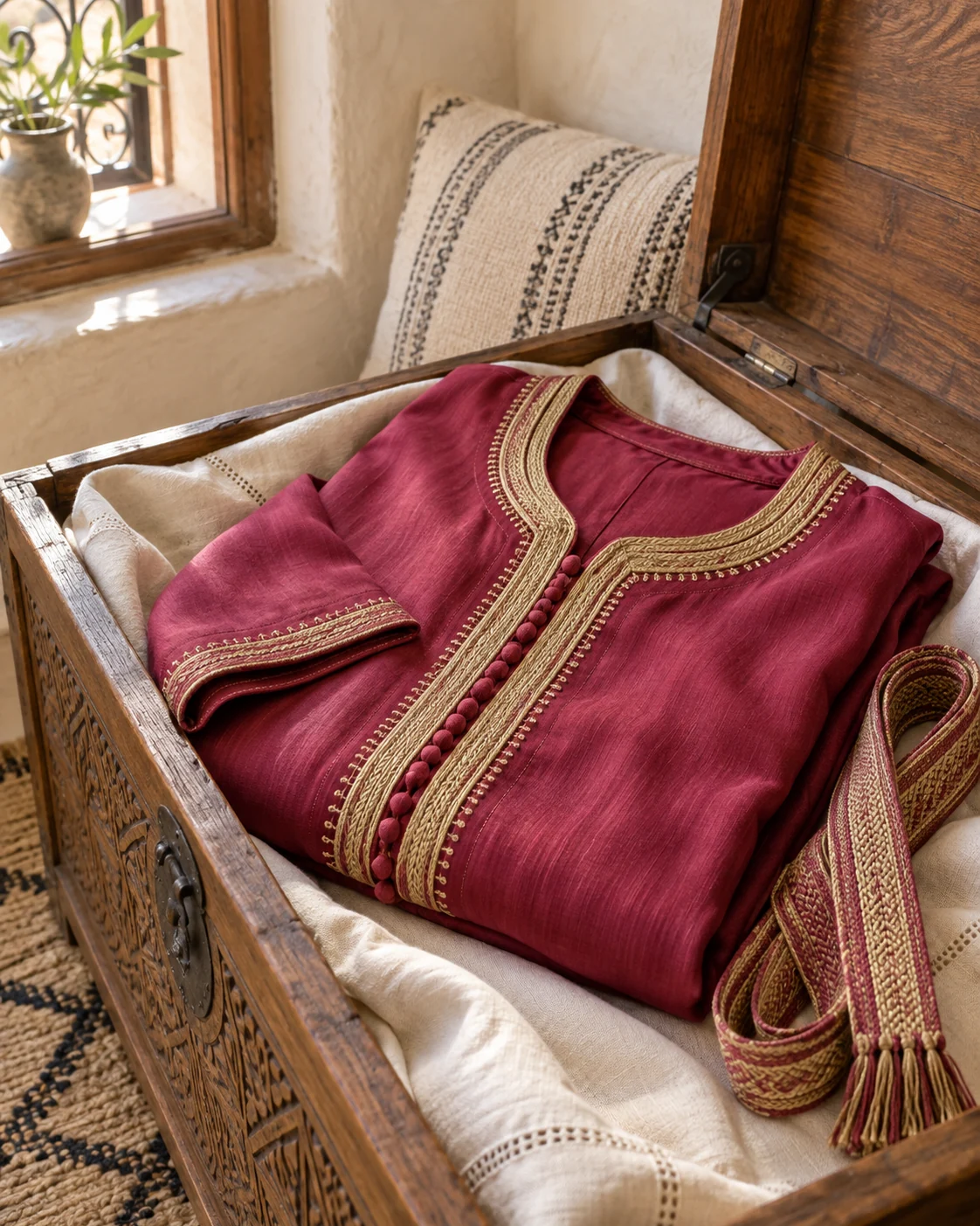
The clothing may be folded away, but the story continues. A remembered fitting, the person who made a belt, a photograph shared later or a garment brought out again can all become part of its meaning.
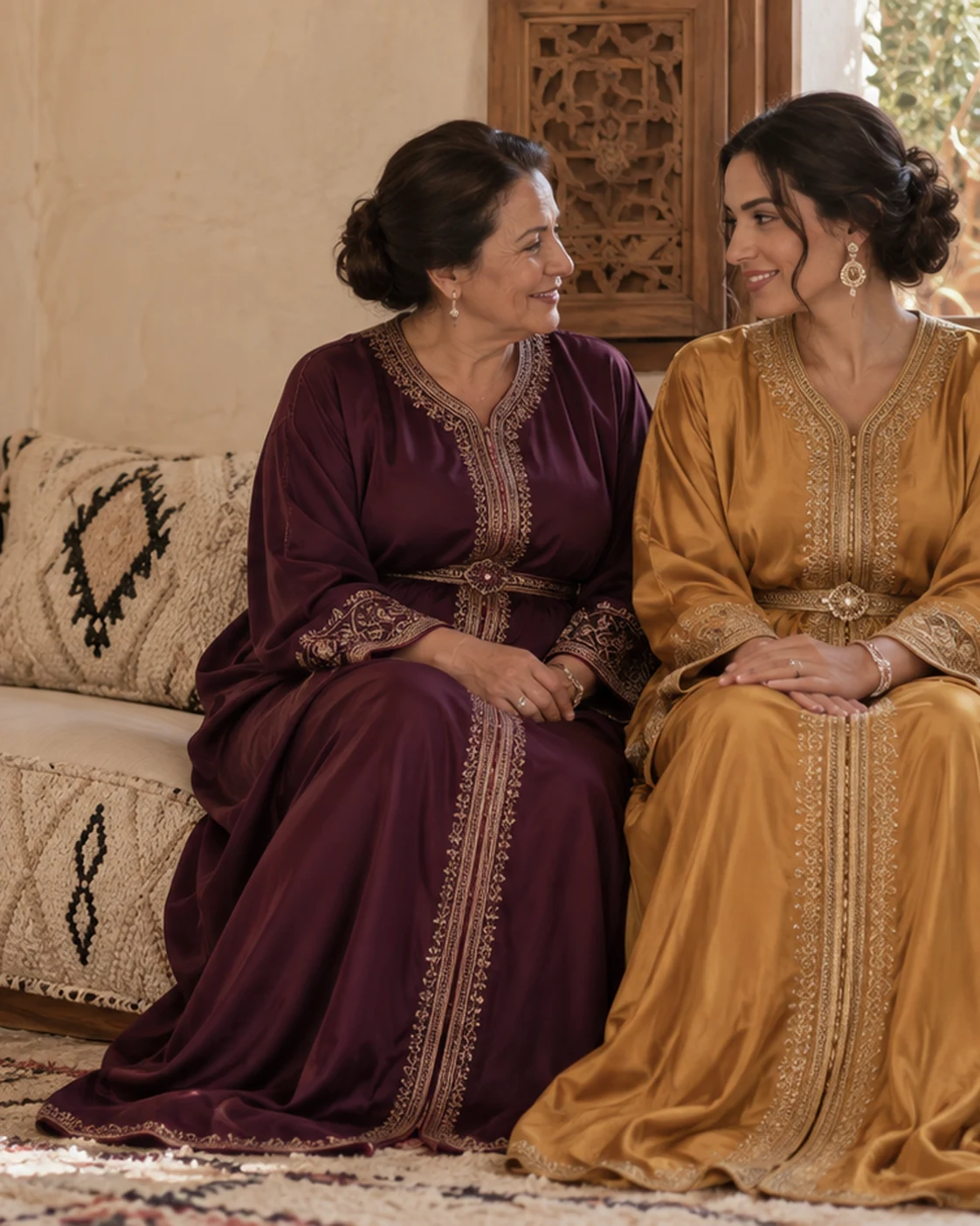
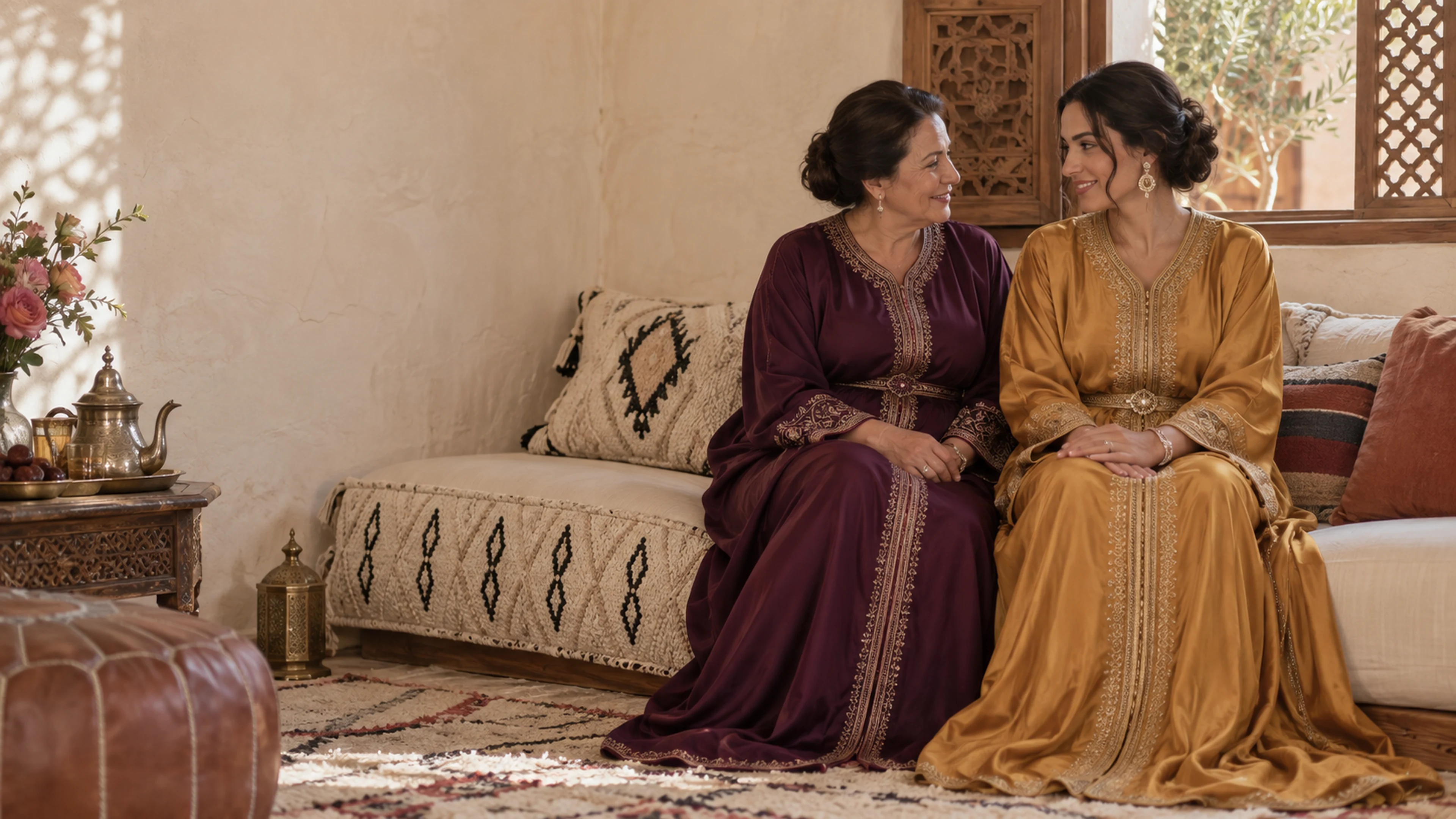
Ceremonial dress is more than a spectacular image. It involves people helping, choosing, preparing and remembering. The quiet moments around an event can tell us as much as its most formal portrait.
There is no single ceremony that explains every Moroccan family. Customs, religious and regional contexts, budgets and personal choices differ. Begin with a specific account and keep its names, dates and circumstances intact.
02 / Read the details
The same piece can carry different meanings at different moments.
Before an occasion, cloth, fit and finishing become shared decisions. Some garments are commissioned, others bought, borrowed or inherited. The route to wearing a piece is part of its story.
Movement, comfort and the people around the wearer matter. A ceremonial outfit is still clothing on a body, used in a real setting with its own expectations and ordinary practical needs.
Later, an outfit can become a keepsake, be altered or pass to another wearer. A surviving photograph and an owner’s account may explain details that the material object cannot tell us alone.
03 / An object with a biography
Mucem records a green silk-velvet caftan and matching slippers associated with Fatima Rhazi. The garment was worn by her mother in 1955 and by Fatima in 1984, then used in wedding work in the Marseille region between 1995 and 2012. Fatima later donated it to the museum.
The record connects this particular object with her work as a photographer and negafa, a wedding dresser. Its biography joins family inheritance, professional skill and movement between Morocco and France.
That specificity is the value of the example. It does not establish one timetable, colour rule or sequence of events for every Moroccan wedding. It lets us follow one garment through people and places that are actually named.
04 / Culture in context
Dress can communicate belonging, affection and taste, but an observer cannot decode a complete identity from the fabric. Ask what a garment means to its wearer when they wish to share the story.
Moroccan ceremonial histories include different communities and many kinds of continuity. The Jewish Museum’s el-keswa el-kbira, for example, records a marriage ensemble made for a named bride in the late nineteenth century and worn by her descendants. Keep that account distinct rather than merging all celebration clothes into one category.
A garment kept after a celebration can acquire another kind of meaning. The occasion, the person who chose it and the work done to adjust or repair it belong to its story alongside the visible fabric. When looking at a family piece, ask which parts of that history the owner wishes to share. Not every personal object needs to become an exhibit.
If you are choosing clothing for an invitation, begin with the host and the actual occasion. Ask what would feel appropriate, then consider comfort, movement and how the different pieces fit together. A photograph of somebody else’s celebration is not a complete dress code. The most useful context comes from the people with whom you will be sharing the event.
05 / Take the conversation further
Clarify the expected level of dress and any practical arrangements. A general travel article cannot replace an invitation’s particular context. Give yourself enough time to prepare without making the host manage every choice.
Permission to attend is not permission to publish every photograph. Ask before photographing people and before sharing an identifiable private celebration online. Respect a change of mind.
If documenting family clothing, record names, approximate dates and who supplied the information. Label uncertainty. A simple account in the owner’s own words can be more valuable than an invented explanation of every motif.
The Exotic Morocco guide collection
The companion Ceremony & Identity guide is in preparation. Explore the collection for its current status and connected reading.
Find this guide in Shop07 / One wardrobe, many stories
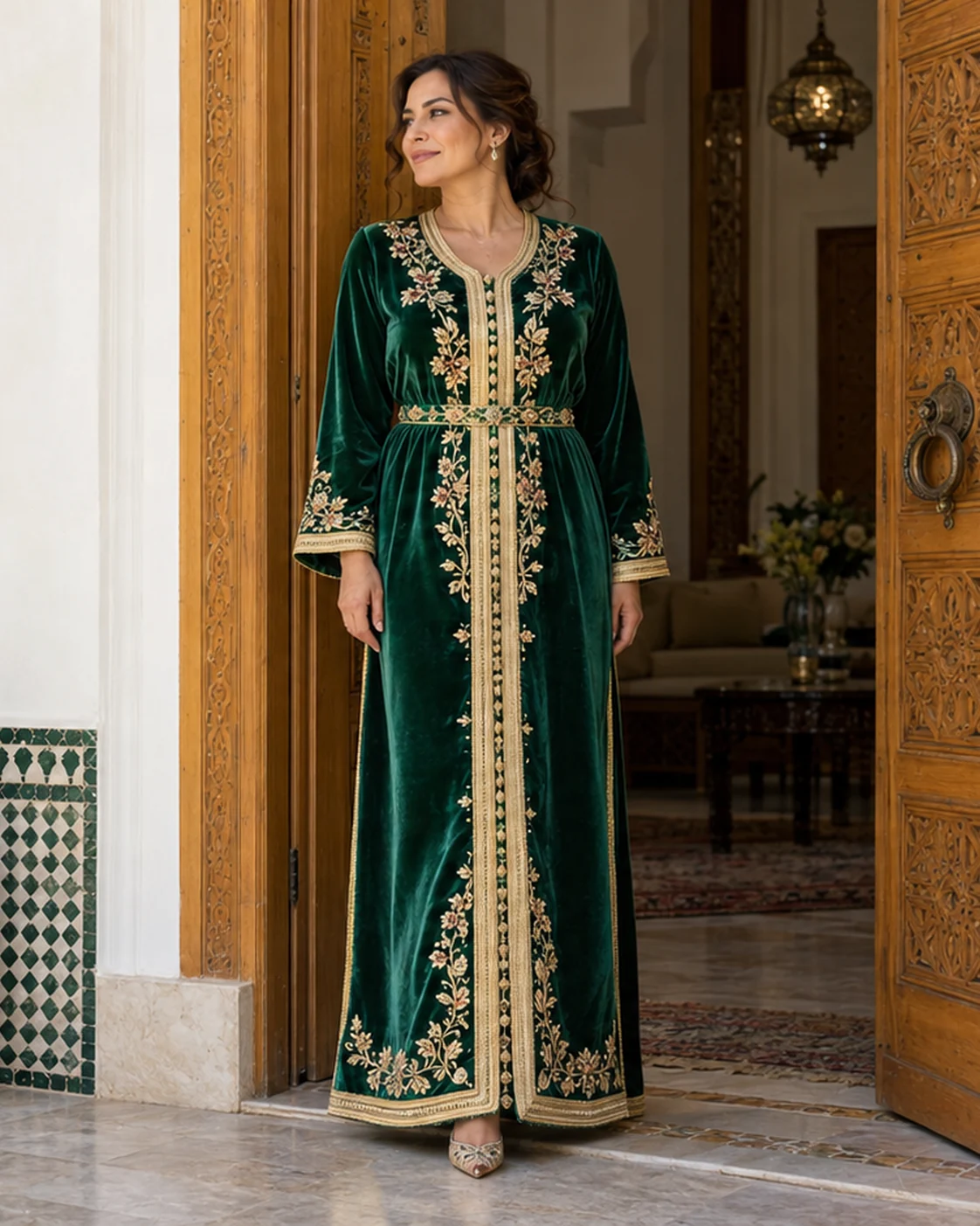
The caftan · Line, cloth & skilled hands
A long line of cloth, a precise edge, a distinctive presence. Look beyond the splendour of the Moroccan caftan to the skills that shape it.
Explore the chapter ↗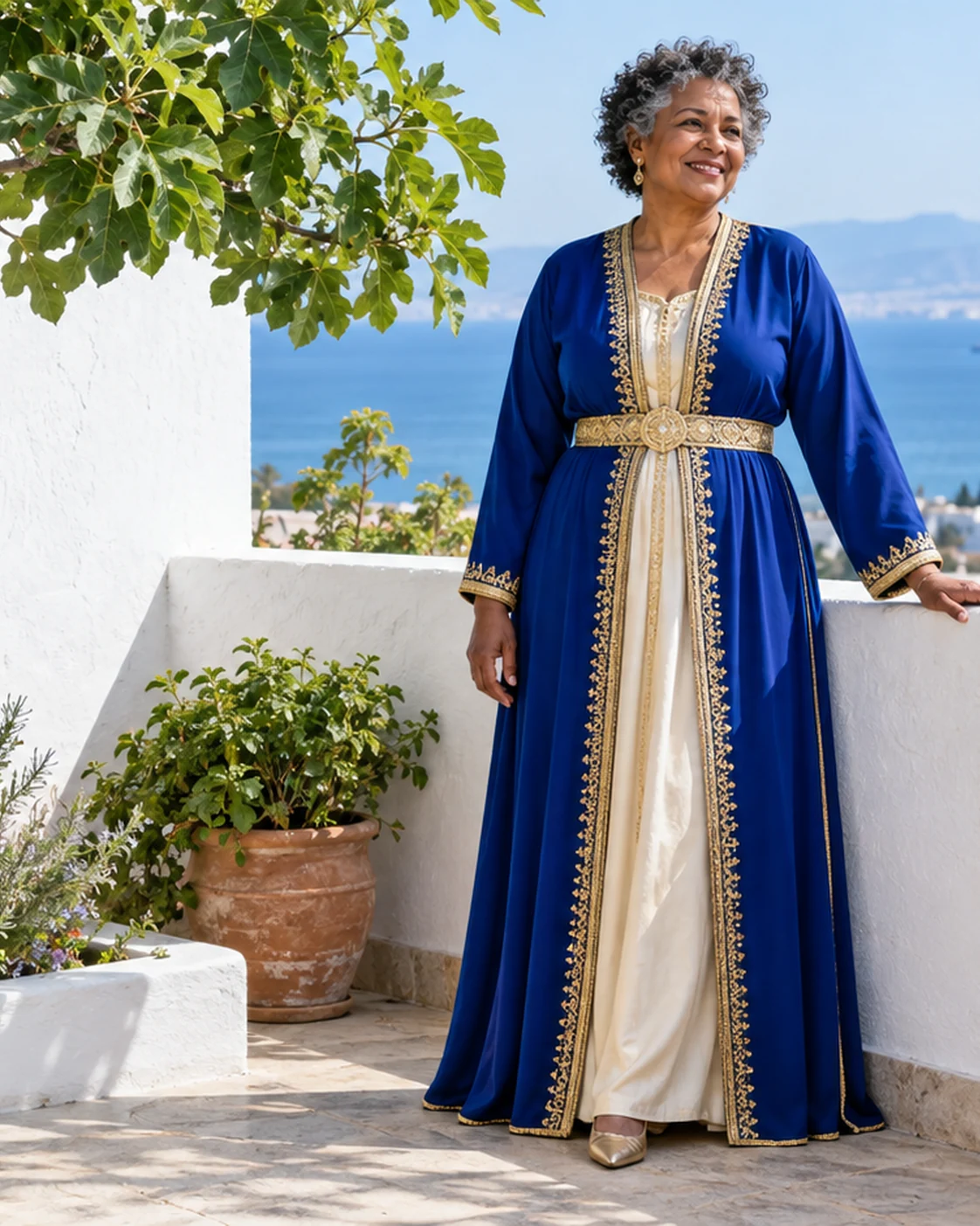
The takchita · An art of layers
An inner dress, an open outer layer and a belt: discover how separate elements become a composed Moroccan ensemble.
Explore the chapter ↗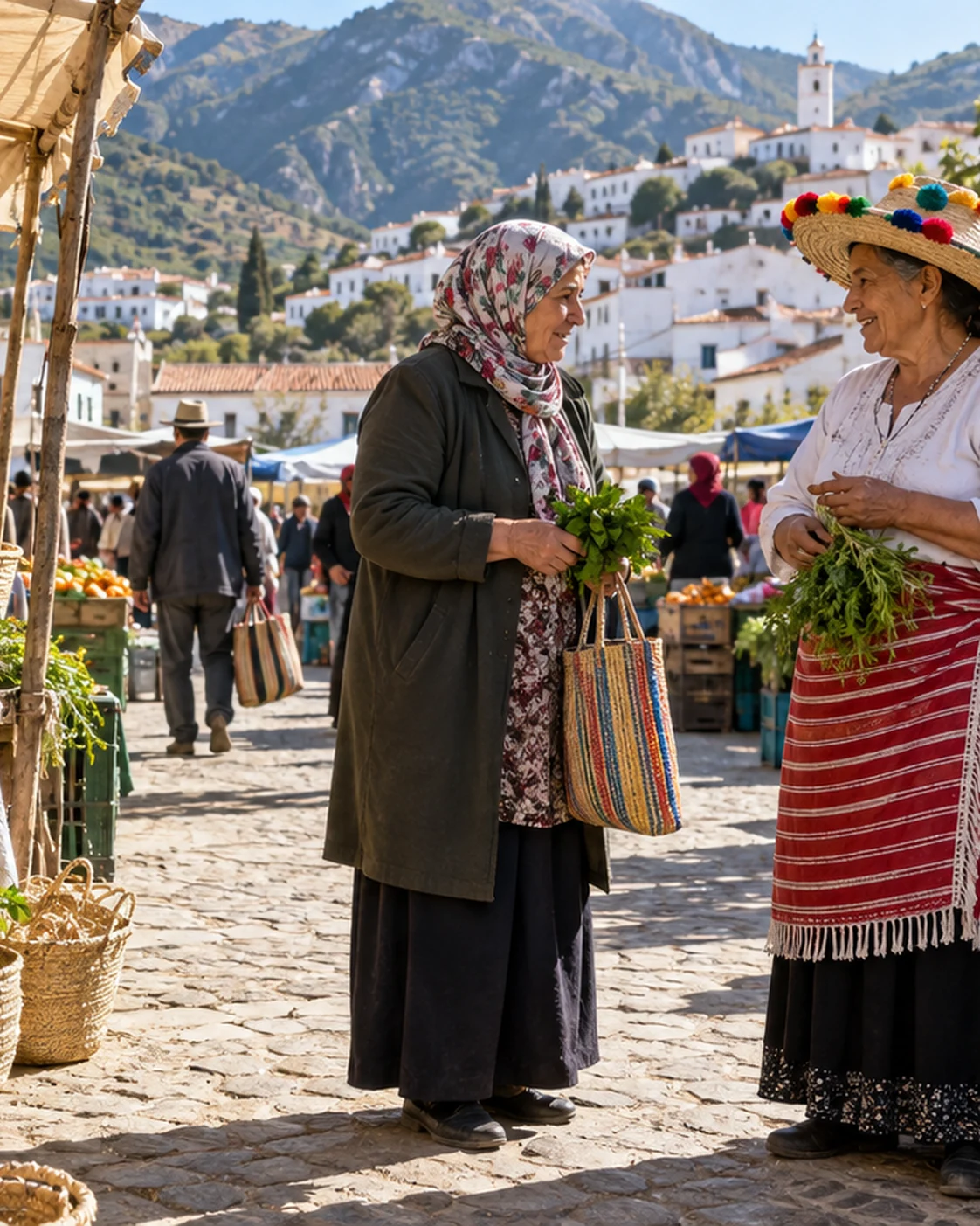
Regional dress · Place without a single uniform
From northern woven wraps to Atlas textiles and city wardrobes, explore regional dress through specific examples and individual lives.
Explore the chapter ↗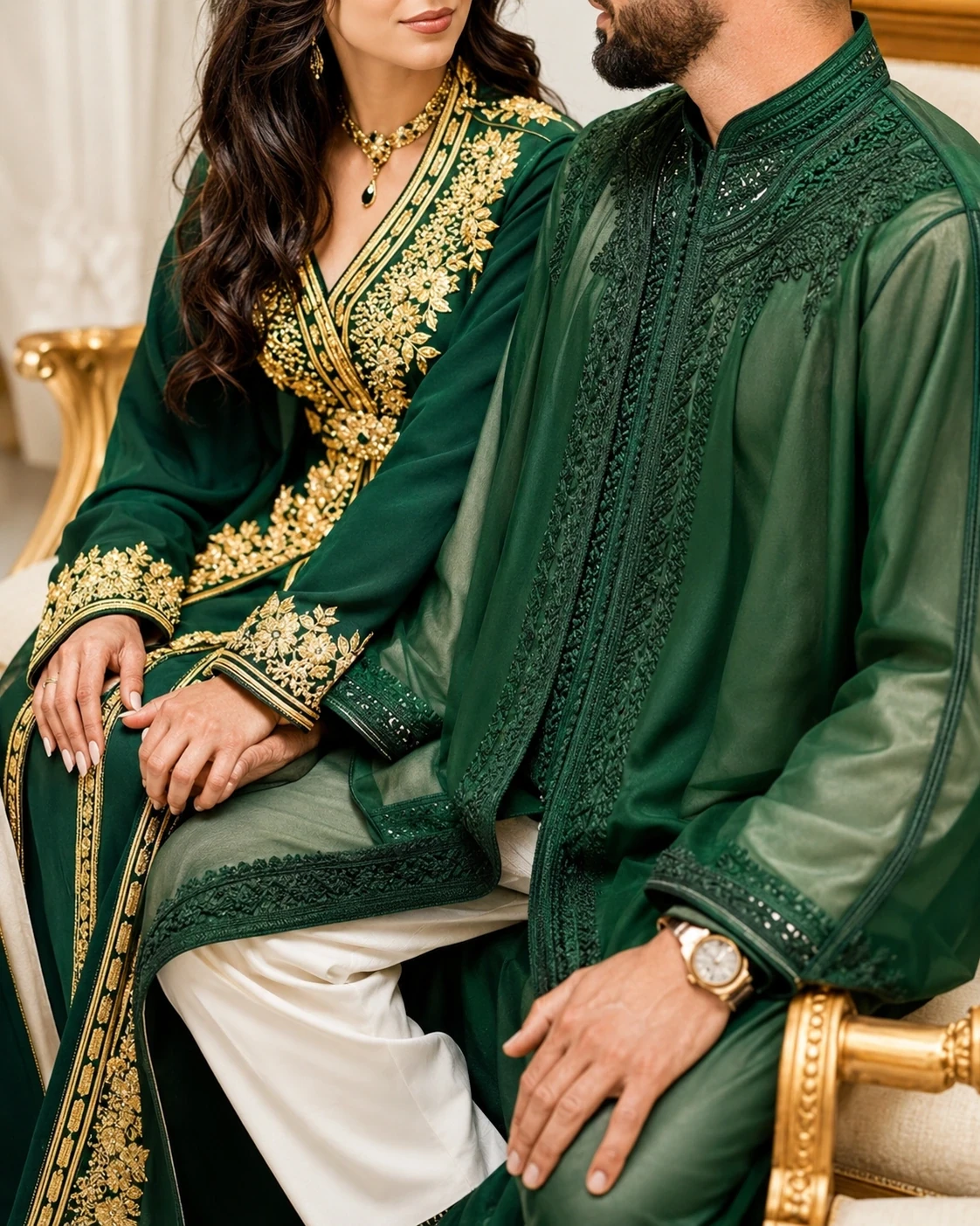
Learn · Cultural context
A wider cultural vocabulary for looking at clothing.
Explore the chapter ↗