The cloth
Notice whether the surface is smooth or piled, the body light or substantial. A lustrous finish alone does not identify the fibre. Ask what the cloth contains, how it was made and how its weight affects wear.

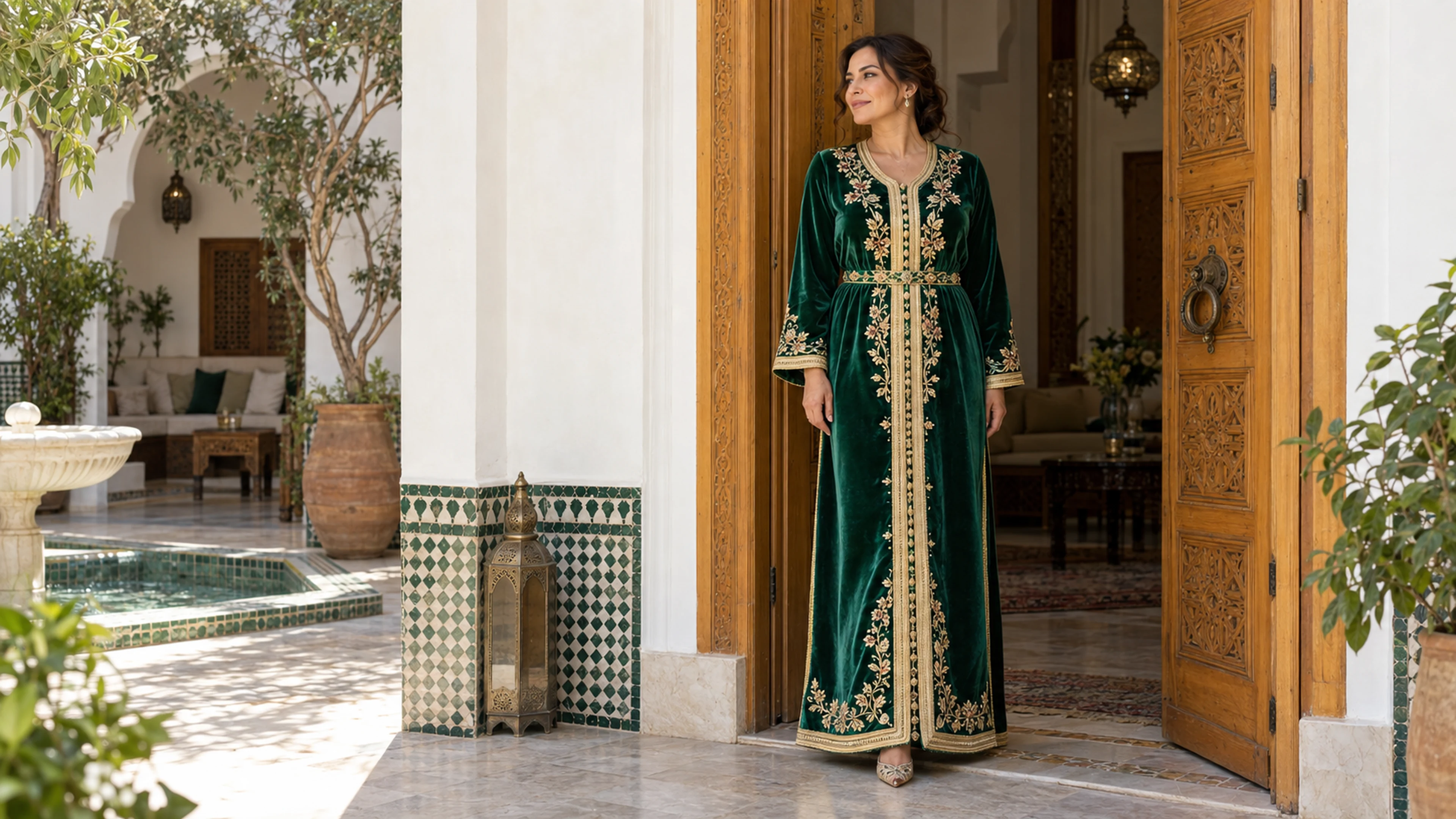
The caftan · Line, cloth & skilled hands
A long line of cloth, a precise edge, a distinctive presence. Look beyond the splendour of the Moroccan caftan to the skills that shape it.
Look a little closer ↓01 / The starting point
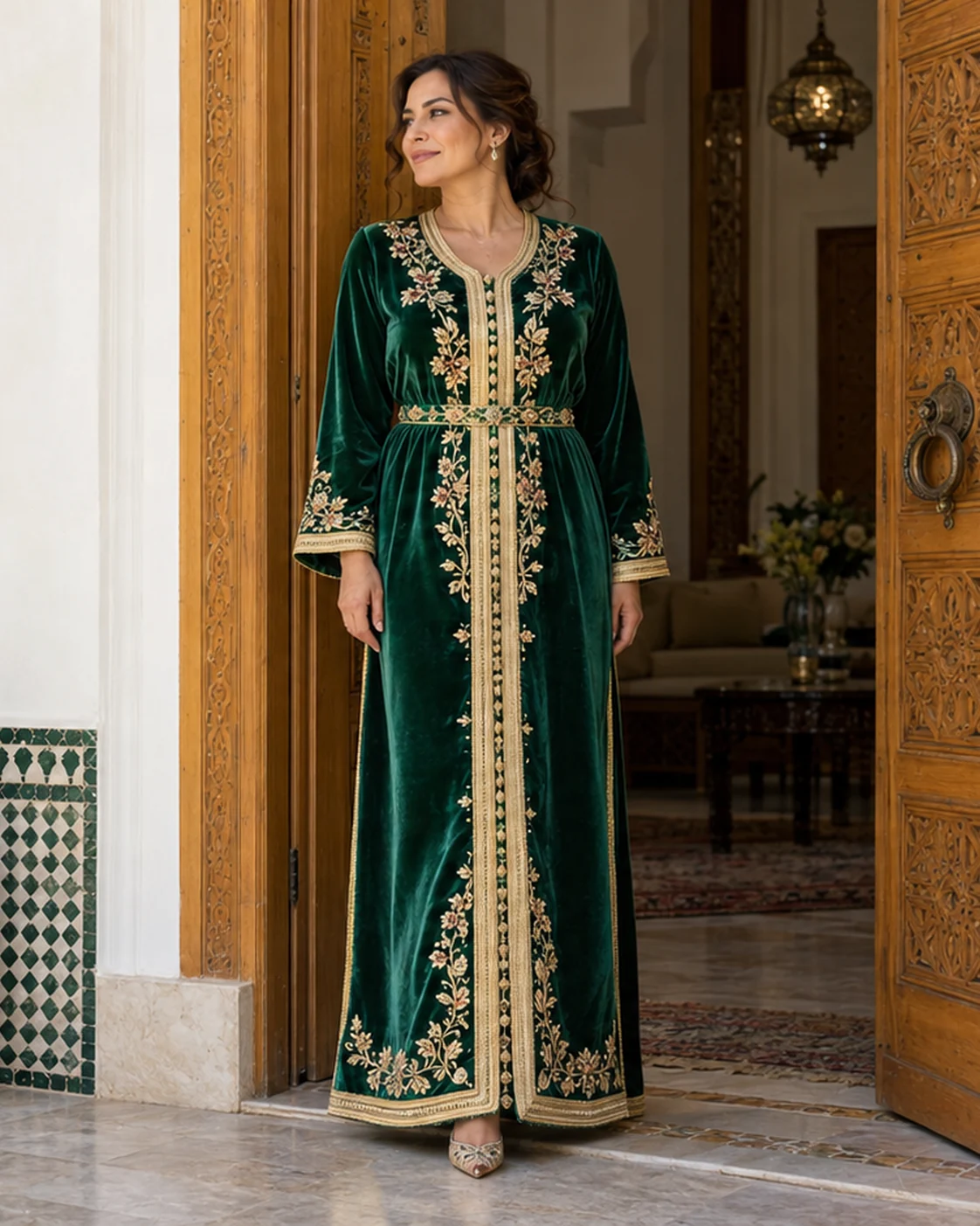
The caftan rewards two kinds of looking. From a distance, its long silhouette and the fall of its sleeves hold the eye. Close up, the work changes scale: a braided edge, a small button, the meeting of cloth and thread.
Think of the garment as a collaboration between shape, material and finishing. A supple cloth falls differently from velvet; a richly patterned fabric asks different questions of the trim than a plain one. Dense decoration is one possible choice, not the only measure of care.
Caftan and kaftan are spellings of the same word. This chapter focuses on the Moroccan garment and its craft context. The separate Takchita chapter explores the layered ensemble that is often discussed alongside it. Names can overlap in conversation, so ask a maker how they describe the particular piece.
02 / Read the details
Follow the structure before judging the amount of ornament.
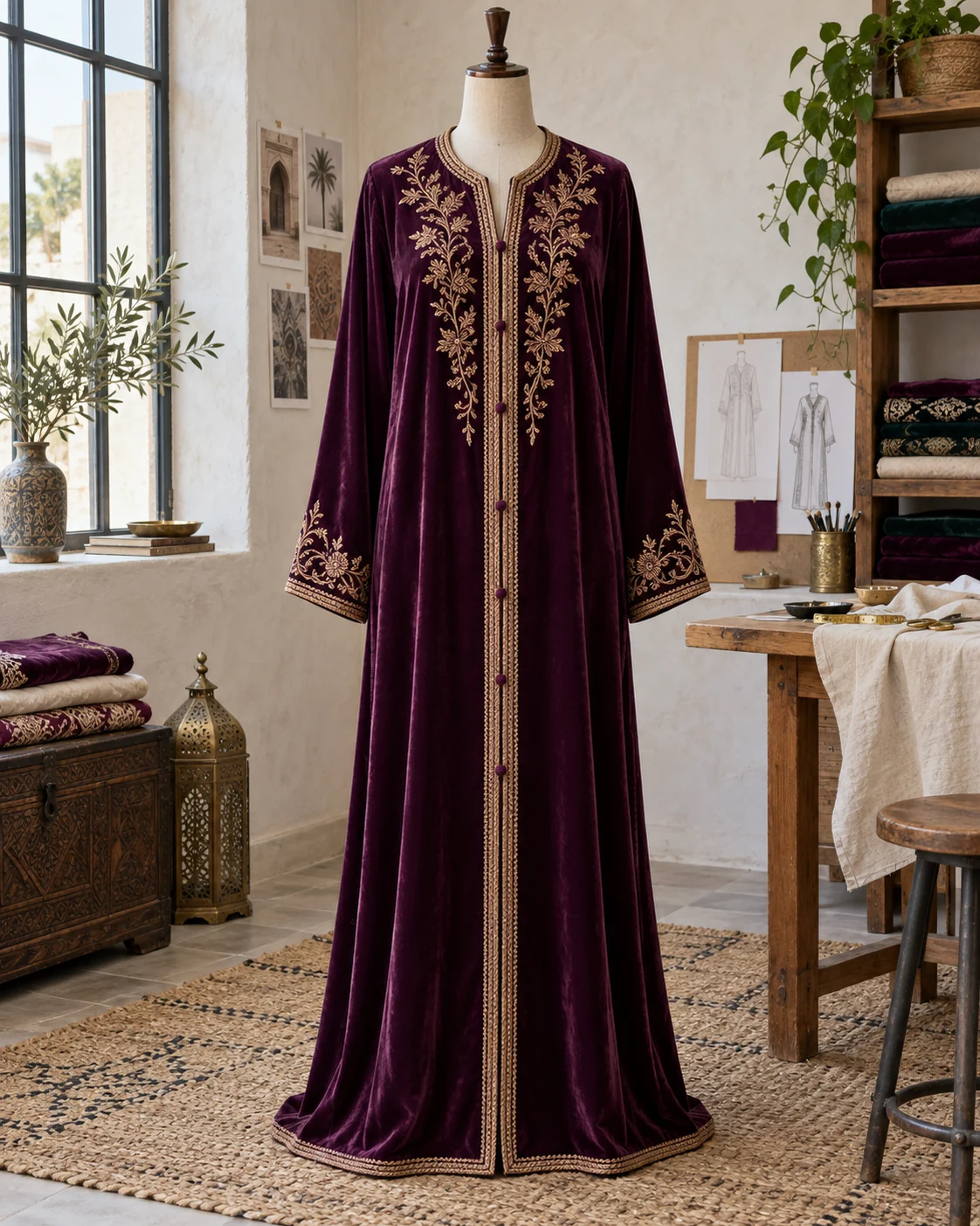
Notice whether the surface is smooth or piled, the body light or substantial. A lustrous finish alone does not identify the fibre. Ask what the cloth contains, how it was made and how its weight affects wear.
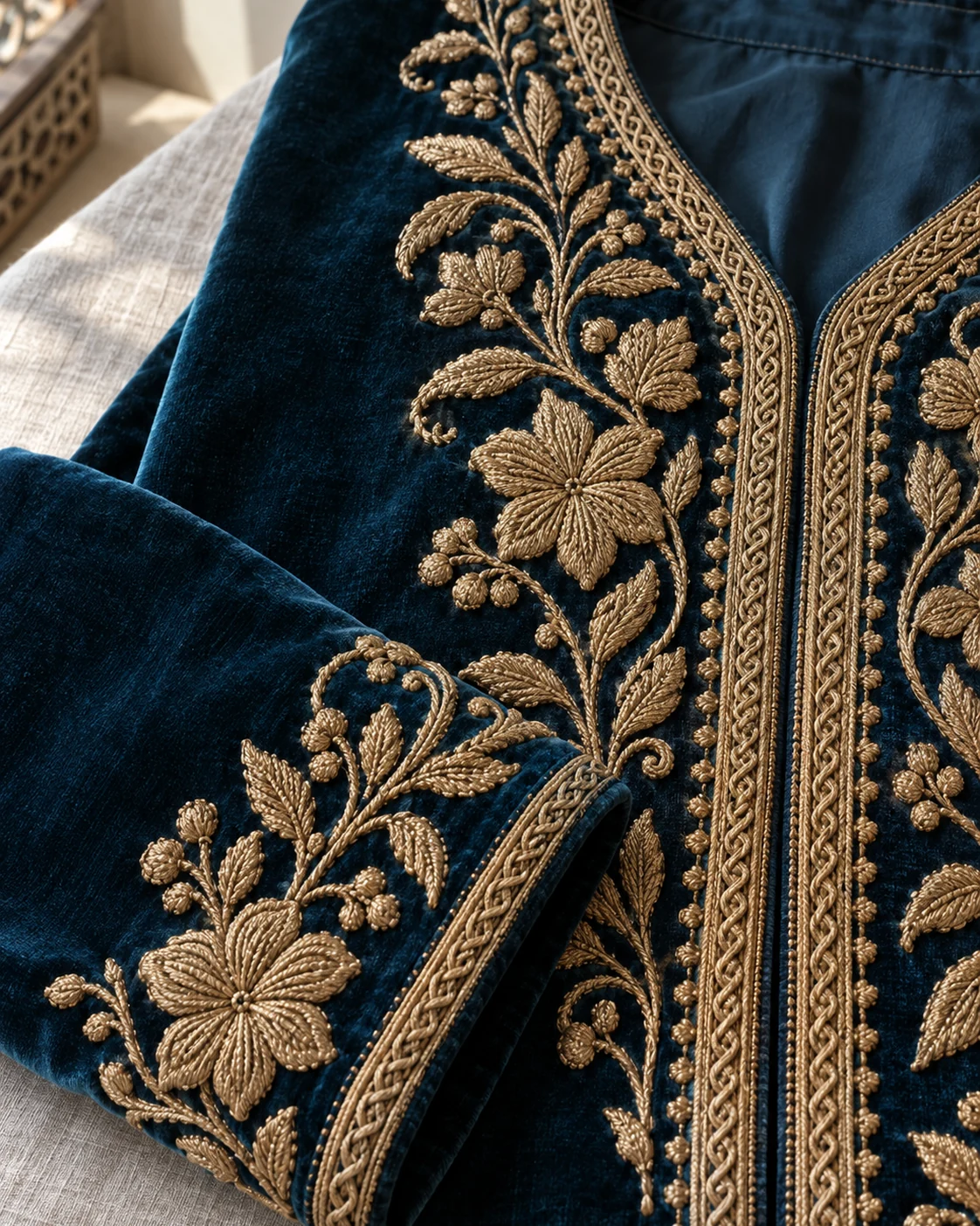
The front edge draws a long visual line. Look at how braid follows it, how the two sides meet and whether the fastenings sit comfortably without pulling the fabric out of shape.
The cuff brings finishing close to the hand. Its width, weight and decoration should work with movement. Look at the underarm and shoulder as well as the most photogenic part of the front.
03 / A closer look
Braid and embroidery can sit beside each other and look like one flowing design, yet their construction differs. A braid has its own interlaced body and is attached along an edge. Embroidery builds marks with thread on an existing fabric.
That distinction makes looking more rewarding. Follow a raised line: is it a cord held down by smaller stitches, a braided strip or a stitched motif? You do not need to identify every technique immediately. Start with what you can actually see, then ask the person who made or sells the piece.
Quietly finished garments deserve the same attention as ornate ones. A clean seam, a balanced sleeve and a fastening that works easily are decisions too.
04 / Culture in context
In 2025 UNESCO inscribed Moroccan caftan traditions and skills on its Representative List. The entry includes the knowledge of makers and its transmission, alongside the garment’s place in social life.
A historic caftan in The Met, dated to the late nineteenth or early twentieth century, combines silk, cotton and metal-wrapped thread. Its record also discusses imported brocaded fabric. This particular example reminds us that Moroccan making has long existed within wider exchanges of materials.
Trace the garment from neckline to hem before concentrating on the decorated areas. Ask how the opening, sleeves and cut work together. Then move closer to the surface. This order of looking makes it easier to appreciate both a quiet piece and a richly finished one without assuming they aim for the same effect.
For a fitting or commission, discuss the occasion, movement and intended layers alongside the visible finish. Keep the agreed details in one place: fabric, cut, edge treatment and the stages at which you can review the work. The cultural significance of the caftan does not make every contemporary example identical; a particular piece still reflects particular decisions.
05 / Take the conversation further
Ask which elements are hand-worked and which are machine-made. Neither a high price nor an irregular stitch can answer that question by itself. A clear explanation of the work is more useful than a vague promise of authenticity.
If trying a piece, sit and move your arms with the seller’s permission. Discuss sleeve length, hem height, closures and any planned belt before alterations. Leave time for a fitting rather than rushing a commission.
Ask for fibre information and written care guidance suited to the garment’s lining and trims. Metal threads, pile and mixed materials may require different handling; do not assume one cleaning method suits every caftan.
06 / Take the story into a place
The Exotic Morocco guide collection
The companion Moroccan Caftan guide is in preparation. Explore the collection for its current status and connected reading.
Find this guide in Shop07 / One wardrobe, many stories
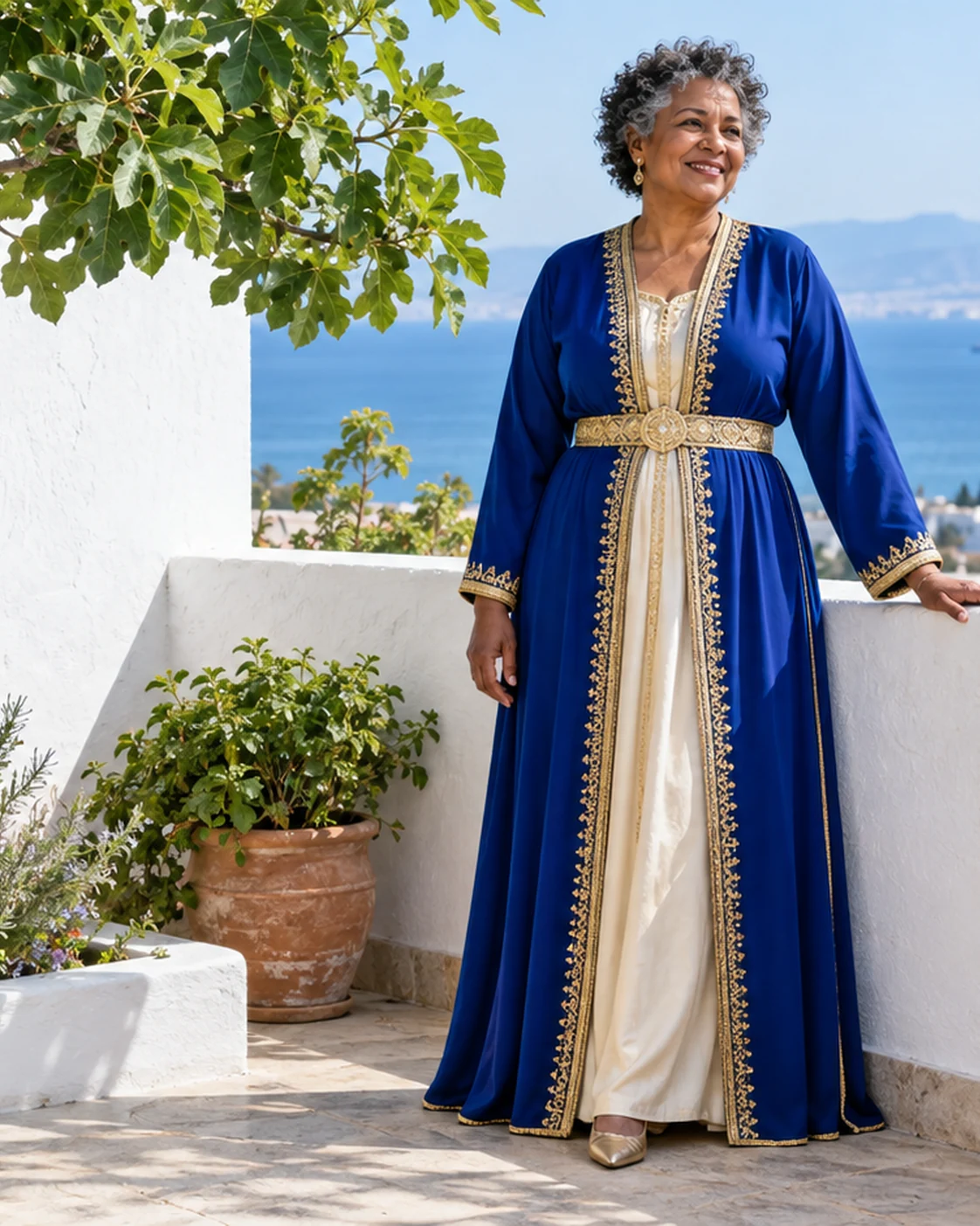
The takchita · An art of layers
An inner dress, an open outer layer and a belt: discover how separate elements become a composed Moroccan ensemble.
Explore the chapter ↗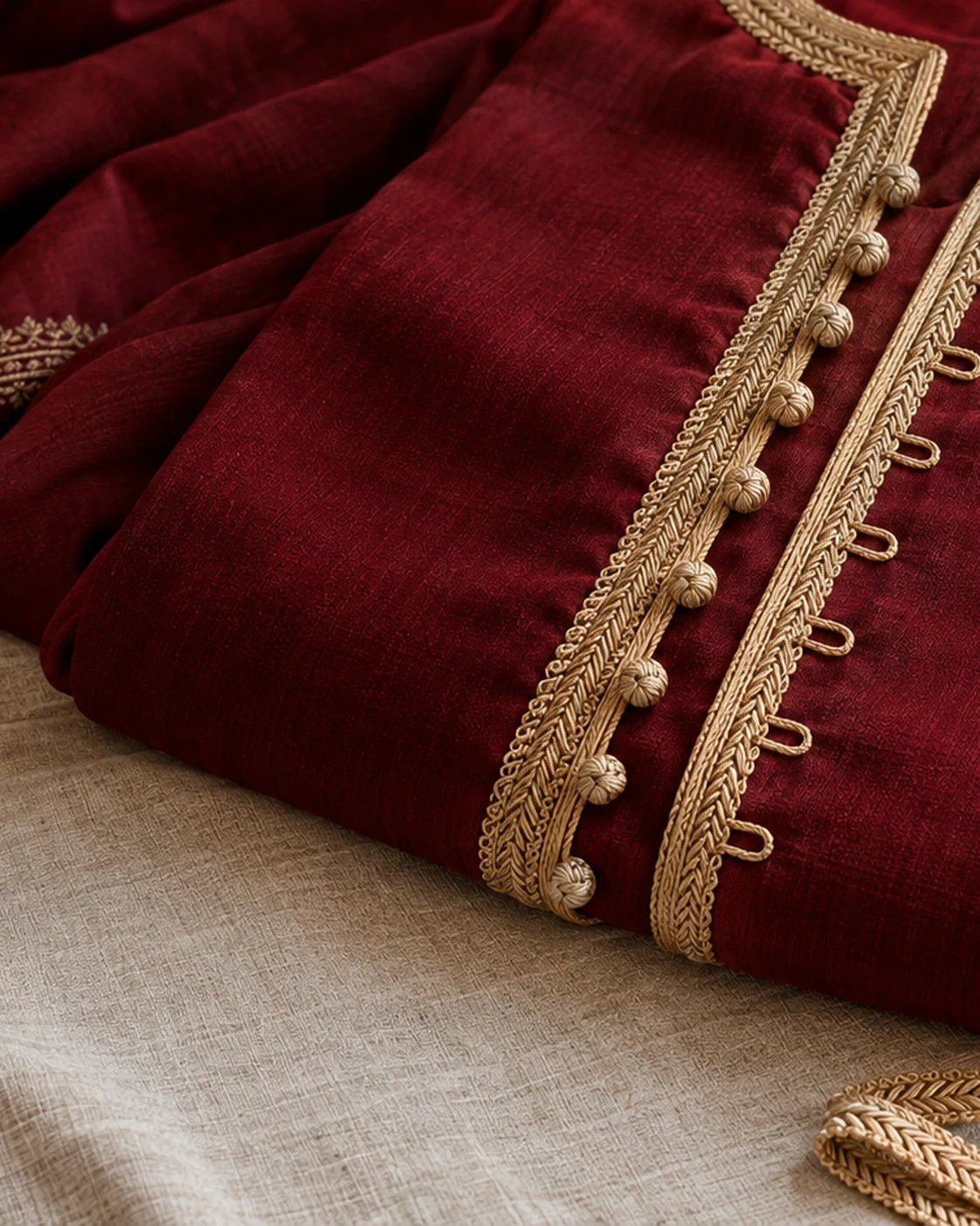
Embroidery & sfifa · The language of an edge
Braid, buttons and stitched ornament meet along a garment’s opening. Learn to see what each one does.
Explore the chapter ↗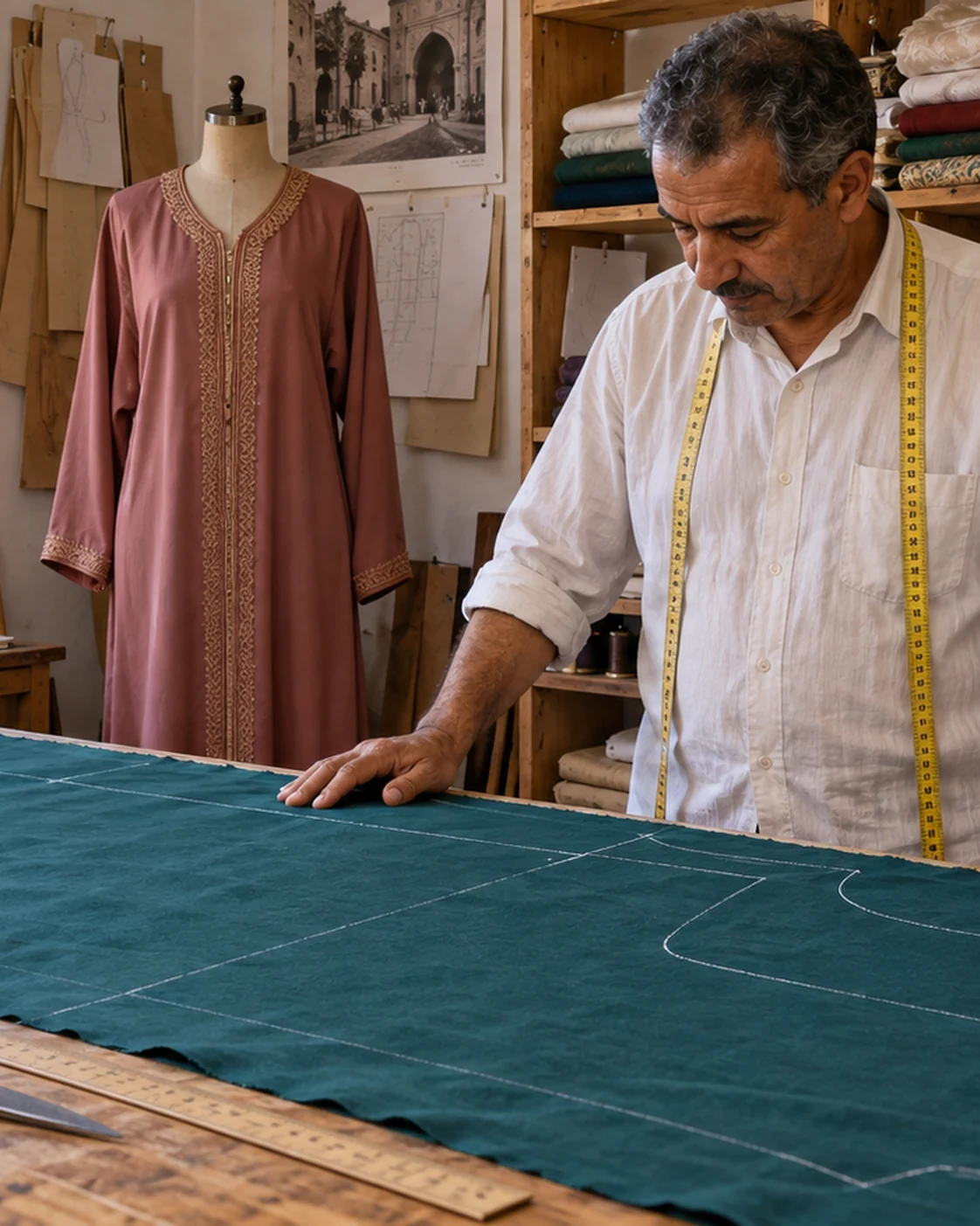
Traditional clothing & craft · From cloth to fit
Follow the choices that turn a length of fabric into clothing: measuring, cutting, joining, finishing and the final fitting.
Explore the chapter ↗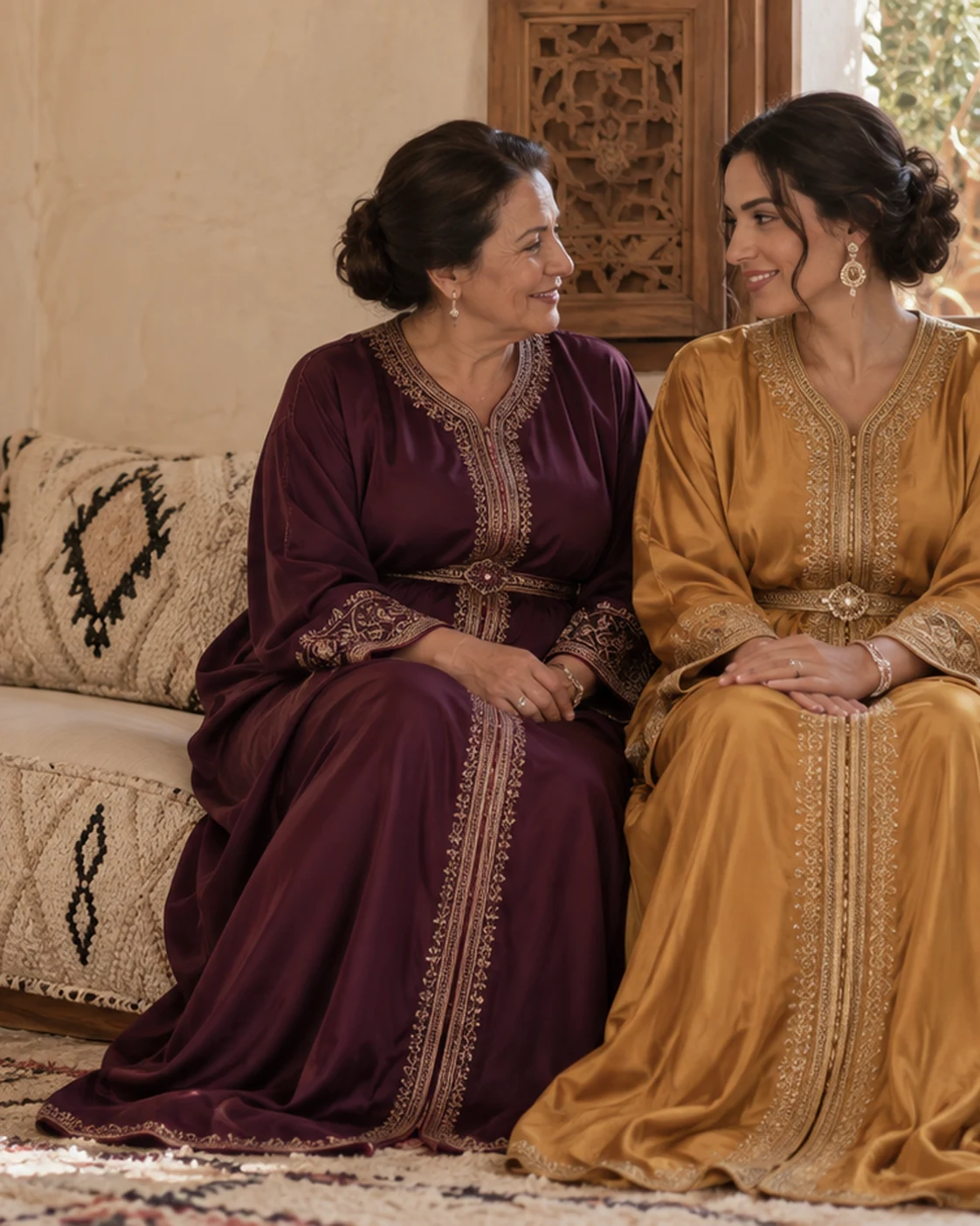
Ceremony & identity · The social life of clothes
An outfit can carry a family memory, mark an occasion and acquire new meanings as it passes from one life to another.
Explore the chapter ↗