Braid
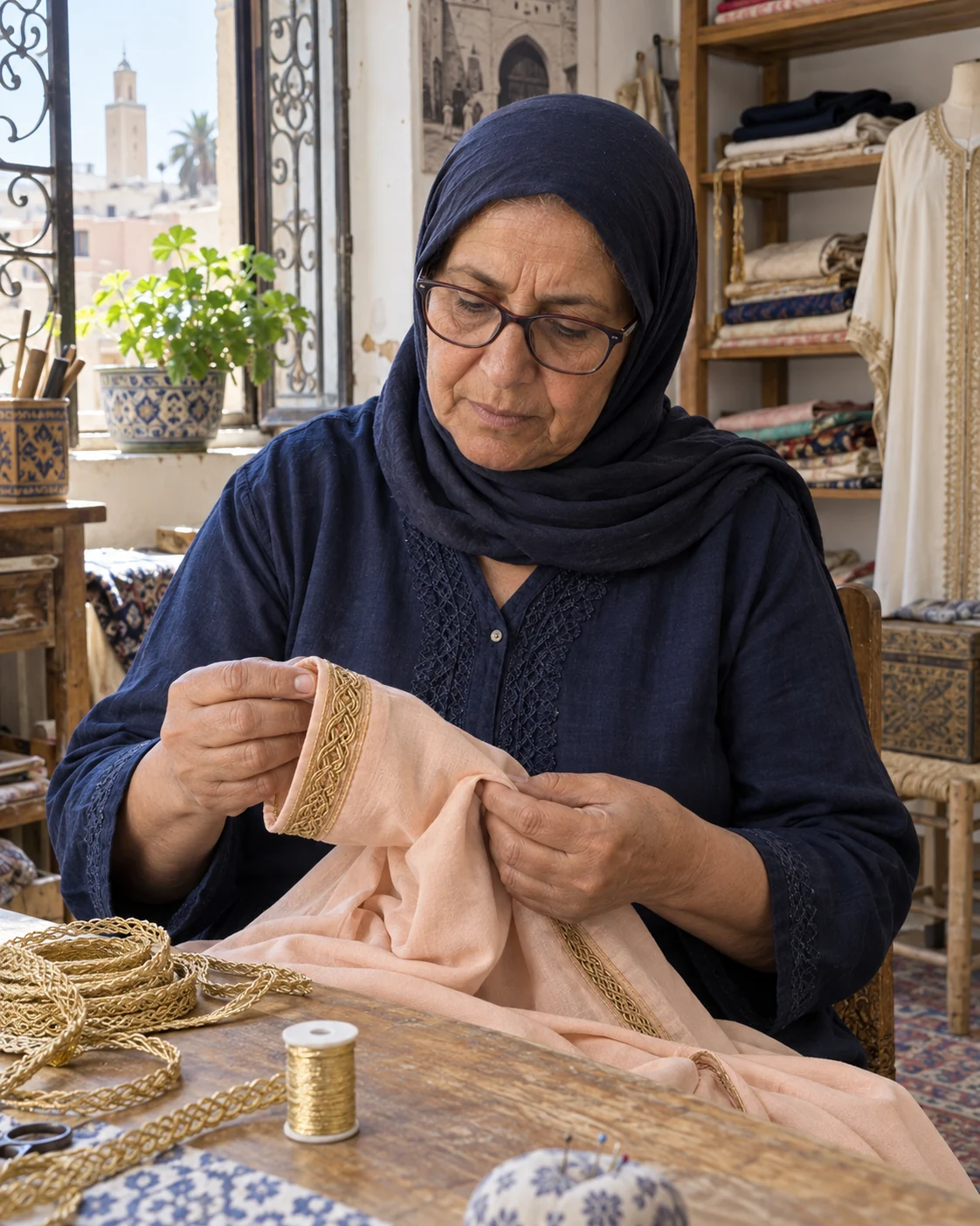
Look for an interlaced strip with its own structure, attached along the garment edge. Its width, flexibility and weight influence how the opening hangs as well as how it looks.

Embroidery & sfifa · The language of an edge
Braid, buttons and stitched ornament meet along a garment’s opening. Learn to see what each one does.
Look a little closer ↓01 / The starting point
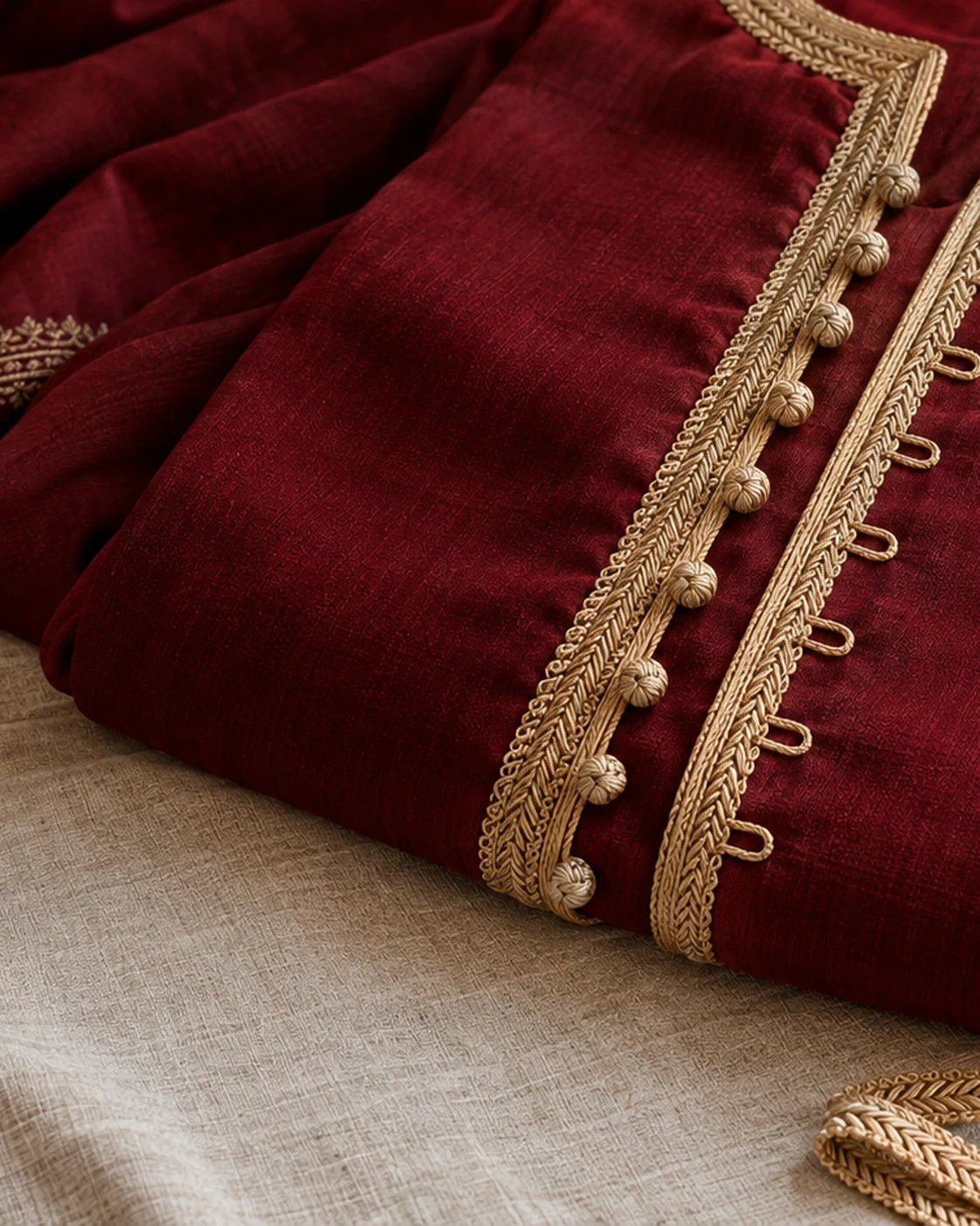
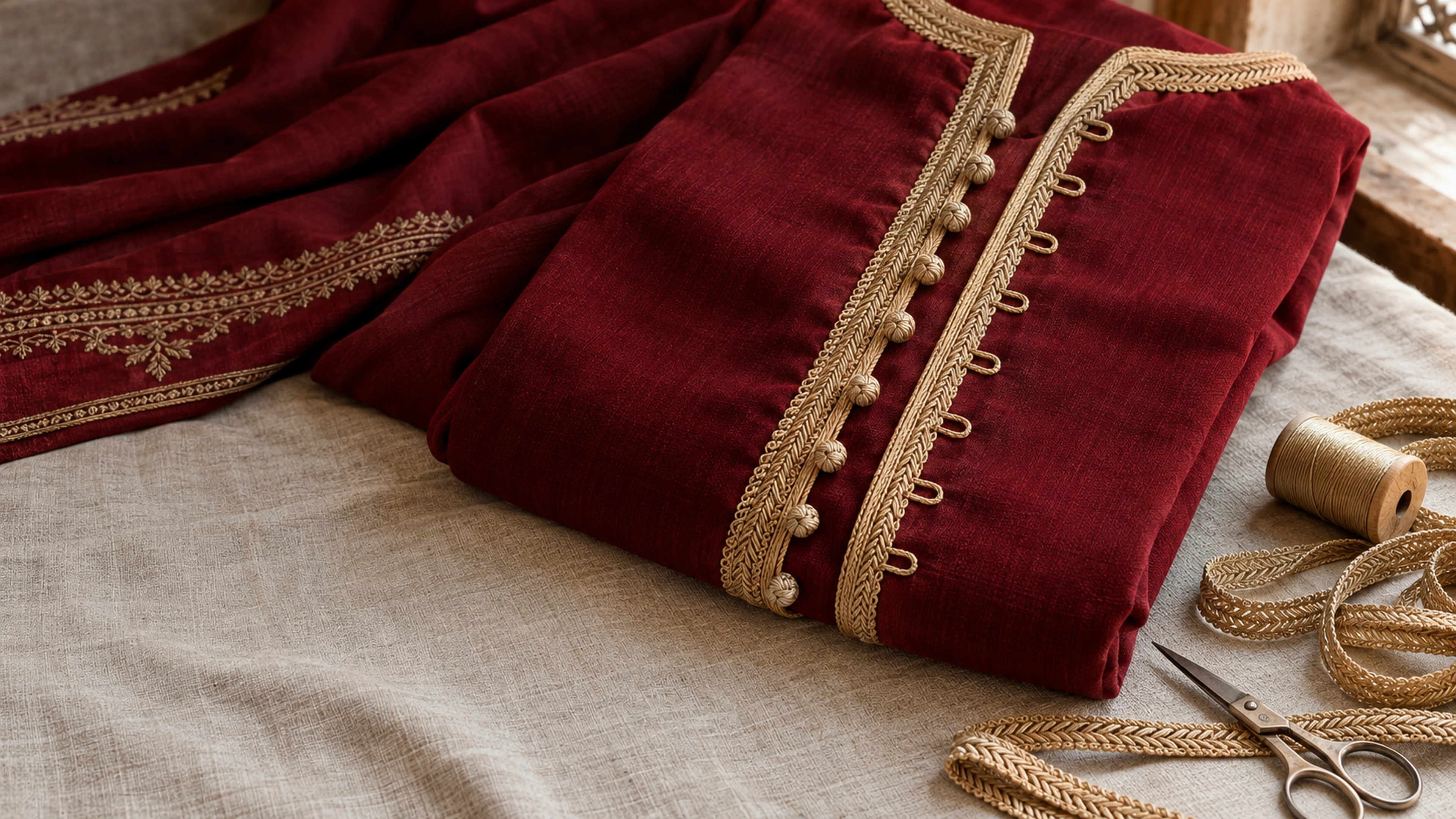
A caftan’s long opening can look like one continuous stream of gold. Move closer and separate the parts: the cloth beneath, the braid along its edge, the closures that bring the sides together and the embroidery spreading across the surface.
Sfifa is braided trim used in Moroccan garment finishing. It is distinct from embroidery worked into the fabric. Small knotted buttons, often called aqad with variations in spelling, add another craft and another function.
The point is not to test a maker with vocabulary. It is to see more precisely and ask better questions. A finished garment may bring together several kinds of work, sometimes performed by different people. Giving each part a name can help those contributions become visible.
02 / A closer look
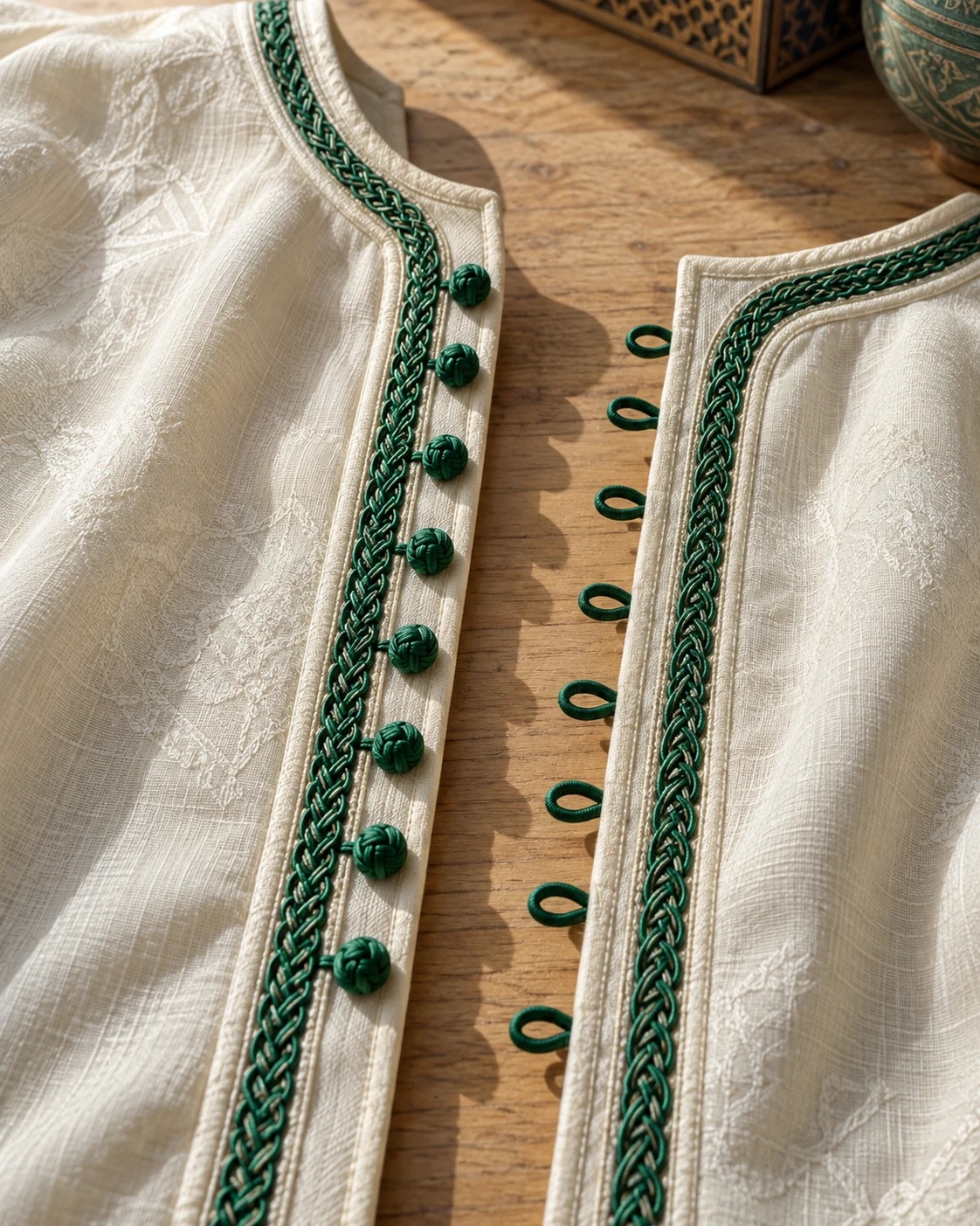
A button is small enough to overlook in a full-length photograph. At close range, its structure becomes the subject: the wrapped thread, the way it is attached and the loop that receives it.
Regular spacing matters to the line of the garment. So does the relationship between the loop and the button. A closure that strains the cloth may affect the whole front, even when the ornament is finely worked.
Ask permission before testing a fastening or turning a piece over. The maker may prefer to demonstrate, particularly when a garment is delicate, unfinished or made for someone else.
03 / Read the details
They can share a colour and still be made in different ways.
Look for an interlaced strip with its own structure, attached along the garment edge. Its width, flexibility and weight influence how the opening hangs as well as how it looks.
Follow how each closure meets its partner. A beautiful row must also function. Ask which fastenings open, which are decorative and whether replacements can be made if one is lost.
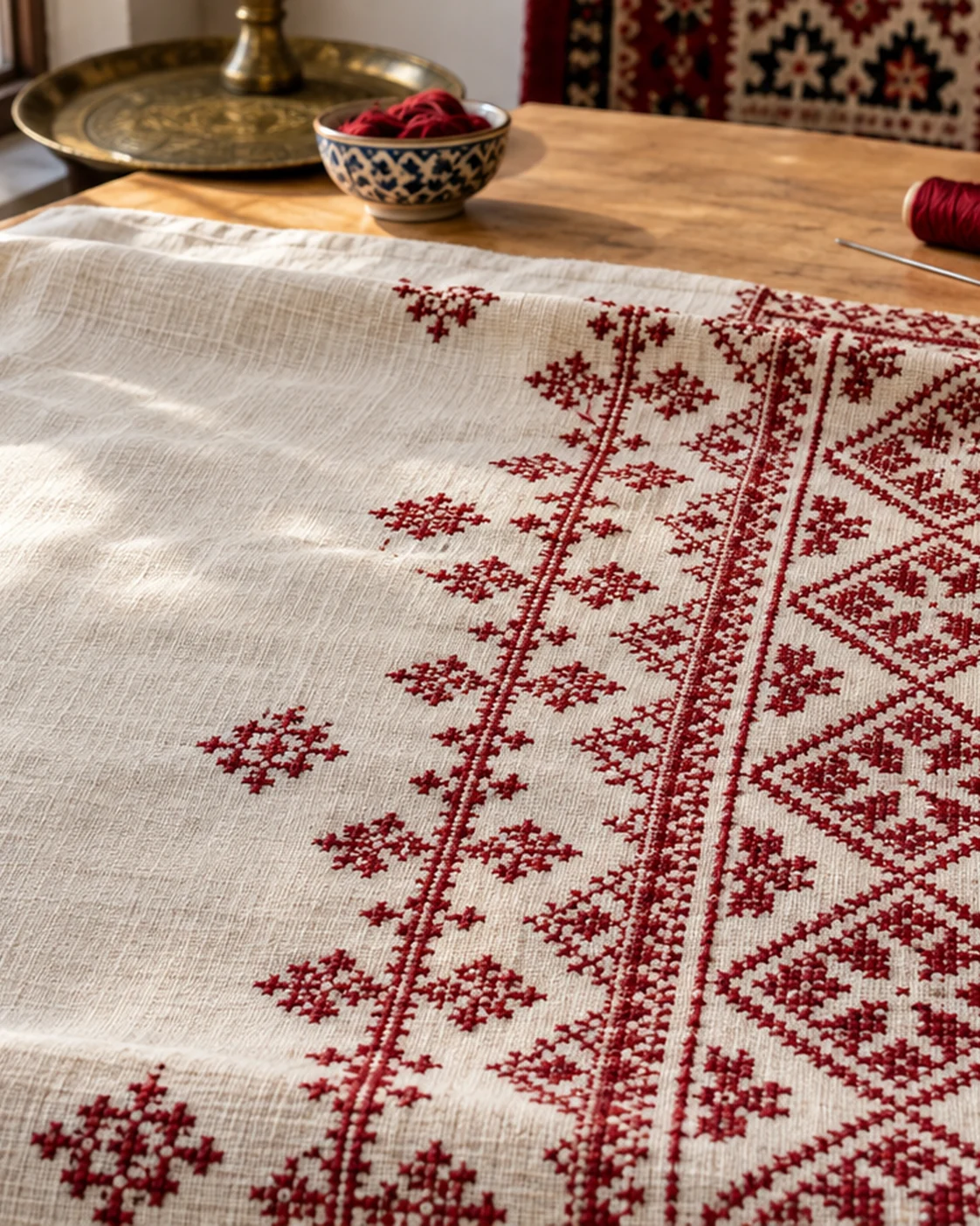
Thread forms a design on the base fabric. Some work lies flat; other techniques rise above it. Do not assume that every raised gold line is a braid or that every repeated motif is woven.
04 / Culture in context
The face of a garment shows the intended composition. The inside may reveal how trim was secured, where seams were joined and how the lining protects the work. These are useful observations, not a universal test that proves a piece was handmade.
The same finishing vocabulary appears on different clothing forms. Follow the craft across caftans, jabadors and djellabas while keeping their silhouettes distinct. A shared edge does not make them the same garment.
Compare the edge with the cloth it frames. Does the finish remain flexible, support an opening or create a stronger line around the garment? Then look at how the fastening sits in relation to that edge. These small connections make more sense when you view the whole piece as well as the close detail.
If commissioning or altering a garment, ask to see a sample of the intended finish before work begins. Discuss where it will start and end, how it meets a seam and how it should be cared for. A clear conversation about one detail can be more useful than asking for a broadly traditional appearance with no shared example.
05 / Take the conversation further
Ask whether the tailor, braid maker, button maker and embroiderer are the same person or a network of specialists. Credit the explanation without inventing a romantic story about a single pair of hands.
Discuss spare buttons, matching thread and whether the maker can reattach or replace the trim. Repairability is a practical question, especially on a piece intended to be worn repeatedly.
Check the neck and cuffs with permission. Raised trim should work with the body rather than scratch or pull. The inside finish is part of the experience, even though it rarely appears in the sales photograph.
The Exotic Morocco guide collection
The companion Embroidery & Sfifa guide is in preparation. Explore the collection for its current status and connected reading.
Find this guide in Shop07 / One wardrobe, many stories
Embroidery · The movement of a thread
A stitch can build a line, fill a shape or join a larger rhythm. Explore Moroccan embroidery through structure and specific textile histories.
Explore the chapter ↗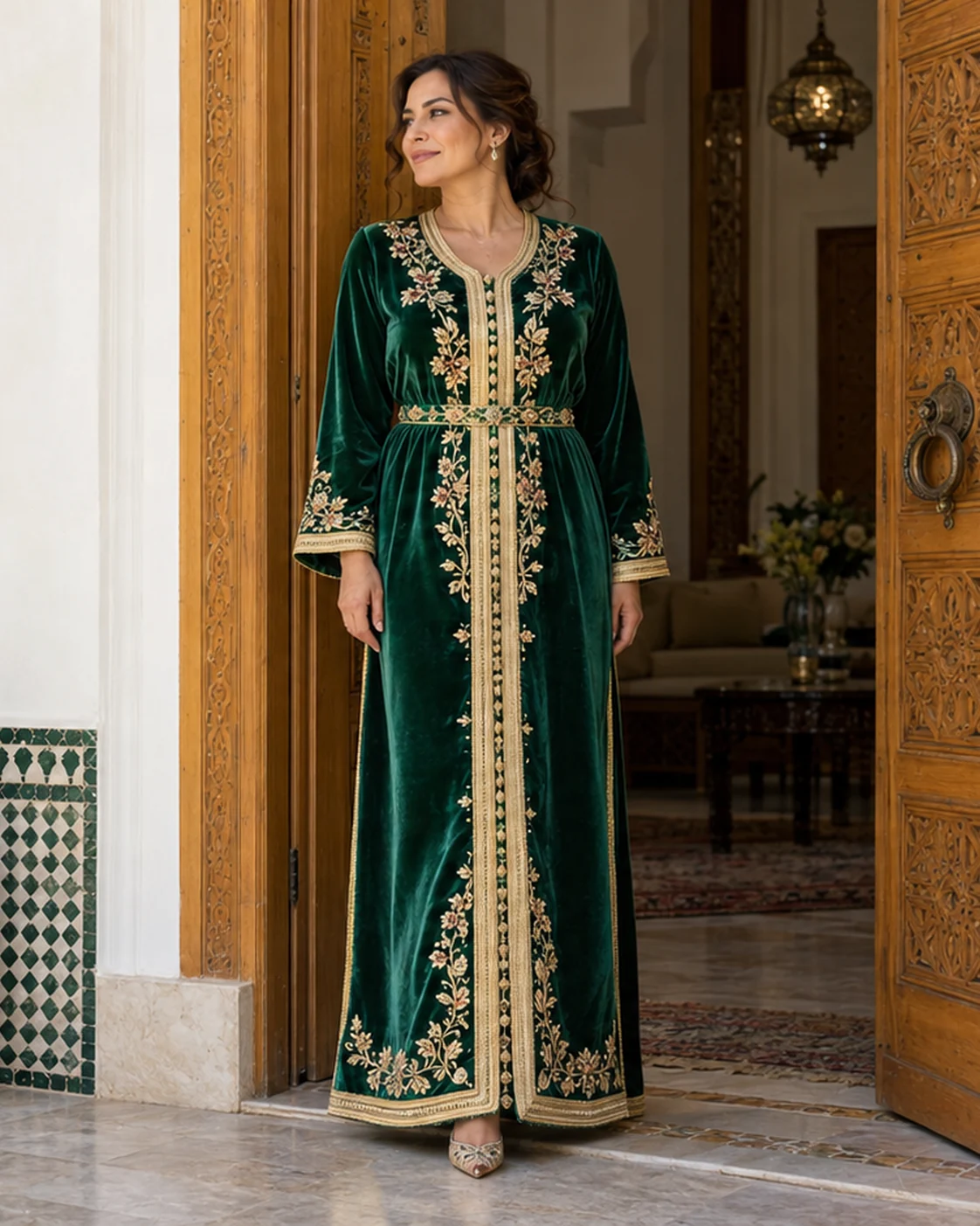
The caftan · Line, cloth & skilled hands
A long line of cloth, a precise edge, a distinctive presence. Look beyond the splendour of the Moroccan caftan to the skills that shape it.
Explore the chapter ↗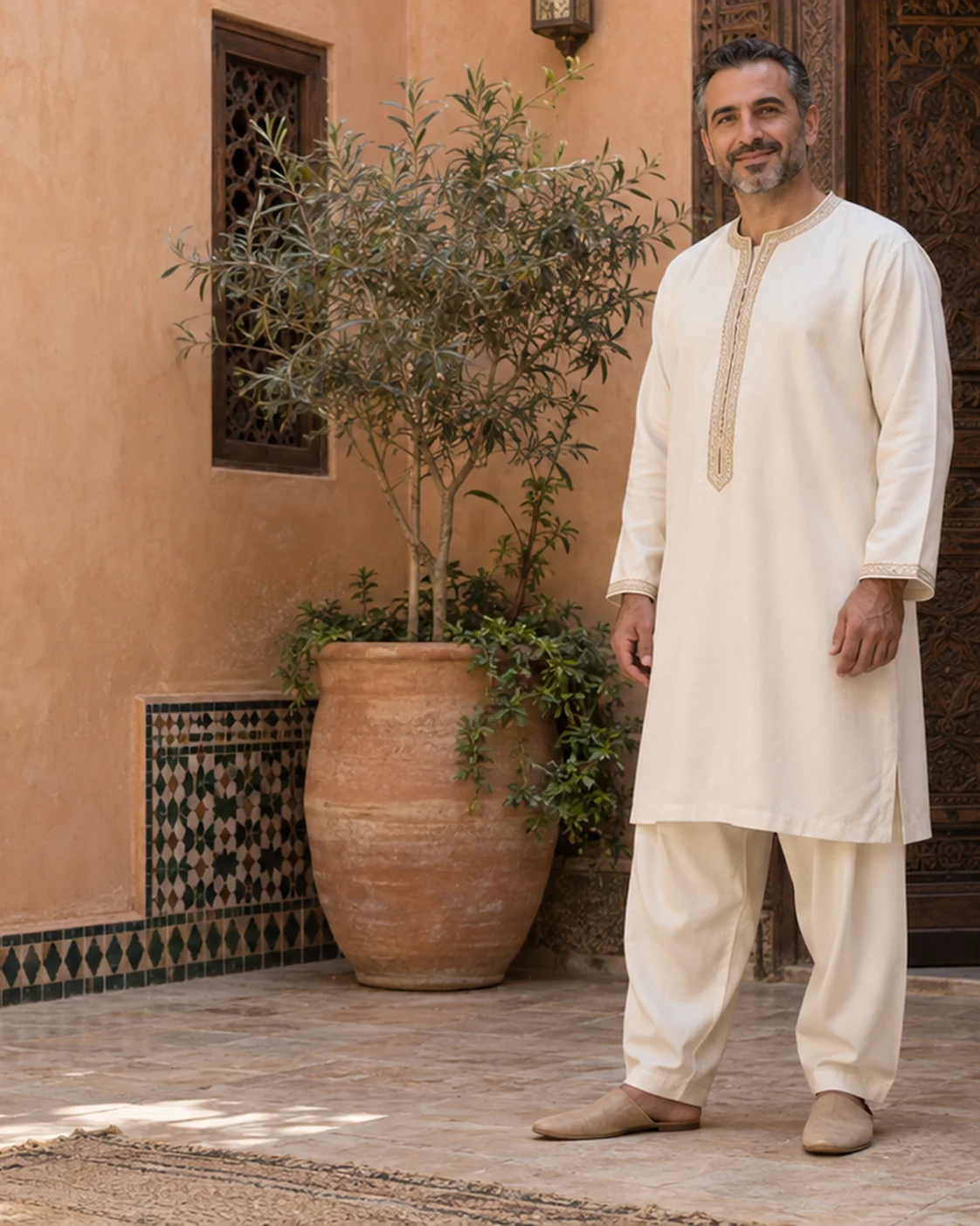
The jabador · Two pieces, one rhythm
Follow the relationship between tunic and trousers, the restraint of a neckline and the ease of a well-considered fit.
Explore the chapter ↗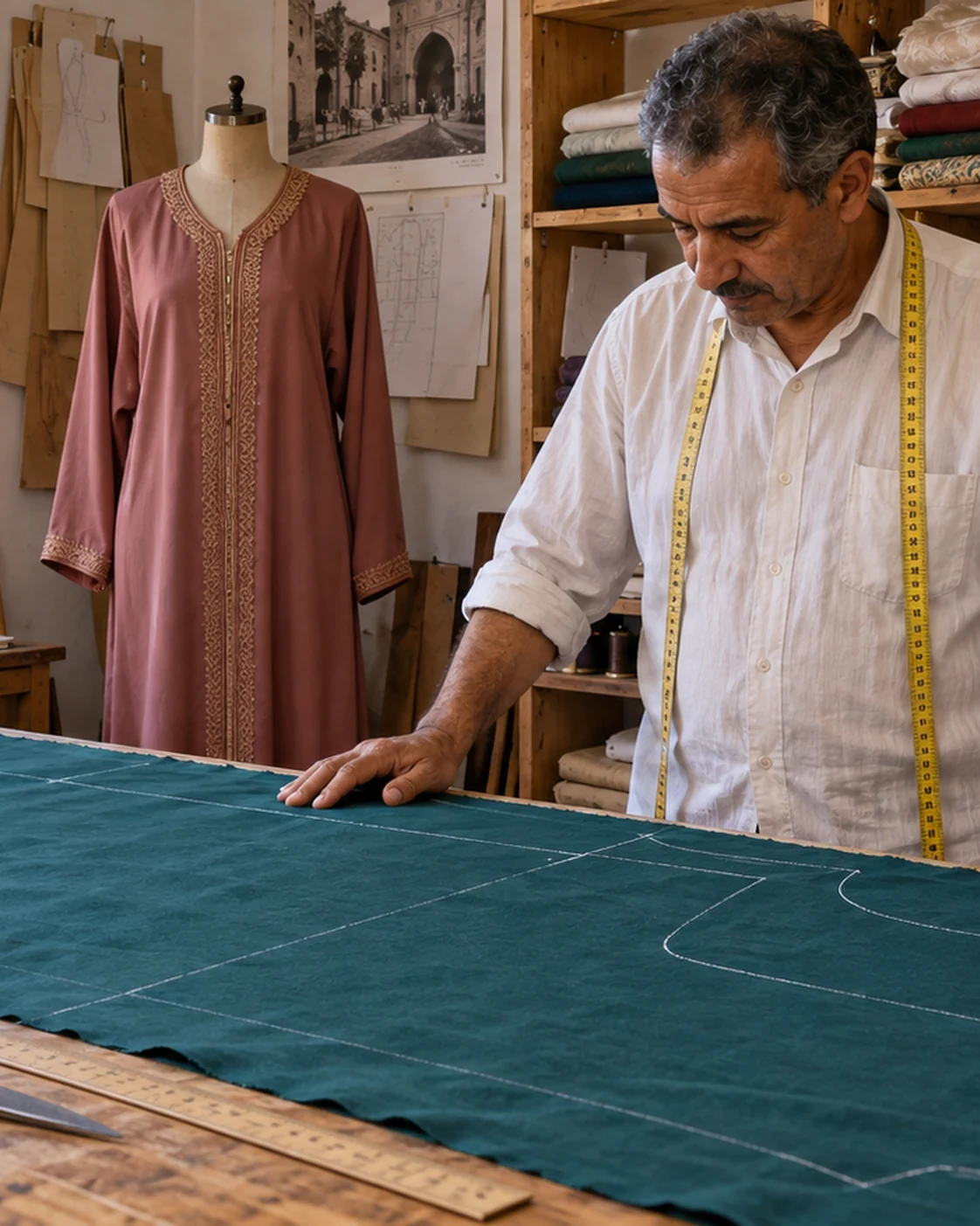
Traditional clothing & craft · From cloth to fit
Follow the choices that turn a length of fabric into clothing: measuring, cutting, joining, finishing and the final fitting.
Explore the chapter ↗