Agree the garment
Start with the intended use, silhouette and movement. Bring reference images as a way to discuss proportion, then ask what can be made with the chosen cloth, budget and available time.

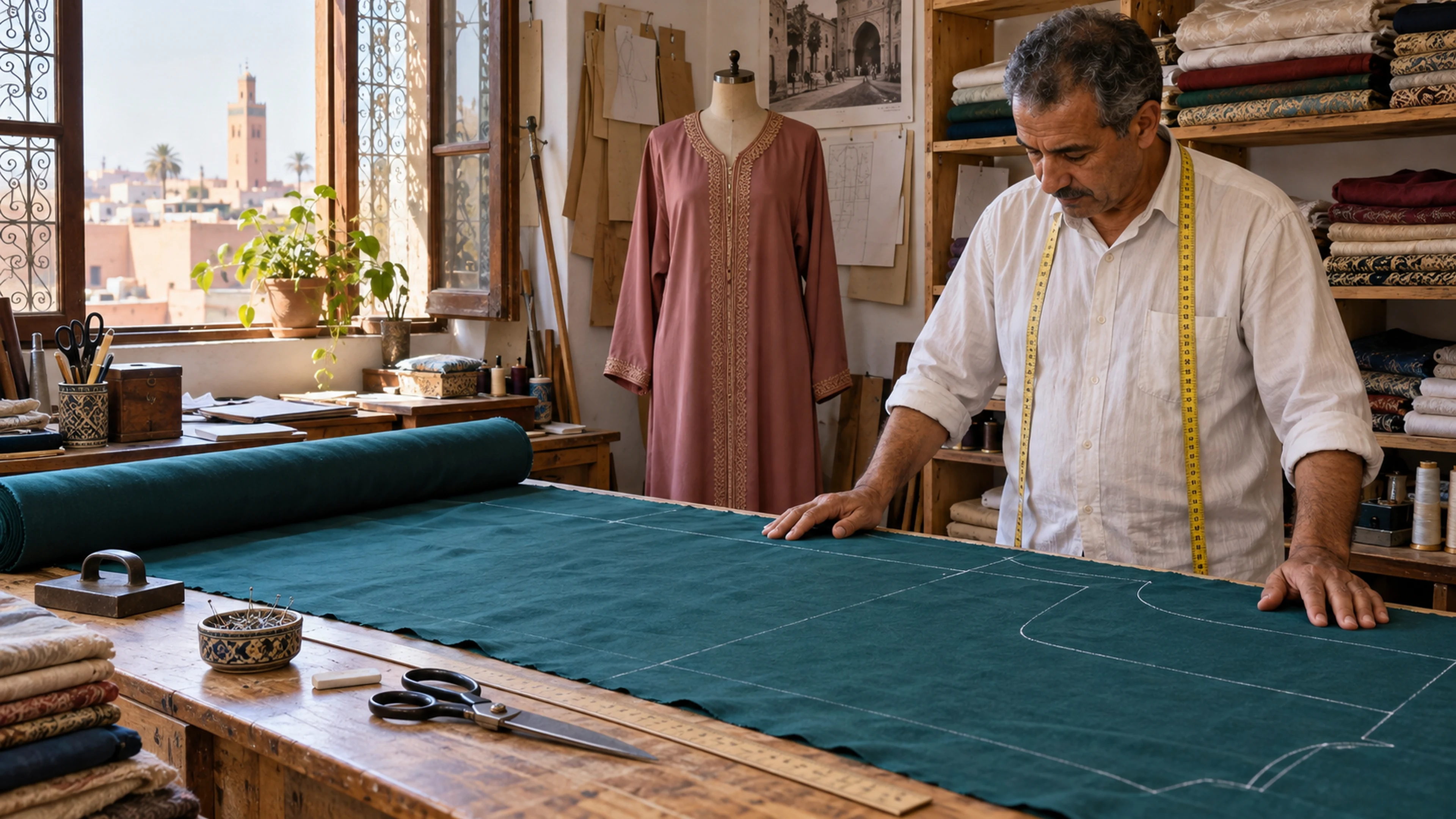
Traditional clothing & craft · From cloth to fit
Follow the choices that turn a length of fabric into clothing: measuring, cutting, joining, finishing and the final fitting.
Look a little closer ↓01 / The starting point
A finished caftan can conceal the work that came before it. The cloth had to be selected, measured and cut; separate parts had to meet; the final shape had to make sense on a person rather than only on a table.
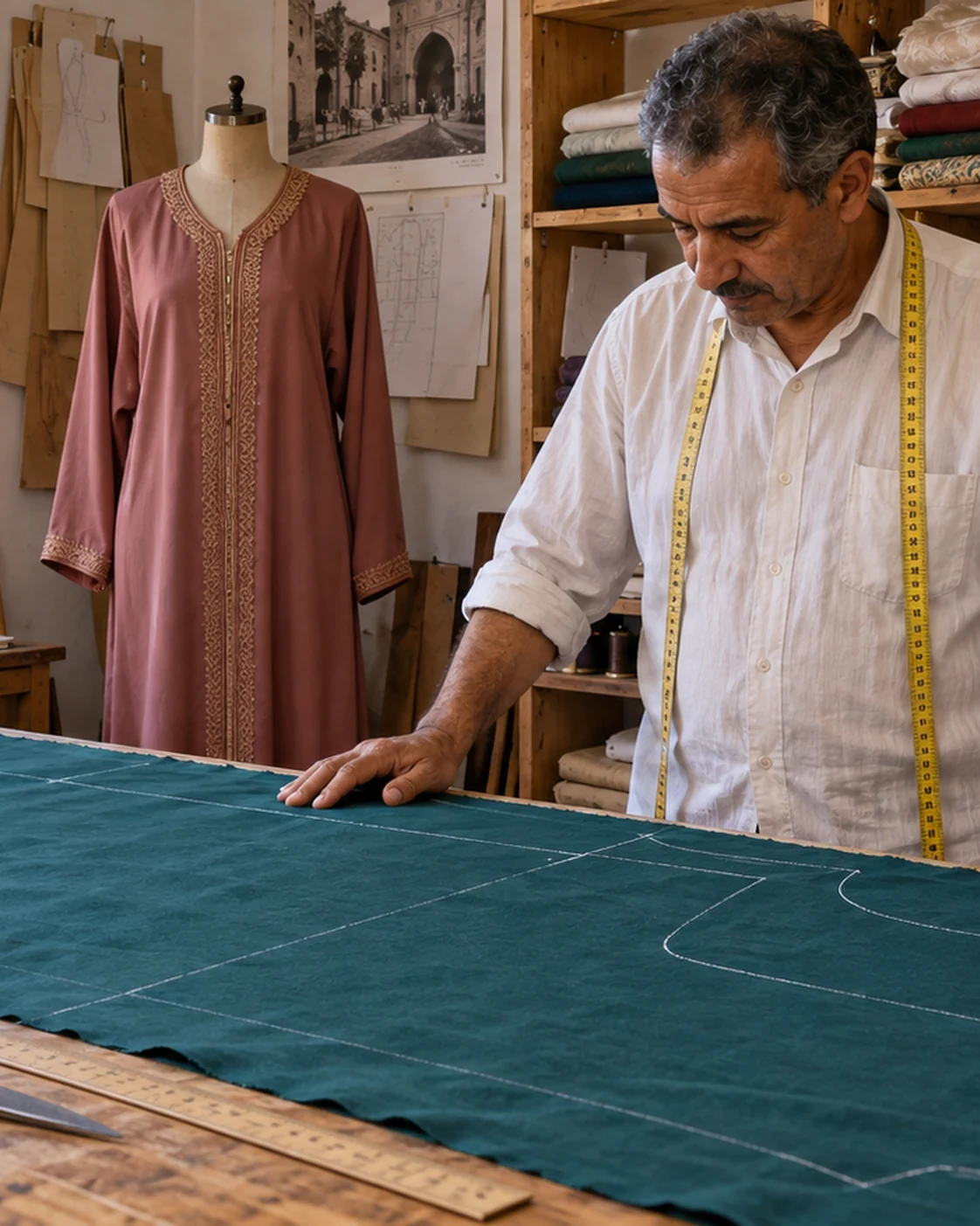
In a workshop, look for those stages. A paper pattern, chalk line or unfinished seam may be less immediately glamorous than a gold cuff, but each can reveal how the garment is being built.
Making may involve several specialists. Tailoring, braid, buttons, embroidery and fabric production are related skills without being interchangeable. A useful workshop visit gives the process time and lets the people doing the work explain their own part.
02 / A closer look
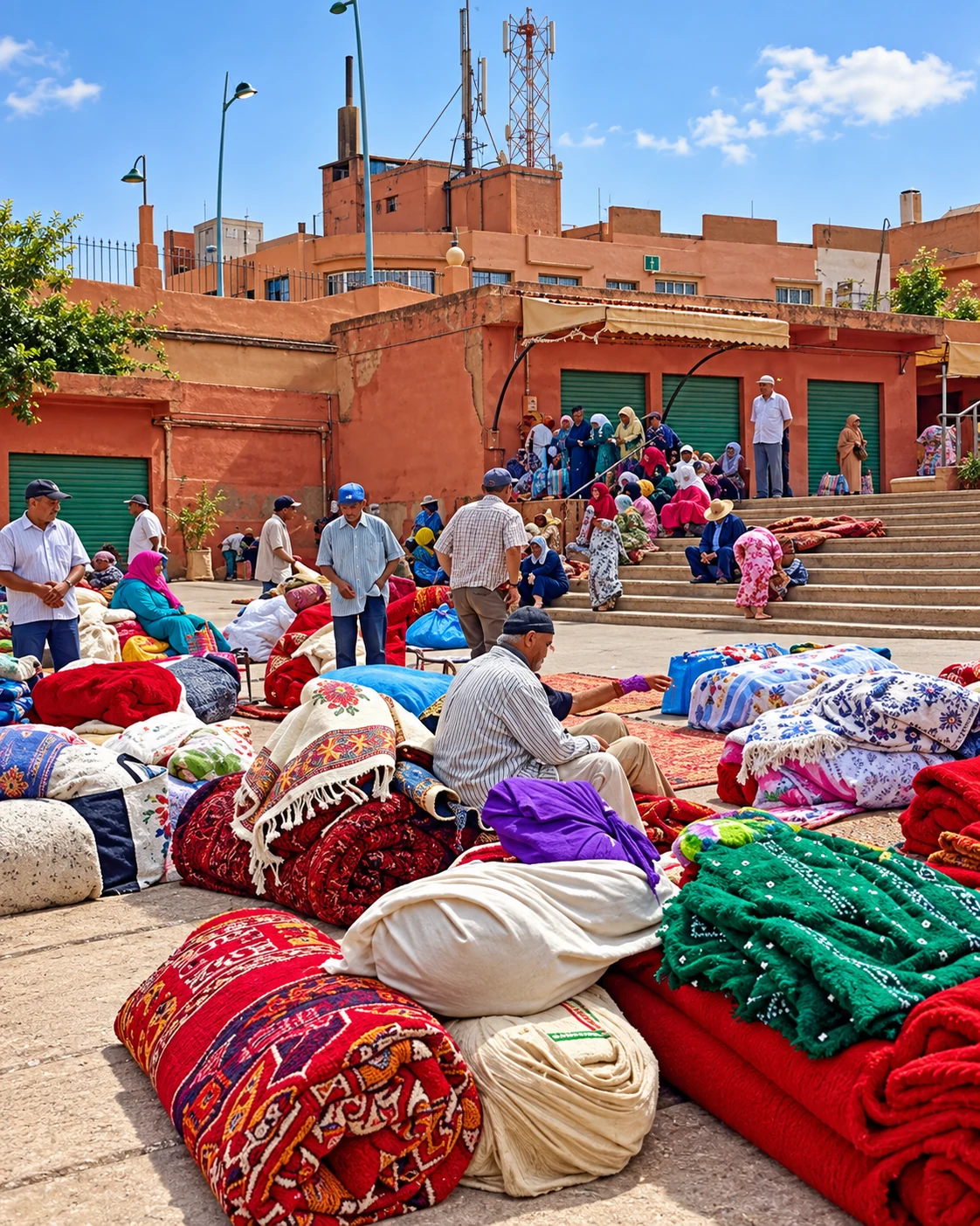
The place where you buy a finished garment may not be the place where its fabric was woven, its buttons made or its embroidery worked. A good account of production can connect those stages without pretending they all happen in one room.
Ask what is known about the material. Fibre, weight and weave affect the way a garment behaves; colour and surface pattern are only part of the decision. A small sample can help a discussion when a commission involves more than one supplier.
Keep the agreed details together: fabric choice, measurements, components, fitting date and delivery arrangement. This is less romantic than a workshop photograph, but it helps both customer and maker work towards the same result.
03 / Read the details
A practical sequence for understanding a commission, not a promise that every workshop works identically.
Start with the intended use, silhouette and movement. Bring reference images as a way to discuss proportion, then ask what can be made with the chosen cloth, budget and available time.
Cutting and joining establish the body of the garment. Ask about lining, seam allowance and any planned alterations before complex surface work is added. Choices made here affect the finished fit.
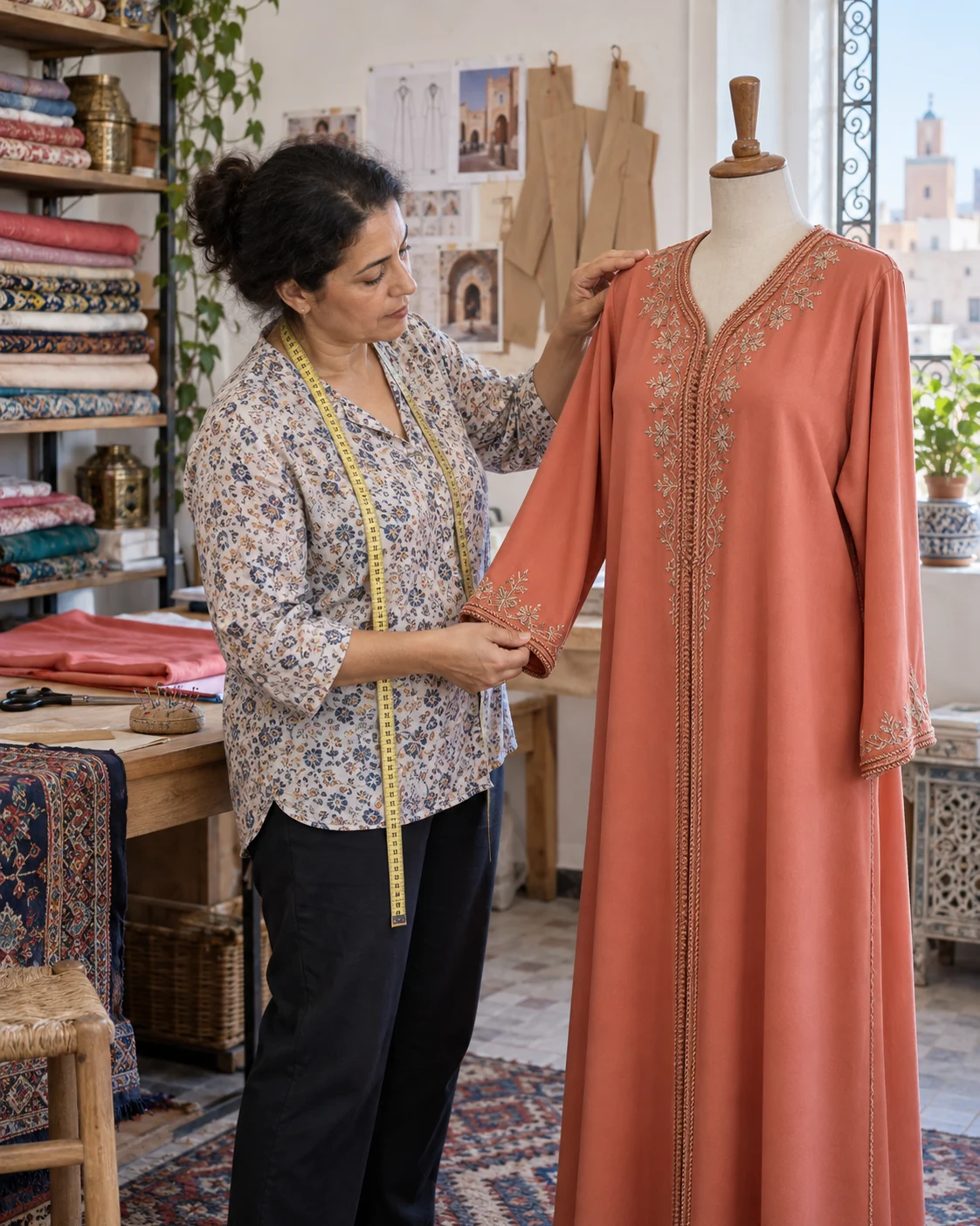
Edging, closures and ornament must cooperate with the garment. At the fitting, check the whole outfit while standing and sitting. Ask which adjustments remain possible and when they can realistically be completed.
04 / Culture in context
A loose button, worn edge or changed fit does not have to end a garment’s useful life. Whether a repair is possible depends on its construction, condition and the availability of matching materials.
Ask the maker what they would repair first and what should be left alone. For fragile historic clothing, ordinary tailoring and conservation are different tasks. A family keepsake may need specialist advice before an irreversible alteration.
A commission becomes easier to discuss when it is divided into decisions. Begin with the use and fit, then agree on the cloth, construction and finish. Ask when those choices can still be changed. A sample or a clear example can keep both people referring to the same detail without prescribing how the maker must work.
Include repair and future adjustment in the conversation. Ask which parts can be altered and how a worn finish might be renewed. This makes the garment’s life longer than the occasion for which it was first chosen. When visiting a workplace, let the maker decide what can be shown without interrupting work or exposing somebody else’s private commission.
05 / Take the conversation further
Working time is not automatically demonstration time. Ask before entering a work area, touching tools or interrupting a fitting. If a demonstration or consultation is offered for a fee, agree it clearly.
Write down the components, materials and alteration scope. A picture can communicate a mood but leave important details unstated. Check what is included before the work begins.
Ask for the maker’s preferred name and the roles of collaborators. If sharing images of the process, confirm permission and describe the work accurately rather than attributing every stage to whoever appears in the photograph.
06 / Take the story into a place
The Exotic Morocco guide collection
The companion Traditional Clothing & Craft guide is in preparation. Explore the collection for its current status and connected reading.
Find this guide in Shop07 / One wardrobe, many stories
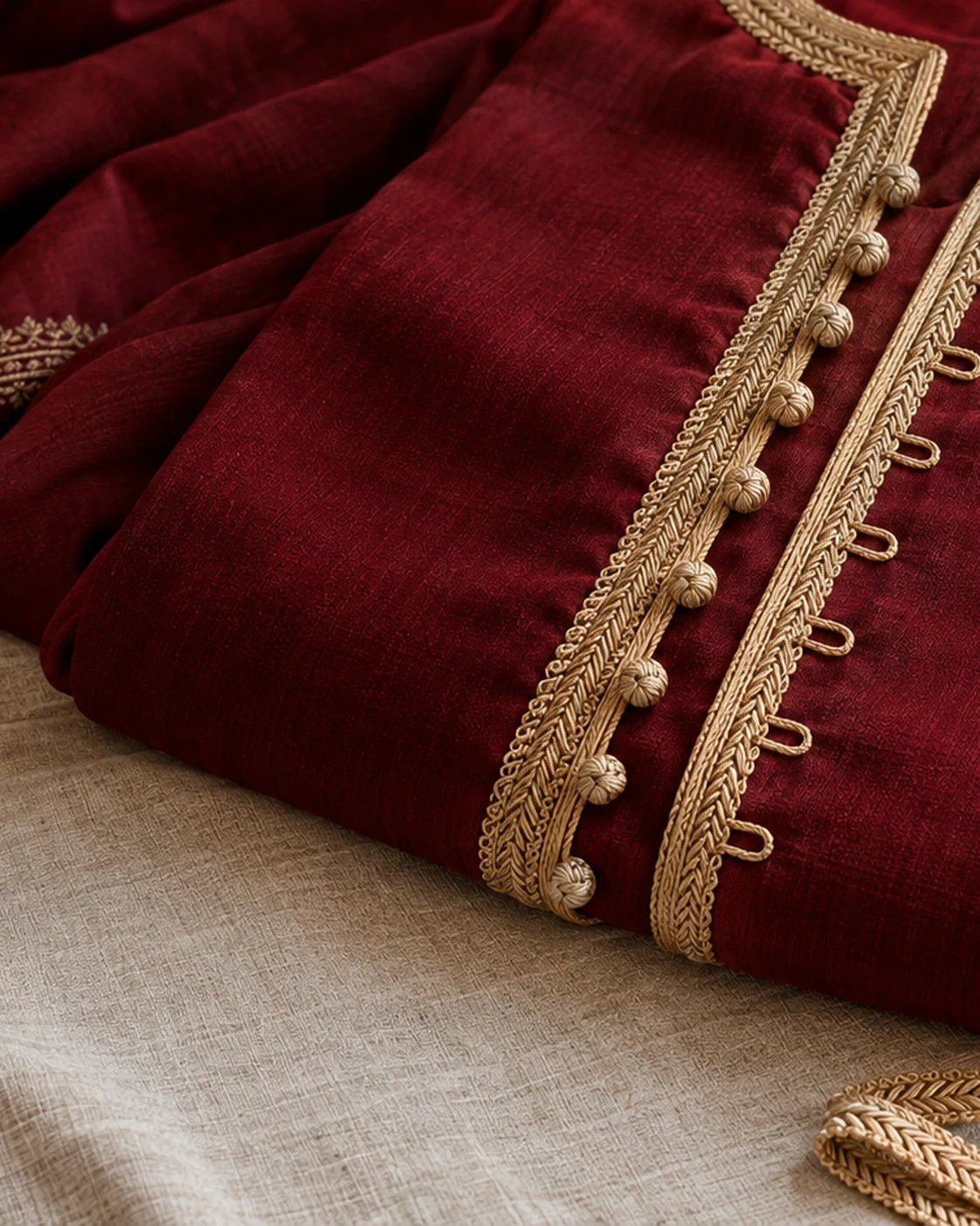
Embroidery & sfifa · The language of an edge
Braid, buttons and stitched ornament meet along a garment’s opening. Learn to see what each one does.
Explore the chapter ↗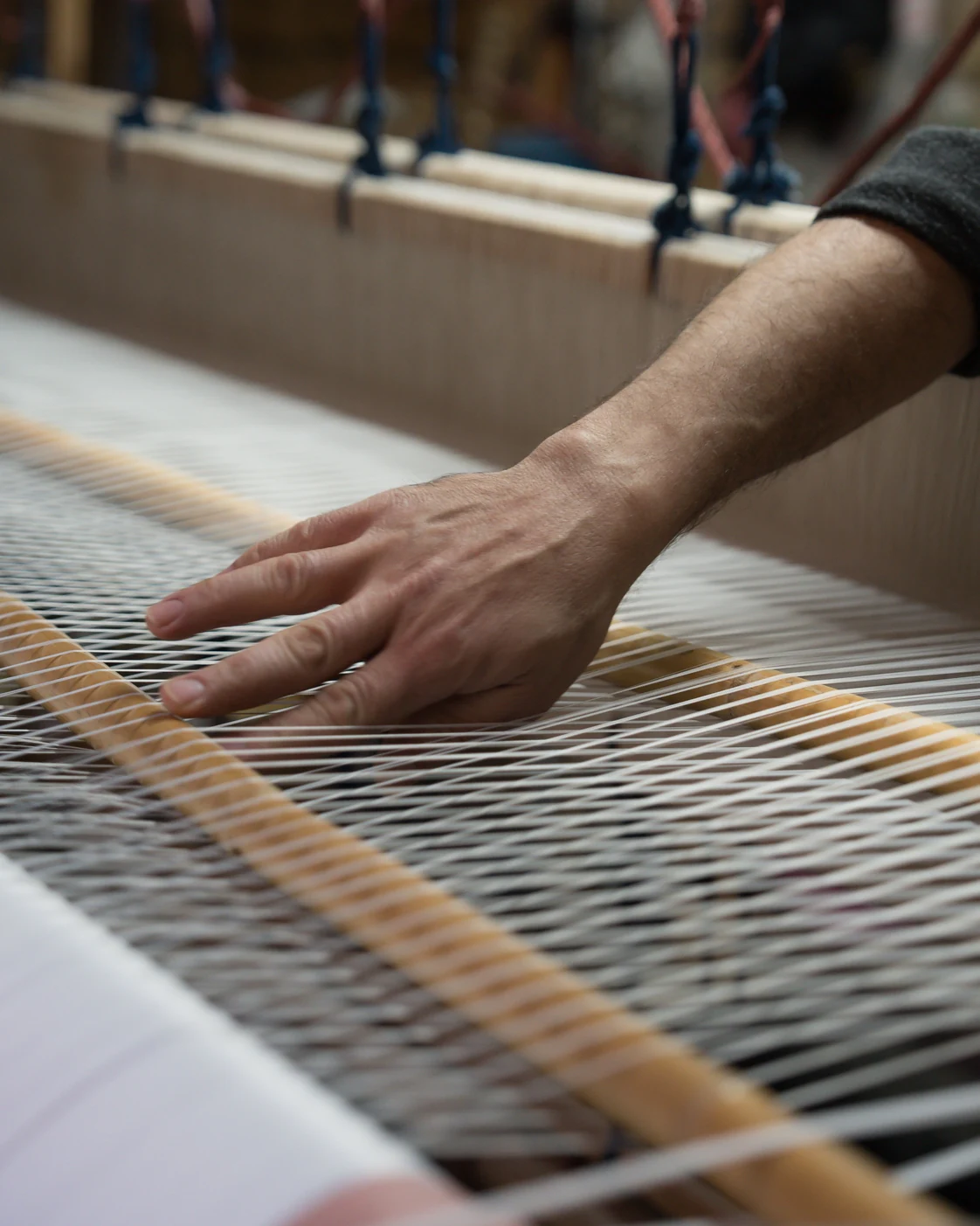
Textiles & weaving · Before cloth becomes clothing
Start at the loom. Explore the structure, weight and movement of cloth before following it into a garment or a home.
Explore the chapter ↗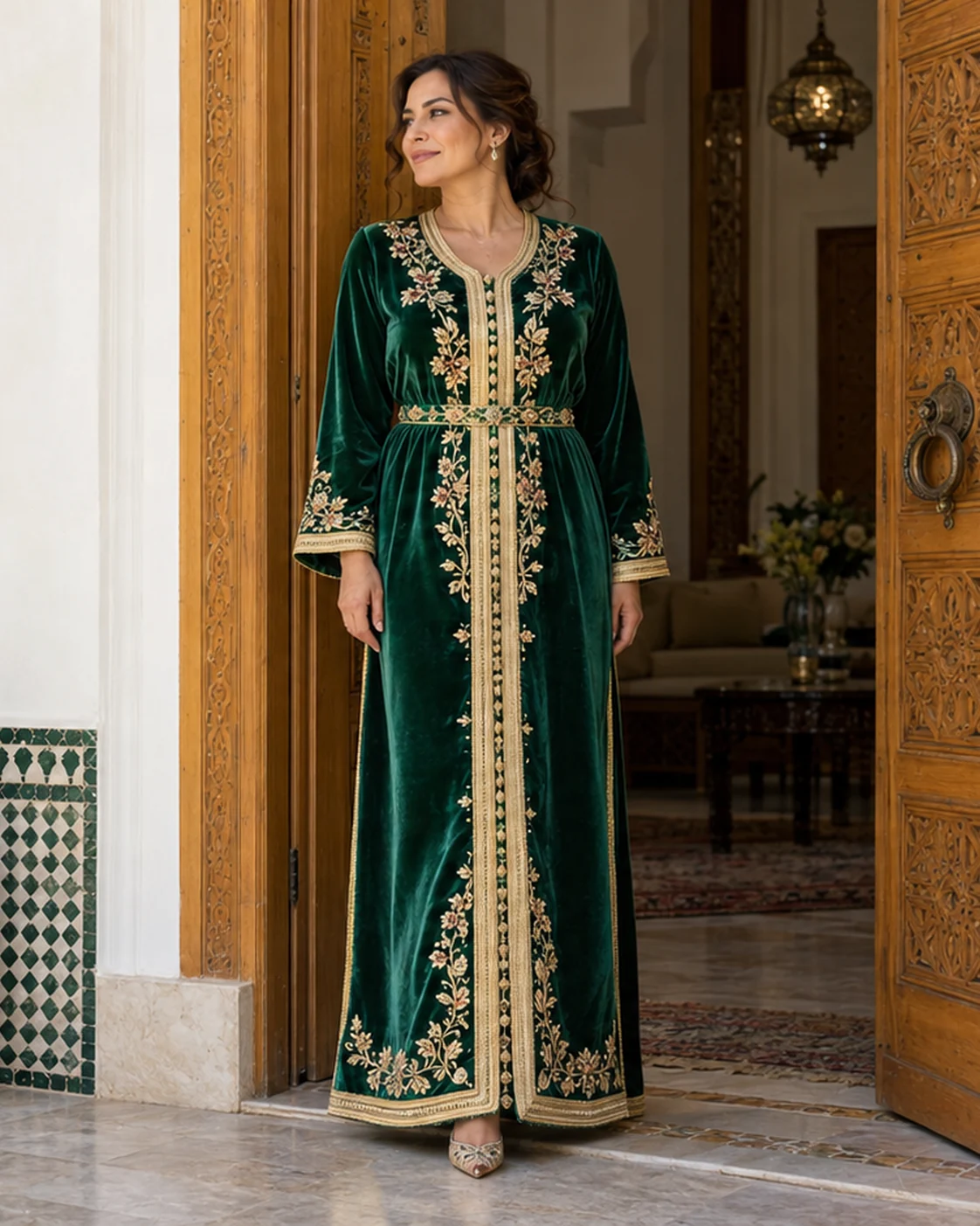
The caftan · Line, cloth & skilled hands
A long line of cloth, a precise edge, a distinctive presence. Look beyond the splendour of the Moroccan caftan to the skills that shape it.
Explore the chapter ↗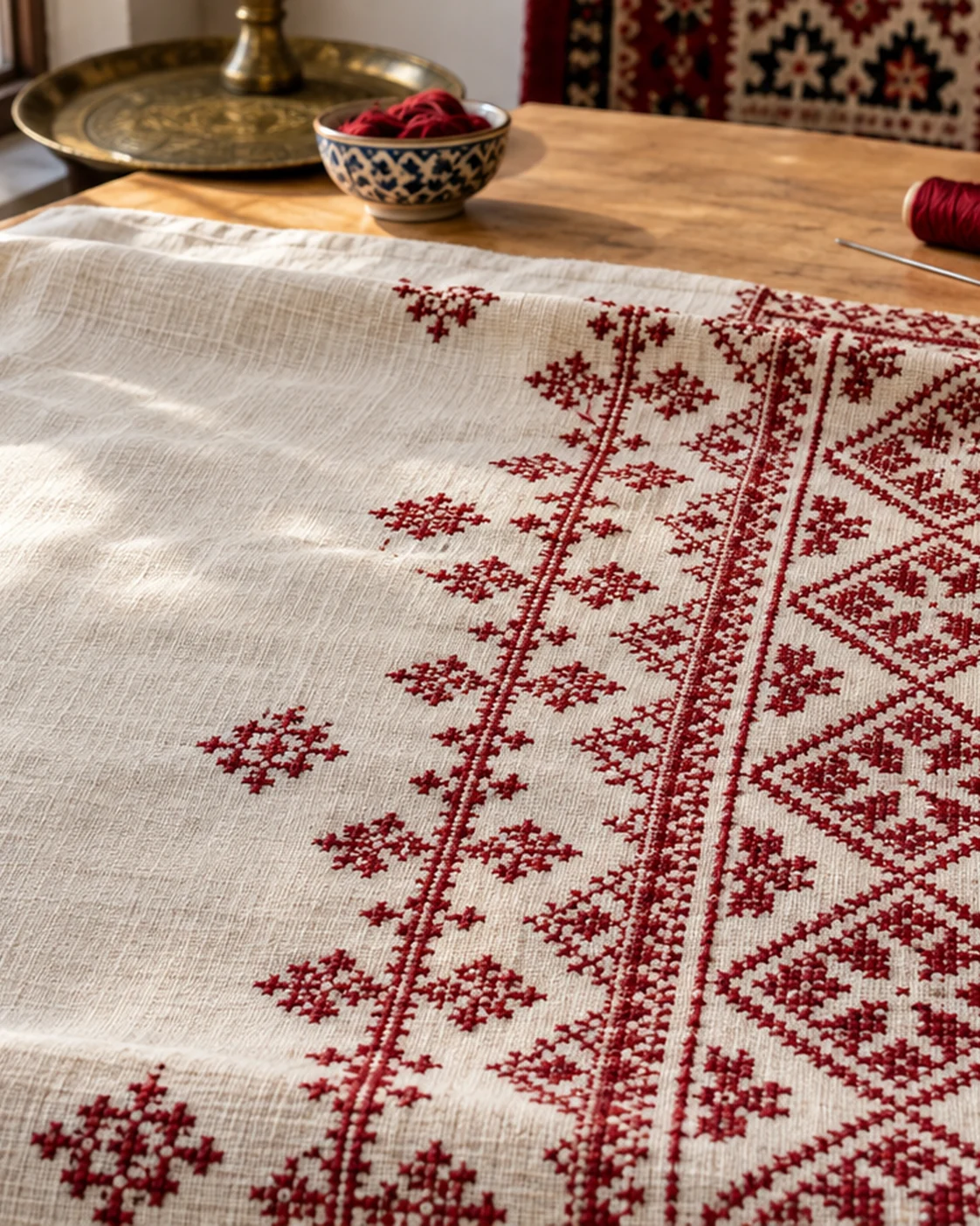
Embroidery · The movement of a thread
A stitch can build a line, fill a shape or join a larger rhythm. Explore Moroccan embroidery through structure and specific textile histories.
Explore the chapter ↗