Warp & weft
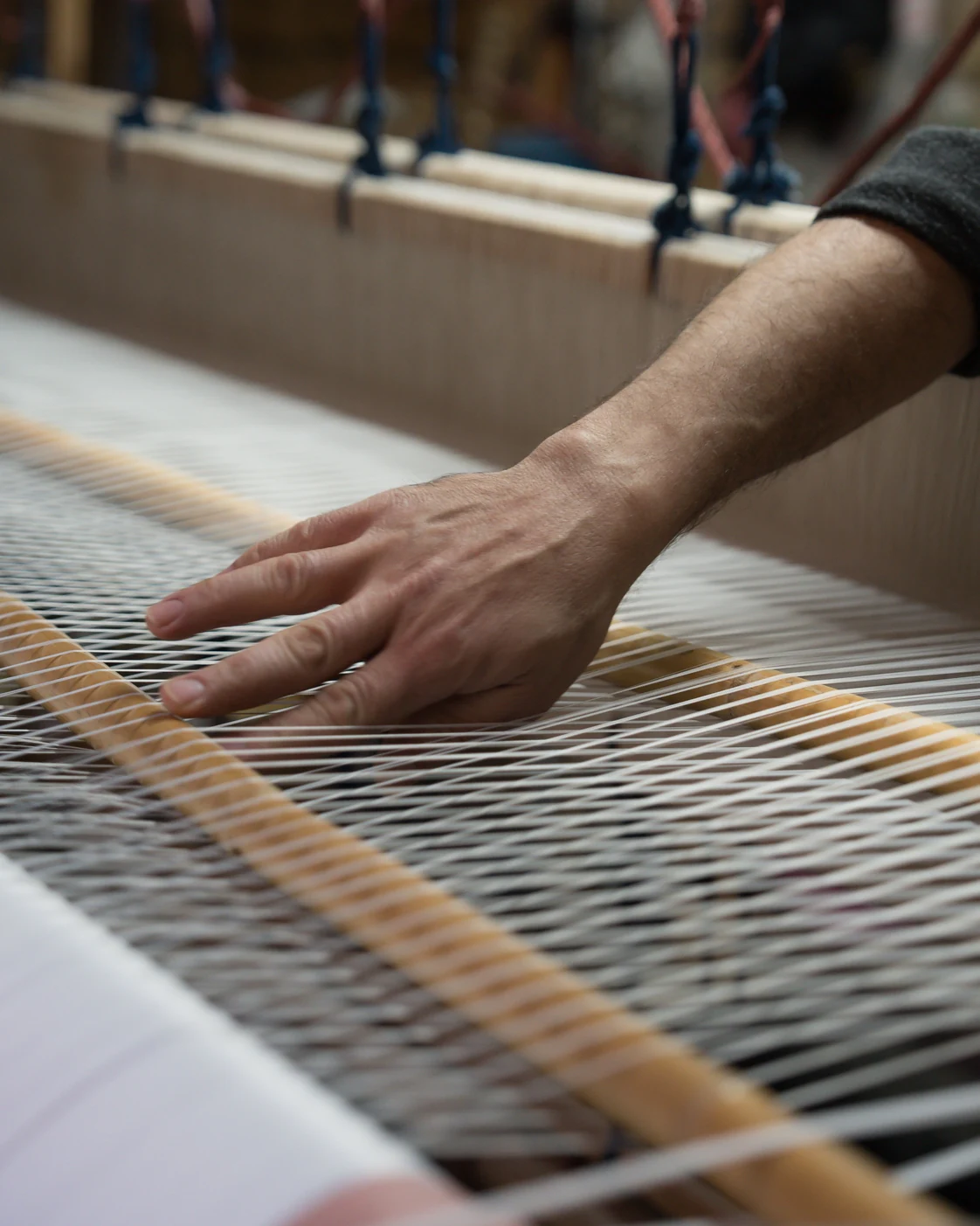
Look for the lengthwise and crosswise threads. Their spacing and interlacing influence strength, openness and the clarity of a woven pattern. A close view can be more informative than a distant view of the whole motif.

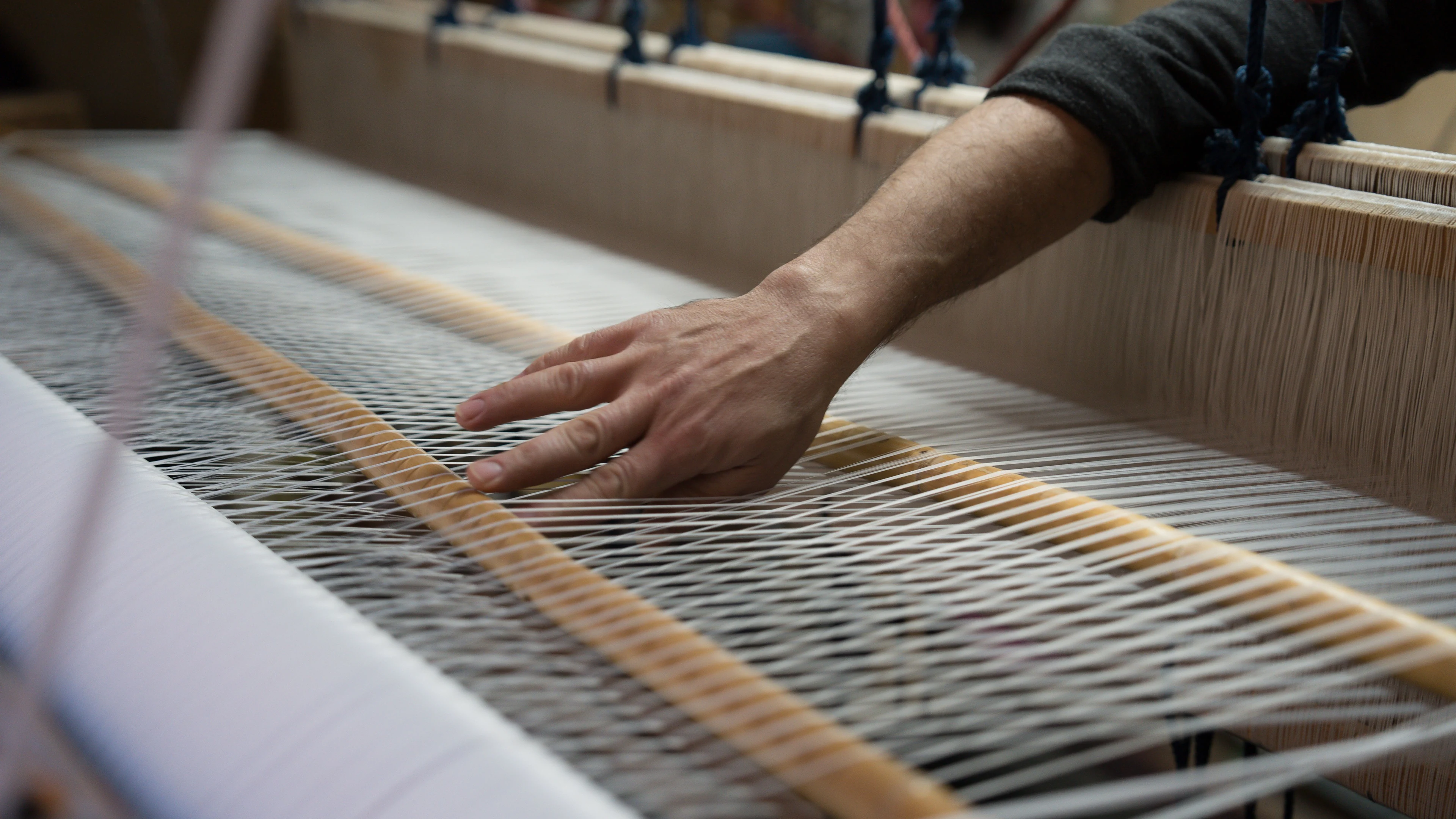
Textiles & weaving · Before cloth becomes clothing
Start at the loom. Explore the structure, weight and movement of cloth before following it into a garment or a home.
Look a little closer ↓01 / The starting point
A textile is a structure you can see and, with permission, feel. Threads cross, surfaces rise, edges hold a pattern in place. The decoration catches the eye, but the way the material is made determines much of its behaviour.
In weaving, lengthwise warp threads meet the weft passed across them. Their relationship can make a cloth open or dense, supple or firm. Fibre, yarn and finishing add further differences; one word such as “wool” cannot describe the whole experience.
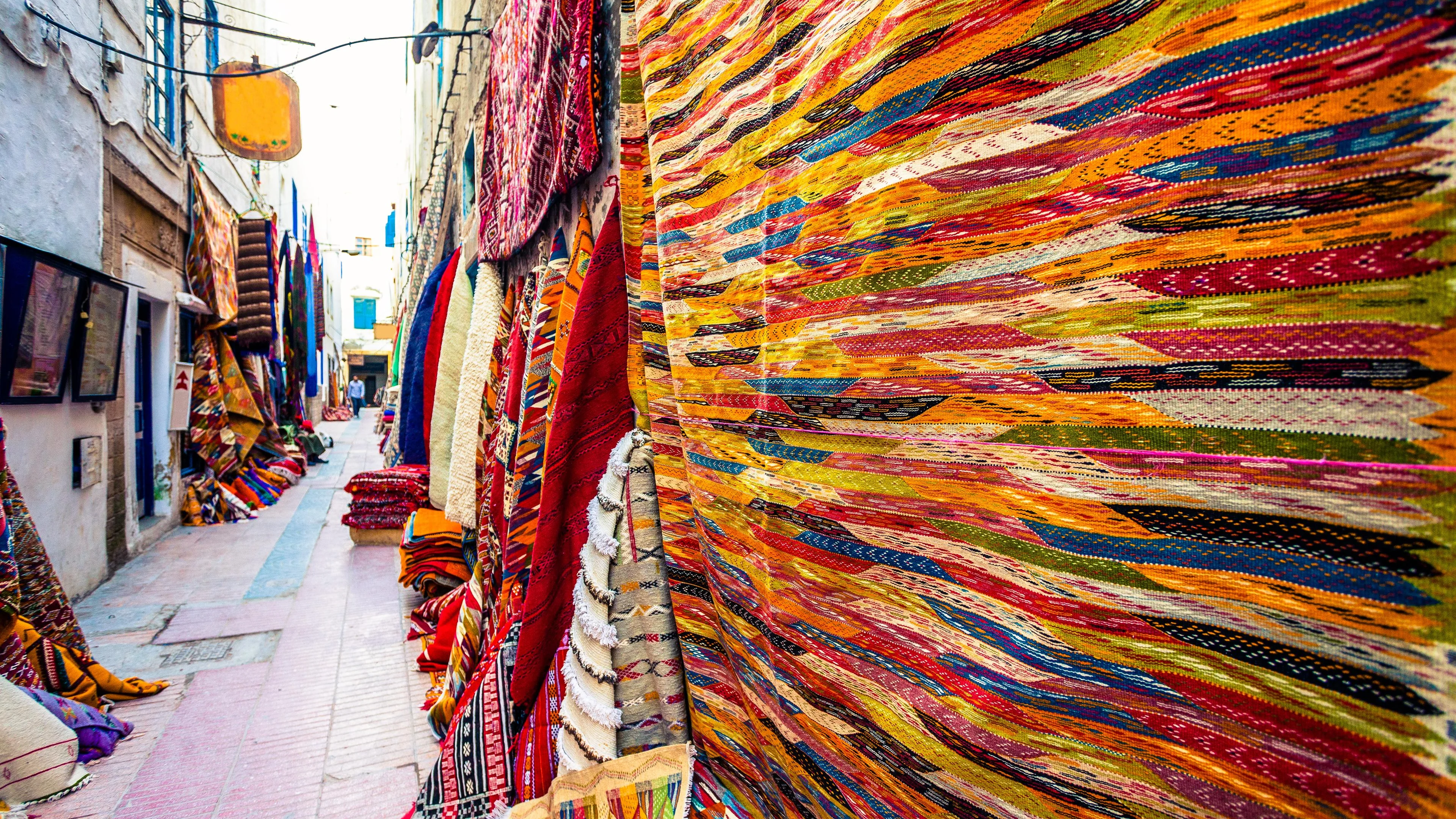
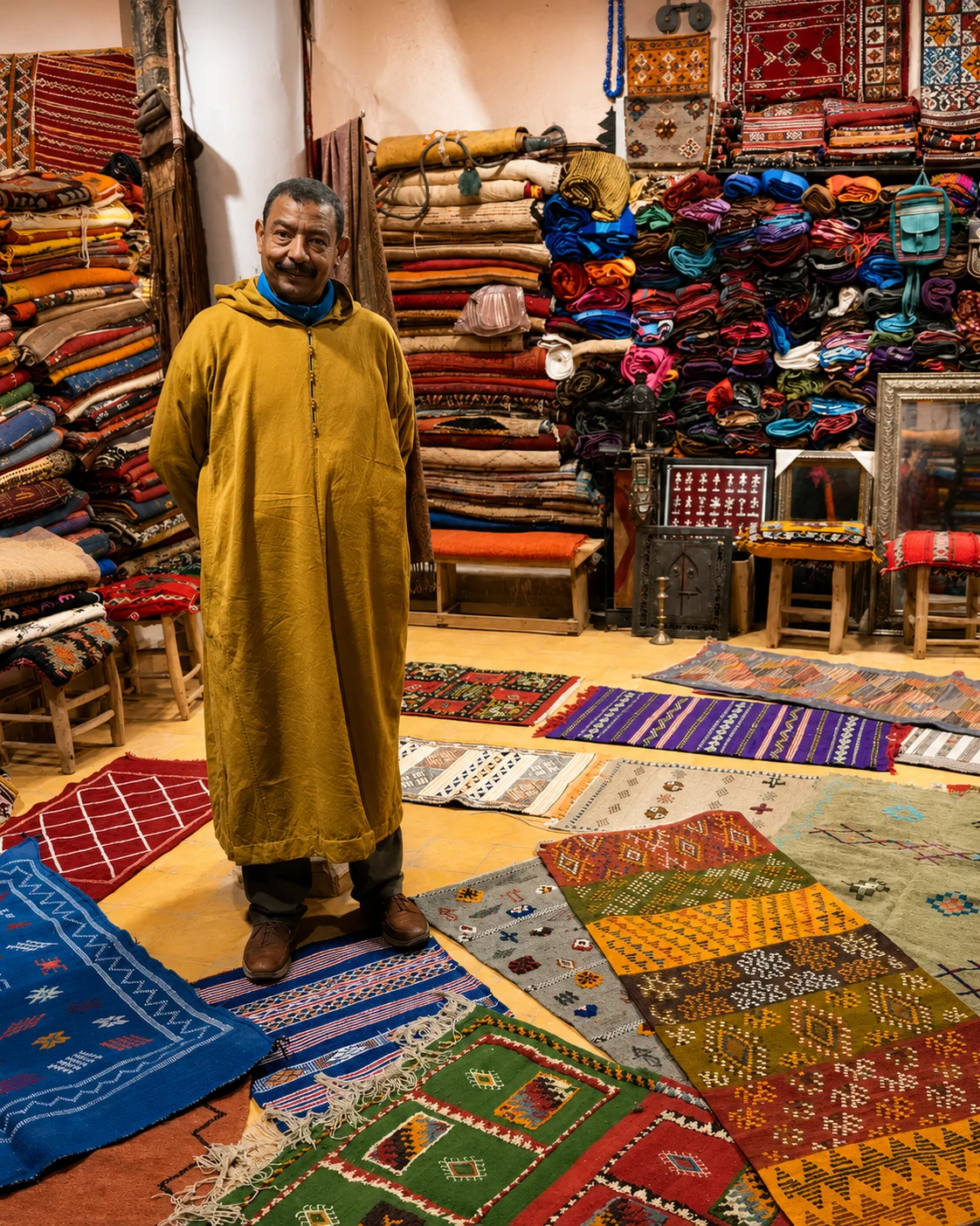
Moroccan textile culture includes clothing fabrics as well as furnishings and rugs. This chapter keeps those uses connected without treating them as identical. Cloth intended to hang, cover a surface or move around a body answers different practical questions.
02 / Read the details
Begin with observable structure; ask for the production details you cannot see.
Look for the lengthwise and crosswise threads. Their spacing and interlacing influence strength, openness and the clarity of a woven pattern. A close view can be more informative than a distant view of the whole motif.
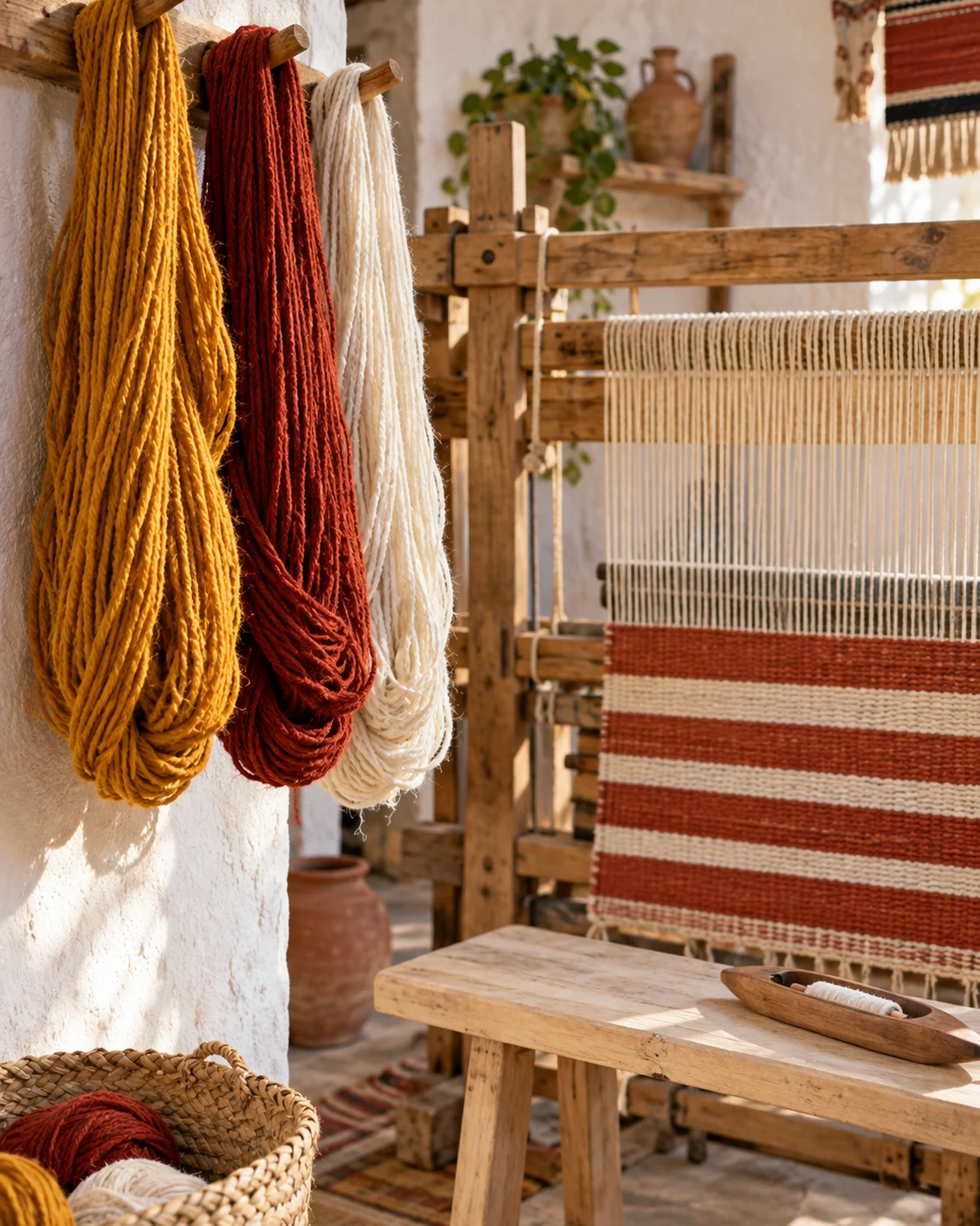
Thickness, twist and fibre affect the surface. A soft-looking cloth is not necessarily delicate, and a shiny yarn is not necessarily silk. Ask for composition rather than relying on touch or a sales name alone.
A pattern can be woven into the structure, stitched onto finished cloth or printed on its surface. These are different processes. Look at both sides with permission and ask which technique made the effect.
Lift a permitted sample gently and see how it falls. The same colour can behave very differently in a light open cloth and a substantial fabric. Think about the intended use before choosing purely by appearance.
03 / A closer look
A skein can show a colour differently from a finished textile. Twist catches the light, neighbouring threads change the effect and a repeated pattern gives the eye a rhythm to follow.
That is why a sample matters. Ask to see a material unfolded or in a finished example when possible. Compare the scale of the pattern to the object or garment you have in mind; a design that works across a large surface may read differently on a cuff.
Treat claims about handwork, natural dyes and fibre content as separate questions. One does not prove the others. A precise explanation of how and where a piece was made is more useful than a cluster of attractive labels.
04 / Culture in context
Dar Si Saïd in Marrakech is part of Morocco’s national museum network, with a focus on weaving and carpets. It offers another setting for looking at materials and construction alongside a visit to contemporary shops and workshops.
Read each label as the account of a particular object. Dates, materials and attributions allow careful comparisons; they should not be stretched into universal rules about every textile from a city or region. Check current access and exhibition information before visiting.
Begin with a small unpatterned area if one is visible. Look at the threads and the spacing between them before following the motif. Then compare a border, a join or a finished edge. Moving between those scales can show how a textile is built without reducing it to the design on its surface.
For a purchase, separate material, construction and provenance in your questions. Ask what is known about each, and how the cloth should be used and cleaned. A confident sales description is not the same as documentation. Keep any reliable record with the object so that its story is not lost when it moves into a different home.
05 / Take the conversation further
Clothing, upholstery and display demand different qualities. Explain your project before buying and ask whether the material has been prepared or finished for that purpose.
Confirm fibre content, dimensions and production method separately. A place named in a product title may refer to a style, a market or an origin; ask which one is meant.
Request care advice for the exact textile. Ask about storage, colour transfer and any special handling of fringe or raised threads. Avoid applying a generic cleaning recipe to a material you cannot identify.
06 / Take the story into a place
The Exotic Morocco guide collection
The companion Textiles & Weaving guide is in preparation. Explore the collection for its current status and connected reading.
Find this guide in Shop07 / One wardrobe, many stories
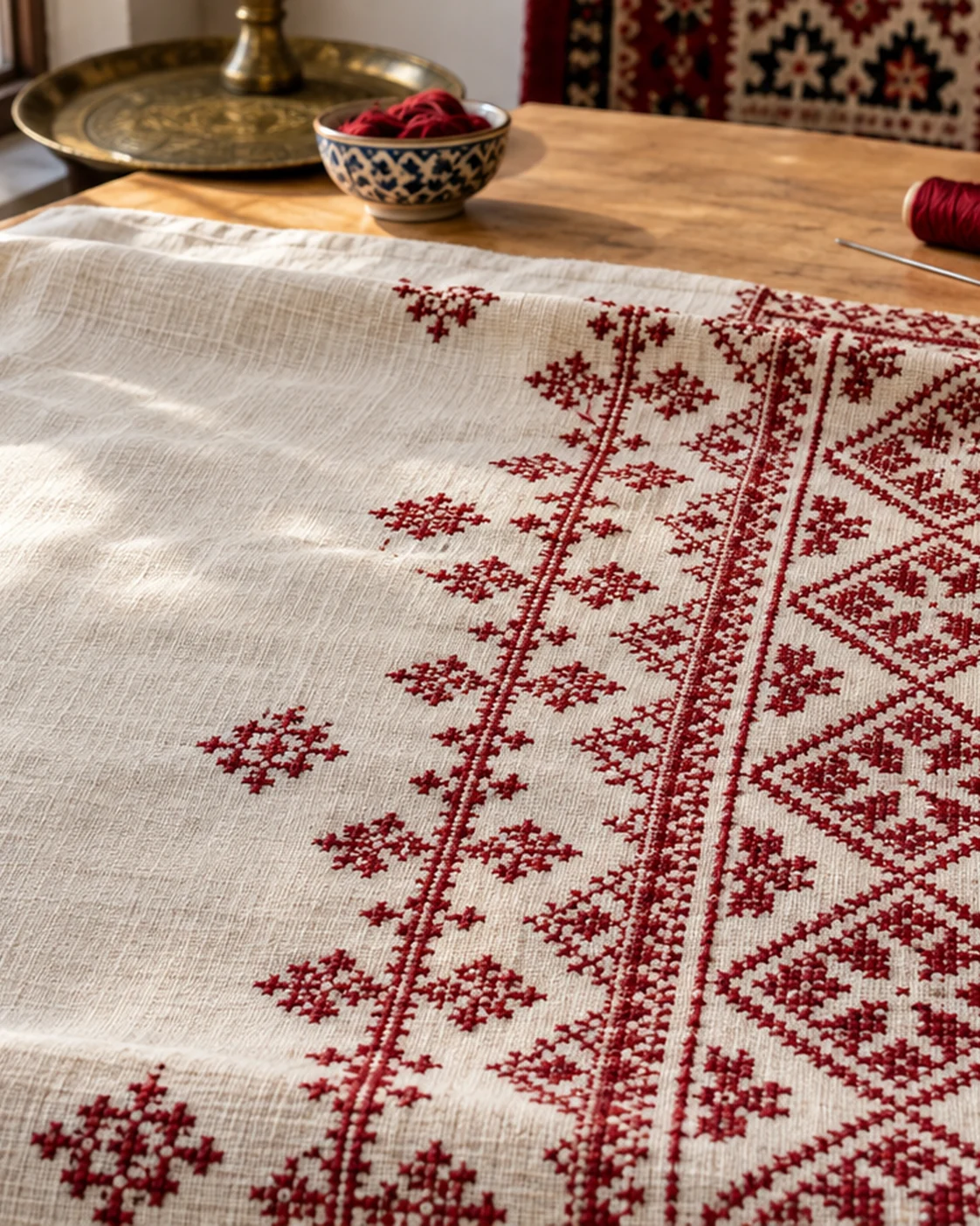
Embroidery · The movement of a thread
A stitch can build a line, fill a shape or join a larger rhythm. Explore Moroccan embroidery through structure and specific textile histories.
Explore the chapter ↗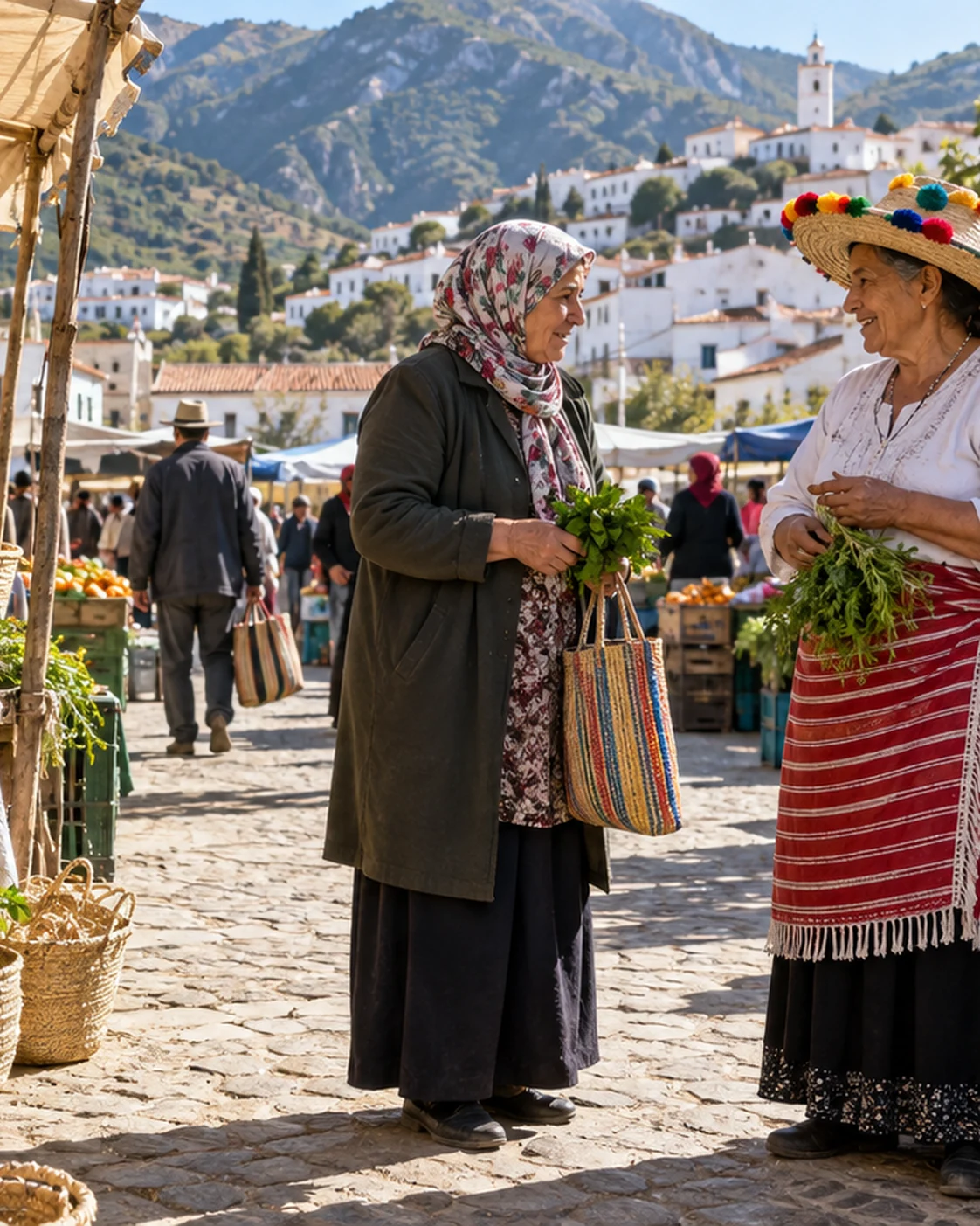
Regional dress · Place without a single uniform
From northern woven wraps to Atlas textiles and city wardrobes, explore regional dress through specific examples and individual lives.
Explore the chapter ↗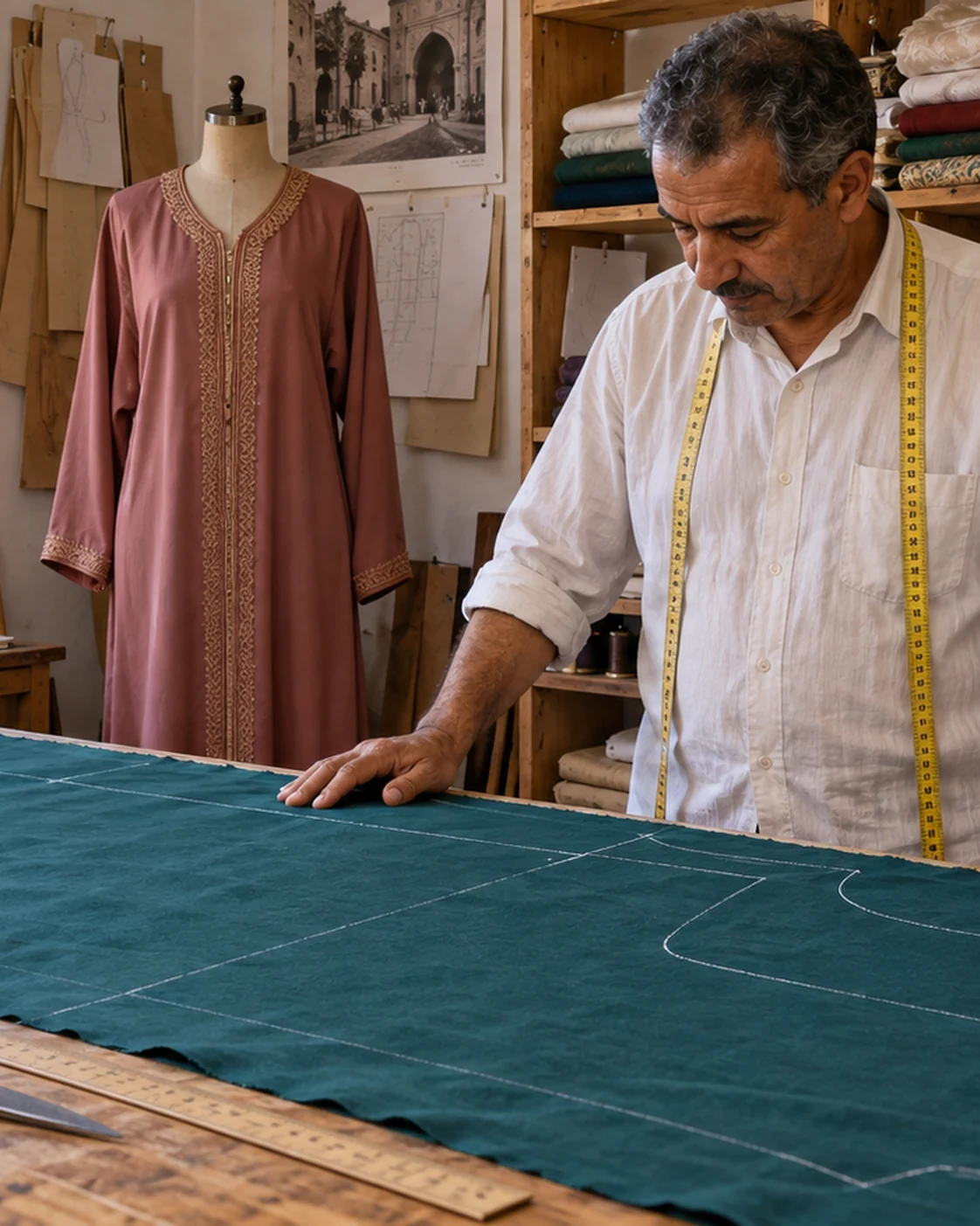
Traditional clothing & craft · From cloth to fit
Follow the choices that turn a length of fabric into clothing: measuring, cutting, joining, finishing and the final fitting.
Explore the chapter ↗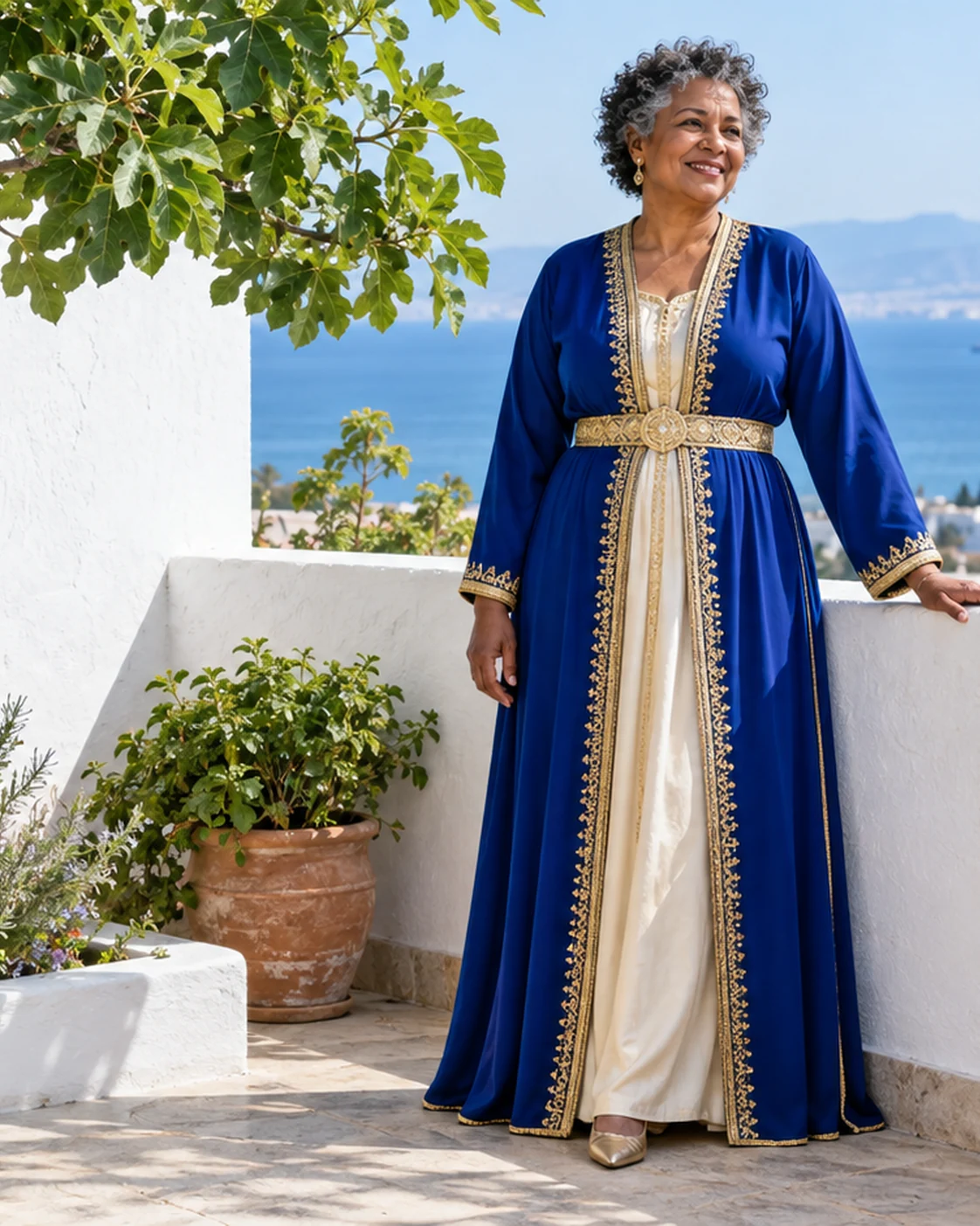
The takchita · An art of layers
An inner dress, an open outer layer and a belt: discover how separate elements become a composed Moroccan ensemble.
Explore the chapter ↗