Skip to content
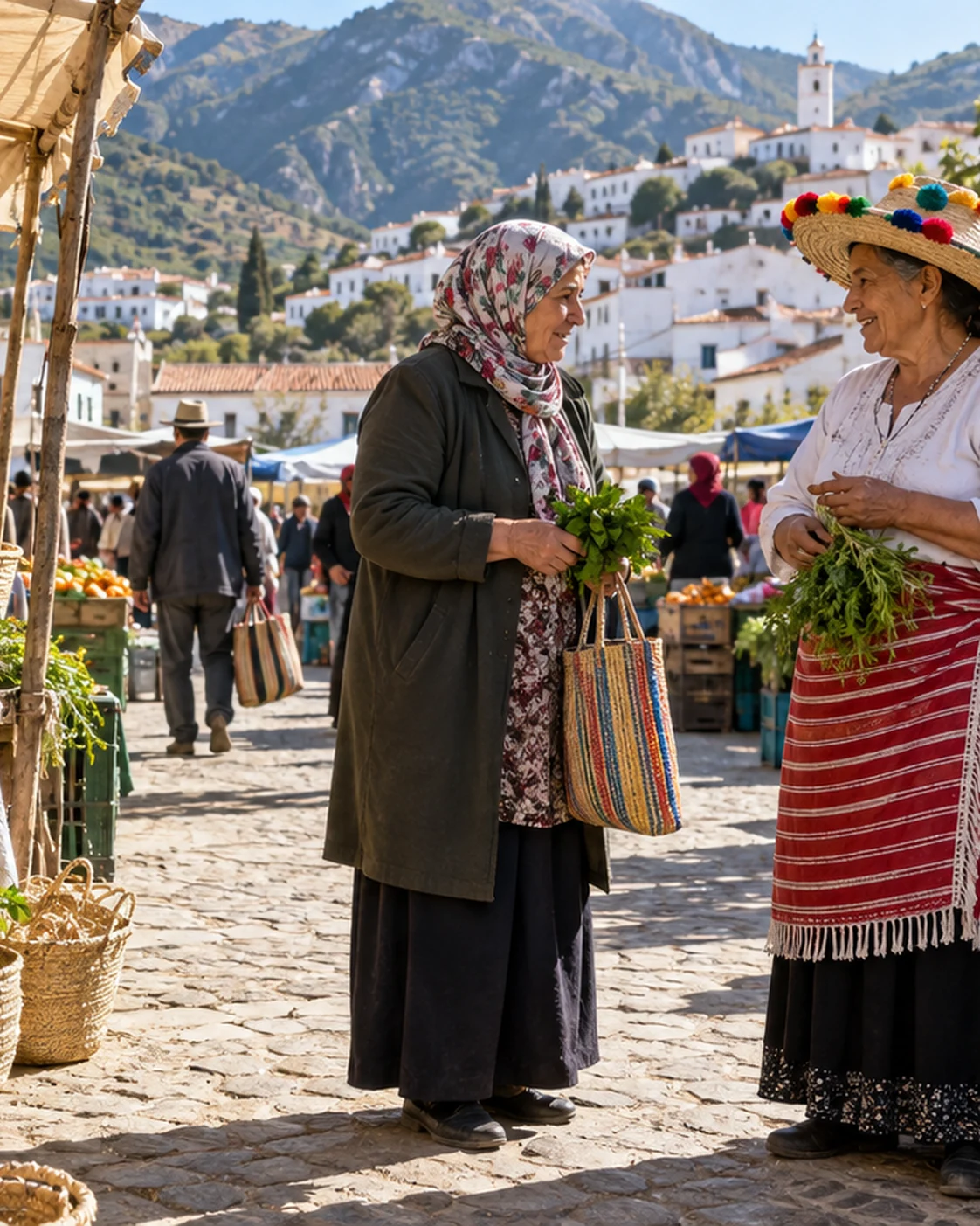
Women in contrasting everyday clothes at an illustrative northern Moroccan market

Regional dress · Place without a single uniform

Regional Dress

From northern woven wraps to Atlas textiles and city wardrobes, explore regional dress through specific examples and individual lives.

Look a little closer ↓

01 / The starting point

A region is a beginning, not a label.

Place matters to clothing, but it never explains a person completely. Materials, trade, family ties and shared practices can leave traces in a wardrobe; travel, contemporary fashion and personal preference add others.

A regional name is most useful when it comes with a particular object or account. Who wore the garment? Where was it made or collected? Does the description refer to the present, a historical period or a festival performance?

This chapter looks at difference without turning Morocco into a costume map. A northern market scene, an Atlas portrait and a museum textile offer different kinds of evidence. Keep the context beside the image and allow the story to remain more complicated than one outfit per place.

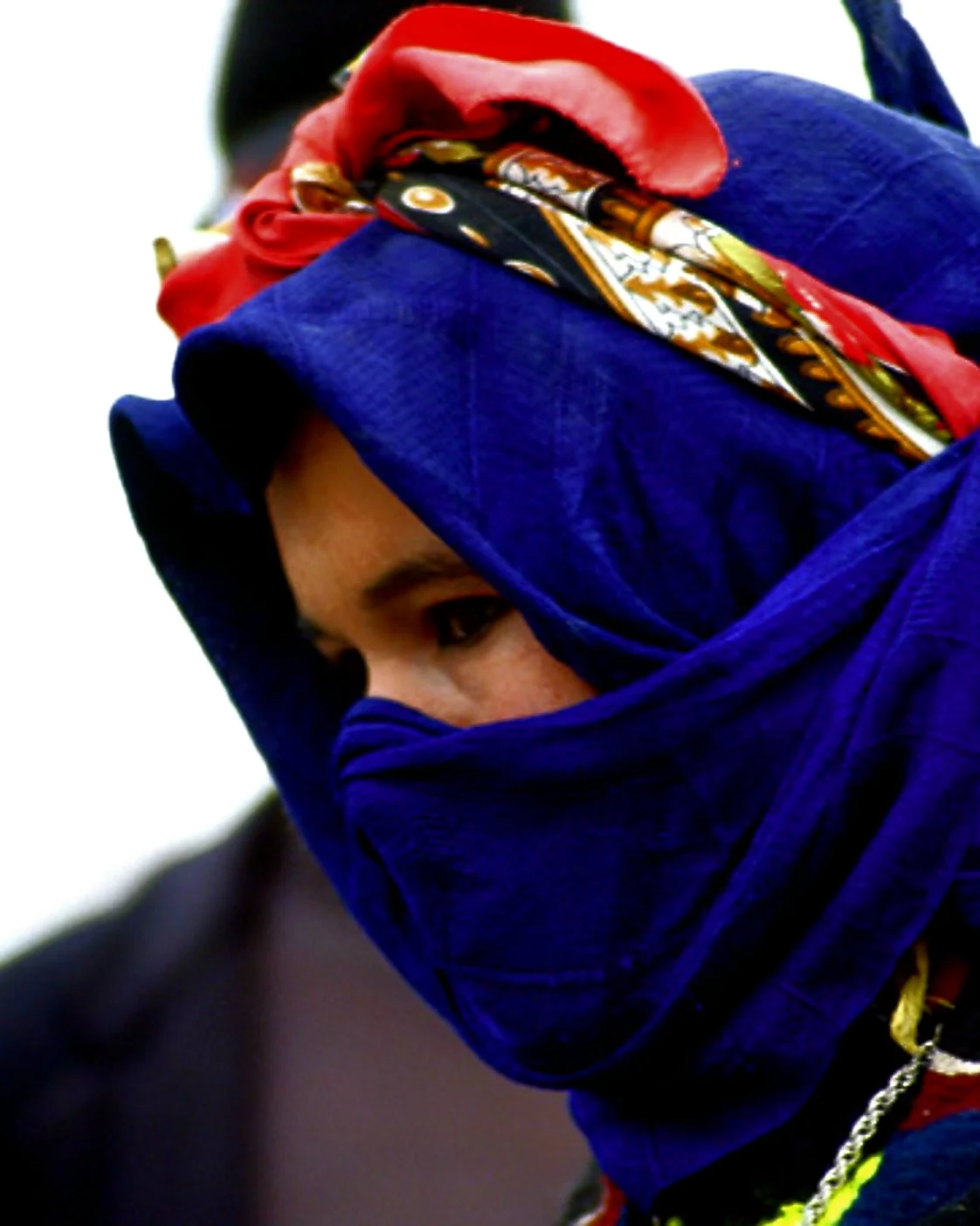
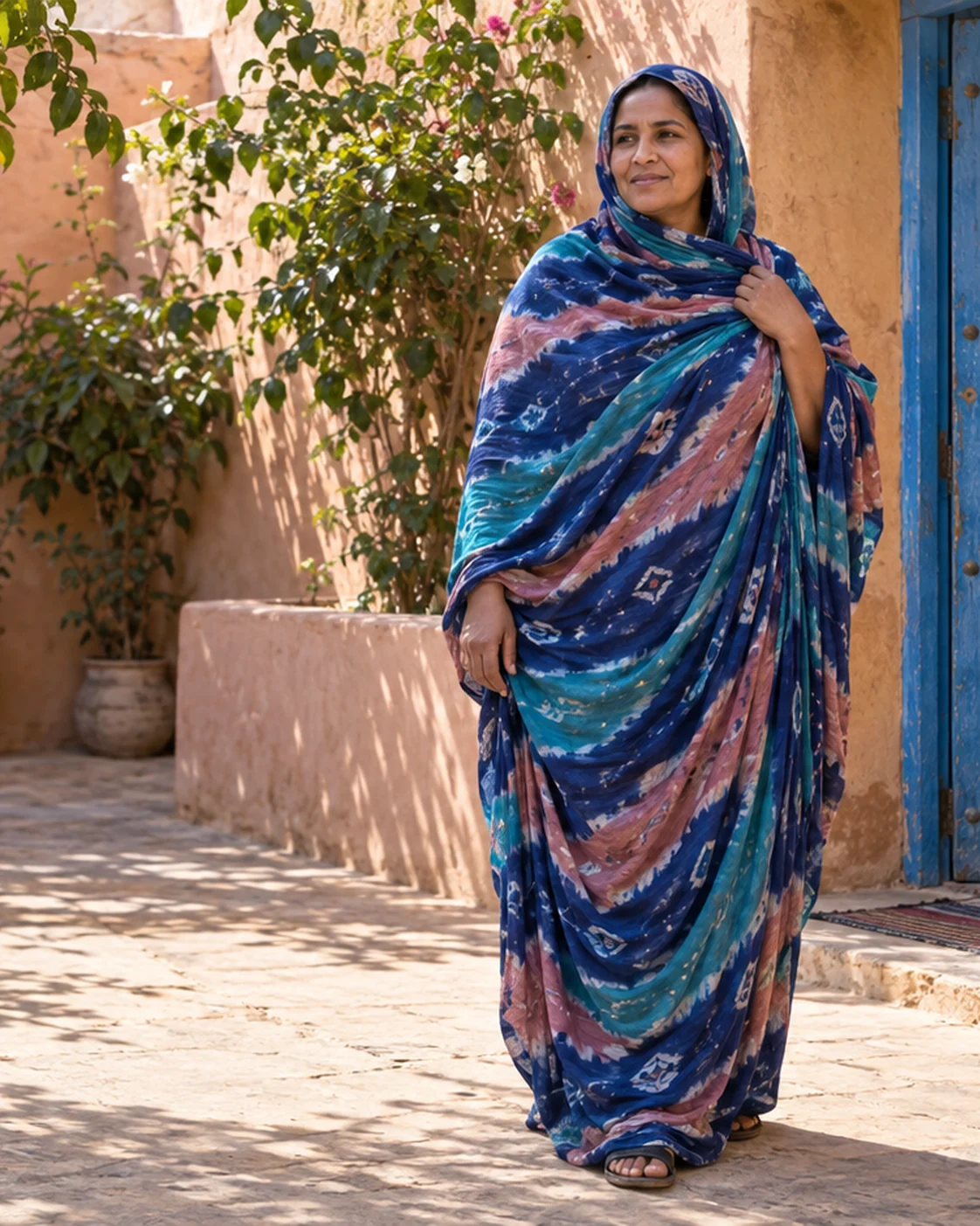
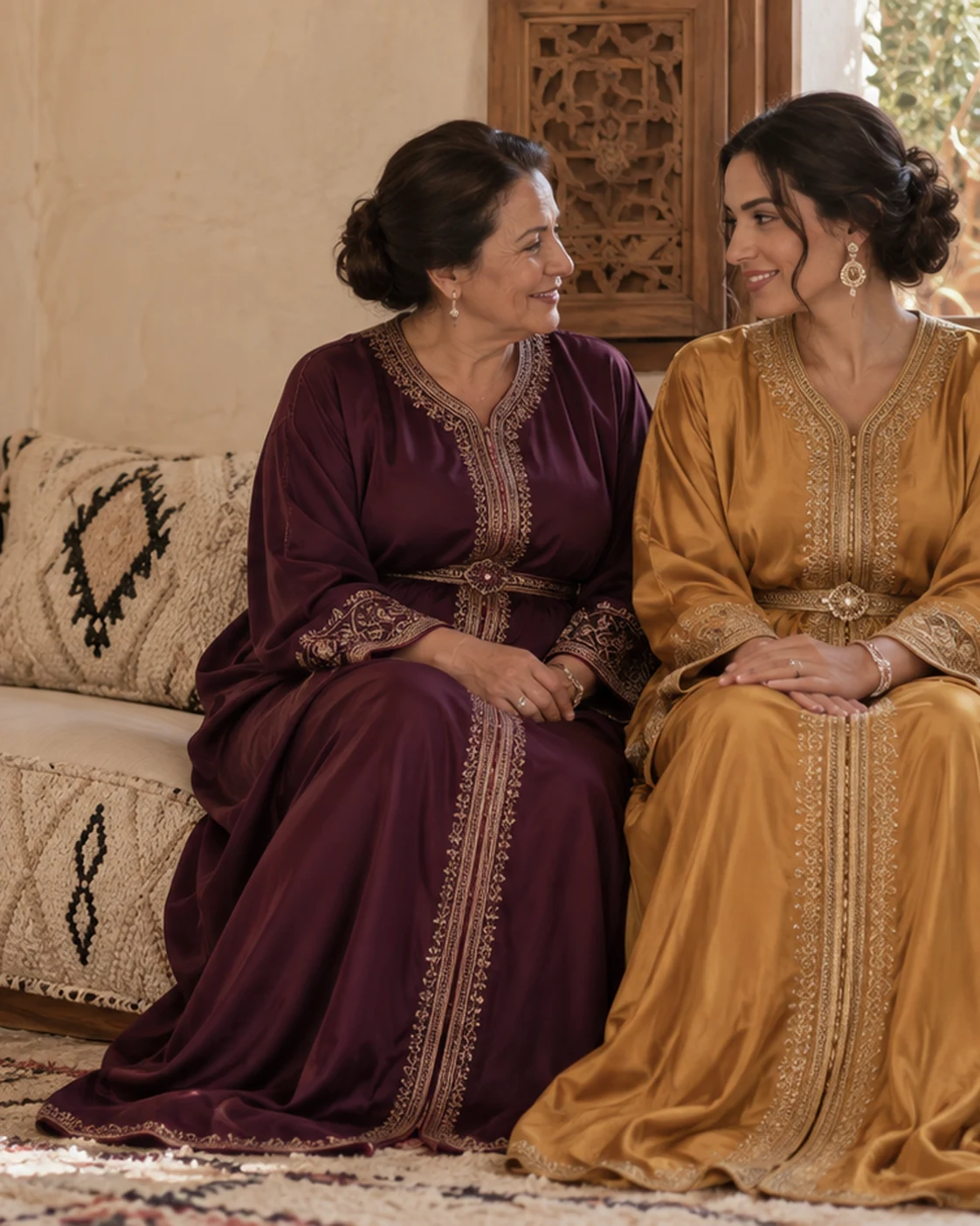
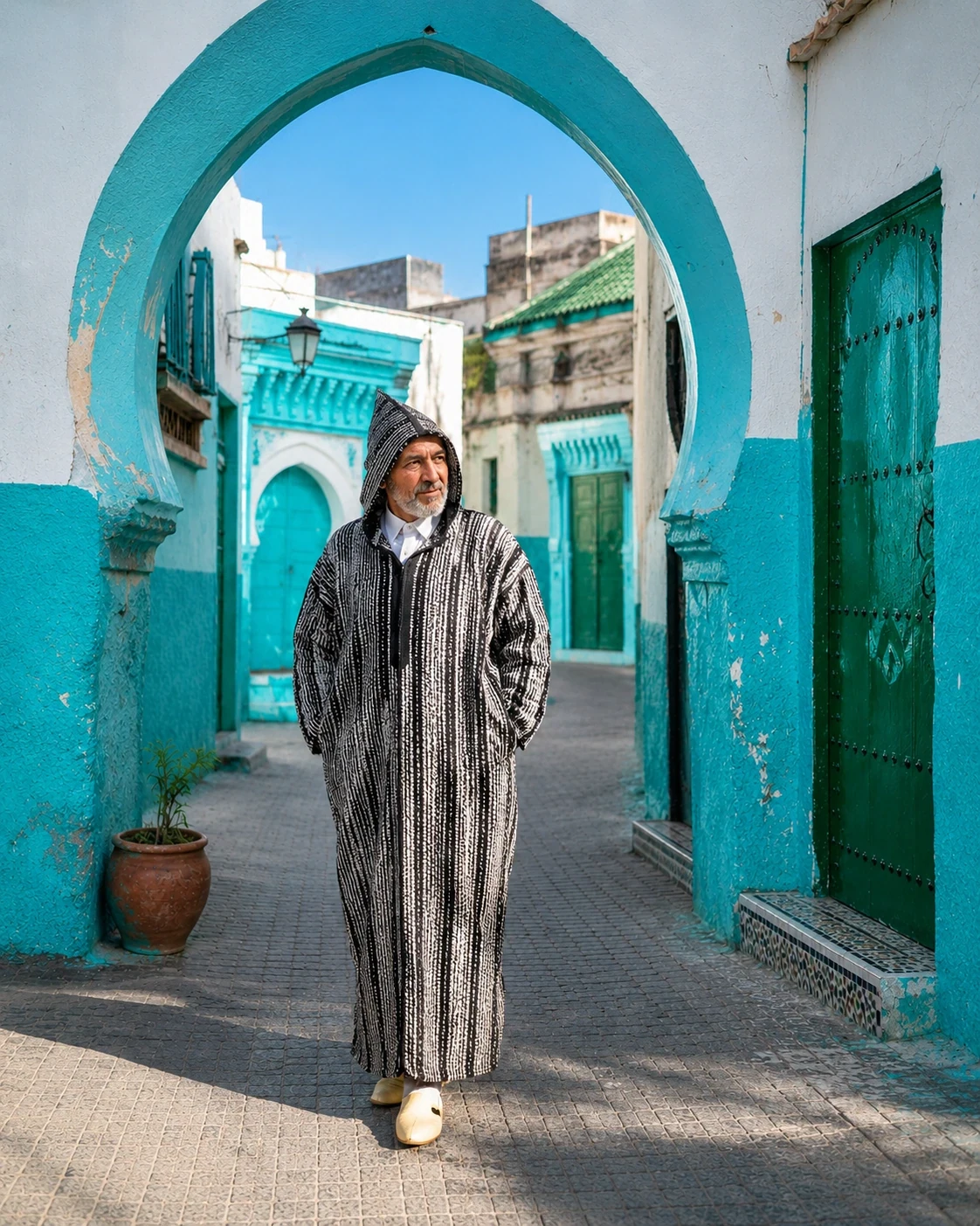
A portrait in the library’s Imilchil collection. The image shows one combination of cloth and ornament, not a universal outfit for the Atlas.

02 / Read the details

Three objects, three specific histories.

Museum attributions offer a more careful starting point than broad claims about what everyone wears.

A portrait in the library’s Imilchil collection. The image shows one combination of cloth and ornament, not a universal outfit for the Atlas.

An Anti-Atlas shoulder cloth

Newfields records an early twentieth-century woman’s shoulder cloth associated with the Ida ou Nadif in the Anti-Atlas. Its wool, cotton and embroidered work belong to that documented object, rather than to a timeless rule for a whole region.

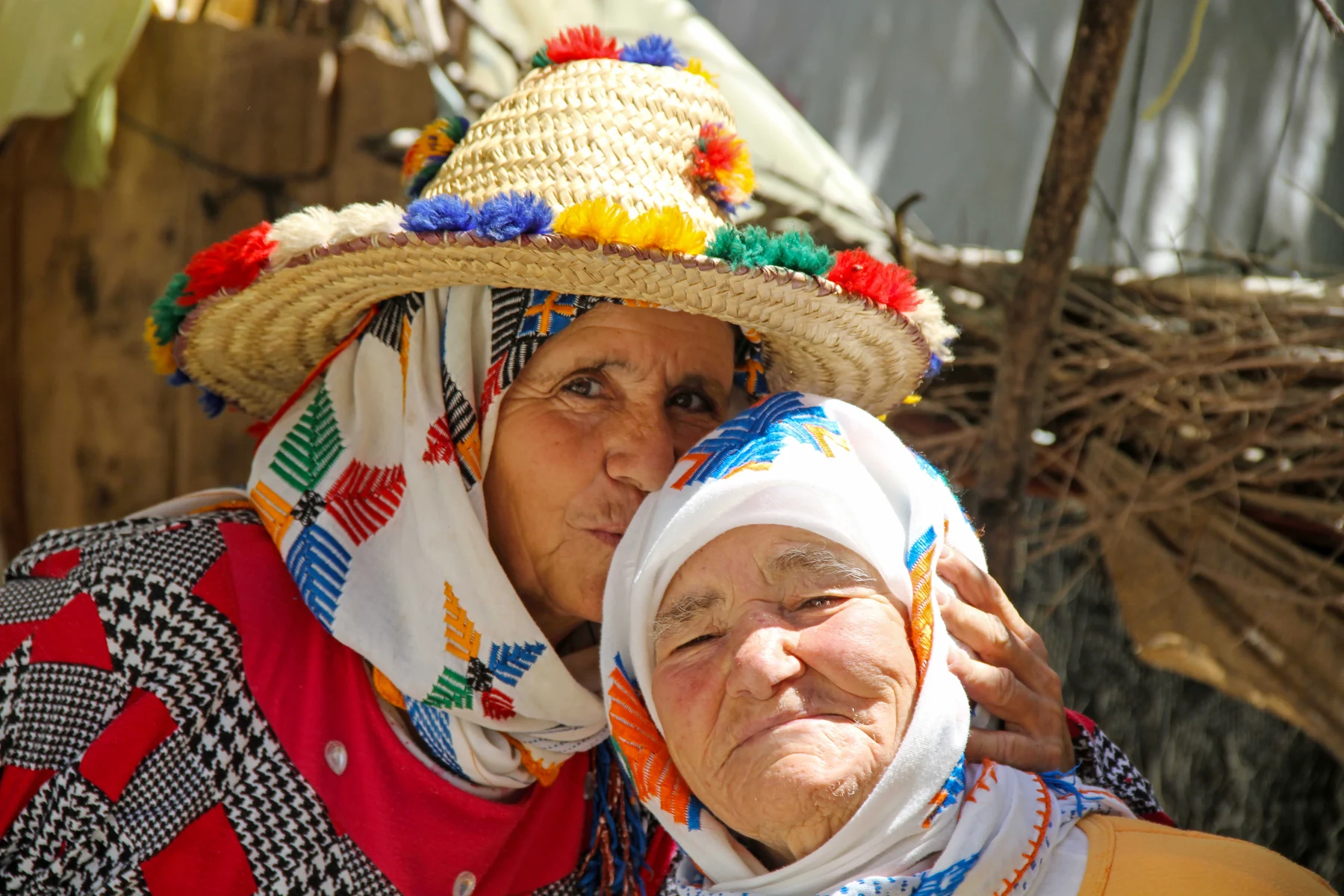
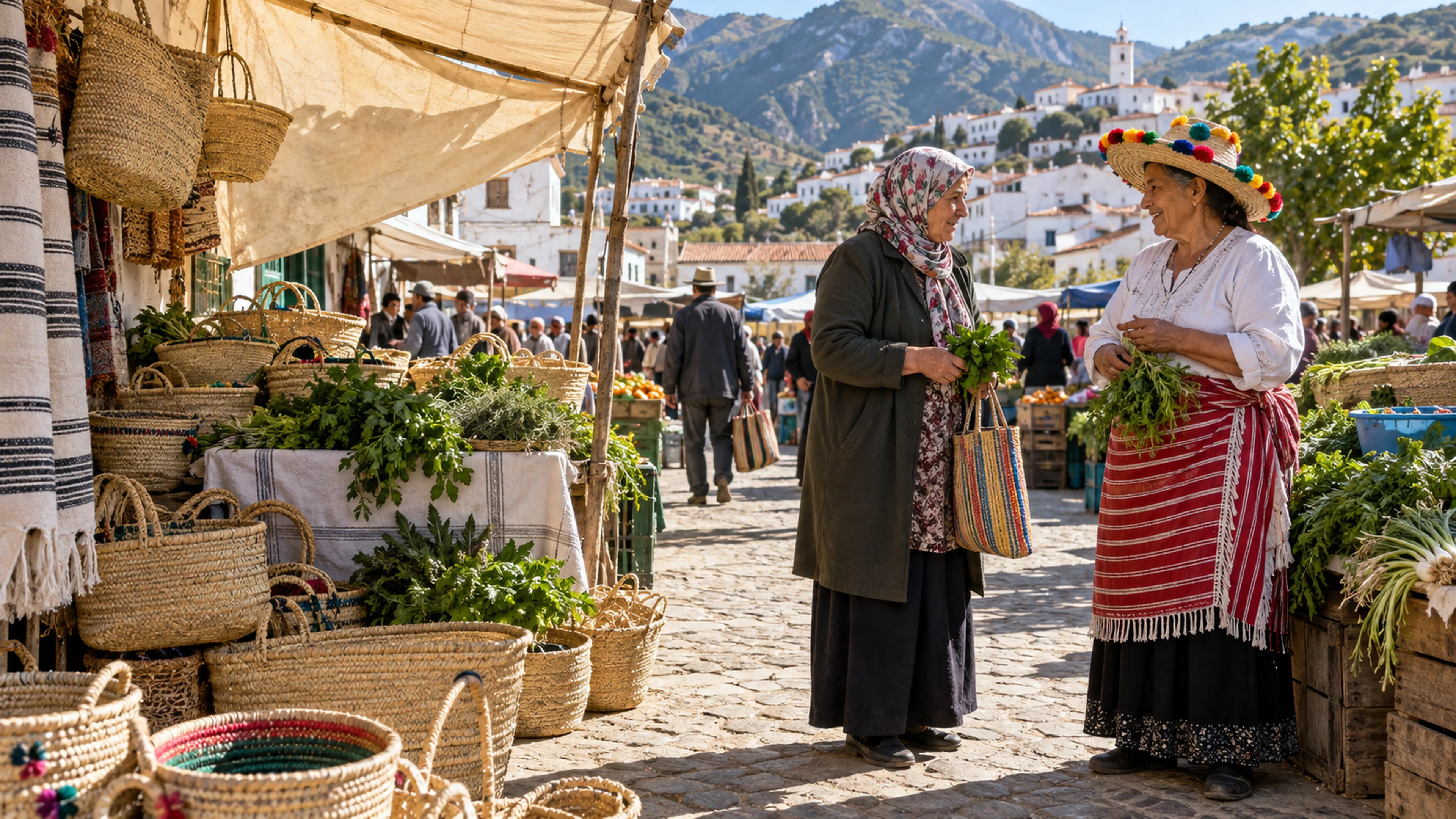
Two women in the library’s Rif collection. The straw hat, head coverings and fabric colours are visible details; individual identities and life stories are not supplied by the image.

A different kind of wrap

LACMA holds a nineteenth-century haik attributed to the Ait Talouine of the Atlas Mountains. The record identifies wool, cotton and silk. It is a useful reminder that distinct wraps should not all be renamed melhfa.

Women in contrasting everyday clothes at an illustrative northern Moroccan market

A Jewish marriage ensemble

The Jewish Museum’s late nineteenth-century el-keswa el-kbira is attributed to Marrakech or Rabat. Its separate skirt, bodice and sleeves add a specific Moroccan Jewish history to any discussion of ceremonial dress.

Two women in the library’s Rif collection. The straw hat, head coverings and fabric colours are visible details; individual identities and life stories are not supplied by the image.

03 / A closer look

People give the cloth its life.

A photograph can reward close attention without answering every question. Here the woven hat and contrasting cloth are part of an encounter between two people. Their relationship is not something we can establish from clothing alone.

The same discipline helps while travelling. Let a local person describe a garment in their own words. Ask about how it is used or made if the conversation welcomes it, and avoid turning a portrait into a catalogue of assumed beliefs or ancestry.

Regional dress also lives alongside trainers, jackets, watches and other ordinary contemporary objects. Those combinations are part of lived culture, not an error in a supposedly complete traditional look.

04 / Culture in context

Tradition travels with people.

A garment may be made in one city, worn in another and inherited somewhere else. Shop locations, textile origins and the wearer’s place of residence are three different pieces of information.

For that reason, this collection links regional context to the craft and materials chapters. Looking at how cloth is woven or finished often yields a better question than trying to guess an exact origin from a single motif.

Read a regional label as an opening question. A documented garment can connect a place with a wearer, maker, material and occasion, but it cannot stand for every person from that region. Compare the collection record with what the photograph actually shows. Keep uncertain details uncertain rather than filling them with a familiar story.

When looking at contemporary dress, make room for personal taste, travel, family connections and the purpose of the day. Clothing can carry several influences without needing to be sorted into one fixed category. The regional pages provide geographic context; the garment and the person wearing it deserve their own account.

05 / Take the conversation further

Read a regional label carefully.

What is the date?

Keep a historical museum example in its own period. An early twentieth-century textile can deepen a visit without telling you what every family wears today.

How certain is the attribution?

Museums use phrases such as “attributed to” for a reason. Preserve that uncertainty when retelling the story. A seller’s confident geographic label may also need a more specific explanation.

Whose account is included?

A collector, museum curator, maker and wearer can speak about different things. Notice whose voice is present and what remains undocumented. The most useful account is often the most precise.

The Exotic Morocco guide collection

Keep the thread going.

The companion Regional Dress guide is in preparation. Explore the collection for its current status and connected reading.

Find this guide in Shop
Sources & further reading