Skip to learning
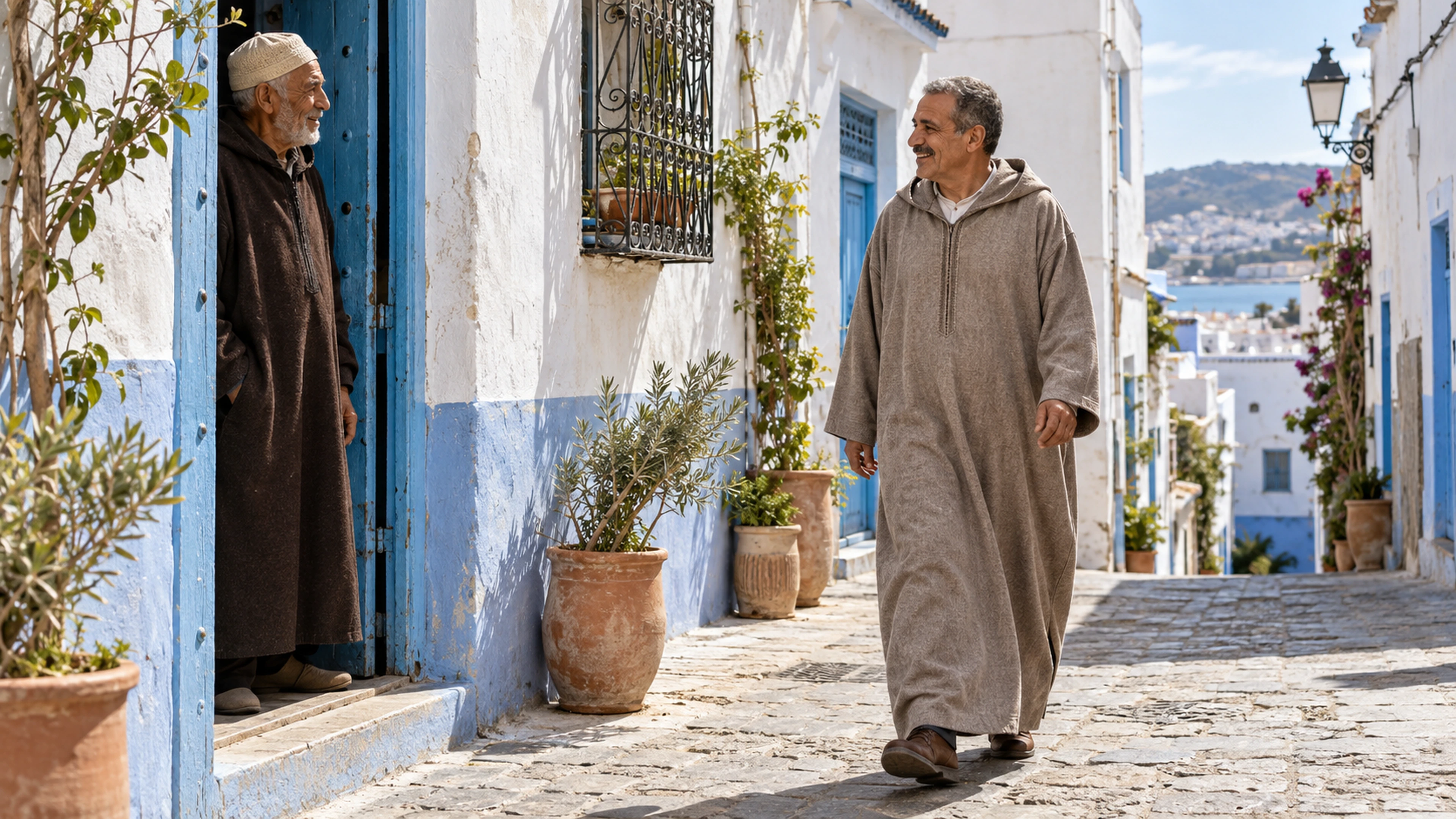
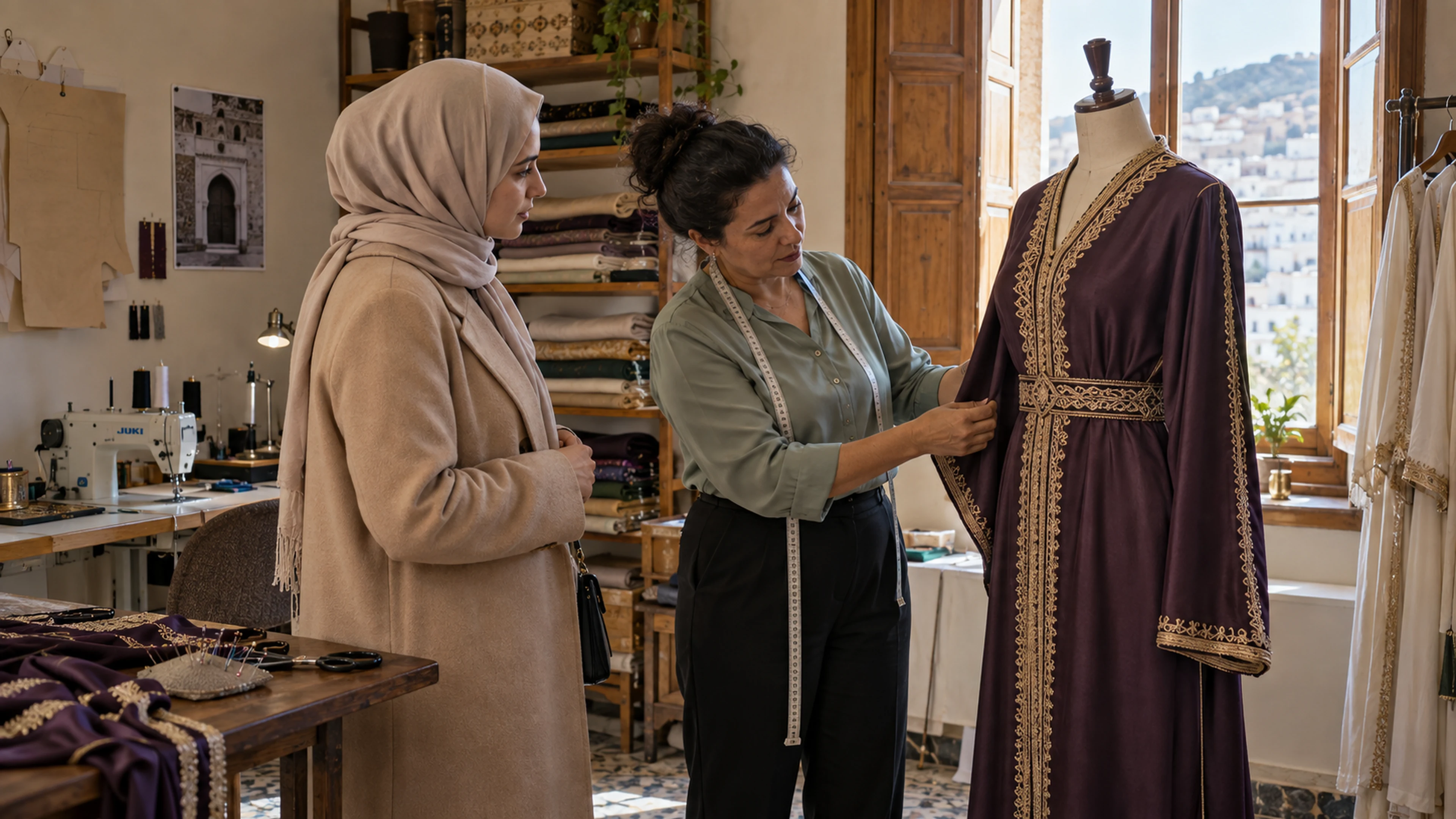
An AI-generated editorial illustration of a tailor and customer discussing a caftan; not a documented workshop.
Clothes, choices & context

Reading Moroccan Dress

Read clothing through form, skill, occasion and individual choice. A garment can carry a story without revealing everything about its wearer.

Exotic Morocco · 10 minute read
01 / A way into the story

Clothing gives clues, not verdicts.

A caftan, djellaba, wrapped textile, suit or pair of jeans can belong to a Moroccan wardrobe. Occasion, taste, generation, work and personal preference shape what someone wears. Dress is a useful cultural subject when it leaves room for the person making the choice.

UNESCO’s 2025 inscription of Moroccan caftan traditions focuses on knowledge and skills as well as the garment. It invites attention to making and transmission, rather than treating elaborate clothing as a fixed costume detached from contemporary life.

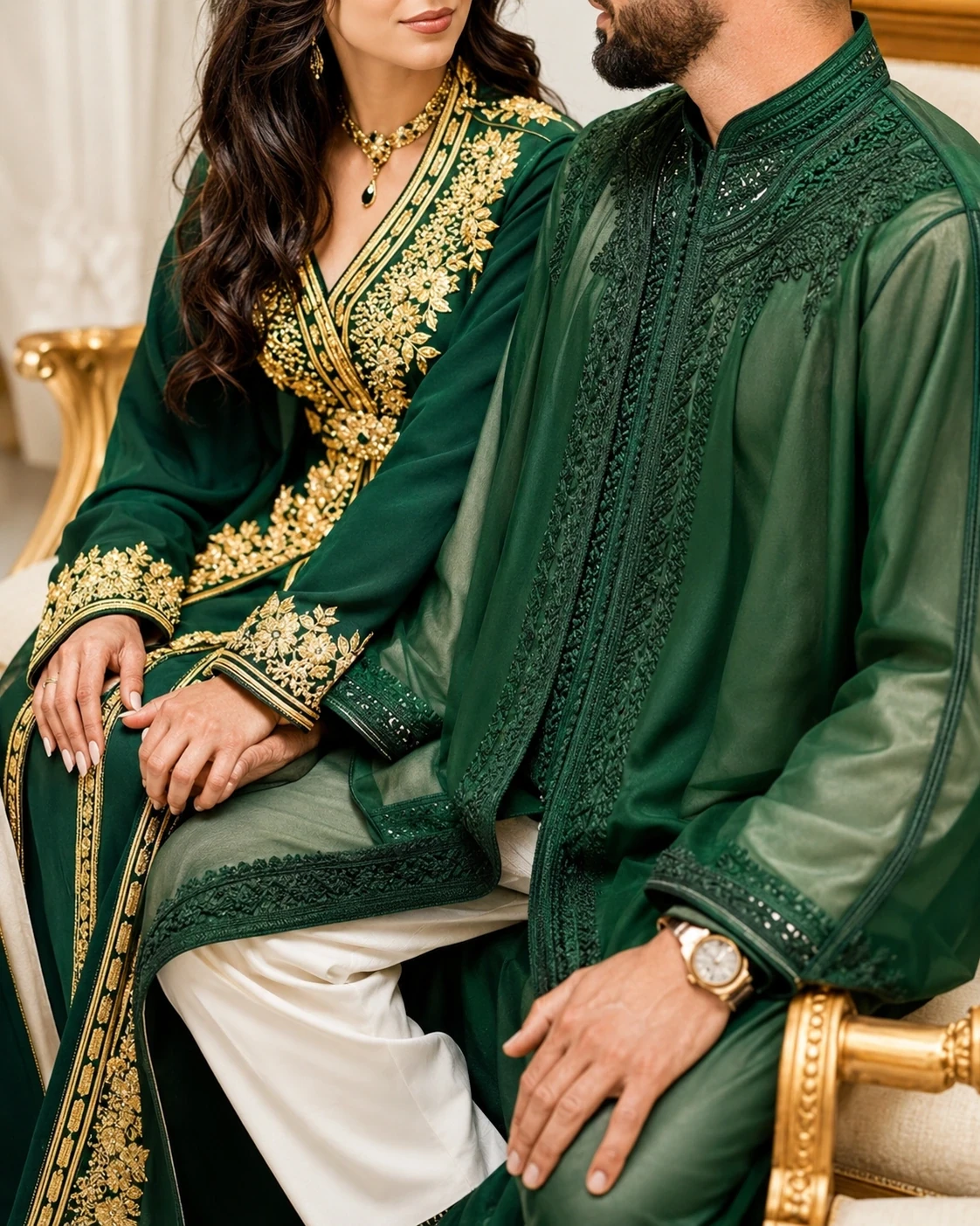
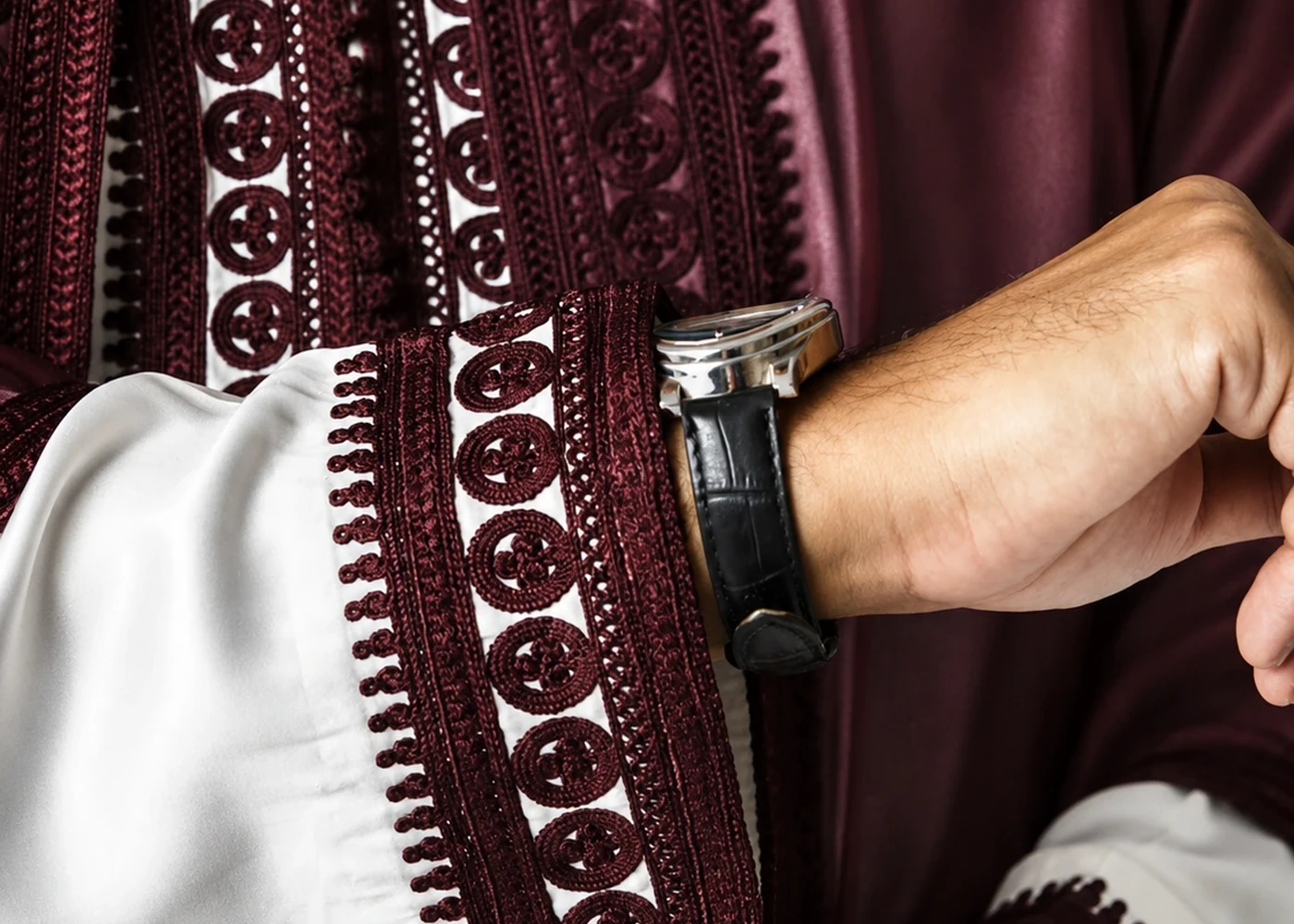
A contemporary caftan ensemble: fabric, finishing and occasion.
THE SUBJECTClothes, choices & context
THE APPROACHPlace. Practice. People.
THE CONNECTIONFind it in Morocco ↗
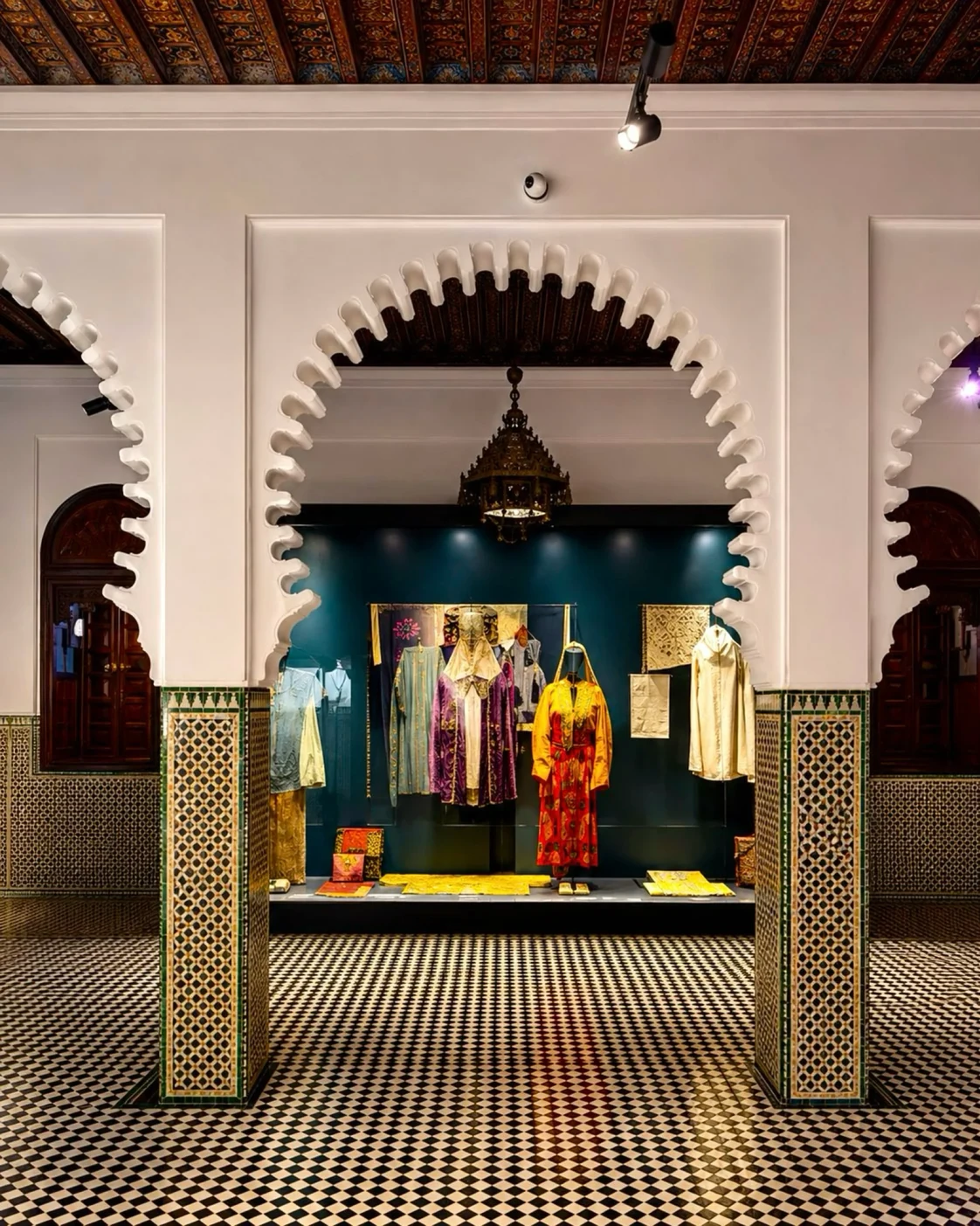
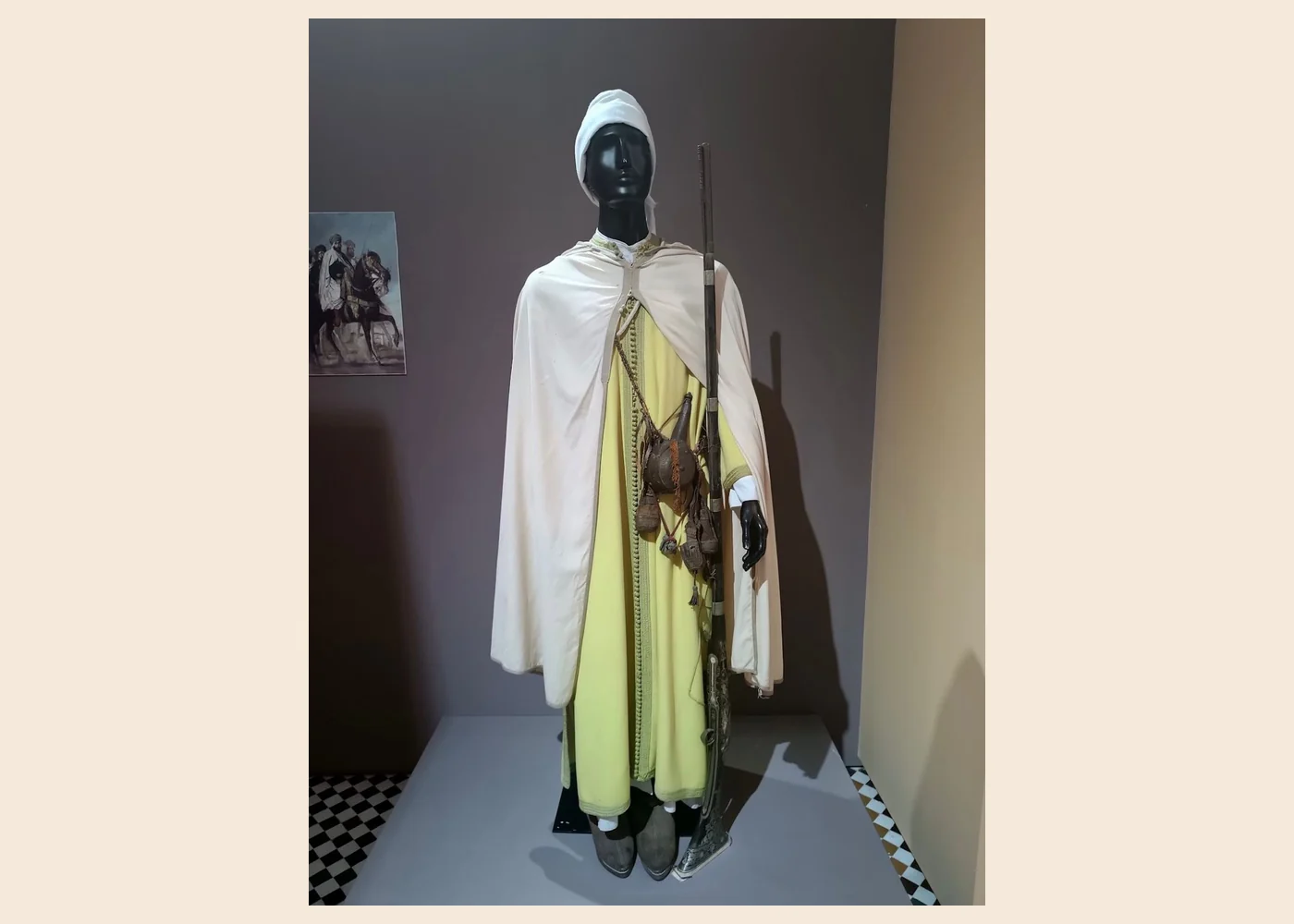
Garments presented in a Tétouan museum setting.
02 / The deeper context

Clothing is chosen,
worn and understood.

Dress is a language of materials, forms and occasions, but it is not a code that a stranger can decode with certainty at a glance. A garment can relate to family preference, regional history, work, celebration, faith, fashion or comfort. Several of those meanings may coexist, and the wearer’s own account matters more than a visitor’s classification.

A caftan, djellaba, jabador or wrapped garment has a structure that can be described: cut, fastening, layering, sleeve shape, fabric and finishing. That vocabulary provides a more grounded beginning than assigning a fixed identity to the wearer. Names and forms also vary, so a particular maker or collection record can help establish what is being discussed.

Ceremonial dress and everyday clothing should be placed beside one another, not arranged as authentic and less authentic versions of a culture. An elaborate outfit records specialised labour and the importance of an occasion. A simple daily garment records other decisions about use and movement. Contemporary clothing belongs to the same living society.

04 / The visual chapter

Read the object and its setting

Move between the close detail and the wider setting. Each view adds another part of the story.

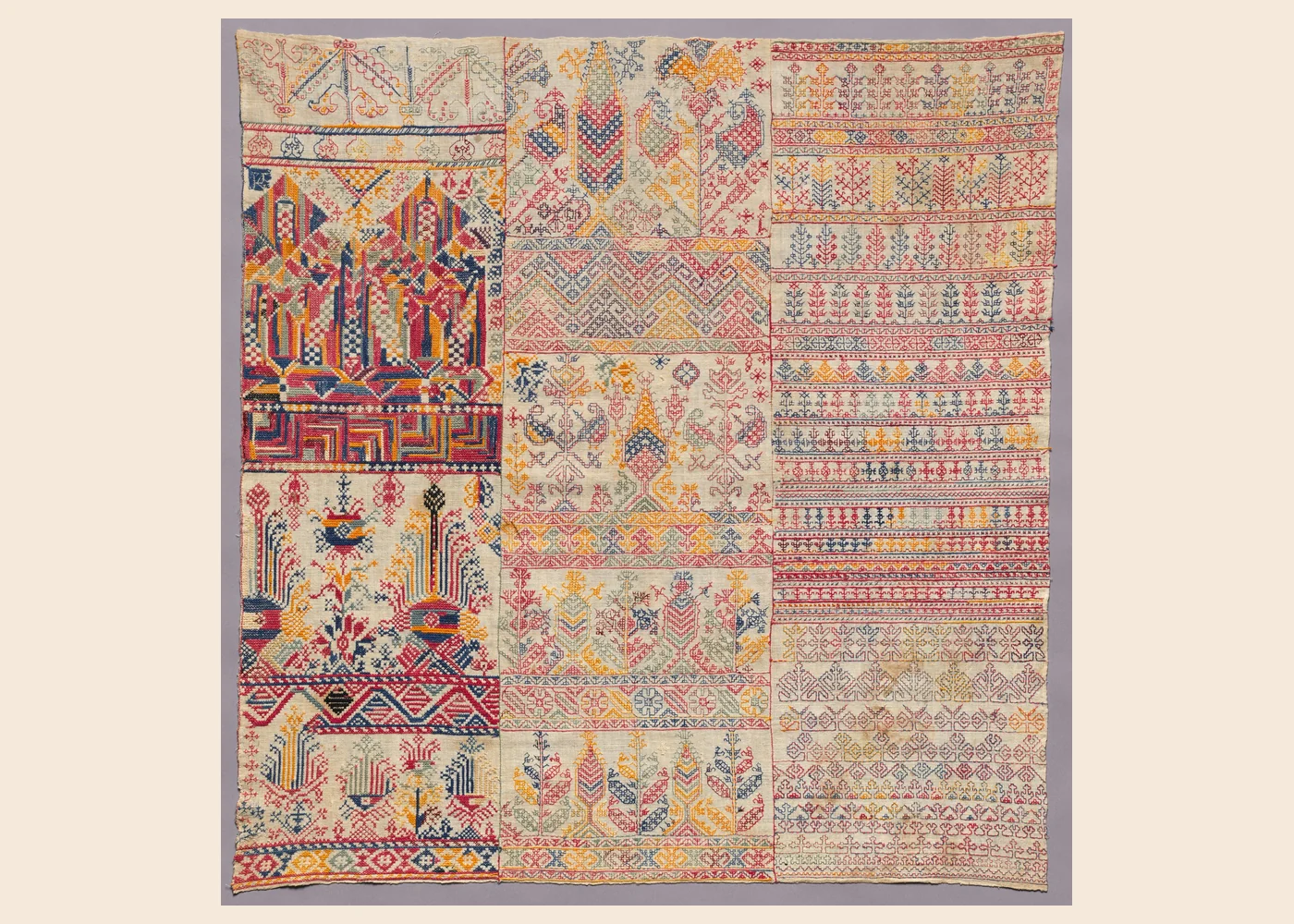
An embroidery sampler attributed to Salé, in the Cleveland Museum of Art collection.
01 / A closer look

Skill on a small scale

An embroidery sampler gathers techniques and patterns into a surface for close inspection. Follow a border, a change of stitch or a shift in scale. A sampler records skilled practice without necessarily being a finished garment or a portrait of its maker.

An embroidery sampler attributed to Salé, in the Cleveland Museum of Art collection.
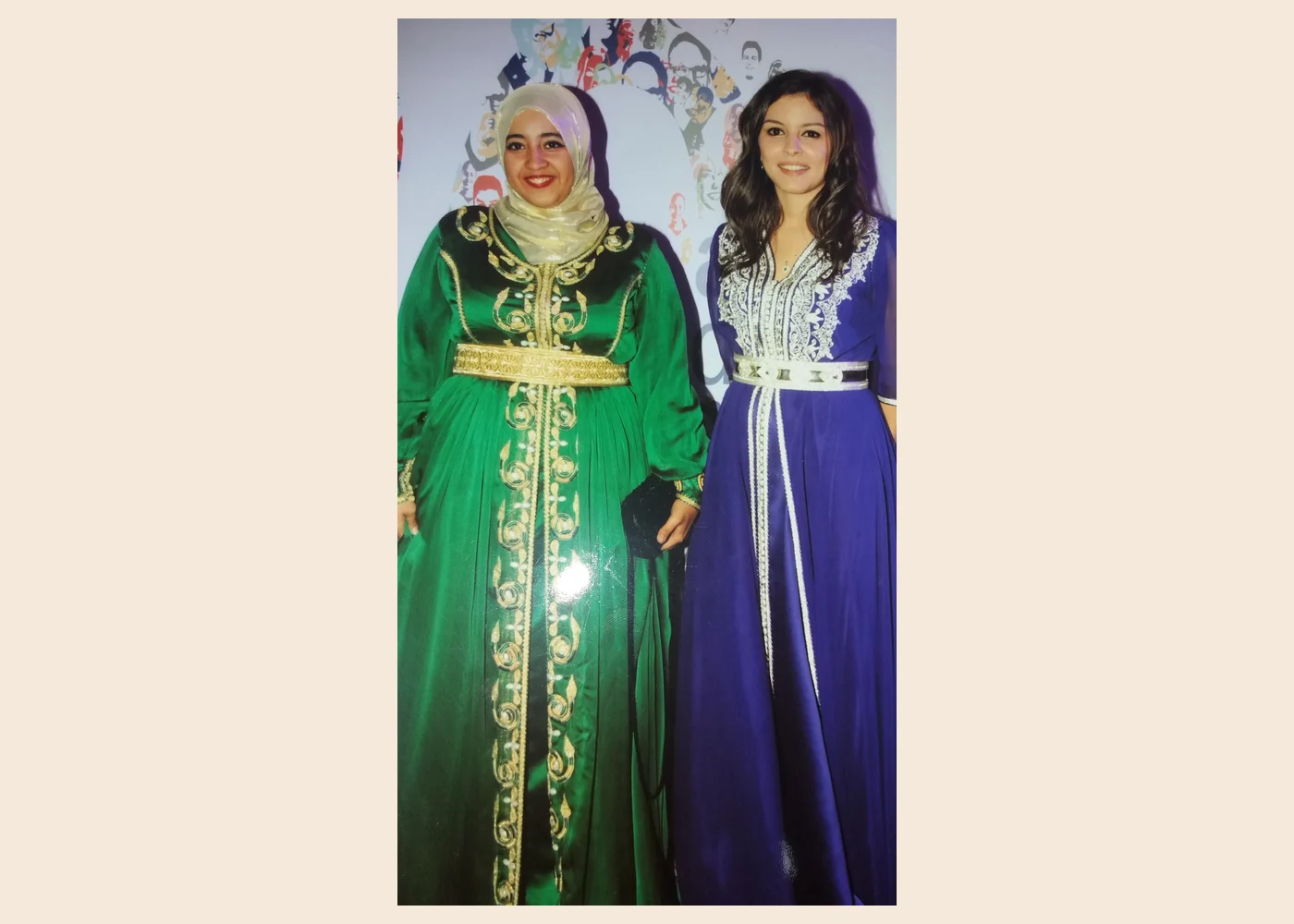
Two caftans photographed in Morocco; the image records particular garments, not a universal dress code.
02 / A closer look

Occasion and choice

Two decorated caftans in one photograph show variation within a shared form. Observe fabric, trim and silhouette, but avoid identifying a person’s background, religion or status from those choices alone. Context is something to ask about, not read off a colour.

Two caftans photographed in Morocco; the image records particular garments, not a universal dress code.
Braided trim and buttons at the edge of a garment.
03 / A closer look

Clothing in a collection

Read the date, place attribution and acquisition history separately. Where a garment is now displayed is not necessarily where it was made or worn. Historical labels may use older terminology; a responsible account makes that context visible.

Braided trim and buttons at the edge of a garment.
03 / From an idea to everyday life

Read construction before making an interpretation.

A male caftan displayed in a museum complicates assumptions drawn from contemporary fashion imagery. Use the collection record to establish its period and attribution. The name of a garment does not mean that its wearers, cut or social setting have always been identical.

A nineteenth-century male caftan displayed at the Bab al-Oqla museum in Tétouan.
01

Begin with the silhouette

Notice how the garment hangs, where it opens and whether it is worn alone or as part of an ensemble. Length and volume affect movement and the way fabric is displayed. A photograph may hide layers or fastenings, so describe only what is visible before adding an explanation.

02

Follow the finishing

Braids, buttons and embroidery can focus attention on an opening, sleeve or edge. The maker’s work lies in placement and construction as well as ornament. Look at how the finish relates to the fabric’s weight and the scale of the garment.

03

Place it in an occasion

Ask whether an example was made for daily use, a celebration, performance or display. A museum object may be documented very precisely, while a street photograph records a particular moment. Neither should be used to prescribe how everyone dresses now.

A closer understanding

The garment
and the occasion.

Dress becomes legible when you connect its construction with the circumstances in which someone chooses to wear it.

Silhouette

Start with what the garment does.

Length, sleeves, opening, layers and the presence of a hood give you a first vocabulary for describing clothing. A djellaba’s hood is a particularly useful identifying feature. An embroidered surface alone does not tell you the garment’s type.

Keep the wearer’s choices separate from your classification. A garment may be worn formally, casually, as an inherited piece or as a contemporary design. One photograph cannot establish the person’s religion, ethnicity, income or relationship with tradition.

Finishing

Small details carry skilled work.

Braided edging, button loops, closures and embroidery can organise a garment’s front and emphasise its seams. They are not interchangeable techniques. A close view reveals whether a line belongs to the fabric structure, an applied trim or stitched decoration.

Finishing also affects how a garment opens, moves and sits on the body. Looking at those relationships gives a fuller account than describing every elaborate surface as “luxurious”. A restrained garment can contain considerable skill that is easy to miss at a distance.

Living heritage

Recognition concerns knowledge as well as objects.

UNESCO inscribed Moroccan caftan arts, traditions and skills in 2025. The subject includes making and transmission, not simply a single definitive appearance for every caftan. Formal recognition should invite attention to the people who sustain the practice.

Fashion and inherited skill can coexist. New fabrics, colours and commissions may appear alongside older methods of cutting or finishing. Compare specific examples and dates instead of dividing clothing into an unchanging traditional category and an unrelated modern one.

Carry this with you

Describe the garment first, ask about the occasion second, and leave personal identity to the wearer’s own account.

05 / More than one perspective

Look beyond
the first impression.

Perspective 01

The caftan as shared skill

The UNESCO inscription of Moroccan caftan practice in 2025 recognises knowledge and skills involving several kinds of maker. It invites attention to transmission and livelihoods as well as the finished garment. It does not turn every caftan into an identical object.

Perspective 02

Regional and personal variation

A regional association can be a useful starting point when documented. It should not erase a wearer’s choices or the movement of styles between places. Avoid turning colour or embroidery into a universal claim about ethnicity, marital status or belief.

06 / Make the connections

Four questions before an interpretation

Use these ideas to connect what you notice with the materials, people and histories behind it.

01

What is the form?

Describe the cut, layers, sleeves and fastening. Use a specific garment name only when you can support it. A loose robe and a hooded outer garment may have different names and functions.

02

How was it made?

Look at seams, edging, embroidery and the relationship between material and shape. Ask which parts involve specialist work. A richly ornamented surface is only one route into the craft.

03

What is the occasion?

Daily clothing, a wedding outfit, performance dress and a museum display are different contexts. The photograph may not identify the occasion, and that uncertainty should remain visible.

04

What does the wearer say?

Personal choice is evidence too. If a person chooses to explain a garment’s meaning, credit that account as theirs. It should not be turned into a claim about everyone wearing a similar form.

07 / A more useful conversation

Look with curiosity and care

Clear answers for the questions that often come next.

Is there one “traditional Moroccan costume”?

No single outfit represents all regions, periods, occasions or people. “Traditional” can describe inherited forms and skills, but it should not erase variation or current design.

Can clothing reveal someone’s identity with certainty?

No. Appearance is not a dependable way to establish language, ancestry, religion or personal beliefs. Clothing can invite a conversation only when the wearer wants to have it.

What is the distinction between a caftan and a djellaba?

In a basic visual comparison, the djellaba’s hood is a useful feature, while a caftan is generally an open-front, unhooded garment. Cuts and terminology vary; consult the particular object and its context.

A thought to take with you

Keep looking. Keep learning.

Build a description that a wearer or maker could recognise: the garment, its material, its construction and its occasion. Leave room for them to add the meanings that an outside observer cannot reliably supply.

The Exotic Morocco library

Continue at your own pace.

This Learn story is free to explore. Find this subject in the guide library, with each title’s current availability clearly shown.

Explore the guide library ↗
Sources & further reading

Read the evidence

  1. UNESCO · Moroccan caftan: art, traditions and skills
  2. British Museum · A woven wool jellaba from Msemrir
  3. Moroccan National Tourism Office · Traditional craftsmanship revisited

Source review: September 2026. Looking exercises and learning prompts are original Exotic Morocco editorial suggestions. Regional practice and personal experience vary.

Image acknowledgements

  1. Related preview: The sound of the south 2 - Nkoub village Morocco by Brahim FARAJI.jpg — Farajiibrahim. CC BY-SA 4.0. Cropped/resized; original licence retained.
  2. Related preview: PlateMakerMarrakech.jpg — Elgaard. CC BY-SA 4.0. Cropped/resized; original licence retained.
  3. Related preview: Tetouan, Morocco (8141893705).jpg — yeowatzup. CC BY 2.0. Cropped/resized; original licence retained.
  4. Hero: AI-generated editorial illustration by Exotic Morocco, made with OpenAI ImageGen. It represents a scene; it is not documentation of identifiable people or a recorded event.
  5. Portrait: A contemporary caftan ensemble: fabric, finishing and occasion. — Exotic Morocco’s existing image collection.
  6. Story-1: Caftan homme marocain du XIX siècle exposer au (musée bab al oqla ).jpg — The moorish men. CC BY-SA 4.0. Cropped/resized; original licence retained.
  7. Story-2: Morocco, Salé - Embroidery sampler - 1929.841 - Cleveland Museum of Art.tif — . CC0. Cropped/resized; original licence retained.
  8. Story-3: Traditionnal Moroccan Caftans.jpg — Metalldinger0th. CC BY-SA 4.0. Cropped/resized; original licence retained.
  9. Chapter: Garments presented in a Tétouan museum setting. — Exotic Morocco’s existing image collection.
  10. Gallery: Braided trim and buttons at the edge of a garment. — Exotic Morocco’s existing image collection.
  11. Related preview: A djellaba within an everyday roadside landscape in Morocco. — Exotic Morocco’s existing image collection.

Destination and related-story thumbnails intentionally identify their linked pages. Principal story images are selected individually for this Learn page.