Skip to learning
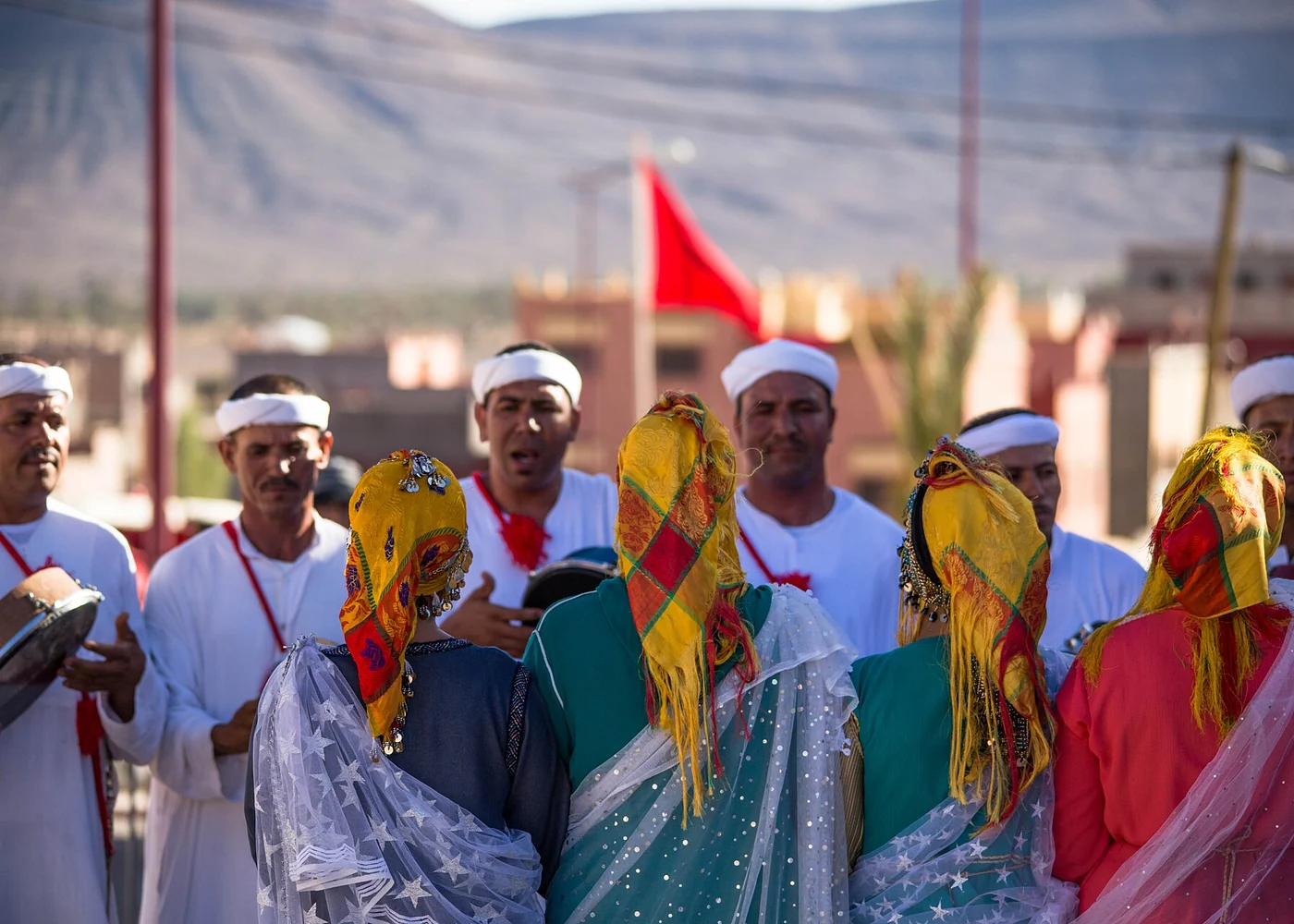
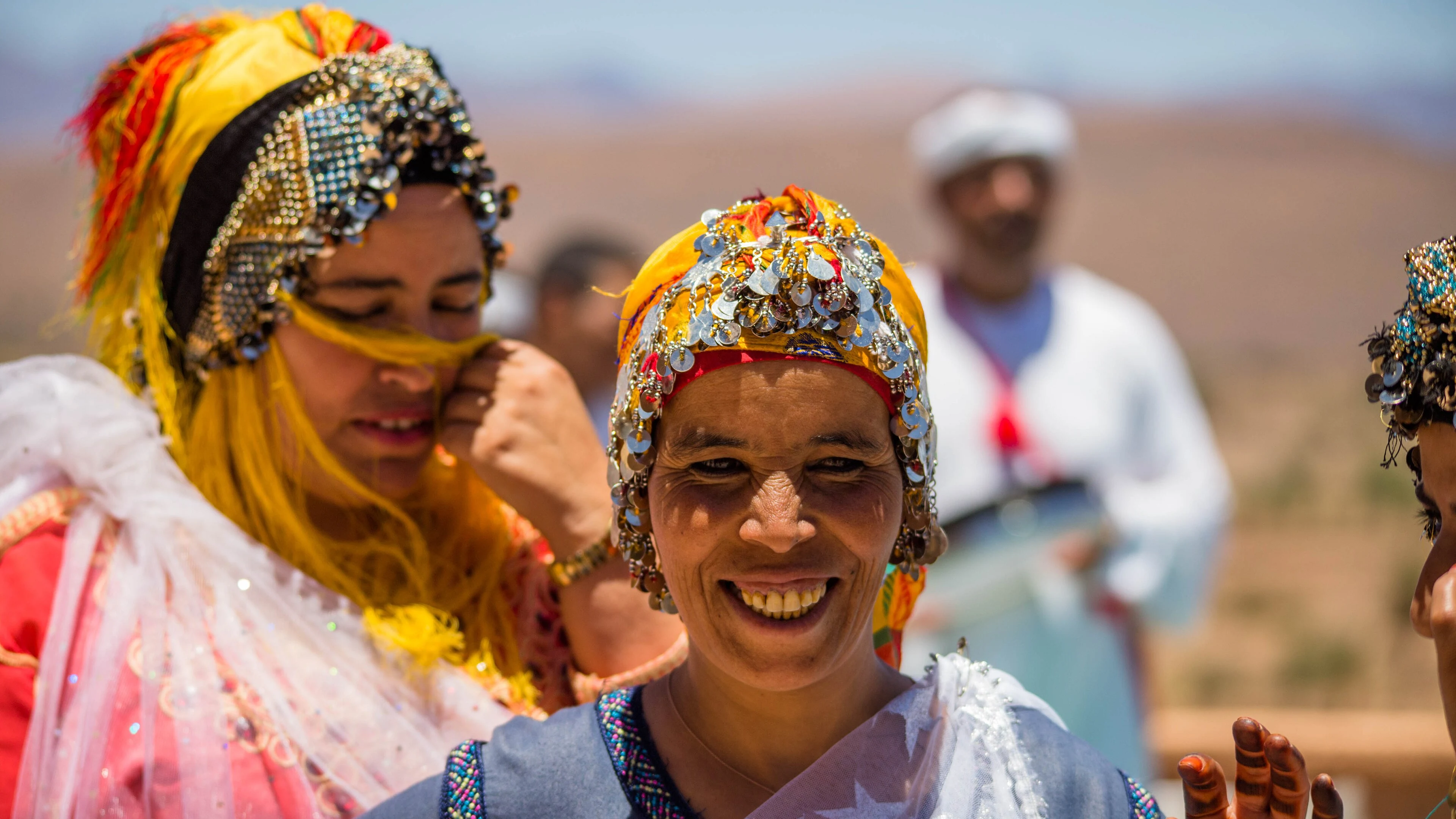
Participants at a festival in Nkob. This is a specific celebration, not a portrait of all Amazigh dress or daily life.
Many voices, living identities

Amazigh Culture

Languages, making, music and contemporary lives. An introduction to Amazigh cultures that leaves room for people to define themselves.

Exotic Morocco · 11 minute read
01 / A way into the story

A living identity, in the plural.

Amazigh is not a synonym for rural, ancient or unchanging. Amazigh people live in villages and cities, in Morocco and abroad, and express belonging in many ways. Language, family, place and personal choice can all matter without forming a single checklist.

Amazigh has official status in Morocco alongside Arabic. Language resources and public implementation recognise important regional varieties, including Tarifit, Central Atlas Tamazight and Tachelhit. Learning one name is the beginning of listening to that variety, not the end.

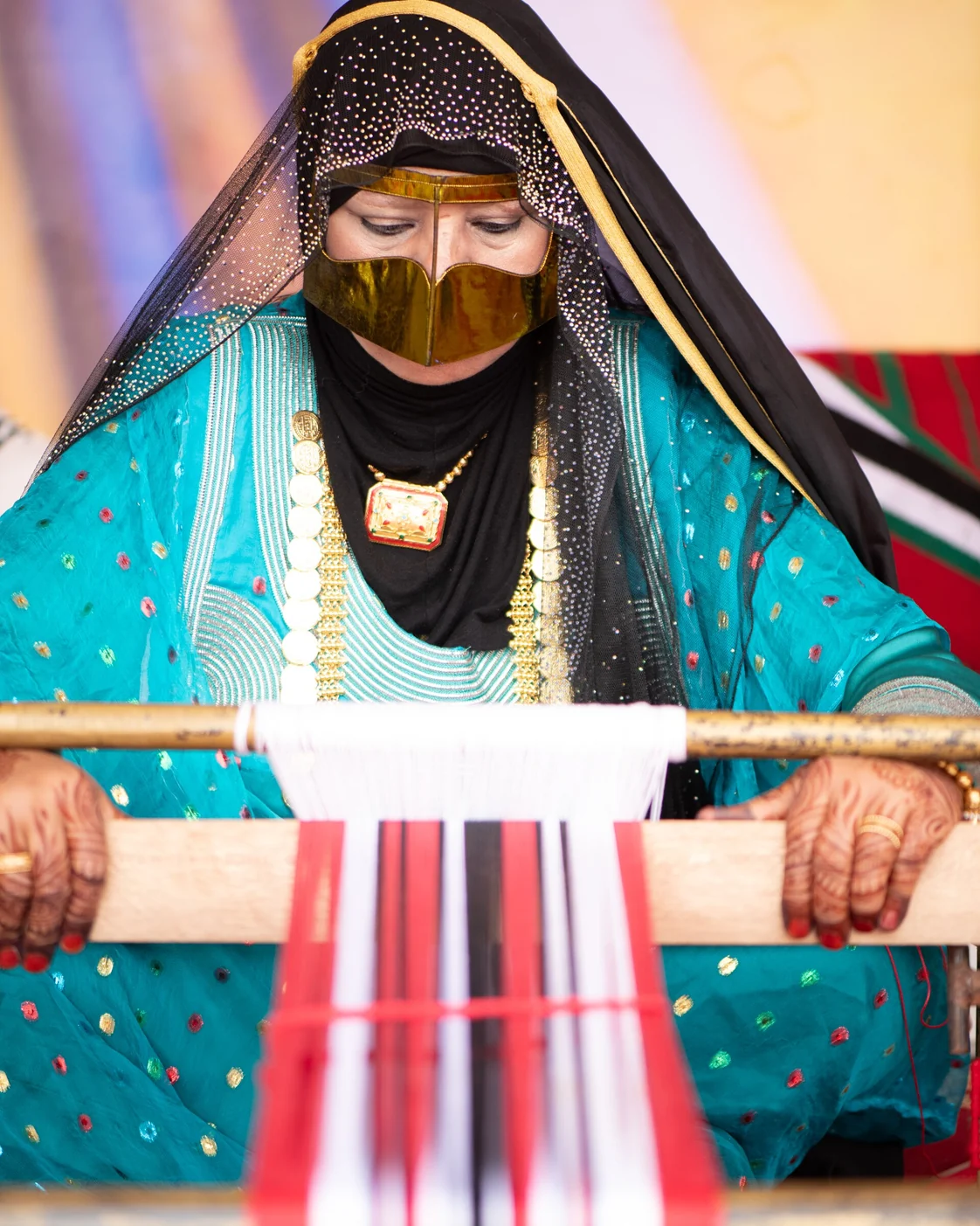
A textile maker at her loom: skill and individual work within a wider cultural story.
THE SUBJECTMany voices, living identities
THE APPROACHPlace. Practice. People.
THE CONNECTIONFind it in Morocco ↗
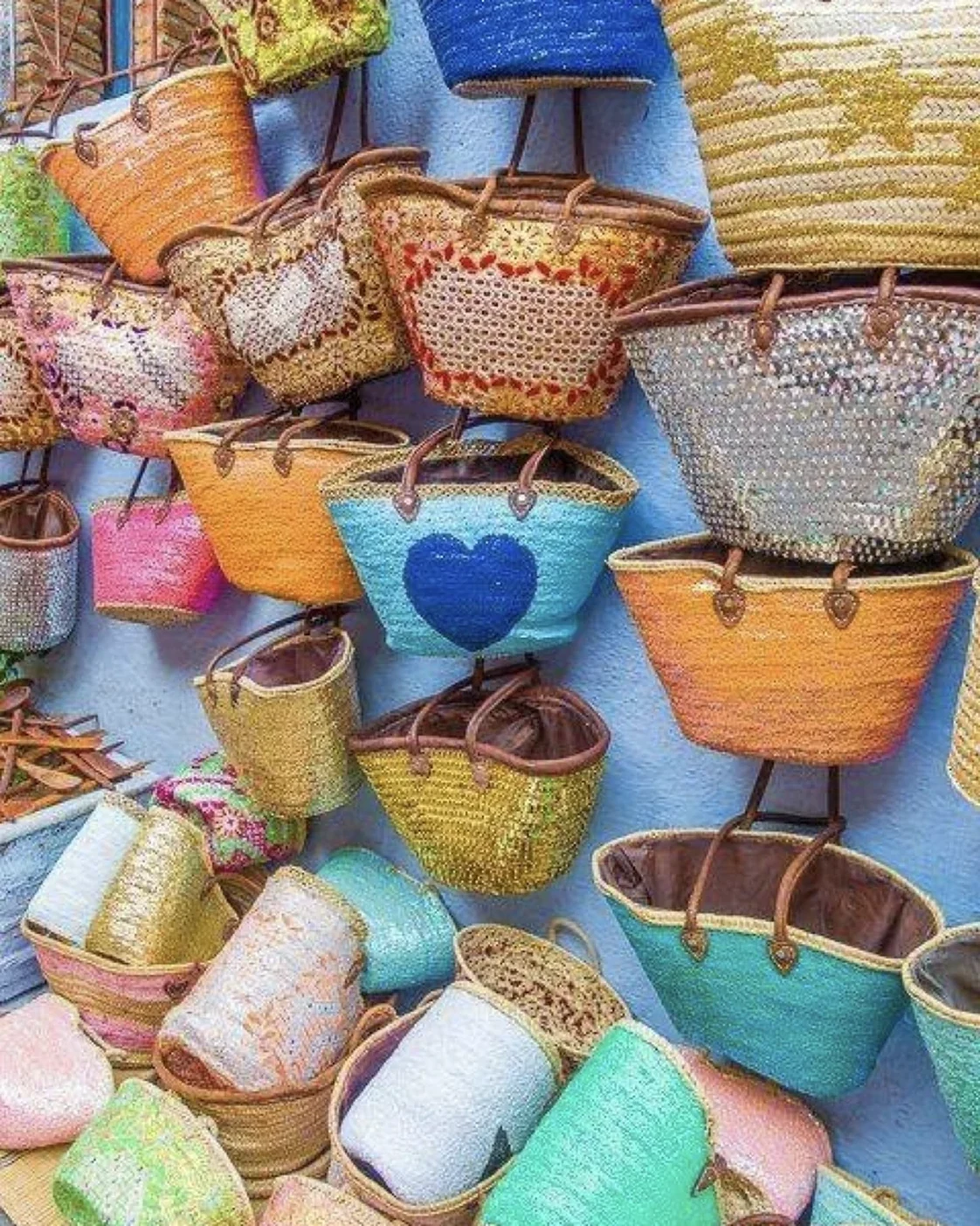
Woven baskets from the existing northern Morocco collection.
02 / The deeper context

A living plurality.
Not a single costume.

Amazigh culture is not one regional costume, one pattern or one way of living. The term connects diverse communities and histories, including people whose daily lives unfold in villages, large cities and the diaspora. Language, family experience, place and personal identification intersect differently. A useful introduction needs to make that variety visible without dissolving it into vague celebration.

Language offers a particularly important route in. Tarifit, Central Atlas Tamazight and Tachelhit are familiar names within Morocco’s Amazigh linguistic landscape. Their distribution cannot be read as a rigid map of individual identity, and multilingual lives are common. Amazigh has official status in Morocco alongside Arabic; recognising that status is different from assuming that every service or conversation will operate in the same language.

Material culture is another doorway, but objects need context. A woven textile can reveal choices of fibre, structure and colour. Its place in someone’s life may involve work, domestic use, exchange, fashion or memory. A museum label or a maker’s account can anchor that discussion. A confident story about a universal “tribal symbol” often removes precisely the local and personal detail that makes the object worth understanding.

03 / From an idea to everyday life

Follow language, practice and place.

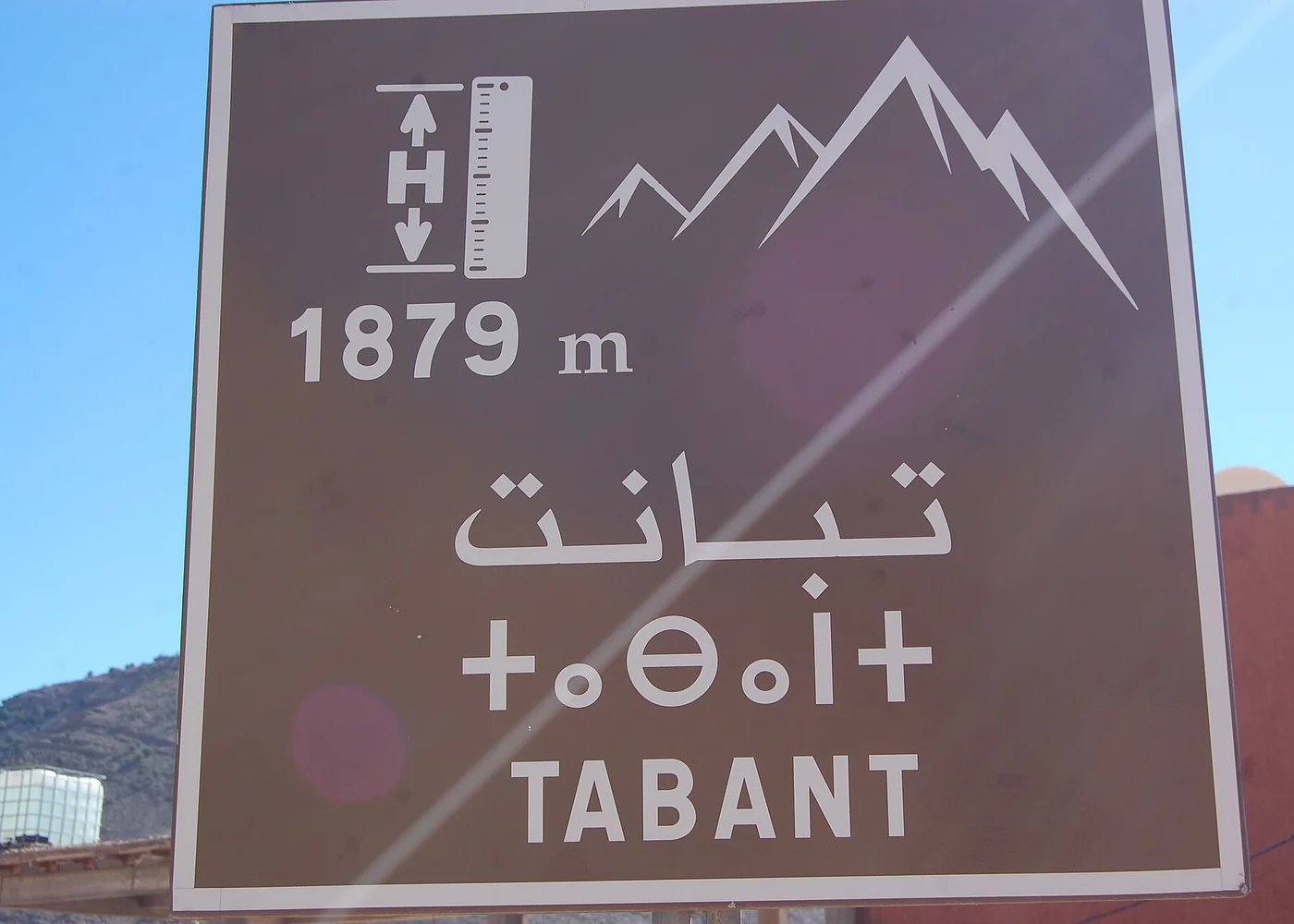
The sign at Tabant places Arabic, Tifinagh and Latin lettering together. A script is a way of writing; a language is not limited to one visual form. Read signs as evidence of public language use, then ask how people speak in different settings.

A multilingual sign at Tabant.
01

Hear the name a person uses

Amazigh is the singular form commonly used for a person or as an adjective; Imazighen is a plural form. Terminology and language preferences are personal as well as public. Follow self-description and ask respectfully when the context calls for it, without turning a conversation into an identity test.

02

Separate a technique from a label

Weaving, jewellery, music and agricultural knowledge each contain specialised practices. Describe the actual object or activity before assigning it to a broad category. Who made it, where, when and for what use are more productive questions than whether it looks sufficiently “traditional”.

03

Include the present tense

A cultural account should make room for urban life, education, creative work and changing tastes. A person does not become less connected to Amazigh heritage by wearing contemporary clothing or living abroad. Continuity can involve adaptation, revival and deliberate innovation.

04 / The visual chapter

Listen, locate, look closely

Move between the close detail and the wider setting. Each view adds another part of the story.

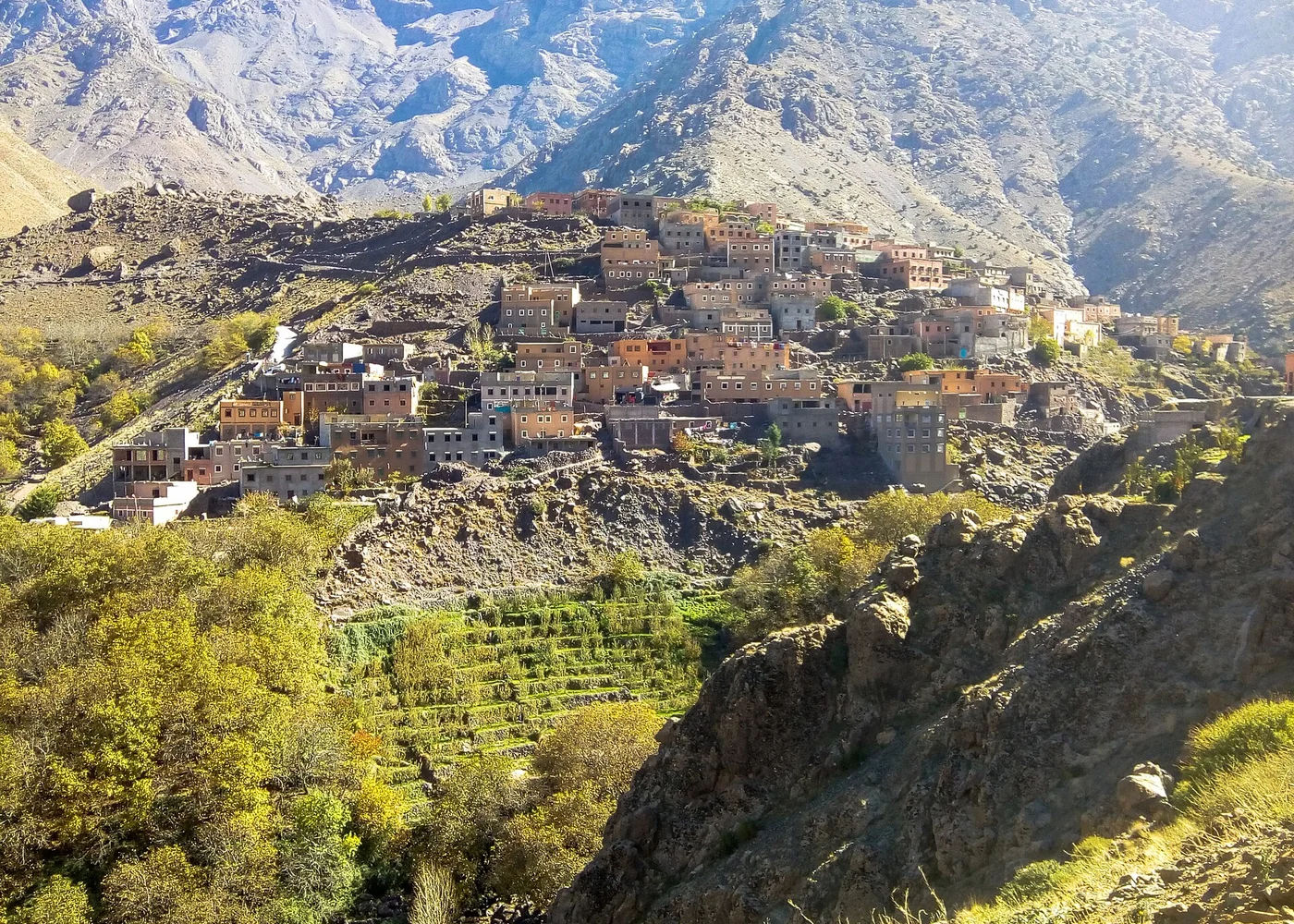
Imlil village in the High Atlas.
01 / A closer look

A place to begin

Imlil offers one mountain setting, with homes, cultivation and routes through the landscape. It cannot represent every Amazigh community. Use a named place to make an observation precise, rather than presenting one village as a timeless national scene.

Imlil village in the High Atlas.
A musical group performing at a festival in Nkob.
02 / A closer look

Performance has a setting

Music and dress at the Nkob festival belong to an organised occasion. The performers’ knowledge, preparation and choices matter. A festival photograph tells us something different from a conversation at home or a recording made in a rehearsal.

A musical group performing at a festival in Nkob.
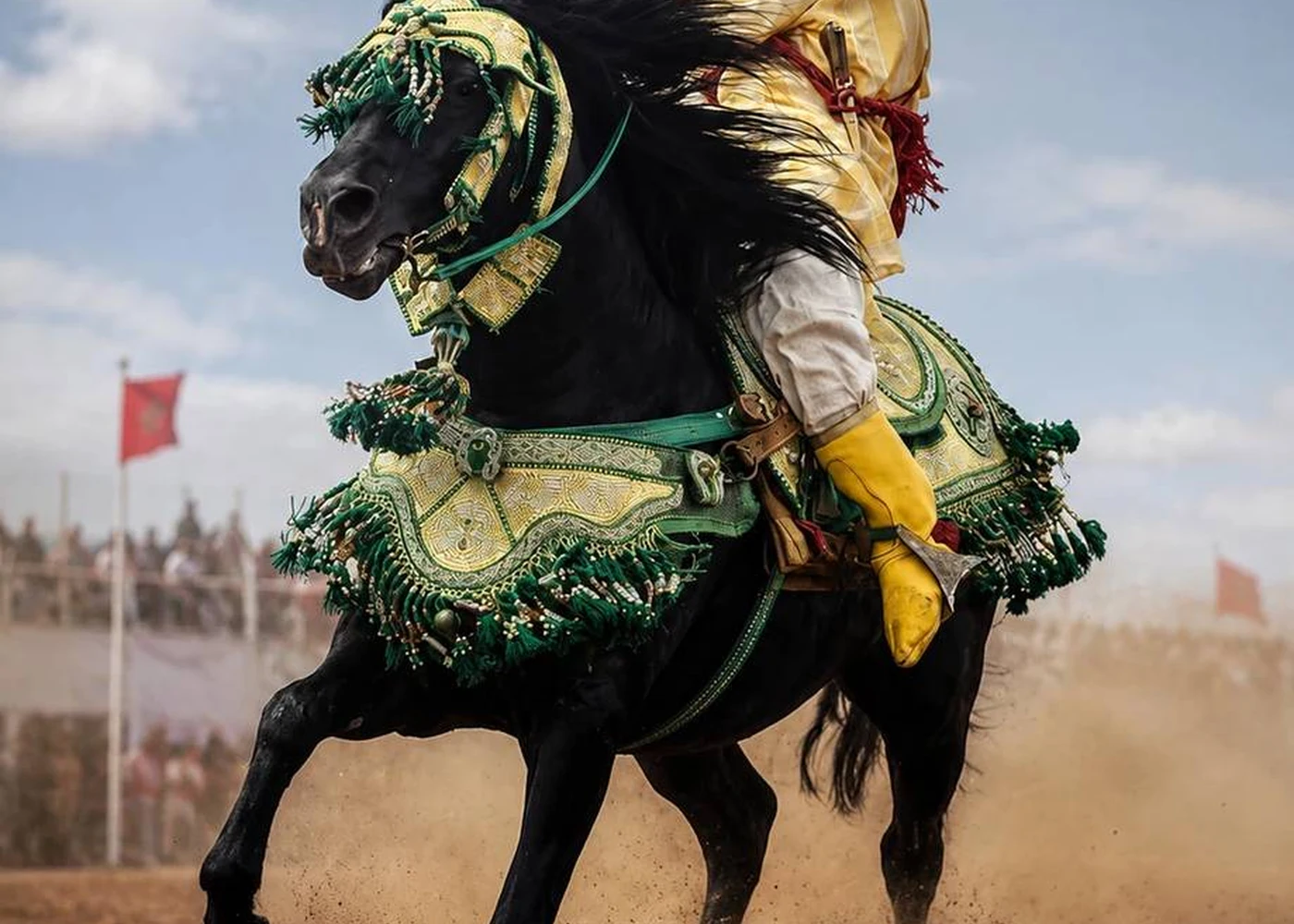
Tbourida: a distinct equestrian practice, not a shorthand for every Amazigh community.
03 / A closer look

A performance perspective

A festival photograph records a particular event, not ordinary dress or daily practice everywhere. Name the performance when its identity is documented. Music, equestrian display and celebration have their own histories and should not be bundled into a generic spectacle.

Tbourida: a distinct equestrian practice, not a shorthand for every Amazigh community.
A closer understanding

Language, living practice
and the present tense.

Amazigh culture belongs to contemporary Morocco as well as to its long history.

Names and voices

Begin with people’s own terms.

Amazigh is commonly used as a singular adjective or identity term; Imazighen is a plural form. “Berber” remains visible in older scholarship and commercial descriptions. A person’s preferred name is more useful in conversation than insisting on a label supplied by a travel catalogue.

Neither term identifies one uniform way of life. Family histories, places of upbringing, languages and urban or rural experience intersect. Jewellery, clothing or a woven pattern cannot establish an individual’s identity without their own account.

Language and institutions

Recognition changes the public landscape.

Amazigh received official status in Morocco’s 2011 Constitution. That recognition is distinct from the practical work of teaching, translation and public-service provision. A legal milestone and everyday access are related, but they are not the same measure.

Tifinagh lettering is one visible part of this public presence. Spoken language, however, cannot be reduced to a script on a sign. For a learner, the important next question is which variety is used in that place and how its speakers themselves describe it.

Making and change

A tradition can be inherited and redesigned.

A woven textile carries choices about fibre, structure, colour, use and audience. Contemporary makers may continue learned techniques while changing scale, materials or designs for new commissions. Innovation need not cancel a work’s cultural significance.

Equally, a market label such as “tribal” tells you little about authorship. A more informative account names the maker or cooperative where possible, identifies where the work was made and distinguishes documented history from a seller’s interpretation of motifs.

Carry this with you

Include contemporary voices beside historic objects. Otherwise a living culture can mistakenly appear to belong only to the past.

05 / More than one perspective

Look beyond
the first impression.

Perspective 01

A regional perspective

The Rif, the Atlas systems and the Souss provide different geographical and linguistic entry points. None contains a single uniform culture. Compare named communities and documented practices rather than filling an entire region with one representative image.

Perspective 02

A learning perspective

Language learning is more than memorising a few words. Sound, context and the opportunity to use a language matter. IRCAM’s educational resources offer a more grounded starting point than invented spellings or an isolated decorative use of Tifinagh.

06 / Make the connections

Four habits for a richer understanding

Use these ideas to connect what you notice with the materials, people and histories behind it.

01

Use people’s own terms

Amazigh is widely used as a self-designation; Imazighen is a plural form. “Berber” remains in historical writing and some personal usage. Follow the preference of the person or community you are discussing.

02

Separate language and script

Tifinagh is a script associated with Amazigh writing. Seeing it on a sign does not tell you which language someone will choose in conversation, nor how confidently they read that script.

03

Give an object a location

A textile, ornament or musical instrument becomes easier to understand when its maker, place and use are known. Avoid assigning a universal meaning to a motif from resemblance alone.

04

Include the present

Schools, music recordings, online work, urban life and migration belong in this story. Cultural continuity can involve adaptation and new forms of expression; it does not require people to live as their grandparents did.

07 / A more useful conversation

Curiosity without a checklist

Clear answers for the questions that often come next.

Is there one Amazigh language spoken in the same way everywhere?

There are related varieties with important regional differences. A useful first step is to identify the variety relevant to the people or place you are learning about, then use suitable learning resources.

Can a carpet prove a fixed ethnic identity?

A carpet can tell us about making, exchange and use when its provenance is documented. Design alone is not a reliable test of a maker’s identity, and objects can move far beyond their place of production.

How can I learn respectfully?

Use named Moroccan and Amazigh voices, credit makers and speakers, and allow disagreement. No individual should be expected to explain or represent an entire population.

A thought to take with you

Keep looking. Keep learning.

Let a specific voice, object or practice lead you into the larger subject. The closer the description becomes, the less need there is for a stereotype. Plurality is not a complication to remove; it is part of the culture to understand.

The Exotic Morocco library

Continue at your own pace.

This Learn story is free to explore. Find this subject in the guide library, with each title’s current availability clearly shown.

Explore the guide library ↗
Sources & further reading

Read the evidence

  1. Moroccan Ministry of Digital Transition and Administration Reform · Official status of Amazigh
  2. IRCAM · Amazigh teaching resources
  3. Moroccan National Tourism Office · Language
  4. Moroccan National Tourism Office · Traditional craftsmanship revisited

Source review: September 2026. Looking exercises and learning prompts are original Exotic Morocco editorial suggestions. Regional practice and personal experience vary.

Image acknowledgements

  1. Hero: The sound of the south 2 - Nkoub village Morocco by Brahim FARAJI.jpg — Farajiibrahim. CC BY-SA 4.0. Cropped/resized; original licence retained.
  2. Portrait: Women Textile weaving.jpg — Houssain tork. CC BY-SA 4.0. Cropped/resized; original licence retained.
  3. Story-1: Zgh tabant hôteur.jpg — Lucyin. CC BY-SA 4.0. Cropped/resized; original licence retained.
  4. Story-2: Imlil village, High Atlas Mountains.jpg — Mounir Neddi. CC BY-SA 4.0. Cropped/resized; original licence retained.
  5. Story-3: Musical group performing in traditional festival at Nkob village, Ouarzazate, Morocco by Brahim FARAJI.jpg — Brahim FARAJI. CC BY-SA 4.0. Cropped/resized; original licence retained.
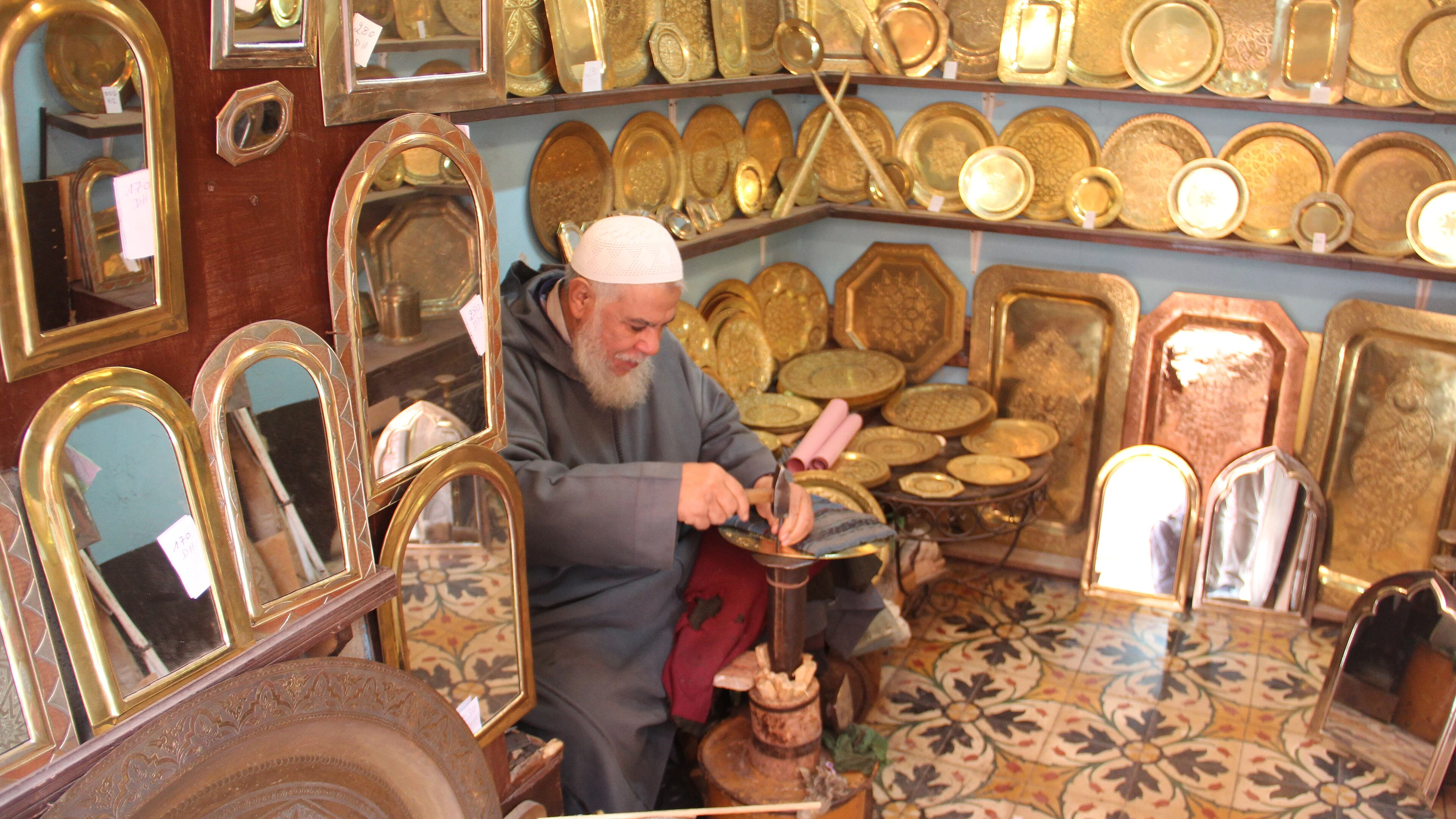
  6. Related preview: PlateMakerMarrakech.jpg — Elgaard. CC BY-SA 4.0. Cropped/resized; original licence retained.
  7. Related preview: Smith's Quarter at Medina of Fés, Morocco.jpg — Bikerhiker75. CC BY-SA 4.0. Cropped/resized; original licence retained.
  8. Related preview: AI-generated editorial illustration by Exotic Morocco, made with OpenAI ImageGen. It represents a scene; it is not documentation of identifiable people or a recorded event.
  9. Chapter: Woven baskets from the existing northern Morocco collection. — Exotic Morocco’s existing image collection.
  10. Gallery: Tbourida: a distinct equestrian practice, not a shorthand for every Amazigh community. — Exotic Morocco’s existing image collection.
  11. Related preview: Hands at a loom: making is one way knowledge passes between people. — Exotic Morocco’s existing image collection.

Destination and related-story thumbnails intentionally identify their linked pages. Principal story images are selected individually for this Learn page.