Skip to Morocco Through TimeAn editorial evocation of Morocco through time; a composed scene, rather than a view of one site.
EXOTIC MOROCCO · LEARN
Morocco Through Time
Dynasties, Cities & Living Memory
A long view of a country shaped by cities, mountains, courts and crossings.
Read Morocco through the people who built, cultivated, traded, studied and remembered here. Begin with the broad chronology, then follow a city, a community or a material trace into a closer history.
The past is visible. Its meaning takes a closer look.
At Volubilis, a wall, a press and a mosaic reveal different kinds of work. In Fès, a courtyard belongs to an institution as well as to an architectural style. In Meknès, a monumental gate makes more sense when it is read beside storage buildings, water and the spaces around a court. History begins when those details become questions.
Who held authority here? Who supplied the materials and labour? What changed when a ruler, a trading route or a household moved? A country’s past cannot be reduced to a sequence of royal names, yet those names can help us understand why a capital grew or an institution received support. The point is to connect political history with the lives it organised.
This overview uses present-day Morocco as its starting geography. Earlier kingdoms, empires and communities occupied changing territories that do not fit neatly inside today’s borders. “Morocco” is therefore a convenient orientation for the reader, not a claim that one state, identity or boundary existed unchanged through every period.
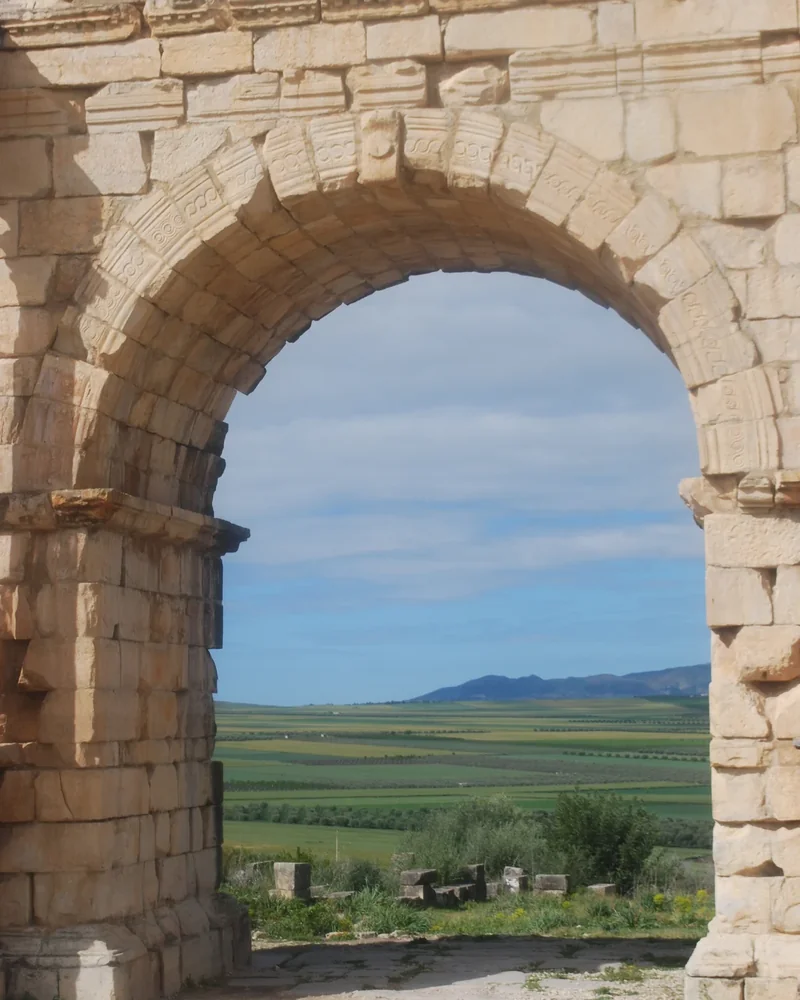
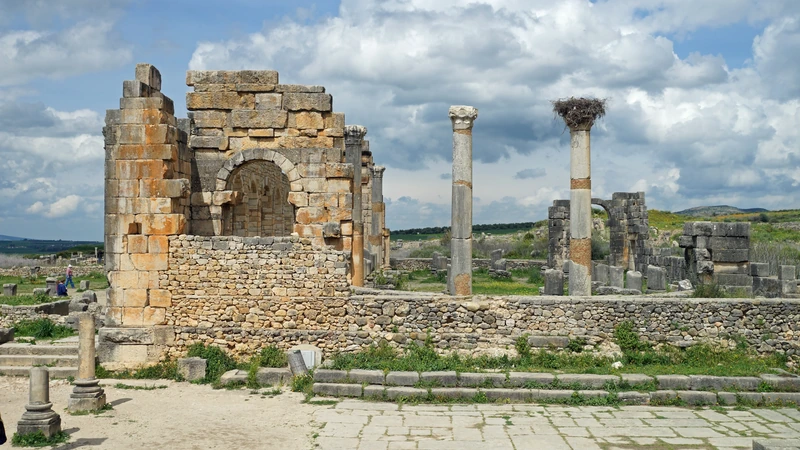
Volubilis: a surviving arch and the landscape around it.
02 / Moroccan history
Before the capitals
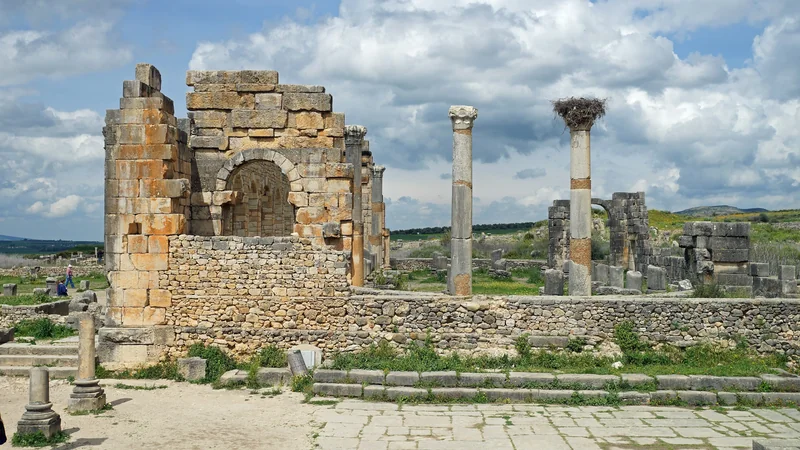
The basilica at Volubilis, one surviving layer of an ancient settlement.
The human past of this land extends far beyond written chronicles. At Jebel Irhoud, research by a Moroccan and international team identified early Homo sapiens remains dating to about 300,000 years ago. They belong to a much wider African history of human evolution. They do not establish the age of a modern nation, and they cannot be assigned a present-day ethnic identity.
For later periods, archaeology brings settlements, farming, exchange and political power into sharper focus. Ancient Mauretania was a North African kingdom; its name should not be confused with the modern state of Mauritania. Volubilis became an important centre of Mauretanian and Roman-period life, and occupation continued after the withdrawal of Roman authority. Its history is longer than its most familiar arch.
Read the site at more than one scale. Public buildings reveal civic display; houses and production areas open questions about domestic life and economic activity. Archaeological survival is selective: exposed masonry tells us something different from an inscription or an excavated deposit. Absence from a visitor’s photograph is not absence from the past.
A Roman monument in northern Morocco is also not evidence that every region shared the same political experience. The useful picture is one of connected but uneven worlds: local societies, Mediterranean contacts and changing centres of authority. Those relationships prepare us to understand the early Islamic centuries without imagining an empty land waiting for history to arrive.
03 / Moroccan history
A chronology with room for more than one story
Use these turning points as bearings. The intervals are deliberately uneven: human evolution, dynastic change and modern political events cannot be squeezed into one evenly measured strip. A change of ruler did not change every community at the same speed.
Each entry connects a period to a change, a place and a surviving trace. Dates name particular events where the evidence supports them; broad periods are used where a single year would create false precision.
1 / 12 · chronology
01
About 300,000 years ago
about300,000years ago
Human deep time
Jebel Irhoud places early Homo sapiens within a wider African evolutionary history.
The 1956 declaration and the IER’s work from 2004.
04 / Moroccan history
Ruling houses changed the map. They did not contain the whole country.
The early Islamic centuries brought new political and religious connections to societies with their own institutions and histories. Expansion from the eastern Mediterranean did not produce one instant cultural transformation. Islamisation developed over time, while local centres and ruling houses acquired greater independence. Arabic became part of religious and intellectual life without erasing the plurality of languages and communities. The Idrisid foundations at Fès belong within that longer process.
A dynasty is a line of rulers and a network of political authority. It is not a complete description of the people who lived under it. Origins, alliances, religious claims and the ability to hold particular places mattered; so did resistance and competing centres of power.
The dynastic sequence below offers a useful framework, but the edges overlap. A movement’s emergence, its capture of a capital and the last survival of a branch may give different start or end dates. That is why this overview uses centuries and named turning points instead of presenting one apparently exact succession bar.
Look at what each formation made possible: a new capital, a religious institution, an expanded commercial connection, an army or a court. Then look beyond the patron. Monuments depended on makers and labour, and their later histories often crossed several reigns.
Four imperial cities. Many histories between them.
Fès, Marrakech, Meknès and Rabat are conventionally presented as Morocco’s four imperial cities. The grouping is a useful doorway into capitals and patronage, not a claim that these were the only places that mattered. Political importance shifted, and each city contains more than the period most closely associated with its name.
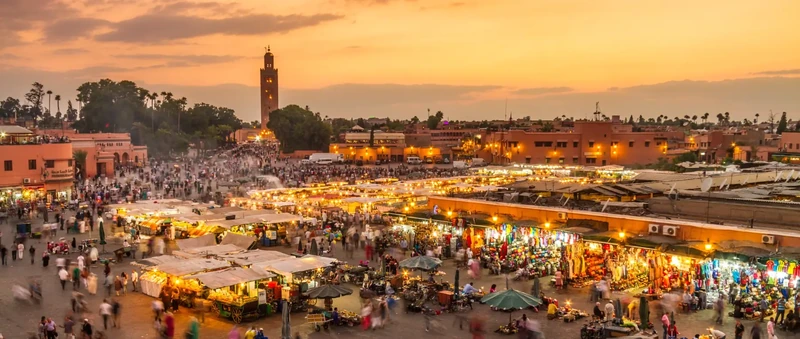
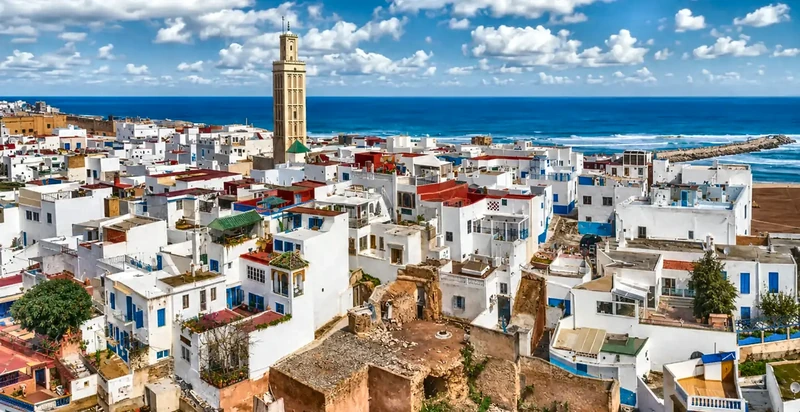
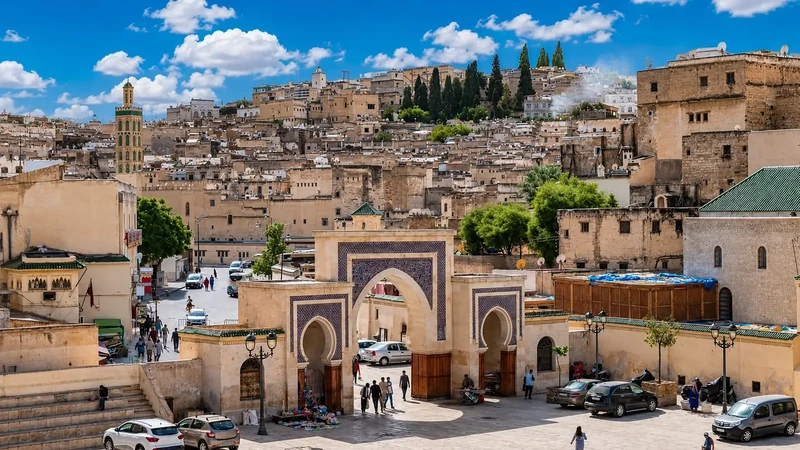
Fès opens the relationship between early Islamic foundations, Marinid building and scholarship. Marrakech connects the Almoravid and Almohad worlds with later Saadian commissions. Meknès makes the scale of Moulay Ismail’s court particularly visible. Rabat brings Almohad monuments into conversation with the twentieth-century capital.
Beyond that familiar group, Tétouan offers a northern history of migration and urban life, while Essaouira makes royal planning and Atlantic commerce tangible. A historical reading improves when these places are allowed to differ. Choose a city in the slider, then keep asking what its most famous view leaves outside the frame.
06 / Moroccan history
Amazigh histories belong throughout the chronology
Amazigh communities are not a preliminary chapter that ends when written dynastic history begins. Their languages, political formations, livelihoods and cultural practices belong within Morocco’s changing history and its present. The Almoravid and Almohad movements alone make it impossible to separate Amazigh histories from the history of imperial power.
The term must also leave room for differences between communities, regions and periods. Language, ancestry, political allegiance and religious life do not form one fixed package. A mountain setting cannot identify someone’s language, and a garment cannot establish an unbroken lineage. Historical names used by outside observers need to be read in the setting in which they were written.
The Moroccan research institute IRCAM has called attention to a basic problem in historical periodisation: accounts organised around external powers can lose the perspective of local populations. A better reading asks whose categories organise the story and what kinds of evidence survive from the people being described.
This is why the Overview returns to Amazigh histories in its accounts of cities, scholarship, rural landscapes and exchange. The existing Amazigh Culture page provides a companion introduction to living plurality. A future historical essay will examine change across time without turning contemporary identity into an archaeological label.
Follow the routes, then look at the work that sustained them
A route is more than a line between famous cities. It needs water, food, animals, credit, local knowledge and agreements about passage. Its course and importance can change. The history of exchange becomes clearer when the places between the endpoints are given a role.
Schematic connections; not a navigational map.
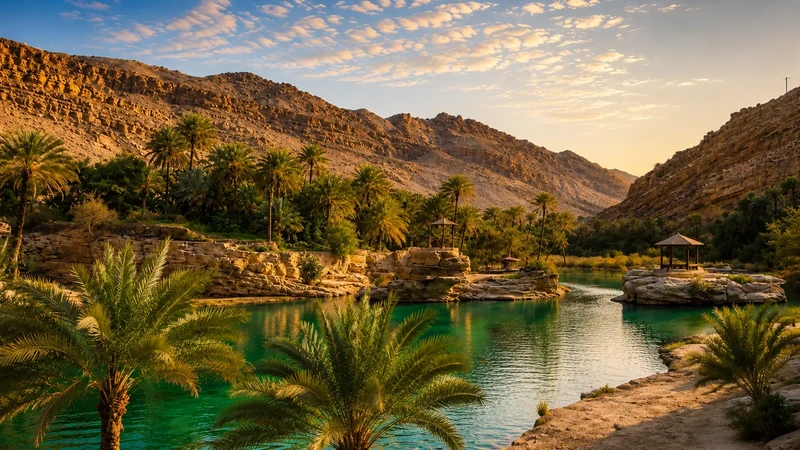
The Drâa Valley’s oasis landscape, from the current EM collection; land, water and routes meet here.
Across the Sahara
Sijilmassa, in the Tafilalt, was an important northern centre of trans-Saharan commerce. Gold moved through networks linking North and West Africa, alongside other goods and the people who organised exchange. Enslavement and forced movement also belong to these histories. They cannot be softened into a picturesque caravan scene or treated as an incidental footnote to prosperity.
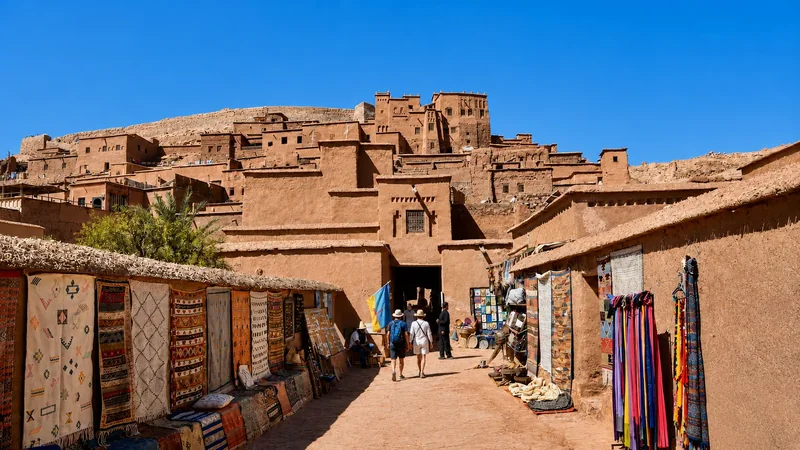
Aït Ben Haddou: earthen settlement and continuing repair.
Between mountain and oasis
Aït Ben Haddou helps connect earthen settlement, community space and a trading corridor across the High Atlas. Its standing buildings should not be assigned the same age as the older techniques they preserve. Much of what is visible reflects later construction and continuing repair. A route can be old while the buildings beside it have changed repeatedly.
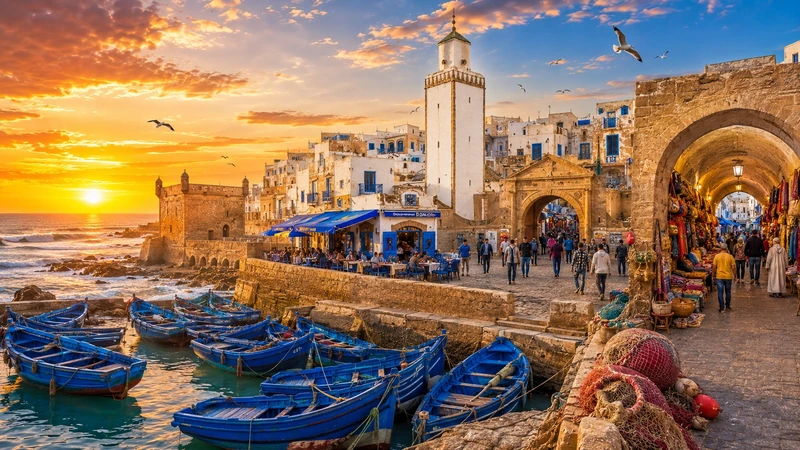
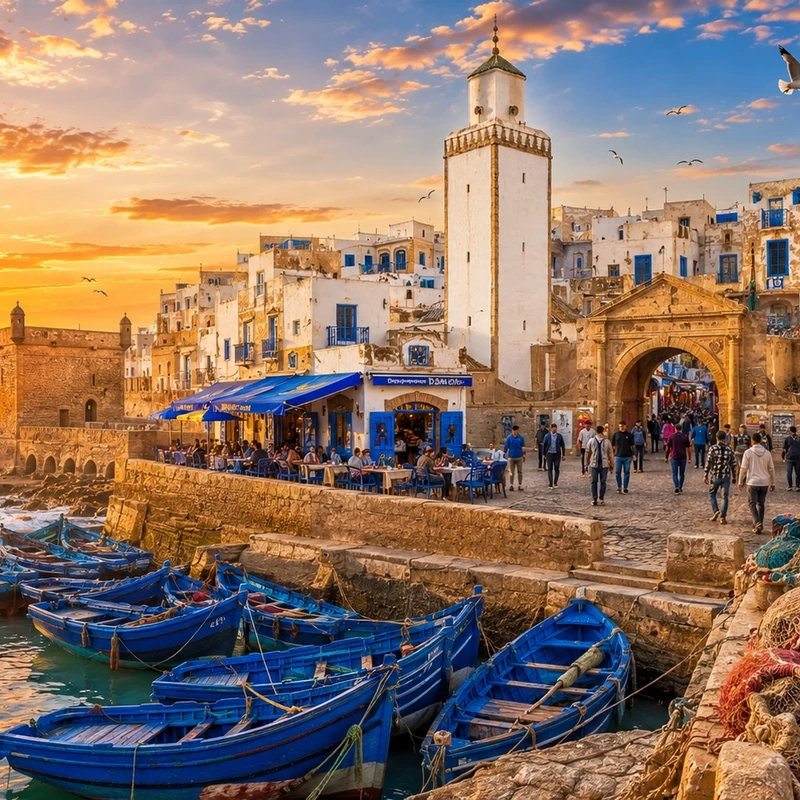
Essaouira harbour, from the current EM city collection; a contemporary editorial view.
Toward the Atlantic
Essaouira’s eighteenth-century development as a royal port shows a different scale of organisation: urban planning, fortifications and commercial links joining an inland hinterland to maritime exchange. Read the harbour together with the routes that supplied it. Coastal history is also an inland history.
These are historical connections, not a proposed driving itinerary. Use the place pages to understand the setting; detailed sequences, maps and travel planning belong in the guide collection.
08 / Moroccan history
The Strait carried more than one kind of crossing
Al-Andalus names the changing Muslim-ruled territories of the Iberian Peninsula. It does not mean exactly the same place as modern Andalusia. Its connections with North Africa included political power, scholarship, artistic production, commerce and migration over many centuries.
The Almoravid and Almohad periods linked centres on both sides of the Strait. A useful material example is the celebrated minbar commissioned under Almoravid rule in 1137 and later associated with the Kutubiyya mosque in Marrakech. Its commission and its later setting belong to different political moments. An object can preserve a connection more precisely than a general claim that two cities share a style.
Migration also changed Moroccan urban life. Tétouan’s rebuilding by Andalusi refugees is central to its historical identity. Yet arrival was not one event experienced in the same way by everyone. The end of Nasrid rule in Granada in 1492, the expulsion of Jews, later coerced conversions and subsequent Morisco expulsions should not be collapsed into one date or one population.
Look for connections without reducing Morocco to a recipient of influence. People, knowledge and political authority moved in several directions. A courtyard, a manuscript or a musical tradition requires its own evidence before it can be assigned a simple origin story.
Tétouan in the current EM city collection; a contemporary editorial view.
09 / Moroccan history
Jewish Moroccan histories are part of the country’s history
Jewish lives belong within accounts of Moroccan cities, crafts, commerce and religious experience. They should not appear only as an ornamental note about diversity or as a story told entirely through departure. The evidence includes communities and institutions, but also particular people whose opportunities and constraints can be examined closely.
The merchant Meir Macnin, studied by historian Daniel J. Schroeter, provides one such case. His commercial and diplomatic connections joined Morocco with a wider Sephardi world around the turn of the nineteenth century. Access to a court could offer influence while legal distinctions and restrictions remained. An exceptional merchant’s career is therefore evidence of both opportunity and inequality, not a description of every Jewish household.
A mellah, synagogue or cemetery must likewise be located in its own city and period. Shared life, exclusion, protection, violence and mobility require evidence rather than a single reassuring formula. Read this history through named places and people, with space for their differences and for the memories carried by communities today.
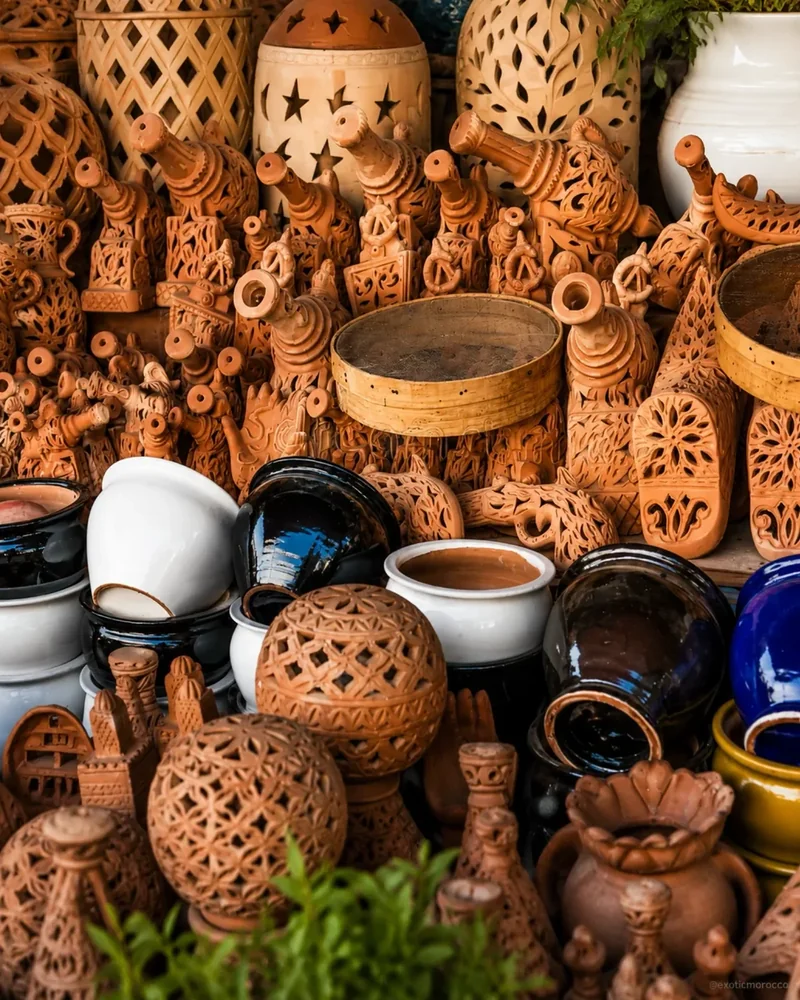
Ceramic forms in Safi: containers, surfaces and skilled making.
10 / Moroccan history
Learning needed rooms, books and people
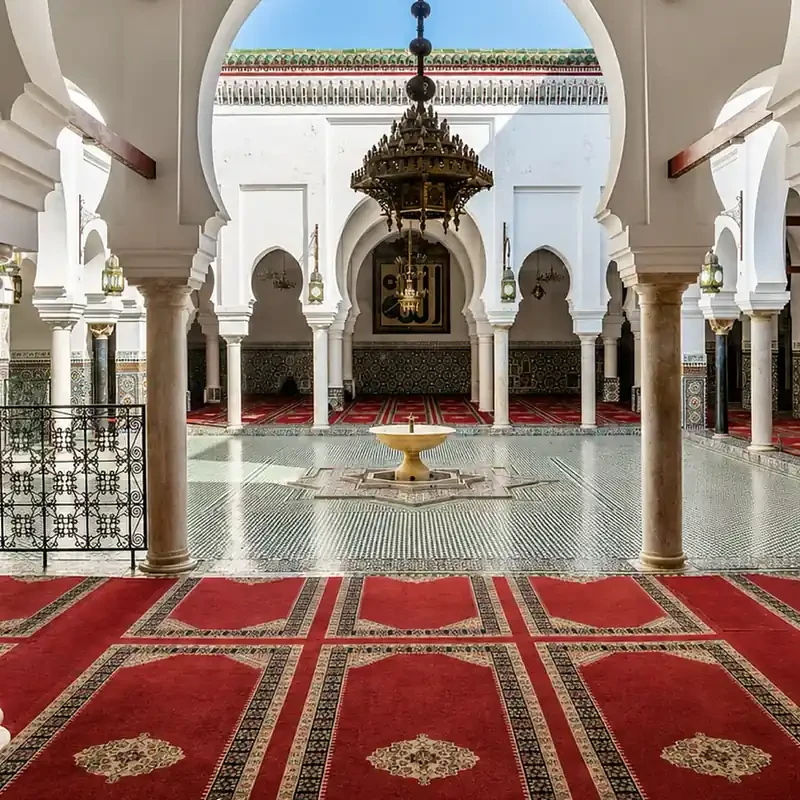
A madrasa courtyard is an attractive photograph, but the institution was more than its most decorated space. Teaching, accommodation, resources and continuing maintenance connected the building to a wider city. To read scholarly architecture, ask how people used it and how that use was supported.
Al-Qarawiyyin in Fès offers an especially layered example. Its foundation is traditionally associated with Fatima al-Fihri. The surviving complex reflects numerous later interventions, and its history as a mosque and centre of learning should not be compressed into a claim that every present feature dates to its foundation. The familiar phrase “the world’s oldest university” conceals questions about what counts as a university and how institutions changed; this account uses the more precise description of a long-established centre of religious learning.
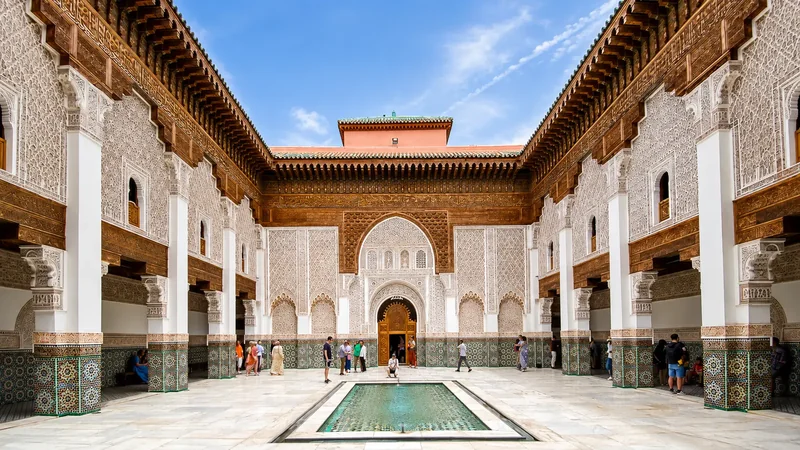
Marinid patronage made madrasas an important part of the architectural landscape of Fès. Other cities provide different examples: the standing Ben Youssef Madrasa in Marrakech belongs prominently to Saadian patronage. Similar forms do not make every institution contemporary.
Religion shaped learning and political claims, but religious history cannot be read only through rulers’ commissions. Institutions, teachers, students and communities gave buildings continuing purposes. Contemporary access rules are a separate matter from historical significance: a publicly described monument is not automatically a freely accessible interior.
Ben Youssef Madrasa, Marrakech: an institution associated with Saadian patronage.
11 / Moroccan history
A building has more than one date
Begin with a foundation, then look for additions, altered uses and repairs. The result is often more interesting than a single dynastic label. At Chellah, surviving remains invite a distinction between ancient settlement and later Marinid religious and funerary buildings. At a madrasa, the institution’s foundation and the visible finish of a restored surface may belong to different moments.
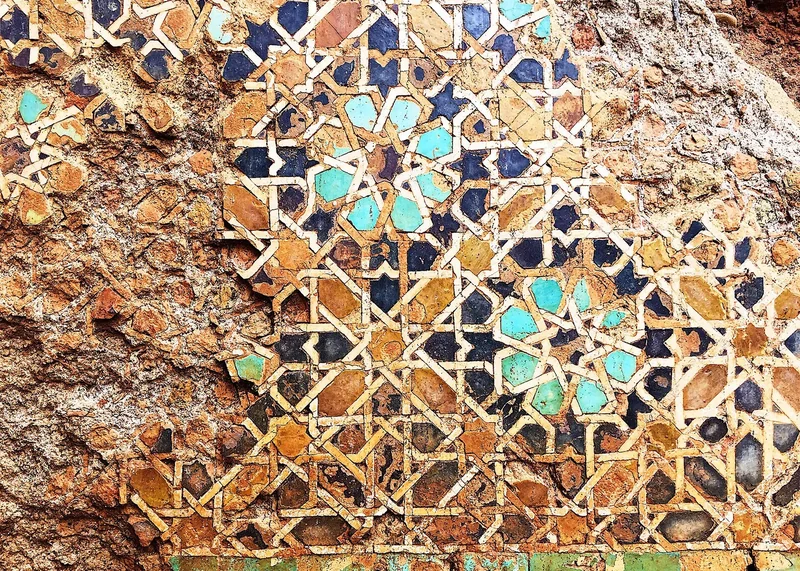
Materials reward the same care. Zellige, carved plaster, cedar and earth are techniques with histories of making and maintenance. Their presence alone cannot establish an exact date. Ornament needs to be read beside the structure, the inscription, the documented commission and the record of repair.
Aït Ben Haddou makes this especially clear. Earthen buildings depend on maintenance; continuity of technique does not mean that every wall has survived unchanged since a remote past. A working tradition may be historically important precisely because people continue to renew it.
Try four questions at the next threshold: What was this space for? Which parts belong to the same building campaign? What has been repaired or reused? Whose skill keeps it standing? They turn looking into a method without requiring every visitor to become an architectural historian.
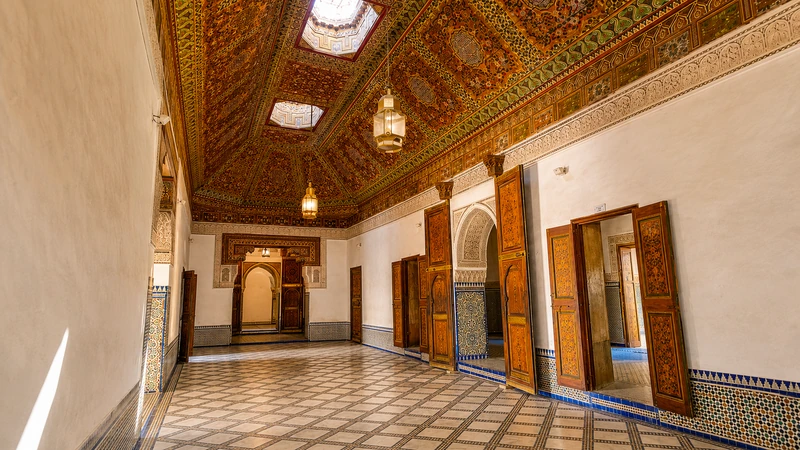
Painted timber and tilework in a palace interior. EM library editorial imagery; materials connect several historical layers.
12 / Moroccan history
The country changes when the scale changes
The imperial-city sequence leaves much outside its frame. Northern connections bring the Strait, migration and different colonial arrangements into view. Mountain and interior histories ask about routes, communities and the relationship between towns and rural landscapes. Southern oasis worlds make water, settlement and long-distance exchange central. Atlantic ports connect Moroccan histories to a wider maritime setting.
These are useful editorial groupings, not timeless cultural borders. The site’s Regions pages organise discovery; they do not describe one administrative system that existed throughout history. A historical map must name the period it represents and the kind of relationship it shows.
Begin with one region and one question. How did a valley support movement? What connected a port to its hinterland? Which institutions joined a town to neighbouring communities? The answer should make regional difference clearer, rather than use scenery as a substitute for historical explanation.
Colonial rule changed institutions, land and the city
The French protectorate established in 1912 was a major rupture in political authority. Spanish-controlled zones had their own arrangements, and Tangier followed a distinct international history. A single shaded map or the phrase “French Morocco” cannot adequately describe all these territories and experiences.
Rabat offers a visible entry into the period through the relationship between a planned twentieth-century capital and older urban fabric. That relationship deserves architectural attention, but an attractive avenue cannot stand as a complete assessment of colonial rule. Planning and preservation operated within unequal structures of power. The histories of land, labour, schooling and political rights require their own evidence.
Resistance was equally varied. Armed struggle, political organisation and international campaigning belonged to different contexts. C. R. Pennell’s research on the Rif examines the mobilisation of women as well as men during the conflict of the 1920s. Their participation should not disappear behind a narrative made entirely of military leaders; nor should participation be mistaken for a universal transformation of women’s social position.
David Stenner’s work on northern anti-colonial activists shows why Tétouan matters to the international history of the nationalist movement. Looking beyond the best-known centres changes the account of who organised, communicated and sought support.
Photographs and administrative records from this period can be valuable, but they carry a viewpoint. Ask who commissioned the image, which categories the document uses and what its author needed the reader to believe. Colonial terminology may need to be quoted and explained; it should not quietly become the page’s own voice.
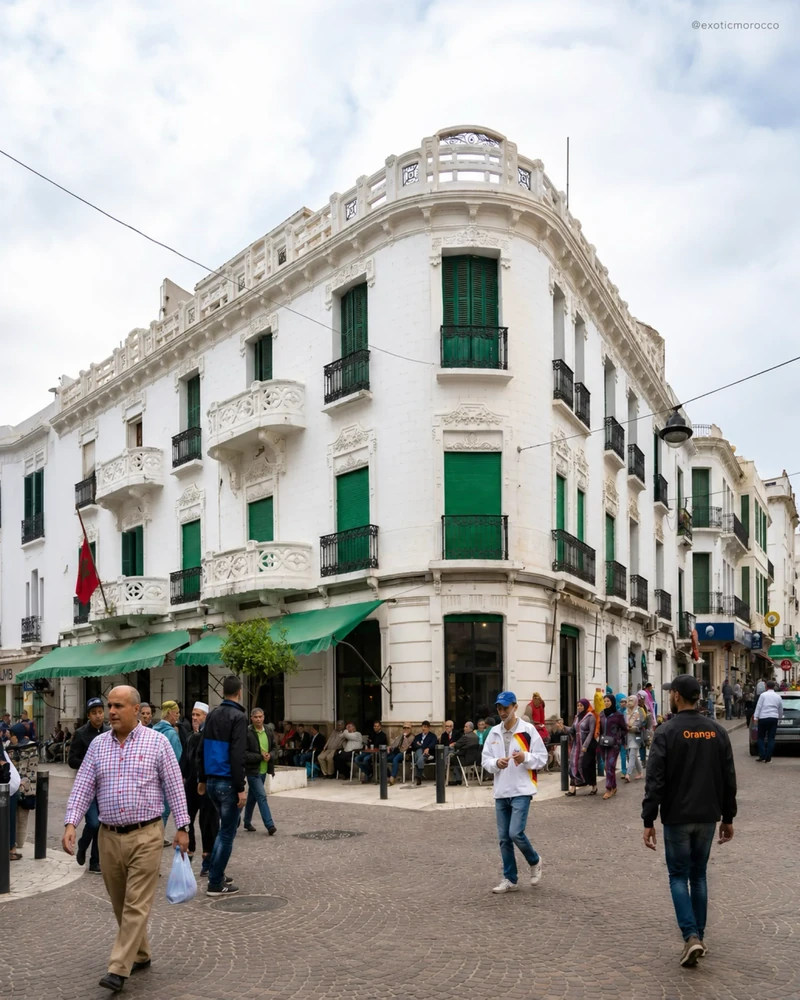
The Ensanche of Tétouan, from the current EM city collection. This is not an archival record.
14 / Moroccan history
Independence opened another historical chapter
1956
In 1956 Morocco recovered independence from the French protectorate; the Franco-Moroccan declaration of 2 March is one precise landmark in that process. Spain’s declaration of 7 April was a separate step. Other colonial arrangements and territorial questions followed different sequences. One date is an essential bearing, not a complete account of decolonisation.
2004
The history of independent Morocco includes the formation and contestation of state power as well as social and economic change. It also includes the work of remembering violence. The Equity and Reconciliation Commission, established in 2004, addressed serious human rights violations within a mandate covering 1956–1999. Its records provide an institutional route into that history. They should be read alongside the experiences and accounts of victims, families and researchers, rather than treated as the end of historical debate.
Memory takes public and private forms. A commemorative building, an official anniversary and a family account may refer to the same period while answering different questions. An anniversary tells us what is being remembered; it does not on its own establish everything that happened.
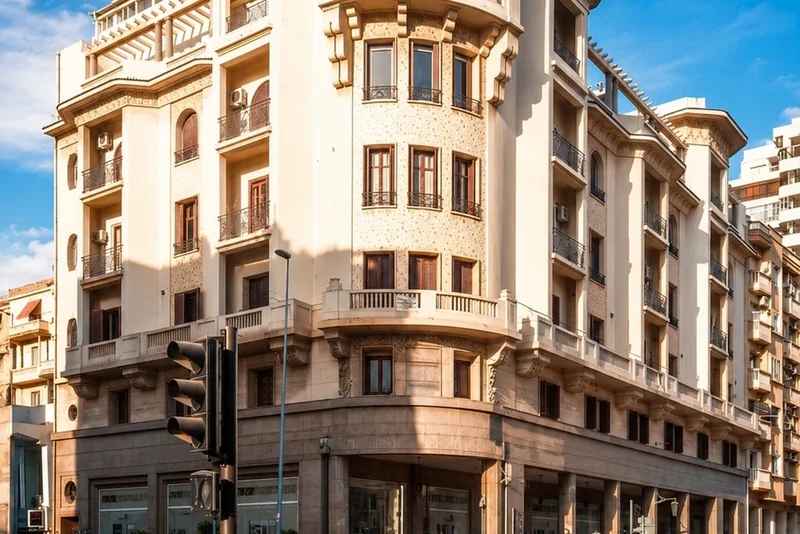
This overview therefore ends its chronology with an invitation to read critically, not with a claim that the country’s history has reached a final settled meaning. Modern streets, archives and debates belong to the historical landscape as much as ancient sites and imperial monuments.
Art Deco façades in Casablanca. A present-day photograph, not an archival record.
15 / Moroccan history
Continuity is work done in the present
Heritage survives through choices: someone repairs a roof, teaches a technique, performs a repertoire or keeps an object with its story. Continuity is not the absence of change. The work of maintaining a medina or renewing an earthen wall can be part of the historical evidence itself.
Gnawa practices offer one example of memory that cannot be confined to stone. UNESCO’s heritage account connects music, ritual and histories of slavery and the slave trade. Those connections deserve more care than the label of festival entertainment. A performance has practitioners, settings and meanings; it should not be used as a shortcut for the histories of all Black Moroccans.
Everyday objects open other questions. Who made this vessel? Who chose this garment? What did a family keep when it moved? Food, craft and language can carry memory, but an attractive custom is not automatically ancient, universal or unchanged. A claim about continuity needs evidence just as a date does.
The strongest encounter with history leaves room for living people to explain their own practice. Look closely, name the place and the source, and allow the story to remain more particular than a slogan about a whole country.
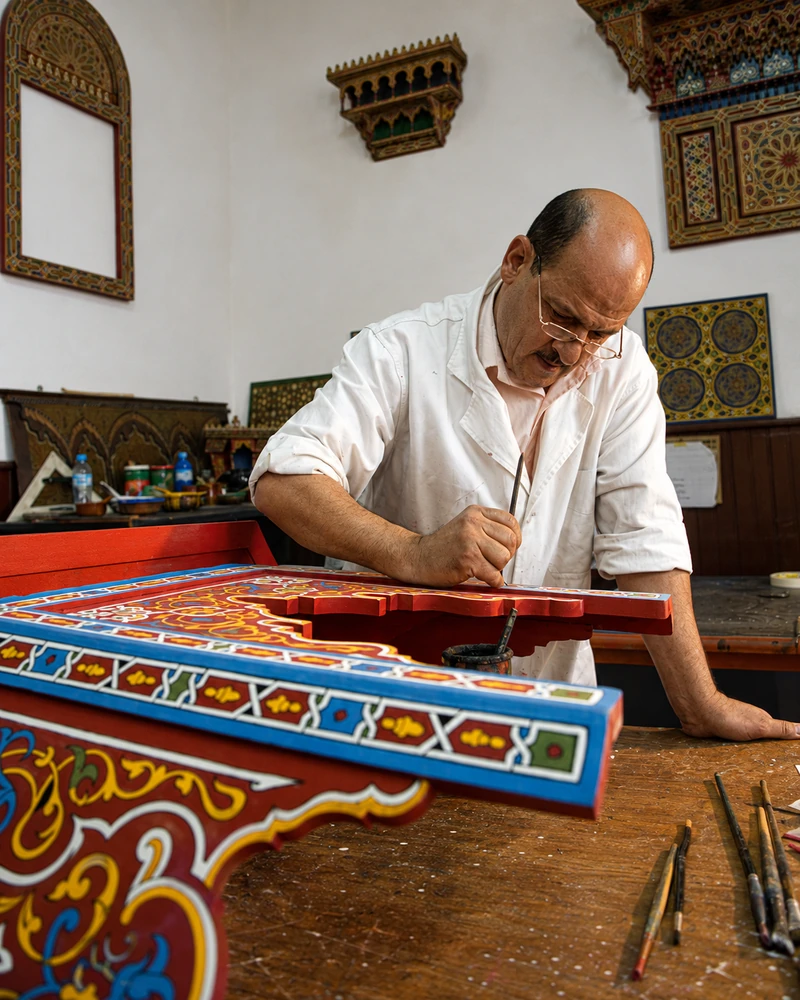
Decorative work on a wooden panel. EM library editorial imagery; contemporary craft, not an archival scene.
16 / Moroccan history
Take one historical question into a place
Choose a place for what it can help you understand. These connections are starting points for reading the evidence, not a ready-made itinerary. Current opening conditions and access belong to the individual visit information.
For the order of events, return to the overview timeline. For power and patronage, compare the dynasties. For a closer urban account, read the story of Fès as a living archive. Each answers a different question; none needs to repeat the whole overview.
This overview draws on Moroccan heritage scholarship, archaeological research, museum studies, UNESCO dossiers and research on modern Morocco. Start with the selected sources below. Historical dates refer to particular events or broad periods; traditions and interpretations are identified where they matter.
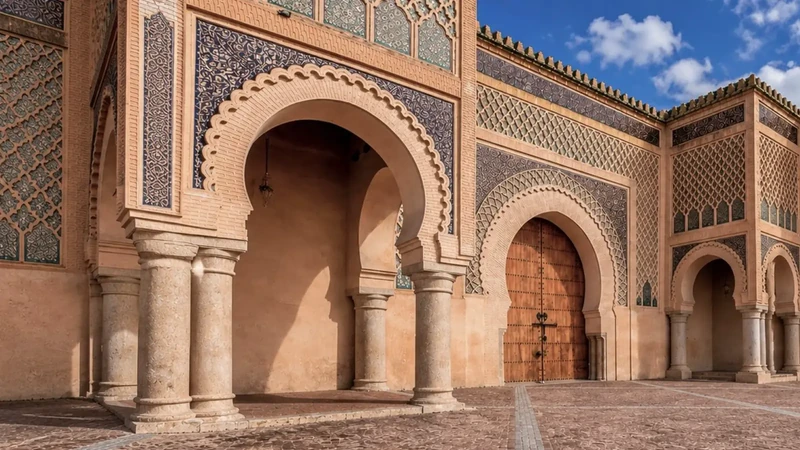
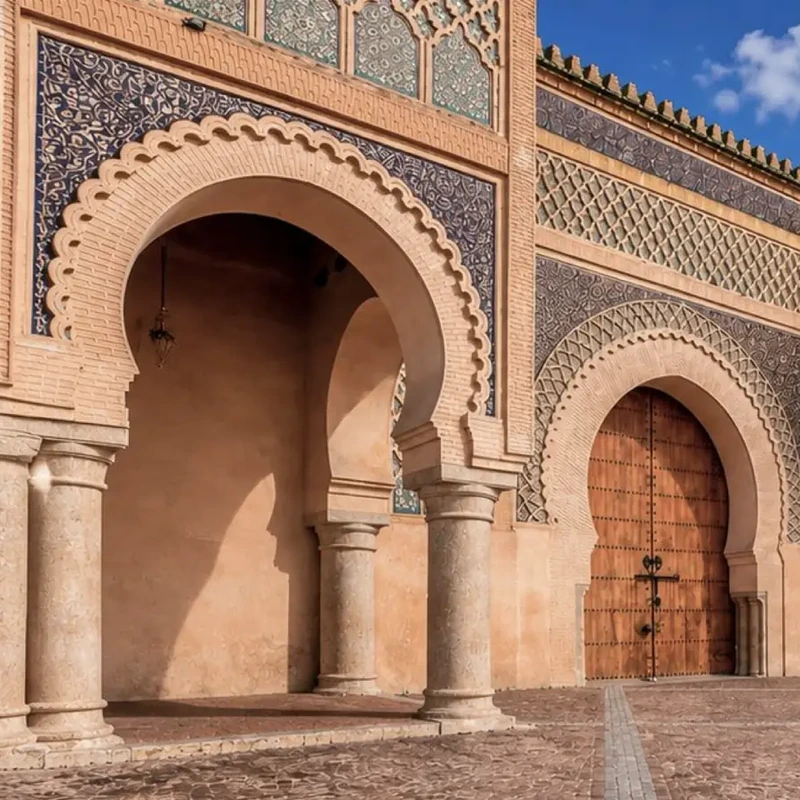
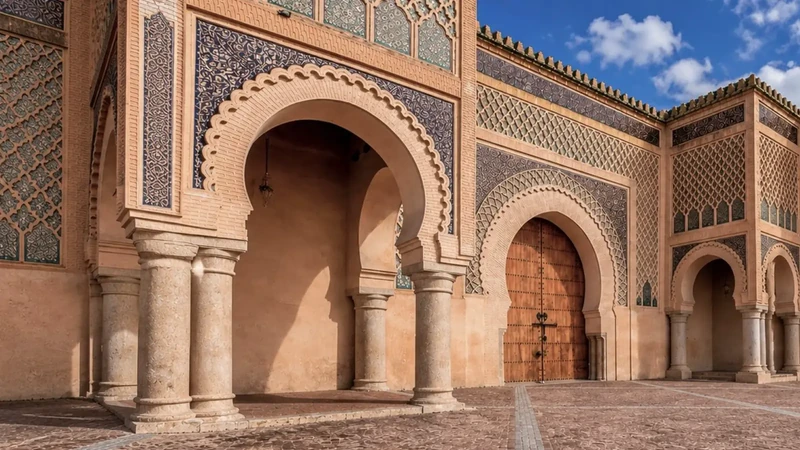
Bab Mansour, within the Alaouite imperial city of Meknès. Hero: Bab mansour DSCF5811.jpg — Robert Prazeres. CC BY-SA 4.0. Cropped/resized; original licence retained.
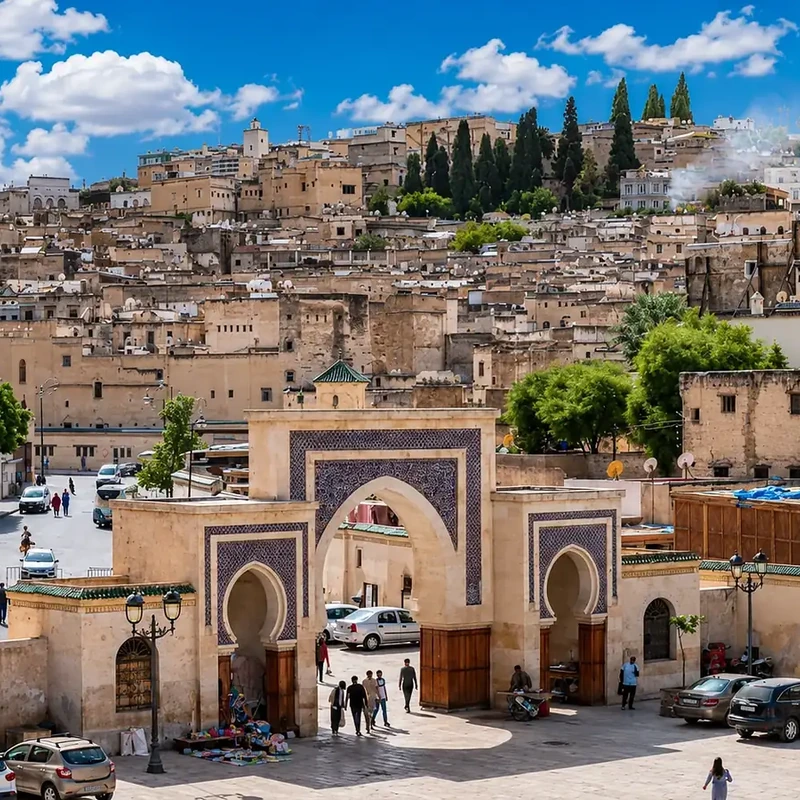
The medina of Fès: roofs, institutions and a working urban landscape. Opening: Dieglop · CC BY-SA 4.0.Editorial crop, resizing and WebP conversion. The adaptation retains the source licence.
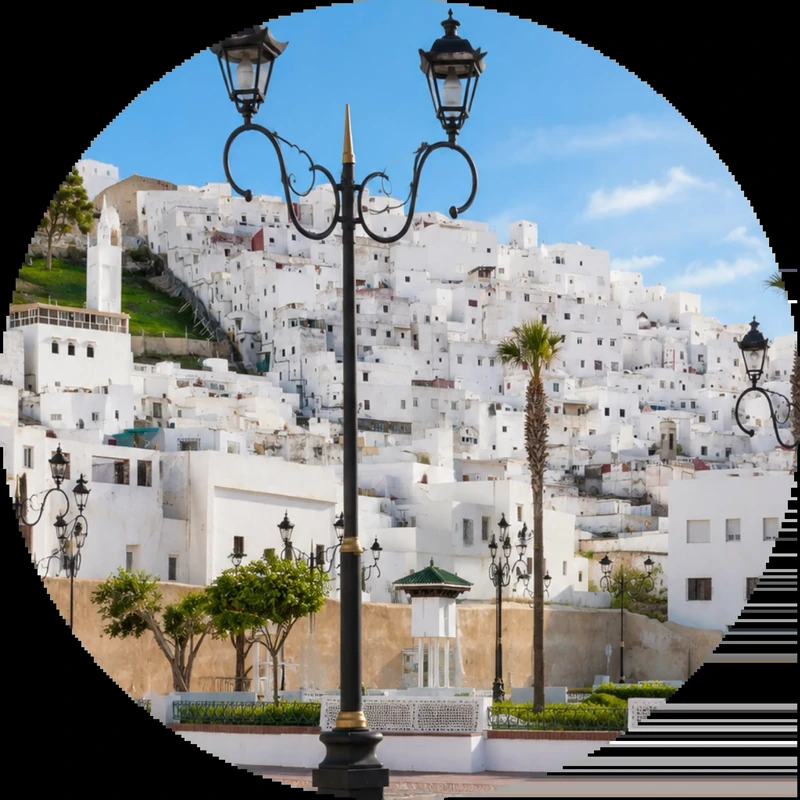
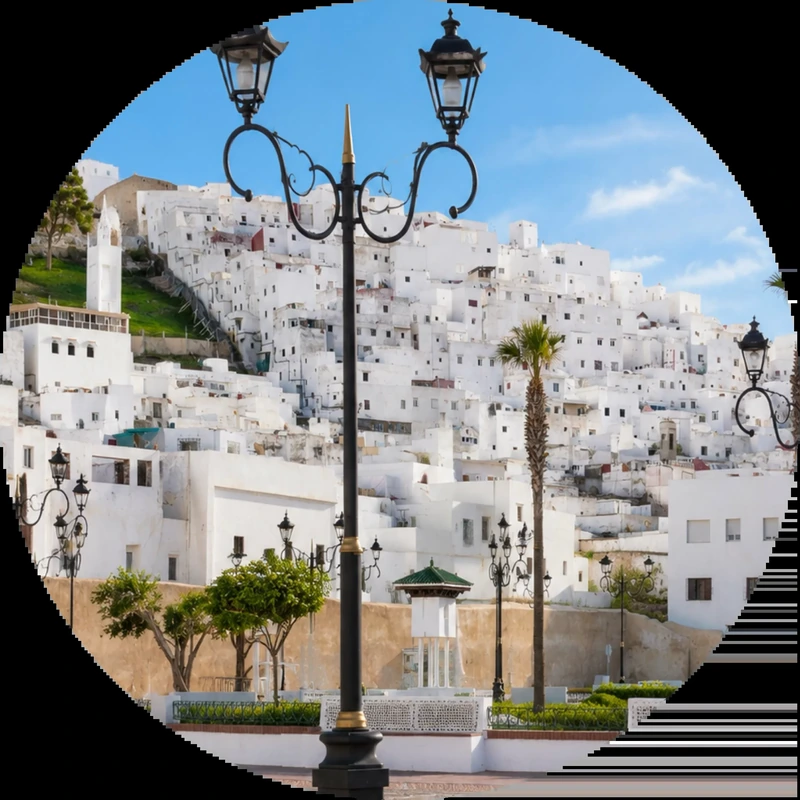
Tétouan’s white hillside city, seen from Feddan Park. Opening: BOUCHRA MOUSSAOUI · CC BY-SA 4.0.Editorial crop, resizing and WebP conversion. The adaptation retains the source licence.
A lane in Tétouan’s medina: a present-day view of urban fabric. Hero: Ideophagous · CC BY-SA 4.0.Editorial crop, resizing and WebP conversion. The adaptation retains the source licence.
A present-day street in Tétouan. This photograph is not an archival image. Chapter: An avenue in Tétouan: later urban layers belong to history too. — Exotic Morocco’s existing image collection.
The basilica at Volubilis, one surviving layer of an ancient settlement. Hero: Volubilis - Basilica romana.jpg — Mhobl. CC BY-SA 4.0. Cropped/resized; original licence retained.
Ceramic forms in Safi: containers, surfaces and skilled making. Chapter: Pottery forms: containers, pierced surfaces and lids. — Exotic Morocco’s existing image collection.
A craftsperson painting pottery in Safi, photographed in the present. Story-2: Potier coloriant un article.JPG — Princedesmers01. CC BY-SA 4.0. Cropped/resized; original licence retained.
An editorial evocation of Morocco through time; a composed scene, rather than a view of one site. Source: new EM editorial illustration, generated for this History edition.
Fez in the current Exotic Morocco city collection; a contemporary editorial view. Source: current Exotic Morocco asset / controlled EM library selection.
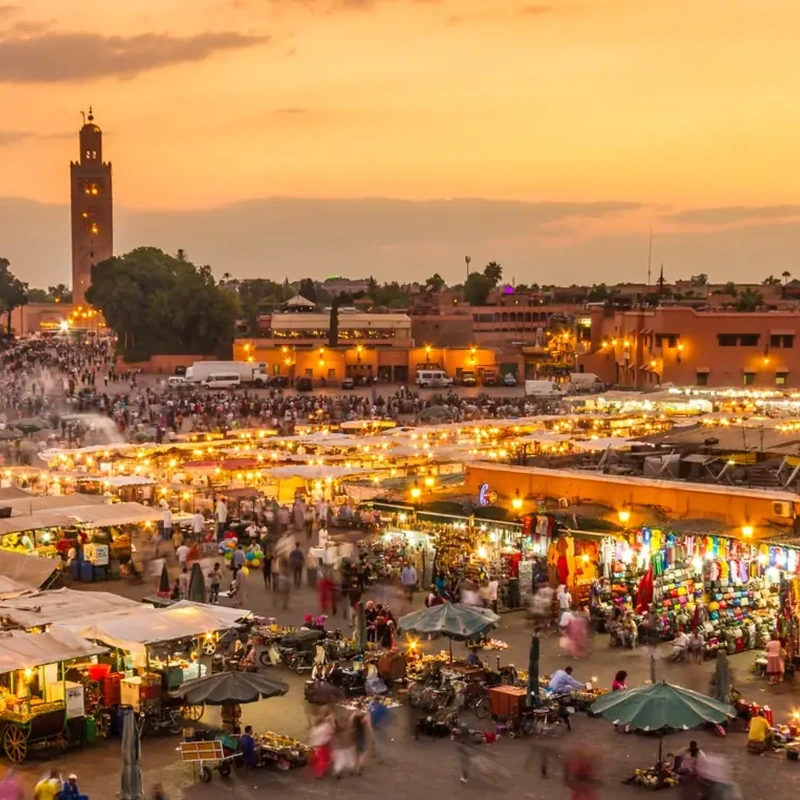
Marrakech in the current EM city collection; the city extends beyond a single dynasty. Source: current Exotic Morocco asset / controlled EM library selection.
Bab Mansour and imperial Meknès, from the current EM city collection. Source: current Exotic Morocco asset / controlled EM library selection.
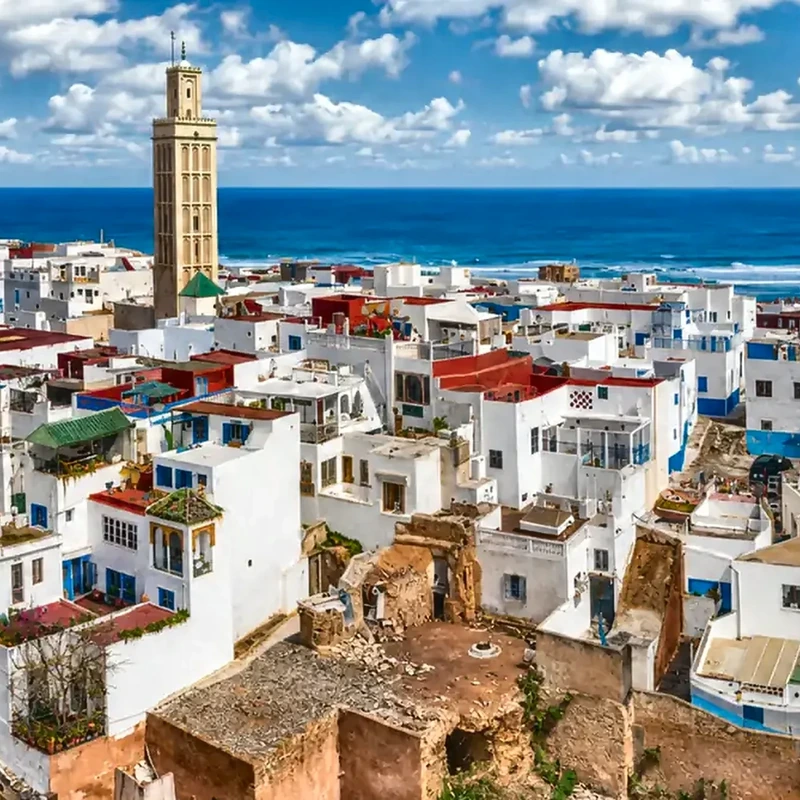
Rabat’s medina and Atlantic coastline, from the current EM city collection. Source: current Exotic Morocco asset / controlled EM library selection.
Tétouan in the current EM city collection; a contemporary editorial view. Source: current Exotic Morocco asset / controlled EM library selection.
The Ensanche of Tétouan, from the current EM city collection. This is not an archival record. Source: current Exotic Morocco asset / controlled EM library selection.
Essaouira harbour, from the current EM city collection; a contemporary editorial view. Source: current Exotic Morocco asset / controlled EM library selection.
The Drâa Valley’s oasis landscape, from the current EM collection; land, water and routes meet here. Source: current Exotic Morocco asset / controlled EM library selection.
A courtyard in Fez, from the current EM city collection; a present-day architectural view. Source: current Exotic Morocco asset / controlled EM library selection.
Painted timber and tilework in a palace interior. EM library editorial imagery; materials connect several historical layers. Source: current Exotic Morocco asset / controlled EM library selection.
Decorative work on a wooden panel. EM library editorial imagery; contemporary craft, not an archival scene. Source: current Exotic Morocco asset / controlled EM library selection.
18 / Moroccan history
Read the history. Give the place more time.
The overview gives you a framework. A carefully edited guide can help you turn that understanding into a more deliberate visit: connecting monuments, comparing details and making room for the places between the landmarks.
Digital PDF · English
Begin with Meknès
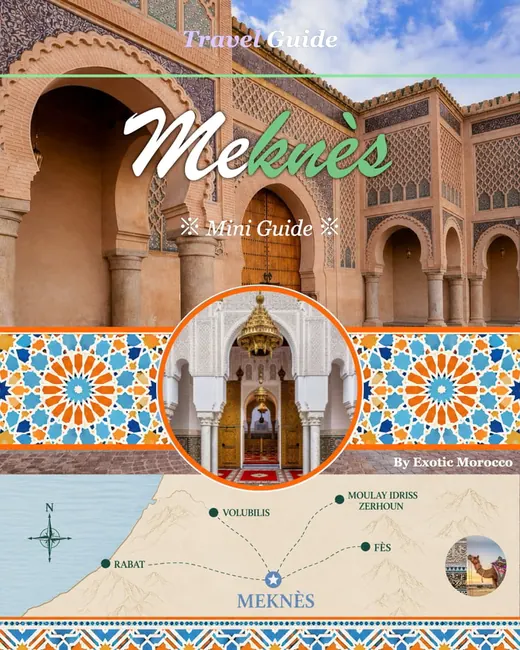
The Meknès Premium Visual City Guide brings imperial architecture, medina life and nearby heritage into one illustrated publication. Its product description includes practical travel tips and a suggested city itinerary, alongside Bab Mansour, Bou Inania Madrasa, Volubilis and Moulay Idriss Zerhoun.
A dedicated Moroccan History Collection is planned. Current titles and availability are shown in the guide library.
19 / Moroccan history
Keep the connections open
Return to the Moroccan History Hub to choose another period, city or subject. Or continue into Learn for geography, architecture, Amazigh culture and the material knowledge that makes a place easier to understand.




.jpg)
.jpg)


