Read a threshold
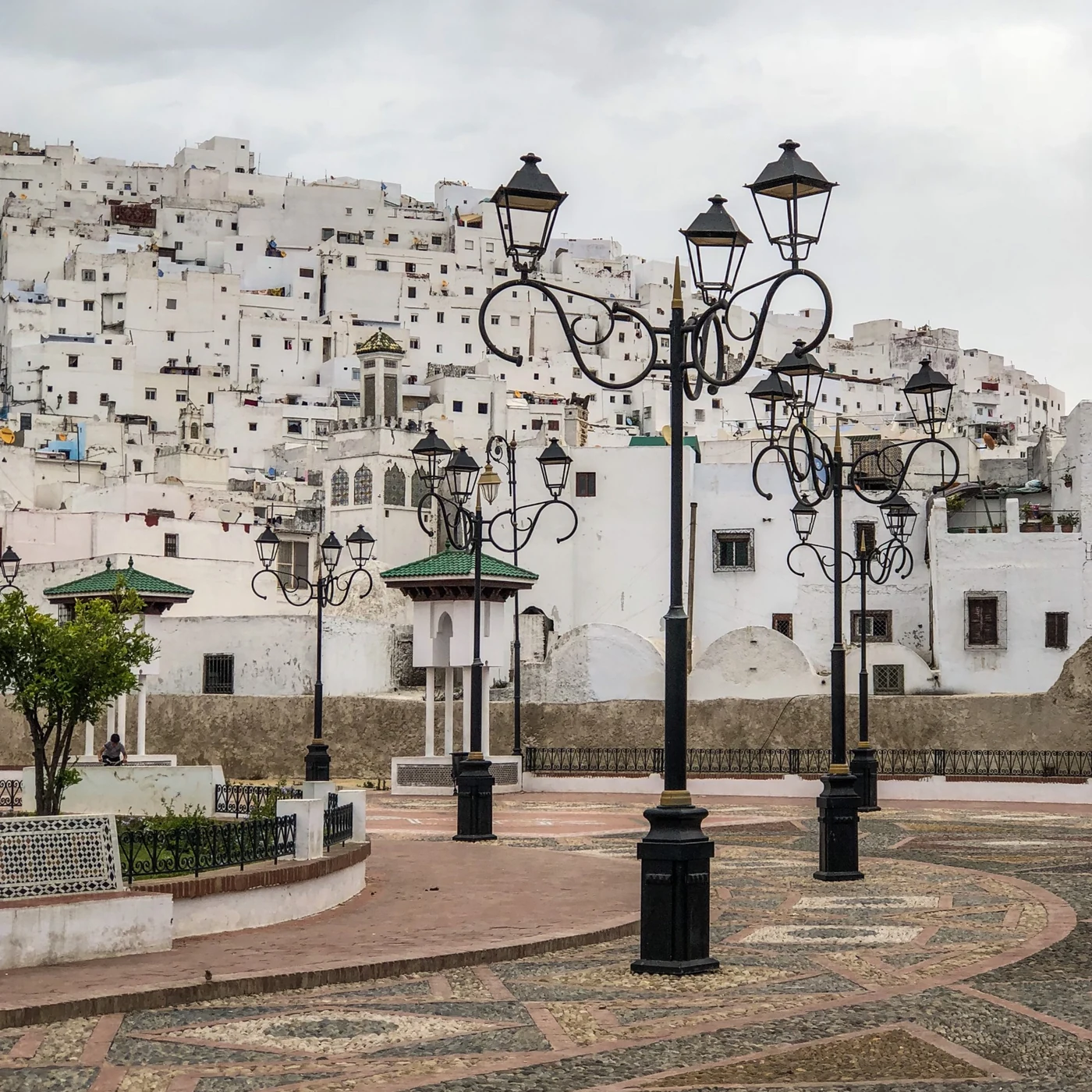
A wider view from Feddan Park: the white city meets its hillside.

Exotic Morocco · Stories
Across a white hillside city, streets, thresholds and working crafts reveal an inheritance carried by people.
Enter the story ↓01 / The starting point
From a distance, Tétouan seems to offer a simple composition: pale buildings gathered against a mountain, the roofline broken by minarets and the sharper lines of walls. At street level, that apparent unity becomes a sequence of decisions. A turn narrows the view. A doorway interrupts an almost blank façade. A busier route opens into a place where people can pause without blocking the way. The interest is in how these pieces work together.
Calling this an Andalusian city is a beginning, not a complete explanation. The phrase points to a documented history of migration and to artistic connections across the Strait. It should not turn Morocco into a footnote to Spain, or suggest that Tétouan is a preserved fragment of somewhere else. What arrived here was worked into a northern Moroccan city, in a particular landscape, by generations who continued to build, teach and make things.
This story follows three kinds of evidence: the organisation of the medina, the making and teaching of craft, and the relationship between the old town and the later Ensanche. Together they help explain why the city carries Andalusia in its streets without being reducible to that inheritance.
02 / Read the details
Three visual encounters within this story.
A wider view from Feddan Park: the white city meets its hillside.
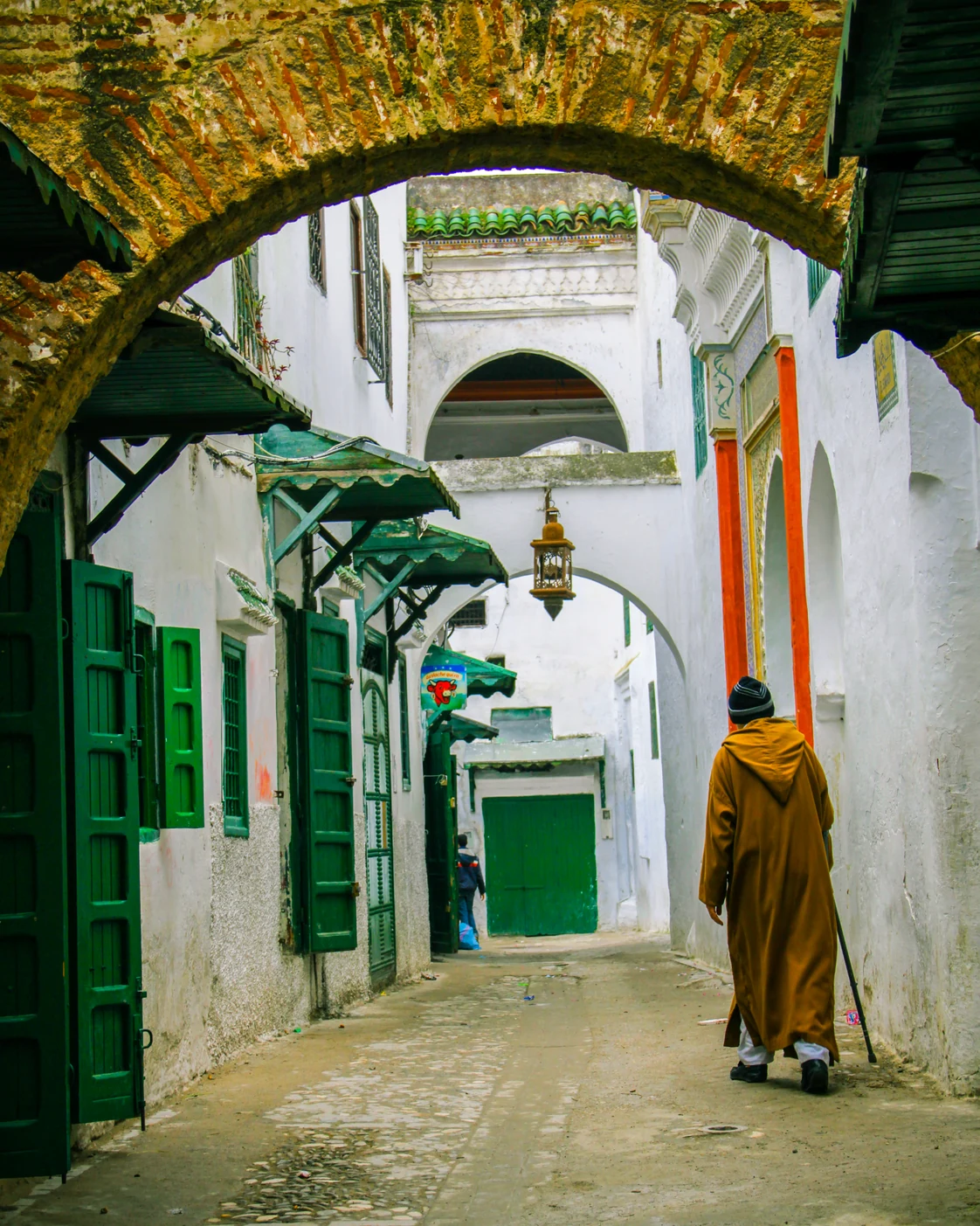
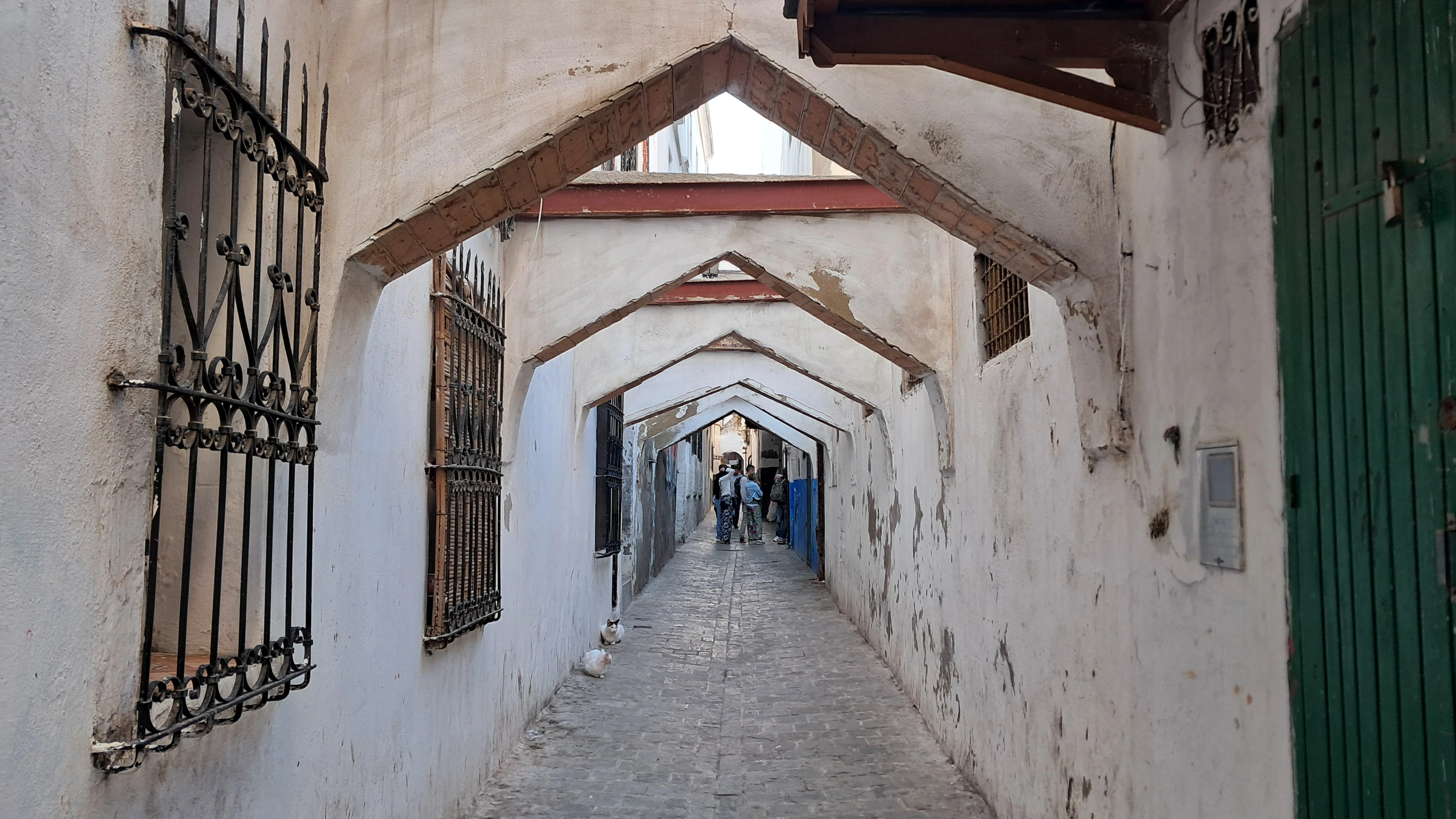
A street in Tétouan: thresholds, shelter and an ordinary route through the medina.
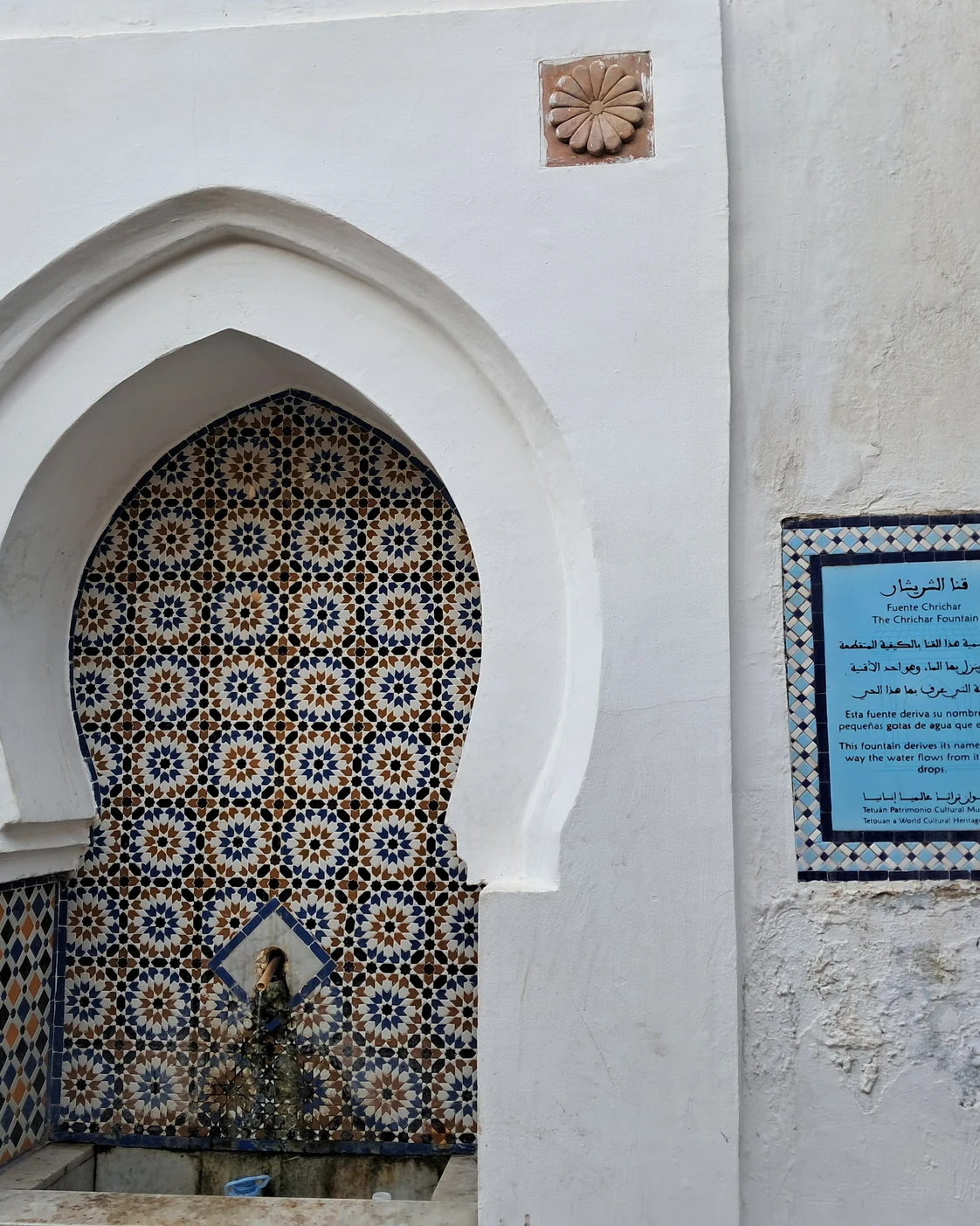
The Second Chrichar Fountain in Tétouan: a worked surface set into a quieter wall.
03 / Look closer
UNESCO’s account of the medina identifies the rebuilding of Tétouan by refugees expelled from the Iberian Peninsula and the clear Andalusian influence on its architecture and arts. The movement of people is central to that account. Buildings did not simply migrate as finished objects. Knowledge, expectations, skills and memories travelled with their makers.
That distinction changes the way we read a decorated doorway or an enclosed court. A resemblance may suggest a shared architectural language; it does not by itself tell us who designed a particular building, when every part was made, or which individual carried an idea from one shore to another. Those questions need the evidence of the building and its records. A visitor can recognise a connection without inventing a biography for it.
The landscape matters just as much as the cultural reference. The medina occupies the slopes of Jebel Dersa. Its streets have to negotiate ground rather than a flat sheet of paper. A distant view can make the city appear to be an accumulation of white surfaces. Walking reveals differences in level, direction, width and exposure. Those practical conditions are part of its architecture, not obstacles to a supposedly pure style.
It is also worth separating Andalusian history from the much later period of the Spanish Protectorate. They are not two names for the same episode. Collapsing them produces a vague “Spanish influence” that obscures both migration and colonial rule. Tétouan is a particularly rewarding place to keep the distinction visible because its adjoining urban areas let us ask different questions of different streets.
04 / The story in context
02 / Read the plan with your feet
For an unfamiliar visitor, a medina can feel confusing. That feeling is not evidence that it has no organisation. UNESCO describes Tétouan’s principal streets connecting gates, public buildings, open spaces and commercial or craft areas, with smaller lanes leading towards residential passages. The plan distinguishes kinds of movement.
UNESCO describes a hierarchy of routes in Tétouan: principal streets connect gates, squares and public buildings, while smaller lanes lead towards passages and residential areas. This is a more useful reading of the medina than calling every lane a labyrinth. It helps explain why a route can change in character over a short distance. Read the heritage description ↗
Try following that change from a public square to the entrance of a quieter lane, without treating a private threshold as an invitation to enter. The Andalusian connection then becomes a question about urban organisation and historical movement as well as decoration. The city’s present residents and craft institutions remain part of the account.
Stay with the context
Imagine following that distinction instead of trying to collect every picturesque turn. A commercial route needs passing customers and deliveries. An approach to a home has a different purpose. A square offers room to stop. A narrow passage may offer very little room at all. The question becomes less “How do I get lost here?” and more “What is this part of the city allowing people to do?”
This way of looking also makes privacy easier to understand. A handsome door is still a door someone uses. An open threshold is not an invitation to walk in, and a residential lane is not a studio set. The beauty of the architecture does not suspend the ordinary distinction between public access and private space. Ask before making a person or the interior of a home the subject of a photograph.
Notice the relationship between plainness and detail. Ornament can be concentrated around an entrance or within a room rather than distributed evenly across a street façade. The result is a city that does not reveal all its richness at once. A calm exterior and a worked interior are not competing versions of authenticity; they can be parts of the same spatial arrangement.
The aim is not to assign one rule to every house. Buildings have different dates, owners, alterations and uses. It is to replace the idea of a decorative maze with a more useful picture: a built environment whose routes and thresholds organise everyday life.
A closer encounter
See how the old town meets its terrain. The mountain is part of the urban composition.
Look for the difference between a through route, a gathering place and a quieter residential approach.
Notice where the view stops. A boundary can explain a building as clearly as an open doorway.
A different distance
03 / Knowledge that needs people
Craft makes the connection between cultural memory and present work especially clear. Tétouan joined UNESCO’s Creative Cities Network in the field of Crafts and Folk Art in 2017. The city’s profile names traditions including zellige, embroidery, worked wood and ironwork, and places education and creative development alongside the preservation of skills.
That is a more interesting story than the claim that nothing has changed. A skill survives because someone learns to use it, finds a setting for it and makes judgments about material and design. A piece that resembles an older example may still require a new commission, new measurements and an answer to a present need. Continuity is an activity.
A different distance
Compare, for example, looking at a tiled surface with thinking about its construction. The eye can follow colour and repetition immediately. Making the surface requires pieces, edges, joints and an understanding of how a composition meets the dimensions of a room. A pattern does not become architecture until those relationships have been resolved. Our story of zellige follows that material journey in more detail.
Museums offer another kind of close looking. The Fondation Nationale des Musées describes Bab El Oqla’s building as a historic fortified structure with a courtyard garden, a central basin and a tiled wall fountain. The setting helps connect objects and architectural surroundings. The archaeological museum, meanwhile, draws on discoveries in northern Morocco. The two institutions invite different readings of the region rather than repeating one decorative image.
A visitor need not become an expert to ask a better question. Instead of asking whether an object is simply “traditional”, ask about its material, its use and who made it. When a maker or seller is willing to explain, allow the answer to be specific. One workshop should not be made to speak for every craftsperson in the city.
A different distance
The later expansion of Tétouan introduces another way of arranging a city. Morocco’s 2024 proposal for its historic centre describes the relationship between the medina and the Ensanche, the extension developed during the Spanish Protectorate. It highlights the connecting spaces, gardens and perspectives between the two. This is a proposal on UNESCO’s Tentative List; it should not be confused with the medina’s existing World Heritage inscription.
The distinction is useful on the ground. In a broader street, a façade becomes visible from farther away. A junction may frame a longer view. Balconies, upper storeys and the rhythm of openings contribute to a different public face. Walking from one area to another changes how much of a building can be seen at once and how a pedestrian is positioned in relation to it.
There is no need to rank one quarter as the “real” city and dismiss the other. Both are evidence, although of different histories and power relationships. Nor should the elegance of a building turn colonial history into a story of style alone. Urban plans were made within political systems; the resulting streets are now lived in and used in contemporary Morocco.
Seen together, the medina and Ensanche make the phrase “Andalusian Tétouan” more precise. The city contains an inherited artistic vocabulary, a history of displaced people rebuilding, later colonial interventions, and continuing Moroccan cultural life. A single label is convenient. The actual place is more demanding, and more rewarding.
A different distance
A thoughtful first encounter with Tétouan need not become a race between monuments. Let a wider view establish the setting, spend time with the organisation of a few streets, and choose a museum or a craft encounter that adds something you cannot learn from façades alone. Use the medina guide as context, rather than as a script that every city must follow.
The most revealing detail may be an ordinary one: how a public route gives way to a quieter passage, where people stop, or how a worked surface meets a plain wall. Such observations do not replace historical knowledge. They give that knowledge somewhere to land.
Andalusia matters here because its connections were made through people. The city that resulted belongs neither entirely to a remembered past nor to a visitor’s photograph. It belongs to a continuing life in northern Morocco.
Look for the inheritance.
Then notice who is carrying it forward.
Story pathways
Cities, cultural context and a connected essay, chosen for this subject.

Continue the city context behind this story.
Explore the city ↗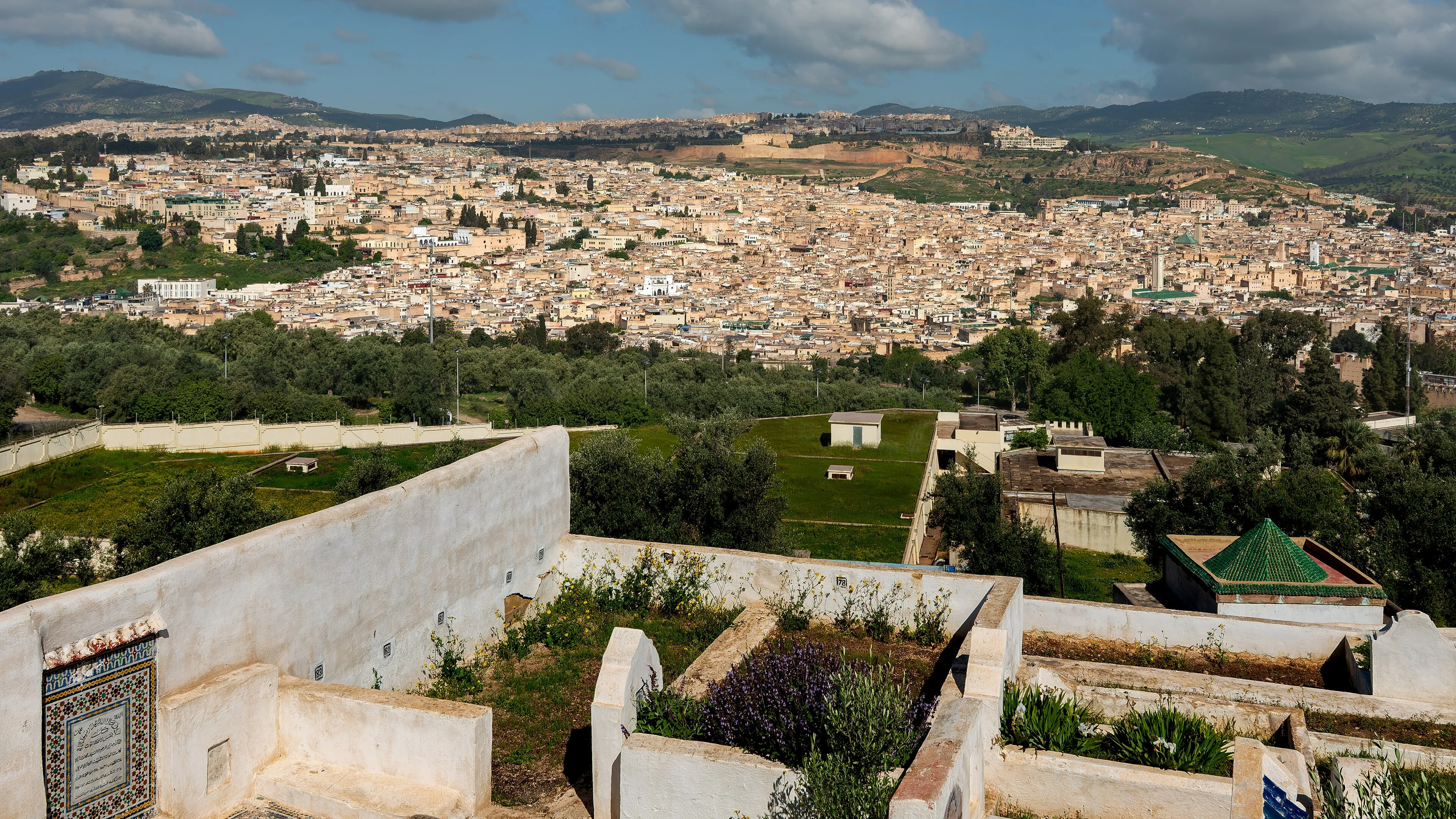
medina guide
Explore the context ↗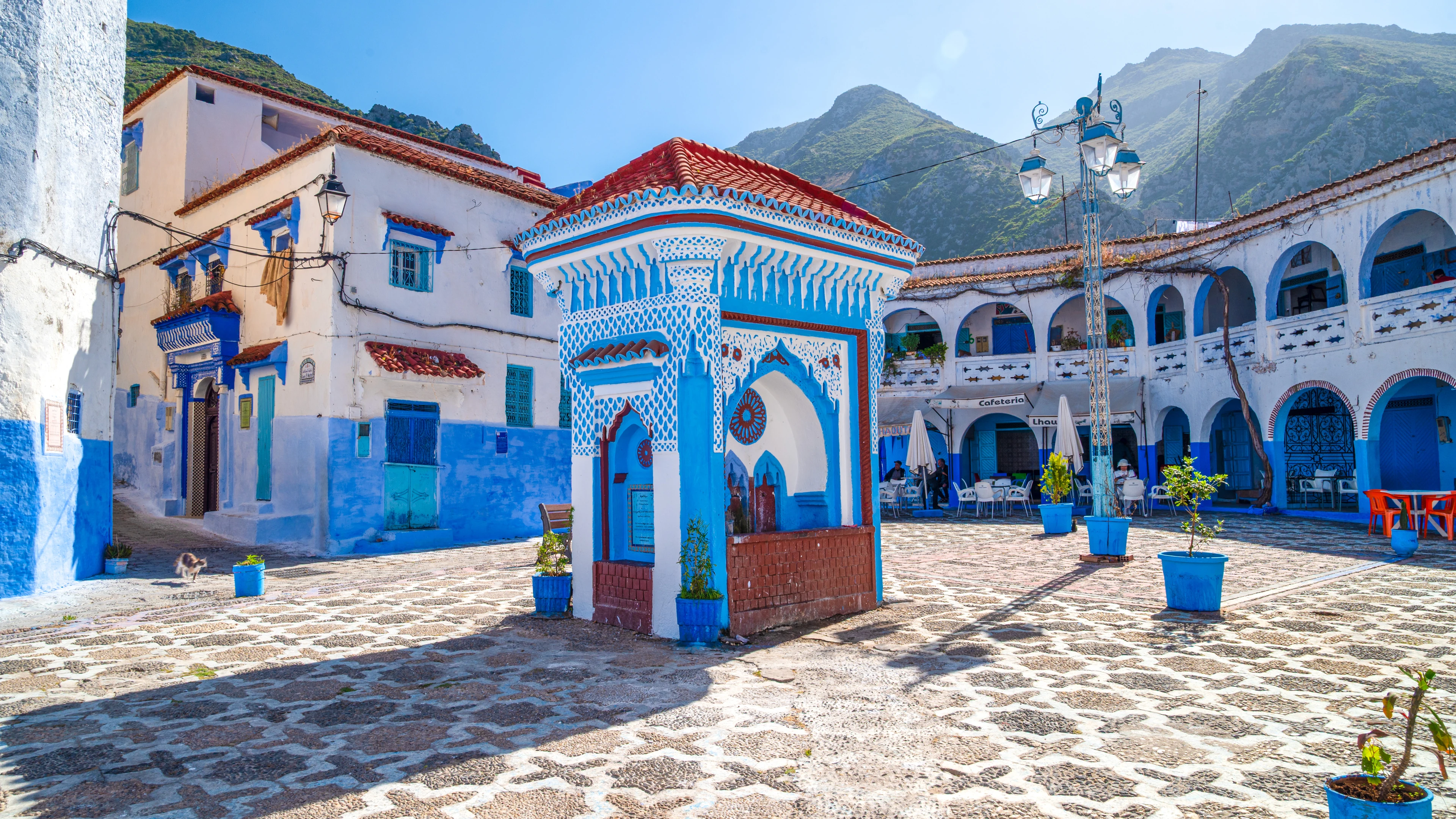
The colour draws you in. Mountains, ochre walls, water and food give the photograph a much larger story.
Explore the story ↗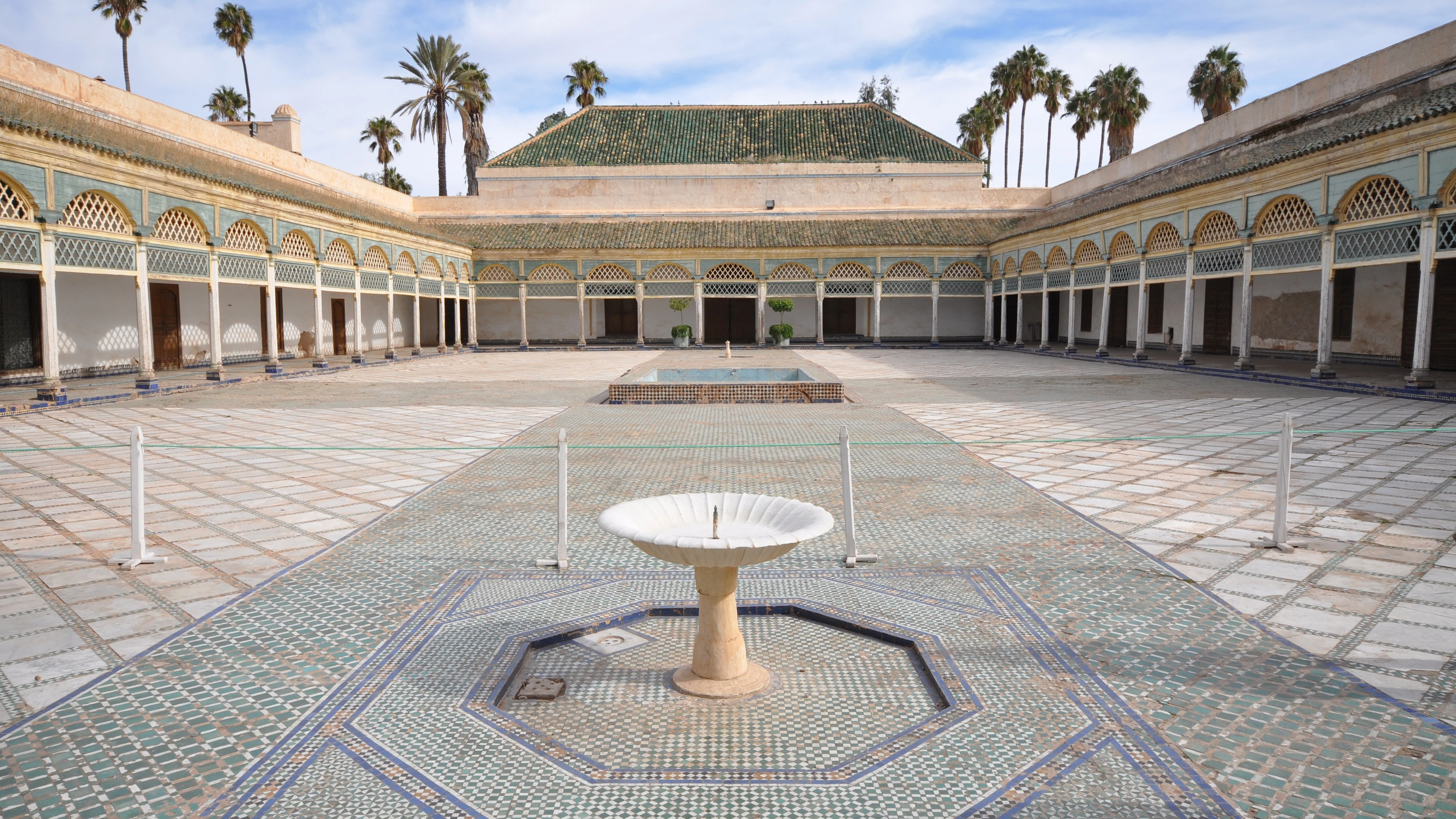
Gates, courtyards, streets and the materials that shape how a place is used.
Explore the story ↗Continue reading
Keep the subject in view as you choose your next chapter.
The colour draws you in. Mountains, ochre walls, water and food give the photograph a much larger story.
Read the story ↗Gates, courtyards, streets and the materials that shape how a place is used.
Read the story ↗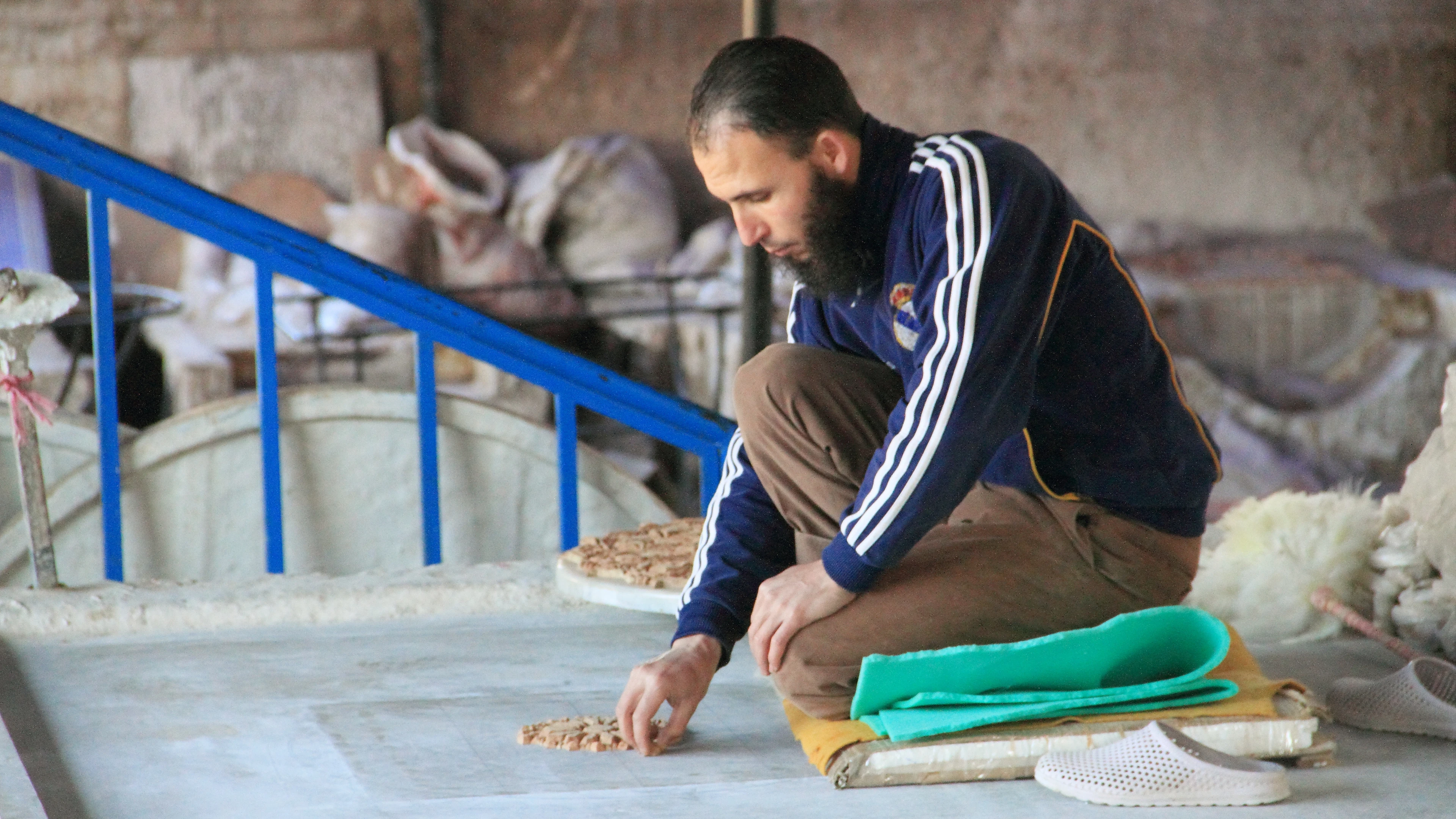
Clay, colour, wood and the decisions that turn material into a useful, beautiful thing.
Read the story ↗
Dynasties, migrations, buildings and the evidence that connects one period to another.
Read the story ↗This is a researched visual essay. Historical claims are distinguished from editorial observations. No first-person visit, interview or quotation has been invented. Photographs show their stated locations; they do not document every person or practice discussed.
Photography is identified through the linked source records. Crops and responsive sizes were prepared for this layout.
Research checked 27 September 2026.


.jpg)

.jpg)