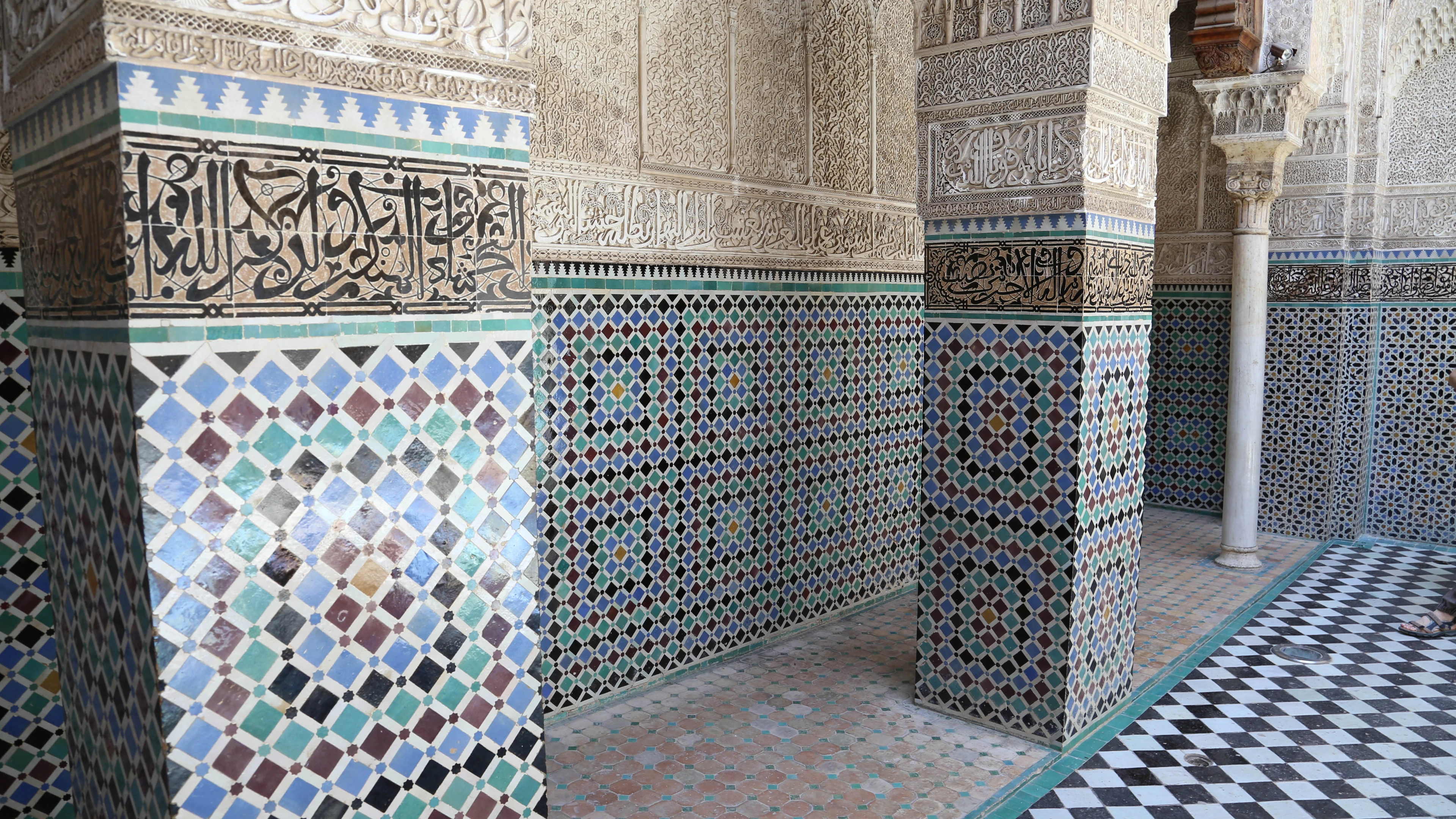
Zellige, geometry of light
A small piece of clay. An extraordinary way of seeing. Inside the craft that gives Moroccan architecture its colour, rhythm and human touch.
Read the story ↗
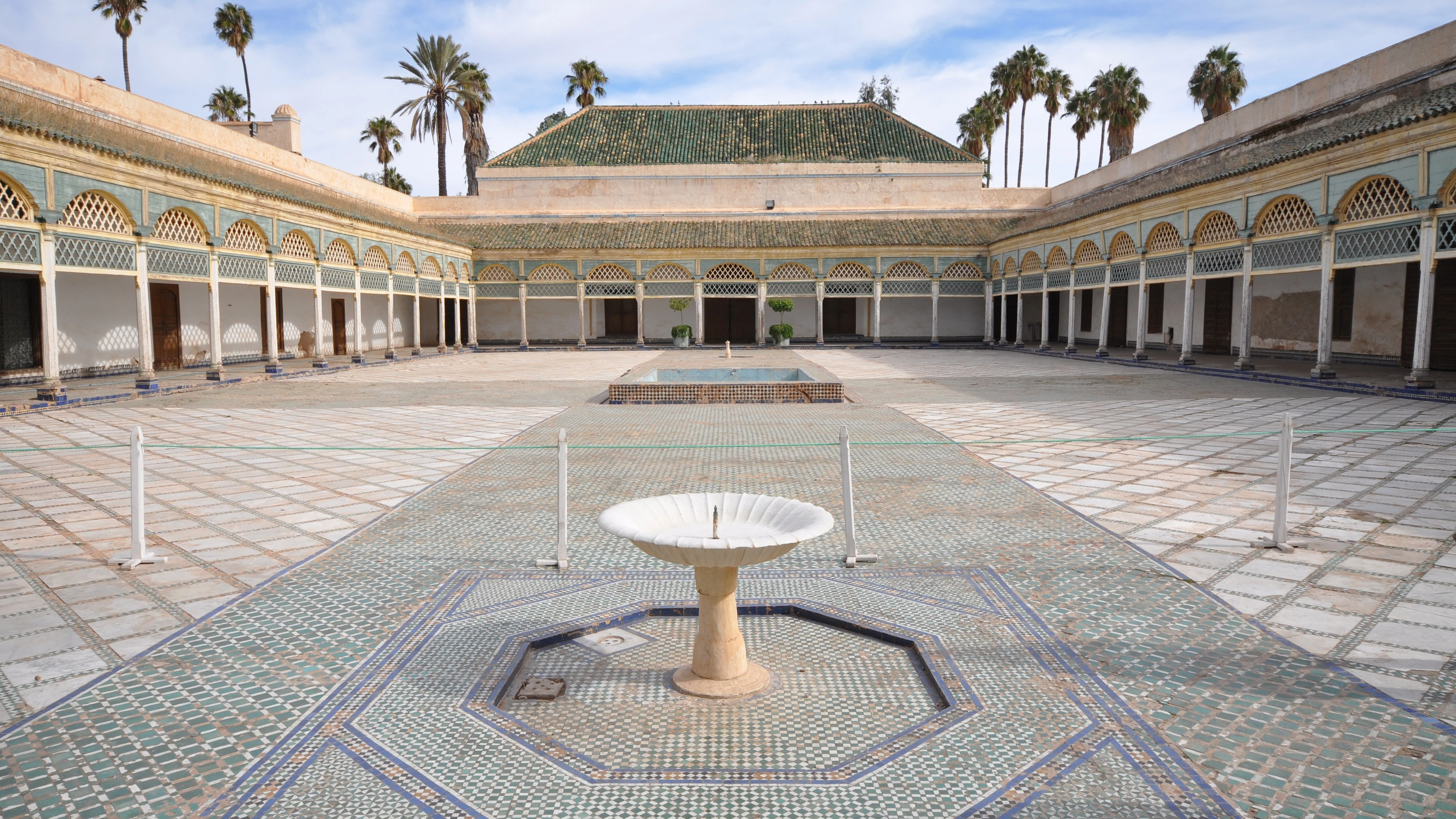
Exotic Morocco · Stories
Gates, courtyards, streets and the materials that shape how a place is used.
Enter the story ↓01 / The starting point
A doorway is more than a decorated rectangle. It marks a change: from street to interior, public route to private room, bright square to shaded passage. Architecture becomes easier to read when these relationships matter as much as the individual façade.
This collection moves between three scales. Zellige takes us close to the surface and the decisions of its maker. Tétouan reveals how routes and thresholds organise a city. Meknès widens the view towards walls, water and the systems of an imperial capital. The buildings share some materials, but each story has a different historical setting.
02 / Choose your first encounter
Choose the essay that brings this subject into focus.
A small piece of clay. An extraordinary way of seeing. Inside the craft that gives Moroccan architecture its colour, rhythm and human touch.
Read the story ↗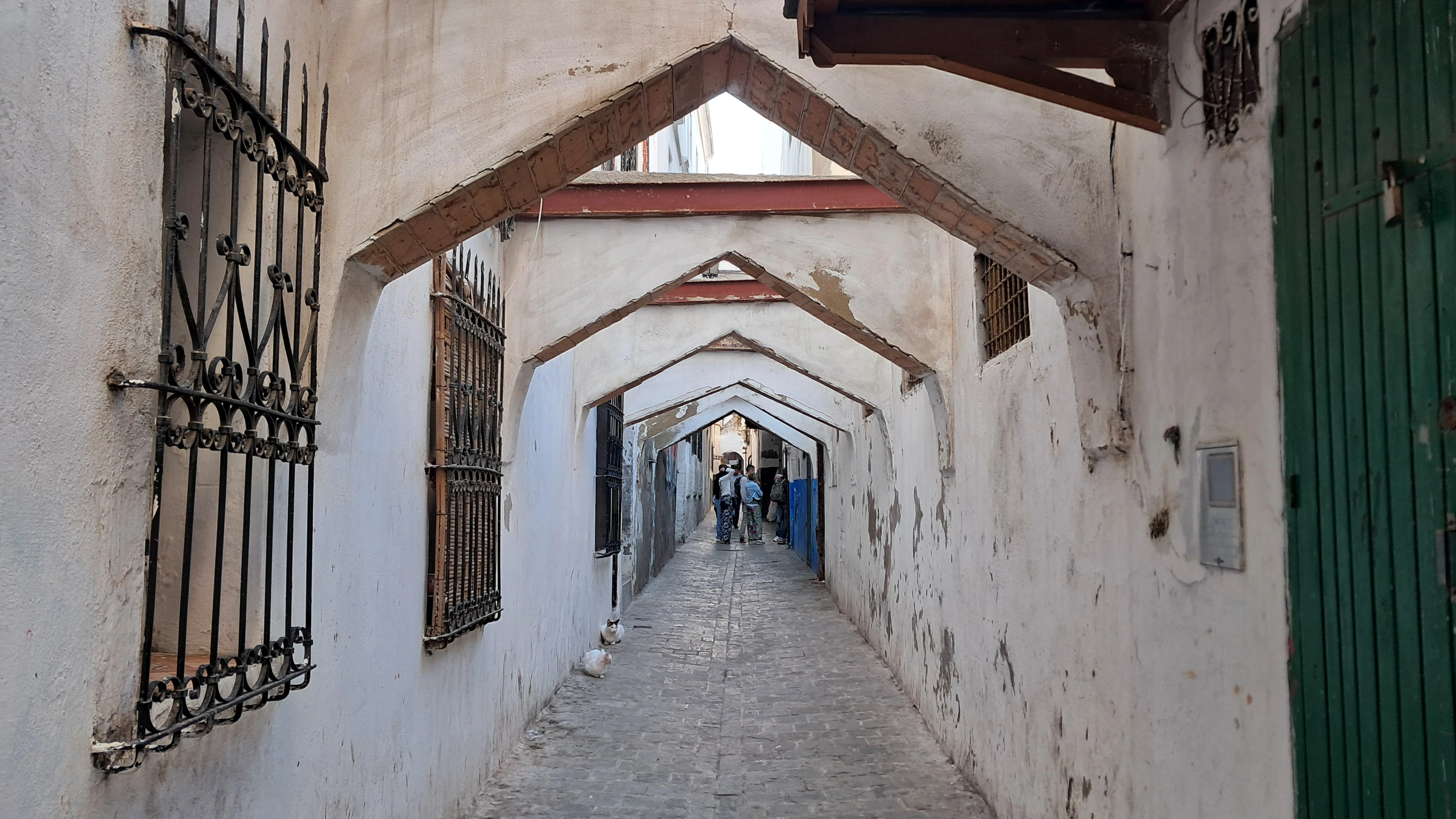
Across a white hillside city, streets, thresholds and working crafts reveal an inheritance carried by people.
Read the story ↗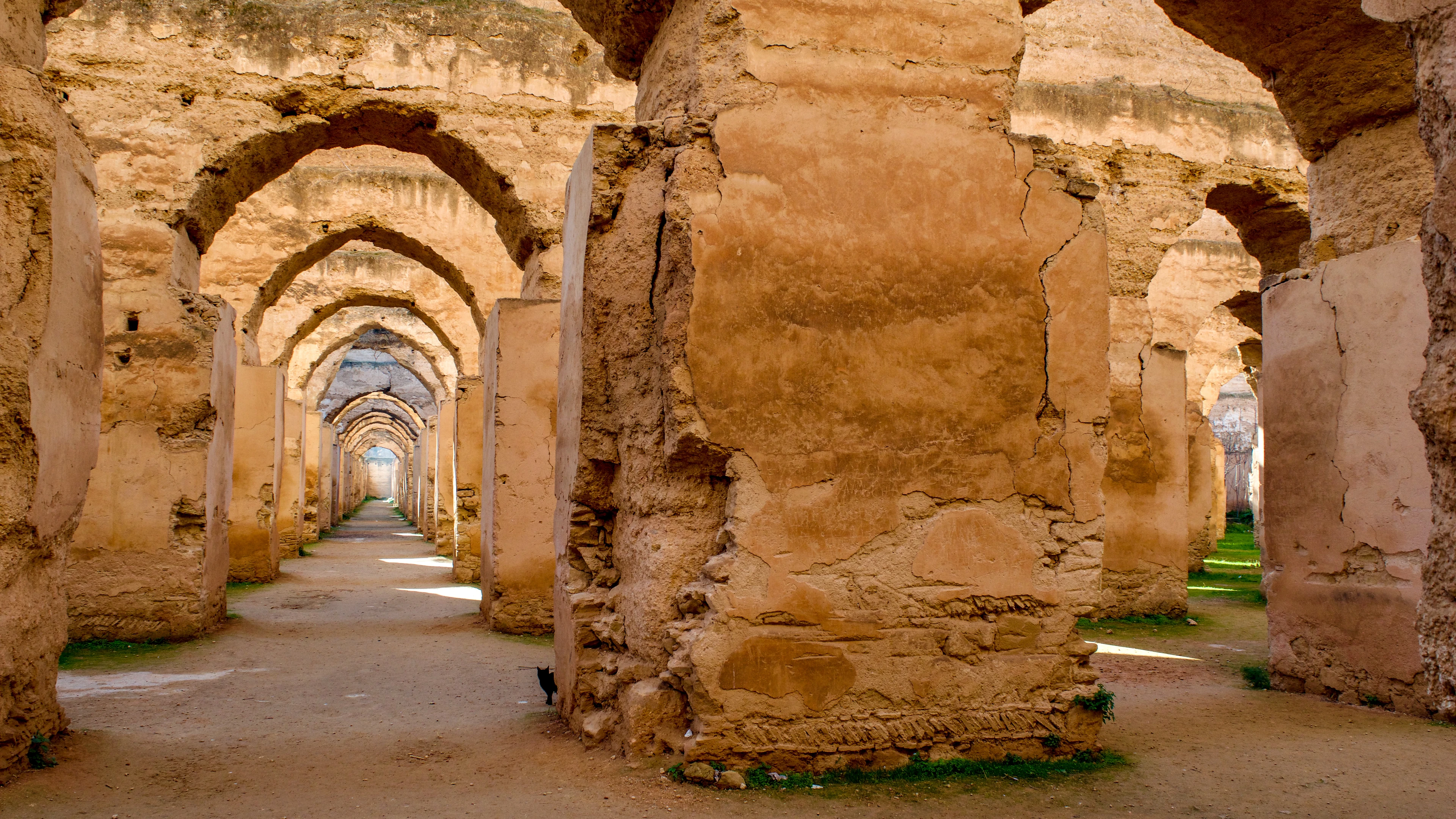
Behind the famous gateway is a city of water, provision, markets and music. Change the scale, and another Meknès appears.
Read the story ↗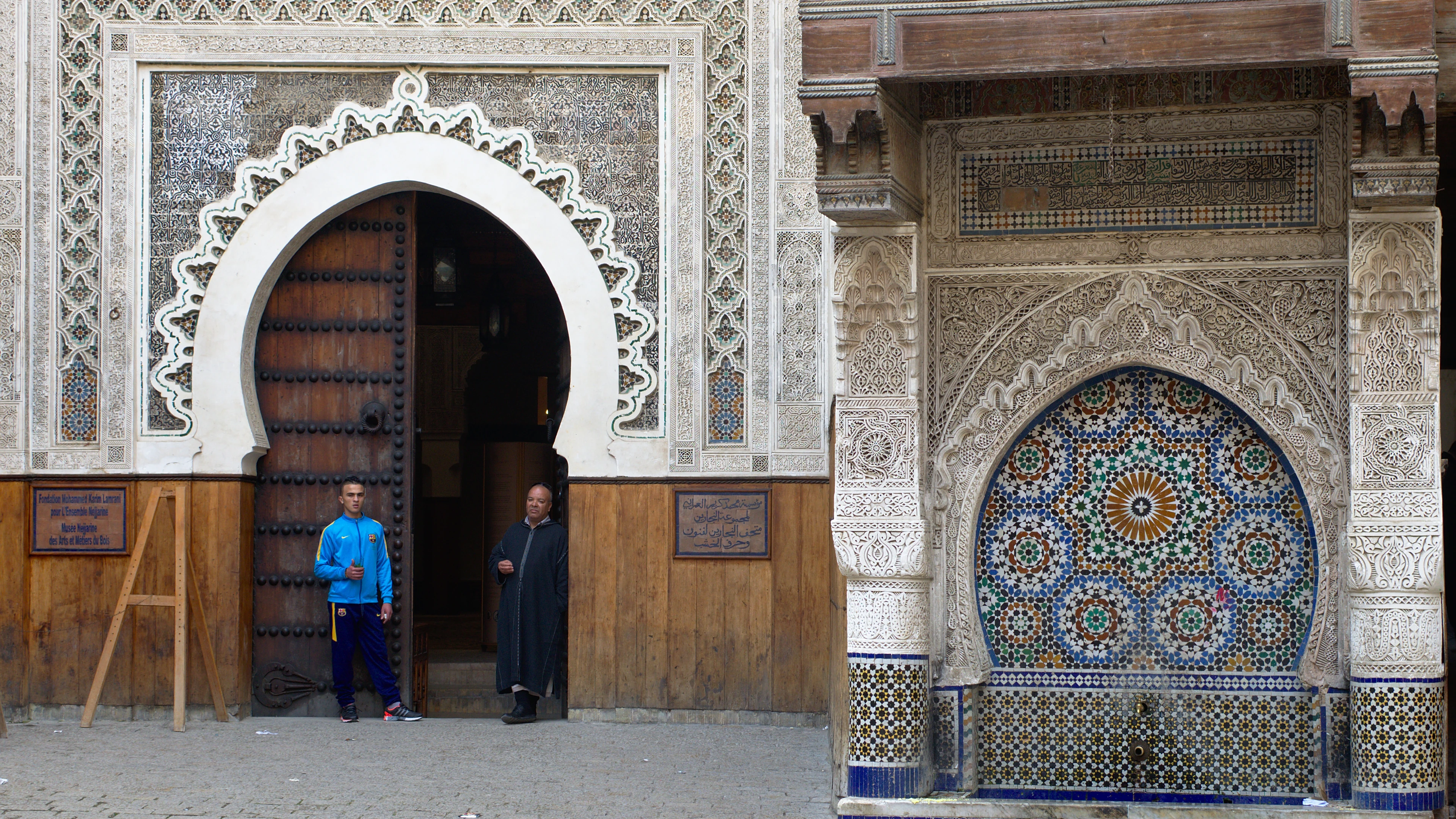
A city’s records can be held in walls, objects and practiced skills. Reading Fès means leaving room for the people who keep it alive.
Read the story ↗03 / Look closer
A court is an opening within a building; a covered edge offers another way to occupy it. Look at where doors, galleries and water sit in relation to that opening. The point is not to assign one climatic explanation to every Moroccan house. It is to notice how a particular plan distributes enclosure, light and movement. Our architecture and domestic-space guides give those observations a vocabulary.
04 / The story in context
A doorway offers more than a frame for a photograph. It marks a change between spaces. Notice what can be seen from outside, where a person pauses and how the path continues beyond the opening when access is permitted. A building begins to become legible through these movements before its ornament is given a name.
The stories of Fès, Meknès and Tétouan provide different settings for this kind of looking. A monumental entrance and a narrow lane ask different questions about scale. Do not make them answer the same one. Compare what each space allows you to do, what it directs you towards and what remains deliberately out of view.
A courtyard can be understood as a sequence rather than a single view: street, threshold, passage, open centre, surrounding rooms. Compare what each step lets you see and what remains screened. A madrasa, a fondouk and a house may all organise space around a court, yet their occupants and purposes differ. The building type is a better starting point than the general label ‘Moroccan architecture’.
Surface and structure also deserve separate attention. Cut tile meets plaster and wood at deliberate boundaries; an arch frames a route, while a decorated panel may frame an inscription. Follow those junctions before looking for a symbol in every shape. The zellige essay below shows the maker’s scale, and the city essays reveal how an individual threshold belongs to a larger urban setting.
A different distance
Zellige is easy to detach from architecture in a close photograph. The geometry becomes the whole subject. Step back in your reading as well as in your looking: where does the tiled surface begin, what meets its edge and how does light reach it? The essay on zellige connects the small unit with the larger setting, allowing the pattern to become part of a place again.
Shade and reflection also change a room over time. A single photograph records one arrangement of light, not a permanent condition. If a visit allows it, compare the same detail from another position without assuming that the brighter view is the more complete one. Architecture is encountered through movement, and a useful story leaves space for that experience.
A different distance
A building can hold several periods of use without presenting them neatly. A repaired wall, an adapted room or a new function may be part of the story you came to understand. Read a dated description alongside what is documented about the building now. Avoid treating every difference from an older image as evidence that a place has lost its character.
Continue into the architecture route only after choosing a question you want to follow. Use the city guides for the practical arrangement of visits and the stories for the slower connections between them. A small number of attentive encounters can reveal more than a long sequence of facades whose names you remember but whose spaces you never had time to consider.
Story pathways
Cities, cultural context and a connected essay, chosen for this subject.
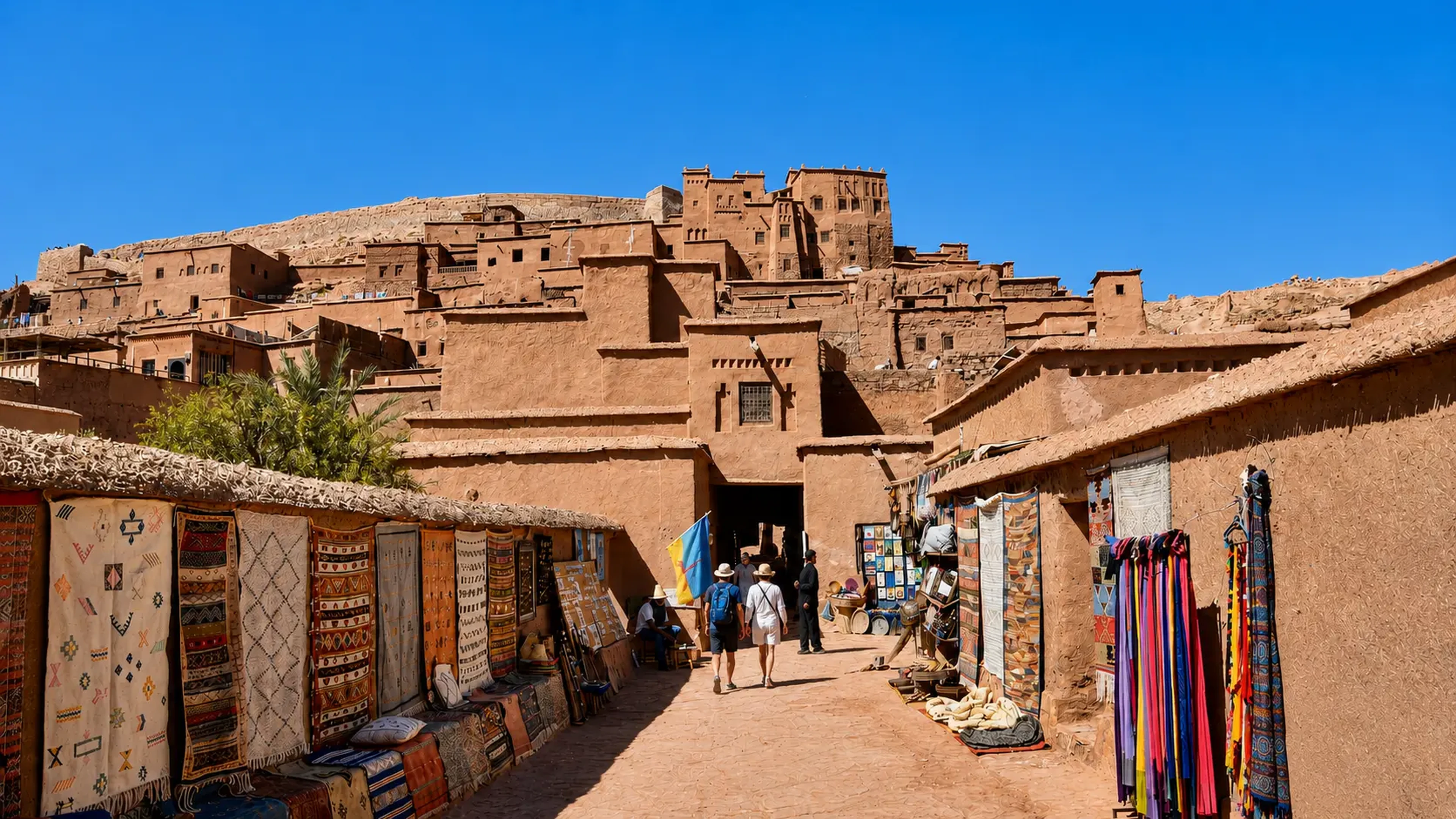
Learn Read the architectural language Courts, gates, materials and differences between building types. Explore ↗
Explore the context ↗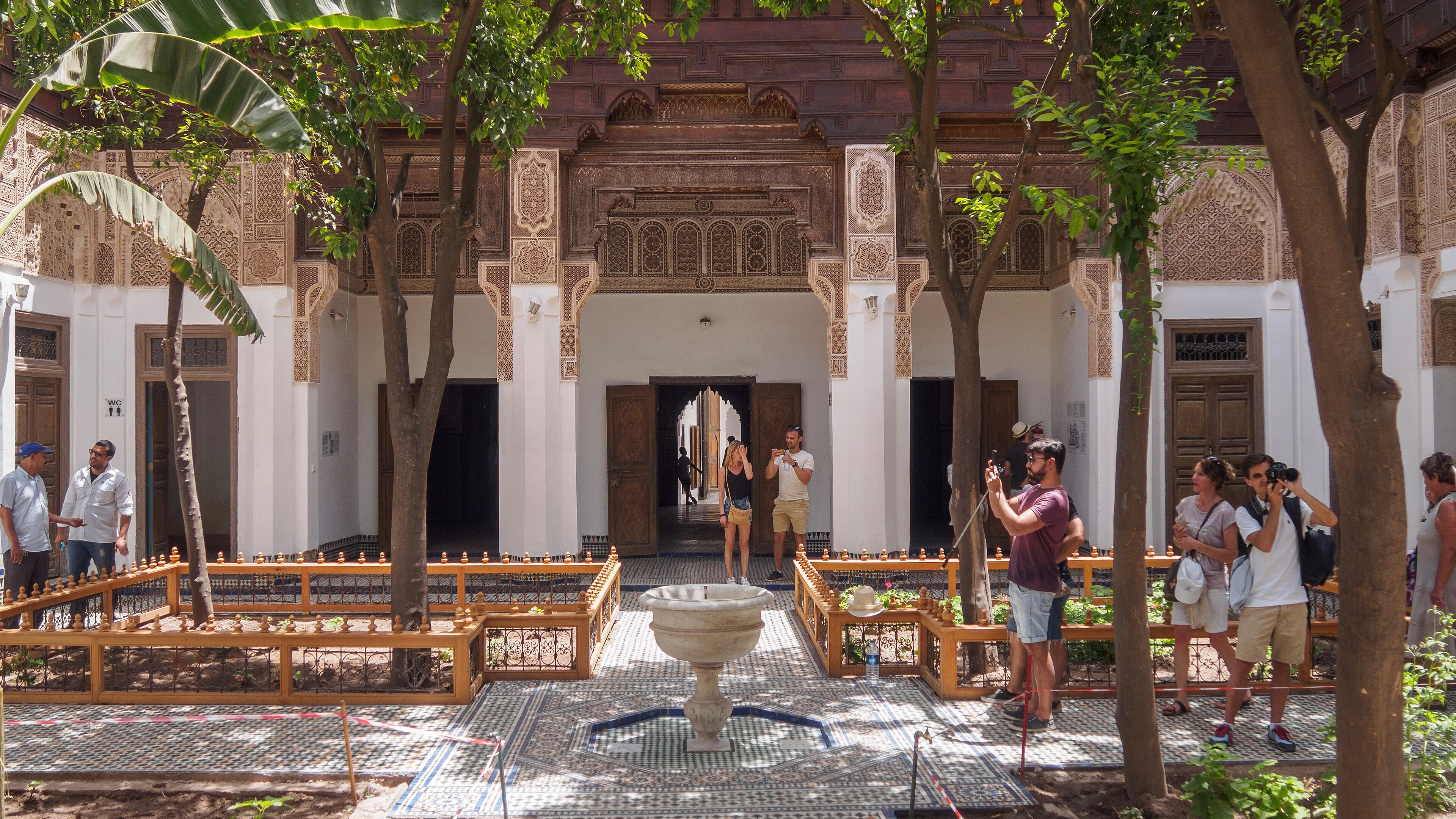
Learn Step into domestic space Bring rooms, privacy and the organisation of a home into the picture. Explore ↗
Explore the context ↗A small piece of clay. An extraordinary way of seeing. Inside the craft that gives Moroccan architecture its colour, rhythm and human touch.
Explore the story ↗Across a white hillside city, streets, thresholds and working crafts reveal an inheritance carried by people.
Explore the story ↗Continue reading
Keep the subject in view as you choose your next chapter.
A small piece of clay. An extraordinary way of seeing. Inside the craft that gives Moroccan architecture its colour, rhythm and human touch.
Read the story ↗Across a white hillside city, streets, thresholds and working crafts reveal an inheritance carried by people.
Read the story ↗Behind the famous gateway is a city of water, provision, markets and music. Change the scale, and another Meknès appears.
Read the story ↗A city’s records can be held in walls, objects and practiced skills. Reading Fès means leaving room for the people who keep it alive.
Read the story ↗This reading room connects published stories with contextual guides. Each linked story includes its own research and photography notes.
Photography is identified through the linked source records. Crops and responsive sizes were prepared for this layout.
Research checked 27 September 2026.

.jpg)
_(7346181900).jpg)
.jpg)