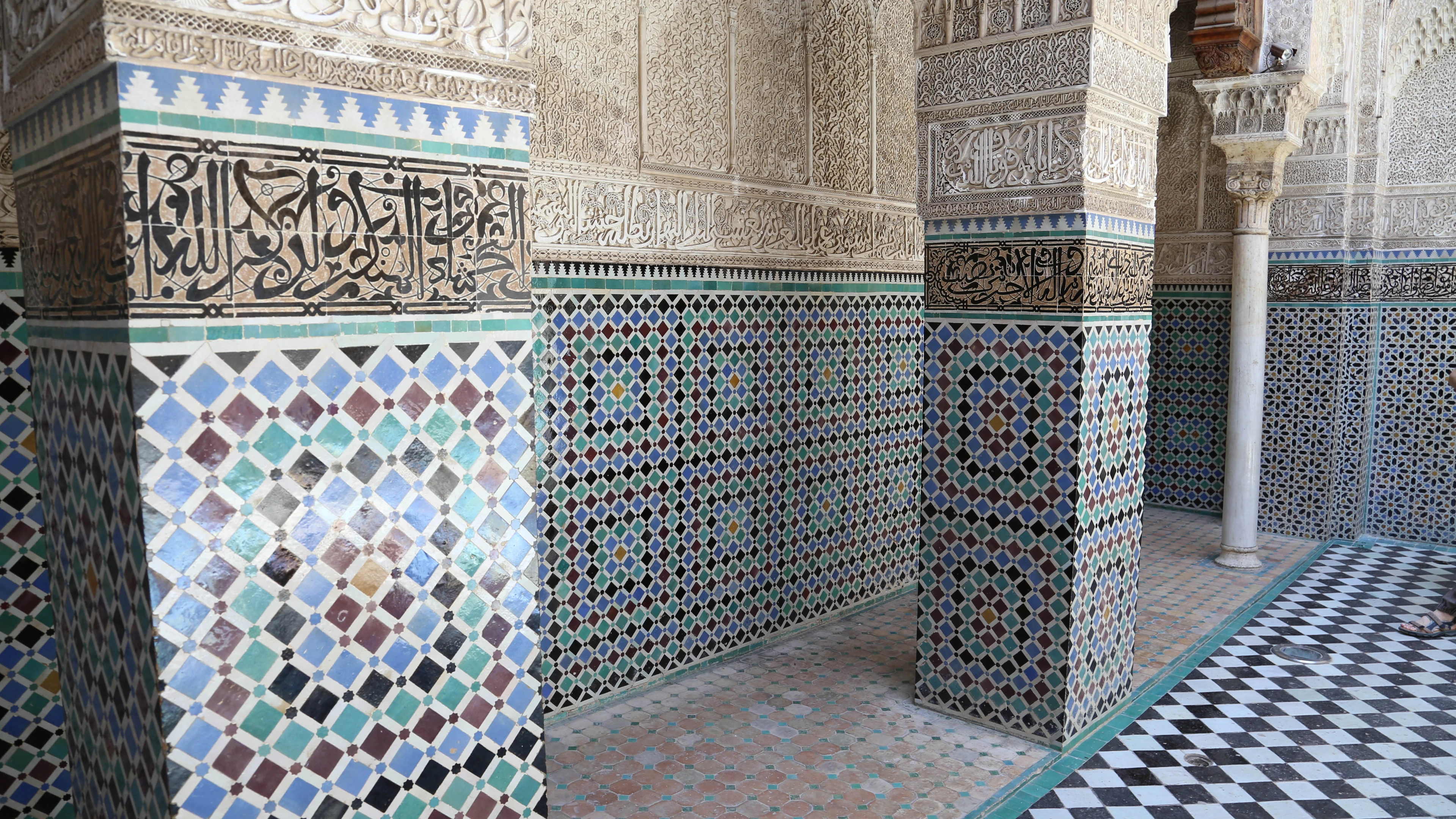
Zellige, geometry of light
A small piece of clay. An extraordinary way of seeing. Inside the craft that gives Moroccan architecture its colour, rhythm and human touch.
Read the story ↗
Exotic Morocco · Stories
Clay, colour, wood and the decisions that turn material into a useful, beautiful thing.
Enter the story ↓01 / The starting point
The finished object is the most visible part of a craft, but it is rarely the whole subject. A ceramic piece has a material history. A joint answers a practical question. A repeated pattern depends on decisions about proportion, edges and sequence. Looking at work through these details gives “handmade” a more precise meaning.
Begin with zellige to follow a process from tile to architectural surface. Continue to Fès for the relationship between objects, workshops and museums, then to Tétouan for another setting in which craft knowledge is taught and put to use. These are particular places and practices, not a claim that every Moroccan workshop follows one story.
02 / Choose your first encounter
Choose the essay that brings this subject into focus.
A small piece of clay. An extraordinary way of seeing. Inside the craft that gives Moroccan architecture its colour, rhythm and human touch.
Read the story ↗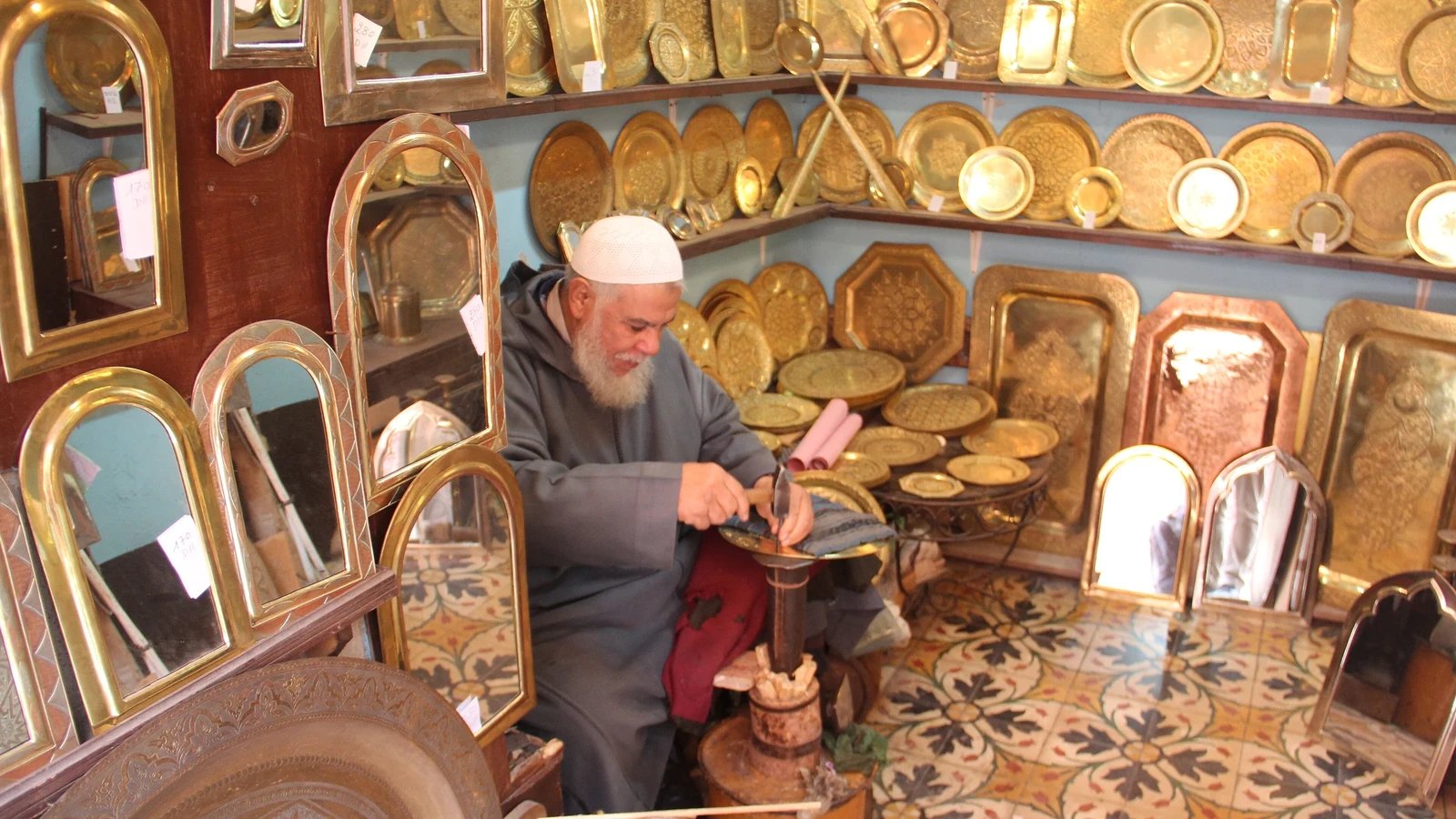
A worked surface can hold a long sequence of decisions. Looking closely begins to return the finished object to the people and processes behind it.
Read the story ↗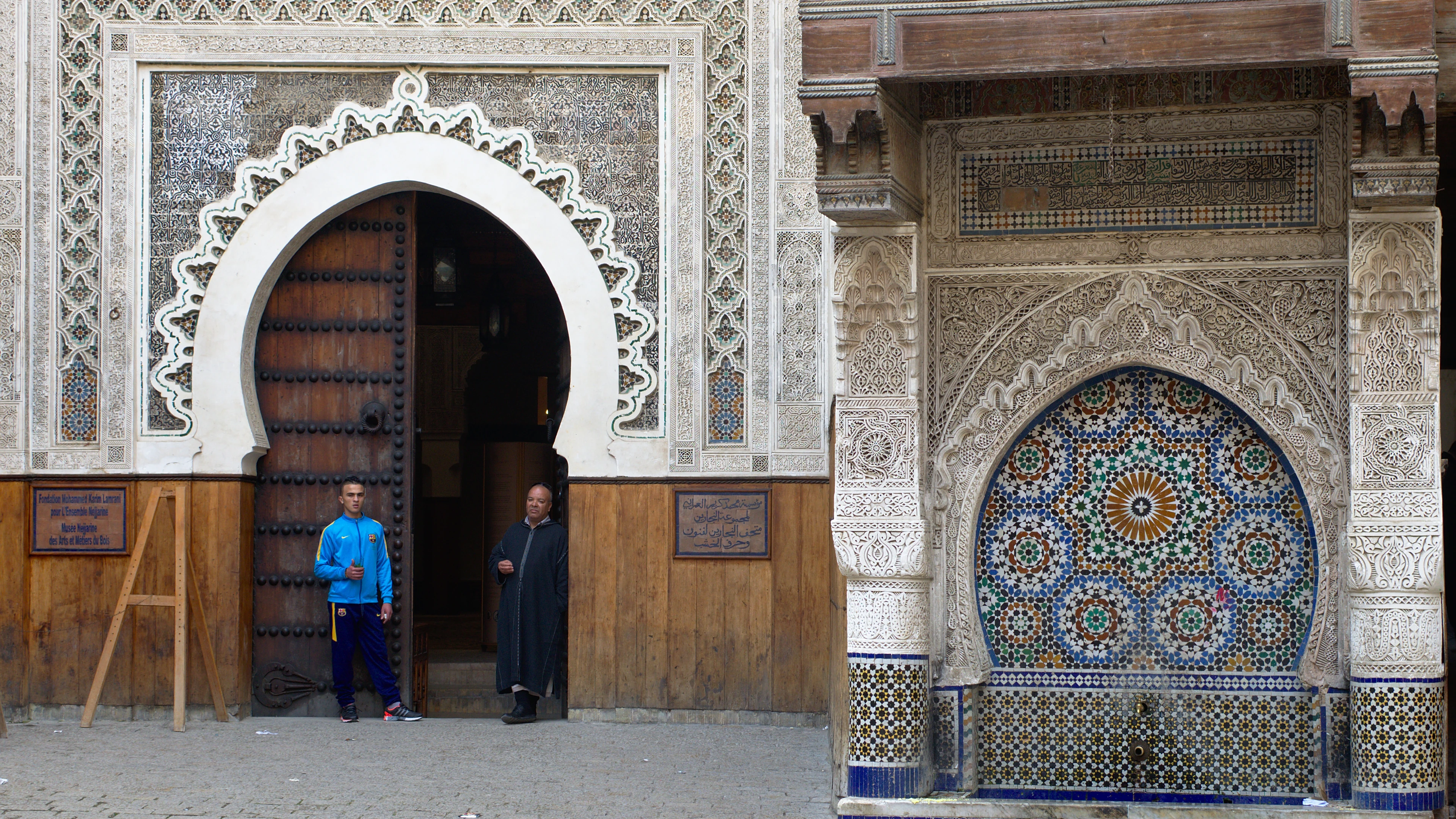
A city’s records can be held in walls, objects and practiced skills. Reading Fès means leaving room for the people who keep it alive.
Read the story ↗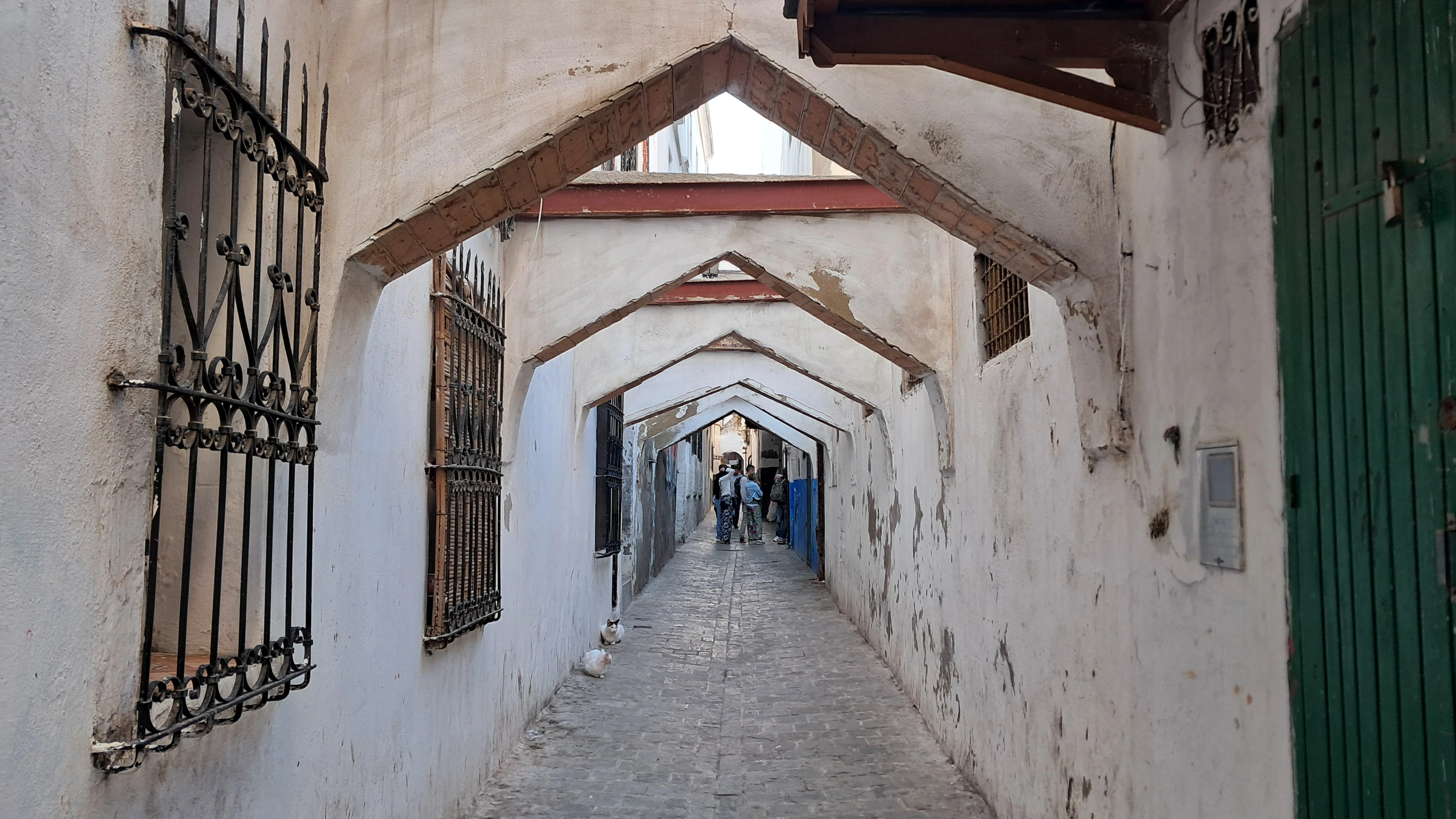
Across a white hillside city, streets, thresholds and working crafts reveal an inheritance carried by people.
Read the story ↗03 / Look closer
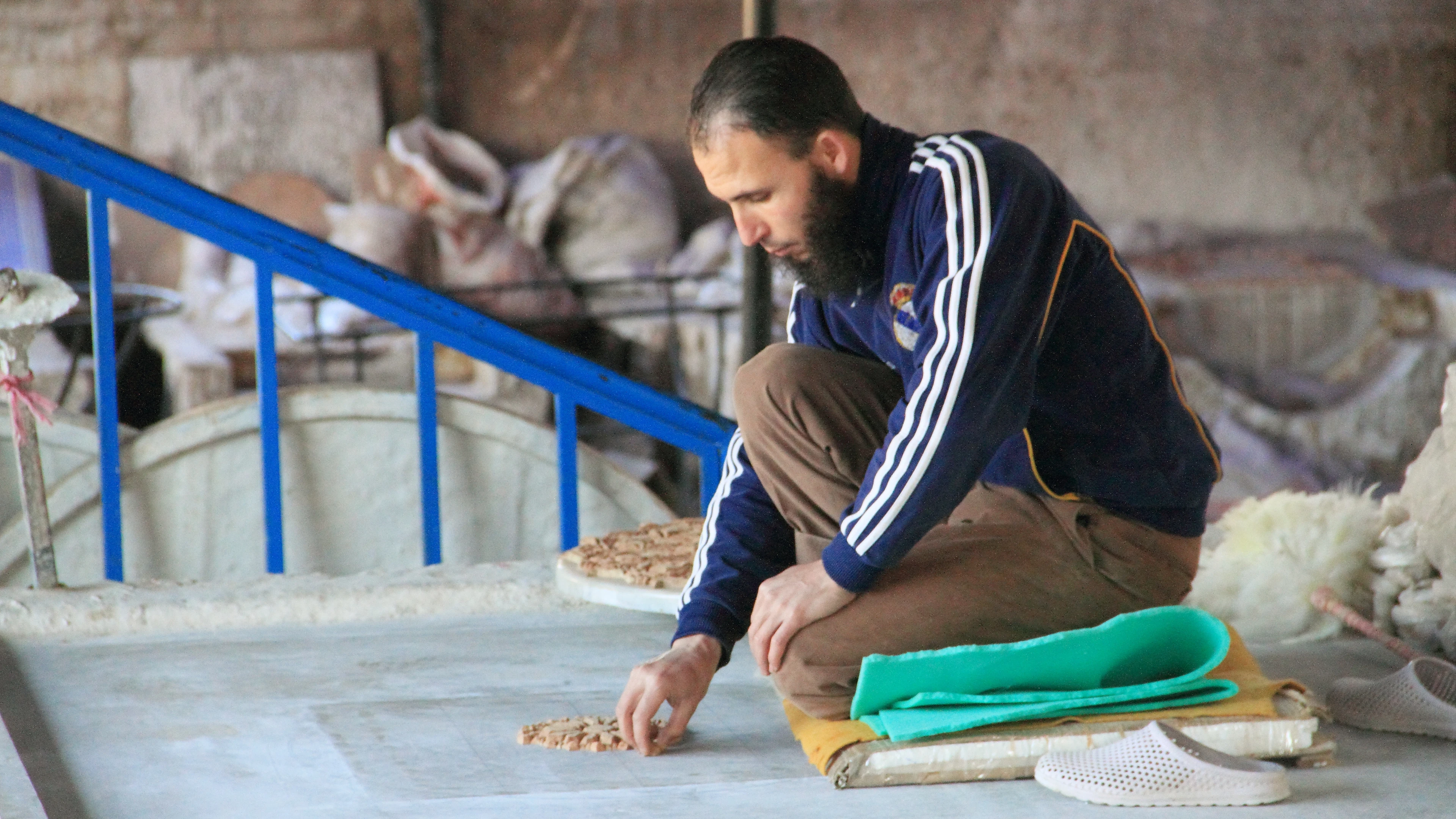
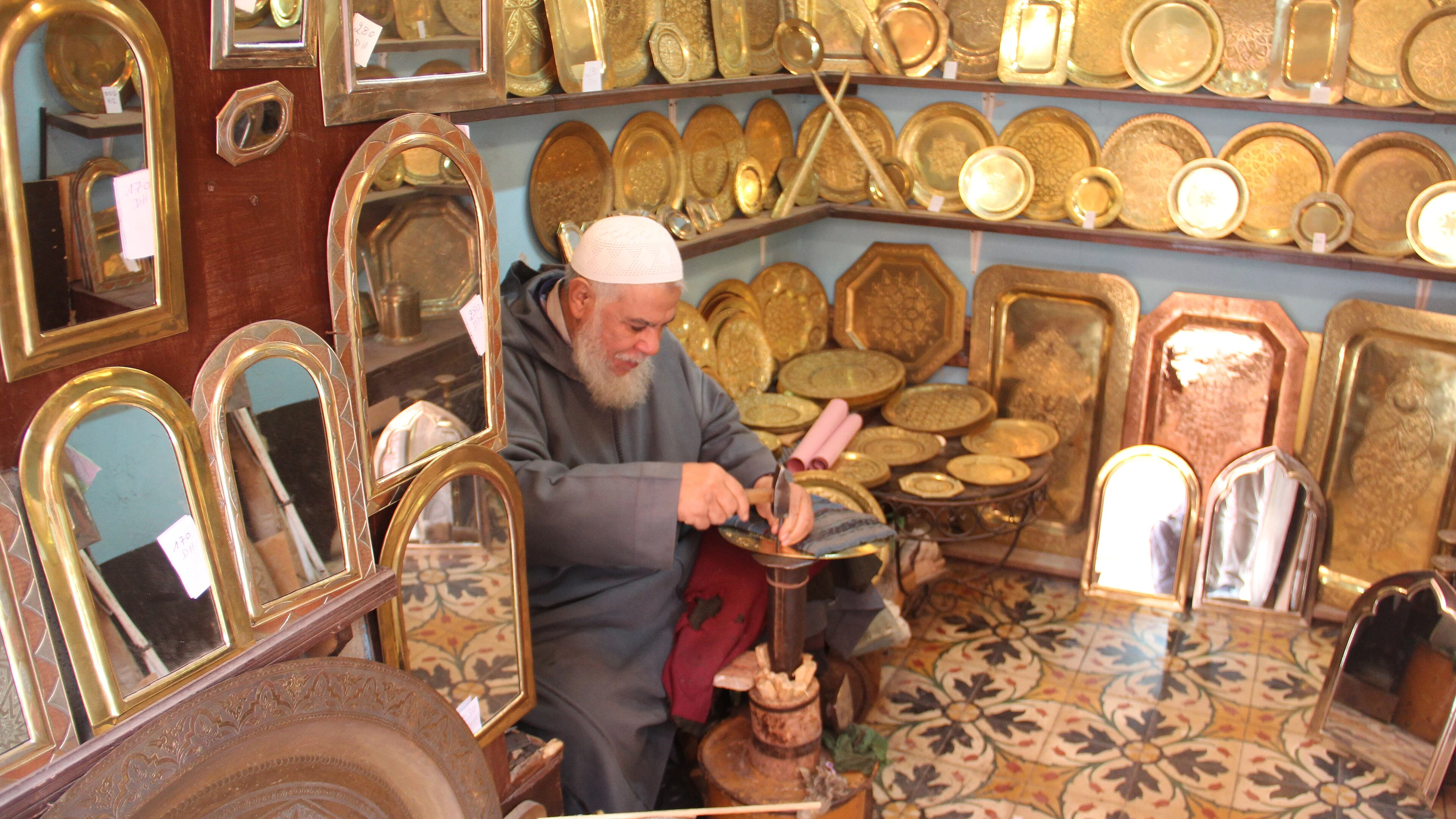
Choose one feature of an object and ask what it allows the object to do. A handle, a lip, a carved joint or a tile edge is a useful starting point. Decoration can then be considered alongside use rather than separated from it. In a working space, the maker’s own account adds something a photograph cannot: the reason for choosing a tool, correcting a cut or changing a sequence.
04 / The story in context
A finished surface makes an immediate impression. Colour reaches the eye before a join, a tool mark or the place where a repeated design meets an edge. Stay with one of those smaller details. Ask what had to be decided before it could exist. The zellige essay follows this change of scale, from a small piece to the larger architectural surface that receives it.
An edge is a useful place to begin because a pattern cannot continue indefinitely. Somewhere it must meet an opening, turn a corner or finish against another material. The result is not only decoration; it is a response to a particular space. Read the whole arrangement, then return to one part. Each view changes what the other can tell you.
A useful craft vocabulary begins with processes. Cut-tile mosaic, carved plaster, woodwork and woven cloth ask different things of a maker. Look for the prepared material, the tool’s contact with it and the joins that turn separate parts into a finished object. A shared geometric motif does not mean that the same technique produced it.
A workshop encounter can add information a shop label cannot: which stage happens here, what is bought in, what can be repaired and which decisions are made for a particular commission. Ask these questions without assuming every object is made entirely by one person. The zellige and ornament stories follow this relationship between a finished surface and the work behind it.
A different distance
Craft is often described through inheritance, but work also has a present: an order to finish, material to prepare, a technique to explain and somebody waiting for an answer. The essays on Fès and Tétouan make room for that living setting. They invite attention to the people using knowledge now, rather than treating every workshop as a scene preserved for a visitor.
A visit needs the same care. Ask whether the moment is convenient and let the maker choose what to show. A demonstration is a person’s time and work, not an automatic accompaniment to looking. If you buy something, ask about that object’s making and care. Specific questions give the encounter substance without requiring a grand story about authenticity.
A different distance
An object does not stop changing when it leaves the workshop. Its new setting affects how it is used, seen and looked after. Keeping the maker’s explanation, where one was offered, is part of taking it seriously. A written note can preserve a material or care detail that would otherwise disappear behind the simpler label of a souvenir.
Continue from this reading room into the textile and dress chapters, where construction and finish are considered at another scale. Look for the connection between a decision and its result. That habit travels well: it lets a ceramic surface, a woven cloth and the edge of a garment remain distinct while bringing the work behind each into view.
Story pathways
Cities, cultural context and a connected essay, chosen for this subject.
Learn Start with the material A vocabulary for looking at craft without reducing it to a souvenir. Explore ↗
Explore the context ↗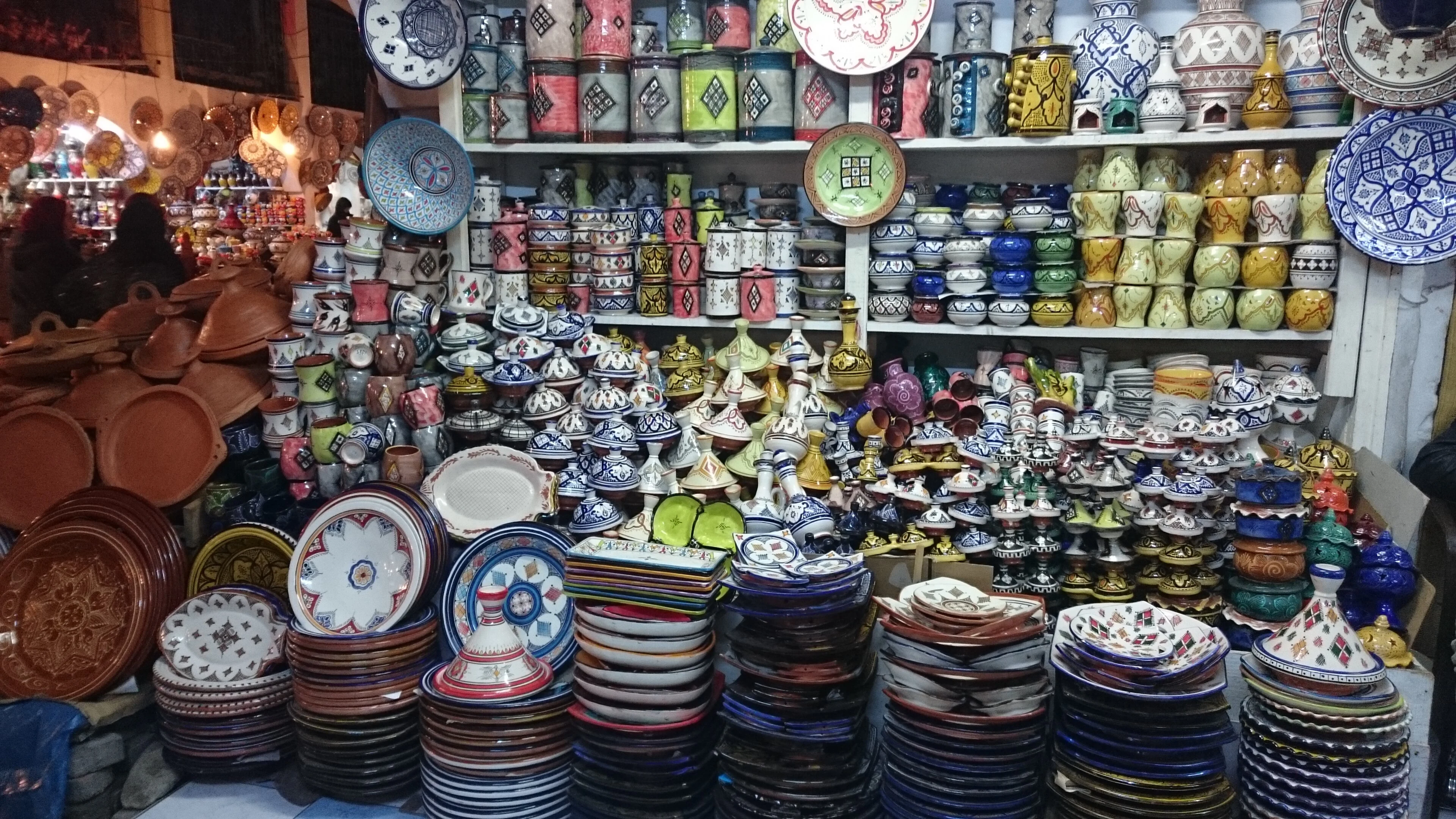
Learn Clay into objects Explore ceramics through form, process and context. Explore ↗
Explore the context ↗A small piece of clay. An extraordinary way of seeing. Inside the craft that gives Moroccan architecture its colour, rhythm and human touch.
Explore the story ↗A worked surface can hold a long sequence of decisions. Looking closely begins to return the finished object to the people and processes behind it.
Explore the story ↗Continue reading
Keep the subject in view as you choose your next chapter.
A small piece of clay. An extraordinary way of seeing. Inside the craft that gives Moroccan architecture its colour, rhythm and human touch.
Read the story ↗A worked surface can hold a long sequence of decisions. Looking closely begins to return the finished object to the people and processes behind it.
Read the story ↗A city’s records can be held in walls, objects and practiced skills. Reading Fès means leaving room for the people who keep it alive.
Read the story ↗Across a white hillside city, streets, thresholds and working crafts reveal an inheritance carried by people.
Read the story ↗This reading room connects published stories with contextual guides. Each linked story includes its own research and photography notes.
Photography is identified through the linked source records. Crops and responsive sizes were prepared for this layout.
Research checked 27 September 2026.

.jpg)

.jpg)