Skip to learning
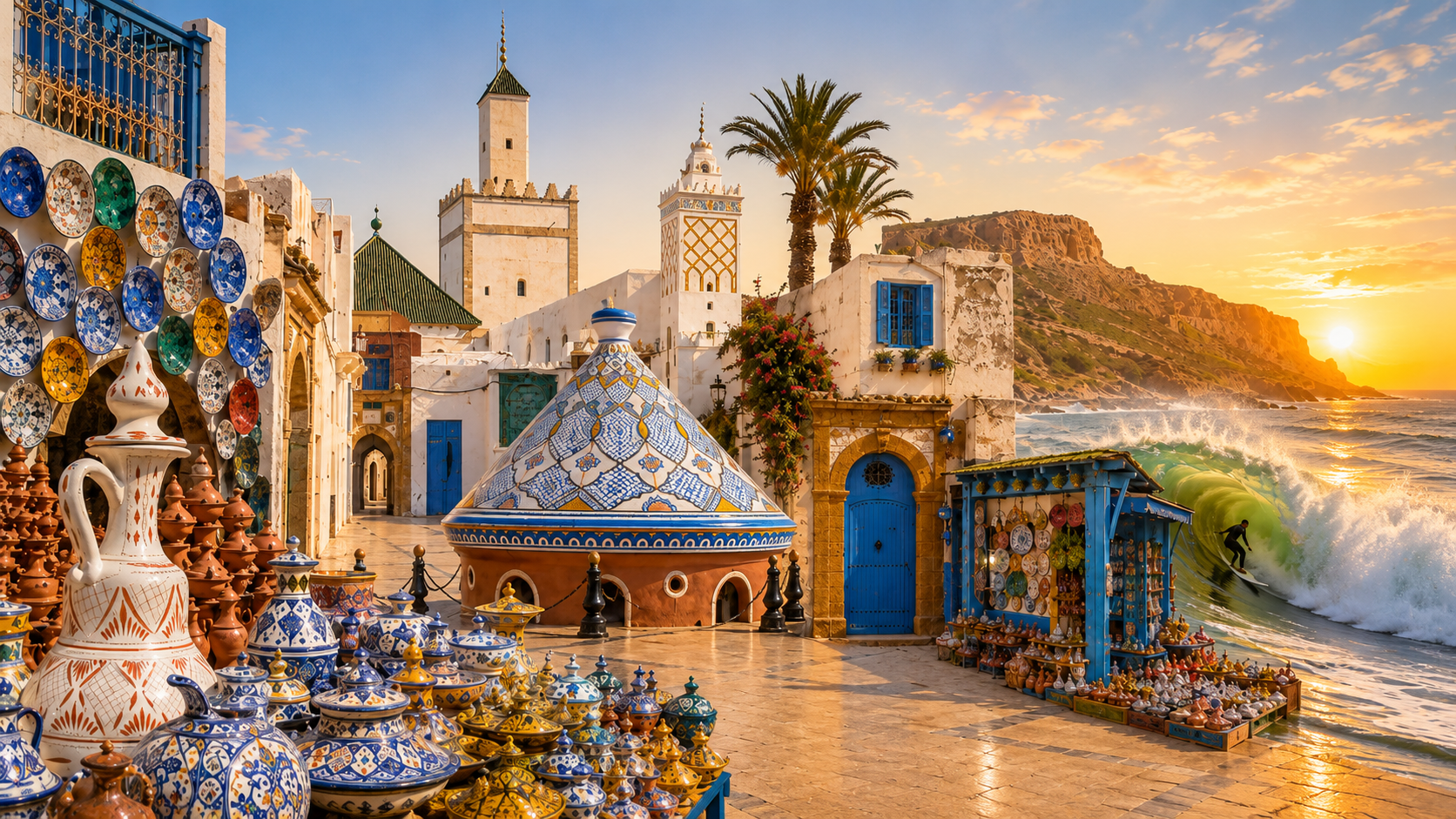
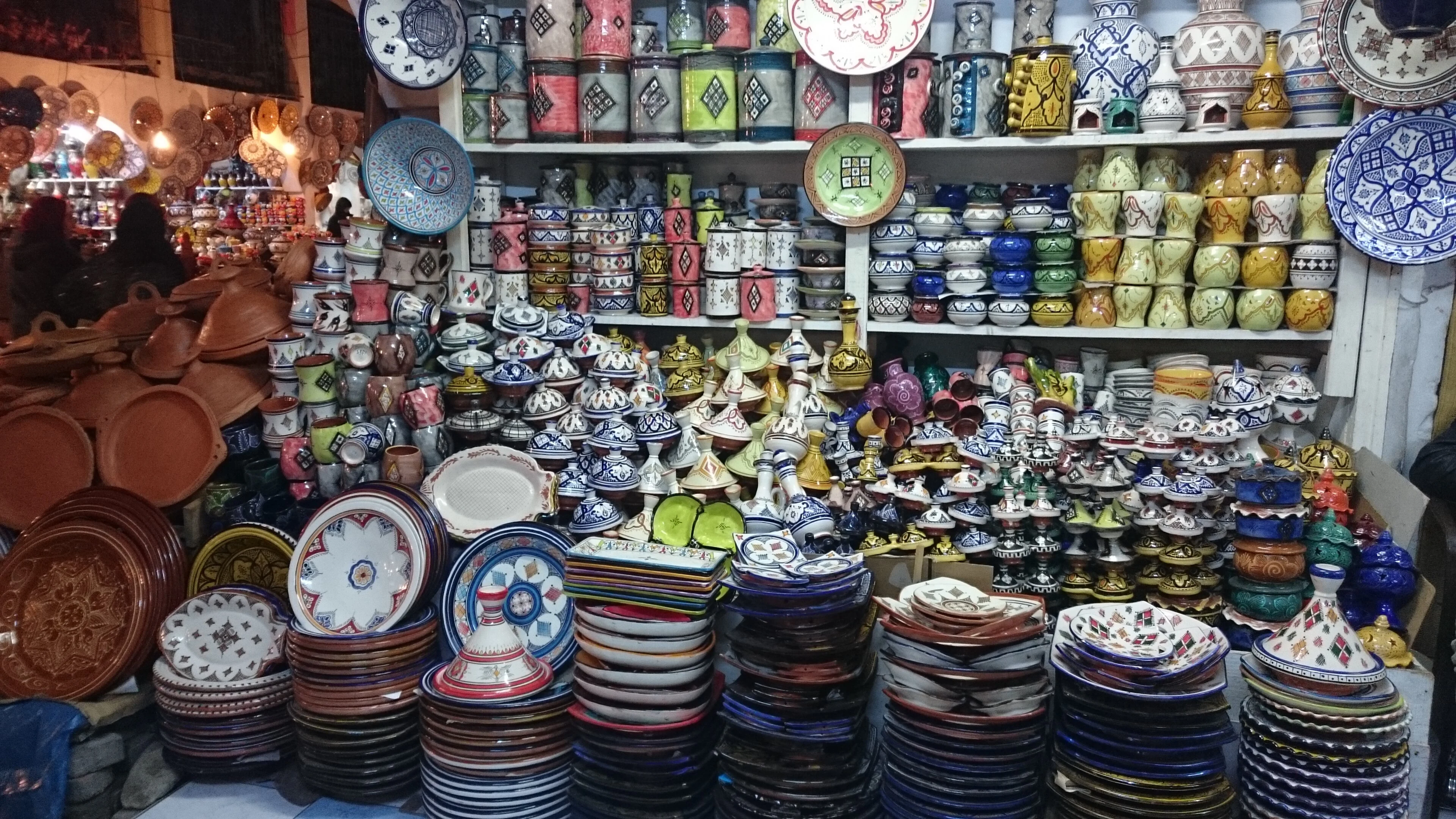
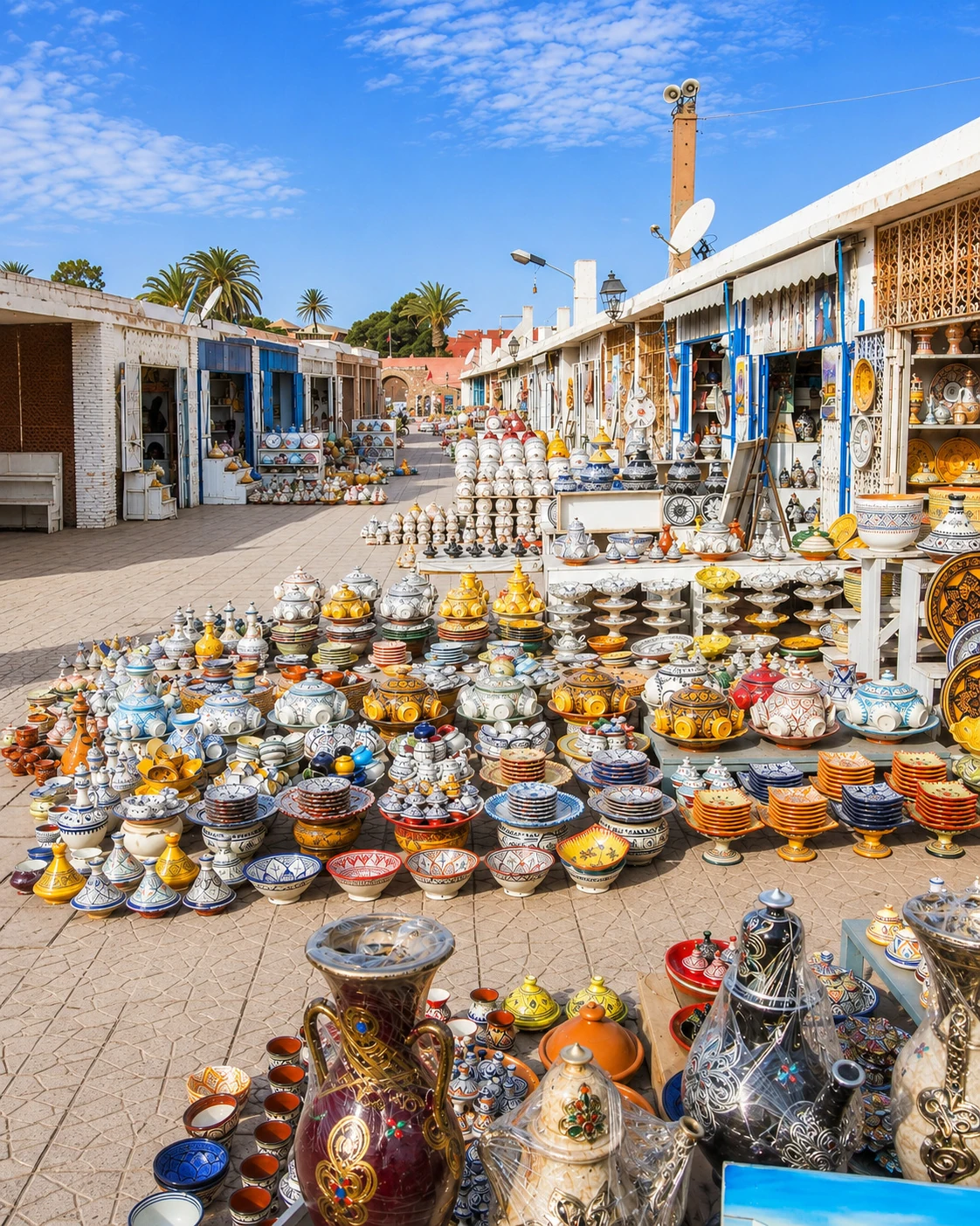
Ceramic wares displayed in Safi, with different forms, sizes and surface treatments.
Earth changed by fire

Ceramics & Artisan Craft

From workable clay to a finished vessel: discover the choices behind Moroccan pottery, its decoration and its everyday uses.

Exotic Morocco · 11 minute read
01 / A way into the story

A vessel begins with a material decision.

Clay can become a bowl, a storage vessel, a cooking form or a decorative object. Shape, thickness, drying, firing and surface treatment all affect the result. A painted pattern is the most visible stage, but not the whole craft.

Safi, Fez and Salé are among Morocco’s recognised pottery centres. Those place names are useful context, not automatic guarantees of origin or a single local style. Ask where a particular object was formed, decorated and fired.

Ceramics displayed in Safi: repeated forms and varied surfaces.
THE SUBJECTEarth changed by fire
THE APPROACHPlace. Practice. People.
THE CONNECTIONFind it in Morocco ↗
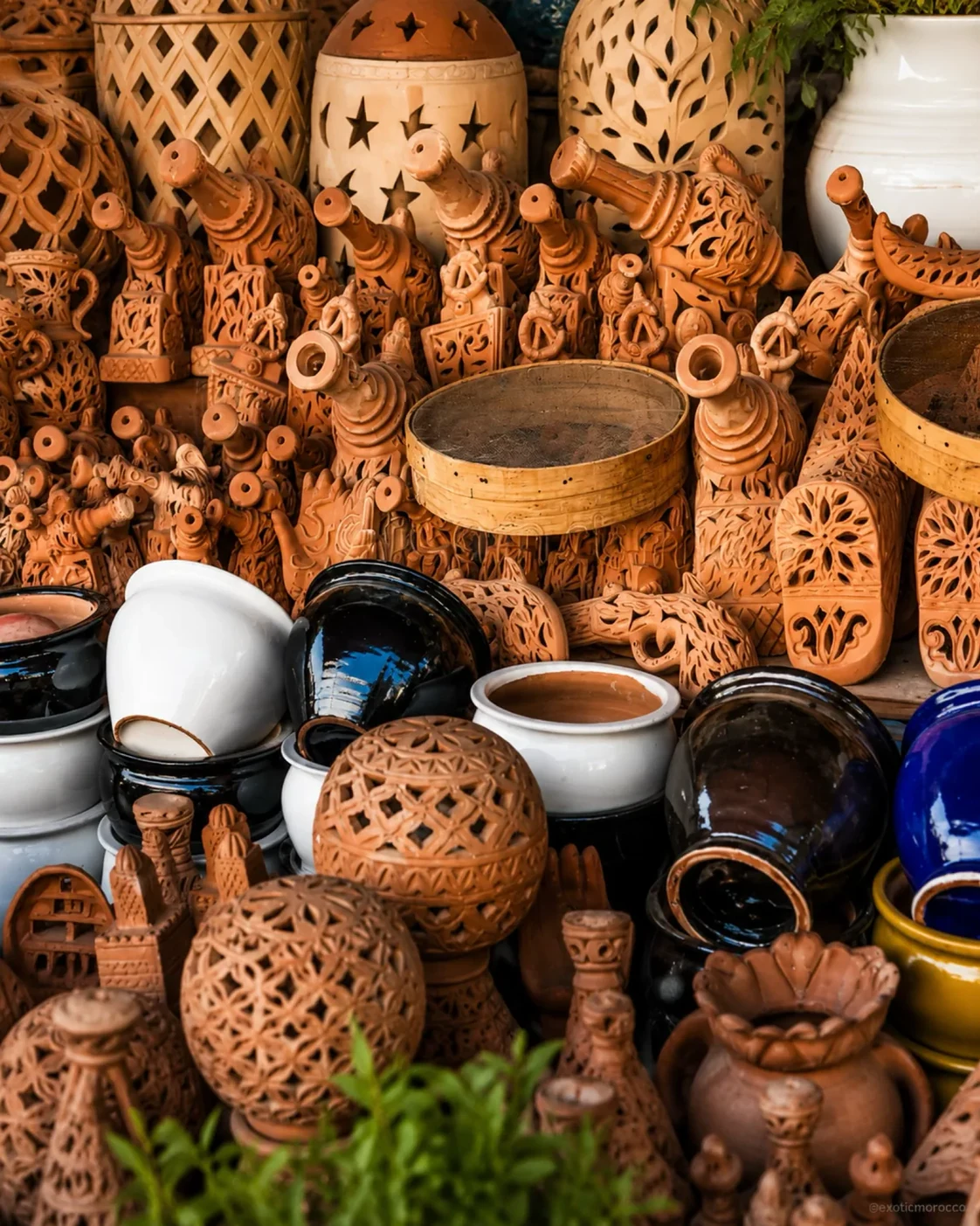
Pottery forms: containers, pierced surfaces and lids.
02 / The deeper context

Clay becomes a form.
Use gives it a life.

Ceramics connect a material that can be shaped while damp with an object transformed by heat. The process makes room for many choices: the body, the method of forming, the thickness of a wall, the shape of a foot or rim, and the treatment of the surface. A painted pattern is one chapter of the object, not the whole craft.

Moroccan pottery ranges from everyday vessels to elaborate display pieces. Safi and Fez are useful points of entry into different production settings, but a city name should not be treated as a guarantee of origin or quality for every object sold there. Workshops, retailers and wider supply chains can overlap. A precise account follows the particular piece.

Function deserves as much attention as decoration. A vessel for cooking, a serving bowl and a purely decorative object may require different materials and care. Ask about intended use and any relevant product information. Neither the appearance of a glaze nor the word traditional can certify that an object is suitable for a particular food or heat application.

03 / From an idea to everyday life

Three stages to look for.

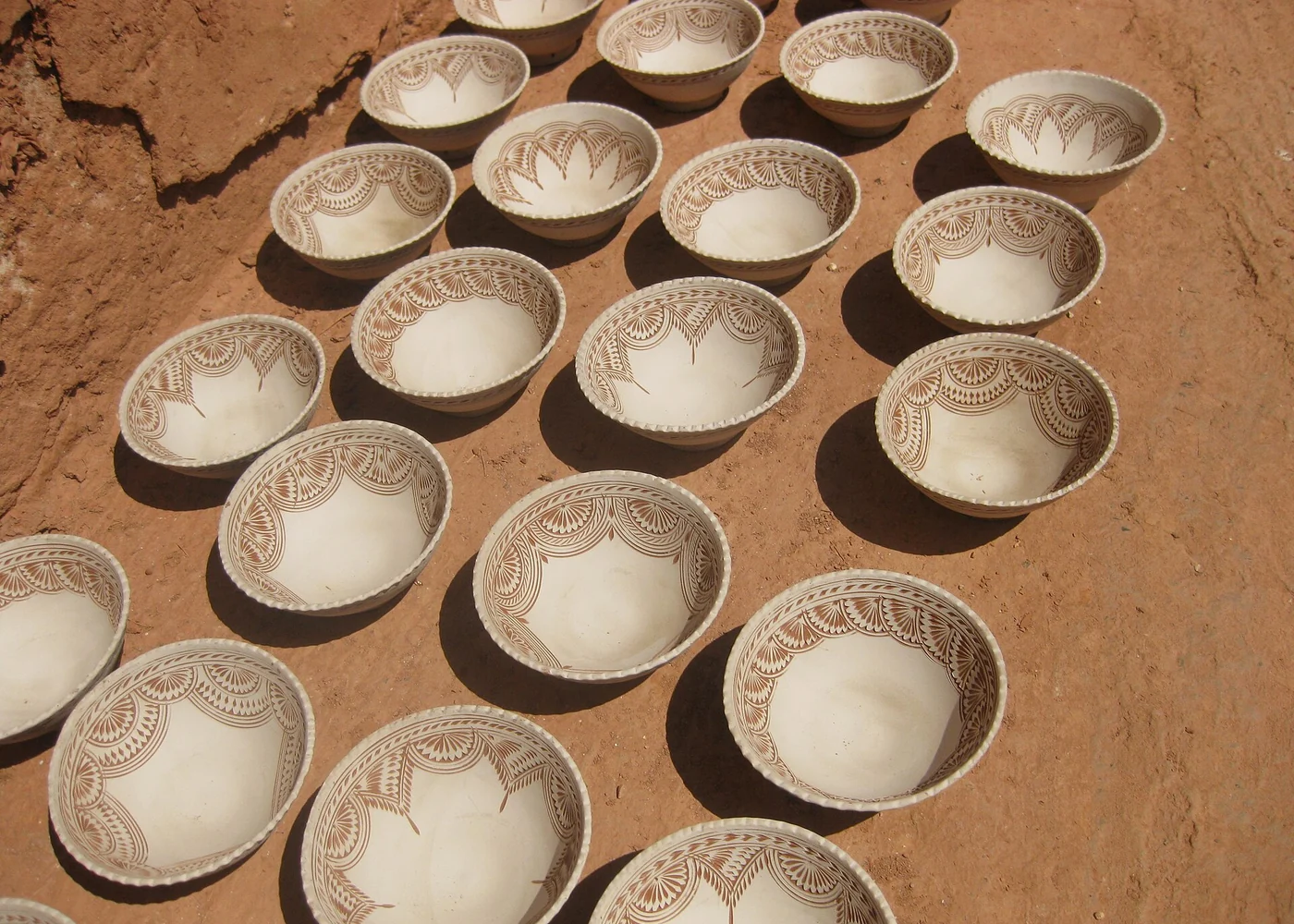
Bowls drying in the sun show a stage before the finished surface is complete. Drying needs care: moisture and thickness affect what happens next. The exact sequence depends on the clay, form, workshop and intended finish.

Unfinished pottery drying in Safi.
01

Forming the body

A pot can reveal how its profile was built and refined. Look at the rim, base and transition between wall and foot. A skilled maker balances the desired silhouette with the practical demands of drying, firing and use. The most decorated side may not be the most informative one.
02

Working the surface

Incision, painting and glazing create different effects. Examine how the decoration follows the form: does it emphasise the rim, divide the body into zones or draw the eye to a centre? Ask which stages happen before or after a firing rather than assuming one universal sequence.

03

Finishing for a purpose

A lid should relate to its vessel, a base should sit as intended and a handle should suit the object’s use. Small irregularities can be part of handwork, but they should be considered alongside function. Care instructions and the maker’s explanation are part of the purchase.

A closer understanding

Form comes
before the painted line.

The weight of a bowl, the angle of a spout and the finish of a foot are decisions as important as decoration.

Clay to shape

A vessel is built for an action.

A potter shapes an object around what it must do: hold, pour, serve, store or cook. A narrow opening and a broad open bowl create different relationships with contents and hands. Handles and rims deserve close attention because they are where use meets form.

Wheel throwing is one way of shaping clay, not a synonym for all handmade pottery. Other methods include building by hand and using moulds. Ask about the actual process rather than treating one technique as the only legitimate form of craft.

Surface and firing

Colour is part of a process.

A decorated ceramic surface may involve a clay coating, pigments, glaze and one or more firings. These are distinct stages; the glossy appearance of a finished object does not explain its whole construction. The kiln changes the material in ways a photograph cannot show.

Compare the decorated face with an unglazed foot, if handling is permitted. It can reveal a different surface and colour beneath the finish. Small variations may reflect handwork, but they do not by themselves establish age, provenance or fitness for a particular use.

Workshop and table

A beautiful bowl needs the right description.

A workshop may produce functional ware, decorative objects and architectural ceramics side by side. These categories can overlap visually. An object designed to hang on a wall need not have the same requirements as one intended for repeated contact with food.

For a purchase, seek a clear statement from the maker or supplier about intended use and care. Do not infer cooking, dishwasher or food-contact suitability from a traditional appearance. The strongest craft story connects beauty with accurate information about the material object.

Carry this with you

Compare three things: the form in the hand, the surface in the light and the maker’s account of its intended use.

04 / The visual chapter

The stages a shop window hides

Move between the close detail and the wider setting. Each view adds another part of the story.

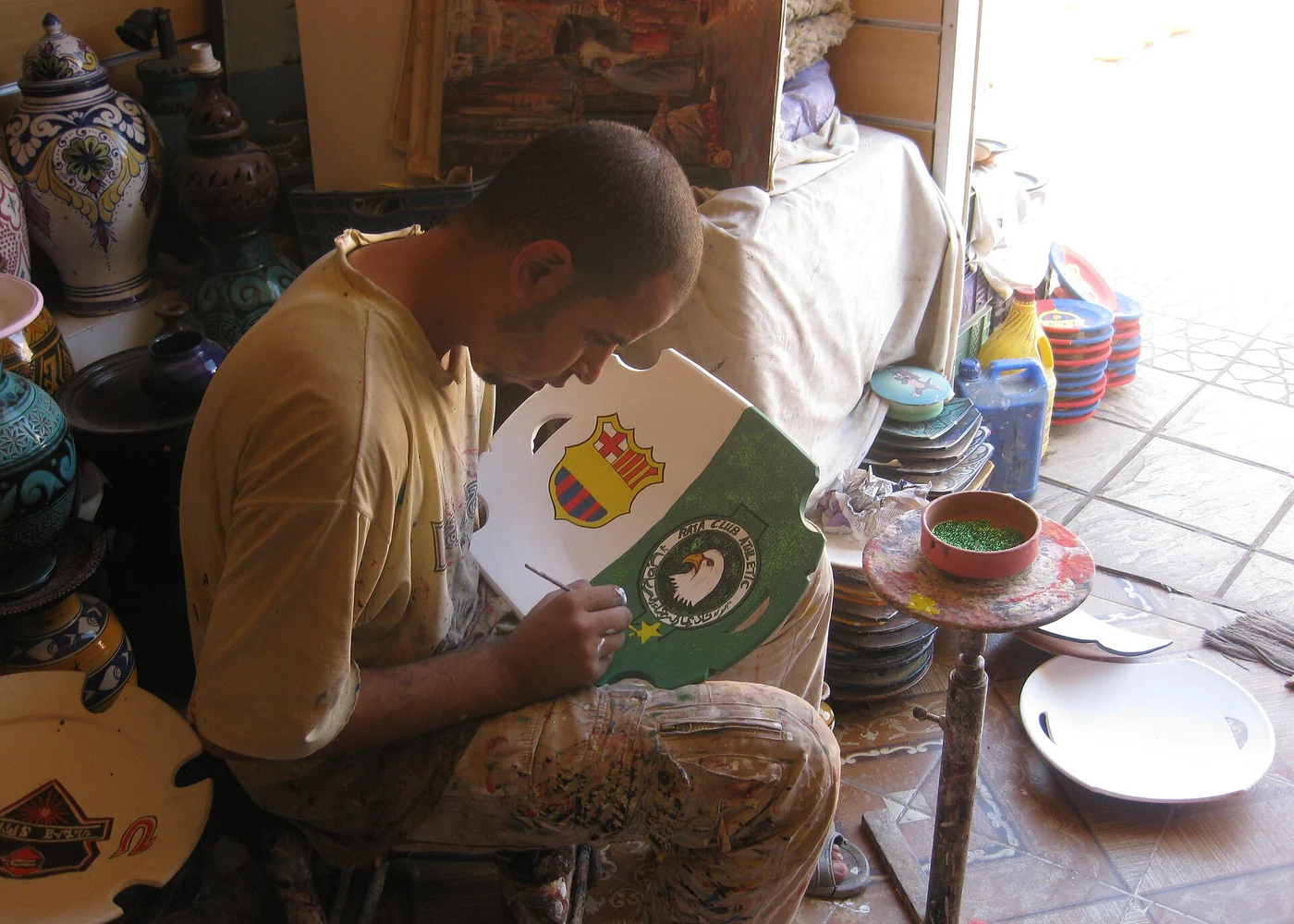
A craftsperson painting pottery in Safi.
01 / A closer look

Decoration is skilled work

A painter’s decisions include line, spacing and how a design sits on the vessel. Look at the whole form rather than judging a pattern as though it were flat paper. Tools and processes can vary between workshops.

A craftsperson painting pottery in Safi.
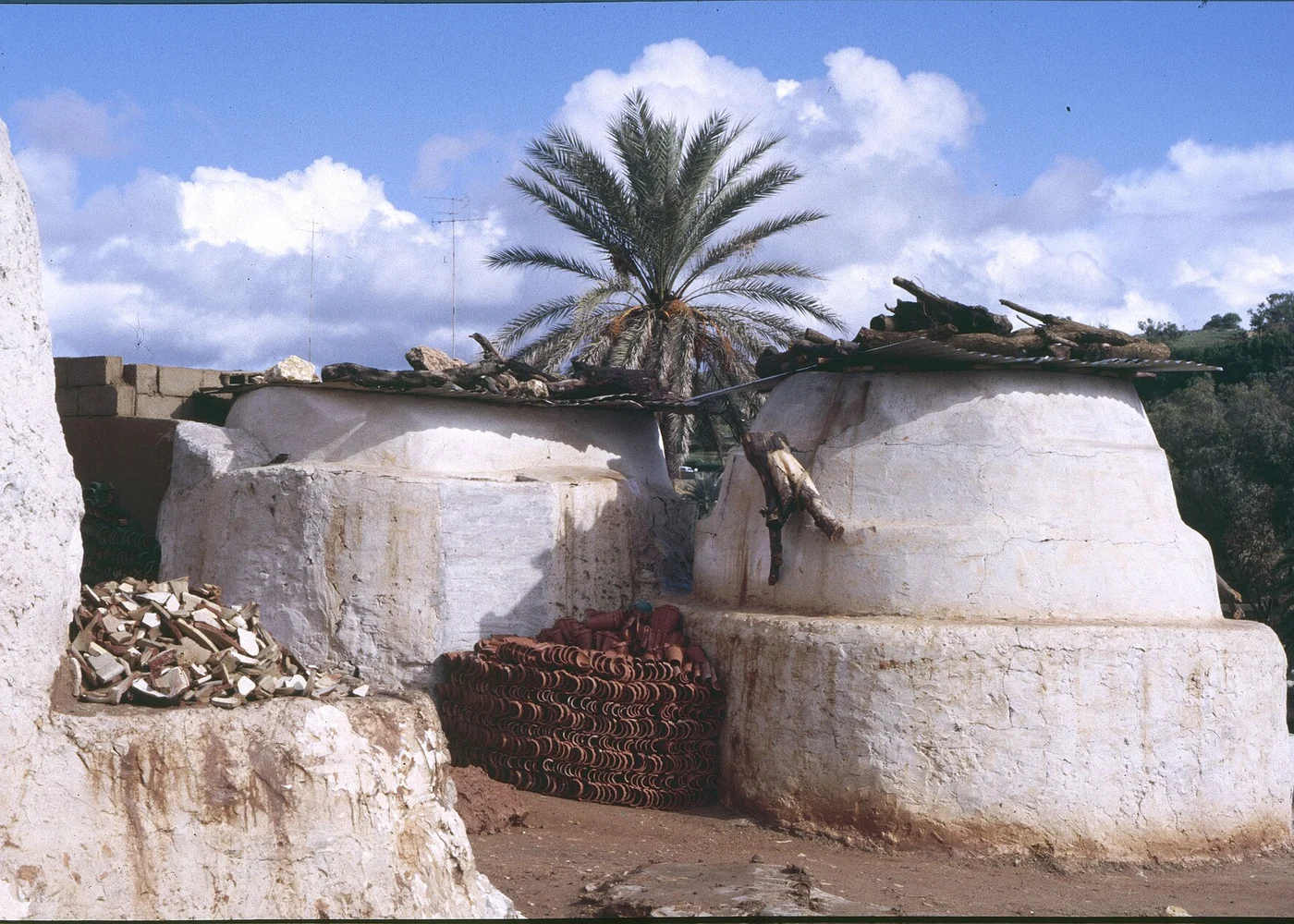
Pottery kilns photographed in Safi.
02 / A closer look

Fire changes the material

Kilns make the transformation possible, but a photographed kiln does not identify the firing schedule of every piece nearby. Ask which equipment is in use and how the maker controls the process today.

Pottery kilns photographed in Safi.
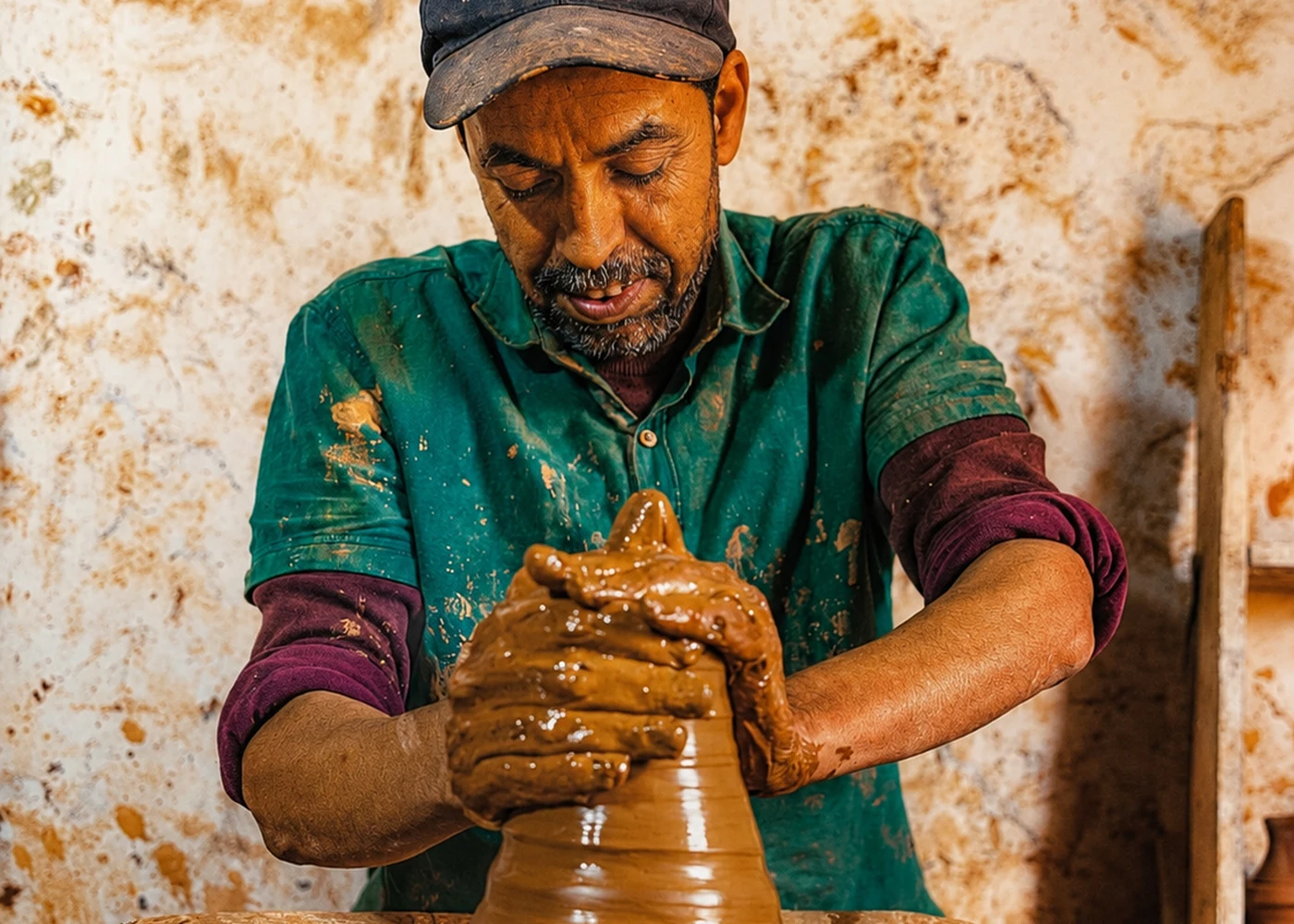
A potter shaping clay in the Safi collection.
03 / A closer look

The object in context

A bowl at a shared meal, a roof tile and a decorative ceramic panel belong to different settings. The wider ceramic world is larger than a souvenir display. Connecting form to use makes its design decisions easier to understand.

A potter shaping clay in the Safi collection.
05 / More than one perspective

Look beyond
the first impression.

Perspective 01

The workshop view

An unfinished vessel shows a process that the shop display may conceal. Look for drying pieces, tools, templates and repeated forms. Photography should be arranged around the work rather than requiring the maker to interrupt it.

Perspective 02

The market view

A group of objects reveals range, repetition and adaptation to demand. Similar decoration may appear on very different forms. Ask where a piece was made and whether the seller can explain its construction and intended use.

06 / Make the connections

From clay to ceramic

Use these ideas to connect what you notice with the materials, people and histories behind it.

01

Forming

A potter’s wheel combines rotation with controlled hand pressure. Moulding and hand modelling offer other ways to build a form. Ask which method produced this object: the finished decoration may hide the clues.

02

Drying

Water leaves the workable clay before firing. Thickness and shape affect how evenly it dries. The bowls in the Safi photograph show why space and time between forming and the kiln are part of the work.

03

Firing

Heat transforms the dried clay into ceramic. Results depend on the clay, kiln and firing conditions. There is no single temperature or schedule that explains all Moroccan pottery, and a kiln photograph cannot supply those details.

04

Glazing & decoration

A glaze forms a glass-like surface through firing. Painting and other decoration may be applied at different stages, depending on the process. Ask about the sequence and intended use; a glossy finish alone does not establish suitability for food.

05

A regional workshop

Safi, Fez and Salé are recognised pottery centres, with varied workshops and products. Treat a city association as a research lead. A named maker and a documented object tell you more than a claim that one colour belongs exclusively to one city.

07 / A more useful conversation

Questions to take to a pottery workshop

Clear answers for the questions that often come next.

Is “handmade” enough to identify the process?

No. It can refer to forming, painting, finishing or several stages. Ask which parts were shaped by hand, made in a mould or decorated individually. Tools do not remove the need for skill.

Can I assume a decorative glaze is suitable for food?

No. Ask for reliable product information and relevant testing for the intended food-contact use. If this cannot be established, choose a clearly decorative use instead.

How does pottery connect to zellige?

Both involve ceramic material, but a vessel and a cut-tile mosaic have different forms, techniques and uses. Follow the Zellige page to understand how separately cut units become an architectural surface.

A thought to take with you

Keep looking. Keep learning.

Choose one vessel and read it from base to rim before studying the painted surface. Then ask what it was made to do. The pattern will become part of a complete object, with a material history and a place in daily life.

The Exotic Morocco library

Continue at your own pace.

This Learn story is free to explore. Find this subject in the guide library, with each title’s current availability clearly shown.

Explore the guide library ↗
Sources & further reading

Read the evidence

  1. Moroccan National Tourism Office · Traditional craftsmanship revisited
  2. The Metropolitan Museum of Art · Building the Moroccan Court
  3. The Metropolitan Museum of Art · Panel with Cusped Arches
  4. Victoria and Albert Museum · An A–Z of Ceramics

Source review: September 2026. Looking exercises and learning prompts are original Exotic Morocco editorial suggestions. Regional practice and personal experience vary.

Image acknowledgements

  1. Related preview: PlateMakerMarrakech.jpg — Elgaard. CC BY-SA 4.0. Cropped/resized; original licence retained.
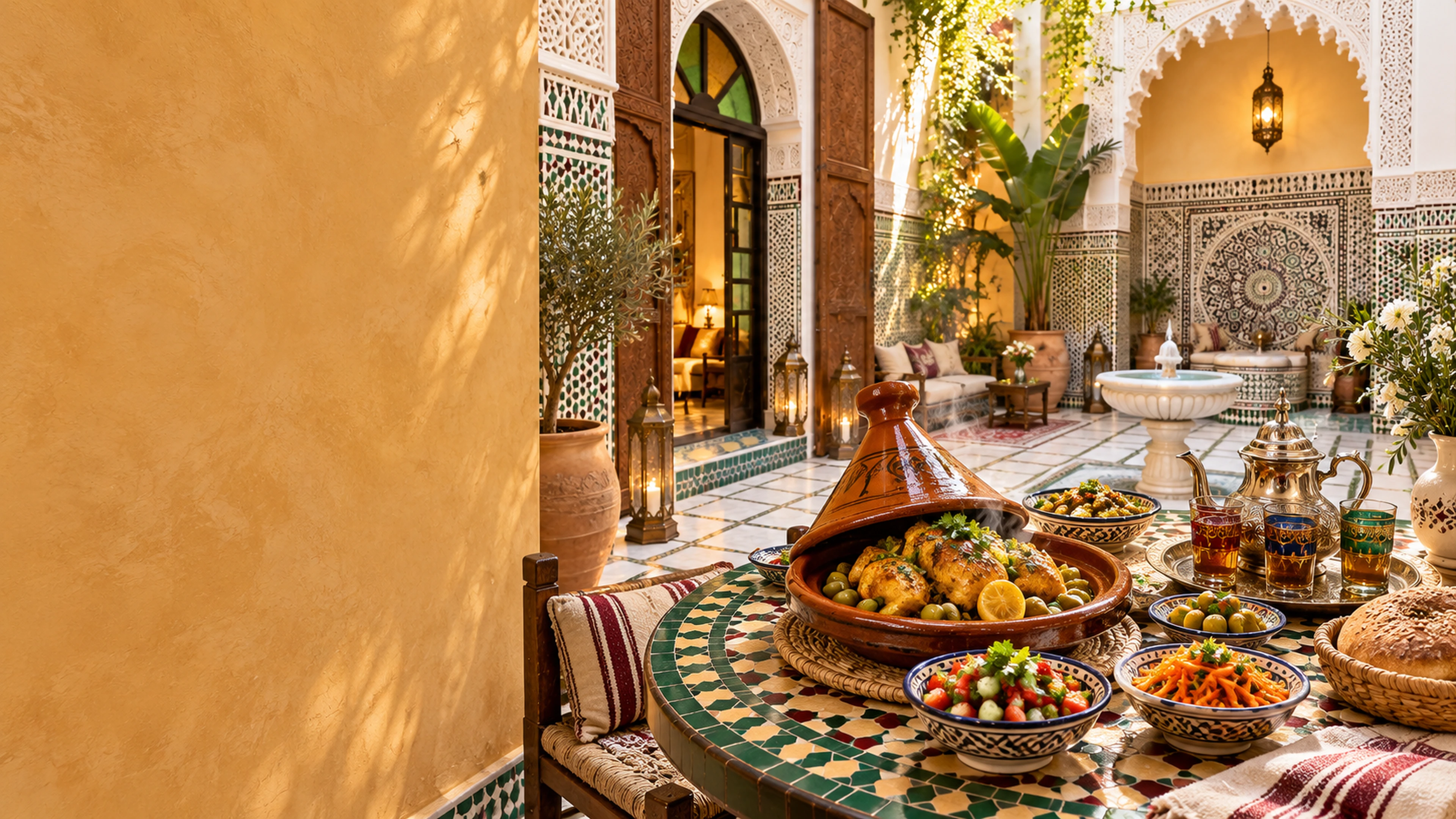
  2. Related preview: commissioned AI-generated culinary illustration from Exotic Morocco’s existing Taste collection. It does not document named people or a particular establishment.
  3. Related preview: Zellij Fes 04.jpg — Schorle. CC BY-SA 4.0. Cropped/resized; original licence retained.
  4. Hero: Safi.jpg — Abdelmounim Maroc. CC BY-SA 4.0. Cropped/resized; original licence retained.
  5. Portrait: Ceramics displayed in Safi: repeated forms and varied surfaces. — Exotic Morocco’s existing image collection.
  6. Story-1: Pots séchants au soleil.JPG — Princedesmers01. CC BY-SA 4.0. Cropped/resized; original licence retained.
  7. Story-2: Potier coloriant un article.JPG — Princedesmers01. CC BY-SA 4.0. Cropped/resized; original licence retained.
  8. Story-3: SafiTöpferei.jpg — Ziegler175. CC BY-SA 3.0. Cropped/resized; original licence retained.
  9. Related preview: Arcobaleno di babouche.jpg — Simo.Albo80. CC BY-SA 4.0. Cropped/resized; original licence retained.
  10. Chapter: Pottery forms: containers, pierced surfaces and lids. — Exotic Morocco’s existing image collection.
  11. Gallery: A potter shaping clay in the Safi collection. — Exotic Morocco’s existing image collection.

Destination and related-story thumbnails intentionally identify their linked pages. Principal story images are selected individually for this Learn page.