

01 · A Moroccan essential
One word.
A world beneath
the lid.
A pot, a dish, a reason to sit a little longer.
The lid lifts. Steam escapes. Bread is broken and the first pieces are offered around the table. The appeal of a tagine begins here: in a dish that arrives with its own small ceremony.
In Moroccan cooking, tagine names both the distinctive vessel and the food associated with it. There is no single defining recipe. It might hold chicken and olives, lamb with prunes, fish scented with herbs, or vegetables chosen that morning. The common thread is careful cooking and a sauce worth returning to. [1]
Its familiar silhouette is only the beginning. To understand tagine is to notice the clay, the ingredients, the cook and the people waiting to share it.
Enter Moroccan food culture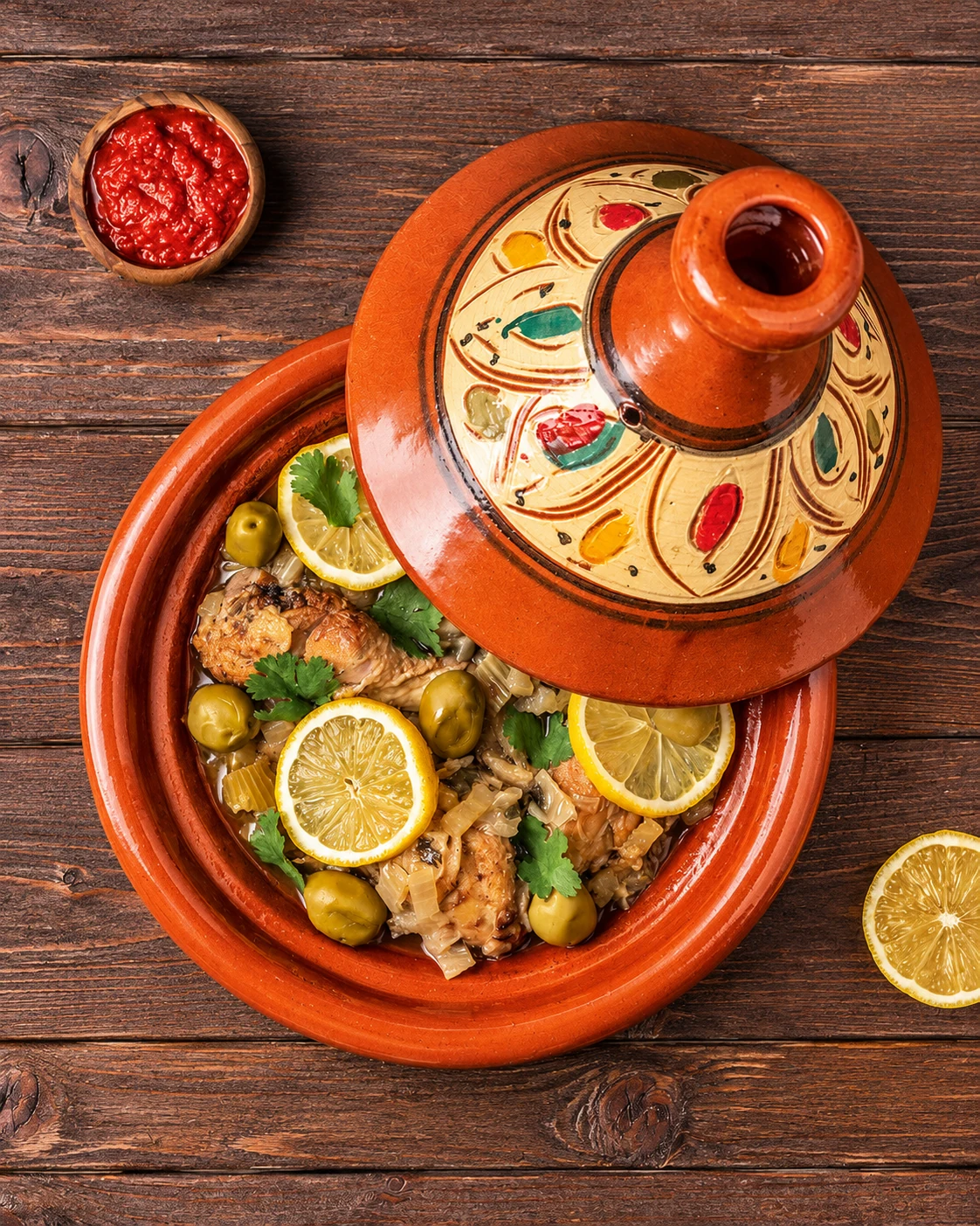
Two common spellings of the same name.
A recognisable form with a practical purpose.
A tradition that changes from home to home.
02 · Roots & living history
A long story.
Still being cooked.
The story belongs to generations of kitchens.
Tagine sits within the wider cooking traditions of the Maghreb. Morocco’s earthenware cooking is closely associated with Amazigh communities and with rural as well as urban life. The pot’s story is older and more complicated than any single modern recipe. [7]
It is tempting to give the dish one inventor or one precise birth date. The surviving evidence does not justify that certainty. The history of the vessel, the name and the many preparations should be read together, without assuming that they all began at the same moment.
Clay & local knowledge
Potters shape the vessel; cooks learn its heat and pace. A useful object becomes part of daily life.
A shared culinary world
North African food carries the histories of Amazigh, Arab and Andalusi communities, alongside long exchanges across the Mediterranean. [11]
A living tradition
Gas hobs, casseroles and pressure cookers also belong to contemporary Moroccan kitchens. Tradition continues through people as well as pottery. [1]
03 · The vessel & the method
The shape
of slow cooking.
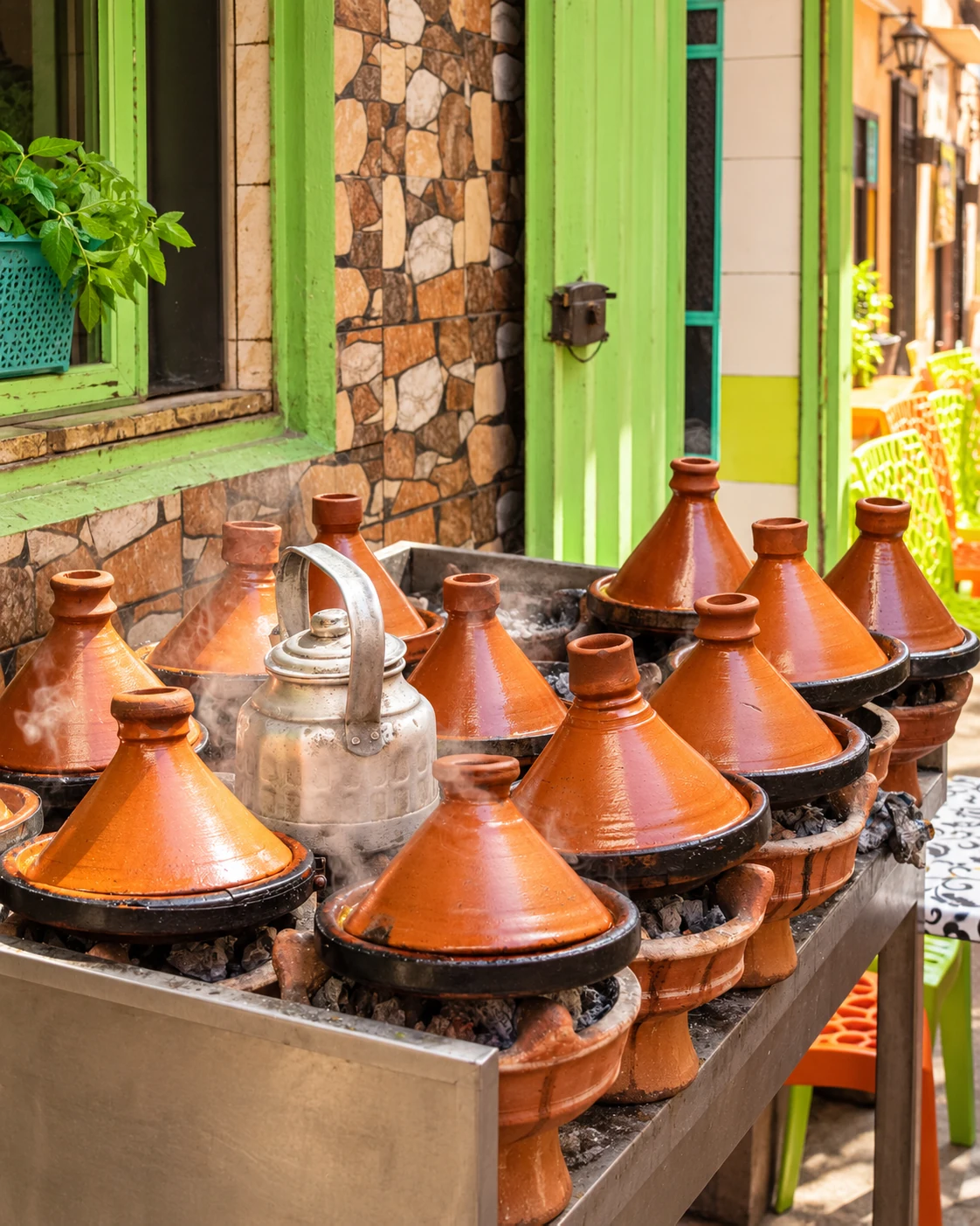
A shallow base. A generous lid. Gentle heat. The form is beautiful because it has work to do.
Steam rises inside the covered pot, condenses on the lid and returns to the food. This helps retain moisture while the ingredients cook together. It is a covered braise, not a pressure cooker. [1]
The lid
The tall cover gives steam room to circulate and condense. Its shape is distinctive; the flavour still depends on what goes inside and how it is cooked.
The shallow base
Ingredients can be arranged in layers rather than constantly stirred. Onions soften into the sauce, while the vegetables above take on the cooking juices.
The patient heat
A gentle simmer gives the cook time to watch the sauce develop. A tender piece of meat, a delicate fish fillet and a young courgette ask for different treatment.
A good tagine can also be made in a suitable covered casserole. The traditional clay pot brings its own cooking character; it is not an entry requirement for enjoying the dish.
04 · The many expressions of tagine
One tradition.
Many appetites.
Some tagines are bright and briny. Others are deep, sweet and fragrant. These are starting points for discovery, not a fixed catalogue of what belongs in the pot.
Follow the photographs, then look more closely at what gives each dish its character.
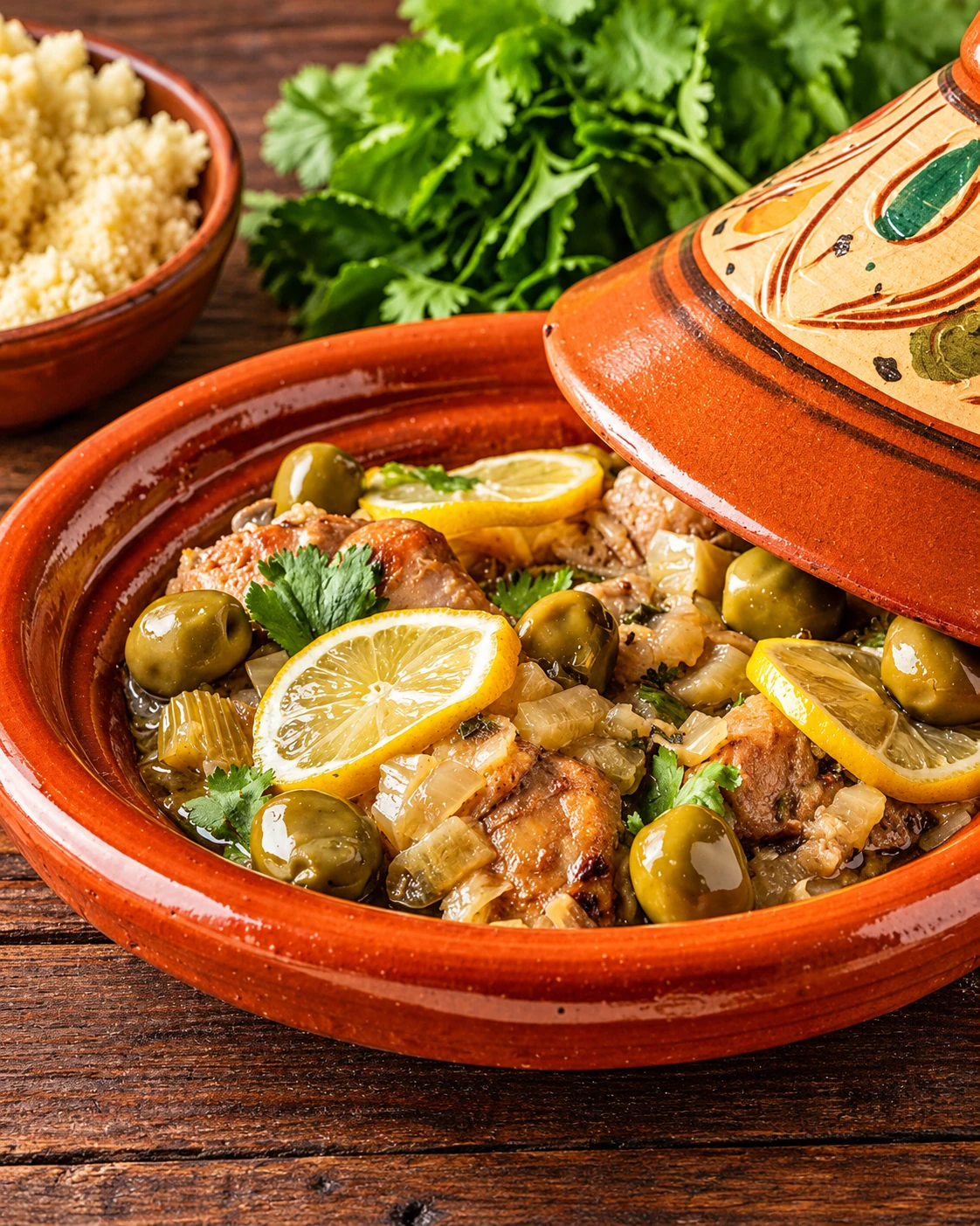
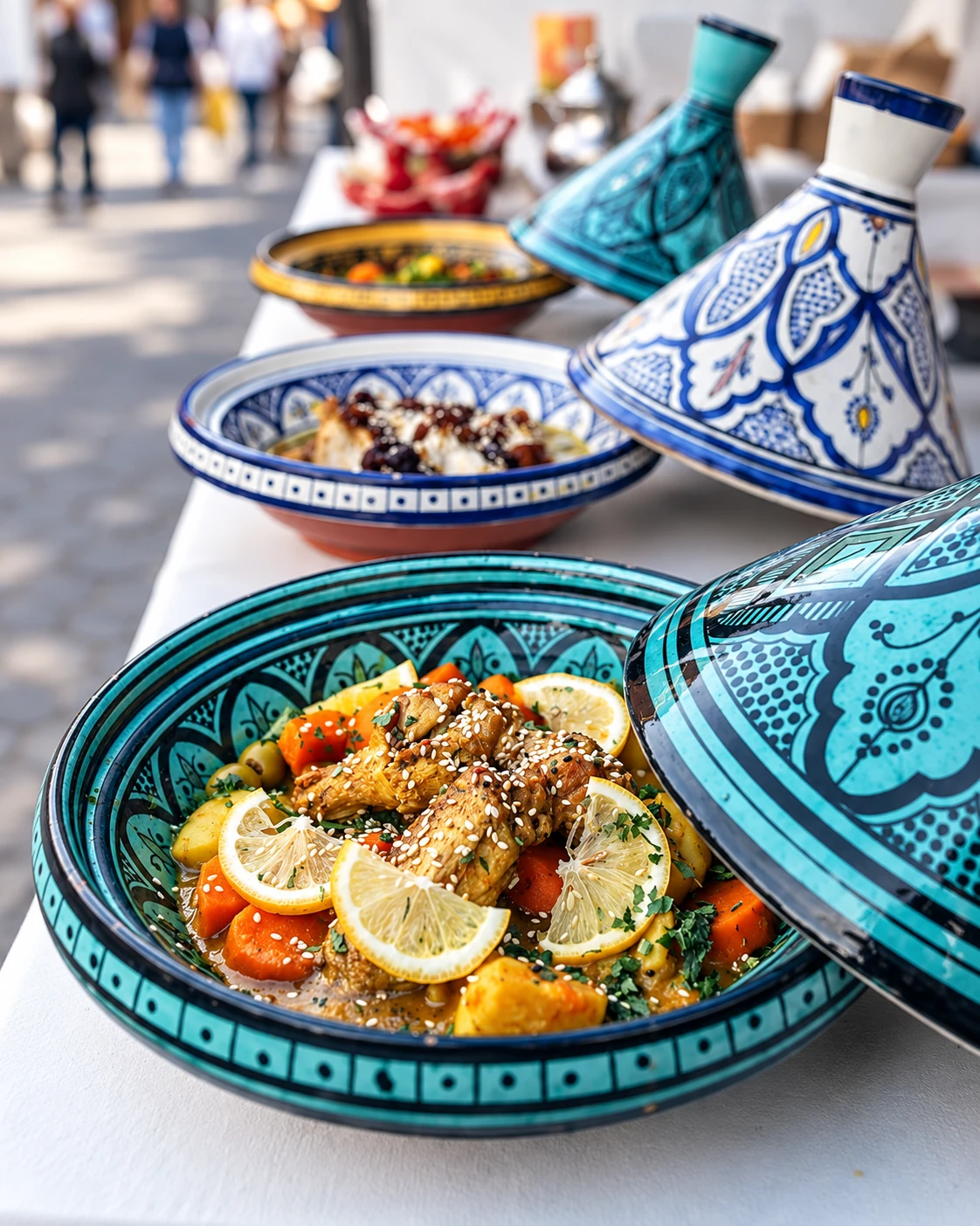
Chicken, lemon & olives
The familiar meeting of tender chicken, olives and the fragrant peel of preserved lemon. Ginger and saffron appear in many versions; the particular balance belongs to the cook. Fresh lemon slices in a serving photograph are a garnish, not the same ingredient as salt-preserved peel. [5]
Lamb & prunes
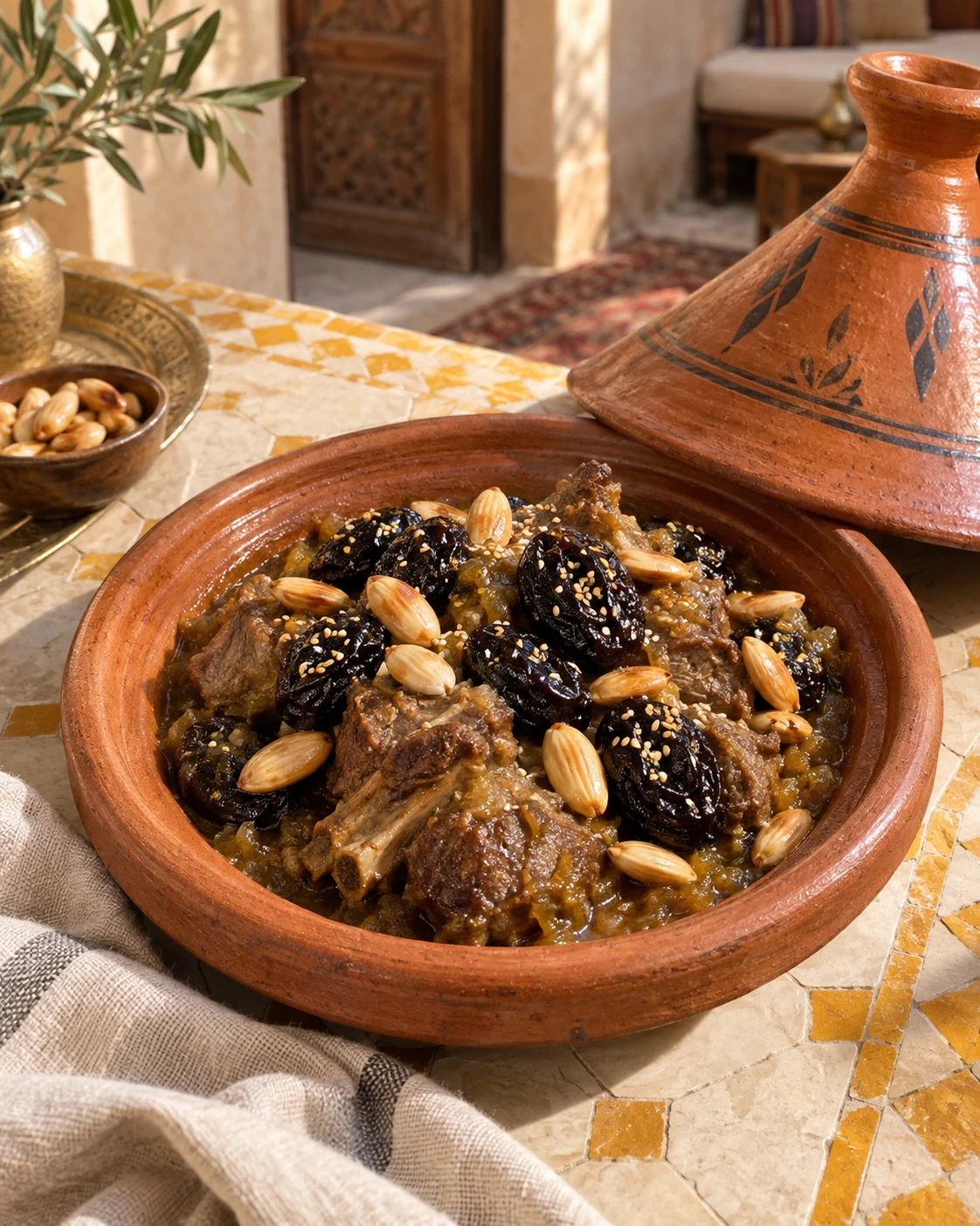
Slow-braised meat and an onion-rich sauce meet soft, sweet prunes. Almonds or sesame can add a final contrast. The fruit is often prepared separately, giving the cook control over both its sweetness and the colour of the sauce. [2]
Fish & chermoula
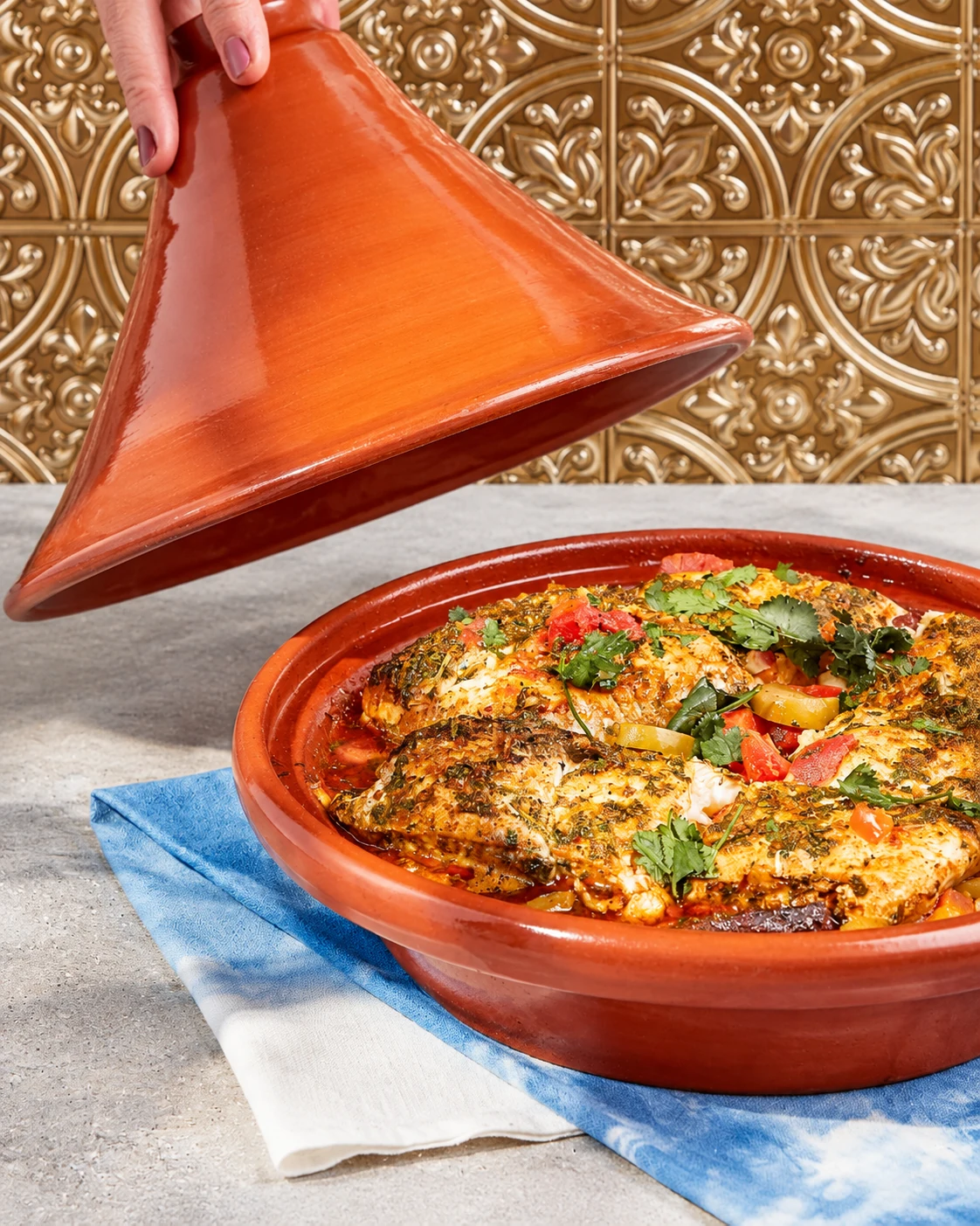
Fish brings a lighter rhythm to the pot. Chermoula carries herbs, garlic, spices and citrus through the dish; vegetables may sit underneath. Whole fish, steaks and fillets need different handling, so fish tagine does not follow the timetable of a lamb braise. [3]
Vegetables in season
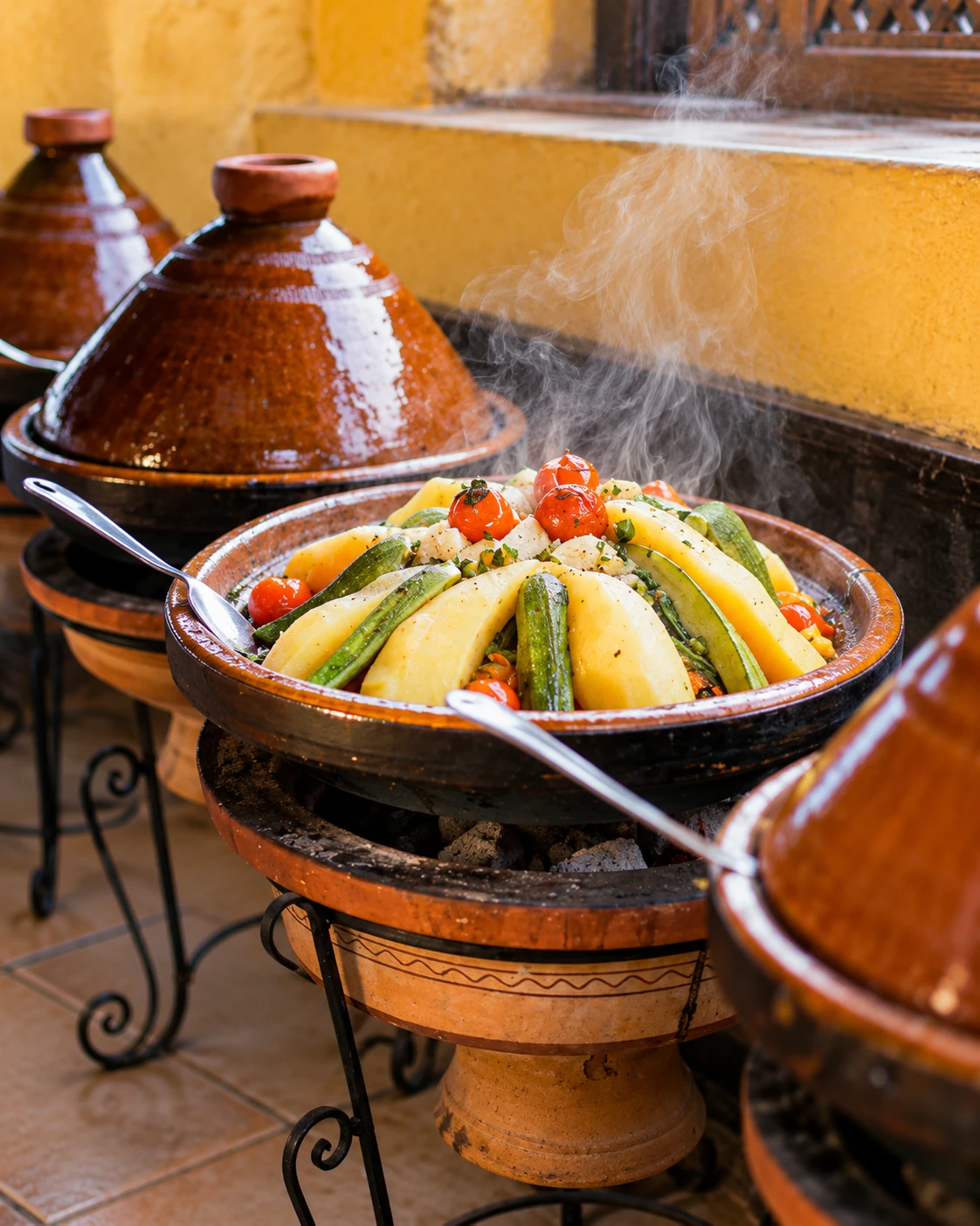
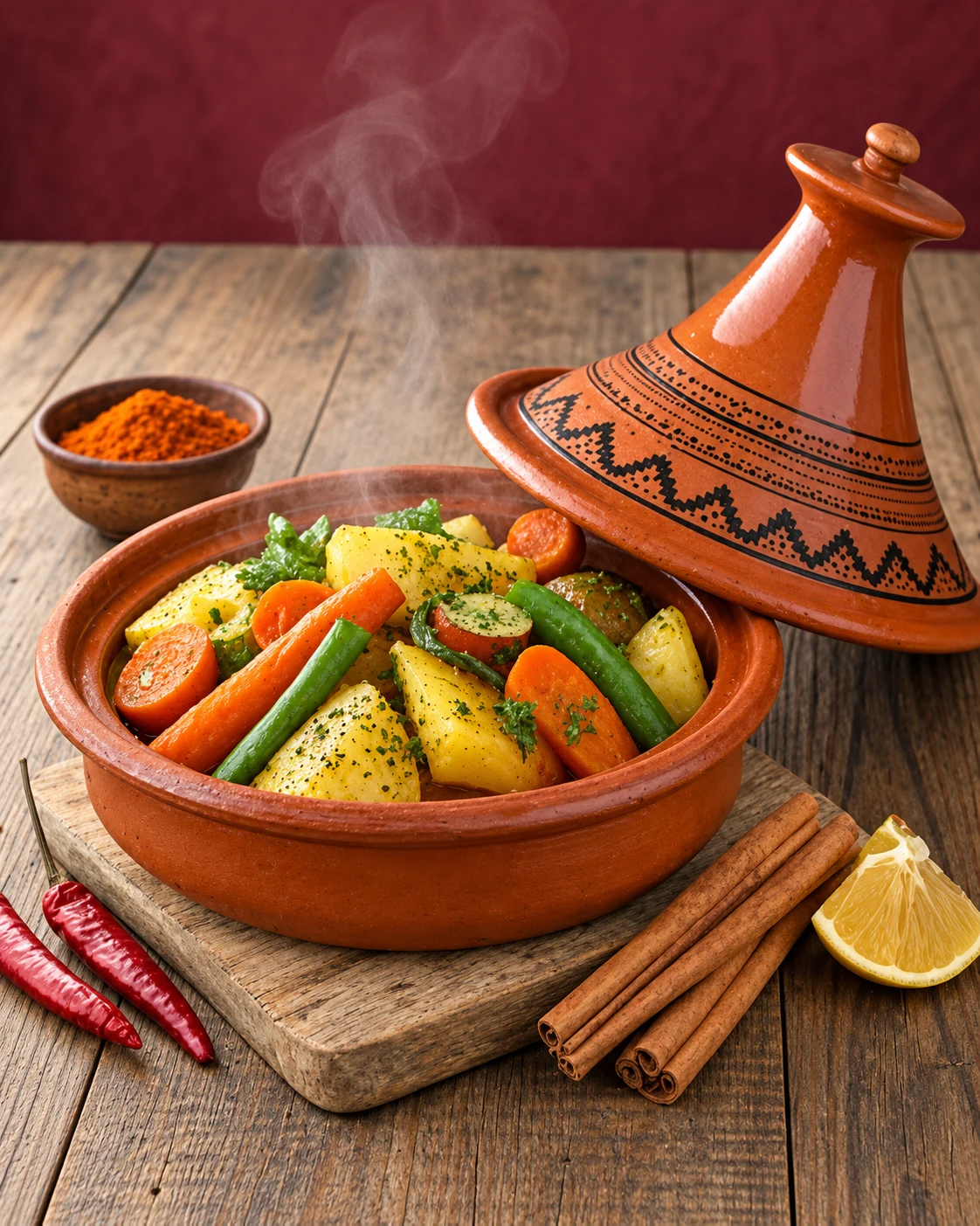
Carrots, potatoes, courgettes, peas or green beans can become the centre of the meal. Arrangement is part of the pleasure: vegetables may be layered around the pot so each retains its shape. A vegetable tagine can be a complete dish in its own right. [6]
Meat, potatoes & olives
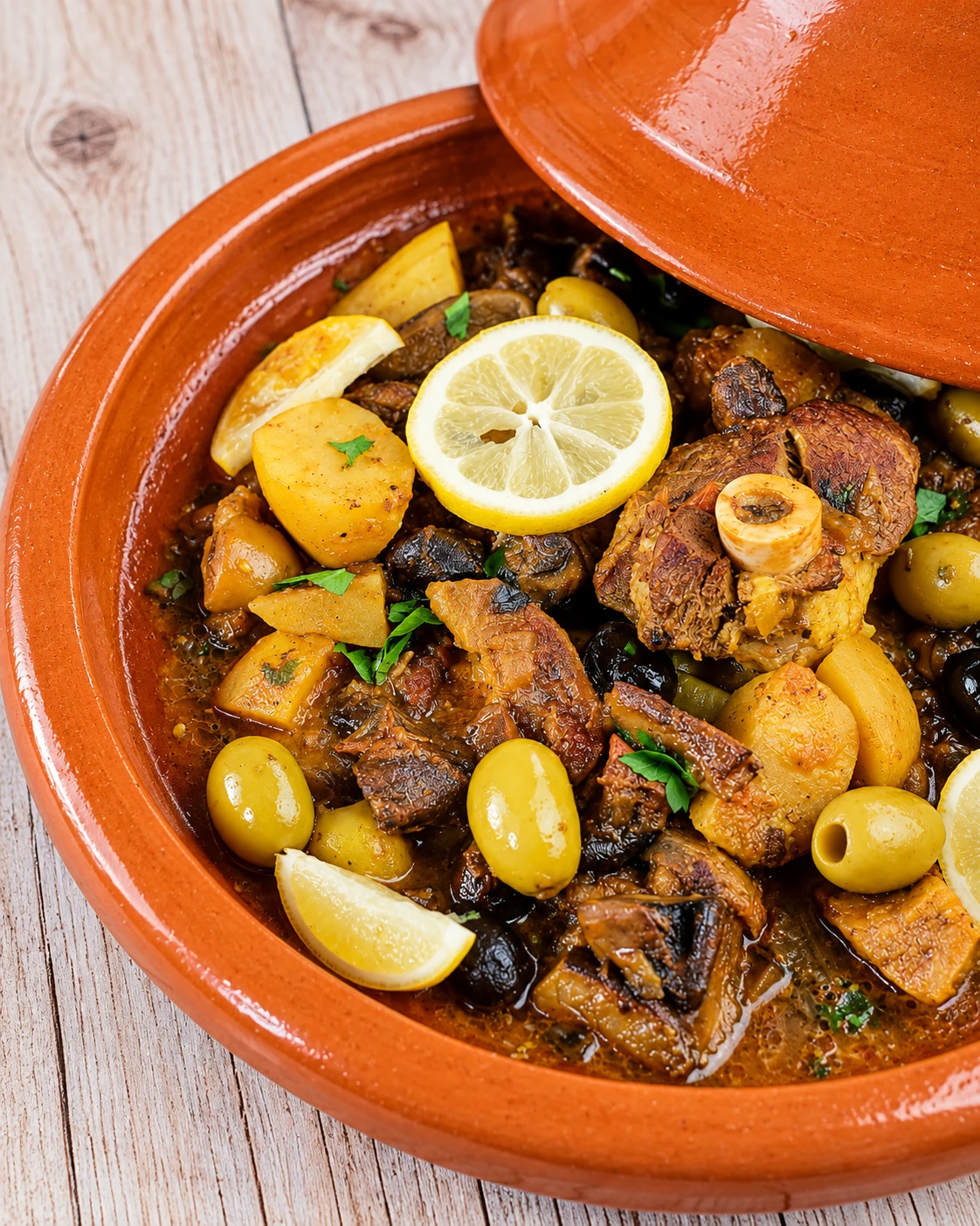
A deeply savoury family of tagines: soft pieces of meat, potatoes that take on the cooking juices, and olives for a salty finish. Lamb or beef may be used. The same name can cover different spice choices, cuts and consistencies from one household to another. [4]
And there is still more.
Kefta in tomato sauce, sometimes finished with eggs; meat with artichokes or peas; seasonal quince; and mrouzia, with its sweet, warmly spiced character. Tagine is a family of dishes, not a closed list. [10]
Family names, family versions.
Two cooks can use the same ingredients and produce different meals. How the onions are cut, the choice of olive, the amount of sauce and the final garnish all carry personal knowledge.
05 · The language of flavour
A little contrast.
A lot of character.
The pleasure is in the balance: onion sweetness against olive brine, the perfume of citrus beside a rich sauce, or soft fruit meeting savoury meat.
Spicing is a matter of composition. A fragrant tagine need not be hot with chilli. [5]
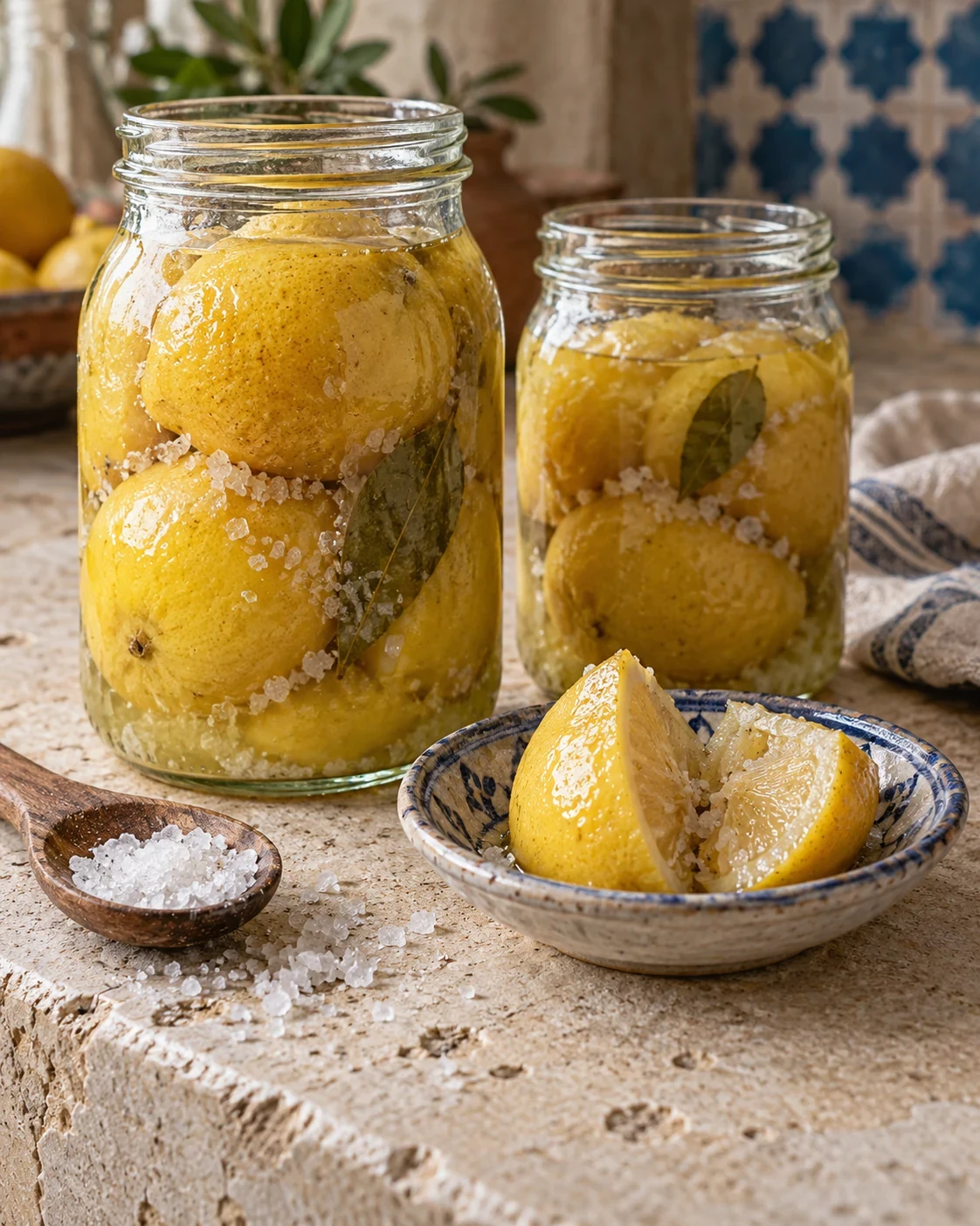
Preserved lemon
A small amount, a long flavour.
Salt-curing softens the peel and changes its aroma. It brings a concentrated, rounded citrus character that fresh juice alone does not reproduce.
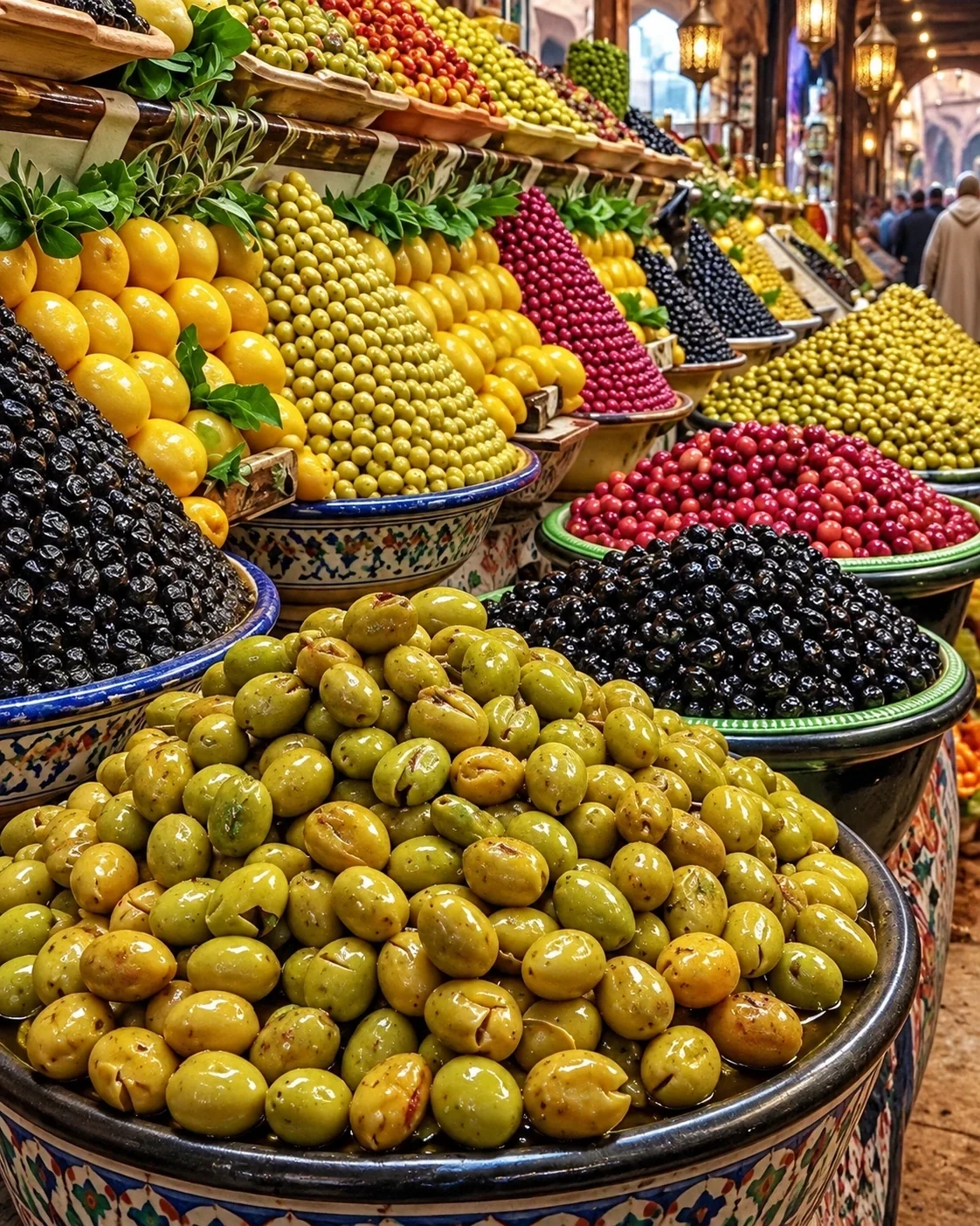
Olives
Brine, bite & contrast.
Green or purple olives bring savoury depth and texture. Their saltiness changes the balance of the sauce; different varieties create noticeably different results.
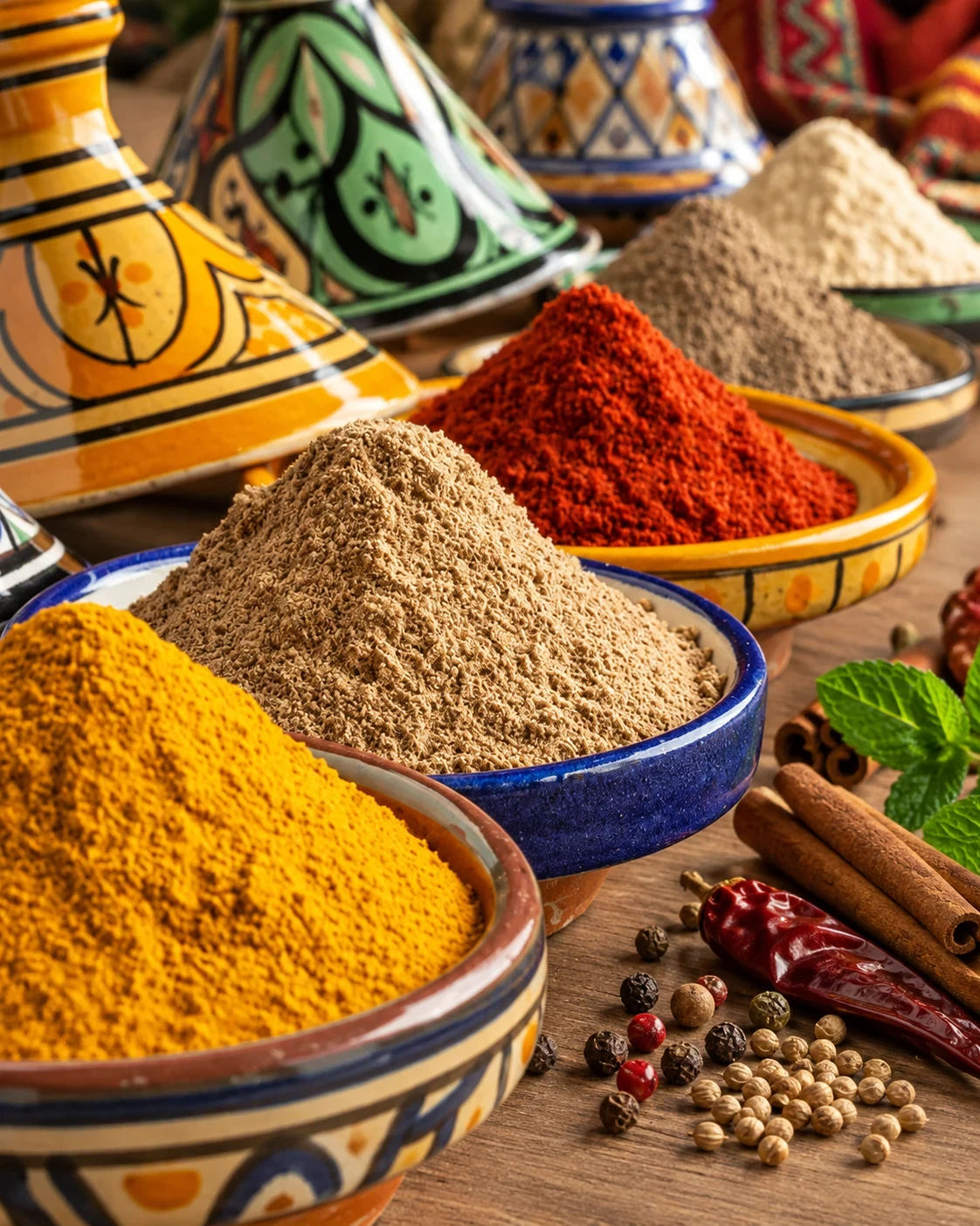
Spice & restraint
A blend is a choice.
Ginger, pepper, turmeric, saffron, cumin or cinnamon may play a part. They do not all belong in every pot. Ras el hanout is one option, never a universal requirement.
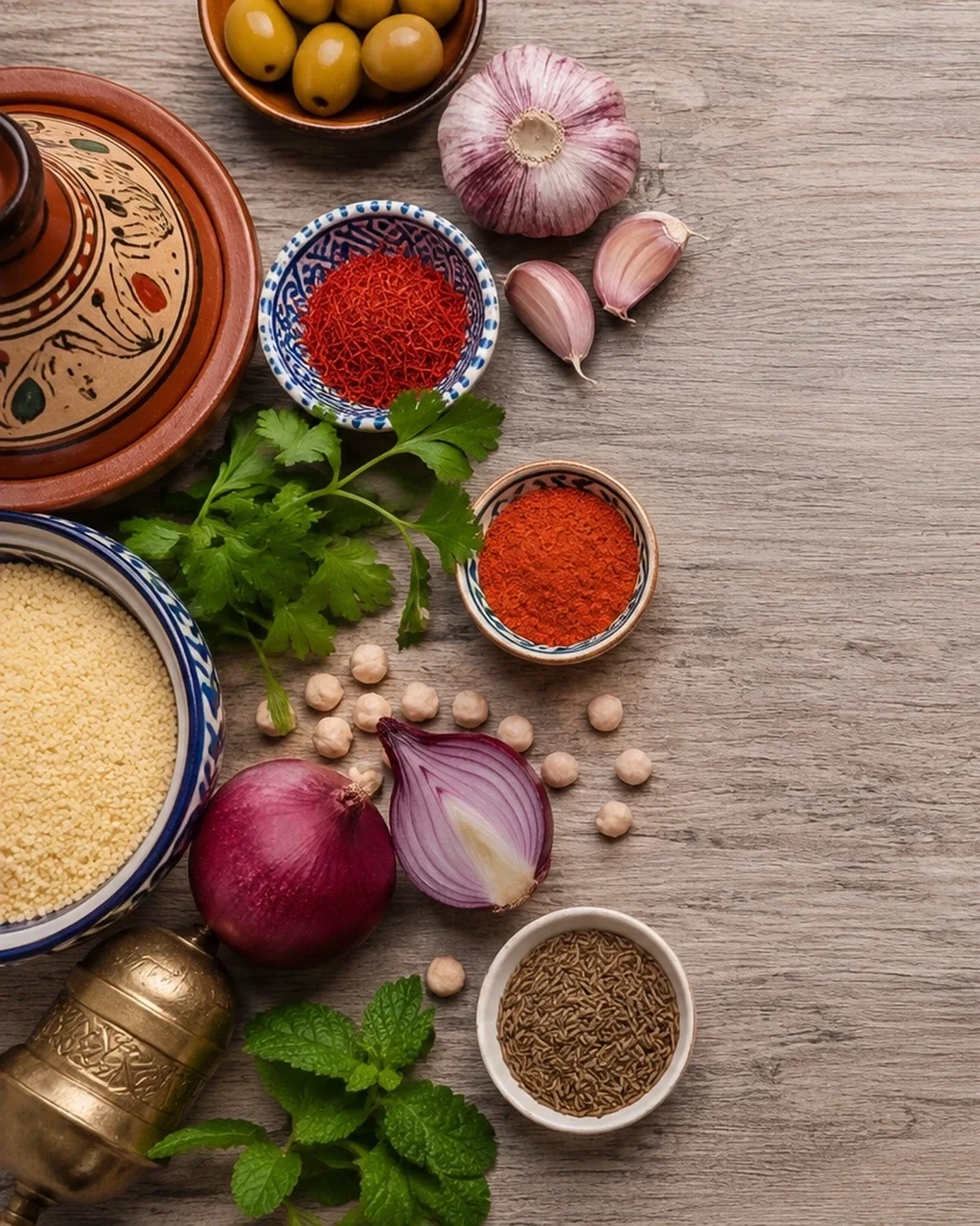
Fresh herbs
The green notes.
Coriander and parsley give many preparations their freshness. In chermoula they meet garlic, spices and citrus, creating a seasoning that can suit fish, vegetables or meat.
Explore the four flavours
ONION · OIL · COOKING JUICES
The quiet
foundations.
Before the lemon, the olives or the final handful of herbs, there is the sauce that brings them together.
In many tagines, onions soften into the cooking juices until they become part of the dish’s texture. Oil adds richness, while the liquid gathers flavour from the ingredients around it. This is where the separate elements begin to taste like one meal. [4]
The most memorable ingredient is not always the most visible one.
Onion gives the sauce body.
Its texture changes as it cooks: distinct pieces become soft and yielding. In an onion-rich preparation, that gentle sweetness provides a background for sharper citrus, salty olives or sweet dried fruit.
Oil is part of the balance.
Olive oil appears in many home preparations. Its character joins the spices and cooking juices; richness should support the other flavours, leaving room for the ingredients that make each tagine distinctive.
The liquid tells a story.
Vegetables, meat and fish contribute differently to the pot. A covered tagine holds moisture close, but the sauce still needs attention as it cooks. Its final texture belongs to the particular dish, rather than to one universal rule. [1]

06 · Geography, season & family
The market
has a say.
Look at what grows, what arrives and what a family likes to cook.
A coastal kitchen has different possibilities from an inland market. Fish, vegetables, olives, fruit and herbs connect a meal to its surroundings. Seasonality changes the choice; budget, habit and family taste shape it just as strongly.
These are overlapping influences, not hard borders. A chicken tagine with olives is not confined to one city, and a vegetable tagine cannot represent every Amazigh household.
Along the coast
Fish and herb-led preparations give the story another direction.
Explore Essaouira ↗In the city market
Olives, spice sellers and everyday produce sit close to the table.
Explore Marrakech ↗Across home kitchens
Recipes travel with families, adapting to new ingredients and equipment.
Discover Taste Morocco ↗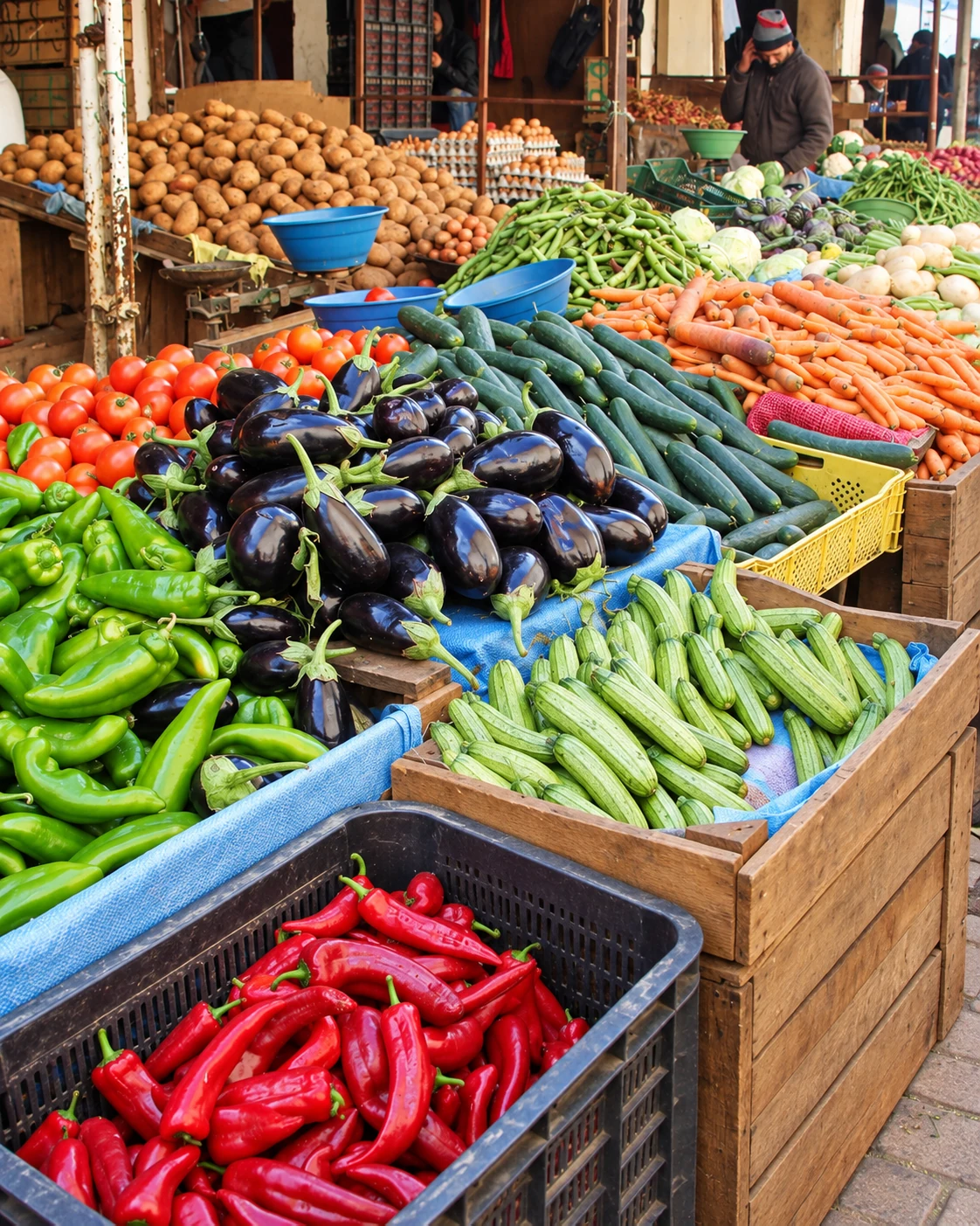
07 · The shared meal
Bring bread.
Make room.
The dish is at the centre.
The people make the meal.
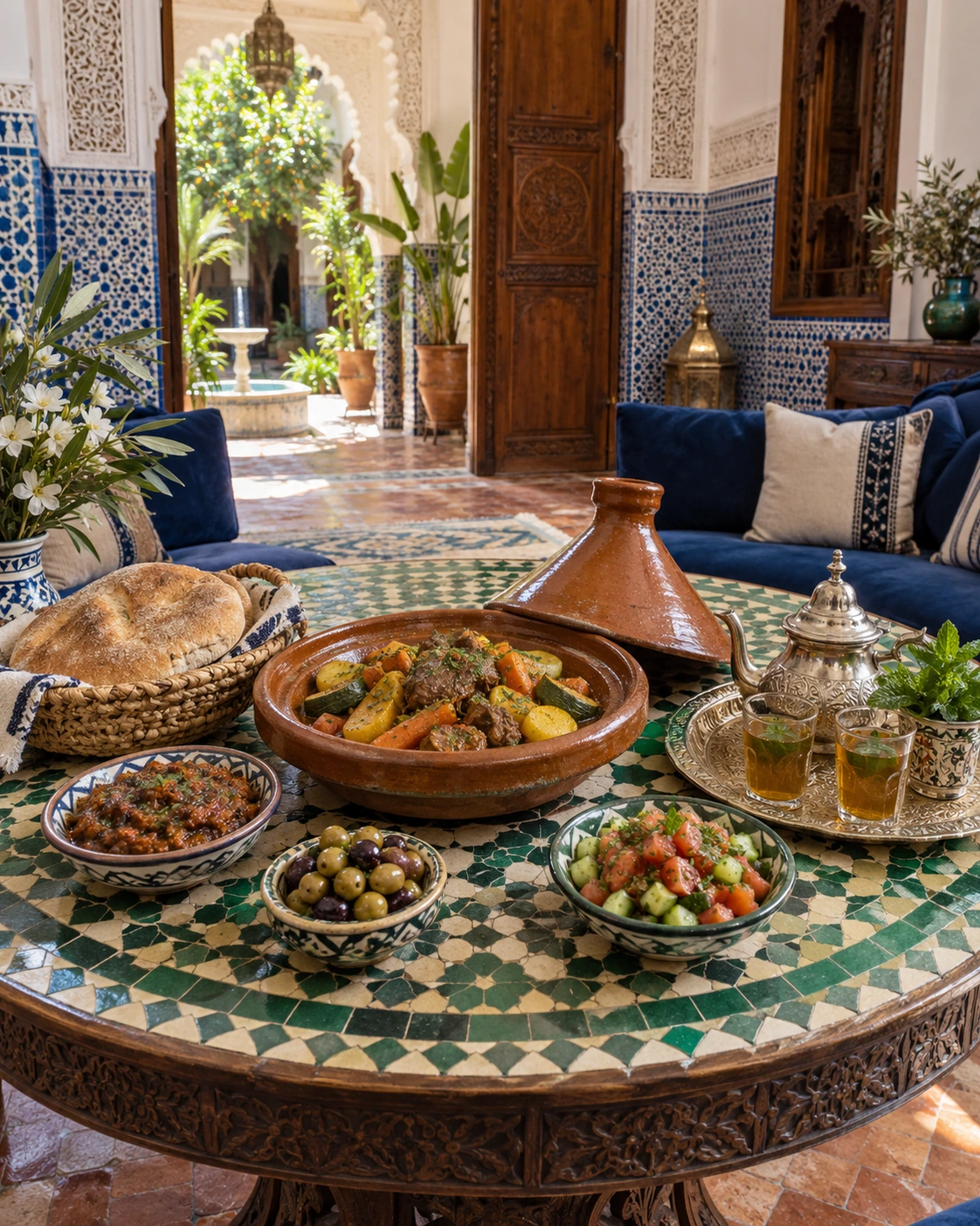
There is a moment when cooking becomes company: the lid is lifted, the bread basket moves around the table, and everyone finds a place. A tagine brings its sauce, its fragrance and the cook’s care into that shared space.
In many Moroccan homes, the serving dish is shared. Other households use individual plates, and the arrangement changes with the guests and occasion. What matters is the attention around it: an offered piece, a small dish passed across, a little more time together.
Khobz belongs here.
Bread is a familiar partner for a tagine’s sauce. A piece of khobz can gather a little vegetable, tender meat and cooking juices in one mouthful. Its crust and soft centre bring another texture to the meal.
When eating from a communal dish, taking from the area nearest to you leaves space for others. At a hosted table, follow your hosts’ lead; the way a family serves its food is part of the welcome. [11]
Small dishes, generous flavour.
Cooked salads such as zaalouk and taktouka, fresh chopped vegetables or a dish of olives can accompany the main pot. Each brings a different note: smoky aubergine, sweet pepper, a crisp bite or a little brine.
These dishes need not compete with the tagine. A few well-chosen accompaniments let the sauce remain the centre of attention, while adding colour and variety around it. [12]
A glass of tea.
A little more conversation.
Mint tea has its own place in Moroccan hospitality. It may welcome a guest or accompany time spent together after a meal; it is not a compulsory drink beside every tagine. The small glasses, the tray and the act of pouring make an everyday gesture feel considered. [12]
Everyday or celebratory.
A weekday vegetable pot and a carefully garnished tagine for guests share a simple idea: make something good and make room for others. The scale of the meal can change without losing that spirit. Generosity can be a modest table served with care.
08 · Clay & craftsmanship
Before the cook,
the potter.
The vessel carries a craft tradition of its own.
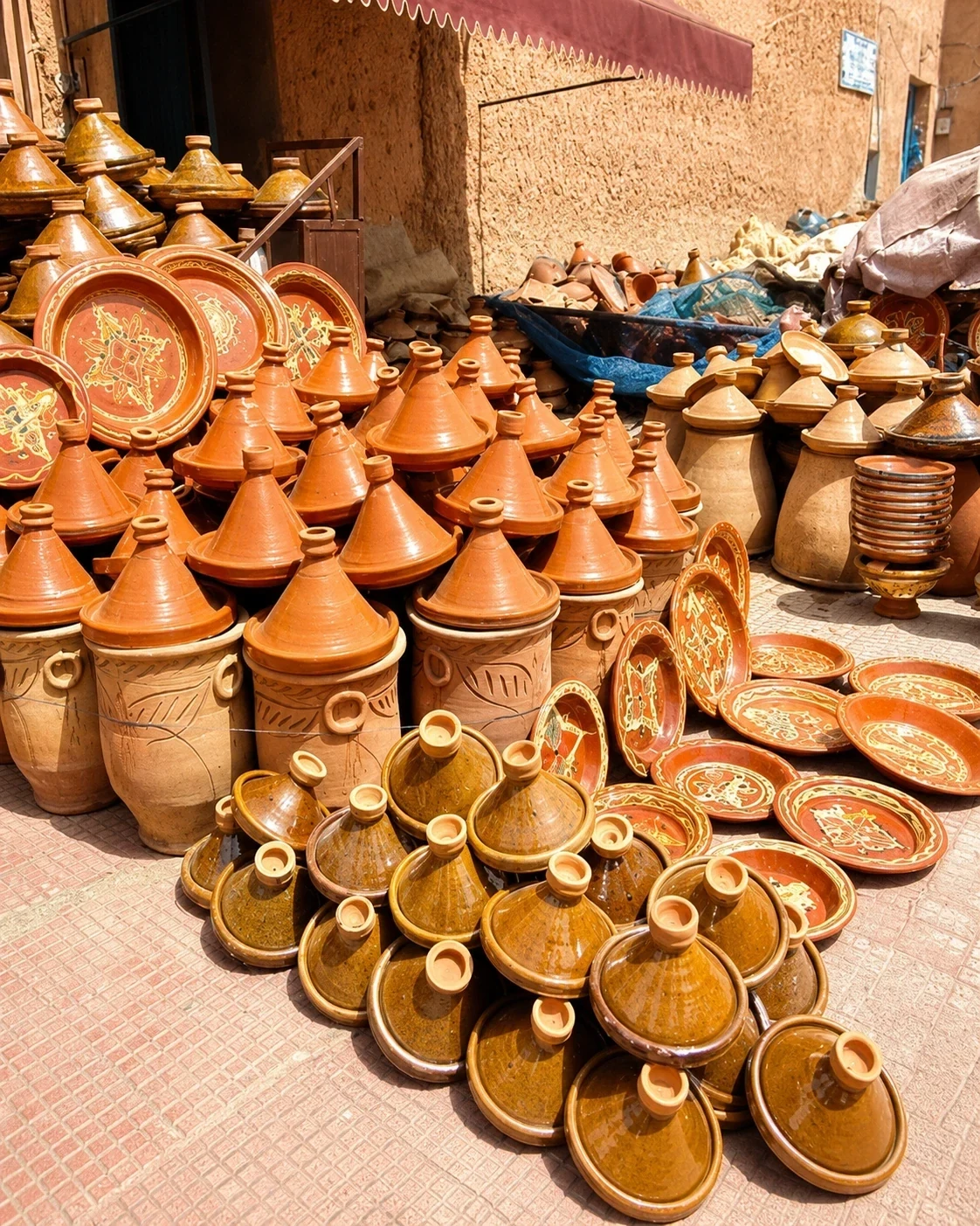
In its simplest form, a tagine is an exercise in proportion: a base that sits securely, a lid that fits, a handle that can be held. Hand shaping, drying and firing turn clay into something that can belong to a kitchen for years.
Surfaces range from plain terracotta to glazed and painted finishes. Some pieces are made for cooking, others for presentation. The distinction matters more than the decoration. [9]
The table also brings other crafts into view: woven bread baskets, turned wooden utensils, small ceramic bowls and the work of metalworkers. Eating makes these objects part of everyday life.
Explore Safi and its ceramic heritage ↗09 · A closer look
Good questions.
Clear answers.
A few details that make the picture richer.
Is tagine always slow-cooked meat?
No. Fish, kefta and vegetables also have their place. Cooking time depends on the ingredients, the cut, the vessel and the heat. A fish tagine should not be treated like a long lamb braise.
Does every tagine contain ras el hanout?
No. Many familiar versions use a more focused combination of spices. Ras el hanout has a place in particular preparations, including mrouzia, but it is not the definition of tagine. [10]
Can a tagine be vegetarian?
Yes. Vegetables can be the main event. When ordering, ask about stock, cooking fats and other additions if you need a strictly vegetarian or vegan dish; the word “vegetable” alone does not describe every ingredient.
Is a tagine the same as a tanjia?
No. The names are similar, but tanjia refers to a distinct earthenware vessel and a Marrakech cooking tradition. Discover it among the related dishes below.
Why do sweet ingredients appear with meat?
Fruit and sweet accents can provide contrast to a savoury, spiced sauce. Lamb with prunes is one familiar expression. It does not mean that every tagine is sweet, or that every sweet-and-savoury dish tastes alike. [2]
Do I need the traditional pot to begin?
No. A suitable covered casserole can make an excellent tagine. A traditional earthenware vessel needs appropriate care and gentle temperature changes. Follow the maker’s instructions for the exact pot you have. [1]
 EXOTIC MOROCCOTASTE · THE GUIDE COLLECTIONTagineIngredients, technique
and the Moroccan table
From the story to your kitchen
Keep the flavour.
Go a little deeper.
Gentle heat, clay pots and the balance of a slow-cooked sauce.
Explore the Exotic Morocco guide collection for a closer look at ingredients, kitchen knowledge and the culture around the table.
- Understand the ingredients and their roles
- Recognise the techniques and textures that matter
- Bring context and confidence to the way you cook and serve
Continue tasting Morocco
Follow the
table outward.
Another dish, another technique, another way into the Moroccan kitchen.
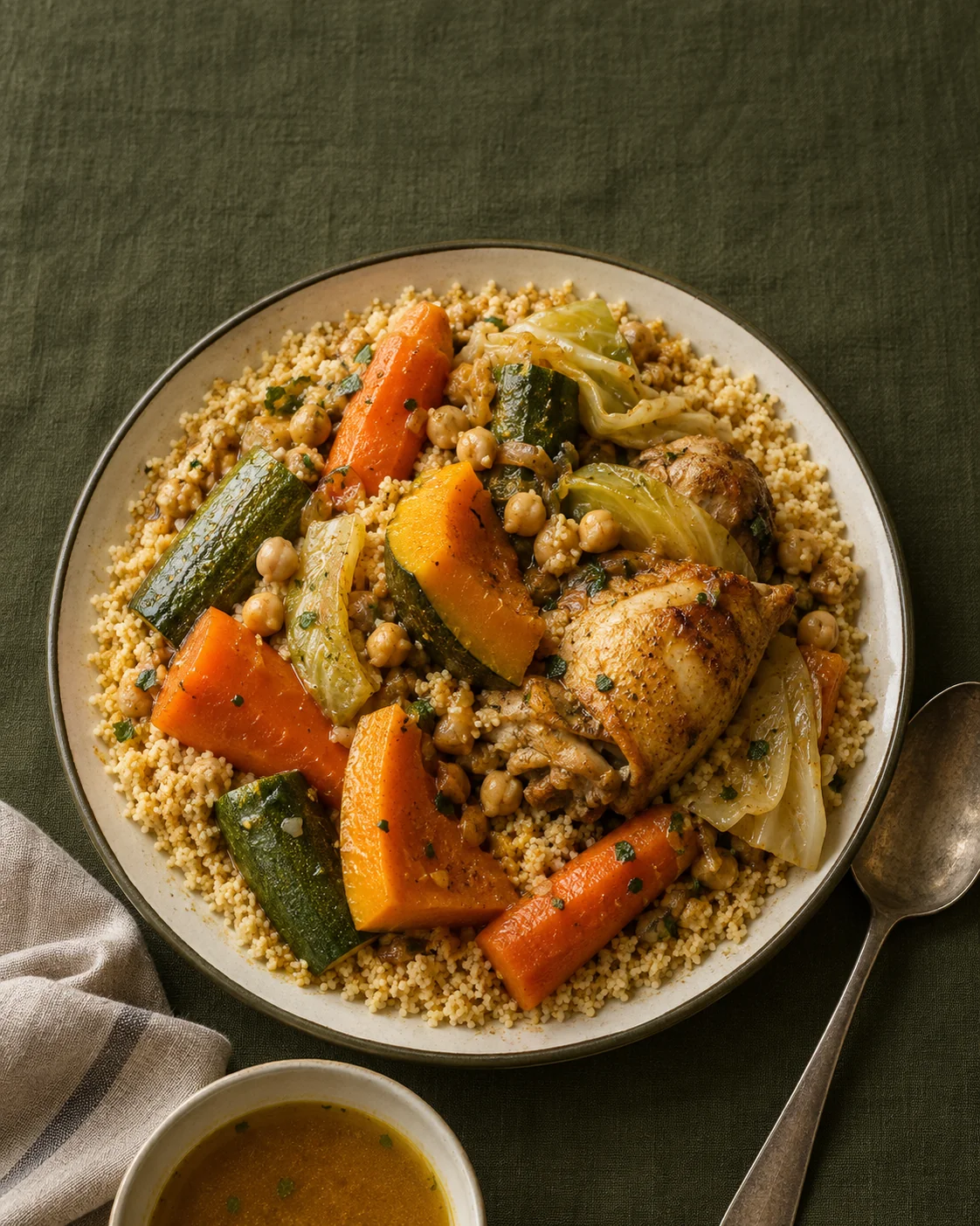
Couscous
Grains, steam and the many ways a shared platter comes together.
Explore the story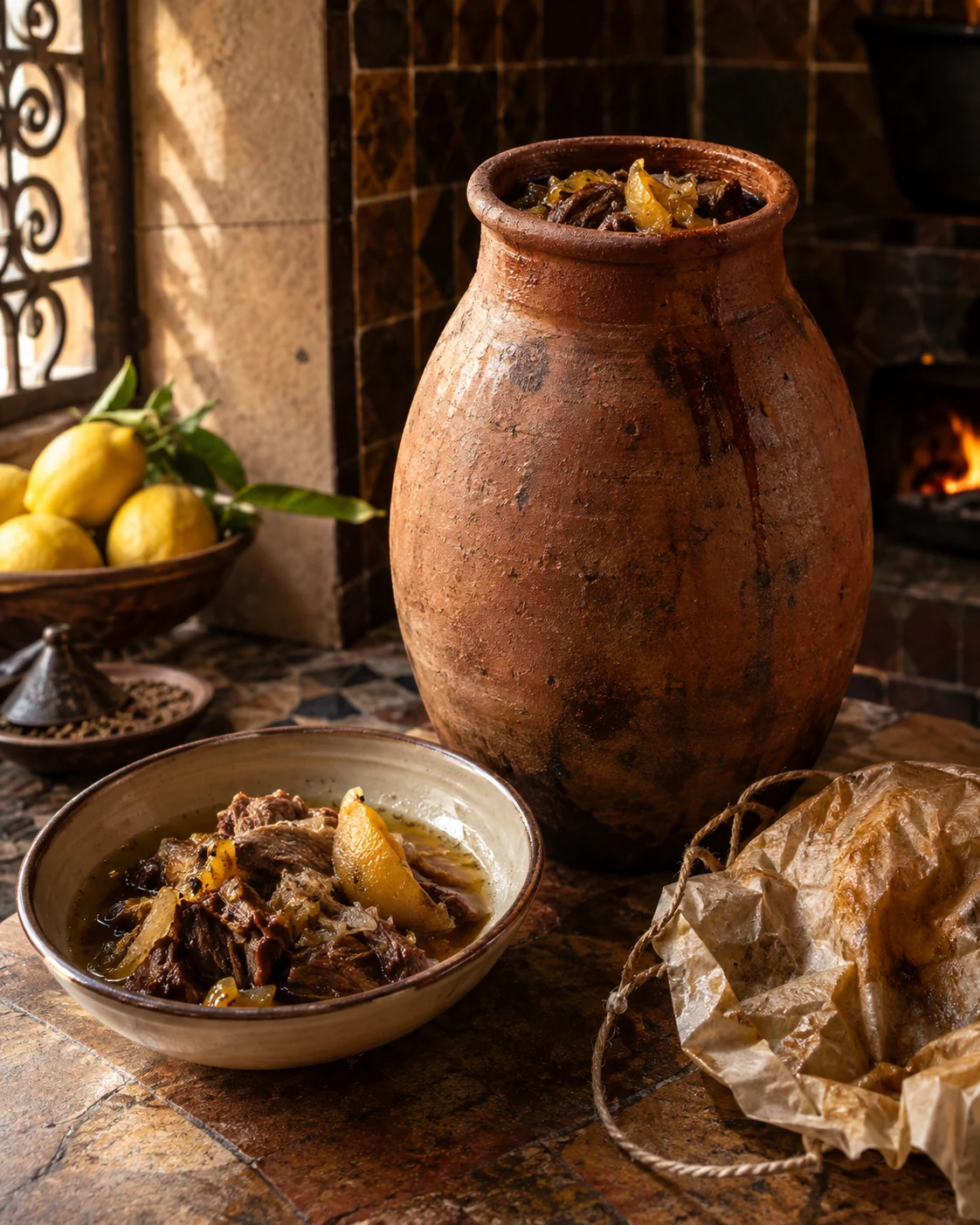
Tanjia
The earthenware pot and patient cooking associated with Marrakech.
Explore the story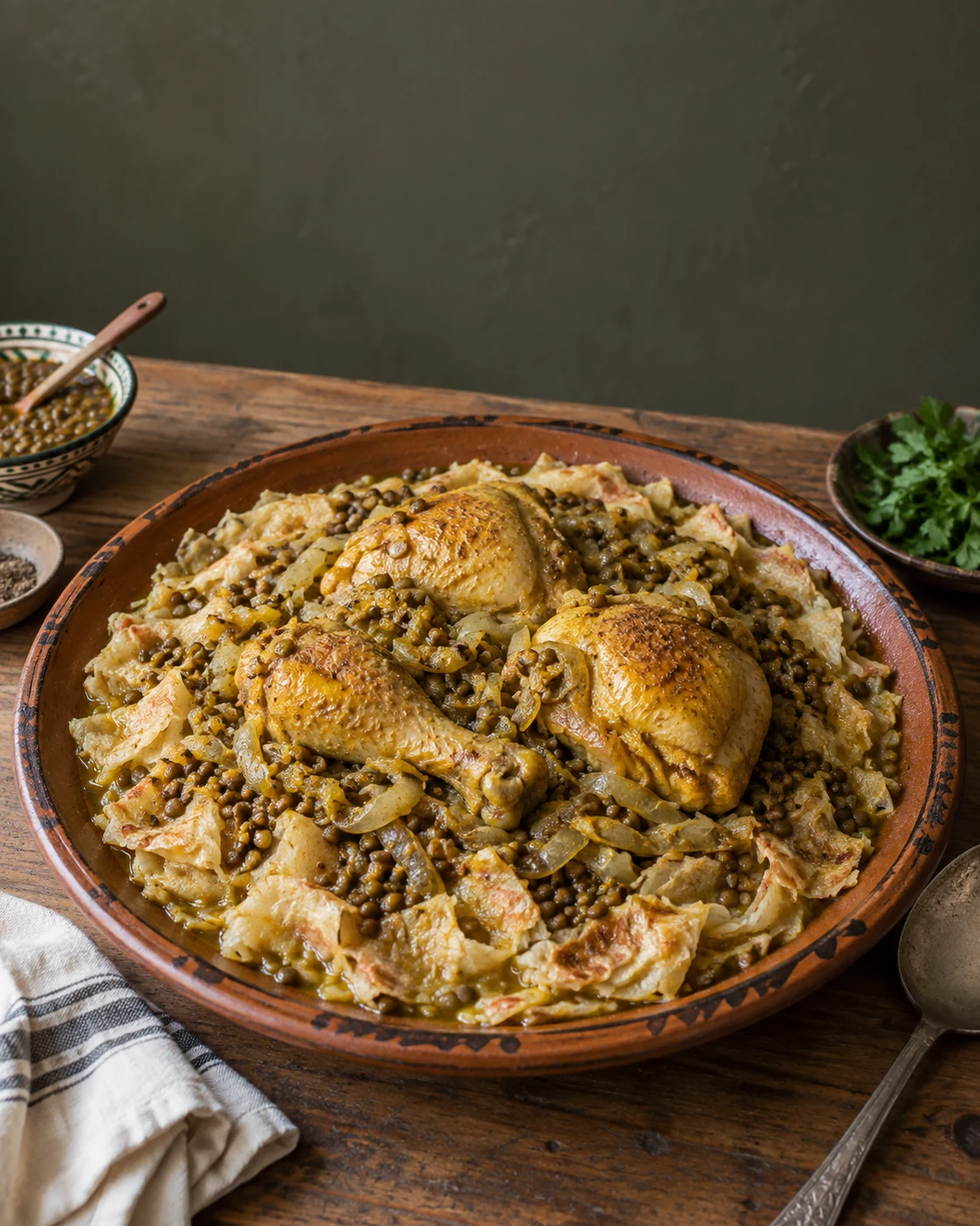
Rfissa
Chicken, lentils and fragrant broth finding their way through torn bread.
Explore the story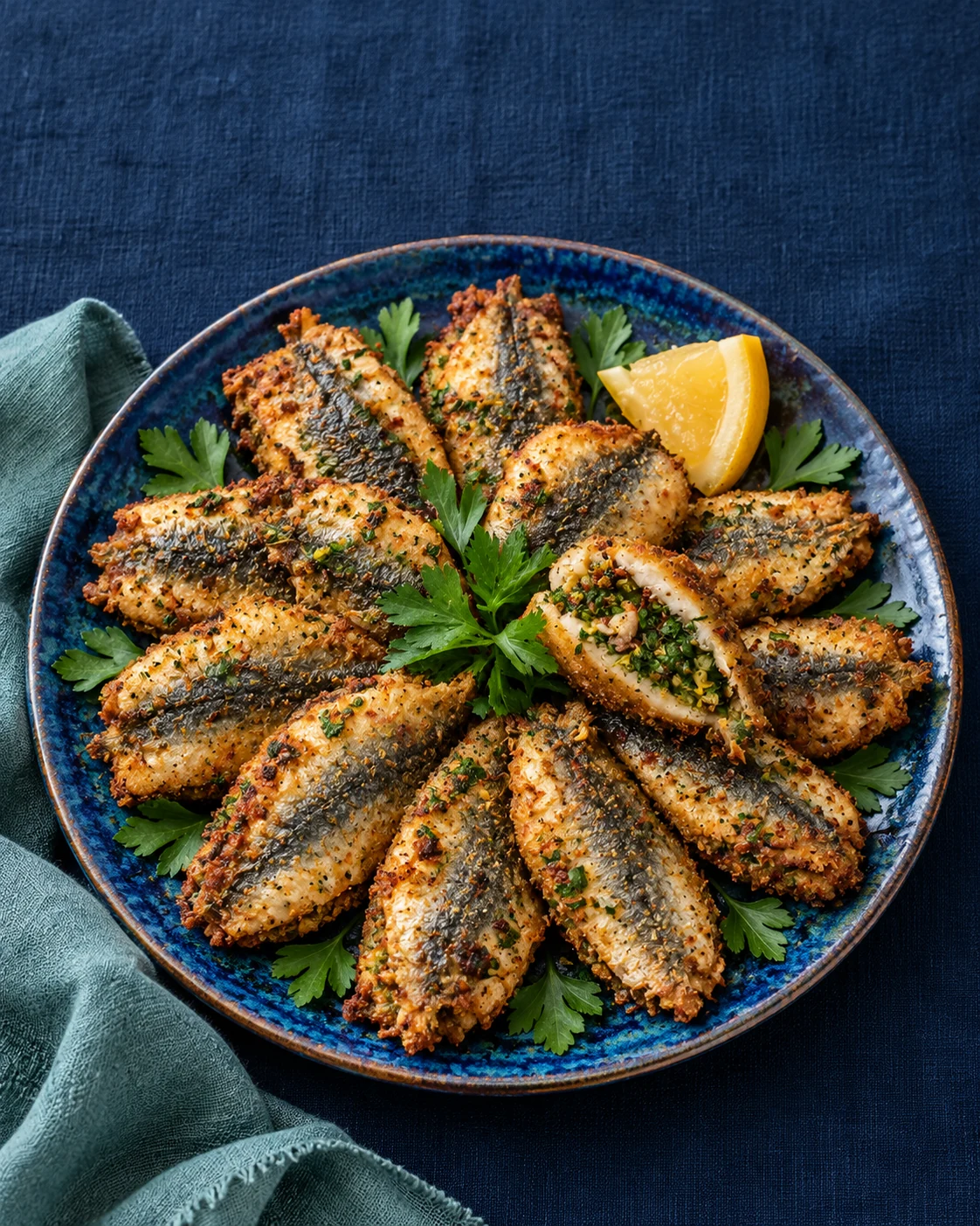
Sardines with Chermoula
Small fish, fragrant herbs and the details of preparation.
Explore the story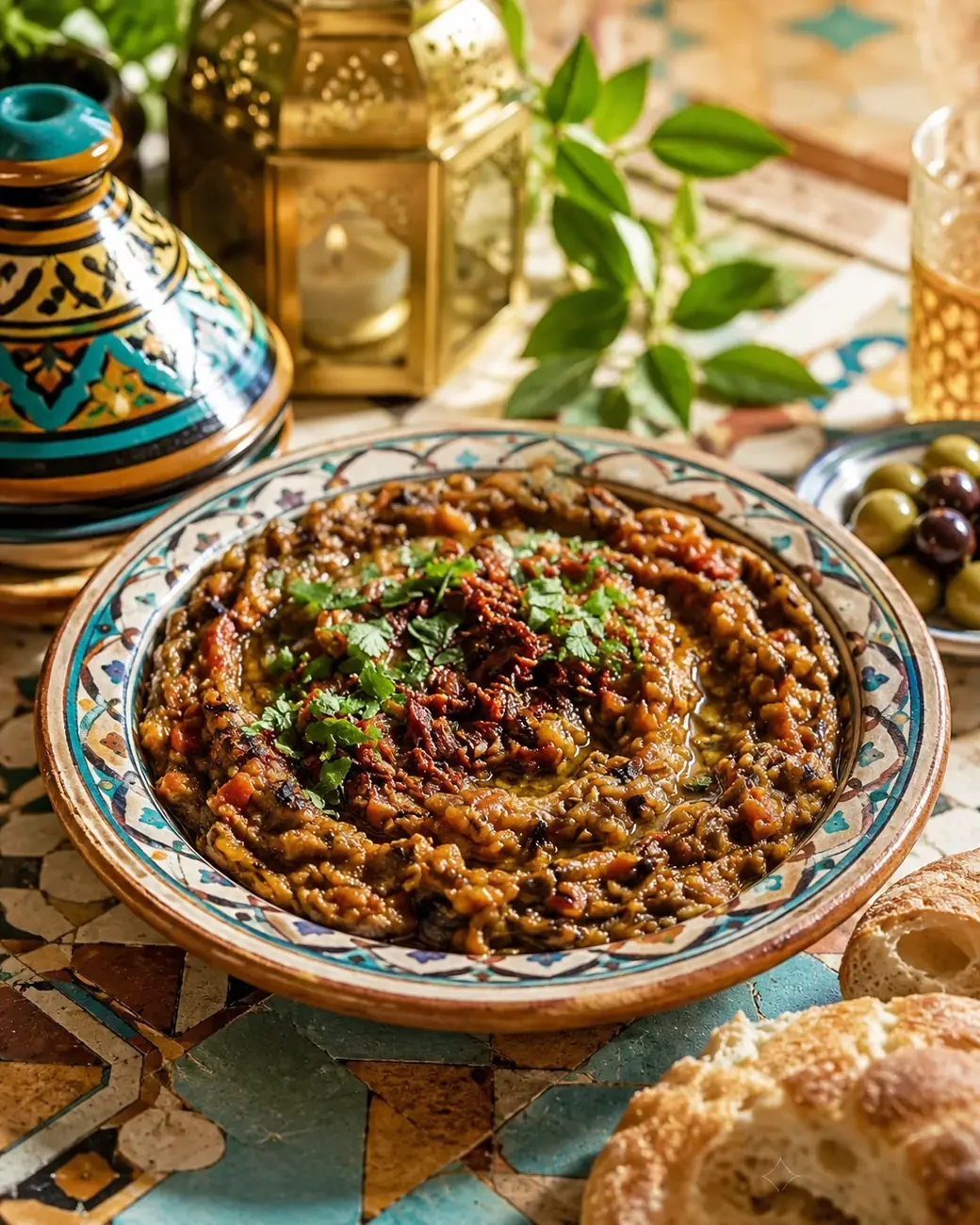
Zaalouk
Aubergine and tomato cooked until their flavours meet.
Explore the story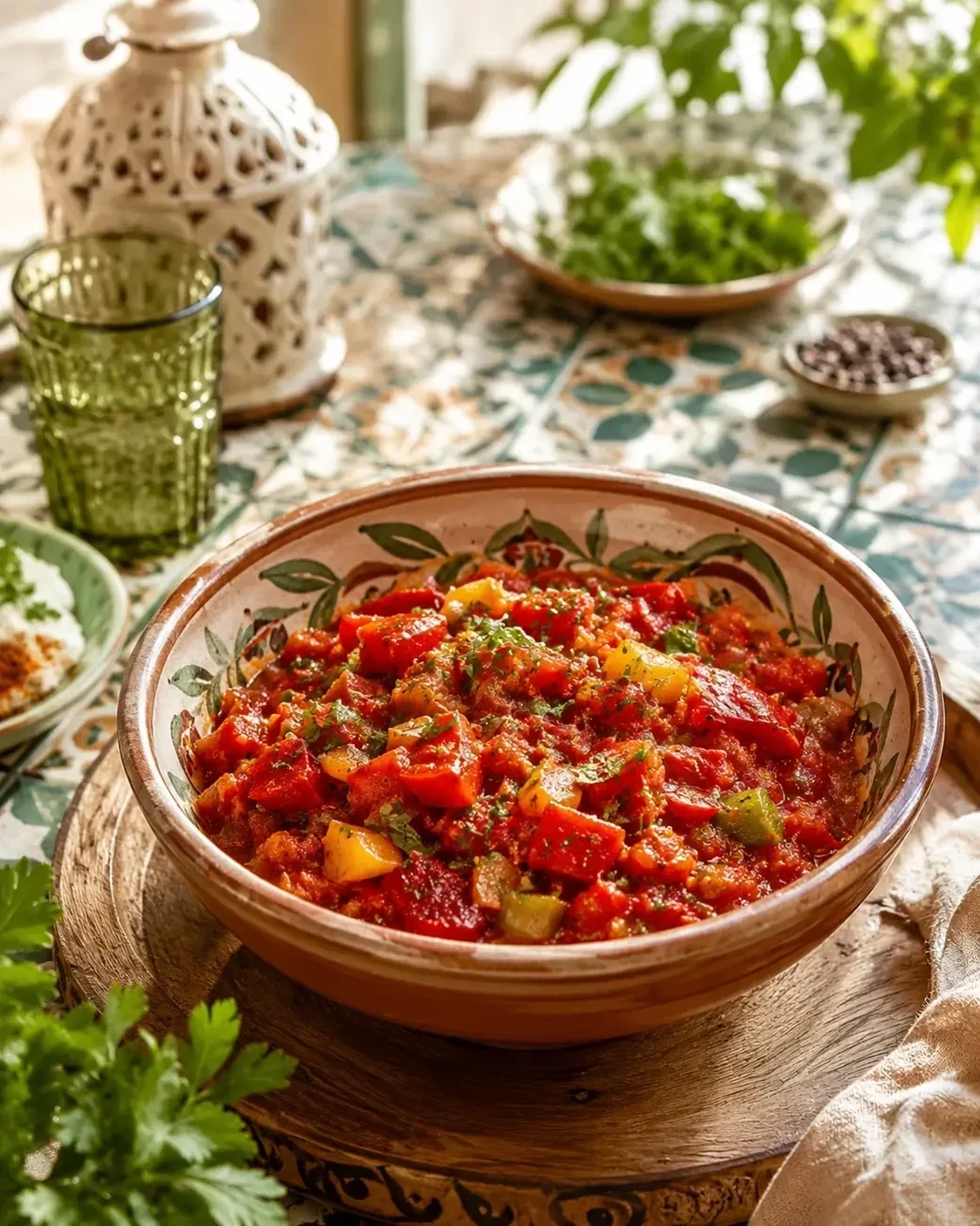
Taktouka
Roasted peppers and tomatoes, with bread close at hand.
Explore the storySources & editorial notes
Photography combines existing Exotic Morocco assets and generated editorial illustrations. These images do not document a named person, household or historical event.
- Nargisse Benkabbou · Introduction to the Tagine Pot — vessel, moisture, home cooking and care.
- Nargisse Benkabbou · Lamb Tagine with Prunes — a documented sweet-and-savoury preparation.
- Nargisse Benkabbou · Sardine Tagine — fish and chermoula.
- Nargisse Benkabbou · Lamb, Potatoes and Olives Tagine — everyday variation and serving with bread.
- Felicity Cloake · How to Make the Perfect Chicken Tagine — comparison of chicken, olive and preserved-lemon traditions.
- Cooking with Alia · Vegetable Tagine — a named Amazigh vegetable preparation.
- Tagine · Historical overview and bibliography — competing accounts of the name and vessel; not used to establish a precise invention date.
- TIME · Moroccan Culinary Arts Museum — Morocco’s diverse culinary heritage.
- Amanda Ponzio-Mouttaki · Tagine Buying Guide — cooking and serving vessels.
- Nada Kiffa · Taste of Maroc · Mrouzia — a family preparation with lamb, raisins, almonds, honey and ras el hanout.
- Moroccan cuisine · Overview and bibliography — culinary influences, bread, meals and regional ingredients.
- Moroccan National Tourist Office · Food & drinks — bread, cooked and raw salads, and the welcome associated with mint tea.
EXOTIC MOROCCO Places. People. The pleasure of knowing more.Back to top ↑