

01 · Bread, broth & a Moroccan shared dish
Built in layers.
Finished at the table.
Rfissa is not simply stew served beside bread. The bread is part of the architecture.
Across widely documented forms, torn or shredded trid , msemen, meloui, harcha or another bread base receives a deeply seasoned chicken-and-onion broth with lentils and fenugreek. The liquid is not an afterthought: it is what turns separate elements into rfissa. [2]
That structure creates a distinctive rhythm of texture. The bread softens but should still keep some identity; lentils give earthy body; the onion-rich broth carries spice; chicken crowns the platter. Fenugreek — helba — adds the unmistakable aromatic note many Moroccan cooks recognise immediately. [5]
Morocco’s national tourism office includes R’fissa among the country’s emblematic dishes, but there is no reason to force every family’s platter into one fixed formula. Rfissa survives precisely because cooks keep choosing how much bread, broth, lentil, spice and fragrance feels right in their own kitchen. [1]
Explore Taste Morocco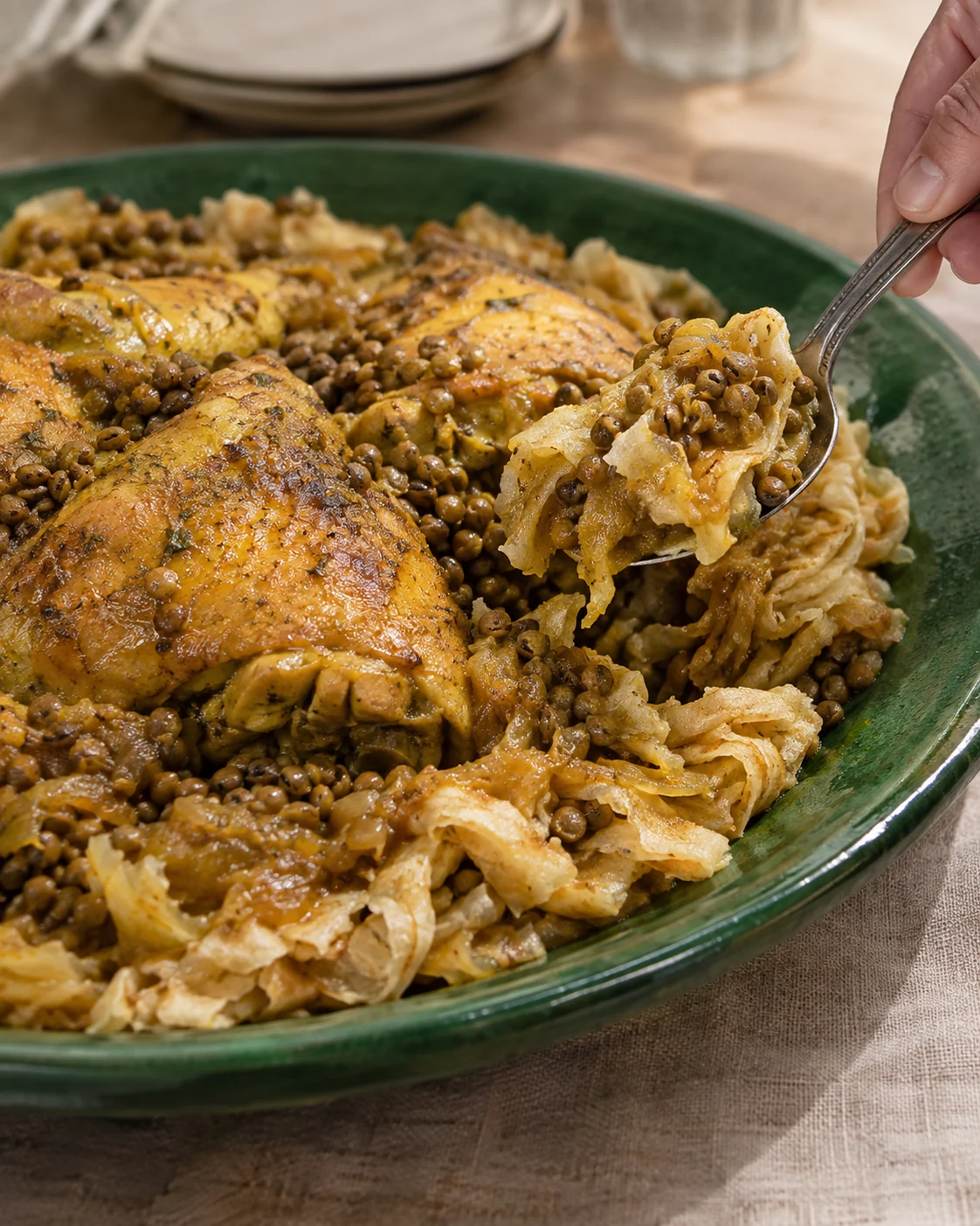
Thin or layered breads are torn or shredded to create the absorbing bed.
Fenugreek gives rfissa its recognisable aroma; lentils bring earthy texture.
A large platter turns assembly into a shared table event.
02 · Roots & living memory
Bread, broth
& living memory.
Bread softened by a savoury broth belongs to a much wider culinary history than one modern city label can explain.
Christine Benlafquih describes chicken rfissa as a form of Moroccan trid connected to the older Arab bread-and-broth family often discussed as tharid . That is useful historical context, but it does not give modern rfissa a neat invention date or prove a straight, uninterrupted recipe line. [2]
Culinary historian Anny Gaul’s work on Moroccan “kitchen histories” explains why caution matters: much food knowledge lives in learned gestures, oral memory and everyday practice rather than in conventional archives. Recipes change as people move, kitchens modernise and one generation teaches another. [6]
A wider bread-and-broth family
Trid and tharid provide a useful historical frame; they should not be turned into a precise origin claim for every element of today’s rfissa.
Living household knowledge
How bread is torn, how broth is judged and when the platter is assembled are forms of embodied knowledge as important as a written ingredient list. [6]
Care after childbirth
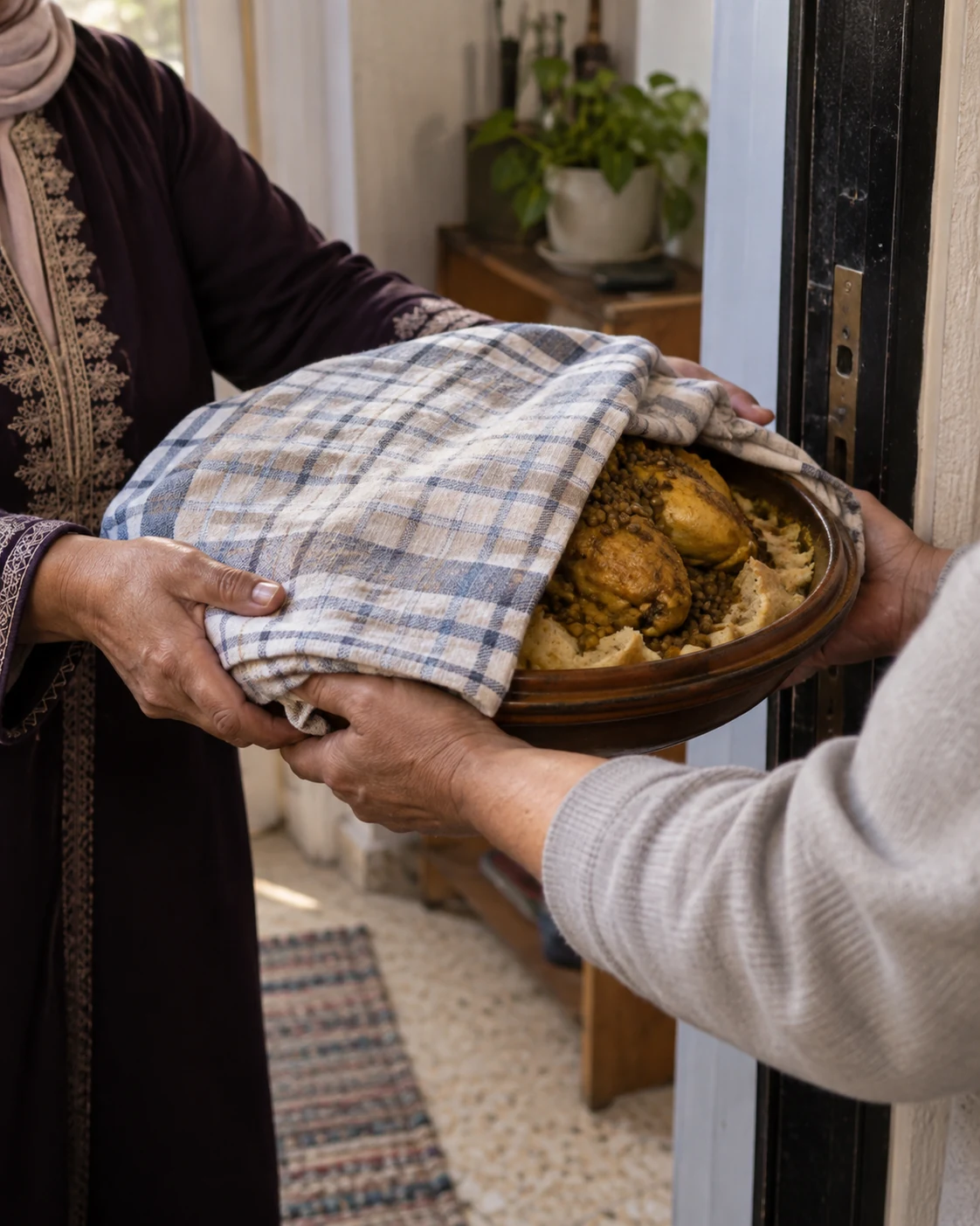
Many Moroccan families associate rfissa with the period after a birth, where relatives may cook for the new mother. That cultural practice deserves to be described as care — not as proof of a medical effect. [5]
03 · The bread & the layering
The broth meets
the bread last.
The key technique is not a special pot. It is timing: keep the bread, broth and chicken in separate states until each is ready to play its part.
Taste of Maroc notes that shredded pastry or msemen is commonly warmed or steamed before serving, then spread on a large dish and covered with chicken, lentils, onions and broth. [2]
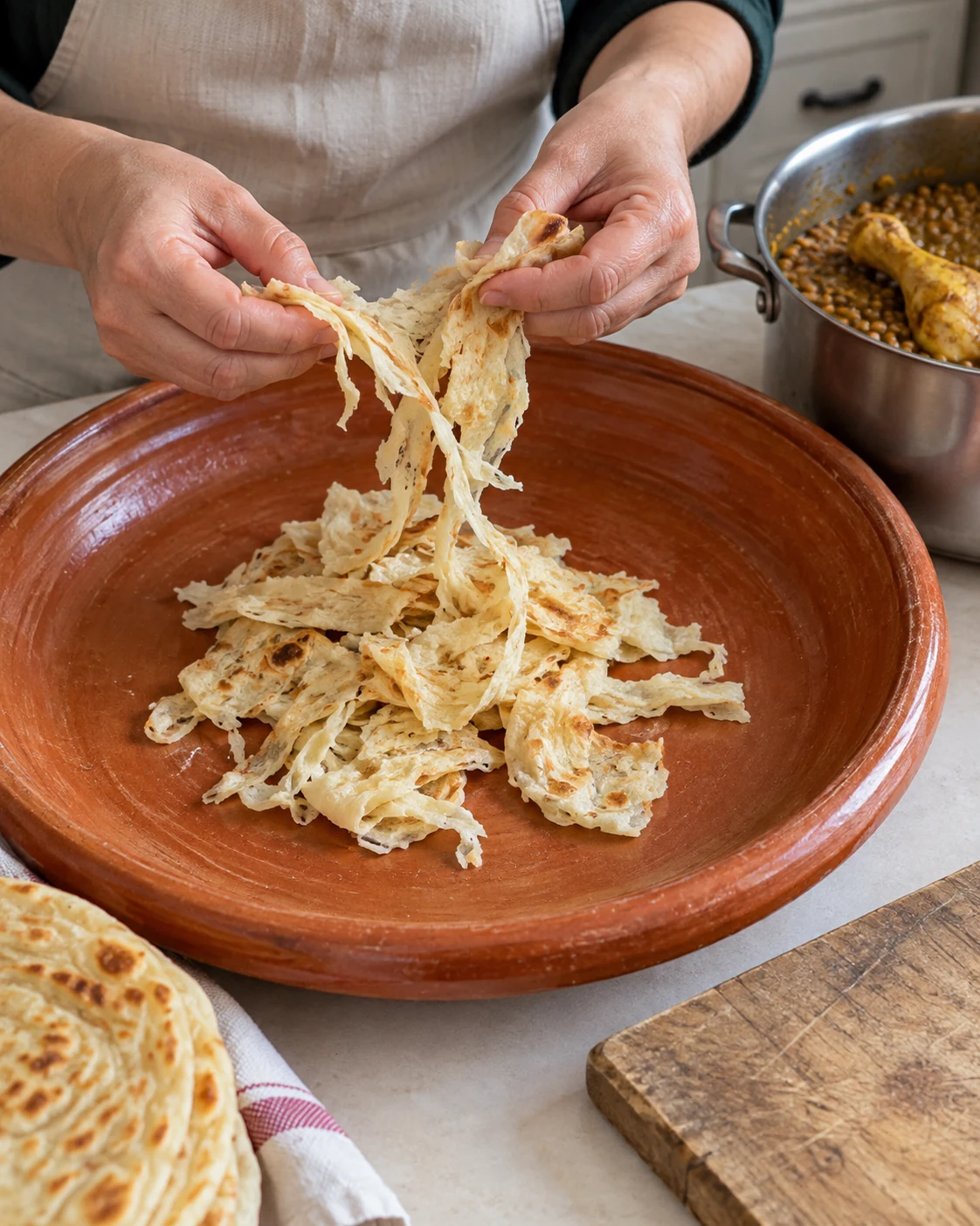
Prepare the bread to absorb
Trid or msemen is torn or shredded rather than left as intact pancakes. Warming or steaming makes the pieces supple enough to receive broth without becoming cold, greasy or leathery. [2]
Build a pourable broth
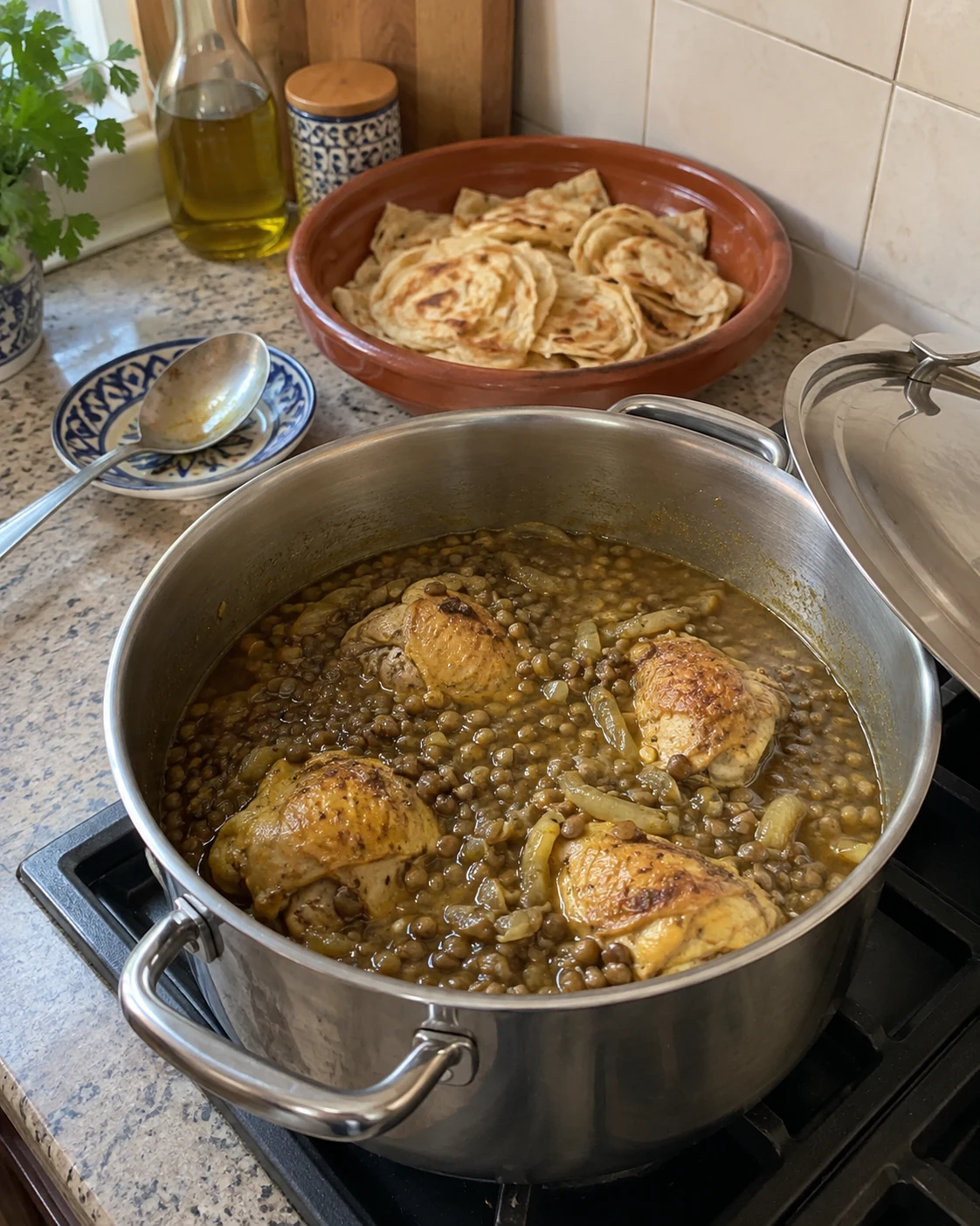
Onion, chicken, lentils, fenugreek and spice create a liquid that must be concentrated enough to season the bread yet abundant enough to reach through the platter. Nargisse Benkabbou describes the target as pourable rather than soup-like. [4]
Layer close to serving
Spread the hot bread, distribute the soft onions and lentils with broth, then place the chicken above. Assembly too early sacrifices the very texture the bread is meant to carry. [5]
04 · The many forms of rfissa
One structure.
Several breads.
The chicken, broth and absorbing base are more stable than the exact form of the bread. Names overlap, and households may use what they know, make or can buy locally.
These cards describe documented forms and practical choices, not rigid culinary borders.
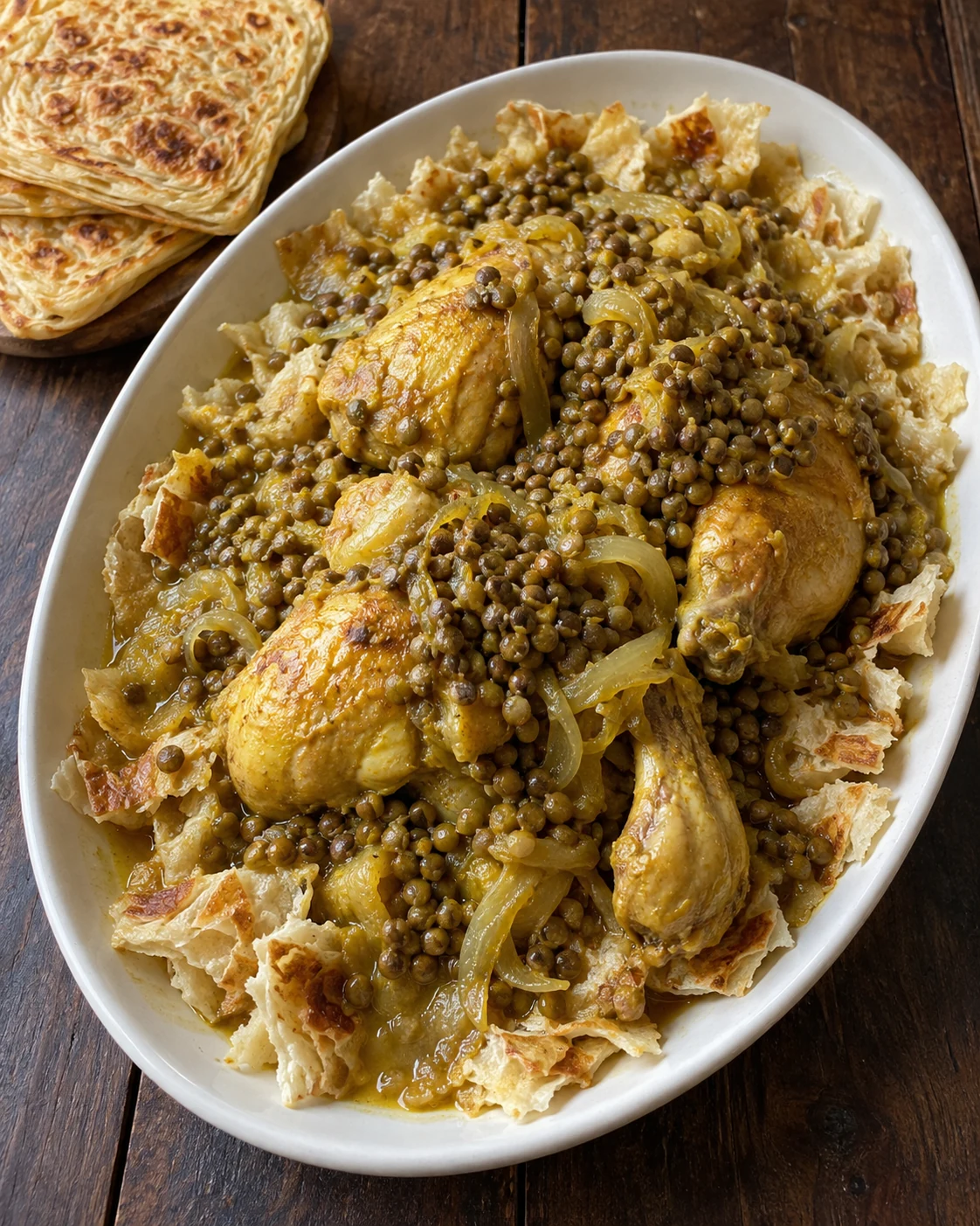
Msemen & meloui
Layered pan-cooked breads tear into irregular ribbons and folds that hold broth especially well. Taste of Maroc documents both msemen and meloui among common bases. [2]
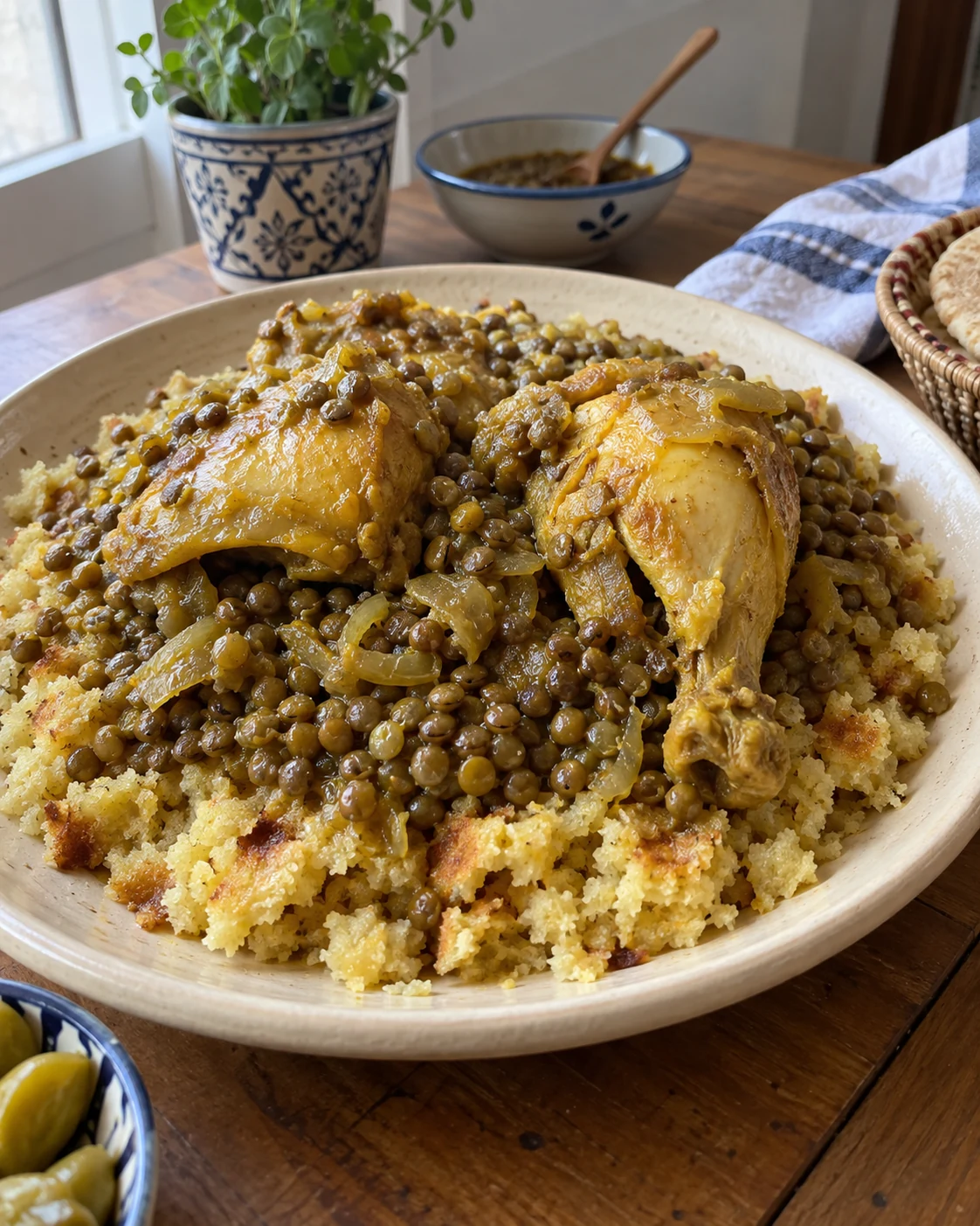
Rfissa medhoussa
When the dish is served over crumbled harcha, Taste of Maroc records the name rfissa medhoussa . The base is more crumbly than layered msemen, changing how the broth is held. [2]
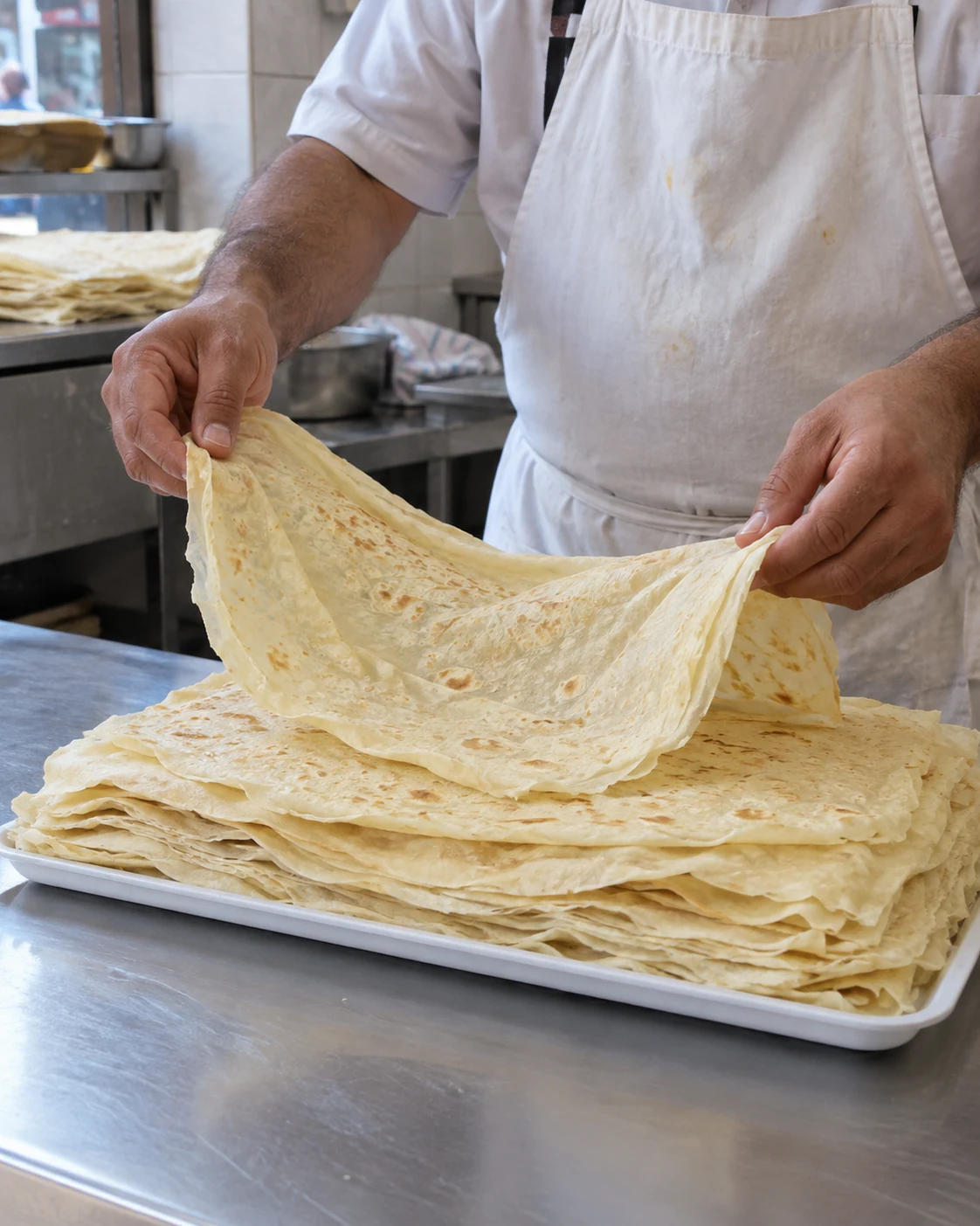
Bought from the souk
Making trid is labour. Nargisse Benkabbou notes that Moroccan households may buy trid from a souk or local bakery; Benlafquih likewise documents ready-shredded pastry and msemen in markets. Convenience can be part of living tradition. [4]
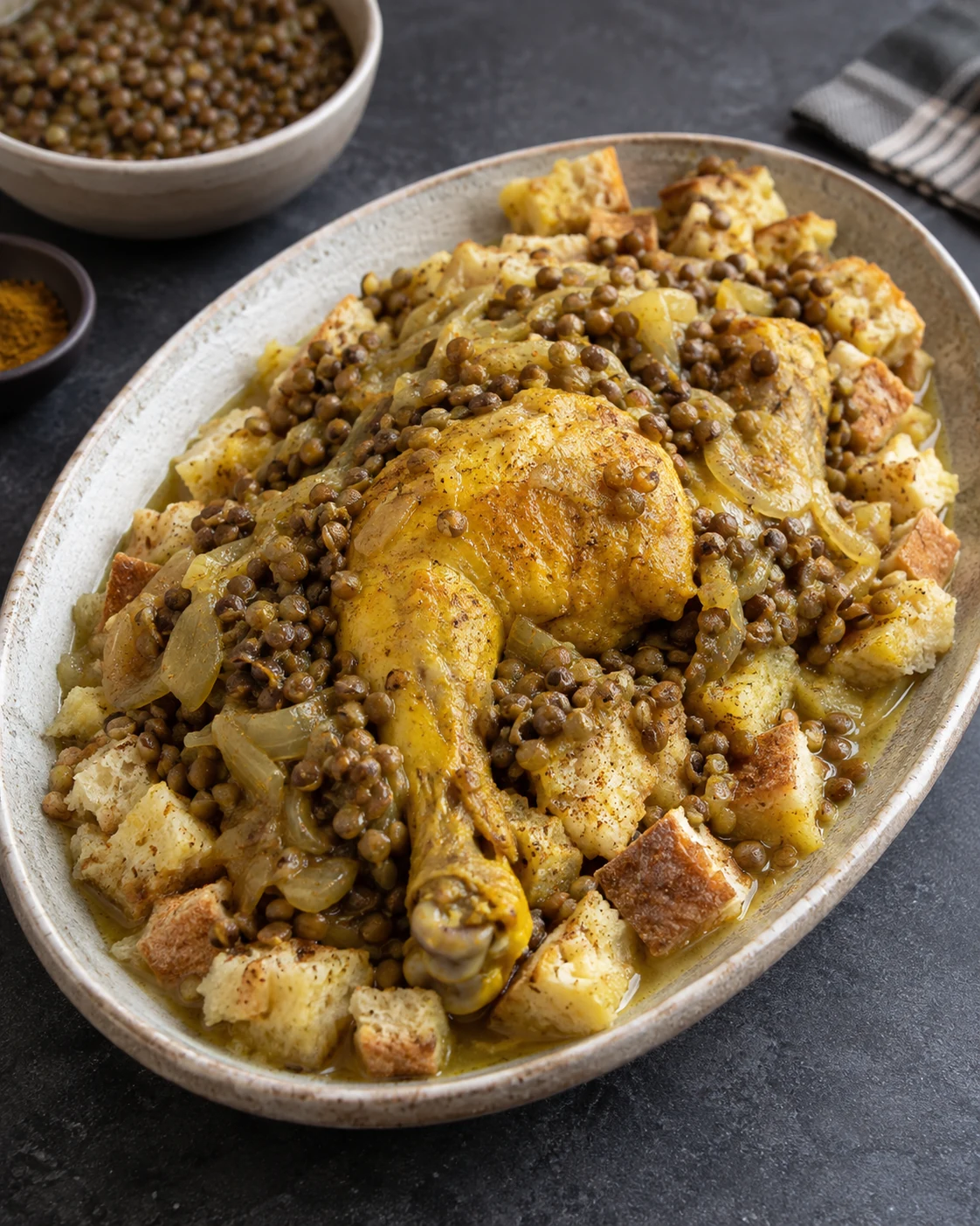
Treda & day-old bread
Benlafquih records the name treda when cubed bread is used and also lists day-old bread as a practical base. The point is not to disguise the substitution: the texture and identity of the base change with it. [2]
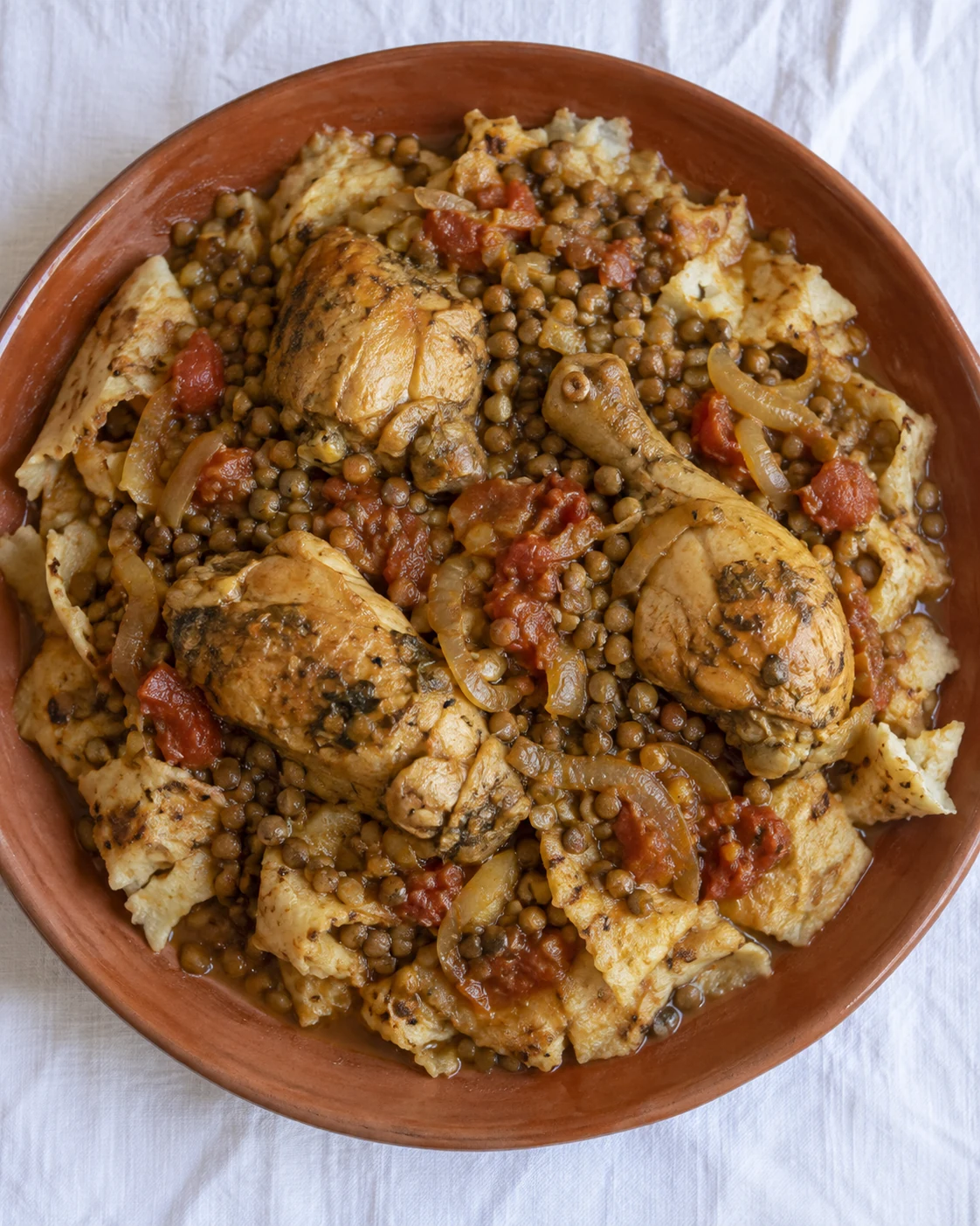
Bormache
Taste of Maroc documents bormache as a Meknès-style rfissa shared by Jameela Khiyati, with tomatoes, garlic and dried herbs among its distinguishing additions. [3]
Names can overlap.
Trid , msemen, meloui and local terms are not always used with dictionary precision from one household to another. Describe the bread in front of you before forcing a label.
Family taste is part of the recipe.
The amount of fenugreek, lentil, onion, broth and spice varies. Even a familiar platter can taste markedly different from one kitchen to the next.
05 · The language of flavour
Earth, perfume
& warm broth.
Rfissa is aromatic rather than simply “spicy.” Its character comes from a broth with enough depth to season a whole bed of bread.
Households choose the exact blend. Ras el hanout may appear, as may ginger, turmeric, saffron, pepper, herbs or preserved butter; no single shopping list should be universalised. [2]
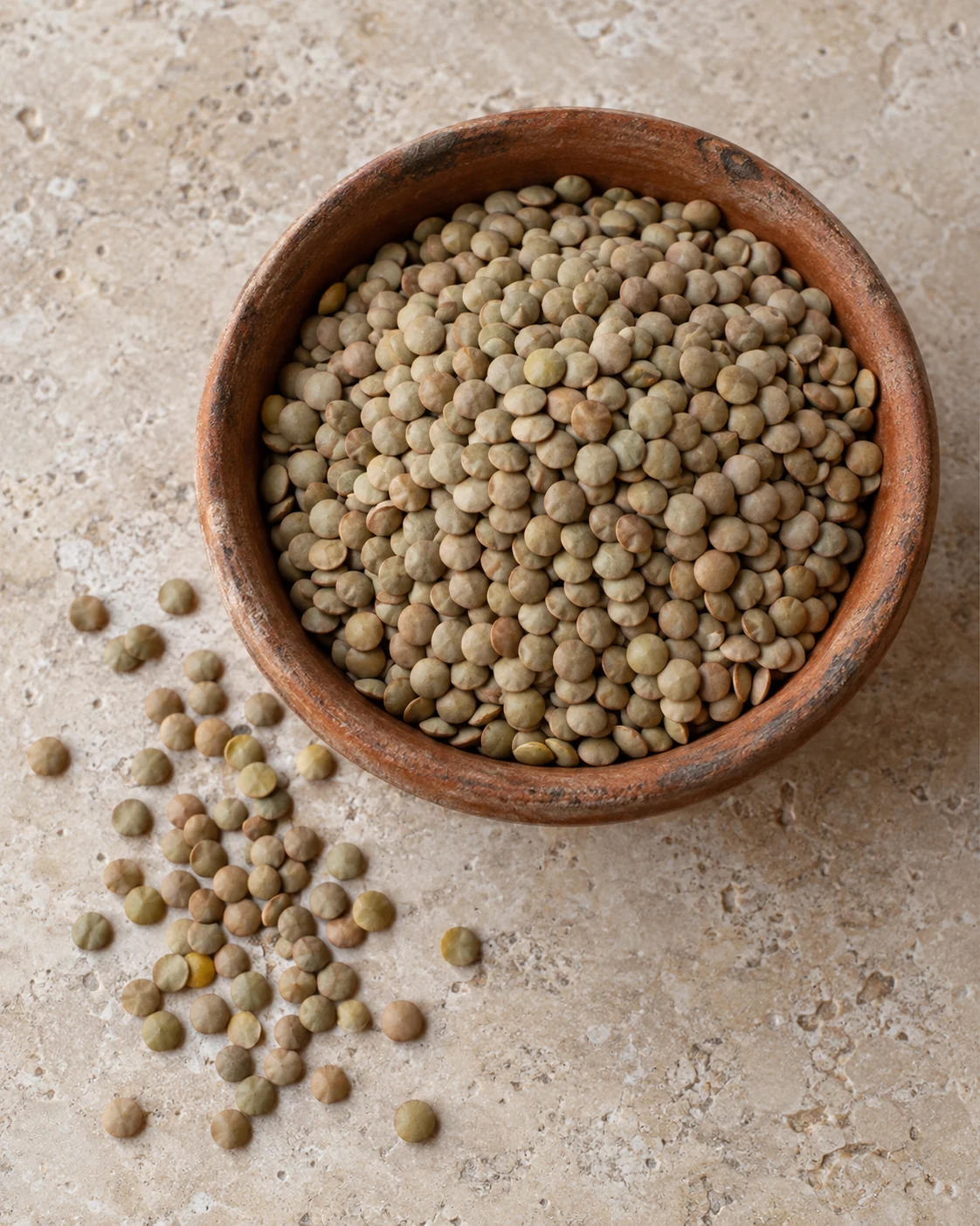
Lentils
Earthiness & body.
Brown or green lentils contribute texture and absorb seasoning while remaining a supporting layer rather than the entire dish.
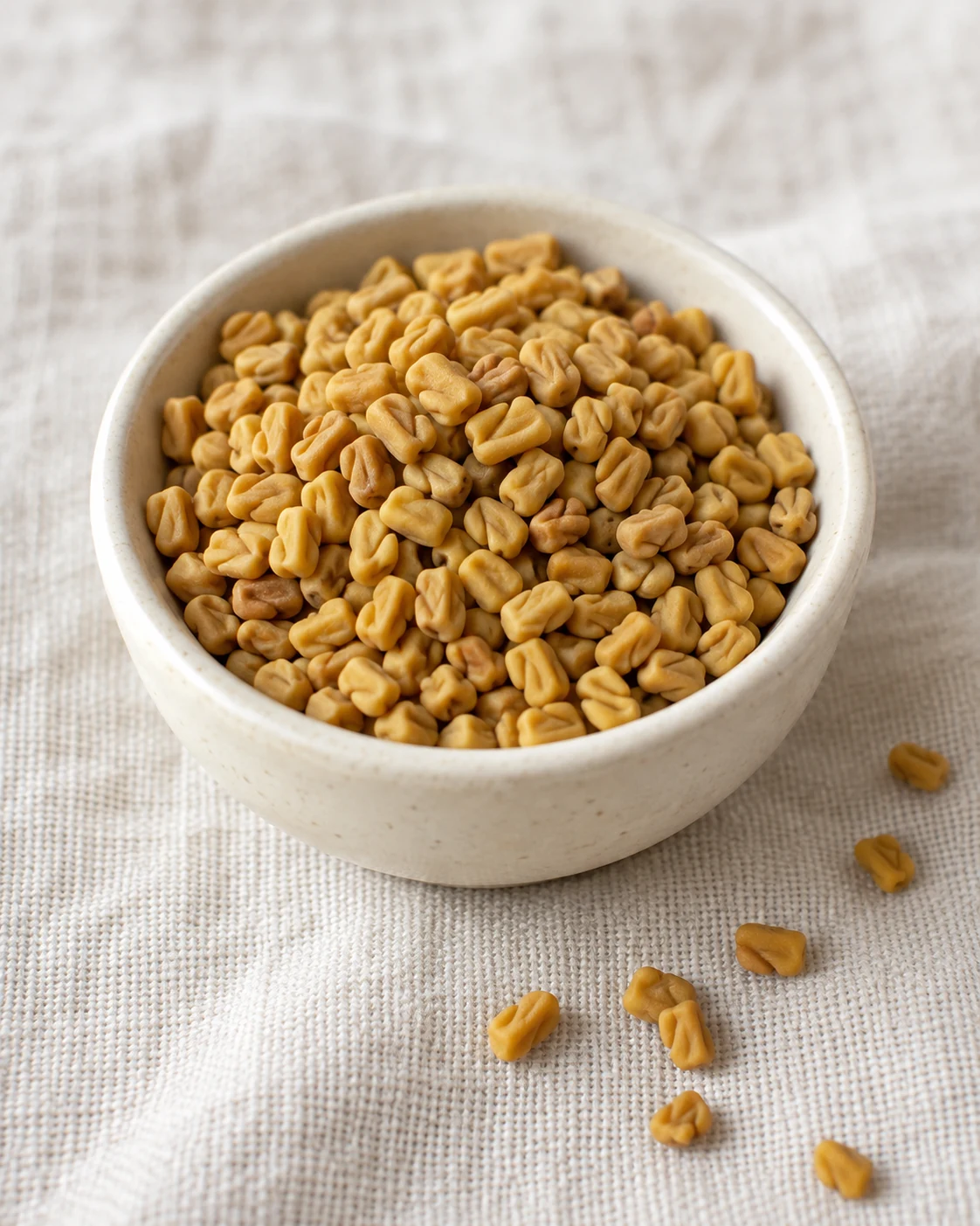
Helba
The recognisable perfume.
Fenugreek has a forceful warm, lightly bitter aroma. It is culturally central to many rfissa preparations, but the exact quantity is a matter of judgement. [5]
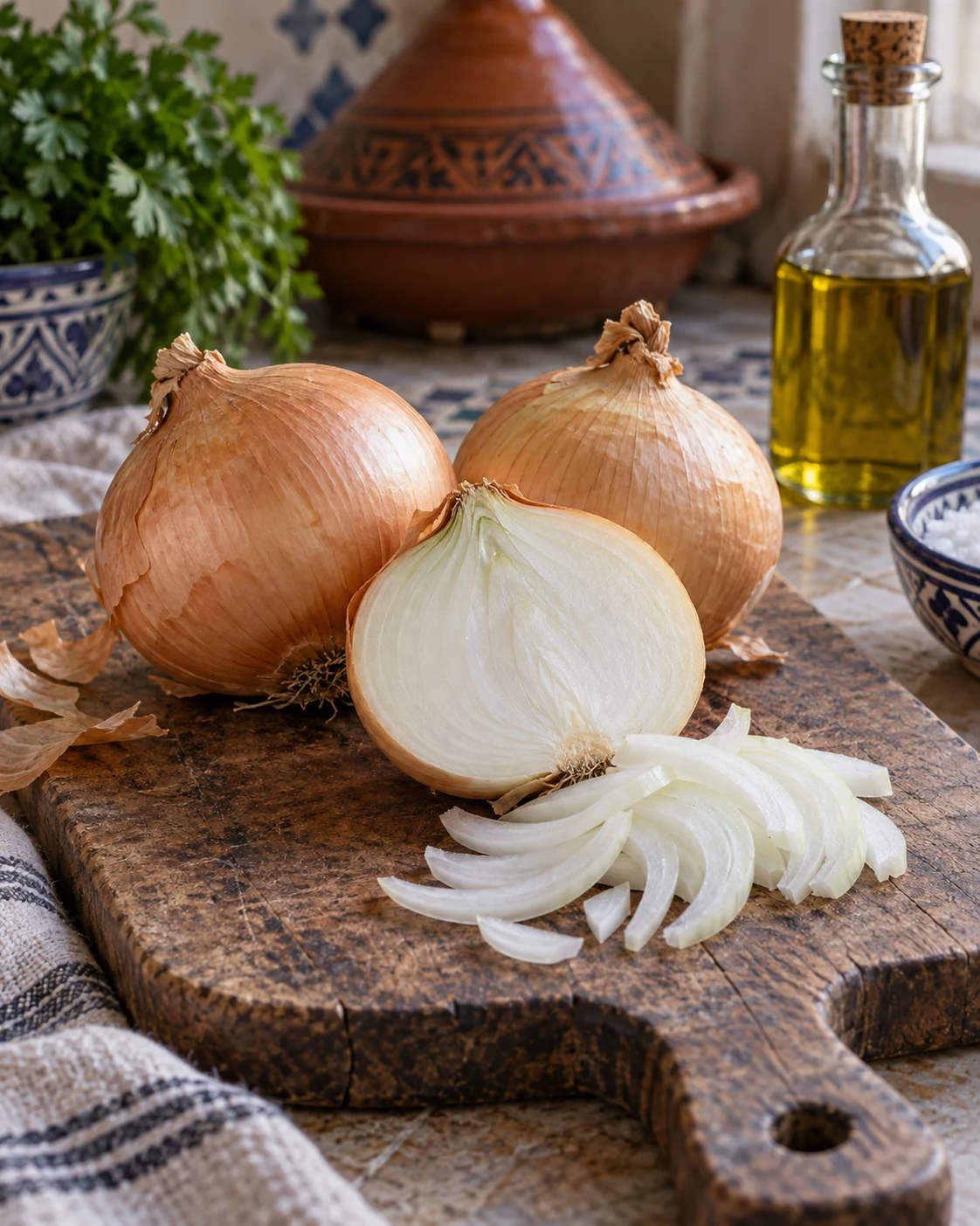
Onion & spice
Sweetness carries fragrance.
Soft onion gives the broth mass and sweetness; spice gives it direction. The goal is an integrated broth, not raw spice sitting above the sauce.
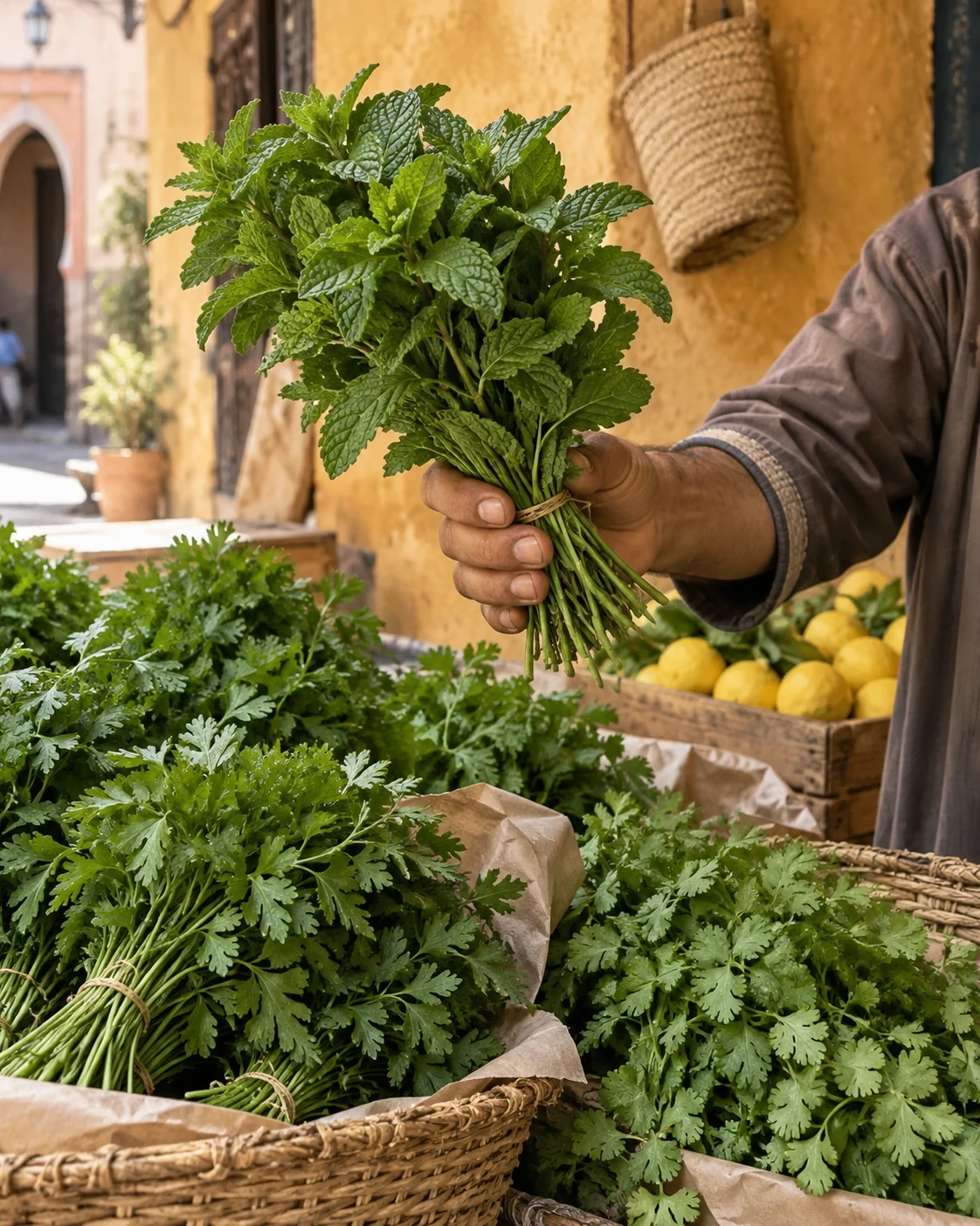
Fresh herbs
Lift for a rich platter.
Coriander and parsley appear in documented recipes, freshening a broth built on chicken, onion, lentils and warm spice.
Explore the four flavours
THE BROTH IS THE BRIDGE
Enough to soak.
Not enough to erase.
Rfissa works when the broth is strong enough to travel through the bread and balanced enough that the next spoonful still tastes of more than salt or spice.
Exact quantities depend on the bread, pot, chicken and number of diners.
Judge the final texture by absorption: seasoned, soft and still recognisably layered.
Concentration
The broth must retain flavour after it reaches a large quantity of relatively neutral bread.
Absorption
Warm bread takes liquid more evenly. The pour happens close enough to serving that it does not collapse the whole bed.
Fenugreek with context
In some households, making rfissa after a birth is an act of family care. The custom belongs to the dish’s social history.[5]

06 · Geography, market & family
No single city
owns the platter.
The useful map is one of households, ingredients and movement.
Contemporary writing attaches rfissa to Moroccan national food culture, while named local forms also exist. Bormache is documented as a Meknès-style variation, but that does not make every rfissa a Meknès dish. Likewise, broad origin claims repeated online should not be treated as settled culinary history when published accounts conflict or lack archival evidence. [1] [3]
What can be observed more securely is adaptation. Some cooks make every sheet of trid or msemen; others buy it from a market or bakery. Some use free-range djaj beldi ; others cook with the chicken available to them. The structure stays recognisable while the household adjusts its labour, ingredients and seasoning. [2] [4]
Market knowledge matters
Ready-made trid or msemen can shorten the longest part of the work. Buying a skilled baker’s bread is not automatically less “traditional” than making every layer at home.
Explore Taste Morocco ↗Meknès has a named variation
Bormache is useful evidence of regional specificity: tomatoes, garlic and dried herbs change the broth while the wider rfissa logic remains legible.
Explore Meknès ↗Migration changes kitchens
Gaul’s research shows how Moroccan food histories are shaped by movement and memory. Modern cooks abroad may adapt equipment or bread access while still recognising the dish they learned at home.
Explore the wider Taste collection ↗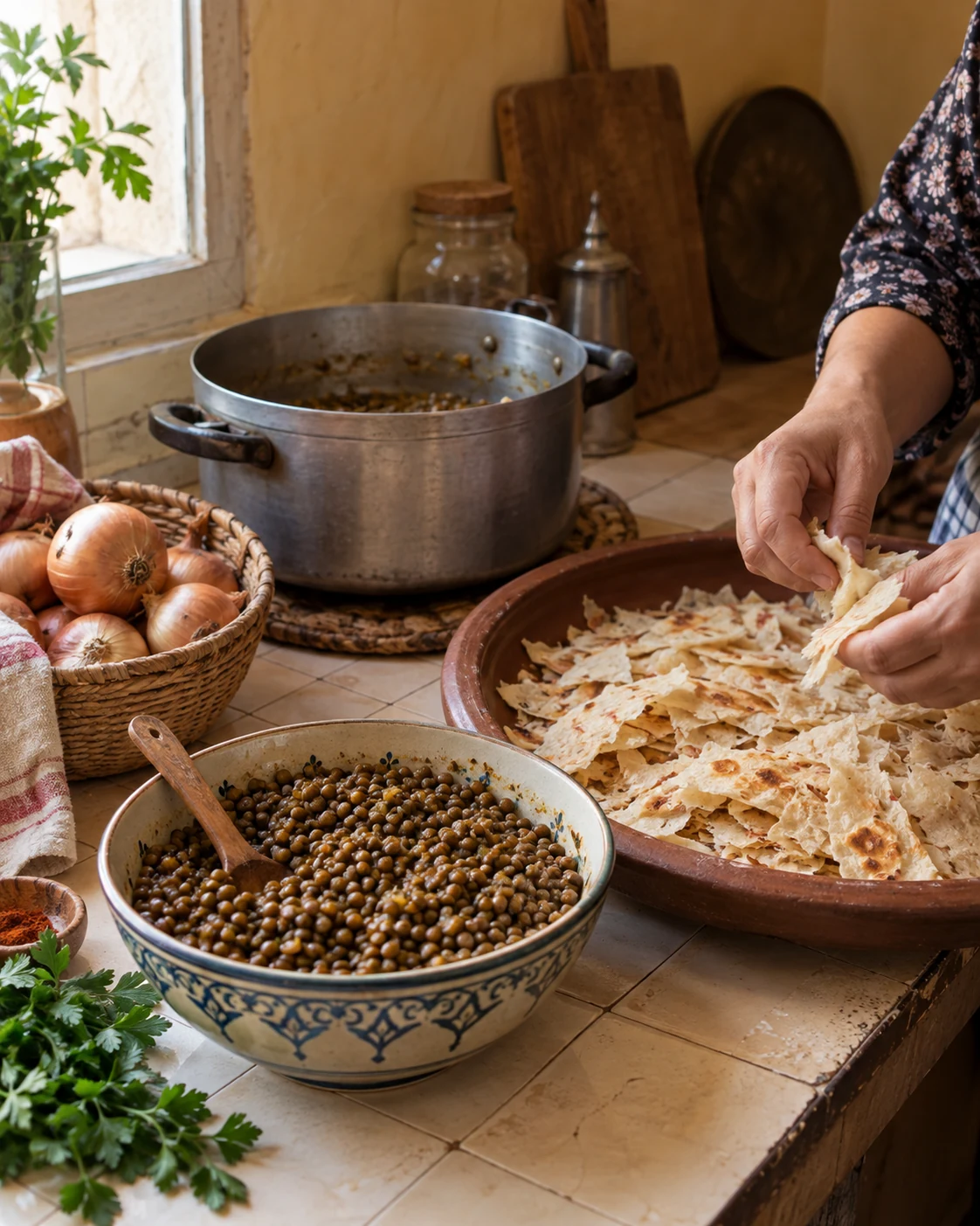
07 · Care, hospitality & the meal
A wide platter.
People come closer.
Rfissa is built to distribute flavour across one centre.
Taste of Maroc describes family gatherings, casual company meals and postpartum service among rfissa’s common contexts. Dar Beldi likewise frames the new-baby association as an act of family care: someone else cooks, the dish is shared, and the new mother is supported. [2] [5]
That does not make rfissa a dish reserved for childbirth. It can be family dinner, guest food or a special-occasion platter. The meaning changes with the table around it.
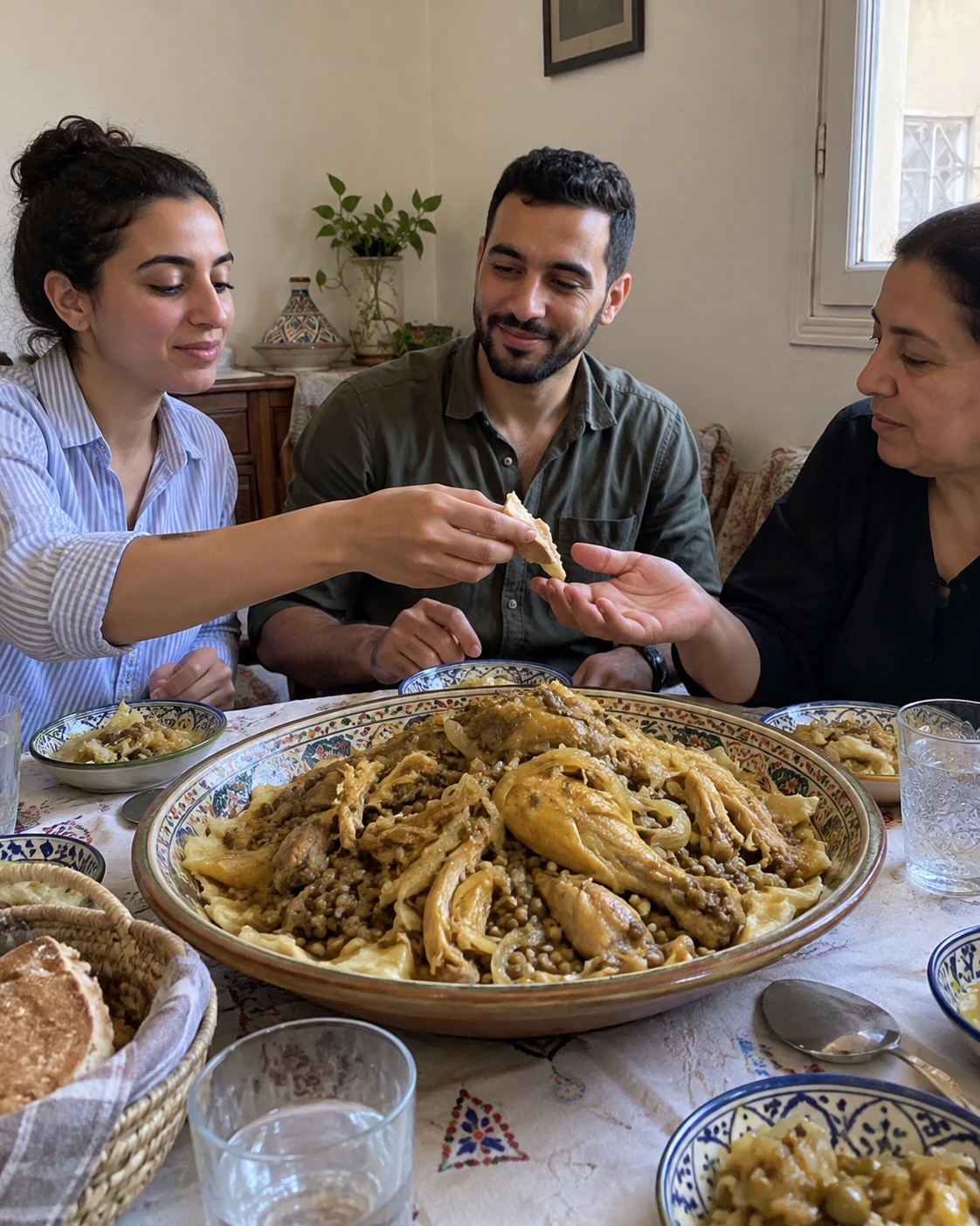
Serve from one centre.
Benlafquih describes rfissa as traditionally enjoyed communally from its serving dish, with people eating from their own side by hand or with a spoon. Household manners and modern settings vary. [2]
The practical point is shared access: the bread, lentils, onion, chicken and broth are arranged so that every side of the platter can become a complete portion.
Keep generosity adjustable.
Some cooks reserve broth at the side, allowing diners to moisten their portion further. That detail also acknowledges a truth about rfissa: not everyone wants the bread equally saturated. [2]
A shared dish can still leave room for individual preference.
Food can do
social work.
Around a birth, preparing and bringing a platter can be a practical act of care by relatives and neighbours. The custom draws attention to the people cooking and sharing the meal.
Not only ceremonial.
Rfissa can mark a family event and still remain comfort food. Its scale can shrink or grow, but the absorbing bread-and-broth structure remains the recognisable centre.
08 · Hands, bread & the serving platter
The craft is not
one special pot.
Rfissa’s material culture begins with flexible bread and ends with enough surface for a shared meal.
The skilled act may happen long before the platter is assembled: kneading, folding and griddling msemen; producing thin trid; choosing a baker whose sheets tear well; or warming yesterday’s bread so that it can absorb again.
Then comes the vessel. A wide ceramic or metal serving dish is practical because the bread can be spread rather than compressed, broth can travel across it, and chicken can sit above without hiding every layer. Decorative ceramics can make the dish feel ceremonial, but no particular painted motif is required for rfissa to be rfissa.
A broad platter gives the bread room to catch the broth and makes the chicken accessible for sharing. The serving object responds to the food’s texture and the number of people gathered around it.
Explore Taste Morocco ↗09 · A closer look
Good questions.
Clear answers.
Keep the household variation; remove the myths that pretend there is only one correct story.
Is rfissa the same as trid?
They overlap, but the terms are not perfect synonyms. Taste of Maroc describes chicken rfissa as a variation of trid and uses trid for the broader bread-and-broth family. Rfissa is specifically associated there with chicken, lentils and a fragrantly seasoned broth over shredded pastry or bread. [2]
Does rfissa have to use msemen?
No. Documented bases include trid pastry, msemen, meloui, harcha and day-old bread. The name and texture may shift with the base — for example, rfissa medhoussa with crumbled harcha. [2]
Why is fenugreek so noticeable?
Fenugreek, or helba , has a strong aromatic, lightly bitter character that can dominate if overused. Moroccan food writers treat it as one of rfissa’s signature flavours. Its cultural role should be kept separate from medicinal claims. [5]
Is rfissa only for new mothers?
No. It has a strong postpartum association in many families, but it is also served for family gatherings, guests and ordinary meals. The custom is culturally important without being exclusive. [2]
Is rfissa from Casablanca, Fès or another single city?
The dish is broadly Moroccan and published origin claims are not consistent enough to justify an exclusive birthplace. What can be documented more carefully are named local forms, such as Meknès-style bormache. [1] [3]
Why warm or steam the bread before serving?
It makes the shredded bread hot and supple before broth is added. Taste of Maroc records steaming shredded msemen, pastry or stale bread as the traditional tenderising and reheating method. [2]
 EXOTIC MOROCCOTASTE · THE GUIDE COLLECTIONRfissaIngredients, technique
and the Moroccan table
From the story to your kitchen
Keep the flavour.
Go a little deeper.
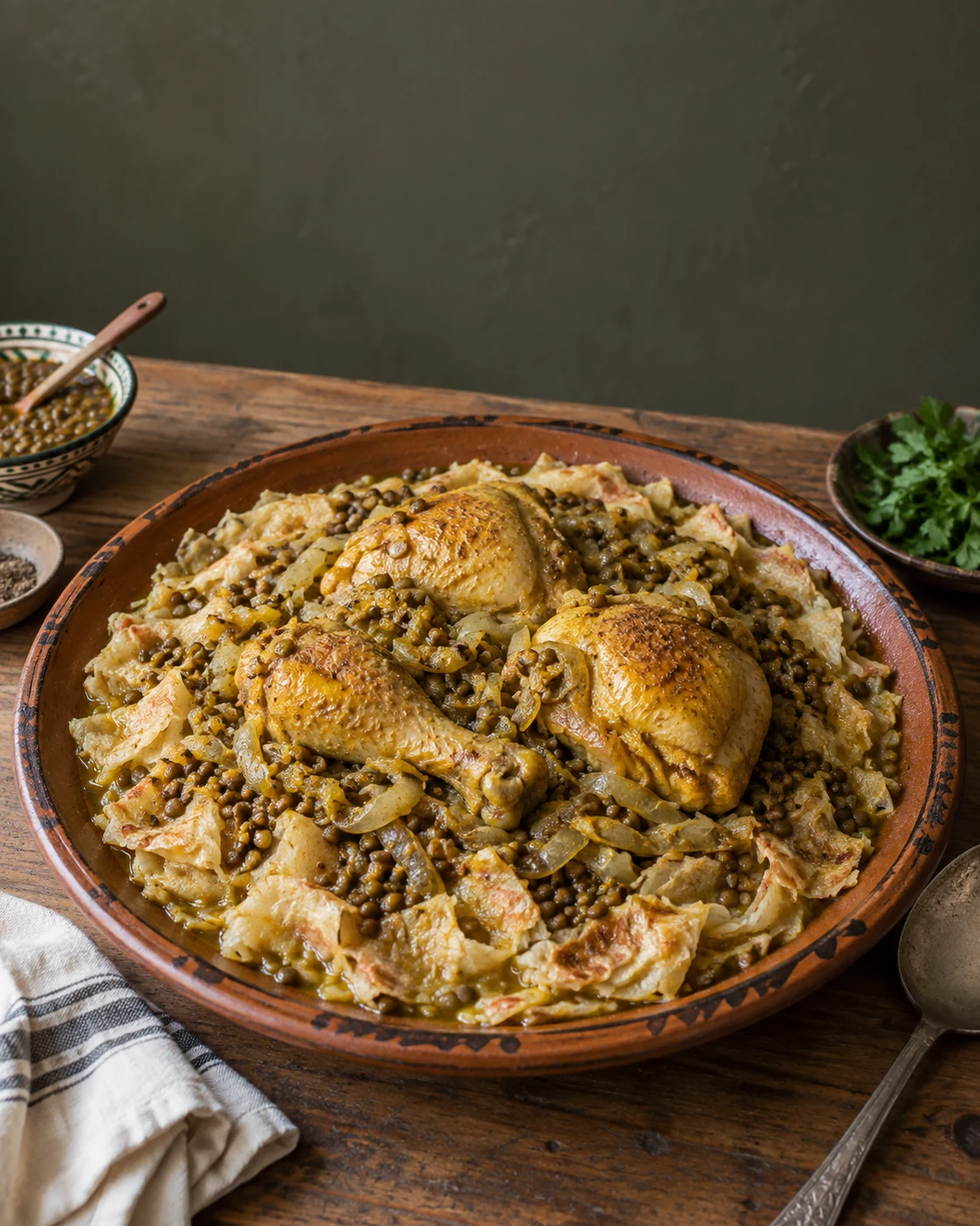
Chicken, lentils and fragrant broth finding their way through torn bread.
Explore the Exotic Morocco guide collection for a closer look at ingredients, kitchen knowledge and the culture around the table.
- Understand the ingredients and their roles
- Recognise the techniques and textures that matter
- Bring context and confidence to the way you cook and serve
Continue tasting Morocco
Follow the
table outward.
Another dish, another technique, another way into the Moroccan kitchen.
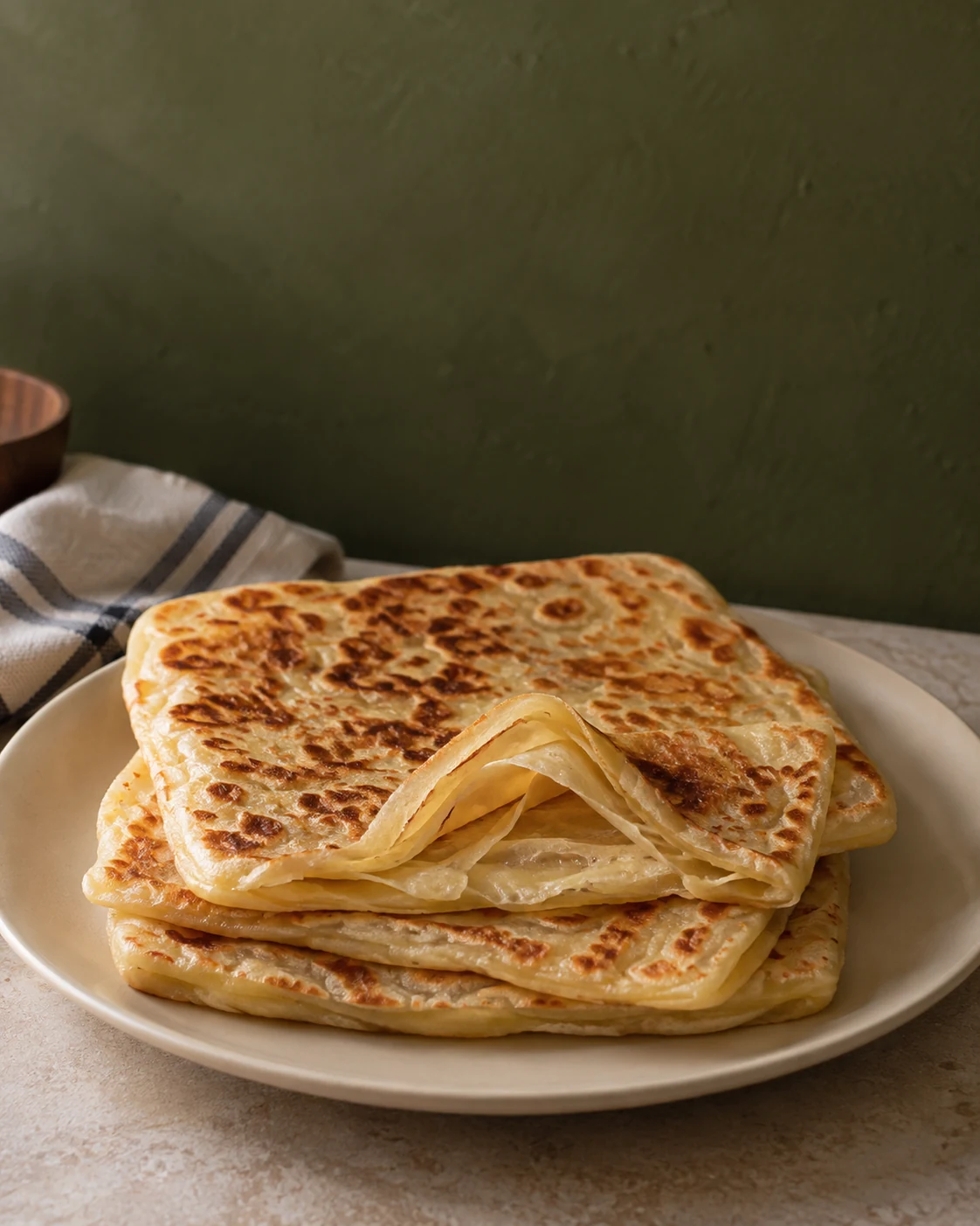
Msemen
Thinly stretched dough folded into supple, flaky layers.
Explore the story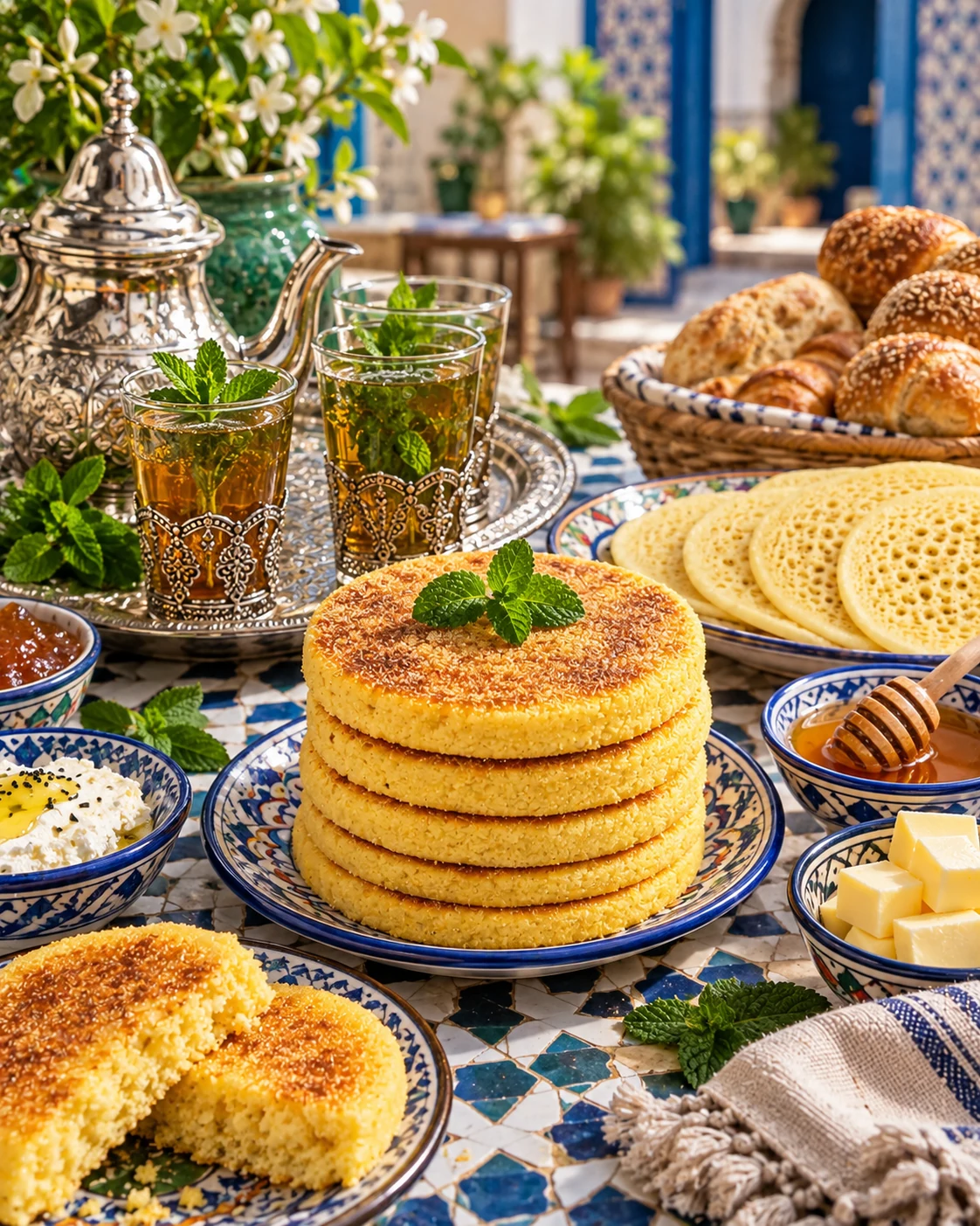
Harcha
Semolina, a hot pan and a tender, crumbly round.
Explore the story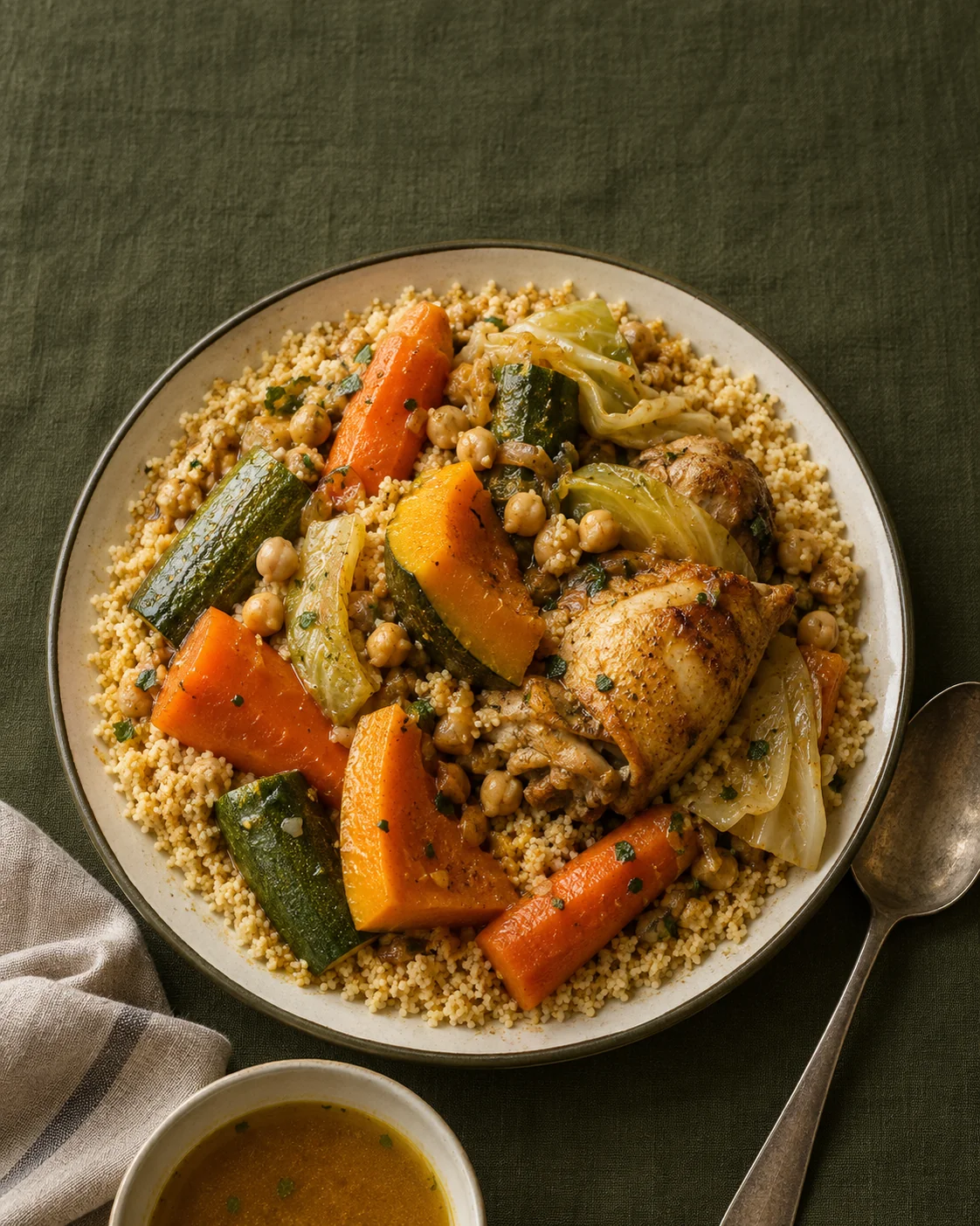
Couscous
Grains, steam and the many ways a shared platter comes together.
Explore the story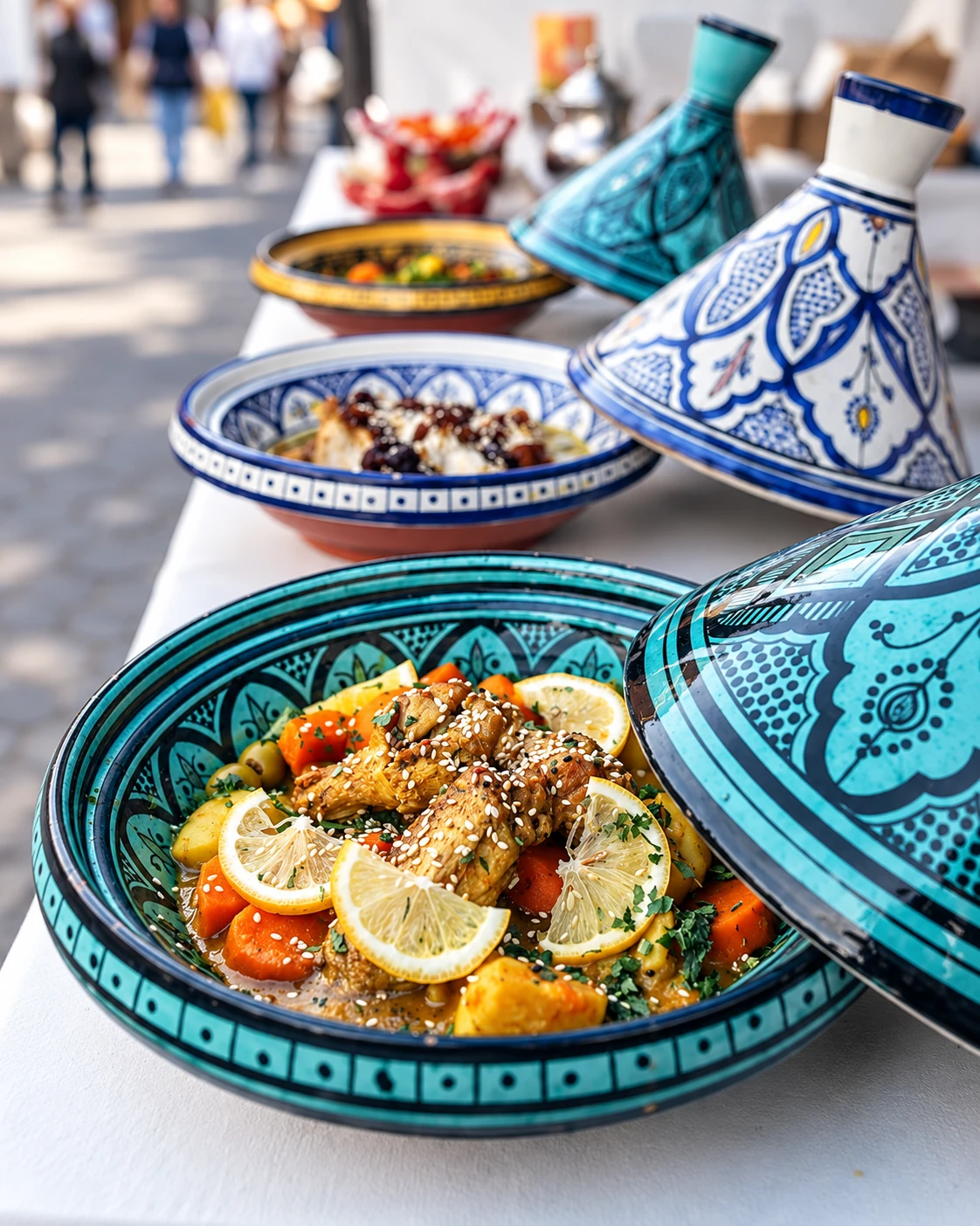
Tagine
Gentle heat, clay pots and the balance of a slow-cooked sauce.
Explore the story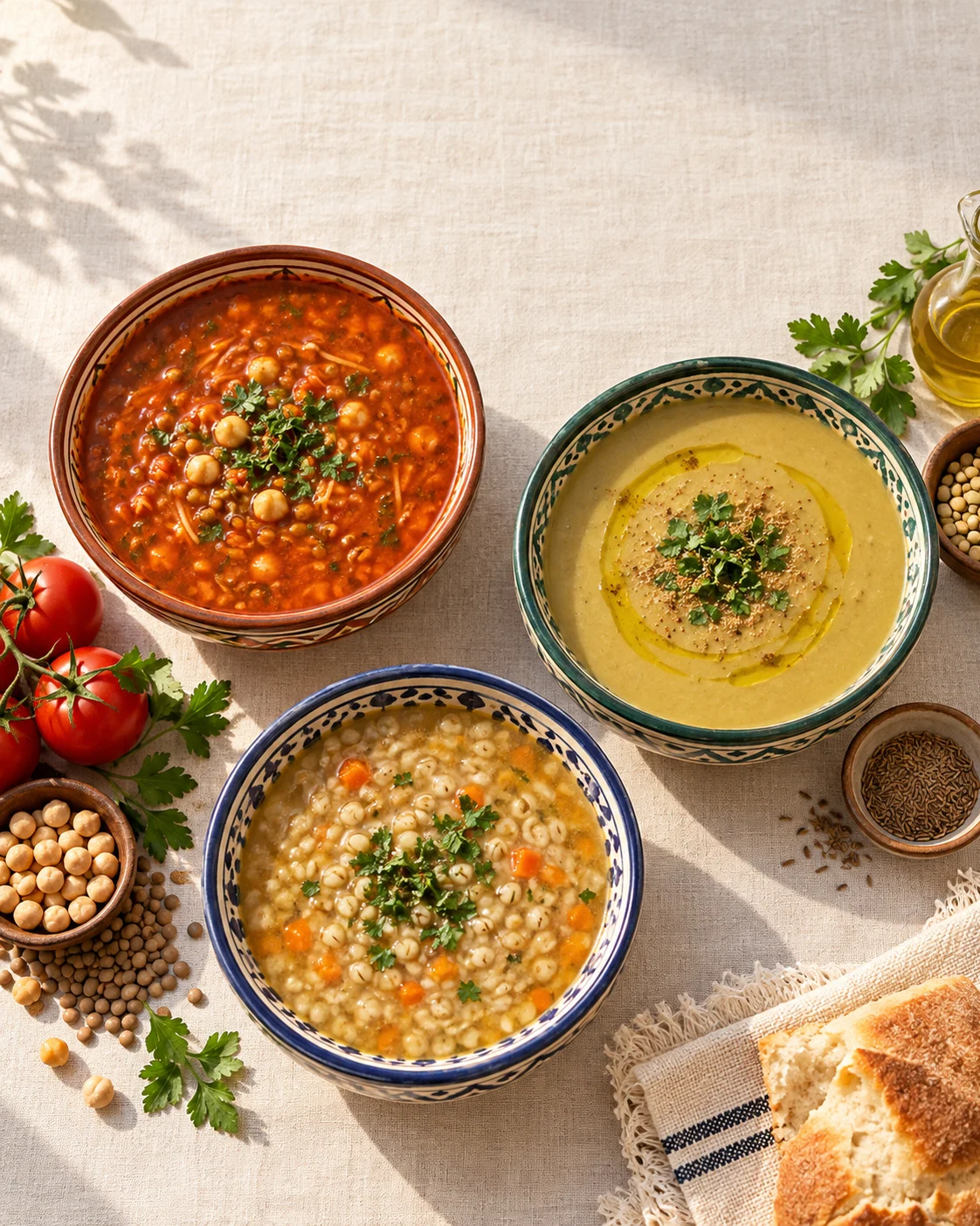
Soups
Harira, bissara and other bowls shaped by place and occasion.
Explore the story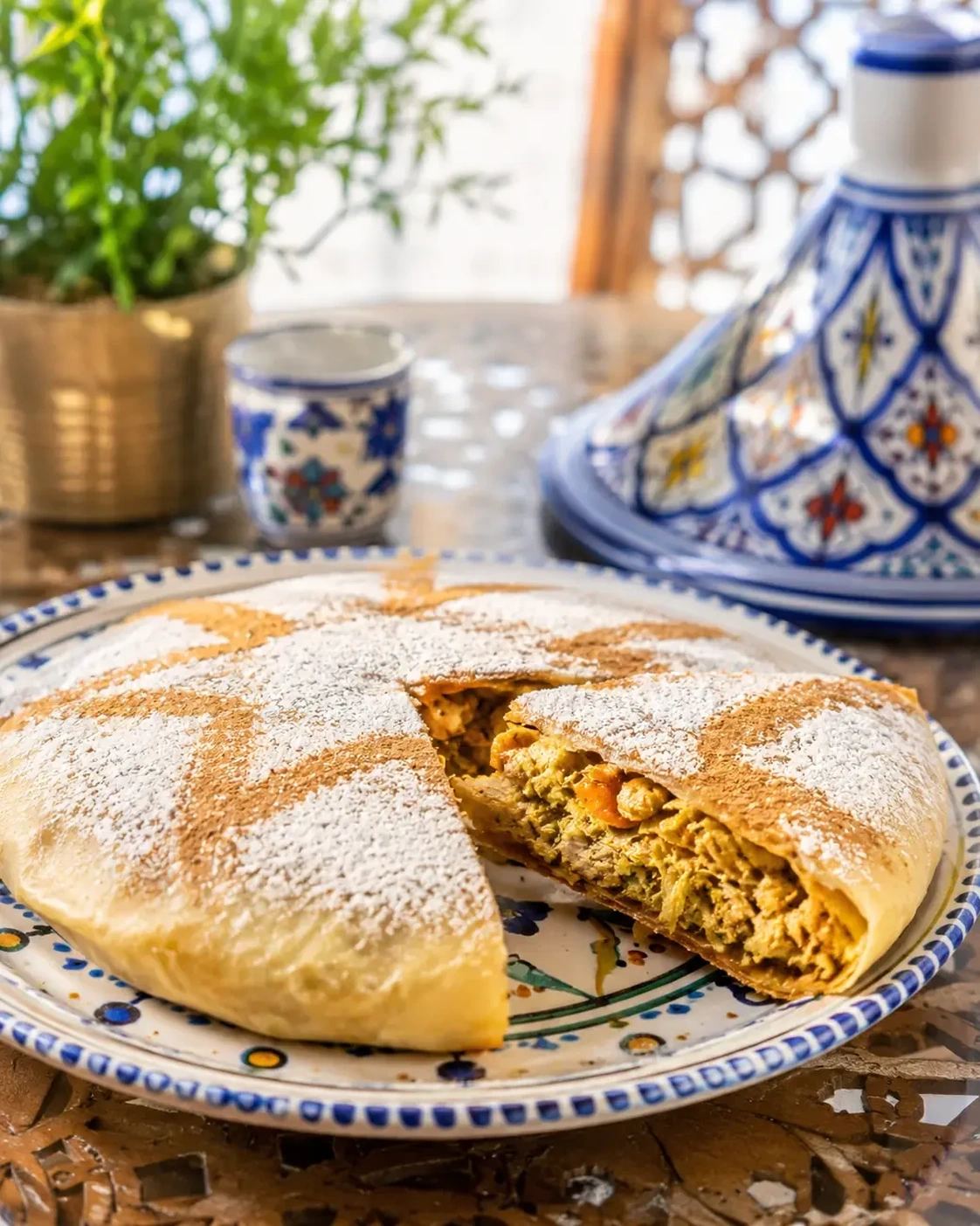
Pastilla
Fine pastry, layered fillings and the pleasure of contrasting textures.
Explore the storySources & editorial notes
Photography combines existing Exotic Morocco assets and generated editorial illustrations. These images do not document a named person, household or historical event.
- Moroccan National Tourist Office · Gastronomy — official overview naming R’fissa among Morocco’s emblematic dishes and placing it within the country’s diverse culinary heritage.
- Christine Benlafquih · Taste of Maroc · Moroccan Chicken Rfissa — trid relationship, bread bases, medhoussa/treda terminology, fenugreek, market-bought pastry, steaming, communal service and family occasions.
- Christine Benlafquih · Taste of Maroc · Bormache, Meknès-style Rfissa — named Meknès variation with garlic, tomato and dried herbs; useful evidence of regional specificity without assigning all rfissa to one city.
- Nargisse Benkabbou · My Moroccan Food · Rfissa Express — household practice of buying trid from a souk or bakery, and a modern adaptation that shows how living cooking changes around access and time.
- Nasira El Ouahbi · Dar Beldi · Wat is Rfissa? — Moroccan home-cooking perspective on msemen, fenugreek, broth absorption, family care after childbirth and final assembly.
- Anny Gaul · “Kitchen Histories” and the Taste of Mobility in Morocco — peer-reviewed research on embodied culinary knowledge, oral tradition, memory and migration in Moroccan food history.
EXOTIC MOROCCO Places. People. The pleasure of knowing more. Back to top ↑