
01 · A Moroccan morning favourite
Crisp outside.
Layers within.
Msemen is simple food that rewards practiced hands.
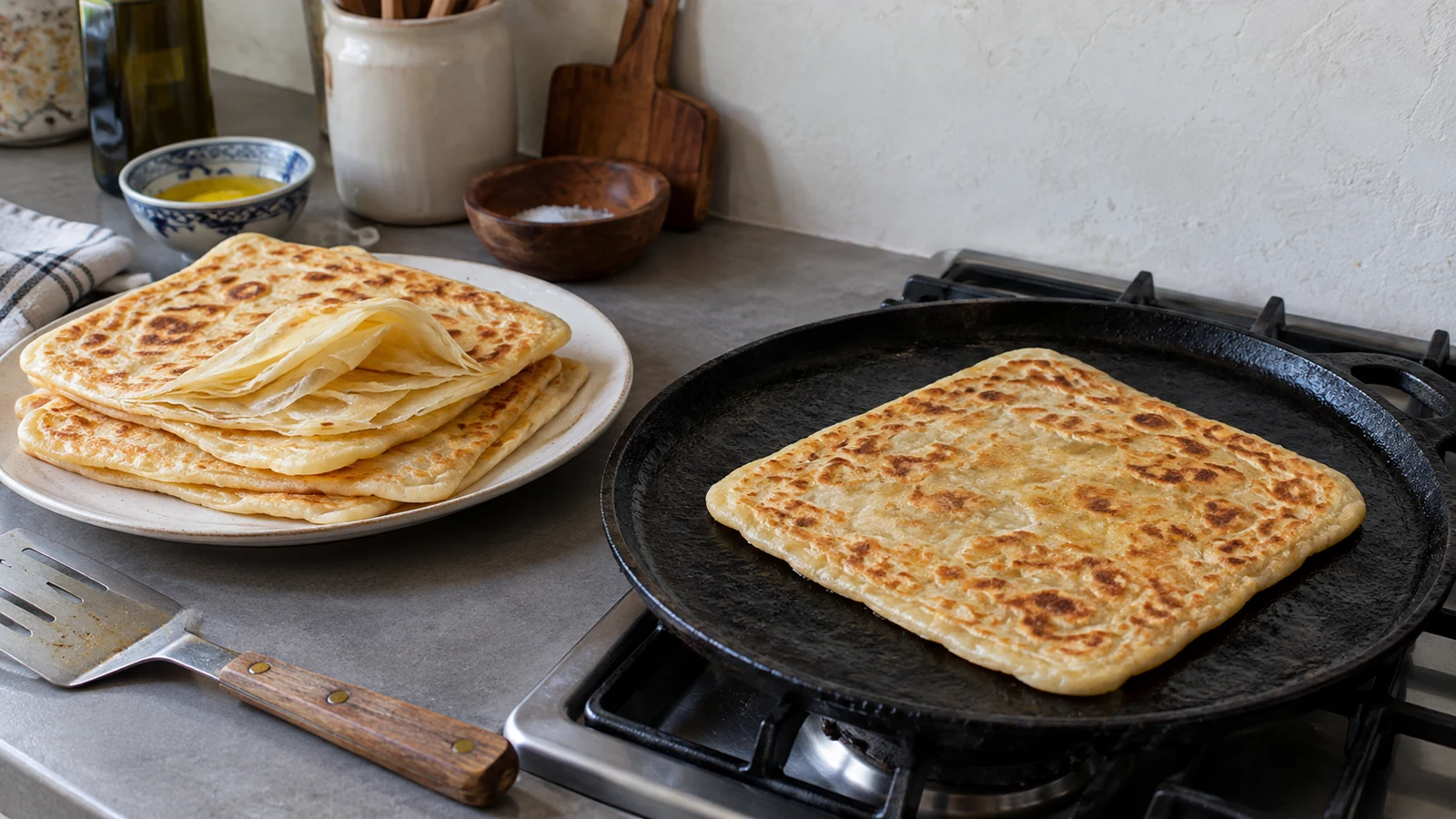
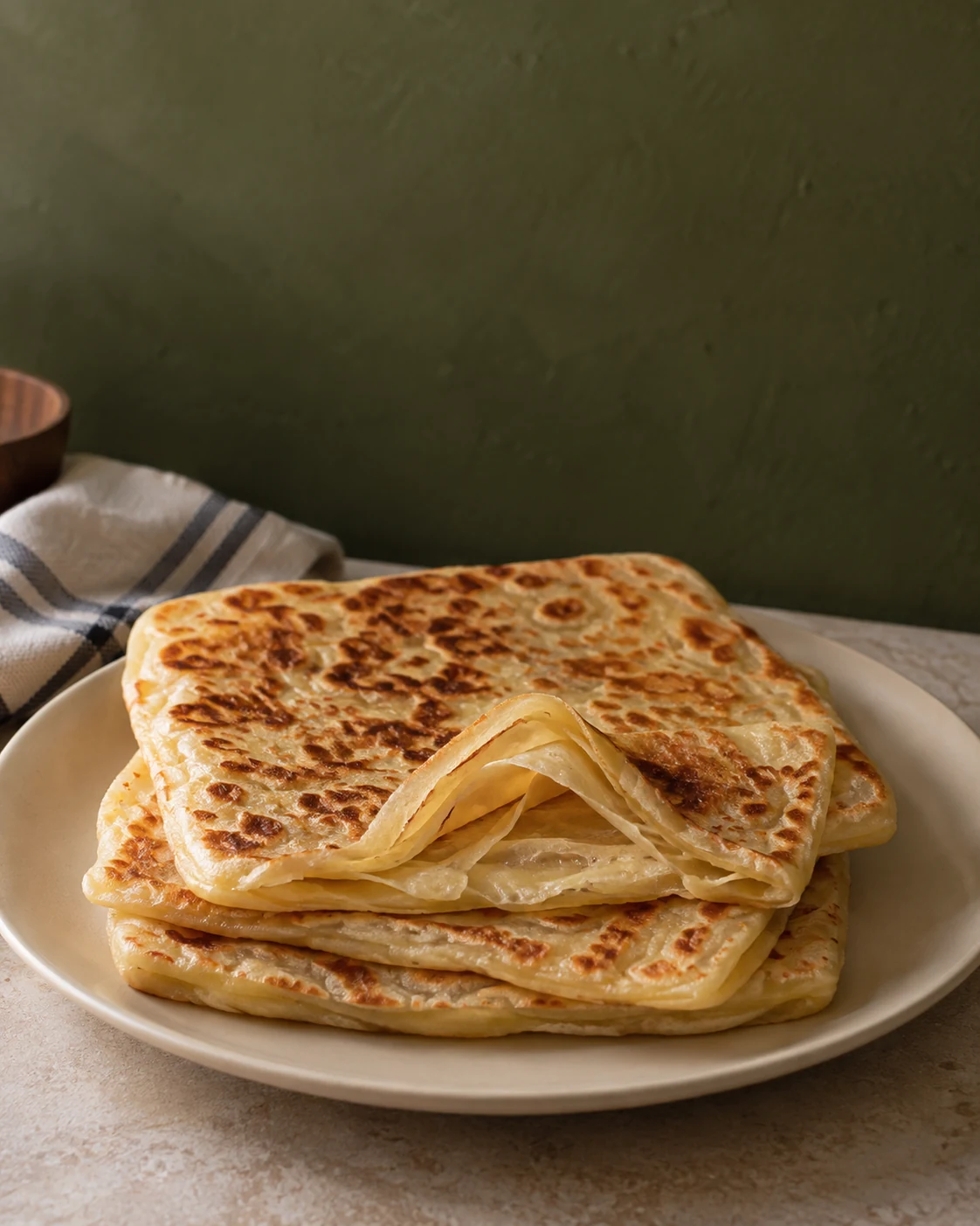
At first glance it is a golden square from the griddle. Pull a corner apart and the reason for its appeal becomes clearer: the dough has been stretched thin, enriched, folded over itself and cooked until the surface blisters while the inside stays soft and layered.
Moroccan cooks commonly call it msemen; rghaif is another name used for this family of laminated flatbreads. It is familiar at breakfast and tea time, and it is also sold by bakeries and street vendors. Home-made versions remain important because families can decide the thickness, flour balance, richness and size. [1]
Its knowledge travels through repeated gestures: stretching without tearing, folding to enclose the layers, and judging the heat by the way the surface colours. Watching an experienced cook makes those decisions visible.
Enter Moroccan food culture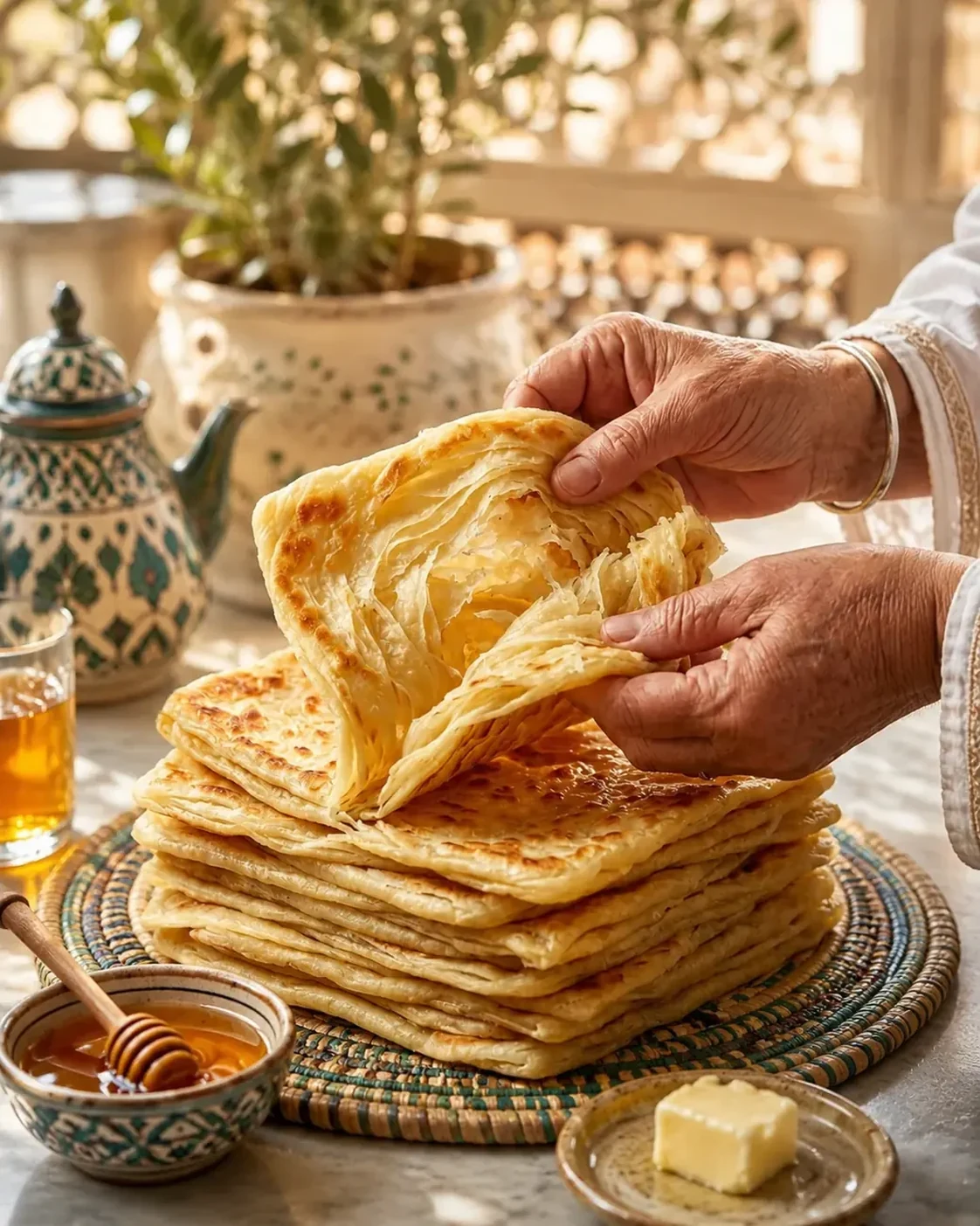
The folding gives msemen its familiar geometry.
Thin dough becomes distinct layers through handling.
Often served warm with sweet or savoury accompaniments.
02 · Roots & living tradition
Layers learned
by hand.
Msemen belongs to the wider layered-bread traditions of the Maghreb.
Msemen belongs to a wider North African tradition of layered griddle breads. Its history is carried in the stretching and folding of the dough, and in the versions that families continue to make.[1]
Its continuity is easy to understand. The ingredients are modest; the technique is portable; and the finished bread can be served immediately, bought ready-made, reheated, or used as part of another meal.
Household knowledge
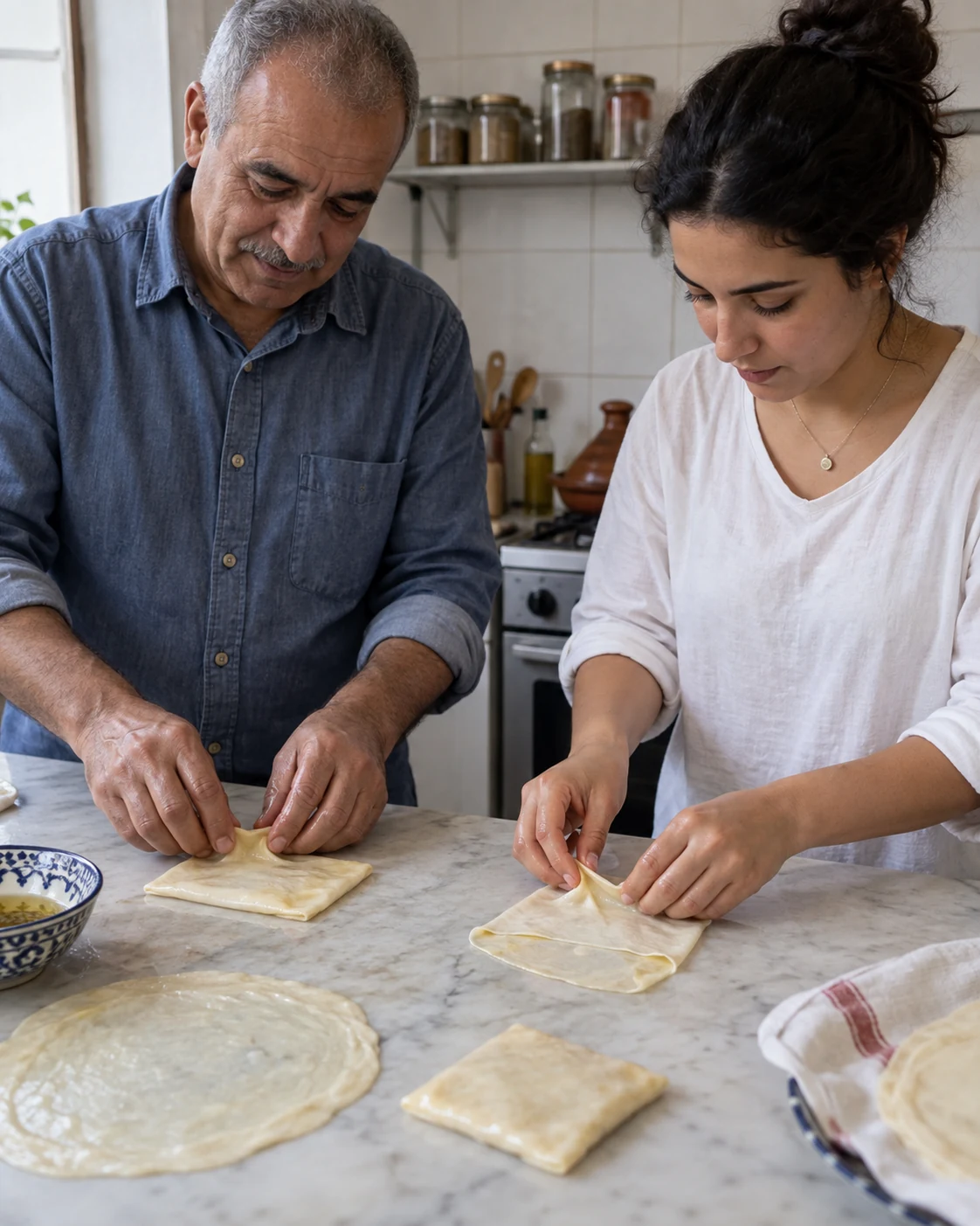
The crucial lessons are tactile: how soft the dough should feel, how far it can stretch and when a folded square has rested enough to flatten again.
Part of a larger family
Meloui uses related laminated dough but is rolled into a coil before flattening, giving a different structure and shape. [2]
Still completely current
Msemen remains everyday food: homemade in batches, available from bakeries and vendors, and at home beside tea, butter, honey, cheese or other accompaniments. [1]
03 · Dough, lamination & the griddle
The layers
are made by hand.
Msemen is not poured from a batter. It begins with an elastic dough that is divided, rested, stretched very thin, enriched between folds and cooked on a hot flat surface.
That sequence explains the texture more accurately than calling it simply a pancake. [1]
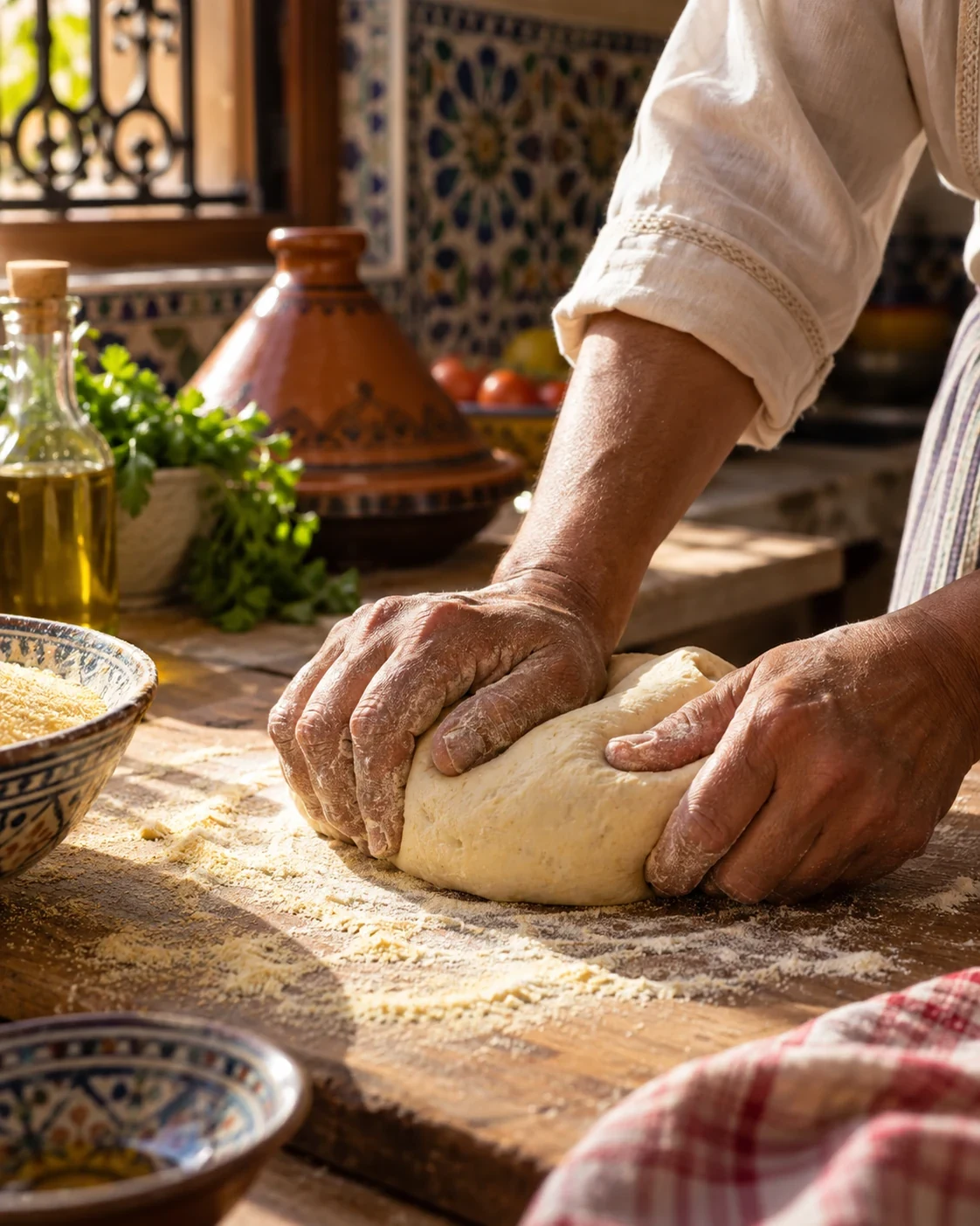
Knead & rest
The dough is worked until smooth and supple, then divided into balls. Resting relaxes the dough so it can stretch without fighting back.
Stretch & laminate
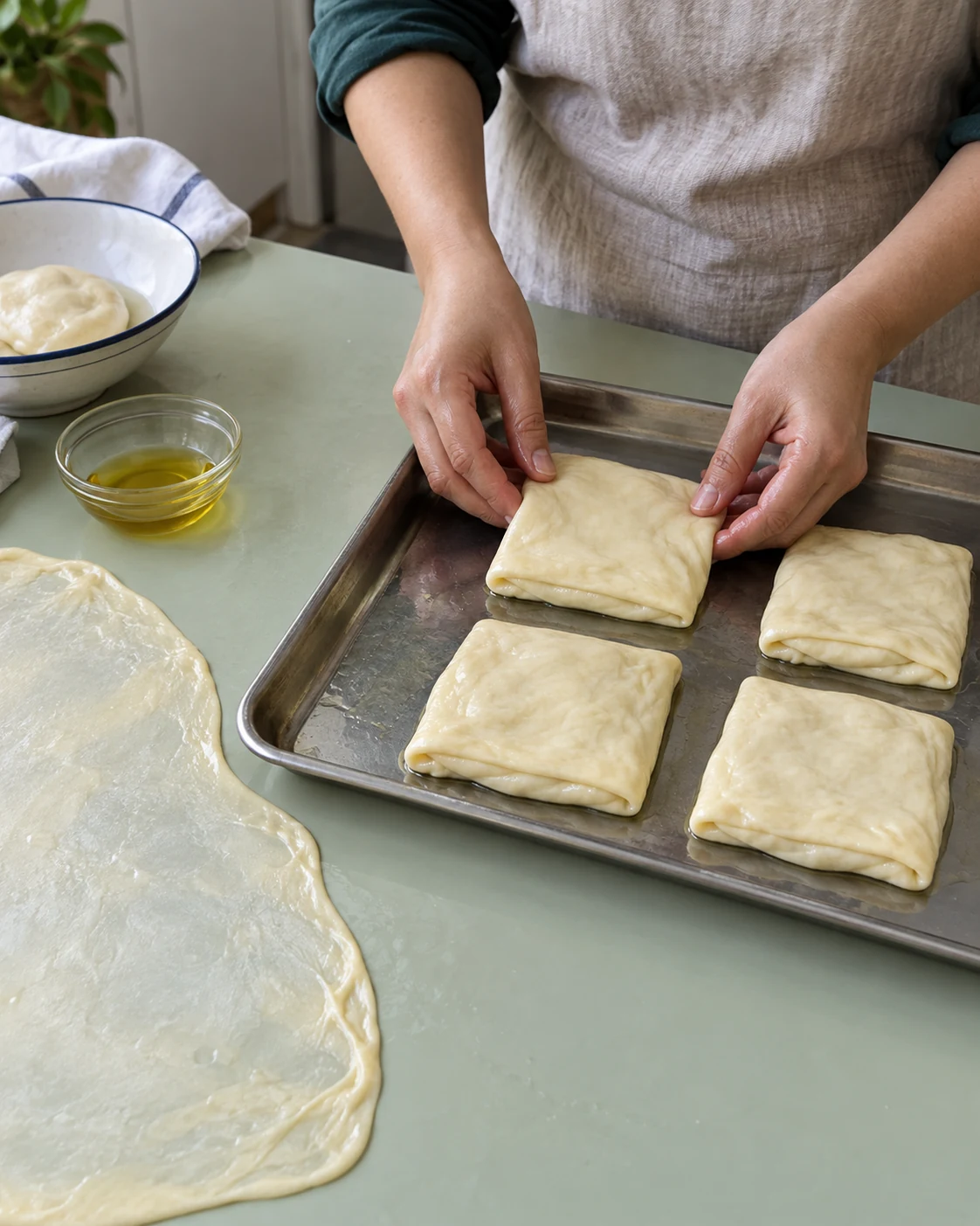
Oiled hands spread each piece almost paper-thin. Butter or oil and a scattering of semolina help separate the layers before the sheet is folded into thirds in two directions, forming a square. [1]
Flatten & griddle
The rested square is pressed wider and cooked on a hot griddle or pan, usually turned more than once so the interior cooks while both faces become golden.
04 · One technique, several expressions
Fold the dough.
Then make it yours.
Msemen is recognisable, but not rigid. Flour ratios, richness, thickness, fillings and serving choices shift from cook to cook.
The cards below describe common directions, not ownership claims by a city or region.
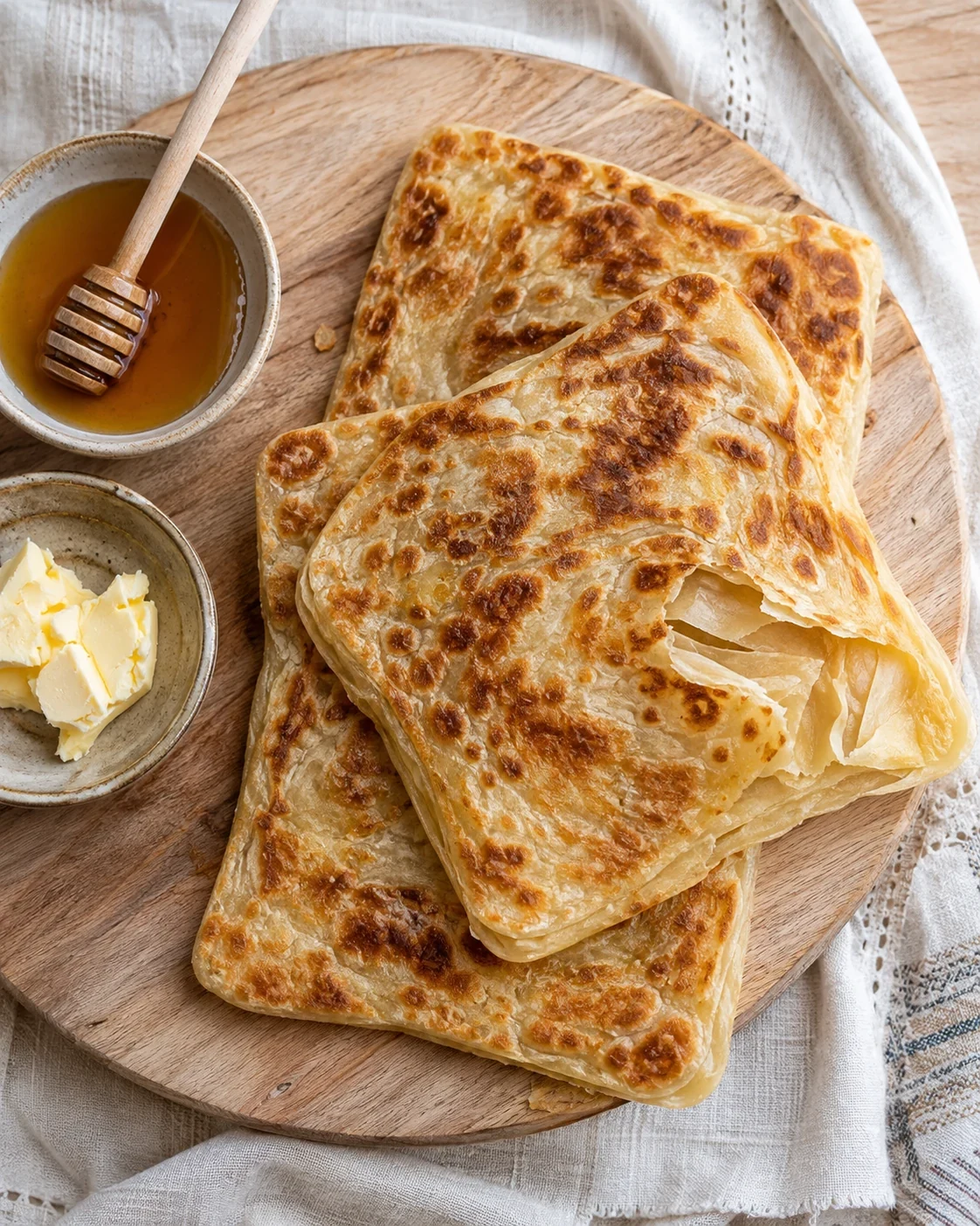
Classic square msemen
Thinly stretched dough folded into a square and griddled until blistered and golden. A good version shows distinct layers without feeling heavy or greasy. [1]
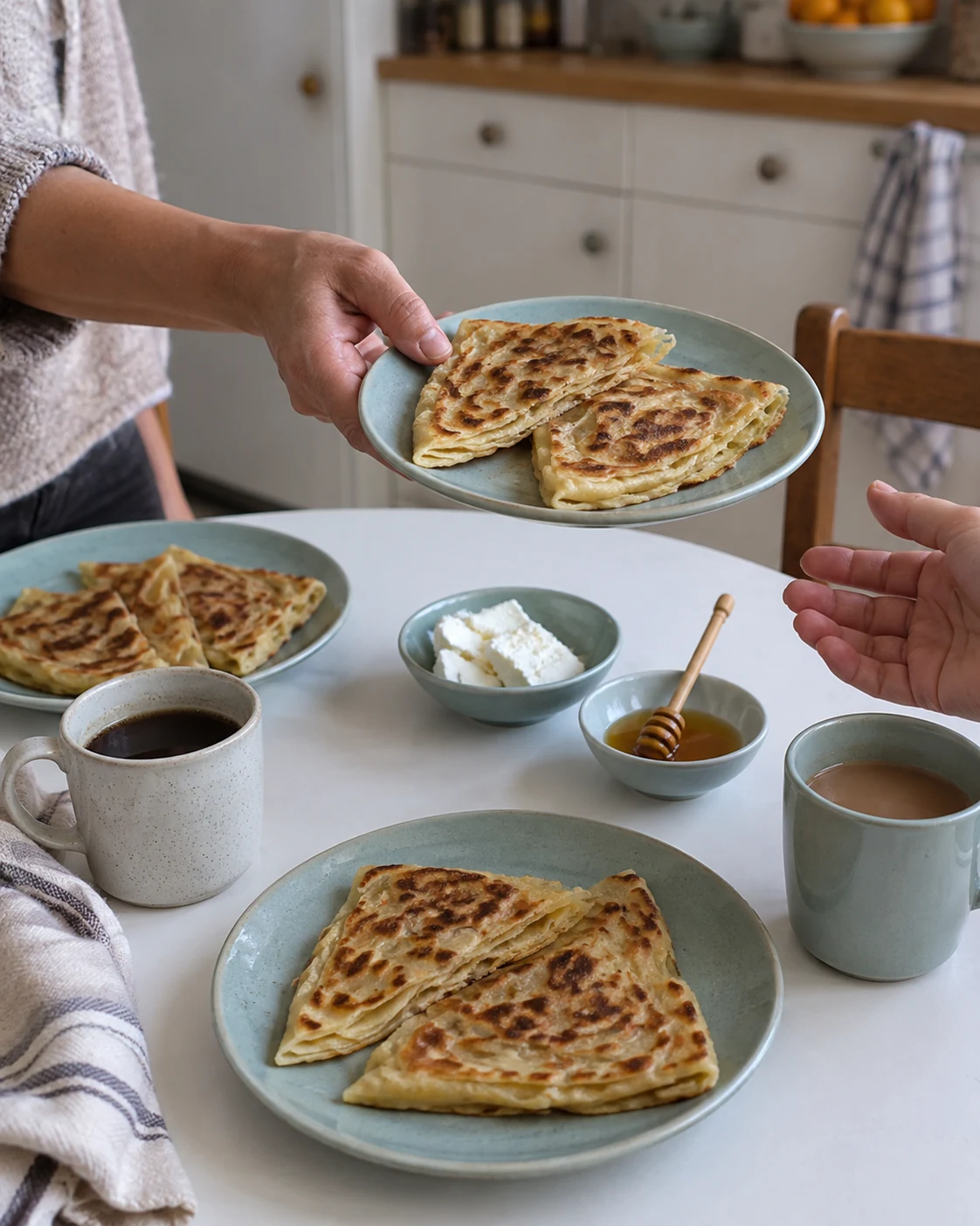
With butter & honey
Warm msemen is often paired with butter and honey; some cooks warm the two together for dipping or coating. Jam or cheese also appears at breakfast and tea. [1]
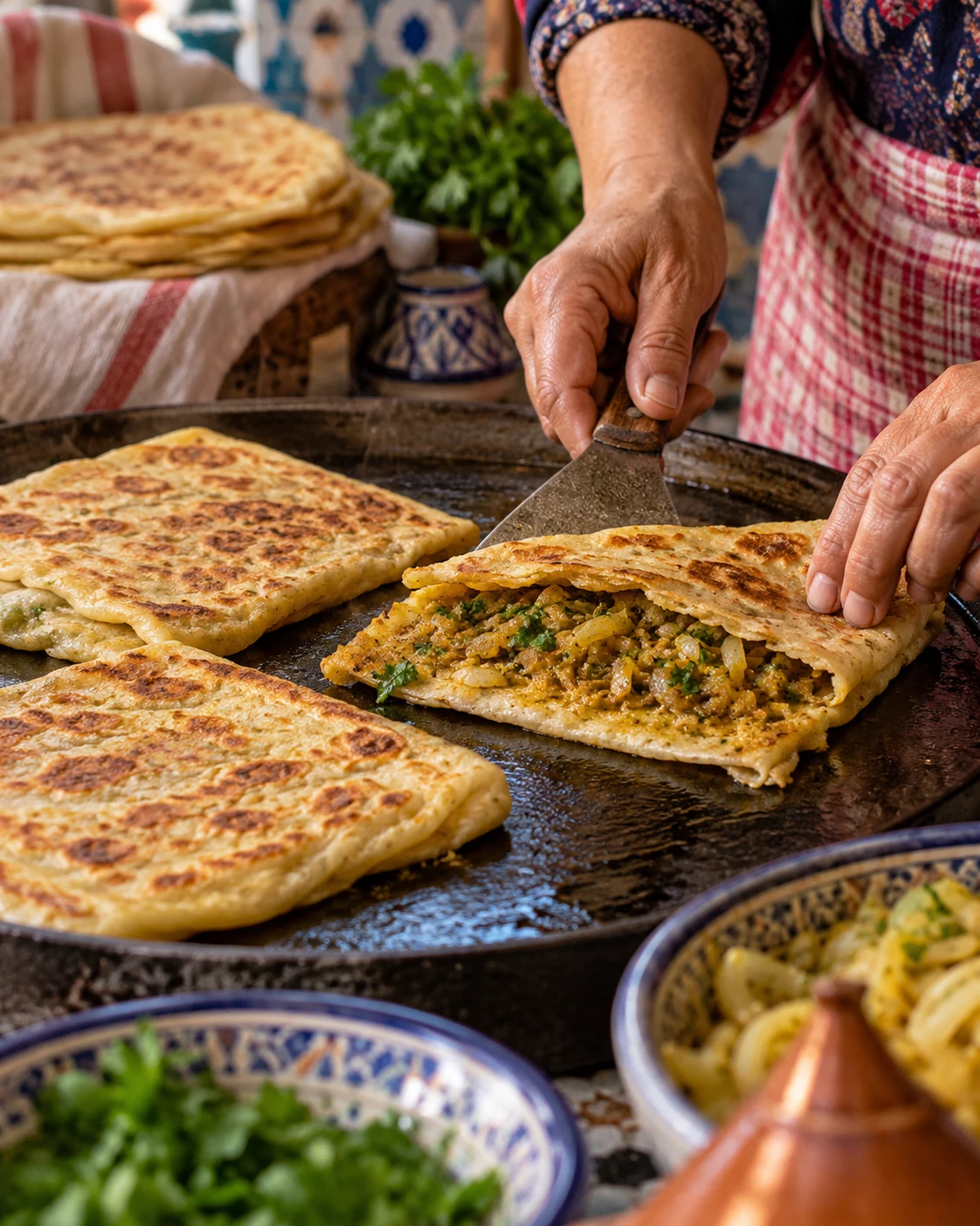
Stuffed msemen
Households and vendors also make savoury filled versions. Onion, herbs, spices and other fillings can be folded inside; there is no single filling that defines the category. [7]
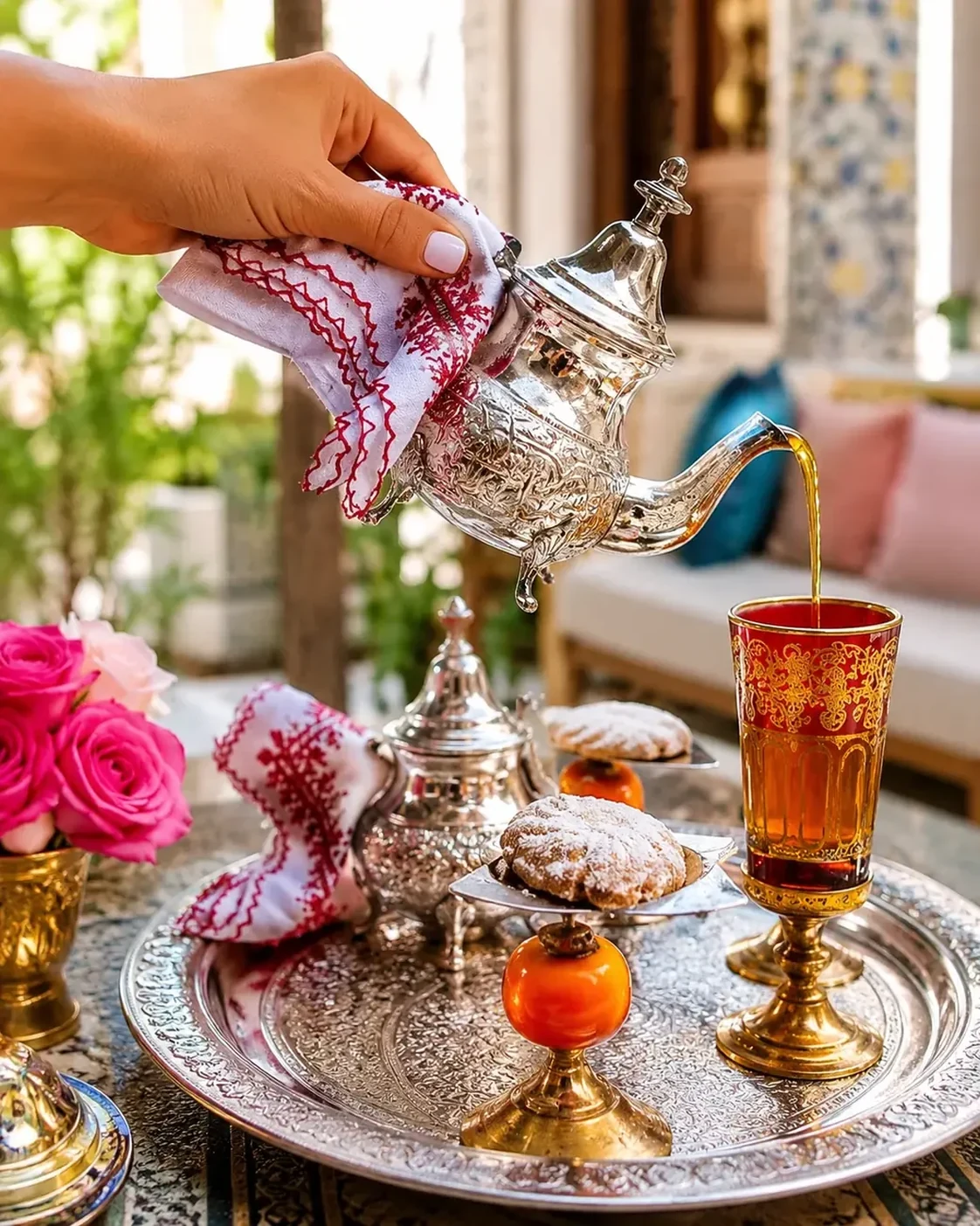
Msemen at tea time
Msemen often appears during a tea break as well as at breakfast. The exact spread varies: the important point is that a warm layered bread can move easily between a quick bite and a table set for company. [1]
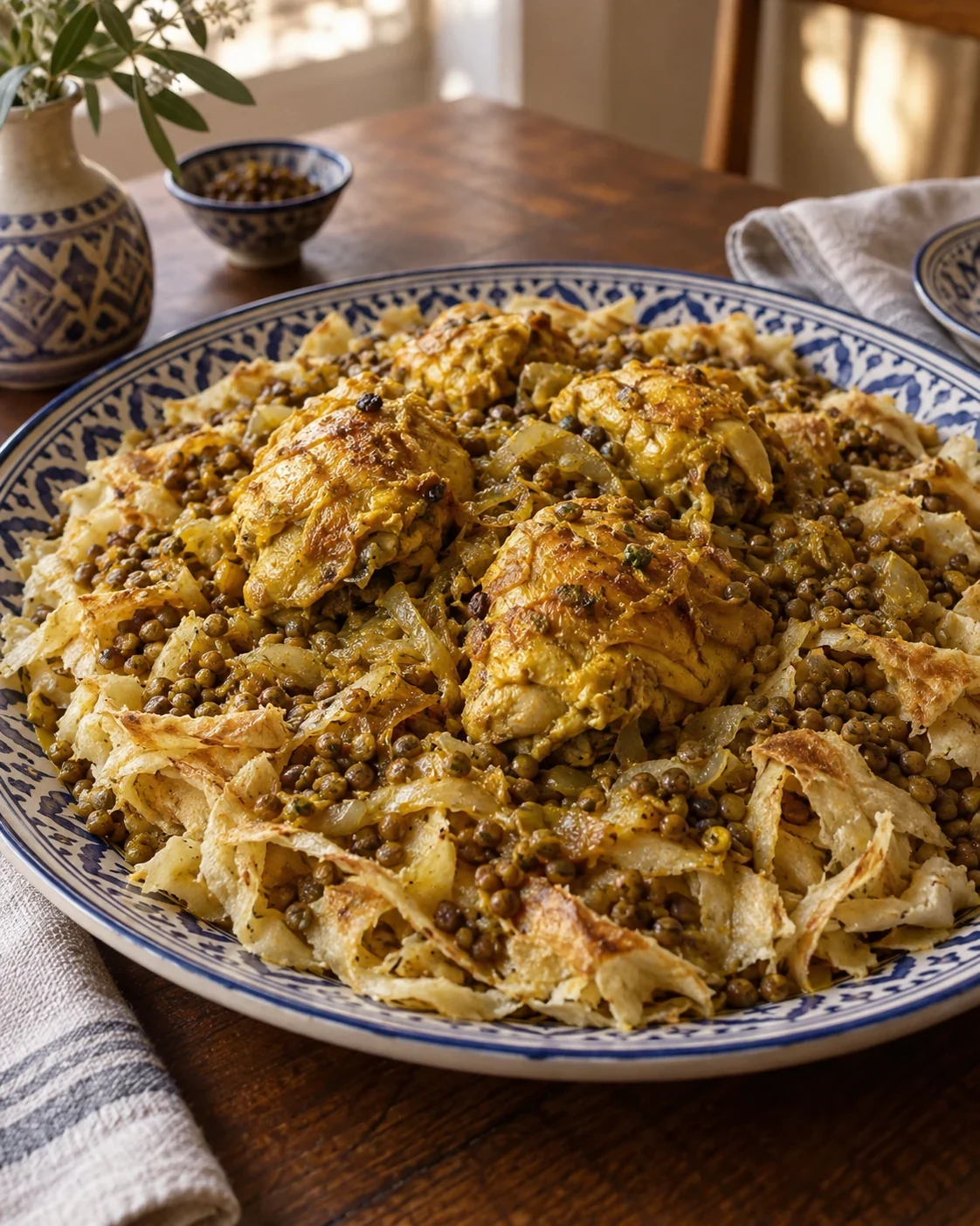
Msemen in rfissa
Msemen can be torn or shredded and used beneath chicken, lentils and broth in rfissa. Trid, meloui, harcha or bread may also fill that role, depending on the version. [3]
Related is not identical.
Baghrir is a batter pancake with a porous surface. Harcha is a semolina griddle bread. Meloui is a rolled laminated relative. Their place beside msemen at breakfast does not make them the same food. [2]
Family versions matter.
A thinner square, a little more semolina, a softer interior or a darker griddle mark may reflect the cook’s preference rather than an error. Technique creates a family resemblance; households create the details.
05 · The ingredient logic
Few ingredients.
Plenty of technique.
Msemen’s character does not come from a long spice list. It comes from flour choice, elasticity, fat between the folds and careful heat.
That is why two short ingredient lists can still produce noticeably different breads. [1]
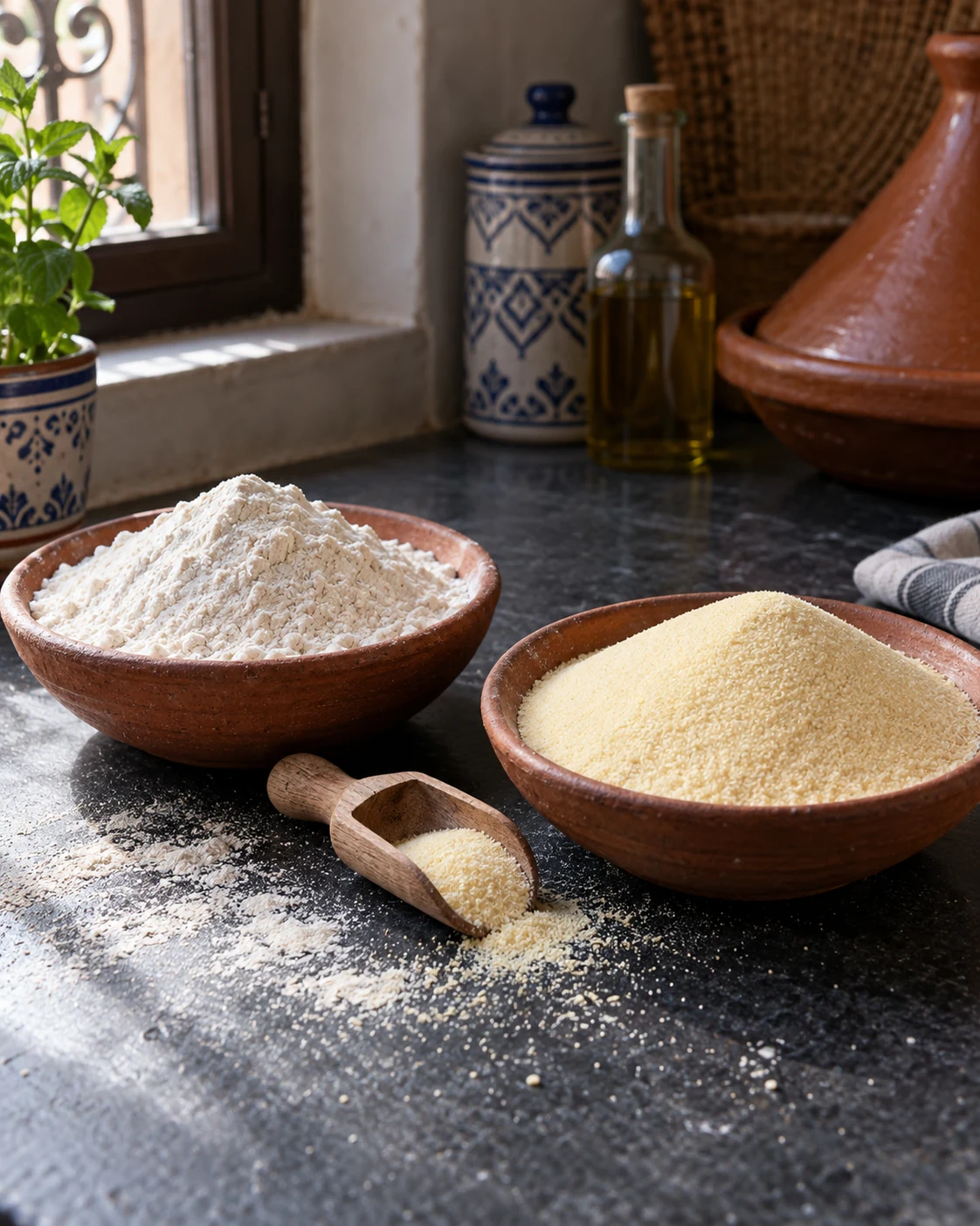
Fine semolina
Texture between the folds.
Semolina can be part of the dough and can also be scattered during folding. It helps create separation and a lightly grainy bite.
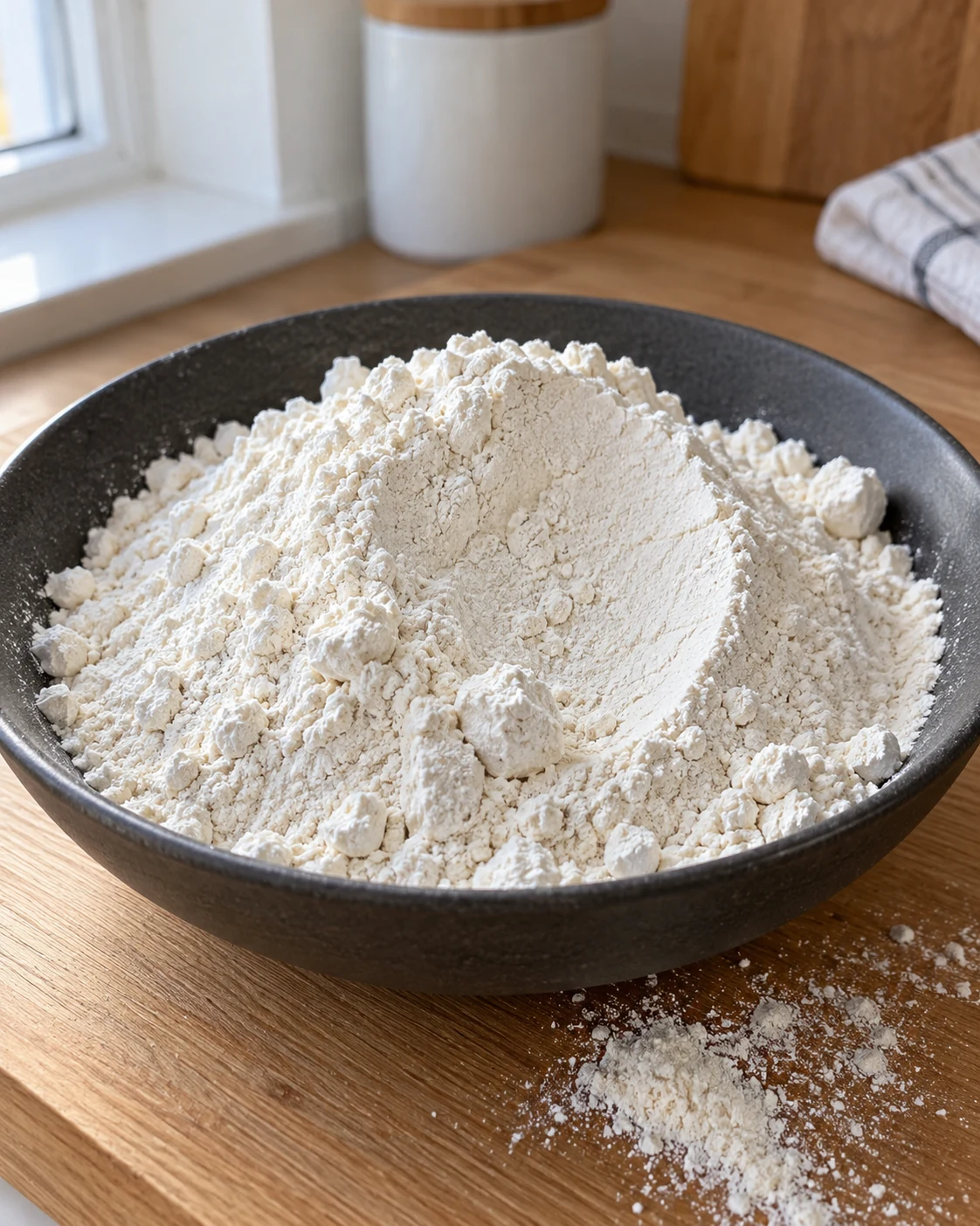
Wheat flour
The elastic structure.
Wheat flour provides the gluten that lets the dough stretch thin. Different flour balances change tenderness, chew and crispness.
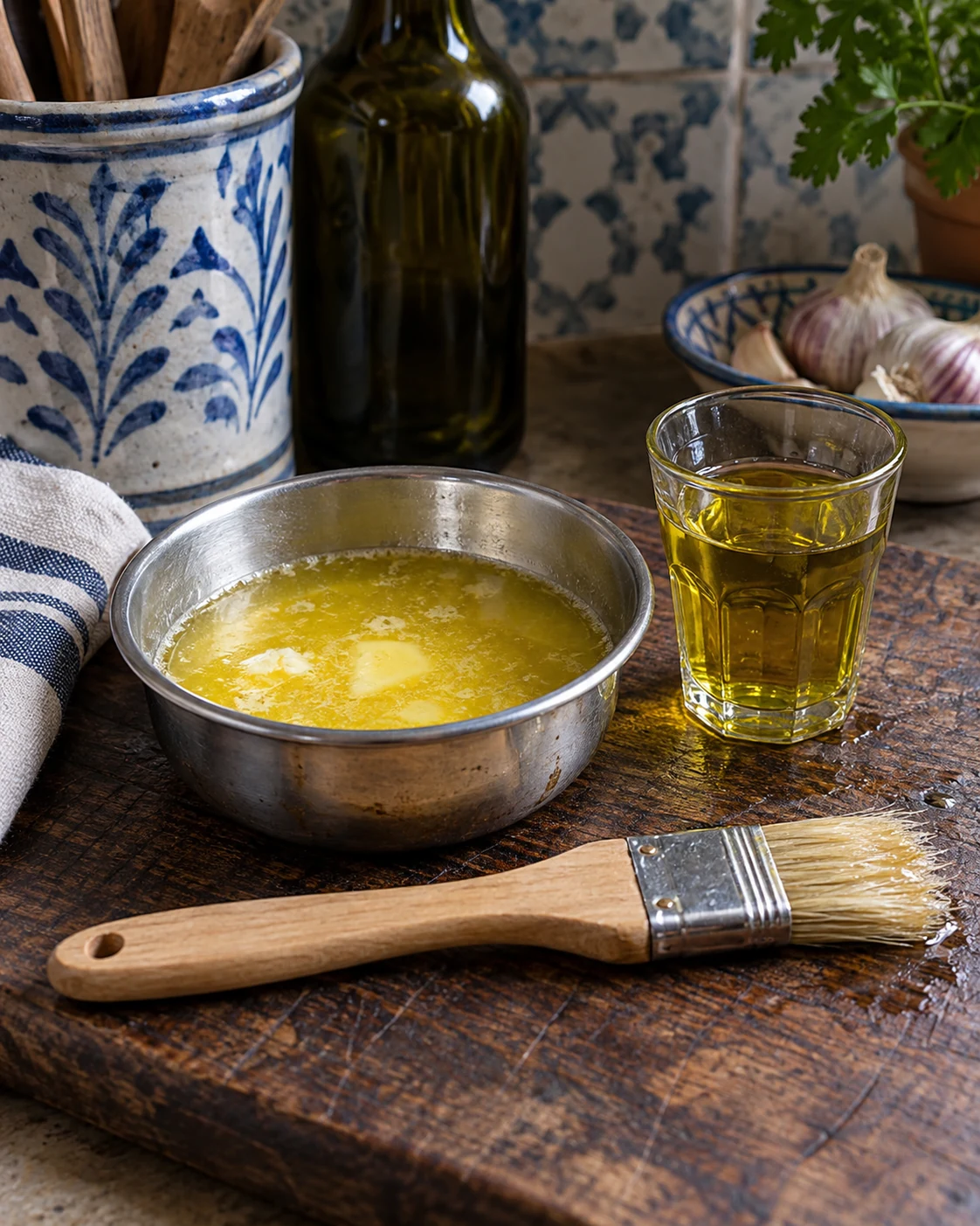
Oil & butter
Slip, richness, lamination.
Fat keeps hands and work surfaces from sticking and helps keep folded layers distinct. The exact balance varies by cook.
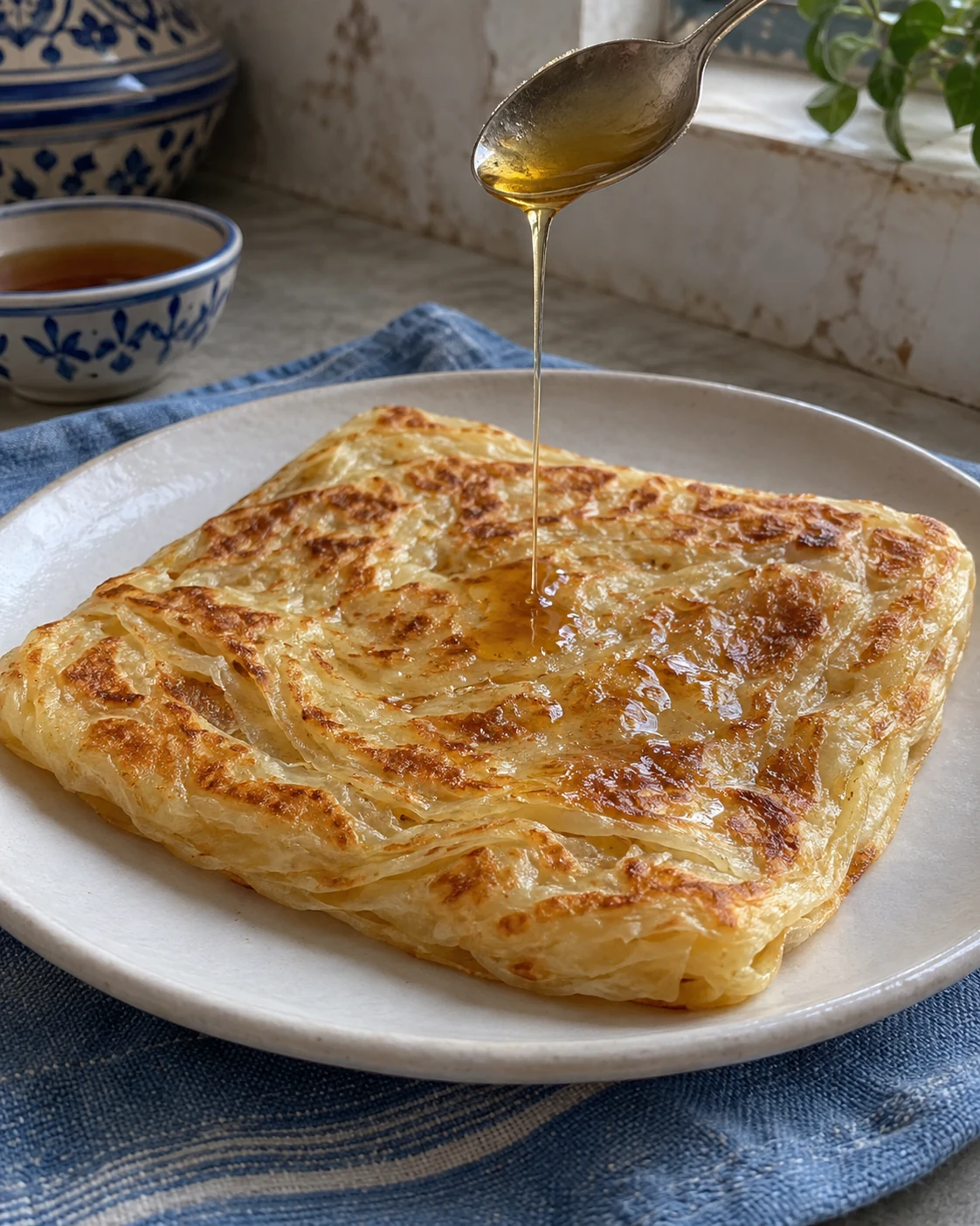
Honey
A classic finish, not the dough itself.
Honey belongs to one of msemen’s most familiar serving styles, especially with butter. It is an accompaniment rather than a requirement for every msemen.
Explore the four elements
WATER · SALT · REST
The quiet
variables.
The ingredient list is short, but the dough is sensitive to handling.
Water determines how soft and extensible the dough becomes. Salt affects flavour and dough behaviour. Resting gives the gluten time to relax before the next stretch. A small amount of yeast may be used, while other versions are unleavened or use another light leavening approach. [1]
Good msemen is less about adding more and more about understanding what the dough is telling you.
Elasticity comes before thinness.
If the dough has not been kneaded and rested well enough, stretching becomes a fight and tearing becomes more likely.
Fat separates the layers.
Oil and butter are used strategically during shaping. The goal is lamination, not a greasy finished bread.
Heat finishes the structure.
A pan that is too fierce can colour the outside before the folded centre cooks; a pan that is too cool can dry the bread before it browns.

06 · Home, bakery & everyday rhythm
Not one city.
Many kitchens.
Msemen is made across Morocco, with differences in flour, thickness, filling and serving habits.
Its setting can be a home kitchen, a breakfast table, a neighborhood bakery or a street counter. Taste of Maroc notes that msemen is readily bought but also frequently made at home so families can control texture, size and richness. [1]
The Moroccan National Tourist Office includes msemen in a typical morning breakfast with butter, honey and orange juice, while tea remains a strong language of hospitality and pause. [5] [6]
At home
Batch-making lets the cook shape the thickness and finish to family preference.
Explore Moroccan Food Culture ↗At breakfast
Warm msemen can sit beside tea, coffee, butter, honey, jam, cheese, olives or other morning foods.
Discover Taste Morocco ↗At the bakery or street counter
Ready-made msemen makes the food part of everyday urban life as well as the home kitchen.
Continue through Taste ↗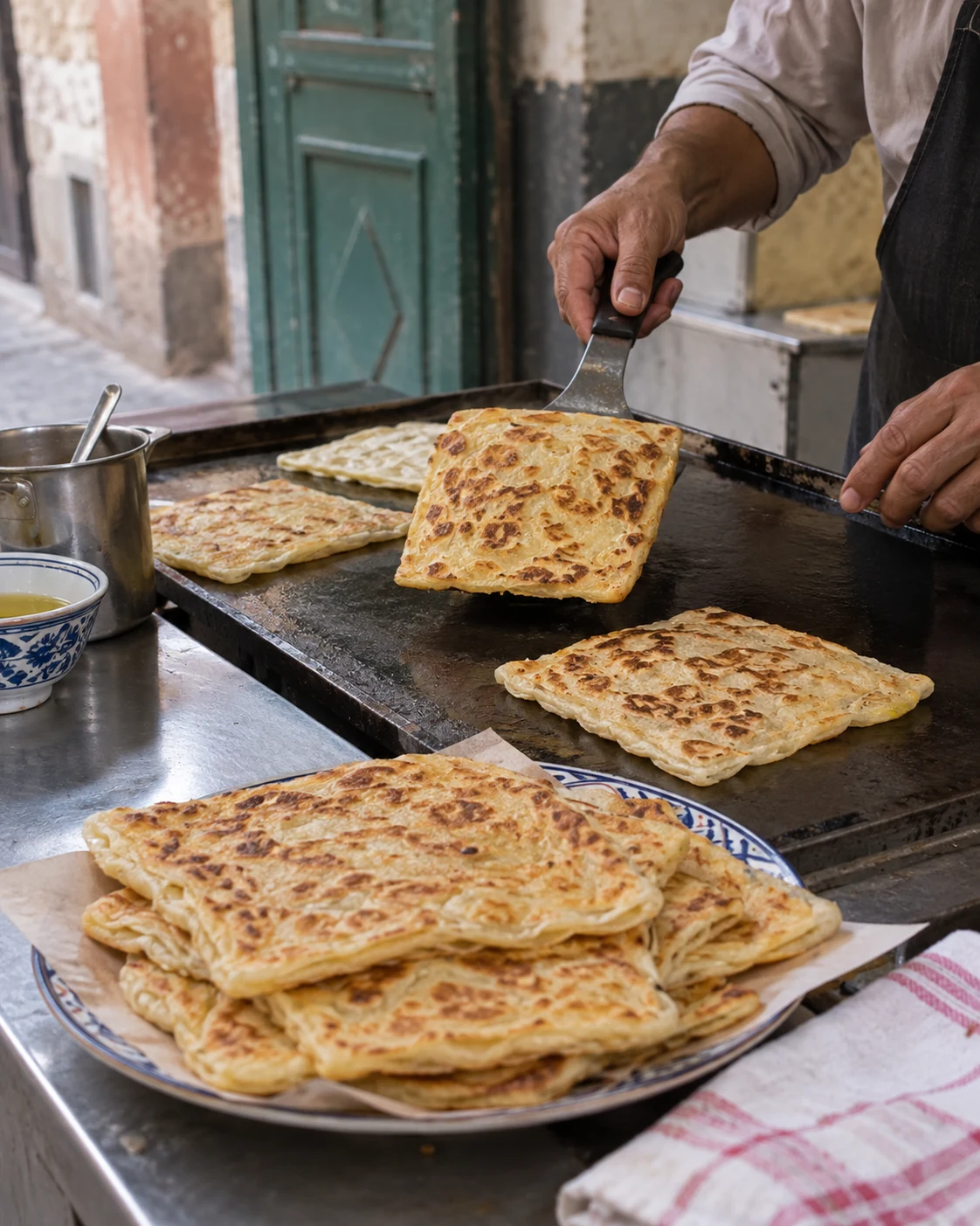
07 · Breakfast, tea & sharing
Serve it warm.
Let people tear in.
A stack of msemen invites hands before it invites cutlery.
Fresh from the griddle, the surface is crispest and the layers easiest to appreciate. Msemen can be folded, torn into pieces or dipped into a warm butter-and-honey mixture. It also works with more savoury accompaniments.
The table around it does not need to be fixed. Baghrir, harcha, amlou, olives, cheese, eggs, juice, coffee and tea can all appear in different combinations. The exact spread belongs to the household, the budget, the day and the occasion.
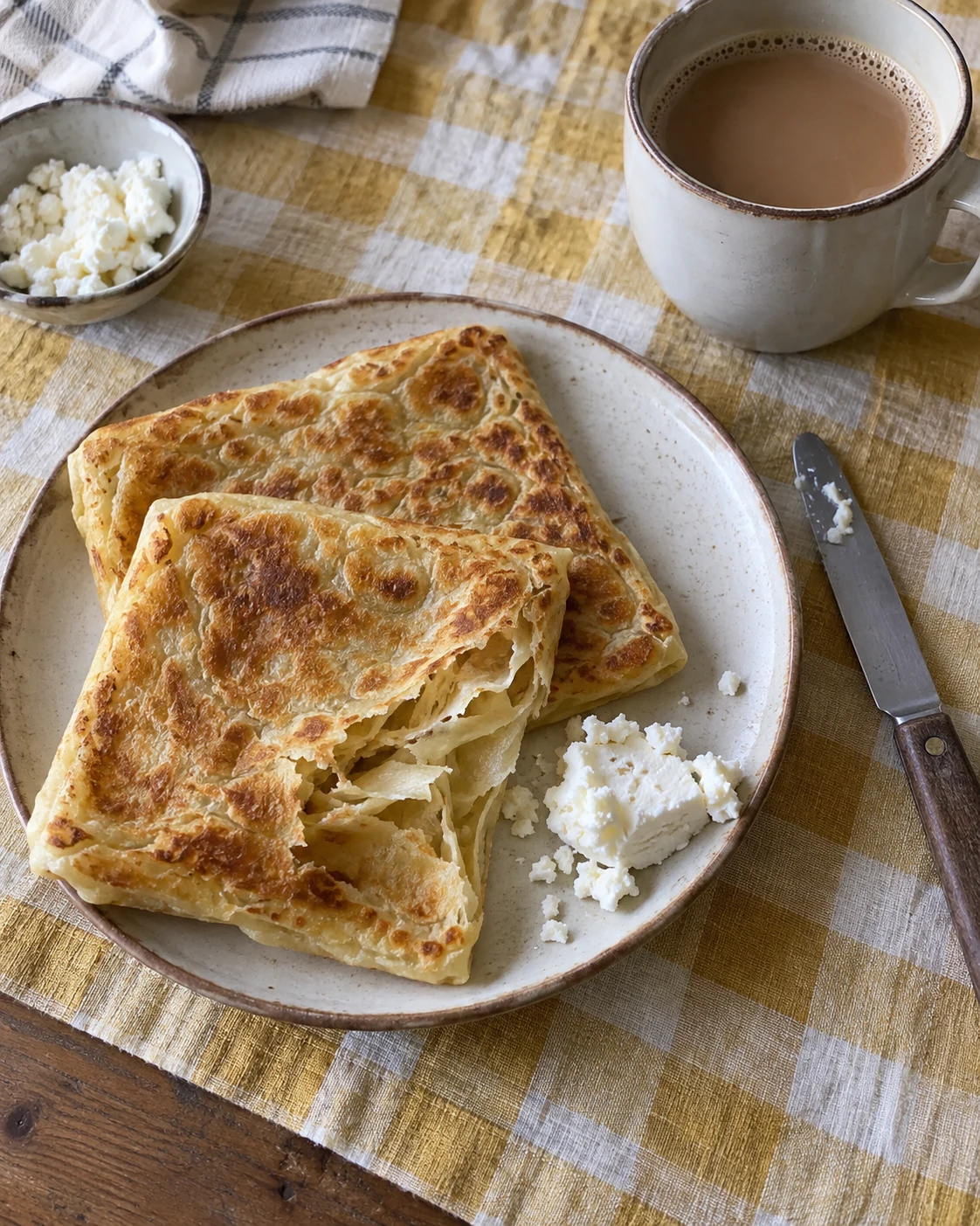
Butter & honey.
Butter and honey are one of msemen’s most recognisable accompaniments. Some cooks serve them separately; others warm them together and coat or dip the bread. [1]
The point is contrast: crisp browned surfaces, soft inner layers and a warm sweetness that settles into the folds.
Msemen rarely has to stand alone.
The National Tourist Office presents it as part of a breakfast with butter, honey and orange juice; in real homes the rest of the table varies widely. [5]
That flexibility is part of the food’s usefulness: one bread can move between a quick weekday breakfast and a fuller spread for guests or a special morning.
Tea changes the pace.
Not the identity of the bread.
Mint tea is deeply connected with Moroccan hospitality and social time. Msemen often appears beside it, but neither food nor drink needs the other to be authentic. [6]
Everyday, festive, reusable.
Msemen can be made ahead, reheated and served when people arrive. It also appears among more elaborate breakfast tables around celebrations; Taste of Maroc lists layered crepes such as msemen among foods that may appear at Eid al-Adha breakfast. [4]
08 · Handwork & kitchen knowledge
No mould.
No shortcut to touch.
The square is built through movement.
Msemen does not depend on a decorative vessel. A clean flat work surface, oil, a tray and a griddle can be enough. The refinement is in the sequence: smooth the ball, open the sheet, enrich it, fold cleanly, let it relax, flatten again and cook with attention.
This is the kind of technique that recipes struggle to communicate fully. Words can tell you that the dough should be soft and elastic; practiced hands learn what that feels like. That knowledge passes naturally when people work side by side.
The wider table brings craft with it anyway: woven baskets, wooden boards, painted ceramics, tea trays and glasses. Msemen’s own craft, however, is first a craft of dough.
Explore food, craft & the table ↗09 · A closer look
Good questions.
Clear answers.
Msemen makes more sense once the technique is separated from the serving style.
Is msemen a pancake or a bread?
English-language recipes often call it a pancake or crepe, but its structure is closer to a laminated flatbread: it starts from a kneaded dough, not a pourable batter. The label is useful for comparison, not a perfect technical definition. [1]
Is msemen the same as baghrir?
No. Baghrir is made from a batter and is known for its many small holes. Msemen is a kneaded, stretched and folded dough cooked into layered squares. [1]
Is msemen the same as meloui?
No, though they are close relatives. Meloui uses related laminated dough but is rolled into a coil before flattening and cooking. [2]
Is msemen always sweet?
No. Plain msemen can be served with sweet accompaniments such as honey or jam, with cheese, or made in savoury filled versions. Sweetness is a serving choice, not the definition of the bread. [1]
Does msemen always contain yeast?
No. Documented home recipes include unleavened or only lightly leavened versions; some cooks use a small amount of yeast or another light leavener. [1]
Can msemen be used for rfissa?
Yes. Shredded msemen is one possible base for rfissa, alongside trid pastry and other breads depending on the version. [3]
 EXOTIC MOROCCOTASTE · THE GUIDE COLLECTIONMsemenIngredients, technique
and the Moroccan table
From the story to your kitchen
Keep the flavour.
Go a little deeper.
Thinly stretched dough folded into supple, flaky layers.
Explore the Exotic Morocco guide collection for a closer look at ingredients, kitchen knowledge and the culture around the table.
- Understand the ingredients and their roles
- Recognise the techniques and textures that matter
- Bring context and confidence to the way you cook and serve
Continue tasting Morocco
Follow the
table outward.
Another dish, another technique, another way into the Moroccan kitchen.
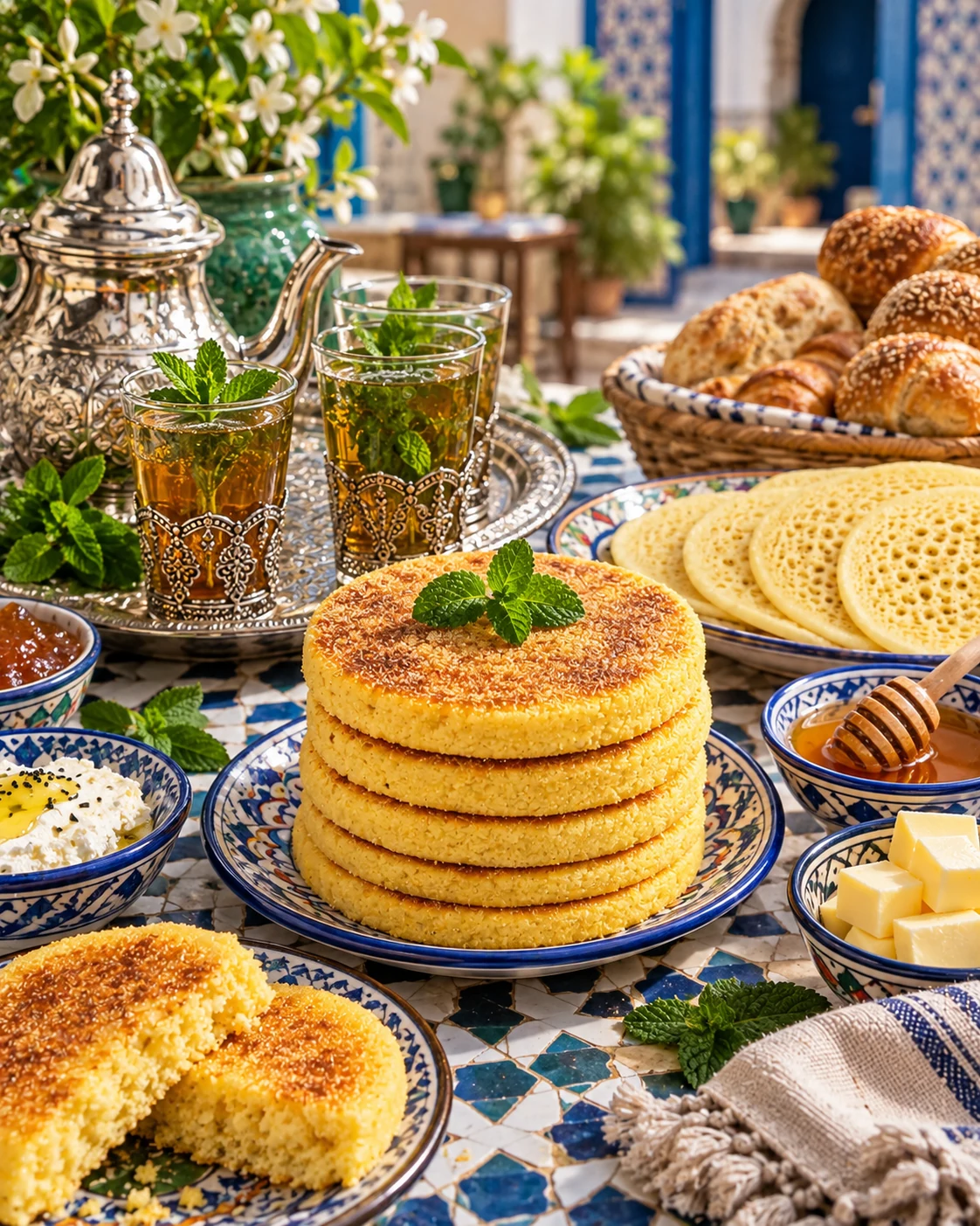
Harcha
Semolina, a hot pan and a tender, crumbly round.
Explore the story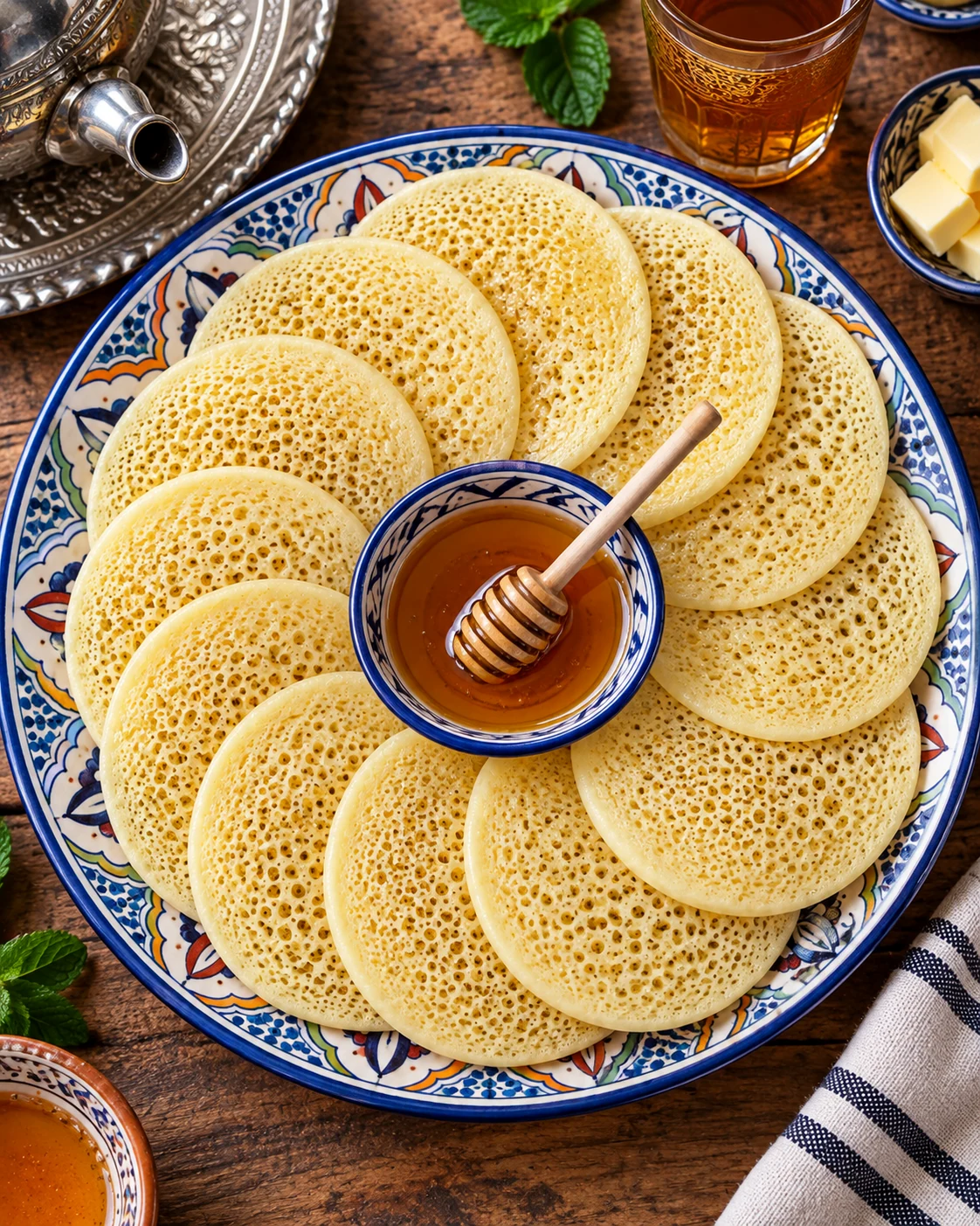
Baghrir
Light semolina pancakes with a surface of tiny holes.
Explore the story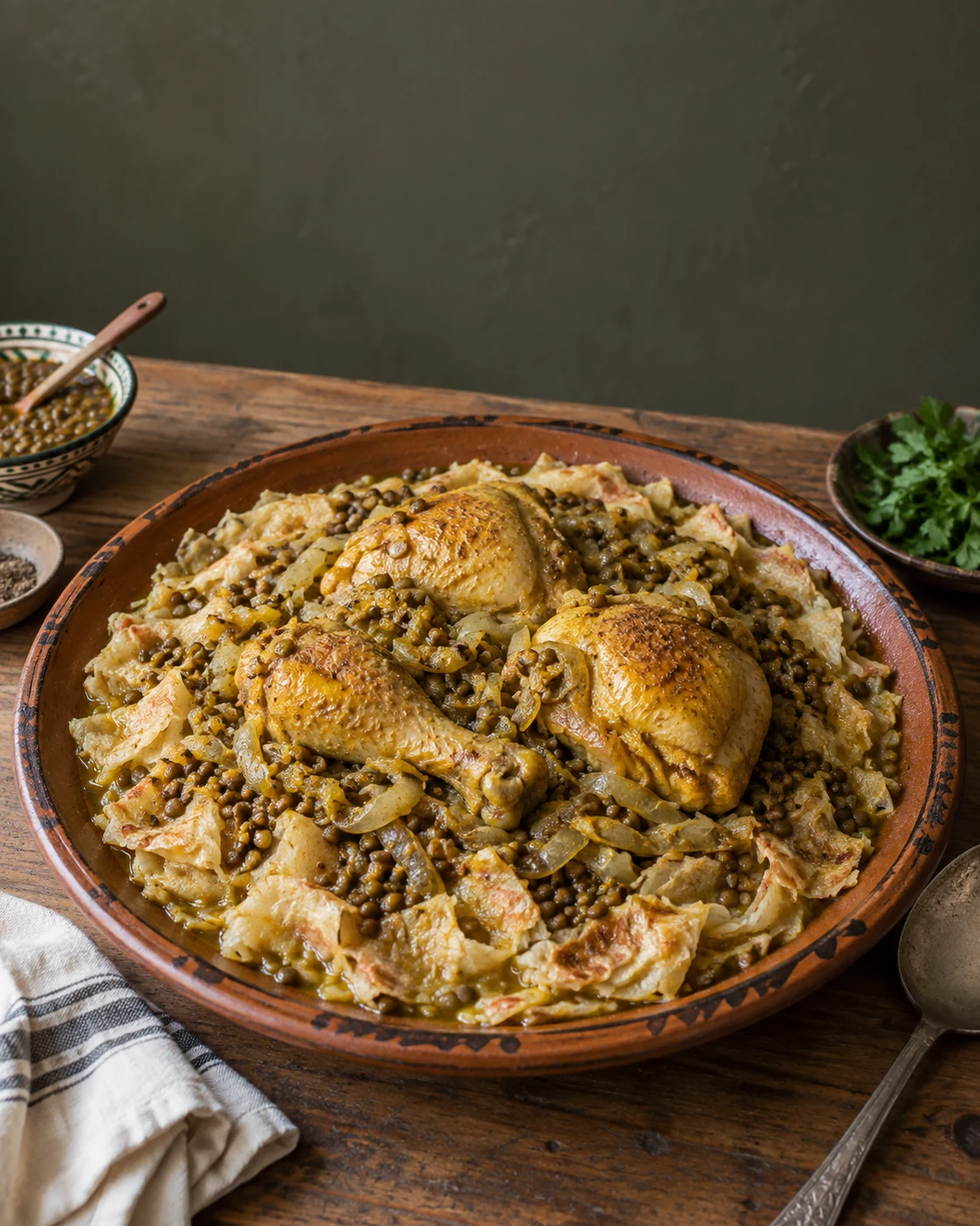
Rfissa
Chicken, lentils and fragrant broth finding their way through torn bread.
Explore the story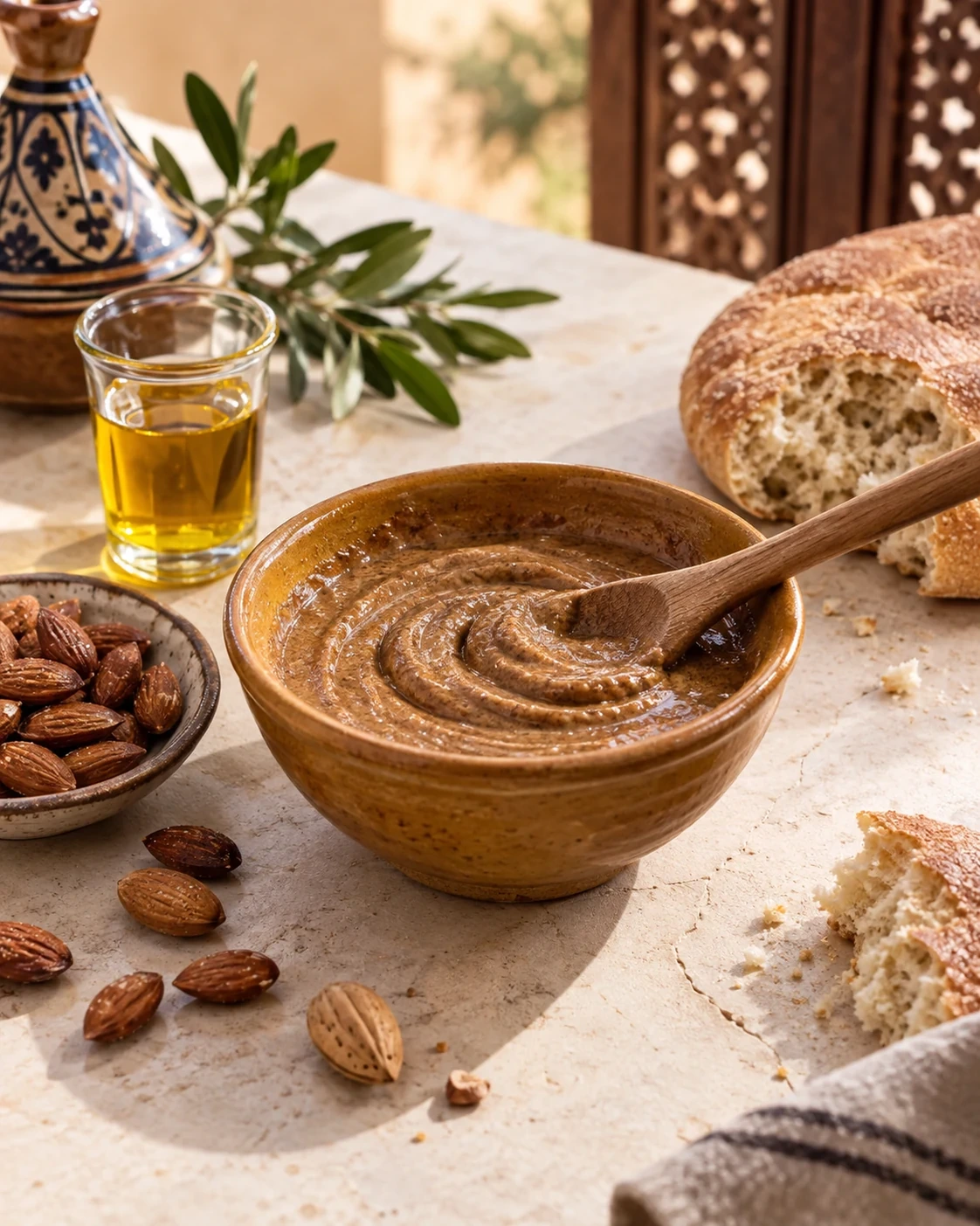
Amlou
Roasted almonds, culinary argan oil and honey from the southwest.
Explore the story
Moroccan Mint Tea
Green tea, fresh herbs and the time given to a guest.
Explore the story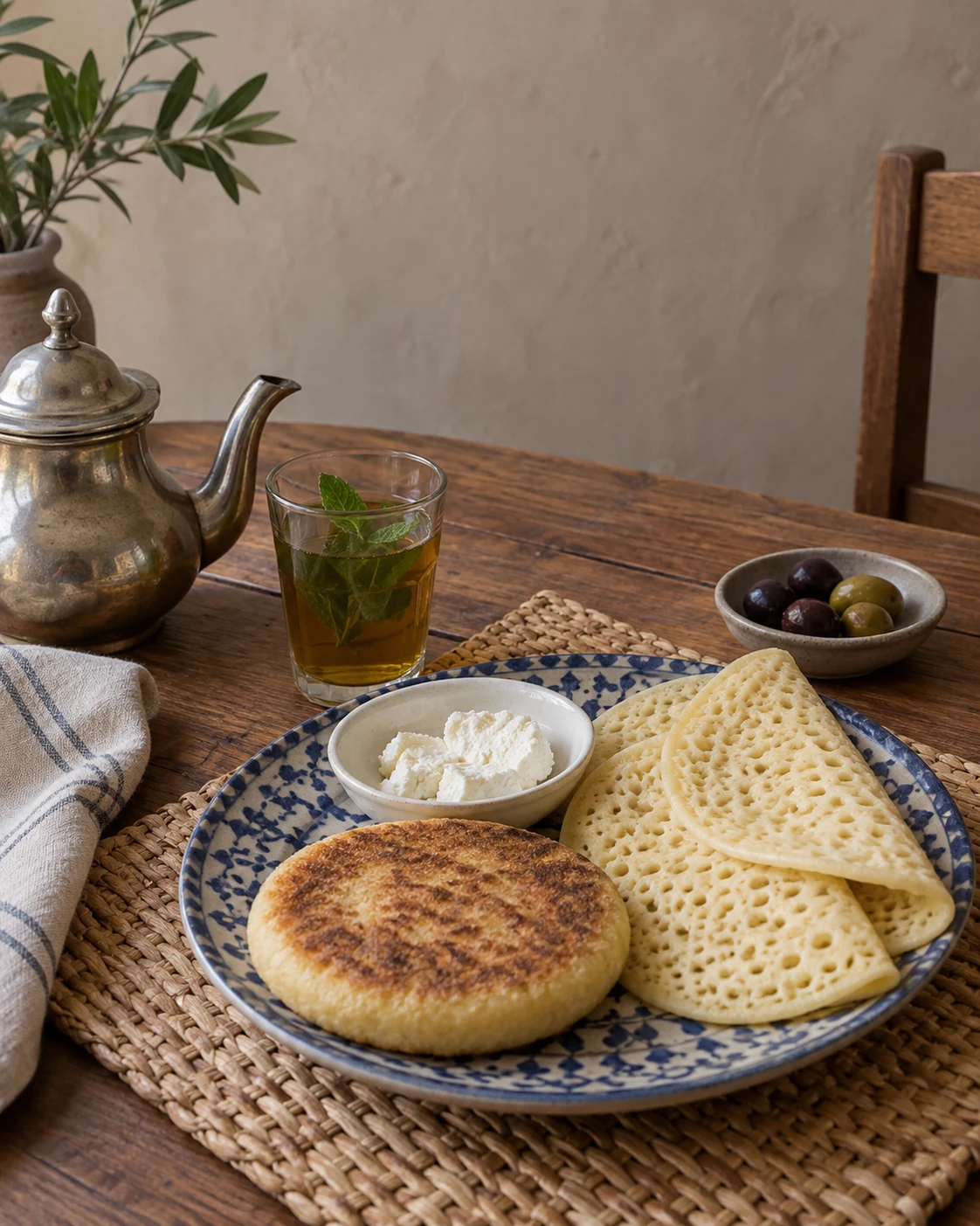
Moroccan Breakfast
Breads, spreads and the first table of the day.
Explore the storySources & editorial notes
Photography combines existing Exotic Morocco assets and generated editorial illustrations. These images do not document a named person, household or historical event.
- Christine Benlafquih · Taste of Maroc · Basic Msemen Recipe — names, laminated square form, breakfast/tea use, bakery and street availability, dough, folding, griddle cooking and serving.
- Christine Benlafquih · Taste of Maroc · Moroccan Meloui — rolled laminated relative of msemen and breakfast/tea context.
- Christine Benlafquih · Taste of Maroc · Moroccan Chicken Rfissa — shredded msemen/trid as a base for rfissa and related alternatives.
- Taste of Maroc · Eid al-Adha in Morocco — msemen among foods that may appear at an elaborate Eid breakfast.
- Moroccan National Tourist Office · Gastronomy immersion — a 9 a.m. breakfast example with msemen, butter, honey and orange juice.
- Moroccan National Tourist Office · Food & Drinks — bread as a staple and mint tea as a hospitality tradition.
- Cooking with Alia · Msemmen with Ground Beef — documented savoury filled msemen; see also Msemmen with Khlii and black-olive variations in the same collection.
EXOTIC MOROCCO Places. People. The pleasure of knowing more.Back to top ↑