
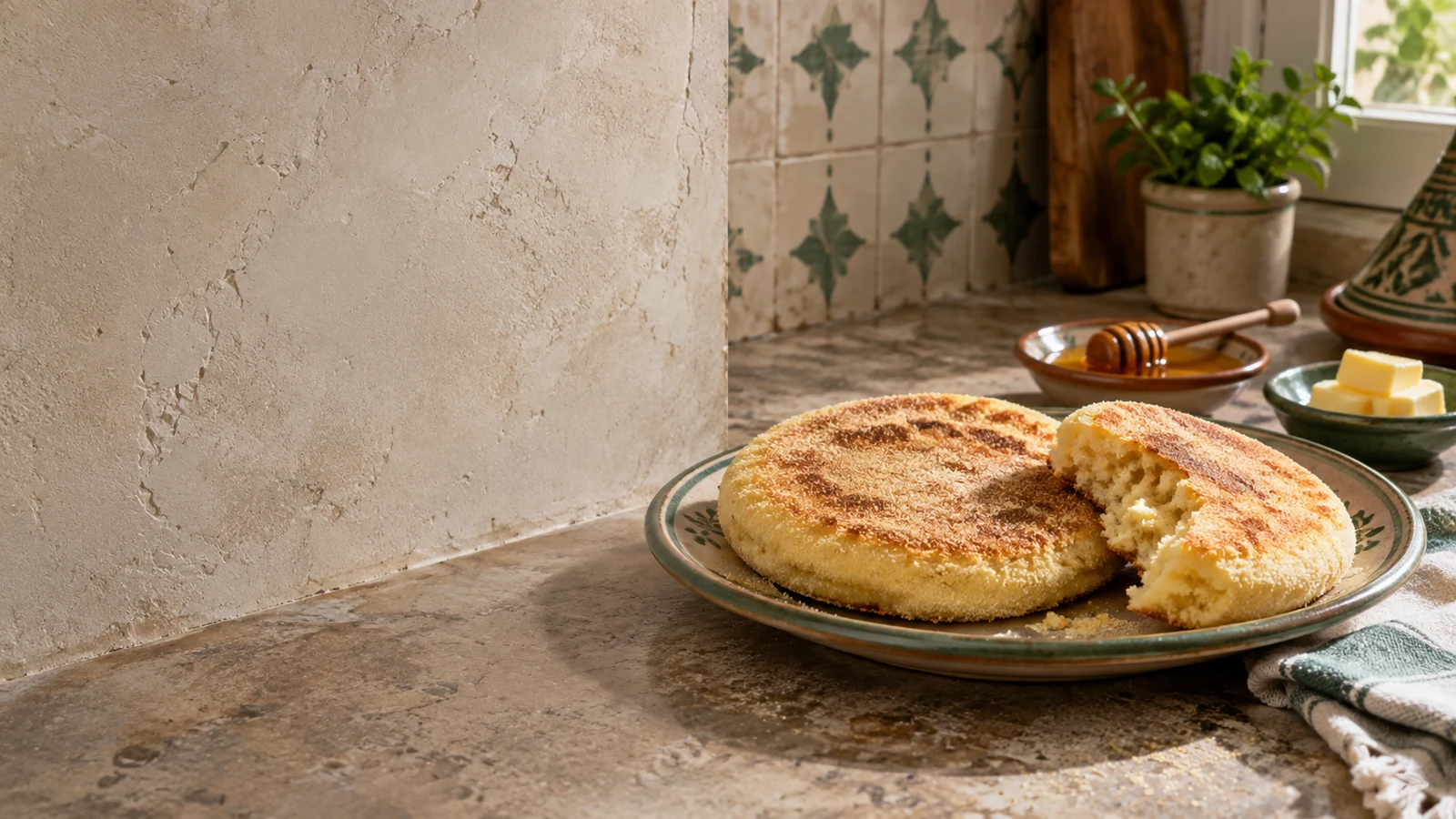
01 · A Moroccan semolina favourite
Rough by name.
Tender at heart.
Harcha is built around the character of semolina, not around elaborate ingredients.
Its surface is sandy and golden; the centre is soft, short and crumbly rather than stretchy like ordinary bread. That contrast explains the name: harcha is linked to the Arabic idea of something rough or gritty, a reference to the texture of semolina. [1]
Harcha is cooked as a flat round on a skillet or griddle. It is familiar at breakfast and as a snack, often beside mint tea, butter, honey, jam or cheese. The spelling harsha also appears in English transliteration.
The pleasure is deliberately simple. There is no lamination to build, no loaf to prove and no sauce to hide behind. The grain, the fat, the liquid and the heat all remain visible in the final texture.
Enter Moroccan food culture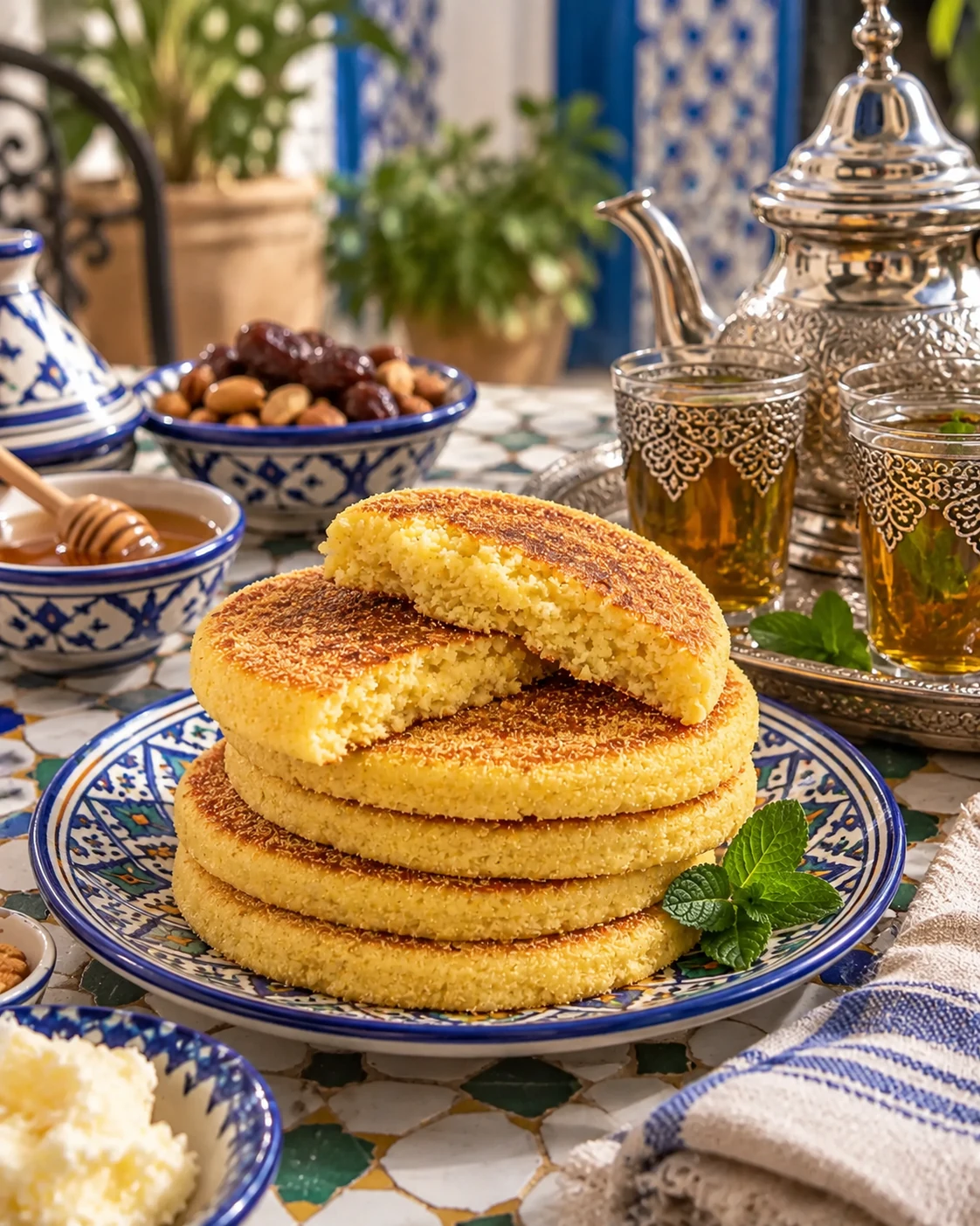
Durum wheat gives harcha its colour, flavour and unmistakable bite.
A short rest hydrates the grain before gentle dry-pan cooking.
Warm harcha moves easily between morning food and an afternoon pause.
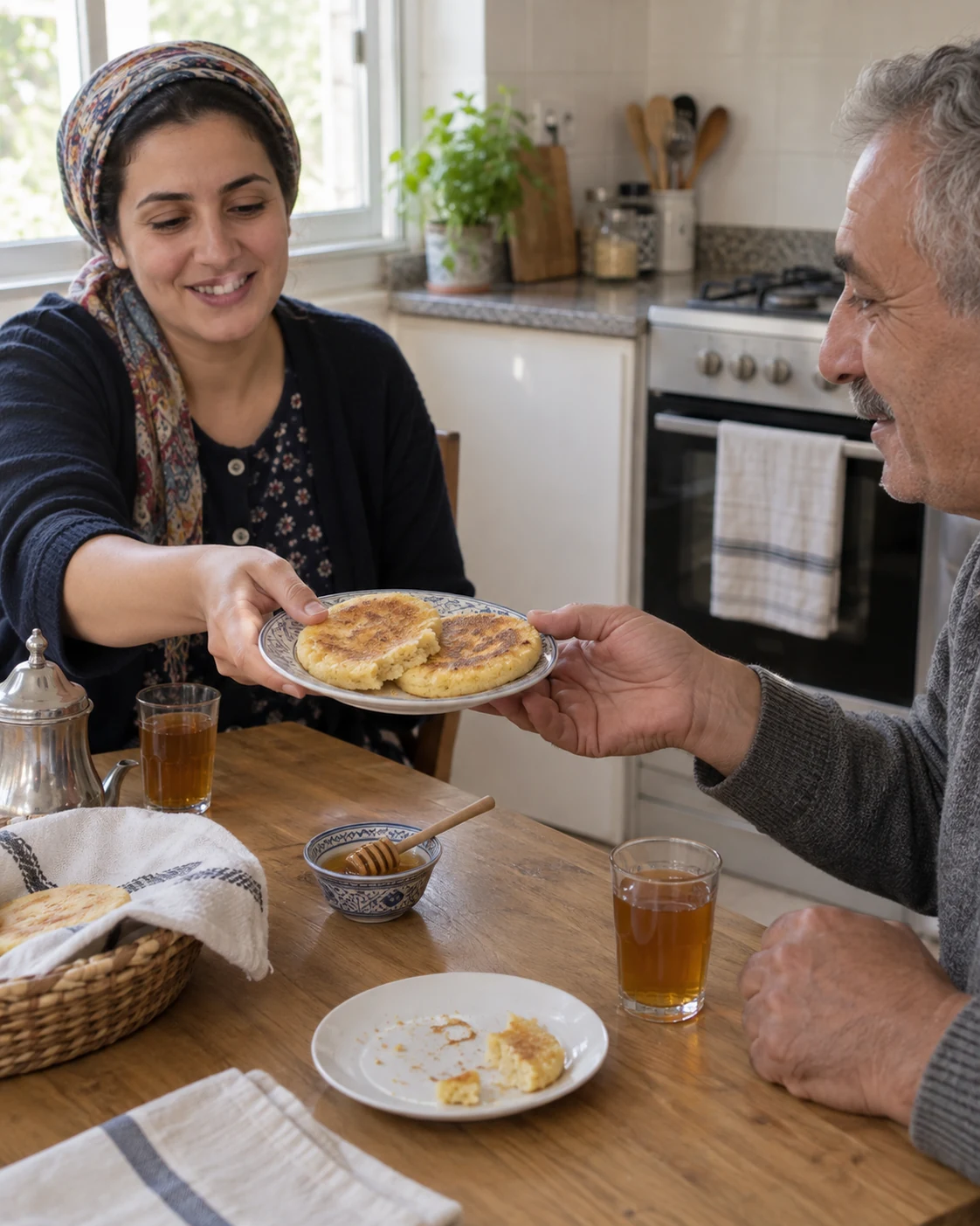
02 · Roots & living tradition
Semolina, shaped by daily life.
Harcha belongs to Morocco’s broad and varied culture of breads, griddle foods and semolina.
Reliable modern culinary writing documents harcha across Morocco as breakfast food and a snack. It also places semolina within a much wider bread culture that includes khobz, batbout, msemen, meloui and baghrir. [1] [2]
Harcha makes semolina practical and shareable: a dough that comes together with little handling, a round cooked on a hot surface, and a crumb that takes well to butter or honey. The household method matters more than an uncertain date of origin.
Durum wheat matters
Semolina is milled from durum wheat. Its golden colour and faintly nutty sweetness are central to harcha’s identity. [1]
Households differ
Family versions vary in semolina grade, sweetness, richness, thickness and serving choices. That variation is part of the tradition, not evidence that one version is false.
The form keeps evolving
Classic harcha is griddle-cooked; harcha dyal ferran or baked harcha is a distinct oven-baked semolina cookie tradition, showing how the name travels into related forms. [3]
03 · Texture, hydration & the pan
The technique
is in the grain.
Harcha looks uncomplicated because it is. The skill lies in preserving a tender, crumbly structure while cooking the centre through.
Fat coats the semolina, liquid hydrates it, resting gives the grain time to absorb that liquid, and moderate heat builds colour without burning the outside. [1]
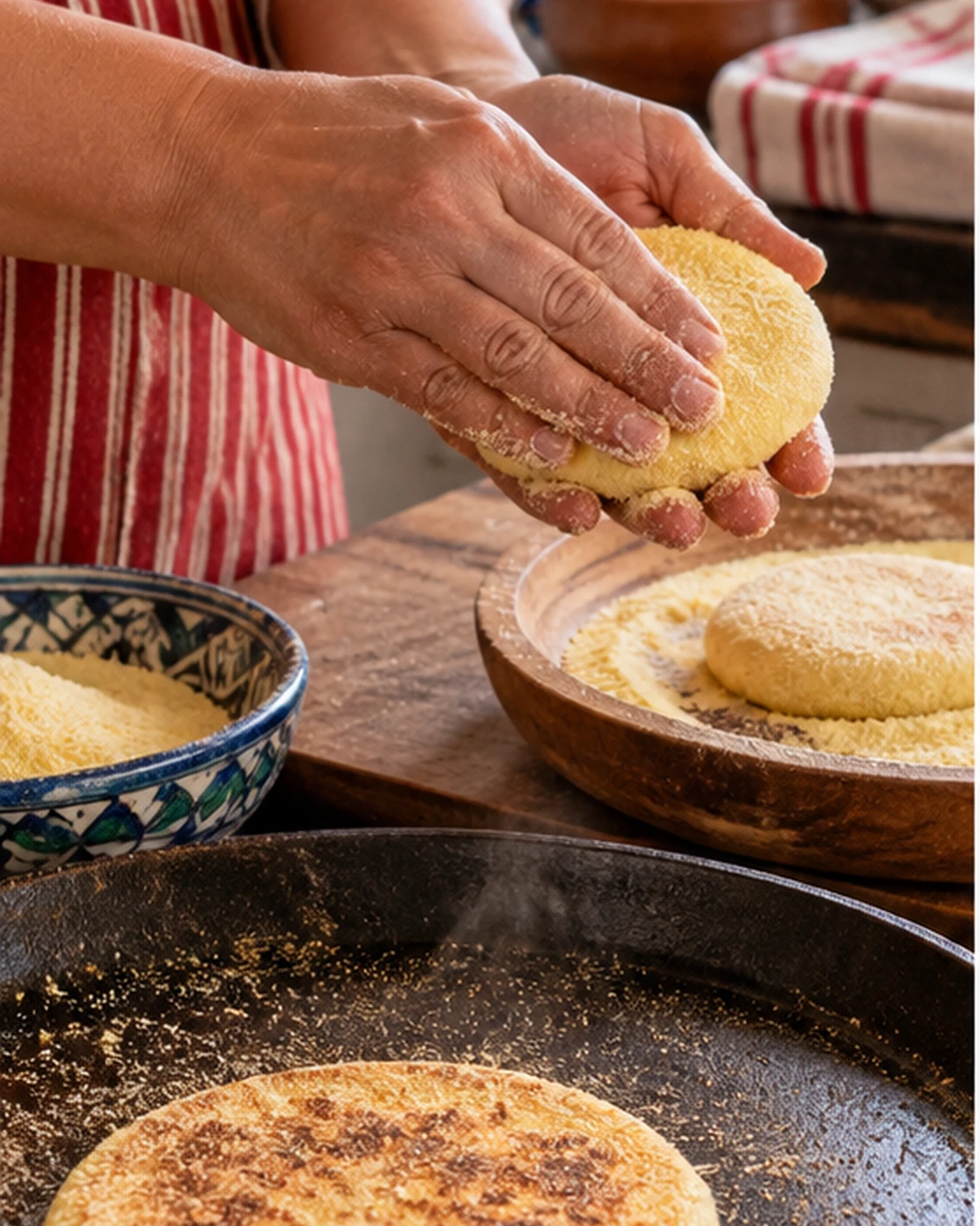
Coat the semolina
Butter is worked through the grain before the liquid. Even coating helps create the short, tender interior instead of a tough bread-like crumb. [1]
Hydrate, then wait
Semolina needs time to absorb liquid. A brief rest changes a loose mixture into something easier to press and shape without turning it into an elastic kneaded dough.
Cook dry & patiently
A preheated dry skillet or griddle gives the surface its speckled golden crust. Moderate heat matters because the centre must cook before the exterior becomes too dark. [1]
04 · One bread, several table roles
Keep the texture.
Change the company.
Harcha is recognisable by its semolina crumb and griddle cooking, but what surrounds it can move from sweet to savoury and from a quick breakfast to a larger meal.
These are common directions rather than rules. Family habits, local shops and individual preference all shape how it arrives at the table.
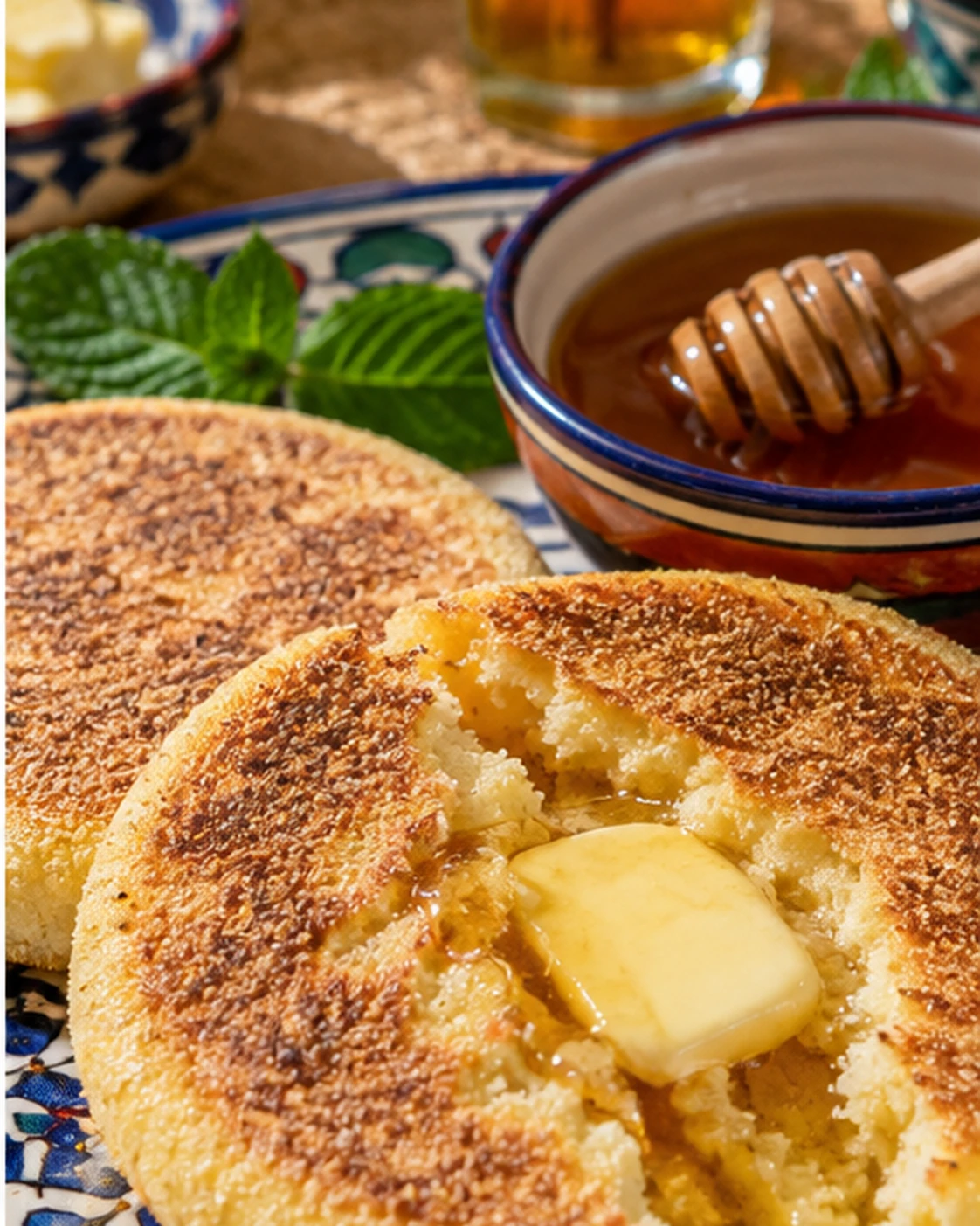
Butter, honey or jam
Warm harcha readily absorbs butter and honey; jam is another familiar breakfast pairing. The bread itself can stay only lightly sweet.
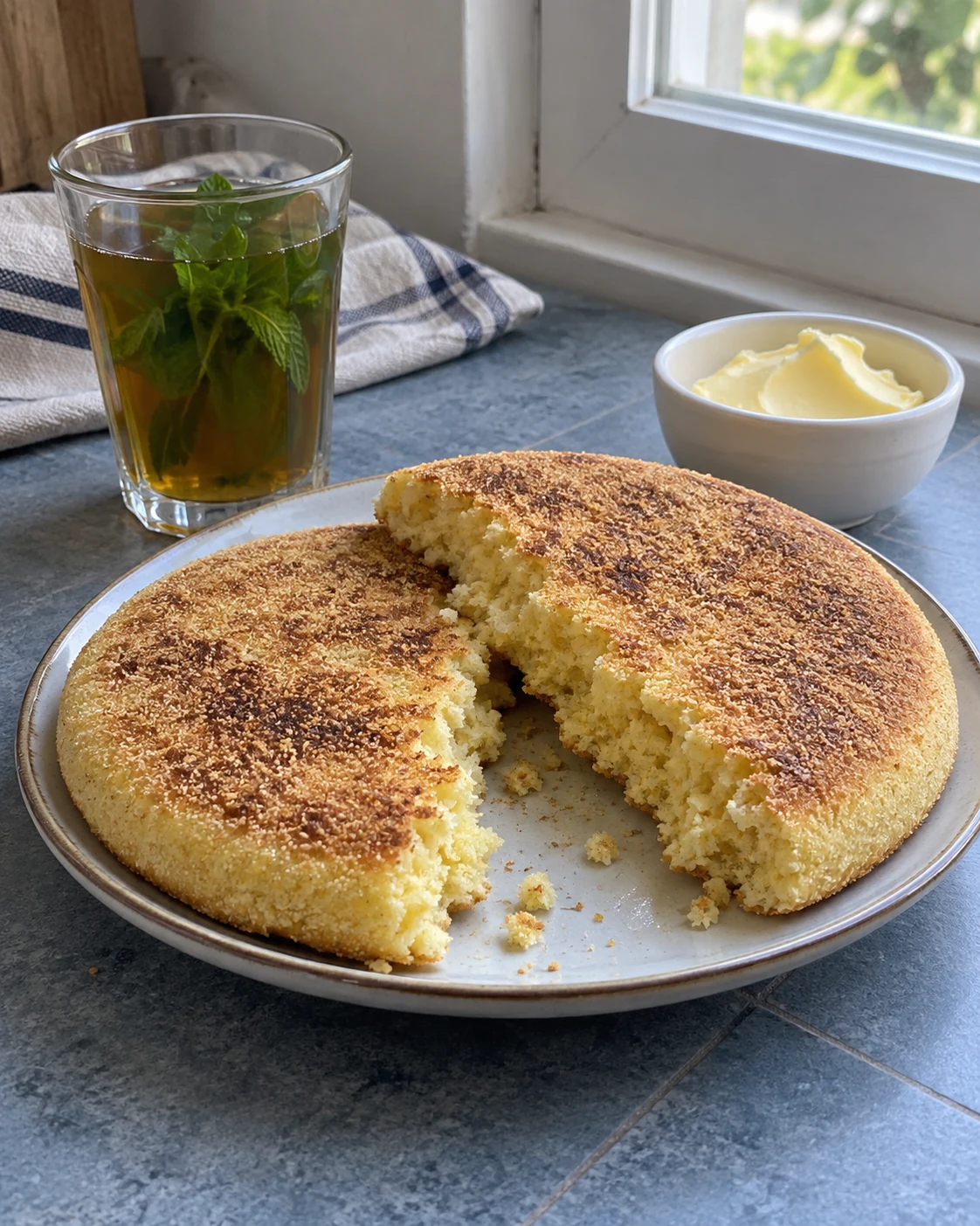
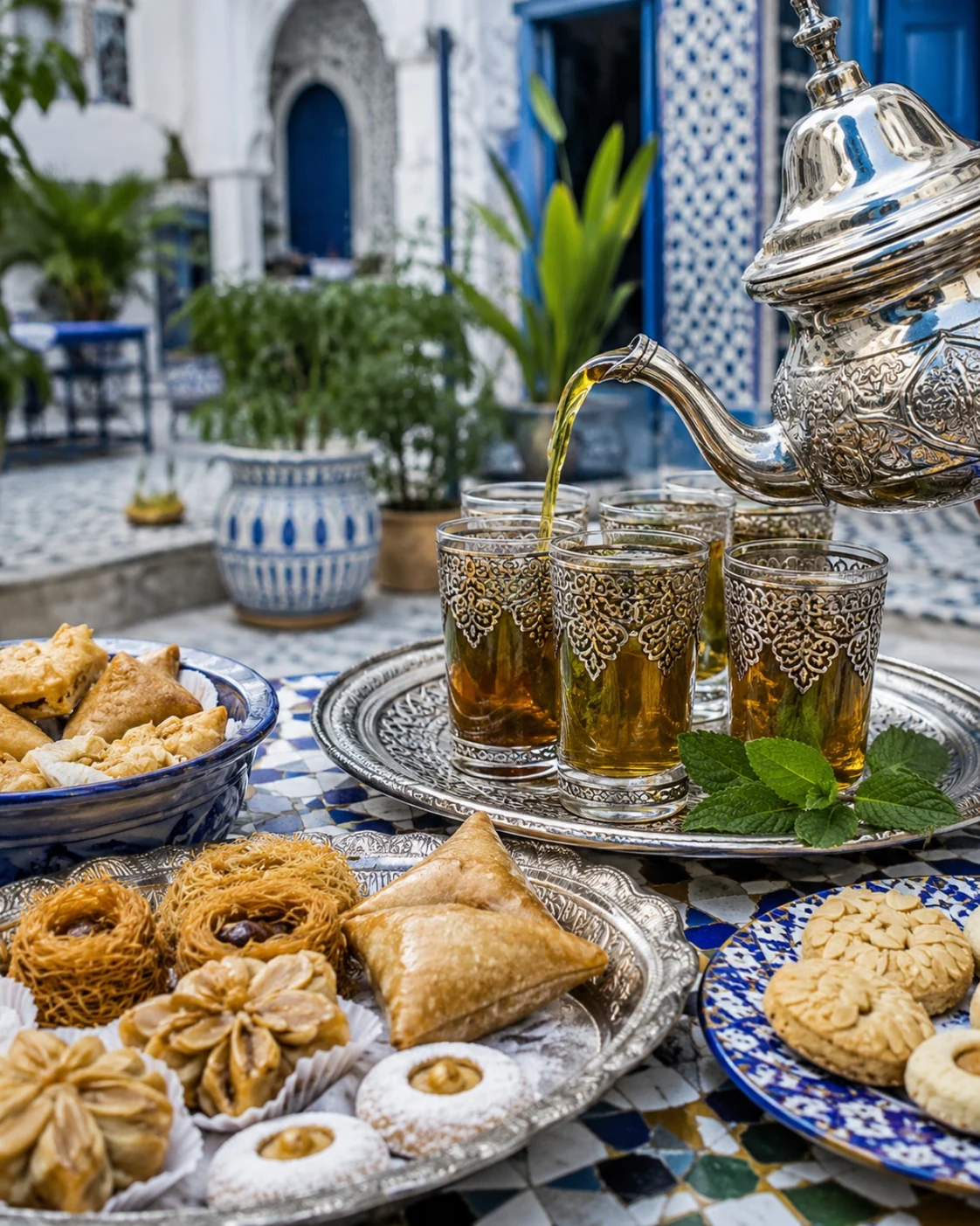
Harcha with mint tea
Tea gives harcha a social setting: a warm round can become a small breakfast, an afternoon snack or something offered when people sit down together.
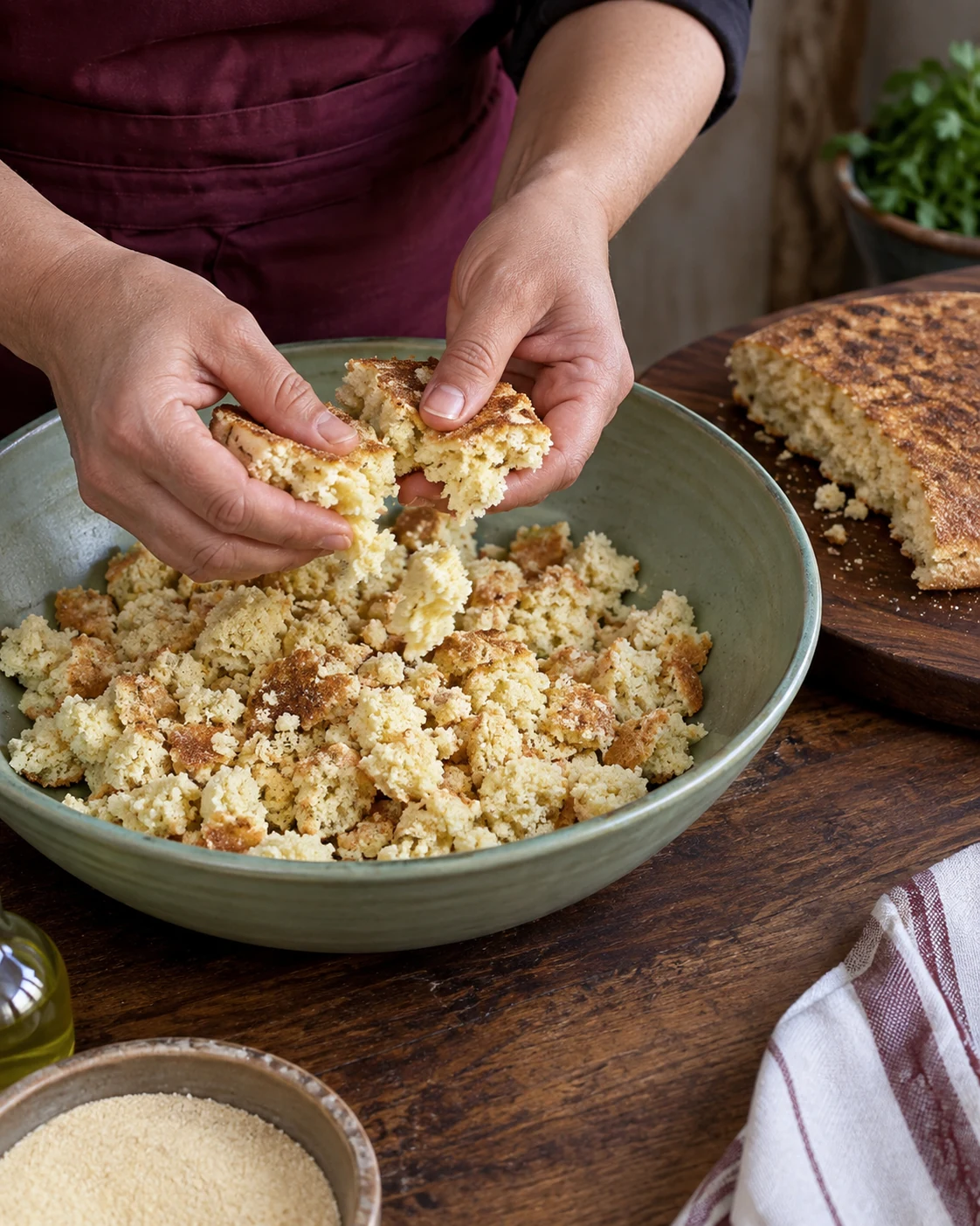
Rfissa medhoussa
Rfissa is often served over shredded msemen or trid, but a documented variation uses crumbled harcha; that version is known as rfissa medhoussa. [4]
Moroccan harcha dyal ferran is oven-baked and more cookie-like, often flavoured with ingredients such as anise, sesame or raisins. It belongs to the wider harcha name, but should not be confused with the classic griddle bread. [3]
05 · What builds the flavour
A short list.
A lot of texture.
Harcha demonstrates why ingredient function matters. The grain supplies identity; fat controls tenderness; liquid hydrates; sweetness is a choice rather than the whole point.
Salt and a modest amount of leavening round out many contemporary versions. Exact formulas vary by cook. [1]
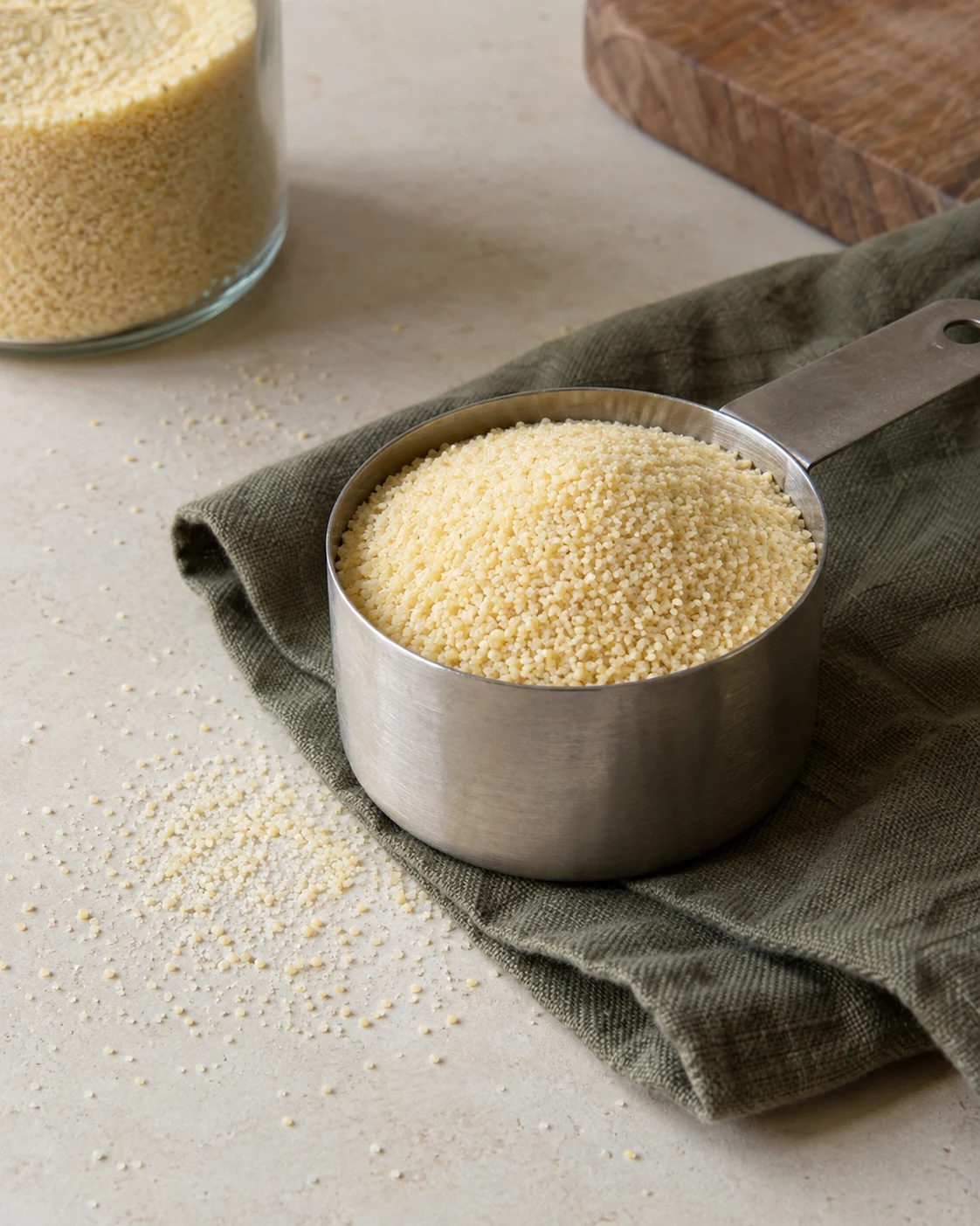
Semolina
The grain is the identity.
Durum semolina gives harcha its golden tone, granular surface and tender, short crumb. Grain size changes hydration and bite, so the choice is not merely cosmetic. [1]
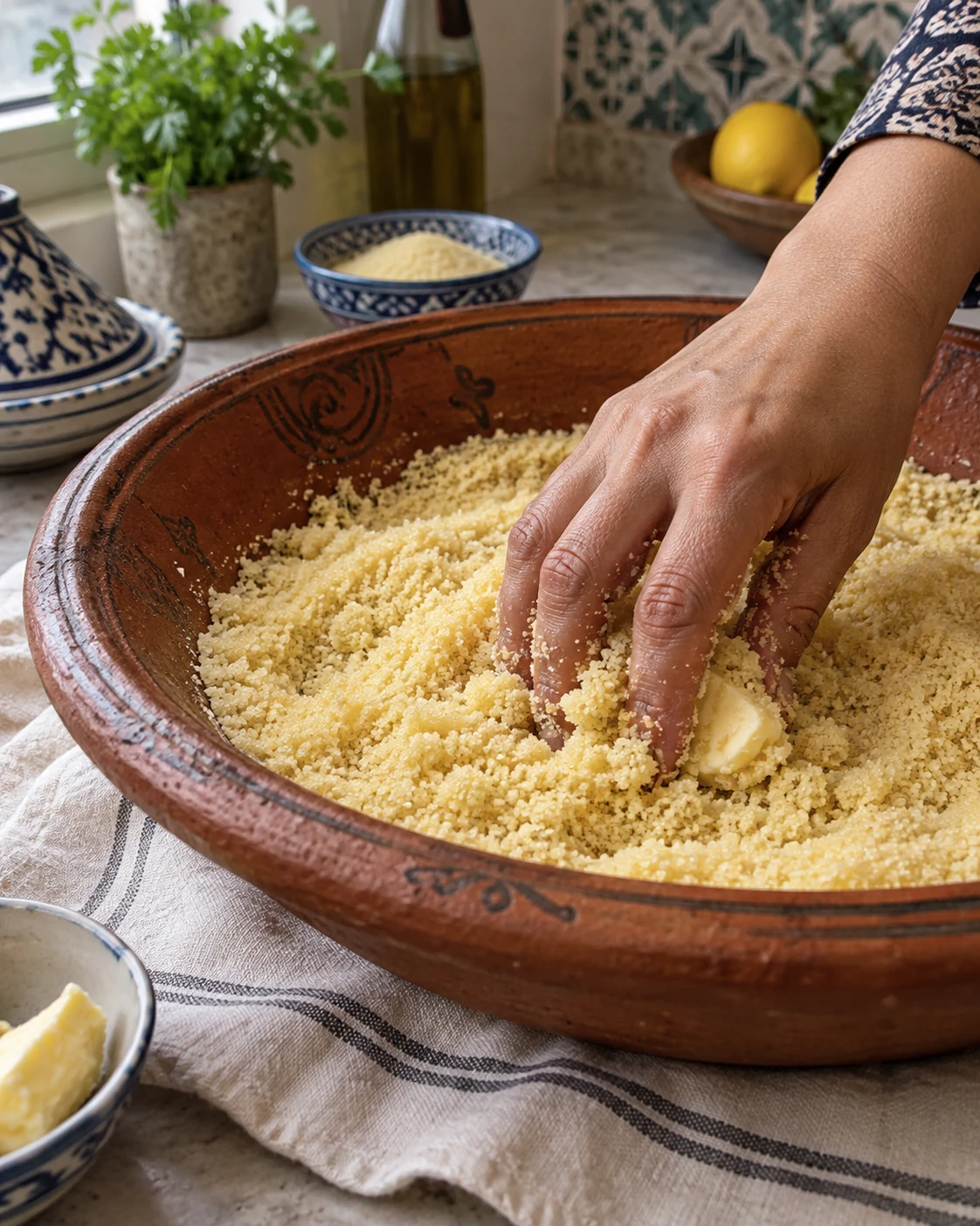
Butter or fat
Tenderness before hydration.
Fat coats the semolina before the liquid goes in. That coating is one of the keys to a short, buttery crumb rather than a chewy bread texture. [1]
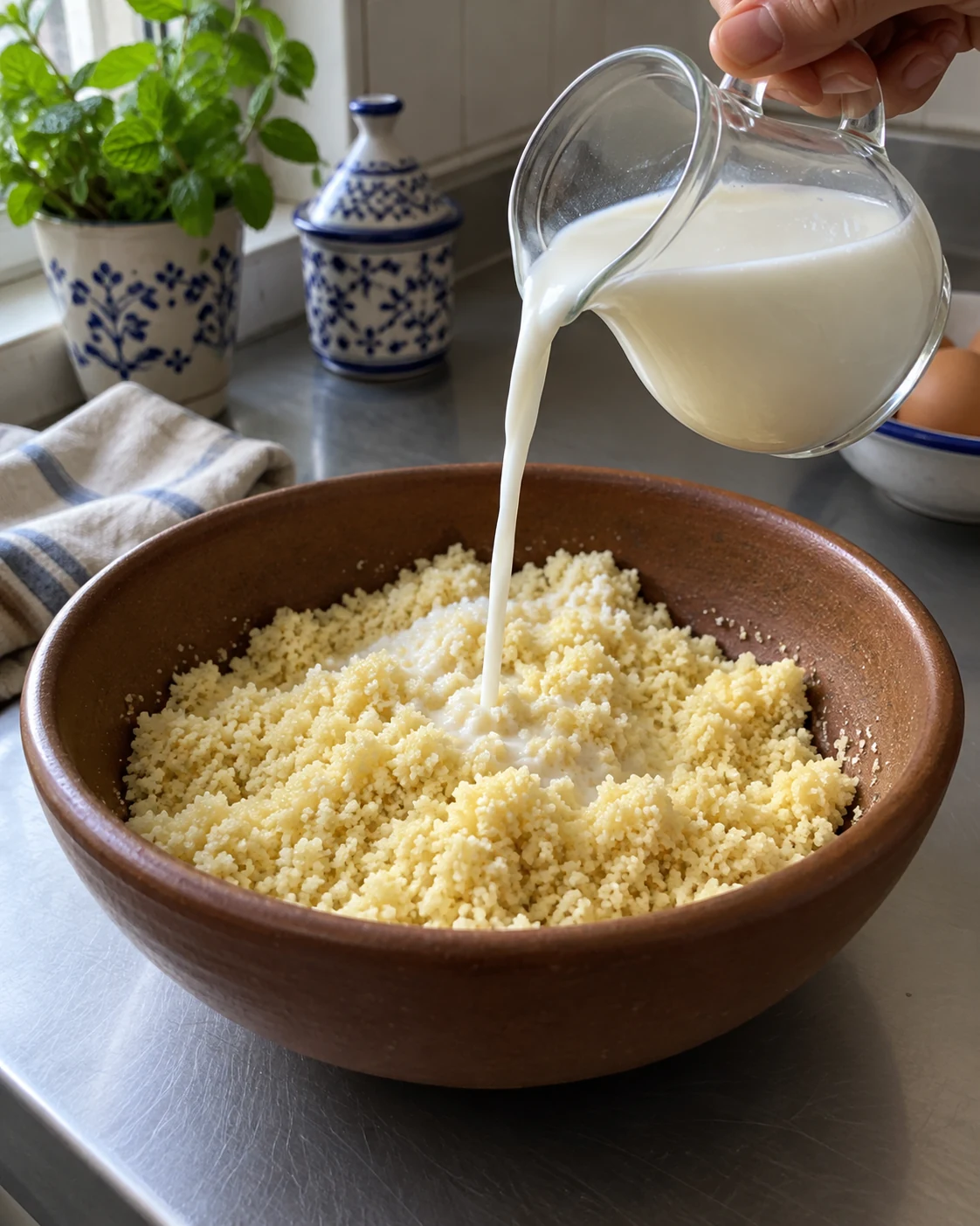
Liquid
Enough to soften the grain.
Milk appears in well-documented contemporary versions. The mixture needs enough liquid to hydrate and hold together without becoming a stretchy kneaded dough. [1]
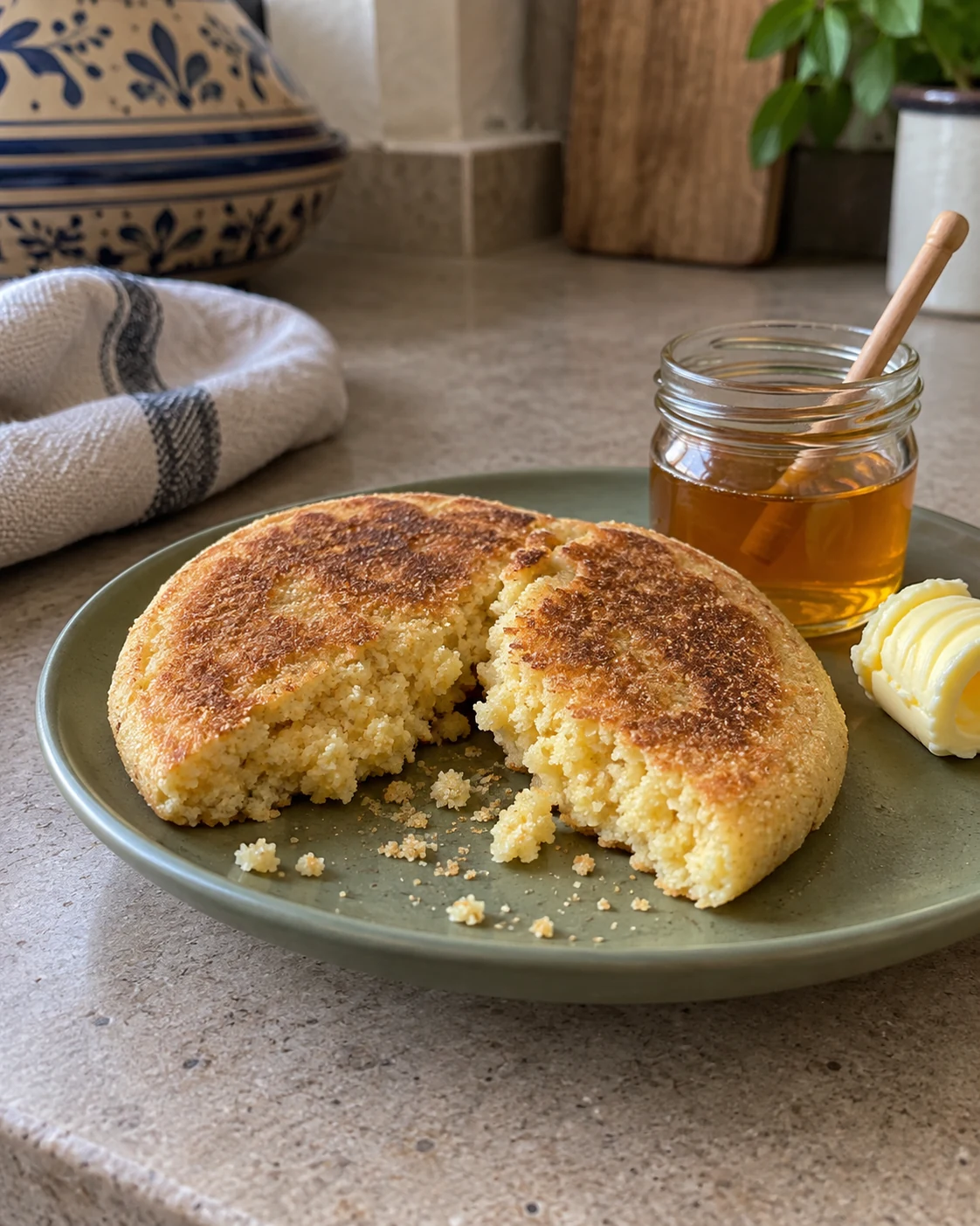
Sweetness
A direction, not a definition.
A little sugar may be used in the dough, while honey or jam can bring sweetness at the table. Harcha also works with savoury accompaniments such as cheese. [1]
Explore the four elements
COAT · HYDRATE · REST
The quiet
texture logic.
Harcha succeeds when the cook understands the grain rather than simply chasing colour.
Butter, liquid and a short rest change how semolina behaves. After that, a dry preheated pan finishes the structure: a crisp, browned surface with a tender centre. [1]
The best cue is not “darker is better”; it is a cooked centre protected by steady, moderate heat.
Coat the grain first.
Evenly distributed fat helps create the characteristic tender, crumbly interior.
Let semolina drink.
A short rest allows the grain to absorb liquid and makes the mixture easier to shape cleanly.
Give the centre time.
A firm golden underside is a better turning cue than impatience; flipping too early can make a fragile round break. [1]

06 · Home, shop & everyday rhythm
Not one region.
Many breakfast tables.
Harcha is widely Moroccan rather than a dish that needs one exclusive city of origin.
Modern culinary sources describe it across Morocco as breakfast food and a snack. Its usefulness is easy to understand: semolina, fat and liquid become a bread that can move from bowl to griddle after only a short rest. [1]
That broad presence does not mean every household makes the same harcha. Thickness, sweetness, semolina grade, size and accompaniments can all shift while the grainy, tender identity remains recognisable.
At home
Home cooks can tune the thickness, richness and degree of browning to the people at their own table.
Explore Moroccan Food Culture ↗At breakfast
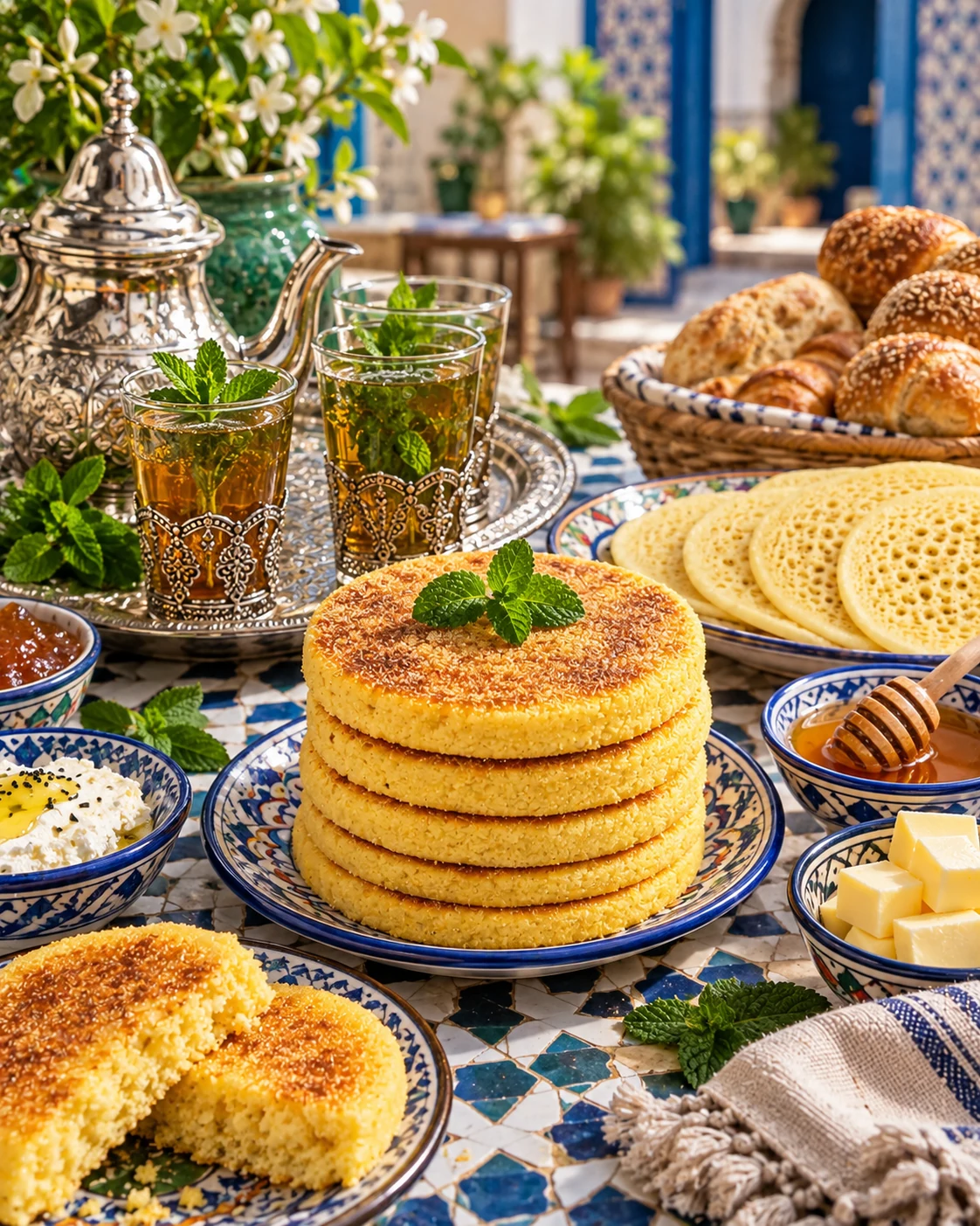
Warm harcha commonly meets butter, honey, jam, cheese and mint tea. The rest of the spread belongs to the household and the day. [1]
Discover Taste Morocco ↗At tea time
Cooked harcha reheats well, so it can return later as a snack without losing the logic of the bread. [1]
The Moroccan table ↗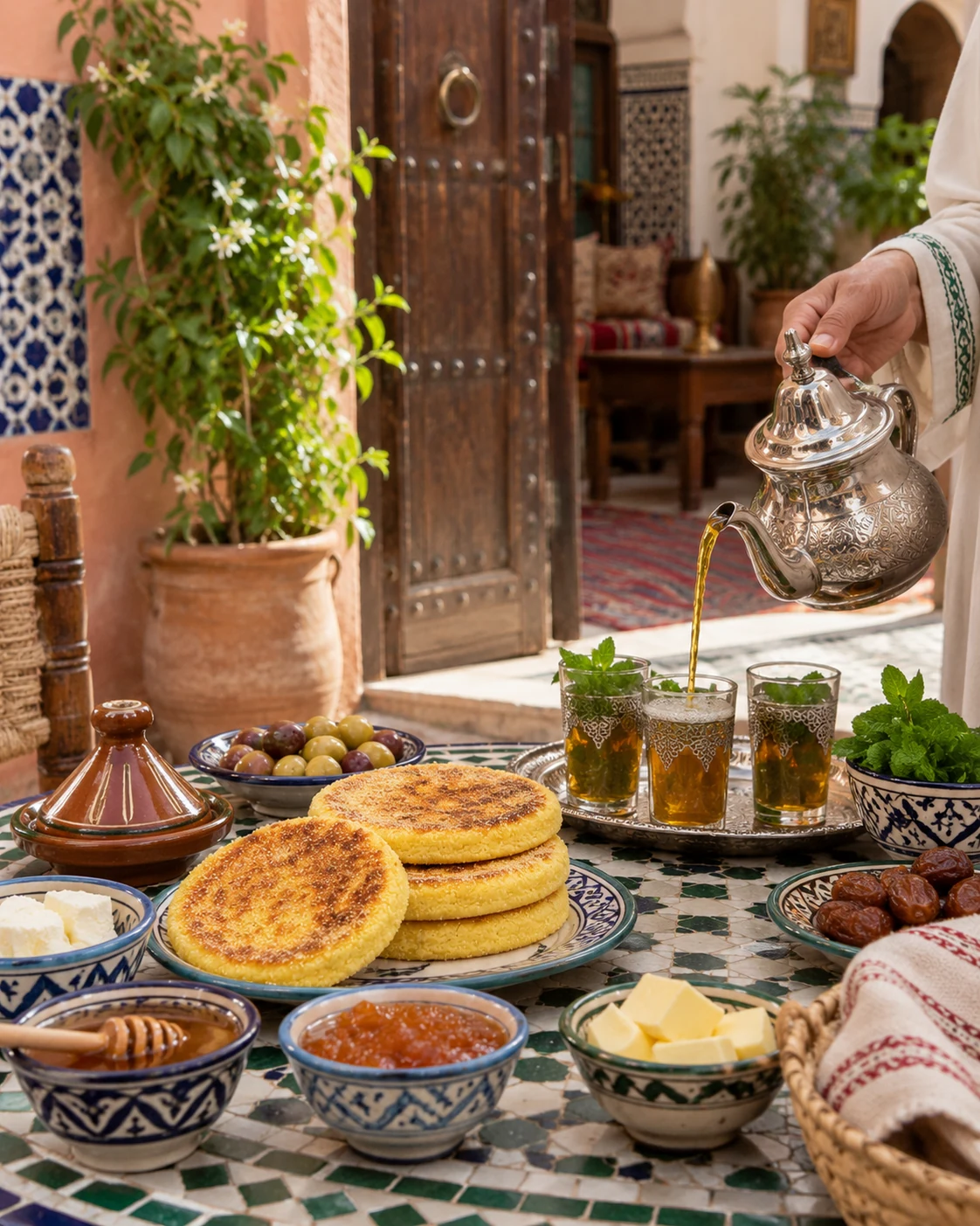
07 · Serving, tea & sharing
Split it warm.
Let the table decide.
Harcha is generous precisely because it does not demand one accompaniment.
Its crumb is most expressive when the bread is freshly cooked or gently reheated. Butter can melt into the open texture; honey or jam can add sweetness; cheese takes the same bread in a more savoury direction. [1]
The useful distinction is between the bread and the table around it. Harcha can stay restrained while people choose what to add.
Butter, honey or jam.
Warm harcha readily takes on butter and honey, while jam offers a fruitier finish. The bread itself can remain only lightly sweet. [1]
That contrast matters: crisp semolina outside, tender crumb inside, and a topping that enters the cracks instead of covering the texture.
Cheese changes the direction.
Harcha does not have to behave like a sweet cake. Savoury accompaniments such as cheese work because the bread’s own flavour is mild, nutty and buttery rather than aggressively sugary. [1]
The same round can therefore suit people who want very different breakfasts without changing the underlying preparation.
Tea changes the pace.
Not the bread.
Mint tea is one of harcha’s familiar companions in published Moroccan breakfast writing. It turns a small plate into a longer social moment, but harcha remains harcha with or without the tea glass beside it. [1]
Crumbled into rfissa.
Rfissa is often served over shredded msemen or trid, but harcha is also a documented base. When rfissa is served over crumbled harcha, Taste of Maroc identifies it as rfissa medhoussa. [4]
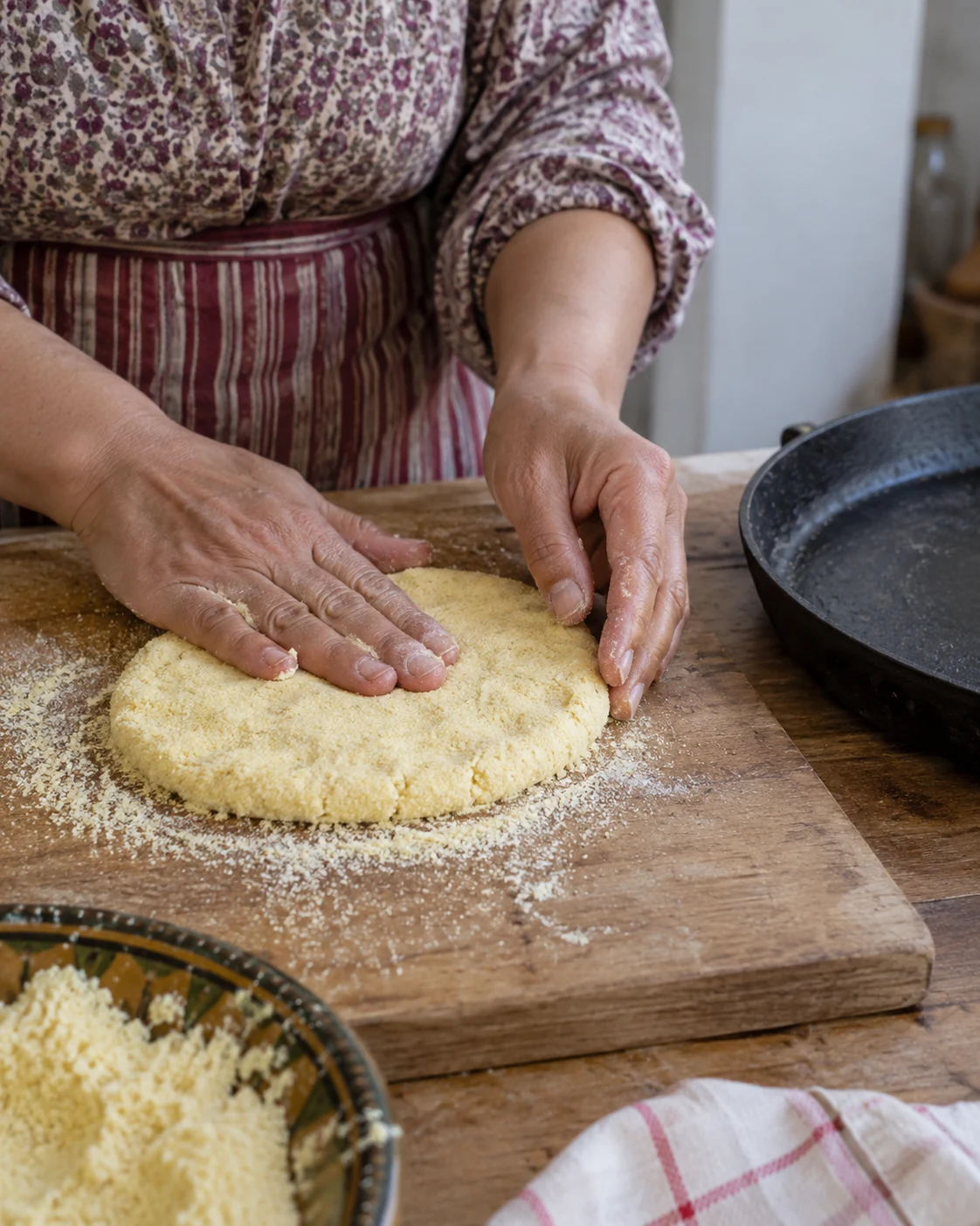
08 · Handwork & kitchen judgement
No special pot.
Just practiced hands.
Harcha shows how much culinary knowledge can live in very little equipment.
The cook has to feel whether the grain is hydrated, press without compacting the mixture too far, recognise when the underside is firm enough to turn, and notice when the pan is colouring faster than the centre can cook.
Serious Eats makes the tactile point explicitly: hands are used to distribute butter and milk through the semolina, cracked edges are normal, and the bread should not be flipped before the underside is firm. [1]
That is why harcha is a useful example of everyday craft. The equipment can be ordinary; the judgement is learned through repetition.
Explore food, craft & the table ↗09 · A closer look
Good questions.
Clear answers.
Harcha makes more sense once its grain, crumb and griddle method are separated from the foods served beside it.
Is harcha a bread, pancake or cake?
It is commonly described as a Moroccan semolina bread or flatbread. Its crumb can remind people of a biscuit or cornbread, but its identity comes from semolina, shaping and dry-griddle cooking. [1]
Does harcha contain yeast?
A well-documented contemporary version uses baking powder and no yeast, so there is no proofing stage before shaping. Family formulas can vary, so one published formula should not be treated as the only legitimate one. [1]
Should the semolina be fine or coarse?
Grain size changes the result. Nargisse Benkabbou recommends coarse semolina for her tested version because it produces the texture she wants; other harcha and semolina preparations may use different grades. [1]
Why can the edges crack?
Small cracks are normal in this short, crumbly semolina mixture. They are not automatically a sign of failure. The round needs enough cohesion to turn without being worked into a dense elastic dough. [1]
Can harcha be savoury?
Yes. Honey, butter and jam are familiar partners, but cheese and other savoury accompaniments also work. Sweetness is a serving direction, not the definition of harcha. [1]
Is baked harcha the same thing?
No. Harcha dyal ferran is an oven-baked Moroccan semolina cookie tradition that takes its name from the stove-top bread. The relationship is real, but the preparations should not be collapsed into one dish. [3]
 EXOTIC MOROCCOTASTE · THE GUIDE COLLECTIONHarchaIngredients, technique
and the Moroccan table
From the story to your kitchen
Keep the flavour.
Go a little deeper.
Semolina, a hot pan and a tender, crumbly round.
Explore the Exotic Morocco guide collection for a closer look at ingredients, kitchen knowledge and the culture around the table.
- Understand the ingredients and their roles
- Recognise the techniques and textures that matter
- Bring context and confidence to the way you cook and serve
Continue tasting Morocco
Follow the
table outward.
Another dish, another technique, another way into the Moroccan kitchen.
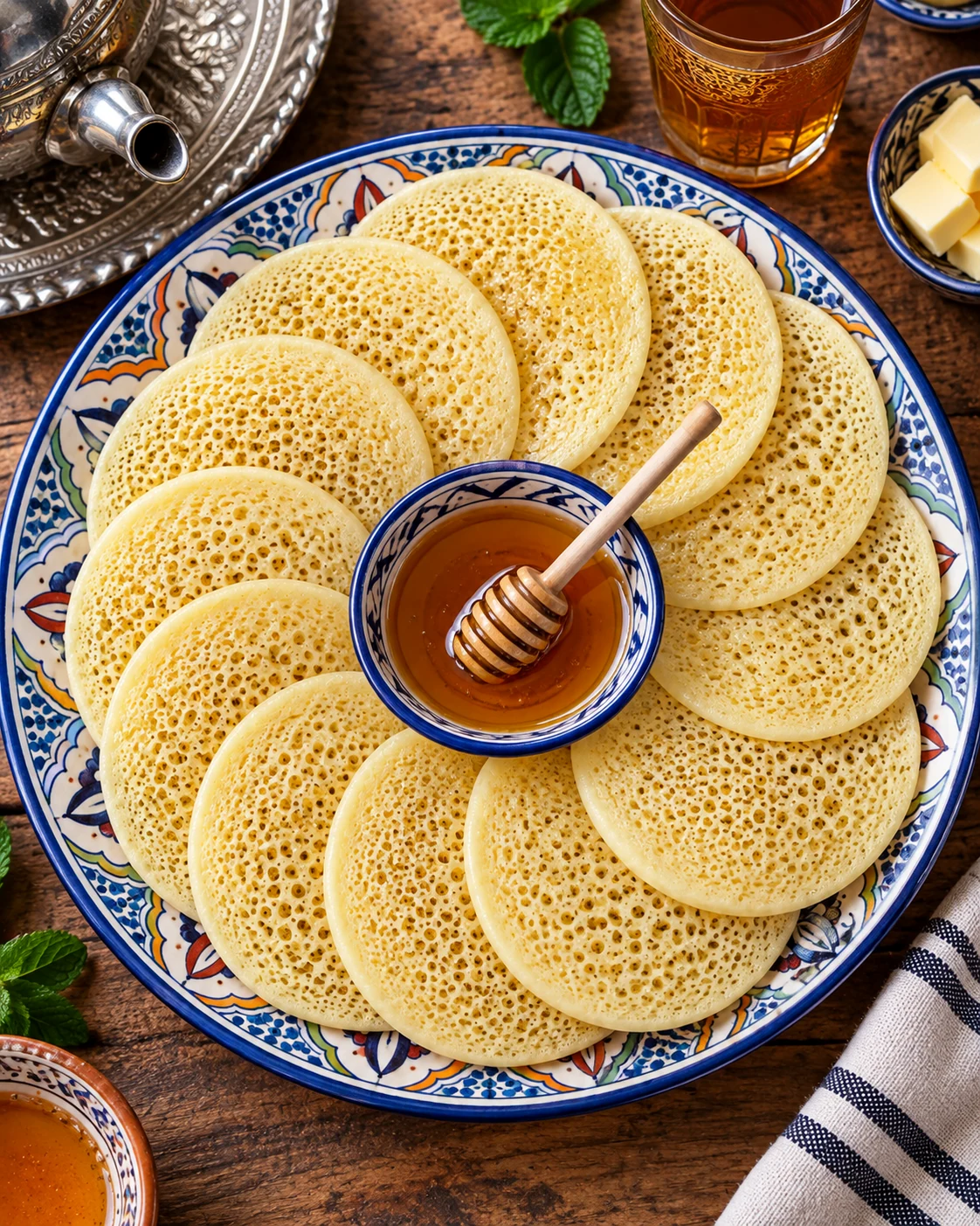
Baghrir
Light semolina pancakes with a surface of tiny holes.
Explore the story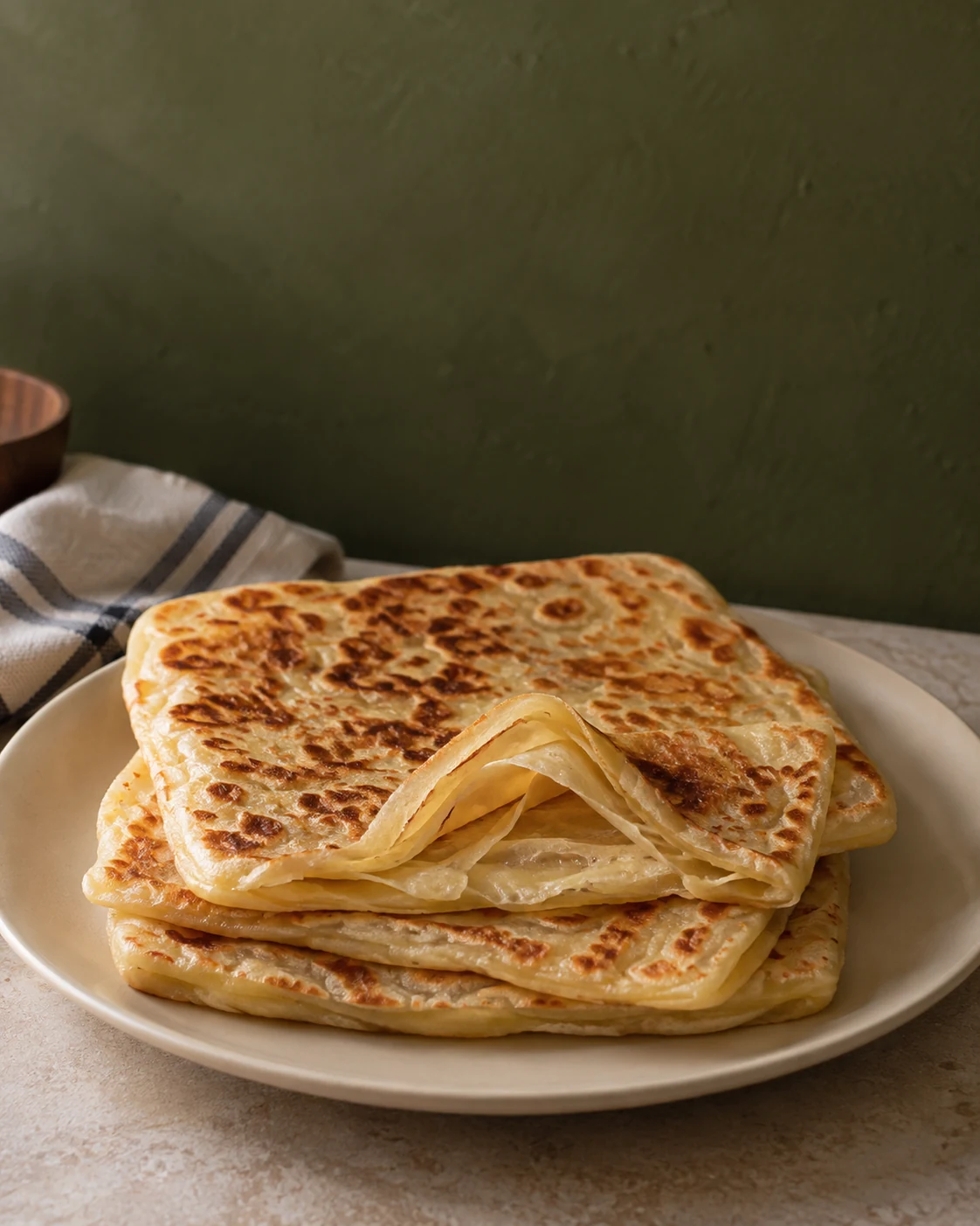
Msemen
Thinly stretched dough folded into supple, flaky layers.
Explore the story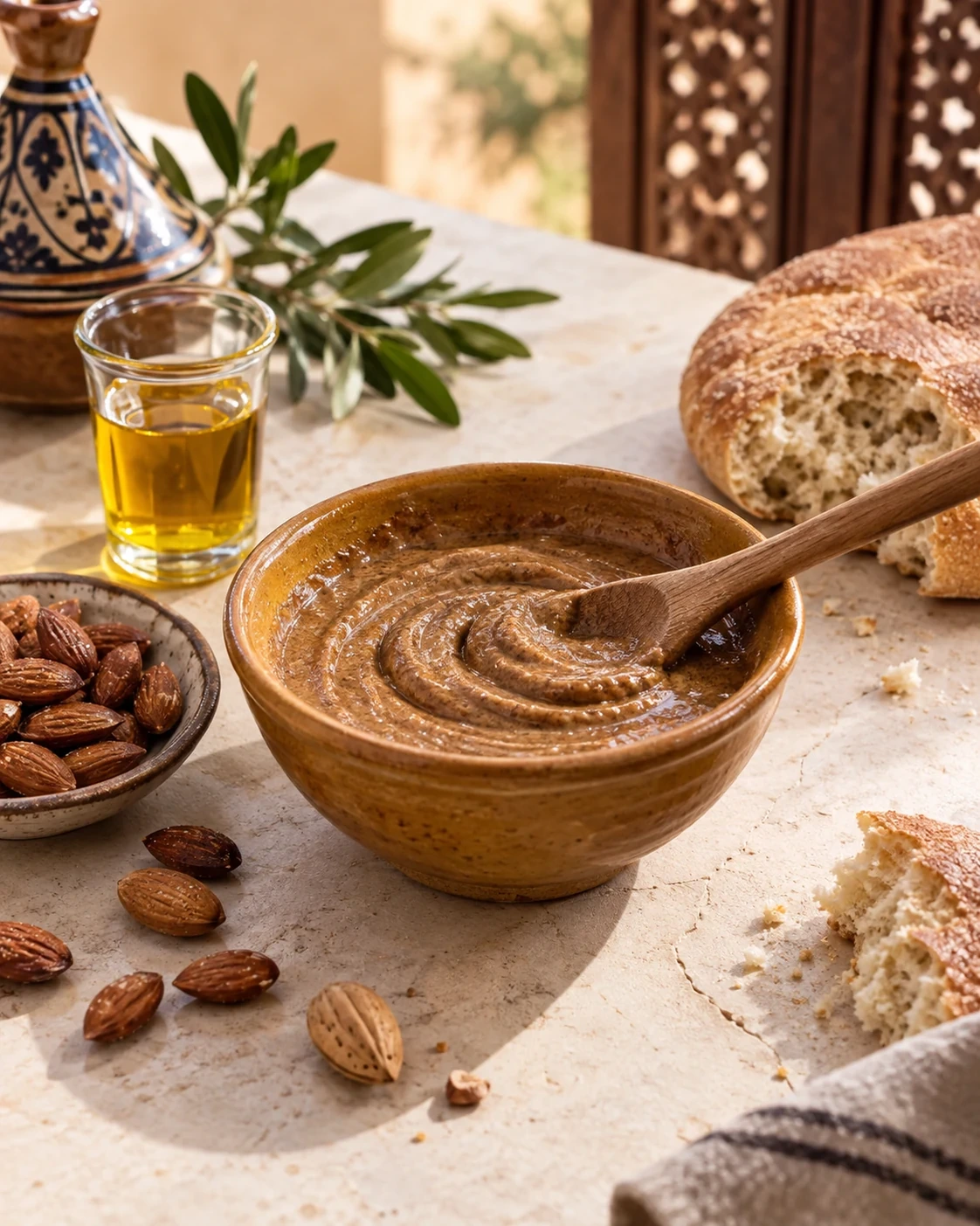
Amlou
Roasted almonds, culinary argan oil and honey from the southwest.
Explore the story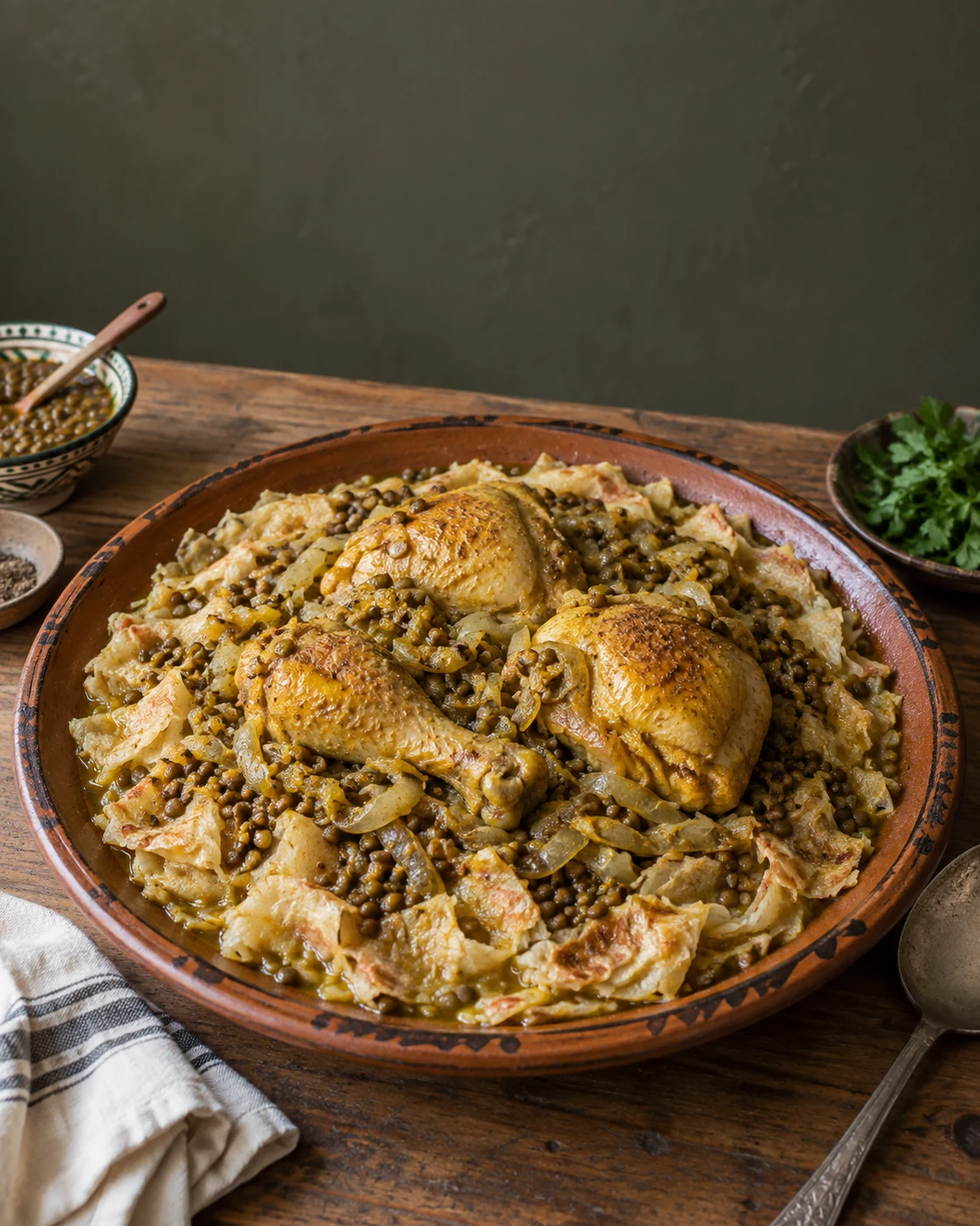
Rfissa
Chicken, lentils and fragrant broth finding their way through torn bread.
Explore the story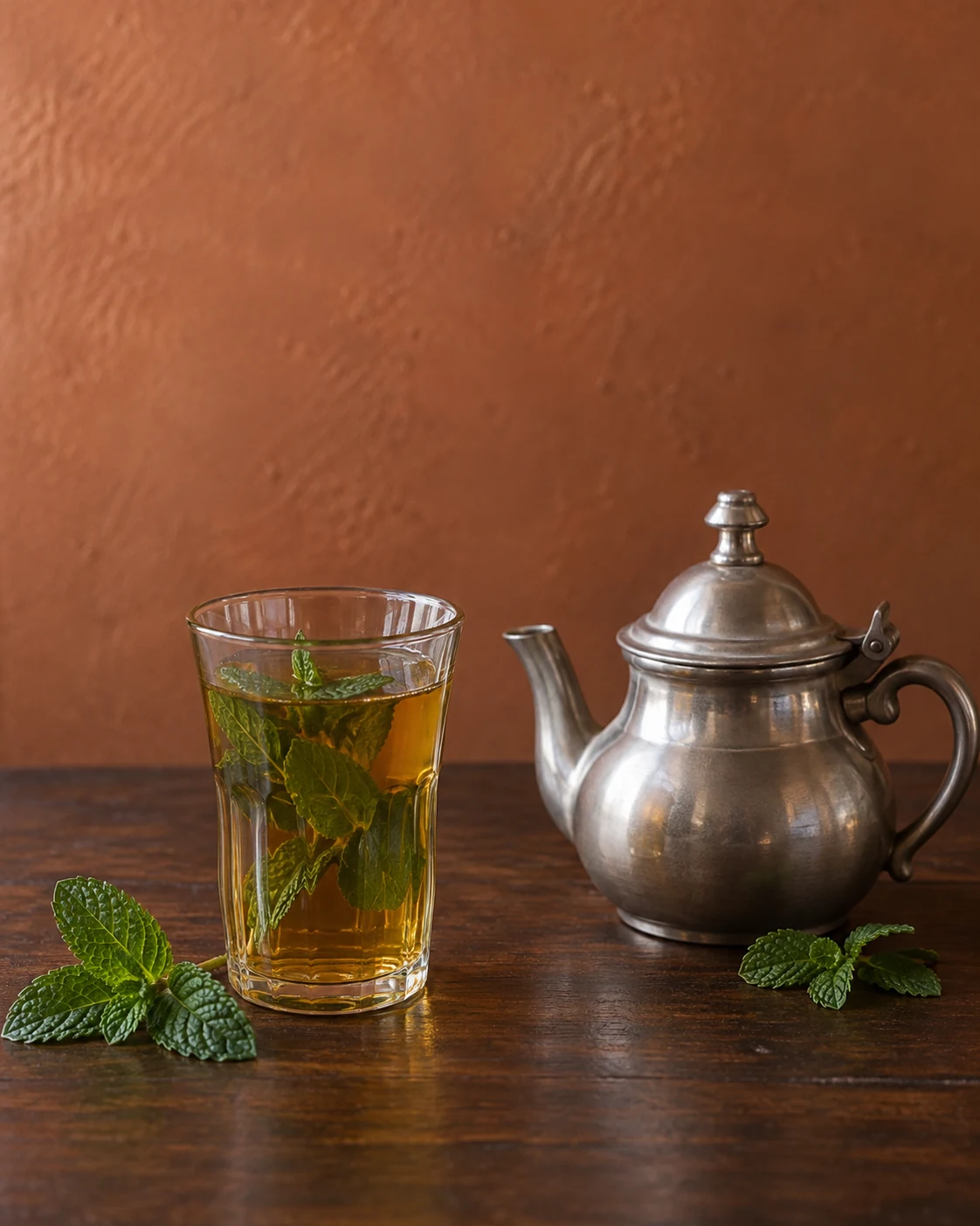
Moroccan Mint Tea
Green tea, fresh herbs and the time given to a guest.
Explore the story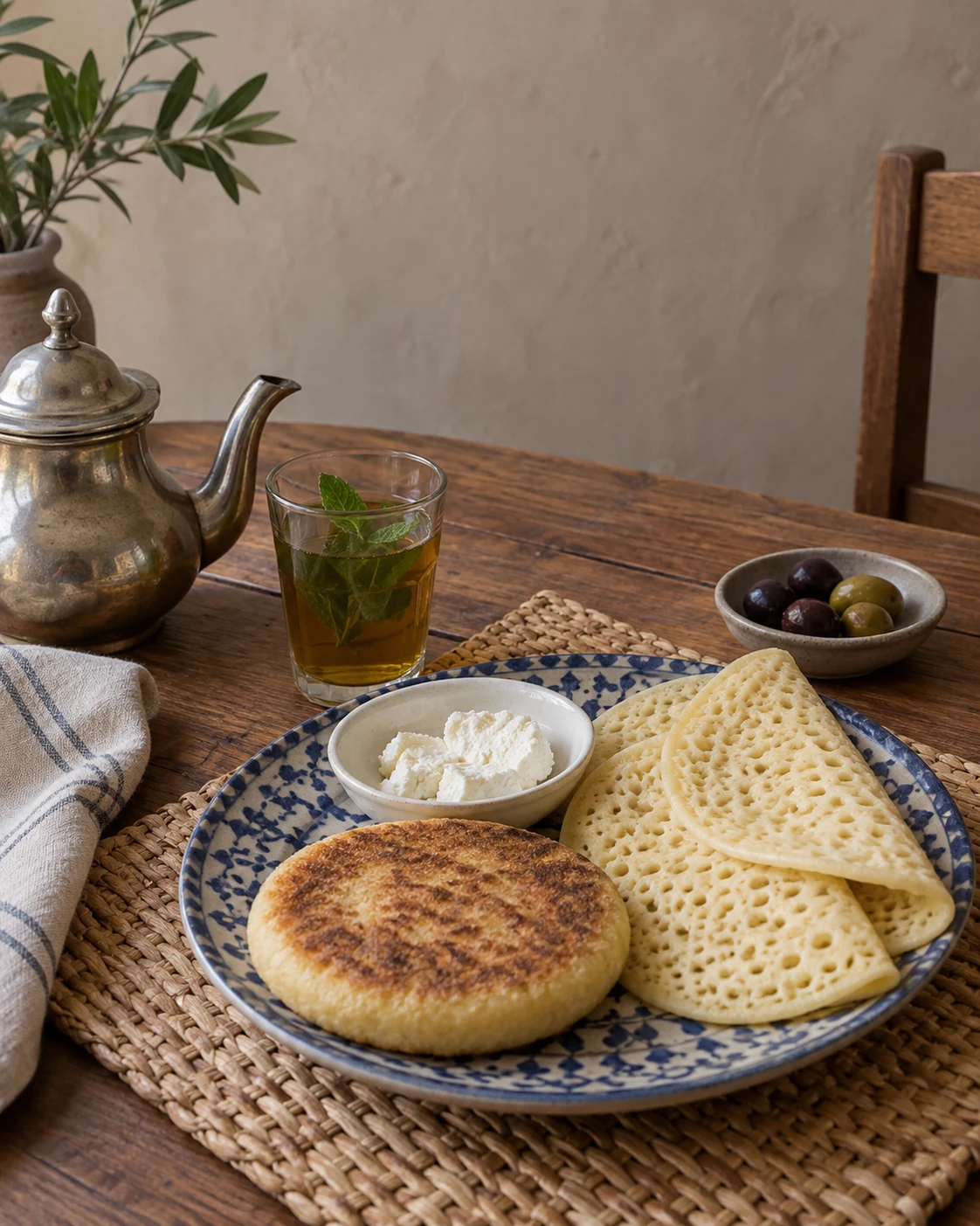
Moroccan Breakfast
Breads, spreads and the first table of the day.
Explore the storySources & editorial notes
Photography combines existing Exotic Morocco assets and generated editorial illustrations. These images do not document a named person, household or historical event.
- Nargisse Benkabbou · Serious Eats · Harcha (Moroccan Semolina Bread) — semolina/durum identity, name and texture, dry-skillet technique, breakfast/snack use, family variation, accompaniments, resting and hydration logic.
- Taste of Maroc · Moroccan Breads — the wider place of bread, semolina and varied flours in Moroccan food culture.
- Christine Benlafquih · Taste of Maroc · Baked Harcha / Harcha dyal Ferran — distinction between classic stove-top harcha and the oven-baked semolina cookie form.
- Christine Benlafquih · Taste of Maroc · Moroccan Chicken Rfissa — rfissa served over different bread bases and the name rfissa medhoussa when crumbled harcha is used.
EXOTIC MOROCCO Places. People. The pleasure of knowing more.Back to top ↑