

01 · A Moroccan essential
A small glass.
A generous
pause.
Tea is a drink. Atay is also an invitation to stay.
A silver-coloured pot appears, mint rises above the rim, and amber tea falls into a small glass. The scene can be formal enough for guests or so ordinary that nobody thinks to call it a ceremony. That range is exactly what makes Moroccan tea important.
Moroccan mint tea is built around loose Chinese green tea—most famously gunpowder—fresh mint, water and sugar. Those ingredients are simple; the balance is not. Strength, sweetness, mint and the order of preparation shift from one household to another. [1]
In Moroccan Arabic, tea is atay; tea with mint is often described as atay b’nana. It can open a visit, break up an afternoon, accompany food or extend a conversation after the plates are cleared. [7]
Enter Moroccan food culture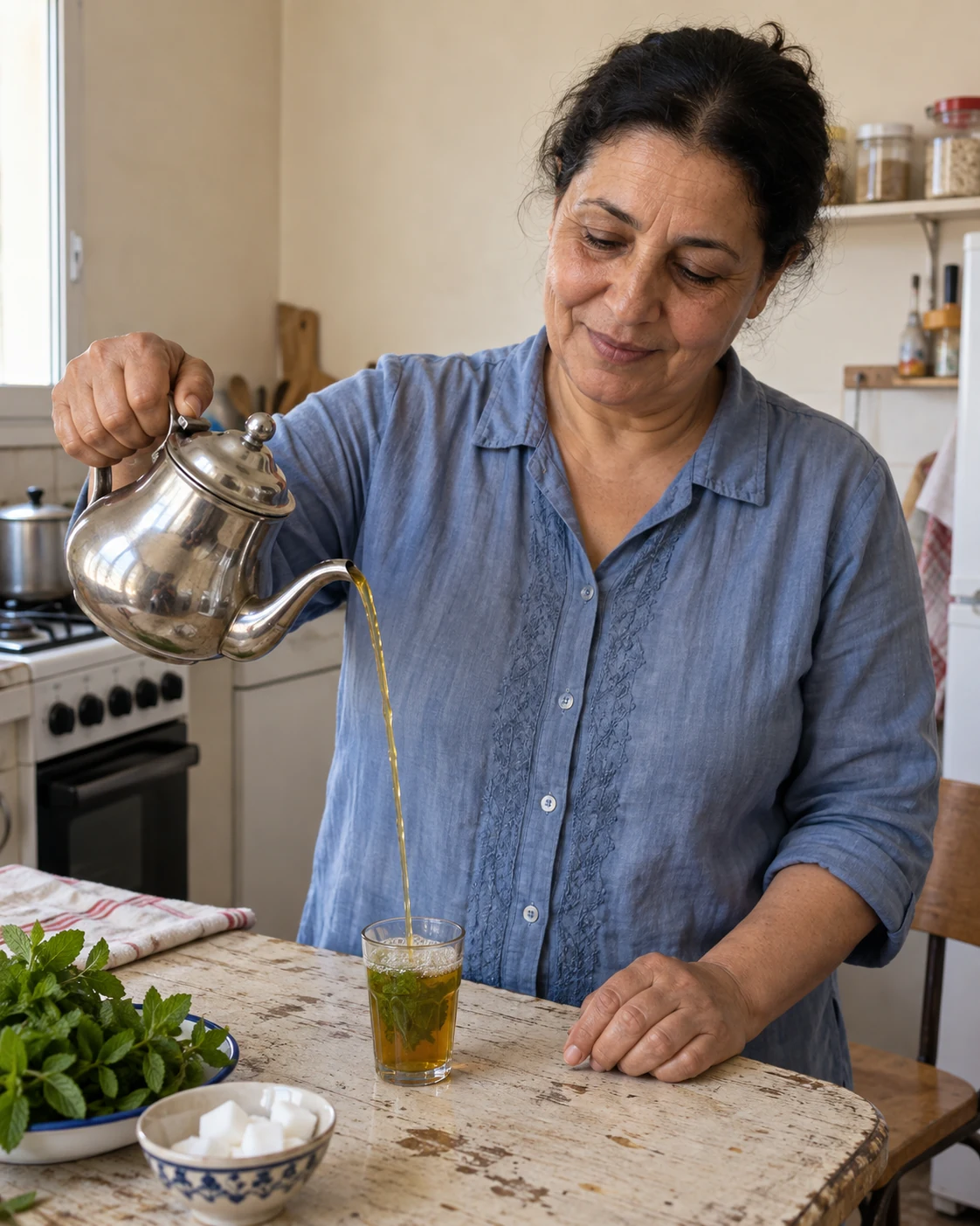
The everyday Moroccan word for tea.
Usually loose gunpowder tea and fresh nana.
Hospitality without a fixed script.
02 · Roots & living history
Imported leaf.
Moroccan language.
Trade helped turn a costly imported drink into an everyday habit.
Tea was known in elite Moroccan circles before it became an everyday drink. Historical scholarship places the decisive spread of tea and imported sugar in the nineteenth century, when expanding trade made both products increasingly available. By the 1870s, imported tea was already being consumed widely across Moroccan society. [4] [5]
A popular story says British merchants redirected Chinese tea to Morocco during the Crimean War. The story is repeated often, but it should not be treated as the single proven origin. Historian Graham H. Cornwell’s work gives more weight to nineteenth-century commercial change, treaty conditions and the tea-and-sugar trade. [8]
The important transformation happened after arrival: imported green tea met Moroccan mint, sugar, hospitality and existing habits of aromatic infusions. Over generations the drink became recognisably Moroccan—not because the leaf was local, but because people made the ritual their own.
Before the mass market
Tea existed at court and among elites before it became ordinary household consumption.
Nineteenth-century acceleration
Trade drew tea and sugar into daily life across a much wider social world. [5]
A living ritual
Today the details keep moving: sweetness, herbs, equipment and timing still change from home to home.
03 · The pot & the pour
The rhythm
inside the berrad.
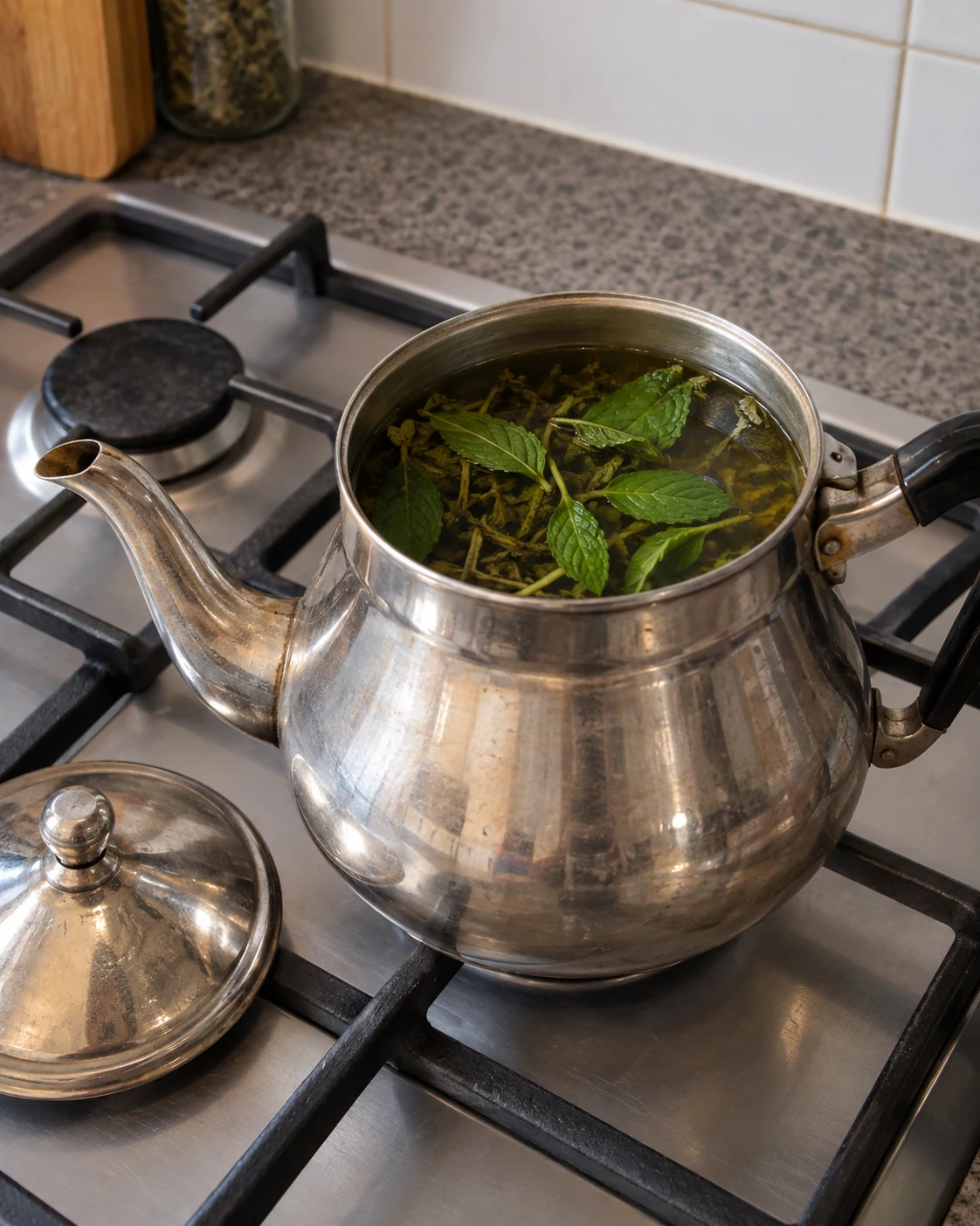
The Moroccan teapot—often called a berrad—is more than decoration. Its built-in straining holes, long spout and stove-friendly metal body support the way the tea is brewed, mixed and poured.
There is no single household sequence. Many cooks rinse the tea leaves; some preserve the first fragrant infusion while discarding a later rinse. Sugar and mint may enter at slightly different moments. What matters is a final cup with controlled bitterness, mint fragrance and a sweetness the host wants. [2]
The leaf
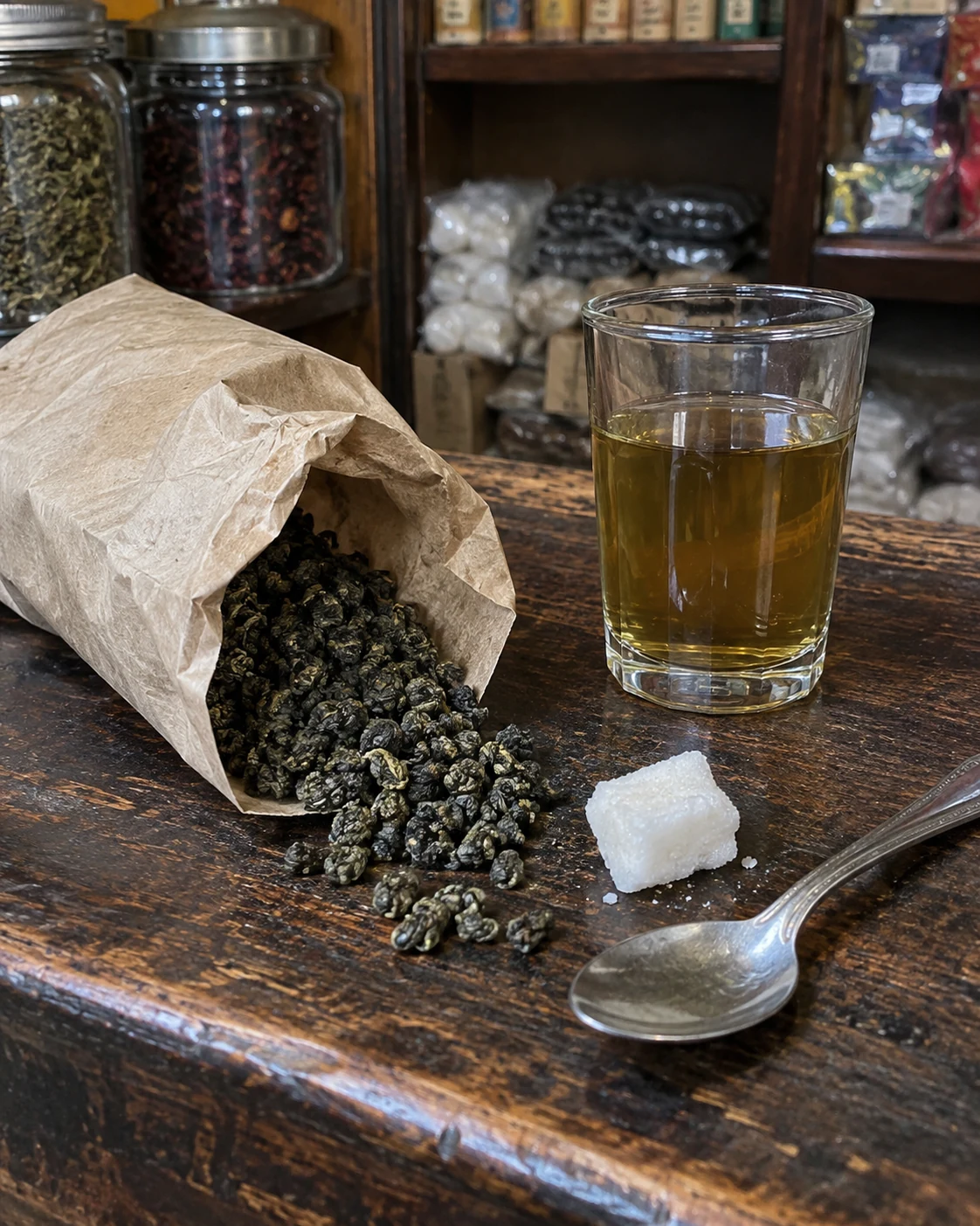
Gunpowder green tea is rolled into small pellets. Heat opens the leaves and releases a firm, tannic base that can stand up to mint and sugar. [1]
The mixing
Instead of stirring only with a spoon, tea may be poured into a glass and returned to the pot, bringing the brew together. This also gives the host a chance to judge colour and balance.
The high pour
Lifting the pot creates a thin stream and a light crown of bubbles. It aerates and mixes the tea while turning service into a practiced gesture. The height varies; the skill is pouring cleanly, not reaching a ceremonial measurement. [3]
04 · Tea across moments and households
One ritual.
Many hands.
Moroccan tea is recognisable without being standardised. A host may reach for more mint, less sugar, another aromatic herb or a stronger green-tea base.
These cards show contexts and choices rather than claiming fixed regional recipes.
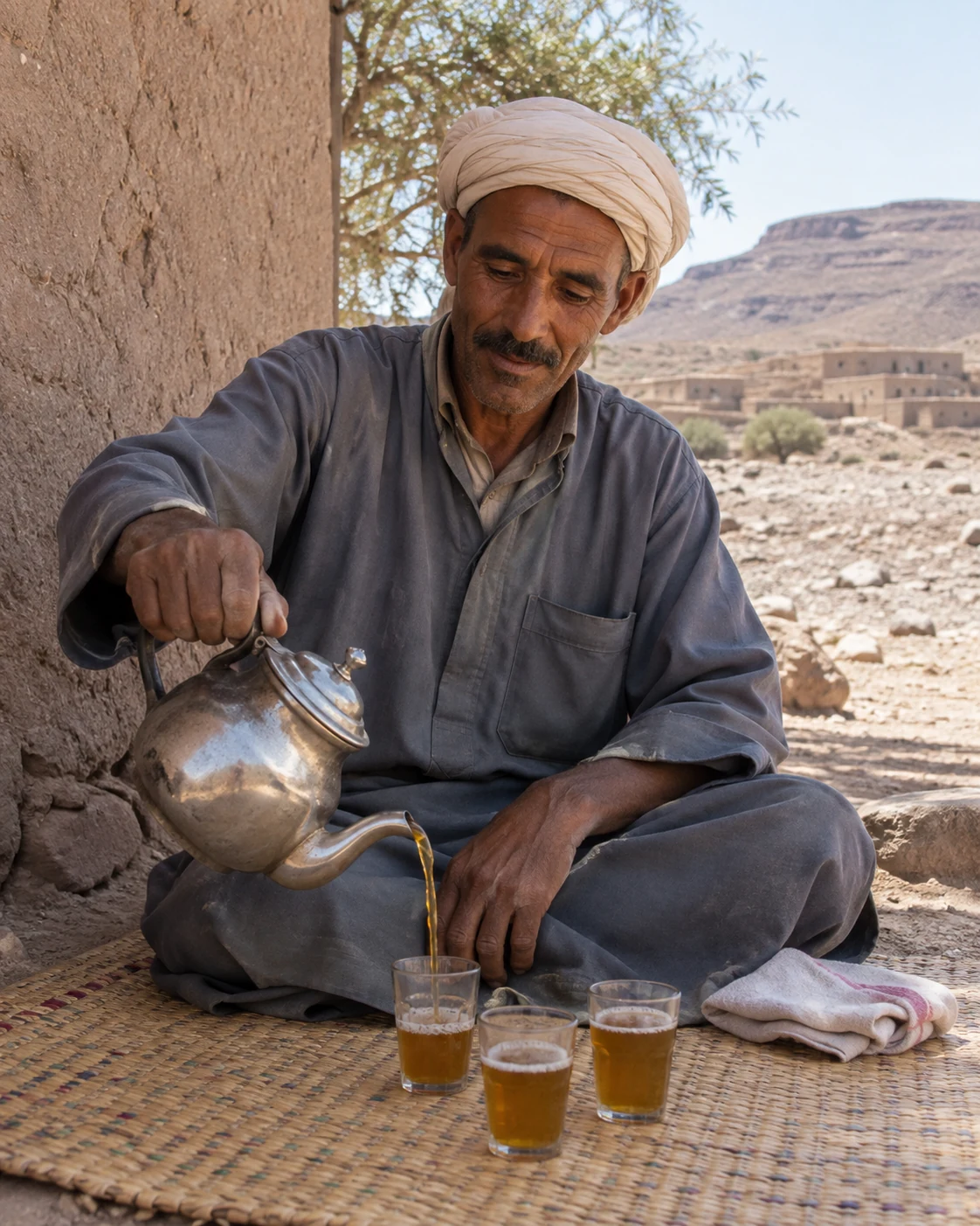
Desert hospitality
A low table, a rug, a pot and small glasses can turn a pause in a long landscape into an act of welcome. Tea travels well because the essentials are compact; the pace is set by the host, not by a stopwatch.
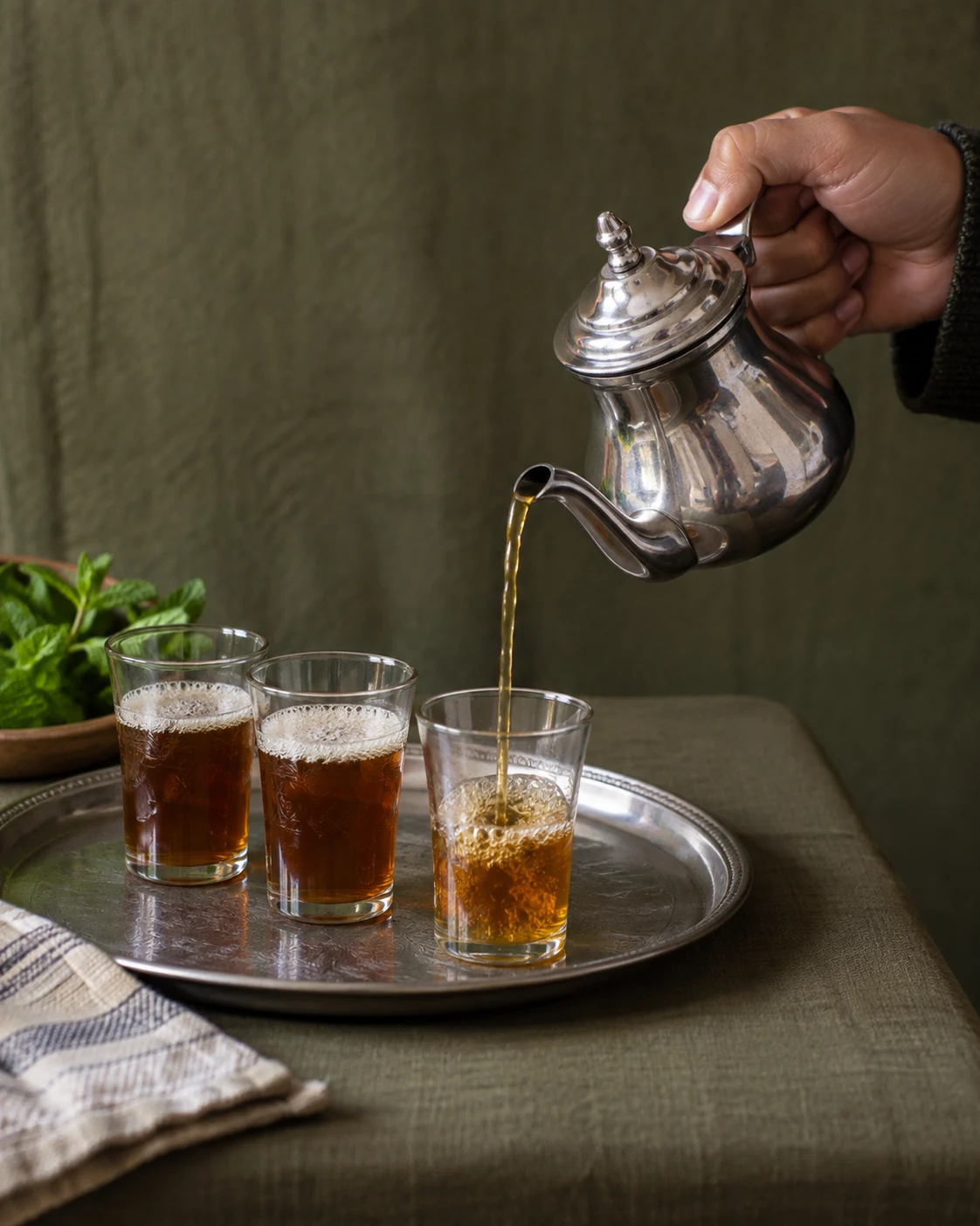
The pot keeps talking
Across Saharan and southern settings, visitors may encounter stronger or sweeter brews and repeated rounds. These are tendencies, not a single regional formula; family and occasion matter just as much. [6]
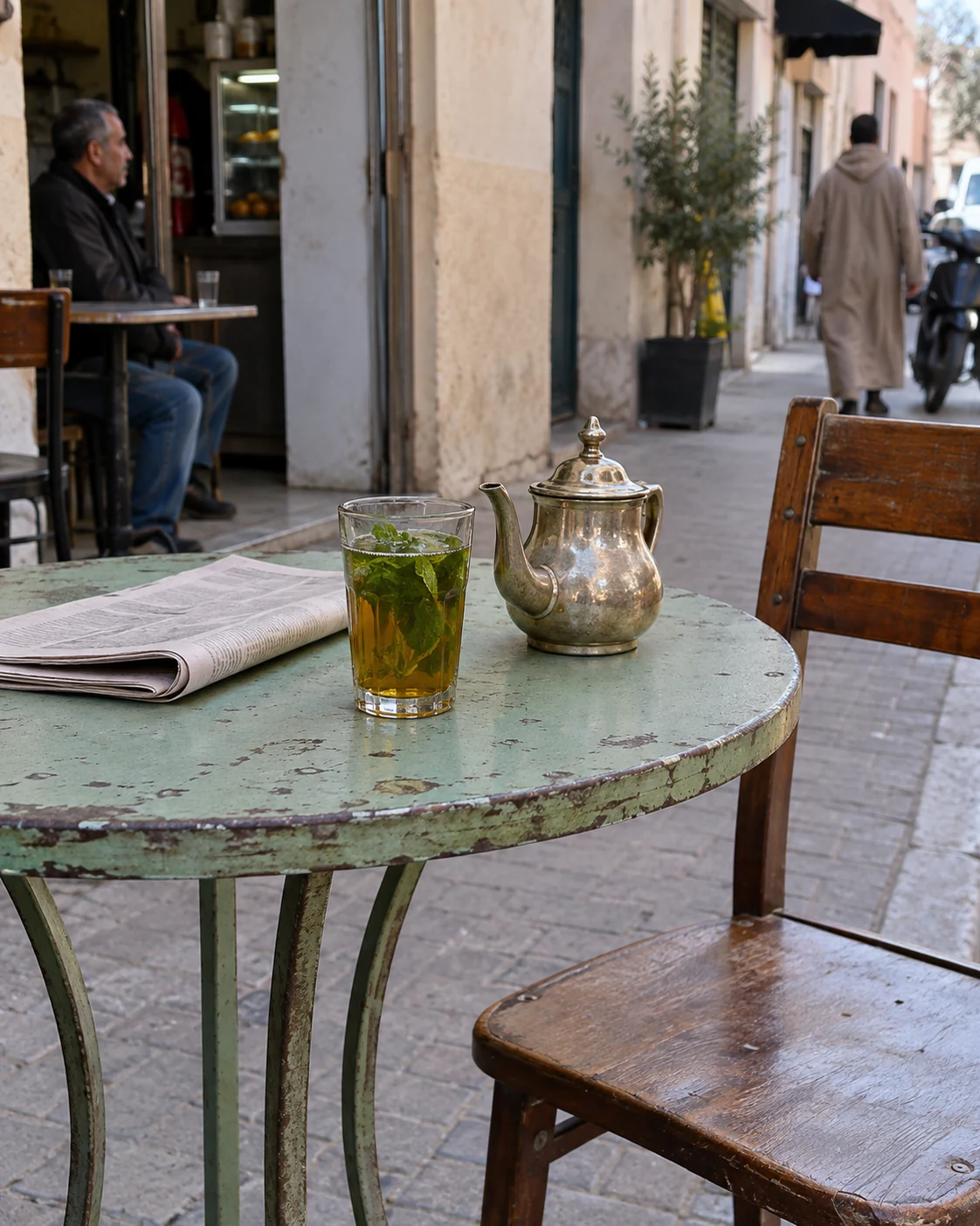
Tea between things
Tea does not need a feast. It can sit between errands and dinner, beside conversation, bread or a few pastries. The ceremony can be polished or completely ordinary and still feel recognisably Moroccan. [9]
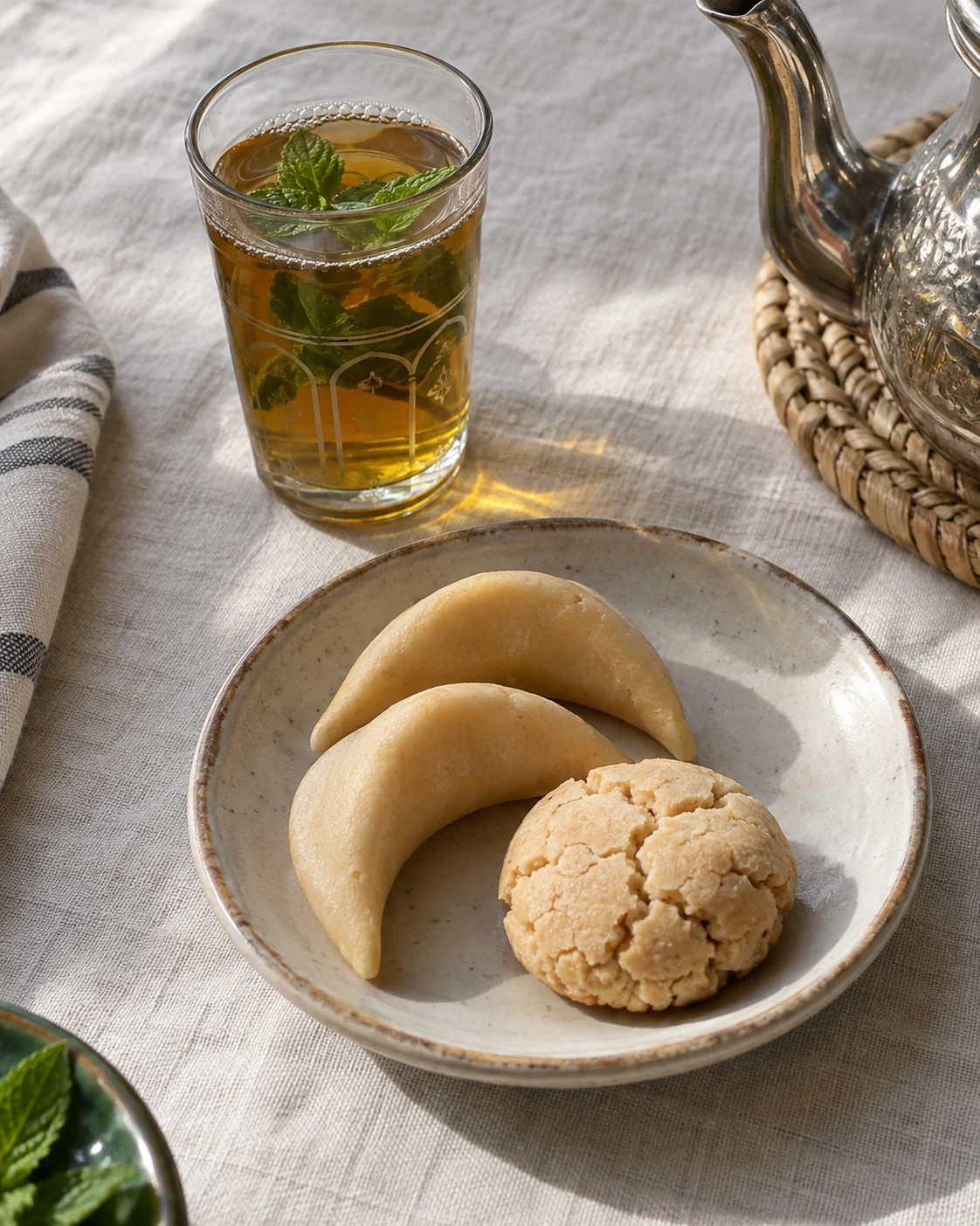
Pastry hour
Almond pastries, ghriba, chebakia or a piece of bread can meet the tea’s tannic edge. The pairing changes from home to home; the point is contrast, not a compulsory menu. [3]
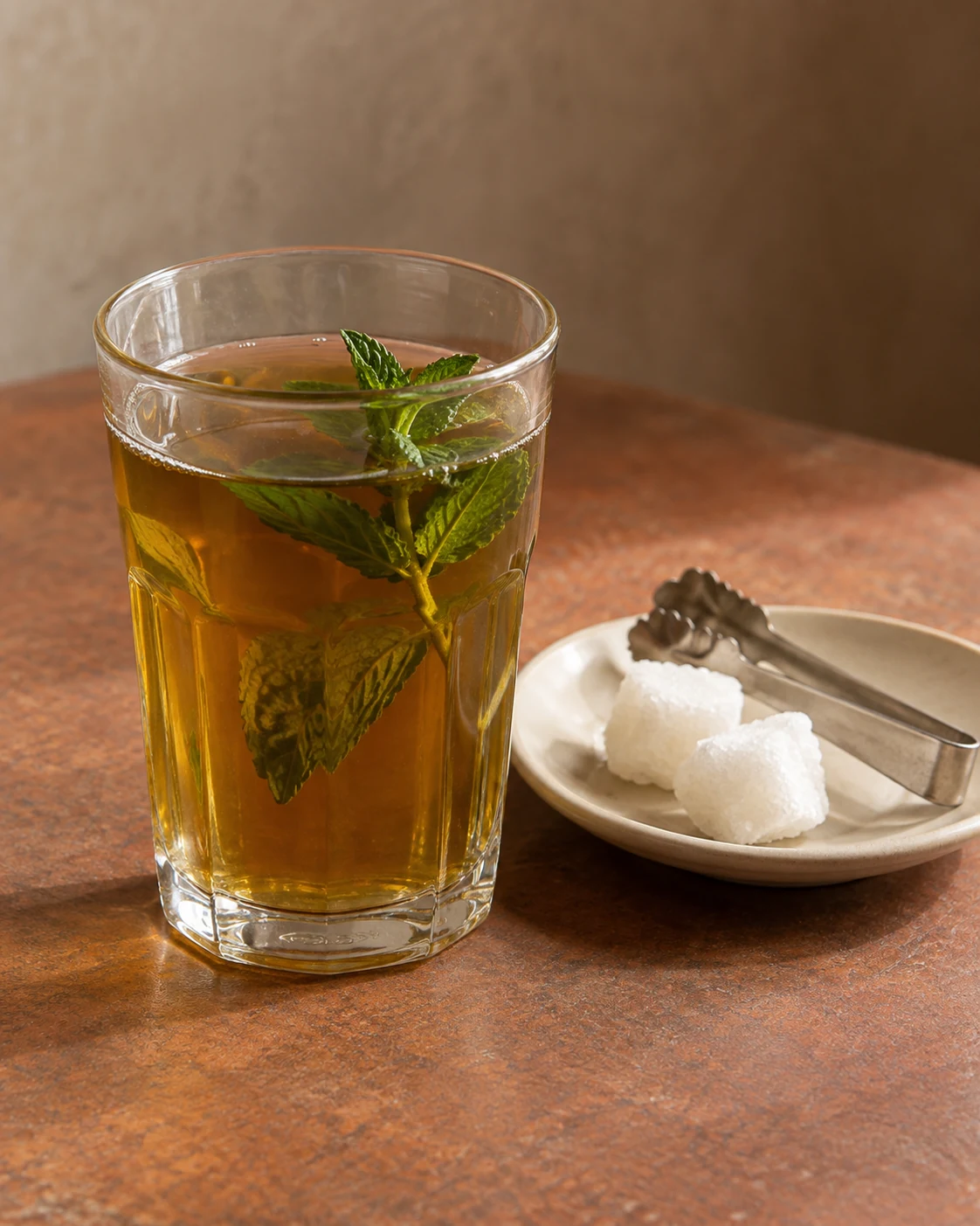
Less sweet, more sweet
Moroccan tea is often generously sweetened, but there is no useful authenticity test based on a spoon count. Some households make it intensely sweet; others pull back the sugar and let green tea and mint speak more clearly. [1]
Mint is the centre, not the only possibility.
Fresh spearmint is the familiar signature, while verbena, wormwood and other aromatics may appear according to season and household. [6]
Variation is not a mistake.
Recipes that disagree about rinsing, mint timing or sugar are evidence of living practice. Treat them as family methods, not errors that need one universal correction.
05 · The language of the glass
Four elements.
One careful balance.
The drink is spare enough that every element is exposed. A stale mint bunch, over-extracted tea or careless sugar balance has nowhere to hide.
The ingredients look simple; the judgement is the recipe.
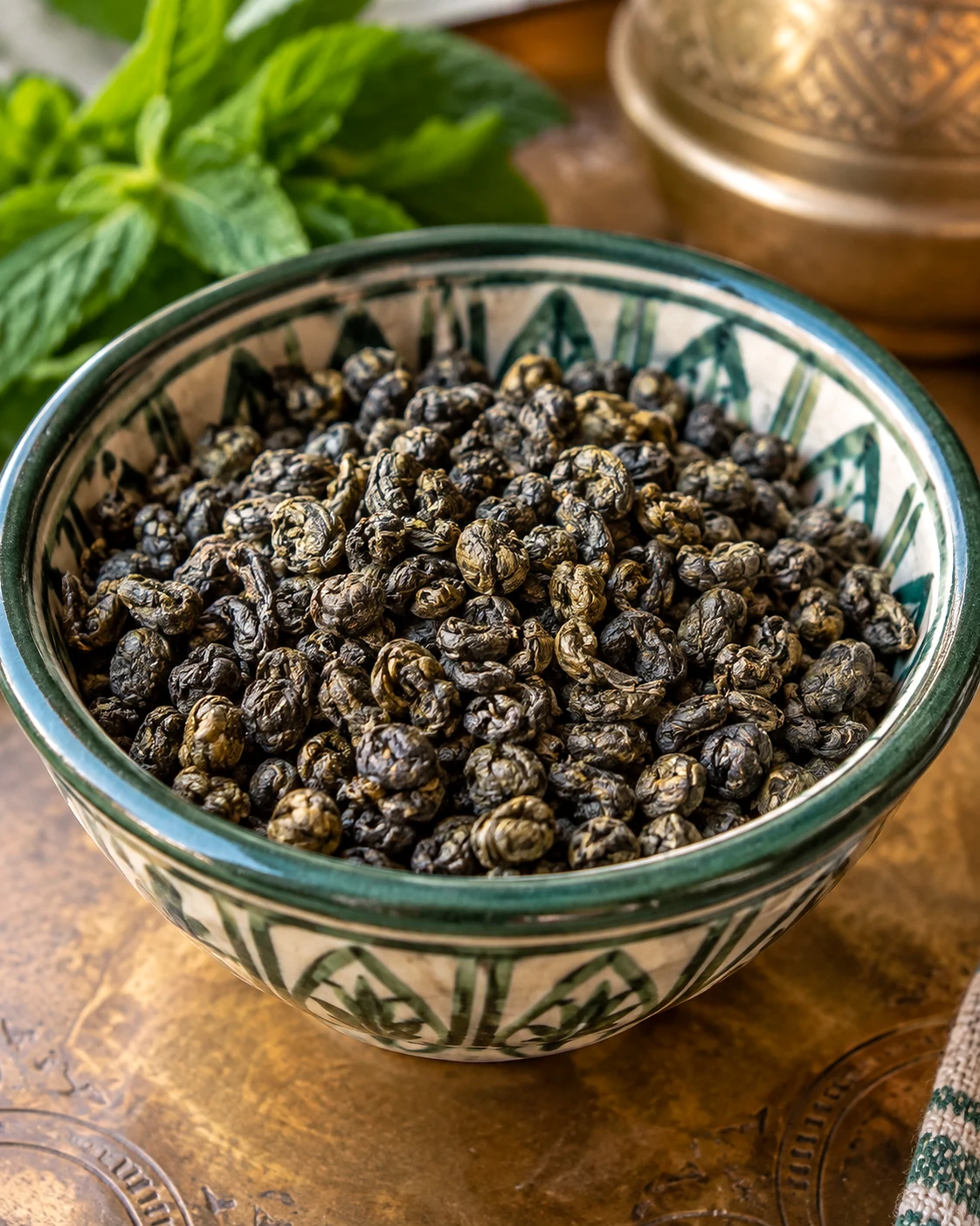
Gunpowder green tea
The tannic backbone.
Chinese green tea gives the drink its structure. Gunpowder is named for the small rolled pellets, which unfurl dramatically in hot water. [1]

Nana / fresh mint
The aromatic signature.
Spearmint brings the bright green fragrance most visitors associate with Moroccan tea. Freshness matters: leaves should smell alive before they ever meet the pot. [6]
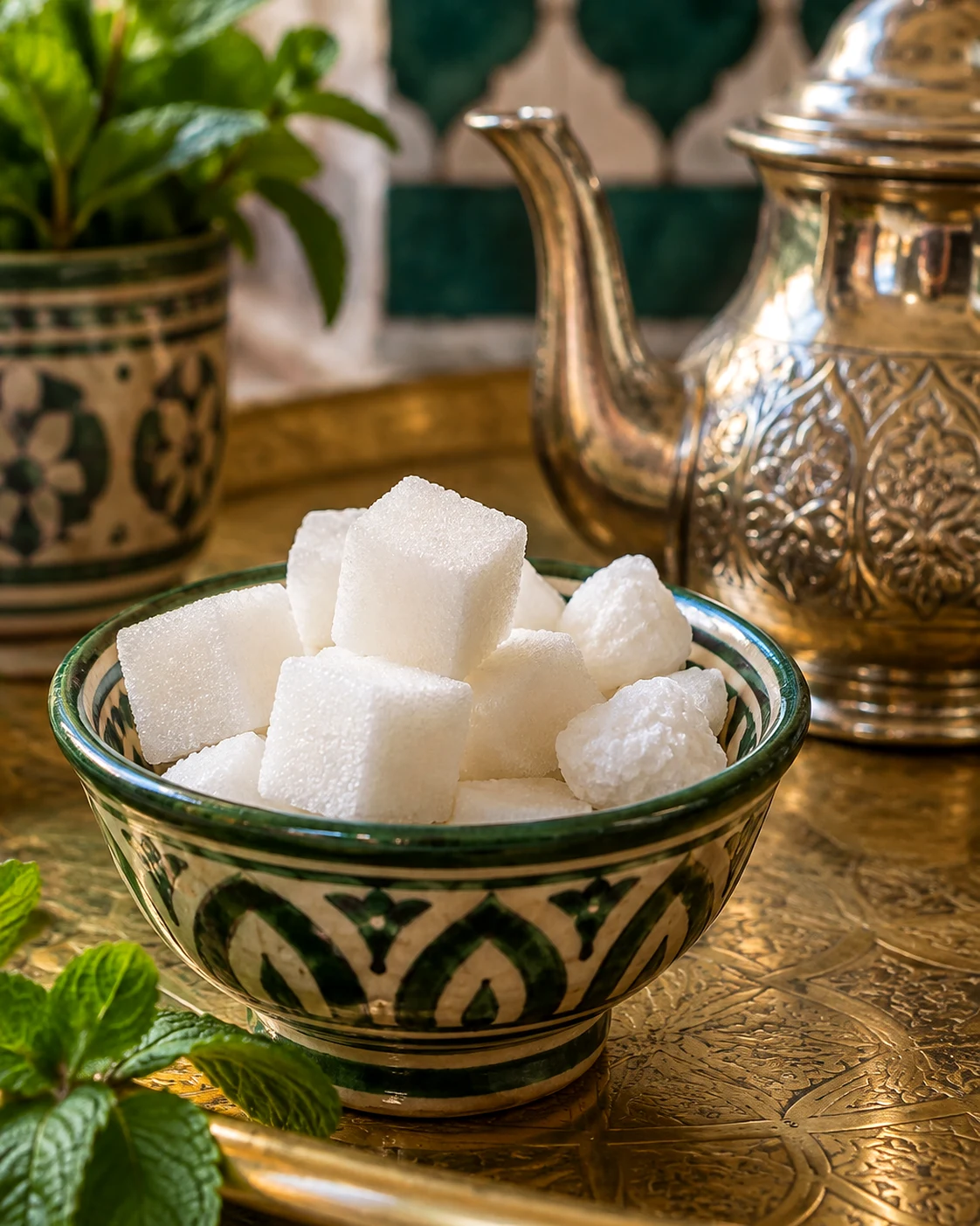
Sugar
Tradition, not a fixed number.
Moroccan tea is often notably sweet. Historically, sugar loaves were part of the tea economy; today cubes or granulated sugar are common. The exact sweetness belongs to the household. [6]
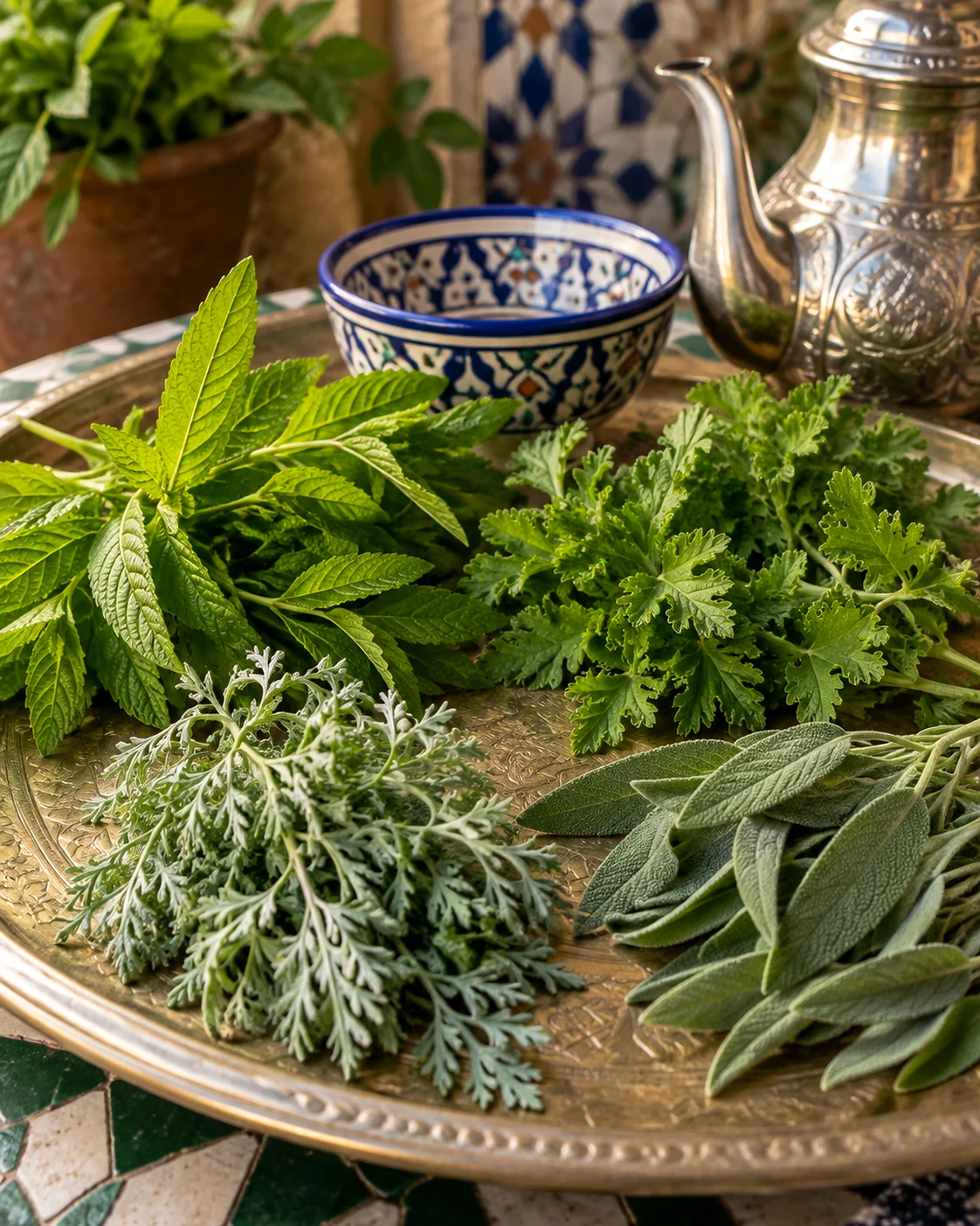
Seasonal aromatics
A garden can change the pot.
Verbena, wormwood, geranium, sage or other herbs may join the mint in particular homes or seasons. They are possibilities, not a compulsory Moroccan blend. [1] [6]
Explore the four elements
LEAF · MINT · WATER · SUGAR
The quiet
choreography.
The finished glass depends less on spectacle than on the order in which the host builds and judges the pot.
Green tea contributes bitterness and body; mint supplies volatile freshness; sugar rounds the edges; hot water extracts all three. Too much time or heat can make the leaf coarse. Too timid an infusion can disappear under mint and sugar.
A good glass tastes integrated: you notice tea, mint and sweetness without one erasing the others.
Rinsing is a method, not a dogma.
Some Moroccan recipes rinse the rolled leaves to wake them and clear harsh dust. Others distinguish between a first aromatic infusion to keep and a later rinse to discard. Follow the method as a whole rather than mixing half of two techniques. [2]
Mint is handled for aroma.
Fresh mint can go into the pot in generous sprigs. Some cooks push it beneath the liquid so exposed leaves do not scorch; others add part of the mint later for a fresher top note.
Taste decides the last move.
A poured glass reveals colour, bitterness, perfume and sweetness. Returning it to the pot can mix the brew; tasting tells the host whether the next pour is ready.

06 · Market, season & family
Fresh mint
changes the day.
Tea begins with imported leaf, but the pot belongs to the place where it is made.
Bundles of mint at a neighbourhood market are a practical ingredient and a daily signal. In warm months the familiar green fragrance may dominate. In cooler weather, other herbs can enter the pot, giving a winter tea more bitterness or perfume.
Geography matters without creating hard borders. A Marrakech café, a family home in Fez, a village kitchen and a Saharan camp can all serve recognisably Moroccan tea while disagreeing about strength, sweetness, glass size or the herbs that belong in the pot.
In the market
Tea leaves, sugar and fresh herbs turn global trade and local produce into an everyday ritual.
Explore Marrakech ↗At home
The most important recipe may be the one nobody writes down: learned by watching who rinses, tastes and pours.
Explore Moroccan food culture ↗Across Morocco
Different glasses, herbs and strengths are better read as overlapping habits than rigid regional borders.
Discover Taste Morocco ↗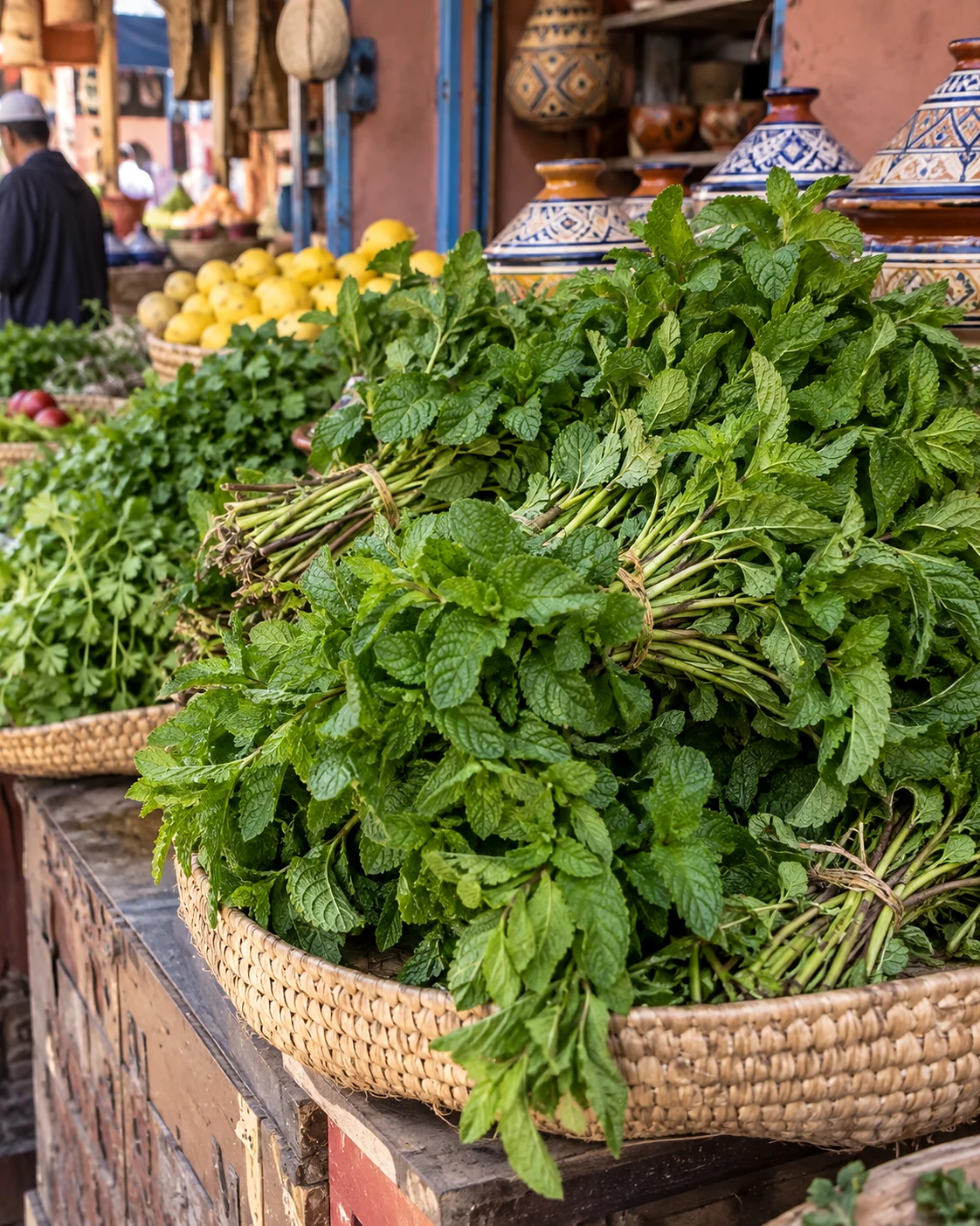
07 · Hospitality & the shared pause
Pour the tea.
Keep talking.
The smallest service can carry a great deal of social meaning.
The Moroccan National Tourist Office describes mint tea as a ceremonial drink associated with welcoming guests. That does not mean every glass arrives with formal rules. Tea can be served at breakfast, during a visit, after shopping, with afternoon bread and pastries, or simply because people have sat down together. [3]
The host’s attention is part of the drink: bringing the tray, checking the pot, offering another glass. A guest can follow the household’s rhythm rather than arriving with a checklist of “correct” etiquette.
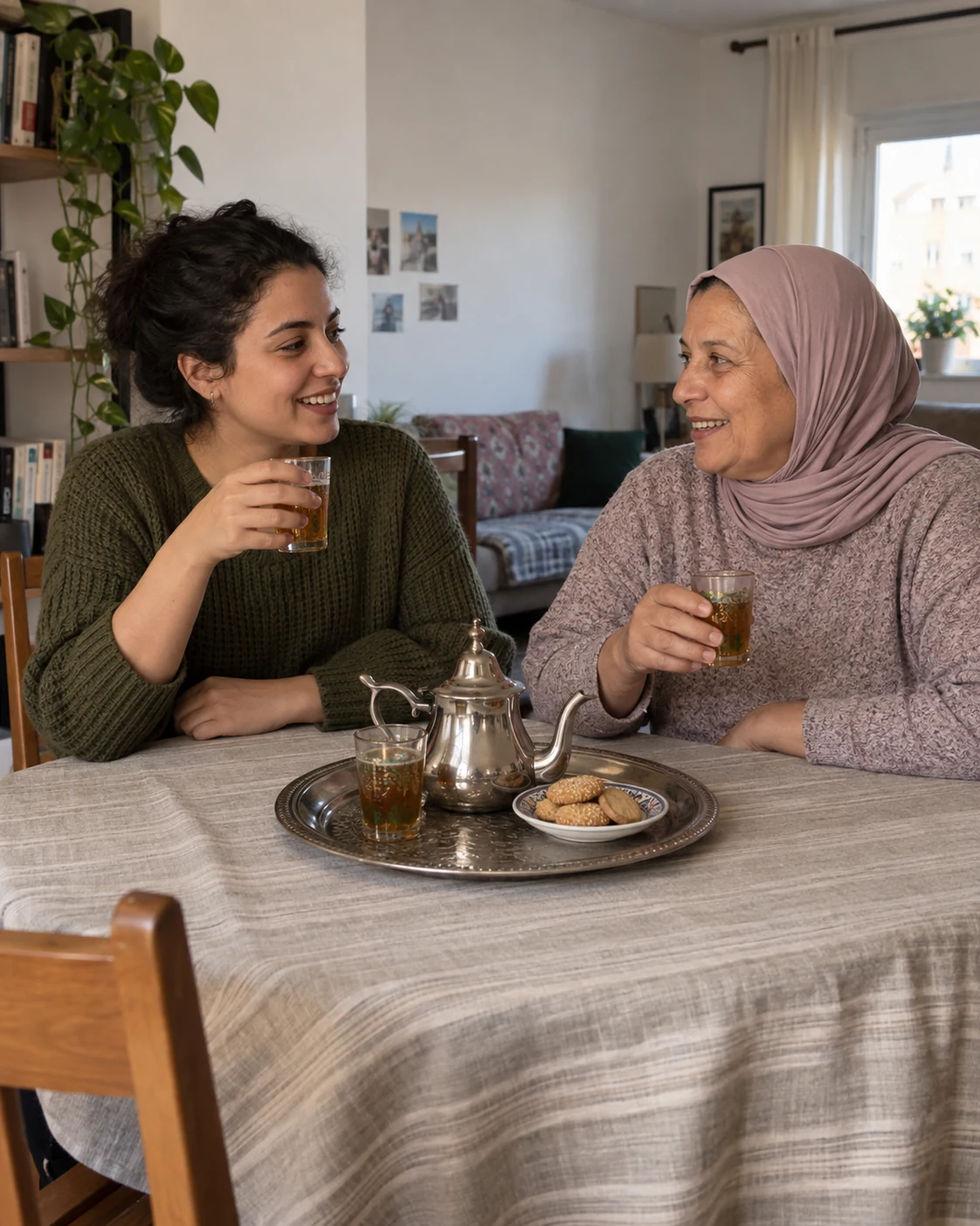
Offer first. Explain later.
Tea is often one of the first things placed before a visitor. The gesture says more than “have a drink”: it gives the meeting a pace and creates a shared moment before business, food or conversation continues.
Official tourism material explicitly links mint tea with welcome and conviviality. [3]
Sweet things are companions, not rules.
Moroccan pastries are often served with tea. Gazelle horns, ghriba and chebakia each bring a different texture, but a tea tray can be just as at home beside bread, msemen, baghrir, nuts or nothing at all. [3]
The variety matters because it keeps hospitality human. A weekday snack does not need to imitate a wedding tray.
Small vessel.
Full attention.
Decorated tea glasses put colour around the amber drink and make the rising foam visible. Their small size suits repeated pours and encourages the tea to be taken in stages rather than as one large mug.
About “three glasses”.
The famous saying that gives three glasses different meanings is widely repeated in travel writing. Its precise origin is difficult to establish, and it should not be presented as a universal Moroccan rule. Some hosts serve multiple rounds; the social meaning comes from the people and occasion, not a mandatory count.
08 · Berrad, tray & glass
Before the pour,
the objects.
A tea service is useful craft that happens to be beautiful.
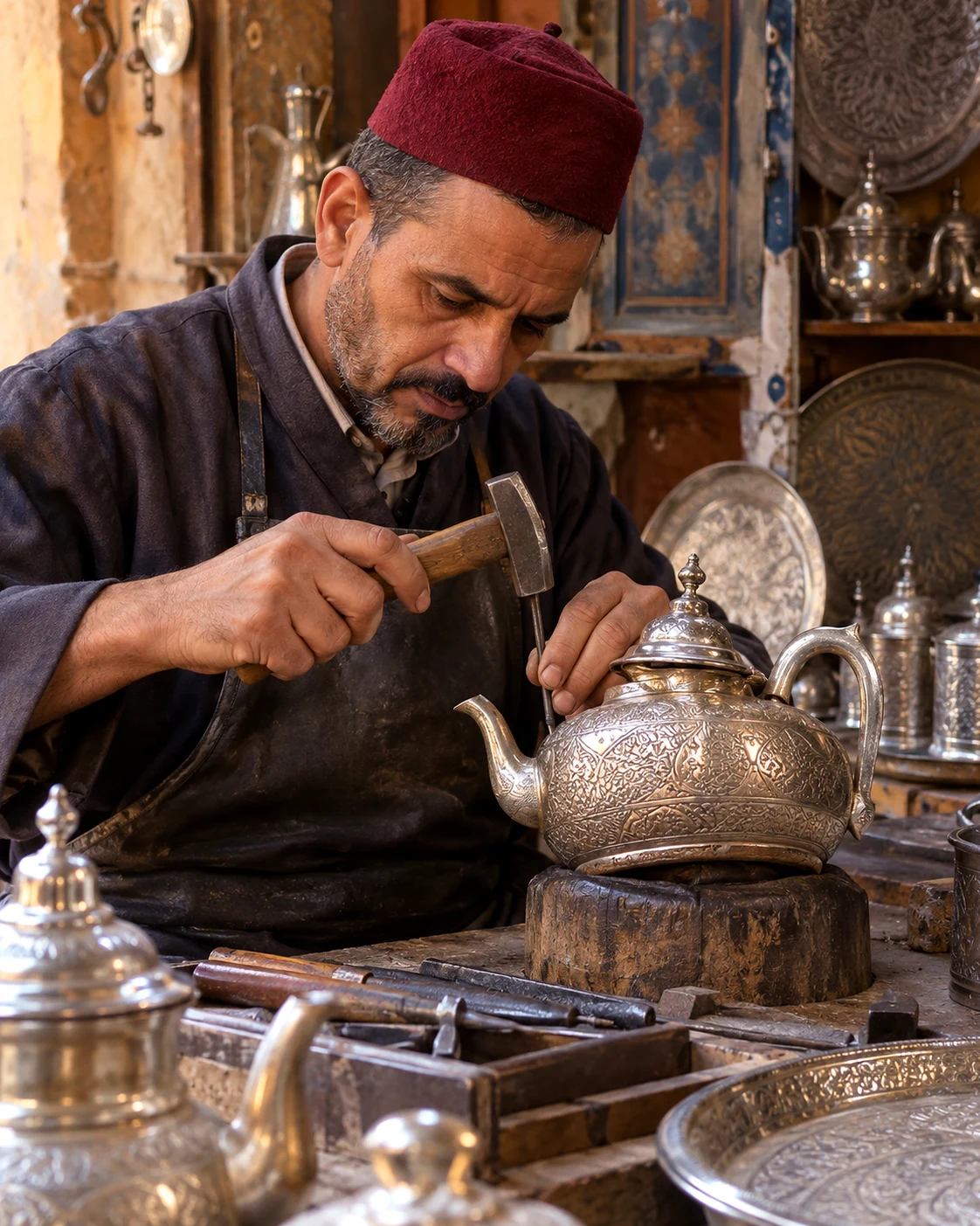
The Moroccan metal teapot is designed for repeated service. Many have a long curved spout and small filtering holes near the base of the spout, keeping most loose leaves inside the pot as the tea is poured. [2]
Materials and finishes vary: polished metal, engraved surfaces, silver-coloured plating and more contemporary stainless-steel forms all exist. The serving tray extends the object into a composition of pot, glasses, sugar and sometimes extra mint.
The glasses carry their own craft language—painted, etched, gilded or comparatively plain. There is no single “official” Moroccan tea set. What makes the service recognisable is the relationship between practical objects and a practiced gesture.
Explore Moroccan craft & design ↗09 · A closer look
Good questions.
Clear answers.
The details are more useful than the clichés.
Is Moroccan mint tea caffeinated?
Yes. The classic base is green tea, so the drink contains caffeine. The amount in a glass depends on the tea, quantity, extraction and serving size.
Is Moroccan tea always extremely sweet?
It is traditionally often sweet, sometimes very sweet, but household preference varies. Contemporary cooks may reduce the sugar without changing the basic identity of green tea with mint. [1]
What kind of mint is used?
Fresh spearmint—often called nana—is the familiar choice. Other aromatic herbs may join it seasonally or according to family taste. [6]
Why pour from high above the glass?
The thin stream mixes and aerates the tea and produces a light foam. It also makes the act of serving visible. The exact height is not a universal rule; controlled pouring matters more than spectacle.
Do Moroccans only drink mint tea after meals?
No. Tea can appear throughout the day and with sweet or savoury food, or with no food at all. It can welcome guests, accompany an afternoon break or extend time together. [1]
What happens when fresh mint is scarce?
Some households use other aromatics or dried herbs, especially in colder seasons. Wormwood, verbena and other herbs are documented possibilities, but combinations vary and should not be turned into a single winter recipe. [6]
Are the famous “three glasses” a rule?
No. Multiple rounds are common in many settings, but the poetic three-glass saying is better treated as a widely circulated piece of tea lore than as a universal national rule.
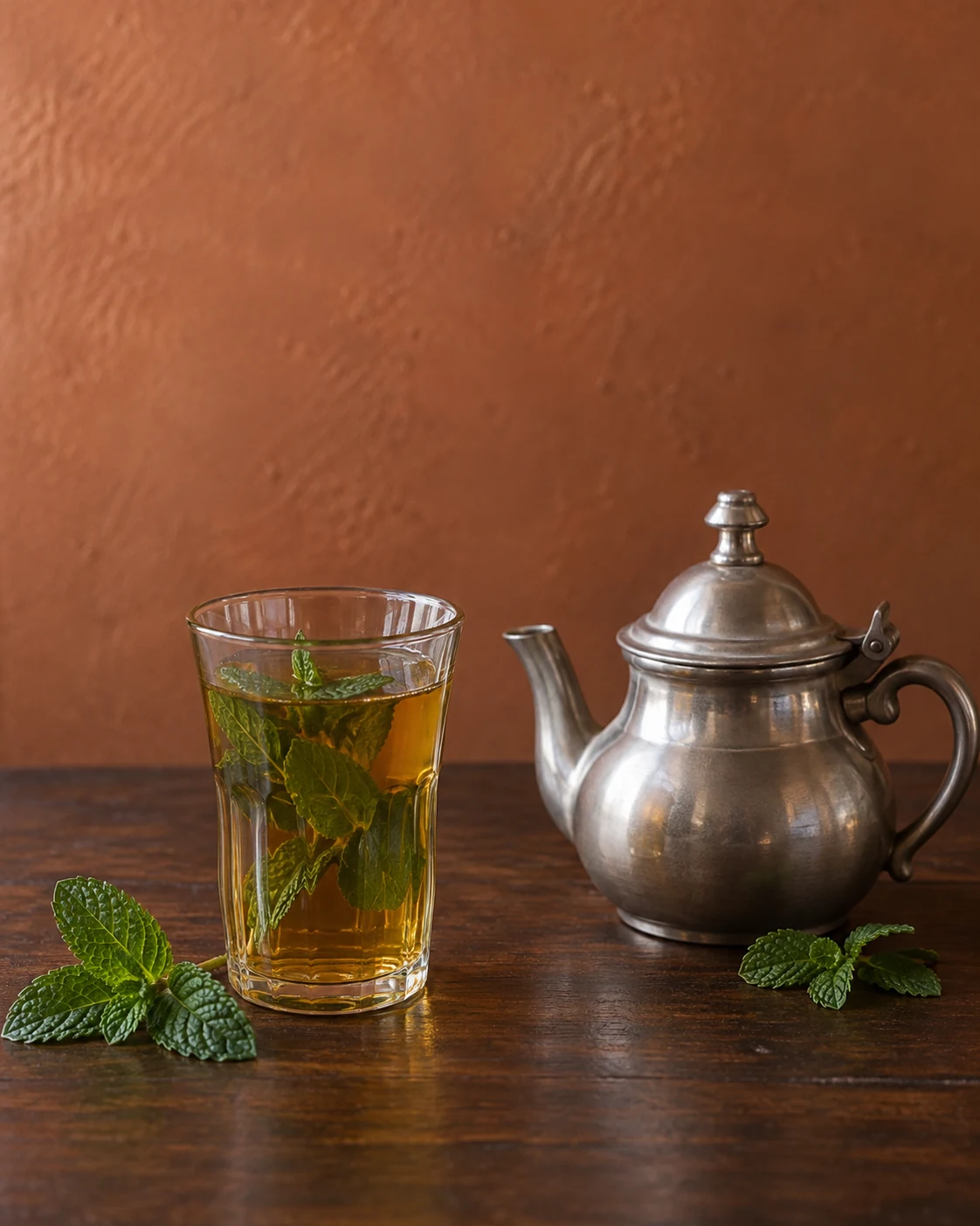 EXOTIC MOROCCOTASTE · THE GUIDE COLLECTIONMoroccan Mint TeaIngredients, technique
and the Moroccan table
From the story to your kitchen
Keep the flavour.
Go a little deeper.
Green tea, fresh herbs and the time given to a guest.
Explore the Exotic Morocco guide collection for a closer look at ingredients, kitchen knowledge and the culture around the table.
- Understand the ingredients and their roles
- Recognise the techniques and textures that matter
- Bring context and confidence to the way you cook and serve
Continue tasting Morocco
Follow the
table outward.
Another dish, another technique, another way into the Moroccan kitchen.
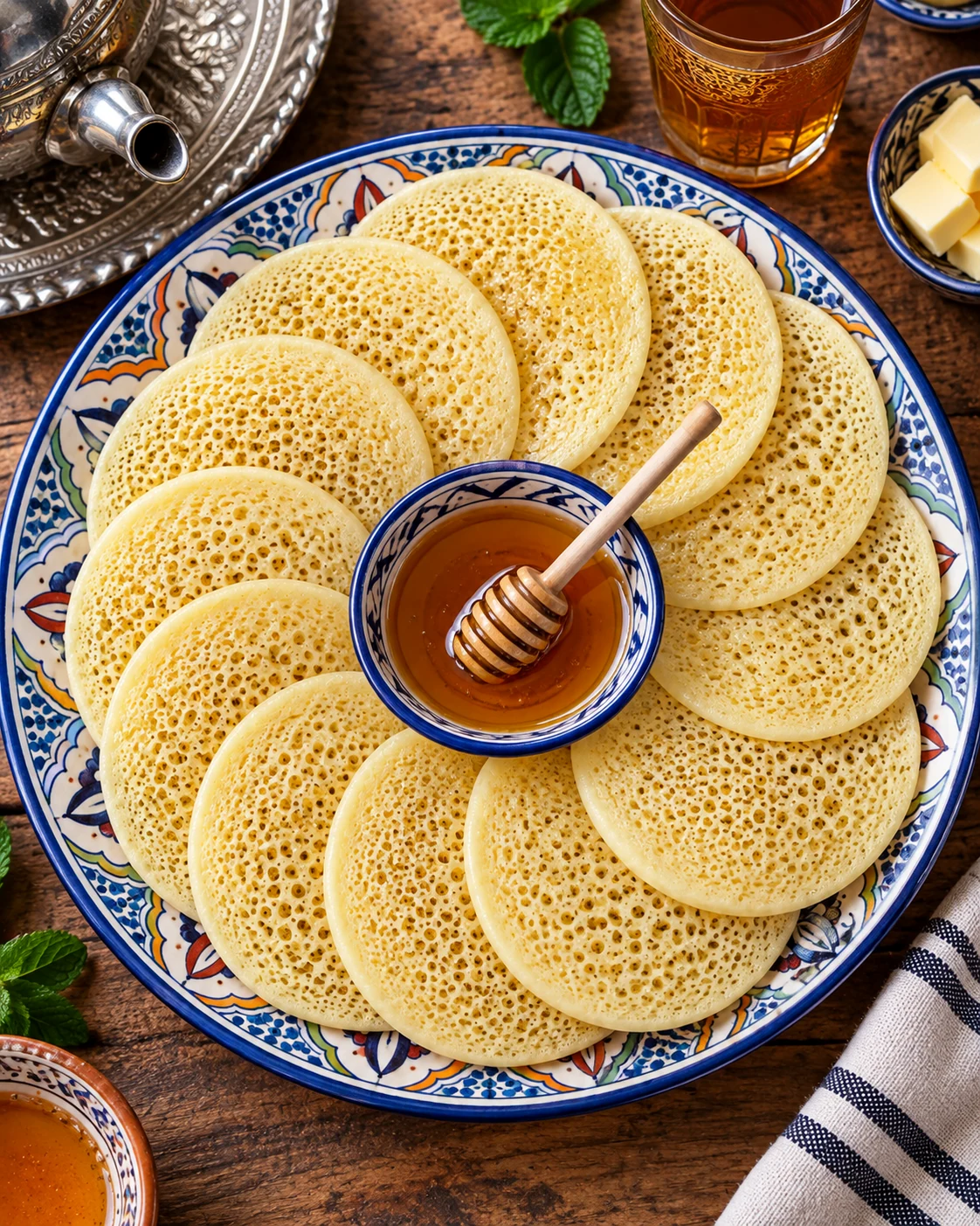
Baghrir
Light semolina pancakes with a surface of tiny holes.
Explore the story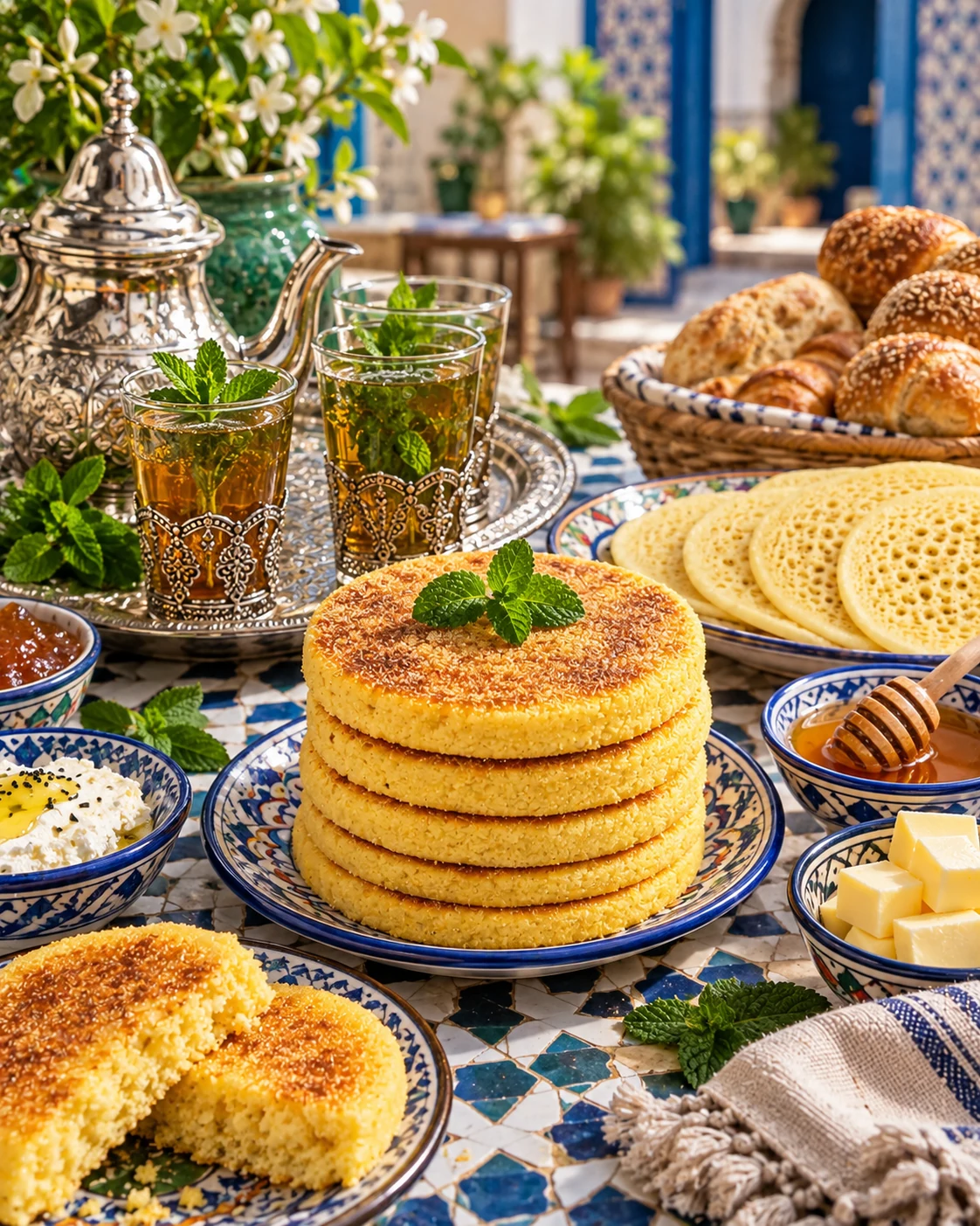
Harcha
Semolina, a hot pan and a tender, crumbly round.
Explore the story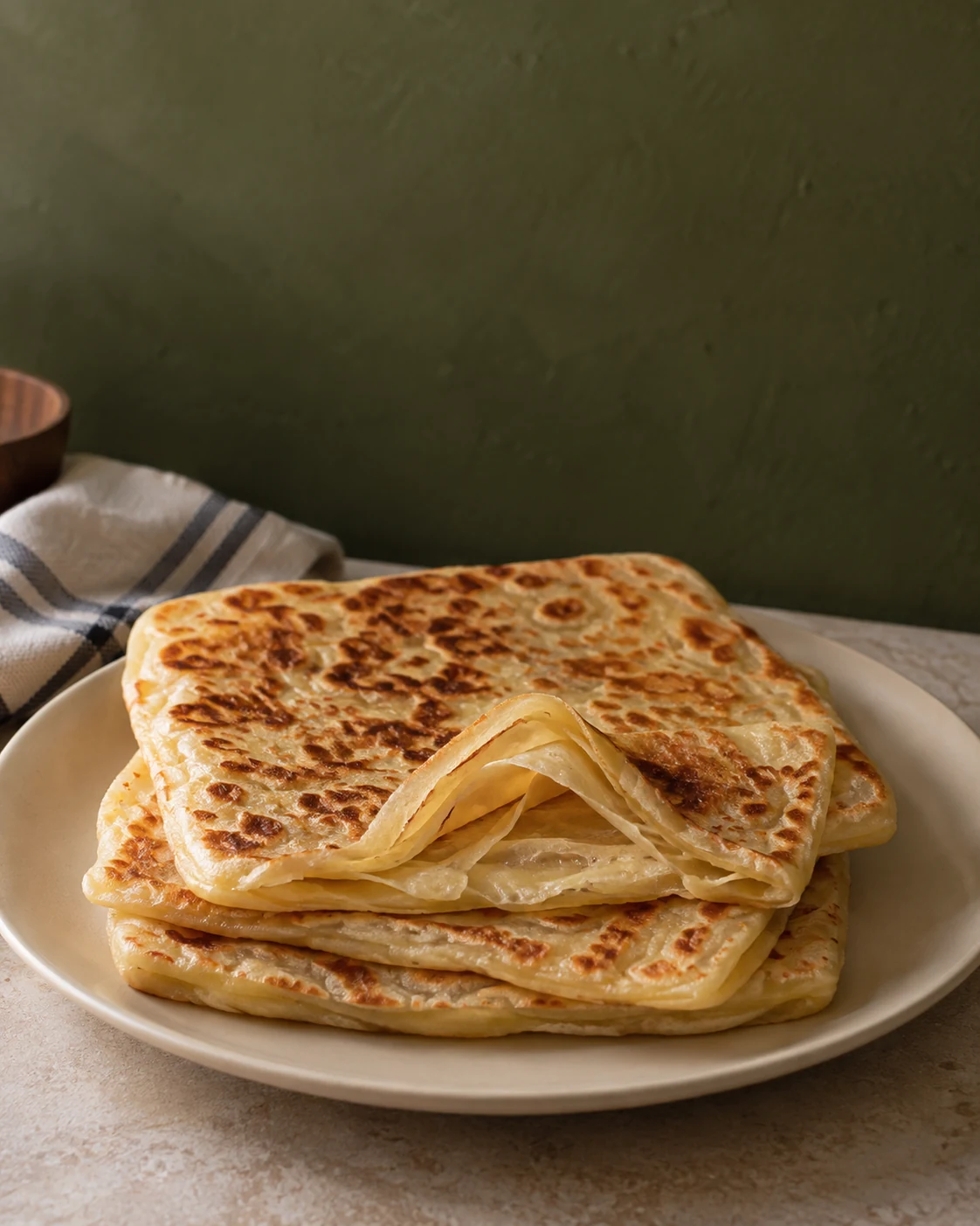
Msemen
Thinly stretched dough folded into supple, flaky layers.
Explore the story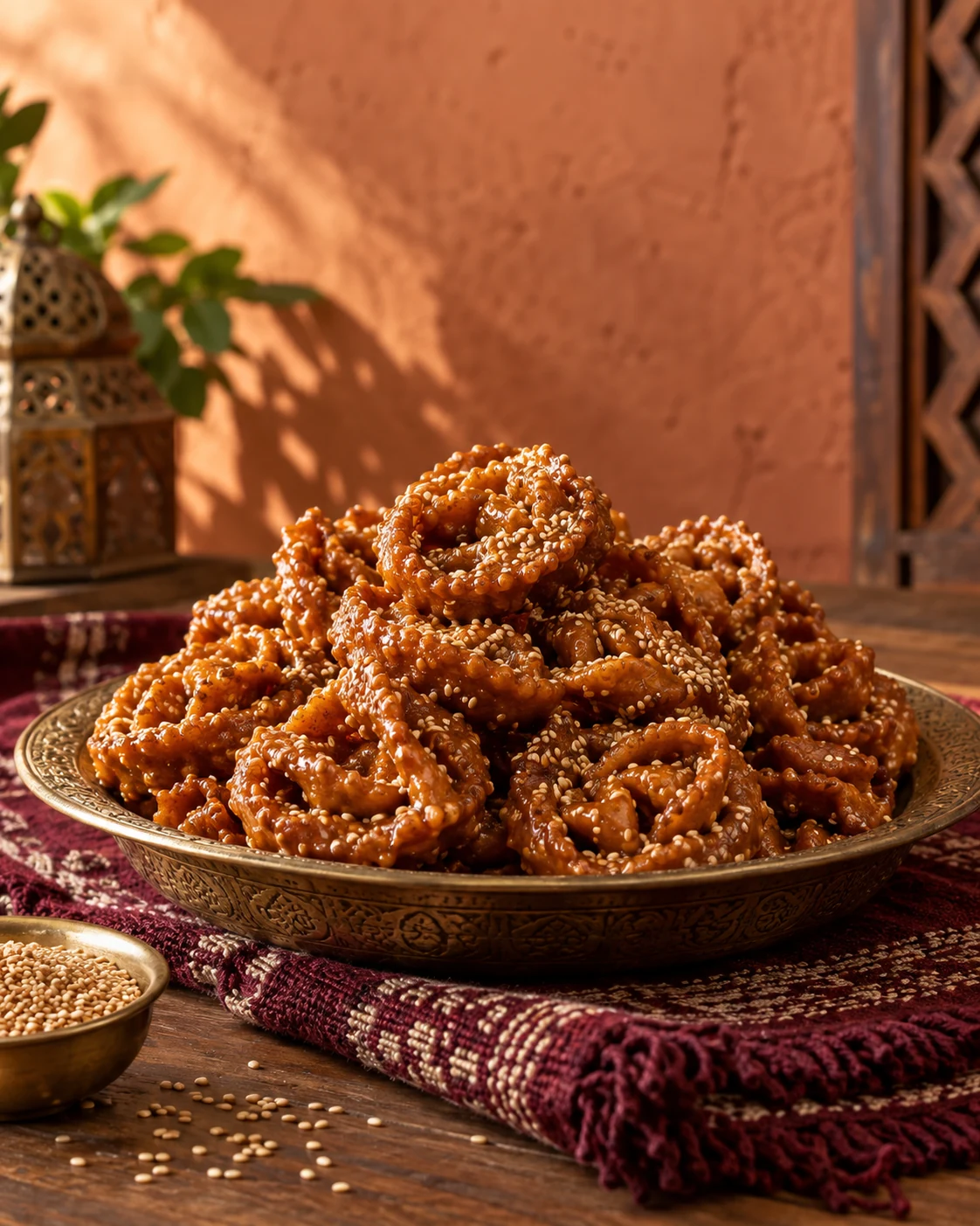
Chebakia
Folded sesame pastry finished with honey.
Explore the story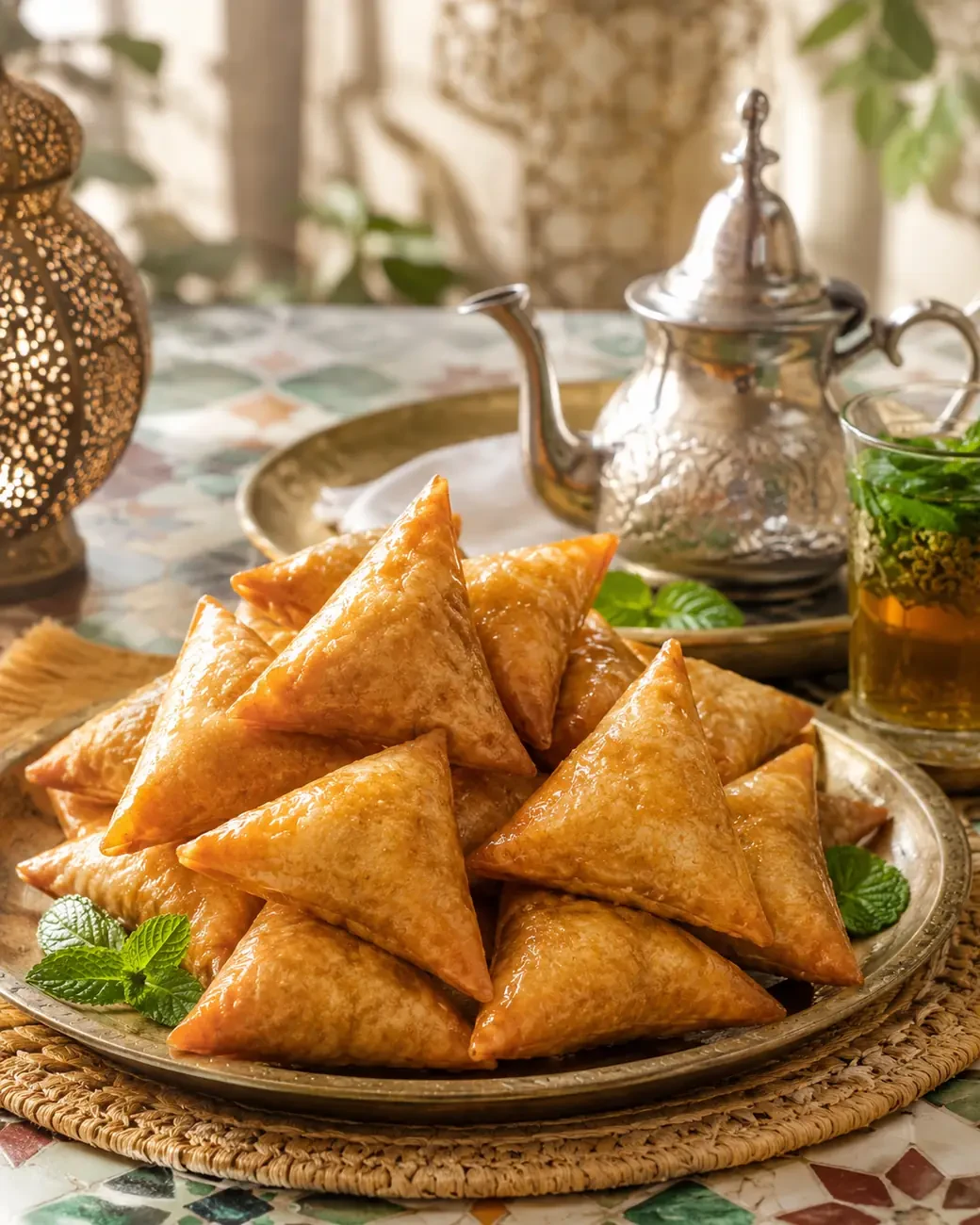
Briouats
Small folded pastries, with both savoury and sweet possibilities.
Explore the story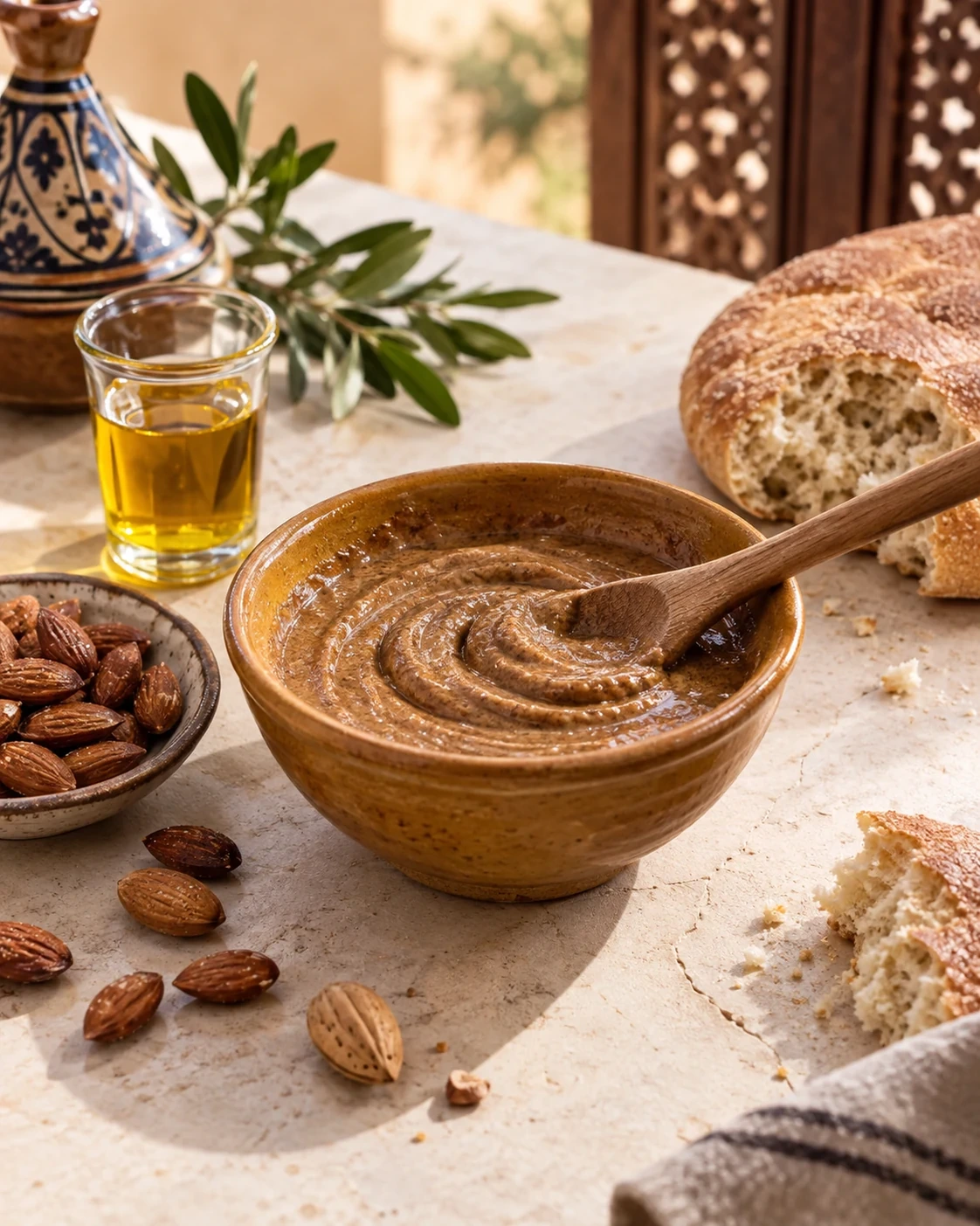
Amlou
Roasted almonds, culinary argan oil and honey from the southwest.
Explore the storySources & editorial notes
Photography combines existing Exotic Morocco assets and generated editorial illustrations. These images do not document a named person, household or historical event.
- Nargisse Benkabbou · Moroccan Mint Tea — fresh mint, sugar, water, gunpowder green tea, sweetness and aromatic variations.
- Cooking with Alia · How to Make Moroccan Mint Tea — teapot, leaf handling, rinsing, mixing and pouring.
- Moroccan National Tourist Office · Food & drinks — mint tea, hospitality, coloured glasses and pastry pairings.
- Georgetown University Department of History · Completed Dissertations — Graham H. Cornwell, Sweetening the Pot: A History of Tea and Sugar in Morocco, 1850–1960.
- Etty Terem · Redefining Patterns of Consumption — imported tea, sugar and changing Moroccan consumption in the nineteenth century.
- Jeff Koehler · Tea in Morocco — culinary reporting on gunpowder tea, spearmint, winter herbs, glassware and tea service.
- Moroccan National Tourist Office · Language — everyday use of atay for tea.
- Izran van toen · Graham Cornwell: Een glas thee als fast food — accessible discussion of Cornwell’s research and the limits of the Crimean War origin story.
- Amanda Mouttaki · Moroccan Tea Time — contemporary household tea-time context, breads and pastries.
EXOTIC MOROCCO Places. People. The pleasure of knowing more.Back to top ↑