

01 · A pancake built to absorb
A thousand holes.
One clear purpose.
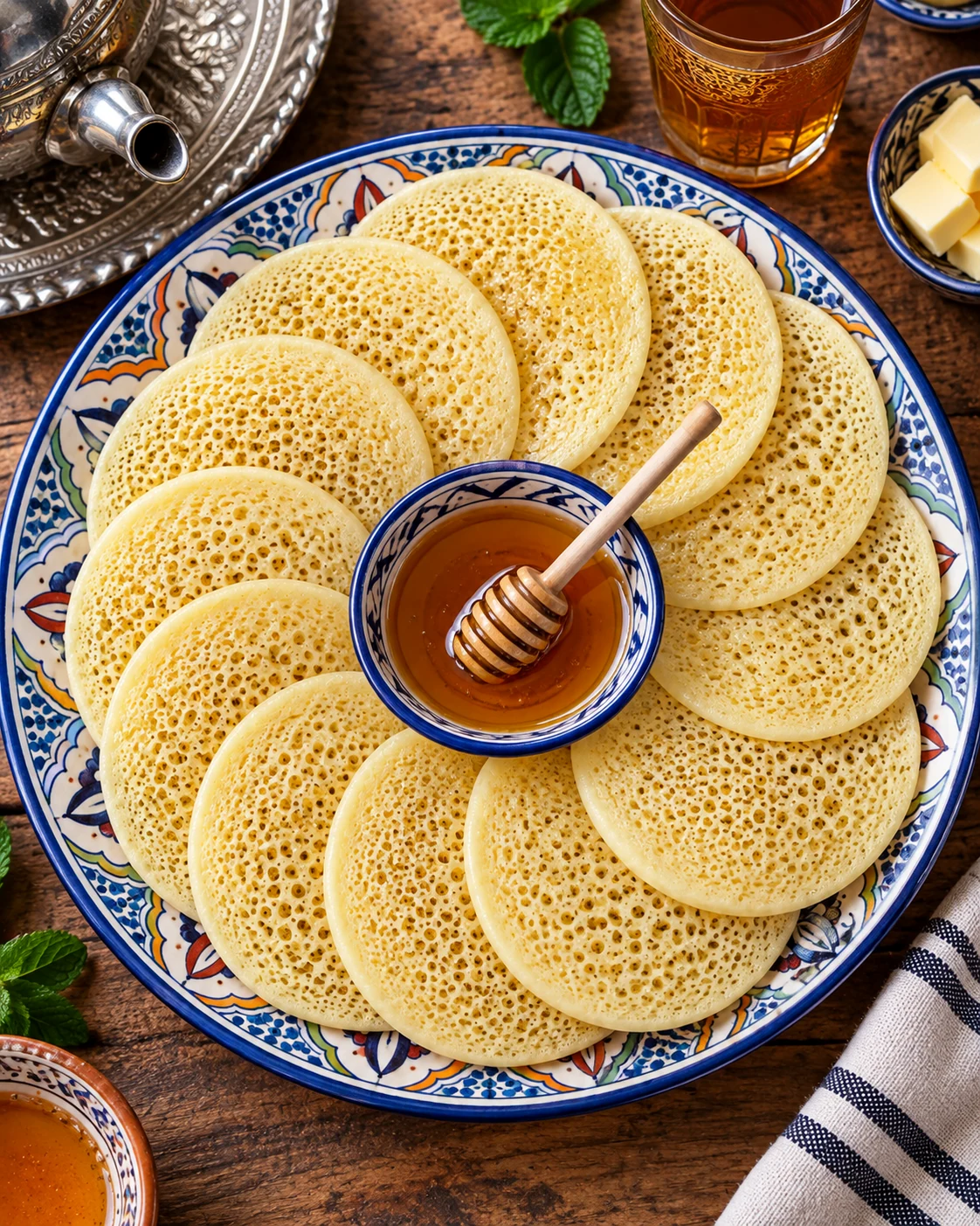
Baghrir is instantly recognisable: pale-gold, tender and covered with tiny open pores.
Those holes are not decoration. A leavened semolina batter releases bubbles as it cooks; because baghrir is normally cooked on one side, the bubbles rise and burst across the top instead of being sealed under a second browned face. The result is a light, sponge-like pancake that drinks in whatever is served with it. [1] [3]
In Morocco, baghrir and beghrir are common spellings for the same food. It belongs comfortably at breakfast and tea time, where butter and honey are among its best-known companions. Jam is a documented alternative; amlou and olive oil also appear as serving choices in Moroccan food sources. The table changes, but the porous pancake remains the point. [1] [7] [8]
Baghrir looks simple because the ingredient list can be short. What makes it good is the relationship between fine semolina, hydration, leavening, batter texture and pan heat.
Enter Moroccan food culture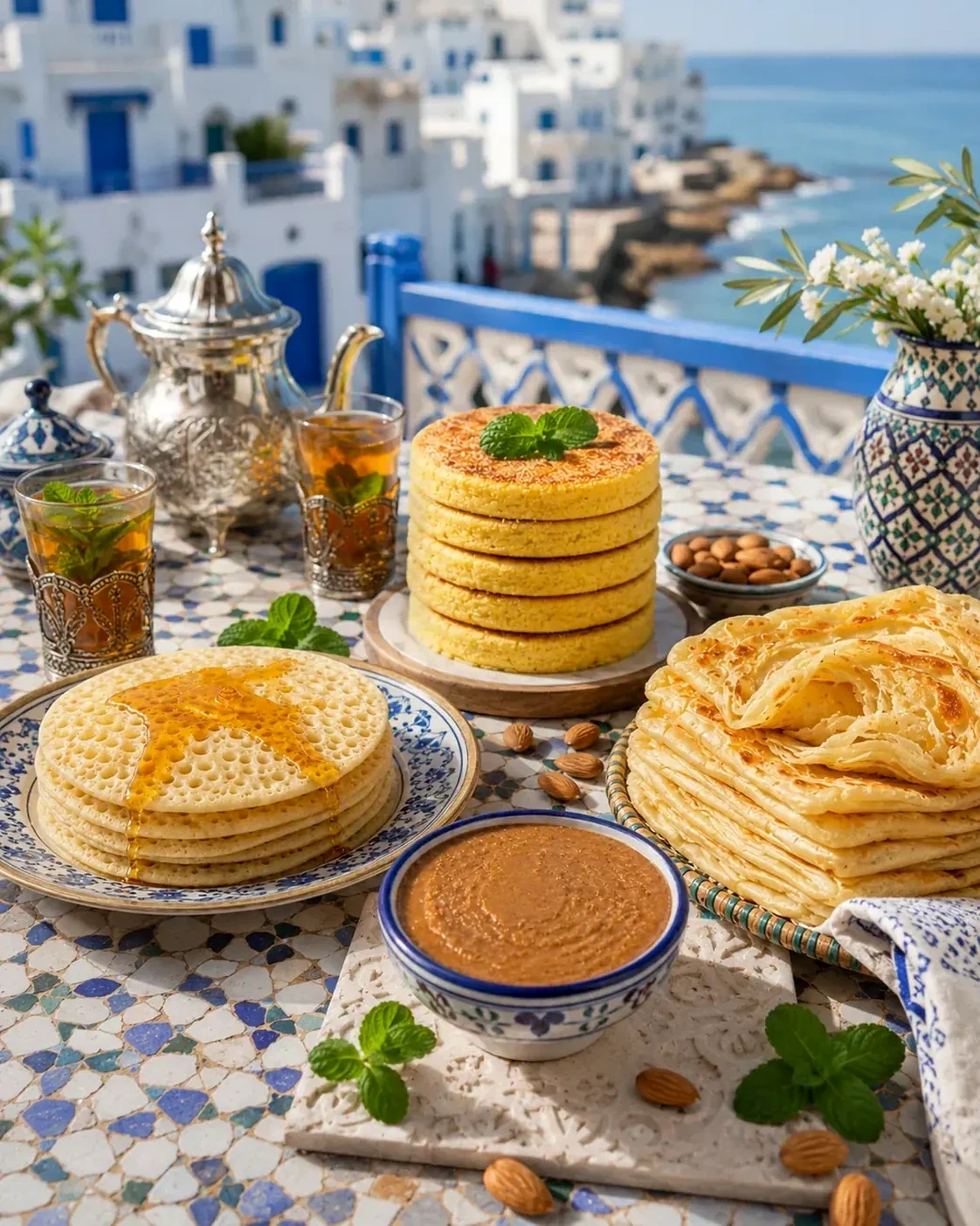
Open holes are the visible signature of an active batter.
The top sets through steam and heat without a normal flip.
Commonly served warm with butter, honey or household favourites.
02 · Roots & living tradition
Maghrebi roots.
Moroccan daily life.
Baghrir belongs to a wider North African food family and is strongly embedded in Moroccan cooking.
Baghrir belongs to the wider Maghrebi family of semolina pancakes. Its lacy surface and predominantly one-sided cooking are more useful guides to its identity than a precise origin date, which remains uncertain.[3] [4]
Robert Carrier’s 1987 Taste of Morocco already describes pale-gold beghrir cooked on one side on a griddle or flat earthenware pan and served with honey and melted butter, while contemporary Moroccan cooks document both traditional and quicker modern batters. [4] [2]
Names travel
Baghrir and beghrir are common Latin-script spellings. The nickname “thousand-hole pancake” describes the appearance rather than counting literal holes.
Technique evolves
Older-style yeasted batters may rest longer; many modern home recipes combine baker’s yeast with baking powder to shorten the wait and make the rise more predictable. [1]
Families keep it current
Salima Benkhalti remembers baghrir as a weekend treat learned from her aunt—useful evidence of household transmission, but one family memory rather than a rule for all Morocco. [5]
03 · Batter, bubbles & pan heat
The holes
are the method.
Baghrir is a batter pancake, not a folded dough. The batter needs enough fluidity to spread, enough leavening to create bubbles and enough structure for those bubbles to open without collapsing.
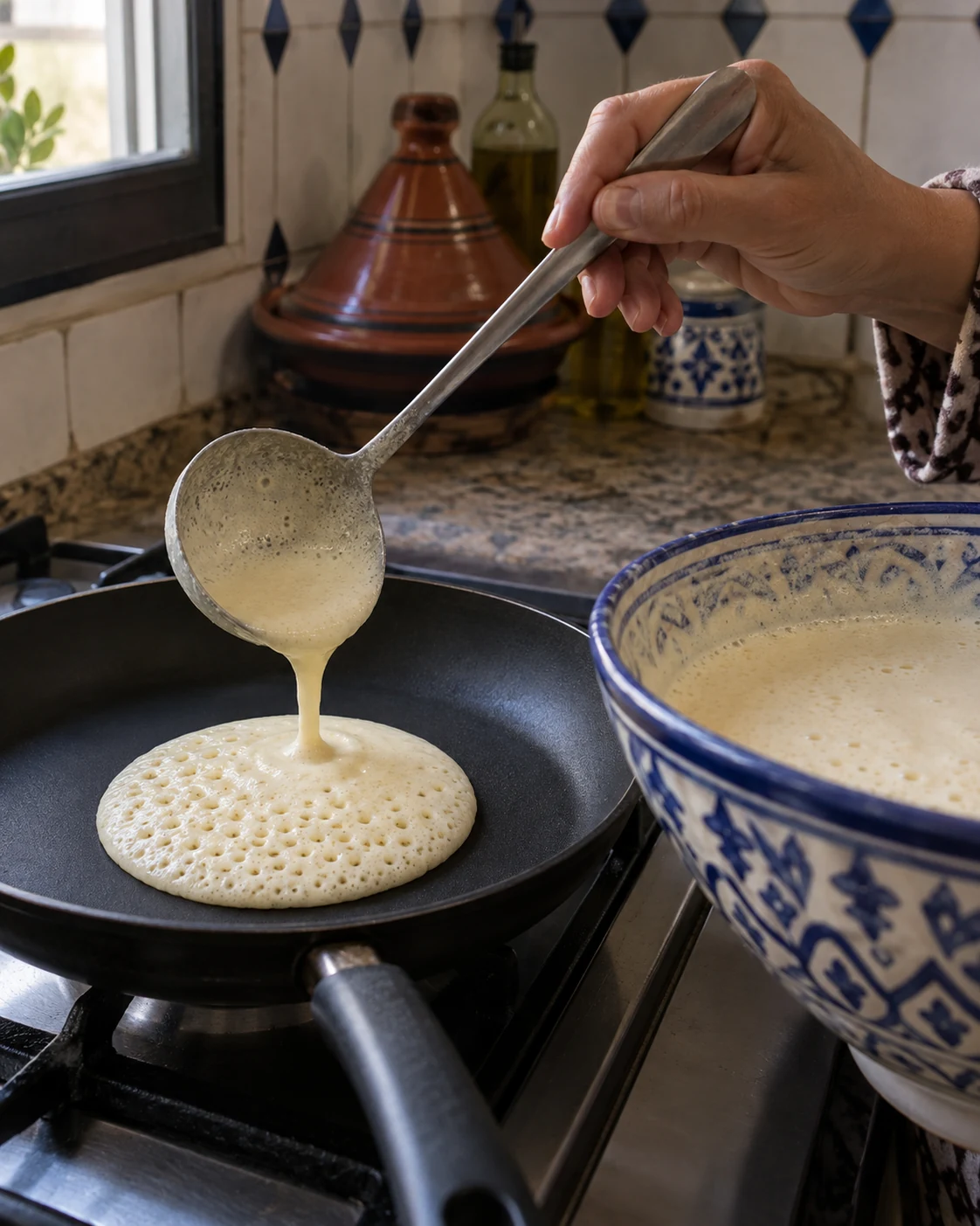
When the balance is right, the top changes from glossy batter to a field of tiny holes while the underside cooks against the pan. [2]
Build a smooth batter
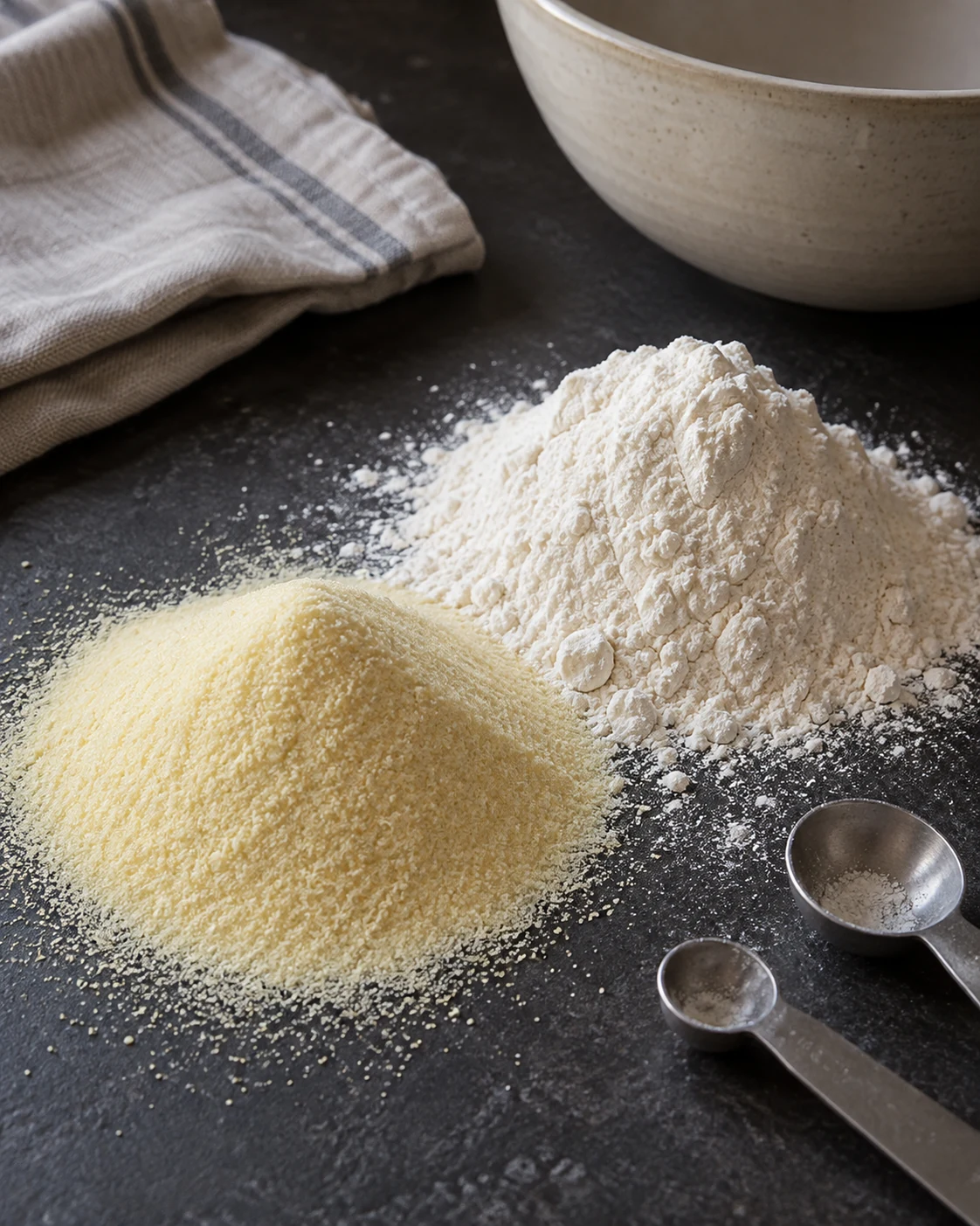
Fine semolina is central. Some documented versions use semolina alone; others combine it with wheat flour. Modern cooks often blend the batter so the grain hydrates evenly and the mixture becomes smooth. [1] [2]
Let leavening make the architecture
Yeast creates gas in the batter. Baking powder appears in many contemporary formulas as additional lift. The important visual cue is not a clock alone: the batter should become lively enough to open across the surface during cooking. [1]
Cook from below
A ladle of batter goes into a hot pan and cooks mainly from one side. As steam and gas travel upward, holes open across the top; the pancake is ready when no wet patches remain. Choumicha’s method describes the same visual endpoint. [2]
04 · One honeycomb, several households
Recognisable.
Never completely rigid.
The porous surface defines baghrir more clearly than one fixed ingredient formula or one topping.
These differences are best understood as household and recipe variations, not as evidence that one version is the only authentic one.
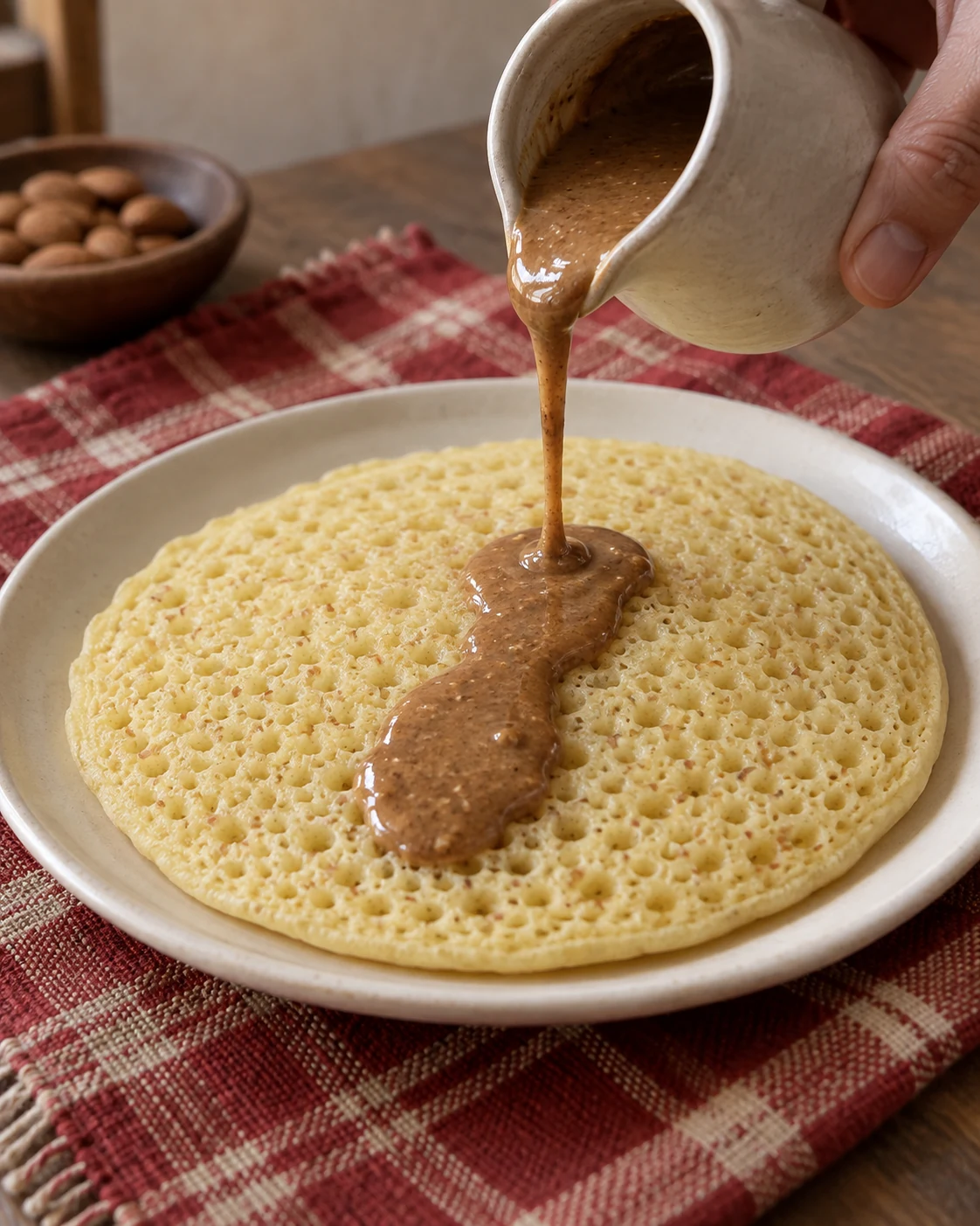
Amlou beside baghrir
Some households pair baghrir with amlou, the almond, argan-oil and honey spread. The pairing is documented, but it belongs to the table rather than to the definition of baghrir itself. [8]
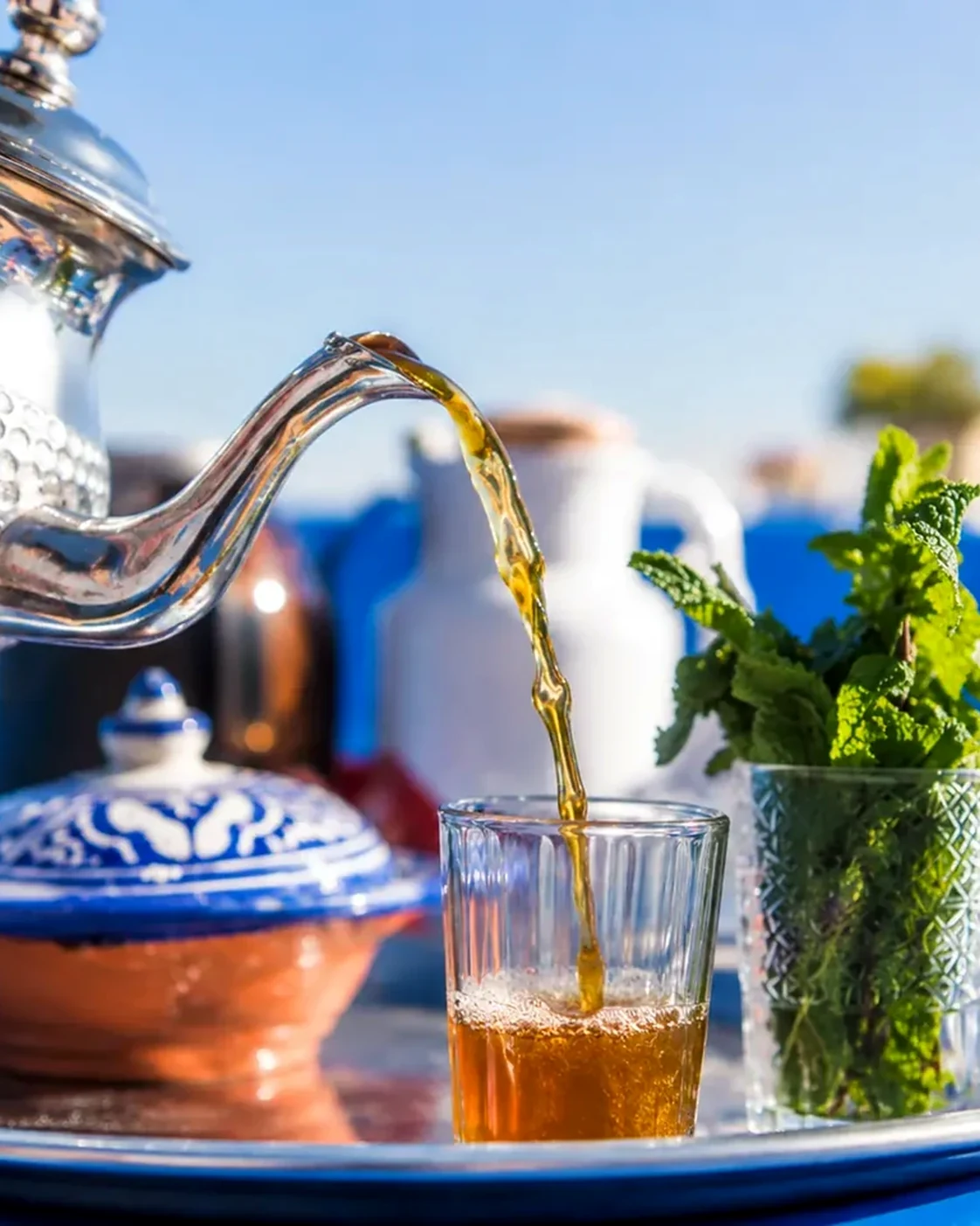
Baghrir with mint tea
Choumicha explicitly serves beghrir with honey, melted butter and mint tea. In practice, tea turns a plate of pancakes into a longer pause: breakfast, an afternoon visit or food set out for company. [2]
Usually one side — with exceptions.
The standard method is one-sided cooking, but Christine Benlafquih notes that some regional cooks briefly flip the pancake. Treat that as a documented variation rather than a reason to erase the more common method. [1]
Eggs and milk are not universal.
Some modern recipes include them; others use neither. Baghrir is better identified by semolina batter, leavening and its porous cooked surface than by insisting on one household formula. [1]
05 · The ingredient logic
Short list.
Very active batter.
Baghrir’s structure comes from grain, water and leavening. The most famous flavours often arrive only after cooking.
That separation is useful: semolina and fermentation create the pancake; butter, honey and other accompaniments shape the way it is eaten. [1]
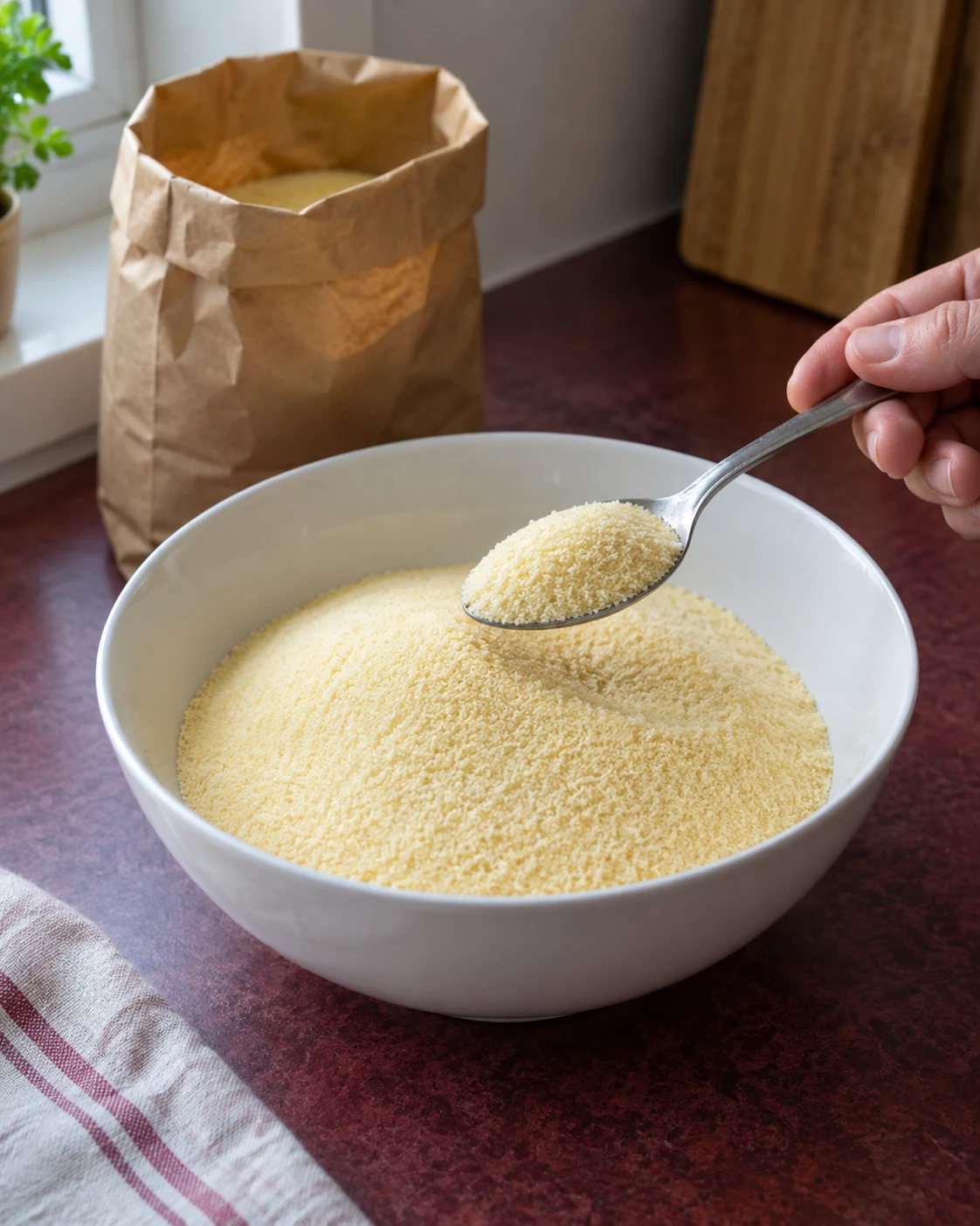
Fine semolina
The grain behind the colour.
Fine durum semolina gives baghrir its pale yellow tone and a gentle wheat flavour. Some formulas rely on it entirely; others temper it with flour.
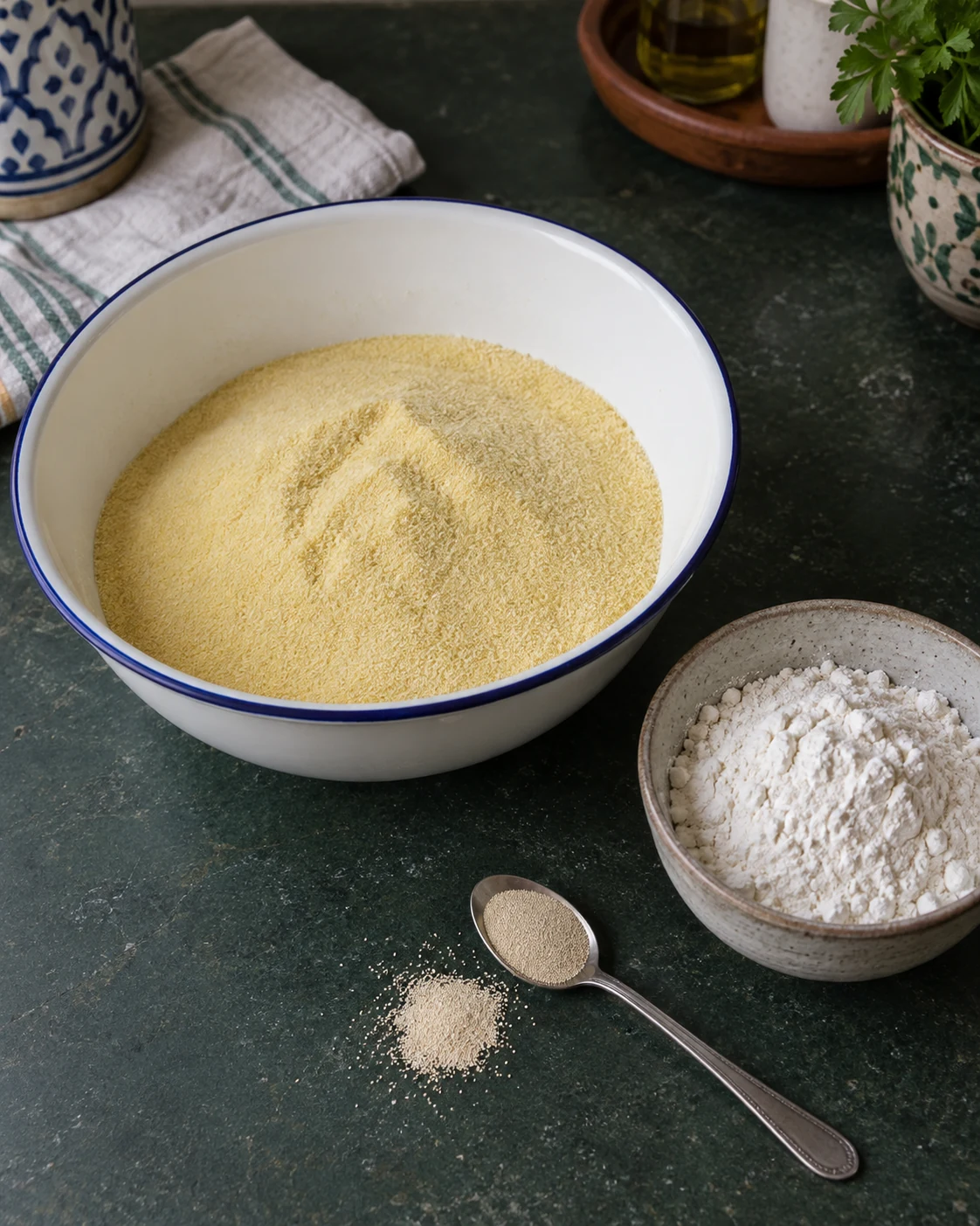
Flour — sometimes
Structure without taking over.
Wheat flour appears in many home formulas, while other well-documented versions use only semolina. It is a variation, not a test of authenticity. [1]
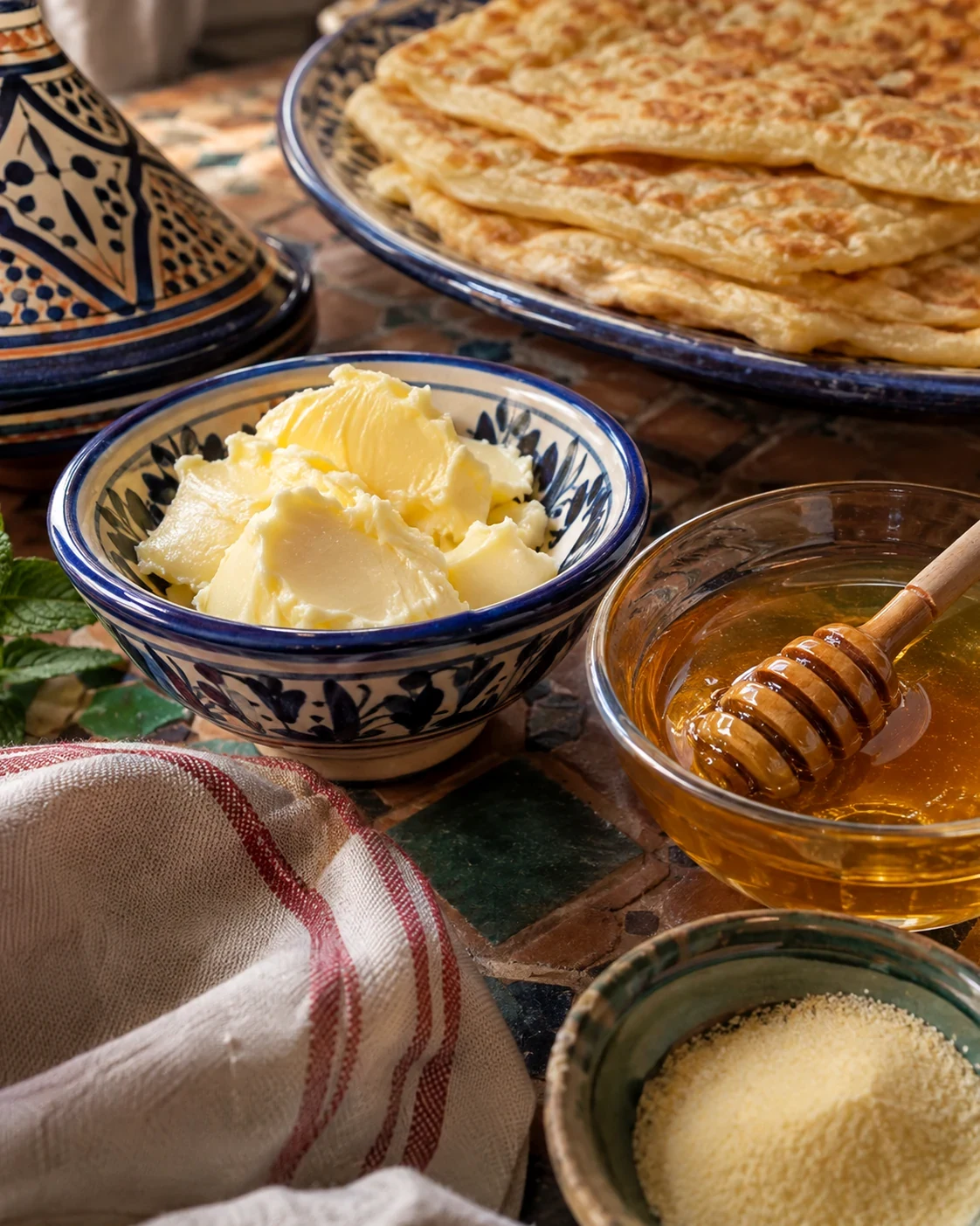
Butter & honey
The classic finish.
The warm mixture sinks into the open pores and changes the texture as much as the flavour. It is iconic, but still a serving choice rather than part of every batter.
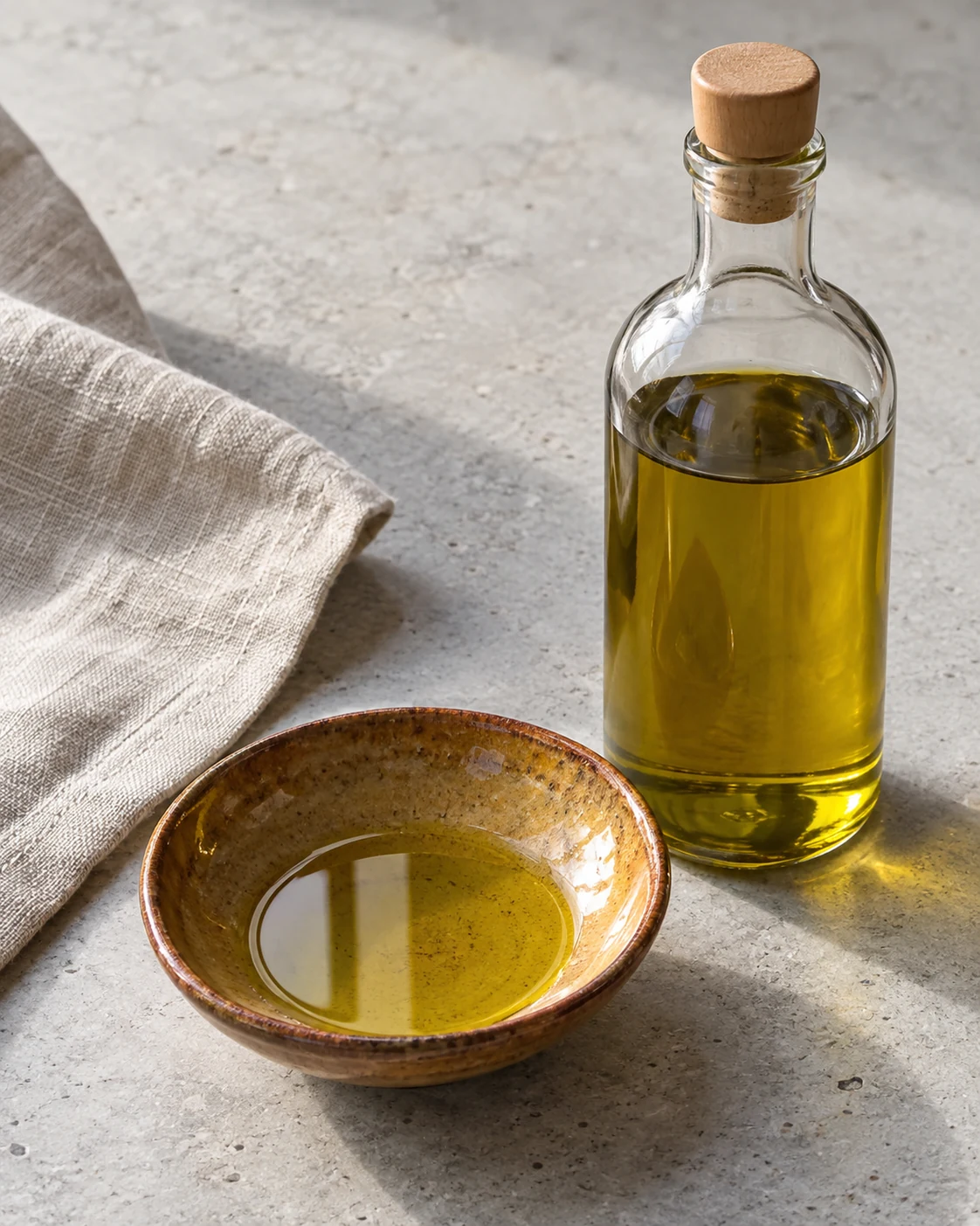
Olive oil
Another table direction.
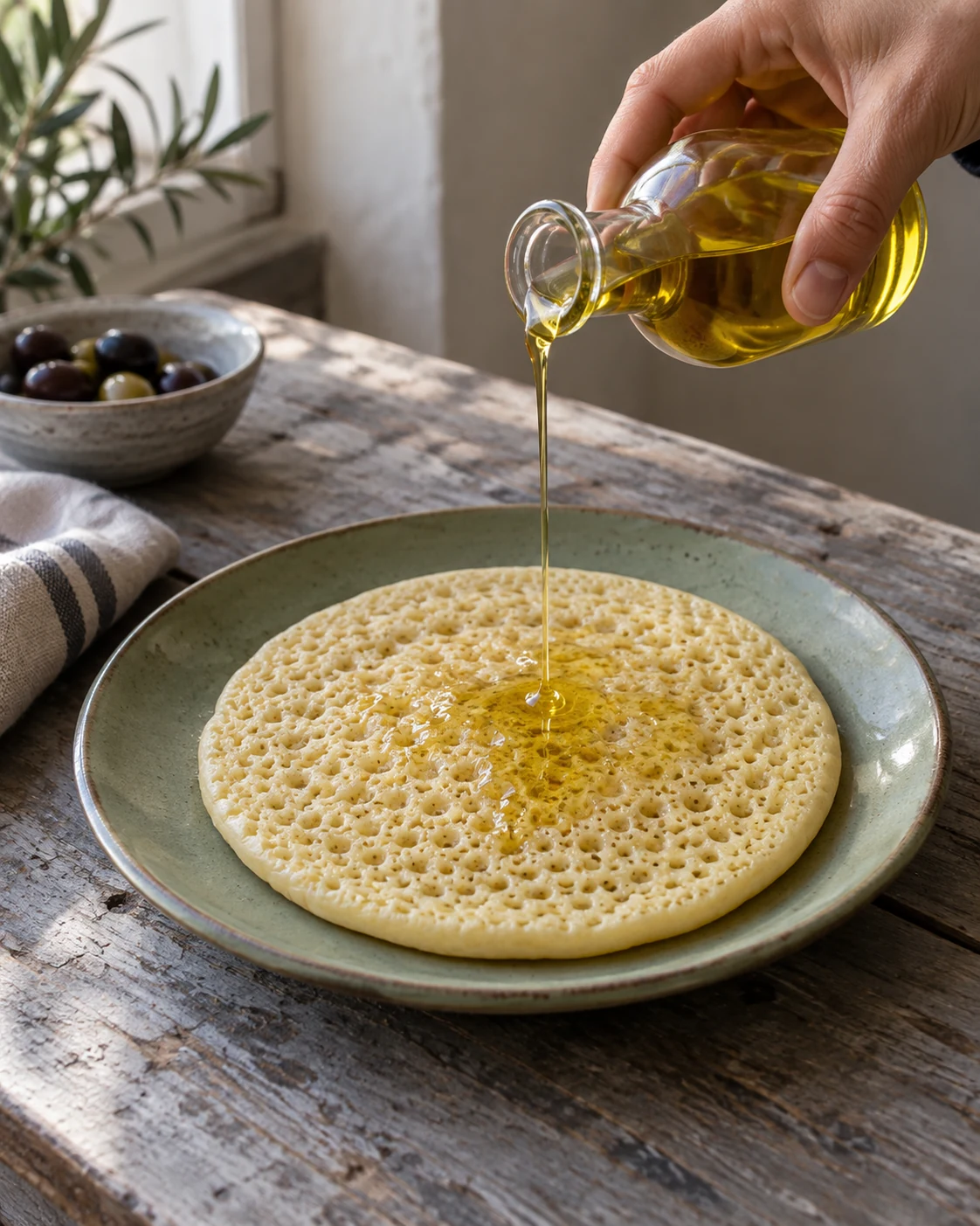
Olive oil is a documented serving option for baghrir, offering a less-sweet direction at the table. It is optional and not part of the pancake’s defining batter. [7]
Explore the four elements
WATER · YEAST · BAKING POWDER
The invisible
architecture.
The ingredients that make no dramatic flavour statement are the ones that make the holes possible.
Water determines flow and hydration. Yeast supplies fermentation. Baking powder is common in modern Moroccan recipes and helps produce reliable lift more quickly, although formulations differ. [1] [2]
A good baghrir batter is not judged only by what went into the bowl, but by how it behaves when it meets the pan.
Hydration creates flow.
The batter must spread without becoming so weak that the pancake cannot set around its open pores.
Leavening creates gas.
Active bubbles move upward through the batter and break at the surface, giving baghrir its characteristic honeycomb.
Heat fixes the structure.
The underside cooks while the top dries from below. Heat that is too aggressive or too weak changes how evenly the holes appear.

06 · Home, breakfast & the wider Maghreb
Not one city.
A shared food culture.
Baghrir is not responsibly explained by assigning it to Marrakech, Fez, Rabat or another single Moroccan city.
The strongest culinary sources instead place it within Morocco and the wider Maghreb. In Morocco, it is familiar enough to move between home kitchens, family breakfasts and tea tables without needing a special occasion. [3] [5]
That does not mean every Moroccan household makes it the same way or with the same frequency. Some families make baghrir often; others buy it, make it mainly on weekends, or reserve a fuller spread for visits and festive periods.
At home
Families control thickness, diameter, flour balance and how much sweetness reaches the plate.
Explore Moroccan Food Culture ↗At breakfast or tea
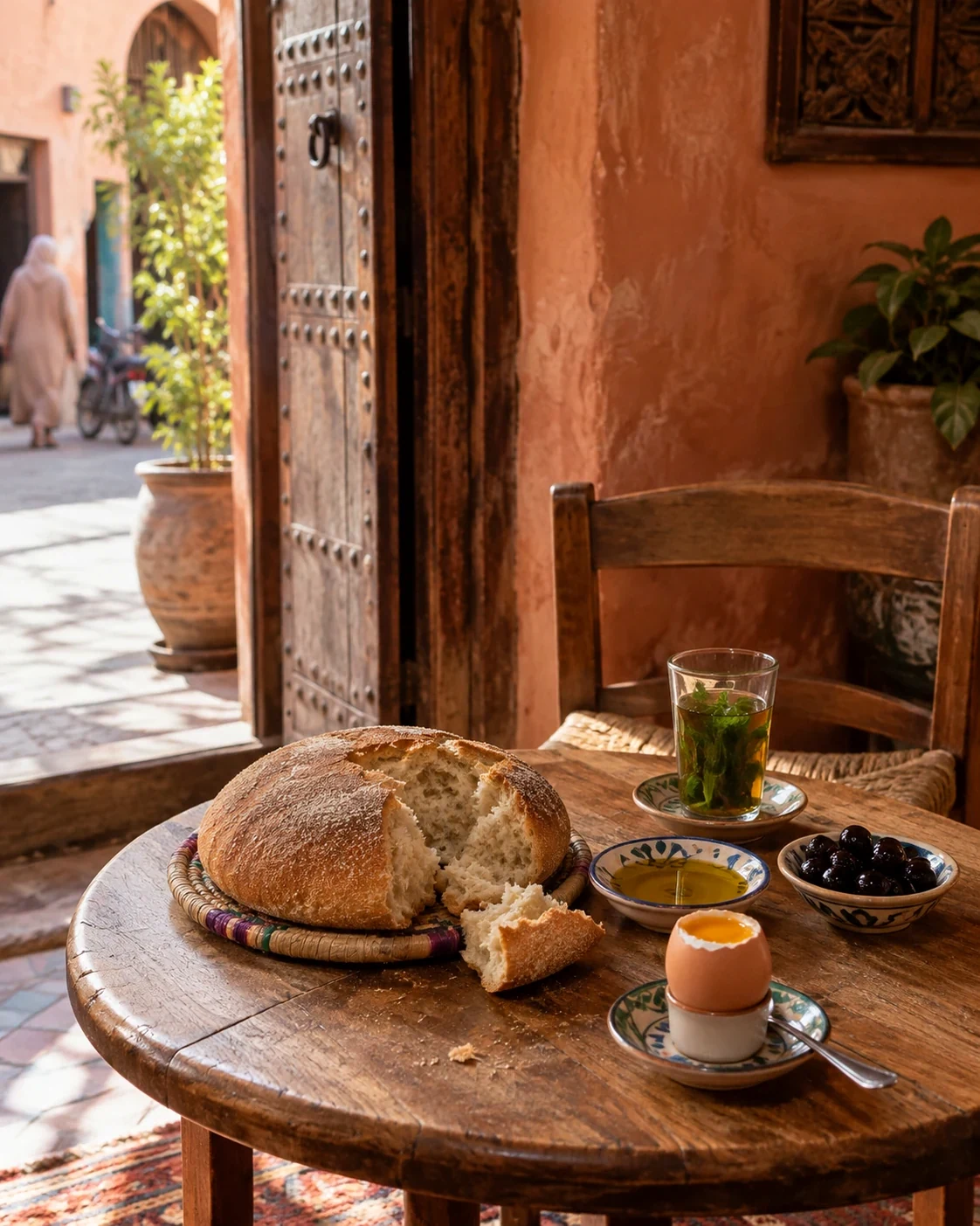
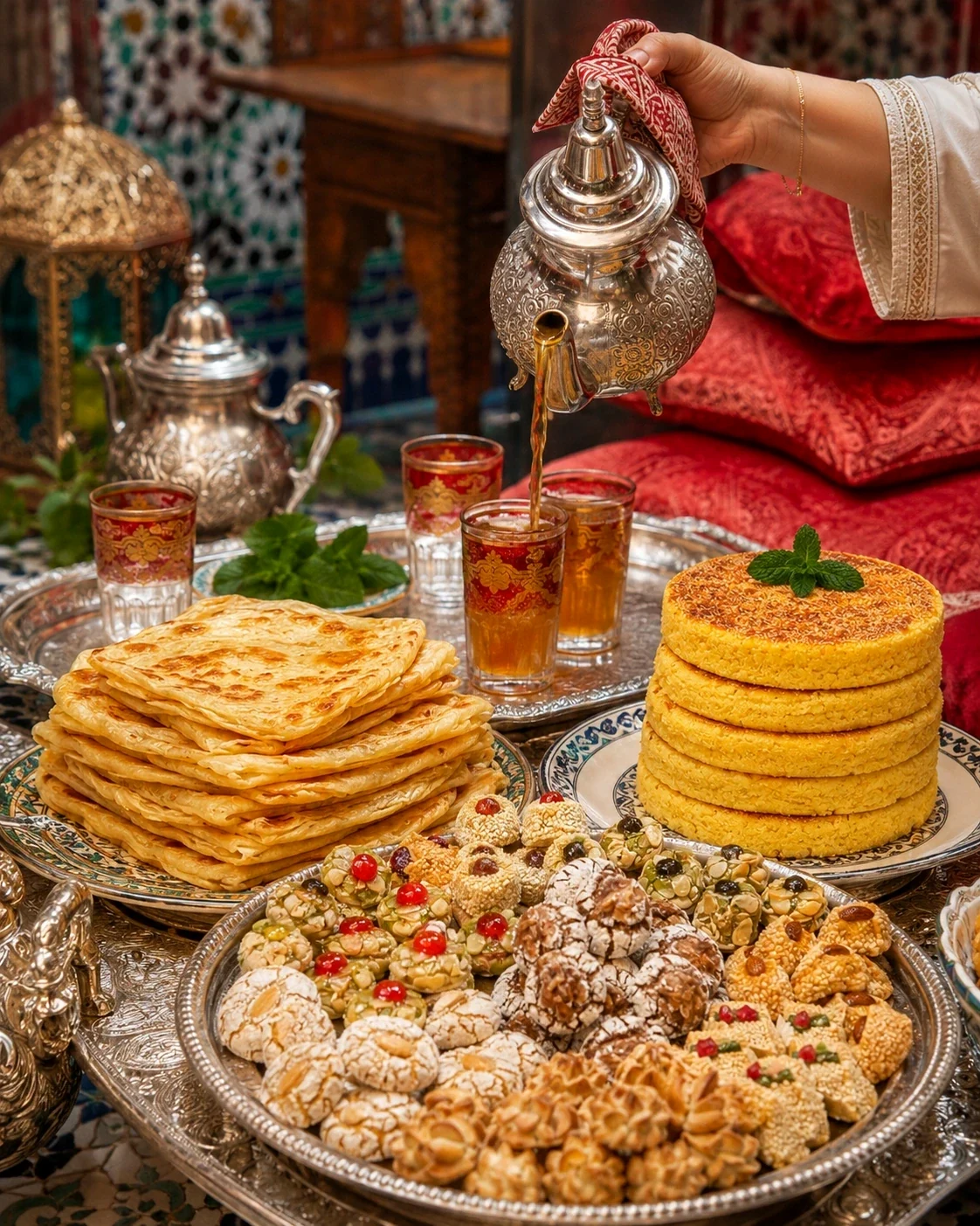
Baghrir can sit beside msemen, harcha, bread, amlou, jam, olive oil, tea, coffee and other foods; there is no single compulsory spread.
Discover Taste Morocco ↗During Ramadan or celebrations
Choumicha categorises one beghrir version for Ramadan and Aid al-Fitr, evidence that it can belong to festive tables without making it exclusively a Ramadan food. [2]
Continue through Taste ↗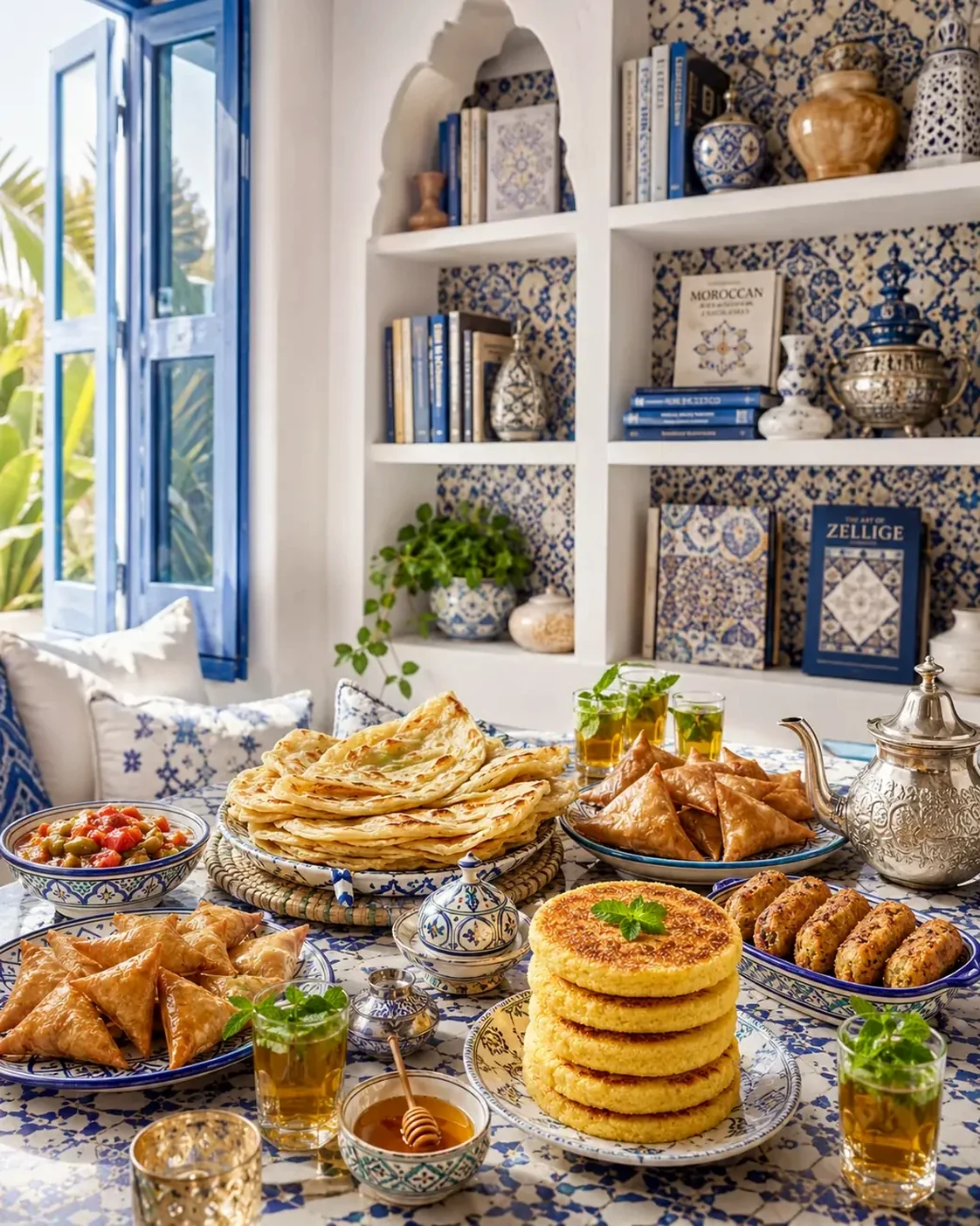
07 · Warmth, tea & sharing
Pour over the top.
Let the holes do the rest.
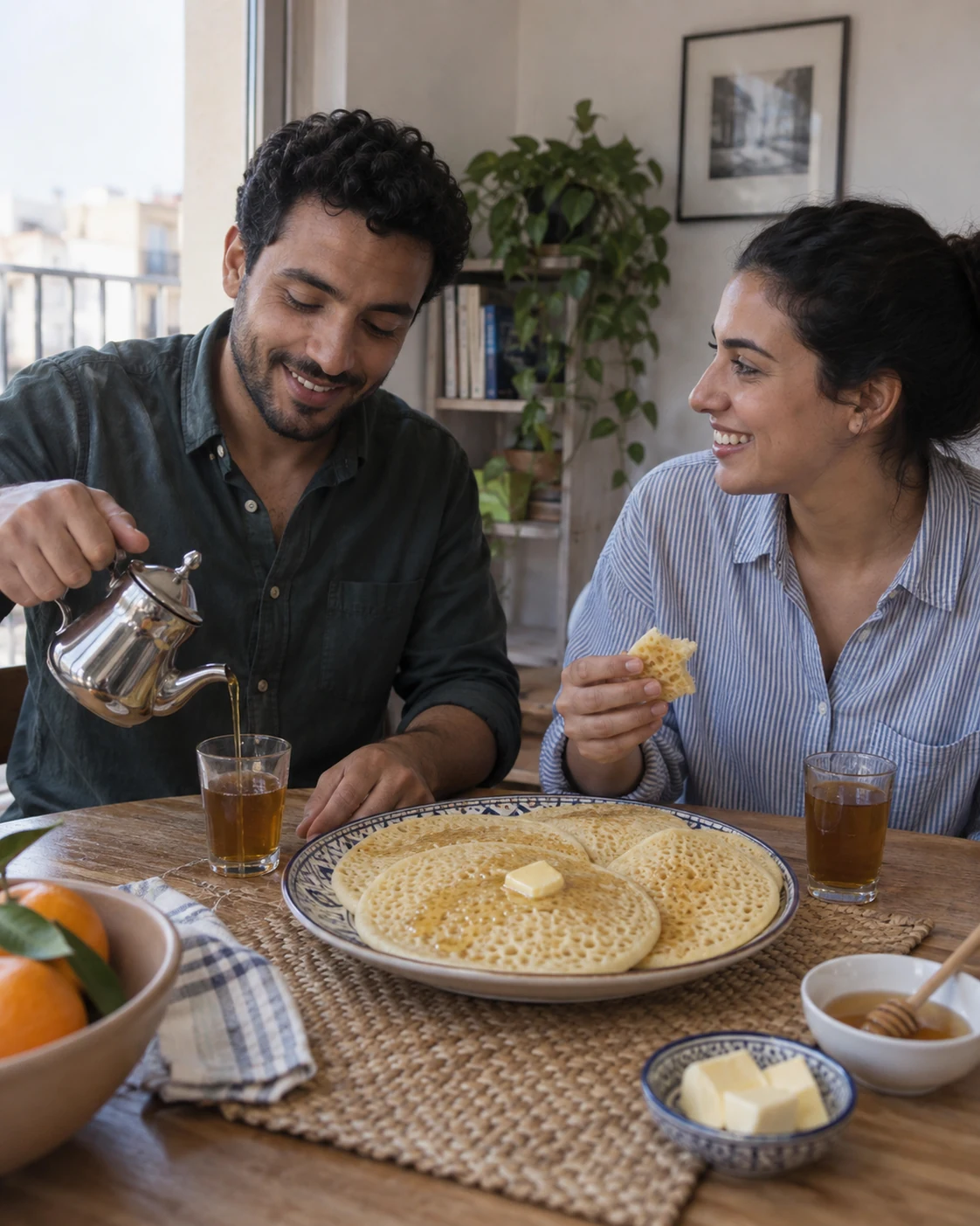
Baghrir changes the moment it meets butter and honey.
The open surface absorbs rather than merely carries a topping. That is why a light pancake can become rich so quickly: the syrup enters the structure instead of sitting on a sealed crust.
But the social meaning is wider than one sauce. A plate set down with tea can be breakfast, a snack, a weekend treat or part of a table for visitors. The exact combination reflects the household and the occasion.
Butter & honey.
Choumicha and Taste of Maroc both document butter and honey as a classic accompaniment. Warmed together, they settle into the holes and keep the surface supple. [1] [2]
Jam is also documented; amlou and olive oil appear in other Moroccan serving traditions, so the plate does not have to stop at one syrup. [7] [8]
Learning by repetition.
One Moroccan family account from Salima Benkhalti describes baghrir as a weekend favourite learned from an aunt. It is a good reminder that food tradition often survives through observation, repetition and taste rather than written rules. [5]
Other families will remember a different cook, a different day of the week and a different topping. Those differences are part of the tradition.
Mint tea stretches
the moment.
Baghrir can be eaten quickly, but tea turns it into a social interval. Choumicha explicitly pairs beghrir with Moroccan mint tea, butter and honey. [2]
Everyday before ceremonial.
Baghrir needs no holiday to make sense. Its value is precisely that it can be ordinary food and still feel generous when a platter is brought out warm.
08 · Handwork & the objects around it
The pan is simple.
The judgement is not.
Baghrir is a useful example of culinary skill that does not depend on a specialised showpiece vessel.
A flat non-stick pan or griddle can do the job. The expertise lies in reading the batter and the heat: whether bubbles are opening evenly, whether the top is drying without scorching the underside, and whether the next pancake needs a temperature adjustment.
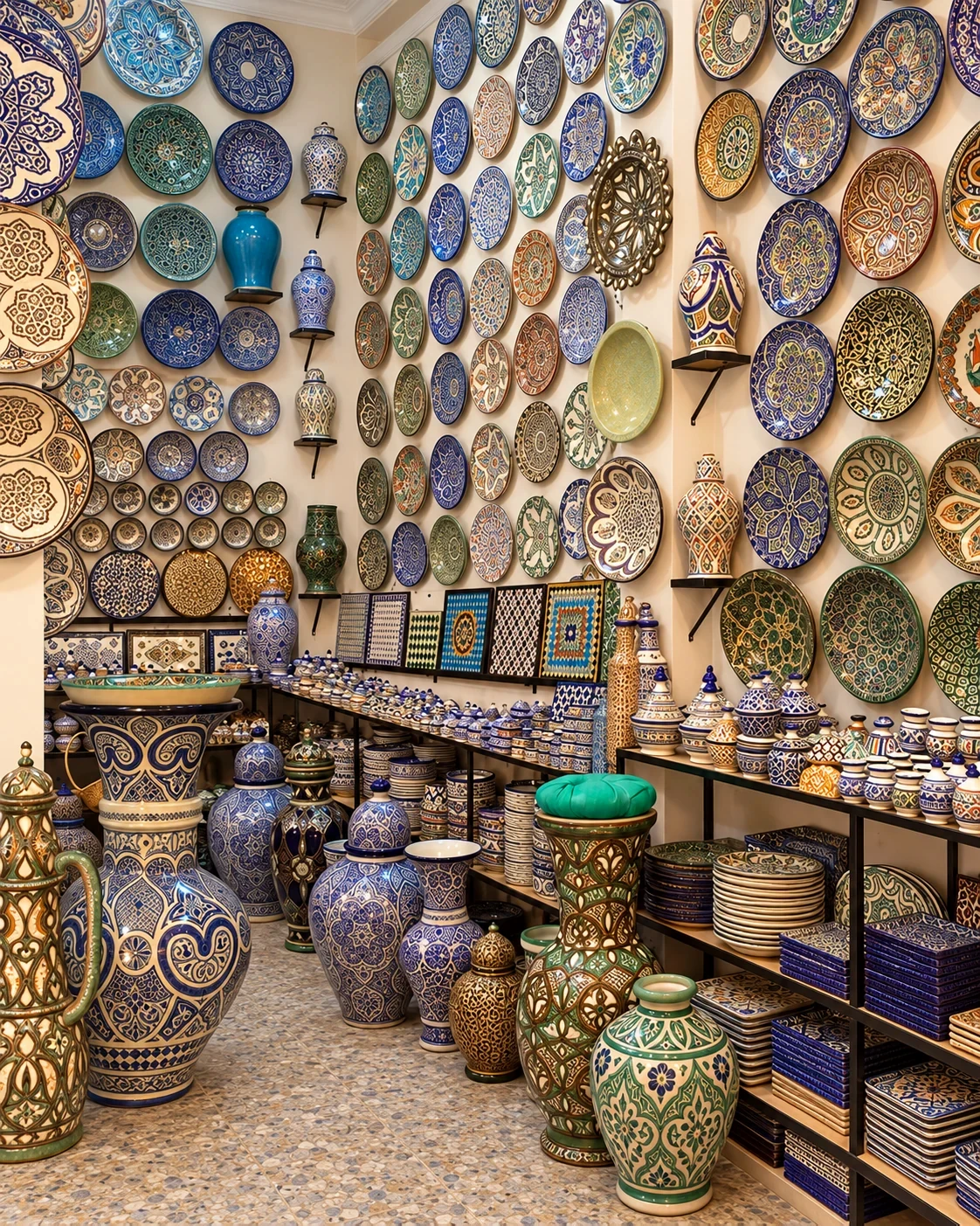
Once baghrir reaches the table, another layer of Moroccan material culture appears: painted platters, tea glasses, metal trays, wooden boards and woven baskets. Those objects enrich the setting, but they should not be confused with requirements of the recipe.
That distinction keeps the story precise. The craft of baghrir is first the craft of batter and heat; the craft of the table is a different, equally interesting Moroccan story.
Explore food, craft & the table ↗09 · A closer look
Good questions.
Clear answers.
Baghrir is easy to recognise once the technique is separated from the myths.
Why does baghrir have so many holes?
Gas from the leavened batter rises as the pancake cooks and bubbles burst at the surface. Because baghrir is normally not flipped, that open surface stays visible. [1] [3]
Is baghrir always cooked on one side?
Usually, yes. One-sided cooking is the standard description across the sources reviewed here. Taste of Maroc notes that some regional cooks briefly flip theirs, so “never flipped anywhere” would be too absolute. [1]
Is baghrir the same as msemen?
No. Baghrir starts as a pourable, leavened semolina batter and develops a porous top. Msemen starts as kneaded dough that is stretched, folded and griddled into layers.
Does authentic baghrir have to be 100% semolina?
No. All-semolina recipes are documented, and so are semolina-and-flour blends. The defining technique is broader than one exact flour percentage. [1] [2]
Must it be served with honey and butter?
No, but the pairing is classic and exceptionally well documented. Jam and other table accompaniments are also used. The holes make baghrir especially receptive to whatever is poured or spread over it. [1]
 EXOTIC MOROCCOTASTE · THE GUIDE COLLECTIONBaghrirIngredients, technique
and the Moroccan table
From the story to your kitchen
Keep the flavour.
Go a little deeper.
Light semolina pancakes with a surface of tiny holes.
Explore the Exotic Morocco guide collection for a closer look at ingredients, kitchen knowledge and the culture around the table.
- Understand the ingredients and their roles
- Recognise the techniques and textures that matter
- Bring context and confidence to the way you cook and serve
Continue tasting Morocco
Follow the
table outward.
Another dish, another technique, another way into the Moroccan kitchen.
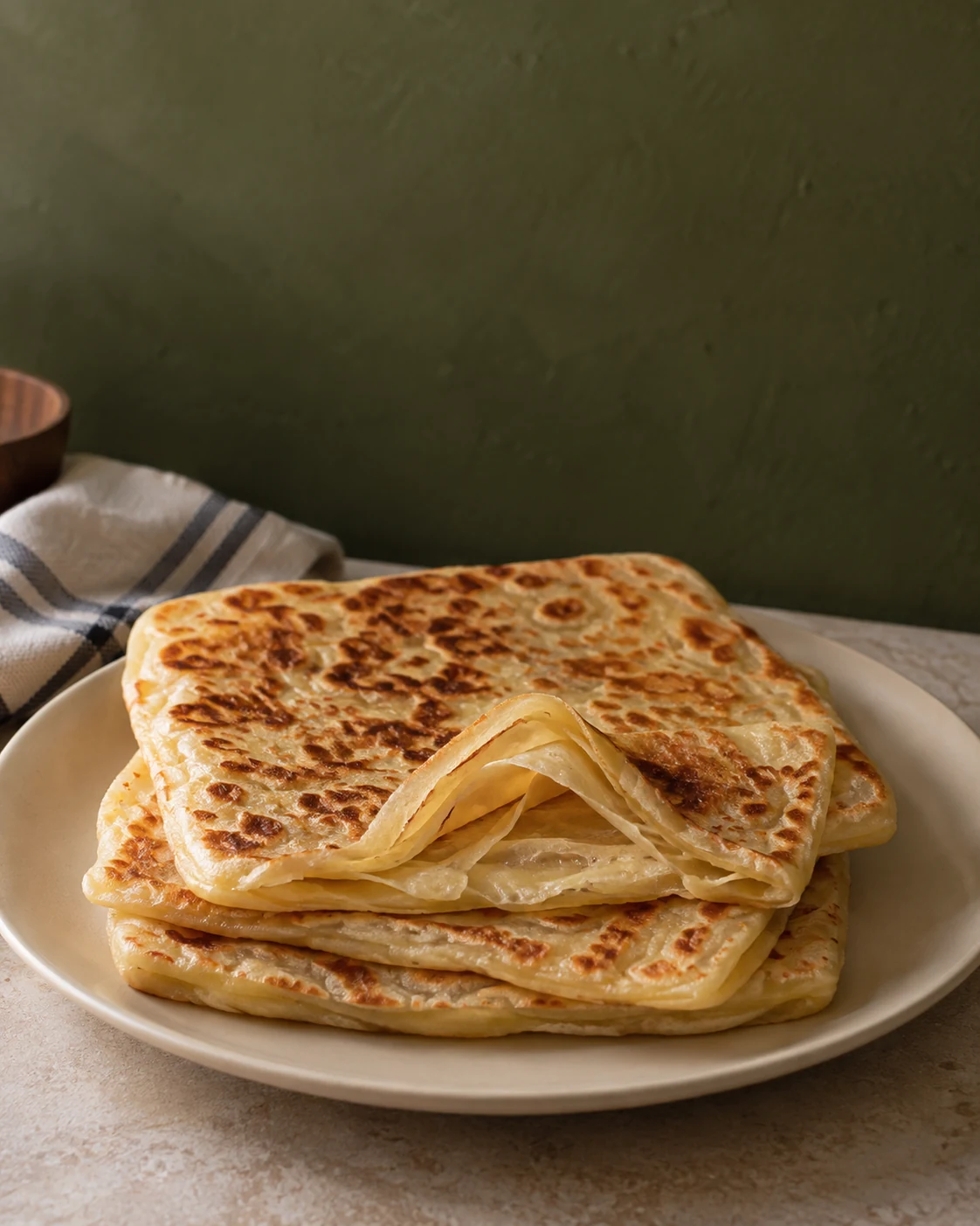
Msemen
Thinly stretched dough folded into supple, flaky layers.
Explore the story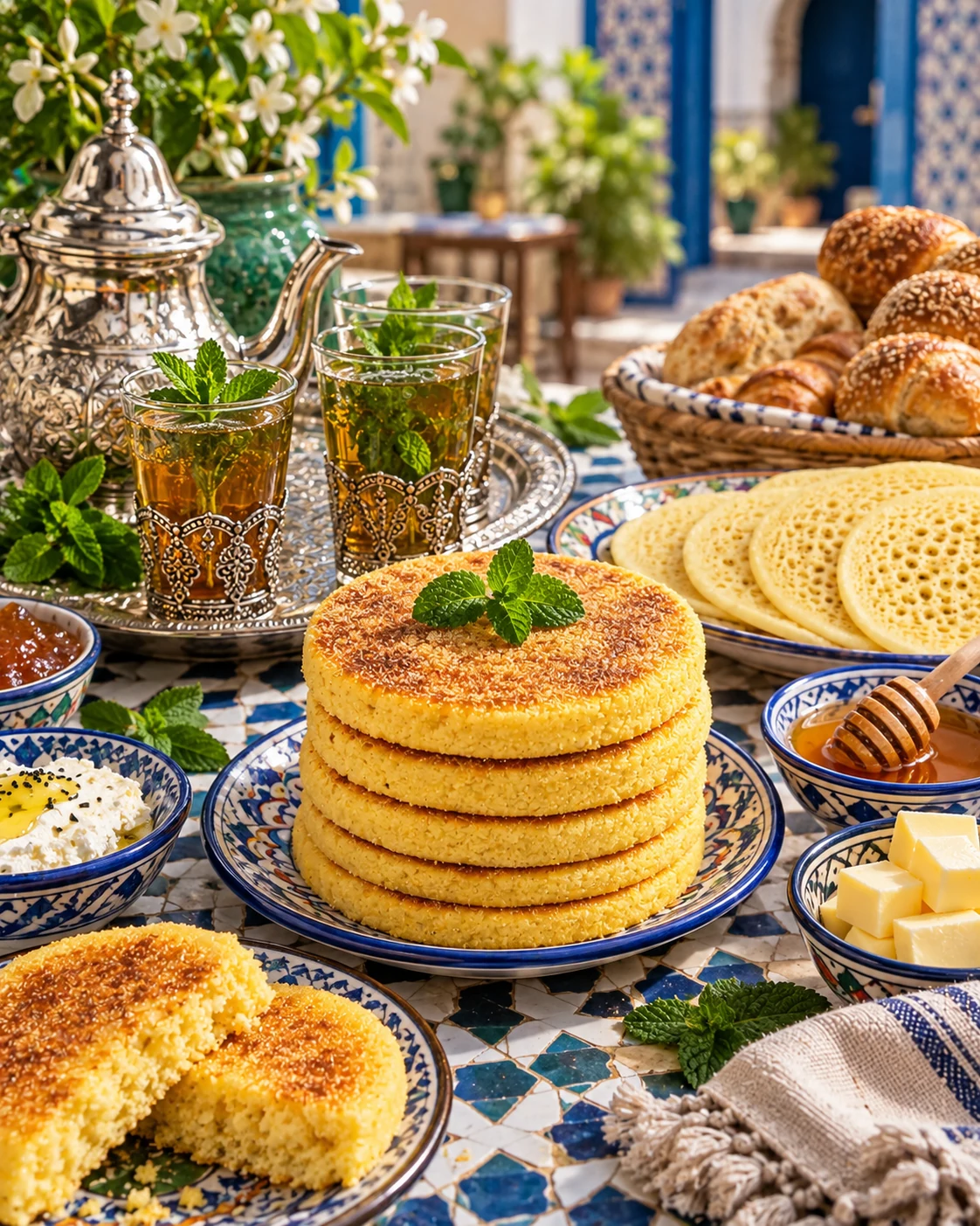
Harcha
Semolina, a hot pan and a tender, crumbly round.
Explore the story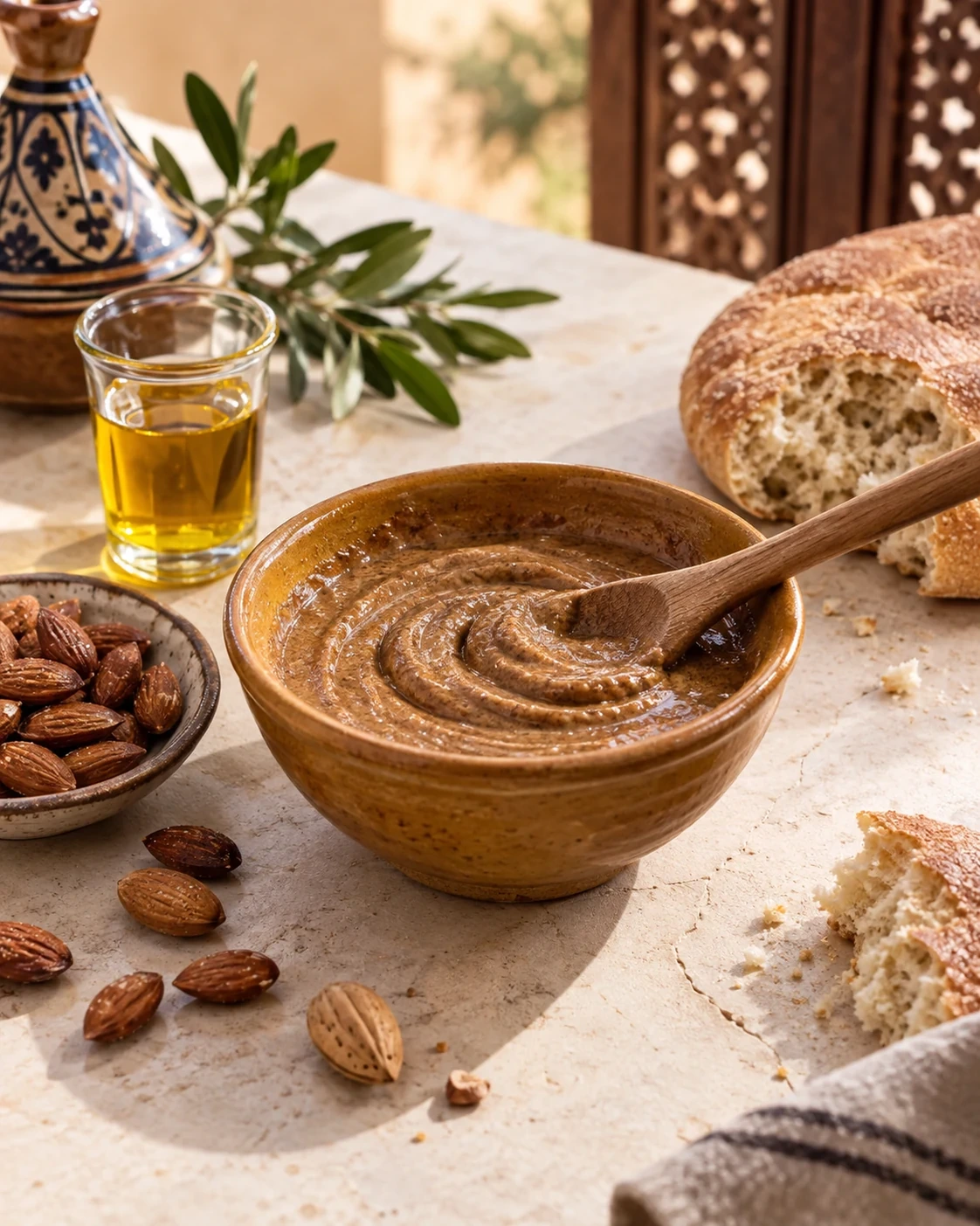
Amlou
Roasted almonds, culinary argan oil and honey from the southwest.
Explore the story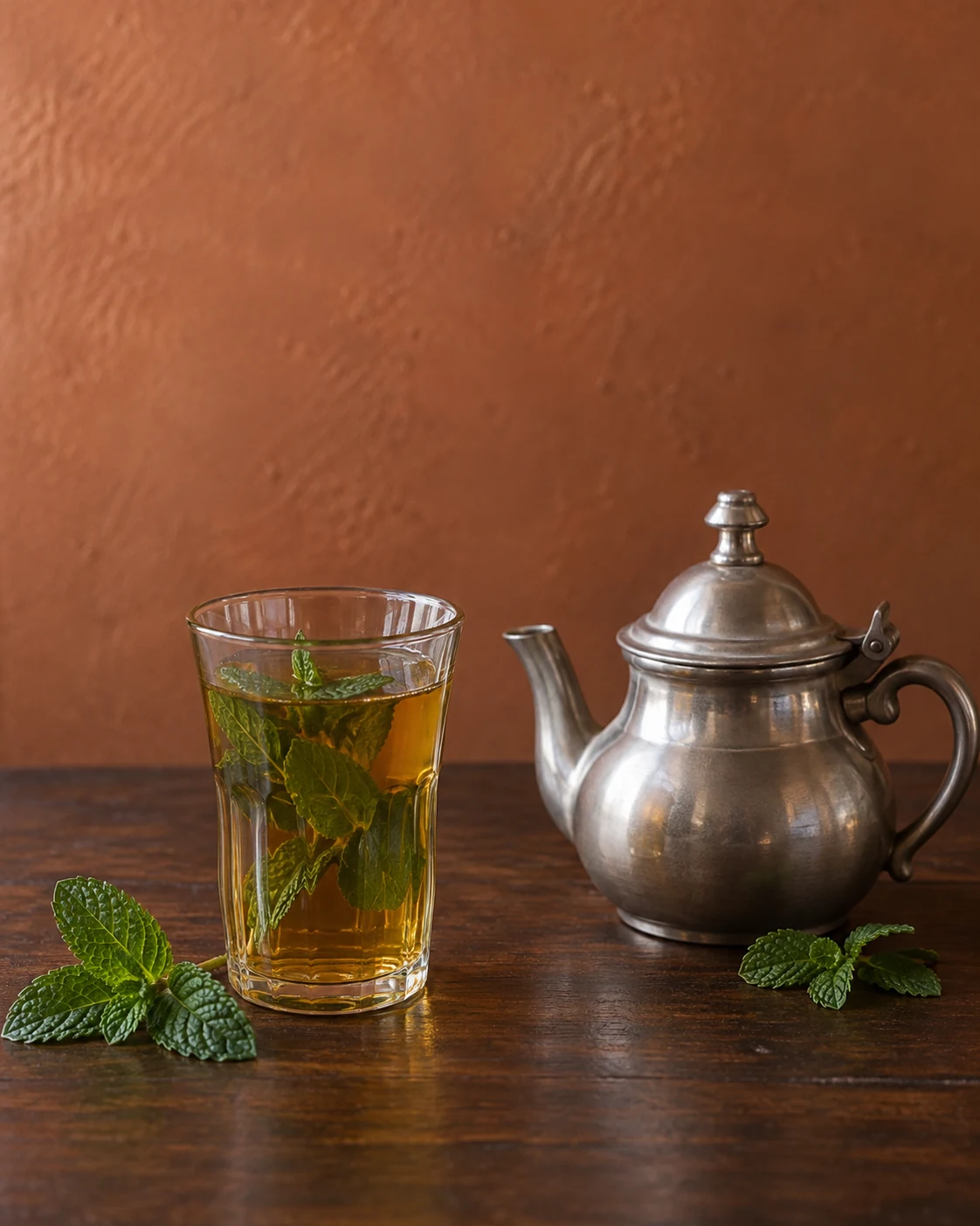
Moroccan Mint Tea
Green tea, fresh herbs and the time given to a guest.
Explore the story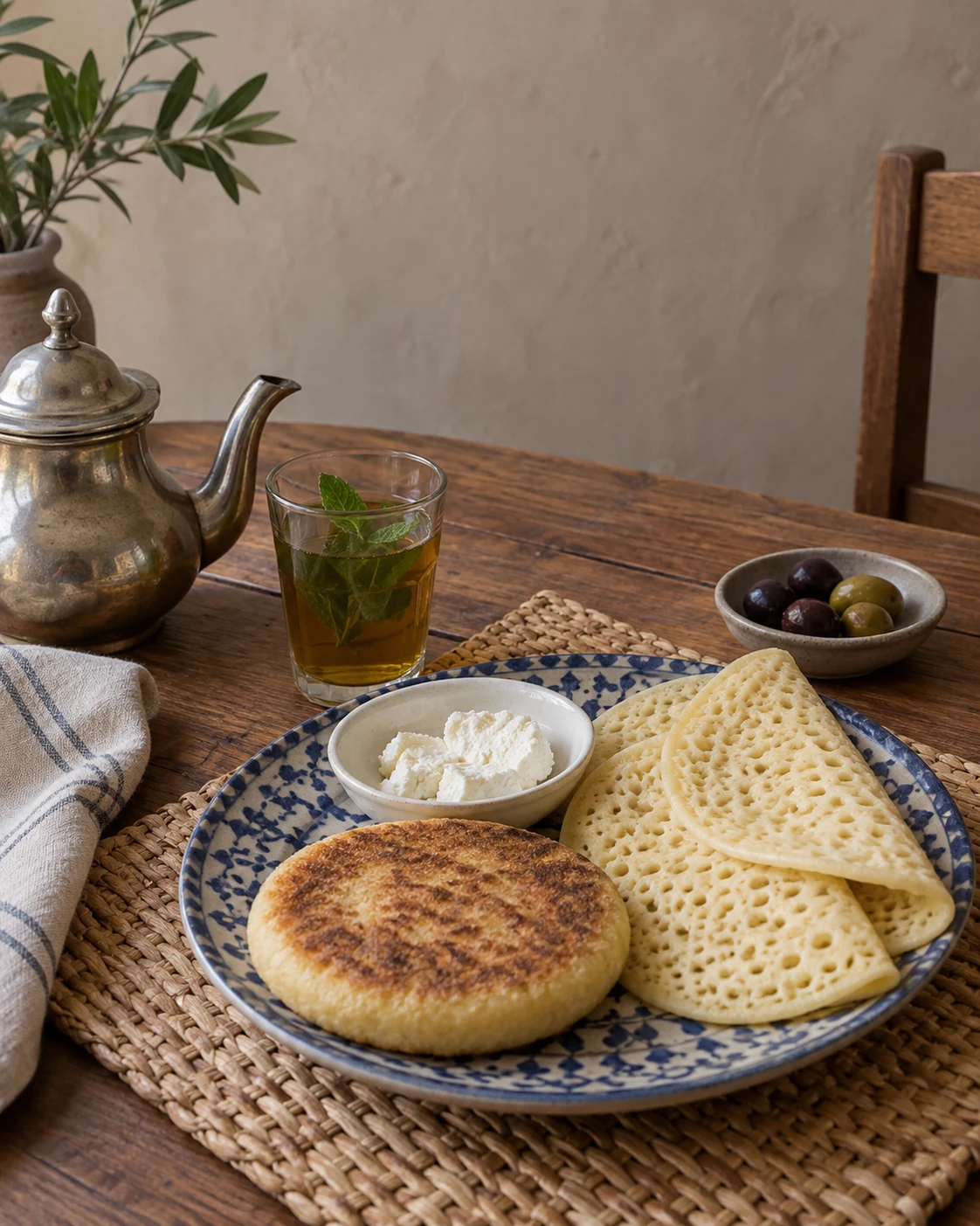
Moroccan Breakfast
Breads, spreads and the first table of the day.
Explore the story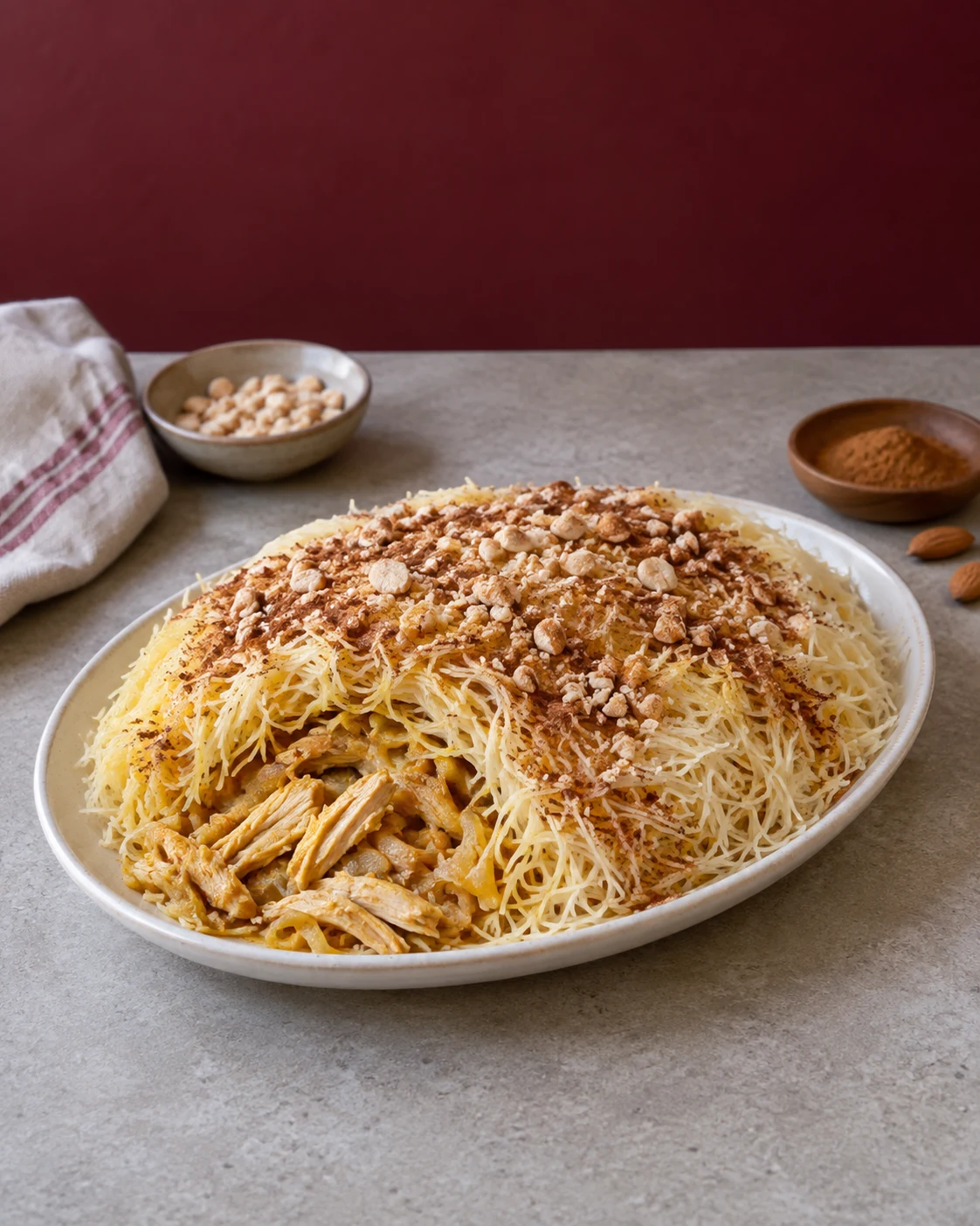
Seffa
Steamed vermicelli or couscous, almonds and sweet aromatics.
Explore the storySources & editorial notes
Photography combines existing Exotic Morocco assets and generated editorial illustrations. These images do not document a named person, household or historical event.
- Christine Benlafquih · Taste of Maroc · Beghrir — Moroccan Semolina Pancakes — spelling, semolina, yeast-created honeycomb, one-sided cooking, flour variations and butter/honey, jam and other serving notes.
- Choumicha Chafay · Beghrir ou baghrir, crêpes au mille trous — Moroccan preparation, blender batter, yeast plus baking powder, pan method, holes as doneness cue, butter, honey and mint tea; also categorised for Ramadan and Aid al-Fitr.
- Salma Hage · Epicurious · Baghrir (1,000-Hole Pancakes) — Maghrebi framing, yeast-based batter, one-sided cooking and porous surface designed to absorb toppings.
- Robert Carrier · Taste of Morocco · Beghrir — published 1987; honeycomb description, one-sided griddle/earthenware cooking and sweet or savoury serving.
- Salima Benkhalti · Salima’s Kitchen · Baghrir — contemporary Moroccan family context, semolina, breakfast/weekend memory, learning from an aunt, butter/honey and tea/coffee serving.
- Choumicha Chafay · Beghrir ou crêpes aux mille trous — a second documented Moroccan formula using fine durum semolina, yeast and baking powder, with small bubbles and holes as key cues.
- Hanaâ’s Kitchen · Moroccan yeasted pancakes (Baghrir) — Moroccan home-cooking account documenting the one-sided pancake and olive oil as an alternative to warm honey-butter.
- Asif · Baghrir: Moroccan Pancakes — food-culture recipe documentation describing the airy top and serving baghrir with butter and honey or amlou.
EXOTIC MOROCCO Places. People. The pleasure of knowing more.Back to top ↑