

01 · A table, not a fixed menu
A little bread.
Many ways to
begin the day.
The first meal can be quick, shared, sweet or savoury.
A slice of khobz and olive oil might be enough on a workday. Another morning brings hot msemen from the pan, a bowl of amlou, or tea with a wedge of harcha. Breakfast is best understood as a choice of foods and habits, rather than one national platter.
The ingredients are familiar, but the way they meet is personal. Bread gives the table its centre. Small bowls let each person choose between oil, honey, butter, cheese or almond-rich amlou. Tea and coffee both have a place.
Look beyond the elaborate hotel spread: a baker’s fresh loaf, a simple café bowl, and a family’s griddle each tell a different story about the morning.
Explore Moroccan food culture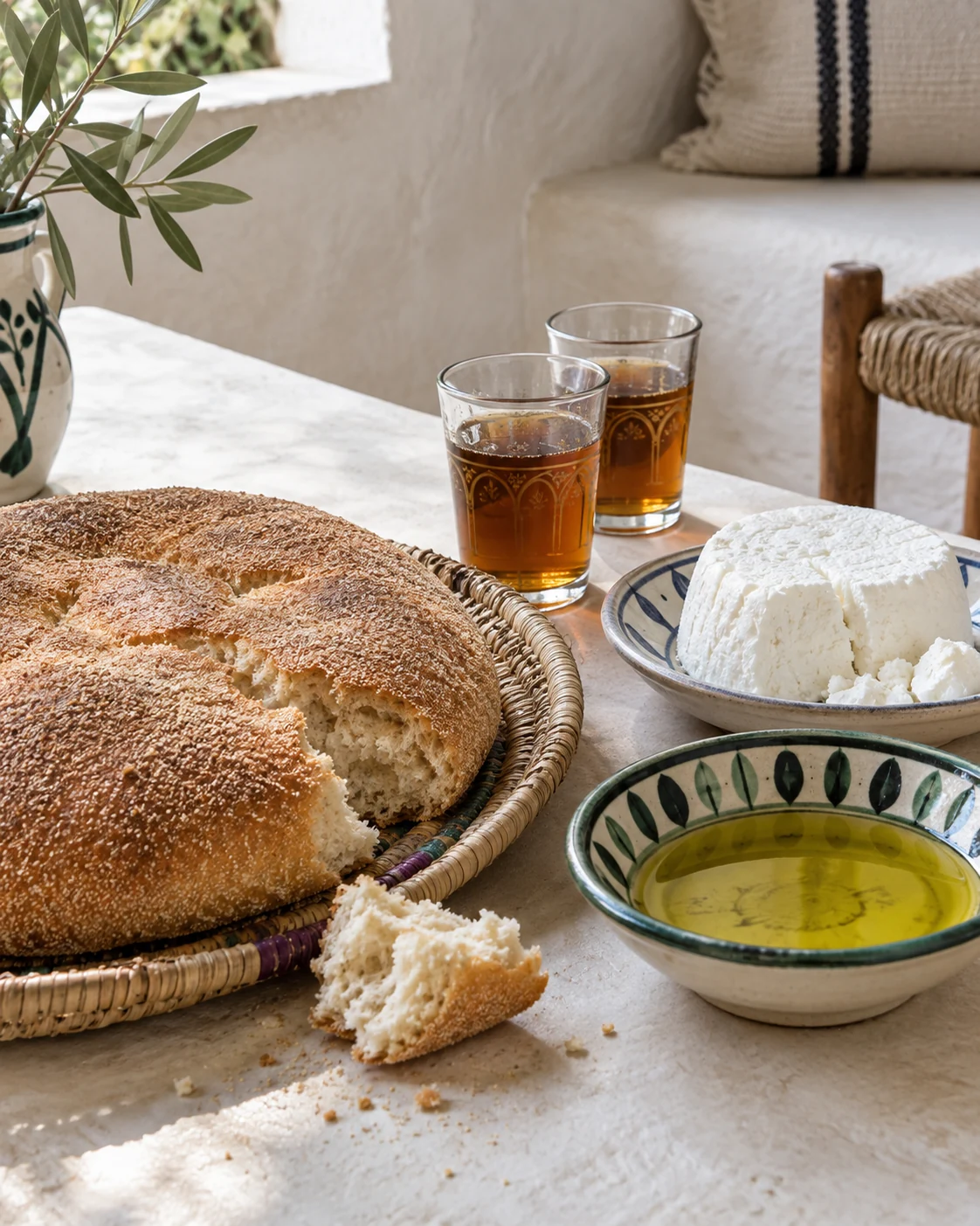
Morning food changes with appetite and available time.
Khobz, griddled semolina and folded dough each bring a different texture.
The cup depends on the home, café and person.
02 · Living morning habits
Old skills.
Current mornings.
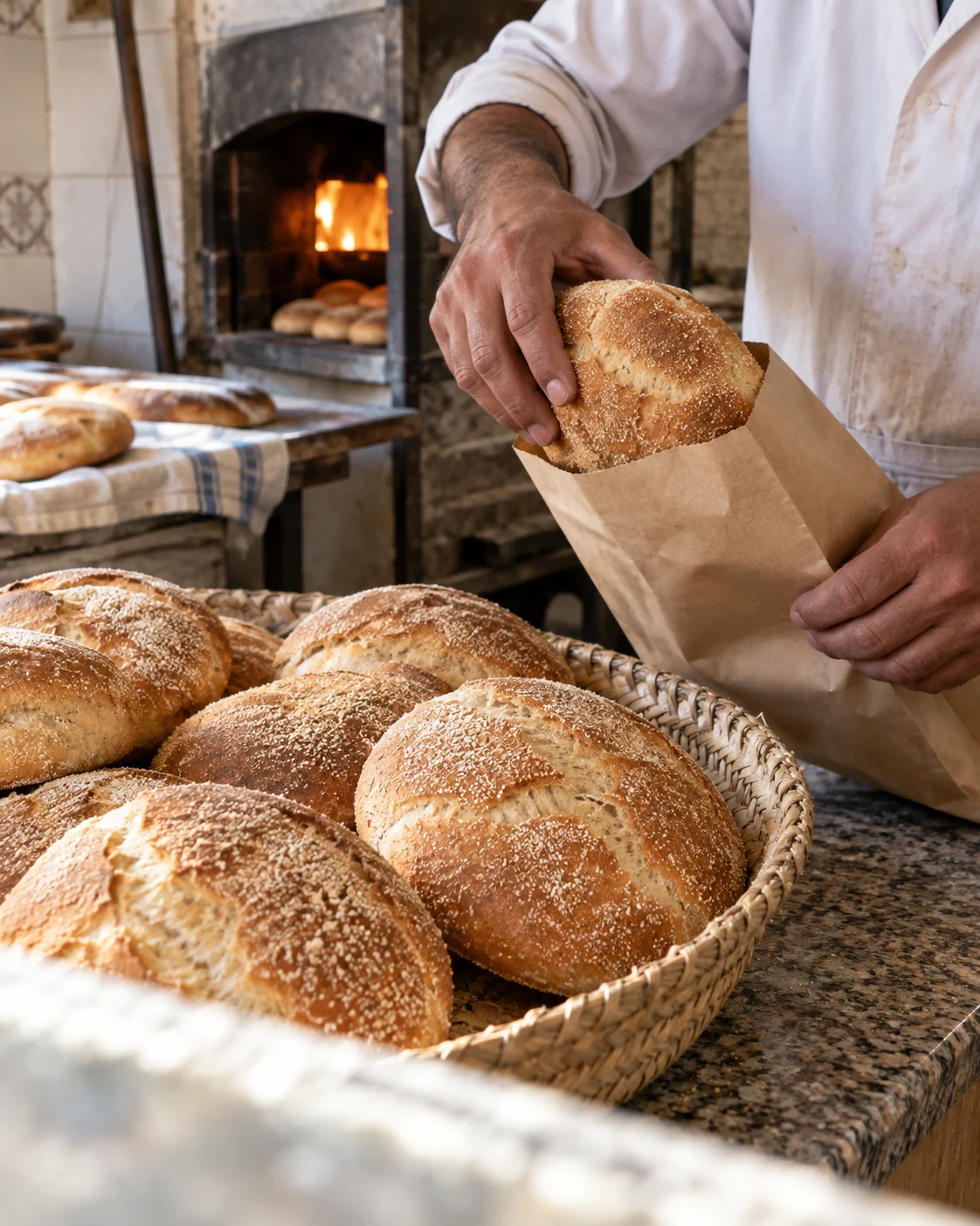
The kitchen, bakery and café all shape the first meal.
The breakfast table brings together foods made in different ways. A household may prepare a dough in advance, buy bread nearby, or keep the meal simple when the day begins early.
Modern routines belong in this picture. Some people choose coffee and bread before commuting; others sit over tea and a griddled bread. A café serving bissara offers another, more substantial possibility. None should stand in for every Moroccan morning.
The bakery
Fresh bread can be brought home and shared with what is already in the kitchen.
The home griddle
Msemen and harcha require different doughs and handling, but both make sense warm.
The café
A savoury bowl or a quick coffee shows how the morning moves beyond the household.
03 · Hands, dough & heat
Why texture
changes everything.
Three familiar griddle breads show three separate techniques. They should not be treated as interchangeable pancakes.
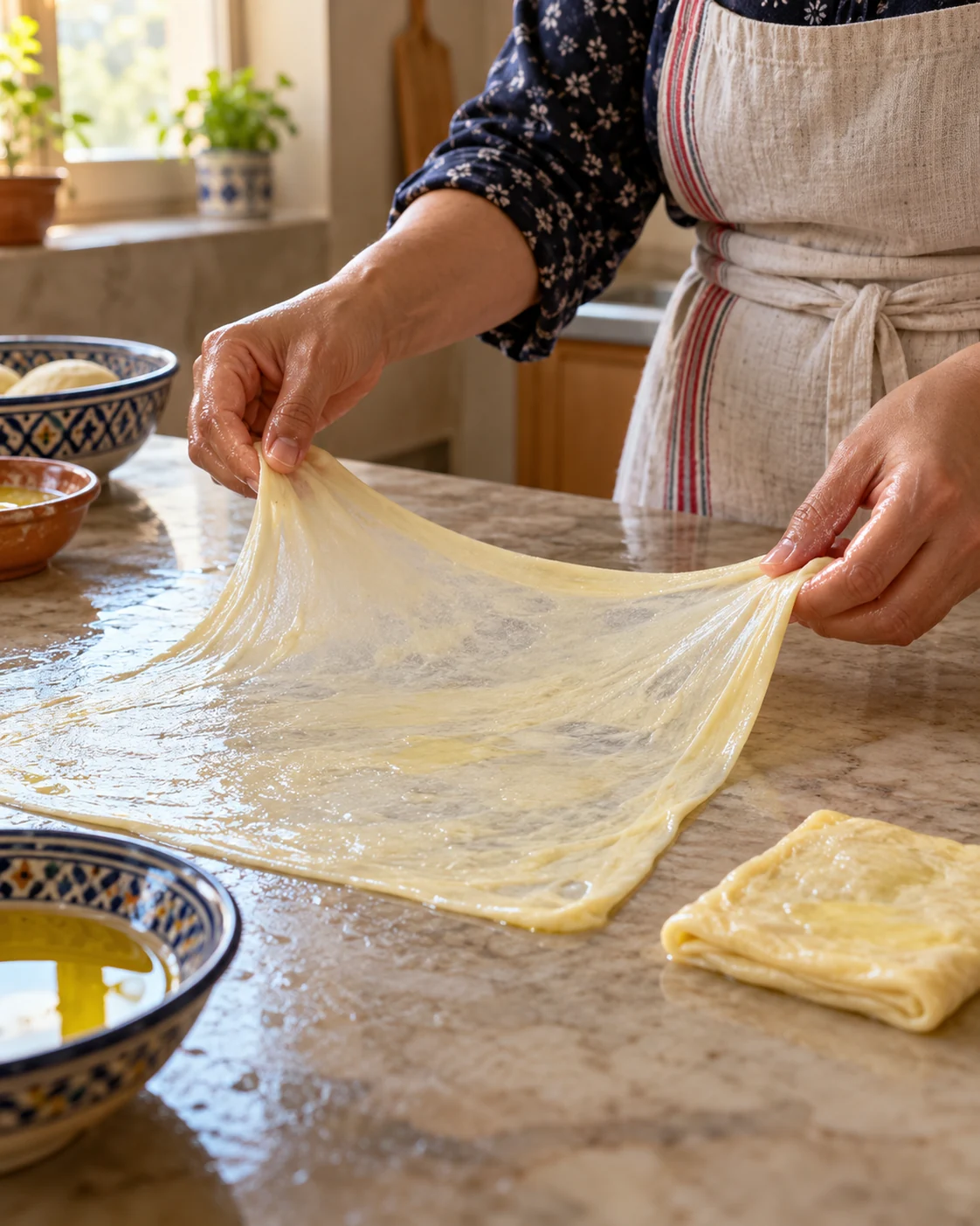
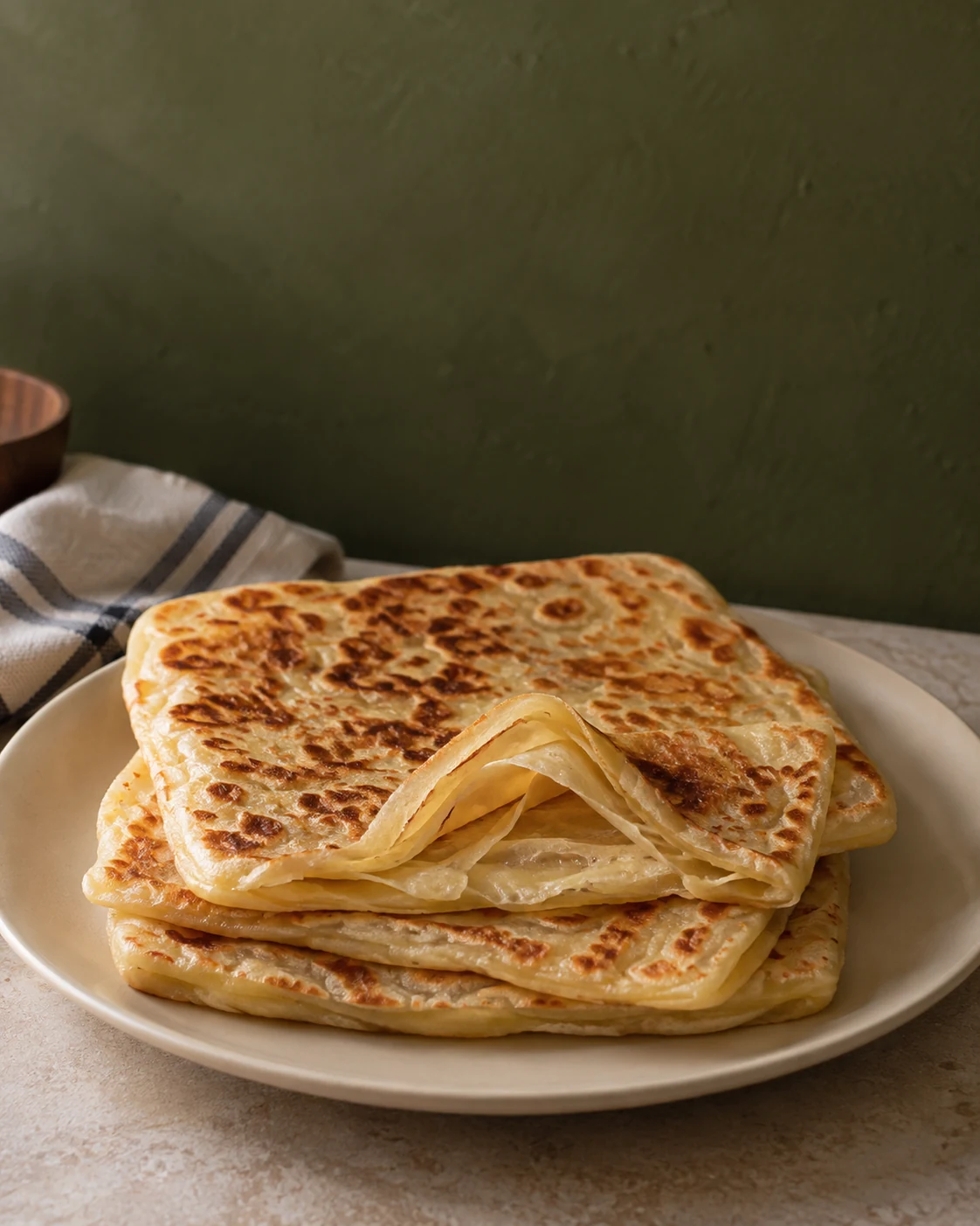
Msemen gets its layers from an oiled, thinly stretched sheet folded into a square. Harcha takes its grainy character from semolina. Baghrir develops an open, absorbent surface as bubbles break during one-sided cooking.
Stretch and fold
For msemen, the dough rests so it can be opened thinly. Oil or fat between folds helps define the layers on the griddle.
Coarse and tender
Harcha begins with semolina rather than a paper-thin sheet. Its crumb remains pleasantly grainy beneath the browned surface.
Bubbles at the surface
Baghrir’s characteristic holes form as its leavened batter cooks, usually on one side. They hold a little butter or honey when served.
The best clue is the texture: layered, grainy or sponge-soft.
04 · Breads & a savoury bowl
Four openings.
No single formula.
These are four recognisable choices, each with its own texture and purpose. A particular morning may include just one.
Move through the photographs to see what changes from folded dough to batter, semolina bread and a warm savoury bowl.
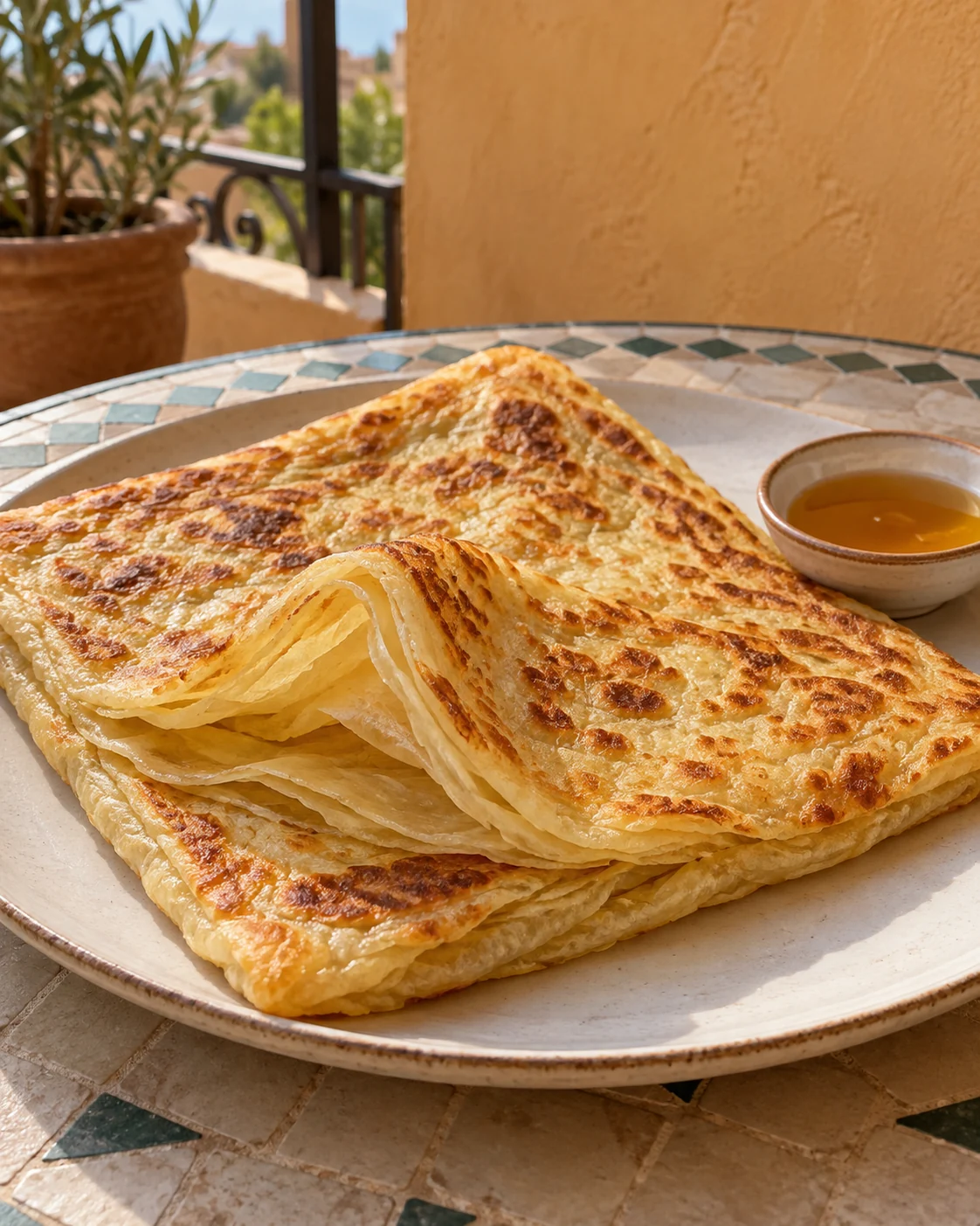
Msemen
Rested dough is stretched thin, folded and cooked on a hot surface. The result is pliable inside with browned spots outside; honey or savoury fillings are household choices.
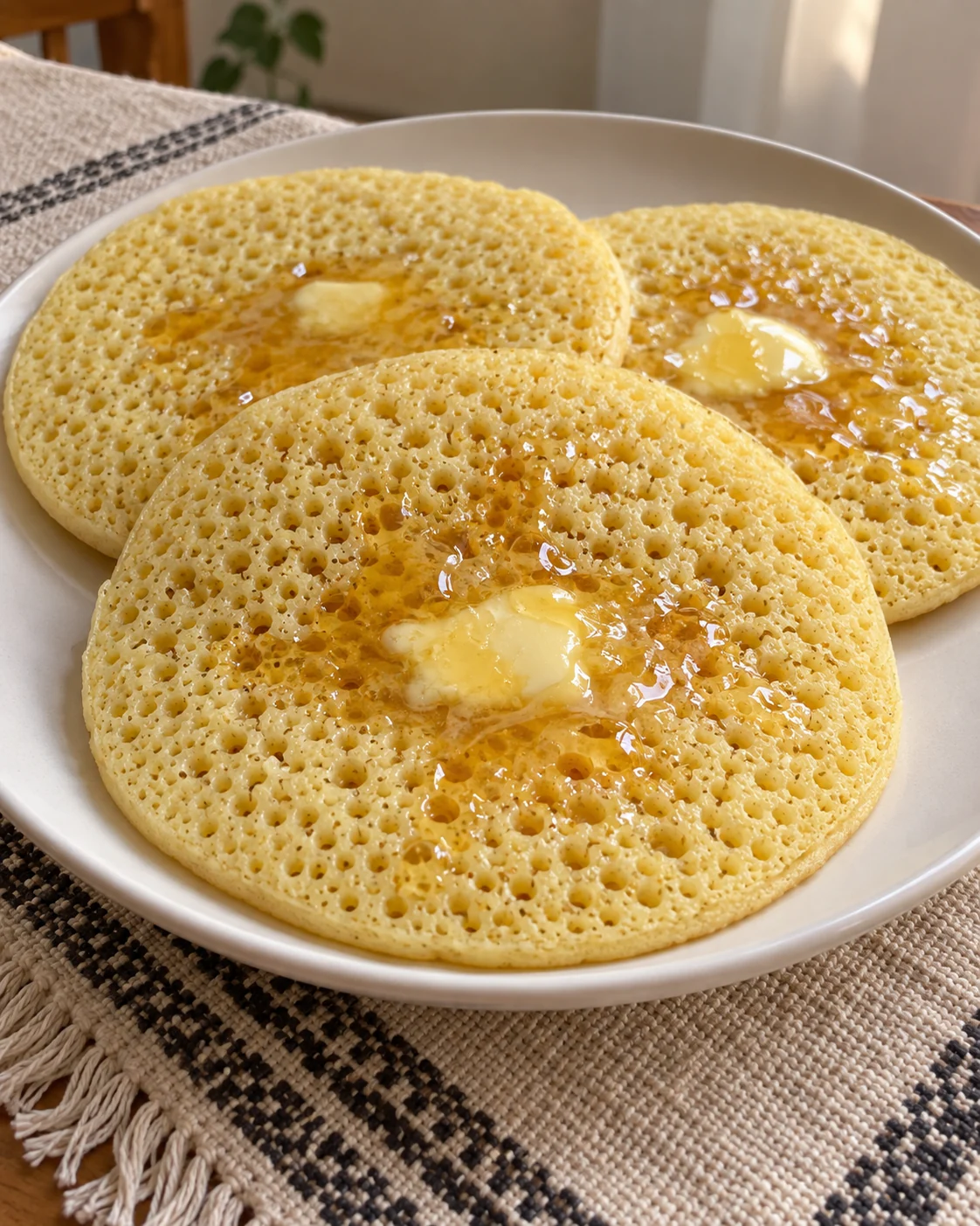
Baghrir
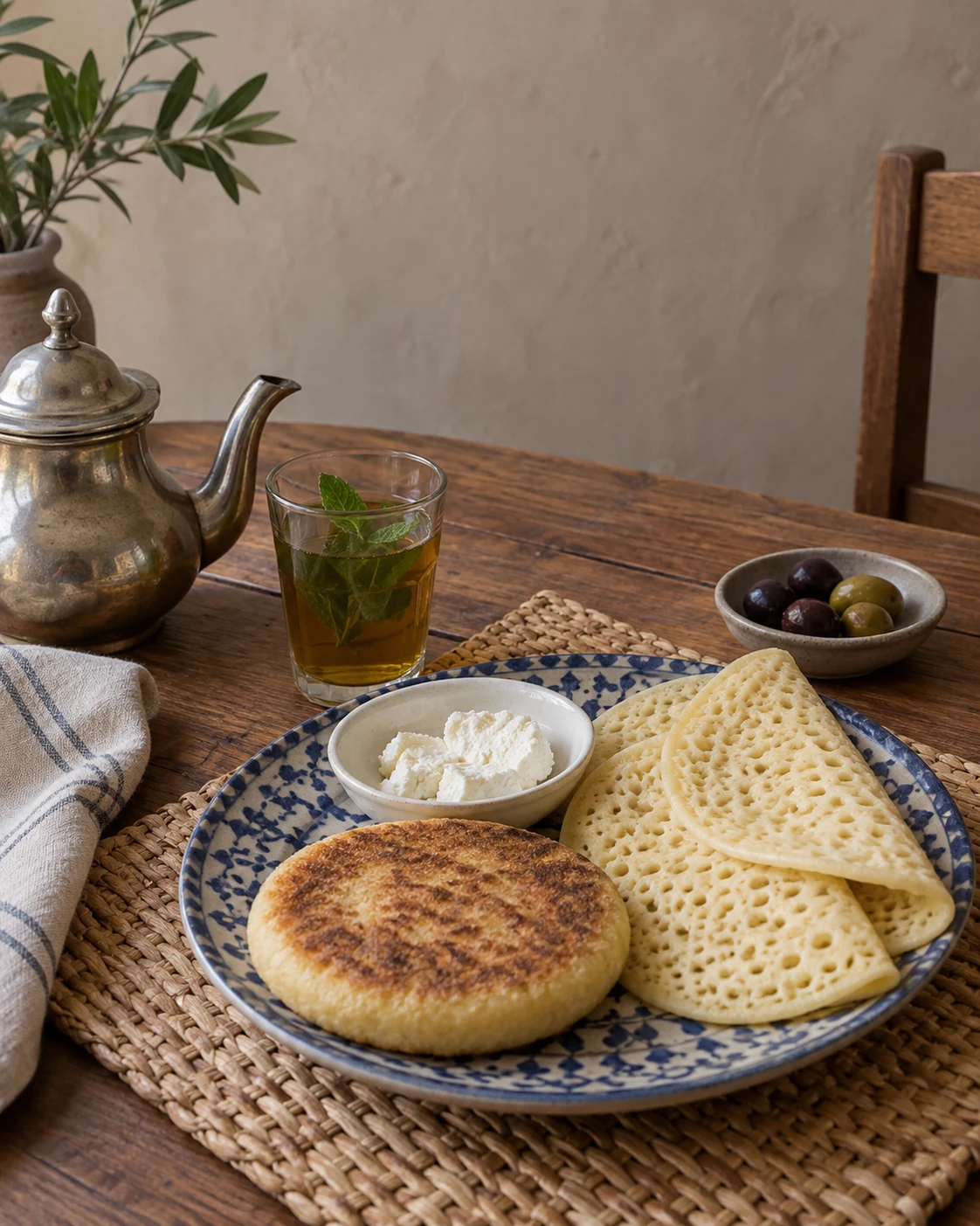
A semolina-based batter produces tiny holes as it cooks. Warm butter and honey settle into the porous top. It is soft rather than flaky.
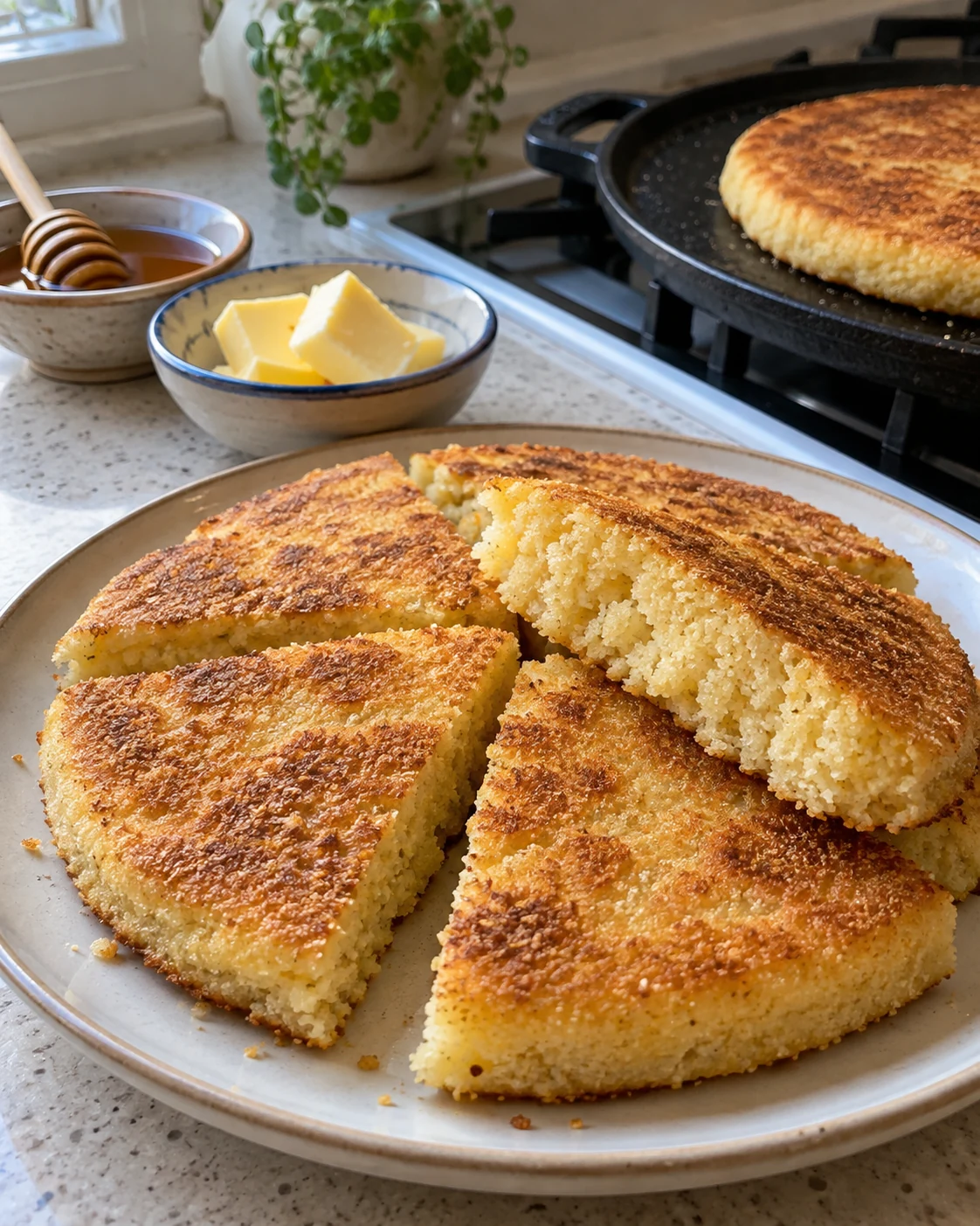
Harcha
This griddled semolina bread is thicker and more crumbly than msemen. It is often split or served in pieces while still warm.
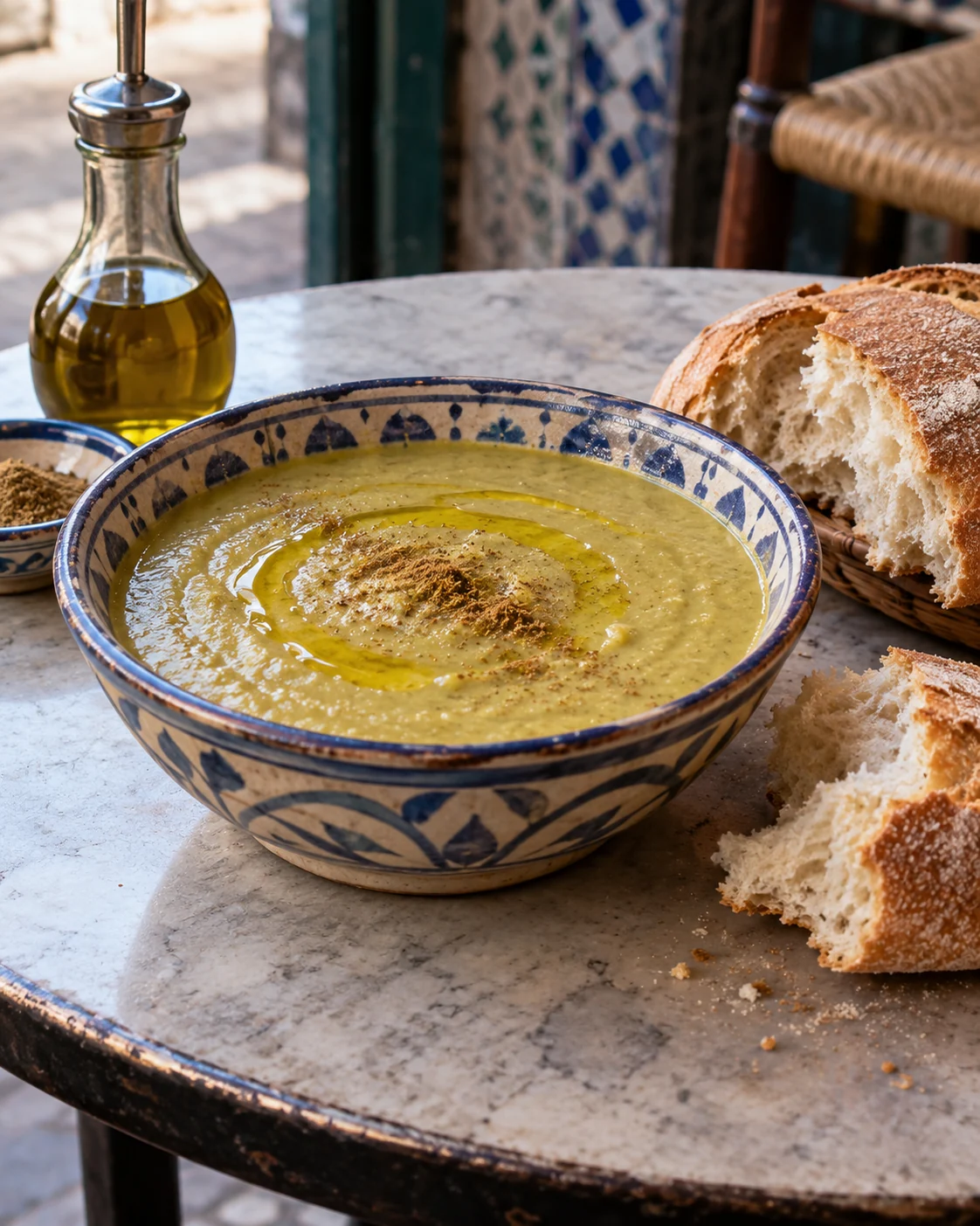
Bissara
A bowl of puréed dried fava beans with olive oil and cumin can be a hearty breakfast, especially in a café context. It is one option, not part of every breakfast table.
Sweet, when you like.
Butter, honey, jam or amlou can change a bread without changing the bread itself. They are options, not prescribed pairings.
Savoury belongs too.
Olive oil, cheese or a bowl of bissara makes room for appetites that do not begin with sweetness.
05 · What comes alongside
Small bowls.
Real choices.
The spread need not be abundant. What sits beside the bread makes it sweet, savoury, rich or fresh.
These four elements are recurring possibilities, not a checklist for a “proper” breakfast.
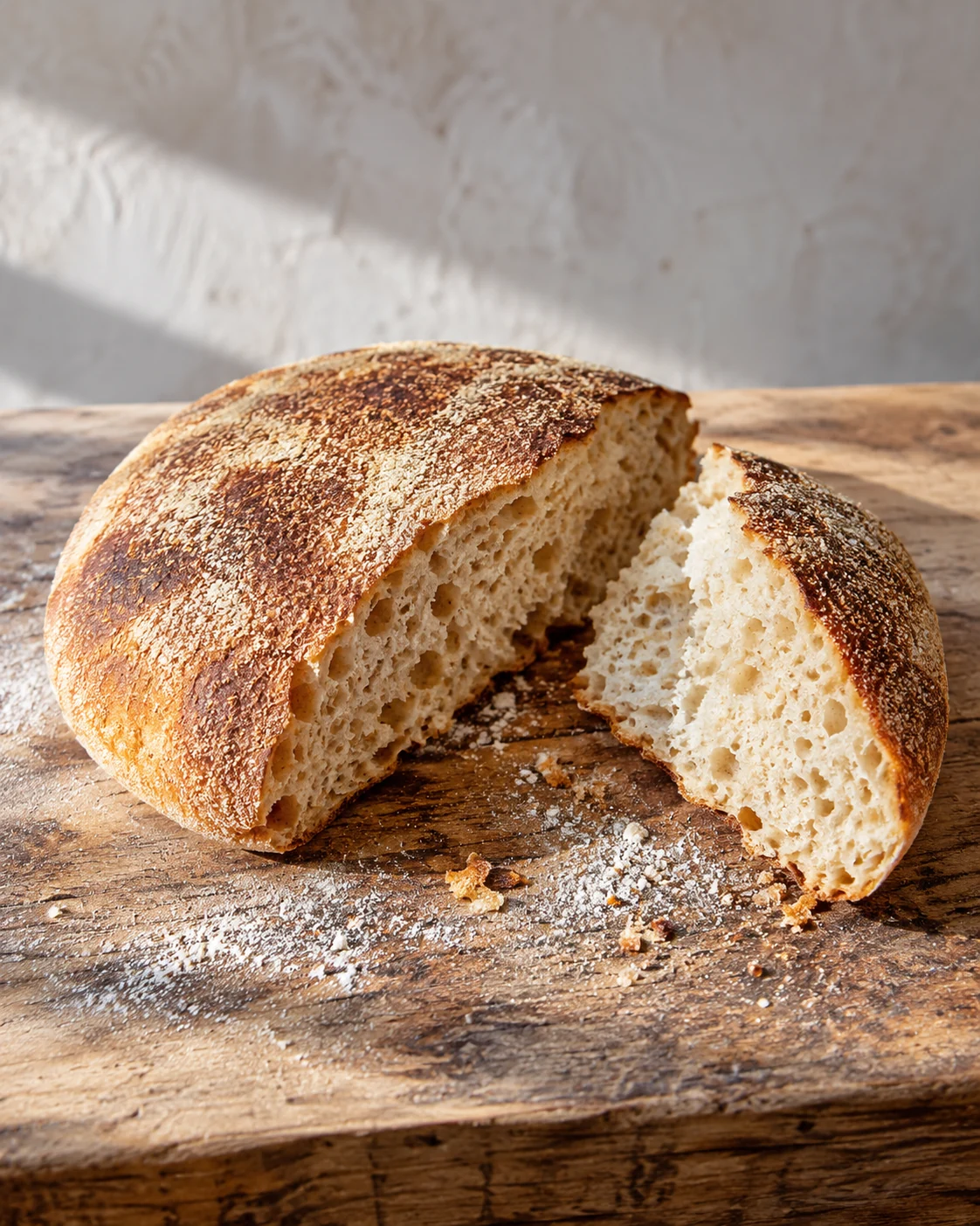
Khobz
The everyday base.
Round bread can be broken and offered with oil, cheese, butter or whatever the household prefers.
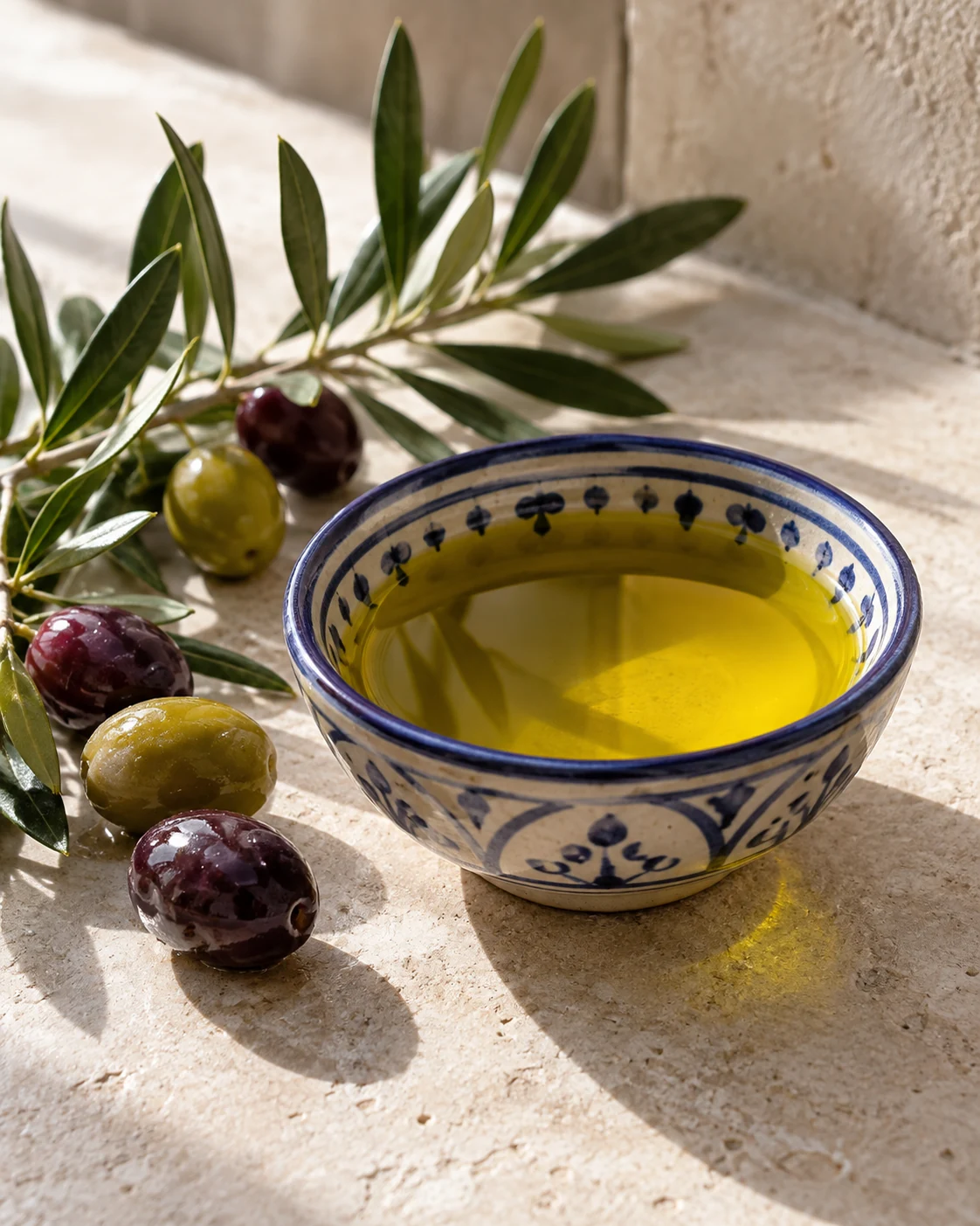
Olive oil
A savoury beginning.
Its flavour can stand on its own beside bread; quality and variety change the taste.
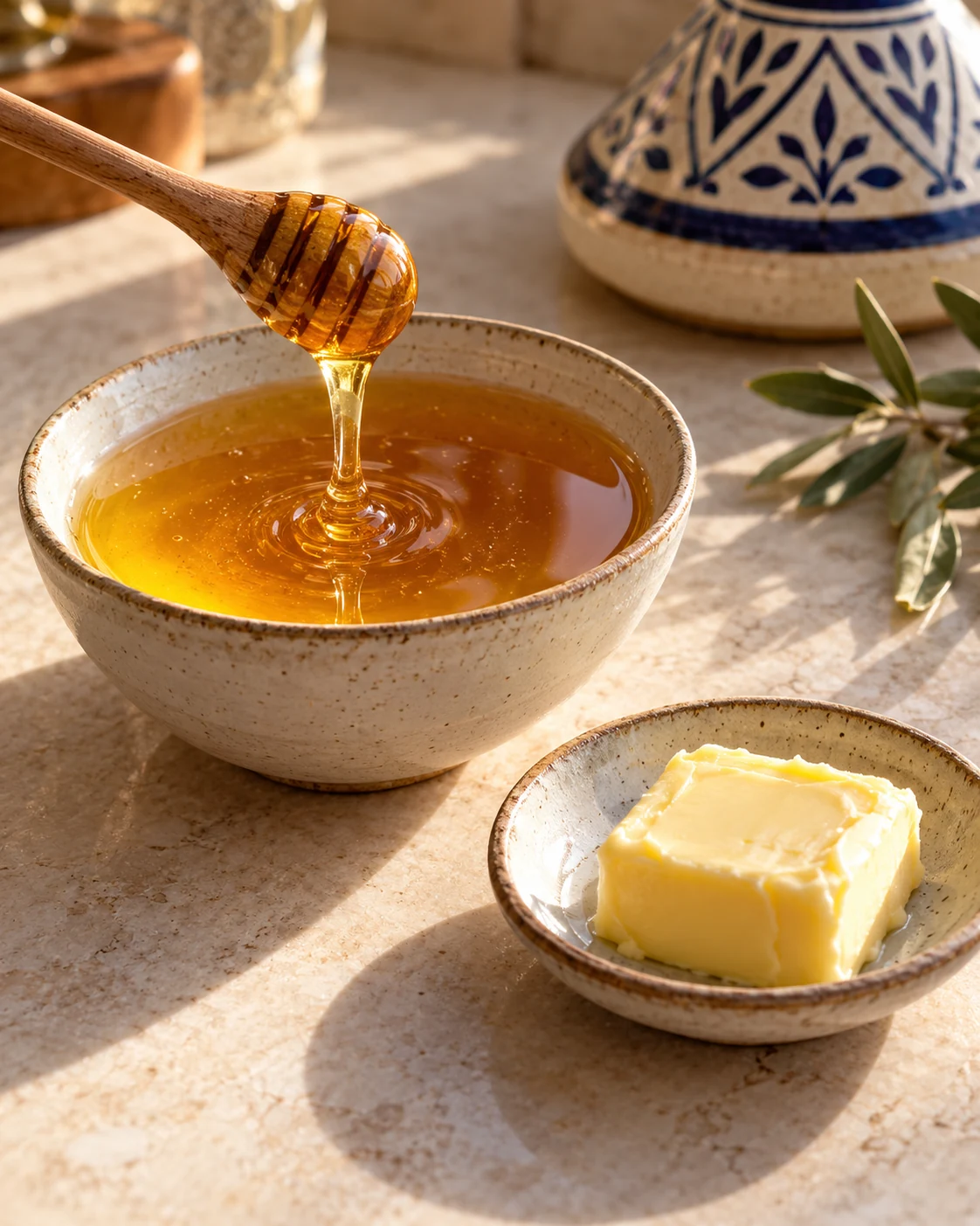
Honey & butter
A warm-bread pairing.
A little of either softens the contrast of crust, semolina or griddled layers.
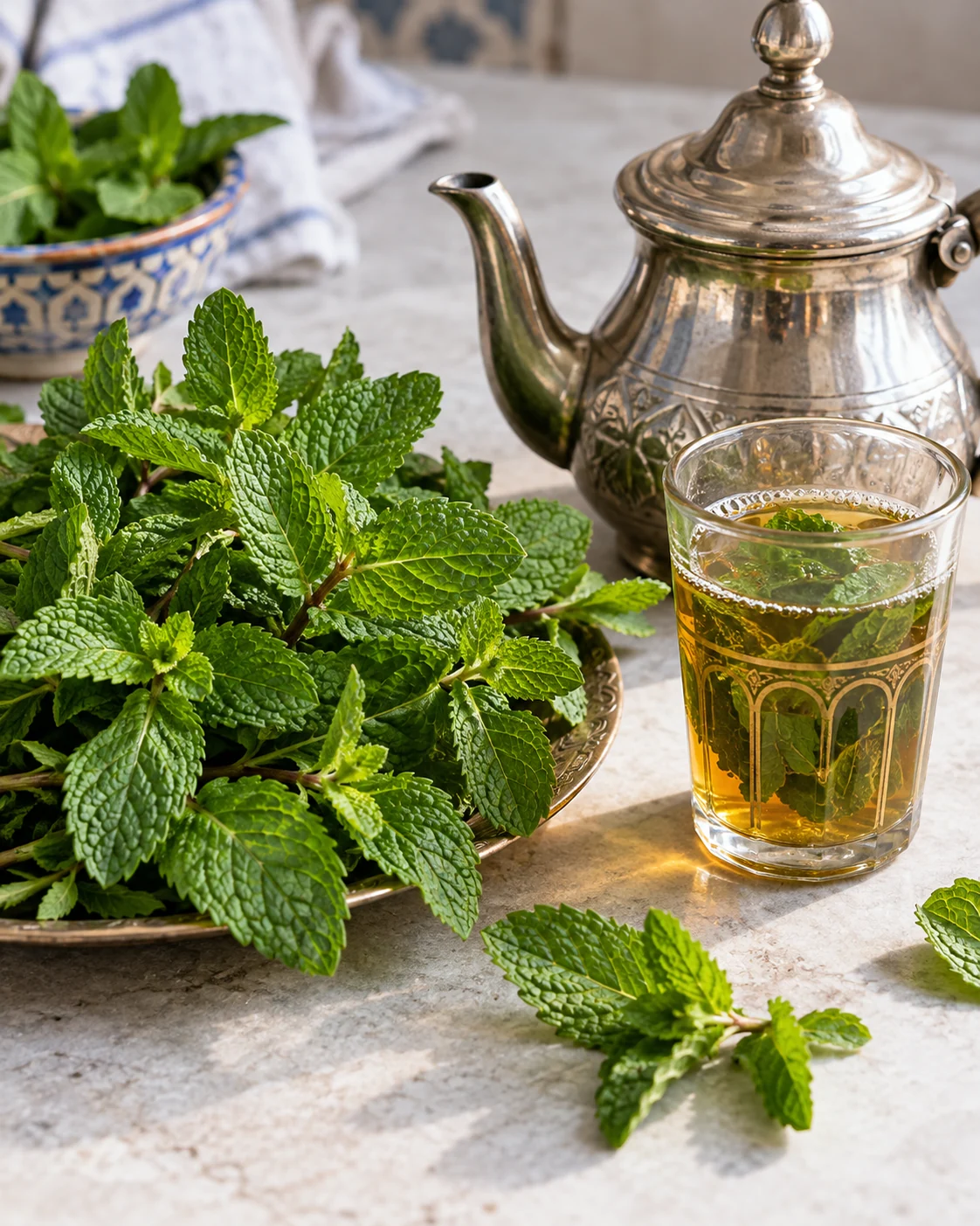
Mint tea
One welcome drink.
Green tea with mint is a familiar choice; coffee is common too, and sweetness varies.
Explore the four elements
BREAD · SOMETHING TO SPREAD · SOMETHING TO DRINK
The quiet
logic of the table.
Breakfast becomes more interesting when each part has a clear purpose.
A sturdy piece of khobz takes olive oil or soft cheese; the layered surface of msemen catches honey; baghrir holds a light coating in its holes. A cup of tea or coffee sets the pace rather than dictating the whole menu.
The arrangement is flexible because the foods are different.
Choose the bread.
Crusty, layered, crumbly or sponge-soft: the texture changes the way an accompaniment feels.
Keep the accompaniments honest.
Honey, oil, fresh cheese and amlou have their own flavours. None needs to be piled onto every bread.
Let the morning decide.
A ten-minute breakfast and a long shared one ask for different amounts of preparation.

06 · Place & household
The place
changes the pantry.
A regional ingredient can belong to breakfast without defining the whole country.
Amlou, made with toasted almonds, honey and edible argan oil, is particularly associated with Morocco’s southwest. It is delicious with bread, but it should not be presented as the everyday spread of every household.
City, village, work schedule, budget and family taste all affect the table. No one menu can stand in for that range. The surest way to describe breakfast is to name the food and allow for variation.
In the southwest
Amlou offers almond depth and a distinctive argan-oil character.
Explore Souss-Massa ↗In the bakery queue
Fresh khobz can make a simple breakfast feel complete.
Discover Taste Morocco ↗In a busy household
What is prepared ahead and what is bought nearby shapes the morning.
Explore food culture ↗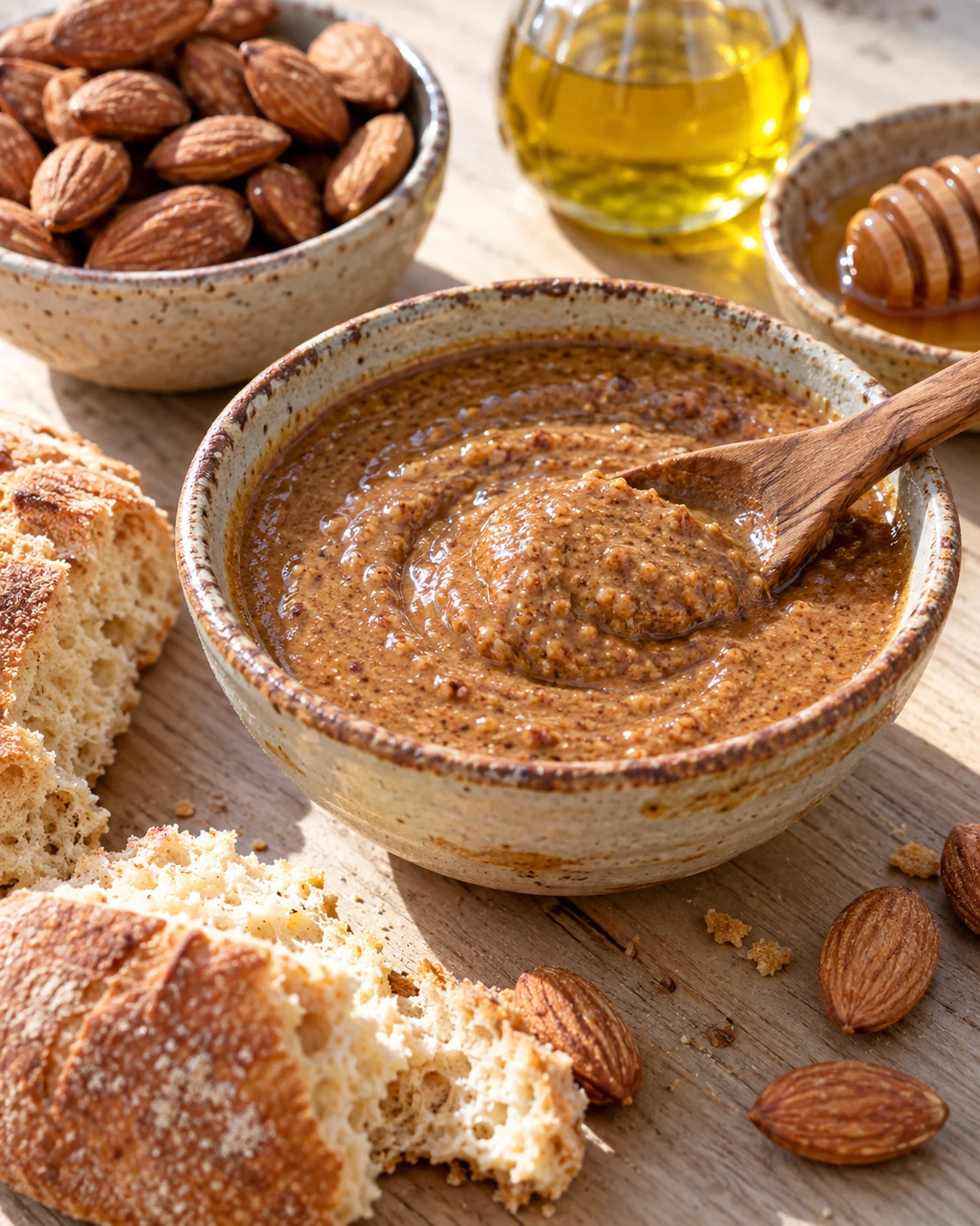
07 · Tea, coffee & company
A first cup.
A little room.
Breakfast can be shared without becoming an occasion.
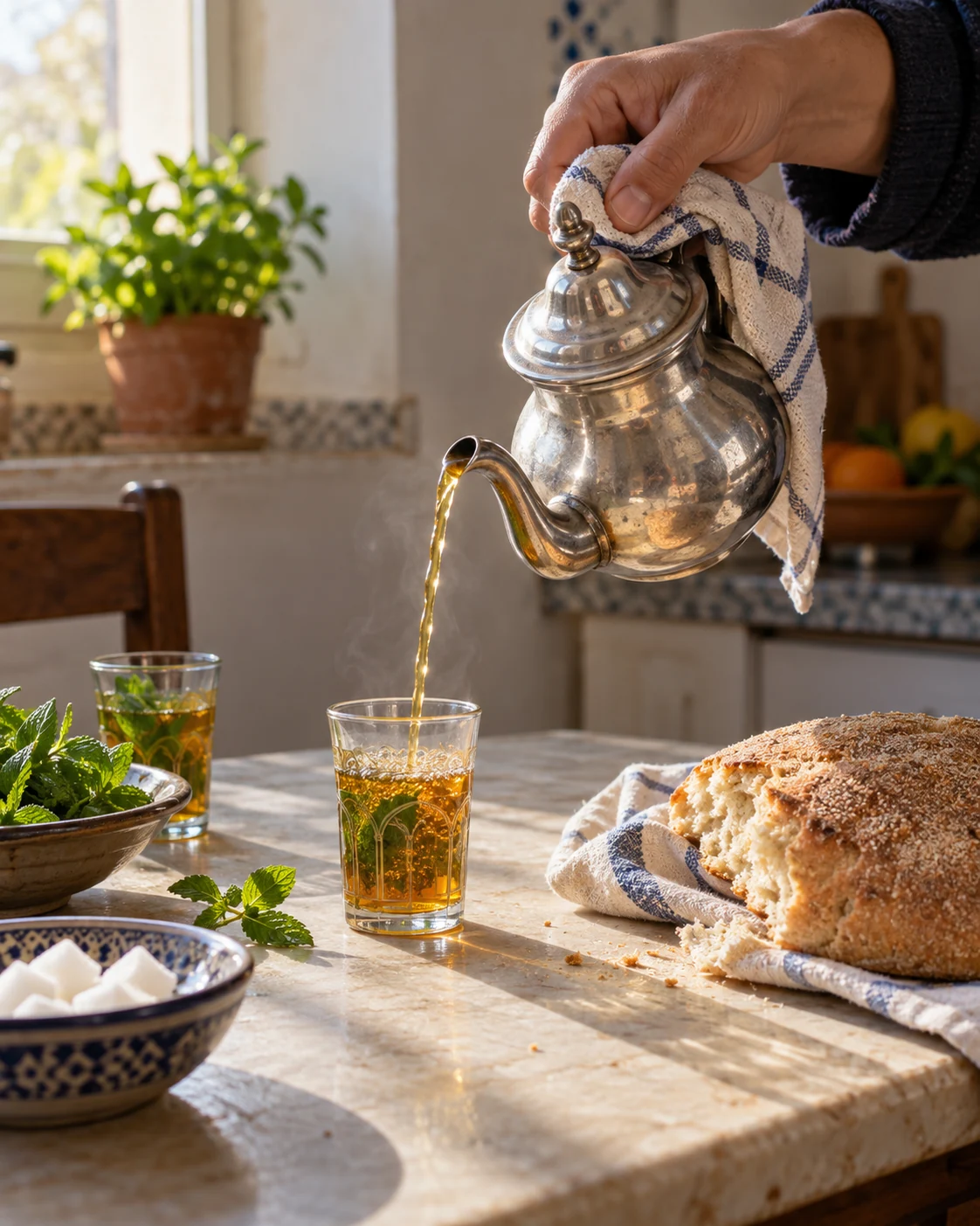
Tea may be poured into small glasses while warm bread is divided. In another home the first sound is a coffee cup, or breakfast is eaten quickly before work. The welcome lies in attention, not in an obligatory elaborate service.
When there is time, someone might bring fresh bread, warm a few pieces of harcha or set out a little amlou. A small table can still feel generous.
Some mornings are brief.
A piece of bread with oil or cheese makes sense when the day starts early. It should not be judged against an elaborate weekend table.
Some mornings stretch.
A griddled bread can be cut or broken and passed around. Each person chooses a topping; the same table offers different bites.
Tea with mint.
Or coffee.
Mint tea has a significant place in Moroccan hospitality, yet it need not appear at every breakfast. The first cup changes with habit and circumstance.
Sweet and savoury coexist.
Honey on baghrir and olive oil with khobz can sit on the same table. They offer alternatives rather than a single prescribed combination.
08 · Skill at the griddle
Watch the surface.
Read the heat.
Different batters ask the cook to notice different signs.
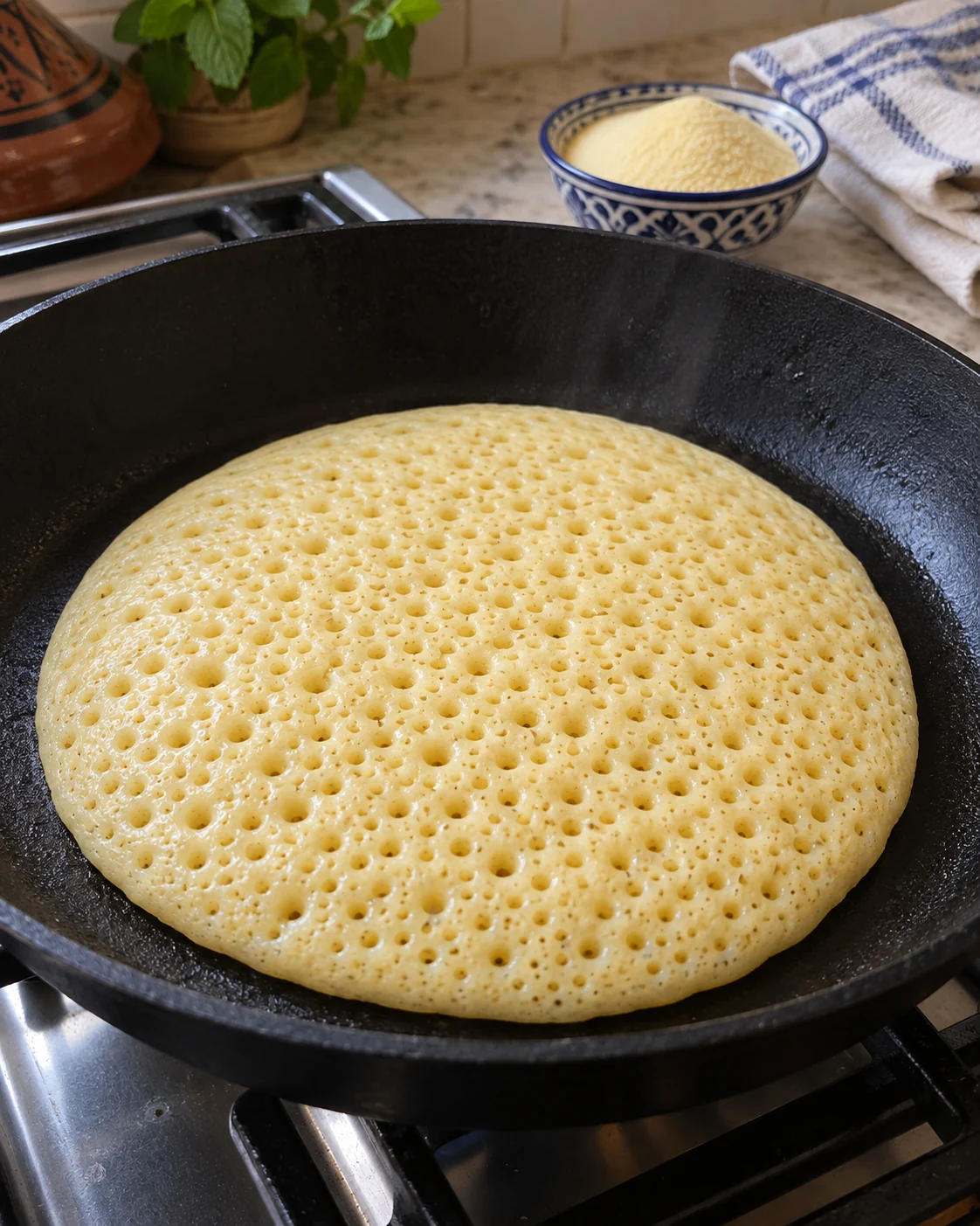
Baghrir is the clearest visual example. Small holes open across the top as its batter cooks. Msemen tells a different story: the thin folded sheet browns in patches and its layered interior stays flexible. Harcha develops a grainy crust while its thicker centre cooks through.
This is practical knowledge, learned by looking and touching rather than by treating every bread as the same recipe.
09 · Good questions
A clearer
morning picture.
These answers keep the table varied, precise and useful.
Is there one traditional Moroccan breakfast?
No single menu covers every region, family or schedule. Bread, hot griddled foods, spreads and tea or coffee are recognisable possibilities, but combinations vary.
What distinguishes msemen, baghrir and harcha?
Msemen is thin dough folded into layers; baghrir is a hole-covered semolina pancake made from batter; harcha is a thicker griddled semolina bread with a grainy crumb.
Must breakfast be sweet?
No. Olive oil, cheese and savoury bowls such as bissara offer alternatives to honey or jam.
Is amlou eaten everywhere?
Amlou is strongly associated with Morocco’s southwest and has become known more widely. It is one possible spread, not a compulsory item on every breakfast table.
Is mint tea always served?
No. Tea is important in hospitality and often enjoyed at breakfast, while coffee and other choices also belong to contemporary mornings.
 EXOTIC MOROCCOTASTE · THE GUIDE COLLECTIONMoroccan BreakfastIngredients, technique
and the Moroccan table
From the story to your kitchen
Keep the flavour.
Go a little deeper.
Breads, spreads and the first table of the day.
Explore the Exotic Morocco guide collection for a closer look at ingredients, kitchen knowledge and the culture around the table.
- Understand the ingredients and their roles
- Recognise the techniques and textures that matter
- Bring context and confidence to the way you cook and serve
Continue tasting Morocco
Follow the
table outward.
Another dish, another technique, another way into the Moroccan kitchen.
Msemen
Thinly stretched dough folded into supple, flaky layers.
Explore the story ↗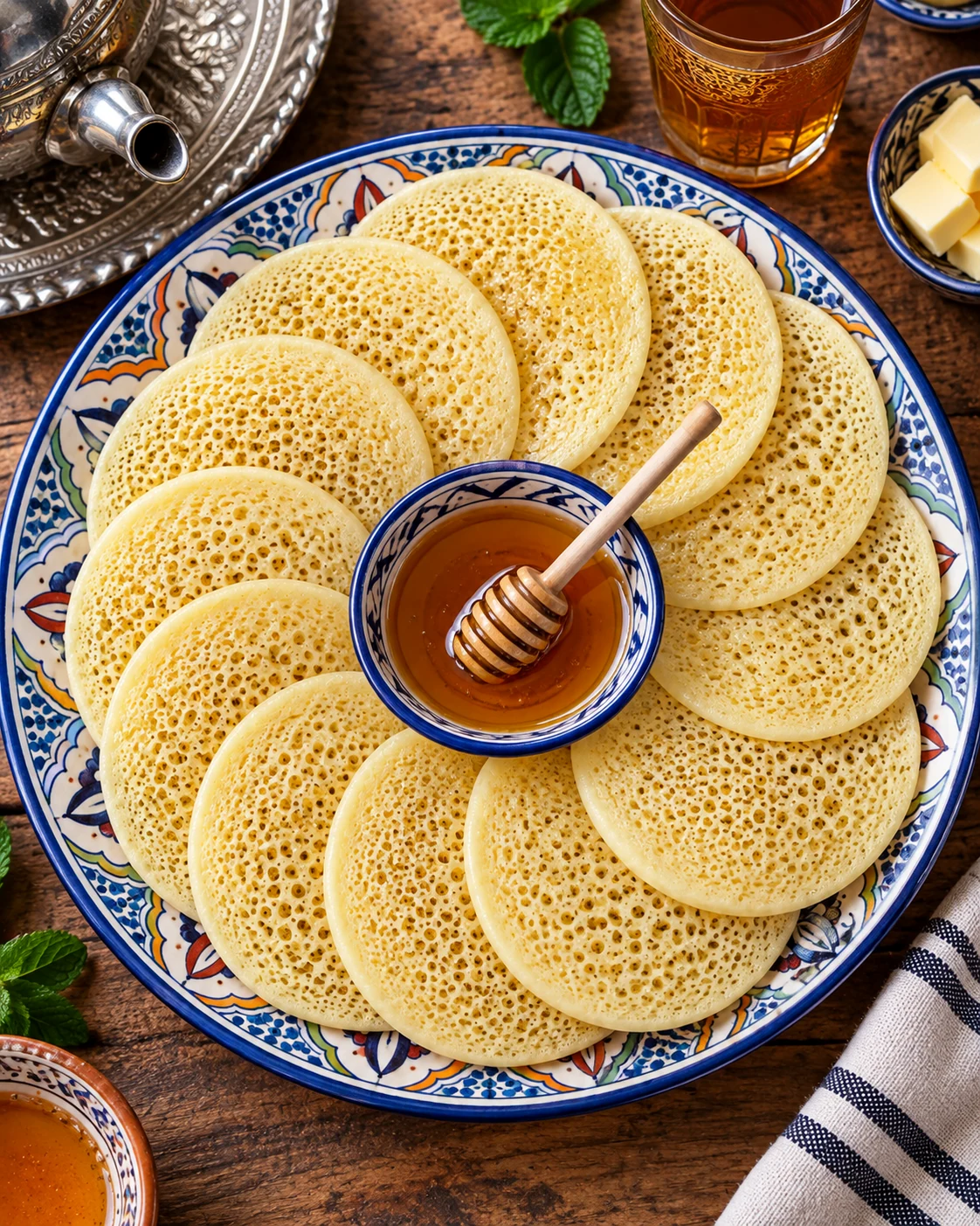
Baghrir
Light semolina pancakes with a surface of tiny holes.
Explore the story ↗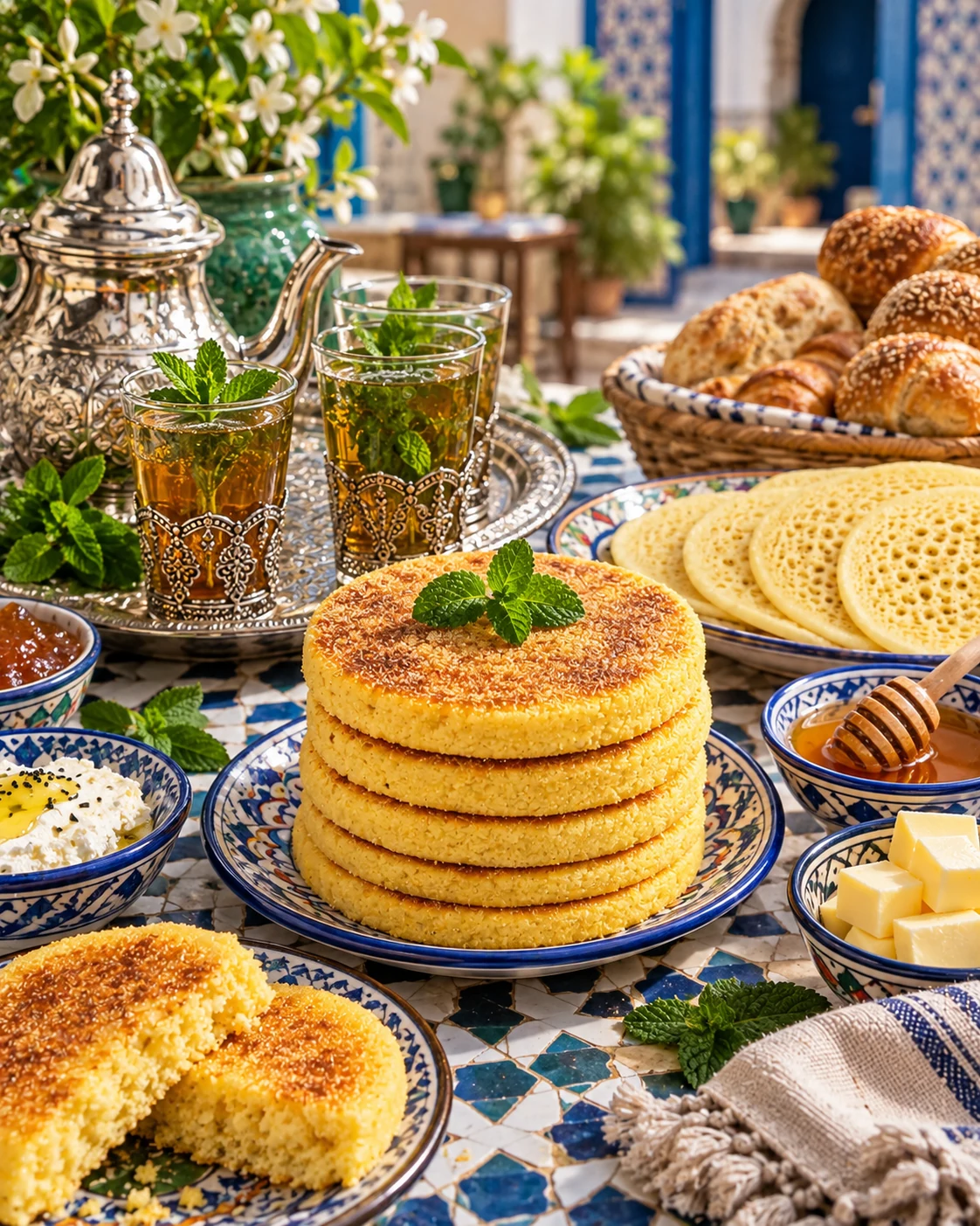
Harcha
Semolina, a hot pan and a tender, crumbly round.
Explore the story ↗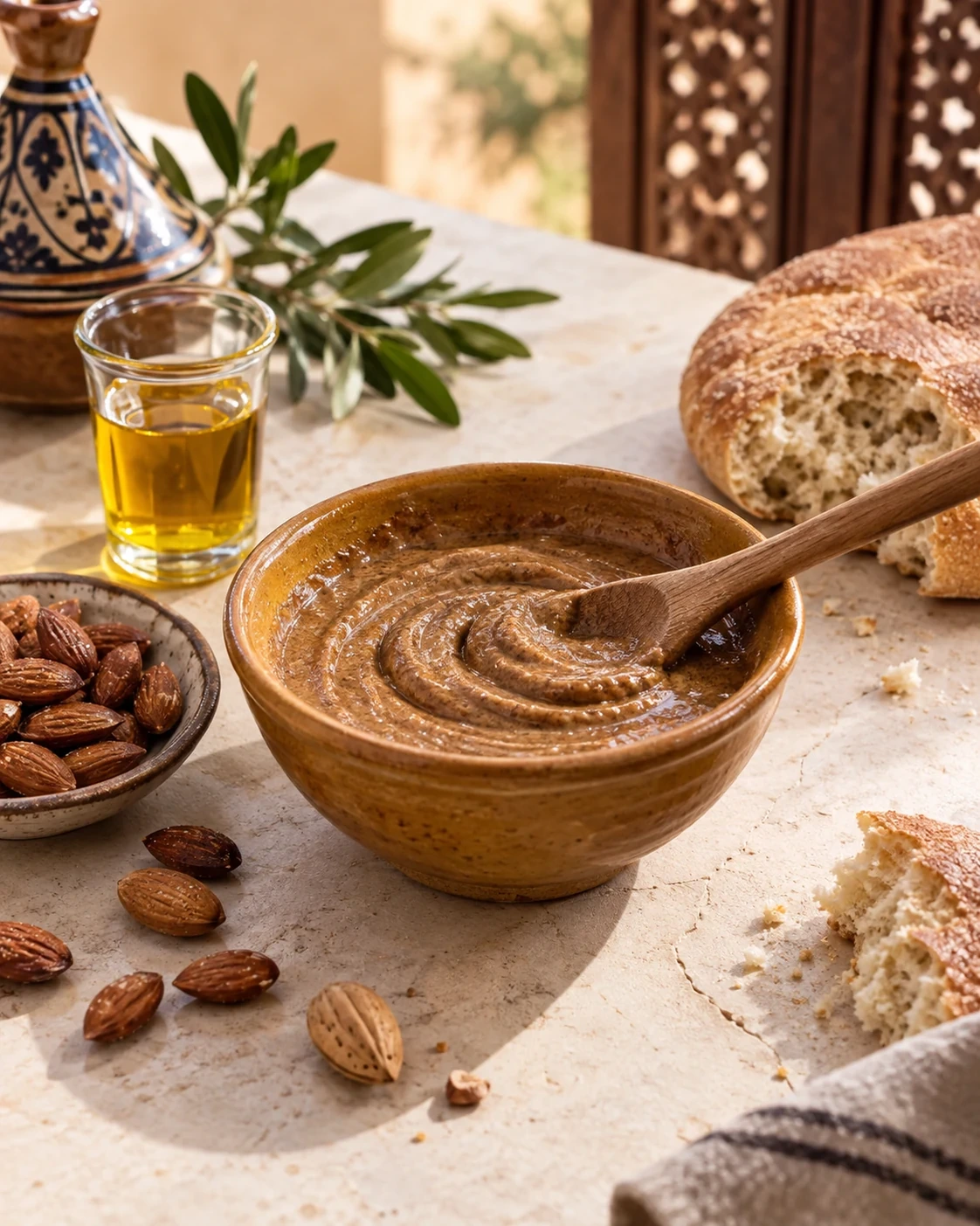
Amlou
Roasted almonds, culinary argan oil and honey from the southwest.
Explore the story ↗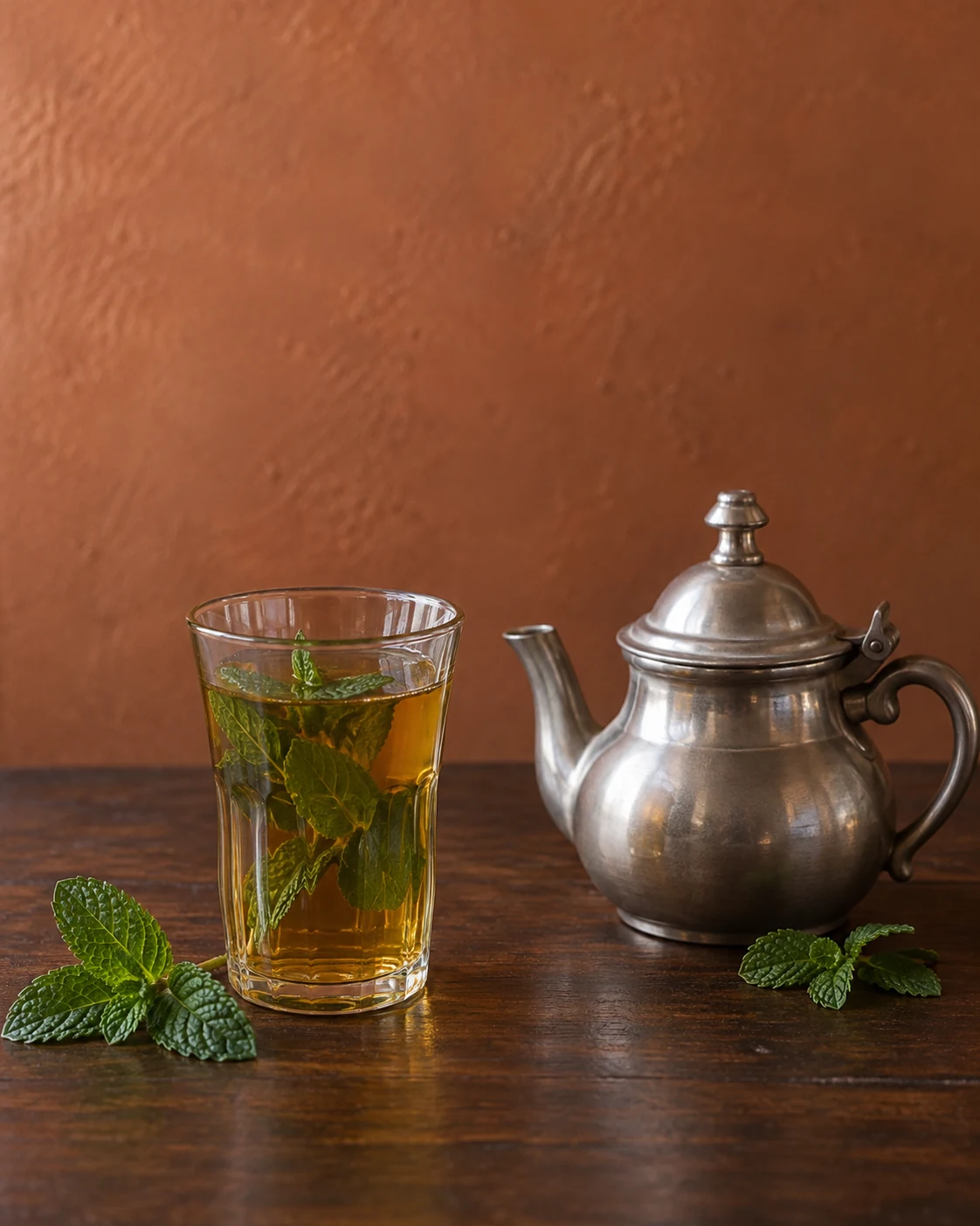
Moroccan Mint Tea
Green tea, fresh herbs and the time given to a guest.
Explore the story ↗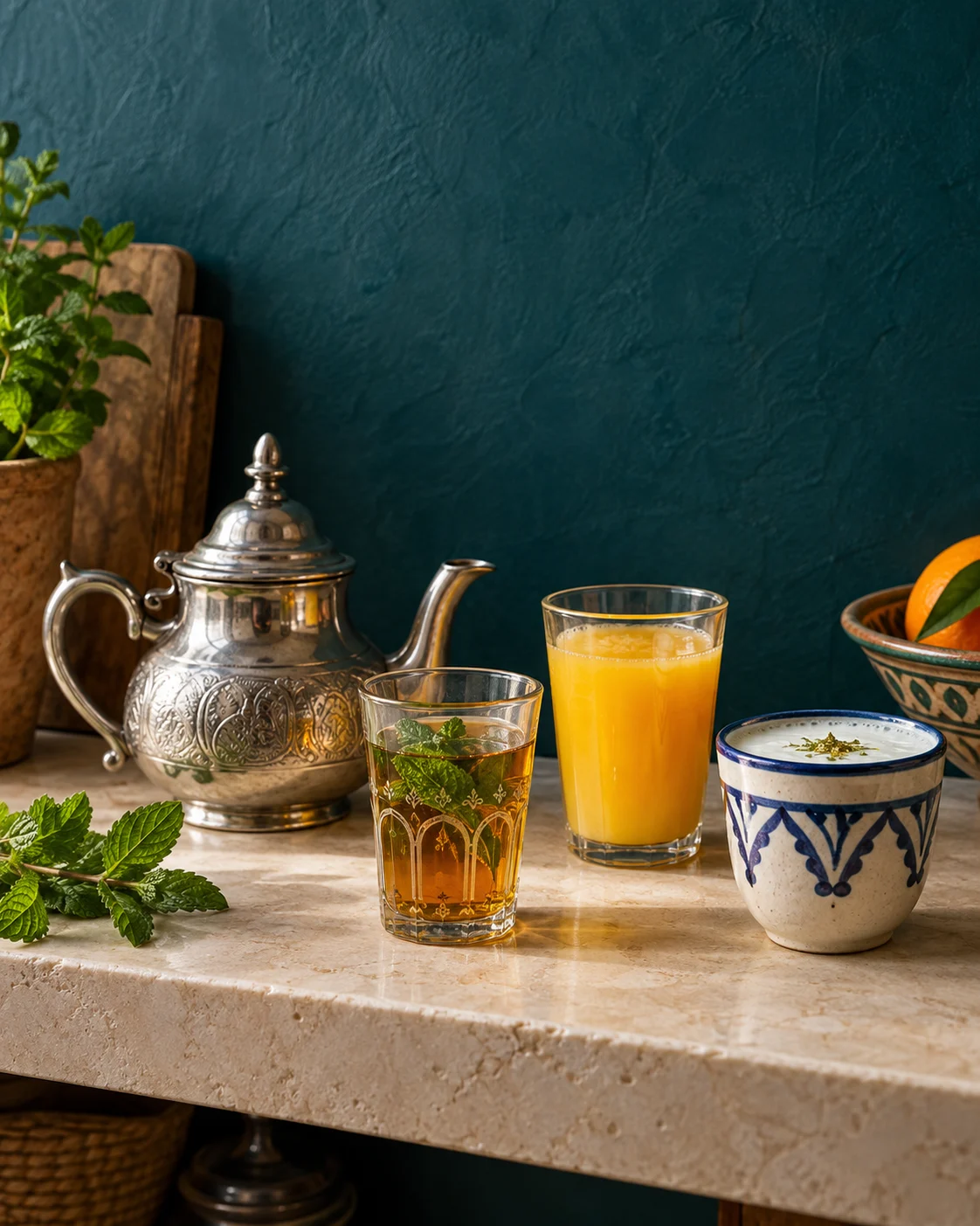
Drinks
Tea, juices, milk-based drinks and moments of refreshment.
Explore the story ↗Sources & editorial notes
This page distinguishes common foods from universal claims. The breakfast combinations described here are examples, not a fixed national set. No undocumented origin date or family story is asserted.
- Moroccan National Tourist Office, Gastronomy — amlou and regional food context.
- Moroccan National Tourist Office, Food & Drink — mint tea in Moroccan hospitality.
- Serious Eats, Souk to Nuts: How to Eat Like a Local in Marrakesh — Moroccan chef Nargisse Benkabbou on morning drinks and harcha.
EXOTIC MOROCCO Places. People. The pleasure of knowing more.Back to top ↑