

01 · The everyday glass
A pause.
A pour.
A welcome.
Morocco’s drinks have more than one rhythm.
Mint tea offered to a visitor, orange juice pressed at a café counter, lben beside couscous: each belongs to a different moment. They are not variations on one ceremony, but a way to see how flavour meets daily life. [1]
Tea is the best-known invitation. Yet a fuller picture also includes fruit stalls, cultured dairy, modern juice bars and the cup of coffee that marks a break in the day.
This is an introduction to the drinks and the decisions behind them: what is brewed, pressed, blended or cultured, and where each glass feels at home.
Explore Moroccan food culture ↗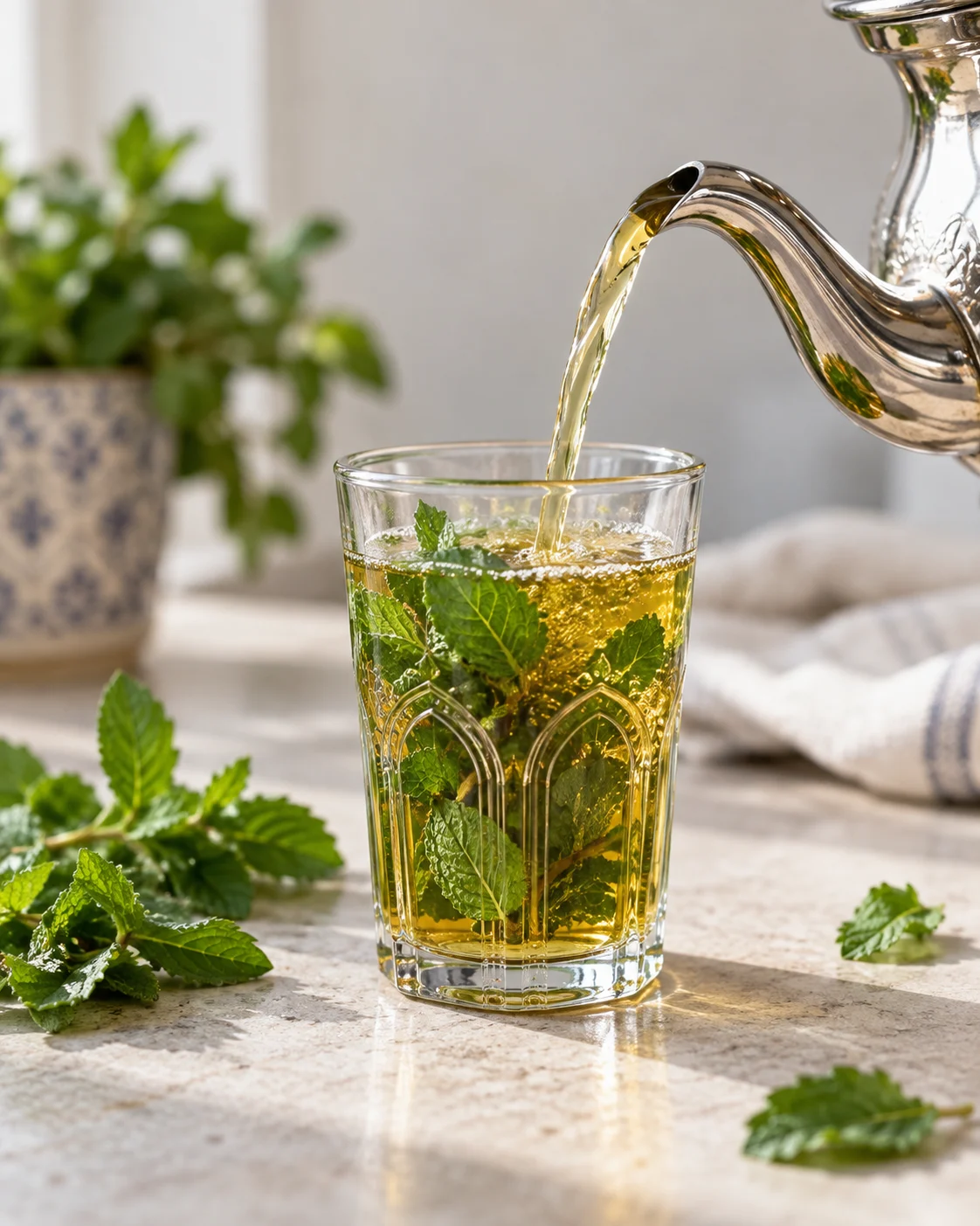
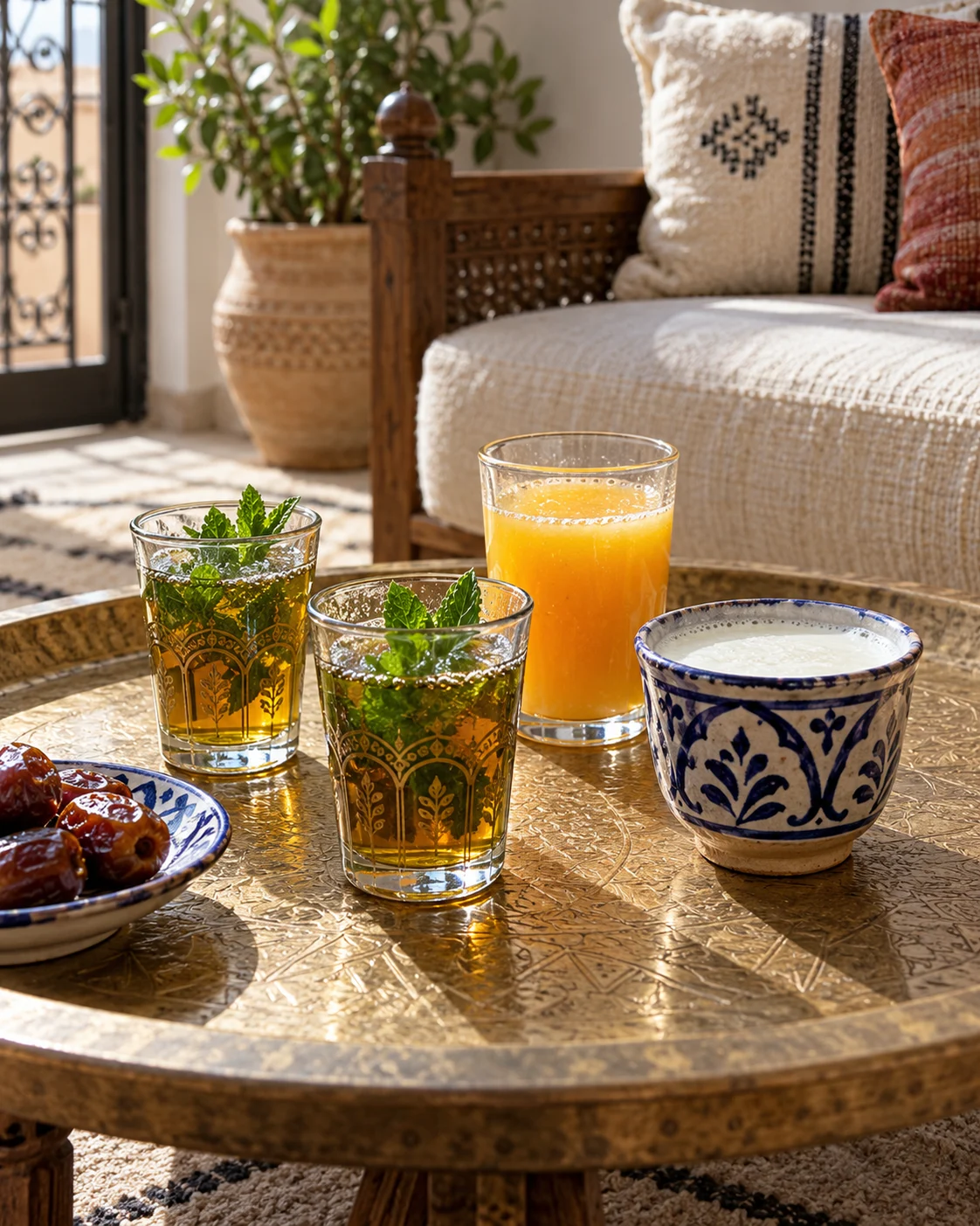
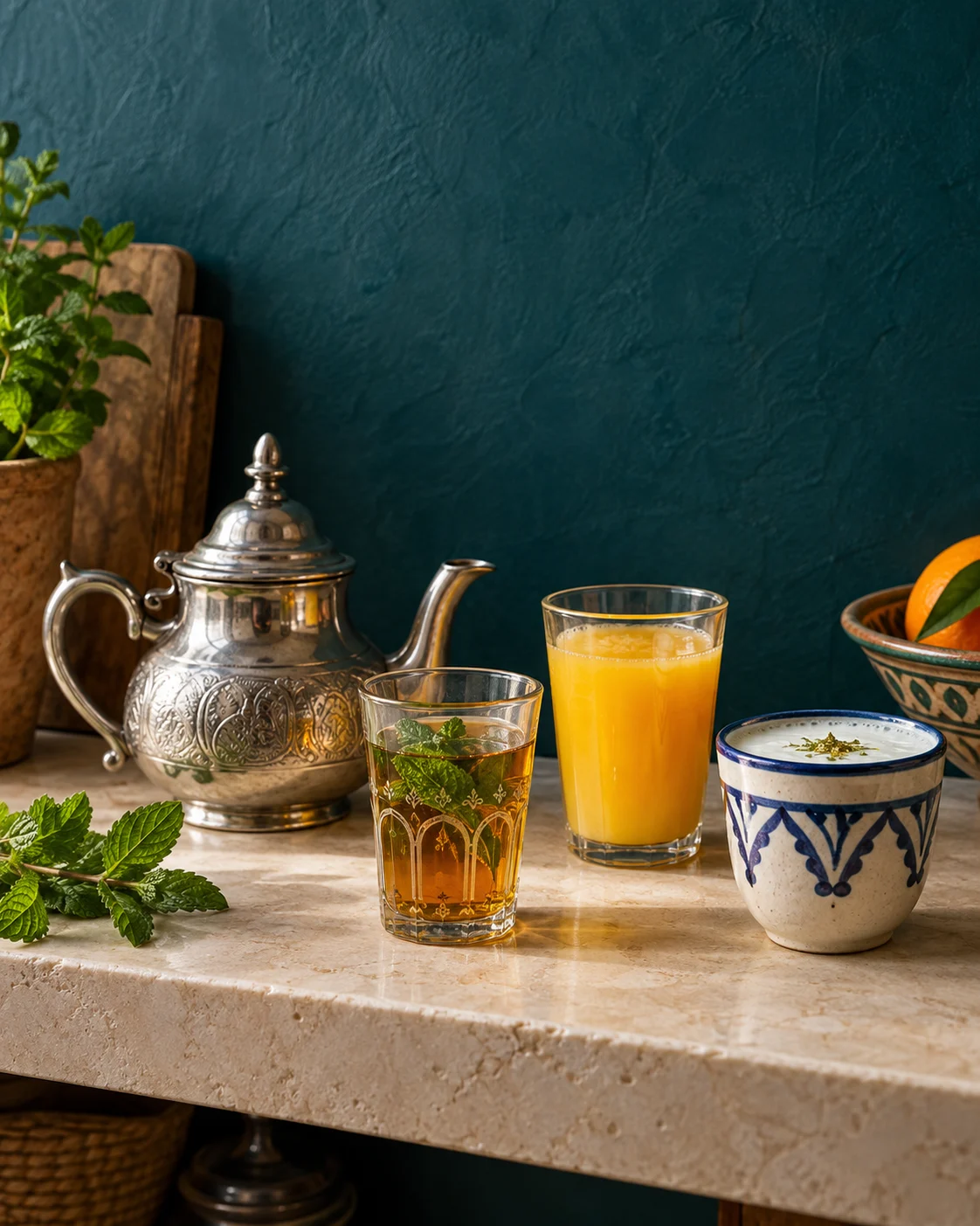
The classic mint version is only one aromatic possibility.
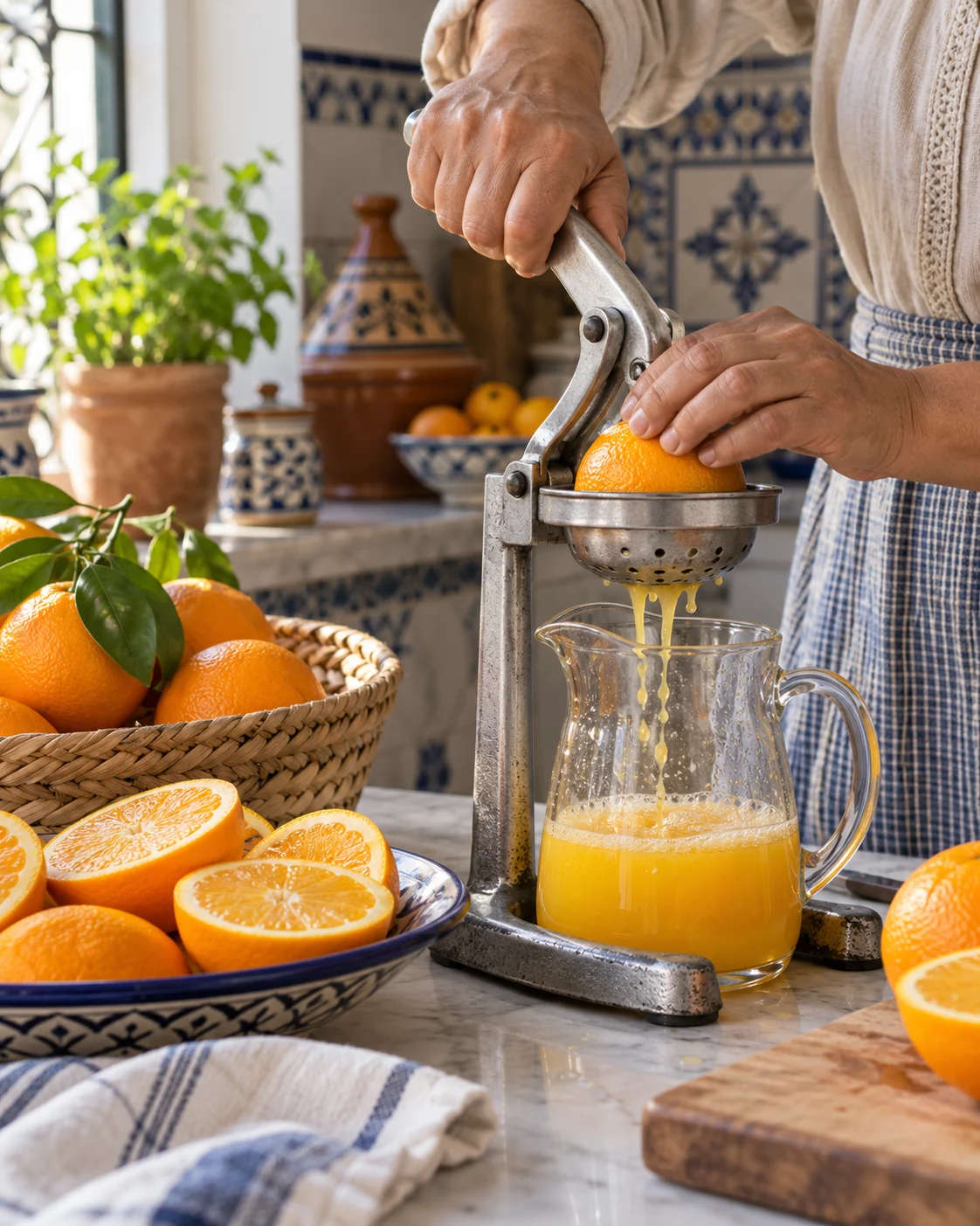
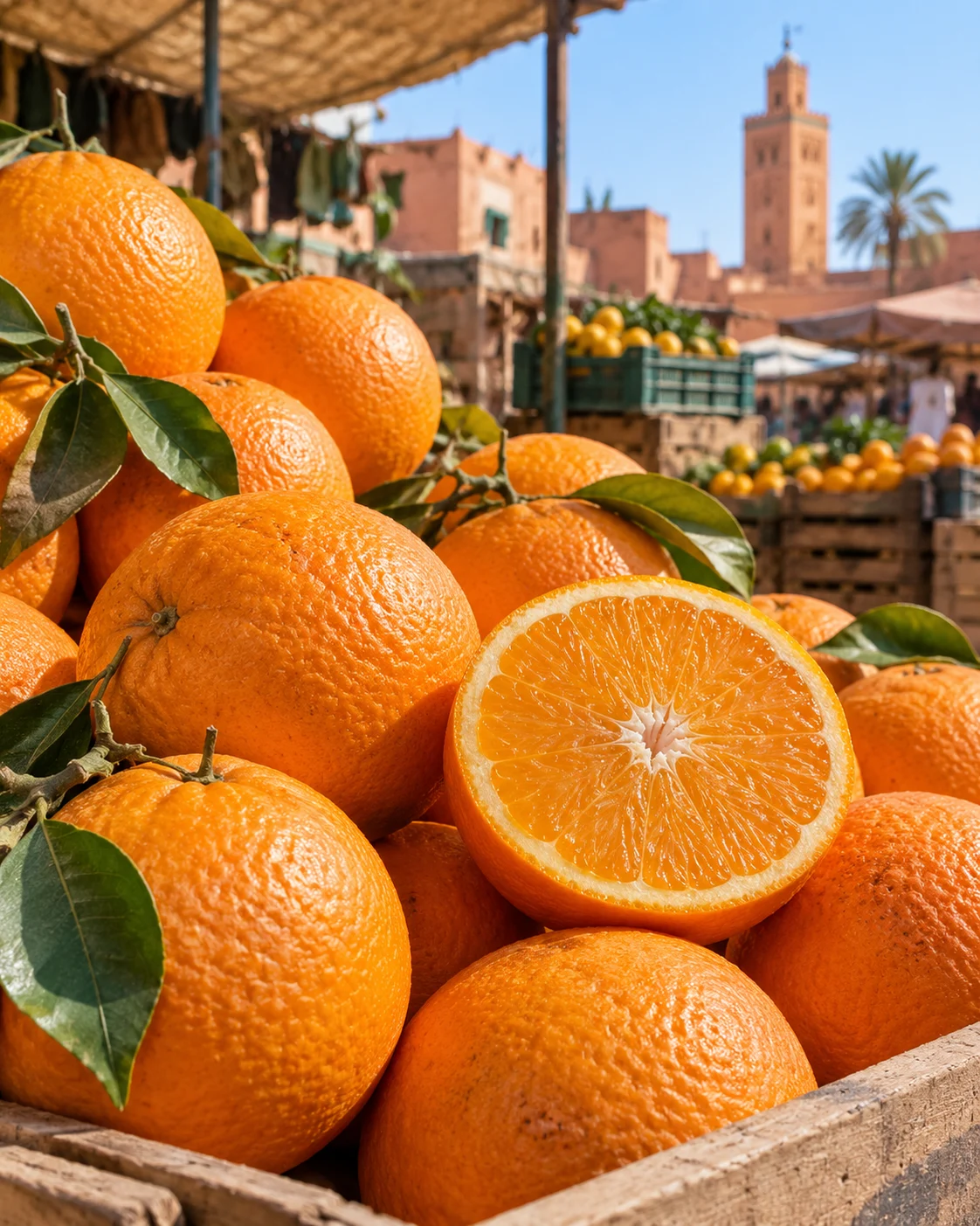
Orange juice depends on ripe fruit and a simple press.
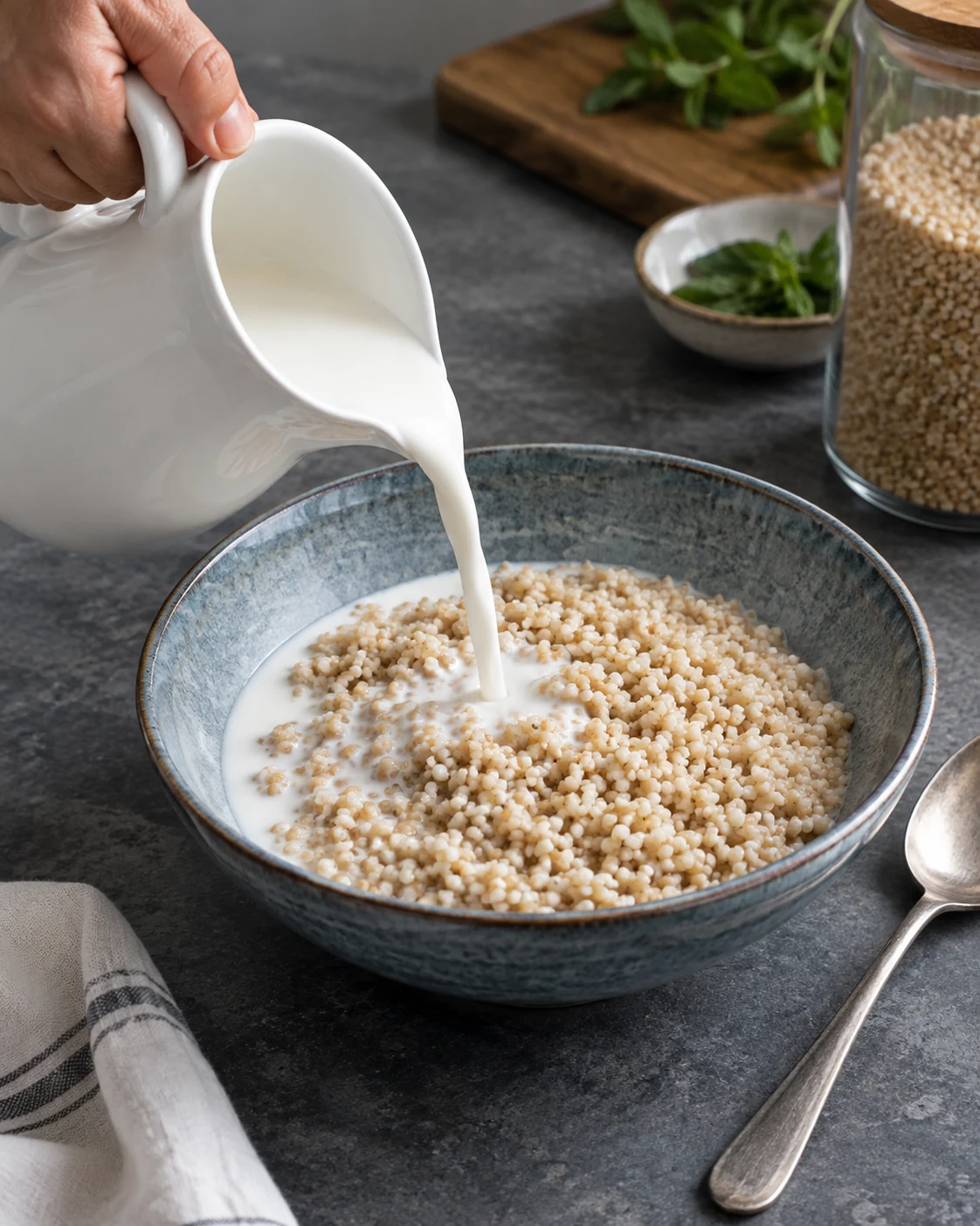
A pourable drink and a spoonable dairy preparation.
02 · Living practice
Tea has a story.
So do the other drinks.
Hospitality is lived, not frozen in a single scene.
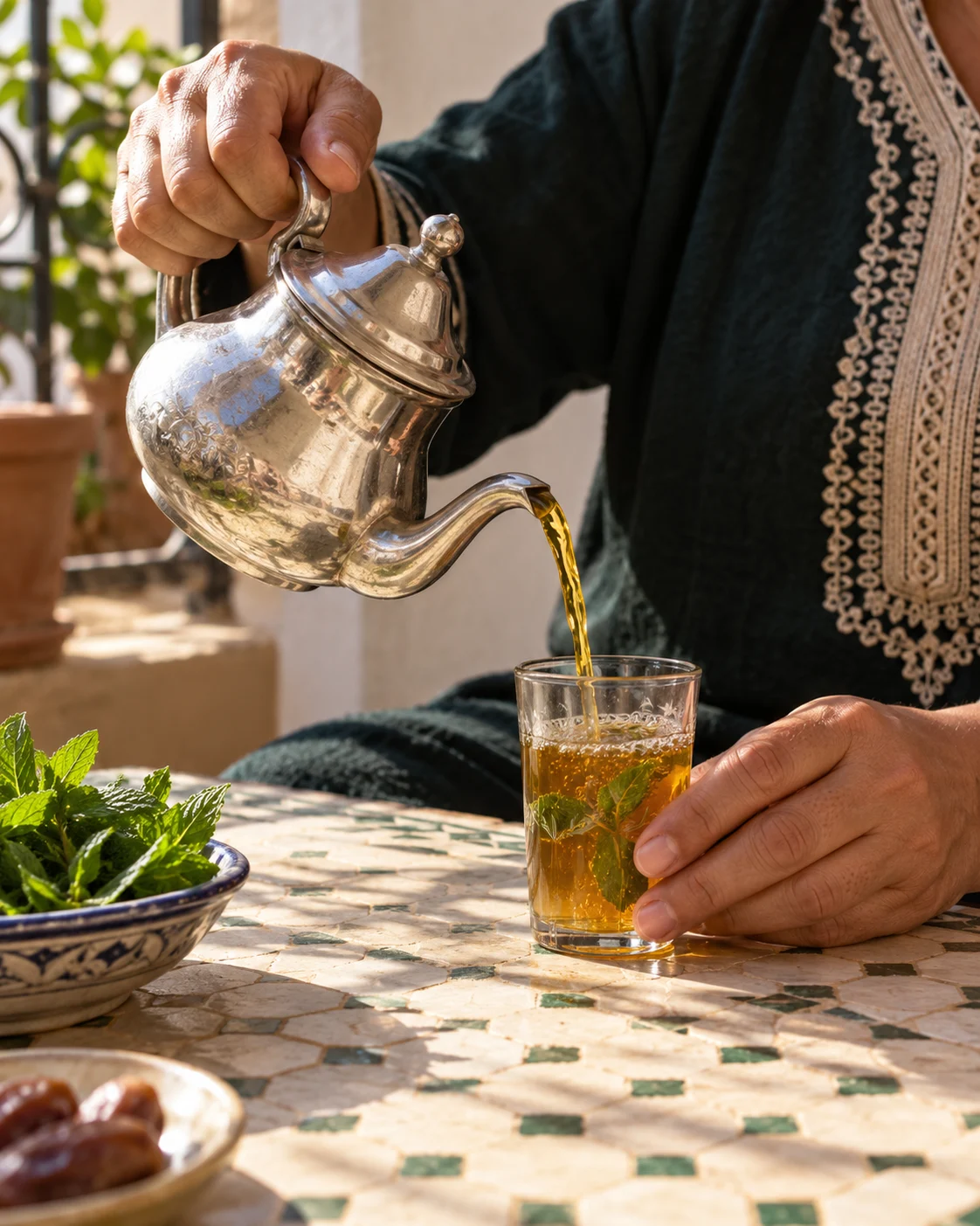
Green tea came to Morocco through trade; the familiar combination with mint grew into a widely recognised form of welcome. No precise date or single inventor can account for every household practice. [2]
A host may pour tea sweet, less sweet, with mint or with another herb. The act can be formal or entirely ordinary. Fresh juice, meanwhile, belongs readily to cafés and stalls; fermented milk connects the drink to the meal itself. [1]
At home
Tea offers time to sit; the exact sweetness and herb choice remain personal.
At a counter
Fruit can be pressed when ordered, making the preparation part of the encounter.
At lunch
Lben brings acidity and coolness to a substantial meal such as couscous.
03 · How the glass is made
Brew. Press.
Culture. Blend.
The method determines the drink’s texture and pace. The difference between a fresh juice, a milk shake and a fermented milk is substantive, not just a matter of serving vessel.
A citrus press is immediate; tea needs extraction and balance; cultured dairy begins before the glass is poured.
Brewed
Green tea forms the base; fresh mint or another herb scents the pot. Strength and sweetness can be adjusted by the person serving it.
Pressed
Oranges are squeezed rather than diluted into a generic fruit drink. The glass is best understood through the fruit available that day.
Cultured & blended
Lben develops its tang through fermentation. An avocado shake or almond milk relies on blending, producing a very different body and finish.
The best technique is often the quietest: sound fruit, fresh herbs, clean vessels and a texture true to the drink.
04 · Across the drinks table
More than
mint tea.
These are distinct preparations, not a rigid national menu. A family, café or season can change which glass is offered.
Move through the cards to notice the difference in ingredients, technique and context.
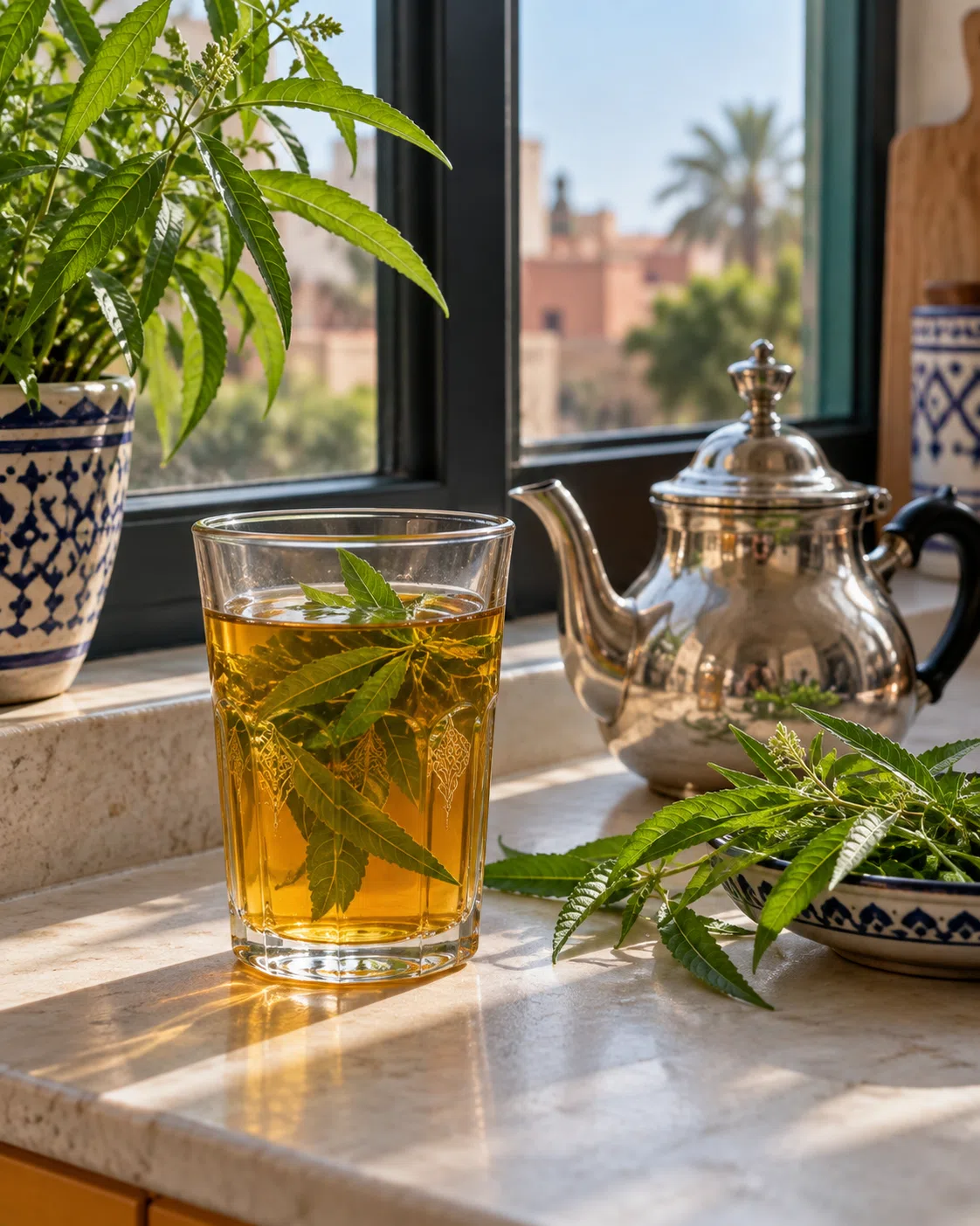
Tea beyond mint
Green tea may also be scented with herbs such as lemon verbena. The aromatic choice and sweetness vary by household; mint remains the best-known expression.
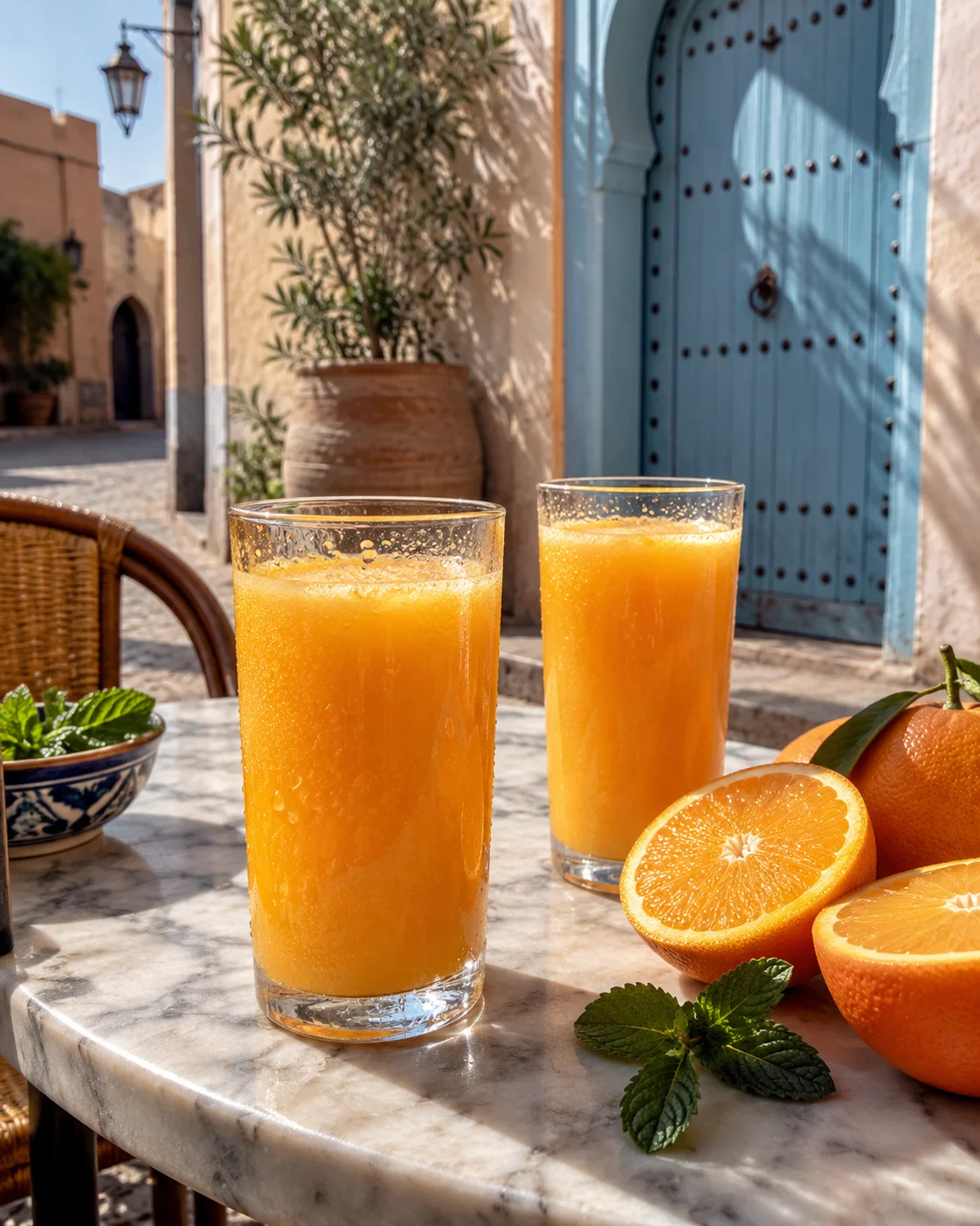
Fresh orange juice
A glass of squeezed orange juice belongs to Morocco’s café and juice-stall landscape. Its freshness depends on the fruit, the season and the moment it is pressed.
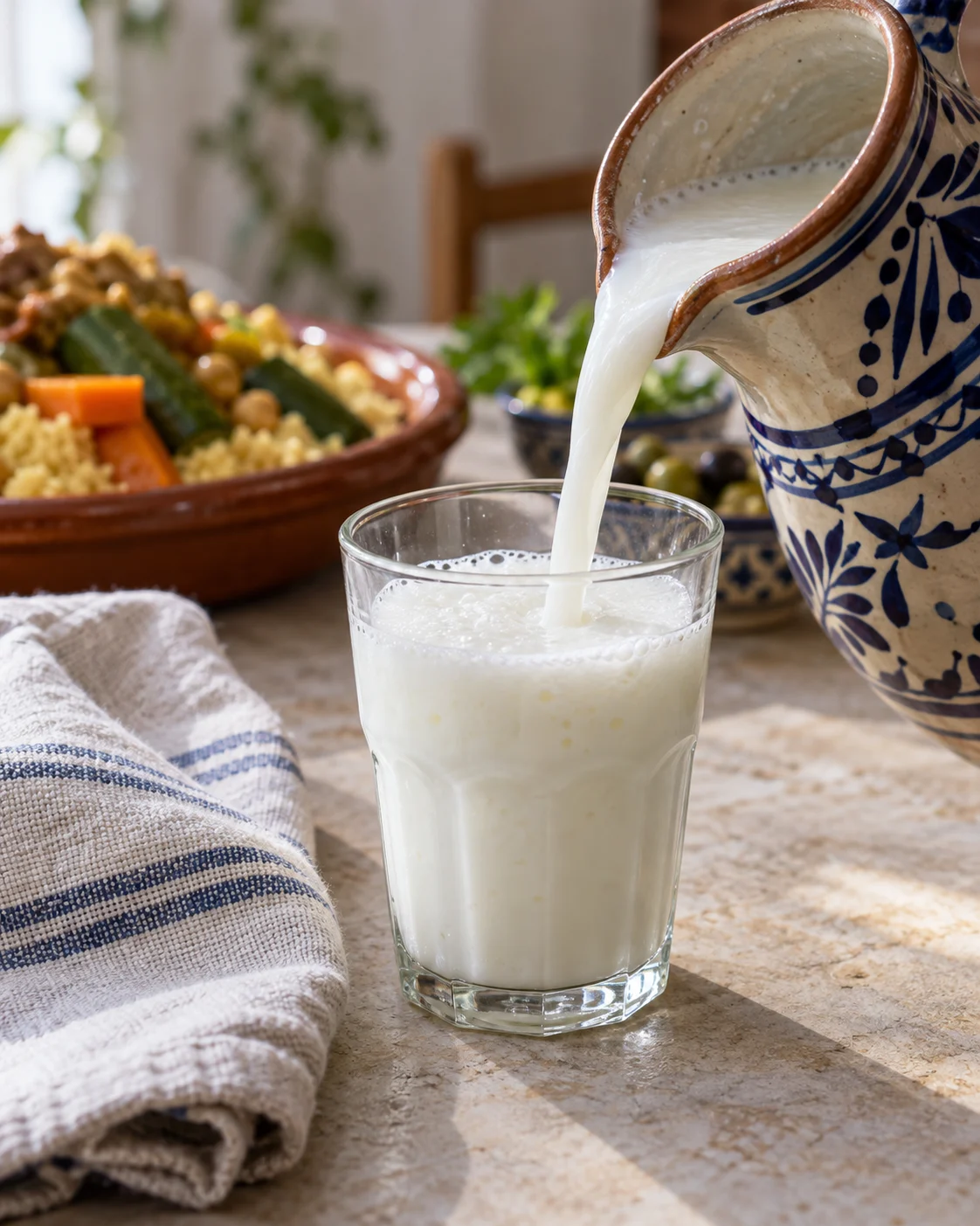
Lben
This pourable fermented milk has a gentle tang. It is particularly familiar alongside couscous; it should not be confused with the thicker, spoonable raïb. [1]
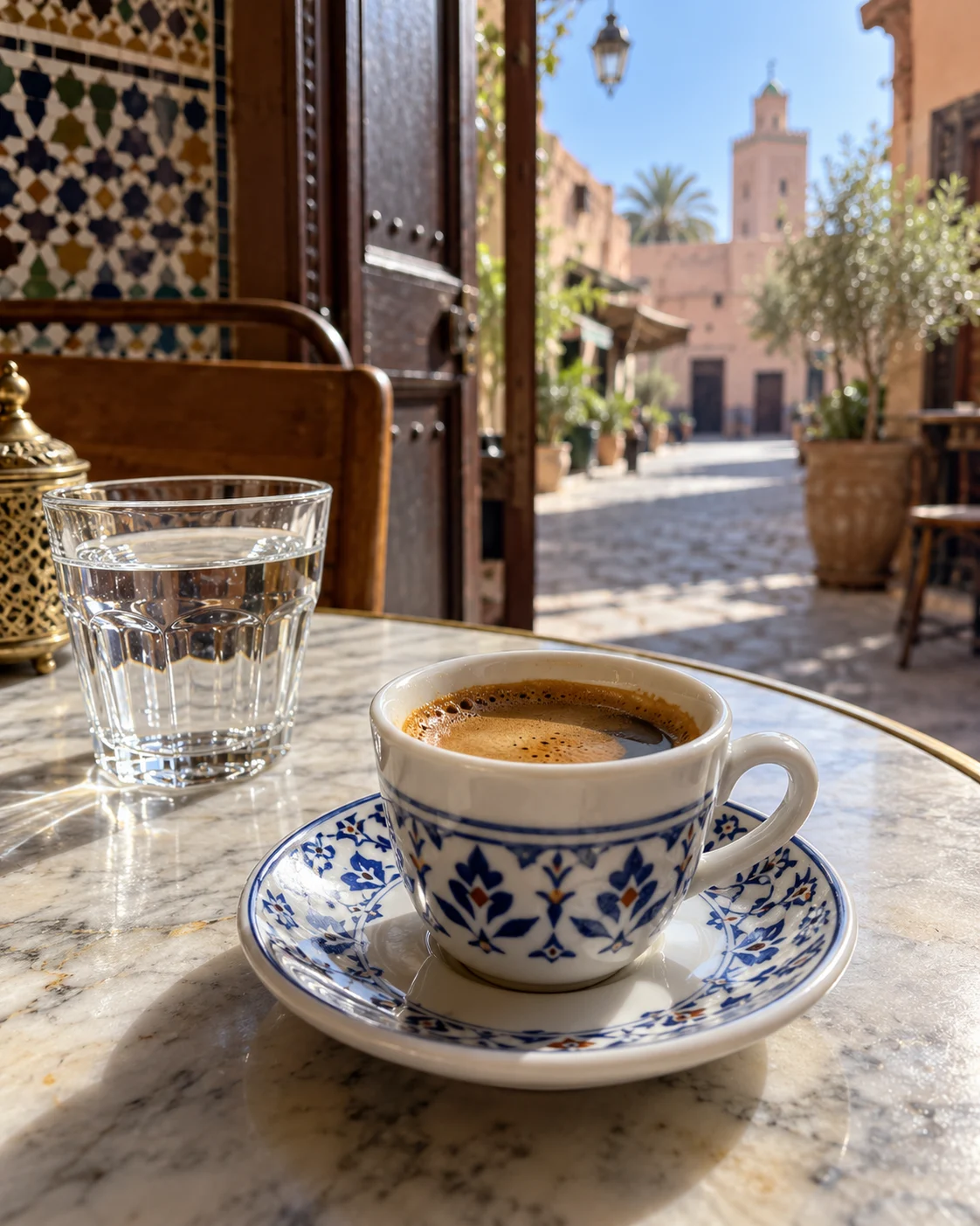
Coffee
Espresso and café au lait sit comfortably in Morocco’s urban café life. Coffee has its own social pace, separate from the household rituals around tea.
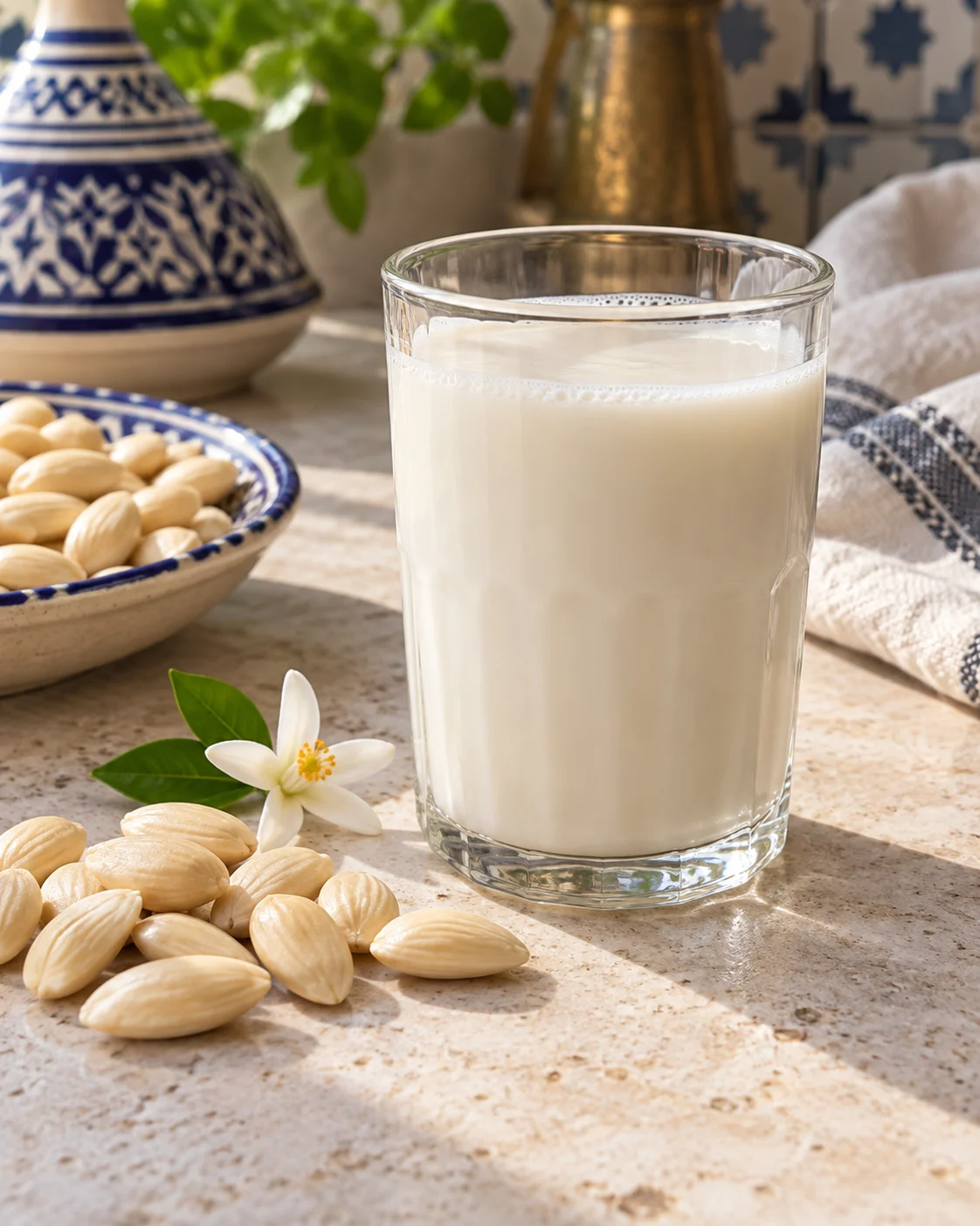
Almond milk
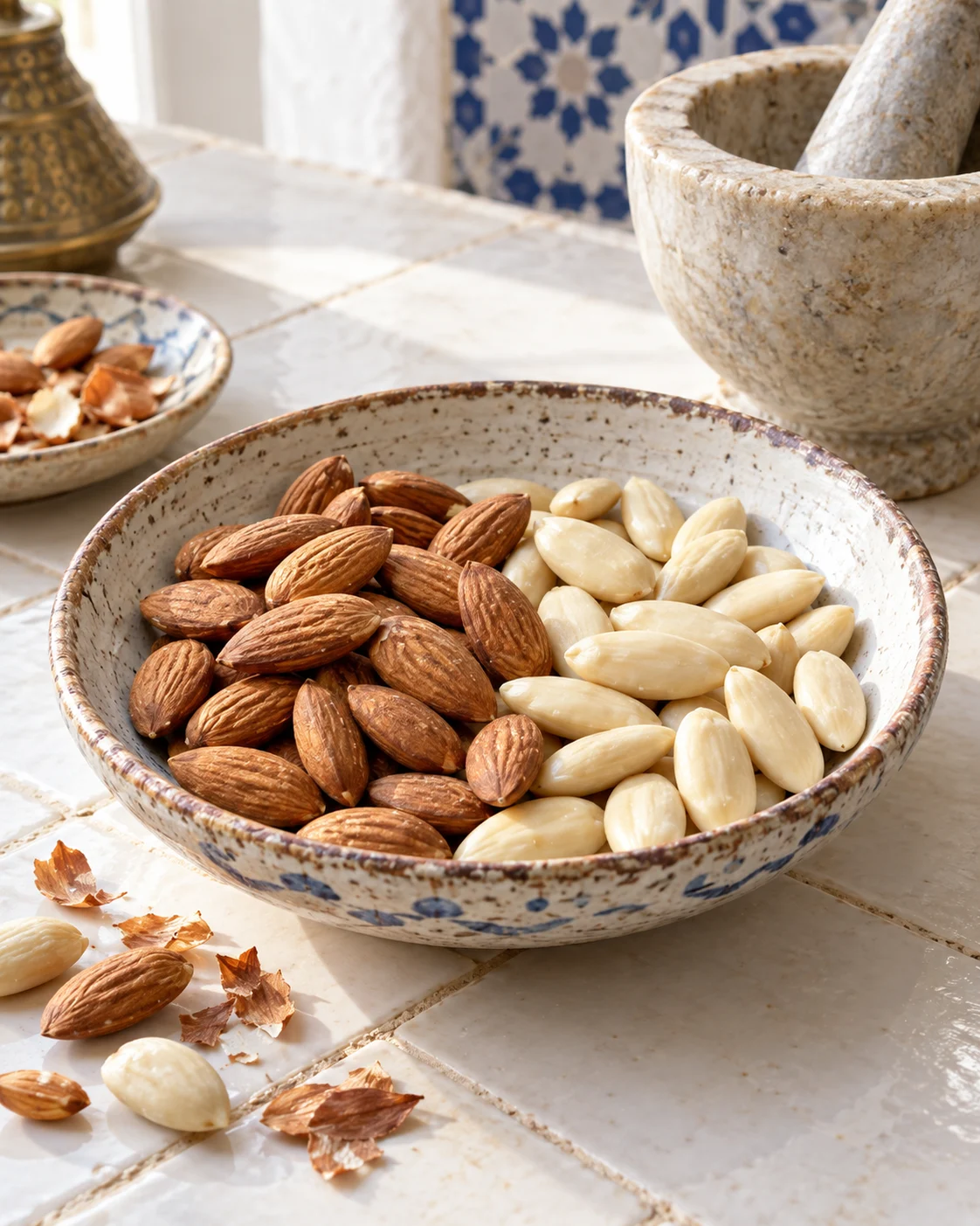
Blended or strained almonds make a creamy drink. Orange blossom water can give it a delicate floral note; its presence is a recipe choice, not a rule. [3]
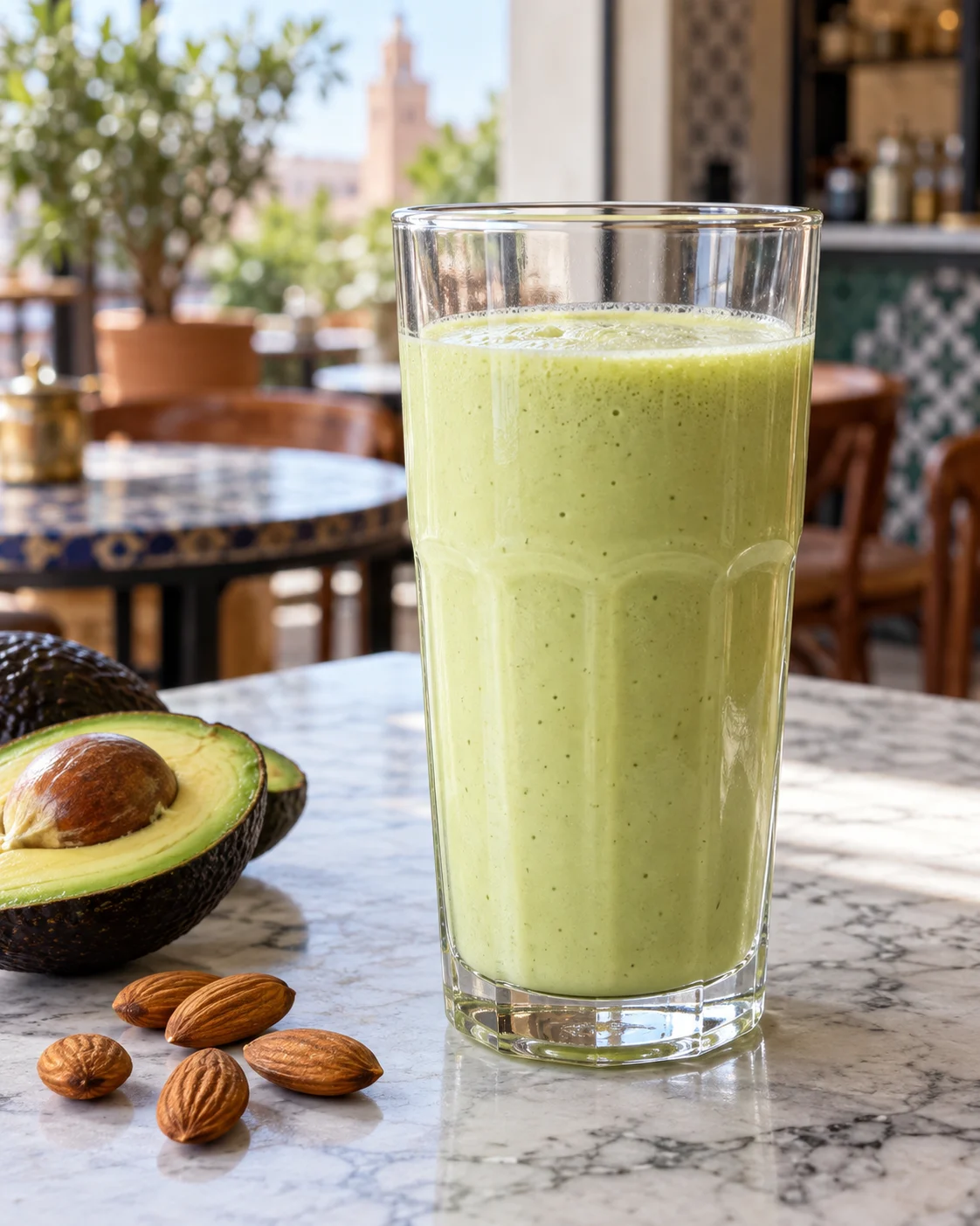
Avocado milk shake
A rich café-style blend of avocado and milk, sometimes finished with nuts or dried fruit. It belongs to contemporary juice-bar menus rather than an ancient origin story.
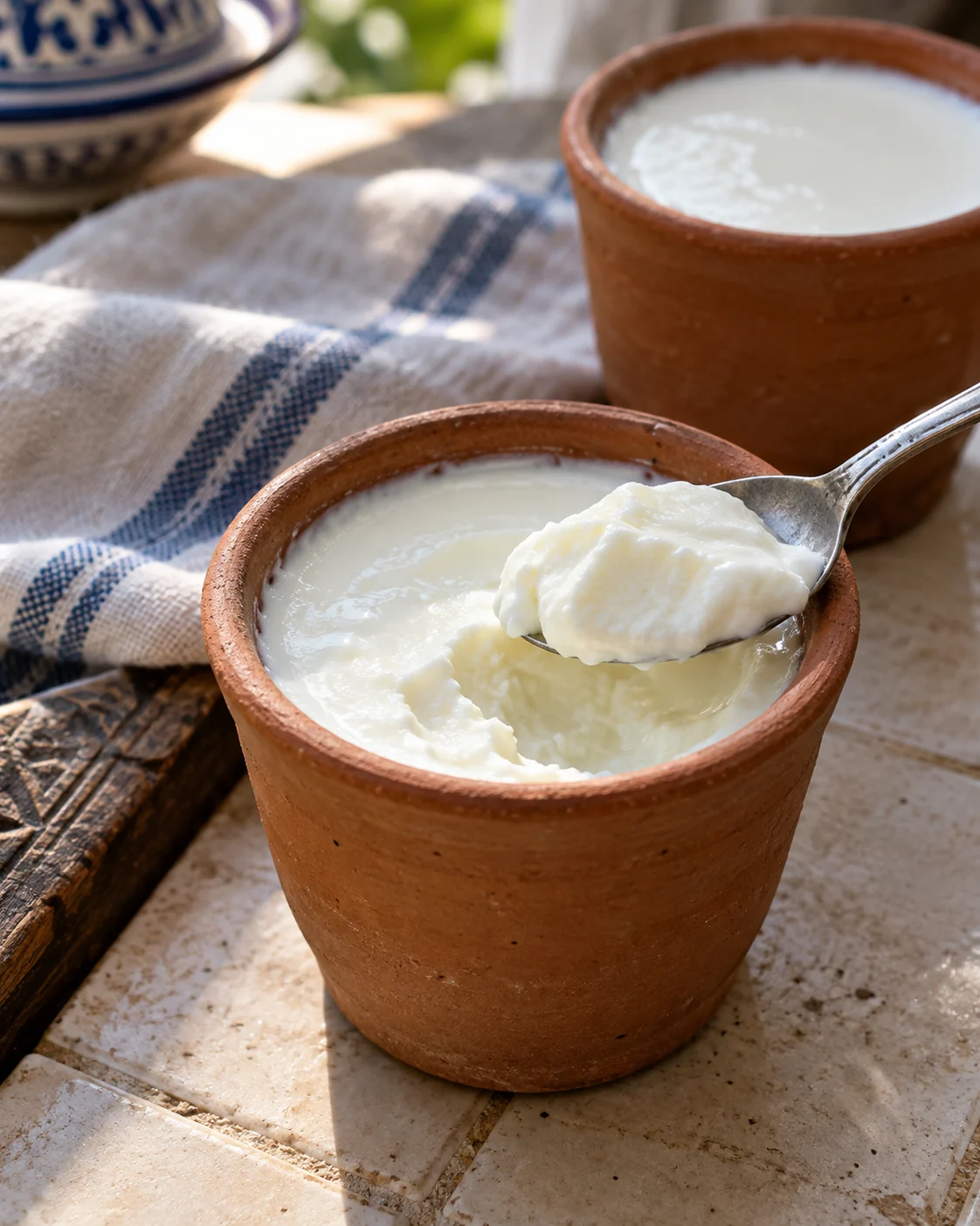
Raïb, by the spoon
Raïb is a cultured dairy preparation with a set, spoonable texture. It sits beside this drinks story because people often confuse it with pourable lben. [1]
What counts as a drink?
Tea, juice, coffee and lben are poured and sipped. Raïb is included as a comparison because it is often named alongside lben, although its set texture is eaten with a spoon.
Modern choices belong here too.
A contemporary café smoothie need not be presented as ancient heritage. Moroccan food culture continues to adapt its ingredients and settings.
05 · Four foundations
What enters
the glass.
Fresh mint and green tea have separate jobs. Citrus brings juice, while almonds add body to a milk drink.
Understanding those roles makes the drinks easier to recognise, without pretending that every cook follows one formula.
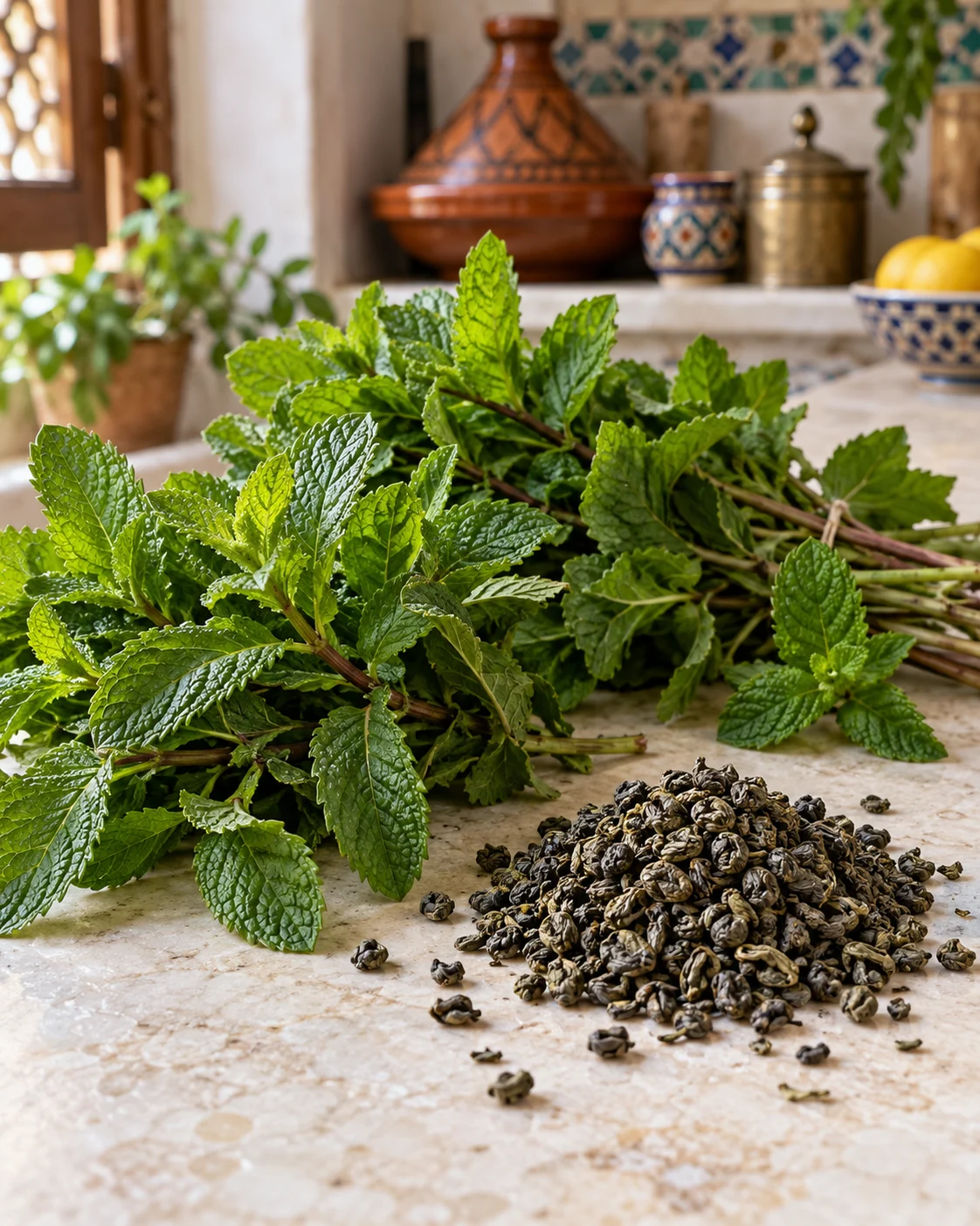
Fresh mint
The aromatic lift
Mint brings its fresh aroma to tea. Its condition matters: tired leaves cannot contribute the same bright scent.
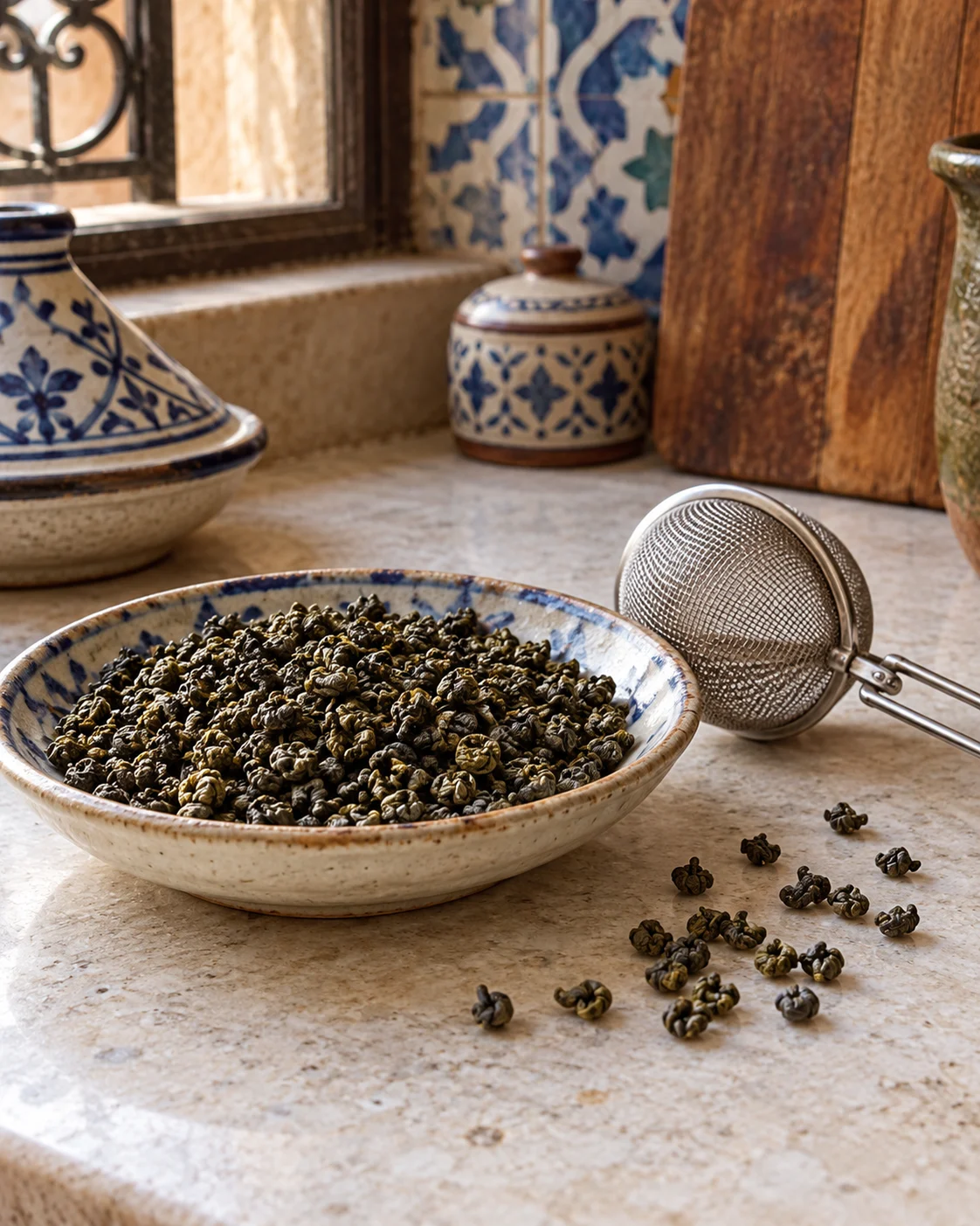
Green tea
The brewed foundation
Rolled green tea leaves form the base of familiar Moroccan mint tea. Mint is an addition, not a substitute for the tea itself. [2]
Citrus
Juice with character
Freshly pressed oranges make a drink whose sweetness and acidity change with the fruit; no syrup is needed to explain its appeal.
Almonds
Body and softness
Almonds lend body to a milk drink after blending and straining. A small amount of orange blossom water can add perfume without taking over. [3]
Scroll sideways to see all four ingredients
THE BALANCE OF A DRINK
What changes the final glass?
Strength
Tea extraction and the proportion of herbs change aroma and bitterness.
Texture
Pressed juice, blended almonds and fermented milk feel different on the palate.
Sweetness
Some tea is served very sweet; fruit sweetness varies naturally. Neither should be prescribed as universal.

06 · Place & mealtime
The right glass
for the moment.
Context matters more than a fixed rule.
Lben is often served with couscous; it can also accompany other grain-based meals. Fresh juice may be ordered from a café or stall, while tea can move between home, shop and conversation. [1]
With couscous
The cool tang of lben provides a distinct contrast to a warm, substantial dish. Saycouk, couscous served with lben, makes that relationship especially visible.
At the juice counter
Orange juice makes sense where fruit is on display and can be pressed fresh. A café smoothie tells a more recent story of blended drinks.
At home
Tea may be a welcome, a break or simply another pot shared during a visit. The social meaning belongs to the people at the table.
07 · Serving & sharing
Offer a glass.
Make room.
A drink can mark the beginning of a visit or accompany the middle of a meal. The setting changes, but attention to the guest stays visible.
The offer
Tea is closely associated with welcome, yet no household owes a performance. The gesture can be simple and sincere. [4]
The preference
Someone may want a less sweet tea, a cold juice or coffee. Hospitality leaves room for the person receiving it.
The meal
Lben beside couscous has a culinary role: its cool acidity changes how the meal feels.
08 · The objects of service
The tray.
The pot. The glass.
Useful objects shape the gesture of serving.
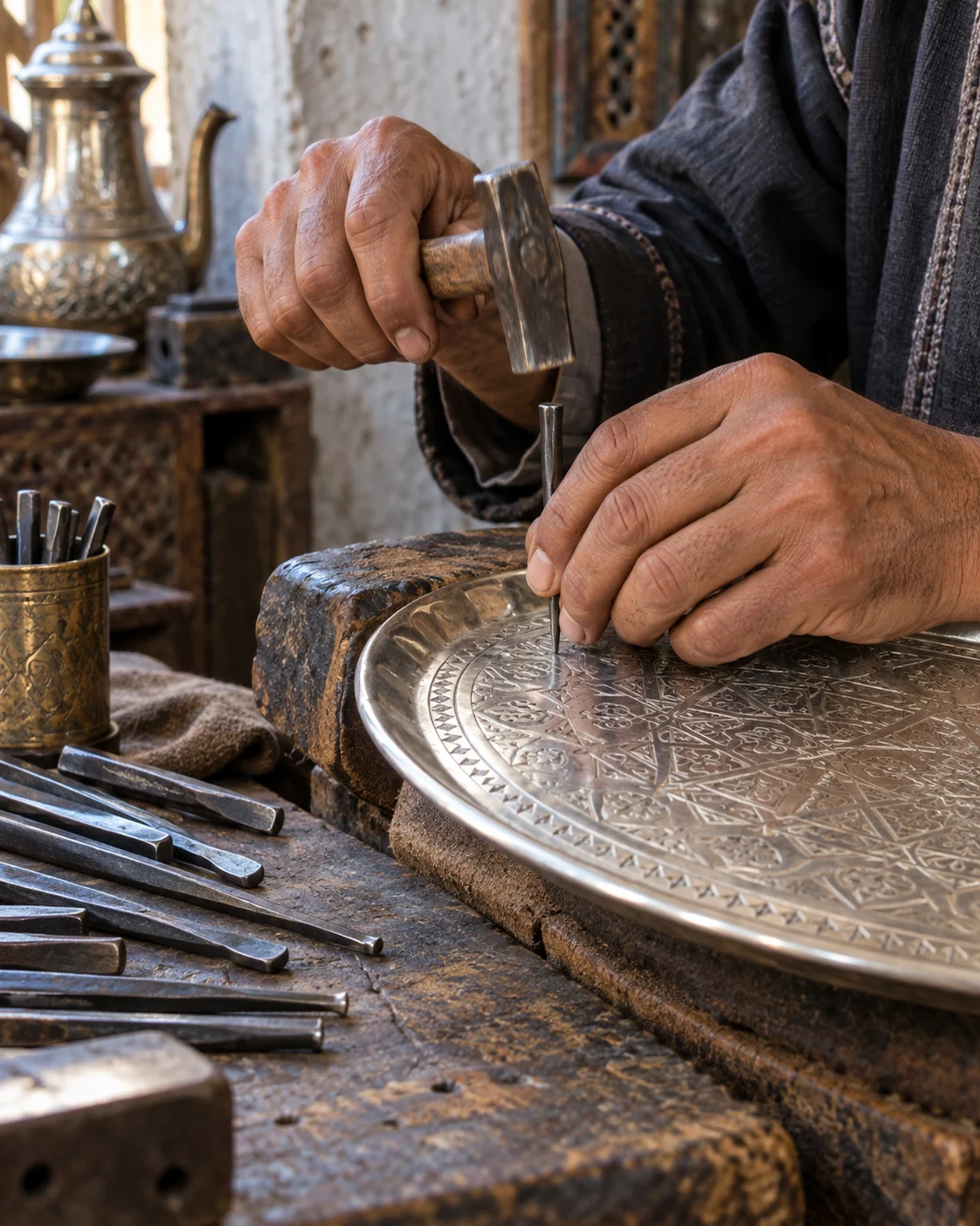
A teapot must pour cleanly and be comfortable to handle. A tray gathers the pot and glasses; the small glass lets the colour and mint leaves show. Decoration may be elaborate or spare, but it should not obscure the object’s everyday purpose.
Juice has a different toolkit: fruit, a press and a drinking glass. Fermented milk may arrive in a simple jug or cup. No single ornate service defines every Moroccan drink.
Metalworking, ceramics and glassmaking enter this story through use. The craft is meaningful because people handle the objects, wash them, refill them and keep them in circulation.
09 · A closer look
Good questions.
Clear answers.
Small distinctions make the story more accurate.
Is Moroccan mint tea just mint steeped in water?
No. The familiar preparation starts with green tea and adds fresh mint. Sweetness and the precise method vary. [2]
Is every Moroccan tea very sweet?
Many versions are sweet, but households and guests differ. It is more accurate to describe a common tendency than to prescribe one national measure.
Are lben and raïb the same?
No. Lben is a pourable fermented milk; raïb is a more set, spoonable cultured dairy preparation. [1]
Is avocado milk shake a historic ceremonial drink?
No. It is a contemporary café and juice-bar favourite, not a documented ancient ceremony.
Does almond milk always contain orange blossom water?
No. Orange blossom water appears in some recipes, but the dose and inclusion are choices. [3]
 EXOTIC MOROCCOTASTE · THE GUIDE COLLECTIONDrinksIngredients, technique
and the Moroccan table
From the story to your kitchen
Keep the flavour.
Go a little deeper.
Tea, juices, milk-based drinks and moments of refreshment.
Explore the Exotic Morocco guide collection for a closer look at ingredients, kitchen knowledge and the culture around the table.
- Understand the ingredients and their roles
- Recognise the techniques and textures that matter
- Bring context and confidence to the way you cook and serve
Continue tasting Morocco
Follow the
table outward.
Another dish, another technique, another way into the Moroccan kitchen.
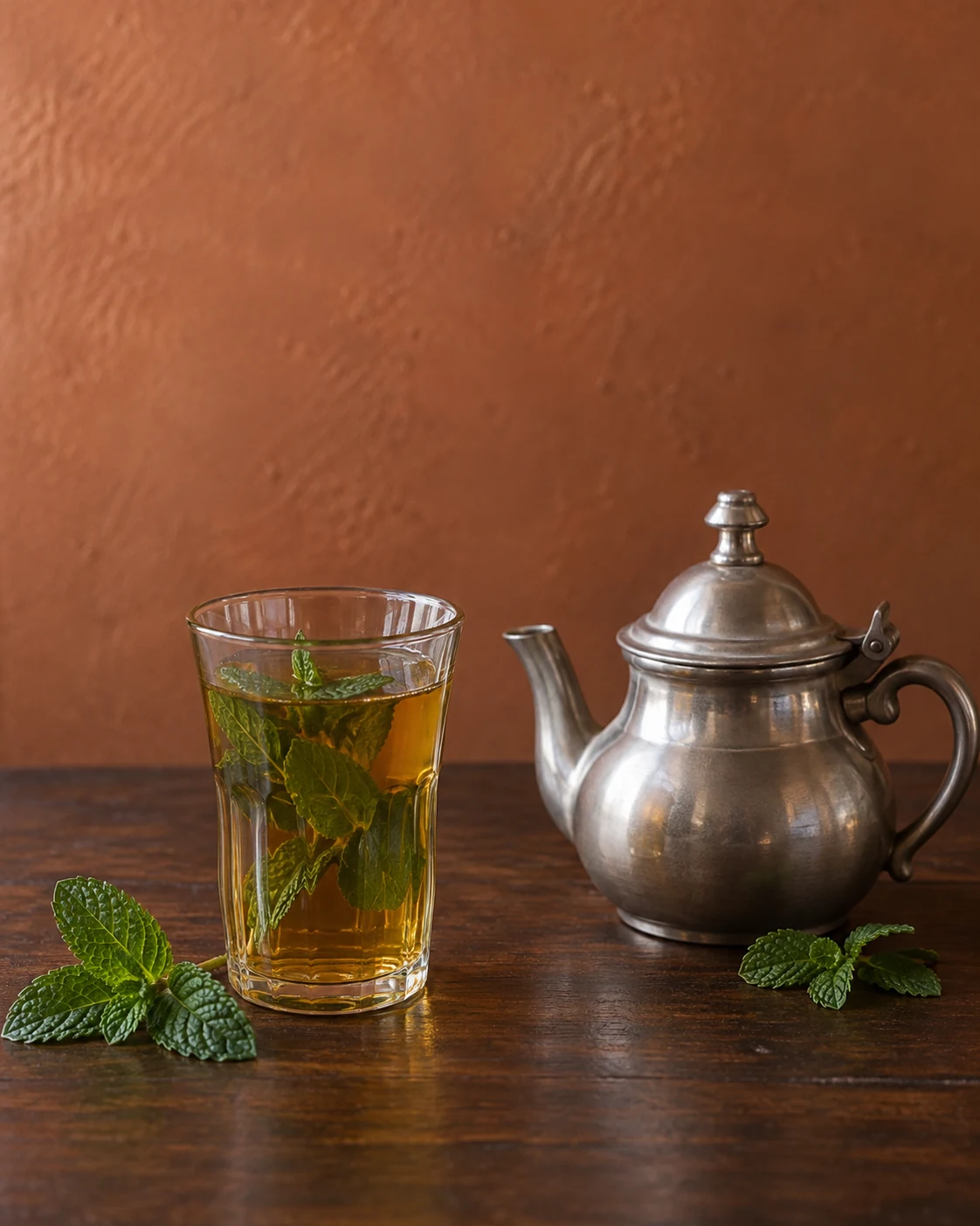
Moroccan Mint Tea
Green tea, fresh herbs and the time given to a guest.
Explore the story ↗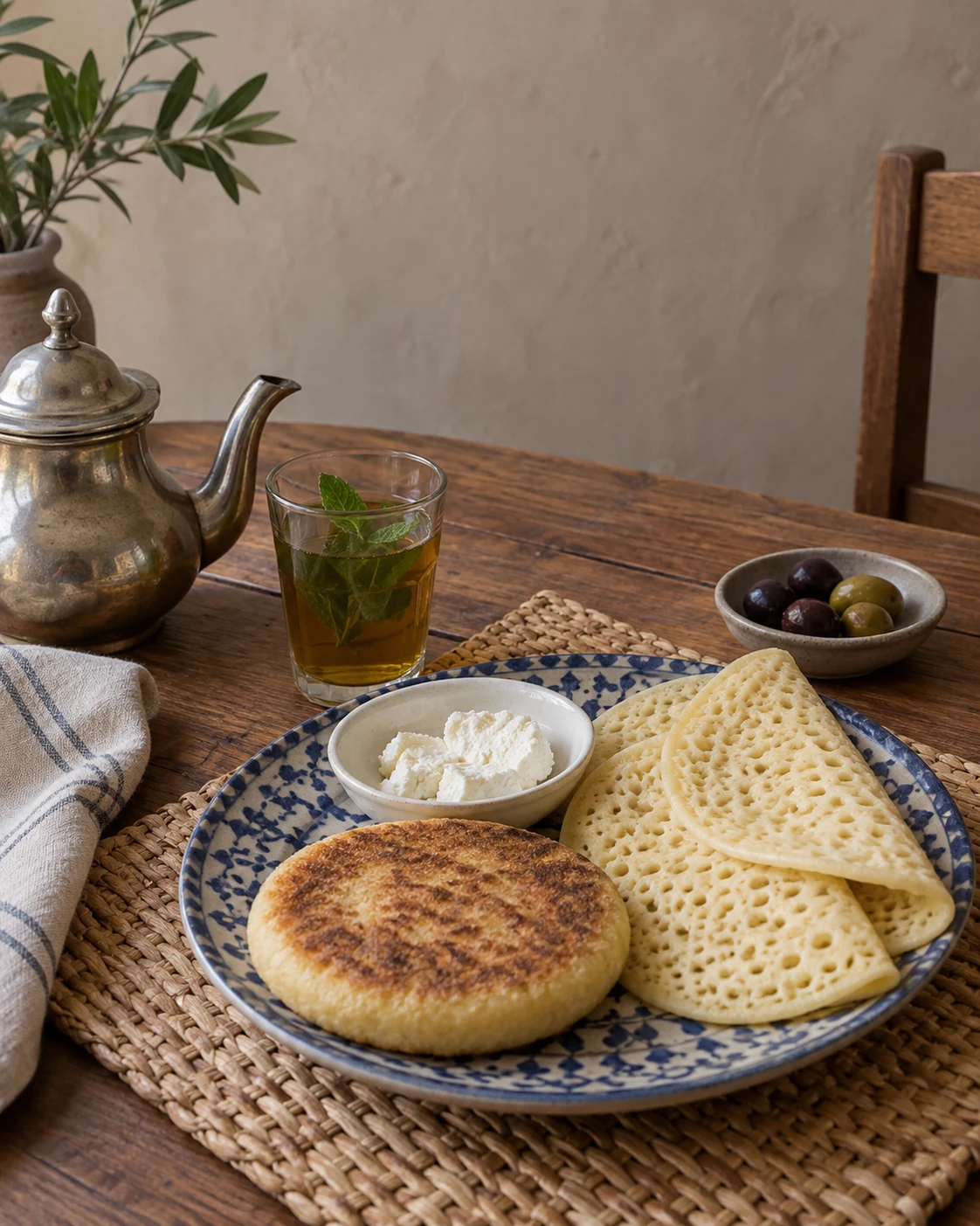
Moroccan Breakfast
Breads, spreads and the first table of the day.
Explore the story ↗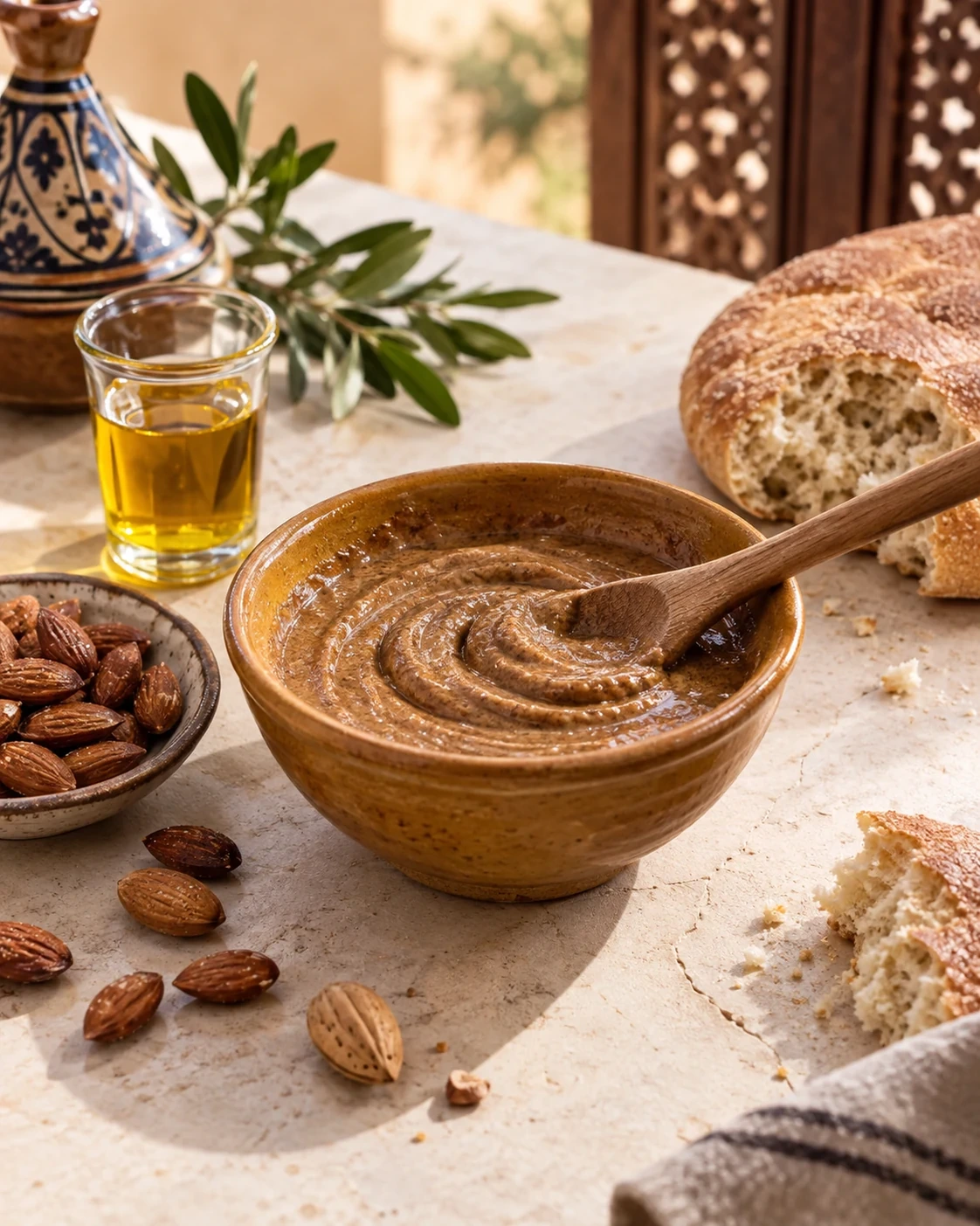
Amlou
Roasted almonds, culinary argan oil and honey from the southwest.
Explore the story ↗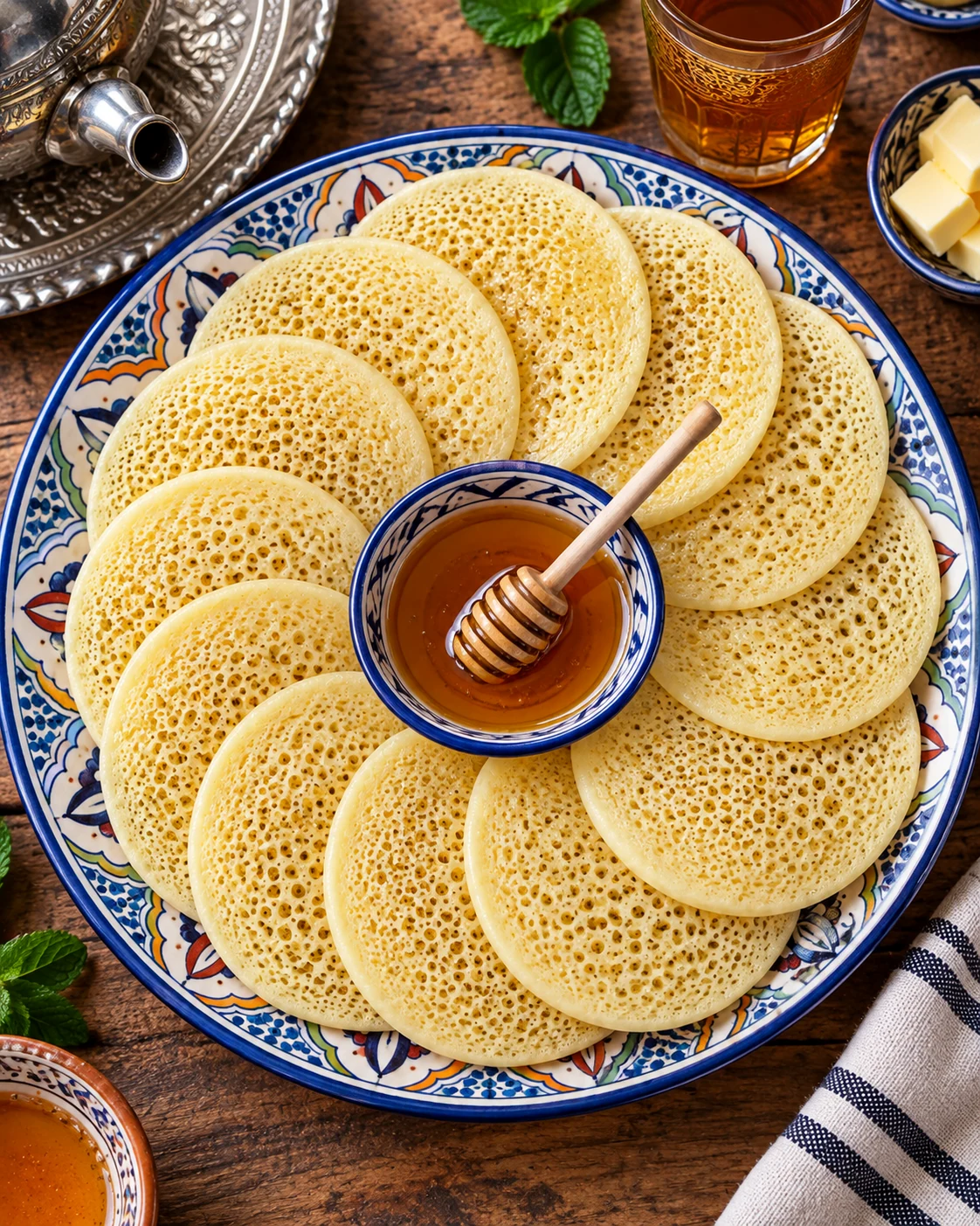
Baghrir
Light semolina pancakes with a surface of tiny holes.
Explore the story ↗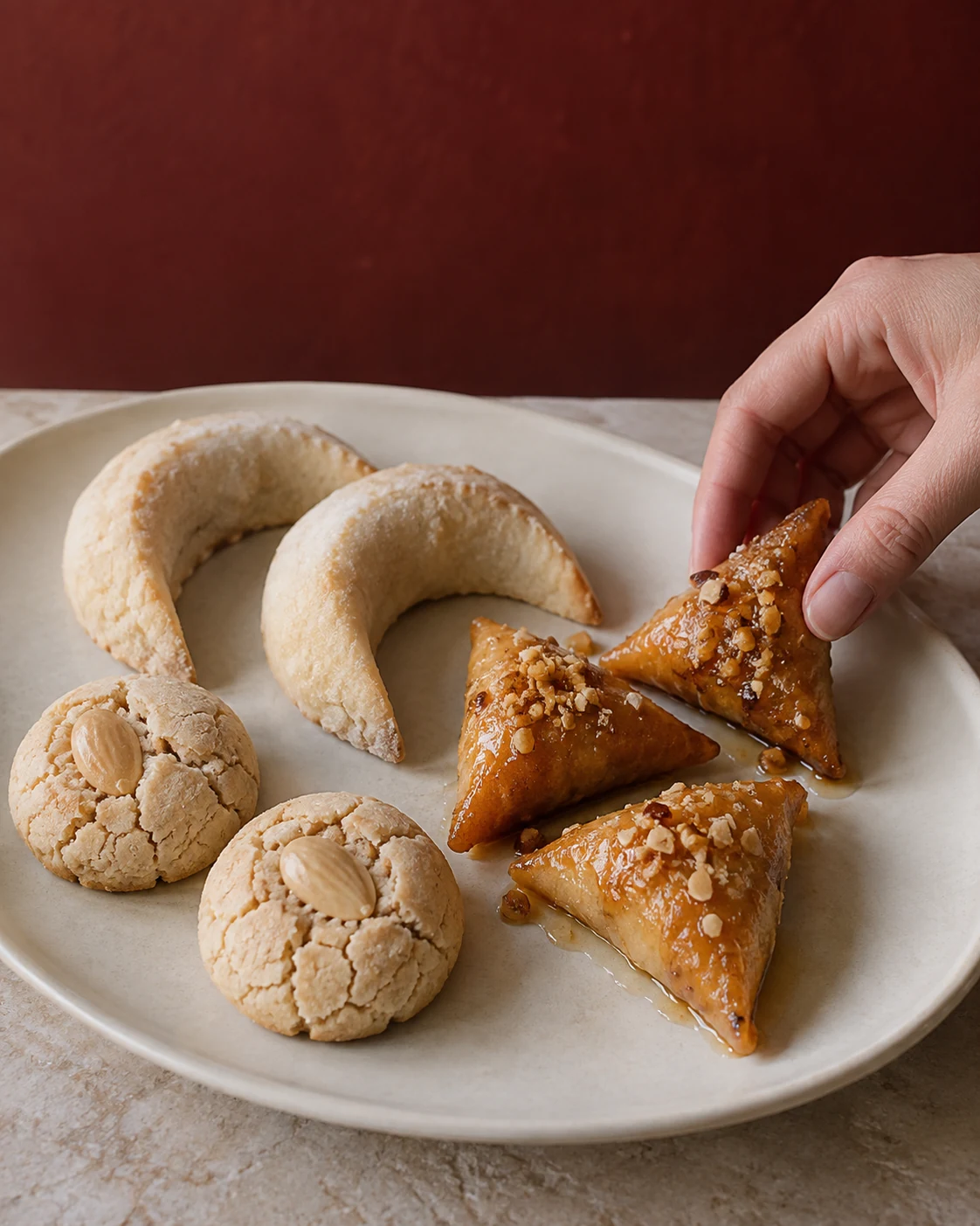
Sweets & Pastries
Almonds, sesame, pastry and the work of the sweet kitchen.
Explore the story ↗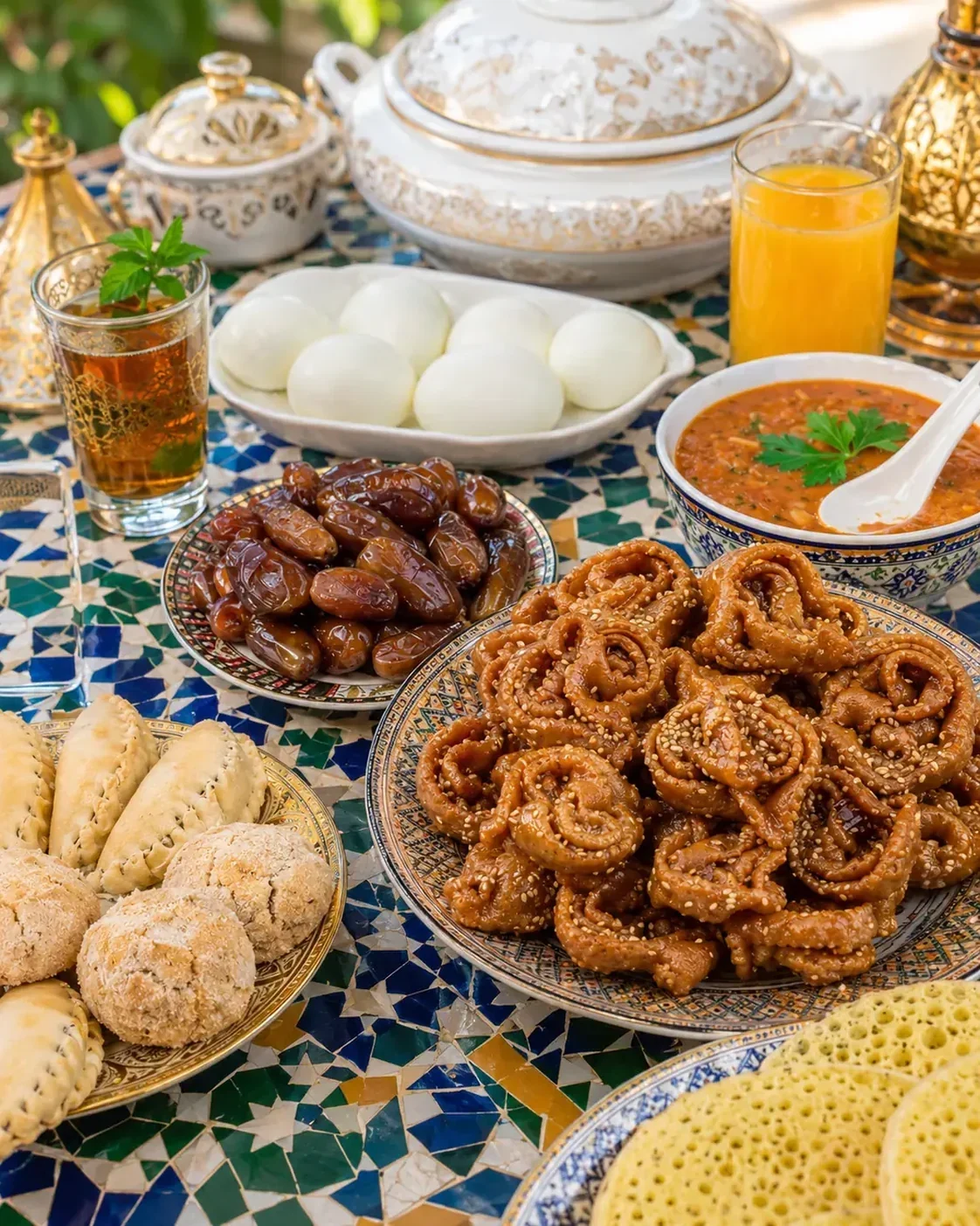
Moroccan Meal Rhythm
How food finds its place in the day and the calendar.
Explore the story ↗Sources & editorial notes
Photography combines existing Exotic Morocco assets and generated editorial illustrations. These images do not document a named person, household or historical event.
- Moroccan National Tourist Office · Food & Drinks — tea, fresh juices, lben and raïb.
- Moroccan National Tourist Office · Time for Moroccan Tea — green tea, mint and service.
- Cooking with Alia · Moroccan Almond Milk — almonds and optional orange blossom water.
- Moroccan National Tourist Office · Authentic Hospitality — tea as a gesture of welcome.
EXOTIC MOROCCO Places. People. The pleasure of knowing more.Back to top ↑