

01 · A day at the table
Not a clock.
A way of gathering.
Bread in the morning. A shared dish at midday. A pause for tea. Something warm at night.
Meals in Morocco have a recognisable vocabulary, but they do not follow one timetable. A school day, a long shift, a family visit and a Friday afternoon each change what is cooked and when it reaches the table.
This is a look at the moments that give the day its shape: breakfast, lunch, tea and dinner, with room for the calendar to change the pattern. It is a living set of habits, not an itinerary every household must follow. Research on Moroccan adults reports irregular mealtimes in many of the surveyed households. [1]
What stays interesting is the relationship between food and time: what can be prepared quickly, what asks for company, and what waits for everyone to arrive.
Explore Moroccan food culture ↗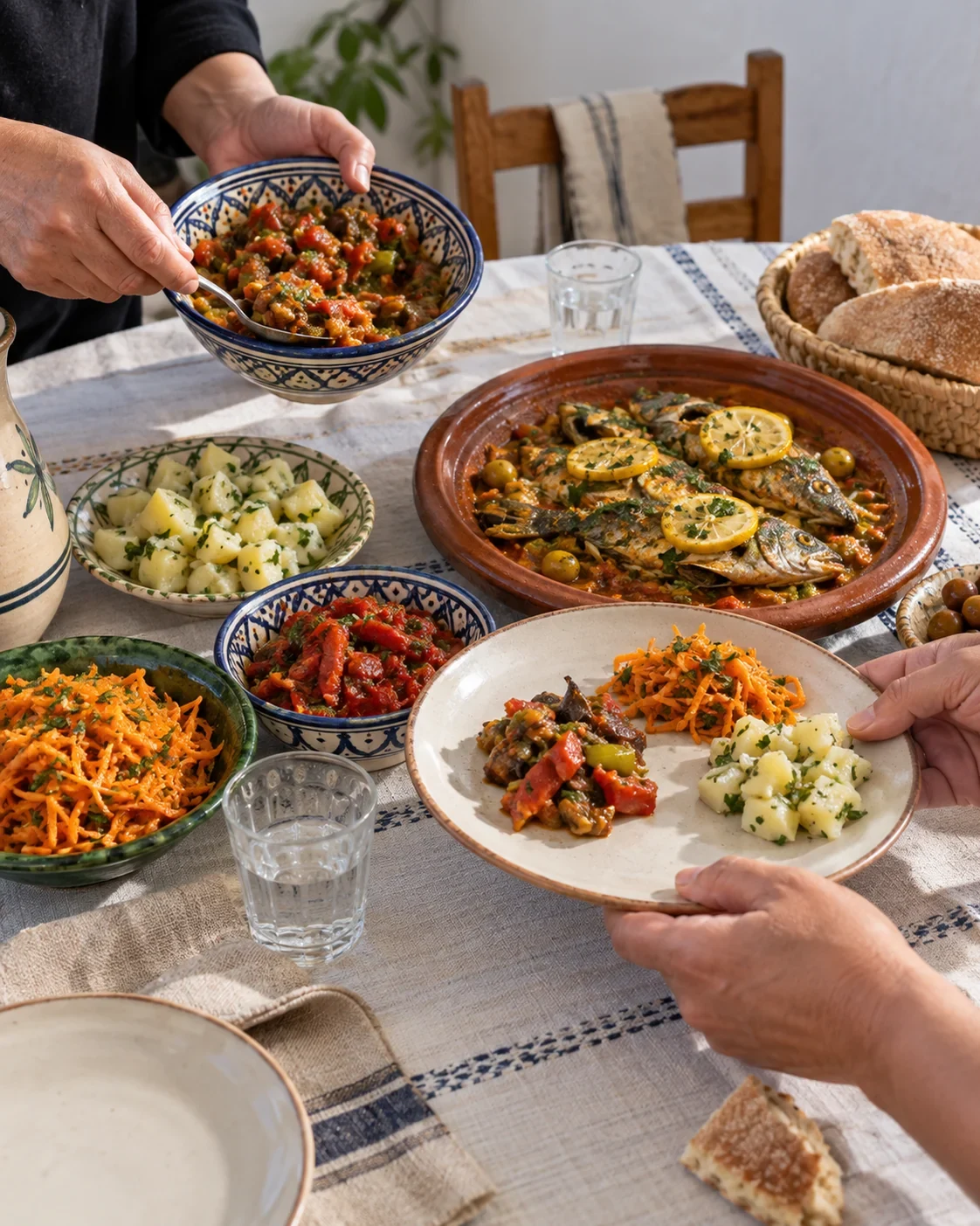
Bread, semolina breads, spreads or a warm drink.
Lunch may be the day’s main gathering.
Tea has its own social moment.
02 · The pattern changes
The same country.
Different days.
A meal rhythm is social, seasonal and practical.
It can be tempting to give Morocco four fixed meal hours. Real life resists that neat diagram. Research in Casablanca and rural Souss compares food habits across different settings; more recent studies also describe changing schedules and time spent eating together. [2] [1]
Friday couscous is a familiar point of reference, while Ramadan shifts eating into the evening and before dawn for those who fast. Neither replaces the ordinary variety of workdays and home routines.
Household pace
Work, school and travel can move meals away from a shared table.
Weekly cadence
A Friday couscous can mark a different kind of lunch, without being a universal rule.
A changed day
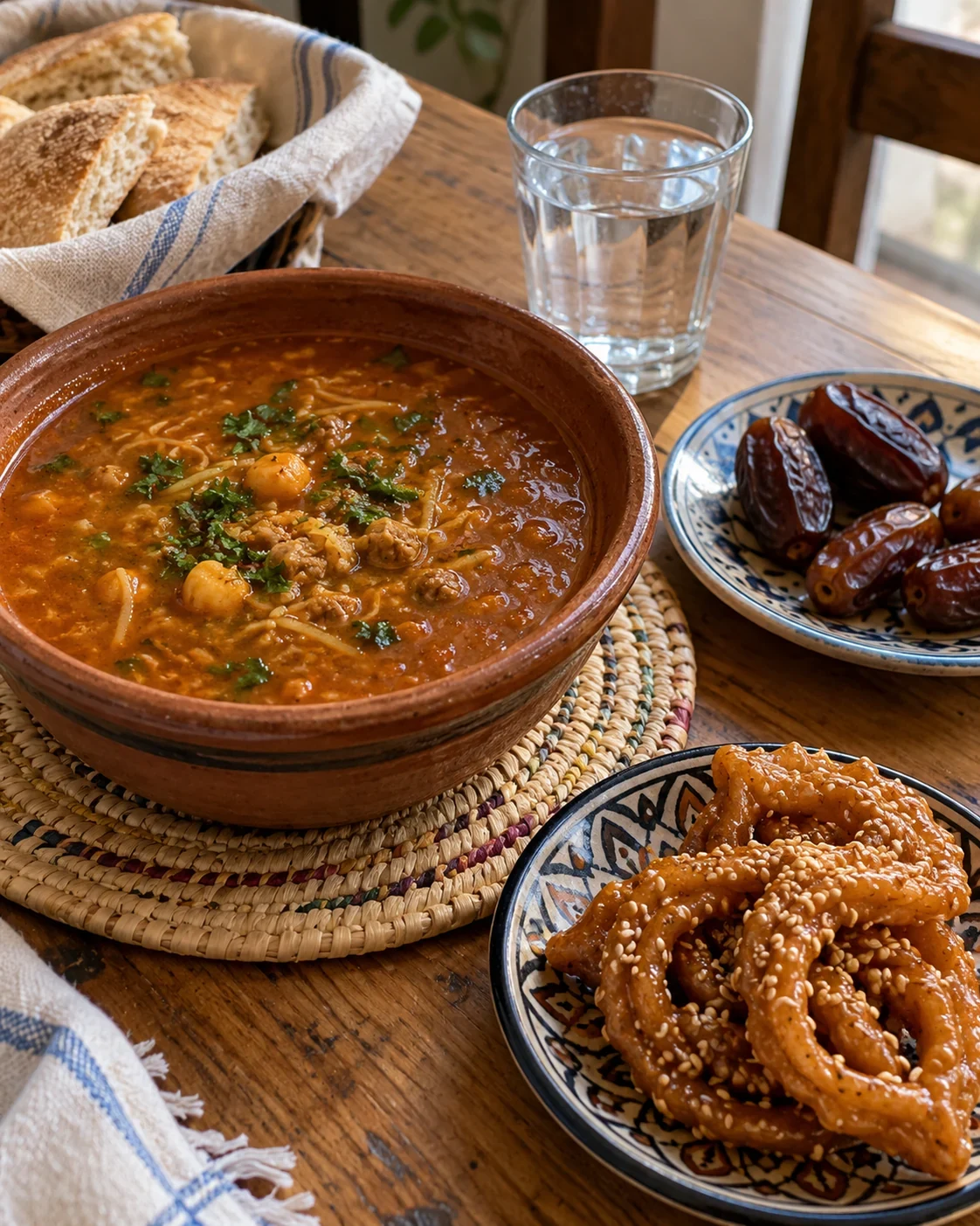
At Ramadan, iftar after sunset and suhur before dawn form another sequence for people who observe the fast. [4]
03 · The everyday anchor
Bread keeps
its place.
Khobz is more than an accessory to the main dish. Its crust, crumb and ability to gather sauce can make it part of how a meal is eaten.
At breakfast, a different kind of bread may sit beside oil, cheese or honey. At lunch, a round loaf can be broken for a shared dish. On other days, couscous or a spoon-led soup changes the role of bread altogether.
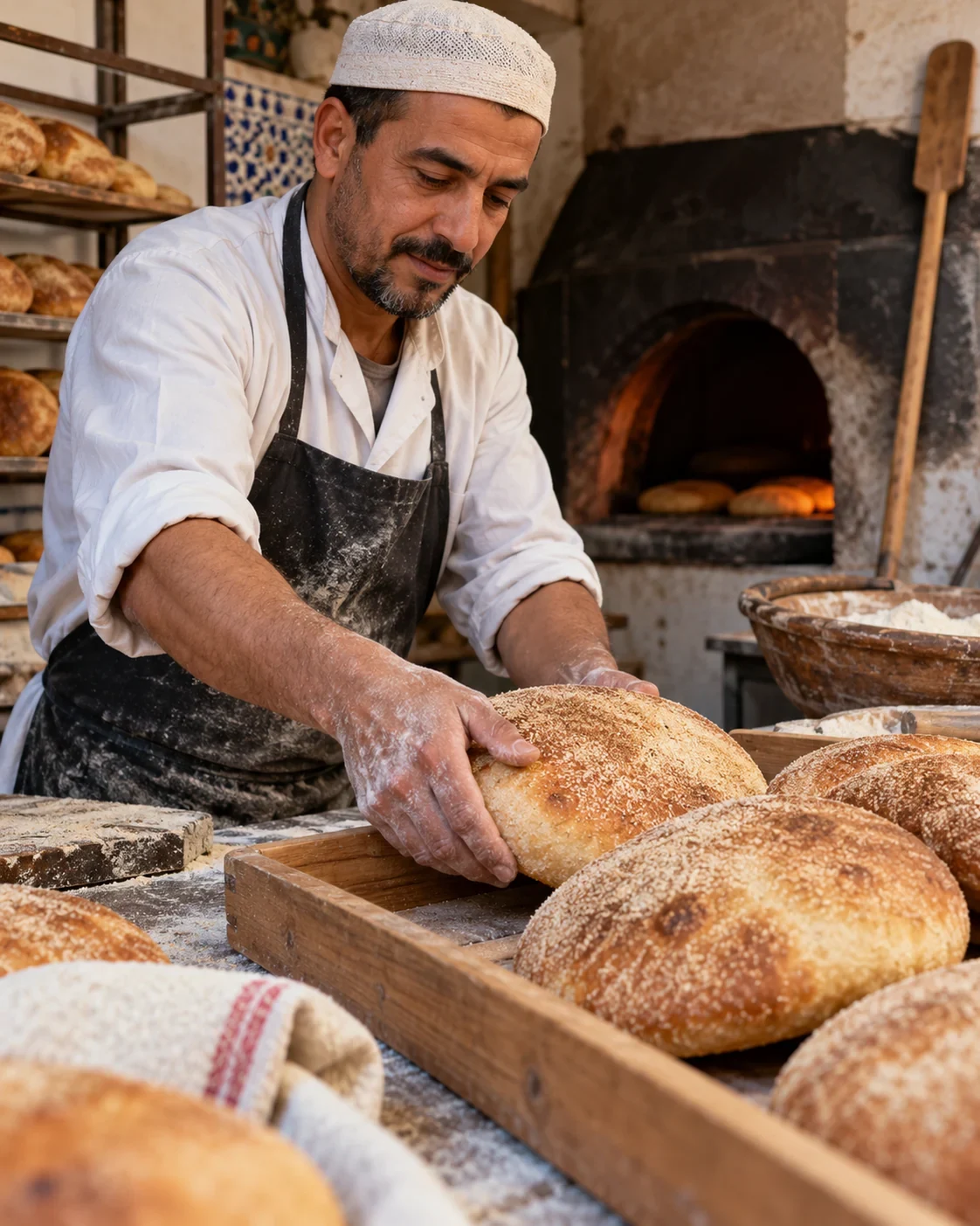
A local loaf
Household loaves and bakery loaves coexist. Grain, crumb and crust vary with the flour, baker and place.
A different breakfast
Harcha is a semolina bread, msemen a layered griddled flatbread. Both can appear in morning or tea settings, but neither is obligatory at every breakfast.
Use follows the dish
Bread is useful with a saucy tagine; couscous has its own grains and broth. The meal determines what belongs alongside it.
04 · Four moments, many possibilities
A day told
through food.
These are useful ways to look at a Moroccan day, not a set menu. Family size, income, region and the demands of work all change what appears.
Scroll through the four moments; each scene illustrates one plausible table rather than documenting a named home.
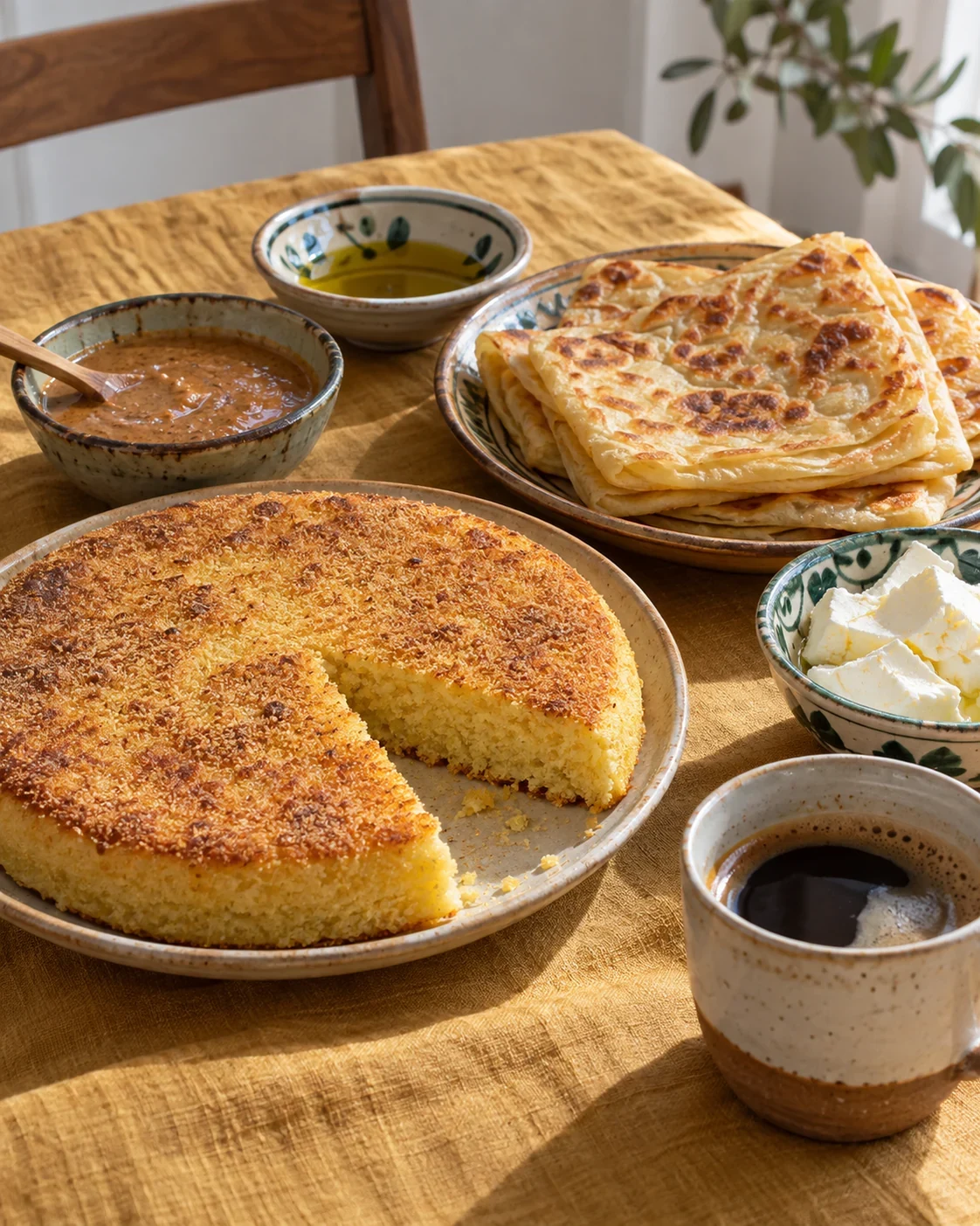
Breakfast: the first choice
A piece of harcha, folded msemen, bread with olive oil, amlou or soft cheese: morning food can be modest or more generous. Tea and coffee both belong in contemporary routines.
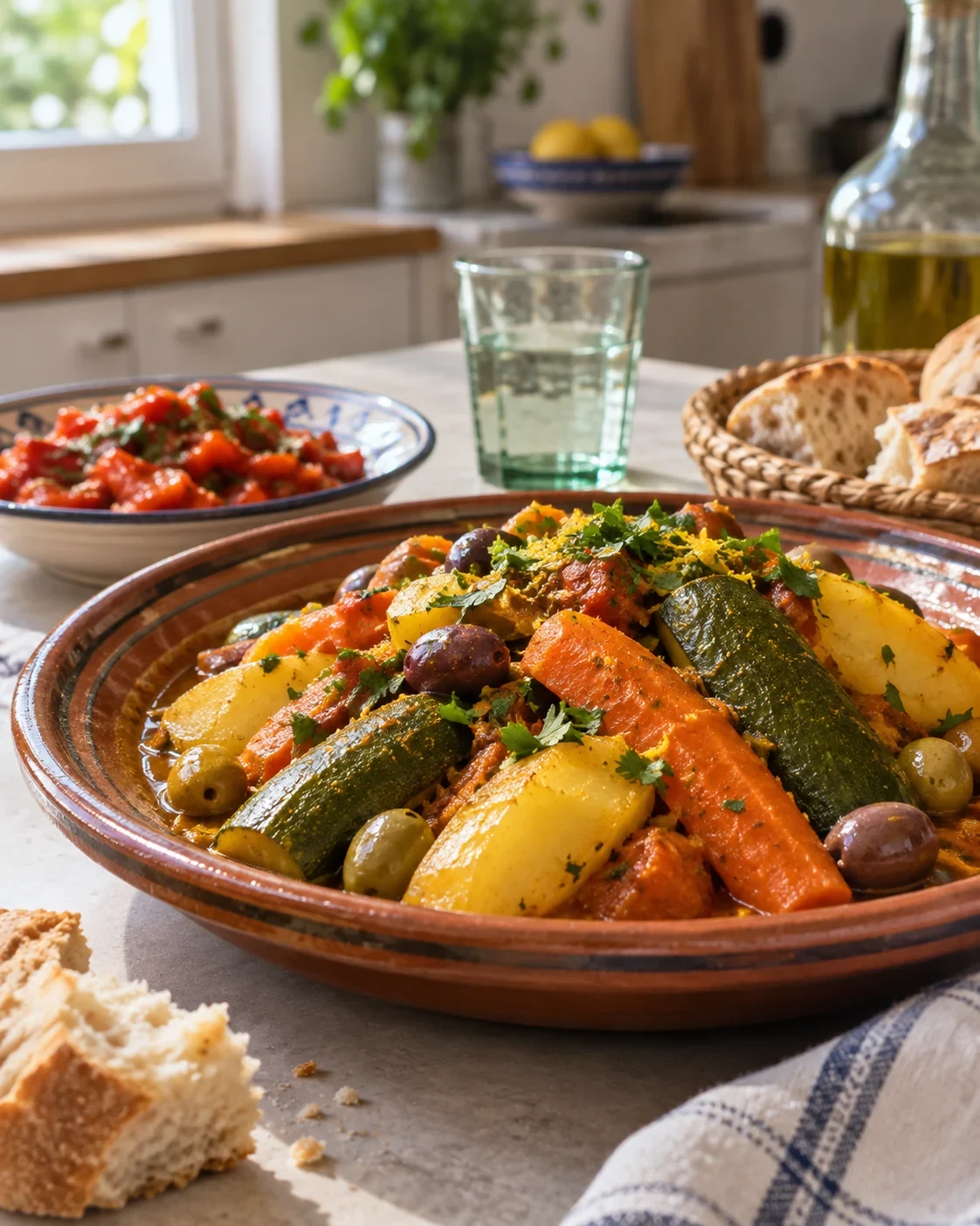
Lunch: the shared centre
A vegetable tagine with bread and a small cooked salad makes a satisfying everyday table. A fish dish, a bean pot or a meal away from home may take its place.
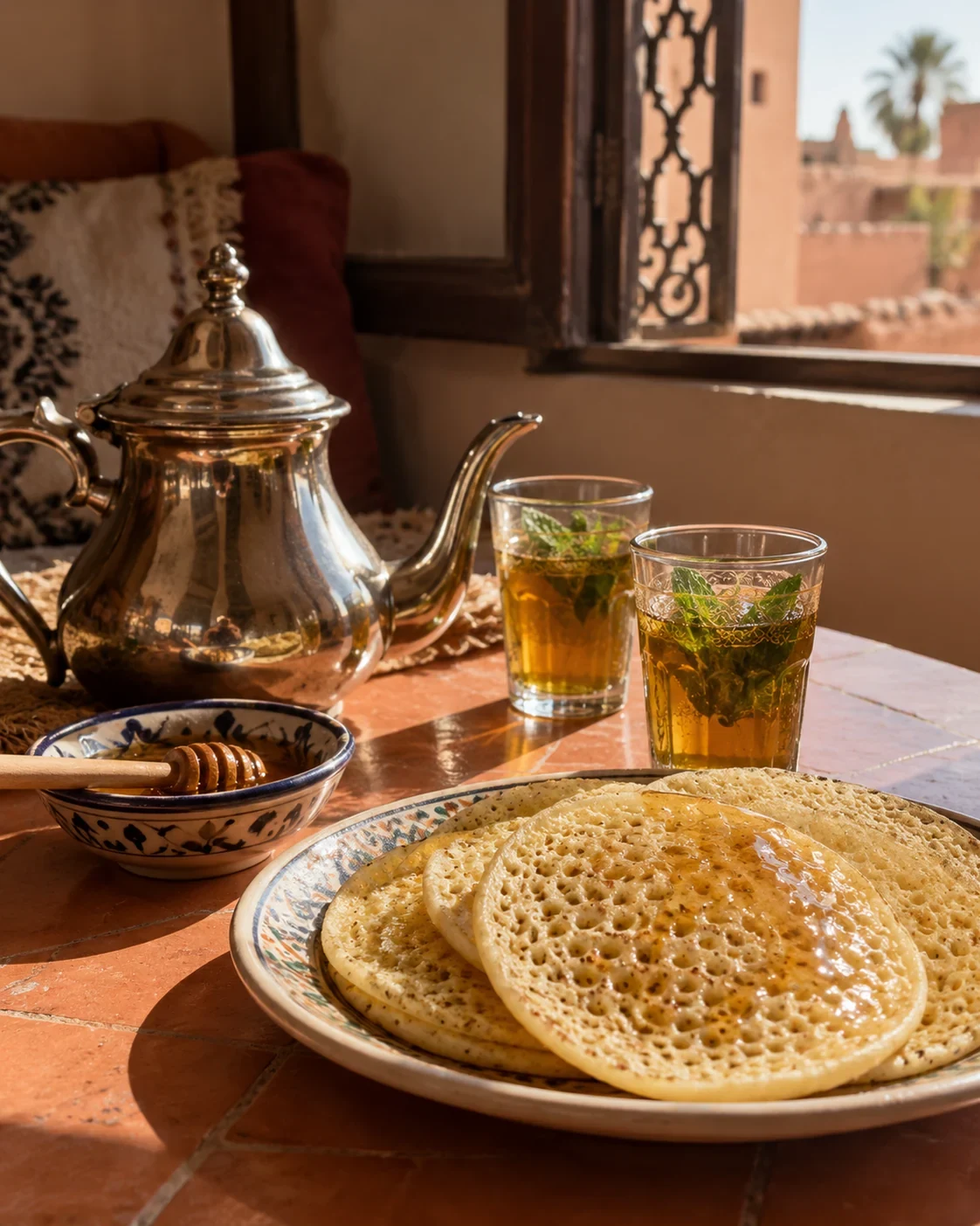
Tea: the welcome pause
Mint tea may arrive with baghrir, msemen, nuts or a modest sweet. The pause is as much about conversation as it is about a perfect tray of food.
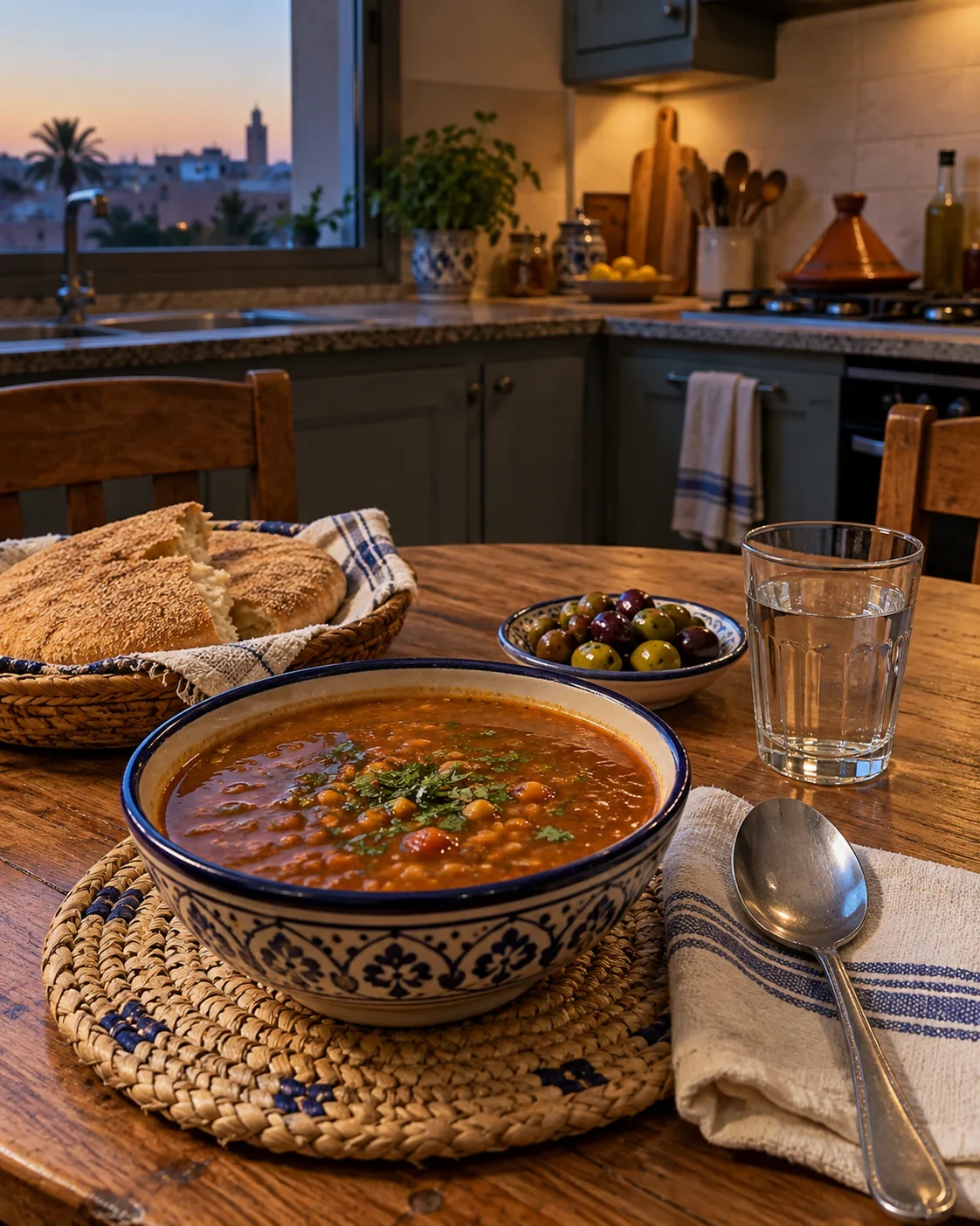
Dinner: another register
Soup, leftovers, eggs, bread or another freshly cooked dish can close the day. The evening meal does not have a single required size or recipe.
The everyday is varied.
Lunch may be eaten at work or on the move; dinner can be the only time everyone is home. A photographed ideal table cannot stand for every day. [1]
Tea has its own time.
The Moroccan National Tourist Office describes afternoon tea as part of convivial food culture, but the time, drink and accompaniments vary by home. [3]
05 · Small things with a daily role
What keeps
returning?
Four familiar elements move between meals and contexts. None defines every household; each has a specific place in the wider picture.
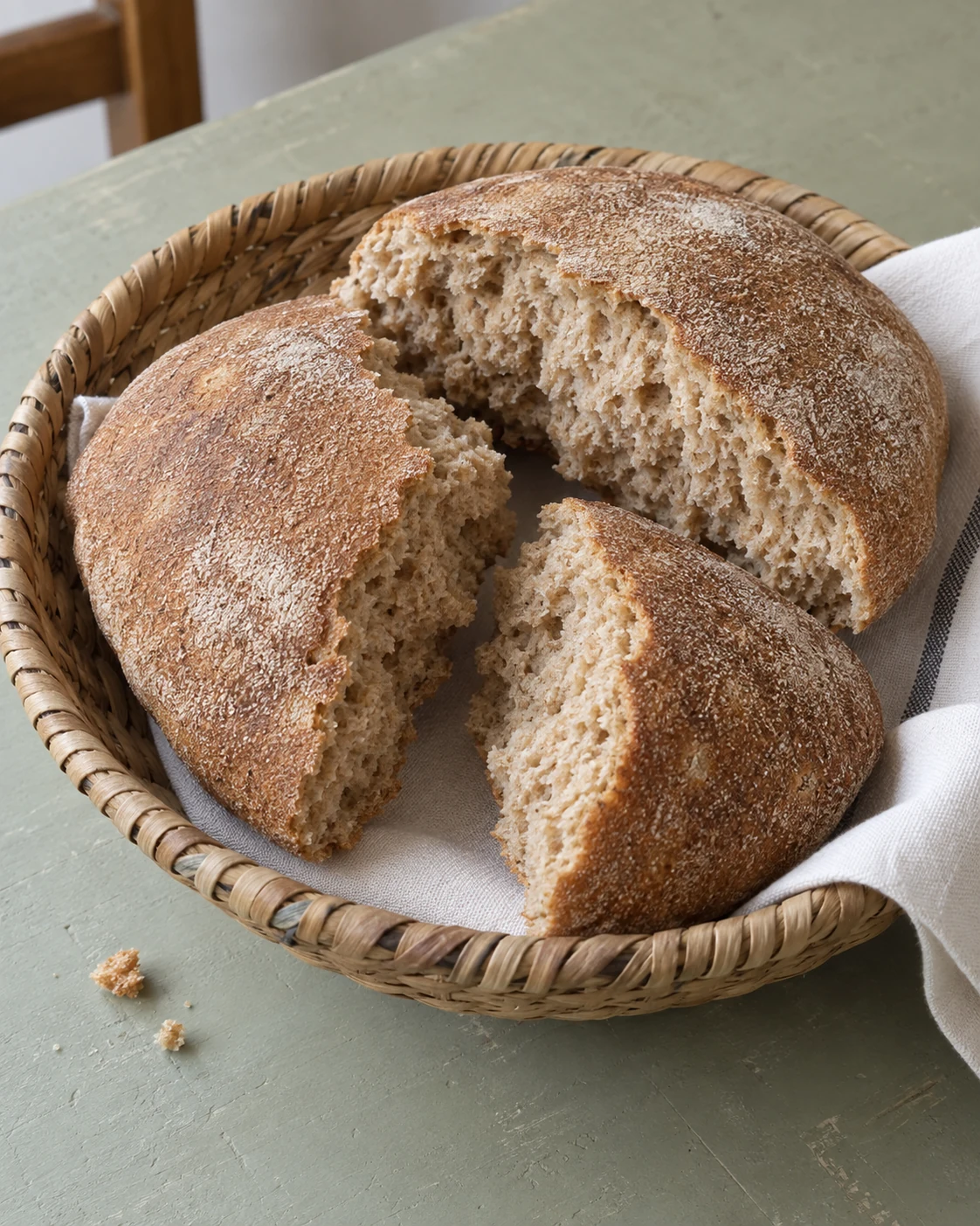
Khobz
A useful piece of the meal.
It can accompany a saucy dish or serve as the breakfast base for something simple. Bread changes shape and character from one kitchen to the next.
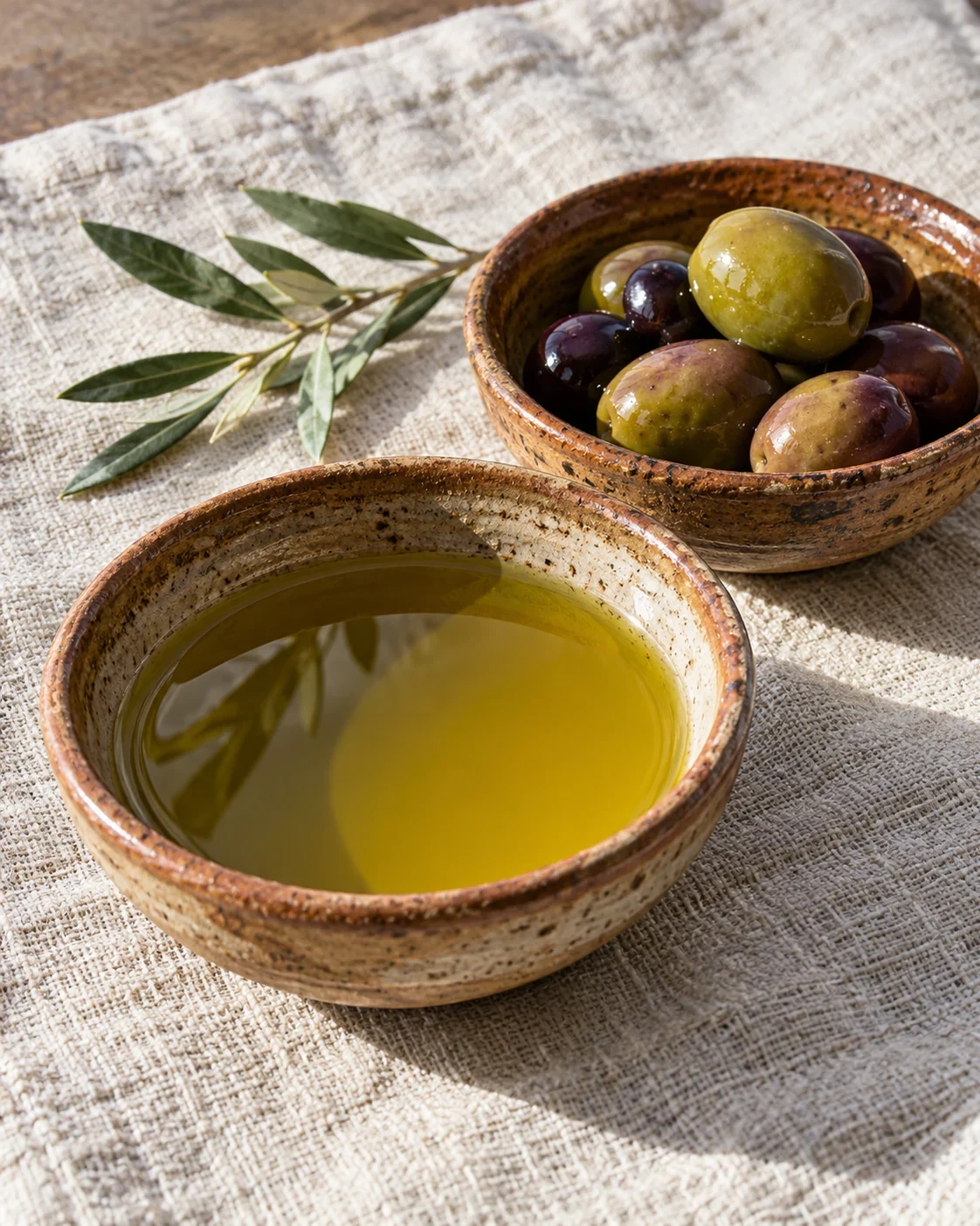
Olives & oil
The quiet savoury note.
Oil may be brought to the morning table; olives can join lunch or a small spread. Their role depends on the dish, not on a fixed daily order.
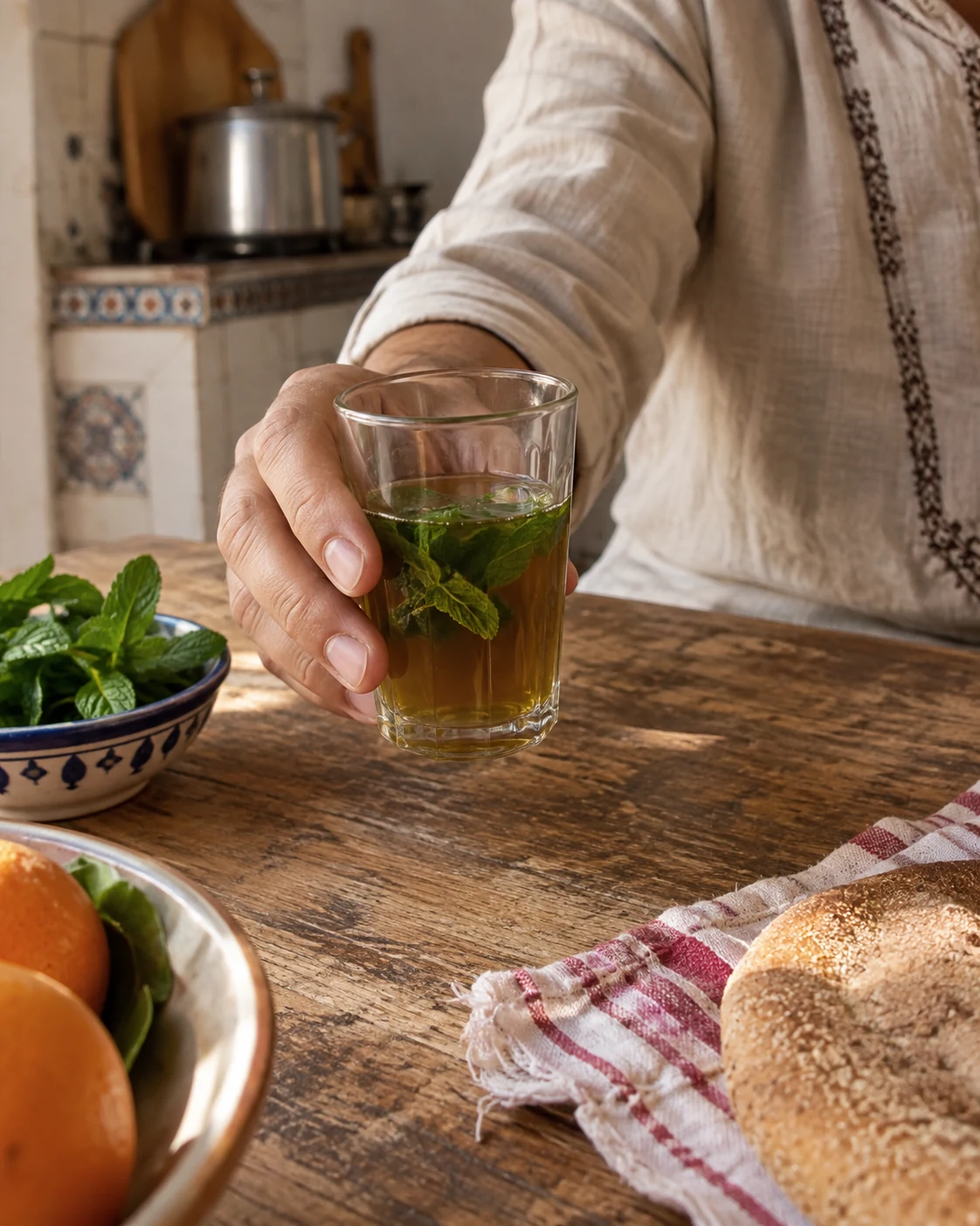
Mint tea
A welcome that can linger.
Tea can be a greeting, a pause or a reason for someone to stay a little longer. It is not a compulsory drink at each meal.
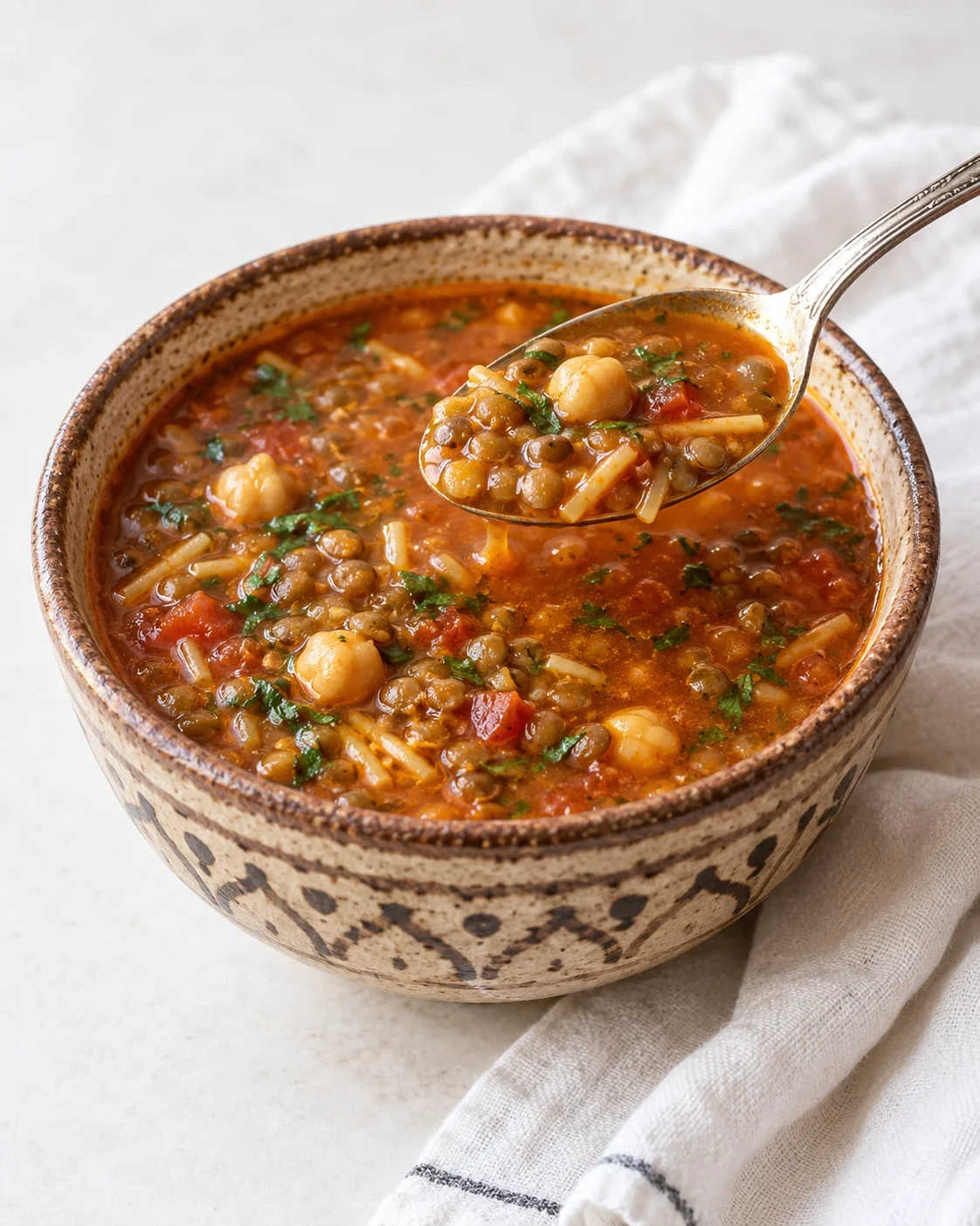
Harira
Soup with several settings.
The tomato-led soup is especially associated with Ramadan iftar, while bowls also belong to other eating occasions and evenings.
FOOD · TIME · COMPANY
How a table
takes shape.
A meal is more than a list of dishes.
The choice of a simple bread, a pot that can feed several people or a tea tray waiting for a guest reflects the time available and the people expected.
What is cooked, what is shared, and when people can sit together belong to the same story.
Preparation has a tempo.
Griddled breads can be ready in small batches; a slow pot or steamed couscous asks for different attention. That time affects when people eat.
The table has a scale.
Food for one person, a household or visiting relatives may use the same ingredients in very different arrangements.
The day can be rearranged.
School, work, prayer, guests and the season reshape the table without erasing its familiar foods.

06 · The week and the year
Some days
change the menu.
Daily habits make more sense beside their exceptions.
Couscous has a special association with Friday lunch for many families, but it is made and eaten beyond that day. UNESCO recognises the shared knowledge, making and consumption of couscous across Algeria, Mauritania, Morocco and Tunisia; it does not reduce that living practice to a single weekly rule. [5]
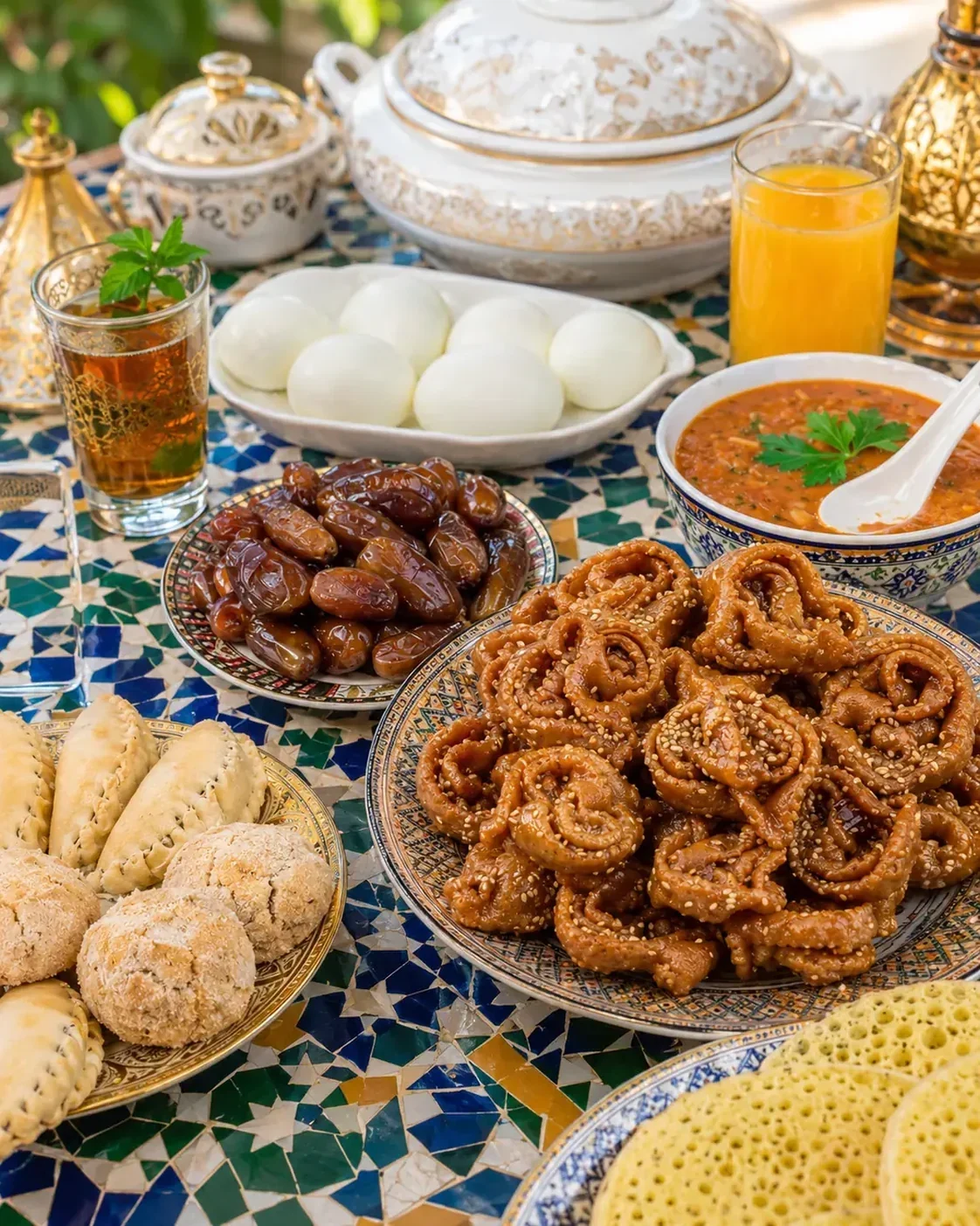
Ramadan brings a more marked change for people who fast: a meal before dawn, then iftar after sunset. Harira, dates and chebakia are familiar at many Moroccan iftar tables, while the precise food and sequence still differ from home to home. [3] [4]
On a Friday
Steamed couscous may bring more people to the midday table. It is also enjoyed at other times and prepared in many forms.
During Ramadan
For those observing the fast, suhur and iftar replace an ordinary daytime eating schedule.
On the rest of the calendar
Work, study, weather, celebrations and guests make their own demands on the kitchen.
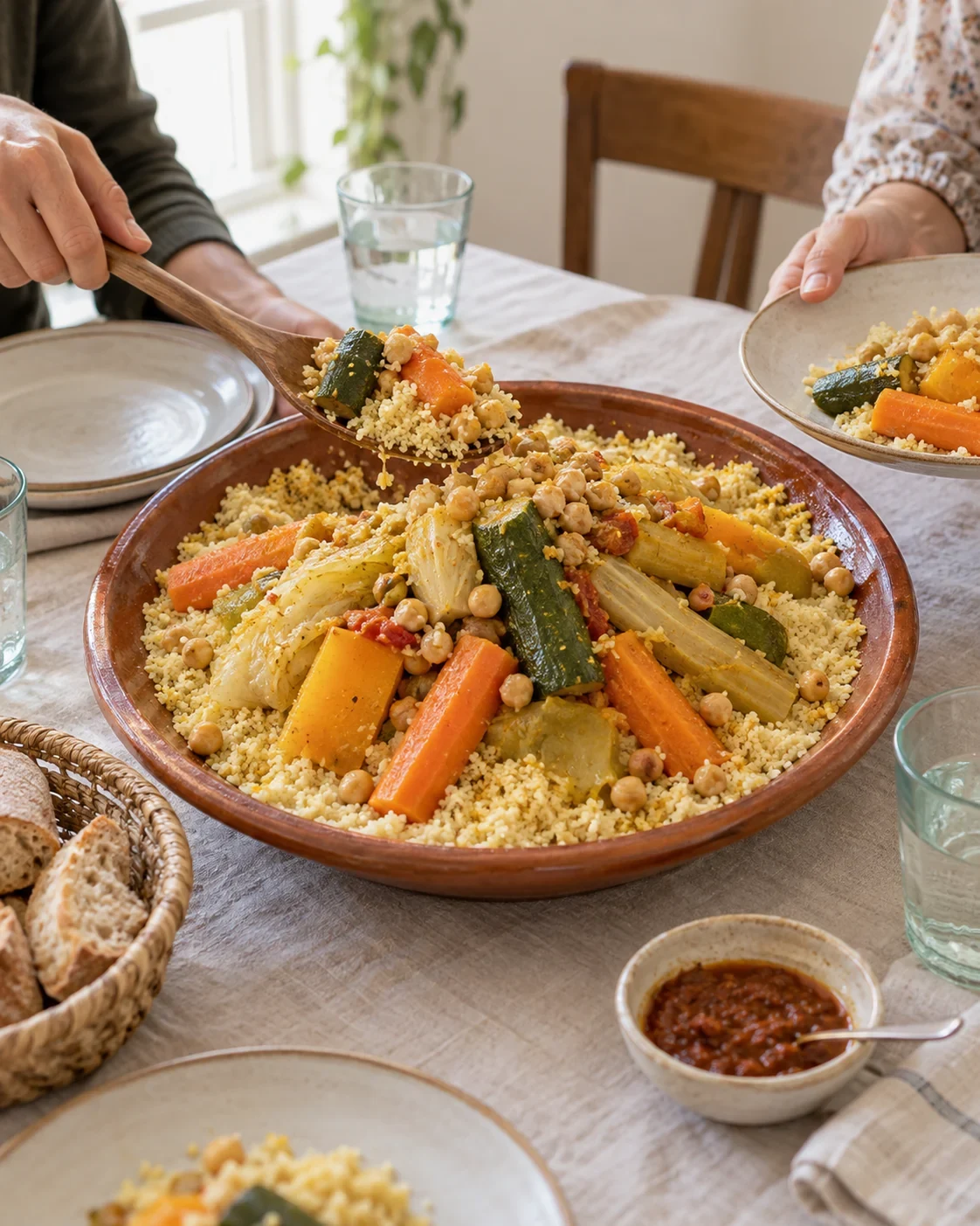
07 · Eating together
Make room.
Then pass the bread.
Company can change the scale of a meal.
From a small weekday lunch to food prepared for guests, serving choices tell you what a household needs. A communal dish can make sharing straightforward. Individual plates are equally part of contemporary home life.
The Moroccan table is best understood by watching how people offer, serve and adjust around each other, without treating any single layout as a national rule. [1]
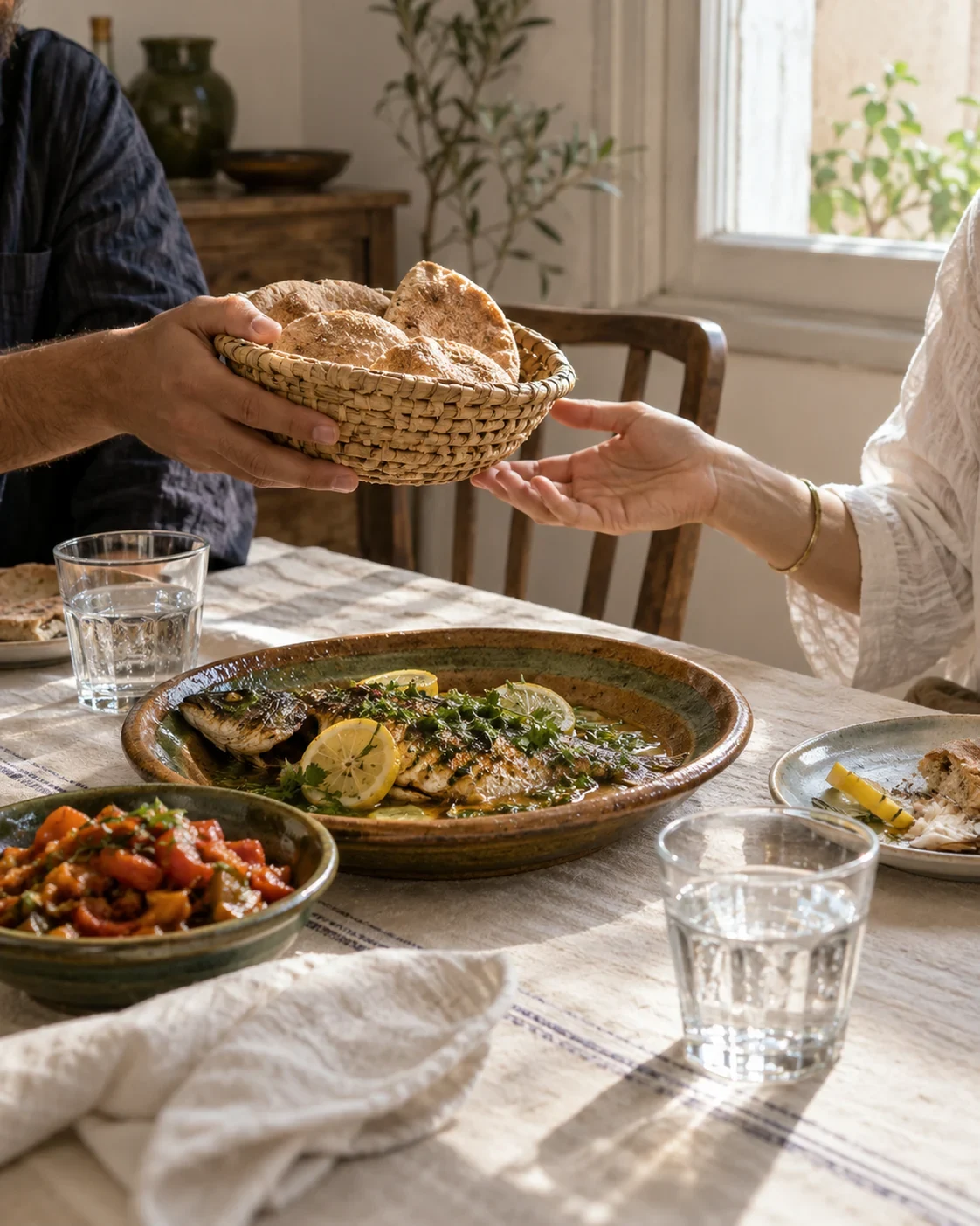
The shared serving dish.
Couscous, tagine or a dish of fish can be offered in the middle. The form of serving depends on the food and the household.
A little more on the table.
Cooked salads, bread, olives or tea can appear as guests arrive. Generosity can be as simple as offering someone the next seat and the next portion.
A glass of tea.
A fresh conversation.
Tea can welcome visitors before food or extend a visit afterward. No single pour defines Moroccan hospitality. [3]
Ordinary meals count.
A quick supper after work can be just as revealing as a carefully composed Friday meal. The kitchen’s practical choices are part of food culture.
08 · Behind the meal
Before the table,
the work.
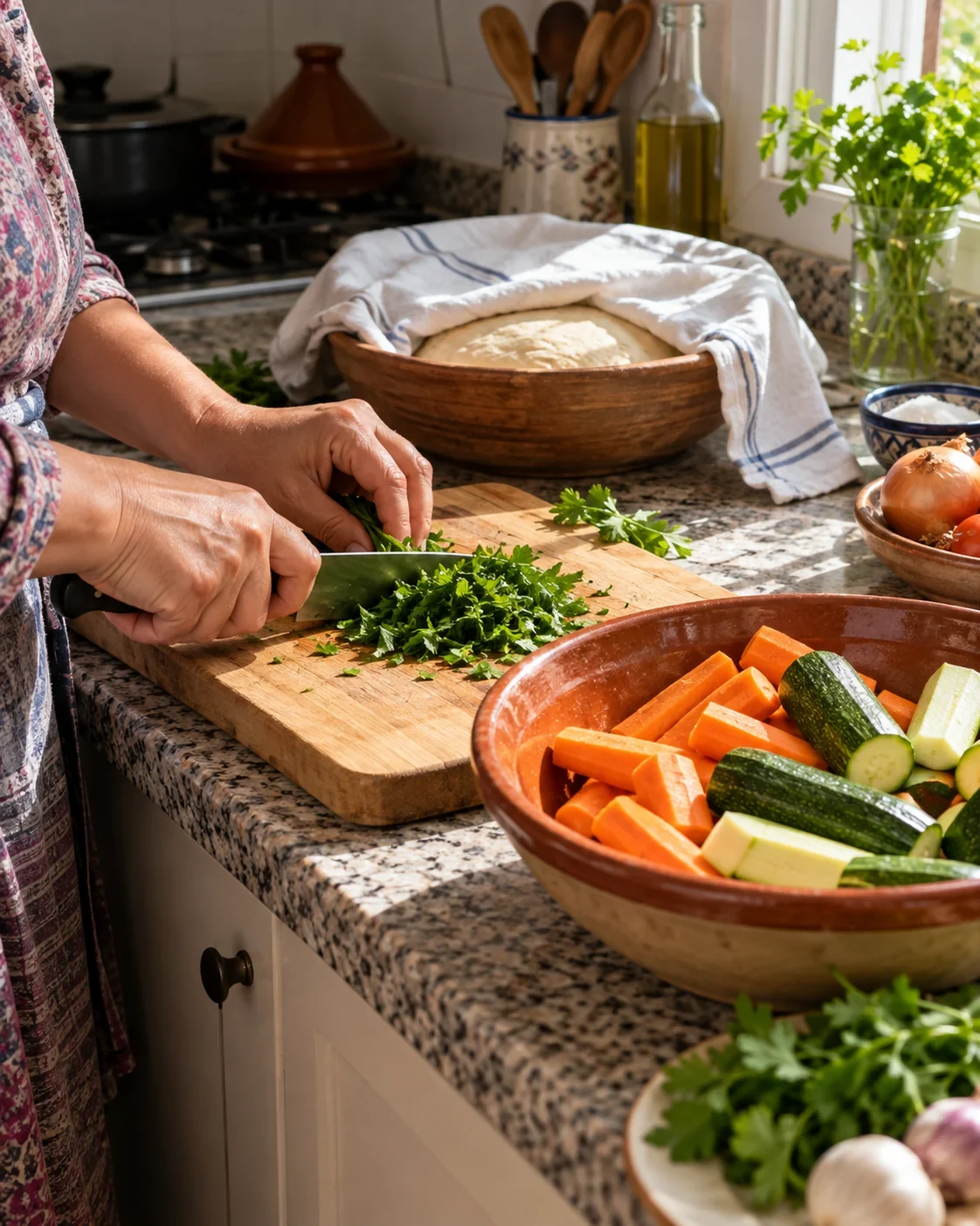
Someone shops, prepares, cooks, serves and clears.
Food stories often jump from ingredients to a finished spread. The rhythm of meals also belongs to the people who make them possible: cooks at home, bakers, market sellers and everyone who coordinates a day around the kitchen.
Preparation can be distributed, hurried or shared. A generous Friday plate and a small bowl after work both depend on time, equipment and labour. A study of 507 households in Rabat–Salé–Kenitra found differences in cooking methods and preparation patterns across household circumstances.[6]
Recognising that work makes the table more interesting than any image of effortless abundance.
09 · A closer look
Good questions.
Clear answers.
The table is easier to understand without fixed rules.
What is a typical Moroccan breakfast?
There is no single breakfast. Bread or semolina breads with olive oil, cheese, honey or amlou, and tea or coffee, are possible combinations. The choice depends on home, region and time available.
Is lunch always the largest meal?
It often carries social importance, but work and study can move the main gathering to another time. Research reports considerable variation and irregular timing in contemporary adult eating patterns. [1]
Does every family have couscous on Friday?
No. The association is widespread, but preparation and schedules differ, and couscous is eaten on other days too. It also belongs to the wider Maghreb, not exclusively to Morocco. [5]
Must mint tea accompany every meal?
No. Tea often has its own social role, such as welcoming a visitor or marking an afternoon pause. People also drink water and coffee.
Does everyone in Morocco observe Ramadan fasting?
No. People differ in religious practice and circumstance; some are exempt from fasting. For those who observe it, eating moves to before dawn and after sunset. [4]
 EXOTIC MOROCCOTASTE · THE GUIDE COLLECTIONMoroccan Meal RhythmIngredients, technique
and the Moroccan table
From the story to your kitchen
Keep the flavour.
Go a little deeper.
How food finds its place in the day and the calendar.
Explore the Exotic Morocco guide collection for a closer look at ingredients, kitchen knowledge and the culture around the table.
- Understand the ingredients and their roles
- Recognise the techniques and textures that matter
- Bring context and confidence to the way you cook and serve
Continue tasting Morocco
Follow the
table outward.
Another dish, another technique, another way into the Moroccan kitchen.
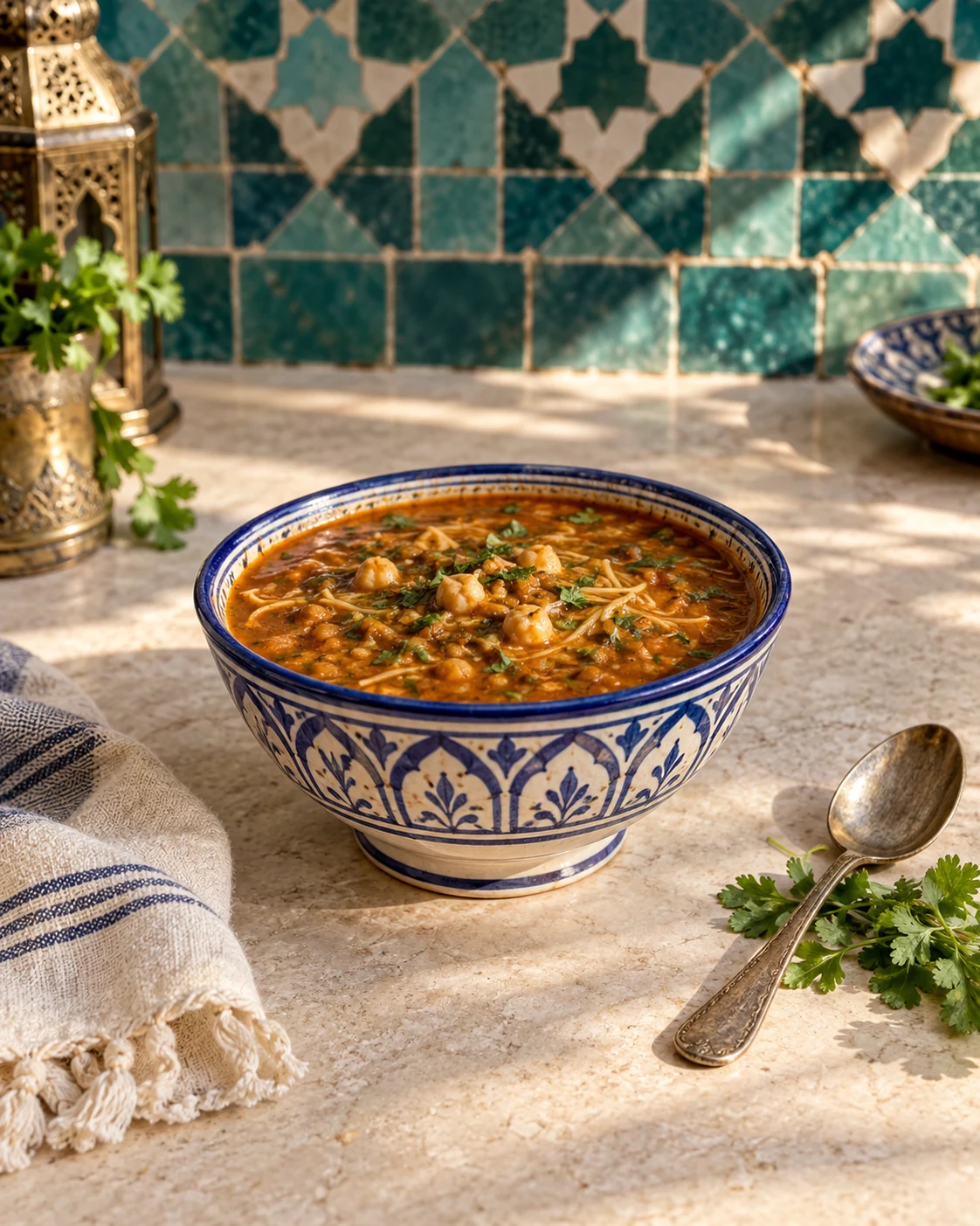
Harira
Tomato, pulses and herbs in the warmth of a shared table.
Explore the story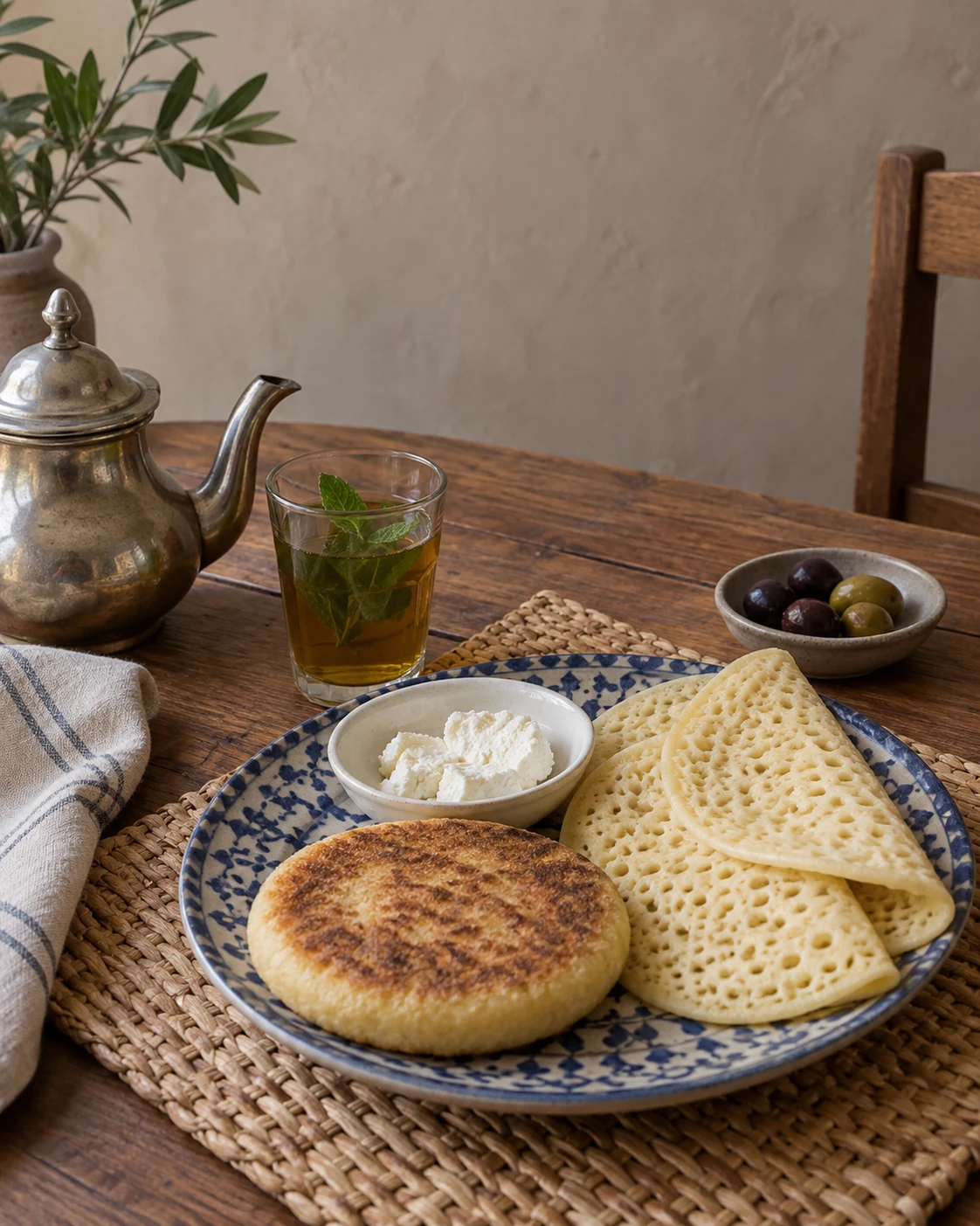
Moroccan Breakfast
Breads, spreads and the first table of the day.
Explore the story ↗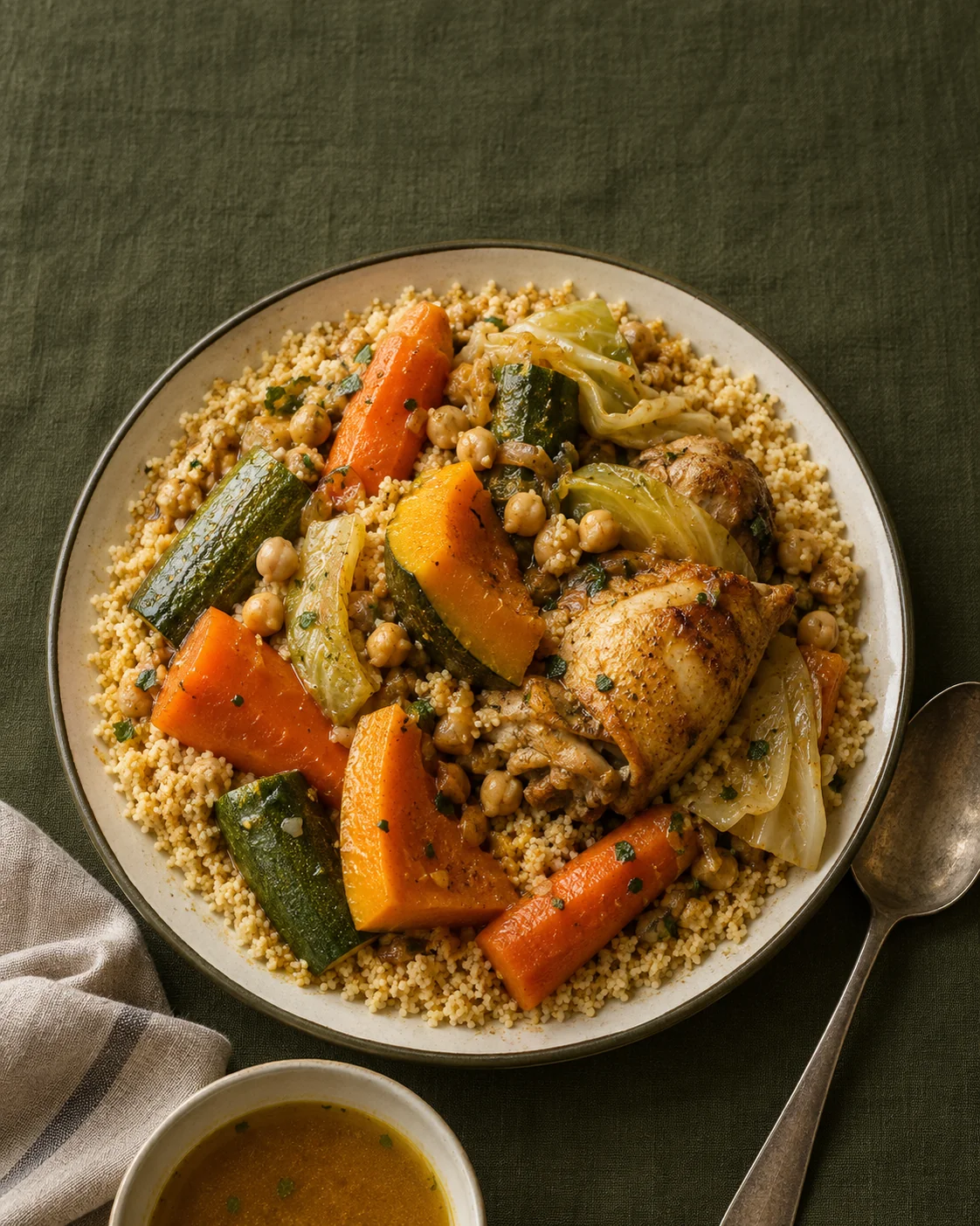
Couscous
Grains, steam and the many ways a shared platter comes together.
Explore the story ↗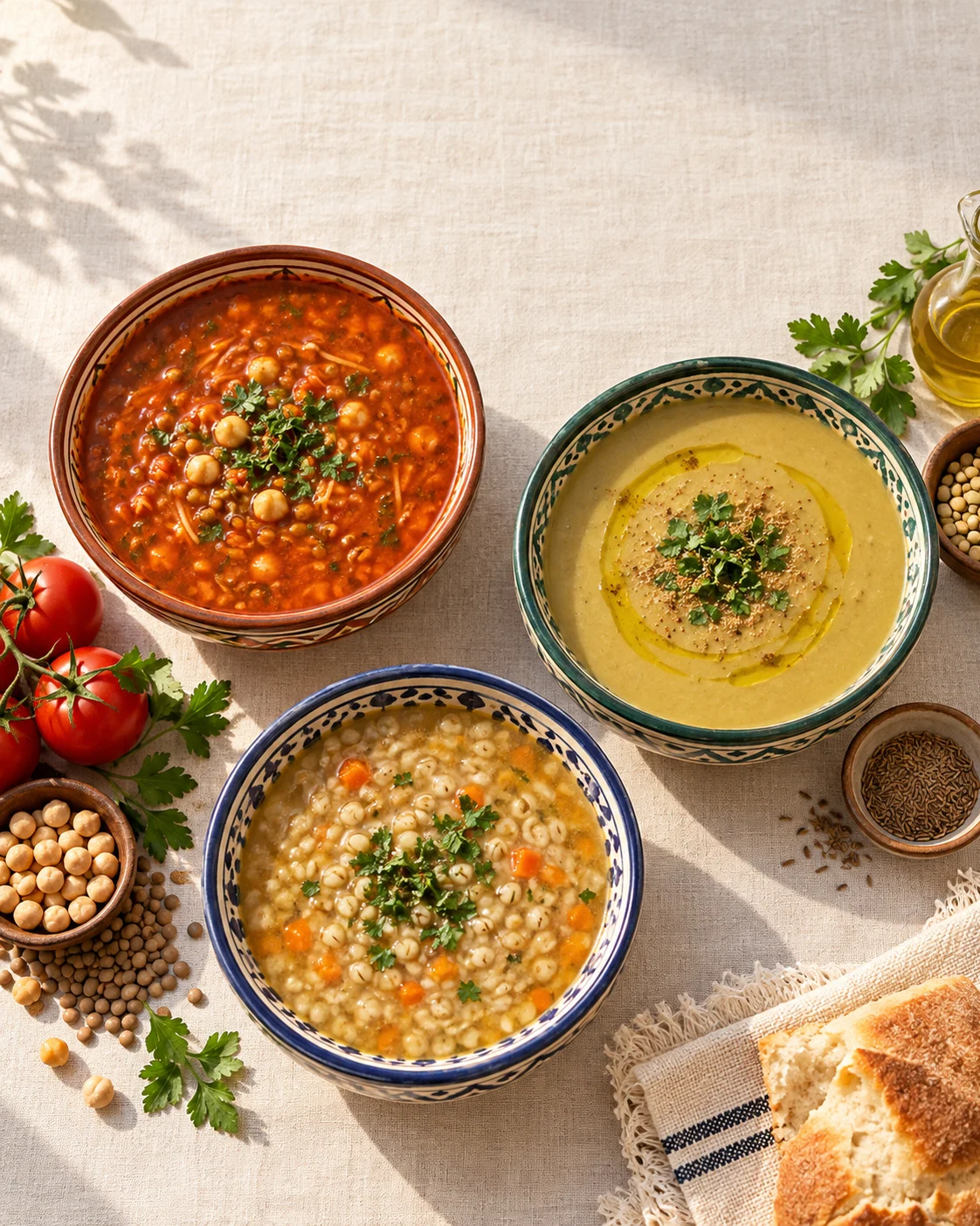
Soups
Harira, bissara and other bowls shaped by place and occasion.
Explore the story ↗
Moroccan Mint Tea
Green tea, fresh herbs and the time given to a guest.
Explore the story ↗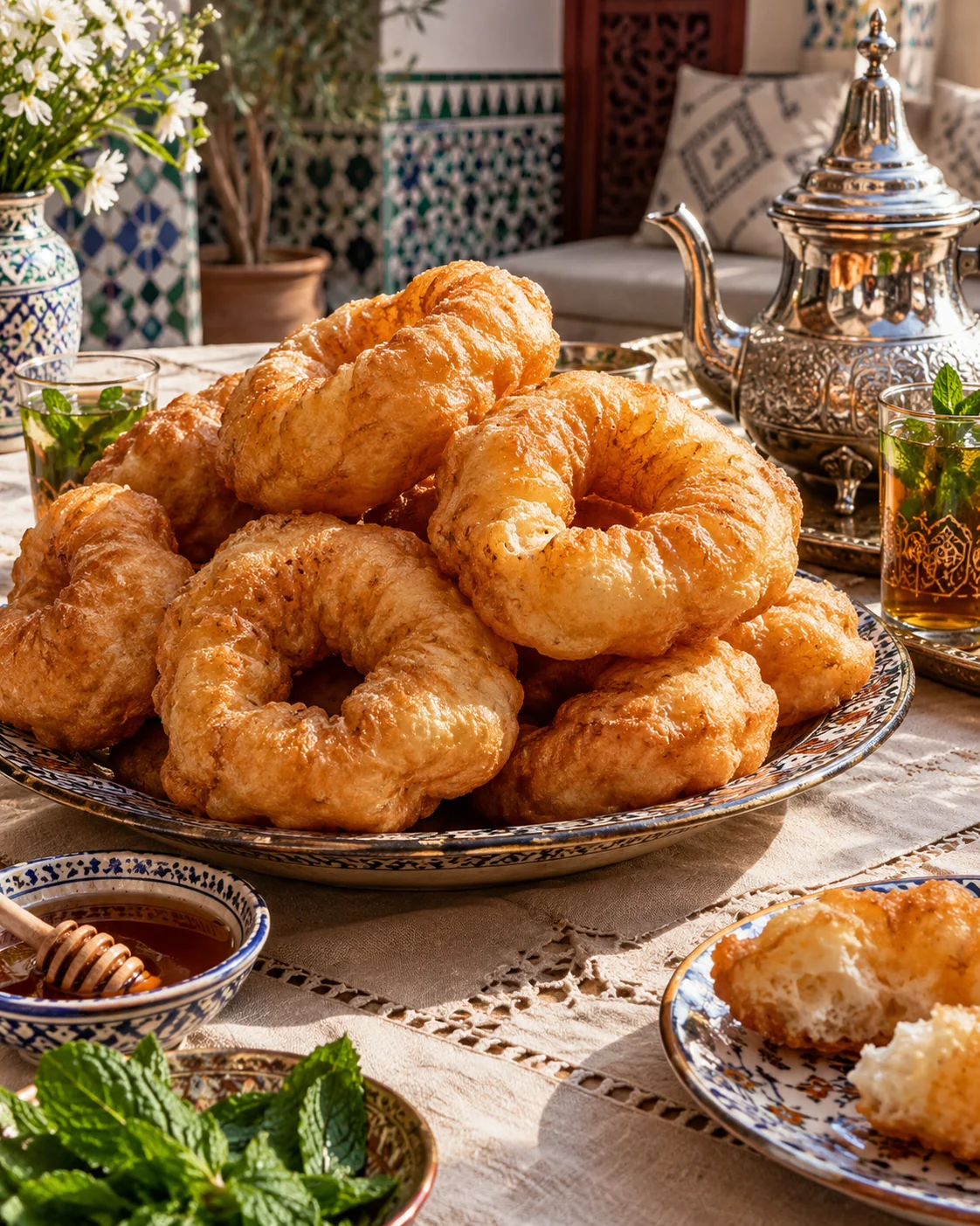
Street Food
Counters, griddles and food made to eat on the move.
Explore the story ↗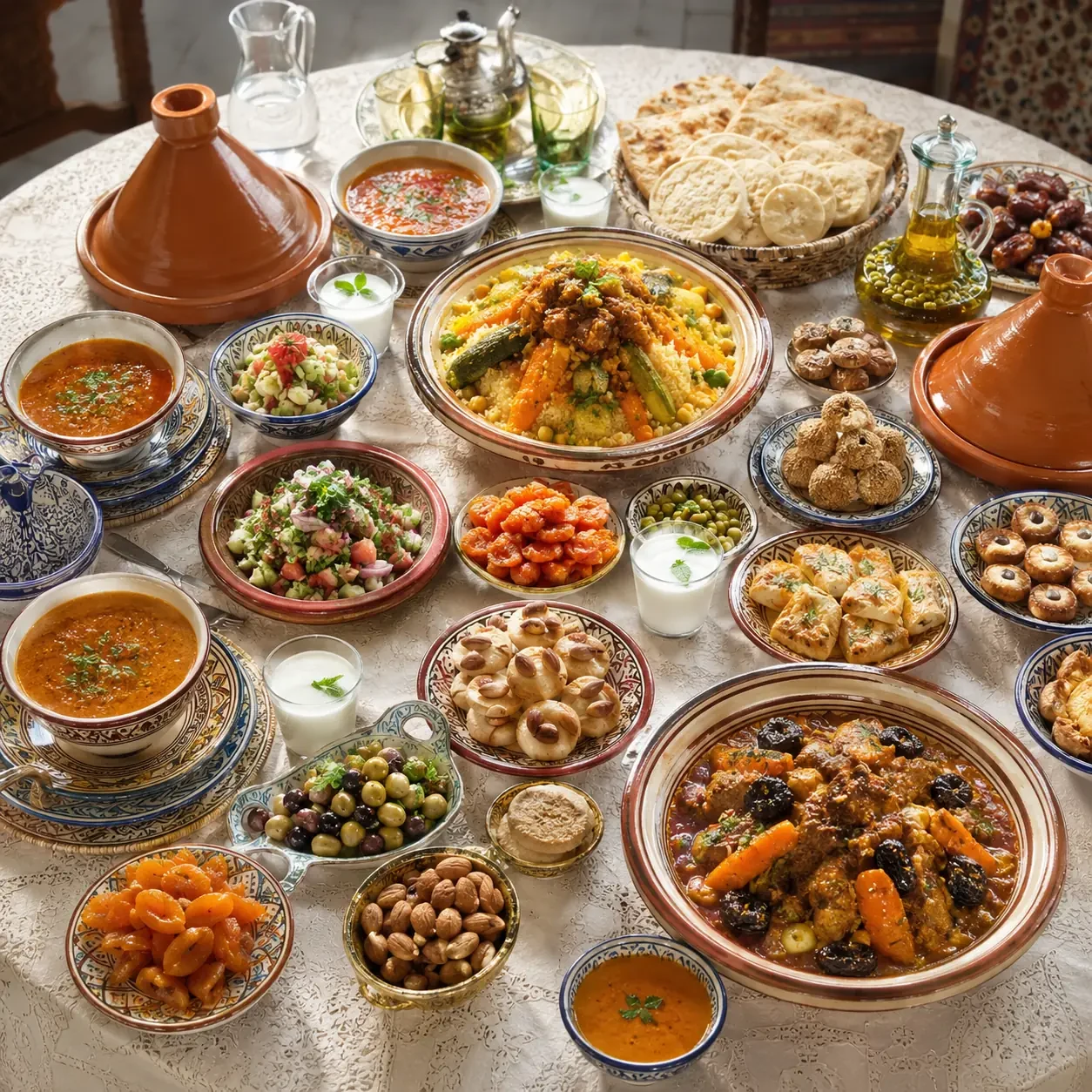
Moroccan Food Culture
The people, gestures and knowledge around the meal.
Explore the story ↗Sources & editorial notes
Photography combines existing Exotic Morocco assets and generated editorial illustrations. These images do not document a named person, household or historical event.
- Meal intake in an adult Moroccan population: determinants and implications for weight status — survey evidence about daily meal counts, irregular timing and eating with family.
- CIRAD · Les repas des Marocains: comparaison entre Casablanca et des communes rurales du Souss — comparison of eating habits in urban and rural settings.
- Moroccan National Tourist Office · Gastronomy — Moroccan foods, breakfast references, convivial lunch and afternoon tea.
- Intercultural Networks Group · Ramadan information — suhur, iftar and variation in fasting circumstances; not a source for Morocco-specific dishes.
- UNESCO · Couscous knowledge and practices — the transnational preparation and sharing tradition.
- Factors influencing cooking method, frequency, and duration of meal preparation in Moroccan households — differences in cooking and meal preparation across households.
EXOTIC MOROCCO Places. People. The pleasure of knowing more.Back to top ↑