

01 · A bowl for many moments
A little warmth.
Many ways to make it.
Moroccan soup is a family of textures, not one fixed formula.
Harira brings tomato, herbs and pulses into a substantial bowl. Bissara starts from dried fava beans or split peas and can be served thick or loosened into a soup. Hssoua belboula makes a gentler bowl from barley grits, while chorba can be lighter and broth-led. [1] [2]
These names describe different preparations, not interchangeable versions of the same dish. The grain, pulse, liquid and finishing touch decide whether the spoon meets a silky purée, a soft porridge or a lively broth.
Some bowls anchor a Ramadan ftour. Others belong to a cold morning, a simple lunch or an ordinary evening. The context changes; the care with which the bowl is offered remains familiar.
Enter Moroccan food culture ↗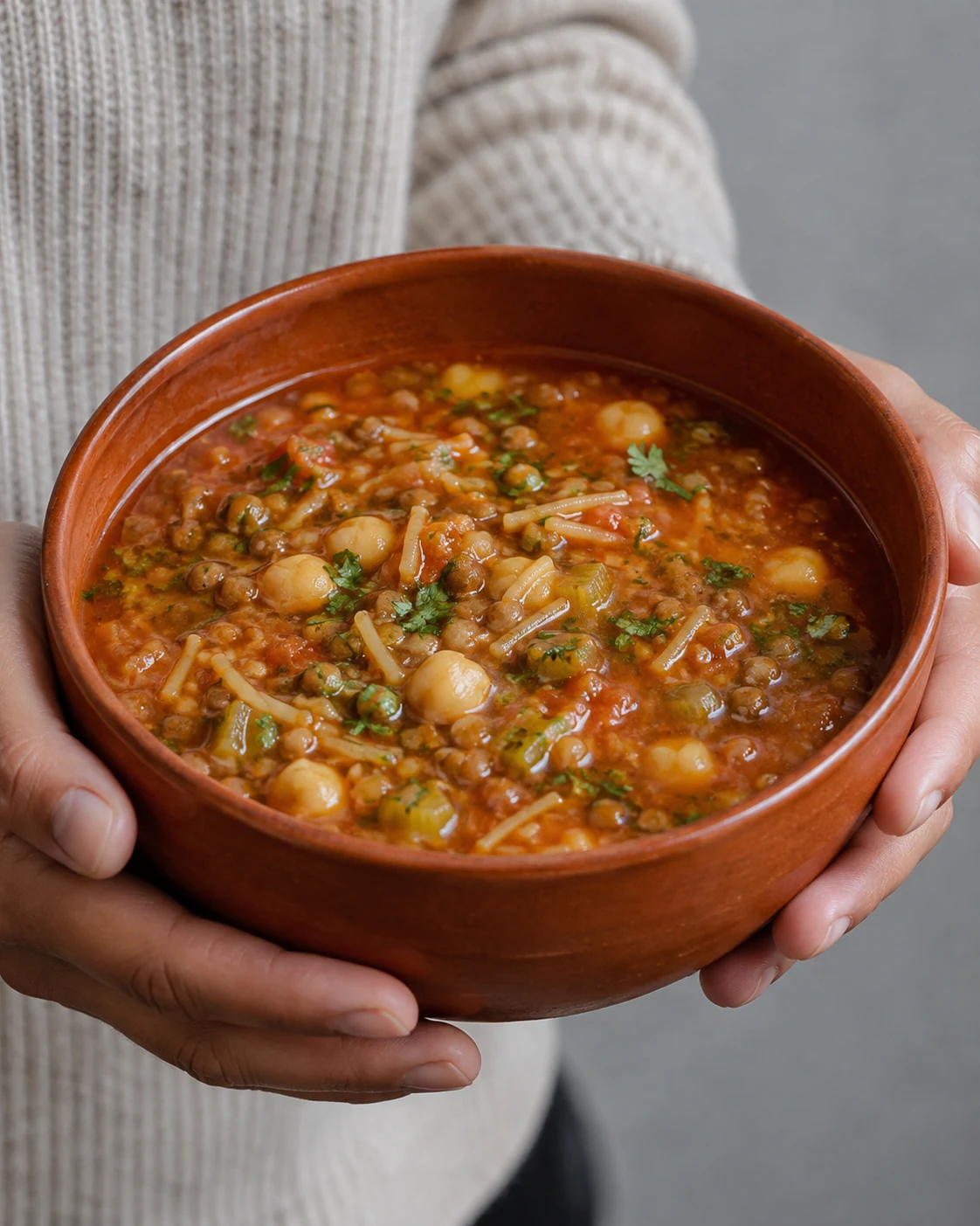
Different textures, each with a purpose.
Tomato, fava beans or barley can lead the bowl.
Soup belongs beyond one time of day.
02 · Living practice
A Ramadan table.
And the days beyond.
Harira has a strong place at ftour, but soup does not live in one month.
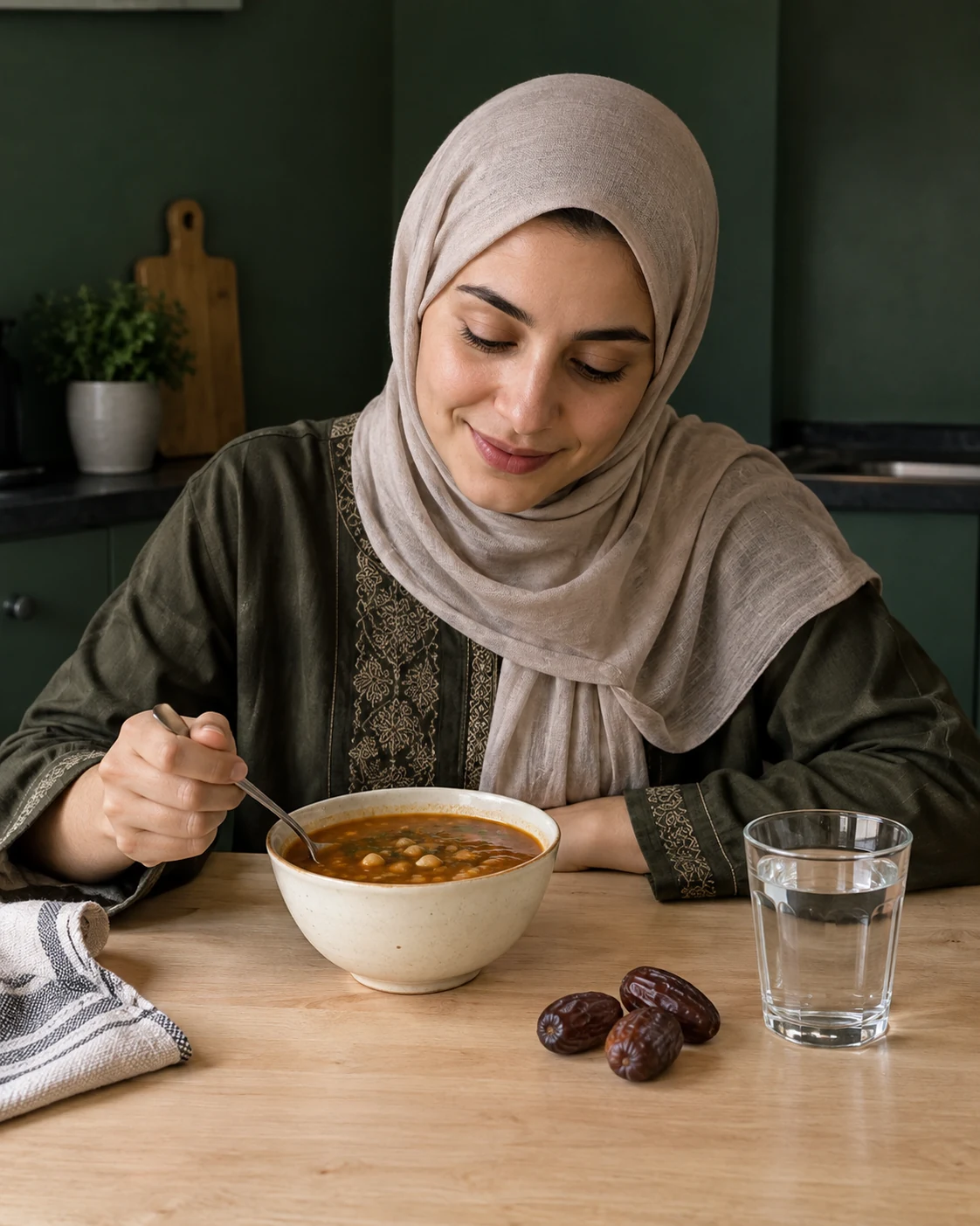
A bowl of harira, dates and sometimes chebakia is a recognisable part of Moroccan Ramadan evenings. The pairing matters because of the meal in which it is served; it is not proof of a single origin story for the soup. [3]
At other times, a pot of bissara can be breakfast or a modest meal with bread. Barley soup is also served for breakfast in some homes. Names and preferred thickness change between cooks and places, so a national rule would hide the variety. [2]
The ftour bowl
Harira is closely associated with breaking the fast; its ingredients and thickness still vary.
The morning bowl
Bissara and barley preparations can be substantial, inexpensive breakfast foods.
The family version
Meat or no meat, rice or vermicelli, fava or pea: the household decides the detail.
03 · The method and the mouthfeel
What gives a soup
its body?
Texture is a choice made at the stove. Three bowls can begin with water and end with completely different weight on the spoon.
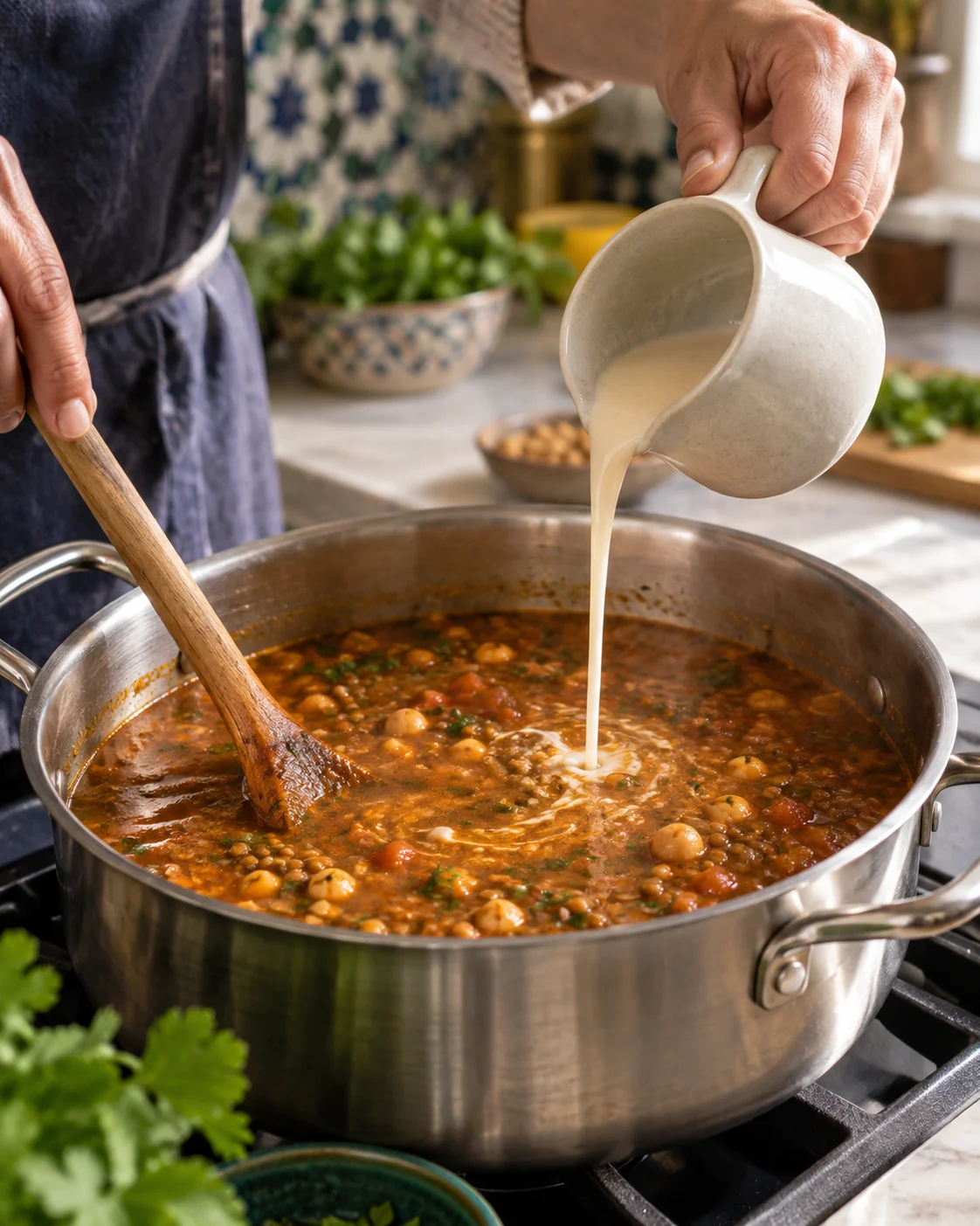
Harira may be thickened near the end with a flour-and-water mixture, called tedouira in one documented method. Bissara gains body as cooked pulses are blended or broken down; barley thickens as its grain softens in liquid. [4]
Layer the base
Tomato, celery, coriander and parsley create the recognisable foundation of many hariras. Lentils and chickpeas add substance, but individual recipes vary.
Watch the thickener
When a flour slurry is used, it is stirred into simmering harira so the soup develops body without dry lumps. It is a method, not the only way to cook harira.
Let the ingredient lead
Split pulses make bissara smooth; barley grits make hssoua softly grainy. A lighter chorba keeps its broth more fluid.
No single technique defines every Moroccan soup. Observe the grain, pulse or broth in the pot before deciding how thick the finished bowl should be.
04 · Five distinct bowls
From silky
to spoonful by spoonful.
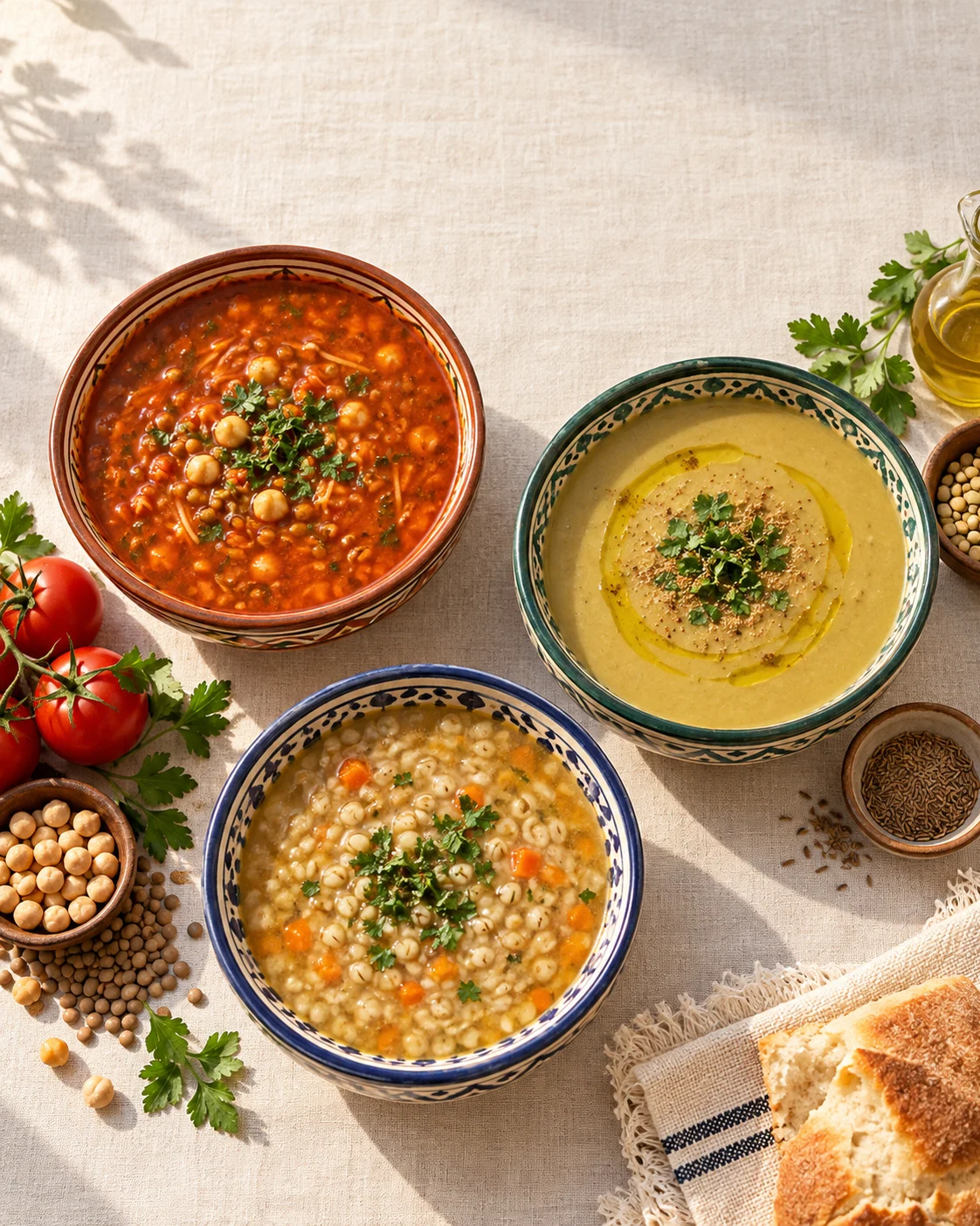
The contrast is worth tasting: tomato-rich and substantial, puréed and comforting, barley-soft or light enough for the broth to lead.
These are useful introductions, never a closed catalogue of Moroccan home cooking.
Harira
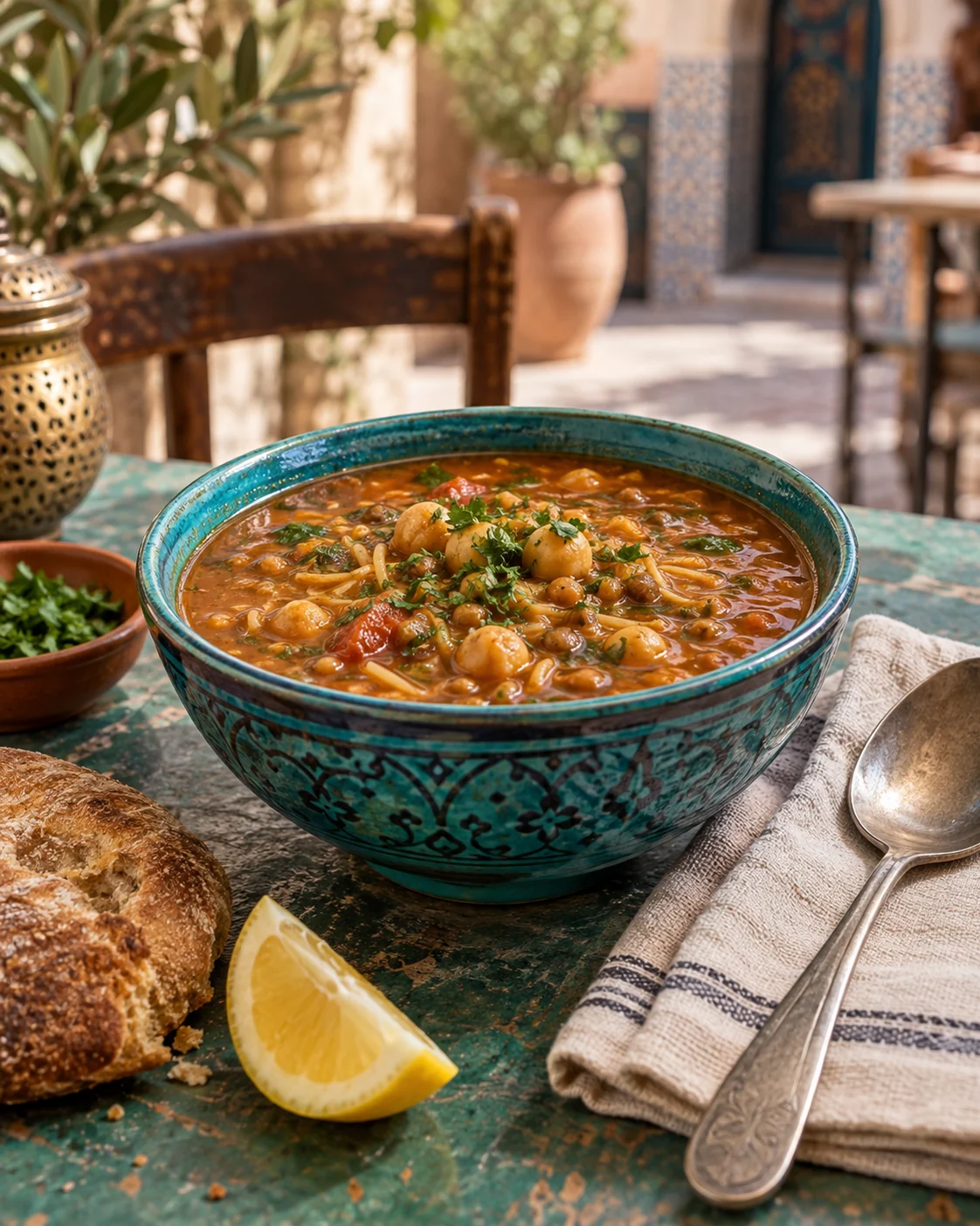
Lentils and chickpeas sit in a tomato-and-herb base. Meat, rice, vermicelli and the precise thickening method change from one version to another. [1]
Discover the Harira story ↗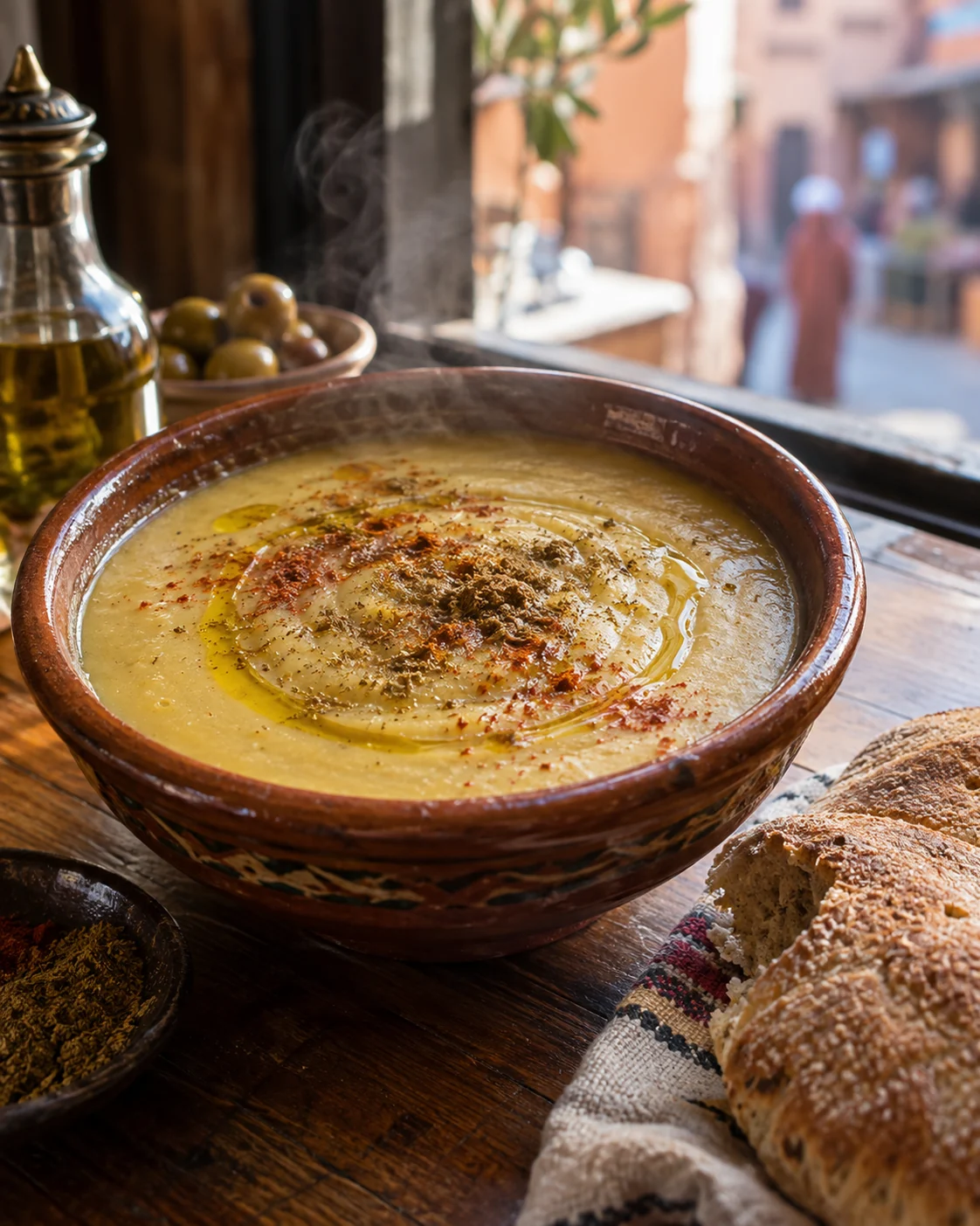
Bissara
A cooked pulse purée whose thickness can move between soup and dip. Cumin, olive oil and bread are familiar companions. [2]
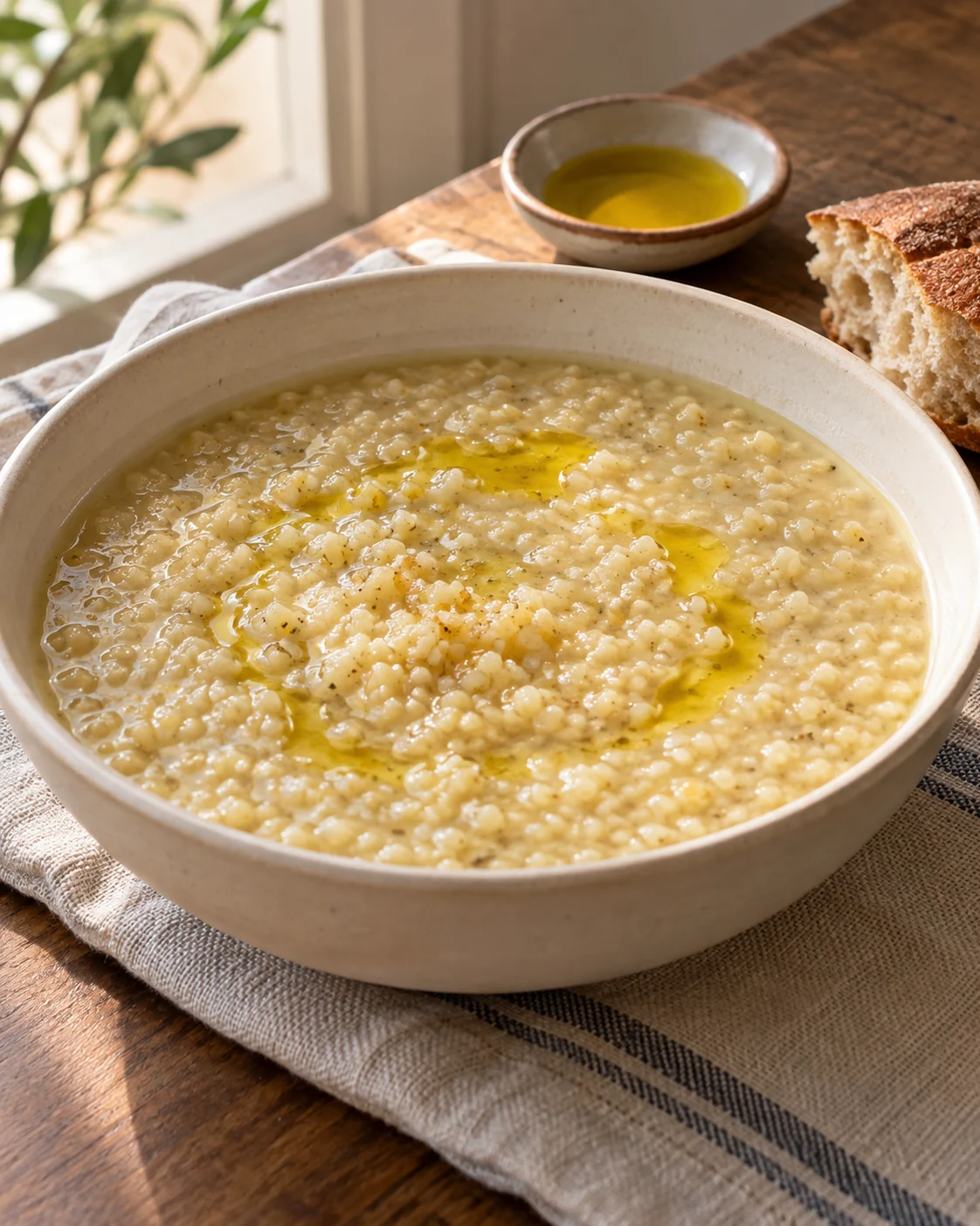
Hssoua belboula
Barley grits soften into a creamy, gently textured bowl. Some versions include milk; the seasoning and consistency belong to the household. [5]
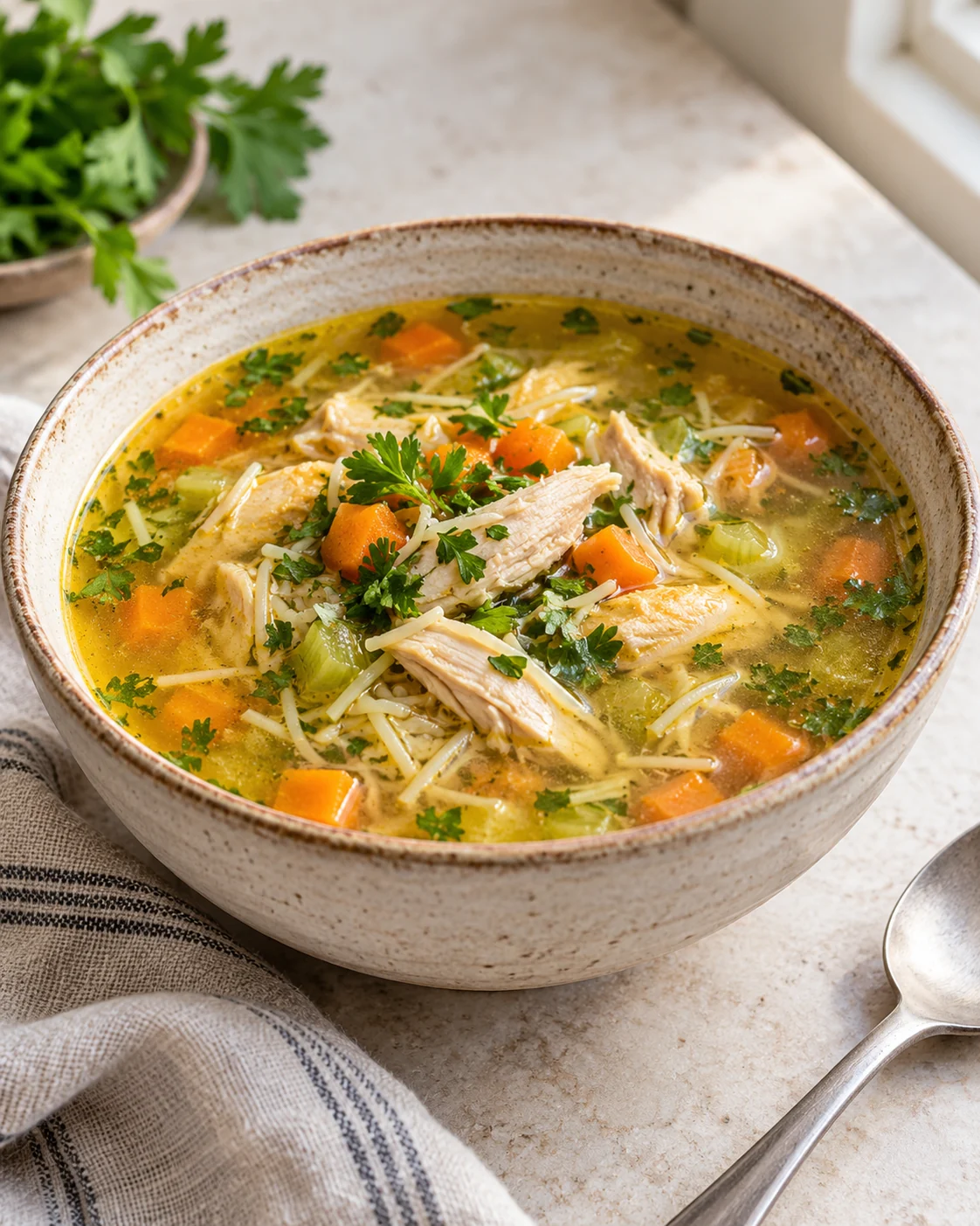
Chicken chorba
A lighter broth can carry chicken, vegetables and sometimes vermicelli. The word chorba covers more than one household preparation. [6]
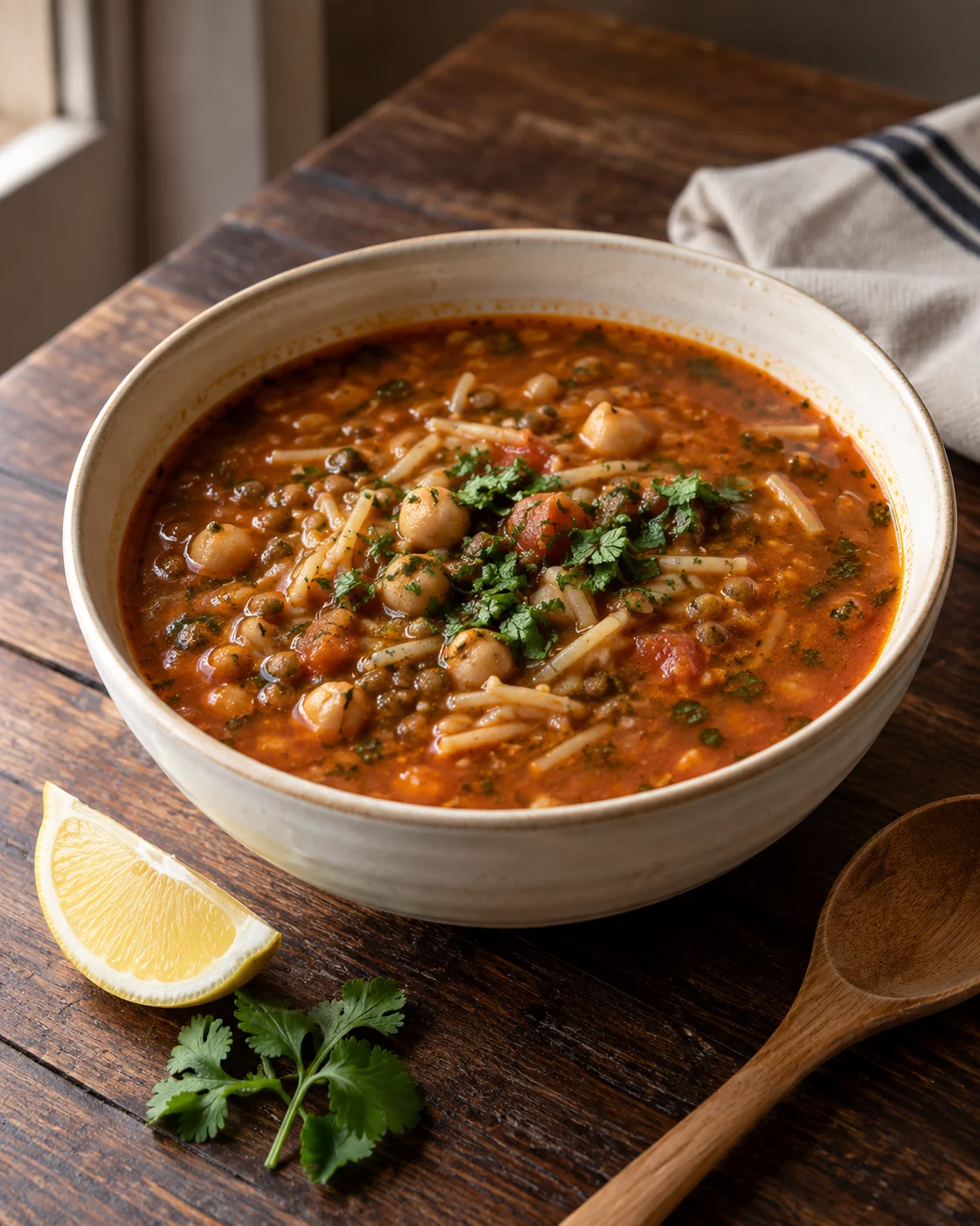
Lentil soup
Lentils alone can make a simple, nourishing pot. It is a useful contrast to harira, which commonly combines lentils with chickpeas and tomato. [1]
Names can overlap.
“Chorba” means soup across a wider North African world; it does not identify one fixed Moroccan recipe. Describe the ingredients and texture as well as the name.
Texture is personal.
One cook blends bissara smooth; another leaves a little grain. A soup served for breakfast can be thicker than the same preparation made for a larger meal.
05 · Four building blocks
Every spoonful
has a structure.
Pulses, fresh aromatics, grain and seasoning each do a different job. Their balance matters more than a long list of spices.
The images below are ingredients, not a single universal shopping list for every soup.
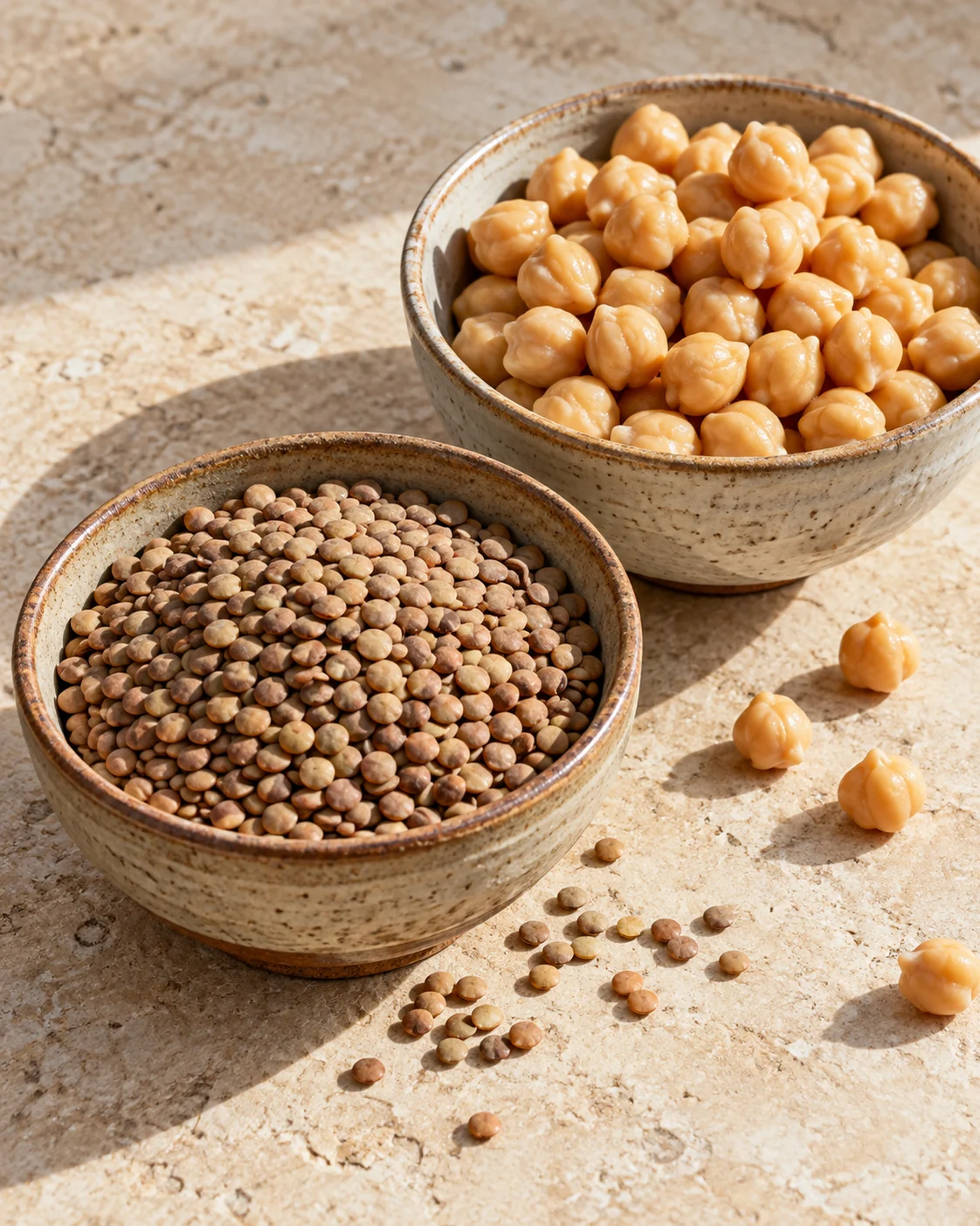
Lentils & chickpeas
Substance in the bowl.
Harira often pairs these pulses. Lentils soften into the broth; chickpeas remain more distinct and give the spoon another texture.
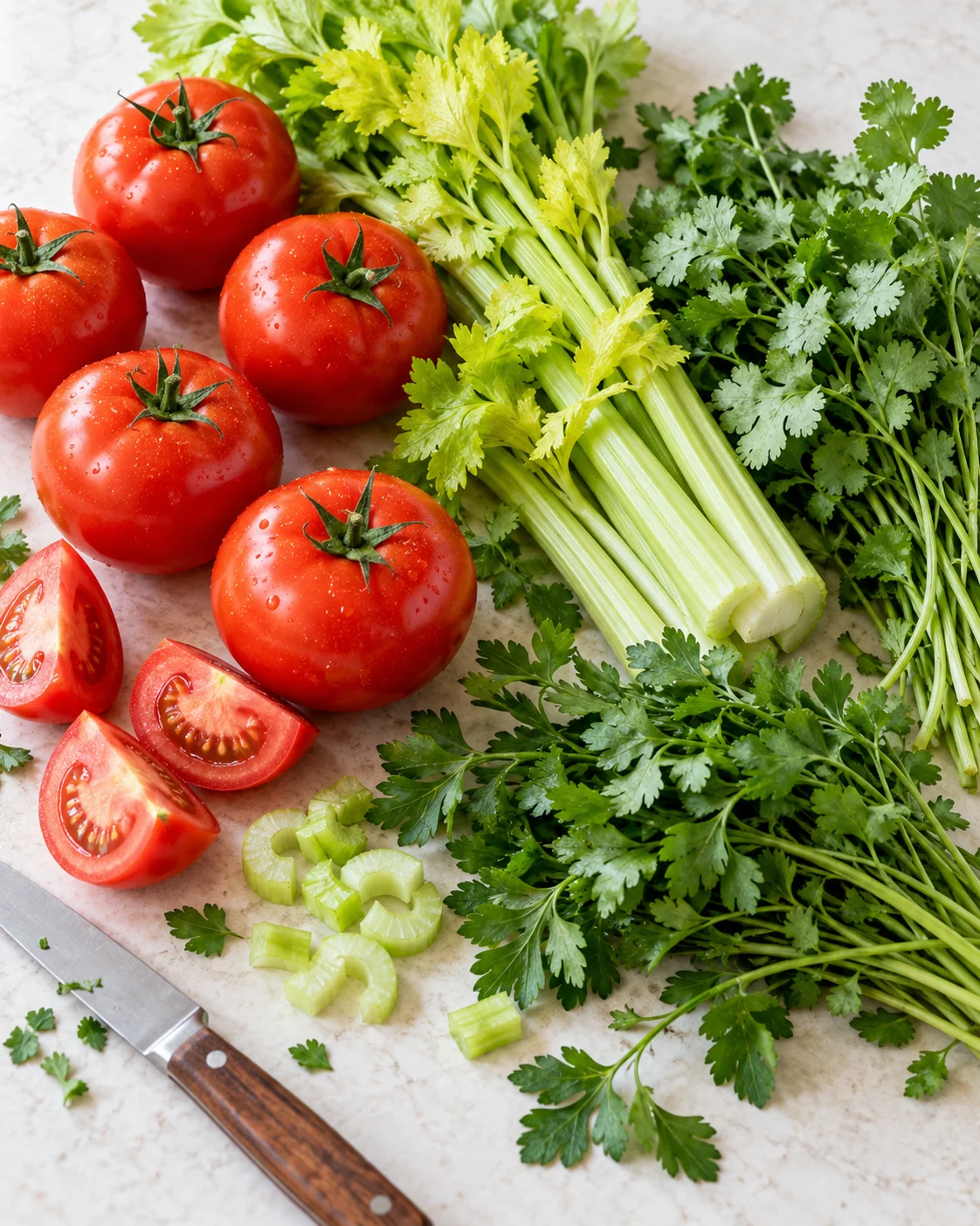
Tomato & fresh herbs
The bright foundation.
Tomato, celery, coriander and parsley build the familiar fresh depth of many hariras. Their proportions vary.
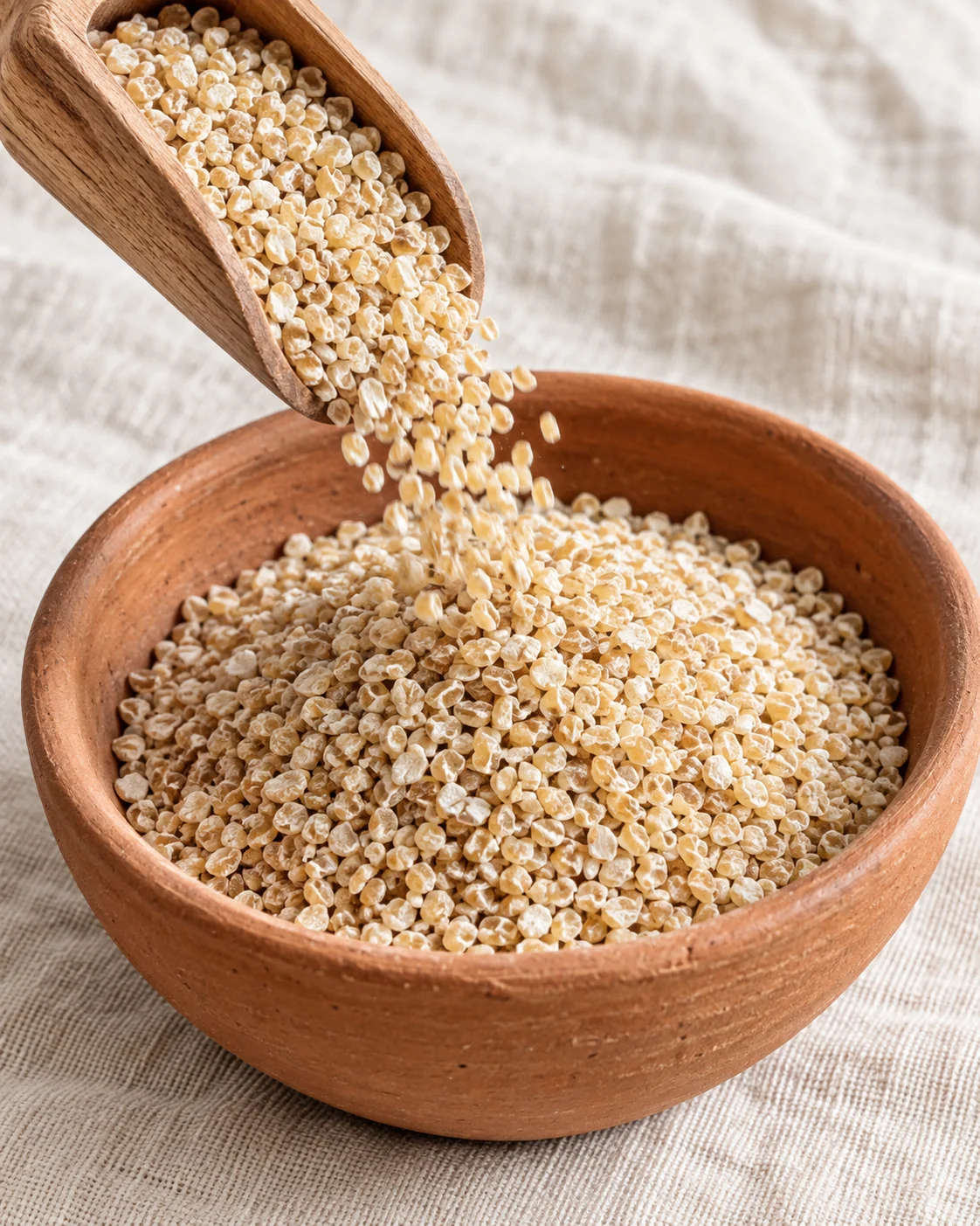
Barley grits
A gentler kind of body.
Belboula softens and swells as it cooks, giving hssoua its fine grain texture without needing to purée the pot.
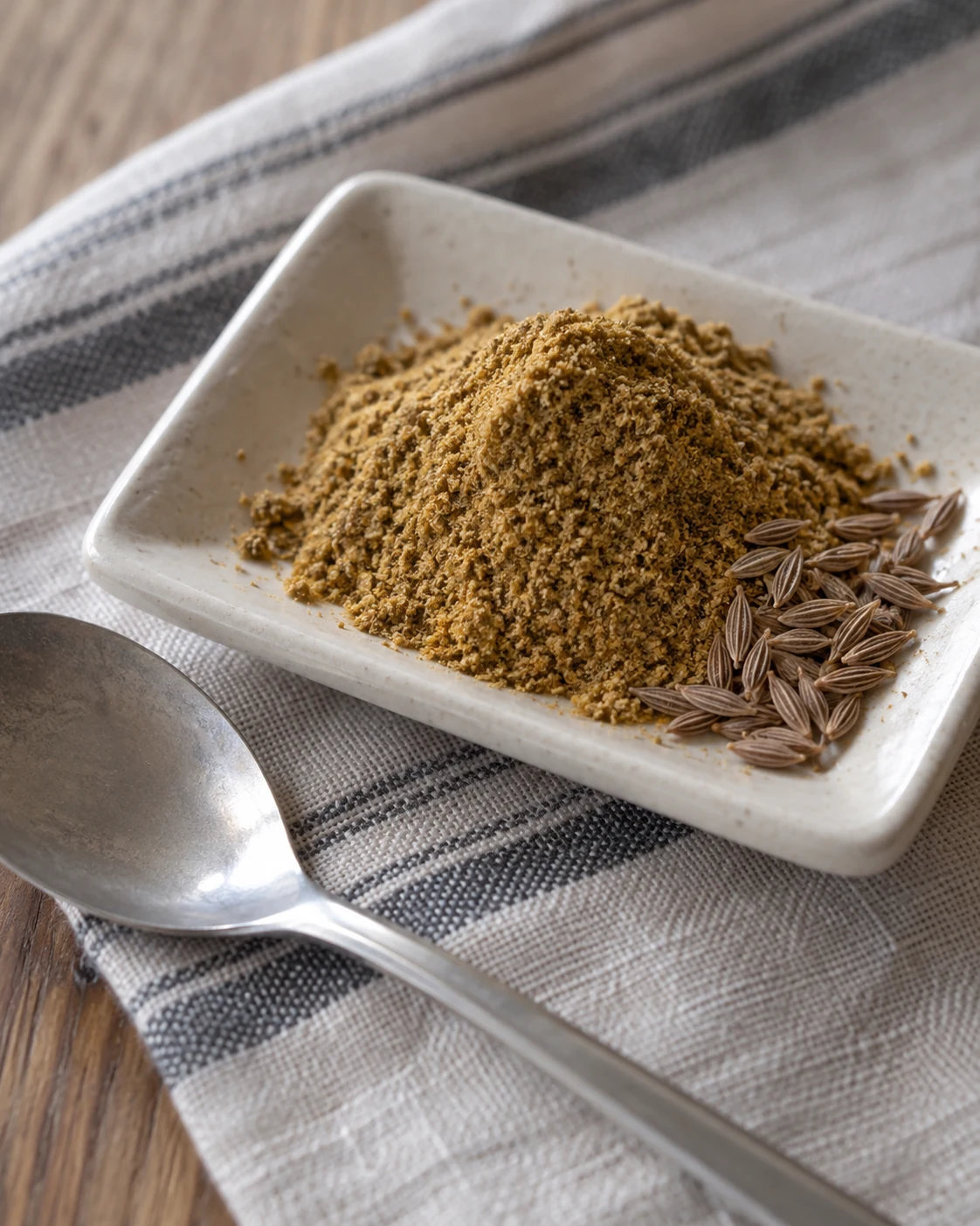
Cumin & garlic
A finishing direction.
Cumin is especially at home with bissara. Garlic may be used in some versions; neither belongs automatically in every Moroccan soup.
Explore the four flavours
LIQUID · TIME · TEXTURE
The quiet
decisions.
The cook decides whether the bowl pours, coats a spoon or asks for bread.
Water or broth carries flavour, but the ingredient that builds the body changes. A pulse purée becomes velvety; flour can finish harira; barley releases starch as it softens. Treating them all as one technique would flatten what makes each soup distinct.
A good spoonful lets the ingredients keep their own identity.
The liquid carries the base.
Tomato and herbs need time to become a broth. A lighter chorba leaves more liquid visible; a thick harira holds pulses in a closer sauce.
The pulse can be the body.
Cooked fava beans or split peas can be blended into bissara. Add more liquid and it eats as soup; leave it dense and bread becomes the natural utensil.
Grain changes the finish.
Barley grits soften gradually and continue absorbing liquid. The resulting hssoua has a fine, comforting grain rather than a completely smooth purée.

06 · The home kitchen
A recipe lives
with its cook.
The same name can arrive at the table in more than one way.
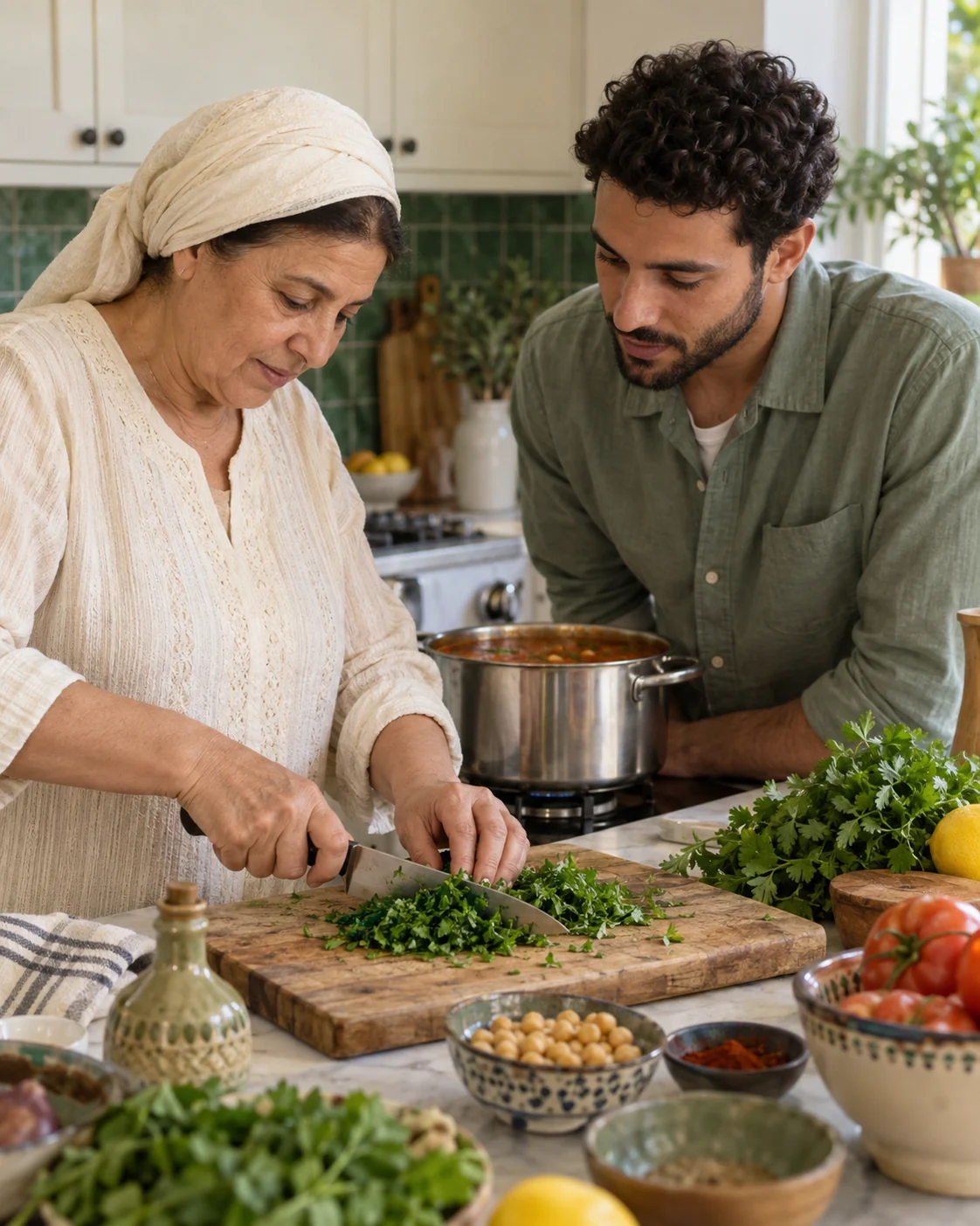
Family taste, the available pulses and the time of day all change a soup. A harira can be meatless, or it can include small pieces of meat. Some cooks add vermicelli; others prefer rice. Bissara can start with dried fava beans or split peas. [1] [2]
These differences become clear at the stove: the pulse chosen, the way a broth is thickened, and the bread or seasoning offered beside the finished bowl.
What is in season?
Fresh herbs and vegetables give a broth its immediate character.
How thick is the bowl?
A breakfast bissara may be served dense with bread; a soup version can be looser.
Who is at the table?
A large ftour pot and a quiet weekday bowl answer different needs.
07 · The shared meal
A bowl to begin.
A table to stay.
The companions can be as memorable as the soup.
At ftour, harira is often joined by dates and sometimes chebakia. The sweet bite and warm soup are distinct parts of the meal, not ingredients stirred together. [3]
On an ordinary morning, bissara can be served with bread, olive oil and cumin. Other soups are simply poured into bowls and eaten with a spoon. The practice follows the preparation rather than a single rule for every Moroccan table.
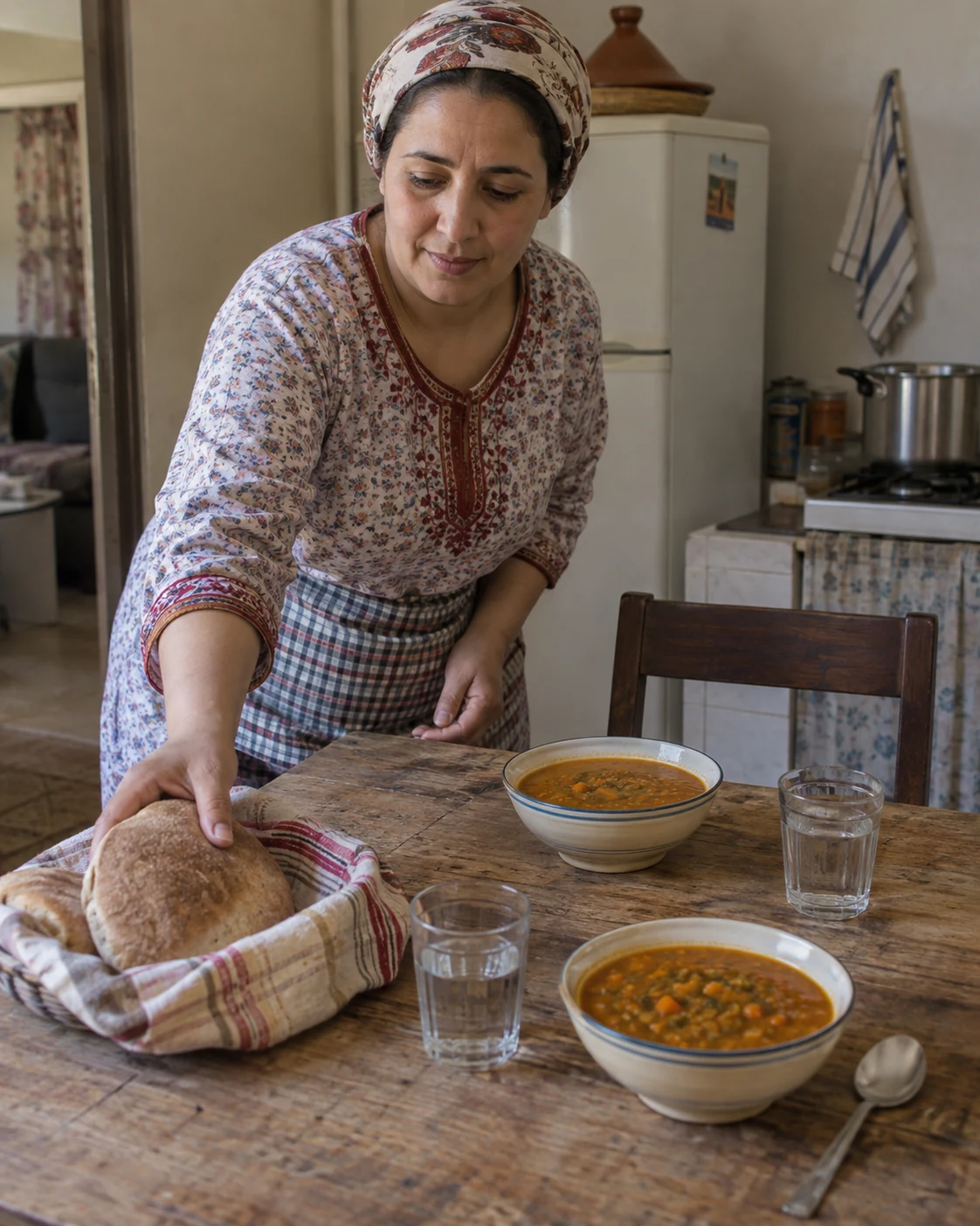
Bread changes the bite.
Khobz is useful with a thick bissara and can accompany harira. Whether the cook pours the soup into individual bowls or sets a shared dish down, bread adds contrast and helps gather the last flavour.
It does not turn every soup into the same meal: a clear broth and a thick pulse purée invite different ways of eating.
Dates and chebakia have their moment.
At Ramadan ftour, dates and honey-coated chebakia can sit beside harira. Their sweetness is a separate contrast to the herb-and-tomato soup.
That familiar pairing should not be presented as the only way soup is served in Morocco. [3]
A simple bowl.
A full beginning.
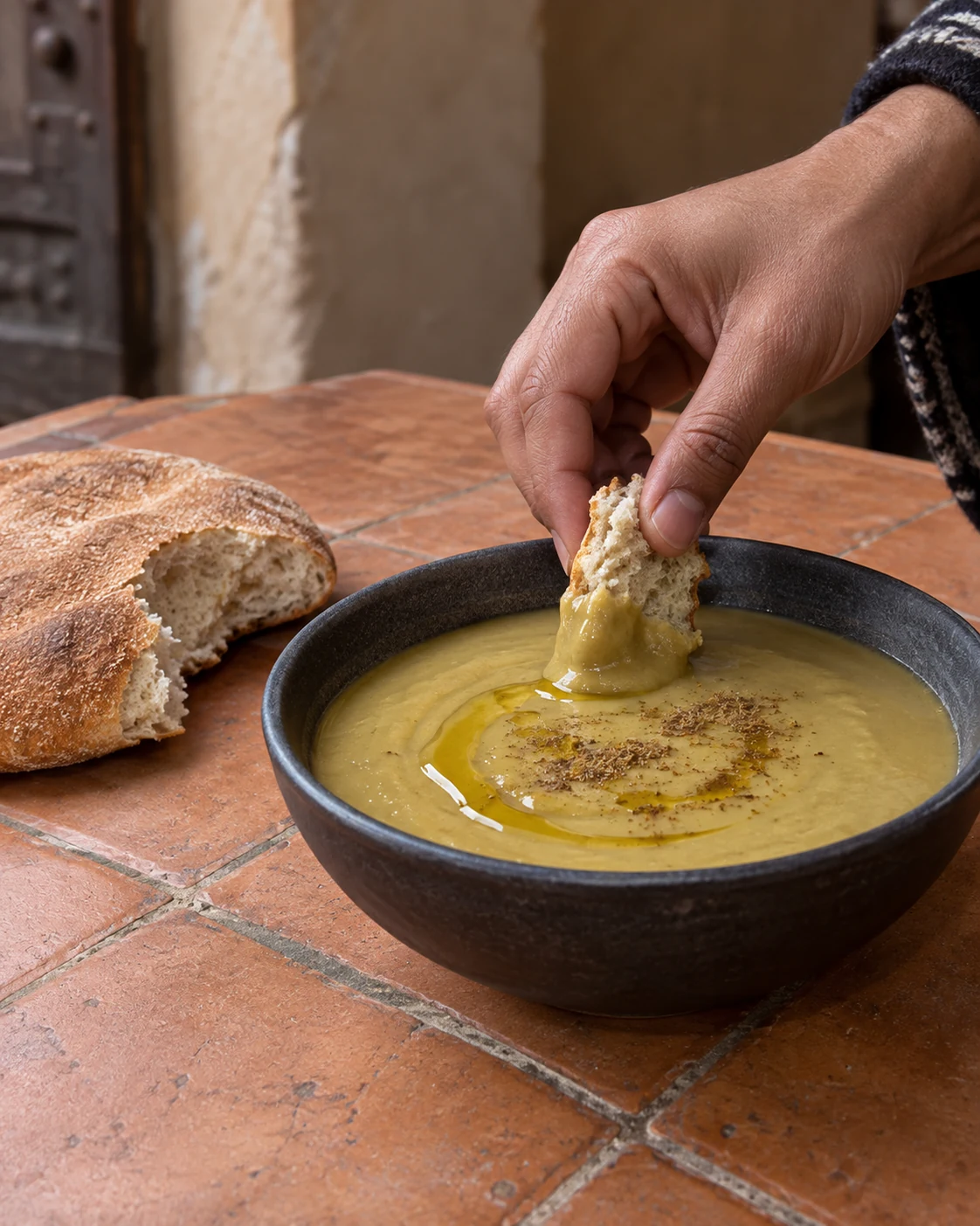
Bissara may be eaten at breakfast as a soup or a thicker purée, finished with olive oil and cumin. Bread makes a substantial companion without turning the bowl into an elaborate spread. [2]
Beyond the fasting month.
Harira is strongly associated with Ramadan, but it can be cooked at other times. A family may change the amount of meat, the starch and the thickness without losing the soup's familiar character.
08 · Bowls & bread
The vessel holds
the moment.
A simple bowl can be the most useful piece on the table.
Soup needs a vessel that keeps the serving close and comfortable to hold. A small earthenware bowl gives the diner space for both broth and substantial ingredients; a shallow one suits a thick bissara gathered with bread.
Glaze, clay and decoration vary. None of them proves that a bowl comes from a specific town or was made for a particular soup. The honest story here is the use: a bowl set down while the food is warm and bread passed nearby.
For the home cook, choose food-safe tableware suitable for hot food. The pleasure is in the texture of the soup and the ease with which it is shared.
More about the Moroccan table ↗09 · A closer look
Good questions.
Clear answers.
A few distinctions make the bowls easier to understand.
Is harira always made with meat?
No. Meat appears in many versions, but meatless harira is also made. Tomato, herbs and pulses remain important reference points; a family recipe decides the rest. [1]
Is bissara a soup or a dip?
It can be both. A looser preparation is spooned as soup; a thicker one is readily eaten with bread. Dried fava beans or split peas are both used. [2]
What is hssoua belboula?
A barley-grits soup or porridge-like bowl. It is softer and grainier than a puréed pulse soup. Some household versions add milk. [5]
Is chorba the same as harira?
No. Chorba is a broad soup name and can describe a lighter broth; harira commonly has a tomato, herb and pulse base. Both names cover variations. [6]
Why is flour sometimes added to harira?
A flour-and-water mixture can thicken the broth near the end of cooking. Other recipes build body differently, so the addition is a method rather than an absolute definition. [4]
 EXOTIC MOROCCOTASTE · THE GUIDE COLLECTIONSoupsIngredients, technique
and the Moroccan table
From the story to your kitchen
Keep the flavour.
Go a little deeper.
Harira, bissara and other bowls shaped by place and occasion.
Explore the Exotic Morocco guide collection for a closer look at ingredients, kitchen knowledge and the culture around the table.
- Understand the ingredients and their roles
- Recognise the techniques and textures that matter
- Bring context and confidence to the way you cook and serve
Continue tasting Morocco
Follow the
table outward.
Another dish, another technique, another way into the Moroccan kitchen.
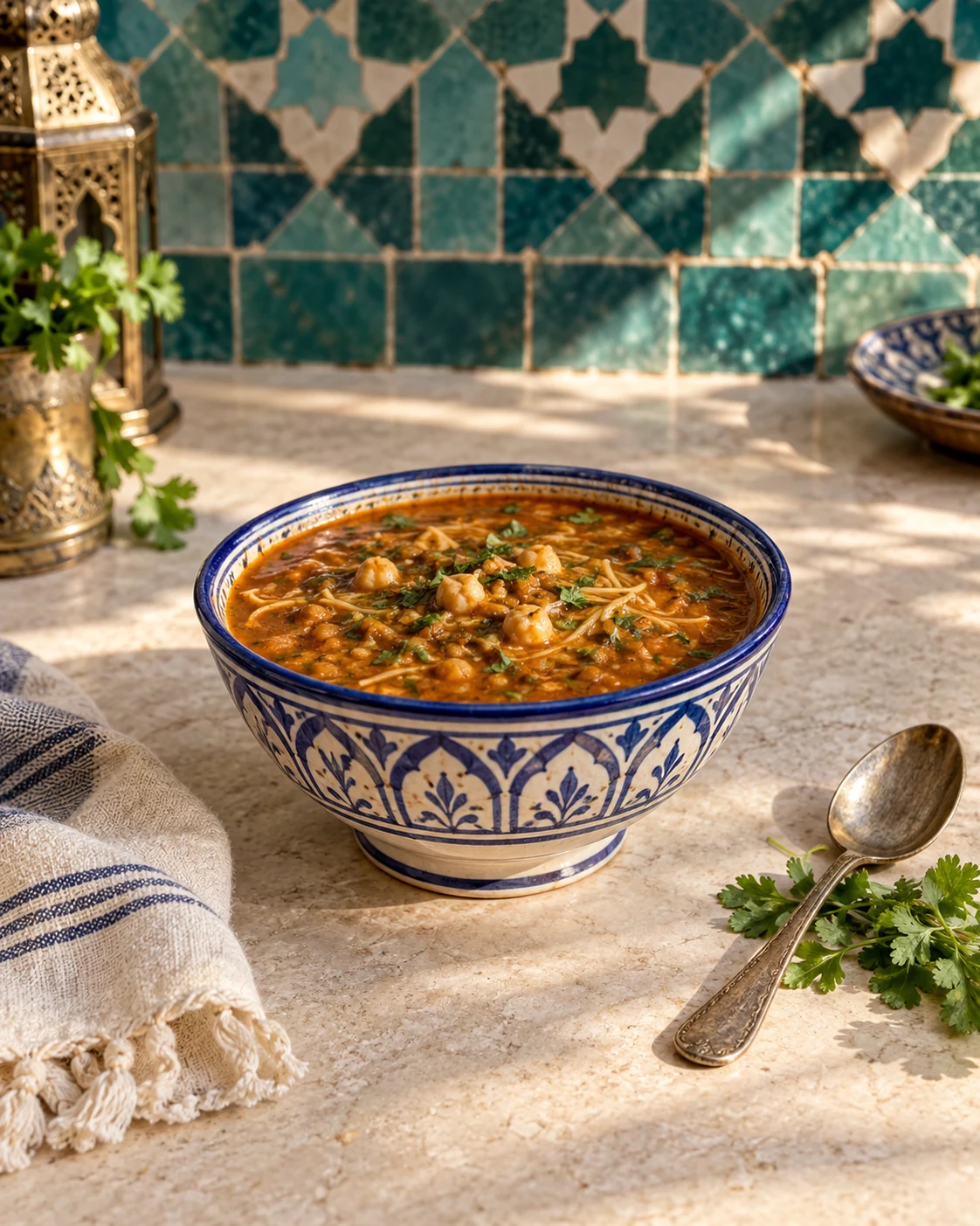
Harira
Tomato, pulses and herbs in the warmth of a shared table.
Explore the story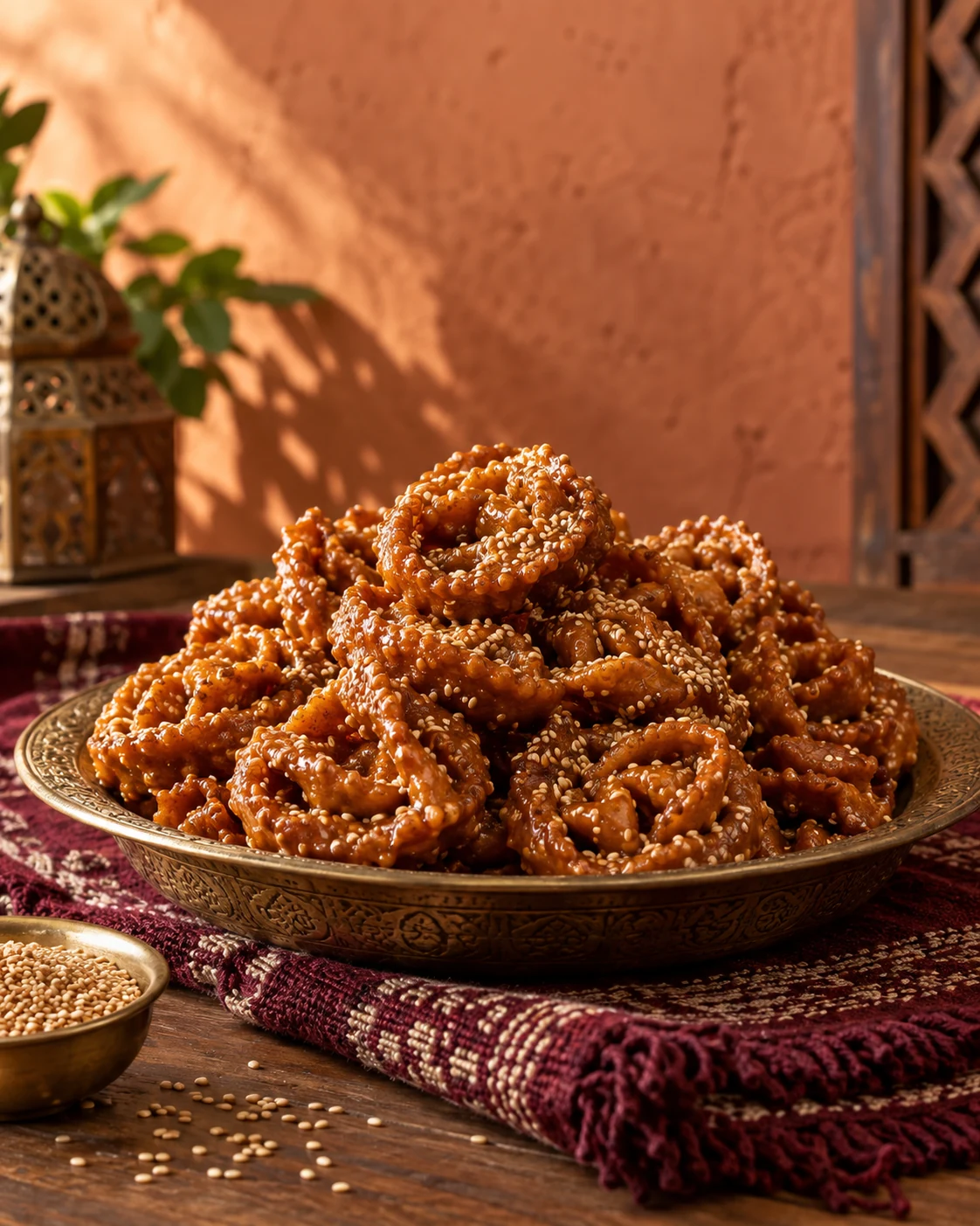
Chebakia
Folded sesame pastry finished with honey.
Explore the story ↗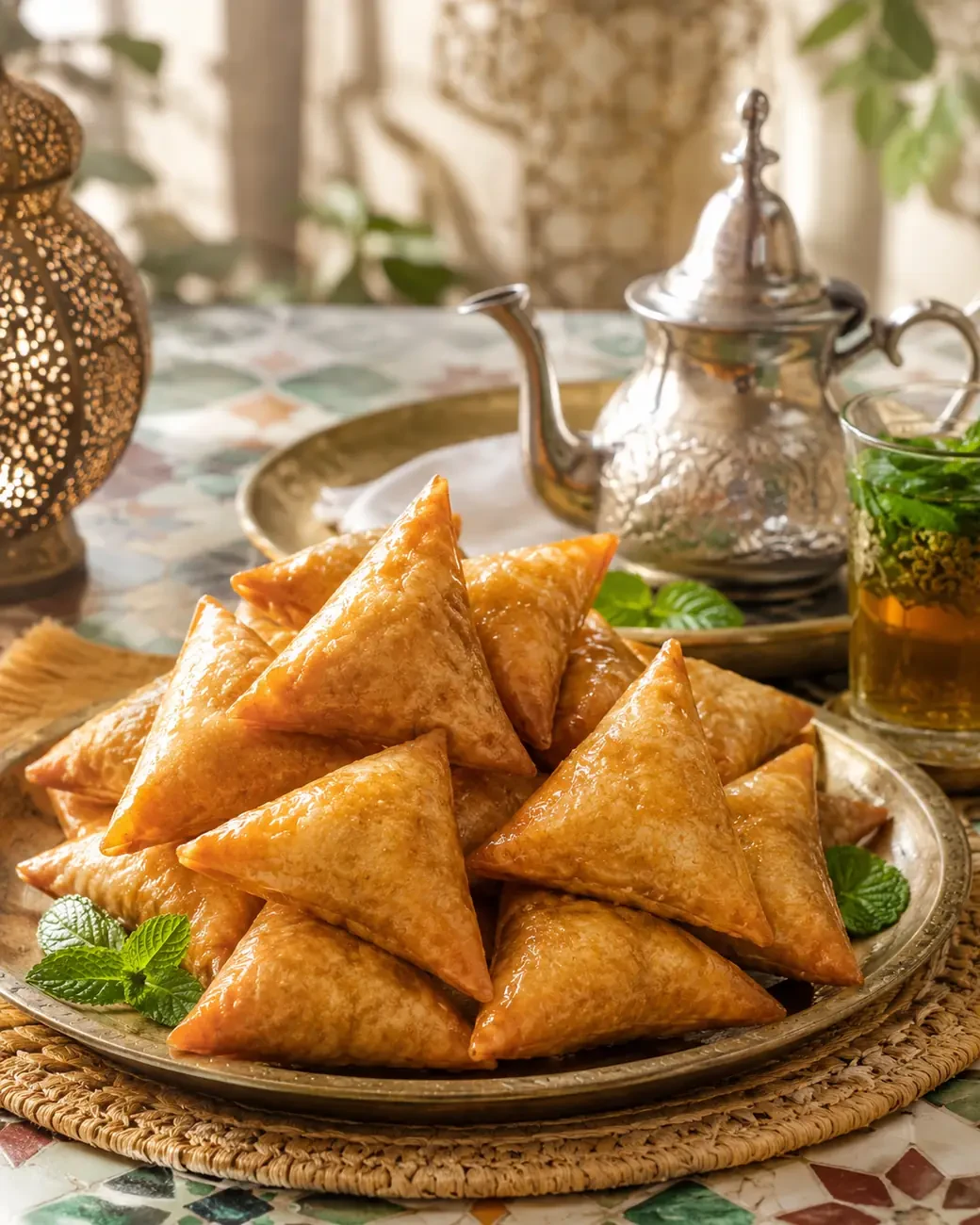
Briouats
Small folded pastries, with both savoury and sweet possibilities.
Explore the story ↗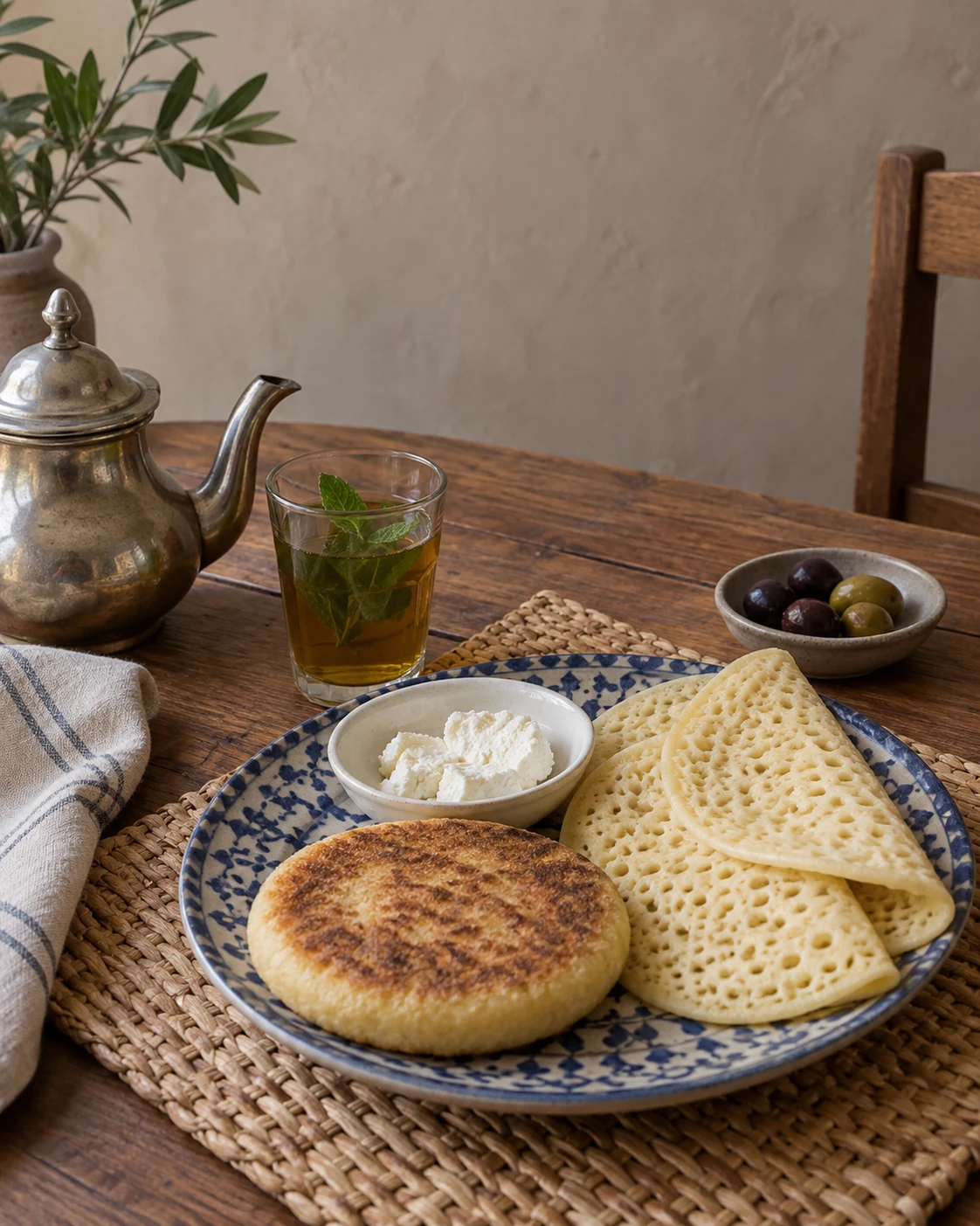
Moroccan Breakfast
Breads, spreads and the first table of the day.
Explore the story ↗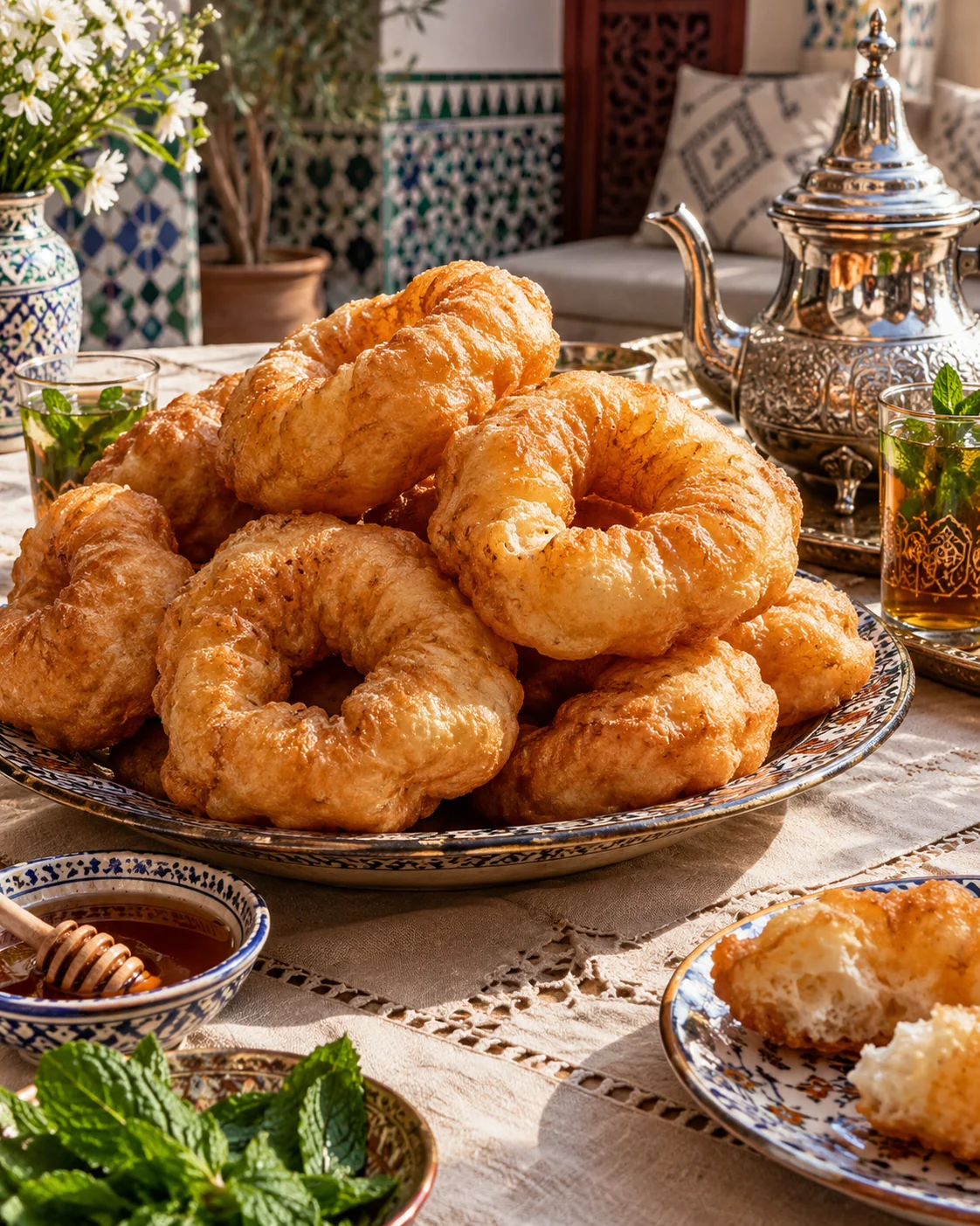
Street Food
Counters, griddles and food made to eat on the move.
Explore the story ↗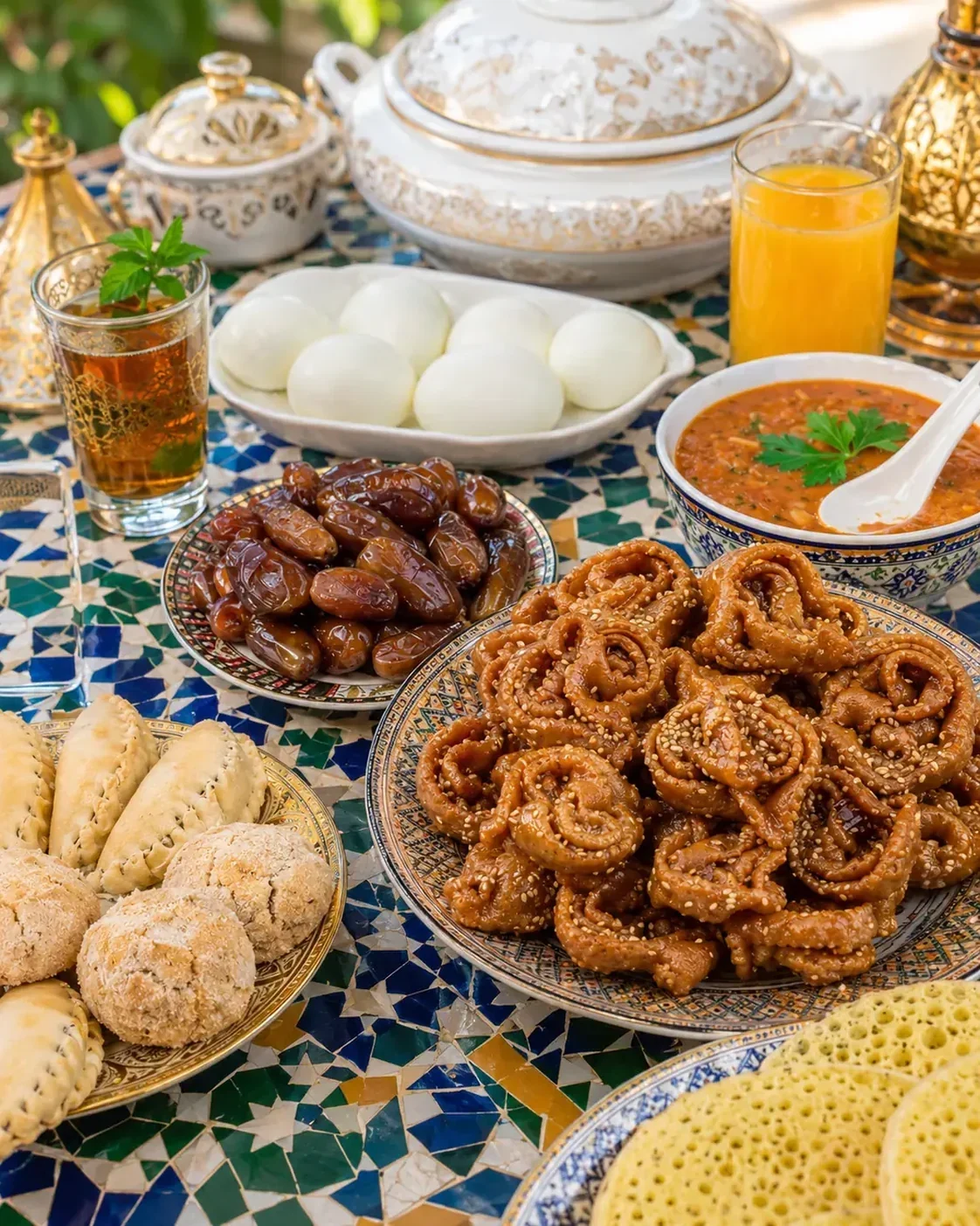
Moroccan Meal Rhythm
How food finds its place in the day and the calendar.
Explore the story ↗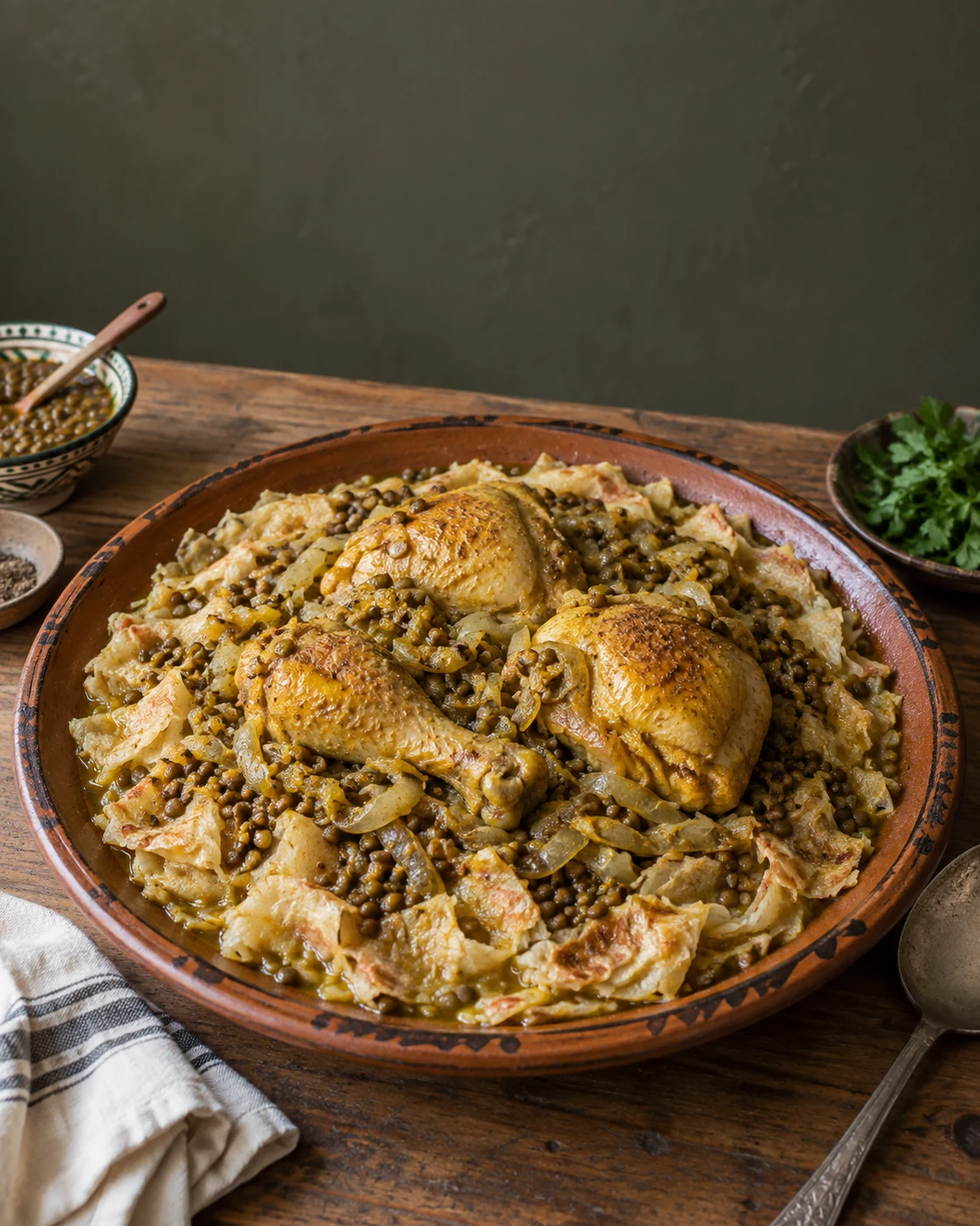
Rfissa
Chicken, lentils and fragrant broth finding their way through torn bread.
Explore the story ↗Sources & editorial notes
This cultural overview is not a measured recipe. Soup names, ingredients and consistency vary across homes. The images combine selected Exotic Morocco Library material and newly generated editorial illustrations; no generated scene documents a named family or location.
- Nargisse Benkabbou · Harira — tomato, herbs, pulses, optional meat and family variation.
- Nargisse Benkabbou · Bissara — fava/split pea base, soup-to-dip consistency and breakfast context.
- Nargisse Benkabbou · Chebakia — Ramadan pairing with harira.
- Cooking with Alia · Harira — flour-and-water tedouira and the technique of thickening.
- Morocco World News · Five Moroccan Soups — hssoua belboula and breakfast context. Used only for descriptive culinary context.
- Nargisse Benkabbou · Chicken Chorba — lighter broth and household variation.
EXOTIC MOROCCO Places. People. The pleasure of knowing more.Back to top ↑