

01 · Food in motion
A quick stop.
A lasting food culture.
The small counter has a serious kitchen behind it.
Street food in Morocco is a way of eating shaped by time and place: a hot sfenj on the morning walk, a bowl of bissara, a snack tucked into bread or a skewer eaten while the grill is still working.
There is no single national street-food menu. Bakeries, small snack shops, market counters and portable grills serve different needs. Freshness, speed and a recognisable specialty often matter more than elaborate presentation.
Look closely at the method and the food becomes easier to understand. Fried potato holds a sandwich together; a thin sheet of dough becomes a layered square; a simple hot bowl gives bread a job.
Enter Moroccan food culture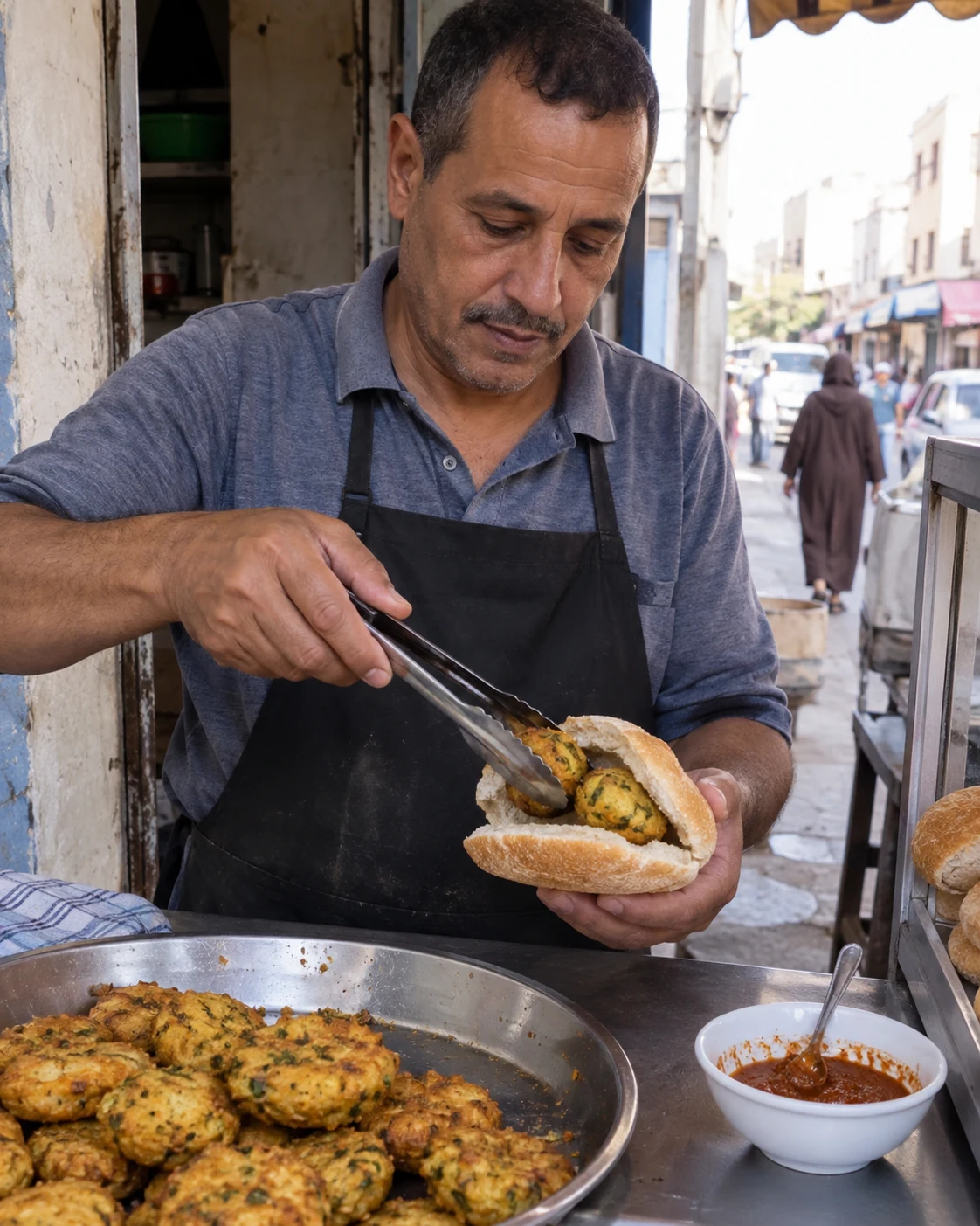
Food prepared and served close to the eater.
Different heat, different texture and pace.
An everyday practice beyond any one square.
02 · A living daily rhythm
Morning heat.
Evening embers.
A street counter changes as the day changes.
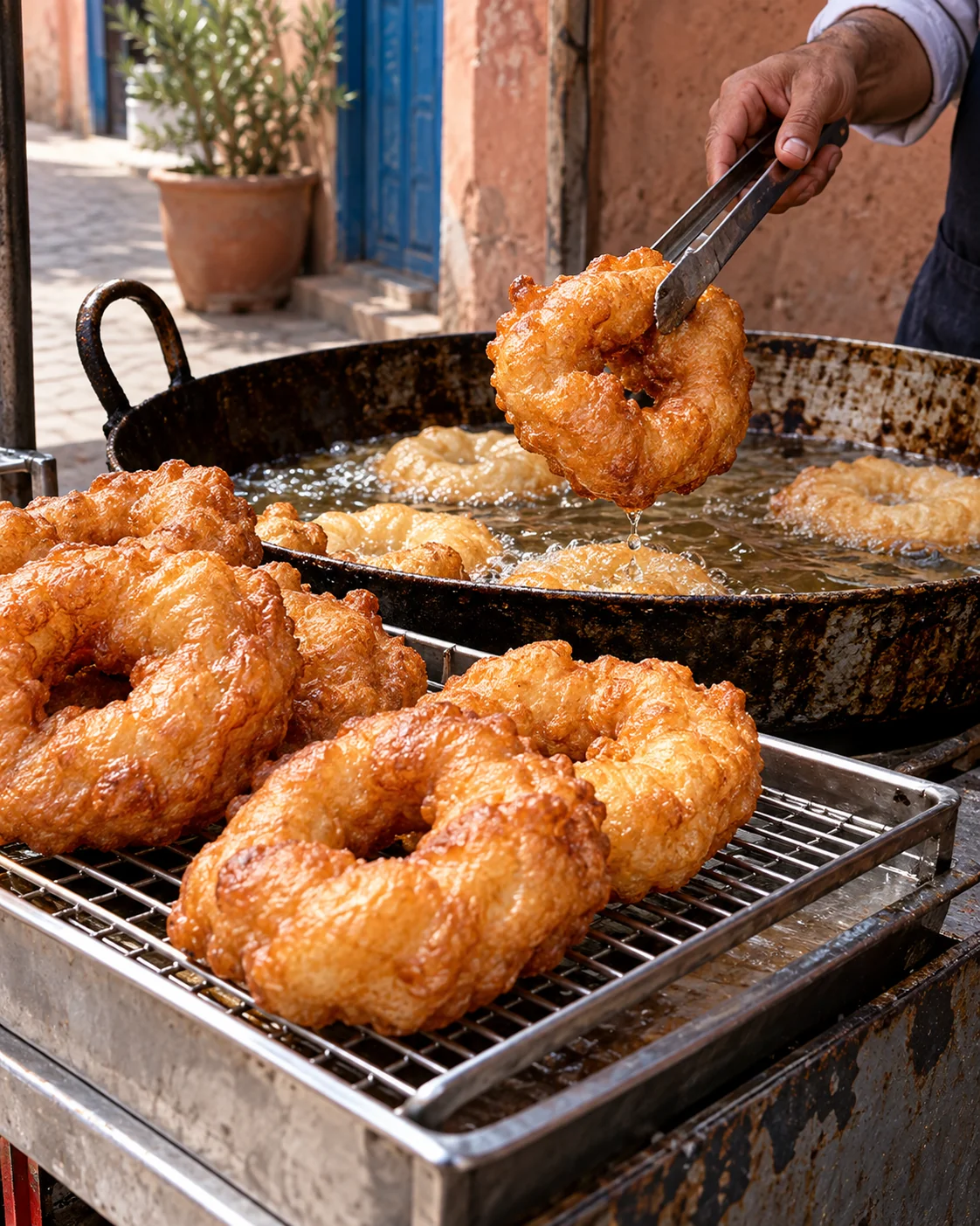
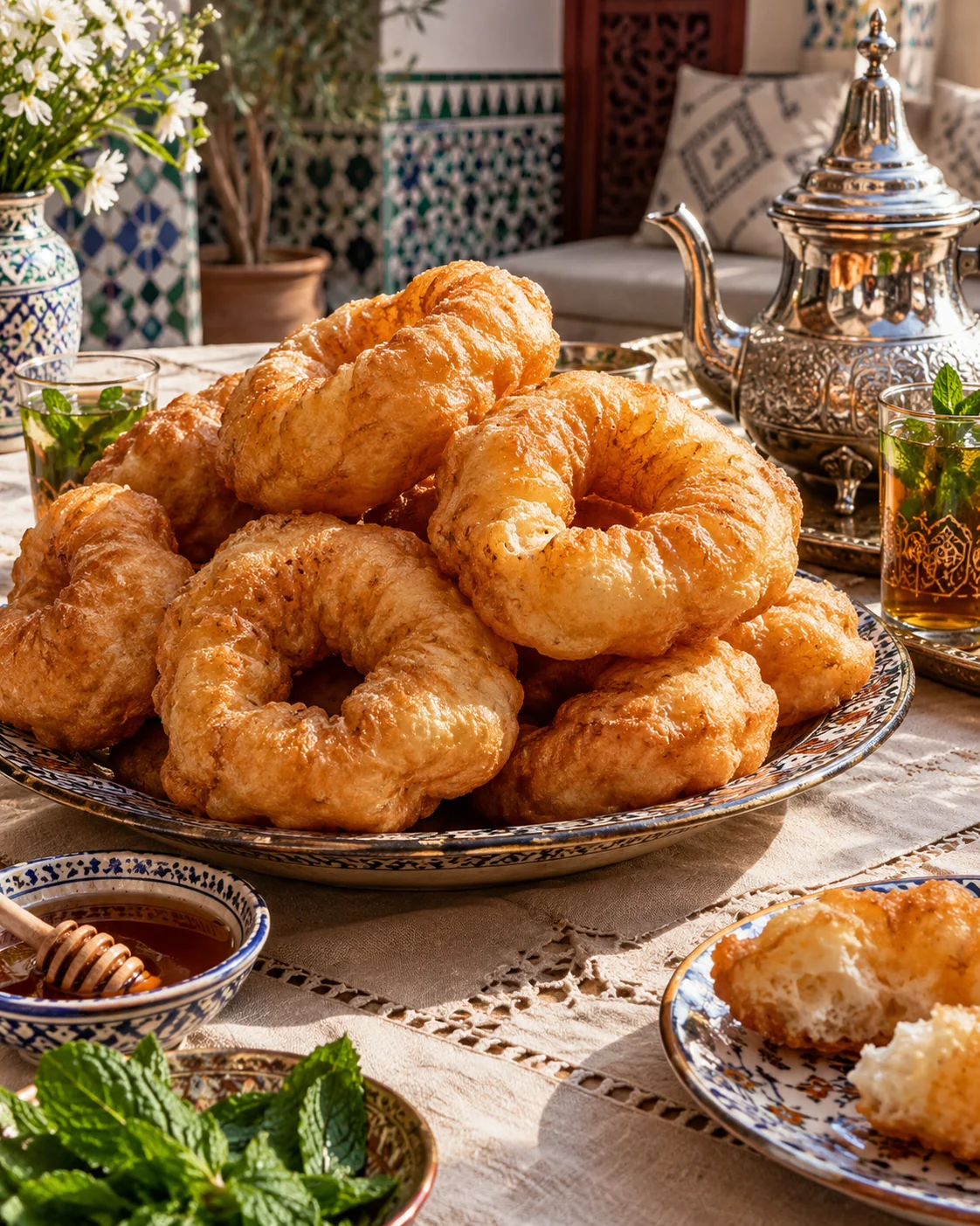
A morning griddle answers a different appetite from an evening charcoal grill. What is sold depends on the vendor, neighborhood and hour. Sfenj is often enjoyed warm as breakfast or a snack; grilled foods and fuller bowls serve other moments. [2]
Marrakech’s Jemaa el-Fna is one visible example of public food culture, but UNESCO recognises the square for a much wider living cultural space, including oral traditions and performances. It does not stand for all Moroccan street food. [1]
The morning batch
Fried rings and griddle breads reward eating while the outer surface still has its texture.
A compact meal
Bread carries fritters, fish or grilled meat; the filling and condiment change by vendor.
The later counter
Charcoal, frying pans and pots bring a different set of preparations into view.
03 · The vendor’s method
Heat makes
the difference.
A crisp fritter, a layered flatbread and a grilled skewer ask for different hands and different timing.
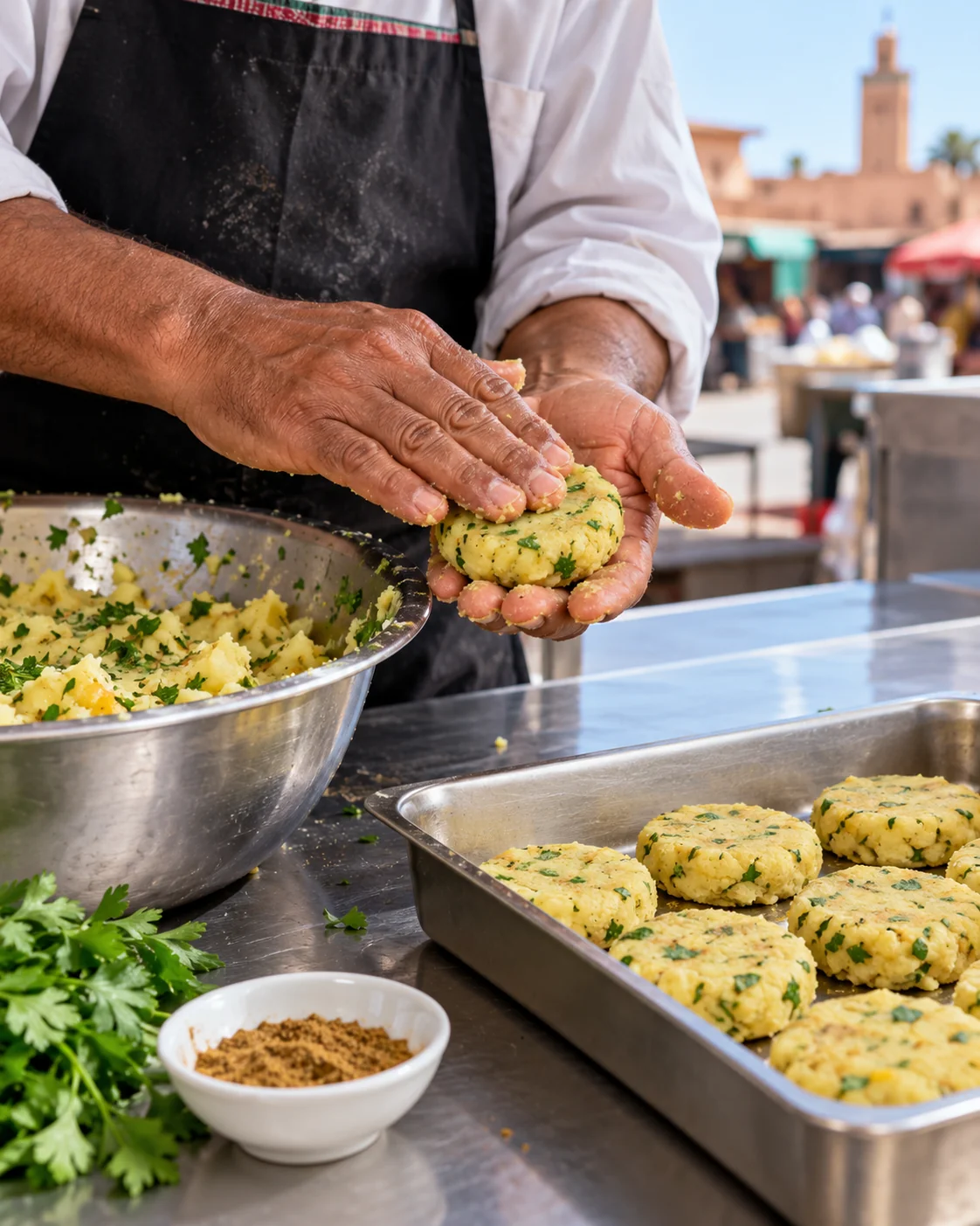
Street food is often judged at the moment it leaves the heat. Oil temperature, a hot griddle and an even charcoal bed are practical decisions that shape texture.
Fry with control
Maakouda needs cooked potato that holds together, then enough heat to brown its surface without leaving the centre cold.
Work the layers
Msemen begins with stretched dough folded into a square. The griddle cooks its thin layers and gives the surface brown spots.
Watch the grill
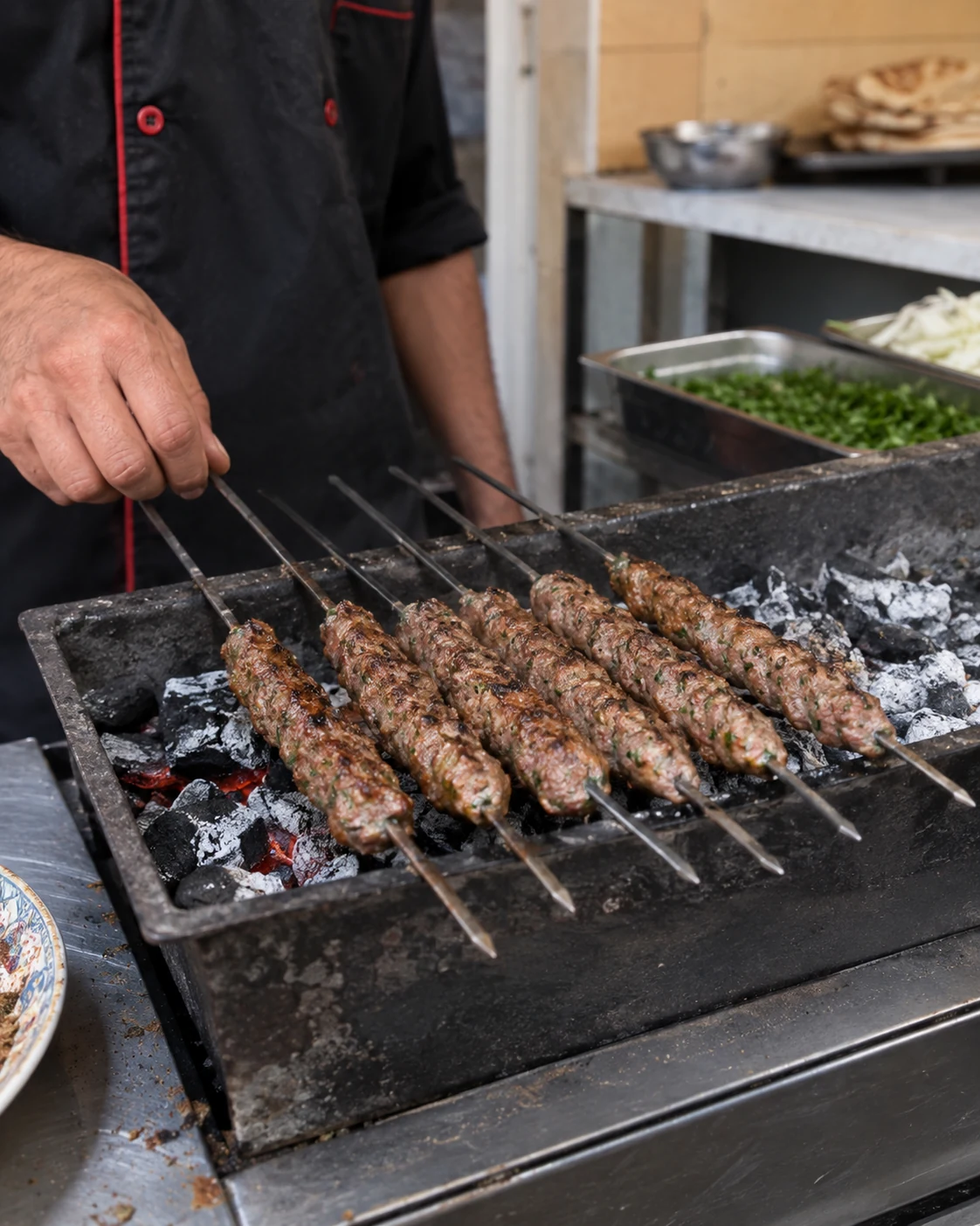
Skewers cook quickly over charcoal. Turning and spacing matter; smoke alone is not a substitute for properly cooked meat or fish.
The best clue is the food itself: a crust that still crackles, bread that bends without drying, and a filling that tastes of what it is.
04 · Five ways to stop and eat
Different counters.
Different appetites.
These dishes do not share one recipe or one serving format. They share an ability to fit into the everyday movement of a street or market.
Swipe through the food, then notice the technique behind each photograph.
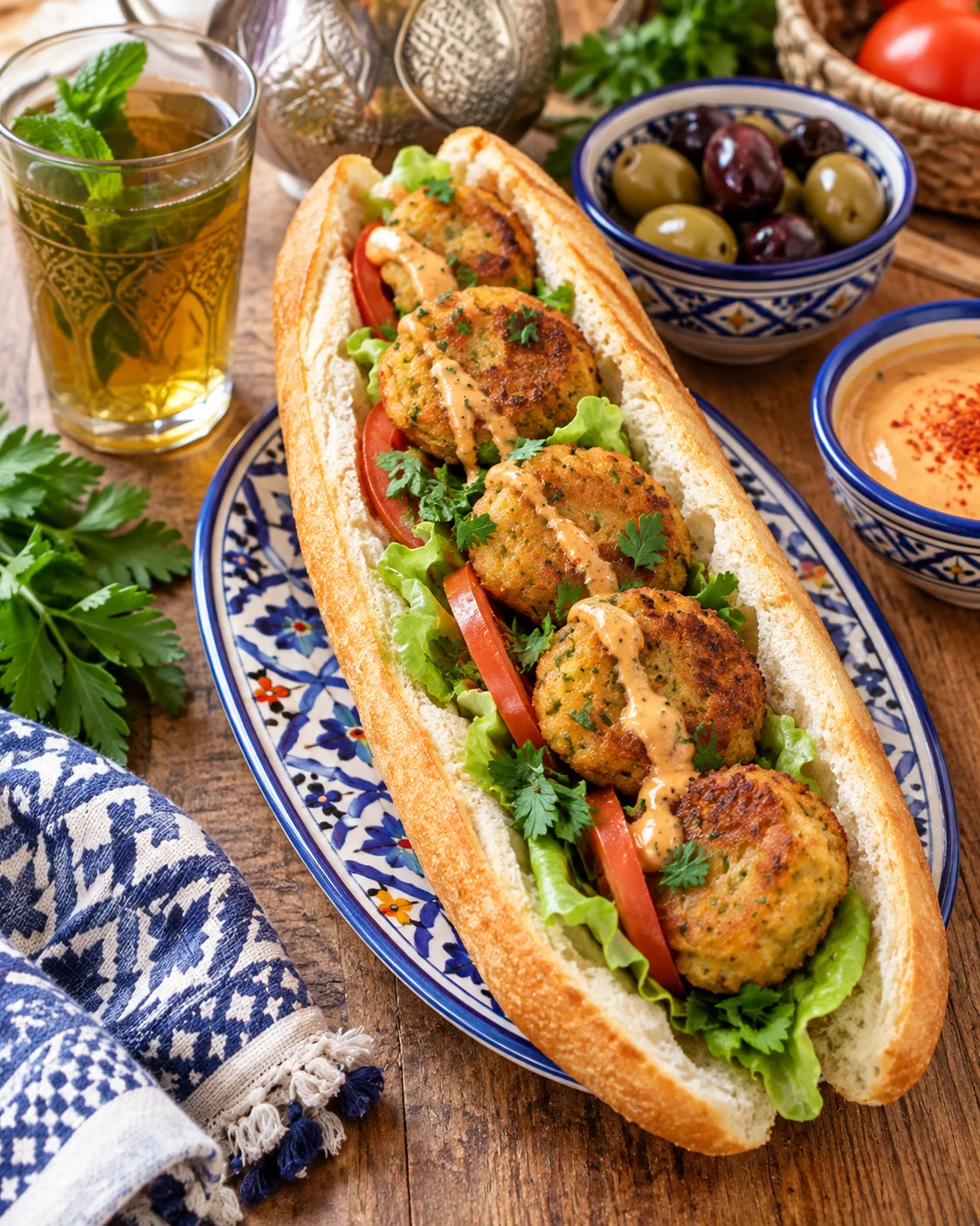
Maakouda sandwich
Mashed potato shaped into small fritters and fried until golden. In a sandwich, bread and a little sauce turn a hot snack into a compact meal.
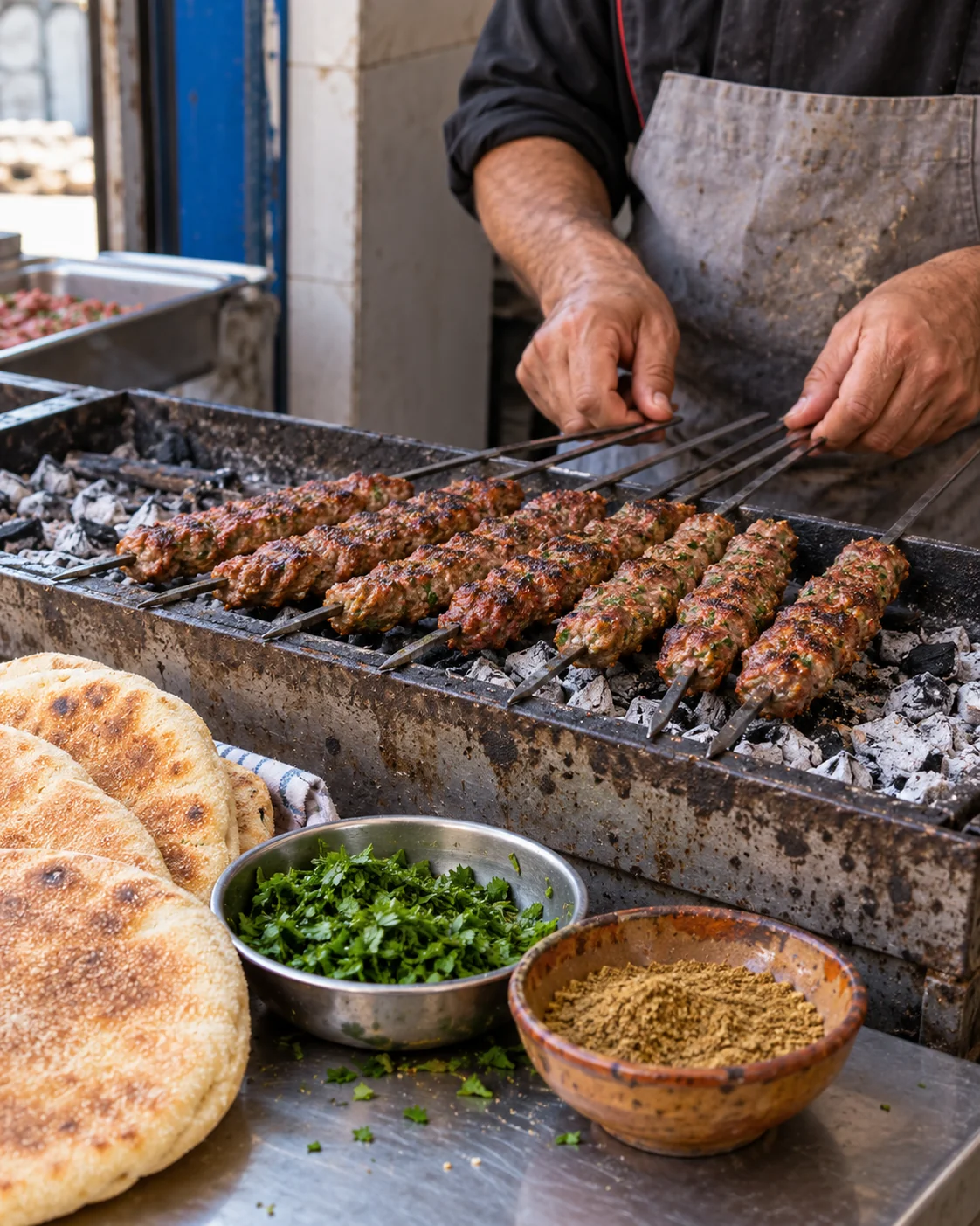
Kefta brochettes
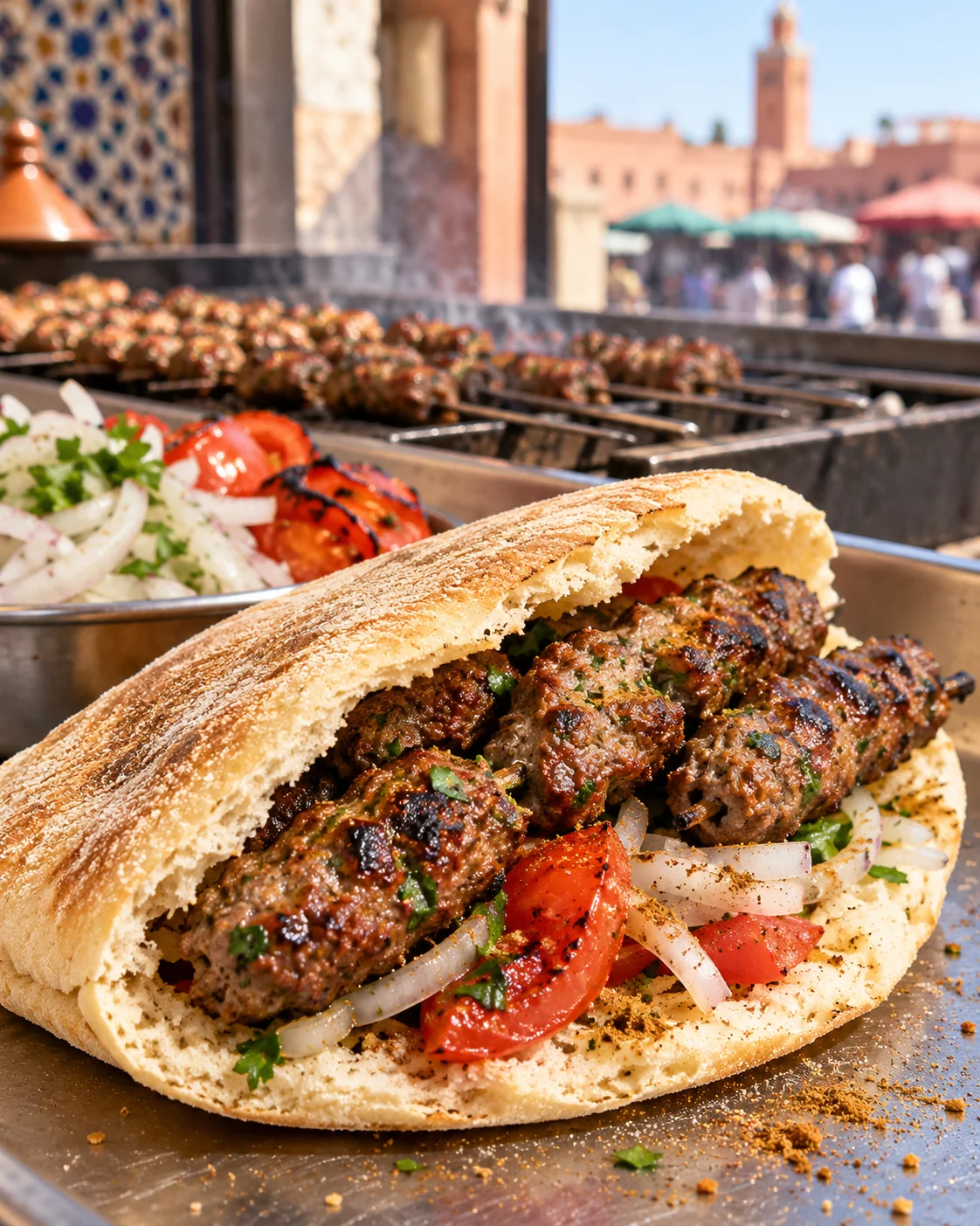
Seasoned minced meat shaped on skewers and cooked over charcoal. Khobz, onion and cumin may sit nearby; the exact seasoning varies by cook.
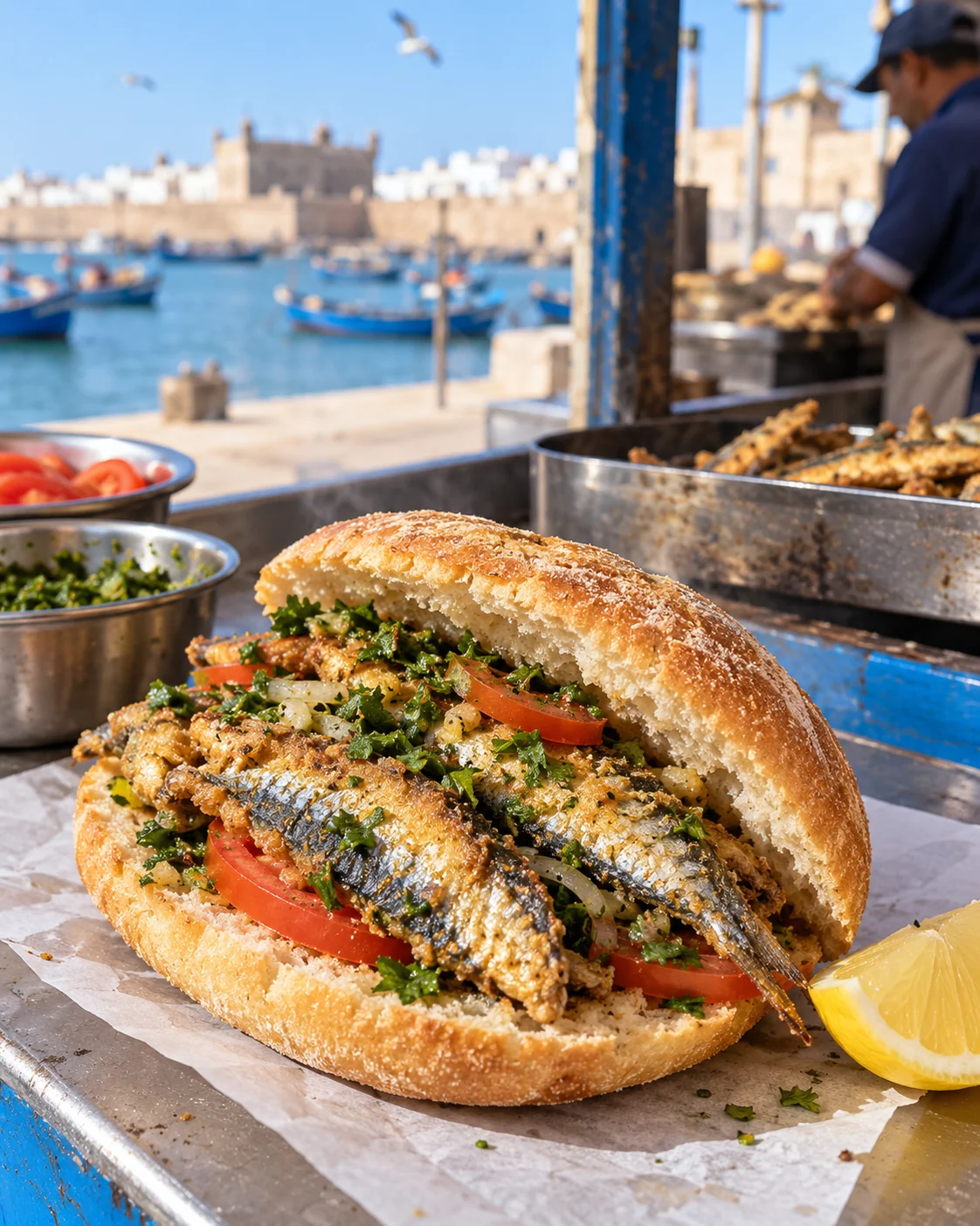
Sardines in bread
Fried or grilled sardines bring the coast to the snack counter. Chermoula, lemon and bread work well together, though the preparation differs from place to place.
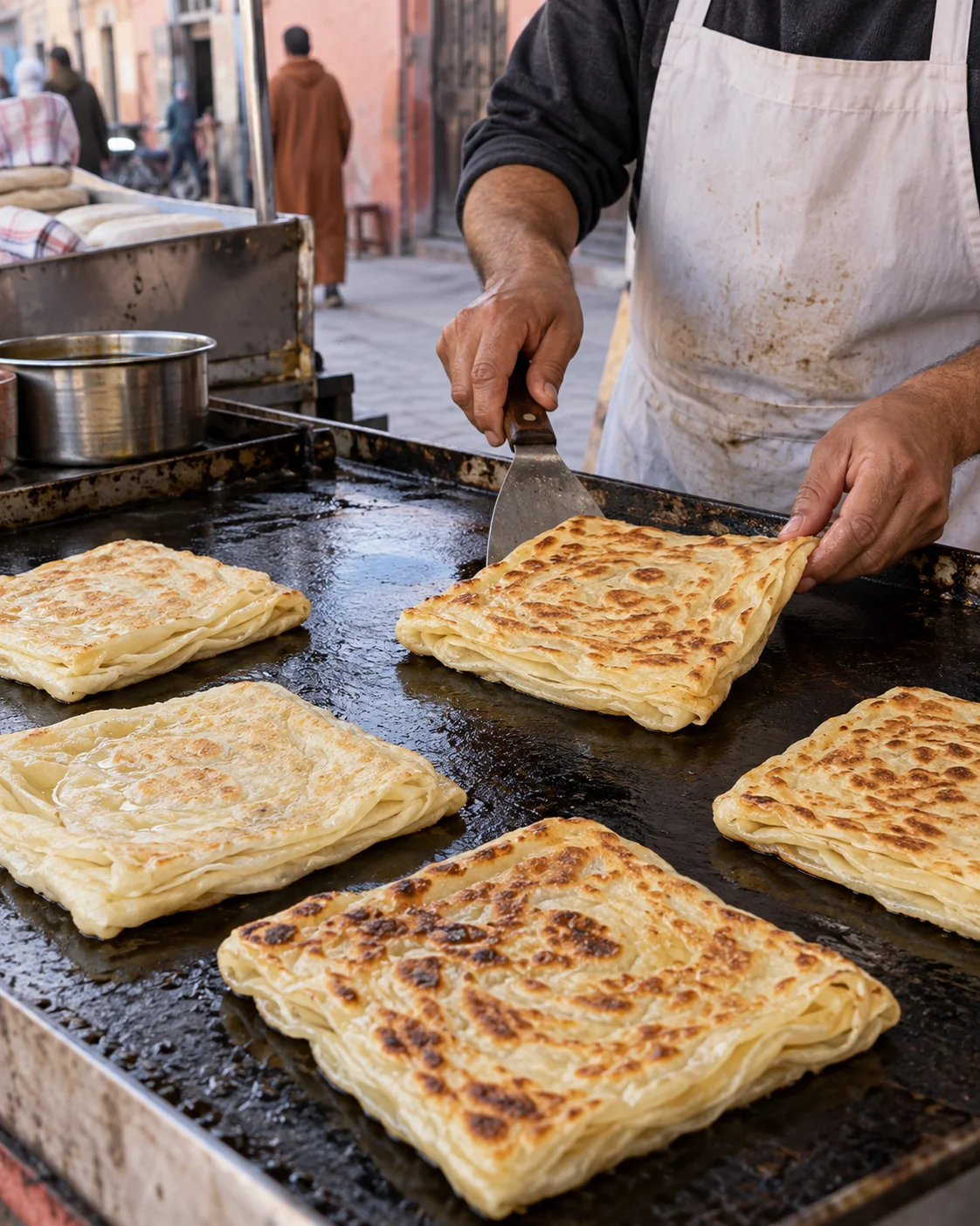
Msemen
A square, folded flatbread with distinct layers and browned surfaces. It can be eaten plain or with a sweet or savoury accompaniment.
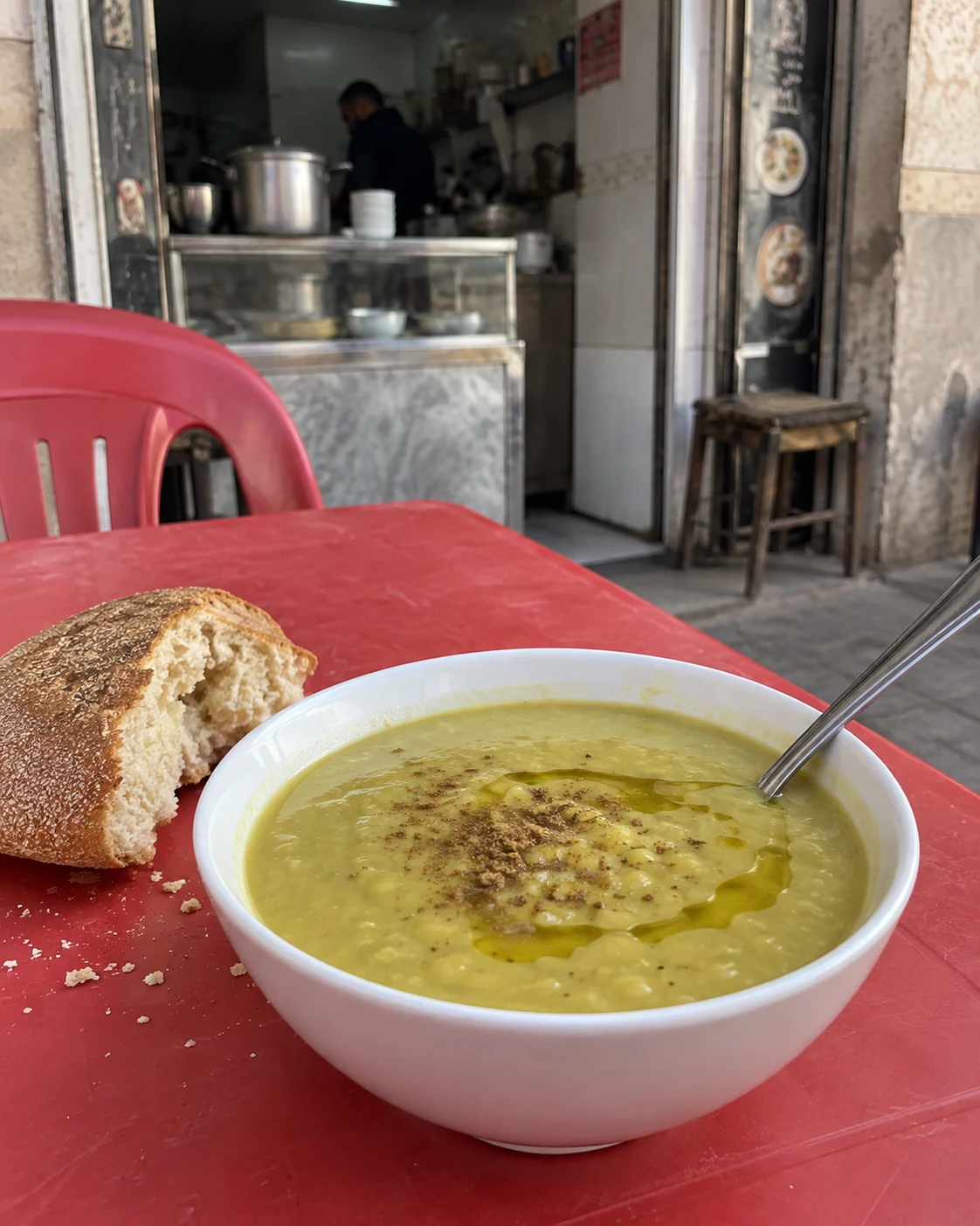
Bissara
A thick fava-bean soup or purée served warm with olive oil, cumin and bread. Its simplicity makes texture and seasoning especially visible.
Not one street-food canon.
Briouats, soups, grilled fish, pastries and seasonal fruit also appear in the wider everyday food landscape. Offerings change with place, season and vendor.
Preparation is the signature.
A vendor’s dough, oil, grill, bread and condiments can make familiar names taste noticeably different.
05 · The counter essentials
A few basics.
Many small meals.
Bread, the warm pan, a little seasoning and something fresh make a small portion feel complete.
The balance is practical: crisp against soft, rich against sharp, and enough moisture for a sandwich to be eaten comfortably.
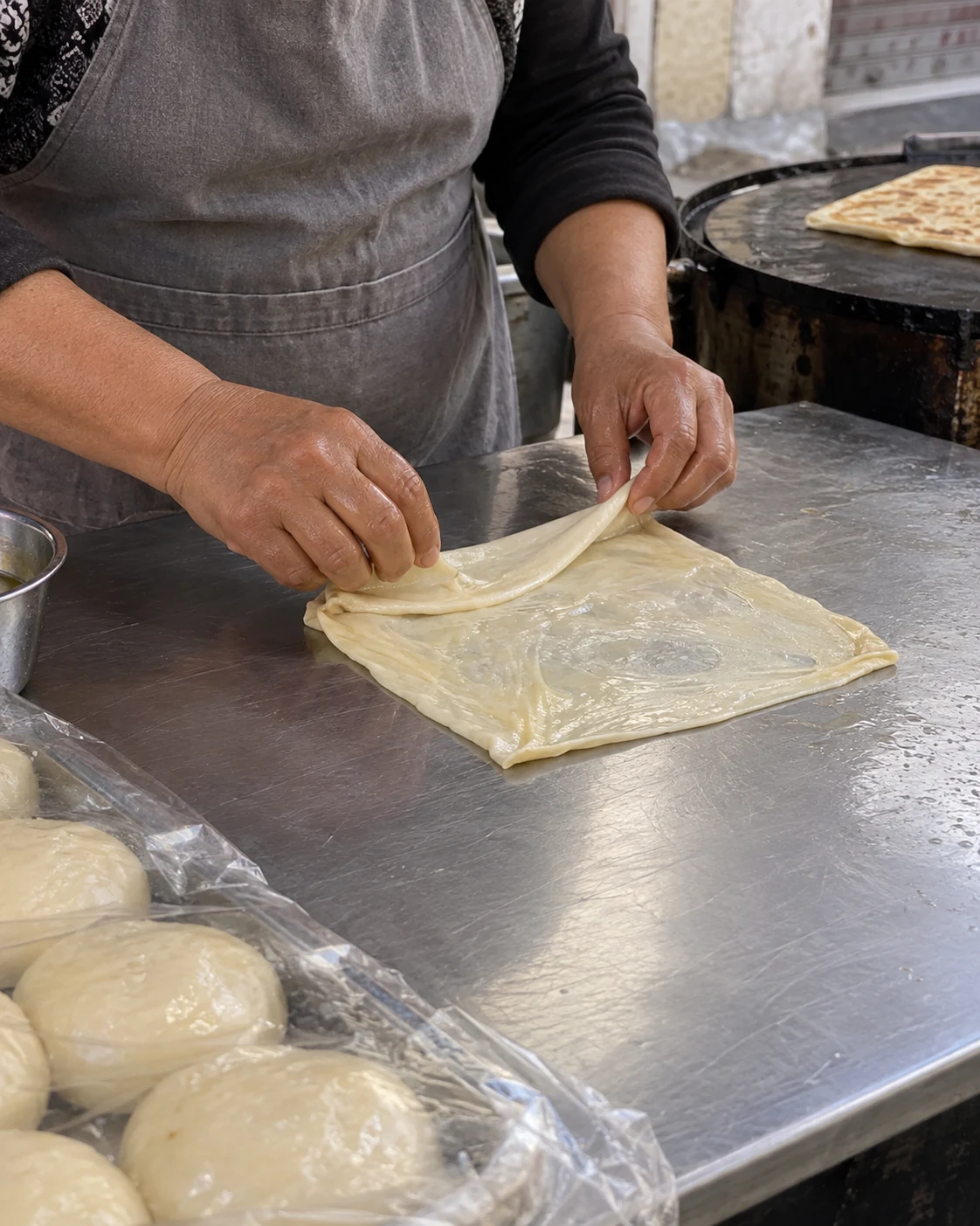
Dough & bread
The structure of the snack.
Folded msemen has its own layers; khobz carries a filling. They are different breads with different jobs.
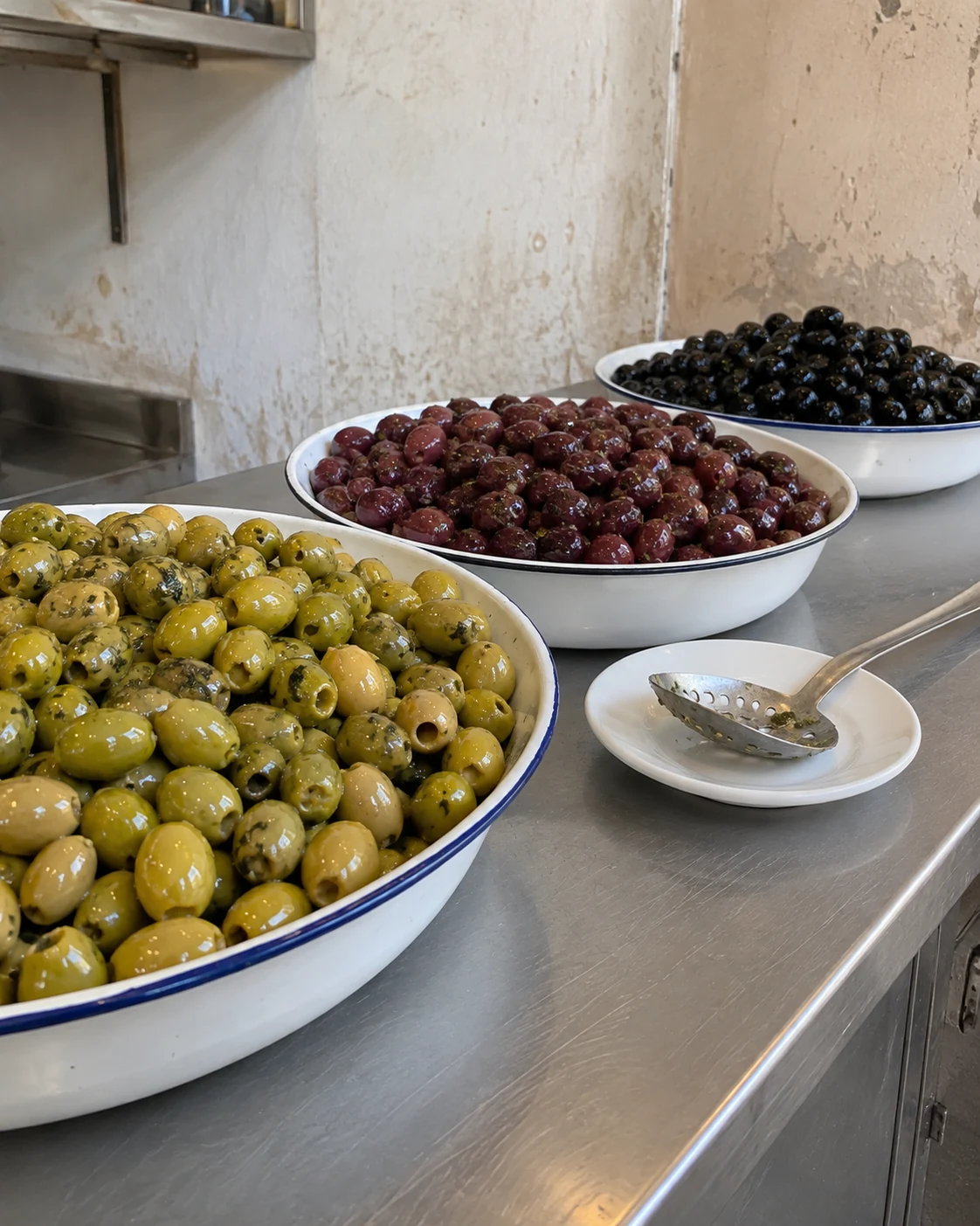
Olive oil & olives
A little richness, a little brine.
Olive oil finishes a warm bowl and olives can bring a salty contrast beside bread or grilled food.
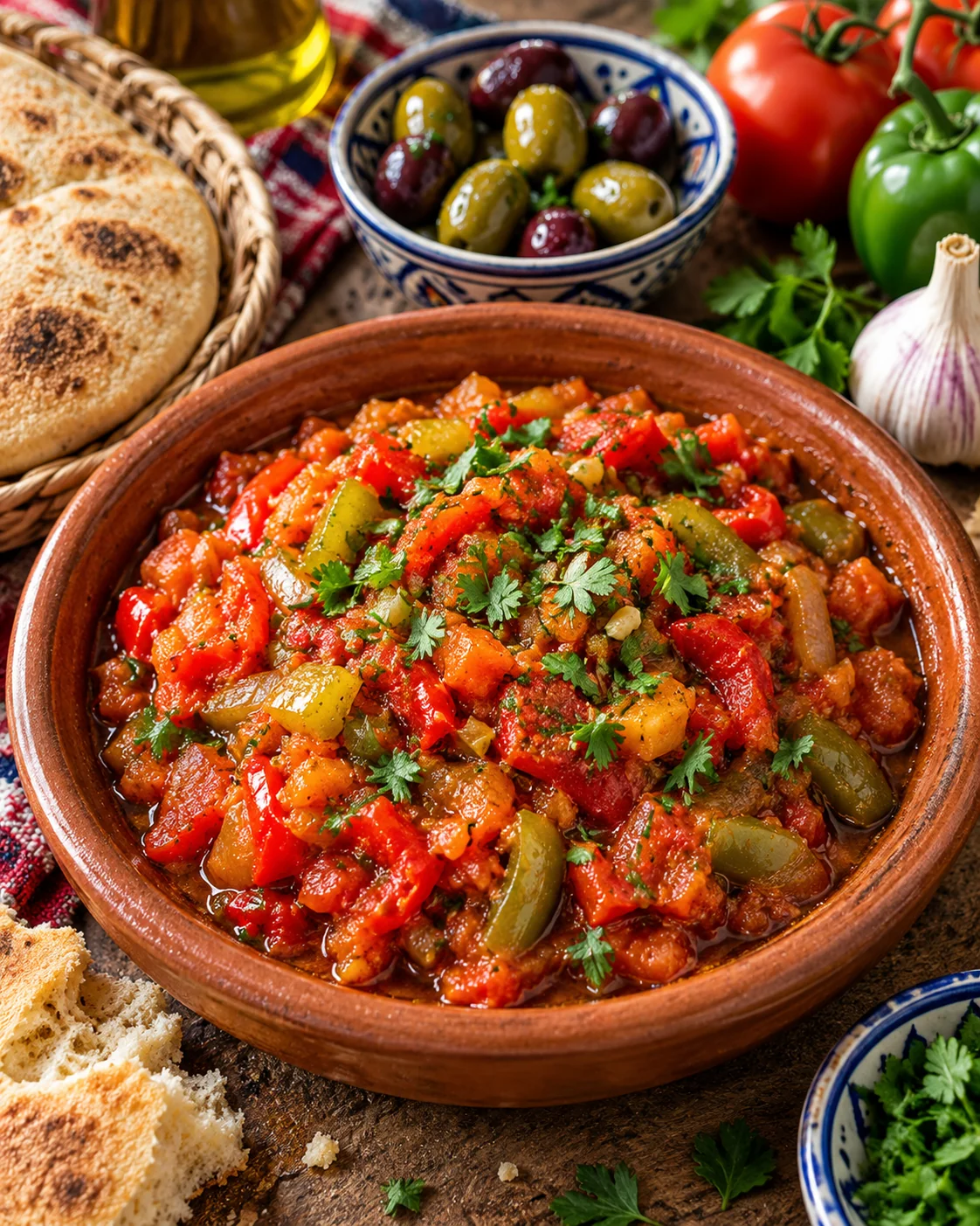
Peppers & tomatoes
Fresh or cooked contrast.
A spoonful of cooked pepper or fresh tomato can lighten a rich filling without becoming the main dish.
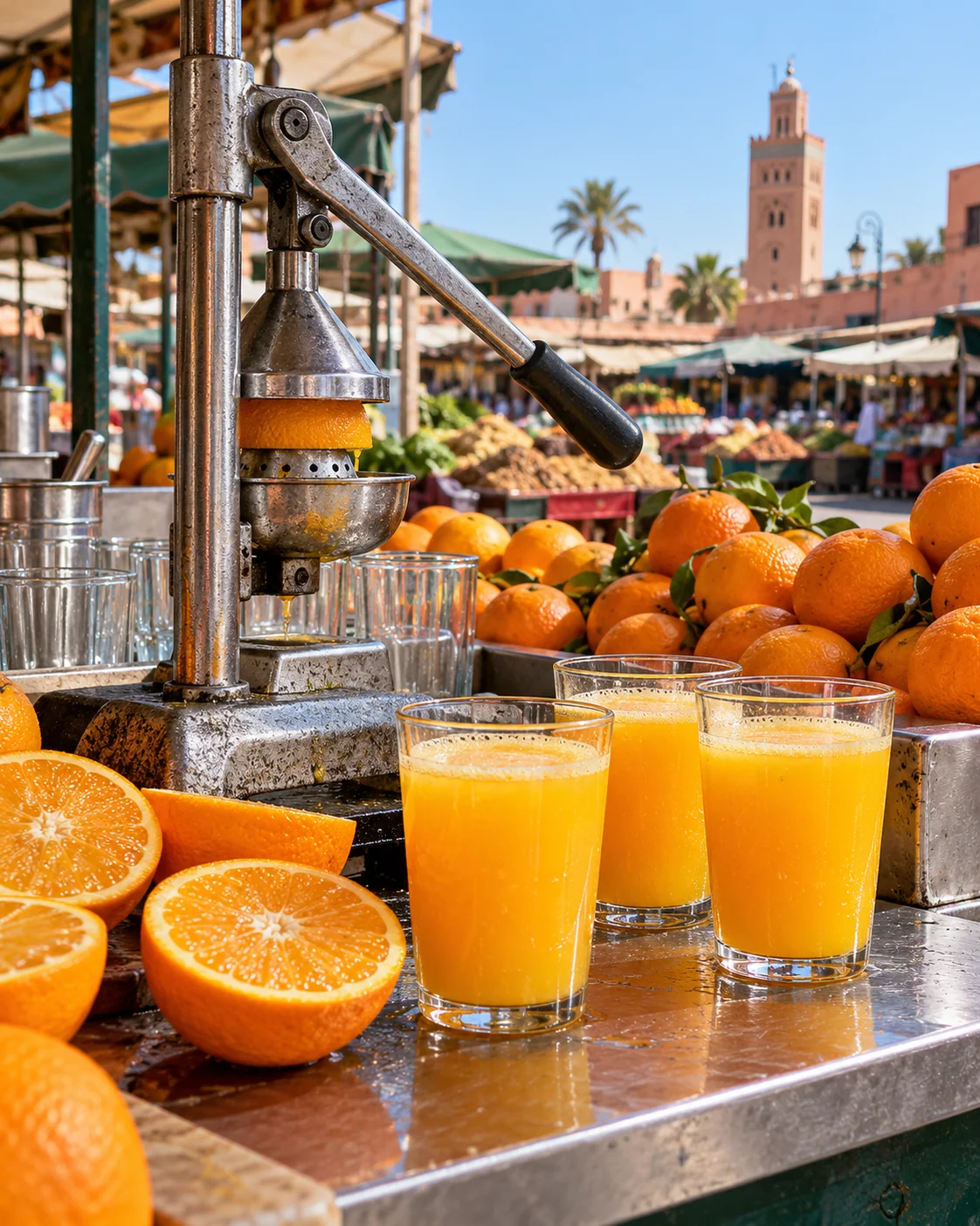
A drink made now
Orange at the counter.
Freshly squeezed juice belongs to many market scenes, though it is one option among tea, water and local drinks.
Explore the four essentials
BREAD · HEAT · A SHARP NOTE
The quiet
balance.
A simple sandwich is a small exercise in texture, temperature and restraint.
A good filling needs only enough sauce or sharpness to hold its own beside bread, heat and texture.
A condiment supports the filling; it need not cover it.
The bread
A sturdy piece of khobz holds a warm filling without turning to paste.
The fresh edge
Tomato, parsley or a measured touch of lemon changes the balance of fried or grilled food.
The heat
Serving soon after frying or grilling preserves the texture the cook worked to create.

06 · Place, supply & season
The coast
meets the counter.
What arrives nearby changes what can be cooked today.
At a coastal counter, sardines can be cleaned, seasoned and cooked close to the day’s catch. Inland, a potato fritter or a hot bowl draws on different staples and equipment. Neither scene explains the whole country.
The practical choices are as important as the geography: what is fresh, what the vendor prepares well, how much time a customer has, and what fits the season.
At the port
Sardines and bread make a direct connection between the fish supply and a fast meal.
Explore Taste Morocco ↗At the neighborhood snack shop
A small griddle, fryer or pot supports familiar food through a busy day.
Explore Taste Morocco ↗At the market
Fruit and fresh juice can sit beside hot preparations without sharing their cooking method.
Explore Taste Morocco ↗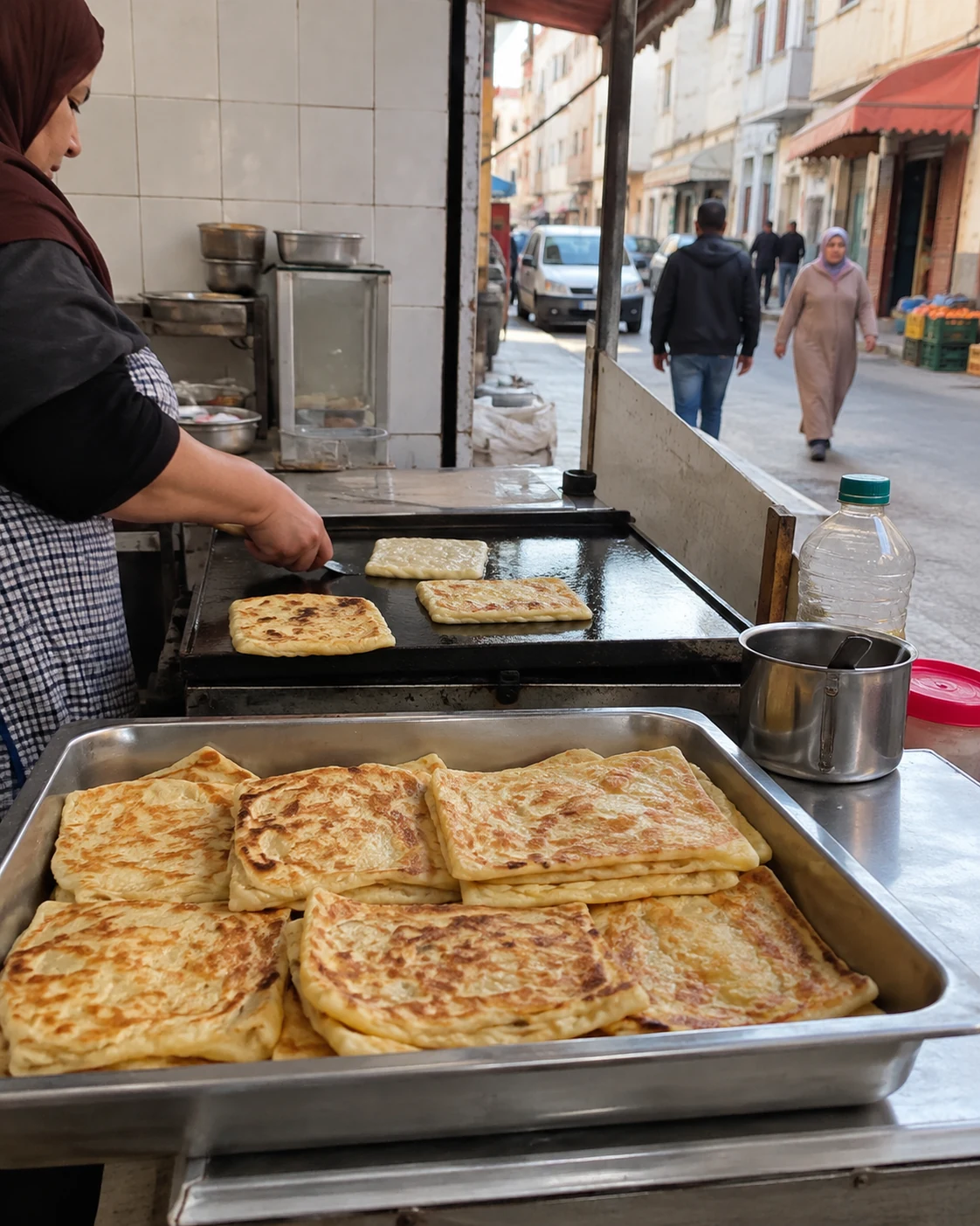
07 · Eating in the middle of a day
Take a pause.
Then carry on.
Street food answers an ordinary, immediate appetite.
A paper wrap, a shared tray or a small stool can be enough. The food is often close to the place where it was cooked, and there is little distance between the cook and the eater.
The counter can also be social: an exchange with a familiar vendor, a quick stop with a friend, or warm bread carried home. These everyday scenes vary by neighborhood and by hour.
Bread makes it portable.
Khobz holds a filling and catches juices. The choice of bread changes how a snack is eaten.
A plate is useful for a bowl or a skewer; a sandwich has a different rhythm.
Choose the specialty.
A stall that turns out one strong preparation offers a clearer clue than an impossibly long menu.
Look at what is being cooked fresh and at how the food is held before serving.
A glass of tea.
Or fresh juice.
Mint tea and fresh juice each have a place at different counters. Neither is required for every snack, and water remains a simple everyday choice.
A brief everyday pause.
A quick meal can be eaten standing, seated at a small counter or carried home. What matters is that it arrives in good condition and at the right moment.
08 · Skill behind the small meal
Before the bite,
the cook’s hands.
A fast service can rest on slow-earned judgment.
A griddle is watched by eye and touch. Frying calls for a batch that stays together and browns evenly. A grill cook knows when to turn the skewers without losing their juices.
These are repeatable skills, not spectacle. The equipment may be modest, but its use shapes the surface, texture and timing of every portion.
The ceramic bowl, woven bread basket and metal serving tray are part of the material world around the food. Their value is in what they do, not in how decorative they look.
Explore Moroccan food culture09 · A closer look
Good questions.
Clear answers.
What changes from one counter to the next?
Is all Moroccan street food fried?
No. Griddles, grills and simmering pots are also common ways to prepare a quick meal.
Is maakouda always served in bread?
No. Potato fritters can be eaten on their own or tucked into a sandwich with accompaniments.
Is msemen a sandwich bread?
Msemen is a folded, layered flatbread cooked on a griddle. It can be eaten with different accompaniments; it is distinct from khobz.
Is street food the same in every city?
No. Supply, season, daily routine and each vendor’s specialty shape the available food.
Is sfenj necessarily sweet?
The fried dough itself need not be sweet. It may be eaten plain or with a sweet addition.
 EXOTIC MOROCCOTASTE · THE GUIDE COLLECTIONStreet FoodIngredients, technique
and the Moroccan table
From the story to your kitchen
Keep the flavour.
Go a little deeper.
Counters, griddles and food made to eat on the move.
Explore the Exotic Morocco guide collection for a closer look at ingredients, kitchen knowledge and the culture around the table.
- Understand the ingredients and their roles
- Recognise the techniques and textures that matter
- Bring context and confidence to the way you cook and serve
Continue tasting Morocco
Follow the
table outward.
Another dish, another technique, another way into the Moroccan kitchen.
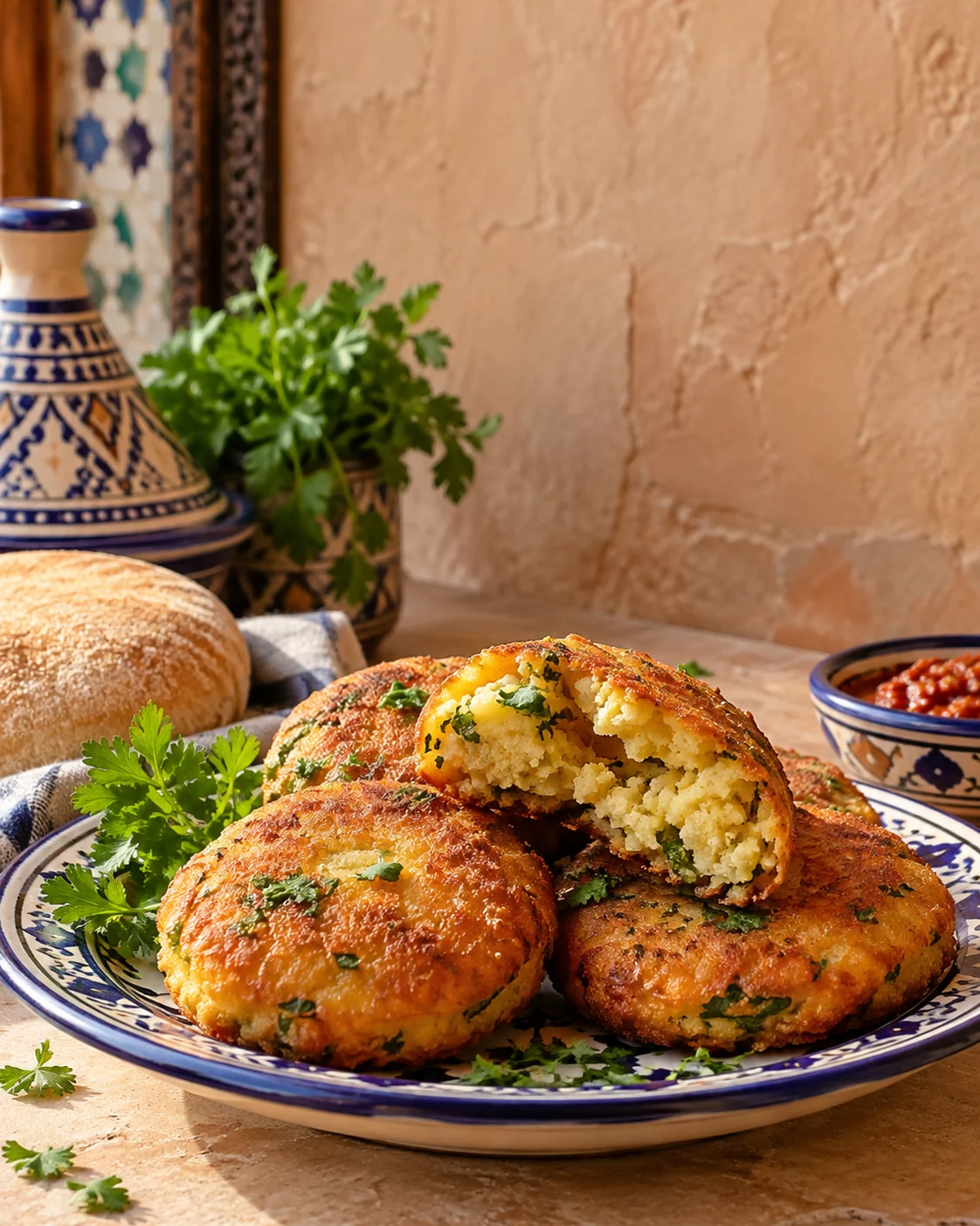
Maakouda
Potato patties, crisp edges and the rhythm of the street counter.
Explore the story ↗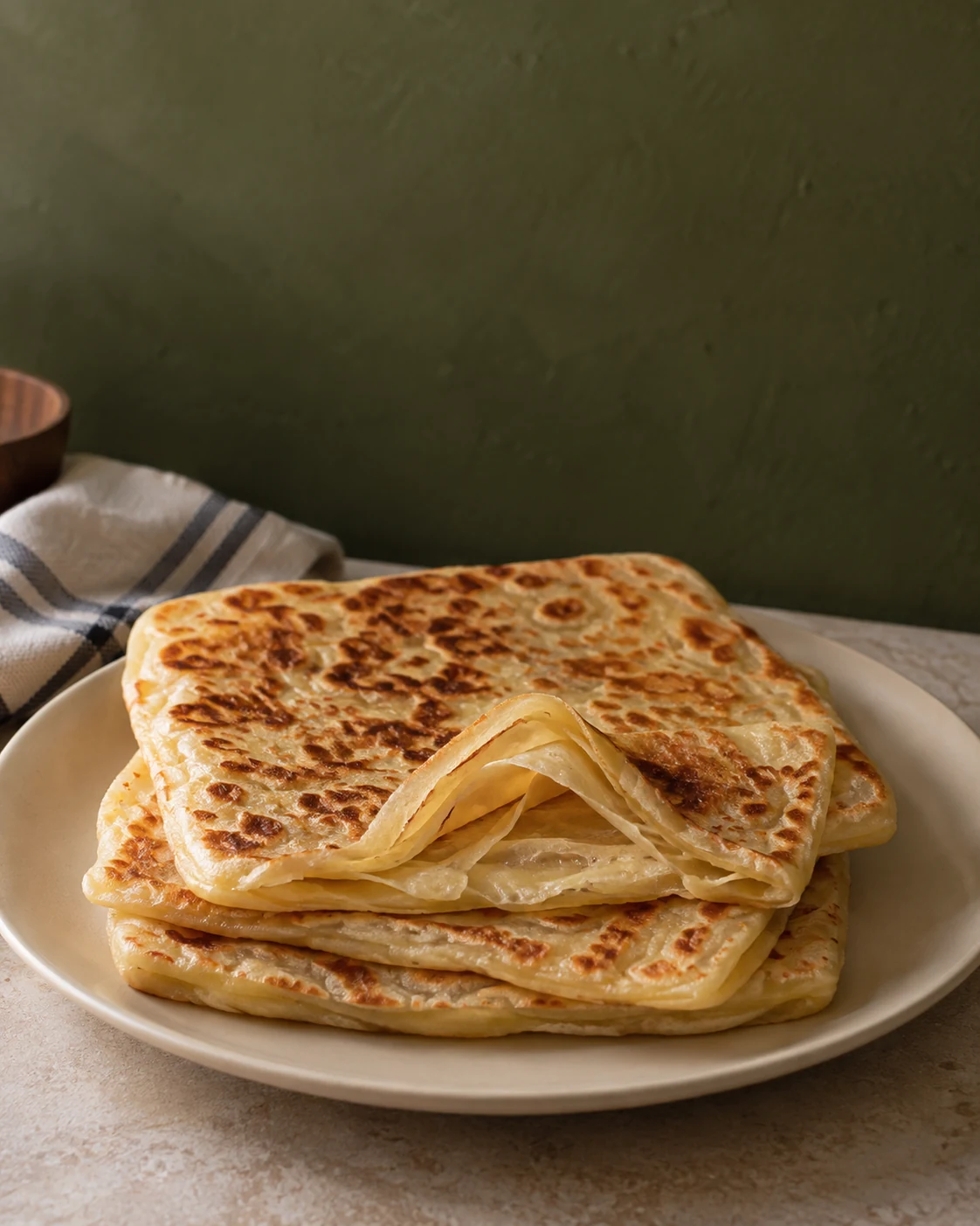
Msemen
Thinly stretched dough folded into supple, flaky layers.
Explore the story ↗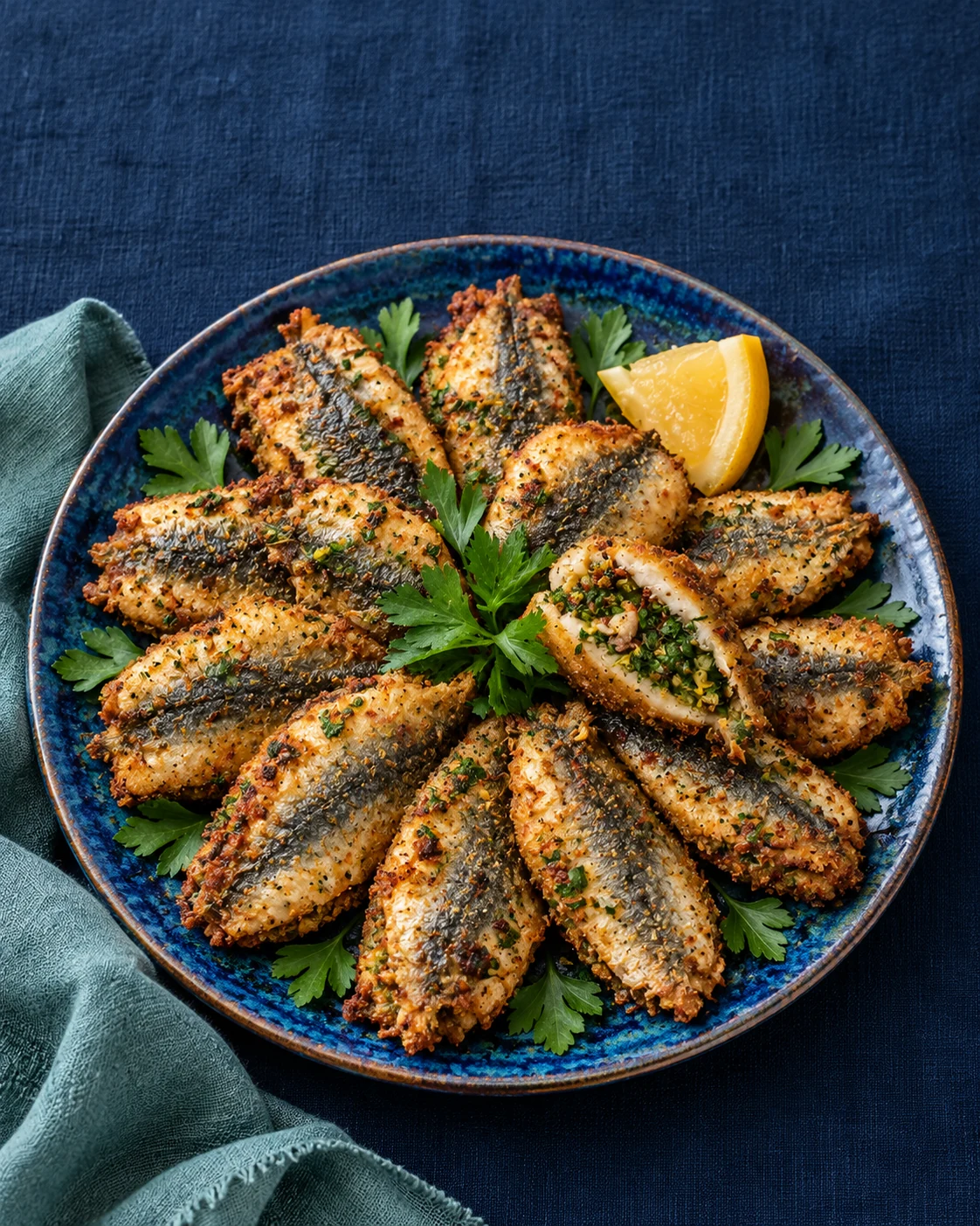
Sardines with Chermoula
Small fish, fragrant herbs and the details of preparation.
Explore the story ↗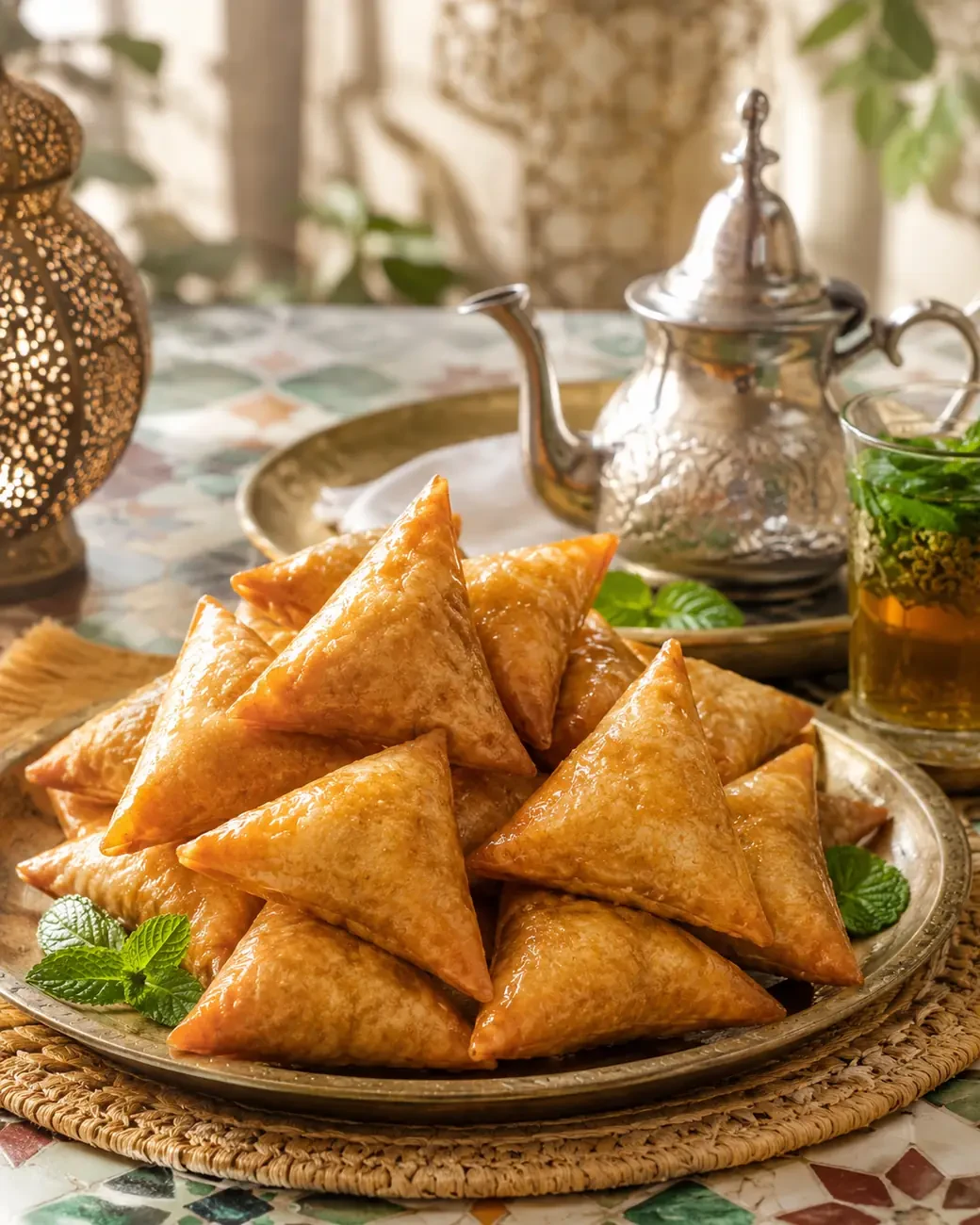
Briouats
Small folded pastries, with both savoury and sweet possibilities.
Explore the story ↗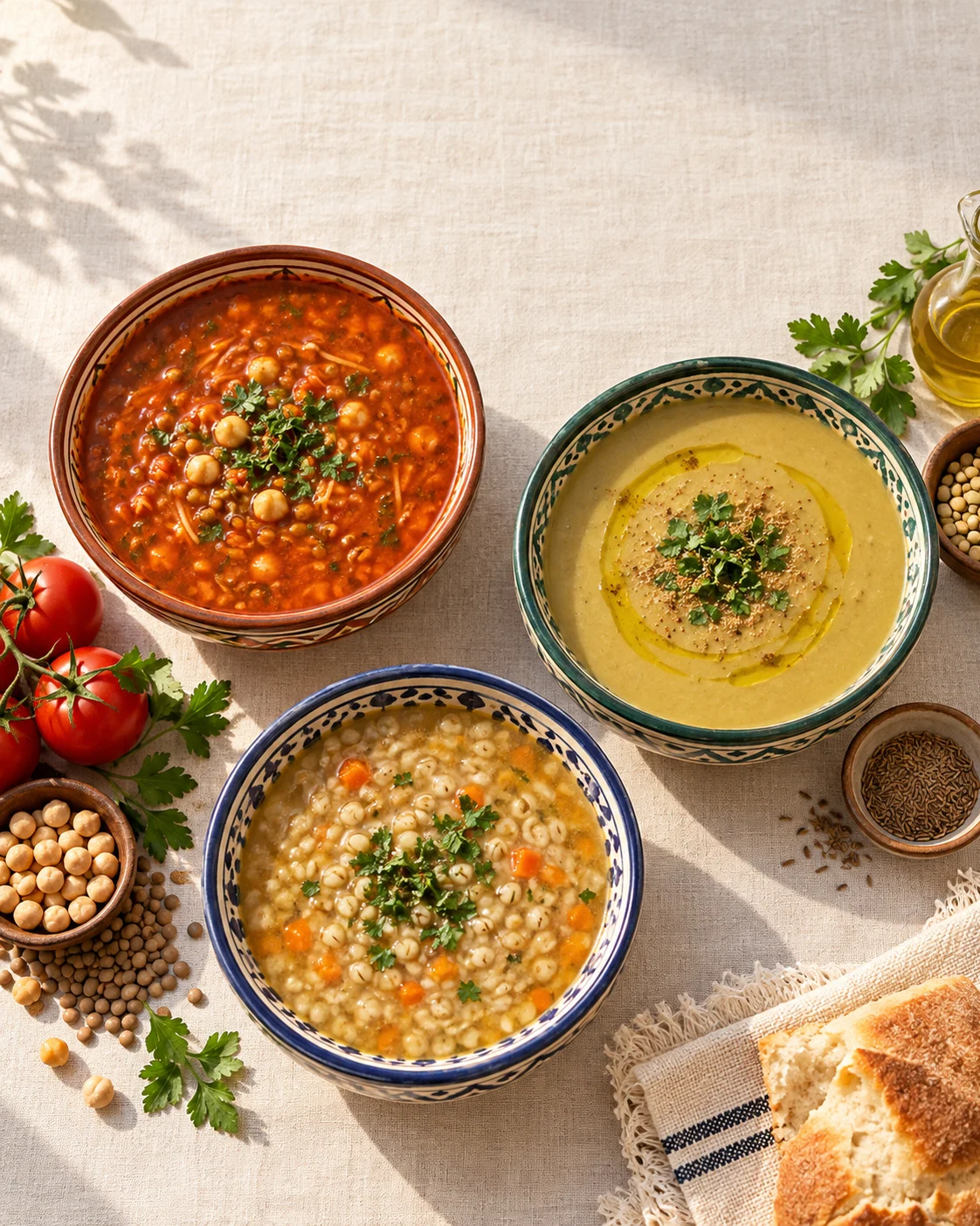
Soups
Harira, bissara and other bowls shaped by place and occasion.
Explore the story ↗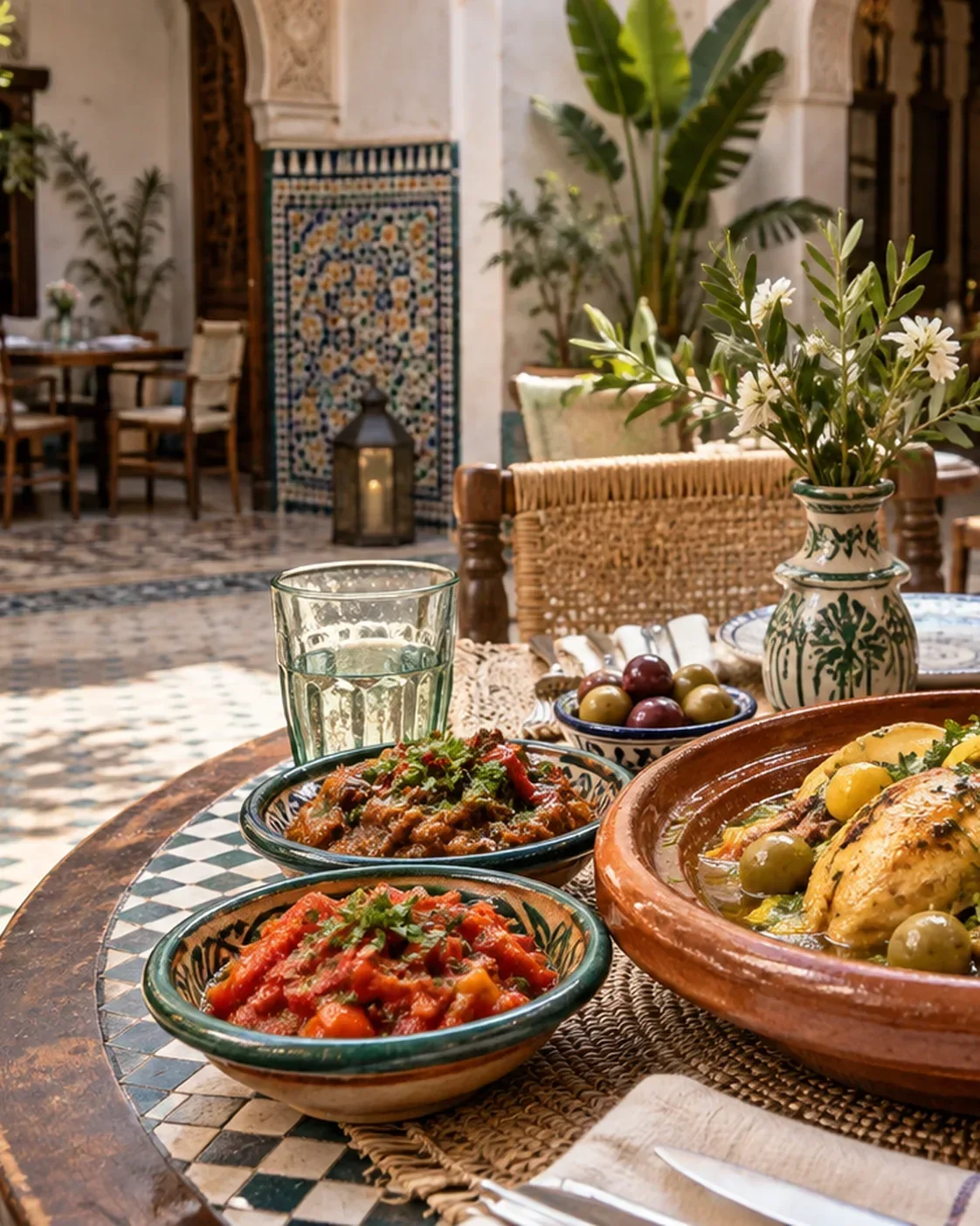
Food & Restaurants
Read a menu, understand the setting and choose an experience.
Explore the story ↗Sources & editorial notes
This is an editorial overview of Moroccan street food, not a complete recipe. Food names and service practices vary by region, household and vendor. New photorealistic scenes illustrate subjects without documenting a named person or exact location.
- UNESCO, Cultural space of Jemaa el-Fna Square — the square as a wider cultural space.
- Serious Eats, Souk to Nuts: How to Eat Like a Local in Marrakesh — Moroccan chef Nargisse Benkabbou on sfenj, harira and daily eating.
Production references: the approved Tagine V4 master, Exotic Morocco Library image collection and generated editorial scenes. Culinary statements are framed as examples rather than universal customs.
EXOTIC MOROCCO Places. People. The pleasure of knowing more.Back to top ↑