

01 · Eating out in Morocco
Take a seat.
Look a little closer.
A place to eat can tell you more than a menu.
A café opens onto the street. At another table, a cook has just set down fish, bread and two small salads. Elsewhere, a family orders couscous for a longer lunch. These are different ways of eating out, with different rhythms and expectations.
Morocco’s food culture does not fit one type of restaurant. The neighborhood counter, the open-air grill, a coastal fish room and a carefully composed dining room each show another part of it. Start with what the place prepares well, ask a specific question and pay attention to the work behind the plate.
Explore Moroccan Food Culture ↗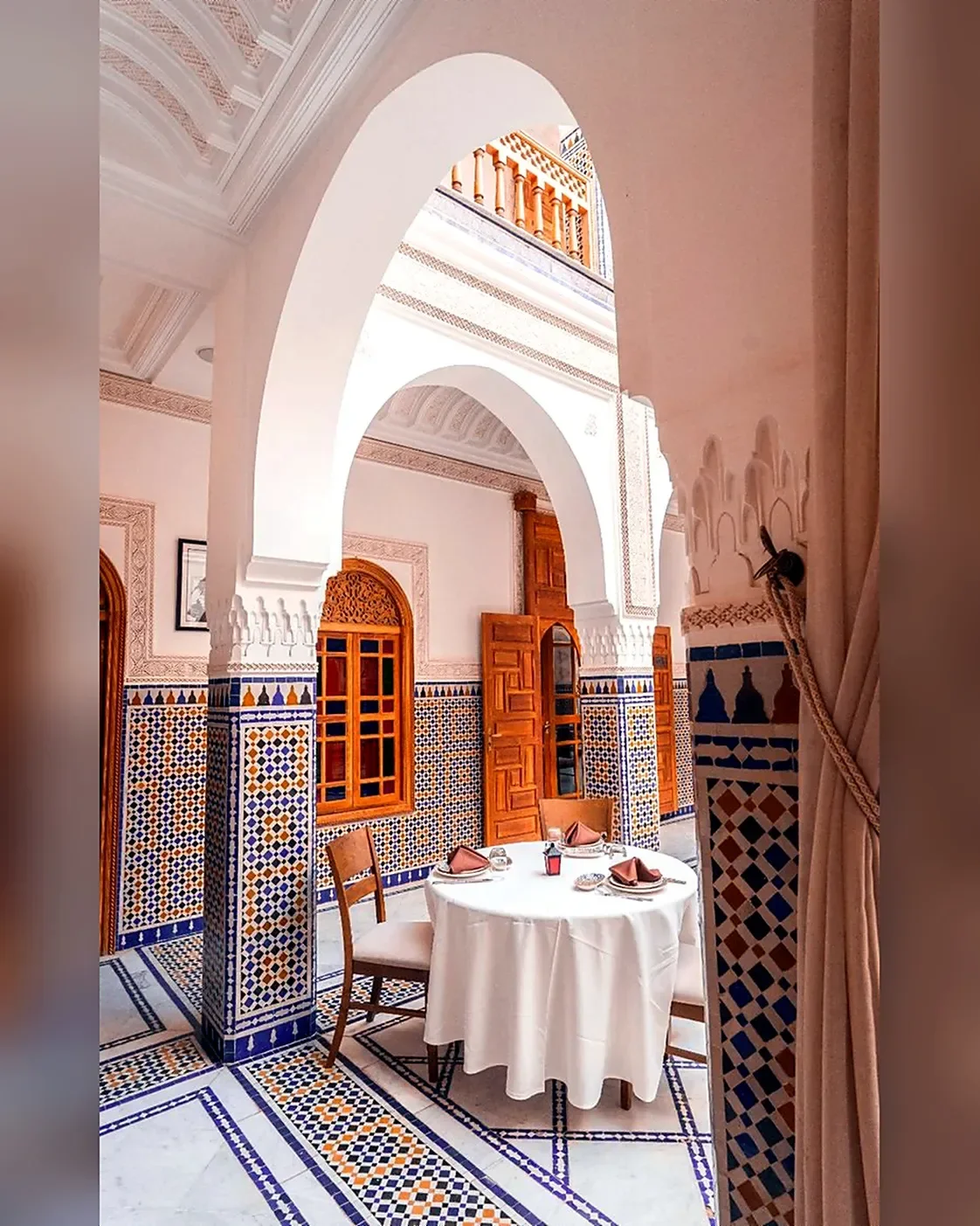
How people eat here.
What the kitchen is making now.
Bread, sides, texture and seasoning.
02 · A living food culture
Many kitchens.
Many ways to serve.
Traditions travel through people, work and changing daily life.
Moroccan cuisine reflects interwoven Amazigh, Arab-Andalusian, Jewish, African and Mediterranean histories. Those influences do not map neatly onto separate restaurant courses. A menu is one contemporary expression of a much wider culture. [1]
Couscous, for example, carries knowledge about making and sharing food across several North African countries; UNESCO recognized these practices in 2020. That recognition concerns living skills and social meanings, rather than one definitive plate. [3]
Different settings
A food stall, café, family-run room and formal restaurant offer different kinds of service.
Changing menus
Supply, season and the cook’s strengths can matter more than a long permanent list.
Specific people
Ask about this kitchen’s version instead of looking for a single national standard.
03 · The work behind the plate
Watch how
it comes together.
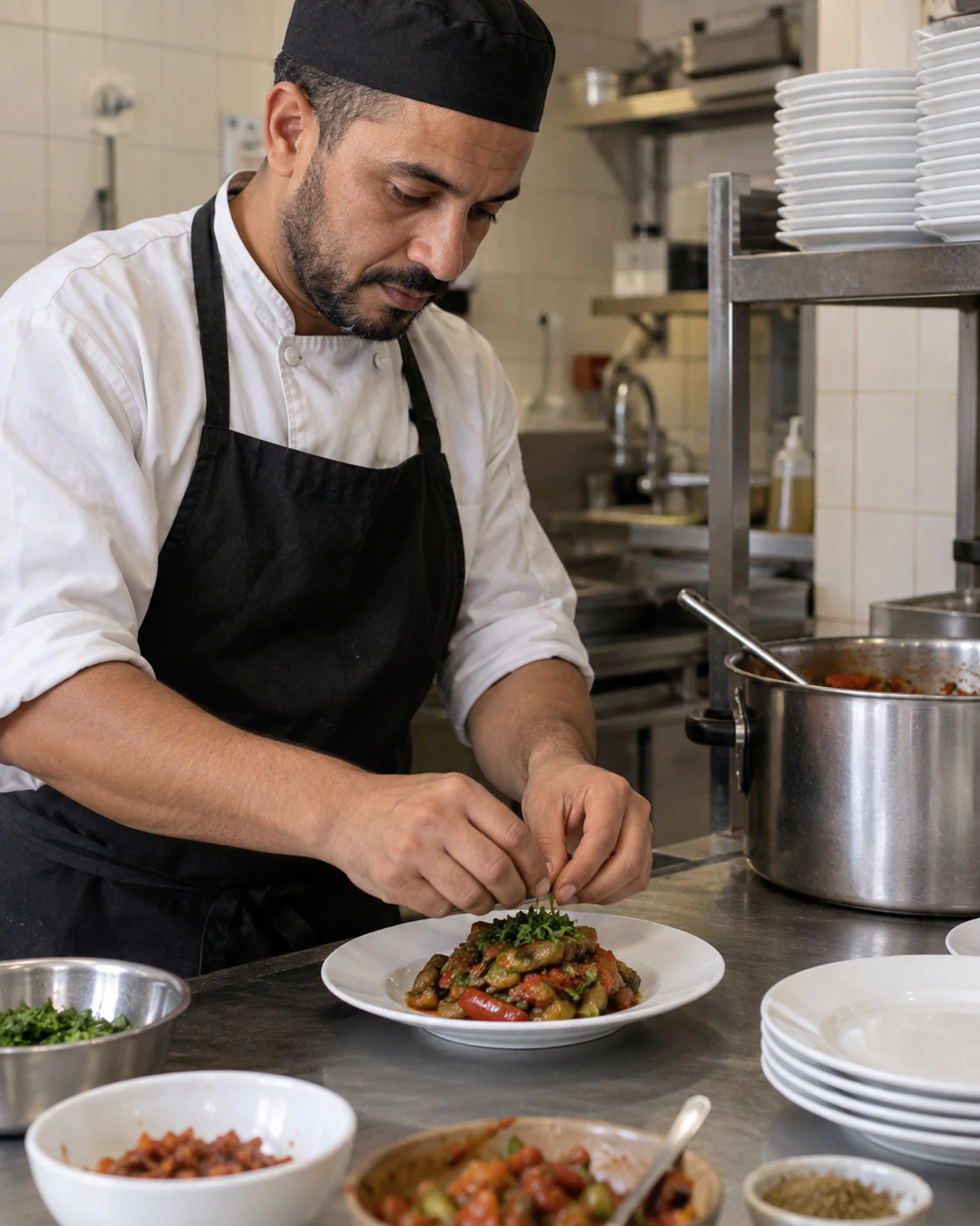
Good service makes the work look effortless. In the kitchen, each dish has its own sequence, heat and finish.
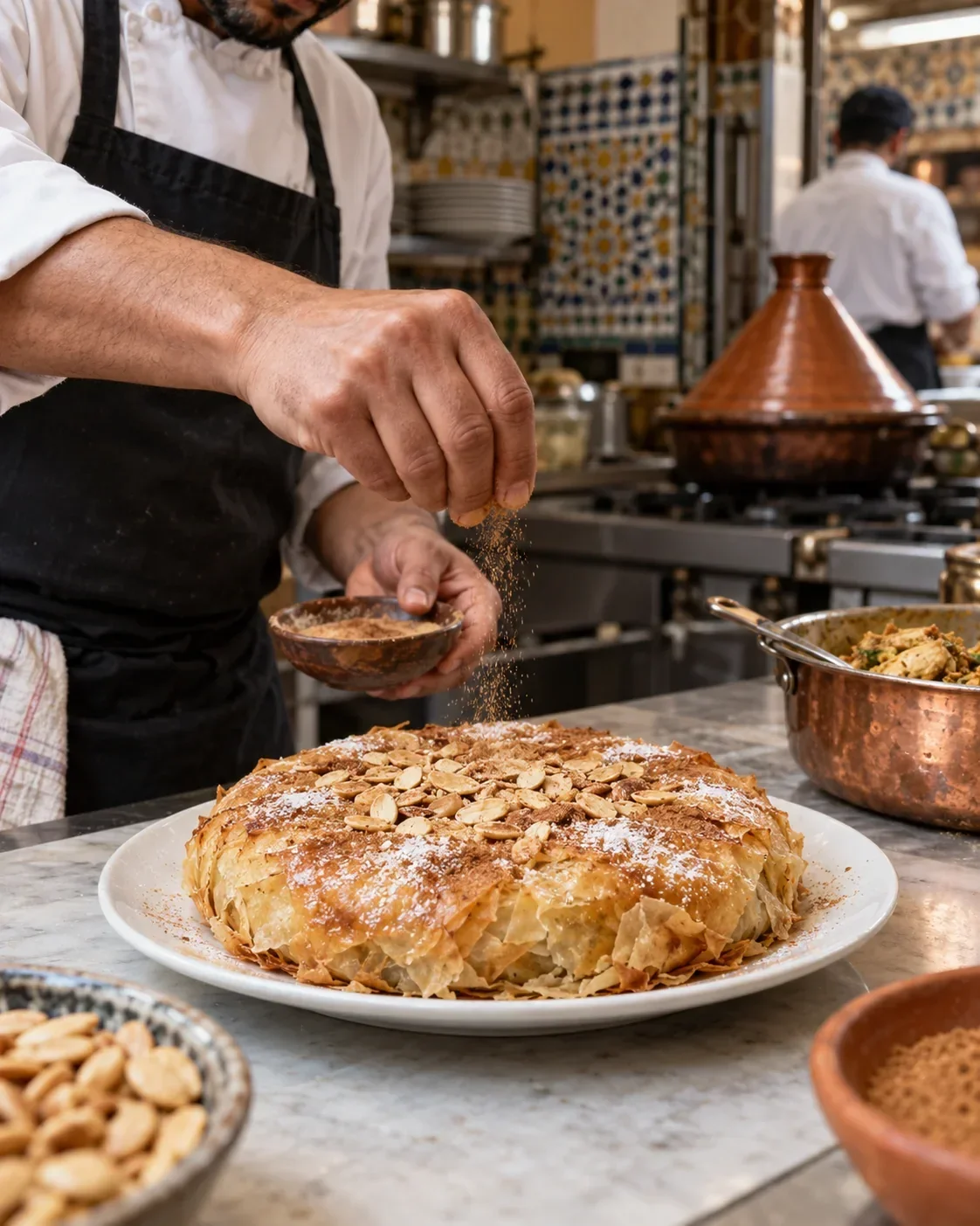
When choosing a place, look for the food it makes with care, whether that is a pastry finished to order or fish cooked simply.
Preparation
Some dishes need a long, quiet preparation before they reach the table. A freshly finished plate is not always a dish cooked entirely after you order.
Heat
A charcoal grill, a griddle, gentle braising and steaming do different jobs. Judge the method by what the dish needs, not by how dramatic the flame looks.
Finish
Texture matters: a crisp pastry, grains that stay distinct, fish that remains moist, a cooked salad with depth rather than excess oil.
04 · Five ways to eat out
Choose the place.
Then the plate.
The same dish can feel different across a café, grill and restaurant. These are useful formats, not a ranking of authenticity.
Let the setting, pace and kitchen guide your choice.
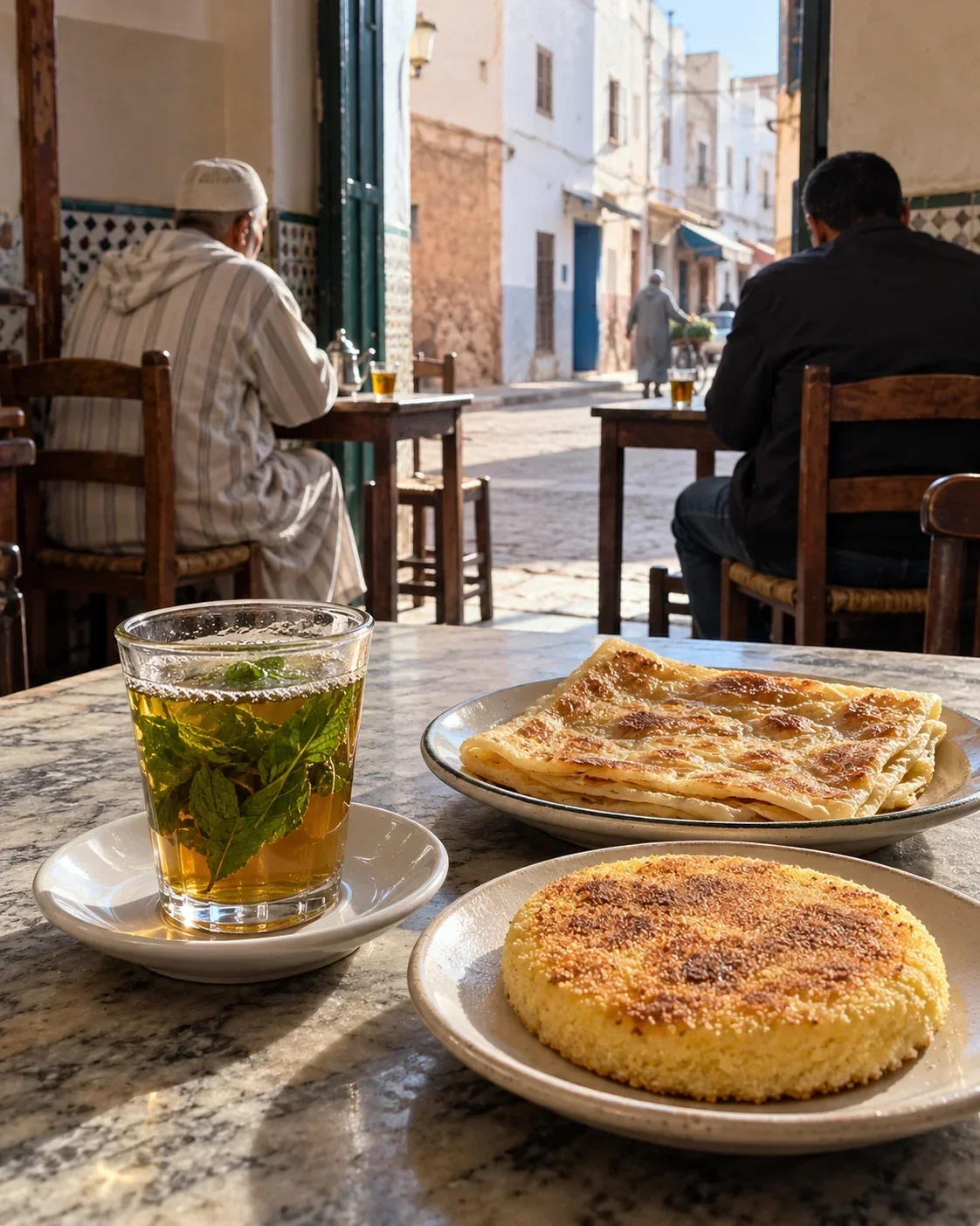
The neighborhood café
Tea and something from the griddle can make a simple breakfast. Harcha and msemen are different preparations; look at what is being made fresh, then order what appeals to you.
The street-side grill
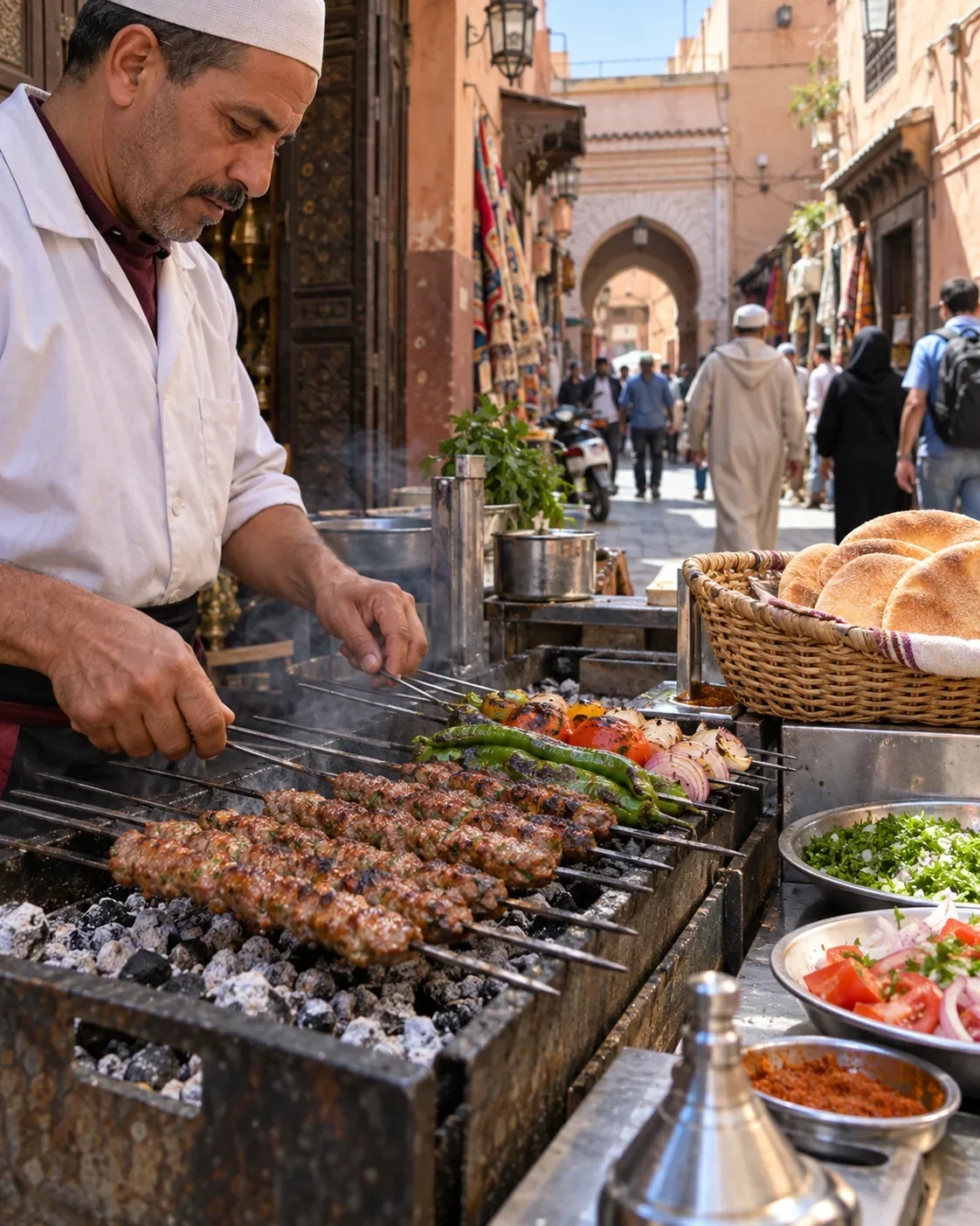
The cook, the coals and the turn of each skewer are visible. Kefta, bread and a small salad can become an immediate, unfussy lunch.
The fish restaurant
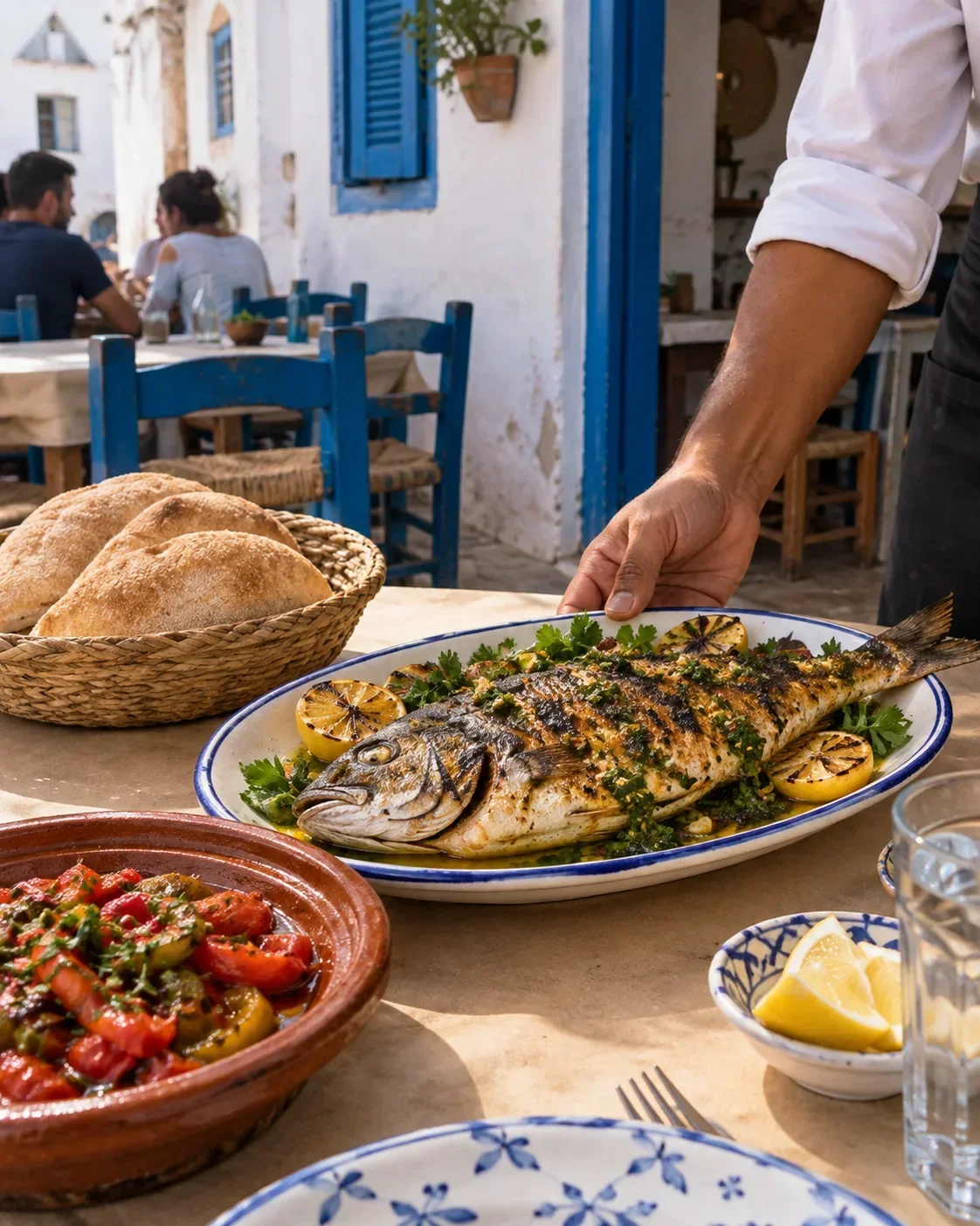
Ask which fish is available, how it is prepared and what comes alongside. A whole grilled fish and small cooked salads let the catch take the lead.
The restaurant meal
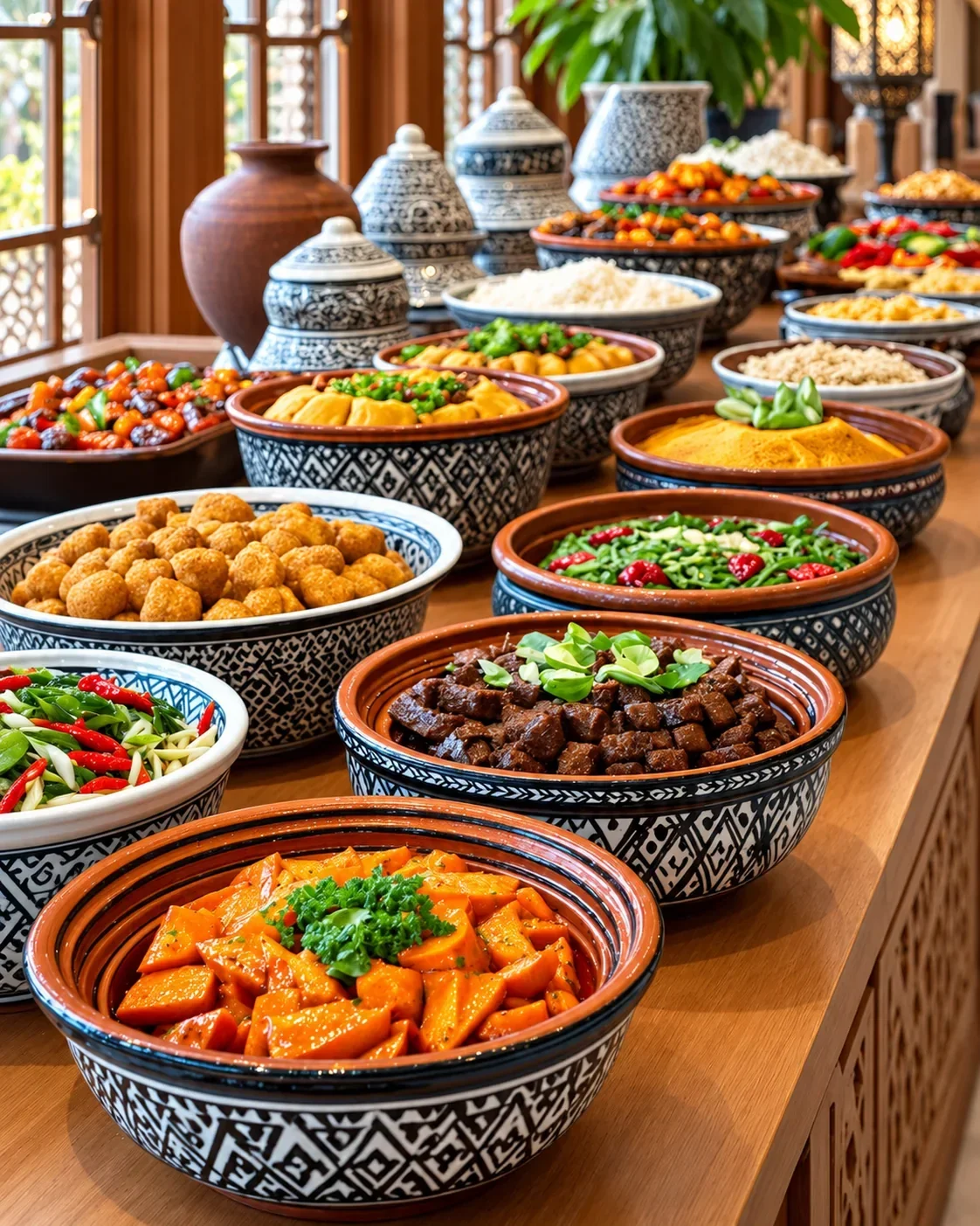
A longer meal can move from cooked salads and bread to a central dish. The format varies by venue; a large table of options does not describe every Moroccan lunch.
Couscous at the table
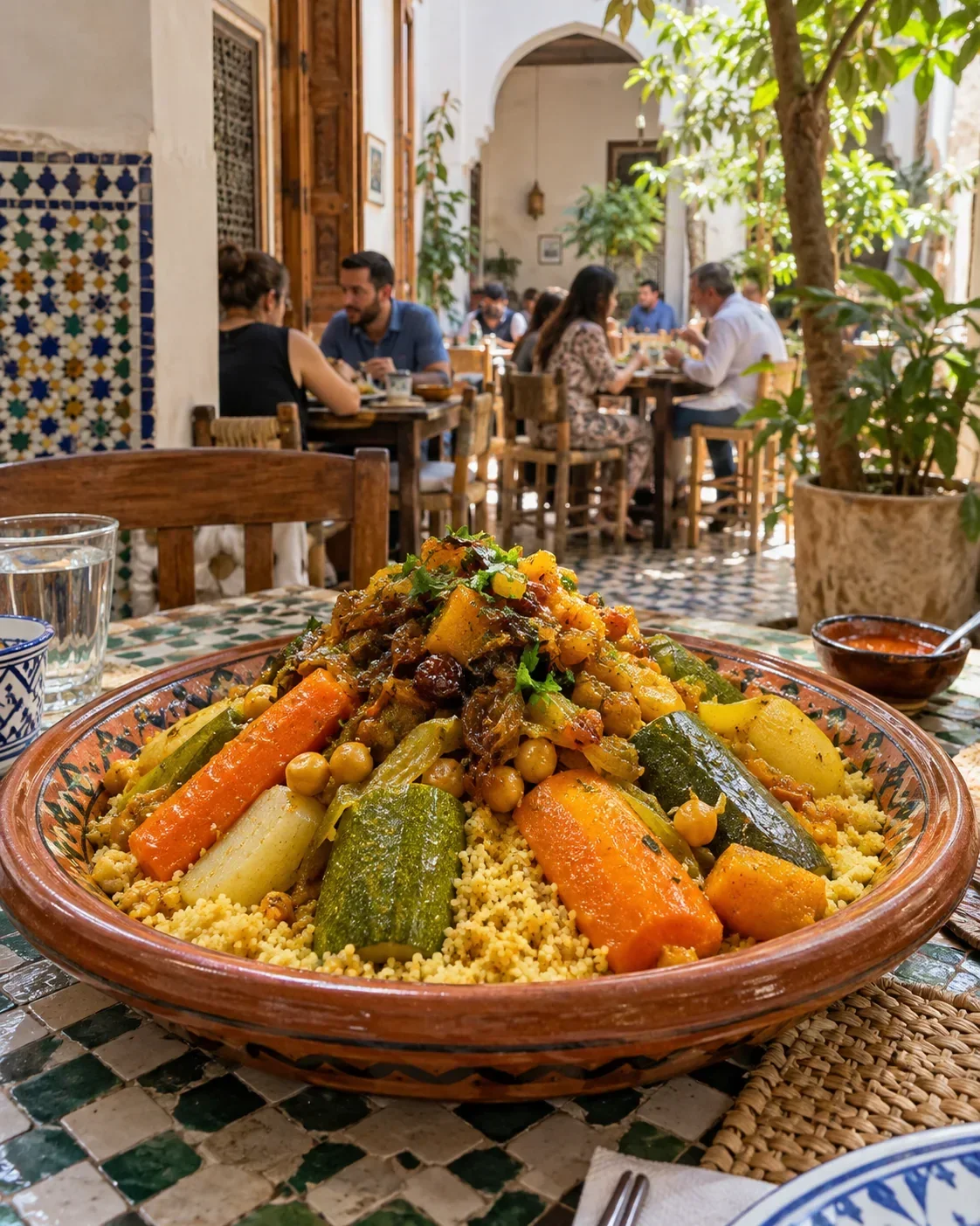
Couscous is served in homes and restaurants. Its vegetables, broth and toppings vary, and the experience depends as much on the cook as on the name on a menu.
Do not mistake simplicity for lesser cooking.
Fresh bread, a well-seasoned salad and a carefully grilled fish may be the whole point of a meal.
Do not make luxury the measure either.
A more formal dining room can offer its own skill, particularly in pastry, presentation and longer service.
05 · Read beyond the menu
Four clues.
One better meal.
Before choosing a dish, notice the small signals that tell you what the place cares about.
They are questions to explore, not tests a restaurant must pass.
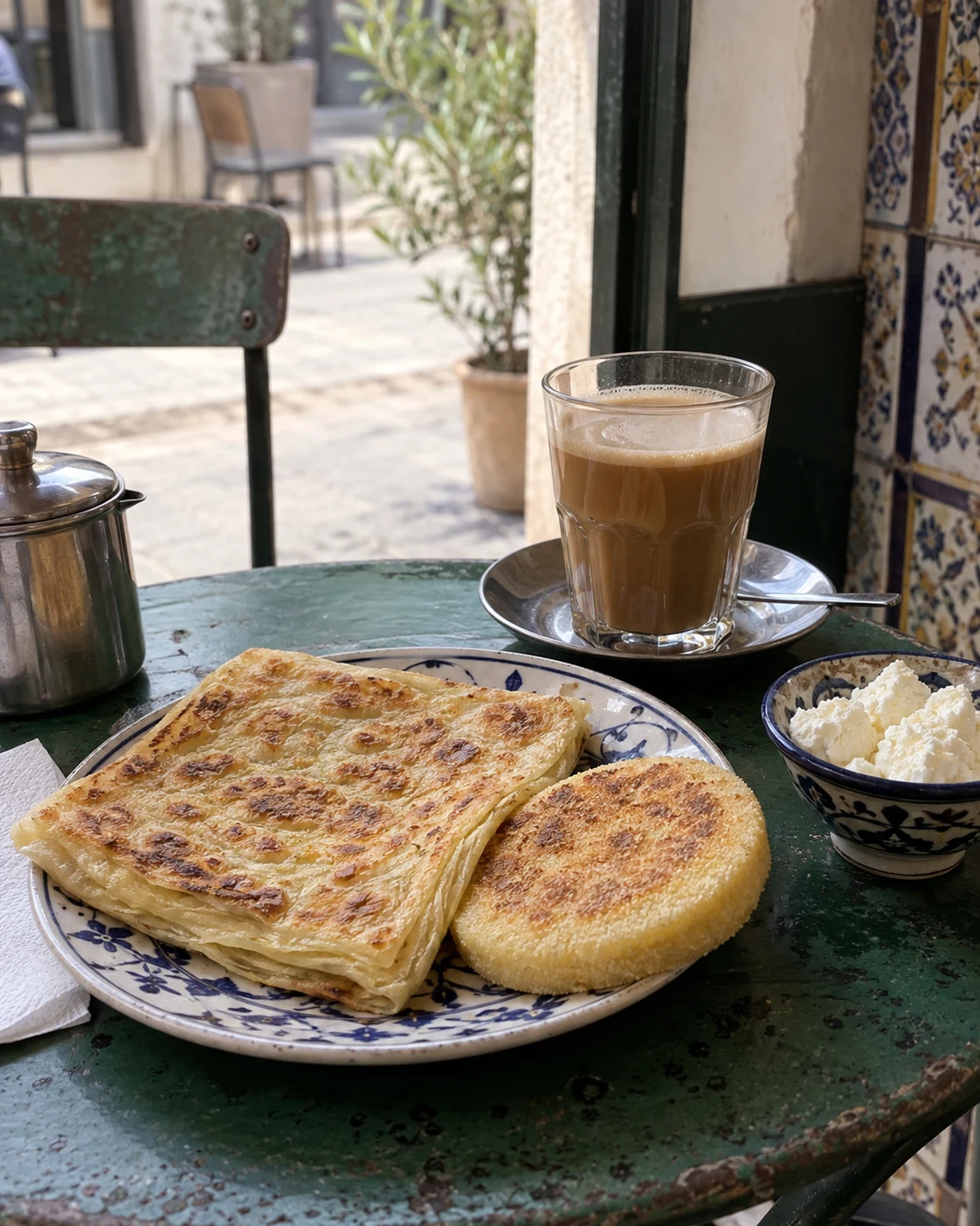
Bread
Notice what is fresh.
Khobz, harcha and msemen are not interchangeable. The griddle or bread basket often reveals more about a place than an extensive menu.
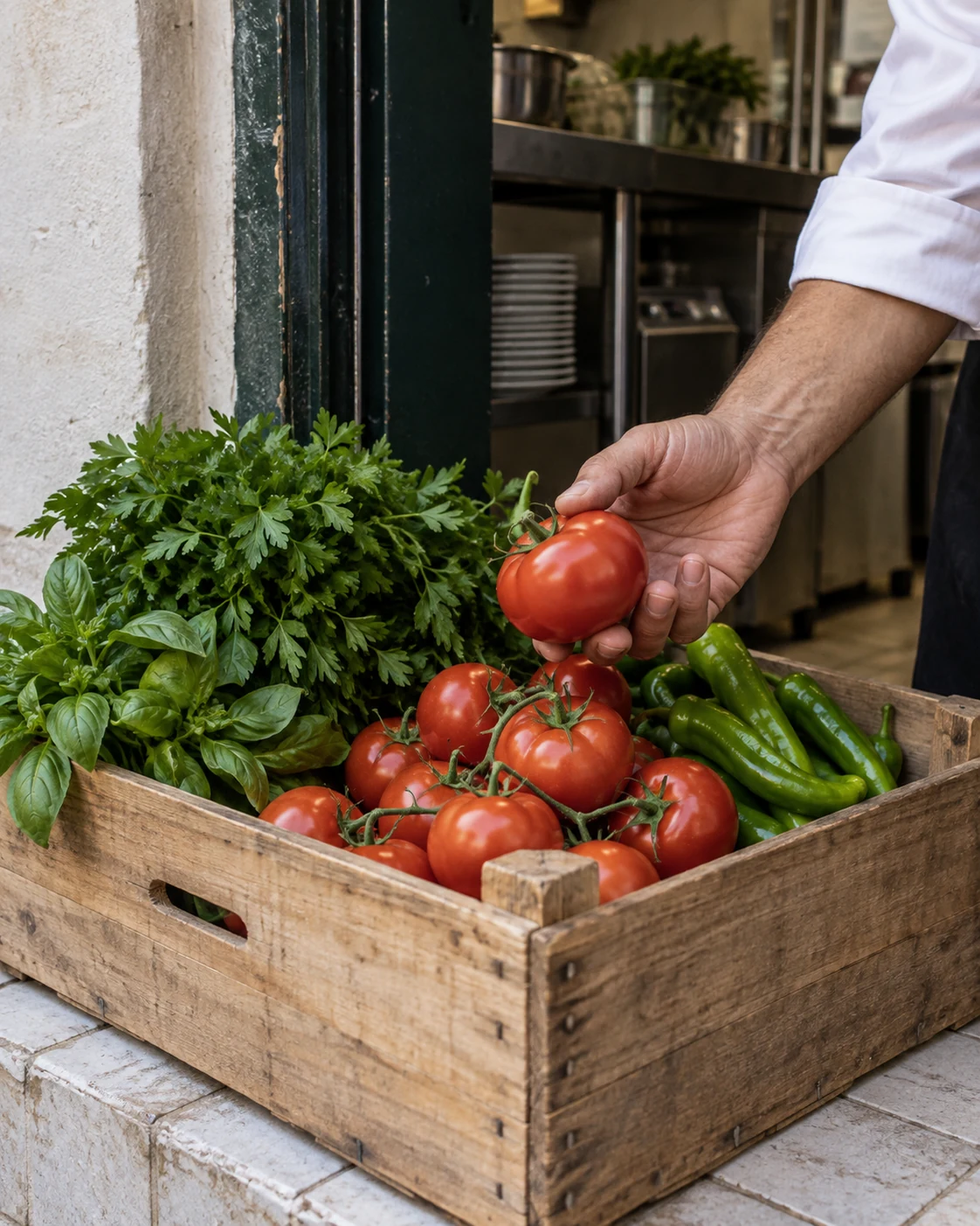
Produce
The day has a say.
Vegetables and herbs change with the season and supply. Ask what is available rather than expecting every named dish at every counter.
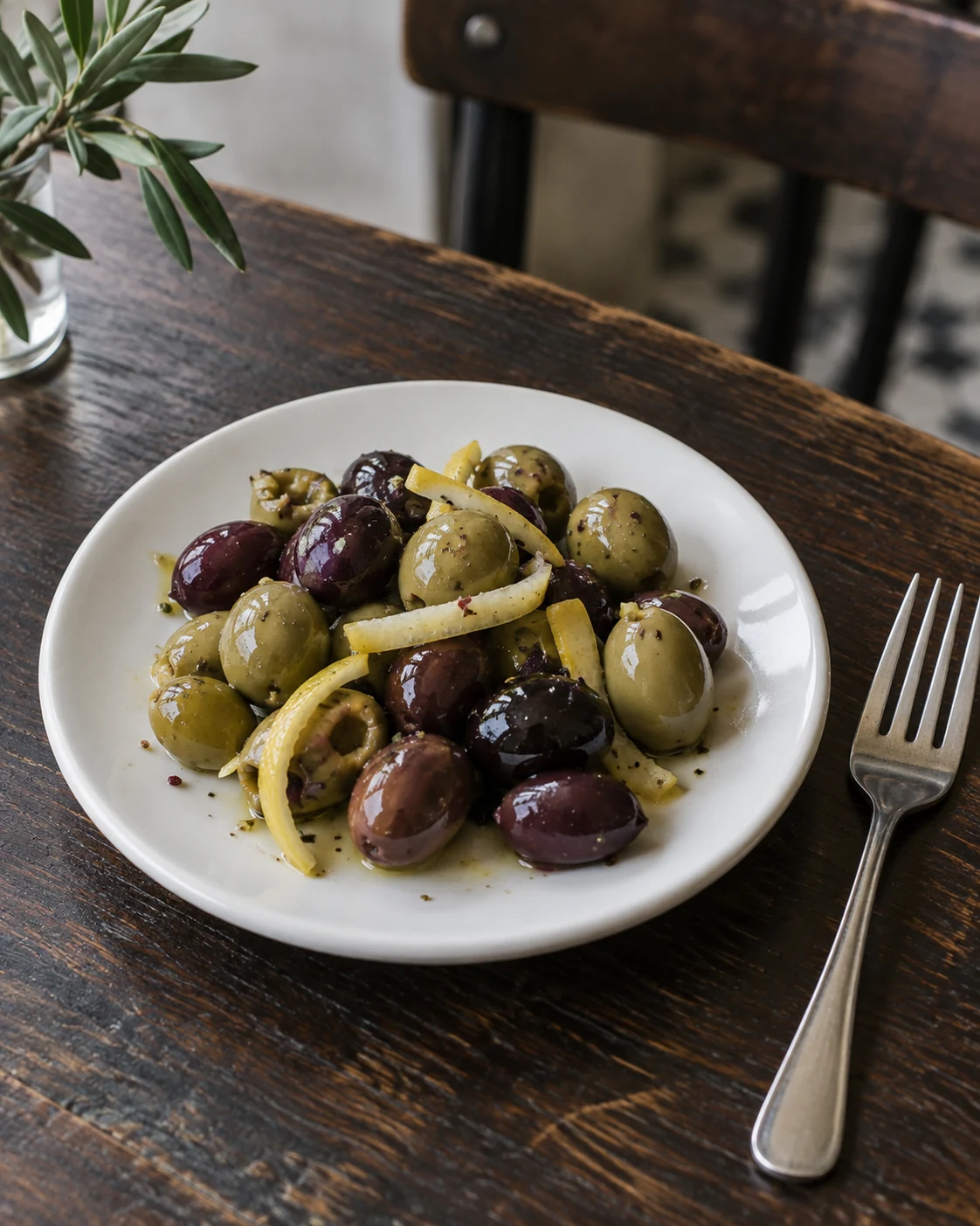
Olives
A small but vivid detail.
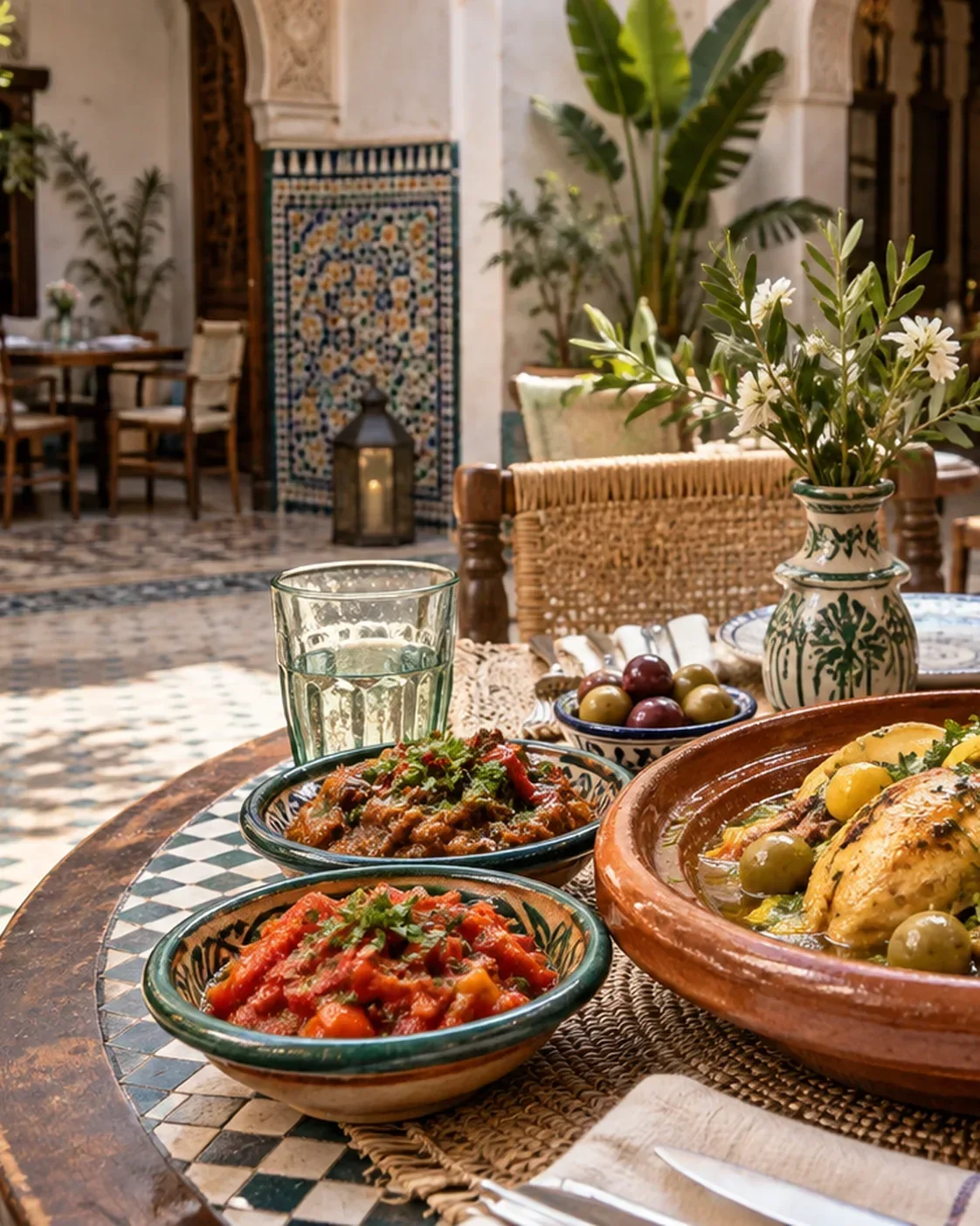
Different olives bring salt, bitterness and texture to a plate. Notice how they are used, especially with salads and chicken dishes.
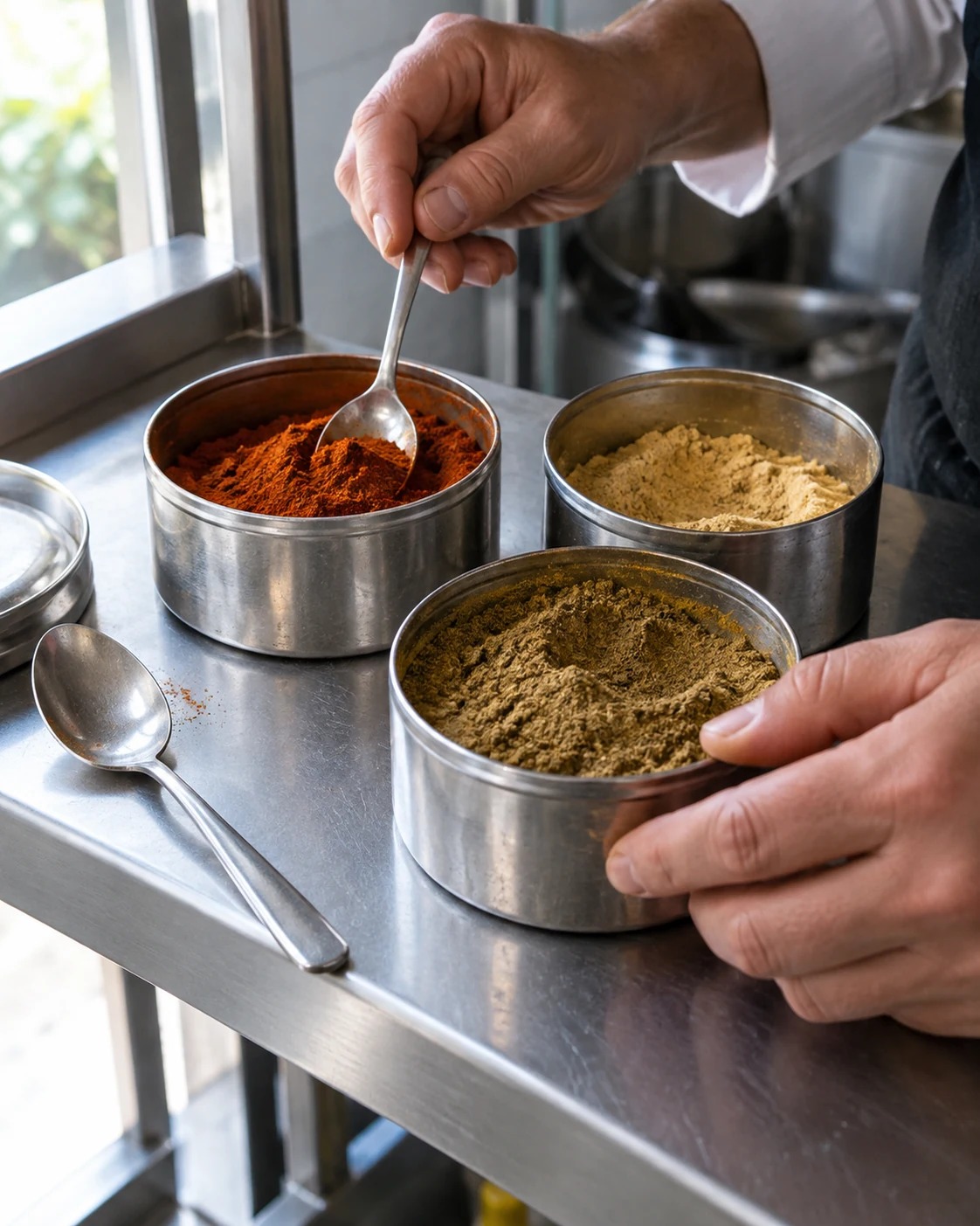
Seasoning
Balance before heat.
Cumin, coriander, ginger and saffron belong to different dishes in different proportions. A good kitchen does not make every sauce taste alike.
Explore the four clues
THE USEFUL ORDER
Begin with
the house strength.
Ask what is made today
A short answer about a particular pot, grill or catch is more useful than a long generic promise.
Understand the portion
Ask whether a dish is shared and which salads, bread or accompaniments are included.
Say what you need
Discuss allergens, meat preferences and spice level clearly. Ingredients and cross-contact depend on the individual kitchen.
06 · Geography, season & supply
Eat with
the place.
A city, coast or market changes what a kitchen can offer.
Essaouira is known for fresh fish; Marrakech has a strong public food-stall tradition, including the evening activity around Jemaa el-Fna. These are starting points for a meal, not claims that every venue in either city cooks the same way. [2] [4]
Follow the day’s supply and the cook’s practice. Menus, opening hours and prices can change, so confirm details directly with the venue.
By the coast
Ask for the available fish, the cooking method and the price before ordering.
Explore Essaouira ↗In Marrakech
Notice the differences between an open-air stall, a neighborhood counter and a seated restaurant.
Explore Marrakech ↗Wherever you sit
A good question about the food is more reliable than a blanket idea of “authenticity.”
Explore Taste Morocco ↗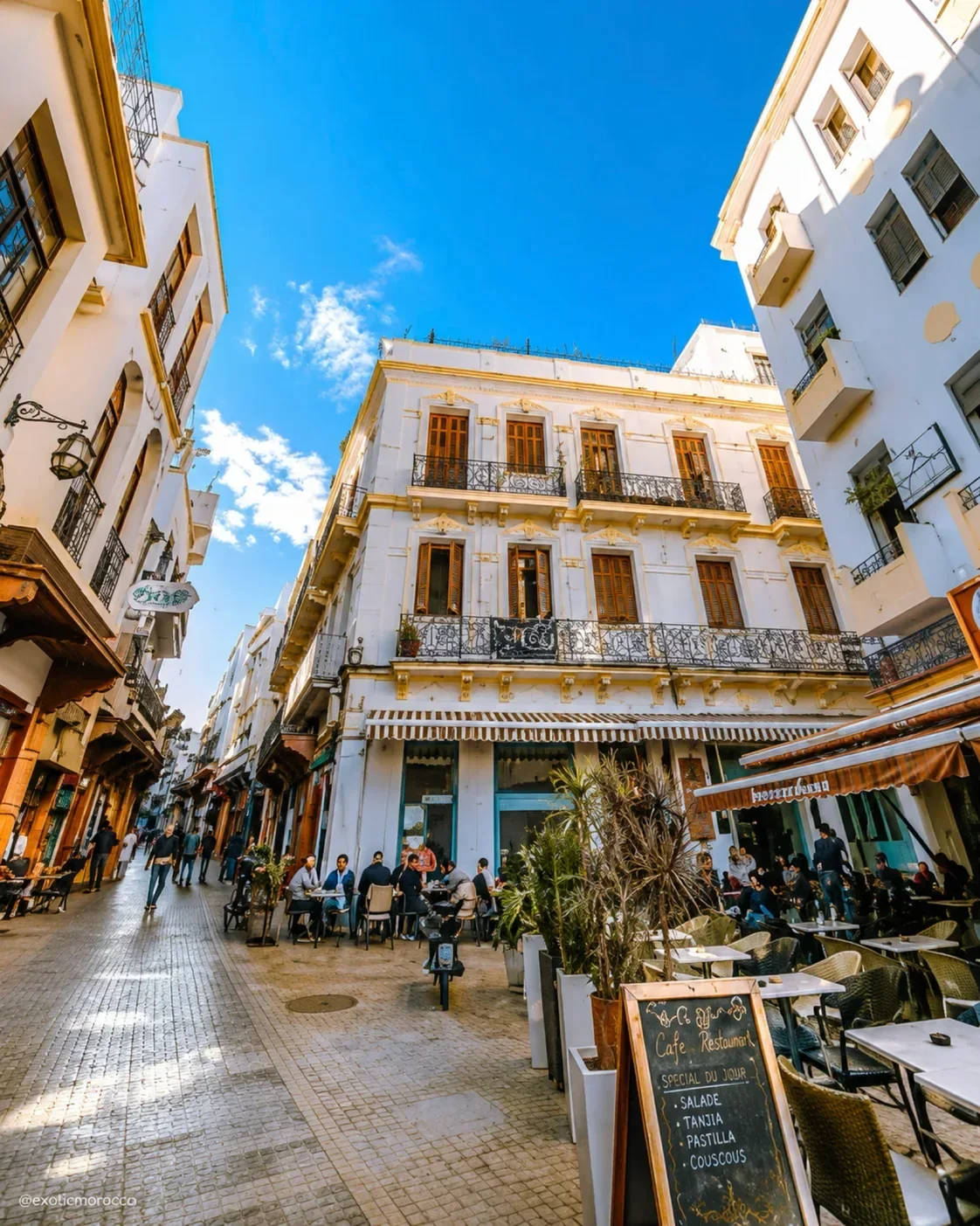
07 · At the restaurant table
Settle in.
Share the attention.
The service, the company and the food belong together.
Some dishes arrive centrally for sharing; other meals are plated individually. Notice how the venue serves, ask if you are unsure and follow the people at your table rather than assuming one rule fits every setting.
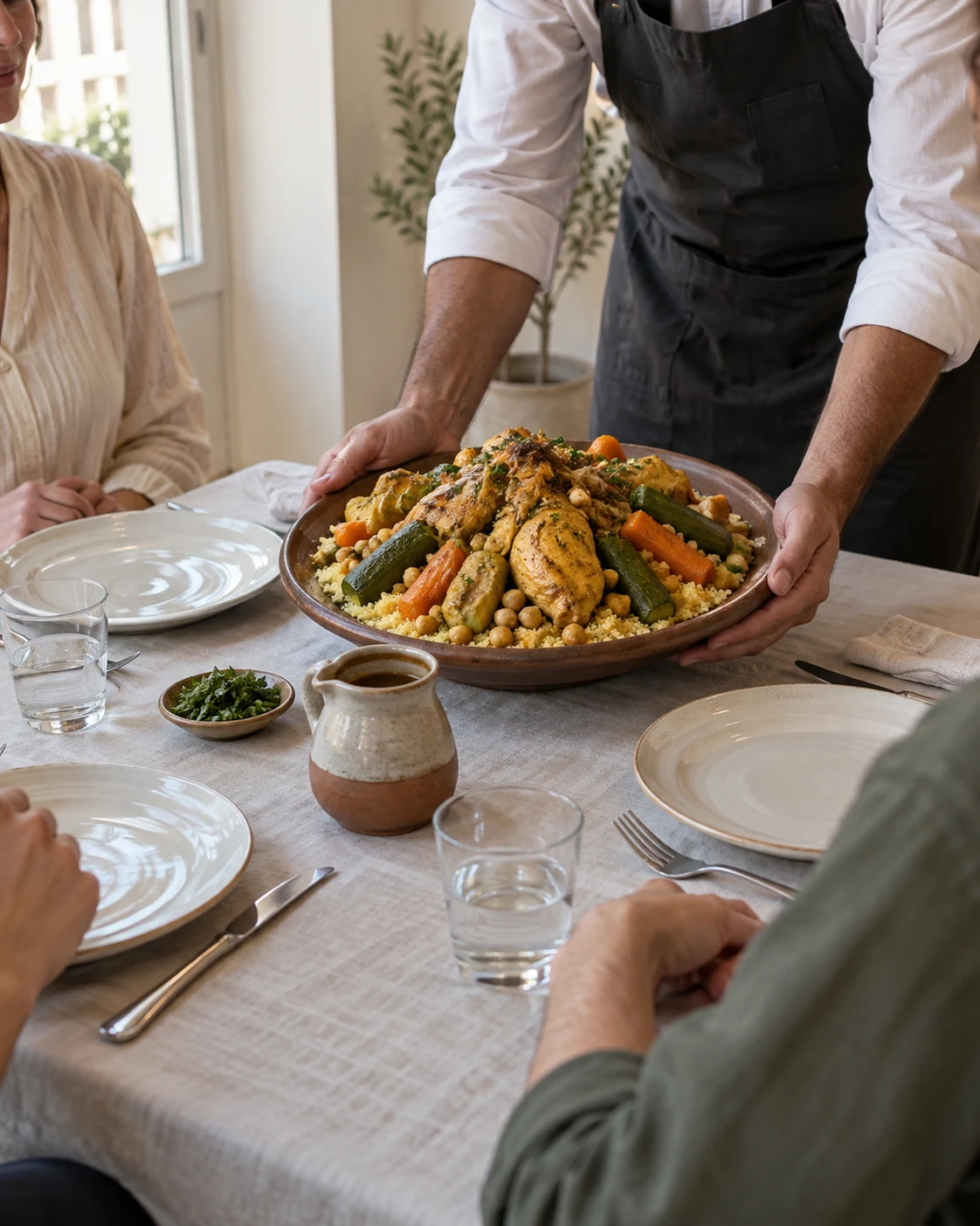
Ask before you order.
Confirm whether the dish is for one person or several and whether bread or small dishes come with it.
Leave space for the cook.
A request about an allergy or preference is practical. A request to remake every element of a specialty can miss what the kitchen does best.
Tea can take its time.
A glass of tea may follow food or punctuate a café visit. It is an invitation to linger, not a compulsory ending to every meal.
Be a considerate guest.
Ask before photographing staff, other guests or a working kitchen. Thank the people serving you and allow different places their own pace.
08 · The material of a meal
Made to cook.
Made to serve.
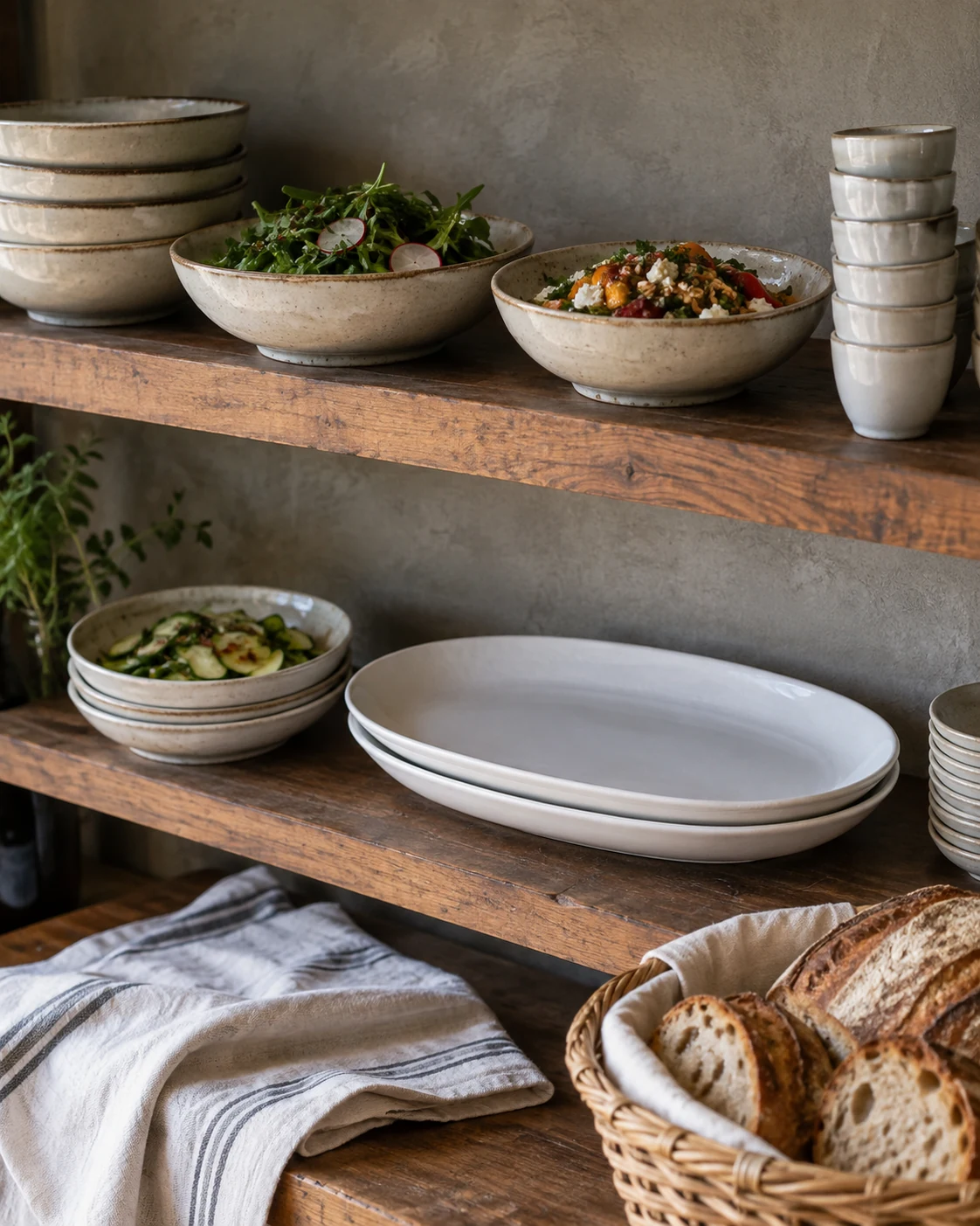
A serving vessel has a practical job before it becomes part of the scene.
Earthenware, trays, bowls and bread baskets contribute to how a meal is cooked and carried. Some decorated tagines are serving pieces; cooking requires a vessel suited to heat. Do not infer a cooking method merely from the pot placed on a restaurant table.
Look also at the ordinary work: bread cut or passed, dishes washed and reset, ingredients prepared before service. The craft of a restaurant involves many people beyond the person who brings out the plate.
Read more about food culture ↗09 · Useful questions
A little clarity.
A better choice.
Ask the place in front of you.
Should I expect the same menu everywhere?
No. A café, fish restaurant and formal dining room have different strengths. Supply, season and kitchen practice vary.
Is every tagine cooked in the serving pot?
No. The vessel, cooking method and finished dish can differ. Ask how a particular kitchen makes its version.
Can I ask about dietary needs?
Yes. Describe the ingredient or allergy specifically and ask the kitchen to confirm both the dish and possible cross-contact. Do not assume a broad menu label settles it.
How do I choose fish by the coast?
Ask what is available, how it is cooked and the price or pricing basis before ordering. Availability changes with the day.
Is a shared platter always the rule?
No. Venues and groups serve differently. Observe, ask and follow the host or server.
 EXOTIC MOROCCOTASTE · THE GUIDE COLLECTIONFood & RestaurantsIngredients, technique
and the Moroccan table
From the story to your kitchen
Keep the flavour.
Go a little deeper.
Read a menu, understand the setting and choose an experience.
Explore the Exotic Morocco guide collection for a closer look at ingredients, kitchen knowledge and the culture around the table.
- Understand the ingredients and their roles
- Recognise the techniques and textures that matter
- Bring context and confidence to the way you cook and serve
Continue tasting Morocco
Follow the
table outward.
Another dish, another technique, another way into the Moroccan kitchen.
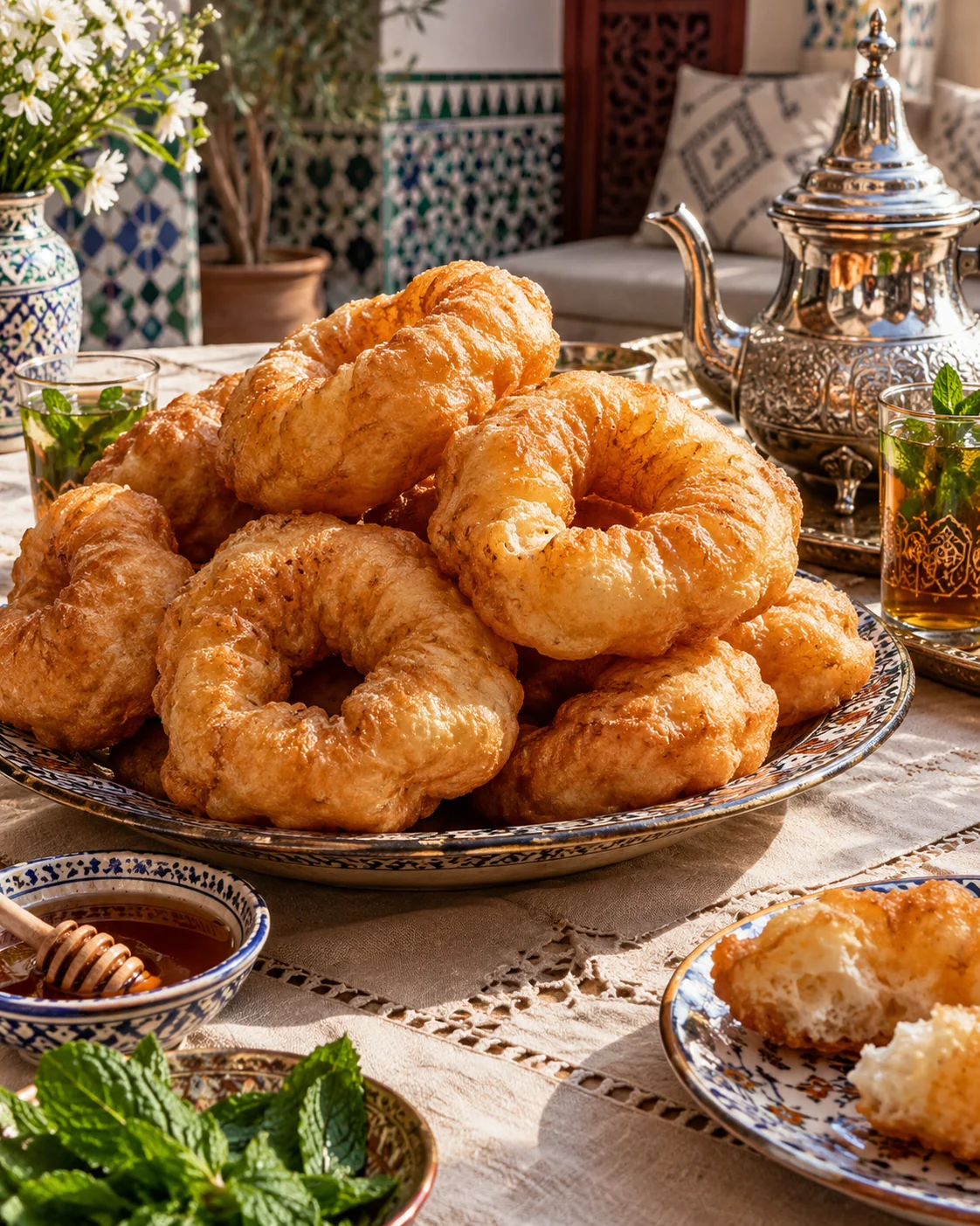
Street Food
Counters, griddles and food made to eat on the move.
Explore the story ↗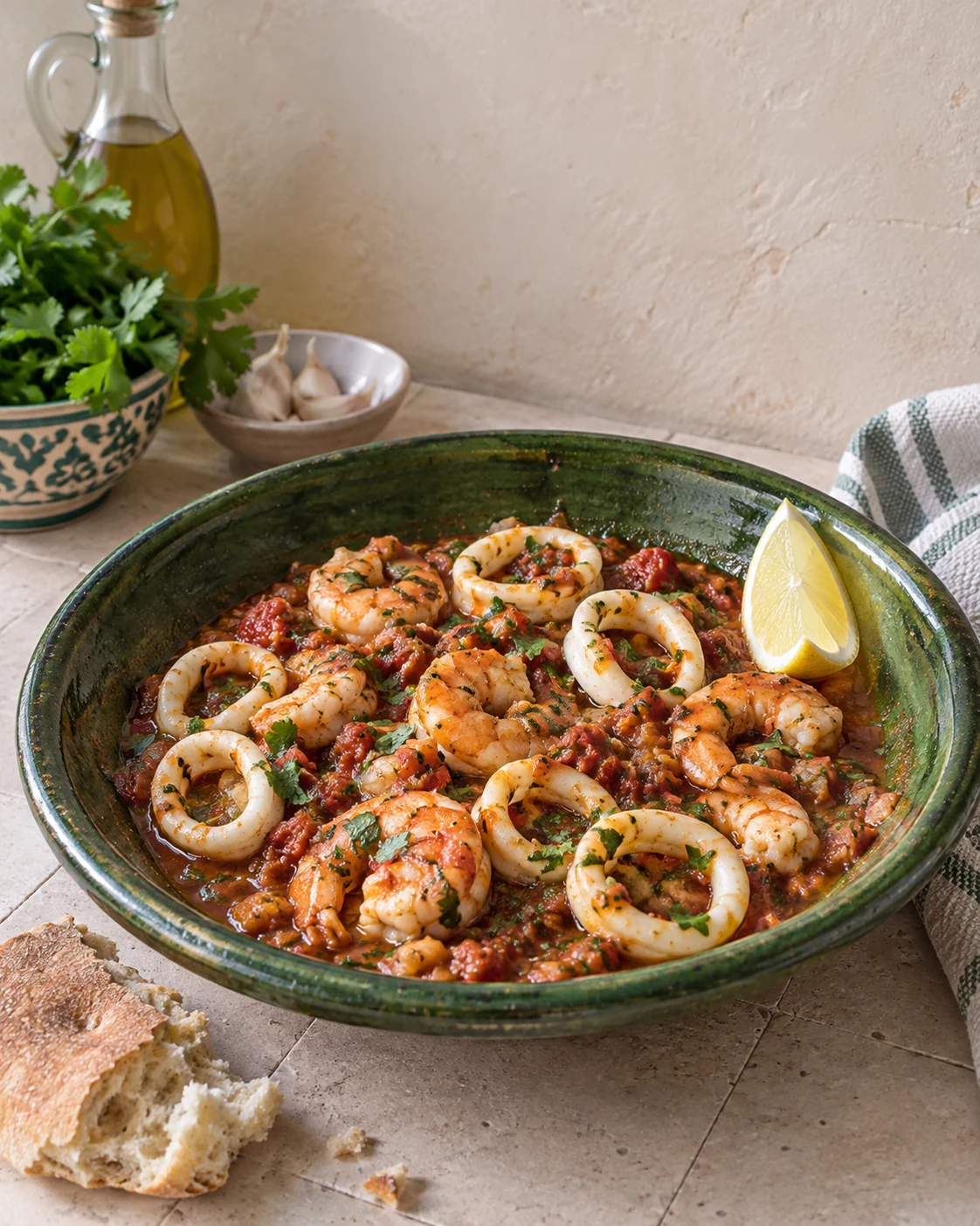
Seafood & Coastal Cooking
Fish markets, chermoula and the kitchens of the coast.
Explore the story ↗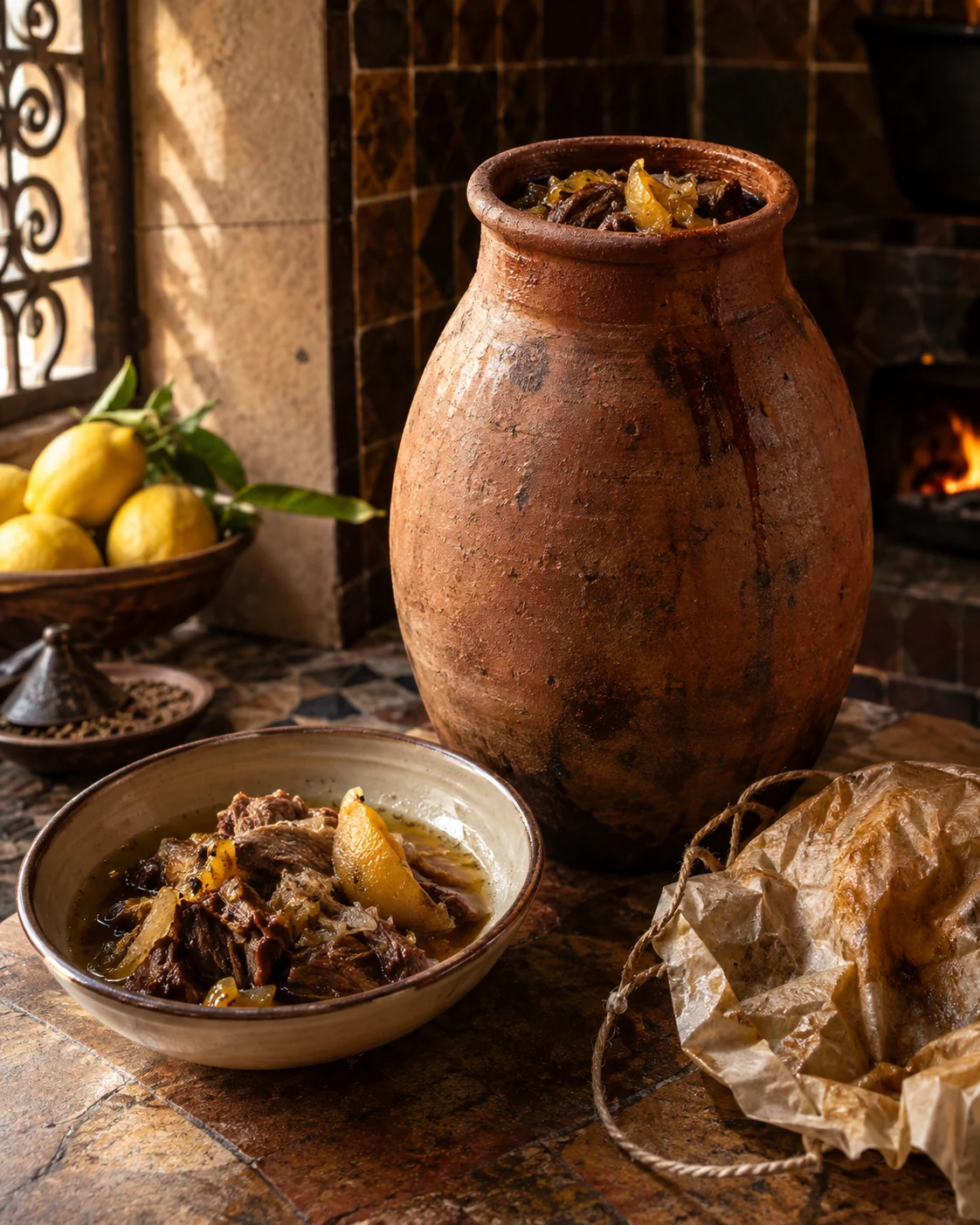
Tanjia
The earthenware pot and patient cooking associated with Marrakech.
Explore the story ↗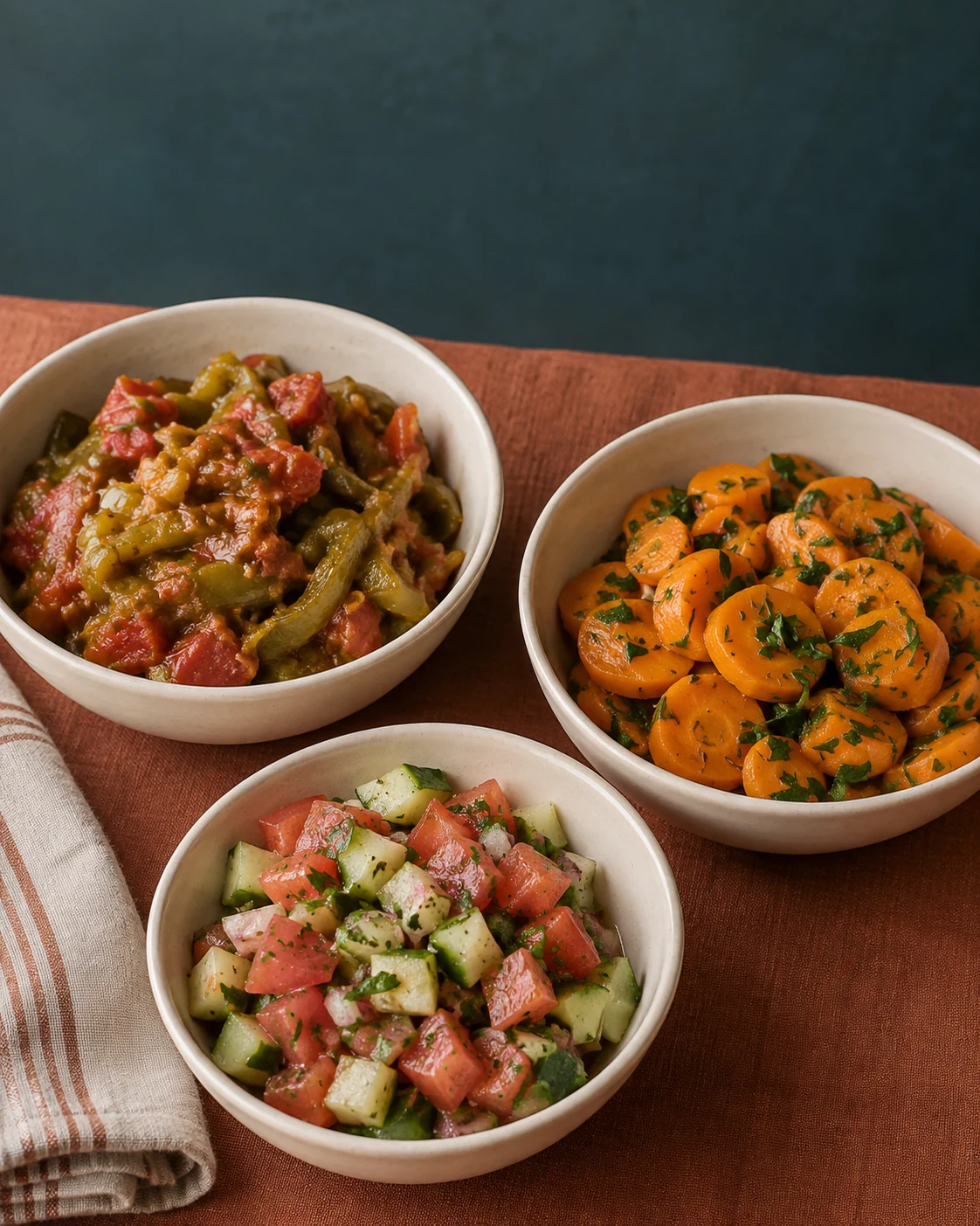
Moroccan Salads
Fresh, cooked and preserved flavours served in small dishes.
Explore the story ↗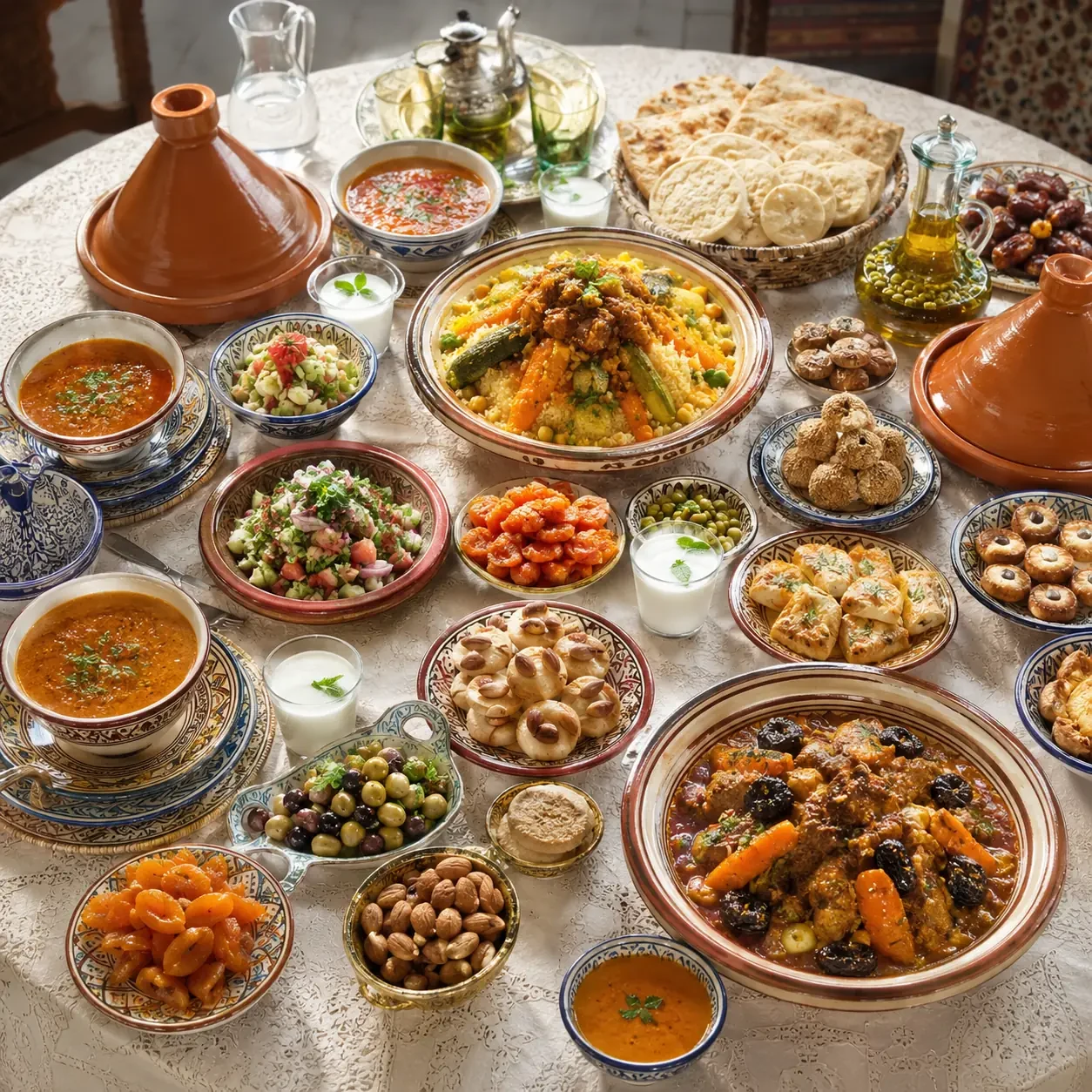
Moroccan Food Culture
The people, gestures and knowledge around the meal.
Explore the story ↗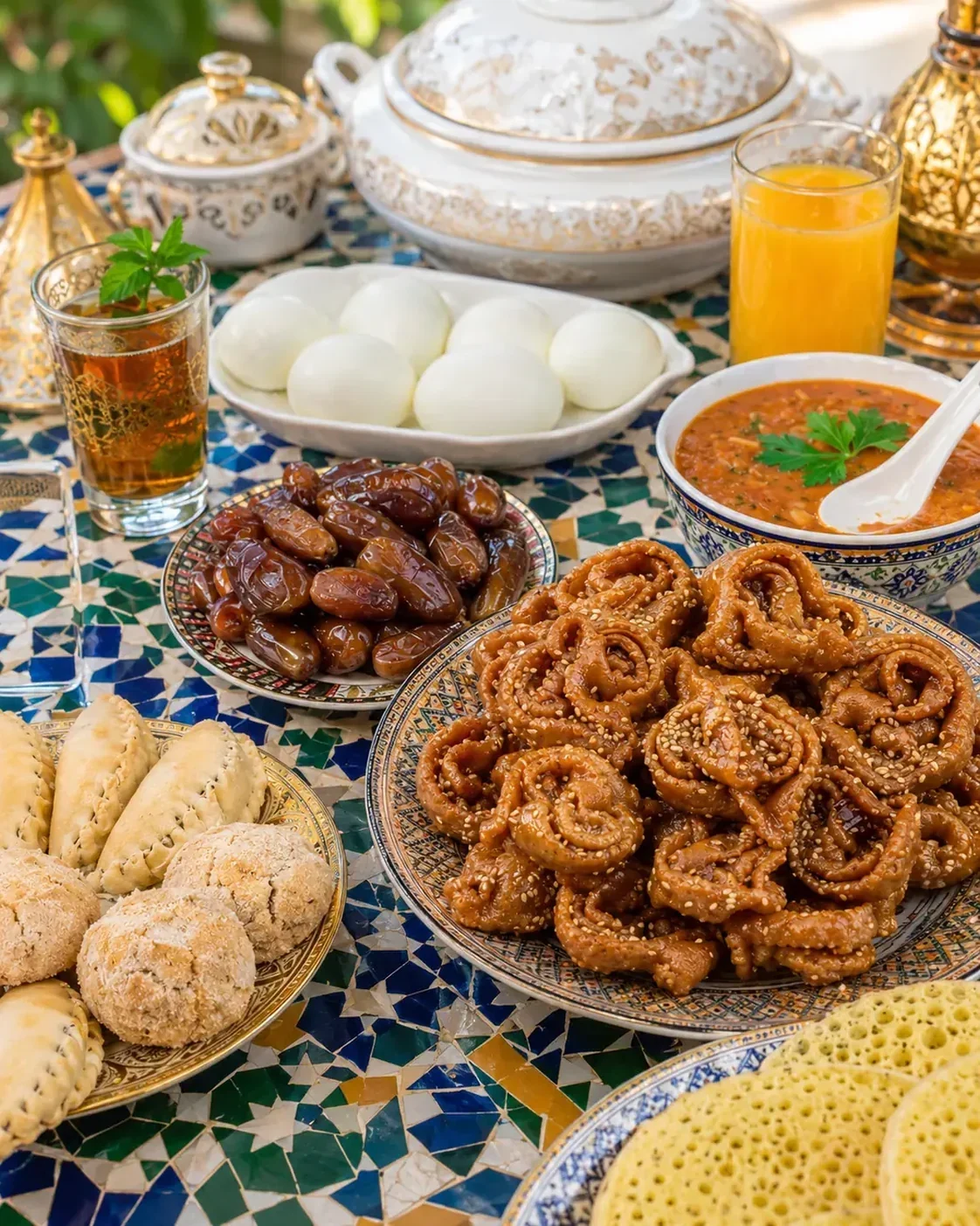
Moroccan Meal Rhythm
How food finds its place in the day and the calendar.
Explore the story ↗Sources & editorial notes
Photography combines existing Exotic Morocco assets and generated editorial illustrations. These images do not document a named person, household or historical event.
Exotic Morocco · TasteBack to Taste Morocco ↑