
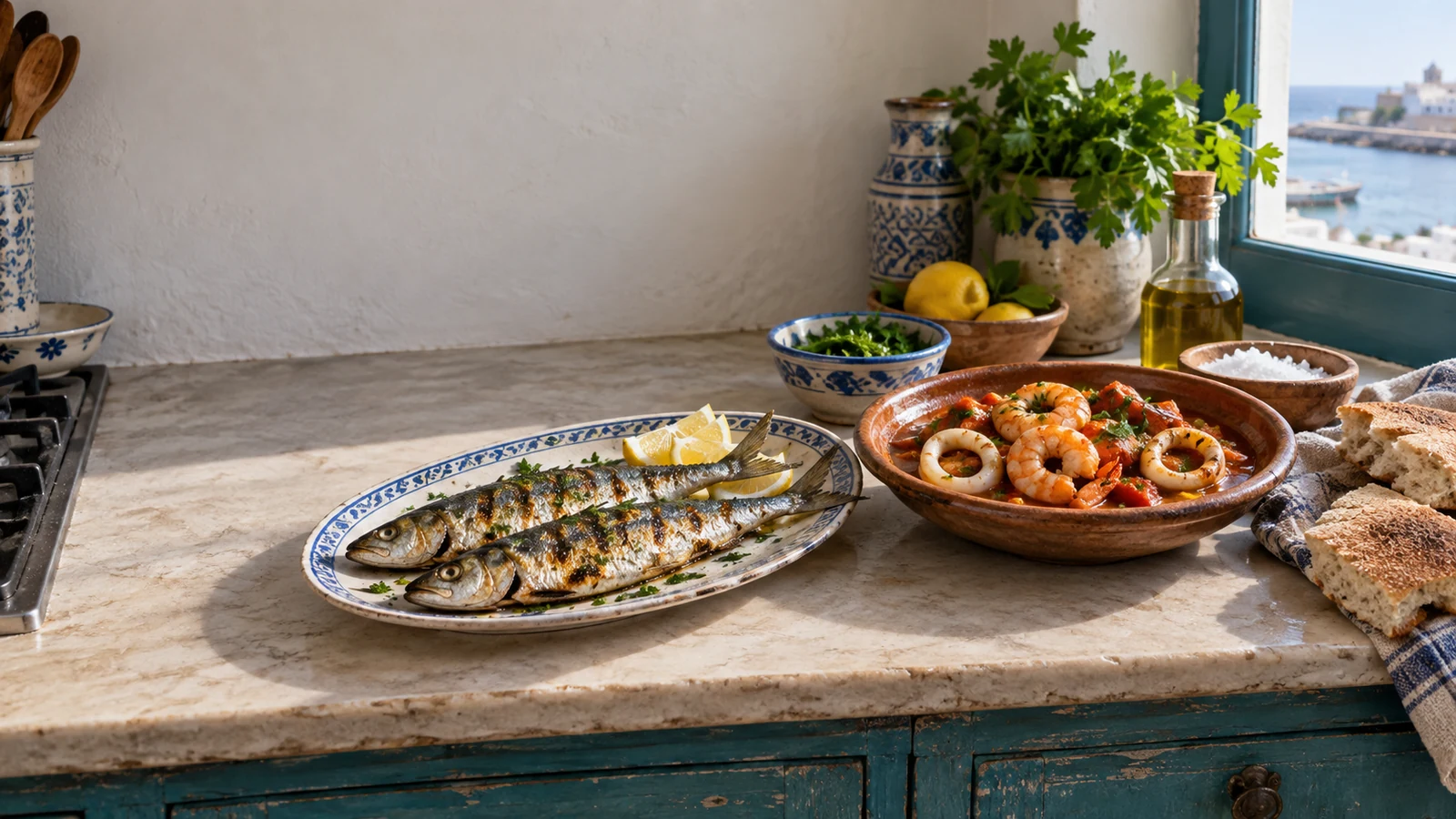
01 · The coast comes to the table
The day's catch.
Many ways to cook it.
A fish market is an invitation to cook what is fresh, not a fixed menu.
At the port, silver sardines sit beside larger fish. At home or at a small grill, a cook decides whether the catch wants charcoal, a hot pan, an oven dish or the gentle sauce of a tagine. Each method asks something different of the fish.
Morocco's Atlantic and Mediterranean shores are connected by seafood, but their kitchens are not interchangeable. Sardines with chermoula, fish baked over vegetables and northern clay dishes all belong in this wider story. The species, seasoning and vessel can change with the market and household. [1]
This page follows those choices from fresh catch to shared meal.
Enter Moroccan food culture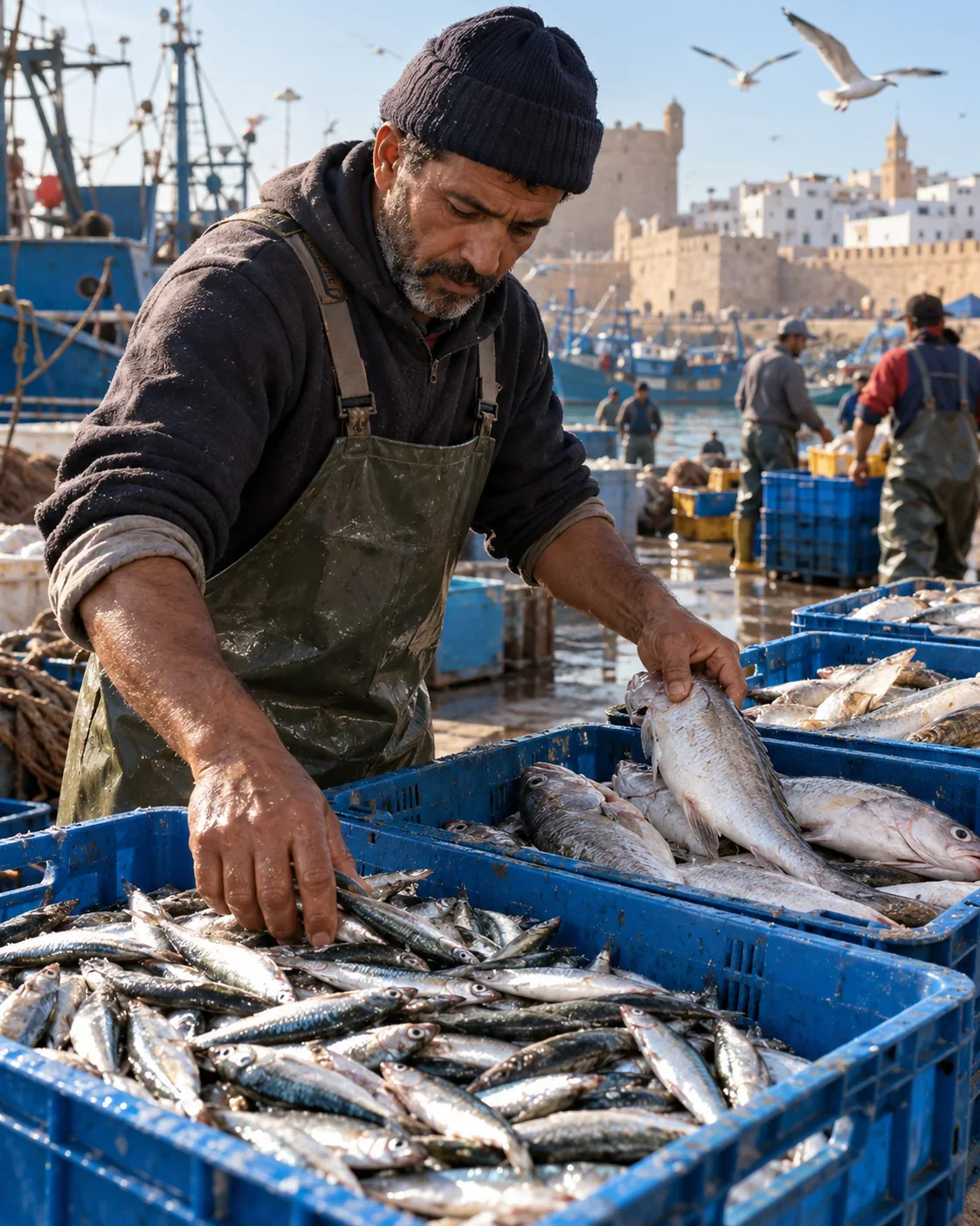
Species and size shape the method.
Different heat gives different texture.
Herbs and acid serve the fish.
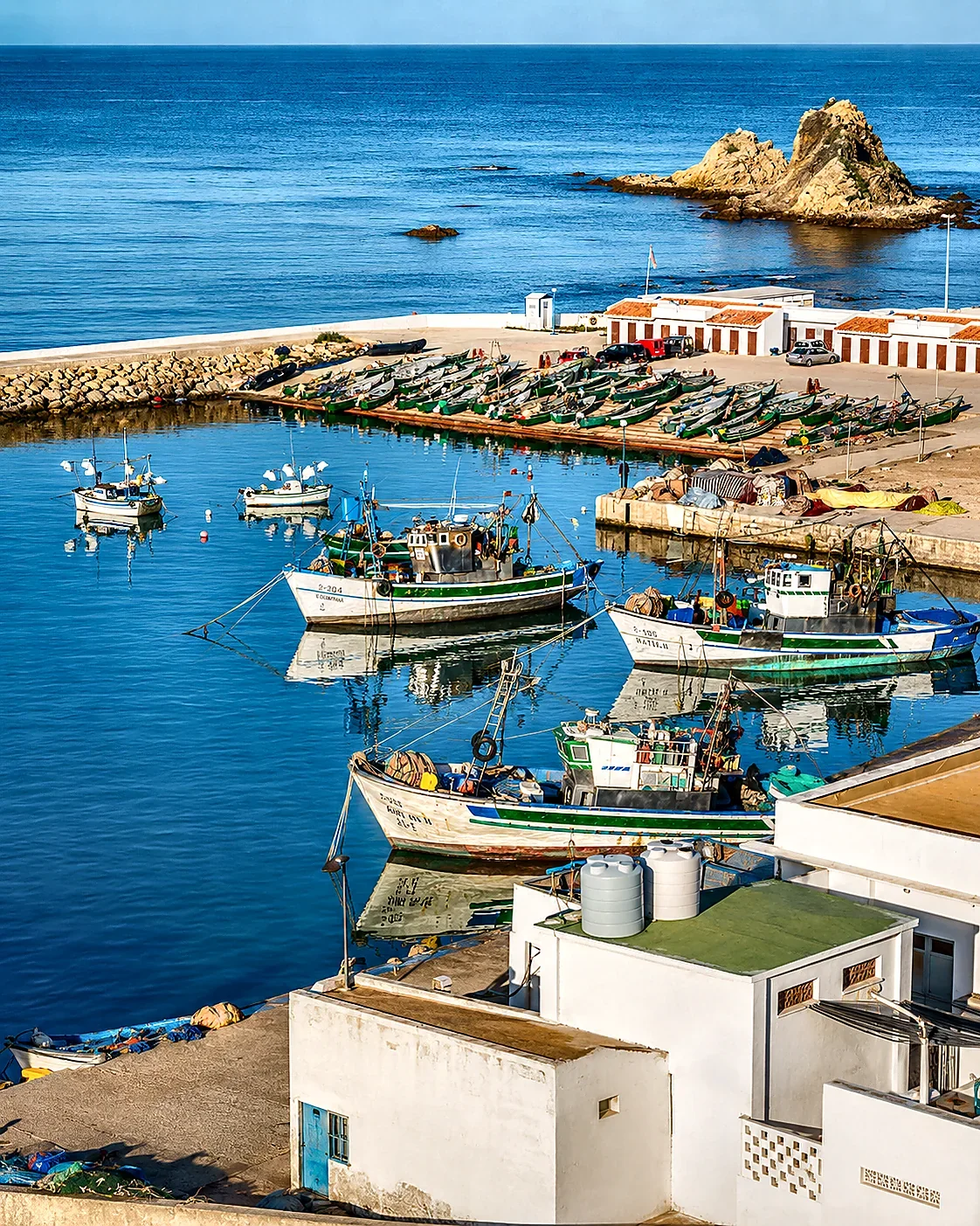
02 · Ports & daily practice
A working shore.
A living kitchen.
The route from boat to plate shapes the meal.
In Essaouira, the fishing port and its market are part of the city's everyday identity. Fresh fish can be chosen close to where it lands, and a simple grill lets the catch remain the centre of attention. [1]
That immediacy is one coastal pattern, not a claim that every town or family eats in the same way. Fish also travels inland; households use ovens, pans and covered pots as well as grills.
At the landing
Species, size and condition guide what a cook buys and how it will be handled.
At the worktable
Cleaning, butterflying or leaving a fish whole changes how seasoning reaches the flesh.
At the heat
Direct fire develops char; a covered dish keeps fish and vegetables in their cooking juices.
03 · Heat & handling
Respect the fish.
Choose the heat.
The same catch changes completely between a grill, an oven dish and a tomato-rich clay vessel.
Thickness matters. Dense vegetables may need a head start; fish is added with care so its flesh stays moist and holds together. [2]
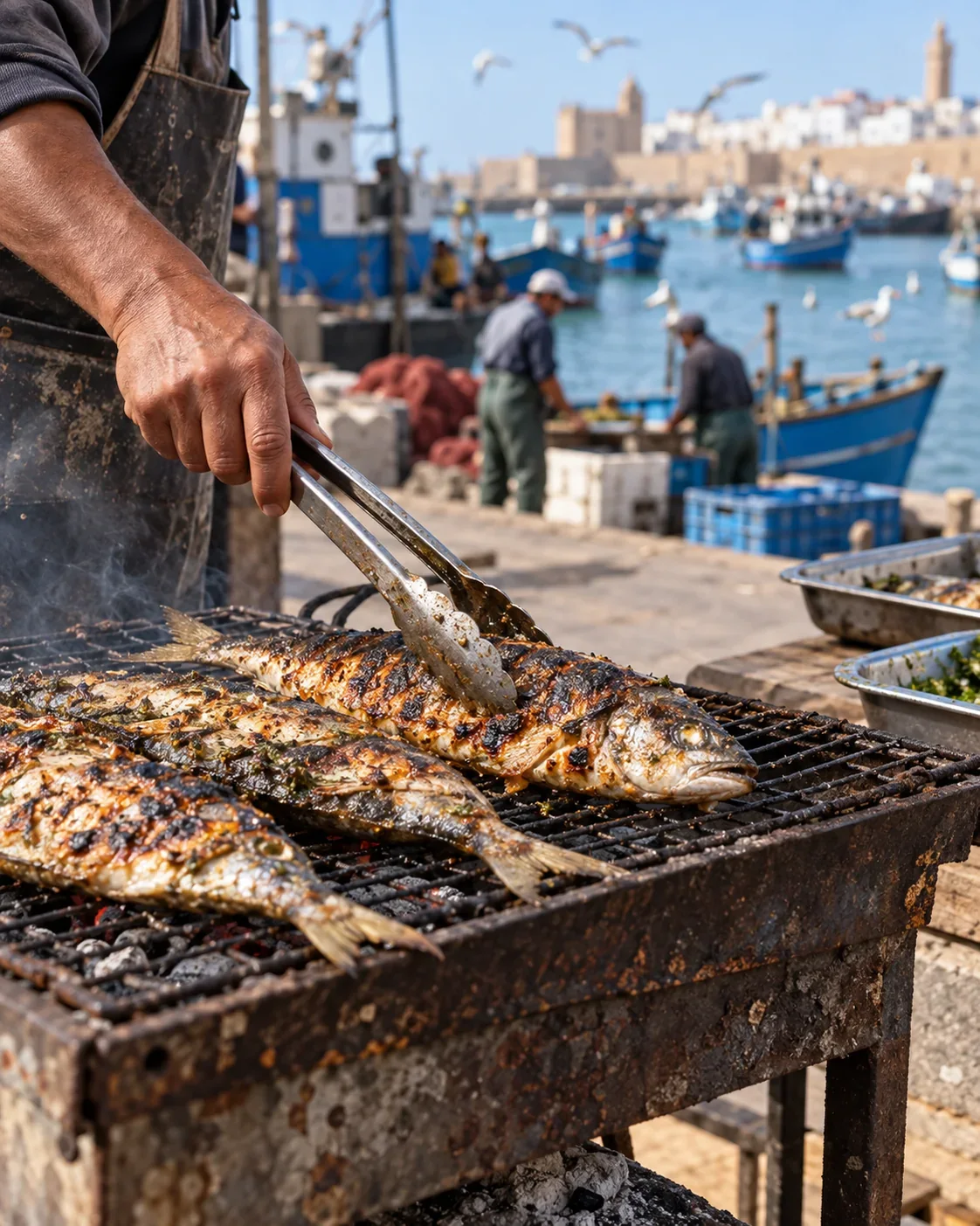
Over charcoal
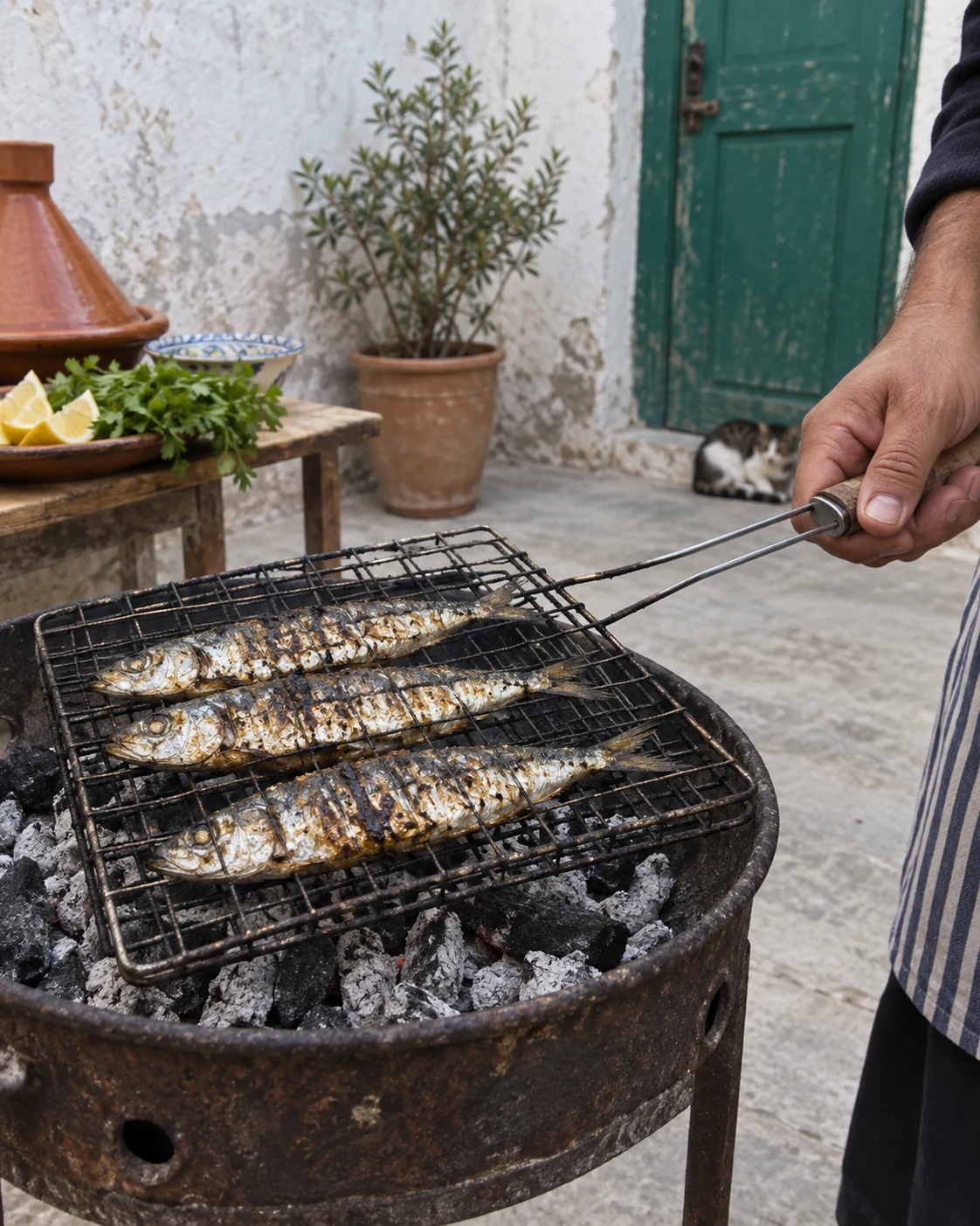
Whole fish needs careful turning and enough distance from the coals to cook through without scorching the skin.
In the oven
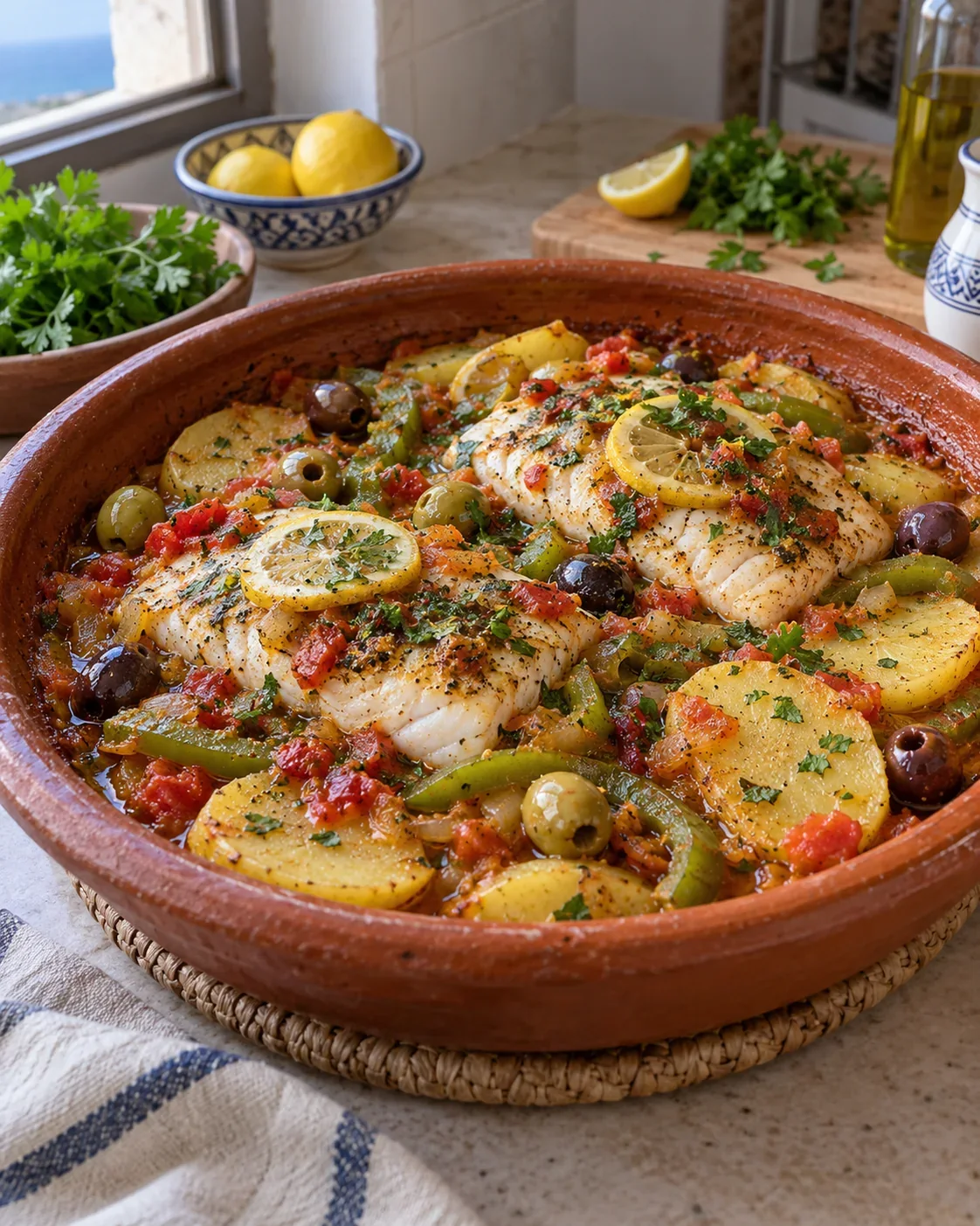
Tomato, pepper and potatoes can support the fish and form a useful sauce. Their cut and timing matter more than decoration.
In clay
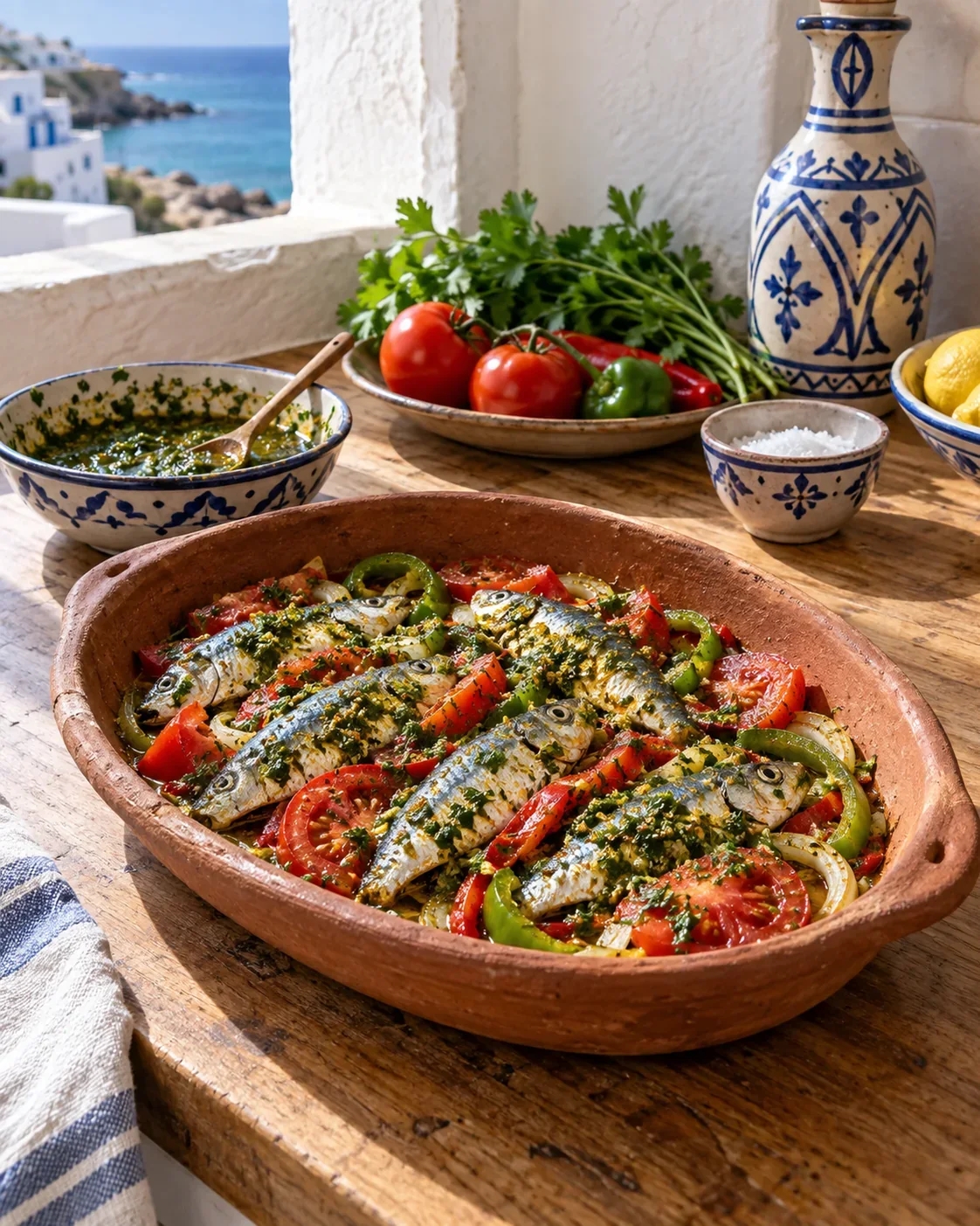
A shallow tagra or a tagine base surrounds fish with vegetables and seasoning. Northern tagra traditions give the vessel a distinct local place. [5]
This is a guide to methods, not a substitute for a measured recipe or safe handling instructions for a particular fish.
04 · Five coastal expressions
The coast cooks
in more than one way.
These are families of preparations, not a rigid map of what each city must serve.
Move through the cards to see how heat, vessel and seasoning create different results.
Grilled sardines
The simplest treatment lets oily fish and a little lemon do much of the work. Chermoula may accompany or season the fish; grilling is not the same as stuffing and frying it.
Baked fish with vegetables
A shallow dish collects tomato juices and olive brine around the fish. Firm vegetables are cut or started so they can soften without forcing the fish to overcook.
Fish in a tagra
In northern Morocco, an oval earthenware tagra is associated with fish cooked with seasoning and vegetables. It is a useful vessel, not simply another name for the conical-lidded tagine.
Shrimp & calamari
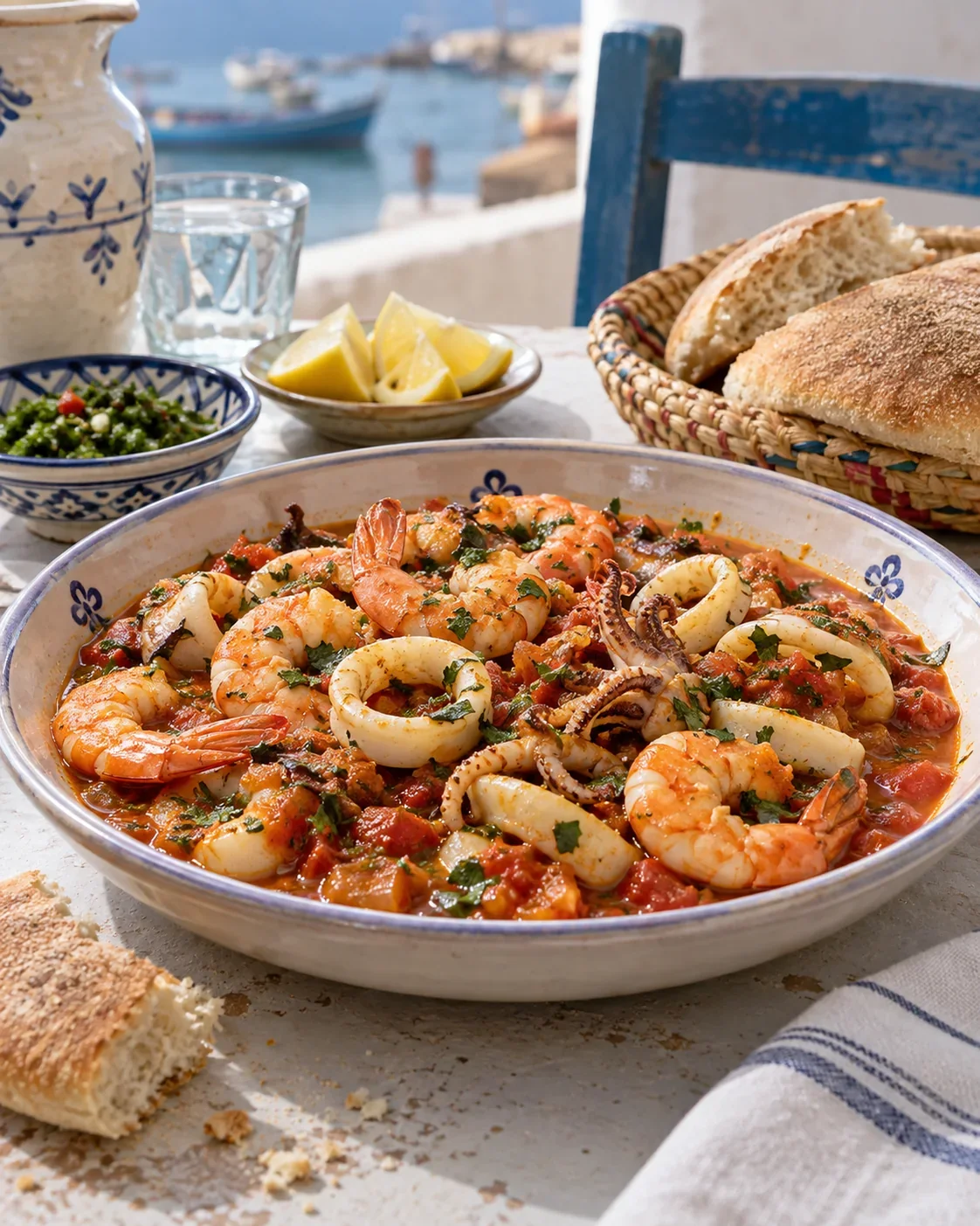
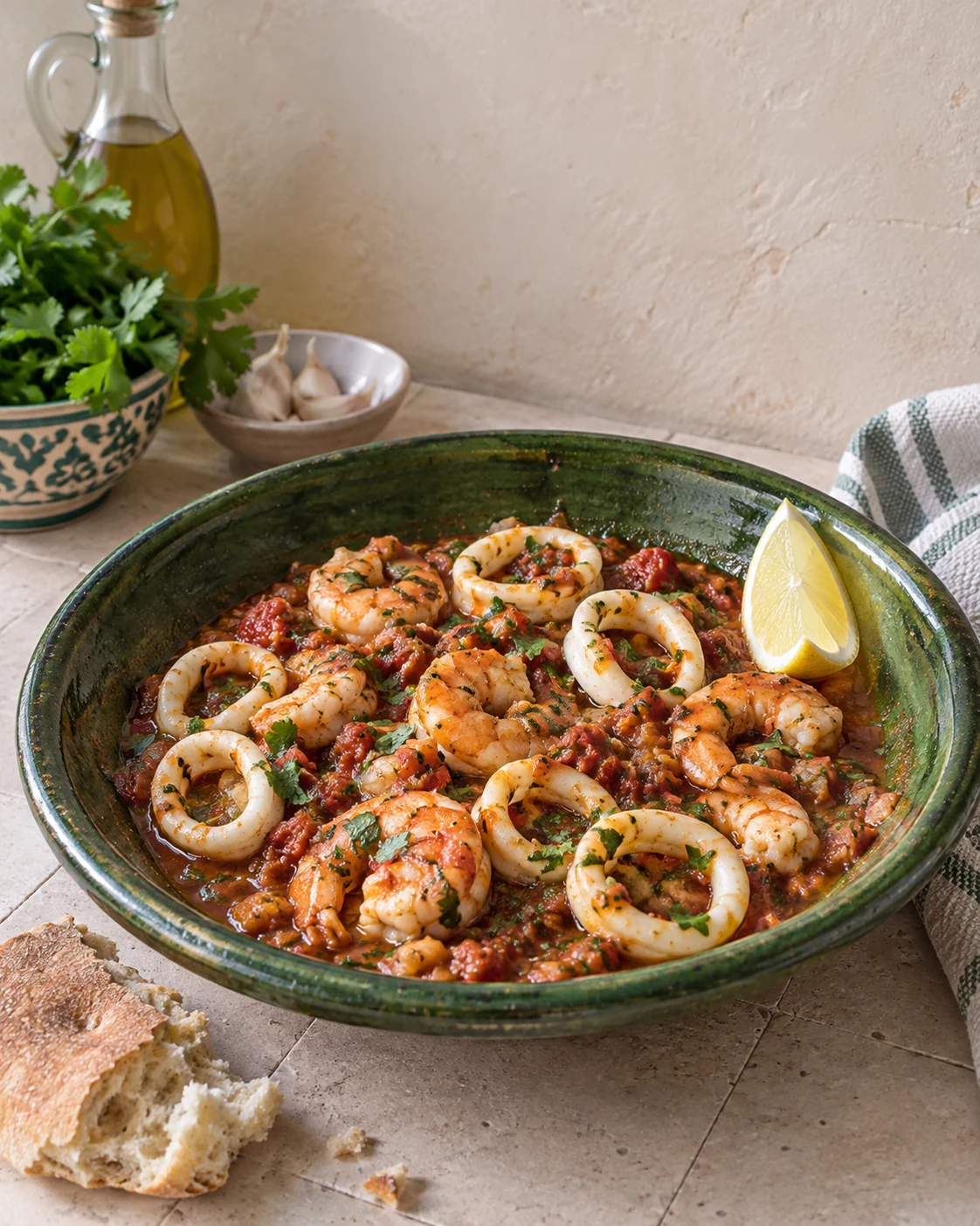
Shrimp and calamari can meet tomato, garlic and herbs in a shallow dish. Their textures are different; adding everything at one moment can leave one part tough while another is barely cooked.
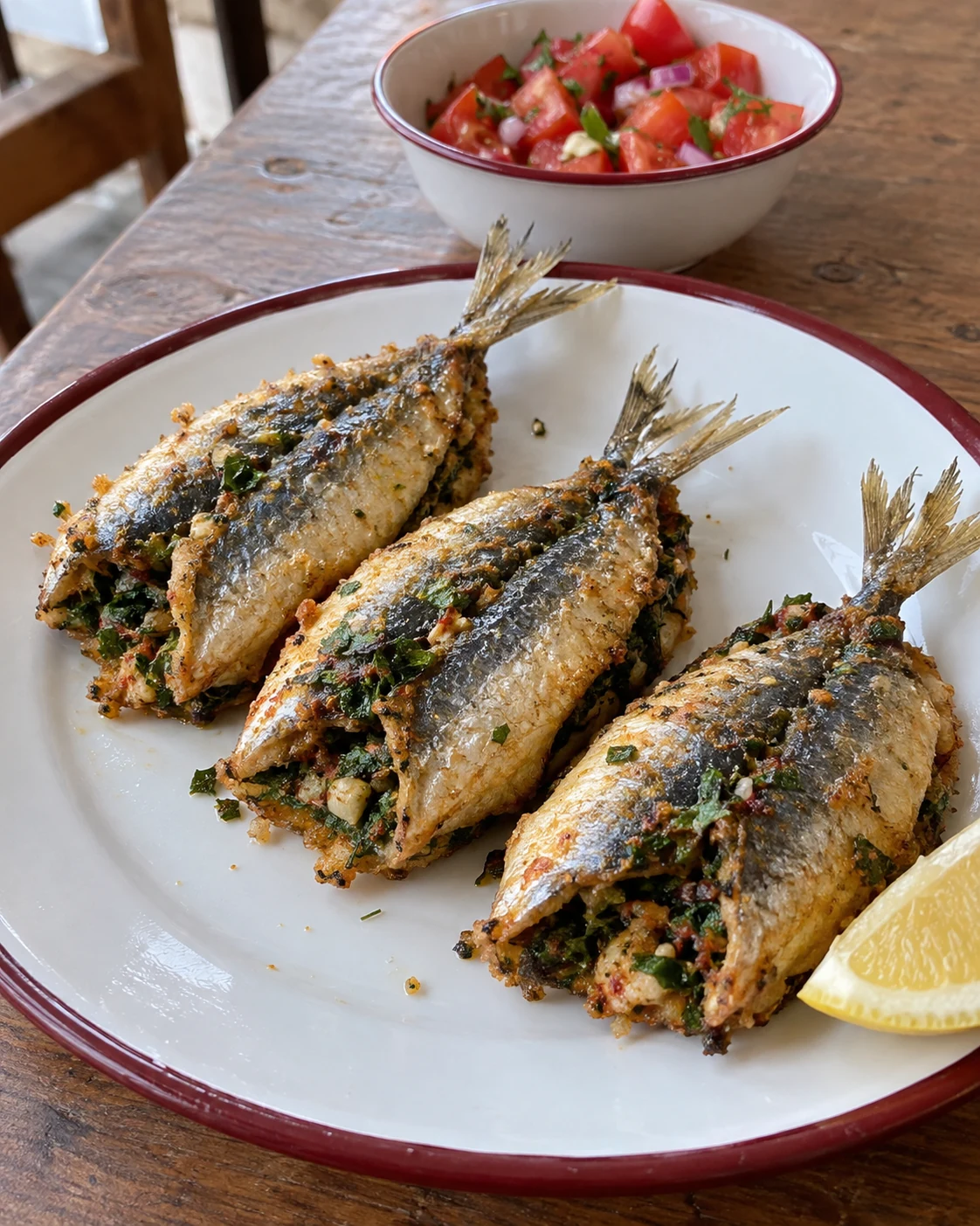
Chermoula-stuffed sardines
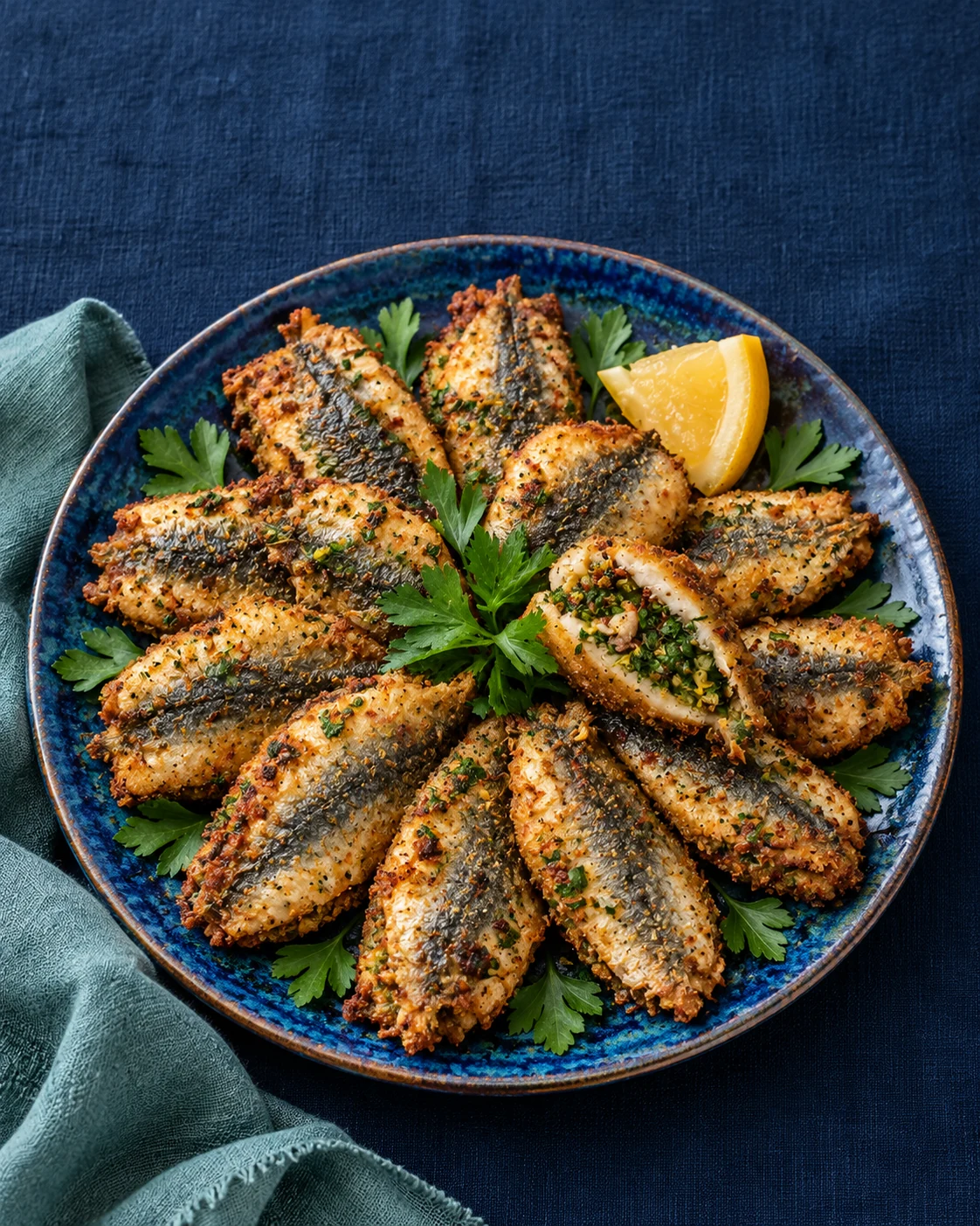
Butterflied sardines may be joined around a chermoula filling, lightly floured and fried. The paired form is distinct from a whole grilled sardine. [3]
And there is more.
Sardine balls in tomato sauce, a fish tagine with chermoula and local shellfish are other paths into the coastal repertoire. Availability and family preference matter. [4]
Names travel. Methods vary.
Ask how a dish is prepared rather than assuming one national formula from its name. Even chermoula changes in intensity and ingredients between cooks.
05 · A working coastal pantry
A few ingredients.
Clear purpose.
Good seafood cookery is a balance of the catch, acidity, herbs and the liquid around it.
These four elements recur, but none belongs automatically in every dish. [2]
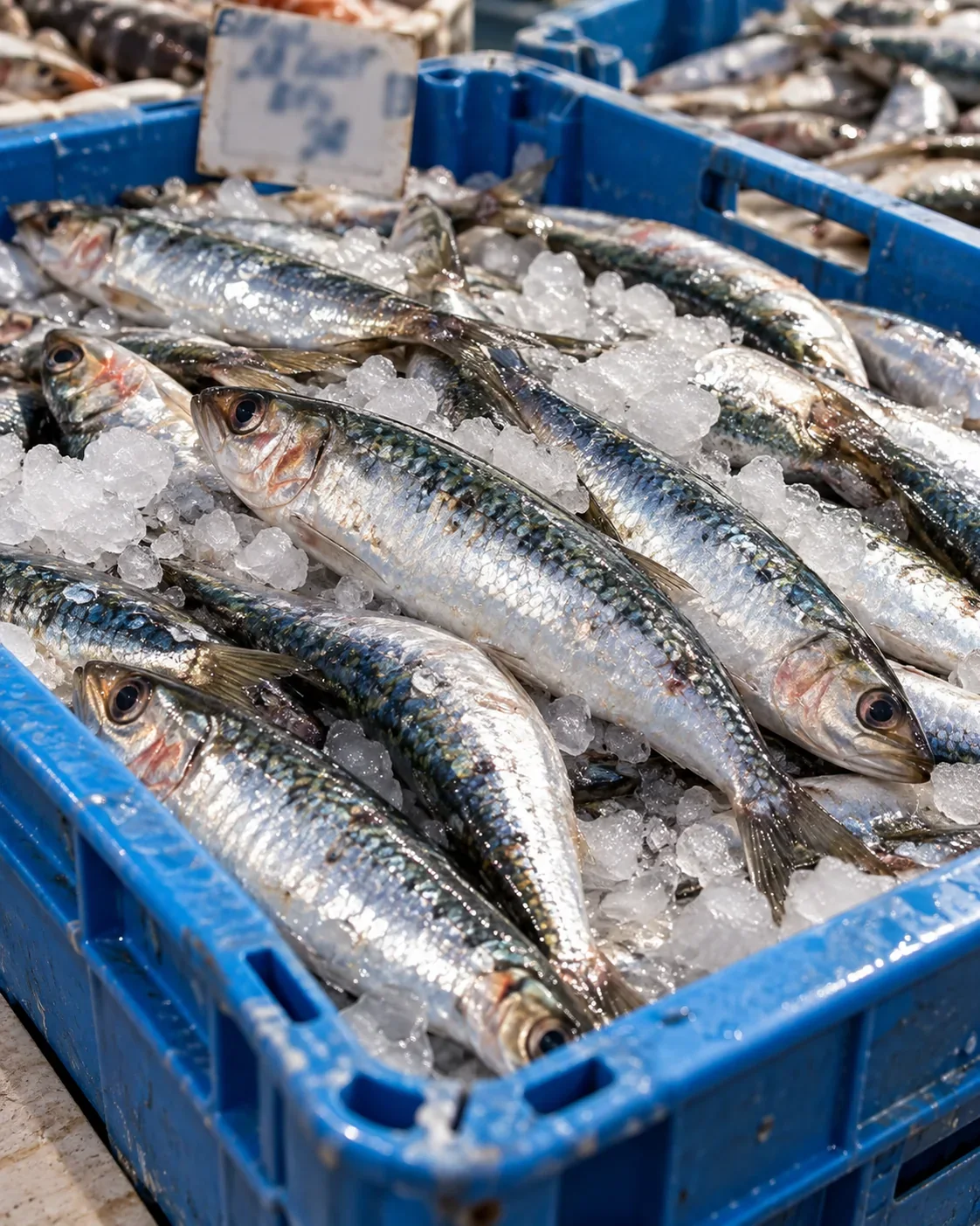
Fresh fish
The starting point.
Condition and size affect what the cook can do. A small oily sardine and a firm white fish call for different preparation and heat.
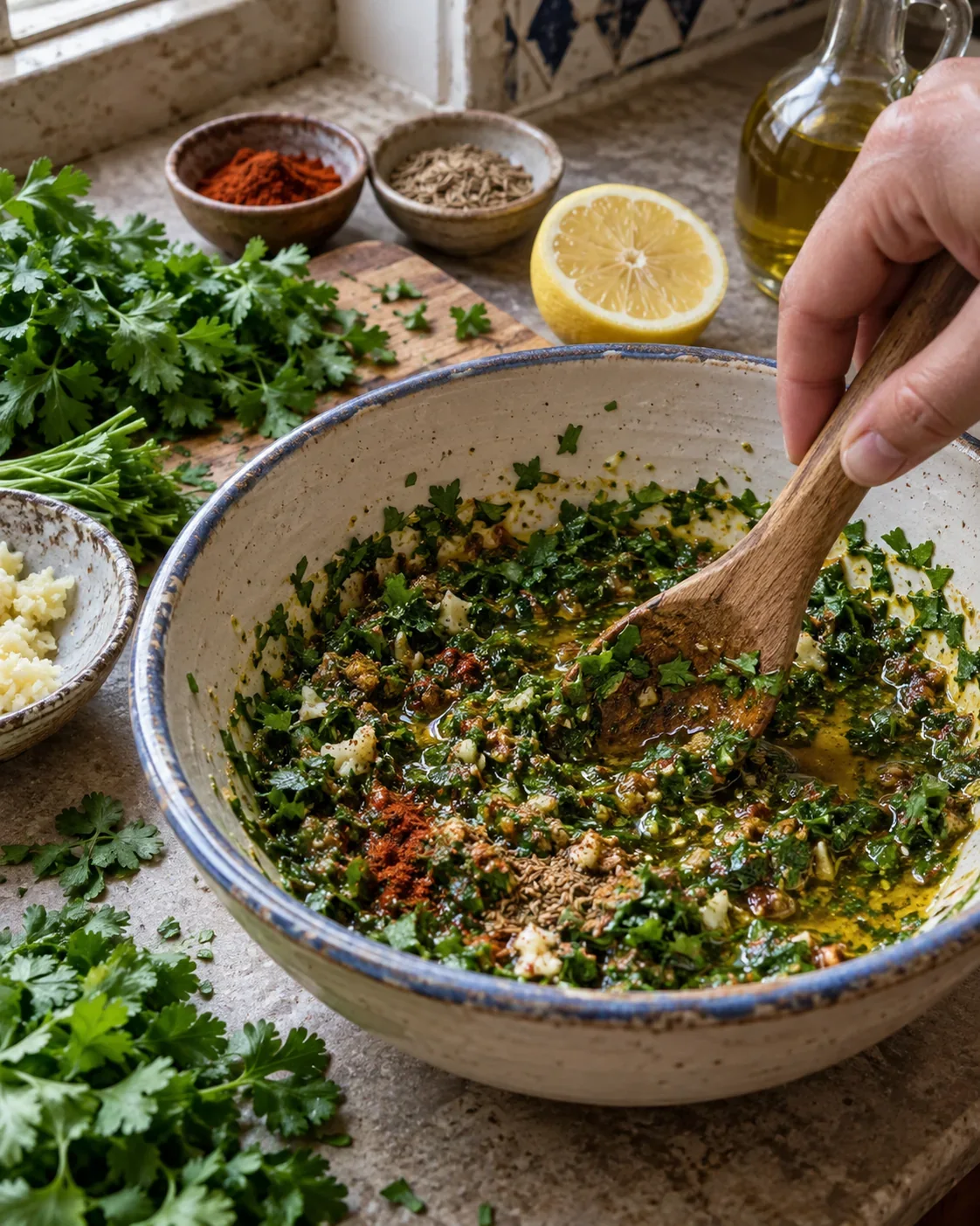
Chermoula
Herbs with a job.
Parsley, coriander, garlic, spices and acid can season fish before cooking or join the sauce. The balance changes with the cook and the dish.
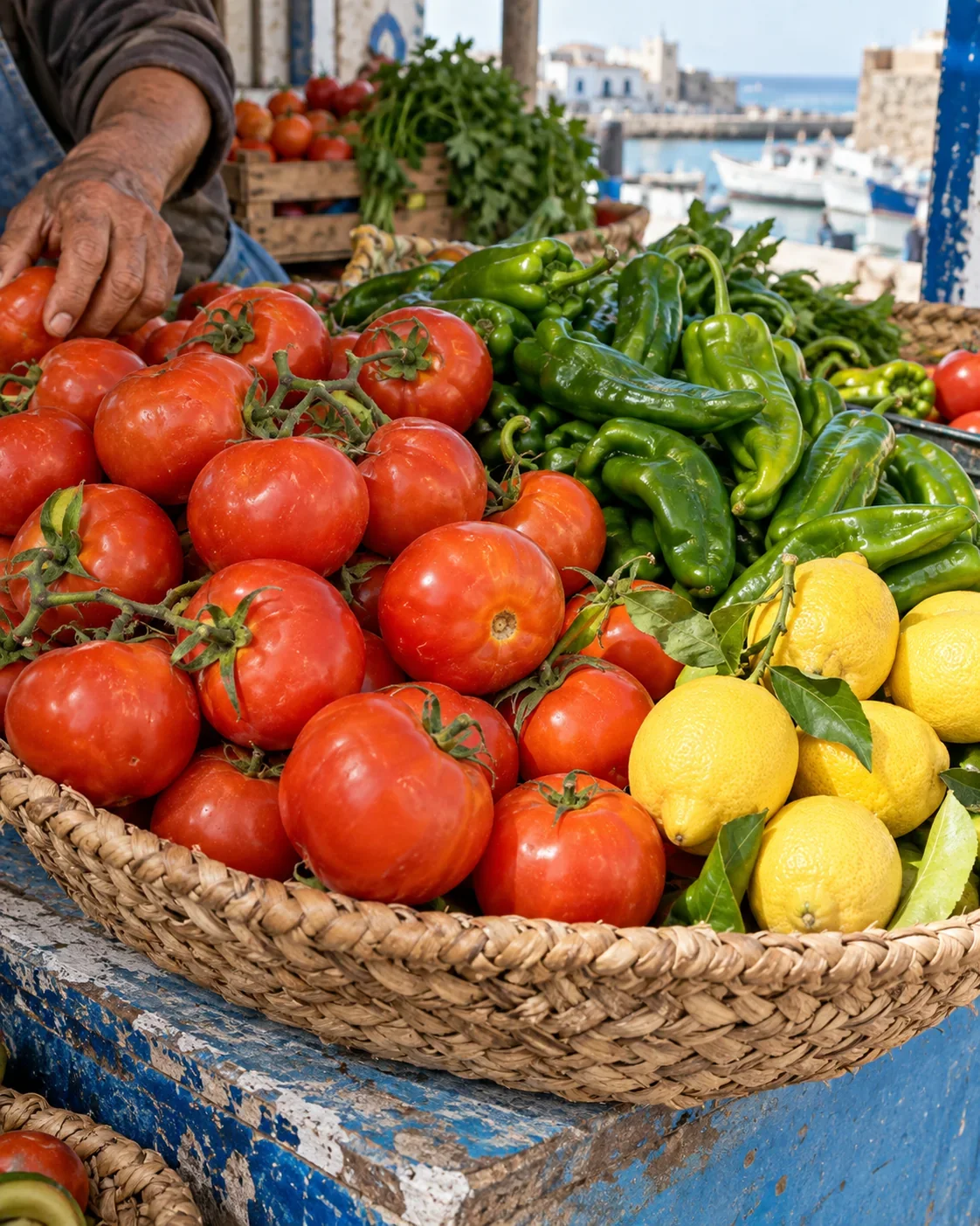
Tomato & pepper
Body for the dish.
They soften around fish in oven dishes or clay vessels, adding sweetness and moisture without becoming the main event.
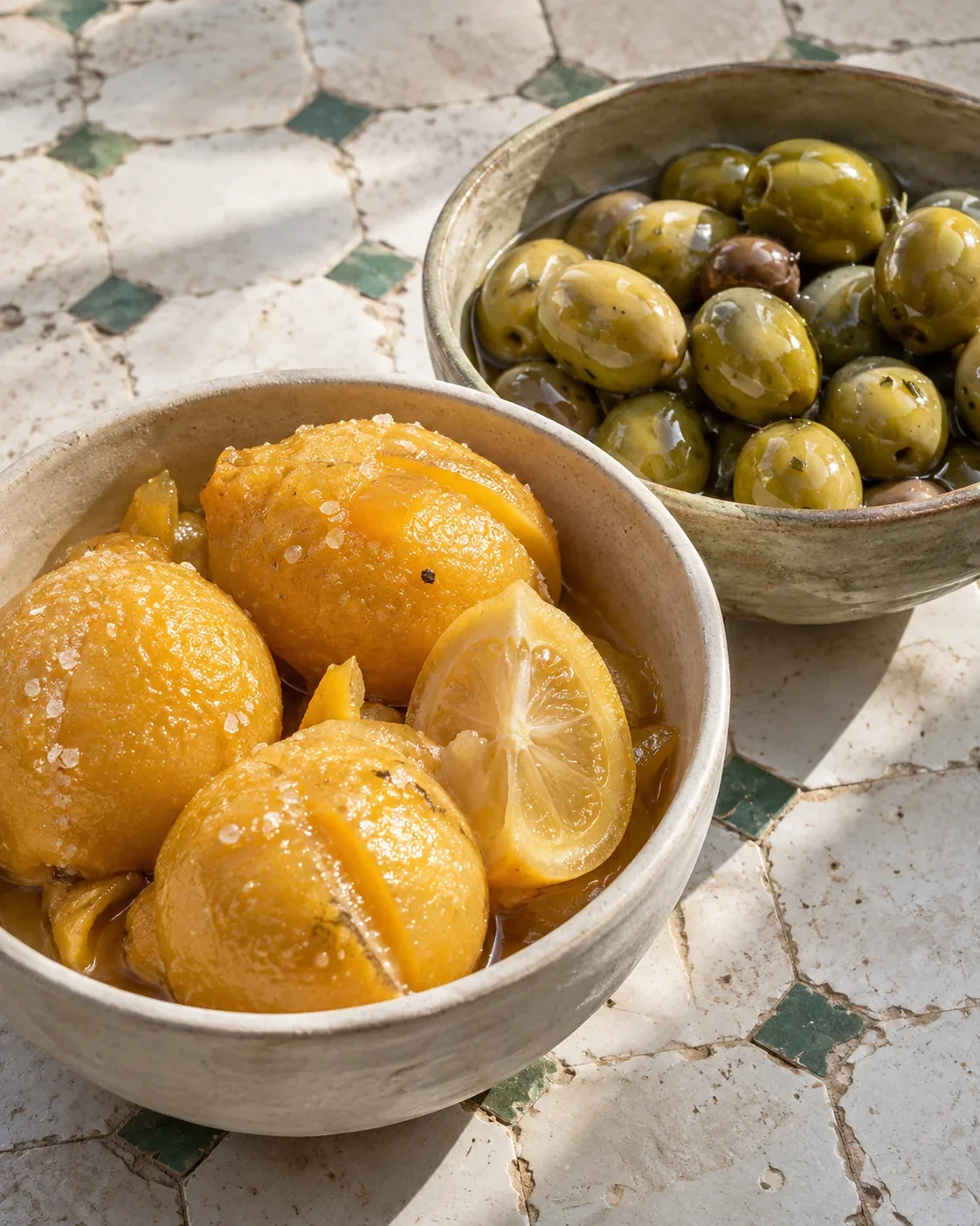
Lemon & olives
Brightness and brine.
Fresh lemon sharpens a grilled fish. Preserved peel and olives can add a deeper salty note to a cooked sauce; they are not interchangeable.
Explore the four flavours
HERBS · GARLIC · ACID
Chermoula
has a purpose.
It is a seasoning and marinade, not a single fixed recipe.
Chopped herbs and garlic bring freshness and aroma; cumin or paprika can deepen the flavour. Lemon and oil carry the mixture into the fish or sauce. Some cooks add preserved lemon, others adjust the herbs or heat. [6]
Use it to support the fish, not bury its texture.
As a marinade.
The mixture reaches the surface or the inside of a butterflied fish before cooking.
As a sauce base.
Herbs and spice can join tomato and cooking juices in a fish tagine or oven dish.
As a finishing contrast.
A small bright spoonful can lift a simply grilled fish without disguising it.

06 · Along two shores
Different ports.
Shared questions.
What arrived today? How will it be cleaned? Which heat suits it?
Essaouira's Atlantic fish market is one visible example of the connection between landing and lunch. The northern coast has its own working harbors and earthenware fish dishes. Neither shore can be reduced to one recipe. [1] [5]
Availability changes through the year and with the day's catch. Techniques travel with cooks, while local vessels, markets and habits keep meaningful differences alive.
Atlantic markets
Essaouira's port brings the fish market close to the visitor and the cook.
Explore Essaouira ↗Northern vessels
Shallow clay fish dishes are part of the north's culinary vocabulary.
Explore the regions ↗Coastal context
Boats, tides and working harbors frame the daily possibilities.
Discover Taste Morocco ↗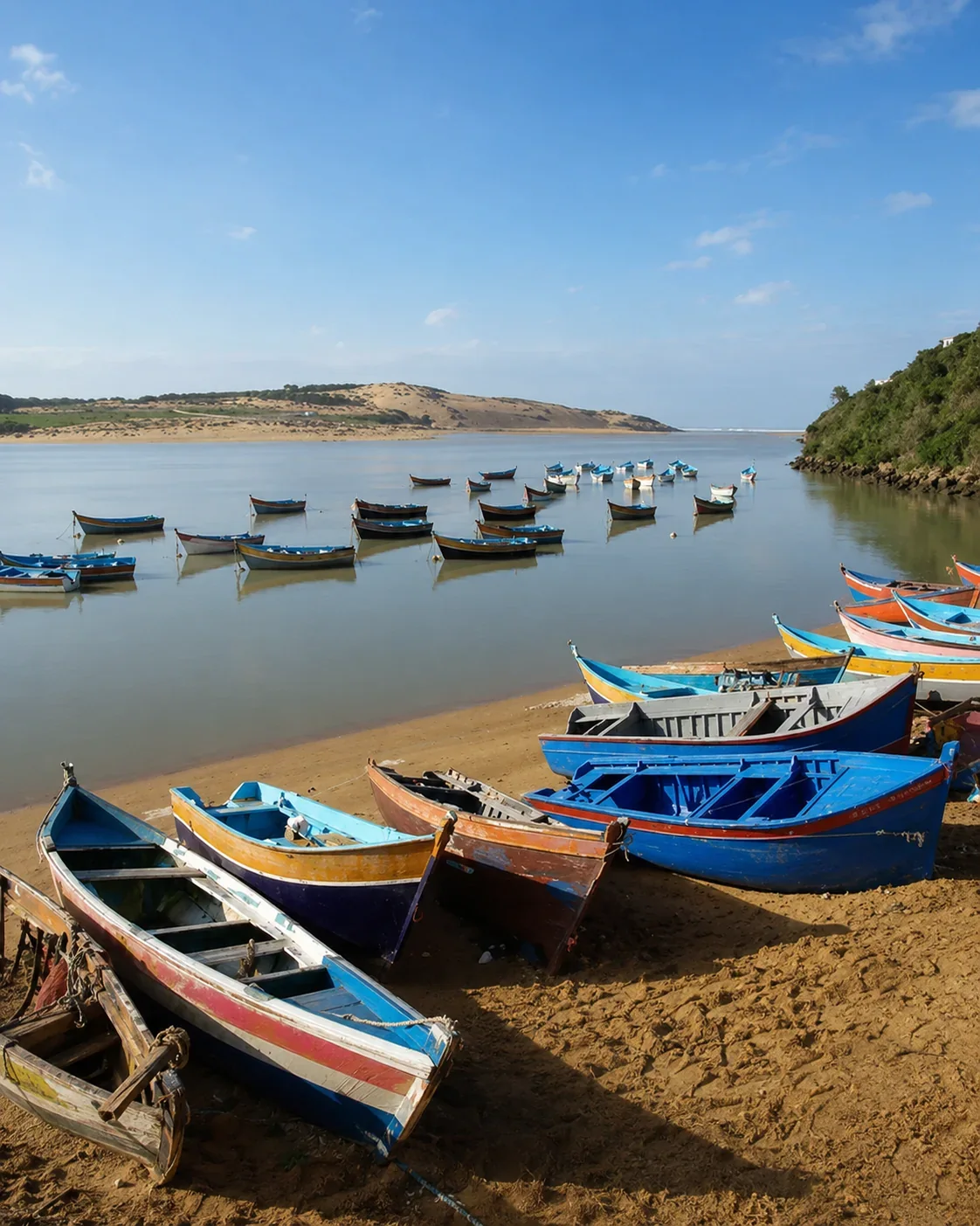
07 · The coastal table
Bring the bread.
Pass the dish.
The cooking method reaches the table in the way the fish is served.
A whole grilled fish can be lifted from its platter in pieces; a sauced dish invites bread to gather tomato and herbs. The serving arrangement may be shared or plated individually, depending on the household and occasion.
Attention matters more than a staged ritual. Bones are handled carefully, small dishes are passed, and the cook's choice of accompaniments keeps the catch at the centre.
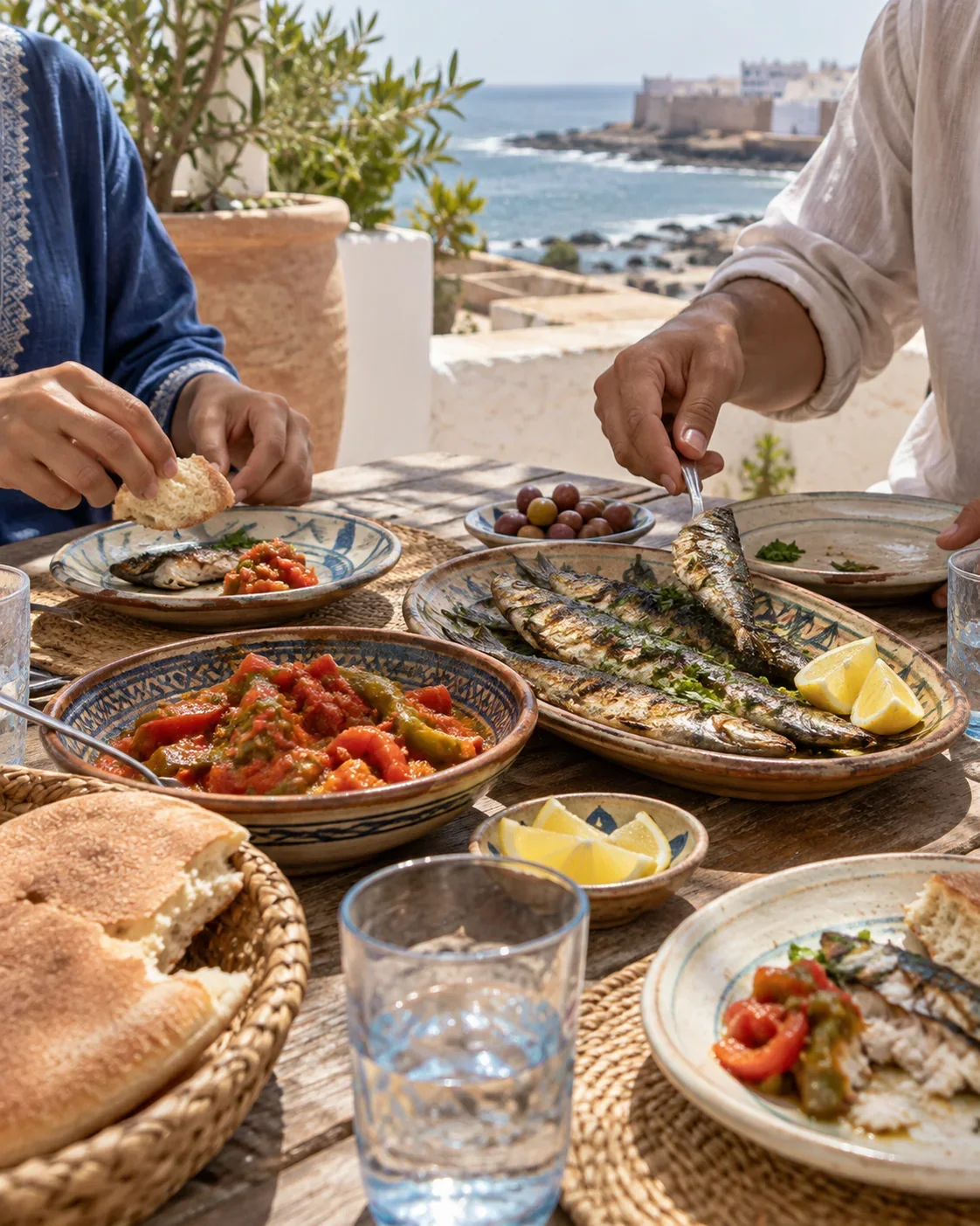
Khobz and the sauce.
Bread belongs naturally beside a tomato-rich fish dish, gathering a little sauce without needing a separate grain. At a grill, it can accompany the fish and a simple salad.
The exact table setting varies; follow the cook and your hosts rather than prescribing one way for every home.
A small cooked salad.
Taktouka or another cooked vegetable dish can bring sweetness and softness beside grilled fish. A lemon wedge or a few olives offer a sharper contrast.
A side should add something the main dish lacks, not repeat its strongest flavours.
From grill
to lunch.
Fish cooked close to the market may be eaten soon after it leaves the fire. The pleasure lies in its texture and freshness rather than in a crowded table of accessories.
Not one standard menu.
Some families favour fried sardines; others choose a sauced fish dish or simply grill what is available. These are different choices within a broad coastal repertoire.
08 · Skill before spectacle
The small work
that changes a meal.
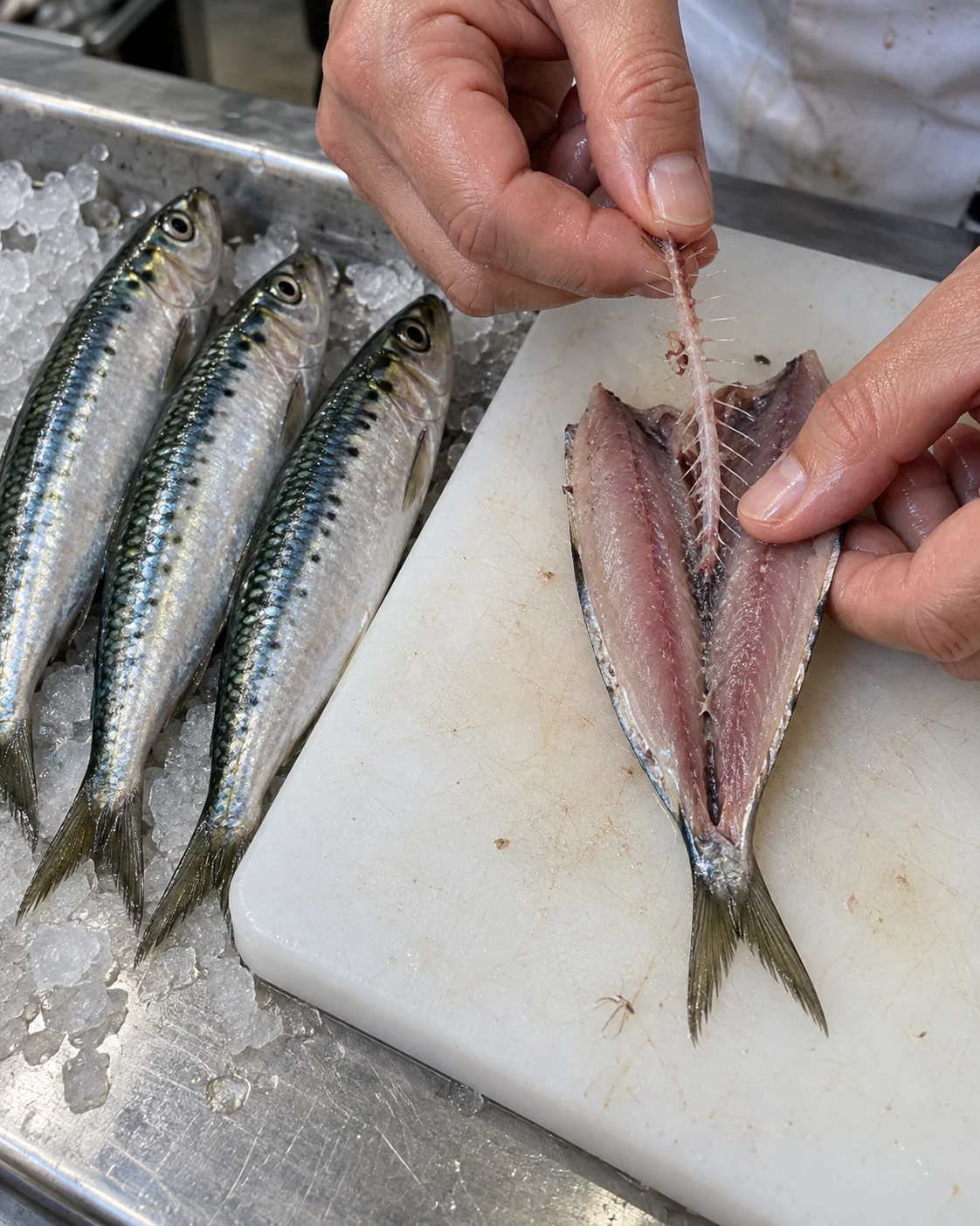
Cleaning, butterflying and seasoning are part of the craft.
To make a pair of stuffed sardines, the fish is opened and the filling is spread between two fillets. The method changes the bite, protects the herbs inside and gives the cook a different result from a whole grilled fish. [3]
A fishmonger may prepare the catch; another cook prefers to do it at home. The important detail is practical: scales, bones, thickness and freshness influence the finished dish.
This is why seafood cooking deserves its own attention. A good-looking plate begins with work that happens before the photograph.
Explore Moroccan food culture ↗09 · A closer look
Good questions.
Useful answers.
A few distinctions make the coastal kitchen clearer.
Is chermoula always the same mix?
No. Herbs, garlic, acid and spices recur, but their proportions and additions vary with the cook and preparation. It can be a marinade or become part of a sauce.
Are grilled and stuffed sardines the same dish?
No. Whole grilled sardines cook over direct heat. Stuffed pairs are butterflied, filled with chermoula and often floured and fried.
Does fish need a tagine pot?
No. Moroccan fish is also grilled, pan-fried and baked. A tagra in the north is a different shallow clay vessel associated with fish.
Why start vegetables before fish?
Potato or firm carrot can take longer than delicate fish. The sequence helps them soften while the fish remains moist and intact.
Does seafood mean only sardines?
No. Sardines have a strong place in Moroccan coastal food, while white fish and other seafood also appear. What is available and affordable shapes the menu.
 EXOTIC MOROCCOTASTE · THE GUIDE COLLECTIONSeafoodIngredients, technique
and the Moroccan table
From the story to your kitchen
Keep the flavour.
Go a little deeper.
Fish markets, chermoula and the kitchens of the coast.
Explore the Exotic Morocco guide collection for a closer look at ingredients, kitchen knowledge and the culture around the table.
- Understand the ingredients and their roles
- Recognise the techniques and textures that matter
- Bring context and confidence to the way you cook and serve
Continue tasting Morocco
Follow the
table outward.
Another dish, another technique, another way into the Moroccan kitchen.
Sardines with Chermoula
Small fish, fragrant herbs and the details of preparation.
Explore the story ↗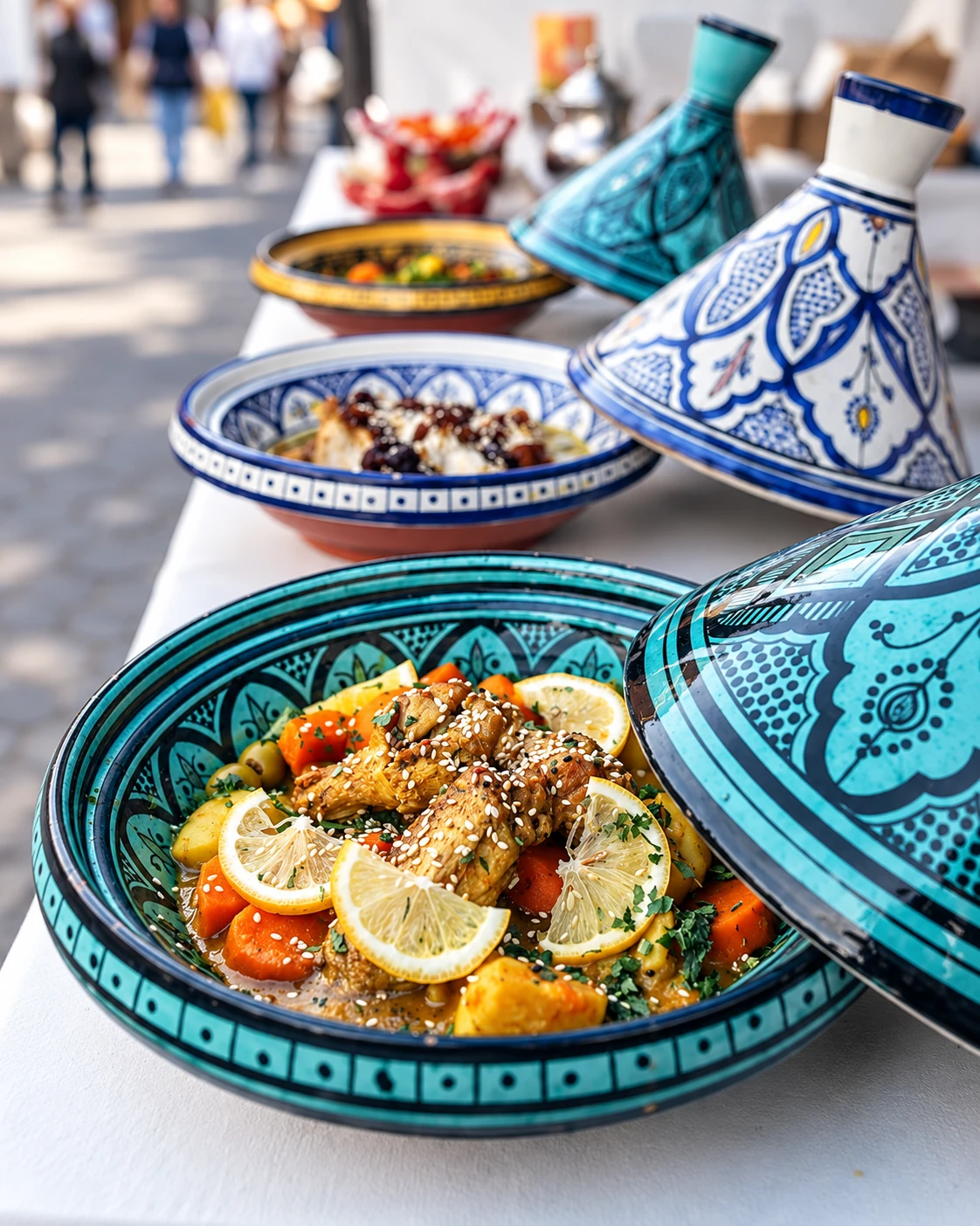
Tagine
Gentle heat, clay pots and the balance of a slow-cooked sauce.
Explore the story ↗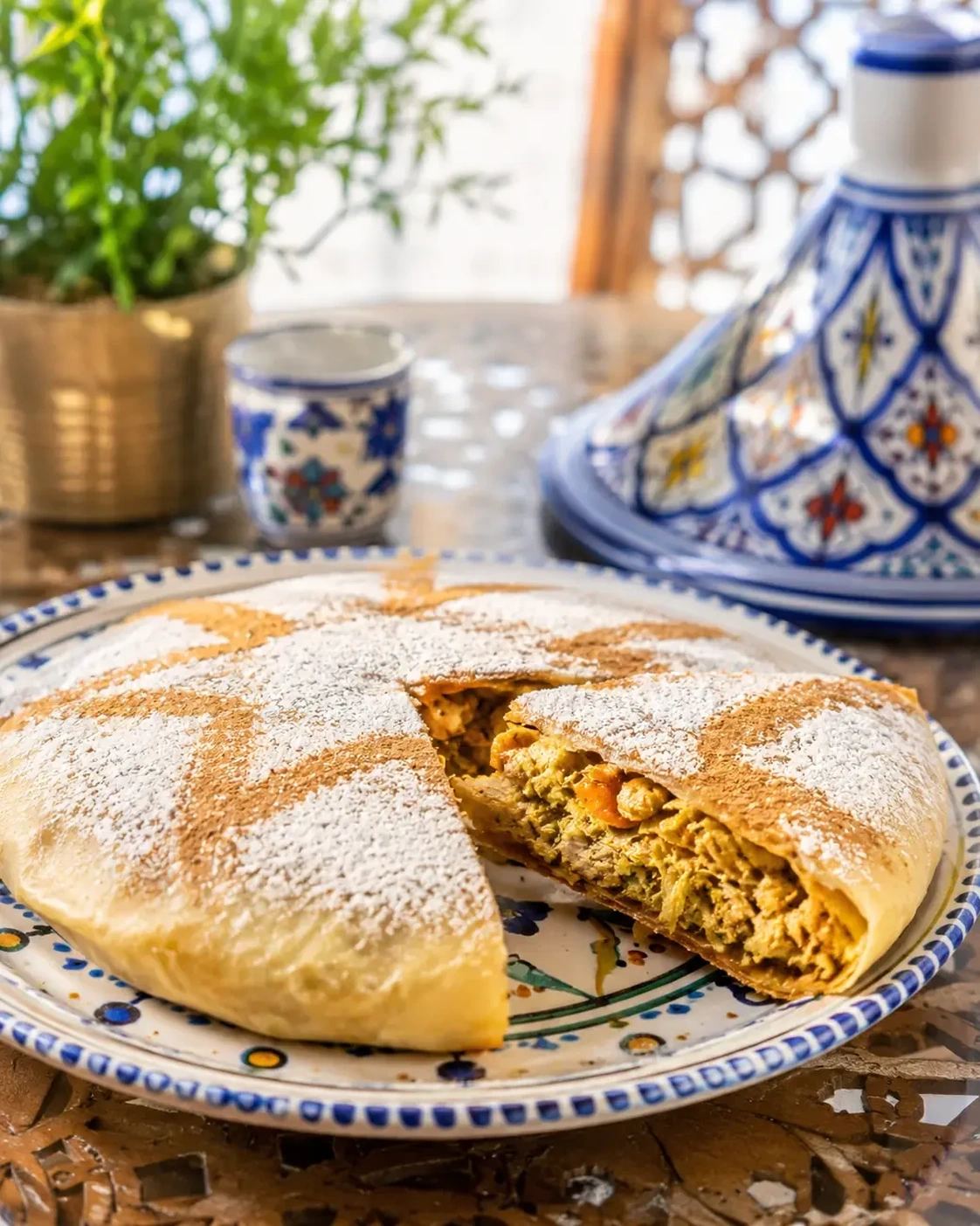
Pastilla
Fine pastry, layered fillings and the pleasure of contrasting textures.
Explore the story ↗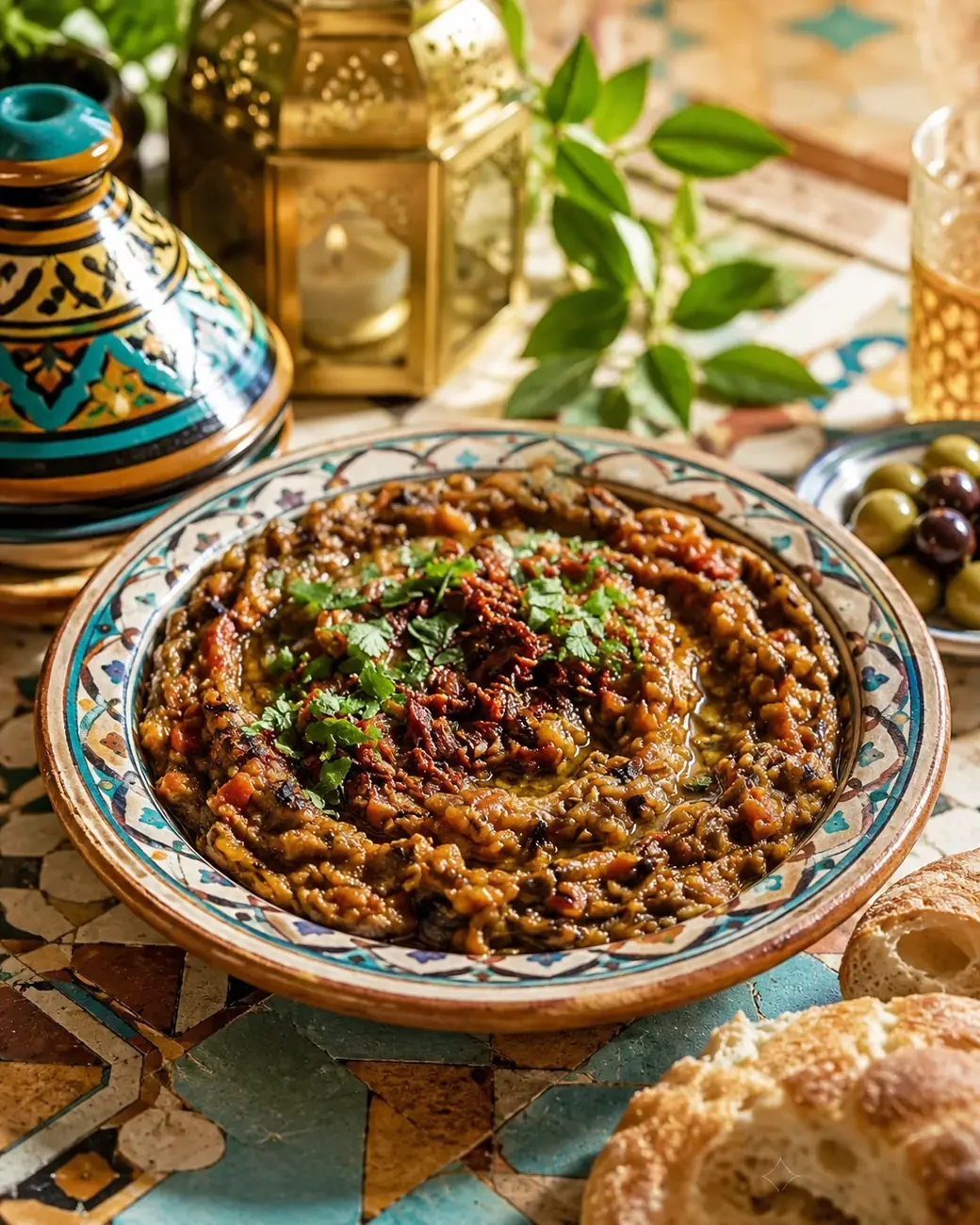
Zaalouk
Aubergine and tomato cooked until their flavours meet.
Explore the story ↗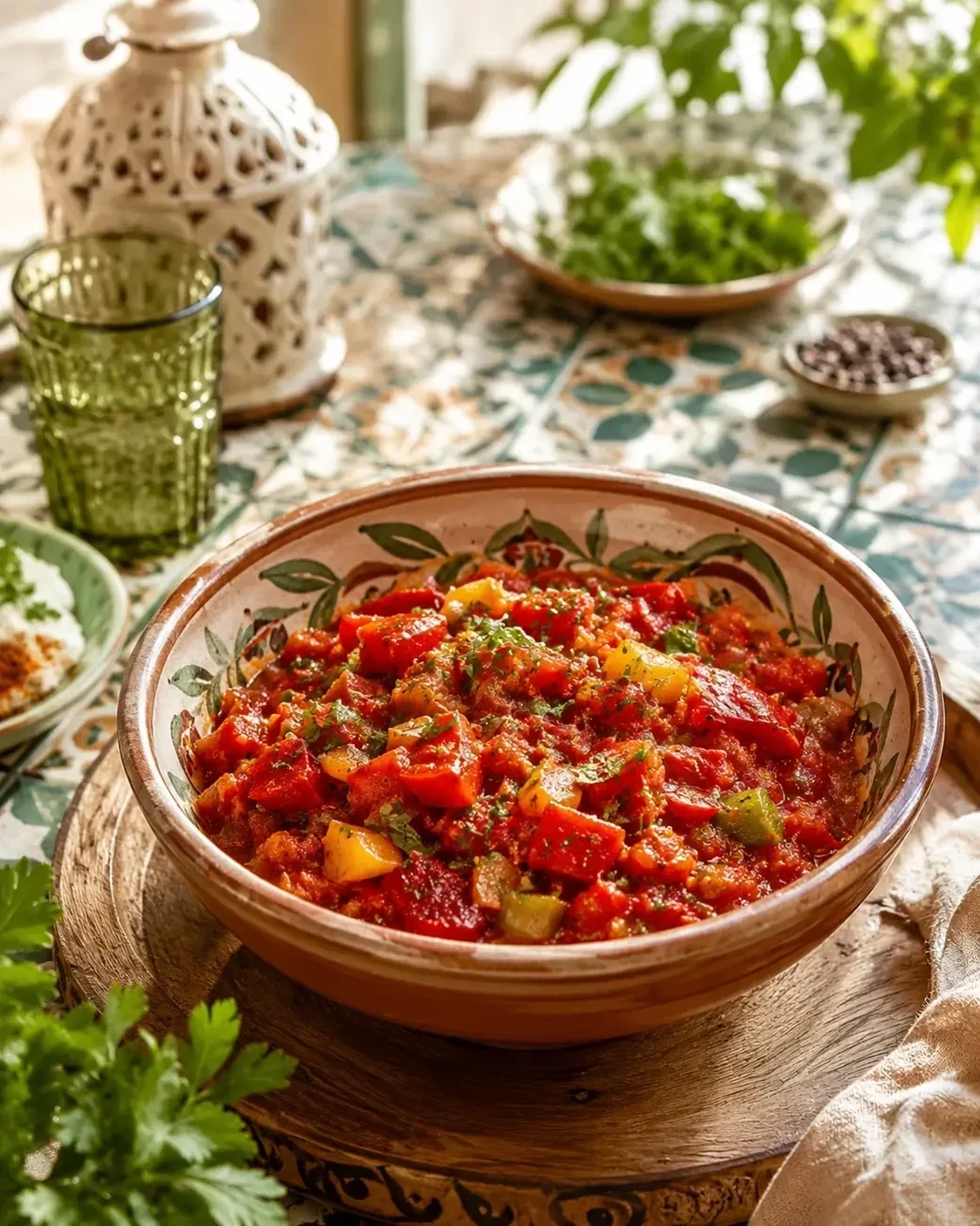
Taktouka
Roasted peppers and tomatoes, with bread close at hand.
Explore the story ↗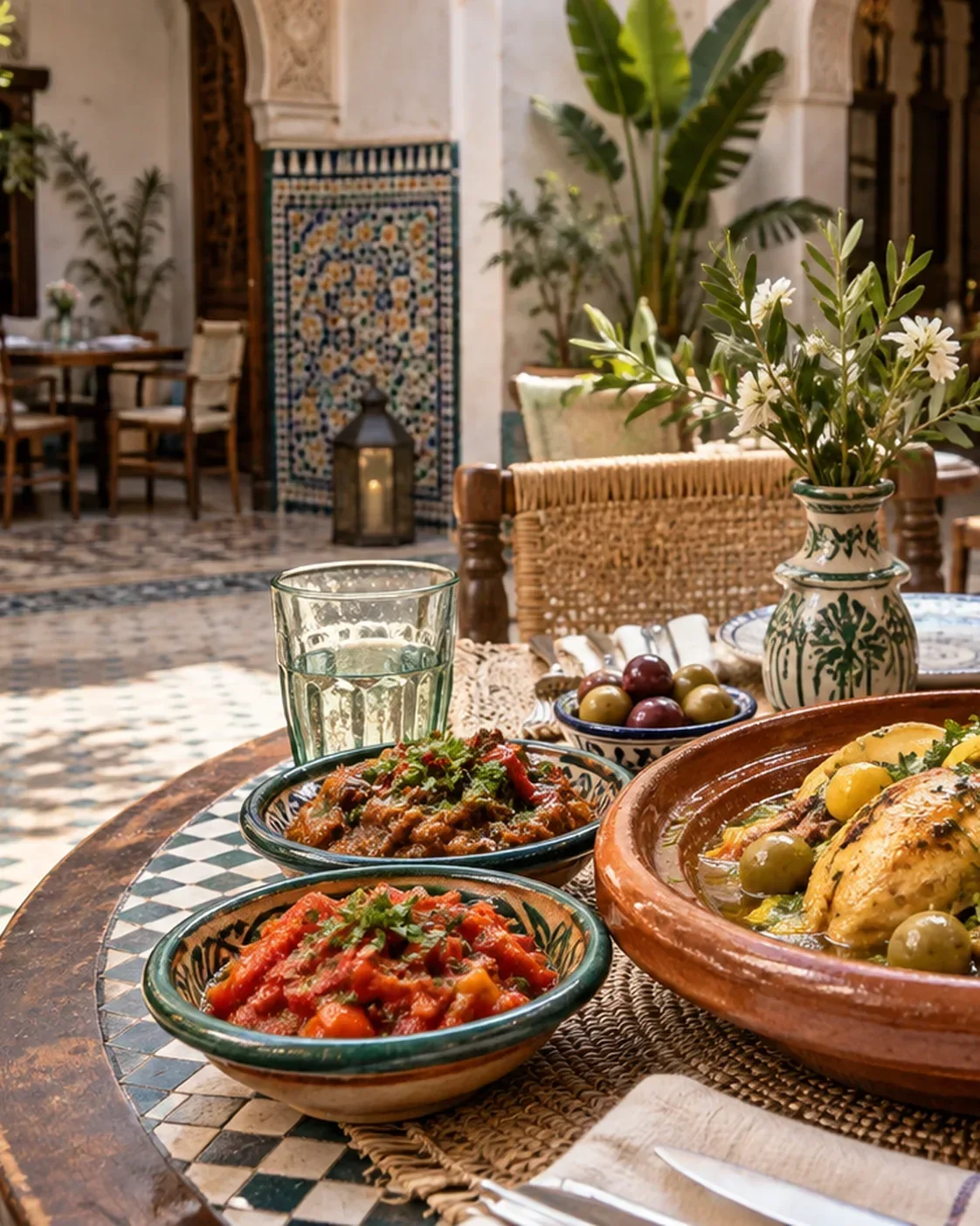
Food & Restaurants
Read a menu, understand the setting and choose an experience.
Explore the story ↗Sources & editorial notes
This is an editorial introduction, not a measured recipe. Practices vary by cook and locality. The new food scenes are illustrative generated editorial images, not documentary records of named people or places; two harbor images and selected sardine images come from the existing Exotic Morocco Library.
- Moroccan National Tourist Office · Essaouira-Mogador — fishing port and market.
- Christine Benlafquih · Fish Tagine with Chermoula — fish, vegetables and timing.
- Taste of Maroc · Stuffed Fried Sardines — butterflied pairs and frying.
- Taste of Maroc · Sardine Balls — another coastal preparation.
- WIPO · Scoping Study on Moroccan Gastronomy — northern tagra and regional food context.
- Taste of Maroc · Chermoula — seasoning and variable uses.
EXOTIC MOROCCO Places. People. The pleasure of knowing more.Back to top ↑