

01 · A Moroccan celebration pastry
A crisp shell.
Layers with a point
of view.
Pastilla does not choose between savoury and sweet. Its character comes from letting both speak.
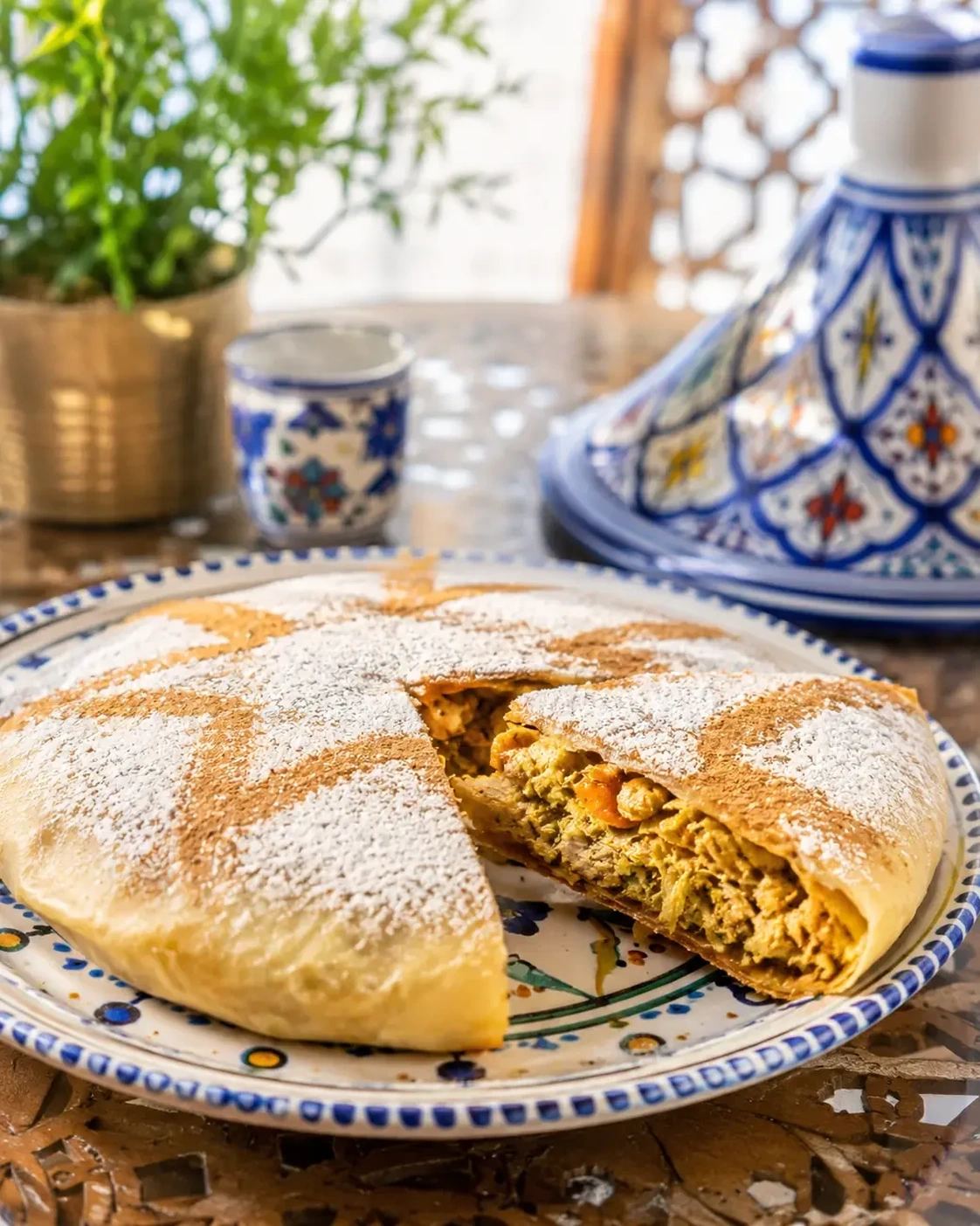
Break the top and the first sensation is texture: fragile pastry giving way to a soft, fragrant filling. In a classic poultry pastilla, spiced meat, eggs and almonds sit beneath a finish of cinnamon and sugar. The contrast is deliberate, not dessert accidentally placed on dinner. [1]
The name appears in several spellings — pastilla, bastilla, b’stilla, bstilla — while Moroccan Arabic commonly uses bastila. The dish itself is equally plural. Pigeon has deep associations with older festive versions; chicken is now common; seafood pastilla has become a celebrated modern branch of the family. [3]
What unites them is construction: a thin pastry wrapper, a filling that must be flavourful but controlled, and enough care that the finished pie stays crisp rather than heavy.
Enter Moroccan food culture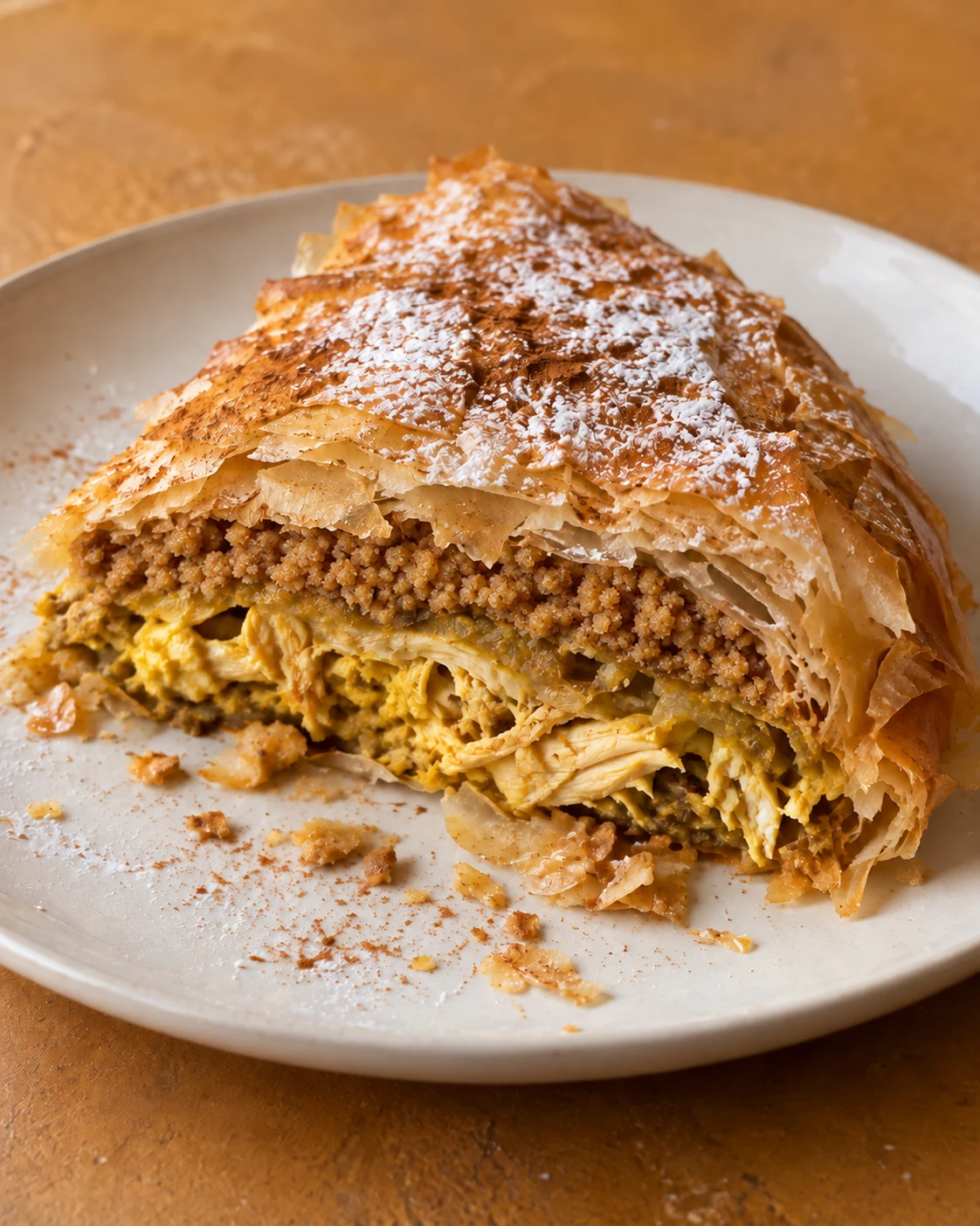
Paper-thin pastry that wraps and protects the filling.
In the poultry tradition, cinnamon and almond meet spiced meat and egg.
Often served as an early course at special meals.
02 · Roots & living history
A pastry with
many histories.
The history becomes more interesting when the neat legend is left behind.
Culinary historian Anny Gaul found thirteenth-century Andalusi recipes with fillings that strongly resemble parts of modern bastila — pigeon, aromatics, eggs and sweet spices — but she did not find the paper-thin enclosing pastry or a dish carrying the same name. That makes medieval Andalusi cooking an important precedent, not proof that today’s pastilla arrived fully formed from one place at one moment. [2]
Gaul’s later research in Tétouan traces another possible line through nineteenth-century Algerian migration and Ottoman-influenced layered pastries. An 1889 royal document she discusses records four enslaved palace cooks — Saʿada, Mabruka, Zayda and Sayla — being sent to Tétouan to learn local dishes, including several bastilas. It is a rare written glimpse of the skilled women whose labour transmitted elite culinary knowledge. [2]
Andalusi precedents
Similar flavour combinations appear in medieval cookbooks, but similarity is not the same as a complete origin certificate.
Tétouan and movement
Northern Morocco preserves its own histories of migration, pastry craft and culinary exchange; some scholarship places important stages of bastila’s development here. [2]
Fès and prestige
Fès is strongly associated with the sweetened pigeon-and-almond style and with refined urban cooking, but association should not be turned into an exclusive invention claim. [8]
03 · The pastry & the method
The leaf
that holds it all.
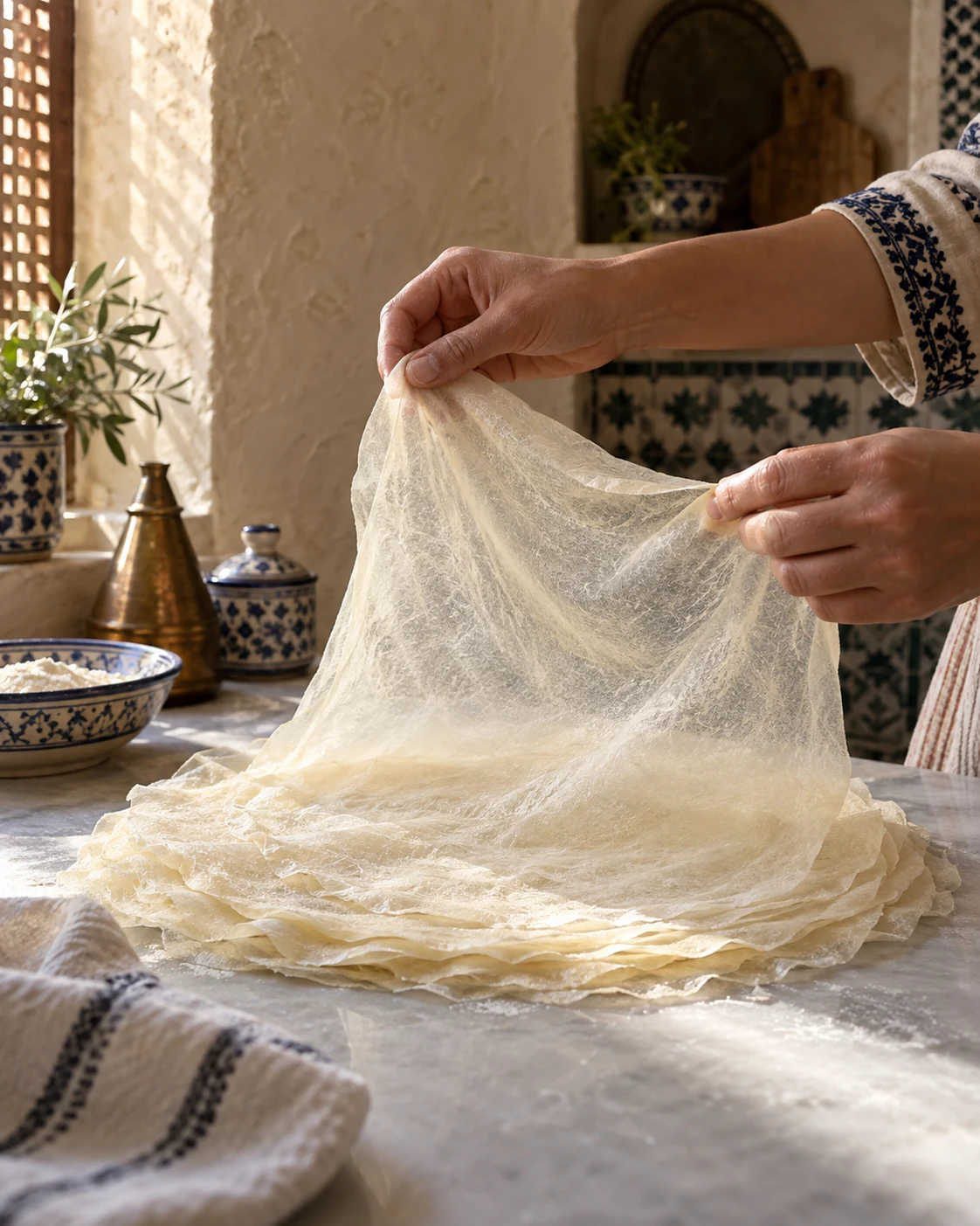
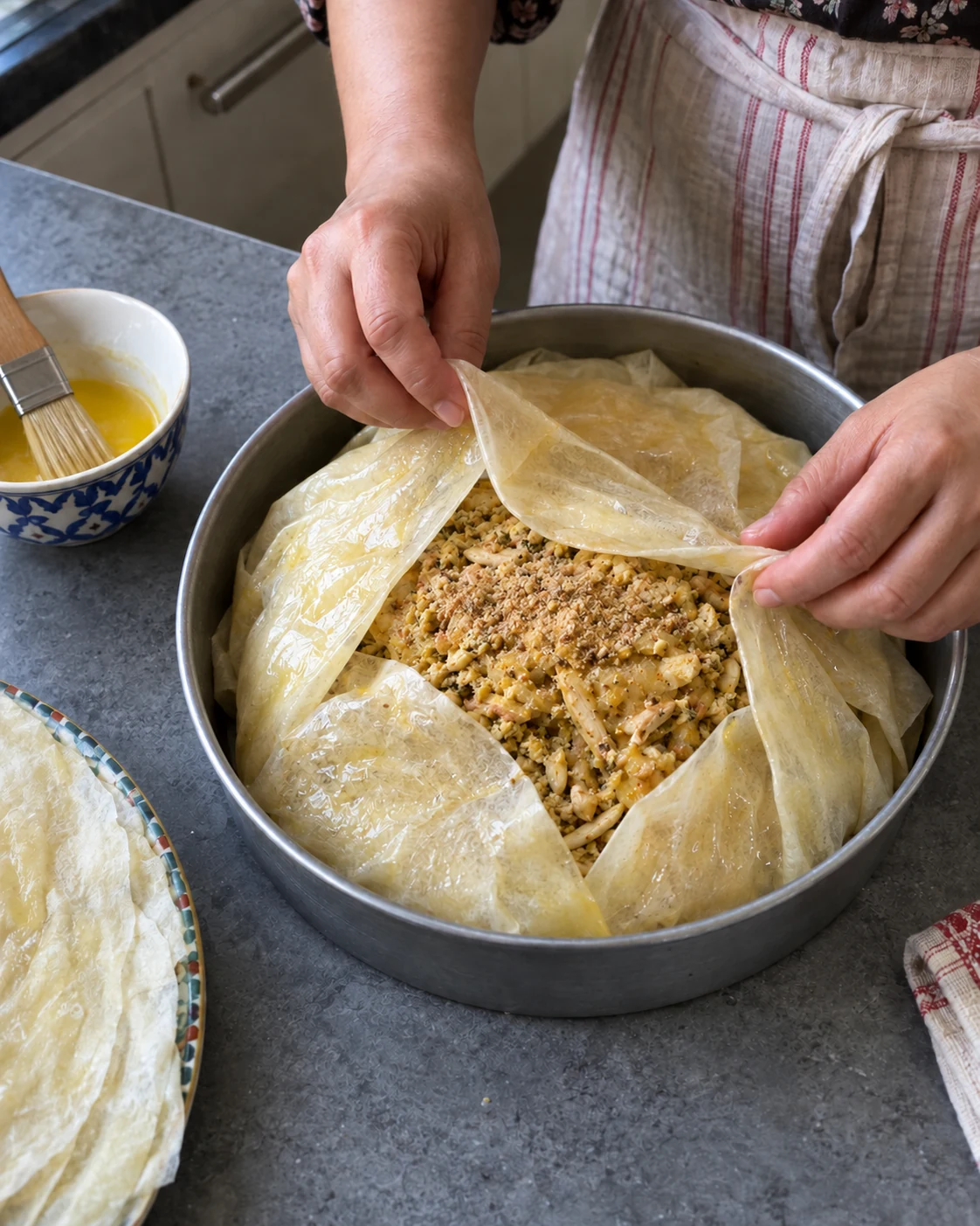
Warqa literally evokes a leaf or sheet. It is thin enough to turn brittle-crisp in the oven, yet supple enough to fold around a filling before baking.
WIPO’s Morocco food-and-craft study identifies the terrada or werraka as a specialist maker of warqa and describes the pastry as a Moroccan sheet made from a simple flour-and-water batter on a heated surface. [3]
Thin, not puffy
Pastilla is not built from puff pastry. Traditional warqa forms crisp, fine layers. Outside Morocco, brik or a sturdy style of phyllo is often used as a practical substitute, but the handling and texture are not identical. [5]
Moisture is the enemy of crackle
The filling must carry flavour without flooding the pastry. Poultry juices are reduced and eggs absorb part of that seasoned liquid; seafood versions likewise depend on controlling moisture. Moisture control helps the outer sheets stay crisp.
Overlap creates protection
Sheets are arranged so that the filling is enclosed from several directions. The result is a round parcel that can be inverted, baked and presented as one composed dish rather than a loose stack.
04 · The many expressions of pastilla
One architecture.
Different fillings.
Pastilla is more useful to understand as a family of layered pies than as one frozen formula. The pastry may stay recognisable while the filling, seasoning and degree of sweetness shift with city, household and occasion.
These are documented branches and habits, not a ranking of what is “authentic enough.”
Pigeon and the older poultry tradition
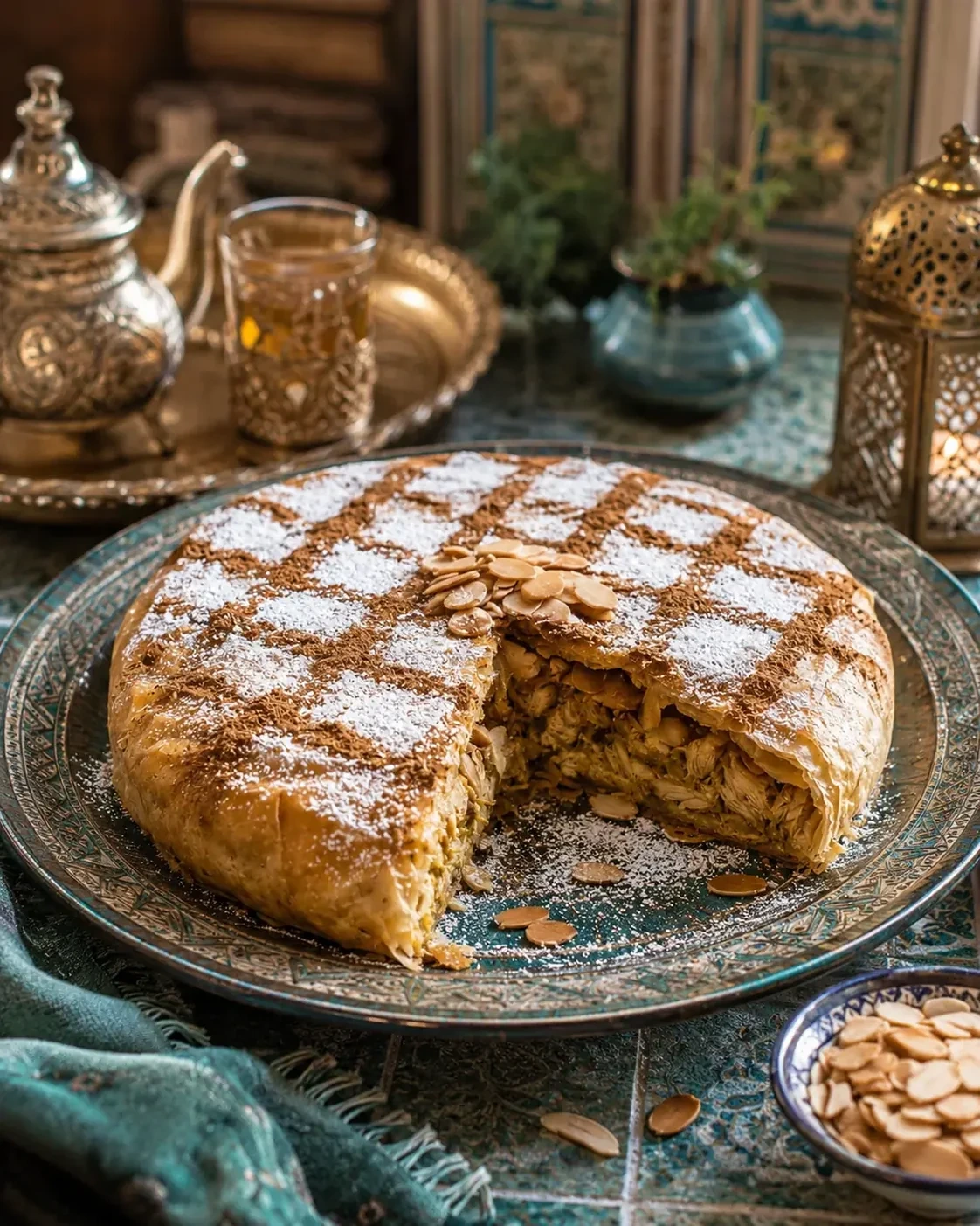
Pigeon is closely associated with the classic celebratory form: spiced bird, egg enriched with the cooking juices, almonds, cinnamon and a sugared finish. It remains a reference point even where another bird is used today. [6]
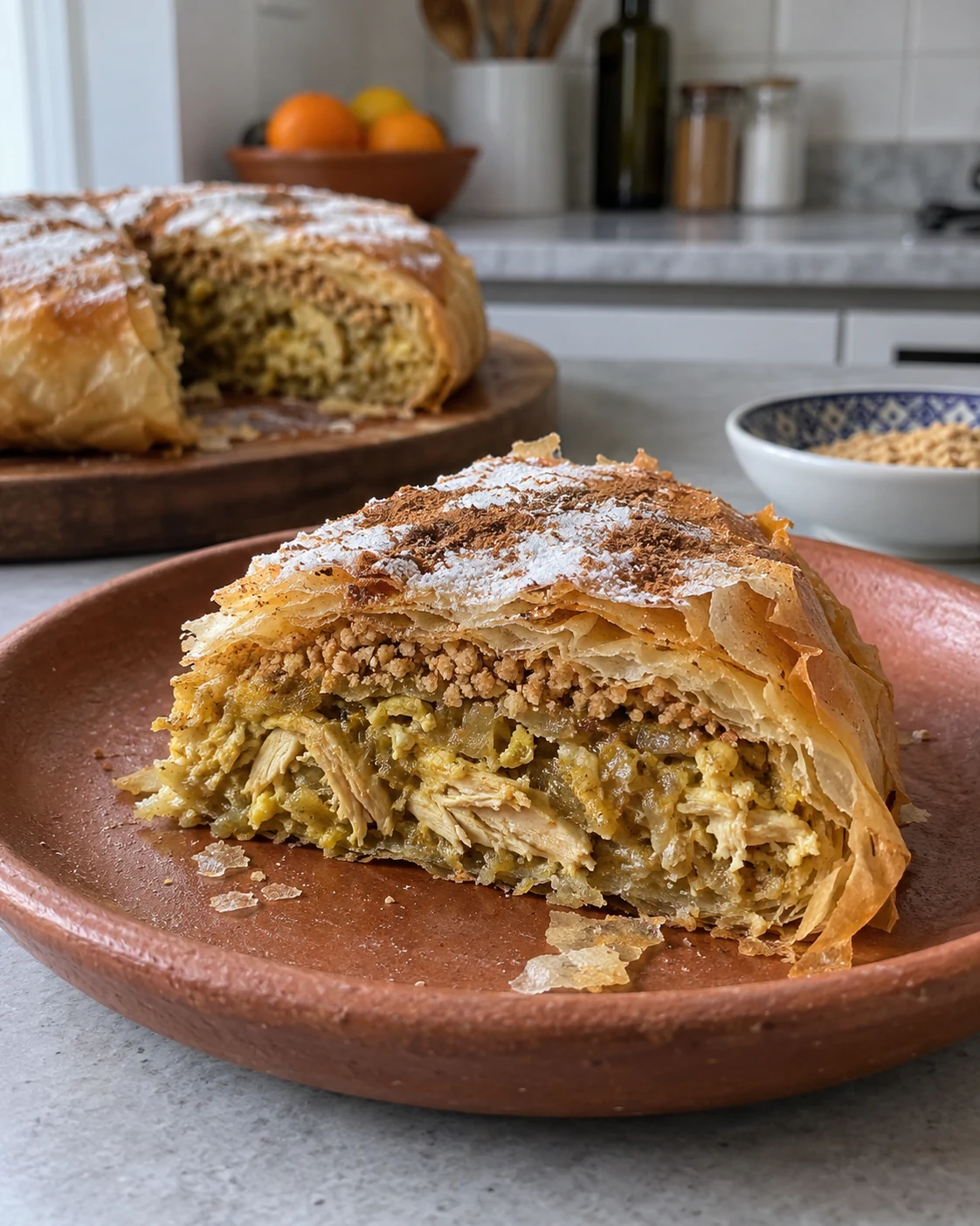
Chicken pastilla
Chicken is now a common way to make the poultry version at home and in restaurants. The shift does not erase the older pigeon association; it shows how a demanding special-occasion dish adapts to what is available. [4]
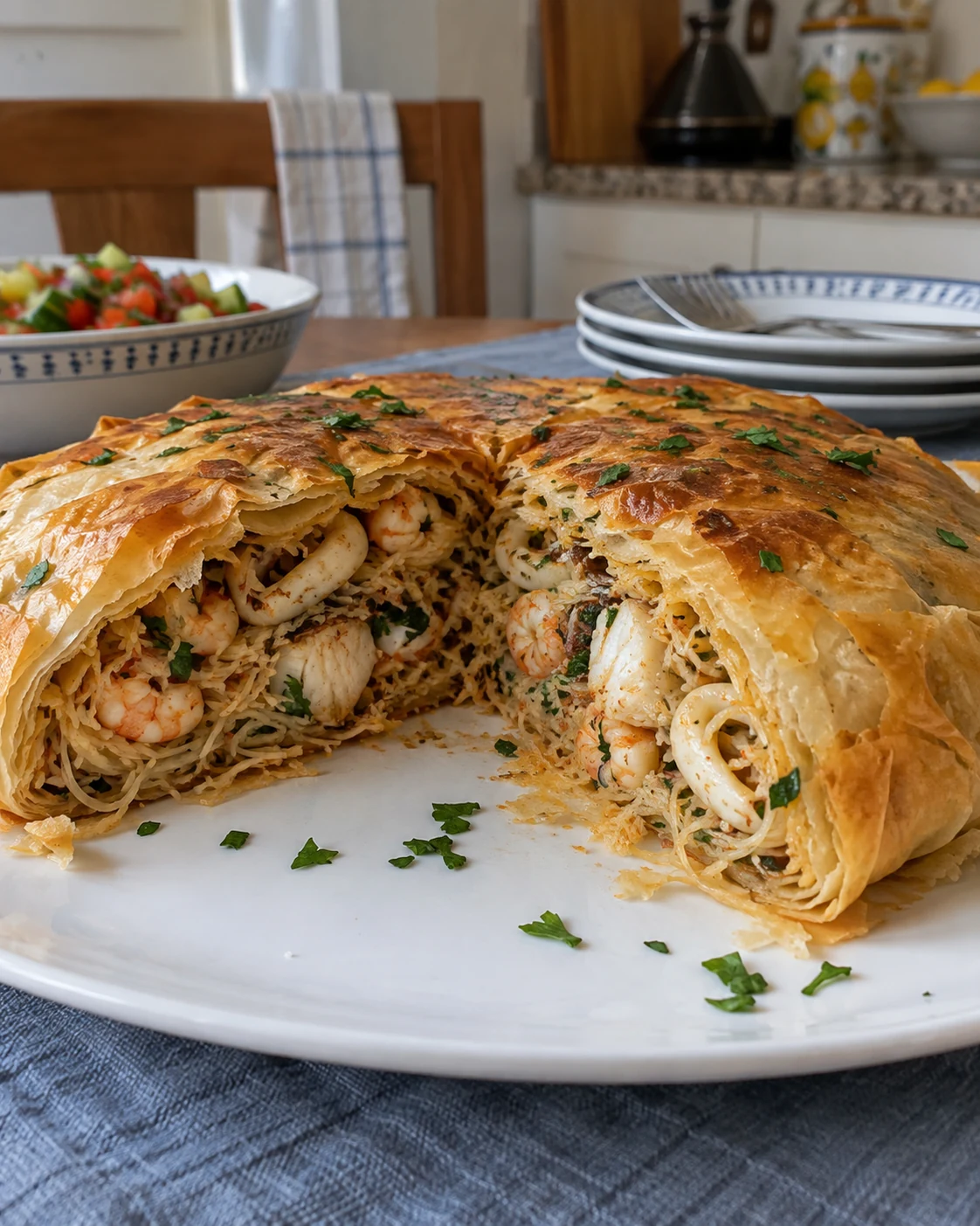
Seafood bastilla
A modern special-occasion favourite may combine shrimp, calamari and firm fish with vermicelli and a lively savoury seasoning. Christine Benlafquih documents its growing popularity at weddings, family celebrations, banquets and holidays in recent decades. [5]
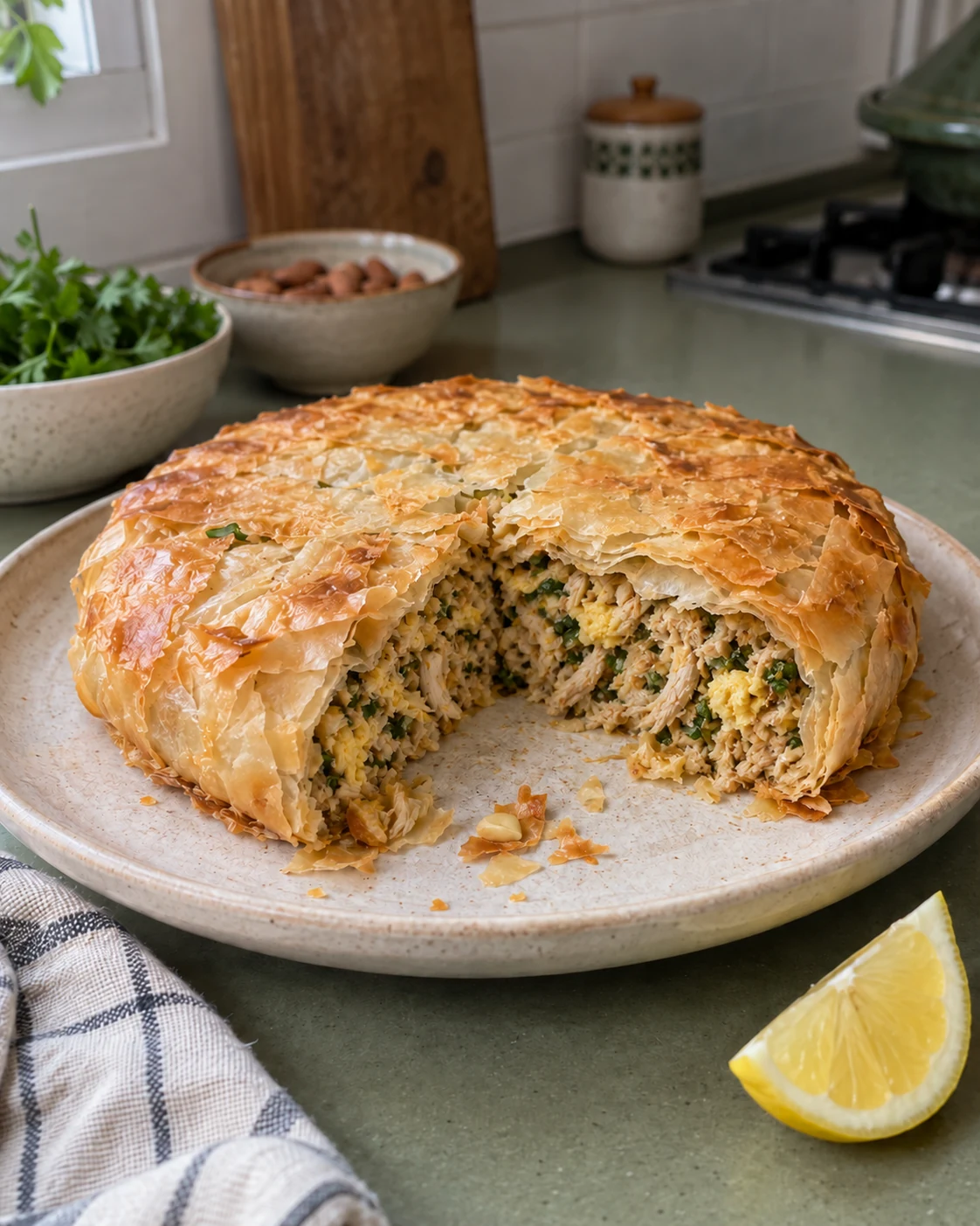
Tétouani savoury accents
Gaul records a Tétouani version in which lemon takes the place of the familiar sugared finish. It is a useful reminder that even the celebrated sweet-savoury profile is not identical across Moroccan kitchens. [2]
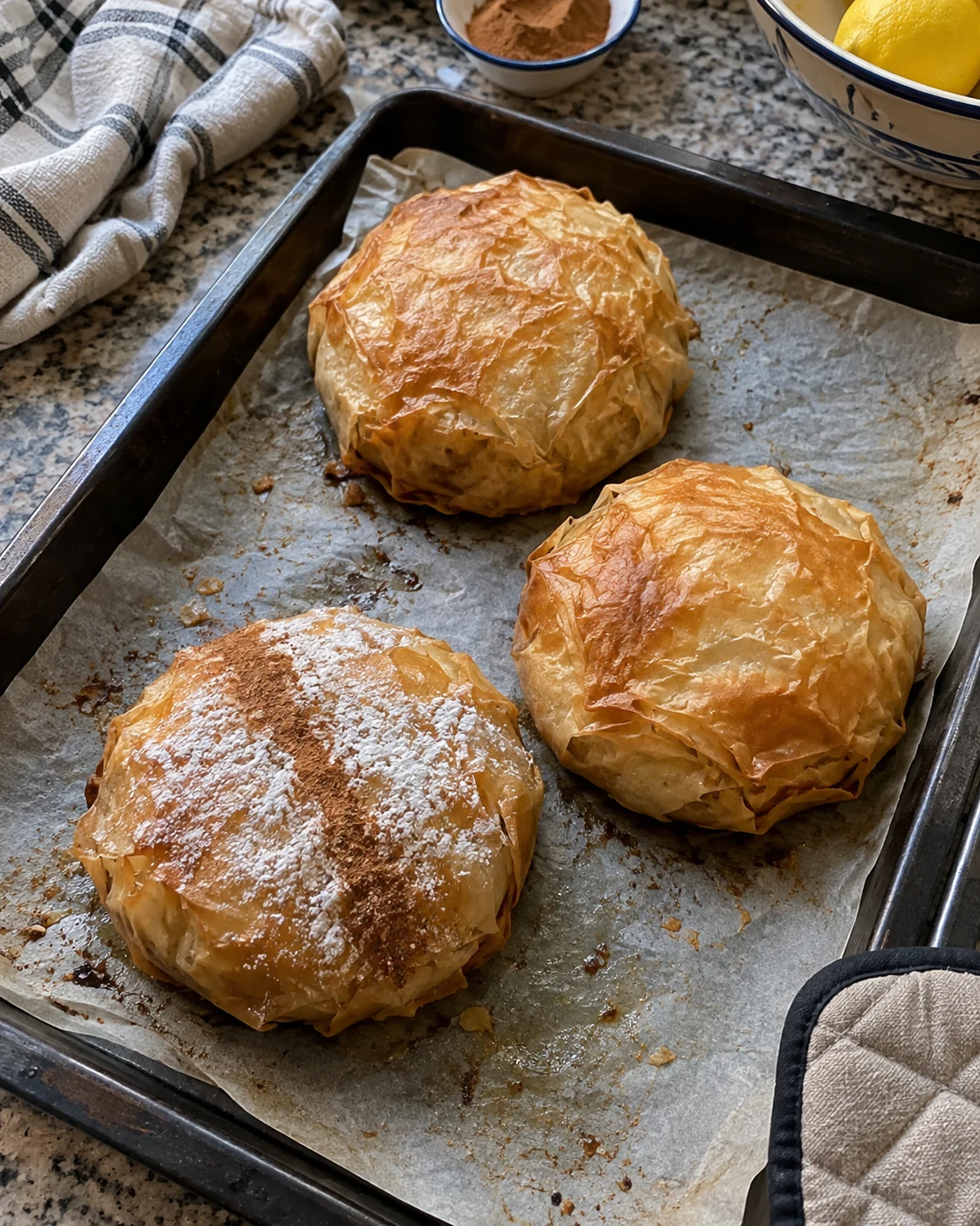
There are still more expressions.
Different households may shift the herbs, spice balance, sweetness, bird, seafood mix or size of the pie. A named version is a point of reference, not a border around Moroccan cooking.
One name, many kitchens.
The same architecture can carry inherited family preferences and newer practical choices. That flexibility is part of a living tradition, not evidence that the dish has no history.
05 · The language of flavour
Delicate pastry.
Confident layers.
A pastilla works because different flavours are given different jobs: crispness outside, savoury depth within, aromatic warmth, and — in classic poultry versions — a measured sweet finish.
Household formulas differ. These four anchors explain the structure without pretending there is one compulsory spice list.
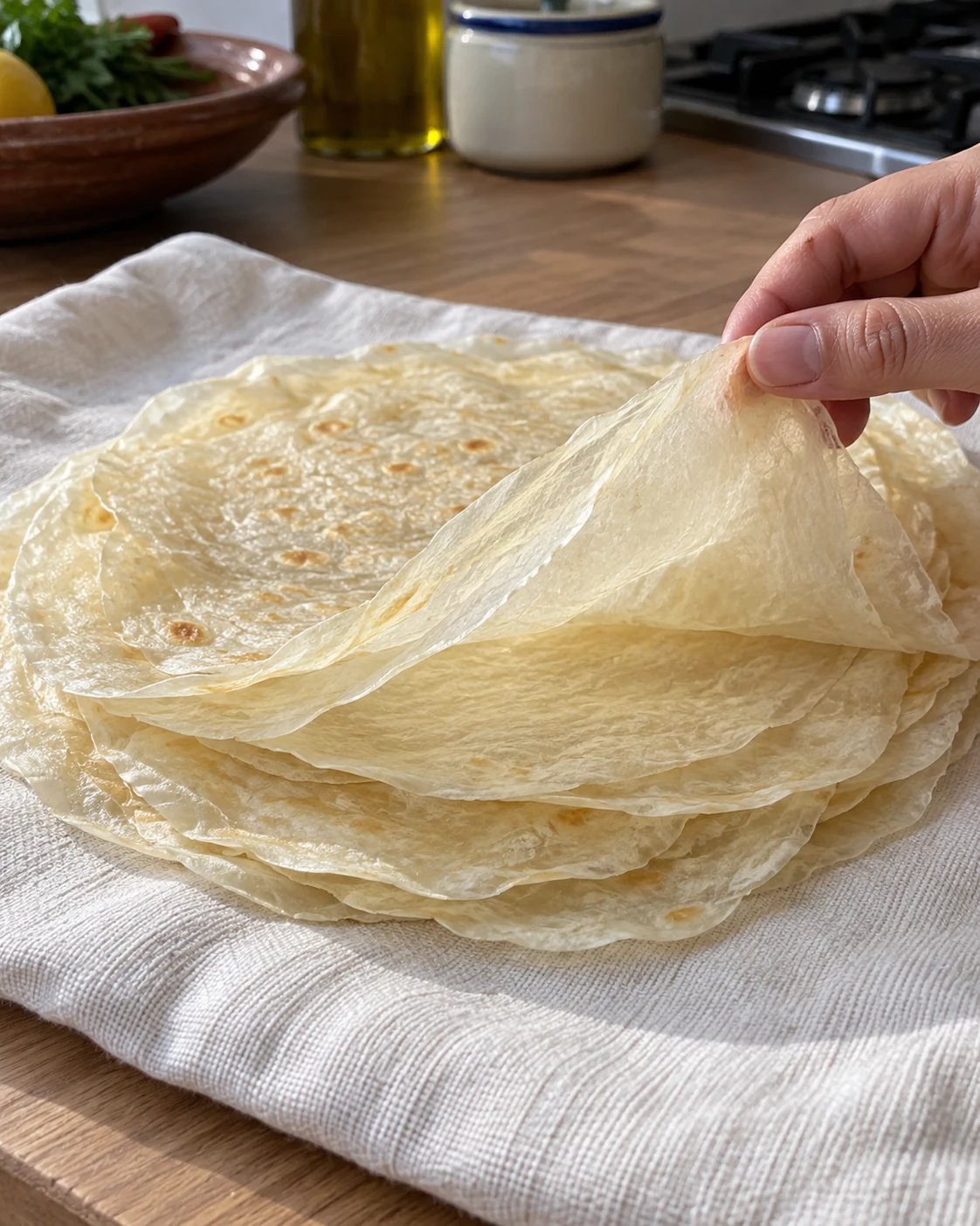
Warqa
The crisp envelope.
Flour, water and salt become the very thin sheet that gives pastilla its first crackle. WIPO also records warqa as the pastry used for briouats. [3]
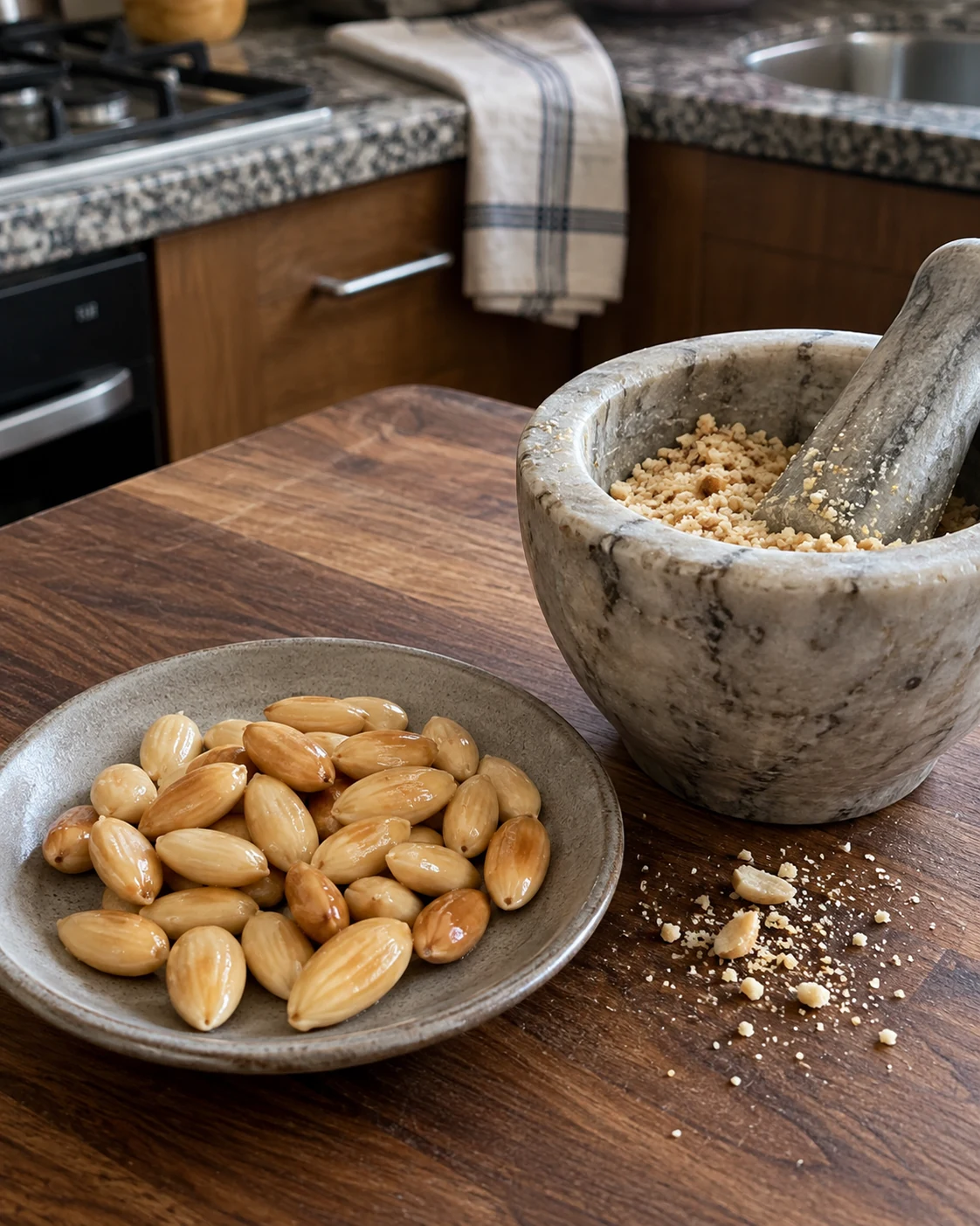
Almond
Crunch meets perfume.
In classic poultry pastilla, almonds bring richness and texture. Ground or crushed with sugar and cinnamon, they bridge the savoury filling and the decorated top.
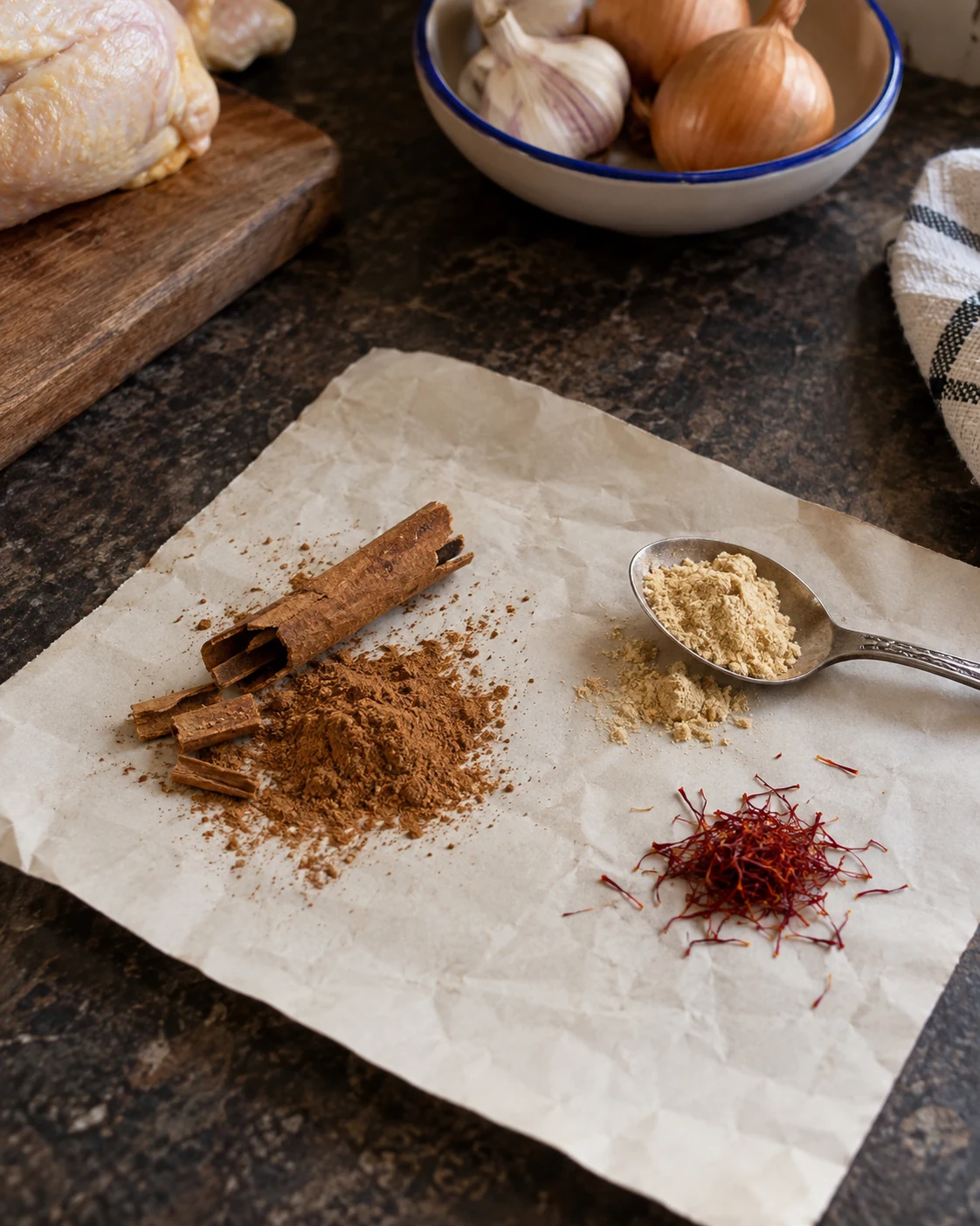
Warm spice
Fragrance, not heat.
Cinnamon is the visible signature of the sweet finish; saffron and ginger also appear in documented poultry versions. The goal is aroma and depth rather than indiscriminate spicing. [4]
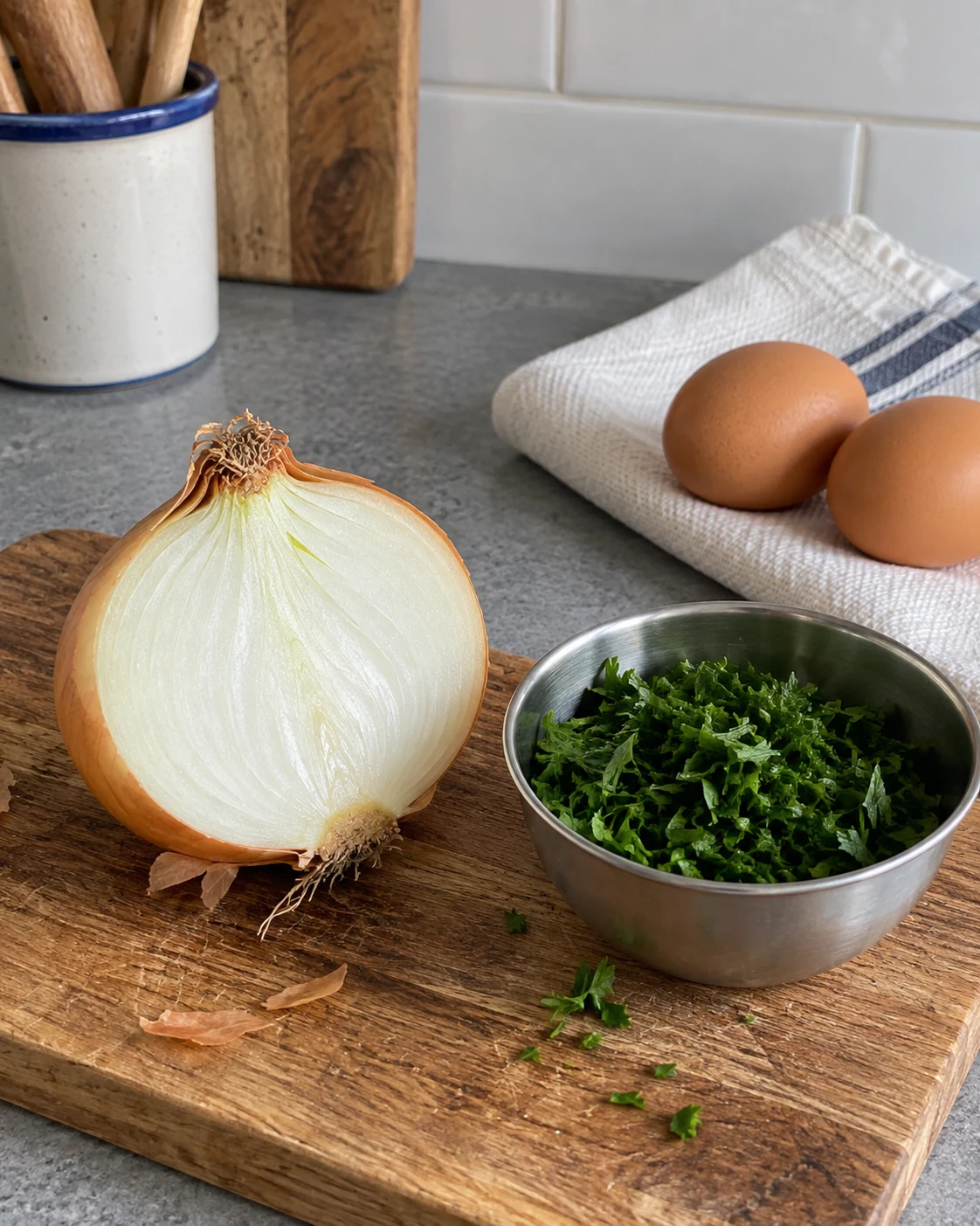
Onion, herbs & egg
The savoury structure.
Onion and fresh herbs build the aromatic base. In classic poultry versions, eggs cook with reduced seasoned juices, concentrating flavour while helping the filling stay controlled inside the pastry.
Explore the four flavour anchors
SAVOURY CORE · ALMOND · CINNAMON
The contrast
is the point.
The powdered top makes sense only because the filling beneath it is deeply savoury.
Pastilla is composed in layers. Poultry, onion, herbs and egg carry one register; almond, cinnamon and sugar answer from another. The finished bite is meant to hold both without letting either flatten the other.
Sweet does not mean dessert — and savoury does not mean one fixed recipe.
Moisture decides the crackle.
A flavourful filling still needs restraint. Reduced cooking juices and egg help create richness without flooding the thin pastry.
Almond changes the texture.
Its role is more than sweetness. Almond brings a dry, fragrant crunch between softer layers, helping the classic poultry version feel structured rather than heavy.
Seafood takes another route.
Contemporary seafood bastilla is generally savoury, often combining fish and shellfish with vermicelli and a zesty seasoning instead of the sugared almond finish. [5]

06 · City, coast & household
Place matters.
So does the cook.
Map the associations. Leave room for movement.
Pastilla travels easily in stories — “from Fès,” “from al-Andalus,” “from Tétouan” — but culinary evidence is less tidy. Fès has a strong documented association with pigeon-and-almond pastilla; Tétouan is central to important modern historical research; seafood bastilla connects the dish to contemporary coastal ingredients. [8] [2]
These are overlapping histories, not hard culinary borders. Families move, cooks learn from one another, restaurants adapt, ingredients change and a celebration dish can travel far beyond the city most often named beside it.
Fès & the classic prestige form
The official Fès guide describes pigeon-and-almond pastilla as part of Fassi gastronomy and its sweet-savoury culinary language.
Explore Fès ↗Tétouan & historical movement
Archival research makes Tétouan important to debates about bastila, migration, pastry craft and the people who transmitted elite culinary knowledge.
Explore Tétouan ↗Coasts, markets & newer forms
Seafood bastilla draws on fish, shrimp and calamari and has become prominent at modern celebrations. Ingredient access naturally shapes what goes inside.
Explore Moroccan food culture ↗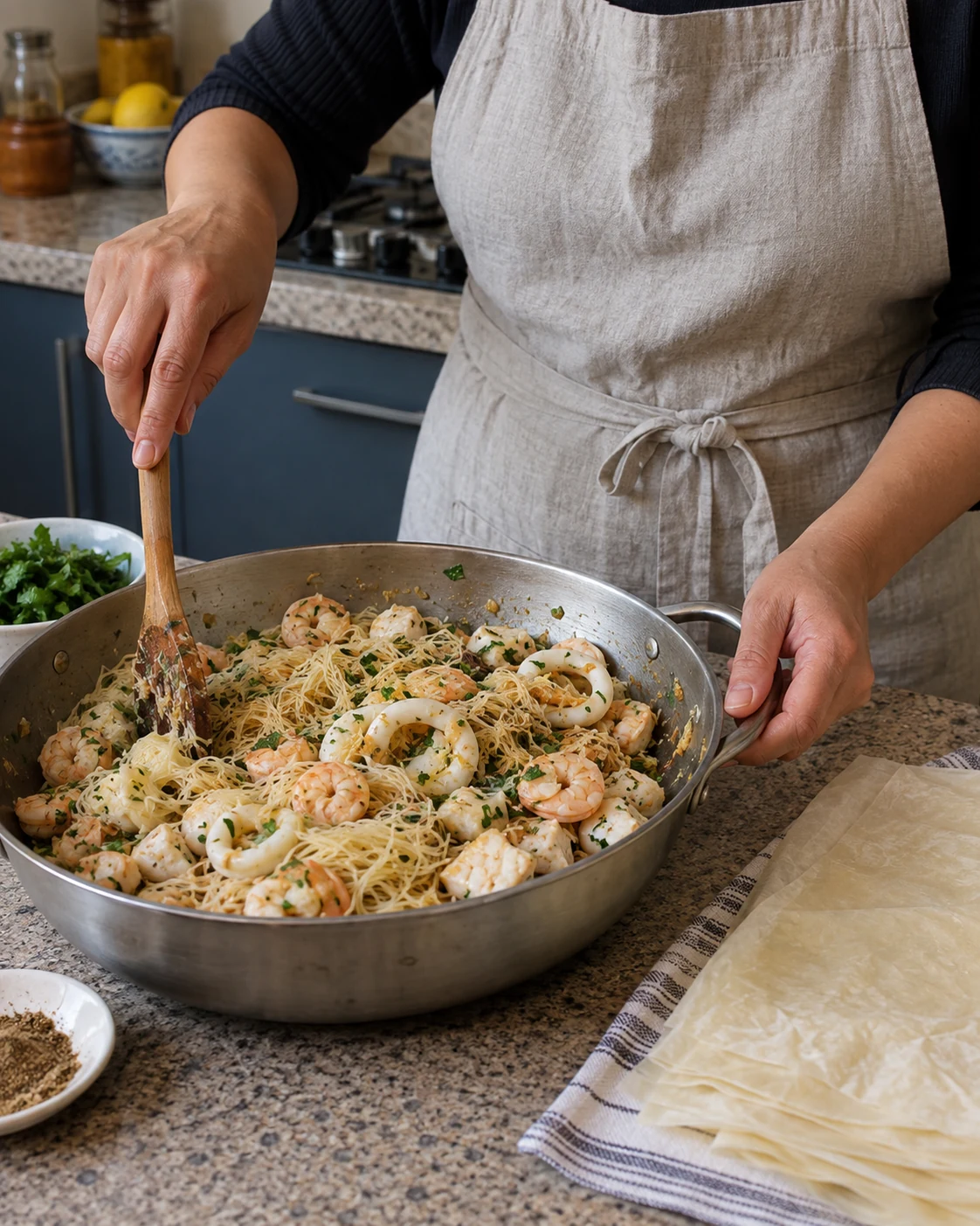
07 · Hospitality & the meal
Make an occasion.
Then share it.
Pastilla often arrives when guests already know the meal is special.
WIPO’s Morocco study describes pastilla as a dish often served before the main course during celebrations, while Saveur identifies the classic poultry pie with weddings and other festive occasions. Modern seafood bastilla occupies a similar celebratory space. [3] [4]
Households do not all stage the same menu, and restaurant sequences should not be mistaken for a universal family ritual. The more reliable point is that pastilla is strongly associated with making an occasion feel deliberate.
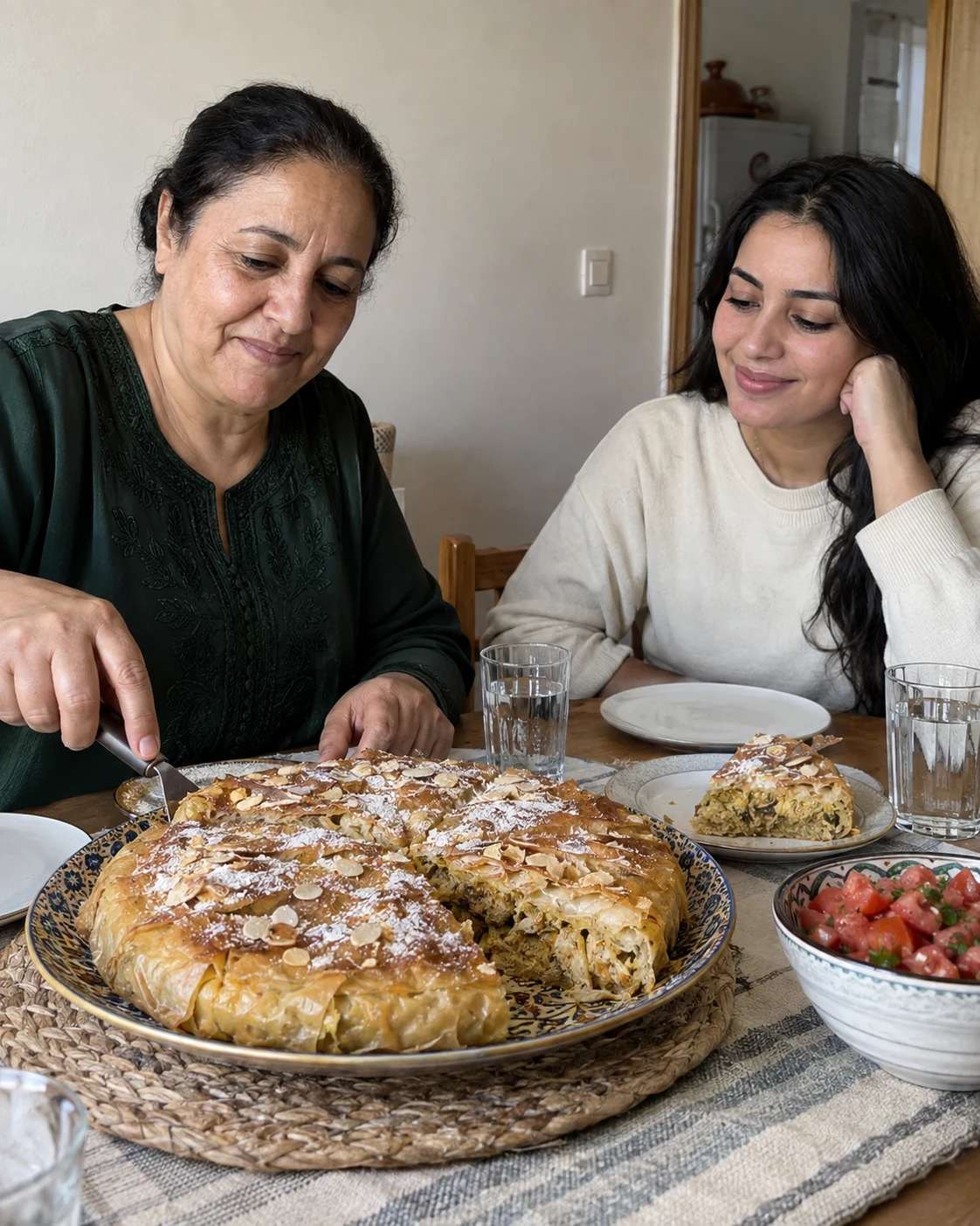
Before the main course.
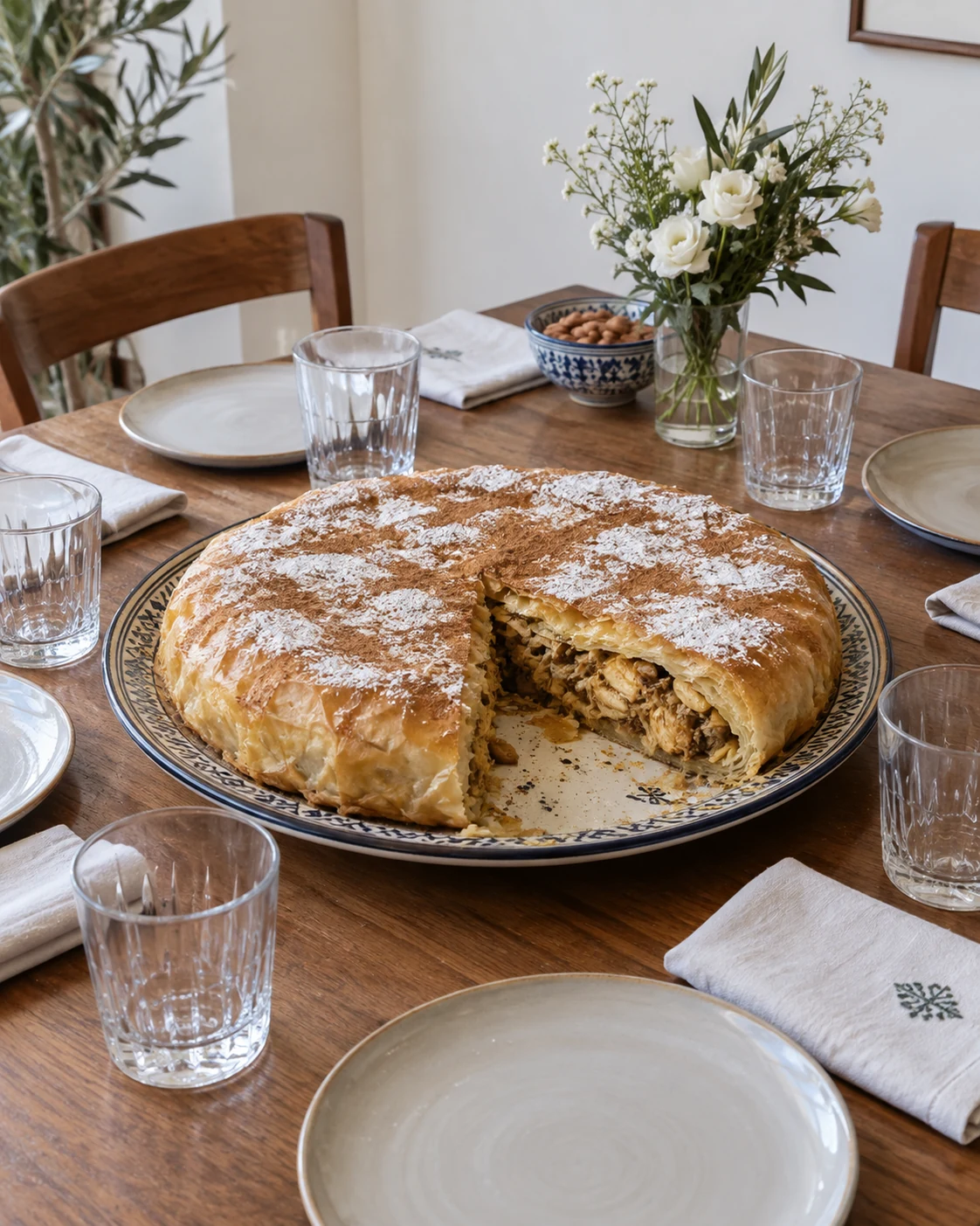
A large round pastilla has theatre built into it: one decorated surface, then wedges that reveal crisp pastry and contrasting layers.
At formal celebrations it may arrive as an early substantial course rather than as the final sweet. That place in the meal helps explain why sugar and cinnamon should not be read as dessert alone. [3]
The top becomes part of the welcome.
Powdered sugar and cinnamon patterns make the poultry pie a centrepiece before anyone cuts it. The decoration can be simple or elaborate; it is not one rigid stencil.
Smaller individual pastillas change the service, but not the sense that this is food assembled with attention. WIPO documents both large and individual formats. [3]
A glass of tea.
More time together.
Mint tea has its own place in Moroccan hospitality. It may welcome guests or extend conversation around a meal; it should not be presented as a compulsory drink served with every pastilla. [1]
Festive, but still living.
Pastilla’s reputation is ceremonial, yet families adapt the dish to the number of guests, available poultry or seafood, time, budget and the cook’s own habits. Tradition survives by being used, not by remaining frozen.
08 · The knowledge in the hands
The sheet looks simple.
The skill is not.
Warqa is one of the quiet technologies of the Moroccan kitchen.
WIPO records specialised makers known as terrada or werraka. The terms matter because a finished pastilla can depend on a craft that exists before the household cook even begins assembling the pie. [3]
Historical transmission matters too. Gaul’s research follows cooks whose expertise was often carried in practice rather than in published recipe books. An 1889 document naming Saʿada, Mabruka, Zayda and Sayla makes visible, unusually, four enslaved women whose skilled work carried culinary knowledge between kitchens. [2]
That history complicates the comforting phrase “passed from mother to daughter.” Family teaching matters, but culinary knowledge has also moved through professional cooks, servants, artisans, markets, migration and commercial pastry makers.
Explore the wider food culture ↗09 · A closer look
Good questions.
Clear answers.
Separate documented history, strong association and household variation.
Is pastilla sweet or savoury?
Classic poultry pastilla is both: its filling is savoury, while almond, cinnamon and sugar create a deliberate counterpoint. Contemporary seafood versions are commonly fully savoury. [5]
Does it have to be made with pigeon?
No. Pigeon is strongly associated with classic festive versions, while chicken is widespread today. WIPO also records guinea fowl and newer seafood fillings. [3]
Is warqa the same as phyllo?
No. They can serve comparable wrapping roles, and phyllo is a practical substitute outside Morocco, but traditional Moroccan warqa has its own preparation and handling. [3]
Did pastilla originate in Fès?
Fès is one of the dish’s strongest culinary associations, especially for pigeon-and-almond pastilla. Historical research does not justify reducing the whole dish to a single-city invention story. [8] [2]
What makes seafood pastilla different?
It commonly combines seafood with vermicelli and a zesty savoury seasoning rather than the sugar-and-almond finish of classic poultry pastilla. It has grown in popularity at Moroccan special occasions in recent decades. [5]
 EXOTIC MOROCCOTASTE · THE GUIDE COLLECTIONPastillaIngredients, technique
and the Moroccan table
From the story to your kitchen
Keep the flavour.
Go a little deeper.
Fine pastry, layered fillings and the pleasure of contrasting textures.
Explore the Exotic Morocco guide collection for a closer look at ingredients, kitchen knowledge and the culture around the table.
- Understand the ingredients and their roles
- Recognise the techniques and textures that matter
- Bring context and confidence to the way you cook and serve
Continue tasting Morocco
Follow the
table outward.
Another dish, another technique, another way into the Moroccan kitchen.
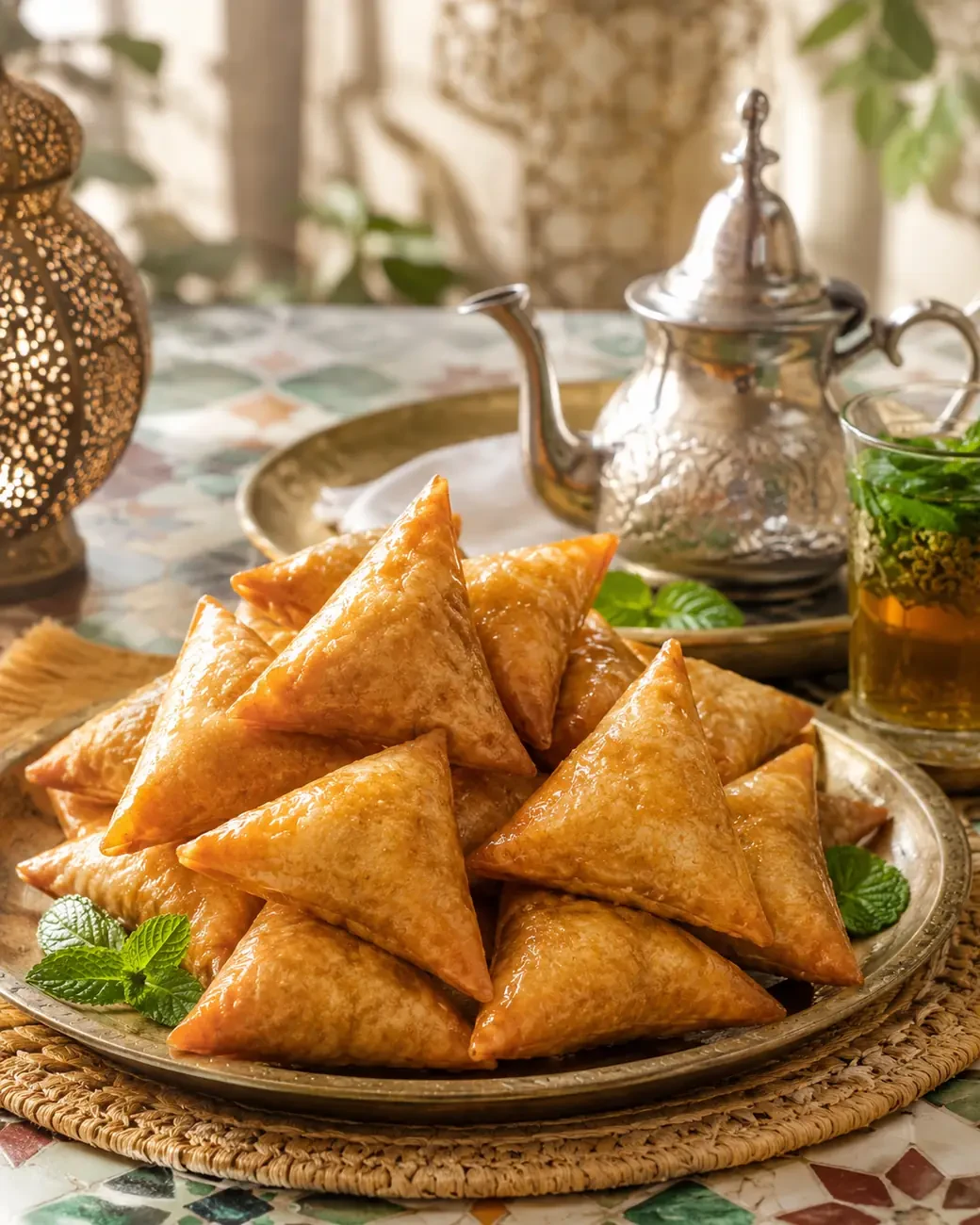
Briouats
Small folded pastries, with both savoury and sweet possibilities.
Explore the story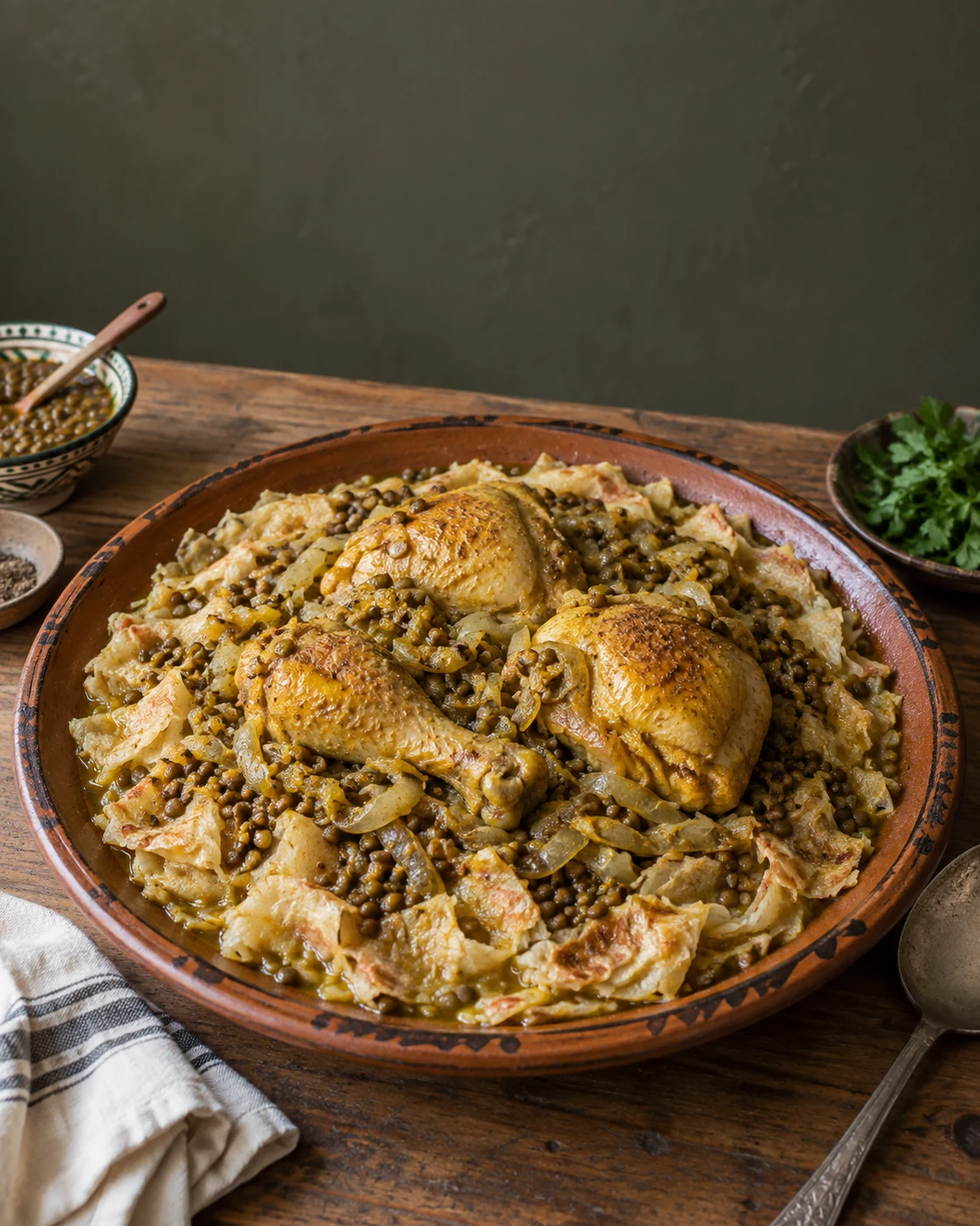
Rfissa
Chicken, lentils and fragrant broth finding their way through torn bread.
Explore the story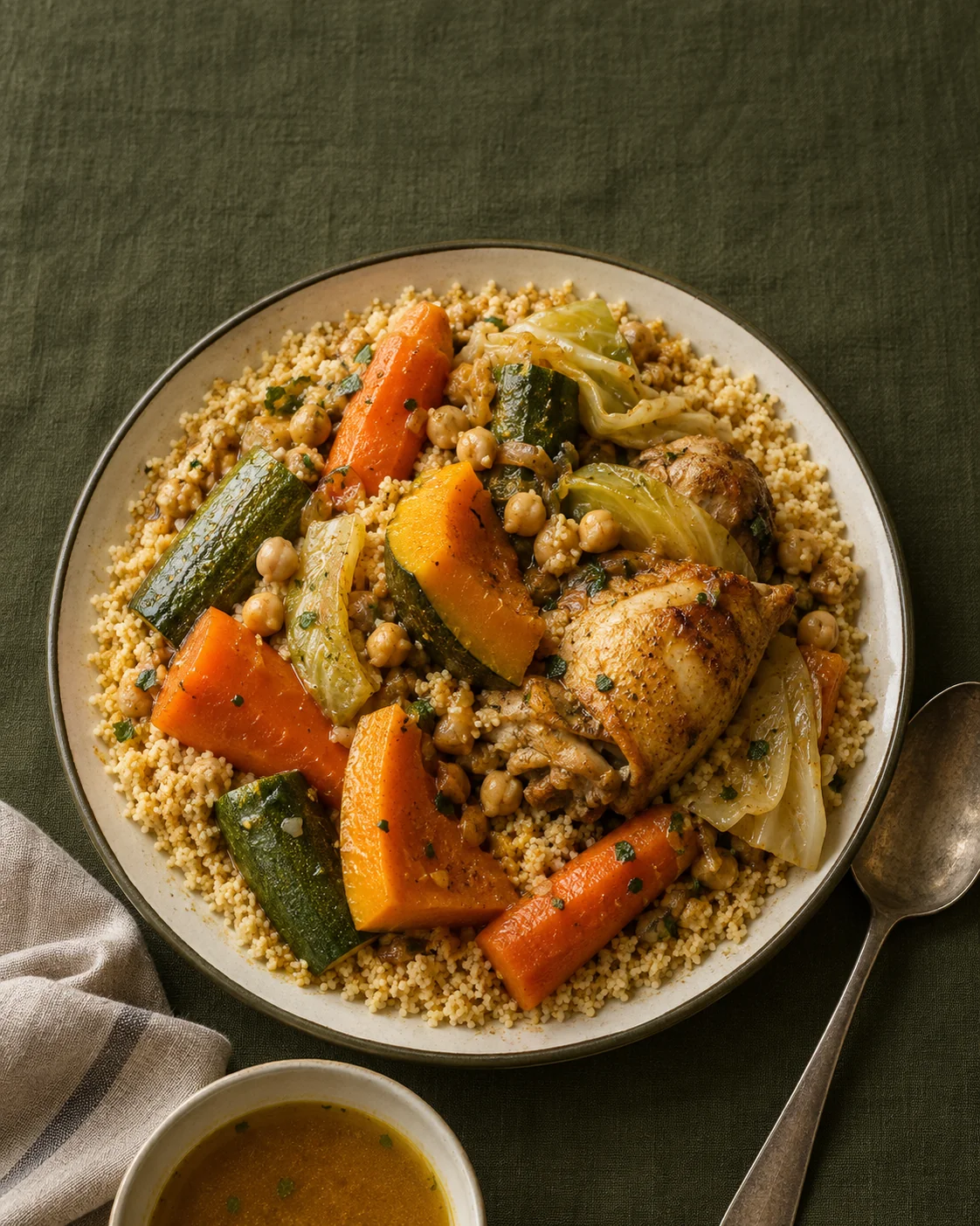
Couscous
Grains, steam and the many ways a shared platter comes together.
Explore the story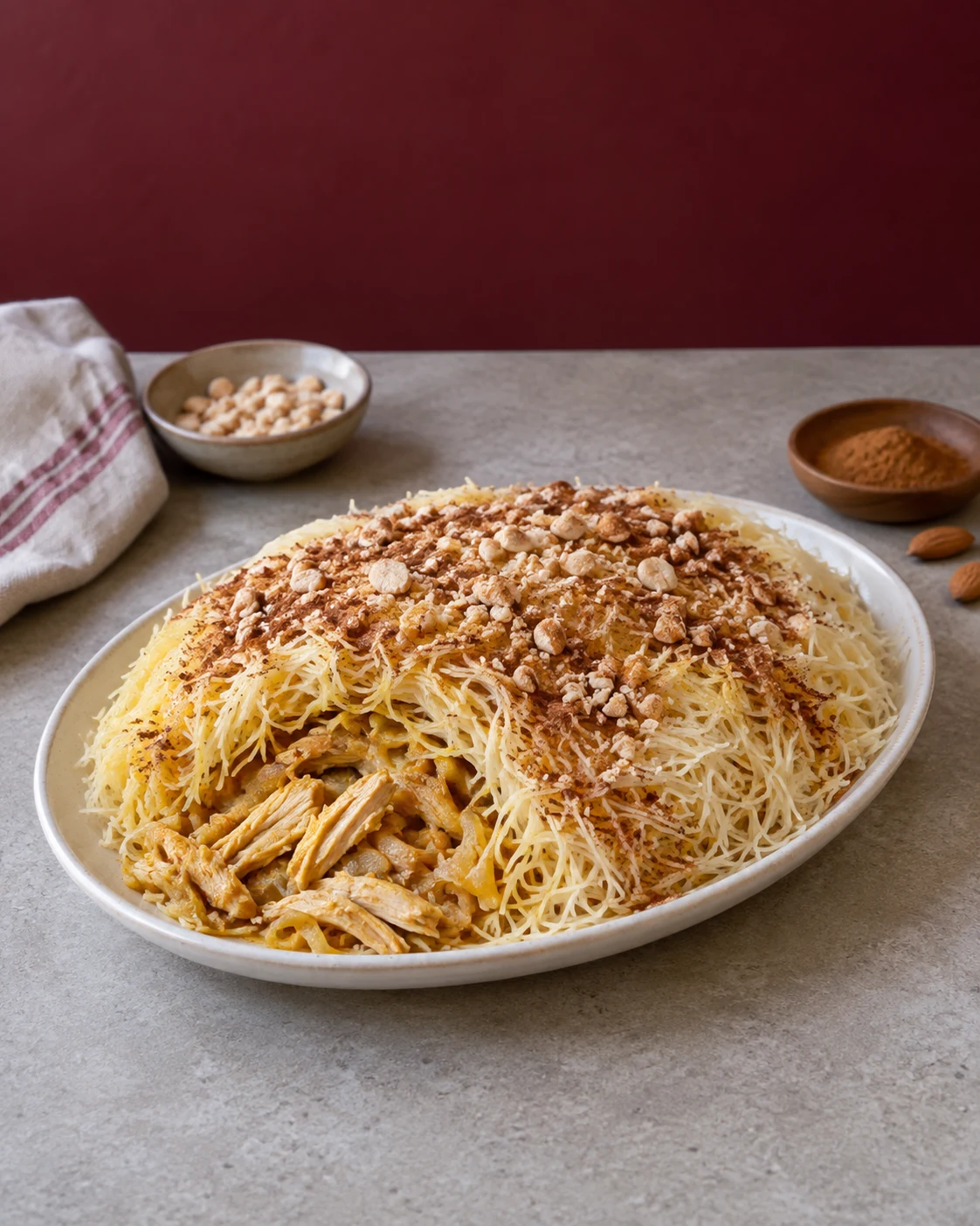
Seffa
Steamed vermicelli or couscous, almonds and sweet aromatics.
Explore the story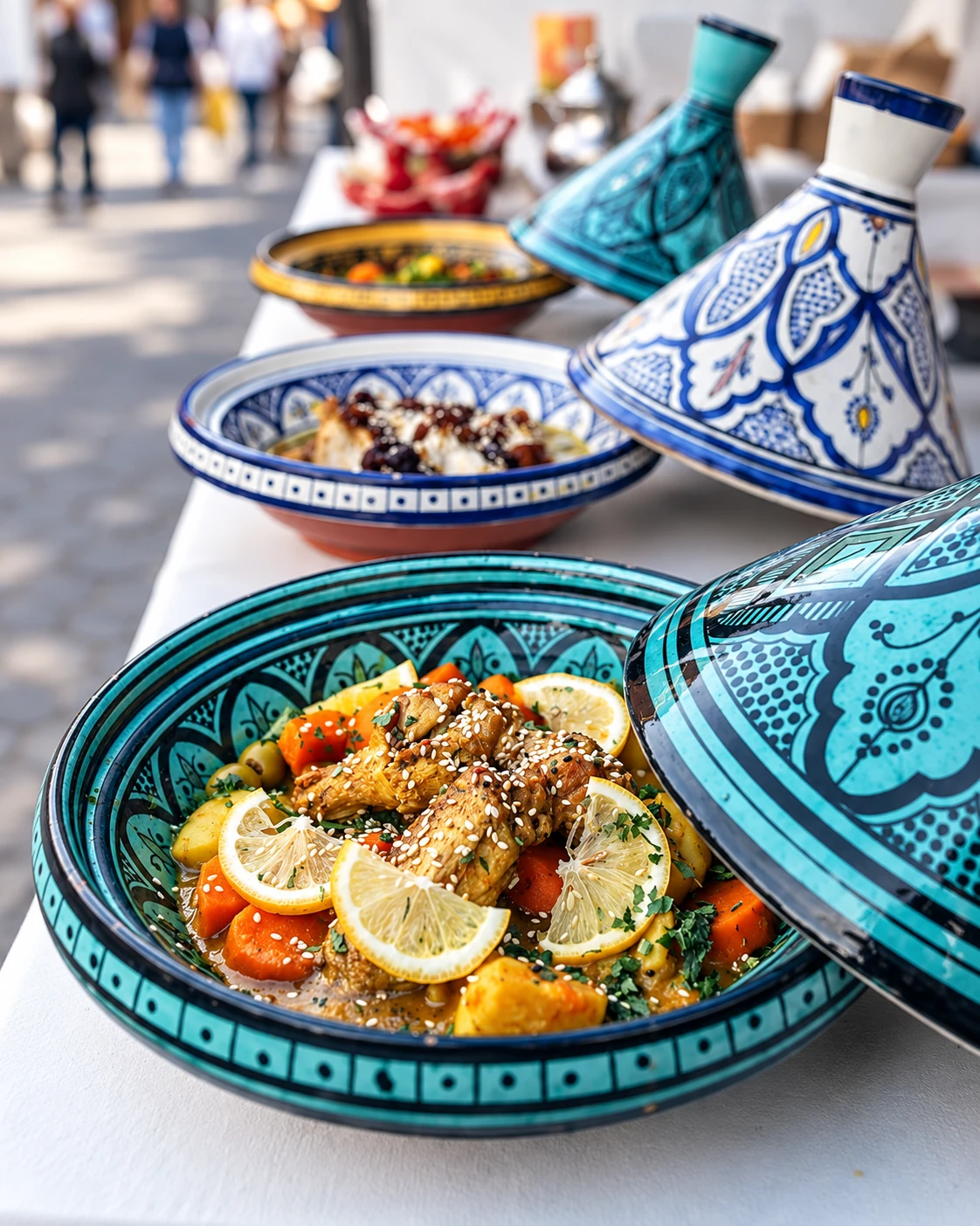
Tagine
Gentle heat, clay pots and the balance of a slow-cooked sauce.
Explore the story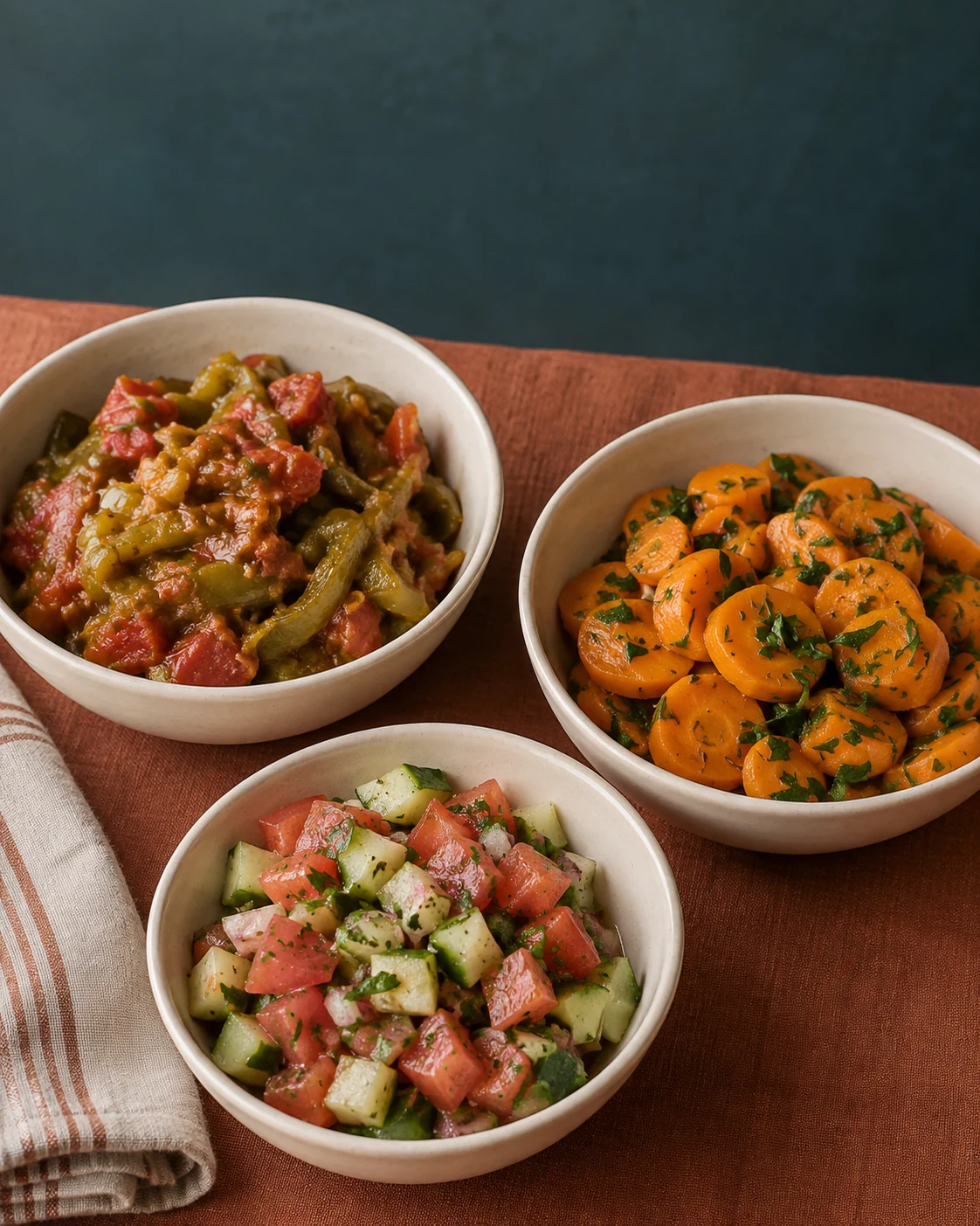
Moroccan Salads
Fresh, cooked and preserved flavours served in small dishes.
Explore the storySources & editorial notes
Photography combines existing Exotic Morocco assets and generated editorial illustrations. These images do not document a named person, household or historical event.
- Moroccan National Tourist Office · Moroccan Food & Drink — official overview naming pastilla with fish, chicken, pigeon or almond fillings and its sweet-savoury character.
- Anny Gaul · “Bastila and the Archives of Unwritten Things” — historian’s research on Andalusi precedents, Tétouan, Algerian/Ottoman transmission theories, and the documented work of women cooks.
- World Intellectual Property Organization · Scoping Study on Moroccan food/craft heritage — warqa, terrada/werraka craft, poultry and seafood variants, individual formats and celebratory service.
- Saveur · Moroccan Pigeon Pie (B’stilla) — festive poultry form, warqa, pigeon, eggs, almonds, sugar and cinnamon; practical substitutions noted separately.
- Christine Benlafquih · Taste of Maroc · Moroccan Seafood Bastilla — seafood fillings, vermicelli, single portions and the modern special-occasion context.
- Anissa Helou · Classic Moroccan B’stilla — classic pigeon architecture and the continued shift toward chicken and simplified layering.
- Oxford Companion to Food · Bestilla — reference overview of Moroccan pigeon pie, layered warqa and special-occasion use.
- Moroccan National Tourist Office · Fès guide — official city guide describing pigeon-and-almond pastilla as part of Fassi gastronomy and its sweet-savoury culinary language.
EXOTIC MOROCCO Places. People. The pleasure of knowing more.Back to top ↑