

01 · A Moroccan essential
Tiny grains.
A generous
way to gather.
A dish made to be brought to the centre.
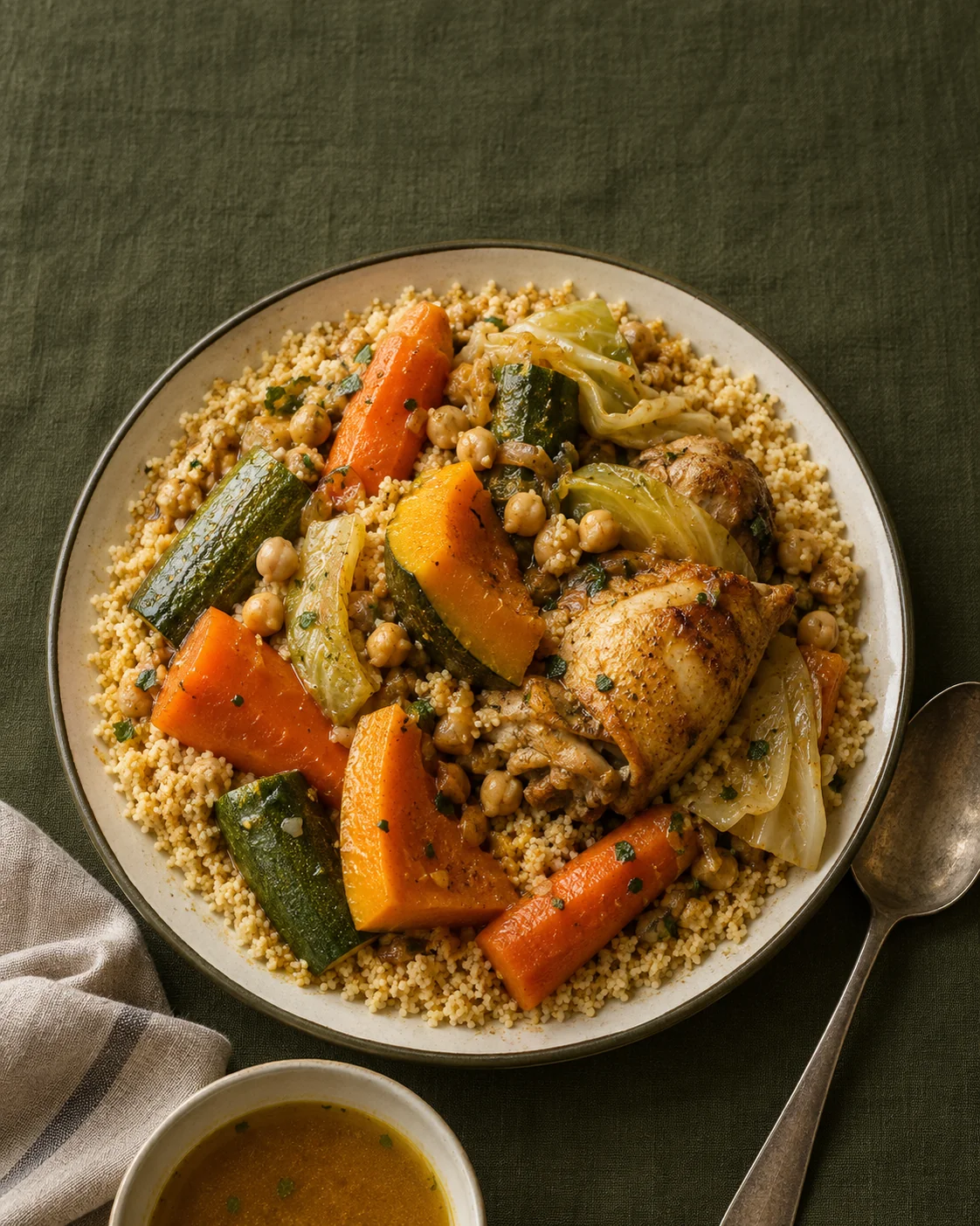
A broad platter arrives, the grains piled beneath vegetables and a little fragrant broth. Carrot and pumpkin bring warmth; courgette and cabbage add their softer greens. There is room for a spoon, a favourite vegetable and another person at the table.
In Morocco, couscous can mean both the prepared granules and the meal built around them. Durum-wheat semolina is a familiar starting point: these small, shaped granules are not whole grains of wheat. Barley has its own place too. [8][7]
The attraction is in the meeting of textures. The grains should remain distinct while welcoming the broth; vegetables need enough tenderness to share that mouthful. Meat may be present, but it is only one part of the composition.
This page follows couscous from the bowl and steamer to the market and shared table. It leaves space for the differences that make a household’s version recognisably its own.
Enter Moroccan food culture ↗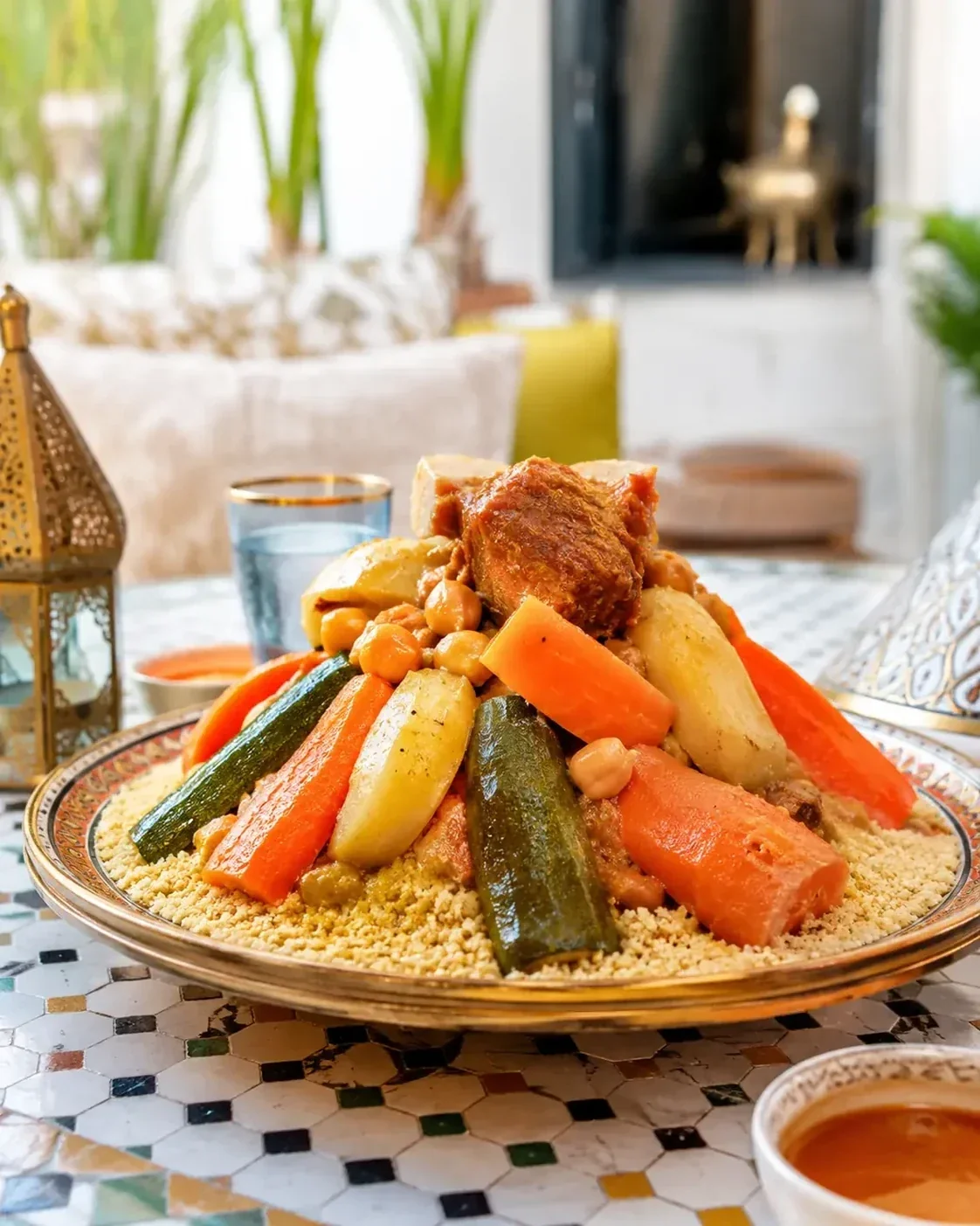
Spellings vary across languages and transliterations.
Texture develops through attention to the grains.
Friday is a familiar gathering point, not the only one.
02 · Roots & living knowledge
An inherited skill.
A living meal.
The story belongs to people as much as to ingredients.
Couscous is closely associated with Amazigh food traditions and with a wider North African culinary world. That inheritance cannot responsibly be reduced to one inventor, one Moroccan city or a precise birth date. [9]
In 2020, UNESCO inscribed the knowledge and practices surrounding couscous through a joint nomination by Algeria, Mauritania, Morocco and Tunisia. The recognition concerns making, sharing and passing on knowledge, beyond any single finished plate. [12]
Learning beside someone
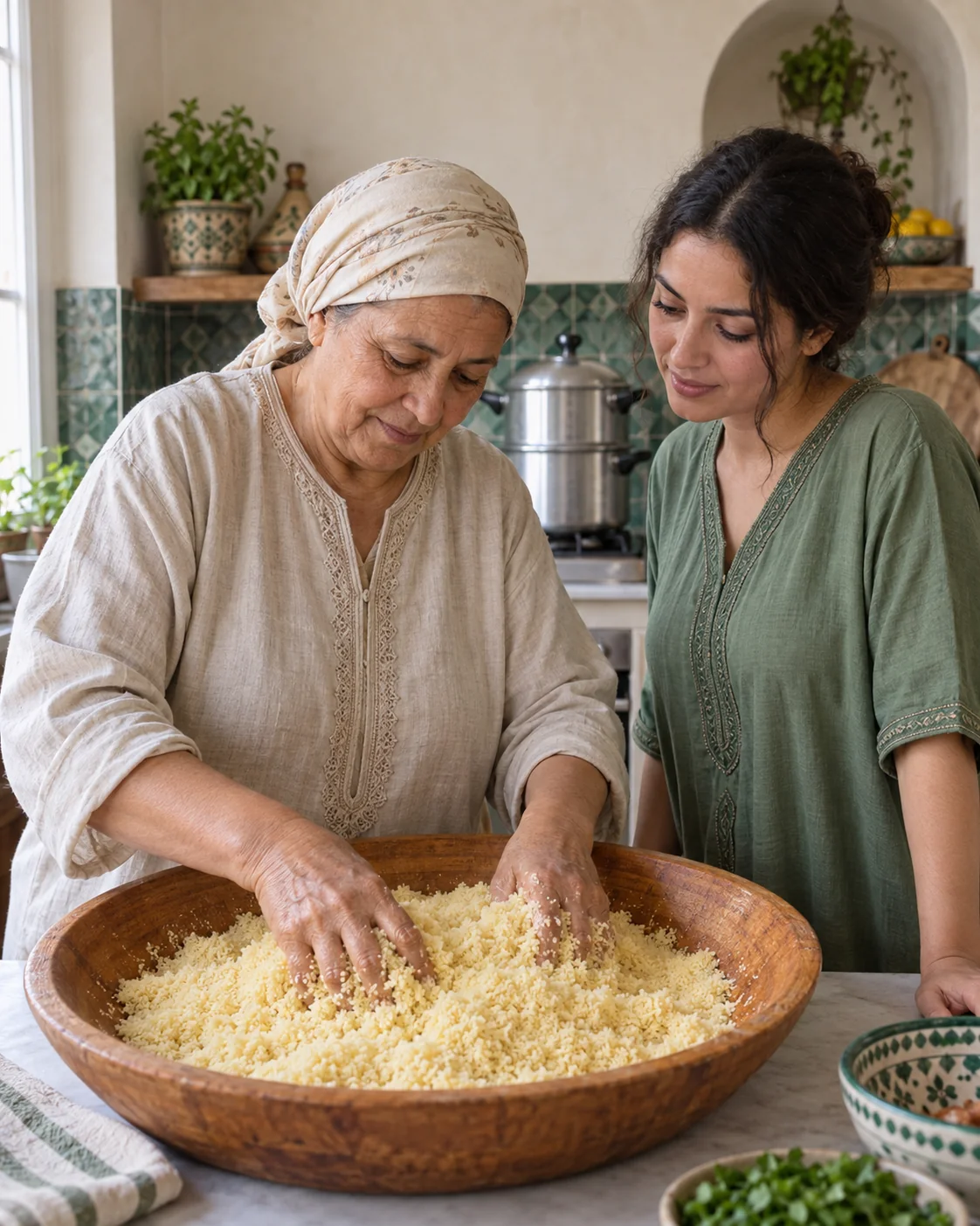
In her account of cooking couscous, Moroccan author Nargisse Benkabbou describes learning from her mother, then making it for friends. A family lesson becomes confidence in a kitchen of her own. [5]
A weekly point of return
Friday couscous is a familiar Moroccan custom. It offers many families a recurring chance to gather, while work, distance and personal circumstances shape whether and how that happens. [9]
Room for contemporary life
Hand skills coexist with bought couscous and modern equipment. Benkabbou also documents a practical oven method for prepared grains: adaptation is part of the living record. [6]
03 · The steamer & the grain
The art
of lightness.
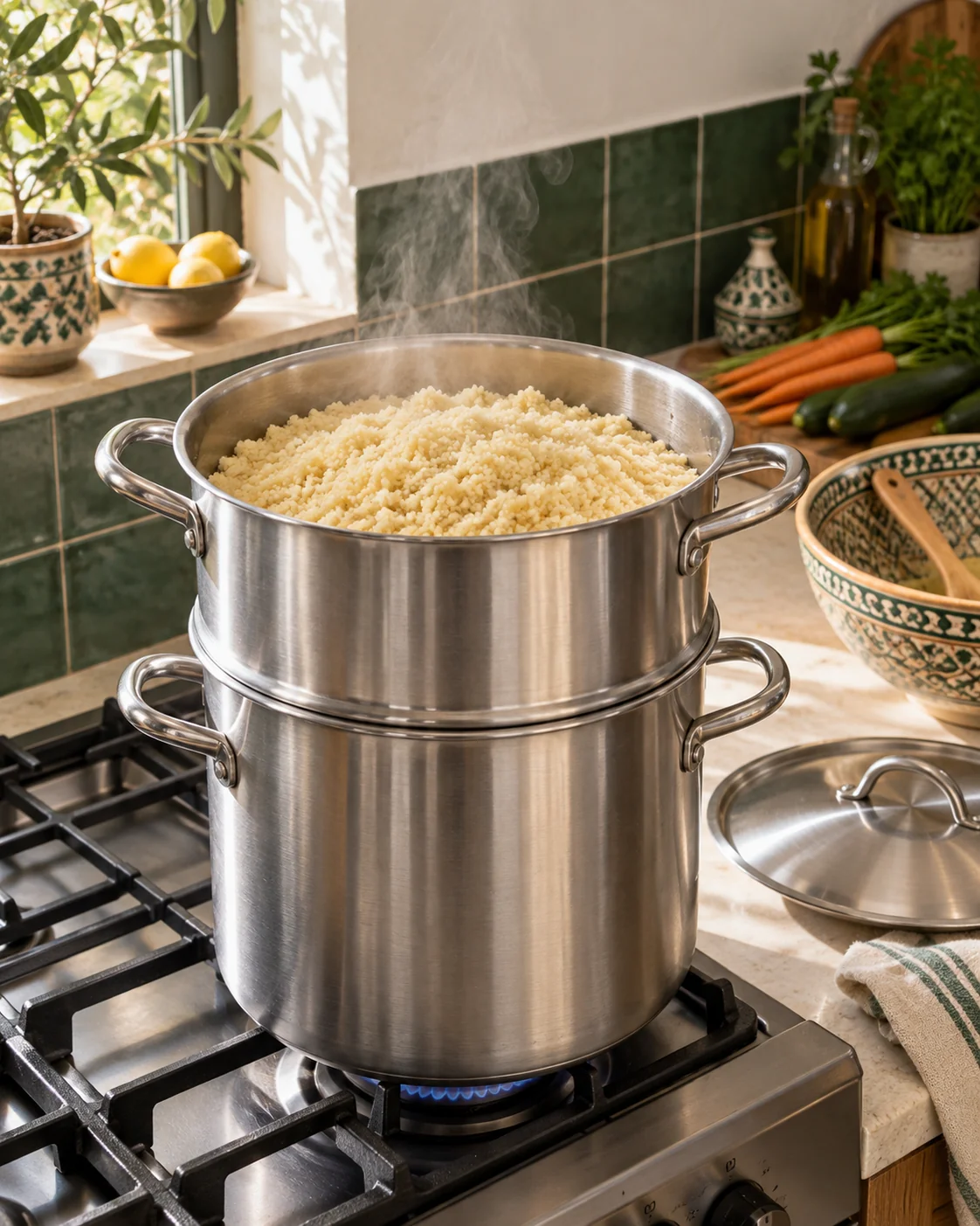
A couscoussier makes the relationship visible: a lower pot for liquid and an upper, perforated basket for the grains. Steam rises through the couscous instead of the grains boiling in the broth. [2]
The equipment matters because it supports a particular texture. What looks like one continuous cook is a rhythm of steaming, spreading and returning.
Steam rises
The perforated basket lets moisture reach the grains from below. The lower pot may hold the accompanying stew, linking the two parts of the meal without mixing them too early.
The grains are loosened
Between steaming stages, couscous is spread in a broad bowl, moistened and gently separated. Repeated handling helps it expand without becoming a dense mass. [2]
Texture guides the cook
A grain that looks fluffy is not necessarily ready. The aim is tenderness with separation: a texture that can accept broth while still feeling light on the spoon.
Traditional steaming and contemporary shortcuts can both belong to home cooking. They produce different working rhythms; the cook still pays attention to the grain.
04 · Five ways to meet couscous
One grain story.
Many expressions.
Vegetables and broth are only the beginning. A sweet onion topping, a different cereal or a bowl of cultured milk can change the character of the meal.
These examples are invitations to explore. They are not a fixed national menu, and their names do not erase differences between cooks.
Seven-vegetable couscous
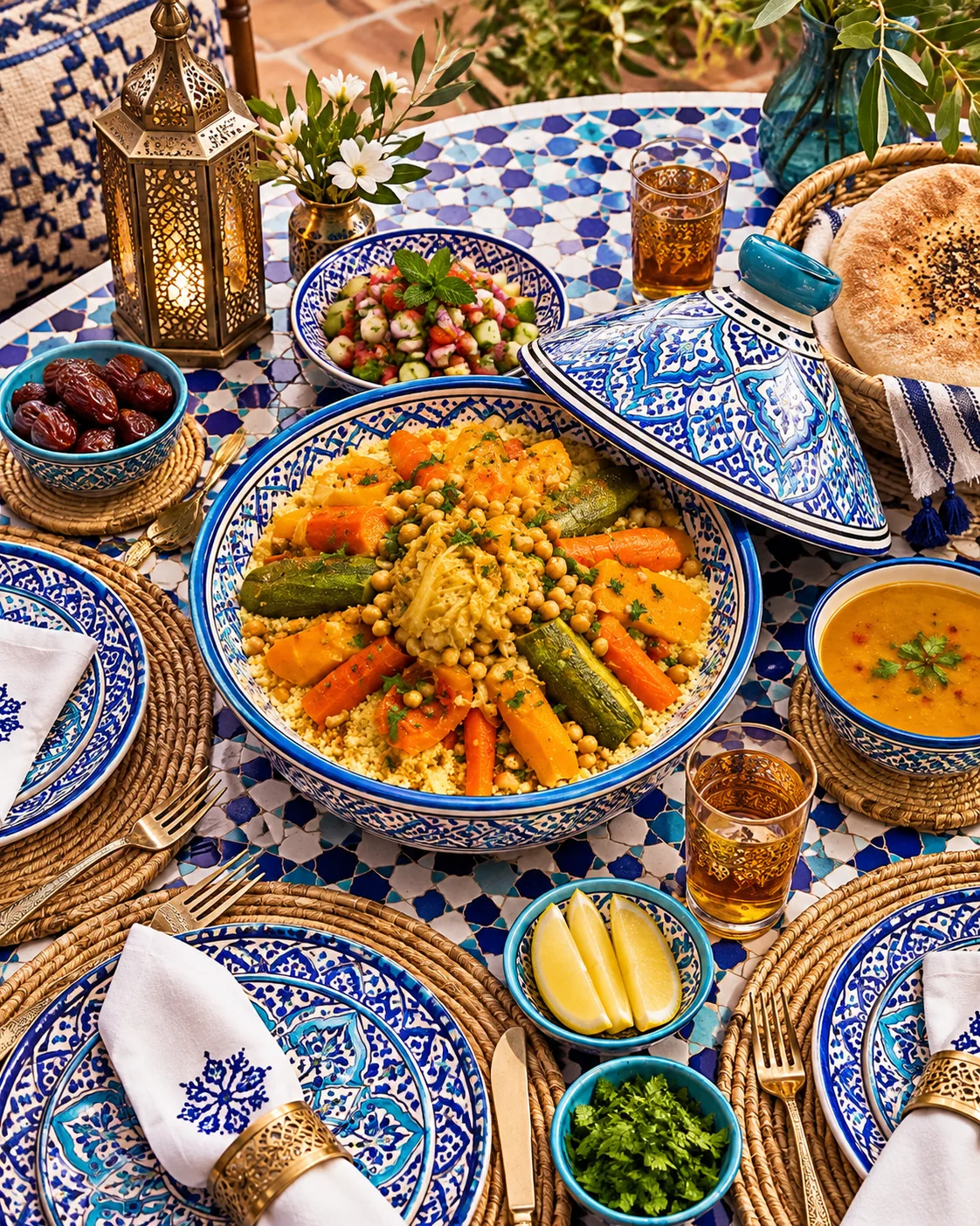
Carrot, courgette, pumpkin, turnip and cabbage are familiar companions, with chickpeas and, often, lamb, beef or chicken. The name is well known; the exact count and selection are flexible. A family’s seasonal combination matters more than making every platter match an illustration. [1]
Couscous tfaya
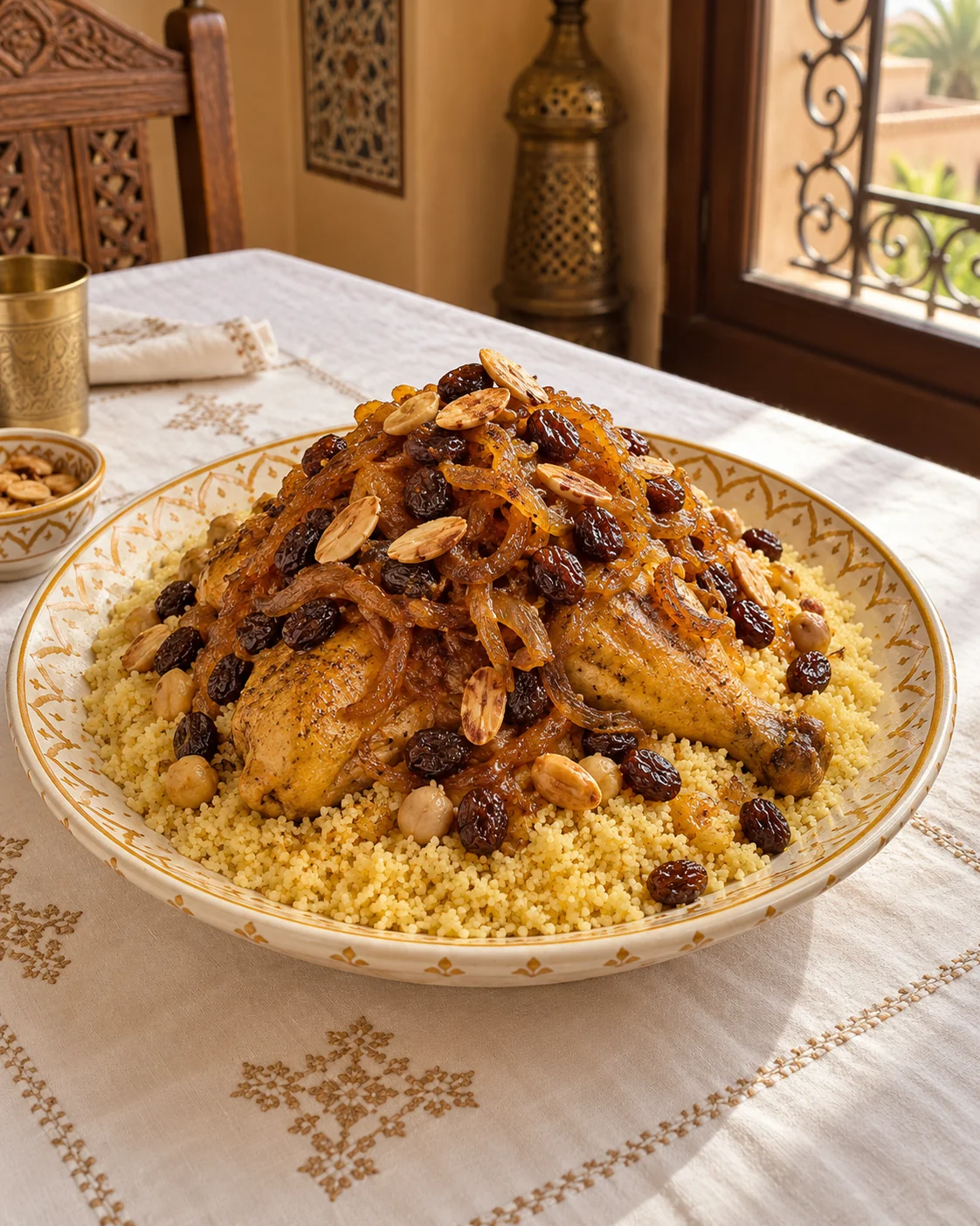
Tfaya brings softly cooked onions and raisins to a savoury plate. Cinnamon gives fragrance; some cooks finish with almonds. Nargisse Benkabbou’s chicken version recalls family meals in Fez. That is a personal connection, not a claim that tfaya belongs exclusively to that city. [3]
Belboula
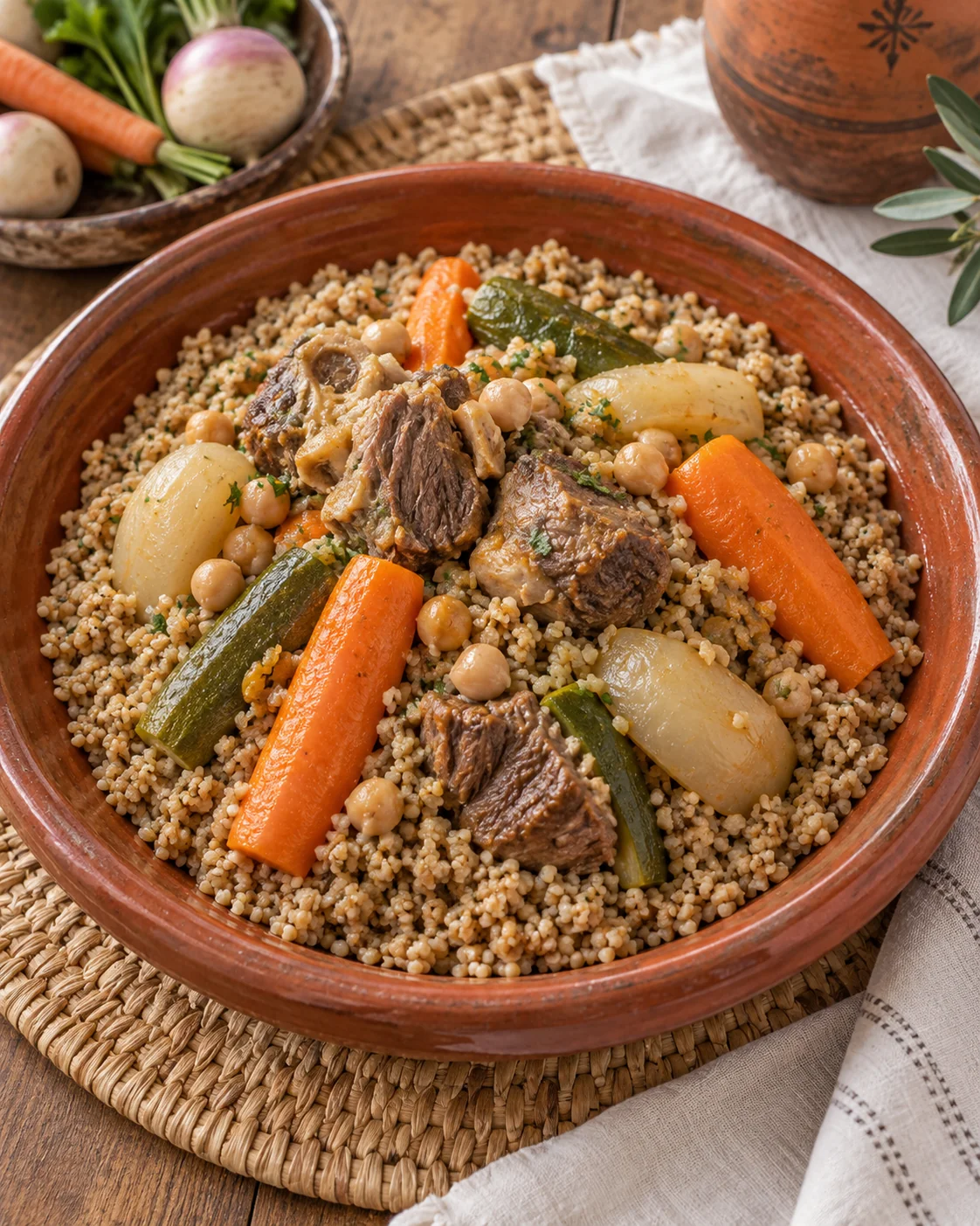
Barley couscous has a more rustic colour and a cereal character of its own. Belboula names the barley preparation sold by Moroccan producer DARI. Changing the cereal changes the starting ingredient, so it deserves its own handling rather than an automatic substitution. [7]
Seffa with couscous
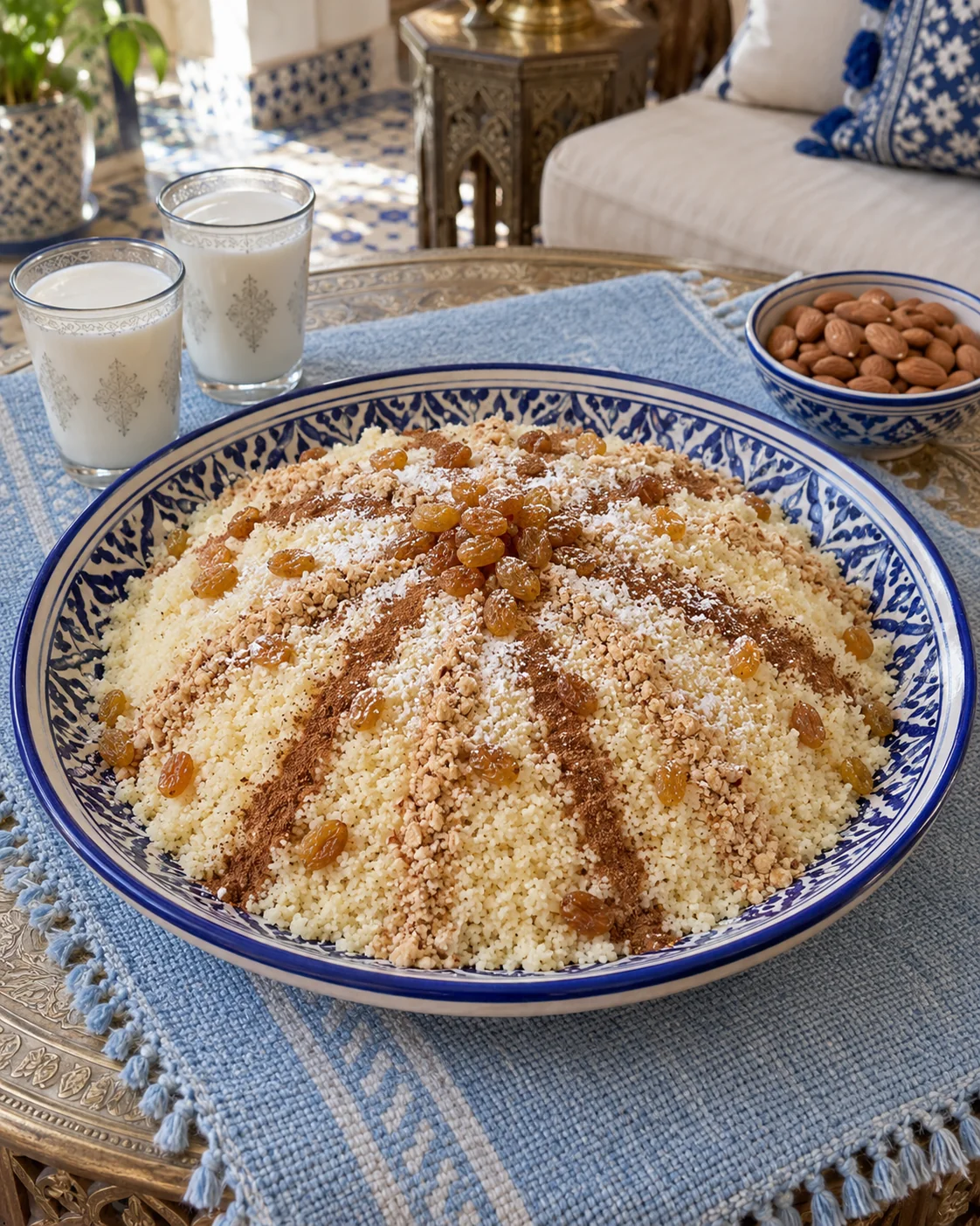
Fine couscous can become seffa, with sweet accents, cinnamon, almonds and raisins. The name is also used for a preparation of fine broken vermicelli; this photograph shows couscous. Seffa medfouna adds a hidden savoury filling, and should not be confused with every sweet seffa. [4]
Saycouk
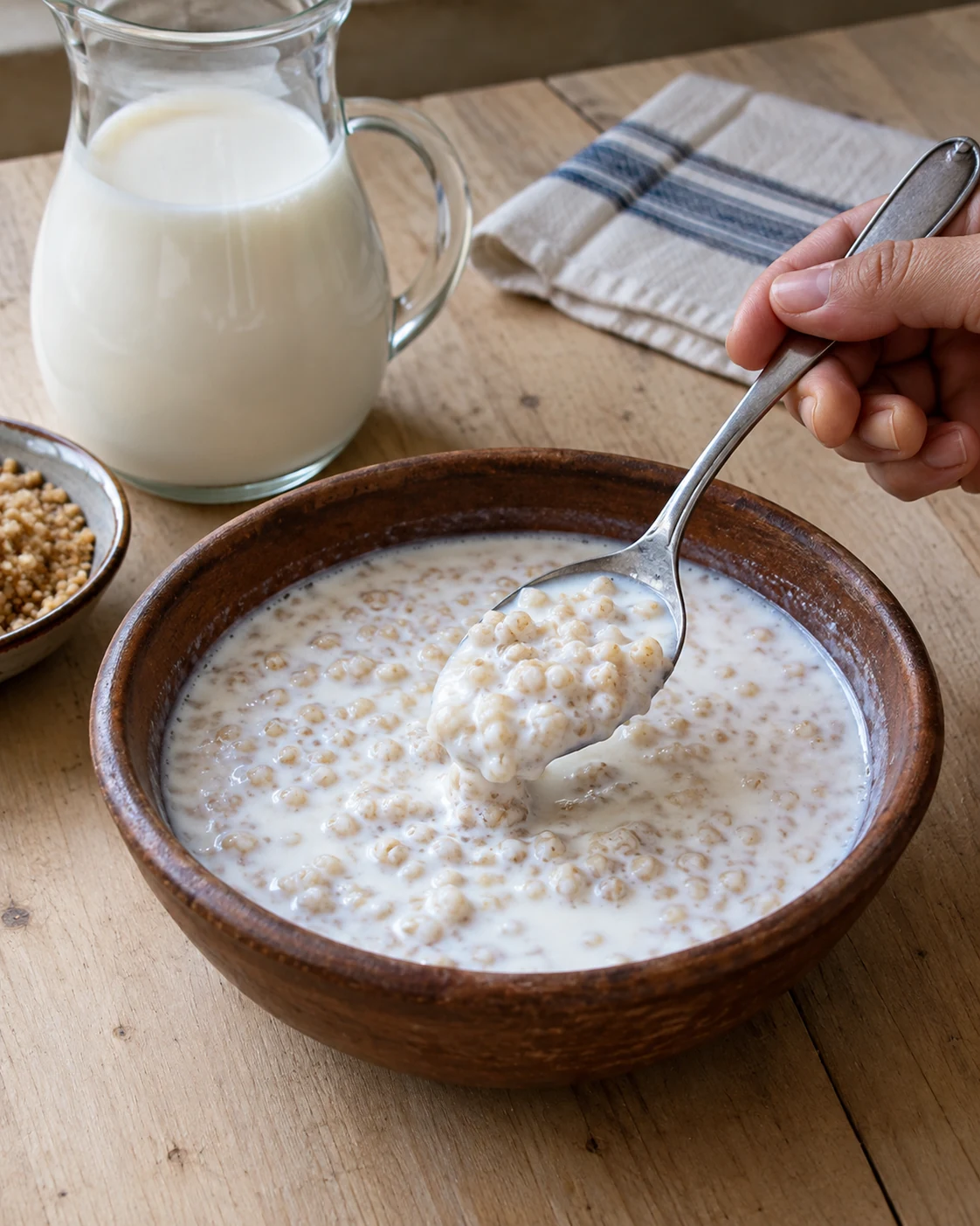
Couscous and cultured milk meet in a simpler bowl. Often written saykook or saycouk, this preparation moves away from the vegetable-and-broth platter. Its appeal is the contrast between the mild grains and the milk’s tang; proportions and the choice of grain vary. [2]
The vegetable dish is a beginning.
Moroccan couscous also appears with fish and in other sweet or savoury forms. Coastal availability can suggest a fish preparation without turning it into the exclusive property of one port. [9]
A name leaves room for a cook.
One household keeps the broth light, another prefers a deeper savoury flavour. Some serve tfaya separately. Describing the version on the table is more useful than declaring a single version correct.
05 · Ingredients & their roles
A few essentials.
Many layers.
Think of the dish as a conversation between the grains, the vegetables and the seasoning. Each has work to do, and none needs to overwhelm the others.
The pantry changes with the preparation. Onions and raisins belong to tfaya; they are not a compulsory garnish for every couscous.
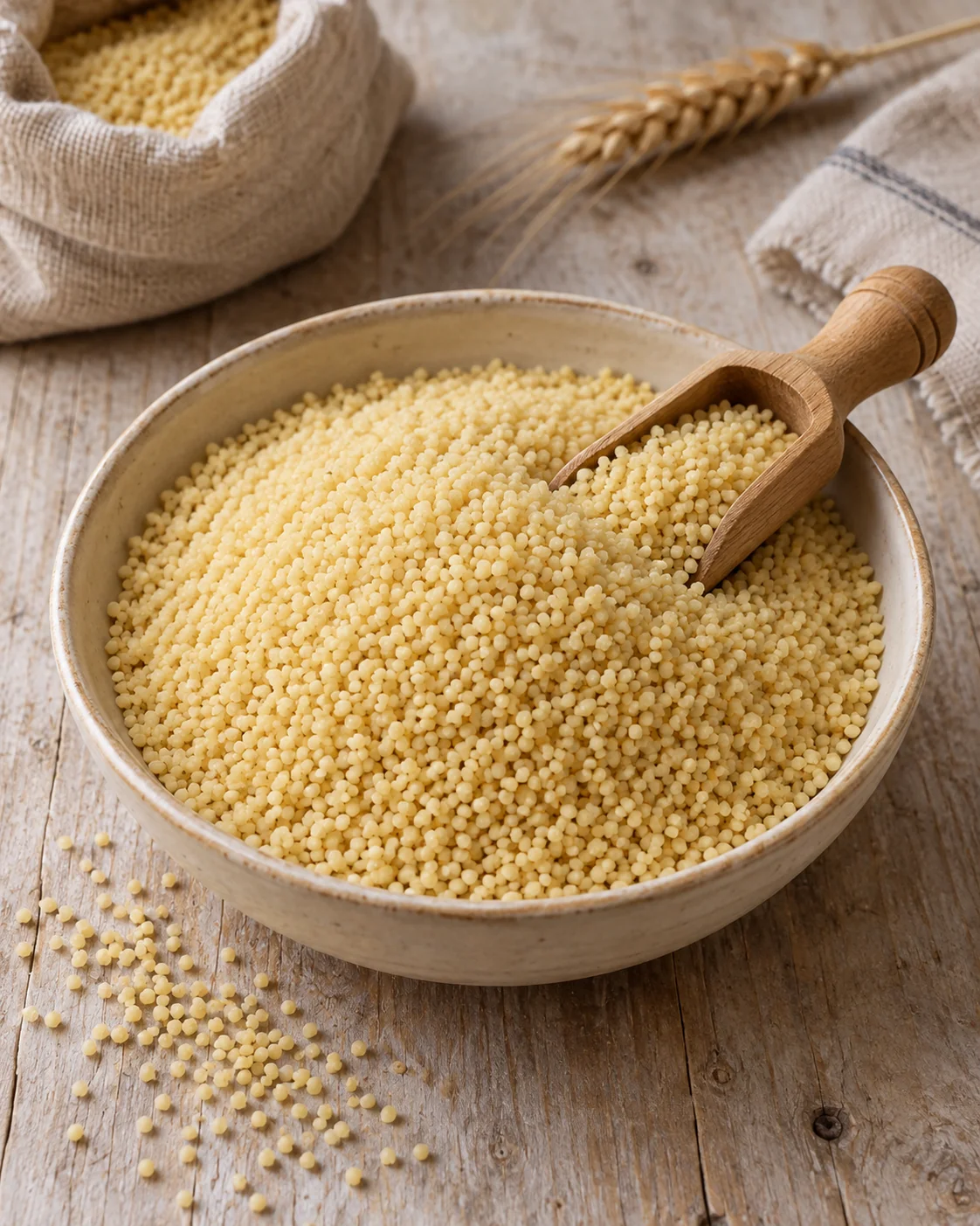
Semolina granules
The base that welcomes broth.
Durum-wheat couscous provides the familiar pale-gold foundation. Its size and processing matter as much as its appearance. Check the product rather than assuming every fine-looking grain needs the same treatment. [8]
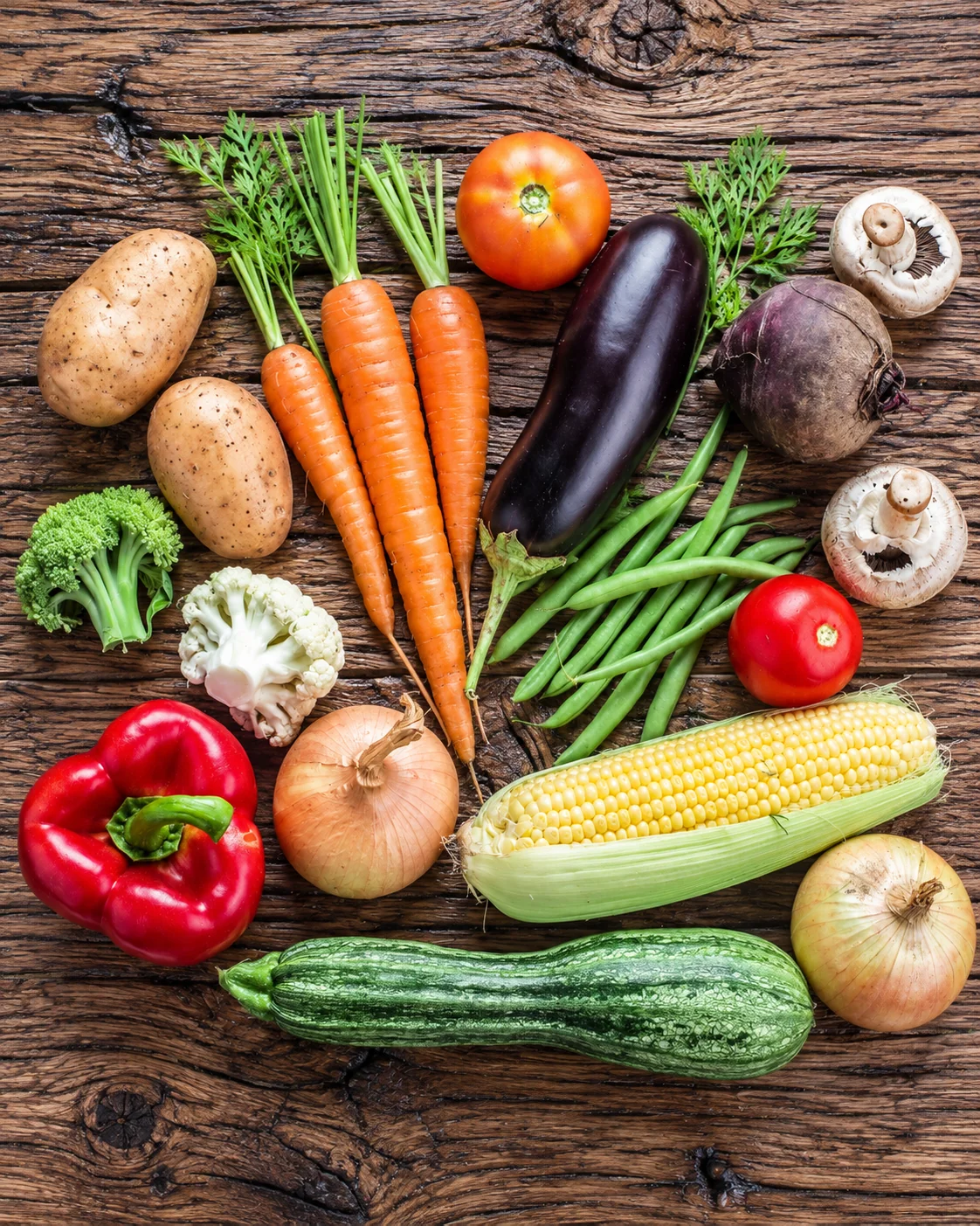
Seasonal vegetables
Colour, sweetness & tenderness.
Carrot brings sweetness, courgette a gentler note; pumpkin softens into a rich contrast. The market basket pictured here is inspiration, not a prescribed ingredient list. Select vegetables that suit the particular dish.
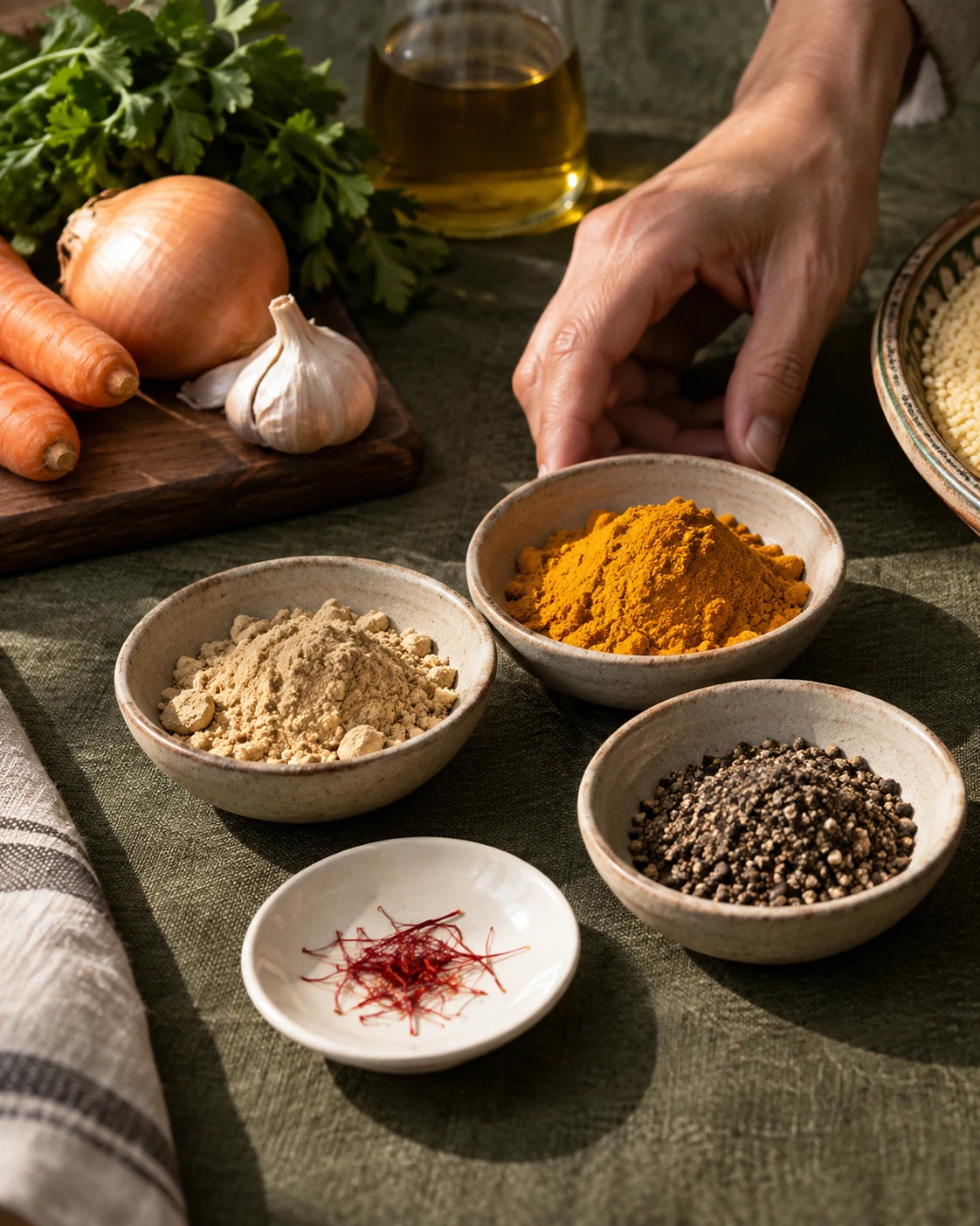
Spices & herbs
Fragrance with a purpose.
Ginger, pepper and turmeric appear in many savoury preparations; parsley and coriander add another aromatic layer. Cinnamon changes the register of tfaya. These are choices within distinct dishes, not one universal spice mix. [1][3]
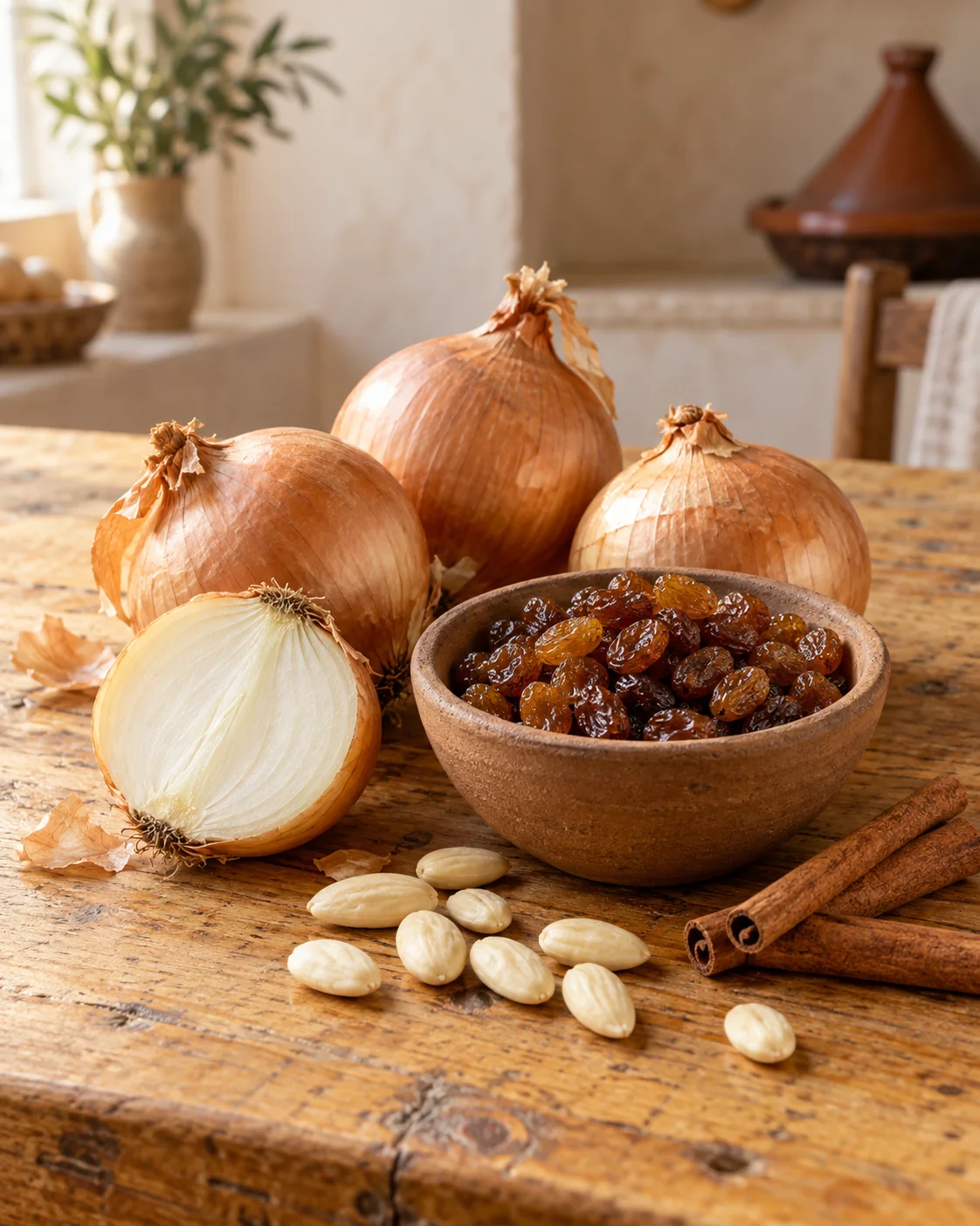
Onions & raisins
The character of tfaya.
Onions become mellow and sweet as they soften, while raisins add concentrated fruitiness. Almonds may supply a crisp finish. The topping’s sweetness needs a savoury context to make its contrast meaningful. [3]
Explore the four ingredient groups
BROTH · GRAINS · BALANCE
Where the flavours
come together.
The broth is the link between a mound of grains and a complete savoury dish.
Often called marqa, the accompanying broth brings the flavour of the cooked vegetables, seasonings and any meat into the couscous. It is part of the meal’s structure, not merely a sauce added for decoration. [9]
A spoonful should hold several textures, without losing the character of the grains.
Depth begins in the pot.
Onion and seasoning provide a background; each vegetable contributes something as it cooks. A meatless broth deserves the same attention as one enriched by meat. The intention is flavour throughout, rather than a heavily seasoned surface.
Richness is a choice.
Oil, butter or smen can influence the final character. Smen is a fermented, salted butter with a pronounced aroma; it appears in some Moroccan couscous preparations, not all of them. [5]
Serving completes the balance.
Broth moistens the grains and carries flavour between them. A separate bowl allows diners to adjust the dish to their liking. Lightness is easier to appreciate when there is still a distinction between the grain and the liquid.

06 · Geography, season & family
The market changes.
The meal follows.
A useful map includes households as well as places.
The seven-vegetable preparation is often described as Casablanca style, or couscous bidaoui. That association helps identify a familiar style; it does not mean the dish is only cooked in Casablanca. [1]
A recipe learned in one city may travel with a family, meet a different vegetable stall and become familiar somewhere else. Season, access and personal preference are more helpful guides than rigid culinary borders.
Casablanca & the vegetable platter
A city association, with countless versions at home. The familiar name opens a story rather than closing its borders.
Explore Casablanca ↗Fez & a family memory
Benkabbou’s tfaya connects the dish with the meals of her grandmother and aunts. A named cook’s experience gives the map a human scale. [3]
Explore Fez ↗A seasonal shopping basket
Spring produce and cooler-season roots invite different combinations. Ask what is available and what the household enjoys.
Markets & the Moroccan table ↗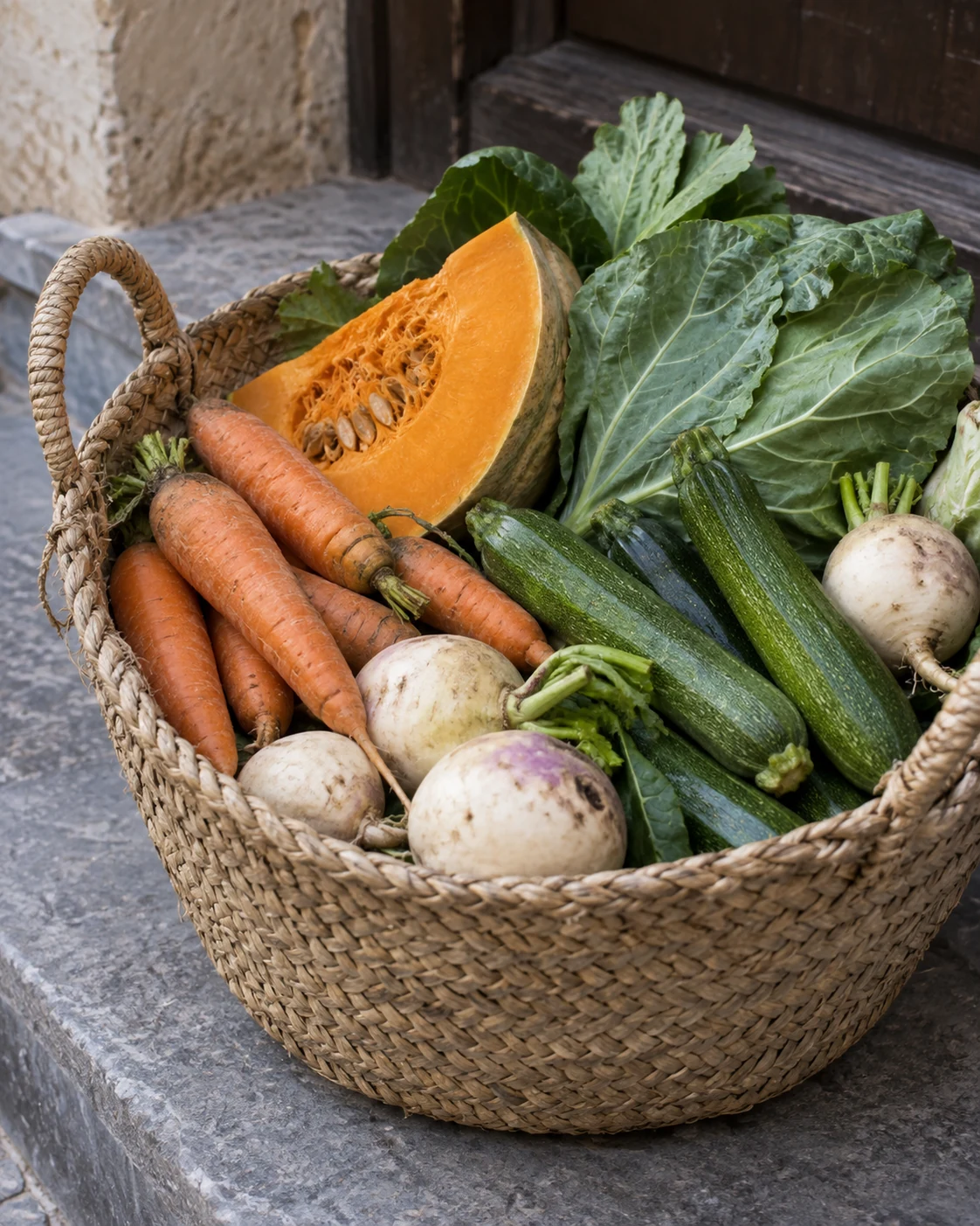
07 · The shared meal
Make a place.
Pass the broth.
The platter draws people together.
The welcome gives it meaning.
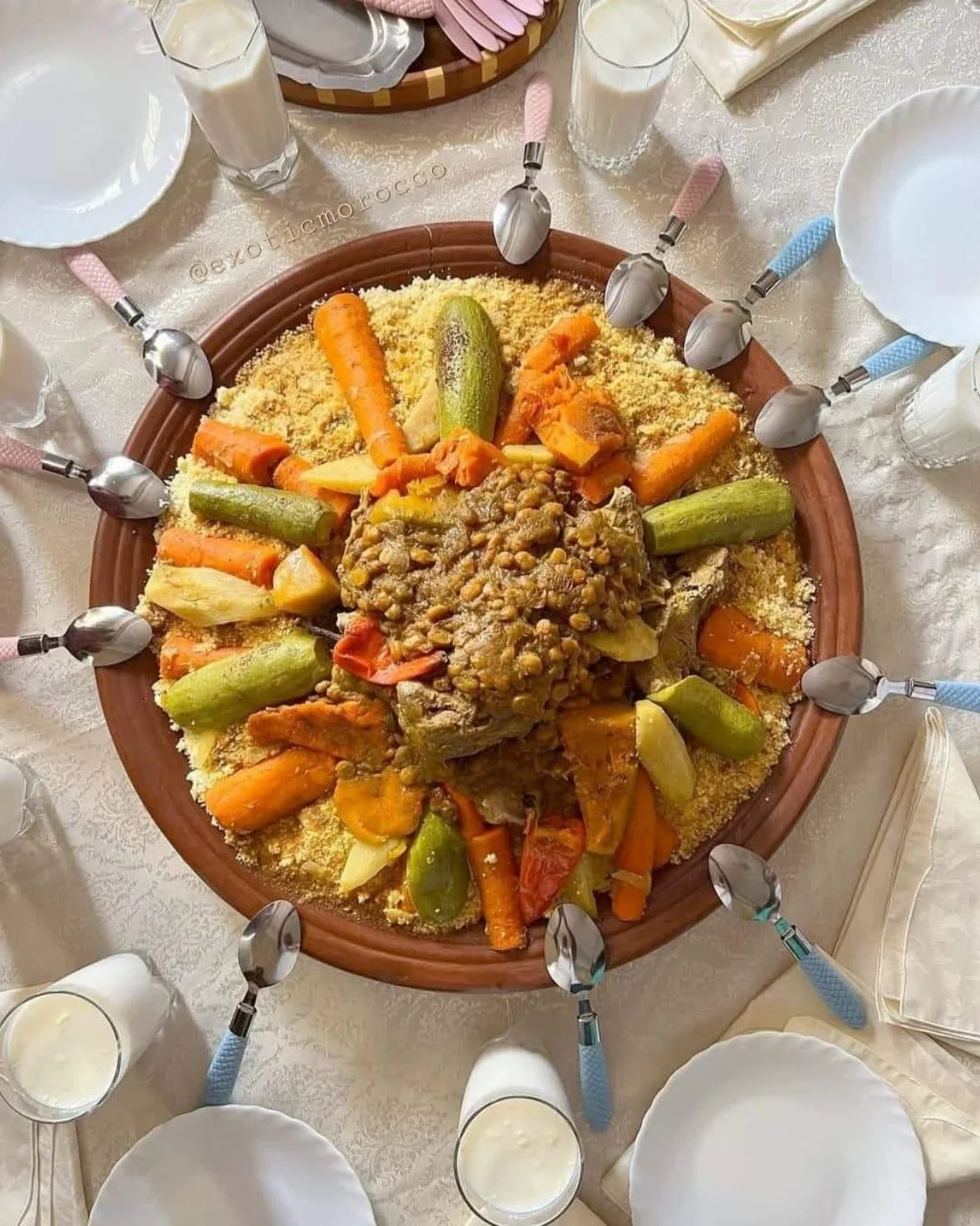
Couscous has the visual generosity of a dish arranged for several people. Vegetables sit visibly on the grains, inviting someone to choose a piece rather than search for it. A serving spoon and an extra bowl of broth can make the simplest table feel considered.
A shared dish is a familiar way of serving couscous. Individual plates are also practical, especially when guests have different needs. Hospitality can accommodate both: the size of the platter is not a measure of the warmth of the meal.
Friday has a place.
For many Moroccan households, Friday couscous is a recognisable weekly custom. A repeated meal can become a point of continuity: the same broad dish, a different market basket, familiar people coming together when they can. [1]
There is no need to turn that custom into a rule for every family. A meal shared on another day still carries the cook’s attention, and a smaller household may make a smaller version.
Follow the table you join.
Notice how your hosts serve the meal and ask when you are unsure. A communal platter, serving spoons and individual bowls each suggest a slightly different rhythm. Leave space for others and accept the arrangement with care.
Offering extra broth or a preferred vegetable is an easy way to make room for individual taste. The welcome lies in those small observations, not in a performance of elaborate etiquette.
A glass of lben.
A refreshing contrast.
Lben, a tangy cultured milk, is a familiar drink alongside couscous. Its coolness contrasts with a warm savoury platter. It is a companion, not an obligation; water or another drink may suit the people around the table. [9]
Everyday care, room for guests.
A weekday bowl and a generous meal for visitors need not tell opposing stories. Both can express care in the choice of vegetables, the texture of the grain and the attention paid to the people eating.
08 · The bowl & the hands
Room for the grain.
Space for the hands.
Useful objects reveal the work of a kitchen.
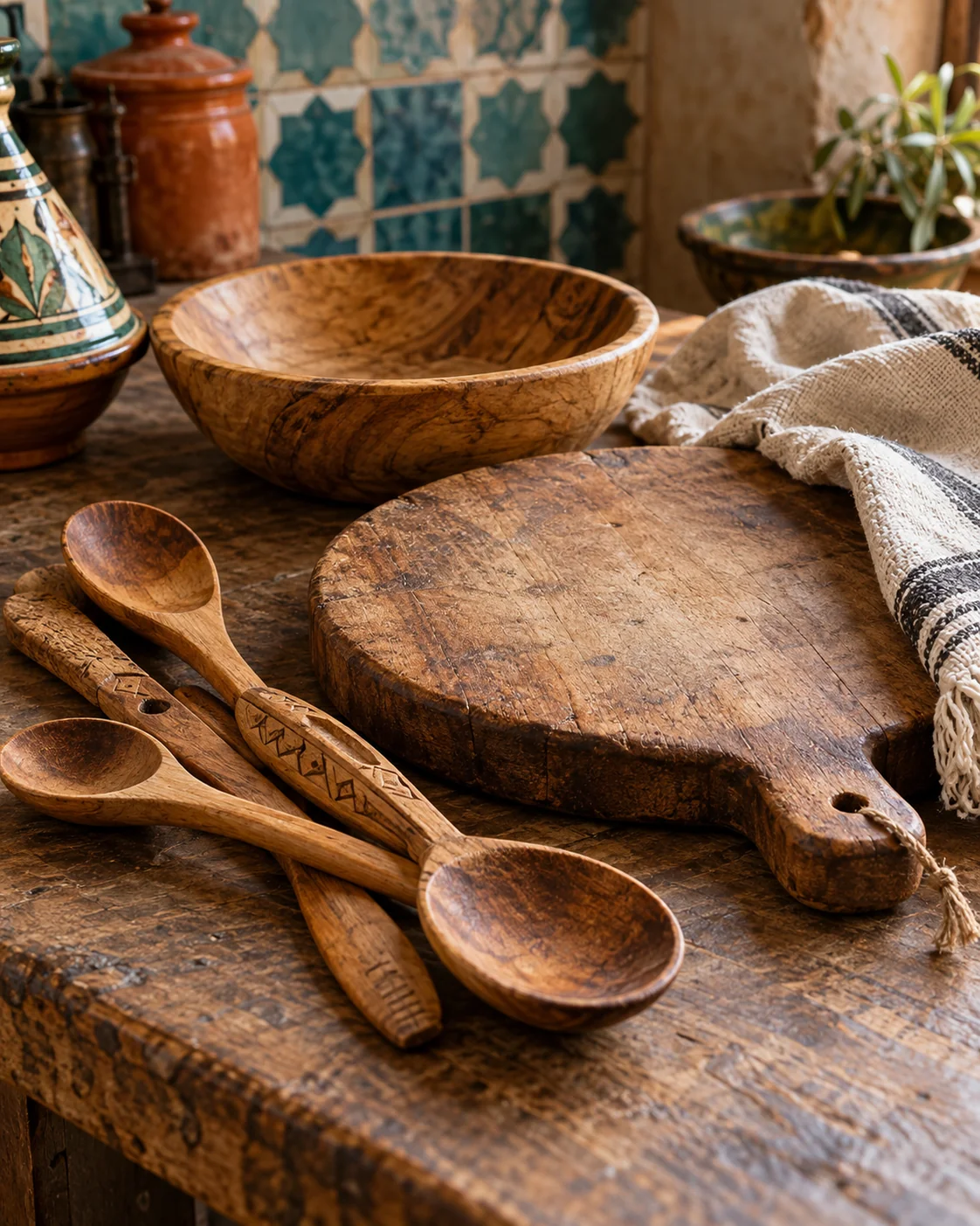
A broad, shallow bowl gives the cook space to spread and separate couscous. A gsaa, made in wood or ceramic, is one traditional form used for that work. Its generous surface matters more here than a decorative finish. [2]
Look at the curve of a wooden bowl and the smooth edge of a spoon. These are qualities understood through use: how an object rests on the table, how comfortably it can be held and how easily its contents can be moved.
A bowl becomes familiar through repeated use. Its size, weight and rim influence how someone works around it. The simplest utensils can hold this practical knowledge without needing an elaborate pattern or a precious material.
The preparation also has a hand skill of its own. Watching someone loosen grains communicates a pressure and movement that a printed ingredient list cannot fully describe. A good guide should explain that purpose, while leaving room for practice.
Explore Moroccan crafts & design ↗09 · A closer look
Good questions.
Clear answers.
A few details that make the picture richer.
Is couscous a grain or a pasta?
The familiar durum-wheat version is made from semolina formed into small granules. It is not an intact cereal kernel. Barley couscous starts from a different cereal. The name also describes the finished dish, which is why context matters. [7][8]
Must seven-vegetable couscous contain exactly seven vegetables?
No. The name identifies a familiar preparation, while the selection and count can change. Seasonal availability, preference and the cook’s recipe are more useful than a rigid checklist. [1]
Is couscous always savoury?
No. Seffa can take fine couscous in a sweet direction, while saycouk combines grains with cultured milk. Seffa may also be made with vermicelli, so ask which version is meant. [4]
Can couscous be vegetarian or gluten-free?
A vegetable version can be vegetarian when its broth and fats are too. Standard wheat couscous and barley couscous contain gluten. A dish’s name or photograph cannot confirm its ingredients: check the product and ask the cook. [7][8]
Do I need a couscoussier for every version?
No. Traditional steaming is a distinctive method, while modern cooks also work with prepared products and other equipment. Nargisse Benkabbou describes an oven method for fluffy plain couscous. Follow a method intended for the product you use. [6]
Is pearl couscous the same ingredient?
Do not assume products are interchangeable. Moroccan berkoukech uses larger grains in preparations such as soup; a fine steamed couscous platter has a different texture and method. Match the ingredient to the named preparation. [11]
 EXOTIC MOROCCOTASTE · THE GUIDE COLLECTIONCouscousIngredients, technique
and the Moroccan table
From the story to your kitchen
Keep the flavour.
Go a little deeper.
Grains, steam and the many ways a shared platter comes together.
Explore the Exotic Morocco guide collection for a closer look at ingredients, kitchen knowledge and the culture around the table.
- Understand the ingredients and their roles
- Recognise the techniques and textures that matter
- Bring context and confidence to the way you cook and serve
Continue tasting Morocco
Follow the
table outward.
Another dish, another technique, another way into the Moroccan kitchen.
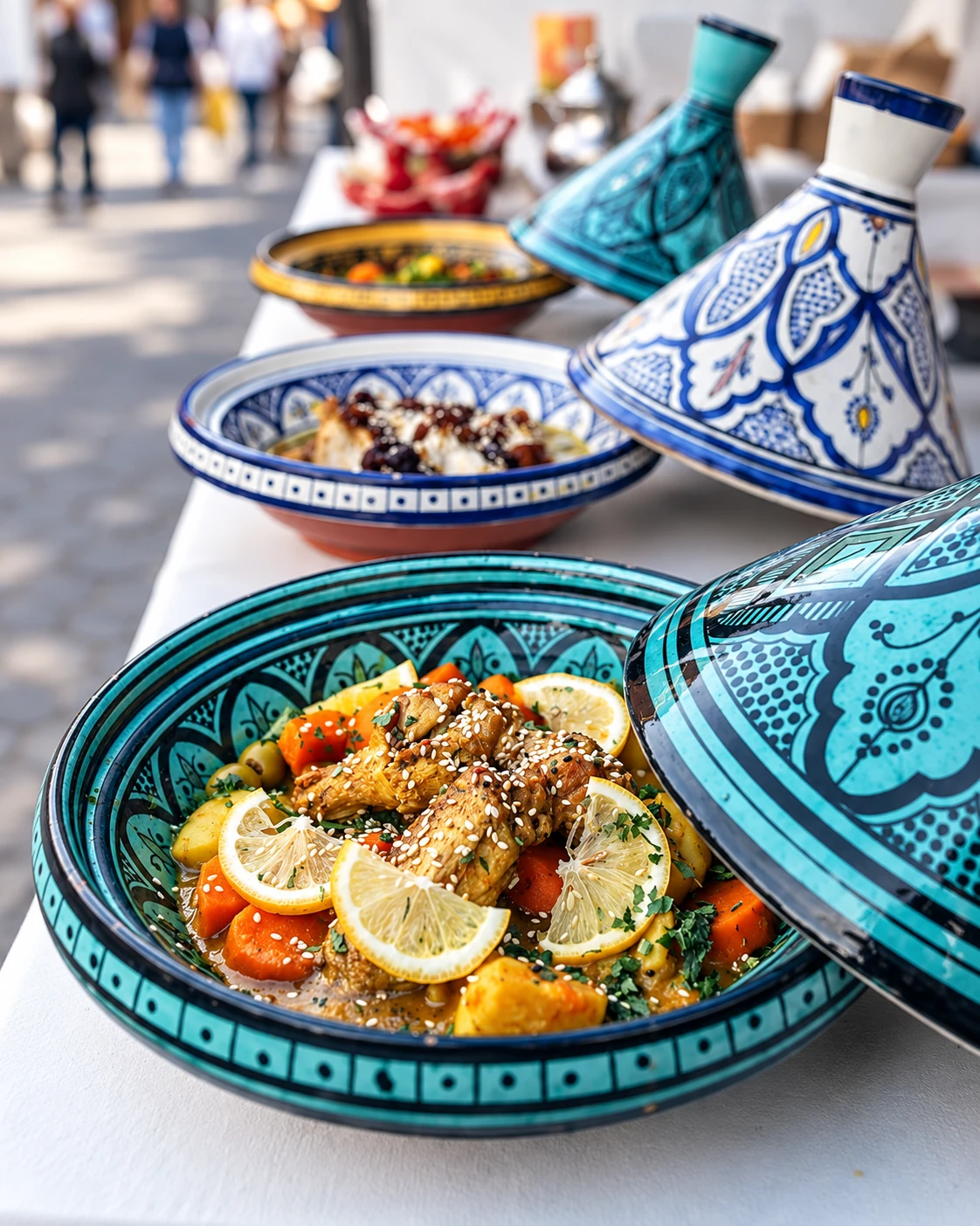
Tagine
Gentle heat, clay pots and the balance of a slow-cooked sauce.
Explore the story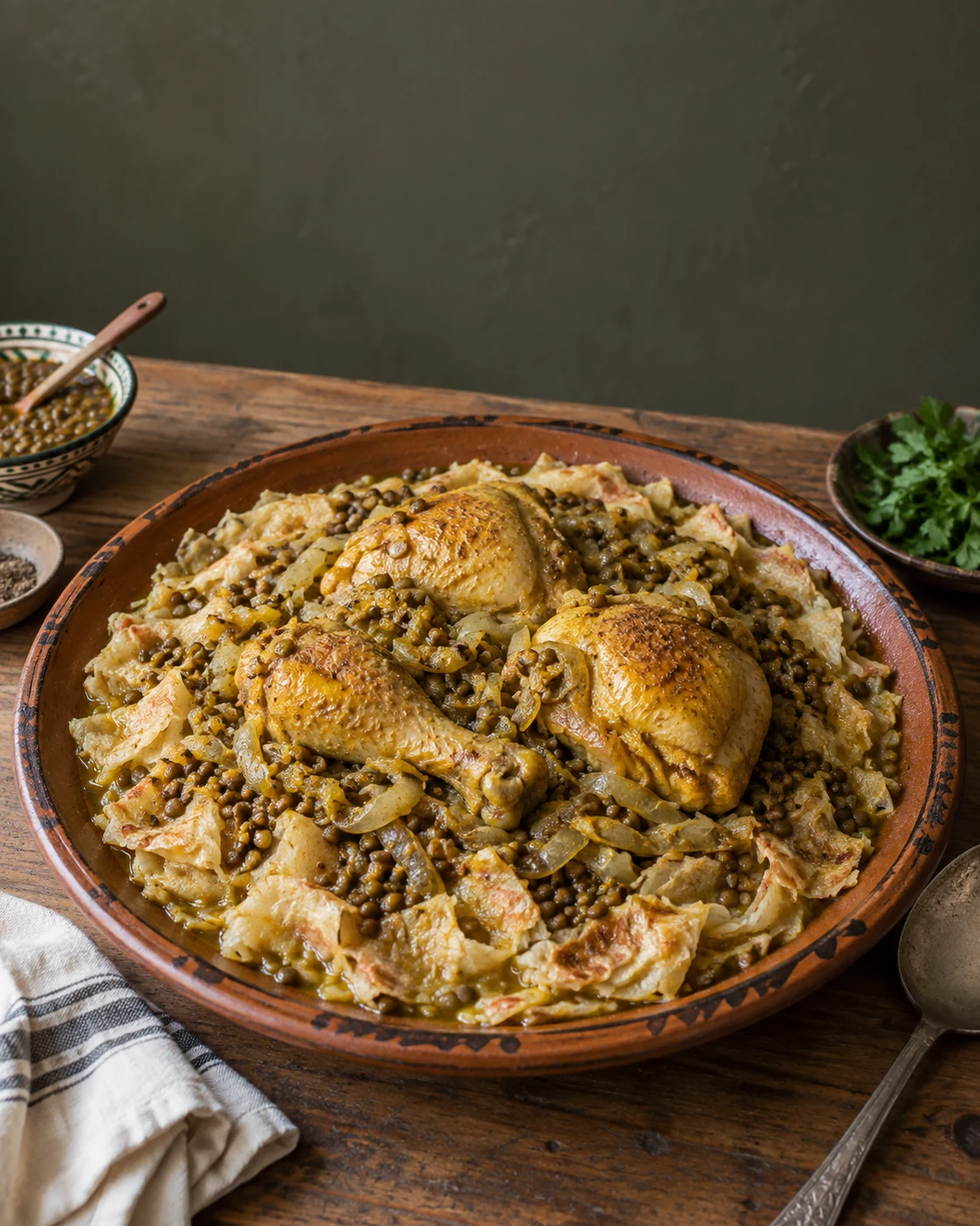
Rfissa
Chicken, lentils and fragrant broth finding their way through torn bread.
Explore the story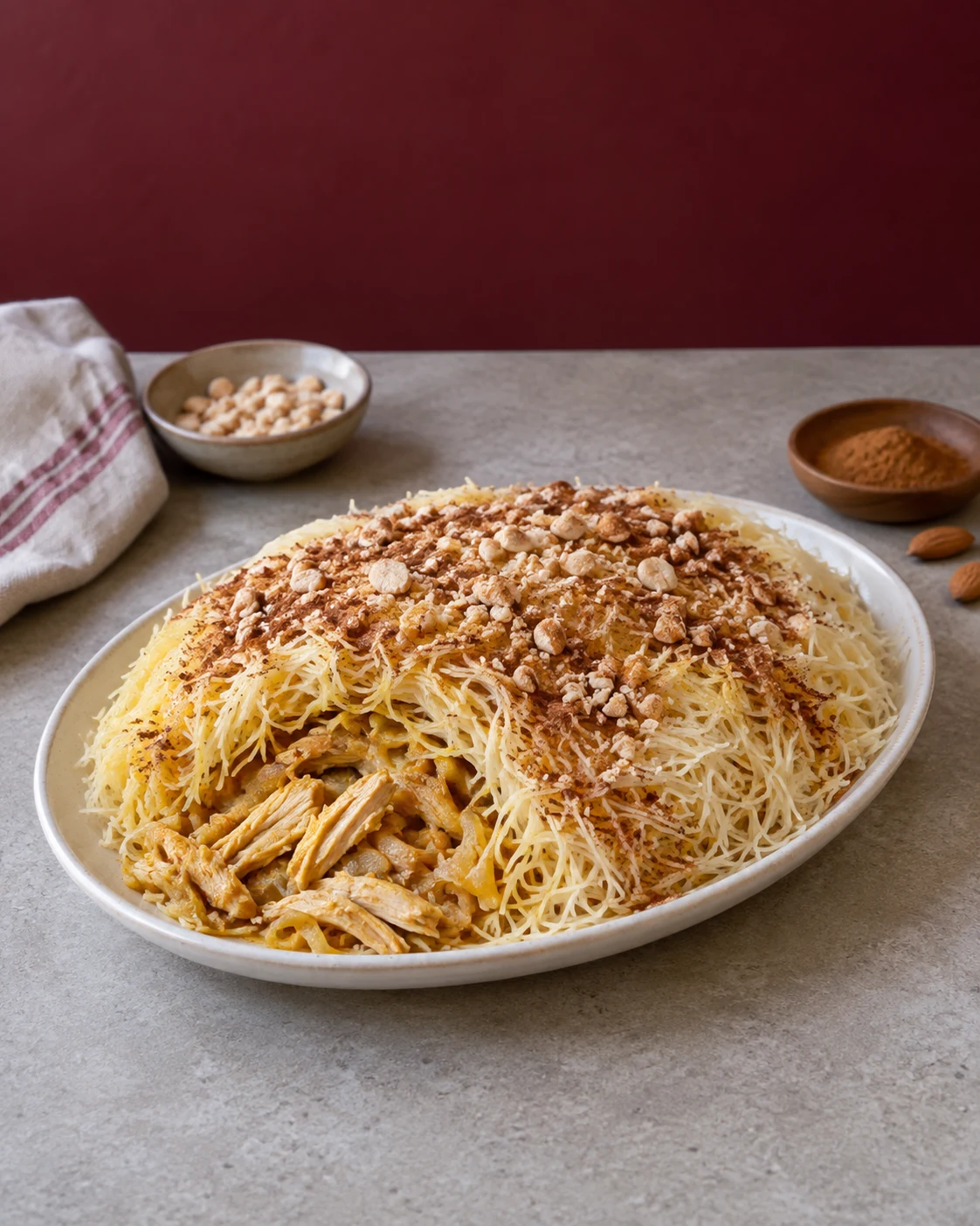
Seffa
Steamed vermicelli or couscous, almonds and sweet aromatics.
Explore the story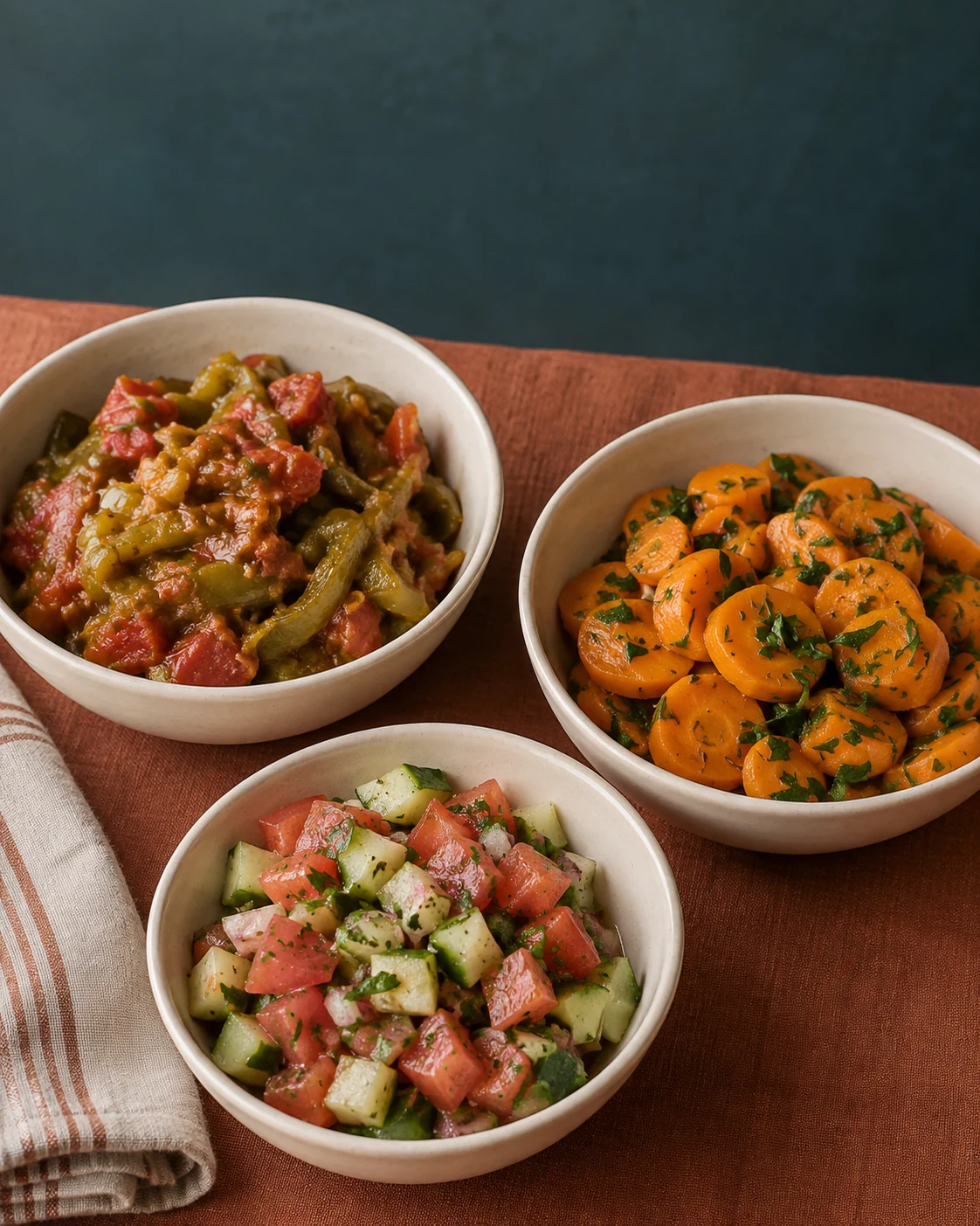
Moroccan Salads
Fresh, cooked and preserved flavours served in small dishes.
Explore the story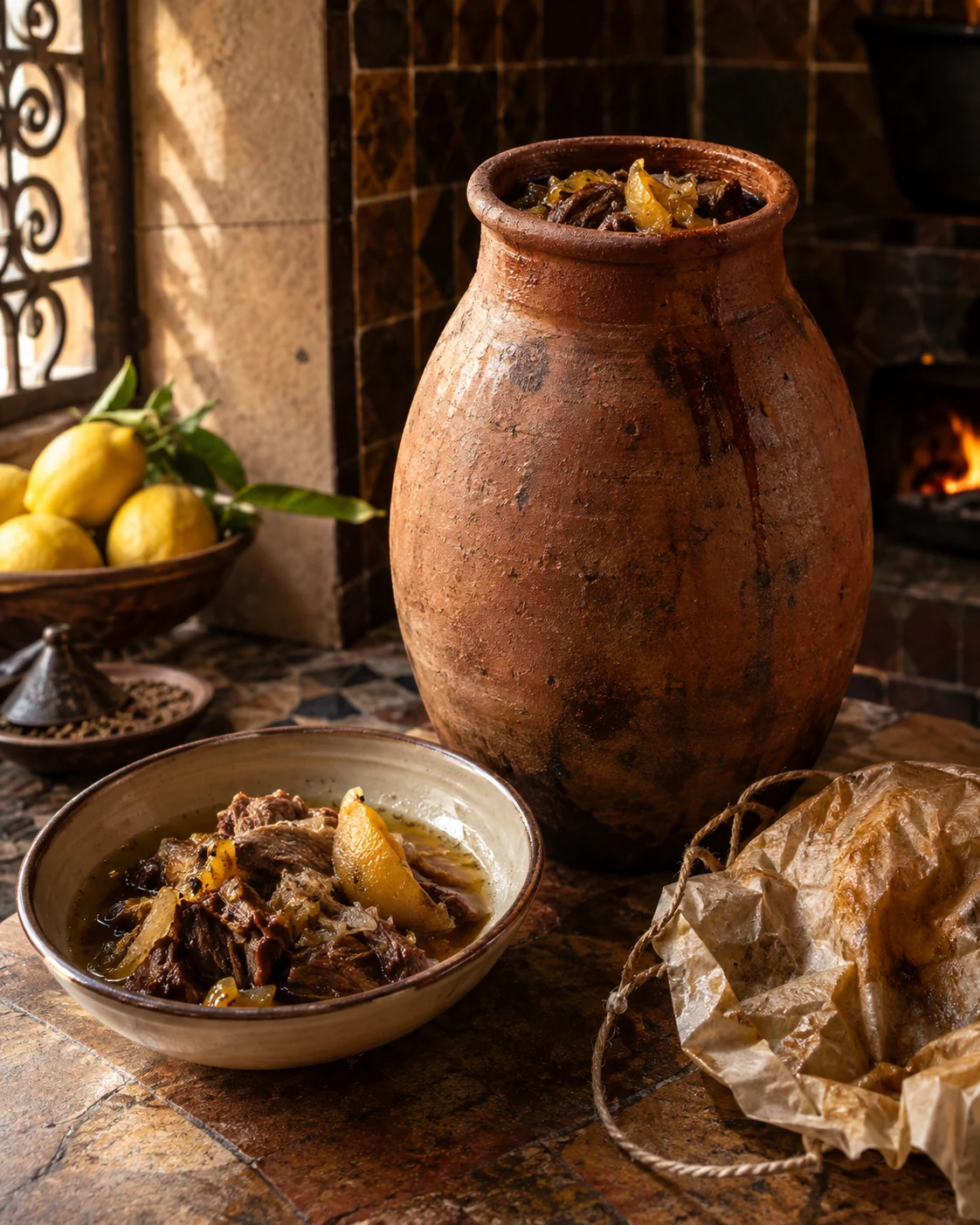
Tanjia
The earthenware pot and patient cooking associated with Marrakech.
Explore the story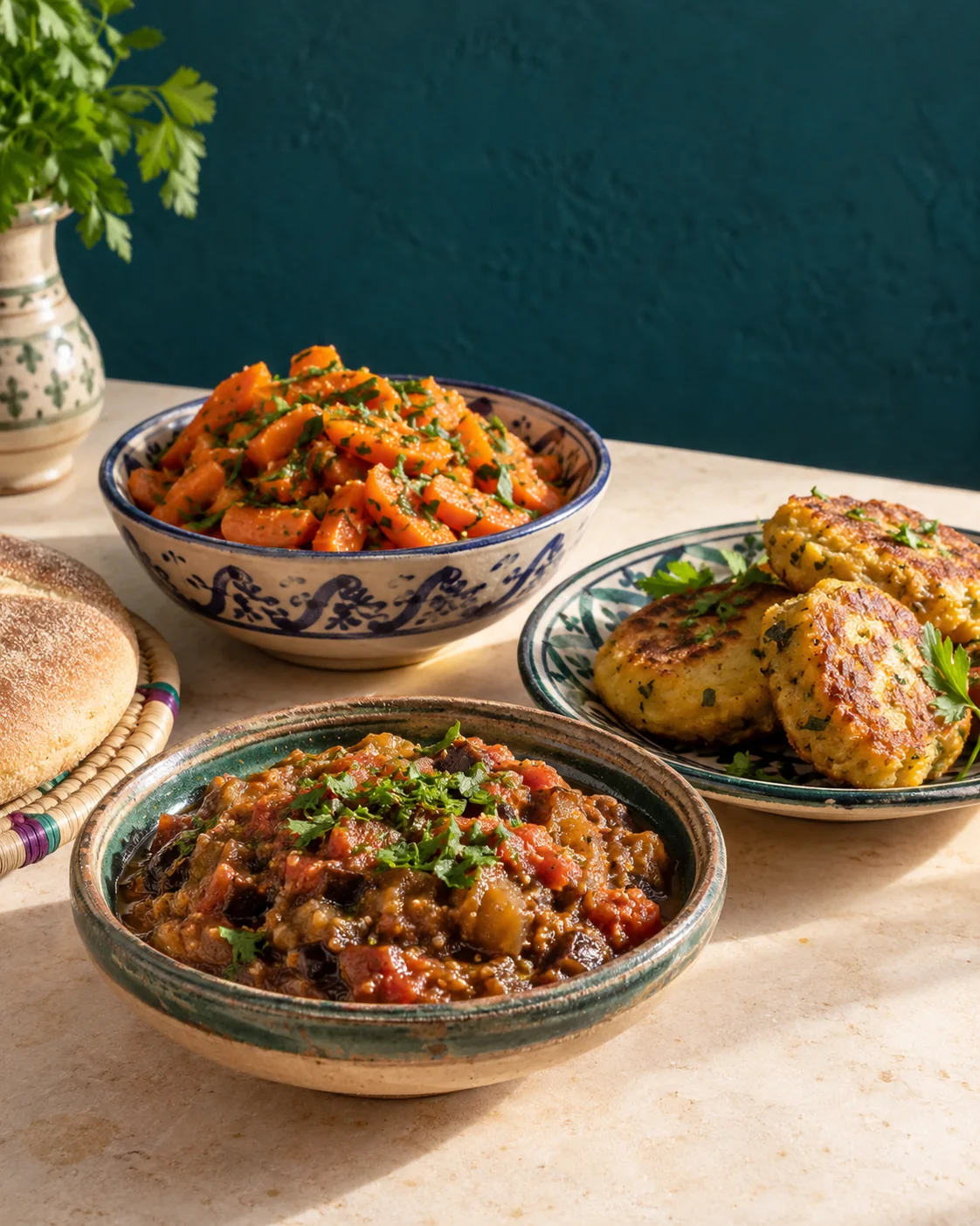
Salads & Sides
Vegetables, pulses and bright accompaniments.
Explore the storySources & editorial notes
Photography combines existing Exotic Morocco assets and generated editorial illustrations. These images do not document a named person, household or historical event.
- Christine Benlafquih · Moroccan Couscous with Seven Vegetables — Casablanca-style preparation, flexible vegetable selection and Friday serving.
- Christine Benlafquih · How to Steam Couscous — Steamer, loosening the grains, gsaa and saycouk.
- Nargisse Benkabbou · Couscous Tfaya — Onion-and-raisin topping and the author’s family memories of Fez.
- Christine Benlafquih · Seffa Medfouna — Couscous and vermicelli forms of seffa; the distinction of medfouna.
- Nargisse Benkabbou · Moroccan Seven Vegetables Couscous — Learning from her mother, cooking for friends and the role of smen.
- Nargisse Benkabbou · Non-sticky and Fluffy Plain Couscous — A documented contemporary oven method.
- DARI · Barley Couscous (Belboula) — Producer information identifying barley semolina and gluten.
- DARI · Durum Wheat Couscous, Medium — Producer information identifying durum-wheat semolina.
- Moroccan National Tourist Office · Food & Drinks — Amazigh association, Friday custom, marqa, lben and varied preparations; broad statements are qualified here.
- Nargisse Benkabbou · Moroccan Pancakes (Baghrir) — Semolina pancakes, connected here through an ingredient.
- Nargisse Benkabbou · Berkoukech Soup (Mhamsa) — A larger-grain preparation, distinguished from a fine couscous platter.
- UNESCO · Knowledge, know-how and practices pertaining to couscous — 2020 joint inscription: Algeria, Mauritania, Morocco and Tunisia. Official inscription and video records; no exclusive origin claim.
EXOTIC MOROCCO Places. People. The pleasure of knowing more.Back to top ↑