

01 · More than a starter
The small dishes
set the rhythm.
A crisp bowl, a slow-cooked vegetable and a warm bite can each do a different job.
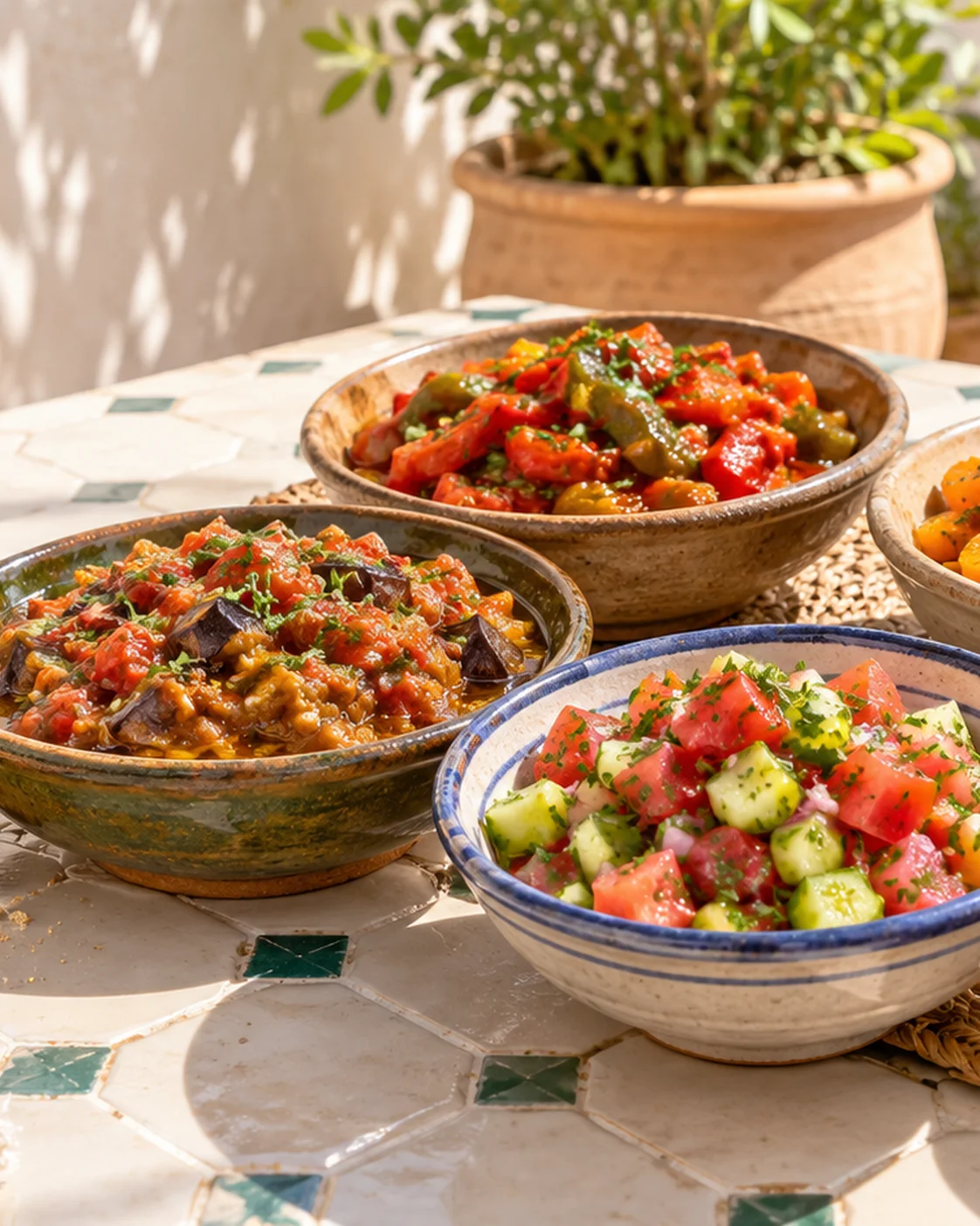
The word salad at a Moroccan table reaches beyond raw leaves. A finely chopped tomato-and-cucumber bowl is cool and immediate; zaalouk softens aubergine and tomato into a spoonable dish. Beside them, a warm potato maakouda brings a firmer, golden bite.
Think in contrasts rather than a fixed set of dishes. A rich main dish may welcome acidity and fresh herbs. A lighter meal may gain depth from peppers or aubergines cooked until their extra liquid has gone.
The choice changes with the produce, the cook and the rest of the meal. These are useful families of dishes, never one compulsory national menu.
Return to Taste Morocco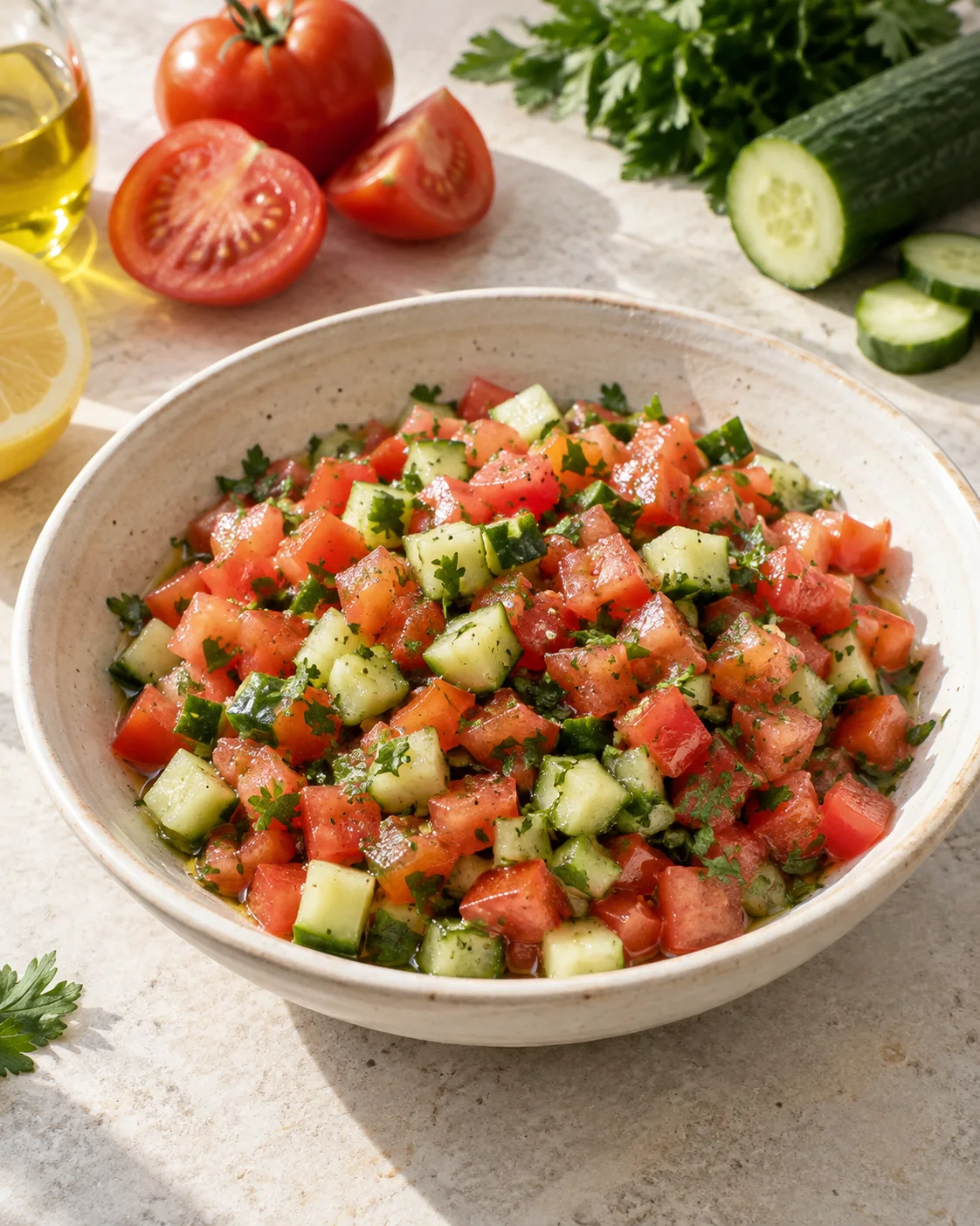
Tomato, cucumber and herbs hold their shape.
Peppers, aubergines or carrots take on seasoning.
Potato fritters add a different texture beside vegetables.
02 · Everyday practice
A living repertoire.
Many routes to the table.
The category grew through ordinary choices about produce, heat and appetite.
No single origin story explains all Moroccan salads and sides. The small dishes have different ingredients and methods, and a household may serve one, several or none with a particular meal. The practical question is what will complement what is already cooking.
Freshness has a purpose
A crisp chopped salad adds juice and acidity when the central dish is slow and rich.
Heat brings concentration
Roasted peppers and reduced tomatoes create a fuller taste in taktouka; aubergine gives zaalouk its body.
A side can stand on its own
Maakouda can sit beside other dishes or be eaten as a snack. Its role changes with the meal, not with a rigid course order.
03 · Technique before decoration
Four decisions.
One balanced table.
Good small dishes begin by choosing the right treatment for each ingredient. Keep a fresh salad fresh; let a cooked one lose excess water; give a fried bite enough heat to brown rather than absorb oil.
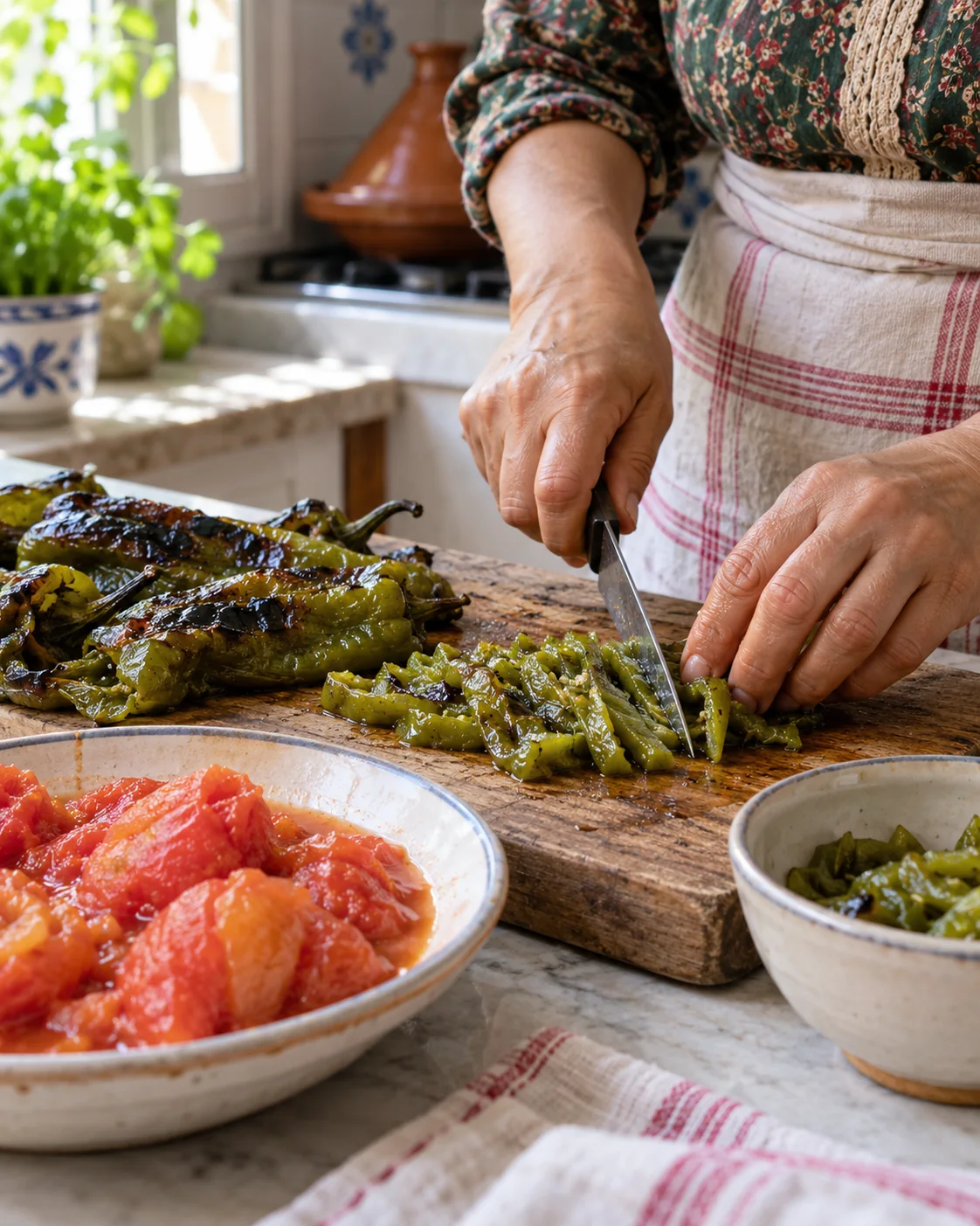
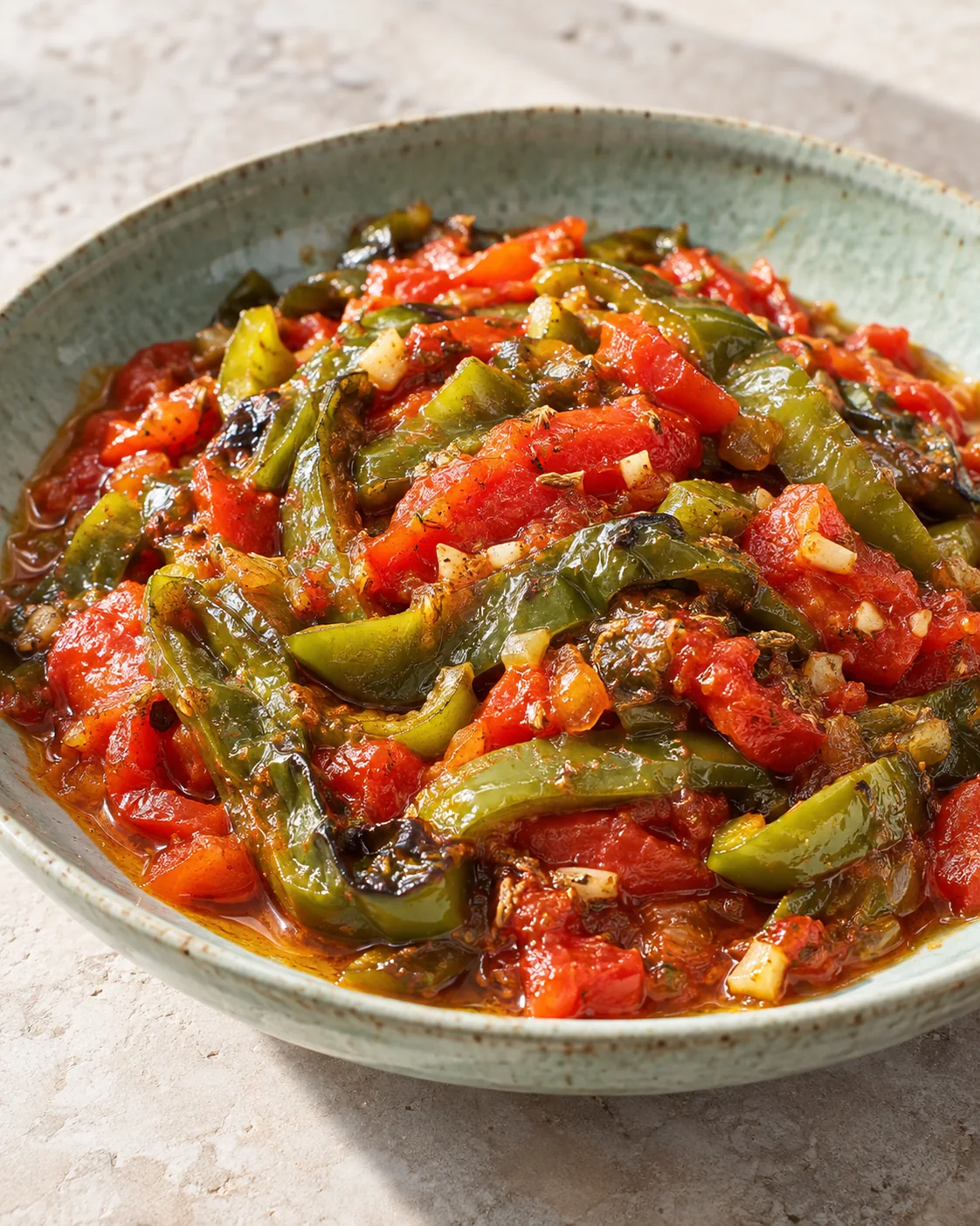
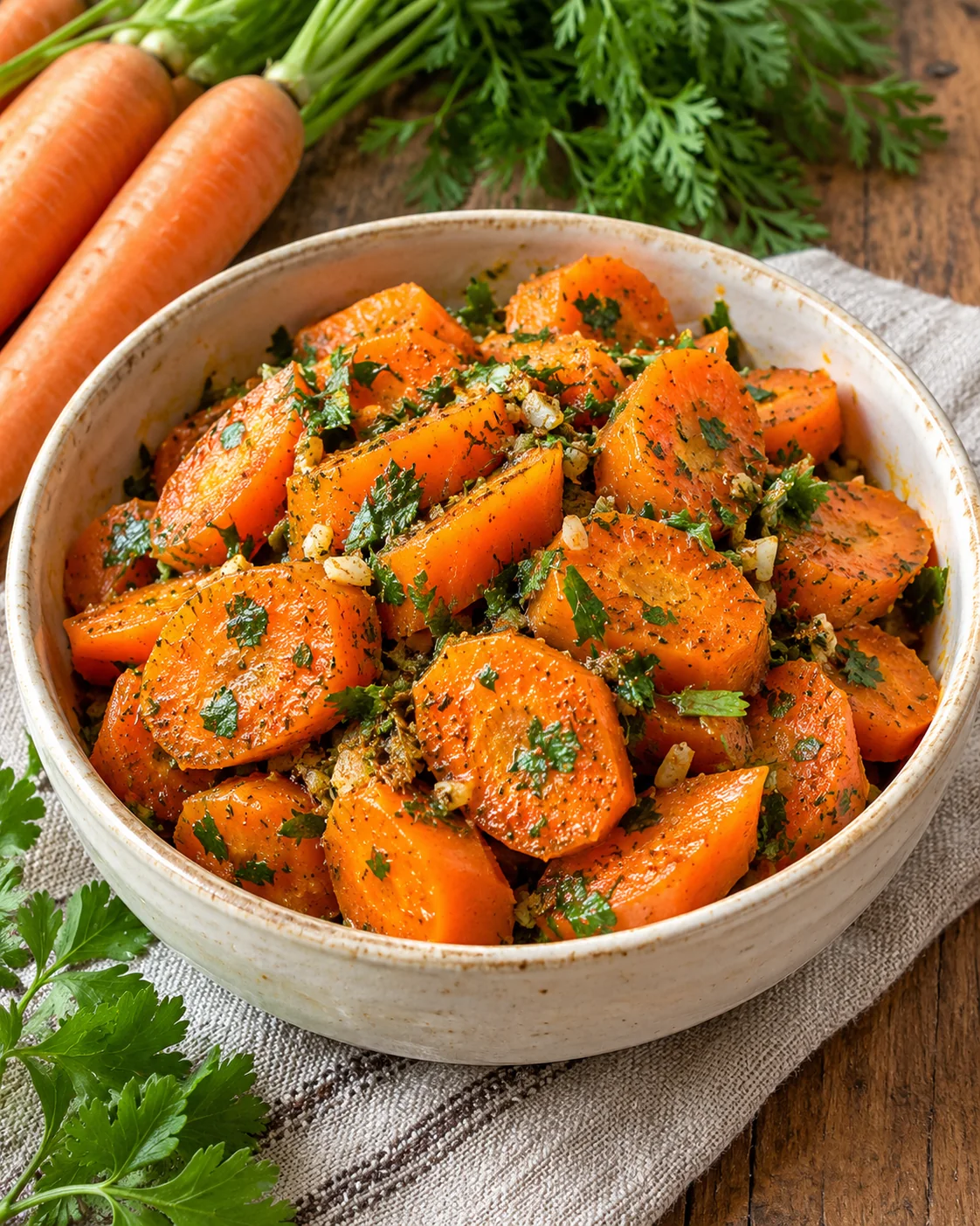
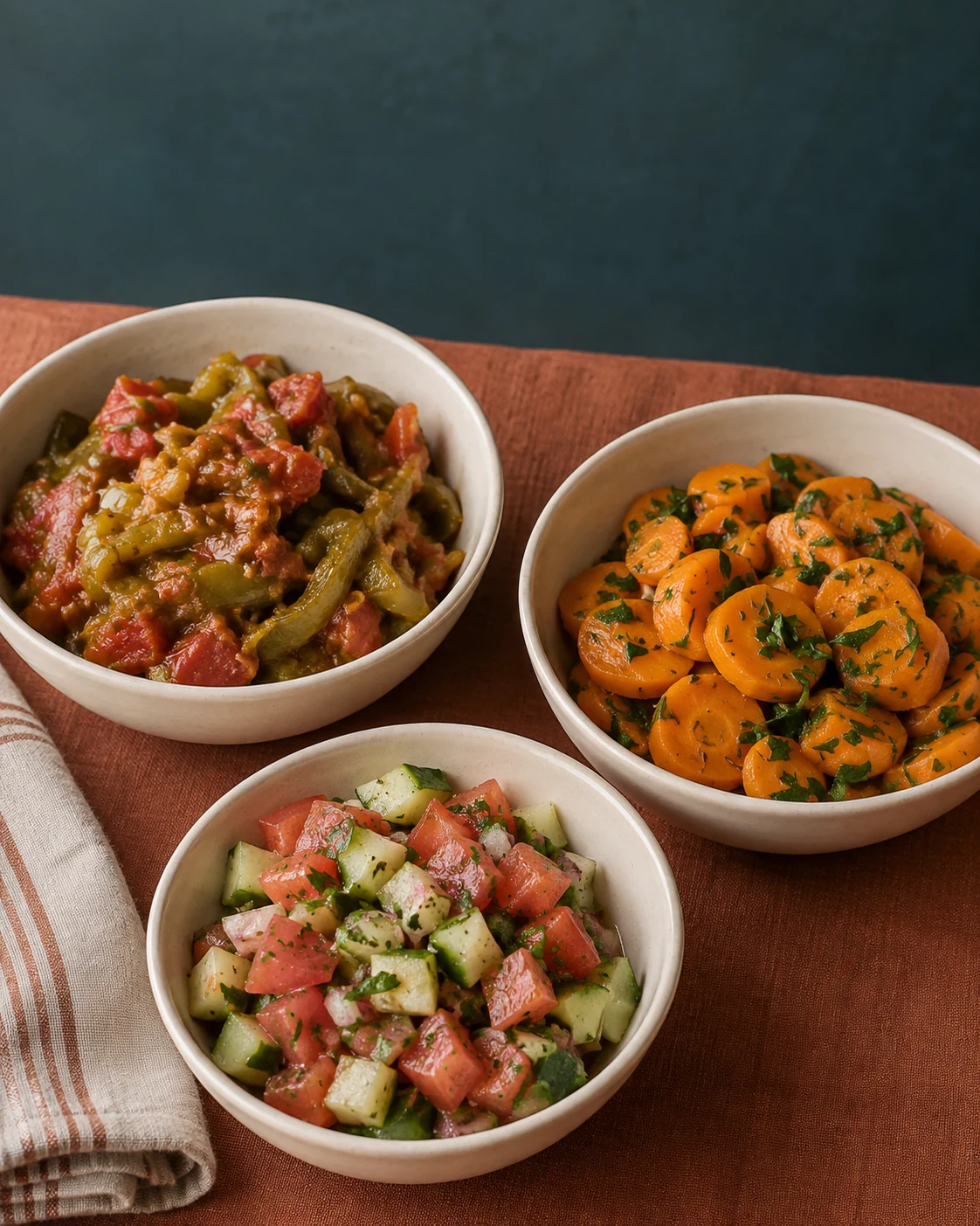
Taktouka commonly starts with charred peppers that are peeled and combined with cooked tomato. Zaalouk follows a different texture: aubergine and tomato soften together. A carrot salad needs tender pieces that can still hold their shape.
Control water
Let tomato and aubergine reduce for a spoonable salad; drain or dress fresh chopped vegetables close to serving so they do not sit in a pool.
Keep the cut intentional
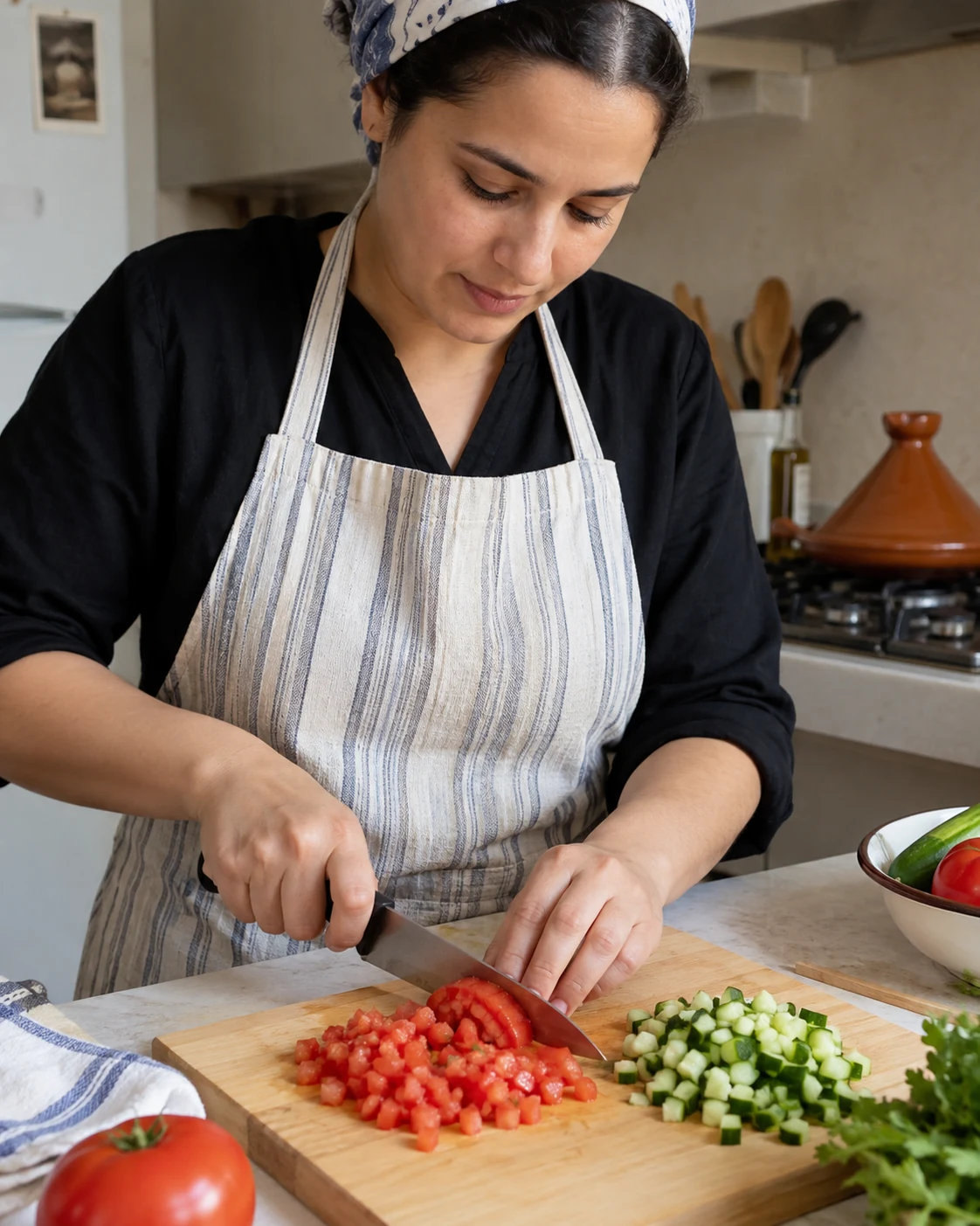
Small even pieces feel coherent in tomato-and-cucumber salad. Cooked carrots can stay in recognizable slices; peppers should remain visible in taktouka.
Finish for the dish
Herbs, garlic, cumin, paprika, lemon and olive oil each have a role, but the same mixture does not belong in every bowl.
Cooked salads may be good warm or at room temperature. Fresh chopped salad is best when its texture remains clean and lively.
The most valuable technique is knowing when to stop: before fresh becomes watery, or cooked becomes flat.
04 · Four useful reference points
Four textures.
Four ways in.
Use these reference dishes to see the range: soft, charred, tender and golden. Together they explain why the category needs more than one technique.
Each is a family of household versions. No single plate can represent every Moroccan kitchen.
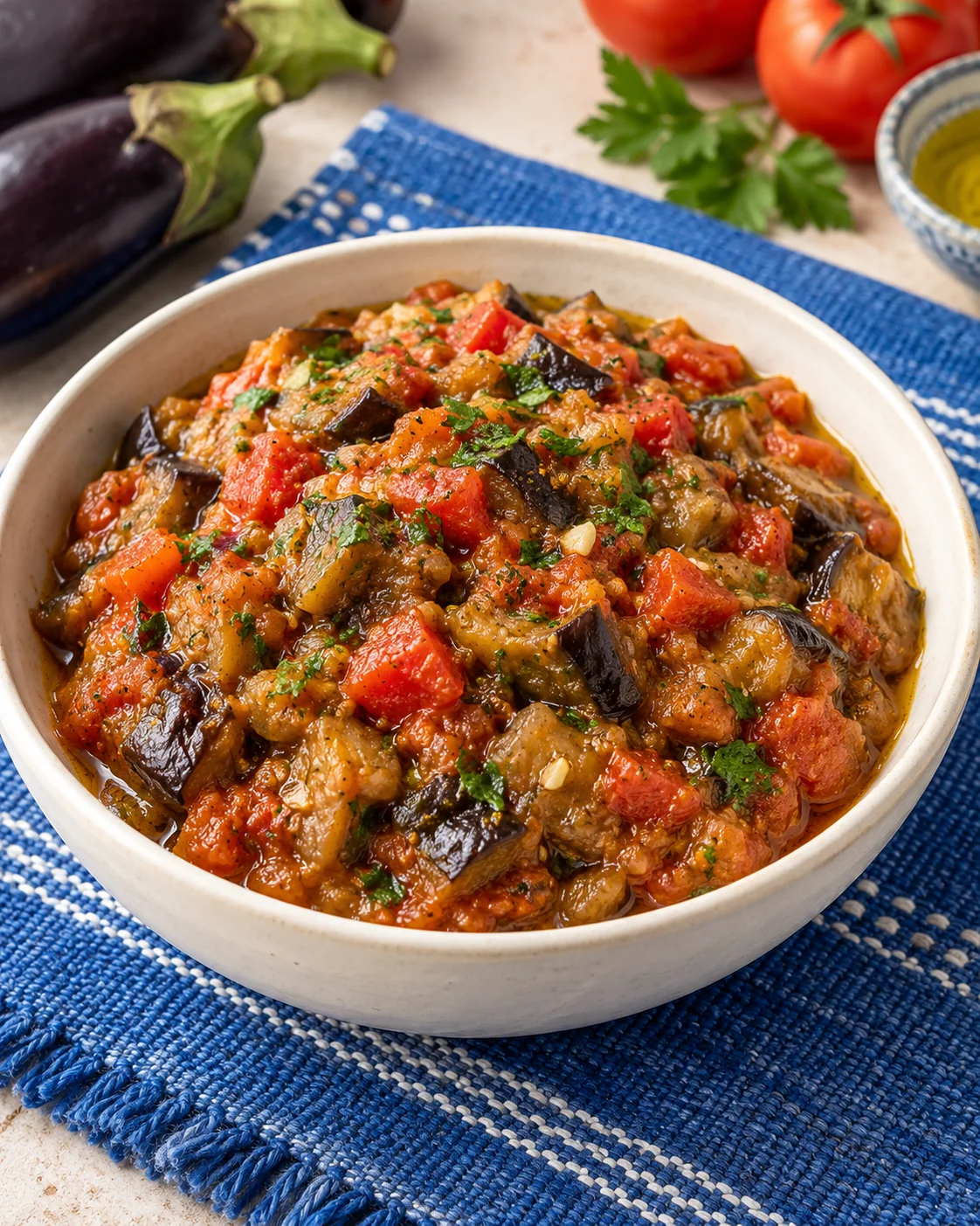
Zaalouk
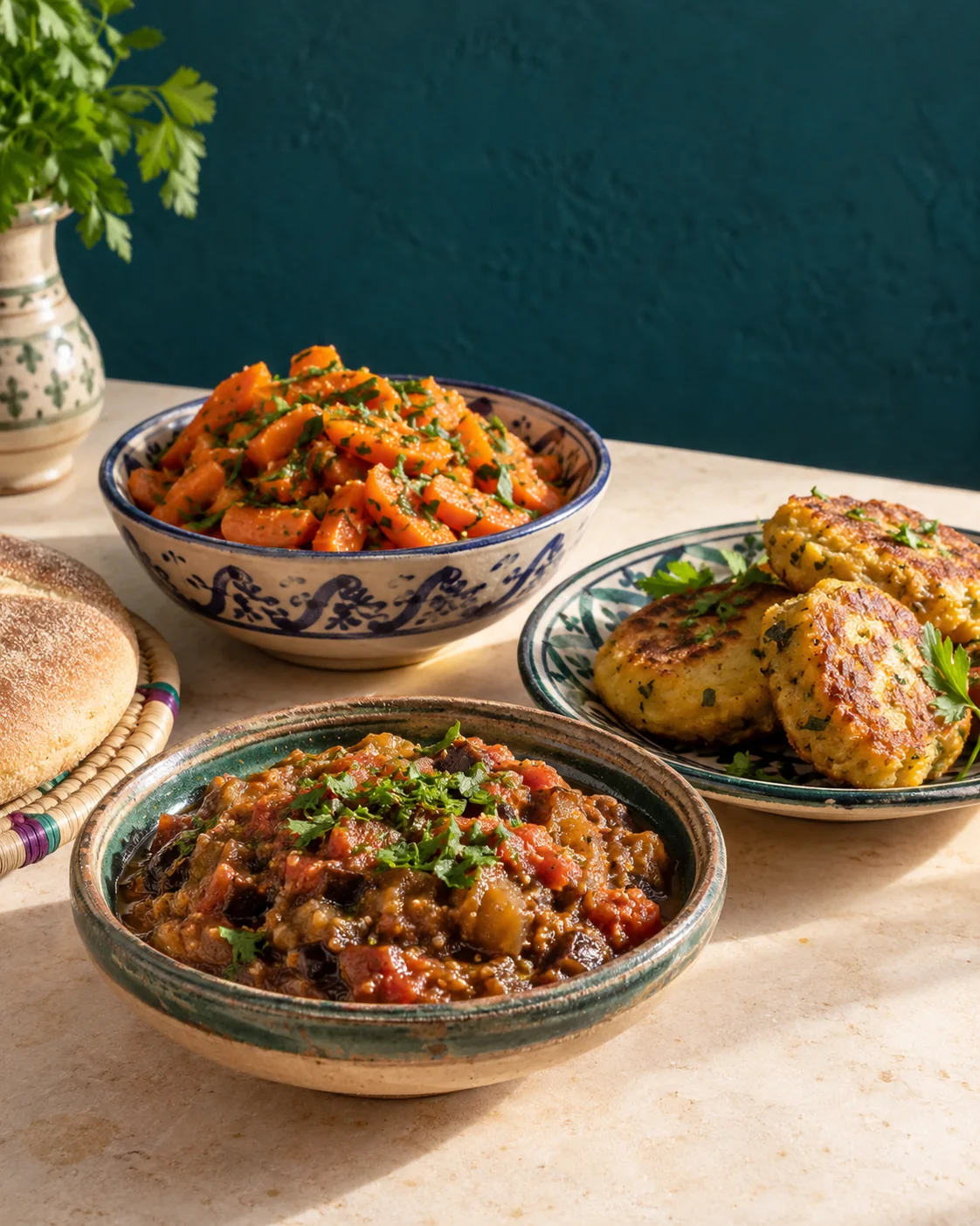
Aubergine and tomato soften with garlic, herbs and seasoning. The result can be rustic and chunky or mashed more finely, depending on the cook.
Taktouka
Roasted green peppers join cooked tomato, garlic and oil. Let the pepper retain its identity instead of reducing everything to one smooth sauce.
Khizzou mchermel
Cooked carrot slices take a dressing of herbs, spice, acid and oil. Tenderness matters, but the carrots should still read as carrots.
Maakouda
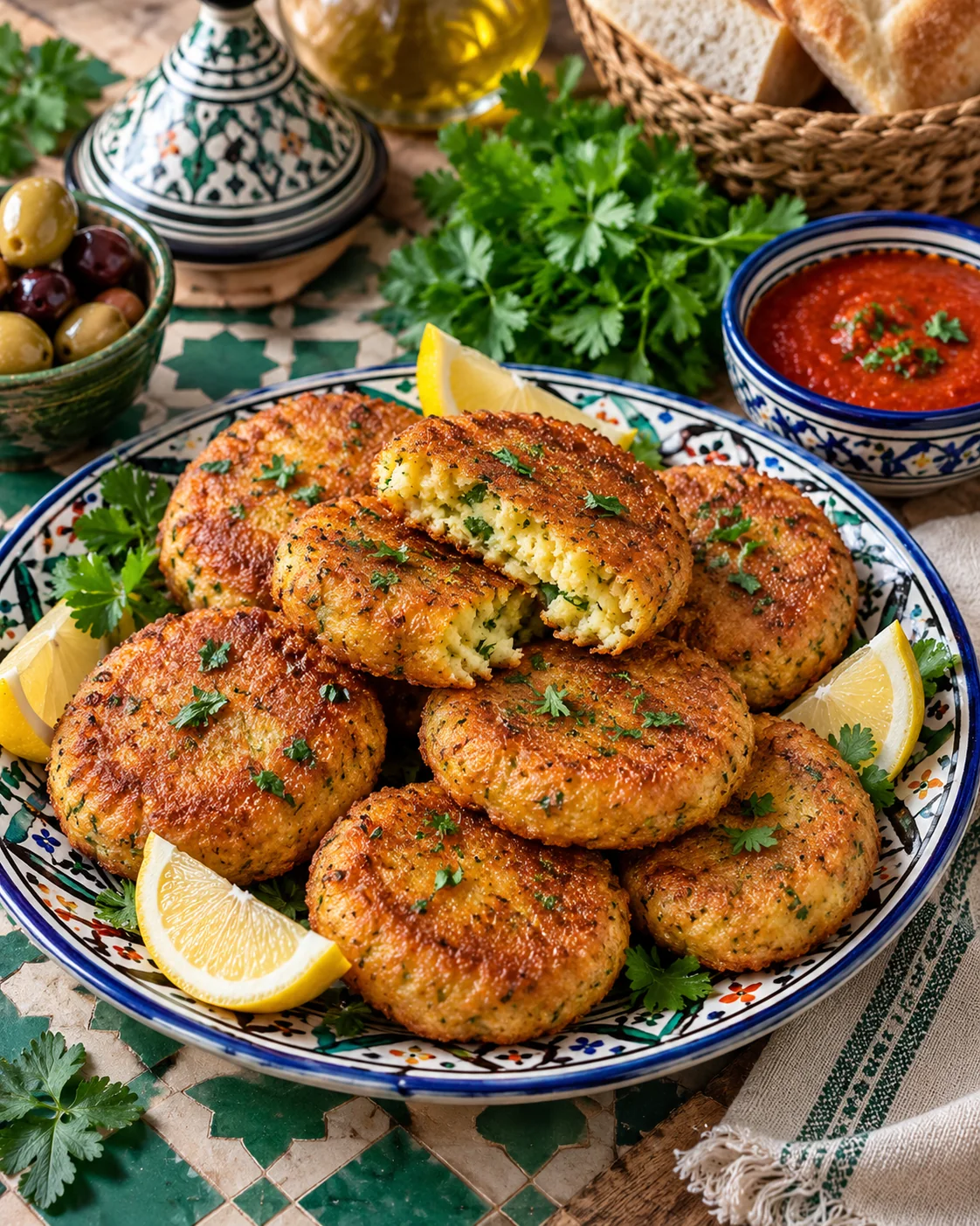
Seasoned potato patties are fried until the outside turns golden. Their firmer bite makes them a useful warm companion to vegetable salads.
Fresh has its own place.
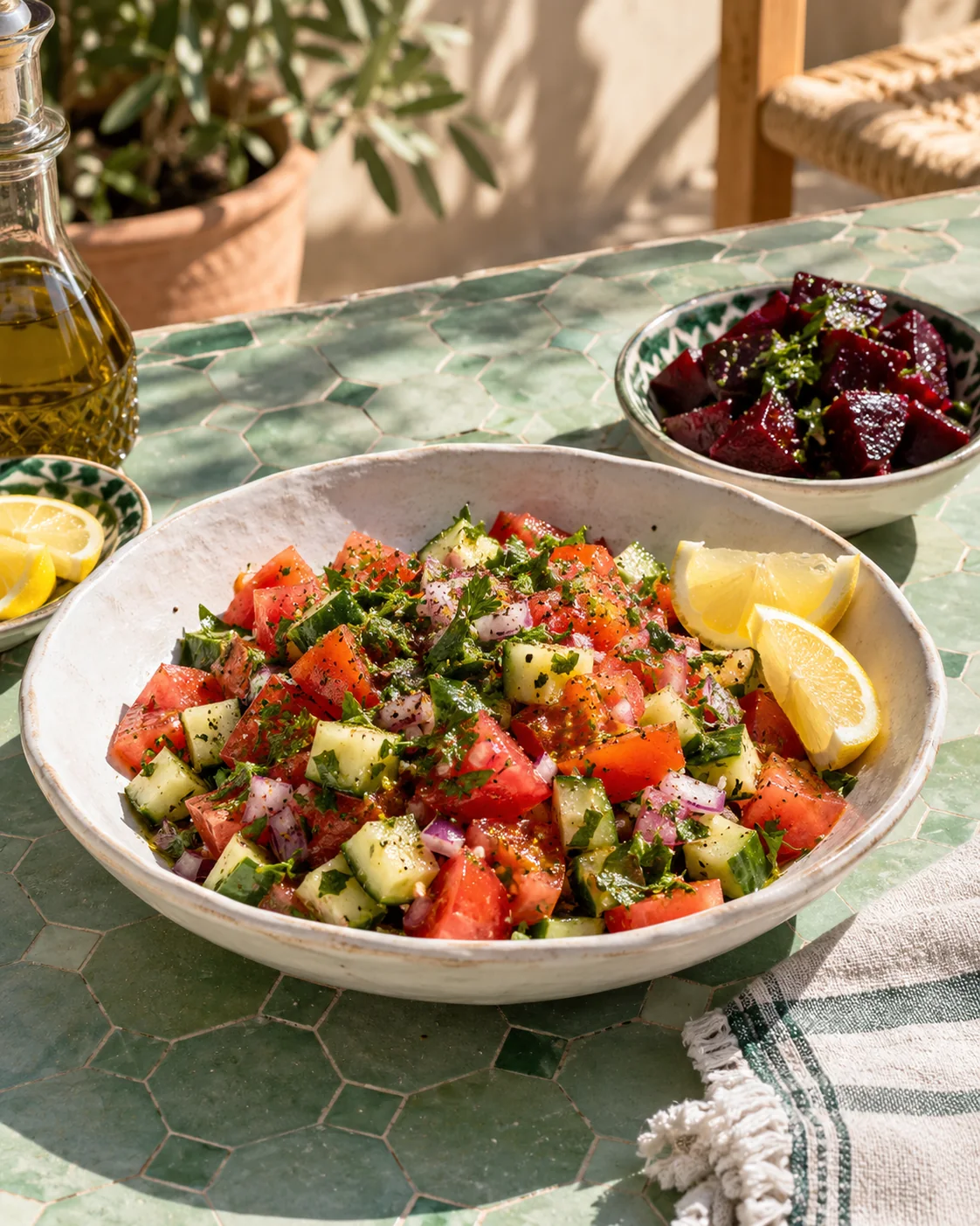
A fine tomato-and-cucumber salad offers a cool, juicy counterpoint. Dress it with restraint, particularly if it will wait before serving.
Do not confuse side with small.
A bowl of cooked vegetables can carry serious flavour; a few maakouda can change a whole plate. Their serving size says little about their culinary importance.
05 · The language of ingredients
Ordinary ingredients.
Precise roles.
Each bowl asks something different of the market: a tomato that tastes good raw, a pepper that chars cleanly, a carrot that becomes tender without falling apart.
The pantry is shared, but the choices are specific. Olive oil, herbs and spice should support the ingredient in front of them.
Tomatoes
Juice or concentration.
A firm ripe tomato can be diced fresh; a softer one may be better cooked down with peppers or aubergine.
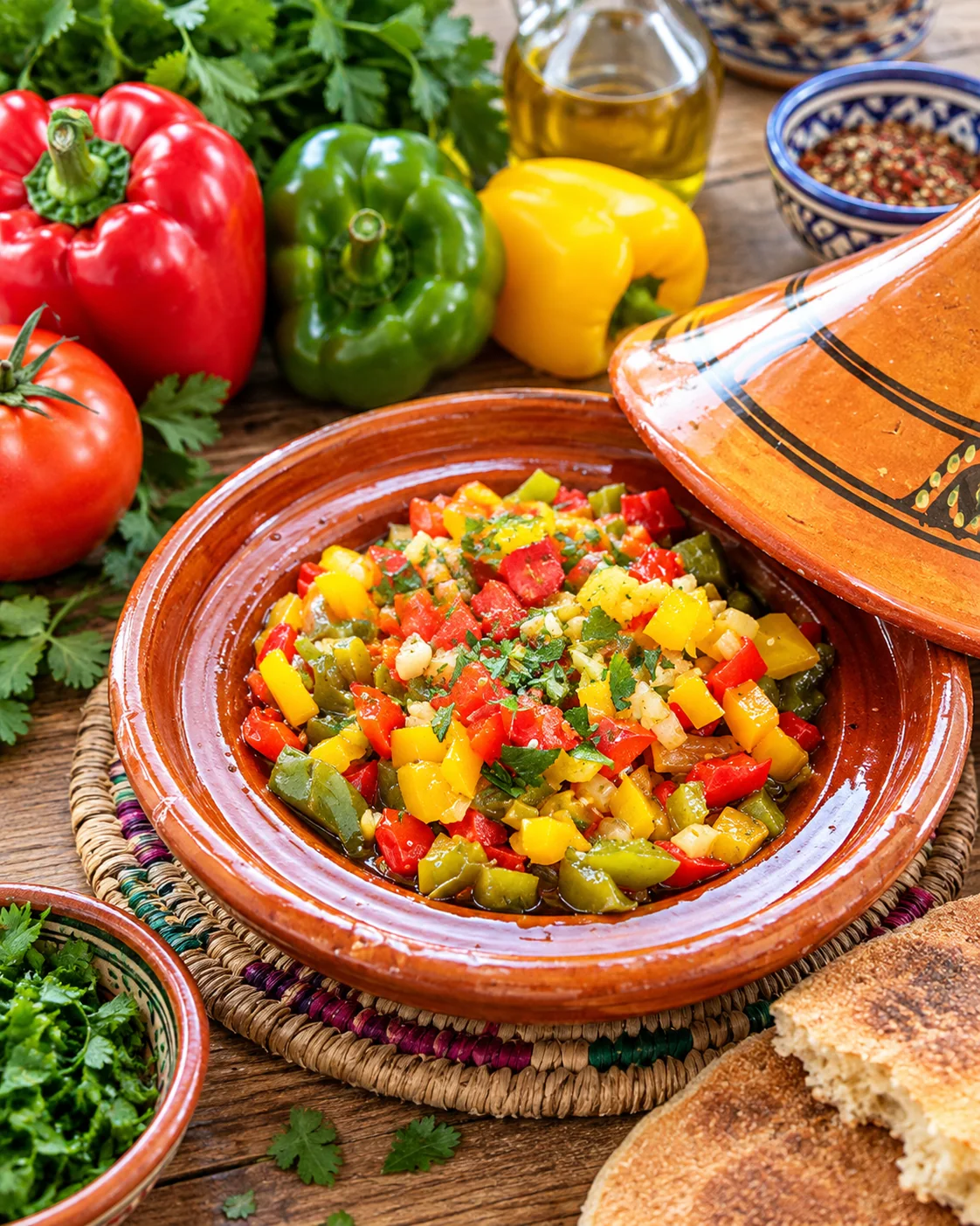
Peppers & aubergines
Heat changes their texture.
Charring gives peppers a different aroma; softened aubergine brings body. Their moisture still needs attention.
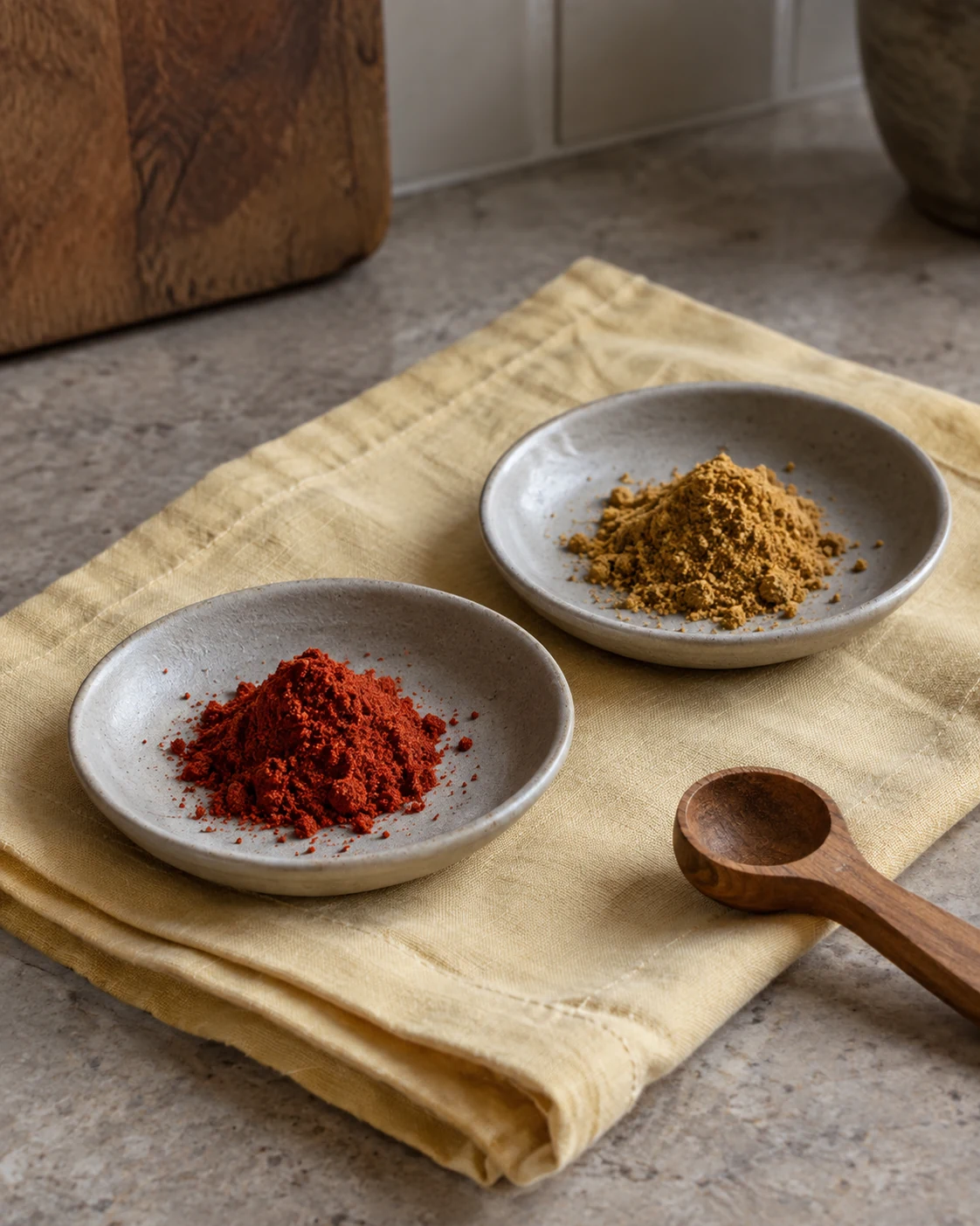
Spice & herbs
Choose, do not pile on.
Cumin and paprika can add warmth, while parsley and coriander bring green notes. The useful balance differs by dish.
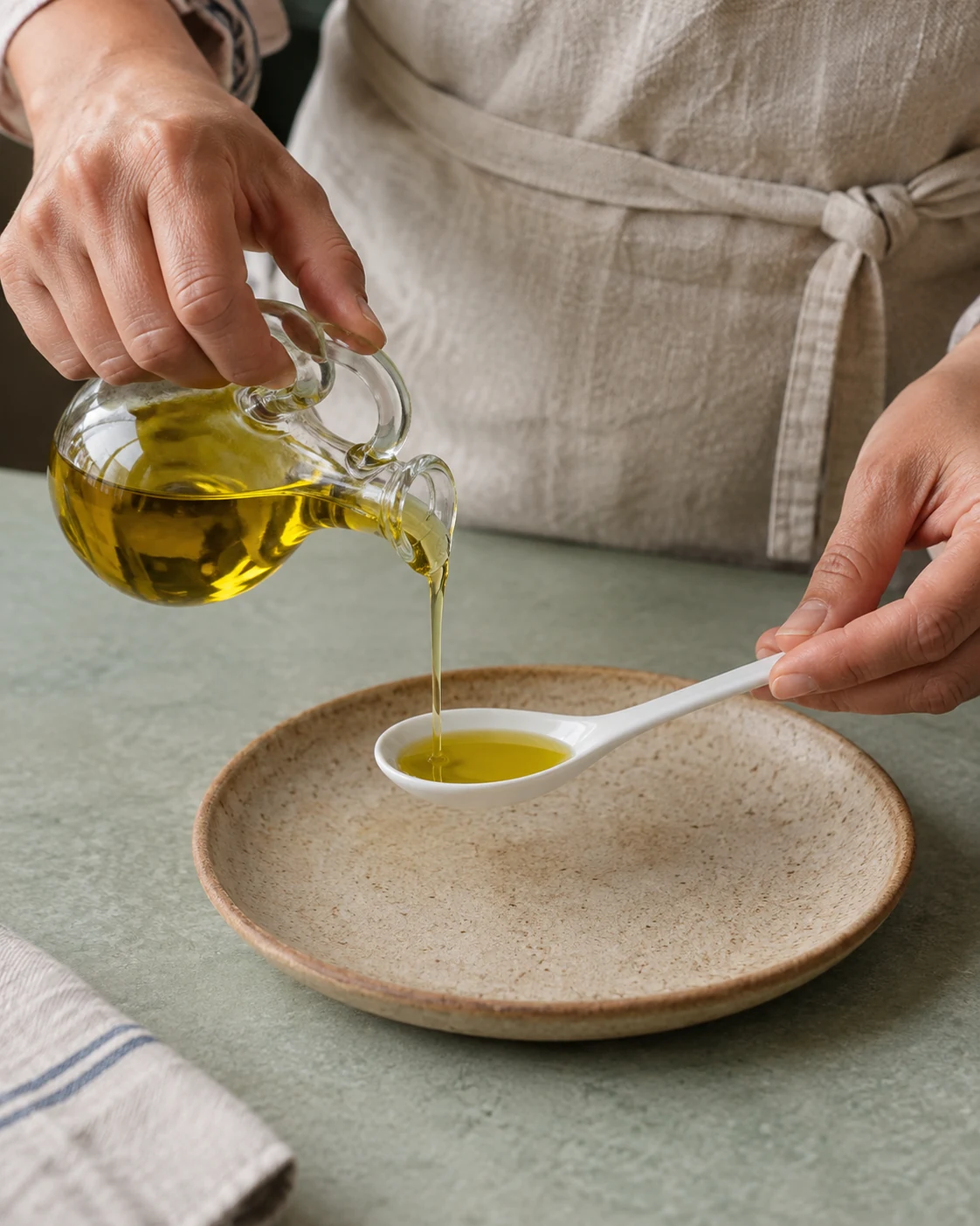
Oil, acid & olives
Balance at the finish.
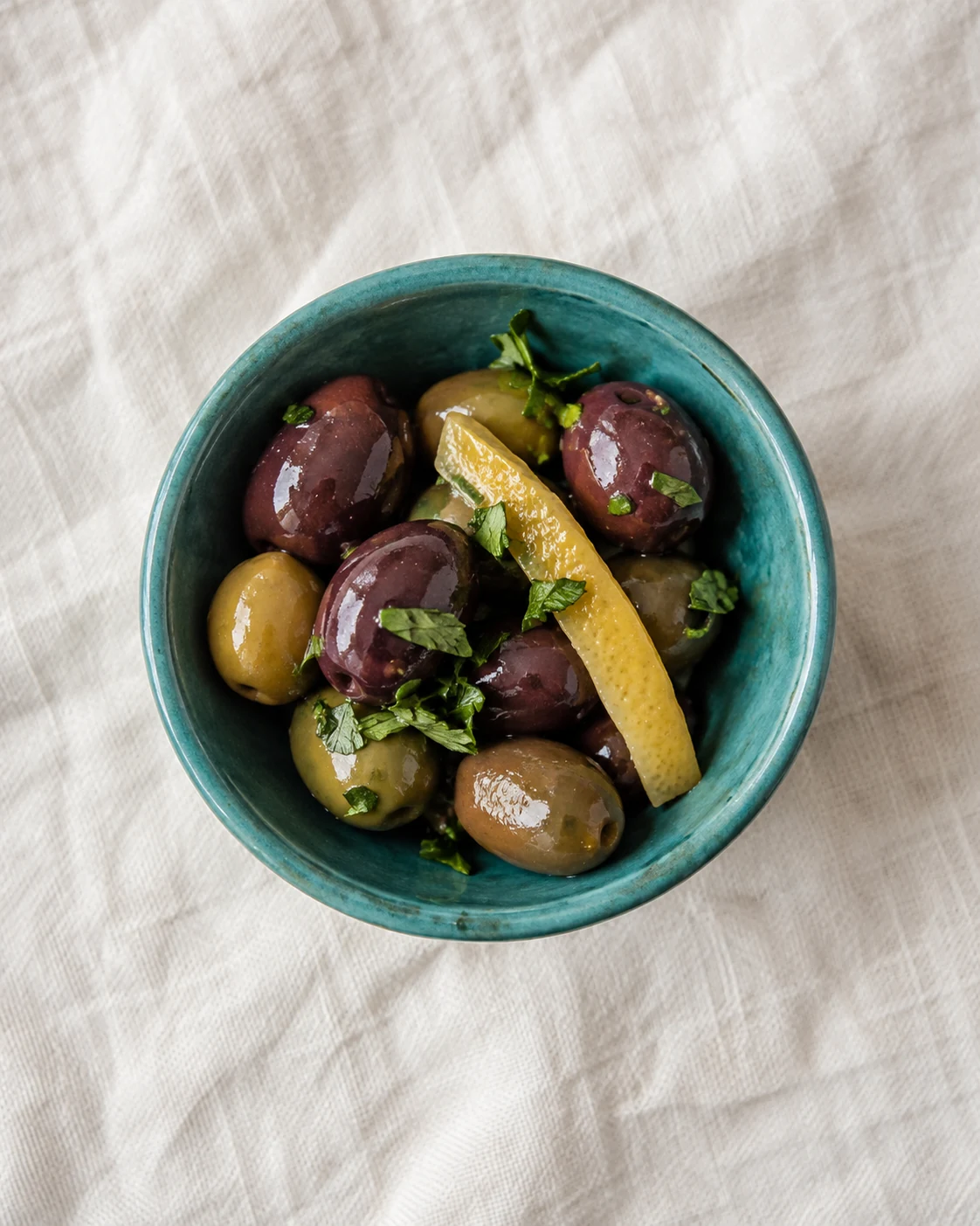
Olive oil carries seasoning; lemon or vinegar gives lift. Olives add briny contrast when they truly suit the plate.
On smaller screens, swipe the ingredient row.
SALT · ACID · OIL
The finishing touch
should have a reason.
Treat the dressing as a decision about texture as much as flavour.
Salt draws liquid from raw tomato and cucumber; acid can brighten cooked carrots; oil carries aromatic seasoning across softened vegetables.
Taste each dish separately before deciding that it needs more of anything.
Raw needs timing.
Dress a finely diced salad near serving when you want crispness and a clean bowl.
Cooked needs reduction.
Allow excess liquid to leave tomato and aubergine before adding more oil at the finish.
Fried needs restraint.
Keep the potato mixture coherent and fry at a steady heat so maakouda is golden, not oily.

06 · Produce, season & household
Choose what is good.
Then choose the method.
A side dish begins with the condition of its ingredients, not a fixed list of decorative spices.
The same market can supply a crisp salad and a long-cooked one. Firm cucumber and fragrant tomato reward a fresh cut; peppers and aubergines respond to heat; potatoes can become a golden warm bite.
Season, price and family preference affect the choice. A dish can be widespread while its precise cut, acidity and serving temperature vary at home.
Buy for freshness
A raw salad has nowhere to hide a bland tomato or tired herbs.
Buy for cooking
Cooked dishes need vegetables with enough flavour to survive reduction, charring or frying.
Plan the whole meal
Choose contrast: freshness beside braising, a soft bowl beside grilled food, or a crisp side beside soup.
Discover more of Taste Morocco ↗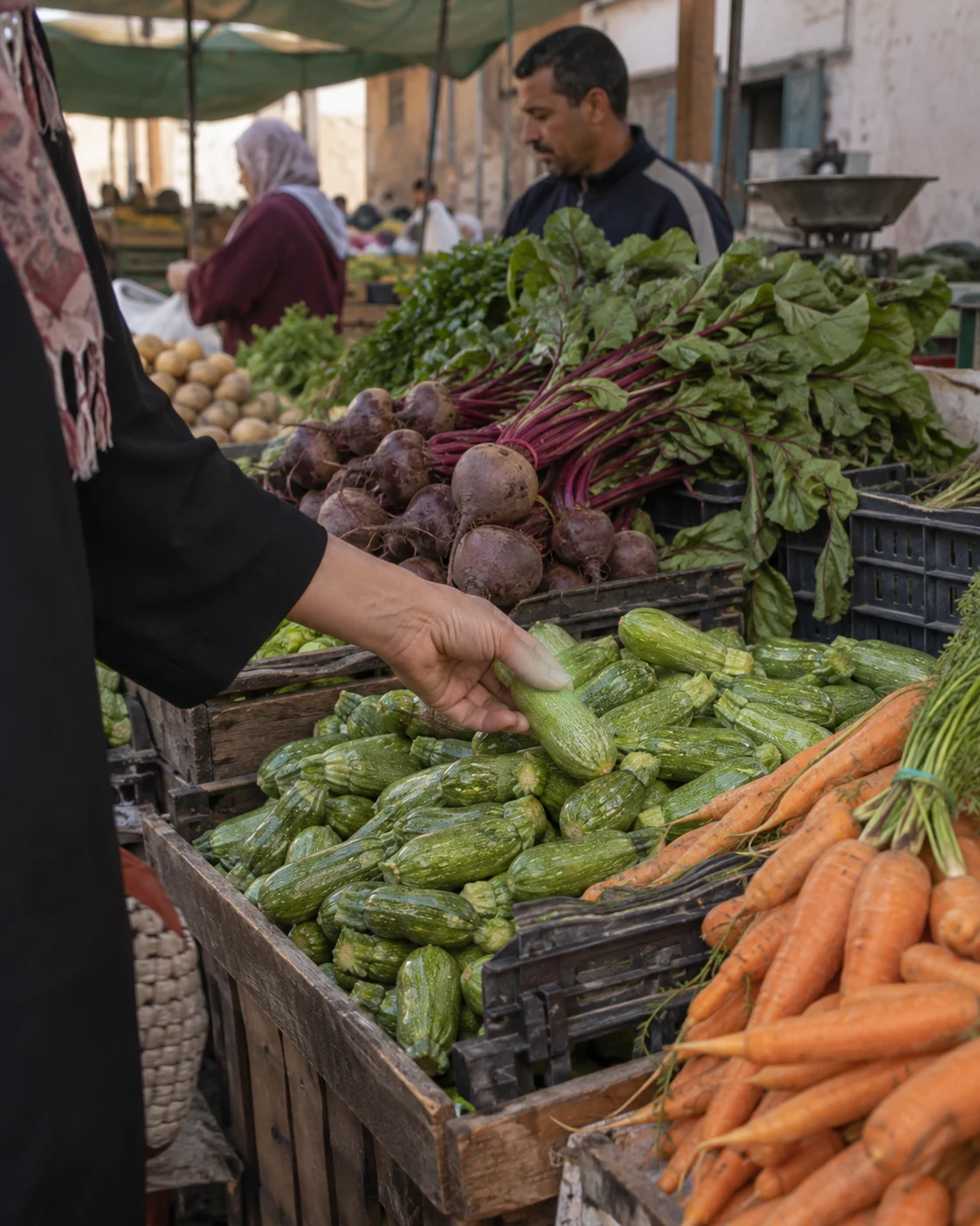
07 · Bread, small dishes & the shared table
One main dish.
Several useful contrasts.
A Moroccan table may offer small dishes before the central plate, beside it or throughout the meal. The order belongs to the household and occasion.
Bread is a practical companion.
Khobz makes sense with spoonable zaalouk or taktouka. A fresh diced salad asks for a different bite, and hot maakouda can be picked up on its own.
The best spread has movement between textures: cool and warm, bright and rounded, soft and crisp.
Begin with contrast
A bright chopped salad can lighten a rich braise; a warm fritter gives a soft vegetable table some crispness.
Leave each bowl distinct
Serving separately lets people move among dishes without losing what makes zaalouk, taktouka or carrots different.
Match the central dish
The side should add what the main dish lacks, not repeat its heaviest flavour.
Contrast is the point.
Not sheer quantity.
Soft cooked salads invite bread; fresh salads bring juice and crunch; maakouda brings a warm, browned edge.
Serve for the meal.
Not for a formula.
No fixed number of bowls is required. Two well-chosen sides can be more convincing than a crowded table.
08 · Beyond the familiar pair
A beetroot bowl.
A change of register.
The category becomes richer when every side does not look and taste like peppers and tomato.
Beetroot, carrots, olives, cooked greens and potatoes can each change the colour, texture and temperature of the table. Their presence is not a licence to combine them all in one bowl.
A beetroot salad has its own earthy sweetness and staining juices. Give it a separate vessel if its colour would overwhelm a crisp tomato salad or a pale carrot dish.
This is a practical way to compose a meal: select a few clear differences and let each ingredient remain recognizable.
09 · A closer look
Small questions.
Useful answers.
Timing and texture decide more than a universal salad dressing ever could.
Can a Moroccan salad be cooked?
Yes. Zaalouk and taktouka are cooked vegetable salads; fresh tomato-and-cucumber salad belongs to the same broad small-dish conversation with a different technique.
When should I dress a fresh chopped salad?
Close to serving when you want a clean cut and lively texture. Salt and acid draw liquid from chopped vegetables during a long wait.
Is maakouda a salad?
No. Maakouda is a potato fritter. It belongs here as a warm side or small bite that can accompany salad dishes.
Must peppers always be red in taktouka?
Green peppers are common in many versions, often charred and peeled before meeting the tomato base. Household approaches and pepper choice vary.
Can I serve the cooked dishes cold?
Some are enjoyable cool or at room temperature, but serving choice should suit their texture. There is no one temperature rule for every bowl.
How many sides should be on the table?
Choose for contrast and appetite. One fresh bowl and one cooked dish may be enough; add a warm bite when it genuinely improves the meal.
 EXOTIC MOROCCOTASTE · THE GUIDE COLLECTIONSalads & SidesIngredients, technique
and the Moroccan table
From the story to your kitchen
Keep the flavour.
Go a little deeper.
Vegetables, pulses and bright accompaniments.
Explore the Exotic Morocco guide collection for a closer look at ingredients, kitchen knowledge and the culture around the table.
- Understand the ingredients and their roles
- Recognise the techniques and textures that matter
- Bring context and confidence to the way you cook and serve
Continue tasting Morocco
Follow the
table outward.
Another dish, another technique, another way into the Moroccan kitchen.
Moroccan Salads
Fresh, cooked and preserved flavours served in small dishes.
Explore the story ↗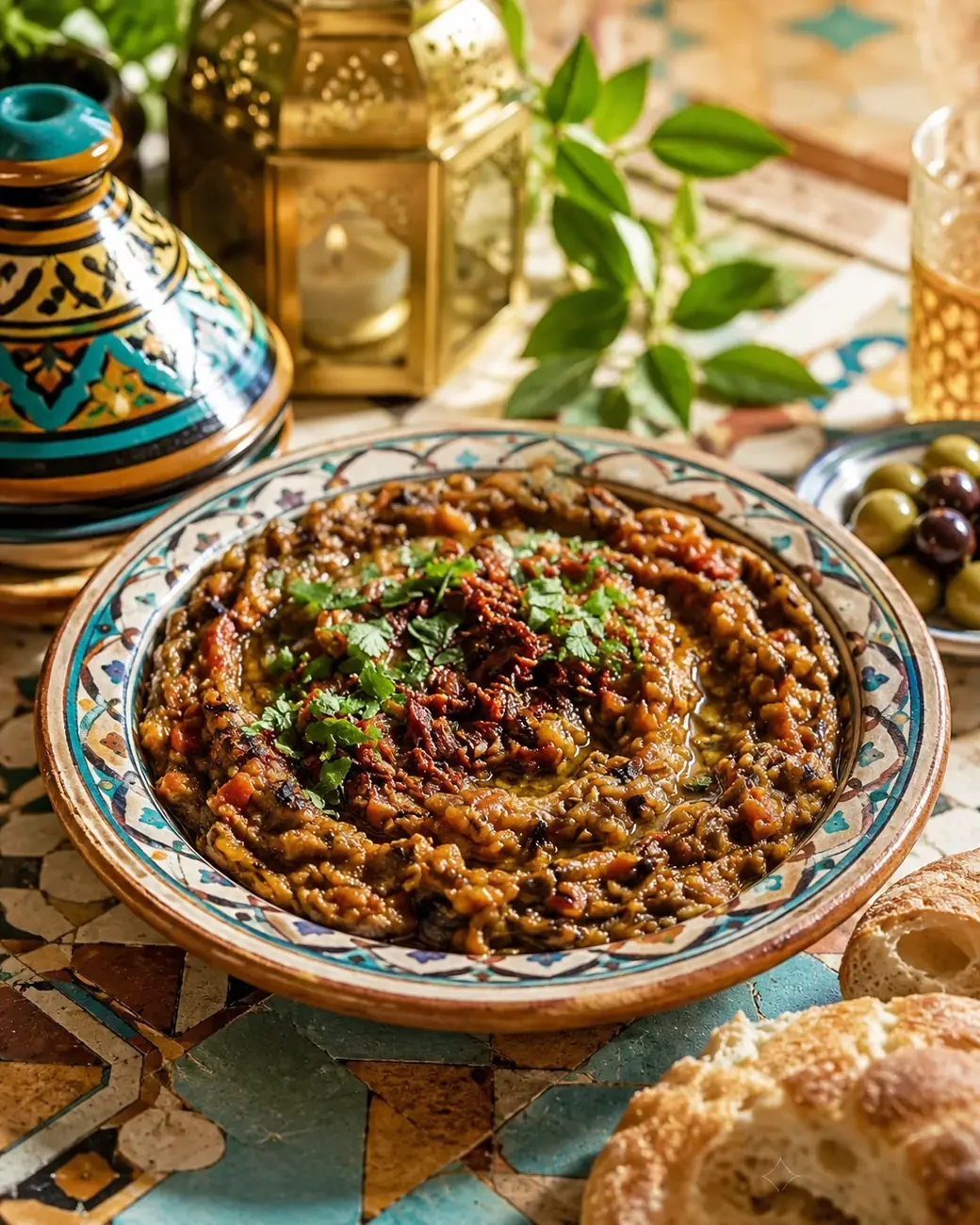
Zaalouk
Aubergine and tomato cooked until their flavours meet.
Explore the story ↗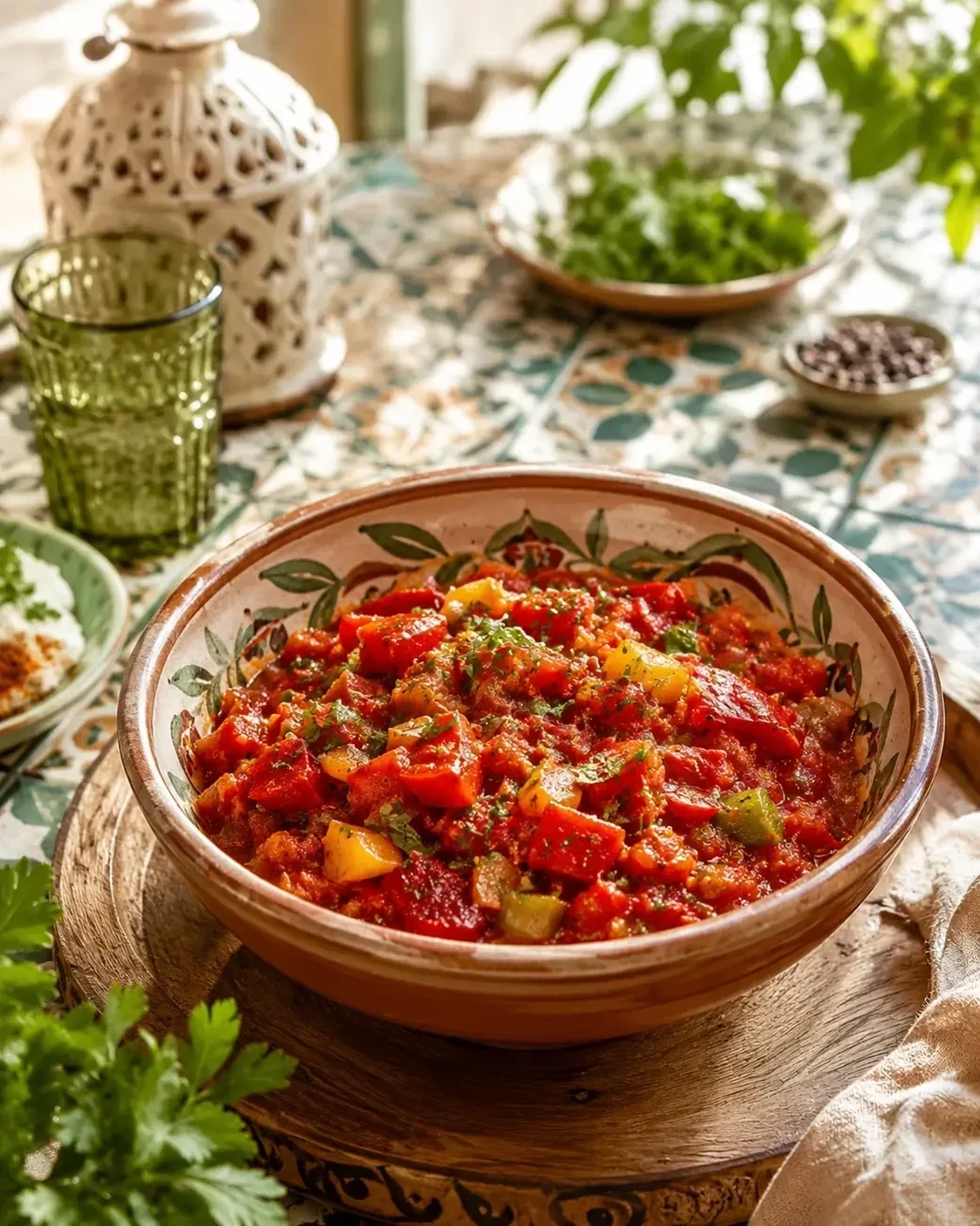
Taktouka
Roasted peppers and tomatoes, with bread close at hand.
Explore the story ↗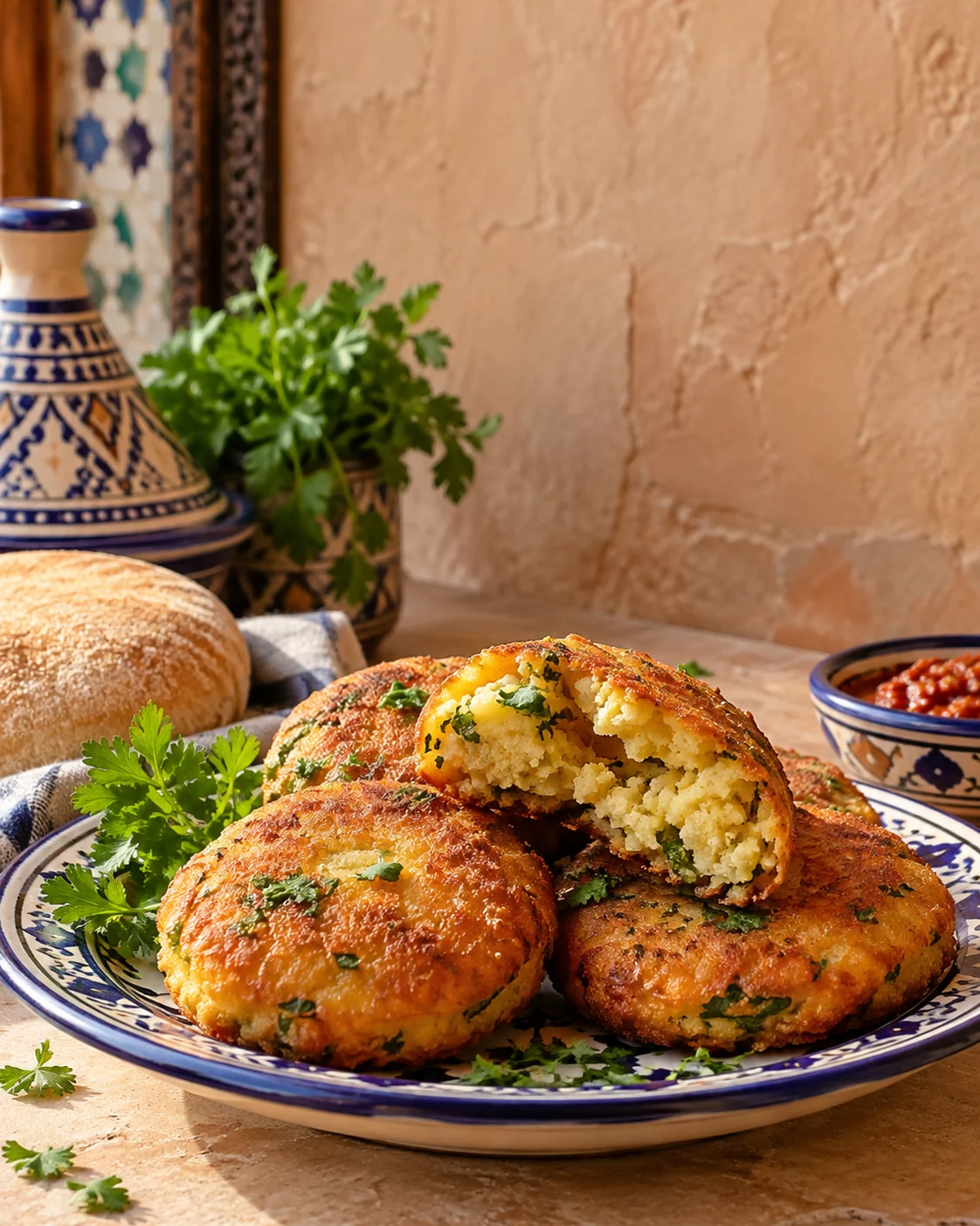
Maakouda
Potato patties, crisp edges and the rhythm of the street counter.
Explore the story ↗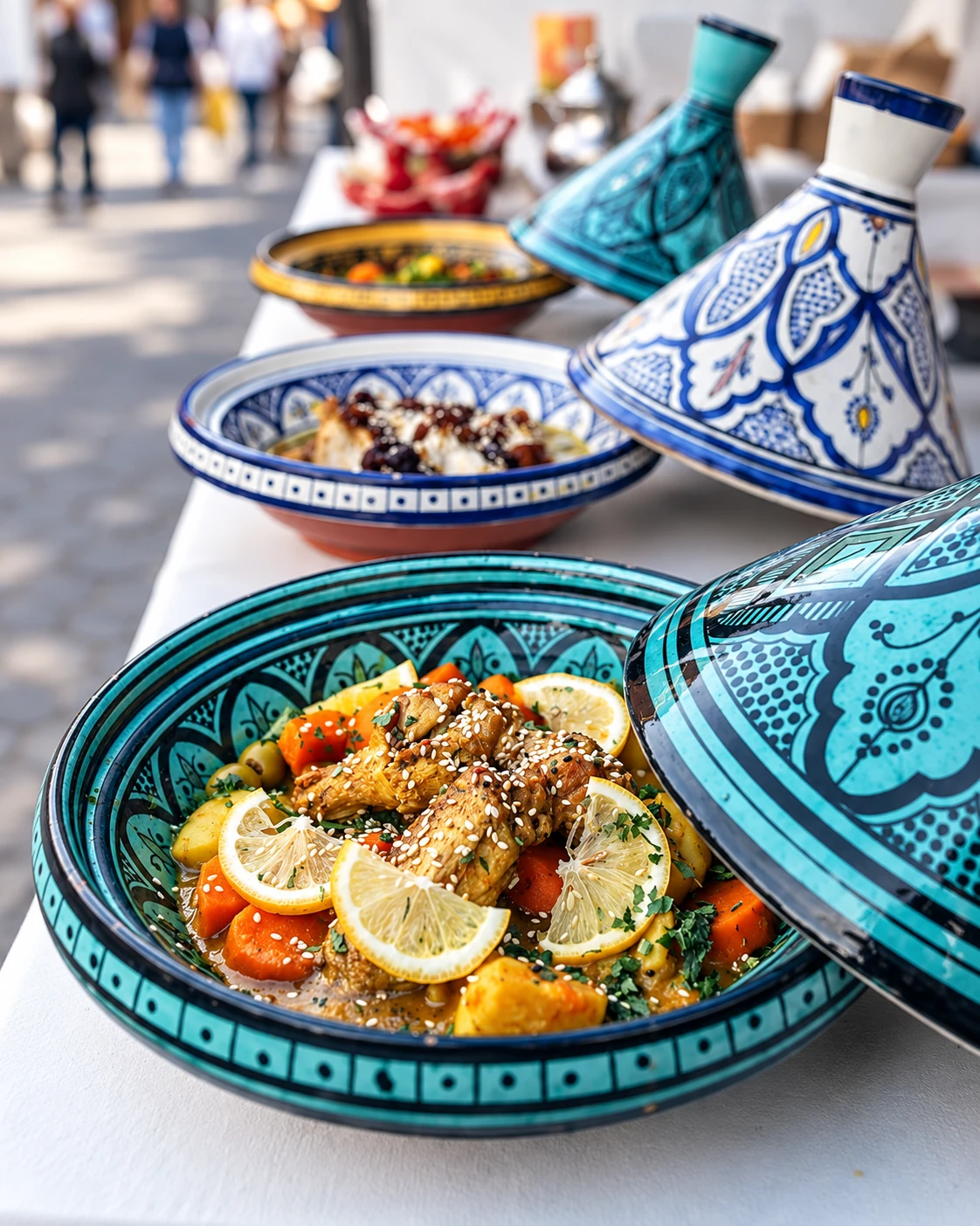
Tagine
Gentle heat, clay pots and the balance of a slow-cooked sauce.
Explore the story ↗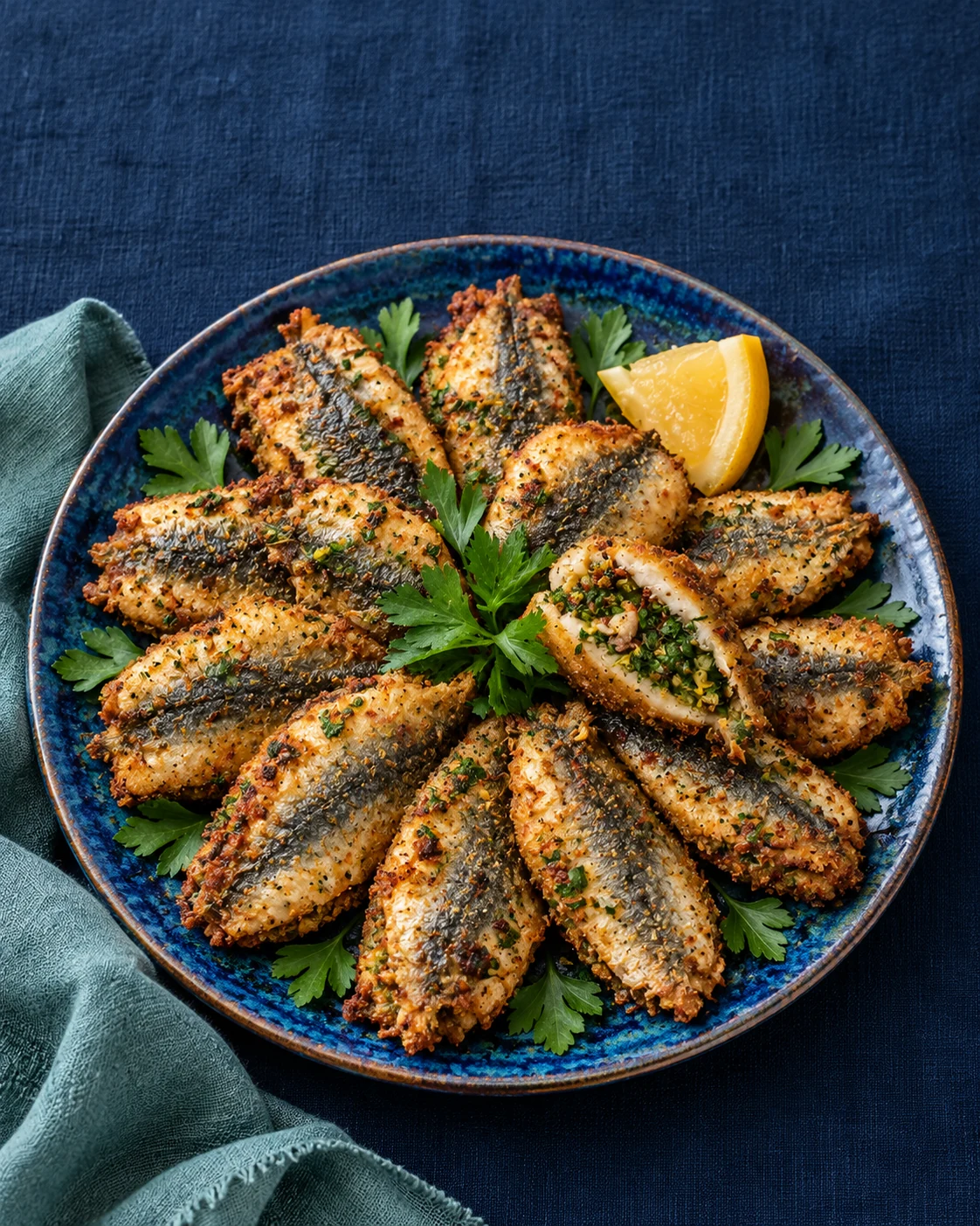
Sardines with Chermoula
Small fish, fragrant herbs and the details of preparation.
Explore the story ↗Sources & editorial notes
Photography combines existing Exotic Morocco assets and generated editorial illustrations. These images do not document a named person, household or historical event.
- Moroccan National Tourist Office · Food & drinks — Raw and cooked starters and meal context.
- Nargisse Benkabbou · Taktouka — Pepper preparation and cooked tomato base.
- Taste of Maroc · Zaalouk — Aubergine and tomato preparation and texture.
- Taste of Maroc · Carrot Salad with Chermoula — Cooked carrot seasoning and family variation.
- Nargisse Benkabbou · Tomato and Cucumber Salad — Fresh chopping and dressing.
- Exotic Morocco · Maakouda recipe package — Related warm potato side; guide collection link.
EXOTIC MOROCCO Places. People. The pleasure of knowing more.Back to top ↑