

01 · A Moroccan cooked salad
Pepper and tomato.
More than the sum
of two vegetables.
Taktouka is built on concentration, not complication.
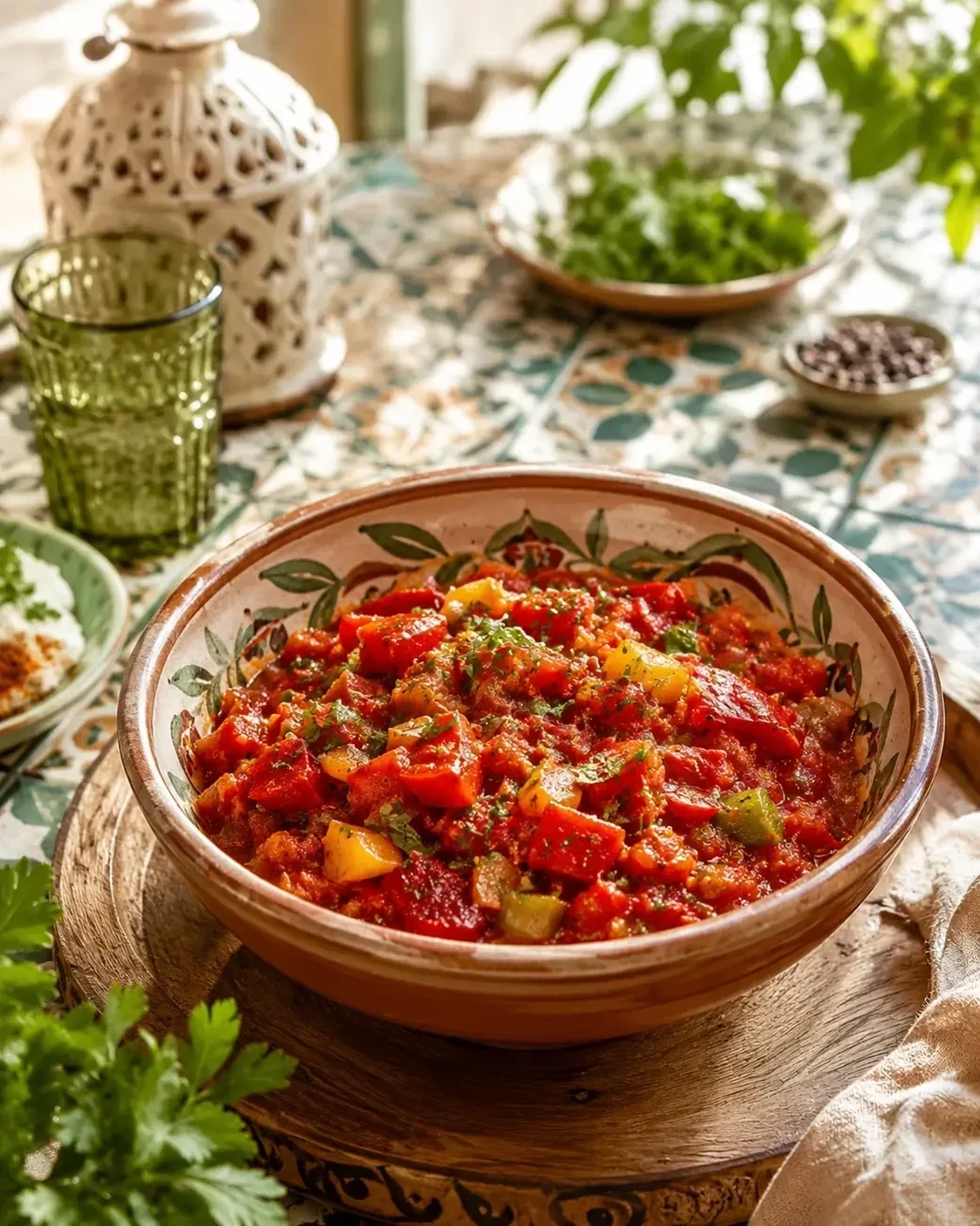
At its core, taktouka brings together peppers and tomatoes with garlic, olive oil and warm spices. In widely documented versions, the peppers are roasted first, giving the finished salad a soft texture and a gentle charred note, while the tomatoes are cooked until their rawness disappears and their juices reduce. [1]
Moroccan food writers commonly place taktouka among the country’s cooked salads and small dishes. It can sit beside a main dish, join a spread of salads, or be eaten simply with bread. The result is spoonable rather than soupy: softened vegetables held together by their own reduced juices and olive oil. [2]
That apparent simplicity is exactly why technique matters. If the peppers are undercooked, the texture stays tough. If the tomatoes remain watery, the flavours never meet. Taktouka asks for ripe produce and enough time for the pan to do its work.
Enter Moroccan food culture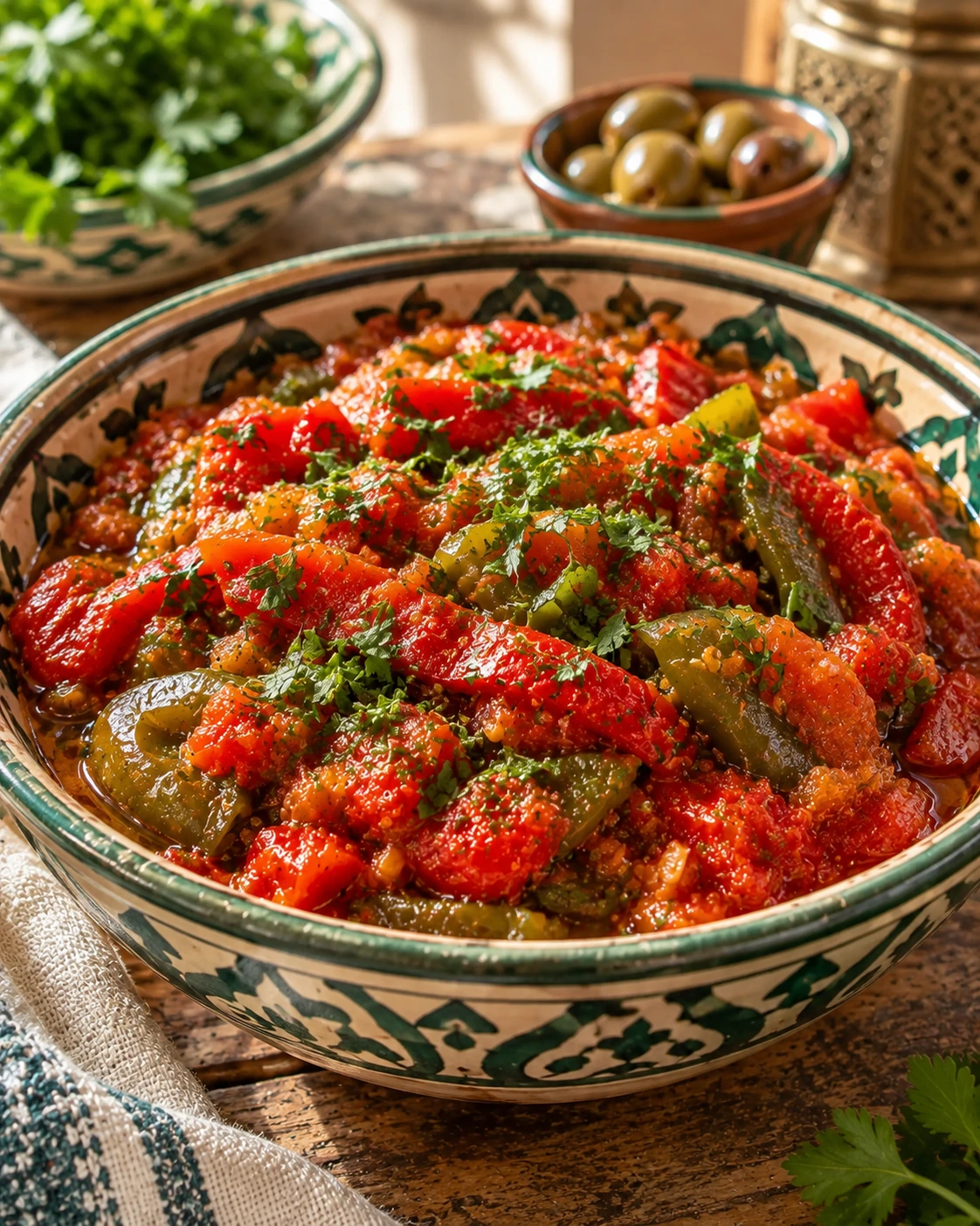
The defining partnership.
Heat changes both texture and flavour.
Serving temperature varies by household and moment.
02 · Roots & living practice
Peppers, tomatoes and household skill.
The strongest story is the one the evidence can actually support.
Taktouka is firmly recognised as a Moroccan pepper-and-tomato cooked salad. Morocco’s national tourism office lists a pepper-and-tomato preparation among the cooked vegetable starters that can accompany a meal, alongside other salads such as zaalouk. [3]
Taktouka belongs to the everyday Moroccan vegetable kitchen. Its character comes from the treatment of peppers and tomatoes, with variations in texture, seasoning and household preference.
A cooked salad tradition
Moroccan salads can be raw or cooked. Taktouka belongs to the cooked side of that table, where vegetables are softened, seasoned and served in small dishes. [3]
Home knowledge matters
Recipes differ in pepper colour, spice balance, herb choice and final texture. Those differences are better understood as household practice than as mistakes.
Modern kitchens still count
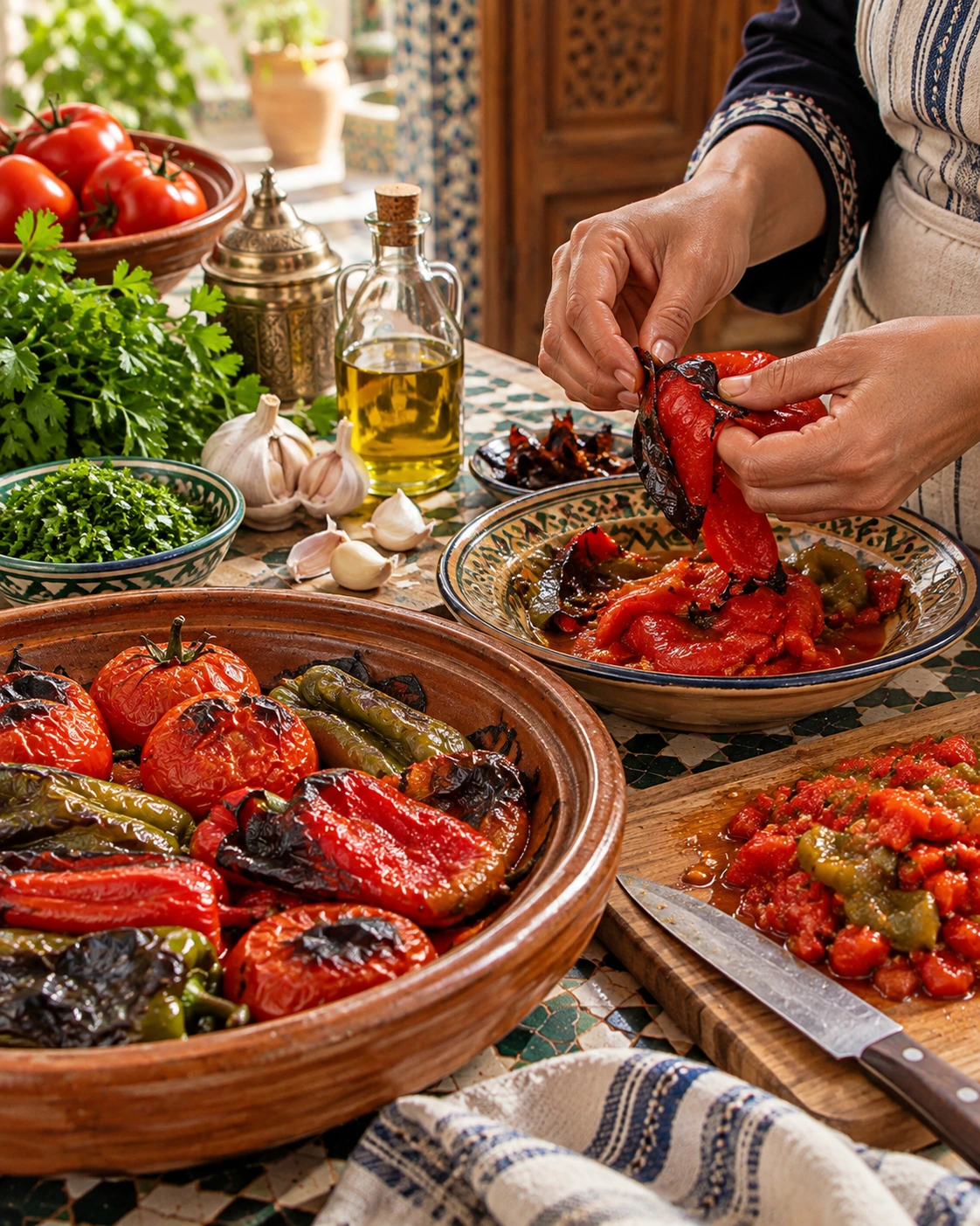
Open flame, grill pan, broiler or oven can all be used to blister peppers. The method changes with equipment; the culinary goal remains tender flesh and removable skin. [1]
03 · The technique
Blister. Peel.
Reduce.
The characteristic texture comes from treating pepper and tomato differently before bringing them together.
The point is not to make a smooth sauce. It is to soften the vegetables, remove distracting skins where desired, then reduce enough moisture for the mixture to become cohesive. [1]
Roast the peppers
Blistering softens the flesh and can add a gentle smoky note. The blackened outer skin is then removed; the goal is tender pepper, not a raw crunch.
Cook the tomatoes down
Tomatoes provide body and acidity, but excess water has to leave the pan. Reduction concentrates their flavour and prevents the finished salad from becoming thin.
Bring the textures together
Chopped pepper is folded into the tomato base with garlic, spices and herbs. Some cooks leave larger pieces; others work toward a finer, softer mixture.
04 · Household variation
One name.
Several balances.
Taktouka has a recognisable centre — peppers and tomatoes — but that does not mean every plate should look identical.
Think in variables: pepper colour, size of the cut, intensity of roasting, herb balance, chilli heat and how far the tomato is reduced.
Let the pepper stay visible
A coarser cut gives the salad more distinct pieces and a stronger pepper presence. The tomato still needs to bind the mixture rather than sit around it as liquid.
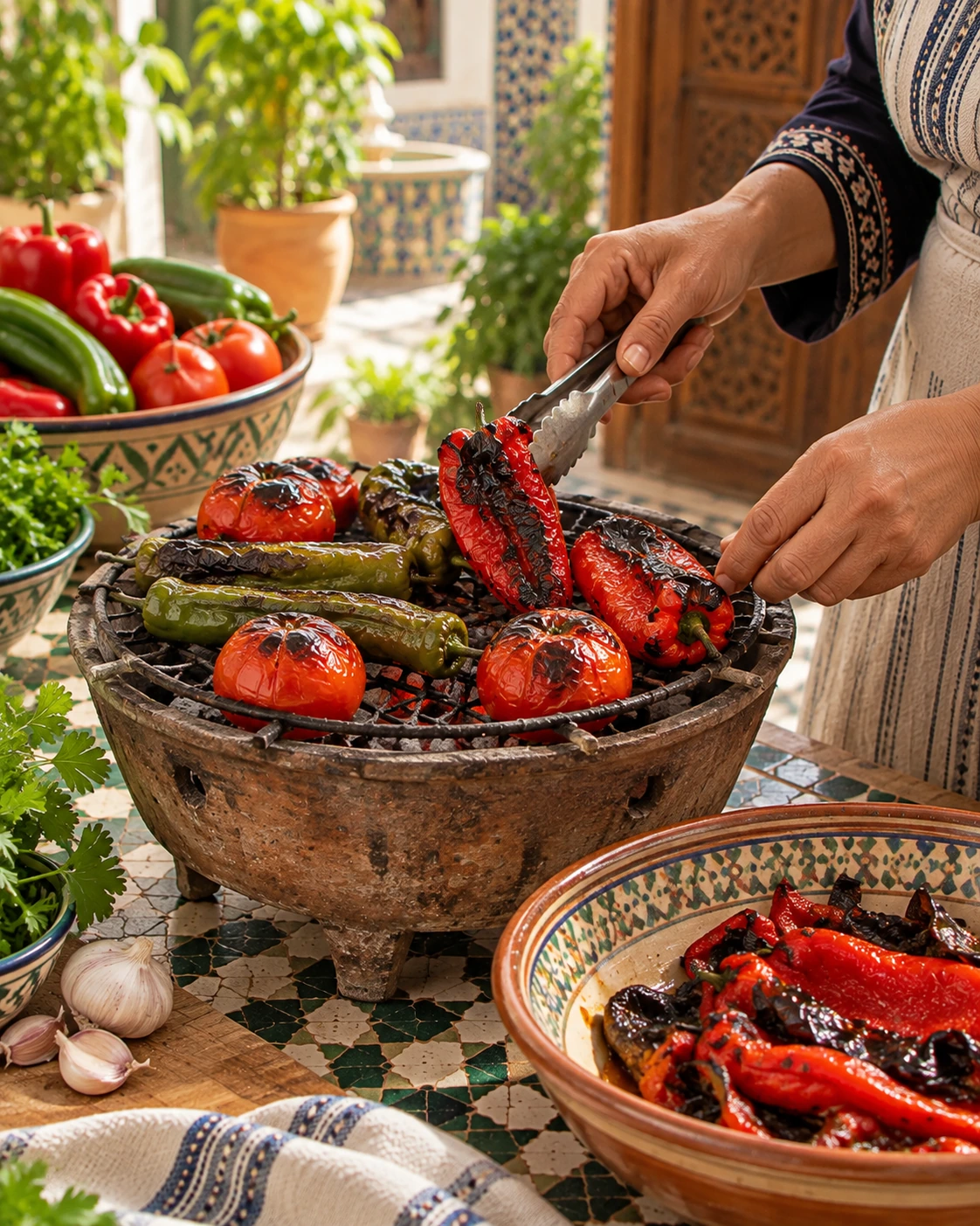
Smoke begins with the pepper
Direct flame or charcoal can make the roasted character more noticeable. Indoor broiling can still produce tender, blistered peppers, but the aroma will be different.
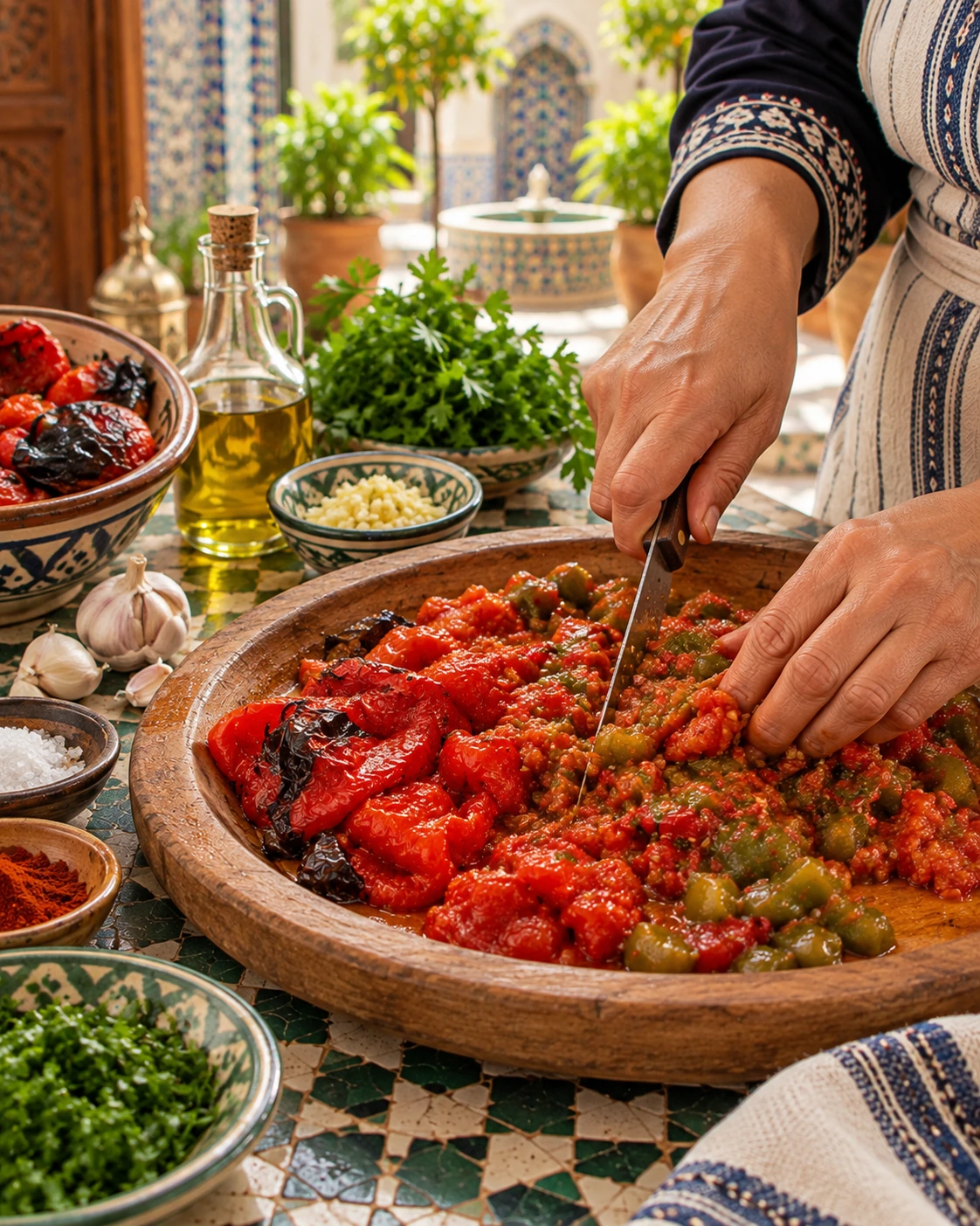
Work it toward a softer relish
More chopping and stirring creates a finer texture. It should still read as cooked vegetables rather than become a completely smooth purée.
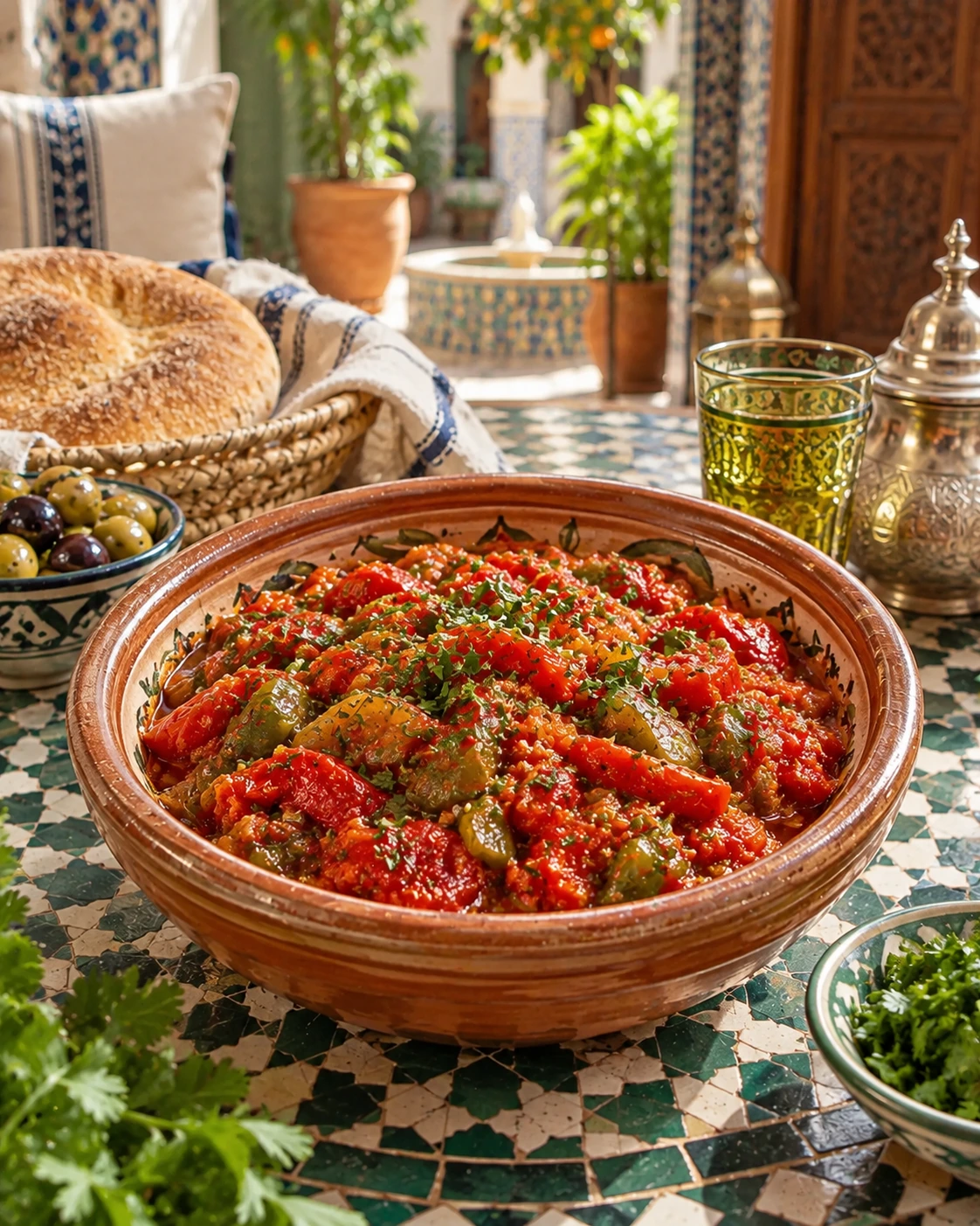
Warm, cool or in between
Published Moroccan recipes serve taktouka warm or cold, and room-temperature service fits naturally into a spread of small dishes. The useful rule is flavour first, not one compulsory temperature. [1]
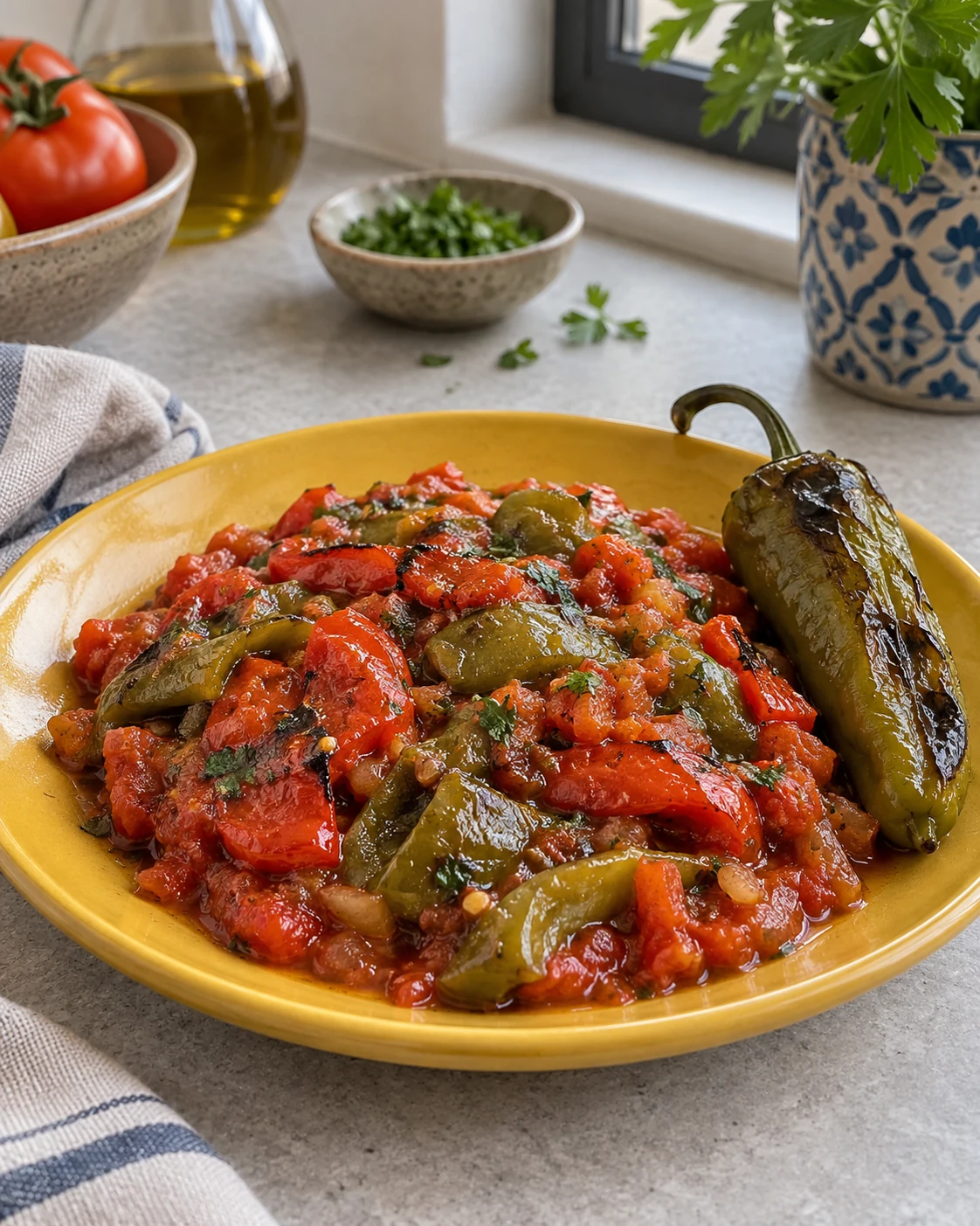
Green is classic; red changes the mood
Green peppers are prominent in documented recipes, while mixed or red peppers appear in contemporary household and restaurant versions. Colour affects sweetness as well as appearance. [4]
Heat is optional.
A little cayenne or fresh chilli can sharpen the salad, but chilli heat is not what defines taktouka. The essential character comes from pepper, tomato, garlic, olive oil and seasoning.
Texture is a decision.
A family may prefer a looser spoonable salad or a deeper reduction. What matters is that the vegetables are properly cooked and the flavours have come together.
05 · The ingredient logic
Few elements.
No place to hide.
Taktouka is not a pantry-clearing dish. Each component has a clear job, which is why the quality and treatment of simple ingredients matter.
Cumin and paprika support the vegetables; they should not bury the sweetness of ripe tomato or the roasted character of pepper.
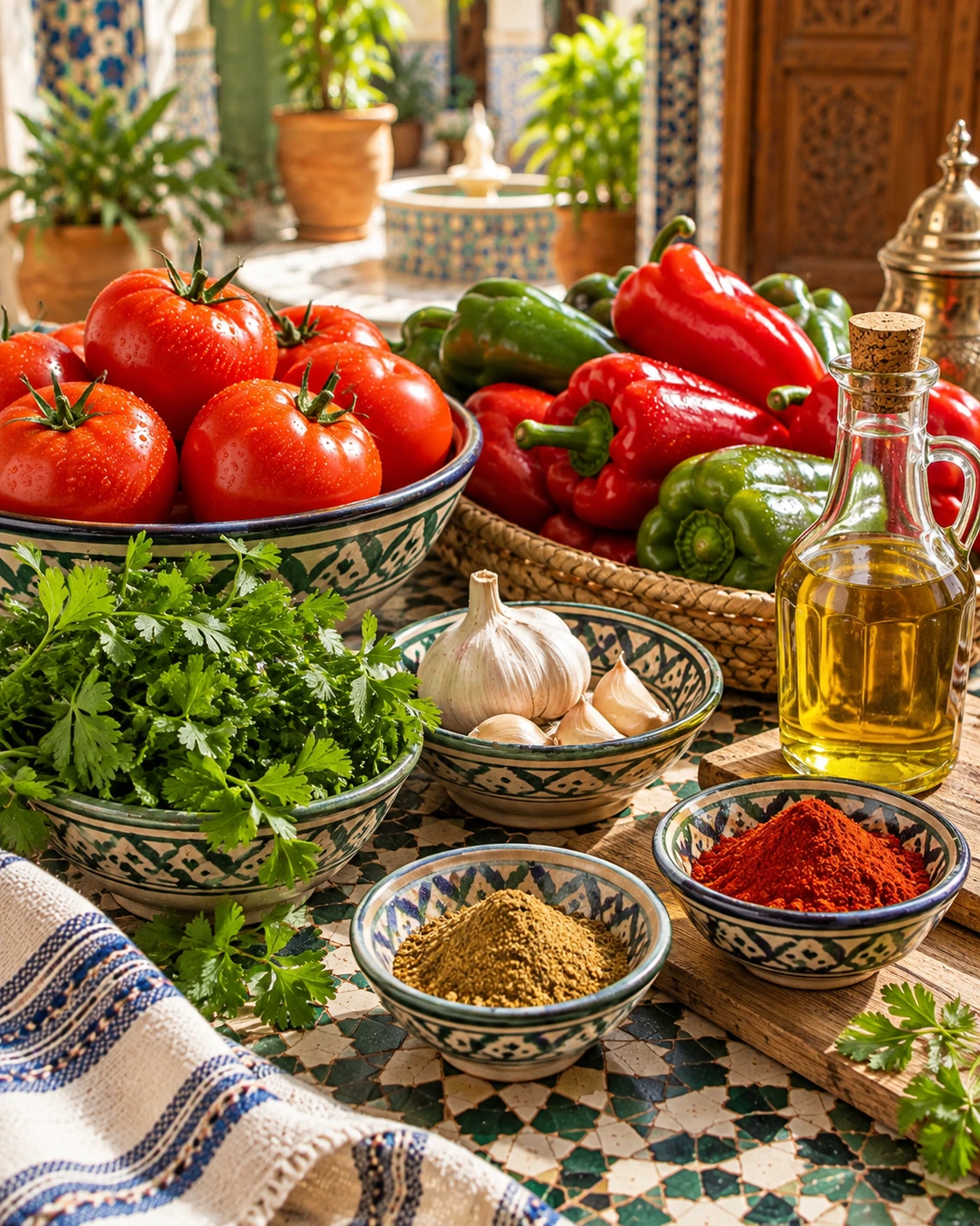
Peppers & tomatoes
The structure of the dish.
Peppers bring roasted sweetness and body; tomatoes provide acidity, moisture and the sauce-like base that holds the salad together.
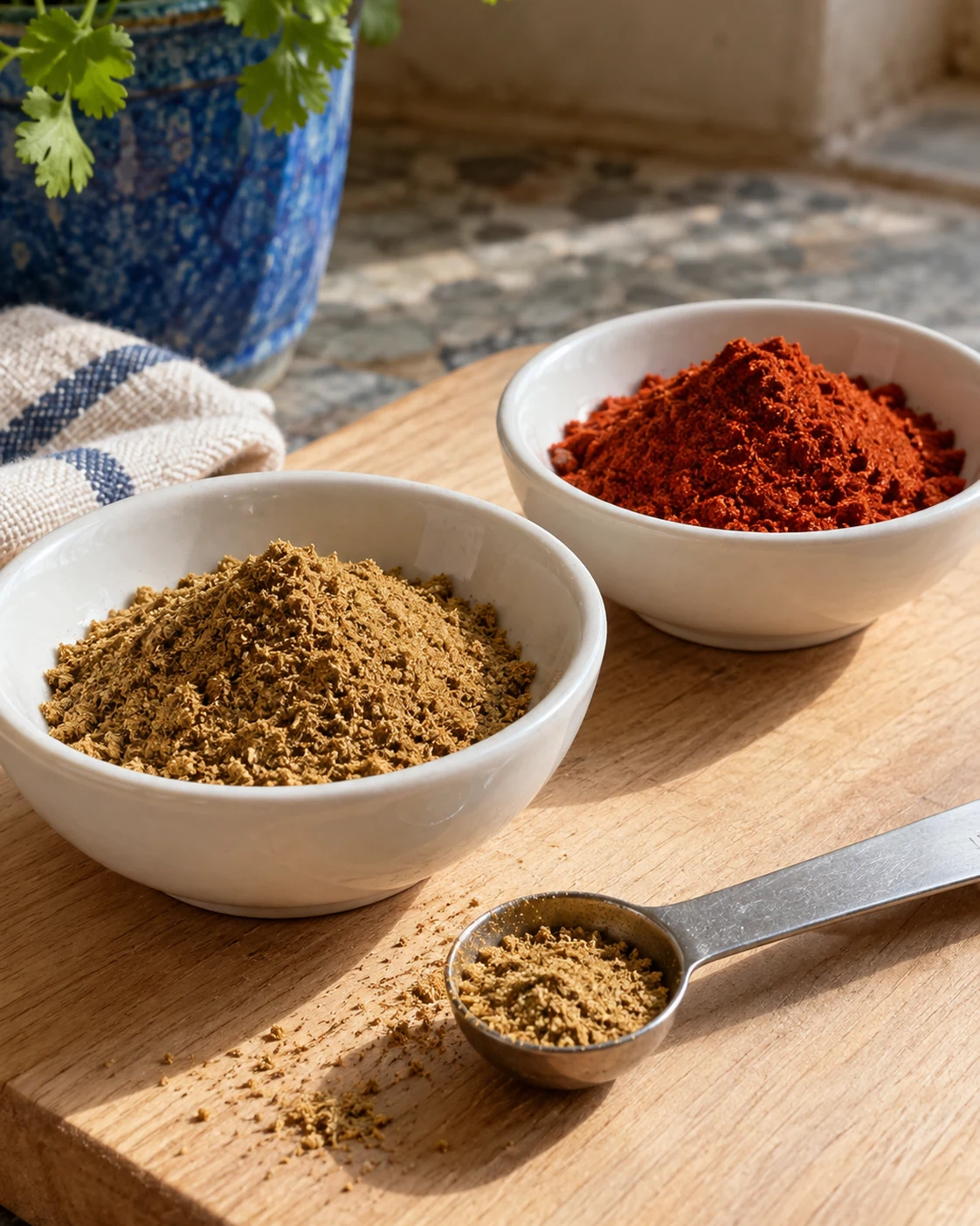
Cumin & paprika
Warmth rather than noise.
These are common seasonings in documented recipes. The balance varies, but neither needs to overwhelm the vegetable flavour. [1]
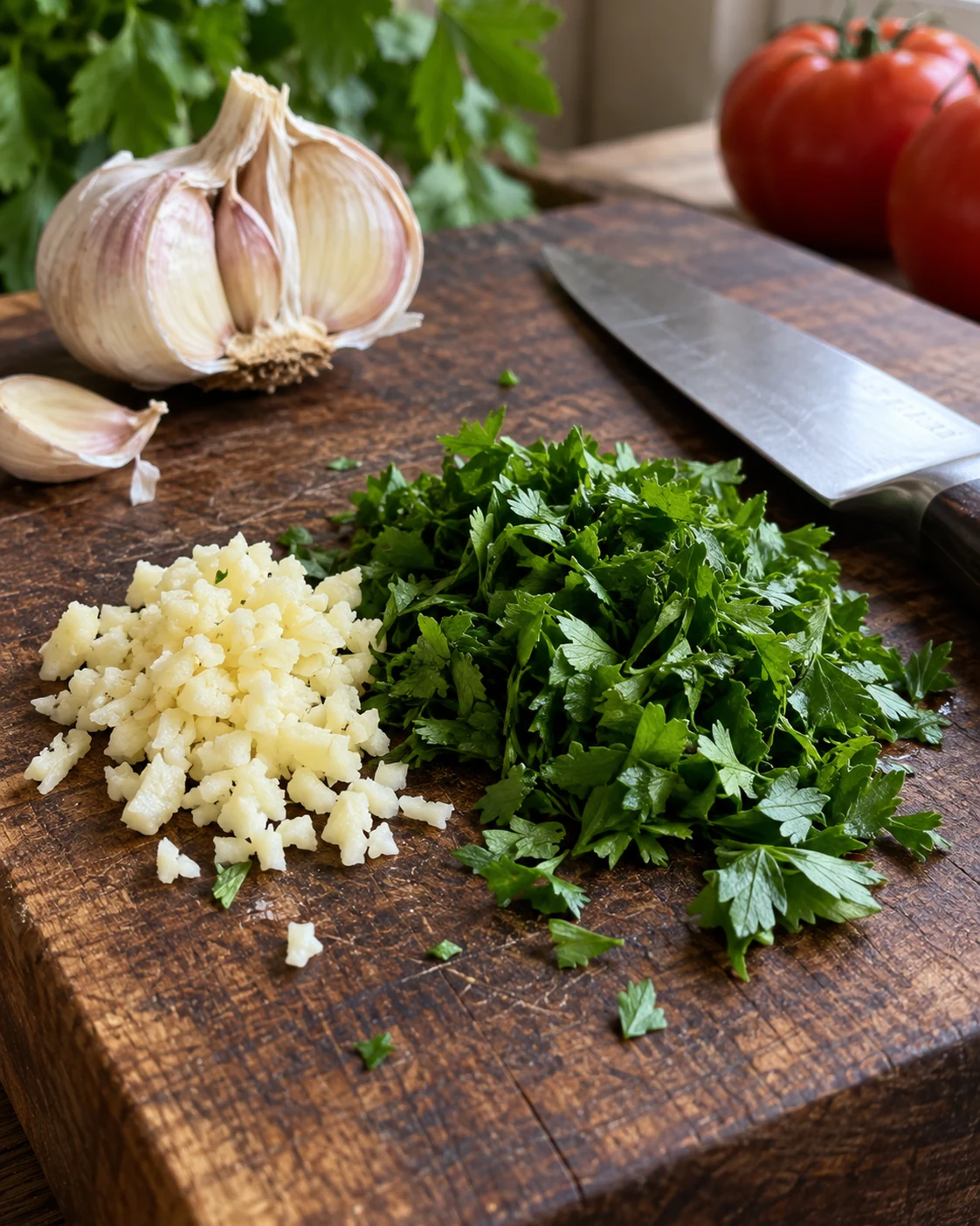
Garlic & herbs
Aromatic lift.
Garlic belongs naturally in the tomato base. Parsley, coriander or a combination can add freshness; exact herb choices vary between recipes and households.
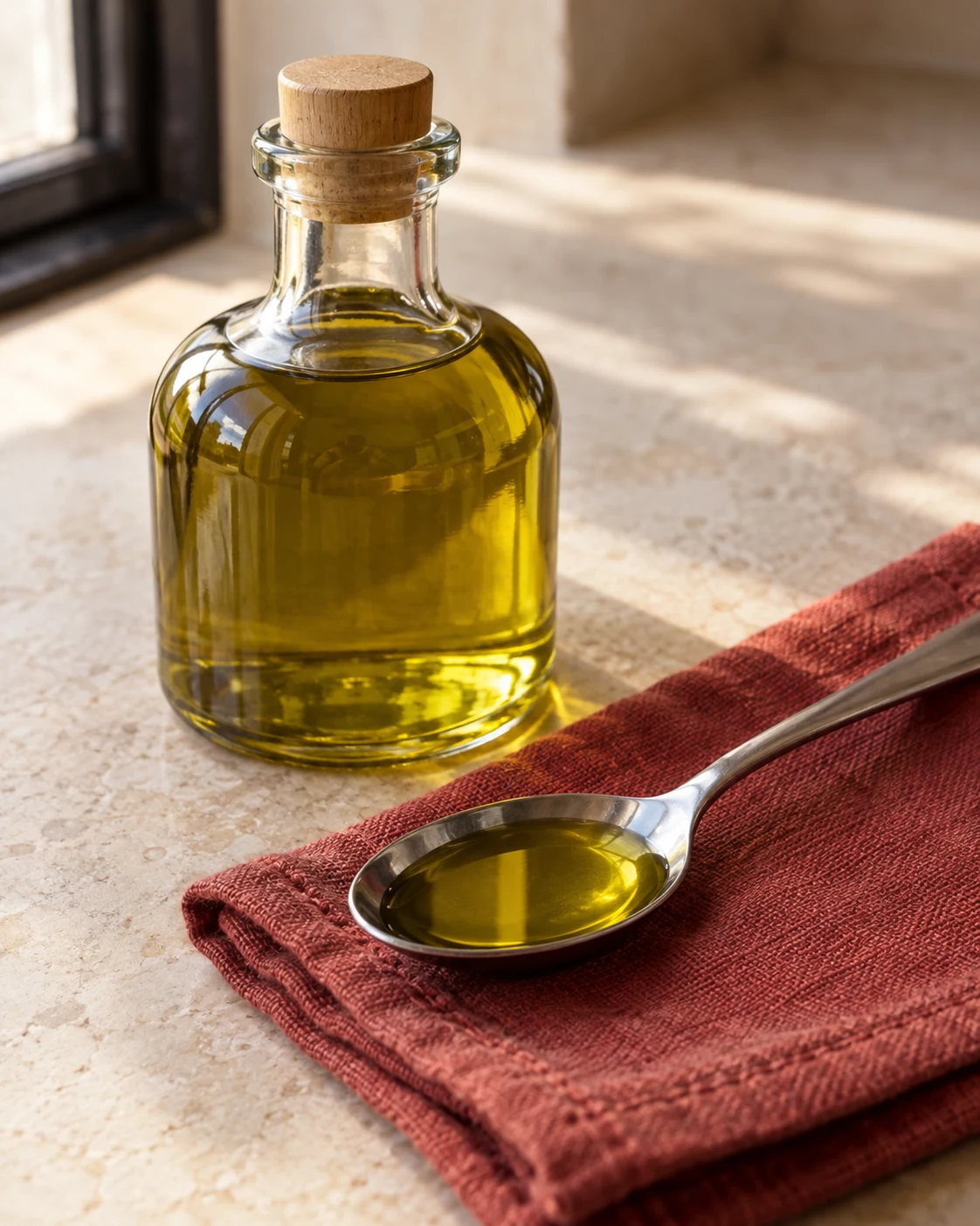
Olive oil
Carries flavour and texture.
Olive oil supports the vegetables as they cook and contributes to the glossy finish. Its role is culinary, not decorative.
Reduction creates
the final texture.
The change from loose vegetables to taktouka happens as moisture leaves the pan and the ingredients begin to hold together.
Water leaves.
Tomato softens and releases liquid. Gentle simmering gives that liquid time to evaporate rather than remain as a watery pool.
Flavour concentrates.
Garlic, spice and tomato become more integrated as the mixture cooks. The salad should taste composed, not like separate raw ingredients.
Pepper keeps identity.
The roasted pepper joins the sauce without needing to disappear completely. Good taktouka can be soft and cohesive while still showing its vegetables.
06 · Produce first
The market
sets the ceiling.
A short ingredient list leaves nowhere for tired produce to disappear.
Ripe tomatoes give the salad body without forcing the cook to rely on added sweetness. Peppers should be firm enough to roast cleanly but mature enough to soften well. The exact colour mix can vary.
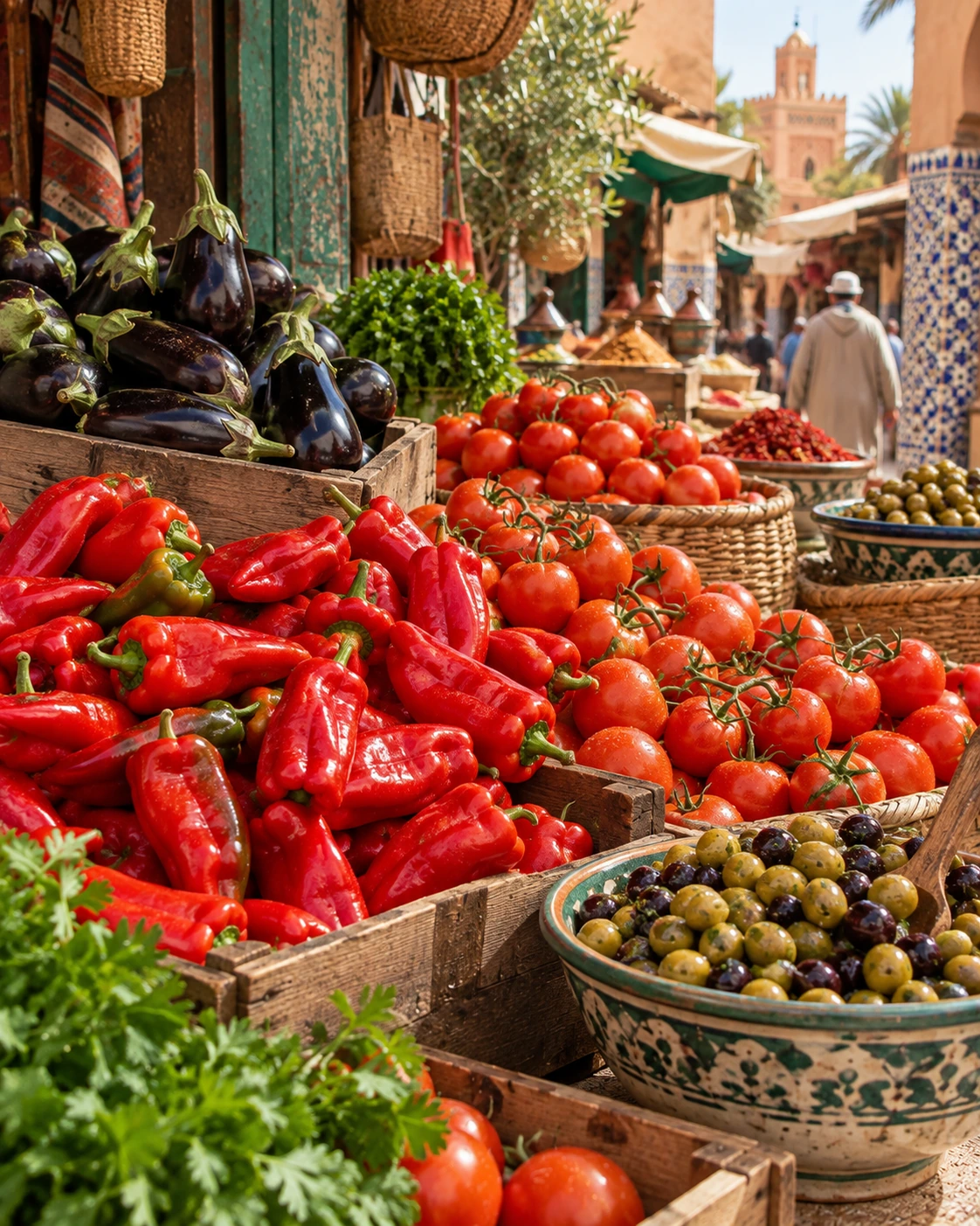
Moroccan souks and neighbourhood produce shops place these ingredients in the everyday rhythm of shopping: tomatoes, peppers, herbs, garlic and olives are ordinary foods, not restaurant-only decoration. Morocco’s tourism office likewise presents markets and spice sellers as part of the wider food culture. [5]
Choose for ripeness
Tomatoes should smell and taste of tomato; underripe fruit produces a sharper, thinner base.
Discover Taste Morocco ↗Roast for texture
The pepper needs enough heat for the skin to blister and the flesh beneath to relax.
Explore Moroccan food culture ↗Season after tasting
Salt, cumin, paprika and optional heat should respond to the produce rather than follow a rigid formula.
Explore the guide collection ↗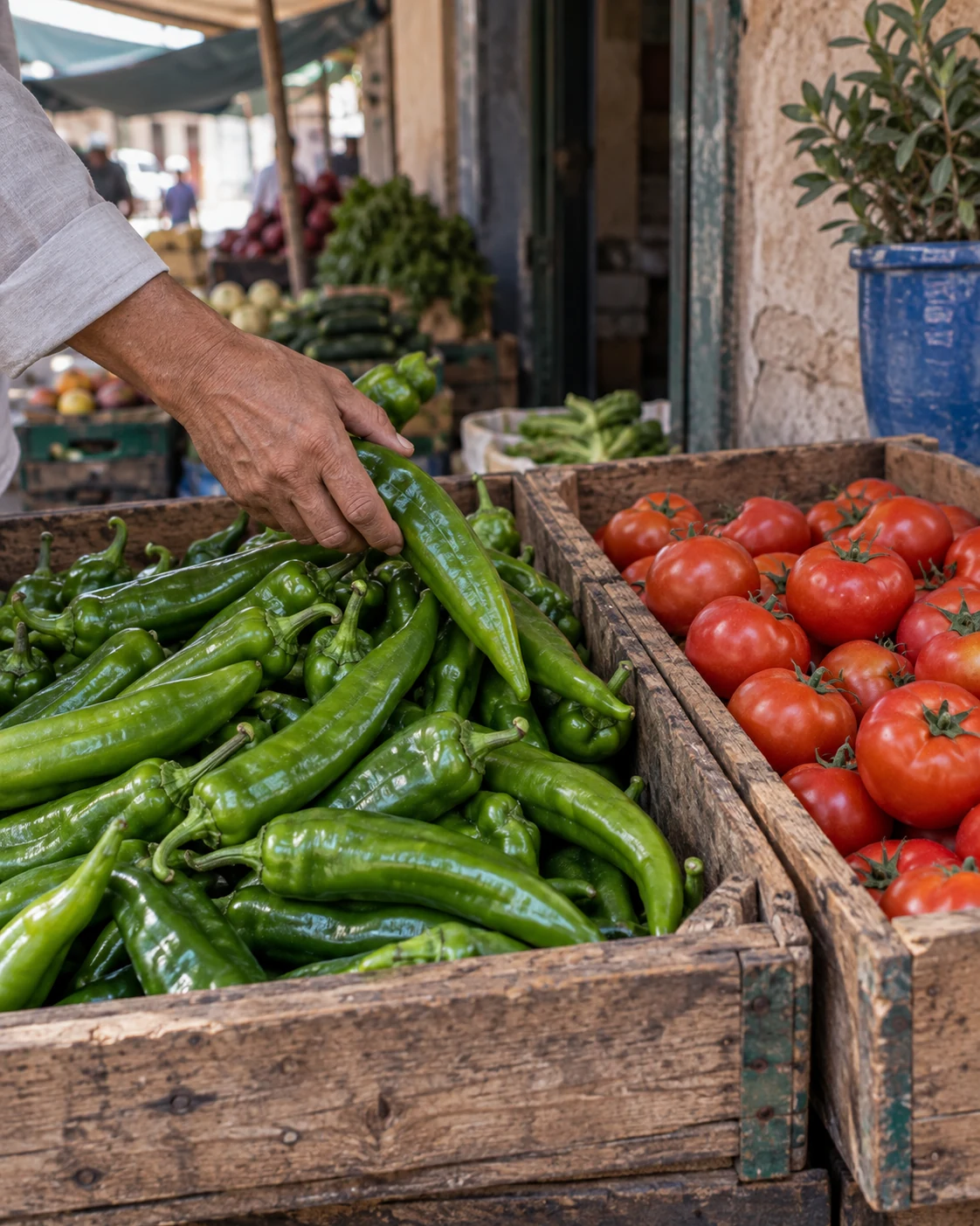
07 · Serving & sharing
Pass the bread.
Keep the bowl close.
Taktouka is small-dish food with a very direct invitation.
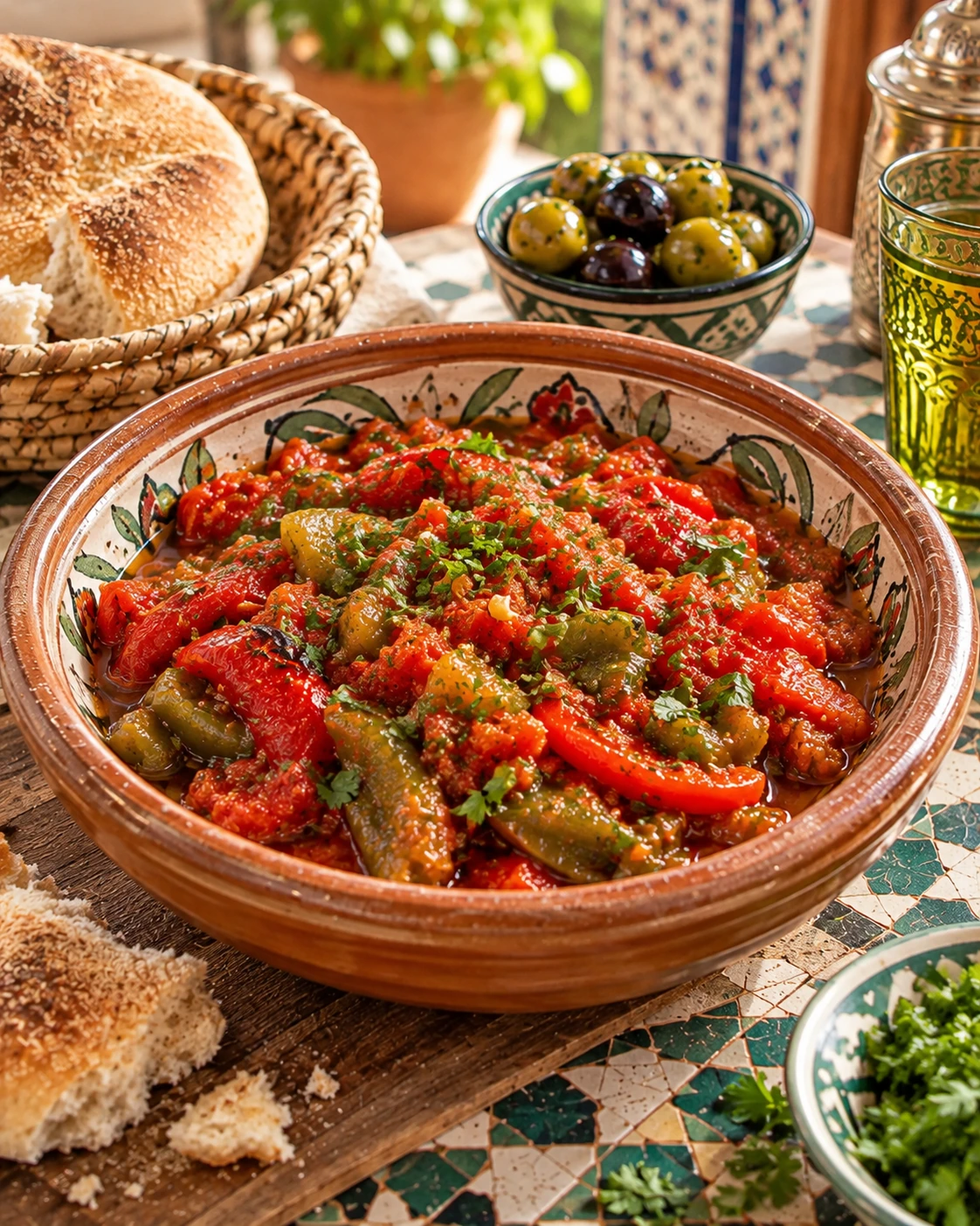
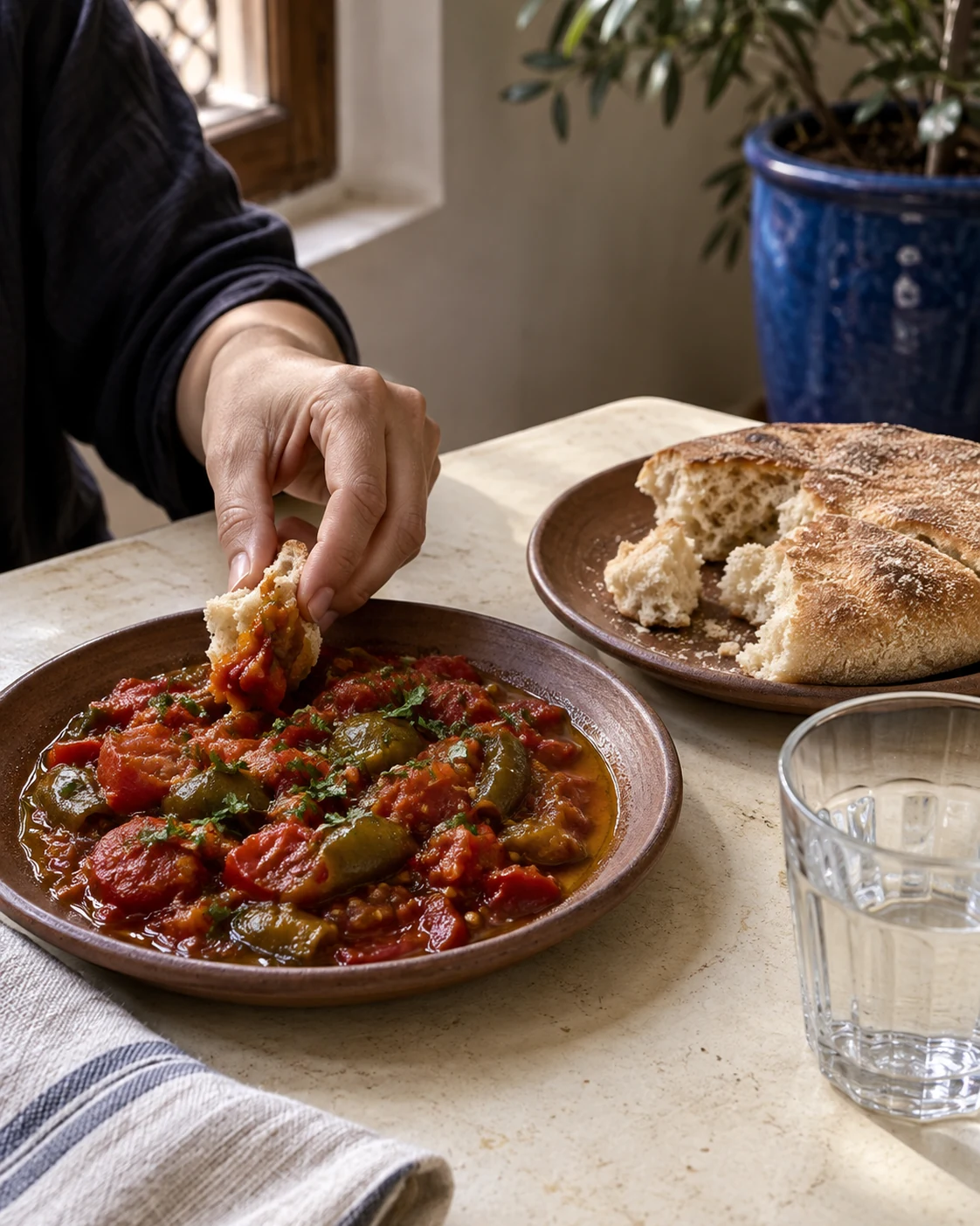
Moroccan bread is a natural partner because it can gather the softened peppers, tomato and olive oil in one bite. The national tourism office describes bread as a staple of Moroccan meals and cooked salads as common starters or accompaniments. [3]
Taktouka does not need a formal course of its own. It can arrive before a main dish, sit beside grilled meat or fish, or share the table with other salads. That flexibility is part of its usefulness.
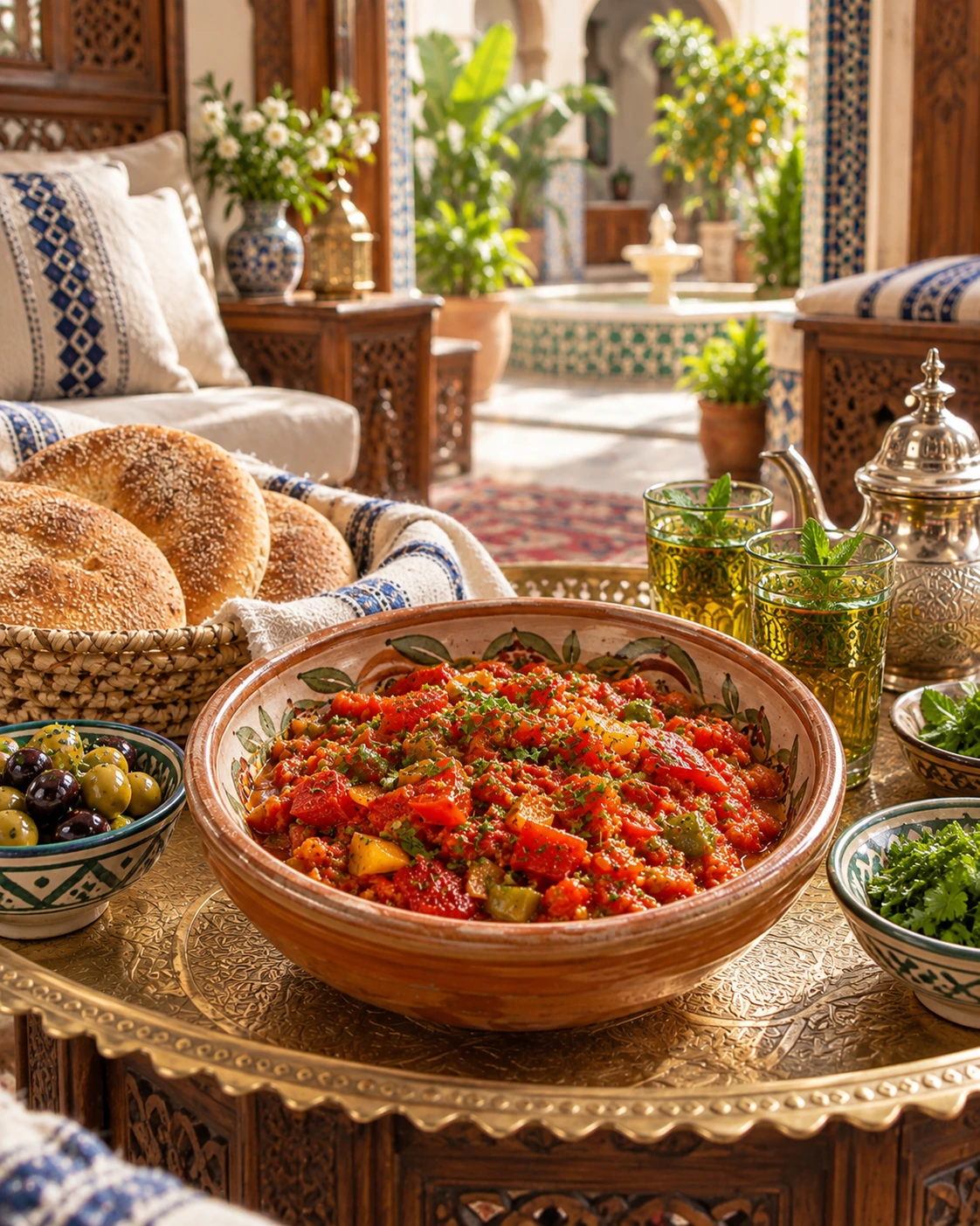
Khobz makes sense here.
Bread is practical as well as cultural: it lifts the soft salad from the serving dish and catches the olive-oil-rich tomato juices.
At a shared table, serving style can vary by household. Follow the rhythm of the people you are eating with rather than assuming one fixed etiquette.
Pair it with different textures.
Zaalouk brings aubergine; raw chopped salads bring crunch; olives bring brine. Taktouka contributes softened pepper and tomato without needing to dominate the entire meal.
That makes it especially useful in a spread: strong enough to be remembered, flexible enough to sit beside very different dishes.
Not tied to
one serving point.
Published recipes describe taktouka served warm or cold. At home, room temperature can be equally practical when several small dishes are prepared ahead of the main meal. [1]
Everyday food can still feel generous.
A bowl of taktouka does not need a special holiday to justify itself. Its strength is that ordinary vegetables can become a vivid, shareable dish through good cooking.
08 · The wider salad table
Cooked salad.
Its own category.
Understanding taktouka becomes easier when “salad” is not reduced to raw leaves.
Moroccan starters can include both raw and cooked vegetables. Taktouka belongs to the cooked group, where heat is used to soften, concentrate and season the produce before it reaches the table. [3]
Zaalouk may look similar from a distance because both can contain tomato, garlic, spices and olive oil. The defining vegetable changes the dish: aubergine leads zaalouk; roasted pepper leads taktouka. Treating one as a substitute for the other erases that distinction.
Other salads may keep vegetables crisp, use carrots or beetroot, or combine tomato and onion without the same long reduction. The Moroccan salad table is therefore a set of different techniques, not one master formula.
Explore Zaalouk ↗09 · A closer look
Good questions.
Clear answers.
The details that prevent a simple salad from becoming vague.
Is taktouka a dip or a salad?
It is commonly described as a Moroccan cooked salad, though its soft texture also makes it easy to scoop with bread like a dip or relish. The category matters less than the actual technique: cooked pepper and tomato reduced together.
Must the peppers be green?
Green peppers are prominent in well-known Moroccan recipes, including Nargisse Benkabbou’s version, but red or mixed peppers also appear. Changing the pepper changes sweetness, colour and sometimes the intensity of the roasted flavour. [1]
Should taktouka be spicy-hot?
Not necessarily. Cumin and paprika provide warm seasoning; chilli or cayenne can be added in some versions, but strong heat is not the defining feature.
Is it the same as zaalouk?
No. Zaalouk is centred on aubergine and tomato. Taktouka is centred on pepper and tomato. They can share garlic, spices, herbs and olive oil, which explains the family resemblance without making them the same dish.
Can it be served cold?
Yes. Published Moroccan recipes describe warm or cold service. Room-temperature serving is also practical when taktouka is part of a larger spread. [1]
 EXOTIC MOROCCOTASTE · THE GUIDE COLLECTIONTaktoukaIngredients, technique
and the Moroccan table
From the story to your kitchen
Keep the flavour.
Go a little deeper.
Roasted peppers and tomatoes, with bread close at hand.
Explore the Exotic Morocco guide collection for a closer look at ingredients, kitchen knowledge and the culture around the table.
- Understand the ingredients and their roles
- Recognise the techniques and textures that matter
- Bring context and confidence to the way you cook and serve
Continue tasting Morocco
Follow the
table outward.
Another dish, another technique, another way into the Moroccan kitchen.
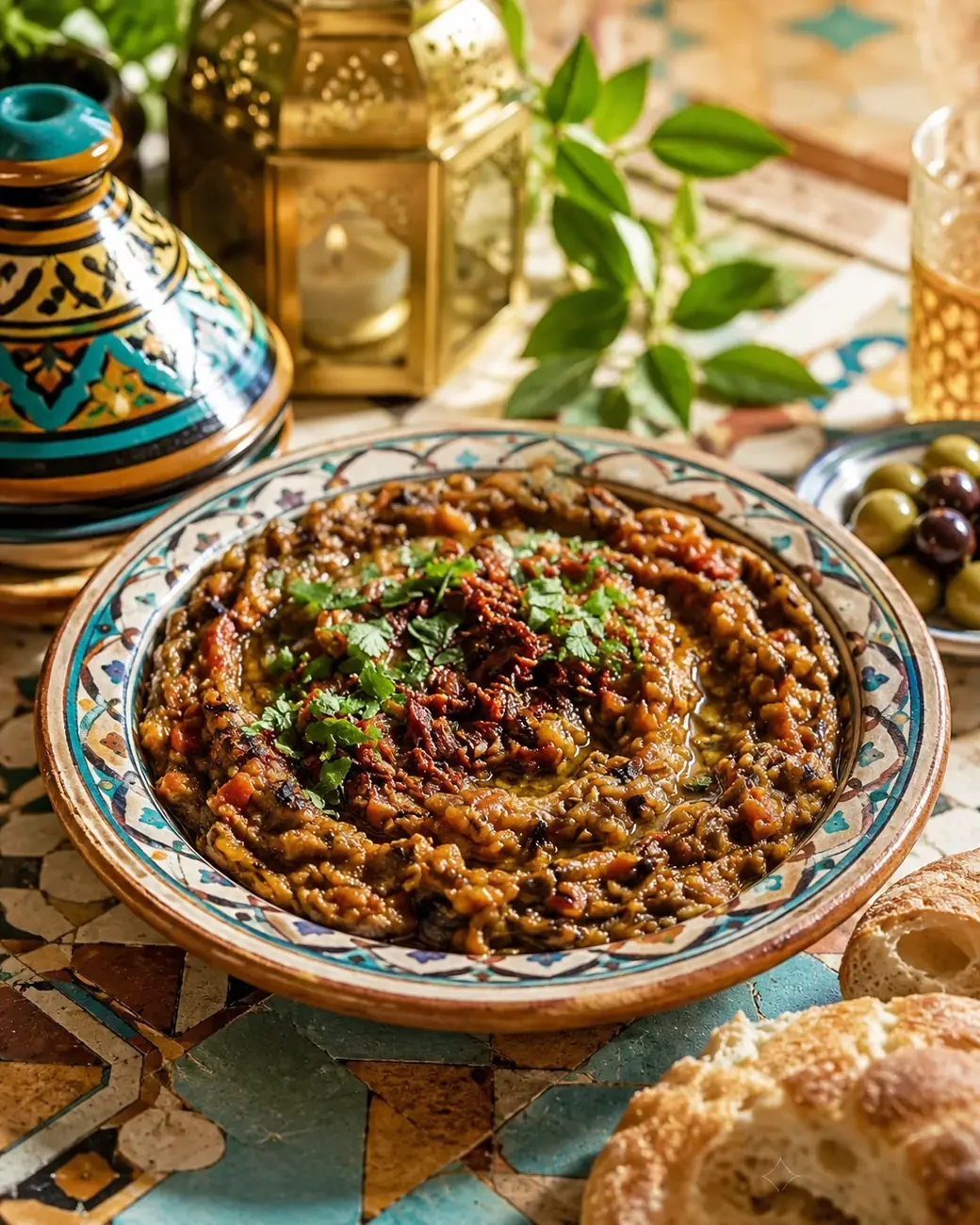
Zaalouk
Aubergine and tomato cooked until their flavours meet.
Explore the story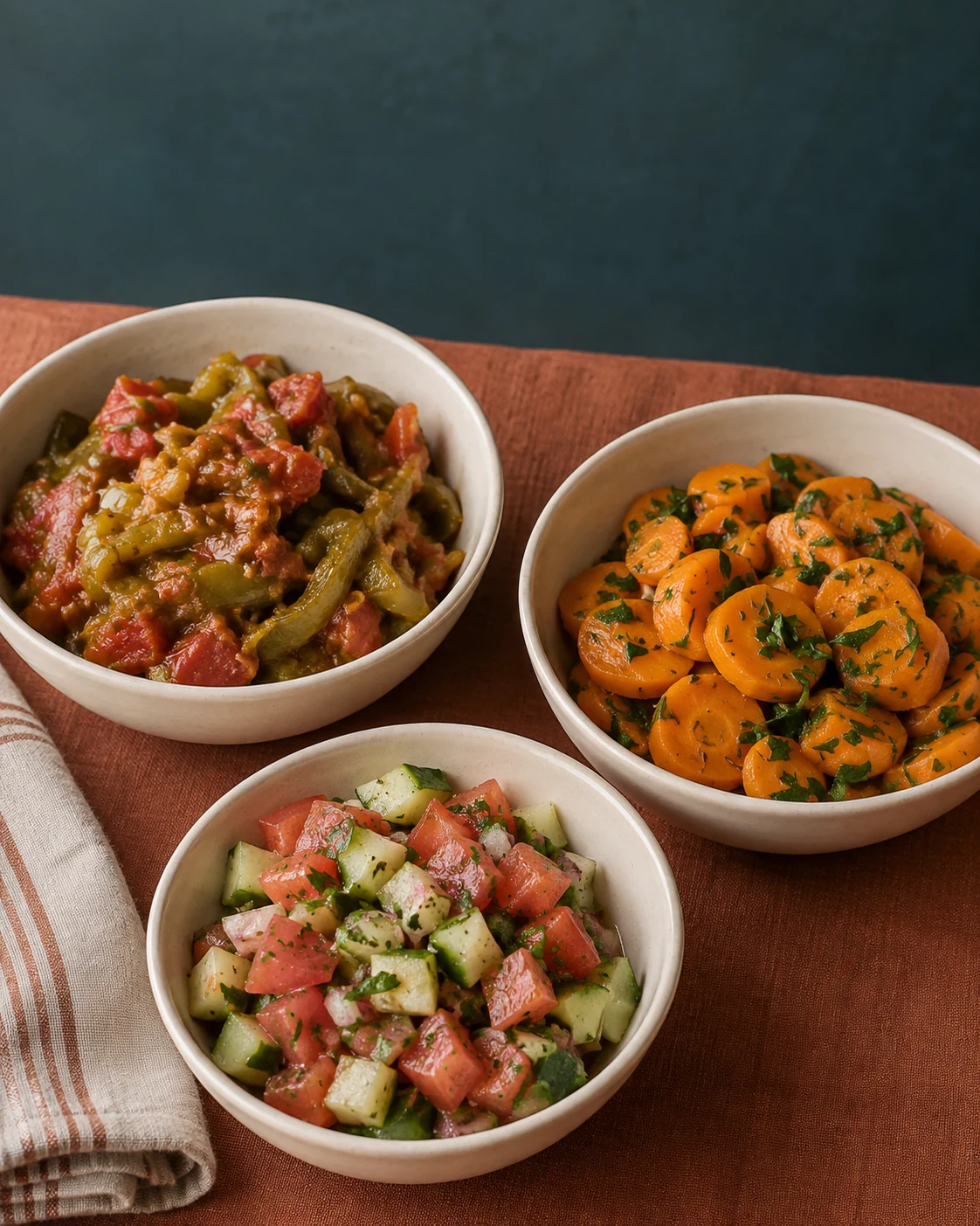
Moroccan Salads
Fresh, cooked and preserved flavours served in small dishes.
Explore the story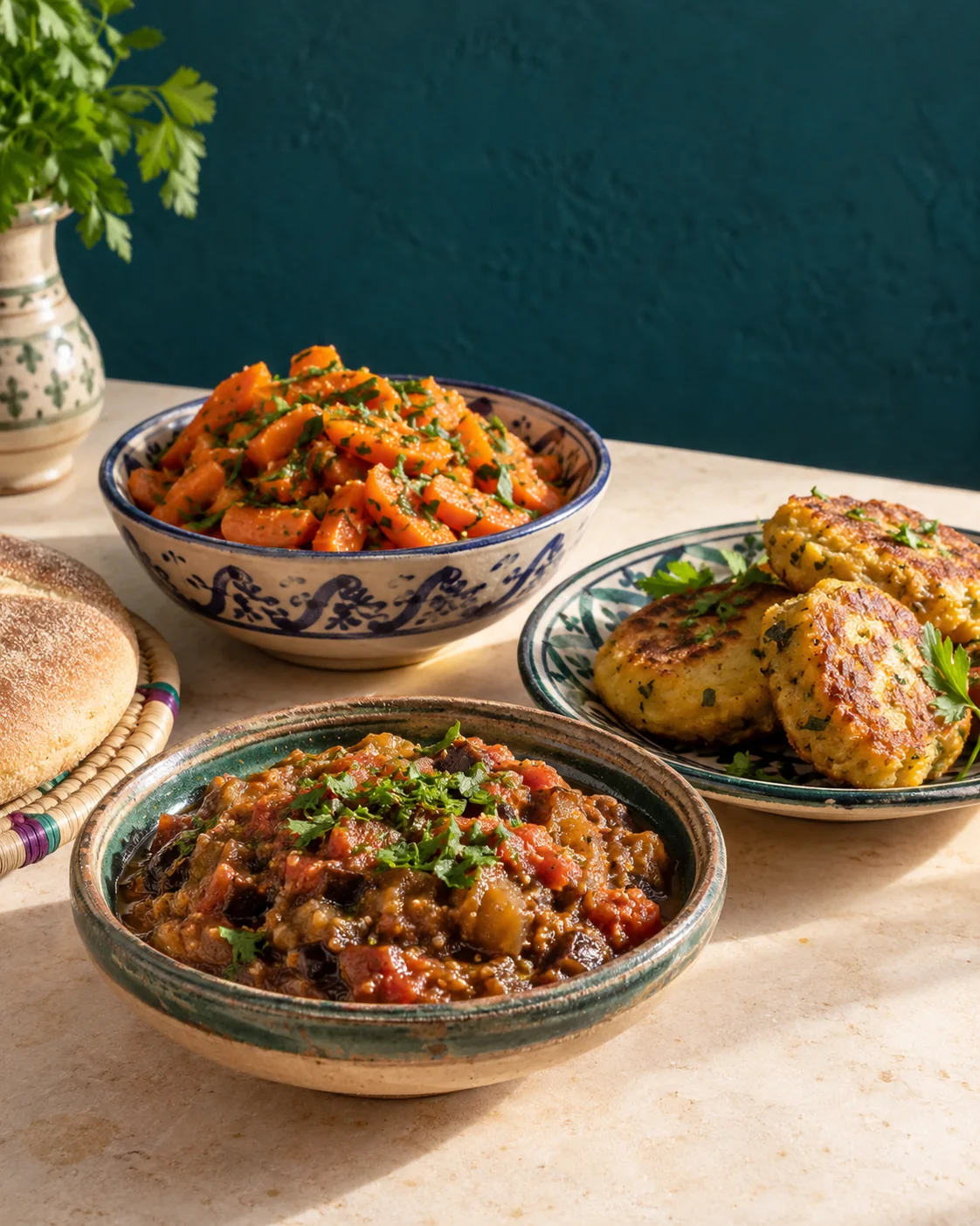
Salads & Sides
Vegetables, pulses and bright accompaniments.
Explore the story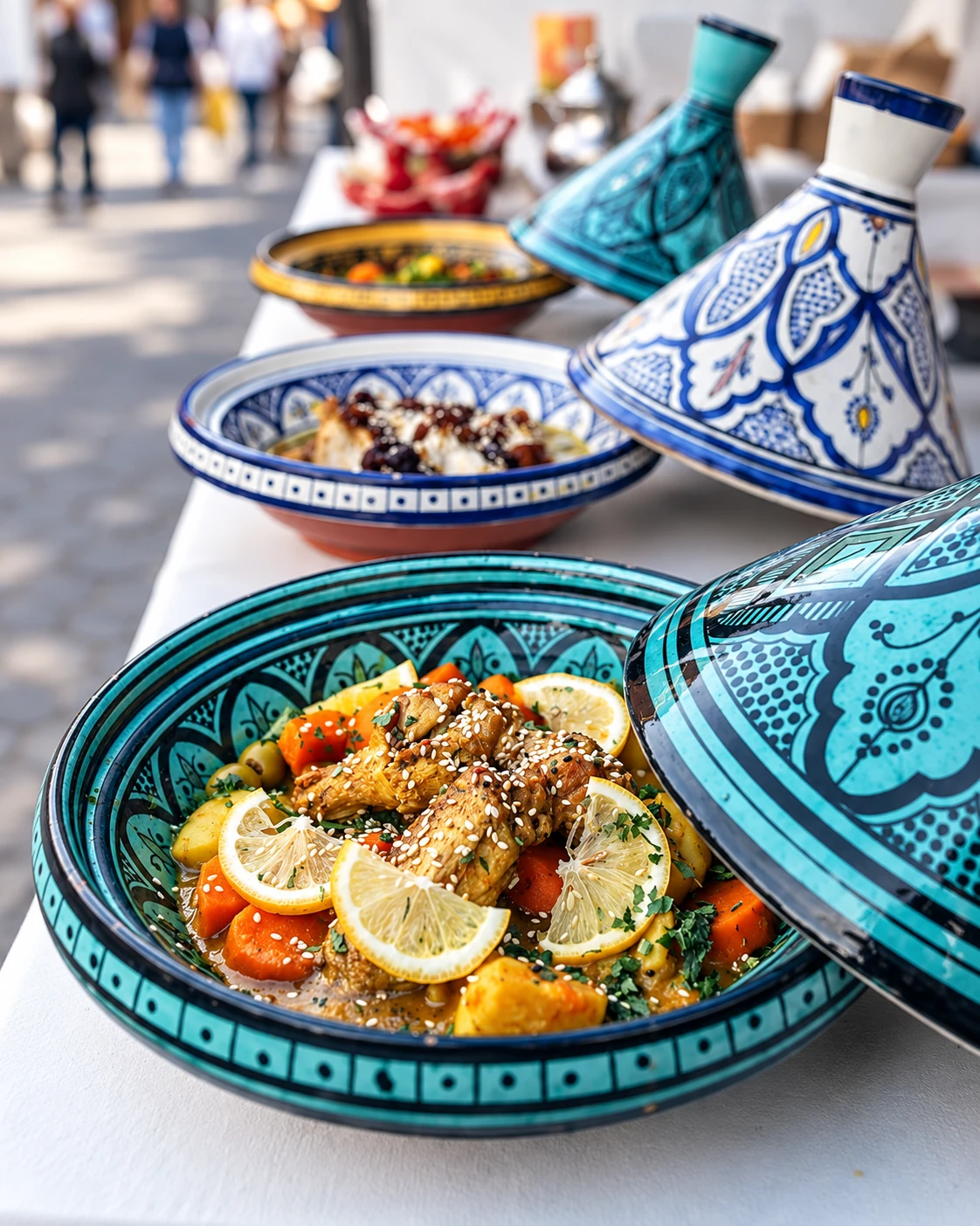
Tagine
Gentle heat, clay pots and the balance of a slow-cooked sauce.
Explore the story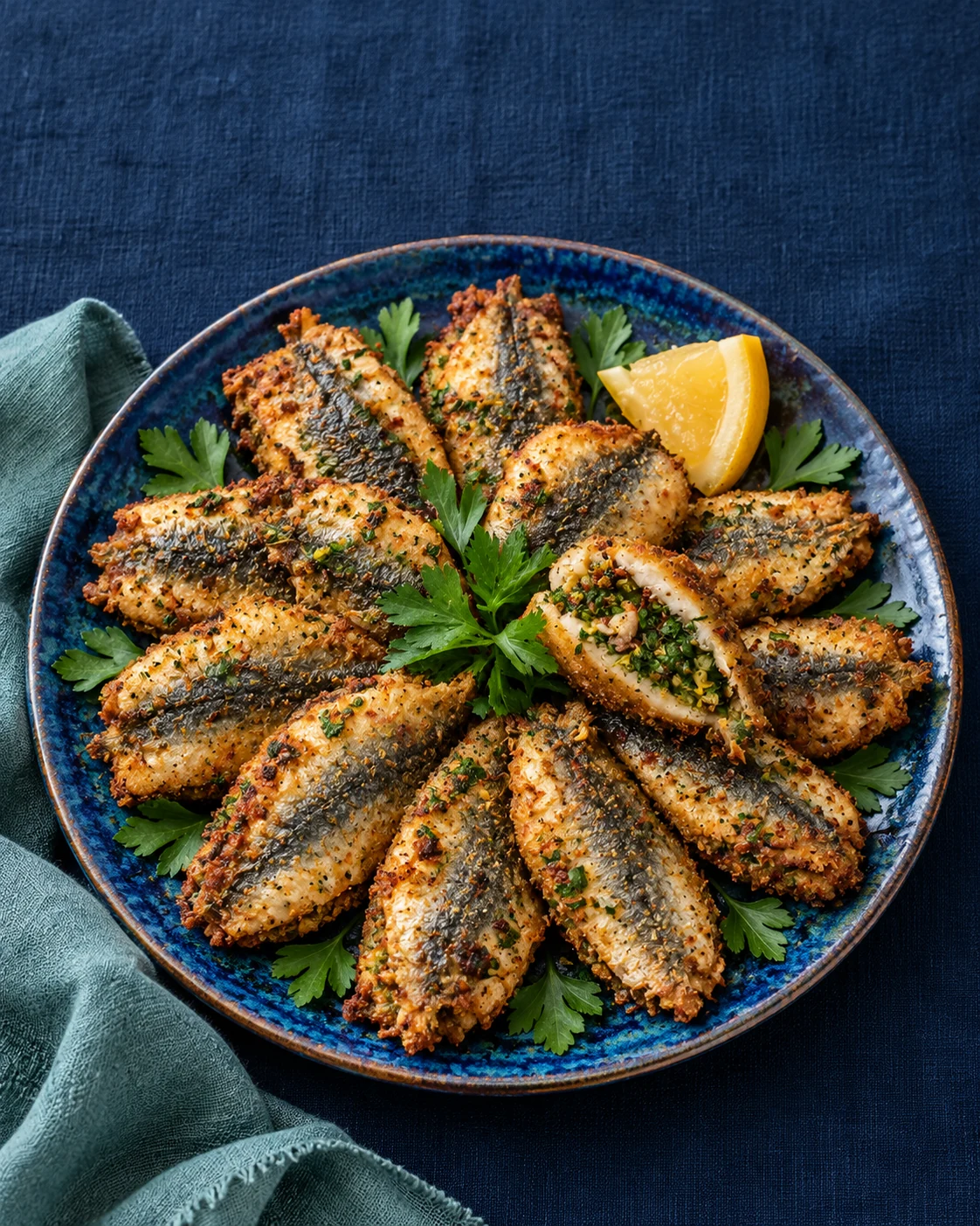
Sardines with Chermoula
Small fish, fragrant herbs and the details of preparation.
Explore the story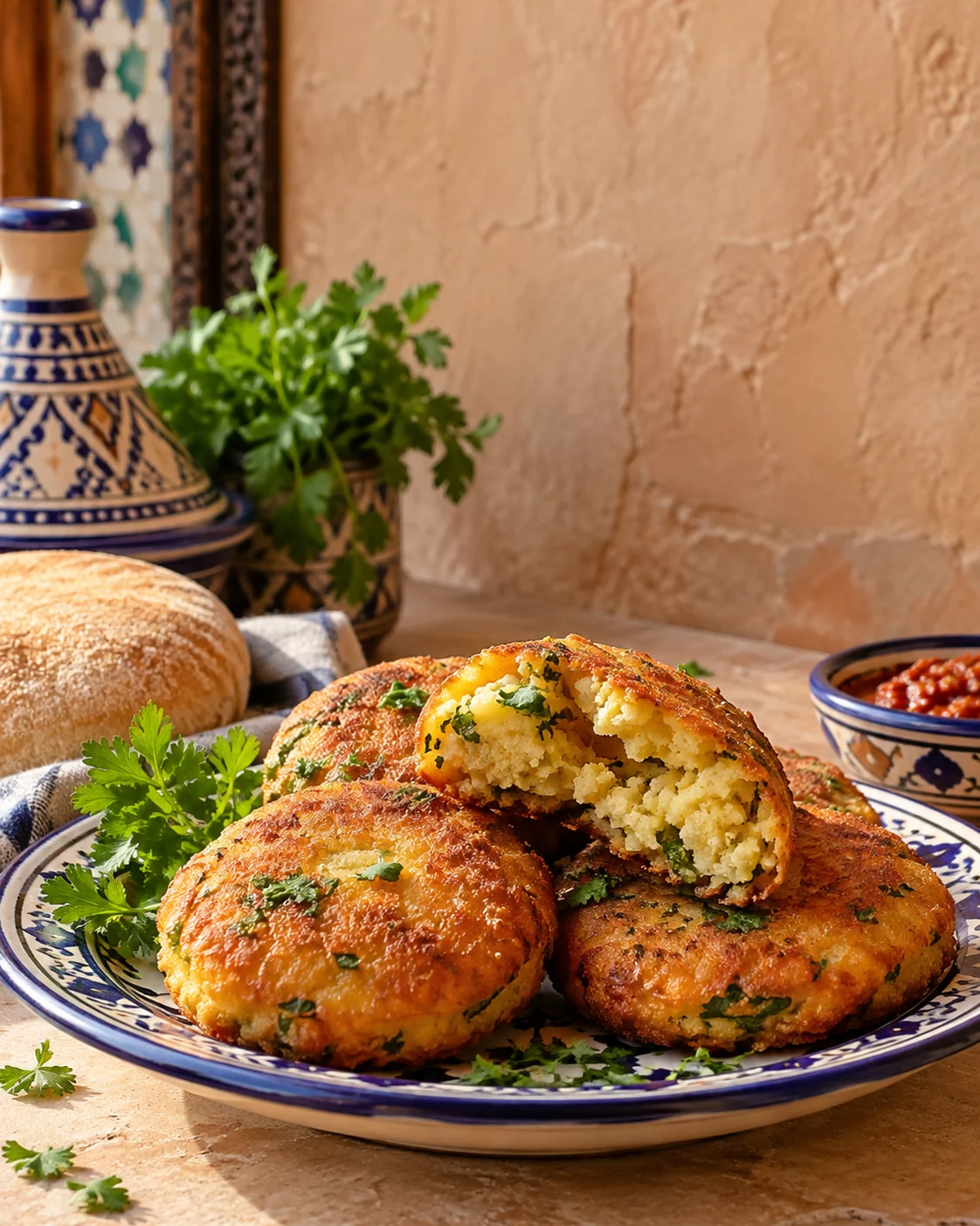
Maakouda
Potato patties, crisp edges and the rhythm of the street counter.
Explore the storySources & editorial notes
Photography combines existing Exotic Morocco assets and generated editorial illustrations. These images do not document a named person, household or historical event.
- Nargisse Benkabbou · My Moroccan Food — Taktouka — green peppers, tomatoes, garlic, olive oil, roasting, reduction, serving warm or cold and eating with bread.
- Amanda Mouttaki · MarocMama — Taktouka, Green Pepper and Tomato Salad — cooked-salad context, roasted peppers, tomato reduction and service as an accompaniment.
- Moroccan National Tourist Office · Food & Drinks — Moroccan starters, raw and cooked vegetable salads, pepper-and-tomato “Tektouta” and bread as a staple.
- 196 Flavors · Taktouka — roasted pepper and tomato salad, serving temperature and use as a side dish; used comparatively, not to establish a unique origin.
- Moroccan National Tourist Office · Gastronomy — souks, spice sellers, sharing and the wider context of Moroccan food culture.
EXOTIC MOROCCO Places. People. The pleasure of knowing more.Back to top ↑