
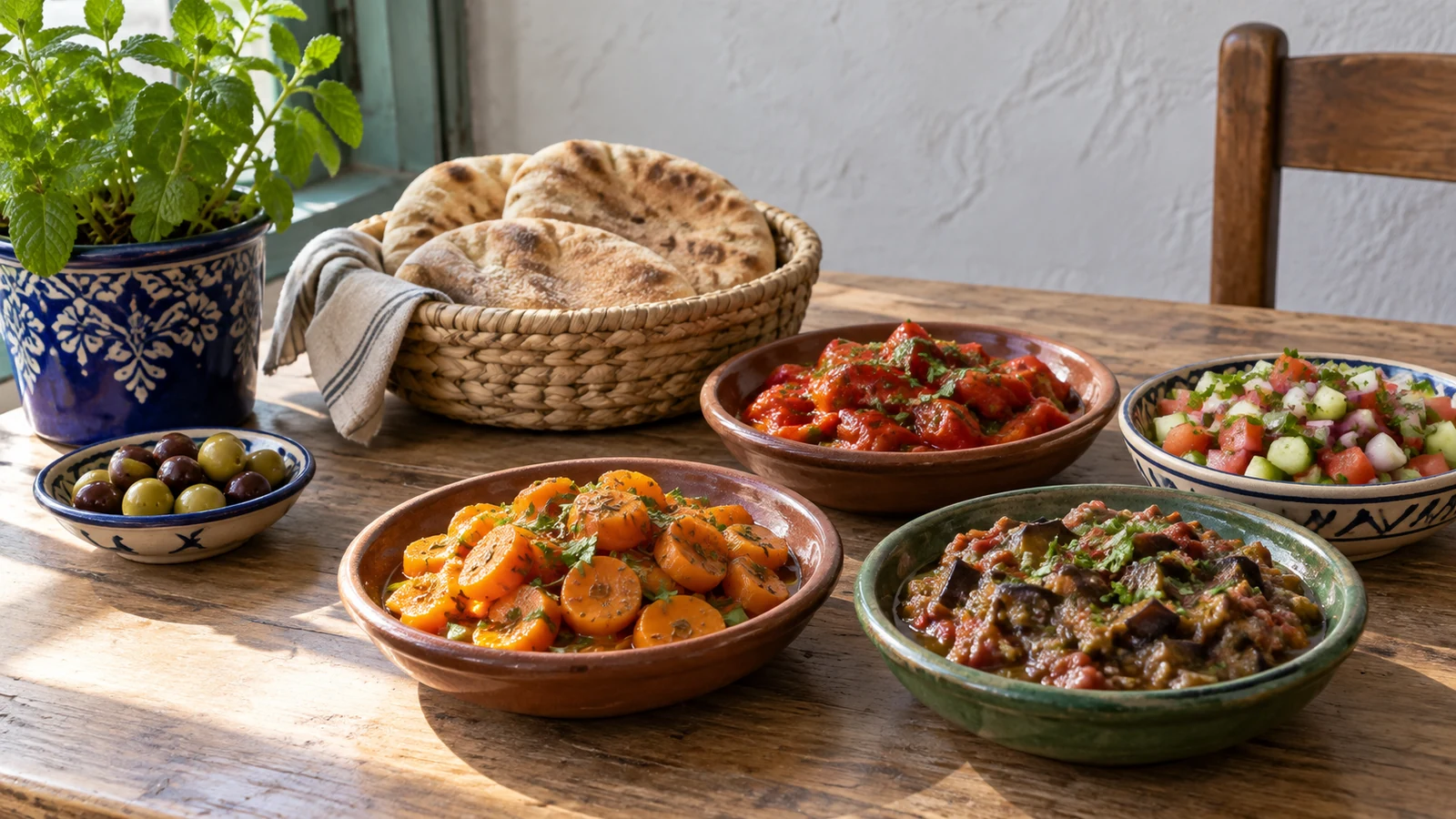
01 · The Moroccan salad table
Not one salad.
A table of
vegetables.
In Morocco, “salad” can be fresh and crisp, cooked until concentrated, or served somewhere between warm and cool.
A Moroccan salad spread is better understood as a family of small vegetable dishes than as a single leafy course. The Moroccan National Tourist Office describes starters that include both raw and cooked vegetable salads, alongside preparations such as taktouka and zaalouk. [1]
What connects them is not one recipe but attention to the vegetable: dice it cleanly, char it, simmer away excess moisture, season it while it can absorb flavour, or keep it fresh enough to bring contrast beside richer food.
This page looks at that logic—temperature, texture, acidity, herbs, olive oil, market produce and bread—without pretending that every household serves the same set.
Return to Taste Morocco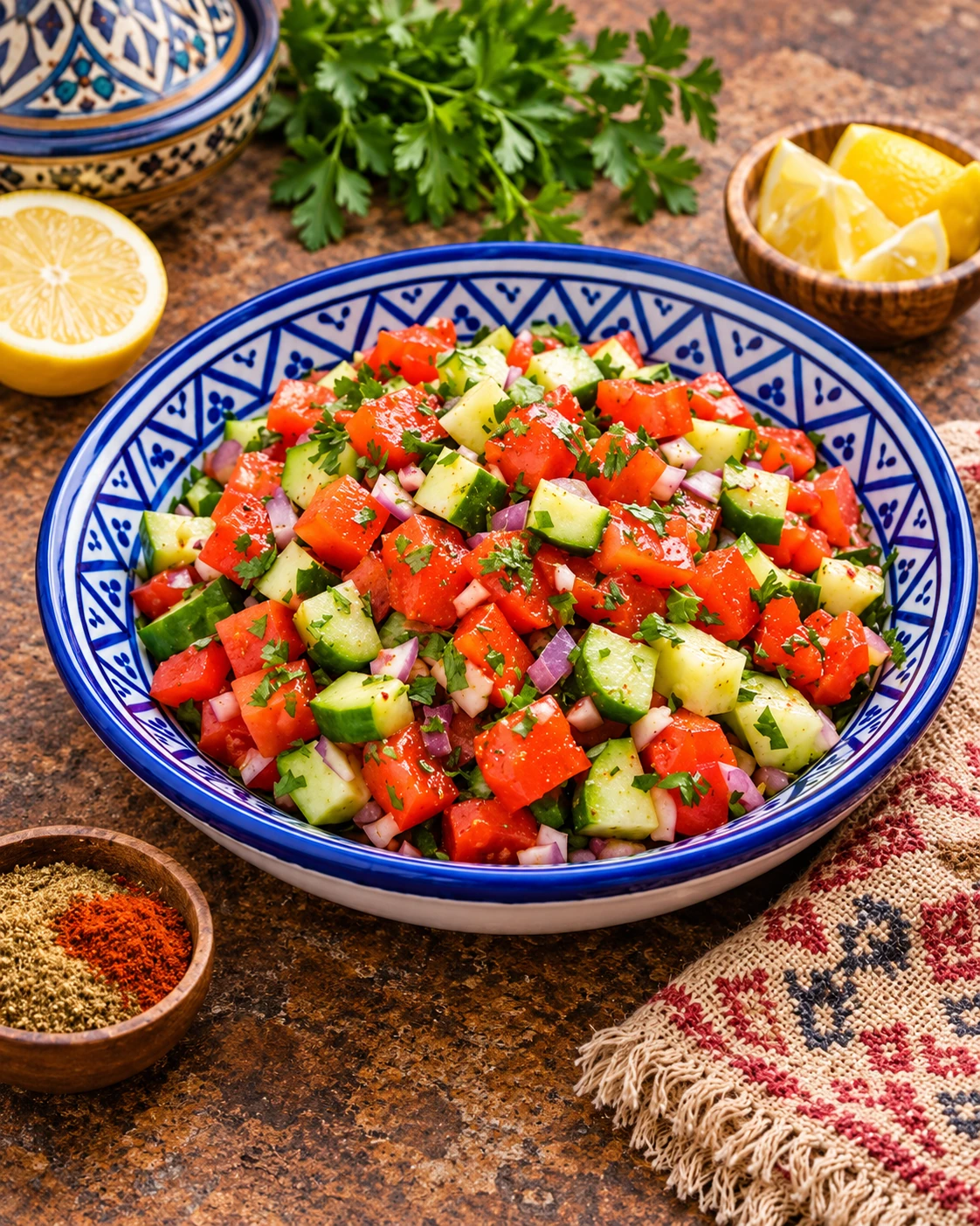
Fresh chopped salads sit beside softened vegetables and purées.
The exact seasoning changes with the dish and the cook.
Bread often turns them into something scooped, spread and passed around.
02 · Roots & living practice
Many vegetables, many kitchen habits.
The category is broad because the table is broad.
Zaalouk, taktouka, carrots, chopped tomato and cucumber, and cooked greens each have their own preparation methods. The repertoire grows as cooks adjust to the vegetables available and the meal they are serving.[4]
Cooked does not mean heavy
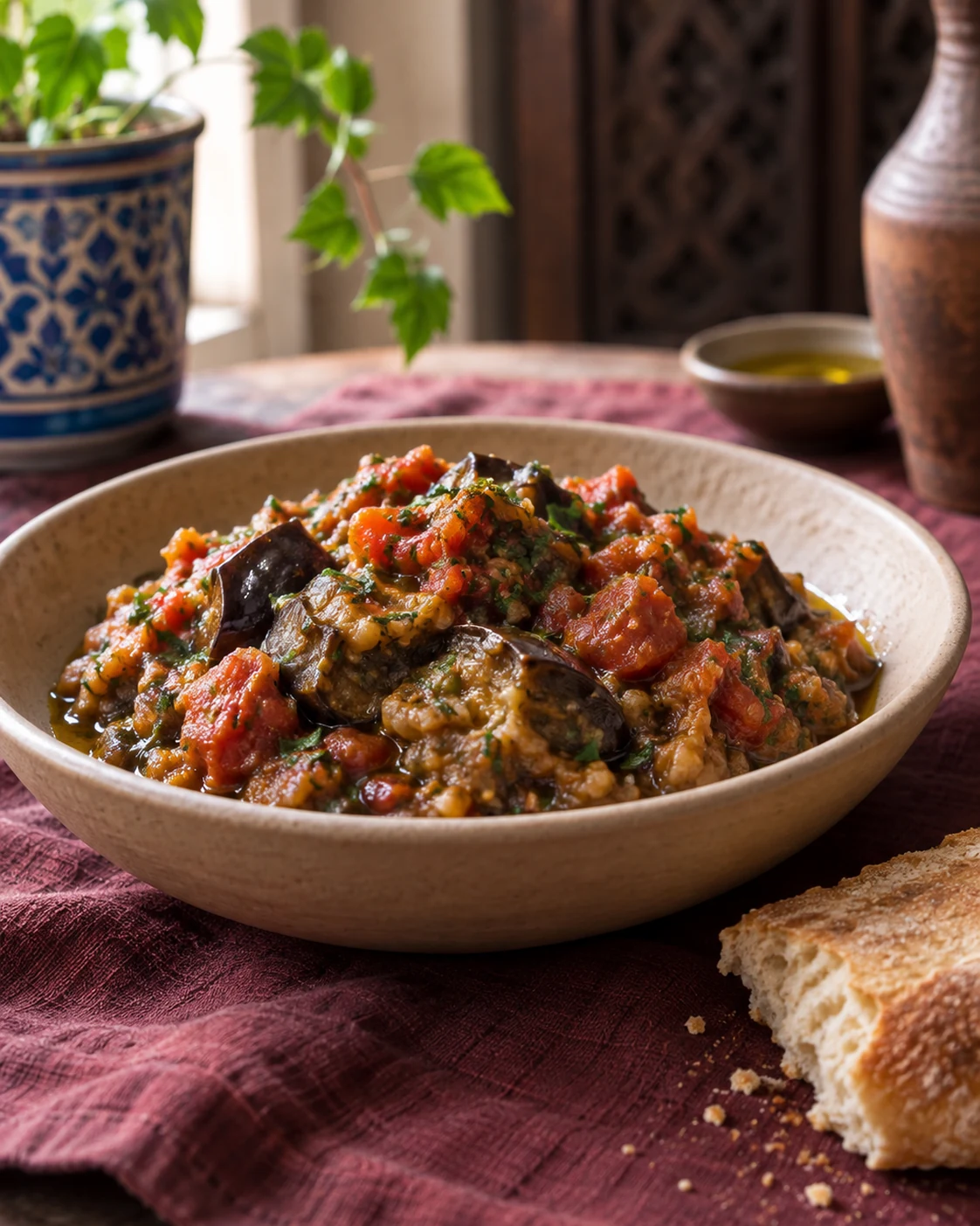
Zaalouk reduces aubergine and tomato into a spoonable salad that may be served warm, at room temperature or cold. Texture and ratio vary. [4]
Fresh can be highly structured
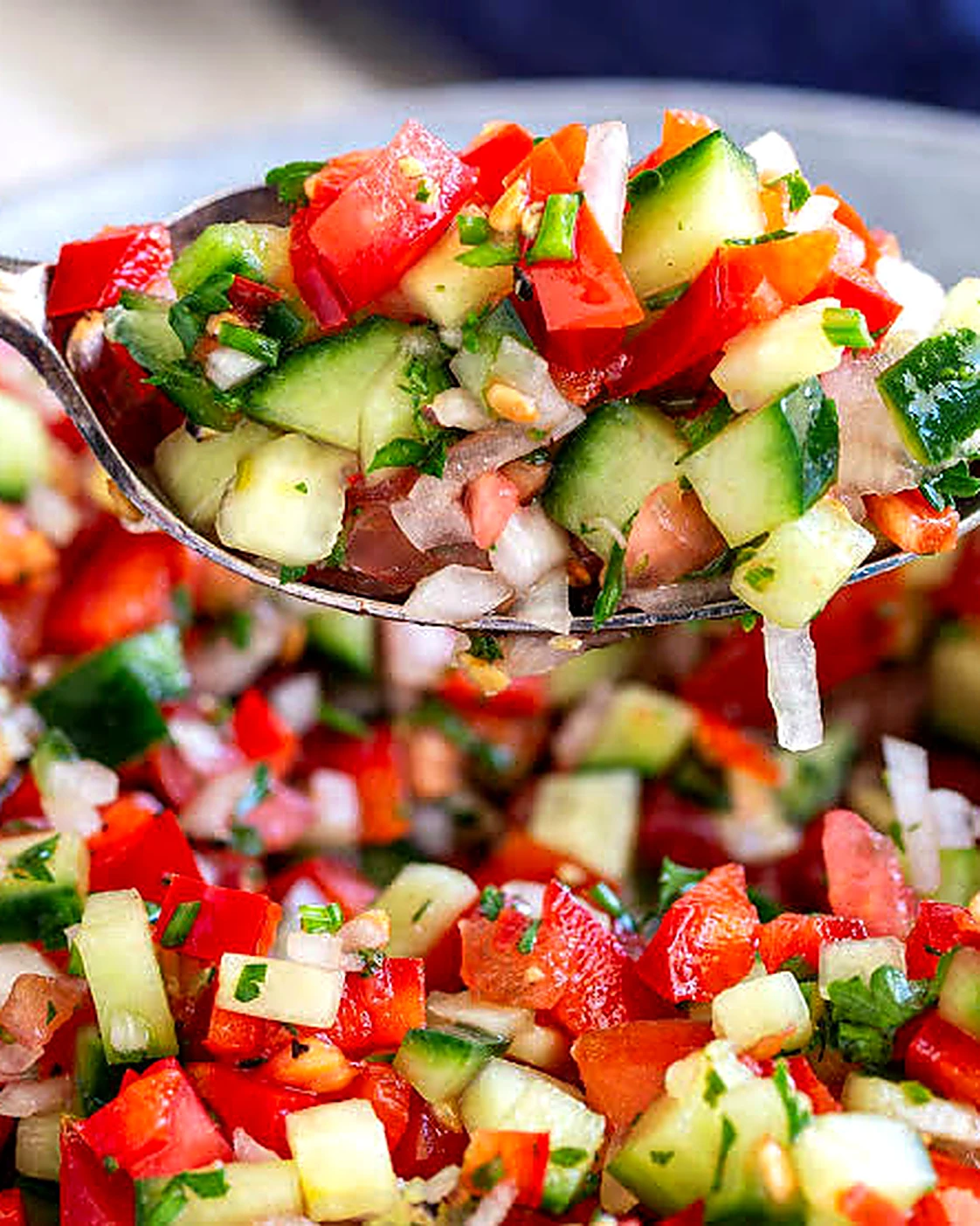
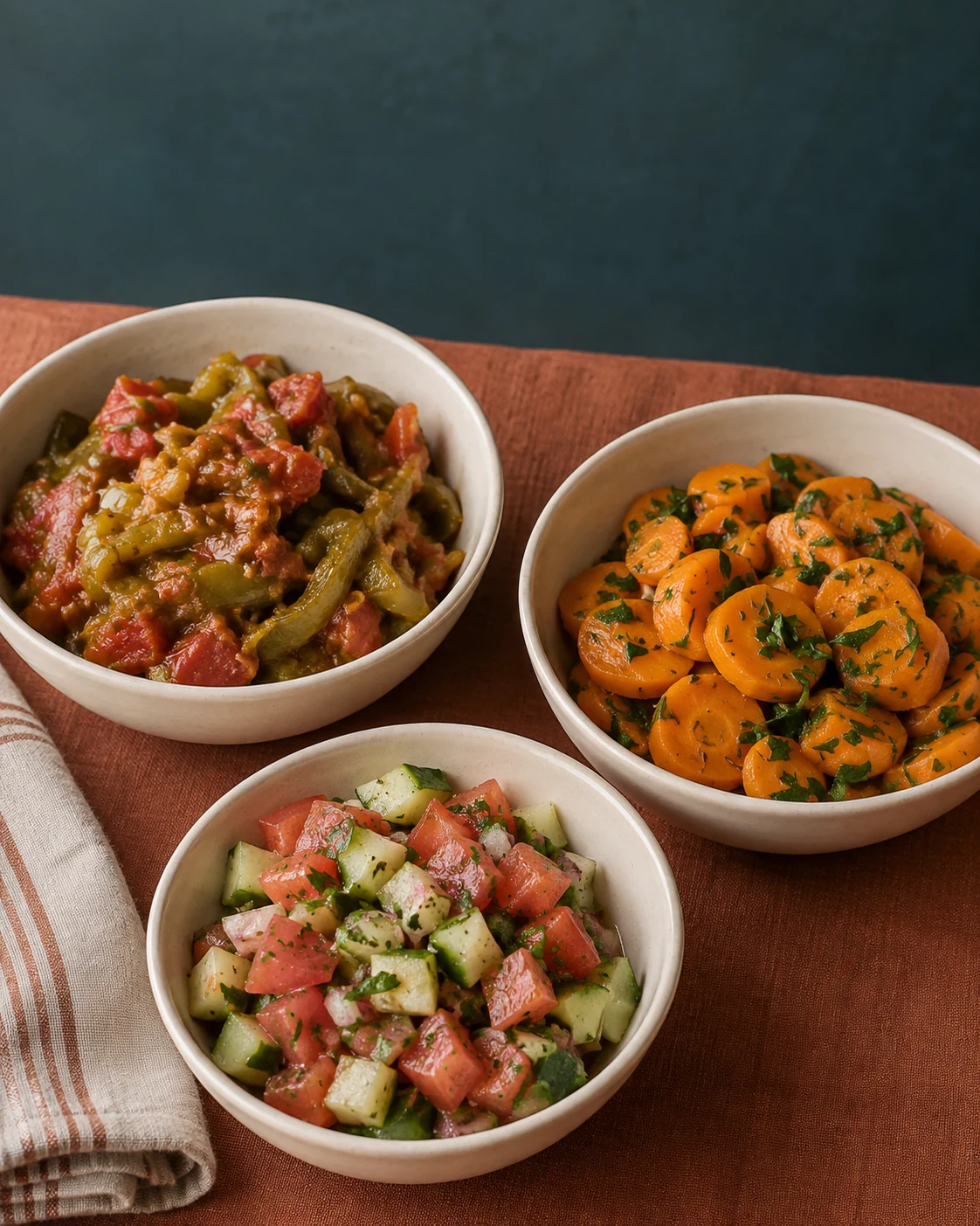
Tomato and cucumber salad depends on even cutting, restrained dressing and the freshness of the vegetables rather than a long ingredient list. [2]
Names travel with families
Recipes change with taste, produce and equipment. Treat regional or family versions as variations, not as a national rule.
03 · Technique before decoration
Cut. Season. Reduce.
Read the vegetable.
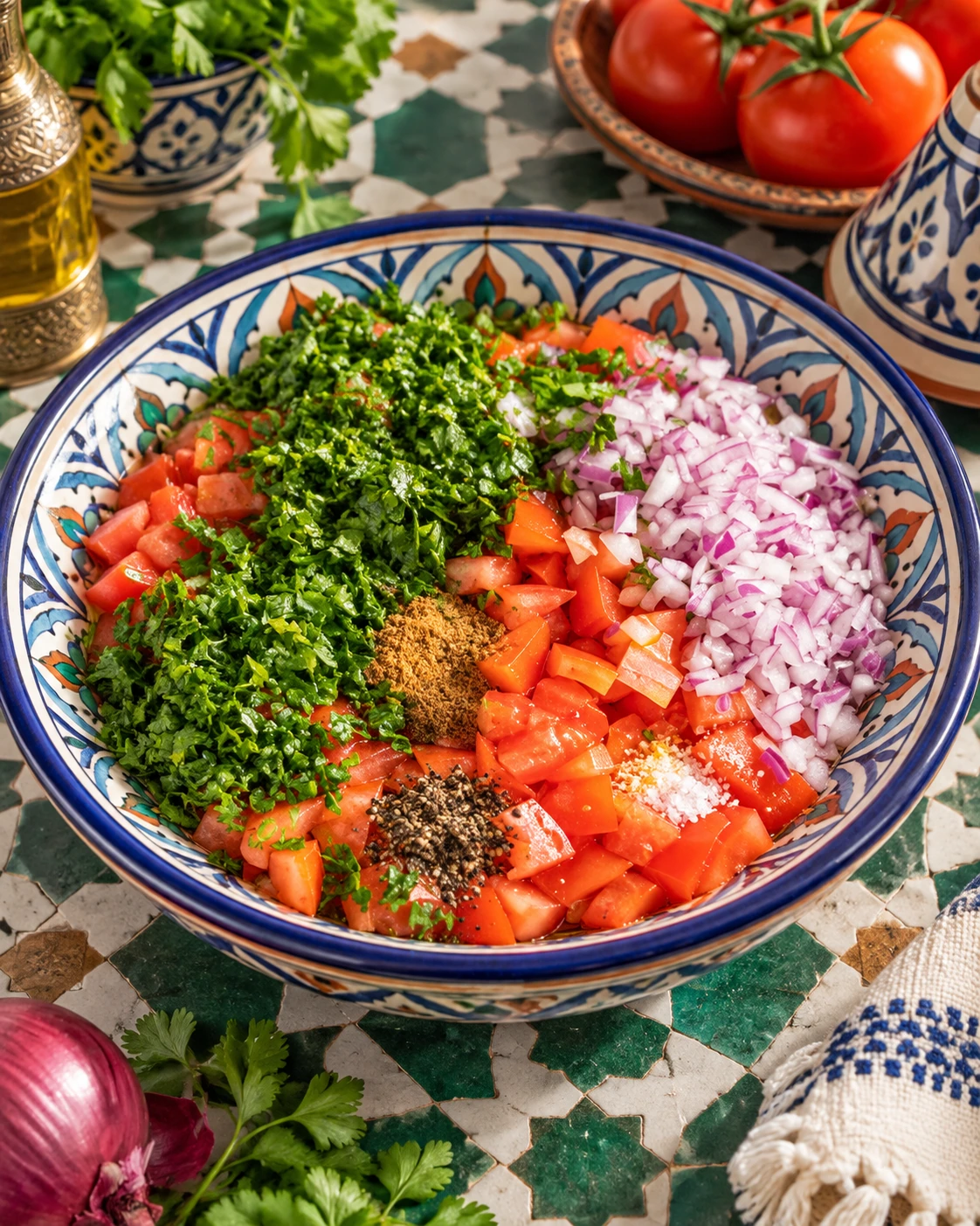
Moroccan salad technique changes with the vegetable. A fresh chopped salad needs clean, even cutting and restrained dressing; a cooked salad needs heat and moisture control.
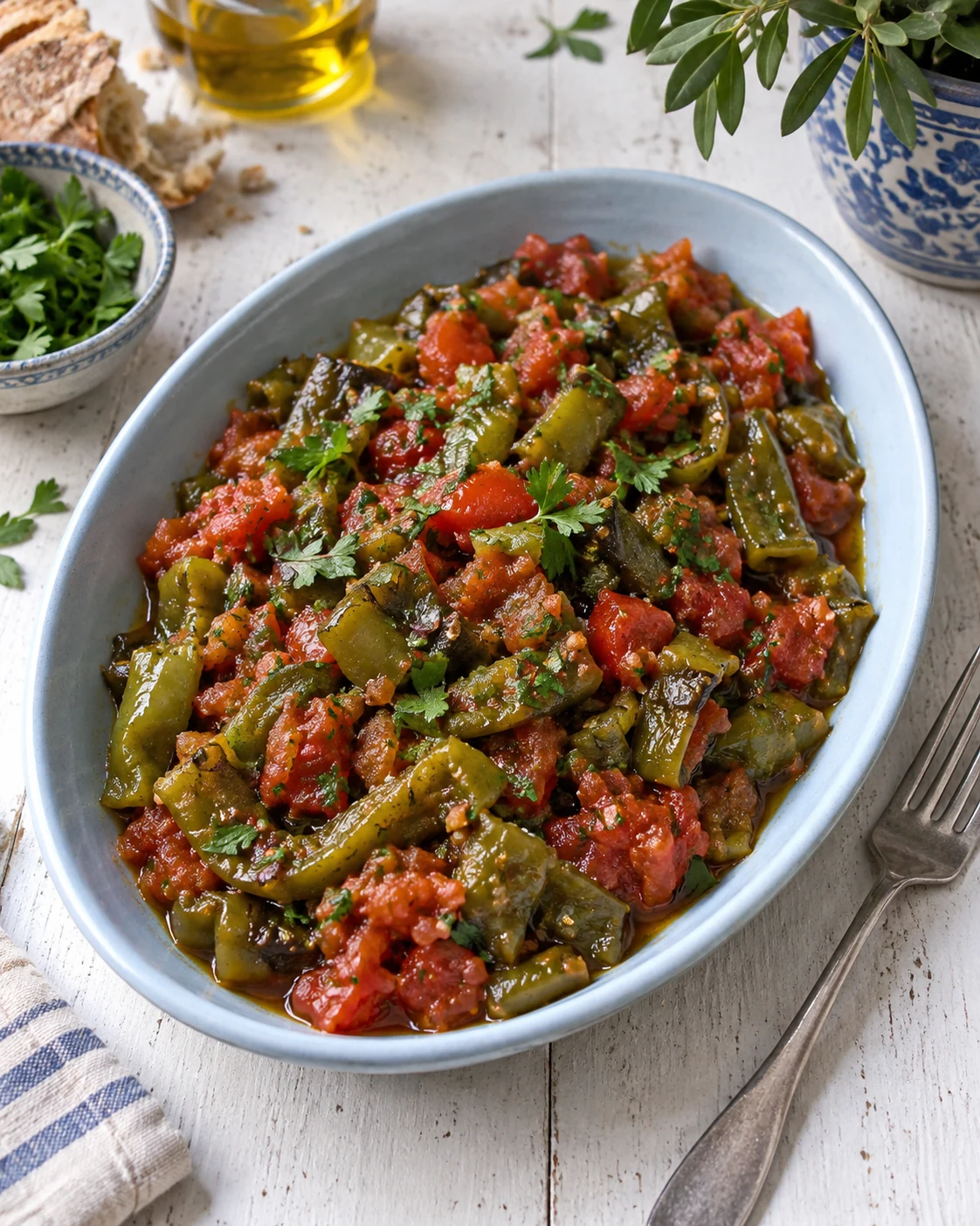
Tomato-and-cucumber salad depends on a fine cut and measured dressing, while taktouka adds another sequence: peppers are commonly charred or grilled, peeled and then combined with a cooked tomato base. [2] [3]
Control moisture
Cooked salads become muddy when vegetables are left in too much water. Reduction concentrates tomato, aubergine or pepper without turning every preparation into the same purée.
Cut for the result
A fine, even dice gives a fresh tomato-and-cucumber salad a coherent texture. Larger, rougher cuts create a different bite and release liquid differently.
Season in layers
Salt, cumin, paprika, parsley, coriander, lemon or vinegar and olive oil may appear, but not as one compulsory formula. Seasoning follows the vegetable and the preparation.
Some cooked salads are excellent warm; others settle into themselves at room temperature or after cooling. “Salad” does not automatically mean refrigerator-cold. [4]
Good Moroccan salad technique makes the vegetable more legible, not less.
04 · Four useful reference points
Different vegetables.
Different logic.
These four dishes show why “Moroccan salad” is a category rather than a single recipe. They differ in heat, texture, cut and serving temperature.
They are reference points, not a complete national catalogue.
Zaalouk
Aubergine and tomato are cooked with garlic, herbs and spices until the mixture is soft and concentrated. Families differ on texture and the balance between aubergine and tomato. [4]
Taktouka
Green peppers, tomatoes, garlic and olive oil form the core of many versions. Charring the peppers adds another layer before the mixture is cooked down. [3]
Carrots, seasoned after cooking
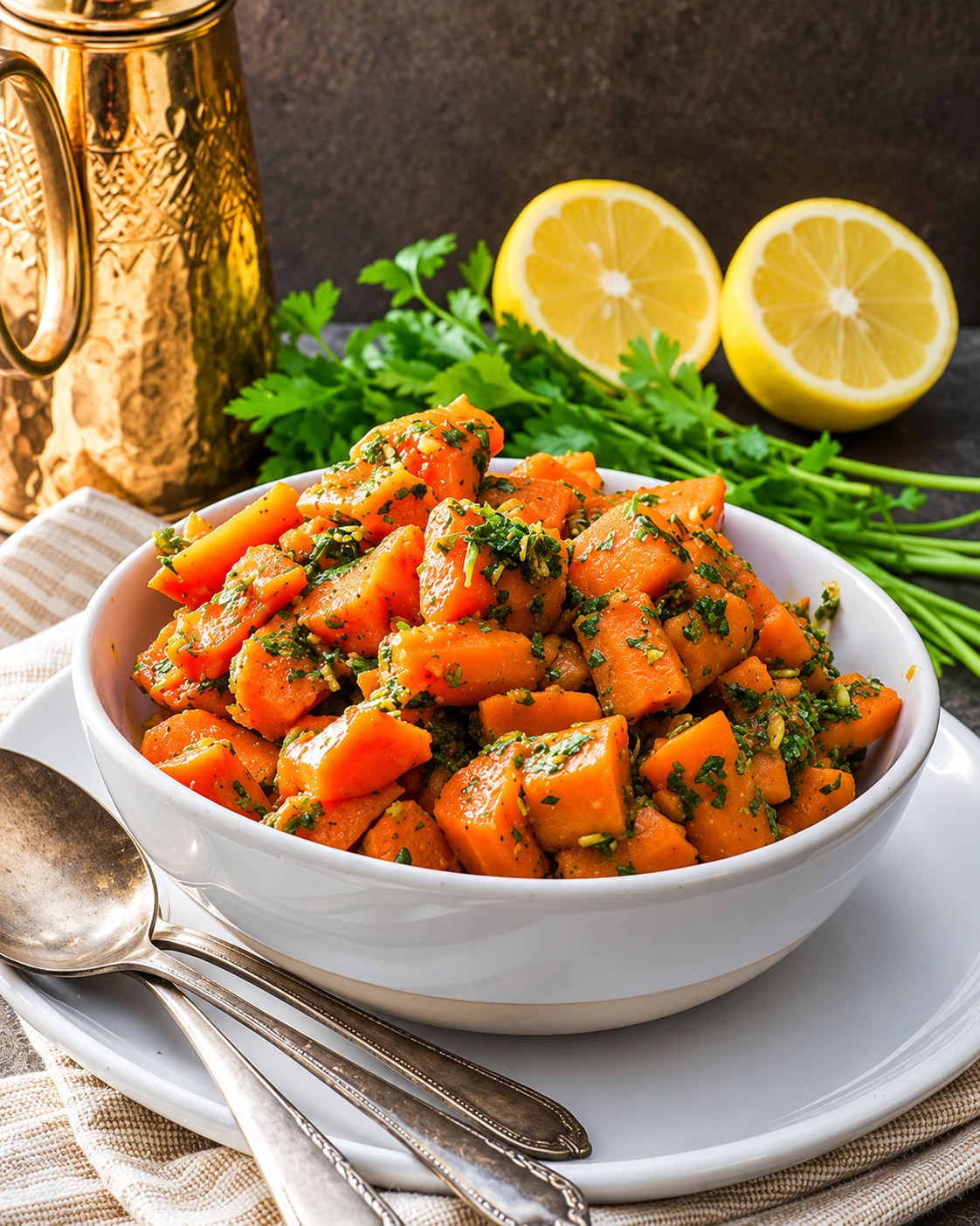
Cooked carrots can be dressed with herbs, cumin, paprika, acid and olive oil, then served warm or cool. The method is simple; the balance of softness and brightness is the point. [5]
Tomato & cucumber
A fresh counterpoint: tomato and cucumber cut small, often with onion, parsley, lemon and olive oil. It belongs naturally beside grilled food and tagines. [2]
Cooked greens belong here too.
Bakoula is associated with cooked greens and is traditionally linked to mallow; substitutions such as spinach appear when mallow is difficult to find. That is exactly why ingredient substitutions should be named rather than presented as the original. [6]
Family version is not “wrong”.
One household may mash zaalouk more thoroughly; another keeps more pieces. One cook pushes cumin forward; another prefers more herbs or acid. The page records patterns without flattening those differences.
05 · The language of ingredients
Freshness first.
Seasoning second.
The salad table makes ordinary produce highly visible. Overripe tomato, watery cucumber or tired herbs cannot hide behind a long sauce.
Spices matter, but they work best when they clarify the vegetable rather than turn every bowl into the same flavour.
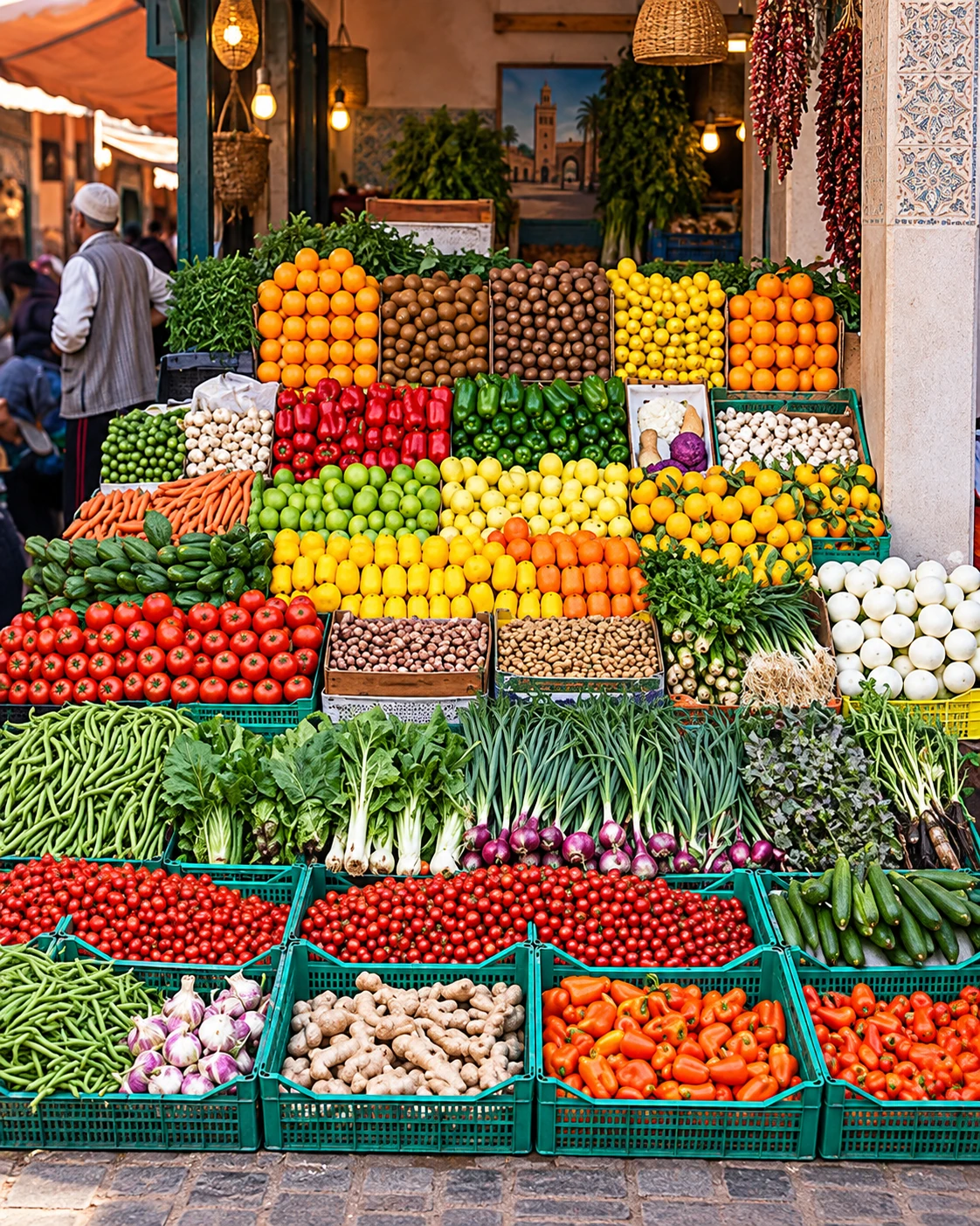
Tomatoes
Acid, sweetness, moisture.
They can stay raw and juicy or be cooked until their water reduces and their flavour concentrates.
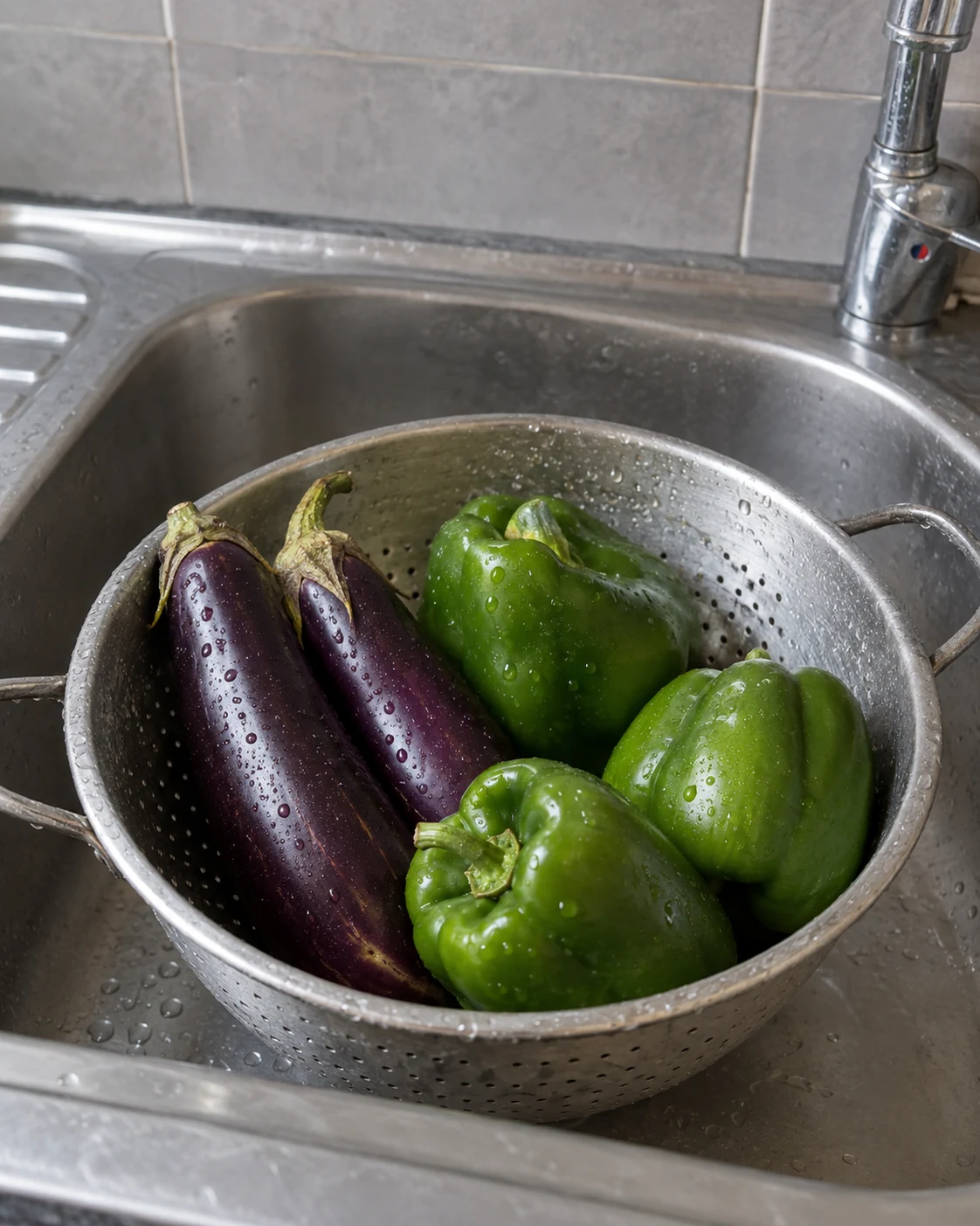
Aubergines & peppers
Char, soften, concentrate.
Aubergines give zaalouk body; peppers define taktouka. Their treatment changes the final texture as much as the spice does.
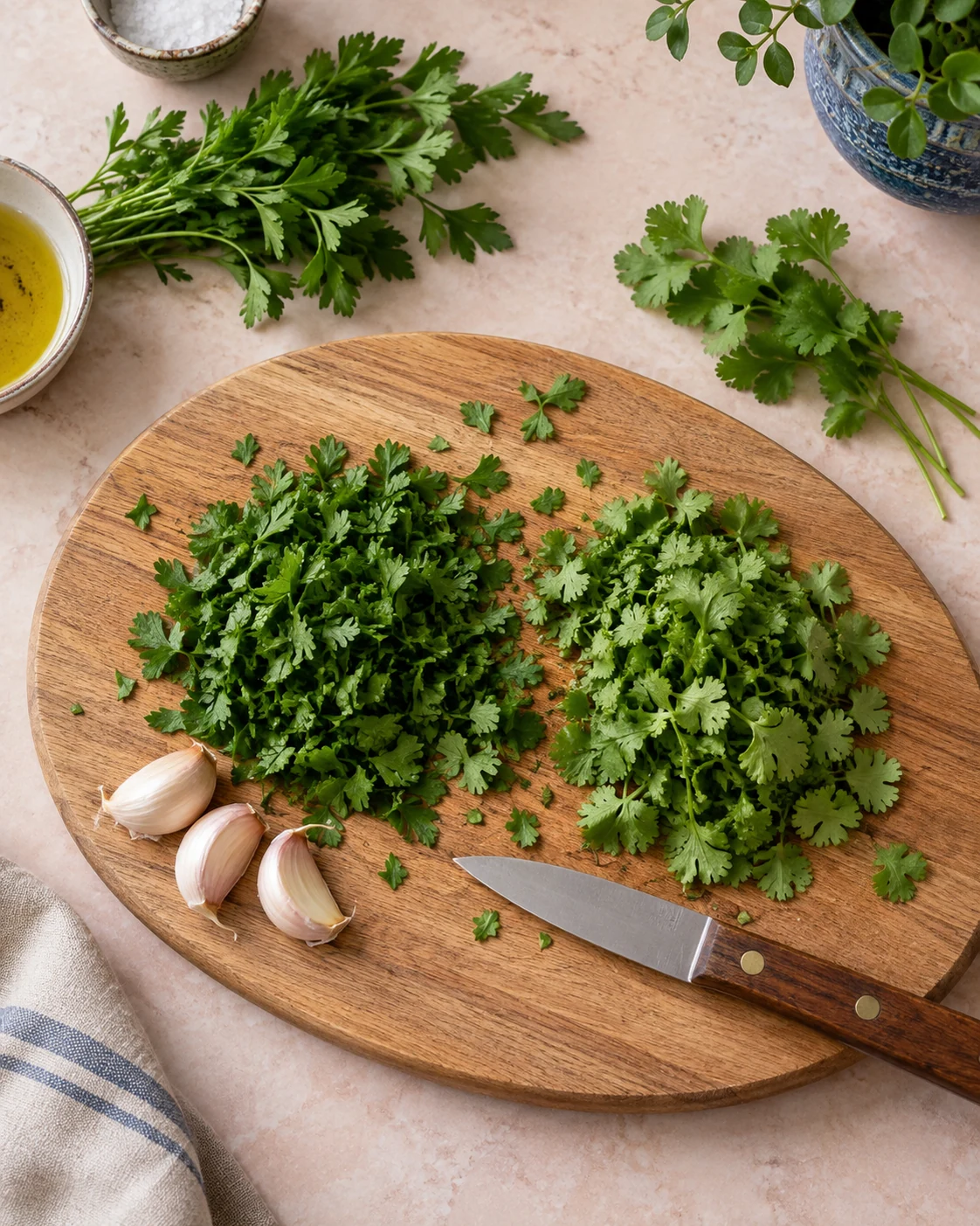
Herbs & aromatics
Freshness beside warmth.
Parsley and coriander are common in savoury salad preparations; garlic and dry spices often join them in cooked salads. [3] [4]
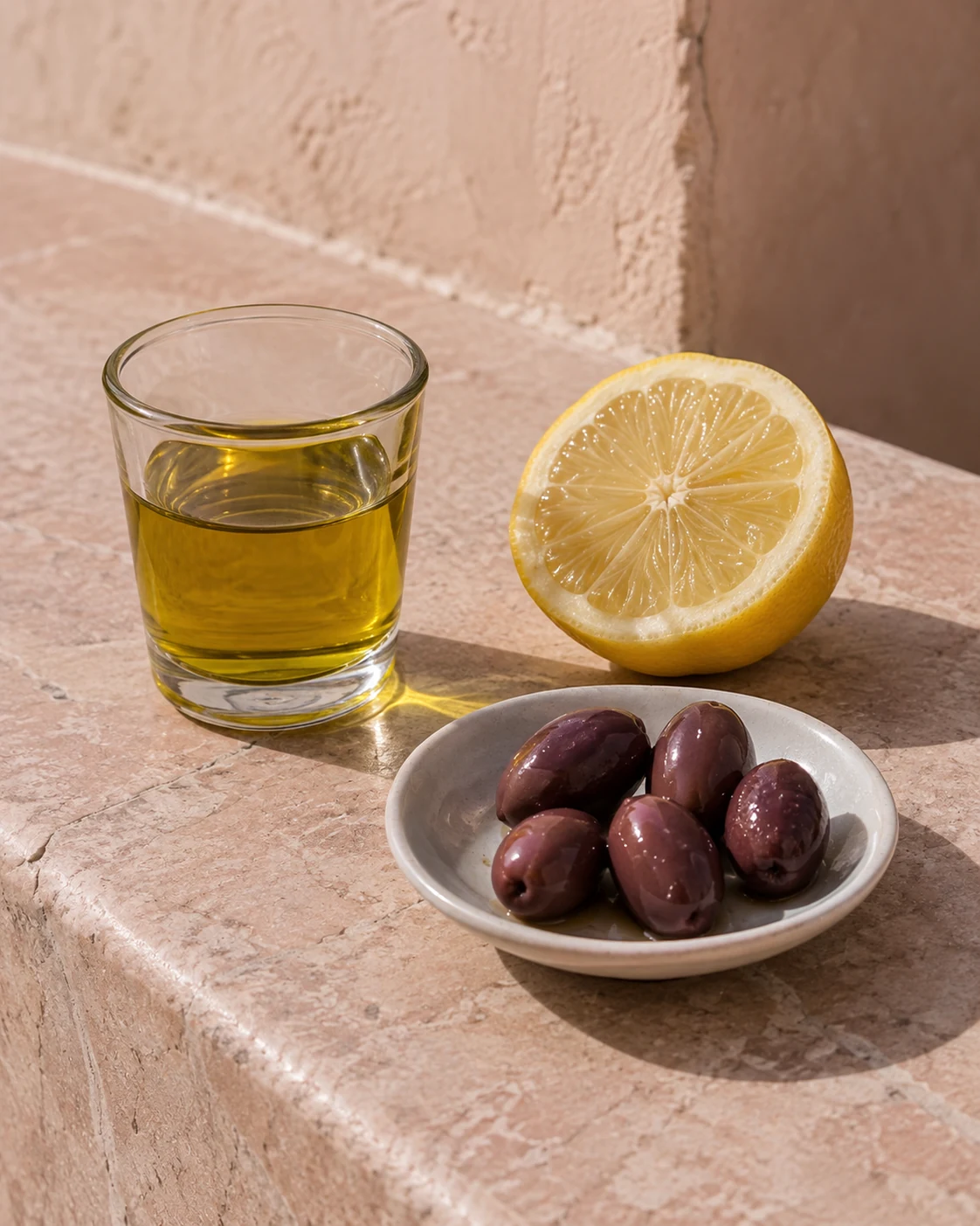
Oil, acid & briny notes
Balance at the finish.
Olive oil carries flavour; lemon or vinegar sharpens it; olives can add salt and bitterness when the particular salad calls for them.
On smaller screens, swipe the ingredient row.
SALT · ACID · OIL
Balance
without masking.
The dressing should make the vegetable clearer, not turn every bowl into the same flavour.
Fresh salads need restraint because tomato, cucumber and herbs release their own water. Cooked salads can absorb seasoning more deeply, especially while still warm.
Taste the vegetable first. Then decide what it needs.
Salt changes water.
Salt can sharpen flavour but it also draws moisture from fresh vegetables. Timing matters when crispness and a clean dice are part of the dish.
Acid changes perception.
Lemon or vinegar can brighten cooked vegetables and make oil feel lighter. The useful amount depends on the salad rather than a national formula.
Oil carries aroma.
Olive oil rounds spices, herbs and garlic, but excess oil can blur the distinction between a fresh salad and a cooked, spoonable preparation.

06 · Market, season & household
The market
sets the possibilities.
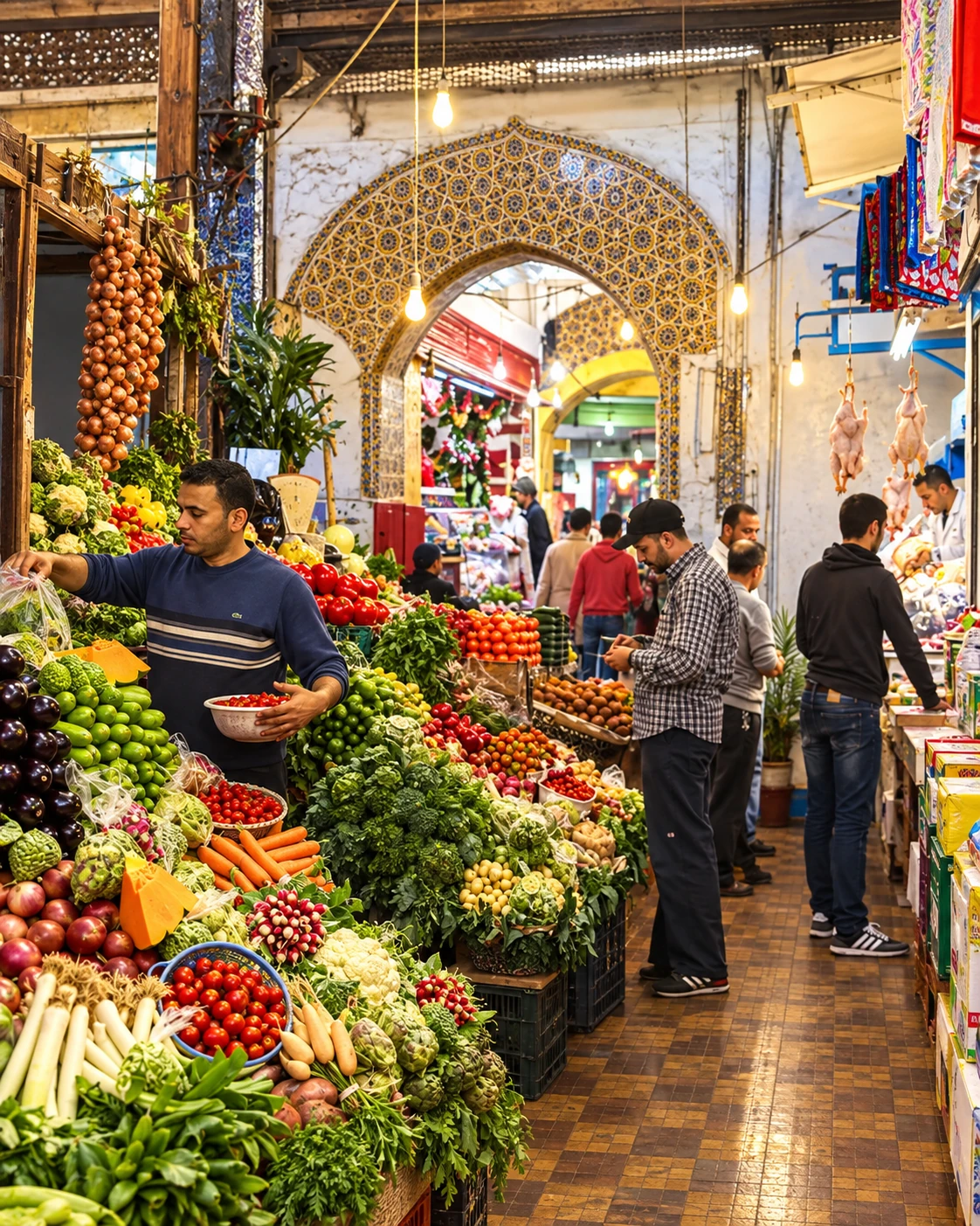
Good salad begins before the knife: with what is ripe, firm, fragrant and worth buying.
Moroccan salad practice is flexible because household cooking responds to availability. Tomatoes, peppers, aubergines, carrots, herbs and greens do not all peak at the same moment, and cooks adapt to what they find.
That does not make every market dish “regional.” Geography matters, but so do season, budget, family taste and the meal being served.
Buy for the salad you are making
A fresh chopped salad rewards firm, fragrant produce. A cooked salad can use riper vegetables, but water content still changes the final reduction.
Season changes the repertoire
The useful question is what is good now: tomatoes, peppers, aubergines, carrots, herbs or greens. Household cooking adapts without pretending every variation belongs to a fixed region.
The meal changes the choice
A crisp salad can bring freshness beside grilled or braised food; a cooked vegetable salad can add depth. The surrounding meal matters as much as the label.
Discover more of Taste Morocco ↗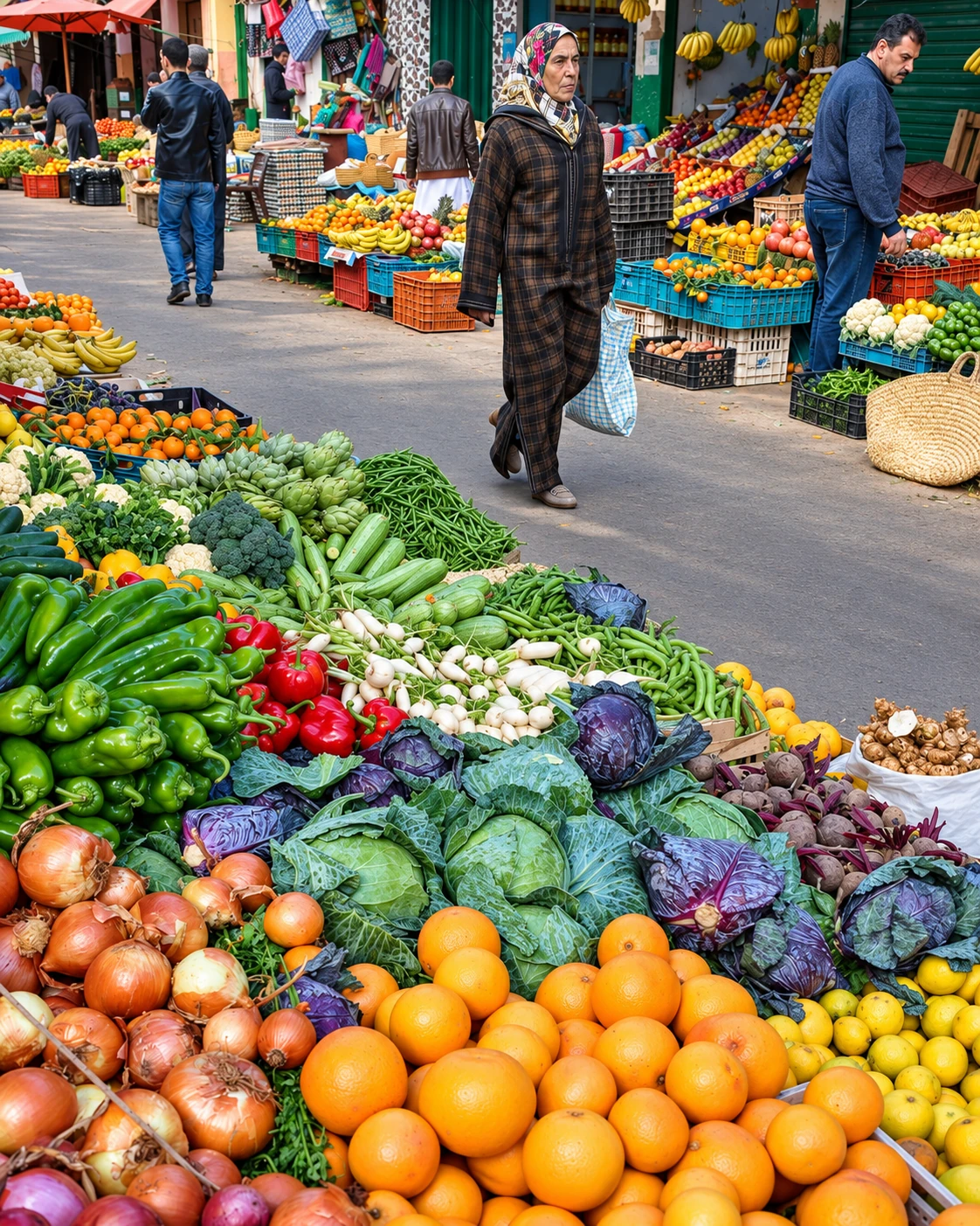
07 · Bread, small dishes & the shared table
Bread completes
the small-dish table.
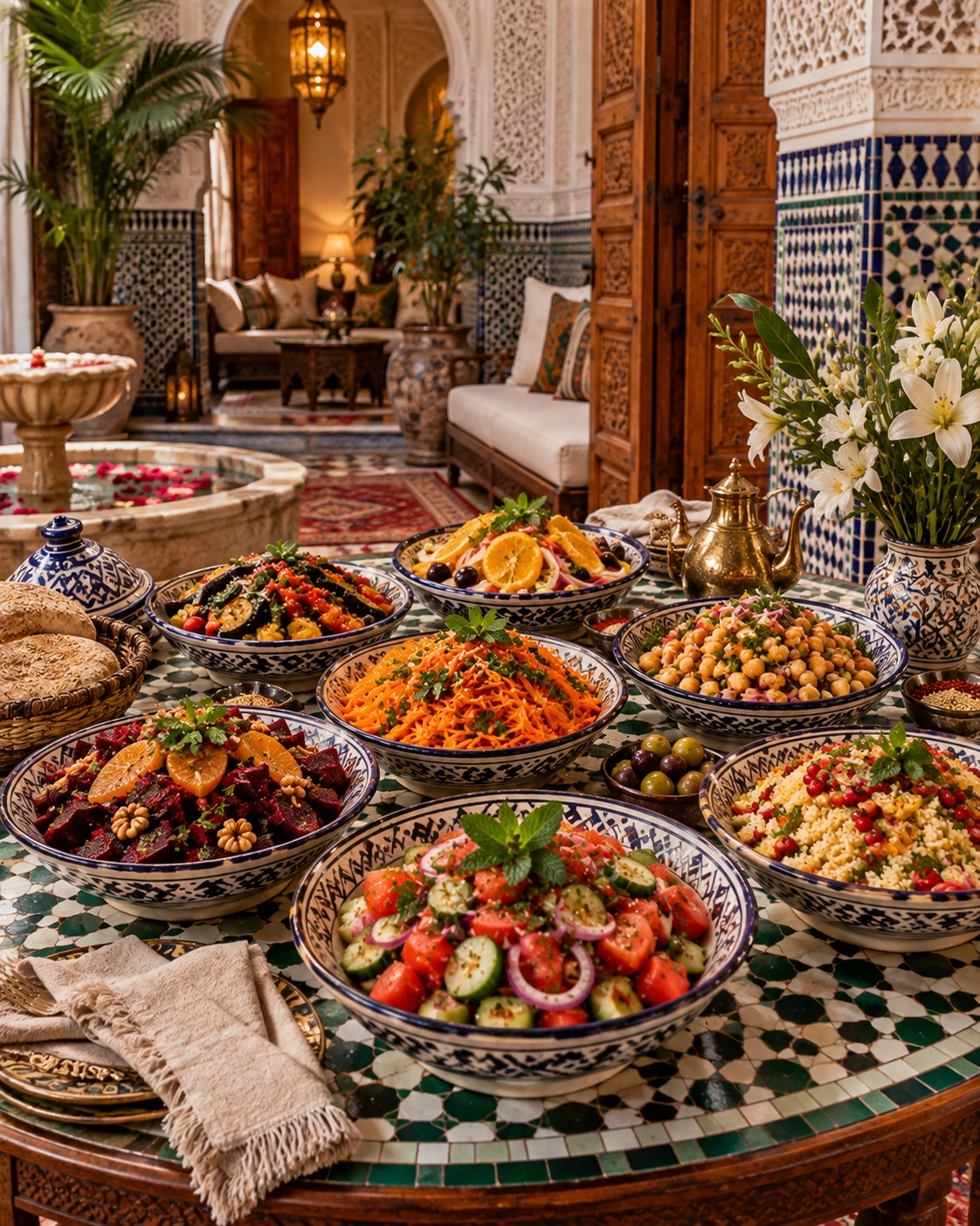
Moroccan salads are often served as part of a larger meal rather than isolated as a separate Western-style course. A table may hold several small dishes at once. [1]
Khobz is practical, not ornamental.
Soft cooked salads such as zaalouk and taktouka can be scooped with bread, while fresher chopped salads are eaten differently because their texture is looser and juicier.
That difference matters: the bread is part of how the table works, but it does not erase the identity of each small dish.
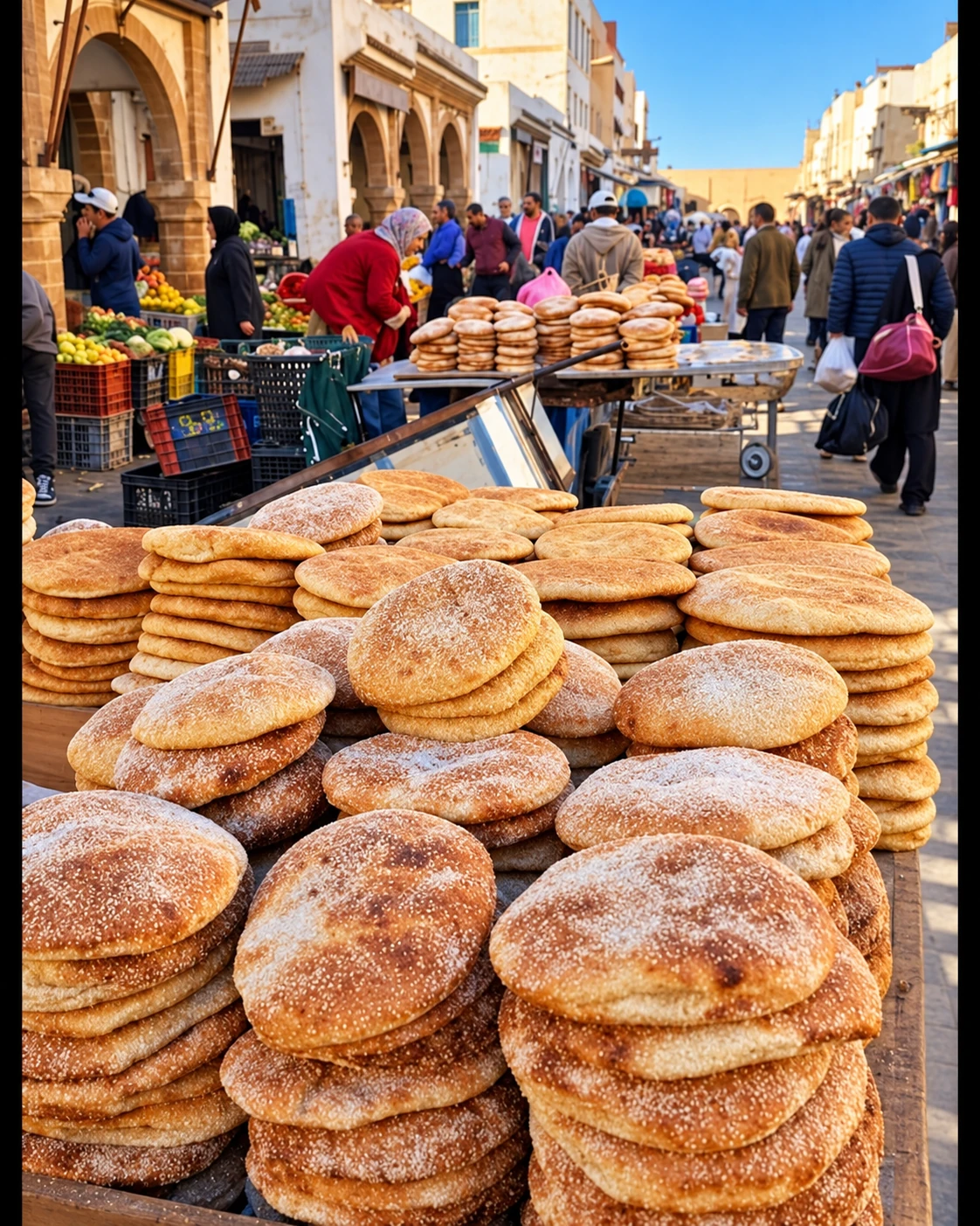
Scoop soft, concentrated salads
A spoonable zaalouk or taktouka naturally works with torn bread because sauce and softened vegetables cling to it.
Keep fresh salads fresh
Tomato-and-cucumber salad depends on a clean cut and controlled dressing; bread can accompany it without turning it into the same eating experience as a cooked salad.
Share without forcing a sequence
Several small dishes may arrive together or before a main dish. Household rhythm matters more than imposing a rigid starter-course rule.
A shared table, not a mixed bowl.
Contrast is the point: smoky, fresh, acidic, soft and crisp preparations can sit next to one another without being combined.
Bread supports the meal, it does not define every salad.
Some salads are made to be scooped; others are best eaten with a fork or spoon. Serving method follows texture.
08 · Bowls, surfaces & everyday material culture
The vessel helps.
The food comes first.
Serving ware changes reach, temperature and presentation, but it does not create authenticity by itself.
Cooked salads benefit from shallow bowls or plates that make them easy to share and keep oil and reduced juices accessible. Fresh chopped salads need enough surface area that dressing does not collect into a watery pool.
Painted ceramics, plain earthenware, glass and modern tableware can all appear in Moroccan homes. A patterned bowl may be beautiful, but culinary accuracy comes from the ingredients, technique and the way the dish is served.
A well-composed salad table therefore uses vessels to keep differences visible: one bowl for something smoky and soft, another for something crisp and fresh, another for a strongly seasoned cooked vegetable.
09 · A closer look
Good questions.
Clear answers.
Useful distinctions about timing, balance and naming make the table easier to understand.
Why are cooked vegetables called “salads”?
In Moroccan food writing, the category commonly includes both raw and cooked vegetable starters or side dishes. The word describes the role at the table as much as a raw-leaf technique.
When should a fresh tomato salad be dressed?
Close to serving is usually safer when you want a clean, crisp texture. Salt and acid draw moisture from chopped tomato and cucumber, so a long rest can make the bowl noticeably wetter.
Can raw and cooked salads appear together?
Yes. That contrast is one of the useful ways to build a balanced table: a cool chopped salad can sit beside a warm or room-temperature cooked vegetable preparation.
Does every cooked salad need the same spice mixture?
No. Cumin, paprika, garlic, parsley, coriander, lemon and olive oil recur, but not as one compulsory blend. Zaalouk, taktouka, carrots and greens each have their own balance.
Is bakoula simply spinach?
Not exactly. Bakoula is traditionally associated with mallow. Spinach is a common substitution where mallow is difficult to obtain, and should be described as a substitution rather than the original ingredient.
What makes a Moroccan salad table feel balanced?
Difference. One or two cooked salads, something fresh, controlled acidity, herbs, bread where useful and a main dish with a different weight or texture create more interest than repeating the same seasoning in every bowl.
 EXOTIC MOROCCOTASTE · THE GUIDE COLLECTIONMoroccan SaladsIngredients, technique
and the Moroccan table
From the story to your kitchen
Keep the flavour.
Go a little deeper.
Fresh, cooked and preserved flavours served in small dishes.
Explore the Exotic Morocco guide collection for a closer look at ingredients, kitchen knowledge and the culture around the table.
- Understand the ingredients and their roles
- Recognise the techniques and textures that matter
- Bring context and confidence to the way you cook and serve
Continue tasting Morocco
Follow the
table outward.
Another dish, another technique, another way into the Moroccan kitchen.
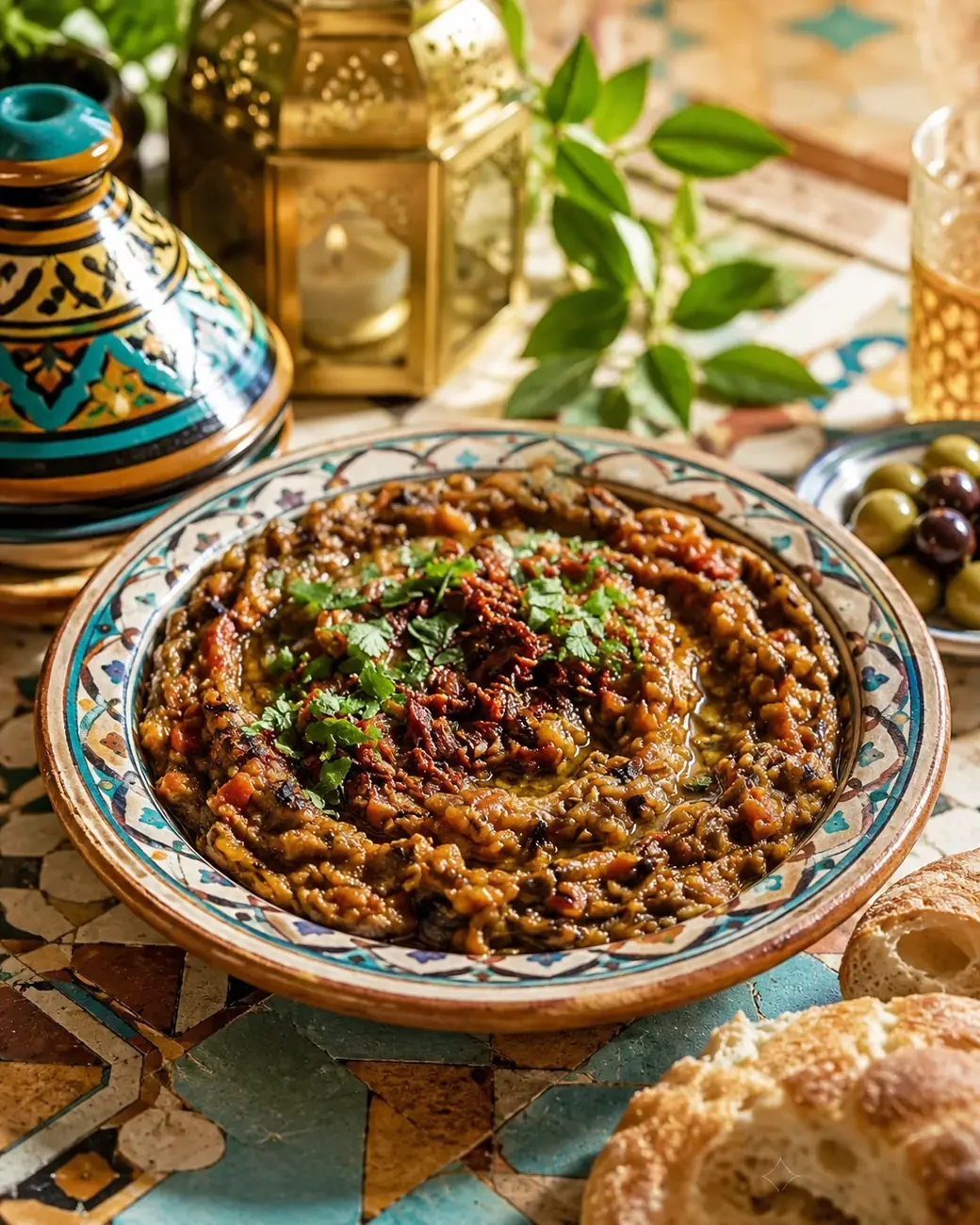
Zaalouk
Aubergine and tomato cooked until their flavours meet.
Explore the story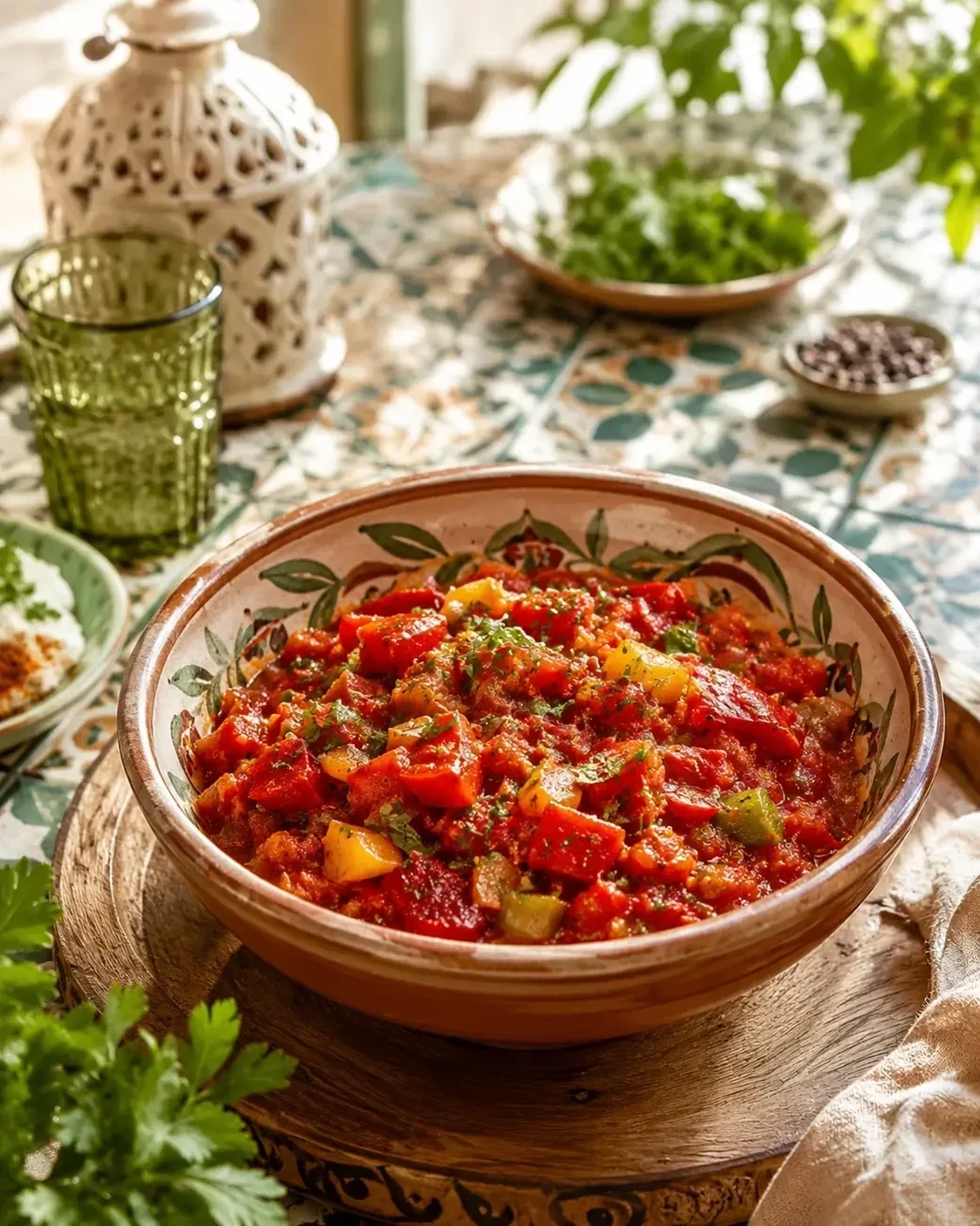
Taktouka
Roasted peppers and tomatoes, with bread close at hand.
Explore the story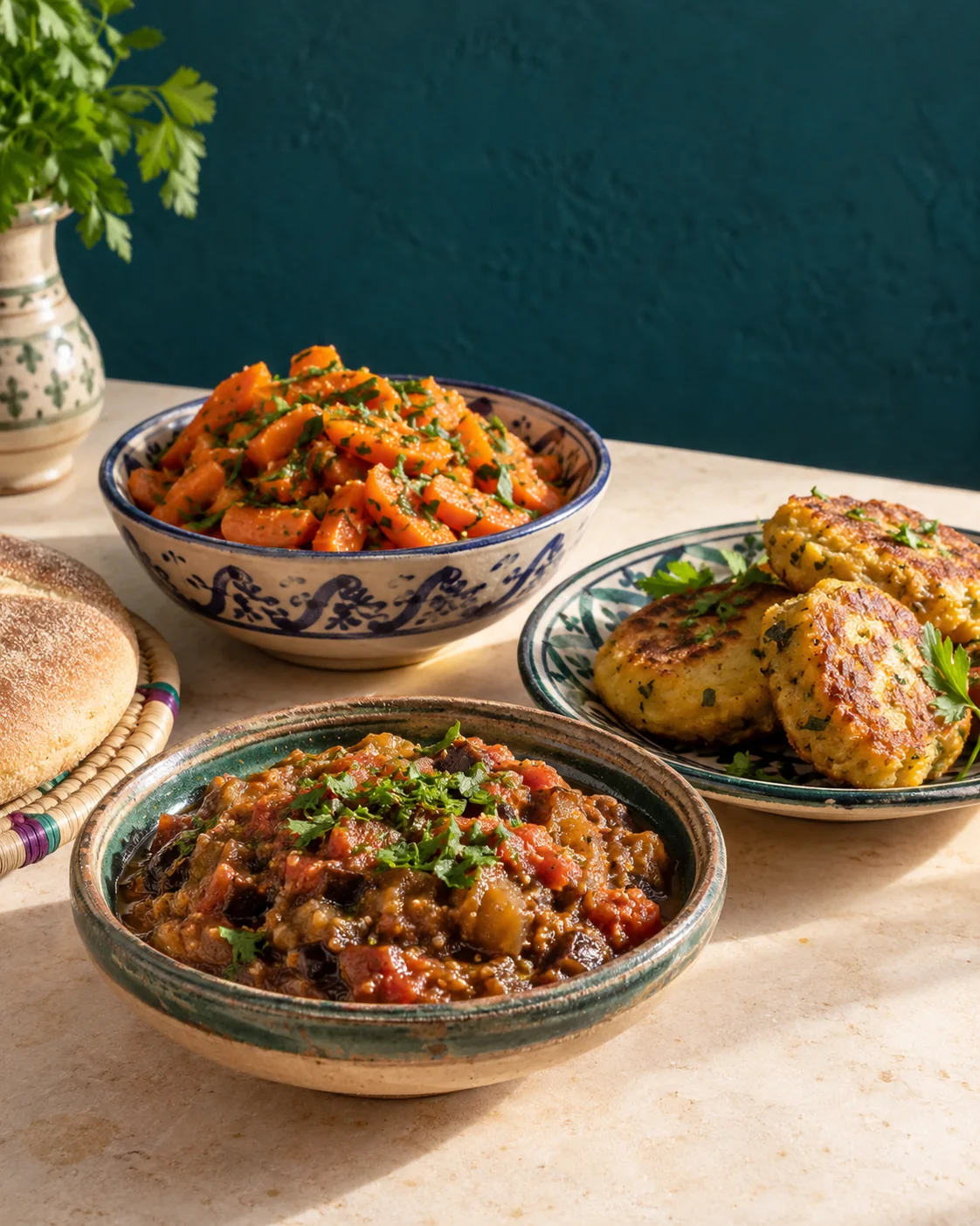
Salads & Sides
Vegetables, pulses and bright accompaniments.
Explore the story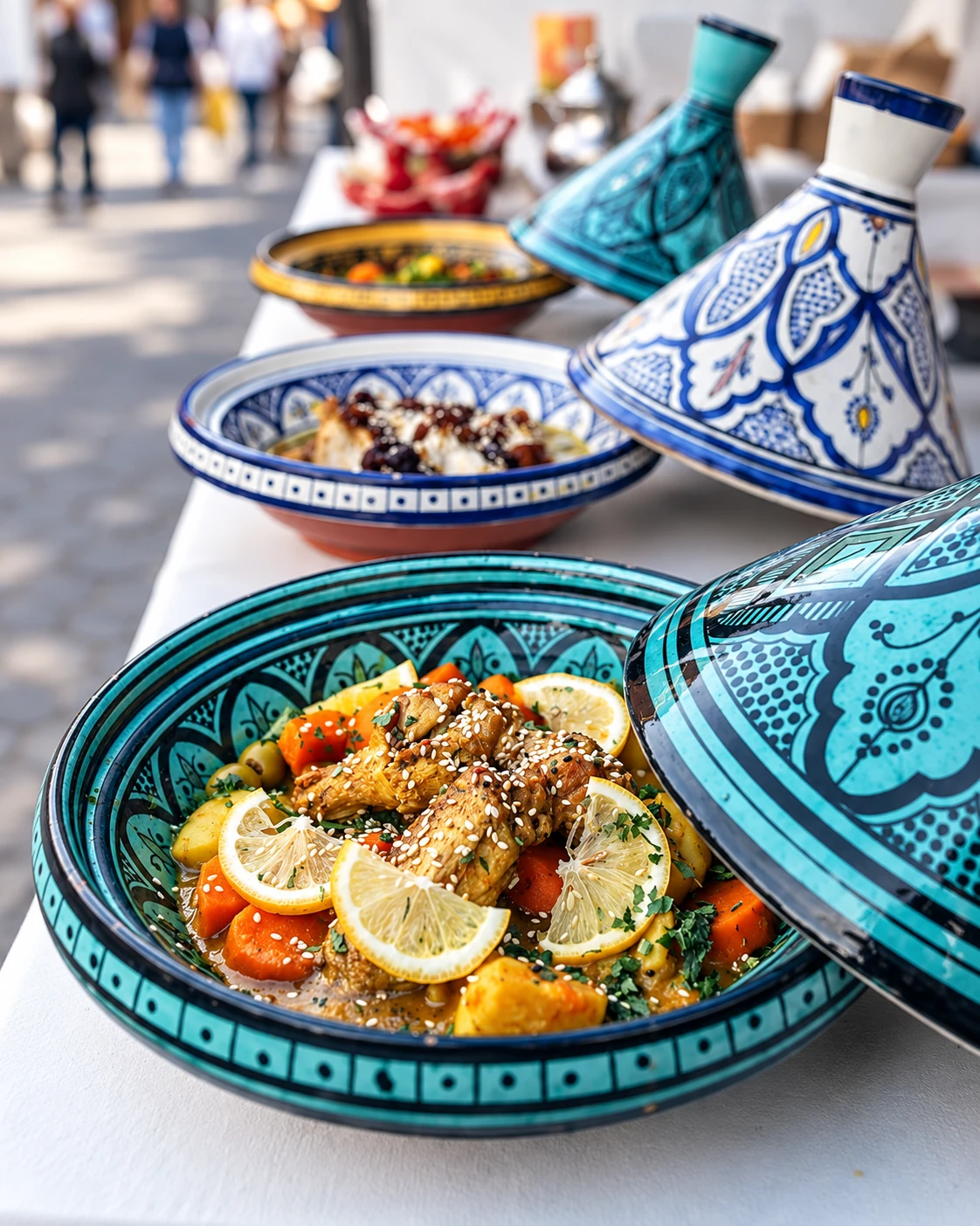
Tagine
Gentle heat, clay pots and the balance of a slow-cooked sauce.
Explore the story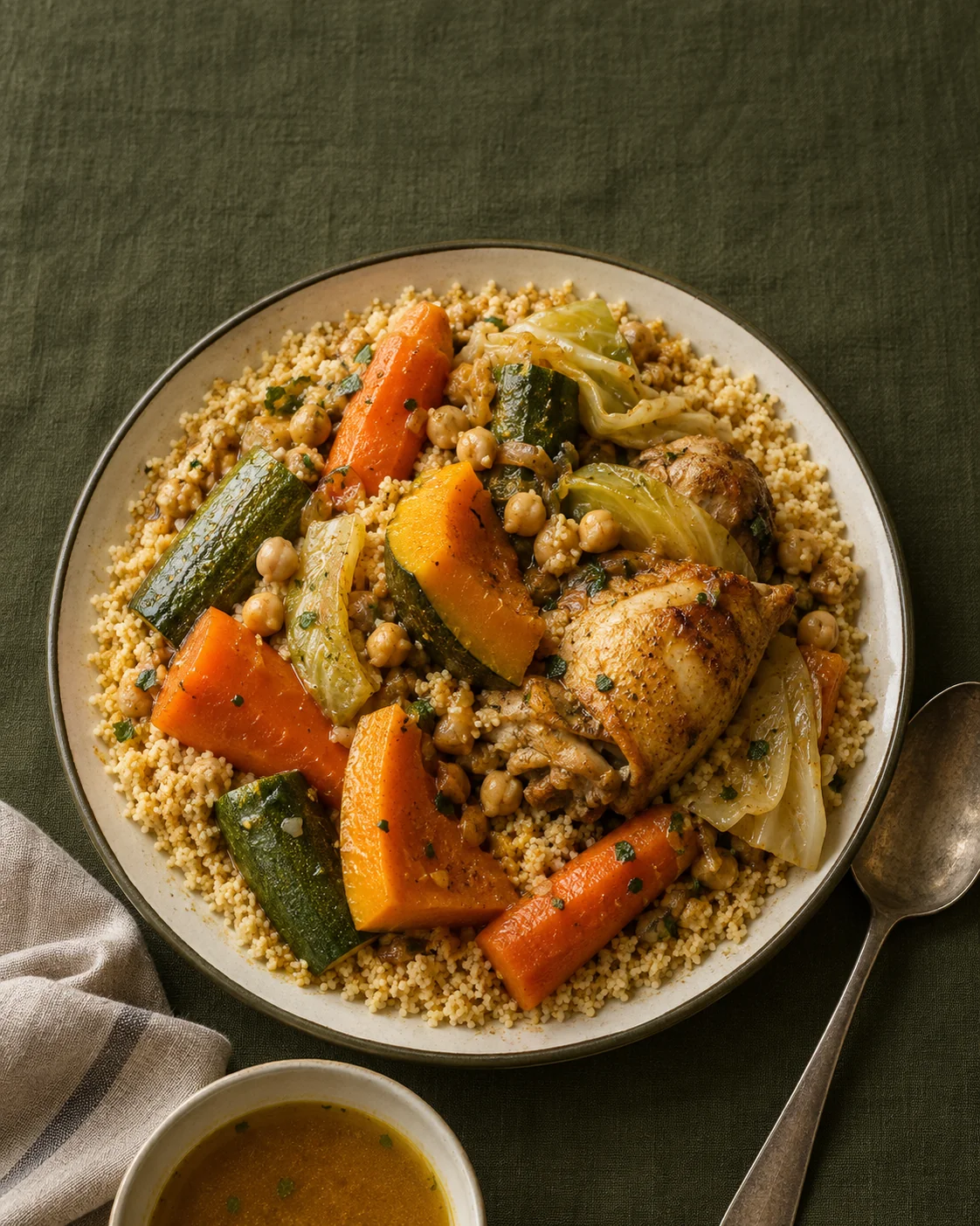
Couscous
Grains, steam and the many ways a shared platter comes together.
Explore the story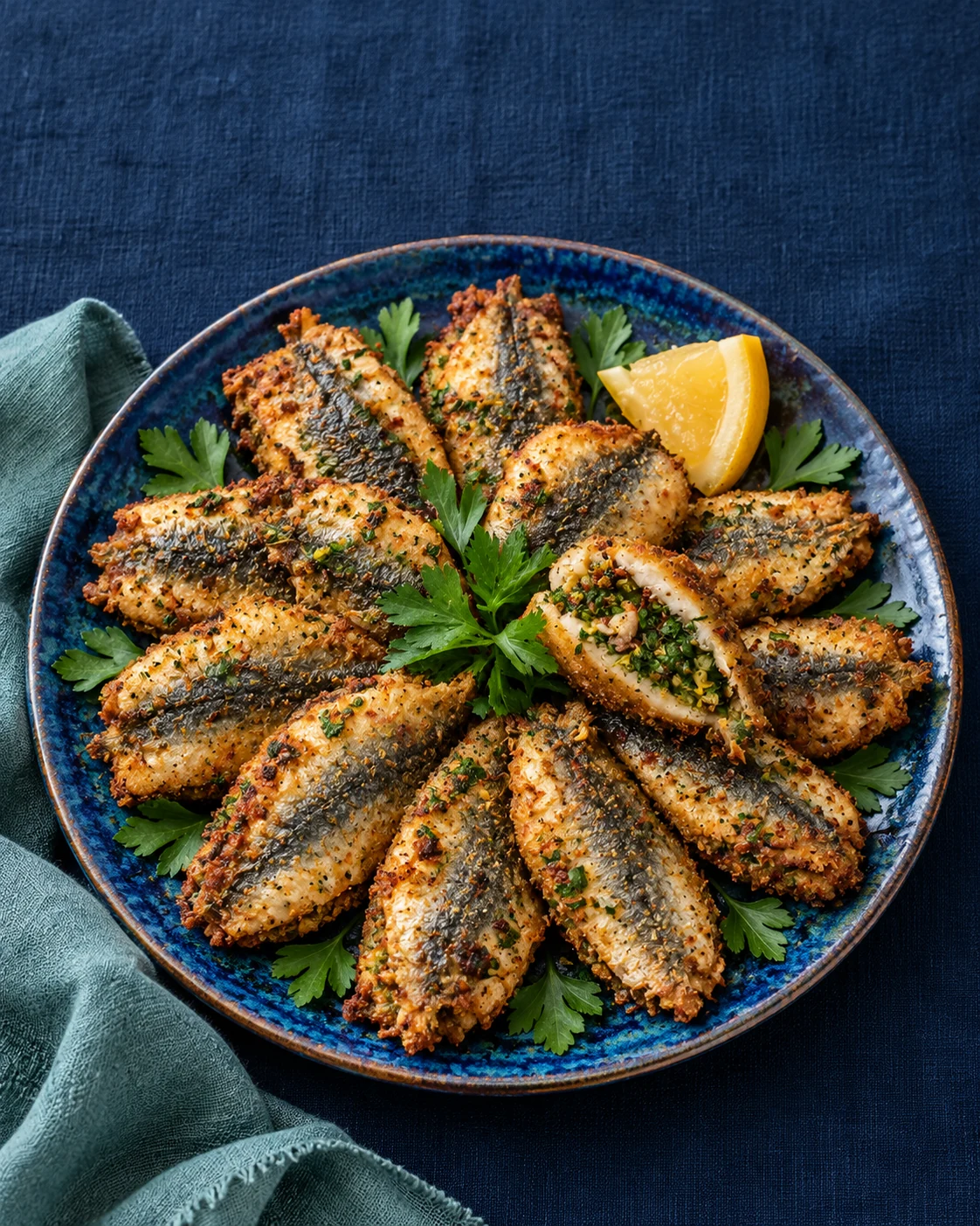
Sardines with Chermoula
Small fish, fragrant herbs and the details of preparation.
Explore the storySources & editorial notes
Photography combines existing Exotic Morocco assets and generated editorial illustrations. These images do not document a named person, household or historical event.
- Moroccan National Tourist Office · Food & drinks — raw and cooked vegetable salads and named examples including taktouka and zaalouk.
- Nargisse Benkabbou · Moroccan Tomato and Cucumber Salad — cutting, herbs, lemon, olive oil and meal context.
- Nargisse Benkabbou · Taktouka — peppers, tomatoes, grilling/charring and serving context.
- Taste of Maroc · Zaalouk — cooked aubergine and tomato salad, texture variation and serving temperatures.
- Taste of Maroc · Moroccan Carrot Salad with Chermoula — cooked carrots, chermoula-style seasoning and serving options.
- My Moroccan Food · Salads & Condiments — breadth of Moroccan salad practice and bakoula/greens context.
- WIPO · Morocco scoping study — a documented shared-meal description including Moroccan salads and bread at the table.
EXOTIC MOROCCO Places. People. The pleasure of knowing more.Back to top ↑