

01 · A Moroccan essential
A bowl of warmth.
A world of welcome.
The first spoonful is only the beginning.
Steam rises. A spoon touches the side of a painted bowl. There is bread within reach, a small plate of dates, and someone asking whether you would like a little more. Harira brings the kitchen’s work to the table with remarkable generosity.
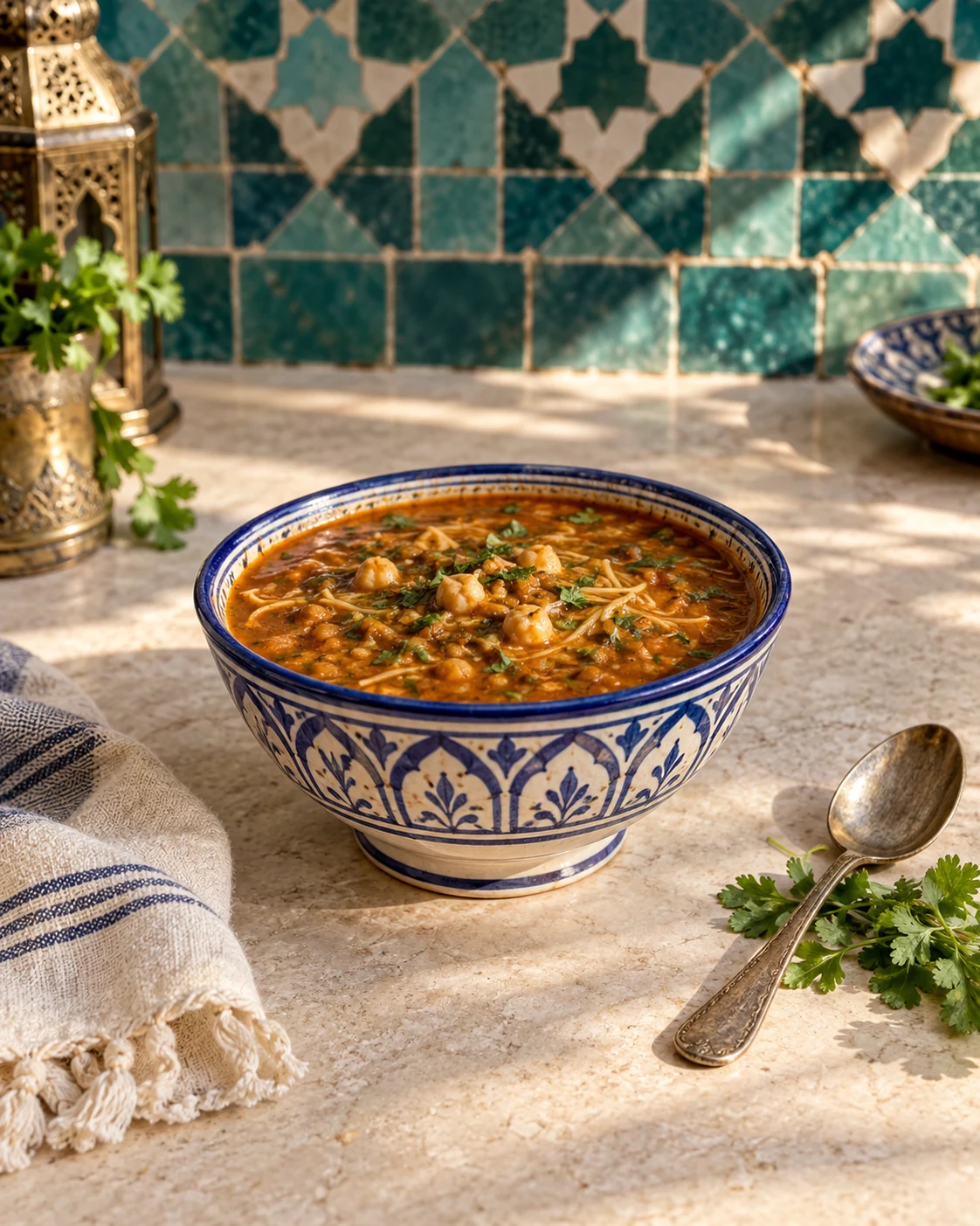
In its familiar Moroccan tomato-based form, this soup gathers chickpeas, lentils and herbs into a broth with both body and movement. The pulses remain recognisable; the liquid carries them. It is neither a smooth vegetable purée nor a dry stew. [1]
Look closely at the bowl: the warm red of tomato, a flicker of green, a thread of pasta or a grain of rice. Harira invites you to notice how small ingredients become something much larger together.
Discover Moroccan Cuisine ↗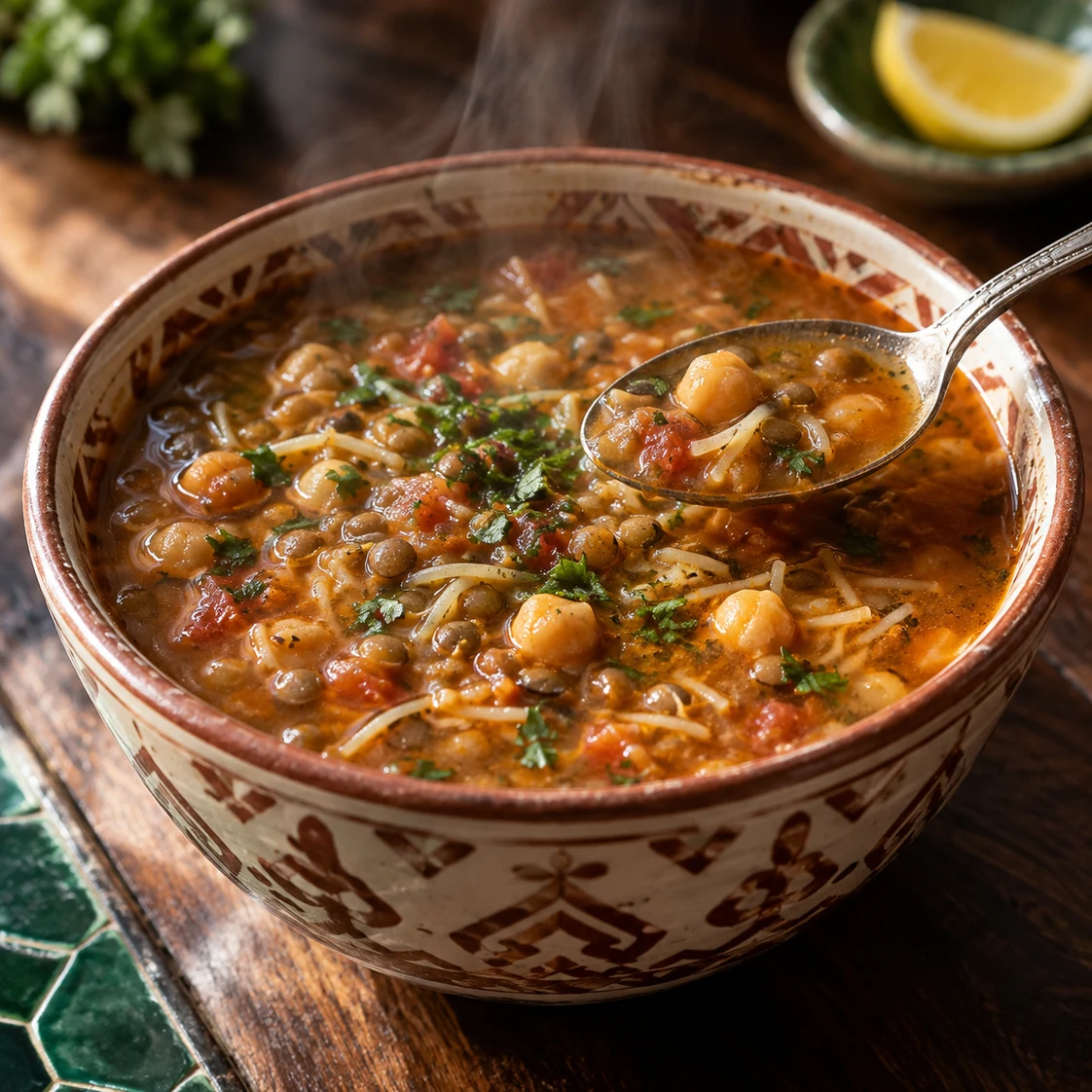
A flowing broth with ingredients you can still see.
The balance changes from one kitchen to another.
A familiar evening companion, enjoyed through the year.
02 · A living tradition
Learned by watching.
Remembered by taste.
A familiar dish can carry a very personal memory.
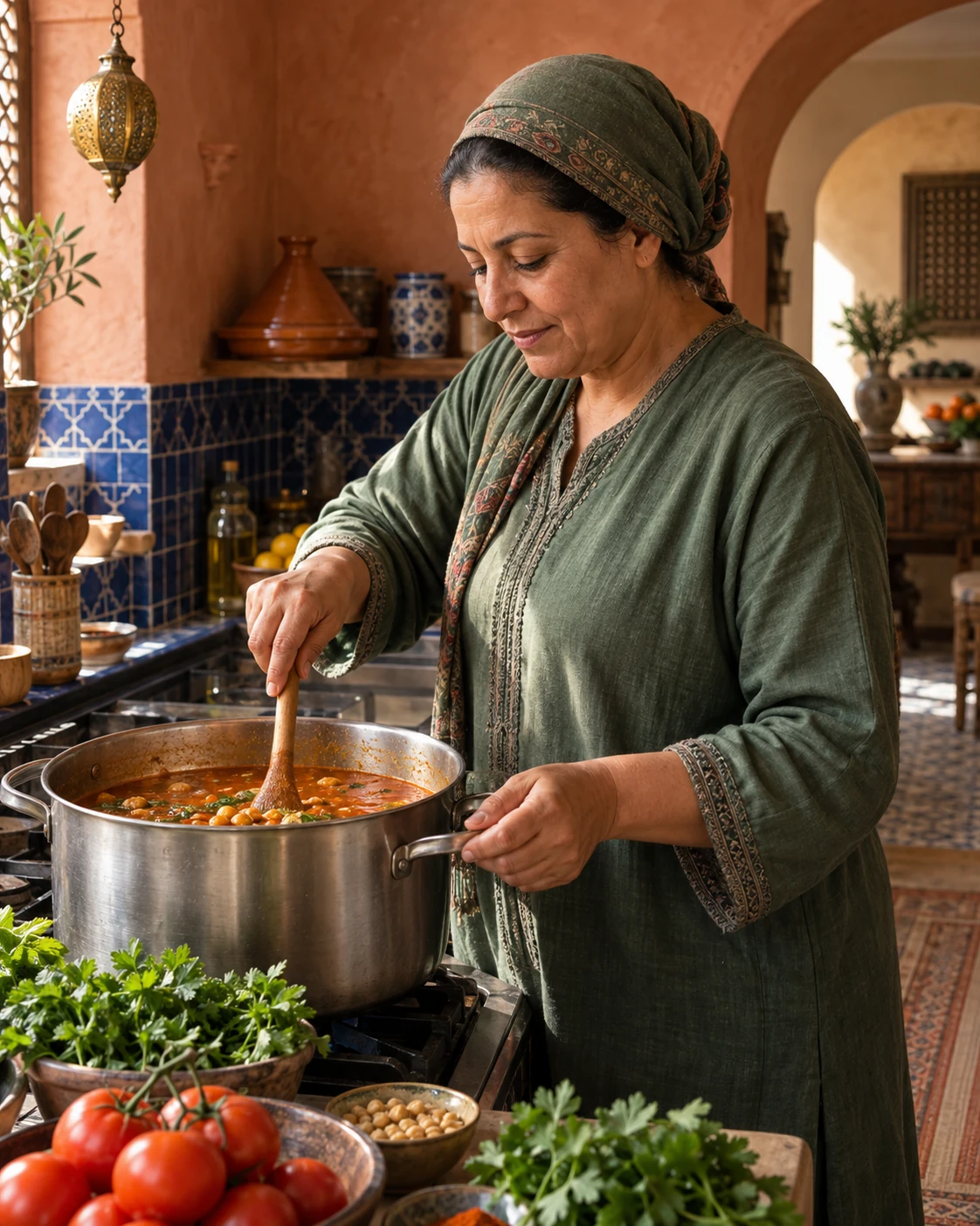
Cook and author Nargisse Benkabbou describes recognising her mother’s harira through the bowls she grew up eating. Her account makes the family scale of this dish tangible: knowledge can travel through repetition, observation and appetite as well as a written recipe. [3]
That is a more useful starting point than assigning every bowl one inventor, one city or one fixed formula. Harira belongs to living kitchens. What a cook keeps, changes or leaves out is part of its continuing story.
A Ramadan presence
Harira is closely associated with breaking the fast, while remaining a soup cooked outside Ramadan too. [1]
More than one version
The amount of meat, herbs, grain and thickener can shift. A family resemblance does not mean every bowl must be identical. [3]
Knowledge in the gesture
A hand pauses over the pot, the spoon returns, the cook tastes again. The scene is ordinary; the attention is the point.
03 · Inside the pot
The broth.
The body. The finish.
Harira’s texture is built in stages. The pulse must be tender before the final consistency feels right.
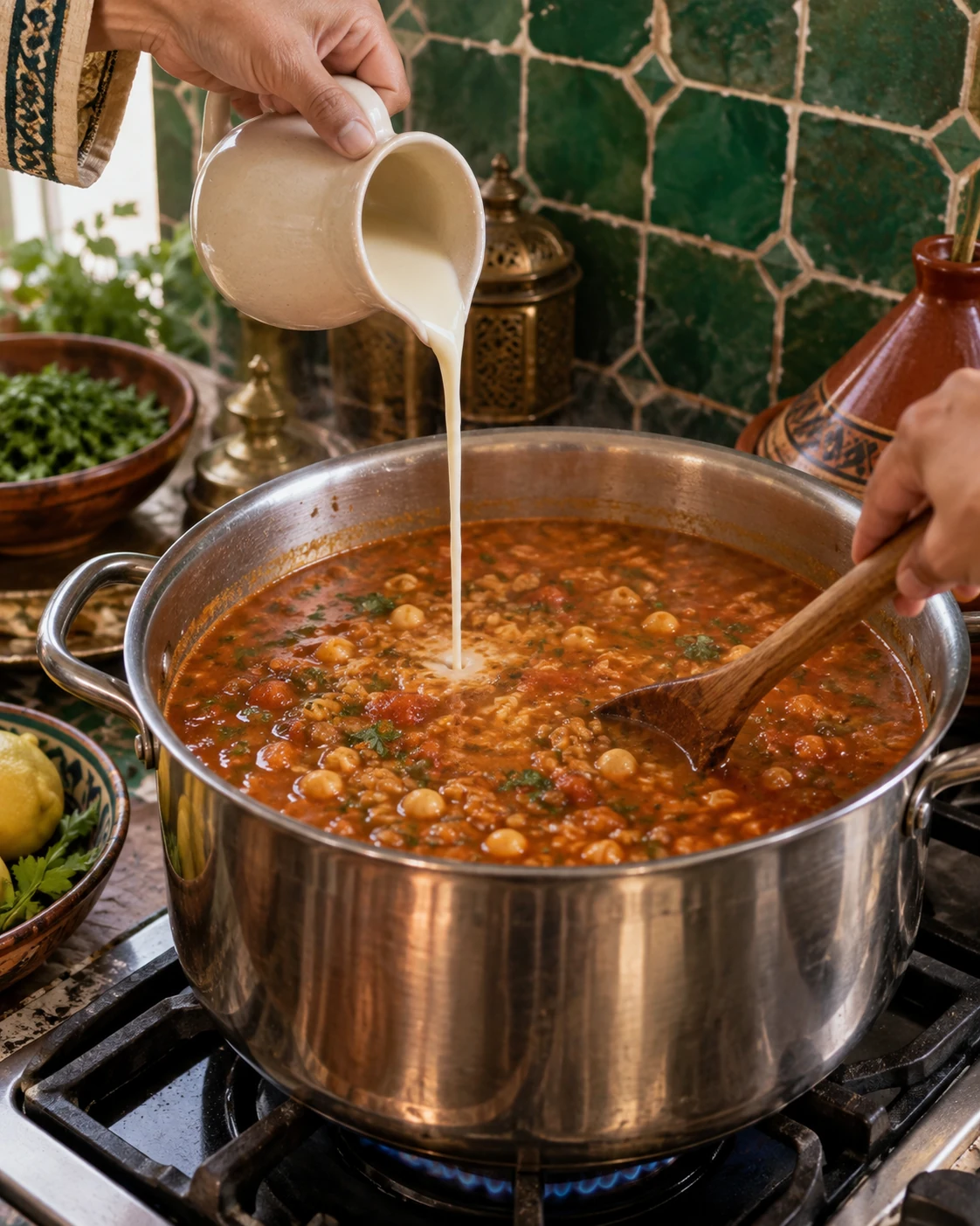
One common finishing technique is tedouira: flour mixed smoothly with water, then worked into the soup. [2]
Build the base
Tomato and onion meet herbs, seasoning and the cooking liquid. Some preparations begin with small pieces of meat; others keep the focus on the pulses. [2]
Let each ingredient cook
Soaked dried chickpeas, lentils and small pasta do not all need the same time. A good sequence lets the legumes soften without turning the final grain or pasta to mush. [3]
Stir towards silk
Add the smooth slurry gradually, stirring as it meets the hot soup. Continue cooking the thickener; the goal is a rounded, flowing texture rather than raw flour or a heavy paste. [2]
The beauty is in the balance: enough body to hold the flavours, enough lightness to invite the next spoonful.
04 · A family of bowls
One familiar name.
Many small decisions.
These are overlapping choices, not four rigid regional recipes. A rice version may contain meat; a vermicelli version may be vegetarian.
Follow the texture and the ingredients rather than expecting one colour or one thickness everywhere.
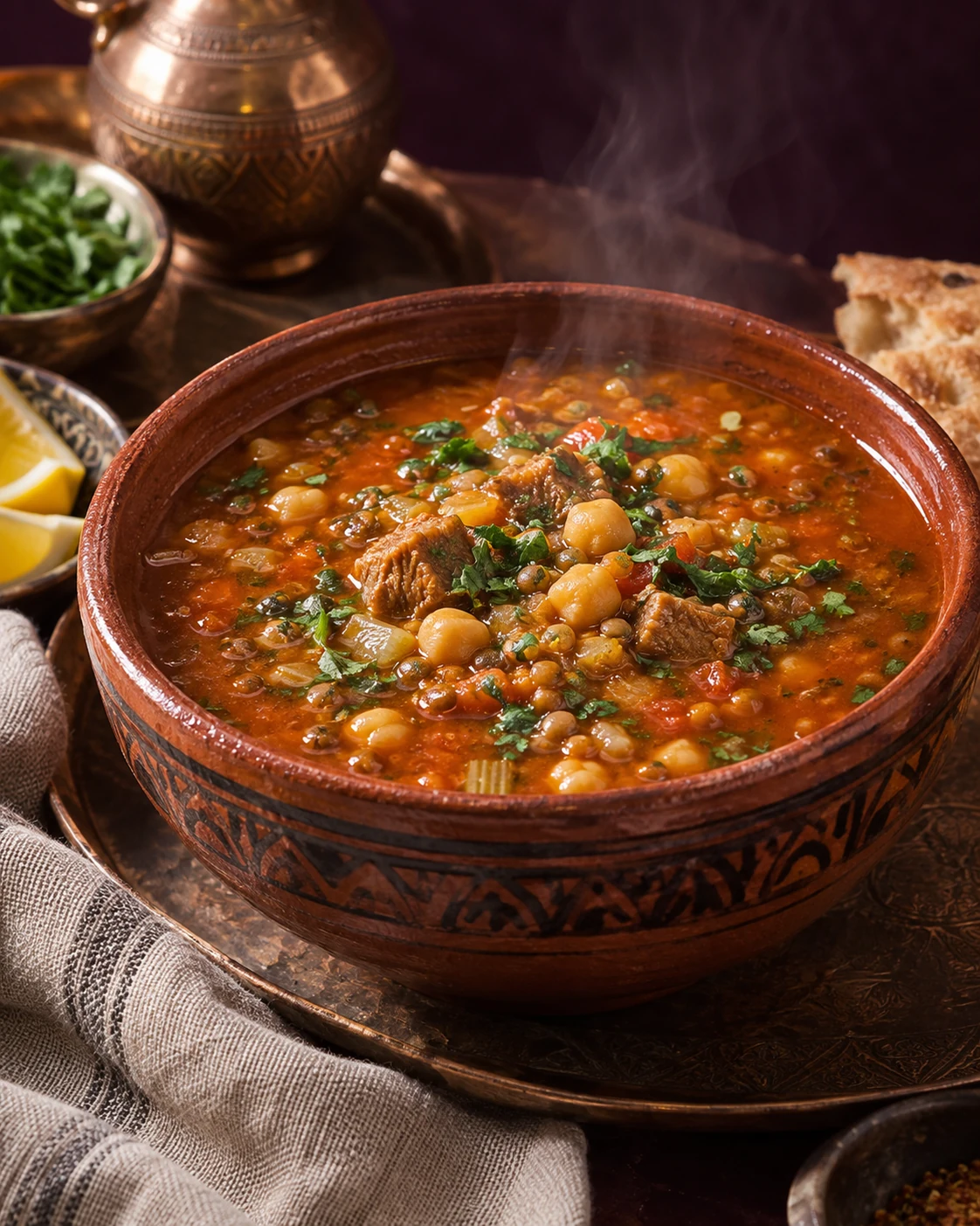
With small pieces of meat
Beef or lamb can bring a deeper savoury note. The meat shares the bowl with the pulses; it need not dominate the spoonful. [3]
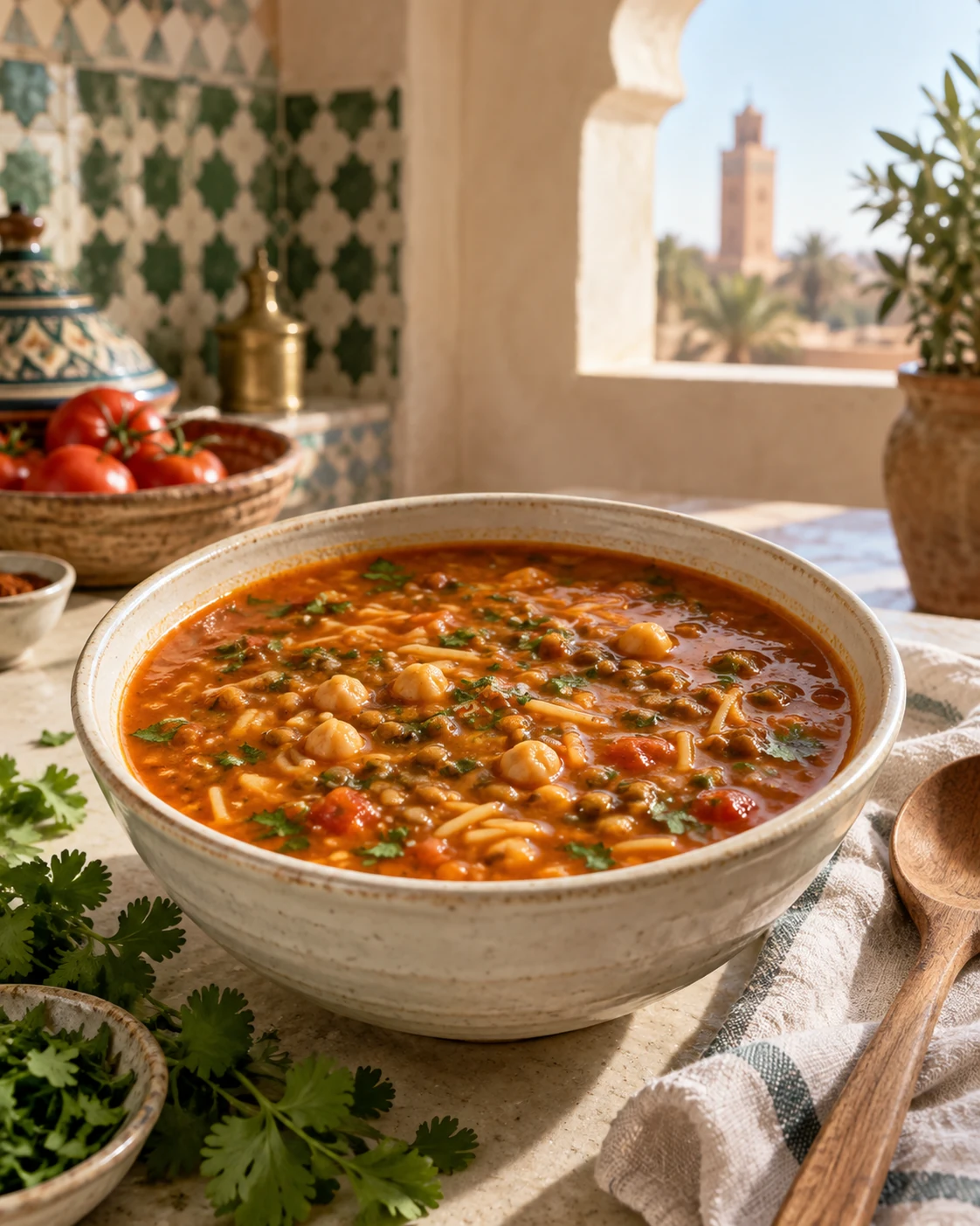
A meat-free pot
A vegetarian preparation can let tomato, herbs and legumes lead. Ask about stock and cooking fat when choosing a bowl away from home. [1]
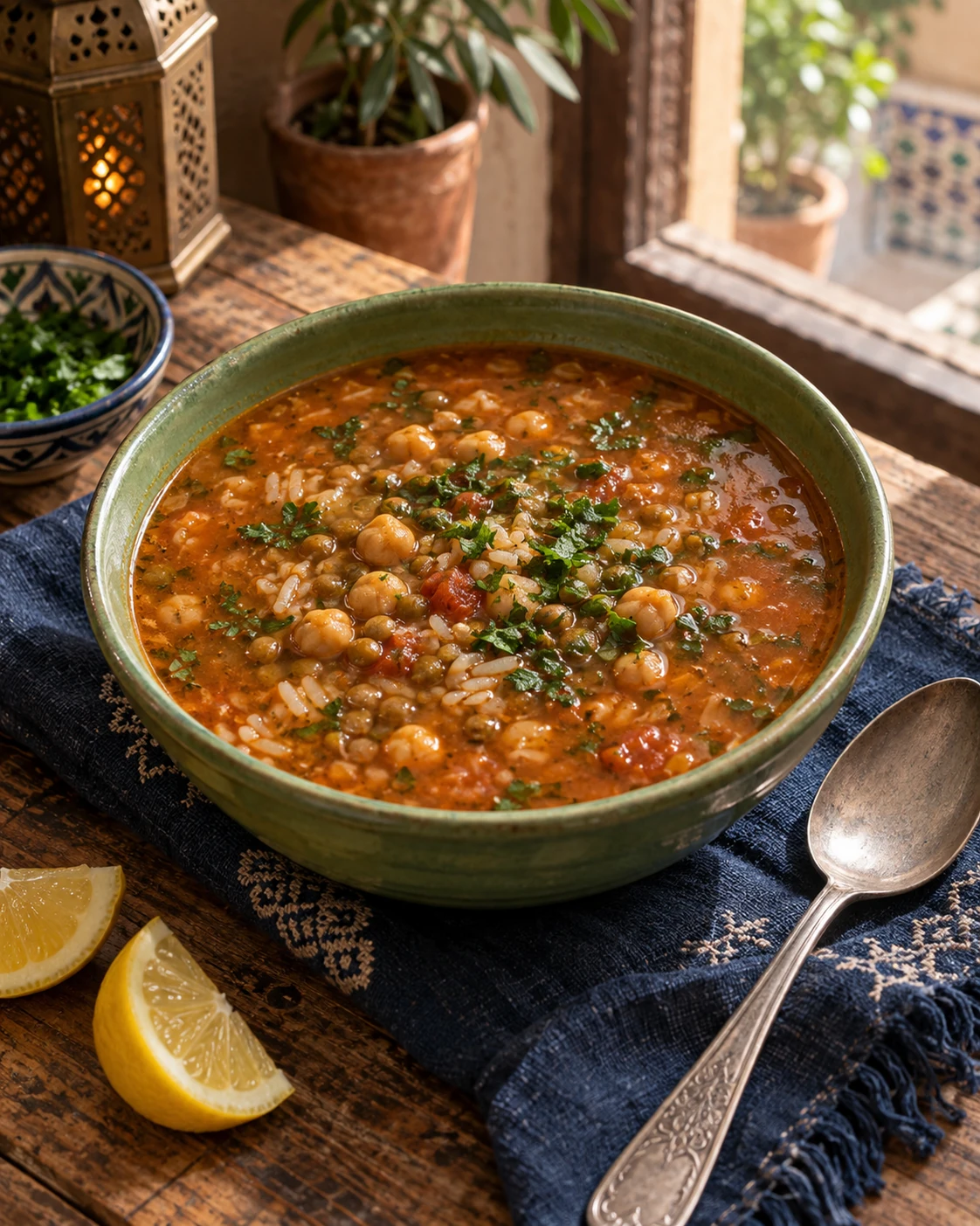
With rice
Alia’s documented version includes rice. Its small grains give a different texture from the fine strands of vermicelli. [2]
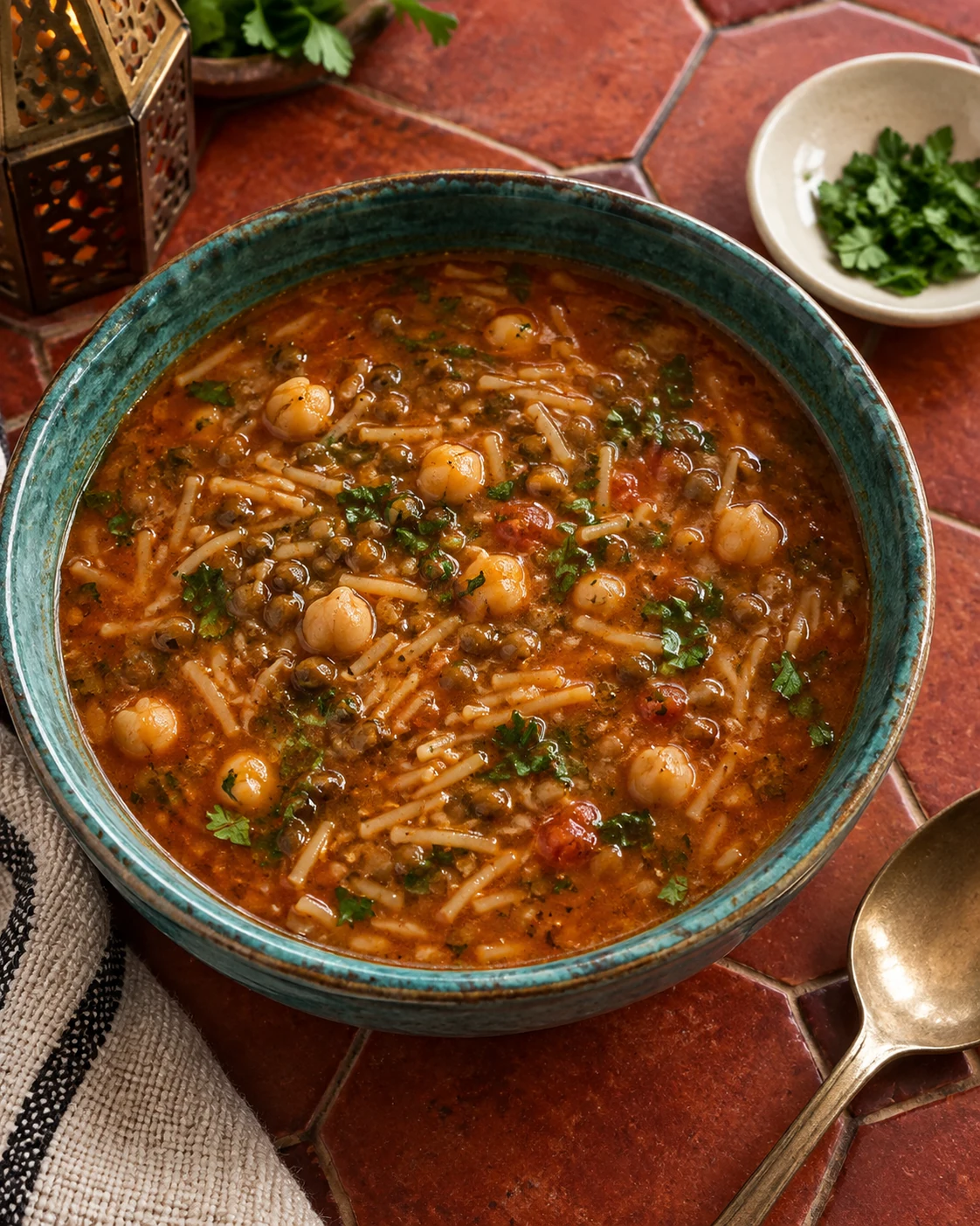
With vermicelli
Broken vermicelli adds delicate threads through the broth. Pasta is one familiar choice, rather than a compulsory ingredient in every harira. [3]
05 · The pantry
Small ingredients.
A generous result.
Think in relationships: a round pulse beside a fine herb, the brightness of tomato beside the warmth of spice.
There is pleasure in recognising the ingredients before they enter the pot.
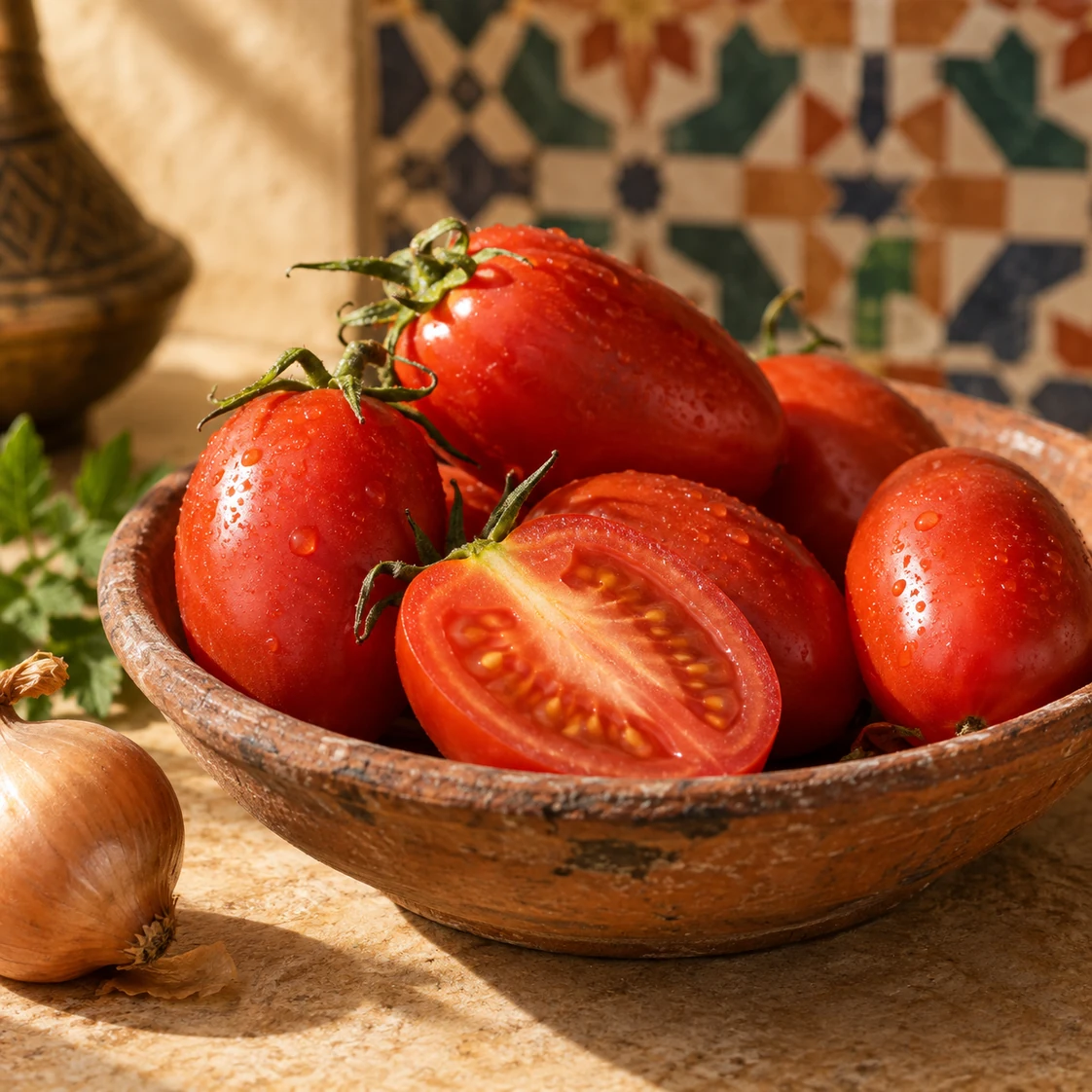
Tomato & onion
The warm foundation.
Tomato brings colour and a gently tangy character. Onion adds another layer beneath it. Purée and paste are used differently across recipes. [2]
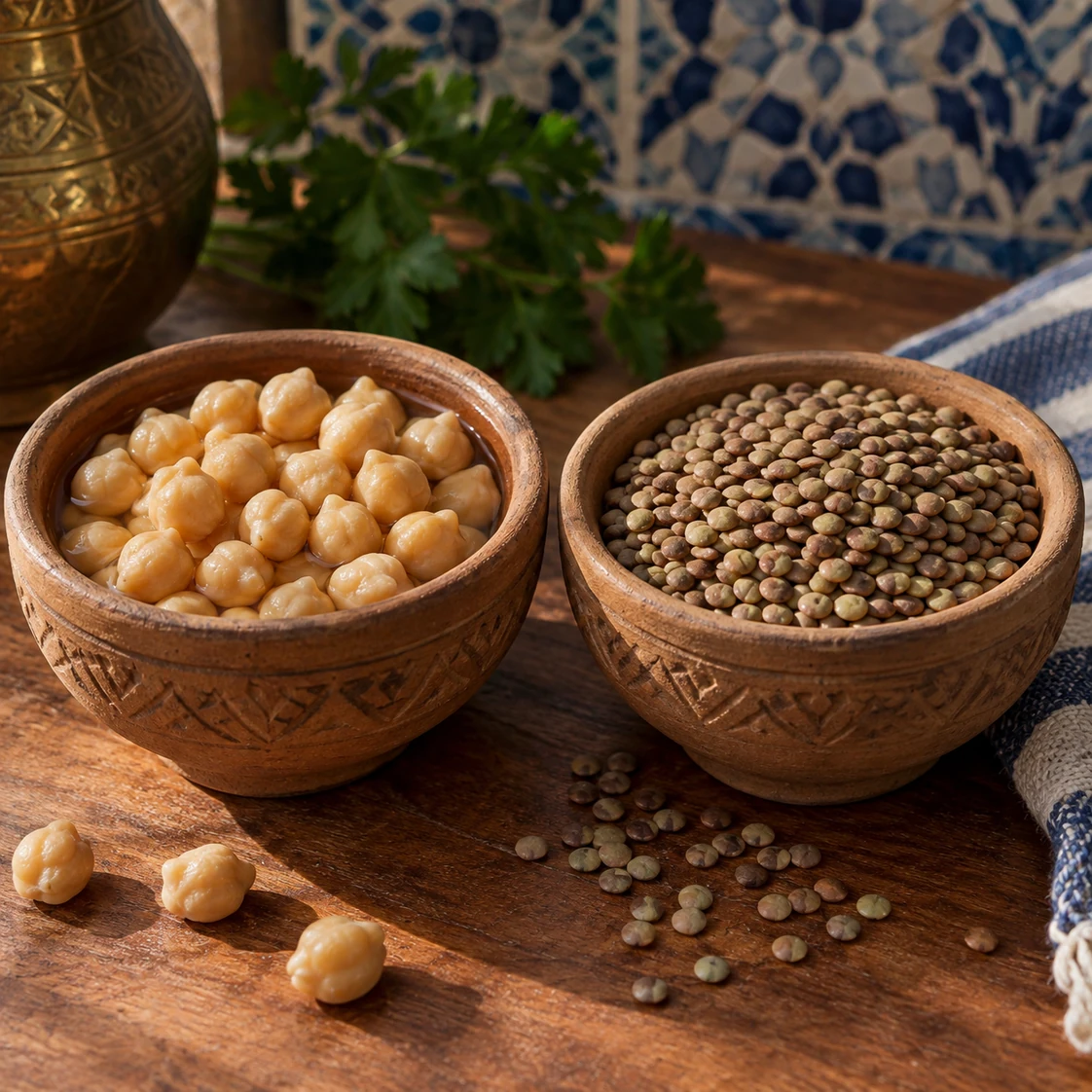
Chickpeas & lentils
Two pulses. Two textures.
Chickpeas offer a fuller bite; lentils sit more quietly through the broth. Their different shapes give the spoonful its character. [3]
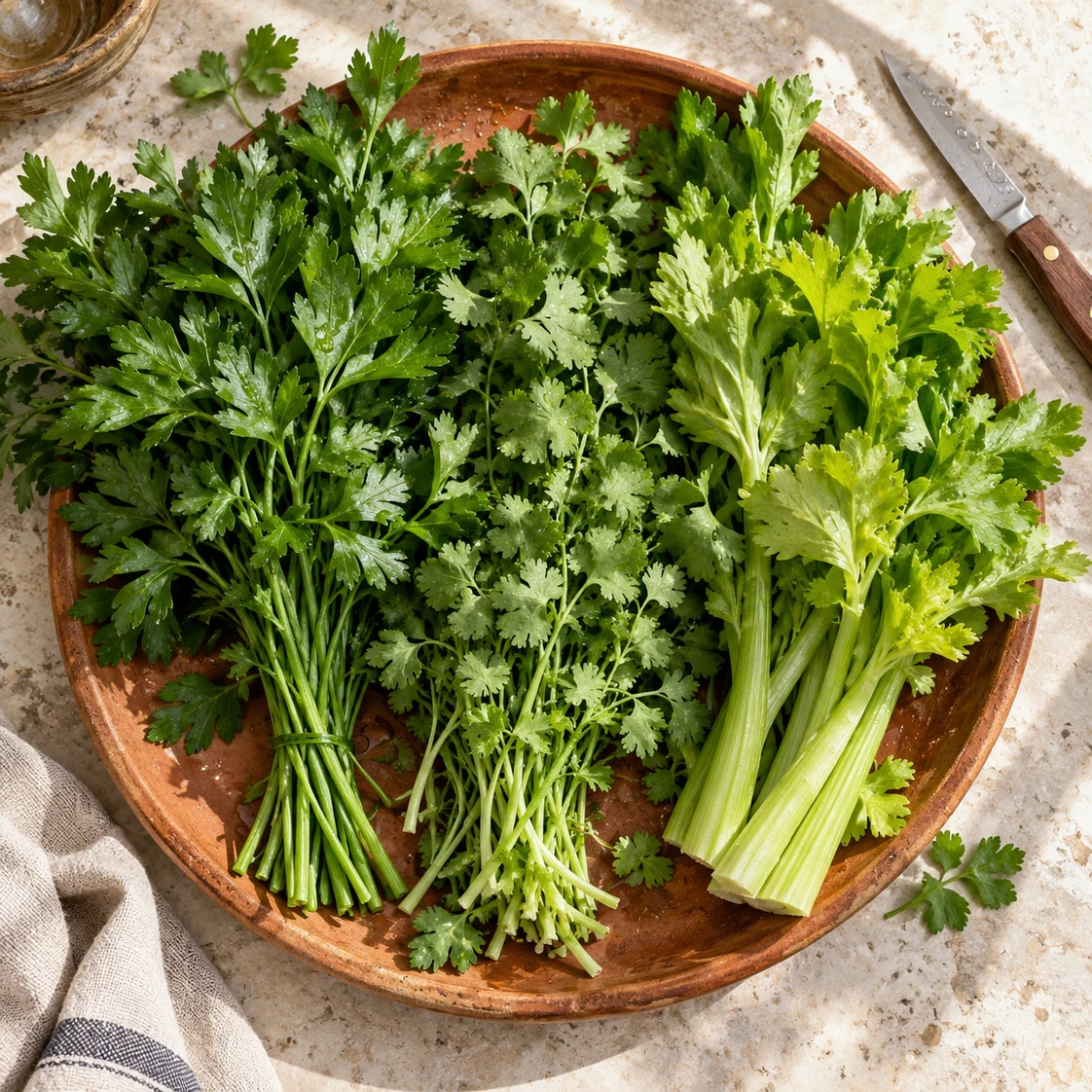
Herbs & celery
Fragrance within the soup.
Coriander, parsley and leafy celery are more than a garnish. Finely chopped greens can become part of the soup’s aromatic base. [2]
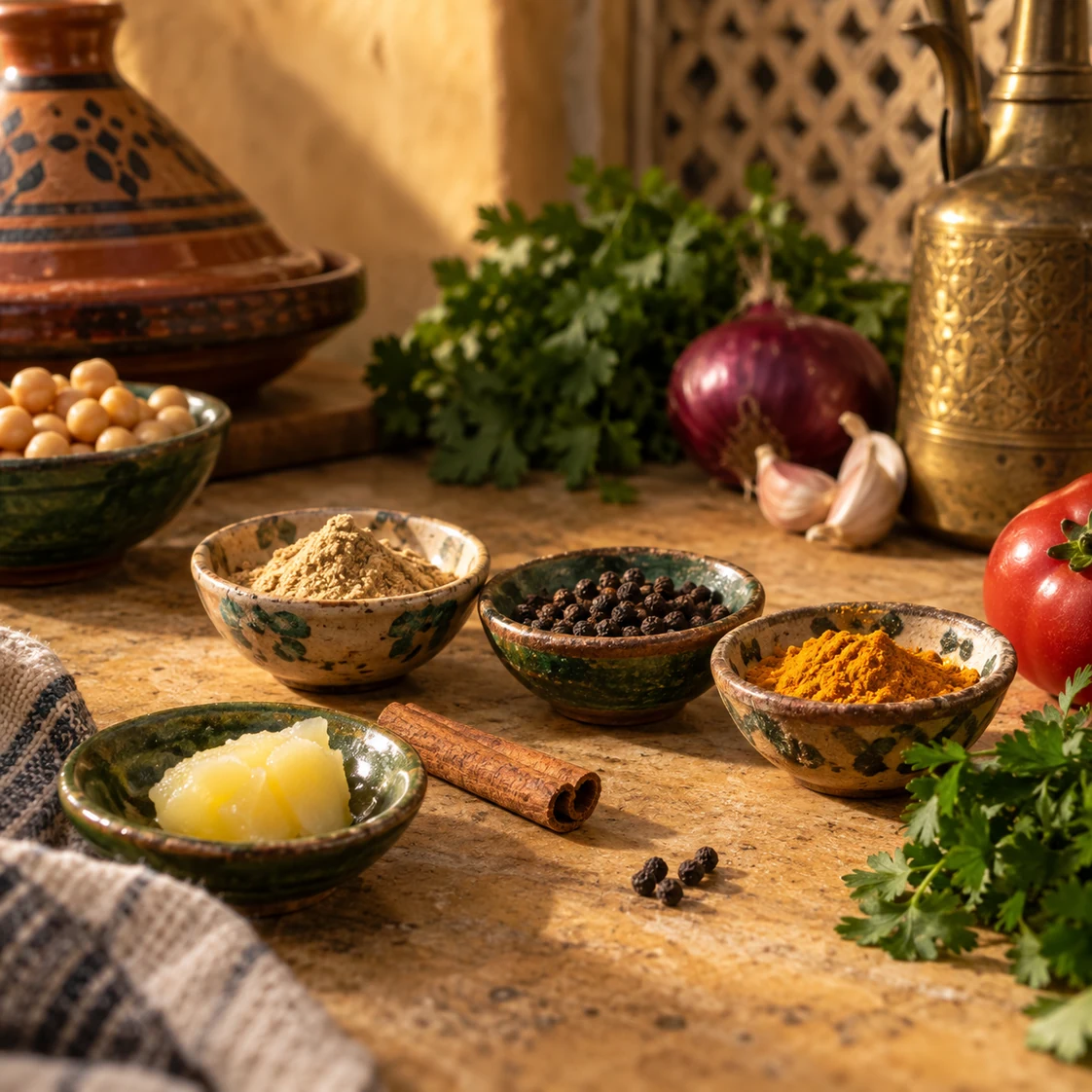
Spice & restraint
Warmth without weight.
Ginger and pepper are familiar notes. Turmeric, cinnamon or a little smen depend on the preparation; no single spice list defines every household. [1]
06 · Home & street
A kitchen at home.
A bowl at the counter.
The setting changes the experience.
Harira is part of Morocco’s restaurant and street-food landscape as well as its home kitchens. The Moroccan National Tourist Office describes it among the country’s familiar soups and highlights the food stalls that animate Marrakech after dark. [4] [5]
At home, the pot can belong to a long evening. At a counter, the same act of serving feels compact and immediate: a bowl arrives, a spoon is passed, a small space opens for the next customer.
Follow the evening.
Explore the city around its food: the changing light, the market and the streets beyond the table.
Explore Marrakech ↗Look at the everyday.
A modest counter can be a good place to notice the rhythm of preparing, serving and sharing.
Discover Moroccan street food ↗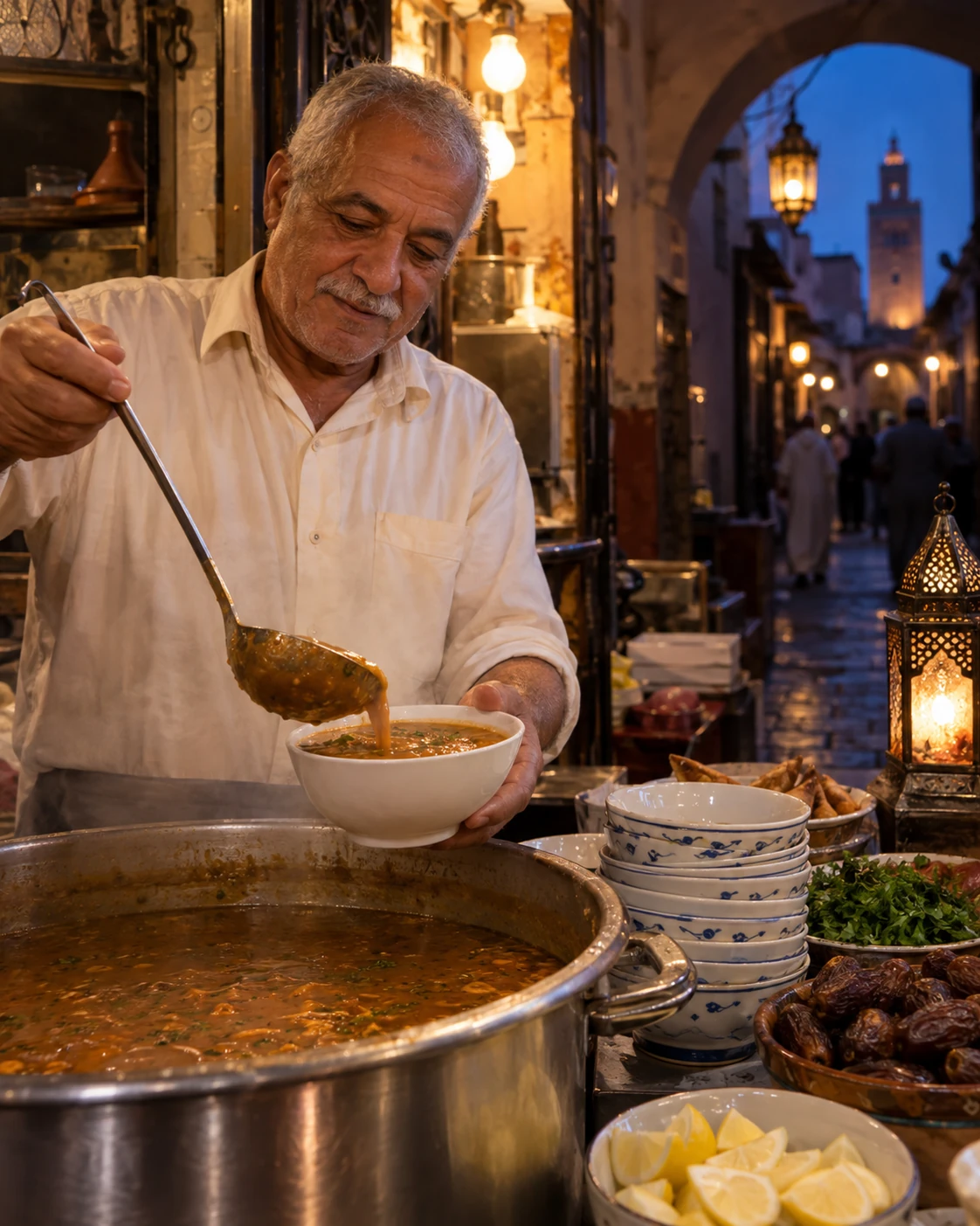
07 · Around the bowl
Dates. Bread.
Room for one more.
Warm soup meets a little sweetness.
Harira with dates and chebakia is a familiar Ramadan pairing. Alia serves the soup with those companions and a wedge of lemon; Morocco’s tourism office also places chebakia beside soup during Ramadan. [2] [4]
Our table brings those tastes together with torn khobz: the glossy pastry, the soft date, the crust of bread and the warmth of the bowl. Each has its own texture. None needs to disappear beneath an elaborate garnish.
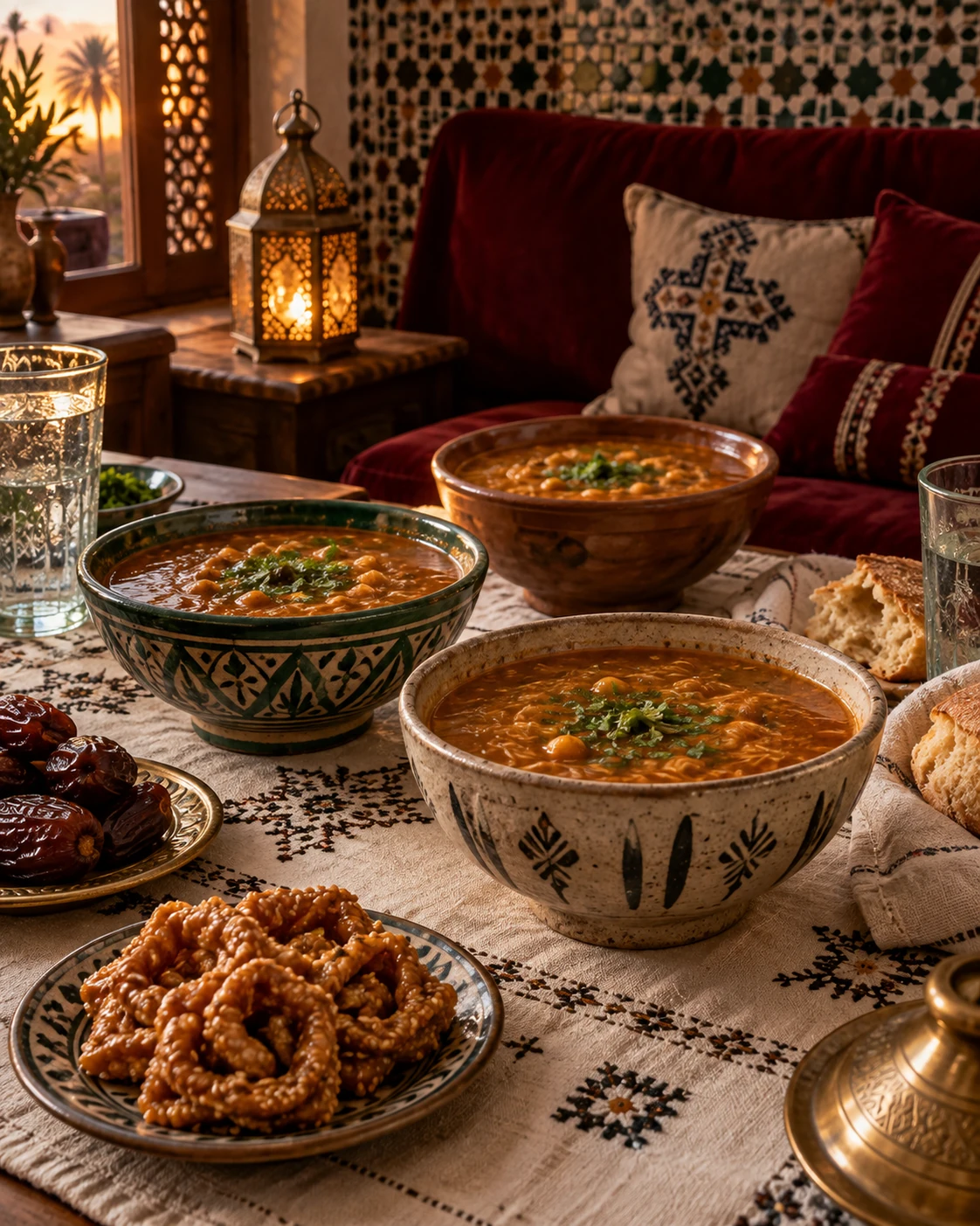
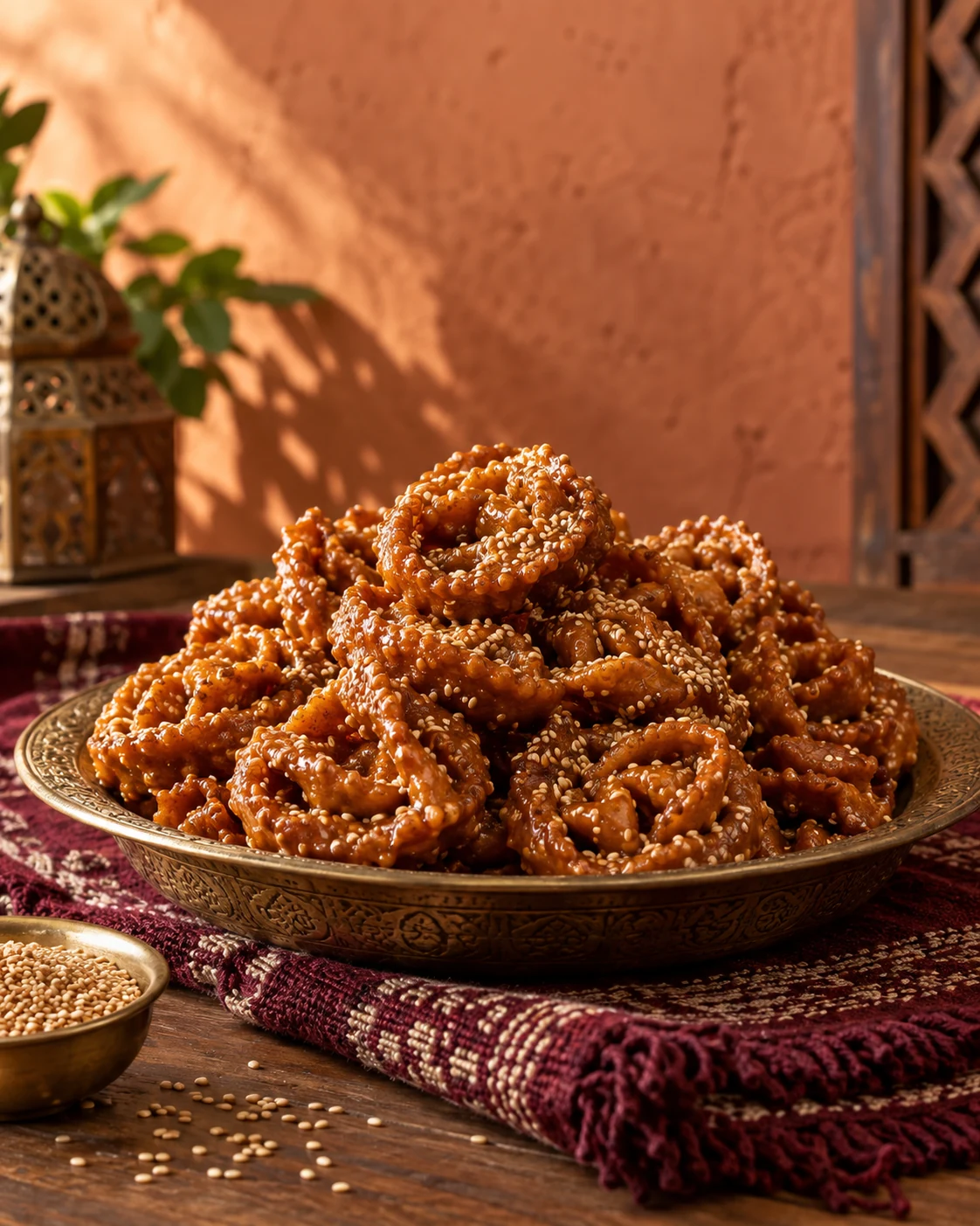
A little chebakia.
A folded pastry brings crispness, honey and sesame beside the savoury bowl. Notice the change from spoon to bite, from warm broth to the sticky edge of pastry.
Explore Chebakia ↗A table finding its rhythm.
Not every household sets the same table. Let the people and the occasion shape the meal, with space for different appetites and familiar small rituals.
Read Moroccan meal rhythm ↗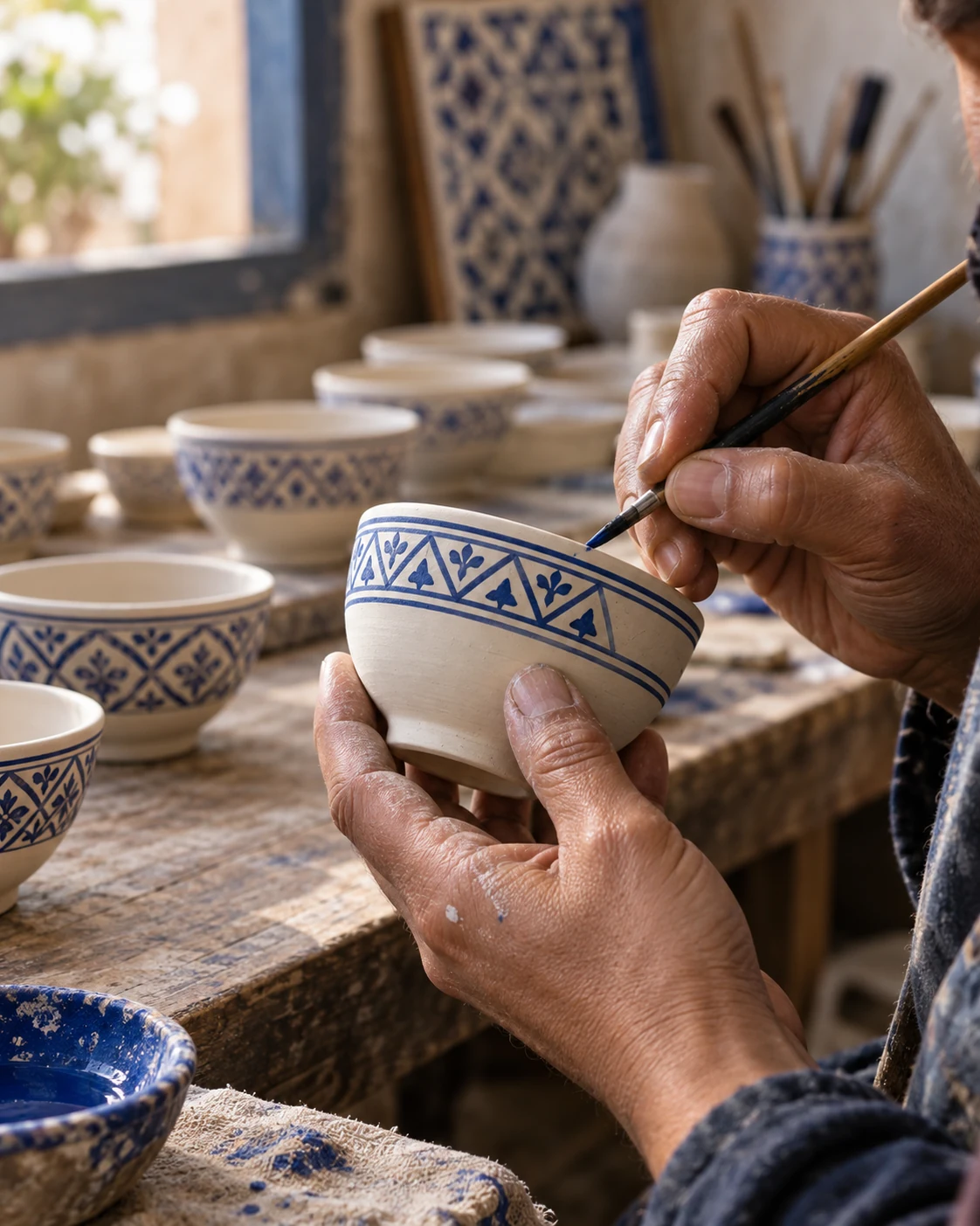
08 · The beauty of useful things
Held in the hand.
Made with attention.
A good bowl makes room for the food.
A painted rim frames the colour of the soup. A spoon rests against the edge. Glaze catches the window light. These are small details, but together they give the table its visual character.
Harira needs no elaborate vessel to be welcoming. Plain bowls and painted ceramics can each be beautiful. What matters is how comfortably they serve the meal, and how thoughtfully the table comes together.
Explore Safi and its ceramic heritage ↗09 · A closer look
A few questions.
A clearer bowl.
Small distinctions help you recognise what is in front of you.
Is harira only eaten during Ramadan?
No. Its Ramadan association is strong, but it is also prepared through the rest of the year. [1]
Does harira always contain meat?
No. Meat-free versions exist alongside preparations with beef, lamb or chicken. For a vegetarian bowl, check the stock and cooking fat as well as the visible ingredients. [1]
What is tedouira?
A mixture of flour and water used to adjust the soup’s body. It is blended smoothly before being stirred into the pot. [2]
Rice or vermicelli?
Either can appear, and some versions use neither. Nargisse Benkabbou’s published adaptation discusses both as optional additions. [3]
Is every harira gluten-free?
No. Wheat flour and ordinary vermicelli are common ingredients. Benkabbou publishes a specifically adapted version using cornflour; check the entire preparation rather than relying on the name of the soup. [3]
 EXOTIC MOROCCOTASTE · THE GUIDE COLLECTIONHariraIngredients, technique
and the Moroccan table
From the story to your kitchen
Keep the flavour.
Go a little deeper.
Tomato, herbs, patient stirring and the warmth of the Moroccan table.
Explore the Exotic Morocco guide collection for a closer look at ingredients, kitchen knowledge and the culture around the table.
- Understand the ingredients and their roles
- Recognise the techniques and textures that matter
- Bring context and confidence to the way you cook and serve
Continue tasting Morocco
Follow the
table outward.
Another dish, another technique, another way into the Moroccan kitchen.
Chebakia
Folded pastry, sesame and the shine of honey.
Explore the story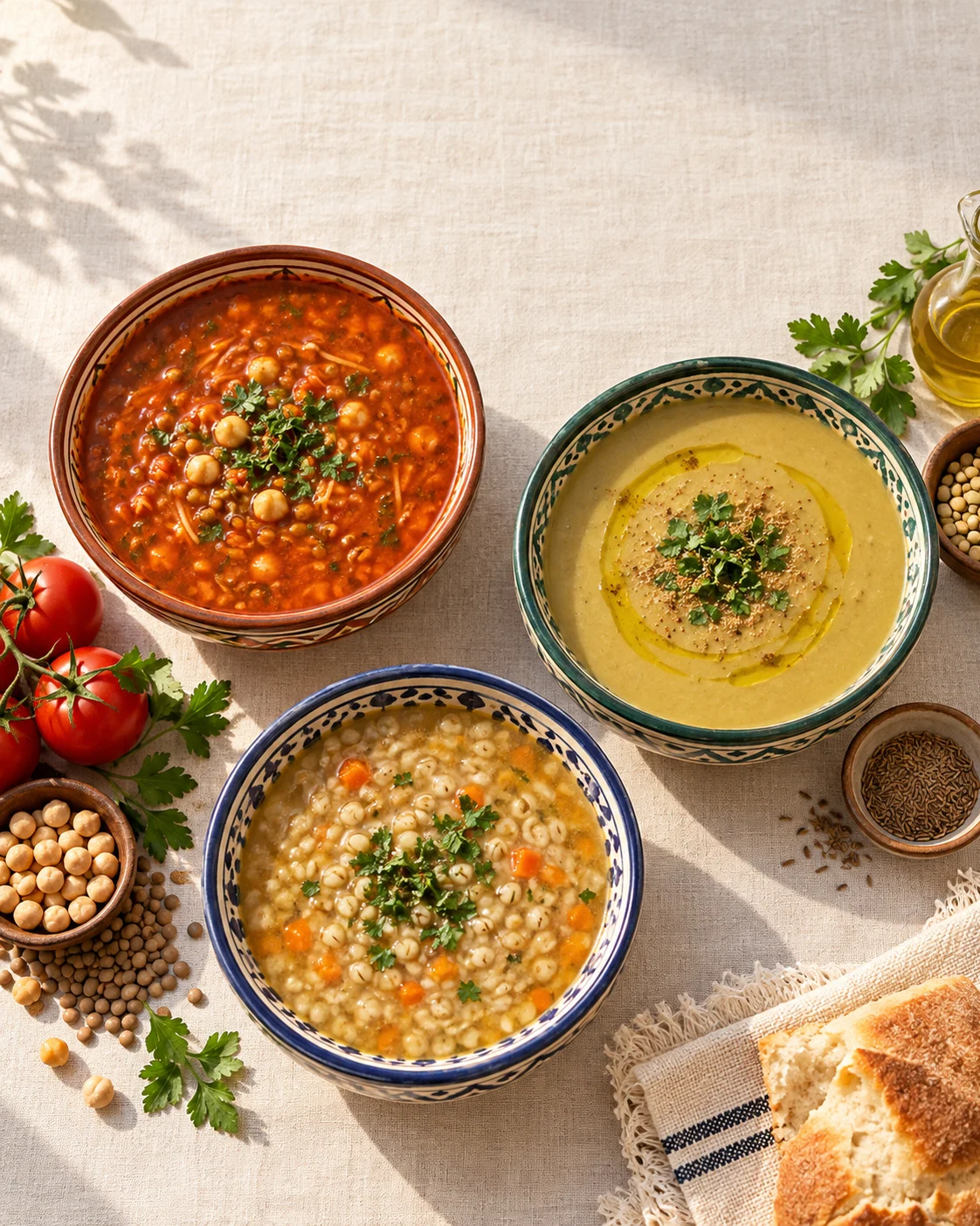
Soups
Other bowls, other textures, another way into the kitchen.
Explore the story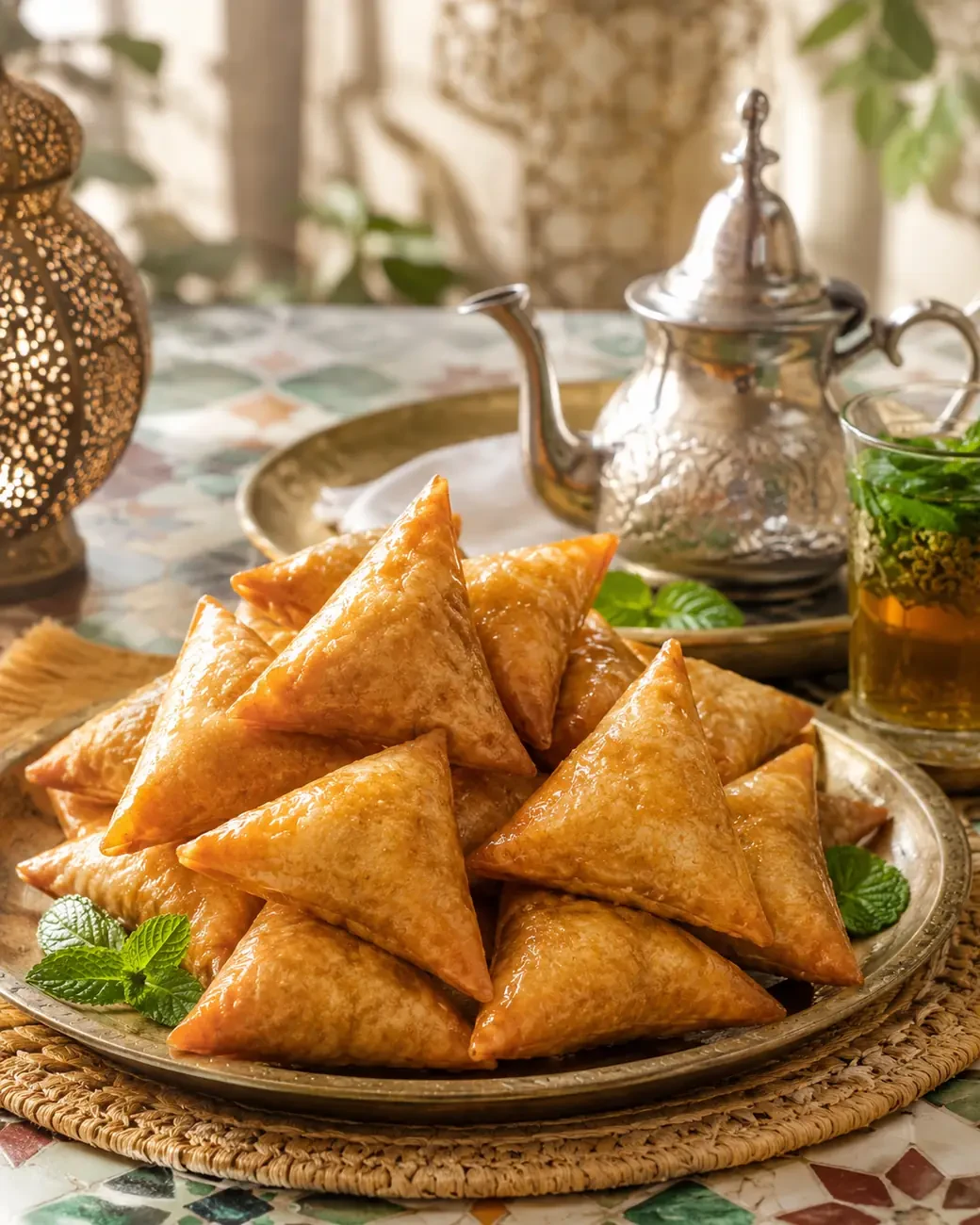
Briouats
Fine pastry folded around sweet and savoury fillings.
Explore the story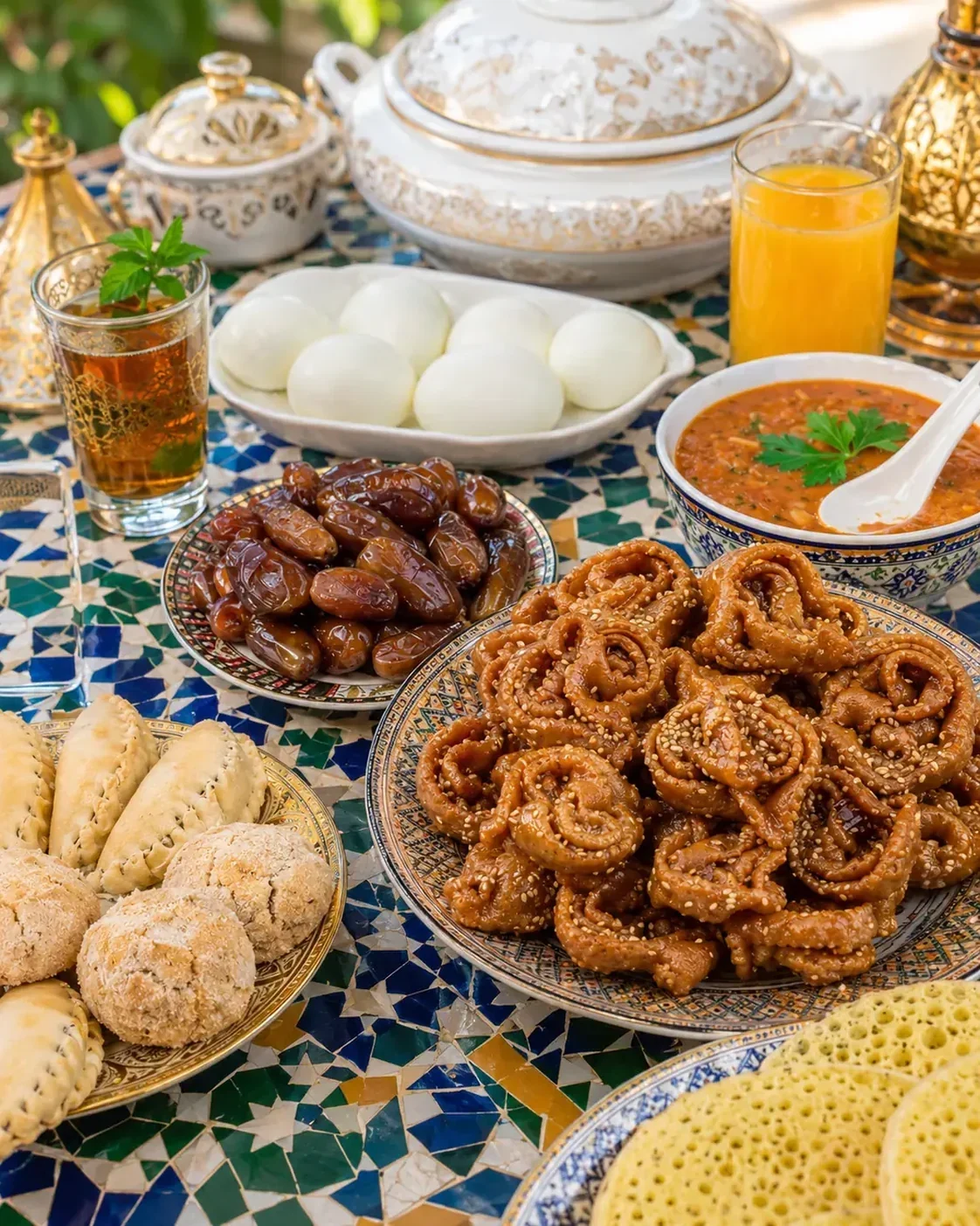
Moroccan Meal Rhythm
The moments that give a Moroccan day its flavour.
Explore the story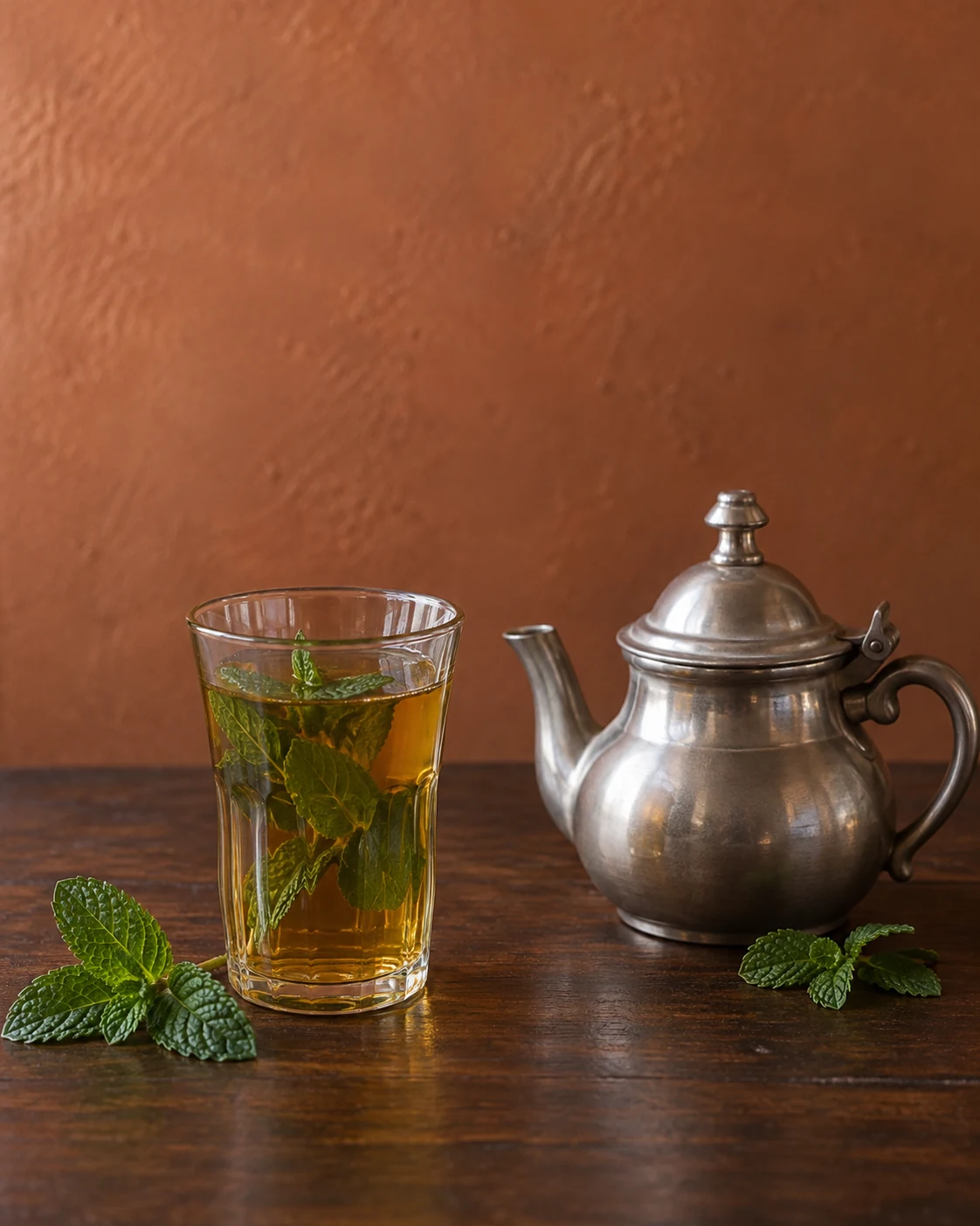
Moroccan Mint Tea
The leaves, the pour and the welcome around the tray.
Explore the story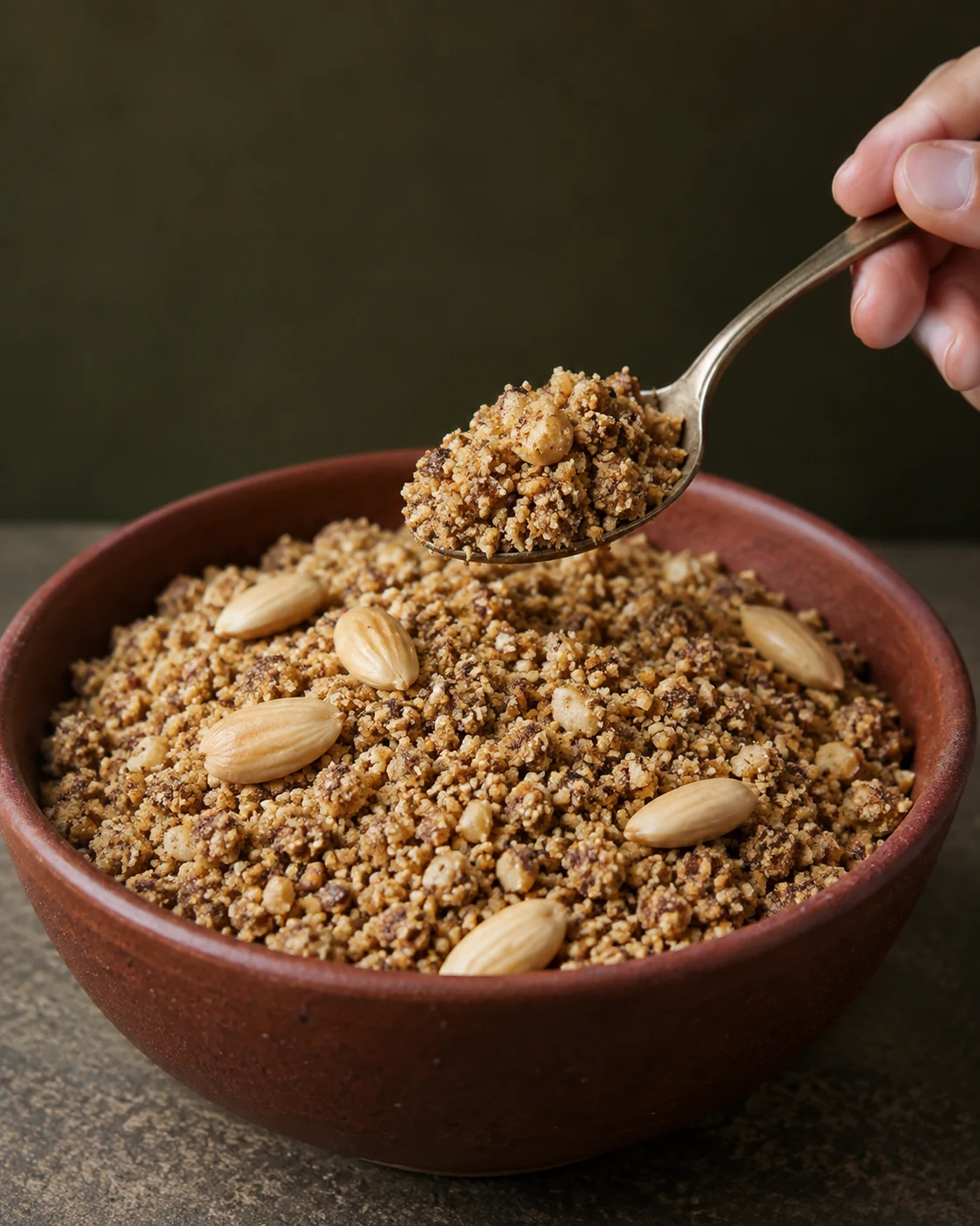
Sellou
Toasted flour, sesame and almonds in a familiar sweet.
Explore the storySources & editorial notes
This is a cultural and culinary introduction, not a measured cooking recipe. Family practice varies. The Harira imagery was created as generated editorial illustration; it does not document a named person, household or historical event. Navigation cards use the established imagery of the linked Exotic Morocco pages.
- Christine Benlafquih · Moroccan Harira — Tomato-based harira, seasonal context and variations.
- Cooking with Alia · Harira — A practitioner’s rice preparation, tedouira and table companions.
- Nargisse Benkabbou · Harira — Family memory, ingredient timing and a documented adaptation.
- Moroccan National Tourist Office · Food & Drinks — Harira and chebakia in the contemporary Moroccan food landscape.
- Moroccan National Tourist Office · Gastronomy — Marrakech evening stalls and the wider culinary setting.